
Articles | Volume 19, issue 22
https://doi.org/10.5194/amt-19-7789-2026
© Author(s) 2026. This work is distributed under
the Creative Commons Attribution 4.0 License.
https://doi.org/10.5194/amt-19-7789-2026
© Author(s) 2026. This work is distributed under
the Creative Commons Attribution 4.0 License.
Research article
| 
24 Nov 2026
Research article |
| 24 Nov 2026
The Arctic Weather Satellite, introducing the sub-millimetre wavelength range for operational ice hydrometeor retrievals

Department of Environmental and Energy Sciences, Chalmers University of Technology, Gothenburg, Sweden
Eleanor May
Department of Environmental and Energy Sciences, Chalmers University of Technology, Gothenburg, Sweden
Patrick Eriksson
Department of Environmental and Energy Sciences, Chalmers University of Technology, Gothenburg, Sweden
Related authors
Patrick Eriksson, Anders Emrich, Kalle Kempe, Johan Riesbeck, Alhassan Aljarosha, Olivier Auriacombe, Joakim Kugelberg, Enne Hekma, Roland Albers, Axel Murk, Søren Møller Pedersen, Laurenz John, Jan Stake, Peter McEvoy, Bengt Rydberg, Adam Dybbroe, Anke Thoss, Alessio Canestri, Christophe Accadia, Paolo Colucci, Daniele Gherardi, and Ville Kangas
Atmos. Meas. Tech., 18, 4709–4729, https://doi.org/10.5194/amt-18-4709-2025, https://doi.org/10.5194/amt-18-4709-2025, 2025
Short summary
Short summary
The Arctic Weather Satellite (AWS), developed by the European Space Agency, highlights a new approach in satellite design, aiming to expand the network of operational microwave sensors cost-effectively. Launched in August 2024, AWS features a 19-channel microwave cross-track radiometer. Notably, it introduces groundbreaking channels at 325.15 GHz. In addition, AWS acts as the stepping stone to a suggested constellation of satellites, denoted as EUMETSAT Polar System Sterna.
Lara Leko, Gunnar Behrens, Nils Müller, Adrià Amell, Axel Lauer, and Patrick Eriksson
EGUsphere, https://doi.org/10.5194/egusphere-2026-3869, https://doi.org/10.5194/egusphere-2026-3869, 2026
Short summary
Short summary
We look at daily cycles of tropical ice clouds and their representation in models. New satellite data of ice clouds captures daily cycles over land and oceans, which was not possible yet. These are often shifted in time in reanalysis, and biased depending on the variable. High-resolution models show improvements but still have regional biases. We show that combining different satellite observations helps to understand daily cycles and improve the simulation of tropical ice clouds and rainfall.
Patrick Eriksson, Alejandro Baró Pérez, Nils Müller, Hanna Hallborn, Eleanor May, Manfred Brath, Stefan A. Buehler, and Luisa Ickes
Atmos. Chem. Phys., 26, 2741–2768, https://doi.org/10.5194/acp-26-2741-2026, https://doi.org/10.5194/acp-26-2741-2026, 2026
Short summary
Short summary
Our study shows that accurately representing atmospheric ice mass remains a major challenge. We compared climate models to satellite data, finding that conventional models consistently underestimate the amount of ice. While new, higher-resolution models perform better, both models and observations still have significant discrepancies. These shortcomings limit our confidence in cloud-related climate feedbacks, which are critical for our predictions of the future climate.
Eleanor May and Patrick Eriksson
Atmos. Meas. Tech., 18, 7243–7266, https://doi.org/10.5194/amt-18-7243-2025, https://doi.org/10.5194/amt-18-7243-2025, 2025
Short summary
Short summary
The vertical distribution of atmospheric ice impacts Earth's weather and climate. The Ice Cloud Imager (ICI) will measure at microwave and sub-millimetre frequencies, which are well suited to detect atmospheric ice. In this study, a machine learning model is trained on ICI simulations. Results show that the vertical distribution of ice can be derived from ICI observations, and that ICI could offer a valuable data source that complements existing radar- and lidar-based measurements.
Patrick Eriksson, Anders Emrich, Kalle Kempe, Johan Riesbeck, Alhassan Aljarosha, Olivier Auriacombe, Joakim Kugelberg, Enne Hekma, Roland Albers, Axel Murk, Søren Møller Pedersen, Laurenz John, Jan Stake, Peter McEvoy, Bengt Rydberg, Adam Dybbroe, Anke Thoss, Alessio Canestri, Christophe Accadia, Paolo Colucci, Daniele Gherardi, and Ville Kangas
Atmos. Meas. Tech., 18, 4709–4729, https://doi.org/10.5194/amt-18-4709-2025, https://doi.org/10.5194/amt-18-4709-2025, 2025
Short summary
Short summary
The Arctic Weather Satellite (AWS), developed by the European Space Agency, highlights a new approach in satellite design, aiming to expand the network of operational microwave sensors cost-effectively. Launched in August 2024, AWS features a 19-channel microwave cross-track radiometer. Notably, it introduces groundbreaking channels at 325.15 GHz. In addition, AWS acts as the stepping stone to a suggested constellation of satellites, denoted as EUMETSAT Polar System Sterna.
Eleanor May, Bengt Rydberg, Inderpreet Kaur, Vinia Mattioli, Hanna Hallborn, and Patrick Eriksson
Atmos. Meas. Tech., 17, 5957–5987, https://doi.org/10.5194/amt-17-5957-2024, https://doi.org/10.5194/amt-17-5957-2024, 2024
Short summary
Short summary
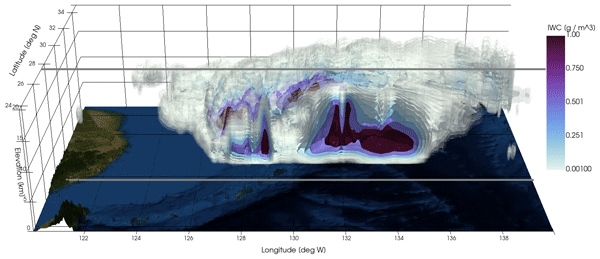
The upcoming Ice Cloud Imager (ICI) mission is set to improve measurements of atmospheric ice through passive microwave and sub-millimetre wave observations. In this study, we perform detailed simulations of ICI observations. Machine learning is used to characterise the atmospheric ice present for a given simulated observation. This study acts as a final pre-launch assessment of ICI's capability to measure atmospheric ice, providing valuable information to climate and weather applications.
Adrià Amell, Simon Pfreundschuh, and Patrick Eriksson
Atmos. Meas. Tech., 17, 4337–4368, https://doi.org/10.5194/amt-17-4337-2024, https://doi.org/10.5194/amt-17-4337-2024, 2024
Short summary
Short summary
The representation of clouds in numerical weather and climate models remains a major challenge that is difficult to address because of the limitations of currently available data records of cloud properties. In this work, we address this issue by using machine learning to extract novel information on ice clouds from a long record of satellite observations. Through extensive validation, we show that this novel approach provides surprisingly accurate estimates of clouds and their properties.
Karina McCusker, Anthony J. Baran, Chris Westbrook, Stuart Fox, Patrick Eriksson, Richard Cotton, Julien Delanoë, and Florian Ewald
Atmos. Meas. Tech., 17, 3533–3552, https://doi.org/10.5194/amt-17-3533-2024, https://doi.org/10.5194/amt-17-3533-2024, 2024
Short summary
Short summary
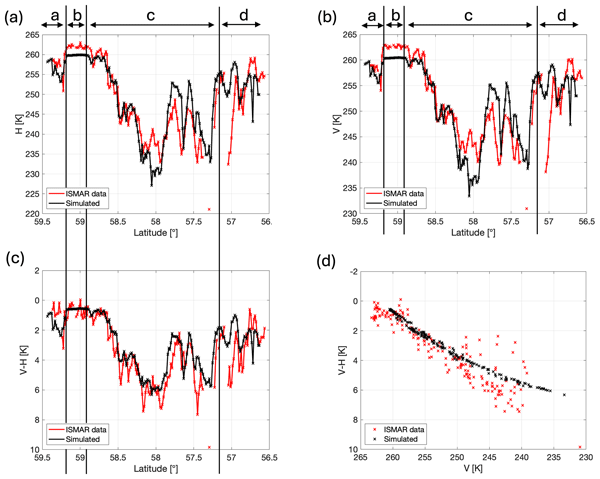
Polarised radiative transfer simulations are performed using an atmospheric model based on in situ measurements. These are compared to large polarisation measurements to explore whether such measurements can provide information on cloud ice, e.g. particle shape and orientation. We find that using oriented particle models with shapes based on imagery generally allows for accurate simulations. However, results are sensitive to shape assumptions such as the choice of single crystals or aggregates.
Simon Pfreundschuh, Clément Guilloteau, Paula J. Brown, Christian D. Kummerow, and Patrick Eriksson
Atmos. Meas. Tech., 17, 515–538, https://doi.org/10.5194/amt-17-515-2024, https://doi.org/10.5194/amt-17-515-2024, 2024
Short summary
Short summary
The latest version of the GPROF retrieval algorithm that produces global precipitation estimates using observations from the Global Precipitation Measurement mission is validated against ground-based radars. The validation shows that the algorithm accurately estimates precipitation on scales ranging from continental to regional. In addition, we validate candidates for the next version of the algorithm and identify principal challenges for further improving space-borne rain measurements.
Michael Kiefer, Dale F. Hurst, Gabriele P. Stiller, Stefan Lossow, Holger Vömel, John Anderson, Faiza Azam, Jean-Loup Bertaux, Laurent Blanot, Klaus Bramstedt, John P. Burrows, Robert Damadeo, Bianca Maria Dinelli, Patrick Eriksson, Maya García-Comas, John C. Gille, Mark Hervig, Yasuko Kasai, Farahnaz Khosrawi, Donal Murtagh, Gerald E. Nedoluha, Stefan Noël, Piera Raspollini, William G. Read, Karen H. Rosenlof, Alexei Rozanov, Christopher E. Sioris, Takafumi Sugita, Thomas von Clarmann, Kaley A. Walker, and Katja Weigel
Atmos. Meas. Tech., 16, 4589–4642, https://doi.org/10.5194/amt-16-4589-2023, https://doi.org/10.5194/amt-16-4589-2023, 2023
Short summary
Short summary
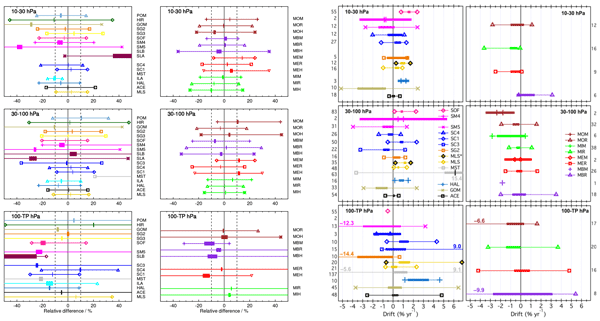
We quantify biases and drifts (and their uncertainties) between the stratospheric water vapor measurement records of 15 satellite-based instruments (SATs, with 31 different retrievals) and balloon-borne frost point hygrometers (FPs) launched at 27 globally distributed stations. These comparisons of measurements during the period 2000–2016 are made using robust, consistent statistical methods. With some exceptions, the biases and drifts determined for most SAT–FP pairs are < 10 % and < 1 % yr−1.
Simon Pfreundschuh, Ingrid Ingemarsson, Patrick Eriksson, Daniel A. Vila, and Alan J. P. Calheiros
Atmos. Meas. Tech., 15, 6907–6933, https://doi.org/10.5194/amt-15-6907-2022, https://doi.org/10.5194/amt-15-6907-2022, 2022
Short summary
Short summary
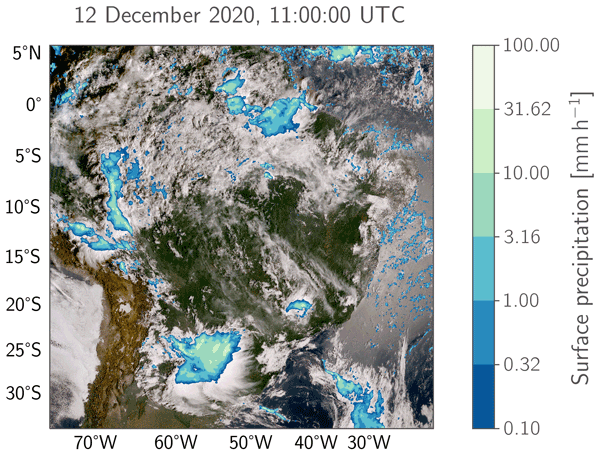
We used methods from the field of artificial intelligence to train an algorithm to estimate rain from satellite observations. In contrast to other methods, our algorithm not only estimates rain, but also the uncertainty of the estimate. Using independent measurements from rain gauges, we show that our method performs better than currently available methods and that the provided uncertainty estimates are reliable. Our method makes satellite-based measurements of rain more accurate and reliable.
Adrià Amell, Patrick Eriksson, and Simon Pfreundschuh
Atmos. Meas. Tech., 15, 5701–5717, https://doi.org/10.5194/amt-15-5701-2022, https://doi.org/10.5194/amt-15-5701-2022, 2022
Short summary
Short summary
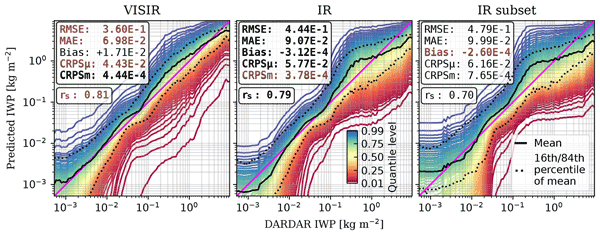
Geostationary satellites continuously image a given location on Earth, a feature that satellites designed to characterize atmospheric ice lack. However, the relationship between geostationary images and atmospheric ice is complex. Machine learning is used here to leverage such images to characterize atmospheric ice throughout the day in a probabilistic manner. Using structural information from the image improves the characterization, and this approach compares favourably to traditional methods.
Simon Pfreundschuh, Paula J. Brown, Christian D. Kummerow, Patrick Eriksson, and Teodor Norrestad
Atmos. Meas. Tech., 15, 5033–5060, https://doi.org/10.5194/amt-15-5033-2022, https://doi.org/10.5194/amt-15-5033-2022, 2022
Short summary
Short summary
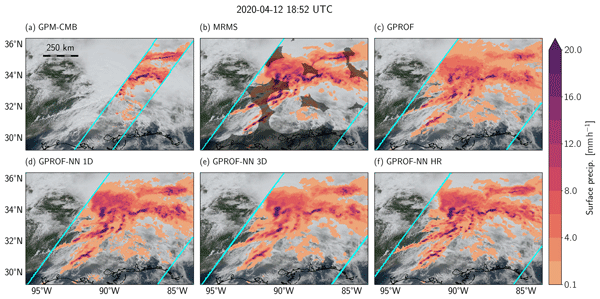
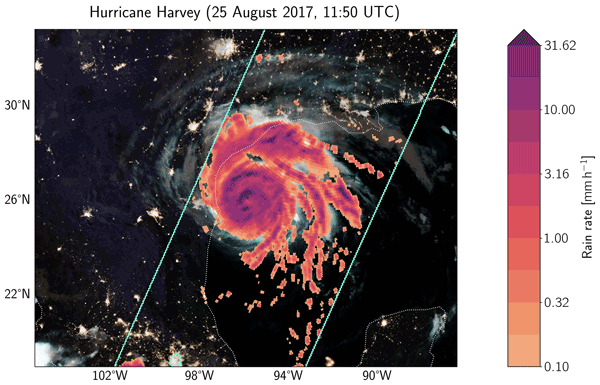
The Global Precipitation Measurement mission is an international satellite mission providing regular global rain measurements. We present two newly developed machine-learning-based implementations of one of the algorithms responsible for turning the satellite observations into rain measurements. We show that replacing the current algorithm with a neural network improves the accuracy of the measurements. A neural network that also makes use of spatial information unlocks further improvements.
William G. Read, Gabriele Stiller, Stefan Lossow, Michael Kiefer, Farahnaz Khosrawi, Dale Hurst, Holger Vömel, Karen Rosenlof, Bianca M. Dinelli, Piera Raspollini, Gerald E. Nedoluha, John C. Gille, Yasuko Kasai, Patrick Eriksson, Christopher E. Sioris, Kaley A. Walker, Katja Weigel, John P. Burrows, and Alexei Rozanov
Atmos. Meas. Tech., 15, 3377–3400, https://doi.org/10.5194/amt-15-3377-2022, https://doi.org/10.5194/amt-15-3377-2022, 2022
Short summary
Short summary
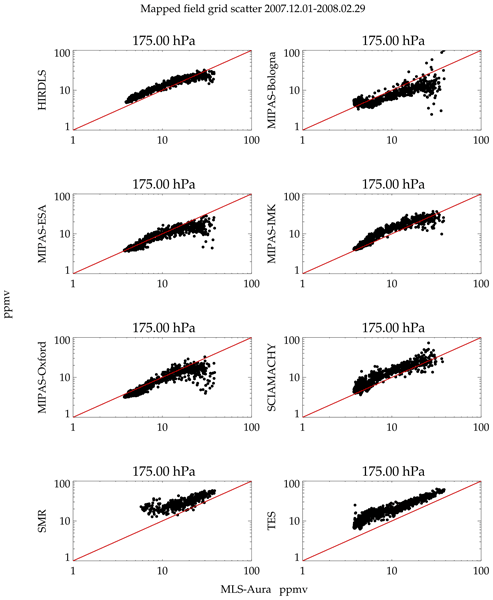
This paper attempts to provide an assessment of the accuracy of 21 satellite-based instruments that remotely measure atmospheric humidity in the upper troposphere of the Earth's atmosphere. The instruments made their measurements from 1984 to the present time; however, most of these instruments began operations after 2000, and only a few are still operational. The objective of this study is to quantify the accuracy of each satellite humidity data set.
Simon Pfreundschuh, Stuart Fox, Patrick Eriksson, David Duncan, Stefan A. Buehler, Manfred Brath, Richard Cotton, and Florian Ewald
Atmos. Meas. Tech., 15, 677–699, https://doi.org/10.5194/amt-15-677-2022, https://doi.org/10.5194/amt-15-677-2022, 2022
Short summary
Short summary
We test a novel method to remotely measure ice particles in clouds. This is important because such measurements are required to improve climate and weather models. The method combines a radar with newly developed sensors measuring microwave radiation at very short wavelengths. We use observations made from aircraft flying above the cloud and compare them to real measurements from inside the cloud. This works well given that one can model the ice particles in the cloud sufficiently well.
Alan J. Geer, Peter Bauer, Katrin Lonitz, Vasileios Barlakas, Patrick Eriksson, Jana Mendrok, Amy Doherty, James Hocking, and Philippe Chambon
Geosci. Model Dev., 14, 7497–7526, https://doi.org/10.5194/gmd-14-7497-2021, https://doi.org/10.5194/gmd-14-7497-2021, 2021
Short summary
Short summary
Satellite observations of radiation from the earth can have strong sensitivity to cloud and precipitation in the atmosphere, with applications in weather forecasting and the development of models. Computing the radiation received at the satellite sensor using radiative transfer theory requires a simulation of the optical properties of a volume containing a large number of cloud and precipitation particles. This article describes the physics used to generate these
bulkoptical properties.
Cited articles
Amell, A., Eriksson, P., and Pfreundschuh, S.: Ice water path retrievals from Meteosat-9 using quantile regression neural networks, Atmos. Meas. Tech., 15, 5701–5717, https://doi.org/10.5194/amt-15-5701-2022, 2022. a
Bennartz, R. and Wu, D. L.: NASA's Polarized Submillimeter Ice-Cloud Radiometer (PolSIR): Observing the Diurnal Cycle of Ice Clouds in the Tropics and Sub-Tropics, in: 105th Annual AMS Meeting, vol. 105, p. 446951, https://doi.org/10.5194/egusphere-egu24-5886, 2025. a
Bjordal, J., Storelvmo, T., Alterskjær, K., and Carlsen, T.: Equilibrium climate sensitivity above 5 °C plausible due to state-dependent cloud feedback, Nat. Geosci., 13, 718–721, https://doi.org/10.1038/s41561-020-00649-1, 2020. a
Bony, S., Stevens, B., Frierson, D. M. W., Jakob, C., Kageyama, M., Pincus, R., Shepherd, T. G., Sherwood, S. C., Siebesma, A. P., Sobel, A. H., Watanabe, M., and Webb, M. J.: Clouds, circulation and climate sensitivity, Nat. Geosci., 8, 261–268, https://doi.org/10.1038/ngeo2398, 2015. a
Buchhorn, M., Smets, B., Bertels, L., Roo, B. D., Lesiv, M., Tsendbazar, N.-E., Herold, M., and Fritz, S.: Copernicus Global Land Service: Land Cover 100m: collection 3: epoch 2019: Globe, Zenodo, https://doi.org/10.5281/zenodo.3939050, 2020. a
Buehler, S. A., Defer, E., Evans, F., Eliasson, S., Mendrok, J., Eriksson, P., Lee, C., Jiménez, C., Prigent, C., Crewell, S., Kasai, Y., Bennartz, R., and Gasiewski, A. J.: Observing ice clouds in the submillimeter spectral range: the CloudIce mission proposal for ESA's Earth Explorer 8, Atmos. Meas. Tech., 5, 1529–1549, https://doi.org/10.5194/amt-5-1529-2012, 2012. a, b
Buehler, S. A., Larsson, R., Lemke, O., Pfreundschuh, S., Brath, M., Adams, I., Fox, S., Roemer, F. E., Czarnecki, P., and Eriksson, P.: The atmospheric radiative transfer simulator ARTS, version 2.6 – Deep python integration, J. Quant. Spectrosc. Ra., 341, 109443, https://doi.org/10.1016/j.jqsrt.2025.109443, 2025. a
Camplani, A., Sanò, P., Casella, D., Panegrossi, G., and Battaglia, A.: Arctic Weather Satellite Sensitivity to Supercooled Liquid Water in Snowfall Conditions, Remote Sens., 16, https://doi.org/10.3390/rs16224164, 2024. a
Cazenave, Q., Ceccaldi, M., Delanoë, J., Pelon, J., Groß, S., and Heymsfield, A.: Evolution of DARDAR-CLOUD ice cloud retrievals: new parameters and impacts on the retrieved microphysical properties, Atmos. Meas. Tech., 12, 2819–2835, https://doi.org/10.5194/amt-12-2819-2019, 2019. a, b, c
Delanoë, J. and Hogan, R. J.: DARDAR-cloud V3-10, AERIS/ICARE Data and Services Center [data set], https://doi.org/10.25326/449, 2025. a
Delanoë, J. M. E., Heymsfield, A. J., Protat, A., Bansemer, A., and Hogan, R. J.: Normalized particle size distribution for remote sensing application, J. Geophys. Res.-Atmos., 119, 4204–4227, https://doi.org/10.1002/2013JD020700, 2014. a, b
Deng, M., Mace, G. G., Wang, Z., and Berry, E.: CloudSat 2C-ICE product update with a new Ze parameterization in lidar-only region, J. Geophys. Res.-Atmos., 120, 12,198–12,208, https://doi.org/10.1002/2015JD023600, 2015. a, b
Earth Resources Observation and Science Center: Global 30 Arc-Second Elevation (GTOPO30), Earth Resources Observation and Science (EROS) Center, https://doi.org/10.5066/F7DF6PQS, 2018. a
Ekelund, R., Eriksson, P., and Pfreundschuh, S.: Using passive and active observations at microwave and sub-millimetre wavelengths to constrain ice particle models, Atmos. Meas. Tech., 13, 501–520, https://doi.org/10.5194/amt-13-501-2020, 2020. a
Eliasson, S., Buehler, S. A., Milz, M., Eriksson, P., and John, V. O.: Assessing observed and modelled spatial distributions of ice water path using satellite data, Atmos. Chem. Phys., 11, 375–391, https://doi.org/10.5194/acp-11-375-2011, 2011. a, b, c, d
Eliasson, S., Holl, G., Buehler, S., Kuhn, T., Stengel, M., Iturbide-Sanchez, F., and Johnston, M.: Systematic and random errors between collocated satellite ice water path observations, J. Geophys. Res., 118, 2629–2642, https://doi.org/10.1029/2012JD018381, 2013. a
Eriksson, P., Rydberg, B., Sagawa, H., Johnston, M. S., and Kasai, Y.: Overview and sample applications of SMILES and Odin-SMR retrievals of upper tropospheric humidity and cloud ice mass, Atmos. Chem. Phys., 14, 12613–12629, https://doi.org/10.5194/acp-14-12613-2014, 2014. a
Eriksson, P., Ekelund, R., Mendrok, J., Brath, M., Lemke, O., and Buehler, S. A.: A general database of hydrometeor single scattering properties at microwave and sub-millimetre wavelengths, Earth Syst. Sci. Data, 10, 1301–1326, https://doi.org/10.5194/essd-10-1301-2018, 2018. a
Eriksson, P., Rydberg, B., Mattioli, V., Thoss, A., Accadia, C., Klein, U., and Buehler, S. A.: Towards an operational Ice Cloud Imager (ICI) retrieval product, Atmos. Meas. Tech., 13, 53–71, https://doi.org/10.5194/amt-13-53-2020, 2020. a, b, c
Eriksson, P., Emrich, A., Kempe, K., Riesbeck, J., Aljarosha, A., Auriacombe, O., Kugelberg, J., Hekma, E., Albers, R., Murk, A., Møller Pedersen, S., John, L., Stake, J., McEvoy, P., Rydberg, B., Dybbroe, A., Thoss, A., Canestri, A., Accadia, C., Colucci, P., Gherardi, D., and Kangas, V.: The Arctic Weather Satellite radiometer, Atmos. Meas. Tech., 18, 4709–4729, https://doi.org/10.5194/amt-18-4709-2025, 2025. a, b, c, d, e, f, g, h
Eriksson, P., Baró Pérez, A., Müller, N., Hallborn, H., May, E., Brath, M., Buehler, S. A., and Ickes, L.: Advancements and continued challenges in observations and global modelling of atmospheric ice mass, Atmos. Chem. Phys., 26, 2741–2768, https://doi.org/10.5194/acp-26-2741-2026, 2026. a, b, c, d, e, f, g, h
Evans, K. F. and Stephens, G. L.: Microwave radiative transfer through clouds composed of realistically shaped ice crystals. Part II. Remote sensing of ice clouds, J. Atmos. Sci., 52, 2058–2072, https://doi.org/10.1175/1520-0469(1995)052<2058:MRTTCC>2.0.CO;2, 1995. a
Evans, K. F., Walter, S. J., Heymsfield, A. J., and Deeter, M. N.: Modeling of submillimeter passive remote sensing of cirrus clouds, J. Appl. Meteorol., 37, 184–205, https://doi.org/10.1175/1520-0450(1998)037<0184:MOSPRS>2.0.CO;2, 1998. a
Evans, K. F., Walter, S. J., Heymsfield, A. J., and McFarquhar, G. M.: Submillimeter-wave cloud ice radiometer: Simulations of retrieval algorithm performance, J. Geophys. Res., 107, AAC–2, https://doi.org/10.1029/2001JD000709, 2002. a
Evans, K. F., Wang, J. R., Racette, P. E., Heymsfield, G., and Li, L.: Ice cloud retrievals and analysis with the compact scanning submillimeter imaging radiometer and the cloud radar system during CRYSTAL FACE, J. Appl. Meteorol., 44, 839–859, https://doi.org/10.1175/JAM2250.1, 2005. a
Evans, K. F., Wang, J. R., O'C Starr, D., Heymsfield, G., Li, L., Tian, L., Lawson, R. P., Heymsfield, A. J., and Bansemer, A.: Ice hydrometeor profile retrieval algorithm for high-frequency microwave radiometers: application to the CoSSIR instrument during TC4, Atmos. Meas. Tech., 5, 2277–2306, https://doi.org/10.5194/amt-5-2277-2012, 2012. a
Field, P. R. and Heymsfield, A. J.: Importance of snow to global precipitation, Geophys. Res. Lett., 42, 9512–9520, https://doi.org/10.1002/2015GL065497, 2015. a
Finnish Meteorological Institute: ACTRIS Cloudnet, Finnish Meteorlogical Institute, https://cloudnet.fmi.fi (last access: 10 September 2026), 2011. a
Fox, S.: An evaluation of radiative transfer simulations of cloudy scenes from a numerical weather prediction model at sub-millimetre frequencies using airborne observations, Radio Sci., 12, 2758, https://doi.org/10.3390/rs12172758, 2020. a
Gasiewski, A.: Numerical sensitivity analysis of passive EHF and SMMW channels to tropospheric water vapor, clouds, and precipitation, IEEE T. Geosci. Remote, 30, 859–870, https://doi.org/10.1109/36.175320, 1992. a
Gong, J., Wu, D. L., and Eriksson, P.: The first global 883 GHz cloud ice survey: IceCube Level 1 data calibration, processing and analysis, Earth Syst. Sci. Data, 13, 5369–5387, https://doi.org/10.5194/essd-13-5369-2021, 2021. a
Hersbach, H., Bell, B., Berrisford, P., Biavati, G., Horányi, A., Muñoz Sabater, J., Nicolas, J., Peubey, C., Radu, R., Rozum, I., Schepers, D., Simmons, A., Soci, C., Dee, D., and Thépaut, J.-N.: ERA5 hourly data on pressure levels from 1940 to present, Copernicus Climate Change Service (C3S) Climate Data Store (CDS), https://doi.org/10.24381/cds.bd0915c6, 2023a. a
Hersbach, H., Bell, B., Berrisford, P., Biavati, G., Horányi, A., Muñoz Sabater, J., Nicolas, J., Peubey, C., Radu, R., Rozum, I., Schepers, D., Simmons, A., Soci, C., Dee, D., and Thépaut, J.-N.: ERA5 hourly data on single levels from 1940 to present, Copernicus Climate Change Service (C3S) Climate Data Store (CDS), https://doi.org/10.24381/cds.adbb2d47, 2023b. a
Intergovernmental Panel on Climate Change (IPCC): Technical Summary, p. 35–144, Cambridge University Press, https://doi.org/10.1017/9781009157896.002, 2023. a
Janowiak, J. E., Joyce, R. J., and Yarosh, Y.: A Real-Time Global Half-Hourly Pixel-Resolution Infrared Dataset and Its Applications, B. Am. Meteorol. Soc., 82, 205–218, https://doi.org/10.1175/1520-0477(2001)082<0205:ARTGHH>2.3.CO;2, 2001. a
Jimenez, C., Buehler, S. A., Rydberg, B., Eriksson, P., and Evans, K. F.: Performance simulations for a submillimetre wave cloud ice satellite instrument, Q. J. R. Meteorol. Soc., 133, 129–149, https://doi.org/10.1002/qj.134, 2007. a
Karlsson, K.-G., Riihelä, A., Trentmann, J., Stengel, M., Solodovnik, I., Meirink, J. F., Devasthale, A., Jääskeläinen, E., Kallio-Myers, V., Eliasson, S., Benas, N., Johansson, E., Stein, D., Finkensieper, S., Håkansson, N., Akkermans, T., Clerbaux, N., Selbach, N., Marc, S., and Hollmann, R.: CLARA-A3: CM SAF cLoud, Albedo and surface RAdiation dataset from AVHRR data – Edition 3, Satellite Application Facility on Climate Monitoring (CM SAF) [data set], https://doi.org/10.5676/EUM_SAF_CM/CLARA_AVHRR/V003, 2023a. a, b, c
Karlsson, K.-G., Stengel, M., Meirink, J. F., Riihelä, A., Trentmann, J., Akkermans, T., Stein, D., Devasthale, A., Eliasson, S., Johansson, E., Håkansson, N., Solodovnik, I., Benas, N., Clerbaux, N., Selbach, N., Schröder, M., and Hollmann, R.: CLARA-A3: The third edition of the AVHRR-based CM SAF climate data record on clouds, radiation and surface albedo covering the period 1979 to 2023, Earth Syst. Sci. Data, 15, 4901–4926, https://doi.org/10.5194/essd-15-4901-2023, 2023b. a
Kaur, I., Eriksson, P., Pfreundschuh, S., and Duncan, D. I.: Can machine learning correct microwave humidity radiances for the influence of clouds?, Atmos. Meas. Tech., 14, 2957–2979, https://doi.org/10.5194/amt-14-2957-2021, 2021. a
Lauer, A., Bock, L., Hassler, B., Schröder, M., and Stengel, M.: Cloud Climatologies from Global Climate Models—A Comparison of CMIP5 and CMIP6 Models with Satellite Data, J. Climate, 36, 281–311, https://doi.org/10.1175/JCLI-D-22-0181.1, 2023. a
Marshall, J. S. and Palmer, W. M. K.: The Distribution of Raindrops with Size, J. Atmos. Sci., 5, 165–166, https://doi.org/10.1175/1520-0469(1948)005<0165:TDORWS>2.0.CO;2, 1948. a
Mason, S. L., Hogan, R. J., Bozzo, A., and Pounder, N. L.: A unified synergistic retrieval of clouds, aerosols, and precipitation from EarthCARE: the ACM-CAP product, Atmos. Meas. Tech., 16, 3459–3486, https://doi.org/10.5194/amt-16-3459-2023, 2023. a
Mattioli, V., Accadia, C., Ackermann, J., Di Michele, S., Hans, I., Schlüssel, P., Colucci, P., and Canestri, A.: The EUMETSAT polar system-second generation (EPS-SG) passive microwave and sub-mm wave missions, in: 2019 PhotonIcs & Electromagnetics Research Symposium-Spring (PIERS-Spring), pp. 3926–3933, IEEE, https://doi.org/10.1109/PIERS-Spring46901.2019.9017822, 2019. a
May, E. and Eriksson, P.: The Ice Cloud Imager: retrieval of frozen water mass profiles, Atmos. Meas. Tech., 18, 7243–7266, https://doi.org/10.5194/amt-18-7243-2025, 2025. a, b, c
McEvoy, P., May, E., and Eriksson, P.: CHIP-AWS v1.0.0 2025 archive: Atmospheric ice mass properties, Chalmers University of Technology [data set], https://doi.org/10.71870/v9dx-rm43, 2026. a, b
Miao, J., Rose, T., Kunzi, K., and Zimmermann, P.: A Future Millimeter/Sub–Millimeter Radiometer for Satellite Observation of Ice Clouds, Int. J. Inf. Millim. Waves, 23, 1159–1170, https://doi.org/10.1023/A:1019655507759, 2002. a
Miao, J., Johnsen, K.-P., Buehler, S., and Kokhanovsky, A.: The potential of polarization measurements from space at mm and sub-mm wavelengths for determining cirrus cloud parameters, Atmos. Chem. Phys., 3, 39–48, https://doi.org/10.5194/acp-3-39-2003, 2003. a
Nakajima, T. and King, M. D.: Determination of the Optical Thickness and Effective Particle Radius of Clouds from Reflected Solar Radiation Measurements. Part I: Theory, J. Atmos. Sci., 47, 1878–1893, https://doi.org/10.1175/1520-0469(1990)047<1878:DOTOTA>2.0.CO;2, 1990. a
Pfreundschuh, S., Eriksson, P., Duncan, D., Rydberg, B., Håkansson, N., and Thoss, A.: A neural network approach to estimating a posteriori distributions of Bayesian retrieval problems, Atmos. Meas. Tech., 11, 4627–4643, https://doi.org/10.5194/amt-11-4627-2018, 2018. a, b
Pfreundschuh, S., Eriksson, P., Buehler, S. A., Brath, M., Duncan, D., Larsson, R., and Ekelund, R.: Synergistic radar and radiometer retrievals of ice hydrometeors, Atmos. Meas. Tech., 13, 4219–4245, https://doi.org/10.5194/amt-13-4219-2020, 2020. a
Pfreundschuh, S., Fox, S., Eriksson, P., Duncan, D., Buehler, S. A., Brath, M., Cotton, R., and Ewald, F.: Synergistic radar and sub-millimeter radiometer retrievals of ice hydrometeors in mid-latitude frontal cloud systems, Atmos. Meas. Tech., 15, 677–699, https://doi.org/10.5194/amt-15-677-2022, 2022. a
Pfreundschuh, S., Kukulies, J., Amell, A., Hallborn, H., May, E., and Eriksson, P.: The Chalmers Cloud Ice Climatology: A novel robust climate record of frozen cloud hydrometeor concentrations, J. Geophys. Res., 130, e2024JD042618, https://doi.org/10.1029/2024JD042618, 2025. a, b
Platnick, S. and M. King, P. H.: MODIS Atmosphere L3 Daily Product, NASA MODIS Adaptive Processing System, Goddard Space Flight Center, USA, https://doi.org/10.5067/MODIS/MYD08_D3.061, 2017a. a, b
Platnick, S. and M. King, P. H.: MODIS Atmosphere L3 Daily Product, NASA MODIS Adaptive Processing System, Goddard Space Flight Center, USA, https://doi.org/10.5067/MODIS/MOD08_D3.061, 2017b. a, b
Platnick, S., King, M., Ackerman, S., Menzel, W., Baum, B., Riedi, J., and Frey, R.: The MODIS cloud products: algorithms and examples from Terra, IEEE T. Geosci. Remote Se., 41, 459–473, https://doi.org/10.1109/TGRS.2002.808301, 2003. a
Rivoire, L., Marty, R., Carrel-Billiard, T., Chambon, P., Fourrié, N., Audouin, O., Martet, M., Birman, C., Accadia, C., and Ackermann, J.: A global observing-system simulation experiment for the EPS–Sterna microwave constellation, Q. J. R. Meteorol. Soc., 150, 2991–3012, https://doi.org/10.1002/qj.4747, 2024. a
Rydberg, B., Eriksson, P., and Buehler, S. A.: Prediction of cloud ice signatures in submillimetre emission spectra by means of ground-based radar and in situ microphysical data, Q. J. Roy. Meteorol. Soc., 133, 151–162, https://doi.org/10.1002/qj.151, 2007. a
Sokol, A. B. and Hartmann, D. L.: Tropical Anvil Clouds: Radiative Driving Toward a Preferred State, J. Geophys. Res.-Atmos., 125, e2020JD033107, https://doi.org/10.1029/2020JD033107, 2020. a, b
Stephens, G. L., Vane, D. G., Boain, R. J., Mace, G. G., Sassen, K., Wang, Z., Illingworth, A. J., O'connor, E. J., Rossow, W. B., Durden, S. L., et al.: The CloudSat mission and the A-Train: A new dimension of space-based observations of clouds and precipitation, B. Am. Meteorol. Soc., 83, 1771–1790, https://doi.org/10.1175/BAMS-83-12-1771, 2002. a
Waliser, D. E., Li, J.-L. F., Woods, C. P., Austin, R. T., Bacmeister, J., Chern, J., Del Genio, A., Jiang, J. H., Kuang, Z., Meng, H., et al.: Cloud ice: A climate model challenge with signs and expectations of progress, J. Geophys. Res., 114, https://doi.org/10.1029/2008JD010015, 2009. a, b
Wang, J., Racette, P., Spinhirne, J., Evans, K., and Hart, W.: Observations of cirrus clouds with airborne MIR, CLS, and MAS during SUCCESS, Geophys. Res. Lett., 25, 1145–1148, https://doi.org/10.1029/97GL03194, 1998. a
Wu, D. L., Jiang, J. H., Read, W. G., Austin, R. T., Davis, C. P., Lambert, A., Stephens, G. L., Vane, D. G., and Waters, J. W.: Validation of the Aura MLS cloud ice water content measurements, J. Geophys. Res.-Atmos., 113, https://doi.org/10.1029/2007JD008931, 2008. a
Wu, D. L., Gong, J., Deal, W. R., Gaines, W., Cooke, C. M., De Amici, G., Pantina, P., Liu, Y., Yang, P., Eriksson, P., and Bennartz, R.: Remote sensing of ice cloud properties with millimeter and submillimeter-wave polarimetry, IEEE J. Microw., 4, 847–857, https://doi.org/10.1109/JMW.2024.3487758, 2024. a, b
Yang, Y., Dou, T., Xu, G., Zhou, R., Li, B., Husi, L., Wang, W., and Xiao, C.: FYAI: a Fengyun satellite-based dataset for atmospheric ice water path, Earth Syst. Sci. Data, 18, 1287–1305, https://doi.org/10.5194/essd-18-1287-2026, 2026. a, b, c
Short summary
Clouds containing ice play an important role in Earth's climate, yet measuring them from space remains challenging. Using a new weather satellite, we developed a method to measure the amount of atmospheric ice across the globe. Computer simulations are used to train a neural network, making all assumptions explicit. It matches the accuracy of specialised radar instruments, but covers a much larger area. With upcoming satellites, observations can continue until 2045, for long-term monitoring.
Clouds containing ice play an important role in Earth's climate, yet measuring them from space...


Altmetrics
Final-revised paper
Preprint