
Articles | Volume 19, issue 3
https://doi.org/10.5194/amt-19-965-2026
© Author(s) 2026. This work is distributed under
the Creative Commons Attribution 4.0 License.
the Creative Commons Attribution 4.0 License.
https://doi.org/10.5194/amt-19-965-2026
© Author(s) 2026. This work is distributed under
the Creative Commons Attribution 4.0 License.
the Creative Commons Attribution 4.0 License.
Research article
| 
10 Feb 2026
Research article |
| 10 Feb 2026
| 10 Feb 2026
Laboratory and field assessment of mid-infrared absorption (MIRA) instrument performance for methane and ethane dry mole fractions
Yunsong Liu
CORRESPONDING AUTHOR

Department of Meteorology and Atmospheric Science, The Pennsylvania State University, University Park, PA 16802, USA
Natasha L. Miles
Department of Meteorology and Atmospheric Science, The Pennsylvania State University, University Park, PA 16802, USA
Scott J. Richardson
Department of Meteorology and Atmospheric Science, The Pennsylvania State University, University Park, PA 16802, USA
Zachary R. Barkley
Department of Meteorology and Atmospheric Science, The Pennsylvania State University, University Park, PA 16802, USA
David O. Miller
Department of Meteorology and Atmospheric Science, The Pennsylvania State University, University Park, PA 16802, USA
Jonathan Kofler
Global Monitoring Laboratory, National Oceanic and Atmospheric Administration, Boulder, CO 80305, USA
Cooperative Institute for Research in Environmental Sciences (CIRES), the University of Colorado Boulder, Boulder, CO 80309, USA
Philip Handley
Global Monitoring Laboratory, National Oceanic and Atmospheric Administration, Boulder, CO 80305, USA
Cooperative Institute for Research in Environmental Sciences (CIRES), the University of Colorado Boulder, Boulder, CO 80309, USA
Stephen DeVogel
Global Monitoring Laboratory, National Oceanic and Atmospheric Administration, Boulder, CO 80305, USA
Cooperative Institute for Research in Environmental Sciences (CIRES), the University of Colorado Boulder, Boulder, CO 80309, USA
Kenneth J. Davis
Department of Meteorology and Atmospheric Science, The Pennsylvania State University, University Park, PA 16802, USA
Earth and Environmental Systems Institute, The Pennsylvania State University, University Park, PA 16802, USA
Related authors
Yunsong Liu, Natasha L. Miles, Scott J. Richardson, and David O. Miller
EGUsphere, https://doi.org/10.5194/egusphere-2026-3732, https://doi.org/10.5194/egusphere-2026-3732, 2026
Short summary
Short summary
This manuscript introduces a new portable and automated system (P-WAVES) that enables water vapor calibrations to be performed directly in the field. This system is straightforward to operate, and its compact and low-cost design represents a significant advancement over existing approaches. We describe the system design and method and its applications to water vapor dependence tests for Picarro and Aeris MIRA analyzers, and discuss advantages and outline implications for future applications.
Yunsong Liu, Natasha L. Miles, Scott J. Richardson, and David O. Miller
EGUsphere, https://doi.org/10.5194/egusphere-2026-3732, https://doi.org/10.5194/egusphere-2026-3732, 2026
Short summary
Short summary
This manuscript introduces a new portable and automated system (P-WAVES) that enables water vapor calibrations to be performed directly in the field. This system is straightforward to operate, and its compact and low-cost design represents a significant advancement over existing approaches. We describe the system design and method and its applications to water vapor dependence tests for Picarro and Aeris MIRA analyzers, and discuss advantages and outline implications for future applications.
Jason P. Horne, Scott J. Richardson, Samantha L. Murphy, Helen C. Kenion, Bernd J. Haupt, Benjamin J. Ahlswede, Natasha L. Miles, and Kenneth J. Davis
Earth Syst. Sci. Data, 18, 823–843, https://doi.org/10.5194/essd-18-823-2026, https://doi.org/10.5194/essd-18-823-2026, 2026
Short summary
Short summary
We present data from a network of towers used to study the exchange of heat, water vapor, and carbon dioxide between the surface and atmosphere in and around the city of Indianapolis, IN, USA. We explain what was measured, how we checked data quality, and why these observations improve our overall understanding of the urban environment.
Jean-Francois Lamarque, Pierre Friedlingstein, Brian Osias, Steve Strongin, Venkatramani Balaji, Kevin W. Bowman, Josep G. Canadell, Philippe Ciais, Heidi Cullen, Kenneth J. Davis, Scott C. Doney, Kevin R. Gurney, Alicia R. Karspeck, Charles D. Koven, Galen McKinley, Glen P. Peters, Julia Pongratz, Britt Stephens, and Colm Sweeney
EGUsphere, https://doi.org/10.5194/egusphere-2025-6457, https://doi.org/10.5194/egusphere-2025-6457, 2026
Short summary
Short summary
This Perspective highlights requirements to scale the carbon credit market and enable the growth in climate solutions funded through such market. The requirements are on the understanding of the value of the proposed carbon credit projects, and on the availability of a verification system. This verification becomes particularly relevant as the carbon credit market scales to significant impacts on CO2 (or other greenhouse gases), such that attribution to collective actions can be identified.
Tobias Gerken, Kenneth J. Davis, Klaus Keller, and Sha Feng
Atmos. Chem. Phys., 25, 13327–13341, https://doi.org/10.5194/acp-25-13327-2025, https://doi.org/10.5194/acp-25-13327-2025, 2025
Short summary
Short summary
We apply the Patient Rule Induction Method (PRIM) technique to airborne CO2 and meteorological data to better understand atmospheric conditions and implications for carbon dioxide model-observation-mismatches. We found PRIM is capable of separating observations from different seasons and levels based on atmospheric conditions. Large magnitude carbon dioxide model-observation-differences were associated with non-typical atmospheric conditions, with implications for transport model evaluation.
Bianca C. Baier, John B. Miller, Colm Sweeney, Scott J. Lehman, Chad Wolak, Joshua P. DiGangi, Yonghoon Choi, Kenneth Davis, Sha Feng, and Thomas Lauvaux
Atmos. Chem. Phys., 25, 10479–10497, https://doi.org/10.5194/acp-25-10479-2025, https://doi.org/10.5194/acp-25-10479-2025, 2025
Short summary
Short summary
CO2 radiocarbon content (Δ14CO2) is a unique tracer that helps to accurately quantify anthropogenic CO2 emitted into the atmosphere. Δ14CO2 measured in airborne flask samples is used to distinguish fossil versus biogenic CO2 sources. Mid-Atlantic US CO2 variability is found to be driven by the biosphere. Errors in modeled fossil fuel CO2 are evaluated using Δ14CO2 airborne data as an avenue to improving future regional models of atmospheric CO2 transport.
Daniel J. Varon, Daniel J. Jacob, Benjamin Hmiel, Ritesh Gautam, David R. Lyon, Mark Omara, Melissa Sulprizio, Lu Shen, Drew Pendergrass, Hannah Nesser, Zhen Qu, Zachary R. Barkley, Natasha L. Miles, Scott J. Richardson, Kenneth J. Davis, Sudhanshu Pandey, Xiao Lu, Alba Lorente, Tobias Borsdorff, Joannes D. Maasakkers, and Ilse Aben
Atmos. Chem. Phys., 23, 7503–7520, https://doi.org/10.5194/acp-23-7503-2023, https://doi.org/10.5194/acp-23-7503-2023, 2023
Short summary
Short summary
We use TROPOMI satellite observations to quantify weekly methane emissions from the US Permian oil and gas basin from May 2018 to October 2020. We find that Permian emissions are highly variable, with diverse economic and activity drivers. The most important drivers during our study period were new well development and natural gas price. Permian methane intensity averaged 4.6 % and decreased by 1 % per year.
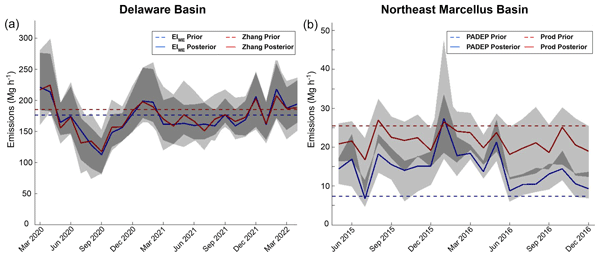
Zachary Barkley, Kenneth Davis, Natasha Miles, Scott Richardson, Aijun Deng, Benjamin Hmiel, David Lyon, and Thomas Lauvaux
Atmos. Chem. Phys., 23, 6127–6144, https://doi.org/10.5194/acp-23-6127-2023, https://doi.org/10.5194/acp-23-6127-2023, 2023
Short summary
Short summary
Using methane monitoring instruments attached to towers, we measure methane concentrations and quantify methane emissions coming from the Marcellus and Permian oil and gas basins. In the Marcellus, emissions were 3 times higher than the state inventory across the entire monitoring period. In the Permian, we see a sharp decline in emissions aligning with the onset of the COVID-19 pandemic. Tower observational networks can be utilized in other basins for long-term monitoring of emissions.
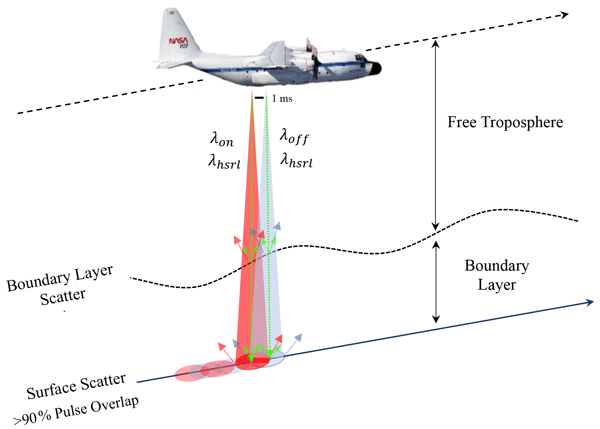
Rory A. Barton-Grimley, Amin R. Nehrir, Susan A. Kooi, James E. Collins, David B. Harper, Anthony Notari, Joseph Lee, Joshua P. DiGangi, Yonghoon Choi, and Kenneth J. Davis
Atmos. Meas. Tech., 15, 4623–4650, https://doi.org/10.5194/amt-15-4623-2022, https://doi.org/10.5194/amt-15-4623-2022, 2022
Short summary
Short summary
HALO is a multi-functional lidar that measures CH4 columns and profiles of H2O mixing ratio and aerosol/cloud optical properties. HALO supports carbon cycle, weather dynamics, and radiation science suborbital research and is a technology testbed for future space-based differential absorption lidar missions. In 2019 HALO collected CH4 columns and aerosol/cloud profiles during the ACT-America campaign. Here we assess HALO's CH4 accuracy and precision compared to co-located in situ observations.
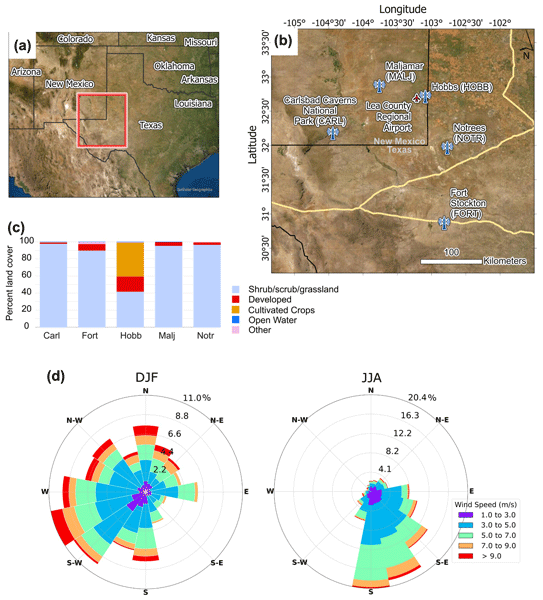
Vanessa C. Monteiro, Natasha L. Miles, Scott J. Richardson, Zachary Barkley, Bernd J. Haupt, David Lyon, Benjamin Hmiel, and Kenneth J. Davis
Earth Syst. Sci. Data, 14, 2401–2417, https://doi.org/10.5194/essd-14-2401-2022, https://doi.org/10.5194/essd-14-2401-2022, 2022
Short summary
Short summary
We describe a network of five ground-based in situ towers, equipped to measure concentrations of methane, carbon dioxide, hydrogen sulfide, and the isotopic ratio of methane, in the Permian Basin, United States. The main goal is to use methane concentrations with atmospheric models to determine methane emissions from one of the Permian sub-basins. These datasets can improve emissions estimations, leading to best practices in the oil and natural gas industry, and policies for emissions reduction.
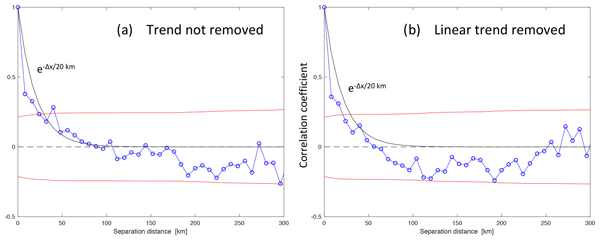
David F. Baker, Emily Bell, Kenneth J. Davis, Joel F. Campbell, Bing Lin, and Jeremy Dobler
Geosci. Model Dev., 15, 649–668, https://doi.org/10.5194/gmd-15-649-2022, https://doi.org/10.5194/gmd-15-649-2022, 2022
Short summary
Short summary
The OCO-2 satellite measures many closely spaced column-averaged CO2 values around its orbit. To give these data proper weight in flux inversions, their error correlations must be accounted for. Here we lay out a 1-D error model with correlations that die out exponentially along-track to do so. A correlation length scale of ∼20 km is derived from column CO2 measurements from an airborne lidar flown underneath OCO-2 for use in this model. The model's performance is compared to previous ones.
Cited articles
Allan, D. W.: Time and Frequency (Time-Domain) Characterization, Estimation, and Prediction of Precision Clocks and Oscillators, IEEE Trans. Ultrason., Ferroelect., Freq. Contr., 34, 647–654, https://doi.org/10.1109/T-UFFC.1987.26997, 1987.
Alvarez, R. A., Zavala-Araiza, D., Lyon, D. R., Allen, D. T., Barkley, Z. R., Brandt, A. R., Davis, K. J., Herndon, S. C., Jacob, D. J., Karion, A., Kort, E. A., Lamb, B. K., Lauvaux, T., Maasakkers, J. D., Marchese, A. J., Omara, M., Pacala, S. W., Peischl, J., Robinson, A. L., Shepson, P. B., Sweeney, C., Townsend-Small, A., Wofsy, S. C., and Hamburg, S. P.: Assessment of methane emissions from the U.S. oil and gas supply chain, Science, 361, 186–188, https://doi.org/10.1126/science.aar7204, 2018.
Andrews, A. E., Kofler, J. D., Trudeau, M. E., Williams, J. C., Neff, D. H., Masarie, K. A., Chao, D. Y., Kitzis, D. R., Novelli, P. C., Zhao, C. L., Dlugokencky, E. J., Lang, P. M., Crotwell, M. J., Fischer, M. L., Parker, M. J., Lee, J. T., Baumann, D. D., Desai, A. R., Stanier, C. O., De Wekker, S. F. J., Wolfe, D. E., Munger, J. W., and Tans, P. P.: CO2, CO, and CH4 measurements from tall towers in the NOAA Earth System Research Laboratory's Global Greenhouse Gas Reference Network: instrumentation, uncertainty analysis, and recommendations for future high-accuracy greenhouse gas monitoring efforts, Atmos. Meas. Tech., 7, 647–687, https://doi.org/10.5194/amt-7-647-2014, 2014.
Barkley, Z., Davis, K., Miles, N., Richardson, S., Deng, A., Hmiel, B., Lyon, D., and Lauvaux, T.: Quantification of oil and gas methane emissions in the Delaware and Marcellus basins using a network of continuous tower-based measurements, Atmos. Chem. Phys., 23, 6127–6144, https://doi.org/10.5194/acp-23-6127-2023, 2023.
Barkley, Z. R., Lauvaux, T., Davis, K. J., Deng, A., Fried, A., Weibring, P., Richter, D., Walega, J. G., DiGangi, J., Ehrman, S. H., Ren, X., and Dickerson, R. R.: Estimating Methane Emissions From Underground Coal and Natural Gas Production in Southwestern Pennsylvania, Geophys. Res. Lett., 46, 4531–4540, https://doi.org/10.1029/2019GL082131, 2019.
Barkley, Z. R., Davis, K. J., Feng, S., Cui, Y. Y., Fried, A., Weibring, P., Richter, D., Walega, J. G., Miller, S. M., Eckl, M., Roiger, A., Fiehn, A., and Kostinek, J.: Analysis of Oil and Gas Ethane and Methane Emissions in the Southcentral and Eastern United States Using Four Seasons of Continuous Aircraft Ethane Measurements, JGR Atmospheres, 126, e2020JD034194, https://doi.org/10.1029/2020JD034194, 2021.
Caulton, D. R., Li, Q., Bou-Zeid, E., Fitts, J. P., Golston, L. M., Pan, D., Lu, J., Lane, H. M., Buchholz, B., Guo, X., McSpiritt, J., Wendt, L., and Zondlo, M. A.: Quantifying uncertainties from mobile-laboratory-derived emissions of well pads using inverse Gaussian methods, Atmos. Chem. Phys., 18, 15145–15168, https://doi.org/10.5194/acp-18-15145-2018, 2018.
Collins, W., Orbach, R., Bailey, M., Biraud, S., Coddington, I., DiCarlo, D., Peischl, J., Radhakrishnan, A., and Schimel, D.: Monitoring methane emissions from oil and gas operations, Opt. Express, 30, 24326, https://doi.org/10.1364/OE.464421, 2022.
Commane, R., Hallward-Driemeier, A., and Murray, L. T.: Intercomparison of commercial analyzers for atmospheric ethane and methane observations, Atmos. Meas. Tech., 16, 1431–1441, https://doi.org/10.5194/amt-16-1431-2023, 2023.
Daley, H. M., Dickerson, R. R. R., Stratton, P. R., He, H., Ren, X., Koss, A., Brewer, A., Baidar, S., Hmiel, B., Bon, D., Pierce, G., Weibring, P., Richter, D., Walega, J., Ngulat, M., Santos, A., Hodshire, A. L., Vaughn, T., Zimmerle, D., and Fried, A.: Methane and Ethane Emission Rates, Intensities, and Trends: Aircraft Mass Balance Insights over the Denver-Julesburg Basin, Fall 2021, ESS Open Archive, https://doi.org/10.22541/essoar.175069495.52092664/v1, 23 June 2025.
Defratyka, S. M., Paris, J.-D., Yver-Kwok, C., Loeb, D., France, J., Helmore, J., Yarrow, N., Gros, V., and Bousquet, P.: Ethane measurement by Picarro CRDS G2201-i in laboratory and field conditions: potential and limitations, Atmos. Meas. Tech., 14, 5049–5069, https://doi.org/10.5194/amt-14-5049-2021, 2021a.
Defratyka, S. M., Paris, J.-D., Yver-Kwok, C., Fernandez, J. M., Korben, P., and Bousquet, P.: Mapping Urban Methane Sources in Paris, France, Environ. Sci. Technol., 55, 8583–8591, https://doi.org/10.1021/acs.est.1c00859, 2021b.
Filges, A., Gerbig, C., Chen, H., Franke, H., Klaus, C., and Jordan, A.: The IAGOS-core greenhouse gas package: a measurement system for continuous airborne observations of CO2, CH4, H2O and CO, Tellus B, 67, 27989, https://doi.org/10.3402/tellusb.v67.27989, 2015.
IPCC: Climate Change 2021: The Physical Science Basis. Contribution of Working Group I to the Sixth Assessment Report of the Intergovernmental Panel on Climate Change, edited by: Masson-Delmotte, V., Zhai, P., Pirani, A., Connors, S. L., Péan, C., Berger, S., Caud, N., Chen, Y., Goldfarb, L.. Gomis, M. I., Huang, M., Leitzell, K., Lonnoy, E., Matthews, J. B. R., Maycock, T. K., Waterfield, T., Yelekçi, O., Yu, R., and Zhou, B., Cambridge University Press, Cambridge, United Kingdom and New York, NY, USA, https://doi.org/10.1017/9781009157896, 2023.
Karion, A., Sweeney, C., Kort, E. A., Shepson, P. B., Brewer, A., Cambaliza, M., Conley, S. A., Davis, K., Deng, A., Hardesty, M., Herndon, S. C., Lauvaux, T., Lavoie, T., Lyon, D., Newberger, T., Pétron, G., Rella, C., Smith, M., Wolter, S., Yacovitch, T. I., and Tans, P.: Aircraft-Based Estimate of Total Methane Emissions from the Barnett Shale Region, Environ. Sci. Technol., 49, 8124–8131, https://doi.org/10.1021/acs.est.5b00217, 2015.
Levin, I., Karstens, U., Eritt, M., Maier, F., Arnold, S., Rzesanke, D., Hammer, S., Ramonet, M., Vítková, G., Conil, S., Heliasz, M., Kubistin, D., and Lindauer, M.: A dedicated flask sampling strategy developed for Integrated Carbon Observation System (ICOS) stations based on CO2 and CO measurements and Stochastic Time-Inverted Lagrangian Transport (STILT) footprint modelling, Atmos. Chem. Phys., 20, 11161–11180, https://doi.org/10.5194/acp-20-11161-2020, 2020.
Liu, Y., Miles, N. L., Richardson, S. J., Miller, D. O., and Haupt, B. J.: Denver-Julesberg Basin: in-Situ Tower Greenhouse Gas Data, Penn State Data Commons [data set], https://doi.org/10.26208/RA58-SX41, 2025.
Miles, N. L., Richardson, S. J., Lauvaux, T., Davis, K. J., Balashov, N. V., Deng, A., Turnbull, J. C., Sweeney, C., Gurney, K. R., Patarasuk, R., Razlivanov, I., Cambaliza, M. O. L., and Shepson, P. B.: Quantification of urban atmospheric boundary layer greenhouse gas dry mole fraction enhancements in the dormant season: Results from the Indianapolis Flux Experiment (INFLUX), Elementa: Science of the Anthropocene, 5, https://doi.org/10.1525/elementa.127, 2017.
Miles, N. L., Martins, D. K., Richardson, S. J., Rella, C. W., Arata, C., Lauvaux, T., Davis, K. J., Barkley, Z. R., McKain, K., and Sweeney, C.: Calibration and field testing of cavity ring-down laser spectrometers measuring CH4, CO2, and δ13CH4 deployed on towers in the Marcellus Shale region, Atmos. Meas. Tech., 11, 1273–1295, https://doi.org/10.5194/amt-11-1273-2018, 2018.
Monteiro, V. C., Miles, N. L., Richardson, S. J., Barkley, Z., Haupt, B. J., Lyon, D., Hmiel, B., and Davis, K. J.: Methane, carbon dioxide, hydrogen sulfide, and isotopic ratios of methane observations from the Permian Basin tower network, Earth Syst. Sci. Data, 14, 2401–2417, https://doi.org/10.5194/essd-14-2401-2022, 2022.
Myhre, G., Shindell, D., Bréon, F.-M., Collins, W., Fuglestvedt, J., Huang, J., Koch, D., Lamarque, J.-F., Lee, D., Mendoza, B., Nakajima, T., Robock, A., Stephens, G., Takemura, T., and Zhang, H.: Anthropogenic and Natural Radiative Forcing, in: Climate Change 2013: The Physical Science Basis. Contribution of Working Group I to the Fifth Assessment Report of the Intergovernmental Panel on Climate Change, edited by: Stocker, T. F., Qin, D. Plattner, G.-K. Tignor, M., Allen, S. K., Boschung, J., Nauels, A., Xia, Y., Bex, V., and Midgley, P. M., Cambridge University Press, Cambridge, UK and New York, NY, USA, 2013.
Rella, C. W., Tsai, T. R., Botkin, C. G., Crosson, E. R., and Steele, D.: Measuring Emissions from Oil and Natural Gas Well Pads Using the Mobile Flux Plane Technique, Environ. Sci. Technol., 49, 4742–4748, https://doi.org/10.1021/acs.est.5b00099, 2015.
Richardson, S. J., Miles, N. L., Davis, K. J., Crosson, E. R., Rella, C. W., and Andrews, A. E.: Field Testing of Cavity Ring-Down Spectroscopy Analyzers Measuring Carbon Dioxide and Water Vapor, J. Atmos. Ocean. Tech., 29, 397–406, https://doi.org/10.1175/JTECH-D-11-00063.1, 2012.
Richardson, S. J., Miles, N. L., Davis, K. J., Lauvaux, T., Martins, D. K., Turnbull, J. C., McKain, K., Sweeney, C., and Cambaliza, M. O. L.: Tower measurement network of in-situ CO2, CH4, and CO in support of the Indianapolis FLUX (INFLUX) Experiment, Elementa: Science of the Anthropocene, 5, 59, https://doi.org/10.1525/elementa.140, 2017.
Robertson, A. M., Edie, R., Snare, D., Soltis, J., Field, R. A., Burkhart, M. D., Bell, C. S., Zimmerle, D., and Murphy, S. M.: Variation in Methane Emission Rates from Well Pads in Four Oil and Gas Basins with Contrasting Production Volumes and Compositions, Environ. Sci. Technol., 51, 8832–8840, https://doi.org/10.1021/acs.est.7b00571, 2017.
Roscioli, J. R., Yacovitch, T. I., Floerchinger, C., Mitchell, A. L., Tkacik, D. S., Subramanian, R., Martinez, D. M., Vaughn, T. L., Williams, L., Zimmerle, D., Robinson, A. L., Herndon, S. C., and Marchese, A. J.: Measurements of methane emissions from natural gas gathering facilities and processing plants: measurement methods, Atmos. Meas. Tech., 8, 2017–2035, https://doi.org/10.5194/amt-8-2017-2015, 2015.
Schwietzke, S., Griffin, W. M., Matthews, H. S., and Bruhwiler, L. M. P.: Natural Gas Fugitive Emissions Rates Constrained by Global Atmospheric Methane and Ethane, Environ. Sci. Technol., 48, 7714–7722, https://doi.org/10.1021/es501204c, 2014.
Shah, A., Pitt, J., Kabbabe, K., and Allen, G.: Suitability of a Non-Dispersive Infrared Methane Sensor Package for Flux Quantification Using an Unmanned Aerial Vehicle, Sensors, 19, 4705, https://doi.org/10.3390/s19214705, 2019.
Werle, P.: Accuracy and precision of laser spectrometers for trace gas sensing in the presence of optical fringes and atmospheric turbulence, Appl. Phys. B, 102, 313–329, https://doi.org/10.1007/s00340-010-4165-9, 2011.
WMO: WMO Greenhouse Gas Bulletin (GHG Bulletin)-No.18: The State of Greenhouse Gases in the Atmosphere Based on Global Observations through 2021, WMO, https://library.wmo.int/viewer/58743/?offset=#page=1&viewer=picture&o=bookmarks&n=0&q= (last access: 25 November 2024), 2022.
World Meteorological Organization (WMO): GAW Report No. 292: 21st WMO/IAEA Meeting on Carbon Dioxide, Other Greenhouse Gases and Related Tracers Measurement Techniques (GGMT-2022), Wageningen, The Netherlands, 19–21 September 2022, WMO, https://library.wmo.int/idurl/4/68925 (last access: 4 February 2026), 2024.
Yver Kwok, C., Laurent, O., Guemri, A., Philippon, C., Wastine, B., Rella, C. W., Vuillemin, C., Truong, F., Delmotte, M., Kazan, V., Darding, M., Lebègue, B., Kaiser, C., Xueref-Rémy, I., and Ramonet, M.: Comprehensive laboratory and field testing of cavity ring-down spectroscopy analyzers measuring H2O, CO2, CH4 and CO, Atmos. Meas. Tech., 8, 3867–3892, https://doi.org/10.5194/amt-8-3867-2015, 2015.
Short summary
This manuscript details laboratory and field-based testing of a tower-based methane and ethane measurement system to address the challenge of separating methane sources in oil and gas basins. We describe methods for managing water vapor, calibration, and estimating the various components of measurement uncertainty. With appropriate engineering and calibration, the instrument shows the capability to measure CH4 and C2H6 with sufficient stability to distinguish regional methane emission sources.
This manuscript details laboratory and field-based testing of a tower-based methane and ethane...


