
Articles | Volume 18, issue 23
https://doi.org/10.5194/amt-18-7315-2025
© Author(s) 2025. This work is distributed under
the Creative Commons Attribution 4.0 License.
the Creative Commons Attribution 4.0 License.
https://doi.org/10.5194/amt-18-7315-2025
© Author(s) 2025. This work is distributed under
the Creative Commons Attribution 4.0 License.
the Creative Commons Attribution 4.0 License.
Research article
| 
03 Dec 2025
Research article |
| 03 Dec 2025
| 03 Dec 2025
Validating physical and semi-empirical satellite-based irradiance retrievals using high- and low-accuracy radiometric observations in a monsoon-influenced continental climate
Yun Chen
Public Meteorological Service Centre, China Meteorological Administration, Beijing, China
Key Laboratory of Energy Meteorology, China Meteorological Administration, Beijing, China

School of Electrical Engineering and Automation, Harbin Institute of Technology, Harbin, Heilongjiang, China
Chunlin Huang
Institute of Light Resources and Environmental Sciences, Henan Academy of Sciences, Zhengzhou, Henan, China
Hongrong Shi
Institute of Atmospheric Physics, Chinese Academy of Sciences, Beijing, China
Adam R. Jensen
Department of Civil and Mechanical Engineering, Technical University of Denmark, Kgs. Lyngby, Denmark
Xiang'ao Xia
Institute of Atmospheric Physics, Chinese Academy of Sciences, Beijing, China
University of Chinese Academy of Sciences, Beijing, China
Yves-Marie Saint-Drenan
MINES ParisTech, PSL Research University, O.I.E. Centre Observation, Impacts, Energy, 06904, Sophia Antipolis, France
Christian A. Gueymard
Solar Consulting Services, Colebrook, NH, USA
Martin János Mayer
Department of Energy Engineering, Faculty of Mechanical Engineering, Budapest University of Technology and Economics, Műegyetem rkp. 3, 1111 Budapest, Hungary
Yanbo Shen
CORRESPONDING AUTHOR
Public Meteorological Service Centre, China Meteorological Administration, Beijing, China
Key Laboratory of Energy Meteorology, China Meteorological Administration, Beijing, China
Related authors
Zhiwen Wang, Yun Chen, Dazhi Yang, Hongrong Shi, Yanbo Shen, and Xiang'ao Xia
Atmos. Meas. Tech., 19, 5567–5585, https://doi.org/10.5194/amt-19-5567-2026, https://doi.org/10.5194/amt-19-5567-2026, 2026
Short summary
Short summary
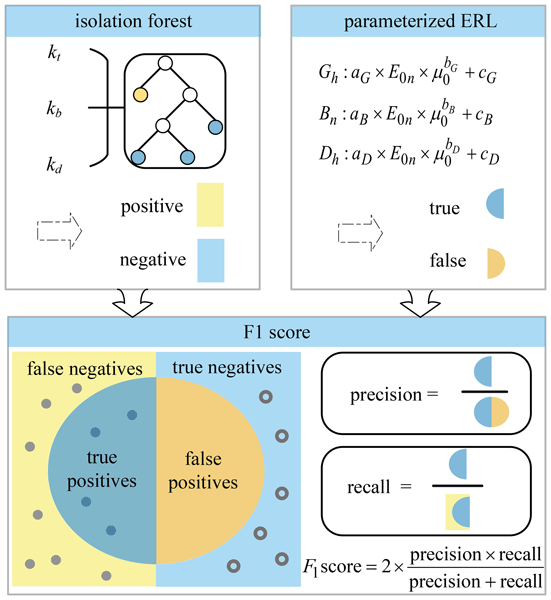
Quality control of ground-based solar radiation measurements is essential for climate and energy research. The current tests apply a global rule that is often too loose, missing anomalies, or too strict in polar regions, rejecting valid data. Using 75 stations, this study identifies seven radiation climates and configures regime-specific quality-control limits. The new limits better match local conditions, retaining valid polar data while restoring sensitivity in aerosol-polluted regions
Zhiwen Wang, Yun Chen, Dazhi Yang, Hongrong Shi, Yanbo Shen, and Xiang'ao Xia
Atmos. Meas. Tech., 19, 5567–5585, https://doi.org/10.5194/amt-19-5567-2026, https://doi.org/10.5194/amt-19-5567-2026, 2026
Short summary
Short summary
Quality control of ground-based solar radiation measurements is essential for climate and energy research. The current tests apply a global rule that is often too loose, missing anomalies, or too strict in polar regions, rejecting valid data. Using 75 stations, this study identifies seven radiation climates and configures regime-specific quality-control limits. The new limits better match local conditions, retaining valid polar data while restoring sensitivity in aerosol-polluted regions
Yves-Marie Saint-Drenan, Lucien Wald, Cyril Voyant, Mireille Lefèvre, and Yehia Eissa
EGUsphere, https://doi.org/10.5194/egusphere-2026-3204, https://doi.org/10.5194/egusphere-2026-3204, 2026
Short summary
Short summary
To address the specific needs of cloud-free detection for the verification of clear-sky models, we introduce MuscaDet, a detector based on the correlation between irradiance measurements and locally fitted Lambert–Beer functions. It operates at multiple temporal scales and uses a dynamic tolerance to address common limitations of existing detectors. Evaluated using measurements from seven BSRN stations, MuscaDet reliably detects cloud-free periods, even at high solar zenithal angles.
William Wandji Nyamsi, Ville Leinonen, Antti Lipponen, Else van den Besselaar, Santtu Mikkonen, Arturo Sanchez-Lorenzo, Martin Wild, Doris Folini, Tero Mielonen, Harri Kokkola, Antti Kukkurainen, Neus Sabater, Rei Kudo, Ben Liley, Raghav Srinivasan, Bruce W. Forgan, Alexandru Dumitrescu, Grzegorz Urban, Michał K. Kowalewski, Márcia Akemi Yamasoe, Nilton Évora do Rosário, Dimitra Founda, Stelios Kazadzis, Veronica Manara, Derbetini A. Vondou, Christian Gueymard, Anders V. Lindfors, Atsumu Ohmura, and Antti Arola
Atmos. Chem. Phys., 26, 10767–10788, https://doi.org/10.5194/acp-26-10767-2026, https://doi.org/10.5194/acp-26-10767-2026, 2026
Short summary
Short summary
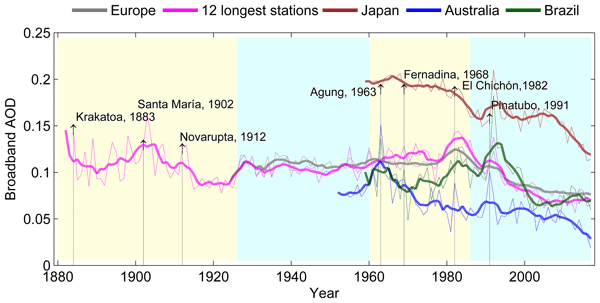
Worldwide reconstructed historical aerosol load reveals that during the period of:
- 1900–1959: the atmosphere became cleaner in most European cities;
- 1960–1985: anthropogenic aerosols were responsible for the dimming phenomenon in Europe. AOD increased over Southeast Brazil and decreased noticeably over Japan while a small negative trend was found over Oceania;
- 1986–2015: generally, the atmosphere has become much cleaner everywhere after the reversal trend around 1980s mainly observed in Europe.
Alessia Boccalatte, Yves-Marie Saint-Drenan, Benoît Gschwind, and Gabriel Chesnoiu
EGUsphere, https://doi.org/10.5194/egusphere-2026-4441, https://doi.org/10.5194/egusphere-2026-4441, 2026
This preprint is open for discussion and under review for Atmospheric Measurement Techniques (AMT).
Short summary
Short summary
Satellites that frequently observe large regions cannot directly see how clouds are arranged vertically. We tested whether a machine-learning method can reconstruct this three-dimensional structure by combining geostationary images with radar measurements. The method captured the broad height and amount of cloud, but smoothed strong signals and often lost separate cloud layers. It is therefore useful for broad cloud organisation, but not for fine vertical details.
Yueyuan Gong, Wenying He, Disong Fu, Xiang'ao Xia, Hongrong Shi, Weidong Nan, Pucai Wang, and Hongbin Chen
Earth Syst. Sci. Data, 18, 4725–4744, https://doi.org/10.5194/essd-18-4725-2026, https://doi.org/10.5194/essd-18-4725-2026, 2026
Short summary
Short summary
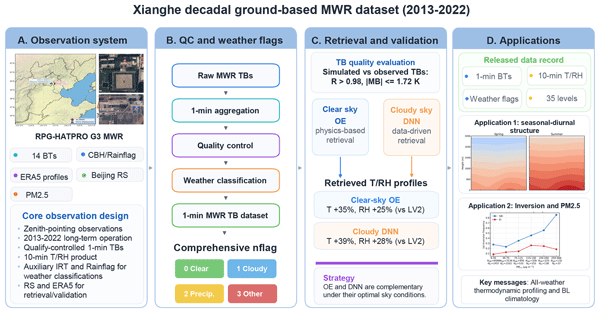
We built China's first ten-year record from a ground-based microwave sensor that tracks temperature and humidity above Xianghe. After checking data quality and separating clear, cloudy, and rainy periods, we produced reliable one- to ten-minute data for 2013-2022. Improved methods reduced errors in temperature and humidity estimates. The record shows that winter cold air is often trapped near the ground, especially during heavy fine-particle pollution, supporting weather and air-quality studies.
Antti Lipponen, Jorge Lezaca, Yves-Marie Saint-Drenan, Marion Schroedter-Homscheidt, and Antti Arola
EGUsphere, https://doi.org/10.5194/egusphere-2026-2743, https://doi.org/10.5194/egusphere-2026-2743, 2026
Short summary
Short summary
We studied what causes errors in Copernicus Atmosphere Monitoring Service solar radiation data using explainable machine learning methods and ground-based observations. The analysis showed that cloud properties are the main source of errors, while aerosols and surface reflectance have smaller effects. The results improve understanding of the strengths and weaknesses of current models and can support future model development, forecasting and solar energy applications.
Jun Zhu, Yingying Wang, Xu Yue, Huizheng Che, Xiangao Xia, Xiaofei Lu, Chenguang Tian, and Hong Liao
Atmos. Chem. Phys., 26, 5679–5696, https://doi.org/10.5194/acp-26-5679-2026, https://doi.org/10.5194/acp-26-5679-2026, 2026
Short summary
Short summary
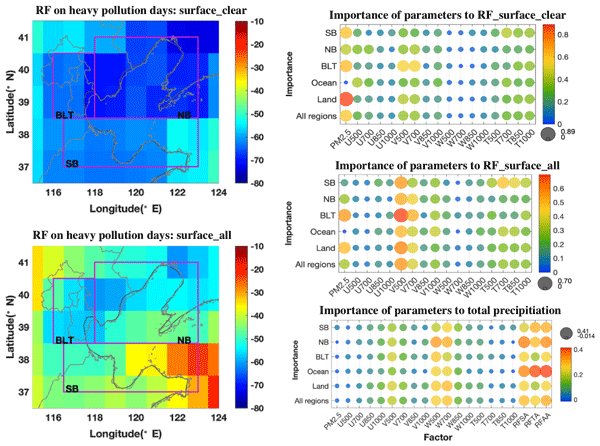
The radiative forcing (RF) of PM2.5 heavy pollution, its influencing factors and importance to precipitation in the Bohai Rim regions (China) during 2014–2023 is analyzed. The results show that the variations in PM2.5 and RF values under different temperature profiles are not consistent. Pollution RFs were as important as vertical winds to the total precipitation. The results may improve understanding of the radiative effect of pollution and provide some assistance in precipitation forecasting.
Qinghai Qi, Yuting Tan, Christian A. Gueymard, Martin Wild, Bo Hu, Wenmin Qin, Taowen Sun, Ming Zhang, and Lunche Wang
Earth Syst. Sci. Data, 17, 7271–7292, https://doi.org/10.5194/essd-17-7271-2025, https://doi.org/10.5194/essd-17-7271-2025, 2025
Short summary
Short summary
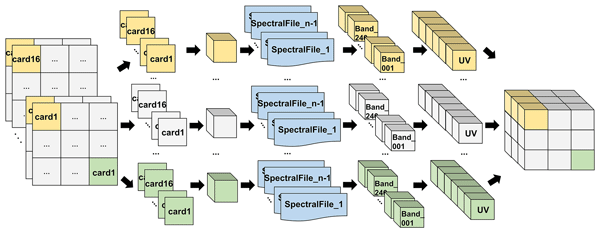
This research presents China's first long-term (1981–2023) hyperspectral ultraviolet radiation dataset with exceptional 0.5 nm spectral resolution. The spectral detail enables precise identification of UV absorption characteristics and atmospheric interactions previously obscured in conventional broadband measurements. These results provide new capabilities for monitoring ozone depletion, and optimizing solar energy systems across China's diverse climatic regions.
Danyang Wang, Wenying He, Yongheng Bi, Xiangao Xia, and Hongbin Chen
EGUsphere, https://doi.org/10.5194/egusphere-2025-4233, https://doi.org/10.5194/egusphere-2025-4233, 2025
Preprint archived
Short summary
Short summary
Snow forms in two ways: by droplets freezing onto snowflakes (riming) or by snowflakes sticking together (aggregation). These processes often overlap and are hard to tell apart with standard radar. We developed a new radar method using three wavelengths to track how signals change with height, allowing us to distinguish riming and aggregation. It captures subtle changes that older methods miss, providing a clearer picture of how snow forms and leading to more accurate snowfall forecasts.
Job I. Wiltink, Hartwig Deneke, Yves-Marie Saint-Drenan, Chiel C. van Heerwaarden, and Jan Fokke Meirink
Atmos. Meas. Tech., 17, 6003–6024, https://doi.org/10.5194/amt-17-6003-2024, https://doi.org/10.5194/amt-17-6003-2024, 2024
Short summary
Short summary
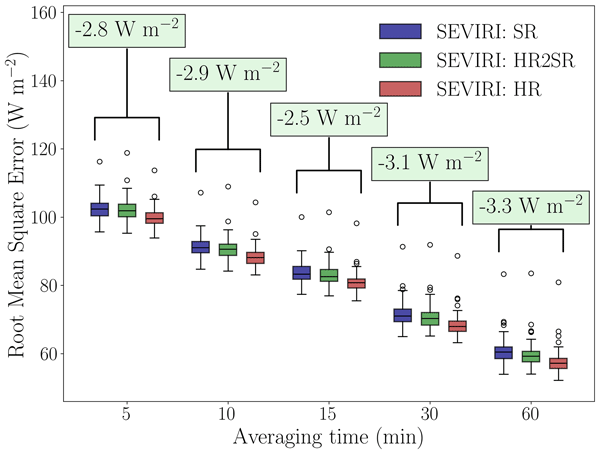
Meteosat Spinning Enhanced Visible and Infrared Imager (SEVIRI) global horizontal irradiance (GHI) retrievals are validated at standard and increased spatial resolution against a network of 99 pyranometers. GHI accuracy is strongly dependent on the cloud regime. Days with variable cloud conditions show significant accuracy improvements when retrieved at higher resolution. We highlight the benefits of dense network observations and a cloud-regime-resolved approach in validating GHI retrievals.
Xinran Xia, Rubin Jiang, Min Min, Shengli Wu, Peng Zhang, and Xiangao Xia
Earth Syst. Sci. Data Discuss., https://doi.org/10.5194/essd-2024-395, https://doi.org/10.5194/essd-2024-395, 2024
Revised manuscript not accepted
Short summary
Short summary
Based on the MicroWave Radiation Imager aboard FY-3 series satellites, we developed a global terrestrial precipitable water vapor dataset from 2012 to 2020. This dataset overcomes the limitations of infrared observations and provides accurate, all-weather PWV data ,spanning all types of land surface. Researchers are expected to leverage it to explore the role of water vapor in weather patterns, refine precipitation forecasting, and validate climate simulations.
Elyse A. Pennington, Yuan Wang, Benjamin C. Schulze, Karl M. Seltzer, Jiani Yang, Bin Zhao, Zhe Jiang, Hongru Shi, Melissa Venecek, Daniel Chau, Benjamin N. Murphy, Christopher M. Kenseth, Ryan X. Ward, Havala O. T. Pye, and John H. Seinfeld
Atmos. Chem. Phys., 24, 2345–2363, https://doi.org/10.5194/acp-24-2345-2024, https://doi.org/10.5194/acp-24-2345-2024, 2024
Short summary
Short summary
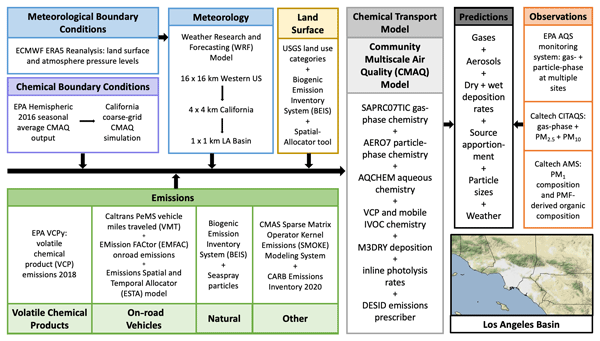
To assess the air quality in Los Angeles (LA), we improved the CMAQ model by using dynamic traffic emissions and new secondary organic aerosol schemes to represent volatile chemical products. Source apportionment demonstrates that the urban areas of the LA Basin and vicinity are NOx-saturated, with the largest sensitivity of O3 to changes in volatile organic compounds in the urban core. The improvement and remaining issues shed light on the future direction of the model development.
Wenying He, Hongbin Chen, Hongyong Yu, Jun Li, Jidong Pan, Shuqing Ma, Xuefen Zhang, Rang Guo, Bingke Zhao, Xi Chen, Xiangao Xia, and Kaicun Wang
Atmos. Meas. Tech., 17, 135–144, https://doi.org/10.5194/amt-17-135-2024, https://doi.org/10.5194/amt-17-135-2024, 2024
Short summary
Short summary
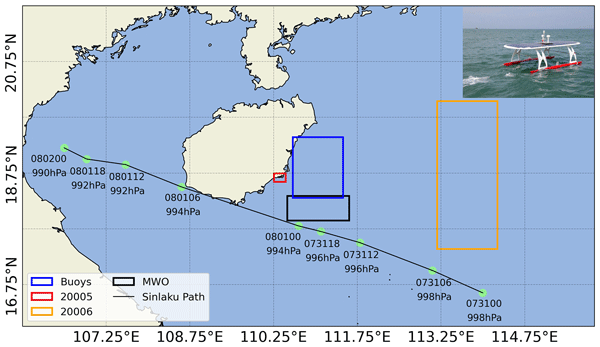
The Marine Weather Observer (MWO) system completed a long-term observation, actively approaching the center of Typhoon Sinlaku on 24 July–2 August 2020, over the South China Sea. The in situ observations were evaluated through comparison with buoy observations during the evolution of Typhoon Sinlaku. As a mobile observation station, MWO has shown its unique advantages over traditional observation methods, and the results preliminarily demonstrate the reliable observation capability of MWO.
Hadrien Verbois, Yves-Marie Saint-Drenan, Vadim Becquet, Benoit Gschwind, and Philippe Blanc
Atmos. Meas. Tech., 16, 4165–4181, https://doi.org/10.5194/amt-16-4165-2023, https://doi.org/10.5194/amt-16-4165-2023, 2023
Short summary
Short summary
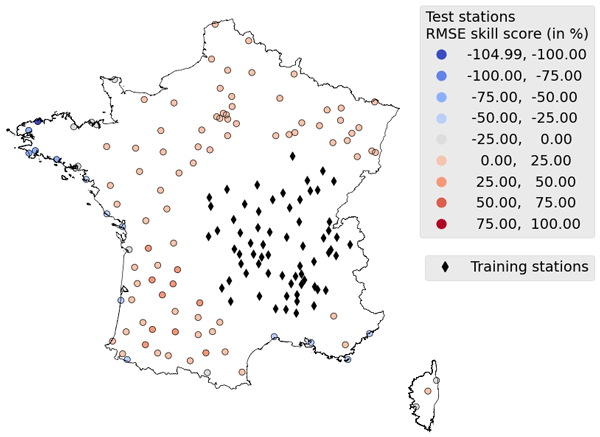
Solar surface irradiance (SSI) estimations inferred from satellite images are essential to gain a comprehensive understanding of the solar resource, which is crucial in many fields. This study examines the recent data-driven methods for inferring SSI from satellite images and explores their strengths and weaknesses. The results suggest that while these methods show great promise, they sometimes dramatically underperform and should probably be used in conjunction with physical approaches.
William Wandji Nyamsi, Yves-Marie Saint-Drenan, Antti Arola, and Lucien Wald
Atmos. Meas. Tech., 16, 2001–2036, https://doi.org/10.5194/amt-16-2001-2023, https://doi.org/10.5194/amt-16-2001-2023, 2023
Short summary
Short summary
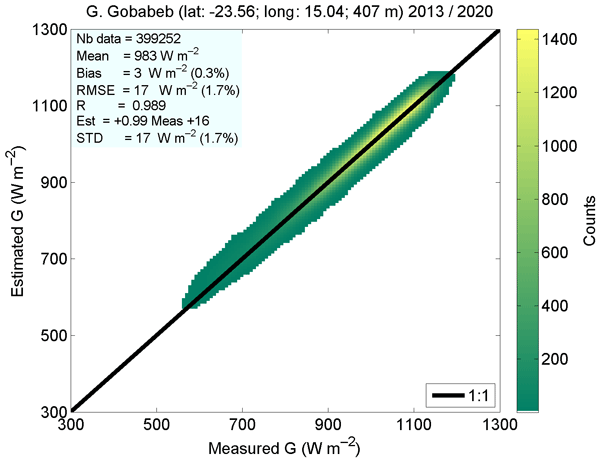
The McClear service provides estimates of surface solar irradiances in cloud-free conditions. By comparing McClear estimates to 1 min measurements performed in Sub-Saharan Africa and the Maldives Archipelago in the Indian Ocean, McClear accurately estimates global irradiance and tends to overestimate direct irrradiance. This work establishes a general overview of the performance of the McClear service.
Benoît Tournadre, Benoît Gschwind, Yves-Marie Saint-Drenan, Xuemei Chen, Rodrigo Amaro E Silva, and Philippe Blanc
Atmos. Meas. Tech., 15, 3683–3704, https://doi.org/10.5194/amt-15-3683-2022, https://doi.org/10.5194/amt-15-3683-2022, 2022
Short summary
Short summary
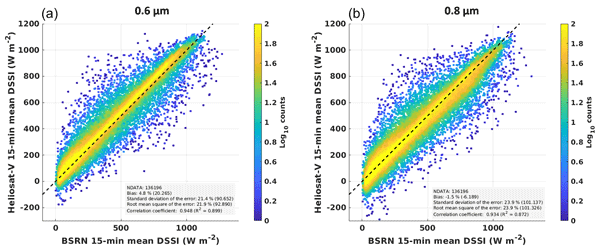
Solar radiation received by the Earth's surface is valuable information for various fields like the photovoltaic industry or climate research. Pictures taken from satellites can be used to estimate the solar radiation from cloud reflectivity. Two issues for a good estimation are different instrumentations and orbits. We modify a widely used method that is today only used on geostationary satellites, so it can be applied on instruments on different orbits and with different sensitivities.
Yu Zheng, Huizheng Che, Yupeng Wang, Xiangao Xia, Xiuqing Hu, Xiaochun Zhang, Jun Zhu, Jibiao Zhu, Hujia Zhao, Lei Li, Ke Gui, and Xiaoye Zhang
Atmos. Meas. Tech., 15, 2139–2158, https://doi.org/10.5194/amt-15-2139-2022, https://doi.org/10.5194/amt-15-2139-2022, 2022
Short summary
Short summary
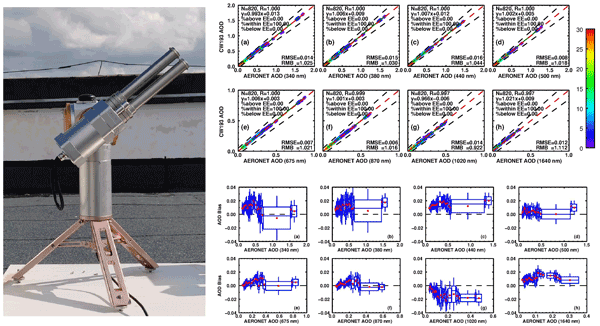
Ground-based observations of aerosols and aerosol data verification is important for satellite and climate model modification. Here we present an evaluation of aerosol microphysical, optical and radiative properties measured using a multiwavelength photometer with a highly integrated design and smart control performance. The validation of this product is discussed in detail using AERONET as a reference. This work contributes to reducing AOD uncertainties in China and combating climate change.
Cited articles
Alvo, M. and Yu, P. L. H.: Exploratory Analysis of Ranking Data, in: Statistical Methods for Ranking Data, Frontiers in Probability and the Statistical Sciences, Springer New York, 7–21, https://doi.org/10.1007/978-1-4939-1471-5, 2014. a
Atiya, A. F.: Why does forecast combination work so well?, International Journal of Forecasting, 36, 197–200, https://doi.org/10.1016/j.ijforecast.2019.03.010, 2020. a
Blaga, R., Sabadus, A., Stefu, N., Dughir, C., Paulescu, M., and Badescu, V.: A current perspective on the accuracy of incoming solar energy forecasting, Progress in Energy and Combustion Science, 70, 119–144, https://doi.org/10.1016/j.pecs.2018.10.003, 2019. a
Bright, J. M.: Solcast: Validation of a satellite-derived solar irradiance dataset, Solar Energy, 189, 435–449, https://doi.org/10.1016/j.solener.2019.07.086, 2019. a
Chen, S., Liang, Z., Guo, S., and Li, M.: Estimation of high-resolution solar irradiance data using optimized semi-empirical satellite method and GOES-16 imagery, Solar Energy, 241, 404–415, https://doi.org/10.1016/j.solener.2022.06.013, 2022. a
Driemel, A., Augustine, J., Behrens, K., Colle, S., Cox, C., Cuevas-Agulló, E., Denn, F. M., Duprat, T., Fukuda, M., Grobe, H., Haeffelin, M., Hodges, G., Hyett, N., Ijima, O., Kallis, A., Knap, W., Kustov, V., Long, C. N., Longenecker, D., Lupi, A., Maturilli, M., Mimouni, M., Ntsangwane, L., Ogihara, H., Olano, X., Olefs, M., Omori, M., Passamani, L., Pereira, E. B., Schmithüsen, H., Schumacher, S., Sieger, R., Tamlyn, J., Vogt, R., Vuilleumier, L., Xia, X., Ohmura, A., and König-Langlo, G.: Baseline Surface Radiation Network (BSRN): structure and data description (1992–2017), Earth Syst. Sci. Data, 10, 1491–1501, https://doi.org/10.5194/essd-10-1491-2018, 2018. a
Elias, T., Ferlay, N., Chesnoiu, G., Chiapello, I., and Moulana, M.: Regional validation of the solar irradiance tool SolaRes in clear-sky conditions, with a focus on the aerosol module, Atmos. Meas. Tech., 17, 4041–4063, https://doi.org/10.5194/amt-17-4041-2024, 2024. a
Forstinger, A., Wilbert, S., Kraas, B., Peruchena, C. F., Gueymard, C. A., Collino, E., Ruiz-Arias, J. A., Polo Martinez, J., Saint-Drenan, Y.-M., Ronzio, D., Hanrieder, N., Jensen, A. R., and Yang, D.: Expert quality control of solar radiation ground data sets, in: Solar World Congress 2021, 1–12, International Solar Energy Society, Virtual conference, https://doi.org/10.18086/swc.2021.38.02, 2021. a, b, c
Gneiting, T.: Making and Evaluating Point Forecasts, Journal of the American Statistical Association, 106, 746–762, https://doi.org/10.1198/jasa.2011.r10138, 2011. a
Habte, A., Sengupta, M., Andreas, A., Wilcox, S., and Stoffel, T.: Intercomparison of 51 radiometers for determining global horizontal irradiance and direct normal irradiance measurements, Solar Energy, 133, 372–393, https://doi.org/10.1016/j.solener.2016.03.065, 2016. a
Huang, C., Shi, H., Yang, D., Gao, L., Zhang, P., Fu, D., Xia, X., Chen, Q., Yuan, Y., Liu, M., Hu, B., Lin, K., and Li, X.: Retrieval of sub-kilometer resolution solar irradiance from Fengyun-4A satellite using a region-adapted Heliosat-2 method, Solar Energy, 264, 112038, https://doi.org/10.1016/j.solener.2023.112038, 2023. a, b, c, d, e, f
Huang, C., Shi, H., Yang, G., Xia, X., Yang, D., Fu, D., Gao, L., Zhang, P., Hu, B., Chen, Y., and Chen, Q.: Autonomous solar resourcing in China with Fengyun-2, Solar Energy, 296, 113593, https://doi.org/10.1016/j.solener.2025.113593, 2025. a, b
Huang, G., Li, X., Huang, C., Liu, S., Ma, Y., and Chen, H.: Representativeness errors of point-scale ground-based solar radiation measurements in the validation of remote sensing products, Remote Sensing of Environment, 181, 198–206, https://doi.org/10.1016/j.rse.2016.04.001, 2016. a
Huang, G., Liang, S., Lu, N., Ma, M., and Wang, D.: Toward a broadband parameterization scheme for estimating surface solar irradiance: Development and preliminary results on MODIS products, Journal of Geophysical Research: Atmospheres, 123, 12180–12193, https://doi.org/10.1029/2018JD028905, 2018. a
Huang, G., Li, Z., Li, X., Liang, S., Yang, K., Wang, D., and Zhang, Y.: Estimating surface solar irradiance from satellites: Past, present, and future perspectives, Remote Sensing of Environment, 233, 111371, https://doi.org/10.1016/j.rse.2019.111371, 2019. a, b
Huttunen, J., Kokkola, H., Mielonen, T., Mononen, M. E. J., Lipponen, A., Reunanen, J., Lindfors, A. V., Mikkonen, S., Lehtinen, K. E. J., Kouremeti, N., Bais, A., Niska, H., and Arola, A.: Retrieval of aerosol optical depth from surface solar radiation measurements using machine learning algorithms, non-linear regression and a radiative transfer-based look-up table, Atmos. Chem. Phys., 16, 8181–8191, https://doi.org/10.5194/acp-16-8181-2016, 2016. a
Hyndman, R. J., Bashtannyk, D. M., and Grunwald, G. K.: Estimating and visualizing conditional densities, Journal of Computational and Graphical Statistics, 5, 315–336, https://doi.org/10.1080/10618600.1996.10474715, 1996. a
Jensen, A. R., Sifnaios, I., Anderson, K. S., and Gueymard, C. A.: SolarStations.org – A global catalog of solar irradiance monitoring stations, Solar Energy, 295, 113457, https://doi.org/10.1016/j.solener.2025.113457, 2025. a
Kosmopoulos, P. G., Kazadzis, S., Taylor, M., Raptis, P. I., Keramitsoglou, I., Kiranoudis, C., and Bais, A. F.: Assessment of surface solar irradiance derived from real-time modelling techniques and verification with ground-based measurements, Atmos. Meas. Tech., 11, 907–924, https://doi.org/10.5194/amt-11-907-2018, 2018. a
Lefèvre, M., Oumbe, A., Blanc, P., Espinar, B., Gschwind, B., Qu, Z., Wald, L., Schroedter-Homscheidt, M., Hoyer-Klick, C., Arola, A., Benedetti, A., Kaiser, J. W., and Morcrette, J.-J.: McClear: a new model estimating downwelling solar radiation at ground level in clear-sky conditions, Atmos. Meas. Tech., 6, 2403–2418, https://doi.org/10.5194/amt-6-2403-2013, 2013. a
Liou, K.-N.: An Introduction to Atmospheric Radiation, vol. 84, Elsevier, https://doi.org/10.1016/S0074-6142(13)62908-3, 2002. a
Liu, B., Yang, D., Wang, Z., Xia, X., Qiu, H., and Shen, Y.: On the closure relationship among shortwave radiometric measurements under a cold climate during winter, Solar Energy, 285, 113119, https://doi.org/10.1016/j.solener.2024.113119, 2025. a
Long, C. N. and Shi, Y.: An automated quality assessment and control algorithm for surface radiation measurements, The Open Atmospheric Science Journal, 2, https://doi.org/10.2174/1874282300802010023, 2008. a
Marchand, M., Ghennioui, A., Wey, E., and Wald, L.: Comparison of several satellite-derived databases of surface solar radiation against ground measurement in Morocco, Adv. Sci. Res., 15, 21–29, https://doi.org/10.5194/asr-15-21-2018, 2018. a
Mayer, M. J. and Yang, D.: Calibration of deterministic NWP forecasts and its impact on verification, International Journal of Forecasting, 39, 981–991, https://doi.org/10.1016/j.ijforecast.2022.03.008, 2023. a
Murphy, A. H.: What is a good forecast? An essay on the nature of goodness in weather forecasting, Weather and Forecasting, 8, 281–293, https://doi.org/10.1175/1520-0434(1993)008<0281:WIAGFA>2.0.CO;2, 1993. a
Murphy, A. H. and Winkler, R. L.: A general framework for forecast verification, Monthly Weather Review, 115, 1330–1338, https://doi.org/10.1175/1520-0493(1987)115<1330:AGFFFV>2.0.CO;2, 1987. a
Ohmura, A., Dutton, E. G., Forgan, B., Fröhlich, C., Gilgen, H., Hegner, H., Heimo, A., König-Langlo, G., McArthur, B., Müller, G., Philipona, R., Pinker, R., Whitlock, C. H., Dehne, K., and Wild, M.: Baseline Surface Radiation Network (BSRN/WCRP): New precision radiometry for climate research, Bulletin of the American Meteorological Society, 79, 2115–2136, https://doi.org/10.1175/1520-0477(1998)079<2115:BSRNBW>2.0.CO;2, 1998. a, b
Perez, R., Ineichen, P., Moore, K., Kmiecik, M., Chain, C., George, R., and Vignola, F.: A new operational model for satellite-derived irradiances: Description and validation, Solar Energy, 73, 307–317, https://doi.org/10.1016/S0038-092X(02)00122-6, 2002. a, b
Perez, R., Aguiar, R., Collares-Pereira, M., Dumortier, D., Estrada-Cajigal, V., Gueymard, C. A., Ineichen, P., Littlefair, P., Lund, H., Michalsky, J., Olseth, J. A., Renné, D., Rymes, M., Skartveit, A., Vignola, F., and Zelenka, A.: Solar resource assessment: A review, in: Solar Energy: The State of the Art, 1st edn., edited by: Gordon, J. M., Routledge, p. 79, https://doi.org/10.4324/9781315074412, 2013. a
Polo, J., Wilbert, S., Ruiz-Arias, J. A., Meyer, R., Gueymard, C., Súri, M., Martín, L., Mieslinger, T., Blanc, P., Grant, I., Boland, J., Ineichen, P., Remund, J., Escobar, R., Troccoli, A., Sengupta, M., Nielsen, K. P., Renne, D., Geuder, N., and Cebecauer, T.: Preliminary survey on site-adaptation techniques for satellite-derived and reanalysis solar radiation datasets, Solar Energy, 132, 25–37, https://doi.org/10.1016/j.solener.2016.03.001, 2016. a
Qin, Y., McVicar, T. R., Huang, J., West, S., and Steven, A. D. L.: On the validity of using ground-based observations to validate geostationary-satellite-derived direct and diffuse surface solar irradiance: Quantifying the spatial mismatch and temporal averaging issues, Remote Sensing of Environment, 280, 113179, https://doi.org/10.1016/j.rse.2022.113179, 2022. a
Rigollier, C., Lefèvre, M., and Wald, L.: The method Heliosat-2 for deriving shortwave solar radiation from satellite images, Solar Energy, 77, 159–169, https://doi.org/10.1016/j.solener.2004.04.017, 2004. a, b
Salazar, G., Gueymard, C., Galdino, J. B., de Castro Vilela, O., and Fraidenraich, N.: Solar irradiance time series derived from high-quality measurements, satellite-based models, and reanalyses at a near-equatorial site in Brazil, Renewable and Sustainable Energy Reviews, 117, 109478, https://doi.org/10.1016/j.rser.2019.109478, 2020. a
Sanchez-Lorenzo, A., Enriquez-Alonso, A., Wild, M., Trentmann, J., Vicente-Serrano, S. M., Sanchez-Romero, A., Posselt, R., and Hakuba, M. Z.: Trends in downward surface solar radiation from satellites and ground observations over Europe during 1983–2010, Remote Sensing of Environment, 189, 108–117, https://doi.org/10.1016/j.rse.2016.11.018, 2017. a
Sengupta, M., Xie, Y., Lopez, A., Habte, A., Maclaurin, G., and Shelby, J.: The National Solar Radiation Data Base (NSRDB), Renewable and Sustainable Energy Reviews, 89, 51–60, https://doi.org/10.1016/j.rser.2018.03.003, 2018. a
Sengupta, M., Habte, A., Wilbert, S., Gueymard, C., Remund, J., Lorenz, E., van Sark, W., and Jensen, A. R.: Best Practices Handbook for the Collection and Use of Solar Resource Data for Solar Energy Applications: Fourth Edition, Tech. Rep. IEA-PVPS 16-6:2024, International Energy Agency, https://doi.org/10.69766/ENEH5295, 2024. a, b
Shi, C., Letu, H., Nakajima, T. Y., Nakajima, T., Wei, L., Xu, R., Lu, F., Riedi, J., Ichii, K., Zeng, J., Shang, H., Ma, R., Yin, S., Shi, J., Baran, A. J., Xu, J., Li, A., Tana, G., Wang, W., Na, Q., Sun, Q., Yang, W., Chen, L., and Shi, G.: Near-global monitoring of surface solar radiation through the construction of a geostationary satellite network observation system, The Innovation, 6, 100876, https://doi.org/10.1016/j.xinn.2025.100876, 2025. a
Shi, H., Yang, D., Wang, W., Fu, D., Gao, L., Zhang, J., Hu, B., Shan, Y., Zhang, Y., Bian, Y., Chen, H., and Xia, X.: First estimation of high-resolution solar photovoltaic resource maps over China with Fengyun-4A satellite and machine learning, Renewable and Sustainable Energy Reviews, 184, 113549, https://doi.org/10.1016/j.rser.2023.113549, 2023. a, b, c
Sweeney, C., Bessa, R. J., Browell, J., and Pinson, P.: The future of forecasting for renewable energy, WIREs Energy and Environment, 9, e365, https://doi.org/10.1002/wene.365, 2020. a
Tian, Y., Nearing, G. S., Peters-Lidard, C. D., Harrison, K. W., and Tang, L.: Performance metrics, error modeling, and uncertainty quantification, Monthly Weather Review, 144, 607–613, https://doi.org/10.1175/MWR-D-15-0087.1, 2016. a, b
Vallance, L., Charbonnier, B., Paul, N., Dubost, S., and Blanc, P.: Towards a standardized procedure to assess solar forecast accuracy: A new ramp and time alignment metric, Solar Energy, 150, 408–422, https://doi.org/10.1016/j.solener.2017.04.064, 2017. a
Verbois, H., Saint-Drenan, Y.-M., Becquet, V., Gschwind, B., and Blanc, P.: Retrieval of surface solar irradiance from satellite imagery using machine learning: pitfalls and perspectives, Atmos. Meas. Tech., 16, 4165–4181, https://doi.org/10.5194/amt-16-4165-2023, 2023. a
Wandji Nyamsi, W., Saint-Drenan, Y.-M., Arola, A., and Wald, L.: Further validation of the estimates of the downwelling solar radiation at ground level in cloud-free conditions provided by the McClear service: the case of Sub-Saharan Africa and the Maldives Archipelago, Atmos. Meas. Tech., 16, 2001–2036, https://doi.org/10.5194/amt-16-2001-2023, 2023. a
Wang, H. and Pinker, R. T.: Shortwave radiative fluxes from MODIS: Model development and implementation, Journal of Geophysical Research: Atmospheres, 114, D20201, https://doi.org/10.1029/2008JD010442, 2009. a
Wang, X., Hyndman, R. J., Li, F., and Kang, Y.: Forecast combinations: An over 50-year review, International Journal of Forecasting, 39, 1518–1547, https://doi.org/10.1016/j.ijforecast.2022.11.005, 2023. a
Xia, X., Yang, D., and Shen, Y.: Fengyun radiation services for solar energy meteorology : Status and perspective, Advances in Atmospheric Sciences, 42, 252–260, https://doi.org/10.1007/s00376-024-3164-4, 2025. a, b
Xie, Y., Sengupta, M., and Dudhia, J.: A Fast All-sky Radiation Model for Solar applications (FARMS): Algorithm and performance evaluation, Solar Energy, 135, 435–445, https://doi.org/10.1016/j.solener.2016.06.003, 2016. a
Yang, D. and Bright, J. M.: Worldwide validation of 8 satellite-derived and reanalysis solar radiation products: A preliminary evaluation and overall metrics for hourly data over 27 years, Solar Energy, 210, 3–19, https://doi.org/10.1016/j.solener.2020.04.016, 2020. a, b, c
Yang, D. and Gueymard, C. A.: Probabilistic post-processing of gridded atmospheric variables and its application to site adaptation of shortwave solar radiation, Solar Energy, 225, 427–443, https://doi.org/10.1016/j.solener.2021.05.050, 2021. a
Yang, D. and Kleissl, J.: Solar Irradiance and Photovoltaic Power Forecasting, CRC Press, https://doi.org/10.1201/9781003203971, 2024. a, b
Yang, D. and Perez, R.: Can we gauge forecasts using satellite-derived solar irradiance?, Journal of Renewable and Sustainable Energy, 11, 023704, https://doi.org/10.1063/1.5087588, 2019. a
Yang, D., Alessandrini, S., Antonanzas, J., Antonanzas-Torres, F., Badescu, V., Beyer, H. G., Blaga, R., Boland, J., Bright, J. M., Coimbra, C. F. M., David, M., Frimane, Â., Gueymard, C. A., Hong, T., Kay, M. J., Killinger, S., Kleissl, J., Lauret, P., Lorenz, E., van der Meer, D., Paulescu, M., Perez, R., Perpiñán-Lamigueiro, O., Peters, I. M., Reikard, G., Renné, D., Saint-Drenan, Y.-M., Shuai, Y., Urraca, R., Verbois, H., Vignola, F., Voyant, C., and Zhang, J.: Verification of deterministic solar forecasts, Solar Energy, 210, 20–37, https://doi.org/10.1016/j.solener.2020.04.019, 2020. a, b
Yang, D., Wang, W., Gueymard, C. A., Hong, T., Kleissl, J., Huang, J., Perez, M. J., Perez, R., Bright, J. M., Xia, X., van der Meer, D., and Peters, I. M.: A review of solar forecasting, its dependence on atmospheric sciences and implications for grid integration: Towards carbon neutrality, Renewable and Sustainable Energy Reviews, 161, 112348, https://doi.org/10.1016/j.rser.2022.112348, 2022a. a
Yang, D., Wang, W., and Xia, X.: A concise overview on solar resource assessment and forecasting, Advances in Atmospheric Sciences, 39, 1239–1251, https://doi.org/10.1007/s00376-021-1372-8, 2022b. a, b, c
Yang, X., Bright, J. M., Gueymard, C. A., Acord, B., and Wang, P.: Worldwide validation of an Earth Polychromatic Imaging Camera (EPIC) derived radiation product and comparison with recent reanalyses, Solar Energy, 243, 421–430, https://doi.org/10.1016/j.solener.2022.08.013, 2022c. a
Zainali, S., Yang, D., Landelius, T., and Campana, P. E.: Site adaptation with machine learning for a Northern Europe gridded global solar irradiance product, Energy and AI, 15, 100331, https://doi.org/10.1016/j.egyai.2023.100331, 2024. a
Zhang, X., Liang, S., Wild, M., and Jiang, B.: Analysis of surface incident shortwave radiation from four satellite products, Remote Sensing of Environment, 165, 186–202, https://doi.org/10.1016/j.rse.2015.05.015, 2015. a, b
Zhong, B., Ma, Y., Yang, A., and Wu, J.: Radiometric performance evaluation of FY-4A/AGRI based on Aqua/MODIS, Sensors, 21, 1859, https://doi.org/10.3390/s21051859, 2021. a
Short summary
We tested two satellite-based irradiance datasets against both high- and low-accuracy ground-based measurements. The dataset is unique: it includes irradiance measurements from a new research-grade monitoring station in a rare climate, along with new satellite data from China's Fengyun-4B geostationary satellite. Findings suggest that using low-accuracy measurements as a reference for validation can be risky.
We tested two satellite-based irradiance datasets against both high- and low-accuracy...


