
Articles | Volume 18, issue 23
https://doi.org/10.5194/amt-18-7337-2025
© Author(s) 2025. This work is distributed under
the Creative Commons Attribution 4.0 License.
the Creative Commons Attribution 4.0 License.
https://doi.org/10.5194/amt-18-7337-2025
© Author(s) 2025. This work is distributed under
the Creative Commons Attribution 4.0 License.
the Creative Commons Attribution 4.0 License.
Research article
| 
03 Dec 2025
Research article |
| 03 Dec 2025
| 03 Dec 2025
Identification of micro-dynamics phase transition processes for ammonium sulfate aerosols by two-dimensional correlation spectroscopy
Xiuli Wei
Key Laboratory of Environmental Optics and Technology, Anhui Institute of Optics and Fine Mechanics, Hefei Institutes of Physical Science, Chinese Academy of Sciences, Hefei 230031, China
School of Environmental Science and Optoeclectronic Technology, University of Science and Technology of China, Hefei 230026, China
Xiaofeng Lu
Key Laboratory of Environmental Optics and Technology, Anhui Institute of Optics and Fine Mechanics, Hefei Institutes of Physical Science, Chinese Academy of Sciences, Hefei 230031, China
School of Environmental Science and Optoeclectronic Technology, University of Science and Technology of China, Hefei 230026, China
Huaqiao Gui
CORRESPONDING AUTHOR

Key Laboratory of Environmental Optics and Technology, Anhui Institute of Optics and Fine Mechanics, Hefei Institutes of Physical Science, Chinese Academy of Sciences, Hefei 230031, China
School of Environmental Science and Optoeclectronic Technology, University of Science and Technology of China, Hefei 230026, China
Institute of Environmental Hefei Comprehensive National Science Center, Hefei 230088, China
Jie Wang
Key Laboratory of Environmental Optics and Technology, Anhui Institute of Optics and Fine Mechanics, Hefei Institutes of Physical Science, Chinese Academy of Sciences, Hefei 230031, China
Dexia Wu
Key Laboratory of Environmental Optics and Technology, Anhui Institute of Optics and Fine Mechanics, Hefei Institutes of Physical Science, Chinese Academy of Sciences, Hefei 230031, China
Jianguo Liu
Key Laboratory of Environmental Optics and Technology, Anhui Institute of Optics and Fine Mechanics, Hefei Institutes of Physical Science, Chinese Academy of Sciences, Hefei 230031, China
School of Environmental Science and Optoeclectronic Technology, University of Science and Technology of China, Hefei 230026, China
Related authors
Xijie Xiong, Zhibo Xie, Xiuli Wei, Douguo Zhang, Jianguo Liu, and Huaqiao Gui
Atmos. Chem. Phys., 26, 12183–12196, https://doi.org/10.5194/acp-26-12183-2026, https://doi.org/10.5194/acp-26-12183-2026, 2026
Short summary
Short summary
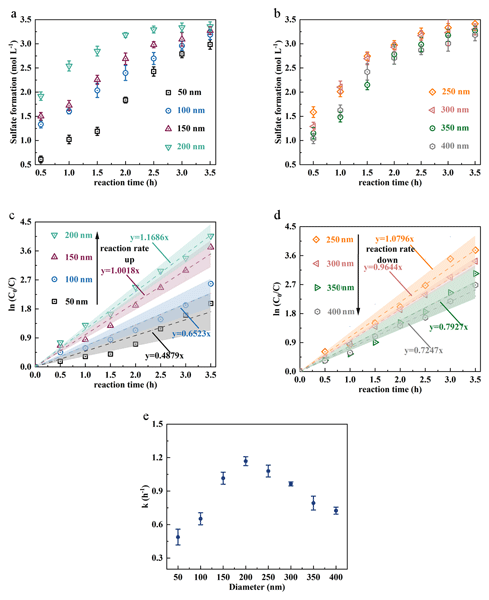
Using dark-field microscopy, we observed in situ reactions between individual sodium chloride nanoparticles and sulfur dioxide under ultraviolet irradiation. We found that reaction rates depended on particle size strongly and nonlinearly, with this behavior likely driven by the competition between surface curvature and specific surface area effects. This interpretation was further confirmed through transition state theory calculations and experimental modification of particle surface area.
Xiuli Wei, Haosheng Dai, Huaqiao Gui, Jiaoshi Zhang, Yin Cheng, Jie Wang, Yixin Yang, Youwen Sun, and Jianguo Liu
Atmos. Chem. Phys., 22, 3097–3109, https://doi.org/10.5194/acp-22-3097-2022, https://doi.org/10.5194/acp-22-3097-2022, 2022
Short summary
Short summary
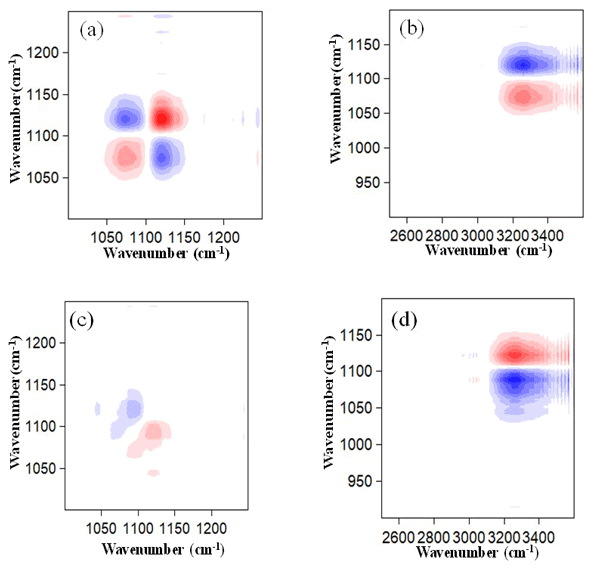
We demonstrated the usage of the Fourier transform infrared (FTIR) spectroscopic technique to characterize in real time the hygroscopic growth properties of nanoparticles and their phase transition micro-dynamics at the molecular level. We first realize real-time measurements of water content and dry nanoparticle mass to characterize hygroscopic growth factors. We then identify in real time the hydration interactions and the dynamic hygroscopic growth process of the functional groups.
Jitong Zhou, Gehang Huang, Fajun Yu, Xiaoqi Lei, Xiujuan Wang, Huaqiao Gui, Huanqin Wang, and Da-Ren Chen
Atmos. Meas. Tech., 19, 5815–5829, https://doi.org/10.5194/amt-19-5815-2026, https://doi.org/10.5194/amt-19-5815-2026, 2026
Short summary
Short summary
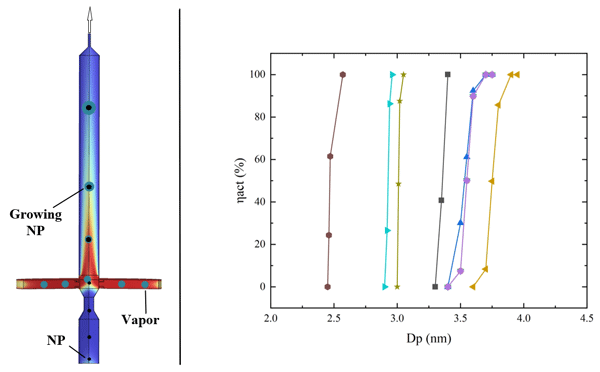
A numerical model for a mixing-type condensation particle counter (MCPC) was developed to map the performance for the ultrafine particle detection by varying its operational settings . It is found that a high temperature difference increases the vapor supersaturation and lowers the activation size of particles. Both the total flow rate and the vapor-fraction affect the efficiency of particle condensation growth. This work outlines the future design guidance for small MCPCs.
Hao Li, Xiaofei Qin, Jian Xu, Qianqian Gao, Kai Bi, Zhaoze Deng, Jianguo Liu, Haitao Zheng, Xiaoyu Ren, Xiaofei Wang, Congrui Deng, and Kan Huang
EGUsphere, https://doi.org/10.5194/egusphere-2026-4499, https://doi.org/10.5194/egusphere-2026-4499, 2026
Short summary
Short summary
Our results show that continental pollution and ocean emissions continuously mix, with chemical reactions producing new compounds. During polluted periods, nitrogen- and sulfur-containing molecules increased sharply. Notably, marine-derived signatures remained present even in winter, highlighting the ocean's persistent influence. This complexity affects how particles impact regional air quality, underscoring the need to consider both land and sea sources in environmental models.
Xijie Xiong, Zhibo Xie, Xiuli Wei, Douguo Zhang, Jianguo Liu, and Huaqiao Gui
Atmos. Chem. Phys., 26, 12183–12196, https://doi.org/10.5194/acp-26-12183-2026, https://doi.org/10.5194/acp-26-12183-2026, 2026
Short summary
Short summary
Using dark-field microscopy, we observed in situ reactions between individual sodium chloride nanoparticles and sulfur dioxide under ultraviolet irradiation. We found that reaction rates depended on particle size strongly and nonlinearly, with this behavior likely driven by the competition between surface curvature and specific surface area effects. This interpretation was further confirmed through transition state theory calculations and experimental modification of particle surface area.
Huiping Lu, Jiaoshi Zhang, Jingyi Zhang, Shengqian Zhou, Yang Wang, Jianguo Liu, and Huaqiao Gui
EGUsphere, https://doi.org/10.5194/egusphere-2026-848, https://doi.org/10.5194/egusphere-2026-848, 2026
Short summary
Short summary
A new deep-learning framework is developed to map the modal parameters of hygroscopic growth factor probability density function (GF-PDF) to raw instrument responses, thereby providing an accurate and efficient solution for parameterizing aerosol hygroscopic properties.
Chengxiang Guo, Tongzhu Yu, Yixin Yang, Huaqiao Gui, Zhe Ji, Jian Wang, Jianguo Liu, and Wenqing Liu
EGUsphere, https://doi.org/10.5194/egusphere-2026-565, https://doi.org/10.5194/egusphere-2026-565, 2026
Preprint archived
Short summary
Short summary
Accurately measuring ultrafine particle number concentration (PN) from motor vehicle emissions is essential for the prevention and control of atmospheric particulate pollution. The latest Euro 7 emission regulations have lowered the particle size detection threshold from 23 to 10 nm and introduced updated standards for exhaust gas pretreatment and particle counting devices.
Shipeng Kang, Tongzhu Yu, Yixin Yang, Jiguang Wang, Huaqiao Gui, Jianguo Liu, and Da-Ren Chen
Atmos. Meas. Tech., 16, 3245–3255, https://doi.org/10.5194/amt-16-3245-2023, https://doi.org/10.5194/amt-16-3245-2023, 2023
Short summary
Short summary
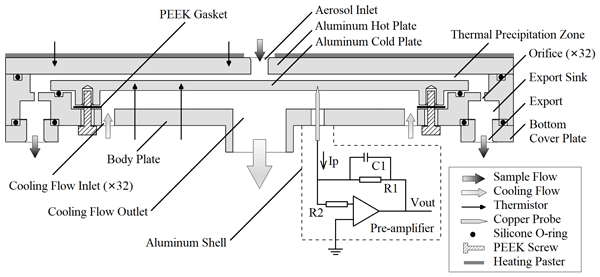
A new aerosol electrometer, the thermal precipitation aerosol electrometer (TPAE), was designed for particles in sizes less than 300 nm, and its prototype performance was experimentally evaluated. The TPAE combines the thermal precipitator in the disk-to-disk configuration with a microcurrent measurement circuit board (i.e., pre-amplifier) for measuring the current carried by collected particles. Our performance study shows that the TPAE performance is consistent with the reference.
Zhibo Xie, Jiaoshi Zhang, Huaqiao Gui, Yang Liu, Bo Yang, Haosheng Dai, Hang Xiao, Douguo Zhang, Da-Ren Chen, and Jianguo Liu
Atmos. Chem. Phys., 23, 2079–2088, https://doi.org/10.5194/acp-23-2079-2023, https://doi.org/10.5194/acp-23-2079-2023, 2023
Short summary
Short summary
The hygroscopic growth of single nanoparticles is important for hygroscopic characteristic analysis of atmospheric particles and for scientific studies involving atmospheric particles. Based on the hygroscopicity difference of subgroups of atmospheric nanoparticles, the classification and proportion analysis of atmospheric nanoparticles has been completed, which has potential significance in predicting the contribution of the atmospheric particulate hygroscopicity and particle growth mechanism.
Xiuli Wei, Haosheng Dai, Huaqiao Gui, Jiaoshi Zhang, Yin Cheng, Jie Wang, Yixin Yang, Youwen Sun, and Jianguo Liu
Atmos. Chem. Phys., 22, 3097–3109, https://doi.org/10.5194/acp-22-3097-2022, https://doi.org/10.5194/acp-22-3097-2022, 2022
Short summary
Short summary
We demonstrated the usage of the Fourier transform infrared (FTIR) spectroscopic technique to characterize in real time the hygroscopic growth properties of nanoparticles and their phase transition micro-dynamics at the molecular level. We first realize real-time measurements of water content and dry nanoparticle mass to characterize hygroscopic growth factors. We then identify in real time the hydration interactions and the dynamic hygroscopic growth process of the functional groups.
Cited articles
Ahn, K. H., Kim, S. M., Jung, H. J., Lee, M. J., Eom, H. J., Maskey, S., and Ro, C. U.: Combined Use of Optical and Electron Microscopic Techniques for the Measurement of Hygroscopic Property, Chemical Composition, and Morphology of Individual Aerosol Particles, Anal. Chem., 82, 7999–8009, https://doi.org/10.1021/ac101432y, 2010.
Cai, C., Luan, Y. M., Shi, X. M., and Zhang, Y. H.: (NH4)2SO4 heterogeneous nucleation and glycerol evaporation of (NH4)2SO4-glycerol system in its dynamic efflorescence process, Chemical Physics, 483–484, 140–148, https://doi.org/10.1016/j.chemphys.2016.12.003, 2017.
Chamberlayne, C. F. and Zare, R. N.: Simple model for the electric field and spatial distribution of ions in a microdroplet, J. Chem. Phys., 152, 184702, https://doi.org/10.1063/5.0006550, 2020.
Chen, W., Teng, C. Y., Qian, C., and Yu, H. Q.: Characterizing Properties and Environmental Behaviors of Dissolved Organic Matter Using Two-Dimensional Correlation Spectroscopic Analysis, Environ. Sci. Technol., 53, 4683–4694, https://doi.org/10.1021/acs.est.9b01103, 2019.
Cheng, Y., Su, H., Koop, T., Mikhailov, E., and Poschl, U.: Size dependence of phase transitions in aerosol nanoparticles, Nat. Commun., 6, 5923, https://doi.org/10.1038/ncomms6923, 2015.
Ciobanu, V. G., Marcolli, C., Krieger, U. K., Zuend, A., and Peter, T.: Efflorescence of Ammonium Sulfate and Coated Ammonium Sulfate Particles: Evidence for Surface Nucleation, J. Phys. Chem.-US A, 114, 9486–9495, https://doi.org/10.1021/jp103541w, 2010.
Cohen, M. D., Flagan, R. C., and Seinfeld, J. H.: Studies of concentrated electrolyte solutions using the electrodynamic balance. 1. Water activities for single-electrolyte solutions, J. Phys. Chem.-US, 91, 4563–4574, https://doi.org/10.1021/j100301a029, 1987.
Cziczo, D. J. and Abbatt, J. P. D.: Deliquescence, efflorescence, and supercooling of ammonium sulfate aerosols at low temperature: Implications for cirrus cloud formation and aerosol phase in the atmosphere, J. Geophys. Res.-Atmos., 104, 13781–13790, https://doi.org/10.1029/1999JD900112, 1999.
Dong, J. L., Li, X. H., Zhao, L. J., Xiao, H. S., Wang, F., Guo, X., and Zhang, Y. H.: Raman Observation of the Interactions between
Gao, Y., Chen, S. B., and Yu, L. E.: Efflorescence Relative Humidity for Ammonium Sulfate Particles, J. Phys. Chem.-US A, 110, 7602–7608, https://doi.org/10.1021/jp057574g, 2006.
Karthika, S., Radhakrishnan, T. K., and Kalaichelvi, P.: A Review of Classical and Nonclassical Nucleation Theories, Crystal Growth and Design, 16, 6663–6681, https://doi.org/10.1021/acs.cgd.6b00794, 2016.
Li, W., Liu, L., Zhang, J., Xu, L., Wang, Y., Sun, Y., and Shi, Z.: Microscopic Evidence for Phase Separation of Organic Species and Inorganic Salts in Fine Ambient Aerosol Particles, Environ. Sci. Technol., 55, 2234–2242, https://doi.org/10.1021/acs.est.0c02333, 2021.
Li, Y.-J., Liu, P.-F., Bergoend, C., Bateman, A. P., and Martin, S. T.: Rebounding hygroscopic inorganic aerosol particles: Liquids, gels, and hydrates, Aerosol Sci. Tech., 51, 388–396, https://doi.org/10.1080/02786826.2016.1263384, 2017.
Ma, S.-S., Yang, W., Zheng, C. M., Pang, S. F., and Zhang, Y. H.: Subsecond measurements on aerosols: From hygroscopic growth factors to efflorescence kinetics, Atmos. Environ., 210, 177–185, https://doi.org/10.1016/j.atmosenv.2019.04.049, 2019.
Ma, S., Fan, Y., Tang, Y., He, C., Li, Q., Zhao, Z., and Zhang, Y.: Spectral Characteristics of Unsaturated and Supersaturated Inorganic Aerosols: Insights into Deliquescence Kinetics, J. Phys. Chem.-US A, 128, 6286–6295, https://doi.org/10.1021/acs.jpca.4c03107, 2024.
Martin, S. T.: Phase Transitions of Aqueous Atmospheric Particles, Chem. Rev., 100, 3403–3454, https://doi.org/10.1021/cr990034t, 2000.
Meng, X., Wu, Z., Chen, J., Qiu, Y., Zong, T., Song, M., Lee, J., and Hu, M.: Particle phase state and aerosol liquid water greatly impact secondary aerosol formation: insights into phase transition and its role in haze events, Atmos. Chem. Phys., 24, 2399–2414, https://doi.org/10.5194/acp-24-2399-2024, 2024.
Miles, B. E. A., Winter, E., Mirembe, S., Hardy, D., Mahato, L. K., Miles, R. E. H., and Reid, J. P.: Evaporation Kinetics and Final Particle Morphology of Multicomponent Salt Solution Droplets, J. Phys. Chem.-US A, 129, 762–773, https://doi.org/10.1021/acs.jpca.4c07439, 2025.
Miñambres, L., Sánchez, M. N., Castaño, F., and Basterretxea, F. J.: Hygroscopic Properties of Internally Mixed Particles of Ammonium Sulfate and Succinic Acid Studied by Infrared Spectroscopy, J. Phys. Chem.-US A, 114, 6124–6130, https://doi.org/10.1021/jp101149k, 2010.
Morita, S., Shinzawa, H. F., Noda, I., Noda, I. F., and Ozaki, Y.: Perturbation-correlation moving-window two-dimensional correlation spectroscopy, Appl. Spectrosc., 60, 398–406, https://doi.org/10.1366/000370206776593690, 2006.
Nájera, J. J. and Horn, A. B.: Infrared spectroscopic study of the effect of oleic acid on the deliquescence behaviour of ammonium sulfate aerosol particles, Phys. Chem. Chem. Phys., 11, 483–494, https://doi.org/10.1039/b812182f, 2009.
Nájera, J. J., Percival, C. J., and Horn, A. B.: Infrared spectroscopic studies of the heterogeneous reaction of ozone with dry maleic and fumaric acid aerosol particles, Phys. Chem. Chem. Phys., 11, 9093–9103, https://doi.org/10.1039/B909623J, 2009.
Noda, I.: Non-Isothermal Melt Crystallization of a Biodegradable Polymer Studied by Two-Dimensional Infrared Correlation Spectroscopy, Molecules, 30, https://doi.org/10.3390/molecules30051131, 2025.
Noda, I. and Ozaki, Y.: Two-Dimensional Correlation Spectroscopy – Applications in Vibrational and Optical Spectroscopy, John Wiley & Sons, 15–38, ISBN 0-471-62391-1, 2014.
Noda, I., Park, Y., and Jung, Y. M.: Correlation Filters to Streamline Analysis of Congested Spectral Datasets, Appl. Spectrosc., https://doi.org/10.1177/00037028251320106, 2025.
Onasch, T. B., Siefert, R. L., Brooks, S. D., Prenni, A. J., Murray, B., Wilson, M. A., and Tolbert, M. A.: Infrared spectroscopic study of the deliquescence and efflorescence of ammonium sulfate aerosol as a function of temperature, J. Geophys. Res.-Atmos., 104, 21317–21326, https://doi.org/10.1029/1999jd900384, 1999.
Poschl, U.: Atmospheric aerosols: composition, transformation, climate and health effects, Angewandte Chemie International ed in English, 44, 7520–7540, https://doi.org/10.1002/anie.200501122, 2005.
Schlenker, J. C. and Martin, S. T.: Crystallization Pathways of Sulfate-Nitrate-Ammonium Aerosol Particles, J. Phys. Chem.-US A, 109, 9980–9985, https://doi.org/10.1021/jp052973x, 2005.
Shiraiwa, M., Li, Y., Tsimpidi, A. P., Karydis, V. A., Berkemeier, T., Pandis, S. N., and Poschl, U.: Global distribution of particle phase state in atmospheric secondary organic aerosols, Nat. Commun., 8, 15002, https://doi.org/10.1038/ncomms15002, 2017.
Sun, J., Liu, L., Xu, L., Wang, Y., Wu, Z., Hu, M., and Li, W.: Key Role of Nitrate in Phase Transitions of Urban Particles: Implications of Important Reactive Surfaces for Secondary Aerosol Formation, J. Geophys. Res.-Atmos., 123, 1234–1243, https://doi.org/10.1002/2017JD027264, 2018.
Takahama, S., Pathak, R. K., and Pandis, S. N.: Efflorescence Transitions of Ammonium Sulfate Particles Coated with Secondary Organic Aerosol, Environ. Sci. Technol., 41, 2289–2295, https://doi.org/10.1021/es0619915, 2007.
Treuel, L., Pederzani, S., and Zellner, R.: Deliquescence behaviour and crystallisation of ternary ammonium sulfate/dicarboxylic acid/water aerosols, Phys. Chem. Chem. Phys., 11, 7976–7984, https://doi.org/10.1039/B905007H, 2009.
Wei, X., Dai, H., Gui, H., Zhang, J., Cheng, Y., Wang, J., Yang, Y., Sun, Y., and Liu, J.: Technical note: Real-time diagnosis of the hygroscopic growth micro-dynamics of nanoparticles with Fourier transform infrared spectroscopy, Atmos. Chem. Phys., 22, 3097–3109, https://doi.org/10.5194/acp-22-3097-2022, 2022.
Wise, M. E., Martin, S. T., Russell, L. M., and Buseck, P. R.: Water Uptake by NaCl Particles Prior to Deliquescence and the Phase Rule, Aerosol Sci. Tech., 42, 281–294, https://doi.org/10.1080/02786820802047115, 2008.
Xu, J., Imre, D., McGraw, R., and Tang, I.: Ammonium Sulfate: Equilibrium and Metastability Phase Diagrams from 40−50 °C, J. Phys. Chem.-US B, 102, 7462–7469, https://doi.org/10.1021/jp981929x, 1998.
Yeung, M. C., Lee, A. K. Y., and Chan, C. K.: Phase Transition and Hygroscopic Properties of Internally Mixed Ammonium Sulfate and Adipic Acid (AS-AA) Particles by Optical Microscopic Imaging and Raman Spectroscopy, Aerosol Sci. Tech., 43, 387–399, https://doi.org/10.1080/02786820802672904, 2009.
Zhu, Y., Pang, S., and Zhang, Y.: Observations on the unique phase transitions of inorganics relevant due to gluconic acid in particles, Atmos. Environ., 288, 119313, https://doi.org/10.1016/j.atmosenv.2022.119313, 2022.
Zielinski, A. T., Gallimore, P. J., Griffiths, P. T., Jones, R. L., Seshia, A. A., and Kalberer, M.: Measuring Aerosol Phase Changes and Hygroscopicity with a Microresonator Mass Sensor, Anal. Chem., 90, 9716–9724, https://doi.org/10.1021/acs.analchem.8b00114, 2018.
Xie, Z. B., Gui, H. Q., Zhang, J. S., Yang, B., Kang, S. P., Wei, X. L., Yu, T. Z., Yang, Y. X., Liu, J. G., and Liu, W. Q.: Measurement techniques new progress of atmospheric fine particles, Energy Environmental Protection, 37, 16–29, https://doi.org/10.20078/j.eep.20230308, 2023.
Short summary
We propose a novel method which is accurate in identification of micro-dynamics phase transition processes for ammonium sulfate aerosols by using two-dimensional correlation spectroscopy. we explore more sophisticated structural evolution patterns and the precise sequence of hydrogen-bonding rearrangements. These findings deepen the mechanistic understanding of aerosol phase transitions at the molecular scale, which could inspire new research directions in atmospheric heterogeneous chemistry.
We propose a novel method which is accurate in identification of micro-dynamics phase transition...


