
Articles | Volume 19, issue 3
https://doi.org/10.5194/amt-19-1093-2026
© Author(s) 2026. This work is distributed under
the Creative Commons Attribution 4.0 License.
the Creative Commons Attribution 4.0 License.
Special issue:
https://doi.org/10.5194/amt-19-1093-2026
© Author(s) 2026. This work is distributed under
the Creative Commons Attribution 4.0 License.
the Creative Commons Attribution 4.0 License.
Research article
| 
16 Feb 2026
Research article |
| 16 Feb 2026
| 16 Feb 2026
Characterization and operation of a multi-channel Condensation Particle Counter (mc-CPC) for aircraft-based measurements
Sarah Richter
CORRESPONDING AUTHOR

Institute for Atmospheric and Environmental Sciences, Goethe University Frankfurt, 60438 Frankfurt am Main, Germany
Timo Keber
Institute for Atmospheric and Environmental Sciences, Goethe University Frankfurt, 60438 Frankfurt am Main, Germany
Martin Heinritzi
Institute for Atmospheric and Environmental Sciences, Goethe University Frankfurt, 60438 Frankfurt am Main, Germany
Lisa Beck
Institute for Atmospheric and Environmental Sciences, Goethe University Frankfurt, 60438 Frankfurt am Main, Germany
now at: Deutscher Wetterdienst, 63067 Offenbach am Main, Germany
Laurin Merkel
Institute for Atmospheric and Environmental Sciences, Goethe University Frankfurt, 60438 Frankfurt am Main, Germany
Sarah Kirchhoff
Institute of Climate and Energy Systems ICE-3, Forschungszentrum Jülich, 52428 Jülich, Germany
Jann Schrod
Institute for Atmospheric and Environmental Sciences, Goethe University Frankfurt, 60438 Frankfurt am Main, Germany
Patrick Weber
Institute of Climate and Energy Systems ICE-3, Forschungszentrum Jülich, 52428 Jülich, Germany
Joachim Curtius
Institute for Atmospheric and Environmental Sciences, Goethe University Frankfurt, 60438 Frankfurt am Main, Germany
Related authors
Hannah Klebach, Martin Heinritzi, Katharina Kaiser, Lisa Beck, Samuel Ruhl, Samira Atabakhsh, Nirvan Bhattacharyya, Lucía Caudillo-Plath, Philipp Joppe, Thomas Klimach, Peter Lloyd, Mira Pöhlker, Ulrich Pöschl, Sarah Richter, Douglas M. Russell, Johannes Schneider, Marcel Zauner-Wieczorek, and Joachim Curtius
Atmos. Chem. Phys., 26, 12355–12393, https://doi.org/10.5194/acp-26-12355-2026, https://doi.org/10.5194/acp-26-12355-2026, 2026
Short summary
Short summary
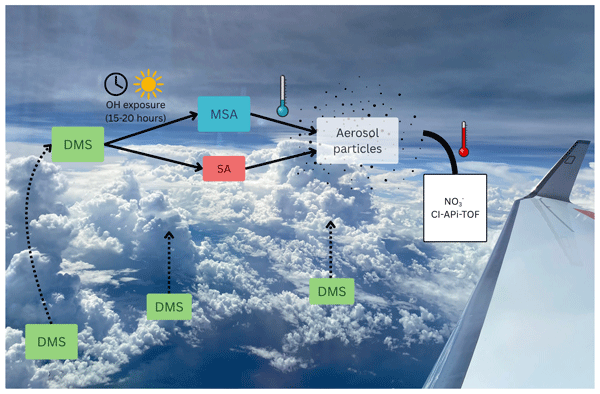
Marine atmospheric aerosols remain a major uncertainty in climate models. We report gas and particle phase measurements of two important aerosol forming vapours, sulfuric acid and methanesulfonic acid in the Indo-Pacific. We find that the latter typically dominates over sulfuric acid and contributes significantly to free tropospheric aerosol. Deep convection transports the precursor of both acids to the upper troposphere, providing a key aerosol source in the pristine remote Pacific Ocean.
Anna Breuninger, Philipp Joppe, Jonas Wilsch, Cornelis Schwenk, Heiko Bozem, Nicolas Emig, Laurin Merkel, Rainer Rossberg, Timo Keber, Arthur Kutschka, Philipp Waleska, Stefan Hofmann, Sarah Richter, Florian Ungeheuer, Konstantin Dörholt, Thorsten Hoffmann, Annette Miltenberger, Johannes Schneider, Peter Hoor, and Alexander L. Vogel
Atmos. Chem. Phys., 25, 16533–16551, https://doi.org/10.5194/acp-25-16533-2025, https://doi.org/10.5194/acp-25-16533-2025, 2025
Short summary
Short summary
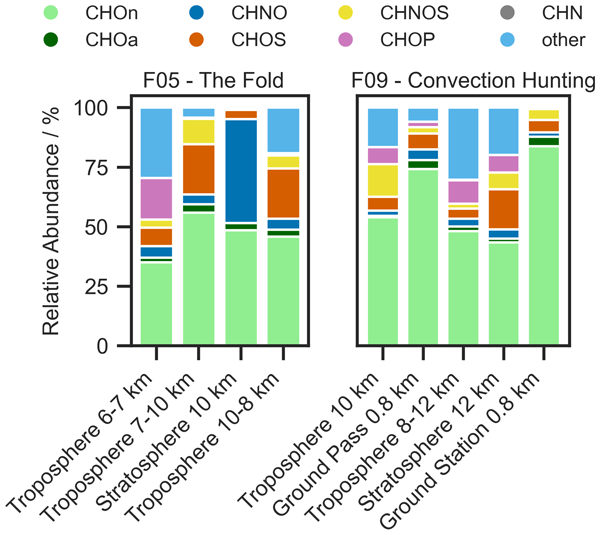
This study investigates molecular organic aerosol composition in the upper troposphere and lower stratosphere from an airborne campaign over Central Europe in summer 2024. Via ultra-high-performance liquid chromatography and high-resolution mass spectrometry of tropospheric and stratospheric filter samples, we identified various organic compounds. Our findings underscore the significant cross-tropopause transport of biogenic secondary organic aerosol and anthropogenic pollutants.
Heiko Bozem, Philipp Joppe, Yun Li, Nicolas Emig, Armin Afchine, Anna Breuninger, Joachim Curtius, Stefan Hofmann, Sadath Ismayil, Konrad Kandler, Daniel Kunkel, Arthur Kutschka, Hans-Christoph Lachnitt, Andreas Petzold, Sarah Richter, Timo Röschenthaler, Christian Rolf, Lisa Schneider, Johannes Schneider, Alexander Vogel, and Peter Hoor
Atmos. Meas. Tech., 18, 6545–6568, https://doi.org/10.5194/amt-18-6545-2025, https://doi.org/10.5194/amt-18-6545-2025, 2025
Short summary
Short summary
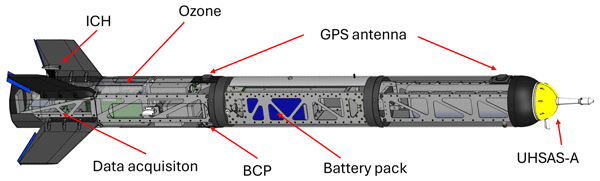
Deployed on a Learjet as a tandem measurement platform during the TPEx I (TropoPause composition gradients and mixing Experiment) campaign in June 2024, the new TPC-TOSS (TropoPause Composition Towed Sensor Shuttle) system delivers high-resolution in situ data on ozone, aerosol, and key meteorological parameters. Laboratory and in-flight tests confirmed its precision and stability. Observed gradients near the tropopause reveal active mixing and transport processes in the tropopause region.
Philipp Joppe, Johannes Schneider, Jonas Wilsch, Heiko Bozem, Anna Breuninger, Joachim Curtius, Martin Ebert, Nicolas Emig, Peter Hoor, Sadath Ismayil, Konrad Kandler, Daniel Kunkel, Isabel Kurth, Hans-Christoph Lachnitt, Yun Li, Annette Miltenberger, Sarah Richter, Christian Rolf, Lisa Schneider, Cornelis Schwenk, Nicole Spelten, Alexander L. Vogel, Yafang Cheng, and Stephan Borrmann
Atmos. Chem. Phys., 25, 15077–15103, https://doi.org/10.5194/acp-25-15077-2025, https://doi.org/10.5194/acp-25-15077-2025, 2025
Short summary
Short summary
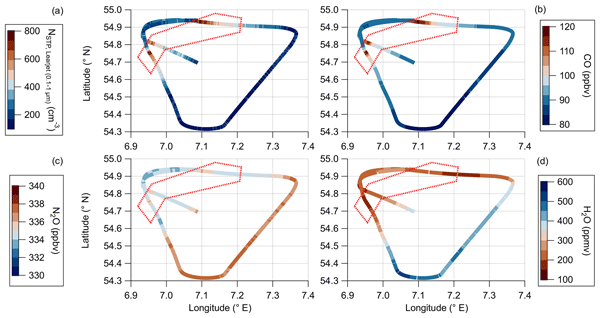
We show measurements of a filament with biomass burning influence transported by a warm conveyor belt (WCB) into the tropopause region over Europe. The pollution originates from Canadian forest fires and is transported in the lower troposphere towards Europe. The WCB transport is followed by mixing with air masses of stratospheric chemical signatures. We hypothesize that this mixing leads to a change in the vertical gradient of the potential temperature.
Larissa Lacher, Michael P. Adams, Kevin Barry, Barbara Bertozzi, Heinz Bingemer, Cristian Boffo, Yannick Bras, Nicole Büttner, Dimitri Castarede, Daniel J. Cziczo, Paul J. DeMott, Romy Fösig, Megan Goodell, Kristina Höhler, Thomas C. J. Hill, Conrad Jentzsch, Luis A. Ladino, Ezra J. T. Levin, Stephan Mertes, Ottmar Möhler, Kathryn A. Moore, Benjamin J. Murray, Jens Nadolny, Tatjana Pfeuffer, David Picard, Carolina Ramírez-Romero, Mickael Ribeiro, Sarah Richter, Jann Schrod, Karine Sellegri, Frank Stratmann, Benjamin E. Swanson, Erik S. Thomson, Heike Wex, Martin J. Wolf, and Evelyn Freney
Atmos. Chem. Phys., 24, 2651–2678, https://doi.org/10.5194/acp-24-2651-2024, https://doi.org/10.5194/acp-24-2651-2024, 2024
Short summary
Short summary
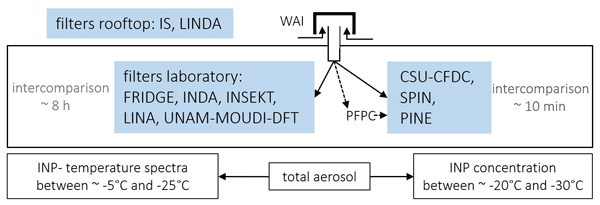
Aerosol particles that trigger ice formation in clouds are important for the climate system but are very rare in the atmosphere, challenging measurement techniques. Here we compare three cloud chambers and seven methods for collecting aerosol particles on filters for offline analysis at a mountaintop station. A general good agreement of the methods was found when sampling aerosol particles behind a whole air inlet, supporting their use for obtaining data that can be implemented in models.
Lisa J. Beck, Rolf Weller, Totti Laitinen, Markku Kulmala, Douglas Worsnop, Janne Lampilahti, Heikki Junninen, and Mikko Sipilä
EGUsphere, https://doi.org/10.5194/egusphere-2026-6198, https://doi.org/10.5194/egusphere-2026-6198, 2026
This preprint is open for discussion and under review for Atmospheric Chemistry and Physics (ACP).
Short summary
Short summary
Snowstorms create large numbers of tiny electrically charged particles, but their composition and formation have been poorly understood. We measured these particles in Antarctica over three months and found that they consist mainly of sea salt, sodium chloride. During blizzards, their concentration rose to tens of times above those in calm weather. These findings reveal an under-explored source of atmospheric ions that may contribute to the formation of airborne particles and clouds.
Cecilia Righi, Mihai Ciobanu, Neha Deot, Tuija Jokinen, Chengfeng Liu, Qi Yuan, Lauriane L. J. Quéléver, Spiro Jorga, Veronika Pospisilova, Lisa J. Beck, Mario Simon, Marcel Zauner-Wieczorek, Andreas Kürten, Ruben Soler, Teresa Vera, Amalia Muñoz, Lauri R. Ahonen, Chao Yan, Tuukka Petäjä, and Nina Sarnela
Atmos. Meas. Tech., 19, 6357–6378, https://doi.org/10.5194/amt-19-6357-2026, https://doi.org/10.5194/amt-19-6357-2026, 2026
Short summary
Short summary
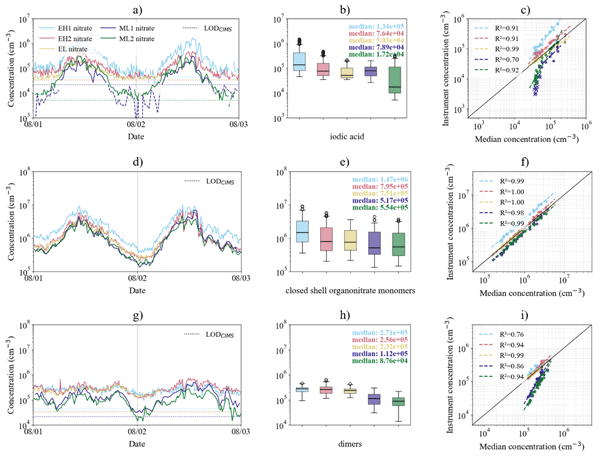
Chemical ionization mass spectrometry is widely used to detect condensable vapors as sulfuric acid and highly oxygenated organic molecules, but results across studies are not always comparable. In summer 2024, an intercomparison campaign involving six instruments was conducted at a boreal forest site. Comparable measurements were achievable when all calibration and correction factors were applied. Instrument behavior depended more on inlet design and operating conditions than reagent ion choice.
Hannah Klebach, Martin Heinritzi, Katharina Kaiser, Lisa Beck, Samuel Ruhl, Samira Atabakhsh, Nirvan Bhattacharyya, Lucía Caudillo-Plath, Philipp Joppe, Thomas Klimach, Peter Lloyd, Mira Pöhlker, Ulrich Pöschl, Sarah Richter, Douglas M. Russell, Johannes Schneider, Marcel Zauner-Wieczorek, and Joachim Curtius
Atmos. Chem. Phys., 26, 12355–12393, https://doi.org/10.5194/acp-26-12355-2026, https://doi.org/10.5194/acp-26-12355-2026, 2026
Short summary
Short summary
Marine atmospheric aerosols remain a major uncertainty in climate models. We report gas and particle phase measurements of two important aerosol forming vapours, sulfuric acid and methanesulfonic acid in the Indo-Pacific. We find that the latter typically dominates over sulfuric acid and contributes significantly to free tropospheric aerosol. Deep convection transports the precursor of both acids to the upper troposphere, providing a key aerosol source in the pristine remote Pacific Ocean.
Lianet Hernández Pardo, Joachim Curtius, Patrick Jöckel, J. Moritz Menken, Christopher Pöhlker, Mira Pöhlker, and Anna Possner
Atmos. Chem. Phys., 26, 12275–12293, https://doi.org/10.5194/acp-26-12275-2026, https://doi.org/10.5194/acp-26-12275-2026, 2026
Short summary
Short summary
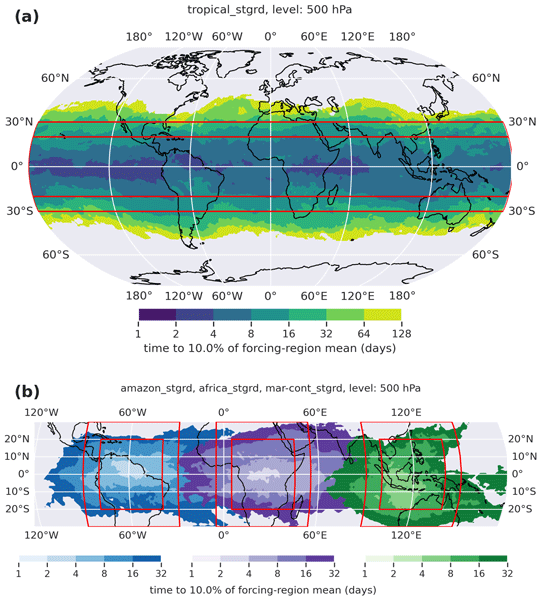
Many tiny particles are formed high in the tropical atmosphere, but their impact lower down is unclear. We studied how these particles move downward using long-term computer simulations. We found that particles can reach middle levels of the atmosphere within a week, carried by winds. These results help us understand how pollution and clouds might change as particles spread around the world.
Wolfgang Woiwode, Bärbel Vogel, Valentin Lauther, Jens-Uwe Grooß, Jeremy Harrison, Sören Johansson, Jörn Ungermann, Peter Braesicke, Markus Dick, Andreas Engel, Felix Friedl-Vallon, Norbert Glatthor, Thomas Gulde, Michael Höpfner, Markus Jesswein, Jan Kaumanns, Timo Keber, Anne Kleinert, Erik Kretschmer, Guido Maucher, Tom Neubert, Hans Nordmeyer, Christof Piesch, Felix Plöger, Peter Preusse, Markus Retzlaff, Sebastian Rhode, Heinz Rongen, Georg Schardt, Tanja Schuck, Björn-Martin Sinnhuber, Johannes Strobel, Franziska Trinkl, Ronja Van Luijt, Stefan Versick, C. Michael Volk, Gerald Wetzel, Peter Hoor, and Martin Riese
EGUsphere, https://doi.org/10.5194/egusphere-2026-3271, https://doi.org/10.5194/egusphere-2026-3271, 2026
This preprint is open for discussion and under review for Atmospheric Chemistry and Physics (ACP).
Short summary
Short summary
Filaments of CH2Cl2-rich air are revealed by airborne infrared limb-imaging observations in late summer 2023 above the North Pacific, Canada and Alaska and traced back to the Asian Summer Monsoon region. Involving new spectroscopic data, high CH2Cl2 levels were retrieved in the troposphere and moderate enhancements also in air masses with characteristics of the lowermost stratosphere. Mesoscale filaments are shown to transport substantial amounts of CH2Cl2 across the North Pacific.
Sarah Kirchhoff, Patrick Weber, Oliver F. Bischof, Gerhard Steiner, Christian Kunath, Lothar Keck, Victoria M. Fruhmann, Helmut Krasa, Alexander Bergmann, Andreas Petzold, and Ulrich Bundke
Atmos. Meas. Tech., 19, 5243–5266, https://doi.org/10.5194/amt-19-5243-2026, https://doi.org/10.5194/amt-19-5243-2026, 2026
Short summary
Short summary
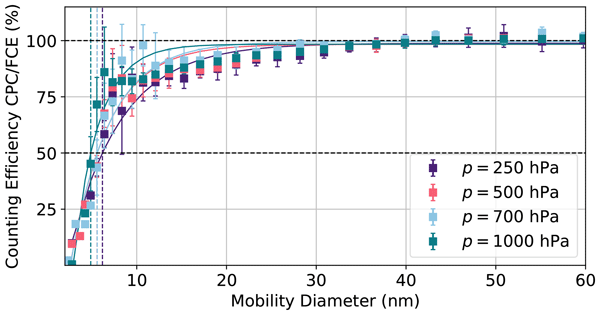
We evaluated dimethyl sulfoxide (DMSO) as a safe, non-flammable working fluid for condensation particle counters, comparing it with butanol under varied pressures, temperatures, and aerosols. Laboratory, field, and simulation results show reliable particle activation, comparable counting efficiency, reduced fluid use, and stable long-term operation. Mixtures with water extend usability, supporting safe monitoring in remote or harsh environments.
Neil M. Donahue, Lubna Dada, Dominik Stolzenburg, Eva Sommer, Mario Simon, Meredith Schervish, Jenna DeVivo, Alexandra Stinchfield, Natalie Burton, Nirvan Bhattacharyya, Brandon Lopez, Mingyi Wang, Wiebke Scholz, João Almeida, Bin Zhao, Martin Heinritzi, Hamish Gordon, Armin Hansel, Joachim Curtius, Katrianne Lehtipalo, Imad El Haddad, Jasper Kirkby, Richard Flagan, Markku Kulmala, and Douglas Worsnop
Atmos. Chem. Phys., 26, 8311–8339, https://doi.org/10.5194/acp-26-8311-2026, https://doi.org/10.5194/acp-26-8311-2026, 2026
Short summary
Short summary
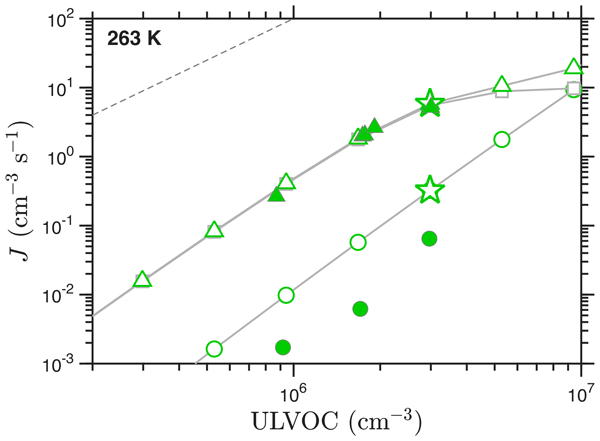
A new theory has the potential to accurately describe changes to atmospheric particle formation from the pre-industrial to the present and onwards along socioeconomic pathways addressing air pollution and climate. The model places organic nucleation in the context of the Volatility Basis Set and reveals a competition between chemistry, which accelerates as temperature rises, and vapor pressure, which drops as temperature decreases. The model reproduces observations from the CERN (European Organization for Nuclear Research) CLOUD (Cosmics Leaving Outdoor Droplets) chamber.
Neil M. Donahue, Victoria Hofbauer, Henning Finkenzeller, Dominik Stolzenburg, Paulus S. Bauer, Randall Chiu, Lubna Dada, Jonathan Duplissy, Xu-Cheng He, Martin Heinritzi, Christopher R. Hoyle, Andreas Kürten, Aleksandr Kvashnin, Katrianne Lehtipalo, Naser Mahfouz, Vladimir Makhmutov, Roy L. Mauldin III, Ugo Molteni, Lauriane L. J. Quéléver, Matti Rissanen, Siegfried Schobesberger, Mario Simon, Andrea C. Wagner, Mingyi Wang, Chao Yan, Penglin Ye, Ilona Riipinen, Hamish Gordon, Joachim Curtius, Armin Hansel, Imad El Haddad, Markku Kulmala, Douglas R. Worsnop, Rainer Volkamer, Paul M. Winkler, Jasper Kirkby, and Richard Flagan
Atmos. Meas. Tech., 19, 3363–3396, https://doi.org/10.5194/amt-19-3363-2026, https://doi.org/10.5194/amt-19-3363-2026, 2026
Short summary
Short summary
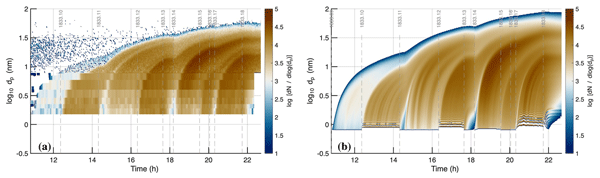
We describe accurate measurement of particle formation and growth in the CERN CLOUD (European Council for Nuclear Research Cosmics Leaving OUtdoor Droplets) chamber, using a suite of gas- and particle-phase instruments. The interconnected measurements establish high accuracy in key particle properties and critically important gas-phase sulfuric acid. This is a template for accurate calibration of similar experiments and thus accurate determination of aerosol nucleation and growth rates, which are an important source of uncertainty in climate science.
Anna Breuninger, Philipp Joppe, Jonas Wilsch, Cornelis Schwenk, Heiko Bozem, Nicolas Emig, Laurin Merkel, Rainer Rossberg, Timo Keber, Arthur Kutschka, Philipp Waleska, Stefan Hofmann, Sarah Richter, Florian Ungeheuer, Konstantin Dörholt, Thorsten Hoffmann, Annette Miltenberger, Johannes Schneider, Peter Hoor, and Alexander L. Vogel
Atmos. Chem. Phys., 25, 16533–16551, https://doi.org/10.5194/acp-25-16533-2025, https://doi.org/10.5194/acp-25-16533-2025, 2025
Short summary
Short summary
This study investigates molecular organic aerosol composition in the upper troposphere and lower stratosphere from an airborne campaign over Central Europe in summer 2024. Via ultra-high-performance liquid chromatography and high-resolution mass spectrometry of tropospheric and stratospheric filter samples, we identified various organic compounds. Our findings underscore the significant cross-tropopause transport of biogenic secondary organic aerosol and anthropogenic pollutants.
Heiko Bozem, Philipp Joppe, Yun Li, Nicolas Emig, Armin Afchine, Anna Breuninger, Joachim Curtius, Stefan Hofmann, Sadath Ismayil, Konrad Kandler, Daniel Kunkel, Arthur Kutschka, Hans-Christoph Lachnitt, Andreas Petzold, Sarah Richter, Timo Röschenthaler, Christian Rolf, Lisa Schneider, Johannes Schneider, Alexander Vogel, and Peter Hoor
Atmos. Meas. Tech., 18, 6545–6568, https://doi.org/10.5194/amt-18-6545-2025, https://doi.org/10.5194/amt-18-6545-2025, 2025
Short summary
Short summary
Deployed on a Learjet as a tandem measurement platform during the TPEx I (TropoPause composition gradients and mixing Experiment) campaign in June 2024, the new TPC-TOSS (TropoPause Composition Towed Sensor Shuttle) system delivers high-resolution in situ data on ozone, aerosol, and key meteorological parameters. Laboratory and in-flight tests confirmed its precision and stability. Observed gradients near the tropopause reveal active mixing and transport processes in the tropopause region.
Philipp Joppe, Johannes Schneider, Jonas Wilsch, Heiko Bozem, Anna Breuninger, Joachim Curtius, Martin Ebert, Nicolas Emig, Peter Hoor, Sadath Ismayil, Konrad Kandler, Daniel Kunkel, Isabel Kurth, Hans-Christoph Lachnitt, Yun Li, Annette Miltenberger, Sarah Richter, Christian Rolf, Lisa Schneider, Cornelis Schwenk, Nicole Spelten, Alexander L. Vogel, Yafang Cheng, and Stephan Borrmann
Atmos. Chem. Phys., 25, 15077–15103, https://doi.org/10.5194/acp-25-15077-2025, https://doi.org/10.5194/acp-25-15077-2025, 2025
Short summary
Short summary
We show measurements of a filament with biomass burning influence transported by a warm conveyor belt (WCB) into the tropopause region over Europe. The pollution originates from Canadian forest fires and is transported in the lower troposphere towards Europe. The WCB transport is followed by mixing with air masses of stratospheric chemical signatures. We hypothesize that this mixing leads to a change in the vertical gradient of the potential temperature.
Sophie Bauchinger, Andreas Engel, Markus Jesswein, Timo Keber, Harald Bönisch, Florian Obersteiner, Andreas Zahn, Nicolas Emig, Peter Hoor, Hans-Christoph Lachnitt, Franziska Weyland, Linda Ort, and Tanja J. Schuck
Atmos. Chem. Phys., 25, 14167–14186, https://doi.org/10.5194/acp-25-14167-2025, https://doi.org/10.5194/acp-25-14167-2025, 2025
Short summary
Short summary
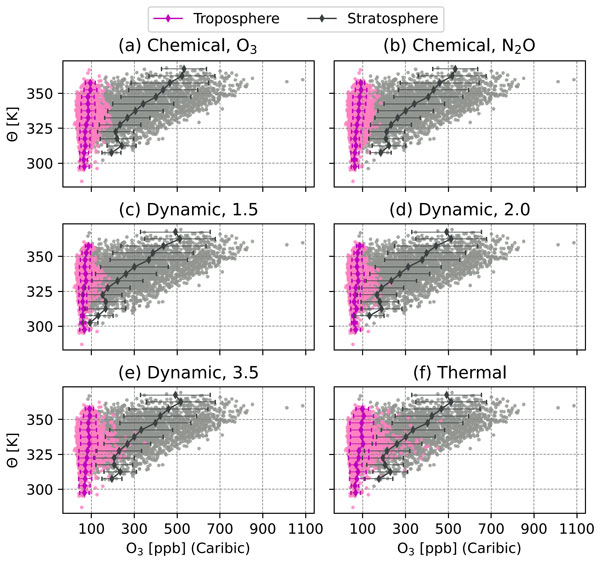
We compared different ways to define the upper barrier of the troposphere in the extra-tropics, the “tropopause”. By analysing ozone distributions sorted by different definitions, we found that the traditional temperature-based tropopause works less well than dynamic or tracer-based definitions. We saw a sharper transition of ozone across the tropopause using a higher value of potential vorticity than often used and recommend this value for future studies of exchange processes in this region.
Lisa Schneider, Jann Schrod, Daniel Weber, Heinz Bingemer, Konrad Kandler, Joachim Curtius, and Martin Ebert
Atmos. Meas. Tech., 18, 5223–5245, https://doi.org/10.5194/amt-18-5223-2025, https://doi.org/10.5194/amt-18-5223-2025, 2025
Short summary
Short summary
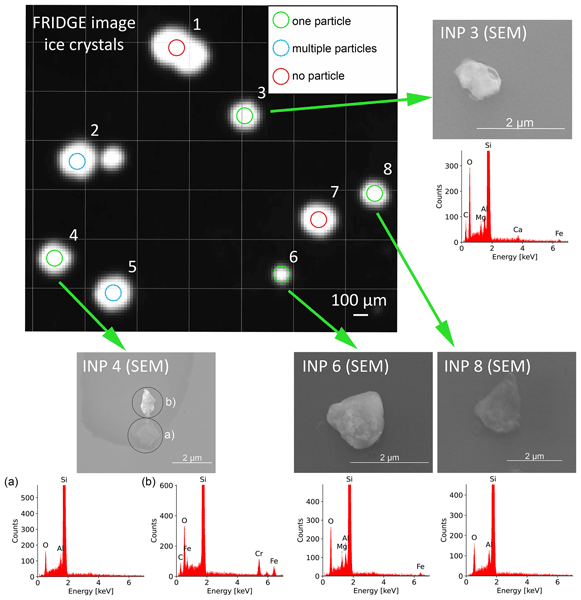
Ice-nucleating particles (INPs) are important for cloud formation and properties affecting weather and climate. This article presents a method coupling an offline ice nucleus counter to an electron microscope to obtain information, not only about INP number concentrations but also about physico-chemical properties (e.g., size and chemical composition) relevant to ice nucleation on single particles. The method was evaluated on the basis of a case study at the high-altitude research station Jungfraujoch.
Johannes C. Laube, Tanja J. Schuck, Sophie Baartman, Huilin Chen, Markus Geldenhuys, Steven van Heuven, Timo Keber, Maria Elena Popa, Elinor Tuffnell, Florian Voet, Bärbel Vogel, Thomas Wagenhäuser, Alessandro Zanchetta, and Andreas Engel
Atmos. Meas. Tech., 18, 4087–4102, https://doi.org/10.5194/amt-18-4087-2025, https://doi.org/10.5194/amt-18-4087-2025, 2025
Short summary
Short summary
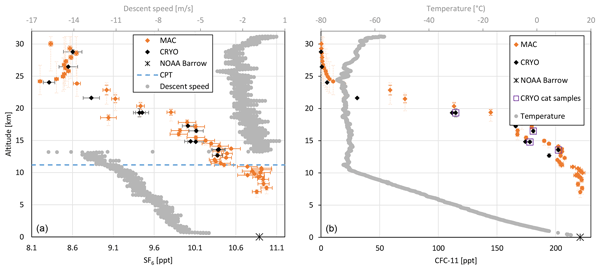
A large balloon was launched in summer 2021 in the Arctic to carry instruments for trace gas measurements up to 32 km, above the reach of aircraft. The main aims were to evaluate different techniques and atmospheric processes. We focus on halogenated greenhouse gases and ozone-depleting substances. For this, air was collected with the AirCore technique and a cryogenic air sampler and measured after the flight. A companion paper reports observations of major greenhouse gases.
Markus Jesswein, Valentin Lauther, Nicolas Emig, Peter Hoor, Timo Keber, Hans-Christoph Lachnitt, Linda Ort, Tanja Schuck, Johannes Strobel, Ronja Van Luijt, C. Michael Volk, Franziska Weyland, and Andreas Engel
Atmos. Chem. Phys., 25, 8107–8126, https://doi.org/10.5194/acp-25-8107-2025, https://doi.org/10.5194/acp-25-8107-2025, 2025
Short summary
Short summary
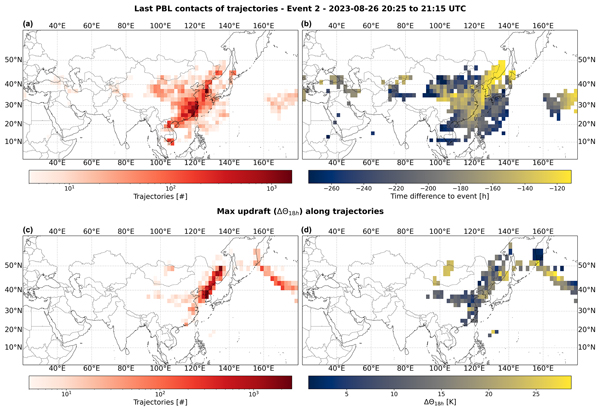
The study investigates transport within the Asian Summer Monsoon, focusing on how CH2Cl2 reaches the subarctic tropopause region. Using data from the PHILEAS campaign in 2023, events with increased mixing ratios were detected. Their origin, the transport paths to the tropopause region, and the potential entry into the stratosphere were analyzed. The East Asian Summer Monsoon was identified as the main transport pathway, with only a small contribution to the stratosphere in the following days.
Jann Schrod and Heinz G. Bingemer
Atmos. Meas. Tech., 18, 2591–2605, https://doi.org/10.5194/amt-18-2591-2025, https://doi.org/10.5194/amt-18-2591-2025, 2025
Short summary
Short summary
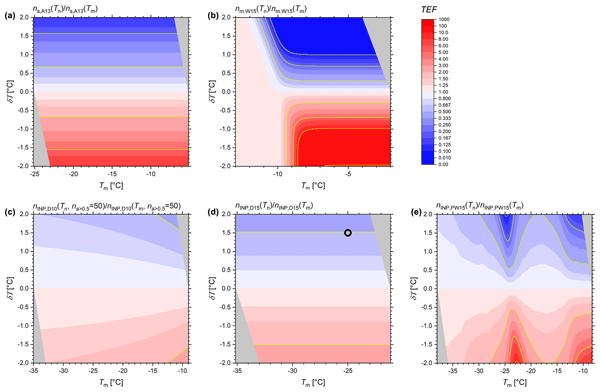
Ice-nucleating particle (INP) observations often differ by 1 order of magnitude, when multiple instruments measure in parallel. As INP measurements are sensitive to the activation conditions, inaccuracies in the temperature measurement may induce significant deviations in the INP concentration. It was found that typical temperature uncertainties reported in intercomparison studies may explain divergences of a factor of 2 (± 0.5 °C) or 5 to 10 (± 1 °C) between two INP counters with opposite bias.
Tanja J. Schuck, Johannes Degen, Timo Keber, Katharina Meixner, Thomas Wagenhäuser, Mélanie Ghysels, Georges Durry, Nadir Amarouche, Alessandro Zanchetta, Steven van Heuven, Huilin Chen, Johannes C. Laube, Sophie L. Baartman, Carina van der Veen, Maria Elena Popa, and Andreas Engel
Atmos. Chem. Phys., 25, 4333–4348, https://doi.org/10.5194/acp-25-4333-2025, https://doi.org/10.5194/acp-25-4333-2025, 2025
Short summary
Short summary
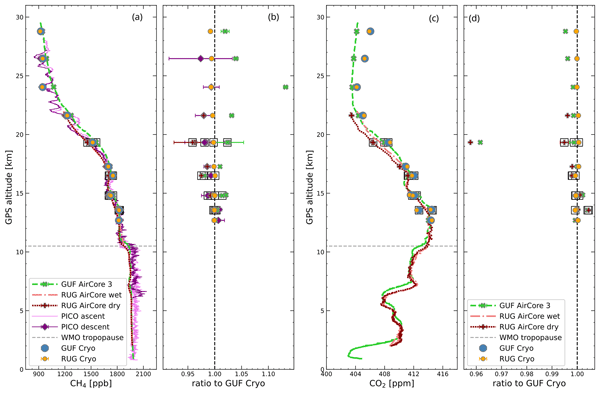
A balloon was launched in 2021 in the Arctic to carry instruments for trace gas measurements up to 32 km. One purpose was to compare measurement techniques. We focus on the major greenhouse gases. To measure these, air was sampled with the AirCore technique and with flask sampling, and samples were analysed after the flight. In flight, observations were done with an optical method. In a companion paper, we report on observations of chlorine and bromine containing trace gases.
Paul J. DeMott, Jessica A. Mirrielees, Sarah Suda Petters, Daniel J. Cziczo, Markus D. Petters, Heinz G. Bingemer, Thomas C. J. Hill, Karl Froyd, Sarvesh Garimella, A. Gannet Hallar, Ezra J. T. Levin, Ian B. McCubbin, Anne E. Perring, Christopher N. Rapp, Thea Schiebel, Jann Schrod, Kaitlyn J. Suski, Daniel Weber, Martin J. Wolf, Maria Zawadowicz, Jake Zenker, Ottmar Möhler, and Sarah D. Brooks
Atmos. Meas. Tech., 18, 639–672, https://doi.org/10.5194/amt-18-639-2025, https://doi.org/10.5194/amt-18-639-2025, 2025
Short summary
Short summary
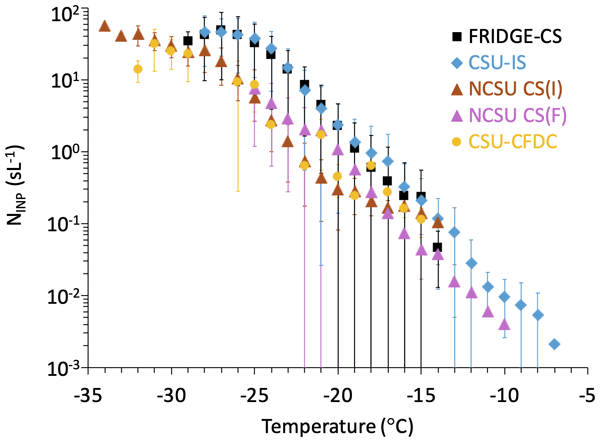
The Fifth International Ice Nucleation Workshop Phase 3 (FIN-03) compared the ambient atmospheric performance of ice-nucleating particle (INP) measuring systems and explored general methods for discerning atmospheric INP compositions. Mirroring laboratory results, INP concentrations agreed within 5–10 factors. Measurements of total aerosol properties and investigations of INP compositions supported a dominant role of soil and plant organic aerosol elements as INPs during the study.
Matthew Boyer, Diego Aliaga, Lauriane L. J. Quéléver, Silvia Bucci, Hélène Angot, Lubna Dada, Benjamin Heutte, Lisa Beck, Marina Duetsch, Andreas Stohl, Ivo Beck, Tiia Laurila, Nina Sarnela, Roseline C. Thakur, Branka Miljevic, Markku Kulmala, Tuukka Petäjä, Mikko Sipilä, Julia Schmale, and Tuija Jokinen
Atmos. Chem. Phys., 24, 12595–12621, https://doi.org/10.5194/acp-24-12595-2024, https://doi.org/10.5194/acp-24-12595-2024, 2024
Short summary
Short summary
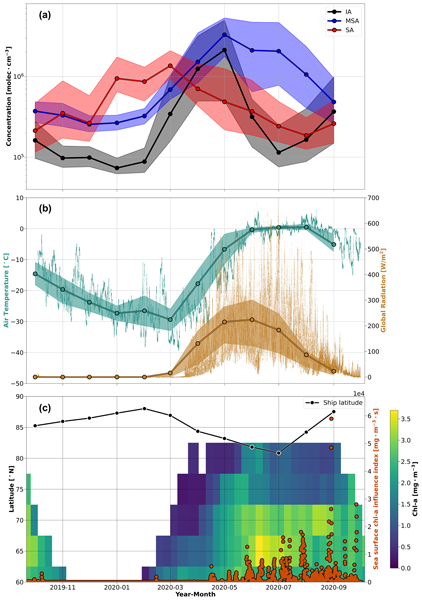
We analyze the seasonal cycle and sources of gases that are relevant for the formation of aerosol particles in the central Arctic. Since theses gases can form new particles, they can influence Arctic climate. We show that the sources of these gases are associated with changes in the Arctic environment during the year, especially with respect to sea ice. Therefore, the concentration of these gases will likely change in the future as the Arctic continues to warm.
Dandan Li, Dongyu Wang, Lucia Caudillo, Wiebke Scholz, Mingyi Wang, Sophie Tomaz, Guillaume Marie, Mihnea Surdu, Elias Eccli, Xianda Gong, Loic Gonzalez-Carracedo, Manuel Granzin, Joschka Pfeifer, Birte Rörup, Benjamin Schulze, Pekka Rantala, Sébastien Perrier, Armin Hansel, Joachim Curtius, Jasper Kirkby, Neil M. Donahue, Christian George, Imad El-Haddad, and Matthieu Riva
Atmos. Meas. Tech., 17, 5413–5428, https://doi.org/10.5194/amt-17-5413-2024, https://doi.org/10.5194/amt-17-5413-2024, 2024
Short summary
Short summary
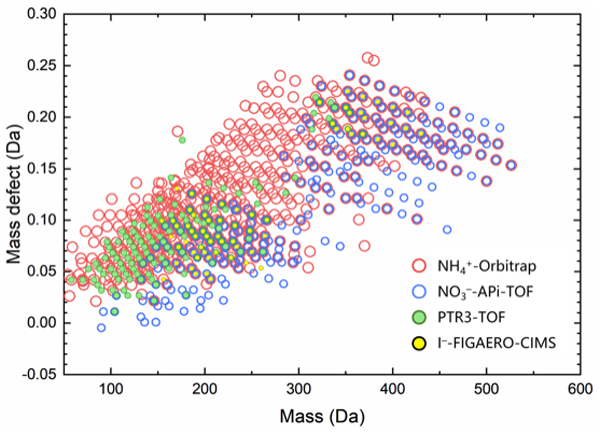
Due to the analytical challenges of measuring organic vapors, it remains challenging to identify and quantify organic molecules present in the atmosphere. Here, we explore the performance of the Orbitrap chemical ionization mass spectrometer (CI-Orbitrap) using ammonium ion chemistry. This study shows that ammonium-ion-based chemistry associated with the high mass resolution of the Orbitrap mass analyzer can measure almost all inclusive compounds.
Larissa Lacher, Michael P. Adams, Kevin Barry, Barbara Bertozzi, Heinz Bingemer, Cristian Boffo, Yannick Bras, Nicole Büttner, Dimitri Castarede, Daniel J. Cziczo, Paul J. DeMott, Romy Fösig, Megan Goodell, Kristina Höhler, Thomas C. J. Hill, Conrad Jentzsch, Luis A. Ladino, Ezra J. T. Levin, Stephan Mertes, Ottmar Möhler, Kathryn A. Moore, Benjamin J. Murray, Jens Nadolny, Tatjana Pfeuffer, David Picard, Carolina Ramírez-Romero, Mickael Ribeiro, Sarah Richter, Jann Schrod, Karine Sellegri, Frank Stratmann, Benjamin E. Swanson, Erik S. Thomson, Heike Wex, Martin J. Wolf, and Evelyn Freney
Atmos. Chem. Phys., 24, 2651–2678, https://doi.org/10.5194/acp-24-2651-2024, https://doi.org/10.5194/acp-24-2651-2024, 2024
Short summary
Short summary
Aerosol particles that trigger ice formation in clouds are important for the climate system but are very rare in the atmosphere, challenging measurement techniques. Here we compare three cloud chambers and seven methods for collecting aerosol particles on filters for offline analysis at a mountaintop station. A general good agreement of the methods was found when sampling aerosol particles behind a whole air inlet, supporting their use for obtaining data that can be implemented in models.
Tanja J. Schuck, Johannes Degen, Eric Hintsa, Peter Hoor, Markus Jesswein, Timo Keber, Daniel Kunkel, Fred Moore, Florian Obersteiner, Matt Rigby, Thomas Wagenhäuser, Luke M. Western, Andreas Zahn, and Andreas Engel
Atmos. Chem. Phys., 24, 689–705, https://doi.org/10.5194/acp-24-689-2024, https://doi.org/10.5194/acp-24-689-2024, 2024
Short summary
Short summary
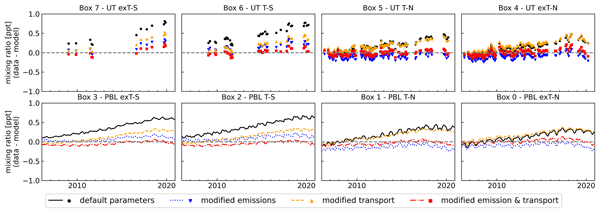
We study the interhemispheric gradient of sulfur hexafluoride (SF6), a strong long-lived greenhouse gas. Its emissions are stronger in the Northern Hemisphere; therefore, mixing ratios in the Southern Hemisphere lag behind. Comparing the observations to a box model, the model predicts air in the Southern Hemisphere to be older. For a better agreement, the emissions used as model input need to be increased (and their spatial pattern changed), and we need to modify north–south transport.
Patrick Weber, Oliver F. Bischof, Benedikt Fischer, Marcel Berg, Susanne Hering, Steven Spielman, Gregory Lewis, Andreas Petzold, and Ulrich Bundke
Atmos. Meas. Tech., 16, 3505–3514, https://doi.org/10.5194/amt-16-3505-2023, https://doi.org/10.5194/amt-16-3505-2023, 2023
Short summary
Short summary
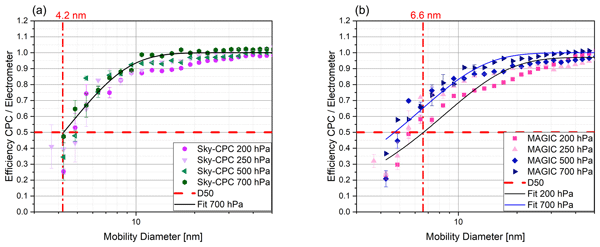
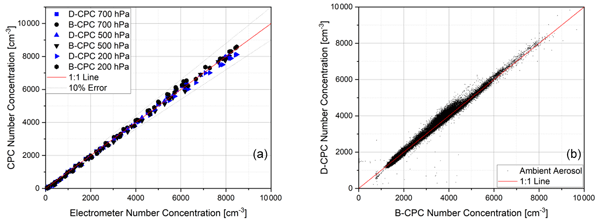
This study tests the new water condensation particle counter (MAGIC 210-LP) for deployment on passenger aircraft coordinated by the European research infrastructure IAGOS. We conducted a series of laboratory experiments for flight altitude conditions. We demonstrate that this water condensation particle counter model shows excellent agreement with a butanol-based instrument used in parallel and a Faraday cup electrometer as reference instrument at all tested pressure conditions.
Patrick Weber, Oliver F. Bischof, Benedikt Fischer, Marcel Berg, Jannik Schmitt, Gerhard Steiner, Lothar Keck, Andreas Petzold, and Ulrich Bundke
Aerosol Research, 1, 1–12, https://doi.org/10.5194/ar-1-1-2023, https://doi.org/10.5194/ar-1-1-2023, 2023
Short summary
Short summary
The aerosol number concentration is essential information for aerosol science. A condensation particle counter (CPC) can robustly provide this information. Butanol is often used as a working fluid in a CPC. We could show that dimethyl sulfoxide (DMSO) behaves equivalently to butanol in terms of the instrument`s counting efficiency, cut-off diameter and concentration linearity. We tested this on different aerosols, including sodium chloride, ammonium sulfate and fresh combustion soot.
Joschka Pfeifer, Naser G. A. Mahfouz, Benjamin C. Schulze, Serge Mathot, Dominik Stolzenburg, Rima Baalbaki, Zoé Brasseur, Lucia Caudillo, Lubna Dada, Manuel Granzin, Xu-Cheng He, Houssni Lamkaddam, Brandon Lopez, Vladimir Makhmutov, Ruby Marten, Bernhard Mentler, Tatjana Müller, Antti Onnela, Maxim Philippov, Ana A. Piedehierro, Birte Rörup, Meredith Schervish, Ping Tian, Nsikanabasi S. Umo, Dongyu S. Wang, Mingyi Wang, Stefan K. Weber, André Welti, Yusheng Wu, Marcel Zauner-Wieczorek, Antonio Amorim, Imad El Haddad, Markku Kulmala, Katrianne Lehtipalo, Tuukka Petäjä, António Tomé, Sander Mirme, Hanna E. Manninen, Neil M. Donahue, Richard C. Flagan, Andreas Kürten, Joachim Curtius, and Jasper Kirkby
Atmos. Chem. Phys., 23, 6703–6718, https://doi.org/10.5194/acp-23-6703-2023, https://doi.org/10.5194/acp-23-6703-2023, 2023
Short summary
Short summary
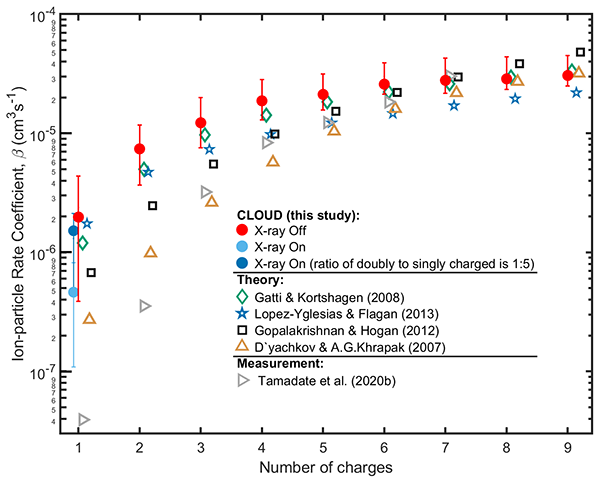
Attachment rate coefficients between ions and charged aerosol particles determine their lifetimes and may also influence cloud dynamics and aerosol processing. Here we present novel experiments that measure ion–aerosol attachment rate coefficients for multiply charged aerosol particles under atmospheric conditions in the CERN CLOUD chamber. Our results provide experimental discrimination between various theoretical models.
Lucía Caudillo, Mihnea Surdu, Brandon Lopez, Mingyi Wang, Markus Thoma, Steffen Bräkling, Angela Buchholz, Mario Simon, Andrea C. Wagner, Tatjana Müller, Manuel Granzin, Martin Heinritzi, Antonio Amorim, David M. Bell, Zoé Brasseur, Lubna Dada, Jonathan Duplissy, Henning Finkenzeller, Xu-Cheng He, Houssni Lamkaddam, Naser G. A. Mahfouz, Vladimir Makhmutov, Hanna E. Manninen, Guillaume Marie, Ruby Marten, Roy L. Mauldin, Bernhard Mentler, Antti Onnela, Tuukka Petäjä, Joschka Pfeifer, Maxim Philippov, Ana A. Piedehierro, Birte Rörup, Wiebke Scholz, Jiali Shen, Dominik Stolzenburg, Christian Tauber, Ping Tian, António Tomé, Nsikanabasi Silas Umo, Dongyu S. Wang, Yonghong Wang, Stefan K. Weber, André Welti, Marcel Zauner-Wieczorek, Urs Baltensperger, Richard C. Flagan, Armin Hansel, Jasper Kirkby, Markku Kulmala, Katrianne Lehtipalo, Douglas R. Worsnop, Imad El Haddad, Neil M. Donahue, Alexander L. Vogel, Andreas Kürten, and Joachim Curtius
Atmos. Chem. Phys., 23, 6613–6631, https://doi.org/10.5194/acp-23-6613-2023, https://doi.org/10.5194/acp-23-6613-2023, 2023
Short summary
Short summary
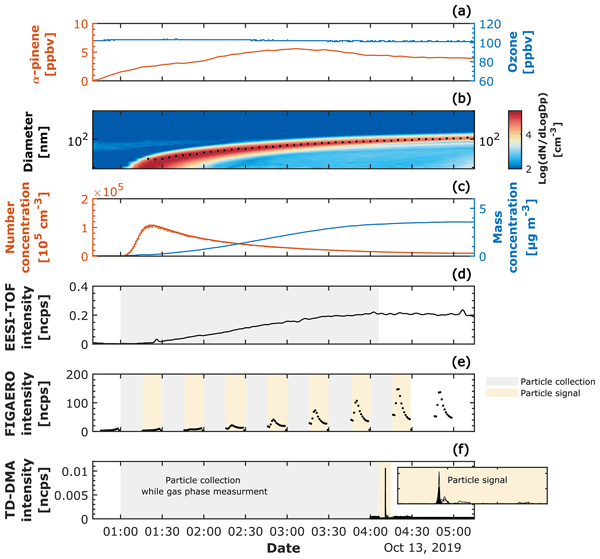
In this study, we present an intercomparison of four different techniques for measuring the chemical composition of nanoparticles. The intercomparison was performed based on the observed chemical composition, calculated volatility, and analysis of the thermograms. We found that the methods generally agree on the most important compounds that are found in the nanoparticles. However, they do see different parts of the organic spectrum. We suggest potential explanations for these differences.
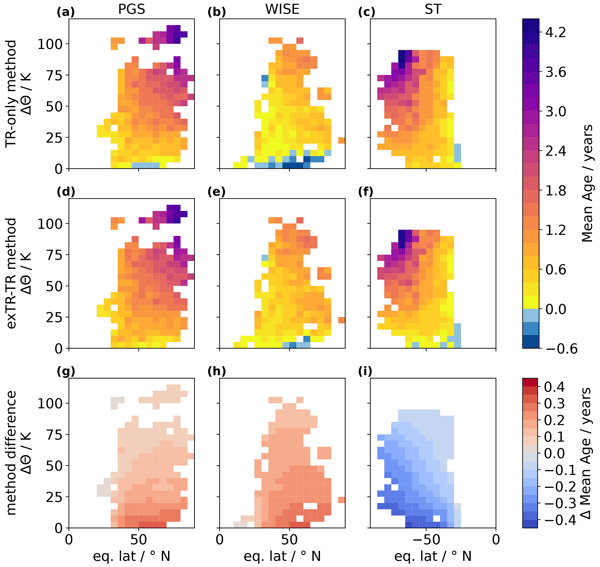
Thomas Wagenhäuser, Markus Jesswein, Timo Keber, Tanja Schuck, and Andreas Engel
Atmos. Chem. Phys., 23, 3887–3903, https://doi.org/10.5194/acp-23-3887-2023, https://doi.org/10.5194/acp-23-3887-2023, 2023
Short summary
Short summary
A common assumption to derive mean age from trace gas observations is that all air enters the stratosphere through the tropical tropopause. Using SF6 as an age tracer, this leads to negative mean age values close to the Northern Hemispheric extra-tropical tropopause. Our improved method also considers extra-tropical input into the stratosphere. More realistic values are derived using this method. Interhemispheric differences in mean age are found when comparing data from two aircraft campaigns.
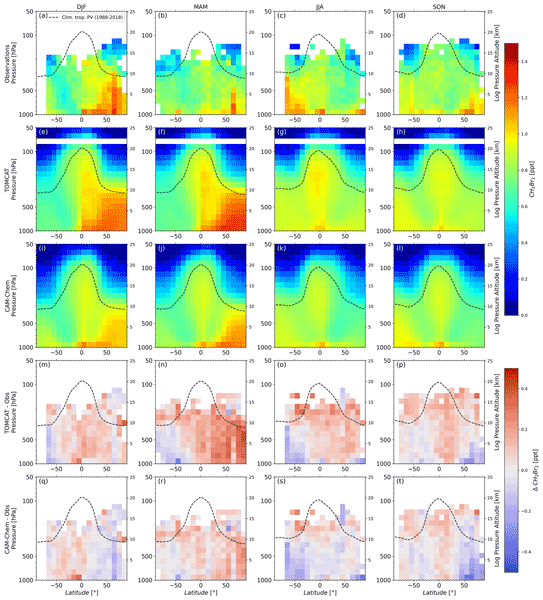
Markus Jesswein, Rafael P. Fernandez, Lucas Berná, Alfonso Saiz-Lopez, Jens-Uwe Grooß, Ryan Hossaini, Eric C. Apel, Rebecca S. Hornbrook, Elliot L. Atlas, Donald R. Blake, Stephen Montzka, Timo Keber, Tanja Schuck, Thomas Wagenhäuser, and Andreas Engel
Atmos. Chem. Phys., 22, 15049–15070, https://doi.org/10.5194/acp-22-15049-2022, https://doi.org/10.5194/acp-22-15049-2022, 2022
Short summary
Short summary
This study presents the global and seasonal distribution of the two major brominated short-lived substances CH2Br2 and CHBr3 in the upper troposphere and lower stratosphere based on observations from several aircraft campaigns. They show similar seasonality for both hemispheres, except in the respective hemispheric autumn lower stratosphere. A comparison with the TOMCAT and CAM-Chem models shows good agreement in the annual mean but larger differences in the seasonal consideration.
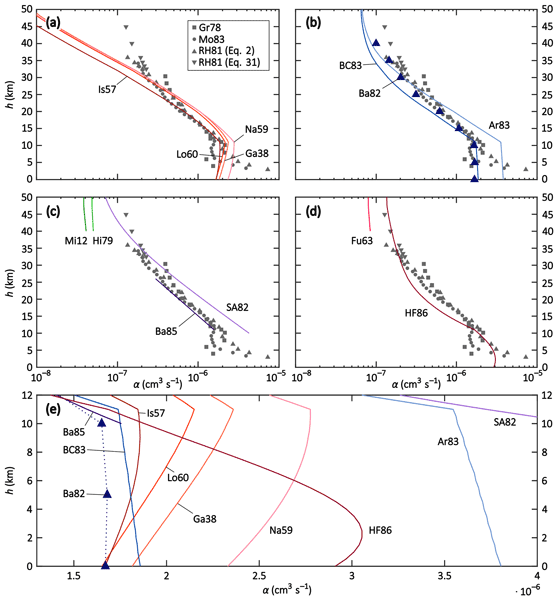
Marcel Zauner-Wieczorek, Joachim Curtius, and Andreas Kürten
Atmos. Chem. Phys., 22, 12443–12465, https://doi.org/10.5194/acp-22-12443-2022, https://doi.org/10.5194/acp-22-12443-2022, 2022
Short summary
Short summary
We reviewed different theories of the ion–ion recombination coefficient α, which describes the reaction and mutual neutralisation of two oppositely charged ions. We focussed on temperature and pressure dependencies and the atmospheric altitude range between 0–50 km. We compared the theories for atmospheric conditions and identified the most favourable value for standard conditions, 1.7 × 10⁻⁶ cm3 s−1, and recommend different theories or parameterisations depending on the altitude.
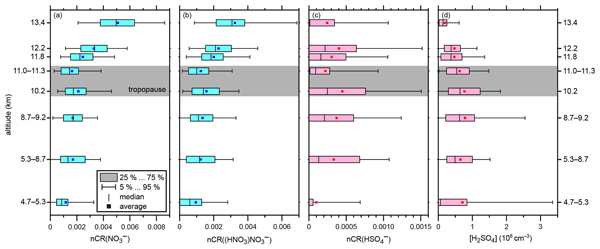
Marcel Zauner-Wieczorek, Martin Heinritzi, Manuel Granzin, Timo Keber, Andreas Kürten, Katharina Kaiser, Johannes Schneider, and Joachim Curtius
Atmos. Chem. Phys., 22, 11781–11794, https://doi.org/10.5194/acp-22-11781-2022, https://doi.org/10.5194/acp-22-11781-2022, 2022
Short summary
Short summary
We present measurements of ambient ions in the free troposphere and lower stratosphere over Europe in spring 2020. We observed nitrate and hydrogen sulfate, amongst others. From their ratio, the number concentrations of gaseous sulfuric acid were inferred. Nitrate increased towards the stratosphere, whilst sulfuric acid was slightly decreased there. The average values for sulfuric acid were 1.9 to 7.8 × 105 cm-3. Protonated pyridine was identified in an altitude range of 4.6 to 8.5 km.
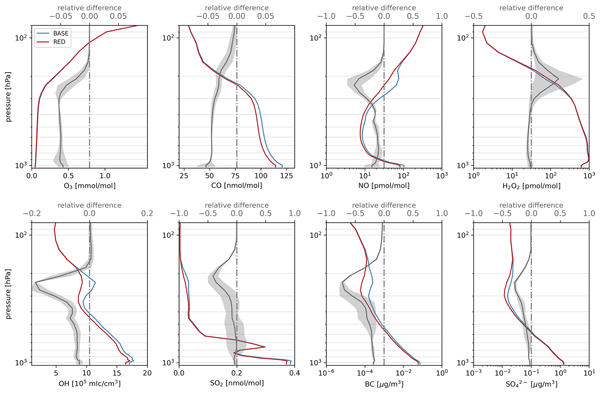
Simon F. Reifenberg, Anna Martin, Matthias Kohl, Sara Bacer, Zaneta Hamryszczak, Ivan Tadic, Lenard Röder, Daniel J. Crowley, Horst Fischer, Katharina Kaiser, Johannes Schneider, Raphael Dörich, John N. Crowley, Laura Tomsche, Andreas Marsing, Christiane Voigt, Andreas Zahn, Christopher Pöhlker, Bruna A. Holanda, Ovid Krüger, Ulrich Pöschl, Mira Pöhlker, Patrick Jöckel, Marcel Dorf, Ulrich Schumann, Jonathan Williams, Birger Bohn, Joachim Curtius, Hardwig Harder, Hans Schlager, Jos Lelieveld, and Andrea Pozzer
Atmos. Chem. Phys., 22, 10901–10917, https://doi.org/10.5194/acp-22-10901-2022, https://doi.org/10.5194/acp-22-10901-2022, 2022
Short summary
Short summary
In this work we use a combination of observational data from an aircraft campaign and model results to investigate the effect of the European lockdown due to COVID-19 in spring 2020. Using model results, we show that the largest relative changes to the atmospheric composition caused by the reduced emissions are located in the upper troposphere around aircraft cruise altitude, while the largest absolute changes are present at the surface.
Praveen Kumar Pothapakula, Amelie Hoff, Anika Obermann-Hellhund, Timo Keber, and Bodo Ahrens
Earth Syst. Dynam. Discuss., https://doi.org/10.5194/esd-2022-24, https://doi.org/10.5194/esd-2022-24, 2022
Preprint withdrawn
Short summary
Short summary
The Vb-cyclones simulated with a coupled regional climate model with two different driving data sets are compared against each other in historical period, thereafter the future climate predictions were analyzed. The Vb-cyclones in two simulations agree well in terms of their occurrence, intensity and track in two simulations, though there are discrepancies in seasonal cycles and their process linking Mediterranean Sea in historical period. So significant changes were observed in the future.
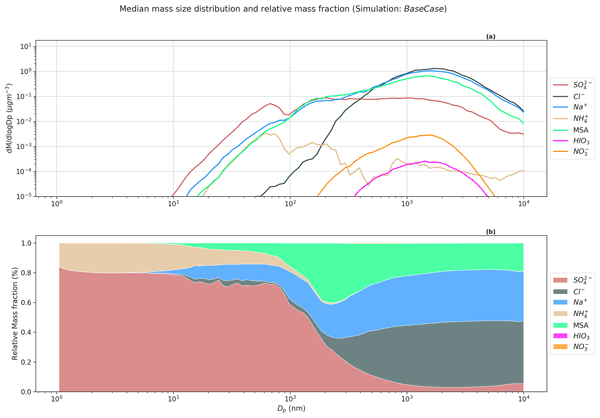
Carlton Xavier, Metin Baykara, Robin Wollesen de Jonge, Barbara Altstädter, Petri Clusius, Ville Vakkari, Roseline Thakur, Lisa Beck, Silvia Becagli, Mirko Severi, Rita Traversi, Radovan Krejci, Peter Tunved, Mauro Mazzola, Birgit Wehner, Mikko Sipilä, Markku Kulmala, Michael Boy, and Pontus Roldin
Atmos. Chem. Phys., 22, 10023–10043, https://doi.org/10.5194/acp-22-10023-2022, https://doi.org/10.5194/acp-22-10023-2022, 2022
Short summary
Short summary
The focus of this work is to study and improve our understanding of processes involved in the formation and growth of new particles in a remote Arctic marine environment. We run the 1D model ADCHEM along air mass trajectories arriving at Ny-Ålesund in May 2018. The model finds that ion-mediated H2SO4–NH3 nucleation can explain the observed new particle formation at Ny-Ålesund. The growth of particles is driven via H2SO4 condensation and formation of methane sulfonic acid in the aqueous phase.
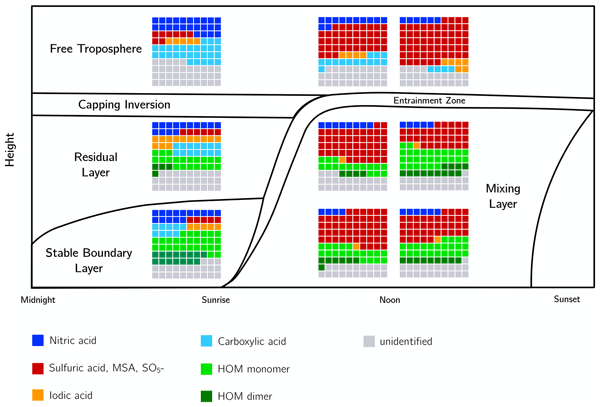
Lisa J. Beck, Siegfried Schobesberger, Heikki Junninen, Janne Lampilahti, Antti Manninen, Lubna Dada, Katri Leino, Xu-Cheng He, Iida Pullinen, Lauriane L. J. Quéléver, Anna Franck, Pyry Poutanen, Daniela Wimmer, Frans Korhonen, Mikko Sipilä, Mikael Ehn, Douglas R. Worsnop, Veli-Matti Kerminen, Tuukka Petäjä, Markku Kulmala, and Jonathan Duplissy
Atmos. Chem. Phys., 22, 8547–8577, https://doi.org/10.5194/acp-22-8547-2022, https://doi.org/10.5194/acp-22-8547-2022, 2022
Short summary
Short summary
The presented article introduces an overview of atmospheric ions and their composition above the boreal forest. We provide the results of an extensive airborne measurement campaign with an air ion mass spectrometer and particle measurements, showing their diurnal evolution within the boundary layer and free troposphere. In addition, we compare the airborne dataset with the co-located data from the ground at SMEAR II station, Finland.
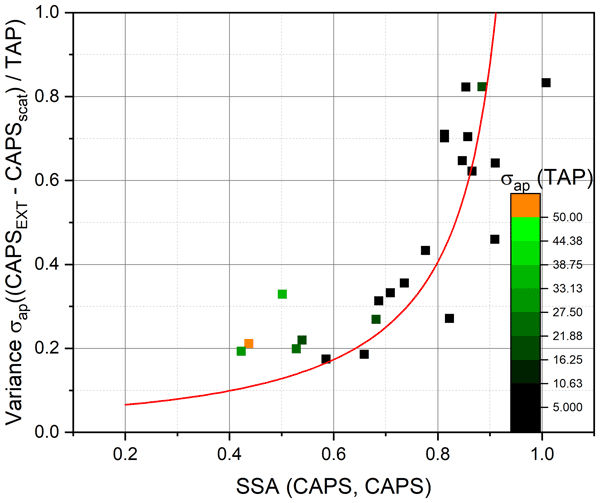
Patrick Weber, Andreas Petzold, Oliver F. Bischof, Benedikt Fischer, Marcel Berg, Andrew Freedman, Timothy B. Onasch, and Ulrich Bundke
Atmos. Meas. Tech., 15, 3279–3296, https://doi.org/10.5194/amt-15-3279-2022, https://doi.org/10.5194/amt-15-3279-2022, 2022
Short summary
Short summary
In our laboratory closure study, we measured the full set of aerosol optical properties for different light-absorbing aerosols using a set of instruments.
Our key finding is that the extensive and intensive aerosol optical properties obtained agree with data from reference instruments, except the absorption Ångström exponent of externally mixed aerosols. The reported uncertainty in the single-scattering albedo fulfils the defined goals for Global Climate Observing System applications of 10 %.
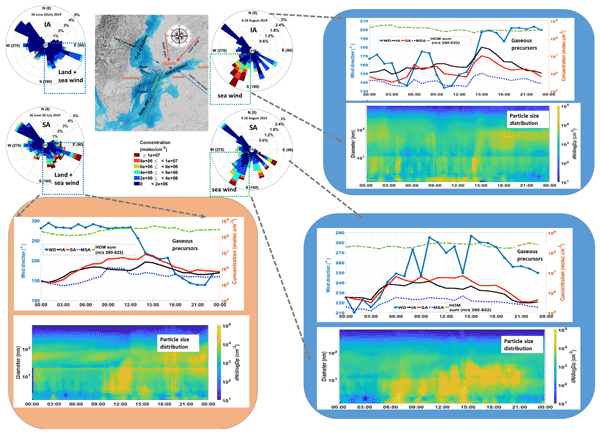
Roseline C. Thakur, Lubna Dada, Lisa J. Beck, Lauriane L. J. Quéléver, Tommy Chan, Marjan Marbouti, Xu-Cheng He, Carlton Xavier, Juha Sulo, Janne Lampilahti, Markus Lampimäki, Yee Jun Tham, Nina Sarnela, Katrianne Lehtipalo, Alf Norkko, Markku Kulmala, Mikko Sipilä, and Tuija Jokinen
Atmos. Chem. Phys., 22, 6365–6391, https://doi.org/10.5194/acp-22-6365-2022, https://doi.org/10.5194/acp-22-6365-2022, 2022
Short summary
Short summary
Every year intense cyanobacterial and macroalgal blooms occur in the Baltic Sea and in the coastal areas surrounding Helsinki, yet no studies have addressed the impact of biogenic emissions from these blooms on gas vapor concentrations, which in turn could influence new particle formation. This is the first study of its kind to address the chemistry driving new particle formation (NPF) during a bloom period in this region, highlighting the role of biogenic sulfuric acid and iodic acid.
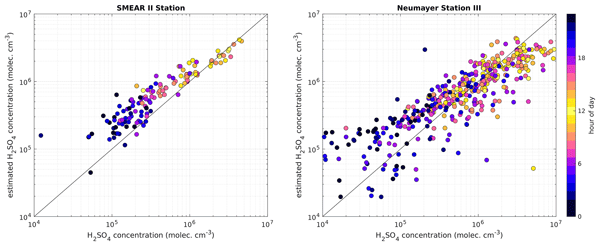
Lisa J. Beck, Siegfried Schobesberger, Mikko Sipilä, Veli-Matti Kerminen, and Markku Kulmala
Atmos. Meas. Tech., 15, 1957–1965, https://doi.org/10.5194/amt-15-1957-2022, https://doi.org/10.5194/amt-15-1957-2022, 2022
Short summary
Short summary
Sulfuric acid is known to be a main compound in atmospheric new particle formation. Yet, its concentration is very low, which leads to challenges in detecting it. In our study, we derive the sulfuric acid concentration from measurements of ambient ions with a mass spectrometer. Our validation shows that the theoretical approach using the bisulfate ion and its clusters with H2SO4 captures the sulfuric acid concentration very well during daytime.
Marjan Marbouti, Sehyun Jang, Silvia Becagli, Gabriel Navarro, Rita Traversi, Kitack Lee, Tuomo Nieminen, Lisa J. Beck, Markku Kulmala, Veli-Matti Kerminen, and Mikko Sipilä
Atmos. Chem. Phys. Discuss., https://doi.org/10.5194/acp-2022-52, https://doi.org/10.5194/acp-2022-52, 2022
Publication in ACP not foreseen
Short summary
Short summary
This research was done to understand and investigate the roles of Chl-a, PP and sea ice extent in controlling and producing the in-situ measured MSA, SA, HIO3, HOM and aerosol concentrations over the Greenland and Barents Seas. Our results provide strong support to the hypothesis that MSA, SA and small-particle concentrations in the Svalbard area are directly linked to ocean biological activity and sea ice melting during springtime.
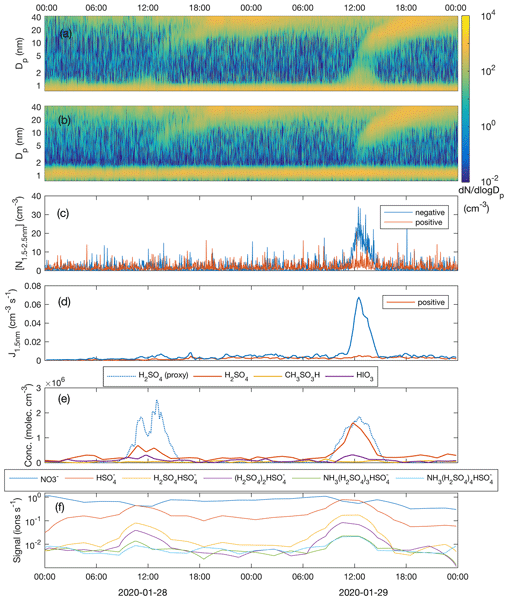
Mikko Sipilä, Nina Sarnela, Kimmo Neitola, Totti Laitinen, Deniz Kemppainen, Lisa Beck, Ella-Maria Duplissy, Salla Kuittinen, Tuuli Lehmusjärvi, Janne Lampilahti, Veli-Matti Kerminen, Katrianne Lehtipalo, Pasi P. Aalto, Petri Keronen, Erkki Siivola, Pekka A. Rantala, Douglas R. Worsnop, Markku Kulmala, Tuija Jokinen, and Tuukka Petäjä
Atmos. Chem. Phys., 21, 17559–17576, https://doi.org/10.5194/acp-21-17559-2021, https://doi.org/10.5194/acp-21-17559-2021, 2021
Short summary
Short summary
Metallurgical industry in Kola peninsula is a large source of air pollution in the (sub-)Arctic domain. Sulfur dioxide emissions from the ore smelters are transported across large areas. We investigated sulfur dioxide and its transformation to sulfuric acid aerosol particles during winter months in Finnish Lapland, close to Kola industrial areas. We observed intense formation of new aerosol particles despite the low solar radiation intensity, often required for new particle formation elsewhere.
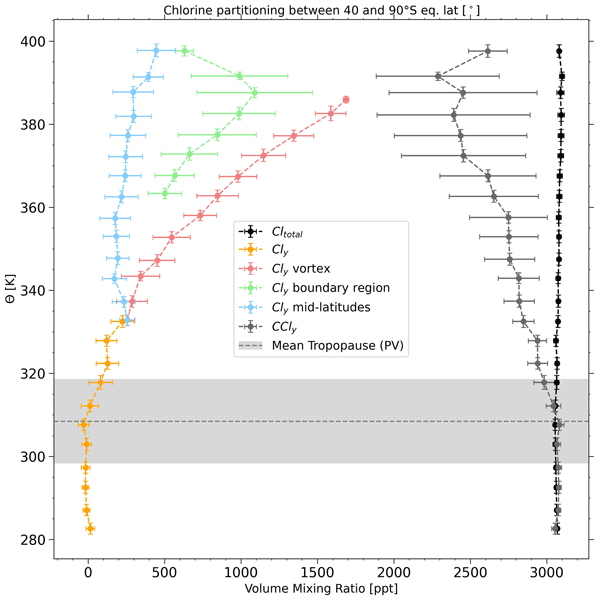
Markus Jesswein, Heiko Bozem, Hans-Christoph Lachnitt, Peter Hoor, Thomas Wagenhäuser, Timo Keber, Tanja Schuck, and Andreas Engel
Atmos. Chem. Phys., 21, 17225–17241, https://doi.org/10.5194/acp-21-17225-2021, https://doi.org/10.5194/acp-21-17225-2021, 2021
Short summary
Short summary
This study presents and compares inorganic chlorine (Cly) derived from observations with the HALO research aircraft in the Antarctic late winter–early fall 2019 and the Arctic winter 2015–2016. Trend-corrected correlations from the Northern Hemisphere show excellent agreement with those from the Southern Hemisphere. After observation allocation inside and outside the vortex based on N2O measurements, results of the two campaigns reveal substantial differences in Cly within the respective vortex.
Lucía Caudillo, Birte Rörup, Martin Heinritzi, Guillaume Marie, Mario Simon, Andrea C. Wagner, Tatjana Müller, Manuel Granzin, Antonio Amorim, Farnoush Ataei, Rima Baalbaki, Barbara Bertozzi, Zoé Brasseur, Randall Chiu, Biwu Chu, Lubna Dada, Jonathan Duplissy, Henning Finkenzeller, Loïc Gonzalez Carracedo, Xu-Cheng He, Victoria Hofbauer, Weimeng Kong, Houssni Lamkaddam, Chuan P. Lee, Brandon Lopez, Naser G. A. Mahfouz, Vladimir Makhmutov, Hanna E. Manninen, Ruby Marten, Dario Massabò, Roy L. Mauldin, Bernhard Mentler, Ugo Molteni, Antti Onnela, Joschka Pfeifer, Maxim Philippov, Ana A. Piedehierro, Meredith Schervish, Wiebke Scholz, Benjamin Schulze, Jiali Shen, Dominik Stolzenburg, Yuri Stozhkov, Mihnea Surdu, Christian Tauber, Yee Jun Tham, Ping Tian, António Tomé, Steffen Vogt, Mingyi Wang, Dongyu S. Wang, Stefan K. Weber, André Welti, Wang Yonghong, Wu Yusheng, Marcel Zauner-Wieczorek, Urs Baltensperger, Imad El Haddad, Richard C. Flagan, Armin Hansel, Kristina Höhler, Jasper Kirkby, Markku Kulmala, Katrianne Lehtipalo, Ottmar Möhler, Harald Saathoff, Rainer Volkamer, Paul M. Winkler, Neil M. Donahue, Andreas Kürten, and Joachim Curtius
Atmos. Chem. Phys., 21, 17099–17114, https://doi.org/10.5194/acp-21-17099-2021, https://doi.org/10.5194/acp-21-17099-2021, 2021
Short summary
Short summary
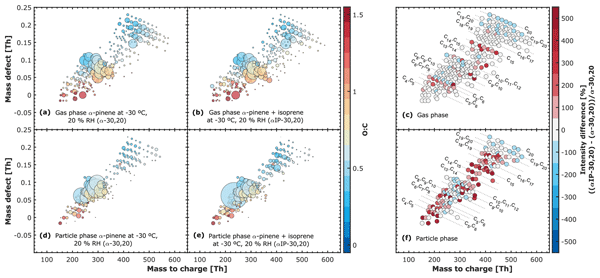
We performed experiments in the CLOUD chamber at CERN at low temperatures to simulate new particle formation in the upper free troposphere (at −30 ºC and −50 ºC). We measured the particle and gas phase and found that most of the compounds present in the gas phase are detected as well in the particle phase. The major compounds in the particles are C8–10 and C18–20. Specifically, we showed that C5 and C15 compounds are detected in a mixed system with isoprene and α-pinene at −30 ºC, 20 % RH.
Paul D. Hamer, Virginie Marécal, Ryan Hossaini, Michel Pirre, Gisèle Krysztofiak, Franziska Ziska, Andreas Engel, Stephan Sala, Timo Keber, Harald Bönisch, Elliot Atlas, Kirstin Krüger, Martyn Chipperfield, Valery Catoire, Azizan A. Samah, Marcel Dorf, Phang Siew Moi, Hans Schlager, and Klaus Pfeilsticker
Atmos. Chem. Phys., 21, 16955–16984, https://doi.org/10.5194/acp-21-16955-2021, https://doi.org/10.5194/acp-21-16955-2021, 2021
Short summary
Short summary
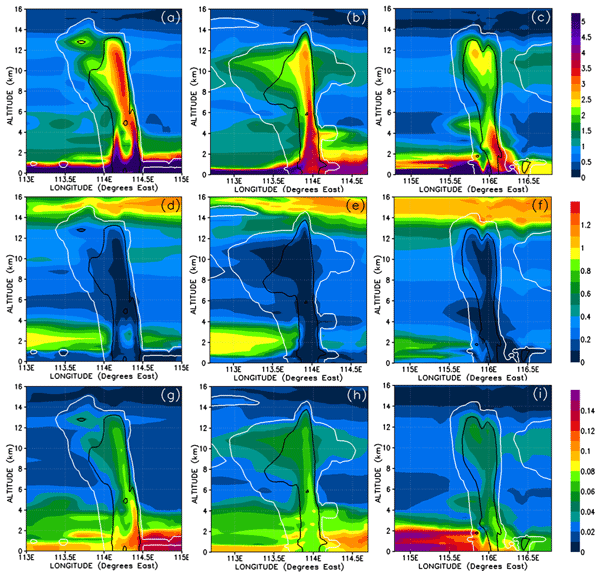
Bromoform is a stratospheric ozone-depleting gas released by seaweed and plankton transported to the stratosphere via convection in the tropics. We study the chemical interactions of bromoform and its derivatives within convective clouds using a cloud-scale model and observations. Our findings are that soluble bromine gases are efficiently washed out and removed within the convective clouds and that most bromine is transported vertically to the upper troposphere in the form of bromoform.
Larissa Lacher, Hans-Christian Clemen, Xiaoli Shen, Stephan Mertes, Martin Gysel-Beer, Alireza Moallemi, Martin Steinbacher, Stephan Henne, Harald Saathoff, Ottmar Möhler, Kristina Höhler, Thea Schiebel, Daniel Weber, Jann Schrod, Johannes Schneider, and Zamin A. Kanji
Atmos. Chem. Phys., 21, 16925–16953, https://doi.org/10.5194/acp-21-16925-2021, https://doi.org/10.5194/acp-21-16925-2021, 2021
Short summary
Short summary
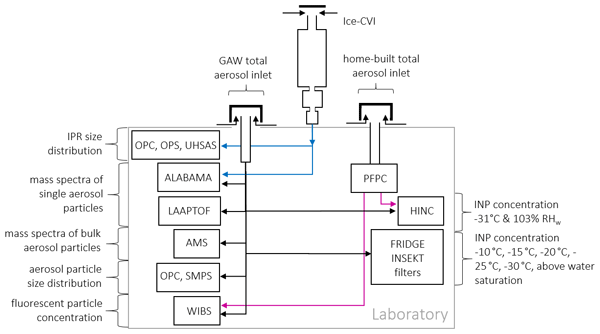
We investigate ice-nucleating particle properties at Jungfraujoch during the 2017 joint INUIT/CLACE field campaign, to improve the knowledge about those rare particles in a cloud-relevant environment. By quantifying ice-nucleating particles in parallel to single-particle mass spectrometry measurements, we find that mineral dust and aged sea spray particles are potential candidates for ice-nucleating particles. Our findings are supported by ice residual analysis and source region modeling.
Cited articles
3M: Safety data sheet: 3M™ Fluorinert™ Electronic Liquid FC-43, https://multimedia.3m.com/mws/media/64889O/fluorinert-electronic-liquid-fc-43.pdf (last access: 11 July 2025), 2019.
Andreae, M. O., Afchine, A., Albrecht, R., Holanda, B. A., Artaxo, P., Barbosa, H. M. J., Borrmann, S., Cecchini, M. A., Costa, A., Dollner, M., Fütterer, D., Järvinen, E., Jurkat, T., Klimach, T., Konemann, T., Knote, C., Krämer, M., Krisna, T., Machado, L. A. T., Mertes, S., Minikin, A., Pöhlker, C., Pöhlker, M. L., Pöschl, U., Rosenfeld, D., Sauer, D., Schlager, H., Schnaiter, M., Schneider, J., Schulz, C., Spanu, A., Sperling, V. B., Voigt, C., Walser, A., Wang, J., Weinzierl, B., Wendisch, M., and Ziereis, H.: Aerosol characteristics and particle production in the upper troposphere over the Amazon Basin, Atmos. Chem. Phys., 18, 921–961, https://doi.org/10.5194/acp-18-921-2018, 2018.
Banse, D. F., Esfeld, K., Hermann, M., Sierau, B., and Wiedensohler, A.: Particle counting efficiency of the TSI CPC 3762 for different operating parameters, J. Aerosol Sci., 32, 157–161, https://doi.org/10.1016/s0021-8502(00)00060-4, 2001.
Baron, P. A. and Willeke, K.: Aerosol measurement: principles, techniques, and applications, 20th edn., Wiley-Interscience, New York, XXIII, 1131 pp., ISBN 0471356360, 2001.
Bauer, P. S., Spät, D., Eisenhut, M., Gattringer, A., and Weinzierl, B.: Pressure-dependent performance of two CEN-specified condensation particle counters, Atmos. Meas. Tech., 16, 4445–4460, https://doi.org/10.5194/amt-16-4445-2023, 2023.
Bozem, H., Joppe, P., Li, Y., Emig, N., Afchine, A., Breuninger, A., Curtius, J., Hofmann, S., Ismayil, S., Kandler, K., Kunkel, D., Kutschka, A., Lachnitt, H.-C., Petzold, A., Richter, S., Röschenthaler, T., Rolf, C., Schneider, L., Schneider, J., Vogel, A., and Hoor, P.: The TropoPause Composition TOwed Sensor Shuttle (TPC-TOSS): a new airborne dual platform approach for atmospheric composition measurements at the tropopause, Atmos. Meas. Tech., 18, 6545–6568, https://doi.org/10.5194/amt-18-6545-2025, 2025.
Breuninger, A., Joppe, P., Wilsch, J., Schwenk, C., Bozem, H., Emig, N., Merkel, L., Rossberg, R., Keber, T., Kutschka, A., Waleska, P., Hofmann, S., Richter, S., Ungeheuer, F., Dörholt, K., Hoffmann, T., Miltenberger, A., Schneider, J., Hoor, P., and Vogel, A. L.: Organic aerosols mixing across the tropopause and its implication for anthropogenic pollution of the UTLS, Atmos. Chem. Phys., 25, 16533–16551, https://doi.org/10.5194/acp-25-16533-2025, 2025.
Bundke, U., Berg, M., Houben, N., Ibrahim, A., Fiebig, M., Tettich, F., Klaus, C., Franke, H., and Petzold, A.: The IAGOS-CORE aerosol package: instrument design, operation and performance for continuous measurement aboard in-service aircraft, Tellus B: Chemical and Physical Meteorology, 67, 28339, https://doi.org/10.3402/tellusb.v67.28339, 2015.
Cheng, Y.-S.: Mechanisms of Pharmaceutical Aerosol Deposition in the Respiratory Tract, AAPS PharmSciTech, 15, 630–640, https://doi.org/10.1208/s12249-014-0092-0, 2014.
Curtius, J., Heinritzi, M., Beck, L. J., Pöhlker, M. L., Tripathi, N., Krumm, B. E., Holzbeck, P., Nussbaumer, C. M., Hernández Pardo, L., Klimach, T., Barmpounis, K., Andersen, S. T., Bardakov, R., Bohn, B., Cecchini, M. A., Chaboureau, J.-P., Dauhut, T., Dienhart, D., Dörich, R., Edtbauer, A., Giez, A., Hartmann, A., Holanda, B. A., Joppe, P., Kaiser, K., Keber, T., Klebach, H., Krüger, O. O., Kürten, A., Mallaun, C., Marno, D., Martinez, M., Monteiro, C., Nelson, C., Ort, L., Raj, S. S., Richter, S., Ringsdorf, A., Rocha, F., Simon, M., Sreekumar, S., Tsokankunku, A., Unfer, G. R., Valenti, I. D., Wang, N., Zahn, A., Zauner-Wieczorek, M., Albrecht, R. I., Andreae, M. O., Artaxo, P., Crowley, J. N., Fischer, H., Harder, H., Herdies, D. L., Machado, L. A. T., Pöhlker, C., Pöschl, U., Possner, A., Pozzer, A., Schneider, J., Williams, J., and Lelieveld, J.: Isoprene nitrates drive new particle formation in Amazon's upper troposphere, Nature, 636, 124–130, https://doi.org/10.1038/s41586-024-08192-4, 2024.
Donahue, N. M., Epstein, S. A., Pandis, S. N., and Robinson, A. L.: A two-dimensional volatility basis set: 1. organic-aerosol mixing thermodynamics, Atmos. Chem. Phys., 11, 3303–3318, https://doi.org/10.5194/acp-11-3303-2011, 2011.
Dreiling, V. and Jaenicke, R.: Aircraft measurement with condensation nuclei counter and optical particle counter, Journal of Aerosol Science, 19, 1045–1050, https://doi.org/10.1016/0021-8502(88)90097-3, 1988.
Gallar, C., Brock, C. A., Jimenez, J. L., and Simons, C.: A Variable Supersaturation Condensation Particle Sizer, Aerosol Science and Technology, 40, 431–436, https://doi.org/10.1080/02786820600643339, 2006.
Gordon, H., Kirkby, J., Baltensperger, U., Bianchi, F., Breitenlechner, M., Curtius, J., Dias, A., Dommen, J., Donahue, N. M., Dunne, E. M., Duplissy, J., Ehrhart, S., Flagan, R. C., Frege, C., Fuchs, C., Hansel, A., Hoyle, C. R., Kulmala, M., Kürten, A., Lehtipalo, K., Makhmutov, V., Molteni, U., Rissanen, M. P., Stozkhov, Y., Tröstl, J., Tsagkogeorgas, G., Wagner, R., Williamson, C., Wimmer, D., Winkler, P. M., Yan, C., and Carslaw, K. S.: Causes and importance of new particle formation in the present-day and preindustrial atmospheres, J. Geophys. Res., 122, 8739–8760, https://doi.org/10.1002/2017JD026844, 2017.
Hermann, M. and Wiedensohler, A.: Counting effciency of condensation particle counters at low-pressures with illustrative data from the upper troposphere, 975–991, Journal of Aerosol Science, https://doi.org/10.1016/S0021-8502(01)00037-4, 2001.
Hermann, M., Heintzenberg, J., Wiedensohler, A., Zahn, A., Heinrich, G., and Brenninkmeijer, C. A. M.: Meridional distributions of aerosol particle number concentrations in the upper troposphere and lower stratosphere obtained by Civil Aircraft for Regular Investigation of the Atmosphere Based on an Instrument Container (CARIBIC) flights, J. Geophys. Res., 108, https://doi.org/10.1029/2001JD001077, 2003.
Hermann, M., Adler, S., Caldow, R., Stratmann, F., and Wiedensohler, A.: Pressure-dependent efficiency of a condensation particle counter operated with FC-43 as working fluid, Journal of Aerosol Science, 36, 1322–1337, https://doi.org/10.1016/j.jaerosci.2005.03.002, 2005.
Hinds, W. C.: Aerosol Technology: Properties, Behavior, and Measurement of Airborne Particles, 2nd edn., Wiley-Interscience, s.l., 483 pp., ISBN 0471194107, 1999.
Hong, A. C., Young, C. J., Hurley, M. D., Wallington, T. J., and Mabury, S. A.: Perfluorotributylamine: A novel long-lived greenhouse gas, Geophys. Res. Lett., 40, 6010–6015, https://doi.org/10.1002/2013GL058010, 2013.
Joppe, P., Schneider, J., Wilsch, J., Bozem, H., Breuninger, A., Curtius, J., Ebert, M., Emig, N., Hoor, P., Ismayil, S., Kandler, K., Kunkel, D., Kurth, I., Lachnitt, H.-C., Li, Y., Miltenberger, A., Richter, S., Rolf, C., Schneider, L., Schwenk, C., Spelten, N., Vogel, A. L., Cheng, Y., and Borrmann, S.: Transport of Biomass Burning Aerosol into the Extratropical Tropopause Region over Europe via Warm Conveyor Belt Uplift, Atmos. Chem. Phys., 25, 15077–15103, https://doi.org/10.5194/acp-25-15077-2025, 2025.
Khosrawi, F. and Konopka, P.: Enhanced particle formation and growth due to mixing processes in the tropopause region, Atmospheric Environment, 37, 903–910, https://doi.org/10.1016/S1352-2310(02)00976-7, 2003.
Kirchhoff, S., Weber, P., Bischof, O. F., Steiner, G., Kunath, C., Keck, L., Fruhmann, V. M., Krasa, H., Bergmann, A., Petzold, A., and Bundke, U.: Evaluation of DMSO as Working Fluid in Condensation Particle Counters, Atmos. Meas. Tech., submitted, 2026.
Kupc, A., Williamson, C. J., Hodshire, A. L., Kazil, J., Ray, E., Bui, T. P., Dollner, M., Froyd, K. D., McKain, K., Rollins, A., Schill, G. P., Thames, A., Weinzierl, B. B., Pierce, J. R., and Brock, C. A.: The potential role of organics in new particle formation and initial growth in the remote tropical upper troposphere, Atmos. Chem. Phys., 20, 15037–15060, https://doi.org/10.5194/acp-20-15037-2020, 2020.
Lee, H. and Romero, J.: Climate Change 2023: Synthesis Report: Contribution of Working Groups I, II and III to the Sixth Assessment Report of the Intergovernmental Panel on Climate Change, IPCC, Geneva, Switzerland, 35–115, https://doi.org/10.59327/IPCC/AR6-9789291691647, 2023.
Li, G., Wang, Y., and Zhang, R.: Implementation of a two-moment bulk microphysics scheme to the WRF model to investigate aerosol-cloud interaction, J. Geophys. Res., 113, https://doi.org/10.1029/2007JD009361, 2008.
McMurry, P. H.: The History of Condensation Nucleus Counters, Aerosol Science and Technology, 33, 297–322, https://doi.org/10.1080/02786820050121512, 2000.
Merikanto, J., Spracklen, D. V., Mann, G. W., Pickering, S. J., and Carslaw, K. S.: Impact of nucleation on global CCN, Atmos. Chem. Phys., 9, 8601–8616, https://doi.org/10.5194/acp-9-8601-2009, 2009.
Minikin, A., Petzold, A., Ström, J., Krejci, R., Seifert, M., van Velthoven, P., Schlager, H., and Schumann, U.: Aircraft observations of the upper tropospheric fine particle aerosol in the Northern and Southern Hemispheres at midlatitudes, Geophysical Research Letters, 30, https://doi.org/10.1029/2002GL016458, 2003.
Peng, J., Hu, M., Guo, S., Du, Z., Zheng, J., Shang, D., Levy Zamora, M., Zeng, L., Shao, M., Wu, Y.-S., Zheng, J., Wang, Y., Glen, C. R., Collins, D. R., Molina, M. J., and Zhang, R.: Markedly enhanced absorption and direct radiative forcing of black carbon under polluted urban environments, Proceedings of the National Academy of Sciences of the United States of America, 113, 4266–4271, https://doi.org/10.1073/pnas.1602310113, 2016.
Richter, S.: Characterization and operation of a multi-channel Condensation Particle Counter (mc-CPC) for aircraft-based measurements, Zenodo [data set], https://doi.org/10.5281/zenodo.18315404, 2026.
Rose, C., Sellegri, K., Freney, E., Dupuy, R., Colomb, A., Pichon, J.-M., Ribeiro, M., Bourianne, T., Burnet, F., and Schwarzenboeck, A.: Airborne measurements of new particle formation in the free troposphere above the Mediterranean Sea during the HYMEX campaign, Atmos. Chem. Phys., 15, 10203–10218, https://doi.org/10.5194/acp-15-10203-2015, 2015.
Carl Roth GmbH + Co. KG: Safety data sheet – 1-Butanol ≥ 99.5 %, for synthesis, Article No. 7724, Version 1.0, Karlsruhe, Germany, http://www.carlroth.de (last access: 1 July 2025), 2024.
Schraufnagel, D. E.: The health effects of ultrafine particles, Experimental & Molecular Medicine, 52, 311–317, https://doi.org/10.1038/s12276-020-0403-3, 2020.
Schröder, F. and Ström, J.: Aircraft measurements of sub micrometer aerosol particles (> 7 nm) in the midlatitude free troposphere and tropopause region, Atmospheric Research, 333–356, https://doi.org/10.1016/S0169-8095(96)00034-8, 1996.
Seinfeld, J. H. and Pandis, S. N.: Atmospheric Chemistry and Physics: From Air Pollution to Climate Change, New York Academy of Sciences Series, John Wiley & Sons Incorporated, Newark, 1149 pp., ISBN 9781118947401, 2016.
Sem, G. J.: Design and performance characteristics of three continuous-flow condensation particle counters: a summary, Atmospheric Research, 62, 267–294, https://doi.org/10.1016/S0169-8095(02)00014-5, 2002.
Sinclair, D. and Hoopes, G. S.: A continuous flow condensation nucleus counter, Journal of Aerosol Science, 6, 1–7, https://doi.org/10.1016/0021-8502(75)90036-1, 1975.
Szopa, S., Adhikary, B., Artaxo, P., Berntsen, T., Collins, W. D., Fuzzi, S., Gallardo, L., Klimont, Z., Zanis, P., Naik, V., Kiendler-Scharr, A., Liao, H., and Unger, N.: Short-lived Climate Forcers, IPCC 2021: Climate Change 2021: The Physical Science Basis. Contribution of Working Group I to the Sixth Assessment Report of the Intergovernmental Panel on Climate Change, edited by: Masson-Delmotte, V., Zhai, P., Connors, S. L., Goldfarb, L., Gomis, M., Huang, M., Waterfield, T., Yelekçi, K., Yu, R., Zhu, B., Pirani, A., Péan, C., Berger, S., Caud, N., Chen, Y., Leitzell, K., Lonnoy, E., Matthews, J., and Maycock, T. K., Cambridge University Press, Cambridge, United Kingdom and New York, NY, USA, 817–922, https://doi.org/10.1017/9781009157896.008, 2021.
Twohy, C. H., Clement, C. F., Gandrud, B. W., Weinheimer, A. J., Campos, T. L., Baumgardner, D., Brune, W. H., Faloona, I., Sachse, G. W., Vay, S. A., and Tan, D.: Deep convection as a source of new particles in the midlatitude upper troposphere, J. Geophys. Res., 107, AAC 6-1–AAC 6-10, https://doi.org/10.1029/2001JD000323, 2002.
von der Weiden, S.-L., Drewnick, F., and Borrmann, S.: Particle Loss Calculator – a new software tool for the assessment of the performance of aerosol inlet systems, Atmos. Meas. Tech., 2, 479–494, https://doi.org/10.5194/amt-2-479-2009, 2009.
Wang, Y., Khalizov, A., Levy, M., and Zhang, R.: New Directions: Light absorbing aerosols and their atmospheric impacts, Atmospheric Environment, 81, 713–715, https://doi.org/10.1016/j.atmosenv.2013.09.034, 2013.
Weber, P., Bischof, O. F., Fischer, B., Berg, M., Schmitt, J., Steiner, G., Keck, L., Petzold, A., and Bundke, U.: A new working fluid for condensation particle counters for use in sensitive working environments, Aerosol Research, 1, 1–12, https://doi.org/10.5194/ar-1-1-2023, 2023a.
Weber, P., Bischof, O. F., Fischer, B., Berg, M., Hering, S., Spielman, S., Lewis, G., Petzold, A., and Bundke, U.: Characterisation of a self-sustained, water-based condensation particle counter for aircraft cruising pressure level operation, Atmos. Meas. Tech., 16, 3505–3514, https://doi.org/10.5194/amt-16-3505-2023, 2023b.
Weigel, R., Hermann, M., Curtius, J., Voigt, C., Walter, S., Böttger, T., Lepukhov, B., Belyaev, G., and Borrmann, S.: Experimental characterization of the COndensation PArticle counting System for high altitude aircraft-borne application, Atmos. Meas. Tech., 2, 243–258, https://doi.org/10.5194/amt-2-243-2009, 2009.
Weigel, R., Borrmann, S., Kazil, J., Minikin, A., Stohl, A., Wilson, J. C., Reeves, J. M., Kunkel, D., de Reus, M., Frey, W., Lovejoy, E. R., Volk, C. M., Viciani, S., D'Amato, F., Schiller, C., Peter, T., Schlager, H., Cairo, F., Law, K. S., Shur, G. N., Belyaev, G. V., and Curtius, J.: In situ observations of new particle formation in the tropical upper troposphere: the role of clouds and the nucleation mechanism, Atmos. Chem. Phys., 11, 9983–10010, https://doi.org/10.5194/acp-11-9983-2011, 2011.
Wiedensohler, A., Wiesner, A., Weinhold, K., Birmili, W., Hermann, M., Merkel, M., Müller, T., Pfeifer, S., Schmidt, A., Tuch, T., Velarde, F., Quincey, P., Seeger, S., and Nowak, A.: Mobility particle size spectrometers: Calibration procedures and measurement uncertainties, Aerosol Science and Technology, 52, 146–164, https://doi.org/10.1080/02786826.2017.1387229, 2018.
Williamson, C., Kupc, A., Wilson, J., Gesler, D. W., Reeves, J. M., Erdesz, F., McLaughlin, R., and Brock, C. A.: Fast time response measurements of particle size distributions in the 3–60 nm size range with the nucleation mode aerosol size spectrometer, Atmos. Meas. Tech., 11, 3491–3509, https://doi.org/10.5194/amt-11-3491-2018, 2018.
Williamson, C. J., Kupc, A., Axisa, D., Bilsback, K. R., Bui, T., Campuzano-Jost, P., Dollner, M., Froyd, K. D., Hodshire, A. L., Jimenez, J. L., Kodros, J. K., Luo, G., Murphy, D. M., Nault, B. A., Ray, E. A., Weinzierl, B., Wilson, J. C., Yu, F., Yu, P., Pierce, J. R., and Brock, C. A.: A large source of cloud condensation nuclei from new particle formation in the tropics, Nature, 574, 399–403, https://doi.org/10.1038/s41586-019-1638-9, 2019.
Wlasits, P. J., Stolzenburg, D., Tauber, C., Brilke, S., Schmitt, S. H., Winkler, P. M., and Wimmer, D.: Counting on chemistry: laboratory evaluation of seed-material-dependent detection efficiencies of ultrafine condensation particle counters, Atmos. Meas. Tech., 13, 3787–3798, https://doi.org/10.5194/amt-13-3787-2020, 2020.
Yu, H., Ortega, J., Smith, J. N., Guenther, A. B., Kanawade, V. P., You, Y., Liu, Y., Hosman, K., Karl, T., Seco, R., Geron, C., Pallardy, S. G., Gu, L., Mikkilä, J., and Lee, S. H.: New particle formation and growth in an isoprene-dominated Ozark Forest: From sub-5 nm to CCN-active sizes., Aerosol Science and Technology, 12, 1285–1298, https://doi.org/10.1080/02786826.2014.984801, 2014.
Zhang, J., Chen, Z., Lu, Y., Gui, H., Liu, J., Wang, J., Yu, T., and Cheng, Y.: Observations of New Particle Formation, Subsequent Growth and Shrinkage during Summertime in Beijing, Aerosol Air Qual. Res., 16, 1591–1602, https://doi.org/10.4209/aaqr.2015.07.0480, 2016.
Zhang, J., Gong, X., Crosbie, E., Diskin, G., Froyd, K., Hall, S., Kupc, A., Moore, R., Peischl, J., Rollins, A., Schwarz, J., Shook, M., Thompson, C., Ullmann, K., Williamson, C., Wisthaler, A., Xu, L., Ziemba, L., Brock, C. A., and Wang, J.: Stratospheric air intrusions promote global-scale new particle formation, Science, 385, 210–216, https://doi.org/10.1126/science.adn2961, 2024.
Short summary
We constructed and characterized a Fluorinert multi-channel Condensation Particle Counter for aircraft applications that comprises three channels and a pressure regulation system to measure nucleation mode particles in the upper troposphere. The cutoffs were determined at several ambient and internal pressures and sample flows. During the first aircraft campaign TPEx we were able to identify possible new particle formation events.
We constructed and characterized a Fluorinert multi-channel Condensation Particle Counter for...


