
Articles | Volume 19, issue 7
https://doi.org/10.5194/amt-19-2329-2026
© Author(s) 2026. This work is distributed under
the Creative Commons Attribution 4.0 License.
the Creative Commons Attribution 4.0 License.
https://doi.org/10.5194/amt-19-2329-2026
© Author(s) 2026. This work is distributed under
the Creative Commons Attribution 4.0 License.
the Creative Commons Attribution 4.0 License.
Research article
| 
09 Apr 2026
Research article |
| 09 Apr 2026
| 09 Apr 2026
Laminar gas inlet – Part 2: Wind tunnel chemical transmission measurement and modelling
Da Yang
CORRESPONDING AUTHOR

Department of Chemistry, University of Colorado Boulder, Boulder, CO, USA
Cooperative Institute for Research in Environmental Sciences (CIRES), University of Colorado Boulder, Boulder, CO, USA
Mechanical and Aeronautical Engineering, Clarkson University, Potsdam, NY, USA
Emmanuel Assaf
Department of Atmospheric and Oceanic Sciences, University of Colorado Boulder, Boulder, CO, USA
Roy Mauldin
Department of Atmospheric and Oceanic Sciences, University of Colorado Boulder, Boulder, CO, USA
Suresh Dhaniyala
Mechanical and Aeronautical Engineering, Clarkson University, Potsdam, NY, USA
Rainer Volkamer
CORRESPONDING AUTHOR
Department of Chemistry, University of Colorado Boulder, Boulder, CO, USA
Cooperative Institute for Research in Environmental Sciences (CIRES), University of Colorado Boulder, Boulder, CO, USA
Department of Atmospheric and Oceanic Sciences, University of Colorado Boulder, Boulder, CO, USA
Related authors
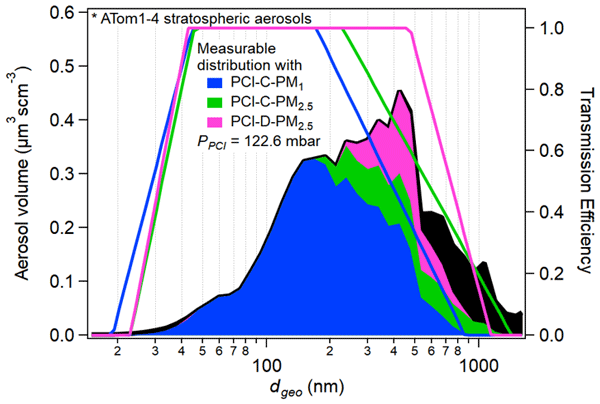
Dongwook Kim, Pedro Campuzano-Jost, Hongyu Guo, Douglas A. Day, Da Yang, Suresh Dhaniyala, Leah Williams, Philip Croteau, John Jayne, Douglas Worsnop, Rainer Volkamer, and Jose L. Jimenez
Aerosol Research, 3, 371–404, https://doi.org/10.5194/ar-3-371-2025, https://doi.org/10.5194/ar-3-371-2025, 2025
Short summary
Short summary
Quantitative real-time aerosol sampling on board aircraft platforms is challenging, especially at higher altitudes. Herein, we present comprehensive analyses of a new aircraft inlet system and tools for aerosol beam diagnostics for aerosol mass spectrometers (AMSs). The beam focusing of aerodynamic lenses and the thermal decomposition on the vaporizer were investigated. The new inlet system can be operated at higher altitudes while sampling aerosols over a broader size range than previous versions.
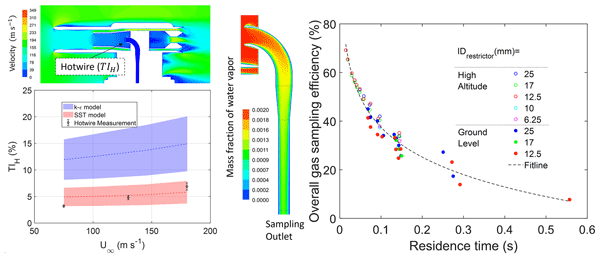
Da Yang, Margarita Reza, Roy Mauldin, Rainer Volkamer, and Suresh Dhaniyala
Atmos. Meas. Tech., 17, 1463–1474, https://doi.org/10.5194/amt-17-1463-2024, https://doi.org/10.5194/amt-17-1463-2024, 2024
Short summary
Short summary
This paper evaluates the performance of an aircraft gas inlet. Here, we use computational fluid dynamics (CFD) and experiments to demonstrate the role of turbulence in determining sampling performance of a gas inlet and identify ideal conditions for inlet operation to minimize gas loss. Experiments conducted in a high-speed wind tunnel under near-aircraft speeds validated numerical results. We believe that the results obtained from this work will greatly inform future gas inlet studies.
Jenna DeVivo, Alexandria Stinchfield, Nirvan Bhattacharyya, Mitch Alton, Mingyi Wang, Siegfried Schobesberger, Liqing Hao, Mitchell Rogers, Alexander Vogel, Imad Zgheib, Natalie Burton, Clara Lietzke, Douglas M. Russell, Eva Sommer, Drew Gentner, Liine Heikkinen, Rainer Volkamer, Jasper Kirkby, Felipe Lopez-Hilfiker, Douglas Worsnop, Manjula Canagaratna, and Neil M. Donahue
EGUsphere, https://doi.org/10.5194/egusphere-2026-4542, https://doi.org/10.5194/egusphere-2026-4542, 2026
This preprint is open for discussion and under review for Atmospheric Chemistry and Physics (ACP).
Short summary
Short summary
The vapors driving atmospheric new particle formation are uncertain, in part because of instrumental limitations at small particle sizes. This study presents a novel coupling of a temperature-programmed desorption inlet with a bipolar mass spectrometer that has multiple types of chemical ionization used to study acid-base reactions controlling particulate evaporation.This method measures more components in atmospheric aerosol and separates reactive pathways contributing to early particle growth.
Samuel Ruhl, Matthias Kohl, Rima Baalbaki, Christos Xenofontos, Ryan Vella, Sergey Gromov, Xu-Cheng He, Jiali Shen, Dina Alfaouri, Samira Atabakhsh, Lubna Dada, Jenna DeVivo, Jonathan Duplissy, Imad El Haddad, Hartwig Harder, Tuija Jokinen, Heikki Junninen, Vijay P. Kanawade, Milin K. Sebastian, Hannah Klebach, Markku Kulmala, Felix Kunkler, Jos Lelieveld, Katrianne Lehtipalo, Clara J. Lietzke, Lu Liu, Roy Mauldin, Bernhard Mentler, Ottmar Möhler, Tuukka Petäjä, Douglas M. Russell, Mario Simon, Roseline C. Thakur, Wenjuan Yu, Jiangyi Zhang, Zhensen Zheng, Jasper Kirkby, Holger Tost, Theodoros Christoudias, Rolf Sander, and Andrea Pozzer
EGUsphere, https://doi.org/10.5194/egusphere-2026-4020, https://doi.org/10.5194/egusphere-2026-4020, 2026
This preprint is open for discussion and under review for Atmospheric Chemistry and Physics (ACP).
Short summary
Short summary
Marine microbes release sulfur gases that form tiny particles able to seed clouds. Using a global chemistry-climate model, we compare four schemes for how these gases oxidise and test them against ship and ground measurements. We find that methanesulfonic acid can drive new particle formation as strongly as sulfuric acid over the cold Southern Ocean, supplying around 25 % of the cloud-forming particles there, a natural, climate-relevant source that models often overlook.
Han Ding, Pratapaditya Ghosh, Xu-Cheng He, R. Lee Mauldin III, David O'Neal, John Ortega, James Norman Smith, and Hamish Gordon
EGUsphere, https://doi.org/10.5194/egusphere-2026-932, https://doi.org/10.5194/egusphere-2026-932, 2026
Short summary
Short summary
About half of the particles in the atmosphere that affect the properties of clouds are formed when gas molecules cluster together. This clustering process is usually very simplified in atmospheric models. Here we test a more sophisticated clustering mechanism in a regional setup of a climate model, using aircraft measurements in Colorado. Including ammonia in the mechanism can substantially improve predictions of atmospheric particle concentrations, but other species probably contribute as well.
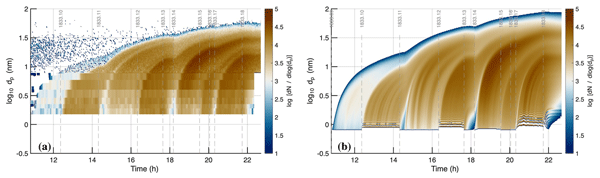
Neil M. Donahue, Victoria Hofbauer, Henning Finkenzeller, Dominik Stolzenburg, Paulus S. Bauer, Randall Chiu, Lubna Dada, Jonathan Duplissy, Xu-Cheng He, Martin Heinritzi, Christopher R. Hoyle, Andreas Kürten, Aleksandr Kvashnin, Katrianne Lehtipalo, Naser Mahfouz, Vladimir Makhmutov, Roy L. Mauldin III, Ugo Molteni, Lauriane L. J. Quéléver, Matti Rissanen, Siegfried Schobesberger, Mario Simon, Andrea C. Wagner, Mingyi Wang, Chao Yan, Penglin Ye, Ilona Riipinen, Hamish Gordon, Joachim Curtius, Armin Hansel, Imad El Haddad, Markku Kulmala, Douglas R. Worsnop, Rainer Volkamer, Paul M. Winkler, Jasper Kirkby, and Richard Flagan
Atmos. Meas. Tech., 19, 3363–3396, https://doi.org/10.5194/amt-19-3363-2026, https://doi.org/10.5194/amt-19-3363-2026, 2026
Short summary
Short summary
We describe accurate measurement of particle formation and growth in the CERN CLOUD (European Council for Nuclear Research Cosmics Leaving OUtdoor Droplets) chamber, using a suite of gas- and particle-phase instruments. The interconnected measurements establish high accuracy in key particle properties and critically important gas-phase sulfuric acid. This is a template for accurate calibration of similar experiments and thus accurate determination of aerosol nucleation and growth rates, which are an important source of uncertainty in climate science.
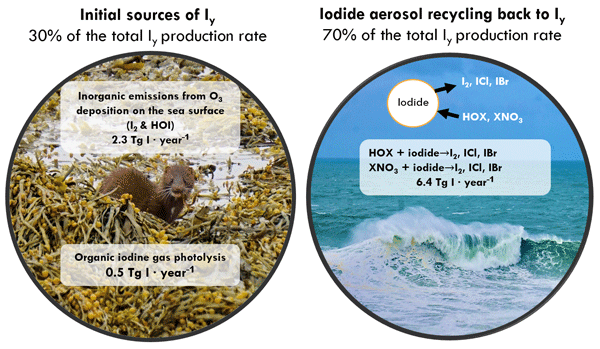
Allison R. Moon, Leyang Liu, Xuan Wang, Yuk-Chun Chan, Alyson Fritzmann, Ryan Pound, Amy Lees, Lewis Marden, Mat Evans, Lucy J. Carpenter, Jochen Stutz, Joel A. Thornton, Gordon Novak, Andrew Rollins, Gregory P. Schill, Xu-Cheng He, Henning Finkenzeller, Mago Reza, Rainer Volkamer, Kelvin H. Bates, Alfonso Saiz-Lopez, Anoop S. Mahajan, and Becky Alexander
Atmos. Chem. Phys., 26, 2353–2389, https://doi.org/10.5194/acp-26-2353-2026, https://doi.org/10.5194/acp-26-2353-2026, 2026
Short summary
Short summary
Global chemical transport models previously treated aerosols as a sink for reactive iodine (Iy); however, aerosol iodide is also a source of Iy via heterogeneous reactions involving hypohalous acids and halogen nitrates. We implemented this chemistry into GEOS-Chem, in addition to explicitly representing three aerosol iodine types: soluble organic iodine (SOI), iodide, and iodate. We found that aerosol recycling of iodide to form Iy is more than twice as fast as the other Iy sources combined.
Tyler R. Elgiar, Loknath Dhar, Lynne Gratz, A. Gannet Hallar, Rainer Volkamer, and Seth N. Lyman
Atmos. Chem. Phys., 25, 16387–16399, https://doi.org/10.5194/acp-25-16387-2025, https://doi.org/10.5194/acp-25-16387-2025, 2025
Short summary
Short summary
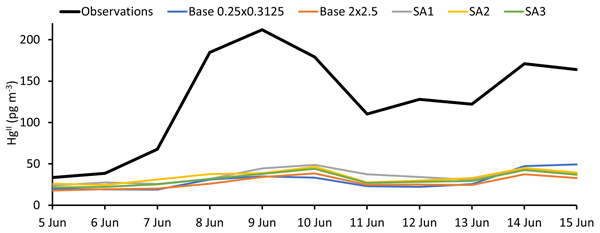
We compare verified atmospheric mercury measurements against output from the GEOS-Chem photochemical transport model. We show the model is unable to reproduce measured atmospheric oxidized mercury concentrations, even in several cases where oxidation rates in the model are enhanced.
Yugo Kanaya, Roberto Sommariva, Alfonso Saiz-Lopez, Andrea Mazzeo, Theodore K. Koenig, Kaori Kawana, James E. Johnson, Aurélie Colomb, Pierre Tulet, Suzie Molloy, Ian E. Galbally, Rainer Volkamer, Anoop Mahajan, John W. Halfacre, Paul B. Shepson, Julia Schmale, Hélène Angot, Byron Blomquist, Matthew D. Shupe, Detlev Helmig, Junsu Gil, Meehye Lee, Sean C. Coburn, Ivan Ortega, Gao Chen, James Lee, Kenneth C. Aikin, David D. Parrish, John S. Holloway, Thomas B. Ryerson, Ilana B. Pollack, Eric J. Williams, Brian M. Lerner, Andrew J. Weinheimer, Teresa Campos, Frank M. Flocke, J. Ryan Spackman, Ilann Bourgeois, Jeff Peischl, Chelsea R. Thompson, Ralf M. Staebler, Amir A. Aliabadi, Wanmin Gong, Roeland Van Malderen, Anne M. Thompson, Ryan M. Stauffer, Debra E. Kollonige, Juan Carlos Gómez Martin, Masatomo Fujiwara, Katie Read, Matthew Rowlinson, Keiichi Sato, Junichi Kurokawa, Yoko Iwamoto, Fumikazu Taketani, Hisahiro Takashima, Mónica Navarro-Comas, Marios Panagi, and Martin G. Schultz
Earth Syst. Sci. Data, 17, 4901–4932, https://doi.org/10.5194/essd-17-4901-2025, https://doi.org/10.5194/essd-17-4901-2025, 2025
Short summary
Short summary
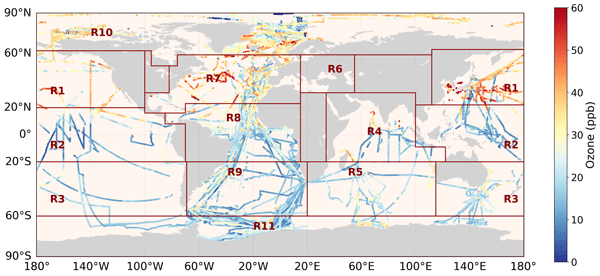
The first comprehensive dataset of tropospheric ozone over oceans/polar regions is presented, including 77 ship/buoy and 48 aircraft campaign observations (1977–2022, 0–5000 m altitude), supplemented by ozonesonde and surface data. Air masses isolated from land for 72+ hours are systematically selected as essentially oceanic. Among the 11 global regions, they show daytime decreases of 11–16 % in the tropics, while near-zero depletions are rare, unlike in the Arctic, implying different mechanisms.
Dongwook Kim, Pedro Campuzano-Jost, Hongyu Guo, Douglas A. Day, Da Yang, Suresh Dhaniyala, Leah Williams, Philip Croteau, John Jayne, Douglas Worsnop, Rainer Volkamer, and Jose L. Jimenez
Aerosol Research, 3, 371–404, https://doi.org/10.5194/ar-3-371-2025, https://doi.org/10.5194/ar-3-371-2025, 2025
Short summary
Short summary
Quantitative real-time aerosol sampling on board aircraft platforms is challenging, especially at higher altitudes. Herein, we present comprehensive analyses of a new aircraft inlet system and tools for aerosol beam diagnostics for aerosol mass spectrometers (AMSs). The beam focusing of aerodynamic lenses and the thermal decomposition on the vaporizer were investigated. The new inlet system can be operated at higher altitudes while sampling aerosols over a broader size range than previous versions.
Theodore K. Koenig, François Hendrick, Douglas Kinnison, Christopher F. Lee, Michel Van Roozendael, and Rainer Volkamer
Atmos. Meas. Tech., 17, 5911–5934, https://doi.org/10.5194/amt-17-5911-2024, https://doi.org/10.5194/amt-17-5911-2024, 2024
Short summary
Short summary
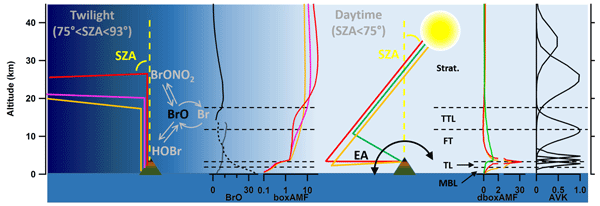
Atmospheric bromine destroys ozone, impacts oxidation capacity, and oxidizes mercury into its toxic form. We constrain bromine by remote sensing of BrO from a mountaintop. Previous measurements retrieved two to three pieces of information vertically; we apply new methods to get five and a half vertically and two more in time. We compare with aircraft measurements to validate the methods and look at variations in BrO over the Pacific.
Randall Chiu, Florian Obersteiner, Alessandro Franchin, Teresa Campos, Adriana Bailey, Christopher Webster, Andreas Zahn, and Rainer Volkamer
Atmos. Meas. Tech., 17, 5731–5746, https://doi.org/10.5194/amt-17-5731-2024, https://doi.org/10.5194/amt-17-5731-2024, 2024
Short summary
Short summary
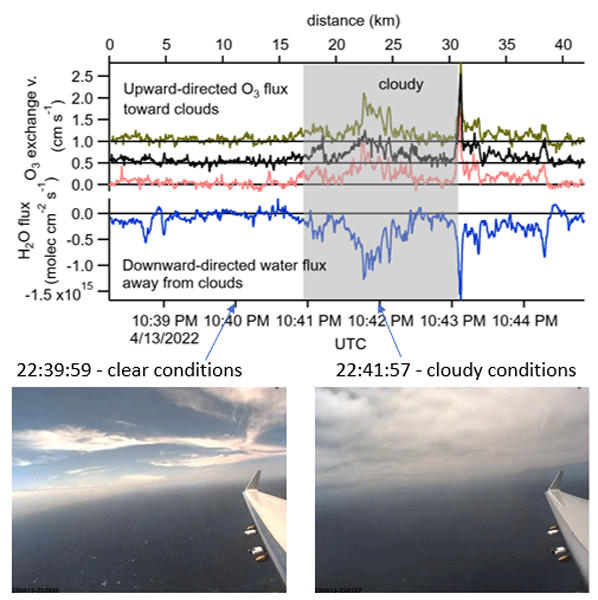
The ozone sink into oceans and marine clouds is seldom studied and highly uncertain. Calculations suggest O3 destruction at aqueous surfaces (ocean, droplets) may be strongly accelerated, but field evidence is missing. Here we compare three fast airborne O3 instruments to measure eddy covariance fluxes of O3 over the remote ocean, in clear and cloudy air. We find O3 fluxes below clouds are consistently directed into clouds, while O3 fluxes into oceans are much smaller and spatially variable.
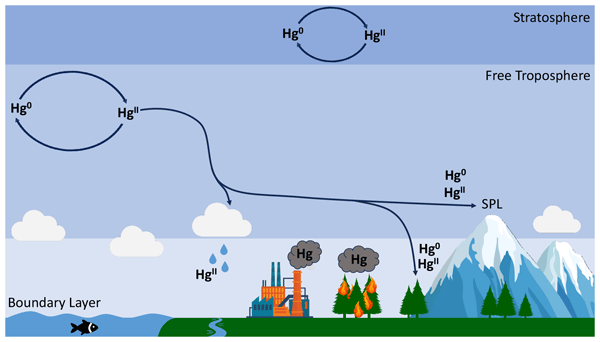
Eleanor J. Derry, Tyler R. Elgiar, Taylor Y. Wilmot, Nicholas W. Hoch, Noah S. Hirshorn, Peter Weiss-Penzias, Christopher F. Lee, John C. Lin, A. Gannet Hallar, Rainer Volkamer, Seth N. Lyman, and Lynne E. Gratz
Atmos. Chem. Phys., 24, 9615–9643, https://doi.org/10.5194/acp-24-9615-2024, https://doi.org/10.5194/acp-24-9615-2024, 2024
Short summary
Short summary
Mercury (Hg) is a globally distributed neurotoxic pollutant. Atmospheric deposition is the main source of Hg in ecosystems. However, measurement biases hinder understanding of the origins and abundance of the more bioavailable oxidized form. We used an improved, calibrated measurement system to study air mass composition and transport of atmospheric Hg at a remote mountaintop site in the central US. Oxidized Hg originated upwind in the low to middle free troposphere under clean, dry conditions.
Da Yang, Margarita Reza, Roy Mauldin, Rainer Volkamer, and Suresh Dhaniyala
Atmos. Meas. Tech., 17, 1463–1474, https://doi.org/10.5194/amt-17-1463-2024, https://doi.org/10.5194/amt-17-1463-2024, 2024
Short summary
Short summary
This paper evaluates the performance of an aircraft gas inlet. Here, we use computational fluid dynamics (CFD) and experiments to demonstrate the role of turbulence in determining sampling performance of a gas inlet and identify ideal conditions for inlet operation to minimize gas loss. Experiments conducted in a high-speed wind tunnel under near-aircraft speeds validated numerical results. We believe that the results obtained from this work will greatly inform future gas inlet studies.
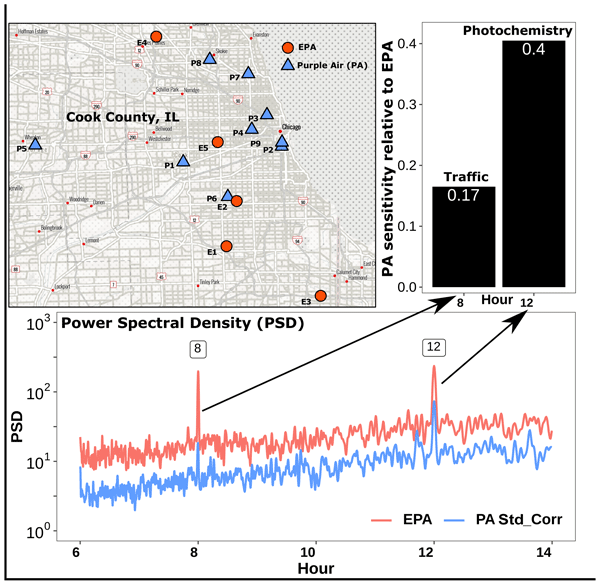
Vijay Kumar, Dinushani Senarathna, Supraja Gurajala, William Olsen, Shantanu Sur, Sumona Mondal, and Suresh Dhaniyala
Atmos. Meas. Tech., 16, 5415–5427, https://doi.org/10.5194/amt-16-5415-2023, https://doi.org/10.5194/amt-16-5415-2023, 2023
Short summary
Short summary
Low-cost sensors are becoming increasingly important in air quality monitoring due to their affordability and ease of deployment. While low-cost sensors have the potential to democratize air quality monitoring, their use must be accompanied by careful interpretation and validation of the data. Analysis of their long-term data record clearly shows that the reported data from low-cost sensors may not be equally sensitive to all emission sources, which can complicate policy-making.
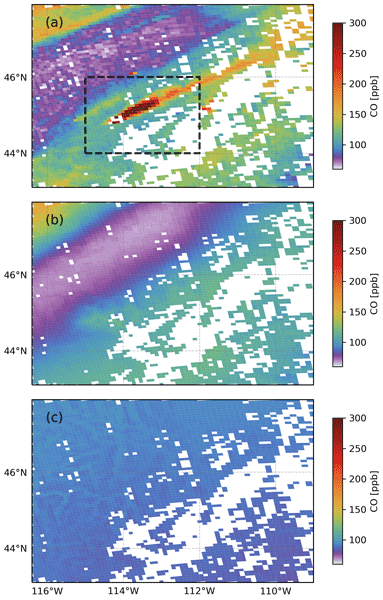
Tobias Borsdorff, Teresa Campos, Natalie Kille, Kyle J. Zarzana, Rainer Volkamer, and Jochen Landgraf
Atmos. Meas. Tech., 16, 3027–3038, https://doi.org/10.5194/amt-16-3027-2023, https://doi.org/10.5194/amt-16-3027-2023, 2023
Short summary
Short summary
ECMWF plans to assimilate TROPOMI CO with their CAMS-IFS model. This will constrain the total column and the vertical CO distribution of the model. To show this, we combine individual TROPOMI CO column retrievals with different vertical sensitivities and obtain a vertical CO concentration profile. We test the approach on three CO pollution events in comparison with CAMS-IFS simulations that do not assimilate TROPOMI CO data and in situ airborne measurements of the BB-FLUX campaign.
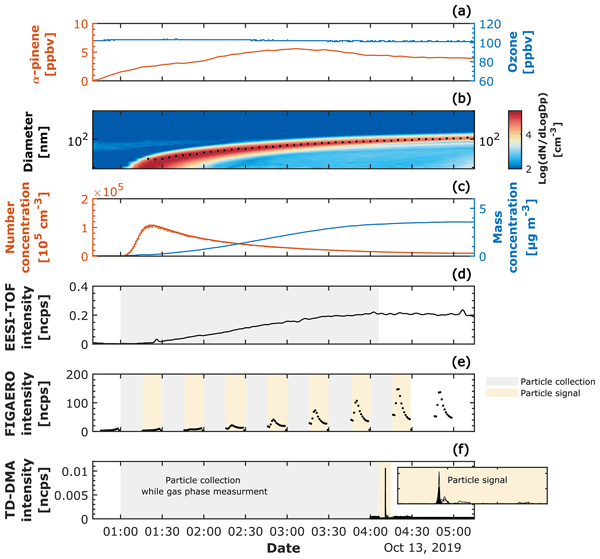
Lucía Caudillo, Mihnea Surdu, Brandon Lopez, Mingyi Wang, Markus Thoma, Steffen Bräkling, Angela Buchholz, Mario Simon, Andrea C. Wagner, Tatjana Müller, Manuel Granzin, Martin Heinritzi, Antonio Amorim, David M. Bell, Zoé Brasseur, Lubna Dada, Jonathan Duplissy, Henning Finkenzeller, Xu-Cheng He, Houssni Lamkaddam, Naser G. A. Mahfouz, Vladimir Makhmutov, Hanna E. Manninen, Guillaume Marie, Ruby Marten, Roy L. Mauldin, Bernhard Mentler, Antti Onnela, Tuukka Petäjä, Joschka Pfeifer, Maxim Philippov, Ana A. Piedehierro, Birte Rörup, Wiebke Scholz, Jiali Shen, Dominik Stolzenburg, Christian Tauber, Ping Tian, António Tomé, Nsikanabasi Silas Umo, Dongyu S. Wang, Yonghong Wang, Stefan K. Weber, André Welti, Marcel Zauner-Wieczorek, Urs Baltensperger, Richard C. Flagan, Armin Hansel, Jasper Kirkby, Markku Kulmala, Katrianne Lehtipalo, Douglas R. Worsnop, Imad El Haddad, Neil M. Donahue, Alexander L. Vogel, Andreas Kürten, and Joachim Curtius
Atmos. Chem. Phys., 23, 6613–6631, https://doi.org/10.5194/acp-23-6613-2023, https://doi.org/10.5194/acp-23-6613-2023, 2023
Short summary
Short summary
In this study, we present an intercomparison of four different techniques for measuring the chemical composition of nanoparticles. The intercomparison was performed based on the observed chemical composition, calculated volatility, and analysis of the thermograms. We found that the methods generally agree on the most important compounds that are found in the nanoparticles. However, they do see different parts of the organic spectrum. We suggest potential explanations for these differences.
Dongwook Kim, Changmin Cho, Seokhan Jeong, Soojin Lee, Benjamin A. Nault, Pedro Campuzano-Jost, Douglas A. Day, Jason C. Schroder, Jose L. Jimenez, Rainer Volkamer, Donald R. Blake, Armin Wisthaler, Alan Fried, Joshua P. DiGangi, Glenn S. Diskin, Sally E. Pusede, Samuel R. Hall, Kirk Ullmann, L. Gregory Huey, David J. Tanner, Jack Dibb, Christoph J. Knote, and Kyung-Eun Min
Atmos. Chem. Phys., 22, 805–821, https://doi.org/10.5194/acp-22-805-2022, https://doi.org/10.5194/acp-22-805-2022, 2022
Short summary
Short summary
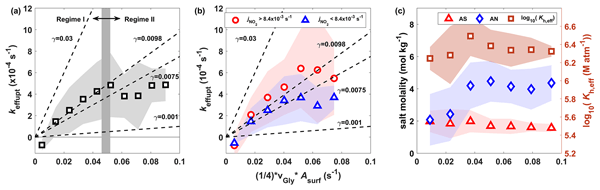
CHOCHO was simulated using a 0-D box model constrained by measurements during the KORUS-AQ mission. CHOCHO concentration was high in large cities, aromatics being the most important precursors. Loss path to aerosol was the highest sink, contributing to ~ 20 % of secondary organic aerosol formation. Our work highlights that simple CHOCHO surface uptake approach is valid only for low aerosol conditions and more work is required to understand CHOCHO solubility in high-aerosol conditions.
Dalrin Ampritta Amaladhasan, Claudia Heyn, Christopher R. Hoyle, Imad El Haddad, Miriam Elser, Simone M. Pieber, Jay G. Slowik, Antonio Amorim, Jonathan Duplissy, Sebastian Ehrhart, Vladimir Makhmutov, Ugo Molteni, Matti Rissanen, Yuri Stozhkov, Robert Wagner, Armin Hansel, Jasper Kirkby, Neil M. Donahue, Rainer Volkamer, Urs Baltensperger, Martin Gysel-Beer, and Andreas Zuend
Atmos. Chem. Phys., 22, 215–244, https://doi.org/10.5194/acp-22-215-2022, https://doi.org/10.5194/acp-22-215-2022, 2022
Short summary
Short summary
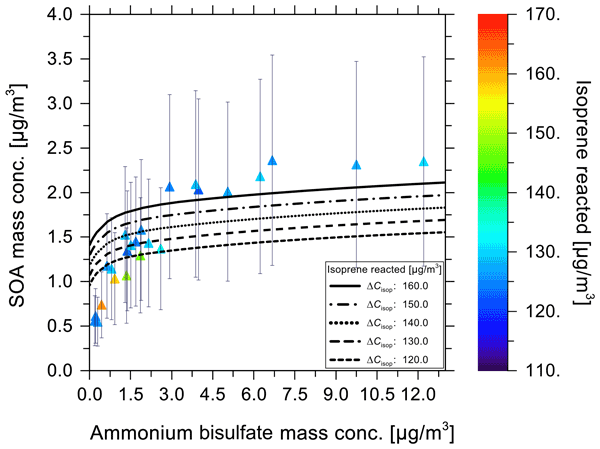
We use a combination of models for gas-phase chemical reactions and equilibrium gas–particle partitioning of isoprene-derived secondary organic aerosols (SOAs) informed by dark ozonolysis experiments conducted in the CLOUD chamber. Our predictions cover high to low relative humidities (RHs) and quantify how SOA mass yields are enhanced at high RH as well as the impact of inorganic seeds of distinct hygroscopicities and acidities on the coupled partitioning of water and semi-volatile organics.
Debora Griffin, Chris A. McLinden, Enrico Dammers, Cristen Adams, Chelsea E. Stockwell, Carsten Warneke, Ilann Bourgeois, Jeff Peischl, Thomas B. Ryerson, Kyle J. Zarzana, Jake P. Rowe, Rainer Volkamer, Christoph Knote, Natalie Kille, Theodore K. Koenig, Christopher F. Lee, Drew Rollins, Pamela S. Rickly, Jack Chen, Lukas Fehr, Adam Bourassa, Doug Degenstein, Katherine Hayden, Cristian Mihele, Sumi N. Wren, John Liggio, Ayodeji Akingunola, and Paul Makar
Atmos. Meas. Tech., 14, 7929–7957, https://doi.org/10.5194/amt-14-7929-2021, https://doi.org/10.5194/amt-14-7929-2021, 2021
Short summary
Short summary
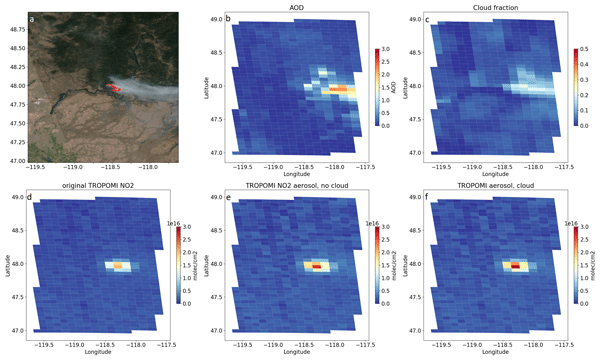
Satellite-derived NOx emissions from biomass burning are estimated with TROPOMI observations. Two common emission estimation methods are applied, and sensitivity tests with model output were performed to determine the accuracy of these methods. The effect of smoke aerosols on TROPOMI NO2 columns is estimated and compared to aircraft observations from four different aircraft campaigns measuring biomass burning plumes in 2018 and 2019 in North America.
Lucía Caudillo, Birte Rörup, Martin Heinritzi, Guillaume Marie, Mario Simon, Andrea C. Wagner, Tatjana Müller, Manuel Granzin, Antonio Amorim, Farnoush Ataei, Rima Baalbaki, Barbara Bertozzi, Zoé Brasseur, Randall Chiu, Biwu Chu, Lubna Dada, Jonathan Duplissy, Henning Finkenzeller, Loïc Gonzalez Carracedo, Xu-Cheng He, Victoria Hofbauer, Weimeng Kong, Houssni Lamkaddam, Chuan P. Lee, Brandon Lopez, Naser G. A. Mahfouz, Vladimir Makhmutov, Hanna E. Manninen, Ruby Marten, Dario Massabò, Roy L. Mauldin, Bernhard Mentler, Ugo Molteni, Antti Onnela, Joschka Pfeifer, Maxim Philippov, Ana A. Piedehierro, Meredith Schervish, Wiebke Scholz, Benjamin Schulze, Jiali Shen, Dominik Stolzenburg, Yuri Stozhkov, Mihnea Surdu, Christian Tauber, Yee Jun Tham, Ping Tian, António Tomé, Steffen Vogt, Mingyi Wang, Dongyu S. Wang, Stefan K. Weber, André Welti, Wang Yonghong, Wu Yusheng, Marcel Zauner-Wieczorek, Urs Baltensperger, Imad El Haddad, Richard C. Flagan, Armin Hansel, Kristina Höhler, Jasper Kirkby, Markku Kulmala, Katrianne Lehtipalo, Ottmar Möhler, Harald Saathoff, Rainer Volkamer, Paul M. Winkler, Neil M. Donahue, Andreas Kürten, and Joachim Curtius
Atmos. Chem. Phys., 21, 17099–17114, https://doi.org/10.5194/acp-21-17099-2021, https://doi.org/10.5194/acp-21-17099-2021, 2021
Short summary
Short summary
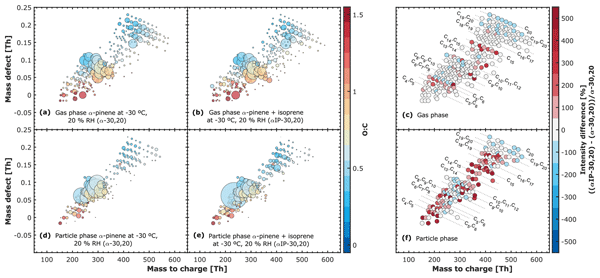
We performed experiments in the CLOUD chamber at CERN at low temperatures to simulate new particle formation in the upper free troposphere (at −30 ºC and −50 ºC). We measured the particle and gas phase and found that most of the compounds present in the gas phase are detected as well in the particle phase. The major compounds in the particles are C8–10 and C18–20. Specifically, we showed that C5 and C15 compounds are detected in a mixed system with isoprene and α-pinene at −30 ºC, 20 % RH.
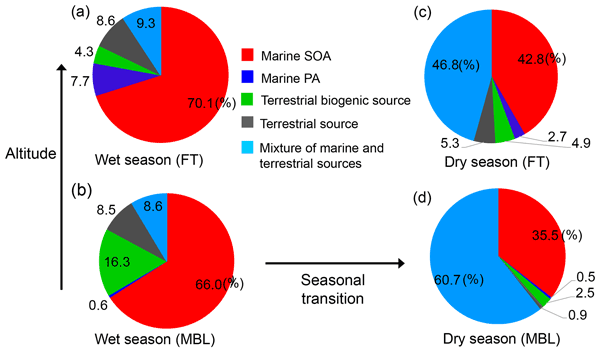
Sharmine Akter Simu, Yuzo Miyazaki, Eri Tachibana, Henning Finkenzeller, Jérôme Brioude, Aurélie Colomb, Olivier Magand, Bert Verreyken, Stephanie Evan, Rainer Volkamer, and Trissevgeni Stavrakou
Atmos. Chem. Phys., 21, 17017–17029, https://doi.org/10.5194/acp-21-17017-2021, https://doi.org/10.5194/acp-21-17017-2021, 2021
Short summary
Short summary
The tropical Indian Ocean (IO) is expected to be a significant source of water-soluble organic carbon (WSOC), which is relevant to cloud formation. Our study showed that marine secondary organic formation dominantly contributed to the aerosol WSOC mass at the high-altitude observatory in the southwest IO in the wet season in both marine boundary layer and free troposphere (FT). This suggests that the effect of marine secondary sources is important up to FT, a process missing in climate models.
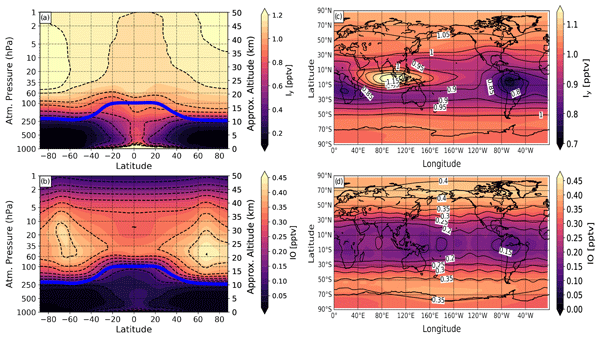
Arseniy Karagodin-Doyennel, Eugene Rozanov, Timofei Sukhodolov, Tatiana Egorova, Alfonso Saiz-Lopez, Carlos A. Cuevas, Rafael P. Fernandez, Tomás Sherwen, Rainer Volkamer, Theodore K. Koenig, Tanguy Giroud, and Thomas Peter
Geosci. Model Dev., 14, 6623–6645, https://doi.org/10.5194/gmd-14-6623-2021, https://doi.org/10.5194/gmd-14-6623-2021, 2021
Short summary
Short summary
Here, we present the iodine chemistry module in the SOCOL-AERv2 model. The obtained iodine distribution demonstrated a good agreement when validated against other simulations and available observations. We also estimated the iodine influence on ozone in the case of present-day iodine emissions, the sensitivity of ozone to doubled iodine emissions, and when considering only organic or inorganic iodine sources. The new model can be used as a tool for further studies of iodine effects on ozone.
Cited articles
Bird, R. B., Stewart, W. E., and Lightfoot, E. N.: Transport Phenomena, Revised 2nd Edition, 2nd edn., John Wiley & Sons, Inc., New York, 905 pp., ISBN-13: 978-0470115398, ISBN-10: 0470115394, 2006.
Brenninkmeijer, C. A. M., Crutzen, P. J., Fischer, H., Güsten, H., Hans, W., Heinrich, G., Heintzenberg, J., Hermann, M., Immelmann, T., Kersting, D., Maiss, M., Nolle, M., Pitscheider, A., Pohlkamp, H., Scharffe, D., Specht, K., and Wiedensohler, A.: CARIBIC–Civil Aircraft for Global Measurement of Trace Gases and Aerosols in the Tropopause Region, J. Atmos. Ocean. Tech., 16, 1373–1383, https://doi.org/10.1175/1520-0426(1999)016<1373:CCAFGM>2.0.CO;2, 1999.
Brown, R. L.: Tubular Flow Reactors with First-Order Kinetics, J. Res. Nat. Bur. Stand., 83, 1–8, https://doi.org/10.6028/jres.083.001, 1978.
Clemitshaw, K. C.: A Review of Instrumentation and Measurement Techniques for Ground-Based and Airborne Field Studies of Gas-Phase Tropospheric Chemistry, Crit. Rev. Env. Sci. Tec., 34, 1–108, 2004.
Craig, L., Moharreri, A., Rogers, D. C., Anderson, B., and Dhaniyala, S.: Aircraft-Based Aerosol Sampling in Clouds: Performance Characterization of Flow-Restriction Aerosol Inlets, J. Atmos. Ocean. Tech., 31, 2512–2521, https://doi.org/10.1175/JTECH-D-14-00022.1, 2014.
Deendarlianto, Andrianto, M., Widyaparaga, A., Dinaryanto, O., Khasani, and Indarto: CFD Studies on the gas-liquid plug two-phase flow in a horizontal pipe, J. Petrol. Sci. Eng., 147, 779–787, https://doi.org/10.1016/j.petrol.2016.09.019, 2016.
De Schepper, S. C. K., Heynderickx, G. J., and Marin, G. B.: CFD modeling of all gas–liquid and vapor–liquid flow regimes predicted by the Baker chart, Chem. Eng. J., 138, 349–357, https://doi.org/10.1016/j.cej.2007.06.007, 2008.
De Schepper, S. C. K., Heynderickx, G. J., and Marin, G. B.: Modeling the evaporation of a hydrocarbon feedstock in the convection section of a steam cracker, Comput. Chem. Eng., 33, 122–132, https://doi.org/10.1016/j.compchemeng.2008.07.013, 2009.
Dhaniyala, S., Flagan, R. C., McKinney, K. A., and Wennberg, P. O.: Novel Aerosol/Gas Inlet for Aircraft-Based Measurements, Aerosol Sci. Tech., 37, 828–840, https://doi.org/10.1080/02786820300937, 2003.
Eddy, P., Natarajan, A., and Dhaniyala, S.: Subisokinetic sampling characteristics of high speed aircraft inlets: A new CFD-based correlation considering inlet geometries, J. Aerosol Sci., 37, 1853–1870, https://doi.org/10.1016/j.jaerosci.2006.08.005, 2006.
Eisele, F. L. and Tanner, D. J.: Ion-assisted tropospheric OH measurements, J. Geophys. Res., 96, 9295–9308, https://doi.org/10.1029/91JD00198, 1991.
Eisele, F. L. and Tanner, D. J.: Measurement of the gas phase concentration of H2SO4 and methane sulfonic acid and estimates of H2SO4 production and loss in the atmosphere, J. Geophys. Res.-Atmos., 98, 9001–9010, https://doi.org/10.1029/93JD00031, 1993.
Eisele, F. L., Mauldin, R. L., Tanner, D. J., Fox, J. R., Mouch, T., and Scully, T.: An inlet/sampling duct for airborne OH and sulfuric acid measurements, J. Geophys. Res., 102, 27993–28001, https://doi.org/10.1029/97JD02241, 1997.
Elgiar, T. R., Lyman, S. N., Andron, T. D., Gratz, L., Hallar, A. G., Horvat, M., Vijayakumaran Nair, S., O'Neil, T., Volkamer, R., and Živkoviæ, I.: Traceable Calibration of Atmospheric Oxidized Mercury Measurements, Environ. Sci. Technol., 58, 10706–10716, https://doi.org/10.1021/acs.est.4c02209, 2024.
Fahey, D. W., Kelly, K. K., Ferry, G. V., Poole, L. R., Wilson, J. C., Murphy, D. M., Loewenstein, M., and Chan, K. R.: In situ measurements of total reactive nitrogen, total water, and aerosol in a polar stratospheric cloud in the Antarctic, J. Geophys. Res.-Atmos., 94, 11299–11315, https://doi.org/10.1029/JD094iD09p11299, 1989.
Filges, A., Gerbig, C., Chen, H., Franke, H., Klaus, C., and Jordan, A.: The IAGOS-core greenhouse gas package: a measurement system for continuous airborne observations of CO2, CH4, H2O and CO, Tellus B, 67, 27989, https://doi.org/10.3402/tellusb.v67.27989, 2015.
Finkenzeller, H., Iyer, S., He, X.-C., Simon, M., Koenig, T. K., Lee, C. F., Valiev, R., Hofbauer, V., Amorim, A., Baalbaki, R., Baccarini, A., Beck, L., Bell, D. M., Caudillo, L., Chen, D., Chiu, R., Chu, B., Dada, L., Duplissy, J., Heinritzi, M., Kemppainen, D., Kim, C., Krechmer, J., Kürten, A., Kvashnin, A., Lamkaddam, H., Lee, C. P., Lehtipalo, K., Li, Z., Makhmutov, V., Manninen, H. E., Marie, G., Marten, R., Mauldin, R. L., Mentler, B., Müller, T., Petäjä, T., Philippov, M., Ranjithkumar, A., Rörup, B., Shen, J., Stolzenburg, D., Tauber, C., Tham, Y. J., Tomé, A., Vazquez-Pufleau, M., Wagner, A. C., Wang, D. S., Wang, M., Wang, Y., Weber, S. K., Nie, W., Wu, Y., Xiao, M., Ye, Q., Zauner-Wieczorek, M., Hansel, A., Baltensperger, U., Brioude, J., Curtius, J., Donahue, N. M., Haddad, I. E., Flagan, R. C., Kulmala, M., Kirkby, J., Sipilä, M., Worsnop, D. R., Kurten, T., Rissanen, M., and Volkamer, R.: The gas-phase formation mechanism of iodic acid as an atmospheric aerosol source, Nat. Chem., 15, 129–135, https://doi.org/10.1038/s41557-022-01067-z, 2023.
Finlayson-Pitts, B. J. and Pitts Jr., J. N.: Chemistry of the Upper and Lower Atmosphere: Theory, Experiments, and Applications, Elsevier, 993 pp., ISBN-13: 978-0122570605, ISBN-10: 012257060X, 1999.
Hanson, D. R.: Mass Accommodation of H2SO4 and CH3SO3H on Water-Sulfuric Acid Solutions from 6 % to 97 % RH, J. Phys. Chem. A, 109, 6919–6927, https://doi.org/10.1021/jp0510443, 2005.
Hassanzadeh, H., Abedi, J., and Pooladi-Darvish, M.: A comparative study of flux-limiting methods for numerical simulation of gas–solid reactions with Arrhenius type reaction kinetics, Comput. Chem. Eng., 33, 133–143, https://doi.org/10.1016/j.compchemeng.2008.07.010, 2009.
Kang, C. and Yang, K.-S.: Effects of Schmidt number on near-wall turbulent mass transfer in pipe flow, J. Mech. Sci. Technol., 28, 5027–5042, https://doi.org/10.1007/s12206-014-1124-0, 2014.
Karion, A., Sweeney, C., Tans, P., and Newberger, T.: AirCore: An Innovative Atmospheric Sampling System, J. Atmos. Ocean. Tech., 27, 1839–1853, https://doi.org/10.1175/2010JTECHA1448.1, 2010.
Keyser, L. F.: High-pressure flow kinetics. A study of the hydroxyl + hydrogen chloride reaction from 2 to 100 torr, J. Phys. Chem., 88, 4750–4758, 1984.
Khalizov, A. F., Guzman, F. J., Cooper, M., Mao, N., Antley, J., and Bozzelli, J.: Direct detection of gas-phase mercuric chloride by ion drift – Chemical ionization mass spectrometry, Atmos. Environ., 238, 117687, https://doi.org/10.1016/j.atmosenv.2020.117687, 2020.
Kolb, C. E., Jayne, J. T., Worsnop, D. R., Molina, M. J., Meads, R. F., and Viggiano, A. A.: Gas Phase Reaction of Sulfur Trioxide with Water Vapor, J. Am. Chem. Soc., 116, 10314–10315, https://doi.org/10.1021/ja00101a067, 1994.
Kondo, Y., Kawakami, S., Koike, M., Fahey, D., Nakajima, H., Zhao, Y., Toriyama, N., Kanada, M., Sachse, G., and Gregory, G.: Performance of an aircraft instrument for the measurement of NOy, J. Geophys. Res., 102, 28663–28672, https://doi.org/10.1029/96JD03819, 1997.
Kulkarni, P., Baron, P. A., and Willeke, K.: Aerosol measurement: principles, techniques, and applications, 3rd edn., Wiley, Hoboken, N.J., ISBN: 978-1-118-00168-4, 2011.
López, J., Pineda, H., Bello, D., and Ratkovich, N.: Study of liquid–gas two-phase flow in horizontal pipes using high speed filming and computational fluid dynamics, Exp. Therm. Fluid Sci., 76, 126–134, https://doi.org/10.1016/j.expthermflusci.2016.02.013, 2016.
Lowney, J. R. and Larrabee, R. D.: The use of Fick's law in modeling diffusion processes, IEEE T. Electron. Dev., 27, 1795–1798, https://doi.org/10.1109/T-ED.1980.20105, 1980.
Mauldin III, R. L., Frost, G. J., Chen, G., Tanner, D. J., Prevot, A. S. H., Davis, D. D., and Eisele, F. L.: OH measurements during the First Aerosol Characterization Experiment (ACE 1): Observations and model comparisons, J. Geophys. Res.-Atmos., 103, 16713–16729, https://doi.org/10.1029/98JD00882, 1998.
Moharreri, A., Craig, L., Dubey, P., Rogers, D. C., and Dhaniyala, S.: Aircraft testing of the new Blunt-body Aerosol Sampler (BASE), Atmos. Meas. Tech., 7, 3085–3093, https://doi.org/10.5194/amt-7-3085-2014, 2014.
Muir, C. E., Lowry, B. J., and Balcom, B. J.: Measuring diffusion using the differential form of Fick's law and magnetic resonance imaging, New J. Phys., 13, 015005, https://doi.org/10.1088/1367-2630/13/1/015005, 2011.
Murphy, D. M. and Fahey, D. W.: Mathematical treatment of the wall loss of a trace species in denuder and catalytic converter tubes, Anal. Chem., 59, 2753–2759, 1987.
Pöschl, U., Canagaratna, M., Jayne, J. T., Molina, L. T., Worsnop, D. R., Kolb, C. E., and Molina, M. J.: Mass Accommodation Coefficient of H2SO4 Vapor on Aqueous Sulfuric Acid Surfaces and Gaseous Diffusion Coefficient of H2SO4 in N2/H2O, J. Phys. Chem. A, 102, 10082–10089, https://doi.org/10.1021/jp982809s, 1998.
Ryerson, T. B., Huey, L. G., Knapp, K., Neuman, J. A., Parrish, D. D., Sueper, D. T., and Fehsenfeld, F. C.: Design and initial characterization of an inlet for gas-phase NOy measurements from aircraft, J. Geophys. Res., 104, 5483–5492, https://doi.org/10.1029/1998JD100087, 1999.
Shah, V., Jacob, D. J., Thackray, C. P., Wang, X., Sunderland, E. M., Dibble, T. S., Saiz-Lopez, A., Černušák, I., Kellö, V., Castro, P. J., Wu, R., and Wang, C.: Improved Mechanistic Model of the Atmospheric Redox Chemistry of Mercury, Environ. Sci. Technol., 55, 14445–14456, https://doi.org/10.1021/acs.est.1c03160, 2021.
Tanner, D. J., Jefferson, A., and Eisele, F. L.: Selected ion chemical ionization mass spectrometric measurement of OH, J. Geophys. Res.-Atmos., 102, 6415–6425, https://doi.org/10.1029/96JD03919, 1997.
Van De Steene, J. and Verplancke, H.: Adjusted Fick's law for gas diffusion in soils contaminated with petroleum hydrocarbons, Eur. J. Soil Sci., 57, 106–121, https://doi.org/10.1111/j.1365-2389.2005.00720.x, 2006.
von der Weiden, S.-L., Drewnick, F., and Borrmann, S.: Particle Loss Calculator – a new software tool for the assessment of the performance of aerosol inlet systems, Atmos. Meas. Tech., 2, 479–494, https://doi.org/10.5194/amt-2-479-2009, 2009.
Xin, Y., Liang, W., Liu, W., Lu, T., and Law, C. K.: A reduced multicomponent diffusion model, Combust. Flame, 162, 68–74, https://doi.org/10.1016/j.combustflame.2014.07.019, 2015.
Yang, D.: Aerosol efficiency calculator (AEC): a system-of-systems approach to calculate aerosol sampling efficiencies of complex sampling systems, thesis, OCLC: 1030877465, 2017.
Yang, D.: Final simulation and wind tunnel experimental data for paper “Laminar gas inlet – Part 2” (egusphere-2024-2390), Version v1, Zenodo [data set], https://doi.org/10.5281/zenodo.14664835, 2025.
Yang, D., Reza, M., Mauldin, R., Volkamer, R., and Dhaniyala, S.: Performance characterization of a laminar gas inlet, Atmos. Meas. Tech., 17, 1463–1474, https://doi.org/10.5194/amt-17-1463-2024, 2024.
Zheng, J., Khalizov, A., Wang, L., and Zhang, R.: Atmospheric Pressure-Ion Drift Chemical Ionization Mass Spectrometry for Detection of Trace Gas Species, Anal. Chem., 82, 7302–7308, https://doi.org/10.1021/ac101253n, 2010.
Short summary
Sulfuric acid forms particles in the atmosphere, but the airborne sampling faces challenges due to vapor losses in inlet lines. An innovative aircraft sampling system to sample sulfuric acid from the sea surface into the lower stratosphere (0–15 km) is described and characterized. Our results challenge the widely held view that laminar core sampling is the best strategy to sample condensable vapors, and identify better strategies to sample condensable vapors.
Sulfuric acid forms particles in the atmosphere, but the airborne sampling faces challenges due...


