
Articles | Volume 19, issue 10
https://doi.org/10.5194/amt-19-3253-2026
© Author(s) 2026. This work is distributed under
the Creative Commons Attribution 4.0 License.
the Creative Commons Attribution 4.0 License.
https://doi.org/10.5194/amt-19-3253-2026
© Author(s) 2026. This work is distributed under
the Creative Commons Attribution 4.0 License.
the Creative Commons Attribution 4.0 License.
Research article
| 
22 May 2026
Research article |
| 22 May 2026
| 22 May 2026
Biomass burning aerosol transport from Indo-China Peninsula to South China: fluorescence lidar observation and analysis
Zhekai Li
State Key Laboratory of Climate System Prediction and Risk Management, Nanjing University of Information Science and Technology, Nanjing 210044, China
School of Atmospheric Physics, Nanjing University of Information Science and Technology, Nanjing 210044, China
Dawei Tang
Academy of Chips Technology, China Electronics Technology Group Corporation, Chongqing 401332, China

State Key Laboratory of Climate System Prediction and Risk Management, Nanjing University of Information Science and Technology, Nanjing 210044, China
School of Atmospheric Physics, Nanjing University of Information Science and Technology, Nanjing 210044, China
Saifen Yu
State Key Laboratory of Climate System Prediction and Risk Management, Nanjing University of Information Science and Technology, Nanjing 210044, China
School of Atmospheric Physics, Nanjing University of Information Science and Technology, Nanjing 210044, China
Jing Cai
State Key Laboratory of Climate System Prediction and Risk Management, Nanjing University of Information Science and Technology, Nanjing 210044, China
School of Atmospheric Physics, Nanjing University of Information Science and Technology, Nanjing 210044, China
School of Information Engineering, Huangshan University, Huangshan 245041, China
Zhen Zhang
State Key Laboratory of Climate System Prediction and Risk Management, Nanjing University of Information Science and Technology, Nanjing 210044, China
School of Atmospheric Physics, Nanjing University of Information Science and Technology, Nanjing 210044, China
Jiadong Hu
State Key Laboratory of Climate System Prediction and Risk Management, Nanjing University of Information Science and Technology, Nanjing 210044, China
School of Atmospheric Physics, Nanjing University of Information Science and Technology, Nanjing 210044, China
Institute of Lidar Technology, GuangZai Co., Ltd., Hangzhou 310005, China
Haobin Han
State Key Laboratory of Climate System Prediction and Risk Management, Nanjing University of Information Science and Technology, Nanjing 210044, China
School of Atmospheric Physics, Nanjing University of Information Science and Technology, Nanjing 210044, China
Institute of Lidar Technology, GuangZai Co., Ltd., Hangzhou 310005, China
Yubin Wang
State Key Laboratory of Climate System Prediction and Risk Management, Nanjing University of Information Science and Technology, Nanjing 210044, China
School of Atmospheric Physics, Nanjing University of Information Science and Technology, Nanjing 210044, China
Institute of Lidar Technology, GuangZai Co., Ltd., Hangzhou 310005, China
State Key Laboratory of Climate System Prediction and Risk Management, Nanjing University of Information Science and Technology, Nanjing 210044, China
School of Atmospheric Physics, Nanjing University of Information Science and Technology, Nanjing 210044, China
Institute of Lidar Technology, GuangZai Co., Ltd., Hangzhou 310005, China
School of Earth and Space Science, University of Science and Technology of China, Hefei 230026, China
Related authors
No articles found.
Tianle Bai, Yuanyi Lin, Mengya Wang, Tianwen Wei, Fangzhi Wei, Kuancheng Lv, and Haiyun Xia
Atmos. Meas. Tech., 19, 5951–5971, https://doi.org/10.5194/amt-19-5951-2026, https://doi.org/10.5194/amt-19-5951-2026, 2026
Short summary
Short summary
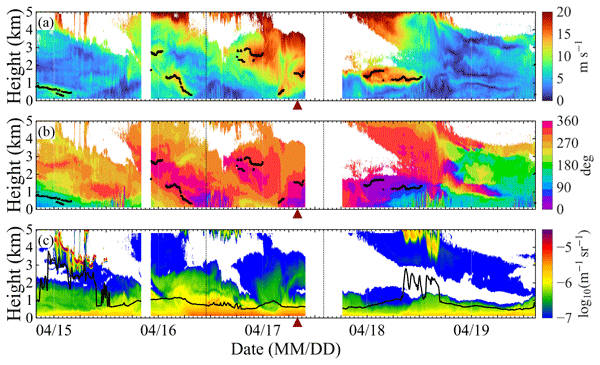
This study investigates how fast-moving air currents close to the ground influence the vertical transport of dust over Hefei in eastern China. Using laser-based wind observations during two dust events, it shows that one event rapidly brings dust down to the surface, whereas the other keeps dust suspended at higher altitudes and delays surface pollution. These findings improve understanding of how dust is redistributed in the lower atmosphere and help improve weather and air-quality forecasts.
Sihan Liu, Tianwen Wei, Ning Zhang, Fangzhi Wei, Xinyuan Liang, Qian Huang, Yuan Wang, and Haiyun Xia
EGUsphere, https://doi.org/10.5194/egusphere-2026-2865, https://doi.org/10.5194/egusphere-2026-2865, 2026
Short summary
Short summary
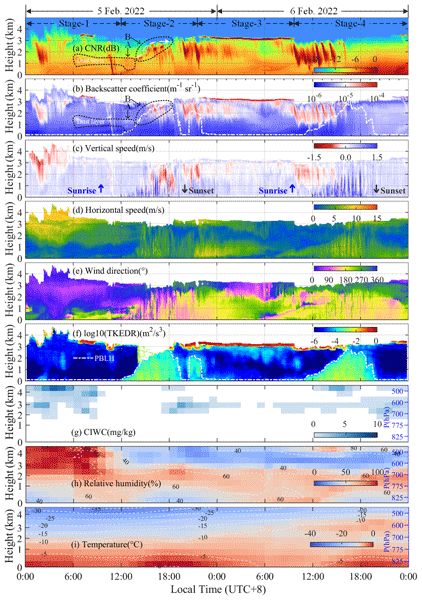
Using wind lidar, ERA5, and WRF data, this study explores nocturnal tropospheric gravity waves in a double-jet environment over the Taklimakan Desert. Results show 10–20 min oscillations within the weak-wind layer between a lower easterly and upper westerly jet, triggered by shear instability. Thermal and Doppler ducting jointly trap these waves. Notably, lower jet intensification compresses the waveguide, shifting trapped modes to higher frequencies.
Lian Su, Haiyun Xia, Chunsong Lu, Jinlong Yuan, Kenan Wu, Tianwen Wei, Xiaofei Wang, Qing He, Mohamed Elshora, Xi Luo, and Xinyang Li
Atmos. Meas. Tech., 19, 2657–2668, https://doi.org/10.5194/amt-19-2657-2026, https://doi.org/10.5194/amt-19-2657-2026, 2026
Short summary
Short summary
1. The formation of ice crystal clouds catalyzed by dust aerosols were observed by coherent Doppler wind lidar in the Taklimakan Desert. 2. The wind provides a dynamic basis for the formation of ice crystal clouds and plays an important role in the decomposition process. 3. The special basin topography, turbulence and downdrafts keep the base height of the ice crystal clouds at around 3 km.
Daihao Yu, Qiuwei Xia, Saifen Yu, Yixiang Chen, Keyi Xu, Haobin Han, Jianjun Guo, Kexin Guo, Jiadong Hu, Zhen Zhang, Jing Cai, Yuanjian Yang, and Haiyun Xia
EGUsphere, https://doi.org/10.5194/egusphere-2025-6470, https://doi.org/10.5194/egusphere-2025-6470, 2026
Short summary
Short summary
Industrial parks are critical nodes in the global carbon cycle. This study combines high-resolution lidar observations and the WRF-GHG model to examine CO2 accumulation and dispersion in a semi-enclosed bay. Distinct diurnal patterns emerge: nighttime accumulation and daytime dispersion driven by terrain, atmospheric stability and sea breezes. WRF-GHG captures temporal trends, but it underestimates CO2 levels, indicating limitations in emission inventories and terrain-wind interactions.
Tianwen Wei, Mengya Wang, Kenan Wu, Jinlong Yuan, Haiyun Xia, and Simone Lolli
Atmos. Meas. Tech., 18, 1841–1857, https://doi.org/10.5194/amt-18-1841-2025, https://doi.org/10.5194/amt-18-1841-2025, 2025
Short summary
Short summary
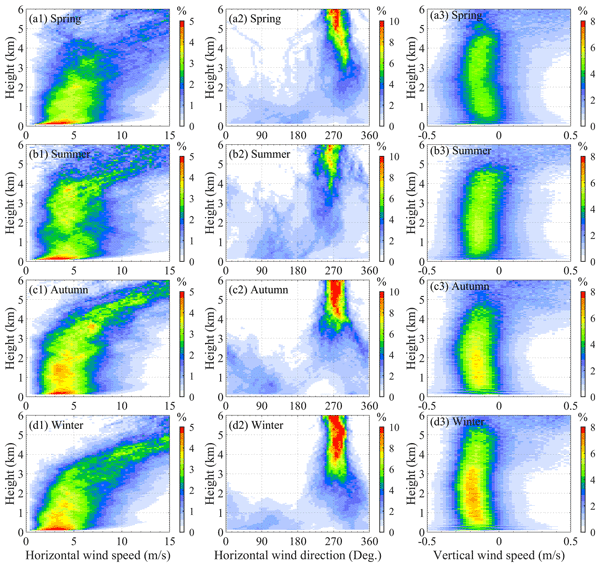
This study analyzes three years of wind lidar measurements to explore the dynamics of the urban planetary boundary layer in Hefei, China. Results reveal that nocturnal low-level jets are most frequent in spring and intensify in summer, significantly enhancing turbulence and shear near the surface, particularly at night. Additionally, cloud cover raises the mixing layer height by approximately 100 m at night due to the greenhouse effect but reduces it by up to 200 m in the afternoon.
Lian Su, Chunsong Lu, Jinlong Yuan, Xiaofei Wang, Qing He, and Haiyun Xia
Atmos. Chem. Phys., 24, 10947–10963, https://doi.org/10.5194/acp-24-10947-2024, https://doi.org/10.5194/acp-24-10947-2024, 2024
Short summary
Short summary
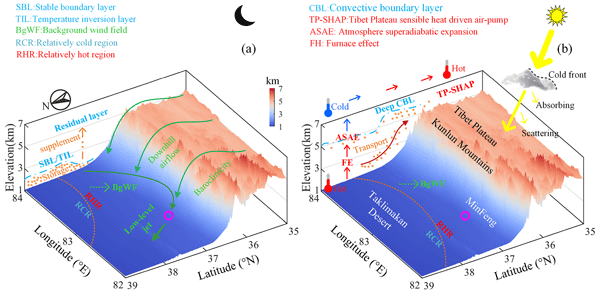
The cold downhill airflow of the Tibetan Plateau leading to the low-level jet weakens the height and intensity of the inversion layer, which reduces the energy demand for the broken inversion layer. The low-level jet causes dust aerosols to accumulate near the ground. The material conditions for the development of the desert atmospheric boundary layer can be quickly transformed into thermal conditions.
Kenan Wu, Tianwen Wei, Jinlong Yuan, Haiyun Xia, Xin Huang, Gaopeng Lu, Yunpeng Zhang, Feifan Liu, Baoyou Zhu, and Weidong Ding
Atmos. Meas. Tech., 16, 5811–5825, https://doi.org/10.5194/amt-16-5811-2023, https://doi.org/10.5194/amt-16-5811-2023, 2023
Short summary
Short summary
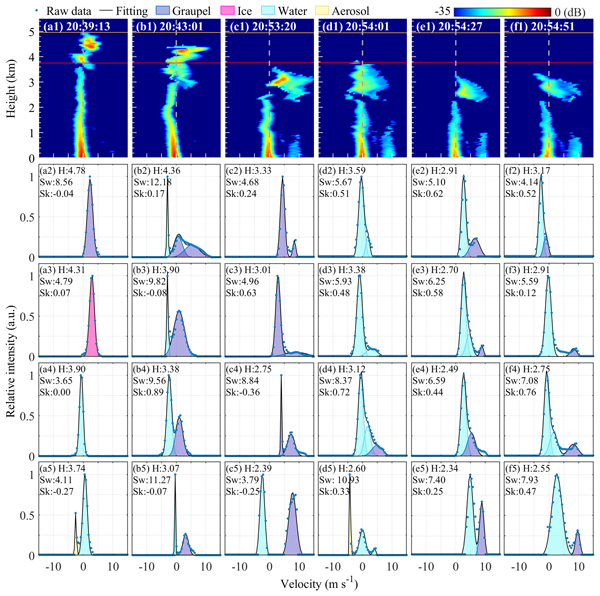
A compact all-fiber coherent Doppler wind lidar (CDWL) working at the 1.5 µm wavelength is applied to probe the dynamics and microphysics structure of thunderstorms. It was found that thunderclouds below the 0 ℃ isotherm have significant spectrum broadening and an increase in skewness, and that lightning affects the microphysics structure of the thundercloud. It is proven that the precise spectrum of CDWL is a promising indicator for studying the charge structure of thunderstorms.
Lian Zong, Yuanjian Yang, Haiyun Xia, Meng Gao, Zhaobin Sun, Zuofang Zheng, Xianxiang Li, Guicai Ning, Yubin Li, and Simone Lolli
Atmos. Chem. Phys., 22, 6523–6538, https://doi.org/10.5194/acp-22-6523-2022, https://doi.org/10.5194/acp-22-6523-2022, 2022
Short summary
Short summary
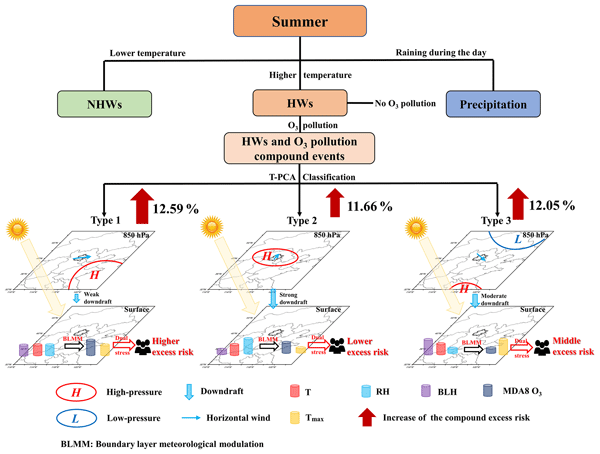
Heatwaves (HWs) paired with higher ozone (O3) concentration at surface level pose a serious threat to human health. Taking Beijing as an example, three unfavorable synoptic weather patterns were identified to dominate the compound HW and O3 pollution events. Under the synergistic stress of HWs and O3 pollution, public mortality risk increased, and synoptic patterns and urbanization enhanced the compound risk of events in Beijing by 33.09 % and 18.95 %, respectively.

Dawei Tang, Tianwen Wei, Jinlong Yuan, Haiyun Xia, and Xiankang Dou
Atmos. Meas. Tech., 15, 2819–2838, https://doi.org/10.5194/amt-15-2819-2022, https://doi.org/10.5194/amt-15-2819-2022, 2022
Short summary
Short summary
During 11–20 March 2020, three aerosol transport events were investigated by a lidar system and an online bioaerosol detection system in Hefei, China.
Observation results reveal that the events not only contributed to high particulate matter pollution but also to the transport of external bioaerosols, resulting in changes in the fraction of fluorescent biological aerosol particles.
This detection method improved the time resolution and provided more parameters for aerosol detection.
Pu Jiang, Jinlong Yuan, Kenan Wu, Lu Wang, and Haiyun Xia
Atmos. Meas. Tech. Discuss., https://doi.org/10.5194/amt-2021-288, https://doi.org/10.5194/amt-2021-288, 2021
Revised manuscript not accepted
Short summary
Short summary
To analyse the atmospheric turbulence in high resolution, we proposed a new method by combining the advantages of two remote sensing instruments. A contrastive experiment was conducted horizontally to verify the method. Based on the result, we obtained and analyzed the continuous Cn2 and other turbulence profiles with high temporal and spatial resolution simultaneously. It is significant for studying the complex and fast-changing atmospheric environment.
Cited articles
Ansmann, A., Riebesell, M., and Weitkamp, C.: Measurement of atmospheric aerosol extinction profiles with a Raman lidar, Opt. Lett., 15, 746–748, https://doi.org/10.1364/OL.15.000746, 1990. a
Ansmann, A., Riebesell, M., Wandinger, U., Weitkamp, C., Voss, E., Lahmann, W., and Michaelis, W.: Combined raman elastic-backscatter LIDAR for vertical profiling of moisture, aerosol extinction, backscatter, and LIDAR ratio, Appl. Phys. B, 55, 18–28, https://doi.org/10.1007/BF00348608, 1992a. a, b
Ansmann, A., Wandinger, U., Riebesell, M., Weitkamp, C., and Michaelis, W.: Independent measurement of extinction and backscatter profiles in cirrus clouds by using a combined Raman elastic-backscatter lidar, Appl. Opt., 31, 7113–7131, https://doi.org/10.1364/AO.31.007113, 1992b. a, b
Ansmann, A., Ohneiser, K., Mamouri, R.-E., Knopf, D. A., Veselovskii, I., Baars, H., Engelmann, R., Foth, A., Jimenez, C., Seifert, P., and Barja, B.: Tropospheric and stratospheric wildfire smoke profiling with lidar: mass, surface area, CCN, and INP retrieval, Atmos. Chem. Phys., 21, 9779–9807, https://doi.org/10.5194/acp-21-9779-2021, 2021. a, b
Baumgarten, G.: Doppler Rayleigh/Mie/Raman lidar for wind and temperature measurements in the middle atmosphere up to 80 km, Atmos. Meas. Tech., 3, 1509–1518, https://doi.org/10.5194/amt-3-1509-2010, 2010. a
Chang, S.-S., Lee, W.-J., Wang, L.-C., Lin, N.-H., and Chang-Chien, G.-P.: Influence of the Southeast Asian biomass burnings on the atmospheric persistent organic pollutants observed at near sources and receptor site, Atmos. Environ., 78, 184–194, https://doi.org/10.1016/j.atmosenv.2012.07.074, 2013. a
Chavan, P., Fadnavis, S., Chakroborty, T., Sioris, C. E., Griessbach, S., and Müller, R.: The outflow of Asian biomass burning carbonaceous aerosol into the upper troposphere and lower stratosphere in spring: radiative effects seen in a global model, Atmos. Chem. Phys., 21, 14371–14384, https://doi.org/10.5194/acp-21-14371-2021, 2021. a
Chi, K. H., Lin, C.-Y., Yang, C.-F. O., Wang, J.-L., Lin, N.-H., Sheu, G.-R., and Lee, C.-T.: PCDD/F Measurement at a High-Altitude Station in Central Taiwan: Evaluation of Long-Range Transport of PCDD/Fs during the Southeast Asia Biomass Burning Event, Environ. Sci. Technol., 44, 2954–2960, https://doi.org/10.1021/es1000984, 2010. a
Chouza, F., Leblanc, T., Brewer, M., Wang, P., Martucci, G., Haefele, A., Vérèmes, H., Duflot, V., Payen, G., and Keckhut, P.: The impact of aerosol fluorescence on long-term water vapor monitoring by Raman lidar and evaluation of a potential correction method, Atmos. Meas. Tech., 15, 4241–4256, https://doi.org/10.5194/amt-15-4241-2022, 2022. a
Christesen, S. D., Wong, A., DeSha, M. S., Merrow, C. N., Wilson, M. W., and Butler, J. C.: Ultraviolet-laser-induced fluorescence of aerosolized bacterial spores, in: Advances in Fluorescence Sensing Technology, edited by: Lakowicz, J. R. and Thompson, R. B., International Society for Optics and Photonics, SPIE, vol. 1885, 114–121, https://doi.org/10.1117/12.144702, 1993. a
Dajuma, A., Ogunjobi, K. O., Vogel, H., Knippertz, P., Silué, S., N'Datchoh, E. T., Yoboué, V., and Vogel, B.: Downward cloud venting of the central African biomass burning plume during the West Africa summer monsoon, Atmos. Chem. Phys., 20, 5373–5390, https://doi.org/10.5194/acp-20-5373-2020, 2020. a
Dang, C., Segal-Rozenhaimer, M., Che, H., Zhang, L., Formenti, P., Taylor, J., Dobracki, A., Purdue, S., Wong, P.-S., Nenes, A., Sedlacek III, A., Coe, H., Redemann, J., Zuidema, P., Howell, S., and Haywood, J.: Biomass burning and marine aerosol processing over the southeast Atlantic Ocean: a TEM single-particle analysis, Atmos. Chem. Phys., 22, 9389–9412, https://doi.org/10.5194/acp-22-9389-2022, 2022. a
Duschek, F., Fellner, L., Gebert, F., Grünewald, K., Köhntopp, A., Kraus, M., Mahnke, P., Pargmann, C., Tomaso, H., and Walter, A.: Standoff detection and classification of bacteria by multispectral laser-induced fluorescence, Advanced Optical Technologies, 6, 75–83, https://doi.org/10.1515/aot-2016-0066, 2017. a
Fadnavis, S., Semeniuk, K., Pozzoli, L., Schultz, M. G., Ghude, S. D., Das, S., and Kakatkar, R.: Transport of aerosols into the UTLS and their impact on the Asian monsoon region as seen in a global model simulation, Atmos. Chem. Phys., 13, 8771–8786, https://doi.org/10.5194/acp-13-8771-2013, 2013. a
Farsund, O., Rustad, G., Kasen, I., and Haavardsholm, T. V.: Required Spectral Resolution for Bioaerosol Detection Algorithms Using Standoff Laser-Induced Fluorescence Measurements, IEEE Sens. J., 10, 655–661, https://doi.org/10.1109/JSEN.2009.2037794, 2010. a
Farsund, Ø., Rustad, G., and Skogan, G.: Standoff detection of biological agents using laser induced fluorescence – a comparison of 294 nm and 355 nm excitation wavelengths, Biomed. Opt. Express, 3, 2964–2975, https://doi.org/10.1364/BOE.3.002964, 2012. a
Fiedler, J. and Baumgarten, G.: The ALOMAR Rayleigh/Mie/Raman lidar: status after 30 years of operation, Atmos. Meas. Tech., 17, 5841–5859, https://doi.org/10.5194/amt-17-5841-2024, 2024. a
Gast, B., Jimenez, C., Ansmann, A., Haarig, M., Engelmann, R., Fritzsch, F., Floutsi, A. A., Griesche, H., Ohneiser, K., Hofer, J., Radenz, M., Baars, H., Seifert, P., and Wandinger, U.: Invisible aerosol layers: improved lidar detection capabilities by means of laser-induced aerosol fluorescence, Atmos. Chem. Phys., 25, 3995–4011, https://doi.org/10.5194/acp-25-3995-2025, 2025. a, b, c, d, e, f, g, h
Gautam, R., Hsu, N. C., Eck, T. F., Holben, B. N., Janjai, S., Jantarach, T., Tsay, S.-C., and Lau, W. K.: Characterization of aerosols over the Indochina peninsula from satellite-surface observations during biomass burning pre-monsoon season, Atmos. Environ., 78, 51–59, https://doi.org/10.1016/j.atmosenv.2012.05.038, 2013. a, b
Gelaro, R., McCarty, W., Suárez, M. J., Todling, R., Molod, A., Takacs, L., Randles, C. A., Darmenov, A., Bosilovich, M. G., Reichle, R., Wargan, K., Coy, L., Cullather, R., Draper, C., Akella, S., Buchard, V., Conaty, A., da Silva, A. M., Gu, W., Kim, G.-K., Koster, R., Lucchesi, R., Merkova, D., Nielsen, J. E., Partyka, G., Pawson, S., Putman, W., Rienecker, M., Schubert, S. D., Sienkiewicz, M., and Zhao, B.: The Modern-Era Retrospective Analysis for Research and Applications, Version 2 (MERRA-2), J. Climate, 30, 5419–5454, https://doi.org/10.1175/JCLI-D-16-0758.1, 2017. a
Gidarakou, M., Papayannis, A., Gao, K., Gidarakos, P., Crouzy, B., Foskinis, R., Erb, S., Brem, B. T., Zhang, C., Lieberherr, G., Collaud Coen, M., Sikoparija, B., Kanji, Z. A., Clot, B., Calpini, B., Giagka, E., and Nenes, A.: Profiling pollen and biomass burning particles over Payerne, Switzerland using laser-induced fluorescence lidar and in situ techniques during the 2023 PERICLES campaign, Atmos. Chem. Phys., 26, 923–945, https://doi.org/10.5194/acp-26-923-2026, 2026. a
Giglio, L., Schroeder, W., and Justice, C. O.: The collection 6 MODIS active fire detection algorithm and fire products, Remote Sens. Environ., 178, 31–41, https://doi.org/10.1016/j.rse.2016.02.054, 2016. a
Haarig, M., Engelmann, R., Baars, H., Gast, B., Althausen, D., and Ansmann, A.: Discussion of the spectral slope of the lidar ratio between 355 and 1064 nm from multiwavelength Raman lidar observations, Atmos. Chem. Phys., 25, 7741–7763, https://doi.org/10.5194/acp-25-7741-2025, 2025. a
Heese, B., Baars, H., Bohlmann, S., Althausen, D., and Deng, R.: Continuous vertical aerosol profiling with a multi-wavelength Raman polarization lidar over the Pearl River Delta, China, Atmos. Chem. Phys., 17, 6679–6691, https://doi.org/10.5194/acp-17-6679-2017, 2017. a
Hersbach, H., Bell, B., Berrisford, P., Hirahara, S., Horányi, A., Muñoz-Sabater, J., Nicolas, J., Peubey, C., Radu, R., Schepers, D., Simmons, A., Soci, C., Abdalla, S., Abellan, X., Balsamo, G., Bechtold, P., Biavati, G., Bidlot, J., Bonavita, M., De Chiara, G., Dahlgren, P., Dee, D., Diamantakis, M., Dragani, R., Flemming, J., Forbes, R., Fuentes, M., Geer, A., Haimberger, L., Healy, S., Hogan, R. J., Hólm, E., Janisková, M., Keeley, S., Laloyaux, P., Lopez, P., Lupu, C., Radnoti, G., de Rosnay, P., Rozum, I., Vamborg, F., Villaume, S., and Thépaut, J.-N.: The ERA5 global reanalysis, Q. J. Roy. Meteor. Soc., 146, 1999–2049, https://doi.org/10.1002/qj.3803, 2020. a
Hodshire, A. L., Akherati, A., Alvarado, M. J., Brown-Steiner, B., Jathar, S. H., Jimenez, J. L., Kreidenweis, S. M., Lonsdale, C. R., Onasch, T. B., Ortega, A. M., and Pierce, J. R.: Aging Effects on Biomass Burning Aerosol Mass and Composition: A Critical Review of Field and Laboratory Studies, Environ. Sci. Technol., 53, 10007–10022, https://doi.org/10.1021/acs.est.9b02588, 2019. a
Holben, B., Eck, T., Slutsker, I., Tanré, D., Buis, J., Setzer, A., Vermote, E., Reagan, J., Kaufman, Y., Nakajima, T., Lavenu, F., Jankowiak, I., and Smirnov, A.: AERONET – A Federated Instrument Network and Data Archive for Aerosol Characterization, Remote Sens. Environ., 66, 1–16, https://doi.org/10.1016/S0034-4257(98)00031-5, 1998. a
Hu, Q., Goloub, P., Veselovskii, I., and Podvin, T.: The characterization of long-range transported North American biomass burning plumes: what can a multi-wavelength Mie–Raman-polarization-fluorescence lidar provide?, Atmos. Chem. Phys., 22, 5399–5414, https://doi.org/10.5194/acp-22-5399-2022, 2022. a, b, c, d
Hu, Q., Goloub, P., Veselovskii, I., Podvin, T., Dubois, G., Khaykin, S., Boissière, W., Ducos, F., and Korenskiy, M.: Advanced insights into biomass burning aerosols during the 2023 Canadian wildfires from dual-site Raman and fluorescence lidar observations, EGUsphere [preprint], https://doi.org/10.5194/egusphere-2025-5041, 2025. a
Huang, W.-R., Wang, S.-H., Yen, M.-C., Lin, N.-H., and Promchote, P.: Interannual variation of springtime biomass burning in Indochina: Regional differences, associated atmospheric dynamical changes, and downwind impacts, J. Geophys. Res.-Atmos., 121, 10016–10028, https://doi.org/10.1002/2016JD025286, 2016. a, b
Huang, X., Ding, K., Liu, J., Wang, Z., Tang, R., Xue, L., Wang, H., Zhang, Q., Tan, Z.-M., Fu, C., Davis, S. J., Andreae, M. O., and Ding, A.: Smoke-weather interaction affects extreme wildfires in diverse coastal regions, Science, 379, 457–461, https://doi.org/10.1126/science.add9843, 2023. a
Huang, Z., Wang, Y., Zhou, T., Ji, Y., Bi, J., Shi, J., Wen, H., and Huang, J.: Raman-Polarization-Fluorescence Spectroscopic Lidar for Real-Time Detection of Humic-like Substance Profiles, Environ. Sci. Technol., 59, 7235–7245, https://doi.org/10.1021/acs.est.5c00028, 2025. a
Immler, F., Engelbart, D., and Schrems, O.: Fluorescence from atmospheric aerosol detected by a lidar indicates biogenic particles in the lowermost stratosphere, Atmos. Chem. Phys., 5, 345–355, https://doi.org/10.5194/acp-5-345-2005, 2005. a, b
Jiang, Y., Yang, H., Tan, W., Chen, S., Chen, H., Guo, P., Xu, Q., Gong, J., and Yu, Y.: Observation and Classification of Low-Altitude Haze Aerosols Using Fluorescence–Raman–Mie Polarization Lidar in Beijing during Spring 2024, Remote Sens., 16, https://doi.org/10.3390/rs16173225, 2024. a
Kim, S.-W., Chazette, P., Dulac, F., Sanak, J., Johnson, B., and Yoon, S.-C.: Vertical structure of aerosols and water vapor over West Africa during the African monsoon dry season, Atmos. Chem. Phys., 9, 8017–8038, https://doi.org/10.5194/acp-9-8017-2009, 2009. a
Klapper, L., McKnight, D. M., Fulton, J. R., Blunt-Harris, E. L., Nevin, K. P., Lovley, D. R., and Hatcher, P. G.: Fulvic Acid Oxidation State Detection Using Fluorescence Spectroscopy, Environ. Sci. Technol., 36, 3170–3175, https://doi.org/10.1021/es0109702, 2002. a
Leifer, I., Lehr, W. J., Simecek-Beatty, D., Bradley, E., Clark, R., Dennison, P., Hu, Y., Matheson, S., Jones, C. E., Holt, B., Reif, M., Roberts, D. A., Svejkovsky, J., Swayze, G., and Wozencraft, J.: State of the art satellite and airborne marine oil spill remote sensing: Application to the BP Deepwater Horizon oil spill, Remote Sens. Environ., 124, 185–209, https://doi.org/10.1016/j.rse.2012.03.024, 2012. a
Li, B., Chen, S., Zhang, Y., Chen, H., and Guo, P.: Fluorescent aerosol observation in the lower atmosphere with an integrated fluorescence-Mie lidar, J. Quant. Spectrosc. Ra., 227, 211–218, https://doi.org/10.1016/j.jqsrt.2019.02.019, 2019. a
Lin, N.-H., Tsay, S.-C., Maring, H. B., Yen, M.-C., Sheu, G.-R., Wang, S.-H., Chi, K. H., Chuang, M.-T., Ou-Yang, C.-F., Fu, J. S., Reid, J. S., Lee, C.-T., Wang, L.-C., Wang, J.-L., Hsu, C. N., Sayer, A. M., Holben, B. N., Chu, Y.-C., Nguyen, X. A., Sopajaree, K., Chen, S.-J., Cheng, M.-T., Tsuang, B.-J., Tsai, C.-J., Peng, C.-M., Schnell, R. C., Conway, T., Chang, C.-T., Lin, K.-S., Tsai, Y. I., Lee, W.-J., Chang, S.-C., Liu, J.-J., Chiang, W.-L., Huang, S.-J., Lin, T.-H., and Liu, G.-R.: An overview of regional experiments on biomass burning aerosols and related pollutants in Southeast Asia: From BASE-ASIA and the Dongsha Experiment to 7-SEAS, Atmos. Environ., 78, 1–19, https://doi.org/10.1016/j.atmosenv.2013.04.066, 2013. a
Lin, N.-H., Sayer, A. M., Wang, S.-H., Loftus, A. M., Hsiao, T.-C., Sheu, G.-R., Hsu, N. C., Tsay, S.-C., and Chantara, S.: Interactions between biomass-burning aerosols and clouds over Southeast Asia: Current status, challenges, and perspectives, Environ. Pollut., 195, 292–307, https://doi.org/10.1016/j.envpol.2014.06.036, 2014. a
Liu, F., Yi, F., He, Y., Yin, Z., Zhang, Y., and Yu, C.: Spectrally Resolved Raman Lidar to Measure Backscatter Spectra of Atmospheric Three-Phase Water and Fluorescent Aerosols Simultaneously: Instrument, Methodology, and Preliminary Results, IEEE T. Geosci. Remote, 60, 1–13, https://doi.org/10.1109/TGRS.2022.3166191, 2022. a, b
Liu, L., Mao, Y.-H., and Liao, H.: The impact of biomass burning emissions in Southeast Asia on black carbon aerosols in southern China, Atmos. Environ., 358, 121352, https://doi.org/10.1016/j.atmosenv.2025.121352, 2025. a
Louzon, M., Bertoncini, T., Casañas, N., Perrette, Y., Plassart, G., Quiers, M., Wallet, T., Kamel, M., and Aleya, L.: Laser-Induced Solid-Phase UV Fluorescence Spectroscopy for Rapid Detection of Polycyclic Aromatic Hydrocarbons in the Land Snail Bioindicator, Cantareus aspersus, Biosensors, 15, https://doi.org/10.3390/bios15070450, 2025. a
Majdi, M., Turquety, S., Sartelet, K., Legorgeu, C., Menut, L., and Kim, Y.: Impact of wildfires on particulate matter in the Euro-Mediterranean in 2007: sensitivity to some parameterizations of emissions in air quality models, Atmos. Chem. Phys., 19, 785–812, https://doi.org/10.5194/acp-19-785-2019, 2019. a
Mattis, I., Ansmann, A., Althausen, D., Jaenisch, V., Wandinger, U., Müller, D., Arshinov, Y. F., Bobrovnikov, S. M., and Serikov, I. B.: Relative-humidity profiling in the troposphere with a Raman lidar, Appl. Opt., 41, 6451–6462, https://doi.org/10.1364/AO.41.006451, 2002. a
Meggers, W. F. and Kiess, C. C.: False Spectra from Diffraction GratingsPart I. Secondary Spectra, J. Opt. Soc. Am., 6, 417–429, https://doi.org/10.1364/JOSA.6.000417, 1922. a
Miri, R., Pujol, O., Hu, Q., Goloub, P., Veselovskii, I., Podvin, T., and Ducos, F.: Innovative aerosol hygroscopic growth study from Mie–Raman–fluorescence lidar and microwave radiometer synergy, Atmos. Meas. Tech., 17, 3367–3375, https://doi.org/10.5194/amt-17-3367-2024, 2024. a
Muller, C. L., Baker, A., Hutchinson, R., Fairchild, I. J., and Kidd, C.: Analysis of rainwater dissolved organic carbon compounds using fluorescence spectrophotometry, Atmos. Environ., 42, 8036–8045, https://doi.org/10.1016/j.atmosenv.2008.06.042, 2008. a
Nguyen, L. S. P., Huang, H.-Y., Lei, T. L., Bui, T. T., Wang, S.-H., Chi, K. H., Sheu, G.-R., Lee, C.-T., Ou-Yang, C.-F., and Lin, N.-H.: Characterizing a landmark biomass-burning event and its implication for aging processes during long-range transport, Atmos. Environ., 241, 117766, https://doi.org/10.1016/j.atmosenv.2020.117766, 2020. a
Pan, Y.-L.: Detection and characterization of biological and other organic-carbon aerosol particles in atmosphere using fluorescence, J. Quant. Spectrosc. Ra., 150, 12–35, https://doi.org/10.1016/j.jqsrt.2014.06.007, 2015. a
Pan, Y.-L., Huang, H., and Chang, R. K.: Clustered and integrated fluorescence spectra from single atmospheric aerosol particles excited by a 263- and 351-nm laser at New Haven, CT, and Adelphi, MD, J. Quant. Spectrosc. Ra., 113, 2213–2221, https://doi.org/10.1016/j.jqsrt.2012.07.028, 2012. a
Pistone, K., Zuidema, P., Wood, R., Diamond, M., da Silva, A. M., Ferrada, G., Saide, P. E., Ueyama, R., Ryoo, J.-M., Pfister, L., Podolske, J., Noone, D., Bennett, R., Stith, E., Carmichael, G., Redemann, J., Flynn, C., LeBlanc, S., Segal-Rozenhaimer, M., and Shinozuka, Y.: Exploring the elevated water vapor signal associated with the free tropospheric biomass burning plume over the southeast Atlantic Ocean, Atmos. Chem. Phys., 21, 9643–9668, https://doi.org/10.5194/acp-21-9643-2021, 2021. a
Pistone, K., Wilcox, E. M., Zuidema, P., Giordano, M., Podolske, J., LeBlanc, S. E., Kacenelenbogen, M., Howell, S. G., and Freitag, S.: Vertical structure of a springtime smoky and humid troposphere over the southeast Atlantic from aircraft and reanalysis, Atmos. Chem. Phys., 24, 7983–8005, https://doi.org/10.5194/acp-24-7983-2024, 2024. a
Platt, U., Pfeilsticker, K., and Vollmer, M.: Radiation and Optics in the Atmosphere, Springer Berlin Heidelberg, Berlin, Heidelberg, 1475–1517, ISBN 978-3-642-19409-2, https://doi.org/10.1007/978-3-642-19409-2_23, 2012. a
Pöhlker, C., Huffman, J. A., and Pöschl, U.: Autofluorescence of atmospheric bioaerosols – fluorescent biomolecules and potential interferences, Atmos. Meas. Tech., 5, 37–71, https://doi.org/10.5194/amt-5-37-2012, 2012. a
Qin, Y., Wang, H., Wang, Y., Lu, X., Tang, H., Zhang, J., Li, L., and Fan, S.: Wildfires in Southeast Asia pollute the atmosphere in the northern South China Sea, Sci. Bull., 69, 1011–1015, https://doi.org/10.1016/j.scib.2024.02.026, 2024. a
Rao, Z., He, T., Hua, D., Wang, Y., Wang, X., Chen, Y., and Le, J.: Preliminary measurements of fluorescent aerosol number concentrations using a laser-induced fluorescence lidar, Appl. Opt., 57, 7211–7215, https://doi.org/10.1364/AO.57.007211, 2018. a
Reichardt, J., Wandinger, U., Klein, V., Mattis, I., Hilber, B., and Begbie, R.: RAMSES: German Meteorological Service autonomous Raman lidar for water vapor, temperature, aerosol, and cloud measurements, Appl. Opt., 51, 8111–8131, https://doi.org/10.1364/AO.51.008111, 2012. a
Reichardt, J., Leinweber, R., and Schwebe, A.: Fluorescing aerosols and clouds: investigations of co-existence, EPJ Web Conf., 176, 05010, https://doi.org/10.1051/epjconf/201817605010, 2018. a, b
Reichardt, J., Behrendt, O., and Lauermann, F.: Spectrometric fluorescence and Raman lidar: absolute calibration of aerosol fluorescence spectra and fluorescence correction of humidity measurements, Atmos. Meas. Tech., 16, 1–13, https://doi.org/10.5194/amt-16-1-2023, 2023. a, b
Richardson, S., Mytilinaios, M., Foskinis, R., Kyrou, C., Papayannis, A., Pyrri, I., Giannoutsou, E., and Adamakis, I.: Bioaerosol detection over Athens, Greece using the laser induced fluorescence technique, Sci. Total Environ., 696, 133906, https://doi.org/10.1016/j.scitotenv.2019.133906, 2019. a
Rubin, J. I., Reid, J. S., Xian, P., Selman, C. M., and Eck, T. F.: A global evaluation of daily to seasonal aerosol and water vapor relationships using a combination of AERONET and NAAPS reanalysis data, Atmos. Chem. Phys., 23, 4059–4090, https://doi.org/10.5194/acp-23-4059-2023, 2023. a
Saito, Y., Kakuda, K., Yokoyama, M., Kubota, T., Tomida, T., and Park, H.-D.: Design and daytime performance of laser-induced fluorescence spectrum lidar for simultaneous detection of multiple components, dissolved organic matter, phycocyanin, and chlorophyll in river water, Appl. Opt., 55, 6727–6734, https://doi.org/10.1364/AO.55.006727, 2016. a
Saito, Y., Ichihara, K., Morishita, K., Uchiyama, K., Kobayashi, F., and Tomida, T.: Remote Detection of the Fluorescence Spectrum of Natural Pollens Floating in the Atmosphere Using a Laser-Induced-Fluorescence Spectrum (LIFS) Lidar, Remote Sens., 10, https://doi.org/10.3390/rs10101533, 2018. a, b
Shan, X., Xu, J., Li, Y., Han, F., Du, X., Mao, J., Chen, Y., He, Y., Meng, F., and Dai, X.: Analysis of the origin of peak aerosol optical depth in springtime over the Gulf of Tonkin, J. Environ. Sci., 40, 129–137, https://doi.org/10.1016/j.jes.2015.10.026, 2016. a
Shangguan, M., Guo, Y., Liao, Z., and Lee, Z.: Sensing profiles of the volume scattering function at 180° using a single-photon oceanic fluorescence lidar, Opt. Express, 31, 40393–40410, https://doi.org/10.1364/OE.505615, 2023a. a
Shangguan, M., Yang, Z., Shangguan, M., Lin, Z., Liao, Z., Guo, Y., and Liu, C.: Remote sensing oil in water with an all-fiber underwater single-photon Raman lidar, Appl. Opt., 62, 5301–5305, https://doi.org/10.1364/AO.488872, 2023b. a
Shangguan, M., Guo, Y., and Liao, Z.: Shipborne single-photon fluorescence oceanic lidar: instrumentation and inversion, Opt. Express, 32, 10204–10218, https://doi.org/10.1364/OE.515477, 2024. a
Shi, S., Cheng, T., Gu, X., Guo, H., Wu, Y., and Wang, Y.: Biomass burning aerosol characteristics for different vegetation types in different aging periods, Environ. Int., 126, 504–511, https://doi.org/10.1016/j.envint.2019.02.073, 2019. a
Shi, Y. and Yamaguchi, Y.: A high-resolution and multi-year emissions inventory for biomass burning in Southeast Asia during 2001–2010, Atmos. Environ., 98, 8–16, https://doi.org/10.1016/j.atmosenv.2014.08.050, 2014. a
Shoshanim, O.: Detection of bioaerosols using hyperspectral LIF-LIDAR during S/K challenge II campaign at Dugway, Atmos. Pollut. Res., 14, 101723, https://doi.org/10.1016/j.apr.2023.101723, 2023. a
Simard, J.-R., Roy, G., Mathieu, P., Larochelle, V., McFee, J., and Ho, J.: Standoff sensing of bioaerosols using intensified range-gated spectral analysis of laser-induced fluorescence, IEEE T. Geosci. Remote, 42, 865–874, https://doi.org/10.1109/TGRS.2003.823285, 2004. a
Stein, A. F., Draxler, R. R., Rolph, G. D., Stunder, B. J. B., Cohen, M. D., and Ngan, F.: NOAA's HYSPLIT Atmospheric Transport and Dispersion Modeling System, B. Am. Meteorol. Soc., 96, 2059–2077, https://doi.org/10.1175/BAMS-D-14-00110.1, 2015. a
Sugimoto, N., Huang, Z., Nishizawa, T., Matsui, I., and Tatarov, B.: Fluorescence from atmospheric aerosols observed with a multi-channel lidar spectrometer, Opt. Express, 20, 20800–20807, https://doi.org/10.1364/OE.20.020800, 2012. a, b
Sun, L., Zhang, Y., Ouyang, C., Yin, S., Ren, X., and Fu, S.: A portable UAV-based laser-induced fluorescence lidar system for oil pollution and aquatic environment monitoring, Opt. Commun., 527, 128914, https://doi.org/10.1016/j.optcom.2022.128914, 2023. a
Tang, D., Wei, T., Yuan, J., Xia, H., and Dou, X.: Observation of bioaerosol transport using wideband integrated bioaerosol sensor and coherent Doppler lidar, Atmos. Meas. Tech., 15, 2819–2838, https://doi.org/10.5194/amt-15-2819-2022, 2022. a
Tang, D., Li, Z., and Xia, H.: Clustering of weak fluorescence spectra from bioaerosol in air using laser-induced fluorescence lidar, Opt. Express, 33, 24396–24412, https://doi.org/10.1364/OE.560805, 2025a. a, b, c
Tang, R., Zhang, R., Ma, J., Song, K., Go, B. R., Cuevas, R. A. I., Zhou, L., Liang, Z., Vogel, A. L., Guo, S., and Chan, C. K.: Sulfate Formation by Photosensitization in Mixed Incense Burning–Sodium Chloride Particles: Effects of RH, Light Intensity, and Aerosol Aging, Environ. Sci. Technol., 57, 10295–10307, https://doi.org/10.1021/acs.est.3c02225, 2023. a
Tang, R., Ma, J., Zhang, R., Cui, W., Qin, Y., Chu, Y., Qin, Y., Vogel, A. L., and Chan, C. K.: Enhanced sulfate formation in mixed biomass burning and sea-salt interactions mediated by photosensitization: effects of chloride, nitrogen-containing compounds, and atmospheric aging, Atmos. Chem. Phys., 25, 425–439, https://doi.org/10.5194/acp-25-425-2025, 2025b. a
Vasilakopoulou, C. N., Matrali, A., Skyllakou, K., Georgopoulou, M., Aktypis, A., Florou, K., Kaltsonoudis, C., Siouti, E., Kostenidou, E., Błaziak, A., Nenes, A., Papagiannis, S., Eleftheriadis, K., Patoulias, D., Kioutsioukis, I., and Pandis, S. N.: Rapid transformation of wildfire emissions to harmful background aerosol, npj Clim. Atmos. Sci., 6, 218, https://doi.org/10.1038/s41612-023-00544-7, 2023. a
Venable, D. D., Whiteman, D. N., Calhoun, M. N., Dirisu, A. O., Connell, R. M., and Landulfo, E.: Lamp mapping technique for independent determination of the water vapor mixing ratio calibration factor for a Raman lidar system, Appl. Opt., 50, 4622–4632, https://doi.org/10.1364/AO.50.004622, 2011. a
Veselovskii, I., Hu, Q., Goloub, P., Podvin, T., Korenskiy, M., Pujol, O., Dubovik, O., and Lopatin, A.: Combined use of Mie–Raman and fluorescence lidar observations for improving aerosol characterization: feasibility experiment, Atmos. Meas. Tech., 13, 6691–6701, https://doi.org/10.5194/amt-13-6691-2020, 2020. a, b, c
Veselovskii, I., Hu, Q., Goloub, P., Podvin, T., Choël, M., Visez, N., and Korenskiy, M.: Mie–Raman–fluorescence lidar observations of aerosols during pollen season in the north of France, Atmos. Meas. Tech., 14, 4773–4786, https://doi.org/10.5194/amt-14-4773-2021, 2021. a
Veselovskii, I., Hu, Q., Ansmann, A., Goloub, P., Podvin, T., and Korenskiy, M.: Fluorescence lidar observations of wildfire smoke inside cirrus: a contribution to smoke–cirrus interaction research, Atmos. Chem. Phys., 22, 5209–5221, https://doi.org/10.5194/acp-22-5209-2022, 2022a. a, b
Veselovskii, I., Hu, Q., Goloub, P., Podvin, T., Barchunov, B., and Korenskii, M.: Combining Mie–Raman and fluorescence observations: a step forward in aerosol classification with lidar technology, Atmos. Meas. Tech., 15, 4881–4900, https://doi.org/10.5194/amt-15-4881-2022, 2022b. a, b, c, d
Veselovskii, I., Kasianik, N., Korenskii, M., Hu, Q., Goloub, P., Podvin, T., and Liu, D.: Multiwavelength fluorescence lidar observations of smoke plumes, Atmos. Meas. Tech., 16, 2055–2065, https://doi.org/10.5194/amt-16-2055-2023, 2023. a, b, c
Veselovskii, I., Hu, Q., Goloub, P., Podvin, T., Boissiere, W., Korenskiy, M., Kasianik, N., Khaykyn, S., and Miri, R.: Derivation of depolarization ratios of aerosol fluorescence and water vapor Raman backscatters from lidar measurements, Atmos. Meas. Tech., 17, 1023–1036, https://doi.org/10.5194/amt-17-1023-2024, 2024. a, b
Veselovskii, I., Korenskiy, M., Kasianik, N., Barchunov, B., Hu, Q., Goloub, P., and Podvin, T.: Fluorescence properties of long-range-transported smoke: insights from five-channel lidar observations over Moscow during the 2023 wildfire season, Atmos. Chem. Phys., 25, 1603–1615, https://doi.org/10.5194/acp-25-1603-2025, 2025a. a, b, c, d, e
Veselovskii, I., Hu, Q., Goloub, P., Podvin, T., Dubois, G., Kolgotin, A., and Korenskii, M.: Impact of water uptake on fluorescence of atmospheric aerosols: insights from Mie–Raman–fluorescence lidar measurements, Atmos. Meas. Tech., 18, 6039–6051, https://doi.org/10.5194/amt-18-6039-2025, 2025b. a
Wang, Y., Hu, M., Lin, P., Tan, T., Li, M., Xu, N., Zheng, J., Du, Z., Qin, Y., Wu, Y., Lu, S., Song, Y., Wu, Z., Guo, S., Zeng, L., Huang, X., and He, L.: Enhancement in Particulate Organic Nitrogen and Light Absorption of Humic-Like Substances over Tibetan Plateau Due to Long-Range Transported Biomass Burning Emissions, Environ. Sci. Technol., 53, 14222–14232, https://doi.org/10.1021/acs.est.9b06152, 2019. a
Wang, Y., Huang, Z., Zhou, T., Bi, J., and Shi, J.: Identification of fluorescent aerosol observed by a spectroscopic lidar over northwest China, Opt. Express, 31, 22157–22169, https://doi.org/10.1364/OE.493557, 2023. a
Wojtanowski, J., Zygmunt, M., Muzal, M., Knysak, P., Młodzianko, A., Gawlikowski, A., Drozd, T., Kopczyński, K., Mierczyk, Z., Kaszczuk, M., Traczyk, M., Gietka, A., Piotrowski, W., Jakubaszek, M., and Ostrowski, R.: Performance verification of a LIF-LIDAR technique for stand-off detection and classification of biological agents, Opt. Laser Technol., 67, 25–32, https://doi.org/10.1016/j.optlastec.2014.08.013, 2015. a
Xue, L., Ding, K., Huang, X., Zhu, A., Lou, S., Wang, Z., Xie, Y., and Ding, A.: Biomass Burning Plumes From Indochina Toward Southern China: Predominant Synoptic Weather Processes and Interactions, J. Geophys. Res.-Atmos., 130, e2024JD041813, https://doi.org/10.1029/2024JD041813, 2025. a
Yadav, I. C., Linthoingambi Devi, N., Li, J., Syed, J. H., Zhang, G., and Watanabe, H.: Biomass burning in Indo-China peninsula and its impacts on regional air quality and global climate change-a review, Environ. Pollut., 227, 414–427, https://doi.org/10.1016/j.envpol.2017.04.085, 2017. a
Yin, S.: Biomass burning spatiotemporal variations over South and Southeast Asia, Environ. Int., 145, 106153, https://doi.org/10.1016/j.envint.2020.106153, 2020. a
Yue, S., Li, L., Xu, W., Zhao, J., Ren, H., Ji, D., Li, P., Zhang, Q., Wei, L., Xie, Q., Pan, X., Wang, Z., Sun, Y., and Fu, P.: Biological and Nonbiological Sources of Fluorescent Aerosol Particles in the Urban Atmosphere, Environ. Sci. Technol., 56, 7588–7597, https://doi.org/10.1021/acs.est.1c07966, 2022. a
Yufeng, W., Xueqiao, X., Wei, C., Huige, D., Jingjing, L., and Dengxin, H.: Lidar-based investigation of aerosol hygroscopic growth characteristics using fluorescence capacity, Opt. Express, 33, 48560–48574, https://doi.org/10.1364/OE.578064, 2025. a
Zhang, M., Klimach, T., Ma, N., Könemann, T., Pöhlker, C., Wang, Z., Kuhn, U., Scheck, N., Pöschl, U., Su, H., and Cheng, Y.: Size-Resolved Single-Particle Fluorescence Spectrometer for Real-Time Analysis of Bioaerosols: Laboratory Evaluation and Atmospheric Measurements, Environ. Sci. Technol., 53, 13257–13264, https://doi.org/10.1021/acs.est.9b01862, 2019. a
Zhang, Y., Sun, Z., Chen, S., Chen, H., Guo, P., Chen, S., He, J., Wang, J., and Nian, X.: Classification and source analysis of low-altitude aerosols in Beijing using fluorescence–Mie polarization lidar, Opt. Commun., 479, 126417, https://doi.org/10.1016/j.optcom.2020.126417, 2021. a
Zhao, H., Zhou, Y., Wu, H., Kutser, T., Han, Y., Ma, R., Yao, Z., Zhao, H., Xu, P., Jiang, C., Gu, Q., Ma, S., Wu, L., Chen, Y., Sheng, H., Wan, X., Chen, W., Chen, X., Bai, J., Wu, L., Liu, Q., Sun, W., Yang, S., Hu, M., Liu, C., and Liu, D.: Potential of Mie–Fluorescence–Raman Lidar to Profile Chlorophyll a Concentration in Inland Waters, Environ. Sci. Technol., 57, 14226–14236, https://doi.org/10.1021/acs.est.3c04212, 2023. a
Zhou, R., Di, D., Li, J., and Li, Z.: Enhanced Moisture Retrieval Near Boundary Layer From Satellite Sounder Data Through Atmospheric-Surface Radiance Separation, Geophys. Res. Lett., 52, e2024GL113404, https://doi.org/10.1029/2024GL113404, 2025. a
Zhou, S., Collier, S., Jaffe, D. A., Briggs, N. L., Hee, J., Sedlacek III, A. J., Kleinman, L., Onasch, T. B., and Zhang, Q.: Regional influence of wildfires on aerosol chemistry in the western US and insights into atmospheric aging of biomass burning organic aerosol, Atmos. Chem. Phys., 17, 2477–2493, https://doi.org/10.5194/acp-17-2477-2017, 2017. a
Short summary
In April 2024, we observed a fluorescent layer using fluorescence lidar at Nanping, South China. By combining multiple sources of information, we found that the long-range transported biomass burning aerosol (BBA) emitted by weak fire activity in the Indo-China Peninsula (ICP) was a major contributor to this layer. Our observations show that even weak fires in the ICP can affect South China, providing new insights into BBA transport in this region.
In April 2024, we observed a fluorescent layer using fluorescence lidar at Nanping, South China....


