
Articles | Volume 19, issue 10
https://doi.org/10.5194/amt-19-3481-2026
© Author(s) 2026. This work is distributed under
the Creative Commons Attribution 4.0 License.
the Creative Commons Attribution 4.0 License.
https://doi.org/10.5194/amt-19-3481-2026
© Author(s) 2026. This work is distributed under
the Creative Commons Attribution 4.0 License.
the Creative Commons Attribution 4.0 License.
Research article
| 
27 May 2026
Research article |
| 27 May 2026
| 27 May 2026
Characterization of a portable, light-weight, low-power chemical ionization time-of-flight mass spectrometer
Austin D. Dobrecevich
Department of Chemistry, University of Washington, Seattle, WA 98195, USA
Department of Atmospheric and Climate Science, University of Washington, Seattle, WA 98195, USA
Felipe Lopez-Hilfiker
Tofwerk AG, Thun, 3645, Switzerland
Chris J. Wright
Department of Atmospheric and Climate Science, University of Washington, Seattle, WA 98195, USA
Urs Rohner
Tofwerk AG, Thun, 3645, Switzerland
Joel A. Thornton
CORRESPONDING AUTHOR

Department of Atmospheric and Climate Science, University of Washington, Seattle, WA 98195, USA
Related authors
No articles found.
Megan S. Claflin, Felipe Lopez-Hilfiker, Urs Rohner, Vasyl Yatsyna, Brian M. Lerner, Joel Thornton, Douglas Worsnop, Manjula Canagaratna, and John Jayne
EGUsphere, https://doi.org/10.5194/egusphere-2026-6002, https://doi.org/10.5194/egusphere-2026-6002, 2026
This preprint is open for discussion and under review for Atmospheric Measurement Techniques (AMT).
Short summary
Short summary
Measurement of volatile organic compounds in diverse environments is important to understand changing emissions and their impact on health and climate. We present a measurement system that is compact, low power, and provides both high-time resolution and molecularly resolved data. This system enables simpler deployment, operation, and analysis while providing a path toward meaningful measurements at long-term monitoring sites, on mobile platforms, and in locations where resources are limited.
Jenna DeVivo, Alexandria Stinchfield, Nirvan Bhattacharyya, Mitch Alton, Mingyi Wang, Siegfried Schobesberger, Liqing Hao, Mitchell Rogers, Alexander Vogel, Imad Zgheib, Natalie Burton, Clara Lietzke, Douglas M. Russell, Eva Sommer, Drew Gentner, Liine Heikkinen, Rainer Volkamer, Jasper Kirkby, Felipe Lopez-Hilfiker, Douglas Worsnop, Manjula Canagaratna, and Neil M. Donahue
EGUsphere, https://doi.org/10.5194/egusphere-2026-4542, https://doi.org/10.5194/egusphere-2026-4542, 2026
This preprint is open for discussion and under review for Atmospheric Chemistry and Physics (ACP).
Short summary
Short summary
The vapors driving atmospheric new particle formation are uncertain, in part because of instrumental limitations at small particle sizes. This study presents a novel coupling of a temperature-programmed desorption inlet with a bipolar mass spectrometer that has multiple types of chemical ionization used to study acid-base reactions controlling particulate evaporation.This method measures more components in atmospheric aerosol and separates reactive pathways contributing to early particle growth.
Sneha Aggarwal, Matthew Salter, Olga Garmash, Felipe Lopez-Hilfiker, Julika Zinke, Joel A. Thornton, Timothy H. Bertram, Jian Wang, Paul Zieger, and Claudia Mohr
EGUsphere, https://doi.org/10.26434/chemrxiv.15000402/v3, https://doi.org/10.26434/chemrxiv.15000402/v3, 2026
Short summary
Short summary
Perfluoroalkyl carboxylic acids (PFCAs) are persistent global contaminants. While sea spray aerosol (SSA) formed by wave breaking is known to transport PFCAs from the ocean to the atmosphere, the focus has primarily been on particle-phase transport. Here, we present evidence that particle-bound PFCAs are subsequently converted to gas phase following SSA emission. This previously unconsidered process may cause particle-only measurements to underestimate the total atmospheric PFCA from SSA.
Charel Wohl, Leah R. Williams, Elisabeth S. M. Deschaseaux, Lauriane L. J. Quéléver, David C. S. Beddows, Harald Stark, Veronika Pospisilova, Felipe D. Lopez-Hilfiker, Guillaume Chamba, Karine Sellegri, Elisabet L. Sà, Queralt Güell-Bujons, Magda Vila, Yaiza M. Castillo, Arianna Rocchi, Ana Sotomayor, Dolors Vaqué, Manuel Dall'Osto, Elisa Berdalet, and Rafel Simó
Atmos. Chem. Phys., 26, 10149–10165, https://doi.org/10.5194/acp-26-10149-2026, https://doi.org/10.5194/acp-26-10149-2026, 2026
Short summary
Short summary
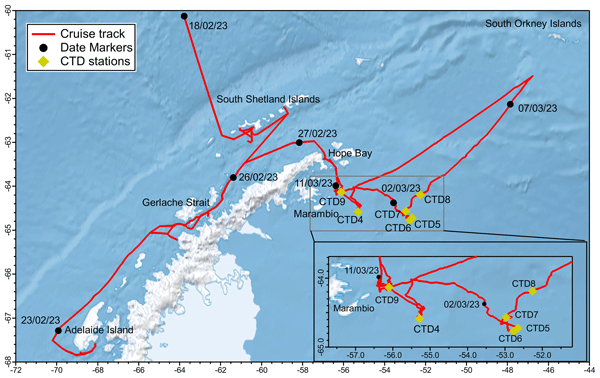
Methanethiol and dimethyl sulfide are precursors to aerosols which cool the climate. Here we present measurements of these compounds in surface seawater and ambient air around the Antarctic Peninsula and in the Weddell Sea, highlighting that a large fraction of volatile sulfur emissions from the ocean is biogenic methanethiol. This dataset presents some of the factors driving the variability of these compounds.
Yuwei Wang, Aristeidis Voliotis, Emily Matthews, Rongrong Wu, Milan Roska, Max Gerrit Adam, René Dubus, Lukas Kesper, Franz Rohrer, Robert Wegener, Benjamin Winter, Kelvin H. Bates, Quanfu He, Thorsten Hohaus, Achim Grasse, Ralf Tillmann, Andreas Wahner, Hui Wang, Christian Wesolek, Sergej Wedel, Yizhen Wu, Sören R. Zorn, Manjula Canagaratna, Douglas Worsnop, Felipe Lopez-Hilfiker, Georgios I. Gkatzelis, Hugh Coe, and Thomas J. Bannan
Atmos. Meas. Tech., 19, 4583–4599, https://doi.org/10.5194/amt-19-4583-2026, https://doi.org/10.5194/amt-19-4583-2026, 2026
Short summary
Short summary
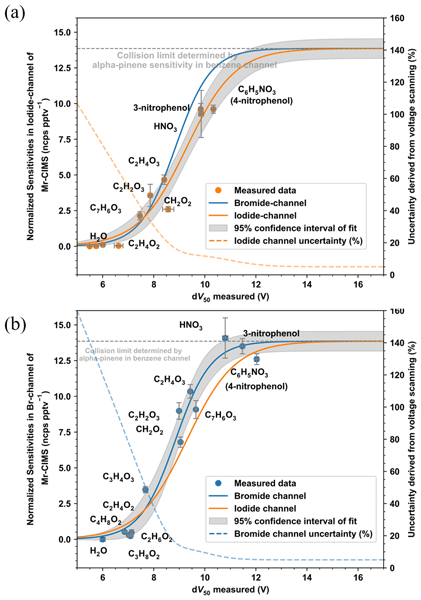
This work developed voltage scanning based calibration approach for a multi-reagent chemical ionization mass spectrometry. This approach improves sensitivity determination for gas-phase compounds. It does not require a calibrant for the target analyte and can estimate sensitivity with acceptable uncertainty based on the experimentally established relationship between binding energies and measured sensitivities. This work is broadly relevant to mass-spectrometric calibration strategies.
Xinyue Shao, Yaman Liu, Xinyi Dong, Minghuai Wang, Ruochong Xu, Joel A. Thornton, Duseong S. Jo, Man Yue, Wenxiang Shen, Manish Shrivastava, Stephen R. Arnold, and Ken S. Carslaw
Atmos. Chem. Phys., 26, 6427–6448, https://doi.org/10.5194/acp-26-6427-2026, https://doi.org/10.5194/acp-26-6427-2026, 2026
Short summary
Short summary
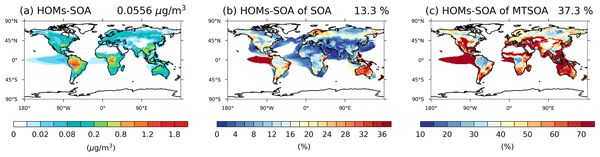
Highly Oxygenated Organic Molecules (HOMs) are key precursors of secondary organic aerosols (SOA). Incorporating the HOMs chemical mechanism into a global climate model allows for a reasonable reproduction of observed HOM characteristics. HOM-SOA constitutes a significant fraction of global SOA, and its distribution and formation pathways exhibit strong sensitivity to uncertainties in autoxidation processes and peroxy radical branching ratios.
Lewis Marden, Marvin D. Shaw, Stephen J. Andrews, Maya Zmajkovic, Phil Rund, Becky Alexander, Joel Thornton, Andrew Peters, Peter Karadakov, and Lucy J. Carpenter
Atmos. Meas. Tech., 19, 2715–2735, https://doi.org/10.5194/amt-19-2715-2026, https://doi.org/10.5194/amt-19-2715-2026, 2026
Short summary
Short summary
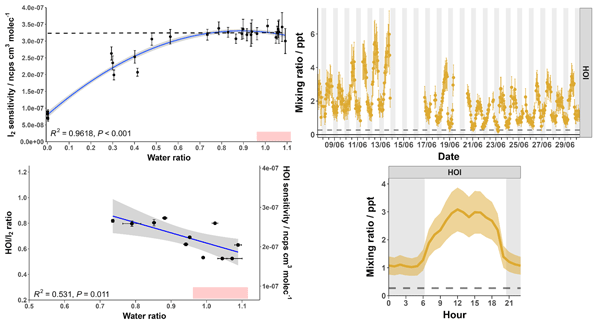
Hypoiodous acid (HOI) and molecular iodine (I2) are the dominant precursors of reactive gaseous iodine, which plays an important role in the atmospheric oxidative capacity and in aerosol formation. However, difficulties in the quantification of HOI and I2 mean that very few measurements are available. This work describes a novel calibration method for HOI and reports the detection of HOI and I2 in the marine boundary layer using Br- chemical ionisation mass spectrometry.
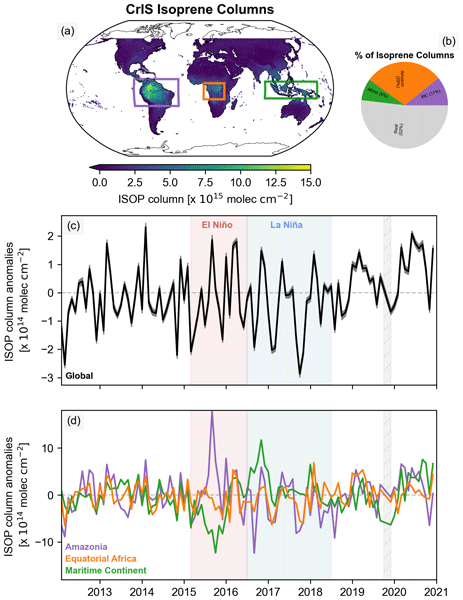
James Young Suk Yoon, Kelley C. Wells, Dylan B. Millet, Christian Frankenberg, Suniti Sanghavi, Abigail L. S. Swann, Joel A. Thornton, and Alexander J. Turner
Atmos. Chem. Phys., 26, 4509–4529, https://doi.org/10.5194/acp-26-4509-2026, https://doi.org/10.5194/acp-26-4509-2026, 2026
Short summary
Short summary
Isoprene is a molecule emitted by trees that is oxidized in the atmosphere within hours. Much of the isoprene globally is emitted in the remote tropics, where we have few direct observations of isoprene. Here, we use new satellite retrievals of isoprene to infer drivers of tropical isoprene variability. Across three regions, isoprene column variability is controlled by different factors, namely changes in isoprene emissions or changes in natural nitrogen oxide sources, like soils and fires.
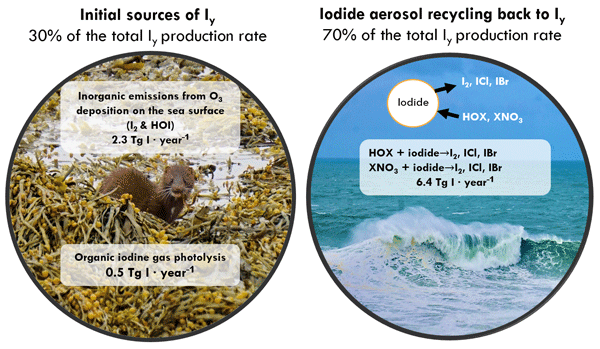
Allison R. Moon, Leyang Liu, Xuan Wang, Yuk-Chun Chan, Alyson Fritzmann, Ryan Pound, Amy Lees, Lewis Marden, Mat Evans, Lucy J. Carpenter, Jochen Stutz, Joel A. Thornton, Gordon Novak, Andrew Rollins, Gregory P. Schill, Xu-Cheng He, Henning Finkenzeller, Mago Reza, Rainer Volkamer, Kelvin H. Bates, Alfonso Saiz-Lopez, Anoop S. Mahajan, and Becky Alexander
Atmos. Chem. Phys., 26, 2353–2389, https://doi.org/10.5194/acp-26-2353-2026, https://doi.org/10.5194/acp-26-2353-2026, 2026
Short summary
Short summary
Global chemical transport models previously treated aerosols as a sink for reactive iodine (Iy); however, aerosol iodide is also a source of Iy via heterogeneous reactions involving hypohalous acids and halogen nitrates. We implemented this chemistry into GEOS-Chem, in addition to explicitly representing three aerosol iodine types: soluble organic iodine (SOI), iodide, and iodate. We found that aerosol recycling of iodide to form Iy is more than twice as fast as the other Iy sources combined.
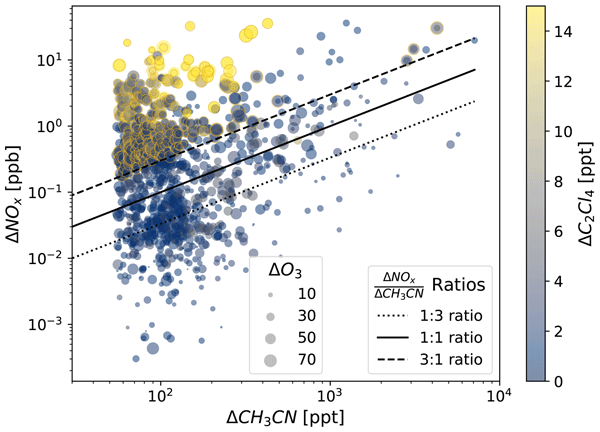
Joseph O. Palmo, Colette L. Heald, Donald R. Blake, Ilann Bourgeois, Matthew Coggon, Jeff Collett, Frank Flocke, Alan Fried, Georgios Gkatzelis, Samuel Hall, Lu Hu, Jose L. Jimenez, Pedro Campuzano-Jost, I-Ting Ku, Benjamin Nault, Brett Palm, Jeff Peischl, Ilana Pollack, Amy Sullivan, Joel Thornton, Carsten Warneke, Armin Wisthaler, and Lu Xu
Atmos. Chem. Phys., 25, 17107–17124, https://doi.org/10.5194/acp-25-17107-2025, https://doi.org/10.5194/acp-25-17107-2025, 2025
Short summary
Short summary
This study investigates ozone production within wildfire smoke plumes as they age, using both aircraft observations and models. We find that the chemical environment and resulting ozone production within smoke changes as plumes evolve, with implications for climate and public health.
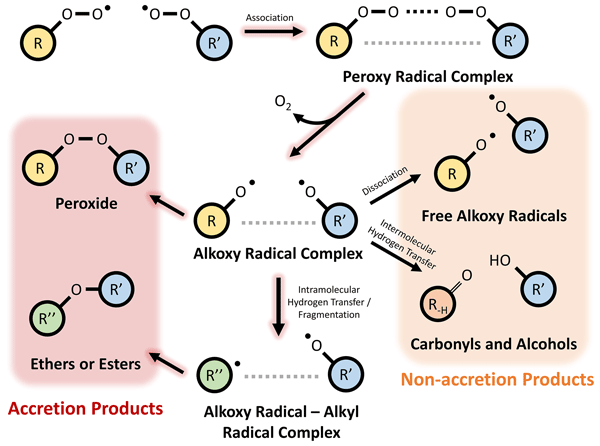
Alfred W. Mayhew, Lauri Franzon, Kelvin H. Bates, Theo Kurtén, Felipe D. Lopez-Hilfiker, Claudia Mohr, Andrew R. Rickard, Joel A. Thornton, and Jessica D. Haskins
Atmos. Chem. Phys., 25, 17027–17046, https://doi.org/10.5194/acp-25-17027-2025, https://doi.org/10.5194/acp-25-17027-2025, 2025
Short summary
Short summary
This work outlines an investigation into an understudied atmospheric chemical reaction pathway with the potential to form particulate pollution that has important impacts on air quality and climate. It suggests that this chemical pathway is responsible for a large fraction of the atmospheric particulate matter observed in tropical forested regions, but also highlights the need for further ambient and lab investigations to inform an accurate representation of this process in atmospheric models.
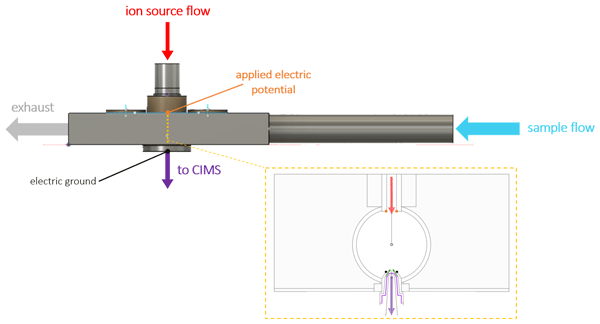
Phil Rund, Ben H. Lee, Siddharth Iyer, Gordon A. Novak, Jake T. Vallow, and Joel A. Thornton
Atmos. Meas. Tech., 18, 6979–6995, https://doi.org/10.5194/amt-18-6979-2025, https://doi.org/10.5194/amt-18-6979-2025, 2025
Short summary
Short summary
We introduce a custom-built chamber (known as an IMR) for use with a Chemical Ionization Mass Spectrometry (CIMS) gas measurement instrument. The IMR shows large improvements compared to previous designs in reducing non-real signal in the instrument, reducing uncertainties for trace gas studies in the laboratory and the field. We characterize this new IMR and demonstrate its use in analyzing air masses of unknown composition during a field campaign, reporting concentrations of important gases.
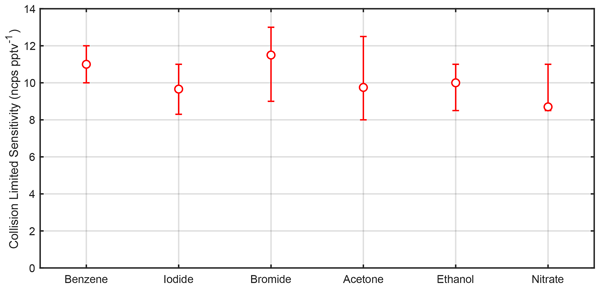
Sneha Aggarwal, Priyanka Bansal, Yuwei Wang, Spiro Jorga, Gabrielle Macgregor, Urs Rohner, Thomas Bannan, Matthew Salter, Paul Zieger, Claudia Mohr, and Felipe Lopez-Hilfiker
Atmos. Meas. Tech., 18, 4227–4247, https://doi.org/10.5194/amt-18-4227-2025, https://doi.org/10.5194/amt-18-4227-2025, 2025
Short summary
Short summary
Chemical ionization mass spectrometers used for trace gas analysis can be operated under various conditions, complicating quantitative comparisons. We evaluate sensitivity dependence on a relatively few key instrument parameters and show that when these are held constant, consistent performance is achieved. We show that the maximum sensitivity of a given flow tube reactor across various reagent ion chemistries is a constant, which aids in the quantification of compounds lacking analytical standards.
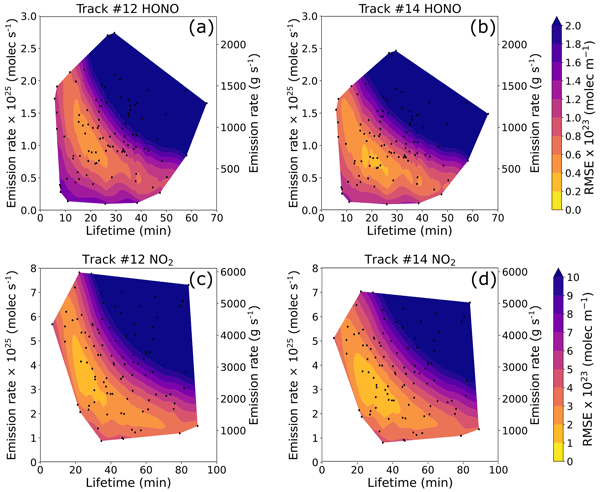
Carley D. Fredrickson, Scott J. Janz, Lok N. Lamsal, Ursula A. Jongebloed, Joshua L. Laughner, and Joel A. Thornton
Atmos. Meas. Tech., 18, 3669–3689, https://doi.org/10.5194/amt-18-3669-2025, https://doi.org/10.5194/amt-18-3669-2025, 2025
Short summary
Short summary
We present an analysis of high-resolution remote sensing measurements of nitrogen-containing trace gases emitted by wildfires. The measurements were made using an instrument on the NASA ER-2 aircraft in the summer of 2019. We find that time-resolved fire intensity is critical to quantify trace gas emissions over a fire's entire lifespan. These findings have implications for improving air pollution forecasts downwind of wildfires using computer models of atmospheric chemistry and meteorology.
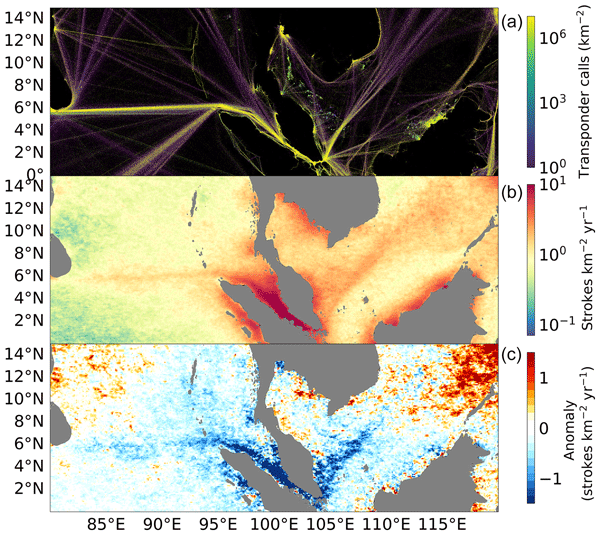
Chris J. Wright, Joel A. Thornton, Lyatt Jaeglé, Yang Cao, Yannian Zhu, Jihu Liu, Randall Jones II, Robert Holzworth, Daniel Rosenfeld, Robert Wood, Peter Blossey, and Daehyun Kim
Atmos. Chem. Phys., 25, 2937–2946, https://doi.org/10.5194/acp-25-2937-2025, https://doi.org/10.5194/acp-25-2937-2025, 2025
Short summary
Short summary
Aerosol particles influence clouds, which exert a large forcing on solar radiation and freshwater. To better understand the mechanisms by which aerosol influences thunderstorms, we look at the two busiest shipping lanes in the world, where recent regulations have reduced sulfur emissions by nearly an order of magnitude. We find that the reduction in emissions has been accompanied by a dramatic decrease in both lightning and the number of droplets in clouds over the shipping lanes.
Delaney B. Kilgour, Christopher M. Jernigan, Olga Garmash, Sneha Aggarwal, Shengqian Zhou, Claudia Mohr, Matt E. Salter, Joel A. Thornton, Jian Wang, Paul Zieger, and Timothy H. Bertram
Atmos. Chem. Phys., 25, 1931–1947, https://doi.org/10.5194/acp-25-1931-2025, https://doi.org/10.5194/acp-25-1931-2025, 2025
Short summary
Short summary
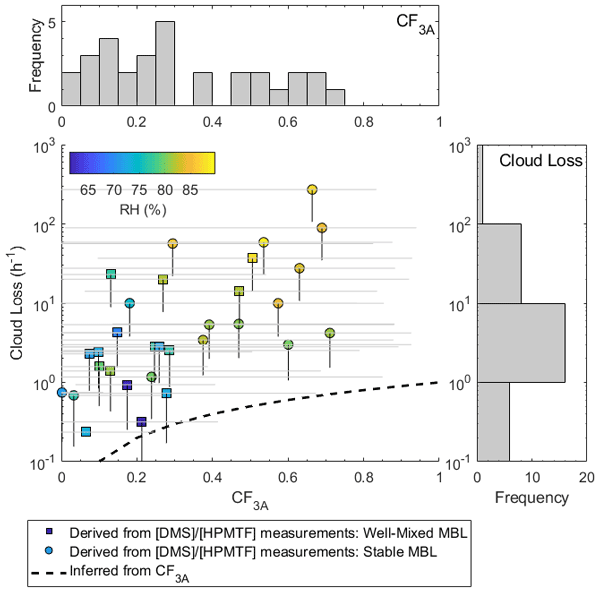
We report simultaneous measurements of dimethyl sulfide (DMS) and hydroperoxymethyl thioformate (HPMTF) in the eastern North Atlantic. We use an observationally constrained box model to show that cloud loss is the dominant sink of HPMTF in this region over 6 weeks, resulting in large reductions in DMS-derived products that contribute to aerosol formation and growth. Our findings indicate that fast cloud processing of HPMTF must be included in global models to accurately capture the sulfur cycle.
Matthieu Riva, Veronika Pospisilova, Carla Frege, Sebastien Perrier, Priyanka Bansal, Spiro Jorga, Patrick Sturm, Joel A. Thornton, Urs Rohner, and Felipe Lopez-Hilfiker
Atmos. Meas. Tech., 17, 5887–5901, https://doi.org/10.5194/amt-17-5887-2024, https://doi.org/10.5194/amt-17-5887-2024, 2024
Short summary
Short summary
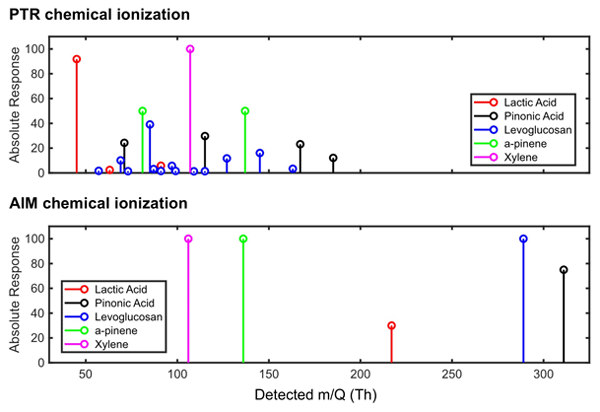
We present a newly designed reduced-pressure chemical ionization reactor for detection of gas-phase organic and inorganic species. The system operates through the combined use of vacuum ultraviolet ionization and photosensitizers to generate numerous adduct ionization schemes. As a result, it offers the ability to simultaneously measure a wide variety of organic and inorganic species in terms of compound volatility and functionality, while being largely independent of changes in sample humidity.
Chuanyang Shen, Xiaoyan Yang, Joel Thornton, John Shilling, Chenyang Bi, Gabriel Isaacman-VanWertz, and Haofei Zhang
Atmos. Chem. Phys., 24, 6153–6175, https://doi.org/10.5194/acp-24-6153-2024, https://doi.org/10.5194/acp-24-6153-2024, 2024
Short summary
Short summary
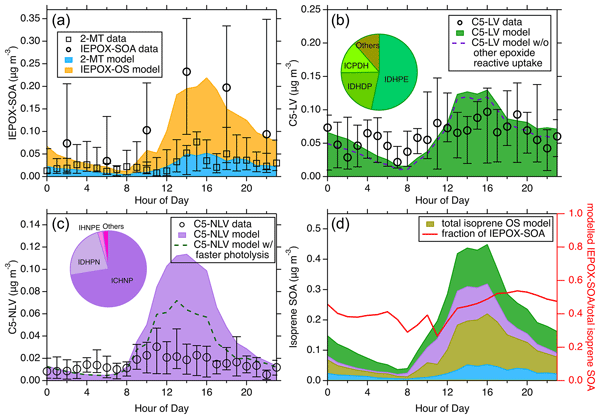
In this work, a condensed multiphase isoprene oxidation mechanism was developed to simulate isoprene SOA formation from chamber and field studies. Our results show that the measured isoprene SOA mass concentrations can be reasonably reproduced. The simulation results indicate that multifunctional low-volatility products contribute significantly to total isoprene SOA. Our findings emphasize that the pathways to produce these low-volatility species should be considered in models.
Wei Huang, Cheng Wu, Linyu Gao, Yvette Gramlich, Sophie L. Haslett, Joel Thornton, Felipe D. Lopez-Hilfiker, Ben H. Lee, Junwei Song, Harald Saathoff, Xiaoli Shen, Ramakrishna Ramisetty, Sachchida N. Tripathi, Dilip Ganguly, Feng Jiang, Magdalena Vallon, Siegfried Schobesberger, Taina Yli-Juuti, and Claudia Mohr
Atmos. Chem. Phys., 24, 2607–2624, https://doi.org/10.5194/acp-24-2607-2024, https://doi.org/10.5194/acp-24-2607-2024, 2024
Short summary
Short summary
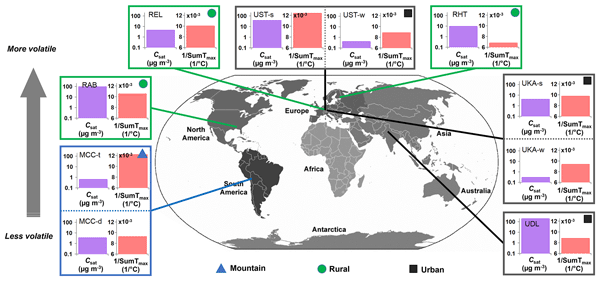
We present distinct molecular composition and volatility of oxygenated organic aerosol particles in different rural, urban, and mountain environments. We do a comprehensive investigation of the relationship between the chemical composition and volatility of oxygenated organic aerosol particles across different systems and environments. This study provides implications for volatility descriptions of oxygenated organic aerosol particles in different model frameworks.
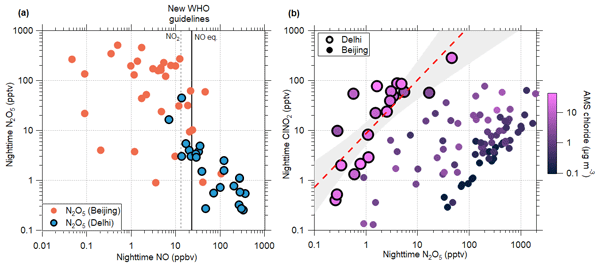
Sophie L. Haslett, David M. Bell, Varun Kumar, Jay G. Slowik, Dongyu S. Wang, Suneeti Mishra, Neeraj Rastogi, Atinderpal Singh, Dilip Ganguly, Joel Thornton, Feixue Zheng, Yuanyuan Li, Wei Nie, Yongchun Liu, Wei Ma, Chao Yan, Markku Kulmala, Kaspar R. Daellenbach, David Hadden, Urs Baltensperger, Andre S. H. Prevot, Sachchida N. Tripathi, and Claudia Mohr
Atmos. Chem. Phys., 23, 9023–9036, https://doi.org/10.5194/acp-23-9023-2023, https://doi.org/10.5194/acp-23-9023-2023, 2023
Short summary
Short summary
In Delhi, some aspects of daytime and nighttime atmospheric chemistry are inverted, and parodoxically, vehicle emissions may be limiting other forms of particle production. This is because the nighttime emissions of nitrogen oxide (NO) by traffic and biomass burning prevent some chemical processes that would otherwise create even more particles and worsen the urban haze.
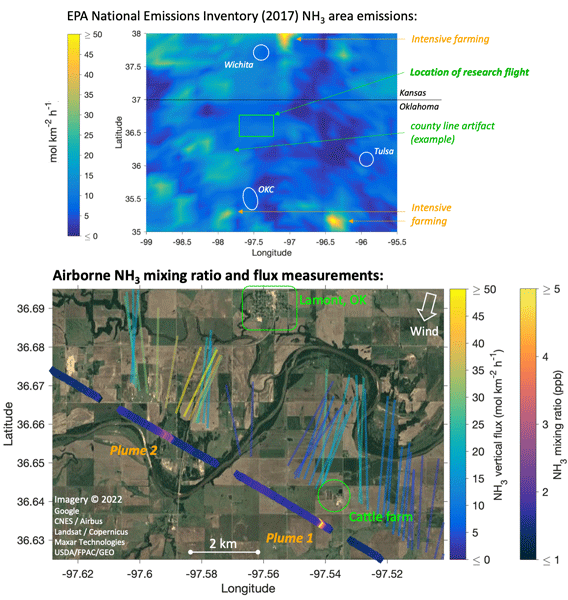
Siegfried Schobesberger, Emma L. D'Ambro, Lejish Vettikkat, Ben H. Lee, Qiaoyun Peng, David M. Bell, John E. Shilling, Manish Shrivastava, Mikhail Pekour, Jerome Fast, and Joel A. Thornton
Atmos. Meas. Tech., 16, 247–271, https://doi.org/10.5194/amt-16-247-2023, https://doi.org/10.5194/amt-16-247-2023, 2023
Short summary
Short summary
We present a new, highly sensitive technique for measuring atmospheric ammonia, an important trace gas that is emitted mainly by agriculture. We deployed the instrument on an aircraft during research flights over rural Oklahoma. Due to its fast response, we could analyze correlations with turbulent winds and calculate ammonia emissions from nearby areas at 1 to 2 km resolution. We observed high spatial variability and point sources that are not resolved in the US National Emissions Inventory.

Alfred W. Mayhew, Ben H. Lee, Joel A. Thornton, Thomas J. Bannan, James Brean, James R. Hopkins, James D. Lee, Beth S. Nelson, Carl Percival, Andrew R. Rickard, Marvin D. Shaw, Peter M. Edwards, and Jaqueline F. Hamilton
Atmos. Chem. Phys., 22, 14783–14798, https://doi.org/10.5194/acp-22-14783-2022, https://doi.org/10.5194/acp-22-14783-2022, 2022
Short summary
Short summary
Isoprene nitrates are chemical species commonly found in the atmosphere that are important for their impacts on air quality and climate. This paper compares 3 different representations of the chemistry of isoprene nitrates in computational models highlighting cases where the choice of chemistry included has significant impacts on the concentration and composition of the modelled nitrates. Calibration of mass spectrometers is also shown to be an important factor when analysing isoprene nitrates.
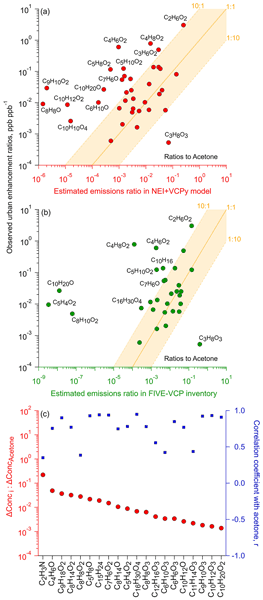
Peeyush Khare, Jordan E. Krechmer, Jo E. Machesky, Tori Hass-Mitchell, Cong Cao, Junqi Wang, Francesca Majluf, Felipe Lopez-Hilfiker, Sonja Malek, Will Wang, Karl Seltzer, Havala O. T. Pye, Roisin Commane, Brian C. McDonald, Ricardo Toledo-Crow, John E. Mak, and Drew R. Gentner
Atmos. Chem. Phys., 22, 14377–14399, https://doi.org/10.5194/acp-22-14377-2022, https://doi.org/10.5194/acp-22-14377-2022, 2022
Short summary
Short summary
Ammonium adduct chemical ionization is used to examine the atmospheric abundances of oxygenated volatile organic compounds associated with emissions from volatile chemical products, which are now key contributors of reactive precursors to ozone and secondary organic aerosols in urban areas. The application of this valuable measurement approach in densely populated New York City enables the evaluation of emissions inventories and thus the role these oxygenated compounds play in urban air quality.

Ruochong Xu, Joel A. Thornton, Ben H. Lee, Yanxu Zhang, Lyatt Jaeglé, Felipe D. Lopez-Hilfiker, Pekka Rantala, and Tuukka Petäjä
Atmos. Chem. Phys., 22, 5477–5494, https://doi.org/10.5194/acp-22-5477-2022, https://doi.org/10.5194/acp-22-5477-2022, 2022
Short summary
Short summary
Monoterpenes are emitted into the atmosphere by vegetation and by the use of certain consumer products. Reactions of monoterpenes in the atmosphere lead to low-volatility products that condense to grow particulate matter or participate in new particle formation and, thus, affect air quality and climate. We use a model of atmospheric chemistry and transport to evaluate the global-scale importance of recent updates to our understanding of monoterpene chemistry in particle formation and growth.
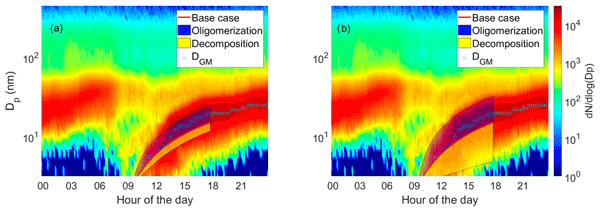
Arto Heitto, Kari Lehtinen, Tuukka Petäjä, Felipe Lopez-Hilfiker, Joel A. Thornton, Markku Kulmala, and Taina Yli-Juuti
Atmos. Chem. Phys., 22, 155–171, https://doi.org/10.5194/acp-22-155-2022, https://doi.org/10.5194/acp-22-155-2022, 2022
Short summary
Short summary
For atmospheric aerosol particles to take part in cloud formation, they need to be at least a few tens of nanometers in diameter. By using a particle condensation model, we investigated how two types of chemical reactions, oligomerization and decomposition, of organic molecules inside the particle may affect the growth of secondary aerosol particles to these sizes. We show that the effect is potentially significant, which highlights the importance of increasing understanding of these processes.
Zachary C. J. Decker, Michael A. Robinson, Kelley C. Barsanti, Ilann Bourgeois, Matthew M. Coggon, Joshua P. DiGangi, Glenn S. Diskin, Frank M. Flocke, Alessandro Franchin, Carley D. Fredrickson, Georgios I. Gkatzelis, Samuel R. Hall, Hannah Halliday, Christopher D. Holmes, L. Gregory Huey, Young Ro Lee, Jakob Lindaas, Ann M. Middlebrook, Denise D. Montzka, Richard Moore, J. Andrew Neuman, John B. Nowak, Brett B. Palm, Jeff Peischl, Felix Piel, Pamela S. Rickly, Andrew W. Rollins, Thomas B. Ryerson, Rebecca H. Schwantes, Kanako Sekimoto, Lee Thornhill, Joel A. Thornton, Geoffrey S. Tyndall, Kirk Ullmann, Paul Van Rooy, Patrick R. Veres, Carsten Warneke, Rebecca A. Washenfelder, Andrew J. Weinheimer, Elizabeth Wiggins, Edward Winstead, Armin Wisthaler, Caroline Womack, and Steven S. Brown
Atmos. Chem. Phys., 21, 16293–16317, https://doi.org/10.5194/acp-21-16293-2021, https://doi.org/10.5194/acp-21-16293-2021, 2021
Short summary
Short summary
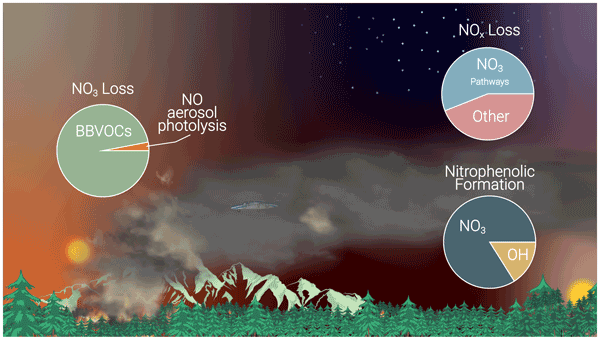
To understand air quality impacts from wildfires, we need an accurate picture of how wildfire smoke changes chemically both day and night as sunlight changes the chemistry of smoke. We present a chemical analysis of wildfire smoke as it changes from midday through the night. We use aircraft observations from the FIREX-AQ field campaign with a chemical box model. We find that even under sunlight typical
nighttimechemistry thrives and controls the fate of key smoke plume chemical processes.
Cited articles
Aggarwal, S., Bansal, P., Wang, Y., Jorga, S., Macgregor, G., Rohner, U., Bannan, T., Salter, M., Zieger, P., Mohr, C., and Lopez-Hilfiker, F.: Identifying key parameters that affect sensitivity of flow tube chemical ionization mass spectrometers, Atmos. Meas. Tech., 18, 4227–4247, https://doi.org/10.5194/amt-18-4227-2025, 2025.
Berresheim, H., Elste, T., Plass-Dülmer, C., Eiseleb, F. L., and Tannerb, D. J.: Chemical ionization mass spectrometer for long-term measurements of atmospheric OH and H2SO4, Int. J. Mass Spectrom., 202, 91–109, https://doi.org/10.1016/S1387-3806(00)00233-5, 2000.
Bertram, T. H., Kimmel, J. R., Crisp, T. A., Ryder, O. S., Yatavelli, R. L. N., Thornton, J. A., Cubison, M. J., Gonin, M., and Worsnop, D. R.: A field-deployable, chemical ionization time-of-flight mass spectrometer, Atmos. Meas. Tech., 4, 1471–1479, https://doi.org/10.5194/amt-4-1471-2011, 2011.
Deming, B. L., Pagonis, D., Liu, X., Day, D. A., Talukdar, R., Krechmer, J. E., de Gouw, J. A., Jimenez, J. L., and Ziemann, P. J.: Measurements of delays of gas-phase compounds in a wide variety of tubing materials due to gas–wall interactions, Atmos. Meas. Tech., 12, 3453–3461, https://doi.org/10.5194/amt-12-3453-2019, 2019.
Huey, L. G.: Measurement of trace atmospheric species by chemical ionization mass spectrometry: Speciation of reactive nitrogen and future directions, Mass Spectrom. Rev., 26, 166–184, https://doi.org/10.1002/mas.20118, 2007.
Hutterli, M., Pospisilova, V., and Gonin, M.: Time-Of-Flight Mass Spectrometers Made in Switzerland: Examples of Mobile Applications, CHIMIA, 76, 60, https://doi.org/10.2533/chimia.2022.60, 2022.
Kim, M. J., Zoerb, M. C., Campbell, N. R., Zimmermann, K. J., Blomquist, B. W., Huebert, B. J., and Bertram, T. H.: Revisiting benzene cluster cations for the chemical ionization of dimethyl sulfide and select volatile organic compounds, Atmos. Meas. Tech., 9, 1473–1484, https://doi.org/10.5194/amt-9-1473-2016, 2016.
Kleffmann, J.: Daytime Sources of Nitrous Acid (HONO) in the Atmospheric Boundary Layer, ChemPhysChem, 8, 1137–1144, https://doi.org/10.1002/cphc.200700016, 2007.
Klepeis, N. E., Gabel, E. B., Ott, W. R., and Switzer, P.: Outdoor air pollution in close proximity to a continuous point source, Atmos. Environ., 43, 3155–3167, https://doi.org/10.1016/j.atmosenv.2009.03.056, 2009.
Krechmer, J., Lopez-Hilfiker, F., Koss, A., Hutterli, M., Stoermer, C., Deming, B., Kimmel, J., Warneke, C., Holzinger, R., Jayne, J., Worsnop, D., Fuhrer, K., Gonin, M., and de Gouw, J.: Evaluation of a New Reagent-Ion Source and Focusing Ion–Molecule Reactor for Use in Proton-Transfer-Reaction Mass Spectrometry, Anal. Chem., 90, 12011–12018, https://doi.org/10.1021/acs.analchem.8b02641, 2018.
Krilaviciute, A., Heiss, J. A., Leja, M., Kupcinskas, J., Haick, H., and Brenner, H.: Detection of cancer through exhaled breath: a systematic review, Oncotarget, 6, 38643–38657, https://doi.org/10.18632/oncotarget.5938, 2015.
Lee, B. H., Lopez-Hilfiker, F. D., Mohr, C., Kurtén, T., Worsnop, D. R., and Thornton, J. A.: An Iodide-Adduct High-Resolution Time-of-Flight Chemical-Ionization Mass Spectrometer: Application to Atmospheric Inorganic and Organic Compounds, Environ. Sci. Technol., 48, 6309–6317, https://doi.org/10.1021/es500362a, 2014.
Li, X.-B., Zhang, C., Liu, A., Yuan, B., Yang, H., Liu, C., Wang, S., Huangfu, Y., Qi, J., Liu, Z., He, X., Song, X., Chen, Y., Peng, Y., Zhang, X., Zheng, E., Yang, L., Yang, Q., Qin, G., Zhou, J., and Shao, M.: Assessment of long tubing in measuring atmospheric trace gases: applications on tall towers, Environmental Science: Atmospheres, 3, 506–520, https://doi.org/10.1039/D2EA00110A, 2023.
Murschell, T., Fulgham, S. R., and Farmer, D. K.: Gas-phase pesticide measurement using iodide ionization time-of-flight mass spectrometry, Atmos. Meas. Tech., 10, 2117–2127, https://doi.org/10.5194/amt-10-2117-2017, 2017.
Puttu, U., Kamp, J. R., Chen, X., Chen, J.-H., Wang, B., Li, J., Gonzalez-Meler, M. A., Wang, J., and Xu, L.: Chemical ionization mass spectrometry utilizing benzene cations for measurements of volatile organic compounds and nitric oxide, Atmos. Meas. Tech., 19, 1421–1439, https://doi.org/10.5194/amt-19-1421-2026, 2026.
Riva, M., Pospisilova, V., Frege, C., Perrier, S., Bansal, P., Jorga, S., Sturm, P., Thornton, J. A., Rohner, U., and Lopez-Hilfiker, F.: Evaluation of a reduced-pressure chemical ion reactor utilizing adduct ionization for the detection of gaseous organic and inorganic species, Atmos. Meas. Tech., 17, 5887–5901, https://doi.org/10.5194/amt-17-5887-2024, 2024.
Seigneur, C., Tesche, T. W., Roth, P. M., and Liu, M.-K.: On the treatment of point source emissions in urban air quality modeling, Atmospheric Environment (1967), 17, 1655–1676, https://doi.org/10.1016/0004-6981(83)90174-9, 1983.
Sethi, S., Nanda, R., and Chakraborty, T.: Clinical Application of Volatile Organic Compound Analysis for Detecting Infectious Diseases, Clin. Microbiol. Rev., 26, 462–475, https://doi.org/10.1128/CMR.00020-13, 2013.
Sörgel, M., Regelin, E., Bozem, H., Diesch, J.-M., Drewnick, F., Fischer, H., Harder, H., Held, A., Hosaynali-Beygi, Z., Martinez, M., and Zetzsch, C.: Quantification of the unknown HONO daytime source and its relation to NO2, Atmos. Chem. Phys., 11, 10433–10447, https://doi.org/10.5194/acp-11-10433-2011, 2011.
Tsai, W.-T.: Toxic Volatile Organic Compounds (VOCs) in the Atmospheric Environment: Regulatory Aspects and Monitoring in Japan and Korea, Environments, 3, 23, https://doi.org/10.3390/environments3030023, 2016.
Wallace, L. A.: Personal Exposure To 25 Volatile Organic Compounds Epa's 1987 Team Study in Los Angeles, California, Toxicol. Ind. Health, 7, 203–208, https://doi.org/10.1177/074823379100700523, 1991.
Warneke, C., Veres, P., Holloway, J. S., Stutz, J., Tsai, C., Alvarez, S., Rappenglueck, B., Fehsenfeld, F. C., Graus, M., Gilman, J. B., and de Gouw, J. A.: Airborne formaldehyde measurements using PTR-MS: calibration, humidity dependence, inter-comparison and initial results, Atmos. Meas. Tech., 4, 2345–2358, https://doi.org/10.5194/amt-4-2345-2011, 2011.
Yatsyna, V., Rohner, U., Bansal, P., Riva, M., Kamrath, M., and Lopez-Hilfiker, F.: A versatile fast polarity switching CIMS platform for studies of atmospheric composition, EGU General Assembly 2026, Vienna, Austria, 3–8 May 2026, EGU26-20587, https://doi.org/10.5194/egusphere-egu26-20587, 2026.
Yeoman, A. M., Shaw, M., Carslaw, N., Murrells, T., Passant, N., and Lewis, A. C.: Simplified speciation and atmospheric volatile organic compound emission rates from non-aerosol personal care products, Indoor Air, 30, 459–472, https://doi.org/10.1111/ina.12652, 2020.
Short summary
A portable mass spectrometer has been developed to sensitively measure key environmental pollutants at high temporal resolution. Its low power consumption and compact design enable battery-powered operation and deployment in challenging settings such as light aircraft, tall towers, and remote, off-grid locations, providing new insight into atmospheric chemical variability with high spatial and temporal accuracy.
A portable mass spectrometer has been developed to sensitively measure key environmental...


