
Articles | Volume 19, issue 11
https://doi.org/10.5194/amt-19-3911-2026
© Author(s) 2026. This work is distributed under
the Creative Commons Attribution 4.0 License.
the Creative Commons Attribution 4.0 License.
https://doi.org/10.5194/amt-19-3911-2026
© Author(s) 2026. This work is distributed under
the Creative Commons Attribution 4.0 License.
the Creative Commons Attribution 4.0 License.
Research article
| 
16 Jun 2026
Research article |
| 16 Jun 2026
| 16 Jun 2026
Optimizing airborne emission rate retrievals with sub-hectometre resolution numerical modelling
Sepehr Fathi
Air Quality Research Division, Environment and Climate Change Canada, 4905 Dufferin Street, Toronto, ON M3H 5T4, Canada
Formerly at Physics and Astronomy Department, York University, 4700 Keele Street, Toronto, ON M3J 1P3, Canada

Department of Earth and Space Science and Engineering, York University, 4700 Keele Street, Toronto, ON M3J 1P3, Canada
Jingliang Hao
Department of Earth and Space Science and Engineering, York University, 4700 Keele Street, Toronto, ON M3J 1P3, Canada
Related authors
Stefan Miller, Paul A. Makar, Kenjiro Toyota, Colin Lee, Verica Savic-Jovcic, Sepehr Fathi, Mahtab Majdzadeh, and Katherine Hayden
Atmos. Chem. Phys., 26, 9997–10027, https://doi.org/10.5194/acp-26-9997-2026, https://doi.org/10.5194/acp-26-9997-2026, 2026
Short summary
Short summary
This work identifies an important and hitherto unsuspected controlling factor influencing the rate of deposition of atmospheric gases to foliage surfaces. We show base cation-containing dust that settles on foliage can raise the pH of thin water films on leaves, significantly increasing sulphur dioxide dry deposition rates (often by more than 1 cm s-1), and lowering concentrations (by up to 60%), near sources of alkaline dust emissions, changing sulphur deposition fluxes' spatial distribution.
Kevin M. Axelrod, Mark Gordon, Mohammad Koushafar, Jingliang Hao, Paul A. Makar, Sepehr Fathi, and Gunho Sohn
EGUsphere, https://doi.org/10.5194/egusphere-2025-4582, https://doi.org/10.5194/egusphere-2025-4582, 2025
Short summary
Short summary
The is a study of the plumes that rise from smokestacks. Knowing how these plume behave helps predict downwind pollutant concentrations. We use photos over a 2-year period to investigate how these plumes rise under different conditions and compare this to a commonly used model parameterization. It is found that the equations used to model plume rise in current models do well for some condition, but these equations can over-predict the plume rise, typically during the day when it is hot.
Sepehr Fathi, Paul Makar, Wanmin Gong, Junhua Zhang, Katherine Hayden, and Mark Gordon
Atmos. Chem. Phys., 25, 2385–2405, https://doi.org/10.5194/acp-25-2385-2025, https://doi.org/10.5194/acp-25-2385-2025, 2025
Short summary
Short summary
Our study explores the influence of water phase changes in plumes from industrial sources on atmospheric dispersion of emitted pollutants and air quality. Employing PRISM (Plume-Rise-Iterative-Stratified-Moist), a new method, we found that considering these effects significantly improves predictions of pollutant dispersion. This insight enhances our understanding of environmental impacts, enabling more accurate air quality modelling and fostering more effective pollution management strategies.
Sepehr Fathi, Mark Gordon, and Yongsheng Chen
Geosci. Model Dev., 16, 5069–5091, https://doi.org/10.5194/gmd-16-5069-2023, https://doi.org/10.5194/gmd-16-5069-2023, 2023
Short summary
Short summary
We have combined various capabilities within a WRF model to generate simulations of atmospheric pollutant dispersion at 50 m resolution. The study objective was to resolve transport processes at the scale of measurements to assess and optimize aircraft-based emission rate retrievals. Model performance evaluation resulted in agreement within 5 % of observed meteorological and within 1–2 standard deviations of observed wind fields. Mass was conserved in the model within 5 % of input emissions.
Sepehr Fathi, Mark Gordon, Paul A. Makar, Ayodeji Akingunola, Andrea Darlington, John Liggio, Katherine Hayden, and Shao-Meng Li
Atmos. Chem. Phys., 21, 15461–15491, https://doi.org/10.5194/acp-21-15461-2021, https://doi.org/10.5194/acp-21-15461-2021, 2021
Short summary
Short summary
We have investigated the accuracy of aircraft-based mass balance methodologies through computer model simulations of the atmosphere and air quality at a regional high-resolution scale. We have defined new quantitative metrics to reduce emission retrieval uncertainty by evaluating top-down mass balance estimates against the known simulated meteorology and input emissions. We also recommend methodologies and flight strategies for improved retrievals in future aircraft-based studies.
Stefan Miller, Paul A. Makar, Kenjiro Toyota, Colin Lee, Verica Savic-Jovcic, Sepehr Fathi, Mahtab Majdzadeh, and Katherine Hayden
Atmos. Chem. Phys., 26, 9997–10027, https://doi.org/10.5194/acp-26-9997-2026, https://doi.org/10.5194/acp-26-9997-2026, 2026
Short summary
Short summary
This work identifies an important and hitherto unsuspected controlling factor influencing the rate of deposition of atmospheric gases to foliage surfaces. We show base cation-containing dust that settles on foliage can raise the pH of thin water films on leaves, significantly increasing sulphur dioxide dry deposition rates (often by more than 1 cm s-1), and lowering concentrations (by up to 60%), near sources of alkaline dust emissions, changing sulphur deposition fluxes' spatial distribution.
Neda Kolahi, Costas Armenakis, and Mark D. Gordon
ISPRS Ann. Photogramm. Remote Sens. Spatial Inf. Sci., XI-3-2026, 157–162, https://doi.org/10.5194/isprs-annals-XI-3-2026-157-2026, https://doi.org/10.5194/isprs-annals-XI-3-2026-157-2026, 2026
Kevin M. Axelrod, Mark Gordon, Mohammad Koushafar, Jingliang Hao, Paul A. Makar, Sepehr Fathi, and Gunho Sohn
EGUsphere, https://doi.org/10.5194/egusphere-2025-4582, https://doi.org/10.5194/egusphere-2025-4582, 2025
Short summary
Short summary
The is a study of the plumes that rise from smokestacks. Knowing how these plume behave helps predict downwind pollutant concentrations. We use photos over a 2-year period to investigate how these plumes rise under different conditions and compare this to a commonly used model parameterization. It is found that the equations used to model plume rise in current models do well for some condition, but these equations can over-predict the plume rise, typically during the day when it is hot.
Sepehr Fathi, Paul Makar, Wanmin Gong, Junhua Zhang, Katherine Hayden, and Mark Gordon
Atmos. Chem. Phys., 25, 2385–2405, https://doi.org/10.5194/acp-25-2385-2025, https://doi.org/10.5194/acp-25-2385-2025, 2025
Short summary
Short summary
Our study explores the influence of water phase changes in plumes from industrial sources on atmospheric dispersion of emitted pollutants and air quality. Employing PRISM (Plume-Rise-Iterative-Stratified-Moist), a new method, we found that considering these effects significantly improves predictions of pollutant dispersion. This insight enhances our understanding of environmental impacts, enabling more accurate air quality modelling and fostering more effective pollution management strategies.
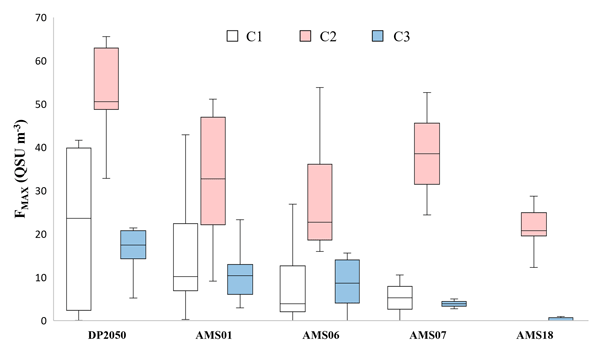
Dane Blanchard, Mark Gordon, Duc Huy Dang, Paul Andrew Makar, and Julian Aherne
Atmos. Chem. Phys., 25, 2423–2442, https://doi.org/10.5194/acp-25-2423-2025, https://doi.org/10.5194/acp-25-2423-2025, 2025
Short summary
Short summary
This study offers the first known evaluation of water-soluble brown carbon aerosols in the Athabasca oil sands region (AOSR), Canada. Fluorescence spectroscopy analysis of aerosol samples from five regional sites (collected during the summer of 2021) identified oil sands operations as a measurable brown carbon source. Industrial aerosol emissions were unlikely to impact regional radiative forcing. These findings show that fluorescence spectroscopy can be used to monitor brown carbon in the AOSR.
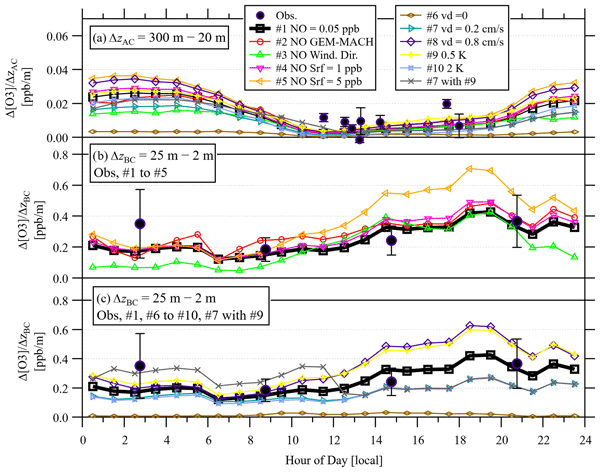
Xuanyi Zhang, Mark Gordon, Paul A. Makar, Timothy Jiang, Jonathan Davies, and David Tarasick
Atmos. Chem. Phys., 23, 13647–13664, https://doi.org/10.5194/acp-23-13647-2023, https://doi.org/10.5194/acp-23-13647-2023, 2023
Short summary
Short summary
Measurements of ozone in the atmosphere were made in a forest downwind of oil sands mining and production facilities in northern Alberta. These measurements show that the emissions of other pollutants from oil sands production and processing reduce the amount of ozone in the forest. By using an atmospheric model combined with measurements, we find that the rate at which ozone is absorbed by the forest is lower than typical rates from similar measurements in other forests.
Sepehr Fathi, Mark Gordon, and Yongsheng Chen
Geosci. Model Dev., 16, 5069–5091, https://doi.org/10.5194/gmd-16-5069-2023, https://doi.org/10.5194/gmd-16-5069-2023, 2023
Short summary
Short summary
We have combined various capabilities within a WRF model to generate simulations of atmospheric pollutant dispersion at 50 m resolution. The study objective was to resolve transport processes at the scale of measurements to assess and optimize aircraft-based emission rate retrievals. Model performance evaluation resulted in agreement within 5 % of observed meteorological and within 1–2 standard deviations of observed wind fields. Mass was conserved in the model within 5 % of input emissions.
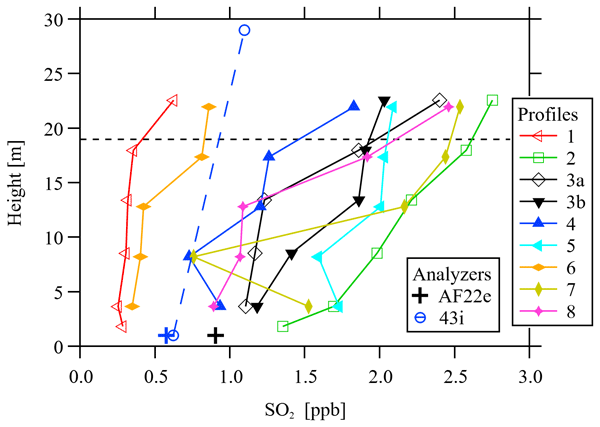
Mark Gordon, Dane Blanchard, Timothy Jiang, Paul A. Makar, Ralf M. Staebler, Julian Aherne, Cris Mihele, and Xuanyi Zhang
Atmos. Chem. Phys., 23, 7241–7255, https://doi.org/10.5194/acp-23-7241-2023, https://doi.org/10.5194/acp-23-7241-2023, 2023
Short summary
Short summary
Measurements of the gas sulfur dioxide (SO2) were made in a forest downwind of oil sands mining and production facilities in northern Alberta. These measurements tell us the rate at which SO2 is absorbed by the forest. The measured rate is much higher than what is currently used by air quality models, which is supported by a previous study in this region. This suggests that SO2 may have a much shorter lifetime in the atmosphere at this location than currently predicted by models.
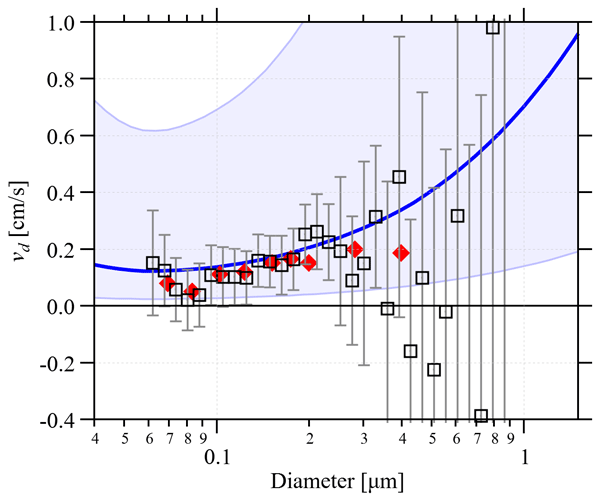
Timothy Jiang, Mark Gordon, Paul A. Makar, Ralf M. Staebler, and Michael Wheeler
Atmos. Chem. Phys., 23, 4361–4372, https://doi.org/10.5194/acp-23-4361-2023, https://doi.org/10.5194/acp-23-4361-2023, 2023
Short summary
Short summary
Measurements of submicron aerosols (particles smaller than 1 / 1000 of a millimeter) were made in a forest downwind of oil sands mining and production facilities in northern Alberta. These measurements tell us how quickly aerosols are absorbed by the forest (known as deposition rate) and how the deposition rate depends on the size of the aerosol. The measurements show good agreement with a parameterization developed from a recent study for deposition of aerosols to a similar pine forest.
Stefan J. Miller and Mark Gordon
Atmos. Meas. Tech., 15, 6563–6584, https://doi.org/10.5194/amt-15-6563-2022, https://doi.org/10.5194/amt-15-6563-2022, 2022
Short summary
Short summary
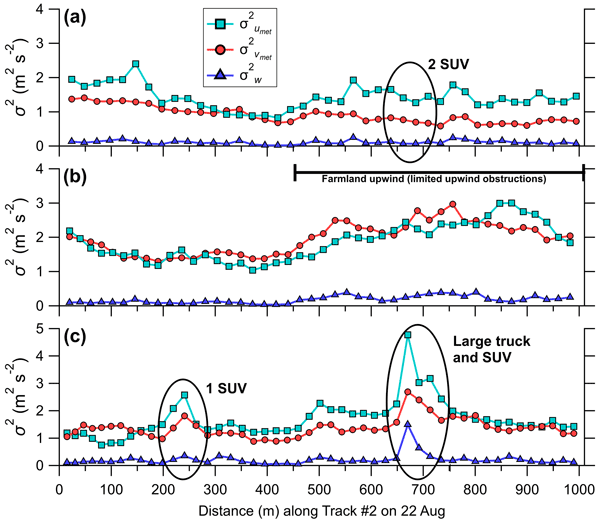
This research investigates the measurement of atmospheric turbulence using a low-cost instrumented car that travels at near-highway speeds and is impacted by upwind obstructions and other on-road traffic. We show that our car design can successfully measure the mean flow and atmospheric turbulence near the surface. We outline a technique to isolate and remove the effects of sporadic passing traffic from car-measured velocity variances and discuss potential measurement uncertainties.
Sepehr Fathi, Mark Gordon, Paul A. Makar, Ayodeji Akingunola, Andrea Darlington, John Liggio, Katherine Hayden, and Shao-Meng Li
Atmos. Chem. Phys., 21, 15461–15491, https://doi.org/10.5194/acp-21-15461-2021, https://doi.org/10.5194/acp-21-15461-2021, 2021
Short summary
Short summary
We have investigated the accuracy of aircraft-based mass balance methodologies through computer model simulations of the atmosphere and air quality at a regional high-resolution scale. We have defined new quantitative metrics to reduce emission retrieval uncertainty by evaluating top-down mass balance estimates against the known simulated meteorology and input emissions. We also recommend methodologies and flight strategies for improved retrievals in future aircraft-based studies.
Cited articles
Alfieri, S., Amato, U., Carfora, M., Esposito, M., and Magliulo, V.: Quantifying trace gas emissions from com- posite landscapes: A mass-budget approach with aircraft measurements, Atmos. Environ., 44, 1866–1876, https://doi.org/10.1016/j.atmosenv.2010.02.026, 2010.
Andreae, M. O., Acevedo, O. C., Araùjo, A., Artaxo, P., Barbosa, C. G. G., Barbosa, H. M. J., Brito, J., Carbone, S., Chi, X., Cintra, B. B. L., da Silva, N. F., Dias, N. L., Dias-Júnior, C. Q., Ditas, F., Ditz, R., Godoi, A. F. L., Godoi, R. H. M., Heimann, M., Hoffmann, T., Kesselmeier, J., Könemann, T., Krüger, M. L., Lavric, J. V., Manzi, A. O., Lopes, A. P., Martins, D. L., Mikhailov, E. F., Moran-Zuloaga, D., Nelson, B. W., Nölscher, A. C., Santos Nogueira, D., Piedade, M. T. F., Pöhlker, C., Pöschl, U., Quesada, C. A., Rizzo, L. V., Ro, C.-U., Ruckteschler, N., Sá, L. D. A., de Oliveira Sá, M., Sales, C. B., dos Santos, R. M. N., Saturno, J., Schöngart, J., Sörgel, M., de Souza, C. M., de Souza, R. A. F., Su, H., Targhetta, N., Tóta, J., Trebs, I., Trumbore, S., van Eijck, A., Walter, D., Wang, Z., Weber, B., Williams, J., Winderlich, J., Wittmann, F., Wolff, S., and Yáñez-Serrano, A. M.: The Amazon Tall Tower Observatory (ATTO): overview of pilot measurements on ecosystem ecology, meteorology, trace gases, and aerosols, Atmos. Chem. Phys., 15, 10723–10776, https://doi.org/10.5194/acp-15-10723-2015, 2015.
Angevine, W. M., Peischl, J., Crawford, A., Loughner, C. P., Pollack, I. B., and Thompson, C. R.: Errors in top-down estimates of emissions using a known source, Atmos. Chem. Phys., 20, 11855–11868, https://doi.org/10.5194/acp-20-11855-2020, 2020.
Baray, S., Darlington, A., Gordon, M., Hayden, K. L., Leithead, A., Li, S.-M., Liu, P. S. K., Mittermeier, R. L., Moussa, S. G., O'Brien, J., Staebler, R., Wolde, M., Worthy, D., and McLaren, R.: Quantification of methane sources in the Athabasca Oil Sands Region of Alberta by aircraft mass balance, Atmos. Chem. Phys., 18, 7361–7378, https://doi.org/10.5194/acp-18-7361-2018, 2018.
Bell, T. M., Klein, P. M., Lundquist, J. K., and Waugh, S.: Remote-sensing and radiosonde datasets collected in the San Luis Valley during the LAPSE-RATE campaign, Earth Syst. Sci. Data, 13, 1041–1051, https://doi.org/10.5194/essd-13-1041-2021, 2021.
Brus, D., Gustafsson, J., Kemppinen, O., de Boer, G., and Hirsikko, A.: Atmospheric aerosol, gases, and meteorological parameters measured during the LAPSE-RATE campaign by the Finnish Meteorological Institute and Kansas State University, Earth Syst. Sci. Data, 13, 2909–2922, https://doi.org/10.5194/essd-13-2909-2021, 2021a.
Brus, D., Gustafsson, J., Vakkari, V., Kemppinen, O., de Boer, G., and Hirsikko, A.: Measurement report: Properties of aerosol and gases in the vertical profile during the LAPSE-RATE campaign, Atmos. Chem. Phys., 21, 517–533, https://doi.org/10.5194/acp-21-517-2021, 2021b.
Cambaliza, M. O. L., Shepson, P. B., Caulton, D. R., Stirm, B., Samarov, D., Gurney, K. R., Turnbull, J., Davis, K. J., Possolo, A., Karion, A., Sweeney, C., Moser, B., Hendricks, A., Lauvaux, T., Mays, K., Whetstone, J., Huang, J., Razlivanov, I., Miles, N. L., and Richardson, S. J.: Assessment of uncertainties of an aircraft-based mass balance approach for quantifying urban greenhouse gas emissions, Atmos. Chem. Phys., 14, 9029–9050, https://doi.org/10.5194/acp-14-9029-2014, 2014.
Conley, S., Faloona, I., Mehrotra, S., Suard, M., Lenschow, D. H., Sweeney, C., Herndon, S., Schwietzke, S., Pétron, G., Pifer, J., Kort, E. A., and Schnell, R.: Application of Gauss's theorem to quantify localized surface emissions from airborne measurements of wind and trace gases, Atmos. Meas. Tech., 10, 3345–3358, https://doi.org/10.5194/amt-10-3345-2017, 2017.
Davis, Z. Y. W., Baray, S., McLinden, C. A., Khanbabakhani, A., Fujs, W., Csukat, C., Debosz, J., and McLaren, R.: Estimation of NOx and SO2 emissions from Sarnia, Ontario, using a mobile MAX-DOAS (Multi-AXis Differential Optical Absorption Spectroscopy) and a NOx analyzer, Atmos. Chem. Phys., 19, 13871–13889, https://doi.org/10.5194/acp-19-13871-2019, 2019.
Davis, Z. Y. W., Frieß, U., Strawbridge, K. B., Aggarwaal, M., Baray, S., Schnitzler, E. G., Lobo, A., Fioletov, V. E., Abboud, I., McLinden, C. A., Whiteway, J., Willis, M. D., Lee, A. K. Y., Brook, J., Olfert, J., O'Brien, J., Staebler, R., Osthoff, H. D., Mihele, C., and McLaren, R.: Validation of MAX-DOAS retrievals of aerosol extinction, SO2, and NO2 through comparison with lidar, sun photometer, active DOAS, and aircraft measurements in the Athabasca oil sands region, Atmos. Meas. Tech., 13, 1129–1155, https://doi.org/10.5194/amt-13-1129-2020, 2020.
de Boer, G., Waugh, S., Erwin, A., Borenstein, S., Dixon, C., Shanti, W., Houston, A., and Argrow, B.: Measurements from mobile surface vehicles during the Lower Atmospheric Profiling Studies at Elevation – a Remotely-piloted Aircraft Team Experiment (LAPSE-RATE) , Earth Syst. Sci. Data, 13, 155–169, https://doi.org/10.5194/essd-13-155-2021, 2021.
Fathi, S.: Optimizing Top-down Airborne Emission Retrievals through High and Super-Resolution Numerical Modelling, Dissertation, http://hdl.handle.net/10315/40663 (last access: 4 July 2025), 2022.
Fathi, S., Gordon, M., and Chen, Y.: Passive-tracer modelling at super-resolution with Weather Research and Forecasting – Advanced Research WRF (WRF-ARW) to assess mass-balance schemes, Geosci. Model Dev., 16, 5069–5091, https://doi.org/10.5194/gmd-16-5069-2023, 2023.
Fathi, S., Gordon, M., Makar, P. A., Akingunola, A., Darlington, A., Liggio, J., Hayden, K., and Li, S.-M.: Evaluating the impact of storage-and-release on aircraft-based mass-balance methodology using a regional air-quality model, Atmos. Chem. Phys., 21, 15461–15491, https://doi.org/10.5194/acp-21-15461-2021, 2021.
Fiehn, A., Kostinek, J., Eckl, M., Klausner, T., Gałkowski, M., Chen, J., Gerbig, C., Röckmann, T., Maazallahi, H., Schmidt, M., Korbeń, P., Neçki, J., Jagoda, P., Wildmann, N., Mallaun, C., Bun, R., Nickl, A.-L., Jöckel, P., Fix, A., and Roiger, A.: Estimating CH4, CO2 and CO emissions from coal mining and industrial activities in the Upper Silesian Coal Basin using an aircraft-based mass balance approach, Atmos. Chem. Phys., 20, 12675–12695, https://doi.org/10.5194/acp-20-12675-2020, 2020.
France, J. L., Bateson, P., Dominutti, P., Allen, G., Andrews, S., Bauguitte, S., Coleman, M., Lachlan-Cope, T., Fisher, R. E., Huang, L., Jones, A. E., Lee, J., Lowry, D., Pitt, J., Purvis, R., Pyle, J., Shaw, J., Warwick, N., Weiss, A., Wilde, S., Witherstone, J., and Young, S.: Facility level measurement of offshore oil and gas installations from a medium-sized airborne platform: method development for quantification and source identification of methane emissions, Atmos. Meas. Tech., 14, 71–88, https://doi.org/10.5194/amt-14-71-2021, 2021.
Gordon, M., Li, S.-M., Staebler, R., Darlington, A., Hayden, K., O'Brien, J., and Wolde, M.: Determining air pollutant emission rates based on mass balance using airborne measurement data over the Alberta oil sands operations, Atmos. Meas. Tech., 8, 3745–3765, https://doi.org/10.5194/amt-8-3745-2015, 2015.
He, M., Ditto, J. C., Gardner, L., Machesky, J., Hass-Mitchell, T. N., Chen, C., Khare, P., Sahin, B., Fortner, J. D., Plata, D. L., Drollette, B. D., Hayden, K. L., Wentzell, J. J. B., Mittermeier, R. L., Leithead, A., Lee, P., Darlington, A., Wren, S. N., Zhang, J., Wolde, M., Moussa, S. G., Li, S.-M., Liggio, J., and Gentner, D. R.: Total organic carbon measurements reveal major gaps in petrochemical emissions reporting, Science, 383, 426–432, http://https://doi.org/10.1126/science.adj6233, 2024.
Han, T., Xie, C., Liu, Y., Yang, Y., Zhang, Y., Huang, Y., Gao, X., Zhang, X., Bao, F., and Li, S.-M.: Development of a continuous UAV-mounted air sampler and application to the quantification of CO2 and CH4 emissions from a major coking plant, Atmos. Meas. Tech., 17, 677–691, https://doi.org/10.5194/amt-17-677-2024, 2024.
Hayden, K., Li, S.-M., Makar, P., Liggio, J., Moussa, S. G., Akingunola, A., McLaren, R., Staebler, R. M., Darlington, A., O'Brien, J., Zhang, J., Wolde, M., and Zhang, L.: New methodology shows short atmospheric lifetimes of oxidized sulfur and nitrogen due to dry deposition, Atmos. Chem. Phys., 21, 8377–8392, https://doi.org/10.5194/acp-21-8377-2021, 2021.
Heintzenberg, J., Birmili, W., Otto, R., Andreae, M. O., Mayer, J.-C., Chi, X., and Panov, A.: Aerosol particle number size distributions and particulate light absorption at the ZOTTO tall tower (Siberia), 2006–2009, Atmos. Chem. Phys., 11, 8703–8719, https://doi.org/10.5194/acp-11-8703-2011, 2011.
Hiller, R., Neininger, B., Brunner, D., Gerbig, C., Bretscher, D., Künzle, T., Buchmann, N., and Eugster, W.: Aircraft-based CH4 flux estimates for validation of emissions from an agriculturally dominated area in Switzerland, J. G. R.-Atmos., 119, https://doi.org/10.1002/2013JD020918, 2014.
Islam, A., Shankar, A., Houston, A., and Detweiler, C.: University of Nebraska unmanned aerial system (UAS) profiling during the LAPSE-RATE field campaign, Earth Syst. Sci. Data, 13, 2457–2470, https://doi.org/10.5194/essd-13-2457-2021, 2021.
JCGM: Evaluation of measurement data – Guide to the expression of uncertainty in measurement, 1st Edn., JCGM 100:2008, JCGM (EC, IFCC, ILAC, ISO, IUPAC, IUPAP, OIML and BIPM), https://www.bipm.org/documents/20126/2071204/JCGM_100_2008_E.pdf (last access: 23 October 2025), 2008.
JOSM: Joint Oil Sands Monitoring Plan, Integrated Monitoring Plan for the Oil Sands, Air Quality Component, p. 72, http://publications.gc.ca/site/eng/394253/publication.html (last access: 2 June 2026), 2013.
Karion, A., Sweeney, C., Pétron, G., Frost, G., Hardesty, R. M., Kofler, J., Miller, B. R., Newberger, T., Wolter, S., Banta, R., Brewer, A., Dlugokencky, E., Lang, P., Montzka, S. A., Schnell, R., Tans, P., Trainer, M., Zamora, R., and Conley, S.: Methane emissions estimate from airborne measurements over a western United States natural gas field, Geophys. Res. Lett., 40, 4393–4397, https://doi.org/10.1002/grl.50811, 2013.
Karion, A., Lauvaux, T., Lopez Coto, I., Sweeney, C., Mueller, K., Gourdji, S., Angevine, W., Barkley, Z., Deng, A., Andrews, A., Stein, A., and Whetstone, J.: Intercomparison of atmospheric trace gas dispersion models: Barnett Shale case study, Atmos. Chem. Phys., 19, 2561–2576, https://doi.org/10.5194/acp-19-2561-2019, 2019.
Kalthoff, N., Corsmeier, U., Schmidt, K., Kottmeier, C., Fiedler, F., Habram, M., and Slemr, F.: Emissions of the city of Augsburg determined using the mass balance method, Atmos. Environ., 36, 19–31, https://doi.org/10.1016/S1352-2310(02)00215-7, 2002.
Kim, J., Lee, G., Jun, J., Seo, B.-K., and Choi, Y.: Quantification of SO2 and CO2 emission rates from coal-fired power plants in the Korean peninsula via airborne measurements, Sci. Tot. Env., 978, 179430, https://doi.org/10.1016/j.scitotenv.2025.179430, 2025.
Kostinek, J., Roiger, A., Eckl, M., Fiehn, A., Luther, A., Wildmann, N., Klausner, T., Fix, A., Knote, C., Stohl, A., and Butz, A.: Estimating Upper Silesian coal mine methane emissions from airborne in situ observations and dispersion modeling, Atmos. Chem. Phys., 21, 8791–8807, https://doi.org/10.5194/acp-21-8791-2021, 2021.
Krings, T., Neininger, B., Gerilowski, K., Krautwurst, S., Buchwitz, M., Burrows, J. P., Lindemann, C., Ruhtz, T., Schüttemeyer, D., and Bovensmann, H.: Airborne remote sensing and in situ measurements of atmospheric CO2 to quantify point source emissions, Atmos. Meas. Tech., 11, 721–739, https://doi.org/10.5194/amt-11-721-2018, 2018.
Li, S.-M., Leithead, A., Moussa, S. G., Liggio, J., Moran, M. D., Wang, D., Hayden, K., Darlington, A., Gordon, M., Staebler, R., Makar, P. A., Stroud, C. A., McLaren, R., Liu, P. S. K., O'Brien, J., Mittermeier, R. L., Zhang, J., Marson, G., Cober, S. G., Wolde, M., and Wentzell, J. J. B.: Differences between measured and reported volatile organic compound emissions from oil sands facilities in Alberta, Canada, P. Natl. Acad. Sci. USA, 114, E3756–E3765, https://doi.org/10.1073/pnas.1617862114, 2017.
Liggio, J., Li, S. M., Hayden, K., Taha, Y. M., Stroud, C., Darlington, A., Drolette, B. D., Gordon, M., Lee, P., Liu, P., Leithead, A., Moussa, S. G., Wang, D., O'Brien, J., Mittermeier, R. L., Brook, J. R., Lu, G., Staebler, R. M., Han, Y., Torarek, T. W., Osthoff, H. D., Makar, P. A., Zhang, J., Plata, D. L., and Genter, D.: Oil sands operations as a large source of secondary organic aerosols, Nature, 534, 91–94, https://doi.org/10.1038/nature17646, 2016.
Liggio, J., Li, S.-M., Staebler, R. M., Hayden, K., Darlington, A., Mittermeier, R. L., O'Brien, J., McLaren, R., Wolde, M., Worthy, D., and Vogel, F.: Measured Canadian oil sands CO2 emissions are higher than estimates made using internationally recommended methods, Nat. Commun., 10, 1863, https://doi.org/10.1038/s41467-019-09714-9, 2019.
Mays, K. L., Shepson, P. B., Stirm, B. H., Karion, A., Sweeney, C., and Gurney, K. R.: Aircraft-Based Measurements of the Carbon Footprint of Indianapolis, Environ. Sci. Technol., 43, 20, 7816–7823, https://doi.org/10.1021/es901326b, 2009.
Nambiar, M. K., Byerlay, R. A. E., Nazem, A., Nahian, M. R., Moradi, M., and Aliabadi, A. A.: A Tethered Air Blimp (TAB) for observing the microclimate over a complex terrain, Geosci. Instrum. Method. Data Syst., 9, 193–211, https://doi.org/10.5194/gi-9-193-2020, 2020.
Nygård, T., Tisler, P., Vihma, T., Pirazzini, R., Palo, T., and Kouznetsov, R.: Properties and temporal variability of summertime tem- perature inversions over Dronning Maud Land, Antarctica, Q. J. Roy. Meteorol. Soc., 143, 582–595, https://doi.org/10.1002/qj.2951, 2017.
Onishi, R., Sugiyama, D., and Matsuda, K.: Super-Resolution Simulation for Real-Time Prediction of Urban Micrometeorology, SOLA, 15, 178–182, https://doi.org/10.2151/sola.2019-032, 2019.
Panitz, H.-J., Nester, K., and Fiedler, F.: Mass budget simulation of NOx and CO for the evaluation of calculated emissions for the city of Augsburg (Germany), Atmos. Environ., 36, 33–51, 2002.
Peischl, J., Ryerson, T. B., Holloway, J. S., Parrish, D. D., Trainer, M., Frost, G. J., Aikin, K. C., Brown, S. S., Dubé, W. P., Stark, H., and Fehsenfeld, F. C.: A top-down analysis of emissions from selected Texas power plants during TexAQS 2000 and 2006, J. Geophys. Res.-Atmos., 115, https://doi.org/10.1029/2009JD013527, 2010.
Ražnjević, A., van Heerwaarden, C., van Stratum, B., Hensen, A., Velzeboer, I., van den Bulk, P., and Krol, M.: Technical note: Interpretation of field observations of point-source methane plume using observation-driven large-eddy simulations, Atmos. Chem. Phys., 22, 6489–6505, https://doi.org/10.5194/acp-22-6489-2022, 2022.
Ryoo, J.-M., Iraci, L. T., Tanaka, T., Marrero, J. E., Yates, E. L., Fung, I., Michalak, A. M., Tadić, J., Gore, W., Bui, T. P., Dean-Day, J. M., and Chang, C. S.: Quantification of CO2 and CH4 emissions over Sacramento, California, based on divergence theorem using aircraft measurements, Atmos. Meas. Tech., 12, 2949–2966, https://doi.org/10.5194/amt-12-2949-2019, 2019.
Tadić, J. M., Michalak, A. M., Iraci, L., Ilić, V., Sébastien, O., Biraud, C., Feldman, D. R., Bui, T., Johnson, M. S., Loewenstein, M., Jeong, S., Fischer, M. L., Yates, E. L., Ryoo, J.-M.: Elliptic Cylinder Airborne Sampling and Geostatistical Mass Balance Approach for Quantifying Local Greenhouse Gas Emissions, Environ. Sci. Technol. 51, 17, 10012–10021, https://doi.org/10.1021/acs.est.7b03100, 2017.
Turnbull, J. C., Karion, A., Fischer, M. L., Faloona, I., Guilderson, T., Lehman, S. J., Miller, B. R., Miller, J. B., Montzka, S., Sherwood, T., Saripalli, S., Sweeney, C., and Tans, P. P.: Assessment of fossil fuel carbon dioxide and other anthropogenic trace gas emissions from airborne measurements over Sacramento, California in spring 2009, Atmos. Chem. Phys., 11, 705–721, https://doi.org/10.5194/acp-11-705-2011, 2011.
Watson, C. D., Wang, C., Lynar, T., and Weldemariam, K.: Investigating two super-resolution methods for downscaling precipitation: ESRGAN and CAR, arXiv [preprint], https://doi.org/10.48550/ARXIV.2012.01233, 2020.
Wu, Y., Teufel, B., Sushama, L., Belair, S., and Sun, L.: Deep Learning-Based Super-Resolution Climate Simulator-Emulator Framework for Urban Heat Studies, Geophys. Res. Lett., 48, e2021GL094737, https://doi.org/10.1029/2021GL094737, 2021.
Yong, H., Allen, G., Mcquilkin, J., Ricketts, H., and Shaw, J. T.: Lessons learned from a UAV survey and methane emissions calculation at a UK landfill, Waste Manag., 180, 47–54, https://doi.org/10.1016/j.wasman.2024.03.025, 2024.
Zięba, A.: Effective Number of Observations and Unbiased Estimators of Variance for Autocorrelated Data – an Overview, Metrol. Meas. Syst., https://doi.org/10.2478/v10178-010-0001-0, 2010.
Short summary
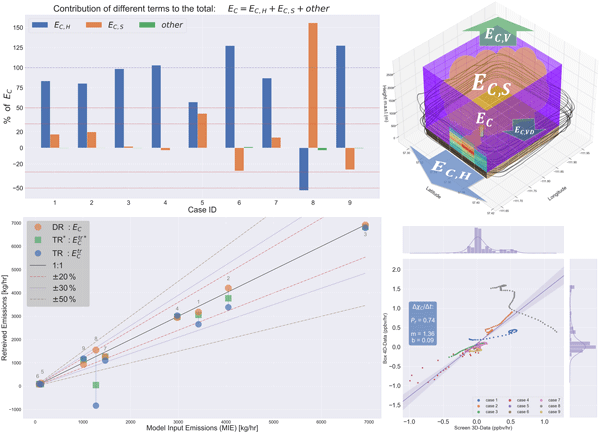
Aircraft are often used to measure emissions from industry and other sources by flying downwind of the source and measuring the pollutant winds and concentration. This study uses model simulation to help choose the best flight configuration and parameters for a given source type (e.g. smokestacks, mine faces, or surface emissions). The results provide uncertainty estimates based on downwind flight distances, which helps to plan aircraft-based measurements campaigns.
Aircraft are often used to measure emissions from industry and other sources by flying downwind...


