
Articles | Volume 19, issue 13
https://doi.org/10.5194/amt-19-4415-2026
© Author(s) 2026. This work is distributed under
the Creative Commons Attribution 4.0 License.
the Creative Commons Attribution 4.0 License.
https://doi.org/10.5194/amt-19-4415-2026
© Author(s) 2026. This work is distributed under
the Creative Commons Attribution 4.0 License.
the Creative Commons Attribution 4.0 License.
Research article
| 
03 Jul 2026
Research article |
| 03 Jul 2026
| 03 Jul 2026
Cloud fields and aerosol classification with lidar using advanced AI approach
Yonatan Peleg
CORRESPONDING AUTHOR

Efi Arazi School of Computer Science, Reichman University, Herzliya, Israel
Lior Zeida-Cohen
Efi Arazi School of Computer Science, Reichman University, Herzliya, Israel
Imri Tzror
Efi Arazi School of Computer Science, Reichman University, Herzliya, Israel
Johannes Bühl
Harz University of Applied Sciences, Wernigerode, Germany
Albert Ansmann
Leibniz Institute for Tropospheirc Research (TROPOS), Leibniz, Germany
Alexandra Chudnovsky
Faculty of Exact Sciences, Department of Geophysics, Tel Aviv University, Tel Aviv, Israel
Zohar Yakhini
Efi Arazi School of Computer Science, Reichman University, Herzliya, Israel
Related authors
No articles found.
Julian Hofer, Holger Baars, Zhenping Yin, Andi Klamt, Martin Radenz, Leonard König, Athena A. Floutsi, Cristofer Jimenez, Moritz Haarig, Dietrich Althausen, Benedikt Gast, Håvard S. Buholdt, Nathan Skupin, Jonas Neumann, Sabur F. Abdullozoda, Abduvosit N. Makhmudov, Johannes Bühl, Ronny Engelmann, Ulla Wandinger, and Albert Ansmann
EGUsphere, https://doi.org/10.5194/egusphere-2026-3928, https://doi.org/10.5194/egusphere-2026-3928, 2026
This preprint is open for discussion and under review for Atmospheric Measurement Techniques (AMT).
Short summary
Short summary
A comparison of manually and automatically analyzed lidar profiles of aerosol optical properties is presented. The manual analysis was performed using a custom software in multiple analyses steps based on visual inspection of the lidar signals. The automatic analysis was performed using an automatic processing chain. The comparison shows good agreement and demonstrates the suitability of the automatic retrievals for various applications of aerosol optical property profiles.
Zhaolong Wu, Patric Seifert, Yun He, Holger Baars, Cristofer Jimenez, Chengcai Li, Jing Li, Albert Ansmann, and Chuanfeng Zhao
Atmos. Chem. Phys., 26, 11491–11523, https://doi.org/10.5194/acp-26-11491-2026, https://doi.org/10.5194/acp-26-11491-2026, 2026
Short summary
Short summary
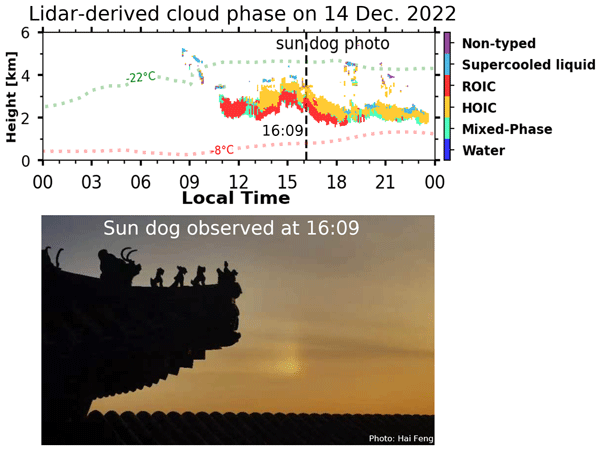
Using a full year of laser and radar observations in Beijing, this study shows when and where flat ice crystals tend to align horizontally instead of randomly, which suggests that flat ice crystals are most common in moderately cold, weakly turbulent clouds and often form below supercooled liquid water. This new finding can help weather and climate models better represent ice clouds.
Gladiola Malollari, Albert Ansmann, Julian Hofer, Kevin Ohneiser, Ronny Engelmann, Fatbardh Sallaku, and Seit Shallari
EGUsphere, https://doi.org/DOI:10.20944/preprints202507.1175.v2, https://doi.org/DOI:10.20944/preprints202507.1175.v2, 2026
This preprint is open for discussion and under review for Atmospheric Chemistry and Physics (ACP).
Short summary
Short summary
For the first time, the seasonal aerosol vertical distribution of Albania is characterized using 15-year CALIPSO observations and one-year ground-based Raman lidar measurements. Seasonal air mass clusters are derived from a 10-year HYSPLIT backtrajectory analysis. Extinction coefficient, aerosol optical depth, and mass concentration profiles are shown for the total, dust, and nondust contributions. Both datasets reveal consistent vertical aerosol distributions.
Georg Holger Müller, Athena Augusta Floutsi, Julian Hofer, Ronny Engelmann, Dietrich Althausen, Ulla Wandinger, Martin Radenz, Moritz Haarig, Sabur Fuzailovich Abdullaev, Shohina Kh. Khalifaeva, Albert Ansmann, and Holger Baars
EGUsphere, https://doi.org/10.5194/egusphere-2026-3390, https://doi.org/10.5194/egusphere-2026-3390, 2026
This preprint is open for discussion and under review for Atmospheric Chemistry and Physics (ACP).
Short summary
Short summary
A five-year dataset of lidar measurements from Dushanbe, Tajikistan, was analyzed to investigate the annual dust cycle and intraanual variability in the region. The dataset consists of automatically processed data, including the separation of the dust and non-dust particle backscatter coefficient and enabling the calculation of monthly and seasonal dust mass concentration within the atmosphere. The study highlights the importance of continuous lidar measurements in the Central Asian region.
Anjali Wankhede, Yasser Morera-Gómez, Johannes Bühl, and Andrea Heilmann
EGUsphere, https://doi.org/10.5194/egusphere-2026-3707, https://doi.org/10.5194/egusphere-2026-3707, 2026
This preprint is open for discussion and under review for Biogeosciences (BG).
Short summary
Short summary
Small ponds and lakes release large amounts of methane, a powerful greenhouse gas, but current satellites cannot detect this because the ponds are too small and the signal too weak. We reviewed thirty studies to find out whether satellites could help track these emissions. We found that pond emissions are thousands of times weaker than satellites can currently sense. We suggest that combining satellite images of water colour with ground measurements could help close this gap.
Lukas Pieper, Patric Seifert, Hannes Griesche, Albert Ansmann, George McCosh, Florian Ewald, and Stefan Kneifel
EGUsphere, https://doi.org/10.5194/egusphere-2026-3092, https://doi.org/10.5194/egusphere-2026-3092, 2026
This preprint is open for discussion and under review for Atmospheric Chemistry and Physics (ACP).
Short summary
Short summary
Using ground-based cloud Doppler radar observations and aerosol model data, a strong relationship between Saharan dust and enhanced turbulence in cirrus clouds over Europe was identified. Dust-infused cirrus formed mainly within moist, dust-laden air masses and showed strong correlation with in-cloud turbulence. The results provide a baseline observational overview on dust-turbulence-cirrus interactions, informing weather and climate models regarding possible methodological improvements.
Albert Ansmann, Julian Hofer, Rodanthi-Elisavet Mamouri, Moritz Haarig, Holger Baars, and Ulla Wandinger
Atmos. Meas. Tech., 19, 3801–3830, https://doi.org/10.5194/amt-19-3801-2026, https://doi.org/10.5194/amt-19-3801-2026, 2026
Short summary
Short summary
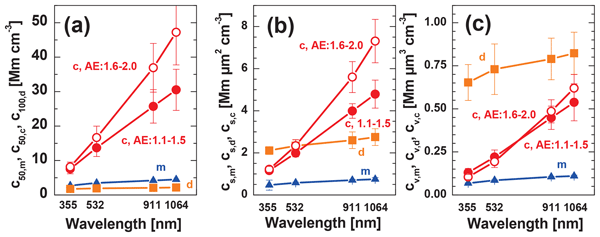
Updated lidar and ceilometer conversion factors are presented. The conversion factors allow us to calculate microphyscial properties from measurned optical properties. One of the main goals is to support 355 nm space lidar observations.
Hannes J. Griesche, Ronny Engelmann, Martin Radenz, Julian Hofer, Dietrich Althausen, Albert Ansmann, Kevin Barry, Jessie Creamean, Cristofer Jimenez, and Patric Seifert
Atmos. Chem. Phys., 26, 7141–7163, https://doi.org/10.5194/acp-26-7141-2026, https://doi.org/10.5194/acp-26-7141-2026, 2026
Short summary
Short summary
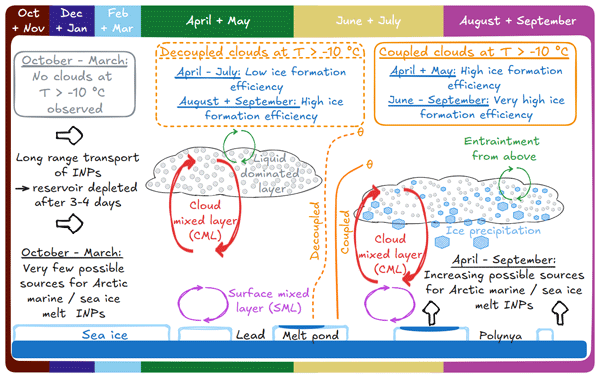
An annual cycle of mixed-phase ice-formation temperatures in the high Arctic is presented. Ship-based remote sensing with lidar and cloud radar from the MOSAiC (Multidisciplinary drifting Observatory for the Study of Arctic Climate) expedition was used to investigate the impact of surface processes on mixed-phase cloud properties. Surface mixed-layer cloud coupling was derived from radiosonde profiles. Combined with ice nucleating particle filter samples, sea ice concentration, and trajectory analysis an influence of surface processes on cloud properties was found.
Dimitri Trapon, Holger Baars, Sebastian Bley, Albert Ansmann, Michael Rennie, Sergey Khaykin, and Michael Sicard
EGUsphere, https://doi.org/10.5194/egusphere-2026-2575, https://doi.org/10.5194/egusphere-2026-2575, 2026
Short summary
Short summary
The study presents observations of the 2022 Hunga volcanic aerosol in the stratosphere made by the European Space Agency’s Aeolus satellite. Aeolus tracks the long-range transported plumes that circumnavigate the Earth at distinct latitudes and altitudes up to 30 km. Vertical gradient of optical properties measured with the ultraviolet lidar signal are shown, such as decreasing trends over time. This helps to understand the stratospheric residence time of aerosols in the Southern Hemisphere.
Tom Gaudek, Cristofer Jimenez, Kevin Ohneiser, Christopher Fuchs, Jan Henneberger, Johannes Bühl, Andi Klamt, Albert Ansmann, Ronny Engelmann, and Patric Seifert
Atmos. Meas. Tech., 19, 2245–2263, https://doi.org/10.5194/amt-19-2245-2026, https://doi.org/10.5194/amt-19-2245-2026, 2026
Short summary
Short summary
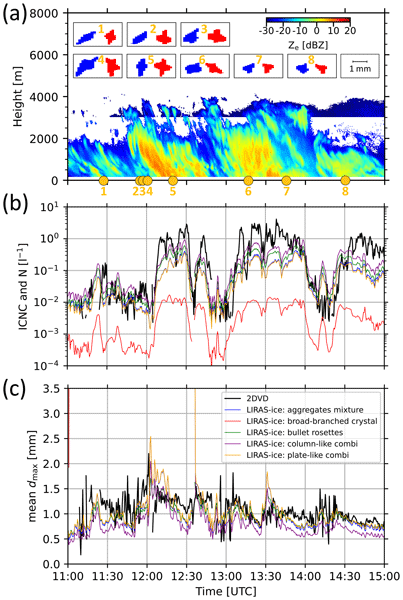
This study introduces the maximum diameter (Dmax) of precipitation particles measured by a two-dimensional video disdrometer (2DVD) as a novel parameter. Dmax is applied in a cloud seeding study during the Cloudlab campaign and, for the first time, in a MOSAiC (Multidisciplinary drifting Observatory for the Study of Arctic Climate) case to evaluate the LIRAS (LIdar RAdar Synergy )-ice remote-sensing retrieval of in-cloud ice crystal size and number. Both quantities agreed well with the 2DVD measurements under ideal conditions, highlighting the potential of Dmax for precipitation studies.
Johanna Roschke, Benedikt Gast, Martin Radenz, Albert Ansmann, Patric Seifert, George McCosh, and Heike Kalesse-Los
EGUsphere, https://doi.org/10.5194/egusphere-2026-718, https://doi.org/10.5194/egusphere-2026-718, 2026
Short summary
Short summary
This research introduces a new method that combines model simulations with satellite observations to attribute the influence of wildfire smoke on an airmass. By dynamically determining the height of smoke plumes, we overcome a key limitation of earlier fixed reception-height approaches. This advancement is crucial for improving our understanding of how wildfire emissions influence cloud formation and the broader Earth's climate system.
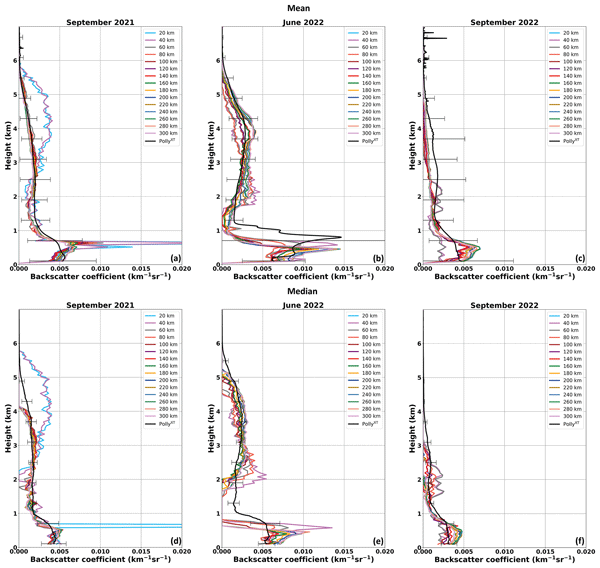
Athena Augusta Floutsi, Konstantinos Rizos, Dimitri Trapon, Ronny Engelmann, Dietrich Althausen, Eleni Marinou, Peristera Paschou, Julian Hofer, Emmanouil Proestakis, Henriette Gebauer, Annett Skupin, Albert Ansmann, Thorsten Fehr, Timon Hummel, Rob Koopman, Vassilis Amiridis, Ulla Wandinger, and Holger Baars
Atmos. Meas. Tech., 19, 1901–1925, https://doi.org/10.5194/amt-19-1901-2026, https://doi.org/10.5194/amt-19-1901-2026, 2026
Short summary
Short summary
We assess the representativeness of a remote ground-based station in Mindelo, Cabo Verde by utilizing continuous observations of a ground-based multiwavelength polarization Raman lidar and the LIdar climatology of Vertical Aerosol Structure (LIVAS) products. Based on a statistical analysis of the optical properties at different radii around Mindelo and case studies, we conclude that overall, the ground-based station in Mindelo can be considered conditionally representative.
Kangwen Sun, Guangyao Dai, Dimitri Trapon, Holger Baars, Albert Ansmann, Ulla Wandinger, and Songhua Wu
EGUsphere, https://doi.org/10.5194/egusphere-2026-596, https://doi.org/10.5194/egusphere-2026-596, 2026
Short summary
Short summary
Targeting a large-scale smoke transport from the western US to Europe in September 2020 a smoke dataset was constructed based on Aeolus observations, in synergy with multi-platform data. The selected cross-sections show the vertical structure of the smoke layers at different transport phases. Statistical analyses of the complete dataset reveal the evolution of the smoke plume throughout its transatlantic transport.
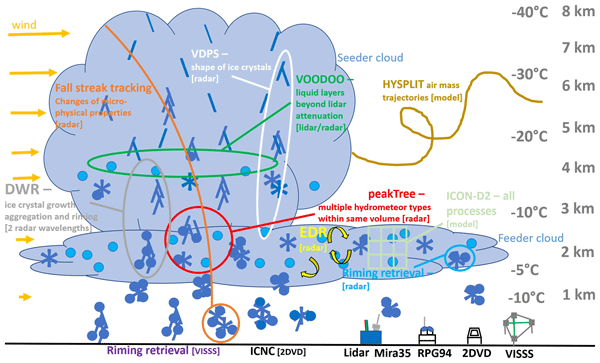
Kevin Ohneiser, Patric Seifert, Willi Schimmel, Fabian Senf, Tom Gaudek, Martin Radenz, Audrey Teisseire, Veronika Ettrichrätz, Teresa Vogl, Nina Maherndl, Nils Pfeifer, Jan Henneberger, Anna J. Miller, Nadja Omanovic, Christopher Fuchs, Huiying Zhang, Fabiola Ramelli, Robert Spirig, Anton Kötsche, Heike Kalesse-Los, Maximilian Maahn, Heather Corden, Alexis Berne, Majid Hajipour, Hannes Griesche, Julian Hofer, Ronny Engelmann, Annett Skupin, Albert Ansmann, and Holger Baars
Atmos. Chem. Phys., 25, 17363–17386, https://doi.org/10.5194/acp-25-17363-2025, https://doi.org/10.5194/acp-25-17363-2025, 2025
Short summary
Short summary
This study focuses on a seeder-feeder cloud system on 8 Jan 2024 in Eriswil, Switzerland. It is shown how the interaction of these cloud systems changes the cloud microphysical properties and the precipitation patterns. A big set of advanced remote-sensing techniques and retrieval algorithms are applied, so that a detailed view on the seeder-feeder cloud system is available. The gained knowledge can be used to improve weather models and weather forecasts.
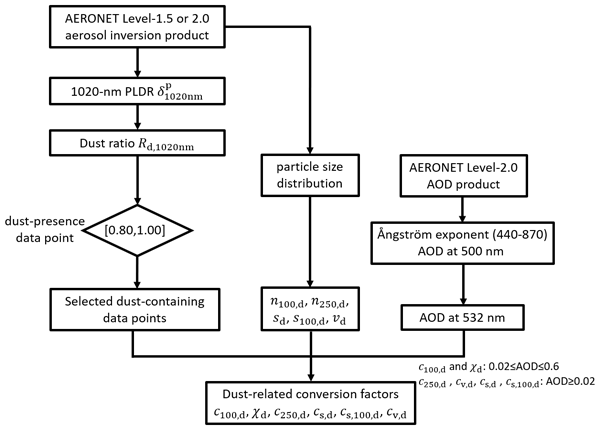
Yun He, Goutam Choudhury, Matthias Tesche, Albert Ansmann, Fan Yi, Detlef Müller, and Zhenping Yin
Atmos. Meas. Tech., 18, 5669–5685, https://doi.org/10.5194/amt-18-5669-2025, https://doi.org/10.5194/amt-18-5669-2025, 2025
Short summary
Short summary
We present a global dataset of POlarization LIdar PHOtometer Networking (POLIPHON) dust conversion factors at 532 nm obtained using Aerosol RObotic NETwork (AERONET) observations at 137 sites for ice-nucleating particle (INP) and 123 sites for cloud condensation nucleation (CCN) calculations. We also conduct a comparison of dust CCN concentration profiles derived using both POLIPHON and the independent Optical Modelling of the CALIPSO Aerosol Microphysics (OMCAM) retrieval.
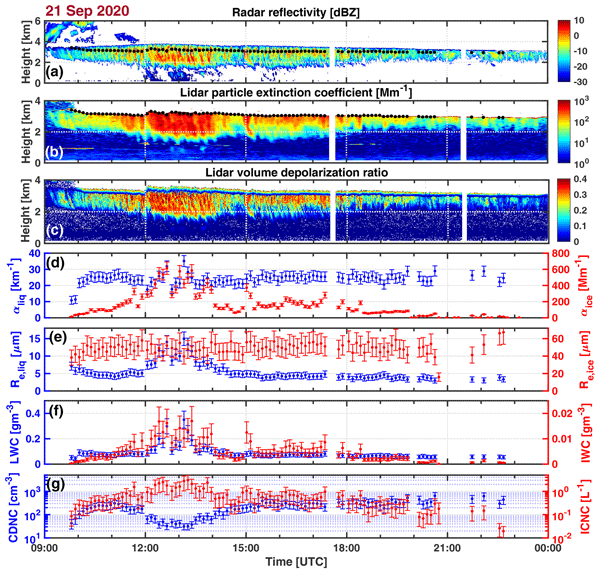
Cristofer Jimenez, Albert Ansmann, Kevin Ohneiser, Hannes Griesche, Ronny Engelmann, Martin Radenz, Julian Hofer, Dietrich Althausen, Daniel A. Knopf, Sandro Dahlke, Johannes Bühl, Holger Baars, Patric Seifert, and Ulla Wandinger
Atmos. Chem. Phys., 25, 12955–12981, https://doi.org/10.5194/acp-25-12955-2025, https://doi.org/10.5194/acp-25-12955-2025, 2025
Short summary
Short summary
We studied the water and ice phases of Arctic mixed-phase clouds (MPCs) using dual FOV polarization lidar and Doppler radar on board Polarstern during the MOSAiC expedition. Two long-lasting Arctic MPCs and year-round statistics show persistent droplet activation and dominant immersion freezing, indicating well-filled cloud condensation nuclei and ice-nucleating particle reservoirs. These findings help explain MPC longevity and may improve cloud life cycle representation in weather and climate models.
Sofía Gómez Maqueo Anaya, Dietrich Althausen, Julian Hofer, Moritz Haarig, Ulla Wandinger, Bernd Heinold, Ina Tegen, Matthias Faust, Holger Baars, Albert Ansmann, Ronny Engelmann, Annett Skupin, Birgit Heese, and Kerstin Schepanski
Atmos. Chem. Phys., 25, 9737–9764, https://doi.org/10.5194/acp-25-9737-2025, https://doi.org/10.5194/acp-25-9737-2025, 2025
Short summary
Short summary
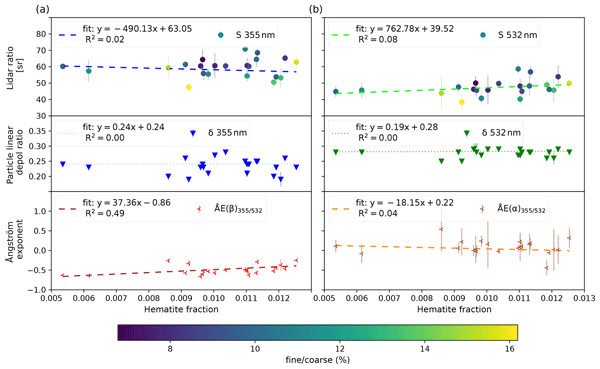
This study investigates how hematite in Sahara dust affects how dust particles interact with radiation. Using lidar data from Cabo Verde (2021–2022) and hematite content from atmospheric model simulations, the results show that a higher hematite fraction leads to a decrease in the particle backscattering coefficients in a spectrally different way. These findings can improve the representation of mineral dust in climate models, particularly regarding their radiative effect.
Gladiola Malollari, Albert Ansmann, Holger Baars, Cristofer Jimenez, Julian Hofer, Ronny Engelmann, Nathan Skupin, and Seit Shallari
Atmos. Meas. Tech., 18, 3937–3944, https://doi.org/10.5194/amt-18-3937-2025, https://doi.org/10.5194/amt-18-3937-2025, 2025
Short summary
Short summary
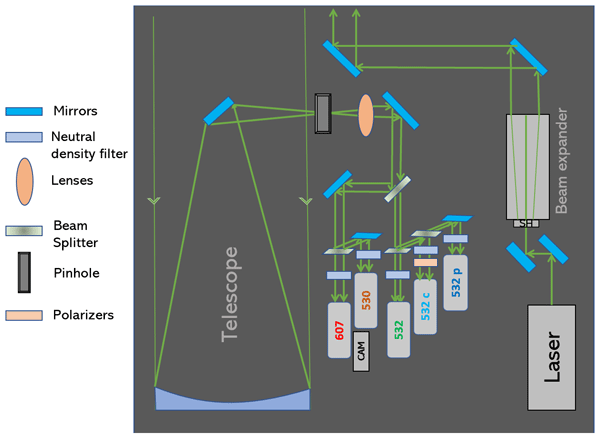
This study presents, for the first time, the uncertainty analysis of the Ångström exponent assumption on the full set of retrievable optical properties obtained with Raman lidar. A quantitative comparison between the pure rotational and vibrational–rotational Raman lidar approaches is presented. A minor impact of a wrong Ångström exponent on the determined aerosol optical properties is found.
Zhaolong Wu, Patric Seifert, Yun He, Holger Baars, Haoran Li, Cristofer Jimenez, Chengcai Li, and Albert Ansmann
Atmos. Meas. Tech., 18, 3611–3634, https://doi.org/10.5194/amt-18-3611-2025, https://doi.org/10.5194/amt-18-3611-2025, 2025
Short summary
Short summary
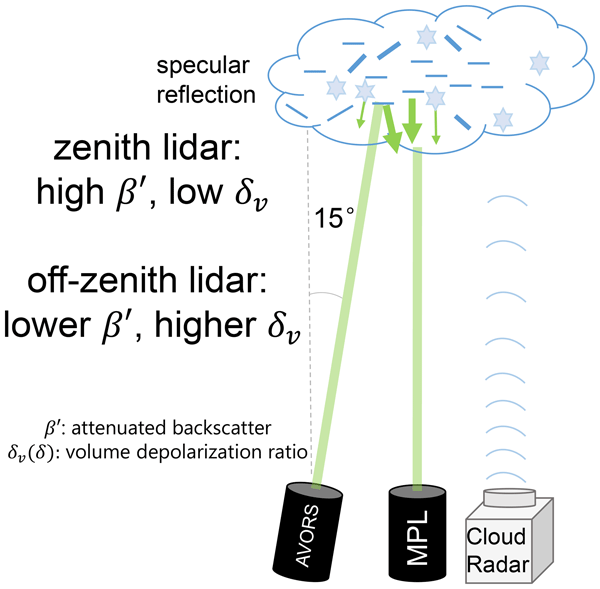
This study introduces a novel method to detect horizontally oriented ice crystals (HOICs) using two ground-based polarization lidars at different zenith angles, based on a yearlong dataset collected in Beijing. Combined with cloud radar and reanalysis data, the fine categorization results reveal HOICs occur in calm winds and moderately cold temperatures and are influenced by turbulence near cloud bases. The results enhance our understanding of cloud processes and improve atmospheric models.
Hossein Panahifar, Maria Poutli, George Kotsias, Argyro Nisantzi, Silas Michaelides, Diofantos Hadjimitsis, Patric Seifert, Albert Ansmann, and Rodanthi-Elisavet Mamouri
Int. Arch. Photogramm. Remote Sens. Spatial Inf. Sci., XLVIII-G-2025, 1153–1158, https://doi.org/10.5194/isprs-archives-XLVIII-G-2025-1153-2025, https://doi.org/10.5194/isprs-archives-XLVIII-G-2025-1153-2025, 2025
Moritz Haarig, Ronny Engelmann, Holger Baars, Benedikt Gast, Dietrich Althausen, and Albert Ansmann
Atmos. Chem. Phys., 25, 7741–7763, https://doi.org/10.5194/acp-25-7741-2025, https://doi.org/10.5194/acp-25-7741-2025, 2025
Short summary
Short summary
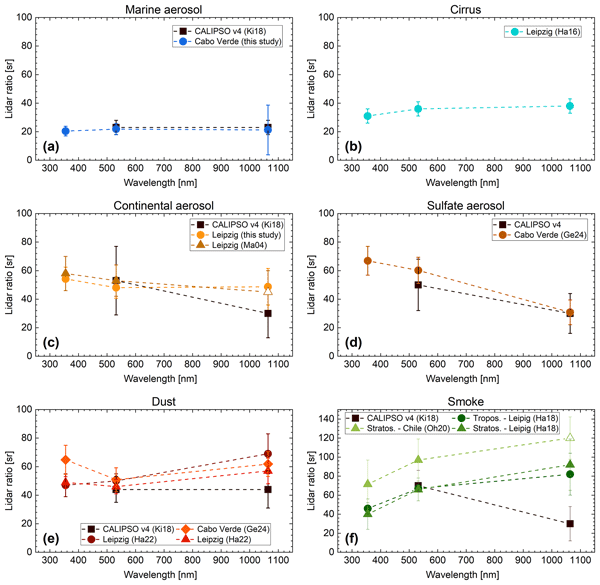
The lidar ratio is an important quantity in aerosol typing. Its spectral slope contains information about the source region or transport paths of the observed aerosol. The extension to 1064 nm is a recent development led by our institute. We gathered previous observations and added new ones to provide the spectral slope for the most important aerosol types such as marine and continental aerosol, dust, smoke, and sulfate. We compared it to assumptions used for spaceborne backscatter lidars.
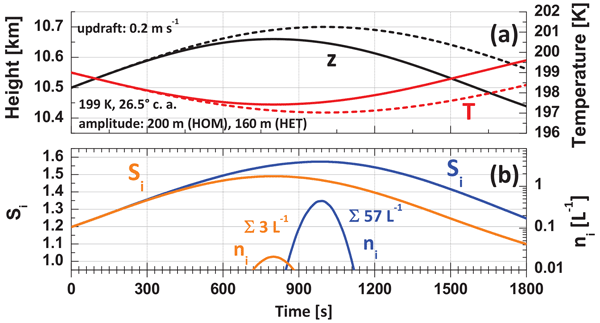
Albert Ansmann, Cristofer Jimenez, Daniel A. Knopf, Johanna Roschke, Johannes Bühl, Kevin Ohneiser, and Ronny Engelmann
Atmos. Chem. Phys., 25, 4867–4884, https://doi.org/10.5194/acp-25-4867-2025, https://doi.org/10.5194/acp-25-4867-2025, 2025
Short summary
Short summary
In this study, we focus on the potential impact of wildfire smoke on cirrus formation. Aerosol and cirrus observations with lidar and radar during the MOSAiC (Multidisciplinary drifting Observatory for the Study of Arctic Climate) expedition, presented in the companion paper (Ansmann et al., 2025), are closely linked to comprehensive modeling of ice nucleation in cirrus evolution processes, presented in this article. A clear impact of wildfire smoke on cirrus formation was found.
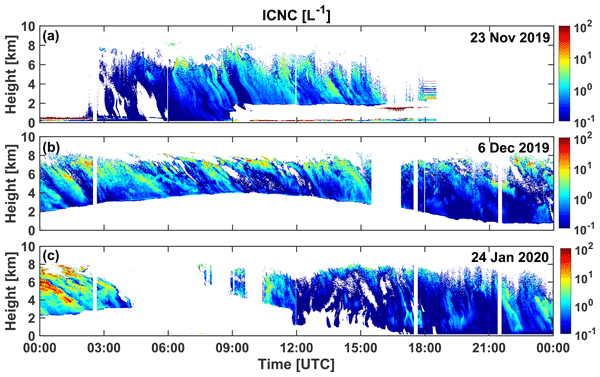
Albert Ansmann, Cristofer Jimenez, Johanna Roschke, Johannes Bühl, Kevin Ohneiser, Ronny Engelmann, Martin Radenz, Hannes Griesche, Julian Hofer, Dietrich Althausen, Daniel A. Knopf, Sandro Dahlke, Tom Gaudek, Patric Seifert, and Ulla Wandinger
Atmos. Chem. Phys., 25, 4847–4866, https://doi.org/10.5194/acp-25-4847-2025, https://doi.org/10.5194/acp-25-4847-2025, 2025
Short summary
Short summary
In this study, we focus on the potential impact of wildfire smoke on cirrus formation. For the first time, state-of-the-art aerosol and cirrus observations with lidar and radar, presented in this paper (Part 1 of a series of two articles), are closely linked to the comprehensive modeling of gravity-wave-induced ice nucleation in cirrus evolution processes, presented in a companion paper (Part 2). We found a clear impact of wildfire smoke on cirrus evolution.
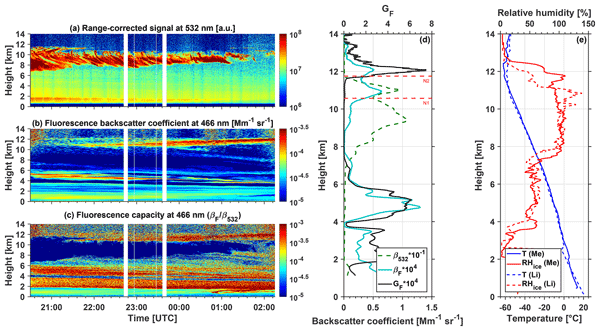
Benedikt Gast, Cristofer Jimenez, Albert Ansmann, Moritz Haarig, Ronny Engelmann, Felix Fritzsch, Athena A. Floutsi, Hannes Griesche, Kevin Ohneiser, Julian Hofer, Martin Radenz, Holger Baars, Patric Seifert, and Ulla Wandinger
Atmos. Chem. Phys., 25, 3995–4011, https://doi.org/10.5194/acp-25-3995-2025, https://doi.org/10.5194/acp-25-3995-2025, 2025
Short summary
Short summary
In this study, we discuss the enhanced detection capabilities of a fluorescence lidar in the case of optically thin aerosol layers in the upper troposphere and lower stratosphere (UTLS) region. Our results suggest that such thin aerosol layers are not so rare in the UTLS and can potentially trigger and impact cirrus cloud formation through heterogeneous ice nucleation. By altering the microphysical cloud properties, this could affect clouds' evolution and lifetime and thus their climate effect.
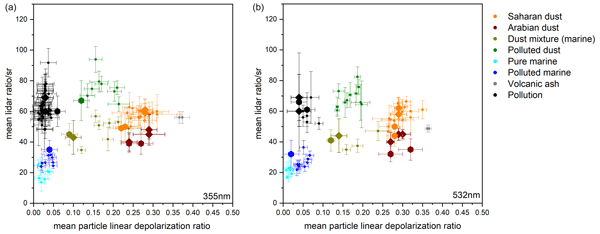
Silke Groß, Volker Freudenthaler, Moritz Haarig, Albert Ansmann, Carlos Toledano, David Mateos, Petra Seibert, Rodanthi-Elisavet Mamouri, Argyro Nisantzi, Josef Gasteiger, Maximilian Dollner, Anne Tipka, Manuel Schöberl, Marilena Teri, and Bernadett Weinzierl
Atmos. Chem. Phys., 25, 3191–3211, https://doi.org/10.5194/acp-25-3191-2025, https://doi.org/10.5194/acp-25-3191-2025, 2025
Short summary
Short summary
Aerosols contribute to the largest uncertainties in climate change predictions. The eastern Mediterranean is a hotspot for aerosols with natural and anthropogenic contributions. We present lidar measurements performed during A-LIFE (Absorbing aerosol layers in a changing climate: aging, lifetime and dynamics) to characterize aerosols and aerosol mixtures. We extend current lidar classification and separation schemes and compare them to classification schemes using different methods.
Henriette Gebauer, Athena Augusta Floutsi, Moritz Haarig, Martin Radenz, Ronny Engelmann, Dietrich Althausen, Annett Skupin, Albert Ansmann, Cordula Zenk, and Holger Baars
Atmos. Chem. Phys., 24, 5047–5067, https://doi.org/10.5194/acp-24-5047-2024, https://doi.org/10.5194/acp-24-5047-2024, 2024
Short summary
Short summary
Sulfate aerosol from the volcanic eruption at La Palma in 2021 was observed over Cabo Verde. We characterized the aerosol burden based on a case study of lidar and sun photometer observations. We compared the volcanic case to the typical background conditions (reference case) to quantify the volcanic pollution. We show the first ever measurements of the extinction coefficient, lidar ratio and depolarization ratio at 1064 nm for volcanic sulfate.
Sofía Gómez Maqueo Anaya, Dietrich Althausen, Matthias Faust, Holger Baars, Bernd Heinold, Julian Hofer, Ina Tegen, Albert Ansmann, Ronny Engelmann, Annett Skupin, Birgit Heese, and Kerstin Schepanski
Geosci. Model Dev., 17, 1271–1295, https://doi.org/10.5194/gmd-17-1271-2024, https://doi.org/10.5194/gmd-17-1271-2024, 2024
Short summary
Short summary
Mineral dust aerosol particles vary greatly in their composition depending on source region, which leads to different physicochemical properties. Most atmosphere–aerosol models consider mineral dust aerosols to be compositionally homogeneous, which ultimately increases model uncertainty. Here, we present an approach to explicitly consider the heterogeneity of the mineralogical composition for simulations of the Saharan atmospheric dust cycle with regard to dust transport towards the Atlantic.
Julian Hofer, Patric Seifert, J. Ben Liley, Martin Radenz, Osamu Uchino, Isamu Morino, Tetsu Sakai, Tomohiro Nagai, and Albert Ansmann
Atmos. Chem. Phys., 24, 1265–1280, https://doi.org/10.5194/acp-24-1265-2024, https://doi.org/10.5194/acp-24-1265-2024, 2024
Short summary
Short summary
An 11-year dataset of polarization lidar observations from Lauder, New Zealand / Aotearoa, was used to distinguish the thermodynamic phase of natural clouds. The cloud dataset was separated to assess the impact of air mass origin on the frequency of heterogeneous ice formation. Ice formation efficiency in clouds above Lauder was found to be lower than in the polluted Northern Hemisphere midlatitudes but higher than in very clean and pristine environments, such as Punta Arenas in southern Chile.
Rodanthi-Elisavet Mamouri, Albert Ansmann, Kevin Ohneiser, Daniel A. Knopf, Argyro Nisantzi, Johannes Bühl, Ronny Engelmann, Annett Skupin, Patric Seifert, Holger Baars, Dragos Ene, Ulla Wandinger, and Diofantos Hadjimitsis
Atmos. Chem. Phys., 23, 14097–14114, https://doi.org/10.5194/acp-23-14097-2023, https://doi.org/10.5194/acp-23-14097-2023, 2023
Short summary
Short summary
For the first time, rather clear evidence is found that wildfire smoke particles can trigger strong cirrus formation. This finding is of importance because intensive and large wildfires may occur increasingly often in the future as climate change proceeds. Based on lidar observations in Cyprus in autumn 2020, we provide detailed insight into the cirrus formation at the tropopause in the presence of aged wildfire smoke (here, 8–9 day old Californian wildfire smoke).
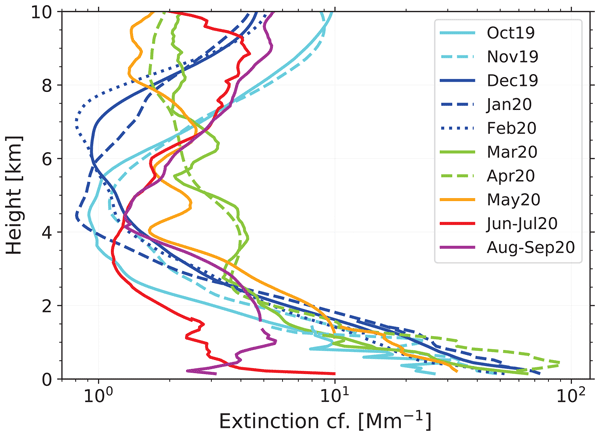
Albert Ansmann, Kevin Ohneiser, Ronny Engelmann, Martin Radenz, Hannes Griesche, Julian Hofer, Dietrich Althausen, Jessie M. Creamean, Matthew C. Boyer, Daniel A. Knopf, Sandro Dahlke, Marion Maturilli, Henriette Gebauer, Johannes Bühl, Cristofer Jimenez, Patric Seifert, and Ulla Wandinger
Atmos. Chem. Phys., 23, 12821–12849, https://doi.org/10.5194/acp-23-12821-2023, https://doi.org/10.5194/acp-23-12821-2023, 2023
Short summary
Short summary
The 1-year MOSAiC (2019–2020) expedition with the German ice breaker Polarstern was the largest polar field campaign ever conducted. The Polarstern, with our lidar aboard, drifted with the pack ice north of 85° N for more than 7 months (October 2019 to mid-May 2020). We measured the full annual cycle of aerosol conditions in terms of aerosol optical and cloud-process-relevant properties. We observed a strong contrast between polluted winter and clean summer aerosol conditions.
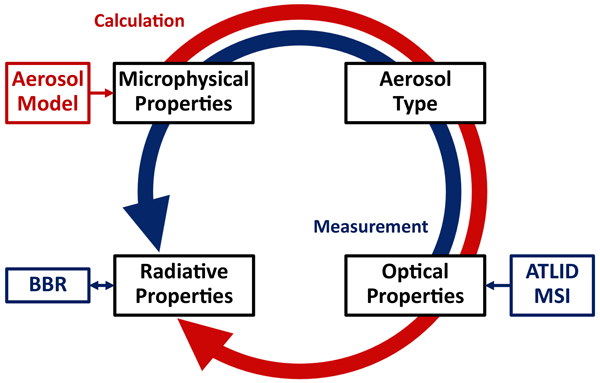
Ulla Wandinger, Athena Augusta Floutsi, Holger Baars, Moritz Haarig, Albert Ansmann, Anja Hünerbein, Nicole Docter, David Donovan, Gerd-Jan van Zadelhoff, Shannon Mason, and Jason Cole
Atmos. Meas. Tech., 16, 2485–2510, https://doi.org/10.5194/amt-16-2485-2023, https://doi.org/10.5194/amt-16-2485-2023, 2023
Short summary
Short summary
We introduce an aerosol classification model that has been developed for the Earth Clouds, Aerosols and Radiation Explorer (EarthCARE). The model provides a consistent description of microphysical, optical, and radiative properties of common aerosol types such as dust, sea salt, pollution, and smoke. It is used for aerosol classification and assessment of radiation effects based on the synergy of active and passive observations with lidar, imager, and radiometer of the multi-instrument platform.
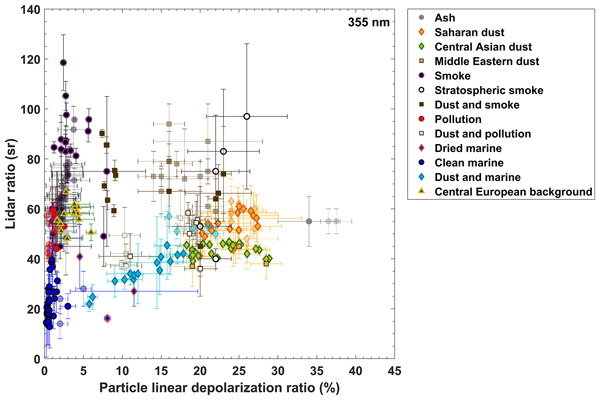
Athena Augusta Floutsi, Holger Baars, Ronny Engelmann, Dietrich Althausen, Albert Ansmann, Stephanie Bohlmann, Birgit Heese, Julian Hofer, Thomas Kanitz, Moritz Haarig, Kevin Ohneiser, Martin Radenz, Patric Seifert, Annett Skupin, Zhenping Yin, Sabur F. Abdullaev, Mika Komppula, Maria Filioglou, Elina Giannakaki, Iwona S. Stachlewska, Lucja Janicka, Daniele Bortoli, Eleni Marinou, Vassilis Amiridis, Anna Gialitaki, Rodanthi-Elisavet Mamouri, Boris Barja, and Ulla Wandinger
Atmos. Meas. Tech., 16, 2353–2379, https://doi.org/10.5194/amt-16-2353-2023, https://doi.org/10.5194/amt-16-2353-2023, 2023
Short summary
Short summary
DeLiAn is a collection of lidar-derived aerosol intensive optical properties for several aerosol types, namely the particle linear depolarization ratio, the extinction-to-backscatter ratio (lidar ratio) and the Ångström exponent. The data collection is based on globally distributed, long-term, ground-based, multiwavelength, Raman and polarization lidar measurements and currently covers two wavelengths, 355 and 532 nm, for 13 aerosol categories ranging from basic aerosol types to mixtures.
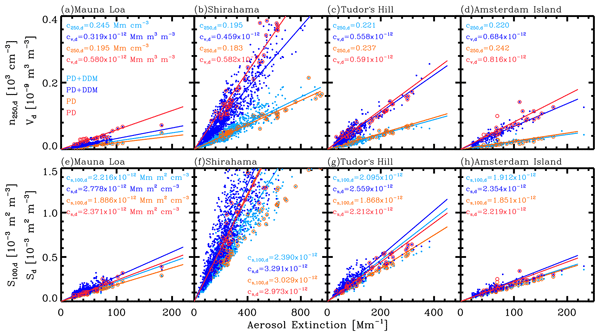
Yun He, Zhenping Yin, Albert Ansmann, Fuchao Liu, Longlong Wang, Dongzhe Jing, and Huijia Shen
Atmos. Meas. Tech., 16, 1951–1970, https://doi.org/10.5194/amt-16-1951-2023, https://doi.org/10.5194/amt-16-1951-2023, 2023
Short summary
Short summary
With the AERONET database, this study derives dust-related conversion factors at oceanic sites used in the POLIPHON method, which can convert lidar-retrieved dust extinction to ice-nucleating particle (INP)- and cloud condensation nuclei (CCN)-relevant parameters. The particle linear depolarization ratio in the AERONET aerosol inversion product is used to identify dust data points. The derived conversion factors can be applied to inverse 3-D global distributions of dust-related INPCs and CCNCs.
Kevin Ohneiser, Albert Ansmann, Jonas Witthuhn, Hartwig Deneke, Alexandra Chudnovsky, Gregor Walter, and Fabian Senf
Atmos. Chem. Phys., 23, 2901–2925, https://doi.org/10.5194/acp-23-2901-2023, https://doi.org/10.5194/acp-23-2901-2023, 2023
Short summary
Short summary
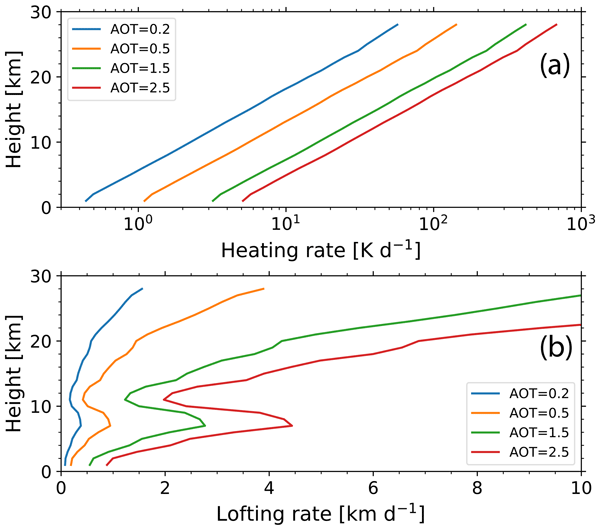
This study shows that smoke layers can reach the tropopause via the self-lofting effect within 3–7 d in the absence of pyrocumulonimbus convection if the
aerosol optical thickness is larger than approximately 2 for a longer time period. When reaching the stratosphere, wildfire smoke can sensitively influence the stratospheric composition on a hemispheric scale and thus can affect the Earth’s climate and the ozone layer.

Albert Ansmann, Kevin Ohneiser, Alexandra Chudnovsky, Daniel A. Knopf, Edwin W. Eloranta, Diego Villanueva, Patric Seifert, Martin Radenz, Boris Barja, Félix Zamorano, Cristofer Jimenez, Ronny Engelmann, Holger Baars, Hannes Griesche, Julian Hofer, Dietrich Althausen, and Ulla Wandinger
Atmos. Chem. Phys., 22, 11701–11726, https://doi.org/10.5194/acp-22-11701-2022, https://doi.org/10.5194/acp-22-11701-2022, 2022
Short summary
Short summary
For the first time we present a systematic study on the impact of wildfire smoke on ozone depletion in the Arctic (2020) and Antarctic stratosphere (2020, 2021). Two major fire events in Siberia and Australia were responsible for the observed record-breaking stratospheric smoke pollution. Our analyses were based on lidar observations of smoke parameters (Polarstern, Punta Arenas) and NDACC Arctic and Antarctic ozone profiles as well as on Antarctic OMI satellite observations of column ozone.
Xianda Gong, Martin Radenz, Heike Wex, Patric Seifert, Farnoush Ataei, Silvia Henning, Holger Baars, Boris Barja, Albert Ansmann, and Frank Stratmann
Atmos. Chem. Phys., 22, 10505–10525, https://doi.org/10.5194/acp-22-10505-2022, https://doi.org/10.5194/acp-22-10505-2022, 2022
Short summary
Short summary
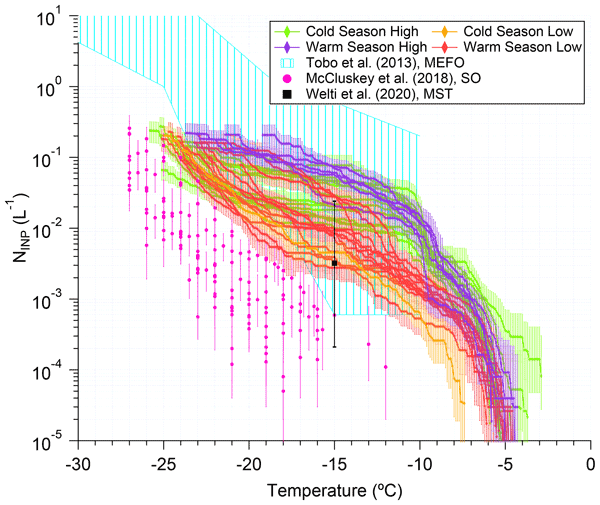
The sources of ice-nucleating particles (INPs) are poorly understood in the Southern Hemisphere (SH). We studied INPs in the boundary layer in the southern Patagonia region. No seasonal cycle of INP concentrations was observed. The majority of INPs are biogenic particles, likely from local continental sources. The INP concentrations are higher when strong precipitation occurs. While previous studies focused on marine INP sources in SH, we point out the importance of continental sources of INPs.
Kevin Ohneiser, Albert Ansmann, Bernd Kaifler, Alexandra Chudnovsky, Boris Barja, Daniel A. Knopf, Natalie Kaifler, Holger Baars, Patric Seifert, Diego Villanueva, Cristofer Jimenez, Martin Radenz, Ronny Engelmann, Igor Veselovskii, and Félix Zamorano
Atmos. Chem. Phys., 22, 7417–7442, https://doi.org/10.5194/acp-22-7417-2022, https://doi.org/10.5194/acp-22-7417-2022, 2022
Short summary
Short summary
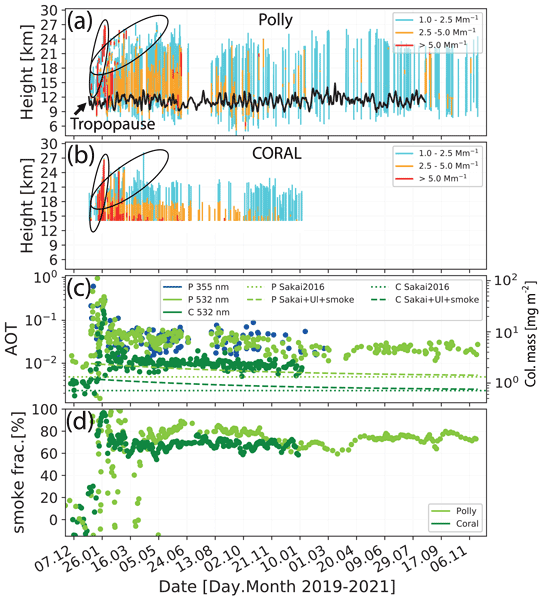
We present and discuss 2 years of long-term lidar observations of the largest stratospheric perturbation by wildfire smoke ever observed. The smoke originated from the record-breaking Australian fires in 2019–2020 and affects climate conditions and even the ozone layer in the Southern Hemisphere. The obvious link between dense smoke occurrence in the stratosphere and strong ozone depletion found in the Arctic and in the Antarctic in 2020 can be regarded as a new aspect of climate change.
Goutam Choudhury, Albert Ansmann, and Matthias Tesche
Atmos. Chem. Phys., 22, 7143–7161, https://doi.org/10.5194/acp-22-7143-2022, https://doi.org/10.5194/acp-22-7143-2022, 2022
Short summary
Short summary
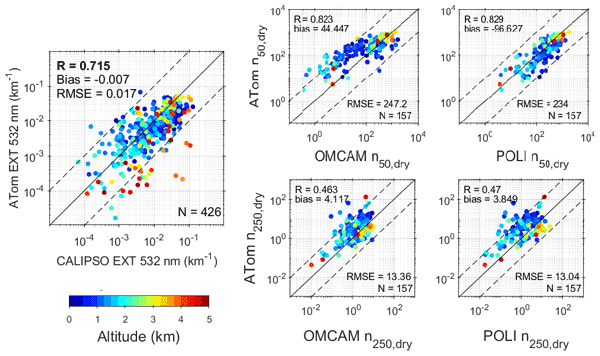
Lidars provide height-resolved type-specific aerosol properties and are key in studying vertically collocated aerosols and clouds. In this study, we compare the aerosol number concentrations derived from spaceborne lidar with the in situ flight measurements. Our results show a reasonable agreement between both datasets. Such an agreement has not been achieved yet. It shows the potential of spaceborne lidar in studying aerosol–cloud interactions, which is needed to improve our climate forecasts.
Igor Veselovskii, Qiaoyun Hu, Albert Ansmann, Philippe Goloub, Thierry Podvin, and Mikhail Korenskiy
Atmos. Chem. Phys., 22, 5209–5221, https://doi.org/10.5194/acp-22-5209-2022, https://doi.org/10.5194/acp-22-5209-2022, 2022
Short summary
Short summary
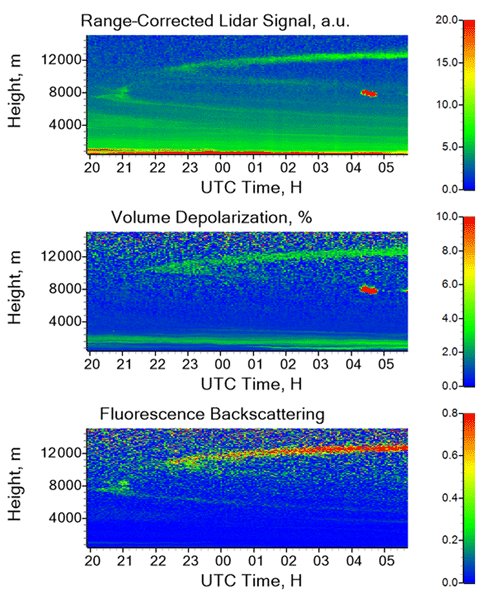
A remote sensing method based on fluorescence lidar measurements can detect and quantify the smoke content in the upper troposphere and inside cirrus clouds. Based on two case studies, we demonstrate that the fluorescence lidar technique provides the possibility to estimate the smoke surface area concentration within freshly formed cirrus layers. This value was used in a smoke ice nucleating particle parameterization scheme to predict ice crystal number concentrations in cirrus generation cells.
Michaël Sicard, Carmen Córdoba-Jabonero, María-Ángeles López-Cayuela, Albert Ansmann, Adolfo Comerón, María-Paz Zorzano, Alejandro Rodríguez-Gómez, and Constantino Muñoz-Porcar
Atmos. Chem. Phys., 22, 1921–1937, https://doi.org/10.5194/acp-22-1921-2022, https://doi.org/10.5194/acp-22-1921-2022, 2022
Short summary
Short summary
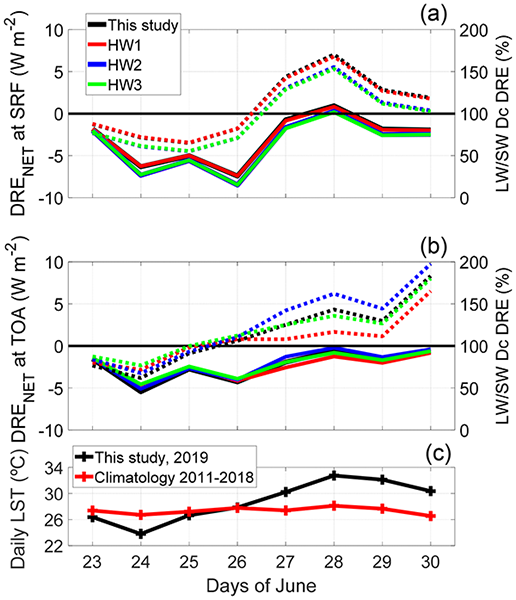
This paper completes the companion paper of Córdoba-Jabonero et al. (2021). We estimate the total direct radiative effect produced by mineral dust particles during the June 2019 mega-heatwave at two sites in Spain and Germany. The results show that the dust particles in the atmosphere contribute to cooling the surface (less radiation reaches the surface) and that the heatwave (parametrized by high surface and air temperatures) contributes to reducing this cooling.
Moritz Haarig, Albert Ansmann, Ronny Engelmann, Holger Baars, Carlos Toledano, Benjamin Torres, Dietrich Althausen, Martin Radenz, and Ulla Wandinger
Atmos. Chem. Phys., 22, 355–369, https://doi.org/10.5194/acp-22-355-2022, https://doi.org/10.5194/acp-22-355-2022, 2022
Short summary
Short summary
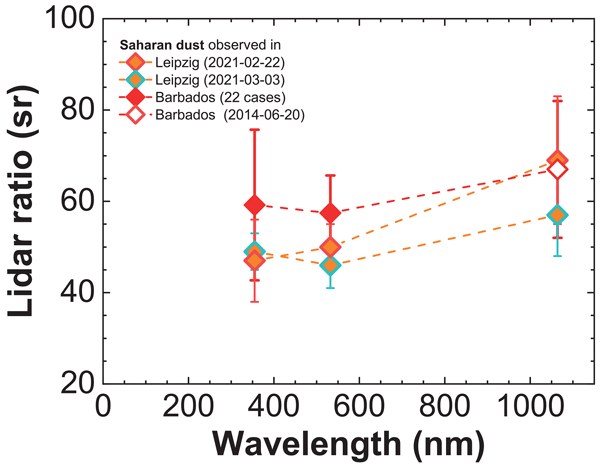
The irregular shape of dust particles makes it difficult to treat them correctly in optical models. Atmospheric measurements of dust optical properties are therefore of great importance. The present study increases the space of observed parameters from 355 and 532 nm towards 1064 nm, which is of special importance for large dust particles. The lidar ratio influenced by mineralogy and the depolarization ratio influenced by shape are measured for the first time at all three wavelengths.
Martin Radenz, Johannes Bühl, Patric Seifert, Holger Baars, Ronny Engelmann, Boris Barja González, Rodanthi-Elisabeth Mamouri, Félix Zamorano, and Albert Ansmann
Atmos. Chem. Phys., 21, 17969–17994, https://doi.org/10.5194/acp-21-17969-2021, https://doi.org/10.5194/acp-21-17969-2021, 2021
Short summary
Short summary
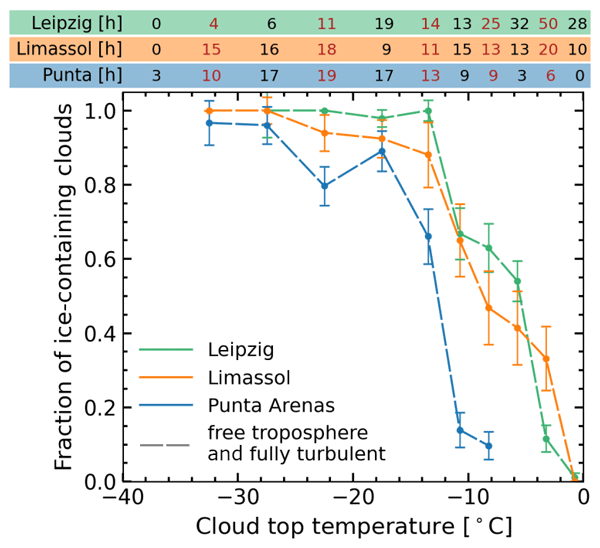
This study brings together long-term ground-based remote-sensing observations of mixed-phase clouds at three key locations of aerosol–cloud interactions in the Northern and Southern Hemisphere midlatitudes. The findings contribute several new aspects on the nature of the excess of supercooled liquid clouds in the Southern Hemisphere, such as a long-term lidar-based estimate of ice-nucleating particle profiles as well as the effects of boundary layer coupling and gravity waves on ice formation.
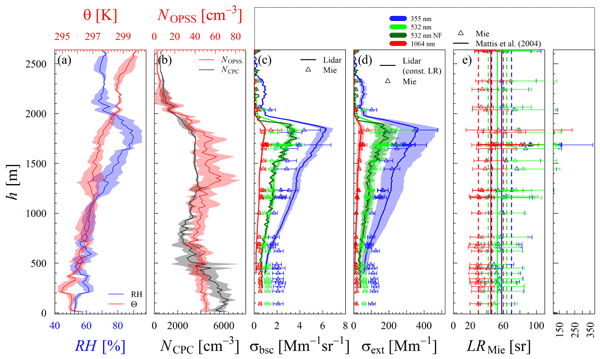
Sebastian Düsing, Albert Ansmann, Holger Baars, Joel C. Corbin, Cyrielle Denjean, Martin Gysel-Beer, Thomas Müller, Laurent Poulain, Holger Siebert, Gerald Spindler, Thomas Tuch, Birgit Wehner, and Alfred Wiedensohler
Atmos. Chem. Phys., 21, 16745–16773, https://doi.org/10.5194/acp-21-16745-2021, https://doi.org/10.5194/acp-21-16745-2021, 2021
Short summary
Short summary
The work deals with optical properties of aerosol particles in dried and atmospheric states. Based on two measurement campaigns in the rural background of central Europe, different measurement approaches were compared with each other, such as modeling based on Mie theory and direct in situ or remote sensing measurements. Among others, it was shown that the aerosol extinction-to-backscatter ratio is relative humidity dependent, and refinement with respect to the model input parameters is needed.
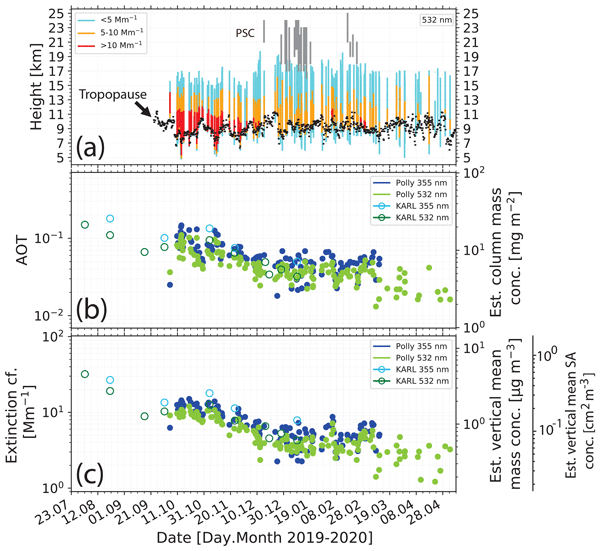
Kevin Ohneiser, Albert Ansmann, Alexandra Chudnovsky, Ronny Engelmann, Christoph Ritter, Igor Veselovskii, Holger Baars, Henriette Gebauer, Hannes Griesche, Martin Radenz, Julian Hofer, Dietrich Althausen, Sandro Dahlke, and Marion Maturilli
Atmos. Chem. Phys., 21, 15783–15808, https://doi.org/10.5194/acp-21-15783-2021, https://doi.org/10.5194/acp-21-15783-2021, 2021
Short summary
Short summary
The highlight of the lidar measurements during the 1-year MOSAiC (Multidisciplinary drifting Observatory for the Study of Arctic Climate) expedition of the German icebreaker Polarstern (October 2019–October 2020) was the detection of a persistent, 10 km deep Siberian wildfire smoke layer in the upper troposphere and lower stratosphere (UTLS) from about 7–8 km to 17–18 km height that could potentially have impacted the record-breaking ozone depletion over the Arctic in the spring of 2020.
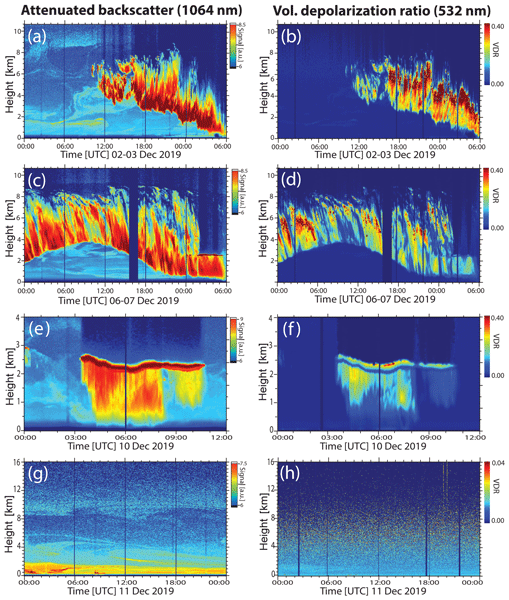
Ronny Engelmann, Albert Ansmann, Kevin Ohneiser, Hannes Griesche, Martin Radenz, Julian Hofer, Dietrich Althausen, Sandro Dahlke, Marion Maturilli, Igor Veselovskii, Cristofer Jimenez, Robert Wiesen, Holger Baars, Johannes Bühl, Henriette Gebauer, Moritz Haarig, Patric Seifert, Ulla Wandinger, and Andreas Macke
Atmos. Chem. Phys., 21, 13397–13423, https://doi.org/10.5194/acp-21-13397-2021, https://doi.org/10.5194/acp-21-13397-2021, 2021
Short summary
Short summary
A Raman lidar was operated aboard the icebreaker Polarstern during MOSAiC and monitored aerosol and cloud layers in the central Arctic up to 30 km height. The article provides an overview of the spectrum of aerosol profiling observations and shows aerosol–cloud interaction studies for liquid-water and ice clouds. A highlight was the detection of a 10 km deep wildfire smoke layer over the North Pole up to 17 km height from the fire season of 2019, which persisted over the whole winter period.
Cited articles
Albrecht, B. A.: Aerosols, cloud microphysics, and fractional cloudiness, Science, 245, https://doi.org/10.1126/science.245.4923.1227, 1989. a
Ansmann, A., Bühl, J., and Peleg, Y.: Cloud Fields Identification with Lidar using advanced AI approach – CloudNet/PollyXT, Limassol 2016–2018, Zenodo [data set], https://doi.org/10.5281/zenodo.17424878, 2025. a
Baars, H., Seifert, P., Engelmann, R., and Wandinger, U.: Target categorization of aerosol and clouds by continuous multiwavelength-polarization lidar measurements, Atmos. Meas. Tech., 10, 3175–3201, https://doi.org/10.5194/amt-10-3175-2017, 2017. a, b, c
Baars, H., Althausen, D., Engelmann, R., Heese, B., Ansmann, A., Wandinger, U., Hofer, J., Skupin, A., Komppula, M., Giannakaki, E., Filioglou, M., Bortoli, D., Silva, A. M., Pereira, S., Stachlewska, I. S., Kumala, W., Szczepanik, D., Amiridis, V., Marinou, E., Kottas, M., Mattis, I., and Müller, G.: PollyNET – an emerging network of automated raman-polarizarion lidars for continuous aerosolprofiling, in: EPJ Web of Conferences, 176, 09013, https://doi.org/10.1051/epjconf/201817609013, 2018. a
Bansal, A., Lee, Y., Hilburn, K., and Ebert-Uphoff, I.: Tools for Extracting Spatio-Temporal Patterns in Meteorological Image Sequences: From Feature Engineering to Attention-Based Neural Networks, arXiv [preprint], https://doi.org/10.48550/arXiv.2210.12310, 2022. a
Biasutti, P., Lepetit, V., Aujol, J. F., Bredif, M., and Bugeau, A.: LU-net: An efficient network for 3D LiDAR point cloud semantic segmentation based on end-to-end-learned 3D features and U-net, in: Proceedings – 2019 International Conference on Computer Vision Workshop, ICCVW 2019, 942–950, https://doi.org/10.1109/ICCVW.2019.00123, 2019. a
Bressan, P. O., Junior, J. M., Correa Martins, J. A., de Melo, M. J., Gonçalves, D. N., Freitas, D. M., Marques Ramos, A. P., Garcia Furuya, M. T., Osco, L. P., de Andrade Silva, J., Luo, Z., Garcia, R. C., Ma, L., Li, J., and Gonçalves, W. N.: Semantic segmentation with labeling uncertainty and class imbalance applied to vegetation mapping, Int. J. Appl. Earth Obs., 108, https://doi.org/10.1016/j.jag.2022.102690, 2022. a
Bühl, J., Alexander, S., Crewell, S., Heymsfield, A., Kalesse, H., Khain, A., Maahn, M., Van-Tricht, K., and Wendisch, M.: Chapter 10: Remote sensing, Meteor. Mon., 58, https://doi.org/10.1175/AMSMONOGRAPHS-D-16-0015.1, 2017. a
Cairo, F., Di Liberto, L., Dionisi, D., and Snels, M.: Understanding aerosol–cloud interactions through lidar techniques: a review, Remote Sens.-Basel, 16, https://doi.org/10.3390/rs16152788, 2024. a
del Águila, A., Ortiz-Amezcua, P., Tabik, S., Bravo-Aranda, J. A., Fernández-Carvelo, S., and Alados-Arboledas, L.: Aerosol type classification with machine learning techniques applied to multiwavelength lidar data from EARLINET, Atmos. Chem. Phys., 25, 12549–12567, https://doi.org/10.5194/acp-25-12549-2025, 2025. a
Doane, D. P. and Seward, L. E.: Measuring skewness: a forgotten statistic?, Journal of Statistics Education, 19, https://doi.org/10.1080/10691898.2011.11889611, 2011. a
Engelmann, R., Kanitz, T., Baars, H., Heese, B., Althausen, D., Skupin, A., Wandinger, U., Komppula, M., Stachlewska, I. S., Amiridis, V., Marinou, E., Mattis, I., Linné, H., and Ansmann, A.: The automated multiwavelength Raman polarization and water-vapor lidar PollyXT: the neXT generation, Atmos. Meas. Tech., 9, 1767–1784, https://doi.org/10.5194/amt-9-1767-2016, 2016. a
Foley, S. R., Knobelspiesse, K. D., Sayer, A. M., Gao, M., Hays, J., and Hoffman, J.: 3D cloud masking across a broad swath using multi-angle polarimetry and deep learning, Atmos. Meas. Tech., 17, 7027–7047, https://doi.org/10.5194/amt-17-7027-2024, 2024. a
Fuller, C. A., Selmer, P. A., Gomes, J., and McGill, M. J.: Using multitask machine learning to type clouds and aerosols from space-based photon-counting lidar measurements, Remote Sens.-Basel, 17, https://doi.org/10.3390/rs17162787, 2025. a, b
Galea, D., Ma, H.-Y., Wu, W.-Y., and Kobayashi, D.: Deep learning image segmentation for atmospheric rivers, Artificial Intelligence for the Earth Systems, 3, https://doi.org/10.1175/aies-d-23-0048.1, 2023. a
Haarig, M., Hünerbein, A., Wandinger, U., Docter, N., Bley, S., Donovan, D., and van Zadelhoff, G.-J.: Cloud top heights and aerosol columnar properties from combined EarthCARE lidar and imager observations: the AM-CTH and AM-ACD products, Atmos. Meas. Tech., 16, 5953–5975, https://doi.org/10.5194/amt-16-5953-2023, 2023. a
Hartmann, D. L. and Doelling, D.: On the net radiative effectiveness of clouds, J. Geophys. Res., 96, https://doi.org/10.1029/90JD02065, 1991. a
Illingworth, A. J., Hogan, R. J., O'Connor, E. J., Bouniol, D., Brooks, M. E., Delanoë, J., Donovan, D. P., Eastment, J. D., Gaussiat, N., Goddard, J. W., Haeffelin, M., Klein Baltinik, H., Krasnov, O. A., Pelon, J., Piriou, J. M., Protat, A., Russchenberg, H. W., Seifert, A., Tompkins, A. M., van Zadelhoff, G. J., Vinit, F., Willen, U., Wilson, D. R., and Wrench, C. L.: Cloudnet: continuous evaluation of cloud profiles in seven operational models using ground-based observations, B. Am. Meteorol. Soc., 88, https://doi.org/10.1175/BAMS-88-6-883, 2007. a, b, c
Intergovernmental Panel on Climate Change (IPCC): Clouds and aerosols, in: Climate Change 2013 – The Physical Science Basis: Working Group I Contribution to the Fifth Assessment Report of the Intergovernmental Panel on Climate Change, in: Intergovernmental Panel on Climate Change (IPCC), edited by: Stocker, T. F., Qin, D., Plattner, G.-K., Tignor, M., Allen, S. K., Boschung, J., Nauels, A., Xia, Y., Bex, V., and Midgley, P. M., Cambridge University Press, Cambridge, https://doi.org/10.1017/CBO9781107415324.016, 571–658, 2014. a, b
Ioffe, S. and Szegedy, C.: Batch normalization: accelerating deep network training by reducing internal covariate shift, in: 32nd International Conference on Machine Learning, ICML 2015, 1, 448–456, https://doi.org/10.48550/arXiv.1502.03167, 2015. a
Jacob, D. J.: Heterogeneous chemistry and tropospheric ozone, Atmos. Environ., 34, https://doi.org/10.1016/S1352-2310(99)00462-8, 2000. a
Jones, M. P.: Indicator and stratification methods for missing explanatory variables in multiple linear regression, J. Am. Stat. Assoc., 91, https://doi.org/10.1080/01621459.1996.10476680, 1996. a
Kalesse-Los, H., Schimmel, W., Luke, E., and Seifert, P.: Evaluating cloud liquid detection against Cloudnet using cloud radar Doppler spectra in a pre-trained artificial neural network, Atmos. Meas. Tech., 15, 279–295, https://doi.org/10.5194/amt-15-279-2022, 2022. a, b
Krizhevsky, A., Sutskever, I., and Hinton, G. E.: ImageNet classification with deep convolutional neural networks, Commun. ACM, 60, https://doi.org/10.1145/3065386, 2017. a
LeCun, Y., Hinton, G., and Bengio, Y.: Deep learning, Nature, 521, 436–444, https://doi.org/10.1038/nature14539, 2015. a
Lelieveld, J. and Crutzen, P. J.: The role of clouds in tropospheric photochemistry, J. Atmos. Chem., 12, https://doi.org/10.1007/BF00048075, 1991. a
Levy-Jurgenson, A., Tekpli, X., Kristensen, V. N., and Yakhini, Z.: Spatial transcriptomics inferred from pathology whole-slide images links tumor heterogeneity to survival in breast and lung cancer, Sci. Rep.-UK, 10, https://doi.org/10.1038/s41598-020-75708-z, 2020. a
Milletari, F., Navab, N., and Ahmadi, S. A.: V-Net: fully convolutional neural networks for volumetric medical image segmentation, in: Proceedings – 2016 4th International Conference on 3D Vision, 3DV 2016, 565–571, https://doi.org/10.1109/3DV.2016.79, 2016. a
Nicolae, D., Vasilescu, J., Talianu, C., Binietoglou, I., Nicolae, V., Andrei, S., and Antonescu, B.: A neural network aerosol-typing algorithm based on lidar data, Atmos. Chem. Phys., 18, 14511–14537, https://doi.org/10.5194/acp-18-14511-2018, 2018. a
Oladipo, B., Gomes, J., McGill, M., and Selmer, P.: Leveraging deep learning as a new approach to layer detection and cloud–aerosol classification using ICESat-2 atmospheric data, Remote Sens.-Basel, 16, 2344, https://doi.org/10.3390/rs16132344, 2024. a
Pal, S. R., Steinbrecht, W., and Carswell, A. I.: Automated method for lidar determination of cloud-base height and vertical extent, Appl. Optics, 31, https://doi.org/10.1364/ao.31.001488, 1992. a
Ramanathan, V., Crutzen, P. J., Kiehl, J. T., and Rosenfeld, D.: Aerosols, climate, and the hydrological cycle, Science, 294, 2119–2124, https://doi.org/10.1126/science.1064034, 2001. a
Reichstein, M., Camps-Valls, G., Stevens, B., Jung, M., Denzler, J., Carvalhais, N., and Prabhat: Deep learning and process understanding for data-driven Earth system science, Nature, 566, https://doi.org/10.1038/s41586-019-0912-1, 2019. a
Rogozovsky, I., Ohneiser, K., Lyapustin, A., Ansmann, A., and Chudnovsky, A.: The impact of different aerosol layering conditions on the high-resolution MODIS/MAIAC AOD retrieval bias: the uncertainty analysis, Atmos. Environ., 309, https://doi.org/10.1016/j.atmosenv.2023.119930, 2023. a
Rogozovsky, I., Ansmann, A., Hofer, J., and Chudnovsky, A.: Unveiling atmospheric layers: vertical pollution patterns and prospects for high-resolution aerosol retrievals using the eastern Mediterranean as a case study, Environ. Sci. Technol., 59, 12181–12195, https://doi.org/10.1021/acs.est.4c14556, 2025. a
Rogozovsky, I., Ansmann, A., and Chudnovsky, A.: Vertical aerosol structure matters: improving the AOD–PM2.5 link for air quality and exposure, Environ. Sci. Technol., 60, 14685–14697, https://doi.org/10.1021/acs.est.6c00095, 2026. a
Ronneberger, O., Fischer, P., and Brox, T.: U-net: convolutional networks for biomedical image segmentation, in: Lecture Notes in Computer Science (including subseries Lecture Notes in Artificial Intelligence and Lecture Notes in Bioinformatics), 9351, 234–241, https://doi.org/10.1007/978-3-319-24574-4_28, 2015. a
Rosenfeld, D., Andreae, M. O., Asmi, A., Chin, M., De Leeuw, G., Donovan, D. P., Kahn, R., Kinne, S., Kivekäs, N., Kulmala, M., Lau, W., Schmidt, K. S., Suni, T., Wagner, T., Wild, M., and Quaas, J.: Global observations of aerosol-cloud-precipitation-climate interactions, Rev. Geophys., 52, 750–808, https://doi.org/10.1002/2013RG000441, 2014. a
Rusyn, B., Korniy, V., Lutsyk, O., and Kosarevych, R.: Deep learning for atmospheric cloud image segmentation, in: 2019 11th International Scientific and Practical Conference on Electronics and Information Technologies, ELIT 2019 – Proceedings, 125–128, https://doi.org/10.1109/ELIT.2019.8892285, 2019. a
Schimmel, W., Kalesse-Los, H., Maahn, M., Vogl, T., Foth, A., Garfias, P. S., and Seifert, P.: Identifying cloud droplets beyond lidar attenuation from vertically pointing cloud radar observations using artificial neural networks, Atmos. Meas. Tech., 15, 5343–5366, https://doi.org/10.5194/amt-15-5343-2022, 2022. a
Sudre, C. H., Li, W., Vercauteren, T., Ourselin, S., and Jorge Cardoso, M.: Generalised dice overlap as a deep learning loss function for highly unbalanced segmentations, in: Lecture Notes in Computer Science (including subseries Lecture Notes in Artificial Intelligence and Lecture Notes in Bioinformatics), Vol. 10553 LNCS, 240–248, https://doi.org/10.1007/978-3-319-67558-9_28, 2017. a
Weitkamp, C. (Ed.): Lidar: Range-Resolved Optical Remote Sensing of the Atmosphere, Springer Series in Optical Sciences, Vol. 102, Springer, New York, NY, https://doi.org/10.1007/b106786, 2005. a, b
Winker, D. M., Pelon, J., Coakley, J. A., Ackerman, S. A., Charlson, R. J., Colarco, P. R., Flamant, P., Fu, Q., Hoff, R. M., Kittaka, C., Kubar, T. L., Le Treut, H., McCormick, M. P., Mégie, G., Poole, L., Powell, K., Trepte, K., Vaughan, M. A., and Wielicki, B. A.: The Calipso Mission: a global 3D view of aerosols and clouds, B. Am. Meteorol. Soc., 91, https://doi.org/10.1175/2010BAMS3009.1, 2010. a, b
Winker, D., Chepfer, H., Noel, V., and Cai, X.: Observational constraints on cloud feedbacks: the role of active satellite sensors, Surv. Geophys., 38, https://doi.org/10.1007/s10712-017-9452-0, 2017. a
yonipeleg: YakhiniGroup/cloud-fields-identification: cloud-fields-identification (publication), Zenodo [software], https://doi.org/10.5281/zenodo.17422969, 2025. a
Zhou, X., Chen, B., Ye, Q., Zhao, L., Song, Z., Wang, Y., Hu, J., and Chen, R.: Cloud–aerosol classification based on the U-net model and automatic denoising CALIOP data, Remote Sens.-Basel, 16, https://doi.org/10.3390/rs16050904, 2024. a
Short summary
Mapping the vertical structure of aerosols and clouds is vital for climate science. We developed an AI model that reconstructs full atmospheric profiles from standard lidar data, even above signal attenuation. It accurately classifies aerosol and cloud types, capturing key atmospheric features. This cost-effective approach extends beyond sparse Cloudnet sites, enhancing monitoring and supporting improved weather and climate models.
Mapping the vertical structure of aerosols and clouds is vital for climate science. We developed...


