
Articles | Volume 19, issue 15
https://doi.org/10.5194/amt-19-5027-2026
© Author(s) 2026. This work is distributed under
the Creative Commons Attribution 4.0 License.
the Creative Commons Attribution 4.0 License.
https://doi.org/10.5194/amt-19-5027-2026
© Author(s) 2026. This work is distributed under
the Creative Commons Attribution 4.0 License.
the Creative Commons Attribution 4.0 License.
Research article
| 
06 Aug 2026
Research article |
| 06 Aug 2026
| 06 Aug 2026
UCB-GLOBES: an open-access mass spectral database of identified and unidentified atmospheric organic compounds

Department of Environmental Science, Policy, and Management, University of California, Berkeley, Berkeley, 94720, USA
Department of Chemistry, San José State University, San Jose, 95192, USA
Emily B. Franklin
Department of Civil and Environmental Engineering, University of California, Berkeley, Berkeley, 94720, USA
now at: CSIRO Environment, Aspendale, Victoria 3195, Australia
Robin J. Weber
Department of Environmental Science, Policy, and Management, University of California, Berkeley, Berkeley, 94720, USA
Jessica Zhao
Department of Industrial Engineering & Operations Research, University of California, Berkeley, Berkeley, 94720, USA
Tiger Zhang
Department of Electrical Engineering & Computer Sciences, University of California, Berkeley, Berkeley, 94720, USA
Stephanie Xu
Department of Electrical Engineering & Computer Sciences, University of California, Berkeley, Berkeley, 94720, USA
Isaac Santillan
Department of Electrical Engineering & Computer Sciences, University of California, Berkeley, Berkeley, 94720, USA
Fangyuan Li
Department of Statistics, University of California, Berkeley, Berkeley, 94720, USA
Coty N. Jen
Department of Environmental Science, Policy, and Management, University of California, Berkeley, Berkeley, 94720, USA
now at: Department of Chemical Engineering, Carnegie Mellon University, Pittsburgh, 15213, USA
Haofei Zhang
Department of Environmental Science, Policy, and Management, University of California, Berkeley, Berkeley, 94720, USA
now at: Department of Chemistry, University of California, Riverside, Riverside, 92507, USA
Yutong Liang
Department of Environmental Science, Policy, and Management, University of California, Berkeley, Berkeley, 94720, USA
now at: Thrust of Sustainable Energy and Environment, The Hong Kong University of Science and Technology (Guangzhou), Guangdong, 511453, China
Gabriel Isaacman Van-Wertz
Department of Environmental Science, Policy, and Management, University of California, Berkeley, Berkeley, 94720, USA
now at: Department of Civil and Environmental Engineering, Virginia Tech, Blacksburg, 24060, USA
Rebecca A. Wernis
Department of Civil and Environmental Engineering, University of California, Berkeley, Berkeley, 94720, USA
John Offenberg
Office of Research and Development, Center for Environmental Measurement and Modeling, Atmospheric and Environmental Systems Modeling Division, US Environmental Protection Agency, Research Triangle Park, 27711, USA
present address: Office of Applied Science and Environmental Solutions, Applied Science and Environmental Methods Division, US Environmental Protection Agency, Research Triangle Park, 27711, USA
Michael Lewandowski
Office of Research and Development, Center for Environmental Measurement and Modeling, Atmospheric and Environmental Systems Modeling Division, US Environmental Protection Agency, Research Triangle Park, 27711, USA
retired
Taekyu Joo
School of Earth and Atmospheric Sciences, Georgia Institute of Technology, Atlanta, 30332, USA
Department of Earth and Environmental Sciences, Korea University, Seoul, 02841, South Korea
Masayuki Takeuchi
School of Civil and Environmental Engineering, Georgia Institute of Technology, Atlanta, 30332, USA
now at: Department of Mechanical Engineering, University of Colorado, Boulder, 80309, USA
Gamze Eris
School of Chemical & Biomolecular Engineering, Georgia Institute of Technology, Atlanta, 30332, USA
Weiqi Xu
School of Chemical & Biomolecular Engineering, Georgia Institute of Technology, Atlanta, 30332, USA
now at: Key Laboratory of Atmospheric Environment and Extreme Meteorology, Institute of Atmospheric Physics, Chinese Academy of Sciences, Beijing 100029, China
Nga L. Ng
School of Earth and Atmospheric Sciences, Georgia Institute of Technology, Atlanta, 30332, USA
School of Civil and Environmental Engineering, Georgia Institute of Technology, Atlanta, 30332, USA
School of Chemical & Biomolecular Engineering, Georgia Institute of Technology, Atlanta, 30332, USA
now at: Division of Engineering and Applied Science, California Institute of Technology, Pasadena, 91125, USA
Yuzhi Chen
Atmospheric, Climate, and Earth Sciences Division, Pacific Northwest National Laboratory, Richland, WA 99352, USA
John E. Shilling
Atmospheric, Climate, and Earth Sciences Division, Pacific Northwest National Laboratory, Richland, WA 99352, USA
Mary Alice Upshur
Department of Chemistry, Northwestern University, Evanston, 60208, USA
Ariana Gray Bé
Department of Chemistry, Northwestern University, Evanston, 60208, USA
Regan J. Thomson
Department of Chemistry, Northwestern University, Evanston, 60208, USA
Franz M. Geiger
Department of Chemistry, Northwestern University, Evanston, 60208, USA
Allen H. Goldstein
Department of Environmental Science, Policy, and Management, University of California, Berkeley, Berkeley, 94720, USA
Department of Civil and Environmental Engineering, University of California, Berkeley, Berkeley, 94720, USA
Related authors

Emily B. Franklin, Lindsay D. Yee, Bernard Aumont, Robert J. Weber, Paul Grigas, and Allen H. Goldstein
Atmos. Meas. Tech., 15, 3779–3803, https://doi.org/10.5194/amt-15-3779-2022, https://doi.org/10.5194/amt-15-3779-2022, 2022
Short summary
Short summary
The composition of atmospheric aerosols are extremely complex, containing hundreds of thousands of estimated individual compounds. The majority of these compounds have never been catalogued in widely used databases, making them extremely difficult for atmospheric chemists to identify and analyze. In this work, we present Ch3MS-RF, a machine-learning-based model to enable characterization of complex mixtures and prediction of structure-specific properties of unidentifiable organic compounds.
Taekyu Joo, David Pando, Jo E. Machesky, Tori Hass-Mitchell, Jean C. Rivera-Rios, Drew R. Gentner, Matthew J. Alvarado, and Nga L. Ng
EGUsphere, https://doi.org/10.5194/egusphere-2026-4881, https://doi.org/10.5194/egusphere-2026-4881, 2026
This preprint is open for discussion and under review for Atmospheric Chemistry and Physics (ACP).
Short summary
Short summary
Biomass burning releases furanoids, but their contribution to secondary aerosol formation is poorly understood. We compare three major furanoids in laboratory oxidation experiments and find that furfural forms substantially more aerosol and follows different chemistry than methylfuran isomers, leading to distinct nitrogen-containing organic compounds. These results show that different furanoid types should be represented separately in atmospheric models.
Caleb Mynard, Emily B. Franklin, Joel Alroe, Karen Westwood, Brandon J. McNabb, Robert Strzepek, Philippe D. Tortell, Steven T. Siems, Antonio Patti, Suzie Molloy, Alan Griffiths, Branka Miljevic, Marc D. Mallet, Ruhi Humphries, and Erin Dunne
Atmos. Chem. Phys., 26, 11583–11604, https://doi.org/10.5194/acp-26-11583-2026, https://doi.org/10.5194/acp-26-11583-2026, 2026
Short summary
Short summary
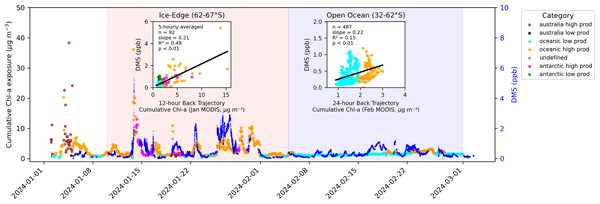
Marine sulfur gases help form climate-cooling particles, but their controls over the Southern Ocean are unclear. During a summer research voyage we measured these gases and linked them to ocean and atmospheric conditions. Near Antarctica, coastal blooms drove sharp rises in dimethyl sulfide while methanethiol remained low. Over the open ocean, both gases varied together, mainly influenced by ocean mixing and temperature, suggesting models should treat coastal and open ocean regions separately.
Jingjing Tian, Gourihar Kulkarni, Jennifer M. Comstock, John E. Shilling, Damao Zhang, Peng Wu, and Fan Mei
Atmos. Meas. Tech., 19, 5051–5069, https://doi.org/10.5194/amt-19-5051-2026, https://doi.org/10.5194/amt-19-5051-2026, 2026
Short summary
Short summary
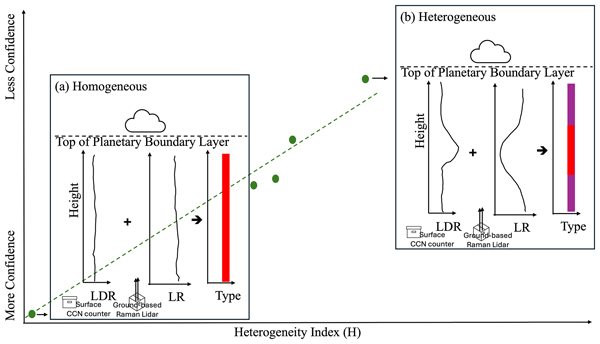
Cloud condensation nuclei are tiny particles that attract water vapor and help form clouds. A ground-based lidar method can estimate their number at different heights, but assumes the aerosol type does not change with height. Comparisons with aircraft data show good agreement of this method when aerosols are well mixed, but larger errors when stacked layers occur. We also developed an index to flag these complex conditions and indicate when this estimation method is more reliable.
Erin F. Katz, Caleb M. Arata, Eva Y. Pfannerstill, Robert J. Weber, Haley Byrne, Michael J. Milazzo, Samuel J. Cliff, Joshua Apte, and Allen H. Goldstein
EGUsphere, https://doi.org/10.5194/egusphere-2026-4147, https://doi.org/10.5194/egusphere-2026-4147, 2026
Short summary
Short summary
Volatile organic compounds (VOCs) are precursors to urban air pollution. We measured VOC emissions in a major North American urban area and identified the dominant sources of four abundant compounds: ethanol, methanol, acetaldehyde, and acetone. Cooking and consumer products (e.g., solvents) were the primary sources, showing that these emissions play a larger role in urban air quality than previously thought.
Yi Zhang, Wei Zhou, Weiqi Xu, Yan Li, Yu Zhang, Zijun Zhang, Bojiang Su, Ning Zhang, Eleonora Aruffo, Junfeng Wang, Piero Di Carlo, Lanzhong Liu, Xiaole Pan, Zifa Wang, Douglas Worsnop, and Yele Sun
EGUsphere, https://doi.org/10.5194/egusphere-2026-3643, https://doi.org/10.5194/egusphere-2026-3643, 2026
Short summary
Short summary
We tracked OOMs that form haze and clouds at a forested mountain in southeastern China. Warm weather boosted natural emissions from plants, making them the primary source of these compounds. Conversely, cooler weather amplified the impact of pollution blowing in from other regions. Clouds also played a major role by washing away certain chemicals while transforming others. These interactions between weather, nature, and pollution offer crucial insights for improving climate models.
Samuel J. Cliff, Michael R. Giordano, Haley McNamara Byrne, Robert J. Weber, Jude Z. Hebert, Kyle Huang, Allen H. Goldstein, and Joshua S. Apte
Atmos. Meas. Tech., 19, 4201–4217, https://doi.org/10.5194/amt-19-4201-2026, https://doi.org/10.5194/amt-19-4201-2026, 2026
Short summary
Short summary
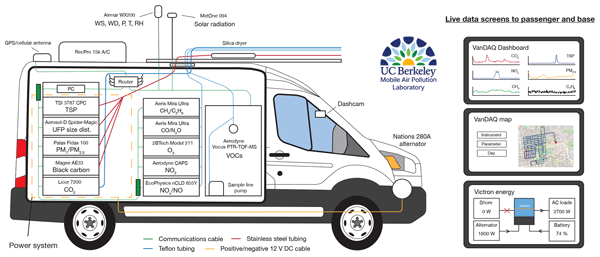
Air pollution concentrations have high spatial variability that is not captured by regulatory monitoring. We developed and evaluated a mobile laboratory to map hundreds of gas and particle phase pollutants at meter-level resolution with open hardware and software designs. This open-design will help researchers deploy similar tools to evaluate local air quality issues from a huge variety of sources.
Young Ro Lee, Linda Arterburn, Masayuki Takeuchi, David J. Tanner, James M. Roberts, Behrooz Roozitalab, Daun Jeong, Alan J. Hills, Rebecca S. Hornbrook, Eric C. Apel, Simone Meinardi, Barbara Barletta, Nicola J. Blake, Donald R. Blake, Saewung Kim, Wojciech Wojnowski, Felix Piel, Armin Wisthaler, Katherine Ball, John D. Crounse, Paul O. Wennberg, Jason Miech, Yonghoon Choi, Joshua P. DiGangi, Glenn S. Diskin, Abby Sebol, Erin R. Delaria, Reem A. Hannun, Jason M. St. Clair, Glenn M. Wolfe, Changmin Cho, Courtney Owen, Kirk Lesko, Alessandro Franchin, Edward L. Winstead, Luke D. Ziemba, Richard Moore, Elizabeth B. Wiggins, Guy Symonds, Dongwook Kim, Douglas A. Day, Pedro Campuzano-Jost, Jose L. Jimenez, Kirk Ullmann, Samuel R. Hall, James H. Crawford, and L. Gregory Huey
Atmos. Chem. Phys., 26, 8695–8715, https://doi.org/10.5194/acp-26-8695-2026, https://doi.org/10.5194/acp-26-8695-2026, 2026
Short summary
Short summary
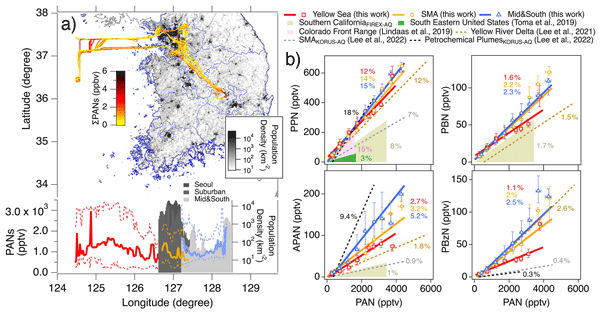
We flew a large variety of instruments on the NASA DC-8 research aircraft to measure pollution over South Korea in the winter of 2024. This works focuses on acyl peroxynitrates (PANs for short) which are formed by chemistry in air. We found high levels of PANs often associated with industrial emissions of pollutants such as ethanol and ethylene oxide. This work helps to understand how to reduce pollution of this sort.
Susanne Glienke, Kevin L. Bertschinger, Fan Mei, and John E. Shilling
EGUsphere, https://doi.org/10.5194/egusphere-2026-2141, https://doi.org/10.5194/egusphere-2026-2141, 2026
Short summary
Short summary
Knowing accurate cloud droplet size distributions and droplet movement is important to understand cloud formation and lifetime. To better measure these, we developed and tested the HOLOgraphic DROPlet Sensor (HOLODROPS) with two operational configurations, which can be used for both long-term cloud measurements and for short-term droplet tracking, in conjunction with an event-camera-based Particle Imaging Velocimetry (ePIV) system for fast analysis of droplet movements.
Yi Zhang, Weiqi Xu, Yan Li, Guohua Zhang, Dantong Liu, Ye Kuang, Yu Zhang, Wei Zhou, Xiaocong Peng, Bojiang Su, Weihong Huang, Zijun Zhang, Liu Yang, Yangzhou Wu, Siyuan Li, Shitong Zhao, Lanzhong Liu, Xiaole Pan, Zifa Wang, Xinhui Bi, Mikael Ehn, Douglas R. Worsnop, and Yele Sun
Atmos. Chem. Phys., 26, 5617–5634, https://doi.org/10.5194/acp-26-5617-2026, https://doi.org/10.5194/acp-26-5617-2026, 2026
Short summary
Short summary
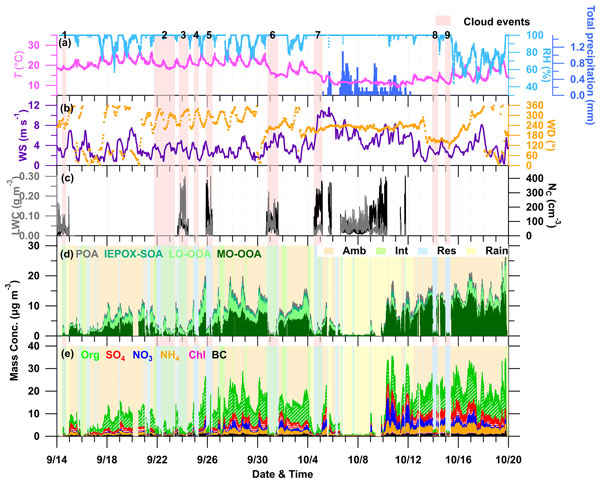
This study explores how clouds influence the chemical composition of air particles through field research at a high-altitude station in southeastern China across different seasons. We found that different cloud types cause varying degrees of chemical changes in these particles. These findings enhance our understanding of the impact of clouds on air quality and contribute to improving climate models.
Qiu Wang, Tengyu Liu, Weiqi Xu, Jinbo Wang, Dafeng Ge, Caijun Zhu, Chuanhua Ren, Jiaping Wang, Qiaozhi Zha, Ximeng Qi, Wei Nie, Xuguang Chi, Sijia Lou, Xin Huang, and Aijun Ding
Atmos. Chem. Phys., 26, 3185–3194, https://doi.org/10.5194/acp-26-3185-2026, https://doi.org/10.5194/acp-26-3185-2026, 2026
Short summary
Short summary
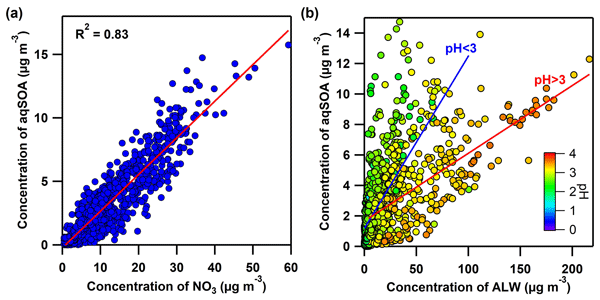
The sources and formation mechanisms of aqueous secondary organic aerosol (aqSOA) remain unclear. This study investigates the characteristics and processing of aqSOA in polluted suburban environments in Eastern China. The results highlight the critical roles of nitrate, aerosol liquid water, acidity, and photochemistry in aqSOA formation and contribute to an improved understanding of aqSOA formation in polluted environments.
Yali Jin, Hao Luo, Siqi Tang, Shuhui Xue, Chengyu Nie, Xiaocong Peng, Yan Zheng, Weiqi Xu, Guohua Zhang, Xiaole Pan, Yele Sun, Qi Chen, Lanzhong Liu, and Defeng Zhao
Atmos. Chem. Phys., 26, 2813–2830, https://doi.org/10.5194/acp-26-2813-2026, https://doi.org/10.5194/acp-26-2813-2026, 2026
Short summary
Short summary
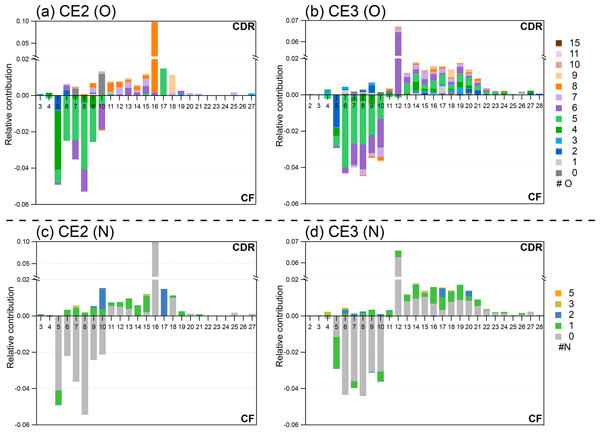
Cloud substantially changes the compositions organic aerosol. How cloud processing of organics occur on molecular level remains unclear. We found that compared with cloud free particles, organics in cloud contains more large molecules likely due to accretion reactions and has more nitrogen-containing compounds. We identify some new compounds formed in cloud. Such modifications of the organics in cloud can further change its physicochemical properties, and impact on climate and human health.

Wei Zhou, Liu Yang, Siqi Zeng, Yunping Kan, Lirong Yang, Weihong Zhang, Weijie Wang, Zijun Zhang, Yan Li, Weiqi Xu, Yucheng Gu, Yaozong Wang, Zhengyan Zuo, Jie Li, Zifa Wang, and Yele Sun
Atmos. Chem. Phys., 26, 2425–2441, https://doi.org/10.5194/acp-26-2425-2026, https://doi.org/10.5194/acp-26-2425-2026, 2026
Short summary
Short summary
Northwest China, situated in an arid and semi-arid climate region; air quality issues in this area have received less attention compared to other Chinese metropolitan clusters. This research identify a significant shift towards the coupling PM2.5 and O3 relationships over the past decade in northwest China, highlighting the great importance of urban terpenes and aromatic oxidation in secondary organic aerosol formation.
Weibin Zhu, Sai Shang, Jieqi Wang, Yunfei Wu, Zhaoze Deng, Liang Ran, Ye Kuang, Guiqian Tang, Xiangpeng Huang, Xiaole Pan, Lanzhong Liu, Weiqi Xu, Yele Sun, Bo Hu, Zifa Wang, and Zirui Liu
Atmos. Chem. Phys., 26, 1947–1965, https://doi.org/10.5194/acp-26-1947-2026, https://doi.org/10.5194/acp-26-1947-2026, 2026
Short summary
Short summary
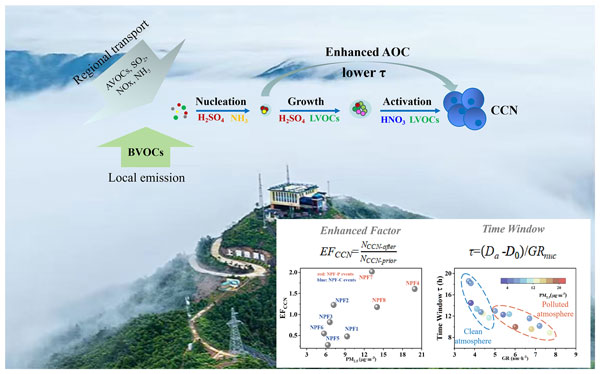
NPF (new particle formation) is a key global CCN (cloud condensation nuclei) source, but its contribution at the polluted boundary-layer top remains unclear. Based on mountaintop observations in the Yangtze River Delta, we show that under polluted conditions, NPF at the boundary-layer top is enhanced and accelerates its conversion to CCN. Ammonia plays a key role, and a newly defined "Time Window" metric highlights the importance of oxidation-driven growth and regional transport in this process.

James D. A. Butler, Afsara Tasnia, Deep Sengupta, Nathan Kreisberg, Kelley C. Barsanti, Allen H. Goldstein, Chelsea V. Preble, Rebecca A. Sugrue, and Thomas W. Kirchstetter
Atmos. Chem. Phys., 26, 839–850, https://doi.org/10.5194/acp-26-839-2026, https://doi.org/10.5194/acp-26-839-2026, 2026
Short summary
Short summary
Prescribed burns are controlled fires used to prevent wildfires. Smoke emissions were measured to characterize emission factors and optical properties of black and brown soot particles. Brown particles were emitted at 7–14 times that of black particles and contributed 82 % of atmospheric absorption by particles for ultraviolet light and 23 % for total solar radiation. These findings will improve inventories and climate models for prescribed burns.
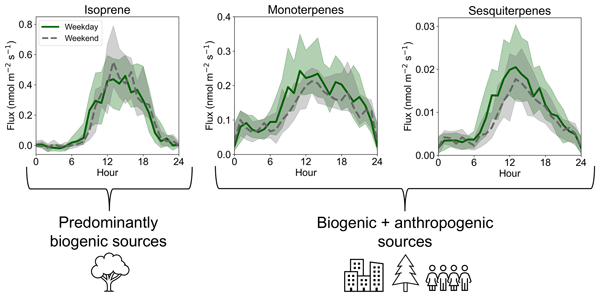
Erin F. Katz, Caleb M. Arata, Eva Y. Pfannerstill, Robert J. Weber, Darian Ng, Michael J. Milazzo, Haley Byrne, Hui Wang, Alex B. Guenther, Camilo Rey-Sanchez, Joshua Apte, Dennis D. Baldocchi, and Allen H. Goldstein
Atmos. Chem. Phys., 25, 15281–15299, https://doi.org/10.5194/acp-25-15281-2025, https://doi.org/10.5194/acp-25-15281-2025, 2025
Short summary
Short summary
Terpenoids are organic gases that can originate from natural and human-caused sources, and their reactions in the atmosphere can cause air pollution. In this study, emissions of organic gases in an urban environment were measured. For some terpenoids, human-caused sources were responsible for about a quarter of the emissions, while others were predominantly from vegetation. This study contributes to a better understanding of urban emission sources and causes of air pollution.
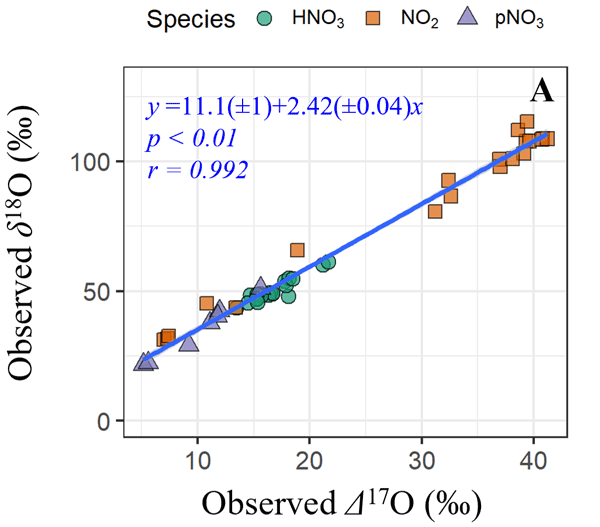
Wendell W. Walters, Masayuki Takeuchi, Danielle E. Blum, Gamze Eris, David Tanner, Weiqi Xu, Jean Rivera-Rios, Fobang Liu, Tianchang Xu, Greg Huey, Justin B. Min, Rodney Weber, Nga L. Ng, and Meredith G. Hastings
Atmos. Chem. Phys., 25, 10707–10730, https://doi.org/10.5194/acp-25-10707-2025, https://doi.org/10.5194/acp-25-10707-2025, 2025
Short summary
Short summary
We studied how chemicals released from plants and pollution interact in the atmosphere, affecting air quality and climate. By combining laboratory experiments and chemistry models, we tracked unique chemical fingerprints to understand how nitrogen compounds transform to form particles in the air. Our findings help explain the role of these reactions in pollution and provide tools to improve predictions for cleaner air and better climate policies.
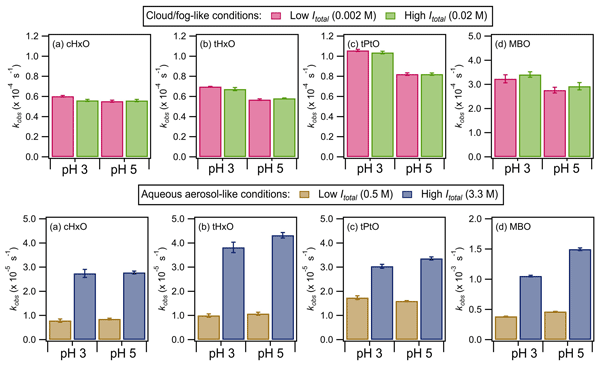
Yuting Lyu, Taekyu Joo, Ruihan Ma, Mark Kristan Espejo Cabello, Tianye Zhou, Shun Yeung, Cheuk Ki Wong, Yifang Gu, Yiming Qin, and Theodora Nah
Atmos. Chem. Phys., 25, 10731–10745, https://doi.org/10.5194/acp-25-10731-2025, https://doi.org/10.5194/acp-25-10731-2025, 2025
Short summary
Short summary
We investigated the aqueous nitrate-mediated photooxidation of four green leaf volatiles (GLVs). The aqueous reaction medium conditions, dilute cloud/fog vs. concentrated aqueous aerosol conditions, governed the effects that pH, ionic strength, and sulfate have on the GLV degradation rates and aqueous secondary organic aerosol (aqSOA) mass yields. Most notably, reactions initiated by sulfate photolysis have significant effects in aqueous aerosols but not in cloud/fog droplets.
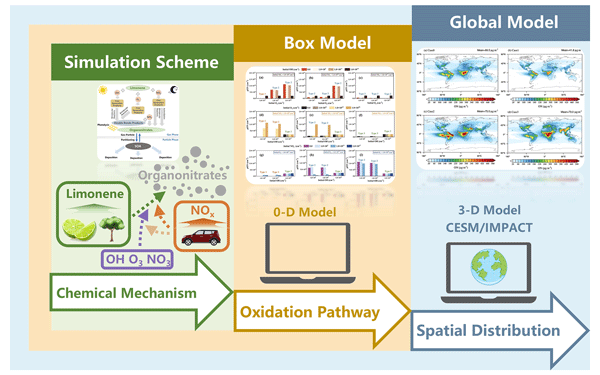
Qinghao Guo, Haofei Zhang, Bo Long, Lehui Cui, Yiyang Sun, Hao Liu, Yaxin Liu, Yunting Xiao, Pingqing Fu, and Jialei Zhu
Atmos. Chem. Phys., 25, 9249–9262, https://doi.org/10.5194/acp-25-9249-2025, https://doi.org/10.5194/acp-25-9249-2025, 2025
Short summary
Short summary
Limonene, a natural compound from plants, reacts with pollutants to form airborne particles that influence air quality and climate. Using advanced models with explicit chemical mechanisms, we show how different reaction pathways shape organonitrate formation, with some increasing and others decreasing particle levels. This approach enhances predictions of pollution and climate impacts while deepening our understanding of how natural and human-made emissions interact in the atmosphere.
Sara L. Farrell, Quazi Z. Rasool, Havala O. T. Pye, Yue Zhang, Ying Li, Yuzhi Chen, Chi-Tsan Wang, Haofei Zhang, Ryan Schmedding, Manabu Shiraiwa, Jaime Greene, Sri H. Budisulistiorini, Jose L. Jimenez, Weiwei Hu, Jason D. Surratt, and William Vizuete
EGUsphere, https://doi.org/10.5194/egusphere-2025-2253, https://doi.org/10.5194/egusphere-2025-2253, 2025
Short summary
Short summary
Fine particulate matter (PM2.5) has become increasingly important to regulate and model. In this study, we parameterize non-ideal aerosol mixing and phase state into the Community Multiscale Air Quality (CMAQ) model and analyze its impact on the formation of a globally important source of PM2.5, isoprene epoxydiol (IEPOX)-derived PM2.5. Incorporating these features furthers model bias in IEPOX-derived PM2.5, however, this work provides potential phase state bounds for future PM2.5 modeling work.
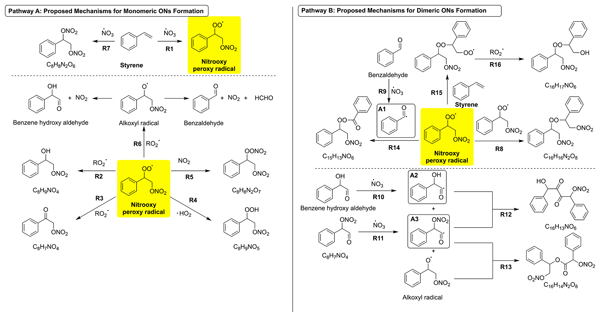
Yuchen Wang, Xiang Zhang, Yuanlong Huang, Yutong Liang, and Nga L. Ng
Atmos. Chem. Phys., 25, 5215–5231, https://doi.org/10.5194/acp-25-5215-2025, https://doi.org/10.5194/acp-25-5215-2025, 2025
Short summary
Short summary
This work provides the first fundamental laboratory data to evaluate SOA (secondary organic aerosol) production from styrene and NO3 chemistry. Additionally, the formation mechanisms of aromatic organic nitrates (ONs) are reported, highlighting that previously identified nitroaromatics in ambient field campaigns can be aromatic ONs. Finally, the hydrolysis lifetimes observed for ONs generated from styrene and NO3 oxidation can serve as experimentally constrained parameters for modeling hydrolysis of aromatic ONs in general.
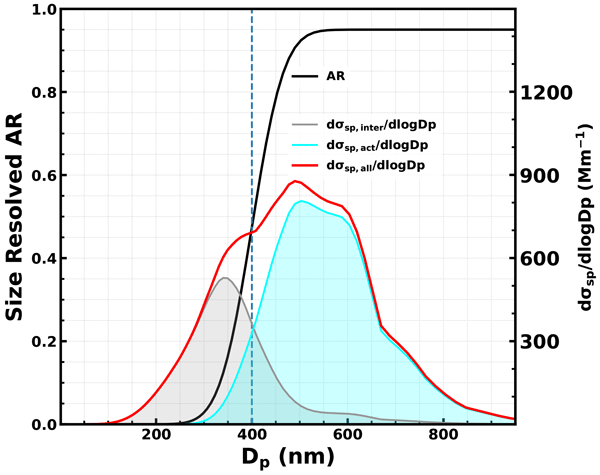
Ye Kuang, Jiangchuan Tao, Hanbing Xu, Li Liu, Pengfei Liu, Wanyun Xu, Weiqi Xu, Yele Sun, and Chunsheng Zhao
Atmos. Chem. Phys., 25, 1163–1174, https://doi.org/10.5194/acp-25-1163-2025, https://doi.org/10.5194/acp-25-1163-2025, 2025
Short summary
Short summary
This study presents a novel optical framework to measure supersaturation, a fundamental parameter in cloud physics, by observing the scattering properties of particles that have or have not grown into cloud droplets. The technique offers high-resolution measurements, capturing essential fluctuations in supersaturation necessary for understanding cloud physics.
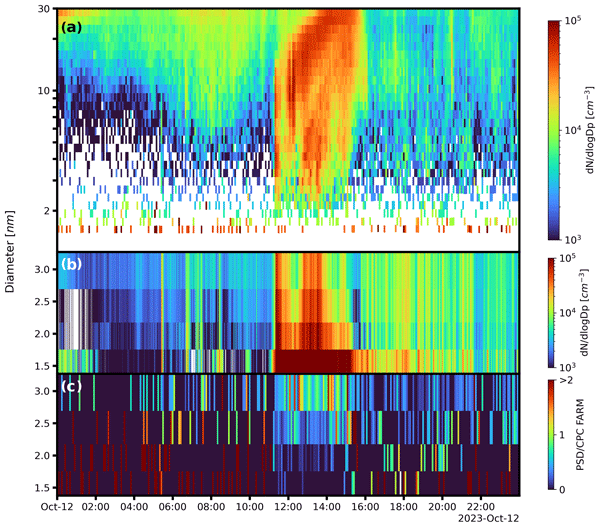
Darren Cheng, Stavros Amanatidis, Gregory S. Lewis, and Coty N. Jen
Atmos. Meas. Tech., 18, 197–210, https://doi.org/10.5194/amt-18-197-2025, https://doi.org/10.5194/amt-18-197-2025, 2025
Short summary
Short summary
This study describes a new method, the Condensation Particle Counters For Atmospheric Rapid Measurements (CPC FARM), to measure sub-3 nm size distribution at high time resolution and sensitivity. The CPC FARM is compared to traditionally used particle mobility sizers during a new particle formation campaign to study rapidly changing sub-3 nm particles in Pittsburgh, PA.
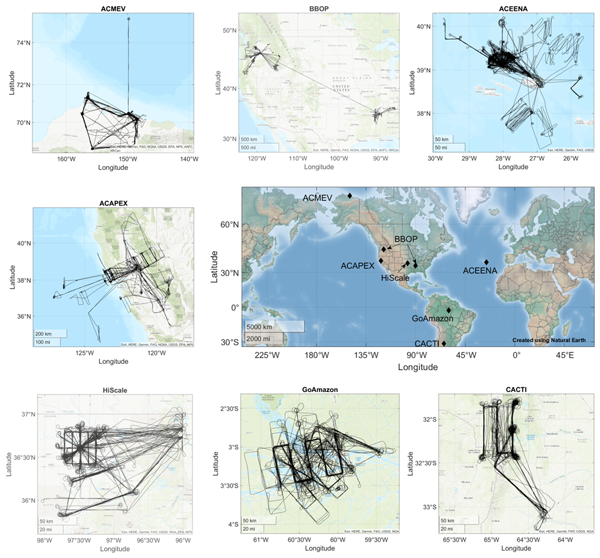
Fan Mei, Jennifer M. Comstock, Mikhail S. Pekour, Jerome D. Fast, Krista L. Gaustad, Beat Schmid, Shuaiqi Tang, Damao Zhang, John E. Shilling, Jason M. Tomlinson, Adam C. Varble, Jian Wang, L. Ruby Leung, Lawrence Kleinman, Scot Martin, Sebastien C. Biraud, Brian D. Ermold, and Kenneth W. Burk
Earth Syst. Sci. Data, 16, 5429–5448, https://doi.org/10.5194/essd-16-5429-2024, https://doi.org/10.5194/essd-16-5429-2024, 2024
Short summary
Short summary
Our study explores a comprehensive dataset from airborne field studies (2013–2018) conducted using the US Department of Energy's Gulfstream 1 (G-1). The 236 flights span diverse regions, including the Arctic, US Southern Great Plains, US West Coast, eastern North Atlantic, Amazon Basin in Brazil, and Sierras de Córdoba range in Argentina. This dataset provides unique insights into atmospheric dynamics, aerosols, and clouds and makes data available in a more accessible format.
Namrata Shanmukh Panji, Deborah F. McGlynn, Laura E. R. Barry, Todd M. Scanlon, Manuel T. Lerdau, Sally E. Pusede, and Gabriel Isaacman-VanWertz
Atmos. Chem. Phys., 24, 12495–12507, https://doi.org/10.5194/acp-24-12495-2024, https://doi.org/10.5194/acp-24-12495-2024, 2024
Short summary
Short summary
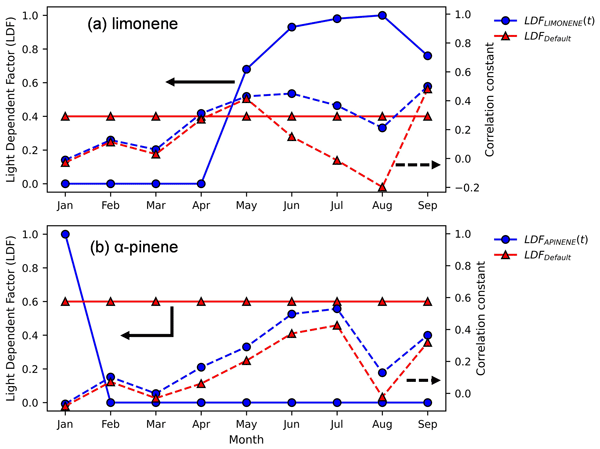
Climate change will bring about changes in parameters that are currently used in global-scale models to calculate biogenic emissions. This study seeks to understand the factors driving these models by comparing long-term datasets of biogenic compounds to modeled emissions. We note that the light-dependent fractions currently used in models do not accurately represent regional observations. We provide evidence for the time-dependent variation in this parameter for future modifications to models.
Weiqi Xu, Ye Kuang, Wanyun Xu, Zhiqiang Zhang, Biao Luo, Xiaoyi Zhang, Jiangchuang Tao, Hongqin Qiao, Li Liu, and Yele Sun
Atmos. Chem. Phys., 24, 9387–9399, https://doi.org/10.5194/acp-24-9387-2024, https://doi.org/10.5194/acp-24-9387-2024, 2024
Short summary
Short summary
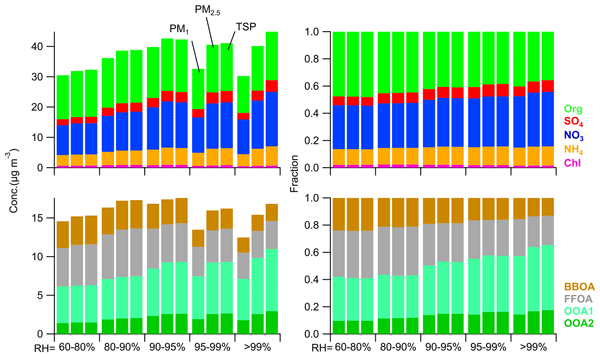
We deployed an advanced aerosol–fog sampling system at a rural site in the North China Plain to investigate impacts of aerosol hygroscopic growth and activation on the physicochemical properties of submicron aerosols. Observed results highlighted remarkably different aqueous processing of primary and secondary submicron aerosol components under distinct ambient relative humidity (RH) conditions and that RH levels significantly impact aerosol sampling through the aerosol swelling effect.
Jiangchuan Tao, Biao Luo, Weiqi Xu, Gang Zhao, Hanbin Xu, Biao Xue, Miaomiao Zhai, Wanyun Xu, Huarong Zhao, Sanxue Ren, Guangsheng Zhou, Li Liu, Ye Kuang, and Yele Sun
Atmos. Chem. Phys., 24, 9131–9154, https://doi.org/10.5194/acp-24-9131-2024, https://doi.org/10.5194/acp-24-9131-2024, 2024
Short summary
Short summary
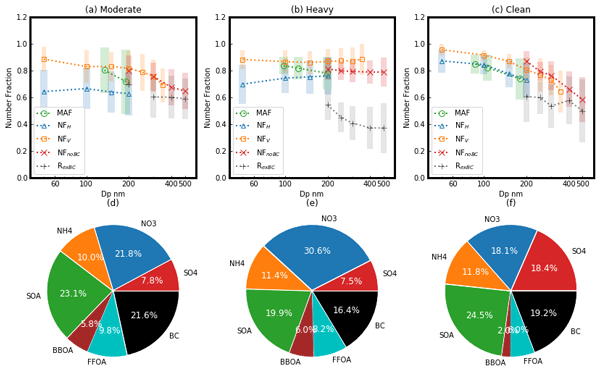
Using simultaneous measurements of DMA–CCNC, H(/V)TDMA, and DMA–SP2, impacts of primary emissions and secondary aerosol formations on changes in aerosol physicochemical properties were comprehensively investigated. It was found that intercomparisons among aerosol mixing-state parameters derived from different techniques can help us gain more insight into aerosol physical properties which, in turn, will aid the investigation of emission characteristics and secondary aerosol formation pathways.
Zijun Zhang, Weiqi Xu, Yi Zhang, Wei Zhou, Xiangyu Xu, Aodong Du, Yinzhou Zhang, Hongqin Qiao, Ye Kuang, Xiaole Pan, Zifa Wang, Xueling Cheng, Lanzhong Liu, Qingyan Fu, Douglas R. Worsnop, Jie Li, and Yele Sun
Atmos. Chem. Phys., 24, 8473–8488, https://doi.org/10.5194/acp-24-8473-2024, https://doi.org/10.5194/acp-24-8473-2024, 2024
Short summary
Short summary
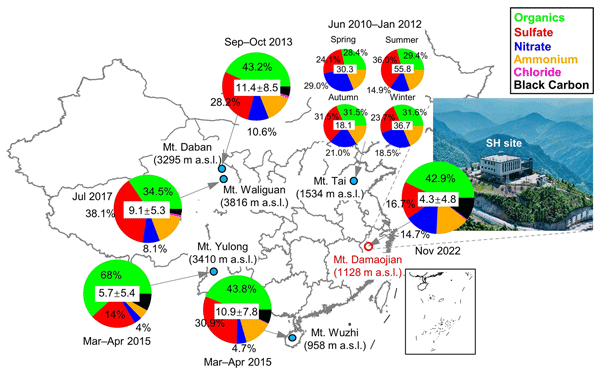
We investigated aerosol composition and sources and the interaction between secondary organic aerosol (SOA) and clouds at a regional mountain site in southeastern China. Clouds efficiently scavenge more oxidized SOA; however, cloud evaporation leads to the production of less oxidized SOA. The unexpectedly high presence of nitrate in aerosol particles indicates that nitrate formed in polluted areas has undergone interactions with clouds, significantly influencing the regional background site.
Wendell W. Walters, Masayuki Takeuchi, Nga L. Ng, and Meredith G. Hastings
Geosci. Model Dev., 17, 4673–4687, https://doi.org/10.5194/gmd-17-4673-2024, https://doi.org/10.5194/gmd-17-4673-2024, 2024
Short summary
Short summary
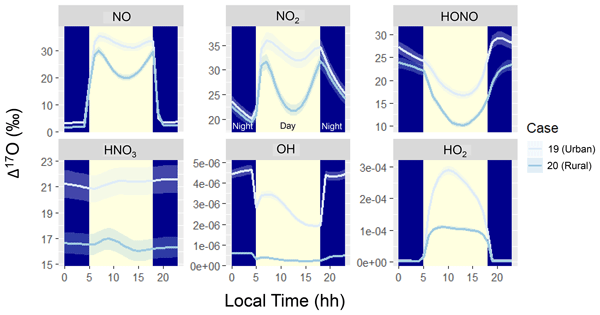
The study introduces a novel chemical mechanism for explicitly tracking oxygen isotope transfer in oxidized reactive nitrogen and odd oxygen using the Regional Atmospheric Chemistry Mechanism, version 2. This model enhances our ability to simulate and compare oxygen isotope compositions of reactive nitrogen, revealing insights into oxidation chemistry. The approach shows promise for improving atmospheric chemistry models and tropospheric oxidation capacity predictions.
Chuanyang Shen, Xiaoyan Yang, Joel Thornton, John Shilling, Chenyang Bi, Gabriel Isaacman-VanWertz, and Haofei Zhang
Atmos. Chem. Phys., 24, 6153–6175, https://doi.org/10.5194/acp-24-6153-2024, https://doi.org/10.5194/acp-24-6153-2024, 2024
Short summary
Short summary
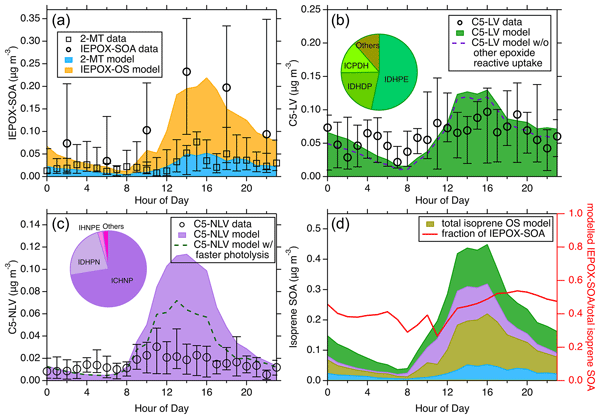
In this work, a condensed multiphase isoprene oxidation mechanism was developed to simulate isoprene SOA formation from chamber and field studies. Our results show that the measured isoprene SOA mass concentrations can be reasonably reproduced. The simulation results indicate that multifunctional low-volatility products contribute significantly to total isoprene SOA. Our findings emphasize that the pathways to produce these low-volatility species should be considered in models.
Qindan Zhu, Rebecca H. Schwantes, Matthew Coggon, Colin Harkins, Jordan Schnell, Jian He, Havala O. T. Pye, Meng Li, Barry Baker, Zachary Moon, Ravan Ahmadov, Eva Y. Pfannerstill, Bryan Place, Paul Wooldridge, Benjamin C. Schulze, Caleb Arata, Anthony Bucholtz, John H. Seinfeld, Carsten Warneke, Chelsea E. Stockwell, Lu Xu, Kristen Zuraski, Michael A. Robinson, J. Andrew Neuman, Patrick R. Veres, Jeff Peischl, Steven S. Brown, Allen H. Goldstein, Ronald C. Cohen, and Brian C. McDonald
Atmos. Chem. Phys., 24, 5265–5286, https://doi.org/10.5194/acp-24-5265-2024, https://doi.org/10.5194/acp-24-5265-2024, 2024
Short summary
Short summary
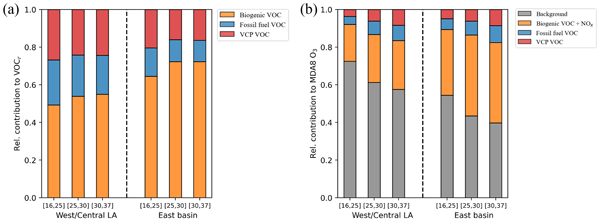
Volatile organic compounds (VOCs) fuel the production of air pollutants like ozone and particulate matter. The representation of VOC chemistry remains challenging due to its complexity in speciation and reactions. Here, we develop a chemical mechanism, RACM2B-VCP, that better represents VOC chemistry in urban areas such as Los Angeles. We also discuss the contribution of VOCs emitted from volatile chemical products and other anthropogenic sources to total VOC reactivity and O3.
Zhiqiang Zhang, Ying Li, Haiyan Ran, Junling An, Yu Qu, Wei Zhou, Weiqi Xu, Weiwei Hu, Hongbin Xie, Zifa Wang, Yele Sun, and Manabu Shiraiwa
Atmos. Chem. Phys., 24, 4809–4826, https://doi.org/10.5194/acp-24-4809-2024, https://doi.org/10.5194/acp-24-4809-2024, 2024
Short summary
Short summary
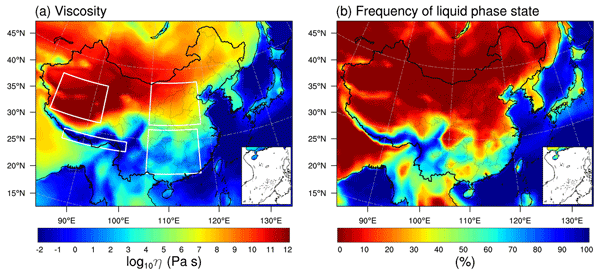
Secondary organic aerosols (SOAs) can exist in liquid, semi-solid, or amorphous solid states, which are rarely accounted for in current chemical transport models. We predict the phase state of SOA particles over China and find that in northwestern China SOA particles are mostly highly viscous or glassy solid. Our results indicate that the particle phase state should be considered in SOA formation in chemical transport models for more accurate prediction of SOA mass concentrations.
Matthew M. Coggon, Chelsea E. Stockwell, Megan S. Claflin, Eva Y. Pfannerstill, Lu Xu, Jessica B. Gilman, Julia Marcantonio, Cong Cao, Kelvin Bates, Georgios I. Gkatzelis, Aaron Lamplugh, Erin F. Katz, Caleb Arata, Eric C. Apel, Rebecca S. Hornbrook, Felix Piel, Francesca Majluf, Donald R. Blake, Armin Wisthaler, Manjula Canagaratna, Brian M. Lerner, Allen H. Goldstein, John E. Mak, and Carsten Warneke
Atmos. Meas. Tech., 17, 801–825, https://doi.org/10.5194/amt-17-801-2024, https://doi.org/10.5194/amt-17-801-2024, 2024
Short summary
Short summary
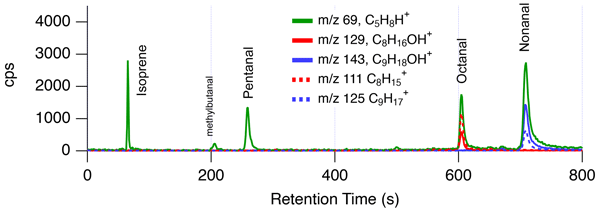
Mass spectrometry is a tool commonly used to measure air pollutants. This study evaluates measurement artifacts produced in the proton-transfer-reaction mass spectrometer. We provide methods to correct these biases and better measure compounds that degrade air quality.
Yang Wang, Chanakya Bagya Ramesh, Scott E. Giangrande, Jerome Fast, Xianda Gong, Jiaoshi Zhang, Ahmet Tolga Odabasi, Marcus Vinicius Batista Oliveira, Alyssa Matthews, Fan Mei, John E. Shilling, Jason Tomlinson, Die Wang, and Jian Wang
Atmos. Chem. Phys., 23, 15671–15691, https://doi.org/10.5194/acp-23-15671-2023, https://doi.org/10.5194/acp-23-15671-2023, 2023
Short summary
Short summary
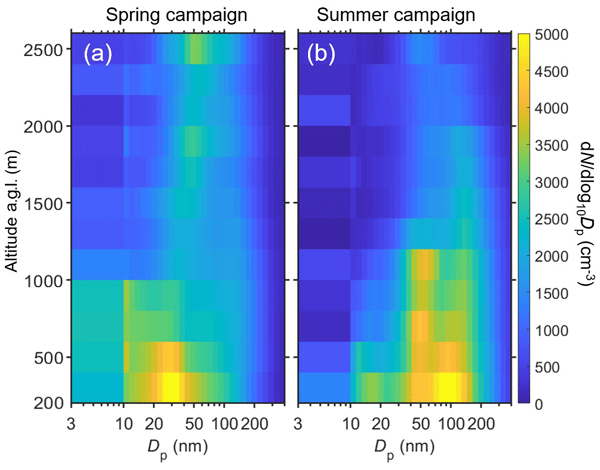
We report the vertical profiles of aerosol properties over the Southern Great Plains (SGP), a region influenced by shallow convective clouds, land–atmosphere interactions, boundary layer turbulence, and the aerosol life cycle. We examined the processes that drive the aerosol population and distribution in the lower troposphere over the SGP. This study helps improve our understanding of aerosol–cloud interactions and the model representation of aerosol processes.
Andrew T. Lambe, Bin Bai, Masayuki Takeuchi, Nicole Orwat, Paul M. Zimmerman, Mitchell W. Alton, Nga L. Ng, Andrew Freedman, Megan S. Claflin, Drew R. Gentner, Douglas R. Worsnop, and Pengfei Liu
Atmos. Chem. Phys., 23, 13869–13882, https://doi.org/10.5194/acp-23-13869-2023, https://doi.org/10.5194/acp-23-13869-2023, 2023
Short summary
Short summary
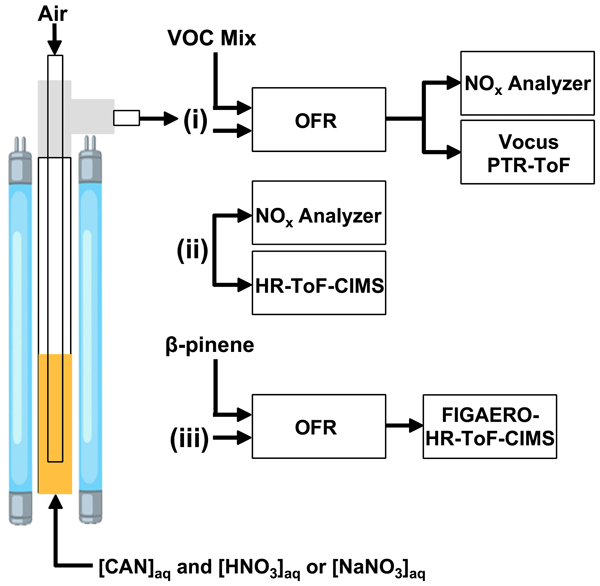
We developed a new method to generate nitrate radicals (NO3) for atmospheric chemistry applications that works by irradiating mixtures containing ceric ammonium nitrate with a UV light at room temperature. It has several advantages over traditional NO3 sources. We characterized its performance over a range of mixture and reactor conditions as well as other irradiation products. Proof of concept was demonstrated by generating and characterizing oxidation products of the β-pinene + NO3 reaction.
Aodong Du, Jiaxing Sun, Hang Liu, Weiqi Xu, Wei Zhou, Yuting Zhang, Lei Li, Xubing Du, Yan Li, Xiaole Pan, Zifa Wang, and Yele Sun
Atmos. Chem. Phys., 23, 13597–13611, https://doi.org/10.5194/acp-23-13597-2023, https://doi.org/10.5194/acp-23-13597-2023, 2023
Short summary
Short summary
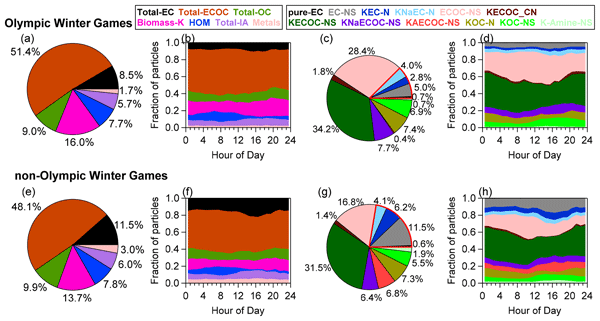
We characterized the impacts of emission controls on particle mixing state and density during the Beijing Olympic Winter Games using a SPAMS in tandem with a DMA and an AAC. OC and sulfate-containing particles increased, while those from primary emissions decreased. The effective particle densities increased and varied largely for different particles, highlighting the impacts of aging and formation processes on the changes of particle density and mixing state.
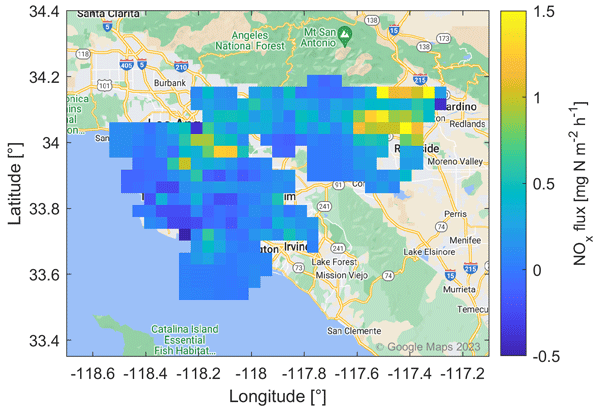
Clara M. Nussbaumer, Bryan K. Place, Qindan Zhu, Eva Y. Pfannerstill, Paul Wooldridge, Benjamin C. Schulze, Caleb Arata, Ryan Ward, Anthony Bucholtz, John H. Seinfeld, Allen H. Goldstein, and Ronald C. Cohen
Atmos. Chem. Phys., 23, 13015–13028, https://doi.org/10.5194/acp-23-13015-2023, https://doi.org/10.5194/acp-23-13015-2023, 2023
Short summary
Short summary
NOx is a precursor to hazardous tropospheric ozone and can be emitted from various anthropogenic sources. It is important to quantify NOx emissions in urban environments to improve the local air quality, which still remains a challenge, as sources are heterogeneous in space and time. In this study, we calculate NOx emissions over Los Angeles, based on aircraft measurements in June 2021, and compare them to a local emission inventory, which we find mostly overpredicts the measured values.
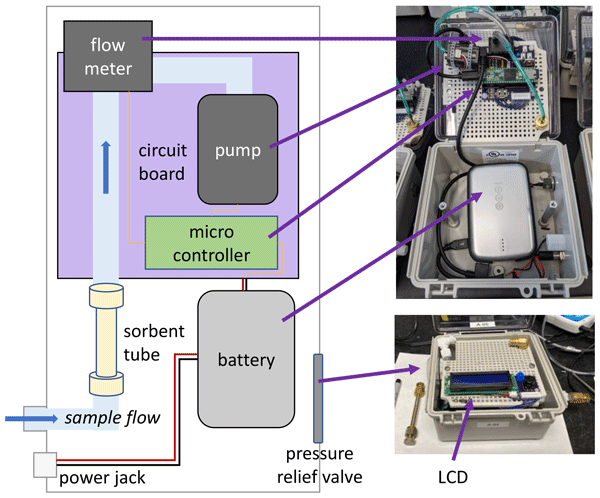
James F. Hurley, Alejandra Caceres, Deborah F. McGlynn, Mary E. Tovillo, Suzanne Pinar, Roger Schürch, Ksenia Onufrieva, and Gabriel Isaacman-VanWertz
Atmos. Meas. Tech., 16, 4681–4692, https://doi.org/10.5194/amt-16-4681-2023, https://doi.org/10.5194/amt-16-4681-2023, 2023
Short summary
Short summary
Volatile organic compounds (VOCs) have a wide range of sources and impacts on environments and human health that make them spatially, temporally, and chemically varied. Current methods lack the ability to collect samples in ways that provide spatial and chemical resolution without complex, costly instrumentation. We describe and validate a low-cost, portable VOC sampler and demonstrate its utility in collecting distributed coordinated samples.
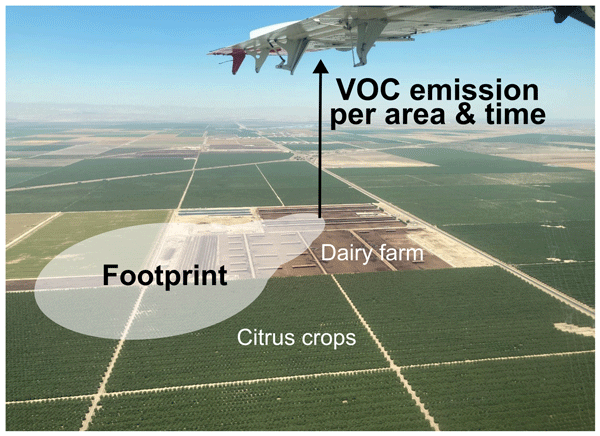
Eva Y. Pfannerstill, Caleb Arata, Qindan Zhu, Benjamin C. Schulze, Roy Woods, John H. Seinfeld, Anthony Bucholtz, Ronald C. Cohen, and Allen H. Goldstein
Atmos. Chem. Phys., 23, 12753–12780, https://doi.org/10.5194/acp-23-12753-2023, https://doi.org/10.5194/acp-23-12753-2023, 2023
Short summary
Short summary
The San Joaquin Valley is an agricultural area with poor air quality. Organic gases drive the formation of hazardous air pollutants. Agricultural emissions of these gases are not well understood and have rarely been quantified at landscape scale. By combining aircraft-based emission measurements with land cover information, we found mis- or unrepresented emission sources. Our results help in understanding of pollution sources and in improving predictions of air quality in agricultural regions.
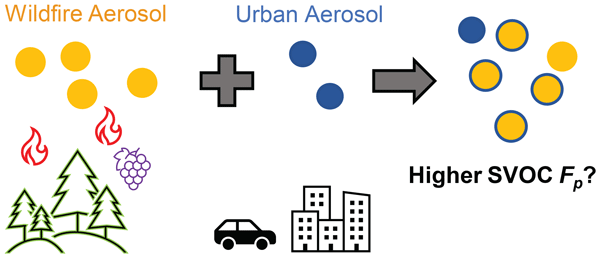
Yutong Liang, Rebecca A. Wernis, Kasper Kristensen, Nathan M. Kreisberg, Philip L. Croteau, Scott C. Herndon, Arthur W. H. Chan, Nga L. Ng, and Allen H. Goldstein
Atmos. Chem. Phys., 23, 12441–12454, https://doi.org/10.5194/acp-23-12441-2023, https://doi.org/10.5194/acp-23-12441-2023, 2023
Short summary
Short summary
We measured the gas–particle partitioning behaviors of biomass burning markers and examined the effect of wildfire organic aerosol on the partitioning of semivolatile organic compounds. Most compounds measured are less volatile than model predictions. Wildfire aerosol enhanced the condensation of polar compounds and caused some nonpolar (e.g., polycyclic aromatic hydrocarbons) compounds to partition into the gas phase, thus affecting their lifetimes in the atmosphere and the mode of exposure.
Namrata Shanmukh Panji and Gabriel Isaacman-VanWertz
Atmos. Meas. Tech., 16, 4319–4330, https://doi.org/10.5194/amt-16-4319-2023, https://doi.org/10.5194/amt-16-4319-2023, 2023
Short summary
Short summary
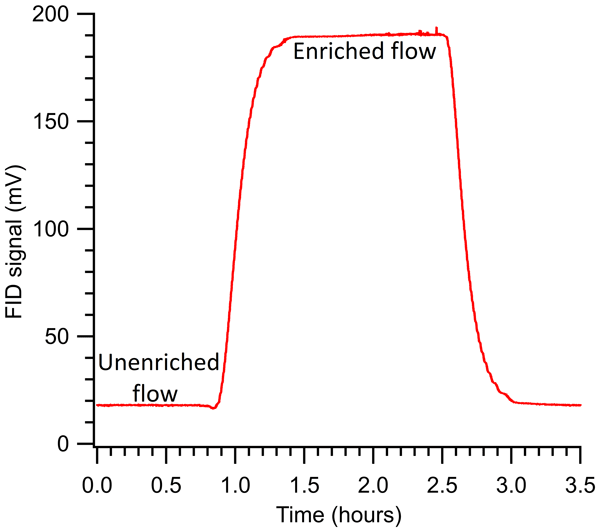
Measuring volatile organic compounds (VOCs) in the atmosphere is crucial for understanding air quality and environmental impact. Since these compounds are present in low concentrations, preconcentration of samples is often necessary for accurate detection. To address this issue, we have developed a novel inlet that uses selective permeation to concentrate organic gases in small sample flows. This device offers a promising approach for accurately detecting low levels of VOCs in the atmosphere.
Qindan Zhu, Bryan Place, Eva Y. Pfannerstill, Sha Tong, Huanxin Zhang, Jun Wang, Clara M. Nussbaumer, Paul Wooldridge, Benjamin C. Schulze, Caleb Arata, Anthony Bucholtz, John H. Seinfeld, Allen H. Goldstein, and Ronald C. Cohen
Atmos. Chem. Phys., 23, 9669–9683, https://doi.org/10.5194/acp-23-9669-2023, https://doi.org/10.5194/acp-23-9669-2023, 2023
Short summary
Short summary
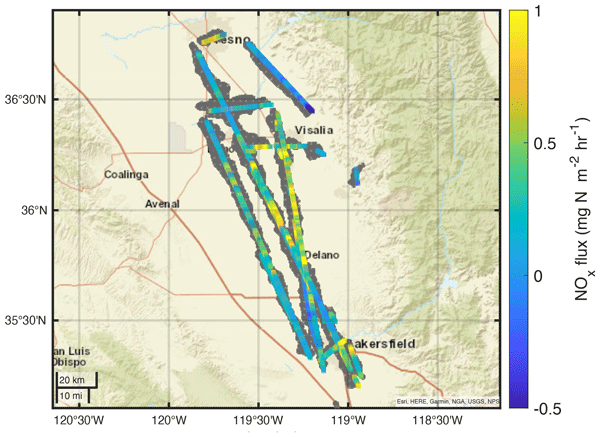
Nitrogen oxide (NOx) is a hazardous air pollutant, and it is the precursor of short-lived climate forcers like tropospheric ozone and aerosol particles. While NOx emissions from transportation has been strictly regulated, soil NOx emissions are overlooked. We use the airborne flux measurements to observe NOx emissions from highways and urban and cultivated soil land cover types. We show non-negligible soil NOx emissions, which are significantly underestimated in current model simulations.
Joanna E. Dyson, Lisa K. Whalley, Eloise J. Slater, Robert Woodward-Massey, Chunxiang Ye, James D. Lee, Freya Squires, James R. Hopkins, Rachel E. Dunmore, Marvin Shaw, Jacqueline F. Hamilton, Alastair C. Lewis, Stephen D. Worrall, Asan Bacak, Archit Mehra, Thomas J. Bannan, Hugh Coe, Carl J. Percival, Bin Ouyang, C. Nicholas Hewitt, Roderic L. Jones, Leigh R. Crilley, Louisa J. Kramer, W. Joe F. Acton, William J. Bloss, Supattarachai Saksakulkrai, Jingsha Xu, Zongbo Shi, Roy M. Harrison, Simone Kotthaus, Sue Grimmond, Yele Sun, Weiqi Xu, Siyao Yue, Lianfang Wei, Pingqing Fu, Xinming Wang, Stephen R. Arnold, and Dwayne E. Heard
Atmos. Chem. Phys., 23, 5679–5697, https://doi.org/10.5194/acp-23-5679-2023, https://doi.org/10.5194/acp-23-5679-2023, 2023
Short summary
Short summary
The hydroxyl (OH) and closely coupled hydroperoxyl (HO2) radicals are vital for their role in the removal of atmospheric pollutants. In less polluted regions, atmospheric models over-predict HO2 concentrations. In this modelling study, the impact of heterogeneous uptake of HO2 onto aerosol surfaces on radical concentrations and the ozone production regime in Beijing in the summertime is investigated, and the implications for emissions policies across China are considered.
Melissa Meder, Otso Peräkylä, Jonathan G. Varelas, Jingyi Luo, Runlong Cai, Yanjun Zhang, Theo Kurtén, Matthieu Riva, Matti Rissanen, Franz M. Geiger, Regan J. Thomson, and Mikael Ehn
Atmos. Chem. Phys., 23, 4373–4390, https://doi.org/10.5194/acp-23-4373-2023, https://doi.org/10.5194/acp-23-4373-2023, 2023
Short summary
Short summary
We discuss and show the viability of a method where multiple isotopically labelled precursors are used for probing the formation pathways of highly oxygenated organic molecules (HOMs) from the oxidation of the monoterpene a-pinene. HOMs are very important for secondary organic aerosol (SOA) formation in forested regions, and monoterpenes are the single largest source of SOA globally. The fast reactions forming HOMs have thus far remained elusive despite considerable efforts over the last decade.
Siegfried Schobesberger, Emma L. D'Ambro, Lejish Vettikkat, Ben H. Lee, Qiaoyun Peng, David M. Bell, John E. Shilling, Manish Shrivastava, Mikhail Pekour, Jerome Fast, and Joel A. Thornton
Atmos. Meas. Tech., 16, 247–271, https://doi.org/10.5194/amt-16-247-2023, https://doi.org/10.5194/amt-16-247-2023, 2023
Short summary
Short summary
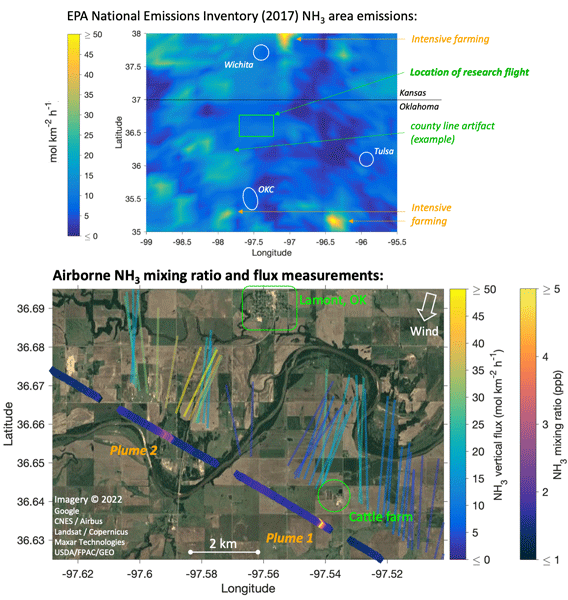
We present a new, highly sensitive technique for measuring atmospheric ammonia, an important trace gas that is emitted mainly by agriculture. We deployed the instrument on an aircraft during research flights over rural Oklahoma. Due to its fast response, we could analyze correlations with turbulent winds and calculate ammonia emissions from nearby areas at 1 to 2 km resolution. We observed high spatial variability and point sources that are not resolved in the US National Emissions Inventory.
Deborah F. McGlynn, Graham Frazier, Laura E. R. Barry, Manuel T. Lerdau, Sally E. Pusede, and Gabriel Isaacman-VanWertz
Biogeosciences, 20, 45–55, https://doi.org/10.5194/bg-20-45-2023, https://doi.org/10.5194/bg-20-45-2023, 2023
Short summary
Short summary
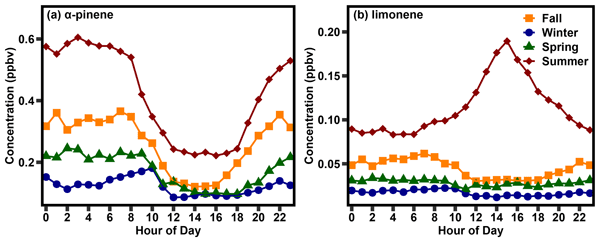
Using a custom-made gas chromatography flame ionization detector, 2 years of speciated hourly biogenic volatile organic compound data were collected in a forest in central Virginia. We identify diurnal and seasonal variability in the data, which is shown to impact atmospheric oxidant budgets. A comparison with emission models identified discrepancies with implications for model outcomes. We suggest increased monitoring of speciated biogenic volatile organic compounds to improve modeled results.
Rebecca A. Wernis, Nathan M. Kreisberg, Robert J. Weber, Greg T. Drozd, and Allen H. Goldstein
Atmos. Chem. Phys., 22, 14987–15019, https://doi.org/10.5194/acp-22-14987-2022, https://doi.org/10.5194/acp-22-14987-2022, 2022
Short summary
Short summary
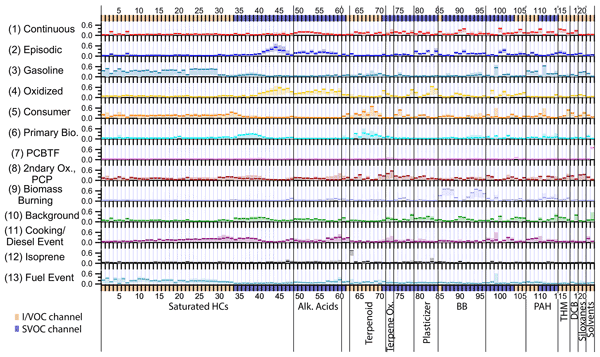
We measured volatile and intermediate-volatility gases and semivolatile gas- and particle-phase compounds in the atmosphere during an 11 d period in a Bay Area suburb. We separated compounds based on variability in time to arrive at 13 distinct sources. Some compounds emitted from plants are found in greater quantities as fragrance compounds in consumer products. The wide volatility range of these measurements enables the construction of more complete source profiles.
Sungwoo Kim, Brian M. Lerner, Donna T. Sueper, and Gabriel Isaacman-VanWertz
Atmos. Meas. Tech., 15, 5061–5075, https://doi.org/10.5194/amt-15-5061-2022, https://doi.org/10.5194/amt-15-5061-2022, 2022
Short summary
Short summary
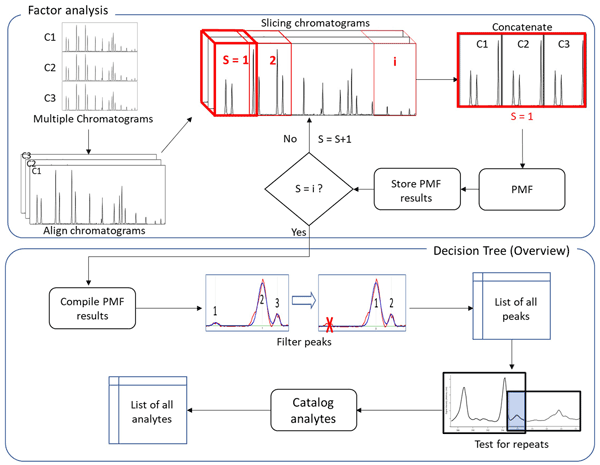
Atmospheric samples can be complex, and current analysis methods often require substantial human interaction and discard potentially important information. To improve analysis accuracy and computational cost of these large datasets, we developed an automated analysis algorithm that utilizes a factor analysis approach coupled with a decision tree. We demonstrate that this algorithm cataloged approximately 10 times more analytes compared to a manual analysis and in a quarter of the analysis time.

Jerome D. Fast, David M. Bell, Gourihar Kulkarni, Jiumeng Liu, Fan Mei, Georges Saliba, John E. Shilling, Kaitlyn Suski, Jason Tomlinson, Jian Wang, Rahul Zaveri, and Alla Zelenyuk
Atmos. Chem. Phys., 22, 11217–11238, https://doi.org/10.5194/acp-22-11217-2022, https://doi.org/10.5194/acp-22-11217-2022, 2022
Short summary
Short summary
Recent aircraft measurements from the HI-SCALE campaign conducted over the Southern Great Plains (SGP) site in Oklahoma are used to quantify spatial variability of aerosol properties in terms of grid spacings typically used by weather and climate models. Surprisingly large horizontal gradients in aerosol properties were frequently observed in this rural area. This spatial variability can be used as an uncertainty range when comparing surface point measurements with model predictions.
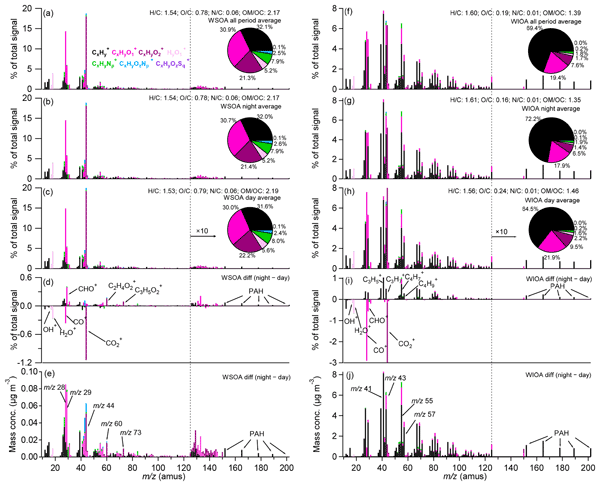
Zhiqiang Zhang, Yele Sun, Chun Chen, Bo You, Aodong Du, Weiqi Xu, Yan Li, Zhijie Li, Lu Lei, Wei Zhou, Jiaxing Sun, Yanmei Qiu, Lianfang Wei, Pingqing Fu, and Zifa Wang
Atmos. Chem. Phys., 22, 10409–10423, https://doi.org/10.5194/acp-22-10409-2022, https://doi.org/10.5194/acp-22-10409-2022, 2022
Short summary
Short summary
We present a comprehensive characterization of water-soluble organic aerosol and the first mass spectral characterization of water-insoluble organic aerosol in the cold season in Beijing by integrating online and offline aerosol mass spectrometer measurements. WSOA comprised dominantly secondary OA and showed large changes during the transition season from autumn to winter. WIOA was characterized by prominent hydrocarbon ions series, low oxidation states, and significant day–night differences.
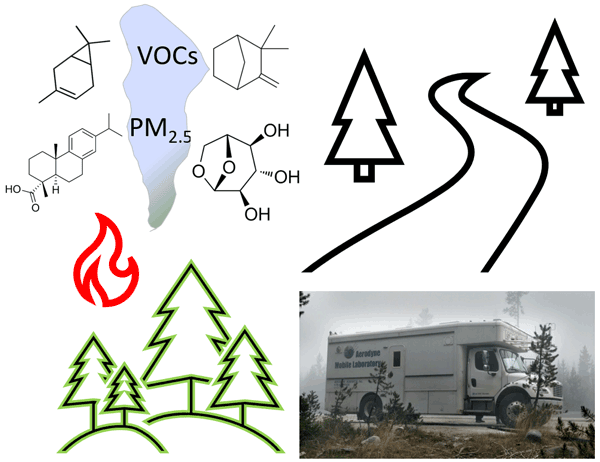
Yutong Liang, Christos Stamatis, Edward C. Fortner, Rebecca A. Wernis, Paul Van Rooy, Francesca Majluf, Tara I. Yacovitch, Conner Daube, Scott C. Herndon, Nathan M. Kreisberg, Kelley C. Barsanti, and Allen H. Goldstein
Atmos. Chem. Phys., 22, 9877–9893, https://doi.org/10.5194/acp-22-9877-2022, https://doi.org/10.5194/acp-22-9877-2022, 2022
Short summary
Short summary
This article reports the measurements of organic compounds emitted from western US wildfires. We identified and quantified 240 particle-phase compounds and 72 gas-phase compounds emitted in wildfire and related the emissions to the modified combustion efficiency. Higher emissions of diterpenoids and monoterpenes were observed, likely due to distillation from unburned heated vegetation. Our results can benefit future source apportionment and modeling studies as well as exposure assessments.
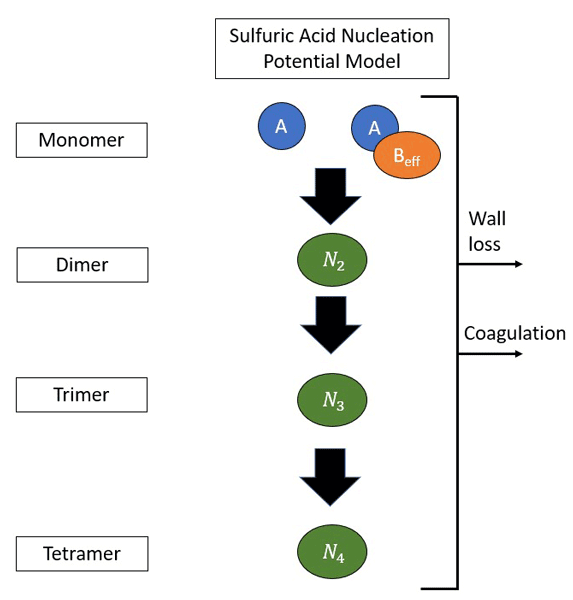
Jack S. Johnson and Coty N. Jen
Atmos. Chem. Phys., 22, 8287–8297, https://doi.org/10.5194/acp-22-8287-2022, https://doi.org/10.5194/acp-22-8287-2022, 2022
Short summary
Short summary
Sulfuric acid nucleation forms particles in Earth's atmosphere that influence cloud formation and climate. This study introduces the Nucleation Potential Model, which simplifies the diverse reactions between sulfuric acid and numerous precursor gases to predict nucleation rates. Results show that the model is capable of estimating the potency and concentration of mixtures of precursor gases from laboratory and field observations and can be used to model nucleation across diverse environments.
Emily B. Franklin, Lindsay D. Yee, Bernard Aumont, Robert J. Weber, Paul Grigas, and Allen H. Goldstein
Atmos. Meas. Tech., 15, 3779–3803, https://doi.org/10.5194/amt-15-3779-2022, https://doi.org/10.5194/amt-15-3779-2022, 2022
Short summary
Short summary
The composition of atmospheric aerosols are extremely complex, containing hundreds of thousands of estimated individual compounds. The majority of these compounds have never been catalogued in widely used databases, making them extremely difficult for atmospheric chemists to identify and analyze. In this work, we present Ch3MS-RF, a machine-learning-based model to enable characterization of complex mixtures and prediction of structure-specific properties of unidentifiable organic compounds.
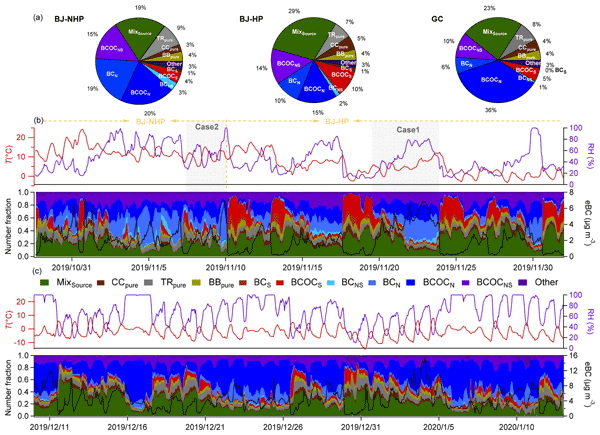
Jiaxing Sun, Yele Sun, Conghui Xie, Weiqi Xu, Chun Chen, Zhe Wang, Lei Li, Xubing Du, Fugui Huang, Yan Li, Zhijie Li, Xiaole Pan, Nan Ma, Wanyun Xu, Pingqing Fu, and Zifa Wang
Atmos. Chem. Phys., 22, 7619–7630, https://doi.org/10.5194/acp-22-7619-2022, https://doi.org/10.5194/acp-22-7619-2022, 2022
Short summary
Short summary
We analyzed the chemical composition and mixing state of BC-containing particles at urban and rural sites in winter in the North China Plain and evaluated their impact on light absorption enhancement. BC was dominantly mixed with organic carbon, nitrate, and sulfate, and the mixing state evolved significantly as a function of relative humidity (RH) at both sites. The absorption enhancement depended strongly on coated secondary inorganic aerosol and was up to ~1.3–1.4 during aging processes.
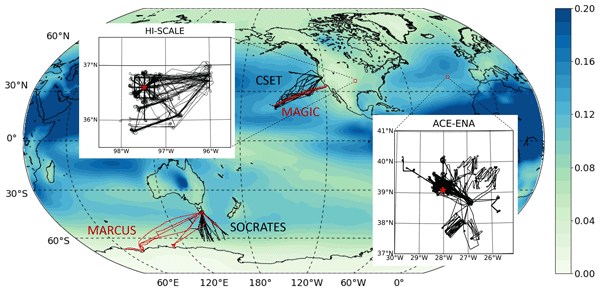
Shuaiqi Tang, Jerome D. Fast, Kai Zhang, Joseph C. Hardin, Adam C. Varble, John E. Shilling, Fan Mei, Maria A. Zawadowicz, and Po-Lun Ma
Geosci. Model Dev., 15, 4055–4076, https://doi.org/10.5194/gmd-15-4055-2022, https://doi.org/10.5194/gmd-15-4055-2022, 2022
Short summary
Short summary
We developed an Earth system model (ESM) diagnostics package to compare various types of aerosol properties simulated in ESMs with aircraft, ship, and surface measurements from six field campaigns across spatial scales. The diagnostics package is coded and organized to be flexible and modular for future extension to other field campaign datasets and adapted to higher-resolution model simulations. Future releases will include comprehensive cloud and aerosol–cloud interaction diagnostics.

Andrew J. Lindsay, Daniel C. Anderson, Rebecca A. Wernis, Yutong Liang, Allen H. Goldstein, Scott C. Herndon, Joseph R. Roscioli, Christoph Dyroff, Ed C. Fortner, Philip L. Croteau, Francesca Majluf, Jordan E. Krechmer, Tara I. Yacovitch, Walter B. Knighton, and Ezra C. Wood
Atmos. Chem. Phys., 22, 4909–4928, https://doi.org/10.5194/acp-22-4909-2022, https://doi.org/10.5194/acp-22-4909-2022, 2022
Short summary
Short summary
Wildfire smoke dramatically impacts air quality and often has elevated concentrations of ozone. We present measurements of ozone and its precursors at a rural site periodically impacted by wildfire smoke. Measurements of total peroxy radicals, key ozone precursors that have been studied little within wildfires, compare well with chemical box model predictions. Our results indicate no serious issues with using current chemistry mechanisms to model chemistry in aged wildfire plumes.
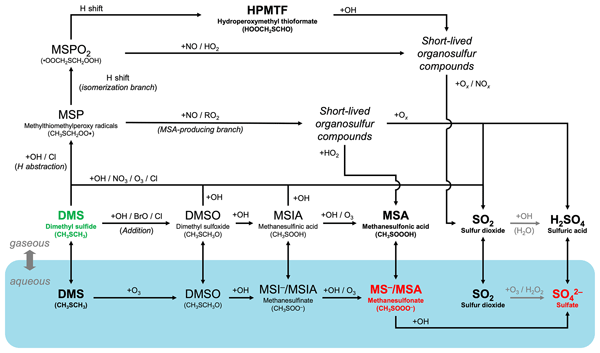
Ka Ming Fung, Colette L. Heald, Jesse H. Kroll, Siyuan Wang, Duseong S. Jo, Andrew Gettelman, Zheng Lu, Xiaohong Liu, Rahul A. Zaveri, Eric C. Apel, Donald R. Blake, Jose-Luis Jimenez, Pedro Campuzano-Jost, Patrick R. Veres, Timothy S. Bates, John E. Shilling, and Maria Zawadowicz
Atmos. Chem. Phys., 22, 1549–1573, https://doi.org/10.5194/acp-22-1549-2022, https://doi.org/10.5194/acp-22-1549-2022, 2022
Short summary
Short summary
Understanding the natural aerosol burden in the preindustrial era is crucial for us to assess how atmospheric aerosols affect the Earth's radiative budgets. Our study explores how a detailed description of dimethyl sulfide (DMS) oxidation (implemented in the Community Atmospheric Model version 6 with chemistry, CAM6-chem) could help us better estimate the present-day and preindustrial concentrations of sulfate and other relevant chemicals, as well as the resulting aerosol radiative impacts.
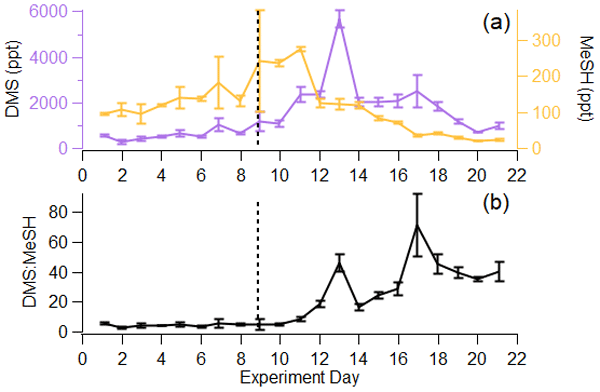
Delaney B. Kilgour, Gordon A. Novak, Jon S. Sauer, Alexia N. Moore, Julie Dinasquet, Sarah Amiri, Emily B. Franklin, Kathryn Mayer, Margaux Winter, Clare K. Morris, Tyler Price, Francesca Malfatti, Daniel R. Crocker, Christopher Lee, Christopher D. Cappa, Allen H. Goldstein, Kimberly A. Prather, and Timothy H. Bertram
Atmos. Chem. Phys., 22, 1601–1613, https://doi.org/10.5194/acp-22-1601-2022, https://doi.org/10.5194/acp-22-1601-2022, 2022
Short summary
Short summary
We report measurements of gas-phase volatile organosulfur molecules made during a mesocosm phytoplankton bloom experiment. Dimethyl sulfide (DMS), methanethiol (MeSH), and benzothiazole accounted for on average over 90 % of total gas-phase sulfur emissions. This work focuses on factors controlling the production and emission of DMS and MeSH and the role of non-DMS molecules (such as MeSH and benzothiazole) in secondary sulfate formation in coastal marine environments.
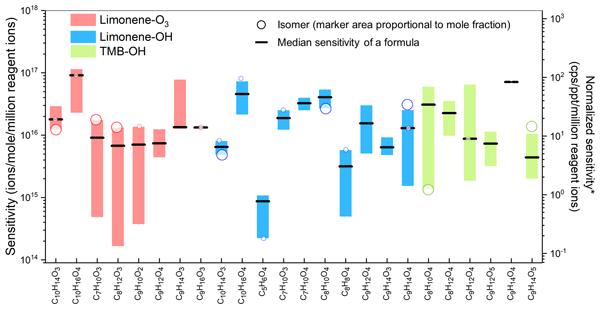
Chenyang Bi, Jordan E. Krechmer, Graham O. Frazier, Wen Xu, Andrew T. Lambe, Megan S. Claflin, Brian M. Lerner, John T. Jayne, Douglas R. Worsnop, Manjula R. Canagaratna, and Gabriel Isaacman-VanWertz
Atmos. Meas. Tech., 14, 6835–6850, https://doi.org/10.5194/amt-14-6835-2021, https://doi.org/10.5194/amt-14-6835-2021, 2021
Short summary
Short summary
Iodide-adduct chemical ionization mass spectrometry (I-CIMS) has been widely used to analyze airborne organics. In this study, I-CIMS sensitivities of isomers within a formula are found to generally vary by 1 and up to 2 orders of magnitude. Comparisons between measured and predicted moles, obtained using a voltage-scanning calibration approach, show that predictions for individual compounds or formulas might carry high uncertainty, yet the summed moles of analytes agree reasonably well.
Deborah F. McGlynn, Laura E. R. Barry, Manuel T. Lerdau, Sally E. Pusede, and Gabriel Isaacman-VanWertz
Atmos. Chem. Phys., 21, 15755–15770, https://doi.org/10.5194/acp-21-15755-2021, https://doi.org/10.5194/acp-21-15755-2021, 2021
Short summary
Short summary
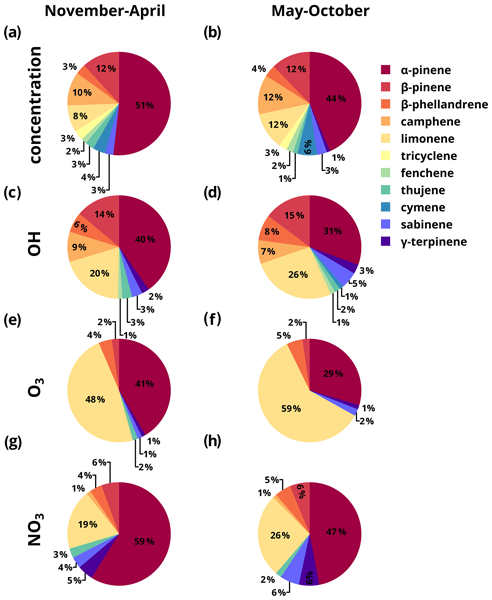
We present 1 year of hourly measurements of chemically resolved Biogenic volatile organic compound (BVOCs) between 15 September 2019 and 15 September 2020, collected at a research tower in central Virginia. Concentrations of a range of BVOCs are described and examined for their impact on atmospheric reactivity. The majority of reactivity comes from α-pinene and limonene, highlighting the importance of both concentration and structure in assessing atmospheric impacts of emissions.

Chenyang Bi, Jordan E. Krechmer, Manjula R. Canagaratna, and Gabriel Isaacman-VanWertz
Atmos. Meas. Tech., 14, 6551–6560, https://doi.org/10.5194/amt-14-6551-2021, https://doi.org/10.5194/amt-14-6551-2021, 2021
Short summary
Short summary
Calibration techniques have been recently developed to log-linearly correlate analyte sensitivity with CIMS operating conditions particularly for compounds without authentic standards. In this work, we examine the previously ignored bias in the log-linear-based calibration method and estimate an average bias of 30 %, with 1 order of magnitude for less sensitive compounds in some circumstances. A step-by-step guide was provided to reduce and even remove the bias.
Rebecca A. Wernis, Nathan M. Kreisberg, Robert J. Weber, Yutong Liang, John Jayne, Susanne Hering, and Allen H. Goldstein
Atmos. Meas. Tech., 14, 6533–6550, https://doi.org/10.5194/amt-14-6533-2021, https://doi.org/10.5194/amt-14-6533-2021, 2021
Short summary
Short summary
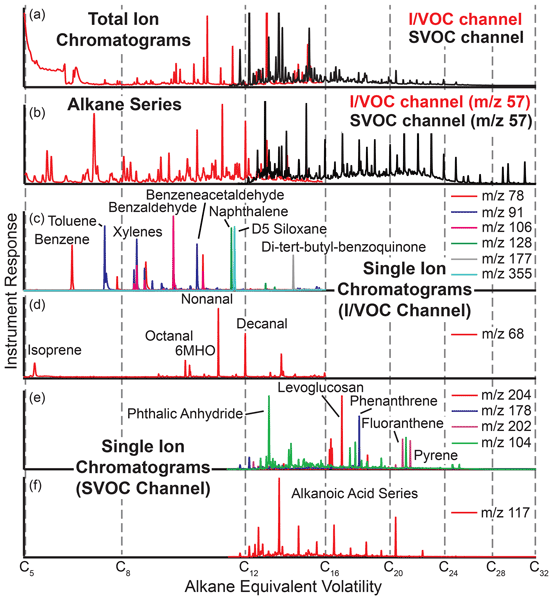
cTAG is a new scientific instrument that measures concentrations of organic chemicals in the atmosphere. cTAG is the first instrument capable of measuring small, light chemicals as well as heavier chemicals and everything in between on a single detector, every hour. In this work we explain how cTAG works and some of the tests we performed to verify that it works properly and reliably. We also present measurements of alkanes that suggest they have three dominant sources in a Bay Area suburb.
Huisheng Bian, Eunjee Lee, Randal D. Koster, Donifan Barahona, Mian Chin, Peter R. Colarco, Anton Darmenov, Sarith Mahanama, Michael Manyin, Peter Norris, John Shilling, Hongbin Yu, and Fanwei Zeng
Atmos. Chem. Phys., 21, 14177–14197, https://doi.org/10.5194/acp-21-14177-2021, https://doi.org/10.5194/acp-21-14177-2021, 2021
Short summary
Short summary
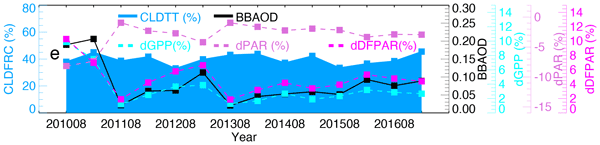
The study using the NASA Earth system model shows ~2.6 % increase in burning season gross primary production and ~1.5 % increase in annual net primary production across the Amazon Basin during 2010–2016 due to the change in surface downward direct and diffuse photosynthetically active radiation by biomass burning aerosols. Such an aerosol effect is strongly dependent on the presence of clouds. The cloud fraction at which aerosols switch from stimulating to inhibiting plant growth occurs at ~0.8.
Cited articles
Aiken, A. C., DeCarlo, P. F., and Jimenez, J. L.: Elemental Analysis of Organic Species with Electron Ionization High-Resolution Mass Spectrometry, Anal. Chem., 79, 8350–8358, https://doi.org/10.1021/ac071150w, 2007.
Aiken, A. C., Decarlo, P. F., Kroll, J. H., Worsnop, D. R., Huffman, J. A., Docherty, K. S., Ulbrich, I. M., Mohr, C., Kimmel, J. R., Sueper, D., Sun, Y., Zhang, Q., Trimborn, A., Northway, M., Ziemann, P. J., Canagaratna, M. R., Onasch, T. B., Alfarra, M. R., Prevot, A. S. H., Dommen, J., Duplissy, J., Metzger, A., Baltensperger, U., and Jimenez, J. L.: O/C and OM/OC ratios of primary, secondary, and ambient organic aerosols with high-resolution time-of-flight aerosol mass spectrometry, Environ. Sci. Technol., 42, 4478–4485, https://doi.org/10.1021/es703009q, 2008.
Alam, M. S. and Harrison, R. M.: Recent advances in the application of 2-dimensional gas chromatography with soft and hard ionisation time-of-flight mass spectrometry in environmental analysis, Chem. Sci., 7, 3968–3977, https://doi.org/10.1039/C6SC00465B, 2016.
Alam, M. S., West, C. E., Scarlett, A. G., Rowland, S. J., and Harrison, R. M.: Application of 2D-GCMS reveals many industrial chemicals in airborne particulate matter, Atmos. Environ., 65, 101, https://doi.org/h10.1016/j.atmosenv.2012.10.014, 2013.
Aumont, B., Szopa, S., and Madronich, S.: Modelling the evolution of organic carbon during its gas-phase tropospheric oxidation: development of an explicit model based on a self generating approach, Atmos. Chem. Phys., 5, 2497–2517, https://doi.org/10.5194/acp-5-2497-2005, 2005.
Brophy, P. and Farmer, D. K.: A switchable reagent ion high resolution time-of-flight chemical ionization mass spectrometer for real-time measurement of gas phase oxidized species: characterization from the 2013 southern oxidant and aerosol study, Atmos. Meas. Tech., 8, 2945–2959, https://doi.org/10.5194/amt-8-2945-2015, 2015.
Cai, J., Zeng, X., Zhi, G., Gligorovski, S., Sheng, G., Yu, Z., Wang, X., and Peng, P.: Molecular composition and photochemical evolution of water-soluble organic carbon (WSOC) extracted from field biomass burning aerosols using high-resolution mass spectrometry, Atmos. Chem. Phys., 20, 6115–6128, https://doi.org/10.5194/acp-20-6115-2020, 2020.
Canagaratna, M. R., Jimenez, J. L., Kroll, J. H., Chen, Q., Kessler, S. H., Massoli, P., Hildebrandt Ruiz, L., Fortner, E., Williams, L. R., Wilson, K. R., Surratt, J. D., Donahue, N. M., Jayne, J. T., and Worsnop, D. R.: Elemental ratio measurements of organic compounds using aerosol mass spectrometry: characterization, improved calibration, and implications, Atmos. Chem. Phys., 15, 253–272, https://doi.org/10.5194/acp-15-253-2015, 2015.
Chen, Y., Zaveri, R. A., Vandergrift, G. W., Cheng, Z., China, S., Zelenyuk, A., and Shilling, J. E.: Nonequilibrium Behavior in Isoprene Secondary Organic Aerosol, Environ. Sci. Technol., 57, 14182–14193, https://doi.org/10.1021/acs.est.3c03532, 2023.
Claeys, M., Graham, B., Vas, G., Wang, W., Vermeylen, R., Pashynska, V., Cafmeyer, J., Guyon, P., Andreae, M. O., Artaxo, P., and Maenhaut, W.: Formation of secondary organic aerosols through photooxidation of isoprene, Science, 303, 1173–1176, https://doi.org/10.1126/science.1092805, 2004.
Crounse, J. D., Mckinney, K. A., Kwan, A. J., and Wennberg, P. O.: Measurement of Gas-Phase Hydroperoxides by Chemical Ionization Mass Spectrometry Anal. Chem., 78, 6726–6732, 2006,.
de Sá, S. S., Palm, B. B., Campuzano-Jost, P., Day, D. A., Newburn, M. K., Hu, W., Isaacman-VanWertz, G., Yee, L. D., Thalman, R., Brito, J., Carbone, S., Artaxo, P., Goldstein, A. H., Manzi, A. O., Souza, R. A. F., Mei, F., Shilling, J. E., Springston, S. R., Wang, J., Surratt, J. D., Alexander, M. L., Jimenez, J. L., and Martin, S. T.: Influence of urban pollution on the production of organic particulate matter from isoprene epoxydiols in central Amazonia, Atmos. Chem. Phys, 17, 6611–6629, https://doi.org/10.5194/acp-17-6611-2017, 2017.
de Sá, S. S., Palm, B. B., Campuzano-Jost, P., Day, D. A., Hu, W., Isaacman-VanWertz, G., Yee, L. D., Brito, J., Carbone, S., Ribeiro, I. O., Cirino, G. G., Liu, Y. J., Thalman, R., Sedlacek, A., Funk, A., Schumacher, C., Shilling, J. E., Schneider, J., Artaxo, P., Goldstein, A. H., Souza, R. A. F., Wang, J., Mckinney, K. A., Barbosa, H., Alexander, M. L., Jimenez, J. L., and Martin, S. T.: Urban influence on the concentration and composition of submicron particulate matter in central Amazonia, Atmos. Chem. Phys., 18, 12185–12206, https://doi.org/10.5194/acp-18-12185-2018, 2018.
de Sá, S. S., Rizzo, L. V., Palm, B. B., Campuzano-Jost, P., Day, D. A., Yee, L. D., Wernis, R., Isaacman-VanWertz, G., Brito, J., Carbone, S., Liu, Y. J., Sedlacek, A., Springston, S., Goldstein, A. H., Barbosa, H. M. J., Alexander, M. L., Artaxo, P., Jimenez, J. L., Martin, S. T., Paulson, J. A., Barbosa, H. M. J., Alexander, M. L., Artaxo, P., Jimenez, J. L. and Martin, S. T.: Contributions of biomass-burning, urban, and biogenic emissions to the concentrations and light-absorbing properties of particulate matter in central Amazonia during the dry season, Atmos. Chem. Phys., 19, 7973–8001, https://doi.org/10.5194/acp-19-7973-2019, 2019.
Ditto, J. C., Joo, T., Slade, J. H., Shepson, P. B., Ng, N. L., and Gentner, D. R.: Nontargeted Tandem Mass Spectrometry Analysis Reveals Diversitynd Variability in Aerosol Functional Groups across Multiple Sites, Seasons,nd Times of Day, Environ. Sci. Technol. Lett., 7, 60–69, https://doi.org/10.1021/acs.estlett.9b00702, 2020.
Franklin, E. B., Yee, L. D., Aumont, B., Weber, R. J., Grigas, P., and Goldstein, A. H.: Ch3MS-RF: a random forest model for chemical characterization and improved quantification of unidentified atmospheric organics detected by chromatography–mass spectrometry techniques, Atmos. Meas. Tech., 15, 3779–3803, https://doi.org/10.5194/amt-15-3779-2022, 2022.
Franklin, E. B., Yee, L. D., Wernis, R., Isaacman-VanWertz, G., Kreisberg, N., Weber, R., Zhang, H., Palm, B. B., Hu, W., Campuzano-Jost, P., Day, D. A., Manzi, A., Artaxo, P., De Souza, R. A. F., Jimenez, J. L., Martin, S. T., and Goldstein, A. H.: Chemical Signatures of Seasonally Unique Anthropogenic Influences on Organic Aerosol Composition in the Central Amazon, Environ. Sci. Technol., 57, 6263–6272, https://doi.org/10.1021/acs.est.2c07260, 2023.
Gagan, S., Sarang, K., Rudzinski, K. J., Liu, R., Szmigielski, R., and Zhang, Y.: Synthetic strategies for oxidation products from biogenic volatile organic compounds in the atmosphere: A review, Atmos. Environ., https://doi.org/10.1016/j.atmosenv.2023.120017, 2023.
Gilardoni, S., Massoli, P., Paglione, M., Giulianelli, L., Carbone, C., Rinaldi, M., Decesari, S., Sandrini, S., Costabile, F., Gobbi, G. P., Pietrogrande, M. C., Visentin, M., Scotto, F., Fuzzi, S., and Facchini, M. C.: Direct observation of aqueous secondary organic aerosol from biomass-burning emissions, Proc. Natl. Acad. Sci., 113, 10013–10018, https://doi.org/10.1073/pnas.1602212113, 2016.
Goldstein, A. H. and Galbally, I. E.: Known and Unexplored Organic Constituents in the Earth's Atmosphere, Environ. Sci. Technol., 41, 1514–1521, 2007.
Goldstein, A. H., Worton, D. R., Williams, B. J., Hering, S. V., Kreisberg, N. M., Panić, O., Górecki, T., Panic, O., and Gorecki, T.: Thermal desorption comprehensive two-dimensional gas chromatography for in-situ measurements of organic aerosols, J. Chromatogr. A, 1186, 340–347, https://doi.org/10.1016/j.chroma.2007.09.094, 2008.
Hallquist, M., Wenger, J. C., Baltensperger, U., Rudich, Y., Simpson, D., Claeys, M., Dommen, J., Donahue, N. M., George, C., Goldstein, A. H., Hamilton, J. F., Herrmann, H., Hoffmann, T., Iinuma, Y., Jang, M., Jenkin, M. E., Jimenez, J. L., Kiendler-Scharr, A., Maenhaut, W., McFiggans, G., Mentel, Th. F., Monod, A., Prévôt, A. S. H., Seinfeld, J. H., Surratt, J. D., Szmigielski, R., and Wildt, J.: The formation, properties and impact of secondary organic aerosol: current and emerging issues, Atmos. Chem. Phys., 9, 5155–5236, https://doi.org/10.5194/acp-9-5155-2009, 2009.
Hamilton, J. F., Webb, P. J., Lewis, A. C., Hopkins, J. R., Smith, S., and Davy, P.: Partially oxidised organic components in urban aerosol using GCXGC-TOF/MS, Atmos. Chem. Phys., 4, 1279–1290, https://doi.org/10.5194/acp-4-1279-2004, 2004.
Hamilton, J. F., Lewis, A. C., Reynolds, J. C., Carpenter, L. J., and Lubben, A.: Investigating the composition of organic aerosol resulting from cyclohexene ozonolysis: low molecular weight and heterogeneous reaction products, Atmos. Chem. Phys., 6, 4973–4984, https://doi.org/10.5194/acp-6-4973-2006, 2006.
Harvey, D. J. and Vouros, P.: Mass Spectrometric Fragmentation of Trimethylsilyl and Related Alkylsilyl Derivatives, Mass Spectrom. Rev., 39, 105–211, https://doi.org/10.1002/mas.21590, 2020.
Hatch, L. E., Jen, C. N., Kreisberg, N. M., Selimovic, V., Yokelson, R. J., Stamatis, C., York, R. A., Foster, D., Stephens, S. L., Goldstein, A. H., and Barsanti, K. C.: Highly Speciated Measurements of Terpenoids Emitted from Laboratory and Mixed-Conifer Forest Prescribed Fires, Environ. Sci. Technol., 53, 9418–9428, https://doi.org/10.1021/acs.est.9b02612, 2019.
He, X., Zheng, X., You, Y., Zhang, S., Zhao, B., Wang, X., Huang, G., Chen, T., Cao, Y., He, L., Chang, X., Wang, S., and Wu, Y.: Comprehensive chemical characterization of gaseous I/SVOC emissions from heavy-duty diesel vehicles using two-dimensional gas chromatography time-of-flight mass spectrometry, Environ. Pollut., 305, 119284, https://doi.org/10.1016/J.ENVPOL.2022.119284, 2022.
Isaacman, G., Kreisberg, N. M., Yee, L. D., Worton, D. R., Chan, A. W. H., Moss, J. A., Hering, S. V., and Goldstein, A. H.: Online derivatization for hourly measurements of gas- and particle-phase semi-volatile oxygenated organic compounds by thermal desorption aerosol gas chromatography (SV-TAG), Atmos. Meas. Tech., 7, 4417–4429, https://doi.org/10.5194/amt-7-4417-2014, 2014.
Isaacman-Vanwertz, G., Sueper, D. T., Aikin, K. C., Lerner, B. M., Gilman, J. B., de Gouw, J. A., Worsnop, D. R., and Goldstein, A. H.: Automated single-ion peak fitting as an efficient approach for analyzing complex chromatographic data, J. Chromatogr. A, 1529, 81–92, https://doi.org/10.1016/j.chroma.2017.11.005, 2017.
Jaoui, M., Kleindienst, T. E., Docherty, K. S., Lewandowski, M., and Offenberg, J. H.: Secondary organic aerosol formation from the oxidation of a series of sesquiterpenes: alpha-cedrene, beta-caryophyllene, alpha-humulene and alpha-farnesene with O-3, OH and NO3 radicals, Environ. Chem., 10, 178–193, https://doi.org/10.1071/en13025, 2013.
Jen, C. N., Hatch, L. E., Selimovic, V., Yokelson, R. J., Weber, R., Fernandez, A. E., Kreisberg, N. M., Barsanti, K. C., and Goldstein, A. H.: Speciated and total emission factors of particulate organics from burning western US wildland fuels and their dependence on combustion efficiency, Atmos. Chem. Phys., 19, 1013–1026, https://doi.org/10.5194/acp-19-1013-2019, 2019.
Jeon, S., Walker, M. J., Sueper, D. T., Day, D. A., Handschy, A. V, Jose, L., and Williams, B. J.: A searchable database and mass spectral comparison tool for aerosol mass spectrometry (AMS) and aerosol chemical speciation monitor (ACSM), Atmos. Meas. Tech., 16, 6075–6095, https://doi.org/10.5194/amt-16-6075-2023, 2023.
Johnston, M. V. and Kerecman, D. E.: Molecular Characterization of Atmospheric Organic Aerosol by Mass Spectrometry, Annu. Rev. Anal. Chem., 12, 247–274, https://doi.org/10.1146/annurev-anchem-061516-045135, 2019.
Joo, T., Rivera-Rios, J. C., Takeuchi, M., Alvarado, M. J., and Ng, N. L.: Secondary Organic Aerosol Formation from Reaction of 3-Methylfuran with Nitrate Radicals, ACS Earth Sp. Chem., 3, 922–934, https://doi.org/10.1021/acsearthspacechem.9b00068, 2019.
Joo, T., Machesky, J. E., Zeng, L., Hass-Mitchell, T., Weber, R. J., Gentner, D. R., and Ng, N. L.: Secondary Brown Carbon Formation From Photooxidation of Furans From Biomass Burning, Geophys. Res. Lett., 51, https://doi.org/10.1029/2023GL104900, 2024.
Kanakidou, M., Seinfeld, J. H., Pandis, S. N., Barnes, I., Dentener, F. J., Facchini, M. C., Van Dingenen, R., Ervens, B., Nenes, A., Nielsen, C. J., Swietlicki, E., Putaud, J. P., Balkanski, Y., Fuzzi, S., Horth, J., Moortgat, G. K., Winterhalter, R., Myhre, C. E. L., Tsigaridis, K., Vignati, E., Stephanou, E. G., and Wilson, J.: Organic aerosol and global climate modelling: a review, Atmos. Chem. Phys., 5, 1053–1123, https://doi.org/10.5194/acp-5-1053-2005, 2005.
Kenagy, H. S., Heald, C. L., Tahsini, N., Goss, M. B., Kroll, J. H., and Science, C.: Can we achieve atmospheric chemical environments in the laboratory? An integrated model-measurement approach to chamber SOA studies, Sci. Adv., 10, https://doi.org/10.1126/sciadv.ado1482, 2024.
Kopka, J., Schauer, N., Krueger, S., Birkemeyer, C., Usadel, B., Bergmüller, E., Dörmann, P., Weckwerth, W., Gibon, Y., Stitt, M., Willmitzer, L., Fernie, A. R., and Steinhauser, D.: GMD@CSB.DB: The Golm metabolome database, Bioinformatics, 21, 1635–1638, https://doi.org/10.1093/bioinformatics/bti236, 2005.
Kourtchev, I., Fuller, S. J., Giorio, C., Healy, R. M., Wilson, E., O'Connor, I., Wenger, J. C., McLeod, M., Aalto, J., Ruuskanen, T. M., Maenhaut, W., Jones, R., Venables, D. S., Sodeau, J. R., Kulmala, M., and Kalberer, M.: Molecular composition of biogenic secondary organic aerosols using ultrahigh-resolution mass spectrometry: comparing laboratory and field studies, Atmos. Chem. Phys., 14, 2155–2167, https://doi.org/10.5194/acp-14-2155-2014, 2014.
Kováts, E.: Gas-chromatographische Charakterisierung organischer Verbindungen. Teil 1: Retentionsindices aliphatischer Halogenide, Alkohole, Aldehyde und Ketone, Helv. Chim. Acta, 41, 1915–1932, https://doi.org/10.1002/hlca.19580410703, 1958.
Krechmer, J. E., Groessl, M., Zhang, X., Junninen, H., Massoli, P., Lambe, A. T., Kimmel, J. R., Cubison, M. J., Graf, S., Lin, Y.-H., Budisulistiorini, S. H., Zhang, H., Surratt, J. D., Knochenmuss, R., Jayne, J. T., Worsnop, D. R., Jimenez, J.-L., and Canagaratna, M. R.: Ion mobility spectrometry–mass spectrometry (IMS–MS) for on- and offline analysis of atmospheric gas and aerosol species, Atmos. Meas. Tech., 9, 3245–3262, https://doi.org/10.5194/amt-9-3245-2016, 2016.
Kroll, J. H., Donahue, N. M., Jimenez, J. L., Kessler, S. H., Canagaratna, M. R., Wilson, K. R., Altieri, K. E., Mazzoleni, L. R., Wozniak, A. S., Bluhm, H., Mysak, E. R., Smith, J. D., Kolb, C. E., and Worsnop, D. R.: Carbon oxidation state as a metric for describing the chemistry of atmospheric organic aerosol, Nat. Chem., 3, 133–139, https://doi.org/10.1038/nchem.948, 2011.
Lee, B. H., Lopez-Hilfiker, F. D., Mohr, C., Kurtén, T., Worsnop, D. R., and Thornton, J. A.: An iodide-adduct high-resolution time-of-flight chemical-ionization mass spectrometer: Application to atmospheric inorganic and organic compounds, Environ. Sci. Technol., 48, https://doi.org/10.1021/es500362a, 2014.
Liang, Y., Jen, C. N., Weber, R. J., Misztal, P. K., and Goldstein, A. H.: Chemical composition of PM2.5 in October 2017 Northern California wildfire plumes, Atmos. Chem. Phys., 21, 5719–5737, https://doi.org/10.5194/acp-21-5719-2021, 2021.
Lin, Y.-H., Zhang, Z., Docherty, K. S., Zhang, H., Budisulistiorini, S. H., Rubitschun, C. L., Shaw, S. L., Knipping, E. M., Edgerton, E. S., Kleindienst, T. E., Gold, A., and Surratt, J. D.: Isoprene Epoxydiols as Precursors to Secondary Organic Aerosol Formation: Acid-Catalyzed Reactive Uptake Studies with Authentic Compounds, Environ. Sci. Technol., 46, 250–258, https://doi.org/10.1021/es202554c, 2012.
Lopez-Hilfiker, F. D., Pospisilova, V., Huang, W., Kalberer, M., Mohr, C., Stefenelli, G., Thornton, J. A., Baltensperger, U., Prevot, A. S. H., and Slowik, J. G.: An extractive electrospray ionization time-of-flight mass spectrometer (EESI-TOF) for online measurement of atmospheric aerosol particles, Atmos. Meas. Tech., 12, 4867–4886, https://doi.org/10.5194/amt-12-4867-2019, 2019.
Mallard, W. G., Andriamaharavo, N. R., Mirokhin, Y. A., Halket, J. M., and Stein, S. E.: Creation of libraries of recurring mass spectra from large data sets assisted by a dual-column workflow, Anal. Chem., 86, 10231–10238, https://doi.org/10.1021/ac502379x, 2014.
McGlynn, D. F., Yee, L. D., Garraffo, H. M., Geer, L. Y., Mak, T. D., Mirokhin, Y. A., Tchekhovskoi, D. V, Jen, C. N., Goldstein, A. H., Kearsley, A. J., and Stein, S. E.: New Library-Based Methods for Nontargeted Compound Identification by GC-EI-MS, J. Am. Soc. Mass Spectrom., 36, 389–399, https://doi.org/10.1021/jasms.4c00451, 2025.
Nizkorodov, S. A., Laskin, J., and Laskin, A.: Molecular chemistry of organic aerosols through the application of high resolution mass spectrometry, Phys. Chem. Chem. Phys., 13, 3612–3629, https://doi.org/10.1039/c0cp02032j, 2011.
Nozière, B., Kalberer, M., Claeys, M., Allan, J., D'Anna, B., Decesari, S., Finessi, E., Glasius, M., Grgic, I., Hamilton, J. F., Hoffmann, T., Iinuma, Y., Jaoui, M., Kahnt, A., Kampf, C. J., Kourtchev, I., Maenhaut, W., Marsden, N., Saarikoski, S., Schnelle-Kreis, J., Surratt, J. D., Szidat, S., Szmigielski, R., and Wisthaler, A.: The Molecular Identification of Organic Compounds in the Atmosphere: State of the Art and Challenges, Chem. Rev., 115, 3919–3983, https://doi.org/10.1021/cr5003485, 2015.
Offenberg, J. H., Lewandowski, M., Kleindienst, T. E., Docherty, K. S., Jaoui, M., Krug, J., Riedel, T. P., and Olson, D. A.: Predicting Thermal Behavior of Secondary Organic Aerosols, Environ. Sci. Technol., 51, 9911–9919, https://doi.org/10.1021/acs.est.7b01968, 2017.
Porter, W. C., Jimenez, J. L., and Barsanti, K. C.: Quantifying Atmospheric Parameter Ranges for Ambient Secondary Organic Aerosol Formation, ACS Earth Sp. Chem., 5, 2380–2397, https://doi.org/10.1021/acsearthspacechem.1c00090, 2021.
Roach, P. J., Laskin, J., and Laskin, A.: Molecular characterization of organic aerosols using nanospray-desorption/ electrospray ionization-mass spectrometry, Anal. Chem., 82, 7979–7986, https://doi.org/10.1021/ac101449p, 2010a.
Roach, P. J., Laskin, J., and Laskin, A.: Nanospray desorption electrospray ionization: An ambient method for liquid-extraction surface sampling in mass spectrometry, Analyst, 135, 2233–2236, https://doi.org/10.1039/c0an00312c, 2010b.
Robinson, N. H., Hamilton, J. F., Allan, J. D., Langford, B., Oram, D. E., Chen, Q., Docherty, K., Farmer, D. K., Jimenez, J. L., Ward, M. W., Hewitt, C. N., Barley, M. H., Jenkin, M. E., Rickard, A. R., Martin, S. T., McFiggans, G., and Coe, H.: Evidence for a significant proportion of Secondary Organic Aerosol from isoprene above a maritime tropical forest, Atmos. Chem. Phys., 11, 1039–1050, https://doi.org/10.5194/acp-11-1039-2011, 2011.
Shrivastava, M. K., Andreae, M. O., Artaxo, P., Barbosa, H. M. J., Berg, L. K., Brito, J., Ching, J., Easter, R. C., Fan, J., Fast, J. D., Feng, Z., Fuentes, J. D., Glasius, M., Goldstein, A. H., Alves, E. G., Gomes, H., Gu, D., Guenther, A. B., Jathar, S. H., Kim, S., Liu, Y., Lou, S., Martin, S. T., McNeill, V. F., Medeiros, A., de Sá, S. S., Shilling, J. E., Springston, S. R., Souza, R. A. F., Thornton, J. A., Isaacman-VanWertz, G., Yee, L. D., Ynoue, R., Zaveri, R. A., Zelenyuk, A. and Zhao, C.: Urban pollution greatly enhances formation of natural aerosols over the Amazon rainforest, Nat. Commun., 10, 1046, https://doi.org/10.1038/s41467-019-08909-4, 2019.
Song, K., Guo, S., Gong, Y., Lv, D., Zhang, Y., Wan, Z., Li, T., Zhu, W., Wang, H., Yu, Y., Tan, R., Shen, R., Lu, S., Li, S., Chen, Y., and Hu, M.: Impact of cooking style and oil on semi-volatile and intermediate volatility organic compound emissions from Chinese domestic cooking, Atmos. Chem. Phys., 22, 9827–9841, https://doi.org/10.5194/acp-22-9827-2022, 2022.
Stein, S. E.: Estimating probabilities of correct identification from results of mass spectral library searches, J. Am. Soc. Mass Spectrom., 5, 316–323, https://doi.org/10.1016/1044-0305(94)85022-4, 1994.
Stein, S. E.: Chemical Substructure Identification by Mass Spectral Library Searching, J. Am. Soc. Mass Spectrom., 6, 644–655, 1995.
Stein, S. E.: Mass Spectral Reference Libraries: An Ever-Expanding Resource for Chemical Identification, Anal. Chem., 84, 7274–7282, https://doi.org/10.1021/ac301205z, 2012.
Sun, Y. L., Zhang, Q., Anastasio, C., and Sun, J.: Insights into secondary organic aerosol formed via aqueous-phase reactions of phenolic compounds based on high resolution mass spectrometry, Atmos. Chem. Phys., 10, 4809–4822, https://doi.org/10.5194/acp-10-4809-2010, 2010.
Surratt, J. D., Lewandowski, M., Offenberg, J. H., Jaoui, M., Kleindienst, T. E., Edney, E. O., and Seinfeld, J. H.: Effect of acidity on secondary organic aerosol formation from isoprene, Environ. Sci. Technol., 41, 5363–5369, https://doi.org/10.1021/es0704176, 2007.
Szmigielski, R., Surratt, J. D., Gómez-González, Y., Van der Veken, P., Kourtchev, I., Vermeylen, R., Blockhuys, F., Jaoui, M., Kleindienst, T. E., Lewandowski, M., Offenberg, J. H., Edney, E. O., Seinfeld, J. H., Maenhaut, W., and Claeys, M.: 3-methyl-1,2,3-butanetricarboxylic acid: An atmospheric tracer for terpene secondary organic aerosol, Geophys. Res. Lett., 34, L24811, https://doi.org/10.1029/2007GL031338, 2007.
Takeuchi, M., Berkemeier, T., Eris, G., and Ng, N. L.: Non-linear effects of secondary organic aerosol formation and properties in multi-precursor systems, Nat. Commun., 13, 1–13, https://doi.org/10.1038/s41467-022-35546-1, 2022.
Ulbrich, I. M., Canagaratna, M. R., Zhang, Q., Worsnop, D. R., and Jimenez, J. L.: Interpretation of organic components from Positive Matrix Factorization of aerosol mass spectrometric data, Atmos. Chem. Phys., 9, 2891–2918, https://doi.org/10.5194/acp-9-2891-2009, 2009.
van Eijck, A., Opatz, T., Taraborrelli, D., Sander, R., and Hoffmann, T.: New tracer compounds for secondary organic aerosol formation from β-caryophyllene oxidation, Atmos. Environ., 80, 122–130, https://doi.org/10.1016/j.atmosenv.2013.07.060, 2013.
Walters, W. W., Takeuchi, M., Blum, D. E., Eris, G., Tanner, D., Xu, W., Rivera-Rios, J., Liu, F., Xu, T., Huey, G., Min, J. B., Weber, R., Ng, N. L., and Hastings, M. G.: Evaluating NOx fate and organic nitrate chemistry from α-pinene oxidation using stable oxygen and nitrogen isotopes, Atmos. Chem. Phys., 25, 10707–10730, https://doi.org/10.5194/acp-25-10707-2025, 2025.
Wang, X., Hayeck, N., Brüggemann, M., Yao, L., Chen, H., Zhang, C., Emmelin, C., Chen, J., George, C., and Wang, L.: Chemical Characteristics of Organic Aerosols in Shanghai: A Study by Ultrahigh-Performance Liquid Chromatography Coupled With Orbitrap Mass Spectrometry, J. Geophys. Res.-Atmos., 122, 11703–11722, https://doi.org/10.1002/2017JD026930, 2017.
Wen, Z., Xu, L., and Zhang, H.: Recent advances in mass spectrometry techniques for atmospheric chemistry research on molecular-level, Mass Spectrom. Rev., 43, 1091–1134, https://doi.org/10.1002/mas.21857, 2023.
Worton, D. R., Kreisberg, N. M., Isaacman, G., Teng, A. P., McNeish, C., Górecki, T., Hering, S. V., and Goldstein, A. H.: Thermal Desorption Comprehensive Two-Dimensional Gas Chromatography: An Improved Instrument for In-Situ Speciated Measurements of Organic Aerosols, Aerosol Sci. Technol., 46, 380–393, https://doi.org/10.1080/02786826.2011.634452, 2012.
Worton, D. R., Decker, M., Isaacman-Vanwertz, G., Chan, A. W. H., Wilson, K. R., and Goldstein, A. H.: Improved molecular level identification of organic compounds using comprehensive two- dimensional chromatography, dual ionization energies and high resolution mass spectrometry, Analyst, 142, 2395–2403, https://doi.org/10.1039/c7an00625j, 2017.
Yee, L.: ucbglobes2025_v1, Zenodo [data set], https://doi.org/10.5281/zenodo.18176760, 2026a.
Yee, L.: UCB-GLOBES MS Data Visualization and Comparison Tool, Zenodo [code], https://doi.org/10.5281/zenodo.18177255, 2026b.
Yee, L. D., Isaacman-VanWertz, G., Wernis, R. A., Meng, M., Rivera, V., Kreisberg, N. M., Hering, S. V., Bering, M. S., Glasius, M., Upshur, M. A., Gray Bé, A., Thomson, R. J., Geiger, F. M., Offenberg, J. H., Lewandowski, M., Kourtchev, I., Kalberer, M., de Sá, S., Martin, S. T., Alexander, M. L., Palm, B. B., Hu, W., Campuzano-Jost, P., Day, D. A., Jimenez, J. L., Liu, Y., McKinney, K. A., Artaxo, P., Viegas, J., Manzi, A., Oliveira, M. B., de Souza, R., Machado, L. A. T., Longo, K., and Goldstein, A. H.: Observations of sesquiterpenes and their oxidation products in central Amazonia during the wet and dry seasons, Atmos. Chem. Phys., 18, 10433–10457, https://doi.org/10.5194/acp-18-10433-2018, 2018.
Zhang, H., Yee, L. D., Lee, B. H., Curtis, M. P. M. P., Worton, D. R., Isaacman-VanWertz, G., Offenberg, J. H., Lewandowski, M., Kleindienst, T. E. T. E., Beaver, M. R., Holder, A. L., Lonneman, W. A., Docherty, K. S., Jaoui, M., Pye, H. O. T., Hu, W., Day, D. A. D. A., Campuzano-Jost, P., Jimenez, J. L., Guo, H., Weber, R. J., de Gouw, J. A., Koss, A. R., Edgerton, E. S., Brune, W., Mohr, C., Lopez-Hilfiker, F. D., Lutz, A., Kreisberg, N. M., Spielman, S. R., Hering, S. V., Wilson, K. R., Thornton, J. A., and Goldstein, A. H.: Monoterpenes are the largest source of summertime organic aerosol in the southeastern United States, Proc. Natl. Acad. Sci., 115, 2038–2043, https://doi.org/10.1073/pnas.1717513115, 2018.
Zhang, M., Cai, D., Lin, J., Liu, Z., Li, M., Wang, Y., and Chen, J.: Molecular characterization of atmospheric organic aerosols in typical megacities in China, npj Clim. Atmos. Sci., 7, https://doi.org/10.1038/s41612-024-00784-1, 2024.
Short summary
An open-access mass spectral database of identified and unidentified compounds in atmospheric and laboratory-generated organic aerosols is released to aid in future molecular discoveries in the environmental sciences. Identification of air pollution sources and origins is improved using the ~27,000 mass spectral records in the University of California Berkeley Goldstein Library of Organic Biogenic Environmental Spectra (UCB-GLOBES) database.
An open-access mass spectral database of identified and unidentified compounds in atmospheric...


