
Articles | Volume 19, issue 15
https://doi.org/10.5194/amt-19-5091-2026
© Author(s) 2026. This work is distributed under
the Creative Commons Attribution 4.0 License.
the Creative Commons Attribution 4.0 License.
https://doi.org/10.5194/amt-19-5091-2026
© Author(s) 2026. This work is distributed under
the Creative Commons Attribution 4.0 License.
the Creative Commons Attribution 4.0 License.
Research article
| 
07 Aug 2026
Research article |
| 07 Aug 2026
| 07 Aug 2026
The “Golden Points” and nonequilibrium correction of high-accuracy frost point hygrometers
Yann Poltera
Institute of Applied Physics, University of Bern, 3012 Bern, Switzerland
Oeschger Centre for Climate Change Research, University of Bern, 3012 Bern, Switzerland

Institute for Atmospheric and Climate Science, ETH Zurich, 8032 Zurich, Switzerland
Frank G. Wienhold
Institute for Atmospheric and Climate Science, ETH Zurich, 8032 Zurich, Switzerland
Thomas Peter
Institute for Atmospheric and Climate Science, ETH Zurich, 8032 Zurich, Switzerland
Related authors
Simone Brunamonti, Yann Poltera, Gonzague Romanens, Alex Weitnauer, Philipp Scheidegger, Adrianos Filinis, Alistair Bell, Giovanni Martucci, Frank Gunther Wienhold, Thomas Peter, Peter Oelsner, Ruud Dirksen, Alexander Haefele, Lukas Emmenegger, Gunter Stober, and Béla Tuzson
EGUsphere, https://doi.org/10.5194/egusphere-2026-4762, https://doi.org/10.5194/egusphere-2026-4762, 2026
Short summary
Short summary
Accurate measurements of the concentration of water vapor in the upper atmosphere are essential for reliable climate predictions. We investigated the performance of a new lightweight (less than 4 kg) hygrometer, based on laser absorption spectroscopy, in a series of atmospheric test flights using weather balloons, reaching up to 35 km altitude. The results demonstrate the high accuracy and suitability of this technique for applications in long-term climate monitoring and atmospheric research.
Gonzague Romanens, Giovanni Martucci, Marco Rosoldi, Yann Poltera, Cristina Cardós, Natalia Prats, Sunji Ambe, Gessica Cosimato, Antoine Farah, Christian Félix, Ilaria Gandolfi, Alexander Haefele, Miguel Hernández, Masami Iwabuchi, Patrick Jann, Jason Ming Chun Lam, Fabrizio Marra, José María Rodríguez, Yves-Alain Roulet, Yuta Tanaka, Ruud Dirksen, and Fabio Madonna
EGUsphere, https://doi.org/10.5194/egusphere-2026-3215, https://doi.org/10.5194/egusphere-2026-3215, 2026
This preprint is open for discussion and under review for Atmospheric Measurement Techniques (AMT).
Short summary
Short summary
Automatic systems are increasingly used to launch weather balloons, raising questions about the long-term consistency of reference humidity measurements within the Global Climate Observing System Reference Upper-Air Network. We tested how storing balloon instruments inside automatic launch systems for up to two weeks affects humidity measurements under controlled conditions at six international sites. Results show that the impact strongly depends on the instrument type and storage environment.
Simone Brunamonti, Yann Poltera, Gonzague Romanens, Alex Weitnauer, Philipp Scheidegger, Adrianos Filinis, Alistair Bell, Giovanni Martucci, Frank Gunther Wienhold, Thomas Peter, Peter Oelsner, Ruud Dirksen, Alexander Haefele, Lukas Emmenegger, Gunter Stober, and Béla Tuzson
EGUsphere, https://doi.org/10.5194/egusphere-2026-4762, https://doi.org/10.5194/egusphere-2026-4762, 2026
Short summary
Short summary
Accurate measurements of the concentration of water vapor in the upper atmosphere are essential for reliable climate predictions. We investigated the performance of a new lightweight (less than 4 kg) hygrometer, based on laser absorption spectroscopy, in a series of atmospheric test flights using weather balloons, reaching up to 35 km altitude. The results demonstrate the high accuracy and suitability of this technique for applications in long-term climate monitoring and atmospheric research.
Gonzague Romanens, Giovanni Martucci, Marco Rosoldi, Yann Poltera, Cristina Cardós, Natalia Prats, Sunji Ambe, Gessica Cosimato, Antoine Farah, Christian Félix, Ilaria Gandolfi, Alexander Haefele, Miguel Hernández, Masami Iwabuchi, Patrick Jann, Jason Ming Chun Lam, Fabrizio Marra, José María Rodríguez, Yves-Alain Roulet, Yuta Tanaka, Ruud Dirksen, and Fabio Madonna
EGUsphere, https://doi.org/10.5194/egusphere-2026-3215, https://doi.org/10.5194/egusphere-2026-3215, 2026
This preprint is open for discussion and under review for Atmospheric Measurement Techniques (AMT).
Short summary
Short summary
Automatic systems are increasingly used to launch weather balloons, raising questions about the long-term consistency of reference humidity measurements within the Global Climate Observing System Reference Upper-Air Network. We tested how storing balloon instruments inside automatic launch systems for up to two weeks affects humidity measurements under controlled conditions at six international sites. Results show that the impact strongly depends on the instrument type and storage environment.
Arlett Díaz-Zurita, Simone Brunamonti, Alexander Haefele, Martine Collaud Coen, Giovanni Martucci, Benjamin Tobias Brem, Martin Gysel-Beer, Hassan Lyamani, Gloria Titos, Daniel Pérez-Ramírez, Christoph Hüglin, Lucas Alados-Arboledas, Alejandro Keller, Frank Gunther Wienhold, Maxime Hervo, and Francisco Navas-Guzmán
EGUsphere, https://doi.org/10.5194/egusphere-2026-4361, https://doi.org/10.5194/egusphere-2026-4361, 2026
Short summary
Short summary
This study provides a unique framework for assessing aerosol hygroscopicity by combining Raman lidar observations with vertically resolved in situ measurements from the balloon-borne Compact Backscatter Aerosol Detector coupled with Vaisala RS41 radiosondes and ground-based tandem nephelometers. The three approaches showed good agreement. Raman lidar identified more than 200 hygroscopic aerosol layers, constituting one of the largest datasets available for statistical investigations.
Andrin Jörimann, Timofei Sukhodolov, Simone Tilmes, David Plummer, Shingo Watanabe, Hideharu Akiyoshi, Gabriel Chiodo, Daniele Visioni, Sandro Vattioni, Eugene Rozanov, Ewa Monika Bednarz, Béatrice Josse, Yousuke Yamashita, and Thomas Peter
Atmos. Chem. Phys., 26, 11207–11234, https://doi.org/10.5194/acp-26-11207-2026, https://doi.org/10.5194/acp-26-11207-2026, 2026
Short summary
Short summary
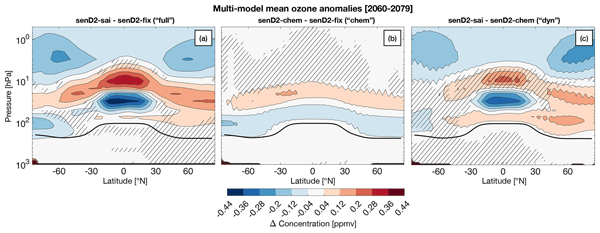
We study a future scenario where artificial stratospheric aerosol injections counter medium climate change, to understand possible negative side effects like ozone depletion. The injected aerosol layer is implemented uniformly in five climate models, which eliminates some uncertainty from model-specific aerosol evolution. The models agree well on where and how key thermodynamical (heating, circulation) and chemical processes change, however, the strength of the changes varies considerably.
Corinna Kloss, Gwenaël Berthet, Pasquale Sellitto, Irene Bartolome Garcia, Emmanuel Briaud, Rubel Chandra Das, Stéphane Chevrier, Nicolas Dumelié, Lilian Joly, Thomas Lecas, Pauline Marbach, Felix Ploeger, Jean-Baptiste Renard, Jean-Paul Vernier, Frank G. Wienhold, and Michaela I. Hegglin
Atmos. Chem. Phys., 26, 8981–8997, https://doi.org/10.5194/acp-26-8981-2026, https://doi.org/10.5194/acp-26-8981-2026, 2026
Short summary
Short summary
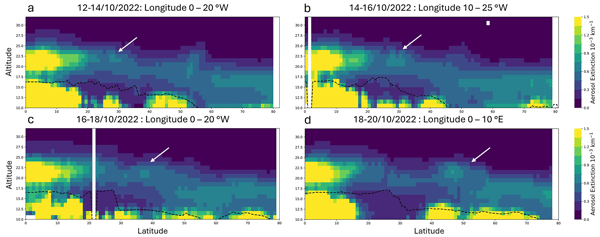
In October 2022, we detected volcanic particles in the stratosphere over France, linked to the January 2022 Hunga eruption in the South Pacific. Found between 17 and 23 km altitude, they were traced back to the tropics using trajectory simulations and satellite data. Their optical properties matched those in the Southern Hemisphere. The particles spread across the Northern Hemisphere, reflecting sunlight and slightly cooling the surface – a small but non-negligible effect.
Jean-Paul Vernier, Nicolas Dumelie, Amit Kumar Pandit, Gwenael Berthet, Lilian Joly, Giovanni de Souza, Eduardo Landulfo, Demilson Quintao, Bruno Biazon, Ravi Kiran, Vankat Ratnam, James Flaten, Rubel Das, David Paraiseau, Frank Wienhold, and Yaowei Li
EGUsphere, https://doi.org/10.5194/egusphere-2026-3280, https://doi.org/10.5194/egusphere-2026-3280, 2026
Short summary
Short summary
Stratospheric aerosols, from volcanoes, wildfires, pollution, and space debris, impact climate and atmospheric chemistry. A new lightweight, 500g particle counter – measures aerosol sizes (0.3–10 µm) with high accuracy. Validated against leading instruments, it has tracked volcanic plumes and smoke globally since 2018. Now used in the BalNeO network, its data is publicly available for research.
Jian Xu, Junteng Wu, Mayur Gajanan Sapkal, Jim Grisillon, Shravan Deshmukh, Brice Temime Roussel, Julien Kammer, Nicolas Brun, Fabien Robert-Peillard, Beiping Luo, Judith Kleinheins, Silvia Henning, Bénédicte Picquet-Varrault, Edouard Pangui, Mathieu Cazaunau, Zamin A. Kanji, Claudia Marcolli, and Anne Monod
Aerosol Research Discuss., https://doi.org/10.5194/ar-2026-14, https://doi.org/10.5194/ar-2026-14, 2026
Preprint under review for AR
Short summary
Short summary
The study aimed to mimic the atmospheric behaviour of a semi-volatile organic compound in the presence of fine particles and at various relative humidities. The objective was to determine the influence of organic matter on humid particle growth. These results are essential for improving our understanding of cloud formation.
Zhen Yang, Bärbel Vogel, Felix Plöger, Zhixuan Bai, Dan Li, Sabine Griessbach, Lars Hoffmann, Frank G. Wienhold, Elizabeth Asher, Alexandre A. Baron, Katie R. Smith, Troy Thornberry, Jianchun Bian, and Michaela I. Hegglin
Atmos. Chem. Phys., 26, 4749–4769, https://doi.org/10.5194/acp-26-4749-2026, https://doi.org/10.5194/acp-26-4749-2026, 2026
Short summary
Short summary
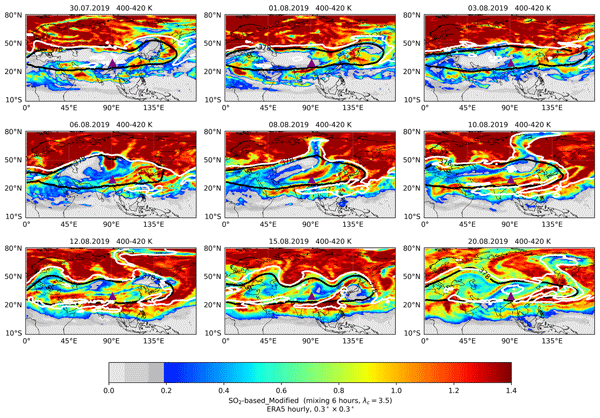
Balloon measurements over Lhasa, China, combined with satellite guided modelling, tracked aerosol from the 2019 Raikoke eruption through the Asian summer monsoon anticyclone. We find two altitude dependent routes into the anticyclone. It partly blocks transport but also allows entry and mixing, explaining the gradual weakening of the layers. Balloon measurements over Boulder, United States, outside the anticyclone, provide an independent check outside the region.
Yu Wang, Beiping Luo, Judith Kleinheins, Gang I. Chen, Liine Heikkinen, and Claudia Marcolli
Atmos. Chem. Phys., 26, 1735–1749, https://doi.org/10.5194/acp-26-1735-2026, https://doi.org/10.5194/acp-26-1735-2026, 2026
Short summary
Short summary
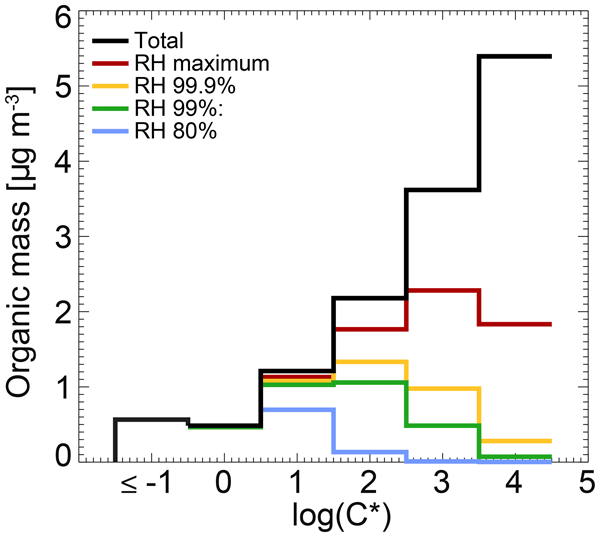
Ubiquitous semi-volatile compounds can co-condense on aerosol particles with water vapour when relative humidity increases. Simulations of cloud formation at a boreal forest site with a cloud parcel model that accounts for non-ideal organic–inorganic interactions yield an enhancement of cloud droplet number concentration from co-condensing NH3, HNO3, and organics up to 44%, with strong sensitivities to volatility distributions, aerosol size distribution, and updraft velocity.
Hazel Vernier, Demilson Quintao, Bruno Biazon, Eduardo Landulfo, Giovanni Souza, Amanda Santos, Fabio Lopes, Alex Mendes, José da Matta, Pinheiro Damaris, Benoit Grosslin, Maria Paulete, Maria de Fátima Andrade, Neeraj Rastogi, Akhil Raj, Hongyu Liu, Mahesh Kovilakam, Suvarna Fadnavis, Frank Wienhold, Mathieu Colombier, Chris Boone, Gwenael Berthet, Nicolas Dumelie, Lilian Joly, and Jean-Paul Vernier
EGUsphere, https://doi.org/10.5194/egusphere-2025-6226, https://doi.org/10.5194/egusphere-2025-6226, 2026
Preprint archived
Short summary
Short summary
This paper shows unique balloon measurements from Brazil within the Hunga volcanic plume eight months after the eruption. The chemical analysis of samples collected reveal new insights on volcanic aerosol composition and suggest the presence of marine aerosols.

Andrin Jörimann, Timofei Sukhodolov, Beiping Luo, Gabriel Chiodo, Graham Mann, and Thomas Peter
Geosci. Model Dev., 18, 6023–6041, https://doi.org/10.5194/gmd-18-6023-2025, https://doi.org/10.5194/gmd-18-6023-2025, 2025
Short summary
Short summary
Aerosol particles in the stratosphere affect our climate. Climate models therefore need an accurate description of their properties and evolution. Satellites measure how strongly aerosol particles extinguish light passing through the stratosphere. We describe a method to use such aerosol extinction data to retrieve the number and sizes of the aerosol particles and calculate their optical effects. The resulting data sets for models are validated against ground-based and balloon observations.
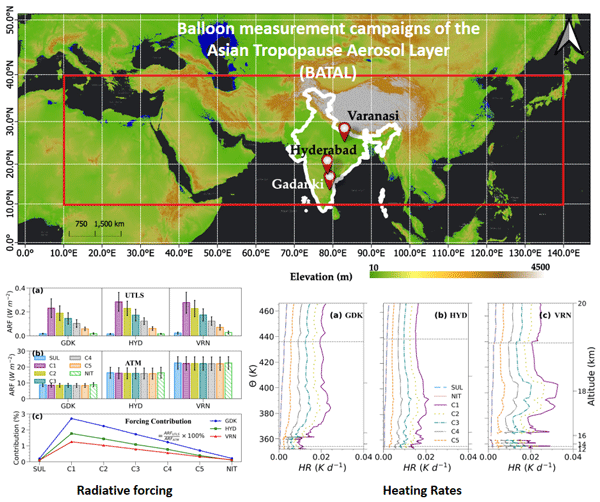
Vadassery Neelamana Santhosh, Bomidi Lakshmi Madhavan, Sivan Thankamani Akhil Raj, Madineni Venkat Ratnam, Jean-Paul Vernier, and Frank Gunther Wienhold
Atmos. Chem. Phys., 25, 8255–8270, https://doi.org/10.5194/acp-25-8255-2025, https://doi.org/10.5194/acp-25-8255-2025, 2025
Short summary
Short summary
Our study examines a lesser-known atmospheric feature, the Asian Tropopause Aerosol Layer, located high above the Earth. We investigated how different aerosols, such as sulfates, nitrates, and pollutants, influence the exchange of heat between the atmosphere and its surroundings. The results show that these particles can alter temperature patterns, especially during the Asian summer monsoon. This research improves our understanding of how human activities may affect regional climate.
Hazel Vernier, Demilson Quintão, Bruno Biazon, Eduardo Landulfo, Giovanni Souza, V. Amanda Santos, J. S. Fabio Lopes, C. P. Alex Mendes, A. S. José da Matta, K. Pinheiro Damaris, Benoit Grosslin, P. M. P. Maria Jorge, Maria de Fátima Andrade, Neeraj Rastogi, Akhil Raj, Hongyu Liu, Mahesh Kovilakam, Suvarna Fadnavis, Frank G. Wienhold, Mathieu Colombier, D. Chris Boone, Gwenael Berthet, Nicolas Dumelie, Lilian Joly, and Jean-Paul Vernier
EGUsphere, https://doi.org/10.5194/egusphere-2025-924, https://doi.org/10.5194/egusphere-2025-924, 2025
Preprint withdrawn
Short summary
Short summary
The eruption of Hunga Tonga-Hunga Ha'apai injected large amounts of water vapor and sea salt into the stratosphere, altering traditional views of volcanic aerosols. Using balloon-borne samplers, we collected aerosol samples and found high levels of sea salt and calcium, suggesting sulfate depletion due to gypsum formation. These findings highlight the need to consider sea salt in climate models to better predict volcanic impacts on the atmosphere and climate.
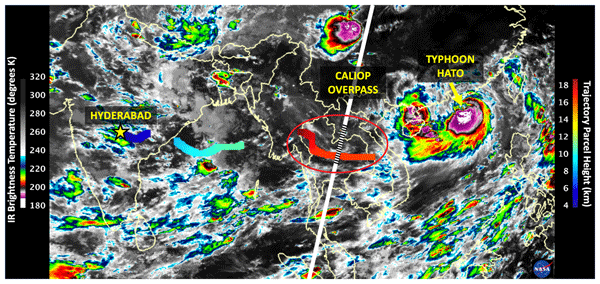
Amit Kumar Pandit, Jean-Paul Vernier, Thomas Duncan Fairlie, Kristopher M. Bedka, Melody A. Avery, Harish Gadhavi, Madineni Venkat Ratnam, Sanjeev Dwivedi, Kasimahanthi Amar Jyothi, Frank G. Wienhold, Holger Vömel, Hongyu Liu, Bo Zhang, Buduru Suneel Kumar, Tra Dinh, and Achuthan Jayaraman
Atmos. Chem. Phys., 24, 14209–14238, https://doi.org/10.5194/acp-24-14209-2024, https://doi.org/10.5194/acp-24-14209-2024, 2024
Short summary
Short summary
This study investigates the formation mechanism of a tropopause cirrus cloud layer observed at extremely cold temperatures over Hyderabad in India during the 2017 Asian summer monsoon using balloon-borne sensors. Ice crystals smaller than 50 µm were found in this optically thin cirrus cloud layer. Combined analysis of back trajectories, satellite, and model data revealed that the formation of this layer was influenced by waves and stratospheric hydration induced by typhoon Hato.
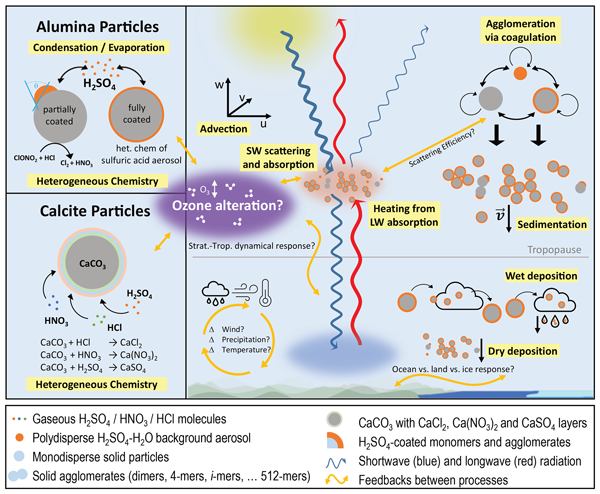
Sandro Vattioni, Rahel Weber, Aryeh Feinberg, Andrea Stenke, John A. Dykema, Beiping Luo, Georgios A. Kelesidis, Christian A. Bruun, Timofei Sukhodolov, Frank N. Keutsch, Thomas Peter, and Gabriel Chiodo
Geosci. Model Dev., 17, 7767–7793, https://doi.org/10.5194/gmd-17-7767-2024, https://doi.org/10.5194/gmd-17-7767-2024, 2024
Short summary
Short summary
We quantified impacts and efficiency of stratospheric solar climate intervention via solid particle injection. Microphysical interactions of solid particles with the sulfur cycle were interactively coupled to the heterogeneous chemistry scheme and the radiative transfer code of an aerosol–chemistry–climate model. Compared to injection of SO2 we only find a stronger cooling efficiency for solid particles when normalizing to the aerosol load but not when normalizing to the injection rate.
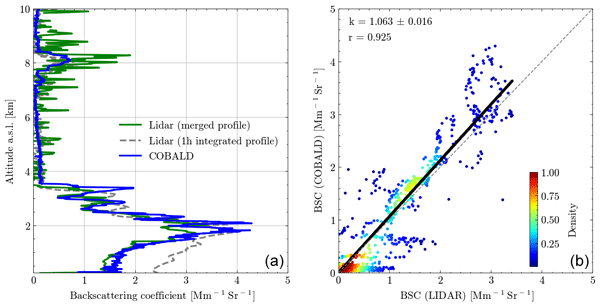
Hengheng Zhang, Christian Rolf, Ralf Tillmann, Christian Wesolek, Frank Gunther Wienhold, Thomas Leisner, and Harald Saathoff
Aerosol Research, 2, 135–151, https://doi.org/10.5194/ar-2-135-2024, https://doi.org/10.5194/ar-2-135-2024, 2024
Short summary
Short summary
Our study employs advanced tools, including scanning lidar, balloons, and UAVs, to explore aerosol particles in the atmosphere. The scanning lidar offers distinctive near-ground-level insights, enriching our comprehension of aerosol distribution from ground level to the free troposphere. This research provides valuable data for comparing remote sensing and in situ aerosol measurements, advancing our understanding of aerosol impacts on radiative transfer, clouds, and air quality.
Sandro Vattioni, Andrea Stenke, Beiping Luo, Gabriel Chiodo, Timofei Sukhodolov, Elia Wunderlin, and Thomas Peter
Geosci. Model Dev., 17, 4181–4197, https://doi.org/10.5194/gmd-17-4181-2024, https://doi.org/10.5194/gmd-17-4181-2024, 2024
Short summary
Short summary
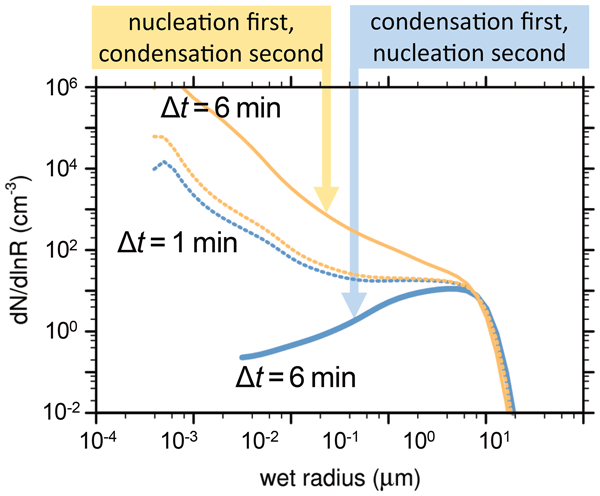
We investigate the sensitivity of aerosol size distributions in the presence of strong SO2 injections for climate interventions or after volcanic eruptions to the call sequence and frequency of the routines for nucleation and condensation in sectional aerosol models with operator splitting. Using the aerosol–chemistry–climate model SOCOL-AERv2, we show that the radiative and chemical outputs are sensitive to these settings at high H2SO4 supersaturations and how to obtain reliable results.

Christina V. Brodowsky, Timofei Sukhodolov, Gabriel Chiodo, Valentina Aquila, Slimane Bekki, Sandip S. Dhomse, Michael Höpfner, Anton Laakso, Graham W. Mann, Ulrike Niemeier, Giovanni Pitari, Ilaria Quaglia, Eugene Rozanov, Anja Schmidt, Takashi Sekiya, Simone Tilmes, Claudia Timmreck, Sandro Vattioni, Daniele Visioni, Pengfei Yu, Yunqian Zhu, and Thomas Peter
Atmos. Chem. Phys., 24, 5513–5548, https://doi.org/10.5194/acp-24-5513-2024, https://doi.org/10.5194/acp-24-5513-2024, 2024
Short summary
Short summary
The aerosol layer is an essential part of the climate system. We characterize the sulfur budget in a volcanically quiescent (background) setting, with a special focus on the sulfate aerosol layer using, for the first time, a multi-model approach. The aim is to identify weak points in the representation of the atmospheric sulfur budget in an intercomparison of nine state-of-the-art coupled global circulation models.
Jan Clemens, Bärbel Vogel, Lars Hoffmann, Sabine Griessbach, Nicole Thomas, Suvarna Fadnavis, Rolf Müller, Thomas Peter, and Felix Ploeger
Atmos. Chem. Phys., 24, 763–787, https://doi.org/10.5194/acp-24-763-2024, https://doi.org/10.5194/acp-24-763-2024, 2024
Short summary
Short summary
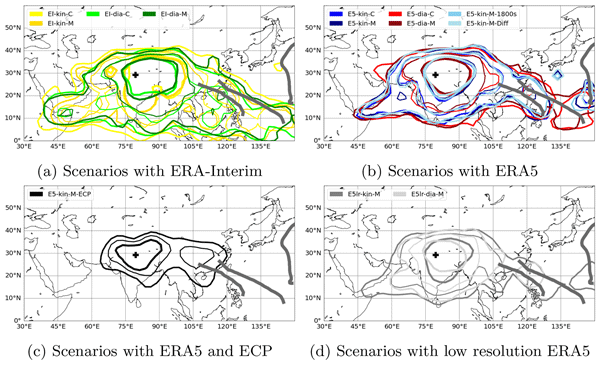
The source regions of the Asian tropopause aerosol layer (ATAL) are debated. We use balloon-borne measurements of the layer above Nainital (India) in August 2016 and atmospheric transport models to find ATAL source regions. Most air originated from the Tibetan plateau. However, the measured ATAL was stronger when more air originated from the Indo-Gangetic Plain and weaker when more air originated from the Pacific. Hence, the results indicate important anthropogenic contributions to the ATAL.
Rolf Müller, Ulrich Pöschl, Thomas Koop, Thomas Peter, and Ken Carslaw
Atmos. Chem. Phys., 23, 15445–15453, https://doi.org/10.5194/acp-23-15445-2023, https://doi.org/10.5194/acp-23-15445-2023, 2023
Short summary
Short summary
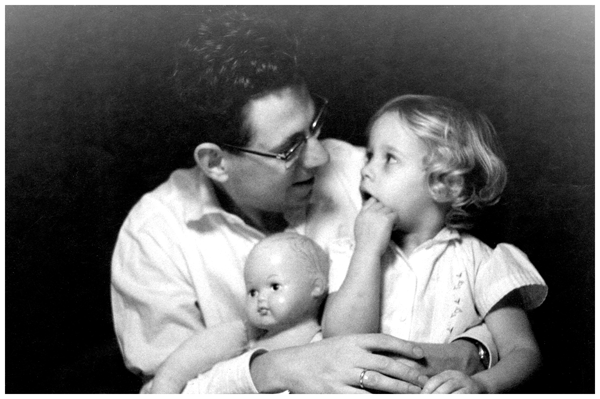
Paul J. Crutzen was a pioneer in atmospheric sciences and a kind-hearted, humorous person with empathy for the private lives of his colleagues and students. He made fundamental scientific contributions to a wide range of scientific topics in all parts of the atmosphere. Paul was among the founders of the journal Atmospheric Chemistry and Physics. His work will continue to be a guide for generations of scientists and environmental policymakers to come.
Franziska Zilker, Timofei Sukhodolov, Gabriel Chiodo, Marina Friedel, Tatiana Egorova, Eugene Rozanov, Jan Sedlacek, Svenja Seeber, and Thomas Peter
Atmos. Chem. Phys., 23, 13387–13411, https://doi.org/10.5194/acp-23-13387-2023, https://doi.org/10.5194/acp-23-13387-2023, 2023
Short summary
Short summary
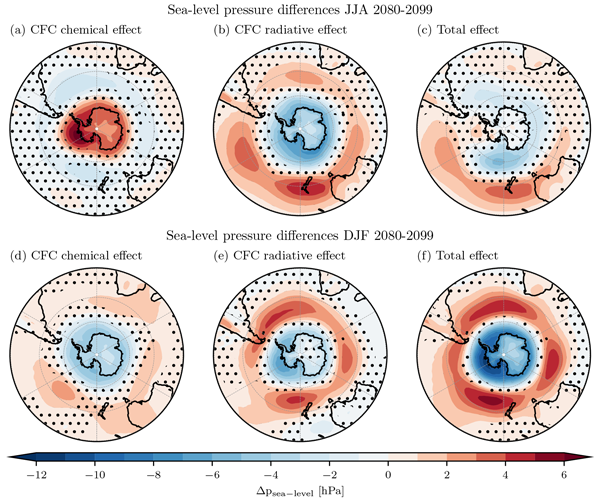
The Montreal Protocol (MP) has successfully reduced the Antarctic ozone hole by banning chlorofluorocarbons (CFCs) that destroy the ozone layer. Moreover, CFCs are strong greenhouse gases (GHGs) that would have strengthened global warming. In this study, we investigate the surface weather and climate in a world without the MP at the end of the 21st century, disentangling ozone-mediated and GHG impacts of CFCs. Overall, we avoided 1.7 K global surface warming and a poleward shift in storm tracks.
Marina Friedel, Gabriel Chiodo, Timofei Sukhodolov, James Keeble, Thomas Peter, Svenja Seeber, Andrea Stenke, Hideharu Akiyoshi, Eugene Rozanov, David Plummer, Patrick Jöckel, Guang Zeng, Olaf Morgenstern, and Béatrice Josse
Atmos. Chem. Phys., 23, 10235–10254, https://doi.org/10.5194/acp-23-10235-2023, https://doi.org/10.5194/acp-23-10235-2023, 2023
Short summary
Short summary
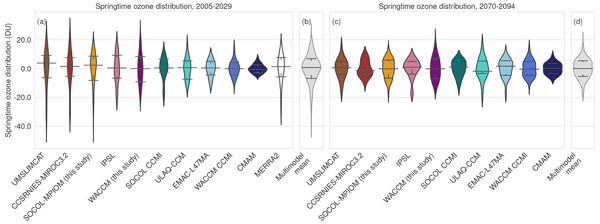
Previously, it has been suggested that springtime Arctic ozone depletion might worsen in the coming decades due to climate change, which might counteract the effect of reduced ozone-depleting substances. Here, we show with different chemistry–climate models that springtime Arctic ozone depletion will likely decrease in the future. Further, we explain why models show a large spread in the projected development of Arctic ozone depletion and use the model spread to constrain future projections.
Anand Kumar, Kristian Klumpp, Chen Barak, Giora Rytwo, Michael Plötze, Thomas Peter, and Claudia Marcolli
Atmos. Chem. Phys., 23, 4881–4902, https://doi.org/10.5194/acp-23-4881-2023, https://doi.org/10.5194/acp-23-4881-2023, 2023
Short summary
Short summary
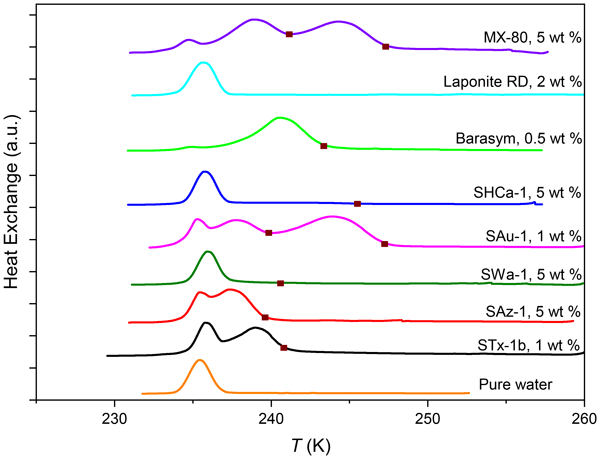
Smectites are a major class of clay minerals that are ice nucleation (IN) active. They form platelets that swell or even delaminate in water by intercalation of water between their layers. We hypothesize that at least three smectite layers need to be stacked together to host a critical ice embryo on clay mineral edges and that the larger the surface edge area is, the higher the freezing temperature. Edge sites on such clay particles play a crucial role in imparting IN ability to such particles.
Arseniy Karagodin-Doyennel, Eugene Rozanov, Timofei Sukhodolov, Tatiana Egorova, Jan Sedlacek, and Thomas Peter
Atmos. Chem. Phys., 23, 4801–4817, https://doi.org/10.5194/acp-23-4801-2023, https://doi.org/10.5194/acp-23-4801-2023, 2023
Short summary
Short summary
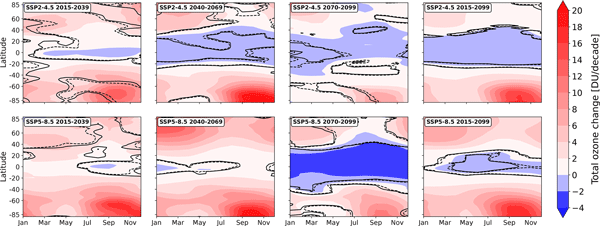
The future ozone evolution in SOCOLv4 simulations under SSP2-4.5 and SSP5-8.5 scenarios has been assessed for the period 2015–2099 and subperiods using the DLM approach. The SOCOLv4 projects a decline in tropospheric ozone in the 2030s in SSP2-4.5 and in the 2060s in SSP5-8.5. The stratospheric ozone increase is ~3 times higher in SSP5-8.5, confirming the important role of GHGs in ozone evolution. We also showed that tropospheric ozone strongly impacts the total column in the tropics.
Kristian Klumpp, Claudia Marcolli, Ana Alonso-Hellweg, Christopher H. Dreimol, and Thomas Peter
Atmos. Chem. Phys., 23, 1579–1598, https://doi.org/10.5194/acp-23-1579-2023, https://doi.org/10.5194/acp-23-1579-2023, 2023
Short summary
Short summary
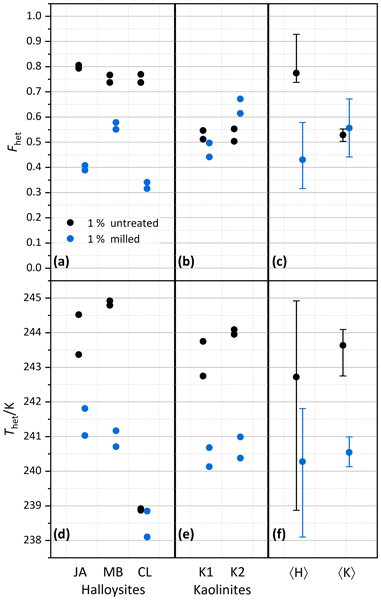
The prerequisites of a particle surface for efficient ice nucleation are still poorly understood. This study compares the ice nucleation activity of two chemically identical but morphologically different minerals (kaolinite and halloysite). We observe, on average, not only higher ice nucleation activities for halloysite than kaolinite but also higher diversity between individual samples. We identify the particle edges as being the most likely site for ice nucleation.

Arseniy Karagodin-Doyennel, Eugene Rozanov, Timofei Sukhodolov, Tatiana Egorova, Jan Sedlacek, William Ball, and Thomas Peter
Atmos. Chem. Phys., 22, 15333–15350, https://doi.org/10.5194/acp-22-15333-2022, https://doi.org/10.5194/acp-22-15333-2022, 2022
Short summary
Short summary
Applying the dynamic linear model, we confirm near-global ozone recovery (55°N–55°S) in the mesosphere, upper and middle stratosphere, and a steady increase in the troposphere. We also show that modern chemistry–climate models (CCMs) like SOCOLv4 may reproduce the observed trend distribution of lower stratospheric ozone, despite exhibiting a lower magnitude and statistical significance. The obtained ozone trend pattern in SOCOLv4 is generally consistent with observations and reanalysis datasets.

Nikou Hamzehpour, Claudia Marcolli, Kristian Klumpp, Debora Thöny, and Thomas Peter
Atmos. Chem. Phys., 22, 14931–14956, https://doi.org/10.5194/acp-22-14931-2022, https://doi.org/10.5194/acp-22-14931-2022, 2022
Short summary
Short summary
Dust aerosols from dried lakebeds contain mineral particles, as well as soluble salts and (bio-)organic compounds. Here, we investigate ice nucleation (IN) activity of dust samples from Lake Urmia playa, Iran. We find high IN activity of the untreated samples that decreases after organic matter removal but increases after removing soluble salts and carbonates, evidencing inhibiting effects of soluble salts and carbonates on the IN activity of organic matter and minerals, especially microcline.
Nikou Hamzehpour, Claudia Marcolli, Sara Pashai, Kristian Klumpp, and Thomas Peter
Atmos. Chem. Phys., 22, 14905–14930, https://doi.org/10.5194/acp-22-14905-2022, https://doi.org/10.5194/acp-22-14905-2022, 2022
Short summary
Short summary
Playa surfaces in Iran that emerged through Lake Urmia (LU) desiccation have become a relevant dust source of regional relevance. Here, we identify highly erodible LU playa surfaces and determine their physicochemical properties and mineralogical composition and perform emulsion-freezing experiments with them. We find high ice nucleation activities (up to 250 K) that correlate positively with organic matter and clay content and negatively with pH, salinity, K-feldspars, and quartz.
Marina Friedel, Gabriel Chiodo, Andrea Stenke, Daniela I. V. Domeisen, and Thomas Peter
Atmos. Chem. Phys., 22, 13997–14017, https://doi.org/10.5194/acp-22-13997-2022, https://doi.org/10.5194/acp-22-13997-2022, 2022
Short summary
Short summary
In spring, winds the Arctic stratosphere change direction – an event called final stratospheric warming (FSW). Here, we examine whether the interannual variability in Arctic stratospheric ozone impacts the timing of the FSW. We find that Arctic ozone shifts the FSW to earlier and later dates in years with high and low ozone via the absorption of UV light. The modulation of the FSW by ozone has consequences for surface climate in ozone-rich years, which may result in better seasonal predictions.
Hazel Vernier, Neeraj Rastogi, Hongyu Liu, Amit Kumar Pandit, Kris Bedka, Anil Patel, Madineni Venkat Ratnam, Buduru Suneel Kumar, Bo Zhang, Harish Gadhavi, Frank Wienhold, Gwenael Berthet, and Jean-Paul Vernier
Atmos. Chem. Phys., 22, 12675–12694, https://doi.org/10.5194/acp-22-12675-2022, https://doi.org/10.5194/acp-22-12675-2022, 2022
Short summary
Short summary
The chemical composition of the stratospheric aerosols collected aboard high-altitude balloons above the summer Asian monsoon reveals the presence of nitrate/nitrite. Using numerical simulations and satellite observations, we found that pollution as well as lightning could explain some of our observations.
Clare E. Singer, Benjamin W. Clouser, Sergey M. Khaykin, Martina Krämer, Francesco Cairo, Thomas Peter, Alexey Lykov, Christian Rolf, Nicole Spelten, Armin Afchine, Simone Brunamonti, and Elisabeth J. Moyer
Atmos. Meas. Tech., 15, 4767–4783, https://doi.org/10.5194/amt-15-4767-2022, https://doi.org/10.5194/amt-15-4767-2022, 2022
Short summary
Short summary
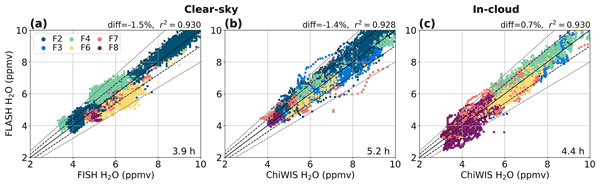
In situ measurements of water vapor in the upper troposphere are necessary to study cloud formation and hydration of the stratosphere but challenging due to cold–dry conditions. We compare measurements from three water vapor instruments from the StratoClim campaign in 2017. In clear sky (clouds), point-by-point differences were <1.5±8 % (<1±8 %). This excellent agreement allows detection of fine-scale structures required to understand the impact of convection on stratospheric water vapor.

Varaha Ravi Kiran, Madineni Venkat Ratnam, Masatomo Fujiwara, Herman Russchenberg, Frank G. Wienhold, Bomidi Lakshmi Madhavan, Mekalathur Roja Raman, Renju Nandan, Sivan Thankamani Akhil Raj, Alladi Hemanth Kumar, and Saginela Ravindra Babu
Atmos. Meas. Tech., 15, 4709–4734, https://doi.org/10.5194/amt-15-4709-2022, https://doi.org/10.5194/amt-15-4709-2022, 2022
Short summary
Short summary
We proposed and conducted the multi-instrumental BACIS (Balloon-borne Aerosol–Cloud Interaction Studies) field campaigns using balloon-borne in situ measurements and ground-based and space-borne remote sensing instruments. Aerosol-cloud interaction is quantified for liquid clouds by segregating aerosol and cloud information in a balloon profile. Overall, the observational approach proposed here demonstrated its capability for understanding the aerosol–cloud interaction process.
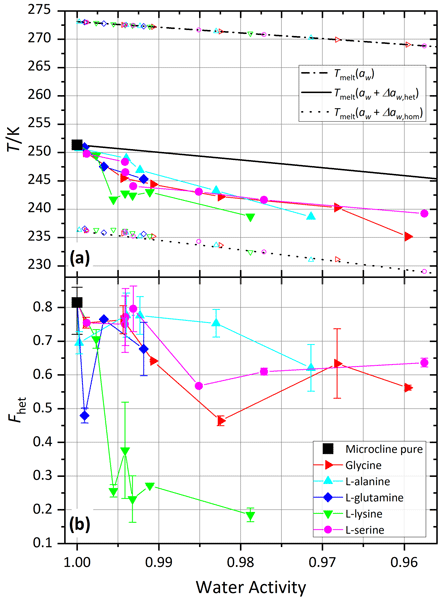
Kristian Klumpp, Claudia Marcolli, and Thomas Peter
Atmos. Chem. Phys., 22, 3655–3673, https://doi.org/10.5194/acp-22-3655-2022, https://doi.org/10.5194/acp-22-3655-2022, 2022
Short summary
Short summary
Surface interactions with solutes can significantly alter the ice nucleation activity of mineral dust. Past studies revealed the sensitivity of microcline, one of the most ice-active types of dust in the atmosphere, to inorganic solutes. This study focuses on the interaction of microcline with bio-organic substances and the resulting effects on its ice nucleation activity. We observe strongly hampered ice nucleation activity due to the presence of carboxylic and amino acids but not for polyols.
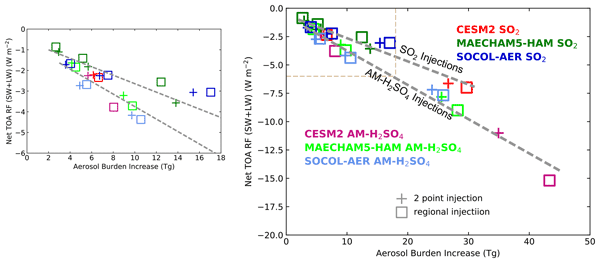
Debra K. Weisenstein, Daniele Visioni, Henning Franke, Ulrike Niemeier, Sandro Vattioni, Gabriel Chiodo, Thomas Peter, and David W. Keith
Atmos. Chem. Phys., 22, 2955–2973, https://doi.org/10.5194/acp-22-2955-2022, https://doi.org/10.5194/acp-22-2955-2022, 2022
Short summary
Short summary
This paper explores a potential method of geoengineering that could be used to slow the rate of change of climate over decadal scales. We use three climate models to explore how injections of accumulation-mode sulfuric acid aerosol change the large-scale stratospheric particle size distribution and radiative forcing response for the chosen scenarios. Radiative forcing per unit sulfur injected and relative to the change in aerosol burden is larger with particulate than with SO2 injections.
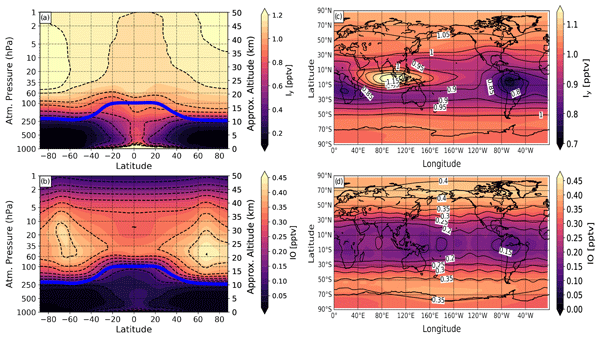
Arseniy Karagodin-Doyennel, Eugene Rozanov, Timofei Sukhodolov, Tatiana Egorova, Alfonso Saiz-Lopez, Carlos A. Cuevas, Rafael P. Fernandez, Tomás Sherwen, Rainer Volkamer, Theodore K. Koenig, Tanguy Giroud, and Thomas Peter
Geosci. Model Dev., 14, 6623–6645, https://doi.org/10.5194/gmd-14-6623-2021, https://doi.org/10.5194/gmd-14-6623-2021, 2021
Short summary
Short summary
Here, we present the iodine chemistry module in the SOCOL-AERv2 model. The obtained iodine distribution demonstrated a good agreement when validated against other simulations and available observations. We also estimated the iodine influence on ozone in the case of present-day iodine emissions, the sensitivity of ozone to doubled iodine emissions, and when considering only organic or inorganic iodine sources. The new model can be used as a tool for further studies of iodine effects on ozone.
Cited articles
Antikainen, V. and Paukkunen, A.: Studies on improving humidity measurement in radiosondes, in: Proc. WMO Technical Conf. on Instruments and Methods of Observation (TECO-94), Geneva, Switzerland, 28 February–2 March 1994, WMO Instruments and Observing Methods Rep. 57, WMO/TD-No. 588, 137–141, https://library.wmo.int/idurl/4/41796 (last access: 17 April 2025), 1994.
Asher, E., Todt, M., Rosenlof, K., Thornberry, T., Gao, R.-S., Taha, G., Walter, P., Alvarez, S., Flynn, J., Davis, S. M., Evan, S., Brioude, J., Metzger, J.-M., Hurst, D. F., Hall, E., and Xiong, K.: Unexpectedly rapid aerosol formation in the Hunga Tonga plume, P. Nat. Acad. Sci. USA, 120, 1–7, https://doi.org/10.1073/pnas.2219547120, 2023.
Barrett, E. W. and Herndon, L. R.: An Improved Electronic Dew-Point Hygrometer, J. Meteorol., 8, 40–51, https://doi.org/10.1175/1520-0469(1951)008<0040:AIEDPH>2.0.CO;2, 1951.
Bertaux, J.-L. and Delannoy, A.: Vertical distribution of H2O in the stratosphere as determined by UV fluorescence in-situ measurements, Geophys. Res. Lett., 5, 1017–1020, https://doi.org/10.1029/GL005i012p01017, 1978.
Brabec, M., Wienhold, F. G., Luo, B. P., Vömel, H., Immler, F., Steiner, P., Hausammann, E., Weers, U., and Peter, T.: Particle backscatter and relative humidity measured across cirrus clouds and comparison with microphysical cirrus modelling, Atmos. Chem. Phys., 12, 9135–9148, https://doi.org/10.5194/acp-12-9135-2012, 2012.
Brewer, A. W. and Dobson, R. H.: An automatic frost-point hygrometer for measurements in the upper air, Proc. IEE-Part II Power Eng., 98, 470–473, https://doi.org/10.1049/pi-2.1951.0130, 1951.
Brunamonti, S., Jorge, T., Oelsner, P., Hanumanthu, S., Singh, B. B., Kumar, K. R., Sonbawne, S., Meier, S., Singh, D., Wienhold, F. G., Luo, B. P., Boettcher, M., Poltera, Y., Jauhiainen, H., Kayastha, R., Karmacharya, J., Dirksen, R., Naja, M., Rex, M., Fadnavis, S., and Peter, T.: Balloon-borne measurements of temperature, water vapor, ozone and aerosol backscatter on the southern slopes of the Himalayas during StratoClim 2016–2017, Atmos. Chem. Phys., 18, 15937–15957, https://doi.org/10.5194/acp-18-15937-2018, 2018.
Brunamonti, S., Füzér, L., Jorge, T., Poltera, Y., Oelsner, P., Meier, S., Dirksen, R., Naja, M., Fadnavis, S., Karmacharya, J., Wienhold, F. G., Luo, B. P., Wernli, H., and Peter, T.: Water Vapor in the Asian Summer Monsoon Anticyclone: Comparison of Balloon-Borne Measurements and ECMWF Data, J. Geophys. Res.-Atmos., 124, 7053–7068, https://doi.org/10.1029/2018JD030000, 2019.
Brunamonti, S., Graf, M., Bühlmann, T., Pascale, C., Ilak, I., Emmenegger, L., and Tuzson, B.: SI-traceable validation of a laser spectrometer for balloon-borne measurements of water vapor in the upper atmosphere, Atmos. Meas. Tech., 16, 4391–4407, https://doi.org/10.5194/amt-16-4391-2023, 2023.
Buchholz, B. and Ebert, V.: Absolute, pressure-dependent validation of a calibration-free, airborne laser hygrometer transfer standard (SEALDH-II) from 5 to 1200 ppmv using a metrological humidity generator, Atmos. Meas. Tech., 11, 459–471, https://doi.org/10.5194/amt-11-459-2018, 2018.
Buchholz, B., Böse, N., and Ebert, V.: Absolute validation of a diode laser hygrometer via intercomparison with the German national primary water vapor standard, Appl. Phys. B Lasers Opt., 116, 883–899, https://doi.org/10.1007/s00340-014-5775-4, 2014.
Calbet, X., Carbajal Henken, C., DeSouza-Machado, S., Sun, B., and Reale, T.: Horizontal small-scale variability of water vapor in the atmosphere: implications for intercomparison of data from different measuring systems, Atmos. Meas. Tech., 15, 7105–7118, https://doi.org/10.5194/amt-15-7105-2022, 2022.
Corti, T., Luo, B. P., Fu, Q., Vömel, H., and Peter, T.: The impact of cirrus clouds on tropical troposphere-to-stratosphere transport, Atmos. Chem. Phys., 6, 2539–2547, https://doi.org/10.5194/acp-6-2539-2006, 2006.
Daniell, J. F.: On the new hygrometer, Q. J. Sci. Lit. Arts, 9, 128–137, https://doi.org/10.1002/andp.18200650604, 1820.
Davis, S. M., Rosenlof, K. H., Hassler, B., Hurst, D. F., Read, W. G., Vömel, H., Selkirk, H., Fujiwara, M., and Damadeo, R.: The Stratospheric Water and Ozone Satellite Homogenized (SWOOSH) database: a long-term database for climate studies, Earth Syst. Sci. Data, 8, 461–490, https://doi.org/10.5194/essd-8-461-2016, 2016.
Denton, D. D., Day, D. R., Priore, D. F., Senturia, S. D., Anolick, E. S., and Scheider, D.: Moisture diffusion in polyimide films in integrated circuits, J. Electron. Mater., 14, 119–136, https://doi.org/10.1007/BF02656671, 1985.
Dessler, A. E., Schoeberl, M. R., Wang, T., Davis, S. M., and Rosenlof, K. H.: Stratospheric water vapor feedback, P. Natl. Acad. Sci. USA, 110, 18087–18091, https://doi.org/10.1073/pnas.1310344110, 2013.
Deuber, B., Haefele, A., Feist, D. G., Martin, L., Kämpfer, N., Nedoluha, G. E., Yushkov, V., Khaykin, S., Kivi, R., and Vömel, H.: Middle Atmospheric Water Vapour Radiometer (MIAWARA): Validation and first results of the LAPBIAT Upper Tropospheric Lower Stratospheric Water Vapour Validation Project (LAUTLOS-WAWAP) campaign, J. Geophys. Res.-Atmos., 110, 1–10, https://doi.org/10.1029/2004JD005543, 2005.
Dirksen, R.: Report on tests in Lindenberg, in: 12th GRUAN Implementation and Coordination Meeting, Virtual Session, 16 to 20 November 2020, 14 pp., https://www.gruan.org/gruan/editor/documents/meetings/icm-12/pres/pres_304_Dirksen_CFH-LIN.pdf (last access: 17 April 2025), 2020.
Dirksen, R., Haefele, A., Vogt, F. P. A., Sommer, M., von Rohden, C., Martucci, G., Romanens, G., Felix, C., Modolo, L., Vömel, H., Simeonov, T., Oelsner, P., Edwards, D., Oakley, T., Gardiner, T., and Ansari, M. I.: Report of WMO's 2022 Upper-Air Instrument Intercomparison Campaign, Instruments and Observing Methods Report No. 143, 400 pp., https://library.wmo.int/idurl/4/68808 (last access: 17 April 2025), 2024.
Dirksen, R. J., Sommer, M., Immler, F. J., Hurst, D. F., Kivi, R., and Vömel, H.: Reference quality upper-air measurements: GRUAN data processing for the Vaisala RS92 radiosonde, Atmos. Meas. Tech., 7, 4463–4490, https://doi.org/10.5194/amt-7-4463-2014, 2014.
Dirksen, R. J., Bodeker, G. E., Thorne, P. W., Merlone, A., Reale, T., Wang, J., Hurst, D. F., Demoz, B. B., Gardiner, T. D., Ingleby, B., Sommer, M., von Rohden, C., and Leblanc, T.: Managing the transition from Vaisala RS92 to RS41 radiosondes within the Global Climate Observing System Reference Upper-Air Network (GRUAN): a progress report, Geosci. Instrum. Method. Data Syst., 9, 337–355, https://doi.org/10.5194/gi-9-337-2020, 2020.
Dobson, G. M., Brewer, A. W., and Cwilong, B. M.: Bakerian Lecture: Meteorology of the lower stratosphere, Proc. R. Soc. London. Ser. A. Math. Phys. Sci., 185, 144–175, https://doi.org/10.1098/rspa.1946.0010, 1946.
Elliott, W. P. and Gaffen, D. J.: On the Utility of Radiosonde Humidity Archives for Climate Studies, B. Am. Meteorol. Soc., 72, 1507–1520, https://doi.org/10.1175/1520-0477(1991)072<1507:OTUORH>2.0.CO;2, 1991.
Engel, I., Luo, B. P., Khaykin, S. M., Wienhold, F. G., Vömel, H., Kivi, R., Hoyle, C. R., Grooß, J.-U., Pitts, M. C., and Peter, T.: Arctic stratospheric dehydration – Part 2: Microphysical modeling, Atmos. Chem. Phys., 14, 3231–3246, https://doi.org/10.5194/acp-14-3231-2014, 2014.
EN-SCI: Cryogenic Frost point Hygrometer, https://www.en-sci.com/cryogenic-frost-point-hygrometer/, last access: 5 March 2025.
Evan, S., Brioude, J., Rosenlof, K. H., Gao, R.-S., Portmann, R. W., Zhu, Y., Volkamer, R., Lee, C. F., Metzger, J.-M., Lamy, K., Walter, P., Alvarez, S. L., Flynn, J. H., Asher, E., Todt, M., Davis, S. M., Thornberry, T., Vömel, H., Wienhold, F. G., Stauffer, R. M., Millán, L., Santee, M. L., Froidevaux, L., and Read, W. G.: Rapid ozone depletion after humidification of the stratosphere by the Hunga Tonga Eruption, Science, 382, 1–7, https://doi.org/10.1126/science.adg2551, 2023.
Fahey, D. W., Gao, R.-S., Möhler, O., Saathoff, H., Schiller, C., Ebert, V., Krämer, M., Peter, T., Amarouche, N., Avallone, L. M., Bauer, R., Bozóki, Z., Christensen, L. E., Davis, S. M., Durry, G., Dyroff, C., Herman, R. L., Hunsmann, S., Khaykin, S. M., Mackrodt, P., Meyer, J., Smith, J. B., Spelten, N., Troy, R. F., Vömel, H., Wagner, S., and Wienhold, F. G.: The AquaVIT-1 intercomparison of atmospheric water vapor measurement techniques, Atmos. Meas. Tech., 7, 3177–3213, https://doi.org/10.5194/amt-7-3177-2014, 2014.
Fick, A.: Ueber Diffusion, Ann. Phys. Chemie, 170, 59–86, https://doi.org/10.1002/andp.18551700105, 1855.
Fujiwara, M., Shiotani, M., Hasebe, F., Vömel, H., Oltmans, S. J., Ruppert, P. W., Horinouchi, T., and Tsuda, T.: Performance of the Meteolabor “Snow White” Chilled-Mirror Hygrometer in the Tropical Troposphere: Comparisons with the Vaisala RS80 A/H-Humicap Sensors, J. Atmos. Ocean. Technol., 20, 1534–1542, https://doi.org/10.1175/1520-0426(2003)020<1534:POTMSW>2.0.CO;2, 2003.
Gatz, D. F. and Smith, L.: The standard error of a weighted mean concentration – I. Bootstrapping vs other methods, Atmos. Environ., 29, 1185–1193, https://doi.org/10.1016/1352-2310(94)00210-C, 1995.
GCOS: The 2022 Global Climate Observing System (GCOS) Essential Climate Variables (ECVs) Requirements (GCOS-245), updated in 2025, 250 pp., https://library.wmo.int/idurl/4/58111 (last access: 17 April 2025), 2025.
Ghysels, M., Riviere, E. D., Khaykin, S., Stoeffler, C., Amarouche, N., Pommereau, J.-P., Held, G., and Durry, G.: Intercomparison of in situ water vapor balloon-borne measurements from Pico-SDLA H2O and FLASH-B in the tropical UTLS, Atmos. Meas. Tech., 9, 1207–1219, https://doi.org/10.5194/amt-9-1207-2016, 2016.
Ghysels, M., Durry, G., Amarouche, N., Hurst, D., Hall, E., Xiong, K., Dupont, J.-C., Samake, J.-C., Frérot, F., Bejjani, R., and Riviere, E. D.: Pico-Light H2O: intercomparison of in situ water vapour measurements during the AsA 2022 campaign, Atmos. Meas. Tech., 17, 3495–3513, https://doi.org/10.5194/amt-17-3495-2024, 2024.
Graf, M., Scheidegger, P., Kupferschmid, A., Looser, H., Peter, T., Dirksen, R., Emmenegger, L., and Tuzson, B.: Compact and lightweight mid-infrared laser spectrometer for balloon-borne water vapor measurements in the UTLS, Atmos. Meas. Tech., 14, 1365–1378, https://doi.org/10.5194/amt-14-1365-2021, 2021.
Hall, E. G., Jordan, A. F., Hurst, D. F., Oltmans, S. J., Vömel, H., Kühnreich, B., and Ebert, V.: Advancements, measurement uncertainties, and recent comparisons of the NOAA frost point hygrometer, Atmos. Meas. Tech., 9, 4295–4310, https://doi.org/10.5194/amt-9-4295-2016, 2016.
Hansford, G. M., Freshwater, R. A., Eden, L., Turnbull, K. F. V., Hadaway, D. E., Ostanin, V. P., and Jones, R. L.: Lightweight dew-/frost-point hygrometer based on a surface-acoustic-wave sensor for balloon-borne atmospheric water vapor profile sounding, Rev. Sci. Instrum., 77, 1–10, https://doi.org/10.1063/1.2140275, 2006.
Hardy, B.: ITS-90 Formulations for Vapor Pressure, Frostpoint Temperature, Dewpoint Temperature, and Enhancement Factors in the Range −100 to +100 °C, in: The Proceedings of the Third International Symposium on Humidity & Moisture, Teddington, London, UK, April 1998, Vol. 1, 214–222, https://www.thunderscientific.com/wp-content/uploads/2022/12/its90formulas.pdf (last access: 17 April 2025), 1998.
Hasebe, F., Inai, Y., Shiotani, M., Fujiwara, M., Vömel, H., Nishi, N., Ogino, S.-Y., Shibata, T., Iwasaki, S., Komala, N., Peter, T., and Oltmans, S. J.: Cold trap dehydration in the Tropical Tropopause Layer characterised by SOWER chilled-mirror hygrometer network data in the Tropical Pacific, Atmos. Chem. Phys., 13, 4393–4411, https://doi.org/10.5194/acp-13-4393-2013, 2013.
Hurst, D. F., Oltmans, S. J., Vömel, H., Rosenlof, K. H., Davis, S. M., Ray, E. A., Hall, E. G., and Jordan, A. F.: Stratospheric water vapor trends over Boulder, Colorado: Analysis of the 30 year Boulder record, J. Geophys. Res., 116, 1–12, https://doi.org/10.1029/2010JD015065, 2011a.
Hurst, D. F., Hall, E. G., Jordan, A. F., Miloshevich, L. M., Whiteman, D. N., Leblanc, T., Walsh, D., Vömel, H., and Oltmans, S. J.: Comparisons of temperature, pressure and humidity measurements by balloon-borne radiosondes and frost point hygrometers during MOHAVE-2009, Atmos. Meas. Tech., 4, 2777–2793, https://doi.org/10.5194/amt-4-2777-2011, 2011b.
Hurst, D. F., Read, W. G., Vömel, H., Selkirk, H. B., Rosenlof, K. H., Davis, S. M., Hall, E. G., Jordan, A. F., and Oltmans, S. J.: Recent divergences in stratospheric water vapor measurements by frost point hygrometers and the Aura Microwave Limb Sounder, Atmos. Meas. Tech., 9, 4447–4457, https://doi.org/10.5194/amt-9-4447-2016, 2016.
Hurst, D. F., Fujiwara, M., and Oltmans, S.: Frost point hygrometers, in: Field Measurements for Passive Environmental Remote Sensing, Elsevier, 37–55, https://doi.org/10.1016/B978-0-12-823953-7.00015-0, 2023.
Immler, F. J., Dykema, J., Gardiner, T., Whiteman, D. N., Thorne, P. W., and Vömel, H.: Reference Quality Upper-Air Measurements: guidance for developing GRUAN data products, Atmos. Meas. Tech., 3, 1217–1231, https://doi.org/10.5194/amt-3-1217-2010, 2010.
Jacobs, O. L. R.: Introduction to Control Theory, Second edition, Oxford University Press, Oxford, 402 pp., ISBN 978-0-19-856249-8, 1993.
Jorge, T., Wienhold, F. G., Germann, N., Weers, U., Vecellio, M., Brossi, S., Brossi, T., Krieger, U., and Peter, T.: PCFH – Peltier Cooled Frost point Hygrometer, in: 12th GRUAN Implementation and Coordination Meeting, Virtual Session, 16 to 20 November 2020, GCOS-237, 16 pp., https://www.gruan.org/gruan/editor/documents/meetings/icm-12/pres/pres_303_Jorge_PCFH.pdf (last access: 17 April 2025), 2020.
Jorge, T., Brunamonti, S., Poltera, Y., Wienhold, F. G., Luo, B. P., Oelsner, P., Hanumanthu, S., Singh, B. B., Körner, S., Dirksen, R., Naja, M., Fadnavis, S., and Peter, T.: Understanding balloon-borne frost point hygrometer measurements after contamination by mixed-phase clouds, Atmos. Meas. Tech., 14, 239–268, https://doi.org/10.5194/amt-14-239-2021, 2021.
Kämpfer, N. (Ed.): Monitoring Atmospheric Water Vapour – Ground-Based Remote Sensing and In-situ Methods, ISSI Scientific Report Series, Vol. 10, Springer New York, NY, https://doi.org/10.1007/978-1-4614-3909-7, 2013.
Kalnajs, L. E., Davis, S. M., Goetz, J. D., Deshler, T., Khaykin, S., St. Clair, A., Hertzog, A., Bordereau, J., and Lykov, A.: A reel-down instrument system for profile measurements of water vapor, temperature, clouds, and aerosol beneath constant-altitude scientific balloons, Atmos. Meas. Tech., 14, 2635–2648, https://doi.org/10.5194/amt-14-2635-2021, 2021.
Karpechko, A., Lukyanov, A., Kyrö, E., Khaikin, S., Korshunov, L., Kivi, R., and Vömel, H.: The water vapour distribution in the Arctic lowermost stratosphere during the LAUTLOS campaign and related transport processes including stratosphere-troposphere exchange, Atmos. Chem. Phys., 7, 107–119, https://doi.org/10.5194/acp-7-107-2007, 2007.
Kaufmann, S., Voigt, C., Heller, R., Jurkat-Witschas, T., Krämer, M., Rolf, C., Zöger, M., Giez, A., Buchholz, B., Ebert, V., Thornberry, T., and Schumann, U.: Intercomparison of midlatitude tropospheric and lower-stratospheric water vapor measurements and comparison to ECMWF humidity data, Atmos. Chem. Phys., 18, 16729–16745, https://doi.org/10.5194/acp-18-16729-2018, 2018.
Khaykin, S., Pommereau, J.-P., Korshunov, L., Yushkov, V., Nielsen, J., Larsen, N., Christensen, T., Garnier, A., Lukyanov, A., and Williams, E.: Hydration of the lower stratosphere by ice crystal geysers over land convective systems, Atmos. Chem. Phys., 9, 2275–2287, https://doi.org/10.5194/acp-9-2275-2009, 2009.
Khaykin, S., Podglajen, A., Ploeger, F., Grooß, J., Tence, F., Bekki, S., Khlopenkov, K., Bedka, K., Rieger, L., Baron, A., Godin-Beekmann, S., Legras, B., Sellitto, P., Sakai, T., Barnes, J., Uchino, O., Morino, I., Nagai, T., Wing, R., Baumgarten, G., Gerding, M., Duflot, V., Payen, G., Jumelet, J., Querel, R., Liley, B., Bourassa, A., Clouser, B., Feofilov, A., Hauchecorne, A., and Ravetta, F.: Global perturbation of stratospheric water and aerosol burden by Hunga eruption, Commun. Earth Environ., 3, 316, https://doi.org/10.1038/s43247-022-00652-x, 2022.
Khaykin, S. M., Engel, I., Vömel, H., Formanyuk, I. M., Kivi, R., Korshunov, L. I., Krämer, M., Lykov, A. D., Meier, S., Naebert, T., Pitts, M. C., Santee, M. L., Spelten, N., Wienhold, F. G., Yushkov, V. A., and Peter, T.: Arctic stratospheric dehydration – Part 1: Unprecedented observation of vertical redistribution of water, Atmos. Chem. Phys., 13, 11503–11517, https://doi.org/10.5194/acp-13-11503-2013, 2013.
Khaykin, S. M., Pommereau, J.-P., Riviere, E. D., Held, G., Ploeger, F., Ghysels, M., Amarouche, N., Vernier, J.-P., Wienhold, F. G., and Ionov, D.: Evidence of horizontal and vertical transport of water in the Southern Hemisphere tropical tropopause layer (TTL) from high-resolution balloon observations, Atmos. Chem. Phys., 16, 12273–12286, https://doi.org/10.5194/acp-16-12273-2016, 2016.
Khordakova, D., Rolf, C., Grooß, J.-U., Müller, R., Konopka, P., Wieser, A., Krämer, M., and Riese, M.: A case study on the impact of severe convective storms on the water vapor mixing ratio in the lower mid-latitude stratosphere observed in 2019 over Europe, Atmos. Chem. Phys., 22, 1059–1079, https://doi.org/10.5194/acp-22-1059-2022, 2022.
Kiefer, M., Hurst, D. F., Stiller, G. P., Lossow, S., Vömel, H., Anderson, J., Azam, F., Bertaux, J.-L., Blanot, L., Bramstedt, K., Burrows, J. P., Damadeo, R., Dinelli, B. M., Eriksson, P., García-Comas, M., Gille, J. C., Hervig, M., Kasai, Y., Khosrawi, F., Murtagh, D., Nedoluha, G. E., Noël, S., Raspollini, P., Read, W. G., Rosenlof, K. H., Rozanov, A., Sioris, C. E., Sugita, T., von Clarmann, T., Walker, K. A., and Weigel, K.: The SPARC water vapour assessment II: biases and drifts of water vapour satellite data records with respect to frost point hygrometer records, Atmos. Meas. Tech., 16, 4589–4642, https://doi.org/10.5194/amt-16-4589-2023, 2023.
Kley, D. and Stone, E. J.: Measurement of water vapor in the stratosphere by photodissociation with Ly α (1216 Å) light, Rev. Sci. Instrum., 49, 691–697, https://doi.org/10.1063/1.1135596, 1978.
Kley, D., Russell III, J. M., and Phillips, C.: SPARC Assessment of Upper Tropospheric and Stratospheric Water Vapour, WCRP – 113, WMO/TD-No. 1043, SPARC Report No. 2, edited by: Kley, D., Russell, J. M., and Phillips, C., https://library.wmo.int/idurl/4/37236 (last access: 17 April 2025), 2000.
Krämer, M., Schiller, C., Afchine, A., Bauer, R., Gensch, I., Mangold, A., Schlicht, S., Spelten, N., Sitnikov, N., Borrmann, S., de Reus, M., and Spichtinger, P.: Ice supersaturations and cirrus cloud crystal numbers, Atmos. Chem. Phys., 9, 3505–3522, https://doi.org/10.5194/acp-9-3505-2009, 2009.
Krämer, M., Rolf, C., Spelten, N., Afchine, A., Fahey, D., Jensen, E., Khaykin, S., Kuhn, T., Lawson, P., Lykov, A., Pan, L. L., Riese, M., Rollins, A., Stroh, F., Thornberry, T., Wolf, V., Woods, S., Spichtinger, P., Quaas, J., and Sourdeval, O.: A microphysics guide to cirrus – Part 2: Climatologies of clouds and humidity from observations, Atmos. Chem. Phys., 20, 12569–12608, https://doi.org/10.5194/acp-20-12569-2020, 2020.
Lee, S. W., Choi, B. Il, Woo, S. B., Kim, J. C., and Kim, Y. G.: Development of a low-temperature low-pressure humidity chamber for calibration of radiosonde humidity sensors, Metrologia, 56, 1–16, https://doi.org/10.1088/1681-7575/ab0cc0, 2019.
Lee, S. W., Kim, S., Choi, B. Il, Woo, S. B., Lee, S., Kwon, S., and Kim, Y. G.: Calibration of RS41 humidity sensors by using an upper-air simulator, Meteorol. Appl., 28, 1–11, https://doi.org/10.1002/met.2010, 2021.
Leiterer, U., Dier, H., Nagel, D., Naebert, T., Althausen, D., Franke, K., Kats, A., and Wagner, F.: Correction Method for RS80-A Humicap Humidity Profiles and Their Validation by Lidar Backscattering Profiles in Tropical Cirrus Clouds, J. Atmos. Ocean. Technol., 22, 18–29, https://doi.org/10.1175/JTECH-1684.1, 2005.
Leu, M.-T. and Keyser, L. F.: Vapor-deposited water and nitric acid ices: Physical and chemical properties, Int. Rev. Phys. Chem., 28, 53–109, https://doi.org/10.1080/01442350802617129, 2009.
Liu, X. M., Rivière, E. D., Marécal, V., Durry, G., Hamdouni, A., Arteta, J., and Khaykin, S.: Stratospheric water vapour budget and convection overshooting the tropopause: modelling study from SCOUT-AMMA, Atmos. Chem. Phys., 10, 8267–8286, https://doi.org/10.5194/acp-10-8267-2010, 2010.
Livesey, N. J., Read, W. G., Froidevaux, L., Lambert, A., Santee, M. L., Schwartz, M. J., Millán, L. F., Jarnot, R. F., Wagner, P. A., Hurst, D. F., Walker, K. A., Sheese, P. E., and Nedoluha, G. E.: Investigation and amelioration of long-term instrumental drifts in water vapor and nitrous oxide measurements from the Aura Microwave Limb Sounder (MLS) and their implications for studies of variability and trends, Atmos. Chem. Phys., 21, 15409–15430, https://doi.org/10.5194/acp-21-15409-2021, 2021.
Lukyanov, A. N., Karpechko, A. Y., Yushkov, V. A., Korshunov, L. I., Khaikin, S. M., Gan'shin, A. V., Kyro, E., Kivi, R., Maturilli, M., and Voemel, H.: Estimation of water-vapor and ozone transport in the upper troposphere-lower stratosphere and fluxes through the tropopause during the field campaign at the Sodankyla station (Finland), Izv.-Atmos. Ocean Phys., 45, 294–301, https://doi.org/10.1134/S0001433809030037, 2009.
Lykov, A. and Khaykin, S.: FLASH-B – Instrument description and data processing manual, Version 1.0 (24 November 2017), https://www.flash-b.ru/description-full (last access: 6 February 2025), 2017.
Lykov, A. and Khaykin, S.: The FLASH-B instrument, in: 10th GRUAN Implementation and Coordination Meeting, Potsdam, Germany, 23–27 April 2018, GCOS-220, 12 pp., https://www.gruan.org/gruan/editor/documents/meetings/icm-10/pres/pres_0713_Lykov_FLASH-B.pdf (last access: 17 April 2025), 2018.
Lykov, A., Yushkov, V., Khaykin, S., Astakhov, V., and Budovich, V.: New Version Of Balloon Hygrometer For In Situ Water Vapour Measurements In The Upper Troposphere And Lower Stratosphere (FLASH-BM), in: Proc. 20th ESA Symposium on European Rocket and Balloon Programmes and Related Research, Hyère, France, 22–26 May 2011 (ESA SP-700), 341–345, https://articles.adsabs.harvard.edu/pdf/2011ESASP.700..341L (last access: 17 April 2025), 2011.
Lykov, A., Khaykin, S., and Yushkov, V.: The status of the Fluorescence Lyman-a Stratospheric Hygrometer (FLASH-B) instrument, in: 9th GRUAN Implementation and Coordination Meeting, Helsinki, Finland, 12–16 June 2017, GCOS-211, 20 pp., https://www.gruan.org/gruan/editor/documents/meetings/icm-9/pres/pres_0720_Lykov_FLASHB.pdf (last access: 17 April 2025), 2017.
Mastenbrook, H. J. and Oltmans, S. J.: Stratospheric Water Vapor Variability for Washington, DC/Boulder, CO: 1964–82, J. Atmos. Sci., 40, 2157–2165, https://doi.org/10.1175/1520-0469(1983)040<2157:SWVVFW>2.0.CO;2, 1983.
Maturilli, M., Fierli, F., Yushkov, V., Lukyanov, A., Khaykin, S., and Hauchecorne, A.: Stratospheric water vapour in the vicinity of the Arctic polar vortex, Ann. Geophys., 24, 1511–1521, https://doi.org/10.5194/angeo-24-1511-2006, 2006.
Meyer, J., Rolf, C., Schiller, C., Rohs, S., Spelten, N., Afchine, A., Zöger, M., Sitnikov, N., Thornberry, T. D., Rollins, A. W., Bozóki, Z., Tátrai, D., Ebert, V., Kühnreich, B., Mackrodt, P., Möhler, O., Saathoff, H., Rosenlof, K. H., and Krämer, M.: Two decades of water vapor measurements with the FISH fluorescence hygrometer: a review, Atmos. Chem. Phys., 15, 8521–8538, https://doi.org/10.5194/acp-15-8521-2015, 2015.
Millán, L., Santee, M. L., Lambert, A., Livesey, N. J., Werner, F., Schwartz, M. J., Pumphrey, H. C., Manney, G. L., Wang, Y., Su, H., Wu, L., Read, W. G., and Froidevaux, L.: The Hunga Tonga-Hunga Ha'apai Hydration of the Stratosphere, Geophys. Res. Lett., 49, 1–10, https://doi.org/10.1029/2022GL099381, 2022.
Miloshevich, L. M., Vömel, H., Paukkunen, A., Heymsfield, A. J., and Oltmans, S. J.: Characterization and correction of relative humidity measurements from Vaisala RS80-A radiosondes at cold temperatures, J. Atmos. Ocean. Technol., 18, 135–156, https://doi.org/10.1175/1520-0426(2001)018<0135:CACORH>2.0.CO;2, 2001.
Miloshevich, L. M., Paukkunen, A., Vömel, H., and Oltmans, S. J.: Development and Validation of a Time-Lag Correction for Vaisala Radiosonde Humidity Measurements, J. Atmos. Ocean. Technol., 21, 1305–1327, https://doi.org/10.1175/1520-0426(2004)021<1305:DAVOAT>2.0.CO;2, 2004.
Mote, P. W., Rosenlof, K. H., McIntyre, M. E., Carr, E. S., Gille, J. C., Holton, J. R., Kinnersley, J. S., Pumphrey, H. C., Russell, J. M., and Waters, J. W.: An atmospheric tape recorder: The imprint of tropical tropopause temperatures on stratospheric water vapor, J. Geophys. Res.-Atmos., 101, 3989–4006, https://doi.org/10.1029/95JD03422, 1996.
Müller, R., Kunz, A., Hurst, D. F., Rolf, C., Krämer, M., and Riese, M.: The need for accurate long-term measurements of water vapor in the upper troposphere and lower stratosphere with global coverage, Earths Future, 4, 25–32, https://doi.org/10.1002/2015EF000321, 2016.
Murphy, D. M. and Koop, T.: Review of the vapour pressures of ice and supercooled water for atmospheric applications, Q. J. R. Meteorol. Soc., 131, 1539–1565, https://doi.org/10.1256/qj.04.94, 2005.
Nash, J., Oakley, T., Vömel, H., and Wei, L.: WMO Intercomparison of High Quality Radiosonde Systems Yangjiang, China, 12 July–3 August 2010, WMO/TD-No. 1580, Instruments And Observing Methods Report No. 107, https://library.wmo.int/idurl/4/50499 (last access: 17 April 2025), 2011.
NDACC: The Network for the Detection of Atmospheric Composition Change, https://ndacc.larc.nasa.gov/ (last access: 20 January 2025), 2020.
NOAA: Ozone and Water Vapor – NOAA Global Monitoring Laboratory, https://gml.noaa.gov/ozwv/wvap/index.html (last access: 7 December 2025), 2025.
Oltmans, S. J.: Measurements of Water Vapor in the Stratosphere With a Frost-Point Hygrometer, in: Moisture and humidity measurement and control in science and industry, Proceedings 1985 Intl. Symposium, Washington, 15–18 April 1985, Instrument Society of America, 251–258, 1028 pp., ISBN 0876648650, 1985.
OSCAR: Observing Systems Capability Analysis and Review tool, WMO, https://space.oscar.wmo.int/requirements (last access: 5 March 2025), 2025.
Peter, T., Marcolli, C., Spichtinger, P., Corti, T., Baker, M. B., and Koop, T.: When Dry Air Is Too Humid, Science, 314, 1399–1402, https://doi.org/10.1126/science.1135199, 2006.
Podglajen, A., Hertzog, A., Plougonven, R., and Legras, B.: Lagrangian temperature and vertical velocity fluctuations due to gravity waves in the lower stratosphere, Geophys. Res. Lett., 43, 3543–3553, https://doi.org/10.1002/2016GL068148, 2016.
Poltera, Y.: Performance assessment and improved processing of balloon-borne chilled-mirror and thin-film hygrometers, PhD thesis, ETH Zurich, 150 pp., https://doi.org/10.3929/ethz-b-000587231, 2022.
Poltera, Y., Luo, B. P., and Peter, T.: Chilled mirror hygrometers and their “Golden Points” – A new interpretation and correction method for chilled mirror data, in: 13th GRUAN Implementation Coordination Meeting, Virtual Session, 15–19 November 2021, GCOS-242, 17 pp., https://www.gruan.org/gruan/editor/documents/meetings/icm-13/pres/pres_505_Poltera_CMH-golden-points.pdf (last access: 17 April 2025), 2021.
Poltera, Y., Luo, B., Wienhold, F., and Peter, T.: The “Golden Points” and nonequilibrium correction of high-accuracy frost point hygrometers – Dataset, ETH Zurich [data set], https://doi.org/10.3929/ethz-b-000732964, 2025.
Pragnell, R. F.: Dew and Frost Formation on the Condensation Dewpoint Hygrometer, Meas. Control, 26, 242–244, https://doi.org/10.1177/002029409302600803, 1993.
Pruppacher, H. R. and Klett, J. D.: Microphysics of Clouds and Precipitation, 2nd edn., Kluwer, Dordrecht, 954 pp., https://doi.org/10.1007/978-0-306-48100-0, 2010.
Reinares Martínez, I., Evan, S., Wienhold, F. G., Brioude, J., Jensen, E. J., Thornberry, T. D., Héron, D., Verreyken, B., Körner, S., Vömel, H., Metzger, J. M., and Posny, F.: Unprecedented Observations of a Nascent In Situ Cirrus in the Tropical Tropopause Layer, Geophys. Res. Lett., 48, 1–11, https://doi.org/10.1029/2020GL090936, 2021.
Rohrbough, S. F., Ballinger, J. G., and Koehler, L. E.: A Balloon-Borne Hygrometer System for the Measurement of Atmospheric Water Vapor, in: Isotope Techniques in the Hydrologic Cycle, vol. 11, 47–54, https://doi.org/10.1029/GM011p0047, 1967.
Sairanen, H., Heinonen, M., Högström, R., Salminen, J., Saxholm, S., and Kajastie, H.: Low-Pressure and Low-Temperature Dew/Frost-Point Generator, Int. J. Thermophys., 39, 104, https://doi.org/10.1007/s10765-018-2425-9, 2018.
Schlichting, H. and Gersten, K.: Boundary-Layer Theory, 9th edn., Springer, Berlin, 805 pp., https://doi.org/10.1007/978-3-662-52919-5, 2017.
Sitnikov, N. M., Yushkov, V. A., Afchine, A. A., Korshunov, L. I., Astakhov, V. I., Elanovskii, A. E., Kraemer, M., Mangold, A., Schiller, C., and Ravegnani, F.: The FLASH instrument for water vapor measurements on board the high-altitude airplane, Instrum. Exp. Tech., 50, 113–121, https://doi.org/10.1134/S0020441207010174, 2007.
Solomon, S.: Stratospheric ozone depletion: A review of concepts and history, Rev. Geophys., 37, 275–316, https://doi.org/10.1029/1999RG900008, 1999.
Solomon, S., Garcia, R. R., Rowland, F. S., and Wuebbles, D. J.: On the depletion of Antarctic ozone, Nature, 321, 755–758, https://doi.org/10.1038/321755a0, 1986.
Solomon, S., Rosenlof, K. H., Portmann, R. W., Daniel, J. S., Davis, S. M., Sanford, T. J., and Plattner, G.-K.: Contributions of Stratospheric Water Vapor to Decadal Changes in the Rate of Global Warming, Science, 327, 1219–1223, https://doi.org/10.1126/science.1182488, 2010.
Sonntag, D., Foken, T., Vömel, H., and Hellmuth, O.: Humidity Sensors, in: Springer Handbook of Atmospheric Measurements, edited by: Foken, T., 209–241, https://doi.org/10.1007/978-3-030-52171-4_8, 2021.
Storn, R. and Price, K.V.: Minimizing the real function of the ICEC'96 contest by differential evolution, IEEE Int. Conf. on Evolutionary Computation, 842–844, https://doi.org/10.1109/ICEC.1996.542711, 1996.
Sugidachi, T., Fujiwara, M., Shimizu, K., Ogino, S.-Y., Suzuki, J., and Dirksen, R. J.: Development of a Peltier-based chilled-mirror hygrometer, SKYDEW, for tropospheric and lower-stratospheric water vapor measurements, Atmos. Meas. Tech., 18, 509–531, https://doi.org/10.5194/amt-18-509-2025, 2025.
Sun, B., Calbet, X., Reale, A., Schroeder, S., Bali, M., Smith, R., and Pettey, M.: Accuracy of Vaisala RS41 and RS92 Upper Tropospheric Humidity Compared to Satellite Hyperspectral Infrared Measurements, Remote Sens., 13, 1–25, https://doi.org/10.3390/rs13020173, 2021.
Survo, P., Lehtinen, R., and Kauranen, J.: SI traceability of Vaisala radiosonde RS41 sounding data – calibration and uncertainty analysis, in: Proceedings of the WMO Technical Conference on Meteorological and Environmental Instruments and Methods of Observation (TECO 2014), Saint Petersburg, Russian Federation, 7–9 July 2014, 8 pp., https://library.wmo.int/viewer/53114/download?file=P2_7_Survo_SITraceabilityRS41Data.pdf&type=pdf (last access: 17 April 2025), 2014.
Survo, P., Leblanc, T., Kivi, R., Jauhiainen, H., and Lehtinen, R.: Comparison of Selected In-situ and Remote Sensing Technologies for Atmospheric Humidity Measurement, in: Proceedings of the 19th Conference on Integrated Observing and Assimilation Systems for the Atmosphere, Ocean and Land Surface, Phoenix, AZ, 4–8 January 2015, 13B.2, 8 pp., https://ams.confex.com/ams/95Annual/webprogram/Manuscript /Paper255790/COMPARISON OF SELECTED IN-SITU AND REMOTE SENSING TECHNOLOGIES FOR ATMOSPHERIC HUMIDITY MEASUREMENT_AMS-2015_Extended_Abstract.pdf (last access: 5 March 2025), 2015.
Taylor, R. and Krishna, R.: Multicomponent Mass Transfer, Wiley, 616 pp., ISBN 978-0-471-57417-0, 1993.
Thornberry, T., Gierczak, T., Gao, R. S., Vömel, H., Watts, L. A., Burkholder, J. B., and Fahey, D. W.: Laboratory evaluation of the effect of nitric acid uptake on frost point hygrometer performance, Atmos. Meas. Tech., 4, 289–296, https://doi.org/10.5194/amt-4-289-2011, 2011.
Vaisala: Radiosonde RS92-SGP, Datasheet B210358EN-F, 2 pp., https://www.vaisala.com/ (last access: 18 May 2020), 2013.
Vaisala: Radiosonde RS41-SGP, Datasheet B211444EN-G, 2 pp., https://www.vaisala.com/ (last access: 15 August 2019), 2018a.
Vaisala: Radiosonde RS41-SG, Datasheet B211321EN-J, 2 pp., https://www.vaisala.com/ (last access: 18 May 2020), 2018b.
Vetelino, K. A., Story, P. R., Mileham, R. D., and Galipeau, D. W.: Improved dew point measurements based on a SAW sensor, Sensor. Actuat. B-Chem., 35, 91–98, https://doi.org/10.1016/S0925-4005(96)02020-5, 1996.
Vömel, H. and Jeannet, P.: Balloon-Borne Frostpoint-Hygrometry, in: Monitoring Atmospheric Water Vapour: Ground-Based Remote Sensing and In-situ Methods, edited by: Kämpfer, N., Springer New York, NY, 39–53, https://doi.org/10.1007/978-1-4614-3909-7_3, 2013.
Vömel, H., Oltmans, S. J., Kley, D., and Crutzen, P. J.: New evidence for the stratospheric dehydration mechanism in the equatorial Pacific, Geophys. Res. Lett., 22, 3235–3238, https://doi.org/10.1029/95GL02940, 1995.
Vömel, H., David, D. E., and Smith, K.: Accuracy of tropospheric and stratospheric water vapor measurements by the cryogenic frost point hygrometer: Instrumental details and observations, J. Geophys. Res., 112, D08305, https://doi.org/10.1029/2006JD007224, 2007a.
Vömel, H., Yushkov, V., Khaykin, S., Korshunov, L., Kyrö, E., and Kivi, R.: Intercomparisons of Stratospheric Water Vapor Sensors: FLASH-B and NOAA/CMDL Frost-Point Hygrometer, J. Atmos. Ocean. Technol., 24, 941–952, https://doi.org/10.1175/JTECH2007.1, 2007b.
Vömel, H., Naebert, T., Dirksen, R., and Sommer, M.: An update on the uncertainties of water vapor measurements using cryogenic frost point hygrometers, Atmos. Meas. Tech., 9, 3755–3768, https://doi.org/10.5194/amt-9-3755-2016, 2016.
Vömel, H., Evan, S., and Tully, M.: Water vapor injection into the stratosphere by Hunga Tonga-Hunga Ha'apai, Science, 377, 1444–1447, https://doi.org/10.1126/science.abq2299, 2022.
Von Rohden, C., Sommer, M., Naebert, T., and Tietz, R.: Progress in humidity time lag, ground check processing, in: 13th GRUAN Implementation and Coordination Meeting, Virtual Session, 15–19 November 2021, GCOS-242, 16 pp., https://www.gruan.org/gruan/editor/documents/meetings/icm-13/pres/pres_109_vRohden_time-lag_ground-check.pdf (last access: 17 April 2025), 2021.
Von Rohden, C., Naebert, T., and Tietz, R.: Progress with humidity time-lag experiments for radiosonde RH sensors in GRUAN, in: 14th GRUAN Implementation and Coordination Meeting, Université de La Réunion Saint Denis, Réunion Island, 28 November–2 December 2022, GCOS-250, 25 pp., https://www.gruan.org/gruan/editor/documents/meetings/icm-14/pres/pres_0609_TimelagExperiments_Rohden.pdf (last access: 17 April 2025), 2022.
Wang, J., Cole, H. L., Carlson, D. J., Miller, E. R., Beierle, K., Paukkunen, A., and Laine, T. K.: Corrections of Humidity Measurement Errors from the Vaisala RS80 Radiosonde – Application to TOGA COARE Data, J. Atmos. Ocean. Technol., 19, 981–1002, https://doi.org/10.1175/1520-0426(2002)019<0981:COHMEF>2.0.CO;2, 2002.
WMO: Manual on Codes Volume I.1, 2019 edition, WMO-No. 306, 480 pp., ISBN 978-92-63-10306-2, https://library.wmo.int/idurl/4/35713 (last access: 17 April 2025), 2019.
WMO: WMO Guide to Instruments and Methods of Observation Volume I – Measurement of Meteorological Variables, CIMO Guide 2024, WMO-No. 8, 601 pp., ISBN 978-92-63-10008-5, https://doi.org/10.59327/WMO/CIMO/1, 2024.
Yushkov, V., Astakhov, V., and Merkulov, S.: Optical balloon hygrometer for upper-troposphere and stratosphere water vapor measurements, Proc. SPIE 3501, Opt. Remote Sens. Atmos. Clouds, 439–445, https://doi.org/10.1117/12.317759, 1998.
Yushkov, V., Sitnikov, N., Zaitcev, I., Pommereau, J.-P., and Garnier, A.: Stratospheric water vapor measurements in the winter arctic with optical fluorescence hygrometer on short and long duration balloons, in: Proceedings of the 15th ESA Symposium on European Rocket and Balloon programmes and Related Research, Biarritz, France, ESA SP-471, 28–31, edited by: Warmbein, B., ESA, 263–268, ISBN 92-9092-725-9, 2001.
Short summary
Chilled mirror hygrometers are the most accurate instruments for measuring water vapor in the upper troposphere and lower stratosphere. The “Golden Points” and nonequilibrium correction are a new post-processing technique for these instruments, which can correct frost point data using mirror reflectance information to achieve unprecedented accuracy of better than 4 % in the H2O mixing ratio, even under rapidly changing humidity conditions, from the ground to the middle stratosphere.
Chilled mirror hygrometers are the most accurate instruments for measuring water vapor in the...


