
Articles | Volume 19, issue 15
https://doi.org/10.5194/amt-19-5243-2026
© Author(s) 2026. This work is distributed under
the Creative Commons Attribution 4.0 License.
the Creative Commons Attribution 4.0 License.
https://doi.org/10.5194/amt-19-5243-2026
© Author(s) 2026. This work is distributed under
the Creative Commons Attribution 4.0 License.
the Creative Commons Attribution 4.0 License.
Research article
| 
12 Aug 2026
Research article |
| 12 Aug 2026
| 12 Aug 2026
Evaluation of DMSO as working fluid in condensation particle counters
Sarah Kirchhoff
CORRESPONDING AUTHOR

Institute of Climate and Energy Systems – Troposphere (ICE-3), Forschungszentrum Jülich GmbH, Jülich, Germany
Institute for Atmospheric and Environmental Research, University of Wuppertal, Wuppertal, Germany
Institute of Climate and Energy Systems – Troposphere (ICE-3), Forschungszentrum Jülich GmbH, Jülich, Germany
Oliver F. Bischof
Institute of Climate and Energy Systems – Troposphere (ICE-3), Forschungszentrum Jülich GmbH, Jülich, Germany
TSI GmbH, Particle Instruments, Aachen, Germany
Gerhard Steiner
GRIMM Aerosol Technik Ainring GmbH, Ainring, Germany
Christian Kunath
GRIMM Aerosol Technik Ainring GmbH, Ainring, Germany
Lothar Keck
GRIMM Aerosol Technik Ainring GmbH, Ainring, Germany
Victoria M. Fruhmann
Institute of Electrical Measurement and Sensor Systems, Graz University of Technology, Graz, Austria
Helmut Krasa
Institute of Electrical Measurement and Sensor Systems, Graz University of Technology, Graz, Austria
now at: AVL DiTEST GmbH, Graz, Austria
Alexander Bergmann
Institute of Electrical Measurement and Sensor Systems, Graz University of Technology, Graz, Austria
Andreas Petzold
Institute of Climate and Energy Systems – Troposphere (ICE-3), Forschungszentrum Jülich GmbH, Jülich, Germany
Institute for Atmospheric and Environmental Research, University of Wuppertal, Wuppertal, Germany
Ulrich Bundke
Institute of Climate and Energy Systems – Troposphere (ICE-3), Forschungszentrum Jülich GmbH, Jülich, Germany
Related authors
Sarah Richter, Timo Keber, Martin Heinritzi, Lisa Beck, Laurin Merkel, Sarah Kirchhoff, Jann Schrod, Patrick Weber, and Joachim Curtius
Atmos. Meas. Tech., 19, 1093–1116, https://doi.org/10.5194/amt-19-1093-2026, https://doi.org/10.5194/amt-19-1093-2026, 2026
Short summary
Short summary
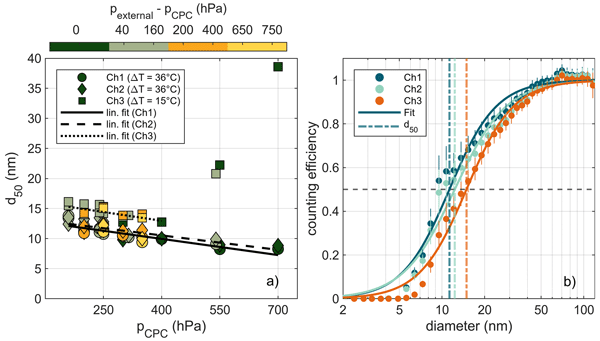
We constructed and characterized a Fluorinert multi-channel Condensation Particle Counter for aircraft applications that comprises three channels and a pressure regulation system to measure nucleation mode particles in the upper troposphere. The cutoffs were determined at several ambient and internal pressures and sample flows. During the first aircraft campaign TPEx we were able to identify possible new particle formation events.
Hyunkwang Lim, Tamaki Fujinawa, Takafumi Sugita, Satoshi Inomata, Hiroshi Tanimoto, Christoph Mahnke, Andreas Petzold, Ulrich Bundke, Yugo Kanaya, Yasuko Kasai, Tomohiro O. Sato, Sang Seo Park, Minseok Kim, Yun Gon Lee, and Ukkyo Jeong
EGUsphere, https://doi.org/10.5194/egusphere-2026-4968, https://doi.org/10.5194/egusphere-2026-4968, 2026
This preprint is open for discussion and under review for Atmospheric Measurement Techniques (AMT).
Short summary
Short summary
Satellite measurements of nitrogen dioxide can be biased when the assumed vertical distribution of pollution does not match reality. We combined satellite, aircraft, and ground-based observations near major Asian airports and found that using aircraft-measured profiles generally reduced this bias. However, improvements varied by location, showing that spatial representativeness and other retrieval uncertainties also remain important.
Hafiz Hashim Imtiaz, Thomas Forstinger, Paul Schaffer, Martin Kupper, and Alexander Bergmann
J. Sens. Sens. Syst., 15, 115–132, https://doi.org/10.5194/jsss-15-115-2026, https://doi.org/10.5194/jsss-15-115-2026, 2026
Short summary
Short summary
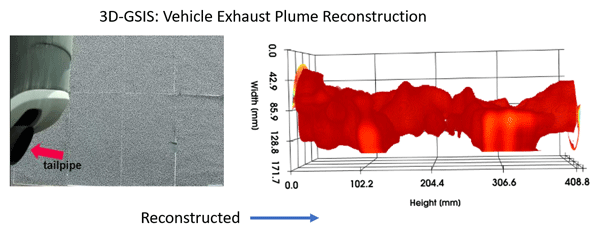
We present a 3D gas schlieren imaging sensor (3D-GSIS) for reconstructing vehicle exhaust plume density fields. It estimates plume size, laser absorption path lengths, intersection points of lasers, and local densities. Combined with advanced remote emission sensing, it enables direct measurement of pollutant concentrations in exhaust plumes.
Herbert G. Hartl, Janne Lampilahti, Rima Baalbaki, Lauri Ahonen, Tommy Chan, Tinghang Zhang, Joonas Vanhanen, Joonas Purén, Gerhard Steiner, Sebastian Schmitt, Torsten Tritscher, Amine Koched, Manuel Granzin, Petr Roztocil, Silja Häme, Tuukka Petäjä, and Katrianne Lehtipalo
Aerosol Research, 4, 133–152, https://doi.org/10.5194/ar-4-133-2026, https://doi.org/10.5194/ar-4-133-2026, 2026
Short summary
Short summary
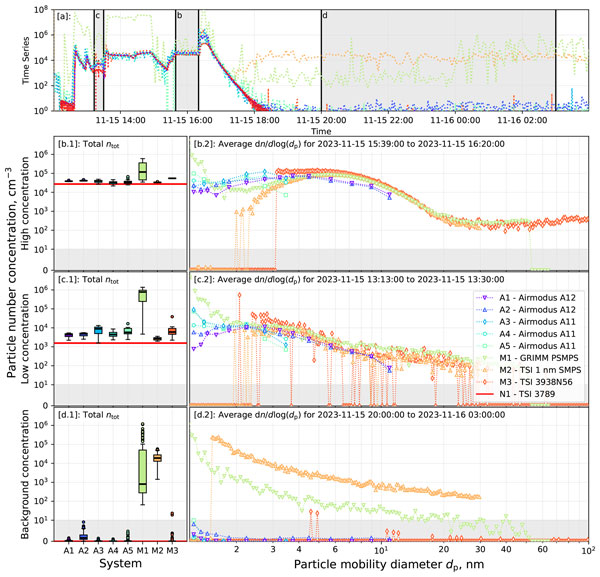
Small airborne particles influence how clouds form and how they affect the climate. Our study compared eight different instruments that measure the size distributions of these particles to understand the instruments' strengths and weaknesses. We found that some systems are more accurate, whereas others are more sensitive at tiny sizes. These results will help to improve future monitoring of air quality and climate processes.
Sarah Richter, Timo Keber, Martin Heinritzi, Lisa Beck, Laurin Merkel, Sarah Kirchhoff, Jann Schrod, Patrick Weber, and Joachim Curtius
Atmos. Meas. Tech., 19, 1093–1116, https://doi.org/10.5194/amt-19-1093-2026, https://doi.org/10.5194/amt-19-1093-2026, 2026
Short summary
Short summary
We constructed and characterized a Fluorinert multi-channel Condensation Particle Counter for aircraft applications that comprises three channels and a pressure regulation system to measure nucleation mode particles in the upper troposphere. The cutoffs were determined at several ambient and internal pressures and sample flows. During the first aircraft campaign TPEx we were able to identify possible new particle formation events.
Johannes Mandl, Philipp Trampitsch, Alexander Fröhlich, Reinhard Klambauer, and Alexander Bergmann
J. Sens. Sens. Syst., 15, 1–8, https://doi.org/10.5194/jsss-15-1-2026, https://doi.org/10.5194/jsss-15-1-2026, 2026
Short summary
Short summary
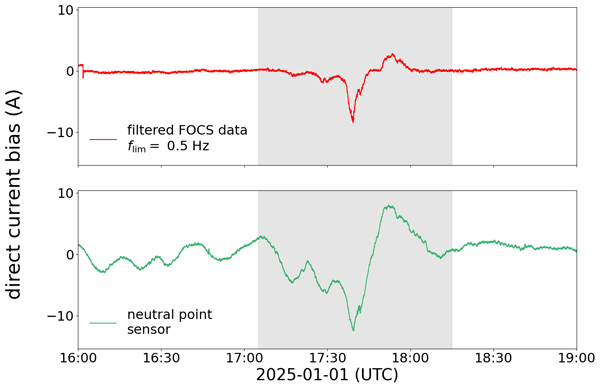
Parasitic direct currents in our alternating-current power grid affect the operation of power transformers. In this work, we present a fiber-optic current sensor system designed for the long-term monitoring of such direct currents, especially those arising from solar activity. The sensor demonstrator allows remote data access and sensor operation and was deployed at an electrical substation. For the first time, we show measurements of such currents on single phases of the power grid.
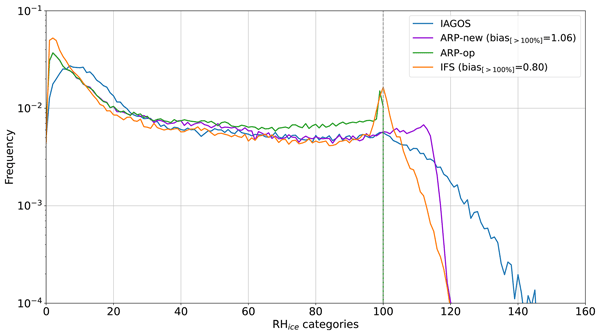
Sara Arriolabengoa, Pierre Crispel, Olivier Jaron, Yves Bouteloup, Benoît Vié, Yun Li, Andreas Petzold, and Matthieu Plu
Atmos. Chem. Phys., 25, 18051–18076, https://doi.org/10.5194/acp-25-18051-2025, https://doi.org/10.5194/acp-25-18051-2025, 2025
Short summary
Short summary
Aircraft condensation trails, also known as contrails, have a significant impact on the global climate when they persist. In this work, we present a modification to the Météo-France weather model ARPEGE (Action de Recherche Petite Echelle Grande Echelle) to improve the forecasting of areas favourable to the persistence of contrails. The spatial correspondence between observations and the modified model is demonstrated and evaluated by appropriate metrics. The modified model can therefore be used for further contrail climate impact applications.

Patrick Konjari, Christian Rolf, Martina Krämer, Armin Afchine, Nicole Spelten, Irene Bartolome Garcia, Annette Miltenberger, Nicolas Emig, Philipp Joppe, Johannes Schneider, Yun Li, Andreas Petzold, Heiko Bozem, and Peter Hoor
Atmos. Chem. Phys., 25, 18031–18050, https://doi.org/10.5194/acp-25-18031-2025, https://doi.org/10.5194/acp-25-18031-2025, 2025
Short summary
Short summary
We investigated how a powerful storm over southern Sweden in June 2024 transported ice particles and moist air into the normally dry stratosphere. We observed unusually high water vapor and ice levels up to 1.5 kilometers above the tropopause. Although the extra water vapor lasted only a few days to weeks, it shows how such storms can temporarily alter the upper atmosphere’s composition.
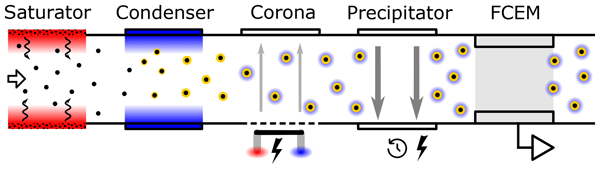
Helmut Krasa, Victoria M. Fruhmann, Sebastian Schurl, Martin Kupper, and Alexander Bergmann
Aerosol Research, 3, 521–534, https://doi.org/10.5194/ar-3-521-2025, https://doi.org/10.5194/ar-3-521-2025, 2025
Short summary
Short summary
This study presents a new method to measure ultrafine airborne particle concentrations down to 3 nm at high concentrations. By growing the particles into droplets, subsequently electrically charging them, and detecting the electrical signal, the system enables accurate and compact measurements of the particle number concentration. This approach is useful for onboard monitoring of vehicle emissions where space is limited and high concentrations are measured.
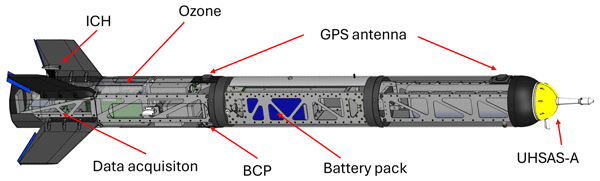
Heiko Bozem, Philipp Joppe, Yun Li, Nicolas Emig, Armin Afchine, Anna Breuninger, Joachim Curtius, Stefan Hofmann, Sadath Ismayil, Konrad Kandler, Daniel Kunkel, Arthur Kutschka, Hans-Christoph Lachnitt, Andreas Petzold, Sarah Richter, Timo Röschenthaler, Christian Rolf, Lisa Schneider, Johannes Schneider, Alexander Vogel, and Peter Hoor
Atmos. Meas. Tech., 18, 6545–6568, https://doi.org/10.5194/amt-18-6545-2025, https://doi.org/10.5194/amt-18-6545-2025, 2025
Short summary
Short summary
Deployed on a Learjet as a tandem measurement platform during the TPEx I (TropoPause composition gradients and mixing Experiment) campaign in June 2024, the new TPC-TOSS (TropoPause Composition Towed Sensor Shuttle) system delivers high-resolution in situ data on ozone, aerosol, and key meteorological parameters. Laboratory and in-flight tests confirmed its precision and stability. Observed gradients near the tropopause reveal active mixing and transport processes in the tropopause region.
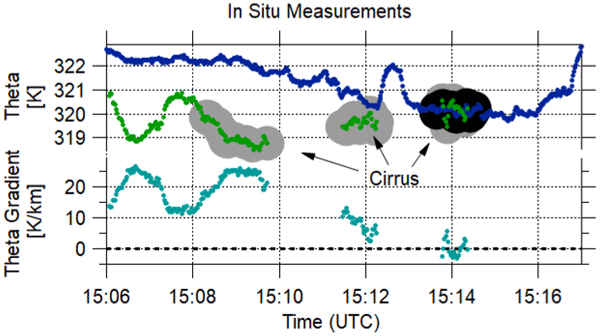
Nicolas Emig, Annette K. Miltenberger, Peter M. Hoor, and Andreas Petzold
Atmos. Chem. Phys., 25, 13077–13101, https://doi.org/10.5194/acp-25-13077-2025, https://doi.org/10.5194/acp-25-13077-2025, 2025
Short summary
Short summary
This study presents in situ observations of cirrus occurrence from aircraft measurements in the extratropical transition layer (ExTL) using simultaneous measurements from two platforms. Lagrangian diagnostics based on high-resolution ICON simulations show long residence times of the cirrus in stratospheric air, allowing us to separate different diabatic processes during transit. The findings suggest that radiative diabatic cloud processes significantly impact the tropopause thermodynamic structure.
Herman G. J. Smit, Torben Galle, Romain Blot, Florian Obersteiner, Philippe Nédélec, Andreas Zahn, Jean-Marc Cousin, Ulrich Bundke, Andreas Petzold, Valerie Thouret, and Hannah Clark
Atmos. Meas. Tech., 18, 4985–5001, https://doi.org/10.5194/amt-18-4985-2025, https://doi.org/10.5194/amt-18-4985-2025, 2025
Short summary
Short summary
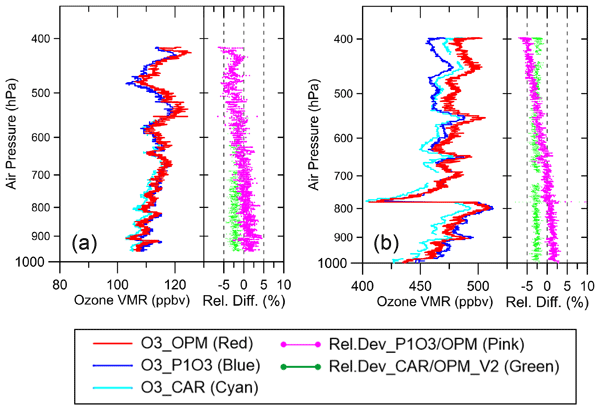
The two ozone instruments of IAGOS (In-service Aircraft for a Global Observation System) have been compared with the Ozone PhotoMeter (OPM) of the World Calibration Center of Ozone Sondes (WCCOS) in an atmospheric simulation chamber under realistic flight conditions of pressure, temperature, and ozone concentrations. The two IAGOS-instruments showed good agreement with the OPM within 5–6 %. The observed differences are small but systematic and reproducible during the intercomparison.
Yann Cohen, Didier Hauglustaine, Nicolas Bellouin, Marianne Tronstad Lund, Sigrun Matthes, Agnieszka Skowron, Robin Thor, Ulrich Bundke, Andreas Petzold, Susanne Rohs, Valérie Thouret, Andreas Zahn, and Helmut Ziereis
Atmos. Chem. Phys., 25, 5793–5836, https://doi.org/10.5194/acp-25-5793-2025, https://doi.org/10.5194/acp-25-5793-2025, 2025
Short summary
Short summary
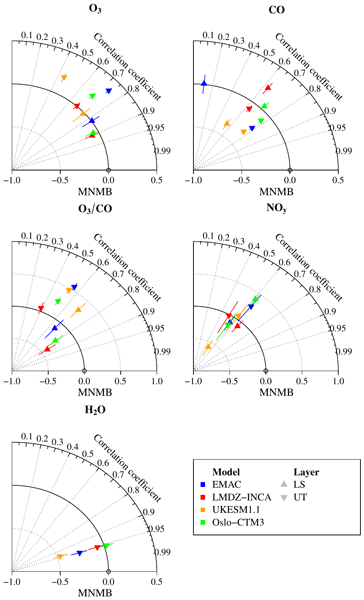
The chemical composition of the atmosphere near the tropopause is a key parameter for evaluating the climate impact of subsonic aviation pollutants. This study uses in situ data collected aboard passenger aircraft to assess the ability of four chemistry–climate models to reproduce (bi-)decadal climatologies of ozone, carbon monoxide, water vapour, and reactive nitrogen in this region. The models reproduce the very distinct ozone seasonality in the upper troposphere and in the lower stratosphere well.
Patrick Konjari, Christian Rolf, Michaela I. Hegglin, Susanne Rohs, Yun Li, Andreas Zahn, Harald Bönisch, Philippe Nedelec, Martina Krämer, and Andreas Petzold
Atmos. Chem. Phys., 25, 4269–4289, https://doi.org/10.5194/acp-25-4269-2025, https://doi.org/10.5194/acp-25-4269-2025, 2025
Short summary
Short summary
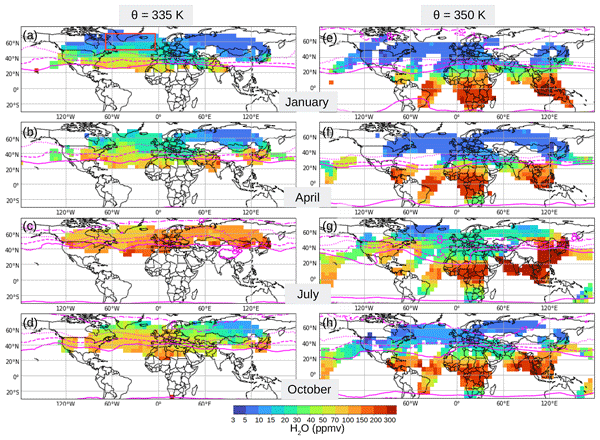
This study introduces a new method to derive adjusted water vapor (H2O) climatologies for the upper tropopshere and lower statosphere (UT/LS) using data from 60 000 flights under the IAGOS program. Biases in the IAGOS water vapour dataset are adjusted, based on the more accurate IAGOS-CARIBIC data. The resulting highly resolved H2O climatologies will contribute to a better understanding of the H2O variability in the UT/LS and its connection to various transport and mixing processes.
Ziming Wang, Luca Bugliaro, Klaus Gierens, Michaela I. Hegglin, Susanne Rohs, Andreas Petzold, Stefan Kaufmann, and Christiane Voigt
Atmos. Chem. Phys., 25, 2845–2861, https://doi.org/10.5194/acp-25-2845-2025, https://doi.org/10.5194/acp-25-2845-2025, 2025
Short summary
Short summary
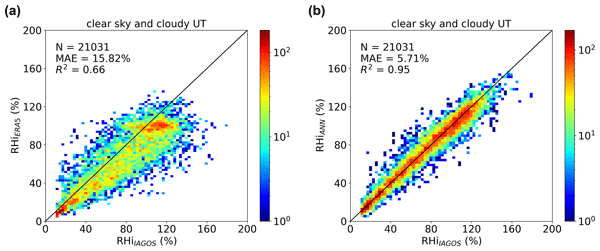
Upper-tropospheric relative humidity bias in the ERA5 weather model is corrected by 10 % by an artificial neural network using aircraft in-service humidity data and thermodynamic and dynamical variables. The improved skills of the weather model will advance cirrus research, weather forecasts, and measures for contrail reduction.
Kuo-Ying Wang, Philippe Nedelec, Valerie Thouret, Hannah Clark, Andreas Wahner, and Andreas Petzold
EGUsphere, https://doi.org/10.5194/egusphere-2024-2414, https://doi.org/10.5194/egusphere-2024-2414, 2024
Preprint archived
Short summary
Short summary
We use routine in-service commercial passenger airplanes Airbus A340 and A330 to collect air pollutants in the upper troposphere. The beauty in using commercial airplanes is that these commercial airplanes, like taxi on the ground, keep flying all the time. We find that short-lived air pollutants are very sensitive to ground-level emissions. Effective regulation in ground-level emissions can help to reduce air pollution in the upper troposphere.
Andreas Petzold, Ulrich Bundke, Anca Hienola, Paolo Laj, Cathrine Lund Myhre, Alex Vermeulen, Angeliki Adamaki, Werner Kutsch, Valerie Thouret, Damien Boulanger, Markus Fiebig, Markus Stocker, Zhiming Zhao, and Ari Asmi
Atmos. Chem. Phys., 24, 5369–5388, https://doi.org/10.5194/acp-24-5369-2024, https://doi.org/10.5194/acp-24-5369-2024, 2024
Short summary
Short summary
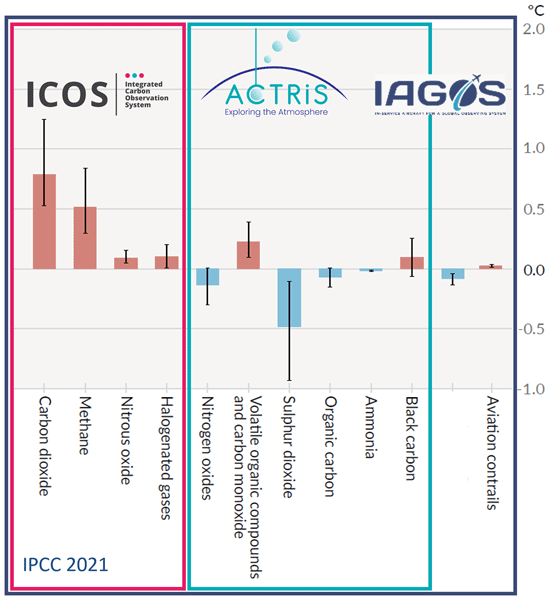
Easy and fast access to long-term and high-quality observational data is recognised as fundamental to environmental research and the development of climate forecasting and assessment services. We discuss the potential new directions in atmospheric sciences offered by the atmosphere-centric European research infrastructures ACTRIS, IAGOS, and ICOS, building on their capabilities for standardised provision of data through open access combined with tools and methods of data-intensive science.
Markus Knoll, Martin Penz, Hannes Juchem, Christina Schmidt, Denis Pöhler, and Alexander Bergmann
Atmos. Meas. Tech., 17, 2481–2505, https://doi.org/10.5194/amt-17-2481-2024, https://doi.org/10.5194/amt-17-2481-2024, 2024
Short summary
Short summary
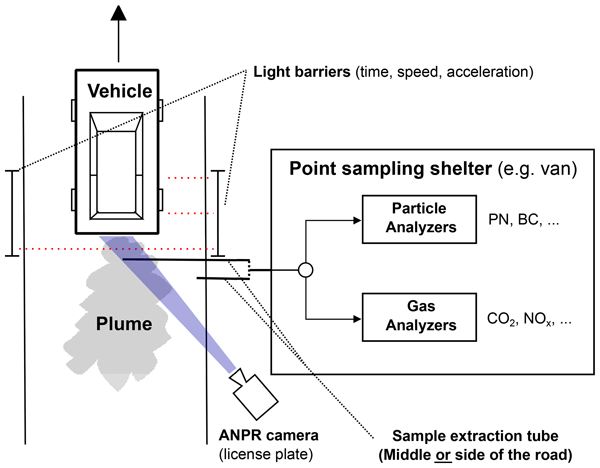
Exhaust emissions from combustion-based vehicles are negatively affecting human health and our environment. In particular, a small share (< 20 %) of poorly maintained or tampered vehicles are responsible for the majority (60 %–90 %) of traffic-related emissions. The emissions from vehicles are currently not properly monitored during their lifetime. We present a roadside measurement technique, called
point sampling, which can be used to monitor vehicle emissions throughout their life cycle.
Alexander Schossmann, Michael Töfferl, Christoph Schmidt, and Alexander Bergmann
J. Sens. Sens. Syst., 13, 31–39, https://doi.org/10.5194/jsss-13-31-2024, https://doi.org/10.5194/jsss-13-31-2024, 2024
Short summary
Short summary
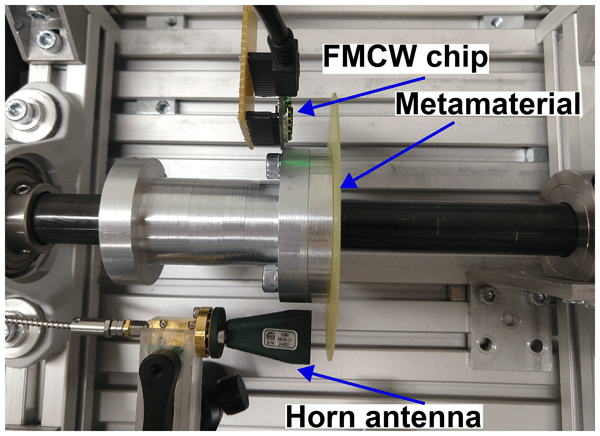
We present a concept for angle and position measurement based on metamaterials. The distance between the sensor and the rotating or moving metamaterial target is not limited to a precise value. We use state-of-the-art millimeter wave radar chip technology for read-out, initially intended for applications such as gesture recognition or contactless switches. We implement a demonstrator test setup and show the proof of principle.
Yann Cohen, Didier Hauglustaine, Bastien Sauvage, Susanne Rohs, Patrick Konjari, Ulrich Bundke, Andreas Petzold, Valérie Thouret, Andreas Zahn, and Helmut Ziereis
Atmos. Chem. Phys., 23, 14973–15009, https://doi.org/10.5194/acp-23-14973-2023, https://doi.org/10.5194/acp-23-14973-2023, 2023
Short summary
Short summary
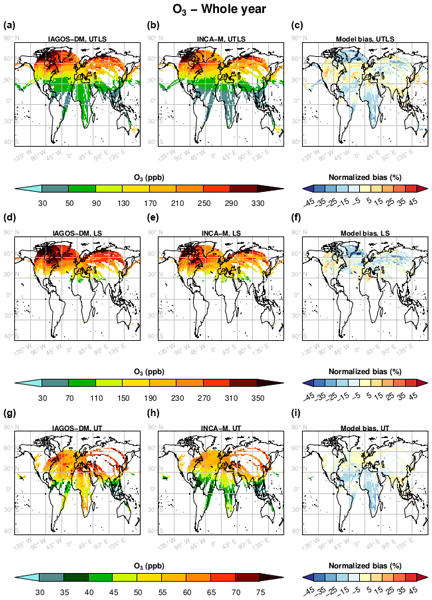
The upper troposphere–lower stratosphere (UTLS) is a key region regarding the lower atmospheric composition. This study consists of a comprehensive evaluation of an up-to-date chemistry–climate model in this layer, using regular in situ measurements based on passenger aircraft. For this purpose, a specific software (Interpol-IAGOS) has been updated and made publicly available. The model reproduces the carbon monoxide peaks due to biomass burning over the continental tropics particularly well.
Patrick Weber, Oliver F. Bischof, Benedikt Fischer, Marcel Berg, Susanne Hering, Steven Spielman, Gregory Lewis, Andreas Petzold, and Ulrich Bundke
Atmos. Meas. Tech., 16, 3505–3514, https://doi.org/10.5194/amt-16-3505-2023, https://doi.org/10.5194/amt-16-3505-2023, 2023
Short summary
Short summary
This study tests the new water condensation particle counter (MAGIC 210-LP) for deployment on passenger aircraft coordinated by the European research infrastructure IAGOS. We conducted a series of laboratory experiments for flight altitude conditions. We demonstrate that this water condensation particle counter model shows excellent agreement with a butanol-based instrument used in parallel and a Faraday cup electrometer as reference instrument at all tested pressure conditions.
Patrick Weber, Oliver F. Bischof, Benedikt Fischer, Marcel Berg, Jannik Schmitt, Gerhard Steiner, Lothar Keck, Andreas Petzold, and Ulrich Bundke
Aerosol Research, 1, 1–12, https://doi.org/10.5194/ar-1-1-2023, https://doi.org/10.5194/ar-1-1-2023, 2023
Short summary
Short summary
The aerosol number concentration is essential information for aerosol science. A condensation particle counter (CPC) can robustly provide this information. Butanol is often used as a working fluid in a CPC. We could show that dimethyl sulfoxide (DMSO) behaves equivalently to butanol in terms of the instrument`s counting efficiency, cut-off diameter and concentration linearity. We tested this on different aerosols, including sodium chloride, ammonium sulfate and fresh combustion soot.
Yun Li, Christoph Mahnke, Susanne Rohs, Ulrich Bundke, Nicole Spelten, Georgios Dekoutsidis, Silke Groß, Christiane Voigt, Ulrich Schumann, Andreas Petzold, and Martina Krämer
Atmos. Chem. Phys., 23, 2251–2271, https://doi.org/10.5194/acp-23-2251-2023, https://doi.org/10.5194/acp-23-2251-2023, 2023
Short summary
Short summary
The radiative effect of aviation-induced cirrus is closely related to ambient conditions and its microphysical properties. Our study investigated the occurrence of contrail and natural cirrus measured above central Europe in spring 2014. It finds that contrail cirrus appears frequently in the pressure range 200 to 245 hPa and occurs more often in slightly ice-subsaturated environments than expected. Avoiding slightly ice-subsaturated regions by aviation might help mitigate contrail cirrus.

Markus Leiminger, Lukas Fischer, Sophia Brilke, Julian Resch, Paul Martin Winkler, Armin Hansel, and Gerhard Steiner
Atmos. Meas. Tech., 15, 3705–3720, https://doi.org/10.5194/amt-15-3705-2022, https://doi.org/10.5194/amt-15-3705-2022, 2022
Short summary
Short summary
We developed an axial ion mobility classifier coupled to an atmospheric-pressure interface time-of-flight (APi-TOF) mass spectrometer to measure size-segregated atmospheric ions. We characterize the performance of the novel instrument with bipolar-electrospray-generated ion mobility standards and compare the results with CFD simulations and a simplified numerical particle-tracking model. Ultimately, we report first mass–mobility measurements of atmospheric ions in Innsbruck, Austria.
Patrick Weber, Andreas Petzold, Oliver F. Bischof, Benedikt Fischer, Marcel Berg, Andrew Freedman, Timothy B. Onasch, and Ulrich Bundke
Atmos. Meas. Tech., 15, 3279–3296, https://doi.org/10.5194/amt-15-3279-2022, https://doi.org/10.5194/amt-15-3279-2022, 2022
Short summary
Short summary
In our laboratory closure study, we measured the full set of aerosol optical properties for different light-absorbing aerosols using a set of instruments.
Our key finding is that the extensive and intensive aerosol optical properties obtained agree with data from reference instruments, except the absorption Ångström exponent of externally mixed aerosols. The reported uncertainty in the single-scattering albedo fulfils the defined goals for Global Climate Observing System applications of 10 %.
Ajit Ahlawat, Kay Weinhold, Jesus Marval, Paolo Tronville, Ari Leskinen, Mika Komppula, Holger Gerwig, Lars Gerling, Stephan Weber, Rikke Bramming Jørgensen, Thomas Nørregaard Jensen, Marouane Merizak, Ulrich Vogt, Carla Ribalta, Mar Viana, Andre Schmitz, Maria Chiesa, Giacomo Gerosa, Lothar Keck, Markus Pesch, Gerhard Steiner, Thomas Krinke, Torsten Tritscher, Wolfram Birmili, and Alfred Wiedensohler
Atmos. Meas. Tech. Discuss., https://doi.org/10.5194/amt-2022-155, https://doi.org/10.5194/amt-2022-155, 2022
Revised manuscript not accepted
Short summary
Short summary
Measurements of ultrafine particles must be done with quality-assured instruments. The performance of portable instruments such as NanoScan SMPS, and GRIMM Mini WRAS spectrometer measuring the particle number size distribution in the range from 10 to 200 nm were investigated. The influence of different aerosol types and maintenance activities on these instruments were explored. The results show that these portable instruments are suitable for mobile UFP measurements for source identification.
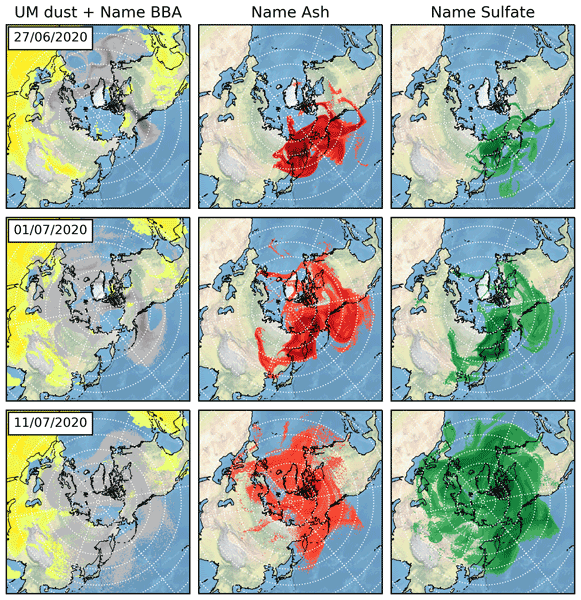
Martin J. Osborne, Johannes de Leeuw, Claire Witham, Anja Schmidt, Frances Beckett, Nina Kristiansen, Joelle Buxmann, Cameron Saint, Ellsworth J. Welton, Javier Fochesatto, Ana R. Gomes, Ulrich Bundke, Andreas Petzold, Franco Marenco, and Jim Haywood
Atmos. Chem. Phys., 22, 2975–2997, https://doi.org/10.5194/acp-22-2975-2022, https://doi.org/10.5194/acp-22-2975-2022, 2022
Short summary
Short summary
Using the Met Office NAME dispersion model, supported by satellite- and ground-based remote-sensing observations, we describe the dispersion of aerosols from the 2019 Raikoke eruption and the concurrent wildfires in Alberta Canada. We show how the synergy of dispersion modelling and multiple observation sources allowed observers in the London VAAC to arrive at a more complete picture of the aerosol loading at altitudes commonly used by aviation.
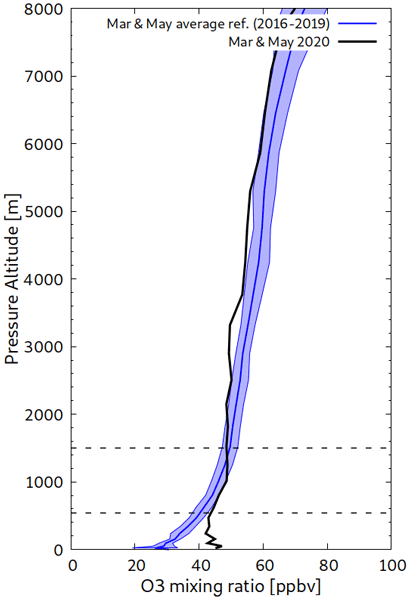
Hannah Clark, Yasmine Bennouna, Maria Tsivlidou, Pawel Wolff, Bastien Sauvage, Brice Barret, Eric Le Flochmoën, Romain Blot, Damien Boulanger, Jean-Marc Cousin, Philippe Nédélec, Andreas Petzold, and Valérie Thouret
Atmos. Chem. Phys., 21, 16237–16256, https://doi.org/10.5194/acp-21-16237-2021, https://doi.org/10.5194/acp-21-16237-2021, 2021
Short summary
Short summary
We examined 27 years of IAGOS (In-service Aircraft for a Global Observing System) profiles at Frankfurt to see if there were unusual features during the spring of 2020 related to COVID-19 lockdowns in Europe. Increased ozone near the surface was partly linked to the reduction in emissions. Carbon monoxide decreased near the surface, but the impact of the lockdowns was offset by polluted air masses from elsewhere. There were small reductions in ozone and carbon monoxide in the free troposphere.
Cited articles
Aalto, P., Hämeri, K., Paatero, P., Kulmala, M., Bellander, T., Berglind, N., Bouso, L., Castaño-Vinyals, G., Sunyer, J., Cattani, G., Marconi, A., Cyrys, J., von Klot, S., Peters, A., Zetzsche, K., Lanki, T., Pekkanen, J., Nyberg, F., Sjövall, B., and Forastiere, F.: Aerosol Particle Number Concentration Measurements in Five European Cities Using TSI-3022 Condensation Particle Counter over a Three-Year Period during Health Effects of Air Pollution on Susceptible Subpopulations, J. Air Waste Manage., 55, 1064–1076, https://doi.org/10.1080/10473289.2005.10464702, 2005. a
Alam, A., Shi, J. P., and Harrison, R. M.: Observations of new particle formation in urban air, J. Geophys. Res.-Atmos., 108, https://doi.org/10.1029/2001JD001417, 2003. a
Astbury, G. R., Bugand-Bugandet, J., Grollet, E., and Stell, K. M.: Flash points of aqueous solutions of flammable solvents, Institution of Chemical Engineers, Symposium Series, 150, https://api.semanticscholar.org/ (last access: 4 June 2026), 2004. a
Balendra, S., Kale, A., Pongetti, J., Kazemimanesh, M., Haugen, M., Weller, L., and Boies, A.: Condensation particle counters: Exploring the limits of miniaturisation, J. Aerosol Sci., 175, 106266, https://doi.org/10.1016/j.jaerosci.2023.106266, 2024. a
Bauer, P. S., Spät, D., Eisenhut, M., Gattringer, A., and Weinzierl, B.: Pressure-dependent performance of two CEN-specified condensation particle counters, Atmos. Meas. Tech., 16, 4445–4460, https://doi.org/10.5194/amt-16-4445-2023, 2023. a, b, c, d
Bezantakos, S. and Biskos, G.: Temperature and pressure effects on the performance of the portable TSI 3007 condensation particle counter: Implications on ground and aerial observations, J. Aerosol Sci., 159, 105877, https://doi.org/10.1016/j.jaerosci.2021.105877, 2022. a, b, c
Bischof, O. F.: Application-specific calibration of condensation particle counters under low pressure conditions: = Anwendungsspezifische Kalibrierung von Kondensationspartikelzählern unter Niederdruckbedingungen, in: Schriften des Forschungszentrums Jülich Reihe Energie und Umwelt, Bd./vol. 579, energy and environment, Forschungszentrum Jülich GmbH, Zentralbibliothek, Verlag, Aachen, ISBN 978-3-95806-629-8, 2022. a, b, c, d, e, f
Brock, C. A., Schröder, F., Kärcher, B., Petzold, A., Busen, R., and Fiebig, M.: Ultrafine particle size distributions measured in aircraft exhaust plumes, J. Geophys. Res., 105, 26555–26568, https://doi.org/10.1029/2000JD900360, 2000. a
Bundke, U., Berg, M., Houben, N., Ibrahim, A., Fiebig, M., Tettich, F., Klaus, C., Franke, H., and Petzold, A.: The IAGOS-CORE aerosol package: instrument design, operation and performance for continuous measurement aboard in-service aircraft, Tellus B, 67, 28339, https://doi.org/10.3402/tellusb.v67.28339, 2015. a, b, c, d, e, f, g, h, i, j
Cozic, J., Verheggen, B., Mertes, S., Connolly, P., Bower, K., Petzold, A., Baltensperger, U., and Weingartner, E.: Scavenging of black carbon in mixed phase clouds at the high alpine site Jungfraujoch, Atmos. Chem. Phys., 7, 1797–1807, https://doi.org/10.5194/acp-7-1797-2007, 2007 a
Gao, R. S., Telg, H., McLaughlin, R. J., Ciciora, S. J., Watts, L. A., Richardson, M. S., Schwarz, J. P., Perring, A. E., Thornberry, T. D., Rollins, A. W., Markovic, M. Z., Bates, T. S., Johnson, J. E., and Fahey, D. W.: A light-weight, high-sensitivity particle spectrometer for PM2.5 aerosol measurements, Aerosol Sci. Tech., 50, 88–99, 2016. a
Hao, W., Stolzenburg, M., Attoui, M., Zhang, J., and Wang, Y.: Optimizing the activation efficiency of sub-3 nm particles in a laminar flow condensation particle counter: Model simulation, J. Aerosol Sci., 158, 105841, https://doi.org/10.1016/j.jaerosci.2021.105841, 2021. a
Havemeyer, R. N.: Freezing Point Curve of Dimethyl Sulfoxide–Water Solutions, J. Pharm. Sci., 55, 851–853, https://doi.org/10.1002/jps.2600550822, 1966. a
Hering, S. V., Spielman, S. R., and Lewis, G. S.: Moderated, Water-Based, Condensational Particle Growth in a Laminar Flow, Aerosol Sci. Tech., 48, 401–408, https://doi.org/10.1080/02786826.2014.881460, 2014. a
Hong, A. C., Young, C. J., Hurley, M. D., Wallington, T. J., and Mabury, S. A.: Perfluorotributylamine: A novel long-lived greenhouse gas, Geophys. Res. Lett., 40, 6010–6015, https://doi.org/10.1002/2013GL058010, 2013. a
IPCC: Climate Change 2021: The Physical Science Basis, Contribution of Working Group I to the Sixth Assessment Report of the Intergovernmental Panel on Climate Change, Cambridge University Press, Cambridge, United Kingdom, and New York, NY, USA, https://doi.org/10.1017/9781009157896, 2021. a, b
Jarrett, D. G. and Owen, M. C.: Traceability for Aerosol Electrometer in the fA Range, Instrumentation Viewpoint, 14, 17, https://doi.org/10.5821/iwp.2013.14.15417, 2013. a
Jurányi, Z., Gysel, M., Weingartner, E., DeCarlo, P. F., Kammermann, L., and Baltensperger, U.: Measured and modelled cloud condensation nuclei number concentration at the high alpine site Jungfraujoch, Atmos. Chem. Phys., 10, 7891–7906, https://doi.org/10.5194/acp-10-7891-2010, 2010. a
Kahn, R. A., Andrews, E., Brock, C. A., Chin, M., Feingold, G., Gettelman, A., Levy, R. C., Murphy, D. M., Nenes, A., Pierce, J. R., Popp, T., Redemann, J., Sayer, A. M., Da Silva, A. M., Sogacheva, L., and Stier, P.: Reducing Aerosol Forcing Uncertainty by Combining Models With Satellite and Within-The-Atmosphere Observations: A Three-Way Street, Rev. Geophys., 61, e2022RG000796, https://doi.org/10.1029/2022RG000796, 2023. a
Kim, W. Y., Lee, S. G., Lee, H., and Ahn, K.-H.: Investigation of Vertical Profiles of Particulate Matter and Meteorological Variables up to 2.5 km in Altitude Using a Drone-Based Monitoring System, Atmosphere, 16, 93, https://doi.org/10.3390/atmos16010093, 2025. a
Krasa, H., Fruhmann, V. M., Schurl, S., Kupper, M., and Bergmann, A.: Condensation diffusion charging – particle number measurement of high concentrations down to 3 nm, Aerosol Research, 3, 521–534, https://doi.org/10.5194/ar-3-521-2025, 2025. a, b
Kulkarni, P., Baron, P. A., and Willeke, K.: Aerosol Measurement: Principles, Techniques, and Applications, 3rd edn., John Wiley & Sons Ltd., ISBN 978-0-470-38741-2, 2011. a
Laj, P., Lund Myhre, C., Riffault, V., Amiridis, V., Fuchs, H., Eleftheriadis, K., Petäjä, T., Salameh, T., Kivekäs, N., Juurola, E., Saponaro, G., Philippin, S., Cornacchia, C., Alados Arboledas, L., Baars, H., Claude, A., De Mazière, M., Dils, B., Dufresne, M., Evangeliou, N., Favez, O., Fiebig, M., Haeffelin, M., Herrmann, H., Höhler, K., Illmann, N., Kreuter, A., Ludewig, E., Marinou, E., Möhler, O., Mona, L., Eder Murberg, L., Nicolae, D., Novelli, A., O’Connor, E., Ohneiser, K., Petracca Altieri, R. M., Picquet-Varrault, B., Van Pinxteren, D., Pospichal, B., Putaud, J.-P., Reimann, S., Siomos, N., Stachlewska, I., Tillmann, R., Voudouri, K. A., Wandinger, U., Wiedensohler, A., Apituley, A., Comerón, A., Gysel-Beer, M., Mihalopoulos, N., Nikolova, N., Pietruczuk, A., Sauvage, S., Sciare, J., Skov, H., Svendby, T., Swietlicki, E., Tonev, D., Vaughan, G., Zdimal, V., Baltensperger, U., Doussin, J.-F., Kulmala, M., Pappalardo, G., Sorvari Sundet, S., and Vana, M.: Aerosol, Clouds and Trace Gases Research Infrastructure (ACTRIS): The European Research Infrastructure Supporting Atmospheric Science, B. Am. Meteorol. Soc., 105, E1098–E1136, https://doi.org/10.1175/BAMS-D-23-0064.1, 2024. a
Lee, L. A., Reddington, C. L., and Carslaw, K. S.: On the relationship between aerosol model uncertainty and radiative forcing uncertainty, P. Natl. Acad. Sci. USA, 113, 5820–5827, https://doi.org/10.1073/pnas.1507050113, 2016. a
Lewis, G. S. and Hering, S. V.: Minimizing Concentration Effects in Water-Based, Laminar-Flow Condensation Particle Counters, Aerosol Sci. Tech., 47, 645–654, https://doi.org/10.1080/02786826.2013.779629, 2013. a, b, c
Mamakos, A., Giechaskiel, B., and Drossinos, Y.: Experimental and Theoretical Investigations of the Effect of the Calibration Aerosol Material on the Counting Efficiencies of TSI 3790 Condensation Particle Counters, Aerosol Sci. Tech., 47, 11–21, https://doi.org/10.1080/02786826.2012.716174, 2013. a
Maring, H. and Schwartze, G.: A condensation particle counter for long-term continuous use in the remote marine environment, Atmos. Environ., 28, 3293–3298, 1994. a
McNeill, V. F.: Atmospheric Aerosols: Clouds, Chemistry, and Climate, Annu. Rev. Chem. Biomol., 8, 427–444, https://doi.org/10.1146/annurev-chembioeng-060816-101538, 2017. a
Mei, F., Spielman, S., Hering, S., Wang, J., Pekour, M. S., Lewis, G., Schmid, B., Tomlinson, J., and Havlicek, M.: Simulation-aided characterization of a versatile water-based condensation particle counter for atmospheric airborne research, Atmos. Meas. Tech., 14, 7329–7340, https://doi.org/10.5194/amt-14-7329-2021, 2021. a, b, c, d, e
Mordas, G., Sipilä, M., and Kulmala, M.: Nanoparticle Detection Using Nucleation Regime of the CPC, in: Nucleation and Atmospheric Aerosols, edited by: O'Dowd, C. D. and Wagner, P. E., Springer Netherlands, Dordrecht, 209–213, https://doi.org/10.1007/978-1-4020-6475-3_43, 2007. a
Nishimura, M., Nakayama, M., and Yano, T.: Vapor pressure of pure DMSO and vapor-liquid equilibria in DMSO−H2O system under isobaric conditions, J. Chem. Eng. Jpn., 5, 223–226, https://doi.org/10.1252/jcej.5.223, 1972. a
OJ EU, 2024/2881: ELI: http://data.europa.eu/eli/dir/2024/2881/oj (last access: 3 July 2026), 2024. a
Pandis, J. H. and Pandis, S. N.: Atmospheric Chemistry and Physics: From Air Pollution to Climate Change, 3rd edn., Wiley-VCH, New York, ISBN 978-1-118-94740-1, 2016. a
Petzold, A., Thouret, V., Gerbig, C., Zahn, A., Brenninkmeijer, C. A. M., Gallagher, M., Hermann, M., Pontaud, M., Ziereis, H., Boulanger, D., Marshall, J., Nédélec, P., Smit, H. G. J., Friess, U., Flaud, J.-M., Wahner, A., Cammas, J.-P., Volz-Thomas, A., and Team, I.: Global-scale atmosphere monitoring by in-service aircraft – current achievements and future prospects of the European Research Infrastructure IAGOS, Tellus B, 67, 28452, https://doi.org/10.3402/tellusb.v67.28452, 2015. a
Polyanskiy, M. N.: Refractiveindex.info database of optical constants, Scientific Data, 11, https://doi.org/10.1038/s41597-023-02898-2, 2024. a
Pöschl, U.: Atmospheric Aerosols: Composition, Transformation, Climate and Health Effects, Angew. Chem. Int. Edit., 44, 7520–7540, https://doi.org/10.1002/anie.200501122, 2005. a
Richter, S., Keber, T., Heinritzi, M., Beck, L., Merkel, L., Kirchhoff, S., Schrod, J., Weber, P., and Curtius, J.: Characterization and operation of a multi-channel Condensation Particle Counter (mc-CPC) for aircraft-based measurements, Atmos. Meas. Tech., 19, 1093–1116, https://doi.org/10.5194/amt-19-1093-2026, 2026. a
Thouret, V., Clark, H., Petzold, A., Nédélec, P., and Zahn, A.: IAGOS: Monitoring Atmospheric Composition for Air Quality and Climate by Passenger Aircraft, in: Handbook of Air Quality and Climate Change, edited by: Akimoto, H. and Tanimoto, H., Springer Nature Singapore, Singapore, 1–14, https://doi.org/10.1007/978-981-15-2527-8_57-1, 2022. a
Watson-Parris, D. and Smith, C. J.: Large uncertainty in future warming due to aerosol forcing, Nature Clim. Change, 12, 1111–1113, https://doi.org/10.1038/s41558-022-01516-0, 2022. a
Weber, P., Petzold, A., Bischof, O. F., Fischer, B., Berg, M., Freedman, A., Onasch, T. B., and Bundke, U.: Relative errors in derived multi-wavelength intensive aerosol optical properties using cavity attenuated phase shift single-scattering albedo monitors, a nephelometer, and tricolour absorption photometer measurements, Atmos. Meas. Tech., 15, 3279–3296, https://doi.org/10.5194/amt-15-3279-2022, 2022. a
Weber, P., Bischof, O. F., Fischer, B., Berg, M., Hering, S., Spielman, S., Lewis, G., Petzold, A., and Bundke, U.: Characterisation of a self-sustained, water-based condensation particle counter for aircraft cruising pressure level operation, Atmos. Meas. Tech., 16, 3505–3514, https://doi.org/10.5194/amt-16-3505-2023, 2023a. a, b
Weber, P., Bischof, O. F., Fischer, B., Berg, M., Schmitt, J., Steiner, G., Keck, L., Petzold, A., and Bundke, U.: A new working fluid for condensation particle counters for use in sensitive working environments, Aerosol Research, 1, 1–12, https://doi.org/10.5194/ar-1-1-2023, 2023b. a, b, c, d, e, f, g, h, i, j, k, l, m, n, o, p, q, r, s, t
Wendisch, M. and Brenguier, J.-L.: Airborne Measurements for Environmental Research, John Wiley & Sons Ltd., ISBN 978-3-527-40996-9, 2013. a
Wiedensohler, A., Wiesner, A., Weinhold, K., Birmili, W., Hermann, M., Merkel, M., Müller, T., Pfeifer, S., Schmidt, A., Tuch, T., Velarde, F., Quincey, P., Seeger, S., and Nowak, A.: Mobility particle size spectrometers: Calibration procedures and measurement uncertainties, Aerosol Sci. Tech., 52, 146–164, https://doi.org/10.1080/02786826.2017.1387229, 2018. a
Yaws, C. L.: Yaws’ handbook of thermodynamic and physical properties of chemical compounds: physical, thermodynamic and transport properties for 5000 organic chemical compounds, 1st edn., Knovel, ISBN 1591244447, 2003. a
Zhang, Z. and Liu, B. Y. H.: Performance of TSI 3760 Condensation Nuclei Counter at Reduced Pressures and Flow Rates, Aerosol Sci. Tech., 15, 228–238, https://doi.org/10.1080/02786829108959530, 1991. a, b
Zhang, Z. Q. and Liu, B. Y. H.: Dependence of the Performance of TSI 3020 Condensation Nucleus Counter on Pressure, Flow Rate, and Temperature, Aerosol Sci. Tech., 13, 493–504, https://doi.org/10.1080/02786829008959464, 1990. a
Short summary
We evaluated dimethyl sulfoxide (DMSO) as a safe, non-flammable working fluid for condensation particle counters, comparing it with butanol under varied pressures, temperatures, and aerosols. Laboratory, field, and simulation results show reliable particle activation, comparable counting efficiency, reduced fluid use, and stable long-term operation. Mixtures with water extend usability, supporting safe monitoring in remote or harsh environments.
We evaluated dimethyl sulfoxide (DMSO) as a safe, non-flammable working fluid for condensation...


