
Articles | Volume 19, issue 15
https://doi.org/10.5194/amt-19-5309-2026
© Author(s) 2026. This work is distributed under
the Creative Commons Attribution 4.0 License.
the Creative Commons Attribution 4.0 License.
https://doi.org/10.5194/amt-19-5309-2026
© Author(s) 2026. This work is distributed under
the Creative Commons Attribution 4.0 License.
the Creative Commons Attribution 4.0 License.
Research article
| 
12 Aug 2026
Research article |
| 12 Aug 2026
| 12 Aug 2026
Stratospheric aerosol measurements using a Frequency Scanning Lidar method
Ronald Eixmann
CORRESPONDING AUTHOR

Leibniz Institute of Atmospheric Physics at the University of Rostock, 18225 Ostseebad Kühlungsborn, Germany
Thorben H. Lüke-Mense
Leibniz Institute of Atmospheric Physics at the University of Rostock, 18225 Ostseebad Kühlungsborn, Germany
Jan Froh
Leibniz Institute of Atmospheric Physics at the University of Rostock, 18225 Ostseebad Kühlungsborn, Germany
Michael Gerding
Leibniz Institute of Atmospheric Physics at the University of Rostock, 18225 Ostseebad Kühlungsborn, Germany
Josef Höffner
Leibniz Institute of Atmospheric Physics at the University of Rostock, 18225 Ostseebad Kühlungsborn, Germany
Christian Löns
Institute of Physics, University of Greifswald, 17489 Greifswald, Germany
Robin Wing
Leibniz Institute of Atmospheric Physics at the University of Rostock, 18225 Ostseebad Kühlungsborn, Germany
Christian von Savigny
Institute of Physics, University of Greifswald, 17489 Greifswald, Germany
Gerd Baumgarten
Leibniz Institute of Atmospheric Physics at the University of Rostock, 18225 Ostseebad Kühlungsborn, Germany
Related authors
Christian Löns, Ronald Eixmann, Christine Pohl, Alexei Rozanov, and Christian von Savigny
Atmos. Chem. Phys., 25, 18209–18225, https://doi.org/10.5194/acp-25-18209-2025, https://doi.org/10.5194/acp-25-18209-2025, 2025
Short summary
Short summary
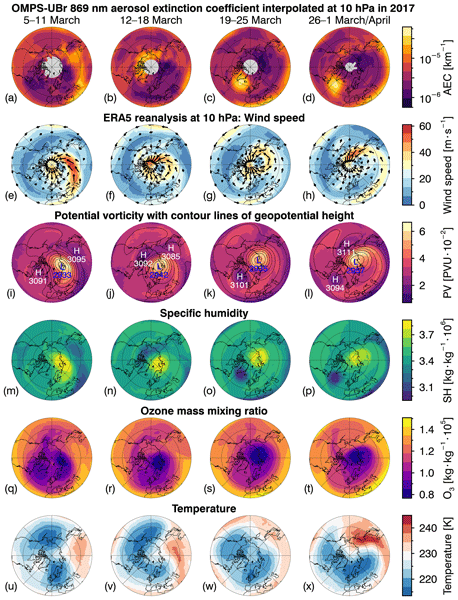
During the polar vortex season, so-called streamers can transport tropical air towards the pole in the middle stratosphere. This tropical air can get trapped in high-pressure areas at high latitudes after the polar vortex breaks down. In this study, remote sensing instruments are used to observe the course of such streamers by measuring the scattered solar radiation. Aerosols get transported to high latitudes at an altitude of about 25–35 km, increasing the aerosol mass there significantly.
Thorben H. Mense, Josef Höffner, Gerd Baumgarten, Ronald Eixmann, Jan Froh, Alsu Mauer, Alexander Munk, Robin Wing, and Franz-Josef Lübken
Atmos. Meas. Tech., 17, 1665–1677, https://doi.org/10.5194/amt-17-1665-2024, https://doi.org/10.5194/amt-17-1665-2024, 2024
Short summary
Short summary
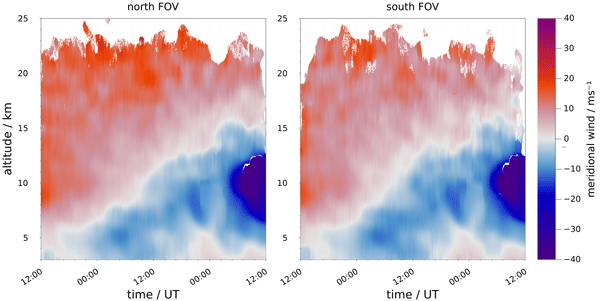
A novel lidar system with five beams measured horizontal and vertical winds together, reaching altitudes up to 25 km. Developed in Germany, it revealed accurate horizontal wind data compared to forecasts, but vertical wind estimates differed. The lidar's capability to detect small-scale wind patterns was highlighted, advancing atmospheric research.
Anna Lange, John Andrew Dykema, Sandro Vattioni, Ulrike Niemeier, Alexei Rozanov, and Christian von Savigny
Atmos. Chem. Phys., 26, 13055–13067, https://doi.org/10.5194/acp-26-13055-2026, https://doi.org/10.5194/acp-26-13055-2026, 2026
Short summary
Short summary
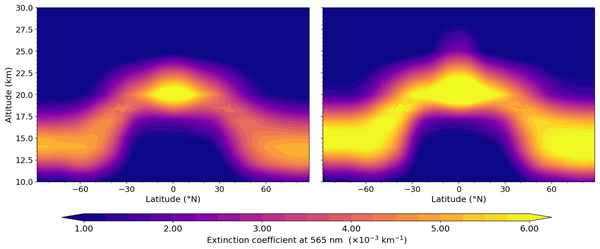
This study addresses the question of whether it is possible to detect the continuous injection of 5 Tg yr-1 of alumina or calcite into the stratosphere using satellite solar occultation instruments. The research shows that it is possible to detect these injections of solid particles into the stratosphere and that they can also be distinguished from natural variability, considering the assumptions made.
Anna Lange, Ilaria Quaglia, Daniele Visioni, Alexei Rozanov, and Christian von Savigny
EGUsphere, https://doi.org/10.5194/egusphere-2026-3347, https://doi.org/10.5194/egusphere-2026-3347, 2026
This preprint is open for discussion and under review for Atmospheric Chemistry and Physics (ACP).
Short summary
Short summary
What happens to the colours of the sky when a volcano erupts during an ongoing stratospheric aerosol injection deployment? This study is the first to tackle this question, combining climate model simulations, radiative transfer calculations, and colour modelling. The results show several optical phenomena, including Bishop's Rings, unusual greenish twilight colours, and purple light.
Christoph Kalicinsky, Sandra Wallis, Lukas Depenthal, Christoph G. Hoffmann, Anna Lange, and Christian von Savigny
EGUsphere, https://doi.org/10.5194/egusphere-2026-3209, https://doi.org/10.5194/egusphere-2026-3209, 2026
Short summary
Short summary
We present simultaneous observations of a planetary 26-day wave in mesospheric temperature observed by three different ground-based mid-latitude OH spectrometers at stations in Germany in boreal winter 2016/2017. With supporting information from SABER and MLS measurements the event can be linked to a Rossby wave (1,4) mode. The periodic changes are also seen in other atmospheric parameters such as atomic oxygen further illustrating the importance of such events for the atmospheric state.
Juha Vierinen, Dabrowka Knach, Jorge Luis Chau, Gerd Baumgarten, Devin Huyghebaert, Matthias Clahsen, Nico Pfeffer, Toralf Renkwitz, Robin Wing, Kenneth Obenberger, Björn Gustavsson, and Daniel Kastinen
EGUsphere, https://doi.org/10.5194/egusphere-2026-2857, https://doi.org/10.5194/egusphere-2026-2857, 2026
Short summary
Short summary
We observed the re-entry of a Falcon 9 rocket upper stage over Europe using a network of cameras and radars normally used to study meteors. The measurements showed how hot ionized gas formed around the debris during hypervelocity entry, producing strong radio echoes high in the atmosphere. As the number of satellites and rocket launches increases, these observations can help improve monitoring of space waste re-entering the atmosphere and its possible environmental effects.
Peter Dalin, Hidehiko Suzuki, Nikolay Pertsev, Vladimir Perminov, Linda Megner, Johan Kero, Peter Voelger, Jonas Hedin, Gerd Baumgarten, Anne Réchou, and Denis Efremov
Ann. Geophys., 44, 331–351, https://doi.org/10.5194/angeo-44-331-2026, https://doi.org/10.5194/angeo-44-331-2026, 2026
Short summary
Short summary
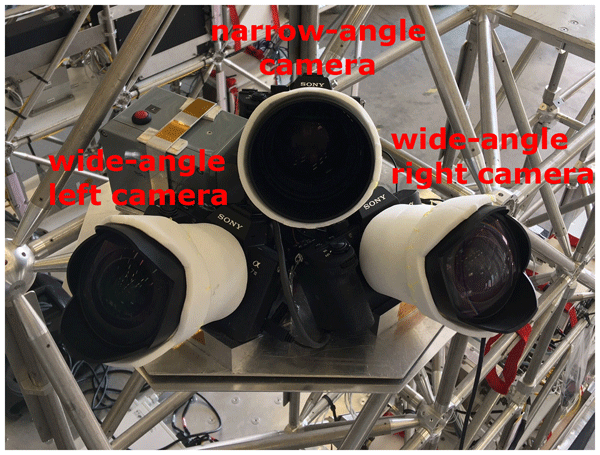
A transatlantic scientific balloon flight (TRANSAT) was conducted in June 2024. The TRANSAT balloon floated in the stratosphere at approximately 40 km altitude between Sweden and Canada for about 4 days. An optical imager was installed on the TRANSAT balloon to study noctilucent cloud (NLC). Nearly continuous observations of NLC were obtained during the entire flight. A complex NLC structures exhibiting different motions were found to result from wind rotation with altitude between 80 and 94 km.
Anna Lange, Ulrike Niemeier, Alexei Rozanov, and Christian von Savigny
Atmos. Meas. Tech., 19, 1973–1989, https://doi.org/10.5194/amt-19-1973-2026, https://doi.org/10.5194/amt-19-1973-2026, 2026
Short summary
Short summary
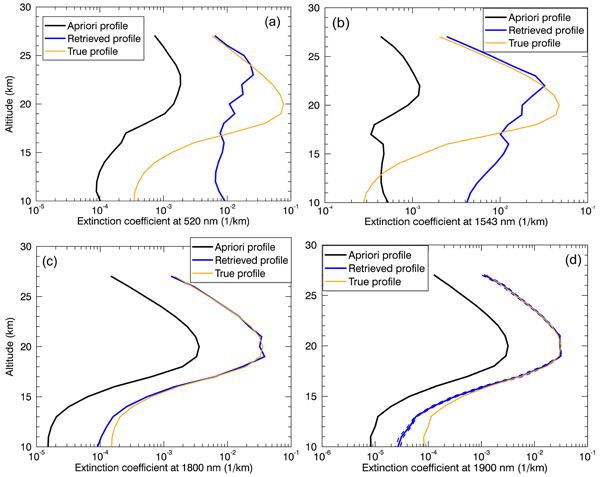
We investigate which wavelengths, depending on the latitude, are required for aerosol measurements after continuous sulphur injections of 30 Tg S yr-1 into the stratosphere, here at 19 km, in order to obtain physically meaningful stratospheric aerosol extinction profile retrieval results from the perspective of a typical satellite instrument with the so-called solar occultation geometry. Consistent with expectations, a longer wavelength is required for the latitude range of and near the injection.
Christine Pohl, Ulrike Niemeier, Alexei Rozanov, Felix Wrana, and Christian von Savigny
EGUsphere, https://doi.org/10.5194/egusphere-2026-578, https://doi.org/10.5194/egusphere-2026-578, 2026
Short summary
Short summary
Satellite aerosol retrievals and models are crucial for studying volcanic impacts on the stratosphere but remain uncertain in perturbed situations due to assumed aerosol properties. SCIAMACHY retrievals are compared with ECHAM simulations following the Manam and Sarychev eruptions to evaluate both approaches. Agreement is found for Sarychev, while Manam shows differences. Comparisons with SAGE II support the SCIAMACHY retrievals. The importance of model setup details is highlighted.
Jens Fiedler, Gerd Baumgarten, Michael Gerding, Torsten Köpnick, Reik Ostermann, and Bernd Kaifler
Geosci. Instrum. Method. Data Syst., 15, 17–26, https://doi.org/10.5194/gi-15-17-2026, https://doi.org/10.5194/gi-15-17-2026, 2026
Short summary
Short summary
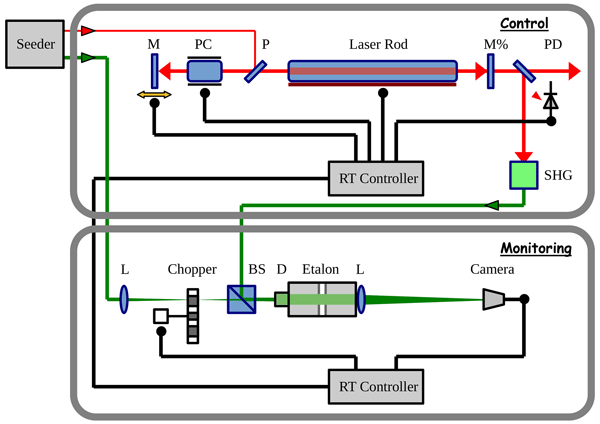
We developed a system for frequency control and monitoring of pulsed high-power lasers. It works in real-time, controls the laser cavity length, and performs a spectral analyzes of each individual laser pulse. The motivation for this work was to improve the retrieval of Doppler winds measured by lidar in the middle atmosphere by taking the frequency stability of the lidar transmitter into account.
Christian Löns, Ronald Eixmann, Christine Pohl, Alexei Rozanov, and Christian von Savigny
Atmos. Chem. Phys., 25, 18209–18225, https://doi.org/10.5194/acp-25-18209-2025, https://doi.org/10.5194/acp-25-18209-2025, 2025
Short summary
Short summary
During the polar vortex season, so-called streamers can transport tropical air towards the pole in the middle stratosphere. This tropical air can get trapped in high-pressure areas at high latitudes after the polar vortex breaks down. In this study, remote sensing instruments are used to observe the course of such streamers by measuring the scattered solar radiation. Aerosols get transported to high latitudes at an altitude of about 25–35 km, increasing the aerosol mass there significantly.
Mohamed Mossad, Irina Strelnikova, Robin Wing, Gerd Baumgarten, and Michael Gerding
Atmos. Chem. Phys., 25, 14839–14864, https://doi.org/10.5194/acp-25-14839-2025, https://doi.org/10.5194/acp-25-14839-2025, 2025
Short summary
Short summary
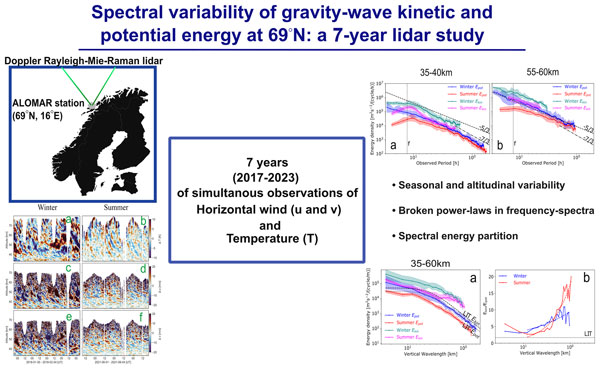
We studied gravity waves using a unique lidar that measures both temperature and wind. This is the first long-term study of how their energies vary with height and season in the middle atmosphere near the Arctic. Waves were stronger and varied more in winter, while in summer slow waves tied to Earth's rotation dominated. We also observed new patterns in how energy is shared between both energy types and height-dependent changes in wave behaviour. These results refine our view of such waves.
Anna Lange, Ulrike Niemeier, Alexei Rozanov, and Christian von Savigny
Atmos. Chem. Phys., 25, 11673–11688, https://doi.org/10.5194/acp-25-11673-2025, https://doi.org/10.5194/acp-25-11673-2025, 2025
Short summary
Short summary
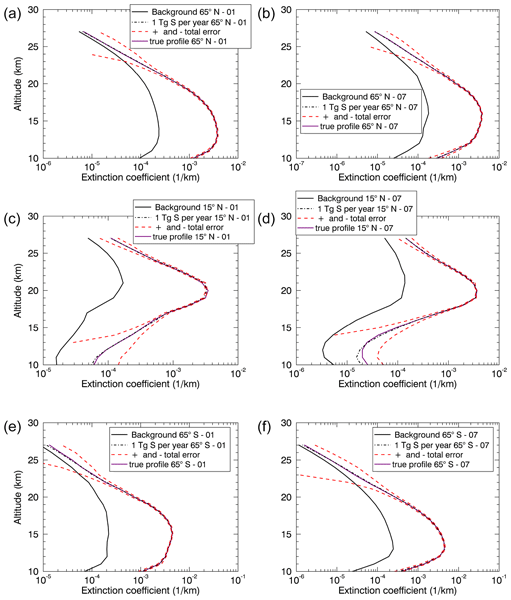
Our paper investigates whether it is possible to observe continuous injections of 1 and 2 Tg S y-1 (sulfur per year) into the stratosphere with the currently active satellite occultation instruments. The calculations show that, considering the natural variability and the assumptions made here, the stratospheric aerosols formed from continuous emissions of 1 and 2 Tg S y-1 in the quasi-steady-state phase can be detected, which is not the case in the first month of the 2-year initial phase.
Felix Wrana, Terry Deshler, Christian Löns, Larry W. Thomason, and Christian von Savigny
Atmos. Chem. Phys., 25, 3717–3736, https://doi.org/10.5194/acp-25-3717-2025, https://doi.org/10.5194/acp-25-3717-2025, 2025
Short summary
Short summary
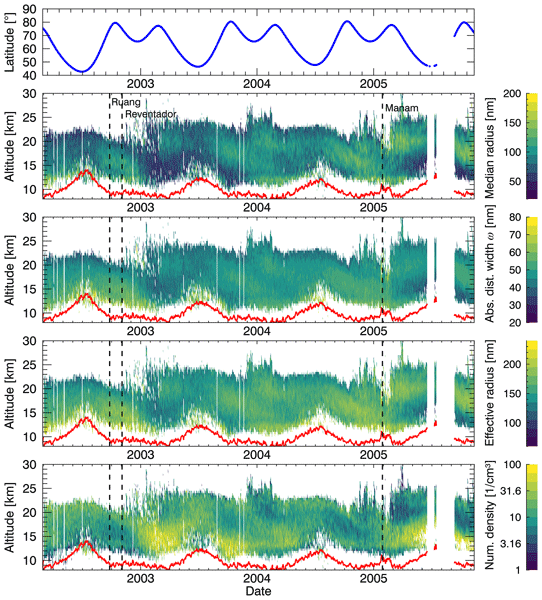
There is a natural and globally occurring layer of small droplets (aerosols) at roughly 20 km altitude in the atmosphere. In this work, the size of these droplets is calculated from satellite measurements for the years 2002 to 2005, which is important for the aerosol cooling effect on Earth's climate. These years are interesting because there were no large volcanic eruptions that would change the background state of the aerosols. The results are compared to reliable balloon-borne measurements.
Sandra Wallis, Matthew DeLand, and Christian von Savigny
Atmos. Chem. Phys., 25, 3635–3645, https://doi.org/10.5194/acp-25-3635-2025, https://doi.org/10.5194/acp-25-3635-2025, 2025
Short summary
Short summary
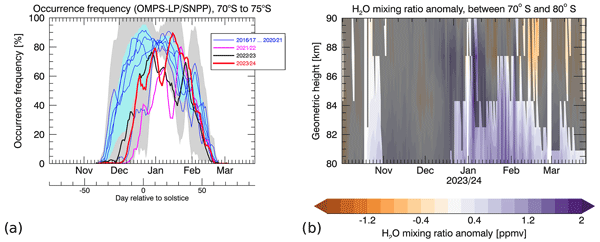
The 2022 Hunga Tonga – Hunga Ha'apai eruption emitted about 150 Tg H2O that partly reached the upper polar Southern Hemisphere mesosphere in the beginning of 2024. Noctilucent clouds (NLCs) did not show a clear perturbation in their occurrence frequency, but the slight increase from mid-January to February could potentially have been caused by the additional H2O. It needed 2 years to reach the summer polar mesopause region, analogous to the 1883 Krakatoa eruption that is argued to have caused the first sightings of NLCs.
Natalie Kaifler, Bernd Kaifler, Markus Rapp, Guiping Liu, Diego Janches, Gerd Baumgarten, and Jose-Luis Hormaechea
Atmos. Chem. Phys., 24, 14029–14044, https://doi.org/10.5194/acp-24-14029-2024, https://doi.org/10.5194/acp-24-14029-2024, 2024
Short summary
Short summary
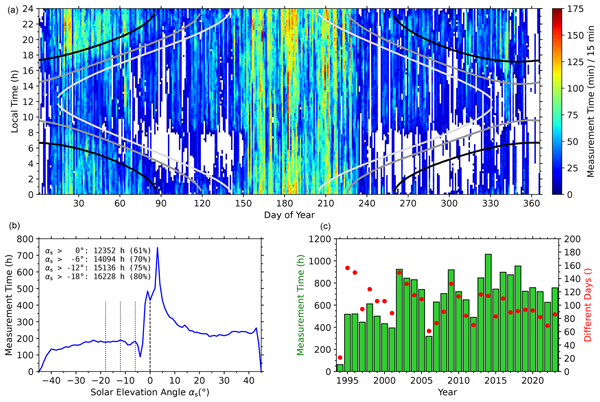
Noctilucent clouds (NLCs) are silvery clouds that can be viewed during twilight and indicate atmospheric conditions like temperature and water vapor in the upper mesosphere. High-resolution measurements from a remote sensing laser instrument provide NLC height, brightness, and occurrence rate since 2017. Most observations occur in the morning hours, likely caused by strong tidal winds, and NLC ice particles are thus transported from elsewhere to the observing location in the Southern Hemisphere.
Jens Fiedler and Gerd Baumgarten
Atmos. Meas. Tech., 17, 5841–5859, https://doi.org/10.5194/amt-17-5841-2024, https://doi.org/10.5194/amt-17-5841-2024, 2024
Short summary
Short summary
This article describes the current status of a lidar installed at ALOMAR in northern Norway. It has investigated the Arctic middle atmosphere on a climatological basis for 30 years. We discuss major upgrades of the system implemented during recent years, including methods for reliable remote operation of this complex lidar. We also show examples that illustrate the performance of the lidar during measurements at different altitude ranges and timescales.
Christine Pohl, Felix Wrana, Alexei Rozanov, Terry Deshler, Elizaveta Malinina, Christian von Savigny, Landon A. Rieger, Adam E. Bourassa, and John P. Burrows
Atmos. Meas. Tech., 17, 4153–4181, https://doi.org/10.5194/amt-17-4153-2024, https://doi.org/10.5194/amt-17-4153-2024, 2024
Short summary
Short summary
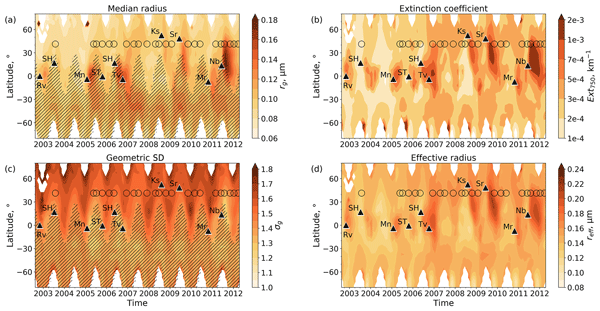
Knowledge of stratospheric aerosol characteristics is important for understanding chemical and climate aerosol feedbacks. Two particle size distribution parameters, the aerosol extinction coefficient and the effective radius, are obtained from SCIAMACHY limb observations. The aerosol characteristics show good agreement with independent data sets from balloon-borne and satellite observations. This data set expands the limited knowledge of stratospheric aerosol characteristics.
Michael Gerding, Robin Wing, Eframir Franco-Diaz, Gerd Baumgarten, Jens Fiedler, Torsten Köpnick, and Reik Ostermann
Atmos. Meas. Tech., 17, 2789–2809, https://doi.org/10.5194/amt-17-2789-2024, https://doi.org/10.5194/amt-17-2789-2024, 2024
Short summary
Short summary
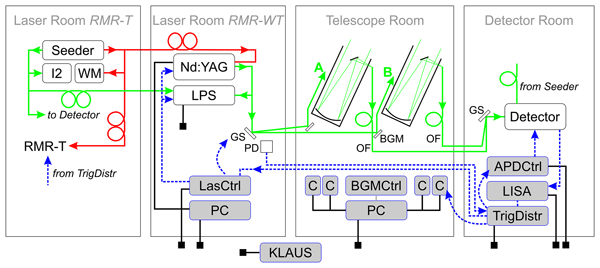
This paper describes a new lidar system developed in Germany intended to study wind and temperature at night in the middle atmosphere. The paper explains how we have set up the system to work automatically and gives technical details for anyone who wants to build a similar system. We present a case study showing temperatures and winds at different altitudes. In a future article, we will present how we process the data and deal with uncertainties.
Thorben H. Mense, Josef Höffner, Gerd Baumgarten, Ronald Eixmann, Jan Froh, Alsu Mauer, Alexander Munk, Robin Wing, and Franz-Josef Lübken
Atmos. Meas. Tech., 17, 1665–1677, https://doi.org/10.5194/amt-17-1665-2024, https://doi.org/10.5194/amt-17-1665-2024, 2024
Short summary
Short summary
A novel lidar system with five beams measured horizontal and vertical winds together, reaching altitudes up to 25 km. Developed in Germany, it revealed accurate horizontal wind data compared to forecasts, but vertical wind estimates differed. The lidar's capability to detect small-scale wind patterns was highlighted, advancing atmospheric research.
Christian von Savigny, Anna Lange, Christoph G. Hoffmann, and Alexei Rozanov
Atmos. Chem. Phys., 24, 2415–2422, https://doi.org/10.5194/acp-24-2415-2024, https://doi.org/10.5194/acp-24-2415-2024, 2024
Short summary
Short summary
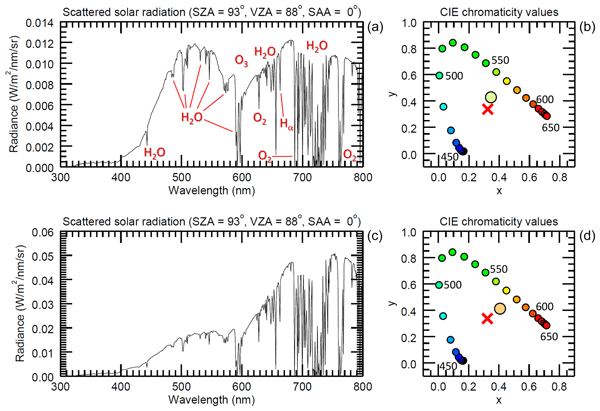
It is well known that volcanic eruptions strongly affect the colours of the twilight sky. Typically, volcanic eruptions lead to enhanced reddish and violet twilight colours. In rare cases, however, volcanic eruptions can also lead to green sunsets. This study provides an explanation for the occurrence of these unusual green sunsets based on simulations with a radiative transfer model. Green volcanic sunsets require a sufficient stratospheric aerosol optical depth and specific aerosol sizes.
Eframir Franco-Diaz, Michael Gerding, Laura Holt, Irina Strelnikova, Robin Wing, Gerd Baumgarten, and Franz-Josef Lübken
Atmos. Chem. Phys., 24, 1543–1558, https://doi.org/10.5194/acp-24-1543-2024, https://doi.org/10.5194/acp-24-1543-2024, 2024
Short summary
Short summary
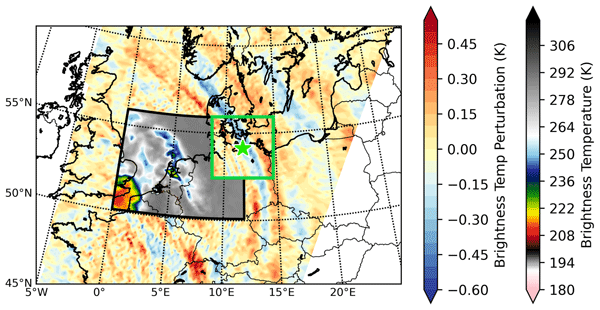
We use satellite, lidar, and ECMWF data to study storm-related waves that propagate above Kühlungsborn, Germany, during summer. Although these events occur in roughly half of the years of the satellite data we analyzed, we focus our study on two case study years (2014 and 2015). These events could contribute significantly to middle atmospheric circulation and are not accounted for in weather and climate models.
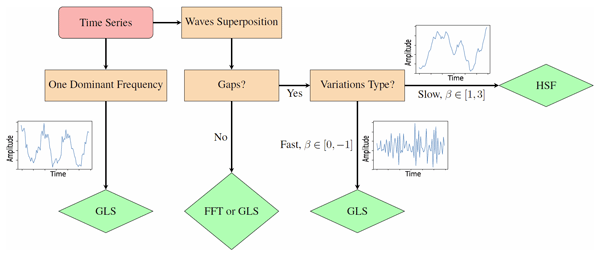
Mohamed Mossad, Irina Strelnikova, Robin Wing, and Gerd Baumgarten
Atmos. Meas. Tech., 17, 783–799, https://doi.org/10.5194/amt-17-783-2024, https://doi.org/10.5194/amt-17-783-2024, 2024
Short summary
Short summary
This numerical study addresses observational gaps' impact on atmospheric gravity wave spectra. Three methods, fast Fourier transform (FFT), generalized Lomb–Scargle periodogram (GLS), and Haar structure function (HSF), were tested on synthetic data. HSF is best for spectra with negative slopes. GLS excels for flat and positive slopes and identifying dominant frequencies. Accurately estimating these aspects is crucial for understanding gravity wave dynamics and energy transfer in the atmosphere.
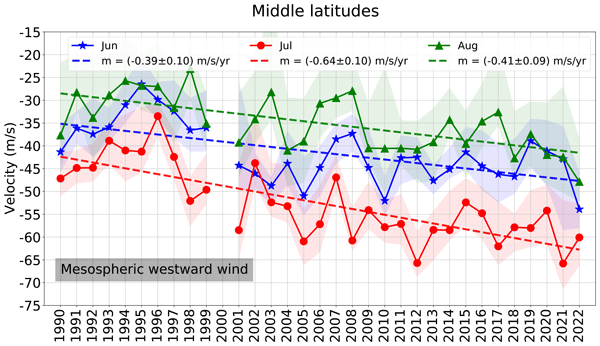
Juliana Jaen, Toralf Renkwitz, Huixin Liu, Christoph Jacobi, Robin Wing, Aleš Kuchař, Masaki Tsutsumi, Njål Gulbrandsen, and Jorge L. Chau
Atmos. Chem. Phys., 23, 14871–14887, https://doi.org/10.5194/acp-23-14871-2023, https://doi.org/10.5194/acp-23-14871-2023, 2023
Short summary
Short summary
Investigation of winds is important to understand atmospheric dynamics. In the summer mesosphere and lower thermosphere, there are three main wind flows: the mesospheric westward, the mesopause southward (equatorward), and the lower-thermospheric eastward wind. Combining almost 2 decades of measurements from different radars, we study the trend, their interannual oscillations, and the effects of the geomagnetic activity over these wind maxima.
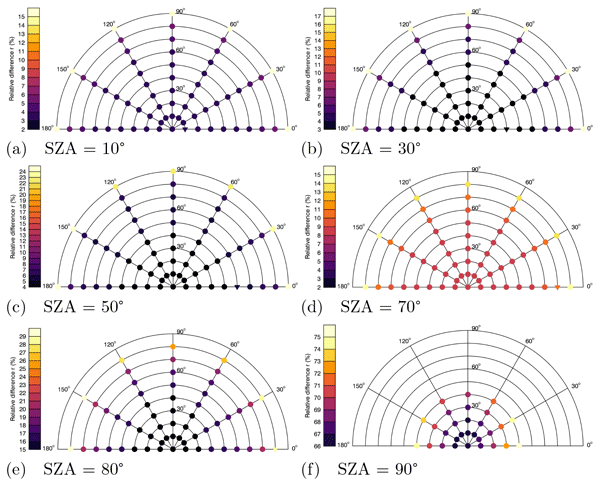
Anna Lange, Alexei Rozanov, and Christian von Savigny
Atmos. Chem. Phys., 23, 14829–14839, https://doi.org/10.5194/acp-23-14829-2023, https://doi.org/10.5194/acp-23-14829-2023, 2023
Short summary
Short summary
We were able to demonstrate quantitatively that the blue colour of the sky cannot be solely attributed to Rayleigh scattering. The influence of ozone on the blue colour of the sky is calculated for different viewing geometries, total ozone columns and an enhanced stratospheric aerosol scenario. Furthermore, the effects of polarisation, surface albedo and observer height are investigated.
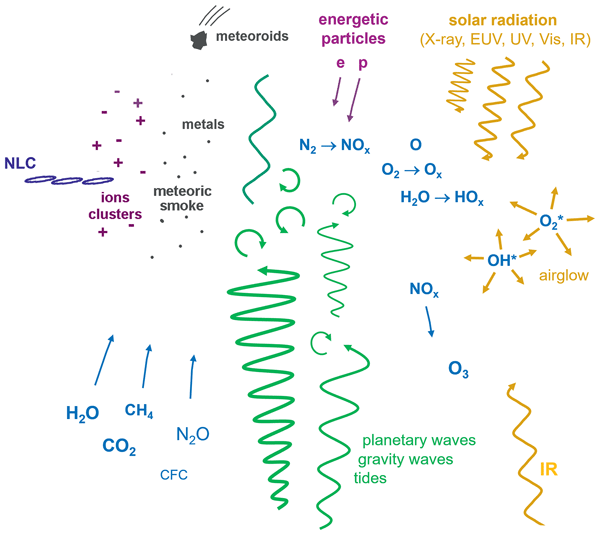
John M. C. Plane, Jörg Gumbel, Konstantinos S. Kalogerakis, Daniel R. Marsh, and Christian von Savigny
Atmos. Chem. Phys., 23, 13255–13282, https://doi.org/10.5194/acp-23-13255-2023, https://doi.org/10.5194/acp-23-13255-2023, 2023
Short summary
Short summary
The mesosphere or lower thermosphere region of the atmosphere borders the edge of space. It is subject to extreme ultraviolet photons and charged particles from the Sun and atmospheric gravity waves from below, which tend to break in this region. The pressure is very low, which facilitates chemistry involving species in excited states, and this is also the region where cosmic dust ablates and injects various metals. The result is a unique and exotic chemistry.
Christoph G. Hoffmann, Lena G. Buth, and Christian von Savigny
Atmos. Chem. Phys., 23, 12781–12799, https://doi.org/10.5194/acp-23-12781-2023, https://doi.org/10.5194/acp-23-12781-2023, 2023
Short summary
Short summary
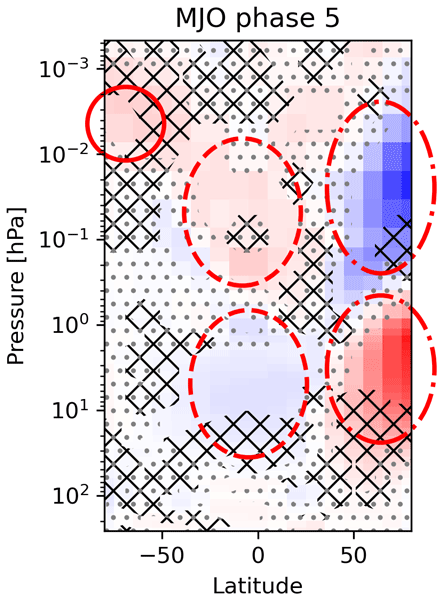
The Madden–Julian oscillation is an important feature of weather in the tropics. Although it is mainly active in the troposphere, we show that it systematically influences the air temperature in the layers above, up to about 100 km altitude and from pole to pole. We have linked this to another known far-reaching process, interhemispheric coupling. This is basic research on atmospheric couplings and variability but might also be of interest for intraseasonal weather forecasting models.
Jens Faber, Michael Gerding, and Torsten Köpnick
Atmos. Meas. Tech., 16, 4183–4193, https://doi.org/10.5194/amt-16-4183-2023, https://doi.org/10.5194/amt-16-4183-2023, 2023
Short summary
Short summary
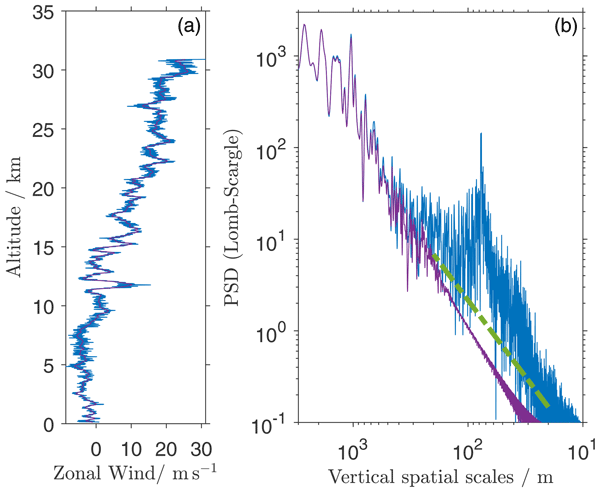
Weather forecasters around the world use uncrewed balloons to measure wind and temperature for their weather models. In these measurements, wind is recorded from the shift of the balloon by the moving air. However, the balloons and the measurement devices also move by themselves in still air. This creates artificial wind measurements that are normally removed from the data. We show new techniques to avoid these movements and increase the altitude resolution of the wind measurement by 6 times.
Felix Wrana, Ulrike Niemeier, Larry W. Thomason, Sandra Wallis, and Christian von Savigny
Atmos. Chem. Phys., 23, 9725–9743, https://doi.org/10.5194/acp-23-9725-2023, https://doi.org/10.5194/acp-23-9725-2023, 2023
Short summary
Short summary
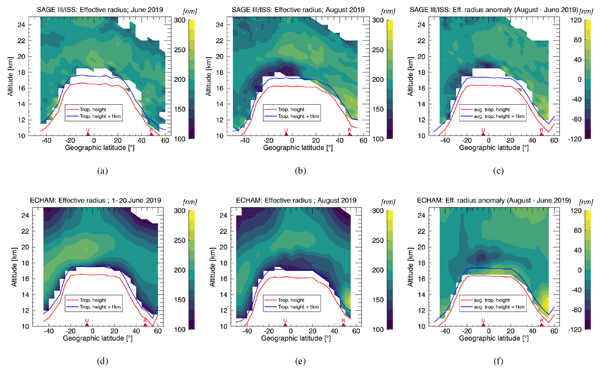
The stratospheric aerosol layer is a naturally occurring and permanent layer of aerosol, in this case very small droplets of mostly sulfuric acid and water, that has a cooling effect on our climate. To quantify this effect and for our general understanding of stratospheric microphysical processes, knowledge of the size of those aerosol particles is needed. Using satellite measurements and atmospheric models we show that some volcanic eruptions can lead to on average smaller aerosol sizes.
Ashique Vellalassery, Gerd Baumgarten, Mykhaylo Grygalashvyly, and Franz-Josef Lübken
Ann. Geophys., 41, 289–300, https://doi.org/10.5194/angeo-41-289-2023, https://doi.org/10.5194/angeo-41-289-2023, 2023
Short summary
Short summary
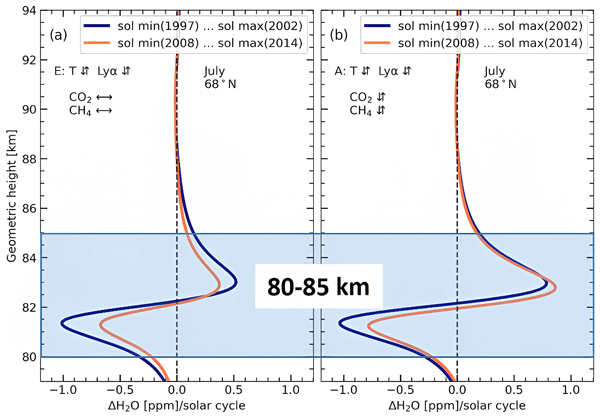
The solar cycle affects the H2O concentration in the upper mesosphere mainly in two ways: directly through photolysis and, at the time and place of NLC formation, indirectly through temperature changes. The H2O–Lyman-α response is modified by NLC formation, resulting in a positive response at the ice formation region (due to the temperature change effect on the ice formation rate) and a negative response at the sublimation zone (due to the photolysis effect).
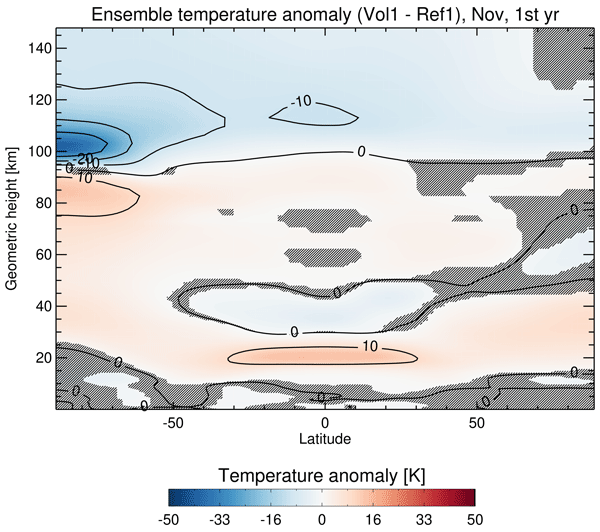
Sandra Wallis, Hauke Schmidt, and Christian von Savigny
Atmos. Chem. Phys., 23, 7001–7014, https://doi.org/10.5194/acp-23-7001-2023, https://doi.org/10.5194/acp-23-7001-2023, 2023
Short summary
Short summary
Strong volcanic eruptions are able to alter the temperature and the circulation of the middle atmosphere. This study simulates the atmospheric response to an idealized strong tropical eruption and focuses on the impact on the mesosphere. The simulations show a warming of the polar summer mesopause in the first November after the eruption. Our study indicates that this is mainly due to dynamical coupling in the summer hemisphere with a potential contribution from interhemispheric coupling.
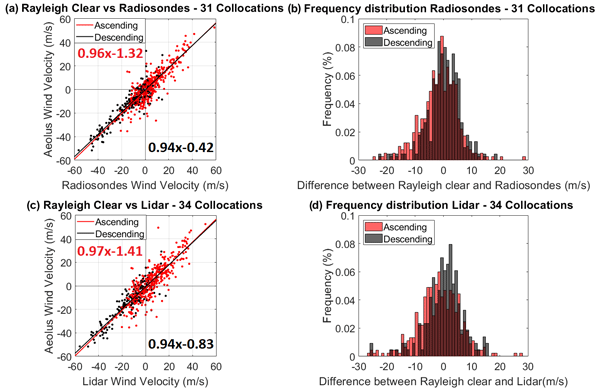
Mathieu Ratynski, Sergey Khaykin, Alain Hauchecorne, Robin Wing, Jean-Pierre Cammas, Yann Hello, and Philippe Keckhut
Atmos. Meas. Tech., 16, 997–1016, https://doi.org/10.5194/amt-16-997-2023, https://doi.org/10.5194/amt-16-997-2023, 2023
Short summary
Short summary
Aeolus is the first spaceborne wind lidar providing global wind measurements since 2018. This study offers a comprehensive analysis of Aeolus instrument performance, using ground-based wind lidars and meteorological radiosondes, at tropical and mid-latitudes sites. The analysis allows assessing the long-term evolution of the satellite's performance for more than 3 years. The results will help further elaborate the understanding of the error sources and the behavior of the Doppler wind lidar.
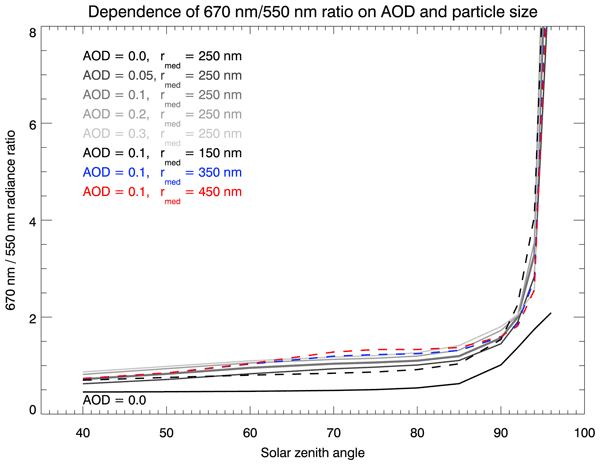
Christian von Savigny, Anna Lange, Anne Hemkendreis, Christoph G. Hoffmann, and Alexei Rozanov
Clim. Past, 18, 2345–2356, https://doi.org/10.5194/cp-18-2345-2022, https://doi.org/10.5194/cp-18-2345-2022, 2022
Short summary
Short summary
This study investigates the possibility of inferring information on aerosol optical depth from photographs of historic paintings. The idea – which has been applied in previous studies – is very interesting because it would provide an archive of the atmospheric aerosol loading covering many centuries. We show that twilight colours depend not only on the aerosol optical thickness, but also on several other parameters, making a quantitative estimate of aerosol optical depth very difficult.
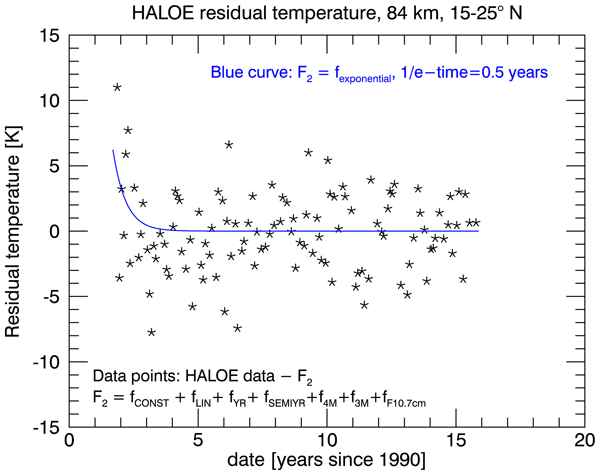
Sandra Wallis, Christoph Gregor Hoffmann, and Christian von Savigny
Ann. Geophys., 40, 421–431, https://doi.org/10.5194/angeo-40-421-2022, https://doi.org/10.5194/angeo-40-421-2022, 2022
Short summary
Short summary
Although the 1991 eruption of Mt Pinatubo had a severe impact on Earth's climate, the effect of this event on the mesosphere is not well understood. We investigated satellite-borne temperature measurements from the HALOE instrument and found indications that a positive temperature anomaly is present in the tropical upper mesosphere at the beginning of the HALOE time series, which may be related to the eruption of Mt. Pinatubo.
Anna Lange, Gerd Baumgarten, Alexei Rozanov, and Christian von Savigny
Ann. Geophys., 40, 407–419, https://doi.org/10.5194/angeo-40-407-2022, https://doi.org/10.5194/angeo-40-407-2022, 2022
Short summary
Short summary
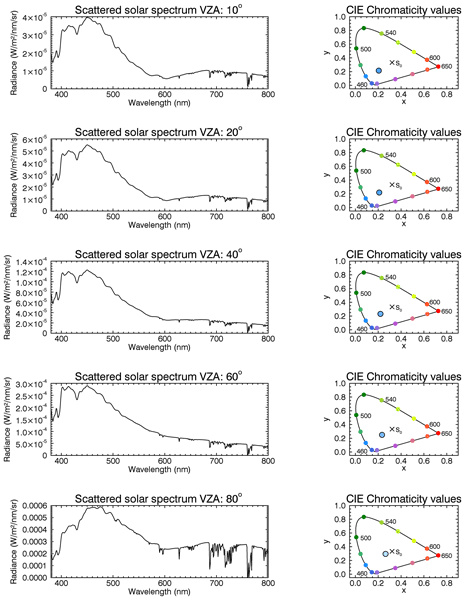
We investigate the influence of different parameters on the colour of noctilucent clouds (highest clouds in the atmosphere), using radiative transfer calculations. We determined the effect of the particle size, optical depth, single scattering/multiple scattering and ozone. For sufficiently large optical depth and for specific viewing geometries, ozone plays only a minor role in the blueish colour of noctilucent clouds (new result).
Mireia Papke Chica, Valerian Hahn, Tiziana Braeuer, Elena de la Torre Castro, Florian Ewald, Mathias Gergely, Simon Kirschler, Luca Bugliaro Goggia, Stefanie Knobloch, Martina Kraemer, Johannes Lucke, Johanna Mayer, Raphael Maerkl, Manuel Moser, Laura Tomsche, Tina Jurkat-Witschas, Martin Zoeger, Christian von Savigny, and Christiane Voigt
Atmos. Chem. Phys. Discuss., https://doi.org/10.5194/acp-2022-255, https://doi.org/10.5194/acp-2022-255, 2022
Preprint withdrawn
Short summary
Short summary
The mixed-phase temperature regime in convective clouds challenges our understanding of microphysical and radiative cloud properties. We provide a rare and unique dataset of aircraft in situ measurements in a strong mid-latitude convective system. We find that mechanisms initiating ice nucleation and growth strongly depend on temperature, relative humidity, and vertical velocity and variate within the measured system, resulting in altitude dependent changes of the cloud liquid and ice fraction.
Julia Koch, Adam Bourassa, Nick Lloyd, Chris Roth, and Christian von Savigny
Atmos. Chem. Phys., 22, 3191–3202, https://doi.org/10.5194/acp-22-3191-2022, https://doi.org/10.5194/acp-22-3191-2022, 2022
Short summary
Short summary
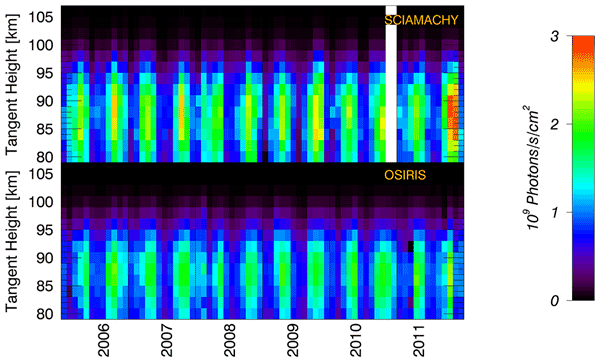
The mesopause, the region of the earth's atmosphere between 85 and 100 km, is hard to access by direct measurements. Therefore we look for parameters that can be measured using satellite or ground-based measurements. In this study we researched sodium airglow, a phenomenon that occurs when sodium atoms are excited by chemical reactions. We compared satellite measurements of the airglow and resulting sodium concentration profiles to gain a better understanding of the sodium in that region.
Cited articles
Baars, H., Ansmann, A., Ohneiser, K., Haarig, M., Engelmann, R., Althausen, D., Hanssen, I., Gausa, M., Pietruczuk, A., Szkop, A., Stachlewska, I. S., Wang, D., Reichardt, J., Skupin, A., Mattis, I., Trickl, T., Vogelmann, H., Navas-Guzmán, F., Haefele, A., Acheson, K., Ruth, A. A., Tatarov, B., Müller, D., Hu, Q., Podvin, T., Goloub, P., Veselovskii, I., Pietras, C., Haeffelin, M., Fréville, P., Sicard, M., Comerón, A., Fernández García, A. J., Molero Menéndez, F., Córdoba-Jabonero, C., Guerrero-Rascado, J. L., Alados-Arboledas, L., Bortoli, D., Costa, M. J., Dionisi, D., Liberti, G. L., Wang, X., Sannino, A., Papagiannopoulos, N., Boselli, A., Mona, L., D'Amico, G., Romano, S., Perrone, M. R., Belegante, L., Nicolae, D., Grigorov, I., Gialitaki, A., Amiridis, V., Soupiona, O., Papayannis, A., Mamouri, R.-E., Nisantzi, A., Heese, B., Hofer, J., Schechner, Y. Y., Wandinger, U., and Pappalardo, G.: The unprecedented 2017–2018 stratospheric smoke event: decay phase and aerosol properties observed with the EARLINET, Atmos. Chem. Phys., 19, 15183–15198, https://doi.org/10.5194/acp-19-15183-2019, 2019. a
Baars, H., Haarig, M., König, L., Floutsi, A. A., Basharova, E., Hofer, J., Gebauer, H., Engelmann, R., Althausen, D., Skupin, A., Gast, B., Fritzsch, F., Ohneiser, K., Jimenez, C., Gaudek, T., Radenz, M., Buholdt, H., Heese, B., Klamt, A., Seifert, P., Donovan, D. P., van Zadelhoff, G.-J., Abdullaev, S. F., Khalifaeva, S. K., Nozirov, D. F., and Wandinger, U.: Validation of EarthCARE/ATLID aerosol profiling products with ground-based PollyNET lidars – case studies, Atmos. Meas. Tech., 19, 3831–3864, https://doi.org/10.5194/amt-19-3831-2026, 2026. a
Chouza, F., Leblanc, T., Barnes, J., Brewer, M., Wang, P., and Koon, D.: Long-term (1999–2019) variability of stratospheric aerosol over Mauna Loa, Hawaii, as seen by two co-located lidars and satellite measurements, Atmos. Chem. Phys., 20, 6821–6839, https://doi.org/10.5194/acp-20-6821-2020, 2020. a
Cisewski, M., Zawodny, J., Gasbarre, J., Eckman, R., Topiwala, N., Rodriguez-Alvarez, O., Cheek, D., and Hall, S.: The Stratospheric Aerosol and Gas Experiment (SAGE III) on the International Space Station (ISS) Mission, in: SPIE Remote Sensing, edited by: Meynart, R., Neeck, S. P., and Shimoda, H., p. 924107, Amsterdam, Netherlands, https://doi.org/10.1117/12.2073131, 2014. a
Copernicus Climate Change Service: ERA5 monthly averaged data on pressure levels from 1940 to present, Copernicus Climate Change Service (C3S) Climate Data Store (CDS) [data set], https://doi.org/10.24381/cds.6860a573, 2025b. a
Crutzen, P. J.: Albedo Enhancement by Stratospheric Sulfur Injections: A Contribution to Resolve a Policy Dilemma?, Clim. Change, 77, 211, https://doi.org/10.1007/s10584-006-9101-y, 2006. a
Dai, G., Wu, S., Long, W., Liu, J., Xie, Y., Sun, K., Meng, F., Song, X., Huang, Z., and Chen, W.: Aerosol and cloud data processing and optical property retrieval algorithms for the spaceborne ACDL/DQ-1, Atmos. Meas. Tech., 17, 1879–1890, https://doi.org/10.5194/amt-17-1879-2024, 2024. a
Deshler, T., Hervig, M. E., Hofmann, D. J., Rosen, J. M., and Liley, J. B.: Thirty years of in situ stratospheric aerosol size distribution measurements from Laramie, Wyoming (41° N), using balloon-borne instruments, J. Geophys. Res.-Atmos., 108, 2002JD002514, https://doi.org/10.1029/2002JD002514, 2003. a
Donovan, D. P., van Zadelhoff, G.-J., and Wang, P.: The EarthCARE lidar cloud and aerosol profile processor (A-PRO): the A-AER, A-EBD, A-TC, and A-ICE products, Atmos. Meas. Tech., 17, 5301–5340, https://doi.org/10.5194/amt-17-5301-2024, 2024. a, b
Eixmann, R., Lüke-Mense, T. H., Froh, J., Gerding, M., Höffner, J., Löns, C., Wing, R., von Savigny, C., and Baumgarten, G.: EixmannAMT2026, Leibniz Institute of Atmospheric Physics at the University of Rostock [data set], https://doi.org/10.22000/4FUN6UPA9SR58WJV, 2026. a
Fahey, D. W., Kawa, S. R., Woodbridge, E. L., Tin, P., Wilson, J. C., Jonsson, H. H., Dye, J. E., Baumgardner, D., Borrmann, S., Toohey, D. W., Avallone, L. M., Proffitt, M. H., Margitan, J., Loewenstein, M., Podolske, J. R., Salawitch, R. J., Wofsy, S. C., Ko, M. K. W., Anderson, D. E., Schoeber, M. R., and Chan, K. R.: In situ measurements constraining the role of sulphate aerosols in mid-latitude ozone depletion, Nature, 363, 509–514, https://doi.org/10.1038/363509a0, 1993. a
Fernald, F. G.: Analysis of atmospheric lidar observations: some comments, Appl. Opt., 23, 652–653, https://doi.org/10.1364/AO.23.000652, 1984. a, b
Fromm, M., Lindsey, D. T., Servranckx, R., Yue, G., Trickl, T., Sica, R., Doucet, P., and Godin-Beekmann, S.: The Untold Story of Pyrocumulonimbus, B. Am. Meteorol. Soc., 91, 1193–1210, https://doi.org/10.1175/2010BAMS3004.1, 2010. a
Gelsthorpe, R., Toulemont, Y., Hélière, A., and Le Hors, L.: ATLID, the atmospheric lidar on board the Earthcare Satellite, in: International Conference on Space Optics – ICSO 2012, edited by: Armandillo, E., Karafolas, N., and Cugny, B., p. 81, SPIE, Ajaccio, Corsica, France, ISBN 978-1-5106-1617-2 978-1-5106-1618-9, https://doi.org/10.1117/12.2309095, 2017. a, b
Hair, J. W., Hostetler, C. A., Cook, A. L., Harper, D. B., Ferrare, R. A., Mack, T. L., Welch, W., Izquierdo, L. R., and Hovis, F. E.: Airborne High Spectral Resolution Lidar for profiling aerosol optical properties, Appl. Opt., 47, 6734–6752, https://doi.org/10.1364/AO.47.006734, 2008. a
Höffner, J. and Lübken, F.-J.: Potassium lidar temperatures and densities in the mesopause region at Spitsbergen (78° N), J. Geophys. Res., 112, https://doi.org/10.1029/2007jd008612, 2007. a
Hu, Q., Goloub, P., Veselovskii, I., Bravo-Aranda, J.-A., Popovici, I. E., Podvin, T., Haeffelin, M., Lopatin, A., Dubovik, O., Pietras, C., Huang, X., Torres, B., and Chen, C.: Long-range-transported Canadian smoke plumes in the lower stratosphere over northern France, Atmos. Chem. Phys., 19, 1173–1193, https://doi.org/10.5194/acp-19-1173-2019, 2019. a
Hunten, D. M., Turco, R. P., and Toon, O. B.: Smoke and dust particles of meteoric origin in the mesosphere and stratosphere, J. Atmos. Sci., 37, 1342–1357, https://doi.org/10.1175/1520-0469(1980)037<1342:SADPOM>2.0.CO;2, 1980. a
Jaross, G., Bhartia, P. K., Chen, G., Kowitt, M., Haken, M., Chen, Z., Xu, P., Warner, J., and Kelly, T.: OMPS Limb Profiler instrument performance assessment, J. Geophys. Res.-Atmos., 119, 4399–4412, https://doi.org/10.1002/2013JD020482, 2014. a
Junge, C. E., Chagnon, C. W., and Manson, J. E.: Stratospheric aerosols, J. Meteorol., 18, 81–108, https://doi.org/10.1175/1520-0469(1961)018<0081:SA>2.0.CO;2, 1961. a
Knepp, T. N., Kovilakam, M., Thomason, L., and Miller, S. J.: Characterization of stratospheric particle size distribution uncertainties using SAGE II and SAGE III/ISS extinction spectra, Atmos. Meas. Tech., 17, 2025–2054, https://doi.org/10.5194/amt-17-2025-2024, 2024. a, b
Kremser, S., Thomason, L. W., von Hobe, M., Hermann, M., Deshler, T., Timmreck, C., Toohey, M., Stenke, A., Schwarz, J. P., Weigel, R., Fueglistaler, S., Prata, F. J., Vernier, J.-P., Schlager, H., Barnes, J. E., Antuña-Marrero, J.-C., Fairlie, D., Palm, M., Mahieu, E., Notholt, J., Rex, M., Bingen, C., Vanhellemont, F., Bourassa, A., Plane, J. M. C., Klocke, D., Carn, S. A., Clarisse, L., Trickl, T., Neely, R., James, A. D., Rieger, L., Wilson, J. C., and Meland, B.: Stratospheric aerosol-Observations, processes, and impact on climate: Stratospheric Aerosol, Rev. Geophys., 54, 278–335, https://doi.org/10.1002/2015RG000511, 2016. a, b
Langenbach, A., Baumgarten, G., Fiedler, J., Lübken, F.-J., von Savigny, C., and Zalach, J.: Year-round stratospheric aerosol backscatter ratios calculated from lidar measurements above northern Norway, Atmos. Meas. Tech., 12, 4065–4076, https://doi.org/10.5194/amt-12-4065-2019, 2019. a
Leys, C., Ley, C., Klein, O., Bernard, P., and Licata, L.: Detecting outliers: Do not use standard deviation around the mean, use absolute deviation around the median, J. Exp. Soc. Psychol., 49, 764–766, https://doi.org/10.1016/j.jesp.2013.03.013, 2013. a
Löns, C., Eixmann, R., Pohl, C., Rozanov, A., and von Savigny, C.: Observations of stratospheric streamers and frozen-in anticyclones in aerosol extinction, Atmos. Chem. Phys., 25, 18209–18225, https://doi.org/10.5194/acp-25-18209-2025, 2025. a
Lübken, F.-J. and Höffner, J.: VAHCOLI, a new concept for lidars: technical setup, science applications, and first measurements, Atmos. Meas. Tech., 14, 3815–3836, https://doi.org/10.5194/amt-14-3815-2021, 2021. a, b, c
Measures, R. M.: Laser remote sensing: Fundamentals and applications, Wiley New York, ISBN 9780471081937, 1984. a
Mense, T.: Multi Field of View Observations of Wind, Aerosol and Temperature using a Compact, Frequency Scanning Lidar, PhD thesis, Universität Rostock, Rostock, https://doi.org/10.18453/rosdok_id00005119, 2025. a
Mense, T. H., Höffner, J., Baumgarten, G., Eixmann, R., Froh, J., Mauer, A., Munk, A., Wing, R., and Lübken, F.-J.: 3D wind observations with a compact mobile lidar based on tropo- and stratospheric aerosol backscatter, Atmos. Meas. Tech., 17, 1665–1677, https://doi.org/10.5194/amt-17-1665-2024, 2024. a, b, c, d
Munk, A., Jungbluth, B., Strotkamp, M., Hoffmann, H.-D., Poprawe, R., Höffner, J., and Lübken, F.-J.: Diode-pumped alexandrite ring laser in single-longitudinal mode operation for atmospheric lidar measurements, Opt. Express, 26, 14928, https://doi.org/10.1364/oe.26.014928, 2018. a
Munk, A., Strotkamp, M., Jungbluth, B., Froh, J., Mense, T., Mauer, A., and Höffner, J.: Rugged diode-pumped Alexandrite laser as an emitter in a compact mobile lidar system for atmospheric measurements, Appl. Opt., 60, 4668, https://doi.org/10.1364/ao.422634, 2021. a
Munk, A., Scheuer, S., Strotkamp, M., Jungbluth, B., Froh, J., Mense, T., Mauer, A., and Höffner, J.: Energy-scaling of a diode-pumped Alexandrite laser and prototype development for a compact general-purpose Doppler lidar, Appl. Opt., 62, 8732–8740, https://doi.org/10.1364/AO.504567, 2023. a
Murphy, D. M., Abou-Ghanem, M., Cziczo, D. J., Froyd, K. D., Jacquot, J., Lawler, M. J., Maloney, C., Plane, J. M. C., Ross, M. N., Schill, G. P., and Shen, X.: Metals from spacecraft reentry in stratospheric aerosol particles, P. Natl. Acad. Sci. USA, 120, e2313374120, https://doi.org/10.1073/pnas.2313374120, 2023. a
NASA/LARC/SD/ASDC: SAGE III/ISS L2 Solar Event Species Profiles (Native) V006, NASA Langley Atmospheric Science Data Center DAAC [data set], https://doi.org/10.5067/ISS/SAGEIII/SOLAR_BINARY_L2-V6.0, 2025. a, b
Ohneiser, K., Ansmann, A., Kaifler, B., Chudnovsky, A., Barja, B., Knopf, D. A., Kaifler, N., Baars, H., Seifert, P., Villanueva, D., Jimenez, C., Radenz, M., Engelmann, R., Veselovskii, I., and Zamorano, F.: Australian wildfire smoke in the stratosphere: the decay phase in 2020/2021 and impact on ozone depletion, Atmos. Chem. Phys., 22, 7417–7442, https://doi.org/10.5194/acp-22-7417-2022, 2022. a
Plane, J. M. C.: Atmospheric Chemistry of Meteoric Metals, Chem. Rev., 103, 4963–4984, https://doi.org/10.1021/cr0205309, 2003. a
Plane, J. M. C.: Cosmic dust in the earth's atmosphere, Chem. Soc. Rev., 41, 6507, https://doi.org/10.1039/c2cs35132c, 2012. a, b
Robock, A. and Mao, J.: The Volcanic Signal in Surface Temperature Observations, J. Climate, 8, 1086–1103, https://doi.org/10.1175/1520-0442(1995)008<1086:TVSIST>2.0.CO;2, 1995. a
Rosen, J. M.: The Boiling Point of Stratospheric Aerosols, J. Appl. Meteorol., 10, 1044–1046, https://doi.org/10.1175/1520-0450(1971)010<1044:TBPOSA>2.0.CO;2, 1971. a
Rozanov, A., Pohl, C., Arosio, C., Bourassa, A., Bramstedt, K., Malinina, E., Rieger, L., and Burrows, J. P.: Retrieval of stratospheric aerosol extinction coefficients from sun-normalized Ozone Mapper and Profiler Suite Limb Profiler (OMPS-LP) measurements, Atmos. Meas. Tech., 17, 6677–6695, https://doi.org/10.5194/amt-17-6677-2024, 2024. a
SAGE III ATBD Team: SAGE III Algorithm Theoretical Basis Document (ATBD) Solar and Lunar Algorithm, Tech. Rep. LaRC 475-00-109 Version 2.1, Earth Observing System, https://eospso.gsfc.nasa.gov/sites/default/files/atbd/atbd-sage-solar-lunar.pdf (last access: 11 December 2025), 2002. a
Sakai, T., Uchino, O., Nagai, T., Liley, B., Querel, R., Morino, I., Jin, Y., Fujimoto, T., Oikawa, E., and Oshima, N.: Stratospheric aerosol backscatter and depolarization ratio observed with ground-based lidar at Tsukuba, Japan, and Lauder, New Zealand, J. Geophys. Res.-Atmos., 130, e2024JD041329, https://doi.org/10.1029/2024JD041329, 2025. a
Schneider, J. and Eixmann, R.: Three years of routine Raman lidar measurements of tropospheric aerosols: Backscattering, extinction, and residual layer height, Atmos. Chem. Phys., 2, 313–323, https://doi.org/10.5194/acp-2-313-2002, 2002. a
Shipley, S. T., Tracy, D. H., Eloranta, E. W., Trauger, J. T., Sroga, J. T., Roesler, F. L., and Weinman, J. A.: High spectral resolution lidar to measure optical scattering properties of atmospheric aerosols. 1: Theory and instrumentation, Appl. Opt., 22, 3716–3724, https://doi.org/10.1364/AO.22.003716, 1983. a
Sroga, J. T., Eloranta, E. W., Shipley, S. T., Roesler, F. L., and Tryon, P. J.: High spectral resolution lidar to measure optical scattering properties of atmospheric aerosols. 2: Calibration and data analysis, Appl. Opt., 22, 3725–3732, https://doi.org/10.1364/AO.22.003725, 1983. a
Stoffelen, A., Pailleux, J., Källén, E., Vaughan, J. M., Isaksen, L., Flamant, P., Wergen, W., Andersson, E., Schyberg, H., Culoma, A., Meynart, R., Endemann, M., and Ingmann, P.: The Atmospheric Dynamics Mission for Global Wind Field Measurement, B. Am. Meteorol. Soc., 86, 73–88, https://doi.org/10.1175/BAMS-86-1-73, 2005. a, b
Strotkamp, M., Witte, U., Munk, A., Hartung, A., Gausmann, S., Hengesbach, S., Traub, M., Hoffmann, H.-D., Hoeffner, J., and Jungbluth, B.: Broadly tunable, diode pumped Alexandrite laser, in: Advanced Solid-State Lasers Congress, ASSL, pp. ATu3A–42, Optica Publishing Group, OSA, https://doi.org/10.1364/assl.2013.atu3a.42, 2013. a
Taha, G. and Loughman, R.: OMPS-NPP L2 LP Aerosol Extinction Vertical Profile swath daily 3slit V2, NASA Goddard Earth Sciences Data and Information Services Center [data set], https://doi.org/10.5067/CX2B9NW6FI27, 2020. a, b
Taha, G., Loughman, R., Zhu, T., Thomason, L., Kar, J., Rieger, L., and Bourassa, A.: OMPS LP Version 2.0 multi-wavelength aerosol extinction coefficient retrieval algorithm, Atmos. Meas. Tech., 14, 1015–1036, https://doi.org/10.5194/amt-14-1015-2021, 2021. a, b
Thomason, L. W., Moore, J. R., Pitts, M. C., Zawodny, J. M., and Chiou, E. W.: An evaluation of the SAGE III version 4 aerosol extinction coefficient and water vapor data products, Atmos. Chem. Phys., 10, 2159–2173, https://doi.org/10.5194/acp-10-2159-2010, 2010. a
Trickl, T., Vogelmann, H., Fromm, M. D., Jäger, H., Perfahl, M., and Steinbrecht, W.: Measurement report: Violent biomass burning and volcanic eruptions – a new period of elevated stratospheric aerosol over central Europe (2017 to 2023) in a long series of observations, Atmos. Chem. Phys., 24, 1997–2021, https://doi.org/10.5194/acp-24-1997-2024, 2024. a
von Savigny, C. and Hoffmann, C. G.: Issues related to the retrieval of stratospheric-aerosol particle size information based on optical measurements, Atmos. Meas. Tech., 13, 1909–1920, https://doi.org/10.5194/amt-13-1909-2020, 2020. a
von Savigny, C., Ernst, F., Rozanov, A., Hommel, R., Eichmann, K.-U., Rozanov, V., Burrows, J. P., and Thomason, L. W.: Improved stratospheric aerosol extinction profiles from SCIAMACHY: validation and sample results, Atmos. Meas. Tech., 8, 5223–5235, https://doi.org/10.5194/amt-8-5223-2015, 2015. a
von Zahn, U. and Höffner, J.: Mesopause temperature profiling by potassium lidar, Geophys. Res. Lett., 23, 141–144, https://doi.org/10.1029/95gl03688, 1996. a
Wehr, T., Kubota, T., Tzeremes, G., Wallace, K., Nakatsuka, H., Ohno, Y., Koopman, R., Rusli, S., Kikuchi, M., Eisinger, M., Tanaka, T., Taga, M., Deghaye, P., Tomita, E., and Bernaerts, D.: The EarthCARE mission – science and system overview, Atmos. Meas. Tech., 16, 3581–3608, https://doi.org/10.5194/amt-16-3581-2023, 2023. a
Winker, D. M., Vaughan, M. A., Omar, A., Hu, Y., Powell, K. A., Liu, Z., Hunt, W. H., and Young, S. A.: Overview of the CALIPSO Mission and CALIOP Data Processing Algorithms, J. Atmos. Ocean. Technol., 26, 2310–2323, https://doi.org/10.1175/2009JTECHA1281.1, 2009. a
Wrana, F., Niemeier, U., Thomason, L. W., Wallis, S., and von Savigny, C.: Stratospheric aerosol size reduction after volcanic eruptions, Atmos. Chem. Phys., 23, 9725–9743, https://doi.org/10.5194/acp-23-9725-2023, 2023. a
Wrana, F., Deshler, T., Löns, C., Thomason, L. W., and von Savigny, C.: Spatiotemporal variations of stratospheric aerosol size between 2002 and 2005 from measurements with SAGE III/M3M, Atmos. Chem. Phys., 25, 3717–3736, https://doi.org/10.5194/acp-25-3717-2025, 2025. a
Short summary
We introduce a new lidar-based measurement technique that can observe small particles in the middle atmosphere, up to 30 km altitude, both during the day and at night. The compact instrument, with a volume of about one cubic meter, provides high-accuracy vertical profiles of aerosols and can be deployed at different locations worldwide. Comparisons with satellite data show strong agreement, highlighting its potential for longterm monitoring of stratospheric aerosols.
We introduce a new lidar-based measurement technique that can observe small particles in the...


