
Articles | Volume 19, issue 16
https://doi.org/10.5194/amt-19-5491-2026
© Author(s) 2026. This work is distributed under
the Creative Commons Attribution 4.0 License.
the Creative Commons Attribution 4.0 License.
https://doi.org/10.5194/amt-19-5491-2026
© Author(s) 2026. This work is distributed under
the Creative Commons Attribution 4.0 License.
the Creative Commons Attribution 4.0 License.
Research article
| 
26 Aug 2026
Research article |
| 26 Aug 2026
| 26 Aug 2026
Insufficient mass spectrometric detection of synthesized peroxy acids from α-pinene ozonolysis
Markus Tischberger
Institute of Materials Chemistry, TU Wien, Getreidemarkt 9, 1060 Vienna, Austria
Rulan Verma
Institute of Materials Chemistry, TU Wien, Getreidemarkt 9, 1060 Vienna, Austria
Johanna Breinsperger
Institute of Applied Synthetic Chemistry, TU Wien, Getreidemarkt 9, 1060 Vienna, Austria
David Schachamayr
Institute of Applied Synthetic Chemistry, TU Wien, Getreidemarkt 9, 1060 Vienna, Austria
Marco Lair
Institute of Materials Chemistry, TU Wien, Getreidemarkt 9, 1060 Vienna, Austria
Melanie Opacak
Institute of Materials Chemistry, TU Wien, Getreidemarkt 9, 1060 Vienna, Austria
Peter Gärtner
Institute of Applied Synthetic Chemistry, TU Wien, Getreidemarkt 9, 1060 Vienna, Austria
Hinrich Grothe
Institute of Materials Chemistry, TU Wien, Getreidemarkt 9, 1060 Vienna, Austria
Maximilian Kaiser
CORRESPONDING AUTHOR

Institute of Applied Synthetic Chemistry, TU Wien, Getreidemarkt 9, 1060 Vienna, Austria
Dominik Stolzenburg
CORRESPONDING AUTHOR
Institute of Materials Chemistry, TU Wien, Getreidemarkt 9, 1060 Vienna, Austria
Related authors
No articles found.
Nanna Myllys, Tinja Olenius, Juha Kangasluoma, Dominik Stolzenburg, Theo Kurtén, Matti Rissanen, James Smith, and Mikael Ehn
EGUsphere, https://doi.org/10.5194/egusphere-2026-3785, https://doi.org/10.5194/egusphere-2026-3785, 2026
Short summary
Short summary
Recent study proposed that organic nanoparticles can form when carboxylic acids stick together through hydrogen-bond interactions. We re-examined this idea and showed by cluster kinetics simulations that this mechanism cannot explain organic nanoparticle formation in the atmosphere. These findings are important to understand the complexity of atmospheric nanoparticle formation.
Neil M. Donahue, Lubna Dada, Dominik Stolzenburg, Eva Sommer, Mario Simon, Meredith Schervish, Jenna DeVivo, Alexandra Stinchfield, Natalie Burton, Nirvan Bhattacharyya, Brandon Lopez, Mingyi Wang, Wiebke Scholz, João Almeida, Bin Zhao, Martin Heinritzi, Hamish Gordon, Armin Hansel, Joachim Curtius, Katrianne Lehtipalo, Imad El Haddad, Jasper Kirkby, Richard Flagan, Markku Kulmala, and Douglas Worsnop
Atmos. Chem. Phys., 26, 8311–8339, https://doi.org/10.5194/acp-26-8311-2026, https://doi.org/10.5194/acp-26-8311-2026, 2026
Short summary
Short summary
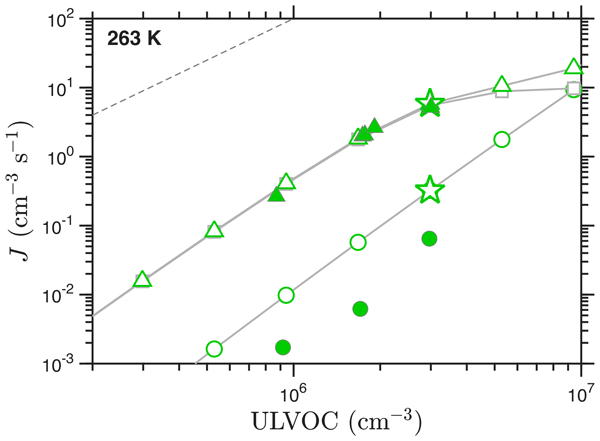
A new theory has the potential to accurately describe changes to atmospheric particle formation from the pre-industrial to the present and onwards along socioeconomic pathways addressing air pollution and climate. The model places organic nucleation in the context of the Volatility Basis Set and reveals a competition between chemistry, which accelerates as temperature rises, and vapor pressure, which drops as temperature decreases. The model reproduces observations from the CERN (European Organization for Nuclear Research) CLOUD (Cosmics Leaving Outdoor Droplets) chamber.
Neil M. Donahue, Victoria Hofbauer, Henning Finkenzeller, Dominik Stolzenburg, Paulus S. Bauer, Randall Chiu, Lubna Dada, Jonathan Duplissy, Xu-Cheng He, Martin Heinritzi, Christopher R. Hoyle, Andreas Kürten, Aleksandr Kvashnin, Katrianne Lehtipalo, Naser Mahfouz, Vladimir Makhmutov, Roy L. Mauldin III, Ugo Molteni, Lauriane L. J. Quéléver, Matti Rissanen, Siegfried Schobesberger, Mario Simon, Andrea C. Wagner, Mingyi Wang, Chao Yan, Penglin Ye, Ilona Riipinen, Hamish Gordon, Joachim Curtius, Armin Hansel, Imad El Haddad, Markku Kulmala, Douglas R. Worsnop, Rainer Volkamer, Paul M. Winkler, Jasper Kirkby, and Richard Flagan
Atmos. Meas. Tech., 19, 3363–3396, https://doi.org/10.5194/amt-19-3363-2026, https://doi.org/10.5194/amt-19-3363-2026, 2026
Short summary
Short summary
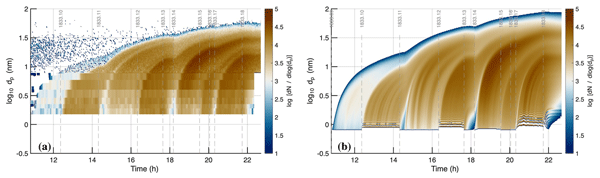
We describe accurate measurement of particle formation and growth in the CERN CLOUD (European Council for Nuclear Research Cosmics Leaving OUtdoor Droplets) chamber, using a suite of gas- and particle-phase instruments. The interconnected measurements establish high accuracy in key particle properties and critically important gas-phase sulfuric acid. This is a template for accurate calibration of similar experiments and thus accurate determination of aerosol nucleation and growth rates, which are an important source of uncertainty in climate science.
Jürgen Gratzl, Alexander Böhmländer, Sanna Pätsi, Clara-E. Pogner, Markus Gorfer, David Brus, Konstantinos Matthaios Doulgeris, Florian Wieland, Eija Asmi, Annika Saarto, Ottmar Möhler, Dominik Stolzenburg, and Hinrich Grothe
Atmos. Chem. Phys., 25, 12007–12035, https://doi.org/10.5194/acp-25-12007-2025, https://doi.org/10.5194/acp-25-12007-2025, 2025
Short summary
Short summary
We studied particles in the air over 1 year in the Finnish sub-Arctic to understand how biological particles affect ice formation in clouds. We found that fungal spores are the main contributors to ice formation at warmer temperatures. These particles are released locally and vary with the weather. Our results also show that we know very little about which fungi can form ice in the atmosphere, highlighting a major gap in our understanding of how nature influences weather and climate.
Jürgen Gratzl, David Brus, Konstantinos Doulgeris, Alexander Böhmländer, Ottmar Möhler, and Hinrich Grothe
Earth Syst. Sci. Data, 17, 3975–3985, https://doi.org/10.5194/essd-17-3975-2025, https://doi.org/10.5194/essd-17-3975-2025, 2025
Short summary
Short summary
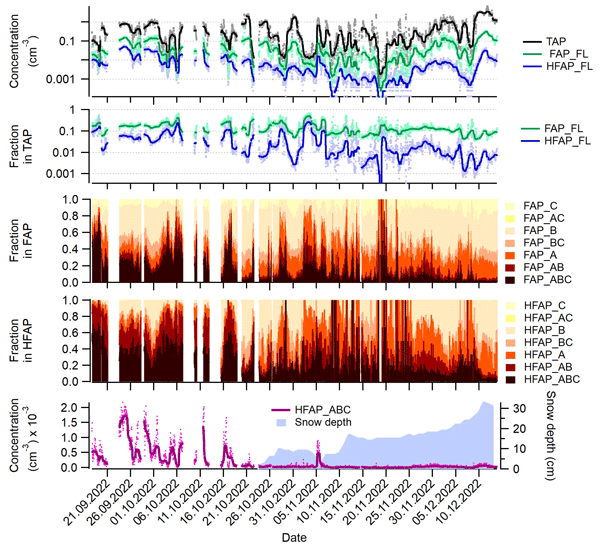
Near-real time monitoring of airborne biological particles like fungal spores or pollen grains is of great interest for two main reasons: to improve atmospheric allergen forecasts and to deepen the understanding of how bio-aerosols influence cloud formation. Here, we measured fluorescent bio-aerosols in the Finnish sub-Arctic with a high time resolution. A data set that might improve our understanding of biosphere–cloud interactions and the dynamics of bio-aerosols in the atmosphere.
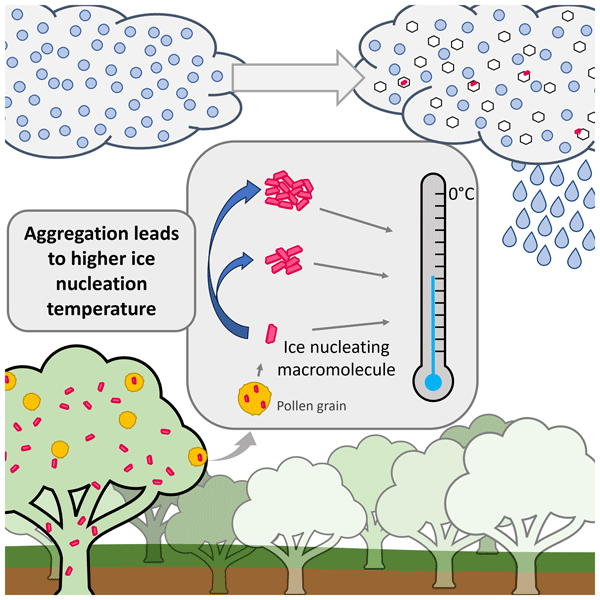
Florian Wieland, Nadine Bothen, Ralph Schwidetzky, Teresa M. Seifried, Paul Bieber, Ulrich Pöschl, Konrad Meister, Mischa Bonn, Janine Fröhlich-Nowoisky, and Hinrich Grothe
Biogeosciences, 22, 103–115, https://doi.org/10.5194/bg-22-103-2025, https://doi.org/10.5194/bg-22-103-2025, 2025
Short summary
Short summary
Betula pendula is a widespread birch tree species containing ice nucleation agents that can trigger the freezing of cloud droplets and thereby alter the evolution of clouds. Our study identifies three distinct ice-nucleating macromolecule (INM) aggregates of varying size that can nucleate ice at temperatures up to –5.4°C. Our findings suggest that these vegetation-derived particles may influence atmospheric processes, weather, and climate more strongly than previously thought.
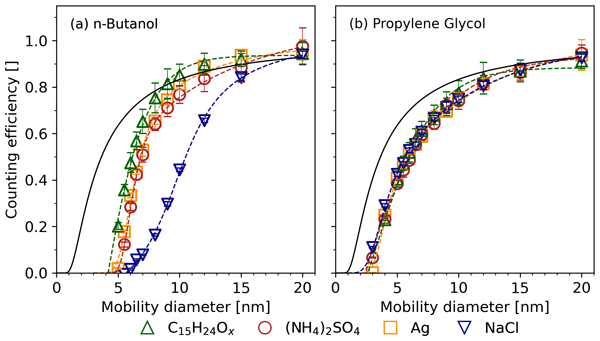
Peter J. Wlasits, Joonas Enroth, Joonas Vanhanen, Aki Pajunoja, Hinrich Grothe, Paul M. Winkler, and Dominik Stolzenburg
Aerosol Research, 2, 199–206, https://doi.org/10.5194/ar-2-199-2024, https://doi.org/10.5194/ar-2-199-2024, 2024
Short summary
Short summary
We highlight that the composition dependence of the counting efficiency of condensation particle counters can be immensely reduced by choice of the working fluid. A butanol- and a propylene glycol-based version of the Airmodus A30 was calibrated using a set of four different seed particles. Our study shows that composition-dependent counting efficiencies almost vanish in the case of the propylene glycol-based CPC. Simulations of supersaturation profiles were used to explain the results.
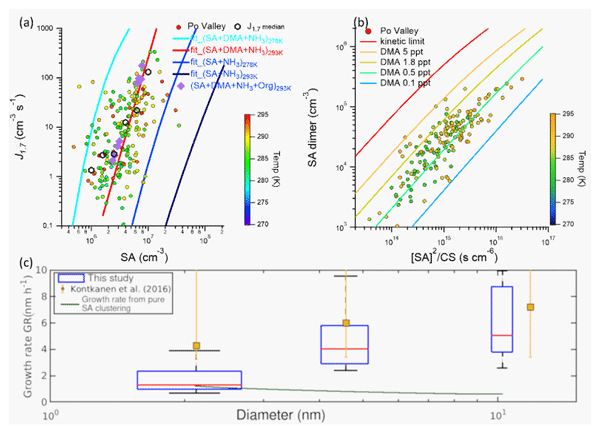
Jing Cai, Juha Sulo, Yifang Gu, Sebastian Holm, Runlong Cai, Steven Thomas, Almuth Neuberger, Fredrik Mattsson, Marco Paglione, Stefano Decesari, Matteo Rinaldi, Rujing Yin, Diego Aliaga, Wei Huang, Yuanyuan Li, Yvette Gramlich, Giancarlo Ciarelli, Lauriane Quéléver, Nina Sarnela, Katrianne Lehtipalo, Nora Zannoni, Cheng Wu, Wei Nie, Juha Kangasluoma, Claudia Mohr, Markku Kulmala, Qiaozhi Zha, Dominik Stolzenburg, and Federico Bianchi
Atmos. Chem. Phys., 24, 2423–2441, https://doi.org/10.5194/acp-24-2423-2024, https://doi.org/10.5194/acp-24-2423-2024, 2024
Short summary
Short summary
By combining field measurements, simulations and recent chamber experiments, we investigate new particle formation (NPF) and growth in the Po Valley, where both haze and frequent NPF occur. Our results show that sulfuric acid, ammonia and amines are the dominant NPF precursors there. A high NPF rate and a lower condensation sink lead to a greater survival probability for newly formed particles, highlighting the importance of gas-to-particle conversion for aerosol concentrations.
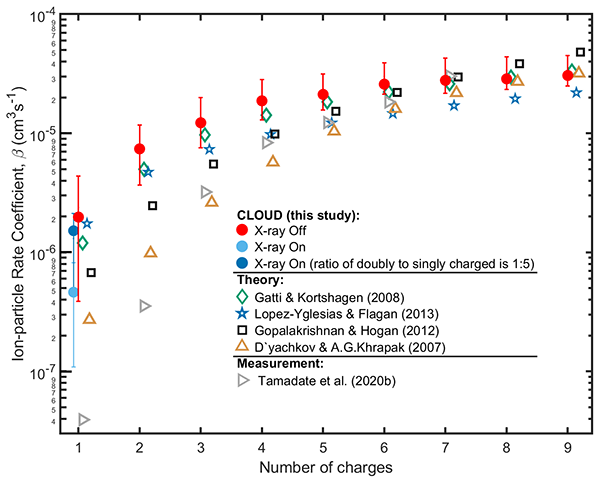
Joschka Pfeifer, Naser G. A. Mahfouz, Benjamin C. Schulze, Serge Mathot, Dominik Stolzenburg, Rima Baalbaki, Zoé Brasseur, Lucia Caudillo, Lubna Dada, Manuel Granzin, Xu-Cheng He, Houssni Lamkaddam, Brandon Lopez, Vladimir Makhmutov, Ruby Marten, Bernhard Mentler, Tatjana Müller, Antti Onnela, Maxim Philippov, Ana A. Piedehierro, Birte Rörup, Meredith Schervish, Ping Tian, Nsikanabasi S. Umo, Dongyu S. Wang, Mingyi Wang, Stefan K. Weber, André Welti, Yusheng Wu, Marcel Zauner-Wieczorek, Antonio Amorim, Imad El Haddad, Markku Kulmala, Katrianne Lehtipalo, Tuukka Petäjä, António Tomé, Sander Mirme, Hanna E. Manninen, Neil M. Donahue, Richard C. Flagan, Andreas Kürten, Joachim Curtius, and Jasper Kirkby
Atmos. Chem. Phys., 23, 6703–6718, https://doi.org/10.5194/acp-23-6703-2023, https://doi.org/10.5194/acp-23-6703-2023, 2023
Short summary
Short summary
Attachment rate coefficients between ions and charged aerosol particles determine their lifetimes and may also influence cloud dynamics and aerosol processing. Here we present novel experiments that measure ion–aerosol attachment rate coefficients for multiply charged aerosol particles under atmospheric conditions in the CERN CLOUD chamber. Our results provide experimental discrimination between various theoretical models.
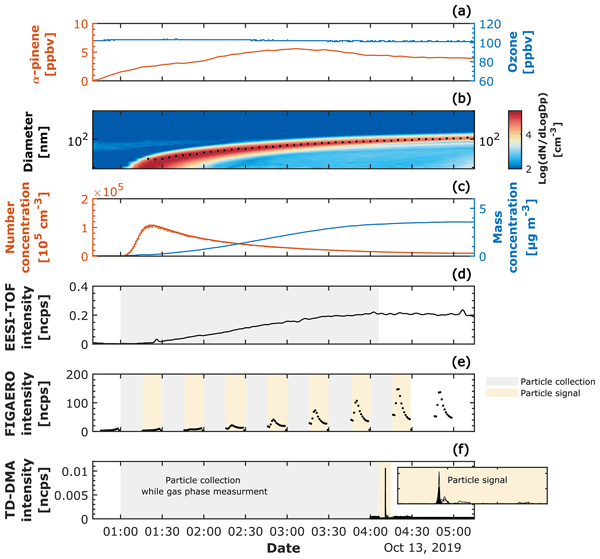
Lucía Caudillo, Mihnea Surdu, Brandon Lopez, Mingyi Wang, Markus Thoma, Steffen Bräkling, Angela Buchholz, Mario Simon, Andrea C. Wagner, Tatjana Müller, Manuel Granzin, Martin Heinritzi, Antonio Amorim, David M. Bell, Zoé Brasseur, Lubna Dada, Jonathan Duplissy, Henning Finkenzeller, Xu-Cheng He, Houssni Lamkaddam, Naser G. A. Mahfouz, Vladimir Makhmutov, Hanna E. Manninen, Guillaume Marie, Ruby Marten, Roy L. Mauldin, Bernhard Mentler, Antti Onnela, Tuukka Petäjä, Joschka Pfeifer, Maxim Philippov, Ana A. Piedehierro, Birte Rörup, Wiebke Scholz, Jiali Shen, Dominik Stolzenburg, Christian Tauber, Ping Tian, António Tomé, Nsikanabasi Silas Umo, Dongyu S. Wang, Yonghong Wang, Stefan K. Weber, André Welti, Marcel Zauner-Wieczorek, Urs Baltensperger, Richard C. Flagan, Armin Hansel, Jasper Kirkby, Markku Kulmala, Katrianne Lehtipalo, Douglas R. Worsnop, Imad El Haddad, Neil M. Donahue, Alexander L. Vogel, Andreas Kürten, and Joachim Curtius
Atmos. Chem. Phys., 23, 6613–6631, https://doi.org/10.5194/acp-23-6613-2023, https://doi.org/10.5194/acp-23-6613-2023, 2023
Short summary
Short summary
In this study, we present an intercomparison of four different techniques for measuring the chemical composition of nanoparticles. The intercomparison was performed based on the observed chemical composition, calculated volatility, and analysis of the thermograms. We found that the methods generally agree on the most important compounds that are found in the nanoparticles. However, they do see different parts of the organic spectrum. We suggest potential explanations for these differences.
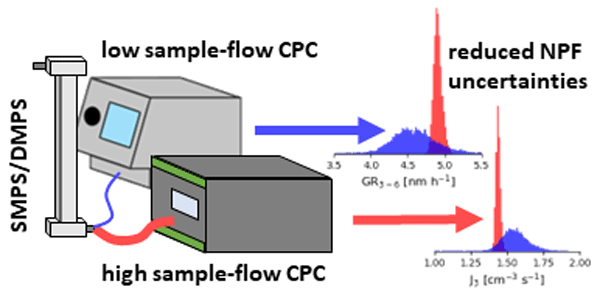
Dominik Stolzenburg, Tiia Laurila, Pasi Aalto, Joonas Vanhanen, Tuukka Petäjä, and Juha Kangasluoma
Atmos. Meas. Tech., 16, 2471–2483, https://doi.org/10.5194/amt-16-2471-2023, https://doi.org/10.5194/amt-16-2471-2023, 2023
Short summary
Short summary
Size-distribution measurements of ultrafine particles are of special interest as they can be used to estimate the atmospheric significance of new particle formation, a process which is thought to influence the global climate. Here we show that improved counting statistics in size-distribution measurements through the usage of higher sampling flows can significantly reduce the uncertainties in such calculations.
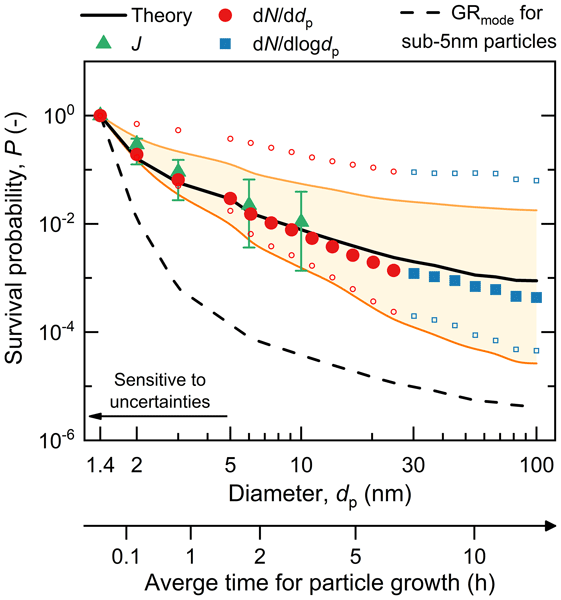
Runlong Cai, Chenjuan Deng, Dominik Stolzenburg, Chenxi Li, Junchen Guo, Veli-Matti Kerminen, Jingkun Jiang, Markku Kulmala, and Juha Kangasluoma
Atmos. Chem. Phys., 22, 14571–14587, https://doi.org/10.5194/acp-22-14571-2022, https://doi.org/10.5194/acp-22-14571-2022, 2022
Short summary
Short summary
The survival probability of new particles is the key parameter governing their influences on the atmosphere and climate, yet the knowledge of particle survival in the atmosphere is rather limited. We propose methods to compute the size-resolved particle survival probability and validate them using simulations and measurements from diverse environments. Using these methods, we could explain particle survival from the cluster size to the cloud condensation nuclei size.
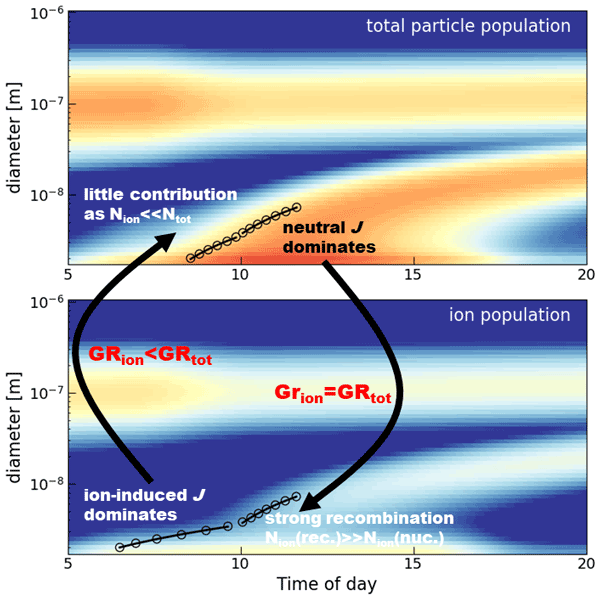
Loïc Gonzalez Carracedo, Katrianne Lehtipalo, Lauri R. Ahonen, Nina Sarnela, Sebastian Holm, Juha Kangasluoma, Markku Kulmala, Paul M. Winkler, and Dominik Stolzenburg
Atmos. Chem. Phys., 22, 13153–13166, https://doi.org/10.5194/acp-22-13153-2022, https://doi.org/10.5194/acp-22-13153-2022, 2022
Short summary
Short summary
Fast nanoparticle growth is essential for the survival of new aerosol particles in the atmosphere and hence their contribution to the climate. We show that using naturally charged ions for growth calculations can cause a significant error. During the diurnal cycle, the importance of ion-induced and neutral nucleation varies, causing the ion population to have a slower measurable apparent growth. Results suggest that data from ion spectrometers need to be considered with great care below 3 nm.
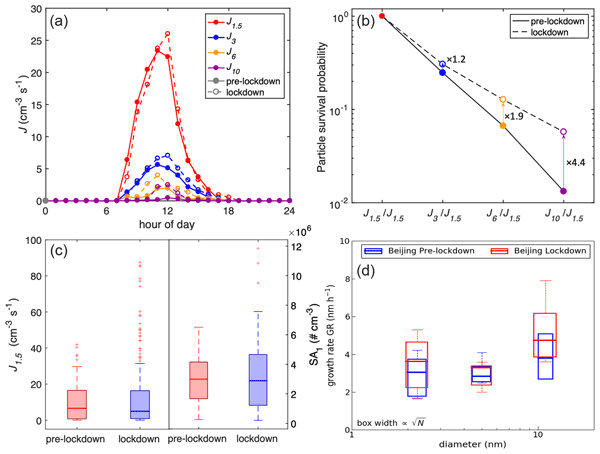
Chao Yan, Yicheng Shen, Dominik Stolzenburg, Lubna Dada, Ximeng Qi, Simo Hakala, Anu-Maija Sundström, Yishuo Guo, Antti Lipponen, Tom V. Kokkonen, Jenni Kontkanen, Runlong Cai, Jing Cai, Tommy Chan, Liangduo Chen, Biwu Chu, Chenjuan Deng, Wei Du, Xiaolong Fan, Xu-Cheng He, Juha Kangasluoma, Joni Kujansuu, Mona Kurppa, Chang Li, Yiran Li, Zhuohui Lin, Yiliang Liu, Yuliang Liu, Yiqun Lu, Wei Nie, Jouni Pulliainen, Xiaohui Qiao, Yonghong Wang, Yifan Wen, Ye Wu, Gan Yang, Lei Yao, Rujing Yin, Gen Zhang, Shaojun Zhang, Feixue Zheng, Ying Zhou, Antti Arola, Johanna Tamminen, Pauli Paasonen, Yele Sun, Lin Wang, Neil M. Donahue, Yongchun Liu, Federico Bianchi, Kaspar R. Daellenbach, Douglas R. Worsnop, Veli-Matti Kerminen, Tuukka Petäjä, Aijun Ding, Jingkun Jiang, and Markku Kulmala
Atmos. Chem. Phys., 22, 12207–12220, https://doi.org/10.5194/acp-22-12207-2022, https://doi.org/10.5194/acp-22-12207-2022, 2022
Short summary
Short summary
Atmospheric new particle formation (NPF) is a dominant source of atmospheric ultrafine particles. In urban environments, traffic emissions are a major source of primary pollutants, but their contribution to NPF remains under debate. During the COVID-19 lockdown, traffic emissions were significantly reduced, providing a unique chance to examine their relevance to NPF. Based on our comprehensive measurements, we demonstrate that traffic emissions alone are not able to explain the NPF in Beijing.
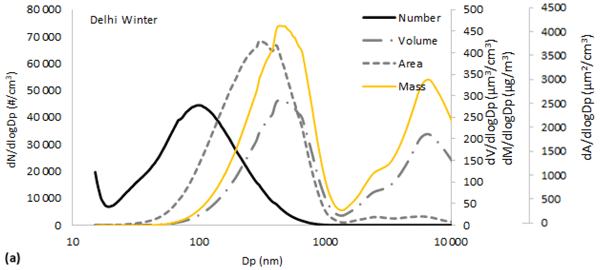
Ülkü Alver Şahin, Roy M. Harrison, Mohammed S. Alam, David C. S. Beddows, Dimitrios Bousiotis, Zongbo Shi, Leigh R. Crilley, William Bloss, James Brean, Isha Khanna, and Rulan Verma
Atmos. Chem. Phys., 22, 5415–5433, https://doi.org/10.5194/acp-22-5415-2022, https://doi.org/10.5194/acp-22-5415-2022, 2022
Short summary
Short summary
Wide-range particle size spectra have been measured in three seasons in Delhi and are interpreted in terms of sources and processes. Condensational growth is a major feature of the fine fraction, and a coarse fraction contributes substantially – but only in summer.
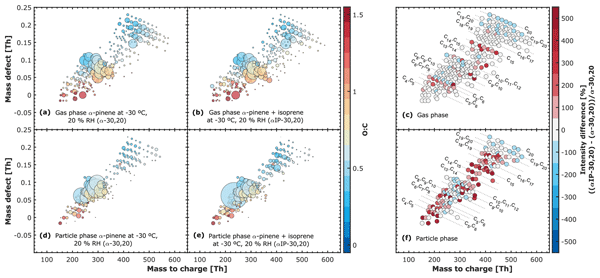
Lucía Caudillo, Birte Rörup, Martin Heinritzi, Guillaume Marie, Mario Simon, Andrea C. Wagner, Tatjana Müller, Manuel Granzin, Antonio Amorim, Farnoush Ataei, Rima Baalbaki, Barbara Bertozzi, Zoé Brasseur, Randall Chiu, Biwu Chu, Lubna Dada, Jonathan Duplissy, Henning Finkenzeller, Loïc Gonzalez Carracedo, Xu-Cheng He, Victoria Hofbauer, Weimeng Kong, Houssni Lamkaddam, Chuan P. Lee, Brandon Lopez, Naser G. A. Mahfouz, Vladimir Makhmutov, Hanna E. Manninen, Ruby Marten, Dario Massabò, Roy L. Mauldin, Bernhard Mentler, Ugo Molteni, Antti Onnela, Joschka Pfeifer, Maxim Philippov, Ana A. Piedehierro, Meredith Schervish, Wiebke Scholz, Benjamin Schulze, Jiali Shen, Dominik Stolzenburg, Yuri Stozhkov, Mihnea Surdu, Christian Tauber, Yee Jun Tham, Ping Tian, António Tomé, Steffen Vogt, Mingyi Wang, Dongyu S. Wang, Stefan K. Weber, André Welti, Wang Yonghong, Wu Yusheng, Marcel Zauner-Wieczorek, Urs Baltensperger, Imad El Haddad, Richard C. Flagan, Armin Hansel, Kristina Höhler, Jasper Kirkby, Markku Kulmala, Katrianne Lehtipalo, Ottmar Möhler, Harald Saathoff, Rainer Volkamer, Paul M. Winkler, Neil M. Donahue, Andreas Kürten, and Joachim Curtius
Atmos. Chem. Phys., 21, 17099–17114, https://doi.org/10.5194/acp-21-17099-2021, https://doi.org/10.5194/acp-21-17099-2021, 2021
Short summary
Short summary
We performed experiments in the CLOUD chamber at CERN at low temperatures to simulate new particle formation in the upper free troposphere (at −30 ºC and −50 ºC). We measured the particle and gas phase and found that most of the compounds present in the gas phase are detected as well in the particle phase. The major compounds in the particles are C8–10 and C18–20. Specifically, we showed that C5 and C15 compounds are detected in a mixed system with isoprene and α-pinene at −30 ºC, 20 % RH.
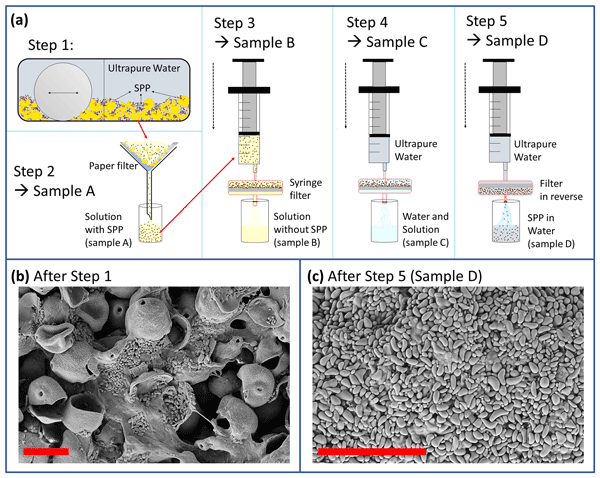
Julia Burkart, Jürgen Gratzl, Teresa M. Seifried, Paul Bieber, and Hinrich Grothe
Biogeosciences, 18, 5751–5765, https://doi.org/10.5194/bg-18-5751-2021, https://doi.org/10.5194/bg-18-5751-2021, 2021
Short summary
Short summary
Extracts of birch pollen grains are known to be ice nucleation active and thus impact cloud formation and climate. In this study we develop an extraction method to separate subpollen particles from ice nucleating macromolecules. Our results thereby illustrate that ice nucleating macromolecules can be washed off the subpollen particles and that the ice activity is linked to the presence of proteins.
Cited articles
Alage, S., Michoud, V., Harb, S., Picquet-Varrault, B., Cirtog, M., Kumar, A., Rissanen, M., and Cantrell, C.: A nitrate ion chemical-ionization atmospheric-pressure-interface time-of-flight mass spectrometer (NO
Bianchi, F., Kurtén, T., Riva, M., Mohr, C., Rissanen, M. P., Roldin, P., Berndt, T., Crounse, J. D., Wennberg, P. O., Mentel, T. F., Wildt, J., Junninen, H., Jokinen, T., Kulmala, M., Worsnop, D. R., Thornton, J. A., Donahue, N., Kjaergaard, H. G., and Ehn, M.: Highly Oxygenated Organic Molecules (HOM) from Gas-Phase Autoxidation Involving Peroxy Radicals: A Key Contributor to Atmospheric Aerosol, Chem. Rev., 119, 3472–3509, https://doi.org/10.1021/acs.chemrev.8b00395, 2019. a, b, c
Cai, C., Zhang, X., Wang, K., Zhang, Y., Wang, L., Zhang, Q., Duan, F., He, K., and Yu, S.-C.: Incorporation of new particle formation and early growth treatments into WRF/Chem: Model improvement, evaluation, and impacts of anthropogenic aerosols over East Asia, Atmos. Environ., 124, 262–284, https://doi.org/10.1016/j.atmosenv.2015.05.046, 2016. a
Cai, R., Mikkilä, J., Bengs, A., Koirala, M., Mikkilä, J., Holm, S., Juuti, P., Meder, M., Partovi, F., Shcherbinin, A., Worsnop, D., Ehn, M., and Kangasluoma, J.: Extending the Range of Detectable Trace Species with the Fast Polarity Switching of Chemical Ionization Orbitrap Mass Spectrometry, Anal. Chem., 96, 8604–8612, https://doi.org/10.1021/acs.analchem.4c00650, 2024. a, b
Donahue, N. M., Robinson, A. L., and Pandis, S. N.: Atmospheric organic particulate matter: From smoke to secondary organic aerosol, Atmos. Environ., 43, 94–106, https://doi.org/10.1016/j.atmosenv.2008.09.055, 2009. a
Dussault, P. H., Zope, U. R., and Westermeyer, T. A.: 2-(2-Methoxyethoxy)prop-2-yl Hydroperoxide: An Easily Handled Reagent for the Synthesis of Alkyl Hydroperoxides, J. Org. Chem., 59, 8267–8268, https://doi.org/10.1021/jo00105a053, 1994. a
Ehn, M., Thornton, J. A., Kleist, E., Sipilä, M., Junninen, H., Pullinen, I., Springer, M., Rubach, F., Tillmann, R., Lee, B., Lopez-Hilfiker, F., Andres, S., Acir, I.-H., Rissanen, M., Jokinen, T., Schobesberger, S., Kangasluoma, J., Kontkanen, J., Nieminen, T., Kurtén, T., Nielsen, L. B., Jørgensen, S., Kjaergaard, H. G., Canagaratna, M., Maso, M. D., Berndt, T., Petäjä, T., Wahner, A., Kerminen, V.-M., Kulmala, M., Worsnop, D. R., Wildt, J., and Mentel, T. F.: A large source of low-volatility secondary organic aerosol, Nature, 506, 476–479, https://doi.org/10.1038/nature13032, 2014. a, b
Elm, J., Myllys, N., and Kurtén, T.: What Is Required for Highly Oxidized Molecules To Form Clusters with Sulfuric Acid?, J. Phys. Chem.-A, 121, 4578–4587, https://doi.org/10.1021/acs.jpca.7b03759, 2017. a
Fountoukis, C., Riipinen, I., Denier van der Gon, H. A. C., Charalampidis, P. E., Pilinis, C., Wiedensohler, A., O'Dowd, C., Putaud, J. P., Moerman, M., and Pandis, S. N.: Simulating ultrafine particle formation in Europe using a regional CTM: contribution of primary emissions versus secondary formation to aerosol number concentrations, Atmos. Chem. Phys., 12, 8663–8677, https://doi.org/10.5194/acp-12-8663-2012, 2012. a
Gabelica, V. and Pauw, E. D.: Internal energy and fragmentation of ions produced in electrospray sources, Mass Spectrom. Rev., 24, 566–587, https://doi.org/10.1002/mas.20027, 2005. a
Gordon, H., Kirkby, J., Baltensperger, U., Bianchi, F., Breitenlechner, M., Curtius, J., Dias, A., Dommen, J., Donahue, N. M., Dunne, E. M., Duplissy, J., Ehrhart, S., Flagan, R. C., Frege, C., Fuchs, C., Hansel, A., Hoyle, C. R., Kulmala, M., Kürten, A., Lehtipalo, K., Makhmutov, V., Molteni, U., Rissanen, M. P., Stozkhov, Y., Tröstl, J., Tsagkogeorgas, G., Wagner, R., Williamson, C., Wimmer, D., Winkler, P. M., Yan, C., and Carslaw, K. S.: Causes and importance of new particle formation in the present-day and preindustrial atmospheres, J. Geophys. Res.-Atmos., 122, 8739–8760, https://doi.org/10.1002/2017JD026844, 2017. a
Hallquist, M., Wenger, J. C., Baltensperger, U., Rudich, Y., Simpson, D., Claeys, M., Dommen, J., Donahue, N. M., George, C., Goldstein, A. H., Hamilton, J. F., Herrmann, H., Hoffmann, T., Iinuma, Y., Jang, M., Jenkin, M. E., Jimenez, J. L., Kiendler-Scharr, A., Maenhaut, W., McFiggans, G., Mentel, Th. F., Monod, A., Prévôt, A. S. H., Seinfeld, J. H., Surratt, J. D., Szmigielski, R., and Wildt, J.: The formation, properties and impact of secondary organic aerosol: current and emerging issues, Atmos. Chem. Phys., 9, 5155–5236, https://doi.org/10.5194/acp-9-5155-2009, 2009. a
Hatakeyama, S., Izumi, K., Fukuyama, T., and Akimoto, H.: Reactions of ozone with α-pinene and β-pinene in air: Yields of gaseous and particulate products, J. Geophys. Res.-Atmos., 94, 13013–13024, https://doi.org/10.1029/JD094iD10p13013, 1989. a
HEI: State of Global Air Report 2025, Health Effects Institute (HEI), Boston, MA, https://www.stateofglobalair.org/resources/report/state-global-air-report-2025(last access: 10 November 2025), 2025. a
Hodzic, A., Kasibhatla, P. S., Jo, D. S., Cappa, C. D., Jimenez, J. L., Madronich, S., and Park, R. J.: Rethinking the global secondary organic aerosol (SOA) budget: stronger production, faster removal, shorter lifetime, Atmos. Chem. Phys., 16, 7917–7941, https://doi.org/10.5194/acp-16-7917-2016, 2016. a
IHME: Global Burden of Disease 2023: Findings from the GBD 2023 study, Institute for Health Metrics and Evaluation (IHME), Seattle, WA, https://www.healthdata.org/research-analysis/library/global-burden-disease-2023-findings-gbd-2023-study (last access: 10 November 2025), 2025. a
IPCC: Climate Change 2021: The Physical Science Basis, Contribution of Working Group I to the Sixth Assessment Report of the Intergovernmental Panel on Climate Change, edited by: Masson-Delmotte, V., Zhai, P., Pirani, A., Connors, S. L., Péan, C., Berger, S., Caud, N., Chen, Y., Goldfarb, L., Gomis, M. I., Huang, M., Leitzell, K., Lonnoy, E., Matthews, J. B. R., Maycock, T. K., Waterfield, T., Yelekçi, O., Yu, R., and Zhou, B., Cambridge University Press, Cambridge, United Kingdom and New York, NY, USA, 2391 pp., https://doi.org/10.1017/9781009157896, 2021. a
Jimenez, J. L., Canagaratna, M. R., Donahue, N. M., Prevot, A. S. H., Zhang, Q., Kroll, J. H., DeCarlo, P. F., Allan, J. D., Coe, H., Ng, N. L., Aiken, A. C., Docherty, K. S., Ulbrich, I. M., Grieshop, A. P., Robinson, A. L., Duplissy, J., Smith, J. D., Wilson, K. R., Lanz, V. A., Hueglin, C., Sun, Y. L., Tian, J., Laaksonen, A., Raatikainen, T., Rautiainen, J., Vaattovaara, P., Ehn, M., Kulmala, M., Tomlinson, J. M., Collins, D. R., Cubison, M. J., Dunlea, E. J., Huffman, J. A., Onasch, T. B., Alfarra, M. R., Williams, P. I., Bower, K., Kondo, Y., Schneider, J., Drewnick, F., Borrmann, S., Weimer, S., Demerjian, K., Salcedo, D., Cottrell, L., Griffin, R., Takami, A., Miyoshi, T., Hatakeyama, S., Shimono, A., Sun, J. Y., Zhang, Y. M., Dzepina, K., Kimmel, J. R., Sueper, D., Jayne, J. T., Herndon, S. C., Trimborn, A. M., Williams, L. R., Wood, E. C., Middlebrook, A. M., Kolb, C. E., Baltensperger, U., and Worsnop, D. R.: Evolution of Organic Aerosols in the Atmosphere, Science, 326, 1525–1529, https://doi.org/10.1126/science.1180353, 2009. a
Kavouras, I. G., Mihalopoulos, N., and Stephanou, E. G.: Formation and gas/particle partitioning of monoterpenes photo-oxidation products over forests, Geophys. Res. Lett., 26, 55–58, https://doi.org/10.1029/1998GL900251, 1999. a
Kenseth, C. M., Hafeman, N. J., Huang, Y., Dalleska, N. F., Stoltz, B. M., and Seinfeld, J. H.: Synthesis of Carboxylic Acid and Dimer Ester Surrogates to Constrain the Abundance and Distribution of Molecular Products in α-Pinene and β-Pinene Secondary Organic Aerosol, Environ. Sci. Technol., 54, 12829–12839, https://doi.org/10.1021/acs.est.0c01566, 2020. a
Kenseth, C. M., Hafeman, N. J., Rezgui, S. P., Chen, J., Huang, Y., Dalleska, N. F., Kjaergaard, H. G., Stoltz, B. M., Seinfeld, J. H., and Wennberg, P. O.: Particle-phase accretion forms dimer esters in pinene secondary organic aerosol, Science, 382, 787–792, https://doi.org/10.1126/science.adi0857, 2023. a
Kirkby, J., Duplissy, J., Sengupta, K., Frege, C., Gordon, H., Williamson, C., Heinritzi, M., Simon, M., Yan, C., Almeida, J., Tröstl, J., Nieminen, T., Ortega, I. K., Wagner, R., Adamov, A., Amorim, A., Bernhammer, A.-K., Bianchi, F., Breitenlechner, M., Brilke, S., Chen, X., Craven, J., Dias, A., Ehrhart, S., Flagan, R. C., Franchin, A., Fuchs, C., Guida, R., Hakala, J., Hoyle, C. R., Jokinen, T., Junninen, H., Kangasluoma, J., Kim, J., Krapf, M., Kürten, A., Laaksonen, A., Lehtipalo, K., Makhmutov, V., Mathot, S., Molteni, U., Onnela, A., Peräkylä, O., Piel, F., Petäjä, T., Praplan, A. P., Pringle, K., Rap, A., Richards, N. A. D., Riipinen, I., Rissanen, M. P., Rondo, L., Sarnela, N., Schobesberger, S., Scott, C. E., Seinfeld, J. H., Sipilä, M., Steiner, G., Stozhkov, Y., Stratmann, F., Tomé, A., Virtanen, A., Vogel, A. L., Wagner, A. C., Wagner, P. E., Weingartner, E., Wimmer, D., Winkler, P. M., Ye, P., Zhang, X., Hansel, A., Dommen, J., Donahue, N. M., Worsnop, D. R., Baltensperger, U., Kulmala, M., Carslaw, K. S., and Curtius, J.: Ion-induced nucleation of pure biogenic particles, Nature, 533, 521–526, https://doi.org/10.1038/nature17953, 2016. a, b
Kulmala, M.: How Particles Nucleate and Grow, Science, 302, 1000–1001, https://doi.org/10.1126/science.1090848, 2003. a
Kurtén, T., Rissanen, M. P., Mackeprang, K., Thornton, J. A., Hyttinen, N., Jørgensen, S., Ehn, M., and Kjaergaard, H. G.: Computational Study of Hydrogen Shifts and Ring-Opening Mechanisms in α-Pinene Ozonolysis Products, J. Phys. Chem. A, 119, 11366–11375, https://doi.org/10.1021/acs.jpca.5b08948, 2015. a
Li, K., Resch, J., and Kalberer, M.: Synthesis and Characterization of Organic Peroxides from Monoterpene-Derived Criegee Intermediates in Secondary Organic Aerosol, Environ. Sci. Technol., 58, 3322–3331, https://doi.org/10.1021/acs.est.3c07048, 2024. a
Lupascu, A., Easter, R., Zaveri, R., Shrivastava, M., Pekour, M., Tomlinson, J., Yang, Q., Matsui, H., Hodzic, A., Zhang, Q., and Fast, J. D.: Modeling particle nucleation and growth over northern California during the 2010 CARES campaign, Atmos. Chem. Phys., 15, 12283–12313, https://doi.org/10.5194/acp-15-12283-2015, 2015. a
Matsui, H., Koike, M., Takegawa, N., Kondo, Y., Takami, A., Takamura, T., Yoon, S., Kim, S.-W., Lim, H.-C., and Fast, J. D.: Spatial and temporal variations of new particle formation in East Asia using an NPF-explicit WRF-chem model: North-south contrast in new particle formation frequency, J. Geophys. Res.-Atmos., 118, 11647–11663, https://doi.org/10.1002/jgrd.50821, 2013. a
Mettke, P., Mutzel, A., Böge, O., Herrmann, H., Mettke, P., Mutzel, A., Böge, O., and Herrmann, H.: Synthesis and Characterization of Atmospherically Relevant Hydroxy Hydroperoxides, Atmosphere, 13, https://doi.org/10.3390/atmos13040507, 2022. a
Pankow, J. F. and Asher, W. E.: SIMPOL.1: a simple group contribution method for predicting vapor pressures and enthalpies of vaporization of multifunctional organic compounds, Atmos. Chem. Phys., 8, 2773–2796, https://doi.org/10.5194/acp-8-2773-2008, 2008. a, b
Posner, L. N. and Pandis, S. N.: Sources of ultrafine particles in the Eastern United States, Atmos. Environ., 111, 103–112, https://doi.org/10.1016/j.atmosenv.2015.03.033, 2015. a
Pozniak, B. P. and Cole, R. B.: Perspective on Electrospray Ionization and Its Relation to Electrochemistry, J. Am. Soc. Mass Spectr., 26, 369–385, https://doi.org/10.1007/s13361-014-1066-x, 2015. a
Qi, X., Ding, A., Roldin, P., Xu, Z., Zhou, P., Sarnela, N., Nie, W., Huang, X., Rusanen, A., Ehn, M., Rissanen, M. P., Petäjä, T., Kulmala, M., and Boy, M.: Modelling studies of HOMs and their contributions to new particle formation and growth: comparison of boreal forest in Finland and a polluted environment in China, Atmos. Chem. Phys., 18, 11779–11791, https://doi.org/10.5194/acp-18-11779-2018, 2018. a
Reddington, C. L., Carslaw, K. S., Spracklen, D. V., Frontoso, M. G., Collins, L., Merikanto, J., Minikin, A., Hamburger, T., Coe, H., Kulmala, M., Aalto, P., Flentje, H., Plass-Dülmer, C., Birmili, W., Wiedensohler, A., Wehner, B., Tuch, T., Sonntag, A., O'Dowd, C. D., Jennings, S. G., Dupuy, R., Baltensperger, U., Weingartner, E., Hansson, H.-C., Tunved, P., Laj, P., Sellegri, K., Boulon, J., Putaud, J.-P., Gruening, C., Swietlicki, E., Roldin, P., Henzing, J. S., Moerman, M., Mihalopoulos, N., Kouvarakis, G., Ždímal, V., Zíková, N., Marinoni, A., Bonasoni, P., and Duchi, R.: Primary versus secondary contributions to particle number concentrations in the European boundary layer, Atmos. Chem. Phys., 11, 12007–12036, https://doi.org/10.5194/acp-11-12007-2011, 2011. a
Rissanen, M. P., Mikkilä, J., Iyer, S., and Hakala, J.: Multi-scheme chemical ionization inlet (MION) for fast switching of reagent ion chemistry in atmospheric pressure chemical ionization mass spectrometry (CIMS) applications, Atmos. Meas. Tech., 12, 6635–6646, https://doi.org/10.5194/amt-12-6635-2019, 2019. a, b
Riva, M., Ehn, M., Li, D., Tomaz, S., Bourgain, F., Perrier, S., and George, C.: CI-Orbitrap: An Analytical Instrument To Study Atmospheric Reactive Organic Species, Anal. Chem., 91, 9419–9423, https://doi.org/10.1021/acs.analchem.9b02093, 2019a. a
Riva, M., Rantala, P., Krechmer, J. E., Peräkylä, O., Zhang, Y., Heikkinen, L., Garmash, O., Yan, C., Kulmala, M., Worsnop, D., and Ehn, M.: Evaluating the performance of five different chemical ionization techniques for detecting gaseous oxygenated organic species, Atmos. Meas. Tech., 12, 2403–2421, https://doi.org/10.5194/amt-12-2403-2019, 2019b. a, b
Shcherbinin, A., Finkenzeller, H., Mikkilä, J., Kontro, J., Vinkvist, N., Kangasluoma, J., and Rissanen, M.: From Hydrocarbons to Highly Functionalized Molecules in a Single Measurement: Comprehensive Analysis of Complex Gas Mixtures by Multi-Pressure Chemical Ionization Mass Spectrometry, Anal. Chem., 96, 19926–19932, https://doi.org/10.1021/acs.analchem.4c03859, 2024. a
Shcherbinin, A., Finkenzeller, H., Partovi, F., Vinkvist, N., Kontro, J., Boyer, M., Mikkilä, J., Iyer, S., Mikkilä, J., Juuti, P., Sarnela, N., Kangasluoma, J., and Rissanen, M.: Uronium from X-ray-Desorbed Urea Enables Sustainable Ultrasensitive Detection of Amines and Semivolatiles, Anal. Chem., 97, 21282–21290, https://doi.org/10.1021/acs.analchem.5c02239, 2025. a, b, c
Sindelarova, K., Markova, J., Simpson, D., Huszar, P., Karlicky, J., Darras, S., and Granier, C.: High-resolution biogenic global emission inventory for the time period 2000–2019 for air quality modelling, Earth Syst. Sci. Data, 14, 251–270, https://doi.org/10.5194/essd-14-251-2022, 2022. a
Steimer, S. S., Delvaux, A., Campbell, S. J., Gallimore, P. J., Grice, P., Howe, D. J., Pitton, D., Claeys, M., Hoffmann, T., and Kalberer, M.: Synthesis and characterisation of peroxypinic acids as proxies for highly oxygenated molecules (HOMs) in secondary organic aerosol, Atmos. Chem. Phys., 18, 10973–10983, https://doi.org/10.5194/acp-18-10973-2018, 2018. a, b
Stolzenburg, D., Fischer, L., Vogel, A. L., Heinritzi, M., Schervish, M., Simon, M., Wagner, A. C., Dada, L., Ahonen, L. R., Amorim, A., Baccarini, A., Bauer, P. S., Baumgartner, B., Bergen, A., Bianchi, F., Breitenlechner, M., Brilke, S., Buenrostro Mazon, S., Chen, D., Dias, A., Draper, D. C., Duplissy, J., El Haddad, I., Finkenzeller, H., Frege, C., Fuchs, C., Garmash, O., Gordon, H., He, X., Helm, J., Hofbauer, V., Hoyle, C. R., Kim, C., Kirkby, J., Kontkanen, J., Kürten, A., Lampilahti, J., Lawler, M., Lehtipalo, K., Leiminger, M., Mai, H., Mathot, S., Mentler, B., Molteni, U., Nie, W., Nieminen, T., Nowak, J. B., Ojdanic, A., Onnela, A., Passananti, M., Petäjä, T., Quéléver, L. L. J., Rissanen, M. P., Sarnela, N., Schallhart, S., Tauber, C., Tomé, A., Wagner, R., Wang, M., Weitz, L., Wimmer, D., Xiao, M., Yan, C., Ye, P., Zha, Q., Baltensperger, U., Curtius, J., Dommen, J., Flagan, R. C., Kulmala, M., Smith, J. N., Worsnop, D. R., Hansel, A., Donahue, N. M., and Winkler, P. M.: Rapid growth of organic aerosol nanoparticles over a wide tropospheric temperature range, P. Natl. Acad. Sci., 115, 9122–9127, https://doi.org/10.1073/pnas.1807604115, 2018. a, b
Stolzenburg, D., Wang, M., Schervish, M., and Donahue, N. M.: Tutorial: Dynamic organic growth modeling with a volatility basis set, J. Aerosol Sci., 166, 106063, https://doi.org/10.1016/j.jaerosci.2022.106063, 2022. a
Tischberger, M.: Figure data for ”Insufficient mass spectrometric detection of synthesized peroxy acids from α-pinene ozonolysis”, Version 1.0.0, TU Wien [data set], https://doi.org/10.48436/w7z9r-9x511, 2026. a
Tröstl, J., Chuang, W. K., Gordon, H., Heinritzi, M., Yan, C., Molteni, U., Ahlm, L., Frege, C., Bianchi, F., Wagner, R., Simon, M., Lehtipalo, K., Williamson, C., Craven, J. S., Duplissy, J., Adamov, A., Almeida, J., Bernhammer, A.-K., Breitenlechner, M., Brilke, S., Dias, A., Ehrhart, S., Flagan, R. C., Franchin, A., Fuchs, C., Guida, R., Gysel, M., Hansel, A., Hoyle, C. R., Jokinen, T., Junninen, H., Kangasluoma, J., Keskinen, H., Kim, J., Krapf, M., Kürten, A., Laaksonen, A., Lawler, M., Leiminger, M., Mathot, S., Möhler, O., Nieminen, T., Onnela, A., Petäjä, T., Piel, F. M., Miettinen, P., Rissanen, M. P., Rondo, L., Sarnela, N., Schobesberger, S., Sengupta, K., Sipilä, M., Smith, J. N., Steiner, G., Tomè, A., Virtanen, A., Wagner, A. C., Weingartner, E., Wimmer, D., Winkler, P. M., Ye, P., Carslaw, K. S., Curtius, J., Dommen, J., Kirkby, J., Kulmala, M., Riipinen, I., Worsnop, D. R., Donahue, N. M., and Baltensperger, U.: The role of low-volatility organic compounds in initial particle growth in the atmosphere, Nature, 533, 527–531, https://doi.org/10.1038/nature18271, 2016. a, b
Wilson Jr., W. E., Schwartz, W. E., and Kinzer, G. W.: Haze formation: Its nature and origin, Tech. Rep. prepared for the Environmental Protection Agency (CPA 70-Neg. 172) and Coordinating Research Council (CAPA 6-68), Battelle Columbus Laboratories, 1972. a
Yu, F. and Luo, G.: Simulation of particle size distribution with a global aerosol model: contribution of nucleation to aerosol and CCN number concentrations, Atmos. Chem. Phys., 9, 7691–7710, https://doi.org/10.5194/acp-9-7691-2009, 2009. a
Yu, J., Griffin, R. J., Cocker III, D. R., Flagan, R. C., Seinfeld, J. H., and Blanchard, P.: Observation of gaseous and particulate products of monoterpene oxidation in forest atmospheres, Geophys. Res. Lett., 26, 1145–1148, https://doi.org/10.1029/1999GL900169, 1999. a
Zhang, Q., Jimenez, J. L., Canagaratna, M. R., Allan, J. D., Coe, H., Ulbrich, I., Alfarra, M. R., Takami, A., Middlebrook, A. M., Sun, Y. L., Dzepina, K., Dunlea, E., Docherty, K., DeCarlo, P. F., Salcedo, D., Onasch, T., Jayne, J. T., Miyoshi, T., Shimono, A., Hatakeyama, S., Takegawa, N., Kondo, Y., Schneider, J., Drewnick, F., Borrmann, S., Weimer, S., Demerjian, K., Williams, P., Bower, K., Bahreini, R., Cottrell, L., Griffin, R. J., Rautiainen, J., Sun, J. Y., Zhang, Y. M., and Worsnop, D. R.: Ubiquity and dominance of oxygenated species in organic aerosols in anthropogenically-influenced Northern Hemisphere midlatitudes, Geophys. Res. Lett., 34, https://doi.org/10.1029/2007GL029979, 2007. a
Short summary
We investigated how well common measurement approaches capture atmospherically relevant organic molecules formed from plant emissions. By synthesizing reference compounds and comparing different ionization methods, we show that widely used mass spectrometric techniques underestimate the abundance of important peroxide‑containing molecules. This bias influences how particle formation and growth rates are derived from measurements and affects subsequent calculations used in atmospheric science.
We investigated how well common measurement approaches capture atmospherically relevant organic...


