
Articles | Volume 19, issue 20
https://doi.org/10.5194/amt-19-6757-2026
© Author(s) 2026. This work is distributed under
the Creative Commons Attribution 4.0 License.
the Creative Commons Attribution 4.0 License.
https://doi.org/10.5194/amt-19-6757-2026
© Author(s) 2026. This work is distributed under
the Creative Commons Attribution 4.0 License.
the Creative Commons Attribution 4.0 License.
Research article
| 
27 Oct 2026
Research article |
| 27 Oct 2026
| 27 Oct 2026
A self-supervised and distillation-guided framework for robust cloud-layer identification in multi-channel Raman lidar networks
Weijie Zou
School of Remote Sensing and Information Engineering, Wuhan University, Wuhan, China

School of Remote Sensing and Information Engineering, Wuhan University, Wuhan, China
Tingxin Sun
Hangzhou Institute of Advanced Studies, Zhejiang Normal University, Hangzhou, China
Zhichao Bu
Meteorological Observation Center, China Meteorological Administration, Beijing, China
Yaru Dai
Meteorological Observation Center, China Meteorological Administration, Beijing, China
Haofei Wang
National Satellite Meteorological Center, China Meteorological Administration, Beijing, China
Longlong Wang
Hangzhou Institute of Advanced Studies, Zhejiang Normal University, Hangzhou, China
National Field Observation and Research Station (Hubei Wuhan) for Atmospheric Remote Sensing, Wuhan, China
School of Earth and Space Science and Technology, Wuhan University, Wuhan, China
Shuangliang Li
School of Remote Sensing and Information Engineering, Wuhan University, Wuhan, China
Hubei Luojia Laboratory, Wuhan University, Wuhan, China
Jiarui Chen
School of Remote Sensing and Information Engineering, Wuhan University, Wuhan, China
Xuan Wang
School of Remote Sensing and Information Engineering, Wuhan University, Wuhan, China
Siwei Li
School of Remote Sensing and Information Engineering, Wuhan University, Wuhan, China
Hubei Luojia Laboratory, Wuhan University, Wuhan, China
Detlef Müller
CORRESPONDING AUTHOR
School of Remote Sensing and Information Engineering, Wuhan University, Wuhan, China
Related authors
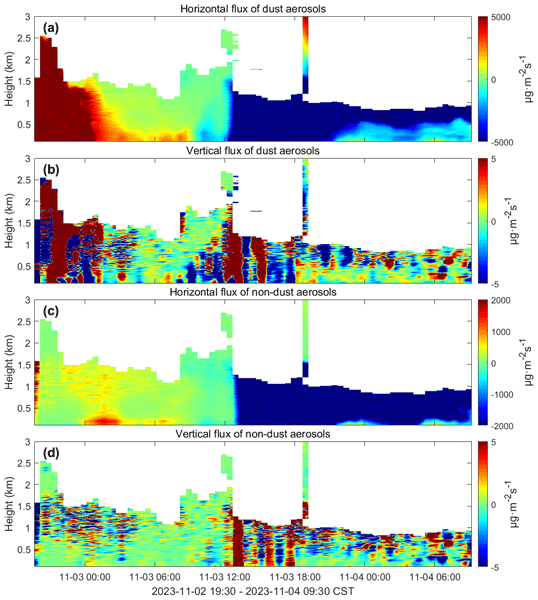
Zhengguo Tian, Longlong Wang, Si Liu, Cheng Yao, Tong Lu, Weijie Zou, Zhenping Yin, Yun He, Lei Li, Bin Zhang, Daru Chen, Zhichao Bu, Yubao Chen, and Xuan Wang
Atmos. Chem. Phys., 26, 4231–4249, https://doi.org/10.5194/acp-26-4231-2026, https://doi.org/10.5194/acp-26-4231-2026, 2026
Short summary
Short summary
This study investigates aerosol transport flux structure over Beijing and dust transport's impact on air quality using polarization lidar and Doppler wind profiling lidar, focusing on a 2–4 November 2023, winter haze event. It classifies dust and non-dust aerosols via particle depolarization ratio, calculates their vertical/horizontal mass flux profiles with the covariance method, and analyzes meteorological influences.
Si Liu, Aoxiang Huang, Longlong Wang, Cheng Yao, Zhengguo Tian, Tingxin Sun, Marija Bervida Mačak, Bin Zhang, Daru Chen, Fei Gao, and Samo Stanič
EGUsphere, https://doi.org/10.5194/egusphere-2026-6296, https://doi.org/10.5194/egusphere-2026-6296, 2026
This preprint is open for discussion and under review for Atmospheric Measurement Techniques (AMT).
Short summary
Short summary
The planetary boundary layer drives pollutant dispersion, making accurate height measurements key for air‑quality and weather analysis. Conventional lidar detection struggles in complex terrain due to layered particles and cloud‑driven misidentification. We built a physically‑guided automatic clustering method, validated with multi‑year Slovenian valley observations against balloon reference data. It delivers far more accurate height results and eliminates errors typical of older techniques.
Dongzhe Jing, Kaiming Huang, Yun He, Fan Yi, Rang Cao, Fangzheng Cheng, and He He
EGUsphere, https://doi.org/10.5194/egusphere-2026-4709, https://doi.org/10.5194/egusphere-2026-4709, 2026
This preprint is open for discussion and under review for Atmospheric Chemistry and Physics (ACP).
Short summary
Short summary
We analyzed the ice multiplication factor from 11 stratiform MPC cases based on lidar-radar synergistic observations from 2021 to 2025. The IMF exhibits a distinct temperature dependence, which was close to 1 when the temperatures in supercooled liquid layer lower than -8 ℃, and increased to 351.8 as such temperature approach -5 ℃. Moreover, the IMF and particle maximum diameter show a negative correlation, indicating that stronger SIP was associated with smaller ice particles.
Julian Hofer, Holger Baars, Zhenping Yin, Andi Klamt, Martin Radenz, Leonard König, Athena A. Floutsi, Cristofer Jimenez, Moritz Haarig, Dietrich Althausen, Benedikt Gast, Håvard S. Buholdt, Nathan Skupin, Jonas Neumann, Sabur F. Abdullozoda, Abduvosit N. Makhmudov, Johannes Bühl, Ronny Engelmann, Ulla Wandinger, and Albert Ansmann
EGUsphere, https://doi.org/10.5194/egusphere-2026-3928, https://doi.org/10.5194/egusphere-2026-3928, 2026
This preprint is open for discussion and under review for Atmospheric Measurement Techniques (AMT).
Short summary
Short summary
A comparison of manually and automatically analyzed lidar profiles of aerosol optical properties is presented. The manual analysis was performed using a custom software in multiple analyses steps based on visual inspection of the lidar signals. The automatic analysis was performed using an automatic processing chain. The comparison shows good agreement and demonstrates the suitability of the automatic retrievals for various applications of aerosol optical property profiles.
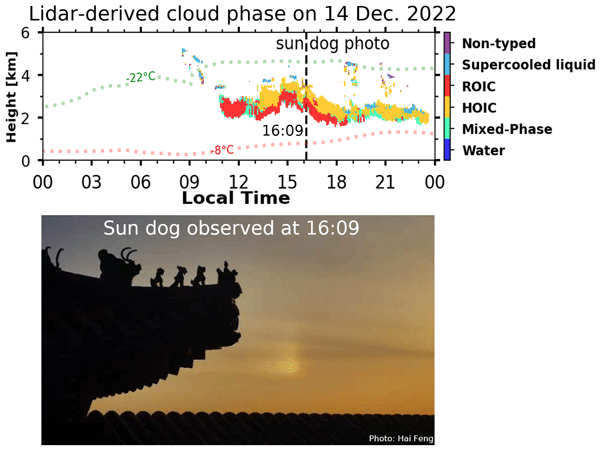
Zhaolong Wu, Patric Seifert, Yun He, Holger Baars, Cristofer Jimenez, Chengcai Li, Jing Li, Albert Ansmann, and Chuanfeng Zhao
Atmos. Chem. Phys., 26, 11491–11523, https://doi.org/10.5194/acp-26-11491-2026, https://doi.org/10.5194/acp-26-11491-2026, 2026
Short summary
Short summary
Using a full year of laser and radar observations in Beijing, this study shows when and where flat ice crystals tend to align horizontally instead of randomly, which suggests that flat ice crystals are most common in moderately cold, weakly turbulent clouds and often form below supercooled liquid water. This new finding can help weather and climate models better represent ice clouds.
Zhichao Bu, Yaru Dai, Yuanyuan Huang, Yubao Chen, Zhigang Li, Guohua Jin, and Xuliang Chen
EGUsphere, https://doi.org/10.5194/egusphere-2026-3088, https://doi.org/10.5194/egusphere-2026-3088, 2026
Short summary
Short summary
We developed a dual‑laser reference lidar that measures wind with high resolution from 10 m up to 3000 m. Validated against weather balloons and a tower, it calibrates other lidars to wind speed errors below 0.8 m/s and direction errors below 8°, filling a domestic gap and advancing wind lidar use in meteorology.
Cheng Yao, Longlong Wang, Aoxiang Huang, Bin Zhang, Marija Bervida Mačak, Luka Drinovec, Asta Gregorič, Fei Gao, Janja Vaupotič, Miloš Miler, Mateja Gosar, Zhangwei Yu, Daru Chen, Griša Močnik, and Samo Stanič
EGUsphere, https://doi.org/10.5194/egusphere-2026-3471, https://doi.org/10.5194/egusphere-2026-3471, 2026
Short summary
Short summary
Aerosols affect climate by scattering and absorbing sunlight and heat. Light detection and ranging instruments can track aerosol distributions, but turning their signals into atmospheric information depends on particle size, absorption, and humidity. We developed a ground-measurement method and tested it in Slovenia. The results provide optical constraints that support more reliable retrieval of aerosol profile information when different particle types are mixed.
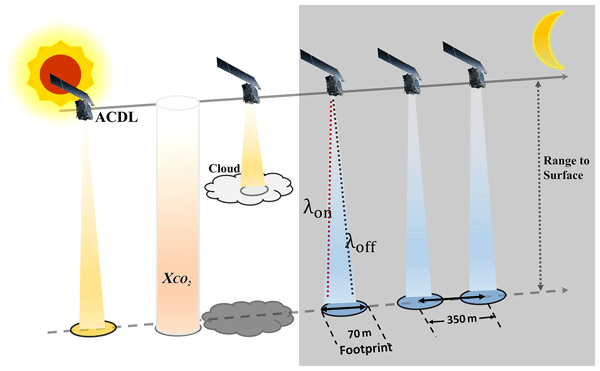
Jinchun Yi, Yiyang Huang, Ge Han, Hongyuan Zhang, Zhipeng Pei, Haotian Luo, Yichi Zhang, Tianqi Shi, Siwei Li, and Wei Gong
Atmos. Chem. Phys., 26, 8475–8504, https://doi.org/10.5194/acp-26-8475-2026, https://doi.org/10.5194/acp-26-8475-2026, 2026
Short summary
Short summary
This study presents a new way to estimate human-caused carbon dioxide emissions from cities using satellite observations. It combines measurements of nitrogen dioxide and carbon dioxide to better track emissions from urban areas. By applying this approach to several major cities with different environments, the study shows that combining multiple satellite observations can reduce uncertainty and provide more reliable city-level emission estimates.
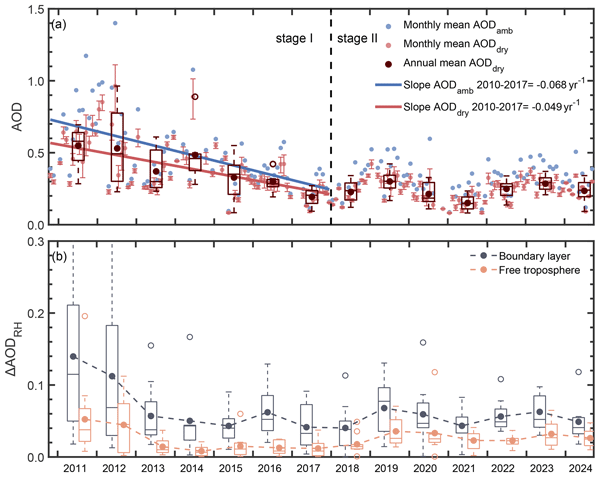
Yun He, Dongzhe Jing, Zhenping Yin, Detlef Müller, Fuchao Liu, Yunpeng Zhang, Yang Yi, Kaiming Huang, and Fan Yi
Atmos. Chem. Phys., 26, 4937–4951, https://doi.org/10.5194/acp-26-4937-2026, https://doi.org/10.5194/acp-26-4937-2026, 2026
Short summary
Short summary
Using polarization lidar observations during 2010–2024, we retrieve the vertical profiles of aerosol backscatter and extinction coefficients of anthropogenic pollution under dry and ambient atmospheric conditions over central China. The year-to-year and seasonal variations in anthropogenic AOD are largely changed after removing hygroscopic growth effect.
Zhengguo Tian, Longlong Wang, Si Liu, Cheng Yao, Tong Lu, Weijie Zou, Zhenping Yin, Yun He, Lei Li, Bin Zhang, Daru Chen, Zhichao Bu, Yubao Chen, and Xuan Wang
Atmos. Chem. Phys., 26, 4231–4249, https://doi.org/10.5194/acp-26-4231-2026, https://doi.org/10.5194/acp-26-4231-2026, 2026
Short summary
Short summary
This study investigates aerosol transport flux structure over Beijing and dust transport's impact on air quality using polarization lidar and Doppler wind profiling lidar, focusing on a 2–4 November 2023, winter haze event. It classifies dust and non-dust aerosols via particle depolarization ratio, calculates their vertical/horizontal mass flux profiles with the covariance method, and analyzes meteorological influences.
Dongzhe Jing, Yun He, Zhenping Yin, Detlef Müller, Kaiming Huang, and Fan Yi
Atmos. Meas. Tech., 19, 389–403, https://doi.org/10.5194/amt-19-389-2026, https://doi.org/10.5194/amt-19-389-2026, 2026
Short summary
Short summary
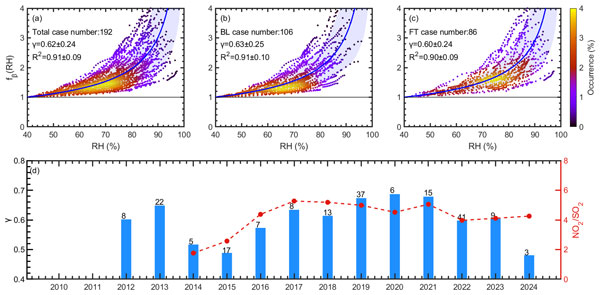
We statistically analyze the hygroscopic growth characteristics of urban anthropogenic aerosols over Wuhan, a megacity over central China, using lidar observations and Hänel parameterization from 2010 to 2024. Aerosol hygroscopic parameter γ increases from 2014 to 2017 and stabilizes at high levels afterwards, aligning with the changes in NO2-to-SO2 concentration ratio. Moreover, no evident differences are found across seasons, as well as between the free troposphere and boundary layer.
Dongzhe Jing, Yun He, Zhenping Yin, Kaiming Huang, Fuchao Liu, and Fan Yi
Atmos. Chem. Phys., 25, 17047–17067, https://doi.org/10.5194/acp-25-17047-2025, https://doi.org/10.5194/acp-25-17047-2025, 2025
Short summary
Short summary
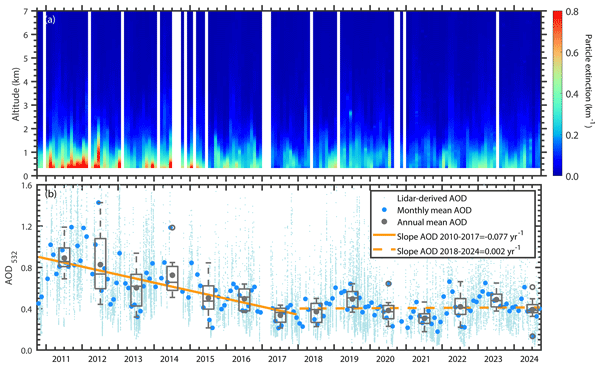
We present the evolution of tropospheric aerosols over Wuhan, central China, from 2010 to 2024. The analysis highlights the long-term aerosol characteristics and separates natural (dust) and anthropogenic (non-dust) contributions. Emission control policies were highly effective during 2010–2017. However, since 2018, lidar-derived aerosol optical depth (AOD) ceased decreasing and fluctuated, and the decline in PM2.5 concentration also became slower, possibly due to atmospheric chemistry factors.
Ioanna Tsikoudi, Eleni Marinou, Maria Tombrou, Eleni Giannakaki, Emmanouil Proestakis, Konstantinos Rizos, Ville Vakkari, Holger Baars, Annett Skupin, Ronny Engelmann, Zhenping Yin, and Vassilis Amiridis
Atmos. Chem. Phys., 25, 16491–16510, https://doi.org/10.5194/acp-25-16491-2025, https://doi.org/10.5194/acp-25-16491-2025, 2025
Short summary
Short summary
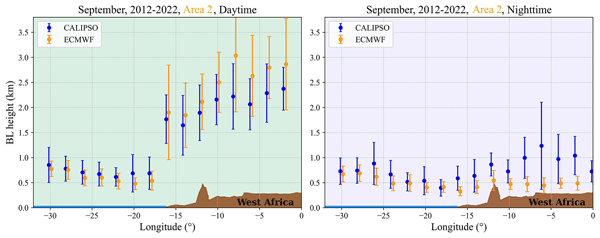
We study the characteristics of the boundary layer over three areas: the tropical Atlantic, the tropical West African continent, and near Cabo Verde using PollyXT and CALIPSO (Cloud-Aerosol Lidar and Infrared Pathfinder Satellite Observations) lidar measurements, as well as ECMWF (European Centre for Medium-Range Weather Forecasts) data. The findings underline the strengths and limitations of different observational and modeling approaches, and emphasizes on the importance of considering aerosol conditions and local meteorology when interpreting boundary layer dynamics.
Yun He, Goutam Choudhury, Matthias Tesche, Albert Ansmann, Fan Yi, Detlef Müller, and Zhenping Yin
Atmos. Meas. Tech., 18, 5669–5685, https://doi.org/10.5194/amt-18-5669-2025, https://doi.org/10.5194/amt-18-5669-2025, 2025
Short summary
Short summary
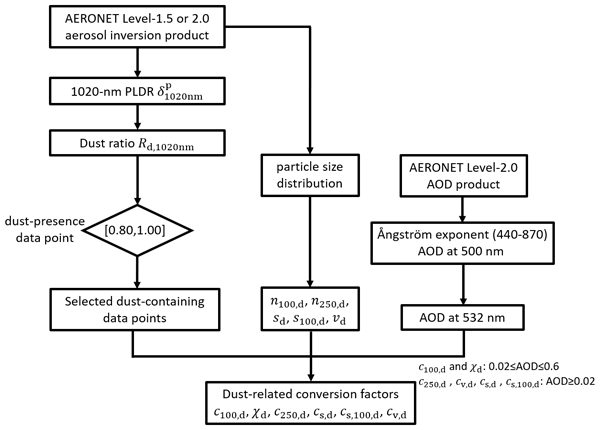
We present a global dataset of POlarization LIdar PHOtometer Networking (POLIPHON) dust conversion factors at 532 nm obtained using Aerosol RObotic NETwork (AERONET) observations at 137 sites for ice-nucleating particle (INP) and 123 sites for cloud condensation nucleation (CCN) calculations. We also conduct a comparison of dust CCN concentration profiles derived using both POLIPHON and the independent Optical Modelling of the CALIPSO Aerosol Microphysics (OMCAM) retrieval.
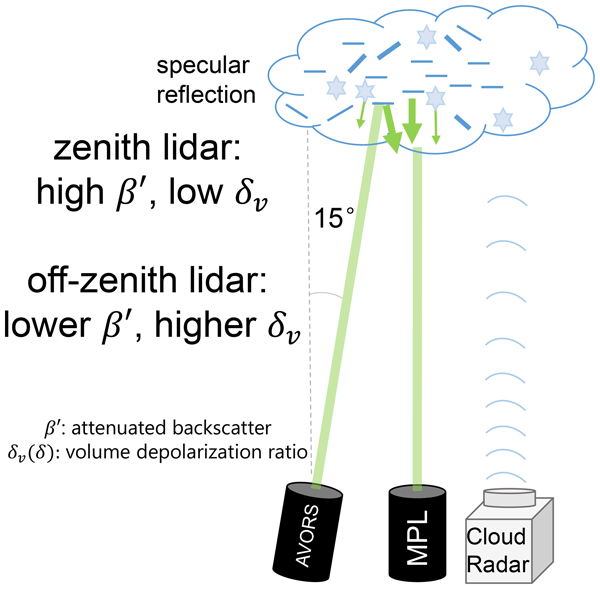
Zhaolong Wu, Patric Seifert, Yun He, Holger Baars, Haoran Li, Cristofer Jimenez, Chengcai Li, and Albert Ansmann
Atmos. Meas. Tech., 18, 3611–3634, https://doi.org/10.5194/amt-18-3611-2025, https://doi.org/10.5194/amt-18-3611-2025, 2025
Short summary
Short summary
This study introduces a novel method to detect horizontally oriented ice crystals (HOICs) using two ground-based polarization lidars at different zenith angles, based on a yearlong dataset collected in Beijing. Combined with cloud radar and reanalysis data, the fine categorization results reveal HOICs occur in calm winds and moderately cold temperatures and are influenced by turbulence near cloud bases. The results enhance our understanding of cloud processes and improve atmospheric models.
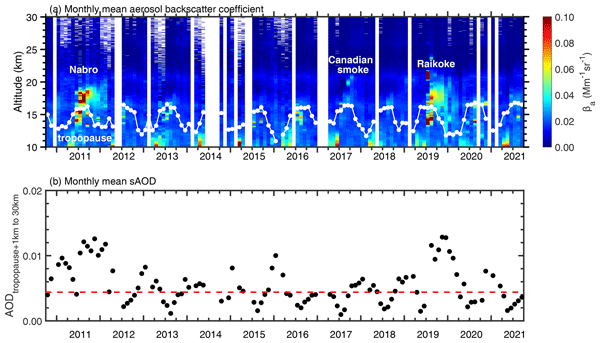
Yun He, Dongzhe Jing, Zhenping Yin, Kevin Ohneiser, and Fan Yi
Atmos. Chem. Phys., 24, 11431–11450, https://doi.org/10.5194/acp-24-11431-2024, https://doi.org/10.5194/acp-24-11431-2024, 2024
Short summary
Short summary
We present a long-term ground-based lidar observation of stratospheric aerosols at a mid-latitude site, Wuhan, in central China, from 2010 to 2021. We observed a stratospheric background period from 2013 to mid-2017, along with several perturbations from volcanic aerosols and wildfire-induced smoke. In summer, injected stratospheric aerosols are found to be captured by the Asian monsoon anticyclone, resulting in prolonged residence and regional transport in the mid-latitudes of East Asia.
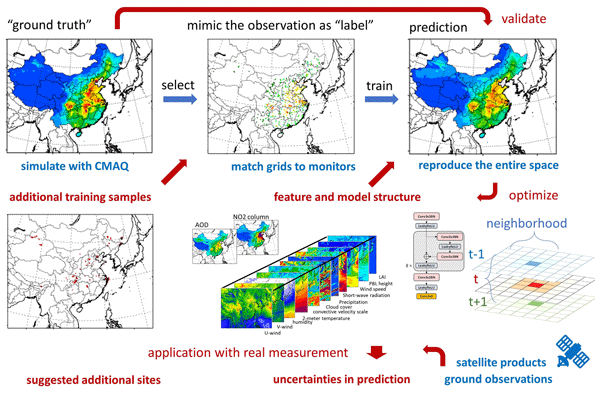
Siwei Li, Yu Ding, Jia Xing, and Joshua S. Fu
Earth Syst. Sci. Data, 16, 3781–3793, https://doi.org/10.5194/essd-16-3781-2024, https://doi.org/10.5194/essd-16-3781-2024, 2024
Short summary
Short summary
Surface PM2.5 data have gained widespread application in health assessments and related fields, while the inherent uncertainties in PM2.5 data persist due to the lack of ground-truth data across the space. This study provides a novel testbed, enabling comprehensive evaluation across the entire spatial domain. The optimized deep-learning model with spatiotemporal features successfully retrieved surface PM2.5 concentrations in China (2013–2021), with reduced biases induced by sample imbalance.
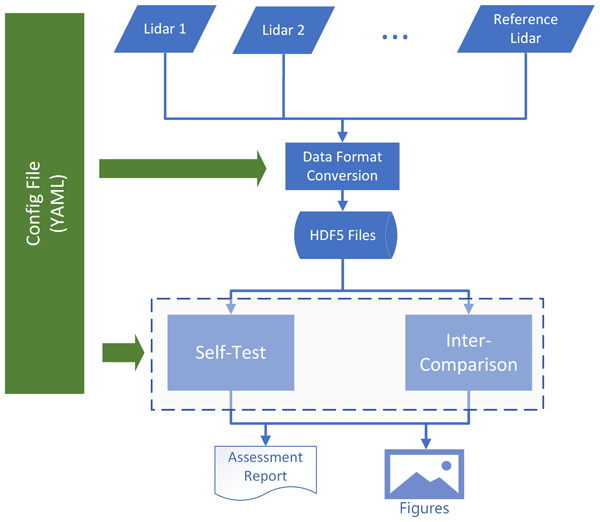
Longlong Wang, Zhenping Yin, Zhichao Bu, Anzhou Wang, Song Mao, Yang Yi, Detlef Müller, Yubao Chen, and Xuan Wang
Atmos. Meas. Tech., 16, 4307–4318, https://doi.org/10.5194/amt-16-4307-2023, https://doi.org/10.5194/amt-16-4307-2023, 2023
Short summary
Short summary
We report the lidar inter-comparison results with a reference lidar at 1064 nm, in order to homogenize the signals provided by different lidar systems for establishing a lidar network in China. The profiles of relative deviation of lidar signals are less than 5 % within 500–2000 m and 10 % within 2000–5000 m, increasing confidence in the reliability of the signals provided by each lidar system in the channels at 1064 nm for a future lidar network in China.
Huijia Shen, Zhenping Yin, Yun He, Longlong Wang, Yifan Zhan, and Dongzhe Jing
EGUsphere, https://doi.org/10.5194/egusphere-2023-1844, https://doi.org/10.5194/egusphere-2023-1844, 2023
Preprint archived
Short summary
Short summary
With space-borne lidar and radar observations, we study two dust-cirrus interaction cases near Midway Island in the central Pacific. Partial cloud parcels show evident feature of the dominance of heterogeneous nucleation. At the upper troposphere, natural INPs such as dust and smoke may result in cooling effect by increasing the cloud cover to reflect more solar radiation and modulate the cirrus microphysical properties via different ice-nucleating regimes.
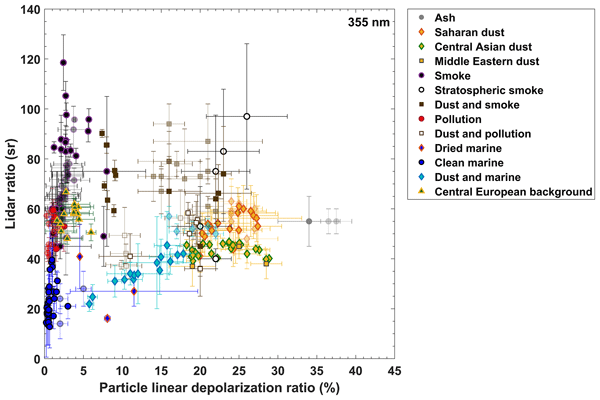
Athena Augusta Floutsi, Holger Baars, Ronny Engelmann, Dietrich Althausen, Albert Ansmann, Stephanie Bohlmann, Birgit Heese, Julian Hofer, Thomas Kanitz, Moritz Haarig, Kevin Ohneiser, Martin Radenz, Patric Seifert, Annett Skupin, Zhenping Yin, Sabur F. Abdullaev, Mika Komppula, Maria Filioglou, Elina Giannakaki, Iwona S. Stachlewska, Lucja Janicka, Daniele Bortoli, Eleni Marinou, Vassilis Amiridis, Anna Gialitaki, Rodanthi-Elisavet Mamouri, Boris Barja, and Ulla Wandinger
Atmos. Meas. Tech., 16, 2353–2379, https://doi.org/10.5194/amt-16-2353-2023, https://doi.org/10.5194/amt-16-2353-2023, 2023
Short summary
Short summary
DeLiAn is a collection of lidar-derived aerosol intensive optical properties for several aerosol types, namely the particle linear depolarization ratio, the extinction-to-backscatter ratio (lidar ratio) and the Ångström exponent. The data collection is based on globally distributed, long-term, ground-based, multiwavelength, Raman and polarization lidar measurements and currently covers two wavelengths, 355 and 532 nm, for 13 aerosol categories ranging from basic aerosol types to mixtures.
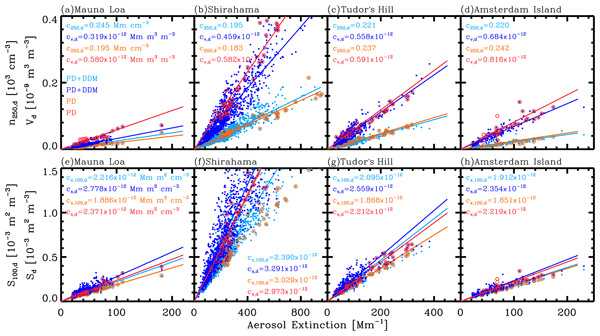
Yun He, Zhenping Yin, Albert Ansmann, Fuchao Liu, Longlong Wang, Dongzhe Jing, and Huijia Shen
Atmos. Meas. Tech., 16, 1951–1970, https://doi.org/10.5194/amt-16-1951-2023, https://doi.org/10.5194/amt-16-1951-2023, 2023
Short summary
Short summary
With the AERONET database, this study derives dust-related conversion factors at oceanic sites used in the POLIPHON method, which can convert lidar-retrieved dust extinction to ice-nucleating particle (INP)- and cloud condensation nuclei (CCN)-relevant parameters. The particle linear depolarization ratio in the AERONET aerosol inversion product is used to identify dust data points. The derived conversion factors can be applied to inverse 3-D global distributions of dust-related INPCs and CCNCs.
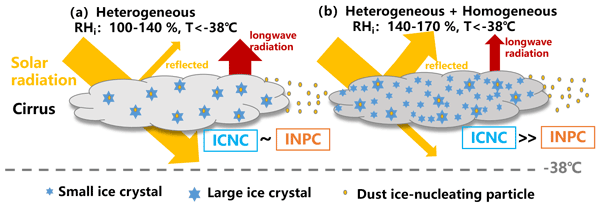
Yun He, Zhenping Yin, Fuchao Liu, and Fan Yi
Atmos. Chem. Phys., 22, 13067–13085, https://doi.org/10.5194/acp-22-13067-2022, https://doi.org/10.5194/acp-22-13067-2022, 2022
Short summary
Short summary
A method is proposed to identify the sole presence of heterogeneous nucleation and competition between heterogeneous and homogeneous nucleation for dust-related cirrus clouds by characterizing the relationship between dust ice-nucleating particle concentration calculated from CALIOP using the POLIPHON method and in-cloud ice crystal number concentration from the DARDAR-Nice dataset. Two typical cirrus cases are shown as a demonstration, and the proposed method can be extended to a global scale.
Shansi Wang, Siwei Li, Jia Xing, Yu Ding, Senlin Hu, Shuchang Liu, Yu Qin, Zhaoxin Dong, Jiaxin Dong, Ge Song, and Lechao Dong
Atmos. Chem. Phys. Discuss., https://doi.org/10.5194/acp-2022-368, https://doi.org/10.5194/acp-2022-368, 2022
Preprint withdrawn
Short summary
Short summary
Future warming meteorological conditions may enhance the influence of regional transport on PM2.5 pollution. Our results prove that climate-friendly policy could lead to considerable co-benefits in mitigating the regional transport of PM2.5 in future. Meanwhile, climate change will exert larger impacts on across-regional (long-distance) transport than inner (neighboring provinces) regional transport, highlighting the significance of multi-regional cooperation in the future.

Yang Yi, Fan Yi, Fuchao Liu, Yunpeng Zhang, Changming Yu, and Yun He
Atmos. Chem. Phys., 21, 17649–17664, https://doi.org/10.5194/acp-21-17649-2021, https://doi.org/10.5194/acp-21-17649-2021, 2021
Short summary
Short summary
Our lidar observations reveal the complete microphysical process of hydrometeors falling from mid-level stratiform clouds. We find that the surface rainfall begins as supercooled mixed-phase hydrometeors fall out of a liquid parent cloud base. We find also that the collision–coalescence growth of precipitating raindrops and subsequent spontaneous breakup always occur around 0.6 km altitude during surface rainfalls. Our findings provide new insights into stratiform precipitation formation.
Cited articles
Alizadeh-Choobari, O. and Gharaylou, M.: Aerosol impacts on radiative and microphysical properties of clouds and precipitation formation, Atmos. Res., 185, 53–64, https://doi.org/10.1016/j.atmosres.2016.10.021, 2017.
Ansmann, A., Riebesell, M., and Weitkamp, C.: Measurement of atmospheric aerosol extinction profiles with a Raman lidar, Opt. Lett., 15, 746–748, https://doi.org/10.1364/OL.15.000746, 1990.
Baars, H., Kanitz, T., Engelmann, R., Althausen, D., Heese, B., Komppula, M., Preißler, J., Tesche, M., Ansmann, A., Wandinger, U., Lim, J.-H., Ahn, J. Y., Stachlewska, I. S., Amiridis, V., Marinou, E., Seifert, P., Hofer, J., Skupin, A., Schneider, F., Bohlmann, S., Foth, A., Bley, S., Pfüller, A., Giannakaki, E., Lihavainen, H., Viisanen, Y., Hooda, R. K., Pereira, S. N., Bortoli, D., Wagner, F., Mattis, I., Janicka, L., Markowicz, K. M., Achtert, P., Artaxo, P., Pauliquevis, T., Souza, R. A. F., Sharma, V. P., van Zyl, P. G., Beukes, J. P., Sun, J., Rohwer, E. G., Deng, R., Mamouri, R.-E., and Zamorano, F.: An overview of the first decade of PollyNET: an emerging network of automated Raman-polarization lidars for continuous aerosol profiling, Atmos. Chem. Phys., 16, 5111–5137, https://doi.org/10.5194/acp-16-5111-2016, 2016.
Baars, H., Seifert, P., Engelmann, R., and Wandinger, U.: Target categorization of aerosol and clouds by continuous multiwavelength-polarization lidar measurements, Atmos. Meas. Tech., 10, 3175–3201, https://doi.org/10.5194/amt-10-3175-2017, 2017.
Campbell, J. R., Hlavka, D. L., Welton, E. J., Flynn, C. J., Turner, D. D., Spinhirne, J. D., Scott, V. S., and Hwang, I. H.: Full-time, eye-safe cloud and aerosol lidar observation at Atmospheric Radiation Measurement Program sites: Instruments and data processing, J. Atmos. Ocean. Technol., 19, 431–442, https://doi.org/10.1175/1520-0426(2002)019<0431:FTESCA>2.0.CO;2, 2002.
Chisari, A. B., Ortis, A., Guarnera, L., Patatu, W. C., Giandolfo, R. A., Spampinato, E., Battiato, S., and Giuffrida, M. V.: On the cloud detection from backscattered images generated from a lidar-based ceilometer: Current state and opportunities, in: 2024 IEEE International Conference on Image Processing (ICIP), Abu Dhabi, United Arab Emirates, 27–30 October 2024, 144–150, https://doi.org/10.1109/ICIP51287.2024.10647352, 2024.
Chisari, A. B., Guarnera, L., Ortis, A., Patatu, W. C., Battiato, S., and Giuffrida, M. V.: Benchmarking computer vision architectures for cloud detection from lidar ceilometer backscatter data, Vis. Comput., 41, 9441–9458, https://doi.org/10.1007/s00371-025-03960-3, 2025.
Clothiaux, E. E., Mace, G. G., Ackerman, T. P., Kane, T. J., Spinhirne, J. D., and Scott, V. S.: An automated algorithm for detection of hydrometeor returns in micropulse lidar data, J. Atmos. Ocean. Technol., 15, 1035–1042, https://doi.org/10.1175/1520-0426(1998)015<1035:AAAFDO>2.0.CO;2, 1998.
Cordeiro, L. P., Gouveia, D. A., and Barbosa, H. M. J.: Diurnal cycle and seasonality of cirrus clouds over the Amazon from a seven-year ground-based lidar record, J. Geophys. Res.-Atmos., 130, e2025JD044592, https://doi.org/10.1029/2025JD044592, 2025.
Cromwell, E. and Flynn, D.: Lidar cloud detection with fully convolutional networks, in: 2019 IEEE Winter Conference on Applications of Computer Vision (WACV), Waikoloa Village, HI, USA, 7–11 January 2019, 619–627, https://doi.org/10.1109/WACV.2019.00071, 2019.
Fang, J., Huang, K., Cheng, W., Zhang, Z., Cao, R., Cheng, F., and Yi, F.: Seasonal variation and vertical characteristic of cirrus clouds at a midlatitude monsoon site from Ka-band cloud radar observation, Atmos. Res., 322, 108118, https://doi.org/10.1016/j.atmosres.2025.108118, 2025.
Fernald, F. G.: Analysis of atmospheric lidar observations: Some comments, Appl. Opt., 23, 652–653, https://doi.org/10.1364/AO.23.000652, 1984.
Floutsi, A. A., Baars, H., Engelmann, R., Althausen, D., Ansmann, A., Bohlmann, S., Heese, B., Hofer, J., Kanitz, T., Haarig, M., Ohneiser, K., Radenz, M., Seifert, P., Skupin, A., Yin, Z., Abdullaev, S. F., Komppula, M., Filioglou, M., Giannakaki, E., Stachlewska, I. S., Janicka, L., Bortoli, D., Marinou, E., Amiridis, V., Gialitaki, A., Mamouri, R.-E., Barja, B., and Wandinger, U.: DeLiAn – a growing collection of depolarization ratio, lidar ratio and Ångström exponent for different aerosol types and mixtures from ground-based lidar observations, Atmos. Meas. Tech., 16, 2353–2379, https://doi.org/10.5194/amt-16-2353-2023, 2023.
Fu, C., Yang, Z., Ji, C., Fu, T., Tao, F., and Zheng, J.: Aerosol identification based on Attention-Unet neural network, Chin. J. Lasers, 52, 1010001, https://doi.org/10.3788/CJL241202, 2025.
Hartmann, D. L., Ockert-Bell, M. E., and Michelsen, M. L.: The effect of cloud type on Earth's energy balance: Global analysis, J. Climate, 5, 1281–1304, https://doi.org/10.1175/1520-0442(1992)005<1281:TEOCTO>2.0.CO;2, 1992.
He, K., Chen, X., Xie, S., Li, Y., Dollár, P., and Girshick, R.: Masked autoencoders are scalable vision learners, in: 2022 IEEE/CVF Conference on Computer Vision and Pattern Recognition (CVPR), New Orleans, LA, USA, 18–24 June 2022, 15979–15988, https://doi.org/10.1109/CVPR52688.2022.01553, 2022.
He, Y., Jing, D., Yin, Z., Ohneiser, K., and Yi, F.: Long-term (2010–2021) lidar observations of stratospheric aerosols in Wuhan, China, Atmos. Chem. Phys., 24, 11431–11450, https://doi.org/10.5194/acp-24-11431-2024, 2024.
Illingworth, A. J., Hogan, R. J., O'Connor, E. J., Bouniol, D., Brooks, M. E., Delanoë, J., Donovan, D. P., Eastment, J. D., Gaussiat, N., Goddard, J. W. F., Haeffelin, M., Klein Baltink, H., Krasnov, O. A., Pelon, J., Piriou, J.-M., Protat, A., Russchenberg, H. W. J., Seifert, A., Tompkins, A. M., van Zadelhoff, G.-J., Vinit, F., Willén, U., Wilson, D. R., and Wrench, C. L.: Cloudnet: Continuous evaluation of cloud profiles in seven operational models using ground-based observations, B. Am. Meteor. Soc., 88, 883–898, https://doi.org/10.1175/BAMS-88-6-883, 2007.
Jiang, Y., Yao, H., Tao, S., and Liang, J.: Gated skip-connection network with adaptive upsampling for retinal vessel segmentation, Sensors, 21, 6177, https://doi.org/10.3390/s21186177, 2021.
Jing, D., He, Y., Yin, Z., Huang, K., Liu, F., and Yi, F.: Evolution of tropospheric aerosols over central China during 2010–2024 as observed by lidar, Atmos. Chem. Phys., 25, 17047–17067, https://doi.org/10.5194/acp-25-17047-2025, 2025.
Kalesse-Los, H., Schimmel, W., Luke, E., and Seifert, P.: Evaluating cloud liquid detection against Cloudnet using cloud radar Doppler spectra in a pre-trained artificial neural network, Atmos. Meas. Tech., 15, 279–295, https://doi.org/10.5194/amt-15-279-2022, 2022.
Kanamitsu, M.: Description of the NMC Global Data Assimilation and Forecast System, Weather Forecast., 4, 335–342, https://doi.org/10.1175/1520-0434(1989)004<0335:DOTNGD>2.0.CO;2, 1989.
Klett, J. D.: Stable analytical inversion solution for processing lidar returns, Appl. Optics, 20, 211–220, https://doi.org/10.1364/AO.20.000211, 1981.
Kuhn, H. W.: The Hungarian method for the assignment problem, Nav. Res. Logist. Q., 2, 83–97, https://doi.org/10.1002/nav.3800020109, 1955.
Loshchilov, I. and Hutter, F.: Decoupled weight decay regularization, in: 7th International Conference on Learning Representations (ICLR), New Orleans, LA, USA, 6–9 May 2019, https://openreview.net/forum?id=Bkg6RiCqY7 (last access: 30 September 2026), 2019.
Mona, L., Liu, Z., Müller, D., Omar, A., Papayannis, A., Pappalardo, G., Sugimoto, N., and Vaughan, M.: Lidar measurements for desert dust characterization: An overview, Adv. Meteorol., 2012, 356265, https://doi.org/10.1155/2012/356265, 2012.
Mylonaki, M., Giannakaki, E., Papayannis, A., Papanikolaou, C.-A., Komppula, M., Nicolae, D., Papagiannopoulos, N., Amodeo, A., Baars, H., and Soupiona, O.: Aerosol type classification analysis using EARLINET multiwavelength and depolarization lidar observations, Atmos. Chem. Phys., 21, 2211–2227, https://doi.org/10.5194/acp-21-2211-2021, 2021.
Noel, V., Chepfer, H., Chiriaco, M., and Yorks, J.: The diurnal cycle of cloud profiles over land and ocean between 51° S and 51° N, seen by the CATS spaceborne lidar from the International Space Station, Atmos. Chem. Phys., 18, 9457–9473, https://doi.org/10.5194/acp-18-9457-2018, 2018.
Oktay, O., Schlemper, J., Le Folgoc, L., Lee, M., Heinrich, M., Misawa, K., Mori, K., McDonagh, S., Hammerla, N. Y., Kainz, B., Glocker, B., and Rueckert, D.: Attention U-Net: Learning where to look for the pancreas, arXiv [preprint], https://doi.org/10.48550/arXiv.1804.03999, 11 April 2018.
Pal, S. R., Steinbrecht, W., and Carswell, A. I.: Automated method for lidar determination of cloud-base height and vertical extent, Appl. Optics, 31, 1488–1494, https://doi.org/10.1364/AO.31.001488, 1992.
Peng, D., Bian, J., Li, D., Bai, Z., Vömel, H., Wienhold, F. G., Brunamonti, S., Luo, B., Zhang, J., Li, Q., and Peter, T.: In situ balloon-borne observations of the vertical structure of relative humidity in Asian summer monsoon cirrus clouds, Geophys. Res. Lett., 53, e2025GL118090, https://doi.org/10.1029/2025GL118090, 2026.
Pruppacher, H. R. and Klett, J. D.: Microphysics of Clouds and Precipitation, 2nd rev. and enl. ed., Kluwer Academic Publishers, Dordrecht, the Netherlands, 954 pp., ISBN 978-0-7923-4211-3, 1997.
Ronneberger, O., Fischer, P., and Brox, T.: U-Net: Convolutional networks for biomedical image segmentation, in: Medical Image Computing and Computer-Assisted Intervention – MICCAI 2015, Lecture Notes in Computer Science, 9351, edited by: Navab, N., Hornegger, J., Wells, W. M., and Frangi, A. F., Springer, Cham, 234–241, https://doi.org/10.1007/978-3-319-24574-4_28, 2015.
Rossow, W. B. and Schiffer, R. A.: Advances in understanding clouds from ISCCP, B. Am. Meteor. Soc., 80, 2261–2287, https://doi.org/10.1175/1520-0477(1999)080<2261:AIUCFI>2.0.CO;2, 1999.
Sassen, K.: The polarization lidar technique for cloud research: A review and current assessment, B. Am. Meteor. Soc., 72, 1848–1866, https://doi.org/10.1175/1520-0477(1991)072<1848:TPLTFC>2.0.CO;2, 1991.
Sassen, K., Wang, Z., and Liu, D.: Global distribution of cirrus clouds from CloudSat/Cloud-Aerosol Lidar and Infrared Pathfinder Satellite Observations (CALIPSO) measurements, J. Geophys. Res.-Atmos., 113, D00A12, https://doi.org/10.1029/2008JD009972, 2008.
Shao, N., Wang, Q., Bu, Z., Yin, Z., Dai, Y., Chen, Y., and Wang, X.: China Aerosol Raman Lidar Network (CARLNET) – Part I: Water vapor Raman channel calibration and quality control, Remote Sens., 17, 414, https://doi.org/10.3390/rs17030414, 2025.
Thorsen, T. J., Fu, Q., Comstock, J. M., Sivaraman, C., Vaughan, M. A., Winker, D. M., and Turner, D. D.: Macrophysical properties of tropical cirrus clouds from the CALIPSO satellite and from ground-based micropulse and Raman lidars, J. Geophys. Res.-Atmos., 118, 9209–9220, https://doi.org/10.1002/jgrd.50691, 2013.
Thorsen, T. J., Fu, Q., Newsom, R. K., Turner, D. D., and Comstock, J. M.: Automated retrieval of cloud and aerosol properties from the ARM Raman lidar. Part I: Feature detection, J. Atmos. Ocean. Tech., 32, 1977–1998, https://doi.org/10.1175/JTECH-D-14-00150.1, 2015.
Vainiger, A., Shubi, O., Schechner, Y. Y., Yin, Z., Baars, H., Heese, B., and Althausen, D.: Supervised learning calibration of an atmospheric lidar, in: IGARSS 2022–2022 IEEE International Geoscience and Remote Sensing Symposium, Kuala Lumpur, Malaysia, 17–22 July 2022, 7317–7320, https://doi.org/10.1109/IGARSS46834.2022.9883078, 2022.
Vincent, P., Larochelle, H., Bengio, Y., and Manzagol, P.-A.: Extracting and composing robust features with denoising autoencoders, in: Proceedings of the 25th International Conference on Machine Learning (ICML), Helsinki, Finland, 5–9 July 2008, 1096–1103, https://doi.org/10.1145/1390156.1390294, 2008.
Voudouri, K. A., Giannakaki, E., Komppula, M., and Balis, D.: Variability in cirrus cloud properties using a PollyXT Raman lidar over high and tropical latitudes, Atmos. Chem. Phys., 20, 4427–4444, https://doi.org/10.5194/acp-20-4427-2020, 2020.
Wang, M., Su, J., Peng, N., Xu, Y., and Ge, J.: Diurnal cycle of cirrus cloud and its associated radiative effects at the SACOL site, Atmos. Res., 265, 105887, https://doi.org/10.1016/j.atmosres.2021.105887, 2022.
Wang, Y., Zhao, C., Dong, Z., Li, Z., Hu, S., Chen, T., Tao, F., and Wang, Y.: Improved retrieval of cloud base heights from ceilometer using a non-standard instrument method, Atmos. Res., 202, 148–155, https://doi.org/10.1016/j.atmosres.2017.11.021, 2018.
Wang, Z. and Sassen, K.: Cloud type and macrophysical property retrieval using multiple remote sensors, J. Appl. Meteorol., 40, 1665–1682, https://doi.org/10.1175/1520-0450(2001)040<1665:CTAMPR>2.0.CO;2, 2001.
Wijnands, J. S., Apituley, A., Gouveia, D. A., and Noteboom, J. W.: Deep-Pathfinder: a boundary layer height detection algorithm based on image segmentation, Atmos. Meas. Tech., 17, 3029–3045, https://doi.org/10.5194/amt-17-3029-2024, 2024.
Xie, Q., Luong, M.-T., Hovy, E., and Le, Q. V.: Self-training with noisy student improves ImageNet classification, in: 2020 IEEE/CVF Conference on Computer Vision and Pattern Recognition (CVPR), online, 14–19 June 2020, 10684–10695, https://doi.org/10.1109/CVPR42600.2020.01070, 2020.
Yin, Z., Baars, H., Seifert, P., and Engelmann, R.: Automatic lidar calibration and processing program for multiwavelength Raman polarization lidar, EPJ Web Conf., 237, 08007, https://doi.org/10.1051/epjconf/202023708007, 2020.
Zhang, J., Li, J., Xia, X., Chen, H., and Ling, C.: Cloud properties under different synoptic circulations: Comparison of radiosonde and ground-based active remote sensing measurements, Atmosphere, 7, 154, https://doi.org/10.3390/atmos7120154, 2016.
Zhao, C., Xie, S., Klein, S. A., Protat, A., Shupe, M. D., McFarlane, S. A., Comstock, J. M., Delanoë, J., Deng, M., Dunn, M., Hogan, R. J., Huang, D., Jensen, M. P., Mace, G. G., McCoy, R., O'Connor, E. J., Turner, D. D., and Wang, Z.: Toward understanding of differences in current cloud retrievals of ARM ground-based measurements, J. Geophys. Res.-Atmos., 117, D10206, https://doi.org/10.1029/2011JD016792, 2012.
Zhao, C., Wang, Y., Wang, Q., Li, Z., Wang, Z., and Liu, D.: A new cloud and aerosol layer detection method based on micropulse lidar measurements, J. Geophys. Res.-Atmos., 119, 6788–6802, https://doi.org/10.1002/2014JD021760, 2014.
Zhou, Q., Zhang, Y., Li, B., Li, L., Feng, J., Jia, S., Lv, S., Tao, F., and Guo, J.: Cloud-base and cloud-top heights determined from a ground-based cloud radar in Beijing, China, Atmos. Environ., 201, 381–390, https://doi.org/10.1016/j.atmosenv.2019.01.012, 2019.
Zou, W., Yin, Z., Dai, Y., Chen, Y., Bu, Z., Li, S., He, Y., Hu, X., Müller, D., Lu, T., Dong, X., and Wang, X.: Robust lidar-radar composite cloud boundary detection method with rainfall pixels removal, IEEE T. Geosci. Remote, 62, 1–16, https://doi.org/10.1109/TGRS.2024.3476127, 2024.
Short summary
Consistent cloud detection across lidar instruments and sites remains challenging. We develop a transferable artificial intelligence method using multi-wavelength lidar signals to improve cloud boundary detection with limited expert labels. Tests at independent sites and comparisons with weather balloon observations demonstrate its reliability. It will be deployed in the China Aerosol Raman Lidar Network (CARLNET) to support reliable automated cloud and aerosol processing.
Consistent cloud detection across lidar instruments and sites remains challenging. We develop a...


Altmetrics
Final-revised paper
Preprint