Articles | Volume 19, issue 4
https://doi.org/10.5194/amt-19-1345-2026
© Author(s) 2026. This work is distributed under
the Creative Commons Attribution 4.0 License.

https://doi.org/10.5194/amt-19-1345-2026
© Author(s) 2026. This work is distributed under
the Creative Commons Attribution 4.0 License.
3D transport characteristics of ozone pollution affected by tropical cyclones over the Greater Bay Area, China: insights from a radar wind profiler network, surface observations, and model simulations
Yuanjian Yang

CORRESPONDING AUTHOR
State Key Laboratory of Climate System Prediction and Risk Management, School of Atmospheric Physics, Nanjing University of Information Science and Technology, Nanjing 210044, China
Chenjie Qian
State Key Laboratory of Climate System Prediction and Risk Management, School of Atmospheric Physics, Nanjing University of Information Science and Technology, Nanjing 210044, China
Minxuan Zhang
State Key Laboratory of Climate System Prediction and Risk Management, School of Atmospheric Physics, Nanjing University of Information Science and Technology, Nanjing 210044, China
Department of Geography, Hong Kong Baptist University, Kowloon Tong, 999077, Hong Kong SAR, China
Chenchao Zhan
State Key Laboratory of Climate System Prediction and Risk Management, School of Atmospheric Physics, Nanjing University of Information Science and Technology, Nanjing 210044, China
Zhenxin Liu
State Key Laboratory of Climate System Prediction and Risk Management, School of Atmospheric Physics, Nanjing University of Information Science and Technology, Nanjing 210044, China
Pak Wai Chan
Hong Kong Observatory, 134A Nathan Road, Kowloon, 999077, Hong Kong, China
Xueyan Bi
Guangzhou Institute of Tropical and Marine Meteorology, China Meteorological Administration, Guangzhou 510080, China
Department of Geography, Hong Kong Baptist University, Kowloon Tong, 999077, Hong Kong SAR, China
Simone Lolli
CNR-IMAA, Contrada S. Loja, 85050 Tito Scalo (PZ), Italy
Related authors
Jialu Xu, Yingjie Zhang, Yuying Wang, Xing Yan, Bin Zhu, Chunsong Lu, Yuanjian Yang, Yele Sun, Junhui Zhang, Xiaofan Zuo, Zhanghanshu Han, and Rui Zhang
Atmos. Chem. Phys., 25, 18599–18616, https://doi.org/10.5194/acp-25-18599-2025, https://doi.org/10.5194/acp-25-18599-2025, 2025
Short summary
Short summary
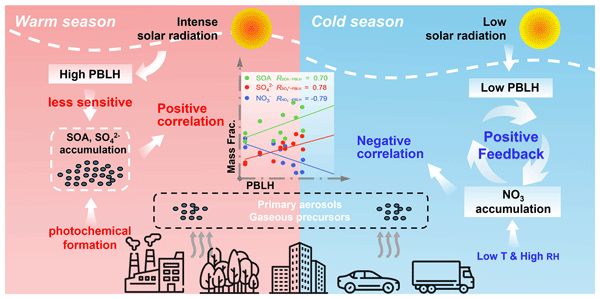
We conducted a year-long study in Nanjing to explore how the height of the atmospheric boundary layer affects fine particle pollution. We found that low boundary layers in winter trap pollutants like nitrate and primary particles, while higher layers in summer help form secondary pollutants like sulfate and organic aerosols. These findings show that boundary layer dynamics are key to understanding and managing seasonal air pollution.
Junhui Zhang, Yuying Wang, Jialu Xu, Xiaofan Zuo, Chunsong Lu, Bin Zhu, Yuanjian Yang, Xing Yan, and Yele Sun
Atmos. Chem. Phys., 25, 17413–17428, https://doi.org/10.5194/acp-25-17413-2025, https://doi.org/10.5194/acp-25-17413-2025, 2025
Short summary
Short summary
We conducted a year-long study in Nanjing to understand how tiny airborne particles take up water, which affects air quality and climate. We found that particle water uptake varies by season and size, with lower values in summer due to more organic materials. Local pollution mainly influences smaller particles, while larger ones are shaped by air mass transport. These findings help improve climate models and support better air pollution control in fast-growing cities.
Tao Shi, Yuanjian Yang, Ping Qi, and Simone Lolli
Atmos. Chem. Phys., 25, 17069–17090, https://doi.org/10.5194/acp-25-17069-2025, https://doi.org/10.5194/acp-25-17069-2025, 2025
Short summary
Short summary
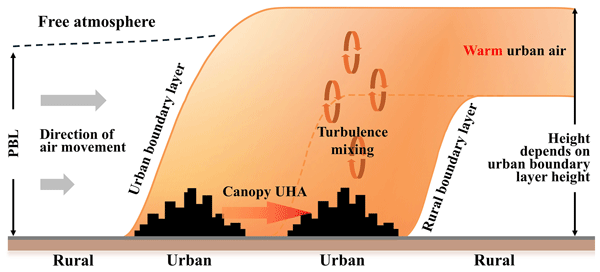
Using Beijing’s Fifth Ring Road, the team combined data and models. Heatwave results: canopy heat island was 91.3 % stronger day/52.7 % night. Day heat relied on building coverage, night on sky visibility. Tall buildings block sun by day, trap heat at night. Night ventilation cools, day winds spread heat. Urban design must consider day-night cycles to fight extreme heat, guiding risk reduction.
Wanju Li, Lifang Sheng, Xueyan Bi, Zehao Huang, Yali Luo, Shiqi Xiao, Chao Liu, Yang Yang, Jiandong Wang, Yuanjian Yang, and Simone Lolli
EGUsphere, https://doi.org/10.5194/egusphere-2025-2955, https://doi.org/10.5194/egusphere-2025-2955, 2025
Short summary
Short summary
This study investigated the precursor factors of Warm-Sector Heavy Rainfall (WSHR) events in South China, which existed challenges in nowcasting and hazard warning. Four dynamical and thermodynamical indices were explored and tracked as precursor signals of WSHR, showing anomalous values in precursor signals are detected 1–4 hours preceding WSHR onset with regional heterogeneity. This research provides fundamental insights to enhance nowcasting and hazard warning for WSHR in South China.
Yunhua Chang, Tianhao Ding, Haifeng Yu, Yuanjian Yang, Liang Zhu, Xiaozheng Liu, and Wen Tan
EGUsphere, https://doi.org/10.5194/egusphere-2025-4515, https://doi.org/10.5194/egusphere-2025-4515, 2025
Short summary
Short summary
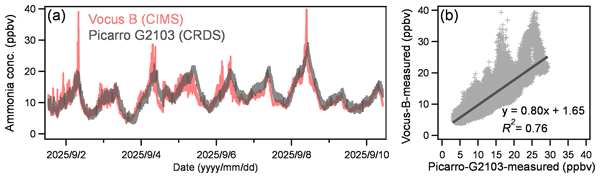
We validate a novel chemical ionization mass spectrometer for simultaneous measurements of volatile organic and inorganic compounds. A field comparison with a Cavity Ring-Down Spectroscopy analyzer for NH3 validated its accuracy and superior time resolution for capturing transient pollution peaks. Versatility is demonstrated across three key applications: stationary urban monitoring, mobile source mapping, and industrial process control.
Tao Shi, Yuanjian Yang, Gaopeng Lu, Zuofang Zheng, Yucheng Zi, Ye Tian, Lei Liu, and Simone Lolli
Atmos. Chem. Phys., 25, 9219–9234, https://doi.org/10.5194/acp-25-9219-2025, https://doi.org/10.5194/acp-25-9219-2025, 2025
Short summary
Short summary
The city significantly influences thunderstorm and lightning activity, yet the potential mechanisms remain largely unexplored. Our study has revealed that both city size and building density play pivotal roles in modulating thunderstorm and lightning activity. This research not only deepens our understanding of urban meteorology but also lays an important foundation for developing accurate and targeted urban thunderstorm risk prediction models.
Tao Shi, Yuanjian Yang, Lian Zong, Min Guo, Ping Qi, and Simone Lolli
Atmos. Chem. Phys., 25, 4989–5007, https://doi.org/10.5194/acp-25-4989-2025, https://doi.org/10.5194/acp-25-4989-2025, 2025
Short summary
Short summary
Our study explored the daily temperature patterns in urban areas of the Yangtze River Delta, focusing on how weather and human activities impact these patterns. We found that temperatures were higher at night, and weather patterns had a bigger impact during the day, while human activities mattered more at night. This helps us understand and address urban overheating.
Fengjiao Chen, Yuanjian Yang, Lu Yu, Yang Li, Weiguang Liu, Yan Liu, and Simone Lolli
Atmos. Chem. Phys., 25, 1587–1601, https://doi.org/10.5194/acp-25-1587-2025, https://doi.org/10.5194/acp-25-1587-2025, 2025
Short summary
Short summary
The microphysical mechanisms of precipitation responsible for the varied impacts of aerosol particles on shallow precipitation remain unclear. This study reveals that coarse aerosol particles invigorate shallow rainfall through enhanced coalescence processes, whereas fine aerosol particles suppress shallow rainfall through intensified microphysical breaks. These impacts are independent of thermodynamic environments but are more significant in low-humidity conditions.
Tao Shi, Yuanjian Yang, Ping Qi, and Simone Lolli
Atmos. Chem. Phys., 24, 12807–12822, https://doi.org/10.5194/acp-24-12807-2024, https://doi.org/10.5194/acp-24-12807-2024, 2024
Short summary
Short summary
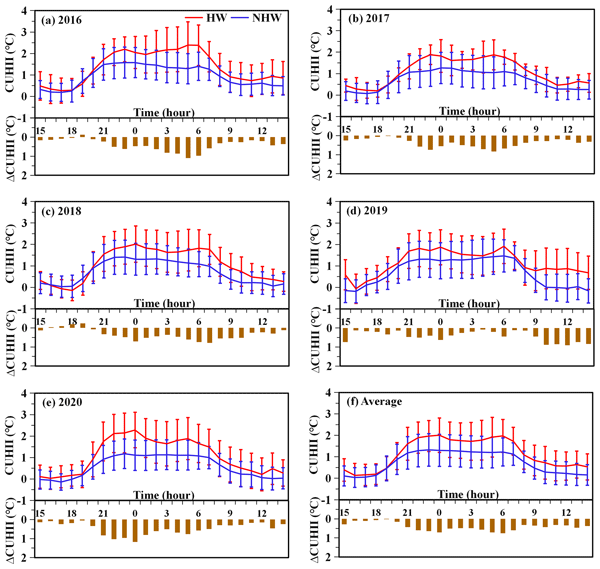
This paper explored the formation mechanisms of the amplified canopy urban heat island intensity (ΔCUHII) during heat wave (HW) periods in the megacity of Beijing from the perspectives of mountain–valley breeze and urban morphology. During the mountain breeze phase, high-rise buildings with lower sky view factors (SVFs) had a pronounced effect on the ΔCUHII. During the valley breeze phase, high-rise buildings exerted a dual influence on the ΔCUHII.
Chaman Gul, Shichang Kang, Yuanjian Yang, Xinlei Ge, and Dong Guo
EGUsphere, https://doi.org/10.5194/egusphere-2024-1144, https://doi.org/10.5194/egusphere-2024-1144, 2024
Preprint archived
Short summary
Short summary
Long-term variations in upper atmospheric temperature and water vapor in the selected domains of time and space are presented. The temperature during the past two decades showed a cooling trend and water vapor showed an increasing trend and had an inverse relation with temperature in selected domains of space and time. Seasonal temperature variations are distinct, with a summer minimum and a winter maximum. Our results can be an early warning indication for future climate change.
Yuan Wang, Qiangqiang Yuan, Tongwen Li, Yuanjian Yang, Siqin Zhou, and Liangpei Zhang
Earth Syst. Sci. Data, 15, 3597–3622, https://doi.org/10.5194/essd-15-3597-2023, https://doi.org/10.5194/essd-15-3597-2023, 2023
Short summary
Short summary
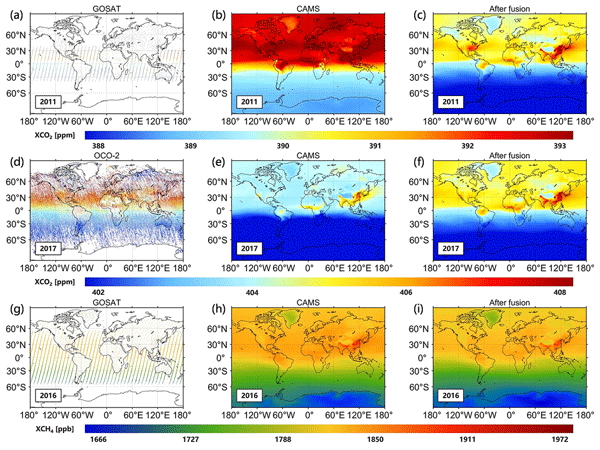
We propose a novel spatiotemporally self-supervised fusion method to establish long-term daily seamless global XCO2 and XCH4 products. Results show that the proposed method achieves a satisfactory accuracy that distinctly exceeds that of CAMS-EGG4 and is superior or close to those of GOSAT and OCO-2. In particular, our fusion method can effectively correct the large biases in CAMS-EGG4 due to the issues from assimilation data, such as the unadjusted anthropogenic emission for COVID-19.
Yilin Chen, Yuanjian Yang, and Meng Gao
Atmos. Meas. Tech., 16, 1279–1294, https://doi.org/10.5194/amt-16-1279-2023, https://doi.org/10.5194/amt-16-1279-2023, 2023
Short summary
Short summary
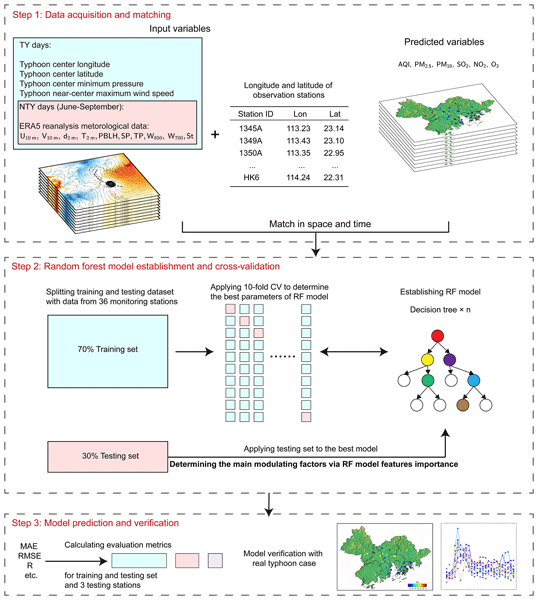
The Guangdong–Hong Kong–Macao Greater Bay Area suffers from summertime air pollution events related to typhoons. The present study leverages machine learning to predict typhoon-associated air quality over the area. The model evaluation shows that the model performs excellently. Moreover, the change in meteorological drivers of air quality on typhoon days and non-typhoon days suggests that air pollution control strategies should have different focuses on typhoon days and non-typhoon days.
Hui Zhang, Ming Luo, Yongquan Zhao, Lijie Lin, Erjia Ge, Yuanjian Yang, Guicai Ning, Jing Cong, Zhaoliang Zeng, Ke Gui, Jing Li, Ting On Chan, Xiang Li, Sijia Wu, Peng Wang, and Xiaoyu Wang
Earth Syst. Sci. Data, 15, 359–381, https://doi.org/10.5194/essd-15-359-2023, https://doi.org/10.5194/essd-15-359-2023, 2023
Short summary
Short summary
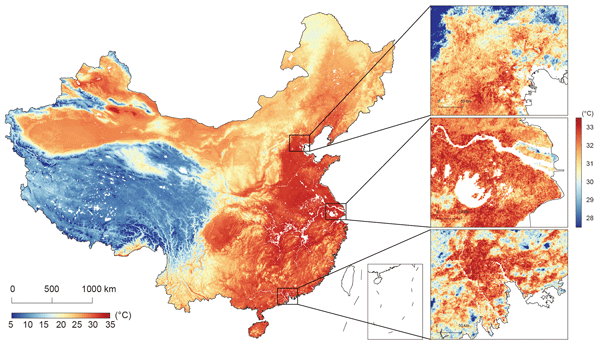
We generate the first monthly high-resolution (1 km) human thermal index collection (HiTIC-Monthly) in China over 2003–2020, in which 12 human-perceived temperature indices are generated by LightGBM. The HiTIC-Monthly dataset has a high accuracy (R2 = 0.996, RMSE = 0.693 °C, MAE = 0.512 °C) and describes explicit spatial variations for fine-scale studies. It is freely available at https://zenodo.org/record/6895533 and https://data.tpdc.ac.cn/disallow/036e67b7-7a3a-4229-956f-40b8cd11871d.
Fan Wang, Gregory R. Carmichael, Jing Wang, Bin Chen, Bo Huang, Yuguo Li, Yuanjian Yang, and Meng Gao
Atmos. Chem. Phys., 22, 13341–13353, https://doi.org/10.5194/acp-22-13341-2022, https://doi.org/10.5194/acp-22-13341-2022, 2022
Short summary
Short summary
Unprecedented urbanization in China has led to serious urban heat island (UHI) issues, exerting intense heat stress on urban residents. We find diverse influences of aerosol pollution on urban heat island intensity (UHII) under different circulations. Our results also highlight the role of black carbon in aggravating UHI, especially during nighttime. It could thus be targeted for cooperative management of heat islands and aerosol pollution.
Zexia Duan, Zhiqiu Gao, Qing Xu, Shaohui Zhou, Kai Qin, and Yuanjian Yang
Earth Syst. Sci. Data, 14, 4153–4169, https://doi.org/10.5194/essd-14-4153-2022, https://doi.org/10.5194/essd-14-4153-2022, 2022
Short summary
Short summary
Land–atmosphere interactions over the Yangtze River Delta (YRD) in China are becoming more varied and complex, as the area is experiencing rapid land use changes. In this paper, we describe a dataset of microclimate and eddy covariance variables at four sites in the YRD. This dataset has potential use cases in multiple research fields, such as boundary layer parametrization schemes, evaluation of remote sensing algorithms, and development of climate models in typical East Asian monsoon regions.
Lian Zong, Yuanjian Yang, Haiyun Xia, Meng Gao, Zhaobin Sun, Zuofang Zheng, Xianxiang Li, Guicai Ning, Yubin Li, and Simone Lolli
Atmos. Chem. Phys., 22, 6523–6538, https://doi.org/10.5194/acp-22-6523-2022, https://doi.org/10.5194/acp-22-6523-2022, 2022
Short summary
Short summary
Heatwaves (HWs) paired with higher ozone (O3) concentration at surface level pose a serious threat to human health. Taking Beijing as an example, three unfavorable synoptic weather patterns were identified to dominate the compound HW and O3 pollution events. Under the synergistic stress of HWs and O3 pollution, public mortality risk increased, and synoptic patterns and urbanization enhanced the compound risk of events in Beijing by 33.09 % and 18.95 %, respectively.
Shaohui Zhou, Yuanjian Yang, Zhiqiu Gao, Xingya Xi, Zexia Duan, and Yubin Li
Atmos. Meas. Tech., 15, 757–773, https://doi.org/10.5194/amt-15-757-2022, https://doi.org/10.5194/amt-15-757-2022, 2022
Short summary
Short summary
Our research has determined the possible relationship between Weibull natural wind mesoscale parameter c and shape factor k with height under the conditions of a desert steppe terrain in northern China, which has great potential in wind power generation. We have gained an enhanced understanding of the seasonal changes in the surface roughness of the desert grassland and the changes in the incoming wind direction.
Shihan Chen, Yuanjian Yang, Fei Deng, Yanhao Zhang, Duanyang Liu, Chao Liu, and Zhiqiu Gao
Atmos. Meas. Tech., 15, 735–756, https://doi.org/10.5194/amt-15-735-2022, https://doi.org/10.5194/amt-15-735-2022, 2022
Short summary
Short summary
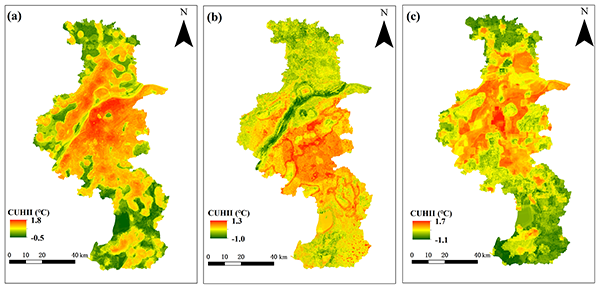
This paper proposes a method for evaluating canopy UHI intensity (CUHII) at high resolution by using remote sensing data and machine learning with a random forest (RF) model. The spatial distribution of CUHII was evaluated at 30 m resolution based on the output of the RF model. The present RF model framework for real-time monitoring and assessment of high-resolution CUHII provides scientific support for studying the changes and causes of CUHII.
Xinyan Li, Yuanjian Yang, Jiaqin Mi, Xueyan Bi, You Zhao, Zehao Huang, Chao Liu, Lian Zong, and Wanju Li
Atmos. Meas. Tech., 14, 7007–7023, https://doi.org/10.5194/amt-14-7007-2021, https://doi.org/10.5194/amt-14-7007-2021, 2021
Short summary
Short summary
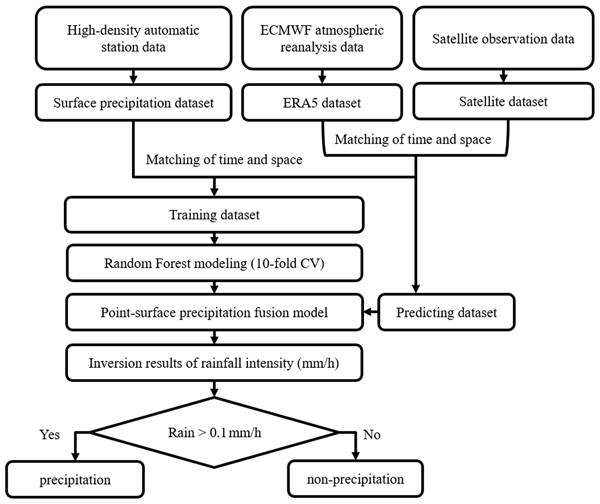
A random forest (RF) model framework for Fengyun-4A (FY-4A) daytime and nighttime quantitative precipitation estimation (QPE) is established using FY-4A multi-band spectral information, cloud parameters, high-density precipitation observations and physical quantities from reanalysis data. The RF model of FY-4A QPE has a high accuracy in estimating precipitation at the heavy-rain level or below, which has advantages for quantitative estimation of summer precipitation over East Asia in future.
Lian Zong, Yuanjian Yang, Meng Gao, Hong Wang, Peng Wang, Hongliang Zhang, Linlin Wang, Guicai Ning, Chao Liu, Yubin Li, and Zhiqiu Gao
Atmos. Chem. Phys., 21, 9105–9124, https://doi.org/10.5194/acp-21-9105-2021, https://doi.org/10.5194/acp-21-9105-2021, 2021
Short summary
Short summary
In recent years, summer O3 pollution over eastern China has become more serious, and it is even the case that surface O3 and PM2.5 pollution can co-occur. However, the synoptic weather pattern (SWP) related to this compound pollution remains unclear. Regional PM2.5 and O3 compound pollution is characterized by various SWPs with different dominant factors. Our findings provide insights into the regional co-occurring high PM2.5 and O3 levels via the effects of certain meteorological factors.
Bo Zheng, Jason Blake Cohen, Lingxiao Lu, Wei Hu, Pravash Tiwari, Simone Lolli, Andrea Garzelli, Hui Su, and Kai Qin
Atmos. Chem. Phys., 26, 1931–1946, https://doi.org/10.5194/acp-26-1931-2026, https://doi.org/10.5194/acp-26-1931-2026, 2026
Short summary
Short summary
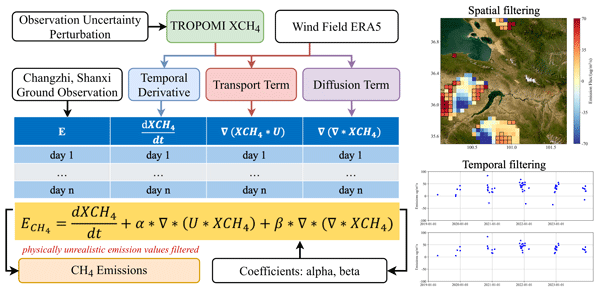
This study provides TROPOMI (TROPOspheric Monitoring Instrument) with a new methane emission estimation method that can accurately identify emission sources. Our results generate non-negative emission datasets using objective selection and filtering methods. The results include lower minimum emission thresholds for all power grids and fewer false positives. The new method provides more robust emission quantification in the face of data uncertainty, going beyond traditional plume identification and background subtraction.
Simone Lolli, Erica K. Dolinar, Jasper R. Lewis, Andreu Salcedo-Bosch, James R. Campbell, and Ellsworth J. Welton
Atmos. Chem. Phys., 26, 411–426, https://doi.org/10.5194/acp-26-411-2026, https://doi.org/10.5194/acp-26-411-2026, 2026
Short summary
Short summary
Over the past twenty years, continuous lidar observations at NASA's Goddard Space Flight Center have assessed the radiative impact of cirrus clouds on the Earth–atmosphere system. Findings show these clouds increasingly trap heat as surface reflectivity drops with less snow and ice, contributing to local warming. Continued cirrus monitoring is crucial to refine climate forecasts and support effective climate action.
Jialu Xu, Yingjie Zhang, Yuying Wang, Xing Yan, Bin Zhu, Chunsong Lu, Yuanjian Yang, Yele Sun, Junhui Zhang, Xiaofan Zuo, Zhanghanshu Han, and Rui Zhang
Atmos. Chem. Phys., 25, 18599–18616, https://doi.org/10.5194/acp-25-18599-2025, https://doi.org/10.5194/acp-25-18599-2025, 2025
Short summary
Short summary
We conducted a year-long study in Nanjing to explore how the height of the atmospheric boundary layer affects fine particle pollution. We found that low boundary layers in winter trap pollutants like nitrate and primary particles, while higher layers in summer help form secondary pollutants like sulfate and organic aerosols. These findings show that boundary layer dynamics are key to understanding and managing seasonal air pollution.
Junhui Zhang, Yuying Wang, Jialu Xu, Xiaofan Zuo, Chunsong Lu, Bin Zhu, Yuanjian Yang, Xing Yan, and Yele Sun
Atmos. Chem. Phys., 25, 17413–17428, https://doi.org/10.5194/acp-25-17413-2025, https://doi.org/10.5194/acp-25-17413-2025, 2025
Short summary
Short summary
We conducted a year-long study in Nanjing to understand how tiny airborne particles take up water, which affects air quality and climate. We found that particle water uptake varies by season and size, with lower values in summer due to more organic materials. Local pollution mainly influences smaller particles, while larger ones are shaped by air mass transport. These findings help improve climate models and support better air pollution control in fast-growing cities.
Tao Shi, Yuanjian Yang, Ping Qi, and Simone Lolli
Atmos. Chem. Phys., 25, 17069–17090, https://doi.org/10.5194/acp-25-17069-2025, https://doi.org/10.5194/acp-25-17069-2025, 2025
Short summary
Short summary
Using Beijing’s Fifth Ring Road, the team combined data and models. Heatwave results: canopy heat island was 91.3 % stronger day/52.7 % night. Day heat relied on building coverage, night on sky visibility. Tall buildings block sun by day, trap heat at night. Night ventilation cools, day winds spread heat. Urban design must consider day-night cycles to fight extreme heat, guiding risk reduction.
Wanju Li, Lifang Sheng, Xueyan Bi, Zehao Huang, Yali Luo, Shiqi Xiao, Chao Liu, Yang Yang, Jiandong Wang, Yuanjian Yang, and Simone Lolli
EGUsphere, https://doi.org/10.5194/egusphere-2025-2955, https://doi.org/10.5194/egusphere-2025-2955, 2025
Short summary
Short summary
This study investigated the precursor factors of Warm-Sector Heavy Rainfall (WSHR) events in South China, which existed challenges in nowcasting and hazard warning. Four dynamical and thermodynamical indices were explored and tracked as precursor signals of WSHR, showing anomalous values in precursor signals are detected 1–4 hours preceding WSHR onset with regional heterogeneity. This research provides fundamental insights to enhance nowcasting and hazard warning for WSHR in South China.
Zhiheng Liao, Jinqiang Zhang, Meng Gao, and Zhiqiang Ma
Atmos. Chem. Phys., 25, 14865–14877, https://doi.org/10.5194/acp-25-14865-2025, https://doi.org/10.5194/acp-25-14865-2025, 2025
Short summary
Short summary
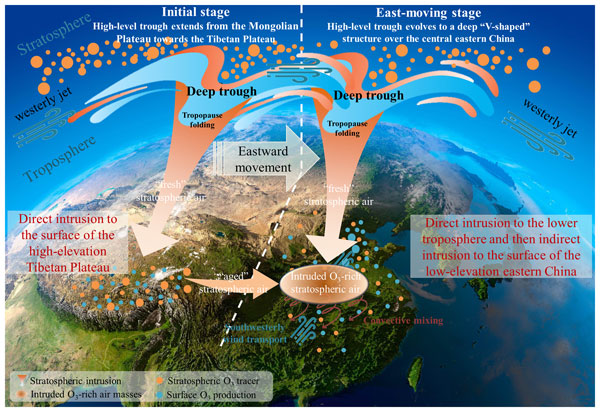
We present evidence for widespread stratospheric intrusion influence on surface ozone pollution from western plateaus to eastern plains over China in a deep trough event based on multi-site ozonesondes and validated ozone reanalysis. The findings refine the fundamental understanding of stratospheric ozone intrusion and its contribution to surface ozone pollution in China.
Yunhua Chang, Tianhao Ding, Haifeng Yu, Yuanjian Yang, Liang Zhu, Xiaozheng Liu, and Wen Tan
EGUsphere, https://doi.org/10.5194/egusphere-2025-4515, https://doi.org/10.5194/egusphere-2025-4515, 2025
Short summary
Short summary
We validate a novel chemical ionization mass spectrometer for simultaneous measurements of volatile organic and inorganic compounds. A field comparison with a Cavity Ring-Down Spectroscopy analyzer for NH3 validated its accuracy and superior time resolution for capturing transient pollution peaks. Versatility is demonstrated across three key applications: stationary urban monitoring, mobile source mapping, and industrial process control.
Tao Shi, Yuanjian Yang, Gaopeng Lu, Zuofang Zheng, Yucheng Zi, Ye Tian, Lei Liu, and Simone Lolli
Atmos. Chem. Phys., 25, 9219–9234, https://doi.org/10.5194/acp-25-9219-2025, https://doi.org/10.5194/acp-25-9219-2025, 2025
Short summary
Short summary
The city significantly influences thunderstorm and lightning activity, yet the potential mechanisms remain largely unexplored. Our study has revealed that both city size and building density play pivotal roles in modulating thunderstorm and lightning activity. This research not only deepens our understanding of urban meteorology but also lays an important foundation for developing accurate and targeted urban thunderstorm risk prediction models.
Tenglong Shi, Jiayao Wang, Daizhou Zhang, Jiecan Cui, Zihang Wang, Yue Zhou, Wei Pu, Yang Bai, Zhigang Han, Meng Liu, Yanbiao Liu, Hongbin Xie, Minghui Yang, Ying Li, Meng Gao, and Xin Wang
The Cryosphere, 19, 2821–2835, https://doi.org/10.5194/tc-19-2821-2025, https://doi.org/10.5194/tc-19-2821-2025, 2025
Short summary
Short summary
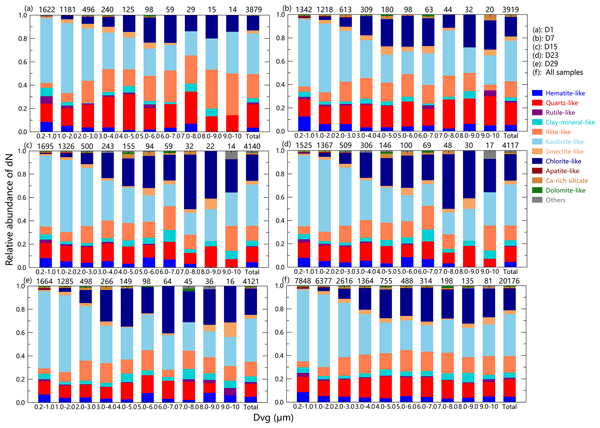
This study examines the properties of dust in snow in Changchun, China, using advanced technology to analyze its size, shape, and light absorption. We found that dust composition affects how much heat is absorbed by snow, with certain minerals, such as hematite, making snowmelt faster. Our research highlights the importance of creating clear standards for classifying dust, which could improve climate models and field observations. This work helps better understand dust's role in climate change.
Xiao Lu, Yiming Liu, Jiayin Su, Xiang Weng, Tabish Ansari, Yuqiang Zhang, Guowen He, Yuqi Zhu, Haolin Wang, Ganquan Zeng, Jingyu Li, Cheng He, Shuai Li, Teerachai Amnuaylojaroen, Tim Butler, Qi Fan, Shaojia Fan, Grant L. Forster, Meng Gao, Jianlin Hu, Yugo Kanaya, Mohd Talib Latif, Keding Lu, Philippe Nédélec, Peer Nowack, Bastien Sauvage, Xiaobin Xu, Lin Zhang, Ke Li, Ja-Ho Koo, and Tatsuya Nagashima
Atmos. Chem. Phys., 25, 7991–8028, https://doi.org/10.5194/acp-25-7991-2025, https://doi.org/10.5194/acp-25-7991-2025, 2025
Short summary
Short summary
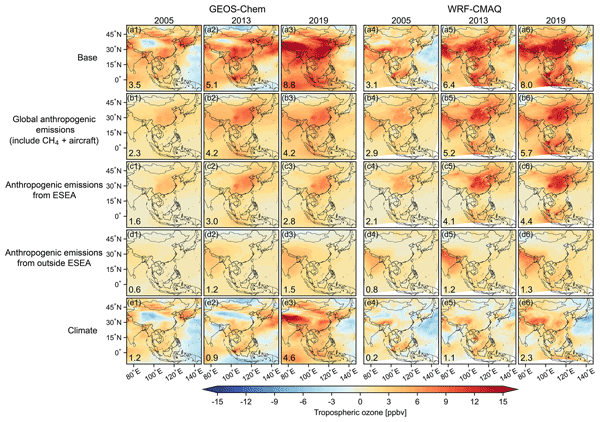
This study analyzes summertime ozone trends in East and Southeast Asia derived from a comprehensive observational database spanning from 1995 to 2019, incorporating aircraft observations, ozonesonde data, and measurements from 2500 surface sites. Multiple models are applied to attribute to changes in anthropogenic emissions and climate. The results highlight that increases in anthropogenic emissions are the primary driver of ozone increases both in the free troposphere and at the surface.
Yujie Liu, Yuncheng He, Pakwai Chan, Aiming Liu, and Qijun Gao
Nat. Hazards Earth Syst. Sci., 25, 2255–2269, https://doi.org/10.5194/nhess-25-2255-2025, https://doi.org/10.5194/nhess-25-2255-2025, 2025
Short summary
Short summary
Offshore wind turbines are sensitive to tropical cyclones (TCs). Wind data from super typhoons Mangkhut and Saola, impacting south China, are vital for design and operation. Despite Saola's higher intensity, it caused less damage. Both had concentric eyewall structures, but Saola completed an eyewall replacement before landfall, becoming more compact. Mangkhut decayed but affected a wider area. Their wind characteristics provide insights for turbine maintenance and operation.
Tao Shi, Yuanjian Yang, Lian Zong, Min Guo, Ping Qi, and Simone Lolli
Atmos. Chem. Phys., 25, 4989–5007, https://doi.org/10.5194/acp-25-4989-2025, https://doi.org/10.5194/acp-25-4989-2025, 2025
Short summary
Short summary
Our study explored the daily temperature patterns in urban areas of the Yangtze River Delta, focusing on how weather and human activities impact these patterns. We found that temperatures were higher at night, and weather patterns had a bigger impact during the day, while human activities mattered more at night. This helps us understand and address urban overheating.
Tianwen Wei, Mengya Wang, Kenan Wu, Jinlong Yuan, Haiyun Xia, and Simone Lolli
Atmos. Meas. Tech., 18, 1841–1857, https://doi.org/10.5194/amt-18-1841-2025, https://doi.org/10.5194/amt-18-1841-2025, 2025
Short summary
Short summary
This study analyzes three years of wind lidar measurements to explore the dynamics of the urban planetary boundary layer in Hefei, China. Results reveal that nocturnal low-level jets are most frequent in spring and intensify in summer, significantly enhancing turbulence and shear near the surface, particularly at night. Additionally, cloud cover raises the mixing layer height by approximately 100 m at night due to the greenhouse effect but reduces it by up to 200 m in the afternoon.
Fengjiao Chen, Yuanjian Yang, Lu Yu, Yang Li, Weiguang Liu, Yan Liu, and Simone Lolli
Atmos. Chem. Phys., 25, 1587–1601, https://doi.org/10.5194/acp-25-1587-2025, https://doi.org/10.5194/acp-25-1587-2025, 2025
Short summary
Short summary
The microphysical mechanisms of precipitation responsible for the varied impacts of aerosol particles on shallow precipitation remain unclear. This study reveals that coarse aerosol particles invigorate shallow rainfall through enhanced coalescence processes, whereas fine aerosol particles suppress shallow rainfall through intensified microphysical breaks. These impacts are independent of thermodynamic environments but are more significant in low-humidity conditions.
Tao Shi, Yuanjian Yang, Ping Qi, and Simone Lolli
Atmos. Chem. Phys., 24, 12807–12822, https://doi.org/10.5194/acp-24-12807-2024, https://doi.org/10.5194/acp-24-12807-2024, 2024
Short summary
Short summary
This paper explored the formation mechanisms of the amplified canopy urban heat island intensity (ΔCUHII) during heat wave (HW) periods in the megacity of Beijing from the perspectives of mountain–valley breeze and urban morphology. During the mountain breeze phase, high-rise buildings with lower sky view factors (SVFs) had a pronounced effect on the ΔCUHII. During the valley breeze phase, high-rise buildings exerted a dual influence on the ΔCUHII.
Cuini Qi, Pinya Wang, Yang Yang, Huimin Li, Hui Zhang, Lili Ren, Xipeng Jin, Chenchao Zhan, Jianping Tang, and Hong Liao
Atmos. Chem. Phys., 24, 11775–11789, https://doi.org/10.5194/acp-24-11775-2024, https://doi.org/10.5194/acp-24-11775-2024, 2024
Short summary
Short summary
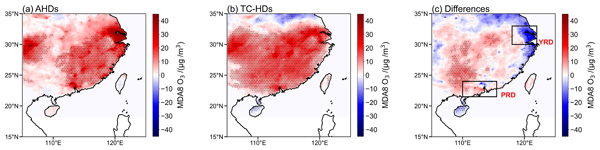
We investigate extremely hot weather impacts on surface ozone over the southeastern coast of China with and without tropical cyclones. Compared to hot days alone, ozone concentration decreased notably in the Yangtze River Delta (YRD) but increased in the Pearl River Delta (PRD) during tropical cyclones and hot days. The YRD benefited from strong and clean sea winds aiding ozone elimination. In contrast, the PRD experienced strong northeasterly winds that potentially transport ozone pollution.
Chaman Gul, Shichang Kang, Yuanjian Yang, Xinlei Ge, and Dong Guo
EGUsphere, https://doi.org/10.5194/egusphere-2024-1144, https://doi.org/10.5194/egusphere-2024-1144, 2024
Preprint archived
Short summary
Short summary
Long-term variations in upper atmospheric temperature and water vapor in the selected domains of time and space are presented. The temperature during the past two decades showed a cooling trend and water vapor showed an increasing trend and had an inverse relation with temperature in selected domains of space and time. Seasonal temperature variations are distinct, with a summer minimum and a winter maximum. Our results can be an early warning indication for future climate change.
Zhiheng Liao, Meng Gao, Jinqiang Zhang, Jiaren Sun, Jiannong Quan, Xingcan Jia, Yubing Pan, and Shaojia Fan
Atmos. Chem. Phys., 24, 3541–3557, https://doi.org/10.5194/acp-24-3541-2024, https://doi.org/10.5194/acp-24-3541-2024, 2024
Short summary
Short summary
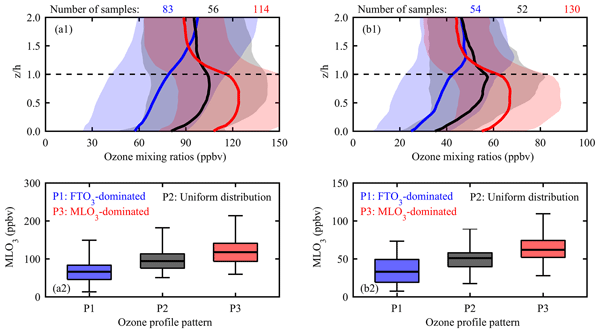
This study collected 1897 ozonesondes from two Chinese megacities (Beijing and Hong Kong) in 2000–2022 to investigate the climatological vertical heterogeneity of lower-tropospheric ozone distribution with a mixing-layer-height-referenced (h-referenced) vertical coordinate system. This vertical coordinate system highlighted O3 stratification features existing at the mixing layer–free troposphere interface and provided a better understanding of O3 pollution in urban regions.
Cristina Gil-Díaz, Michäel Sicard, Adolfo Comerón, Daniel Camilo Fortunato dos Santos Oliveira, Constantino Muñoz-Porcar, Alejandro Rodríguez-Gómez, Jasper R. Lewis, Ellsworth J. Welton, and Simone Lolli
Atmos. Meas. Tech., 17, 1197–1216, https://doi.org/10.5194/amt-17-1197-2024, https://doi.org/10.5194/amt-17-1197-2024, 2024
Short summary
Short summary
In this paper, a statistical study of cirrus geometrical and optical properties based on 4 years of continuous ground-based lidar measurements with the Barcelona (Spain) Micro Pulse Lidar (MPL) is analysed. The cloud optical depth, effective column lidar ratio and linear cloud depolarisation ratio have been calculated by a new approach to the two-way transmittance method, which is valid for both ground-based and spaceborne lidar systems. Their associated errors are also provided.
Simone Lolli, Michaël Sicard, Francesco Amato, Adolfo Comeron, Cristina Gíl-Diaz, Tony C. Landi, Constantino Munoz-Porcar, Daniel Oliveira, Federico Dios Otin, Francesc Rocadenbosch, Alejandro Rodriguez-Gomez, Andrés Alastuey, Xavier Querol, and Cristina Reche
Atmos. Chem. Phys., 23, 12887–12906, https://doi.org/10.5194/acp-23-12887-2023, https://doi.org/10.5194/acp-23-12887-2023, 2023
Short summary
Short summary
We evaluated the long-term trends and seasonal variability of the vertically resolved aerosol properties over the past 17 years in Barcelona. Results shows that air quality is improved, with a consistent drop in PM concentrations at the surface, as well as the column aerosol optical depth. The results also show that natural dust outbreaks are more likely in summer, with aerosols reaching an altitude of 5 km, while in winter, aerosols decay as an exponential with a scale height of 600 m.
Arianna Cauteruccio, Mattia Stagnaro, Luca G. Lanza, and Pak-Wai Chan
Atmos. Meas. Tech., 16, 4155–4163, https://doi.org/10.5194/amt-16-4155-2023, https://doi.org/10.5194/amt-16-4155-2023, 2023
Short summary
Short summary
Adjustments for the wind-induced bias of traditional rainfall gauges are applied to data from the Hong Kong Observatory using numerical simulation results. An optical disdrometer allows us to infer the collection efficiency of the rainfall gauge. Due to the local climatology, adjustments are limited but result in a significant amount of available freshwater resources that would be missing from the calculated hydrological budget of the region should the adjustments be neglected.
Yuan Wang, Qiangqiang Yuan, Tongwen Li, Yuanjian Yang, Siqin Zhou, and Liangpei Zhang
Earth Syst. Sci. Data, 15, 3597–3622, https://doi.org/10.5194/essd-15-3597-2023, https://doi.org/10.5194/essd-15-3597-2023, 2023
Short summary
Short summary
We propose a novel spatiotemporally self-supervised fusion method to establish long-term daily seamless global XCO2 and XCH4 products. Results show that the proposed method achieves a satisfactory accuracy that distinctly exceeds that of CAMS-EGG4 and is superior or close to those of GOSAT and OCO-2. In particular, our fusion method can effectively correct the large biases in CAMS-EGG4 due to the issues from assimilation data, such as the unadjusted anthropogenic emission for COVID-19.
Zhenxin Liu, Yuanhao Chen, Yuhang Wang, Cheng Liu, Shuhua Liu, and Hong Liao
Geosci. Model Dev., 16, 4385–4403, https://doi.org/10.5194/gmd-16-4385-2023, https://doi.org/10.5194/gmd-16-4385-2023, 2023
Short summary
Short summary
The heterogeneous layout of urban buildings leads to the complex wind field in and over the urban canopy. Large discrepancies between the observations and the current simulations result from misunderstanding the character of the wind field. The Inhomogeneous Wind Scheme in Urban Street (IWSUS) was developed to simulate the heterogeneity of the wind speed in a typical street and then improve the simulated energy budget in the lower atmospheric layer over the urban canopy.
Lei Kong, Xiao Tang, Jiang Zhu, Zifa Wang, Yele Sun, Pingqing Fu, Meng Gao, Huangjian Wu, Miaomiao Lu, Qian Wu, Shuyuan Huang, Wenxuan Sui, Jie Li, Xiaole Pan, Lin Wu, Hajime Akimoto, and Gregory R. Carmichael
Atmos. Chem. Phys., 23, 6217–6240, https://doi.org/10.5194/acp-23-6217-2023, https://doi.org/10.5194/acp-23-6217-2023, 2023
Short summary
Short summary
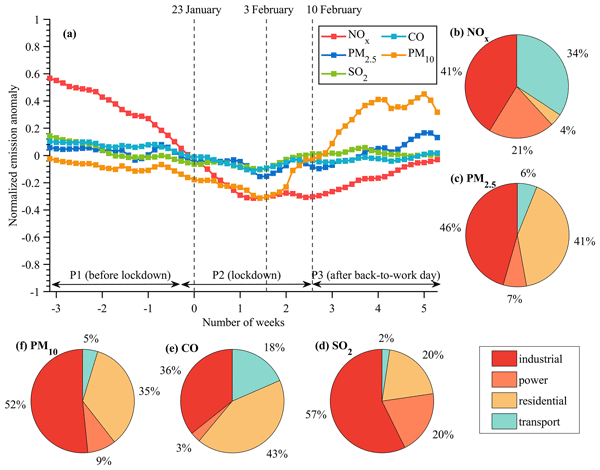
A multi-air-pollutant inversion system has been developed in this study to estimate emission changes in China during COVID-19 lockdown. The results demonstrate that the lockdown is largely a nationwide road traffic control measure with NOx emissions decreasing by ~40 %. Emissions of other species only decreased by ~10 % due to smaller effects of lockdown on other sectors. Assessment results further indicate that the lockdown only had limited effects on the control of PM2.5 and O3 in China.
Wei Li, Shuo Leng, Sunwei Li, Zhenzhong Hu, and Pakwai Chan
EGUsphere, https://doi.org/10.5194/egusphere-2023-482, https://doi.org/10.5194/egusphere-2023-482, 2023
Preprint archived
Short summary
Short summary
A trans-scale simulation framework integrating the open-source WRF and OpenFOAM codes is proposed to numerically simulate the urban wind environment under specific weather conditions.
Yilin Chen, Yuanjian Yang, and Meng Gao
Atmos. Meas. Tech., 16, 1279–1294, https://doi.org/10.5194/amt-16-1279-2023, https://doi.org/10.5194/amt-16-1279-2023, 2023
Short summary
Short summary
The Guangdong–Hong Kong–Macao Greater Bay Area suffers from summertime air pollution events related to typhoons. The present study leverages machine learning to predict typhoon-associated air quality over the area. The model evaluation shows that the model performs excellently. Moreover, the change in meteorological drivers of air quality on typhoon days and non-typhoon days suggests that air pollution control strategies should have different focuses on typhoon days and non-typhoon days.
Peng Wang, Ruhan Zhang, Shida Sun, Meng Gao, Bo Zheng, Dan Zhang, Yanli Zhang, Gregory R. Carmichael, and Hongliang Zhang
Atmos. Chem. Phys., 23, 2983–2996, https://doi.org/10.5194/acp-23-2983-2023, https://doi.org/10.5194/acp-23-2983-2023, 2023
Short summary
Short summary
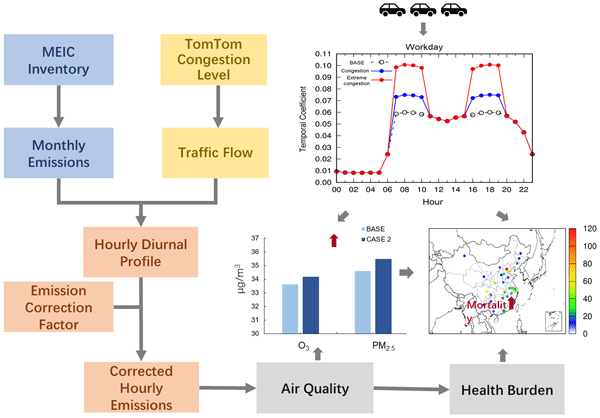
In China, the number of vehicles has jumped significantly in the last decade. This caused severe traffic congestion and aggravated air pollution. In this study, we developed a new temporal allocation approach to quantify the impacts of traffic congestion. We found that traffic congestion worsens air quality and the health burden across China, especially in the urban clusters. More effective and comprehensive vehicle emission control policies should be implemented to improve air quality in China.
Hui Zhang, Ming Luo, Yongquan Zhao, Lijie Lin, Erjia Ge, Yuanjian Yang, Guicai Ning, Jing Cong, Zhaoliang Zeng, Ke Gui, Jing Li, Ting On Chan, Xiang Li, Sijia Wu, Peng Wang, and Xiaoyu Wang
Earth Syst. Sci. Data, 15, 359–381, https://doi.org/10.5194/essd-15-359-2023, https://doi.org/10.5194/essd-15-359-2023, 2023
Short summary
Short summary
We generate the first monthly high-resolution (1 km) human thermal index collection (HiTIC-Monthly) in China over 2003–2020, in which 12 human-perceived temperature indices are generated by LightGBM. The HiTIC-Monthly dataset has a high accuracy (R2 = 0.996, RMSE = 0.693 °C, MAE = 0.512 °C) and describes explicit spatial variations for fine-scale studies. It is freely available at https://zenodo.org/record/6895533 and https://data.tpdc.ac.cn/disallow/036e67b7-7a3a-4229-956f-40b8cd11871d.
Chenchao Zhan, Min Xie, Hua Lu, Bojun Liu, Zheng Wu, Tijian Wang, Bingliang Zhuang, Mengmeng Li, and Shu Li
Atmos. Chem. Phys., 23, 771–788, https://doi.org/10.5194/acp-23-771-2023, https://doi.org/10.5194/acp-23-771-2023, 2023
Short summary
Short summary
With the development of urbanization, urban land use and anthropogenic
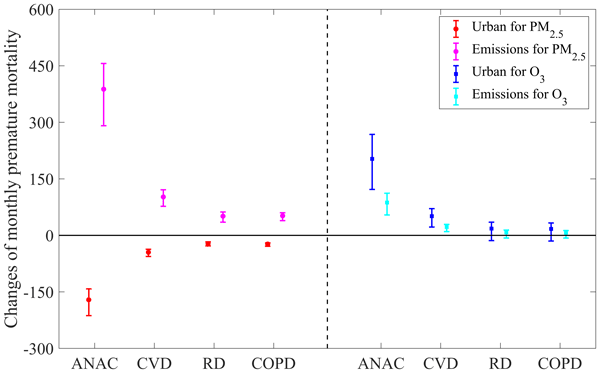
emissions increase, affecting urban air quality and, in turn, the health risks associated with air pollutants. In this study, we systematically evaluate the impacts of urbanization on air quality and the corresponding health risks in a highly urbanized city with severe air pollution and complex terrain. This work focuses on the health risks caused by urbanization and can provide valuable insight for air pollution strategies.
Haolin Wang, Xiao Lu, Daniel J. Jacob, Owen R. Cooper, Kai-Lan Chang, Ke Li, Meng Gao, Yiming Liu, Bosi Sheng, Kai Wu, Tongwen Wu, Jie Zhang, Bastien Sauvage, Philippe Nédélec, Romain Blot, and Shaojia Fan
Atmos. Chem. Phys., 22, 13753–13782, https://doi.org/10.5194/acp-22-13753-2022, https://doi.org/10.5194/acp-22-13753-2022, 2022
Short summary
Short summary
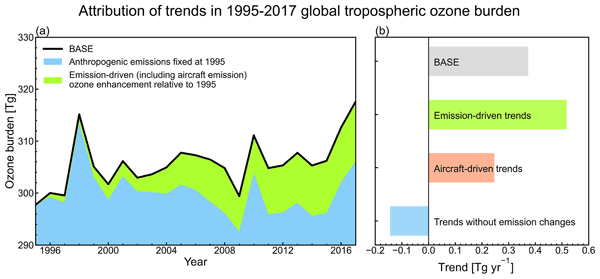
We report significant global tropospheric ozone increases in 1995–2017 based on extensive aircraft and ozonesonde observations. Using GEOS-Chem (Goddard Earth Observing System chemistry model) multi-decadal global simulations, we find that changes in global anthropogenic emissions, in particular the rapid increases in aircraft emissions, contribute significantly to the increases in tropospheric ozone and resulting radiative impact.
Fan Wang, Gregory R. Carmichael, Jing Wang, Bin Chen, Bo Huang, Yuguo Li, Yuanjian Yang, and Meng Gao
Atmos. Chem. Phys., 22, 13341–13353, https://doi.org/10.5194/acp-22-13341-2022, https://doi.org/10.5194/acp-22-13341-2022, 2022
Short summary
Short summary
Unprecedented urbanization in China has led to serious urban heat island (UHI) issues, exerting intense heat stress on urban residents. We find diverse influences of aerosol pollution on urban heat island intensity (UHII) under different circulations. Our results also highlight the role of black carbon in aggravating UHI, especially during nighttime. It could thus be targeted for cooperative management of heat islands and aerosol pollution.
Zexia Duan, Zhiqiu Gao, Qing Xu, Shaohui Zhou, Kai Qin, and Yuanjian Yang
Earth Syst. Sci. Data, 14, 4153–4169, https://doi.org/10.5194/essd-14-4153-2022, https://doi.org/10.5194/essd-14-4153-2022, 2022
Short summary
Short summary
Land–atmosphere interactions over the Yangtze River Delta (YRD) in China are becoming more varied and complex, as the area is experiencing rapid land use changes. In this paper, we describe a dataset of microclimate and eddy covariance variables at four sites in the YRD. This dataset has potential use cases in multiple research fields, such as boundary layer parametrization schemes, evaluation of remote sensing algorithms, and development of climate models in typical East Asian monsoon regions.
Bo Li, Cheng Liu, Qihou Hu, Mingzhai Sun, Chengxin Zhang, Shulin Zhang, Yizhi Zhu, Ting Liu, Yike Guo, Gregory R. Carmichael, and Meng Gao
EGUsphere, https://doi.org/10.5194/egusphere-2022-578, https://doi.org/10.5194/egusphere-2022-578, 2022
Preprint archived
Short summary
Short summary
Ambient particles have an important impact on human health, meteorology and climate change. By building a deep spatiotemporal neural network model we have overcome the long-standing limitations and get the full time and space coverage ground PM2.5 concentrations. We open the neural network black box data model by using sensitivity analysis and visualization techniques. This research will help improve health effects studies, climate effects of aerosols, and air quality prediction.
Chenhong Zhou, Fan Wang, Yike Guo, Cheng Liu, Dongsheng Ji, Yuesi Wang, Xiaobin Xu, Xiao Lu, Yan Wang, Gregory Carmichael, and Meng Gao
Earth Syst. Sci. Data Discuss., https://doi.org/10.5194/essd-2022-187, https://doi.org/10.5194/essd-2022-187, 2022
Manuscript not accepted for further review
Short summary
Short summary
We develop an eXtreme Gradient Boosting (XGBoost) model integrating high-resolution meteorological data, satellite retrievals of trace gases, etc. to provide reconstructed daily ground-level O3 over 2005–2021 in China. It can facilitate climatological, ecological, and health research. The dataset is freely available at Zenodo (https://zenodo.org/record/6507706#.Yo8hKujP13g; Zhou, 2022).
Lian Zong, Yuanjian Yang, Haiyun Xia, Meng Gao, Zhaobin Sun, Zuofang Zheng, Xianxiang Li, Guicai Ning, Yubin Li, and Simone Lolli
Atmos. Chem. Phys., 22, 6523–6538, https://doi.org/10.5194/acp-22-6523-2022, https://doi.org/10.5194/acp-22-6523-2022, 2022
Short summary
Short summary
Heatwaves (HWs) paired with higher ozone (O3) concentration at surface level pose a serious threat to human health. Taking Beijing as an example, three unfavorable synoptic weather patterns were identified to dominate the compound HW and O3 pollution events. Under the synergistic stress of HWs and O3 pollution, public mortality risk increased, and synoptic patterns and urbanization enhanced the compound risk of events in Beijing by 33.09 % and 18.95 %, respectively.
Haoran Zhang, Nan Li, Keqin Tang, Hong Liao, Chong Shi, Cheng Huang, Hongli Wang, Song Guo, Min Hu, Xinlei Ge, Mindong Chen, Zhenxin Liu, Huan Yu, and Jianlin Hu
Atmos. Chem. Phys., 22, 5495–5514, https://doi.org/10.5194/acp-22-5495-2022, https://doi.org/10.5194/acp-22-5495-2022, 2022
Short summary
Short summary
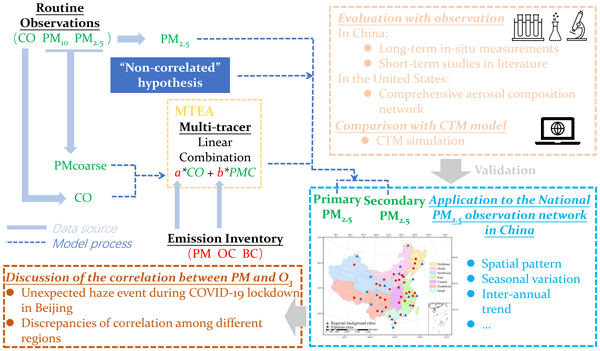
We developed a new algorithm with low economic/technique costs to identify primary and secondary components of PM2.5. Our model was shown to be reliable by comparison with different observation datasets. We systematically explored the patterns and changes in the secondary PM2.5 pollution in China at large spatial and time scales. We believe that this method is a promising tool for efficiently estimating primary and secondary PM2.5, and has huge potential for future PM mitigation.
Biao Tong, Xiangfei Sun, Jiyang Fu, Yuncheng He, and Pakwai Chan
Atmos. Meas. Tech., 15, 1829–1848, https://doi.org/10.5194/amt-15-1829-2022, https://doi.org/10.5194/amt-15-1829-2022, 2022
Short summary
Short summary
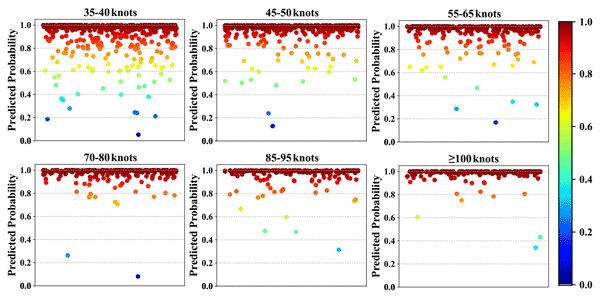
In recent years, there has been numerous research on tropical cyclone (TC) observation based on satellite cloud images (SCIs), but most methods are limited by low efficiency and subjectivity. To overcome subjectivity and improve efficiency of traditional methods, this paper uses deep learning technology to do further research on fingerprint identification of TCs. Results provide an automatic and objective method to distinguish TCs from SCIs and are convenient for subsequent research.
Shaohui Zhou, Yuanjian Yang, Zhiqiu Gao, Xingya Xi, Zexia Duan, and Yubin Li
Atmos. Meas. Tech., 15, 757–773, https://doi.org/10.5194/amt-15-757-2022, https://doi.org/10.5194/amt-15-757-2022, 2022
Short summary
Short summary
Our research has determined the possible relationship between Weibull natural wind mesoscale parameter c and shape factor k with height under the conditions of a desert steppe terrain in northern China, which has great potential in wind power generation. We have gained an enhanced understanding of the seasonal changes in the surface roughness of the desert grassland and the changes in the incoming wind direction.
Shihan Chen, Yuanjian Yang, Fei Deng, Yanhao Zhang, Duanyang Liu, Chao Liu, and Zhiqiu Gao
Atmos. Meas. Tech., 15, 735–756, https://doi.org/10.5194/amt-15-735-2022, https://doi.org/10.5194/amt-15-735-2022, 2022
Short summary
Short summary
This paper proposes a method for evaluating canopy UHI intensity (CUHII) at high resolution by using remote sensing data and machine learning with a random forest (RF) model. The spatial distribution of CUHII was evaluated at 30 m resolution based on the output of the RF model. The present RF model framework for real-time monitoring and assessment of high-resolution CUHII provides scientific support for studying the changes and causes of CUHII.
Chenchao Zhan and Min Xie
Atmos. Chem. Phys., 22, 1351–1371, https://doi.org/10.5194/acp-22-1351-2022, https://doi.org/10.5194/acp-22-1351-2022, 2022
Short summary
Short summary
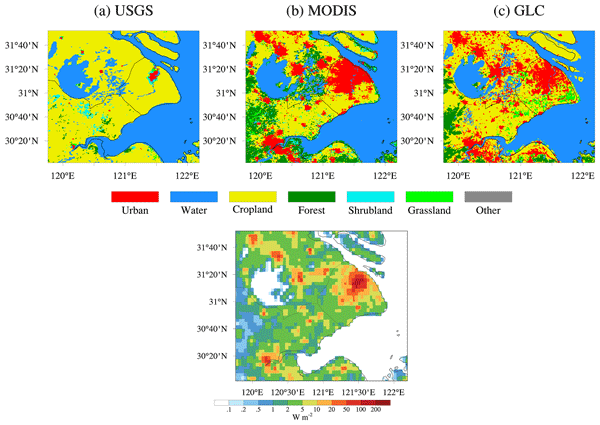
The changes of land use and anthropogenic heat (AH) derived from urbanization can affect meteorology and in turn O3 evolution. In this study, we briefly describe the general features of O3 pollution in the Yangtze River Delta (YRD) based on in situ observational data. Then, the impacts of land use and anthropogenic heat on O3 via changing the meteorological factors and local circulations are investigated in this region using the WRF-Chem model.
Xinyan Li, Yuanjian Yang, Jiaqin Mi, Xueyan Bi, You Zhao, Zehao Huang, Chao Liu, Lian Zong, and Wanju Li
Atmos. Meas. Tech., 14, 7007–7023, https://doi.org/10.5194/amt-14-7007-2021, https://doi.org/10.5194/amt-14-7007-2021, 2021
Short summary
Short summary
A random forest (RF) model framework for Fengyun-4A (FY-4A) daytime and nighttime quantitative precipitation estimation (QPE) is established using FY-4A multi-band spectral information, cloud parameters, high-density precipitation observations and physical quantities from reanalysis data. The RF model of FY-4A QPE has a high accuracy in estimating precipitation at the heavy-rain level or below, which has advantages for quantitative estimation of summer precipitation over East Asia in future.
Chengzhi Xing, Cheng Liu, Hongyu Wu, Jinan Lin, Fan Wang, Shuntian Wang, and Meng Gao
Earth Syst. Sci. Data, 13, 4897–4912, https://doi.org/10.5194/essd-13-4897-2021, https://doi.org/10.5194/essd-13-4897-2021, 2021
Short summary
Short summary
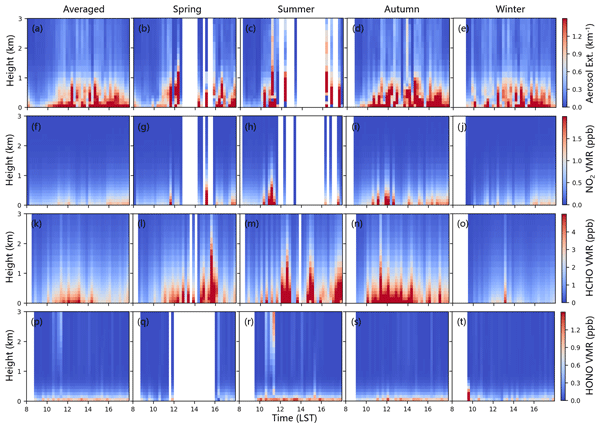
Observations of atmospheric composition, especially vertical profile observations, remain sparse and rare on the Tibetan Plateau (TP), due to extremely high altitude, topographical heterogeneity and the grinding environment. This paper introduces a high-time-resolution (~ 15 min) vertical profile observational dataset of atmospheric composition (aerosols, NO2, HCHO and HONO) on the TP for more than 1 year (2017–2019) using a passive remote sensing technique.
Lei Li, Chao Lu, Pak-Wai Chan, Zi-Juan Lan, Wen-Hai Zhang, Hong-Long Yang, and Hai-Chao Wang
Atmos. Chem. Phys. Discuss., https://doi.org/10.5194/acp-2021-579, https://doi.org/10.5194/acp-2021-579, 2021
Revised manuscript not accepted
Short summary
Short summary
The COVID-19 induced lockdown provided a time-window to study the impact of emission decrease on atmospheric environment. A 350 m meteorological tower in the Pearl River Delta recorded the vertical distribution of pollutants during the lockdown period. The observation confirmed that an extreme emission reduction, can reduce the concentrations of fine particles and the peak concentration of ozone at the same time, which had been taken as difficult to realize in the past in many regions.
Meng Gao, Yang Yang, Hong Liao, Bin Zhu, Yuxuan Zhang, Zirui Liu, Xiao Lu, Chen Wang, Qiming Zhou, Yuesi Wang, Qiang Zhang, Gregory R. Carmichael, and Jianlin Hu
Atmos. Chem. Phys., 21, 11405–11421, https://doi.org/10.5194/acp-21-11405-2021, https://doi.org/10.5194/acp-21-11405-2021, 2021
Short summary
Short summary
Light absorption and radiative forcing of black carbon (BC) is influenced by both BC itself and its interactions with other aerosol chemical compositions. In this study, we used the online coupled WRF-Chem model to examine how emission control measures during the Asian-Pacific Economic Cooperation (APEC) conference affect the mixing state and light absorption of BC and the associated implications for BC-PBL interactions.
Lian Zong, Yuanjian Yang, Meng Gao, Hong Wang, Peng Wang, Hongliang Zhang, Linlin Wang, Guicai Ning, Chao Liu, Yubin Li, and Zhiqiu Gao
Atmos. Chem. Phys., 21, 9105–9124, https://doi.org/10.5194/acp-21-9105-2021, https://doi.org/10.5194/acp-21-9105-2021, 2021
Short summary
Short summary
In recent years, summer O3 pollution over eastern China has become more serious, and it is even the case that surface O3 and PM2.5 pollution can co-occur. However, the synoptic weather pattern (SWP) related to this compound pollution remains unclear. Regional PM2.5 and O3 compound pollution is characterized by various SWPs with different dominant factors. Our findings provide insights into the regional co-occurring high PM2.5 and O3 levels via the effects of certain meteorological factors.
Yan Zhang, Yu Zhao, Meng Gao, Xin Bo, and Chris P. Nielsen
Atmos. Chem. Phys., 21, 6411–6430, https://doi.org/10.5194/acp-21-6411-2021, https://doi.org/10.5194/acp-21-6411-2021, 2021
Short summary
Short summary
We combined air quality and exposure response models to analyze the benefits for air quality and human health of China’s ultra-low emission policy in one of its most developed regions. Atmospheric observations and the air quality model were also used to demonstrate improvement of emission inventories incorporating online emission monitoring data. With implementation of the policy in both power and industrial sectors, the attributable deaths due to PM2.5 exposure are estimated to decrease 5.5 %.
Gemine Vivone, Giuseppe D'Amico, Donato Summa, Simone Lolli, Aldo Amodeo, Daniele Bortoli, and Gelsomina Pappalardo
Atmos. Chem. Phys., 21, 4249–4265, https://doi.org/10.5194/acp-21-4249-2021, https://doi.org/10.5194/acp-21-4249-2021, 2021
Short summary
Short summary
We developed a methodology to retrieve the atmospheric boundary layer height from elastic and multi-wavelength lidar observations that uses a new approach based on morphological image processing techniques. The intercomparison with other state-of-the-art algorithms shows on average 30 % improved performance. The algorithm also shows excellent performance with respect to the running time, i.e., just few seconds to execute the whole signal processing chain over 72 h of continuous measurements.
Peter Sherman, Meng Gao, Shaojie Song, Alex T. Archibald, Nathan Luke Abraham, Jean-François Lamarque, Drew Shindell, Gregory Faluvegi, and Michael B. McElroy
Atmos. Chem. Phys., 21, 3593–3605, https://doi.org/10.5194/acp-21-3593-2021, https://doi.org/10.5194/acp-21-3593-2021, 2021
Short summary
Short summary
The aims here are to assess the role of aerosols in India's monsoon precipitation and to determine the relative contributions from Chinese and Indian emissions using CMIP6 models. We find that increased sulfur emissions reduce precipitation, which is primarily dynamically driven due to spatial shifts in convection over the region. A significant increase in precipitation (up to ~ 20 %) is found only when both Indian and Chinese sulfate emissions are regulated.
Cited articles
Angevine, W. M., White, A. B., and Avery, S. K.: Boundary-layer depth and entrainment zone characterization with a boundary-layer profiler, Boundary Layer Meteorology, 68, 375–385, https://doi.org/10.1007/BF00706797, 1994.
Brunet, J. P., Tamayo, P., Golub, T. R., and Mesirov, J. P.: Metagenes and molecular pattern discovery using matrix factorization, Proceedings of the National Academy of Sciences of the United States of America, 101, 4164–4169, https://doi.org/10.1073/pnas.0308531101, 2004.
Chen, X., Feng, X., Fan, S., and Liu, J.: Application of recirculation index in air quality research, Acta Scientiae Circumstantiae, 36, https://doi.org/10.13671/j.hjkxxb.2015.0517, 2016.
Chen, Z., Liu, J., Cheng, X., Yang, M., and Wang, H.: Positive and negative influences of typhoons on tropospheric ozone over southern China, Atmos. Chem. Phys., 21, 16911–16923, https://doi.org/10.5194/acp-21-16911-2021, 2021.
Chen, Z., Liu, J., Qie, X., Cheng, X., Shen, Y., Yang, M., Jiang, R., and Liu, X.: Transport of substantial stratospheric ozone to the surface by a dying typhoon and shallow convection, Atmos. Chem. Phys., 22, 8221–8240, https://doi.org/10.5194/acp-22-8221-2022, 2022.
Chow, E. C. H., Li, R. C. Y., and Zhou, W.: Influence of Tropical Cyclones on Hong Kong Air Quality, Advances in Atmospheric Sciences, 35, 1177–1188, https://doi.org/10.1007/s00376-018-7225-4, 2018.
Das, S. S., Ratnam, M. V., Uma, K. N., Subrahmanyam, K. V., Girach, I. A., Patra, A. K., Aneesh, S., Suneeth, K. V., Kumar, K. K., Kesarkar, A. P., Sijikumar, S., and Ramkumar, G.: Influence of tropical cyclones on tropospheric ozone: possible implications, Atmos. Chem. Phys., 16, 4837–4847, https://doi.org/10.5194/acp-16-4837-2016, 2016.
Deng, T., Wang, T., Wang, S., Zou, Y., Yin, C., Li, F., Liu, L., Wang, N., Song, L., Wu, C., and Wu, D.: Impact of typhoon periphery on high ozone and high aerosol pollution in the Pearl River Delta region, Sci. Total Environ., 668, 617–630, https://doi.org/10.1016/j.scitotenv.2019.02.450, 2019.
Feng, Z., De Marco, A., Anav, A., Gualtieri, M., Sicard, P., Tian, H., Fornasier, F., Tao, F., Guo, A., and Paoletti, E.: Economic losses due to ozone impacts on human health, forest productivity and crop yield across China, Environment International, 131, 104966, https://doi.org/10.1016/j.envint.2019.104966, 2019.
Geng, G., Liu, Y., Liu, Y., Liu, S., Cheng, J., Yan, L., Wu, N., Hu, H., Tong, D., Zheng, B., Yin, Z., He, K., and Zhang, Q.: Efficacy of China's clean air actions to tackle PM2.5 pollution between 2013 and 2020, Nature Geoscience, 17, 987–994, https://doi.org/10.1038/s41561-024-01540-z, 2024.
Guo, J., Miao, Y., Zhang, Y., Liu, H., Li, Z., Zhang, W., He, J., Lou, M., Yan, Y., Bian, L., and Zhai, P.: The climatology of planetary boundary layer height in China derived from radiosonde and reanalysis data, Atmos. Chem. Phys., 16, 13309–13319, https://doi.org/10.5194/acp-16-13309-2016, 2016.
Guo, J., Li, Y., Cohen, J. B., Li, J., Chen, D., Xu, H., Liu, L., Yin, J., Hu, K., and Zhai, P.: Shift in the temporal trend of boundary layer height in China using long-term (1979–2016) radiosonde data, Geophysical Research Letters, 46, 6080–6089, https://doi.org/10.1029/2019GL082666, 2019.
Huang, J. P., Fung, J. C. H., and Lau, A. K. H.: Integrated processes analysis and systematic meteorological classification of ozone episodes in Hong Kong, Journal of Geophysical Research: Atmospheres, 111, D20309, https://doi.org/10.1029/2005JD007012, 2006.
Huang, T., Yang, Y., O'Connor, E. J., Lolli, S., Haywood, J., Osborne, M., Cheng, J. C. H., Guo, J., and Yim, S. H. L.: Influence of a weak typhoon on the vertical distribution of air pollution in Hong Kong: A perspective from a Doppler LiDAR network, Environmental Pollution, 276, 116534, https://doi.org/10.1016/j.envpol.2021.116534, 2021.
Itahashi, S.: Severe level of photochemical oxidants (Ox) over the western coast of Japan during autumn after typhoon passing, Sci. Rep., 13, 16369, https://doi.org/10.1038/s41598-023-43485-0, 2023.
Jiang, D., Wang, C., Wu, D. D., Huang, X. J., Tan, H., Li, F., and Deng, T.: Diurnal variation of atmospheric boundary layer over Wushan station, Guangzhou using wind profiler radar, Journal of Tropical Meteorology, 29, 129–135, https://doi.org/10.3969/j.issn.1004-4965.2013.01.016, 2013.
Jiang, Y. C., Zhao, T. L., Liu, J., Xu, X. D., Tan, C. H., Cheng, X. H., Bi, X. Y., Gan, J. B., You, J. F., and Zhao, S. Z.: Why does surface ozone peak before a typhoon landing in southeast China?, Atmos. Chem. Phys., 15, 13331–13338, https://doi.org/10.5194/acp-15-13331-2015, 2015.
Lam, Y. F., Cheung, H. M., and Ying, C. C.: Impact of tropical cyclone track change on regional air quality, Sci. Total Environ., 610–611, 1347–1355, https://doi.org/10.1016/j.scitotenv.2017.08.100, 2018.
Lee, D. D. and Seung, H. S.: Learning the parts of objects by non-negative matrix factorization, Nature, 401, 788–791, https://doi.org/10.1038/44565, 1999.
Li, D., Vogel, B., Müller, R., Bian, J., Günther, G., Ploeger, F., Li, Q., Zhang, J., Bai, Z., Vömel, H., and Riese, M.: Dehydration and low ozone in the tropopause layer over the Asian monsoon caused by tropical cyclones: Lagrangian transport calculations using ERA-Interim and ERA5 reanalysis data, Atmos. Chem. Phys., 20, 4133–4152, https://doi.org/10.5194/acp-20-4133-2020, 2020.
Li, D., Vogel, B., Müller, R., Bian, J., Günther, G., and Riese, M.: Tropical cyclones reduce ozone in the tropopause region over the western Pacific: An analysis of 18 years ozonesonde profiles, Earth's Future, 9, e2020EF001635, https://doi.org/10.1029/2020EF001635, 2021.
Li, K., Jacob, D. J., Liao, H., Zhu, J., Shah, V., Shen, L., Bates, K. H., Zhang, Q., and Zhai, S.: A two-pollutant strategy for improving ozone and particulate air quality in China, Nature Geoscience, 12, 906–910, https://doi.org/10.1038/s41561-019-0464-x, 2019.
Li, M., Song, Y., Mao, Z., Liu, M., and Huang, X.: Impacts of thermal circulations induced by urbanization on ozone formation in the Pearl River Delta region, China, Atmospheric Environment, 127, 382–392, https://doi.org/10.1016/j.atmosenv.2015.10.075, 2015.
Li, M., Liu, H., Geng, G., Hong, C., Liu, F., Song, Y., Tong, D., Zheng, B., Cui, H., Man, H., Zhang, Q., and He, K.: Anthropogenic emission inventories in China: a review, National Science Review, 4, 834–866, https://doi.org/10.1093/nsr/nwx150, 2017.
Li, N., Liang, J., Liu, W., Gu, C., Li, J., Xu, Y., Tang, K., Liao, H., and Hu, J.: Mechanisms of high-temperature ozone suppression in Eastern China: a meteorological perspective, Environmental Research Letters, 20, 094001, https://doi.org/10.1088/1748-9326/adf1ba, 2025.
Li, Y., Zhao, X., Deng, X., and Gao, J.: The impact of peripheral circulation characteristics of typhoon on sustained ozone episodes over the Pearl River Delta region, China, Atmos. Chem. Phys., 22, 3861–3873, https://doi.org/10.5194/acp-22-3861-2022, 2022.
Lichiheb, N., Ngan, F., and Cohen, M.: Improving the atmospheric dispersion forecasts over Washington, D.C. using UrbanNet observations: A study with HYSPLIT model, Urban Climate, 55, 101948, https://doi.org/10.1016/j.uclim.2024.101948, 2024.
Lin, H., Ding, K., Huang, X., Lou, S., Xue, L., Wang, Z., Ma, Y., and Ding, A.: Impacts of Northward Typhoons on Autumn Haze Pollution Over North China Plain, Journal of Geophysical Research: Atmospheres, 129, e2023JD040465, https://doi.org/10.1029/2023JD040465, 2024.
Liu, B., Guo, J., Gong, W., Shi, L., Zhang, Y., and Ma, Y.: Characteristics and performance of wind profiles as observed by the radar wind profiler network of China, Atmos. Meas. Tech., 13, 4589–4600, https://doi.org/10.5194/amt-13-4589-2020, 2020.
Liu, Y. and Wang, T.: Worsening urban ozone pollution in China from 2013 to 2017 – Part 2: The effects of emission changes and implications for multi-pollutant control, Atmos. Chem. Phys., 20, 6323–6337, https://doi.org/10.5194/acp-20-6323-2020, 2020.
Lolli, S., Khor, W. Y., Matjafri, M. Z., and Lim, H. S.: Monsoon season quantitative assessment of biomass burning clear-sky aerosol radiative effect at surface by ground-based lidar observations in Pulau Pinang, Malaysia in 2014, Remote Sensing, 11, 2660, https://doi.org/10.3390/rs11222660, 2019.
Lu, X., Yu, H., Ying, M., Zhao, B., Zhang, S., Lin, L., Bai, L., and Wan, R.: Western North Pacific Tropical Cyclone Database Created by the China Meteorological Administration, Advances in Atmospheric Sciences, 38, 690–699, https://doi.org/10.1007/s00376-020-0211-7, 2021.
Luo, C., Shang, S., Xie, Y., He, Z., Wei, G., Zhang, F., Wang, L., and Li, X.: Effects of Terrain near Taiwan Island on Typhoons with Different Tracks and Typhoon Waves, Water, 15, 3661, https://doi.org/10.3390/w15203661, 2023.
Luo, M., Hou, X., Gu, Y., Lau, N. C., and Yim, S. H. L.: Trans-boundary air pollution in a city under various atmospheric conditions, Science of the Total Environment, 618, 132–141, https://doi.org/10.1016/j.scitotenv.2017.11.001, 2018.
Malley, C. S., Braban, C. F., and Heal, M. R.: The application of hierarchical cluster analysis and non-negative matrix factorization to European atmospheric monitoring site classification, Atmospheric Research, 138, 30–40, https://doi.org/10.1016/j.atmosres.2013.10.019, 2014.
Mills, G., Sharps, K., Simpson, D., Pleijel, H., Broberg, M., Uddling, J., Jaramillo, F., Davies, W. J., Dentener, F., Van den Berg, M., Agrawal, M., Agrawal, S. B., Ainsworth, E. A., Büker, P., Emberson, L., Feng, Z., Harmens, H., Hayes, F., Kobayashi, K., Paoletti, E., and Van Dingenen, R.: Ozone pollution will compromise efforts to increase global wheat production, Global Change Biology, 24, 3560–3574, https://doi.org/10.1111/gcb.14157, 2018.
Parker, T. J., Berry, G. J., and Reeder, M. J.: The influence of tropical cyclones on heat waves in Southeastern Australia, Geophysical Research Letters, 40, 6264–6270, https://doi.org/10.1002/2013GL058257, 2013.
Shi, W., Tang, J., Chen, Y., Chen, N., Liu, Q., and Liu, T.: Study of the Boundary Layer Structure of a Landfalling Typhoon Based on the Observation from Multiple Ground-Based Doppler Wind Lidars, Remote Sensing, 13, 4810, https://doi.org/10.3390/rs13234810, 2021.
Shi, Y., Hu, F., Xiao, Z., Fan, G., and Zhang, Z.: Comparison of four different types of planetary boundary layer heights during a haze episode in Beijing, Sci. Total Environ., 711, 134928, https://doi.org/10.1016/j.scitotenv.2019.134928, 2020.
Stull, R. B.: An introduction to boundary layer meteorology, Springer Science & Business Media, 13, ISBN 978-90-277-2769-5, 2012.
Su, L., Yuan, Z., Fung, J. C. H., and Lau, A. K. H.: A comparison of HYSPLIT backward trajectories generated from two GDAS datasets, Sci. Total Environ., 506–507, 527–537, https://doi.org/10.1016/j.scitotenv.2014.11.072, 2015.
Wang, J., Wang, P., Tian, C., Gao, M., Cheng, T., and Mei, W.: Consecutive Northward Super Typhoons Induced Extreme Ozone Pollution Events in Eastern China, npj Climate and Atmospheric Science, 7, 244, https://doi.org/10.1038/s41612-024-00786-z, 2024.
Wang, N., Huang, X., Xu, J., Wang, T., Tan, Z. M., and Ding, A.: Typhoon-boosted biogenic emission aggravates cross-regional ozone pollution in China, Science Advances, 8, eabl6166, https://doi.org/10.1126/sciadv.abl6166, 2022.
Wang, Y., Wild, O., Chen, X., Wu, Q., Gao, M., Chen, H., Qi, Y., and Wang, Z.: Health impacts of long-term ozone exposure in China over 2013–2017, Environment International, 144, 106030, https://doi.org/10.1016/j.envint.2020.106030, 2020.
Wei, X., Lam, K. S., Cao, C., Li, H., and He, J.: Dynamics of the Typhoon Haitang Related High Ozone Episode over Hong Kong, Advances in Meteorology, 2016, 6089154, https://doi.org/10.1155/2016/6089154, 2016.
Wu, M., Wu, D., and Fan, S.: Meteorological condition associated with poor air quality over Pearl River Delta based on the data of radar wind profiler, Acta Scientiae Circumstantiae, 3, https://doi.org/10.13671/j.hjkxxb.2014.0896, 2015.
Xu, J., Zhou, D., Gao, J., Huang, X., Xue, L., Huo, J., Fu, Q., and Ding, A.: Biogenic emissions-related ozone enhancement in two major city clusters during a typical typhoon process, Applied Geochemistry, 152, 105634, https://doi.org/10.1016/j.apgeochem.2023.105634, 2023.
Xu, J., Zhang, Z., Zhao, X., and Zhang, J.: Synthetically impacts of the topography and typhoon periphery on the atmospheric boundary layer structure and special regional pollution pattern of O3 in North China Plain, Atmospheric Environment, 330, 120566, https://doi.org/10.1016/j.atmosenv.2024.120566, 2024.
Yang, Y., Yim, S. H. L., Haywood, J., Osborne, M., Chan, J. C. S., Zeng, Z., and Cheng, J. C. H.: Characteristics of heavy particulate matter pollution events over Hong Kong and their relationships with vertical wind profiles using high-time-resolution Doppler lidar measurements, Journal of Geophysical Research: Atmospheres, 124, 9609–9623, https://doi.org/10.1029/2019JD031140, 2019.
Yim, S. H. L., Hou, X., Guo, J., and Yang, Y.: Contribution of local emissions and transboundary air pollution to air quality in Hong Kong during El Niño-Southern Oscillation and heatwaves, Atmospheric Research, 218, 50–58, https://doi.org/10.1016/j.atmosres.2018.10.021, 2019.
Ying, M., Zhang, W., Yu, H., Lu, X., Feng, J., Fan, Y., Zhu, Y., and Chen, D.: An overview of the China Meteorological Administration tropical cyclone database, Journal of Atmospheric and Oceanic Technology, 31, 287–301, https://doi.org/10.1175/JTECH-D-12-00119.1, 2014.
Zeng, L., Wu, Z., Fan, S., Zheng, J., Qi, X., and Li, H.: The influence of local reflux index profile of Guangzhou boundary layer based on wind profiler radar on the pollutant concentration, Acta Scientiae Circumstantiae, 42, 1–8, https://doi.org/10.13671/j.hjkxxb.2021.0519, 2022.
Zhan, C., Xie, M., Huang, C., Liu, J., Wang, T., Xu, M., Ma, C., Yu, J., Jiao, Y., Li, M., Li, S., Zhuang, B., Zhao, M., and Nie, D.: Ozone affected by a succession of four landfall typhoons in the Yangtze River Delta, China: major processes and health impacts, Atmos. Chem. Phys., 20, 13781–13799, https://doi.org/10.5194/acp-20-13781-2020, 2020.
Zhang, M., Yang, Y., Zhan, C., Zong, L., Gul, C., and Wang, M.: Tropical cyclone-related heatwave episodes in the Greater Bay Area, China: Synoptic patterns and urban-rural disparities, Weather and Climate Extremes, 44, 100656, https://doi.org/10.1016/j.wace.2024.100656, 2024.
Zhang, Y., Guo, J., Yang, Y., Wang, Y., and Yim, S. H. L.: Vertical wind shear modulates particulate matter pollutions: A perspective from radar wind profiler observations in Beijing, China, Remote Sensing, 12, 546, https://doi.org/10.3390/rs12030546, 2020.
Zong, L., Yang, Y., Xia, H., Yuan, J., and Guo, M.: Elucidating the impacts of various atmospheric ventilation conditions on local and transboundary ozone pollution patterns: A case study of Beijing, China, Journal of Geophysical Research: Atmospheres, 128, e2023JD039141, https://doi.org/10.1029/2023JD039141, 2023.
Short summary
Up to ~ 40 % of ozone pollution in the Greater Bay Area of China is related to tropical cyclones. The O3 pollution was found to be transported from inland areas to coastal areas. The transport process can be roughly divided into three phases: downdraft control, horizontal transport, and vertical mixing.
Up to ~ 40 % of ozone pollution in the Greater Bay Area of China is related to tropical...