
Articles | Volume 19, issue 5
https://doi.org/10.5194/amt-19-1763-2026
© Author(s) 2026. This work is distributed under
the Creative Commons Attribution 4.0 License.
the Creative Commons Attribution 4.0 License.
Special issue:
https://doi.org/10.5194/amt-19-1763-2026
© Author(s) 2026. This work is distributed under
the Creative Commons Attribution 4.0 License.
the Creative Commons Attribution 4.0 License.
Research article
| 
11 Mar 2026
Research article |
| 11 Mar 2026
| 11 Mar 2026
Evaluation of calibration strategies for accurate δ13CH4 measurements in dry and humid air
Ji Li
Joint International Research Laboratory of Atmospheric and Earth System Sciences, School of Atmospheric Sciences, Nanjing University, Nanjing, China
Jiangsu Provincal Collorative Innovation Center of Climate Change, Nanjing, China
Frontiers Science Center for Critical Earth Material Cycling, Nanjing University, Nanjing, 210023, China
Xuguang Chi
Joint International Research Laboratory of Atmospheric and Earth System Sciences, School of Atmospheric Sciences, Nanjing University, Nanjing, China
Jiangsu Provincal Collorative Innovation Center of Climate Change, Nanjing, China
Aijun Ding
Joint International Research Laboratory of Atmospheric and Earth System Sciences, School of Atmospheric Sciences, Nanjing University, Nanjing, China
Jiangsu Provincal Collorative Innovation Center of Climate Change, Nanjing, China
Frontiers Science Center for Critical Earth Material Cycling, Nanjing University, Nanjing, 210023, China
Weimin Ju
Jiangsu Provincial Key Laboratory of Geographic Information Science and Technology, Key Laboratory for Land Satellite Remote Sensing Applications of Ministry of Natural Resources, School of Geography and Ocean Science, Nanjing University, Nanjing, Jiangsu, China
Yongguang Zhang
Jiangsu Provincial Key Laboratory of Geographic Information Science and Technology, Key Laboratory for Land Satellite Remote Sensing Applications of Ministry of Natural Resources, School of Geography and Ocean Science, Nanjing University, Nanjing, Jiangsu, China
Jiangsu Center for Collaborative Innovation in Geographical Information Resource Development and Application, International Institute for Earth System Sciences, Nanjing University, Nanjing, Jiangsu 210023, China
Jing M. Chen
School of Geographical Science, Key Laboratory for Humid Subtropical Eco-Geographical Processes of the Ministry of Education, Fujian Normal University, Fuzhou 350008, China
Department of Geography and Planning, University of Toronto, Toronto, ON M5S 3G3, Canada

Joint International Research Laboratory of Atmospheric and Earth System Sciences, School of Atmospheric Sciences, Nanjing University, Nanjing, China
Jiangsu Provincal Collorative Innovation Center of Climate Change, Nanjing, China
Frontiers Science Center for Critical Earth Material Cycling, Nanjing University, Nanjing, 210023, China
Related authors
No articles found.
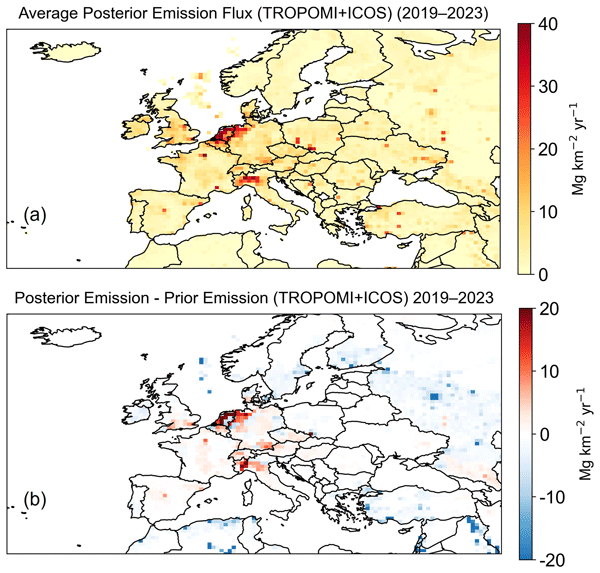
Shuai Sun, Yuzhong Zhang, Wei Chen, Shaomin Pan, Dongchuan Pu, Xin Tong, Huilin Chen, and Sander Houweling
Atmos. Chem. Phys., 26, 14981–15001, https://doi.org/10.5194/acp-26-14981-2026, https://doi.org/10.5194/acp-26-14981-2026, 2026
Short summary
Short summary
This study estimates methane emissions across Europe from 2019 to 2023 using atmospheric methane measurements from satellites and ground stations to improve understanding of emission sources. We find that total emissions are slightly higher than official reports, mainly due to livestock and waste, while emissions from fossil fuel production are lower in some regions. These results show that atmospheric measurements can improve independent verification of emissions and support climate policy.
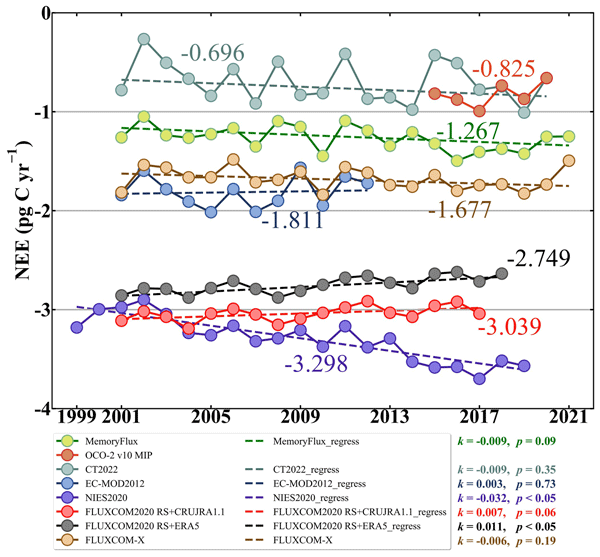
Chengcheng Huang, Wei He, Brendan Byrne, Ngoc Tu Nguyen, Jingfeng Xiao, Hua Yang, Philippe Ciais, Songhan Wang, Xing Li, Han Ma, Peipei Xu, Mengyao Zhao, Hui Chen, and Weimin Ju
Earth Syst. Sci. Data, 18, 7367–7390, https://doi.org/10.5194/essd-18-7367-2026, https://doi.org/10.5194/essd-18-7367-2026, 2026
Short summary
Short summary
We created MemoryFlux, a new dataset that showed how ecosystems across North America absorbed and released carbon from 2001 to 2021. Using a deep-learning approach trained on historical climate and environmental conditions, we improved estimates of land carbon exchange and captured carbon anomalies associated with major droughts and floods. MemoryFlux provides a more reliable view of carbon cycling and improves our understanding of how ecosystems respond to a changing climate.
Rong Shang, Shengwei Xu, Ziyi Yang, Xudong Lin, Lingyun Fan, Keyan Fang, Mingzhu Xu, Anxin Ding, Yulin Yan, Yunjian Liang, Chenningya Song, Wenjie Chen, Jiaorong Qian, Annan Zhang, Jing Heng, Siyu Chen, Xiao Zhang, Liangyun Liu, Wang Li, Licong Dai, Zhongmin Hu, and Jing M. Chen
Earth Syst. Sci. Data Discuss., https://doi.org/10.5194/essd-2026-705, https://doi.org/10.5194/essd-2026-705, 2026
Preprint under review for ESSD
Short summary
Short summary
This study created a Reference sample dataset of Stable, Disturbed and Forestated forests (RSDF) in China from1986 to 2025 with 12,991 samples. All samples were visually annotated using satellite imagery and forest records with strict quality checks. Nearly 80 % remained stable, and forest disturbance was most frequent in eastern and southern China. Over 95 % of samples received high confidence. This public dataset supports tracking forest change and assessing its effects on carbon storage.
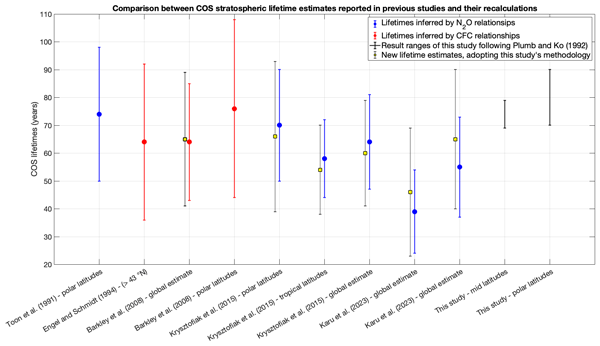
Alessandro Zanchetta, Steven van Heuven, Rigel Kivi, Michel Ramonet, Andreas Engel, Maarten Krol, and Huilin Chen
Atmos. Chem. Phys., 26, 13909–13927, https://doi.org/10.5194/acp-26-13909-2026, https://doi.org/10.5194/acp-26-13909-2026, 2026
Short summary
Short summary
In this study, we calculate the mean lifetime of carbonyl sulfide (COS) and methane (CH4) in the stratosphere from continuous vertical profiles sampled with balloon-borne instruments. We used two methods based on the stratospheric relationship of these gas species with N2O. The estimated stratospheric lifetime range is 69–90 years for COS and 146–172 years for CH4. These results are consistent with other studies and suggest no long-term trends in the stratospheric lifetime of these gas species.
Jinpeng Lu, Sijia Lou, Wuke Wang, Jiankai Zhang, Ke Ding, Xin Huang, Yiquan Jiang, Tengyu Liu, Yawen Liu, Qingyan Xie, Lian Xue, Zilin Wang, Chen Zhou, Anbao Zhu, and Aijun Ding
EGUsphere, https://doi.org/10.5194/egusphere-2026-5104, https://doi.org/10.5194/egusphere-2026-5104, 2026
This preprint is open for discussion and under review for Atmospheric Chemistry and Physics (ACP).
Short summary
Short summary
The 2022 Hunga Tonga eruption injected sulfur gases and massive water vapor into the stratosphere. With observations and simulations, we assessed effects on the tropical quasi-biennial oscillation (QBO). Pollutants lingered over a year; the water-rich eruption notably altered QBO winds. Cooling from excess vapor and particles, concentrated south of 15° N, reshaped upper circulation and drove downward wind anomalies modulating the QBO, with April–October 2022 cooling causing more wind shifts.
Mengrong Lu, Huilin Chen, Xun Zhang, Xuguang Chi, Chong Wei, Shuangxi Fang, Fenjuan Wang, Eleftherios Ioannidis, Friedemann Reum, Xinlu Wang, Prajal Pradhan, Wouter Peters, Klaus Hubacek, and Sander Houweling
EGUsphere, https://doi.org/10.5194/egusphere-2026-3879, https://doi.org/10.5194/egusphere-2026-3879, 2026
Short summary
Short summary
Effective methane mitigation requires accurate knowledge of the spatial and temporal distribution of sources and sinks. Using high-resolution atmospheric modeling and ground-based observations, we estimated methane emissions in East Asia, focusing on the Yangtze River Delta. Emissions are lower than most inventories suggest, but show a clear seasonal cycle, with summer peaks driven by rice cultivation and natural sources. This seasonality is critical for emission tracking and mitigation design.
Qihao Lin, Jiandong Wang, Chenxi Li, Dian Ding, Jiaping Wang, Wei Nie, Ximeng Qi, Yuliang Liu, Xuguang Chi, and Xin Huang
EGUsphere, https://doi.org/10.5194/egusphere-2026-3636, https://doi.org/10.5194/egusphere-2026-3636, 2026
Short summary
Short summary
We focused on nanoparticle growth because it affects climate and health. Current models often merge these particles with background aerosol populations, missing key details. We developed an improved model that explicitly tracks these particles from formation through subsequent growth. Our model matched observations better than standard approaches, captured early growth more realistically, and added minimal computational cost, making it promising for three-dimensional atmospheric simulations.
Shenpeng Qiu, Shuzhuang Feng, Fei Jiang, Chong Wei, Yusheng Shi, Mengwei Jia, Honglin Zhuang, Hengmao Wang, Yongguang Zhang, and Weimin Ju
EGUsphere, https://doi.org/10.5194/egusphere-2026-3241, https://doi.org/10.5194/egusphere-2026-3241, 2026
Short summary
Short summary
Satellite measurements and a model were used to estimate China's CO2 emissions in winter 2022–2023. National total was 16 % higher than previous estimates. The Beijing-Tianjin-Hebei region showed higher emissions due to winter heating, while the Yangtze River Delta showed lower emissions. Emission drops during the Spring Festival holiday were also captured. This work offers a reliable, independent way to monitor CO2 emissions and support climate policies.
Maoyu Cao, Chao Yan, Yuliang Liu, Dafeng Ge, Junchao Yin, Yuanyuan Li, Tao Xu, Ziqian Wei, Jinbo Wang, Ying Zhang, Zhenning Wang, Valter Mickwitz, Ziheng Chen, Bisen Han, Jianxun Wang, Caijun Zhu, Ximeng Qi, Qiaozhi Zha, Xuguang Chi, Zhe Wang, Jian Zhao, Mikael Ehn, Wei Nie, Jingkun Jiang, and Aijun Ding
EGUsphere, https://doi.org/10.5194/egusphere-2026-3647, https://doi.org/10.5194/egusphere-2026-3647, 2026
Short summary
Short summary
Fine airborne particles affect air quality, human health, and climate, yet their molecular composition is difficult to measure. Using a newly characterized instrument that detects these molecules in real time, we carried out the first such study in an eastern Chinese city. We find that particle composition is shaped not only by molecules condensing from the air, but also by chemical reactions within the particles, with natural and human sources and regional transport all contributing.
Anbao Zhu, Xin Huang, Haiming Xu, Jiechun Deng, Lian Xue, Zilin Wang, Ke Ding, Tianshuai Li, and Aijun Ding
EGUsphere, https://doi.org/10.5194/egusphere-2026-3180, https://doi.org/10.5194/egusphere-2026-3180, 2026
Short summary
Short summary
Every spring, East Asian dust travels across the North Pacific. We investigated its effect on the North Pacific storm track using decades of data and a numerical model. We found that dust absorbs sunlight and warms the middle atmosphere, altering temperature patterns. This shifts the zone favorable for storm development poleward. These results highlight that natural dust meaningfully influences large-scale atmospheric circulation and should be considered in regional climate assessments.
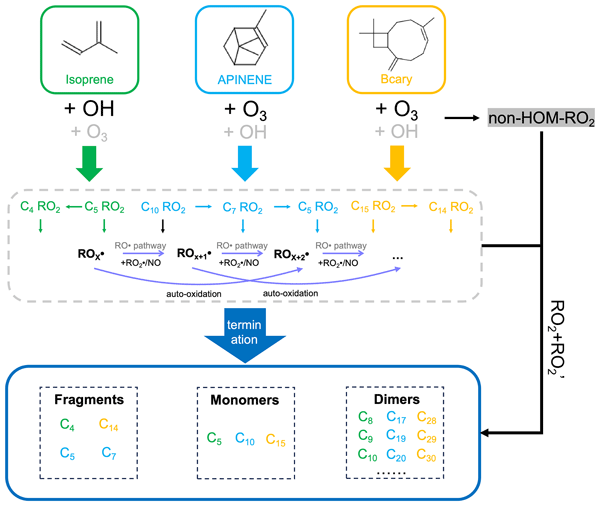
Liwen Yang, Wei Nie, Mikael Ehn, Chao Yan, Lubna Dada, Yuliang Liu, Pontus Roldin, and Aijun Ding
Geosci. Model Dev., 19, 5155–5172, https://doi.org/10.5194/gmd-19-5155-2026, https://doi.org/10.5194/gmd-19-5155-2026, 2026
Short summary
Short summary
SIM-HOM (Sesquiterpene, Isoprene, and Monoterpene-derived Highly Oxygenated organic Molecules) is a mechanistic module simulating HOM formation from primary biogenic precursors. By providing quasi-molecular resolution, it quantifies the low-volatility compounds that drive secondary organic aerosol formation, robustly linking complex gas-phase chemistry to aerosol dynamics and climate impacts.
Hao Zheng, Jun Wang, Hao Zhou, Jingfeng Ding, Haijin Dai, Zhi Huang, Zishan Wang, Meirong Wang, Jianying Li, Hengmao Wang, Fei Jiang, and Weimin Ju
Earth Syst. Sci. Data Discuss., https://doi.org/10.5194/essd-2026-318, https://doi.org/10.5194/essd-2026-318, 2026
Revised manuscript under review for ESSD
Short summary
Short summary
Lightning can trigger wildfires and severe storms, but long-term global records are limited. We reconstructed monthly land lightning density worldwide from 1979 to 2025 using weather data and machine-learning models trained on observations. The dataset captures observed lightning patterns and can support wildfire, climate, and air-quality studies.
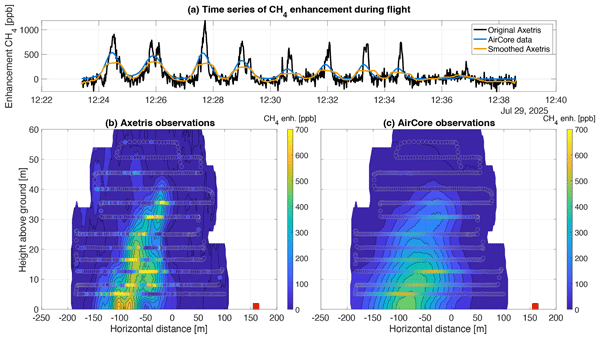
Noni van Ettinger, Steven M. A. C. van Heuven, and Huilin Chen
Atmos. Meas. Tech., 19, 3333–3362, https://doi.org/10.5194/amt-19-3333-2026, https://doi.org/10.5194/amt-19-3333-2026, 2026
Short summary
Short summary
This research evaluates the potential of a cost-effective methane sensor for quantifying anthropogenic emissions. With active temperature control, the sensor performs comparably to the high-precision Active AirCore in estimating dairy-farm mass emissions, achieving results within 10% uncertainty. The uncertainty is mainly driven by wind and background variability, rather than by sensor precision. The results show that cost-effective sensors can improve monitoring networks.
Johannes Degen, Nicole Bobrowski, Mélisende M. Bossard, Lucie Boucher, Huilin Chen, Andreas Engel, Bastien H. Geil, Giovanni B. Giuffrida, Steven van Heuven, Thorsten Hoffmann, Niklas Karbach, Gianluigi Ortenzi, and Tanja J. Schuck
EGUsphere, https://doi.org/10.5194/egusphere-2026-1865, https://doi.org/10.5194/egusphere-2026-1865, 2026
This preprint is open for discussion and under review for Atmospheric Measurement Techniques (AMT).
Short summary
Short summary
Observations in volcanic plumes often rely on Uncrewed Aerial Systems (UAS). In July 2024, we used the active AirCore technique with UAS to probe the plumes of Mount Etna (Italy). This was the first time to use this technique inside volcanic plumes. AirCore samples are stored in long coils for laboratory analyses delivering high-quality trace gas measurements. We observed enhanced mole fractions of CO2 and often also of CO. allowing conclusions on oxidation processes inside the crater.
Shengxi Bai, Huilin Chen, Zhen Zhang, Shushi Peng, Fei Jiang, Fei Li, Shuzhuang Feng, Yingqi Yan, Qidan Huang, and Yongguang Zhang
EGUsphere, https://doi.org/10.5194/egusphere-2025-4610, https://doi.org/10.5194/egusphere-2025-4610, 2026
Short summary
Short summary
We examined methane emissions from coal mines in Shanxi Province, China’s major coal production region. Using satellite observations and advanced analysis, we found that rare but very large methane releases play a major role in total emissions. Policies to cut coal capacity initially reduced methane, but emissions rose again with production recovery. Our findings improve understanding of how energy policies affect climate pollution and offer a framework for better methane monitoring worldwide.
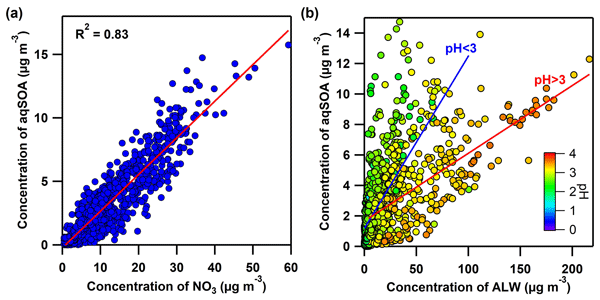
Qiu Wang, Tengyu Liu, Weiqi Xu, Jinbo Wang, Dafeng Ge, Caijun Zhu, Chuanhua Ren, Jiaping Wang, Qiaozhi Zha, Ximeng Qi, Wei Nie, Xuguang Chi, Sijia Lou, Xin Huang, and Aijun Ding
Atmos. Chem. Phys., 26, 3185–3194, https://doi.org/10.5194/acp-26-3185-2026, https://doi.org/10.5194/acp-26-3185-2026, 2026
Short summary
Short summary
The sources and formation mechanisms of aqueous secondary organic aerosol (aqSOA) remain unclear. This study investigates the characteristics and processing of aqSOA in polluted suburban environments in Eastern China. The results highlight the critical roles of nitrate, aerosol liquid water, acidity, and photochemistry in aqSOA formation and contribute to an improved understanding of aqSOA formation in polluted environments.
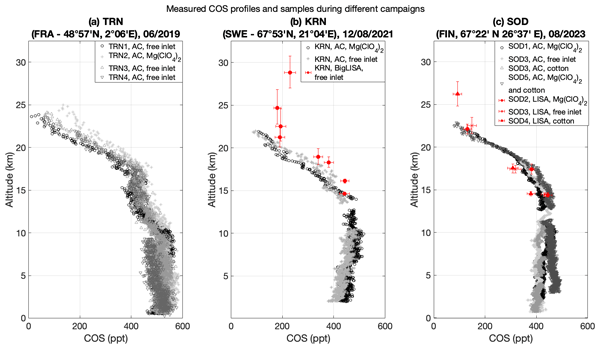
Alessandro Zanchetta, Steven van Heuven, Joram Hooghiem, Rigel Kivi, Thomas Laemmel, Michel Ramonet, Markus Leuenberger, Peter Nyfeler, Sophie L. Baartman, Maarten Krol, and Huilin Chen
Atmos. Meas. Tech., 19, 1465–1486, https://doi.org/10.5194/amt-19-1465-2026, https://doi.org/10.5194/amt-19-1465-2026, 2026
Short summary
Short summary
Continuous vertical profiles and discrete stratospheric samples of carbonyl sulfide (COS) were collected deploying the balloon-borne AirCore, LIghtweight Stratospheric Air (LISA) and BigLISA samplers and measured on a Quantum Cascade Laser Spectrometer (QCLS). Our measurements show good accordance with previous COS observations. Moreover, laboratory tests of ozone (O3) scrubbers proved squalene to remove O3 very efficiently without biasing the measurements of other trace gases.
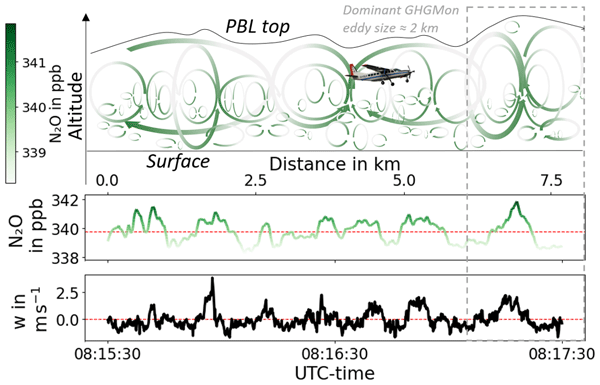
Paul Waldmann, Max Eckl, Leon Knez, Klaus-Dirk Gottschaldt, Alina Fiehn, Christian Mallaun, Michał Gałkowski, Christoph Kiemle, Ronald Hutjes, Thomas Röckmann, Huilin Chen, and Anke Roiger
Atmos. Meas. Tech., 19, 185–210, https://doi.org/10.5194/amt-19-185-2026, https://doi.org/10.5194/amt-19-185-2026, 2026
Short summary
Short summary
Nitrous oxide and methane emissions from agriculture need to be reduced, therefore emissions must be understood to effectively mitigate them. This is the first approach to measure those emissions aircraft-based, to assess their magnitude and drivers. We identified emission hotspots and temporal changes in agricultural emissions in the Netherlands. Our approach is applicable to further greenhouse gas emitters, therefore it builds a step towards more comprehensive emission quantification.
Haoran Zhang, Chengchun Shi, Chuanyou Ying, Shengheng Weng, Erling Ni, Lanbu Zhao, Peiheng Yang, Keqin Tang, Xueyu Zhou, Chuanhua Ren, Xuguang Chi, Derong Zhou, Mengmeng Li, Nan Li, Tengyu Liu, and Xin Huang
Atmos. Chem. Phys., 25, 16797–16816, https://doi.org/10.5194/acp-25-16797-2025, https://doi.org/10.5194/acp-25-16797-2025, 2025
Short summary
Short summary
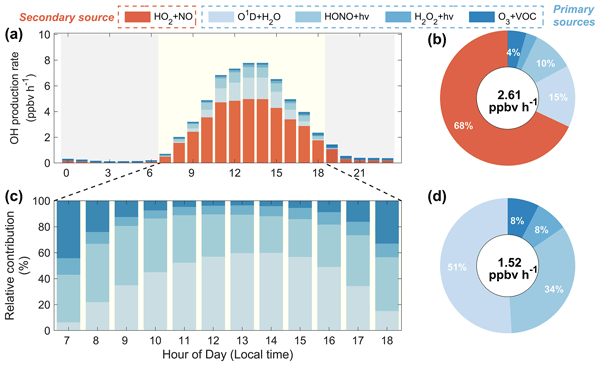
This study reports a unique diurnal pattern of nitrous acid (HONO), featuring higher concentrations around noon, based on one-month measurements in coastal Fujian, southeast China. Using an improved chemical transport model, we successfully reproduced the observed HONO levels and temporal variations. Further process analyses and sensitivity experiments quantified the formation mechanisms of HONO in coastal areas and shed light on its impact on the formation of OH radicals and ozone.
Shuzhuang Feng, Fei Jiang, Yongguang Zhang, Huilin Chen, Honglin Zhuang, Shumin Wang, Shengxi Bai, Hengmao Wang, and Weimin Ju
Atmos. Chem. Phys., 25, 15121–15143, https://doi.org/10.5194/acp-25-15121-2025, https://doi.org/10.5194/acp-25-15121-2025, 2025
Short summary
Short summary
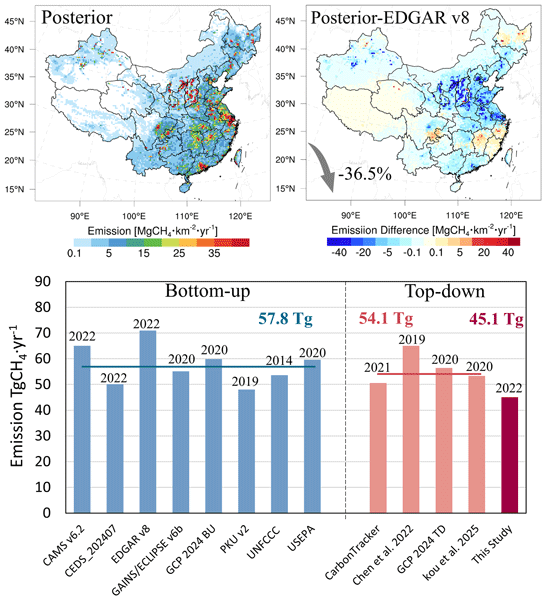
Using satellite data and advanced modeling, this study inverted daily high-resolution anthropogenic CH4 emissions across China and Shanxi Province. We found that China's 2022 CH4 emissions were 45.1 TgCH4·yr⁻¹, significantly lower than previous estimates, especially in coal mining and waste sectors. The inversion substantially reduced emission uncertainties and improved CH4 concentration simulations. These results suggest China’s climate mitigation burden may have been overestimated.
Yu Mao, Weimin Ju, Hengmao Wang, Liangyun Liu, Haikun Wang, Shuzhuang Feng, Mengwei Jia, and Fei Jiang
Atmos. Chem. Phys., 25, 14187–14204, https://doi.org/10.5194/acp-25-14187-2025, https://doi.org/10.5194/acp-25-14187-2025, 2025
Short summary
Short summary
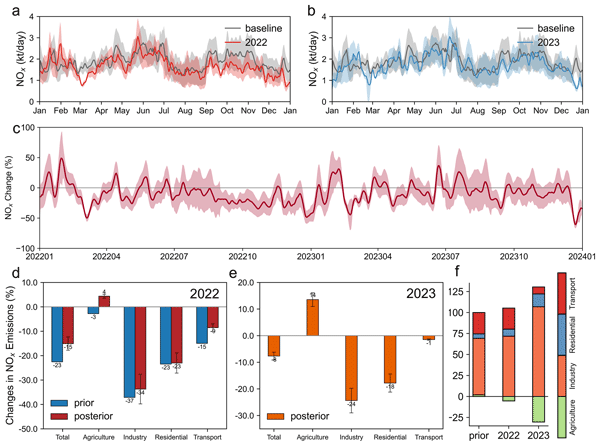
The Russia-Ukraine war caused significant NOx emission reductions in Ukraine, exceeding COVID-19 impacts. Using TROPOMI data, we found a 15% drop in 2022 and 8% in 2023, with Eastern Ukraine (frontline) seeing declines of 29% and 17%. Industry emissions fell most (34% in 2022), while war-related NOx partially offset reductions (8-10%). Emissions closely tracked military actions, revealing conflict’s disruptive effects on socio-economic activity and air pollution.
Junchao Yin, Yuliang Liu, Wei Nie, Chao Yan, Qiaozhi Zha, Yuanyuan Li, Dafeng Ge, Chong Liu, Caijun Zhu, Xuguang Chi, and Aijun Ding
Atmos. Chem. Phys., 25, 13279–13297, https://doi.org/10.5194/acp-25-13279-2025, https://doi.org/10.5194/acp-25-13279-2025, 2025
Short summary
Short summary
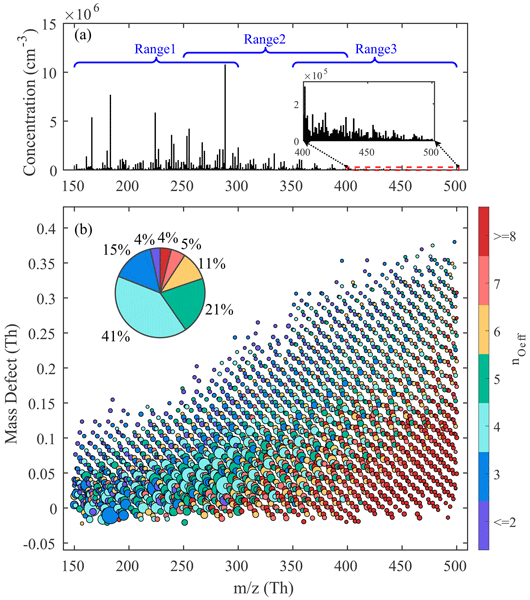
Atmospheric aerosols affect human health and climate change, yet understanding their formation remains challenging. We studied oxygenated organic molecules, key intermediates, in a complex urban environment in China. Using an advanced analytical method, we identified major chemical pathways and how environmental factors influence them. Our findings enhance the understanding of atmospheric chemistry, offering insights for better environmental and climate policies.
Peng Li, Rong Shang, Jing M. Chen, Huiguang Zhang, Xiaoping Zhang, Guoshuai Zhao, Hong Yan, Jun Xiao, Xudong Lin, Lingyun Fan, Rong Wang, Jianjie Cao, and Hongda Zeng
Biogeosciences, 22, 5705–5721, https://doi.org/10.5194/bg-22-5705-2025, https://doi.org/10.5194/bg-22-5705-2025, 2025
Short summary
Short summary
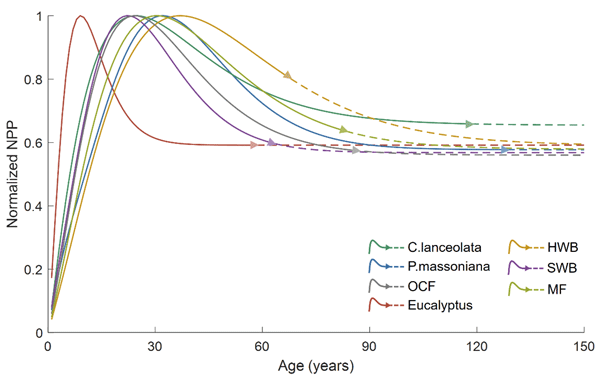
This study explored species-specific relationships between net primary productivity and forest age for seven forest species in subtropical China based on field data using the Semi-Empirical Model. Compared to nationwide relationships, these species-specific relationships improved simulations of aboveground biomass when using the process-based model. Our findings suggest that these species-specific relationships are crucial for accurate forest carbon modeling and management in subtropical China.
Tinghan Zhang, Ximeng Qi, Janne Lampilahti, Liangduo Chen, Xuguang Chi, Wei Nie, Xin Huang, Zehao Zou, Wei Du, Tom Kokkonen, Tuukka Petäjä, Katrianne Lehtipalo, Veli-Matti Kerminen, Aijun Ding, and Markku Kulmala
Atmos. Chem. Phys., 25, 10027–10048, https://doi.org/10.5194/acp-25-10027-2025, https://doi.org/10.5194/acp-25-10027-2025, 2025
Short summary
Short summary
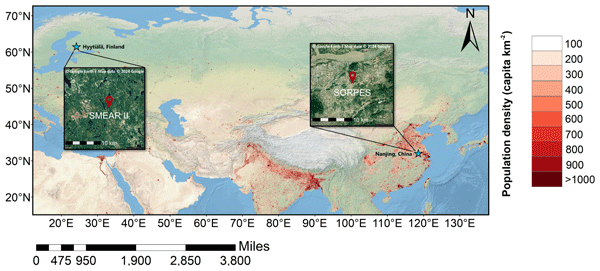
By comparing air ions at two flagship sites – a boreal forest site in Finland and a megacity site in eastern China – we characterized ion concentrations and their roles in new particle formation (NPF) across contrasting environments. The ion-induced fraction was much higher in the clean boreal forest. However, earlier activation of charged particles and high ion-induced fraction during quiet NPF in the megacity site imply a non-negligible role for ion-induced NPF in polluted urban areas.
Johannes C. Laube, Tanja J. Schuck, Sophie Baartman, Huilin Chen, Markus Geldenhuys, Steven van Heuven, Timo Keber, Maria Elena Popa, Elinor Tuffnell, Florian Voet, Bärbel Vogel, Thomas Wagenhäuser, Alessandro Zanchetta, and Andreas Engel
Atmos. Meas. Tech., 18, 4087–4102, https://doi.org/10.5194/amt-18-4087-2025, https://doi.org/10.5194/amt-18-4087-2025, 2025
Short summary
Short summary
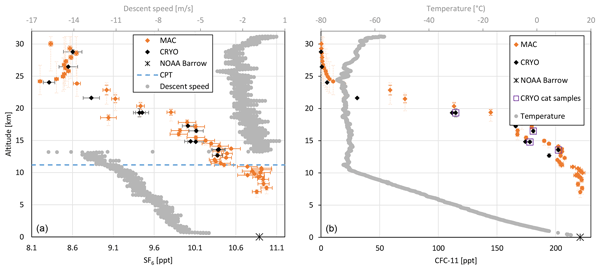
A large balloon was launched in summer 2021 in the Arctic to carry instruments for trace gas measurements up to 32 km, above the reach of aircraft. The main aims were to evaluate different techniques and atmospheric processes. We focus on halogenated greenhouse gases and ozone-depleting substances. For this, air was collected with the AirCore technique and a cryogenic air sampler and measured after the flight. A companion paper reports observations of major greenhouse gases.
Sijia Lou, Manish Shrivastava, Alexandre Albinet, Sophie Tomaz, Deepchandra Srivastava, Olivier Favez, Huizhong Shen, and Aijun Ding
Atmos. Chem. Phys., 25, 8163–8183, https://doi.org/10.5194/acp-25-8163-2025, https://doi.org/10.5194/acp-25-8163-2025, 2025
Short summary
Short summary
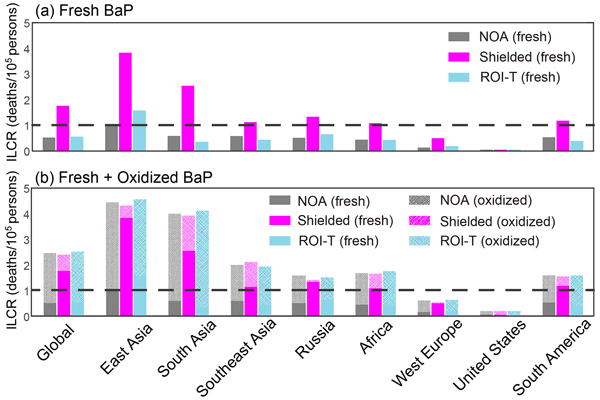
Polycyclic aromatic hydrocarbons (PAHs), emitted from incomplete combustion, pose serious health risks due to their carcinogenic properties. This research demonstrates that viscous organic aerosol coatings significantly hinder PAH oxidation, with spatial distributions sensitive to the degradation modeling approach. Our findings emphasize the need for accurate modeling of PAH oxidation processes in risk assessments, considering both fresh and oxidized PAHs in evaluating human health risks.
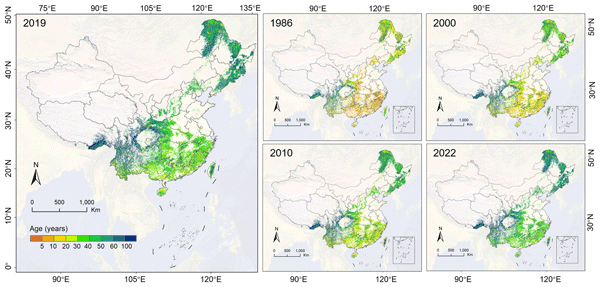
Rong Shang, Xudong Lin, Jing M. Chen, Yunjian Liang, Keyan Fang, Mingzhu Xu, Yulin Yan, Weimin Ju, Guirui Yu, Nianpeng He, Li Xu, Liangyun Liu, Jing Li, Wang Li, Jun Zhai, and Zhongmin Hu
Earth Syst. Sci. Data, 17, 3219–3241, https://doi.org/10.5194/essd-17-3219-2025, https://doi.org/10.5194/essd-17-3219-2025, 2025
Short summary
Short summary
Forest age is critical for carbon cycle modeling and effective forest management. Existing datasets, however, have low spatial resolutions or limited temporal coverage. This study introduces China's annual forest age dataset (CAFA), spanning 1986–2022 at a 30 m resolution. By tracking forest disturbances, we annually update ages. Validation shows small errors for disturbed forests and larger errors for undisturbed forests. CAFA can enhance carbon cycle modeling and forest management in China.
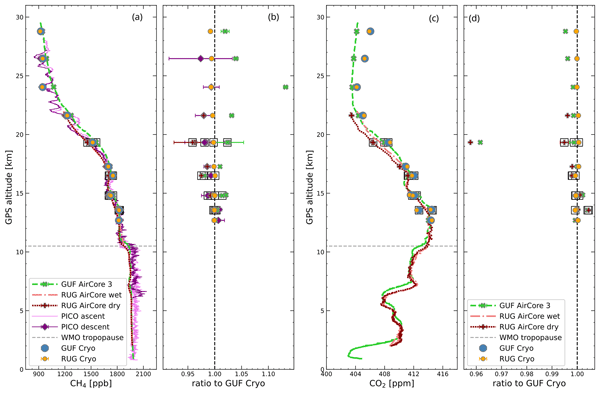
Tanja J. Schuck, Johannes Degen, Timo Keber, Katharina Meixner, Thomas Wagenhäuser, Mélanie Ghysels, Georges Durry, Nadir Amarouche, Alessandro Zanchetta, Steven van Heuven, Huilin Chen, Johannes C. Laube, Sophie L. Baartman, Carina van der Veen, Maria Elena Popa, and Andreas Engel
Atmos. Chem. Phys., 25, 4333–4348, https://doi.org/10.5194/acp-25-4333-2025, https://doi.org/10.5194/acp-25-4333-2025, 2025
Short summary
Short summary
A balloon was launched in 2021 in the Arctic to carry instruments for trace gas measurements up to 32 km. One purpose was to compare measurement techniques. We focus on the major greenhouse gases. To measure these, air was sampled with the AirCore technique and with flask sampling, and samples were analysed after the flight. In flight, observations were done with an optical method. In a companion paper, we report on observations of chlorine and bromine containing trace gases.
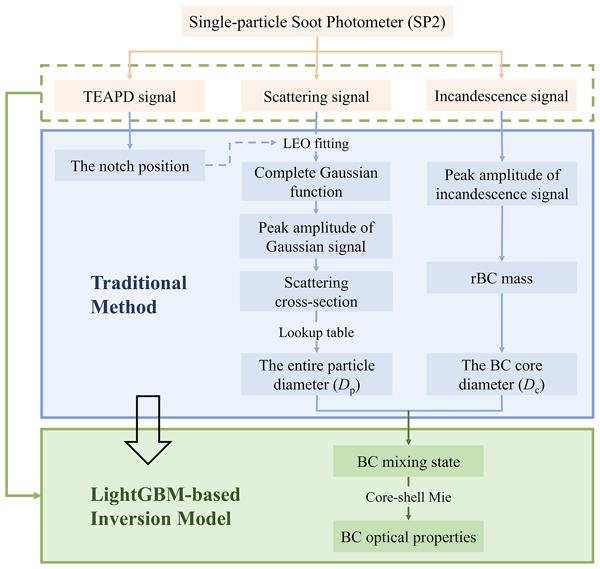
Zeyuan Tian, Jiandong Wang, Jiaping Wang, Chao Liu, Jia Xing, Jinbo Wang, Zhouyang Zhang, Yuzhi Jin, Sunan Shen, Bin Wang, Wei Nie, Xin Huang, and Aijun Ding
Atmos. Meas. Tech., 18, 1149–1162, https://doi.org/10.5194/amt-18-1149-2025, https://doi.org/10.5194/amt-18-1149-2025, 2025
Short summary
Short summary
The radiative effect of black carbon (BC) is substantially modulated by its mixing state, which is challenging to derive physically with a single-particle soot photometer. This study establishes a machine-learning-based inversion model which can accurately and efficiently acquire the BC mixing state. Compared to the widely used leading-edge-only method, our model utilizes a broader scattering signal coverage to more accurately capture diverse particle characteristics.
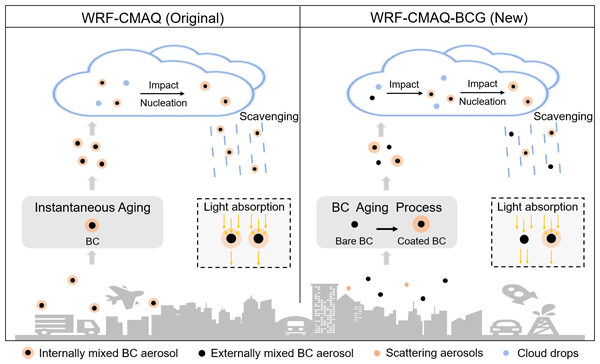
Yuzhi Jin, Jiandong Wang, Chao Liu, David C. Wong, Golam Sarwar, Kathleen M. Fahey, Shang Wu, Jiaping Wang, Jing Cai, Zeyuan Tian, Zhouyang Zhang, Jia Xing, Aijun Ding, and Shuxiao Wang
Atmos. Chem. Phys., 25, 2613–2630, https://doi.org/10.5194/acp-25-2613-2025, https://doi.org/10.5194/acp-25-2613-2025, 2025
Short summary
Short summary
Black carbon (BC) affects climate and the environment, and its aging process alters its properties. Current models, like WRF-CMAQ, lack full accounting for it. We developed the WRF-CMAQ-BCG model to better represent BC aging by introducing bare and coated BC species and their conversion. The WRF-CMAQ-BCG model introduces the capability to simulate BC mixing states and bare and coated BC wet deposition, and it improves the accuracy of BC mass concentration and aerosol optics.
Zhouyang Zhang, Jiandong Wang, Jiaping Wang, Nicole Riemer, Chao Liu, Yuzhi Jin, Zeyuan Tian, Jing Cai, Yueyue Cheng, Ganzhen Chen, Bin Wang, Shuxiao Wang, and Aijun Ding
Atmos. Chem. Phys., 25, 1869–1881, https://doi.org/10.5194/acp-25-1869-2025, https://doi.org/10.5194/acp-25-1869-2025, 2025
Short summary
Short summary
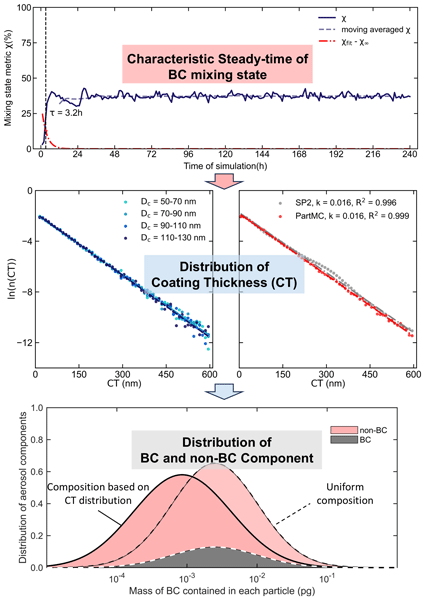
Black carbon (BC) exerts notable warming effects. We use a particle-resolved model to investigate the long-term behavior of the BC mixing state, revealing its compositions, coating thickness distribution, and optical properties all stabilize with a characteristic time of less than 1 d. This study can effectively simplify the description of the BC mixing state, which facilitates the precise assessment of the optical properties of BC aerosols in global and chemical transport models.
Xingyu Wang, Fei Jiang, Hengmao Wang, Zhengqi Zhang, Mousong Wu, Jun Wang, Wei He, Weimin Ju, and Jing M. Chen
Atmos. Chem. Phys., 25, 867–880, https://doi.org/10.5194/acp-25-867-2025, https://doi.org/10.5194/acp-25-867-2025, 2025
Short summary
Short summary
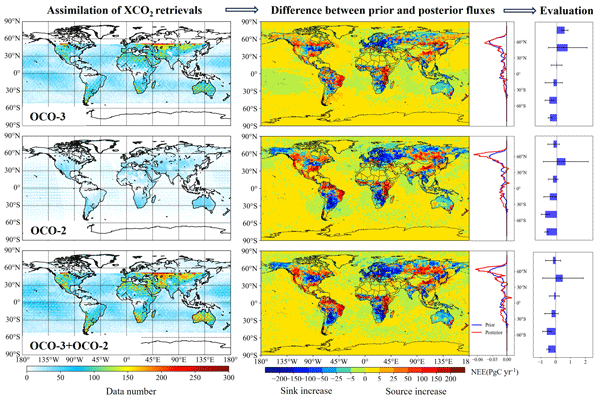
The role of OCO-3 XCO2 retrievals in estimating global terrestrial carbon fluxes is unclear. We investigate this by assimilating OCO-3 XCO2 retrievals alone and in combination with OCO-2 XCO2. The assimilation of OCO-3 XCO2 alone underestimates global land sinks, mainly at high latitudes, due to the lack of observations beyond 52° S and 52° N, large variations in the number of data, and varying observation times, while the joint assimilation of OCO-2 and OCO-3 XCO2 has the best performance.
Ran Yan, Jun Wang, Weimin Ju, Xiuli Xing, Miao Yu, Meirong Wang, Jingye Tan, Xunmei Wang, Hengmao Wang, and Fei Jiang
Biogeosciences, 21, 5027–5043, https://doi.org/10.5194/bg-21-5027-2024, https://doi.org/10.5194/bg-21-5027-2024, 2024
Short summary
Short summary
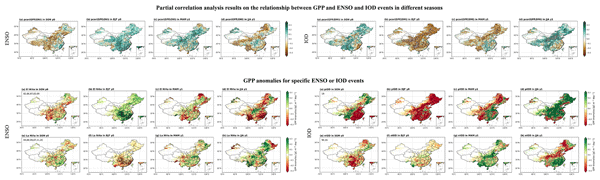
Our study reveals that the effects of the El Niño–Southern Oscillation (ENSO) and Indian Ocean Dipole (IOD) on China's gross primary production (GPP) are basically opposite, with obvious seasonal changes. Soil moisture primarily influences GPP during ENSO events (except spring) and temperature during IOD events (except fall). Quantitatively, China's annual GPP displays modest positive anomalies during La Niña and negative anomalies in El Niño years, driven by significant seasonal variations.
Jinbo Wang, Jiaping Wang, Yuxuan Zhang, Tengyu Liu, Xuguang Chi, Xin Huang, Dafeng Ge, Shiyi Lai, Caijun Zhu, Lei Wang, Qiaozhi Zha, Ximeng Qi, Wei Nie, Congbin Fu, and Aijun Ding
Atmos. Chem. Phys., 24, 11063–11080, https://doi.org/10.5194/acp-24-11063-2024, https://doi.org/10.5194/acp-24-11063-2024, 2024
Short summary
Short summary
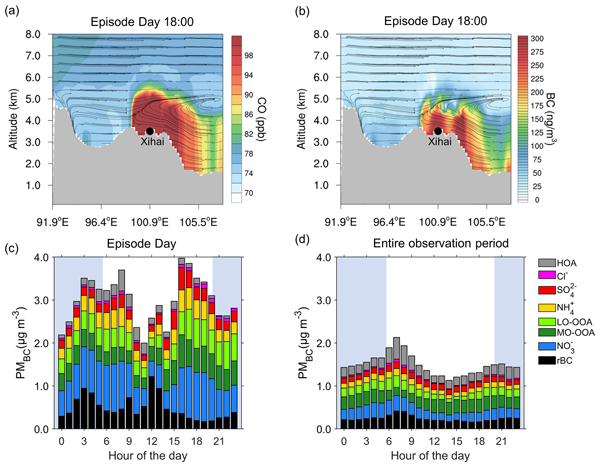
In this study, we found large spatial discrepancies in the physical and chemical properties of black carbon over the Tibetan Plateau (TP). Elevated anthropogenic emissions from low-altitude regions can significantly change the mass concentration, mixing state and chemical composition of black-carbon-containing aerosol in the TP region, further altering its light absorption ability. Our study emphasizes the vulnerability of remote plateau regions to intense anthropogenic influences.
Huajie Zhu, Mousong Wu, Fei Jiang, Michael Vossbeck, Thomas Kaminski, Xiuli Xing, Jun Wang, Weimin Ju, and Jing M. Chen
Geosci. Model Dev., 17, 6337–6363, https://doi.org/10.5194/gmd-17-6337-2024, https://doi.org/10.5194/gmd-17-6337-2024, 2024
Short summary
Short summary
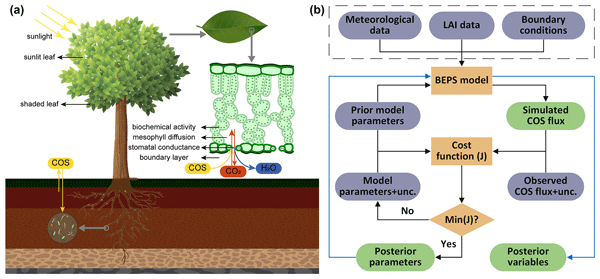
In this work, we developed the Nanjing University Carbon Assimilation System (NUCAS v1.0). Data assimilation experiments were conducted to demonstrate the robustness and investigate the feasibility and applicability of NUCAS. The assimilation of ecosystem carbonyl sulfide (COS) fluxes improved the model performance in gross primary productivity, evapotranspiration, and sensible heat, showing that COS provides constraints on parameters relevant to carbon-, water-, and energy-related processes.
Huajie Zhu, Xiuli Xing, Mousong Wu, Weimin Ju, and Fei Jiang
Biogeosciences, 21, 3735–3760, https://doi.org/10.5194/bg-21-3735-2024, https://doi.org/10.5194/bg-21-3735-2024, 2024
Short summary
Short summary
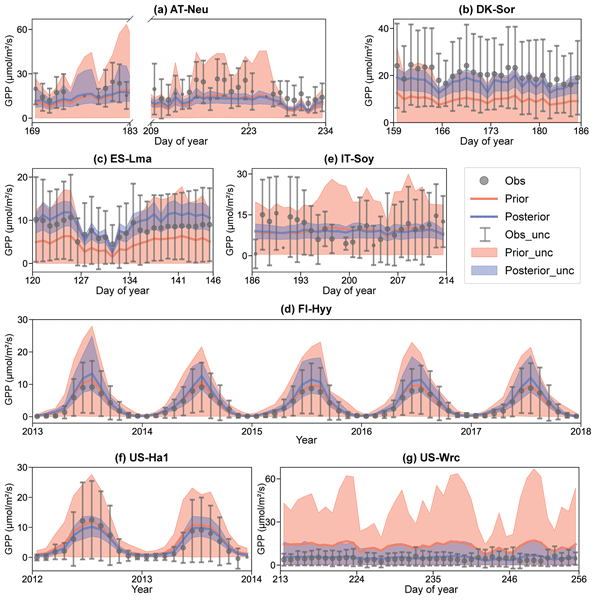
Ecosystem carbonyl sulfide (COS) fluxes were employed to optimize GPP estimation across ecosystems with the Biosphere-atmosphere Exchange Process Simulator (BEPS), which was developed for simulating the canopy COS uptake under its state-of-the-art two-leaf modeling framework. Our results showcased the efficacy of COS in improving model prediction and reducing prediction uncertainty of GPP and enhanced insights into the sensitivity, identifiability, and interactions of parameters related to COS.
Shuzhuang Feng, Fei Jiang, Tianlu Qian, Nan Wang, Mengwei Jia, Songci Zheng, Jiansong Chen, Fang Ying, and Weimin Ju
Atmos. Chem. Phys., 24, 7481–7498, https://doi.org/10.5194/acp-24-7481-2024, https://doi.org/10.5194/acp-24-7481-2024, 2024
Short summary
Short summary
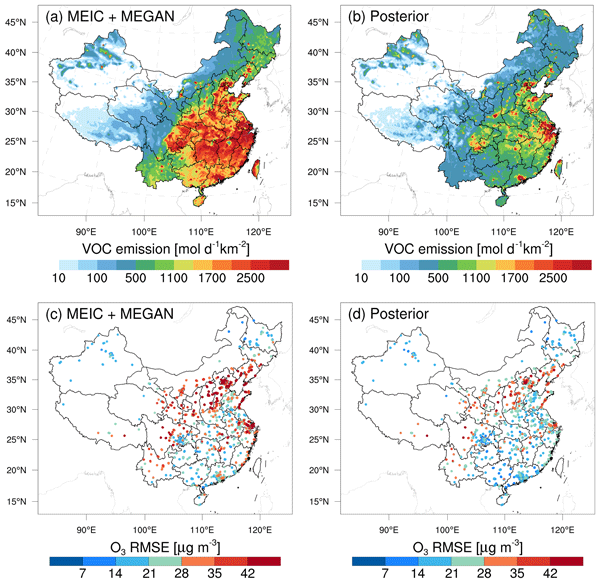
We developed a multi-air-pollutant inversion system to estimate non-methane volatile organic compound (NMVOC) emissions using TROPOMI formaldehyde retrievals. We found that the inversion significantly improved formaldehyde simulations and reduced NMVOC emission uncertainties. The optimized NMVOC emissions effectively corrected the overestimation of O3 levels, mainly by decreasing the rate of the RO2 + NO reaction and increasing the rate of the NO2 + OH reaction.
Wenxuan Hua, Sijia Lou, Xin Huang, Lian Xue, Ke Ding, Zilin Wang, and Aijun Ding
Atmos. Chem. Phys., 24, 6787–6807, https://doi.org/10.5194/acp-24-6787-2024, https://doi.org/10.5194/acp-24-6787-2024, 2024
Short summary
Short summary
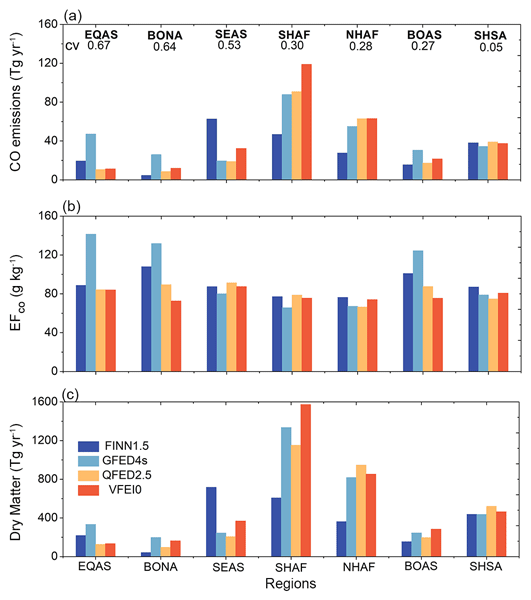
In this study, we diagnose uncertainties in carbon monoxide and organic carbon emissions from four inventories for seven major wildfire-prone regions. Uncertainties in vegetation classification methods, fire detection products, and cloud obscuration effects lead to bias in these biomass burning (BB) emission inventories. By comparing simulations with measurements, we provide certain inventory recommendations. Our study has implications for reducing uncertainties in emissions in further studies.
Joshua L. Laughner, Geoffrey C. Toon, Joseph Mendonca, Christof Petri, Sébastien Roche, Debra Wunch, Jean-Francois Blavier, David W. T. Griffith, Pauli Heikkinen, Ralph F. Keeling, Matthäus Kiel, Rigel Kivi, Coleen M. Roehl, Britton B. Stephens, Bianca C. Baier, Huilin Chen, Yonghoon Choi, Nicholas M. Deutscher, Joshua P. DiGangi, Jochen Gross, Benedikt Herkommer, Pascal Jeseck, Thomas Laemmel, Xin Lan, Erin McGee, Kathryn McKain, John Miller, Isamu Morino, Justus Notholt, Hirofumi Ohyama, David F. Pollard, Markus Rettinger, Haris Riris, Constantina Rousogenous, Mahesh Kumar Sha, Kei Shiomi, Kimberly Strong, Ralf Sussmann, Yao Té, Voltaire A. Velazco, Steven C. Wofsy, Minqiang Zhou, and Paul O. Wennberg
Earth Syst. Sci. Data, 16, 2197–2260, https://doi.org/10.5194/essd-16-2197-2024, https://doi.org/10.5194/essd-16-2197-2024, 2024
Short summary
Short summary
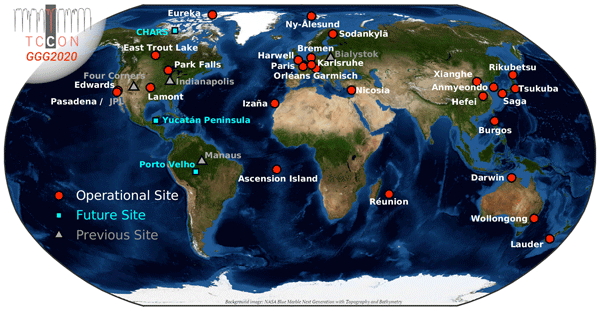
This paper describes a new version, called GGG2020, of a data set containing column-integrated observations of greenhouse and related gases (including CO2, CH4, CO, and N2O) made by ground stations located around the world. Compared to the previous version (GGG2014), improvements have been made toward site-to-site consistency. This data set plays a key role in validating space-based greenhouse gas observations and in understanding the carbon cycle.
Markku Kulmala, Diego Aliaga, Santeri Tuovinen, Runlong Cai, Heikki Junninen, Chao Yan, Federico Bianchi, Yafang Cheng, Aijun Ding, Douglas R. Worsnop, Tuukka Petäjä, Katrianne Lehtipalo, Pauli Paasonen, and Veli-Matti Kerminen
Aerosol Research, 2, 49–58, https://doi.org/10.5194/ar-2-49-2024, https://doi.org/10.5194/ar-2-49-2024, 2024
Short summary
Short summary
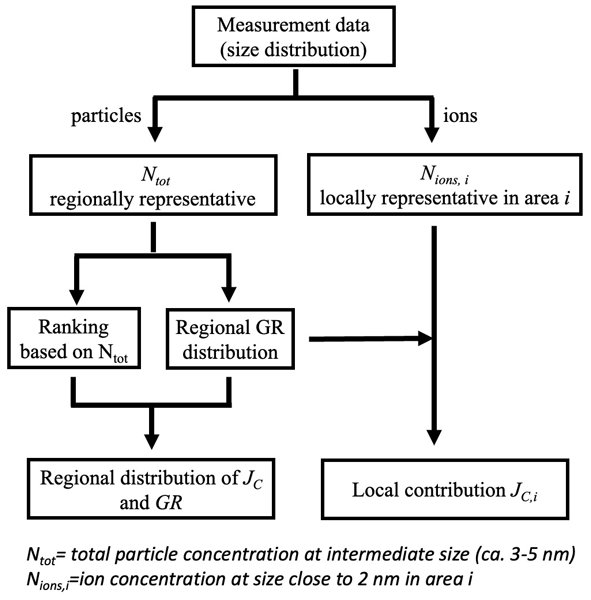
Atmospheric new particle formation (NPF), together with secondary production of particulate matter in the atmosphere, dominates aerosol particle number concentrations and submicron particle mass loads in many environments globally. In this opinion paper, we describe the paradigm shift to understand NPF in a continuous way instead of using traditional binary event–non-event analysis.
Jiye Leng, Jing M. Chen, Wenyu Li, Xiangzhong Luo, Mingzhu Xu, Jane Liu, Rong Wang, Cheryl Rogers, Bolun Li, and Yulin Yan
Earth Syst. Sci. Data, 16, 1283–1300, https://doi.org/10.5194/essd-16-1283-2024, https://doi.org/10.5194/essd-16-1283-2024, 2024
Short summary
Short summary
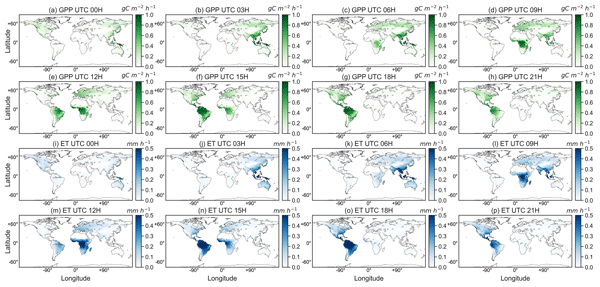
We produced a long-term global two-leaf gross primary productivity (GPP) and evapotranspiration (ET) dataset at the hourly time step by integrating a diagnostic process-based model with dynamic parameterizations. The new dataset provides us with a unique opportunity to study carbon and water fluxes at sub-daily time scales and advance our understanding of ecosystem functions in response to transient environmental changes.
Yueyue Cheng, Chao Liu, Jiandong Wang, Jiaping Wang, Zhouyang Zhang, Li Chen, Dafeng Ge, Caijun Zhu, Jinbo Wang, and Aijun Ding
Atmos. Chem. Phys., 24, 3065–3078, https://doi.org/10.5194/acp-24-3065-2024, https://doi.org/10.5194/acp-24-3065-2024, 2024
Short summary
Short summary
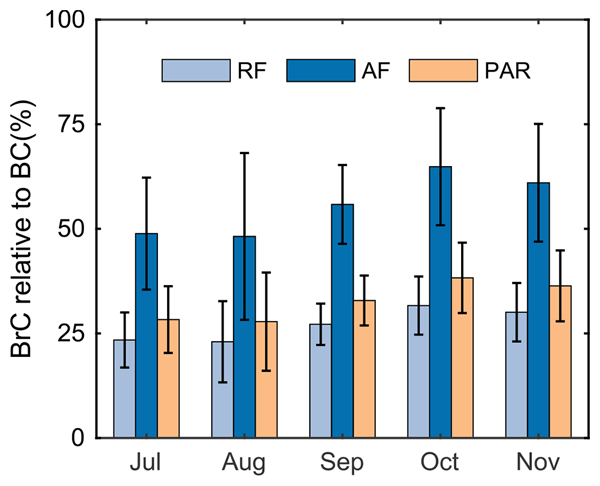
Brown carbon (BrC), a light-absorbing aerosol, plays a pivotal role in influencing global climate. However, assessing BrC radiative effects remains challenging because the required observational data are hardly accessible. Here we develop a new BrC radiative effect estimation method combining conventional observations and numerical models. Our findings reveal that BrC absorbs up to a third of the sunlight at 370 nm that black carbon does, highlighting its importance in aerosol radiative effects.
Michael Steiner, Wouter Peters, Ingrid Luijkx, Stephan Henne, Huilin Chen, Samuel Hammer, and Dominik Brunner
Atmos. Chem. Phys., 24, 2759–2782, https://doi.org/10.5194/acp-24-2759-2024, https://doi.org/10.5194/acp-24-2759-2024, 2024
Short summary
Short summary
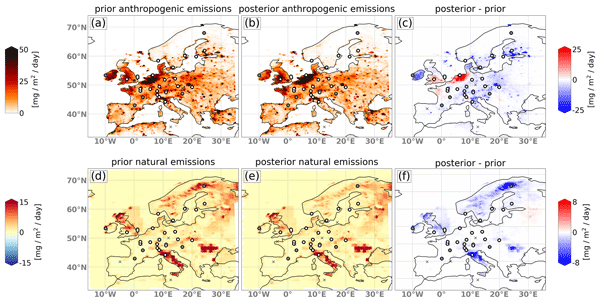
The Paris Agreement increased interest in estimating greenhouse gas (GHG) emissions of individual countries, but top-down emission estimation is not yet considered policy-relevant. It is therefore paramount to reduce large errors and to build systems that are based on the newest atmospheric transport models. In this study, we present the first application of ICON-ART in the inverse modeling of GHG fluxes with an ensemble Kalman filter and present our results for European CH4 emissions.
Shiyi Lai, Ximeng Qi, Xin Huang, Sijia Lou, Xuguang Chi, Liangduo Chen, Chong Liu, Yuliang Liu, Chao Yan, Mengmeng Li, Tengyu Liu, Wei Nie, Veli-Matti Kerminen, Tuukka Petäjä, Markku Kulmala, and Aijun Ding
Atmos. Chem. Phys., 24, 2535–2553, https://doi.org/10.5194/acp-24-2535-2024, https://doi.org/10.5194/acp-24-2535-2024, 2024
Short summary
Short summary
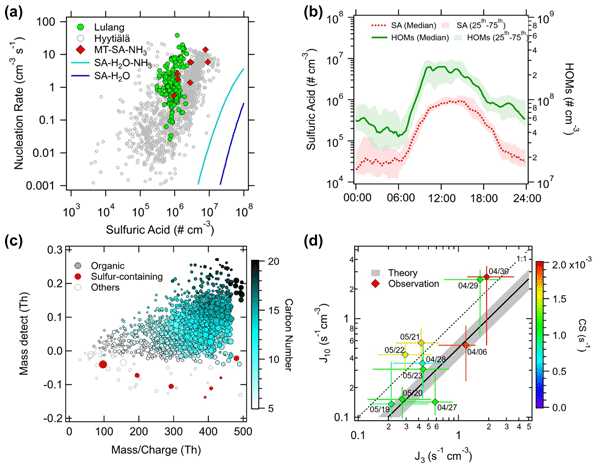
By combining in situ measurements and chemical transport modeling, this study investigates new particle formation (NPF) on the southeastern Tibetan Plateau. We found that the NPF was driven by the presence of biogenic gases and the transport of anthropogenic precursors. The NPF was vertically heterogeneous and shaped by the vertical mixing. This study highlights the importance of anthropogenic–biogenic interactions and meteorological dynamics in NPF in this climate-sensitive region.
Shuzheng Guo, Chunxiang Ye, Weili Lin, Yi Chen, Limin Zeng, Xuena Yu, Jinhui Cui, Chong Zhang, Jing Duan, Haobin Zhong, Rujin Huang, Xuguang Chi, Wei Nie, and Aijun Ding
EGUsphere, https://doi.org/10.5194/egusphere-2024-262, https://doi.org/10.5194/egusphere-2024-262, 2024
Preprint archived
Short summary
Short summary
@Tibet field campaigns 2021 discovered surprisingly high levels and activity contributions of oxygenated volatile organic compounds on the southeast of the Tibetan Plateau, which suggests that OVOCs may play a larger role in the chemical reactions that occur in high-altitude regions than previously thought.
Ying Zhang, Duzitian Li, Xu-Cheng He, Wei Nie, Chenjuan Deng, Runlong Cai, Yuliang Liu, Yishuo Guo, Chong Liu, Yiran Li, Liangduo Chen, Yuanyuan Li, Chenjie Hua, Tingyu Liu, Zongcheng Wang, Jiali Xie, Lei Wang, Tuukka Petäjä, Federico Bianchi, Ximeng Qi, Xuguang Chi, Pauli Paasonen, Yongchun Liu, Chao Yan, Jingkun Jiang, Aijun Ding, and Markku Kulmala
Atmos. Chem. Phys., 24, 1873–1893, https://doi.org/10.5194/acp-24-1873-2024, https://doi.org/10.5194/acp-24-1873-2024, 2024
Short summary
Short summary
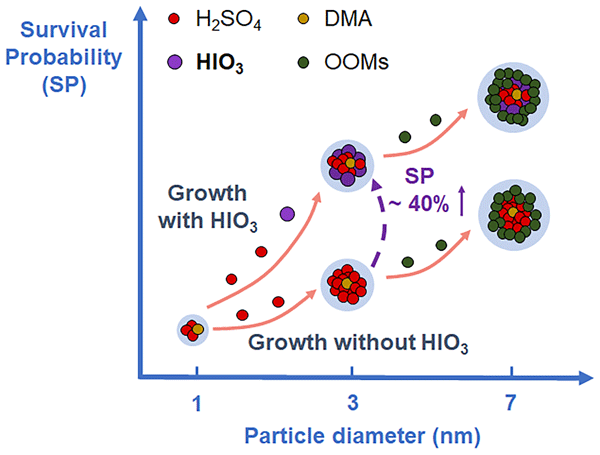
This study conducts a long-term observation of gaseous iodine oxoacids in two Chinese megacities, revealing their ubiquitous presence with peak concentrations (up to 0.1 pptv) in summer. Our analysis suggests a mix of terrestrial and marine sources for iodine. Additionally, iodic acid is identified as a notable contributor to sub-3 nm particle growth and particle survival probability.
Peng Li, Rong Shang, Jing M. Chen, Mingzhu Xu, Xudong Lin, Guirui Yu, Nianpeng He, and Li Xu
Biogeosciences, 21, 625–639, https://doi.org/10.5194/bg-21-625-2024, https://doi.org/10.5194/bg-21-625-2024, 2024
Short summary
Short summary
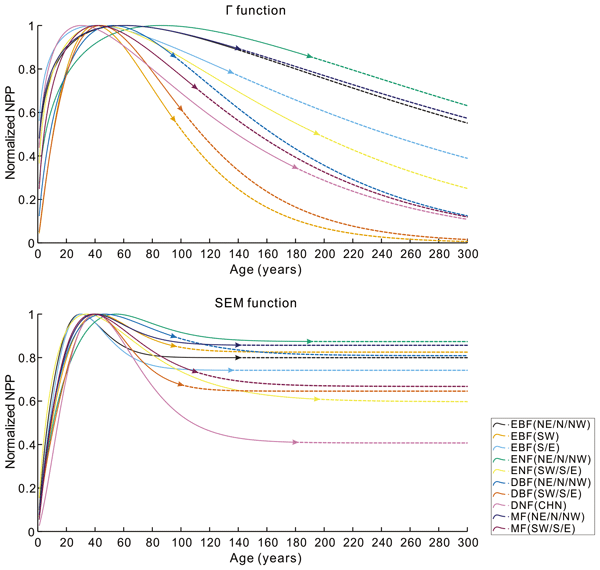
The amount of carbon that forests gain from the atmosphere, called net primary productivity (NPP), changes a lot with age. These forest NPP–age relationships could be modeled from field survey data, but we are not sure which model works best. Here we tested five different models using 3121 field survey samples in China, and the semi-empirical mathematical (SEM) function was determined as the optimal. The relationships built by SEM can improve China's forest carbon modeling and prediction.
Zhen Peng, Lili Lei, Zhe-Min Tan, Meigen Zhang, Aijun Ding, and Xingxia Kou
Atmos. Chem. Phys., 23, 14505–14520, https://doi.org/10.5194/acp-23-14505-2023, https://doi.org/10.5194/acp-23-14505-2023, 2023
Short summary
Short summary
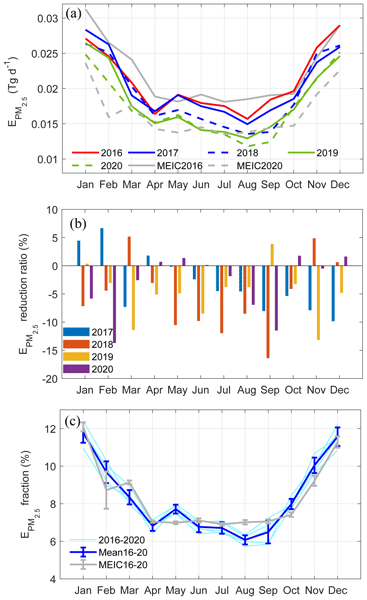
Annual PM2.5 emissions in China consistently decreased by about 3% to 5% from 2017 to 2020 with spatial variations and seasonal dependencies. High-temporal-resolution and dynamics-based PM2.5 emission estimates provide quantitative diurnal variations for each season. Significant reductions in PM2.5 emissions in the North China Plain and northeast of China in 2020 were caused by COVID-19.
Minqiang Zhou, Bavo Langerock, Mahesh Kumar Sha, Christian Hermans, Nicolas Kumps, Rigel Kivi, Pauli Heikkinen, Christof Petri, Justus Notholt, Huilin Chen, and Martine De Mazière
Atmos. Meas. Tech., 16, 5593–5608, https://doi.org/10.5194/amt-16-5593-2023, https://doi.org/10.5194/amt-16-5593-2023, 2023
Short summary
Short summary
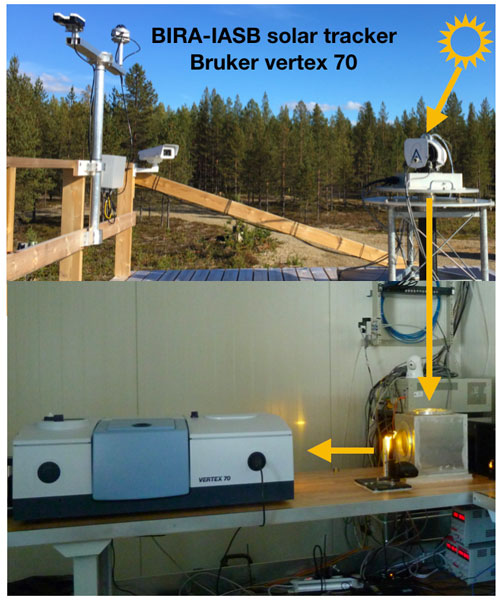
Atmospheric N2O and CH4 columns are successfully retrieved from low-resolution FTIR spectra recorded by a Bruker VERTEX 70. The 1-year measurements at Sodankylä show that the N2O total columns retrieved from 125HR and VERTEX 70 spectra are −0.3 ± 0.7 % with an R value of 0.93. The relative differences between the CH4 total columns retrieved from the 125HR and VERTEX spectra are 0.0 ± 0.8 % with an R value of 0.87. Such a technique can help to fill the gap in NDACC N2O and CH4 measurements.
Shanlei Sun, Zaoying Bi, Jingfeng Xiao, Yi Liu, Ge Sun, Weimin Ju, Chunwei Liu, Mengyuan Mu, Jinjian Li, Yang Zhou, Xiaoyuan Li, Yibo Liu, and Haishan Chen
Earth Syst. Sci. Data, 15, 4849–4876, https://doi.org/10.5194/essd-15-4849-2023, https://doi.org/10.5194/essd-15-4849-2023, 2023
Short summary
Short summary
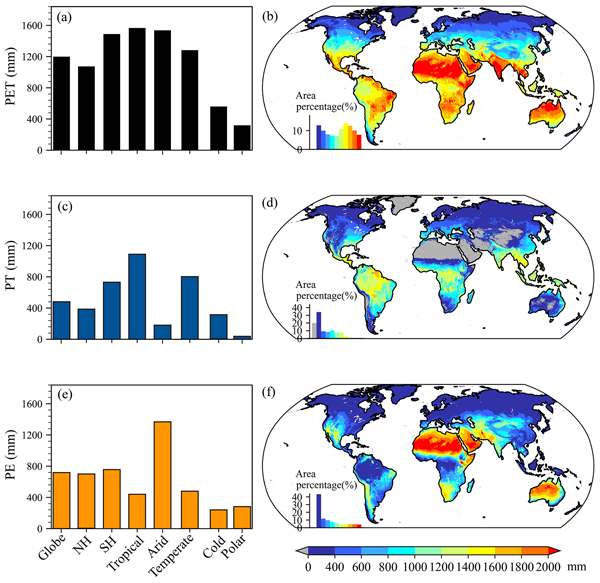
Based on various existing datasets, we comprehensively considered spatiotemporal differences in land surfaces and CO2 effects on plant stomatal resistance to parameterize the Shuttleworth–Wallace model, and we generated a global 5 km ensemble mean monthly potential evapotranspiration (PET) dataset (including potential transpiration PT and soil evaporation PE) during 1982–2015. The new dataset may be used by academic communities and various agencies to conduct various studies.
Shuzhuang Feng, Fei Jiang, Zheng Wu, Hengmao Wang, Wei He, Yang Shen, Lingyu Zhang, Yanhua Zheng, Chenxi Lou, Ziqiang Jiang, and Weimin Ju
Geosci. Model Dev., 16, 5949–5977, https://doi.org/10.5194/gmd-16-5949-2023, https://doi.org/10.5194/gmd-16-5949-2023, 2023
Short summary
Short summary
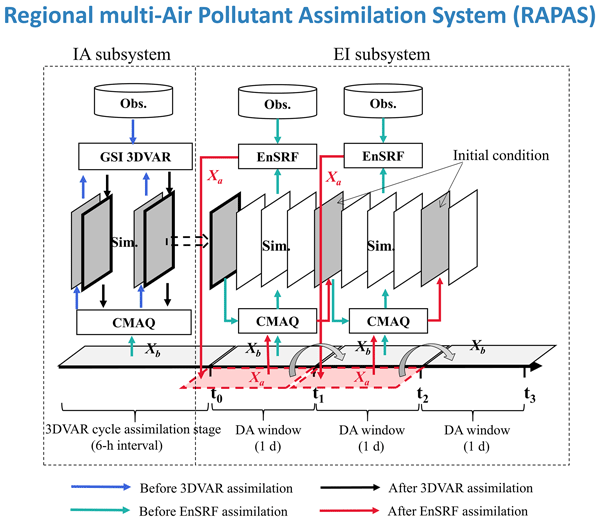
We document the system development and application of a Regional multi-Air Pollutant Assimilation System (RAPAS v1.0). This system is developed to optimize gridded source emissions of CO, SO2, NOx, primary PM2.5, and coarse PM10 on a regional scale via simultaneously assimilating surface measurements of CO, SO2, NO2, PM2.5, and PM10. A series of sensitivity experiments demonstrates the advantage of the “two-step” inversion strategy and the robustness of the system in estimating the emissions.
Foteini Stavropoulou, Katarina Vinković, Bert Kers, Marcel de Vries, Steven van Heuven, Piotr Korbeń, Martina Schmidt, Julia Wietzel, Pawel Jagoda, Jaroslav M. Necki, Jakub Bartyzel, Hossein Maazallahi, Malika Menoud, Carina van der Veen, Sylvia Walter, Béla Tuzson, Jonas Ravelid, Randulph Paulo Morales, Lukas Emmenegger, Dominik Brunner, Michael Steiner, Arjan Hensen, Ilona Velzeboer, Pim van den Bulk, Hugo Denier van der Gon, Antonio Delre, Maklawe Essonanawe Edjabou, Charlotte Scheutz, Marius Corbu, Sebastian Iancu, Denisa Moaca, Alin Scarlat, Alexandru Tudor, Ioana Vizireanu, Andreea Calcan, Magdalena Ardelean, Sorin Ghemulet, Alexandru Pana, Aurel Constantinescu, Lucian Cusa, Alexandru Nica, Calin Baciu, Cristian Pop, Andrei Radovici, Alexandru Mereuta, Horatiu Stefanie, Alexandru Dandocsi, Bas Hermans, Stefan Schwietzke, Daniel Zavala-Araiza, Huilin Chen, and Thomas Röckmann
Atmos. Chem. Phys., 23, 10399–10412, https://doi.org/10.5194/acp-23-10399-2023, https://doi.org/10.5194/acp-23-10399-2023, 2023
Short summary
Short summary
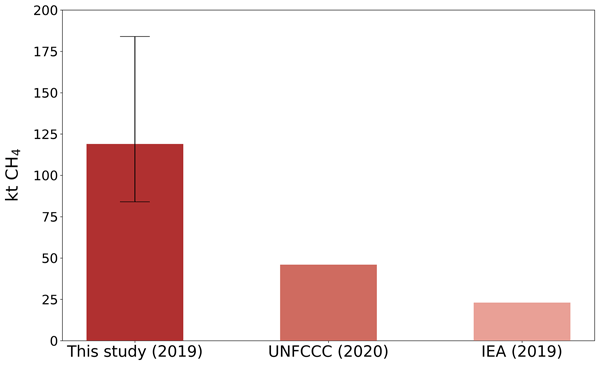
In this study, we quantify CH4 emissions from onshore oil production sites in Romania at source and facility level using a combination of ground- and drone-based measurement techniques. We show that the total CH4 emissions in our studied areas are much higher than the emissions reported to UNFCCC, and up to three-quarters of the detected emissions are related to operational venting. Our results suggest that oil and gas production infrastructure in Romania holds a massive mitigation potential.
Alessandro Zanchetta, Linda M. J. Kooijmans, Steven van Heuven, Andrea Scifo, Hubertus A. Scheeren, Ivan Mammarella, Ute Karstens, Jin Ma, Maarten Krol, and Huilin Chen
Biogeosciences, 20, 3539–3553, https://doi.org/10.5194/bg-20-3539-2023, https://doi.org/10.5194/bg-20-3539-2023, 2023
Short summary
Short summary
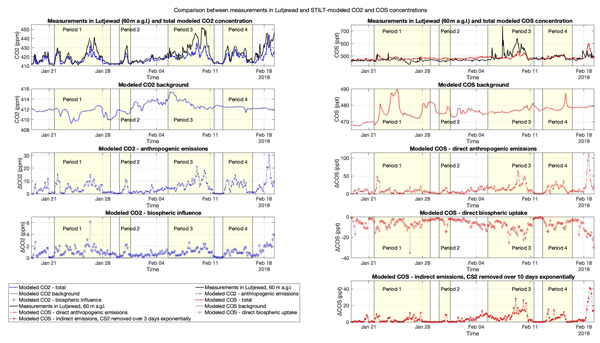
Carbonyl sulfide (COS) has been suggested as a tool to estimate carbon dioxide (CO2) uptake by plants during photosynthesis. However, understanding its sources and sinks is critical to preventing biases in this estimate. Combining observations and models, this study proves that regional sources occasionally influence the measurements at the 60 m tall Lutjewad tower (1 m a.s.l.; 53°24′ N, 6°21′ E) in the Netherlands. Moreover, it estimates nighttime COS fluxes to be −3.0 ± 2.6 pmol m−2 s−1.
Guangdong Niu, Ximeng Qi, Liangduo Chen, Lian Xue, Shiyi Lai, Xin Huang, Jiaping Wang, Xuguang Chi, Wei Nie, Veli-Matti Kerminen, Tuukka Petäjä, Markku Kulmala, and Aijun Ding
Atmos. Chem. Phys., 23, 7521–7534, https://doi.org/10.5194/acp-23-7521-2023, https://doi.org/10.5194/acp-23-7521-2023, 2023
Short summary
Short summary
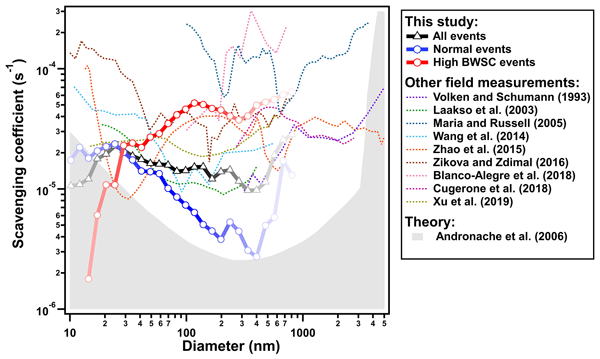
The reported below-cloud wet-scavenging coefficients (BWSCs) are much higher than theoretical data, but the reason remains unclear. Based on long-term observation, we find that air mass changing during rainfall events causes the overestimation of BWSCs. Thus, the discrepancy in BWSCs between observation and theory is not as large as currently believed. To obtain reasonable BWSCs and parameterizations from field observations, the effect of air mass changes needs to be considered.
Truls Andersen, Zhao Zhao, Marcel de Vries, Jaroslaw Necki, Justyna Swolkien, Malika Menoud, Thomas Röckmann, Anke Roiger, Andreas Fix, Wouter Peters, and Huilin Chen
Atmos. Chem. Phys., 23, 5191–5216, https://doi.org/10.5194/acp-23-5191-2023, https://doi.org/10.5194/acp-23-5191-2023, 2023
Short summary
Short summary
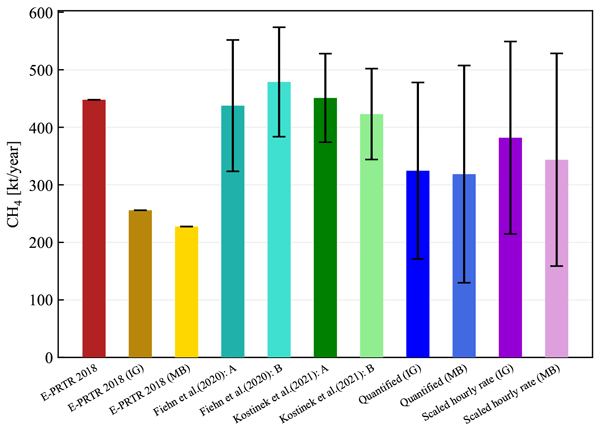
The Upper Silesian Coal Basin, Poland, is one of the hot spots of methane emissions in Europe. Using an uncrewed aerial vehicle (UAV), we performed atmospheric measurements of methane concentrations downwind of five ventilation shafts in this region and determined the emission rates from the individual shafts. We found a strong correlation between quantified shaft-averaged emission rates and hourly inventory data, which also allows us to estimate the methane emissions from the entire region.
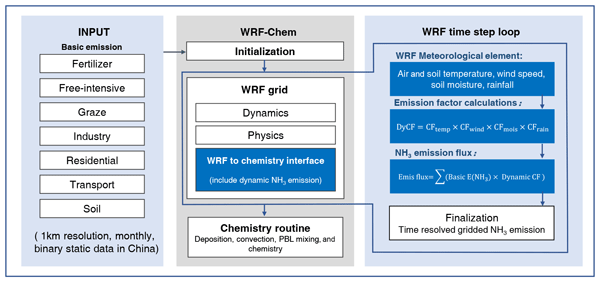
Chuanhua Ren, Xin Huang, Tengyu Liu, Yu Song, Zhang Wen, Xuejun Liu, Aijun Ding, and Tong Zhu
Geosci. Model Dev., 16, 1641–1659, https://doi.org/10.5194/gmd-16-1641-2023, https://doi.org/10.5194/gmd-16-1641-2023, 2023
Short summary
Short summary
Ammonia in the atmosphere has wide impacts on the ecological environment and air quality, and its emission from soil volatilization is highly sensitive to meteorology, making it challenging to be well captured in models. We developed a dynamic emission model capable of calculating ammonia emission interactively with meteorological and soil conditions. Such a coupling of soil emission with meteorology provides a better understanding of ammonia emission and its contribution to atmospheric aerosol.
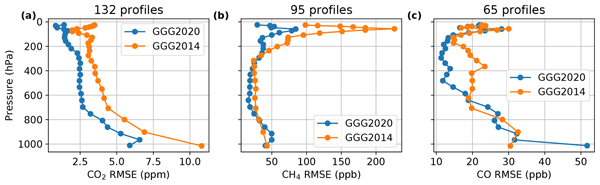
Joshua L. Laughner, Sébastien Roche, Matthäus Kiel, Geoffrey C. Toon, Debra Wunch, Bianca C. Baier, Sébastien Biraud, Huilin Chen, Rigel Kivi, Thomas Laemmel, Kathryn McKain, Pierre-Yves Quéhé, Constantina Rousogenous, Britton B. Stephens, Kaley Walker, and Paul O. Wennberg
Atmos. Meas. Tech., 16, 1121–1146, https://doi.org/10.5194/amt-16-1121-2023, https://doi.org/10.5194/amt-16-1121-2023, 2023
Short summary
Short summary
Observations using sunlight to measure surface-to-space total column of greenhouse gases in the atmosphere need an initial guess of the vertical distribution of those gases to start from. We have developed an approach to provide those initial guess profiles that uses readily available meteorological data as input. This lets us make these guesses without simulating them with a global model. The profiles generated this way match independent observations well.

Tianqi Shi, Zeyu Han, Ge Han, Xin Ma, Huilin Chen, Truls Andersen, Huiqin Mao, Cuihong Chen, Haowei Zhang, and Wei Gong
Atmos. Chem. Phys., 22, 13881–13896, https://doi.org/10.5194/acp-22-13881-2022, https://doi.org/10.5194/acp-22-13881-2022, 2022
Short summary
Short summary
CH4 works as the second-most important greenhouse gas, its reported emission inventories being far less than CO2. In this study, we developed a self-adjusted model to estimate the CH4 emission rate from strong point sources by the UAV-based AirCore system. This model would reduce the uncertainty in CH4 emission rate quantification accrued by errors in measurements of wind and concentration. Actual measurements on Pniówek coal demonstrate the high accuracy and stability of our developed model.
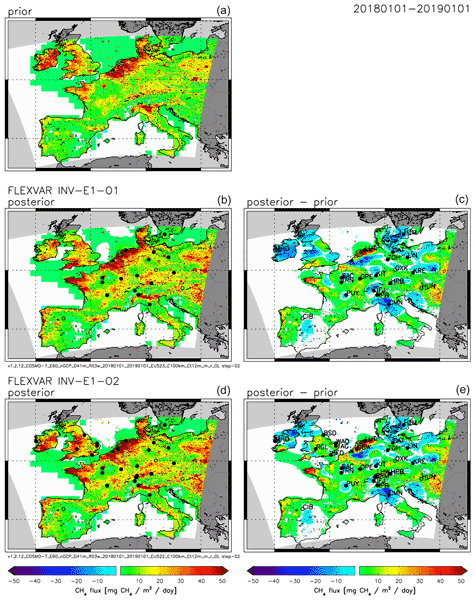
Peter Bergamaschi, Arjo Segers, Dominik Brunner, Jean-Matthieu Haussaire, Stephan Henne, Michel Ramonet, Tim Arnold, Tobias Biermann, Huilin Chen, Sebastien Conil, Marc Delmotte, Grant Forster, Arnoud Frumau, Dagmar Kubistin, Xin Lan, Markus Leuenberger, Matthias Lindauer, Morgan Lopez, Giovanni Manca, Jennifer Müller-Williams, Simon O'Doherty, Bert Scheeren, Martin Steinbacher, Pamela Trisolino, Gabriela Vítková, and Camille Yver Kwok
Atmos. Chem. Phys., 22, 13243–13268, https://doi.org/10.5194/acp-22-13243-2022, https://doi.org/10.5194/acp-22-13243-2022, 2022
Short summary
Short summary
We present a novel high-resolution inverse modelling system, "FLEXVAR", and its application for the inverse modelling of European CH4 emissions in 2018. The new system combines a high spatial resolution of 7 km x 7 km with a variational data assimilation technique, which allows CH4 emissions to be optimized from individual model grid cells. The high resolution allows the observations to be better reproduced, while the derived emissions show overall good consistency with two existing models.
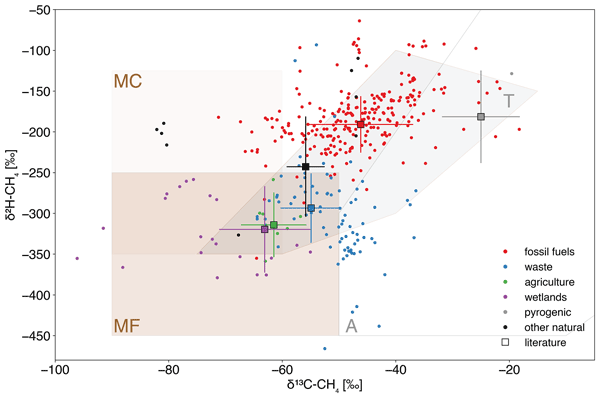
Malika Menoud, Carina van der Veen, Dave Lowry, Julianne M. Fernandez, Semra Bakkaloglu, James L. France, Rebecca E. Fisher, Hossein Maazallahi, Mila Stanisavljević, Jarosław Nęcki, Katarina Vinkovic, Patryk Łakomiec, Janne Rinne, Piotr Korbeń, Martina Schmidt, Sara Defratyka, Camille Yver-Kwok, Truls Andersen, Huilin Chen, and Thomas Röckmann
Earth Syst. Sci. Data, 14, 4365–4386, https://doi.org/10.5194/essd-14-4365-2022, https://doi.org/10.5194/essd-14-4365-2022, 2022
Short summary
Short summary
Emission sources of methane (CH4) can be distinguished with measurements of CH4 stable isotopes. We present new measurements of isotope signatures of various CH4 sources in Europe, mainly anthropogenic, sampled from 2017 to 2020. The present database also contains the most recent update of the global signature dataset from the literature. The dataset improves CH4 source attribution and the understanding of the global CH4 budget.
Chao Yan, Yicheng Shen, Dominik Stolzenburg, Lubna Dada, Ximeng Qi, Simo Hakala, Anu-Maija Sundström, Yishuo Guo, Antti Lipponen, Tom V. Kokkonen, Jenni Kontkanen, Runlong Cai, Jing Cai, Tommy Chan, Liangduo Chen, Biwu Chu, Chenjuan Deng, Wei Du, Xiaolong Fan, Xu-Cheng He, Juha Kangasluoma, Joni Kujansuu, Mona Kurppa, Chang Li, Yiran Li, Zhuohui Lin, Yiliang Liu, Yuliang Liu, Yiqun Lu, Wei Nie, Jouni Pulliainen, Xiaohui Qiao, Yonghong Wang, Yifan Wen, Ye Wu, Gan Yang, Lei Yao, Rujing Yin, Gen Zhang, Shaojun Zhang, Feixue Zheng, Ying Zhou, Antti Arola, Johanna Tamminen, Pauli Paasonen, Yele Sun, Lin Wang, Neil M. Donahue, Yongchun Liu, Federico Bianchi, Kaspar R. Daellenbach, Douglas R. Worsnop, Veli-Matti Kerminen, Tuukka Petäjä, Aijun Ding, Jingkun Jiang, and Markku Kulmala
Atmos. Chem. Phys., 22, 12207–12220, https://doi.org/10.5194/acp-22-12207-2022, https://doi.org/10.5194/acp-22-12207-2022, 2022
Short summary
Short summary
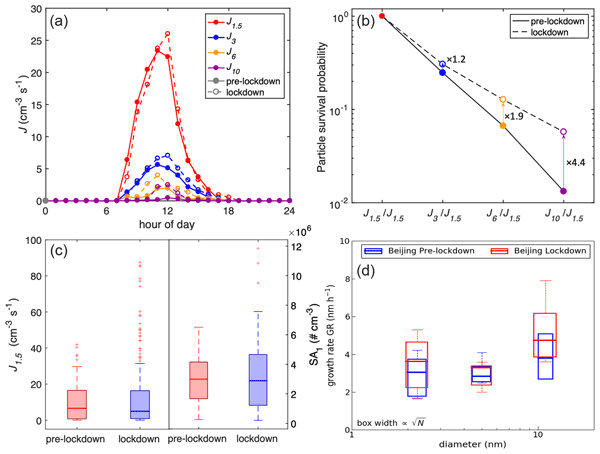
Atmospheric new particle formation (NPF) is a dominant source of atmospheric ultrafine particles. In urban environments, traffic emissions are a major source of primary pollutants, but their contribution to NPF remains under debate. During the COVID-19 lockdown, traffic emissions were significantly reduced, providing a unique chance to examine their relevance to NPF. Based on our comprehensive measurements, we demonstrate that traffic emissions alone are not able to explain the NPF in Beijing.
Jing M. Chen, Rong Wang, Yihong Liu, Liming He, Holly Croft, Xiangzhong Luo, Han Wang, Nicholas G. Smith, Trevor F. Keenan, I. Colin Prentice, Yongguang Zhang, Weimin Ju, and Ning Dong
Earth Syst. Sci. Data, 14, 4077–4093, https://doi.org/10.5194/essd-14-4077-2022, https://doi.org/10.5194/essd-14-4077-2022, 2022
Short summary
Short summary
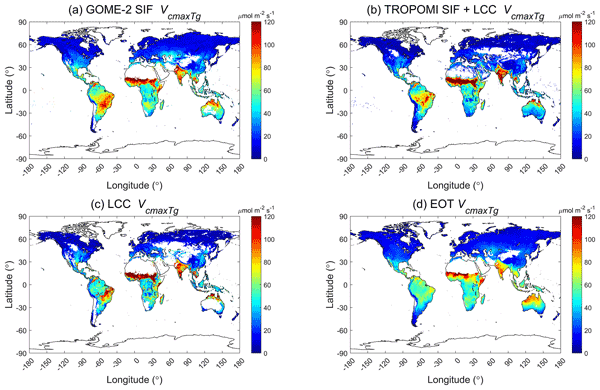
Green leaves contain chlorophyll pigments that harvest light for photosynthesis and also emit chlorophyll fluorescence as a byproduct. Both chlorophyll pigments and fluorescence can be measured by Earth-orbiting satellite sensors. Here we demonstrate that leaf photosynthetic capacity can be reliably derived globally using these measurements. This new satellite-based information overcomes a bottleneck in global ecological research where such spatially explicit information is currently lacking.
Matthias Schneider, Benjamin Ertl, Qiansi Tu, Christopher J. Diekmann, Farahnaz Khosrawi, Amelie N. Röhling, Frank Hase, Darko Dubravica, Omaira E. García, Eliezer Sepúlveda, Tobias Borsdorff, Jochen Landgraf, Alba Lorente, André Butz, Huilin Chen, Rigel Kivi, Thomas Laemmel, Michel Ramonet, Cyril Crevoisier, Jérome Pernin, Martin Steinbacher, Frank Meinhardt, Kimberly Strong, Debra Wunch, Thorsten Warneke, Coleen Roehl, Paul O. Wennberg, Isamu Morino, Laura T. Iraci, Kei Shiomi, Nicholas M. Deutscher, David W. T. Griffith, Voltaire A. Velazco, and David F. Pollard
Atmos. Meas. Tech., 15, 4339–4371, https://doi.org/10.5194/amt-15-4339-2022, https://doi.org/10.5194/amt-15-4339-2022, 2022
Short summary
Short summary
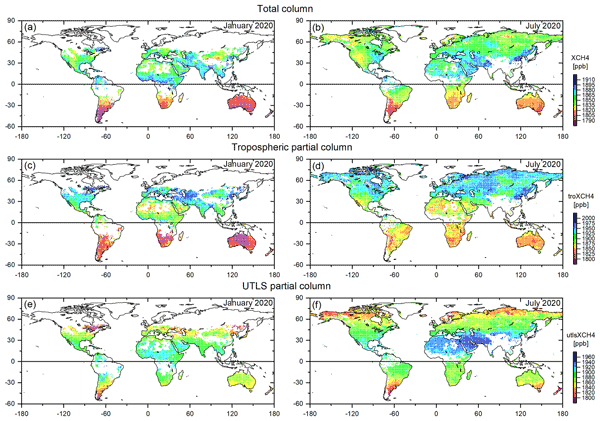
We present a computationally very efficient method for the synergetic use of level 2 remote-sensing data products. We apply the method to IASI vertical profile and TROPOMI total column space-borne methane observations and thus gain sensitivity for the tropospheric methane partial columns, which is not achievable by the individual use of TROPOMI and IASI. These synergetic effects are evaluated theoretically and empirically by inter-comparisons to independent references of TCCON, AirCore, and GAW.
Fei Jiang, Weimin Ju, Wei He, Mousong Wu, Hengmao Wang, Jun Wang, Mengwei Jia, Shuzhuang Feng, Lingyu Zhang, and Jing M. Chen
Earth Syst. Sci. Data, 14, 3013–3037, https://doi.org/10.5194/essd-14-3013-2022, https://doi.org/10.5194/essd-14-3013-2022, 2022
Short summary
Short summary
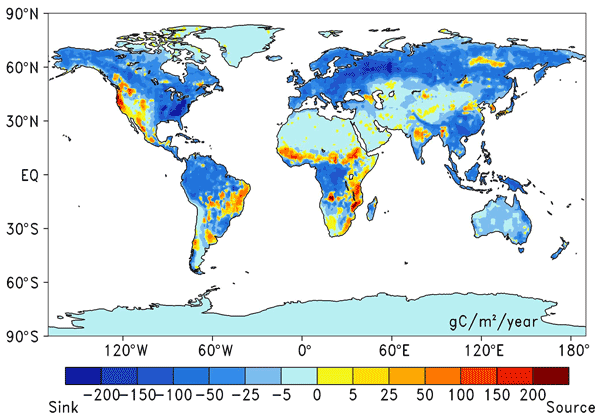
A 10-year (2010–2019) global monthly terrestrial NEE dataset (GCAS2021) was inferred from the GOSAT ACOS v9 XCO2 product. It shows strong carbon sinks over eastern N. America, the Amazon, the Congo Basin, Europe, boreal forests, southern China, and Southeast Asia. It has good quality and can reflect the impacts of extreme climates and large-scale climate anomalies on carbon fluxes well. We believe that this dataset can contribute to regional carbon budget assessment and carbon dynamics research.
Randulph Morales, Jonas Ravelid, Katarina Vinkovic, Piotr Korbeń, Béla Tuzson, Lukas Emmenegger, Huilin Chen, Martina Schmidt, Sebastian Humbel, and Dominik Brunner
Atmos. Meas. Tech., 15, 2177–2198, https://doi.org/10.5194/amt-15-2177-2022, https://doi.org/10.5194/amt-15-2177-2022, 2022
Short summary
Short summary
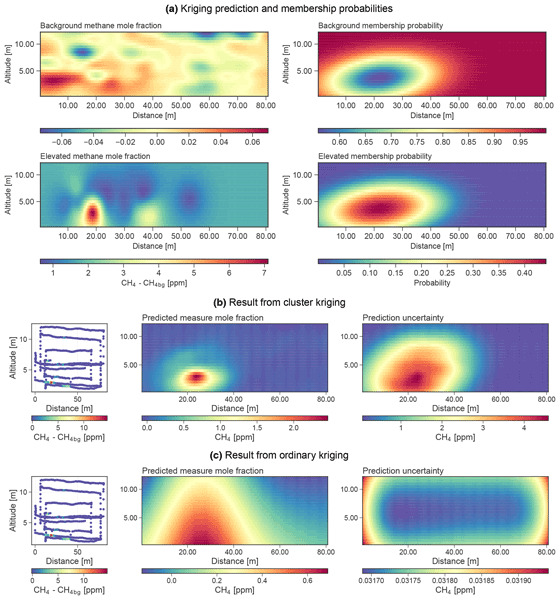
Mapping trace gas emission plumes using in situ measurements from unmanned aerial vehicles (UAVs) is an emerging and attractive possibility to quantify emissions from localized sources. We performed an extensive controlled-release experiment to develop an optimal quantification method and to determine the related uncertainties under various environmental and sampling conditions. Our approach was successful in quantifying local methane sources from drone-based measurements.
Hanna K. Lappalainen, Tuukka Petäjä, Timo Vihma, Jouni Räisänen, Alexander Baklanov, Sergey Chalov, Igor Esau, Ekaterina Ezhova, Matti Leppäranta, Dmitry Pozdnyakov, Jukka Pumpanen, Meinrat O. Andreae, Mikhail Arshinov, Eija Asmi, Jianhui Bai, Igor Bashmachnikov, Boris Belan, Federico Bianchi, Boris Biskaborn, Michael Boy, Jaana Bäck, Bin Cheng, Natalia Chubarova, Jonathan Duplissy, Egor Dyukarev, Konstantinos Eleftheriadis, Martin Forsius, Martin Heimann, Sirkku Juhola, Vladimir Konovalov, Igor Konovalov, Pavel Konstantinov, Kajar Köster, Elena Lapshina, Anna Lintunen, Alexander Mahura, Risto Makkonen, Svetlana Malkhazova, Ivan Mammarella, Stefano Mammola, Stephany Buenrostro Mazon, Outi Meinander, Eugene Mikhailov, Victoria Miles, Stanislav Myslenkov, Dmitry Orlov, Jean-Daniel Paris, Roberta Pirazzini, Olga Popovicheva, Jouni Pulliainen, Kimmo Rautiainen, Torsten Sachs, Vladimir Shevchenko, Andrey Skorokhod, Andreas Stohl, Elli Suhonen, Erik S. Thomson, Marina Tsidilina, Veli-Pekka Tynkkynen, Petteri Uotila, Aki Virkkula, Nadezhda Voropay, Tobias Wolf, Sayaka Yasunaka, Jiahua Zhang, Yubao Qiu, Aijun Ding, Huadong Guo, Valery Bondur, Nikolay Kasimov, Sergej Zilitinkevich, Veli-Matti Kerminen, and Markku Kulmala
Atmos. Chem. Phys., 22, 4413–4469, https://doi.org/10.5194/acp-22-4413-2022, https://doi.org/10.5194/acp-22-4413-2022, 2022
Short summary
Short summary
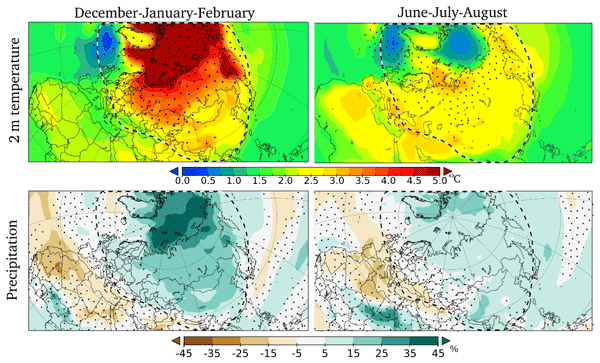
We summarize results during the last 5 years in the northern Eurasian region, especially from Russia, and introduce recent observations of the air quality in the urban environments in China. Although the scientific knowledge in these regions has increased, there are still gaps in our understanding of large-scale climate–Earth surface interactions and feedbacks. This arises from limitations in research infrastructures and integrative data analyses, hindering a comprehensive system analysis.
Stephanie G. Stettz, Nicholas C. Parazoo, A. Anthony Bloom, Peter D. Blanken, David R. Bowling, Sean P. Burns, Cédric Bacour, Fabienne Maignan, Brett Raczka, Alexander J. Norton, Ian Baker, Mathew Williams, Mingjie Shi, Yongguang Zhang, and Bo Qiu
Biogeosciences, 19, 541–558, https://doi.org/10.5194/bg-19-541-2022, https://doi.org/10.5194/bg-19-541-2022, 2022
Short summary
Short summary
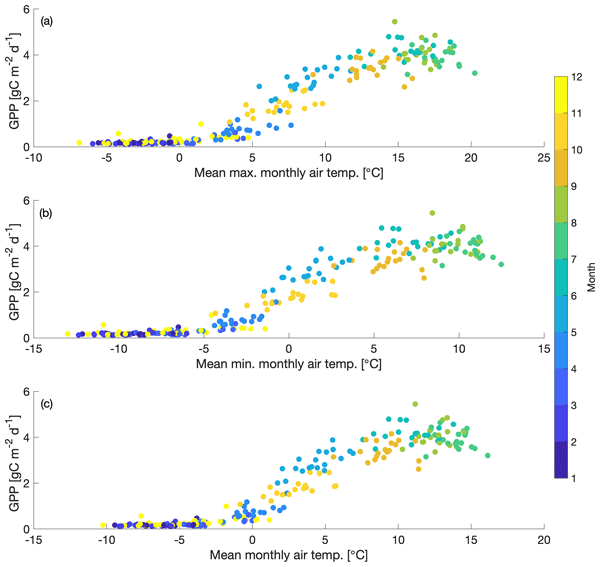
Uncertainty in the response of photosynthesis to temperature poses a major challenge to predicting the response of forests to climate change. In this paper, we study how photosynthesis in a mountainous evergreen forest is limited by temperature. This study highlights that cold temperature is a key factor that controls spring photosynthesis. Including the cold-temperature limitation in an ecosystem model improved its ability to simulate spring photosynthesis.
Linda M. J. Kooijmans, Ara Cho, Jin Ma, Aleya Kaushik, Katherine D. Haynes, Ian Baker, Ingrid T. Luijkx, Mathijs Groenink, Wouter Peters, John B. Miller, Joseph A. Berry, Jerome Ogée, Laura K. Meredith, Wu Sun, Kukka-Maaria Kohonen, Timo Vesala, Ivan Mammarella, Huilin Chen, Felix M. Spielmann, Georg Wohlfahrt, Max Berkelhammer, Mary E. Whelan, Kadmiel Maseyk, Ulli Seibt, Roisin Commane, Richard Wehr, and Maarten Krol
Biogeosciences, 18, 6547–6565, https://doi.org/10.5194/bg-18-6547-2021, https://doi.org/10.5194/bg-18-6547-2021, 2021
Short summary
Short summary
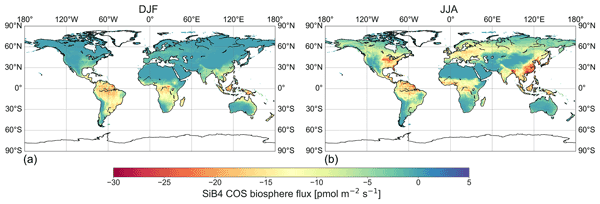
The gas carbonyl sulfide (COS) can be used to estimate photosynthesis. To adopt this approach on regional and global scales, we need biosphere models that can simulate COS exchange. So far, such models have not been evaluated against observations. We evaluate the COS biosphere exchange of the SiB4 model against COS flux observations. We find that the model is capable of simulating key processes in COS biosphere exchange. Still, we give recommendations for further improvement of the model.
Qi En Zhong, Chunlei Cheng, Zaihua Wang, Lei Li, Mei Li, Dafeng Ge, Lei Wang, Yuanyuan Li, Wei Nie, Xuguang Chi, Aijun Ding, Suxia Yang, Duohong Chen, and Zhen Zhou
Atmos. Chem. Phys., 21, 17953–17967, https://doi.org/10.5194/acp-21-17953-2021, https://doi.org/10.5194/acp-21-17953-2021, 2021
Short summary
Short summary
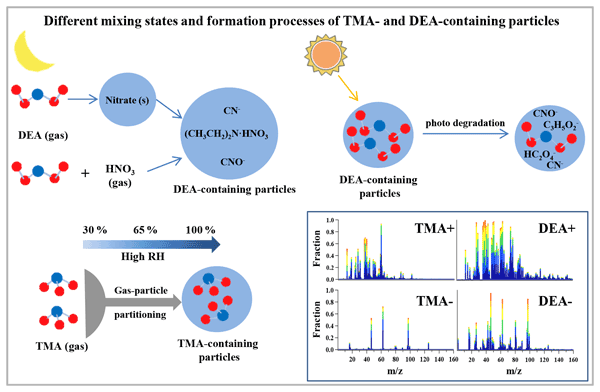
Particulate amines play important roles in new particle formation, aerosol acidity, and hygroscopicity. Most of the field observations did not distinguish the different behavior of each type amine under the same ambient influencing factors. In this study, two amine-containing single particles exhibited different mixing states and disparate enrichment of secondary organics, which provide insight into the discriminated fates of organics during the formation and evolution processes.
Luis Guanter, Cédric Bacour, Andreas Schneider, Ilse Aben, Tim A. van Kempen, Fabienne Maignan, Christian Retscher, Philipp Köhler, Christian Frankenberg, Joanna Joiner, and Yongguang Zhang
Earth Syst. Sci. Data, 13, 5423–5440, https://doi.org/10.5194/essd-13-5423-2021, https://doi.org/10.5194/essd-13-5423-2021, 2021
Short summary
Short summary
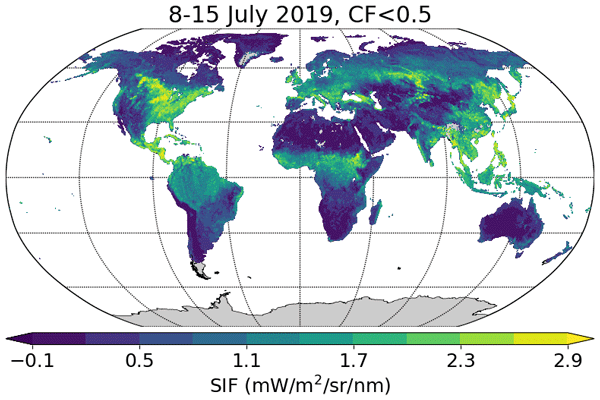
Sun-induced chlorophyll fluorescence (SIF) is an electromagnetic signal emitted by plants in the red and far-red parts of the spectrum. It has a functional link to photosynthesis and can be measured by satellite instruments, which makes it an important variable for the remote monitoring of the photosynthetic activity of vegetation ecosystems around the world. In this contribution we present a SIF dataset derived from the new Sentinel-5P TROPOMI missions.
Cited articles
Bakkaloglu, S., Lowry, D., Fisher, R. E., Menoud, M., Lanoisellé, M., Chen, H., Röckmann, T., and Nisbet, E. G.: Stable isotopic signatures of methane from waste sources through atmospheric measurements, Atmos. Environ., 276, 119021, https://doi.org/10.1016/j.atmosenv.2022.119021, 2022.
Berden, G. and Engeln, R.: Cavity ring-down spectroscopy: techniques and applications, John Wiley & Sons, https://doi.org/10.1002/9781444308259, 2009.
Braden-Behrens, J., Yan, Y., and Knohl, A.: A new instrument for stable isotope measurements of 13C and 18O in CO2 – instrument performance and ecological application of the Delta Ray IRIS analyzer, Atmos. Meas. Tech., 10, 4537–4560, https://doi.org/10.5194/amt-10-4537-2017, 2017.
Chen, H., Winderlich, J., Gerbig, C., Hoefer, A., Rella, C. W., Crosson, E. R., Van Pelt, A. D., Steinbach, J., Kolle, O., Beck, V., Daube, B. C., Gottlieb, E. W., Chow, V. Y., Santoni, G. W., and Wofsy, S. C.: High-accuracy continuous airborne measurements of greenhouse gases (CO2 and CH4) using the cavity ring-down spectroscopy (CRDS) technique, Atmos. Meas. Tech., 3, 375–386, https://doi.org/10.5194/amt-3-375-2010, 2010.
Crosson, E.: A cavity ring-down analyzer for measuring atmospheric levels of methane, carbon dioxide, and water vapor, Appl. Phys. B, 92, 403–408, https://doi.org/10.1007/s00340-008-3135-y, 2008
Crosson, E. R., Ricci, K. N., Richman, B. A., Chilese, F. C., Owano, T. G., Provencal, R. A., Todd, M. W., Glasser, J., Kachanov, A. A., and Paldus, B. A.: Stable isotope ratios using cavity ring-down spectroscopy: determination of 13C/12C for carbon dioxide in human breath, Anal. Chem., 74, 2003–2007, https://doi.org/10.1021/ac025511d, 2002.
Defratyka, S. M., France, J. L., Fisher, R. E., Lowry, D., Fernandez, J. M., Bakkaloglu, S., Yver-Kwok, C., Paris, J.-D., Bousquet, P., and Arnold, T.: Evaluation of data processing strategies for methane isotopic signatures determined during near-source measurements, Tellus B, 77, https://doi.org/10.16993/tellusb.1878, 2025.
De Groot, P. A.: Handbook of stable isotope analytical techniques, Elsevier, https://www.sciencedirect.com/science/book/9780444511140 (last access: 9 March 2026), 2004.
Ding, A., Nie, W., Huang, X., Chi, X., Sun, J., Kerminen, V.-M., Xu, Z., Guo, W., Petäjä, T., Yang, X., Kulmala, M., and Fu, C.: Long-term observation of air pollution–weather/climate interactions at the SORPES station: a review and outlook, Frontiers of Environmental Science & Engineering, 10, 15, https://doi.org/10.1007/s11783-016-0877-3, 2016.
Ehleringer, J. R. and Osmond, C. B.: Stable isotopes, in: Plant physiological ecology: field methods and instrumentation, Springer, 281–300, https://doi.org/10.1007/978-94-009-2221-1, 1989.
Flores, E., Viallon, J., Moussay, P., Griffith, D. W., and Wielgosz, R. I.: Calibration strategies for FT-IR and other isotope ratio infrared spectrometer instruments for accurate δ13C and δ18O measurements of CO2 in air, Anal. Chem., 89, 3648–3655, https://doi.org/10.1021/acs.analchem.6b05063, 2017.
Forster, P., Storelvmo, T., Armour, K., Collins, W., Dufresne, J.-L., Frame, D., Lunt, D., Mauritsen, T., Palmer, M., and Watanabe, M.: The Earth's energy budget, climate feedbacks, and climate sensitivity, in: Climate Change 2021: The Physical Science Basis. Contribution of Working Group I to the Sixth Assessment Report of the Intergovernmental Panel on Climate Change, Cambridge University Press, pp. 923–1054, https://doi.org/10.1017/9781009157896.009, 2021.
France, J. L., Fisher, R. E., Lowry, D., Allen, G., Andrade, M. F., Bauguitte, S. J.-B., Bower, K., Broderick, T. J., Daly, M. C., and Forster, G.: δ13C methane source signatures from tropical wetland and rice field emissions, Philos. T. R. Soc. A, 380, 20200449, https://doi.org/10.1098/rsta.2020.0449, 2022.
Griffith, D. W. T.: Calibration of isotopologue-specific optical trace gas analysers: a practical guide, Atmos. Meas. Tech., 11, 6189–6201, https://doi.org/10.5194/amt-11-6189-2018, 2018.
Griffith, D. W. T., Deutscher, N. M., Caldow, C., Kettlewell, G., Riggenbach, M., and Hammer, S.: A Fourier transform infrared trace gas and isotope analyser for atmospheric applications, Atmos. Meas. Tech., 5, 2481–2498, https://doi.org/10.5194/amt-5-2481-2012, 2012.
Hoheisel, A., Yeman, C., Dinger, F., Eckhardt, H., and Schmidt, M.: An improved method for mobile characterisation of δ13CH4 source signatures and its application in Germany, Atmos. Meas. Tech., 12, 1123–1139, https://doi.org/10.5194/amt-12-1123-2019, 2019.
IAEA: Measurement of the stable carbon isotope ratio in atmospheric CH4 using laser spectroscopy for CH4 source characterization, IAEA Pan. P., https://doi.org/10.61092/iaea.logm-wiux, 2024.
IPCC: Climate Change 2007: The Physical Science Basis. Contribution of Working Group I to the Fourth Assessment Report of the Intergovernmental Panel on Climate Change, Cambridge University Press, Cambridge, United Kingdom and New York, NY, USA, 996 pp., https://wedocs.unep.org/20.500.11822/30763 (last access: 9 March 2026), 2007.
Kirschke, S., Bousquet, P., Ciais, P., Saunois, M., Canadell, J. G., Dlugokencky, E. J., Bergamaschi, P., Bergmann, D., Blake, D. R., and Bruhwiler, L.: Three decades of global methane sources and sinks, Nat. Geosci., 6, 813–823, https://doi.org/10.1038/ngeo1955, 2013.
Lan, X., Basu, S., Schwietzke, S., Bruhwiler, L. M., Dlugokencky, E. J., Michel, S. E., Sherwood, O. A., Tans, P. P., Thoning, K., and Etiope, G.: Improved constraints on global methane emissions and sinks using δ13CH4, Global Biogeochem. Cy., 35, e2021GB007000, https://doi.org/10.1029/2021GB007000, 2021.
Levin, I., Bergamaschi, P., Dörr, H., and Trapp, D.: Stable isotopic signature of methane from major sources in Germany, Chemosphere, 26, 161–177, https://doi.org/10.1016/0045-6535(93)90419-6, 1993.
Li, J., Zhang, Y., Gu, L., Li, Z., Li, J., Zhang, Q., Zhang, Z., and Song, L.: Seasonal variations in the relationship between sun-induced chlorophyll fluorescence and photosynthetic capacity from the leaf to canopy level in a rice crop, J. Exp. Bot., 71, 7179–7197, https://doi.org/10.1093/jxb/eraa408, 2020.
Miles, N. L., Martins, D. K., Richardson, S. J., Rella, C. W., Arata, C., Lauvaux, T., Davis, K. J., Barkley, Z. R., McKain, K., and Sweeney, C.: Calibration and field testing of cavity ring-down laser spectrometers measuring CH4, CO2, and δ13CH4 deployed on towers in the Marcellus Shale region, Atmos. Meas. Tech., 11, 1273–1295, https://doi.org/10.5194/amt-11-1273-2018, 2018.
Miller, J. B., Mack, K. A., Dissly, R., White, J. W., Dlugokencky, E. J., and Tans, P. P.: Development of analytical methods and measurements of 13C/12C in atmospheric CH4 from the NOAA Climate Monitoring and Diagnostics Laboratory global air sampling network, J. Geophys. Res.-Atmos., 107, ACH11-11–ACH11-15, https://doi.org/10.1029/2001JD000630, 2002.
Nisbet, E., Dlugokencky, E., Manning, M., Lowry, D., Fisher, R., France, J., Michel, S., Miller, J., White, J., and Vaughn, B.: Rising atmospheric methane: 2007–2014 growth and isotopic shift, Global Biogeochem. Cy., 30, 1356–1370, https://doi.org/10.1002/2016gb005406, 2016.
Nisbet, E., Fisher, R., Lowry, D., France, J., Allen, G., Bakkaloglu, S., Broderick, T., Cain, M., Coleman, M., and Fernandez, J.: Methane mitigation: methods to reduce emissions, on the path to the Paris agreement, Rev. Geophys., 58, e2019RG000675, https://doi.org/10.1029/2019RG000675, 2020.
Olivier, J. G. and Berdowski, J. J.: Global emission sources and sinks, in: The climate system, CRC Press, 33–77, https://doi.org/10.1201/9781003211266, 2021.
Pang, J., Wen, X., Sun, X., and Huang, K.: Intercomparison of two cavity ring-down spectroscopy analyzers for atmospheric 13CO2/12CO2 measurement, Atmos. Meas. Tech., 9, 3879–3891, https://doi.org/10.5194/amt-9-3879-2016, 2016.
Patra, P. K. and Khatri, P.: Atmospheric mixing ratio of greenhouse gases and radiative forcing, in: Handbook of Air Quality and Climate Change, Springer, 1–29, https://doi.org/10.1007/978-981-15-2527-8_29-1, 2022.
Paul, D., Scheeren, H. A., Jansen, H. G., Kers, B. A. M., Miller, J. B., Crotwell, A. M., Michel, S. E., Gatti, L. V., Domingues, L. G., Correia, C. S. C., Neves, R. A. L., Meijer, H. A. J., and Peters, W.: Evaluation of a field-deployable Nafion™-based air-drying system for collecting whole air samples and its application to stable isotope measurements of CO2, Atmos. Meas. Tech., 13, 4051–4064, https://doi.org/10.5194/amt-13-4051-2020, 2020.
Quay, P., Stutsman, J., Wilbur, D., Snover, A., Dlugokencky, E., and Brown, T.: The isotopic composition of atmospheric methane, Global Biogeochem. Cy., 13, 445–461, https://doi.org/10.1029/1998GB900006, 1999.
Rella, C.: Accurate stable carbon isotope ratio measurements in humid gas streams using the Picarro δ13CO2 G2101-i gas analyzer, White Paper of Picarro Inc., 1–13, https://www.picarro.com/sites/default/files/product_documents/White_Paper_G2101-i_Water_Correction.pdf (last access: 9 March 2026), 2012.
Rella, C. W., Chen, H., Andrews, A. E., Filges, A., Gerbig, C., Hatakka, J., Karion, A., Miles, N. L., Richardson, S. J., Steinbacher, M., Sweeney, C., Wastine, B., and Zellweger, C.: High accuracy measurements of dry mole fractions of carbon dioxide and methane in humid air, Atmos. Meas. Tech., 6, 837–860, https://doi.org/10.5194/amt-6-837-2013, 2013.
Rella, C. W., Hoffnagle, J., He, Y., and Tajima, S.: Local- and regional-scale measurements of CH4, δ13CH4, and C2H6 in the Uintah Basin using a mobile stable isotope analyzer, Atmos. Meas. Tech., 8, 4539–4559, https://doi.org/10.5194/amt-8-4539-2015, 2015.
Rice, A. L., Butenhoff, C. L., Teama, D. G., Röger, F. H., Khalil, M. A. K., and Rasmussen, R. A.: Atmospheric methane isotopic record favors fossil sources flat in 1980s and 1990s with recent increase, P. Natl. Acad. Sci. USA, 113, 10791–10796, https://doi.org/10.1073/pnas.1522923113, 2016.
Röckmann, T., Eyer, S., van der Veen, C., Popa, M. E., Tuzson, B., Monteil, G., Houweling, S., Harris, E., Brunner, D., Fischer, H., Zazzeri, G., Lowry, D., Nisbet, E. G., Brand, W. A., Necki, J. M., Emmenegger, L., and Mohn, J.: In situ observations of the isotopic composition of methane at the Cabauw tall tower site, Atmos. Chem. Phys., 16, 10469–10487, https://doi.org/10.5194/acp-16-10469-2016, 2016.
Saboya, E., Zazzeri, G., Graven, H., Manning, A. J., and Englund Michel, S.: Continuous CH4 and δ13CH4 measurements in London demonstrate under-reported natural gas leakage, Atmos. Chem. Phys., 22, 3595–3613, https://doi.org/10.5194/acp-22-3595-2022, 2022.
Saunois, M., Martinez, A., Poulter, B., Zhang, Z., Raymond, P. A., Regnier, P., Canadell, J. G., Jackson, R. B., Patra, P. K., Bousquet, P., Ciais, P., Dlugokencky, E. J., Lan, X., Allen, G. H., Bastviken, D., Beerling, D. J., Belikov, D. A., Blake, D. R., Castaldi, S., Crippa, M., Deemer, B. R., Dennison, F., Etiope, G., Gedney, N., Höglund-Isaksson, L., Holgerson, M. A., Hopcroft, P. O., Hugelius, G., Ito, A., Jain, A. K., Janardanan, R., Johnson, M. S., Kleinen, T., Krummel, P. B., Lauerwald, R., Li, T., Liu, X., McDonald, K. C., Melton, J. R., Mühle, J., Müller, J., Murguia-Flores, F., Niwa, Y., Noce, S., Pan, S., Parker, R. J., Peng, C., Ramonet, M., Riley, W. J., Rocher-Ros, G., Rosentreter, J. A., Sasakawa, M., Segers, A., Smith, S. J., Stanley, E. H., Thanwerdas, J., Tian, H., Tsuruta, A., Tubiello, F. N., Weber, T. S., van der Werf, G. R., Worthy, D. E. J., Xi, Y., Yoshida, Y., Zhang, W., Zheng, B., Zhu, Q., Zhu, Q., and Zhuang, Q.: Global Methane Budget 2000–2020, Earth Syst. Sci. Data, 17, 1873–1958, https://doi.org/10.5194/essd-17-1873-2025, 2025.
Schaefer, H., Whiticar, M. J., Brook, E. J., Petrenko, V. V., Ferretti, D. F., and Severinghaus, J. P.: Ice record of δ13C for atmospheric CH4 across the Younger Dryas–Preboreal transition, Science, 313, 1109–1112, https://doi.org/10.1126/science.1126562, 2006.
Schaefer, H., Fletcher, S. E. M., Veidt, C., Lassey, K. R., Brailsford, G. W., Bromley, T. M., Dlugokencky, E. J., Michel, S. E., Miller, J. B., and Levin, I.: A 21st-century shift from fossil-fuel to biogenic methane emissions indicated by 13CH4, Science, 352, 80–84, https://doi.org/10.1126/science.aad2705, 2016.
Shindell, D., Kuylenstierna, J. C., Vignati, E., van Dingenen, R., Amann, M., Klimont, Z., Anenberg, S. C., Muller, N., Janssens-Maenhout, G., and Raes, F.: Simultaneously mitigating near-term climate change and improving human health and food security, Science, 335, 183–189, https://doi.org/10.1126/science.1210026, 2012.
Tans, P. P., Crotwell, A. M., and Thoning, K. W.: Abundances of isotopologues and calibration of CO2 greenhouse gas measurements, Atmos. Meas. Tech., 10, 2669–2685, https://doi.org/10.5194/amt-10-2669-2017, 2017.
Tuzson, B., Mohn, J., Zeeman, M. J., Werner, R. A., Eugster, W., Zahniser, M. S., Nelson, D. D., McManus, J. B., and Emmenegger, L.: High precision and continuous field measurements of δ13C and δ18O in carbon dioxide with a cryogen-free QCLAS, Appl. Phys. B, 92, 451–458, https://doi.org/10.1007/s00340-008-3085-4, 2008.
Van Dingenen, R., Crippa, M., Maenhout, G., Guizzardi, D., and Dentener, F.: Global trends of methane emissions and their impacts on ozone concentrations, JRC Science for Policy Report, JRC113210, ISBN 978-92-79-96550-0, https://doi.org/10.2760/820175, 2018.
Wahl, E. H., Fidric, B., Rella, C. W., Koulikov, S., Kharlamov, B., Tan, S., Kachanov, A. A., Richman, B. A., Crosson, E. R., and Paldus, B. A.: Applications of cavity ring-down spectroscopy to high precision isotope ratio measurement of 13C/12C in carbon dioxide, Isot. Environ. Healt. S., 42, 21–35, https://doi.org/10.1080/10256010500502934, 2006.
Welp, L. R., Keeling, R. F., Weiss, R. F., Paplawsky, W., and Heckman, S.: Design and performance of a Nafion dryer for continuous operation at CO2 and CH4 air monitoring sites, Atmos. Meas. Tech., 6, 1217–1226, https://doi.org/10.5194/amt-6-1217-2013, 2013.
Wen, X.-F., Meng, Y., Zhang, X.-Y., Sun, X.-M., and Lee, X.: Evaluating calibration strategies for isotope ratio infrared spectroscopy for atmospheric 13CO2/12CO2 measurement, Atmos. Meas. Tech., 6, 1491–1501, https://doi.org/10.5194/amt-6-1491-2013, 2013.
Werner, R. A. and Brand, W. A.: Referencing strategies and techniques in stable isotope ratio analysis, Rapid Commun. Mass Sp., 15, 501–519, https://doi.org/10.1002/rcm.258, 2001.
Short summary
Accurate measurement of methane's isotopic fingerprint is crucial for identifying its sources. However, water vapor interference and instrument drift can cause significant errors, especially in humid air. This study evaluated two calibration methods and found that calibrating for individual methane isotopes with a water vapor correction provided accurate and stable results for both dry and humid air. This highlights the need for robust calibration to ensure reliable methane source attribution.
Accurate measurement of methane's isotopic fingerprint is crucial for identifying its sources....


Special issue