
Articles | Volume 19, issue 8
https://doi.org/10.5194/amt-19-2657-2026
© Author(s) 2026. This work is distributed under
the Creative Commons Attribution 4.0 License.
the Creative Commons Attribution 4.0 License.
https://doi.org/10.5194/amt-19-2657-2026
© Author(s) 2026. This work is distributed under
the Creative Commons Attribution 4.0 License.
the Creative Commons Attribution 4.0 License.
Research article
| 
20 Apr 2026
Research article |
| 20 Apr 2026
| 20 Apr 2026
Study on the life cycle of an ice cloud system over the Taklamakan desert using multi-source data
National Laboratory on Adaptive Optics, Chengdu 610209, China
Institute of Optics and Electronics, Chinese Academy of Sciences, Chengdu 610209, China

School of Atmospheric Physics, Nanjing University of Information Science and Technology, Nanjing 210044, China
School of Earth and Space Science, University of Science and Technology of China, Hefei 230026, China
Chunsong Lu
School of Atmospheric Physics, Nanjing University of Information Science and Technology, Nanjing 210044, China
Jinlong Yuan
School of Atmospheric Physics, Nanjing University of Information Science and Technology, Nanjing 210044, China
School of Earth and Space Science, University of Science and Technology of China, Hefei 230026, China
Tianwen Wei
School of Atmospheric Physics, Nanjing University of Information Science and Technology, Nanjing 210044, China
Xiaofei Wang
Xinjiang Uygur Autonomous Region Meteorological Service, Urumqi 830002, China
Qing He
Xinjiang Uygur Autonomous Region Meteorological Service, Urumqi 830002, China
Institute of Desert Meteorology, China Meteorological Administration, Urumqi 830002, China
Mohamed Elshora
School of Earth and Space Science, University of Science and Technology of China, Hefei 230026, China
Xi Luo
National Laboratory on Adaptive Optics, Chengdu 610209, China
Institute of Optics and Electronics, Chinese Academy of Sciences, Chengdu 610209, China
Xinyang Li
National Laboratory on Adaptive Optics, Chengdu 610209, China
Institute of Optics and Electronics, Chinese Academy of Sciences, Chengdu 610209, China
Related authors
Lian Su, Chunsong Lu, Jinlong Yuan, Xiaofei Wang, Qing He, and Haiyun Xia
Atmos. Chem. Phys., 24, 10947–10963, https://doi.org/10.5194/acp-24-10947-2024, https://doi.org/10.5194/acp-24-10947-2024, 2024
Short summary
Short summary
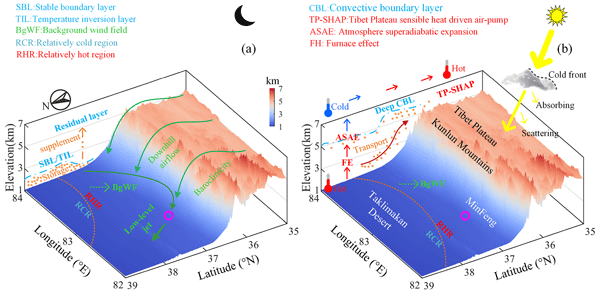
The cold downhill airflow of the Tibetan Plateau leading to the low-level jet weakens the height and intensity of the inversion layer, which reduces the energy demand for the broken inversion layer. The low-level jet causes dust aerosols to accumulate near the ground. The material conditions for the development of the desert atmospheric boundary layer can be quickly transformed into thermal conditions.
Xiangde Xu, Wenyue Cai, Tianliang Zhao, Changjun Yang, Kai Meng, Chong Wu, Na Dong, Yueqing Li, Shunjiu Wang, Wenqing Liu, Tianshu Zhang, Ga Zhuo, Shengjun Zhang, Bin Chen, Chunsong Lu, Jinghua Chen, Kai Yang, and Jianming Xu
Atmos. Chem. Phys., 26, 13581–13593, https://doi.org/10.5194/acp-26-13581-2026, https://doi.org/10.5194/acp-26-13581-2026, 2026
Short summary
Short summary
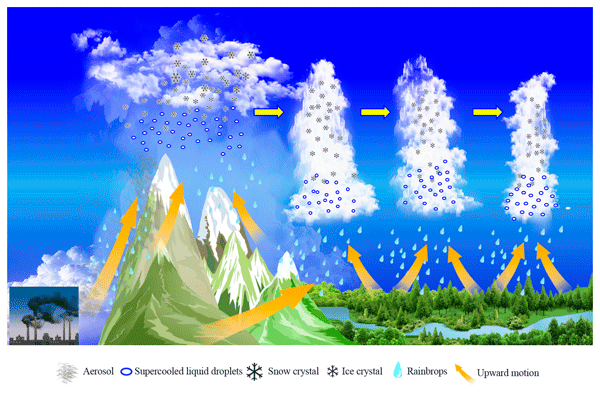
Using satellite and comprehensive ground-based observations, we identify pronounced ice-cloud activation associated with transported exogenous aerosols. Under different large-scale atmospheric circulation regimes, ice-phase cloud activated over Mount Qomolangma (MQ) can be efficiently transported downstream through distinct pathways, exerting a pronounced ice crystal seeding effect on cloud–precipitation conversion.
Tianle Bai, Yuanyi Lin, Mengya Wang, Tianwen Wei, Fangzhi Wei, Kuancheng Lv, and Haiyun Xia
Atmos. Meas. Tech., 19, 5951–5971, https://doi.org/10.5194/amt-19-5951-2026, https://doi.org/10.5194/amt-19-5951-2026, 2026
Short summary
Short summary
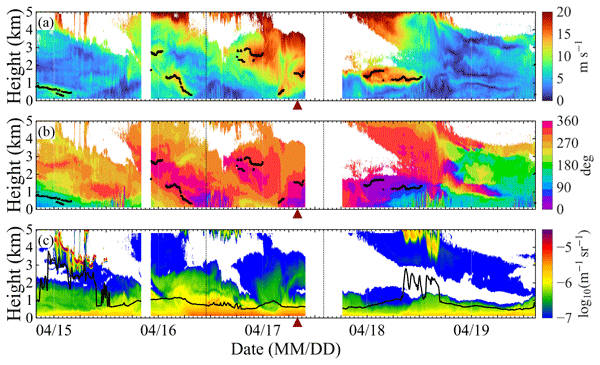
This study investigates how fast-moving air currents close to the ground influence the vertical transport of dust over Hefei in eastern China. Using laser-based wind observations during two dust events, it shows that one event rapidly brings dust down to the surface, whereas the other keeps dust suspended at higher altitudes and delays surface pollution. These findings improve understanding of how dust is redistributed in the lower atmosphere and help improve weather and air-quality forecasts.
Yulin Wang, Yichen Lu, Honglei Wang, Chunsong Lu, Sihan Liu, Yang Yang, Zirui Liu, Yan Yin, Deyu Liu, Yue Chen, and Tianliang Zhao
EGUsphere, https://doi.org/10.5194/egusphere-2026-5114, https://doi.org/10.5194/egusphere-2026-5114, 2026
This preprint is open for discussion and under review for Atmospheric Chemistry and Physics (ACP).
Short summary
Short summary
Cloud water shapes rain and climate, and droplets can stay liquid even below freezing, but differences between warm and supercooled clouds remain unclear. We analysed aircraft observations and used machine learning to identify the controls. The cold clouds were deeper but held less water. Wind was the main control in both, while temperature mattered mainly through its interaction with wind rather than on its own. This should help improve weather and climate models.
Sihan Liu, Tianwen Wei, Ning Zhang, Fangzhi Wei, Xinyuan Liang, Qian Huang, Yuan Wang, and Haiyun Xia
EGUsphere, https://doi.org/10.5194/egusphere-2026-2865, https://doi.org/10.5194/egusphere-2026-2865, 2026
Short summary
Short summary
Using wind lidar, ERA5, and WRF data, this study explores nocturnal tropospheric gravity waves in a double-jet environment over the Taklimakan Desert. Results show 10–20 min oscillations within the weak-wind layer between a lower easterly and upper westerly jet, triggered by shear instability. Thermal and Doppler ducting jointly trap these waves. Notably, lower jet intensification compresses the waveguide, shifting trapped modes to higher frequencies.
Zhekai Li, Dawei Tang, Tianwen Wei, Saifen Yu, Jing Cai, Kenan Wu, Zhen Zhang, Jiadong Hu, Haobin Han, Yubin Wang, and Haiyun Xia
Atmos. Meas. Tech., 19, 3253–3269, https://doi.org/10.5194/amt-19-3253-2026, https://doi.org/10.5194/amt-19-3253-2026, 2026
Short summary
Short summary
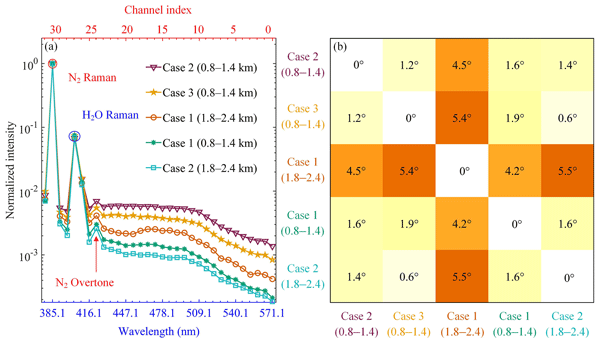
In April 2024, we observed a fluorescent layer using fluorescence lidar at Nanping, South China. By combining multiple sources of information, we found that the long-range transported biomass burning aerosol (BBA) emitted by weak fire activity in the Indo-China Peninsula (ICP) was a major contributor to this layer. Our observations show that even weak fires in the ICP can affect South China, providing new insights into BBA transport in this region.
Kai Yang, Jinghua Chen, Tianliang Zhao, Xiangde Xu, Chunsong Lu, Shizuo Fu, Yuehan Luo, Qingjian Yang, Ziqian Liu, Zhikuan Li, Lin Wu, and Yuxiang Jin
EGUsphere, https://doi.org/10.5194/egusphere-2026-869, https://doi.org/10.5194/egusphere-2026-869, 2026
Short summary
Short summary
The Tibetan Plateau has little available moisture and energy, so convection is hard to develop. Large-eddy simulations indicates the lake promotes low-level moistening and lowers the barrier to convective initiation, produces shallow clouds and week rain. Mountain alone force lifting, yet the lack of moisture limits terrain-driven precipitation. Lake-mountain coupling is key: the mountain lifts lake-supplied moisture but can also block moisture transport, reshaping precipitation patterns.
Daihao Yu, Qiuwei Xia, Saifen Yu, Yixiang Chen, Keyi Xu, Haobin Han, Jianjun Guo, Kexin Guo, Jiadong Hu, Zhen Zhang, Jing Cai, Yuanjian Yang, and Haiyun Xia
EGUsphere, https://doi.org/10.5194/egusphere-2025-6470, https://doi.org/10.5194/egusphere-2025-6470, 2026
Short summary
Short summary
Industrial parks are critical nodes in the global carbon cycle. This study combines high-resolution lidar observations and the WRF-GHG model to examine CO2 accumulation and dispersion in a semi-enclosed bay. Distinct diurnal patterns emerge: nighttime accumulation and daytime dispersion driven by terrain, atmospheric stability and sea breezes. WRF-GHG captures temporal trends, but it underestimates CO2 levels, indicating limitations in emission inventories and terrain-wind interactions.
Xiaofeng Xu, Zixu Xiong, Jianming Gong, Huilin Zhang, Tianliang Zhao, and Qing He
Atmos. Chem. Phys., 26, 2721–2740, https://doi.org/10.5194/acp-26-2721-2026, https://doi.org/10.5194/acp-26-2721-2026, 2026
Short summary
Short summary
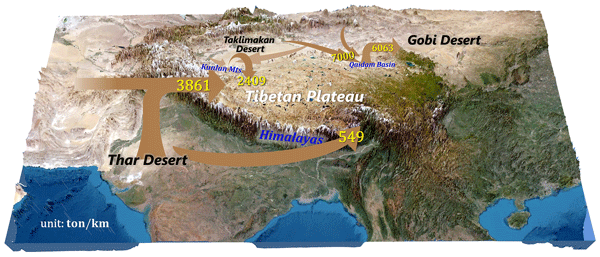
Dust has an important impact on the climate in East Asia. This study comprehensively utilized ground-based and satellite observation data to analyze the spatio-temporal variations of dust in the Tibetan Plateau and its surrounding areas, as well as the diurnal variation characteristics of regional dust transport. This study has deepened the understanding of the variation patterns of dust around the Tibetan Plateau.
Junhui Zhang, Yuying Wang, Jialu Xu, Xiaofan Zuo, Chunsong Lu, Bin Zhu, Yuanjian Yang, Xing Yan, and Yele Sun
Atmos. Chem. Phys., 25, 17413–17428, https://doi.org/10.5194/acp-25-17413-2025, https://doi.org/10.5194/acp-25-17413-2025, 2025
Short summary
Short summary
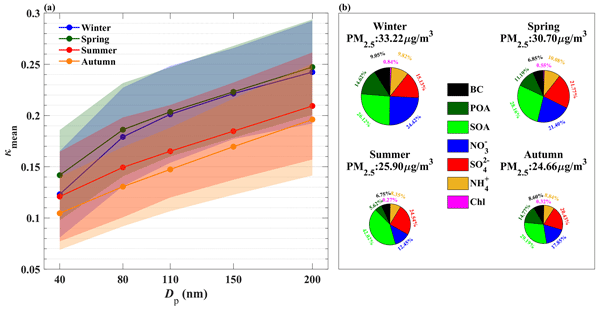
We conducted a year-long study in Nanjing to understand how tiny airborne particles take up water, which affects air quality and climate. We found that particle water uptake varies by season and size, with lower values in summer due to more organic materials. Local pollution mainly influences smaller particles, while larger ones are shaped by air mass transport. These findings help improve climate models and support better air pollution control in fast-growing cities.
Tianwen Wei, Mengya Wang, Kenan Wu, Jinlong Yuan, Haiyun Xia, and Simone Lolli
Atmos. Meas. Tech., 18, 1841–1857, https://doi.org/10.5194/amt-18-1841-2025, https://doi.org/10.5194/amt-18-1841-2025, 2025
Short summary
Short summary
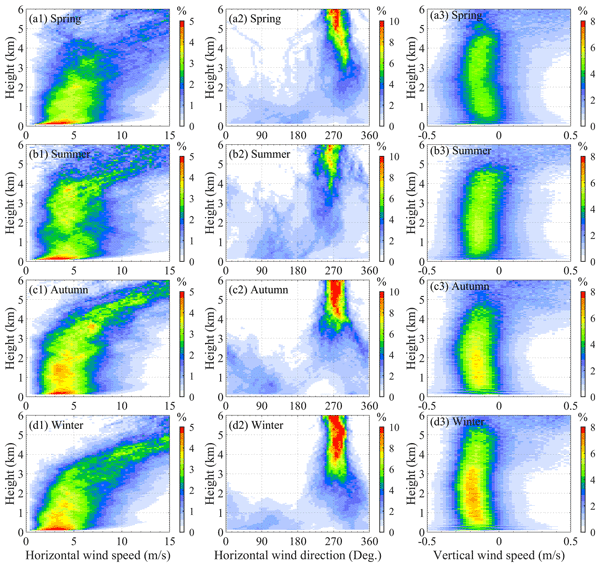
This study analyzes three years of wind lidar measurements to explore the dynamics of the urban planetary boundary layer in Hefei, China. Results reveal that nocturnal low-level jets are most frequent in spring and intensify in summer, significantly enhancing turbulence and shear near the surface, particularly at night. Additionally, cloud cover raises the mixing layer height by approximately 100 m at night due to the greenhouse effect but reduces it by up to 200 m in the afternoon.
Lian Su, Chunsong Lu, Jinlong Yuan, Xiaofei Wang, Qing He, and Haiyun Xia
Atmos. Chem. Phys., 24, 10947–10963, https://doi.org/10.5194/acp-24-10947-2024, https://doi.org/10.5194/acp-24-10947-2024, 2024
Short summary
Short summary
The cold downhill airflow of the Tibetan Plateau leading to the low-level jet weakens the height and intensity of the inversion layer, which reduces the energy demand for the broken inversion layer. The low-level jet causes dust aerosols to accumulate near the ground. The material conditions for the development of the desert atmospheric boundary layer can be quickly transformed into thermal conditions.
Kenan Wu, Tianwen Wei, Jinlong Yuan, Haiyun Xia, Xin Huang, Gaopeng Lu, Yunpeng Zhang, Feifan Liu, Baoyou Zhu, and Weidong Ding
Atmos. Meas. Tech., 16, 5811–5825, https://doi.org/10.5194/amt-16-5811-2023, https://doi.org/10.5194/amt-16-5811-2023, 2023
Short summary
Short summary
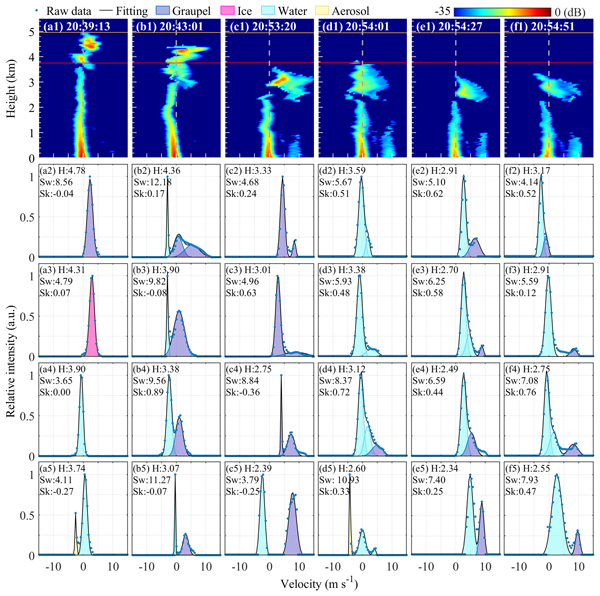
A compact all-fiber coherent Doppler wind lidar (CDWL) working at the 1.5 µm wavelength is applied to probe the dynamics and microphysics structure of thunderstorms. It was found that thunderclouds below the 0 ℃ isotherm have significant spectrum broadening and an increase in skewness, and that lightning affects the microphysics structure of the thundercloud. It is proven that the precise spectrum of CDWL is a promising indicator for studying the charge structure of thunderstorms.
Wentao Zhang, Xiangjun Shi, and Chunsong Lu
Geosci. Model Dev., 15, 7751–7766, https://doi.org/10.5194/gmd-15-7751-2022, https://doi.org/10.5194/gmd-15-7751-2022, 2022
Short summary
Short summary
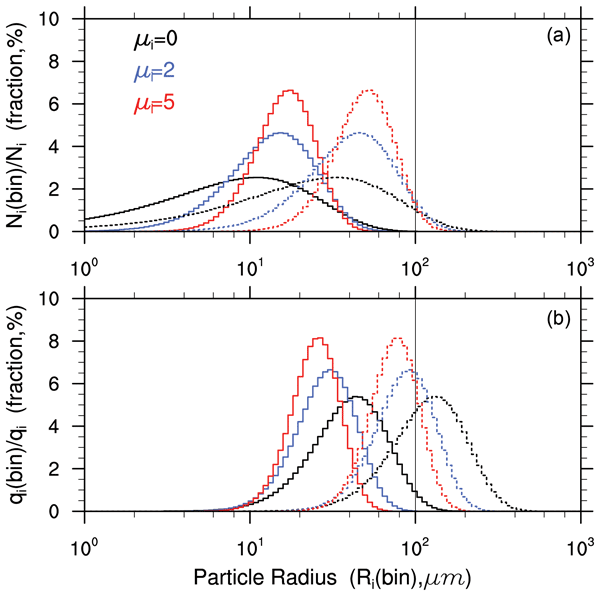
The two-moment bulk cloud microphysics scheme used in CAM6 was modified to consider the impacts of the ice-crystal size distribution shape parameter (μi). After that, how the μi impacts cloud microphysical processes and then climate simulations is clearly illustrated by offline tests and CAM6 model experiments. Our results and findings are useful for the further development of μi-related parameterizations.
Lian Zong, Yuanjian Yang, Haiyun Xia, Meng Gao, Zhaobin Sun, Zuofang Zheng, Xianxiang Li, Guicai Ning, Yubin Li, and Simone Lolli
Atmos. Chem. Phys., 22, 6523–6538, https://doi.org/10.5194/acp-22-6523-2022, https://doi.org/10.5194/acp-22-6523-2022, 2022
Short summary
Short summary
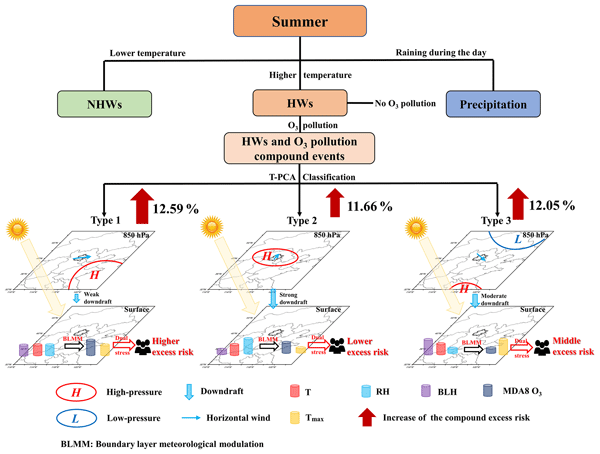
Heatwaves (HWs) paired with higher ozone (O3) concentration at surface level pose a serious threat to human health. Taking Beijing as an example, three unfavorable synoptic weather patterns were identified to dominate the compound HW and O3 pollution events. Under the synergistic stress of HWs and O3 pollution, public mortality risk increased, and synoptic patterns and urbanization enhanced the compound risk of events in Beijing by 33.09 % and 18.95 %, respectively.

Dawei Tang, Tianwen Wei, Jinlong Yuan, Haiyun Xia, and Xiankang Dou
Atmos. Meas. Tech., 15, 2819–2838, https://doi.org/10.5194/amt-15-2819-2022, https://doi.org/10.5194/amt-15-2819-2022, 2022
Short summary
Short summary
During 11–20 March 2020, three aerosol transport events were investigated by a lidar system and an online bioaerosol detection system in Hefei, China.
Observation results reveal that the events not only contributed to high particulate matter pollution but also to the transport of external bioaerosols, resulting in changes in the fraction of fluorescent biological aerosol particles.
This detection method improved the time resolution and provided more parameters for aerosol detection.
Chenglong Zhou, Yuzhi Liu, Qingzhe Zhu, Qing He, Tianliang Zhao, Fan Yang, Wen Huo, Xinghua Yang, and Ali Mamtimin
Atmos. Chem. Phys., 22, 5195–5207, https://doi.org/10.5194/acp-22-5195-2022, https://doi.org/10.5194/acp-22-5195-2022, 2022
Short summary
Short summary
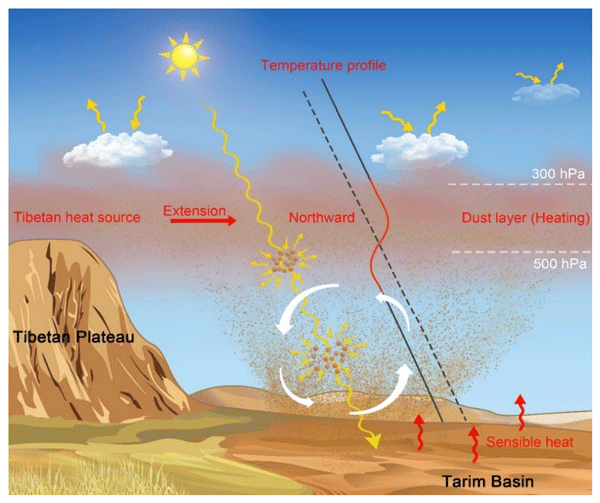
Based on the radiosonde observations, an anomalously warm layer is measured at altitudes between 500 and 300 hPa over the Tarim Basin (TB) with an average intensity of 2.53 and 1.39 K in the spring and summer, respectively. The heat contributions of dust to this anomalously warm atmospheric layer in spring and summer were 13.77 and 10.25 %, respectively. Topographically, the TB is adjacent to the Tibetan Plateau; we propose the concept of the Tibetan heat source’s northward extension.
Pu Jiang, Jinlong Yuan, Kenan Wu, Lu Wang, and Haiyun Xia
Atmos. Meas. Tech. Discuss., https://doi.org/10.5194/amt-2021-288, https://doi.org/10.5194/amt-2021-288, 2021
Revised manuscript not accepted
Short summary
Short summary
To analyse the atmospheric turbulence in high resolution, we proposed a new method by combining the advantages of two remote sensing instruments. A contrastive experiment was conducted horizontally to verify the method. Based on the result, we obtained and analyzed the continuous Cn2 and other turbulence profiles with high temporal and spatial resolution simultaneously. It is significant for studying the complex and fast-changing atmospheric environment.
Cited articles
Abshire, N., Schwiesow, R., and Derr, V.: Doppler lidar observations of hydrometeors, J. Appl. Meteorol., 13, 951–953, https://doi.org/10.1175/1520-0450(1974)013<0951:DLOOH>2.0.CO;2, 1974.
Alexander, S. and Protat, A.: Cloud properties observed from the surface and by satellite at the northern edge of the Southern Ocean, J. Geophys. Res.-Atmos., 123, 443–456, https://doi.org/10.1002/2017JD026552, 2018.
Ansmann, A., Mattis, I., Müller, D., Wandinger, U., Radlach, M., Althausen, D., and Damoah, R.: Ice formation in Saharan dust over central Europe observed with temperature/humidity/aerosol Raman lidar, J. Geophys. Res.-Atmos., 110, D18S12, https://doi.org/10.1029/2004JD005000, 2005.
Ansmann, A., Tesche, M., Althausen, D., Müller, D., Seifert, P., Freudenthaler, V., Heese, B., Wiegner, M., Pisani, G., and Knippertz, P.: Influence of Saharan dust on cloud glaciation in southern Morocco during the Saharan Mineral Dust Experiment, J. Geophys. Res.-Atmos., 113, D04210, https://doi.org/10.1029/2007JD008785, 2008.
Ansmann, A., Tesche, M., Seifert, P., Althausen, D., Engelmann, R., Fruntke, J., Wandinger, U., Mattis, I., and Müller, D.: Evolution of the ice phase in tropical altocumulus: SAMUM lidar observations over Cape Verde, J. Geophys. Res.-Atmos., 114, https://doi.org/10.1029/2008JD011659, 2009.
Banakh, V., Smalikho, I., and Falits, A.: Estimation of the turbulence energy dissipation rate in the atmospheric boundary layer from measurements of the radial wind velocity by micropulse coherent Doppler lidar, Opt. Express, 25, 22679–22692, https://doi.org/10.1364/OE.25.022679, 2017.
Bessho, K., Date, K., Hayashi, M., Ikeda, A., Imai, T., Inoue, H., Kumagai, Y., Miyakawa, T., Murata, H., and Ohno, T.: An introduction to Himawari-8/9 – Japan's new-generation geostationary meteorological satellites, J. Meteorol. Soc. Jpn. Ser. II, 94, 151–183, https://doi.org/10.2151/jmsj.2016-009, 2016.
Cheng, C. and Yi, F.: Falling mixed-phase ice virga and their liquid parent cloud layers as observed by ground-based lidars, Remote Sens., 12, 2094, https://doi.org/10.3390/rs12132094, 2020.
Chouza, F., Reitebuch, O., Benedetti, A., and Weinzierl, B.: Saharan dust long-range transport across the Atlantic studied by an airborne Doppler wind lidar and the MACC model, Atmos. Chem. Phys., 16, 11581–11600, https://doi.org/10.5194/acp-16-11581-2016, 2016.
Crawford, I., Bower, K. N., Choularton, T. W., Dearden, C., Crosier, J., Westbrook, C., Capes, G., Coe, H., Connolly, P. J., Dorsey, J. R., Gallagher, M. W., Williams, P., Trembath, J., Cui, Z., and Blyth, A.: Ice formation and development in aged, wintertime cumulus over the UK: observations and modelling, Atmos. Chem. Phys., 12, 4963–4985, https://doi.org/10.5194/acp-12-4963-2012, 2012.
DeMott, P. J., Finnegan, W. G., and Grant, L. O.: An Application of Chemical Kinetic Theory and Methodology to Characterize the Ice Nucleating Properties of Aerosols Used for Weather Modification, J. Appl. Meteorol. Clim., 22, 1190–1203, https://doi.org/10.1175/1520-0450(1983)022<1190:AAOCKT>2.0.CO;2, 1983.
Field, P. R.: Aircraft observations of ice crystal evolution in an altostratus cloud, J. Atmos. Sci., 56, 1925–1941, https://doi.org/10.1175/1520-0469(1999)056<1925:AOOICE>2.0.CO;2, 1999.
Gelaro, R., McCarty, W., Suárez, M. J., Todling, R., Molod, A., Takacs, L., Randles, C. A., Darmenov, A., Bosilovich, M. G., Reichle, R., Wargan, K., Coy, L., Cullather, R., Draper, C., Akella, S., Buchard, V., Conaty, A., da Silva, A. M., Gu, W., Kim, G.-K., Koster, R., Lucchesi, R., Merkova, D., Nielsen, J. E., Partyka, G., Pawson, S., Putman, W., Rienecker, M., Schubert, S. D., Sienkiewicz, M., and Zhao, B.: The Modern-Era Retrospective Analysis for Research and Applications, Version 2 (MERRA-2), J. Climate, 30, 5419–5454, https://doi.org/10.1175/JCLI-D-16-0758.1, 2017.
Global Modeling and Assimilation Office (GMAO): MERRA-2 tavg1_2d_adg_Nx: 2d,1-Hourly,Time-averaged,Single-Level,Assimilation,Aerosol Diagnostics (extended) V5.12.4, Greenbelt, MD, USA, Goddard Earth Sciences Data and Information Services Center (GES DISC) [data set], https://doi.org/10.5067/HM00OHQBHKTP, 2015.
Gultepe, I., Heymsfield, A., Field, P., and Axisa, D.: Ice phase precipitation, Meteorol. Mon., 58, 6.1–6.36, https://doi.org/10.1175/AMSMONOGRAPHS-D-16-0013.1, 2017.
Harvey, N. J., Hogan, R. J., and Dacre, H. F.: A method to diagnose boundary-layer type using Doppler lidar, Q. J. Roy. Meteor. Soc., 139, 1681–1693, https://doi.org/10.1002/qj.2068, 2013.
He, Q., Li, J., Zhao, T., Zhang, H., and Meng, L.: Observing a dust aerosol layer at a height of 3–4 km above the ground on the southern margin of the Tarim Basin, Atmos. Environ., 318, 120236, https://doi.org/10.1016/j.atmosenv.2023.120236, 2023.
He, Y., Liu, F., Yin, Z., Zhang, Y., Zhan, Y., and Yi, F.: Horizontally oriented ice crystals observed by the synergy of zenith-and slant-pointed polarization lidar over Wuhan (30.5° N, 114.4° E), China, J. Quant. Spectrosc. Ra., 268, 107626, https://doi.org/10.1016/j.jqsrt.2021.107626, 2021.
Heese, B., Flentje, H., Althausen, D., Ansmann, A., and Frey, S.: Ceilometer lidar comparison: backscatter coefficient retrieval and signal-to-noise ratio determination, Atmos. Meas. Tech., 3, 1763–1770, https://doi.org/10.5194/amt-3-1763-2010, 2010.
Hersbach, H., Bell, B., Berrisford, P., Hirahara, S., Horányi, A., Muñoz-Sabater, J., Nicolas, J., Peubey, C., Radu, R., and Schepers, D.: The ERA5 global reanalysis, Q. J. Roy. Meteor. Soc., 146, 1999–2049, https://doi.org/10.1002/qj.3803, 2020.
Hersbach, H., Bell, B., Berrisford, P., Biavati, G., Horányi, A., Muñoz Sabater, J., Nicolas, J., Peubey, C., Radu, R., Rozum, I., Schepers, D., Simmons, A., Soci, C., Dee, D., and Thépaut, J.-N.: ERA5 hourly data on pressure levels from 1940 to present, Copernicus Climate Change Service (C3S) Climate Data Store (CDS) [data set], https://doi.org/10.24381/cds.bd0915c6, 2023.
Heymsfield, A. J.: Production of ice in tropospheric clouds:A Review, B. Am. Meteorol. Soc., 86, 795–808, https://doi.org/10.1175/BAMS-86-6-795, 2005.
Holtslag, A. and Boville, B.: Local versus nonlocal boundary-layer diffusion in a global climate model, J. Climate, 6, 1825–1842, https://doi.org/10.1175/1520-0442(1993)006<1825:LVNBLD>2.0.CO;2, 1993.
Huang, J., Wang, T., Wang, W., Li, Z., and Yan, H.: Climate effects of dust aerosols over East Asian arid and semiarid regions, J. Geophys. Res.-Atmos., 119, 11398-11416, https://doi.org/10.1002/2014JD021796, 2014.
Jiang, P., Yuan, J., Wu, K., Wang, L., and Xia, H.: Turbulence Detection in the Atmospheric Boundary Layer using Coherent Doppler Wind Lidar and Microwave Radiometer, Atmos. Meas. Tech. Discuss. [preprint], https://doi.org/10.5194/amt-2021-288, 2021.
Kanji, Z. A., Ladino, L. A., Wex, H., Boose, Y., Burkert-Kohn, M., Cziczo, D. J., and Krämer, M.: Overview of Ice Nucleating Particles, Meteorol. Mon., 58, 1.1–1.33, https://doi.org/10.1175/AMSMONOGRAPHS-D-16-0006.1, 2017.
Klein, H., Nickovic, S., Haunold, W., Bundke, U., Nillius, B., Ebert, M., Weinbruch, S., Schuetz, L., Levin, Z., Barrie, L. A., and Bingemer, H.: Saharan dust and ice nuclei over Central Europe, Atmos. Chem. Phys., 10, 10211–10221, https://doi.org/10.5194/acp-10-10211-2010, 2010.
Lai, R., Teng, S., Yi, B., Letu, H., Min, M., Tang, S., and Liu, C.: Comparison of Cloud Properties from Himawari-8 and FengYun-4A Geostationary Satellite Radiometers with MODIS Cloud Retrievals, Remote Sens., 11, 1703, https://doi.org/10.3390/RS11141703, 2019.
Li, M., Xia, H., Su, L., Han, H., Wang, X., and Yuan, J.: The Detection of Desert Aerosol Incorporating Coherent Doppler Wind Lidar and Rayleigh-Mie-Raman Lidar, Remote Sens., 15, 5453, https://doi.org/10.3390/rs15235453, 2023.
Li, R., Dong, X., Guo, J., Fu, Y., Zhao, C., Wang, Y., and Min, Q.: The implications of dust ice nuclei effect on cloud top temperature in a complex mesoscale convective system, Sci. Rep., 7, 13826, https://doi.org/10.1038/s41598-017-12681-0, 2017.
Li, Z., Niu, F., Fan, J., Liu, Y., Rosenfeld, D., and Ding, Y.: Long-term impacts of aerosols on the vertical development of clouds and precipitation, Nat. Geosci., 4, 888–894, https://doi.org/10.1038/NGEO1313, 2011.
Liu, H., Yuan, L., Fan, C., Liu, F., Zhang, X., Zhu, X., Liu, J., Zhu, X., and Chen, W.: Performance validation on an all-fiber 1.54-µ m pulsed coherent Doppler lidar for wind-profile measurement, Opt. Eng., 59, 014109, https://doi.org/10.1117/1.OE.59.1.014109, 2020.
Liu, Z., Dong, Z., Zhang, Z., Cui, X., and Xiao, N.: Spatial and temporal variation of the near-surface wind regimes in the Taklimakan Desert, Northwest China, Theor. Appl. Climatol., 138, 433–447, https://doi.org/10.1007/s00704-019-02824-w, 2019.
Lloyd, G., Choularton, T. W., Bower, K. N., Gallagher, M. W., Connolly, P. J., Flynn, M., Farrington, R., Crosier, J., Schlenczek, O., Fugal, J., and Henneberger, J.: The origins of ice crystals measured in mixed-phase clouds at the high-alpine site Jungfraujoch, Atmos. Chem. Phys., 15, 12953–12969, https://doi.org/10.5194/acp-15-12953-2015, 2015.
Ma, Y., Gong, W., and Mao, F.: Transfer learning used to analyze the dynamic evolution of the dust aerosol, J. Quant. Spectrosc. Ra., 153, 119–130, https://doi.org/10.1016/j.jqsrt.2014.09.025, 2015.
Manninen, A. J., Marke, T., Tuononen, M., and O'Connor, E. J.: Atmospheric Boundary Layer Classification With Doppler Lidar, J. Geophys. Res.-Atmos., 123, 8172–8189, https://doi.org/10.1029/2017JD028169, 2018.
Moore, E. B. and Molinero, V.: Structural transformation in supercooled water controls the crystallization rate of ice, Nature, 479, 506–508, https://doi.org/10.1038/nature10586, 2011.
Morris, C. E., Georgakopoulos, D. G., and Sands, D. C.: Ice nucleation active bacteria and their potential role in precipitation, J. Phys. IV, 121, 87–103, https://doi.org/10.1051/jp4:2004121004, 2004.
Murray, B., O'sullivan, D., Atkinson, J., and Webb, M.: Ice nucleation by particles immersed in supercooled cloud droplets, Chem. Soc. Rev., 41, 6519–6554, https://doi.org/10.1039/c2cs35200a, 2012.
Peña, A., Gryning, S.-E., and Hahmann, A. N.: Observations of the atmospheric boundary layer height under marine upstream flow conditions at a coastal site, J. Geophys. Res.-Atmos., 118, 1924–1940, https://doi.org/10.1002/jgrd.50175, 2013.
Ramanathan, V., Crutzen, P. J., Kiehl, J., and Rosenfeld, D.: Aerosols, climate, and the hydrological cycle, Science, 294, 2119–2124, https://doi.org/10.1126/science.1064034, 2001.
Rogers, D. C. and Vali, G.: Ice crystal production by mountain surfaces, J. Appl. Meteorol. Clim., 26, 1152–1168, https://doi.org/10.1175/1520-0450(1987)026<1152:ICPBMS>2.0.CO;2, 1987.
Rosenfeld, D., Rudich, Y., and Lahav, R.: Desert dust suppressing precipitation: A possible desertification feedback loop, P. Natl. Acad. Sci. USA, 98, 5975–5980, https://doi.org/10.1073/pnas.101122798, 2001.
Rosenfeld, D., Yu, X., Liu, G., Xu, X., Zhu, Y., Yue, Z., Dai, J., Dong, Z., Dong, Y., and Peng, Y.: Glaciation temperatures of convective clouds ingesting desert dust, air pollution and smoke from forest fires, Geophys. Res. Lett., 38, https://doi.org/10.1029/2011GL049423, 2011.
Seifert, P., Ansmann, A., Mattis, I., Wandinger, U., Tesche, M., Engelmann, R., Müller, D., Pérez, C., and Haustein, K.: Saharan dust and heterogeneous ice formation: Eleven years of cloud observations at a central European EARLINET site, J. Geophys. Res.-Atmos., 115, D20201, https://doi.org/10.1029/2009JD013222, 2010.
Shuoqiu, W. and Xiaoyan, M.: Analysis of dust vertical and horizontal distribution during dust events in northwest China based on FY-4A, MODIS and CALIPSO satellite data, Acta Scientiae Circumstantiae, 40, 2892–2901, https://doi.org/10.13671/j.hjkxxb.2020.0093, 2020.
Stein, A. F., Draxler, R. R., Rolph, G. D., Stunder, B. J. B., Cohen, M. D., and Ngan, F.: NOAA's HYSPLIT Atmospheric Transport and Dispersion Modeling System, B. Am. Meteorol. Soc., 96, 2059–2077, https://doi.org/10.1175/BAMS-D-14-00110.1, 2015.
Su, L.: ice_crystal_cloud_lidar_datas, figshare [data set], https://doi.org/10.6084/m9.figshare.25432984, 2024.
Su, L., Lu, C., Yuan, J., Wang, X., He, Q., and Xia, H.: Measurement report: The promotion of the low-level jet and thermal effects on the development of the deep convective boundary layer at the southern edge of the Taklimakan Desert, Atmos. Chem. Phys., 24, 10947–10963, https://doi.org/10.5194/acp-24-10947-2024, 2024a.
Su, L., Xia, H., Yuan, J., Wang, Y., Maituerdi, A., and He, Q.: Study on Daytime Atmospheric Mixing Layer Height Based on 2-Year Coherent Doppler Wind Lidar Observations at the Southern Edge of the Taklimakan Desert, Remote Sens., 16, 3005, https://doi.org/10.3390/rs16163005, 2024b.
Sullivan, S., Voigt, A., Miltenberger, A., Rolf, C., and Krämer, M.: A Lagrangian perspective of microphysical impact on ice cloud evolution and radiative heating, J. Adv. Model. Earth Sy., 14, e2022MS003226, https://doi.org/10.1029/2022MS003226, 2022.
Sun, J. and Liu, T.: The Age of the Taklimakan Desert, Science, 312, 1621–1621, https://doi.org/10.1126/science.1124616, 2006.
Tang, D., Wei, T., Yuan, J., Xia, H., and Dou, X.: Observation of bioaerosol transport using wideband integrated bioaerosol sensor and coherent Doppler lidar, Atmos. Meas. Tech., 15, 2819–2838, https://doi.org/10.5194/amt-15-2819-2022, 2022.
Tao, W. K., Chen, J. P., Li, Z., Wang, C., and Zhang, C.: Impact of aerosols on convective clouds and precipitation, Rev. Geophys., 50, RG2001, https://doi.org/10.1029/2011RG000369, 2012.
Vali, G.: Nucleation terminology, B. Am. Meteorol. Soc., 66, 1426–1427, 1985.
Wang, L., Qiang, W., Xia, H., Wei, T., Yuan, J., and Jiang, P.: Robust Solution for Boundary Layer Height Detections with Coherent Doppler Wind Lidar, Adv. Atmos. Sci., 38, 1920–1928, https://doi.org/10.1007/s00376-021-1068-0, 2021.
Wang, L., Yuan, J., Xia, H., Zhao, L., and Wu, Y.: Marine mixed layer height detection using ship-borne coherent Doppler wind lidar based on constant turbulence threshold, Remote Sens., 14, 745, https://doi.org/10.3390/rs14030745, 2022.
Wei, T., Xia, H., Hu, J., Wang, C., Shangguan, M., Wang, L., Jia, M., and Dou, X.: Simultaneous wind and rainfall detection by power spectrum analysis using a VAD scanning coherent Doppler lidar, Opt. Express, 27, 31235–31245, https://doi.org/10.1364/OE.27.031235, 2019.
Westbrook, C. and Illingworth, A.: The formation of ice in a long-lived supercooled layer cloud, Q. J. Roy. Meteor. Soc., 139, 2209–2221, https://doi.org/10.1002/qj.2096, 2013.
Westbrook, C., Illingworth, A., O'Connor, E., and Hogan, R.: Doppler lidar measurements of oriented planar ice crystals falling from supercooled and glaciated layer clouds, Q. J. Roy. Meteor. Soc., 136, 260–276, https://doi.org/10.1002/qj.528, 2010.
Wu, C. and Yi, F.: Local ice formation via liquid water growth in slowly ascending humid aerosol/liquid water layers observed with ground-based lidars and radiosondes, J. Geophys. Res.-Atmos., 122, 4479–4493, https://doi.org/10.1002/2016JD025765, 2017.
Wu, K., Wei, T., Yuan, J., Xia, H., Huang, X., Lu, G., Zhang, Y., Liu, F., Zhu, B., and Ding, W.: Thundercloud structures detected and analyzed based on coherent Doppler wind lidar, Atmos. Meas. Tech., 16, 5811–5825, https://doi.org/10.5194/amt-16-5811-2023, 2023.
Wu, S., Song, X., Liu, B., Dai, G., Liu, J., Zhang, K., Qin, S., Hua, D., Gao, F., and Liu, L.: Mobile multi-wavelength polarization Raman lidar for water vapor, cloud and aerosol measurement, Opt. Express, 23, 33870–33892, https://doi.org/10.1364/OE.23.033870, 2015.
Yang, J., Zhang, Z., Wei, C., Lu, F., and Guo, Q.: Introducing the New Generation of Chinese Geostationary Weather Satellites, Fengyun-4, B. Am. Meteorol. Soc., 98, 1637–1658, https://doi.org/10.1175/BAMS-D-16-0065.1, 2017.
Yang, X., Shen, S., Yang, F., He, Q., Ali, M., Huo, W., and Liu, X.: Spatial and temporal variations of blowing dust events in the Taklimakan Desert, Theor. Appl. Clim., 125, 669–677, https://doi.org/10.1007/s00704-015-1537-4, 2016.
Yin, Z., Yi, F., He, Y., Liu, F., Yu, C., Zhang, Y., and Wang, W.: Asian dust impacts on heterogeneous ice formation at Wuhan based on polarization lidar measurements, Atmos. Environ., 246, 118166, https://doi.org/10.1016/j.atmosenv.2020.118166, 2021.
Yoshida, R., Okamoto, H., Hagihara, Y., and Ishimoto, H.: Global analysis of cloud phase and ice crystal orientation from Cloud-Aerosol Lidar and Infrared Pathfinder Satellite Observation (CALIPSO) data using attenuated backscattering and depolarization ratio, J. Geophys. Res., 115, D00H32, https://doi.org/10.1029/2009JD012334, 2010.
Yuan, J., Xia, H., Wei, T., Wang, L., Yue, B., and Wu, Y.: Identifying cloud, precipitation, windshear, and turbulence by deep analysis of the power spectrum of coherent Doppler wind lidar, Opt. Express, 28, 37406–37418, https://doi.org/10.1364/OE.412809, 2020.
Yuan, J., Su, L., Xia, H., Li, Y., Zhang, M., Zhen, G., and Li, J.: Microburst, windshear, gust front, and vortex detection in mega airport using a single coherent Doppler wind lidar, Remote Sens., 14, 1626, https://doi.org/10.3390/rs14071626, 2022a.
Yuan, Y., Di, H., Liu, Y., Yang, T., Li, Q., Yan, Q., Xin, W., Li, S., and Hua, D.: Detection and analysis of cloud boundary in Xi'an, China, employing 35 GHz cloud radar aided by 1064 nm lidar, Atmos. Meas. Tech., 15, 4989–5006, https://doi.org/10.5194/amt-15-4989-2022, 2022b.
Zeng, X., Tao, W., Zhang, M., Hou, A., Xie, S., Lang, S. E., Li, X., Starr, D., and Li, X.: A contribution by ice nuclei to global warming, Q. J. Roy. Meteor. Soc., 135, https://doi.org/10.1002/qj.449, 2009.
Zhang, Y., Wu, Y., and Xia, H.: Spatial resolution enhancement of coherent Doppler wind lidar using differential correlation pair technique, Opt. Lett., 46, 5550–5553, https://doi.org/10.1109/jlt.2022.3160294, 2021.
Short summary
1. The formation of ice crystal clouds catalyzed by dust aerosols were observed by coherent Doppler wind lidar in the Taklimakan Desert. 2. The wind provides a dynamic basis for the formation of ice crystal clouds and plays an important role in the decomposition process. 3. The special basin topography, turbulence and downdrafts keep the base height of the ice crystal clouds at around 3 km.
1. The formation of ice crystal clouds catalyzed by dust aerosols were observed by coherent...


