
Articles | Volume 19, issue 9
https://doi.org/10.5194/amt-19-3031-2026
© Author(s) 2026. This work is distributed under
the Creative Commons Attribution 4.0 License.
the Creative Commons Attribution 4.0 License.
https://doi.org/10.5194/amt-19-3031-2026
© Author(s) 2026. This work is distributed under
the Creative Commons Attribution 4.0 License.
the Creative Commons Attribution 4.0 License.
Research article
| 
08 May 2026
Research article |
| 08 May 2026
| 08 May 2026
Uncertainty estimation of aerosol properties from a Vaisala CT25k ceilometer based on in situ aerosol measurements
Marcus G. Müller
CORRESPONDING AUTHOR

Forschungszentrum Jülich GmbH, Institute of Climate and Energy Systems: Troposphere (ICE-3), Jülich, Germany
Birger Bohn
Forschungszentrum Jülich GmbH, Institute of Climate and Energy Systems: Troposphere (ICE-3), Jülich, Germany
Ulrich Löhnert
Forschungszentrum Jülich GmbH, Institute of Climate and Energy Systems: Troposphere (ICE-3), Jülich, Germany
Institute for Geophysics and Meteorology, University of Cologne, Cologne, Germany
Related authors
Ulrich Löhnert, Maike Ahlgrimm, Felix Ament, Jens Bange, Kjell zum Berge, Birger Bohn, Yann Büchau, Leonie Esters, Lars van Gelder, Yohanes R. S. Ginting, Luise Helmstreit, Tobias Marke, Marcus G. Müller, Patrizia Ney, Anika Obermann-Hellhund, Andreas Platis, Bernhard Pospichal, Alexander Pschera, Anja Rapmund, Mirjana Sakradzija, Martin Schön, Jan H. Schween, Maria Toporov, and Andreas Wieser
Earth Syst. Sci. Data Discuss., https://doi.org/10.5194/essd-2026-784, https://doi.org/10.5194/essd-2026-784, 2026
Preprint under review for ESSD
Short summary
Short summary
Accurate weather forecasts require detailed measurements of temperature, humidity and wind. During a two-week campaign in Germany, we tested innovative instruments against established measurement techniques and satellite observations. Most ground-based instruments met international performance requirements and successfully captured daily atmospheric changes. The publicly available dataset supports improved weather forecasting and the development of future weather observation networks.
Ulrich Löhnert, Maike Ahlgrimm, Felix Ament, Jens Bange, Kjell zum Berge, Birger Bohn, Yann Büchau, Leonie Esters, Lars van Gelder, Yohanes R. S. Ginting, Luise Helmstreit, Tobias Marke, Marcus G. Müller, Patrizia Ney, Anika Obermann-Hellhund, Andreas Platis, Bernhard Pospichal, Alexander Pschera, Anja Rapmund, Mirjana Sakradzija, Martin Schön, Jan H. Schween, Maria Toporov, and Andreas Wieser
Earth Syst. Sci. Data Discuss., https://doi.org/10.5194/essd-2026-784, https://doi.org/10.5194/essd-2026-784, 2026
Preprint under review for ESSD
Short summary
Short summary
Accurate weather forecasts require detailed measurements of temperature, humidity and wind. During a two-week campaign in Germany, we tested innovative instruments against established measurement techniques and satellite observations. Most ground-based instruments met international performance requirements and successfully captured daily atmospheric changes. The publicly available dataset supports improved weather forecasting and the development of future weather observation networks.
Andrea Burgos-Cuevas, David D. Turner, Jan H. Schween, Tobias Marke, Tobias Böck, and Ulrich Löhnert
EGUsphere, https://doi.org/10.5194/egusphere-2026-4994, https://doi.org/10.5194/egusphere-2026-4994, 2026
This preprint is open for discussion and under review for Atmospheric Measurement Techniques (AMT).
Short summary
Short summary
We developed a new method to estimate heat and moisture transport in the lower atmosphere using measurements from a single site. The method combines temperature, humidity, and wind observations and quantifies their uncertainty. Results show that strong transport events can be reliably detected, reducing the need for complex networks of instruments and providing a practical way to monitor important atmospheric processes.
Duong H. Do, Astrid Kerkweg, Yarê Baker, Birger Bohn, Hendrik Fuchs, Quanfu He, Thorsten Hohaus, Sungah Kang, Timo Kirfel, Finja Löher, Niklas Diepenthal, Anke C. Nölscher, Anna Novelli, Alexander Pschera, Felix Wieser, Sören R. Zorn, Andreas Wahner, and Domenico Taraborrelli
EGUsphere, https://doi.org/10.5194/egusphere-2026-4522, https://doi.org/10.5194/egusphere-2026-4522, 2026
Short summary
Short summary
This work builds a chamber simulation tool that mimics how air chemistry changes inside laboratory reactors, including injected gases, changing light, gas and liquid reactions, wall effects, and dilution. Tests in several chambers reproduced measured changes in reactive species, nitrogen compounds, and ozone, and helped capture how organic particles form. The same chemistry can be reused in larger, global air simulations to assess real-world impact.
Paolo Andreozzi, Mark D. Fielding, Robin J. Hogan, Richard M. Forbes, Adrian A. Hill, Samuel Rémy, Birger Bohn, and Ulrich Löhnert
Atmos. Chem. Phys., 26, 11309–11338, https://doi.org/10.5194/acp-26-11309-2026, https://doi.org/10.5194/acp-26-11309-2026, 2026
Short summary
Short summary
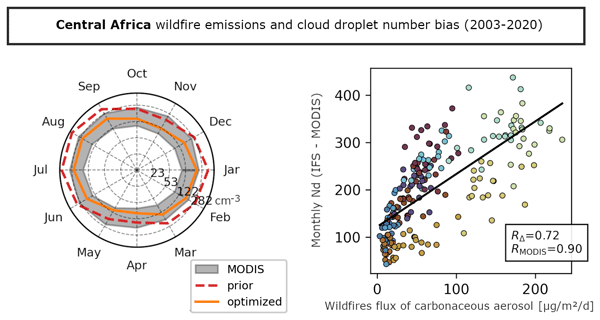
Aerosols significantly contribute to the Earth’s climate, but models still struggle to represent them. Here we use satellite observations of clouds to constrain aerosol processes in a weather and air-quality model. We show that African wildfires lead to overly bright simulated clouds and that the model removes too much aerosol in mixed-phase clouds. This demonstrates how cloud observations can target weakly constrained aerosol processes, with potential benefits for weather and climate modelling.
Costanza Civale, Maria Dolores Andrés Hernández, Jean-Philippe Putaud, Francesca Barnaba, Henri Diémoz, Johannes Schneider, Helmut Ziereis, Katharina Kaiser, Jörg Schmidt, Ovid Oktavian Krüger, Bruna Holanda, Robert Baumann, Benjamin Weyland, Eric Förster, Midhun George, Yangzhuoran Liu, Daniel Sauer, Jennifer Wolf, Annachiara Bellini, Birger Bohn, Klaus Pfeilsticker, and John Philip Burrows
Atmos. Chem. Phys., 26, 9827–9855, https://doi.org/10.5194/acp-26-9827-2026, https://doi.org/10.5194/acp-26-9827-2026, 2026
Short summary
Short summary
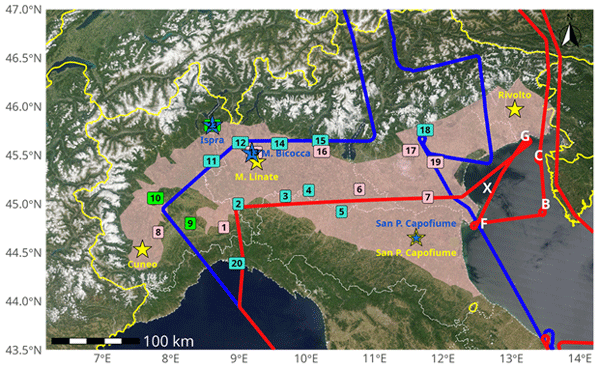
This study combines measurements of gases and particles at the ground and on-board an instrumented aircraft to investigate pollution transport over the Po Valley, a major atmospheric pollution hotspot in Europe. Overall, the extensive data set obtained at different altitudes provides insight into the mixing of pollution plumes and their export towards the Adriatic coast as well as with naturally occurring dust and its impact on air quality over the Po Plain.
Moritz Löffler, Christine Knist, Bernhard Pospichal, and Ulrich Löhnert
EGUsphere, https://doi.org/10.5194/egusphere-2026-2264, https://doi.org/10.5194/egusphere-2026-2264, 2026
Short summary
Short summary
This study evaluates two retrievals to improve the representativeness of observations from a ground-based microwave radiometer and one-hour weather forecasts in cloudy-sky conditions: a cloud-detection and a cloud-clearing retrieval. The novel retrievals reduce the false cloud detections and improve the representativeness of cloudy-sky observations and model predictions. These results will help the broader direct assimilation of microwave radiometer observations, also at lower elevation angles.
Benjamin Weyland, Simon Rosanka, Domenico Taraborrelli, Birger Bohn, Andreas Zahn, Florian Obersteiner, Eric Förster, Mariano Mertens, Patrick Jöckel, Helmut Ziereis, Katharina Kaiser, Horst Fischer, John N. Crowley, Nijing Wang, Achim Edtbauer, Jonathan Williams, Maria Dolores Andrés Hernández, John P. Burrows, Flora Kluge, Meike K. Rotermund, Andre Butz, and Klaus Pfeilsticker
Atmos. Chem. Phys., 26, 6825–6856, https://doi.org/10.5194/acp-26-6825-2026, https://doi.org/10.5194/acp-26-6825-2026, 2026
Short summary
Short summary
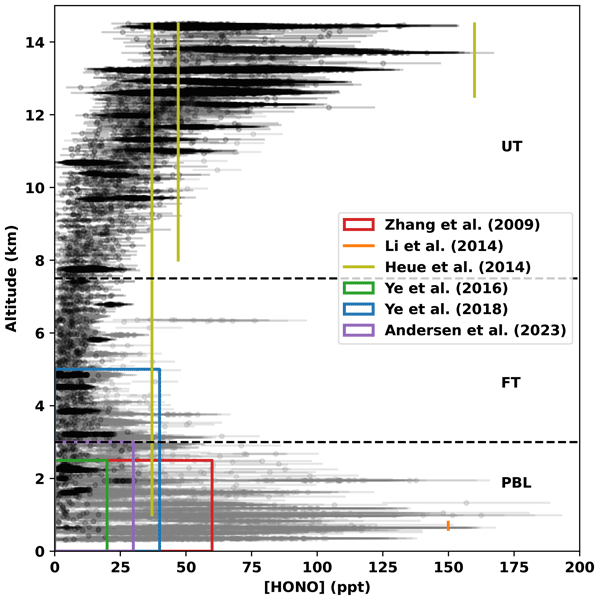
The destruction by sunlight of nitrous acid (HONO) produces the so-called detergent of the atmosphere. HONO has been measured in concentrations which exceed predictions based on known chemistry for decades. Several reactions have been proposed which may explain this excess HONO. This study reports on airborne measurements of HONO; the observations exceed predictions and form a C-shaped profile in the troposphere. Together with a host of other measurements, various reactions are investigated.
Lu Liu, Thorsten Hohaus, Andreas Hofzumahaus, Frank Holland, Hendrik Fuchs, Ralf Tillmann, Birger Bohn, Stefanie Andres, Zhaofeng Tan, Franz Rohrer, Vlassis A. Karydis, Vaishali Vardhan, Philipp Franke, Anne C. Lange, Anna Novelli, Benjamin Winter, Changmin Cho, Iulia Gensch, Sergej Wedel, Andreas Wahner, and Astrid Kiendler-Scharr
Atmos. Chem. Phys., 25, 16189–16213, https://doi.org/10.5194/acp-25-16189-2025, https://doi.org/10.5194/acp-25-16189-2025, 2025
Short summary
Short summary
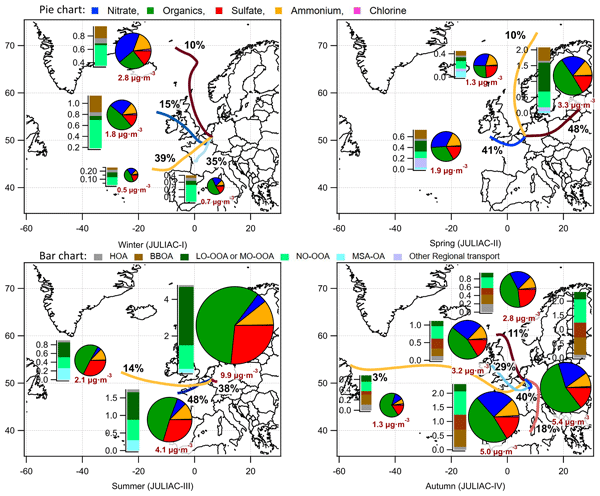
We measured air particles at a rural site in Germany over a year to understand how their sources and properties change with the seasons. Particles from natural sources peaked in summer, especially during heatwaves, while those from burning activities like residential heating and wildfires dominated in colder months. Winds carrying air from other regions also influenced particle levels. These findings link air quality to climate change and energy transitions.
Tobias Böck, Moritz Löffler, Tobias Marke, Bernhard Pospichal, Christine Knist, and Ulrich Löhnert
Atmos. Meas. Tech., 18, 6251–6270, https://doi.org/10.5194/amt-18-6251-2025, https://doi.org/10.5194/amt-18-6251-2025, 2025
Short summary
Short summary
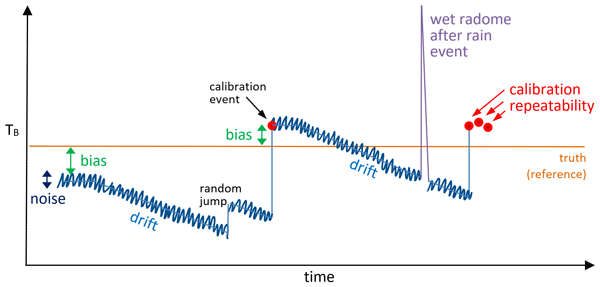
We investigated how accurate modern ground-based weather sensors are in measuring temperature and humidity within the lower atmosphere. We identified different types of small but important measurement error inherent to the instruments. Understanding these issues helps improve data quality and supports better short-term weather forecasts using sensor networks across Europe.
Sabrina Schnitt, Andreas Foth, Heike Kalesse-Los, Mario Mech, Claudia Acquistapace, Friedhelm Jansen, Ulrich Löhnert, Bernhard Pospichal, Johannes Röttenbacher, Susanne Crewell, and Bjorn Stevens
Earth Syst. Sci. Data, 16, 681–700, https://doi.org/10.5194/essd-16-681-2024, https://doi.org/10.5194/essd-16-681-2024, 2024
Short summary
Short summary
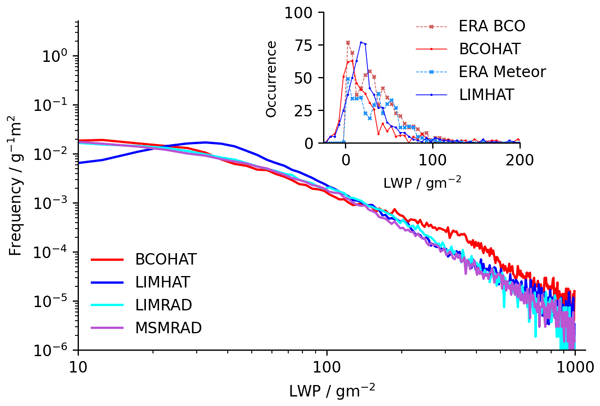
This publication describes the microwave radiometric measurements performed during the EUREC4A campaign at Barbados Cloud Observatory (BCO) and aboard RV Meteor and RV Maria S Merian. We present retrieved integrated water vapor (IWV), liquid water path (LWP), and temperature and humidity profiles as a unified, quality-controlled, multi-site data set on a 3 s temporal resolution for a core period between 19 January 2020 and 14 February 2020.
Tobias Böck, Bernhard Pospichal, and Ulrich Löhnert
Atmos. Meas. Tech., 17, 219–233, https://doi.org/10.5194/amt-17-219-2024, https://doi.org/10.5194/amt-17-219-2024, 2024
Short summary
Short summary
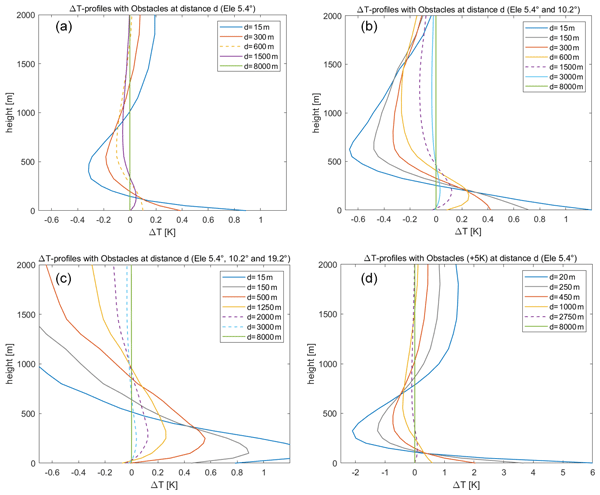
In this study, measurement uncertainties from microwave radiometers and their impact on temperature profiling are analyzed. These measurement uncertainties include horizontal inhomogeneities of the atmosphere, pointing errors or tilts of the instrument, physical obstacles which are in the line of sight of the radiometer, and radio frequency interferences. Impacts on temperature profiles from these uncertainties are usually small in real-life scenarios and when obstacles are far enough away.
Jacky Y. S. Pang, Florian Berg, Anna Novelli, Birger Bohn, Michelle Färber, Philip T. M. Carlsson, René Dubus, Georgios I. Gkatzelis, Franz Rohrer, Sergej Wedel, Andreas Wahner, and Hendrik Fuchs
Atmos. Chem. Phys., 23, 12631–12649, https://doi.org/10.5194/acp-23-12631-2023, https://doi.org/10.5194/acp-23-12631-2023, 2023
Short summary
Short summary
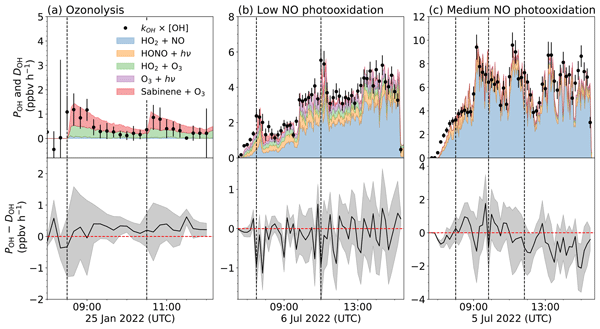
In this study, the oxidations of sabinene by OH radicals and ozone were investigated with an atmospheric simulation chamber. Reaction rate coefficients of the OH-oxidation reaction at temperatures between 284 to 340 K were determined for the first time in the laboratory by measuring the OH reactivity. Product yields determined in chamber experiments had good agreement with literature values, but discrepancies were found between experimental yields and expected yields from oxidation mechanisms.
Marc von Hobe, Domenico Taraborrelli, Sascha Alber, Birger Bohn, Hans-Peter Dorn, Hendrik Fuchs, Yun Li, Chenxi Qiu, Franz Rohrer, Roberto Sommariva, Fred Stroh, Zhaofeng Tan, Sergej Wedel, and Anna Novelli
Atmos. Chem. Phys., 23, 10609–10623, https://doi.org/10.5194/acp-23-10609-2023, https://doi.org/10.5194/acp-23-10609-2023, 2023
Short summary
Short summary
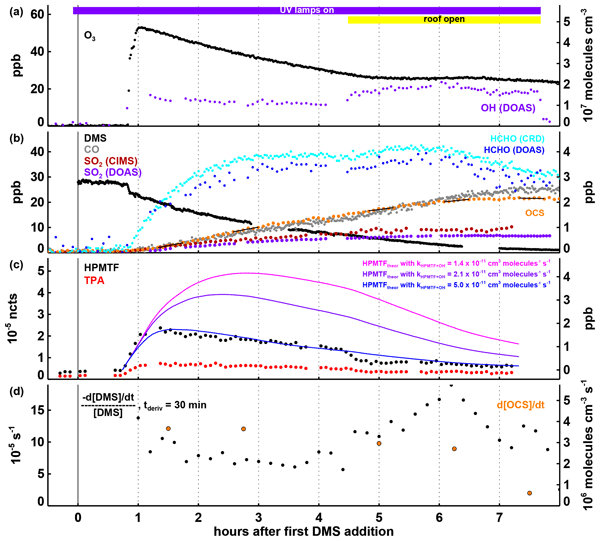
The trace gas carbonyl sulfide (OCS) transports sulfur from the troposphere to the stratosphere, where sulfate aerosols are formed that influence climate and stratospheric chemistry. An uncertain OCS source in the troposphere is chemical production form dimethyl sulfide (DMS), a gas released in large quantities from the oceans. We carried out experiments in a large atmospheric simulation chamber to further elucidate the chemical mechanism of OCS production from DMS.
Midhun George, Maria Dolores Andrés Hernández, Vladyslav Nenakhov, Yangzhuoran Liu, John Philip Burrows, Birger Bohn, Eric Förster, Florian Obersteiner, Andreas Zahn, Theresa Harlaß, Helmut Ziereis, Hans Schlager, Benjamin Schreiner, Flora Kluge, Katja Bigge, and Klaus Pfeilsticker
Atmos. Chem. Phys., 23, 7799–7822, https://doi.org/10.5194/acp-23-7799-2023, https://doi.org/10.5194/acp-23-7799-2023, 2023
Short summary
Short summary
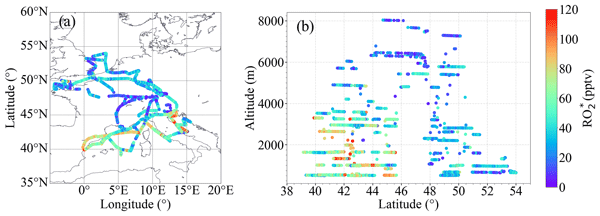
The applicability of photostationary steady-state (PSS) assumptions to estimate the amount of the sum of peroxy radicals (RO2*) during the EMeRGe airborne observations from the known radical chemistry and onboard measurements of RO2* precursors, photolysis frequencies, and other trace gases such as NOx and O3 was investigated. The comparison of the calculated RO2* with the actual measurements provides an insight into the main processes controlling their concentration in the air masses measured.
Nils Eingrüber, Wolfgang Korres, Ulrich Löhnert, and Karl Schneider
Adv. Sci. Res., 20, 65–71, https://doi.org/10.5194/asr-20-65-2023, https://doi.org/10.5194/asr-20-65-2023, 2023
Short summary
Short summary
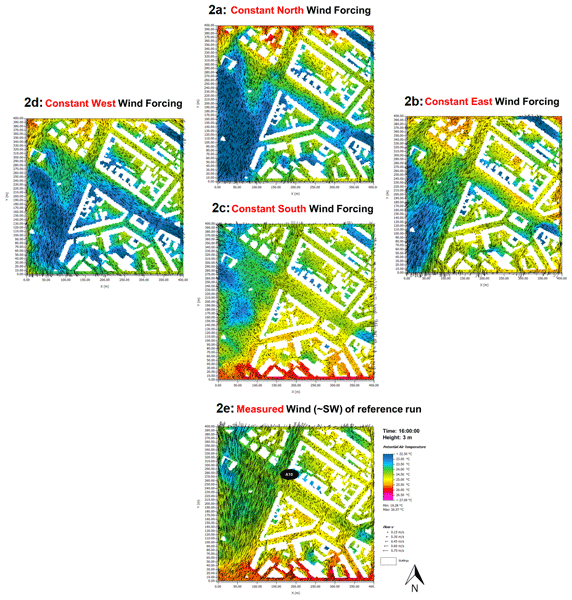
Sensitivity analyses for wind direction effects upon an ENVI-met microclimate model were performed for a heterogeneous urban study area. Significant temperature differences were found when forcing the model with constant N/E/S/W wind direction data. Best model performance was observed using measured wind direction forcing data. The results demonstrate that cooling effects of park areas are largely directional which is important for urban planning and design of climate change adaptation measures.
Zaneta Hamryszczak, Dirk Dienhart, Bettina Brendel, Roland Rohloff, Daniel Marno, Monica Martinez, Hartwig Harder, Andrea Pozzer, Birger Bohn, Martin Zöger, Jos Lelieveld, and Horst Fischer
Atmos. Chem. Phys., 23, 5929–5943, https://doi.org/10.5194/acp-23-5929-2023, https://doi.org/10.5194/acp-23-5929-2023, 2023
Short summary
Short summary
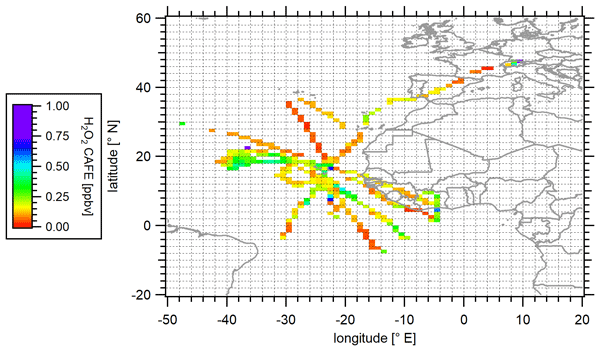
Hydrogen peroxide is a key contributor to the oxidative chemistry of the atmosphere through its link to the most prominent oxidants controlling its self-cleansing capacity, HOx. During the CAFE-Africa campaign, H2O2 was measured over the Atlantic Ocean and western Africa in August/September 2018. The study gives an overview of the distribution of H2O2 in the upper tropical troposphere and investigates the impact of convective processes in the Intertropical Convergence Zone on the budget of H2O2.
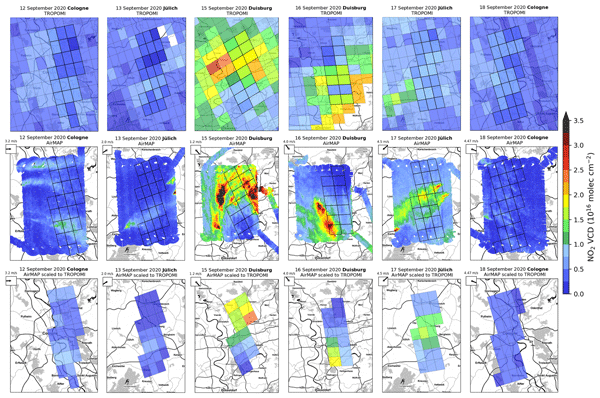
Kezia Lange, Andreas Richter, Anja Schönhardt, Andreas C. Meier, Tim Bösch, André Seyler, Kai Krause, Lisa K. Behrens, Folkard Wittrock, Alexis Merlaud, Frederik Tack, Caroline Fayt, Martina M. Friedrich, Ermioni Dimitropoulou, Michel Van Roozendael, Vinod Kumar, Sebastian Donner, Steffen Dörner, Bianca Lauster, Maria Razi, Christian Borger, Katharina Uhlmannsiek, Thomas Wagner, Thomas Ruhtz, Henk Eskes, Birger Bohn, Daniel Santana Diaz, Nader Abuhassan, Dirk Schüttemeyer, and John P. Burrows
Atmos. Meas. Tech., 16, 1357–1389, https://doi.org/10.5194/amt-16-1357-2023, https://doi.org/10.5194/amt-16-1357-2023, 2023
Short summary
Short summary
We present airborne imaging DOAS and ground-based stationary and car DOAS measurements conducted during the S5P-VAL-DE-Ruhr campaign in the Rhine-Ruhr region. The measurements are used to validate spaceborne NO2 data products from the Sentinel-5 Precursor TROPOspheric Monitoring Instrument (TROPOMI). Auxiliary data of the TROPOMI NO2 retrieval, such as spatially higher resolved a priori NO2 vertical profiles, surface reflectivity, and cloud treatment are investigated to evaluate their impact.
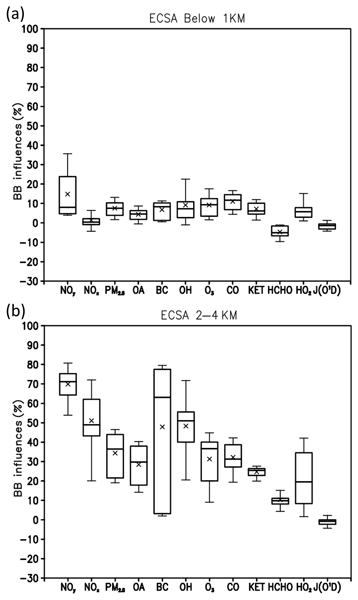
Chuan-Yao Lin, Wan-Chin Chen, Yi-Yun Chien, Charles C. K. Chou, Chian-Yi Liu, Helmut Ziereis, Hans Schlager, Eric Förster, Florian Obersteiner, Ovid O. Krüger, Bruna A. Holanda, Mira L. Pöhlker, Katharina Kaiser, Johannes Schneider, Birger Bohn, Klaus Pfeilsticker, Benjamin Weyland, Maria Dolores Andrés Hernández, and John P. Burrows
Atmos. Chem. Phys., 23, 2627–2647, https://doi.org/10.5194/acp-23-2627-2023, https://doi.org/10.5194/acp-23-2627-2023, 2023
Short summary
Short summary
During the EMeRGe campaign in Asia, atmospheric pollutants were measured on board the HALO aircraft. The WRF-Chem model was employed to evaluate the biomass burning (BB) plume transported from Indochina and its impact on the downstream areas. The combination of BB aerosol enhancement with cloud water resulted in a reduction in incoming shortwave radiation at the surface in southern China and the East China Sea, which potentially has significant regional climate implications.
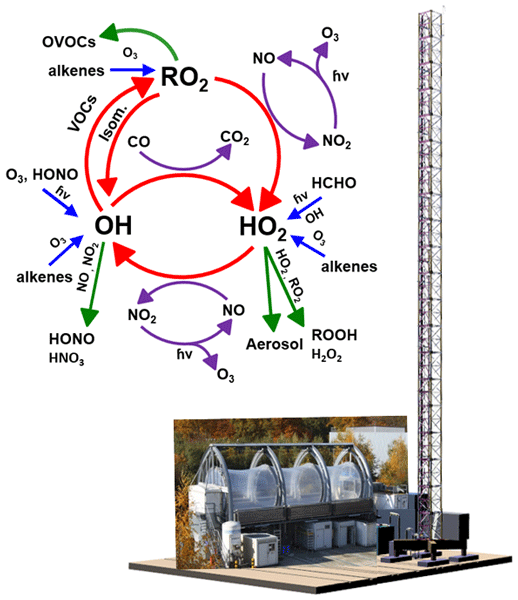
Changmin Cho, Hendrik Fuchs, Andreas Hofzumahaus, Frank Holland, William J. Bloss, Birger Bohn, Hans-Peter Dorn, Marvin Glowania, Thorsten Hohaus, Lu Liu, Paul S. Monks, Doreen Niether, Franz Rohrer, Roberto Sommariva, Zhaofeng Tan, Ralf Tillmann, Astrid Kiendler-Scharr, Andreas Wahner, and Anna Novelli
Atmos. Chem. Phys., 23, 2003–2033, https://doi.org/10.5194/acp-23-2003-2023, https://doi.org/10.5194/acp-23-2003-2023, 2023
Short summary
Short summary
With this study, we investigated the processes leading to the formation, destruction, and recycling of radicals for four seasons in a rural environment. Complete knowledge of their chemistry is needed if we are to predict the formation of secondary pollutants from primary emissions. The results highlight a still incomplete understanding of the paths leading to the formation of the OH radical, which has been observed in several other environments as well and needs to be further investigated.
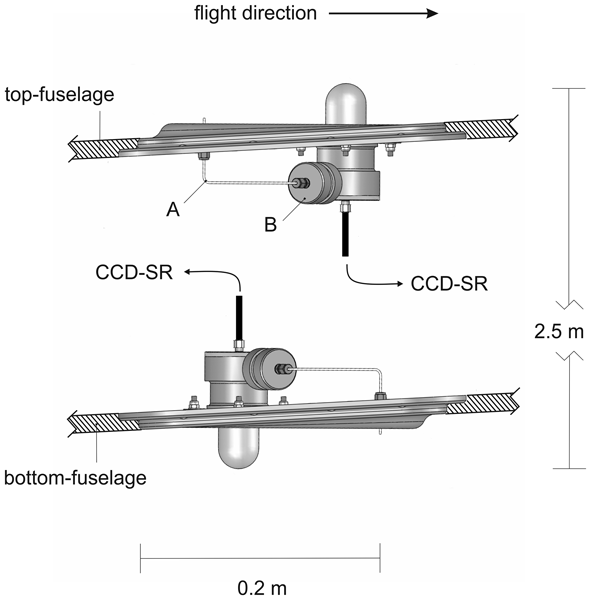
Birger Bohn and Insa Lohse
Atmos. Meas. Tech., 16, 209–233, https://doi.org/10.5194/amt-16-209-2023, https://doi.org/10.5194/amt-16-209-2023, 2023
Short summary
Short summary
Optical receivers for solar spectral actinic radiation are designed for angle-independent sensitivities within a hemisphere. Remaining imperfections can be compensated for by receiver-specific corrections based on laboratory characterizations and radiative transfer calculations of spectral radiance distributions. The corrections cover a wide range of realistic atmospheric conditions and were applied to ground-based and airborne measurements in a wavelength range 280–660 nm.

Zhaofeng Tan, Hendrik Fuchs, Andreas Hofzumahaus, William J. Bloss, Birger Bohn, Changmin Cho, Thorsten Hohaus, Frank Holland, Chandrakiran Lakshmisha, Lu Liu, Paul S. Monks, Anna Novelli, Doreen Niether, Franz Rohrer, Ralf Tillmann, Thalassa S. E. Valkenburg, Vaishali Vardhan, Astrid Kiendler-Scharr, Andreas Wahner, and Roberto Sommariva
Atmos. Chem. Phys., 22, 13137–13152, https://doi.org/10.5194/acp-22-13137-2022, https://doi.org/10.5194/acp-22-13137-2022, 2022
Short summary
Short summary
During the 2019 JULIAC campaign, ClNO2 was measured at a rural site in Germany in different seasons. The highest ClNO2 level was 1.6 ppbv in September. ClNO2 production was more sensitive to the availability of NO2 than O3. The average ClNO2 production efficiency was up to 18 % in February and September and down to 3 % in December. These numbers are at the high end of the values reported in the literature, indicating the importance of ClNO2 chemistry in rural environments in midwestern Europe.

Jan H. Schween, Camilo del Rio, Juan-Luis García, Pablo Osses, Sarah Westbrook, and Ulrich Löhnert
Atmos. Chem. Phys., 22, 12241–12267, https://doi.org/10.5194/acp-22-12241-2022, https://doi.org/10.5194/acp-22-12241-2022, 2022
Short summary
Short summary
Marine stratocumulus clouds of the eastern Pacific play an essential role in the Earth's climate. These clouds form the major source of water to parts of the extreme dry Atacama Desert at the northern coast of Chile. For the first time these clouds are observed over a whole year with three remote sensing instruments. It is shown how these clouds are influenced by the land–sea wind system and the distribution of ocean temperatures.
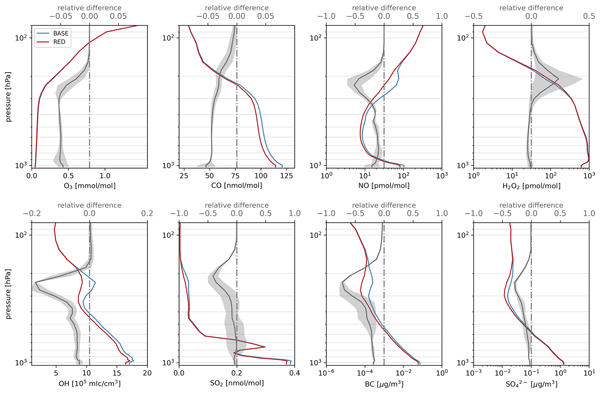
Simon F. Reifenberg, Anna Martin, Matthias Kohl, Sara Bacer, Zaneta Hamryszczak, Ivan Tadic, Lenard Röder, Daniel J. Crowley, Horst Fischer, Katharina Kaiser, Johannes Schneider, Raphael Dörich, John N. Crowley, Laura Tomsche, Andreas Marsing, Christiane Voigt, Andreas Zahn, Christopher Pöhlker, Bruna A. Holanda, Ovid Krüger, Ulrich Pöschl, Mira Pöhlker, Patrick Jöckel, Marcel Dorf, Ulrich Schumann, Jonathan Williams, Birger Bohn, Joachim Curtius, Hardwig Harder, Hans Schlager, Jos Lelieveld, and Andrea Pozzer
Atmos. Chem. Phys., 22, 10901–10917, https://doi.org/10.5194/acp-22-10901-2022, https://doi.org/10.5194/acp-22-10901-2022, 2022
Short summary
Short summary
In this work we use a combination of observational data from an aircraft campaign and model results to investigate the effect of the European lockdown due to COVID-19 in spring 2020. Using model results, we show that the largest relative changes to the atmospheric composition caused by the reduced emissions are located in the upper troposphere around aircraft cruise altitude, while the largest absolute changes are present at the surface.
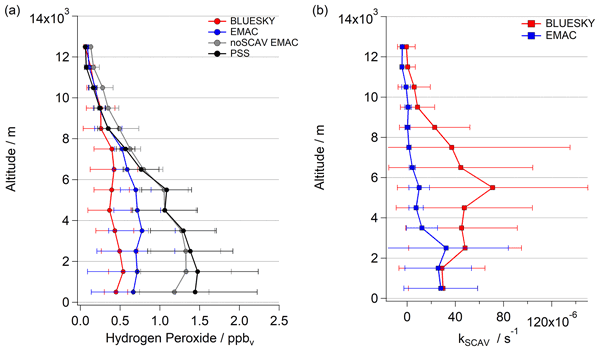
Zaneta T. Hamryszczak, Andrea Pozzer, Florian Obersteiner, Birger Bohn, Benedikt Steil, Jos Lelieveld, and Horst Fischer
Atmos. Chem. Phys., 22, 9483–9497, https://doi.org/10.5194/acp-22-9483-2022, https://doi.org/10.5194/acp-22-9483-2022, 2022
Short summary
Short summary
Hydrogen peroxide plays a pivotal role in the chemistry of the atmosphere. Together with organic hydroperoxides, it forms a reservoir for peroxy radicals, which are known to be the key contributors to the self-cleaning processes of the atmosphere. Hydroperoxides were measured over Europe during the BLUESKY campaign in May–June 2020. The paper gives an overview of the distribution of the species in the troposphere and investigates the impact of wet scavenging and deposition on the budget of H2O2.
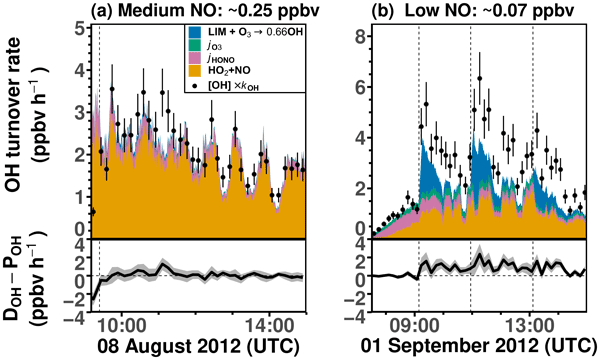
Jacky Yat Sing Pang, Anna Novelli, Martin Kaminski, Ismail-Hakki Acir, Birger Bohn, Philip T. M. Carlsson, Changmin Cho, Hans-Peter Dorn, Andreas Hofzumahaus, Xin Li, Anna Lutz, Sascha Nehr, David Reimer, Franz Rohrer, Ralf Tillmann, Robert Wegener, Astrid Kiendler-Scharr, Andreas Wahner, and Hendrik Fuchs
Atmos. Chem. Phys., 22, 8497–8527, https://doi.org/10.5194/acp-22-8497-2022, https://doi.org/10.5194/acp-22-8497-2022, 2022
Short summary
Short summary
This study investigates the radical chemical budget during the limonene oxidation at different atmospheric-relevant NO concentrations in chamber experiments under atmospheric conditions. It is found that the model–measurement discrepancies of HO2 and RO2 are very large at low NO concentrations that are typical for forested environments. Possible additional processes impacting HO2 and RO2 concentrations are discussed.
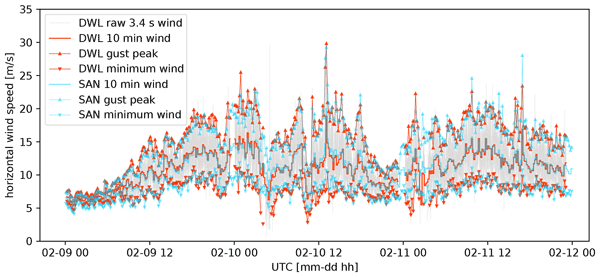
Julian Steinheuer, Carola Detring, Frank Beyrich, Ulrich Löhnert, Petra Friederichs, and Stephanie Fiedler
Atmos. Meas. Tech., 15, 3243–3260, https://doi.org/10.5194/amt-15-3243-2022, https://doi.org/10.5194/amt-15-3243-2022, 2022
Short summary
Short summary
Doppler wind lidars (DWLs) allow the determination of wind profiles with high vertical resolution and thus provide an alternative to meteorological towers. We address the question of whether wind gusts can be derived since they are short-lived phenomena. Therefore, we compare different DWL configurations and develop a new method applicable to all of them. A fast continuous scanning mode that completes a full observation cycle within 3.4 s is found to be the best-performing configuration.
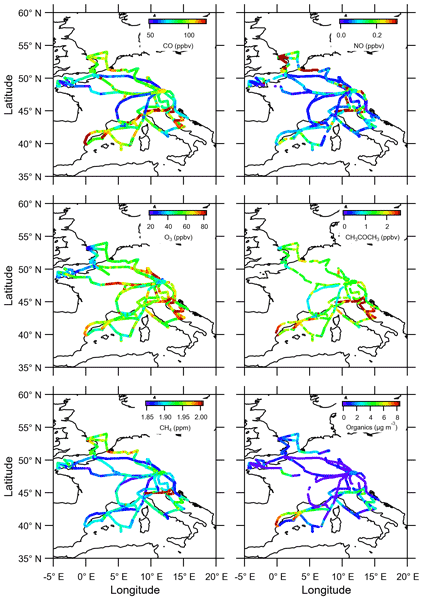
M. Dolores Andrés Hernández, Andreas Hilboll, Helmut Ziereis, Eric Förster, Ovid O. Krüger, Katharina Kaiser, Johannes Schneider, Francesca Barnaba, Mihalis Vrekoussis, Jörg Schmidt, Heidi Huntrieser, Anne-Marlene Blechschmidt, Midhun George, Vladyslav Nenakhov, Theresa Harlass, Bruna A. Holanda, Jennifer Wolf, Lisa Eirenschmalz, Marc Krebsbach, Mira L. Pöhlker, Anna B. Kalisz Hedegaard, Linlu Mei, Klaus Pfeilsticker, Yangzhuoran Liu, Ralf Koppmann, Hans Schlager, Birger Bohn, Ulrich Schumann, Andreas Richter, Benjamin Schreiner, Daniel Sauer, Robert Baumann, Mariano Mertens, Patrick Jöckel, Markus Kilian, Greta Stratmann, Christopher Pöhlker, Monica Campanelli, Marco Pandolfi, Michael Sicard, José L. Gómez-Amo, Manuel Pujadas, Katja Bigge, Flora Kluge, Anja Schwarz, Nikos Daskalakis, David Walter, Andreas Zahn, Ulrich Pöschl, Harald Bönisch, Stephan Borrmann, Ulrich Platt, and John P. Burrows
Atmos. Chem. Phys., 22, 5877–5924, https://doi.org/10.5194/acp-22-5877-2022, https://doi.org/10.5194/acp-22-5877-2022, 2022
Short summary
Short summary
EMeRGe provides a unique set of in situ and remote sensing airborne measurements of trace gases and aerosol particles along selected flight routes in the lower troposphere over Europe. The interpretation uses also complementary collocated ground-based and satellite measurements. The collected data help to improve the current understanding of the complex spatial distribution of trace gases and aerosol particles resulting from mixing, transport, and transformation of pollution plumes over Europe.

Clara M. Nussbaumer, John N. Crowley, Jan Schuladen, Jonathan Williams, Sascha Hafermann, Andreas Reiffs, Raoul Axinte, Hartwig Harder, Cheryl Ernest, Anna Novelli, Katrin Sala, Monica Martinez, Chinmay Mallik, Laura Tomsche, Christian Plass-Dülmer, Birger Bohn, Jos Lelieveld, and Horst Fischer
Atmos. Chem. Phys., 21, 18413–18432, https://doi.org/10.5194/acp-21-18413-2021, https://doi.org/10.5194/acp-21-18413-2021, 2021
Short summary
Short summary
HCHO is an important atmospheric trace gas influencing the photochemical processes in the Earth’s atmosphere, including the budget of HOx and the abundance of tropospheric O3. This research presents the photochemical calculations of HCHO and O3 based on three field campaigns across Europe. We show that HCHO production via the oxidation of only four volatile organic compound precursors, i.e., CH4, CH3CHO, C5H8 and CH3OH, can balance the observed loss at all sites well.
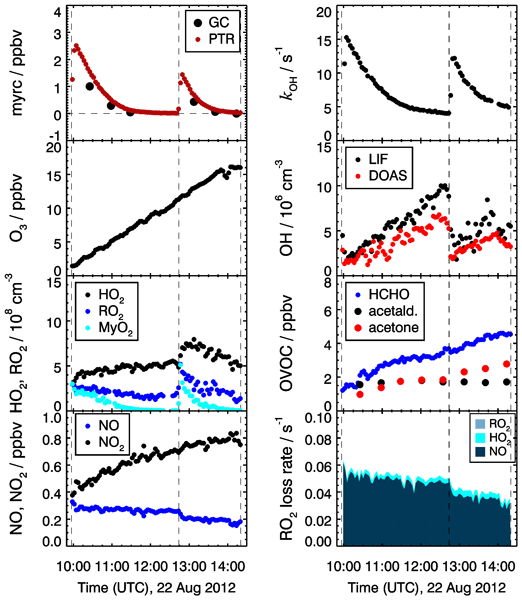
Zhaofeng Tan, Luisa Hantschke, Martin Kaminski, Ismail-Hakki Acir, Birger Bohn, Changmin Cho, Hans-Peter Dorn, Xin Li, Anna Novelli, Sascha Nehr, Franz Rohrer, Ralf Tillmann, Robert Wegener, Andreas Hofzumahaus, Astrid Kiendler-Scharr, Andreas Wahner, and Hendrik Fuchs
Atmos. Chem. Phys., 21, 16067–16091, https://doi.org/10.5194/acp-21-16067-2021, https://doi.org/10.5194/acp-21-16067-2021, 2021
Short summary
Short summary
The photo-oxidation of myrcene, a monoterpene species emitted by plants, was investigated at atmospheric conditions in the outdoor simulation chamber SAPHIR. The chemical structure of myrcene is partly similar to isoprene. Therefore, it can be expected that hydrogen shift reactions could play a role as observed for isoprene. In this work, their potential impact on the regeneration efficiency of hydroxyl radicals is investigated.
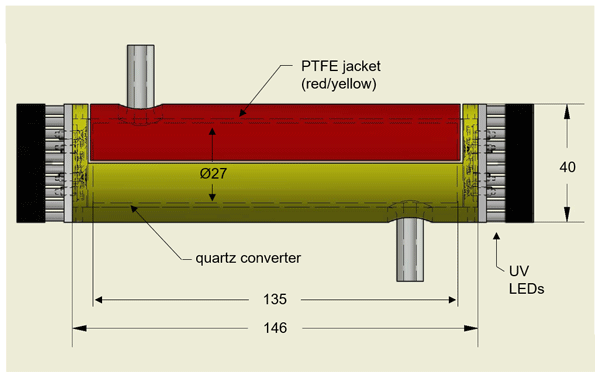
Clara M. Nussbaumer, Uwe Parchatka, Ivan Tadic, Birger Bohn, Daniel Marno, Monica Martinez, Roland Rohloff, Hartwig Harder, Flora Kluge, Klaus Pfeilsticker, Florian Obersteiner, Martin Zöger, Raphael Doerich, John N. Crowley, Jos Lelieveld, and Horst Fischer
Atmos. Meas. Tech., 14, 6759–6776, https://doi.org/10.5194/amt-14-6759-2021, https://doi.org/10.5194/amt-14-6759-2021, 2021
Short summary
Short summary
NO2 plays a central role in atmospheric photochemical processes and requires accurate measurements. This research presents NO2 data obtained via chemiluminescence using a photolytic converter from airborne studies around Cabo Verde and laboratory investigations. We show the limits and error-proneness of a conventional blue light converter in aircraft measurements affected by humidity and NO levels and suggest the use of an alternative quartz converter for more reliable results.
Cited articles
Ackerman, A. S., Toon, O. B., Stevens, D. E., Heymsfield, A. J., Ramanathan, V., and Welton, E. J.: Reduction of Tropical Cloudiness by Soot, Science, 288, 1042–1047, https://doi.org/10.1126/science.288.5468.1042, 2000. a
Albrecht, B. A.: Aerosols, Cloud Microphysics, and Fractional Cloudiness, Science, 245, 1227–1230, https://doi.org/10.1126/science.245.4923.1227, 1989. a
Ansmann, A., Hofer, J., Mamouri, R.-E., Haarig, M., Baars, H., and Wandinger, U.: Aerosol microphysical properties and CCN/INP information from lidar and ceilometer profiles: POLIPHON update, EGUsphere [preprint], https://doi.org/10.5194/egusphere-2026-648, 2026. a
Bucholtz, A.: Rayleigh-scattering calculations for the terrestrial atmosphere, Appl. Optics, 34, 2765–2773, https://doi.org/10.1364/AO.34.002765, 1995. a
Burrows, S. M., McCluskey, C. S., Cornwell, G., Steinke, I., Zhang, K., Zhao, B., Zawadowicz, M., Raman, A., Kulkarni, G., China, S., Zelenyuk, A., and DeMott, P. J.: Ice-Nucleating Particles That Impact Clouds and Climate: Observational and Modeling Research Needs, Rev. Geophys., 60, e2021RG000745, https://doi.org/10.1029/2021RG000745, 2022. a
Cloudnet: Cloudnet sites, https://cloudnet.fmi.fi/sites (last access: 22 August 2025), 2025. a
D'Amico, G., Amodeo, A., Baars, H., Binietoglou, I., Freudenthaler, V., Mattis, I., Wandinger, U., and Pappalardo, G.: EARLINET Single Calculus Chain – overview on methodology and strategy, Atmos. Meas. Tech., 8, 4891–4916, https://doi.org/10.5194/amt-8-4891-2015, 2015. a
Eckert, R.: Inbetriebnahme und Optimierung eines Messsystems zur Partikelgrößenmessung in der Atmosphäre, Bachelor thesis, FH Aachen, 2013. a
E-Profile: Metadata – Ceilometers, https://e-profile.eu/metadata (last access: 22 August 2025), 2025. a
Haefele, A., Hervo, M., Turp, M., Lampin, J.-L., Haeffelin, M., and Lehmann, V.: The E-PROFILE network for the operational measurement of wind and aerosol profiles over Europe the E-PROFILE team, and the TOPROF team, EUMETNET SNC, https://www.eumetnet.eu/wp-content/uploads/2016/10/E-PROFILE_TECO_Madrid_2016.pdf (last access: 22 August 2025), 2016. a, b, c
Hervo, M., Poltera, Y., and Haefele, A.: An empirical method to correct for temperature-dependent variations in the overlap function of CHM15k ceilometers, Atmos. Meas. Tech., 9, 2947–2959, https://doi.org/10.5194/amt-9-2947-2016, 2016. a
Hogan, R. J. and O'Connor, E. J.: Facilitating cloud radar and lidar algorithms: the Cloudnet Instrument Synergy/Target Categorization product, University of Reading, https://www.met.reading.ac.uk/~swrhgnrj/publications/categorization.pdf (last access: 22 August 2025), 2004. a
Holben, B. N., Eck, T. F., Slutsker, I., Tanré, D., Buis, J. P., Setzer, A., Vermote, E., Reagan, J. A., Kaufman, Y. J., Nakajima, T., Lavenu, F., ankowiak, I., and Smirnov, A.: AERONET – A Federated Instrument Network and Data Archive for Aerosol Characterization tion of a new Sun-sky scanning radiometer system that, Remote Sens. Environ., 66, 1–16, https://doi.org/10.1016/S0034-4257(98)00031-5, 1998. a, b
Hopkin, E., Illingworth, A. J., Charlton-Perez, C., Westbrook, C. D., and Ballard, S.: A robust automated technique for operational calibration of ceilometers using the integrated backscatter from totally attenuating liquid clouds, Atmos. Meas. Tech., 12, 4131–4147, https://doi.org/10.5194/amt-12-4131-2019, 2019. a, b, c, d, e, f
Illingworth, A. J., Hogan, R. J., O'Connor, E., Bouniol, D., Brooks, M. E., Delanoé, J., Donovan, D. P., Eastment, J. D., Gaussiat, N., Goddard, J. W. F., Haeffelin, M., Baltink, H. K., Krasnov, O. A., Pelon, J., Piriou, J.-M., Protat, A., Russchenberg, H. W. J., Seifert, A., Tompkins, A. M., van Zadelhoff, G.-J., Vinit, F., Willén, U., Wilson, D. R., and Wrench, C. L.: Cloudnet, B. Am. Meteorol. Soc., 88, 883–898, https://doi.org/10.1175/BAMS-88-6-883, 2007. a, b
IPCC: Climate Change 2021: The Physical Science Basis. Contribution of Working Group I to the Sixth Assessment Report of the Intergovernmental Panel on Climate Change, Cambridge University Press, Cambridge, United Kingdom and New York, NY, USA, in press, https://doi.org/10.1017/9781009157896, 2021. a
Klett, J. D.: Stable analytical inversion solution for processing lidar returns, Appl. Optics, 20, 211, https://doi.org/10.1364/AO.20.000211, 1981. a, b
Klett, J. D.: Lidar inversion with variable backscatter/extinction ratios, Appl. Optics, 24, 1638, https://doi.org/10.1364/AO.24.001638, 1985. a
Kotthaus, S., O'Connor, E., Münkel, C., Charlton-Perez, C., Haeffelin, M., Gabey, A. M., and Grimmond, C. S. B.: Recommendations for processing atmospheric attenuated backscatter profiles from Vaisala CL31 ceilometers, Atmos. Meas. Tech., 9, 3769–3791, https://doi.org/10.5194/amt-9-3769-2016, 2016. a
Laj, P., Myhre, C. L., Riffault, V., Amiridis, V., Fuchs, H., Eleftheriadis, K., Petäjä, T., Salameh, T., Kivekäs, N., Juurola, E., Saponaro, G., Philippin, S., Cornacchia, C., Arboledas, L. A., Baars, H., Claude, A., De Mazière, M., Dils, B., Dufresne, M., Evangeliou, N., Favez, O., Fiebig, M., Haeffelin, M., Herrmann, H., Höhler, K., Illmann, N., Kreuter, A., Ludewig, E., Marinou, E., Möhler, O., Mona, L., Murberg, L. E., Nicolae, D., Novelli, A., O'Connor, E., Ohneiser, K., Altieri, R. M. P., Picquet-Varrault, B., van Pinxteren, D., Pospichal, B., Putaud, J. P., Reimann, S., Siomos, N., Stachlewska, I., Tillmann, R., Voudouri, K. A., Wandinger, U., Wiedensohler, A., Apituley, A., Comerón, A., Gysel-Beer, M., Mihalopoulos, N., Nikolova, N., Pietruczuk, A., Sauvage, S., Sciare, J., Skov, H., Svendby, T., Swietlicki, E., Tonev, D., Vaughan, G., Zdimal, V., Baltensperger, U., Doussin, J. F., Kulmala, M., Pappalardo, G., Sundet, S. S., and Vana, M.: Aerosol, Clouds and Trace Gases Research Infrastructure (ACTRIS): The European Research Infrastructure Supporting Atmospheric Science, B. Am. Meteorol. Soc., 105, E1098–E1136, https://doi.org/10.1175/BAMS-D-23-0064.1, 2024. a, b
Liu, L., Hohaus, T., Franke, P., Lange, A. C., Tillmann, R., Fuchs, H., Tan, Z., Rohrer, F., Karydis, V., He, Q., Vardhan, V., Andres, S., Bohn, B., Holland, F., Winter, B., Wedel, S., Novelli, A., Hofzumahaus, A., Wahner, A., and Kiendler-Scharr, A.: Observational evidence reveals the significance of nocturnal chemistry in seasonal secondary organic aerosol formation, npj Clim. Atmos. Sci., 7, https://doi.org/10.1038/s41612-024-00747-6, 2024. a
Löhnert, U., Schween, J. H., Acquistapace, C., Ebell, K., Maahn, M., Barrera-Verdejo, M., Hirsikko, A., Bohn, B., Knaps, A., O'Connor, E., Simmer, C., Wahner, A., and Crewell, S.: JOYCE: Jülich Observatory for Cloud Evolution, B. Am. Meteorol. Soc., 96, 1157–1174, https://doi.org/10.1175/BAMS-D-14-00105.1, 2015. a, b
Markowicz, K. M., Flatau, P. J., Kardas, A. E., Remiszewska, J., Stelmaszczyk, K., and Woeste, L.: Ceilometer Retrieval of the Boundary Layer Vertical Aerosol Extinction Structure, J. Atmos. Ocean. Tech., 25, 928–944, https://doi.org/10.1175/2007JTECHA1016.1, 2008. a, b, c
Müller, M. G., Bohn, B., and Löhnert, U.: Code and Data for Uncertainty estimation of ceilometer aerosol properties, Jülich DATA [code], https://doi.org/10.26165/JUELICH-DATA/EMCX36, 2026. a
Münkel, C., Eresmaa, N., Räsänen, J., and Karppinen, A.: Retrieval of mixing height and dust concentration with lidar ceilometer, Bound.-Lay. Meteorol., 124, 117–128, https://doi.org/10.1007/s10546-006-9103-3, 2006. a, b, c, d
O'Connor, E. J., Illingworth, A. J., and Hogan, R. J.: A Technique for Autocalibration of Cloud Lidar, J. Atmos. Ocean. Tech., 21, 777–786, https://doi.org/10.1175/1520-0426(2004)021<0777:ATFAOC>2.0.CO;2, 2004. a, b
Osborne, M. J.: Comparison of CHM15k extinction and mass products from ALICEnet, A-Profiles and the UK Met Office, Zenodo, https://doi.org/10.5281/zenodo.11196654, 2024. a, b, c, d
Pappalardo, G.: ACTRIS Aerosol, Clouds and Trace Gases Research Infrastructure, EPJ Web Conf., 176, 09004, https://doi.org/10.1051/epjconf/201817609004, 2018. a, b
Pinnick, R. G., Jennings, S. G., Chylek, P., Ham, C., and Grandy, W. T.: Backscatter and extinction in water clouds, J. Geophys. Res., 88, https://doi.org/10.1029/JC088iC11p06787, 1983. a
Prahl, S.: miepython: Pure python calculation of Mie scattering (3.0.2), Zenodo [code], https://doi.org/10.5281/zenodo.15514362, 2025. a
Quaas, J., Boucher, O., and Lohmann, U.: Constraining the total aerosol indirect effect in the LMDZ and ECHAM4 GCMs using MODIS satellite data, Atmos. Chem. Phys., 6, 947–955, https://doi.org/10.5194/acp-6-947-2006, 2006. a
Reid, E. A., Reid, J. S., Meier, M. M., Dunlap, M. R., Cliff, S. S., Broumas, A., Perry, K., and Maring, H.: Characterization of African dust transported to Puerto Rico by individual particle and size segregated bulk analysis, J. Geophys. Res.-Atmos., 108, 2002JD002935, https://doi.org/10.1029/2002JD002935, 2003. a
Russell, A. G. and Brunekreef, B.: A Focus on Particulate Matter and Health, Environ. Sci. Technol., 43, 4620–4625, https://doi.org/10.1021/es9005459, 2009. a
Sarna, K. and Russchenberg, H. W. J.: Ground-based remote sensing scheme for monitoring aerosol–cloud interactions, Atmos. Meas. Tech., 9, 1039–1050, https://doi.org/10.5194/amt-9-1039-2016, 2016. a
Schween, J. H., Hirsikko, A., Löhnert, U., and Crewell, S.: Mixing-layer height retrieval with ceilometer and Doppler lidar: from case studies to long-term assessment, Atmos. Meas. Tech., 7, 3685–3704, https://doi.org/10.5194/amt-7-3685-2014, 2014. a, b, c
Sundström, A. M., Nousiainen, T., and Petäjä, T.: On the quantitative low-level aerosol measurements using ceilometer-type lidar, J. Atmos. Ocean. Tech., 26, 2340–2352, https://doi.org/10.1175/2009JTECHA1252.1, 2009. a, b, c
Titos, G., Lyamani, H., Cazorla, A., Sorribas, M., Foyo-Moreno, I., Wiedensohler, A., and Alados-Arboledas, L.: Study of the Relative Humidity Dependence of Aerosol Light-Scattering in Southern Spain, Tellus B, 66, 24536, https://doi.org/10.3402/tellusb.v66.24536, 2014. a
TROPOS: EARLINET, https://www.tropos.de/en/research/projects-infrastructures-technology/coordinated-observations-and-networks/earlinet (last access: 22 August 2025), 2025. a
Twomey, S.: The Influence of Pollution on the Shortwave Albedo of Clouds, J. Atmos. Sci., 34, 1149–1152, https://doi.org/10.1175/1520-0469(1977)034<1149:TIOPOT>2.0.CO;2, 1977. a
Wiegner, M. and Geiß, A.: Aerosol profiling with the Jenoptik ceilometer CHM15kx, Atmos. Meas. Tech., 5, 1953–1964, https://doi.org/10.5194/amt-5-1953-2012, 2012. a
Short summary
We present an uncertainty estimation for the retrieval of aerosol properties from a Vaisala CT25k ceilometer at JOYCE (Jülich Observatory for Cloud Evolution) with a forward inversion method. Ceilometer aerosol mass concentrations and extinction coefficients were compared to in situ observations (optical particle sizer) from a close-by tower at 120 m, showing a mean absolute percentage error of 39 % when deriving aerosol mass concentrations from ceilometer aerosol extinction coefficients.
We present an uncertainty estimation for the retrieval of aerosol properties from a Vaisala...


