
Articles | Volume 19, issue 9
https://doi.org/10.5194/amt-19-3063-2026
© Author(s) 2026. This work is distributed under
the Creative Commons Attribution 4.0 License.
the Creative Commons Attribution 4.0 License.
https://doi.org/10.5194/amt-19-3063-2026
© Author(s) 2026. This work is distributed under
the Creative Commons Attribution 4.0 License.
the Creative Commons Attribution 4.0 License.
Research article
| 
08 May 2026
Research article |
| 08 May 2026
| 08 May 2026
Ground-based monitoring of nitrogen dioxide in Kumasi, Ghana, and its comparison with satellite observations

Royal Netherlands Meteorological Institute (KNMI), De Bilt, 3730 AE, the Netherlands
Benjamin Afotey
Department of Chemical Engineering, Kwame Nkrumah University of Science and Technology (KNUST), Kumasi, 00233, Ghana
Tim Henrik Eckert
Delft University of Technology (TU Delft), Delft, 2600 GA, the Netherlands
Magdalena Mairhofer
Delft University of Technology (TU Delft), Delft, 2600 GA, the Netherlands
Águeda Gil Pascual
Delft University of Technology (TU Delft), Delft, 2600 GA, the Netherlands
Emmanuel Yuorkuu
Department of Chemical Engineering, Kwame Nkrumah University of Science and Technology (KNUST), Kumasi, 00233, Ghana
Philip Darko
Department of Chemical Engineering, Kwame Nkrumah University of Science and Technology (KNUST), Kumasi, 00233, Ghana
Phiona Amakah
Department of Chemical Engineering, Kwame Nkrumah University of Science and Technology (KNUST), Kumasi, 00233, Ghana
Klaas Folkert Boersma
Royal Netherlands Meteorological Institute (KNMI), De Bilt, 3730 AE, the Netherlands
Wageningen University, Meteorology and Air Quality Group, Wageningen, 6700 AA, the Netherlands
Prince Junior Asilevi
Department of Meteorology and Climate Science, Kwame Nkrumah University of Science and Technology (KNUST), Kumasi, 00233, Ghana
Related authors
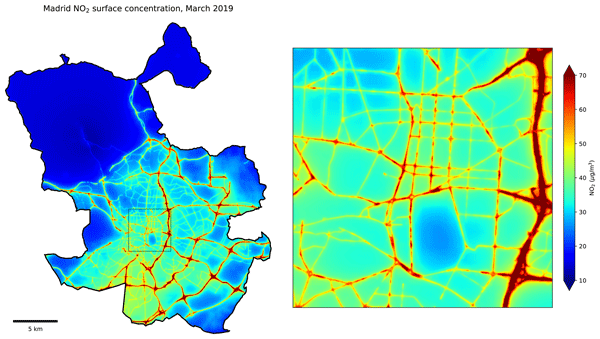
Bas Mijling, Henk Eskes, Sascha Hofmann, Pau Moreno, David García Falin, and María Encarnación de Vega Pastor
Geosci. Model Dev., 18, 6439–6460, https://doi.org/10.5194/gmd-18-6439-2025, https://doi.org/10.5194/gmd-18-6439-2025, 2025
Short summary
Short summary
Given the serious health risks of urban air pollution, monitoring local pollution levels is crucial. The Retina v2 algorithm creates high-resolution pollution maps by integrating satellite and local measurements with an air quality model. Easily portable to other cities, it balances accuracy with low computational demands, matching or outperforming complex dispersion models and data-heavy machine learning. Satellite data proves especially valuable in cities with sparse or no monitoring networks.
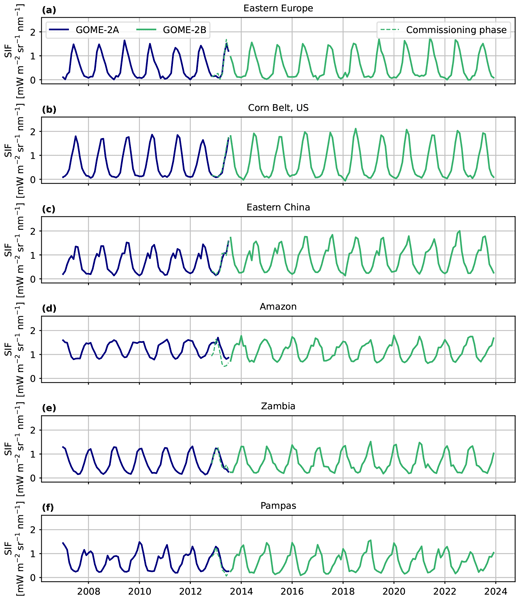
Juliëtte C. S. Anema, K. Folkert Boersma, Lieuwe G. Tilstra, Ruben van 't Loo, and Olaf N. E. Tuinder
Earth Syst. Sci. Data, 18, 5643–5661, https://doi.org/10.5194/essd-18-5643-2026, https://doi.org/10.5194/essd-18-5643-2026, 2026
Short summary
Short summary
The GOME-2 series offers a long solar-induced fluorescence (SIF) record, but sensor-specific instrumental artefacts diverge intersensor observations. We developed a combined GOME-2 SIF record (2007–2023) from GOME-2A and GOME-2B SIF using the SIFTER v3 algorithm, which corrects these artefacts. Both records show strong spatial and temporal coherence. A framework is provided to detect and, if needed, correct intersensor offsets, supporting consistent long-term monitoring of vegetation dynamics.
Herizo Narivelo, Bastien Sauvage, Klaas Folkert Boersma, Isabelle De Smedt, Isidora Anglou, Michel Van Roozendael, Eric Le Flochmoën, and Brice Barret
EGUsphere, https://doi.org/10.5194/egusphere-2026-1652, https://doi.org/10.5194/egusphere-2026-1652, 2026
Short summary
Short summary
Tropospheric ozone is a key component of air pollution; it is produced by the photochemical oxidation of volatile organic compounds in the presence of nitrogen oxides. Using satellite observations, we determine the best combination of emission inventories for biomass-burning and anthropogenic sources, we analyse the impact of the evolution of two surface emissions in tropics on tropospheric ozone and its chemical regime, using numerical simulations over the last few decades.
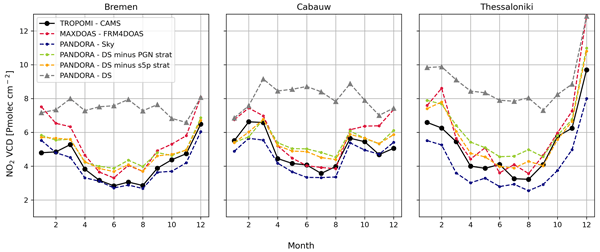
Felipe Cifuentes, Henk Eskes, Ankie Piters, Julian Gomez, John Douros, Gaia Pinardi, Martina M. Friedrich, Enrico Dammers, Manuel Gebetsberger, and K. Folkert Boersma
Atmos. Meas. Tech., 19, 2437–2477, https://doi.org/10.5194/amt-19-2437-2026, https://doi.org/10.5194/amt-19-2437-2026, 2026
Short summary
Short summary
Satellite NO2 data are essential for monitoring air pollution, but they are affected by several sources of uncertainty. This study evaluates the major error contributors in TROPOMI (TROPOspheric Monitoring Instrument) NO2 retrievals by analyzing each retrieval step and comparing with ground-based observations. Key findings include biases in the separation of stratospheric and tropospheric NO2, representation and smoothing errors, and substantial variability among the ground-based instruments used for validation.
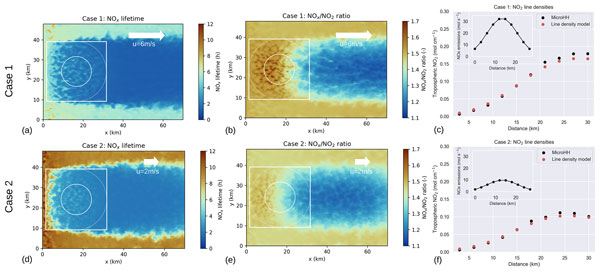
Alba Mols, Klaas Folkert Boersma, Hugo Denier van der Gon, and Maarten Krol
Atmos. Chem. Phys., 26, 1497–1513, https://doi.org/10.5194/acp-26-1497-2026, https://doi.org/10.5194/acp-26-1497-2026, 2026
Short summary
Short summary
We created a new method to estimate city air pollution (NOx emissions) using satellite data. Testing showed our approach works well to track how pollution spreads in urban areas. By combining observations with prior knowledge, we improved the accuracy of emission estimates. Applying this method in Paris, we found emissions were 9 % lower than expected and dropped significantly during COVID-19 lockdowns. Our method offers a reliable way to monitor pollution and support environmental policies.
Bas Mijling, Henk Eskes, Sascha Hofmann, Pau Moreno, David García Falin, and María Encarnación de Vega Pastor
Geosci. Model Dev., 18, 6439–6460, https://doi.org/10.5194/gmd-18-6439-2025, https://doi.org/10.5194/gmd-18-6439-2025, 2025
Short summary
Short summary
Given the serious health risks of urban air pollution, monitoring local pollution levels is crucial. The Retina v2 algorithm creates high-resolution pollution maps by integrating satellite and local measurements with an air quality model. Easily portable to other cities, it balances accuracy with low computational demands, matching or outperforming complex dispersion models and data-heavy machine learning. Satellite data proves especially valuable in cities with sparse or no monitoring networks.
Isolde Glissenaar, Klaas Folkert Boersma, Isidora Anglou, Pieter Rijsdijk, Tijl Verhoelst, Steven Compernolle, Gaia Pinardi, Jean-Christopher Lambert, Michel Van Roozendael, and Henk Eskes
Earth Syst. Sci. Data, 17, 4627–4650, https://doi.org/10.5194/essd-17-4627-2025, https://doi.org/10.5194/essd-17-4627-2025, 2025
Short summary
Short summary
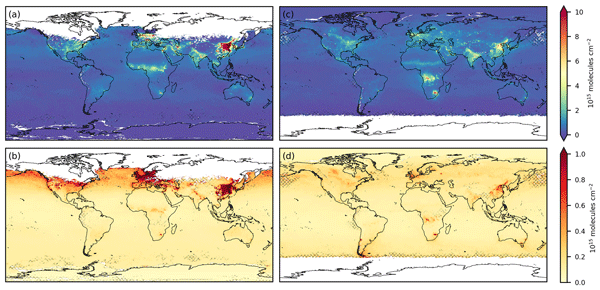
We developed a new global dataset of nitrogen dioxide (NO2) levels in the lower atmosphere, using data from TROPOMI for 2018–2021. This dataset offers improved accuracy and detail compared to earlier versions, meeting high international standards for climate data. By refining how measurement errors are calculated and reduced over time and space, we provide clearer insights into pollution patterns. This work supports better air quality monitoring and informs actions to address pollution globally.
Suvarna Fadnavis, Yasin Elshorbany, Jerald Ziemke, Brice Barret, Alexandru Rap, P. R. Satheesh Chandran, Richard J. Pope, Vijay Sagar, Domenico Taraborrelli, Eric Le Flochmoen, Juan Cuesta, Catherine Wespes, Folkert Boersma, Isolde Glissenaar, Isabelle De Smedt, Michel Van Roozendael, Hervé Petetin, and Isidora Anglou
Atmos. Chem. Phys., 25, 8229–8254, https://doi.org/10.5194/acp-25-8229-2025, https://doi.org/10.5194/acp-25-8229-2025, 2025
Short summary
Short summary
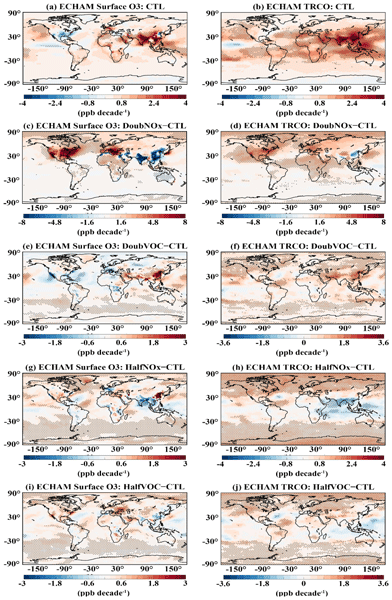
Satellites and model simulations show enhancement in tropospheric ozone, which is highly impacted by human-produced nitrous oxides compared to volatile organic compounds. The increased amount of ozone enhances ozone radiative forcing. The ozone enhancement and associated radiative forcing are the highest over South and East Asia. The emissions of nitrous oxides show a higher influence on shifting ozone photochemical regimes than volatile organic compounds.
Juliëtte C. S. Anema, K. Folkert Boersma, Lieuwe G. Tilstra, Olaf N. E. Tuinder, and Willem W. Verstraeten
Atmos. Meas. Tech., 18, 1961–1979, https://doi.org/10.5194/amt-18-1961-2025, https://doi.org/10.5194/amt-18-1961-2025, 2025
Short summary
Short summary
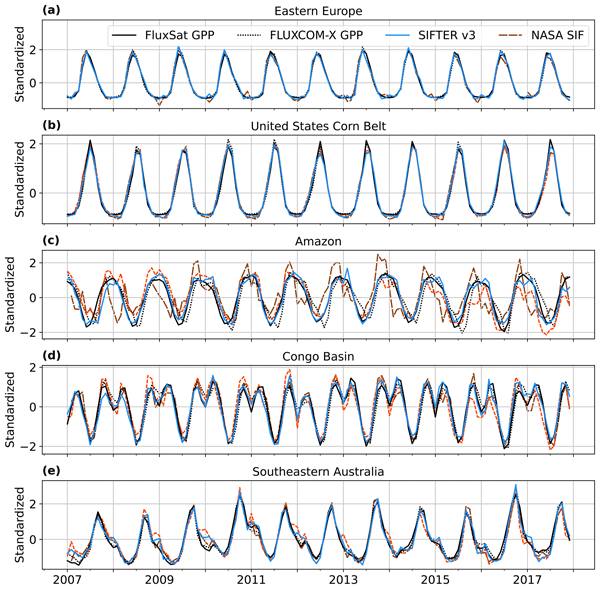
Long-term records of plant fluorescence offer vital insights into changing vegetation activity. The GOME-2A sensor provides extensive global observations but suffers from calibration and instrument degradation, which affects data consistency. This study presents the SIFTER v3 algorithm, which effectively resolves these issues and includes other improvements, resulting in robust, accurate, and consistent GOME-2A fluorescence measurements from 2007 to 2017.
Qianqian Zhang, K. Folkert Boersma, Chiel van der Laan, Alba Mols, Bin Zhao, Shengyue Li, and Yuepeng Pan
Atmos. Chem. Phys., 25, 3313–3326, https://doi.org/10.5194/acp-25-3313-2025, https://doi.org/10.5194/acp-25-3313-2025, 2025
Short summary
Short summary
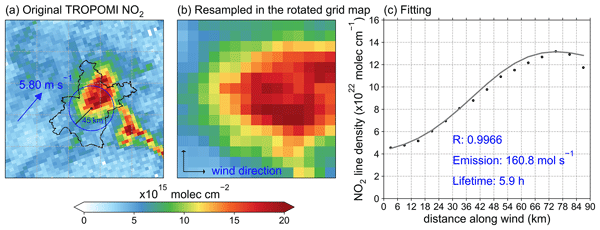
Accurate NOx emission estimates are required to better understand air pollution. This study investigates and demonstrates the ability of the superposition column model in combination with TROPOMI tropospheric NO2 column data to estimate city-scale NOx emissions and lifetimes and their variabilities. The results of this work nevertheless confirm the strength of the superposition column model in estimating urban NOx emissions with reasonable accuracy.
Felipe Cifuentes, Henk Eskes, Enrico Dammers, Charlotte Bryan, and Folkert Boersma
Geosci. Model Dev., 18, 621–649, https://doi.org/10.5194/gmd-18-621-2025, https://doi.org/10.5194/gmd-18-621-2025, 2025
Short summary
Short summary
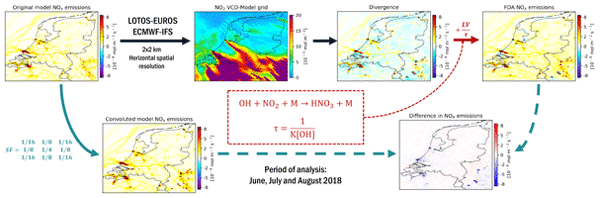
We tested the capability of the flux divergence approach (FDA) to reproduce known NOx emissions using synthetic NO2 satellite column retrievals from high-resolution model simulations. The FDA accurately reproduced NOx emissions when column observations were limited to the boundary layer and when the variability of the NO2 lifetime, the NOx : NO2 ratio, and NO2 profile shapes were correctly modeled. This introduces strong model dependency, reducing the simplicity of the original FDA formulation.
Pieter Rijsdijk, Henk Eskes, Arlene Dingemans, K. Folkert Boersma, Takashi Sekiya, Kazuyuki Miyazaki, and Sander Houweling
Geosci. Model Dev., 18, 483–509, https://doi.org/10.5194/gmd-18-483-2025, https://doi.org/10.5194/gmd-18-483-2025, 2025
Short summary
Short summary
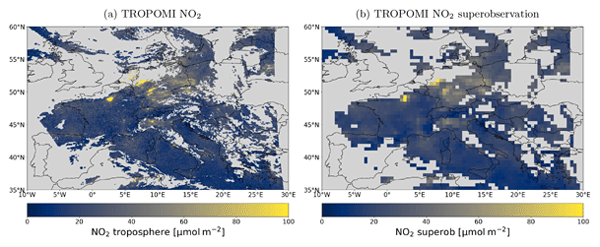
Clustering high-resolution satellite observations into superobservations improves model validation and data assimilation applications. In our paper, we derive quantitative uncertainties for satellite NO2 column observations based on knowledge of the retrievals, including a detailed analysis of spatial error correlations and representativity errors. The superobservations and uncertainty estimates are tested in a global chemical data assimilation system and are found to improve the forecasts.
Tong Sha, Siyu Yang, Qingcai Chen, Liangqing Li, Xiaoyan Ma, Yan-Lin Zhang, Zhaozhong Feng, K. Folkert Boersma, and Jun Wang
Atmos. Chem. Phys., 24, 8441–8455, https://doi.org/10.5194/acp-24-8441-2024, https://doi.org/10.5194/acp-24-8441-2024, 2024
Short summary
Short summary
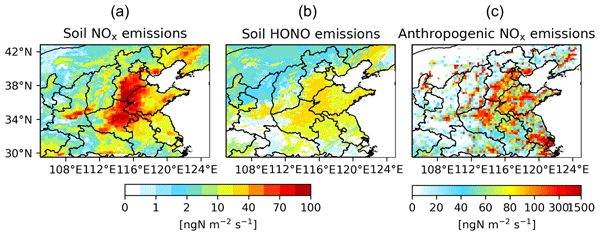
Using an updated soil reactive nitrogen emission scheme in the Unified Inputs for Weather Research and Forecasting coupled with Chemistry (UI-WRF-Chem) model, we investigate the role of soil NO and HONO (Nr) emissions in air quality and temperature in North China. Contributions of soil Nr emissions to O3 and secondary pollutants are revealed, exceeding effects of soil NOx or HONO emission. Soil Nr emissions play an important role in mitigating O3 pollution and addressing climate change.
Maarten Krol, Bart van Stratum, Isidora Anglou, and Klaas Folkert Boersma
Atmos. Chem. Phys., 24, 8243–8262, https://doi.org/10.5194/acp-24-8243-2024, https://doi.org/10.5194/acp-24-8243-2024, 2024
Short summary
Short summary
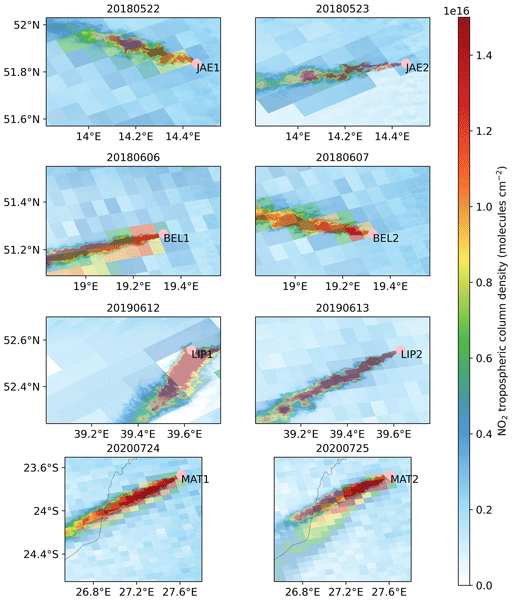
This paper presents detailed plume simulations of nitrogen oxides and carbon dioxide that are emitted from four large industrial facilities world-wide. Results from the high-resolution simulations that include atmospheric chemistry are compared to nitrogen dioxide observations from satellites. We find good performance of the model and show that common assumptions that are used in simplified models need revision. This work is important for the monitoring of emissions using satellite data.
Juliëtte C. S. Anema, Klaas Folkert Boersma, Piet Stammes, Gerbrand Koren, William Woodgate, Philipp Köhler, Christian Frankenberg, and Jacqui Stol
Biogeosciences, 21, 2297–2311, https://doi.org/10.5194/bg-21-2297-2024, https://doi.org/10.5194/bg-21-2297-2024, 2024
Short summary
Short summary
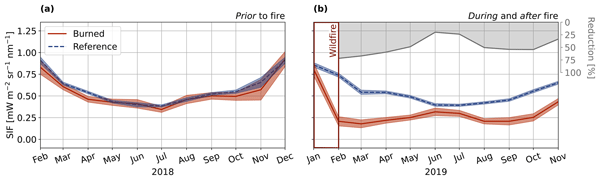
To keep the Paris agreement goals within reach, negative emissions are necessary. They can be achieved with mitigation techniques, such as reforestation, which remove CO2 from the atmosphere. While governments have pinned their hopes on them, there is not yet a good set of tools to objectively determine whether negative emissions do what they promise. Here we show how satellite measurements of plant fluorescence are useful in detecting carbon uptake due to reforestation and vegetation regrowth.
Tobias Christoph Valentin Werner Riess, Klaas Folkert Boersma, Ward Van Roy, Jos de Laat, Enrico Dammers, and Jasper van Vliet
Atmos. Meas. Tech., 16, 5287–5304, https://doi.org/10.5194/amt-16-5287-2023, https://doi.org/10.5194/amt-16-5287-2023, 2023
Short summary
Short summary
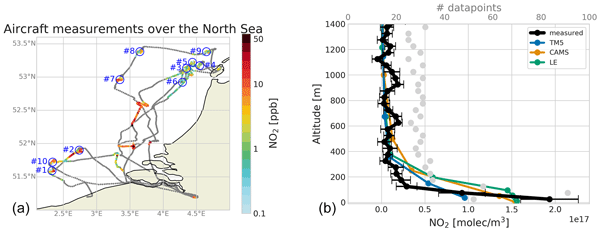
Satellite retrievals of trace gases require prior knowledge of the vertical distribution of the pollutant, which is usually obtained from models. Using aircraft-measured vertical NO2 profiles over the North Sea in summer 2021, we evaluate the Transport Model 5 profiles used in the TROPOMI NO2 retrieval. We conclude that driven by the low horizontal resolution and the overestimated vertical mixing, resulting NO2 columns are 20 % too low. This has important implications for emission estimates.
John Douros, Henk Eskes, Jos van Geffen, K. Folkert Boersma, Steven Compernolle, Gaia Pinardi, Anne-Marlene Blechschmidt, Vincent-Henri Peuch, Augustin Colette, and Pepijn Veefkind
Geosci. Model Dev., 16, 509–534, https://doi.org/10.5194/gmd-16-509-2023, https://doi.org/10.5194/gmd-16-509-2023, 2023
Short summary
Short summary
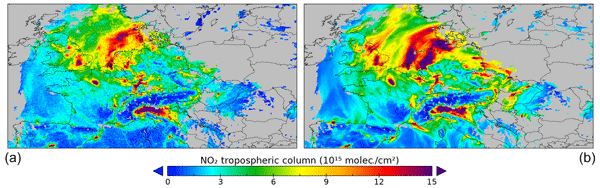
We focus on the challenges associated with comparing atmospheric composition models with satellite products such as tropospheric NO2 columns. The aim is to highlight the methodological difficulties and propose sound ways of doing such comparisons. Building on the comparisons, a new satellite product is proposed and made available, which takes advantage of higher-resolution, regional atmospheric modelling to improve estimates of troposheric NO2 columns over Europe.
Viral Shah, Daniel J. Jacob, Ruijun Dang, Lok N. Lamsal, Sarah A. Strode, Stephen D. Steenrod, K. Folkert Boersma, Sebastian D. Eastham, Thibaud M. Fritz, Chelsea Thompson, Jeff Peischl, Ilann Bourgeois, Ilana B. Pollack, Benjamin A. Nault, Ronald C. Cohen, Pedro Campuzano-Jost, Jose L. Jimenez, Simone T. Andersen, Lucy J. Carpenter, Tomás Sherwen, and Mat J. Evans
Atmos. Chem. Phys., 23, 1227–1257, https://doi.org/10.5194/acp-23-1227-2023, https://doi.org/10.5194/acp-23-1227-2023, 2023
Short summary
Short summary
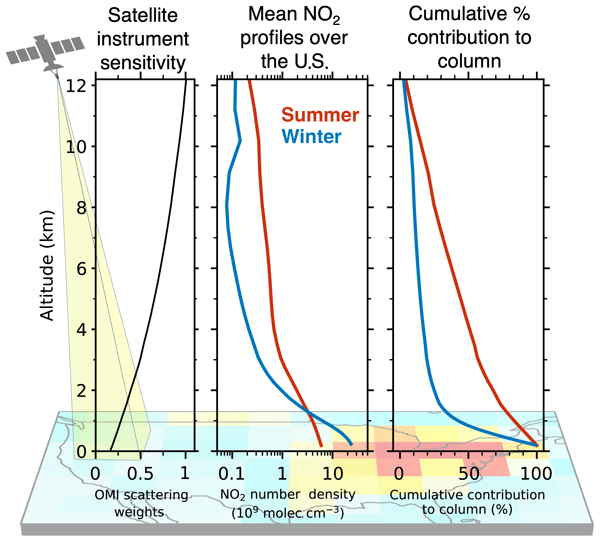
NOx in the free troposphere (above 2 km) affects global tropospheric chemistry and the retrieval and interpretation of satellite NO2 measurements. We evaluate free tropospheric NOx in global atmospheric chemistry models and find that recycling NOx from its reservoirs over the oceans is faster than that simulated in the models, resulting in increases in simulated tropospheric ozone and OH. Over the U.S., free tropospheric NO2 contributes the majority of the tropospheric NO2 column in summer.

Qianqian Zhang, K. Folkert Boersma, Bin Zhao, Henk Eskes, Cuihong Chen, Haotian Zheng, and Xingying Zhang
Atmos. Chem. Phys., 23, 551–563, https://doi.org/10.5194/acp-23-551-2023, https://doi.org/10.5194/acp-23-551-2023, 2023
Short summary
Short summary
We developed an improved superposition column model and used the latest released (v2.3.1) TROPOMI satellite NO2 observations to estimate daily city-scale NOx and CO2 emissions. The results are verified against bottom-up emissions and OCO-2 XCO2 observations. We obtained the day-to-day variation of city NOx and CO2 emissions, allowing policymakers to gain real-time information on spatial–temporal emission patterns and the effectiveness of carbon and nitrogen regulation in urban environments.
Srijana Lama, Sander Houweling, K. Folkert Boersma, Ilse Aben, Hugo A. C. Denier van der Gon, and Maarten C. Krol
Atmos. Chem. Phys., 22, 16053–16071, https://doi.org/10.5194/acp-22-16053-2022, https://doi.org/10.5194/acp-22-16053-2022, 2022
Short summary
Short summary
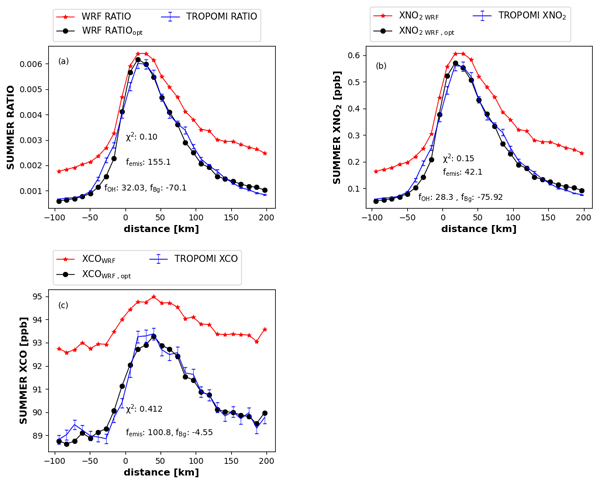
Hydroxyl radical (OH) is the important chemical species that determines the lifetime of some greenhouse gases and trace gases. OH plays a vital role in air pollution chemistry. OH has a short lifetime and is extremely difficult to measure directly. OH concentrations derived from the chemistry transport model (CTM) have uncertainties of >50 %. Therefore, in this study, OH is derived indirectly using satellite date in urban plumes.
Jos van Geffen, Henk Eskes, Steven Compernolle, Gaia Pinardi, Tijl Verhoelst, Jean-Christopher Lambert, Maarten Sneep, Mark ter Linden, Antje Ludewig, K. Folkert Boersma, and J. Pepijn Veefkind
Atmos. Meas. Tech., 15, 2037–2060, https://doi.org/10.5194/amt-15-2037-2022, https://doi.org/10.5194/amt-15-2037-2022, 2022
Short summary
Short summary
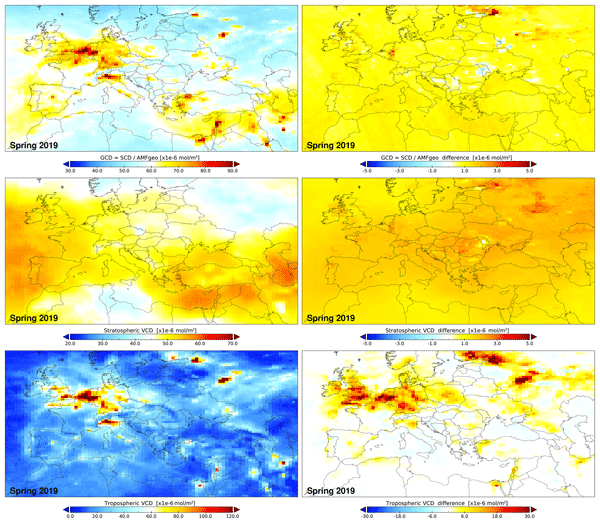
Nitrogen dioxide (NO2) is one of the main data products measured by the Tropospheric Monitoring Instrument (TROPOMI) on the Sentinel-5 Precursor (S5P) satellite. This study describes improvements in the TROPOMI NO2 retrieval leading to version v2.2, operational since 1 July 2021. It compares results with previous versions v1.2–v1.4 and with Ozone Monitoring Instrument (OMI) and ground-based measurements.
Tobias Christoph Valentin Werner Riess, Klaas Folkert Boersma, Jasper van Vliet, Wouter Peters, Maarten Sneep, Henk Eskes, and Jos van Geffen
Atmos. Meas. Tech., 15, 1415–1438, https://doi.org/10.5194/amt-15-1415-2022, https://doi.org/10.5194/amt-15-1415-2022, 2022
Short summary
Short summary
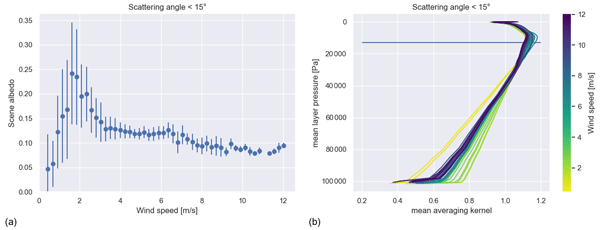
This paper reports on improved monitoring of ship nitrogen oxide emissions by TROPOMI. With its fantastic resolution we can identify lanes of ship nitrogen dioxide (NO2) pollution not detected from space before. The quality of TROPOMI NO2 data over sea is improved further by recent upgrades in cloud retrievals and the use of sun glint scenes. Lastly, we study the impact of COVID-19 on ship NO2 in European seas and compare the found reductions to emission estimates gained from ship-specific data.
Auke J. Visser, Laurens N. Ganzeveld, Ignacio Goded, Maarten C. Krol, Ivan Mammarella, Giovanni Manca, and K. Folkert Boersma
Atmos. Chem. Phys., 21, 18393–18411, https://doi.org/10.5194/acp-21-18393-2021, https://doi.org/10.5194/acp-21-18393-2021, 2021
Short summary
Short summary
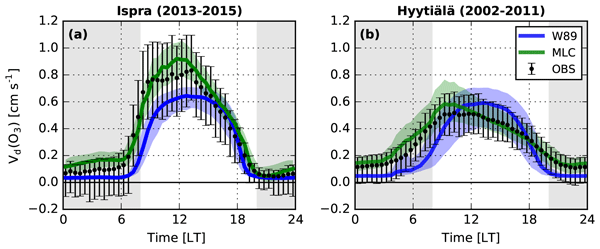
Dry deposition is an important sink for tropospheric ozone that affects ecosystem carbon uptake, but process understanding remains incomplete. We apply a common deposition representation in atmospheric chemistry models and a multi-layer canopy model to multi-year ozone deposition observations. The multi-layer canopy model performs better on diurnal timescales compared to the common approach, leading to a substantially improved simulation of ozone deposition and vegetation ozone impact metrics.
Cited articles
Arku, R. E.: Weekly integrated NO2 and NO concentrations measured at 146 locations in Accra, Ghana for 2019–2020 (Wang et al., Science of The Total Environment, 2021), Zenodo [data set], https://zenodo.org/records/11491628, 2021.
Beirle, S., Boersma, K. F., Platt, U., Lawrence, M. G., and Wagner, T.: Megacity emissions and lifetimes of nitrogen oxides probed from space, Science, 333, 1737–1739, https://doi.org/10.1126/science.1207824, 2011.
Bi, J., Stowell, J., Seto, E. Y. W., English, P. B., Al-Hamdan, M. Z., Kinney, P. L., Freedman, F. R., and Liu, Y.: Contribution of low-cost sensor measurements to the prediction of PM2.5 levels: a case study in Imperial County, California, USA, Environ. Res., 180, 108810, https://doi.org/10.1016/j.envres.2019.108810, 2020.
Cersosimo, A., Serio, C., and Masiello, G.: TROPOMI NO2 tropospheric column data: regridding to 1 km grid-resolution and assessment of their consistency with in-situ surface observations, Remote Sens., 12, 2212, https://doi.org/10.3390/rs12142212, 2020.
Chameides, W. L., Kasibhatla, P. S., Yienger, J., and Levy, H.: Growth of continental-scale metro-agro-plexes, regional ozone pollution, and world food production, Science, 264, 74–77, https://doi.org/10.1126/science.264.5155.74, 1994.
Chong, K., Wang, Y., Liu, C., Gao, Y., Boersma, K. F., Tang, J., and Wang, X.: Remote sensing measurements at a rural site in China: implications for satellite NO2 and HCHO measurement uncertainty and emissions from fires, J. Geophys. Res.-Atmos., 129, e2023JD039310, https://doi.org/10.1029/2023JD039310, 2024.
De Vries, W.: Impacts of nitrogen emissions on ecosystems and human health: a mini review, Curr. Opin. Environ. Sci. Health, 21, 100249, https://doi.org/10.1016/j.coesh.2021.100249, 2021.
Dieudonné, E., Ravetta, F., Pelon, J., Goutail, F., and Pommereau, J.-P.: Linking NO2 surface concentration and integrated content in the urban developed atmospheric boundary layer, Geophys. Res. Lett., 40, 1247–1251, https://doi.org/10.1002/grl.50242, 2013.
Dons, E., Laeremans, M., Anaya-Boig, E., Avila-Palencia, I., Brand, C., de Nazelle, A., Gaupp-Berghausen, M., Götschi, T., Nieuwenhuijsen, M., Orjuela, J. P., Raser, E., Standaert, A., and Int Panis, L.: Concern over health effects of air pollution is associated with NO2 in seven European cities, Air Qual. Atmos. Hlth., 11, 591–599, https://doi.org/10.1007/s11869-018-0567-3, 2018.
Douros, J., Eskes, H., van Geffen, J., Boersma, K. F., Compernolle, S., Pinardi, G., Blechschmidt, A.-M., Peuch, V.-H., Colette, A., and Veefkind, P.: Comparing Sentinel-5P TROPOMI NO2 column observations with the CAMS regional air quality ensemble, Geosci. Model Dev., 16, 509–534, https://doi.org/10.5194/gmd-16-509-2023, 2023.
Eckert, T., Mairhofer, M., Agueda, G. P., and Mijling, B.: Lab manual for local ambient NO2 monitoring in Kumasi using diffusion tubes, Zenodo, https://doi.org/10.5281/zenodo.17522013, 2025.
European Environment Agency (EEA): Air Quality Download Service, https://eeadmz1-downloads-webapp.azurewebsites.net (last access: 10 November 2025), 2025.
Eskes, H. J. and Boersma, K. F.: Averaging kernels for DOAS total-column satellite retrievals, Atmos. Chem. Phys., 3, 1285–1291, https://doi.org/10.5194/acp-3-1285-2003, 2003.
Eskes, H., van Geffen, J. H. G. M., Boersma, F., Eichmann, K.-U., Apituley, A., Pedergnana, M., Sneep, M., Veefkind, J. P., and Loyola, D.: Sentinel-5P/TROPOMI Level 2 Product User Manual: Nitrogen Dioxide, KNMI, https://sentinels.copernicus.eu/documents/247904/2474726/Sentinel-5P-Level-2-Product-User-Manual-Nitrogen-Dioxide.pdf (last access: 15 October 2025), 2022.
Fua, J., Tang, D., Grieneisen, M. L., Yang, F., Yang, J., Wu, G., Wang, C., and Zhan, Y.: A machine-learning approach for fusing measurements from standard sites, low-cost sensors, and satellite retrievals: application to NO2 hotspot identification, Atmos. Environ., 302, 119756, https://doi.org/10.1016/j.atmosenv.2023.119756, 2023.
Filonchyk, M. and Peterson, M. P.: Investigation of NOx emissions from coal power plants in Texas and their environmental impact, China Geology, 8, 107–116, https://doi.org/10.31035/cg20230093, 2025.
Gao, M., Cao, J., and Seto, E.: A distributed network of low-cost sensors to measure spatiotemporal variations of PM2.5 in Xi'an, China, Environ. Pollut., 199, 56–65, https://doi.org/10.1016/j.envpol.2015.01.013, 2015.
Glissenaar, I., Boersma, K. F., Anglou, I., Rijsdijk, P., Verhoelst, T., Compernolle, S., Pinardi, G., Lambert, J.-C., Van Roozendael, M., and Eskes, H.: TROPOMI Level 3 tropospheric NO2 dataset with advanced uncertainty analysis from the ESA CCI+ ECV precursor project, Earth Syst. Sci. Data, 17, 4627–4650, https://doi.org/10.5194/essd-17-4627-2025, 2025.
Goldberg, D. L., Anenberg, S. C., Kerr, G. H., Mohegh, A., Lu, Z., and Streets, D. G.: TROPOMI NO2 in the United States: A Detailed Look at the Annual Averages, Weekly Cycles, Effects of Temperature, and Correlation with Surface NO2 Concentrations, Earth's Future, 9, e2020EF001665, https://doi.org/10.1029/2020EF001665, 2021.
Gwaze, P. and Mashele, S. H.: South African Air Quality Information System (SAAQIS) mobile application tool: Bringing real time state of air quality to South Africans, Clean Air Journal, 28, https://doi.org/10.17159/2410-972X/2018/v28n1a1, 2018.
Heal, M. R., Laxen, D. P., and Marner, B. B.: Biases in the measurement of ambient nitrogen dioxide (NO2) by Palmes passive diffusion tube: a review of current understanding, Atmosphere, 10, 357, 2019.
Hersbach, H., Bell, B., Berrisford, P., Biavati, G., Horányi, A., Muñoz Sabater, J., Nicolas, J., Peubey, C., Radu, R., Rozum, I., Schepers, D., Simmons, A., Soci, C., Dee, D., and Thépaut, J.-N.: ERA5 hourly data on single levels from 1940 to present, Copernicus Climate Data Store, https://doi.org/10.24381/cds.adbb2d47, 2023.
Huang, T.-J., Chiang, D.-Y., Shih, C., Lee, C.-C., Mao, C.-W., and Wang, B.-C.: Promoted decomposition of NOx in diesel-like exhausts by electro-catalytic honeycombs, Environ. Sci. Technol., 49, 3711–3717, https://doi.org/10.1021/acs.est.5b00226, 2015.
Huang, C., Sun, K., Hu, J., Xue, T., Xu, H., and Wang, M.: Estimating 2013-2019 NO2 exposure with high spatiotemporal resolution in China using an ensemble model, Environ. Pollut., 292, 118285, https://doi.org/10.1016/j.envpol.2021.118285, 2022.
Ialongo, I., Virta, H., Eskes, H., Hovila, J., and Douros, J.: Comparison of TROPOMI/Sentinel-5 Precursor NO2 observations with ground-based measurements in Helsinki, Atmos. Meas. Tech., 13, 205–218, https://doi.org/10.5194/amt-13-205-2020, 2020.
Jeong, U. and Hong, H.: Assessment of tropospheric NO2 from TROPOMI for long-term exposure estimation in South Korea, Remote Sens., 13, 1877, https://doi.org/10.3390/rs13101877, 2021.
Jin, H., Ji, H., Wang, H., and Li, S.: Ozone detection based on nitrogen-oxide photoacoustic spectroscopy system and chemical reaction, Environ. Prot. Eng., 49, 73–87, https://doi.org/10.37190/epe230405, 2023.
Kim, C., Henneman, L. R. F., Choirat, C., and Zigler, C. M.: Health effects of power-plant emissions through ambient air quality, J. R. Stat. Soc. A, 183, 1677–1703, https://doi.org/10.1111/rssa.12547, 2020.
KNMI, ESA, and European Commission: Sentinel-5P Aerosol Optical Thickness Product v02.03.00, S5P-PAL Data Portal, https://data-portal.s5p-pal.com/products/aot.html (last access: 10 November 2025), 2025.
Koziel, S., Pietrenko-Dabrowska, A., Wojcikowski, M., and Pankiewicz, B.: High- performance machine-learning-based calibration of low-cost nitrogen dioxide sensor using environmental parameter differentials and global data scaling, Sci. Rep., 14, 26120, https://doi.org/10.1038/s41598-024-77214-y, 2024.
Li, J., Hauryliuk, A., Malings, C., Eilenberg, S. R., Subramanian, R., and Presto, A. A.: Characterizing the aging of Alphasense NO2 sensors in long-term field deployments, ACS Sens., 6, 2952–2959, https://doi.org/10.1021/acssensors.1c00729, 2021.
Ling, L., Gao, S., Wang, F., and Wang, J.: Atmospheric NO2 measurement based on dual-optical-path photoacoustic spectroscopy, Opt. Commun., 585, 131837, https://doi.org/10.1016/j.optcom.2025.131837, 2025.
Lorente, A., Boersma, K. F., Eskes, H. J., Veefkind, J. P., Van Geffen, J. H. G. M., De Zeeuw, M. B., Denier Van Der Gon, H. A. C., Beirle, S., and Krol, M. C.: Quantification of NOx emissions from build-up of pollution over Paris with TROPOMI, Sci. Rep., 9, 20033, https://doi.org/10.1038/s41598-019-56428-5, 2019.
Massman, W. J.: Review of molecular diffusivities of atmospheric gases near STP, Atmos. Environ., 32, 1111–1127, https://doi.org/10.1016/S1352-2310(97)00391-9, 1998.
Medlanda, D., Garcia, G., Gardiner, T., Martin, N. A., Ferracci, V., Wilkins, A., Fryer, D., Holmes, T., Edwards, P., Diez, S., and Butterfield, D.: Comparison of NO2 diffusion tube measurement methods and uncertainties, Atmos. Environ., 352, 121219, https://doi.org/10.1016/j.atmosenv.2025.121219, 2025.
Mijling, B., Jiang, Q., de Jonge, D., and Bocconi, S.: Field calibration of electrochemical NO2 sensors in a citizen science context, Atmos. Meas. Tech., 11, 1297–1312, https://doi.org/10.5194/amt-11-1297-2018, 2018.
Mijling, B., Eskes, H., Hofmann, S., Moreno, P., García Falin, D., and de Vega Pastor, M. E.: High-resolution mapping of urban NO2 concentrations using Retina v2: a case study on data assimilation of surface and satellite observations in Madrid, Geosci. Model Dev., 18, 6439–6460, https://doi.org/10.5194/gmd-18-6439-2025, 2025.
Mijling, B.: Pre-processed data used in the comparison between NO2 column densities and surface concentrations over selected cities (Mijling et al., 2026) (v1.0), Zenodo [data set], https://doi.org/10.5281/zenodo.19370611, 2026.
OpenAQ: Global air-quality data explorer, https://explore.openaq.org (last access: 13 June 2025), 2025.
Palmes, E. D., Gunnison, A., DiMattio, J., and Tomczyk, C.: Personal sampler for nitrogen dioxide, Am. Ind. Hyg. Assoc. J., 37, 570–577, https://doi.org/10.1080/0002889778507831, 1976.
Qi, H., Zhao, X., Xu, Y., Yang, L., Liu, J., and Chen, K.: Rapid photoacoustic exhaust gas analyzer for simultaneous measurement of nitrogen dioxide and sulfur dioxide, Anal. Chem., 96, 5258–5264, https://doi.org/10.1021/acs.analchem.3c05936, 2024.
Sander, S. P., Friedl, R. R., Golden, D. M., Kurylo, M. J., Moortgat, G. K., Wine, P. H., Ravishankara, A. R., Kolb, C. E., Molina, M. J., Finlayson-Pitts, B. J., and Huie, R. E.: Chemical kinetics and photochemical data for use in atmospheric studies evaluation number 15, JPL Publ. 06-2, https://jpldataeval.jpl.nasa.gov/previous_evaluations.html (last access: 13 April 2026), 2006.
Schneider, P., Castell, N., Vogt, M., Dauge, F. R., Lahoz, W. A., and Bartonova, A.: Mapping urban air quality in near real time using low-cost sensors and model information, Environ. Int., 106, 234–247, https://doi.org/10.1016/j.envint.2017.05.005, 2017.
Sluis, W. W., Allaart, M. A. F., Piters, A. J. M., and Gast, L. F. L.: The development of a nitrogen dioxide sonde, Atmos. Meas. Tech., 3, 1753–1762, https://doi.org/10.5194/amt-3-1753-2010, 2010.
Strížik, M., Zelinger, Z., Kubát, P., Civiš, S., Bestová, I., Nevrlý, V., Kadeřábek, P., Čadil, J., Berger, P., Černý, A., and Engst, P.: Influence of photochemical processes on traffic-related pollutants in an urban canyon, J. Atmos. Sol.-Terr. Phy., 147, 1–10, https://doi.org/10.1016/j.jastp.2016.06.009, 2016.
Takte, M. A., Ingle, N. N., Dole, B. N., Tsai, M.-L., Hianik, T., and Shirsat, M. D.: A stable and highly-sensitive flexible gas sensor based on ceria (CeO2) nano-cube decorated rGO nanosheets for selective detection of NO2 at room temperature, Synth. Met., 297, 117411, https://doi.org/10.1016/j.synthmet.2023.117411, 2023.
Targa, J. and Loader, L.: Diffusion Tubes for Ambient NO2 Monitoring: Practical Guidance for Laboratories and Users, ED48673043 Issue 1a, Feb 2008, The DEFRA Working Group on Harmonisation of Diffusion Tubes, https://laqm.defra.gov.uk/documents/0802141004_NO2_WG_PracticalGuidance_Issue1a.pdf (last access: 20 November 2025), 2008.
UN DESA: World Population Prospects 2024, https://population.un.org/wpp (last access: 14 October 2025), 2024.
Van der Eerden, L. J. and Duym, N.: Evaluation method for SO2 and NO2 effects on vegetation, Environ. Pollut., 53, 468–470, https://doi.org/10.1016/0269-7491(88)90080-2, 1988.
van Geffen, J., Eskes, H., Compernolle, S., Pinardi, G., Verhoelst, T., Lambert, J.-C., Sneep, M., ter Linden, M., Ludewig, A., Boersma, K. F., and Veefkind, J. P.: Sentinel-5P TROPOMI NO2 retrieval: impact of version v2.2 improvements and comparisons with OMI and ground-based data, Atmos. Meas. Tech., 15, 2037–2060, https://doi.org/10.5194/amt-15-2037-2022, 2022.
van Geffen, J., Boersma, K. F., Eskes, H., Sneep, M., ter Linden, M., Zara, M., and Veefkind, J. P.: S5P TROPOMI NO2 slant column retrieval: method, stability, uncertainties and comparisons with OMI, Atmos. Meas. Tech., 13, 1315–1335, https://doi.org/10.5194/amt-13-1315-2020, 2020.
Veefkind, J. P., Aben, I., McMullan, K., Förster, H., De Vries, J., Otter, G., Claas, J., Eskes, H. J., De Haan, J. F., Kleipool, Q., and Van Weele, M.: TROPOMI on Sentinel-5 Precursor: A GMES mission for global observations of the atmospheric composition for climate, air quality and ozone layer applications, Remote Sens. Environ., 120, 70–83, https://doi.org/10.1016/j.rse.2011.09.027, 2012.
Voordeckers, D., Meysman, F. J. R., Billen, P., Tytgat, T., and Van Acker, M.: The impact of street canyon morphology and traffic volume on NO2 values in the street canyons of Antwerp, Build. Environ., 197, 107825, https://doi.org/10.1016/j.buildenv.2021.107825, 2021.
Wang, J., Alli, A. S., Clark, S., Hughes, A., Ezzati, M., Beddows, A., Vallarino, J., Nimo, J., Bedford-Moses, J., Baah, S., Owusu, G., Agyemang, E., Kelly, F., Barratt, B., Beevers, S., Agyei-Mensah, S., Baumgartner, J., Brauer, M., and Arku, R. E.: Nitrogen oxides (NO and NO2) pollution in the Accra metropolis: Spatiotemporal patterns and the role of meteorology, Sci. Total Environ., 803, 149931, https://doi.org/10.1016/j.scitotenv.2021.149931, 2022.
Wang, J., Alli, A. S., Clark, S. N., Ezzati, M., Brauer, M., Hughes, A. F., Nimo,J., Moses, J. B., Baah, S., Nathvani, R., Agyei-Mensah, V. D. S., Baumgartner, J., Bennett, J. E., and Arku, R. E.: Inequalities in urban air pollution in sub-saharan africa: an empirical modeling of ambient NO and NO2 concentrations in Accra, Ghana, Environ. Res. Lett., 19, 034036, https://doi.org/10.1088/1748-9326/ad2892, 2024.
Williams, J. E., Boersma, K. F., Le Sager, P., and Verstraeten, W. W.: The high-resolution version of TM5-MP for optimized satellite retrievals: description and validation, Geosci. Model Dev., 10, 721–750, https://doi.org/10.5194/gmd-10-721-2017, 2017.
WMO: GAW Report No. 293 – Integrating low-cost sensor systems to enhance air-quality applications, https://library.wmo.int/idurl/4/68924 (last access: 14 October 2025), 2024.
World Health Organization (WHO): WHO global air-quality guidelines, https://www.who.int/publications/i/item/9789240034228 (last access: 13 April 2026), 2021.
World Health Organization (WHO): Household air pollution fact sheet, https://www.who.int/news-room/fact-sheets/detail/household-air-pollution-and-health (last access: 12 June 2025), 2023.
World Health Organization (WHO): Health data overview for Ghana, https://data.who.int/countries/288 (last access: 12 June 2025), 2025.
Yombo Phaka, R., Merlaud, A., Pinardi, G., Friedrich, M. M., Van Roozendael, M., Müller, J.-F., Stavrakou, T., De Smedt, I., Hendrick, F., Dimitropoulou, E., Bopili Mbotia Lepiba, R., Phuku Phuati, E., Djibi, B. L., Jacobs, L., Fayt, C., Mbungu Tsumbu, J.-P., and Mahieu, E.: Ground-based Multi-AXis Differential Optical Absorption Spectroscopy (MAX-DOAS) observations of NO2 and H2CO at Kinshasa and comparisons with TROPOMI observations, Atmos. Meas. Tech., 16, 5029–5050, https://doi.org/10.5194/amt-16-5029-2023, 2023.
Short summary
We established the first Palmes tube laboratory in Sub-Saharan Africa to monitor urban nitrogen dioxide (NO2) in Kumasi, Ghana. Our measurements reveal high surface NO2 levels that satellites underestimate, showing the importance of local measurements. This low-cost, scalable approach provides continuous local data and improves the interpretation of satellite observations, helping policymakers better understand and manage air quality in tropical cities.
We established the first Palmes tube laboratory in Sub-Saharan Africa to monitor urban nitrogen...


