
Articles | Volume 19, issue 9
https://doi.org/10.5194/amt-19-3169-2026
© Author(s) 2026. This work is distributed under
the Creative Commons Attribution 4.0 License.
the Creative Commons Attribution 4.0 License.
https://doi.org/10.5194/amt-19-3169-2026
© Author(s) 2026. This work is distributed under
the Creative Commons Attribution 4.0 License.
the Creative Commons Attribution 4.0 License.
Research article
| 
15 May 2026
Research article |
| 15 May 2026
| 15 May 2026
Hybrid methodology for optimised water vapour mixing ratio profiles from Raman lidar measurements
Arlett Díaz-Zurita
Andalusian Institute for Earth System Research (IISTA), University of Granada, Granada, 18006, Spain
Department of Applied Physics, University of Granada, Granada, 18071, Spain
Daniel Pérez-Ramírez
Andalusian Institute for Earth System Research (IISTA), University of Granada, Granada, 18006, Spain
Department of Applied Physics, University of Granada, Granada, 18071, Spain
David N. Whiteman
Howard University, Washington, DC, 20059, United States
Laboratory for Atmospheric Physics, Institute for Physics Research, Universidad Mayor de San Andrés, La Paz, Bolivia
Onel Rodríguez-Navarro
Andalusian Institute for Earth System Research (IISTA), University of Granada, Granada, 18006, Spain
Department of Applied Physics, University of Granada, Granada, 18071, Spain
Víctor M. Naval-Hernández
Andalusian Institute for Earth System Research (IISTA), University of Granada, Granada, 18006, Spain
Department of Applied Physics, University of Granada, Granada, 18071, Spain
Jorge Muñiz-Rosado
Andalusian Institute for Earth System Research (IISTA), University of Granada, Granada, 18006, Spain
Department of Applied Physics, University of Granada, Granada, 18071, Spain
Soledad Fernández-Carvelo
Andalusian Institute for Earth System Research (IISTA), University of Granada, Granada, 18006, Spain
Department of Applied Physics, University of Granada, Granada, 18071, Spain
Jesús Abril-Gago
Andalusian Institute for Earth System Research (IISTA), University of Granada, Granada, 18006, Spain
Department of Applied Physics, University of Granada, Granada, 18071, Spain
Ana del Águila
Andalusian Institute for Earth System Research (IISTA), University of Granada, Granada, 18006, Spain
Department of Applied Physics, University of Granada, Granada, 18071, Spain
Pablo Ortiz-Amezcua
Andalusian Institute for Earth System Research (IISTA), University of Granada, Granada, 18006, Spain
Department of Applied Physics, University of Granada, Granada, 18071, Spain
Juan Antonio Bravo-Aranda
Andalusian Institute for Earth System Research (IISTA), University of Granada, Granada, 18006, Spain
Department of Applied Physics, University of Granada, Granada, 18071, Spain
María José Granados-Muñoz
Andalusian Institute for Earth System Research (IISTA), University of Granada, Granada, 18006, Spain
Department of Applied Physics, University of Granada, Granada, 18071, Spain
Juan Luis Guerrero-Rascado
Andalusian Institute for Earth System Research (IISTA), University of Granada, Granada, 18006, Spain
Department of Applied Physics, University of Granada, Granada, 18071, Spain
Manuel Antón
Department of Physics, University of Extremadura, Badajoz, Spain
Javier Vaquero-Martínez
Departamento de Didáctica de las Ciencias Experimentales y las Matemáticas, Instituto Universitario de Investigación del Agua, Cambio Climático y Sostenibilidad (IACYS), Universidad de Extremadura, Cáceres, Spain
Inmaculada Foyo-Moreno
Andalusian Institute for Earth System Research (IISTA), University of Granada, Granada, 18006, Spain
Department of Applied Physics, University of Granada, Granada, 18071, Spain
Jose Antonio Benavent-Oltra
Departamento de Ingeniería. Eléctrica, Electrónica, Automática y Física Aplicada, Escuela Técnica Superior de Ingeniería y Diseño Industrial (ETSIDI), Universidad Politécnica de Madrid (UPM), Madrid, Spain
Lucas Alados-Arboledas
Andalusian Institute for Earth System Research (IISTA), University of Granada, Granada, 18006, Spain
Department of Applied Physics, University of Granada, Granada, 18071, Spain

Andalusian Institute for Earth System Research (IISTA), University of Granada, Granada, 18006, Spain
Department of Applied Physics, University of Granada, Granada, 18071, Spain
Related authors
Arlett Díaz-Zurita, Simone Brunamonti, Alexander Haefele, Martine Collaud Coen, Giovanni Martucci, Benjamin Tobias Brem, Martin Gysel-Beer, Hassan Lyamani, Gloria Titos, Daniel Pérez-Ramírez, Christoph Hüglin, Lucas Alados-Arboledas, Alejandro Keller, Frank Gunther Wienhold, Maxime Hervo, and Francisco Navas-Guzmán
EGUsphere, https://doi.org/10.5194/egusphere-2026-4361, https://doi.org/10.5194/egusphere-2026-4361, 2026
Short summary
Short summary
This study provides a unique framework for assessing aerosol hygroscopicity by combining Raman lidar observations with vertically resolved in situ measurements from the balloon-borne Compact Backscatter Aerosol Detector coupled with Vaisala RS41 radiosondes and ground-based tandem nephelometers. The three approaches showed good agreement. Raman lidar identified more than 200 hygroscopic aerosol layers, constituting one of the largest datasets available for statistical investigations.
Jorge Muñiz-Rosado, Alberto Cazorla, Eric Sauvageat, Alexander Haefele, Celia Herrero del Barrio, Ramiro González, Roberto Román, Pedro Luis Molina-Molero, Arlett Díaz-Zurita, Víctor Manuel Naval-Hernández, Onel Rodríguez-Navarro, María José Granados-Muñoz, Juan Antonio Bravo-Aranda, Milagros Herrera, Daniel Pérez-Ramírez, Lionel Doppler, Lucas Alados-Arboledas, and Francisco Navas-Guzmán
Atmos. Chem. Phys., 26, 10255–10285, https://doi.org/10.5194/acp-26-10255-2026, https://doi.org/10.5194/acp-26-10255-2026, 2026
Short summary
Short summary
Ceilometers can track dust and pollution particles in the atmosphere, but their measurements need validation. This study statistically compared two processing methods against thousands of measurements from sun-tracking instruments and balloon soundings at three European sites over two years. One method, using an independent calibration procedure, proved more accurate across all conditions, cutting uncertainties by around half. This supports its wider use for air quality monitoring.
Elena Bazo, Daniel Pérez-Ramírez, Antonio Valenzuela, J. Vanderlei Martins, Gloria Titos, Alberto Cazorla, Fernando Rejano, Diego Patrón, Arlett Díaz-Zurita, Francisco José García-Izquierdo, David Fuertes, Lucas Alados-Arboledas, and Francisco José Olmo
Atmos. Chem. Phys., 25, 6325–6352, https://doi.org/10.5194/acp-25-6325-2025, https://doi.org/10.5194/acp-25-6325-2025, 2025
Short summary
Short summary
This works analyzes the aerosol scattering phase function for transported Saharan dust to the city of Granada – located in southwestern Europe. We use the novel technique polar imaging nephelometry that helps to determine the phase functions using a CMOS camera. The capability of measuring with polarized light helps to infer new properties about the mixture of Saharan dust particles with those of anthropogenic origin.
Matheus Tolentino, Lukas Pfitzenmaier, Tuomas Siipola, Ewan O’Connor, Simo Tukiainen, Juan Antonio Bravo-Aranda, Lucas Alados-Arboledas, and Maria José Granados-Muñoz
EGUsphere, https://doi.org/10.5194/egusphere-2026-5139, https://doi.org/10.5194/egusphere-2026-5139, 2026
This preprint is open for discussion and under review for Atmospheric Measurement Techniques (AMT).
Short summary
Short summary
Cloud radars are key for studies on cloud properties and development. However, their measurements can be biased when particles move too fast for the instrument to measure accurately due to technical limitations. We developed a new open-source tool that automatically identifies and corrects these biases. Tests under different weather conditions showed reliable performance, improving the quality of cloud observations and supporting more accurate weather, climate, and satellite validation studies.
Ismael López Lozano, Ekaterina Ezhova, Inmaculada Foyo-Moreno, Inmaculada Alados, and Markku Kulmala
EGUsphere, https://doi.org/10.5194/egusphere-2026-4728, https://doi.org/10.5194/egusphere-2026-4728, 2026
This preprint is open for discussion and under review for Atmospheric Chemistry and Physics (ACP).
Short summary
Short summary
Photosynthetically active radiation is often estimated from broadband shortwave radiation using simplified empirical relationships that may not perform consistently across different environments. We developed a new physics-based approach and tested it using long-term observations from contrasting climates. The method performed consistently across sites and could improve environmental models and the reconstruction of historical radiation datasets.
Arlett Díaz-Zurita, Simone Brunamonti, Alexander Haefele, Martine Collaud Coen, Giovanni Martucci, Benjamin Tobias Brem, Martin Gysel-Beer, Hassan Lyamani, Gloria Titos, Daniel Pérez-Ramírez, Christoph Hüglin, Lucas Alados-Arboledas, Alejandro Keller, Frank Gunther Wienhold, Maxime Hervo, and Francisco Navas-Guzmán
EGUsphere, https://doi.org/10.5194/egusphere-2026-4361, https://doi.org/10.5194/egusphere-2026-4361, 2026
Short summary
Short summary
This study provides a unique framework for assessing aerosol hygroscopicity by combining Raman lidar observations with vertically resolved in situ measurements from the balloon-borne Compact Backscatter Aerosol Detector coupled with Vaisala RS41 radiosondes and ground-based tandem nephelometers. The three approaches showed good agreement. Raman lidar identified more than 200 hygroscopic aerosol layers, constituting one of the largest datasets available for statistical investigations.
Akriti Masoom, Stelios Kazadzis, Robin Lewis Modini, Martin Gysel-Beer, Julian Gröbner, Martine Collaud Coen, Francisco Navas-Guzman, Natalia Kouremeti, Benjamin Tobias Brem, Nora Kristina Nowak, Giovanni Martucci, and Maxime Hervo
Atmos. Chem. Phys., 26, 10801–10834, https://doi.org/10.5194/acp-26-10801-2026, https://doi.org/10.5194/acp-26-10801-2026, 2026
Short summary
Short summary
This article aims at providing details on the spectral aerosol properties observed during 2023 Canadian wildfire plume transport and exploring the synergism between remote sensing and in situ measurements for investigating the cause of the occurrence of the observations of spectral aerosol properties.
Jorge Muñiz-Rosado, Alberto Cazorla, Eric Sauvageat, Alexander Haefele, Celia Herrero del Barrio, Ramiro González, Roberto Román, Pedro Luis Molina-Molero, Arlett Díaz-Zurita, Víctor Manuel Naval-Hernández, Onel Rodríguez-Navarro, María José Granados-Muñoz, Juan Antonio Bravo-Aranda, Milagros Herrera, Daniel Pérez-Ramírez, Lionel Doppler, Lucas Alados-Arboledas, and Francisco Navas-Guzmán
Atmos. Chem. Phys., 26, 10255–10285, https://doi.org/10.5194/acp-26-10255-2026, https://doi.org/10.5194/acp-26-10255-2026, 2026
Short summary
Short summary
Ceilometers can track dust and pollution particles in the atmosphere, but their measurements need validation. This study statistically compared two processing methods against thousands of measurements from sun-tracking instruments and balloon soundings at three European sites over two years. One method, using an independent calibration procedure, proved more accurate across all conditions, cutting uncertainties by around half. This supports its wider use for air quality monitoring.
Victoria E. Cachorro, Juan Carlos Antuña-Marrero, Abel Calle, Roberto Román, David Mateos, Carlos Toledano, Juan Carlos Antuña-Sánchez, Ramiro González, Manuel Antón, Javier Vaquero-Martínez, Angel M. de Frutos Baraja, and Javier Pacheco
EGUsphere, https://doi.org/10.5194/egusphere-2026-2374, https://doi.org/10.5194/egusphere-2026-2374, 2026
Short summary
Short summary
Observations of the Arctic integrated water vapor (IWV) from sun photometers (SP) are in general dryer than the ones from GNSS. High correlations between IWV from SP and IWV from GNSS at all sites, show the good agreement between both techniques. Moist bias of hourly IWV magnitudes from ERA5 and MERRA-2 reanalyses respect to GNSS, radiosonde, SP, show that current and future state-of-the-art reanalyses require improvements to match the range of variability of these IWV observation techniques.
María Ángeles López-Cayuela, Carmen Córdoba-Jabonero, Michaël Sicard, Jesús Abril-Gago, Vanda Salgueiro, Adolfo Comerón, María José Granados-Muñoz, Maria João Costa, Constantino Muñoz-Porcar, Juan Antonio Bravo-Aranda, Daniele Bortoli, Alejandro Rodríguez-Gómez, Lucas Alados-Arboledas, and Juan Luis Guerrero-Rascado
Atmos. Chem. Phys., 26, 6257–6281, https://doi.org/10.5194/acp-26-6257-2026, https://doi.org/10.5194/acp-26-6257-2026, 2026
Short summary
Short summary
Due to the major radiative role of dust in Climate Change, a vertical assessment of the long-wave (and net) dust direct radiative effect of both fine and coarse dust, separately, is introduced. The study relies on an intense Saharan dust outbreak across the Iberian Peninsula, as observed by five lidar stations with coverage from south-west to north-east. A comparative evaluation with respect to total dust (no separation) is also performed. It complements a similar study in the short-wave range.
Elena Bazo, Olga Ruiz-Galera, Lucas Alados-Arboledas, Alexander Böhmländer, Kristina Höhler, Najin Kim, Larissa Lacher, Ottmar Möhler, Frascisco José Olmo, German Perez Fogwill, Ana A. Piedehierro, Nsikanabasi Silas Umo, André Welti, Gloria Titos, and Alberto Cazorla
Atmos. Meas. Tech., 19, 2695–2713, https://doi.org/10.5194/amt-19-2695-2026, https://doi.org/10.5194/amt-19-2695-2026, 2026
Short summary
Short summary
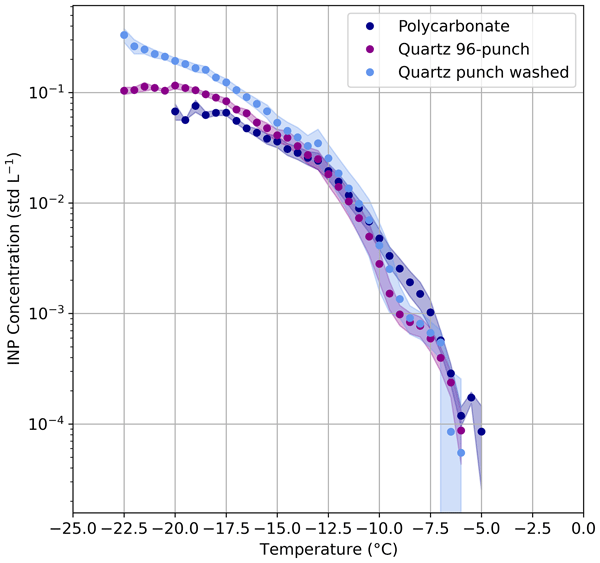
We evaluated different methods to obtain the ice nucleating particle (INP) concentration from ambient filters using GRAINS (GRAnada Ice Nuclei Spectrometer), the INP spectrometer at the Andalusian ObseRvatory of the Atmosphere (AGORA). We first characterized GRAINS and compared it to other INP devices. Then, we sampled polycarbonate and quartz filters for three months and tested three different particle extraction methods, finding general good agreement but that the INP concentration is systematically higher when using quartz filters.
Jesús Abril-Gago, Irene Tovar, Enrique Echeverría-Martín, Juana Andújar-Maqueda, Pablo Ortiz-Amezcua, Germán Cabrera-Carrillo, Penélope Serrano-Ortiz, Francisco Domingo, Lucas Alados-Arboledas, Andrew S. Kowalski, Enrique P. Sánchez-Cañete, and Juan Luis Guerrero-Rascado
Biogeosciences, 23, 2569–2581, https://doi.org/10.5194/bg-23-2569-2026, https://doi.org/10.5194/bg-23-2569-2026, 2026
Short summary
Short summary
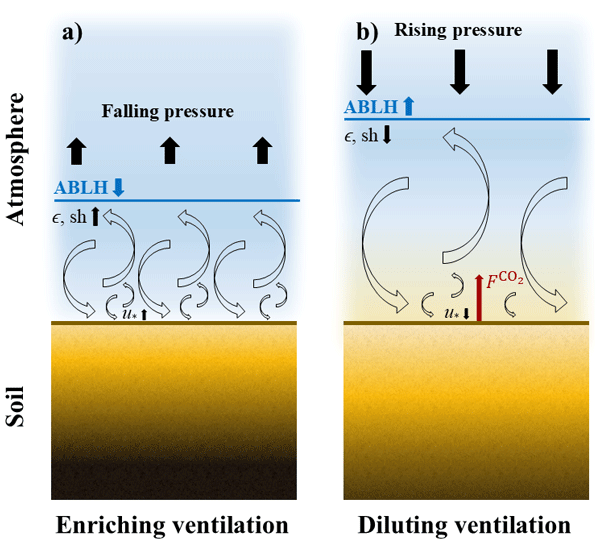
This study investigates non-biological soil CO2 ventilation in a semiarid Mediterranean shrubland and standardizes the criteria for its detection. Ten ventilation events were identified during the SCARCE (Synchronized Characterization of Aerosol, Radon and Carbon dioxide Exchanges in drylands) campaign, with several atmospheric parameters acting as drivers. Surface pressure emerged as the primary driver at the site, while friction velocity and boundary layer turbulence were also found to be relevant, highlighting the value of Doppler lidar for soil–atmosphere exchange studies.
Matheus Tolentino, Juan Antonio Bravo-Aranda, Juan Luis Guerrero-Rascado, Francisco Navas-Guzmán, Daniel Pérez-Ramírez, Lucas Alados-Arboledas, and Maria José Granados-Muñoz
Atmos. Meas. Tech., 19, 2079–2102, https://doi.org/10.5194/amt-19-2079-2026, https://doi.org/10.5194/amt-19-2079-2026, 2026
Short summary
Short summary
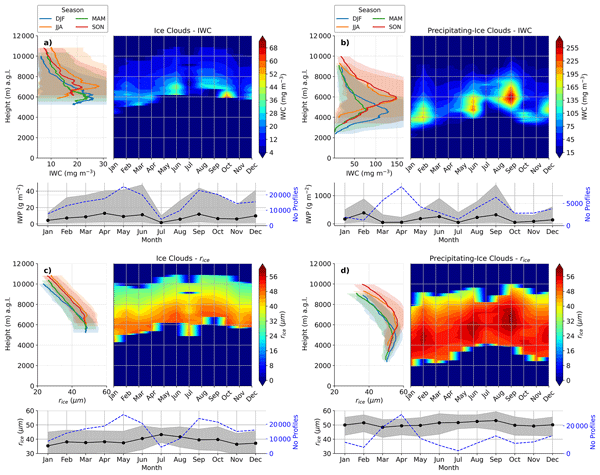
Clouds strongly influence weather and climate, yet long-term observations are rare in southern Europe. We analyzed five years of measurements in Granada, Spain, to study how different cloud types vary through the seasons. We developed a new method that improves cloud classification and found clear differences in height, thickness, and water content. These results provide valuable reference data to support satellite observations and climate models.
Ana del Águila, Pablo Ortiz-Amezcua, Siham Tabik, Juan Antonio Bravo-Aranda, Sol Fernández-Carvelo, and Lucas Alados-Arboledas
Atmos. Chem. Phys., 25, 12549–12567, https://doi.org/10.5194/acp-25-12549-2025, https://doi.org/10.5194/acp-25-12549-2025, 2025
Short summary
Short summary
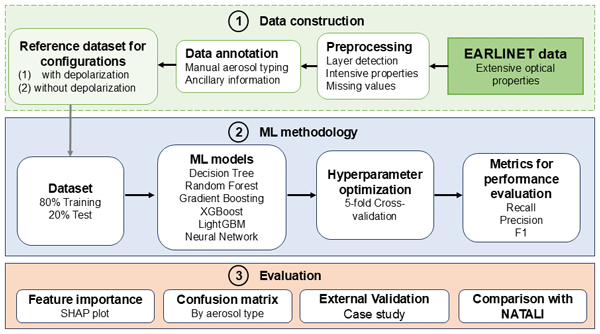
This study applies machine learning (ML) techniques to classify aerosols using high-resolution multiwavelength lidar data from EARLINET network. We developed a reference dataset and evaluated six ML models, with LightGBM achieving over 90 % accuracy. Depolarization data proved critical for improving dust classification. Validated against independent datasets, our approach improves aerosol classification and may help refine lidar-based processing strategies.
Jesús Yus-Díez, Luka Drinovec, Lucas Alados-Arboledas, Gloria Titos, Elena Bazo, Andrea Casans, Diego Patrón, Xavier Querol, Adolfo Gonzalez-Romero, Carlos Perez García-Pando, and Griša Močnik
Atmos. Meas. Tech., 18, 3073–3093, https://doi.org/10.5194/amt-18-3073-2025, https://doi.org/10.5194/amt-18-3073-2025, 2025
Short summary
Short summary
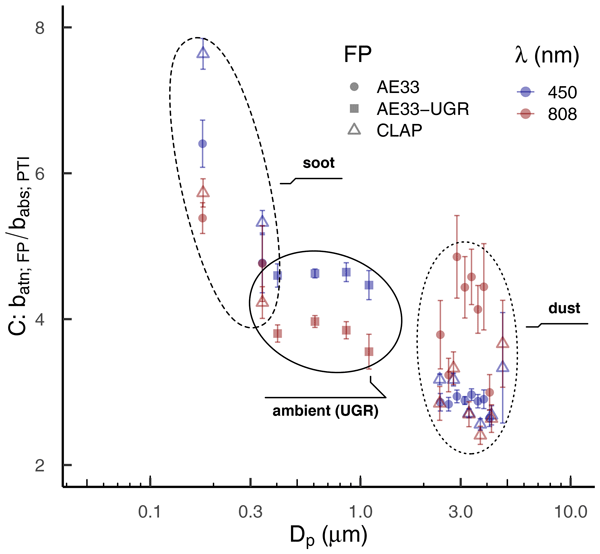
We have used absorption from a photothermal interferometer and scattering measurements to evaluate the most deployed filter photometers used to measure absorption for monitoring networks. We used soot- and dust-dominated aerosol samples in both laboratory and ambient settings. Our results indicated that one of these filter photometers, the MAAP (Multiangle Absorption Photometer), usually used as a pseudo-reference instrument, had 47 % higher absorption values than our reference measurements.
Roberto Román, Daniel González-Fernández, Juan Carlos Antuña-Sánchez, Celia Herrero del Barrio, Sara Herrero-Anta, África Barreto, Victoria E. Cachorro, Lionel Doppler, Ramiro González, Christoph Ritter, David Mateos, Natalia Kouremeti, Gustavo Copes, Abel Calle, María José Granados-Muñoz, Carlos Toledano, and Ángel M. de Frutos
Atmos. Meas. Tech., 18, 2847–2875, https://doi.org/10.5194/amt-18-2847-2025, https://doi.org/10.5194/amt-18-2847-2025, 2025
Short summary
Short summary
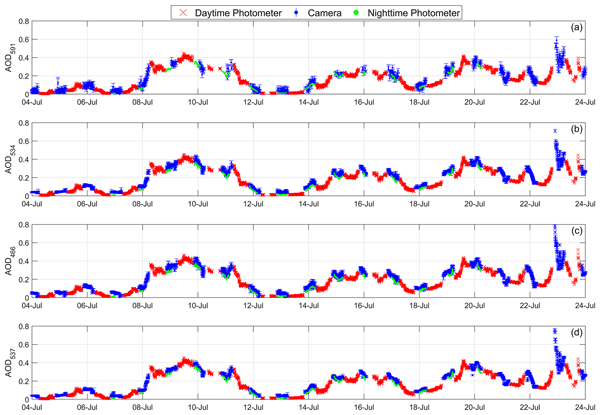
This paper presents a novel technique to extract starlight signals from all-sky images and retrieve aerosol optical depth (AOD). It is validated against lunar photometry, showing a strong correlation between data series. This innovative approach will expand nocturnal AOD measurements to more locations, as all-sky cameras are a simpler and more cost-effective alternative to stellar and lunar photometers.
Elena Bazo, Daniel Pérez-Ramírez, Antonio Valenzuela, J. Vanderlei Martins, Gloria Titos, Alberto Cazorla, Fernando Rejano, Diego Patrón, Arlett Díaz-Zurita, Francisco José García-Izquierdo, David Fuertes, Lucas Alados-Arboledas, and Francisco José Olmo
Atmos. Chem. Phys., 25, 6325–6352, https://doi.org/10.5194/acp-25-6325-2025, https://doi.org/10.5194/acp-25-6325-2025, 2025
Short summary
Short summary
This works analyzes the aerosol scattering phase function for transported Saharan dust to the city of Granada – located in southwestern Europe. We use the novel technique polar imaging nephelometry that helps to determine the phase functions using a CMOS camera. The capability of measuring with polarized light helps to infer new properties about the mixture of Saharan dust particles with those of anthropogenic origin.
María-Ángeles López-Cayuela, Carmen Córdoba-Jabonero, Michaël Sicard, Jesús Abril-Gago, Vanda Salgueiro, Adolfo Comerón, María José Granados-Muñoz, Maria João Costa, Constantino Muñoz-Porcar, Juan Antonio Bravo-Aranda, Daniele Bortoli, Alejandro Rodríguez-Gómez, Lucas Alados-Arboledas, and Juan Luis Guerrero-Rascado
Atmos. Chem. Phys., 25, 3213–3231, https://doi.org/10.5194/acp-25-3213-2025, https://doi.org/10.5194/acp-25-3213-2025, 2025
Short summary
Short summary
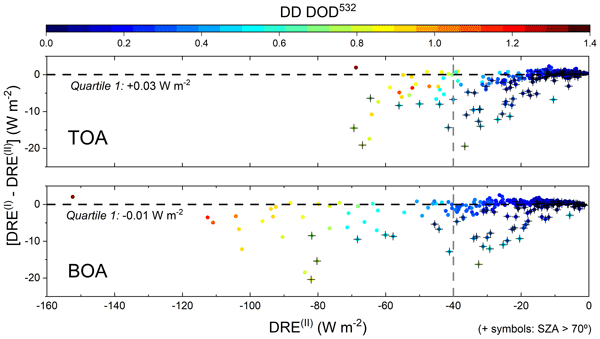
Due to the significant radiative role of dust in climate change, vertical assessments of the short-wave dust direct radiative effect of both fine and coarse dust particles are performed separately. The study is focused on an intense Saharan dust outbreak crossing the Iberian Peninsula in springtime monitored by five Iberian lidar stations with southwest–northeast coverage. A comparative study to evaluate the differences found by considering the total dust (no separation) is also examined.
Francisco Javier Acero, Manuel Antón, Alejandro Jesús Pérez Aparicio, Nieves Bravo-Paredes, Víctor Manuel Sánchez Carrasco, María Cruz Gallego, José Agustín García, Marcelino Núñez, Irene Tovar, Javier Vaquero-Martínez, and José Manuel Vaquero
Nat. Hazards Earth Syst. Sci., 25, 305–320, https://doi.org/10.5194/nhess-25-305-2025, https://doi.org/10.5194/nhess-25-305-2025, 2025
Short summary
Short summary
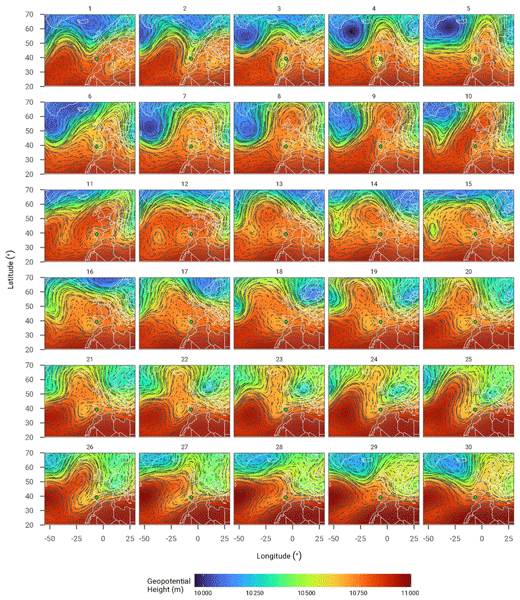
The month of June 1925 was found to be exceptional in the southwest interior of the Iberian Peninsula due to the large number of thunderstorms and their significant impacts, with serious losses of human lives and material resources. We analyzed this event from different, complementary perspectives: reconstruction of the history of the events from newspapers, study of monthly meteorological variables of the longest series available, and the analysis of the meteorological synoptic situation.
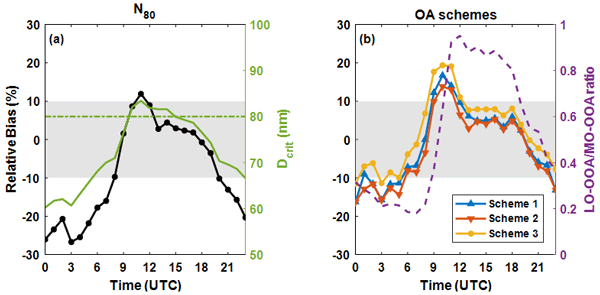
Fernando Rejano, Andrea Casans, Marta Via, Juan Andrés Casquero-Vera, Sonia Castillo, Hassan Lyamani, Alberto Cazorla, Elisabeth Andrews, Daniel Pérez-Ramírez, Andrés Alastuey, Francisco Javier Gómez-Moreno, Lucas Alados-Arboledas, Francisco José Olmo, and Gloria Titos
Atmos. Chem. Phys., 24, 13865–13888, https://doi.org/10.5194/acp-24-13865-2024, https://doi.org/10.5194/acp-24-13865-2024, 2024
Short summary
Short summary
This study provides valuable insights to improve cloud condensation nuclei (CCN) estimations at a high-altitude remote site which is influenced by nearby urban pollution. Understanding the factors that affect CCN estimations is essential to improve the CCN data coverage worldwide and assess aerosol–cloud interactions on a global scale. This is crucial for improving climate models, since aerosol–cloud interactions are the most important source of uncertainty in climate projections.
Celia Herrero del Barrio, Roberto Román, Ramiro González, Alberto Cazorla, Marcos Herreras-Giralda, Juan Carlos Antuña-Sánchez, Francisco Molero, Francisco Navas-Guzmán, Antonio Serrano, María Ángeles Obregón, Yolanda Sola, Marco Pandolfi, Sara Herrero-Anta, Daniel González-Fernández, Jorge Muñiz-Rosado, David Mateos, Abel Calle, Carlos Toledano, Victoria Eugenia Cachorro, and Ángel Máximo de Frutos
EGUsphere, https://doi.org/10.5194/egusphere-2024-581, https://doi.org/10.5194/egusphere-2024-581, 2024
Preprint withdrawn
Short summary
Short summary
Introducing CAECENET, a novel system that combines sun-sky photometer and ceilometer data, enabling the continuous monitoring and automatic retrieval of both vertical and columnar aerosol properties in near real-time. A case study on a Saharan dust outbreak illustrates it's efficacy in tracking aerosol events. Additionally, the analysis of Canadian wildfires' long-range transport is presented, showing it's utility in monitoring event propagation, aerosol concentration, and optical properties.
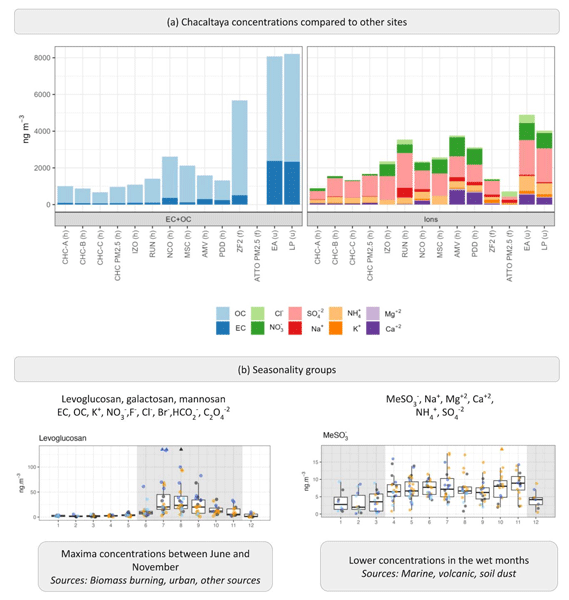
C. Isabel Moreno, Radovan Krejci, Jean-Luc Jaffrezo, Gaëlle Uzu, Andrés Alastuey, Marcos F. Andrade, Valeria Mardóñez, Alkuin Maximilian Koenig, Diego Aliaga, Claudia Mohr, Laura Ticona, Fernando Velarde, Luis Blacutt, Ricardo Forno, David N. Whiteman, Alfred Wiedensohler, Patrick Ginot, and Paolo Laj
Atmos. Chem. Phys., 24, 2837–2860, https://doi.org/10.5194/acp-24-2837-2024, https://doi.org/10.5194/acp-24-2837-2024, 2024
Short summary
Short summary
Aerosol chemical composition (ions, sugars, carbonaceous matter) from 2011 to 2020 was studied at Mt. Chacaltaya (5380 m a.s.l., Bolivian Andes). Minimum concentrations occur in the rainy season with maxima in the dry and transition seasons. The origins of the aerosol are located in a radius of hundreds of kilometers: nearby urban and rural areas, natural biogenic emissions, vegetation burning from Amazonia and Chaco, Pacific Ocean emissions, soil dust, and Peruvian volcanism.
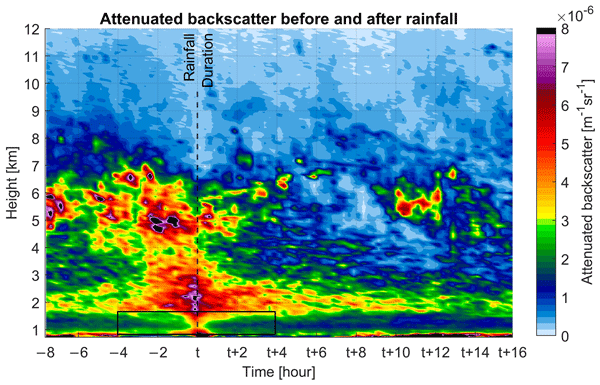
Wenyue Wang, Klemens Hocke, Leonardo Nania, Alberto Cazorla, Gloria Titos, Renaud Matthey, Lucas Alados-Arboledas, Agustín Millares, and Francisco Navas-Guzmán
Atmos. Chem. Phys., 24, 1571–1585, https://doi.org/10.5194/acp-24-1571-2024, https://doi.org/10.5194/acp-24-1571-2024, 2024
Short summary
Short summary
The south-central interior of Andalusia experiences complex precipitation patterns as a result of the semi-arid Mediterranean climate and the influence of Saharan dust. This study monitored the inter-relations between aerosols, clouds, meteorological variables, and precipitation systems using ground-based remote sensing and in situ instruments.
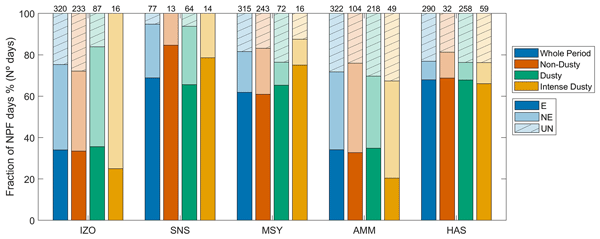
Juan Andrés Casquero-Vera, Daniel Pérez-Ramírez, Hassan Lyamani, Fernando Rejano, Andrea Casans, Gloria Titos, Francisco José Olmo, Lubna Dada, Simo Hakala, Tareq Hussein, Katrianne Lehtipalo, Pauli Paasonen, Antti Hyvärinen, Noemí Pérez, Xavier Querol, Sergio Rodríguez, Nikos Kalivitis, Yenny González, Mansour A. Alghamdi, Veli-Matti Kerminen, Andrés Alastuey, Tuukka Petäjä, and Lucas Alados-Arboledas
Atmos. Chem. Phys., 23, 15795–15814, https://doi.org/10.5194/acp-23-15795-2023, https://doi.org/10.5194/acp-23-15795-2023, 2023
Short summary
Short summary
Here we present the first study of the effect of mineral dust on the inhibition/promotion of new particle formation (NPF) events in different dust-influenced areas. Unexpectedly, we show that the occurrence of NPF events is highly frequent during mineral dust outbreaks, occurring even during extreme dust outbreaks. We also show that the occurrence of NPF events during mineral dust outbreaks significantly affects the potential cloud condensation nuclei budget.
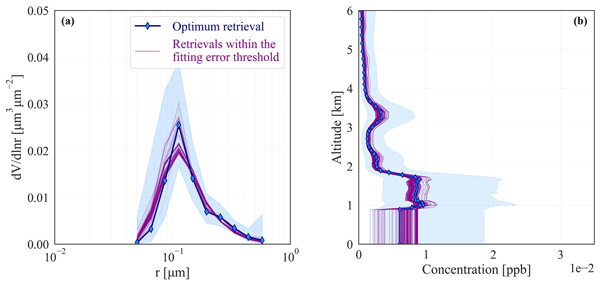
Alexandra Tsekeri, Anna Gialitaki, Marco Di Paolantonio, Davide Dionisi, Gian Luigi Liberti, Alnilam Fernandes, Artur Szkop, Aleksander Pietruczuk, Daniel Pérez-Ramírez, Maria J. Granados Muñoz, Juan Luis Guerrero-Rascado, Lucas Alados-Arboledas, Diego Bermejo Pantaleón, Juan Antonio Bravo-Aranda, Anna Kampouri, Eleni Marinou, Vassilis Amiridis, Michael Sicard, Adolfo Comerón, Constantino Muñoz-Porcar, Alejandro Rodríguez-Gómez, Salvatore Romano, Maria Rita Perrone, Xiaoxia Shang, Mika Komppula, Rodanthi-Elisavet Mamouri, Argyro Nisantzi, Diofantos Hadjimitsis, Francisco Navas-Guzmán, Alexander Haefele, Dominika Szczepanik, Artur Tomczak, Iwona S. Stachlewska, Livio Belegante, Doina Nicolae, Kalliopi Artemis Voudouri, Dimitris Balis, Athena A. Floutsi, Holger Baars, Linda Miladi, Nicolas Pascal, Oleg Dubovik, and Anton Lopatin
Atmos. Meas. Tech., 16, 6025–6050, https://doi.org/10.5194/amt-16-6025-2023, https://doi.org/10.5194/amt-16-6025-2023, 2023
Short summary
Short summary
EARLINET/ACTRIS organized an intensive observational campaign in May 2020, with the objective of monitoring the atmospheric state over Europe during the COVID-19 lockdown and relaxation period. The work presented herein focuses on deriving a common methodology for applying a synergistic retrieval that utilizes the network's ground-based passive and active remote sensing measurements and deriving the aerosols from anthropogenic activities over Europe.
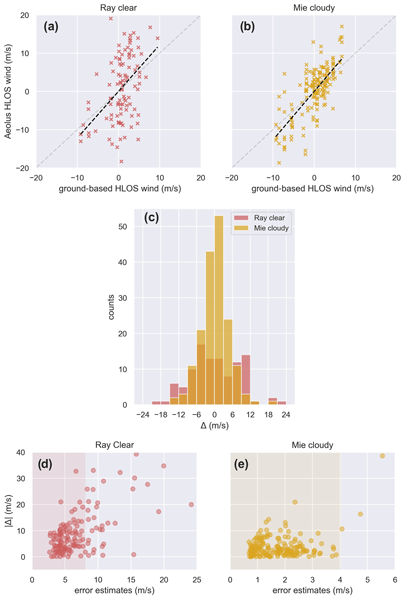
Jesús Abril-Gago, Pablo Ortiz-Amezcua, Diego Bermejo-Pantaleón, Juana Andújar-Maqueda, Juan Antonio Bravo-Aranda, María José Granados-Muñoz, Francisco Navas-Guzmán, Lucas Alados-Arboledas, Inmaculada Foyo-Moreno, and Juan Luis Guerrero-Rascado
Atmos. Chem. Phys., 23, 8453–8471, https://doi.org/10.5194/acp-23-8453-2023, https://doi.org/10.5194/acp-23-8453-2023, 2023
Short summary
Short summary
Validation activities of Aeolus wind products were performed in Granada with different upward-probing instrumentation (Doppler lidar system and radiosondes) and spatiotemporal collocation criteria. Specific advantages and disadvantages of each instrument were identified, and an optimal comparison criterion is proposed. Aeolus was proven to provide reliable wind products, and the upward-probing instruments were proven to be useful for Aeolus wind product validation activities.
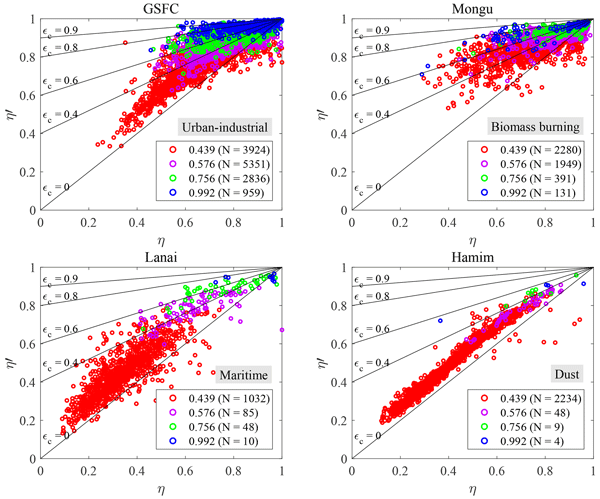
Norman T. O'Neill, Keyvan Ranjbar, Liviu Ivănescu, Thomas F. Eck, Jeffrey S. Reid, David M. Giles, Daniel Pérez-Ramírez, and Jai Prakash Chaubey
Atmos. Meas. Tech., 16, 1103–1120, https://doi.org/10.5194/amt-16-1103-2023, https://doi.org/10.5194/amt-16-1103-2023, 2023
Short summary
Short summary
Aerosols are atmospheric particles that vary in size (radius) from a fraction of a micrometer (µm) to around 20 µm. They tend to be either smaller than 1 µm (like smoke or pollution) or larger than 1 µm (like dust or sea salt). Their optical effect (scattering and absorbing sunlight) can be divided into FM (fine-mode) and CM (coarse-mode) parts using a cutoff radius around 1 µm or a spectral (color) technique. We present and validate a theoretical link between the types of FM and CM divisions.
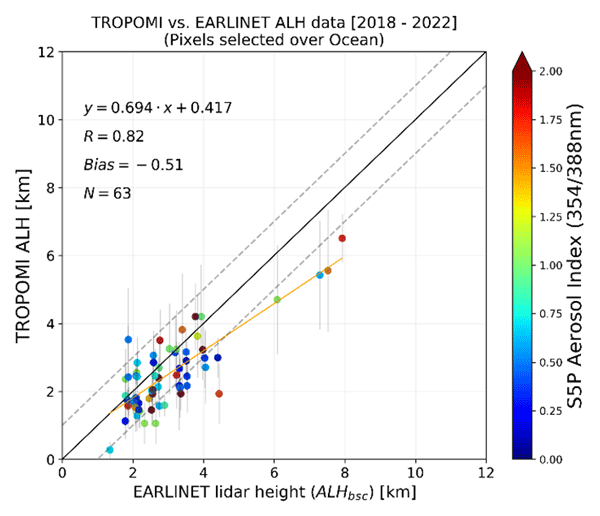
Konstantinos Michailidis, Maria-Elissavet Koukouli, Dimitris Balis, J. Pepijn Veefkind, Martin de Graaf, Lucia Mona, Nikolaos Papagianopoulos, Gesolmina Pappalardo, Ioanna Tsikoudi, Vassilis Amiridis, Eleni Marinou, Anna Gialitaki, Rodanthi-Elisavet Mamouri, Argyro Nisantzi, Daniele Bortoli, Maria João Costa, Vanda Salgueiro, Alexandros Papayannis, Maria Mylonaki, Lucas Alados-Arboledas, Salvatore Romano, Maria Rita Perrone, and Holger Baars
Atmos. Chem. Phys., 23, 1919–1940, https://doi.org/10.5194/acp-23-1919-2023, https://doi.org/10.5194/acp-23-1919-2023, 2023
Short summary
Short summary
Comparisons with ground-based correlative lidar measurements constitute a key component in the validation of satellite aerosol products. This paper presents the validation of the TROPOMI aerosol layer height (ALH) product, using archived quality assured ground-based data from lidar stations that belong to the EARLINET network. Comparisons between the TROPOMI ALH and co-located EARLINET measurements show good agreement over the ocean.
Simone Kotthaus, Juan Antonio Bravo-Aranda, Martine Collaud Coen, Juan Luis Guerrero-Rascado, Maria João Costa, Domenico Cimini, Ewan J. O'Connor, Maxime Hervo, Lucas Alados-Arboledas, María Jiménez-Portaz, Lucia Mona, Dominique Ruffieux, Anthony Illingworth, and Martial Haeffelin
Atmos. Meas. Tech., 16, 433–479, https://doi.org/10.5194/amt-16-433-2023, https://doi.org/10.5194/amt-16-433-2023, 2023
Short summary
Short summary
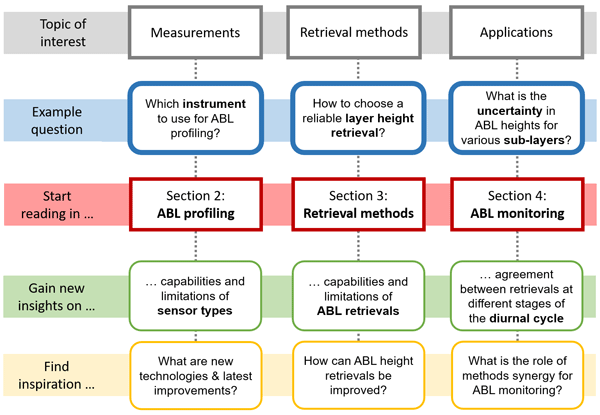
Profile observations of the atmospheric boundary layer now allow for layer heights and characteristics to be derived at high temporal and vertical resolution. With novel high-density ground-based remote-sensing measurement networks emerging, horizontal information content is also increasing. This review summarises the capabilities and limitations of various sensors and retrieval algorithms which need to be considered during the harmonisation of data products for high-impact applications.

María Ángeles López-Cayuela, Carmen Córdoba-Jabonero, Diego Bermejo-Pantaleón, Michaël Sicard, Vanda Salgueiro, Francisco Molero, Clara Violeta Carvajal-Pérez, María José Granados-Muñoz, Adolfo Comerón, Flavio T. Couto, Rubén Barragán, María-Paz Zorzano, Juan Antonio Bravo-Aranda, Constantino Muñoz-Porcar, María João Costa, Begoña Artíñano, Alejandro Rodríguez-Gómez, Daniele Bortoli, Manuel Pujadas, Jesús Abril-Gago, Lucas Alados-Arboledas, and Juan Luis Guerrero-Rascado
Atmos. Chem. Phys., 23, 143–161, https://doi.org/10.5194/acp-23-143-2023, https://doi.org/10.5194/acp-23-143-2023, 2023
Short summary
Short summary
An intense Saharan dust outbreak crossing the Iberian Peninsula in springtime was monitored to determinine the specific contribution of fine and coarse dust particles at five lidar stations, strategically covering its SW–central–NE pathway. Expected dust ageing along the transport started unappreciated. A different fine-dust impact on optical (~30 %) and mass (~10 %) properties was found. Use of polarized lidar measurements (mainly in elastic systems) for fine/coarse dust separation is crucial.
Milagros E. Herrera, Oleg Dubovik, Benjamin Torres, Tatyana Lapyonok, David Fuertes, Anton Lopatin, Pavel Litvinov, Cheng Chen, Jose Antonio Benavent-Oltra, Juan L. Bali, and Pablo R. Ristori
Atmos. Meas. Tech., 15, 6075–6126, https://doi.org/10.5194/amt-15-6075-2022, https://doi.org/10.5194/amt-15-6075-2022, 2022
Short summary
Short summary
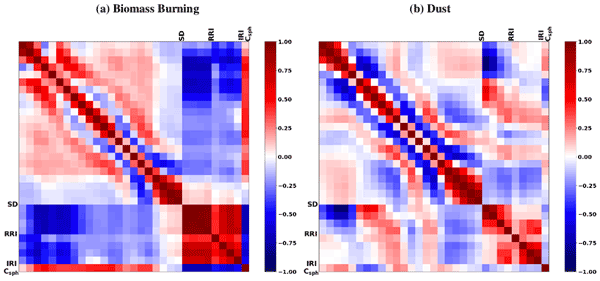
This study deals with the dynamic error estimates of the aerosol-retrieved properties by the GRASP algorithm, which are provided for directly retrieved and derived parameters. Moreover, GRASP provides full covariance matrices that appear to be a useful approach for optimizing observation schemes and retrieval set-ups. The validation of the retrieved dynamic error estimates is done through real and synthetic measurements using sun photometer and lidar observations.
Witali Krochin, Francisco Navas-Guzmán, David Kuhl, Axel Murk, and Gunter Stober
Atmos. Meas. Tech., 15, 2231–2249, https://doi.org/10.5194/amt-15-2231-2022, https://doi.org/10.5194/amt-15-2231-2022, 2022
Short summary
Short summary
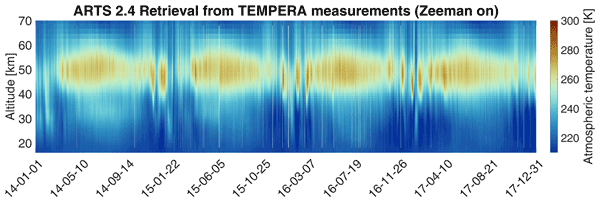
This study leverages atmospheric temperature measurements performed with a ground-based radiometer making use of data that was collected during a 4-year observational campaign applying a new retrieval algorithm that improves the maximal altitude range from 45 to 55 km. The measurements are validated against two independent data sets, MERRA2 reanalysis data and the meteorological analysis of NAVGEM-HA.
Jesús Abril-Gago, Juan Luis Guerrero-Rascado, Maria João Costa, Juan Antonio Bravo-Aranda, Michaël Sicard, Diego Bermejo-Pantaleón, Daniele Bortoli, María José Granados-Muñoz, Alejandro Rodríguez-Gómez, Constantino Muñoz-Porcar, Adolfo Comerón, Pablo Ortiz-Amezcua, Vanda Salgueiro, Marta María Jiménez-Martín, and Lucas Alados-Arboledas
Atmos. Chem. Phys., 22, 1425–1451, https://doi.org/10.5194/acp-22-1425-2022, https://doi.org/10.5194/acp-22-1425-2022, 2022
Short summary
Short summary
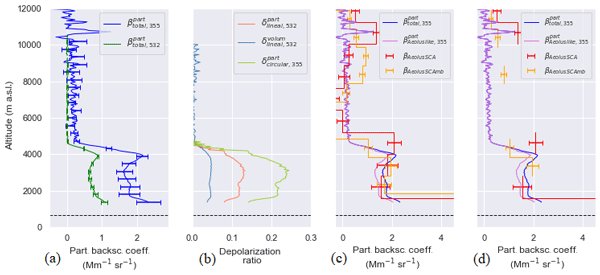
A validation of Aeolus reprocessed optical products is carried out via an intercomparison with ground-based measurements taken at several ACTRIS/EARLINET stations in western Europe. Case studies and a statistical analysis are presented. The stations are located in a hot spot between Africa and the rest of Europe, which guarantees a variety of aerosol types, from mineral dust layers to continental/anthropogenic aerosol, and allows us to test Aeolus performance under different scenarios.
Mariana Adam, Iwona S. Stachlewska, Lucia Mona, Nikolaos Papagiannopoulos, Juan Antonio Bravo-Aranda, Michaël Sicard, Doina N. Nicolae, Livio Belegante, Lucja Janicka, Dominika Szczepanik, Maria Mylonaki, Christina-Anna Papanikolaou, Nikolaos Siomos, Kalliopi Artemis Voudouri, Luca Alados-Arboledas, Arnoud Apituley, Ina Mattis, Anatoli Chaikovsky, Constantino Muñoz-Porcar, Aleksander Pietruczuk, Daniele Bortoli, Holger Baars, Ivan Grigorov, and Zahary Peshev
Atmos. Chem. Phys. Discuss., https://doi.org/10.5194/acp-2021-759, https://doi.org/10.5194/acp-2021-759, 2021
Revised manuscript not accepted
Short summary
Short summary
Results over 10 years of biomass burning events measured by EARLINET are analysed by means of the intensive parameters, based on the methodology described in Part I. Smoke type is characterized for each of the four geographical regions based on continental smoke origin. Relationships between intensive parameters or colour ratios are shown. The smoke is labelled in average as aged smoke.
Cited articles
Bedoya, A., Navas-Guzmán, F., Guerrero-Rascado, J. L., and Alados-Arboledas, L.: Validation and statistical analysis of temperature, humidity profiles and Integrated Water Vapor (IWV) from microwave measurements over Granada (Spain), Geophys. Res. Abstr., Vol. 19, EGU2017-A-10312, EGU General Assembly 2017, Vienna, Austria, 2017 a
Bedoya-Velásquez, A. E., Navas-Guzmán, F., de Arruda Moreira, G., Román, R., Cazorla, A., Ortiz-Amezcua, P., Benavent-Oltra, J. A., Alados-Arboledas, L., Olmo-Reyes, F. J., Foyo-Moreno, I., Montilla-Rosero, E., Hoyos, C. D., and Guerrero-Rascado, J. L.: Seasonal analysis of the atmosphere during five years by using microwave radiometry over a mid-latitude site, Atmos. Res., 218, https://doi.org/10.1016/j.atmosres.2018.11.014, 2019. a
Bevis, M., Businger, S., Herring, T. A., Rocken, C., Anthes, R. A., and Ware, R. H.: GPS meteorology: remote sensing of atmospheric water vapor using the global positioning system, J. Geophys. Res., 97, https://doi.org/10.1029/92jd01517, 1992. a
Blewitt, G., Hammond, W., and Kreemer, C.: Harnessing the GPS Data Explosion for Interdisciplinary Science, Eos T. Am. Geophys. Un., 99, https://doi.org/10.1029/2018eo104623, 2018. a, b
Bock, O., Bosser, P., Pacione, R., Nuret, M., Fourrié, N., and Parracho, A.: A high-quality reprocessed ground-based GPS dataset for atmospheric process studies, radiosonde and model evaluation, and reanalysis of HyMeX Special Observing Period, Q. J. Roy. Meteor. Soc., 142, https://doi.org/10.1002/qj.2701, 2016. a
Boehm, J., Werl, B., and Schuh, H.: Troposphere mapping functions for GPS and very long baseline interferometry from European Centre for Medium-Range Weather Forecasts operational analysis data, J. Geophys. Res.-Sol. Ea., 111, https://doi.org/10.1029/2005JB003629, 2006. a
Brocard, E., Philipona, R., Haefele, A., Romanens, G., Mueller, A., Ruffieux, D., Simeonov, V., and Calpini, B.: Raman Lidar for Meteorological Observations, RALMO – Part 2: Validation of water vapor measurements, Atmos. Meas. Tech., 6, 1347–1358, https://doi.org/10.5194/amt-6-1347-2013, 2013. a, b, c, d
Bruyninx, C., Legrand, J., Fabian, A., and Pottiaux, E.: GNSS metadata and data validation in the EUREF Permanent Network, GPS Solut., 23, https://doi.org/10.1007/s10291-019-0880-9, 2019. a
Bucholtz, A.: Rayleigh-scattering calculations for the terrestrial atmosphere, Appl. Optics, 34, https://doi.org/10.1364/ao.34.002765, 1995. a
Cadeddu, M. P., Liljegren, J. C., and Turner, D. D.: The Atmospheric radiation measurement (ARM) program network of microwave radiometers: instrumentation, data, and retrievals, Atmos. Meas. Tech., 6, 2359–2372, https://doi.org/10.5194/amt-6-2359-2013, 2013. a
Chazette, P., Totems, J., and Laly, F.: Long-term evolution of the calibration constant on a mobile water vapour Raman lidar, Atmos. Meas. Tech., 18, 2681–2699, https://doi.org/10.5194/amt-18-2681-2025, 2025. a
Dai, G., Althausen, D., Hofer, J., Engelmann, R., Seifert, P., Bühl, J., Mamouri, R.-E., Wu, S., and Ansmann, A.: Calibration of Raman lidar water vapor profiles by means of AERONET photometer observations and GDAS meteorological data, Atmos. Meas. Tech., 11, 2735–2748, https://doi.org/10.5194/amt-11-2735-2018, 2018. a, b, c, d, e, f
David, L., Bock, O., Thom, C., Bosser, P., and Pelon, J.: Study and mitigation of calibration factor instabilities in a water vapor Raman lidar, Atmos. Meas. Tech., 10, 2745–2758, https://doi.org/10.5194/amt-10-2745-2017, 2017. a
Davis, J. L., Herring, T. A., Shapiro, I. I., Rogers, A. E., and Elgered, G.: Geodesy by radio interferometry: Effects of atmospheric modeling errors on estimates of baseline length, Radio Sci., 20, https://doi.org/10.1029/RS020i006p01593, 1985. a
De Mazière, M., Thompson, A. M., Kurylo, M. J., Wild, J. D., Bernhard, G., Blumenstock, T., Braathen, G. O., Hannigan, J. W., Lambert, J.-C., Leblanc, T., McGee, T. J., Nedoluha, G., Petropavlovskikh, I., Seckmeyer, G., Simon, P. C., Steinbrecht, W., and Strahan, S. E.: The Network for the Detection of Atmospheric Composition Change (NDACC): history, status and perspectives, Atmos. Chem. Phys., 18, 4935–4964, https://doi.org/10.5194/acp-18-4935-2018, 2018. a
De Rosa, B., Di Girolamo, P., and Summa, D.: Temperature and water vapour measurements in the framework of the Network for the Detection of Atmospheric Composition Change (NDACC), Atmos. Meas. Tech., 13, 405–427, https://doi.org/10.5194/amt-13-405-2020, 2020. a
DeTomasi, F. and Perrone, M. R.: Lidar measurements of tropospheric water vapor and aerosol profiles over southeastern Italy, J. Geophys. Res.-Atmos., 108, https://doi.org/10.1029/2002jd002781, 2003. a
Di Girolamo, P., Rosa, B. D., Flamant, C., Summa, D., Bousquet, O., Chazette, P., Totems, J., and Cacciani, M.: Water vapor mixing ratio and temperature inter-comparison results in the framework of the Hydrological Cycle in the Mediterranean Experiment–Special Observation Period 1, Bull. Atmos. Sci. Technol., 1, https://doi.org/10.1007/s42865-020-00008-3, 2020. a, b
Díaz-Zurita, A., Naval-Hernández, V. M., Whiteman, D. N., Rodríguez-Navarro, O., Muñiz-Rosado, J., Pérez-Ramírez, D., Alados-Arboledas, L., and Navas-Guzmán, F.: Sensitivity Analysis of the Differential Atmospheric Transmission in Water Vapour Mixing Ratio Retrieval from Raman Lidar Measurements, Remote Sens.-Basel, 17, 3444, https://doi.org/10.3390/rs17203444, 2025. a, b, c, d
Ding, J., Chen, J., Tang, W., and Song, Z.: Spatial–Temporal Variability of Global GNSS-Derived Precipitable Water Vapor (1994–2020) and Climate Implications, Remote Sens.-Basel, 14, https://doi.org/10.3390/rs14143493, 2022. a
Douville, H., Raghavan, K., Renwick, J., Allan, R., Arias, P., Barlow, M., Cerezo-Mota, R., Cherchi, A., Gan, T., Gergis, J., Jiang, D., Khan, A., Pokam Mba, W., Rosenfeld, D., Tierney, J., and Zolina, O.: Water Cycle Changes, in: Climate Change 2021: The Physical Science Basis. Contribution of Working Group I to the Sixth Assessment Report of the Intergovernmental Panel on Climate Change, Chap. 8, edited by: Masson-Delmotte, V., Zhai, P., Pirani, A., Connors, S., Péan, C., Berger, S., Caud, N., Chen, Y., Goldfarb, L., Gomis, M., Huang, M., Leitzell, K., Lonnoy, E., Matthews, J., Maycock, T., Waterfield, T., Yelekçi, O., Yu, R., and Zhou, B., Cambridge University Press, Cambridge, United Kingdom and New York, NY, USA, 1055–1210, https://doi.org/10.1017/9781009157896.010, 2021. a
Ferrare, R., Ismail, S., Browell, E., Brackett, V., Clayton, M., Kooi, S., Melfi, S. H., Whiteman, D., Schwemmer, G., Evans, K., Russell, P., Livingston, J., Schmid, B., Holben, B., Remer, L., Smirnov, A., and Hobbs, P. V.: Comparison of aerosol optical properties and water vapor among ground and airborne lidars and Sun photometers during TARFOX, https://doi.org/10.1029/1999JD901202, 2000. a
Ferrare, R., Turner, D., Clayton, M., Schmid, B., Redemann, J., Covert, D., Elleman, R., Ogren, J., Andrews, E., Goldsmith, J. E., and Jonsson, H.: Evaluation of daytime measurements of aerosols and water vapor made by an operational Raman lidar over the Southern Great Plains, J. Geophys. Res.-Atmos., 111, https://doi.org/10.1029/2005JD005836, 2006. a
Fragkos, K., Antonescu, B., Giles, D. M., Ene, D., Boldeanu, M., Efstathiou, G. A., Belegante, L., and Nicolae, D.: Assessment of the total precipitable water from a sun photometer, microwave radiometer and radiosondes at a continental site in southeastern Europe, Atmos. Meas. Tech., 12, 1979–1997, https://doi.org/10.5194/amt-12-1979-2019, 2019. a
Froidevaux, M., Higgins, C. W., Simeonov, V., Ristori, P., Pardyjak, E., Serikov, I., Calhoun, R., van den Bergh, H., and Parlange, M. B.: A Raman lidar to measure water vapor in the atmospheric boundary layer, Adv. Water Resour., 51, https://doi.org/10.1016/j.advwatres.2012.04.008, 2013. a
Gelaro, R., McCarty, W., Suárez, M. J., Todling, R., Molod, A., Takacs, L., Randles, C. A., Darmenov, A., Bosilovich, M. G., Reichle, R., Wargan, K., Coy, L., Cullather, R., Draper, C., Akella, S., Buchard, V., Conaty, A., da Silva, A. M., Gu, W., Kim, G. K., Koster, R., Lucchesi, R., Merkova, D., Nielsen, J. E., Partyka, G., Pawson, S., Putman, W., Rienecker, M., Schubert, S. D., Sienkiewicz, M., and Zhao, B.: The modern-era retrospective analysis for research and applications, version 2 (MERRA-2), J. Climate, 30, https://doi.org/10.1175/JCLI-D-16-0758.1, 2017. a
Goldsmith, J. E.: Turn-key Raman lidar for profiling atmospheric water vapor, clouds, and aerosols, Appl. Optics, 37, https://doi.org/10.1364/ao.37.004979, 1998. a
Gong, Y. and Liu, Z.: Evaluating the Accuracy of Jason-3 Water Vapor Product Using PWV Data from Global Radiosonde and GNSS Stations, IEEE T. Geosci. Remote, 59, https://doi.org/10.1109/TGRS.2020.3017761, 2021. a
Granados-Muñoz, M. J., Navas-Guzmán, F., Bravo-Aranda, J. A., Guerrero-Rascado, J. L., Lyamani, H., Valenzuela, A., Titos, G., Fernández-Gálvez, J., and Alados-Arboledas, L.: Hygroscopic growth of atmospheric aerosol particles based on active remote sensing and radiosounding measurements: selected cases in southeastern Spain, Atmos. Meas. Tech., 8, 705–718, https://doi.org/10.5194/amt-8-705-2015, 2015. a, b
Grossi, M., Valks, P., Loyola, D., Aberle, B., Slijkhuis, S., Wagner, T., Beirle, S., and Lang, R.: Total column water vapour measurements from GOME-2 MetOp-A and MetOp-B, Atmos. Meas. Tech., 8, 1111–1133, https://doi.org/10.5194/amt-8-1111-2015, 2015. a
Guerrero-Rascado, J. L., Ruiz, B., Chourdakis, G., Georgoussis, G., and Alados-Arboledas, L.: One year of water vapour raman lidar measurements at the andalusian centre for environmental studies (CEAMA), Int. J. Remote Sens., 29, https://doi.org/10.1080/01431160802036433, 2008. a, b, c
Guerrero-Rascado, J. L., Landulfo, E., Antuña, J. C., de Melo Jorge Barbosa, H., Barja, B., Álvaro Efrain Bastidas, Bedoya, A. E., da Costa, R. F., Estevan, R., Forno, R., Gouveia, D. A., Jiménez, C., Larroza, E. G., da Silva Lopes, F. J., Montilla-Rosero, E., de Arruda Moreira, G., Nakaema, W. M., Nisperuza, D., Alegria, D., Múnera, M., Otero, L., Papandrea, S., Pallota, J. V., Pawelko, E., Quel, E. J., Ristori, P., Rodrigues, P. F., Salvador, J., Sánchez, M. F., and Silva, A.: Latin American Lidar Network (LALINET) for aerosol research: Diagnosis on network instrumentation, J. Atmos. Sol.-Terr. Phy., 138–139, https://doi.org/10.1016/j.jastp.2016.01.001, 2016. a
Haefele, A., Hocke, K., Kämpfer, N., Keckhut, P., Marchand, M., Bekki, S., Morel, B., Egorova, T., and Rozanov, E.: Diurnal changes in middle atmospheric H2O and O3: Observations in the Alpine region and climate models, J. Geophys. Res.-Atmos., 113, https://doi.org/10.1029/2008JD009892, 2008. a
Hersbach, H., Bell, B., Berrisford, P., Hirahara, S., Horányi, A., Muñoz-Sabater, J., Nicolas, J., Peubey, C., Radu, R., Schepers, D., Simmons, A., Soci, C., Abdalla, S., Abellan, X., Balsamo, G., Bechtold, P., Biavati, G., Bidlot, J., Bonavita, M., Chiara, G. D., Dahlgren, P., Dee, D., Diamantakis, M., Dragani, R., Flemming, J., Forbes, R., Fuentes, M., Geer, A., Haimberger, L., Healy, S., Hogan, R. J., Hólm, E., Janisková, M., Keeley, S., Laloyaux, P., Lopez, P., Lupu, C., Radnoti, G., de Rosnay, P., Rozum, I., Vamborg, F., Villaume, S., and Thépaut, J. N.: The ERA5 global reanalysis, Q. J. Roy. Meteor. Soc., 146, https://doi.org/10.1002/qj.3803, 2020. a
Hicks-Jalali, S., Sica, R. J., Haefele, A., and Martucci, G.: Calibration of a water vapour Raman lidar using GRUAN-certified radiosondes and a new trajectory method, Atmos. Meas. Tech., 12, 3699–3716, https://doi.org/10.5194/amt-12-3699-2019, 2019. a
Hicks-Jalali, S., Sica, R. J., Martucci, G., Maillard Barras, E., Voirin, J., and Haefele, A.: A Raman lidar tropospheric water vapour climatology and height-resolved trend analysis over Payerne, Switzerland, Atmos. Chem. Phys., 20, 9619–9640, https://doi.org/10.5194/acp-20-9619-2020, 2020. a
Hocke, K., Navas-Guzmán, F., Moreira, L., Bernet, L., and Mätzler, C.: Diurnal cycle in atmospheric water over Switzerland, Remote Sens.-Basel, 9, https://doi.org/10.3390/rs9090909, 2017. a
Huang, L., Mo, Z., Liu, L., Zeng, Z., Chen, J., Xiong, S., and He, H.: Evaluation of Hourly PWV Products Derived From ERA5 and MERRA-2 Over the Tibetan Plateau Using Ground-Based GNSS Observations by Two Enhanced Models, Earth Space Sci., 8, https://doi.org/10.1029/2020EA001516, 2021. a, b, c
Inness, A., Ades, M., Agustí-Panareda, A., Barré, J., Benedictow, A., Blechschmidt, A.-M., Dominguez, J. J., Engelen, R., Eskes, H., Flemming, J., Huijnen, V., Jones, L., Kipling, Z., Massart, S., Parrington, M., Peuch, V.-H., Razinger, M., Remy, S., Schulz, M., and Suttie, M.: The CAMS reanalysis of atmospheric composition, Atmos. Chem. Phys., 19, 3515–3556, https://doi.org/10.5194/acp-19-3515-2019, 2019. a
JCFG/GUM: Guide to the Expression of Uncertainty in Measurement – Part 6: Developing and Using Measurement Models, https://www.bipm.org/documents/20126/2071204/JCGM_GUM_6_2020.pdf (last access: 11 May 2026), 2020. a
Kiehl, J. T. and Trenberth, K. E.: Earth's Annual Global Mean Energy Budget, B. Am. Meteorol. Soc., 78, https://doi.org/10.1175/1520-0477(1997)078<0197:EAGMEB>2.0.CO;2, 1997. a
Küchler, T., Noël, S., Bovensmann, H., Burrows, J. P., Wagner, T., Borger, C., Borsdorff, T., and Schneider, A.: Total water vapour columns derived from Sentinel 5P using the AMC-DOAS method, Atmos. Meas. Tech., 15, 297–320, https://doi.org/10.5194/amt-15-297-2022, 2022. a
Kulla, B. S. and Ritter, C.: Water vapor calibration: Using a raman lidar and radiosoundings to obtain highly resolvedwater vapor profiles, Remote Sens.-Basel, 11, https://doi.org/10.3390/RS11060616, 2019. a, b, c
Laj, P., Myhre, C. L., Riffault, V., Amiridis, V., Fuchs, H., Eleftheriadis, K., Petäjä, T., Salameh, T., Kivekäs, N., Juurola, E., Saponaro, G., Philippin, S., Cornacchia, C., Alados Arboledas, L., Baars, H., Claude, A., De Mazière, M., Dils, B., Dufresne, M., Evangeliou, N., Favez, O., Fiebig, M., Haeffelin, M., Herrmann, H., Höhler, K., Illmann, N., Kreuter, A., Ludewig, E., Marinou, E., Möhler, O., Mona, L., Murberg, L. E., Nicolae, D., Novelli, A., O’Connor, E., Ohneiser, K., Petracca Altieri, R. M., Picquet-Varrault, B., van Pinxteren, D., Pospichal, B., Putaud, J.-P., Reimann, S., Siomos, N., Stachlewska, I., Tillmann, R., Voudouri, K. A., Wandinger, U., Wiedensohler, A., Apituley, A., Comerón, A., Gysel-Beer, M., Mihalopoulos, N., Nikolova, N., Pietruczuk, A., Sauvage, S., Sciare, J., Skov, H., Svendby, T., Swietlicki, E., Tonev, D., Vaughan, G., Zdimal, V., Baltensperger, U., Doussin, J.-F., Kulmala, M., Pappalardo, G., Sorvari Sundet, S., and Vana, M.: Aerosol, Clouds and Trace Gases Research Infrastructure (ACTRIS): The European Research Infrastructure Supporting Atmospheric Science, B. Am. Meteorol. Soc., 105, E1098–E1136, 2024. a, b
Leblanc, T. and McDermid, I. S.: Accuracy of Raman lidar water vapor calibration and its applicability to long-term measurements, Appl. Optics, 47, 5592–5603, https://doi.org/10.1364/AO.47.005592, 2008. a
Leblanc, T., McDermid, I. S., and Walsh, T. D.: Ground-based water vapor raman lidar measurements up to the upper troposphere and lower stratosphere for long-term monitoring, Atmos. Meas. Tech., 5, 17–36, https://doi.org/10.5194/amt-5-17-2012, 2012. a
Mariani, Z., Stanton, N., Whiteway, J., and Lehtinen, R.: Toronto water vapor lidar inter-comparison campaign, Remote Sens.-Basel, 12, https://doi.org/10.3390/rs12193165, 2020. a, b
Martucci, G., Voirin, J., Simeonov, V., Renaud, L., and Haefele, A.: A novel automatic calibration system for water vapor Raman LIDAR, EPJ Web Conf., 176, https://doi.org/10.1051/epjconf/201817605008, 2018. a
Mattis, I., Ansmann, A., Althausen, D., Jaenisch, V., Wandinger, U., Müller, D., Arshinov, Y. F., Bobrovnikov, S. M., and Serikov, I. B.: Relative-humidity profiling in the troposphere with a Raman lidar, Appl. Optics, 41, https://doi.org/10.1364/ao.41.006451, 2002. a, b, c
Miri, R., Pujol, O., Hu, Q., Goloub, P., Veselovskii, I., Podvin, T., and Ducos, F.: Innovative aerosol hygroscopic growth study from Mie–Raman–fluorescence lidar and microwave radiometer synergy, Atmos. Meas. Tech., 17, 3367–3375, https://doi.org/10.5194/amt-17-3367-2024, 2024. a
Navas-Guzmán, F., Guerrero-Rascado, J. L., and Arboledas, L. A.: Retrieval of the lidar overlap function using Raman signals, Opt. Pura Apl., 44, pp. 71–75, 2011. a
Navas-Guzmán, F., Fernández-Gálvez, J., Granados-Muñoz, M. J., Guerrero-Rascado, J. L., Bravo-Aranda, J. A., and Alados-Arboledas, L.: Tropospheric water vapour and relative humidity profiles from lidar and microwave radiometry, Atmos. Meas. Tech., 7, 1201–1211, https://doi.org/10.5194/amt-7-1201-2014, 2014. a, b, c, d, e, f, g, h, i
Navas-Guzmán, F., Kämpfer, N., and Haefele, A.: Validation of brightness and physical temperature from two scanning microwave radiometers in the 60 GHz O2 band using radiosonde measurements, Atmos. Meas. Tech., 9, 4587–4600, https://doi.org/10.5194/amt-9-4587-2016, 2016. a
Navas-Guzmán, F., Martucci, G., Collaud Coen, M., Granados-Muñoz, M. J., Hervo, M., Sicard, M., and Haefele, A.: Characterization of aerosol hygroscopicity using Raman lidar measurements at the EARLINET station of Payerne, Atmos. Chem. Phys., 19, 11651–11668, https://doi.org/10.5194/acp-19-11651-2019, 2019. a, b, c
Niemeier, U., Wallis, S., Timmreck, C., van Pham, T., and von Savigny, C.: How the Hunga Tonga–Hunga Ha'apai water vapor cloud impacts its transport through the stratosphere: Dynamical and radiative effects, Geophys. Res. Lett., 50, e2023GL106482, https://doi.org/10.1029/2023GL106482, 2023. a
Noh, Y. C., Sohn, B. J., Kim, Y., Joo, S., and Bell, W.: Evaluation of temperature and humidity profiles of unified model and ECMWF analyses using GRUAN radiosonde observations, Atmosphere-Basel, 7, https://doi.org/10.3390/atmos7070094, 2016. a, b, c
O'Connor, E.: Model data from Granada on 13 February 2025, aCTRIS Cloud Remote Sensing Data Centre Unit (CLU), https://hdl.handle.net/21.12132/1.16d392060df54287 (last access: 11 May 2026), 2025. a
Ortiz-Amezcua, P., Bedoya-Velásquez, A. E., Benavent-Oltra, J. A., Pérez-Ramírez, D., Veselovskii, I., Castro-Santiago, M., Bravo-Aranda, J. A., Guedes, A., Guerrero-Rascado, J. L., and Alados-Arboledas, L.: Implementation of UV rotational Raman channel to improve aerosol retrievals from multiwavelength lidar, Opt. Express, 28, https://doi.org/10.1364/oe.383441, 2020. a
Paz, J. M. A., Mendoza, L. P. O., and Fernández, L. I.: Near-real-time GNSS tropospheric IWV monitoring system for South America, GPS Solut., 27, https://doi.org/10.1007/s10291-023-01436-2, 2023. a
Pérez-Ramírez, D., Navas-Guzmán, F., Lyamani, H., Fernández-Gálvez, J., Olmo, F. J., and Alados-Arboledas, L.: Retrievals of precipitable water vapor using star photometry: Assessment with Raman lidar and link to sun photometry, J. Geophys. Res.-Atmos., 117, https://doi.org/10.1029/2011JD016450, 2012. a
Pérez-Ramírez, D., Whiteman, D. N., Smirnov, A., Lyamani, H., Holben, B. N., Pinker, R., Andrade, M., and Alados-Arboledas, L.: Evaluation of AERONET precipitable water vapor versus microwave radiometry, GPS, and radiosondes at ARM sites, J. Geophys. Res., 119, https://doi.org/10.1002/2014JD021730, 2014. a
Pérez-Ramírez, D., Lyamani, H., Smirnov, A., O´Neill, N. T., Veselovskii, I., Whiteman, D. N., Olmo, F. J., and Alados-Arboledas, L.: Statistical study of day and night hourly patterns of columnar aerosol properties using sun and star photometry, Proc. SPIE, 10001, https://doi.org/10.1117/12.2242372, 2016. a
Pérez-Ramírez, D., Smirnov, A., Pinker, R. T., Petrenko, M., Román, R., Chen, W., Ichoku, C., Noël, S., Abad, G. G., Lyamani, H., and Holben, B. N.: Precipitable water vapor over oceans from the Maritime Aerosol Network: Evaluation of global models and satellite products under clear sky conditions, Atmos. Res., 215, https://doi.org/10.1016/j.atmosres.2018.09.007, 2019. a
Reichardt, J., Wandinger, U., Klein, V., Mattis, I., Hilber, B., and Begbie, R.: RAMSES: German meteorological service autonomous Raman Iidar for water vapor, temperature, aerosol, and cloud measurements, Appl. Optics, 51, https://doi.org/10.1364/AO.51.008111, 2012. a, b, c
Roman, J., Knuteson, R., August, T., Hultberg, T., Ackerman, S., and Revercomb, H.: A global assessment of NASA airs v6 and EUMETSAT IASI v6 precipitable water vapor using ground-based GPS suominet stations, J. Geophys. Res., 121, https://doi.org/10.1002/2016JD024806, 2016. a
Schneider, M., Romero, P. M., Hase, F., Blumenstock, T., Cuevas, E., and Ramos, R.: Continuous quality assessment of atmospheric water vapour measurement techniques: FTIR, Cimel, MFRSR, GPS, and Vaisala RS92, Atmos. Meas. Tech., 3, 323–338, https://doi.org/10.5194/amt-3-323-2010, 2010. a
Schreiner, W., Rocken, C., Sokolovskiy, S., Syndergaard, S., and Hunt, D.: Estimates of the precision of GPS radio occultations from the COSMIC/FORMOSAT-3 mission, Geophys. Res. Lett., 34, https://doi.org/10.1029/2006GL027557, 2007. a
Sherlock, V., Garnier, A., Hauchecorne, A., and Keckhut, P.: Implementation and validation of a Raman lidar measurement of middle and upper tropospheric water vapor, Appl. Optics, 38, https://doi.org/10.1364/ao.38.005838, 1999a. a
Sherlock, V., Hauchecorne, A., and Lenoble, J.: Methodology for the independent calibration of Raman backscatter water-vapor lidar systems, Appl. Optics, 38, https://doi.org/10.1364/ao.38.005816, 1999b. a
Sica, R. J. and Haefele, A.: Retrieval of water vapor mixing ratio from a multiple channel Raman-scatter lidar using an optimal estimation method, Appl. Optics, 55, https://doi.org/10.1364/ao.55.000763, 2016. a, b
Stachlewska, I. S., Costa-Surós, M., and Althausen, D.: Raman lidar water vapor profiling over Warsaw, Poland, Atmos. Res., 194, https://doi.org/10.1016/j.atmosres.2017.05.004, 2017. a, b, c
Teke, K., Böhm, J., Nilsson, T., Schuh, H., Steigenberger, P., Dach, R., Heinkelmann, R., Willis, P., Haas, R., García-Espada, S., Hobiger, T., Ichikawa, R., and Shimizu, S.: Multi-technique comparison of troposphere zenith delays and gradients during CONT08, J. Geodesy, 85, https://doi.org/10.1007/s00190-010-0434-y, 2011. a
Tompkins, A. M.: A prognostic parameterization for the subgrid-scale variability of water vapor and clouds in large-scale models and its use to diagnose cloud cover, J. Atmos. Sci., 59, https://doi.org/10.1175/1520-0469(2002)059<1917:APPFTS>2.0.CO;2, 2002. a
Tratt, D. M., Whiteman, D. N., Demoz, B. B., Farley, R. W., and Wessel, J. E.: Active Raman sounding of the earth's water vapor field, Spectrochim. Acta A, 61, https://doi.org/10.1016/j.saa.2005.02.032, 2005. a
Turner, D. D., Ferrare, R. A., Brasseur, L. A. H., Feltz, W. F., and Tooman, T. P.: Automated retrievals of water vapor and aerosol profiles from an operational raman lidar, J. Atmos. Ocean. Tech., 19, https://doi.org/10.1175/1520-0426(2002)019<0037:AROWVA>2.0.CO;2, 2002. a
Turner, D. D., Clough, S. A., Liljegren, J. C., Clothiaux, E. E., Cady-Pereira, K. E., and Gaustad, K. L.: Retrieving liquid water path and precipitable water vapor from the atmospheric radiation measurement (ARM) microwave radiometers, IEEE T. Geosci. Remote, 45, https://doi.org/10.1109/TGRS.2007.903703, 2007. a
Vaquero-Martínez, J., Antón, M., de Galisteo, J. P. O., Román, R., Cachorro, V. E., and Mateos, D.: Comparison of integrated water vapor from GNSS and radiosounding at four GRUAN stations, Sci. Total Environ., 648, https://doi.org/10.1016/j.scitotenv.2018.08.192, 2019. a, b
Vaquero-Martínez, J., Bagorrilha, A. F., Antón, M., Antuña-Marrero, J. C., and Cachorro, V. E.: Comparison of CIMEL sun-photometer and ground-based GNSS integrated water vapor over south-western European sites, Atmos. Res., 275, https://doi.org/10.1016/j.atmosres.2022.106217, 2022. a
Vaquero-Martínez, J., Antón, M., Costa, M. J., Bortoli, D., Navas-Guzmán, F., and Alados-Arboledas, L.: Microwave radiometer, sun-photometer and GNSS multi-comparison of integrated water vapor in Southwestern Europe, Atmos. Res., 287, https://doi.org/10.1016/j.atmosres.2023.106698, 2023. a, b
Vaughan, G., Wareing, D. P., Thomas, L., and Mitev, V.: Humidity measurements in the free troposphere using Raman backscatter, Q. J. Roy. Meteor. Soc., 114, https://doi.org/10.1002/qj.49711448406, 1988. a
Venable, D. D., Whiteman, D. N., Calhoun, M. N., Dirisu, A. O., Connell, R. M., and Landulfo, E.: Lamp mapping technique for independent determination of the water vapor mixing ratio calibration factor for a Raman lidar system, Appl. Optics, 50, https://doi.org/10.1364/AO.50.004622, 2011. a
Veselovskii, I., Whiteman, D. N., Korenskiy, M., Suvorina, A., and Pérez-Ramírez, D.: Use of rotational Raman measurements in multiwavelength aerosol lidar for evaluation of particle backscattering and extinction, Atmos. Meas. Tech., 8, 4111–4122, https://doi.org/10.5194/amt-8-4111-2015, 2015. a
Wandinger, U., Apituley, A., Blumenstock, T., Bukowiecki, N., Cammas, J.-P., Connolly, P., De Mazière, M., Dils, B., Fiebig, M., Freney, E., Gallagher, M., Godin-Beekmann, S., Goloub, P., Gysel, M., Haeffelin, M., Hase, F., Hermann, M., Herrmann, H., Jokinen, T., Komppula, M., Kubistin, D., Langerock, B., Lihavainen, H., Mihalopoulos, N., Laj, P., Myhre, C. L., Mahieu, E., Mertes, S., Möhler, O., Mona, L., Nicolae, D., O’Connor, E., Palm, M., Pappalardo, G., Pazmino, A., Petäjä, T., Philippin, S., Plass-Duelmer, C., Pospichal, B., Putaud, J.-P., Reimann, S., Rohrer, F., Russchenberg, H., Sauvage, S., Sellegri, K., Steinbrecher, R., Stratmann, F., Sussmann, R., van Pinxteren, D., Van Roozendael, M., Vigouroux, C., Walden, C., Wegener, R., and Wiedensohler, A.: ACTRIS PPP D5. 1: Documentation on technical concepts and requirements for ACTRIS Observational Platforms, ACTRIS PPP, 2018. a
Westwater, E. R., Crewell, S., Mätzler, C., and Cimini, D.: Principles of Surface-based Microwave and Millimeter Wave Radiometric Remote Sensing of the Troposphere, Quad SIEm, 1, pp. 50–90, 2005. a
Whiteman, D. N.: Examination of the traditional Raman lidar technique I Evaluating the temperature-dependent lidar equations, Appl. Optics, 42, https://doi.org/10.1364/ao.42.002571, 2003. a, b, c
Whiteman, D. N., Demoz, B., Girolamo, P. D., Comer, J., Veselovskii, I., Evans, K., Wang, Z., Cadirola, M., Rush, K., Schwemmer, G., Gentry, B., Melfi, S. H., Mielke, B., Venable, D., and van Hove, T.: Raman lidar measurements during the International H2O Project. Part I: Instrumentation and analysis techniques, J. Atmos. Ocean. Tech., 23, https://doi.org/10.1175/JTECH1838.1, 2006. a, b, c, d, e, f, g, h
Whiteman, D. N., Venable, D., and Landulfo, E.: Comments on “Accuracy of Raman lidar water vapor calibration and its applicability to long-term measurements”, https://doi.org/10.1364/AO.50.002170, 2011. a
World Meteorological Organization (WMO), Dirksen, R., Haefele, A., Vogt, F. P., Sommer, M., von Rohden, C., Martucci, G., Romanens, G., Felix, C., Modolo, L., Vömel, H., Simeonov, T., Oelsner, P., Edwards, D., Oakley, T., Gardiner, T., and Ansari, M. I.: Report of WMO’s 2022 Upper-Air Instrument Intercomparison Campaign, Tech. rep., World Meteorological Organization (WMO), Geneva, Instruments and Observing Methods Report No. 143, 2024. a
Yuan, P., Blewitt, G., Kreemer, C., Hammond, W. C., Argus, D., Yin, X., Van Malderen, R., Mayer, M., Jiang, W., Awange, J., and Kutterer, H.: An enhanced integrated water vapour dataset from more than 10 000 global ground-based GPS stations in 2020, Earth Syst. Sci. Data, 15, 723–743, https://doi.org/10.5194/essd-15-723-2023, 2023. a
Zhu, L., Bao, Y., Lu, Q., Fan, S., Petropoulos, G. P., Mao, J., Li, Y., and Li, X.: A Method for Retrieving Thermodynamic Atmospheric Profiles Using Microwave Radiometers of Meteorological Observation Networks, IEEE T. Geosci. Remote, 60, https://doi.org/10.1109/TGRS.2022.3208939, 2022. a
Short summary
This study introduces a new hybrid calibration method for Raman lidar water vapour measurements that combines precipitable water vapour retrievals from Global Navigation Satellite System (GNSS) with ERA5 model data to reconstruct the lidar profile in the incomplete overlap region. The proposed methodology enables the retrieval of calibration constants with high temporal resolution, allowing accurate vertical profiling of water vapour from near the surface up to the upper troposphere.
This study introduces a new hybrid calibration method for Raman lidar water vapour measurements...


