
Articles | Volume 19, issue 14
https://doi.org/10.5194/amt-19-4943-2026
© Author(s) 2026. This work is distributed under
the Creative Commons Attribution 4.0 License.
the Creative Commons Attribution 4.0 License.
https://doi.org/10.5194/amt-19-4943-2026
© Author(s) 2026. This work is distributed under
the Creative Commons Attribution 4.0 License.
the Creative Commons Attribution 4.0 License.
Research article
| Highlight paper
| 
30 Jul 2026
Research article | Highlight paper |
| 30 Jul 2026
| 30 Jul 2026
disdrodb: an open-source Python package for standardized processing, sharing, and analysis of disdrometer data
Gionata Ghiggi
Environmental Remote Sensing Laboratory, École Polytechnique Fédérale de Lausanne, Lausanne, Switzerland
Kim Candolfi
Environmental Remote Sensing Laboratory, École Polytechnique Fédérale de Lausanne, Lausanne, Switzerland
Anne-Claire Billault-Roux
Federal Office of Meteorology and Climatology MeteoSwiss, Payerne, Switzerland
Régis Longchamp
ENAC-IT4R, École Polytechnique Fédérale de Lausanne, Lausanne, Switzerland
Son Pham-Ba
ENAC-IT4R, École Polytechnique Fédérale de Lausanne, Lausanne, Switzerland
Charlotte Weil
ENAC-IT4R, École Polytechnique Fédérale de Lausanne, Lausanne, Switzerland
Remko Uijlenhoet
Department of Water Management, Delft University of Technology (TU Delft), Delft, Netherlands

Environmental Remote Sensing Laboratory, École Polytechnique Fédérale de Lausanne, Lausanne, Switzerland
Related authors
Matteo Guidicelli, Alfonso Ferrone, Gionata Ghiggi, Marco Gabella, Urs Germann, and Alexis Berne
EGUsphere, https://doi.org/10.5194/egusphere-2026-594, https://doi.org/10.5194/egusphere-2026-594, 2026
Short summary
Short summary
We developed a radar-based method to estimate the number and size of hailstones across Switzerland using multiple weather radars. The approach shows reasonable agreement with independent observations (automatic hailsensors, drone-based, and crowd-sourced) and provides high-resolution information on hail events. This method can support monitoring, forecasting, and assessing hail-related damages.
Jinghua Xiong, Abhishek, Li Xu, Hrishikesh A. Chandanpurkar, James S. Famiglietti, Chong Zhang, Gionata Ghiggi, Shenglian Guo, Yun Pan, and Bramha Dutt Vishwakarma
Earth Syst. Sci. Data, 15, 4571–4597, https://doi.org/10.5194/essd-15-4571-2023, https://doi.org/10.5194/essd-15-4571-2023, 2023
Short summary
Short summary
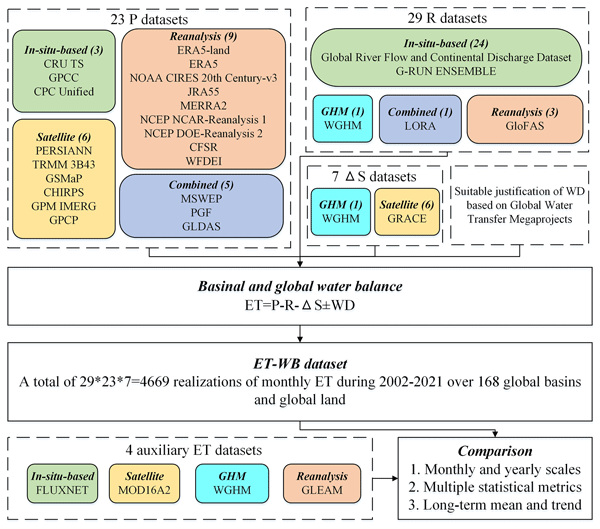
To overcome the shortcomings associated with limited spatiotemporal coverage, input data quality, and model simplifications in prevailing evaporation (ET) estimates, we developed an ensemble of 4669 unique terrestrial ET subsets using an independent mass balance approach. Long-term mean annual ET is within 500–600 mm yr−1 with a unimodal seasonal cycle and several piecewise trends during 2002–2021. The uncertainty-constrained results underpin the notion of increasing ET in a warming climate.
Anne-Claire Billault-Roux, Gionata Ghiggi, Louis Jaffeux, Audrey Martini, Nicolas Viltard, and Alexis Berne
Atmos. Meas. Tech., 16, 911–940, https://doi.org/10.5194/amt-16-911-2023, https://doi.org/10.5194/amt-16-911-2023, 2023
Short summary
Short summary
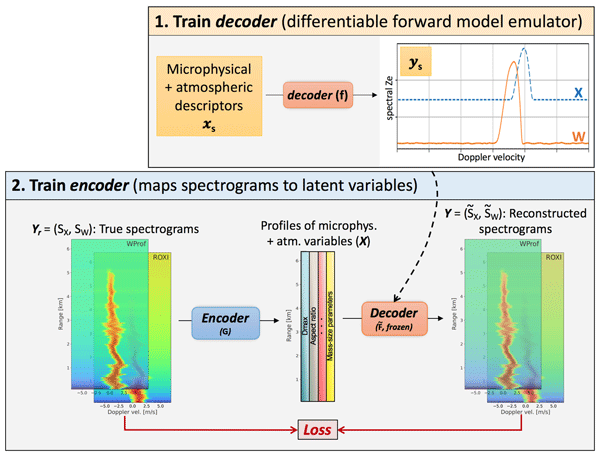
Better understanding and modeling snowfall properties and processes is relevant to many fields, ranging from weather forecasting to aircraft safety. Meteorological radars can be used to gain insights into the microphysics of snowfall. In this work, we propose a new method to retrieve snowfall properties from measurements of radars with different frequencies. It relies on an original deep-learning framework, which incorporates knowledge of the underlying physics, i.e., electromagnetic scattering.
Pierre Grzegorczyk, Lea Raillard, Valentin Wiener, Étienne Vignon, Christophe Genthon, and Alexis Berne
EGUsphere, https://doi.org/10.5194/egusphere-2026-4473, https://doi.org/10.5194/egusphere-2026-4473, 2026
This preprint is open for discussion and under review for Geoscientific Model Development (GMD).
Short summary
Short summary
Evaluating cloud representation in Atmospheric General Circulation Models (AGCMs) is important for surface precipitation and the Earth radiative balance. The LORIS (LMDZ Offline Radar Instrument Simulator) is a new tool designed to evaluate clouds in LMDZ (the atmospheric component of the IPSL Coupled Model). LORIS offers flexible options for subgrid representation, scattering assumptions, and microphysics properties, enabling the evaluation and improvement of cloud and precipitation in LMDZ.
Romanos Foskinis, Anne-Claire Billault-Roux, Henrik Skov, Lise Lotte Sørensen, Sven-Erik Gryning, Athanasios Nenes, and Alexis Berne
Earth Syst. Sci. Data Discuss., https://doi.org/10.5194/essd-2026-549, https://doi.org/10.5194/essd-2026-549, 2026
Preprint under review for ESSD
Short summary
Short summary
We present a dataset collected with the WProf cloud radar during the CleanCloud Arctic Villum ExpeRiment campaign in northeast Greenland in spring 2024. It includes Doppler spectra, hydrometeor classification, and cloud observations that reveal the microphysical structure of Arctic clouds. The data show that multimodality, where different cloud particle populations coexist, is common and support studies of aerosol–cloud interactions and improvements in weather and climate models.
Ioannis Chaniotis, Paraskevi Georgakaki, Romanos Foskinis, Marilena Gidarakou, Maria Gini, Platon Patlakas, Konstantinos Eleftheriadis, Alexandros Papagiannis, Elissavet Bossioli, Nicole Clerx, Alexis Berne, Helena Flocas, and Athanasios Nenes
EGUsphere, https://doi.org/10.5194/egusphere-2026-4645, https://doi.org/10.5194/egusphere-2026-4645, 2026
This preprint is open for discussion and under review for Atmospheric Chemistry and Physics (ACP).
Short summary
Short summary
This study implements three secondary ice production mechanisms in the RAMS-ICLAMS model to better represent mixed-phase clouds. Validated against CHOPIN campaign data and for two characteristic alpine cloud formations, these mechanisms improve ice crystal concentrations, cloud structure, and reflectivity. However, opposing precipitation responses have been predicted, highlighting a non linear response, which aligns with independent previous findings.
A. V. Sreenath, Peter T. May, Steven Siems, Heather Corden, and Alexis Berne
EGUsphere, https://doi.org/10.5194/egusphere-2026-4159, https://doi.org/10.5194/egusphere-2026-4159, 2026
Short summary
Short summary
We investigated how synoptic weather regimes control cloud growth and surface precipitation at Dumont d’Urville, East Antarctica. Multi-instrument observations show that synoptic forcing determines hydrometeor growth and precipitation formation aloft, while boundary-layer conditions, including local downslope flow and near-surface moisture, control how much precipitation reaches the surface.
Heather Corden, Julien Delanoë, Massimo Del Guasta, and Alexis Berne
EGUsphere, https://doi.org/10.5194/egusphere-2026-3964, https://doi.org/10.5194/egusphere-2026-3964, 2026
Short summary
Short summary
In Antarctica, intrusions of warm, moist air from the coast to the high plateau are responsible for a significant proportion of the snow accumulating on the ice sheet each year. We present a case study of an intrusion in East Antarctica in February 2025. Meteorological radars along a 1100-km transect were used to investigate the processes leading to precipitation in the intrusion. The processes vary according to the changing temperature, humidity and wind dynamics between the coast and plateau.
Matteo Guidicelli, Alfonso Ferrone, Gionata Ghiggi, Marco Gabella, Urs Germann, and Alexis Berne
EGUsphere, https://doi.org/10.5194/egusphere-2026-594, https://doi.org/10.5194/egusphere-2026-594, 2026
Short summary
Short summary
We developed a radar-based method to estimate the number and size of hailstones across Switzerland using multiple weather radars. The approach shows reasonable agreement with independent observations (automatic hailsensors, drone-based, and crowd-sourced) and provides high-resolution information on hail events. This method can support monitoring, forecasting, and assessing hail-related damages.
Kwinten Van Weverberg, Nina Neutens, Simon De Corte, Armani Passtoors, Stephan Calderan, Nicolas Ghilain, Ricardo Reinoso-Rondinel, Maarten Reyniers, Aart Overeem, Hans Van de Vyver, Bert Van Schaeybroeck, Bart De Wit, and Remko Uijlenhoet
EGUsphere, https://doi.org/10.5194/egusphere-2026-457, https://doi.org/10.5194/egusphere-2026-457, 2026
Short summary
Short summary
Accurate rainfall estimation remains challenging. This study tested whether signals from telecommunications networks could help track rainfall alongside traditional rain gauges and weather radar. Analyzing four intense summer storms in Belgium using over 2800 microwave links, researchers found that with careful processing, these signals match or outperform standard methods, especially in cities. Integrating such data could improve predictions for urban flooding and extreme weather.
Claudia C. Brauer, Ruben O. Imhoff, and Remko Uijlenhoet
Hydrol. Earth Syst. Sci., 30, 249–265, https://doi.org/10.5194/hess-30-249-2026, https://doi.org/10.5194/hess-30-249-2026, 2026
Short summary
Short summary
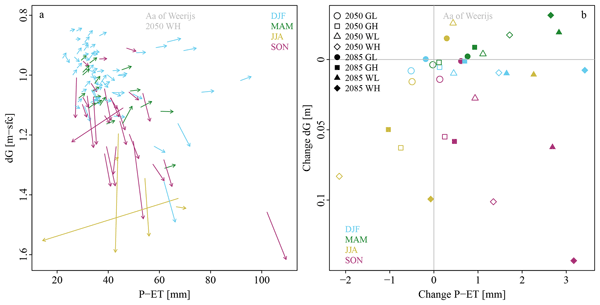
In lowland catchments, flood severity is determined by both the amount of rain and the groundwater depth prior to the rain event. We investigated the trade-off between these two factors and how this affects peaks in the river discharge, for both the current and future climate. We found that with climate change floods will increase in winter and spring, but decrease in fall. The number and severity of floods will increase. This can help water managers to design climate robust water management.
Kevin Ohneiser, Patric Seifert, Willi Schimmel, Fabian Senf, Tom Gaudek, Martin Radenz, Audrey Teisseire, Veronika Ettrichrätz, Teresa Vogl, Nina Maherndl, Nils Pfeifer, Jan Henneberger, Anna J. Miller, Nadja Omanovic, Christopher Fuchs, Huiying Zhang, Fabiola Ramelli, Robert Spirig, Anton Kötsche, Heike Kalesse-Los, Maximilian Maahn, Heather Corden, Alexis Berne, Majid Hajipour, Hannes Griesche, Julian Hofer, Ronny Engelmann, Annett Skupin, Albert Ansmann, and Holger Baars
Atmos. Chem. Phys., 25, 17363–17386, https://doi.org/10.5194/acp-25-17363-2025, https://doi.org/10.5194/acp-25-17363-2025, 2025
Short summary
Short summary
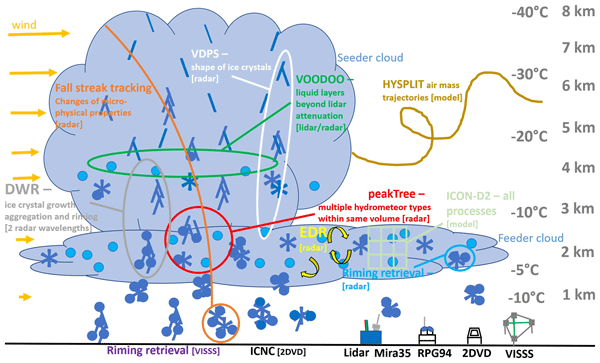
This study focuses on a seeder-feeder cloud system on 8 Jan 2024 in Eriswil, Switzerland. It is shown how the interaction of these cloud systems changes the cloud microphysical properties and the precipitation patterns. A big set of advanced remote-sensing techniques and retrieval algorithms are applied, so that a detailed view on the seeder-feeder cloud system is available. The gained knowledge can be used to improve weather models and weather forecasts.
Valentin Wiener, Étienne Vignon, Thomas Caton Harrison, Christophe Genthon, Felipe Toledo, Guylaine Canut-Rocafort, Yann Meurdesoif, and Alexis Berne
Weather Clim. Dynam., 6, 1605–1627, https://doi.org/10.5194/wcd-6-1605-2025, https://doi.org/10.5194/wcd-6-1605-2025, 2025
Short summary
Short summary
Katabatic winds are a key feature of the climate of Antarctica, but substantial biases remain in their representation in atmospheric models. This study investigates a katabatic wind event in an atmospheric circulation model using in-situ observations. The framework allows to disentangle which part of the bias is due to horizontal resolution, to parameter calibration and to structural deficiencies in the model. We underline in particular the need to refine the physics of the model snow cover.
Nathalie Rombeek, Markus Hrachowitz, and Remko Uijlenhoet
Hydrol. Earth Syst. Sci., 29, 6715–6733, https://doi.org/10.5194/hess-29-6715-2025, https://doi.org/10.5194/hess-29-6715-2025, 2025
Short summary
Short summary
On 29 October 2024 Valencia (Spain) was struck by torrential rainfall, triggering devastating floods in this area. In this study, we quantify and describe the spatial and temporal structure of this rainfall event using personal weather stations (PWSs). These PWSs provide near real-time observations at a temporal resolution of ~5 min. This study shows the potential of PWSs for real-time rainfall monitoring and potentially flood early warning systems by complementing dedicated rain gauge networks.
Luuk D. van der Valk, Oscar K. Hartogensis, Miriam Coenders-Gerrits, Rolf W. Hut, and Remko Uijlenhoet
Hydrol. Earth Syst. Sci., 29, 6589–6606, https://doi.org/10.5194/hess-29-6589-2025, https://doi.org/10.5194/hess-29-6589-2025, 2025
Short summary
Short summary
Commercial microwave links (CMLs), part of mobile phone networks, transmit comparable signals as instruments specially designed to estimate evaporation. Therefore, we investigate if CMLs could be used to estimate evaporation, even though they have not been designed for this purpose. Our results illustrate the potential of using CMLs to estimate evaporation, especially given their global coverage, but also outline some major drawbacks, often a consequence of unfavourable design choices for CMLs.
Indy van Grinsven, Meiert Willem Grootes, Remko Uijlenhoet, and Gert-Jan Steeneveld
EGUsphere, https://doi.org/10.5194/egusphere-2025-2634, https://doi.org/10.5194/egusphere-2025-2634, 2025
Short summary
Short summary
This study explores the use the signal attenuation of cellular communication networks, combined with machine learning approaches, to observe fog events. We use the McFly software package that selects the most appropriate machine leaning technique (out of ~20 available techniques) based on small samples of the input datasets. This approach is developed for a microwave link over Wageningen in The Netherlands, while in a second part of the paper the approach is upscaled to the whole country.
Luuk D. van der Valk, Oscar K. Hartogensis, Miriam Coenders-Gerrits, Rolf W. Hut, Bas Walraven, and Remko Uijlenhoet
Atmos. Meas. Tech., 18, 6143–6165, https://doi.org/10.5194/amt-18-6143-2025, https://doi.org/10.5194/amt-18-6143-2025, 2025
Short summary
Short summary
Commercial microwave links (CMLs), part of mobile phone networks, transmit comparable signals to instruments specially designed to estimate evaporation. Therefore, we investigate if CMLs could be used to estimate evaporation, even though they have not been designed for this purpose. Our results illustrate the potential for using CMLs to estimate evaporation, especially given their global coverage, but also outline some major drawbacks, often a consequence of unfavourable design choices for CMLs.
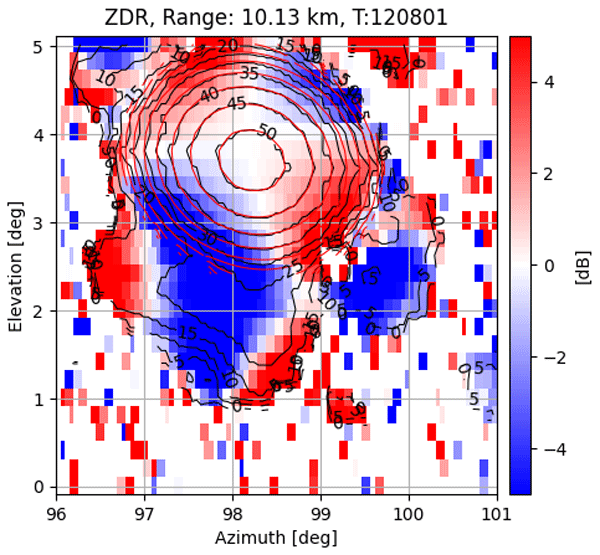
Marc Schneebeli, Andreas Leuenberger, Philipp J. Schmid, Jacopo Grazioli, Heather Corden, Alexis Berne, Patrick Kennedy, Jim George, Francesc Junyent, and V. Chandrasekar
Atmos. Meas. Tech., 18, 5157–5176, https://doi.org/10.5194/amt-18-5157-2025, https://doi.org/10.5194/amt-18-5157-2025, 2025
Short summary
Short summary
A new technique for the end-to-end calibration of weather radars is introduced. Highly precise artificial radar targets are generated with a radar target simulator and serve as a calibration reference for weather radar observables like reflectivity and Doppler velocity. The system allows investigating and correcting any biases associated with weather radar observations.
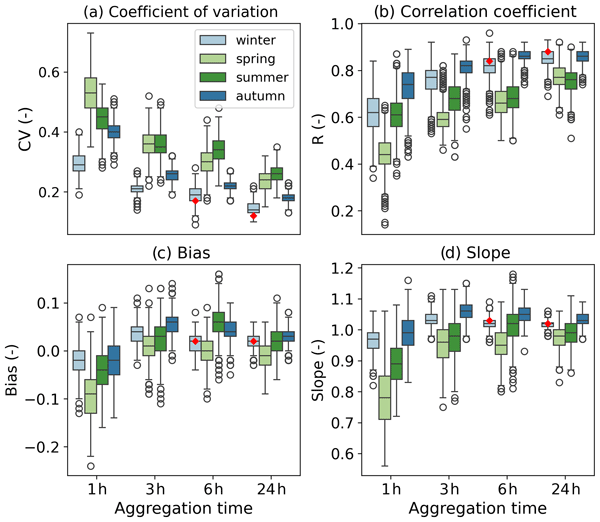
Nathalie Rombeek, Markus Hrachowitz, Arjan Droste, and Remko Uijlenhoet
Hydrol. Earth Syst. Sci., 29, 4585–4606, https://doi.org/10.5194/hess-29-4585-2025, https://doi.org/10.5194/hess-29-4585-2025, 2025
Short summary
Short summary
Rain gauge networks from personal weather stations (PWSs) have a network density 100 times higher than dedicated rain gauge networks in the Netherlands. However, PWSs are prone to several sources of error, as they are generally not installed and maintained according to international guidelines. This study systematically quantifies and describes the uncertainties arising from PWS rainfall estimates. In particular, the focus is on the highest rainfall accumulations.
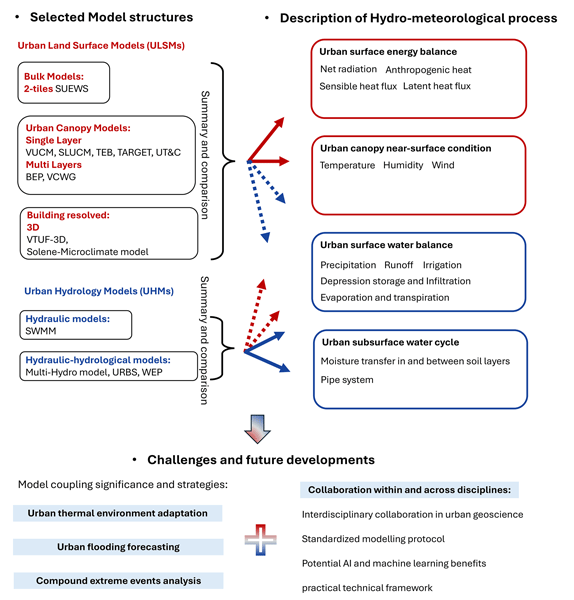
Xuan Chen, Job Augustijn van der Werf, Arjan Droste, Miriam Coenders-Gerrits, and Remko Uijlenhoet
Hydrol. Earth Syst. Sci., 29, 3447–3480, https://doi.org/10.5194/hess-29-3447-2025, https://doi.org/10.5194/hess-29-3447-2025, 2025
Short summary
Short summary
The review highlights the need to integrate urban land surface and hydrological models to better predict and manage compound climate events in cities. We find that inadequate representation of water surfaces, hydraulic systems and detailed building representations are key areas for improvement in future models. Coupled models show promise but face challenges at regional and neighbourhood scales. Interdisciplinary communication is crucial to enhance urban hydrometeorological simulations.
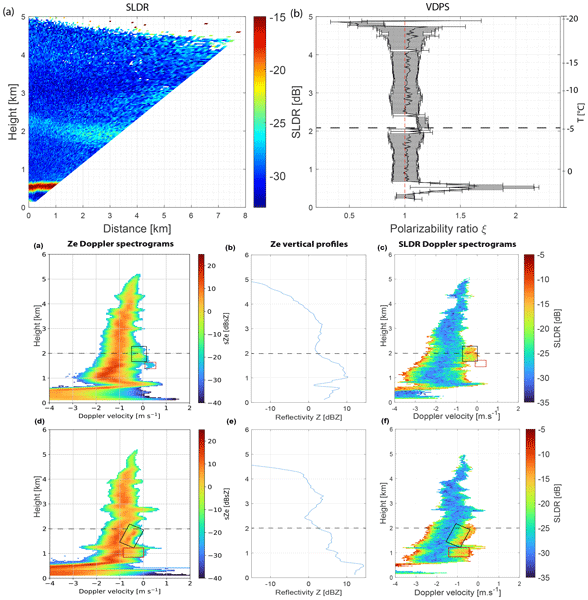
Audrey Teisseire, Anne-Claire Billault-Roux, Teresa Vogl, and Patric Seifert
Atmos. Meas. Tech., 18, 1499–1517, https://doi.org/10.5194/amt-18-1499-2025, https://doi.org/10.5194/amt-18-1499-2025, 2025
Short summary
Short summary
This study demonstrates the ability of a new method delivering the vertical distribution of particle shape to highlight riming and aggregation processes, identifying graupel and aggregates, respectively, as isometric particles. The distinction between these processes can be achieved using lidar or spectral techniques, as demonstrated in the case studies. The capability of the new method to identify rimed particles and aggregates without differentiating them can simplify statistical work.
Frédéric G. Jordan, Clément Cosson, Marco Gabella, Ioannis V. Sideris, Adrien Liernur, Alexis Berne, and Urs Germann
Abstr. Int. Cartogr. Assoc., 9, 19, https://doi.org/10.5194/ica-abs-9-19-2025, https://doi.org/10.5194/ica-abs-9-19-2025, 2025
Alfonso Ferrone, Jérôme Kopp, Martin Lainer, Marco Gabella, Urs Germann, and Alexis Berne
Atmos. Meas. Tech., 17, 7143–7168, https://doi.org/10.5194/amt-17-7143-2024, https://doi.org/10.5194/amt-17-7143-2024, 2024
Short summary
Short summary
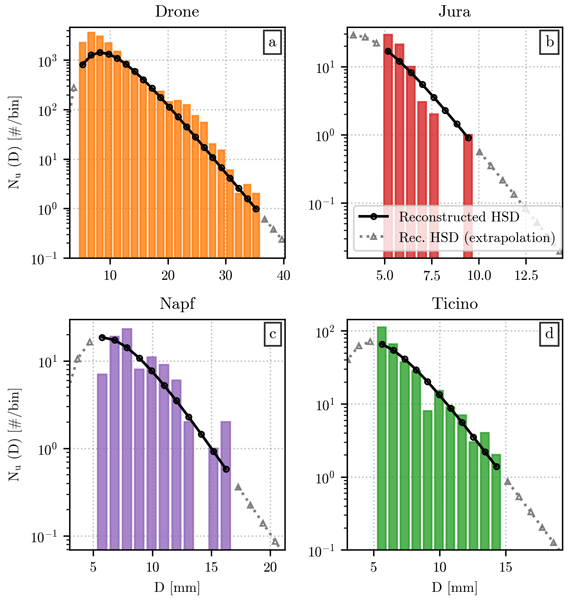
Estimates of hail size have been collected by a network of hail sensors, installed in three regions of Switzerland, since September 2018. In this study, we use a technique called “double-moment normalization” to model the distribution of diameter sizes. The parameters of the method have been defined over 70 % of the dataset and tested over the remaining 30 %. An independent distribution of hail sizes, collected by a drone, has also been used to evaluate the method.
Abbas El Hachem, Jochen Seidel, Tess O'Hara, Roberto Villalobos Herrera, Aart Overeem, Remko Uijlenhoet, András Bárdossy, and Lotte de Vos
Hydrol. Earth Syst. Sci., 28, 4715–4731, https://doi.org/10.5194/hess-28-4715-2024, https://doi.org/10.5194/hess-28-4715-2024, 2024
Short summary
Short summary
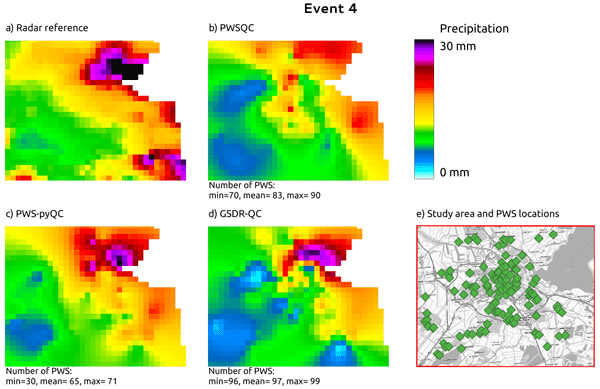
This study presents an overview of open-source quality control (QC) algorithms for rainfall data from personal weather stations (PWSs). The methodology and usability along technical and operational guidelines for using every QC algorithm are presented. All three QC algorithms are available for users to explore in the OpenSense sandbox. They were applied in a case study using PWS data from the Amsterdam region in the Netherlands. The results highlight the necessity for data quality control.
Kunfeng Gao, Franziska Vogel, Romanos Foskinis, Stergios Vratolis, Maria I. Gini, Konstantinos Granakis, Anne-Claire Billault-Roux, Paraskevi Georgakaki, Olga Zografou, Prodromos Fetfatzis, Alexis Berne, Alexandros Papayannis, Konstantinos Eleftheridadis, Ottmar Möhler, and Athanasios Nenes
Atmos. Chem. Phys., 24, 9939–9974, https://doi.org/10.5194/acp-24-9939-2024, https://doi.org/10.5194/acp-24-9939-2024, 2024
Short summary
Short summary
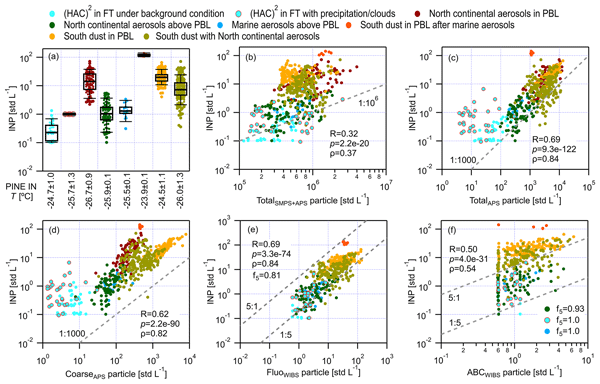
Ice nucleating particle (INP) concentrations are required for correct predictions of clouds and precipitation in a changing climate, but they are poorly constrained in climate models. We unravel source contributions to INPs in the eastern Mediterranean and find that biological particles are important, regardless of their origin. The parameterizations developed exhibit superior performance and enable models to consider biological-particle effects on INPs.
Athanasios Tsiokanos, Martine Rutten, Ruud J. van der Ent, and Remko Uijlenhoet
Hydrol. Earth Syst. Sci., 28, 3327–3345, https://doi.org/10.5194/hess-28-3327-2024, https://doi.org/10.5194/hess-28-3327-2024, 2024
Short summary
Short summary
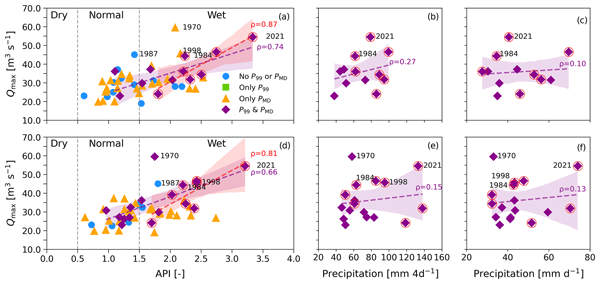
We focus on past high-flow events to find flood drivers in the Geul. We also explore flood drivers’ trends across various timescales and develop a new method to detect the main direction of a trend. Our results show that extreme 24 h precipitation alone is typically insufficient to cause floods. The combination of extreme rainfall and wet initial conditions determines the chance of flooding. Precipitation that leads to floods increases in winter, whereas no consistent trends are found in summer.
Luuk D. van der Valk, Miriam Coenders-Gerrits, Rolf W. Hut, Aart Overeem, Bas Walraven, and Remko Uijlenhoet
Atmos. Meas. Tech., 17, 2811–2832, https://doi.org/10.5194/amt-17-2811-2024, https://doi.org/10.5194/amt-17-2811-2024, 2024
Short summary
Short summary
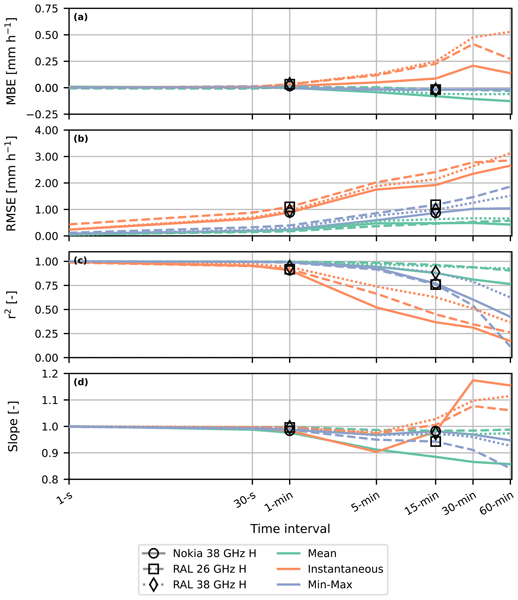
Microwave links, often part of mobile phone networks, can be used to measure rainfall along the link path by determining the signal loss caused by rainfall. We use high-frequency data of multiple microwave links to recreate commonly used sampling strategies. For time intervals up to 1 min, the influence of sampling strategies on estimated rainfall intensities is relatively little, while for intervals longer than 5–15 min, the sampling strategy can have significant influences on the estimates.
Louise J. Schreyers, Tim H. M. van Emmerik, Thanh-Khiet L. Bui, Khoa L. van Thi, Bart Vermeulen, Hong-Q. Nguyen, Nicholas Wallerstein, Remko Uijlenhoet, and Martine van der Ploeg
Hydrol. Earth Syst. Sci., 28, 589–610, https://doi.org/10.5194/hess-28-589-2024, https://doi.org/10.5194/hess-28-589-2024, 2024
Short summary
Short summary
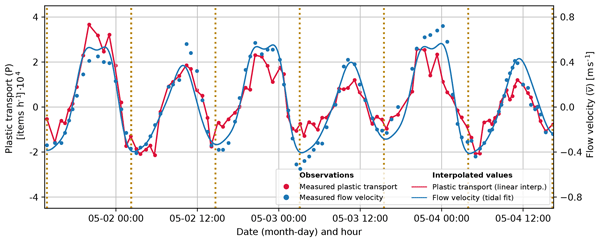
River plastic emissions into the ocean are of global concern, but the transfer dynamics between fresh water and the marine environment remain poorly understood. We developed a simple Eulerian approach to estimate the net and total plastic transport in tidal rivers. Applied to the Saigon River, Vietnam, we found that net plastic transport amounted to less than one-third of total transport, highlighting the need to better integrate tidal dynamics in plastic transport and emission models.
Valentin Wiener, Marie-Laure Roussel, Christophe Genthon, Étienne Vignon, Jacopo Grazioli, and Alexis Berne
Earth Syst. Sci. Data, 16, 821–836, https://doi.org/10.5194/essd-16-821-2024, https://doi.org/10.5194/essd-16-821-2024, 2024
Short summary
Short summary
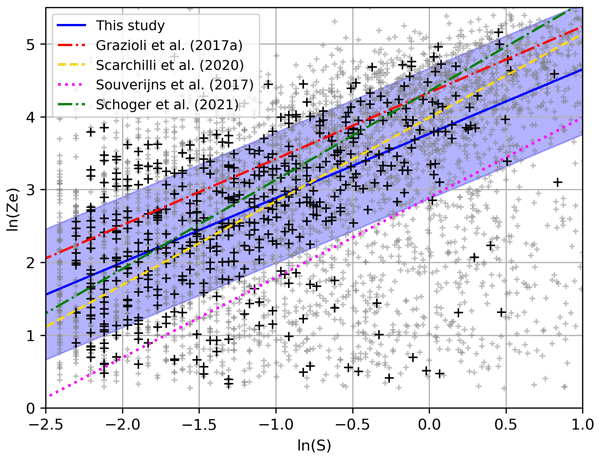
This paper presents 7 years of data from a precipitation radar deployed at the Dumont d'Urville station in East Antarctica. The main characteristics of the dataset are outlined in a short statistical study. Interannual and seasonal variability are also investigated. Then, we extensively describe the processing method to retrieve snowfall profiles from the radar data. Lastly, a brief comparison is made with two climate models as an application example of the dataset.
Sophie Erb, Elias Graf, Yanick Zeder, Simone Lionetti, Alexis Berne, Bernard Clot, Gian Lieberherr, Fiona Tummon, Pascal Wullschleger, and Benoît Crouzy
Atmos. Meas. Tech., 17, 441–451, https://doi.org/10.5194/amt-17-441-2024, https://doi.org/10.5194/amt-17-441-2024, 2024
Short summary
Short summary
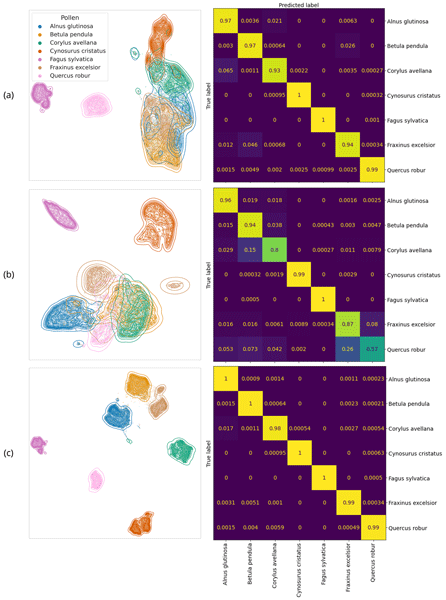
In this study, we focus on an automatic bioaerosol measurement instrument and investigate the impact of using its fluorescence measurement for pollen identification. The fluorescence signal is used together with a pair of images from the same instrument to identify single pollen grains via neural networks. We test whether considering fluorescence as a supplementary input improves the pollen identification performance by comparing three different neural networks.
Linda Bogerd, Hidde Leijnse, Aart Overeem, and Remko Uijlenhoet
Atmos. Meas. Tech., 17, 247–259, https://doi.org/10.5194/amt-17-247-2024, https://doi.org/10.5194/amt-17-247-2024, 2024
Short summary
Short summary
Algorithms merge satellite radiometer data from various frequency channels, each tied to a different footprint size. We studied the uncertainty associated with sampling (over the Netherlands using 4 years of data) as precipitation is highly variable in space and time by simulating ground-based data as satellite footprints. Though sampling affects precipitation estimates, it doesn’t explain all discrepancies. Overall, uncertainties in the algorithm seem more influential than how data is sampled.
Bich Ngoc Tran, Johannes van der Kwast, Solomon Seyoum, Remko Uijlenhoet, Graham Jewitt, and Marloes Mul
Hydrol. Earth Syst. Sci., 27, 4505–4528, https://doi.org/10.5194/hess-27-4505-2023, https://doi.org/10.5194/hess-27-4505-2023, 2023
Short summary
Short summary
Satellite data are increasingly used to estimate evapotranspiration (ET) or the amount of water moving from plants, soils, and water bodies into the atmosphere over large areas. Uncertainties from various sources affect the accuracy of these calculations. This study reviews the methods to assess the uncertainties of such ET estimations. It provides specific recommendations for a comprehensive assessment that assists in the potential uses of these data for research, monitoring, and management.
Alfonso Ferrone, Étienne Vignon, Andrea Zonato, and Alexis Berne
The Cryosphere, 17, 4937–4956, https://doi.org/10.5194/tc-17-4937-2023, https://doi.org/10.5194/tc-17-4937-2023, 2023
Short summary
Short summary
In austral summer 2019/2020, three K-band Doppler profilers were deployed across the Sør Rondane Mountains, south of the Belgian base Princess Elisabeth Antarctica. Their measurements, along with atmospheric simulations and reanalyses, have been used to study the spatial variability in precipitation over the region, as well as investigate the interaction between the complex terrain and the typical flow associated with precipitating systems.
Jinghua Xiong, Abhishek, Li Xu, Hrishikesh A. Chandanpurkar, James S. Famiglietti, Chong Zhang, Gionata Ghiggi, Shenglian Guo, Yun Pan, and Bramha Dutt Vishwakarma
Earth Syst. Sci. Data, 15, 4571–4597, https://doi.org/10.5194/essd-15-4571-2023, https://doi.org/10.5194/essd-15-4571-2023, 2023
Short summary
Short summary
To overcome the shortcomings associated with limited spatiotemporal coverage, input data quality, and model simplifications in prevailing evaporation (ET) estimates, we developed an ensemble of 4669 unique terrestrial ET subsets using an independent mass balance approach. Long-term mean annual ET is within 500–600 mm yr−1 with a unimodal seasonal cycle and several piecewise trends during 2002–2021. The uncertainty-constrained results underpin the notion of increasing ET in a warming climate.
Anne-Claire Billault-Roux, Paraskevi Georgakaki, Josué Gehring, Louis Jaffeux, Alfons Schwarzenboeck, Pierre Coutris, Athanasios Nenes, and Alexis Berne
Atmos. Chem. Phys., 23, 10207–10234, https://doi.org/10.5194/acp-23-10207-2023, https://doi.org/10.5194/acp-23-10207-2023, 2023
Short summary
Short summary
Secondary ice production plays a key role in clouds and precipitation. In this study, we analyze radar measurements from a snowfall event in the Jura Mountains. Complex signatures are observed, which reveal that ice crystals were formed through various processes. An analysis of multi-sensor data suggests that distinct ice multiplication processes were taking place. Both the methods used and the insights gained through this case study contribute to a better understanding of snowfall microphysics.
Alfonso Ferrone and Alexis Berne
Earth Syst. Sci. Data, 15, 1115–1132, https://doi.org/10.5194/essd-15-1115-2023, https://doi.org/10.5194/essd-15-1115-2023, 2023
Short summary
Short summary
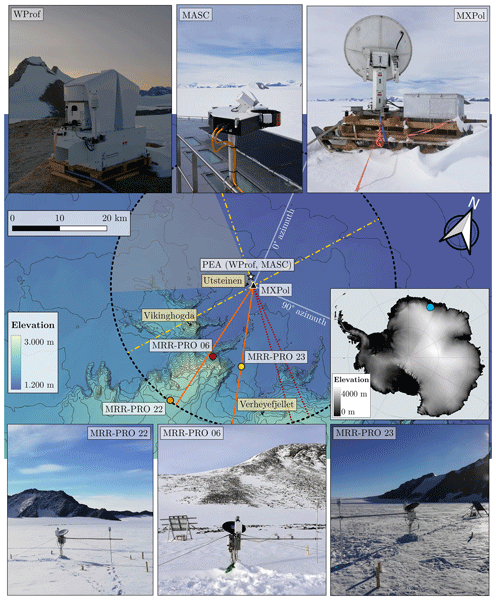
This article presents the datasets collected between November 2019 and February 2020 in the vicinity of the Belgian research base Princess Elisabeth Antarctica. Five meteorological radars, a multi-angle snowflake camera, three weather stations, and two radiometers have been deployed at five sites, up to a maximum distance of 30 km from the base. Their varied locations allow the study of spatial variability in snowfall and its interaction with the complex terrain in the region.
Anne-Claire Billault-Roux, Gionata Ghiggi, Louis Jaffeux, Audrey Martini, Nicolas Viltard, and Alexis Berne
Atmos. Meas. Tech., 16, 911–940, https://doi.org/10.5194/amt-16-911-2023, https://doi.org/10.5194/amt-16-911-2023, 2023
Short summary
Short summary
Better understanding and modeling snowfall properties and processes is relevant to many fields, ranging from weather forecasting to aircraft safety. Meteorological radars can be used to gain insights into the microphysics of snowfall. In this work, we propose a new method to retrieve snowfall properties from measurements of radars with different frequencies. It relies on an original deep-learning framework, which incorporates knowledge of the underlying physics, i.e., electromagnetic scattering.
Claudia Mignani, Lukas Zimmermann, Rigel Kivi, Alexis Berne, and Franz Conen
Atmos. Chem. Phys., 22, 13551–13568, https://doi.org/10.5194/acp-22-13551-2022, https://doi.org/10.5194/acp-22-13551-2022, 2022
Short summary
Short summary
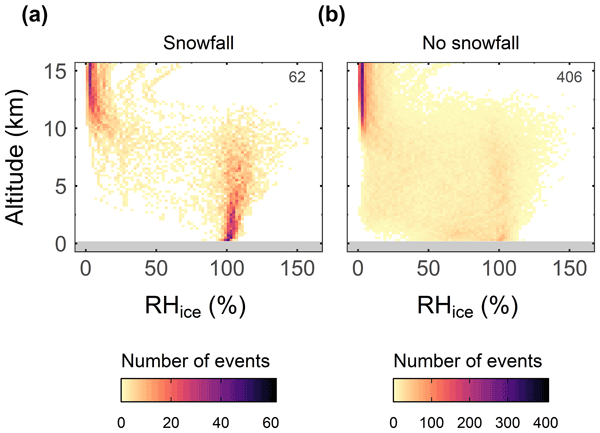
We determined over the course of 8 winter months the phase of clouds associated with snowfall in Northern Finland using radiosondes and observations of ice particle habits at ground level. We found that precipitating clouds were extending from near ground to at least 2.7 km altitude and approximately three-quarters of them were likely glaciated. Possible moisture sources and ice formation processes are discussed.

Étienne Vignon, Lea Raillard, Christophe Genthon, Massimo Del Guasta, Andrew J. Heymsfield, Jean-Baptiste Madeleine, and Alexis Berne
Atmos. Chem. Phys., 22, 12857–12872, https://doi.org/10.5194/acp-22-12857-2022, https://doi.org/10.5194/acp-22-12857-2022, 2022
Short summary
Short summary
The near-surface atmosphere over the Antarctic Plateau is cold and pristine and resembles to a certain extent the high troposphere where cirrus clouds form. In this study, we use innovative humidity measurements at Concordia Station to study the formation of ice fogs at temperatures <−40°C. We provide observational evidence that ice fogs can form through the homogeneous freezing of solution aerosols, a common nucleation pathway for cirrus clouds.
Alfonso Ferrone, Anne-Claire Billault-Roux, and Alexis Berne
Atmos. Meas. Tech., 15, 3569–3592, https://doi.org/10.5194/amt-15-3569-2022, https://doi.org/10.5194/amt-15-3569-2022, 2022
Short summary
Short summary
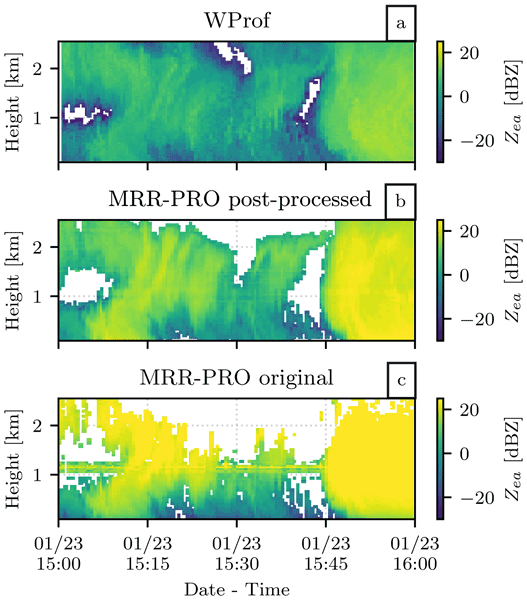
The Micro Rain Radar PRO (MRR-PRO) is a meteorological radar, with a relevant set of features for deployment in remote locations. We developed an algorithm, named ERUO, for the processing of its measurements of snowfall. The algorithm addresses typical issues of the raw spectral data, such as interference lines, but also improves the quality and sensitivity of the radar variables. ERUO has been evaluated over four different datasets collected in Antarctica and in the Swiss Jura.
Jeong-Su Ko, Kyo-Sun Sunny Lim, Kwonil Kim, Gyuwon Lee, Gregory Thompson, and Alexis Berne
Geosci. Model Dev., 15, 4529–4553, https://doi.org/10.5194/gmd-15-4529-2022, https://doi.org/10.5194/gmd-15-4529-2022, 2022
Short summary
Short summary
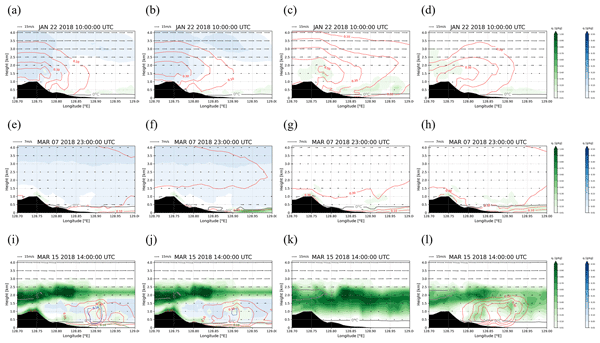
This study evaluates the performance of the four microphysics parameterizations, the WDM6, WDM7, Thompson, and Morrison schemes, in simulating snowfall events during the ICE-POP 2018 field campaign. Eight snowfall events are selected and classified into three categories (cold-low, warm-low, and air–sea interaction cases). The evaluation focuses on the simulated hydrometeors, microphysics budgets, wind fields, and precipitation using the measurement data.
Femke A. Jansen, Remko Uijlenhoet, Cor M. J. Jacobs, and Adriaan J. Teuling
Hydrol. Earth Syst. Sci., 26, 2875–2898, https://doi.org/10.5194/hess-26-2875-2022, https://doi.org/10.5194/hess-26-2875-2022, 2022
Short summary
Short summary
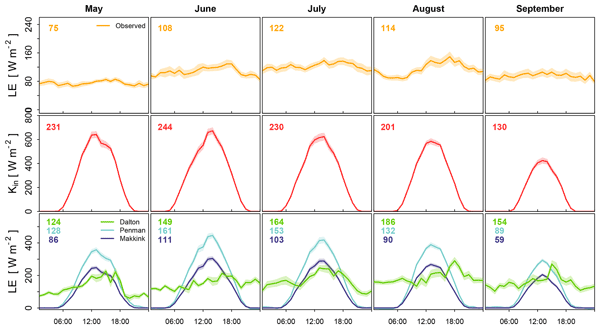
We studied the controls on open water evaporation with a focus on Lake IJssel, the Netherlands, by analysing eddy covariance observations over two summer periods at two locations at the borders of the lake. Wind speed and the vertical vapour pressure gradient can explain most of the variation in observed evaporation, which is in agreement with Dalton's model. We argue that the distinct characteristics of inland waterbodies need to be taken into account when parameterizing their evaporation.
Paraskevi Georgakaki, Georgia Sotiropoulou, Étienne Vignon, Anne-Claire Billault-Roux, Alexis Berne, and Athanasios Nenes
Atmos. Chem. Phys., 22, 1965–1988, https://doi.org/10.5194/acp-22-1965-2022, https://doi.org/10.5194/acp-22-1965-2022, 2022
Short summary
Short summary
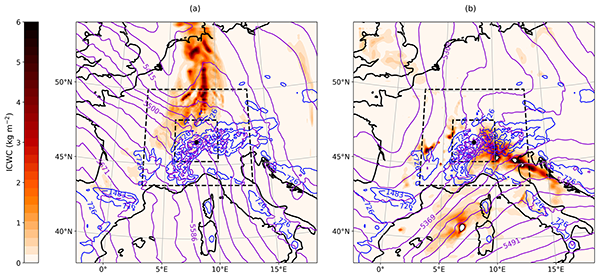
The modelling study focuses on the importance of ice multiplication processes in orographic mixed-phase clouds, which is one of the least understood cloud types in the climate system. We show that the consideration of ice seeding and secondary ice production through ice–ice collisional breakup is essential for correct predictions of precipitation in mountainous terrain, with important implications for radiation processes.
Wagner Wolff, Aart Overeem, Hidde Leijnse, and Remko Uijlenhoet
Atmos. Meas. Tech., 15, 485–502, https://doi.org/10.5194/amt-15-485-2022, https://doi.org/10.5194/amt-15-485-2022, 2022
Short summary
Short summary
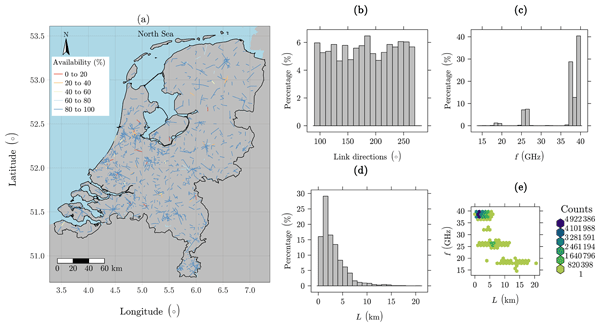
The existing infrastructure for cellular communication is promising for ground-based rainfall remote sensing. Rain-induced signal attenuation is used in dedicated algorithms for retrieving rainfall depth along commercial microwave links (CMLs) between cell phone towers. This processing is a source of many uncertainties about input data, algorithm structures, parameters, CML network, and local climate. Application of a stochastic optimization method leads to improved CML rainfall estimates.
Monika Feldmann, Urs Germann, Marco Gabella, and Alexis Berne
Weather Clim. Dynam., 2, 1225–1244, https://doi.org/10.5194/wcd-2-1225-2021, https://doi.org/10.5194/wcd-2-1225-2021, 2021
Short summary
Short summary
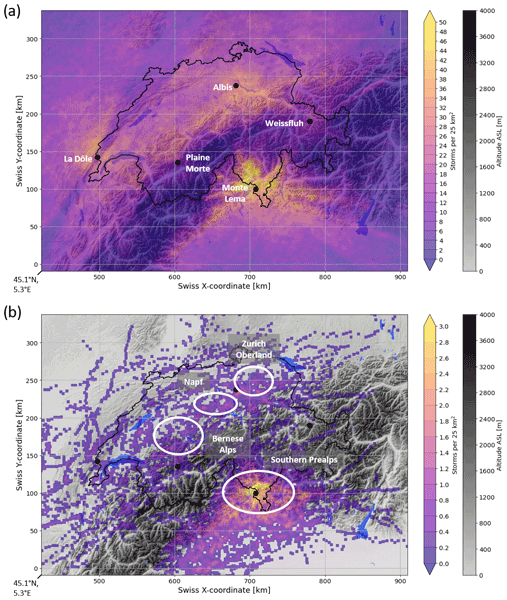
Mesocyclones are the rotating updraught of supercell thunderstorms that present a particularly hazardous subset of thunderstorms. A first-time characterisation of the spatiotemporal occurrence of mesocyclones in the Alpine region is presented, using 5 years of Swiss operational radar data. We investigate parallels to hailstorms, particularly the influence of large-scale flow, daily cycles and terrain. Improving understanding of mesocyclones is valuable for risk assessment and warning purposes.
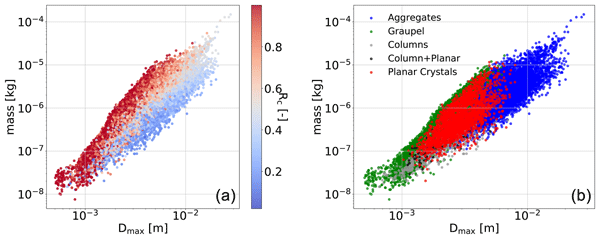
Jussi Leinonen, Jacopo Grazioli, and Alexis Berne
Atmos. Meas. Tech., 14, 6851–6866, https://doi.org/10.5194/amt-14-6851-2021, https://doi.org/10.5194/amt-14-6851-2021, 2021
Short summary
Short summary
Measuring the shape, size and mass of a large number of snowflakes is a challenging task; it is hard to achieve in an automatic and instrumented manner. We present a method to retrieve these properties of individual snowflakes using as input a triplet of images/pictures automatically collected by a multi-angle snowflake camera (MASC) instrument. Our method, based on machine learning, is trained on artificially generated snowflakes and evaluated on 3D-printed snowflake replicas.
Cited articles
Abel, S. J. and Boutle, I. A.: An improved representation of the raindrop size distribution for single‐moment microphysics schemes, Q. J. R. Meteorol. Soc., 138, 2151–2162, https://doi.org/10.1002/qj.1949, 2012. a
Adirosi, E., Volpi, E., Lombardo, F., and Baldini, L.: Raindrop size distribution: Fitting performance of common theoretical models, Adv. Water Resour., 96, 290–305, https://doi.org/10.1016/j.advwatres.2016.07.010, 2016. a
Adirosi, E., Porcù, F., Montopoli, M., Baldini, L., Bracci, A., Capozzi, V., Annella, C., Budillon, G., Bucchignani, E., Zollo, A. L., Cazzuli, O., Camisani, G., Bechini, R., Cremonini, R., Antonini, A., Ortolani, A., Melani, S., Valisa, P., and Scapin, S.: Database of the Italian disdrometer network, Earth Syst. Sci. Data, 15, 2417–2429, https://doi.org/10.5194/essd-15-2417-2023, 2023. a
Andsager, K., Beard, K. V., and Laird, N. F.: Laboratory Measurements of Axis Ratios for Large Raindrops, J. Atmos. Sci., 56, 2673–2683, https://doi.org/10.1175/1520-0469(1999)056<2673:LMOARF>2.0.CO;2, 1999. a
Angulo-Martínez, M., Beguería, S., and Kyselý, J.: Use of disdrometer data to evaluate the relationship of rainfall kinetic energy and intensity (KE-I), Sci. Tot. Environ., 568, 83–94, https://doi.org/10.1016/j.scitotenv.2016.05.223, 2016. a
Apache: ApacheParquet, https://parquet.apache.org (last access: 16 July 2026), 2026. a
Atlas, D., Srivastava, R. C., and Sekhon, R. S.: Doppler radar characteristics of precipitation at vertical incidence, Rev. Geophys., 11, 1–35, https://doi.org/10.1029/RG011i001p00001, 1973. a
Aydin, K. and Lure, Y.-M.: Millimeter wave scattering and propagation in rain: a computational study at 94 and 140 GHz for oblate spheroidal and spherical raindrops, IEEE Trans. Geosci. Remote Sens., 29, 593–601, https://doi.org/10.1109/36.135821, 1991. a
Baire, Q., Dobre, M., Piette, A.-S., Lanza, L., Cauteruccio, A., Chinchella, E., Merlone, A., Kjeldsen, H., Nielsen, J., Østergaard, P. F., Parrondo, M., and Izquierdo, C. G.: Calibration Uncertainty of Non-Catching Precipitation Gauges, Sensors, 22, 6413, https://doi.org/10.3390/s22176413, 2022. a
Baldocchi, D., Falge, E., Gu, L., Olson, R., Hollinger, D., Running, S., Anthoni, P., Bernhofer, C., Davis, K., Evans, R., Fuentes, J., Goldstein, A., Katul, G., Law, B., Lee, X., Malhi, Y., Meyers, T., Munger, W., Oechel, W., Paw, K. T., Pilegaard, K., Schmid, H. P., Valentini, R., Verma, S., Vesala, T., Wilson, K., and Wofsy, S.: FLUXNET: A New Tool to Study the Temporal and Spatial Variability of Ecosystem-Scale Carbon Dioxide, Water Vapor, and Energy Flux Densities, Bull. Am. Meteorol. Soc., 82, 2415–2434, https://doi.org/10.1175/1520-0477(2001)082<2415:FANTTS>2.3.CO;2, 2001. a
Barthazy, E. and Schefold, R.: Fall velocity of snowflakes of different riming degree and crystal types, Atmos. Res., 82, 391–398, https://doi.org/10.1016/j.atmosres.2005.12.009, 2006. a
Barthazy, E., Göke, S., Schefold, R., and Högl, D.: An Optical Array Instrument for Shape and Fall Velocity Measurements of Hydrometeors, J. Atmos. Ocean. Technol., 21, 1400–1416, https://doi.org/10.1175/1520-0426(2004)021<1400:AOAIFS>2.0.CO;2, 2004. a
Beard, K. V.: Terminal Velocity and Shape of Cloud and Precipitation Drops Aloft, J. Atmos. Sci., 33, 851–864, https://doi.org/10.1175/1520-0469(1976)033<0851:TVASOC>2.0.CO;2, 1976. a, b, c, d
Beard, K. V.: Simple Altitude Adjustments to Raindrop Velocities for Doppler Radar Analysis, J. Atmos. Ocean. Technol., 2, 468–471, https://doi.org/10.1175/1520-0426(1985)002<0468:SAATRV>2.0.CO;2, 1985. a
Beard, K. V. and Chuang, C.: A New Model for the Equilibrium Shape of Raindrops, J. Atmos. Sci., 44, 1509–1524, https://doi.org/10.1175/1520-0469(1987)044<1509:ANMFTE>2.0.CO;2, 1987. a
Beard, K. V., Bringi, V., and Thurai, M.: A new understanding of raindrop shape, Atmos. Res., 97, 396–415, https://doi.org/10.1016/j.atmosres.2010.02.001, 2010. a
Bech, J. I., Johansen, N. F.-J., Madsen, M. B., Ásta Hannesdóttir, and Hasager, C. B.: Experimental study on the effect of drop size in rain erosion test and on lifetime prediction of wind turbine blades, Renew. Energy, 197, 776–789, https://doi.org/10.1016/j.renene.2022.06.127, 2022. a
Bennartz, R. and Petty, G. W.: The Sensitivity of Microwave Remote Sensing Observations of Precipitation to Ice Particle Size Distributions, J. Appl. Meteorol., 40, 345–364, https://doi.org/10.1175/1520-0450(2001)040<0345:TSOMRS>2.0.CO;2, 2001. a
Berghuijs, W. R., Woods, R. A., and Hrachowitz, M.: A precipitation shift from snow towards rain leads to a decrease in streamflow, Nat. Clim. Change, 4, 583–586, https://doi.org/10.1038/nclimate2246, 2014. a
Berghuijs, W. R., Woods, R. A., Hutton, C. J., and Sivapalan, M.: Dominant flood generating mechanisms across the United States, Geophys. Res. Lett., 43, 4382–4390, https://doi.org/10.1002/2016GL068070, 2016. a
Berghuijs, W. R., Harrigan, S., Molnar, P., Slater, L. J., and Kirchner, J. W.: The Relative Importance of Different Flood‐Generating Mechanisms Across Europe, Water Resour. Res., 55, 4582–4593, https://doi.org/10.1029/2019WR024841, 2019. a
Blahak, U., Tracksdorf, P., and Antonoglou, N.: Deutscher Wetterdienst (DWD) Disdrometer data of the Thies Laser Niederschlags Messer (LNM) since 2019 of about 150 German meteorological SYNOP stations, Zenodo [data set], https://doi.org/10.5281/zenodo.15855617, 2025. a, b
Blöschl, G.: Flood generation: process patterns from the raindrop to the ocean, Hydrol. Earth Syst. Sci., 26, 2469–2480, https://doi.org/10.5194/hess-26-2469-2022, 2022. a
Bolek, A. and Testik, F. Y.: Rainfall Microphysics Influenced by Strong Wind during a Tornadic Storm, J. Hydrometeorol., 23, 733–746, https://doi.org/10.1175/JHM-D-21-0004.1, 2022. a, b
Bradley, S. G., Stow, C. D., and Lynch-Blosse, C. A.: Measurements of Rainfall Properties Using Long Optical Path Imaging, J. Atmos. Ocean. Technol., 17, 761–772, https://doi.org/10.1175/1520-0426(2000)017<0761:MORPUL>2.0.CO;2, 2000. a
Brandes, E. A., Zhang, G., and Vivekanandan, J.: Experiments in Rainfall Estimation with a Polarimetric Radar in a Subtropical Environment, J. Appl. Meteorol., 41, 674–685, https://doi.org/10.1175/1520-0450(2002)041<0674:EIREWA>2.0.CO;2, 2002. a, b
Brandes, E. A., Ikeda, K., Thompson, G., and Schönhuber, M.: Aggregate terminal velocity/temperature relations, J. Appl. Meteorol. Climatol., 47, 2729–2736, https://doi.org/10.1175/2008JAMC1869.1, 2008. a
Bringi, V. N. and Chandrasekar, V.: Polarimetric Doppler Weather Radar, Cambridge University Press, https://doi.org/10.1017/CBO9780511541094, 2001. a, b, c, d
Brutsaert, W.: Evaporation into the Atmosphere, Springer Netherlands, https://doi.org/10.1007/978-94-017-1497-6, 1982. a
Cao, Q. and Zhang, G.: Errors in Estimating Raindrop Size Distribution Parameters Employing Disdrometer and Simulated Raindrop Spectra, J. Appl. Meteorol. Climatol., 48, 406–425, https://doi.org/10.1175/2008JAMC2026.1, 2009. a
Capozzi, V., Annella, C., Montopoli, M., Adirosi, E., Fusco, G., and Budillon, G.: Influence of Wind-Induced Effects on Laser Disdrometer Measurements: Analysis and Compensation Strategies, Remote Sens., 13, 3028, https://doi.org/10.3390/rs13153028, 2021. a
Cauteruccio, A., Chinchella, E., and Lanza, L. G.: The Overall Collection Efficiency of Catching-Type Precipitation Gauges in Windy Conditions, Water Resour. Res., 60, https://doi.org/10.1029/2023WR035098, 2024. a
CEN: EN 18097:2025 – Hydrometry – Measurement of precipitation intensity – Metrological requirements and test methods for non-catching type rain gauges, Tech. rep., European Committee for Standardization, https://standards.iteh.ai/catalog/standards/cen/fdd883d7-63d2-4b79-8aaa-1dd159b10cd1/en-18097-2025 (last access: 16 July 2026), 2025. a
Chang, W.-Y., Wang, T.-C. C., and Lin, P.-L.: Characteristics of the Raindrop Size Distribution and Drop Shape Relation in Typhoon Systems in the Western Pacific from the 2D Video Disdrometer and NCU C-Band Polarimetric Radar, J. Atmos. Ocean. Technol., 26, 1973–1993, https://doi.org/10.1175/2009JTECHA1236.1, 2009. a, b
Chen, J.-Y., Trömel, S., Ryzhkov, A., and Simmer, C.: Assessing the benefits of specific attenuation for quantitative precipitation estimation with a C-band radar network, J. Hydrometeorol., 22, 2617–2631, https://doi.org/10.1175/JHM-D-20-0299.1, 2021. a
Chinchella, E., Cauteruccio, A., and Lanza, L. G.: Quantifying the Wind‐Induced Bias of Rainfall Measurements for the Thies CLIMA Optical Disdrometer, Water Resour. Res., 60, https://doi.org/10.1029/2024WR037366, 2024. a
Chinchella, E., Cauteruccio, A., and Lanza, L. G.: Impact of Wind on Rainfall Measurements Obtained from the OTT Parsivel2 Disdrometer, Sensors, 25, 6440, https://doi.org/10.3390/s25206440, 2025. a
Chinchella, E., Cauteruccio, A., and Lanza, L. G.: On the accuracy of optical disdrometer measurements, Atmos. Res., 336, 108865, https://doi.org/10.1016/j.atmosres.2026.108865, 2026. a
Choler, P., Bayle, A., Fort, N., and Gascoin, S.: Waning snowfields have transformed into hotspots of greening within the alpine zone, Nat. Clim. Change, 15, 80–85, https://doi.org/10.1038/s41558-024-02177-x, 2025. a
Chwala, C. and Kunstmann, H.: Commercial microwave link networks for rainfall observation: Assessment of the current status and future challenges, WIREs Water, 6, https://doi.org/10.1002/WAT2.1337, 2019. a
Cugerone, K. and Michele, C. D.: Johnson SB as general functional form for raindrop size distribution, Water Resour. Res., 51, 6276–6289, https://doi.org/10.1002/2014WR016484, 2015. a
Dawson, D. T., Mansell, E. R., and Kumjian, M. R.: Does wind shear cause hydrometeor size sorting?, J. Atmos. Sci., 72, 340–348, https://doi.org/10.1175/JAS-D-14-0084.1, 2015. a
Deng, M., Giangrande, S. E., Jensen, M. P., Johnson, K., Williams, C. R., Comstock, J. M., Feng, Y.-C., Matthews, A., Lindenmaier, I. A., Wendler, T. G., Rocque, M., Zhou, A., Zhu, Z., Luke, E., and Wang, D.: Wet-radome attenuation in ARM cloud radars and its utilization in radar calibration using disdrometer measurements, Atmos. Meas. Tech., 18, 1641–1657, https://doi.org/10.5194/amt-18-1641-2025, 2025. a
Dolan, B., Fuchs, B., Rutledge, S. A., Barnes, E. A., and Thompson, E. J.: Primary Modes of Global Drop Size Distributions, J. Atmos. Sci., 75, 1453–1476, https://doi.org/10.1175/JAS-D-17-0242.1, 2018. a, b
Dolan, B., Saleeby, S. M., Rutledge, S. A., van den Heever, S. C., and Valkenburg, K. V.: A Statistical Framework for Evaluating Rain Microphysics in Model Simulations and Disdrometer Observations, J. Geophys. Res.: Atmos., 128, https://doi.org/10.1029/2023JD038902, 2023. a
Doviak, R. J. and Zrnic, D. S.: Doppler Radar and Weather Observations, Elsevier, https://doi.org/10.1016/C2009-0-22358-0, 1993. a
Duncan, D. I., Eriksson, P., Pfreundschuh, S., Klepp, C., and Jones, D. C.: On the distinctiveness of observed oceanic raindrop distributions, Atmos. Chem. Phys., 19, 6969–6984, https://doi.org/10.5194/acp-19-6969-2019, 2019. a, b
Dunn, R. E., Fowler, H. J., Green, A. C., and Lewis, E.: Tipping-bucket rain gauges: a review of the undercatch phenomenon, and methods for its reduction and correction, Weather, 80, 196–205, https://doi.org/10.1002/wea.7736, 2025. a
Eaton, B., Gregory, J., Drach, B., Taylor, K., Hankin, S., Blower, J., Caron, J., Signell, R., Bentley, P., Rappa, G., Höck, H., Pamment, A., Juckes, M., Raspaud, M., Horne, R., Whiteaker, T., Blodgett, D., Zender, C., Lee, D., Hassell, D., Snow, A. D., Kölling, T., Allured, D., Jelenak, A., Soerensen, A. M., Gaultier, L., and Herlédan, S.: NetCDF Climate and Forecast (CF) Metadata Conventions, Zenodo [standard], https://doi.org/10.5281/zenodo.14274886, 2024. a
Ekelund, R., Eriksson, P., and Kahnert, M.: Microwave single-scattering properties of non-spheroidal raindrops, Atmos. Meas. Tech., 13, 6933–6944, https://doi.org/10.5194/amt-13-6933-2020, 2020. a, b
Ellis, R. A., Sandford, A. P., Jones, G. E., Richards, J., Petzing, J., and Coupland, J. M.: New laser technology to determine present weather parameters, in: Measurement Science and Technology, 17, 1715–1722, Institute of Physics Publishing, https://doi.org/10.1088/0957-0233/17/7/009, 2006. a
Ellison, W. J.: Permittivity of Pure Water, at Standard Atmospheric Pressure, over the Frequency Range −25 THz and the Temperature Range − 100 °C, J. Phys. Chem. Ref. Data, 36, 1–18, https://doi.org/10.1063/1.2360986, 2007. a, b, c
Eriksson, P., Ekelund, R., Mendrok, J., Brath, M., Lemke, O., and Buehler, S. A.: A general database of hydrometeor single scattering properties at microwave and sub-millimetre wavelengths, Earth Syst. Sci. Data, 10, 1301–1326, https://doi.org/10.5194/essd-10-1301-2018, 2018. a
ESIP: Attribute Convention for Data Discovery 1-3, https://wiki.esipfed.org/Attribute_Convention_for_Data_Discovery_1-3 (last access: 16 July 2026), 2015. a
Fehlmann, M., Rohrer, M., von Lerber, A., and Stoffel, M.: Automated precipitation monitoring with the Thies disdrometer: biases and ways for improvement, Atmos. Meas. Tech., 13, 4683–4698, https://doi.org/10.5194/amt-13-4683-2020, 2020. a
Feingold, G. and Levin, Z.: The Lognormal Fit to Raindrop Spectra from Frontal Convective Clouds in Israel, J. Clim. Appl. Meteorol., 25, 1346–1363, https://doi.org/10.1175/1520-0450(1986)025<1346:TLFTRS>2.0.CO;2, 1986. a, b
Fielding, M. D. and Janisková, M.: Direct 4D‐Var assimilation of space‐borne cloud radar reflectivity and lidar backscatter. Part I: Observation operator and implementation, Q. J. R. Meteorol. Soc., 146, 3877–3899, https://doi.org/10.1002/qj.3878, 2020. a
Filipovic, N.: AQUAS – A quality control tool at GeoSphere Austria, EGU General Assembly 2025, Vienna, Austria, 27 Apr–2 May 2025, EGU25-17837, https://doi.org/10.5194/egusphere-egu25-17837, 2025. a
Fischler, M. A. and Bolles, R. C.: Random sample consensus: a paradigm for model fitting with applications to image analysis and automated cartography, Commun. ACM, 24, 381–395, https://doi.org/10.1145/358669.358692, 1981. a
Flatau, P. J., Walko, R. L., and Cotton, W. R.: Polynomial Fits to Saturation Vapor Pressure, J. Appl. Meteorol., 31, 1507–1513, https://doi.org/10.1175/1520-0450(1992)031<1507:PFTSVP>2.0.CO;2, 1992. a
Flynn, M., Choularton, T., Gallagher, M., and Allan, J.: Disdrometer data at Whitworth Meteorological Observatory and Manchester Air Quality Supersite (2010–2025), Zenodo [data set], https://doi.org/10.5281/zenodo.18619392, 2026. a
Frech, M., Hagen, M., and Mammen, T.: Monitoring the Absolute Calibration of a Polarimetric Weather Radar, J. Atmos. Ocean. Technol., 34, 599–615, https://doi.org/10.1175/JTECH-D-16-0076.1, 2017. a
Garrett, T. J., Fallgatter, C., Shkurko, K., and Howlett, D.: Fall speed measurement and high-resolution multi-angle photography of hydrometeors in free fall, Atmos. Meas. Tech., 5, 2625–2633, https://doi.org/10.5194/amt-5-2625-2012, 2012. a
Gatidis, C., Schleiss, M., Unal, C., and Russchenberg, H.: A Critical Evaluation of the Adequacy of the Gamma Model for Representing Raindrop Size Distributions, J. Atmos. Ocean. Technol., 37, 1765–1779, https://doi.org/10.1175/JTECH-D-19-0106.1, 2020. a
Gatidis, C., Schleiss, M., and Unal, C.: Sensitivity analysis of DSD retrievals from polarimetric radar in stratiform rain based on the μ–Λ relationship, Atmos. Meas. Tech., 15, 4951–4969, https://doi.org/10.5194/amt-15-4951-2022, 2022. a, b
Gatidis, C., Schleiss, M., and Unal, C.: A new power-law model for μ–Λ relationships in convective and stratiform rainfall, Atmos. Meas. Tech., 17, 235–245, https://doi.org/10.5194/amt-17-235-2024, 2024. a
Gatlin, P. N., Thurai, M., Bringi, V. N., Petersen, W., Wolff, D., Tokay, A., Carey, L., and Wingo, M.: Searching for Large Raindrops: A Global Summary of Two-Dimensional Video Disdrometer Observations, J. Appl. Meteorol. Climatol., 54, 1069–1089, https://doi.org/10.1175/JAMC-D-14-0089.1, 2015. a
Ghiggi, G.: ghiggi/disdrodb-amt, Zenodo [code], https://doi.org/10.5281/zenodo.21389750, 2026 a
Ghiggi, G., Candolfi, K., Grazioli, J., Longchamp, R., Weil, C., and Berne, A.: ltelab/DISDRODB-METADATA, Zenodo [dataset], https://doi.org/10.5281/zenodo.21389482, 2026a. a
Ghiggi, G., Candolfi, K., Pham-Ba, S., Longchamp, R., and Weil, C.: ltelab/disdrodb, Zenodo [code], https://doi.org/10.5281/zenodo.7680581, 2026b. a, b
Giannetti, F., Reggiannini, R., Moretti, M., Adirosi, E., Baldini, L., Facheris, L., Antonini, A., Melani, S., Bacci, G., Petrolino, A., and Vaccaro, A.: Real-Time Rain Rate Evaluation via Satellite Downlink Signal Attenuation Measurement, Sensors, 17, 1864, https://doi.org/10.3390/s17081864, 2017. a
Gorgucci, E., Chandrasekar, V., Bringi, V. N., and Scarchilli, G.: Estimation of Raindrop Size Distribution Parameters from Polarimetric Radar Measurements, J. Atmos. Sci., 59, 2373–2384, https://doi.org/10.1175/1520-0469(2002)059<2373:EORSDP>2.0.CO;2, 2002. a
Graf, M., Bareŝ, V., Messer, H., Nebuloni, R., Fencl, M., Chwala, C., Overeem, A., van de Beek, R., Olsson, J., Ostrometzky, J., Hanna, N., Uijlenhoet, R., Gottschalk, M., and Winterrath, T.: The Opportunistic Precipitation Sensing Network (OpenSense), Bull. Am. Meteorol. Soc., https://doi.org/10.1175/BAMS-D-25-0326.1, 2025. a
Grazioli, J., Ghiggi, G., Billault-Roux, A.-C., and Berne, A.: MASCDB, a database of images, descriptors and microphysical properties of individual snowflakes in free fall, Sci. Data, 9, 186, https://doi.org/10.1038/s41597-022-01269-7, 2022. a
Grossklaus, M., Uhlig, K., and Hasse, L.: An Optical Disdrometer for Use in High Wind Speeds, J. Atmos. Ocean. Technol., 15, 1051–1059, https://doi.org/10.1175/1520-0426(1998)015<1051:AODFUI>2.0.CO;2, 1998. a
Gultepe, I., Sharman, R., Williams, P. D., Zhou, B., Ellrod, G., Minnis, P., Trier, S., Griffin, S., Yum, S. S., Gharabaghi, B., Feltz, W., Temimi, M., Pu, Z., Storer, L. N., Kneringer, P., Weston, M. J., ya Chuang, H., Thobois, L., Dimri, A. P., Dietz, S. J., França, G. B., Almeida, M. V., and Neto, F. L. A.: A Review of High Impact Weather for Aviation Meteorology, Pure Appl. Geophys., 176, 1869–1921, https://doi.org/10.1007/s00024-019-02168-6, 2019. a
Han, J., Liu, Z., Woods, R., McVicar, T. R., Yang, D., Wang, T., Hou, Y., Guo, Y., Li, C., and Yang, Y.: Streamflow seasonality in a snow-dwindling world, Nature, 629, 1075–1081, https://doi.org/10.1038/s41586-024-07299-y, 2024. a
Hardin, J. and Guy, N.: PyDSD, Zenodo [code], https://doi.org/10.5281/zenodo.9991, 2014. a
Harpold, A. A. and Molotch, N. P.: Sensitivity of soil water availability to changing snowmelt timing in the western US, Geophys. Res. Lett., 42, 8011–8020, https://doi.org/10.1002/2015GL065855, 2015. a
Harpold, A. A., Kaplan, M. L., Klos, P. Z., Link, T., McNamara, J. P., Rajagopal, S., Schumer, R., and Steele, C. M.: Rain or snow: hydrologic processes, observations, prediction, and research needs, Hydrol. Earth Syst. Sci., 21, 1–22, https://doi.org/10.5194/hess-21-1-2017, 2017. a
Hauser, D., Amayenc, P., Nutten, B., and Waldteufel, P.: A New Optical Instrument for Simultaneous Measurement of Raindrop Diameter and Fall Speed Distributions, J. Atmos. Ocean. Technol., 1, 256–269, https://doi.org/10.1175/1520-0426(1984)001<0256:ANOIFS>2.0.CO;2, 1984. a
Heymsfield, A. and Wright, R.: Graupel and Hail Terminal Velocities: Does a “Supercritical” Reynolds Number Apply?, J. Atmos. Sci., 71, 3392–3403, https://doi.org/10.1175/JAS-D-14-0034.1, 2014. a, b
Heymsfield, A., Szakáll, M., Jost, A., Giammanco, I., and Wright, R.: A Comprehensive Observational Study of Graupel and Hail Terminal Velocity, Mass Flux, and Kinetic Energy, J. Atmos. Sci., 75, 3861–3885, https://doi.org/10.1175/JAS-D-18-0035.1, 2018. a, b
Heymsfield, A., Szakáll, M., Jost, A., Giammanco, I., Wright, R., and Brimelow, J.: A Comprehensive Observational Study of Graupel and Hail Terminal Velocity, Mass Flux, and Kinetic Energy – Corrigendum, J. Atmos. Sci., 77, 405–412, https://doi.org/10.1175/JAS-D-19-0185.1, 2020. a, b
Heymsfield, A. J., Giammanco, I. M., and Wright, R.: Terminal velocities and kinetic energies of natural hailstones, Geophys. Res. Lett., 41, 8666–8672, https://doi.org/10.1002/2014GL062324, 2014. a, b
Hogg, D. C.: Millimeter-Wave Communication through the Atmosphere, Science, 159, 39–46, https://doi.org/10.1126/science.159.3810.39, 1968. a
Holben, B., Eck, T., Slutsker, I., Tanré, D., Buis, J., Setzer, A., Vermote, E., Reagan, J., Kaufman, Y., Nakajima, T., Lavenu, F., Jankowiak, I., and Smirnov, A.: AERONET–A Federated Instrument Network and Data Archive for Aerosol Characterization, Remote Sens. Environ., 66, 1–16, https://doi.org/10.1016/S0034-4257(98)00031-5, 1998. a
Hong, G.: Radar backscattering properties of nonspherical ice crystals at 94 GHz, J. Geophys. Res.: Atmos., 112, https://doi.org/10.1029/2007JD008839, 2007. a
Hoyer, S. and Hamman, J.: xarray: N-D labeled Arrays and Datasets in Python, J. Open Res. Softw., 5, 10, https://doi.org/10.5334/jors.148, 2017. a
Huang, G.-J., Bringi, V. N., and Thurai, M.: Orientation Angle Distributions of Drops after an 80 m Fall Using a 2D Video Disdrometer, J. Atmos. Ocean. Technol., 25, 1717–1723, https://doi.org/10.1175/2008JTECHA1075.1, 2008. a
Humphrey, M. D., Istok, J. D., Lee, J. Y., Hevesi, J. A., and Flint, A. L.: A New Method for Automated Dynamic Calibration of Tipping-Bucket Rain Gauges, J. Atmos. Ocean. Technol., 14, 1513–1519, https://doi.org/10.1175/1520-0426(1997)014<1513:ANMFAD>2.0.CO;2, 1997. a
Huuskonen, A., Saltikoff, E., and Holleman, I.: The Operational Weather Radar Network in Europe, Bull. Am. Meteorol. Soc., 95, 897–907, https://doi.org/10.1175/BAMS-D-12-00216.1, 2014. a
Ignaccolo, M. and Michele, C. D.: A worldwide data science investigation of rainfall, J. Hydrometeorol., https://doi.org/10.1175/JHM-D-21-0211.1, 2022. a
Illingworth, A. J. and Blackman, T. M.: The Need to Represent Raindrop Size Spectra as Normalized Gamma Distributions for the Interpretation of Polarization Radar Observations, J. Appl. Meteorol., 41, 286–297, https://doi.org/10.1175/1520-0450(2002)041<0286:TNTRRS>2.0.CO;2, 2002. a
Illingworth, A. J. and Stevens, C. J.: An Optical Disdrometer for the Measurement of Raindrop Size Spectra in Windy Conditions, J. Atmos. Ocean. Technol., 4, 411–421, https://doi.org/10.1175/1520-0426(1987)004<0411:AODFTM>2.0.CO;2, 1987. a
Illingworth, A. J., Hogan, R. J., O'Connor, E., Bouniol, D., Brooks, M. E., Delanoé, J., Donovan, D. P., Eastment, J. D., Gaussiat, N., Goddard, J. W. F., Haeffelin, M., Baltink, H. K., Krasnov, O. A., Pelon, J., Piriou, J.-M., Protat, A., Russchenberg, H. W. J., Seifert, A., Tompkins, A. M., van Zadelhoff, G.-J., Vinit, F., Willén, U., Wilson, D. R., and Wrench, C. L.: Cloudnet – Continuous Evaluation of Cloud Profiles in Seven Operational Models Using Ground-Based Observations, Bull. Am. Meteorol. Soc., 88, 883–898, https://doi.org/10.1175/BAMS-88-6-883, 2007. a
ITU-R: Recommendation ITU-R P.837-8: Characteristics of precipitation for propagation modelling, Tech. rep., International Telecommunication Union, Radiocommunication Sector (ITU-R), https://www.itu.int/rec/R-REC-P.837-8-202509-I/en (last access: 16 July 2026), 2025. a
Jaffrain, J. and Berne, A.: Experimental Quantification of the Sampling Uncertainty Associated with Measurements from PARSIVEL Disdrometers, J. Hydrometeorol., 12, 352–370, https://doi.org/10.1175/2010JHM1244.1, 2011. a
Jaffrain, J., Studzinski, A., and Berne, A.: A network of disdrometers to quantify the small‐scale variability of the raindrop size distribution, Water Resour. Res., 47, https://doi.org/10.1029/2010WR009872, 2011. a
Johannsen, L. L., Zambon, N., Strauss, P., Dostal, T., Neumann, M., Zumr, D., Cochrane, T. A., and Klik, A.: Impact of Disdrometer Types on Rainfall Erosivity Estimation, Water, 12, 963, https://doi.org/10.3390/w12040963, 2020. a
Jones, R. C.: A New Calculus for the Treatment of Optical SystemsI Description and Discussion of the Calculus, J. Opt. Soc. Am., 31, 488, https://doi.org/10.1364/JOSA.31.000488, 1941. a
Joss, J. and Waldvogel, A.: Ein Spektrograph für Niederschlagstropfen mit automatischer Auswertung, Pure Appl. Geiphys., 68, 240–246, https://doi.org/10.1007/BF00874898, 1967. a, b
Kalina, E. A., Friedrich, K., Ellis, S. M., and Burgess, D. W.: Comparison of Disdrometer and X-Band Mobile Radar Observations in Convective Precipitation, Mon. Weather Rev., 142, 2414–2435, https://doi.org/10.1175/MWR-D-14-00039.1, 2014. a
Kathiravelu, G., Lucke, T., and Nichols, P.: Rain Drop Measurement Techniques: A Review, Water, 8, 29, https://doi.org/10.3390/w8010029, 2016. a
Kidd, C., Becker, A., Huffman, G. J., Muller, C. L., Joe, P., Skofronick-Jackson, G., and Kirschbaum, D. B.: So, How Much of the Earth’s Surface Is Covered by Rain Gauges?, Bull. Am. Meteorol. Soc., 98, 69–78, https://doi.org/10.1175/BAMS-D-14-00283.1, 2017. a
Kikuchi, K., Kameda, T., Higuchi, K., and Yamashita, A.: A global classification of snow crystals, ice crystals, and solid precipitation based on observations from middle latitudes to polar regions, Atmos. Res., 132-133, 460–472, https://doi.org/10.1016/j.atmosres.2013.06.006, 2013. a
Kim, D.-K. and Song, C.-K.: Characteristics of vertical velocities estimated from drop size and fall velocity spectra of a Parsivel disdrometer, Atmos. Meas. Tech., 11, 3851–3860, https://doi.org/10.5194/amt-11-3851-2018, 2018. a
King, F., Pettersen, C., Dolan, B., Shates, J., and Posselt, D.: Decoding global precipitation processes and particle evolution using unsupervised learning, Sci. Adv., 11, 162, https://doi.org/10.1126/sciadv.adu0162, 2025. a, b
Klepp, C.: The oceanic shipboard precipitation measurement network for surface validation – OceanRAIN, Atmos. Res., 163, 74–90, https://doi.org/10.1016/j.atmosres.2014.12.014, 2015. a
Klepp, C., Michel, S., Protat, A., Burdanowitz, J., Albern, N., Kähnert, M., Dahl, A., Louf, V., Bakan, S., and Buehler, S. A.: OceanRAIN, a new in-situ shipboard global ocean surface-reference dataset of all water cycle components, Sci. Data, 5, 180 122, https://doi.org/10.1038/sdata.2018.122, 2018. a
Kneifel, S., Löhnert, U., Battaglia, A., Crewell, S., and Siebler, D.: Snow scattering signals in ground‐based passive microwave radiometer measurements, J. Geophys. Res.: Atmos., 115, https://doi.org/10.1029/2010JD013856, 2010. a
Kneifel, S., Neto, J. D., Ori, D., Moisseev, D., Tyynelä, J., Adams, I. S., Kuo, K.-S., Bennartz, R., Berne, A., Clothiaux, E. E., Eriksson, P., Geer, A. J., Honeyager, R., Leinonen, J., and Westbrook, C. D.: Summer Snowfall Workshop: Scattering Properties of Realistic Frozen Hydrometeors from Simulations and Observations, as well as Defining a New Standard for Scattering Databases, Bull. Am. Meteorol. Soc., 99, ES55–ES58, https://doi.org/10.1175/BAMS-D-17-0208.1, 2018. a
Kneifel, S., Leinonen, J., Tyynelä, J., Ori, D., and Battaglia, A.: Scattering of Hydrometeors, 67, 249–276, Springer, https://doi.org/10.1007/978-3-030-24568-9_15, 2020. a
Knight, N. C.: Measurement and Interpretation of Hailstone Density and Terminal Velocity, J. Atmos. Sci., 40, 1510–1516, https://doi.org/10.1175/1520-0469(1983)040<1510:MAIOHD>2.0.CO;2, 1983. a, b
Kochendorfer, J., Rasmussen, R., Wolff, M., Baker, B., Hall, M. E., Meyers, T., Landolt, S., Jachcik, A., Isaksen, K., Brækkan, R., and Leeper, R.: The quantification and correction of wind-induced precipitation measurement errors, Hydrol. Earth Syst. Sci., 21, 1973–1989, https://doi.org/10.5194/hess-21-1973-2017, 2017. a
Kotsuki, S., Terasaki, K., Satoh, M., and Miyoshi, T.: Ensemble‐Based Data Assimilation of GPM DPR Reflectivity: Cloud Microphysics Parameter Estimation With the Nonhydrostatic Icosahedral Atmospheric Model (NICAM), J. Geophys. Res.: Atmos., 128, https://doi.org/10.1029/2022JD037447, 2023. a
Kratzert, F., Nearing, G., Addor, N., Erickson, T., Gauch, M., Gilon, O., Gudmundsson, L., Hassidim, A., Klotz, D., Nevo, S., Shalev, G., and Matias, Y.: Caravan – A global community dataset for large-sample hydrology, Sci. Data, 10, 61, https://doi.org/10.1038/s41597-023-01975-w, 2023. a
Kumjian, M. R. and Ryzhkov, A. V.: The Impact of Size Sorting on the Polarimetric Radar Variables, J. Atmos. Sci., 69, 2042–2060, https://doi.org/10.1175/JAS-D-11-0125.1, 2012. a
Ladino-Rincon, A., Nesbitt, S. W., Girolamo, L. D., Rauber, R. M., McFarquhar, G. M., and Lawson, R. P.: Droplet Size Distribution Retrieval from Dual-Frequency Precipitation Radar Measurement Using a Deep Neural Network, J. Atmos. Ocean. Technol., 42, 1549–1566, https://doi.org/10.1175/JTECH-D-25-0004.1, 2025. a, b
Laj, P., Myhre, C. L., Riffault, V., Amiridis, V., Fuchs, H., Eleftheriadis, K., Petäjä, T., Salameh, T., Kivekäs, N., Juurola, E., Saponaro, G., Philippin, S., Cornacchia, C., Arboledas, L. A., Baars, H., Claude, A., Mazière, M. D., Dils, B., Dufresne, M., Evangeliou, N., Favez, O., Fiebig, M., Haeffelin, M., Herrmann, H., Höhler, K., Illmann, N., Kreuter, A., Ludewig, E., Marinou, E., Möhler, O., Mona, L., Murberg, L. E., Nicolae, D., Novelli, A., O’Connor, E., Ohneiser, K., Altieri, R. M. P., Picquet-Varrault, B., van Pinxteren, D., Pospichal, B., Putaud, J.-P., Reimann, S., Siomos, N., Stachlewska, I., Tillmann, R., Voudouri, K. A., Wandinger, U., Wiedensohler, A., Apituley, A., Comerón, A., Gysel-Beer, M., Mihalopoulos, N., Nikolova, N., Pietruczuk, A., Sauvage, S., Sciare, J., Skov, H., Svendby, T., Swietlicki, E., Tonev, D., Vaughan, G., Zdimal, V., Baltensperger, U., Doussin, J.-F., Kulmala, M., Pappalardo, G., Sundet, S. S., and Vana, M.: Aerosol, Clouds and Trace Gases Research Infrastructure (ACTRIS): The European Research Infrastructure Supporting Atmospheric Science, Bull. Am. Meteorol. Soc., 105, E1098–E1136, https://doi.org/10.1175/BAMS-D-23-0064.1, 2024. a
Lanza, L. G. and Stagi, L.: High resolution performance of catching type rain gauges from the laboratory phase of the WMO Field Intercomparison of Rain Intensity Gauges, Atmos. Res., 94, 555–563, https://doi.org/10.1016/j.atmosres.2009.04.012, 2009. a
Lanza, L. G. and Vuerich, E.: The WMO Field Intercomparison of Rain Intensity Gauges, Atmos. Res., 94, 534–543, https://doi.org/10.1016/j.atmosres.2009.06.012, 2009. a
Lanza, L. G., Merlone, A., Cauteruccio, A., Chinchella, E., Stagnaro, M., Dobre, M., Izquierdo, M. C. G., Nielsen, J., Kjeldsen, H., Roulet, Y. A., Coppa, G., Musacchio, C., Bordianu, C., and Parrondo, M.: Calibration of non‐catching precipitation measurement instruments: A review, Meteorol. Appl., 28, https://doi.org/10.1002/met.2002, 2021. a, b
Larsen, M. L., Kostinski, A. B., and Jameson, A. R.: Further evidence for superterminal raindrops, Geophys. Res. Lett., 41, 6914–6918, https://doi.org/10.1002/2014GL061397, 2014. a
Laurie, J. A. P.: Hail and Its Effects on Buildings, Council for Scientific and Industrial Research, 176, 1960. a
Lee, G., Bringi, V., and Thurai, M.: The Retrieval of Drop Size Distribution Parameters Using a Dual-Polarimetric Radar, Remote Sens., 15, 1063, https://doi.org/10.3390/rs15041063, 2023. a
Lee, J.-E., Jung, S.-H., Park, H.-M., Kwon, S., Lin, P.-L., and Lee, G.: Classification of precipitation types using fall velocity-diameter relationships from 2D-video distrometer measurements, Adv. Atmos. Sci., 32, 1277–1290, https://doi.org/10.1007/s00376-015-4234-4, 2015. a
Leeper, R. D., Palecki, M. A., and Davis, E.: Methods to calculate precipitation from weighing-bucket gauges with redundant depth measurements, J. Atmos. Ocean. Technol., 32, 1179–1190, https://doi.org/10.1175/JTECH-D-14-00185.1, 2015. a
Leijnse, H. and Uijlenhoet, R.: The effect of reported high-velocity small raindrops on inferred drop size distributions and derived power laws, Atmos. Chem. Phys., 10, 6807–6818, https://doi.org/10.5194/acp-10-6807-2010, 2010. a
Leijnse, H., Uijlenhoet, R., and Stricker, J. N.: Rainfall measurement using radio links from cellular communication networks, Water Resour. Res., 43, https://doi.org/10.1029/2006WR005631, 2007. a
Leinonen, J.: High-level interface to T-matrix scattering calculations: architecture, capabilities and limitations, Opt. Express, 22, 1655, https://doi.org/10.1364/OE.22.001655, 2014. a, b
Leinonen, J., Kneifel, S., Moisseev, D., Tyynelä, J., Tanelli, S., and Nousiainen, T.: Evidence of nonspheroidal behavior in millimeter‐wavelength radar observations of snowfall, J. Geophys. Res.: Atmos., 117, https://doi.org/10.1029/2012JD017680, 2012. a
Lempio, G. E., Bumke, K., and Macke, A.: Measurement of solid precipitation with an optical disdrometer, Adv. Geosci., 10, 91–97, https://doi.org/10.5194/adgeo-10-91-2007, 2007. a
Levia, D. F., Hudson, S. A., Llorens, P., and Nanko, K.: Throughfall drop size distributions: a review and prospectus for future research, WIREs Water, 4, https://doi.org/10.1002/wat2.1225, 2017. a
Lhermitte, R. M.: Observation of rain at vertical incidence with a 94 GHz Doppler radar: An insight on Mie scattering, Geophys. Res. Lett., 15, 1125–1128, https://doi.org/10.1029/GL015i010p01125, 1988. a
Liao, L. and Meneghini, R.: Examination of Effective Dielectric Constants of Nonspherical Mixed-Phase Hydrometeors, J. Appl. Meteorol. and Climatology, 52, 197–212, https://doi.org/10.1175/JAMC-D-11-0244.1, 2013. a, b
Liao, L., Meneghini, R., and Tokay, A.: Uncertainties of GPM DPR Rain Estimates Caused by DSD Parameterizations, J. Appl. Meteorol. and Climatology, 53, 2524–2537, https://doi.org/10.1175/JAMC-D-14-0003.1, 2014. a
Liebe, H. J., Hufford, G. A., and Manabe, T.: A model for the complex permittivity of water at frequencies below 1 THz, Int. J. Infrared Millimeter Waves, 12, 659–675, https://doi.org/10.1007/BF01008897, 1991. a, b, c, d
Lin, L., Bao, X., Zhang, S., Zhao, B., and Xia, W.: Correction to raindrop size distributions measured by PARSIVEL disdrometers in strong winds, Atmos. Res., 260, 105 728, https://doi.org/10.1016/j.atmosres.2021.105728, 2021. a
Liu, G.: A Database of Microwave Single-Scattering Properties for Nonspherical Ice Particles, Bull. Am. Meteorol. Soc., 89, 1563–1570, https://doi.org/10.1175/2008BAMS2486.1, 2008. a
Locatelli, J. D. and Hobbs, P. V.: Fall speeds and masses of solid precipitation particles, J. Geophys. Res., 79, 2185–2197, https://doi.org/10.1029/JC079i015p02185, 1974. a, b, c, d
Löffler-Mang, M. and Joss, J.: An Optical Disdrometer for Measuring Size and Velocity of Hydrometeors, J. Atmos. Ocean. Technol., 17, 130–139, https://doi.org/10.1175/1520-0426(2000)017<0130:AODFMS>2.0.CO;2, 2000. a, b
Maahn, M., Moisseev, D., Steinke, I., Maherndl, N., and Shupe, M. D.: Introducing the Video In Situ Snowfall Sensor (VISSS), Atmos. Meas. Tech., 17, 899–919, https://doi.org/10.5194/amt-17-899-2024, 2024. a
Maitra, A. and Gibbins, C. J.: Modeling of raindrop size distributions from multiwavelength rain attenuation measurements, Radio Sci., 34, 657–666, https://doi.org/10.1029/1998RS900045, 1999. a, b
Mankin, J. S., Viviroli, D., Singh, D., Hoekstra, A. Y., and Diffenbaugh, N. S.: The potential for snow to supply human water demand in the present and future, Environ. Res. Lett., 10, 114016, https://doi.org/10.1088/1748-9326/10/11/114016, 2015. a
Marsalek, J.: Calibration of the tipping-bucket raingage, J. Hydrol., 53, 343–354, https://doi.org/10.1016/0022-1694(81)90010-X, 1981. a
Marshall, J. S. and Palmer, W. M. K.: The distribution of raindrops with size, J. Meteorol., 5, 165–166, https://doi.org/10.1175/1520-0469(1948)005<0165:TDORWS>2.0.CO;2, 1948. a, b
Mather, J. H. and Voyles, J. W.: The Arm Climate Research Facility: A Review of Structure and Capabilities, Bull. Am. Meteorol. Soc., 94, 377–392, https://doi.org/10.1175/BAMS-D-11-00218.1, 2013. a
Matrosov, S. Y., Clark, K. A., and Kingsmill, D. E.: A Polarimetric Radar Approach to Identify Rain, Melting-Layer, and Snow Regions for Applying Corrections to Vertical Profiles of Reflectivity, J. Appl. Meteorol. Climatol., 46, 154–166, https://doi.org/10.1175/JAM2508.1, 2007. a
Maur, A. N. A.: Statistical Tools for Drop Size Distributions: Moments and Generalized Gamma, J. Atmos. Sci., 58, 407–418, https://doi.org/10.1175/1520-0469(2001)058<0407:STFDSD>2.0.CO;2, 2001. a, b
McCabe, G. J., Clark, M. P., and Hay, L. E.: Rain-on-Snow Events in the Western United States, Bull. Am. Meteorol. Soc., 88, 319–328, https://doi.org/10.1175/BAMS-88-3-319, 2007. a
McKinney, W.: Data Structures for Statistical Computing in Python, in: Proc. of the 9th Python in Science Conf., 56–61, https://doi.org/10.25080/Majora-92bf1922-00a, 2010. a
Merlone, A., Musacchio, C., Coppa, G., Lanza, L., Cauteruccio, A., Chinchella, E., Roulet, Y.-A., Dobre, M., Baire, Q., Piette, A.-S., Nielsen, J., Kjeldsen, H., Østergaard, P., Izquierdo, C. G., Parrondo, M., and Kowal, A.: The INCIPIT project: calibration and accuracy of non-catching instruments to measure liquid/solid atmospheric precipitation, in: WMO Technical Conference on Meteorological and Environmental instruments and Methods of Observation (TECO-2022), https://unige.iris.cineca.it/bitstream/11567/1157005/1/P83_Merlone_et_al_INCIPIT.pdf (last access: 16 July 2026), 2022. a
Messer, H., Zinevich, A., and Alpert, P.: Environmental Monitoring by Wireless Communication Networks, Science, 312, 713–713, https://doi.org/10.1126/science.1120034, 2006. a
Mishchenko, M. I.: Calculation of the amplitude matrix for a nonspherical particle in a fixed orientation, Appl. Opt., 39, 1026, https://doi.org/10.1364/AO.39.001026, 2000. a
Mishchenko, M. I. and Travis, L. D.: Capabilities and limitations of a current FORTRAN implementation of the T-matrix method for randomly oriented, rotationally symmetric scatterers, J. Quant. Spectrosc. Radiat. Transf., 60, 309–324, https://doi.org/10.1016/S0022-4073(98)00008-9, 1998. a
Mishchenko, M. I., Travis, L. D., and Mackowski, D. W.: T-matrix computations of light scattering by nonspherical particles: A review, J. Quant. Spectrosc. Radiat. Transf., 55, 535–575, https://doi.org/10.1016/0022-4073(96)00002-7, 1996. a, b
Mitchell, D. L.: Use of Mass- and Area-Dimensional Power Laws for Determining Precipitation Particle Terminal Velocities, J. Atmos. Sci., 53, 1710–1723, https://doi.org/10.1175/1520-0469(1996)053<1710:UOMAAD>2.0.CO;2, 1996. a
Mitchell, D. L., Zhang, R., and Pitter, R. L.: Mass-Dimensional Relationships for Ice Particles and the Influence of Riming on Snowfall Rates, J. Appl. Meteorol., 29, 153–163, https://doi.org/10.1175/1520-0450(1990)029<0153:MDRFIP>2.0.CO;2, 1990. a
Montero‐Martínez, G. and García‐García, F.: On the behaviour of raindrop fall speed due to wind, Q. J. R. Meteorol. Soc., 142, 2013–2020, https://doi.org/10.1002/qj.2794, 2016. a
Montero‐Martínez, G., Kostinski, A. B., Shaw, R. A., and García‐García, F.: Do all raindrops fall at terminal speed?, Geophys. Res. Lett., 36, https://doi.org/10.1029/2008GL037111, 2009. a, b
Morrison, H. and Grabowski, W. W.: Comparison of bulk and bin warm-rain microphysics models using a kinematic framework, J. Atmos. Sci., 64, 2839–2861, https://doi.org/10.1175/JAS3980, 2007. a
Morrison, H., van Lier-Walqui, M., Fridlind, A. M., Grabowski, W. W., Harrington, J. Y., Hoose, C., Korolev, A., Kumjian, M. R., Milbrandt, J. A., Pawlowska, H., Posselt, D. J., Prat, O. P., Reimel, K. J., Shima, S. I., van Diedenhoven, B., and Xue, L.: Confronting the Challenge of Modeling Cloud and Precipitation Microphysics, J. Adv. Model. Earth Syst., 12, https://doi.org/10.1029/2019MS001689, 2020. a
Myagkov, A., Nomokonova, T., and Frech, M.: Empirical model for backscattering polarimetric variables in rain at W-band: motivation and implications, Atmos. Meas. Tech., 18, 1621–1640, https://doi.org/10.5194/amt-18-1621-2025, 2025. a
Nebuloni, R., Giannetti, F., Sapienza, F., Lottici, V., Adirosi, E., Roversi, G., Covi, E., Gianoglio, C., Colli, M., and Michele, C. D.: A Review of Technical Aspects and Challenges in Opportunistic Rainfall Estimation Using Satellite and Terrestrial Microwave Links: How wireless infrastructure can be used for rainfall monitoring, IEEE Geosci. Remote Sens. Mag., 13, 266–296, https://doi.org/10.1109/MGRS.2025.3573645, 2025. a
Newman, A. J., Kucera, P. A., and Bliven, L. F.: Presenting the Snowflake Video Imager (SVI), J. Atmos. Ocean. Technol., 26, 167–179, https://doi.org/10.1175/2008JTECHA1148.1, 2009. a
Niquet, L., Tridon, F., Grzegorczyk, P., Causse, A., Bordet, B., Wobrock, W., and Planche, C.: Evaluation of the Representation of Raindrop Self‐Collection and Breakup in Two‐Moment Bulk Models Using a Multifrequency Radar Retrieval, J. Geophys. Res.: Atmos., 129, https://doi.org/10.1029/2024JD041269, 2024. a
Norrman, J., Eriksson, M., and Lindqvist, S.: Relationships between road slipperiness, traffic accident risk and winter road maintenance activity, Clim. Res., 15, 185–193, https://doi.org/10.3354/cr015185, 2000. a
Ori, D., von Terzi, L., Karrer, M., and Kneifel, S.: snowScatt 1.0: consistent model of microphysical and scattering properties of rimed and unrimed snowflakes based on the self-similar Rayleigh–Gans approximation, Geosci. Model Dev., 14, 1511–1531, https://doi.org/10.5194/gmd-14-1511-2021, 2021. a
Overeem, A., Leijnse, H., and Uijlenhoet, R.: Country-wide rainfall maps from cellular communication networks, Proc. Natl. Aca. Sci. USA, 110, 2741–2745, https://doi.org/10.1073/pnas.1217961110, 2013. a
Pappalardo, G., Amodeo, A., Apituley, A., Comeron, A., Freudenthaler, V., Linné, H., Ansmann, A., Bösenberg, J., D'Amico, G., Mattis, I., Mona, L., Wandinger, U., Amiridis, V., Alados-Arboledas, L., Nicolae, D., and Wiegner, M.: EARLINET: towards an advanced sustainable European aerosol lidar network, Atmos. Meas. Tech., 7, 2389–2409, https://doi.org/10.5194/amt-7-2389-2014, 2014. a
Petan, S., Rusjan, S., Vidmar, A., and Mikoš, M.: The rainfall kinetic energy–intensity relationship for rainfall erosivity estimation in the mediterranean part of Slovenia, J. Hydrol., 391, 314–321, https://doi.org/10.1016/j.jhydrol.2010.07.031, 2010. a
Petan, S., Ghiggi, G., and Brujić, M.: Raindrop size distribution (DSD) dataset, 2018–2025, Slovenia, Zenodo [data set], https://doi.org/10.5281/zenodo.17257451, 2025. a, b
Pickering, B. S., Neely III, R. R., and Harrison, D.: The Disdrometer Verification Network (DiVeN): a UK network of laser precipitation instruments, Atmos. Meas. Tech., 12, 5845–5861, https://doi.org/10.5194/amt-12-5845-2019, 2019. a, b
Pollock, M. D., O'Donnell, G., Quinn, P., Dutton, M., Black, A., Wilkinson, M. E., Colli, M., Stagnaro, M., Lanza, L. G., Lewis, E., Kilsby, C. G., and O'Connell, P. E.: Quantifying and Mitigating Wind-Induced Undercatch in Rainfall Measurements, Water Resour. Res., 54, 3863–3875, https://doi.org/10.1029/2017WR022421, 2018. a
Pruppacher, H. R. and Klett, J. D.: Microphysics of Clouds and Precipitation, Springer Netherlands, https://doi.org/10.1007/978-94-009-9905-3, 1978. a
Pruppacher, H. R. and Pitter, R. L.: A Semi-Empirical Determination of the Shape of Cloud and Rain Drops, J. Atmos. Sci., 28, 86–94, https://doi.org/10.1175/1520-0469(1971)028<0086:ASEDOT>2.0.CO;2, 1971. a
Raupach, T. H. and Berne, A.: Correction of raindrop size distributions measured by Parsivel disdrometers, using a two-dimensional video disdrometer as a reference, Atmos. Meas. Tech., 8, 343–365, https://doi.org/10.5194/amt-8-343-2015, 2015. a
Raupach, T. H. and Berne, A.: Spatial interpolation of experimental raindrop size distribution spectra, Q. J. R. Meteorol. Soc., 142, 125–137, https://doi.org/10.1002/qj.2801, 2016a. a
Raupach, T. H. and Berne, A.: Small-Scale Variability of the Raindrop Size Distribution and Its Effect on Areal Rainfall Retrieval, J. Hydrometeorol., 17, 2077–2104, https://doi.org/10.1175/JHM-D-15-0214.1, 2016b. a
Raupach, T. H. and Berne, A.: Retrieval of the raindrop size distribution from polarimetric radar data using double-moment normalisation, Atmos. Meas. Tech., 10, 2573–2594, https://doi.org/10.5194/amt-10-2573-2017, 2017. a, b
Raupach, T. H., Thurai, M., Bringi, V. N., and Berne, A.: Reconstructing the Drizzle Mode of the Raindrop Size Distribution Using Double-Moment Normalization, J. Appl. Meteorol. Climatol., 58, 145–164, https://doi.org/10.1175/JAMC-D-18-0156.1, 2019. a
Rees, K. N. and Garrett, T. J.: Idealized simulation study of the relationship of disdrometer sampling statistics with the precision of precipitation rate measurement, Atmos. Meas. Tech., 14, 7681–7691, https://doi.org/10.5194/amt-14-7681-2021, 2021. a
Rixen, C., Høye, T. T., Macek, P., Aerts, R., Alatalo, J. M., Anderson, J. T., Arnold, P. A., Barrio, I. C., Bjerke, J. W., Björkman, M. P., Blok, D., Blume-Werry, G., Boike, J., Bokhorst, S., Carbognani, M., Christiansen, C. T., Convey, P., Cooper, E. J., Cornelissen, J. H. C., Coulson, S. J., Dorrepaal, E., Elberling, B., Elmendorf, S. C., Elphinstone, C., Forte, T. G., Frei, E. R., Geange, S. R., Gehrmann, F., Gibson, C., Grogan, P., Halbritter, A. H., Harte, J., Henry, G. H., Inouye, D. W., Irwin, R. E., Jespersen, G., Jónsdóttir, I. S., Jung, J. Y., Klinges, D. H., Kudo, G., Lämsä, J., Lee, H., Lembrechts, J. J., Lett, S., Lynn, J. S., Mann, H. M., Mastepanov, M., Morse, J., Myers-Smith, I. H., Olofsson, J., Paavola, R., Petraglia, A., Phoenix, G. K., Semenchuk, P., Siewert, M. B., Slatyer, R., Spasojevic, M. J., Suding, K., Sullivan, P., Thompson, K. L., Väisänen, M., Vandvik, V., Venn, S., Walz, J., Way, R., Welker, J. M., Wipf, S., and Zong, S.: Winters are changing: snow effects on Arctic and alpine tundra ecosystems, Arct. Sci., 8, 572–608, https://doi.org/10.1139/as-2020-0058, 2022. a
Rocklin, M.: Dask: Parallel Computation with Blocked algorithms and Task Scheduling, in: Proc. of the 14th Python in Science Conf., 126–132, https://doi.org/10.25080/Majora-7b98e3ed-013, 2015. a
Ross, A., Smith, C. D., and Barr, A.: An improved post-processing technique for automatic precipitation gauge time series, Atmos. Meas. Tech., 13, 2979–2994, https://doi.org/10.5194/amt-13-2979-2020, 2020. a
Ryzhkov, A., Pinsky, M., Pokrovsky, A., and Khain, A.: Polarimetric Radar Observation Operator for a Cloud Model with Spectral Microphysics, J. Appl. Meteorol. Climatol., 50, 873–894, https://doi.org/10.1175/2010JAMC2363.1, 2011. a, b
Saha, R., Testik, F. Y., and Testik, M. C.: Assessment of OTT Pluvio2 rain intensity measurements, J. Atmos. Ocean. Technol., 38, 897–908, https://doi.org/10.1175/JTECH-D-19-0219.1, 2021. a
Salles, C., Creutin, J.-D., and Sempere-Torres, D.: The Optical Spectropluviometer Revisited, J. Atmos. Ocean. Technol., 15, 1215–1222, https://doi.org/10.1175/1520-0426(1998)015<1215:TOSR>2.0.CO;2, 1998. a
Saltikoff, E., Haase, G., Delobbe, L., Gaussiat, N., Martet, M., Idziorek, D., Leijnse, H., Novák, P., Lukach, M., and Stephan, K.: OPERA the Radar Project, Atmosphere, 10, 320, https://doi.org/10.3390/atmos10060320, 2019. a
Sauvageot, H. and Lacaux, J.-P.: The Shape of Averaged Drop Size Distributions, J. Atmos. Sci., 52, 1070–1083, https://doi.org/10.1175/1520-0469(1995)052<1070:TSOADS>2.0.CO;2, 1995. a
Schweizer, J., Jamieson, J. B., and Schneebeli, M.: Snow avalanche formation, Rev. Geophys., 41, https://doi.org/10.1029/2002RG000123, 2003. a
Schweizer, J., Bartelt, P., and van Herwijnen, A.: Snow avalanches, 377–416, Elsevier, https://doi.org/10.1016/B978-0-12-817129-5.00001-9, 2021. a
Segovia-Cardozo, D. A., Rodríguez-Sinobas, L., Díez-Herrero, A., Zubelzu, S., and Canales-Ide, F.: Understanding the Mechanical Biases of Tipping-Bucket Rain Gauges: A Semi-Analytical Calibration Approach, Water, 13, 2285, https://doi.org/10.3390/w13162285, 2021. a
Seifert, A. and Beheng, K. D.: A two-moment cloud microphysics parameterization for mixed-phase clouds. Part 1: Model description, Meteorol. Atmos. Phys., 92, 45–66, https://doi.org/10.1007/s00703-005-0112-4, 2006. a
Serio, M. A., Carollo, F. G., and Ferro, V.: Raindrop size distribution and terminal velocity for rainfall erosivity studies. A review, J. Hydrol., 576, 210–228, https://doi.org/10.1016/j.jhydrol.2019.06.040, 2019. a, b
Sevruk, B.: Evaporation losses from containers of hellmann precipitation gauges, Hydrol. Sci. Bull., 19, 231–236, https://doi.org/10.1080/02626667409493902, 1974. a
Shedekar, V. S., King, K. W., Fausey, N. R., Soboyejo, A. B., Harmel, R. D., and Brown, L. C.: Assessment of measurement errors and dynamic calibration methods for three different tipping bucket rain gauges, Atmos. Res., 178-179, 445–458, https://doi.org/10.1016/j.atmosres.2016.04.016, 2016. a
Shi, J., Liu, X., Liu, L., Liu, L., and Wang, P.: An introduction of the Three-Dimensional Precipitation Particle Imager (3D-PPI), Atmos. Meas. Tech., 18, 2261–2278, https://doi.org/10.5194/amt-18-2261-2025, 2025. a
Shin, K., Kim, K., Song, J. J., and Lee, G.: Polarimetric Retrieval of Raindrop Size Distribution: Double‐Moment Normalization Approach and Machine Learning Techniques, Geophys. Res. Lett., 51, https://doi.org/10.1029/2023GL106057, 2024. a
Smith, P. L., Johnson, R. W., and Kliche, D. V.: On Use of the Standard Deviation of the Mass Distribution as a Parameter in Raindrop Size Distribution Functions, J. Appl. Meteorol. Climatol., 58, 787–796, https://doi.org/10.1175/JAMC-D-18-0086.1, 2019. a
Stacy, E. W.: A Generalization of the Gamma Distribution, Ann. Math. Stat., 33, 1187–1192, https://doi.org/10.1214/aoms/1177704481, 1962. a
Steinert, J., Tracksdorf, P., and Heizenreder, D.: Hymec: Surface Precipitation Type Estimation at the German Weather Service, Weather Forecast., 36, 1611–1627, https://doi.org/10.1175/WAF-D-20-0232.1, 2021. a
Stevens, B., Farrell, D., Hirsch, L., Jansen, F., Nuijens, L., Serikov, I., Brügmann, B., Forde, M., Linne, H., Lonitz, K., and Prospero, J. M.: The Barbados Cloud Observatory: Anchoring Investigations of Clouds and Circulation on the Edge of the ITCZ, Bull, Am. Meteorol. Soc., 97, 787–801, https://doi.org/10.1175/BAMS-D-14-00247.1, 2016. a
Strangeways, I.: A history of rain gauges, Weather, 65, 133–138, https://doi.org/10.1002/wea.548, 2010. a
Su, J., Miao, C., Zwiers, F., Beck, H., Jones, P., Sun, Q., Slater, L. J., Berghuijs, W. R., Wada, Y., Rosenfeld, D., Gou, J., Wu, Y., Tarolli, P., Borrelli, P., Panagos, P., Alexander, L. V., Zhang, Q., Hu, J., Min, S.-K., Samaniego, L., Duan, Q., Destouni, G., Marengo, J. A., Modarres, R., and Sorooshian, S.: Precipitation observing network gaps limit climate change impact assessment, Nature, https://doi.org/10.1038/s41586-026-10300-5, 2026. a
Szakáll, M., Mitra, S. K., Diehl, K., and Borrmann, S.: Shapes and oscillations of falling raindrops – A review, Atmos. Res., 97, 416–425, https://doi.org/10.1016/j.atmosres.2010.03.024, 2010. a
Tapiador, F. J., Checa, R., and de Castro, M.: An experiment to measure the spatial variability of rain drop size distribution using sixteen laser disdrometers, Geophys. Res. Lett., 37, https://doi.org/10.1029/2010GL044120, 2010. a
Teng, S., Hu, H., Liu, C., Hu, F., Wang, Z., and Yin, Y.: Numerical simulation of raindrop scattering for C-band dual-polarization Doppler weather radar parameters, J. Quant. Spectrosc. Radiat. Transfer., 213, 133–142, https://doi.org/10.1016/j.jqsrt.2018.04.004, 2018. a
Testik, F. Y. and Bolek, A.: Wind and Turbulence Effects on Raindrop Fall Speed, J. Atmos. Sci., 80, 1065–1086, https://doi.org/10.1175/JAS-D-22-0137.1, 2023. a
Testik, F. Y. and Pei, B.: Wind Effects on the Shape of Raindrop Size Distribution, J. Hydrometeorol., 18, 1285–1303, https://doi.org/10.1175/JHM-D-16-0211.1, 2017. a
Testik, F. Y. and Rahman, M. K.: High-speed optical disdrometer for rainfall microphysical observations, J. Atmos. Ocean. Technol., 33, 231–243, https://doi.org/10.1175/JTECH-D-15-0098.1, 2016. a
Testud, J., Oury, S., Black, R. A., Amayenc, P., and Dou, X.: The Concept of “Normalized” Distribution to Describe Raindrop Spectra: A Tool for Cloud Physics and Cloud Remote Sensing, J. Appl. Meteorol., 40, 1118–1140, https://doi.org/10.1175/1520-0450(2001)040<1118:TCONDT>2.0.CO;2, 2001. a, b
Thurai, M. and Bringi, V. N.: Drop Axis Ratios from a 2D Video Disdrometer, J. Atmos. Ocean. Technol., 22, 966–978, https://doi.org/10.1175/JTECH1767.1, 2005. a
Thurai, M., Huang, G. J., Bringi, V. N., Randeu, W. L., and Schönhuber, M.: Drop Shapes, Model Comparisons, and Calculations of Polarimetric Radar Parameters in Rain, J. Atmos. Ocean. Technol., 24, 1019–1032, https://doi.org/10.1175/JTECH2051.1, 2007. a, b
Thurai, M., Hudak, D., and Bringi, V. N.: On the Possible Use of Copolar Correlation Coefficient for Improving the Drop Size Distribution Estimates at C Band, J. Atmos. Ocean. Technol., 25, 1873–1880, https://doi.org/10.1175/2008JTECHA1077.1, 2008. a
Tilg, A.-M., Vejen, F., Hasager, C. B., and Nielsen, M.: Rainfall Kinetic Energy in Denmark: Relationship with Drop Size, Wind Speed, and Rain Rate, J. Hydrometeorol., 21, 1621–1637, https://doi.org/10.1175/JHM-D-19-0251.1, 2020. a
Tokay, A. and Bashor, P. G.: An Experimental Study of Small-Scale Variability of Raindrop Size Distribution, J. Appl. Meteorol. Climatol., 49, 2348–2365, https://doi.org/10.1175/2010JAMC2269.1, 2010. a, b
Tokay, A., Kruger, A., and Krajewski, W. F.: Comparison of Drop Size Distribution Measurements by Impact and Optical Disdrometers, J. Appl. Meteorol., 40, 2083–2097, https://doi.org/10.1175/1520-0450(2001)040<2083:CODSDM>2.0.CO;2, 2001. a
Tokay, A., Wolff, K. R., Bashor, P., and Dursun, O. K.: On the Measurement Errors of the Joss-Waldvogel Disdrometer, in: Preprints, 31st Int. Conf. on Radar Meteorology, Seattle, WA, Amer. Meteor. Soc., 437–440, https://ams.confex.com/ams/pdfpapers/64350.pdf (last access: 16 July 2026) 2003. a
Tokay, A., Bashor, P. G., and Wolff, K. R.: Error Characteristics of Rainfall Measurements by Collocated Joss–Waldvogel Disdrometers, J. Atmos. Ocean. Technol., 22, 513–527, https://doi.org/10.1175/JTECH1734.1, 2005. a
Tokay, A., D’Adderio, L. P., Wolff, D. B., and Petersen, W. A.: A Field Study of Pixel-Scale Variability of Raindrop Size Distribution in the Mid-Atlantic Region, J. Hydrometeorol., 17, 1855–1868, https://doi.org/10.1175/JHM-D-15-0159.1, 2016. a, b
Tokay, A., D’Adderio, L. P., Porcù, F., Wolff, D. B., and Petersen, W. A.: A Field Study of Footprint-Scale Variability of Raindrop Size Distribution, J. Hydrometeorol., 18, 3165–3179, https://doi.org/10.1175/JHM-D-17-0003.1, 2017. a
Trujillo, E., Molotch, N. P., Goulden, M. L., Kelly, A. E., and Bales, R. C.: Elevation-dependent influence of snow accumulation on forest greening, Nat. Geosci., 5, 705–709, https://doi.org/10.1038/ngeo1571, 2012. a
Trömel, S., Kumjian, M. R., Ryzhkov, A. V., Simmer, C., and Diederich, M.: Backscatter Differential Phase-Estimation and Variability, J. Appl. Meteorol. Climatol., 52, 2529–2548, https://doi.org/10.1175/JAMC-D-13-0124.1, 2013. a
Tsikoudi, I., Battaglia, A., Unal, C., and Marinou, E.: Simulations of spectral polarimetric variables measured in rain at W-band, Atmos. Meas. Tech., 18, 4857–4870, https://doi.org/10.5194/amt-18-4857-2025, 2025. a
Turner, D. D., Kneifel, S., and Cadeddu, M. P.: An Improved Liquid Water Absorption Model at Microwave Frequencies for Supercooled Liquid Water Clouds, J. Atmos. Ocean. Technol., 33, 33–44, https://doi.org/10.1175/JTECH-D-15-0074.1, 2016. a, b, c
Uijlenhoet, R., Steiner, M., and Smith, J. A.: Influence of disdrometer deadtime correction on self-consistent analytical parameterizations for raindrop size distributions, in: Proceedings of the 2nd European Conference on Radar Meteorology (ERAD 2002), 104–112, 2002. a
Uijlenhoet, R., Steiner, M., and Smith, J. A.: Variability of Raindrop Size Distributions in a Squall Line and Implications for Radar Rainfall Estimation, J. Hydrometeorol., 4, 43–61, https://doi.org/10.1175/1525-7541(2003)004<0043:VORSDI>2.0.CO;2, 2003. a
Uijlenhoet, R., Cohard, J.-M., and Gosset, M.: Path-Average Rainfall Estimation from Optical Extinction Measurements Using a Large-Aperture Scintillometer, J. Hydrometeorol., 12, 955–972, https://doi.org/10.1175/2011JHM1350.1, 2011. a
Uijlenhoet, R., Overeem, A., and Leijnse, H.: Opportunistic remote sensing of rainfall using microwave links from cellular communication networks, WIREs Water, 5, https://doi.org/10.1002/wat2.1289, 2018. a
Ulbrich, C. W.: Natural Variations in the Analytical Form of the Raindrop Size Distribution, J. Clim. Appl. Meteorol., 22, 1764–1775, https://doi.org/10.1175/1520-0450(1983)022<1764:NVITAF>2.0.CO;2, 1983. a, b, c, d
Ulbrich, C. W. and Atlas, D.: Extinction of Visible and Infrared Radiation in Rain: Comparison of Theory and Experiment, J. Atmos. Ocean. technol., 2, 331–339, https://doi.org/10.1175/1520-0426(1985)002<0331:EOVAIR>2.0.CO;2, 1985. a
Unidata: Network Common Data Form (NetCDF), https://www.unidata.ucar.edu/software/netcdf (last access: 16 July 2026) 2025. a
Uplinger, C. W.: A new formula for raindrop terminal velocity, Preprints, 20th Conf. on Radar Meteorology, Boston, MA, Amer. Meteor. Soc., 389–391, 1981. a
van Dijk, A., Bruijnzeel, L., and Rosewell, C.: Rainfall intensity–kinetic energy relationships: a critical literature appraisal, J. Hydrol., 261, 1–23, https://doi.org/10.1016/S0022-1694(02)00020-3, 2002. a
van Leth, T. C., Leijnse, H., Overeem, A., and Uijlenhoet, R.: Estimating raindrop size distributions using microwave link measurements: potential and limitations, Atmos. Meas. Tech., 13, 1797–1815, https://doi.org/10.5194/amt-13-1797-2020, 2020. a
Vázquez-Martín, S., Kuhn, T., and Eliasson, S.: Shape dependence of snow crystal fall speed, Atmos. Chem. Phys., 21, 7545–7565, https://doi.org/10.5194/acp-21-7545-2021, 2021a. a
Vázquez-Martín, S., Kuhn, T., and Eliasson, S.: Mass of different snow crystal shapes derived from fall speed measurements, Atmos. Chem. Phys., 21, 18669–18688, https://doi.org/10.5194/acp-21-18669-2021, 2021b. a
Williams, C. R., Bringi, V. N., Carey, L. D., Chandrasekar, V., Gatlin, P. N., Haddad, Z. S., Meneghini, R., Munchak, S. J., Nesbitt, S. W., Petersen, W. A., Tanelli, S., Tokay, A., Wilson, A., and Wolff, D. B.: Describing the Shape of Raindrop Size Distributions Using Uncorrelated Raindrop Mass Spectrum Parameters, J. Appl. Meteorol. Climatol., 53, 1282–1296, https://doi.org/10.1175/JAMC-D-13-076.1, 2014. a, b
Willis, P. T.: Functional Fits to Some Observed Drop Size Distributions and Parameterization of Rain, J. Atmos. Sci., 41, 1648–1661, https://doi.org/10.1175/1520-0469(1984)041<1648:FFTSOD>2.0.CO;2, 1984. a
WMO: Manual on Codes (WMO-No. 306), Volume I.1., Tech. rep., World Meteorological Organization, ISBN 978-92-63-10306-2, 2019. a
WMO: Guide to Instruments and Methods of Observation (WMO-No. 8), Volume I – Measurement of Meteorological Variables, Tech. rep., World Meteorological Organization, https://doi.org/10.59327/WMO/CIMO/1, 2024. a
Wolfensberger, D. and Berne, A.: From model to radar variables: a new forward polarimetric radar operator for COSMO, Atmos. Meas. Tech., 11, 3883–3916, https://doi.org/10.5194/amt-11-3883-2018, 2018. a, b
Yang, Q., Dai, Q., Han, D., Chen, Y., and Zhang, S.: Sensitivity analysis of raindrop size distribution parameterizations in WRF rainfall simulation, Atmos. Res., 228, 1–13, https://doi.org/10.1016/j.atmosres.2019.05.019, 2019. a
Zeng, Y., Blahak, U., and Jerger, D.: An efficient modular volume‐scanning radar forward operator for NWP models: description and coupling to the COSMO model, Q. J. R. Meteorol. Soc., 142, 3234–3256, https://doi.org/10.1002/qj.2904, 2016. a
Zhang, G.: Comments on “Describing the Shape of Raindrop Size Distributions Using Uncorrelated Raindrop Mass Spectrum Parameters”, J. Appl. Meteorol. Climatol., 54, 1970–1976, https://doi.org/10.1175/JAMC-D-14-0210.1, 2015. a
Zhang, G., Vivekanandan, J., and Brandes, E.: A method for estimating rain rate and drop size distribution from polarimetric radar measurements, IEEE Trans. Geosci. Remote Sens., 39, 830–841, https://doi.org/10.1109/36.917906, 2001. a, b
Zhang, G., Vivekanandan, J., Brandes, E. A., Meneghini, R., and Kozu, T.: The Shape–Slope Relation in Observed Gamma Raindrop Size Distributions: Statistical Error or Useful Information?, J. Atmos. Ocean. Technol., 20, 1106–1119, https://doi.org/10.1175/1520-0426(2003)020<1106:TSRIOG>2.0.CO;2, 2003. a
Zhang, P., Liu, X., and Pu, K.: Precipitation Monitoring Using Commercial Microwave Links: Current Status, Challenges and Prospectives, Remote Sens., 15, 4821, https://doi.org/10.3390/rs15194821, 2023. a
Zheng, H., Zhang, Y., Li, H., Wu, Z., Xie, Y., and Zhang, L.: Raindrop Deformation in Turbulence, Geophys. Res. Lett., 51, https://doi.org/10.1029/2024GL108627, 2024. a, b, c
Editorial statement
I support the designation of this manuscript as a Highlighted Paper. The work presents a substantial community resource that goes beyond a software implementation by establishing a standardized, reproducible framework for disdrometer data sharing and analysis. Given its potential to facilitate future observational, microphysical, and remote sensing studies, I expect it will have broad and lasting impact within the atmospheric sciences.
I support the designation of this manuscript as a Highlighted Paper. The work presents a...
Short summary
disdrodb is a Python package for standardized sharing, processing, and analysis of disdrometer observations. It makes precipitation particle size distribution datasets easier to discover, access, and download, and converts heterogeneous raw measurements into global harmonized products for remote sensing precipitation retrievals and particle size distribution studies.
disdrodb is a Python package for standardized sharing, processing, and analysis of disdrometer...


