
Articles | Volume 19, issue 15
https://doi.org/10.5194/amt-19-5325-2026
© Author(s) 2026. This work is distributed under
the Creative Commons Attribution 4.0 License.
the Creative Commons Attribution 4.0 License.
https://doi.org/10.5194/amt-19-5325-2026
© Author(s) 2026. This work is distributed under
the Creative Commons Attribution 4.0 License.
the Creative Commons Attribution 4.0 License.
Research article
| 
13 Aug 2026
Research article |
| 13 Aug 2026
| 13 Aug 2026
Polarization calibration of spaceborne lidar using dense cirrus–scattered solar background with molecular scattering correction

NASA Ames Research Center, Moffett Field, CA 94035, USA
Mark A. Vaughan
NASA Langley Research Center, Hampton, VA 23681, USA
Analytical Mechanics Associates Corporate, Hampton, VA 23666, USA
Pengwang Zhai
University of Maryland, Catonsville, MD 21228, USA
Anne Emilie Garnier
NASA Langley Research Center, Hampton, VA 23681, USA
Analytical Mechanics Associates Corporate, Hampton, VA 23666, USA
Shan Zeng
Coherent Application, Inc, Hampton, VA 23666, USA
Sharon D. Rodier
NASA Langley Research Center, Hampton, VA 23681, USA
Analytical Mechanics Associates Corporate, Hampton, VA 23666, USA
Yongxiang Hu
Stratospheres, Inc, Hoboken, NJ 07030, USA
Ali H. Omar
NASA Langley Research Center, Hampton, VA 23681, USA
Charles R. Trepte
NASA Langley Research Center, Hampton, VA 23681, USA
Related authors
Joel F. Campbell, Bing Lin, and Zhaoyan Liu
Atmos. Meas. Tech., 18, 4003–4004, https://doi.org/10.5194/amt-18-4003-2025, https://doi.org/10.5194/amt-18-4003-2025, 2025
Short summary
Short summary
This is a reply to a recent article by Christoph Kiemle et al., critical of CO2 measurements using continuous-wave (CW) lidar. We show CW lidar is not only capable of measuring range but also capable of measuring range to the required accuracy without the aid of an external altimeter.

Zhaoyan Liu, Bing Lin, Joel F. Campbell, Jirong Yu, Jihong Geng, and Shibin Jiang
Atmos. Meas. Tech., 17, 2977–2990, https://doi.org/10.5194/amt-17-2977-2024, https://doi.org/10.5194/amt-17-2977-2024, 2024
Short summary
Short summary
We introduce a concept utilizing a differential absorption barometric lidar operating within the 1.96 µm CO2 absorption band. Our focus is on a compact lidar configuration, featuring reduced telescope size and lower laser pulse energies towards minimizing costs for potential forthcoming Mars missions. The core measurement objectives encompass the determination of column CO2 absorption optical depth and abundance, surface air pressure, and vertical distributions of dust and cloud layers.
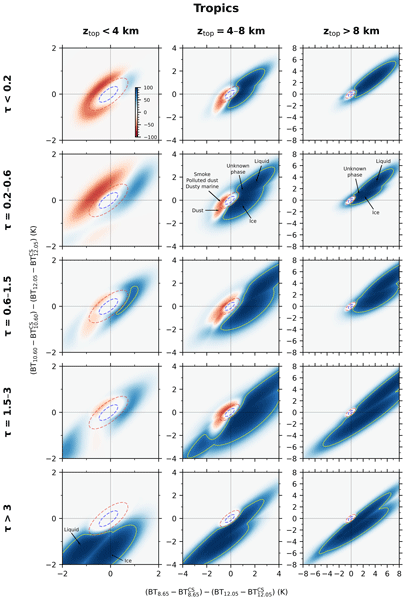
Thibault Vaillant de Guélis, Gérard Ancellet, Anne Garnier, Laurent C.-Labonnote, Jacques Pelon, Mark A. Vaughan, Zhaoyan Liu, and David M. Winker
Atmos. Meas. Tech., 15, 1931–1956, https://doi.org/10.5194/amt-15-1931-2022, https://doi.org/10.5194/amt-15-1931-2022, 2022
Short summary
Short summary
A new IIR-based cloud and aerosol discrimination (CAD) algorithm is developed using the IIR brightness temperature differences for cloud and aerosol features confidently identified by the CALIOP version 4 CAD algorithm. IIR classifications agree with the majority of V4 cloud identifications, reduce the ambiguity in a notable fraction of
not confidentV4 cloud classifications, and correct a few V4 misclassifications of cloud layers identified as dense dust or elevated smoke layers by CALIOP.
Ray Nassar, Matthew Boland, Alexander P. Trishchenko, Chris E. Sioris, and Ali H. Omar
EGUsphere, https://doi.org/10.5194/egusphere-2026-3463, https://doi.org/10.5194/egusphere-2026-3463, 2026
Short summary
Short summary
Satellites using different orbits have led to advances in weather prediction and environmental science. We introduce the Inclined Geosynchronous Orbit (IGO) as a novel orbit for Earth observation and contrast it with other orbits. Key advantages are presented here for observing atmospheric composition, but extend to other fields in which the area of interest reaches to the high latitudes of both hemispheres, such as surface imaging.
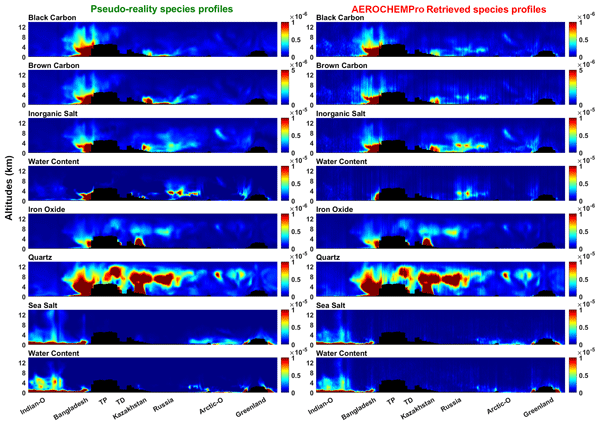
Abou Bakr Merdji, Juan Cuesta, Fazzal Qayyum, Anton Lopatin, Oleg Dubovik, Durgesh Nandan Piyush, Laaziz El Amraoui, Paolo Di Girolamo, and Charles R. Trepte
Atmos. Meas. Tech., 19, 4669–4701, https://doi.org/10.5194/amt-19-4669-2026, https://doi.org/10.5194/amt-19-4669-2026, 2026
Short summary
Short summary
This study presents a novel satellite approach to retrieve the vertical distribution of aerosol chemical species in the atmosphere. By combining spaceborne LIDAR and polarimetric observations, it distinguishes major natural and anthropogenic chemical particle species and their optical properties. Tests with realistic simulations show accurate retrieval of dust, pollution, and sea salt layers, enhancing global monitoring of aerosols relevant to air quality and climate.
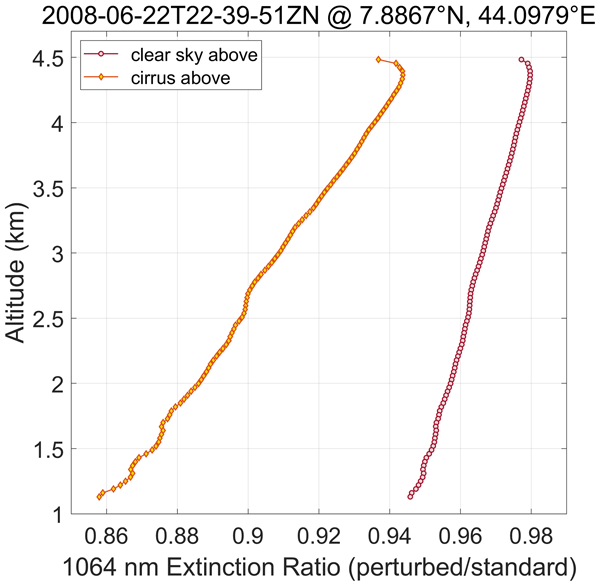
Jayanta Kar, Mark A. Vaughan, Robert P. Damadeo, Mahesh Kovilakam, Jason L. Tackett, and Charles R. Trepte
Atmos. Meas. Tech., 19, 277–292, https://doi.org/10.5194/amt-19-277-2026, https://doi.org/10.5194/amt-19-277-2026, 2026
Short summary
Short summary
This paper assesses biases in the 1064 nm calibration of the Cloud Aerosol Lidar with Orthogonal Polarization (CALIOP) due to signal attenuation differences at 1064 and 532 nm caused by stratospheric aerosols. Multi-channel measurements from the Stratospheric Aerosol and Gas Experiment suggest the bias ranges from 1 %–2 % for background conditions to over 5 % for high aerosol loads. Implications for CALIOP 1064 nm extinction retrievals and cascading errors in multi-layer scenes are discussed.
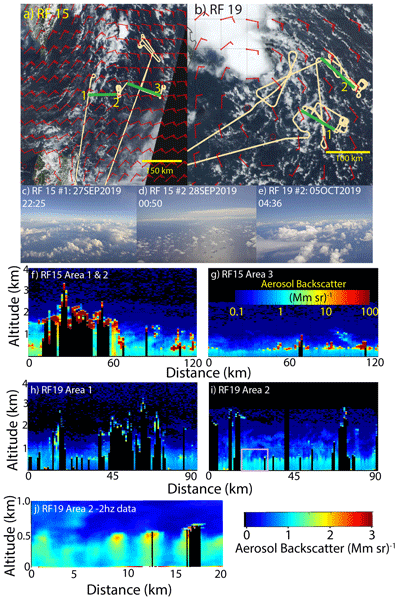
Jeffrey S. Reid, Robert E. Holz, Chris A. Hostetler, Richard A. Ferrare, Juli I. Rubin, Elizabeth J. Thompson, Susan C. van den Heever, Corey G. Amiot, Sharon P. Burton, Joshua P. DiGangi, Glenn S. Diskin, Joshua H. Cossuth, Daniel P. Eleuterio, Edwin W. Eloranta, Ralph Kuehn, Willem J. Marais, Hal B. Maring, Armin Sorooshian, Kenneth L. Thornhill, Charles R. Trepte, Jian Wang, Peng Xian, and Luke D. Ziemba
Atmos. Chem. Phys., 25, 18639–18673, https://doi.org/10.5194/acp-25-18639-2025, https://doi.org/10.5194/acp-25-18639-2025, 2025
Short summary
Short summary
We document air and ship born measurements of the vertical distribution of pollution and biomass burning aerosol particles transported within the Maritime Continent's monsoonal flows for 1000s of kilometers, and yet still exhibit intricate patterns around clouds near the ocean's surface. Findings demonstrate that, while aerosol transport occurs near the surface, there is heterogeneity in particle extinction that must be considered for both in situ observations and satellite retrievals.
Travis D. Toth, Marian B. Clayton, Zhujun Li, David Painemal, Sharon D. Rodier, Jayanta Kar, Tyler J. Thorsen, Richard A. Ferrare, Mark A. Vaughan, Jason L. Tackett, Huisheng Bian, Mian Chin, Anne E. Garnier, Ellsworth J. Welton, Robert A. Ryan, Charles R. Trepte, and David M. Winker
Atmos. Meas. Tech., 18, 6765–6793, https://doi.org/10.5194/amt-18-6765-2025, https://doi.org/10.5194/amt-18-6765-2025, 2025
Short summary
Short summary
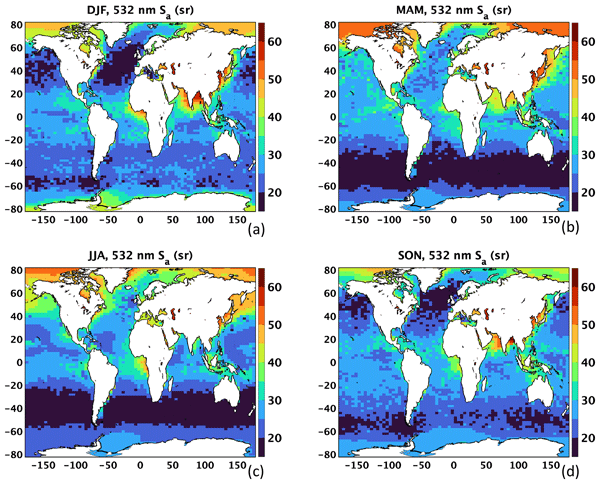
NASA's CALIPSO satellite mission observed aerosols (airborne particles) globally from 2006 to 2023. Its final data products update improves its aerosol optical parameters over oceans by adjusting for regional and seasonal differences in a new measurement-model synergistic approach. This results in a more realistic aerosol characterization, specifically near coastlines (where sea salt mixes with pollution), with potential impacts to future studies of science applications (e.g., climate effects).
Meloë S. F. Kacenelenbogen, Ralph Kuehn, Nandana D. Amarasinghe, Kerry G. Meyer, Edward P. Nowottnick, Mark A. Vaughan, Hong Chen, Sebastian Schmidt, Richard A. Ferrare, Johnathan W. Hair, Robert C. Levy, Hongbin Yu, Paquita Zuidema, Robert Holz, and Willem Marais
Atmos. Chem. Phys., 25, 15875–15911, https://doi.org/10.5194/acp-25-15875-2025, https://doi.org/10.5194/acp-25-15875-2025, 2025
Short summary
Short summary
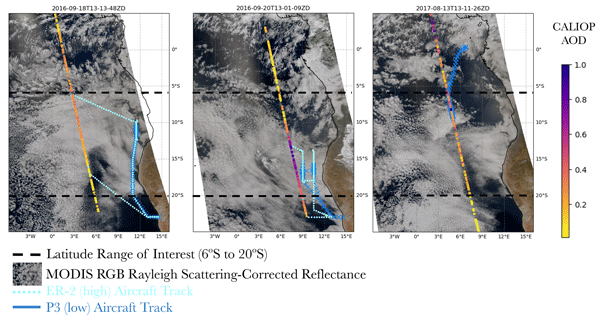
Aerosols perturb the radiation balance of the Earth–atmosphere system. To reduce the uncertainty in quantifying present-day climate change, we combine two satellite sensors and a model to assess the aerosol effects on radiation in all-sky conditions. Satellite-based and coincident aircraft measurements of aerosol radiative effects agree well over the southeast Atlantic. This constitutes a crucial first evaluation before we apply our method to more years and more regions of the world.
Jason L. Tackett, Robert A. Ryan, Anne E. Garnier, Jayanta Kar, Brian J. Getzewich, Xia Cai, Mark A. Vaughan, Charles R. Trepte, Ron Verhappen, David M. Winker, and Kam-Pui A. Lee
Atmos. Meas. Tech., 18, 6211–6231, https://doi.org/10.5194/amt-18-6211-2025, https://doi.org/10.5194/amt-18-6211-2025, 2025
Short summary
Short summary
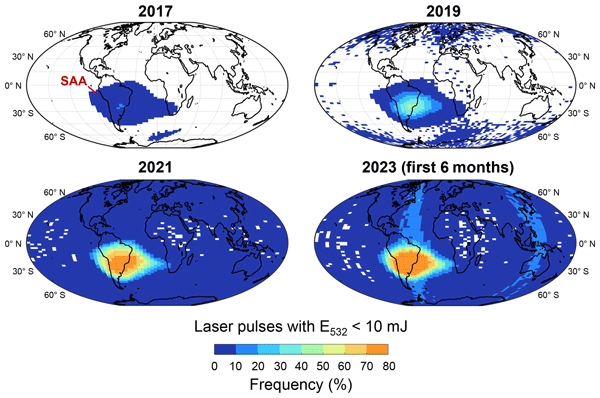
The spaceborne atmospheric lidar CALIOP experienced an increasing number of intermittent low energy laser pulses in the final seven years of the 17-year long CALIPSO mission. Low energy pulses degraded the quality of retrievals in affected profiles. This paper describes low energy mitigation (LEM) algorithms that remove affected data and minimize data loss. LEM is demonstrated to correct calibration biases, reduce false feature detections, and restore the integrity of the CALIOP data record.
David L. Mitchell and Anne Garnier
Atmos. Chem. Phys., 25, 14099–14129, https://doi.org/10.5194/acp-25-14099-2025, https://doi.org/10.5194/acp-25-14099-2025, 2025
Short summary
Short summary
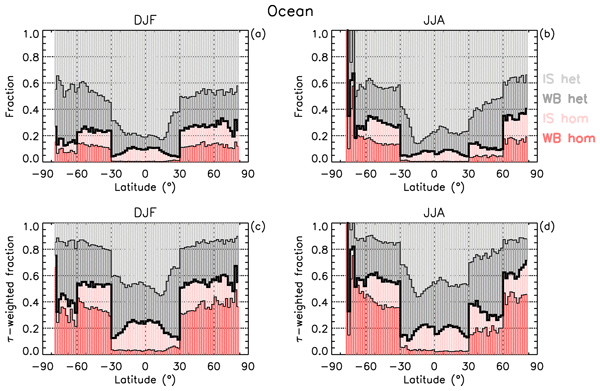
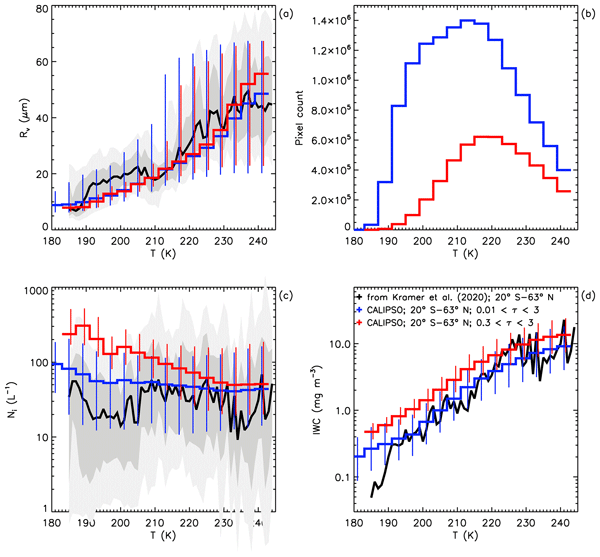
Arguably the greatest knowledge gap in cirrus cloud research is the relative roles of homogeneous and heterogeneous ice nucleation in cirrus cloud formation. Since this depends on temperature, latitude, season and topography, a satellite remote sensing method was developed to measure cirrus cloud properties. It was found that cirrus clouds strongly affected by homogeneous ice nucleation may account for over half of the overall cirrus cloud radiative effect during winter outside the tropics.
David L. Mitchell, Anne Garnier, and Sarah Woods
Atmos. Chem. Phys., 25, 14071–14098, https://doi.org/10.5194/acp-25-14071-2025, https://doi.org/10.5194/acp-25-14071-2025, 2025
Short summary
Short summary
Motivated by the need to better understand the physics of cirrus clouds, a satellite retrieval for cirrus cloud ice water content, ice particle number concentration and effective size was developed by exploiting relationships between cirrus cloud measurements made during field campaigns and cloud radiative properties measured by satellite. These retrievals tested favorably when compared against corresponding aircraft measurements and were found to depend on the visual opacity of the cloud.
Joel F. Campbell, Bing Lin, and Zhaoyan Liu
Atmos. Meas. Tech., 18, 4003–4004, https://doi.org/10.5194/amt-18-4003-2025, https://doi.org/10.5194/amt-18-4003-2025, 2025
Short summary
Short summary
This is a reply to a recent article by Christoph Kiemle et al., critical of CO2 measurements using continuous-wave (CW) lidar. We show CW lidar is not only capable of measuring range but also capable of measuring range to the required accuracy without the aid of an external altimeter.
Hongyu Liu, Bo Zhang, Richard H. Moore, Luke D. Ziemba, Richard A. Ferrare, Hyundeok Choi, Armin Sorooshian, David Painemal, Hailong Wang, Michael A. Shook, Amy Jo Scarino, Johnathan W. Hair, Ewan C. Crosbie, Marta A. Fenn, Taylor J. Shingler, Chris A. Hostetler, Gao Chen, Mary M. Kleb, Gan Luo, Fangqun Yu, Mark A. Vaughan, Yongxiang Hu, Glenn S. Diskin, John B. Nowak, Joshua P. DiGangi, Yonghoon Choi, Christoph A. Keller, and Matthew S. Johnson
Atmos. Chem. Phys., 25, 2087–2121, https://doi.org/10.5194/acp-25-2087-2025, https://doi.org/10.5194/acp-25-2087-2025, 2025
Short summary
Short summary
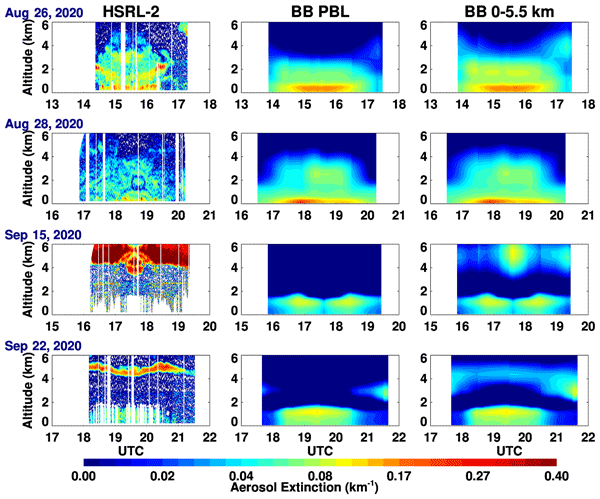
We use the GEOS-Chem model to simulate aerosol distributions and properties over the western North Atlantic Ocean (WNAO) during the winter and summer deployments in 2020 of the NASA ACTIVATE mission. Model results are evaluated against aircraft, ground-based, and satellite observations. The improved understanding of life cycle, composition, transport pathways, and distribution of aerosols has important implications for characterizing aerosol–cloud–meteorology interactions over WNAO.
Robert A. Ryan, Mark A. Vaughan, Sharon D. Rodier, Jason L. Tackett, John A. Reagan, Richard A. Ferrare, Johnathan W. Hair, John A. Smith, and Brian J. Getzewich
Atmos. Meas. Tech., 17, 6517–6545, https://doi.org/10.5194/amt-17-6517-2024, https://doi.org/10.5194/amt-17-6517-2024, 2024
Short summary
Short summary
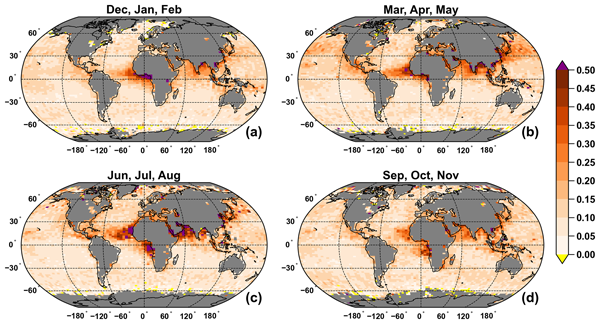
We introduce Ocean Derived Column Optical Depth (ODCOD), a new way to estimate column optical depths using Cloud-Aerosol Lidar with Orthogonal Polarization (CALIOP) measurements from the ocean surface. ODCOD estimates include contributions from particulates in the full column, which CALIOP estimates do not, making it a complement measurement to CALIOP’s standard estimates. We find that ODCOD compares well with other established data sets in the daytime but tends to estimate higher at night.
Claire L. Ryder, Clément Bézier, Helen F. Dacre, Rory Clarkson, Vassilis Amiridis, Eleni Marinou, Emmanouil Proestakis, Zak Kipling, Angela Benedetti, Mark Parrington, Samuel Rémy, and Mark Vaughan
Nat. Hazards Earth Syst. Sci., 24, 2263–2284, https://doi.org/10.5194/nhess-24-2263-2024, https://doi.org/10.5194/nhess-24-2263-2024, 2024
Short summary
Short summary
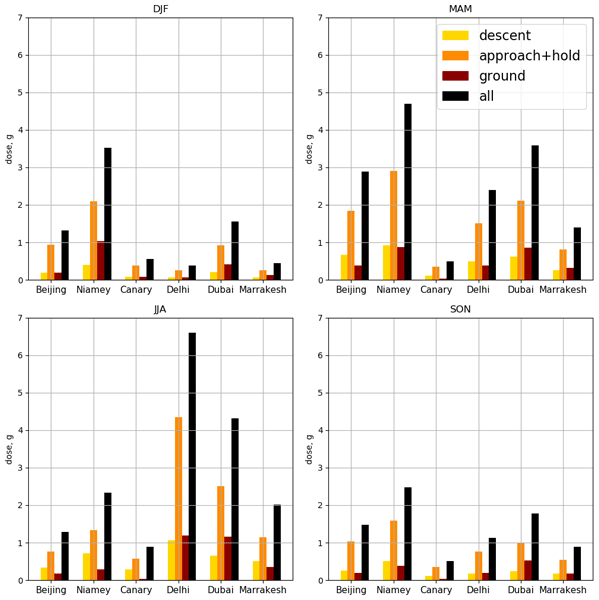
Desert dust poses a hazard to aircraft via degradation of engine components. This has financial implications for the aviation industry and results in increased fuel burn with climate impacts. Here we quantify dust ingestion by aircraft engines at airports worldwide. We find Dubai and Delhi in summer are among the dustiest airports, where substantial engine degradation would occur after 1000 flights. Dust ingestion can be reduced by changing take-off times and the altitude of holding patterns.
David Winker, Xia Cai, Mark Vaughan, Anne Garnier, Brian Magill, Melody Avery, and Brian Getzewich
Earth Syst. Sci. Data, 16, 2831–2855, https://doi.org/10.5194/essd-16-2831-2024, https://doi.org/10.5194/essd-16-2831-2024, 2024
Short summary
Short summary
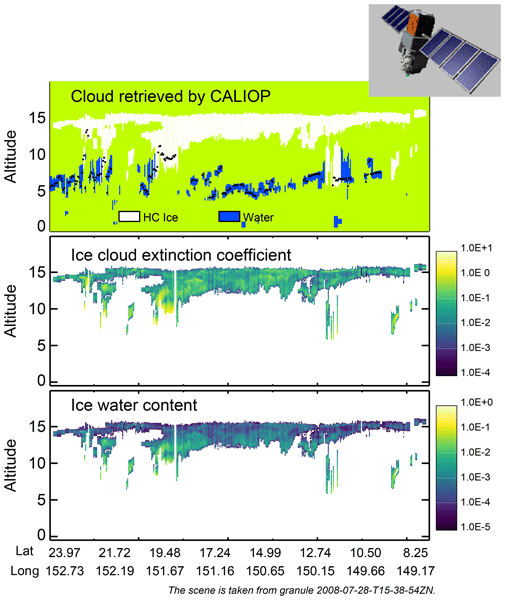
Clouds play important roles in both weather and climate. In this paper we describe version 1.0 of a unique global ice cloud data product derived from over 12 years of global spaceborne lidar measurements. This monthly gridded product provides a unique vertically resolved characterization of the occurrence and properties, optical and physical, of thin ice clouds and the tops of deep convective clouds. It should provide significant value for cloud research and model evaluation.
Zhaoyan Liu, Bing Lin, Joel F. Campbell, Jirong Yu, Jihong Geng, and Shibin Jiang
Atmos. Meas. Tech., 17, 2977–2990, https://doi.org/10.5194/amt-17-2977-2024, https://doi.org/10.5194/amt-17-2977-2024, 2024
Short summary
Short summary
We introduce a concept utilizing a differential absorption barometric lidar operating within the 1.96 µm CO2 absorption band. Our focus is on a compact lidar configuration, featuring reduced telescope size and lower laser pulse energies towards minimizing costs for potential forthcoming Mars missions. The core measurement objectives encompass the determination of column CO2 absorption optical depth and abundance, surface air pressure, and vertical distributions of dust and cloud layers.
Piyushkumar N. Patel, Jonathan H. Jiang, Ritesh Gautam, Harish Gadhavi, Olga Kalashnikova, Michael J. Garay, Lan Gao, Feng Xu, and Ali Omar
Atmos. Chem. Phys., 24, 2861–2883, https://doi.org/10.5194/acp-24-2861-2024, https://doi.org/10.5194/acp-24-2861-2024, 2024
Short summary
Short summary
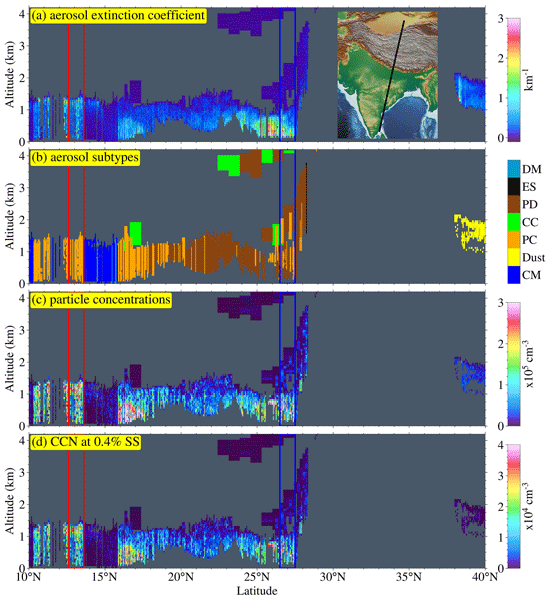
Global measurements of cloud condensation nuclei (CCN) are essential for understanding aerosol–cloud interactions and predicting climate change. To address this gap, we introduced a remote sensing algorithm that retrieves vertically resolved CCN number concentrations from airborne and spaceborne lidar systems. This innovation offers a global distribution of CCN concentrations from space, facilitating model evaluation and precise quantification of aerosol climate forcing.

Meng Gao, Bryan A. Franz, Peng-Wang Zhai, Kirk Knobelspiesse, Andrew M. Sayer, Xiaoguang Xu, J. Vanderlei Martins, Brian Cairns, Patricia Castellanos, Guangliang Fu, Neranga Hannadige, Otto Hasekamp, Yongxiang Hu, Amir Ibrahim, Frederick Patt, Anin Puthukkudy, and P. Jeremy Werdell
Atmos. Meas. Tech., 16, 5863–5881, https://doi.org/10.5194/amt-16-5863-2023, https://doi.org/10.5194/amt-16-5863-2023, 2023
Short summary
Short summary
This study evaluated the retrievability and uncertainty of aerosol and ocean properties from PACE's HARP2 instrument using enhanced neural network models with the FastMAPOL algorithm. A cascading retrieval method is developed to improve retrieval performance. A global set of simulated HARP2 data is generated and used for uncertainty evaluations. The performance assessment demonstrates that the FastMAPOL algorithm is a viable approach for operational application to HARP2 data after PACE launch.
Neranga K. Hannadige, Peng-Wang Zhai, Meng Gao, Yongxiang Hu, P. Jeremy Werdell, Kirk Knobelspiesse, and Brian Cairns
Atmos. Meas. Tech., 16, 5749–5770, https://doi.org/10.5194/amt-16-5749-2023, https://doi.org/10.5194/amt-16-5749-2023, 2023
Short summary
Short summary
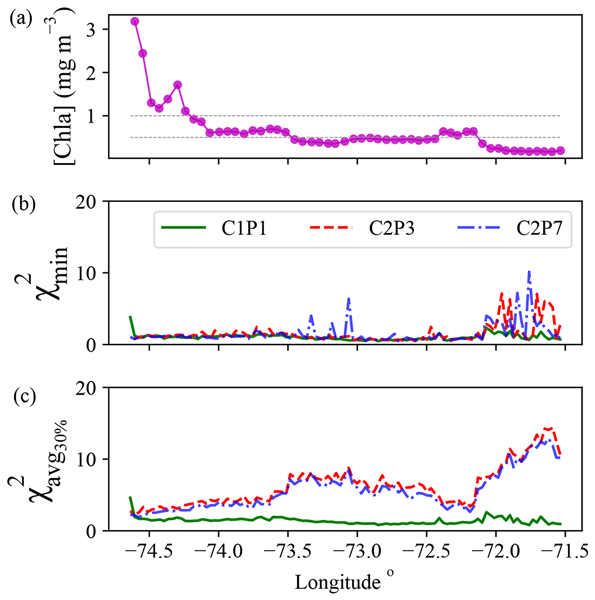
We evaluated the impact of three ocean optical models with different numbers of free parameters on the performance of an aerosol and ocean color remote sensing algorithm using the multi-angle polarimeter (MAP) measurements. It was demonstrated that the three- and seven-parameter bio-optical models can be used to accurately represent both open and coastal waters, whereas the one-parameter model has smaller retrieval uncertainty over open water.
Jianyu Zheng, Zhibo Zhang, Hongbin Yu, Anne Garnier, Qianqian Song, Chenxi Wang, Claudia Di Biagio, Jasper F. Kok, Yevgeny Derimian, and Claire Ryder
Atmos. Chem. Phys., 23, 8271–8304, https://doi.org/10.5194/acp-23-8271-2023, https://doi.org/10.5194/acp-23-8271-2023, 2023
Short summary
Short summary
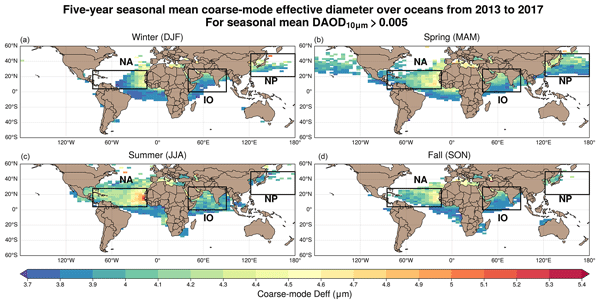
We developed a multi-year satellite-based retrieval of dust optical depth at 10 µm and the coarse-mode dust effective diameter over global oceans. It reveals climatological coarse-mode dust transport patterns and regional differences over the North Atlantic, the Indian Ocean and the North Pacific.
Meng Gao, Kirk Knobelspiesse, Bryan A. Franz, Peng-Wang Zhai, Brian Cairns, Xiaoguang Xu, and J. Vanderlei Martins
Atmos. Meas. Tech., 16, 2067–2087, https://doi.org/10.5194/amt-16-2067-2023, https://doi.org/10.5194/amt-16-2067-2023, 2023
Short summary
Short summary
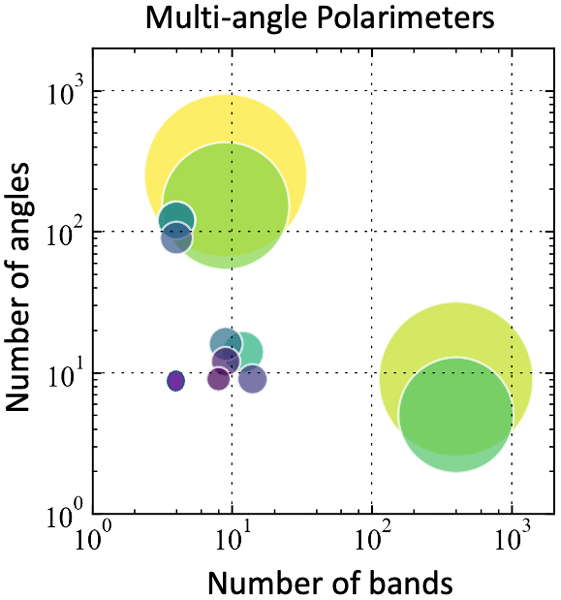
Multi-angle polarimetric measurements have been shown to greatly improve the remote sensing capability of aerosols and help atmospheric correction for ocean color retrievals. However, the uncertainty correlations among different measurement angles have not been well characterized. In this work, we provided a practical framework to evaluate the impact of the angular uncertainty correlation in retrieval results and a method to directly estimate correlation strength from retrieval residuals.
Jason L. Tackett, Jayanta Kar, Mark A. Vaughan, Brian J. Getzewich, Man-Hae Kim, Jean-Paul Vernier, Ali H. Omar, Brian E. Magill, Michael C. Pitts, and David M. Winker
Atmos. Meas. Tech., 16, 745–768, https://doi.org/10.5194/amt-16-745-2023, https://doi.org/10.5194/amt-16-745-2023, 2023
Short summary
Short summary
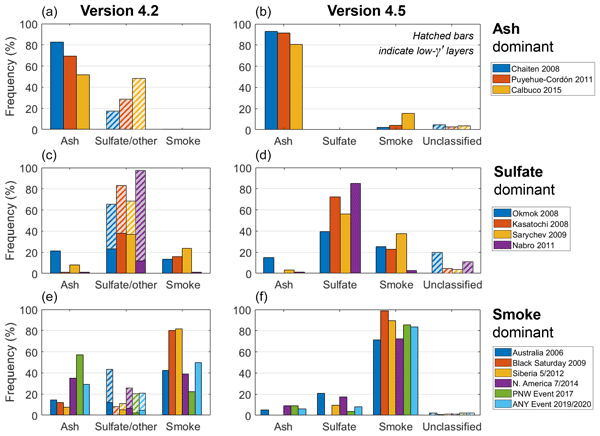
The accurate identification of aerosol types in the stratosphere is important to characterize their impacts on the Earth climate system. The space-borne lidar on board CALIPSO is well-posed to identify aerosols in the stratosphere from volcanic eruptions and major wildfire events. This paper describes improvements implemented in the version 4.5 CALIPSO data release to more accurately discriminate between volcanic ash, sulfate, and smoke within the stratosphere.
Meng Gao, Kirk Knobelspiesse, Bryan A. Franz, Peng-Wang Zhai, Andrew M. Sayer, Amir Ibrahim, Brian Cairns, Otto Hasekamp, Yongxiang Hu, Vanderlei Martins, P. Jeremy Werdell, and Xiaoguang Xu
Atmos. Meas. Tech., 15, 4859–4879, https://doi.org/10.5194/amt-15-4859-2022, https://doi.org/10.5194/amt-15-4859-2022, 2022
Short summary
Short summary
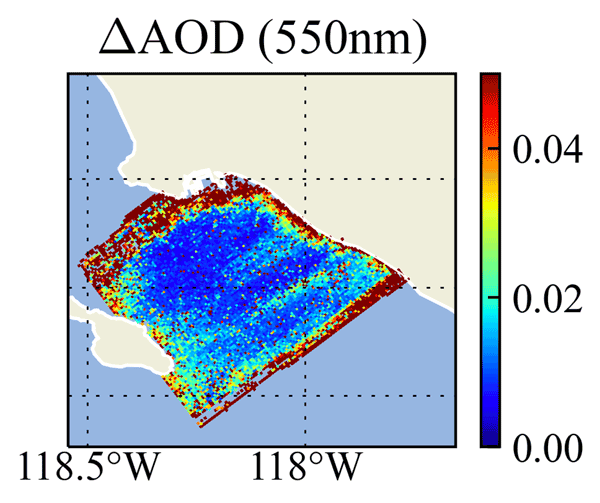
In this work, we assessed the pixel-wise retrieval uncertainties on aerosol and ocean color derived from multi-angle polarimetric measurements. Standard error propagation methods are used to compute the uncertainties. A flexible framework is proposed to evaluate how representative these uncertainties are compared with real retrieval errors. Meanwhile, to assist operational data processing, we optimized the computational speed to evaluate the retrieval uncertainties based on neural networks.
Zhujun Li, David Painemal, Gregory Schuster, Marian Clayton, Richard Ferrare, Mark Vaughan, Damien Josset, Jayanta Kar, and Charles Trepte
Atmos. Meas. Tech., 15, 2745–2766, https://doi.org/10.5194/amt-15-2745-2022, https://doi.org/10.5194/amt-15-2745-2022, 2022
Short summary
Short summary
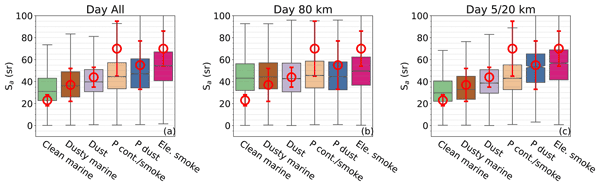
For more than 15 years, CALIPSO has revolutionized our understanding of the role of aerosols in climate. Here we evaluate CALIPSO aerosol typing over the ocean using an independent CALIPSO–CloudSat product. The analysis suggests that CALIPSO correctly categorizes clean marine aerosol over the open ocean, elevated smoke over the SE Atlantic, and dust over the tropical Atlantic. Similarities between clean and dusty marine over the open ocean implies that algorithm modifications are warranted.
Thibault Vaillant de Guélis, Gérard Ancellet, Anne Garnier, Laurent C.-Labonnote, Jacques Pelon, Mark A. Vaughan, Zhaoyan Liu, and David M. Winker
Atmos. Meas. Tech., 15, 1931–1956, https://doi.org/10.5194/amt-15-1931-2022, https://doi.org/10.5194/amt-15-1931-2022, 2022
Short summary
Short summary
A new IIR-based cloud and aerosol discrimination (CAD) algorithm is developed using the IIR brightness temperature differences for cloud and aerosol features confidently identified by the CALIOP version 4 CAD algorithm. IIR classifications agree with the majority of V4 cloud identifications, reduce the ambiguity in a notable fraction of
not confidentV4 cloud classifications, and correct a few V4 misclassifications of cloud layers identified as dense dust or elevated smoke layers by CALIOP.
Cited articles
Bodhaine, B. A., Wood, N. B., Dutton, E. G., and Slusser, J. R.: On Rayleigh optical depth calculations, J. Atmos. Ocean. Tech., 16, 1854–1861, https://doi.org/10.1175/1520-0426(1999)016<1854:ORODC>2.0.CO;2, 1999.
Bohren, C. F. and Huffman, D. R.: Absorption and Scattering of Light by Small Particles, Wiley, New York, NY, USA, ISBN 978-3-527-61815-6, 1983.
Dai, G., Wu, S., Long, W., Liu, J., Xie, Y., Sun, K., Meng, F., Song, X., Huang, Z., and Chen, W.: Aerosol and cloud data processing and optical property retrieval algorithms for the spaceborne ACDL/DQ-1, Atmos. Meas. Tech., 17, 1879–1890, https://doi.org/10.5194/amt-17-1879-2024, 2024.
Donovan, D. P., van Zadelhoff, G.-J., and Wang, P.: The EarthCARE lidar cloud and aerosol profile processor (A-PRO): the A-AER, A-EBD, A-TC, and A-ICE products, Atmos. Meas. Tech., 17, 5301–5340, https://doi.org/10.5194/amt-17-5301-2024, 2024.
Hostetler, C., Liu, Z., Reagan, J., Vaughan, M., Winker, D., Osborn, M., Hunt, W. H., Powell, K. A., and Trepte, C.: CALIOP Algorithm Theoretical Basis Document: Calibration and Level 1 Data Products, PC-SCI-201, NASA, 66 pp., https://ntrs.nasa.gov/citations/20250006623 (last access: 27 July 2026), 2006.
Hu, Y., Winker, D., Yang, P., Baum, B., Poole, L., and Vann, L.: Identification of cloud phase from PICASSO-CENA lidar depolarization: A multiple scattering sensitivity study, J. Quant. Spectrosc. Ra., 70, 569–579, https://doi.org/10.1016/S0022-4073(01)00030-9, 2001.
Hu, Y., Vaughan, M., Liu, Z., Lin, B., Yang, P., Flittner, D., Hunt, W., Kuehn, R., Huang, J., Wu, D., Rodier, S., Powell, K., Trepte, C., and Winker, D.: The depolarization-attenuated backscatter relation: CALIPSO lidar measurements vs. theory, Opt. Express, 15, 5327–5332, https://doi.org/10.1364/OE.15.005327, 2007.
Hu, Y., Winker, D., Vaughan, M., Lin, B., Omar, A., Trepte, C., Flittner, D., Yang, P., Nasiri, S. L., Baum, B., Holz, R., Sun, W., Liu, Z., Wang, Z., Young, S., Stamnes, K., Huang, J., and Kuehn, R.: CALIPSO/CALIOP cloud phase discrimination algorithm, J. Atmos. Ocean. Tech., 26, 2293–2309, https://doi.org/10.1175/2009JTECHA1280.1, 2009.
Hunt, W. H., Winker, D. M., Vaughan, M. A., Powell, K. A., Lucker, P. L., and Weimer, C.: CALIPSO lidar description and performance assessment, J. Atmos. Ocean. Tech., 26, 1214–1228, https://doi.org/10.1175/2009JTECHA1223.1, 2009.
Iqbal, M.: An Introduction to Solar Radiation, Academic Press, New York, NY, USA, 3–5, ISBN 9780323151818, 1983.
Liu, Z., Sugimoto, N., and Murayama, T.: Extinction-to-backscatter ratio of Asian dust observed with high-spectral-resolution lidar and Raman lidar, Appl. Optics, 41, 2760–2767, https://doi.org/10.1364/AO.41.002760, 2002.
Liu, Z., McGill, M., Hu, Y., Hostetler, C., Vaughan, M., and Winker, D.: Validating lidar depolarization calibration using solar radiation scattered by ice clouds, IEEE Geosci. Remote S., 1, 157–161, https://doi.org/10.1109/LGRS.2004.829613, 2004.
Liu, Z., Hunt, W., Vaughan, M., Hostetler, C., McGill, M., Powell, K., Winker, D., and Hu, Y.: Estimating Random Errors Due to Shot Noise in Backscatter Lidar Observations, Appl. Optics, 45, 4437–4447, 2006.
Liu, Z., Vaughan, M. A., Winker, D. M., Kittaka, C., Kuehn, R. E., Getzewich, B. J., Trepte, C. R., and Hostetler, C. A.: The CALIPSO Lidar Cloud and Aerosol Discrimination: Version 2 Algorithm and Initial Assessment of Performance, J. Atmos. Ocean. Tech., 26, 1198–1213, https://doi.org/10.1175/2009JTECHA1229.1, 2009.
Lu, X., Hu, Y., Yang, Y., Vaughan, M., Liu, Z., Rodier, S., Hunt, W., Powell, K., Lucker, P., and Trepte, C.: Laser pulse bidirectional reflectance from CALIPSO mission, Atmos. Meas. Tech., 11, 3281–3296, https://doi.org/10.5194/amt-11-3281-2018, 2018.
Meng, F., Tang, J., Dai, G., Wu, S., Long, W., Sun, K., He, X., Song, X., Liu, J., Chen, W., and Hu, X.: Background Signal Characterization Analysis for ACDL/DQ-1 at Multichannel of 532 nm, IEEE T. Geosci. Remote, 63, 1–14, https://doi.org/10.1109/TGRS.2025.3573939, 2025.
Murayama, T., Okamoto, H., Kaneyasu, N., Kamataki, H., and Miura, K.: Application of lidar depolarization measurement in the atmospheric boundary layer: Effects of dust and sea-salt particles, J. Geophys. Res., 104, 31781–31792, https://doi.org/10.1029/1999JD900503, 1999.
Omar, A. H., Winker, D. M., Vaughan, M. A., Hu, Y., Trepte, C. R., Ferrare, R. A., Lee, K.-P., Hostetler, C. A., Kittaka, C., Rogers, R. R., Kuehn, R. E., and Liu, Z: The CALIPSO automated aerosol classification and lidar ratio selection algorithm, J. Atmos. Ocean. Tech., 26, 1994–2014, https://doi.org/10.1175/2009JTECHA1231.1, 2009.
Pal, S. R. and Carswell, A. I.: Polarization properties of lidar backscattering from clouds, Appl. Optics, 12, 1530–1535, https://doi.org/10.1364/AO.12.001530, 1973.
Pauly, R. M., Yorks, J. E., Hlavka, D. L., McGill, M. J., Amiridis, V., Palm, S. P., Rodier, S. D., Vaughan, M. A., Selmer, P. A., Kupchock, A. W., Baars, H., and Gialitaki, A.: Cloud-Aerosol Transport System (CATS) 1064 nm calibration and validation, Atmos. Meas. Tech., 12, 6241–6258, https://doi.org/10.5194/amt-12-6241-2019, 2019.
Pitts, M. C., Thomason, L. W., Hu, Y., and Winker, D. M.: An assessment of the on-orbit performance of the CALIPSO Wide Field Camera, Proc. SPIE, 6745, https://doi.org/10.1117/12.737377, 2007.
Powell, K. A., Hostetler, C. A., Liu, Z., Vaughan, M. A., Kuehn, R. E., Hunt, W. H., Lee, K., Trepte, C. R., Rogers, R. R., Young, S. A., and Winker, D. M.: CALIPSO Lidar Calibration Algorithms: Part I – Nighttime 532 nm Parallel Channel and 532 nm Perpen-dicular Channel, J. Atmos. Ocean. Tech., 26, 2015–2033, https://doi.org/10.1175/2009JTECHA1242.1, 2009.
Sassen, K.: The polarization lidar technique for cloud research: A review and current assessment, B. Am. Meteorol. Soc., 72, 1848–1866, https://doi.org/10.1175/1520-0477(1991)072<1848:TPLTFC>2.0.CO;2, 1991.
Sassen, K. and Zhu, J.: A global survey of CALIPSO linear depolarization ratios in ice clouds: Initial findings, J. Geophys. Res., 114, D00H07, https://doi.org/10.1029/2009JD012279, 2009.
Vaughan, M., Powell, K., Kuehn, R., Young, S., Winker, D., Hostetler, C., Hunt, W., Liu, Z., McGill, M., and Getzewich, B.: Fully automated detection of cloud and aerosol layers in the CALIPSO lidar measurements, J. Atmos. Ocean. Tech., 26, 2034–2050, https://doi.org/10.1175/2009JTECHA1228.1, 2009.
Vaughan, M., Rodier, S. D., Liu, Z., Garnier, A., Lee, K.-P., Getzewich, B., and Zeng, S.: Correcting CALIOP polarization gain ratios for diurnal variations, in: Proc. 30th Int. Laser Radar Conf., edited by: Sullivan, J. T., Leblanc, T., Tucker, S., Demoz, B., Eloranta, E., Hostetler, C., Ishii, S., Mona, L., Moshary, F., Papayannis, A., and Rupavatharam, K., Springer, Cham, Switzerland, 691–697, https://doi.org/10.1007/978-3-031-37818-8_89, 2023.
Wehr, T., Kubota, T., Tzeremes, G., Wallace, K., Nakatsuka, H., Ohno, Y., Koopman, R., Rusli, S., Kikuchi, M., Eisinger, M., Tanaka, T., Taga, M., Deghaye, P., Tomita, E., and Bernaerts, D.: The EarthCARE mission – science and system overview, Atmos. Meas. Tech., 16, 3581–3608, https://doi.org/10.5194/amt-16-3581-2023, 2023.
Winker, D. M., Vaughan, M. A., Omar, A. H., Hu, Y., Powell, K. A., Liu, Z., Hunt, W. H., and Young, S. A.: Overview of the CALIPSO mission and CALIOP data processing algorithms, J. Atmos. Ocean. Tech., 26, 2310–2323, https://doi.org/10.1175/2009JTECHA1281.1, 2009.
Yang, P. and Liou, K. N.: Single-scattering properties of complex ice crystals in terrestrial atmosphere, Contr. Atmos. Phys., 71, 223–248, 1998.
Yorks, J. E., McGill, M. J., Palm, S. P., Hlavka, D. L., Selmer, P. A., Nowottnick, E. P., Vaughan, M. A., Rodier, S. D., and Hart, W. D.: An overview of the CATS level 1 processing algorithms and data products, Geophys. Res. Lett., 43, 4632–4639, 2016.
Zhai, P., Hu, Y., Trepte, C. R., and Lucker, P. L.: A vector radiative transfer model for coupled atmosphere and ocean systems based on successive order of scattering method, Opt. Express, 17, 2057–2079, https://doi.org/10.1364/OE.17.002057, 2009.
Short summary
Accurate polarization calibration is vital for spaceborne lidars. Optically Thick Ice Cloud (OTIC)-based calibration enables semi-continuous daytime calibration, but molecular scattering at shorter wavelengths biases the signal. We introduce a vector radiative transfer-based Molecular Scattering Correction (MSC) and validate it using the Cloud-Aerosol Lidar with Orthogonal Polarization (CALIOP), eliminating ~ 1% daytime bias at 532 nm. MSC is essential for the Atmospheric Lidar (ATLID) at 355 nm.
Accurate polarization calibration is vital for spaceborne lidars. Optically Thick Ice Cloud...


