
Articles | Volume 19, issue 18
https://doi.org/10.5194/amt-19-6125-2026
© Author(s) 2026. This work is distributed under
the Creative Commons Attribution 4.0 License.
the Creative Commons Attribution 4.0 License.
https://doi.org/10.5194/amt-19-6125-2026
© Author(s) 2026. This work is distributed under
the Creative Commons Attribution 4.0 License.
the Creative Commons Attribution 4.0 License.
Research article
| 
25 Sep 2026
Research article |
| 25 Sep 2026
| 25 Sep 2026
Employing smoothness of the time series of sky radiances measured in the solar aureole for cloud screening
Alexander Sinyuk
CORRESPONDING AUTHOR

Science Systems and Applications, Inc. (SSAI), Lanham, MD 20706, USA
NASA Goddard Space Flight Center (GSFC), Greenbelt, MD 20771, USA
Thomas F. Eck
Science Systems and Applications, Inc. (SSAI), Lanham, MD 20706, USA
University of Maryland Baltimore County (UMBC), GESTAR II, Baltimore, MD 21250, USA
Ilya Slutsker
Science Systems and Applications, Inc. (SSAI), Lanham, MD 20706, USA
NASA Goddard Space Flight Center (GSFC), Greenbelt, MD 20771, USA
Jasper Lewis
Science Systems and Applications, Inc. (SSAI), Lanham, MD 20706, USA
University of Maryland Baltimore County (UMBC), GESTAR II, Baltimore, MD 21250, USA
Petar Grigorov
Science Systems and Applications, Inc. (SSAI), Lanham, MD 20706, USA
NASA Goddard Space Flight Center (GSFC), Greenbelt, MD 20771, USA
Alexander Smirnov
Science Systems and Applications, Inc. (SSAI), Lanham, MD 20706, USA
NASA Goddard Space Flight Center (GSFC), Greenbelt, MD 20771, USA
Joel S. Schafer
Science Systems and Applications, Inc. (SSAI), Lanham, MD 20706, USA
NASA Goddard Space Flight Center (GSFC), Greenbelt, MD 20771, USA
Mikhail Sorokin
Science Systems and Applications, Inc. (SSAI), Lanham, MD 20706, USA
NASA Goddard Space Flight Center (GSFC), Greenbelt, MD 20771, USA
Elena Lind
NASA Goddard Space Flight Center (GSFC), Greenbelt, MD 20771, USA
Pawan Gupta
NASA Goddard Space Flight Center (GSFC), Greenbelt, MD 20771, USA
Related authors

Alexander Sinyuk, Brent N. Holben, Thomas F. Eck, David M. Giles, Ilya Slutsker, Oleg Dubovik, Joel S. Schafer, Alexander Smirnov, and Mikhail Sorokin
Atmos. Meas. Tech., 15, 4135–4151, https://doi.org/10.5194/amt-15-4135-2022, https://doi.org/10.5194/amt-15-4135-2022, 2022
Short summary
Short summary
This paper describes modification of smoothness constraints on the imaginary part of the refractive index employed in the AERONET aerosol retrieval algorithm. This modification is termed relaxed due to the weaker strength of this new smoothness constraint. Applying the modified version of the smoothness constraint results in a significant reduction of retrieved light absorption by brown-carbon-containing aerosols.
Joel Schafer, Thomas F. Eck, Ilya Slutsker, Pawan Gupta, Mikhail Sorokin, Alexander Sinyuk, and Alexander Smirnov
Atmos. Meas. Tech., 19, 6487–6502, https://doi.org/10.5194/amt-19-6487-2026, https://doi.org/10.5194/amt-19-6487-2026, 2026
Short summary
Short summary
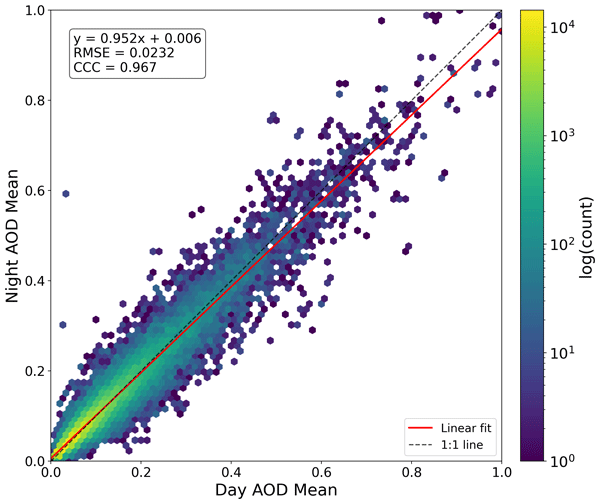
A global network of ground-based instruments has been using moonlight to measure atmospheric aerosols at night, producing the world's largest such dataset. Employing an empirical correction method that accounts for the Moon's complex and variable brightness results in nighttime measurements that agree closely with daytime measurements during day/night transition intervals under stable aerosol conditions.
Virginie Buchard, Patricia Castellanos, Arlindo M. da Silva, Ravi Govindaraju, Matthew A. Thompson, Rob Levy, Jaehwa Lee, Vincent Kim, and Pawan Gupta
EGUsphere, https://doi.org/10.5194/egusphere-2026-5508, https://doi.org/10.5194/egusphere-2026-5508, 2026
This preprint is open for discussion and under review for Atmospheric Chemistry and Physics (ACP).
Short summary
Short summary
The Goddard Earth Observing System (GEOS) uses a neural network retrieval methodology to homogenize satellite aerosol observations before data assimilation. As the Moderate Resolution Imaging Spectroradiometer (MODIS) ages, this study evaluates transitioning to Visible Infrared Imaging Radiometer Suite (VIIRS) data. Results show that a single VIIRS sensor performs competitively with the older dual-satellite system, ensuring a seamless transition for uninterrupted, high-quality aerosol forecasts.
Thomas F. Eck, Jeffrey S. Reid, Alexander Sinyuk, Pawan Gupta, Antti Arola, Ilya Slutsker, Brent N. Holben, Philippe Goloub, Oleg Dubovik, Joel S. Schafer, Mikhail G. Sorokin, Alexander Smirnov, Hongbin Yu, Dongchul Kim, Elena Lind, Jason Kraft, Elizabeth A. Reid, Aboubacry Diallo, Thierno Ndiaye, Africa Barreto, Sidi Baika, Lahouari Zeudmi-Sahraoui, Francisco Evora, Gael Dubois, Luc Blarel, Rachel T. Pinker, Isaac Abiodun Adimula, Jean Louis Rajot, Aliko Maman, Muguette Allegre, Cassandra Gaston, Peter Sealy, Edmund Blades, Rebecca Chewitt-Lucas, Ian Lau, David Barker, Adel Saad Alshihiween, Abdulrahman Alsaferan, Odbayar Mishigdorj, and Chogsom Jargalsaixan
EGUsphere, https://doi.org/10.5194/egusphere-2026-5531, https://doi.org/10.5194/egusphere-2026-5531, 2026
This preprint is open for discussion and under review for Atmospheric Chemistry and Physics (ACP).
Short summary
Short summary
The optical properties of airborne soil particles from major desert regions measured by ground based remote sensing retrievals are presented. The relative spectral absorption of these particles from the remote sensing data agree very well with absorption of soil dust samples measured in a laboratory. A large fraction of the optical effects were attributed to relatively small submicron sized dust particles which would also be more easily inhalable and therefore may impact human health.
Apoorva Pandey, Bryan K. Place, Thomas F. Hanisco, Jong-Uk Park, Elena S. Lind, Jason M. St. Clair, Erin R. Delaria, Glenn M. Wolfe, Ronaldo Lopez, Paul V. Zimba, and K. Lee Thornhill
EGUsphere, https://doi.org/10.5194/egusphere-2026-3479, https://doi.org/10.5194/egusphere-2026-3479, 2026
Short summary
Short summary
The burden and vertical distribution of formaldehyde affects air quality and health. Pandora ground instruments observe formaldehyde in the lower atmosphere using scattered sunlight. The quality of these continuous daytime measurements needs evaluation. We compared these measurements with aircraft observations at four U.S. East Coast sites and found strong agreement at all comparison sites. We also improved the Pandora algorithm to better capture the vertical distribution of formaldehyde.
Patrick C. Taylor, Armin Sorooshian, Rei Ueyama, Sebastian Schmidt, Ihab Abboud, Quincy Allison, Kevin Barry, Sebastian Becker, Holly A. Bender, Joseph R. Bennett, James B. Blair, Niklas Bohn, Linette Boisvert, Matthew D. Brown, Roelof Bruintjes, Anthony Bucholtz, Megan Buzanowicz, Brian Cairns, Filippo Calì Quaglia, Eduard Chemyakin, Bo Chen, Gao Chen, Hong Chen, Yu-Wen Chen, Zezhen Cheng, Swarup China, Dan Chirica, Yonghoon Choi, Peter Colarco, Brian Collister, Ewan Crosbie, Maurice J. Cross, Janet Daniels, Paul DeMott, Joshua P. DiGangi, Alcide Giorgio di Sarra, Glenn S. Diskin, Erica K. Dolinar, Eva-Lou Edwards, Samuel Ephraim, Nikolaos Evangeliou, Romanos Foskinis, Francesca Gallo, Lan Gao, José Luis Gómez-Amo, Daisy Gonzalez, Christine Groot Zwaaftink, Pawan Gupta, Ivan Heckman, Michael Hendrickson, Miguel Ricardo A. Hilario, Ken Hirata, Michelle Hofton, Andrew L. Holen, Ulas Im, Alia L. Khan, Ralph Kahn, Alexei V. Korolev, Sonia Kreidenweis, Thomas Krumpen, Nathan Kurtz, Leslie Lait, Bradley Lamkin, Jack Landy, Nurun Nahar Lata, Paul Lawson, Samuel LeBlanc, Sean Leavor, Jing Li, Thorsten Markus, Hal Maring, Andreas H. Massling, Camille Mavis, Flynn McGinnity, Kerry Meyer, Gabriel Mojica, Richard H. Moore, Parker Morris, Giovanni Muscari, Vikas Nataraja, Amin R. Nehrir, Athanasios Nenes, Edward P. Nowottnick, Matteo Ottaviani, Chelsea Parker, Ryan Patnaude, Michael Perez, Russell J. Perkins, Colten Peterson, Alek Petty, Stevie Phothisane, Chris Polashenski, Kerri A. Pratt, Kayla M. Preisler, John Prytherch, David Rabine, Jens Redemann, Ju-Mee Ryoo, Joseph S. Schlosser, Vanessa Selimovic, Michael A. Shook, Morgan Silverman, Henrik Skov, Alexander Smirnov, Cassidy Soloff, Amy Solomon, Snorre Stamnes, Azusa Takeishi, David R. Thompson, K. Lee Thornhill, Rachel Tilling, Michael Tjernström, Monica Tosco, Pedro C. Valdelomar, David Van Gilst, Jian Wang, Zhien Wang, Andrzej Wasilewski, Manfred Wendisch, Brent Wilder, Edward L. Winstead, Albert Wu, Peng Xian, Lauren M. Zamora, Jiaoshi Zhang, Lei Zhang, Lu Zhang, Luke Ziemba, and Paquita Zuidema
Earth Syst. Sci. Data Discuss., https://doi.org/10.5194/essd-2026-241, https://doi.org/10.5194/essd-2026-241, 2026
Preprint under review for ESSD
Short summary
Short summary
This article summarizes the data sets collected during the Arctic Radiation Cloud aerosol Sea ice Interaction eXperiment (ARCSIX), NASA's most comprehensive Arctic field campaign to date. The overarching goal was to quantify the contributions of surface, clouds, aerosol particles, and precipitation to summer sea ice melt. This paper describes the ARCSIX implementation including the flight strategy, instruments, complementary data sets, access, and usage details.
Hiren Jethva, Nickolay Krotkov, Omar Torres, Jungbin Mok, Gordon Labow, Elena Lind, Tom Eck, Wei Gao, George Janson, Scott Simpson, Darrin Sharp, Kathy Lantz, Charles Wilson, Africa Barreto, Rosa García, Sergey Korkin, and David Flittner
Atmos. Meas. Tech., 19, 4335–4365, https://doi.org/10.5194/amt-19-4335-2026, https://doi.org/10.5194/amt-19-4335-2026, 2026
Short summary
Short summary
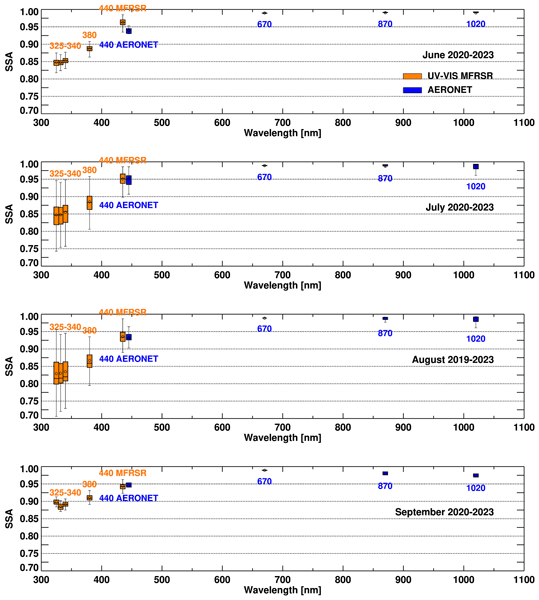
A synergistic ground-based remote sensing algorithm applied to Aerosol Robotic Network and Multifilter Rotating Shadowband Radiometer allowed retrievals of UV (ultraviolet)-Vis (visible) spectral aerosol absorption of Saharan dust at the Izaña Atmospheric Observatory. The retrieved dataset provides a valuable reference for evaluating satellite ultraviolet dust absorption inversions and further helps infer dust mineralogy to improve dust representation in Earth System Models.
Davis Earley, Elena Lind, James Flynn, Subin Yoon, Sergio Alvarez, and Travis Griggs
EGUsphere, https://doi.org/10.5194/egusphere-2025-5179, https://doi.org/10.5194/egusphere-2025-5179, 2026
Short summary
Short summary
This paper focuses on the relationship between concentrations of trace gases measured at the surface and path averaged concentrations, known as vertical column densities, to produce a column to surface ratio, which is an estimation of the effective height of each trace gas’s vertical profile. In addition, sensitivity studies are performed to analyze the effect of uncertain aerosol information on the estimation of air mass factors through radiative transfer simulations.
Simone Pulimeno, Angelo Lupi, Vito Vitale, Claudia Frangipani, Carlos Toledano, Stelios Kazadzis, Natalia Kouremeti, Christoph Ritter, Sandra Graßl, Kerstin Stebel, Vitali Fioletov, Ihab Abboud, Sandra Blindheim, Lynn Ma, Norm O'Neill, Piotr Sobolewski, Pawan Gupta, Elena Lind, Thomas F. Eck, Antti Hyvärinen, Veijo Aaltonen, Rigel Kivi, Janae Csavina, Dmitry Kabanov, Sergey M. Sakerin, Olga R. Sidorova, Robert S. Stone, Hagen Telg, Laura Riihimaki, Raul R. Cordero, Martin Radenz, Ronny Engelmann, Michel Van Roozendal, Anatoli Chaikovsky, Philippe Goloub, Junji Hisamitsu, and Mauro Mazzola
Atmos. Chem. Phys., 26, 1809–1846, https://doi.org/10.5194/acp-26-1809-2026, https://doi.org/10.5194/acp-26-1809-2026, 2026
Short summary
Short summary
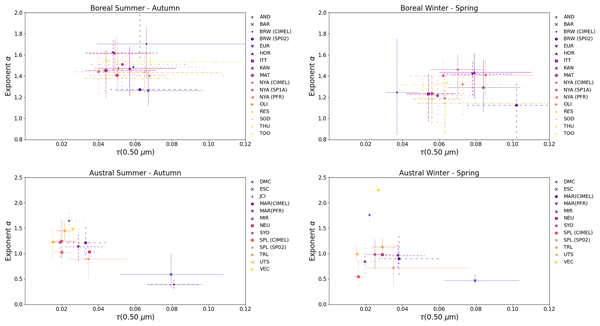
This study analyzed aerosols optical properties over the Arctic and Antarctic to measure them even during long periods of darkness. It found that pollution in the Arctic is decreasing, likely due to European emission regulations, while wildfires are becoming a more important source of particles. In Antarctica, particle levels are higher near the coast than inland, and vary by season. These results help us better understand how air pollution and climate are changing at the Earth’s poles.
Sujan Shrestha, Robert E. Holz, Willem J. Marais, Zachary Buckholtz, Ilya Razenkov, Edwin Eloranta, Jeffrey S. Reid, Hope E. Elliott, Nurun Nahar Lata, Zezhen Cheng, Swarup China, Edmund Blades, Albert D. Ortiz, Rebecca Chewitt-Lucas, Alyson Allen, Devon Blades, Ria Agrawal, Elizabeth A. Reid, Jesus Ruiz-Plancarte, Anthony Bucholtz, Ryan Yamaguchi, Qing Wang, Thomas Eck, Elena Lind, Mira L. Pöhlker, Andrew P. Ault, and Cassandra J. Gaston
Atmos. Chem. Phys., 26, 983–999, https://doi.org/10.5194/acp-26-983-2026, https://doi.org/10.5194/acp-26-983-2026, 2026
Short summary
Short summary
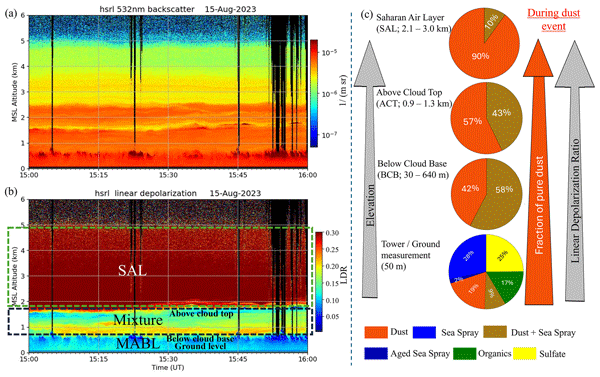
Coordinated observations from MAGPIE 2023 show that Saharan dust in the marine atmospheric boundary layer becomes internally mixed with sea spray. This mixing increases particle sphericity and hygroscopicity, likely leading to suppressed lidar linear depolarization ratios despite high dust concentrations. The findings have key implications for interpreting lidar-derived dust retrievals, estimating surface dust from satellite products, and improving dust representation in models.
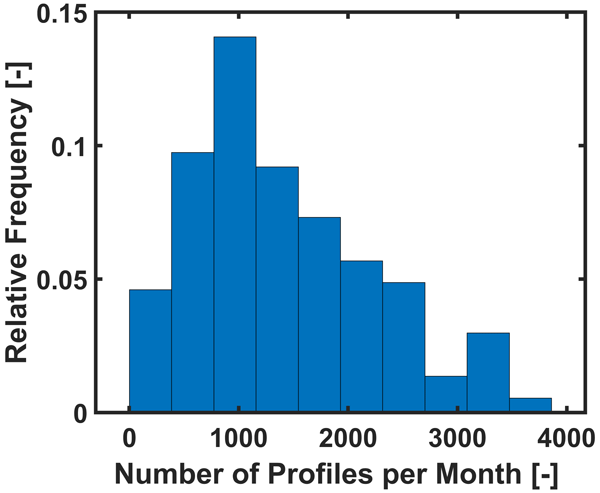
Simone Lolli, Erica K. Dolinar, Jasper R. Lewis, Andreu Salcedo-Bosch, James R. Campbell, and Ellsworth J. Welton
Atmos. Chem. Phys., 26, 411–426, https://doi.org/10.5194/acp-26-411-2026, https://doi.org/10.5194/acp-26-411-2026, 2026
Short summary
Short summary
Over the past twenty years, continuous lidar observations at NASA's Goddard Space Flight Center have assessed the radiative impact of cirrus clouds on the Earth–atmosphere system. Findings show these clouds increasingly trap heat as surface reflectivity drops with less snow and ice, contributing to local warming. Continued cirrus monitoring is crucial to refine climate forecasts and support effective climate action.
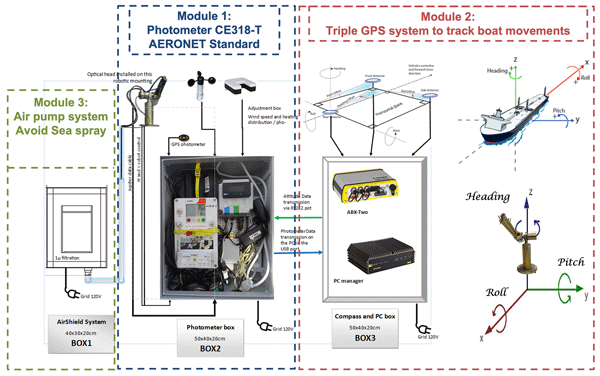
Benjamin Torres, Luc Blarel, Philippe Goloub, Gaël Dubois, Maria Fernanda Sanchez-Barrero, Ioana Elisabeta Popovici, Fabrice Maupin, Elena Lind, Alexander Smirnov, Ilya Slutsker, Julien Chimot, Ramiro González, Michaël Sicard, Jean Marc Metzger, and Pierre Tulet
Atmos. Meas. Tech., 18, 4809–4838, https://doi.org/10.5194/amt-18-4809-2025, https://doi.org/10.5194/amt-18-4809-2025, 2025
Short summary
Short summary
This study shows that it is possible to automatically monitor atmospheric aerosols from research vessels using automated instruments, following the same standards as AERONET (AErosol RObotic NETwork) land-based stations. By collecting 3 years of data in the Indian Ocean, we demonstrate that high-quality measurements can be made, even on a moving platform. These results open new possibilities for observing aerosols over the ocean and improving satellite data and climate studies.
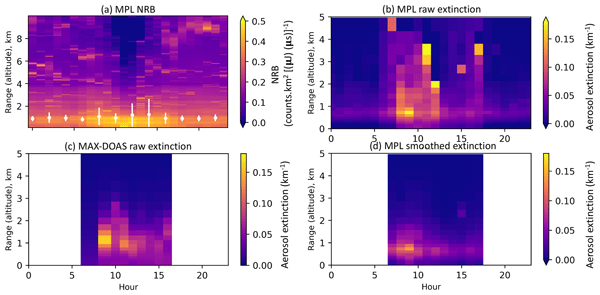
Robert G. Ryan, Lilani Toms-Hardman, Alexander Smirnov, Daniel P. Harrison, and Robyn Schofield
Atmos. Chem. Phys., 25, 11183–11197, https://doi.org/10.5194/acp-25-11183-2025, https://doi.org/10.5194/acp-25-11183-2025, 2025
Short summary
Short summary
Measurements of aerosol vertical distribution are key for understanding how they interact with clouds and sunlight. Such measurements are currently lacking at the Great Barrier Reef, limiting our ability to validate climate models in this sensitive, ecologically rich environment. Here we use a range of techniques to quantify the vertical variation of aerosols above the Great Barrier Reef for the first time, using the comparison of techniques to also infer aerosol spatial variation.
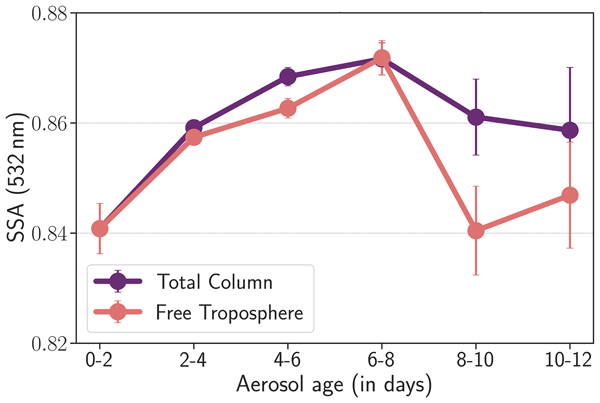
Abdulamid A. Fakoya, Jens Redemann, Pablo E. Saide, Lan Gao, Logan T. Mitchell, Calvin Howes, Amie Dobracki, Ian Chang, Gonzalo A. Ferrada, Kristina Pistone, Samuel E. Leblanc, Michal Segal-Rozenhaimer, Arthur J. Sedlacek III, Thomas Eck, Brent Holben, Pawan Gupta, Elena Lind, Paquita Zuidema, Gregory Carmichael, and Connor J. Flynn
Atmos. Chem. Phys., 25, 7879–7902, https://doi.org/10.5194/acp-25-7879-2025, https://doi.org/10.5194/acp-25-7879-2025, 2025
Short summary
Short summary
Tiny atmospheric particles from wildfire smoke impact the climate by interacting with sunlight and clouds, the extent of which is uncertain due to gaps in understanding how smoke changes over time. We developed a new method using remote sensing instruments to track how these particles evolve during atmospheric transport. Our results show that the ability of these particles to absorb sunlight increases as they travel. This discovery could help improve predictions of future climate scenarios.
Zhenyu Zhang, Jing Li, Huizheng Che, Yueming Dong, Oleg Dubovik, Thomas Eck, Pawan Gupta, Brent Holben, Jhoon Kim, Elena Lind, Trailokya Saud, Sachchida Nand Tripathi, and Tong Ying
Atmos. Chem. Phys., 25, 4617–4637, https://doi.org/10.5194/acp-25-4617-2025, https://doi.org/10.5194/acp-25-4617-2025, 2025
Short summary
Short summary
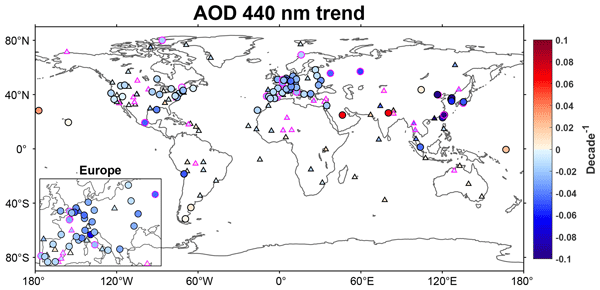
We used ground-based remote sensing data from the Aerosol Robotic Network to examine long-term trends in aerosol characteristics. We found aerosol loadings generally decreased globally, and aerosols became more scattering. These changes are closely related to variations in aerosol compositions, such as decreased anthropogenic emissions over East Asia, Europe, and North America; increased anthropogenic sources over northern India; and increased dust activity over the Arabian Peninsula.
Jianglong Zhang, Jeffrey S. Reid, Blake T. Sorenson, Steven D. Miller, Miguel O. Román, Zhuosen Wang, Robert J. D. Spurr, Shawn Jaker, Thomas F. Eck, and Juli I. Rubin
Atmos. Meas. Tech., 18, 1787–1810, https://doi.org/10.5194/amt-18-1787-2025, https://doi.org/10.5194/amt-18-1787-2025, 2025
Short summary
Short summary
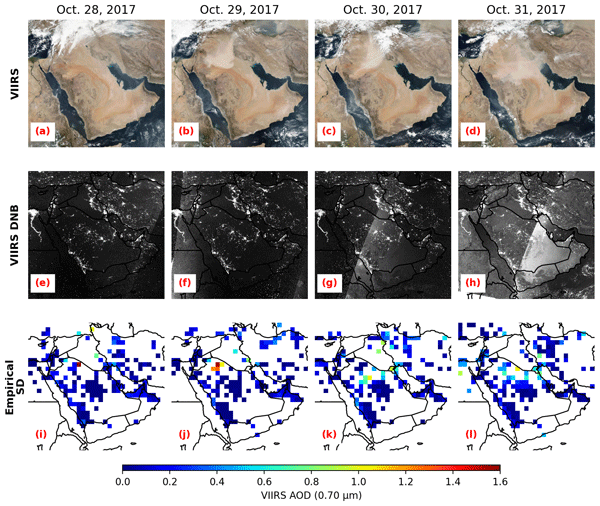
Using observations from the Visible Infrared Imaging Radiometer Suite day–night band, we developed a method for constructing gridded nighttime aerosol optical thickness (AOT) data based on the spatial derivative of measured top-of-atmosphere attenuated upwelling artificial lights at night. The gridded nighttime AOT retrievals, compared against Aerosol Robotic Network data, show reasonable skill levels for potential data assimilation, air quality, and climate studies of significant events.
Myungje Choi, Alexei Lyapustin, Gregory L. Schuster, Sujung Go, Yujie Wang, Sergey Korkin, Ralph Kahn, Jeffrey S. Reid, Edward J. Hyer, Thomas F. Eck, Mian Chin, David J. Diner, Olga Kalashnikova, Oleg Dubovik, Jhoon Kim, and Hans Moosmüller
Atmos. Chem. Phys., 24, 10543–10565, https://doi.org/10.5194/acp-24-10543-2024, https://doi.org/10.5194/acp-24-10543-2024, 2024
Short summary
Short summary
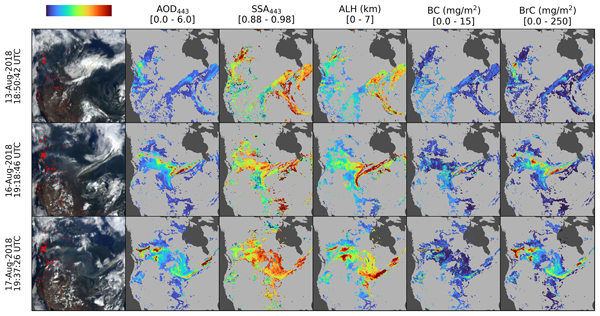
This paper introduces a retrieval algorithm to estimate two key absorbing components in smoke (black carbon and brown carbon) using DSCOVR EPIC measurements. Our analysis reveals distinct smoke properties, including spectral absorption, layer height, and black carbon and brown carbon, over North America and central Africa. The retrieved smoke properties offer valuable observational constraints for modeling radiative forcing and informing health-related studies.
Pawan Gupta, Robert C. Levy, Shana Mattoo, Lorraine A. Remer, Zhaohui Zhang, Virginia Sawyer, Jennifer Wei, Sally Zhao, Min Oo, V. Praju Kiliyanpilakkil, and Xiaohua Pan
Atmos. Meas. Tech., 17, 5455–5476, https://doi.org/10.5194/amt-17-5455-2024, https://doi.org/10.5194/amt-17-5455-2024, 2024
Short summary
Short summary
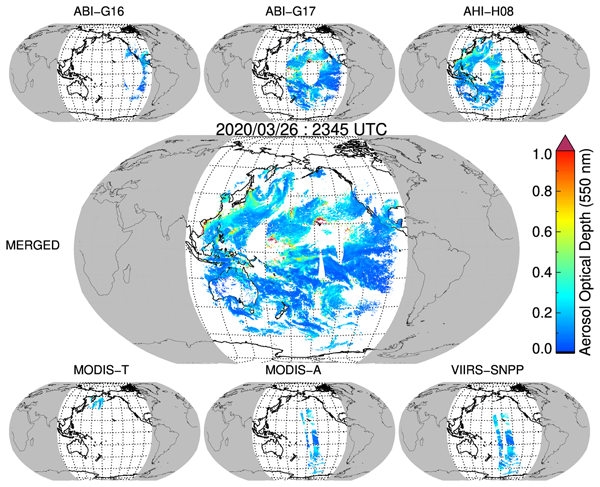
In this study, for the first time, we combined aerosol data from six satellites using a unified algorithm. The global datasets are generated at a high spatial resolution of about 25 km with an interval of 30 min. The new datasets are compared against ground truth and verified. They will be useful for various applications such as air quality monitoring, climate research, pollution diurnal variability, long-range smoke and dust transport, and evaluation of regional and global models.
Anton Lopatin, Oleg Dubovik, Georgiy Stenchikov, Ellsworth J. Welton, Illia Shevchenko, David Fuertes, Marcos Herreras-Giralda, Tatsiana Lapyonok, and Alexander Smirnov
Atmos. Meas. Tech., 17, 4445–4470, https://doi.org/10.5194/amt-17-4445-2024, https://doi.org/10.5194/amt-17-4445-2024, 2024
Short summary
Short summary
We compare aerosol properties over the King Abdullah University of Science and Technology campus using Generalized Retrieval of Aerosol and Surface Properties (GRASP) and the Micro-Pulse Lidar Network (MPLNET). We focus on the impact of different aerosol retrieval assumptions on daytime and nighttime retrievals and analyze seasonal variability in aerosol properties, aiding in understanding aerosol behavior and improving retrieval. Our work has implications for climate and public health.
Peng Xian, Jeffrey S. Reid, Melanie Ades, Angela Benedetti, Peter R. Colarco, Arlindo da Silva, Tom F. Eck, Johannes Flemming, Edward J. Hyer, Zak Kipling, Samuel Rémy, Tsuyoshi Thomas Sekiyama, Taichu Tanaka, Keiya Yumimoto, and Jianglong Zhang
Atmos. Chem. Phys., 24, 6385–6411, https://doi.org/10.5194/acp-24-6385-2024, https://doi.org/10.5194/acp-24-6385-2024, 2024
Short summary
Short summary
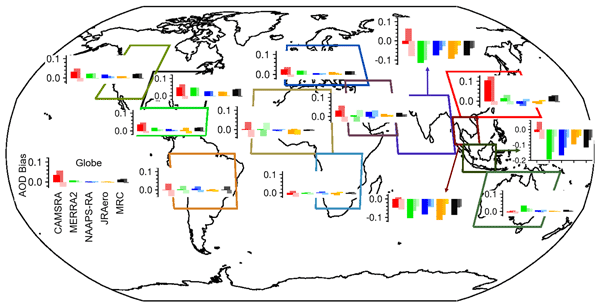
The study compares and evaluates monthly AOD of four reanalyses (RA) and their consensus (i.e., ensemble mean). The basic verification characteristics of these RA versus both AERONET and MODIS retrievals are presented. The study discusses the strength of each RA and identifies regions where divergence and challenges are prominent. The RA consensus usually performs very well on a global scale in terms of how well it matches the observational data, making it a good choice for various applications.
Mijin Kim, Robert C. Levy, Lorraine A. Remer, Shana Mattoo, and Pawan Gupta
Atmos. Meas. Tech., 17, 1913–1939, https://doi.org/10.5194/amt-17-1913-2024, https://doi.org/10.5194/amt-17-1913-2024, 2024
Short summary
Short summary
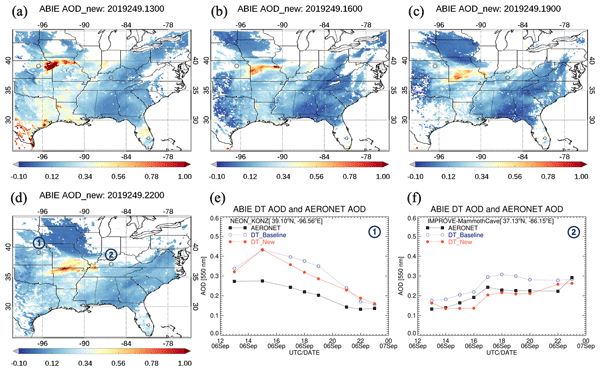
The study focused on evaluating and modifying the surface reflectance parameterization (SRP) of the Dark Target (DT) algorithm for geostationary observation. When using the DT SRP with the ABIs sensor on GOES-R, artificial diurnal signatures were present in AOD retrieval. To overcome this issue, a new SRP was developed, incorporating solar zenith angle and land cover type. The revised SRP resulted in improved AOD retrieval, demonstrating reduced bias around local noon.
Cristina Gil-Díaz, Michäel Sicard, Adolfo Comerón, Daniel Camilo Fortunato dos Santos Oliveira, Constantino Muñoz-Porcar, Alejandro Rodríguez-Gómez, Jasper R. Lewis, Ellsworth J. Welton, and Simone Lolli
Atmos. Meas. Tech., 17, 1197–1216, https://doi.org/10.5194/amt-17-1197-2024, https://doi.org/10.5194/amt-17-1197-2024, 2024
Short summary
Short summary
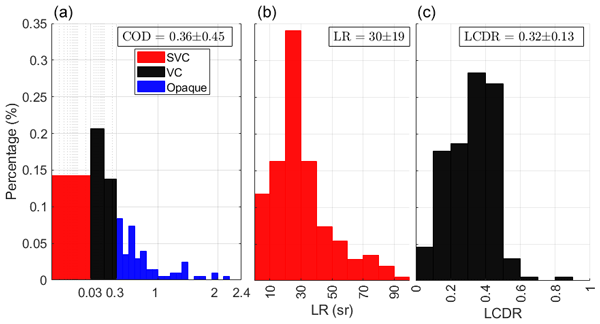
In this paper, a statistical study of cirrus geometrical and optical properties based on 4 years of continuous ground-based lidar measurements with the Barcelona (Spain) Micro Pulse Lidar (MPL) is analysed. The cloud optical depth, effective column lidar ratio and linear cloud depolarisation ratio have been calculated by a new approach to the two-way transmittance method, which is valid for both ground-based and spaceborne lidar systems. Their associated errors are also provided.
Amanda Gumber, Jeffrey S. Reid, Robert E. Holz, Thomas F. Eck, N. Christina Hsu, Robert C. Levy, Jianglong Zhang, and Paolo Veglio
Atmos. Meas. Tech., 16, 2547–2573, https://doi.org/10.5194/amt-16-2547-2023, https://doi.org/10.5194/amt-16-2547-2023, 2023
Short summary
Short summary
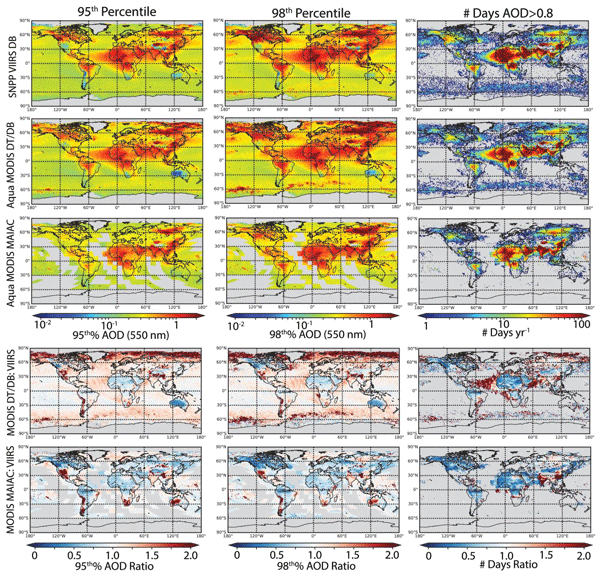
The purpose of this study is to create and evaluate a gridded dataset composed of multiple satellite instruments and algorithms to be used for data assimilation. An important part of aerosol data assimilation is having consistent measurements, especially for severe aerosol events. This study evaluates 4 years of data from MODIS, VIIRS, and AERONET with a focus on aerosol severe event detection from a regional and global perspective.
Juli I. Rubin, Jeffrey S. Reid, Peng Xian, Christopher M. Selman, and Thomas F. Eck
Atmos. Chem. Phys., 23, 4059–4090, https://doi.org/10.5194/acp-23-4059-2023, https://doi.org/10.5194/acp-23-4059-2023, 2023
Short summary
Short summary
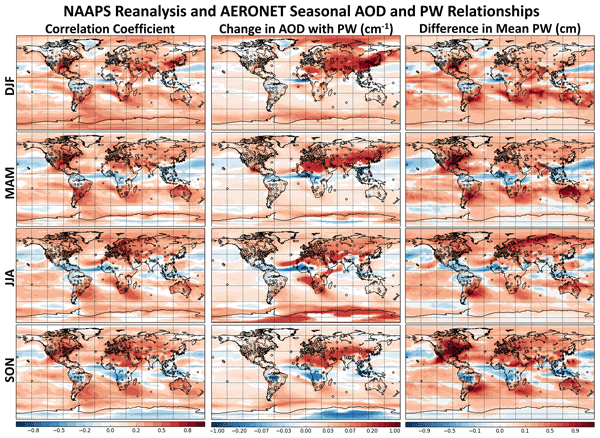
This work aims to quantify the covariability between aerosol optical depth/extinction with water vapor (PW) globally, using NASA AERONET observations and NAAPS model data. Findings are important for data assimilation and radiative transfer. The study shows statistically significant and positive AOD–PW relationships are found across the globe, varying in strength with location and season and tied to large-scale aerosol events. Hygroscopic growth was also found to be an important factor.
Norman T. O'Neill, Keyvan Ranjbar, Liviu Ivănescu, Thomas F. Eck, Jeffrey S. Reid, David M. Giles, Daniel Pérez-Ramírez, and Jai Prakash Chaubey
Atmos. Meas. Tech., 16, 1103–1120, https://doi.org/10.5194/amt-16-1103-2023, https://doi.org/10.5194/amt-16-1103-2023, 2023
Short summary
Short summary
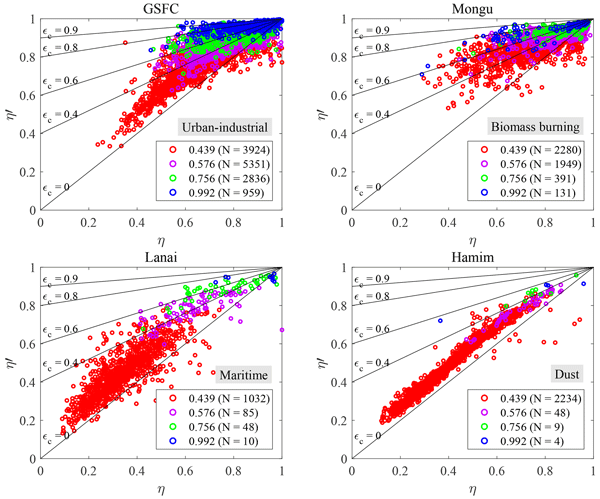
Aerosols are atmospheric particles that vary in size (radius) from a fraction of a micrometer (µm) to around 20 µm. They tend to be either smaller than 1 µm (like smoke or pollution) or larger than 1 µm (like dust or sea salt). Their optical effect (scattering and absorbing sunlight) can be divided into FM (fine-mode) and CM (coarse-mode) parts using a cutoff radius around 1 µm or a spectral (color) technique. We present and validate a theoretical link between the types of FM and CM divisions.

Jing Wei, Zhanqing Li, Jun Wang, Can Li, Pawan Gupta, and Maureen Cribb
Atmos. Chem. Phys., 23, 1511–1532, https://doi.org/10.5194/acp-23-1511-2023, https://doi.org/10.5194/acp-23-1511-2023, 2023
Short summary
Short summary
This study estimated the daily seamless 10 km ambient gaseous pollutants (NO2, SO2, and CO) across China using machine learning with extensive input variables measured on monitors, satellites, and models. Our dataset yields a high data quality via cross-validation at varying spatiotemporal scales and outperforms most previous related studies, making it most helpful to future (especially short-term) air pollution and environmental health-related studies.
Alexander Sinyuk, Brent N. Holben, Thomas F. Eck, David M. Giles, Ilya Slutsker, Oleg Dubovik, Joel S. Schafer, Alexander Smirnov, and Mikhail Sorokin
Atmos. Meas. Tech., 15, 4135–4151, https://doi.org/10.5194/amt-15-4135-2022, https://doi.org/10.5194/amt-15-4135-2022, 2022
Short summary
Short summary
This paper describes modification of smoothness constraints on the imaginary part of the refractive index employed in the AERONET aerosol retrieval algorithm. This modification is termed relaxed due to the weaker strength of this new smoothness constraint. Applying the modified version of the smoothness constraint results in a significant reduction of retrieved light absorption by brown-carbon-containing aerosols.
Pawan Gupta, Prakash Doraiswamy, Jashwanth Reddy, Palak Balyan, Sagnik Dey, Ryan Chartier, Adeel Khan, Karmann Riter, Brandon Feenstra, Robert C. Levy, Nhu Nguyen Minh Tran, Olga Pikelnaya, Kurinji Selvaraj, Tanushree Ganguly, and Karthik Ganesan
Atmos. Meas. Tech. Discuss., https://doi.org/10.5194/amt-2022-140, https://doi.org/10.5194/amt-2022-140, 2022
Revised manuscript not accepted
Short summary
Short summary
The use of low-cost sensors in air quality monitoring has been gaining interest across all walks of society. We present the results of evaluations of the PurpleAir against regulatory-grade PM2.5. The results indicate that with proper calibration, we can achieve bias-corrected PM2.5 data using PA sensors. Our study also suggests that pre-deployment calibrations developed at local or regional scales are required for the PA sensors to correct data from the field for scientific data analysis.
Cited articles
Campbell, J. R., Sassen, K., and Welton, E. J.: Elevated cloud and aerosol layer retrievals from micropulse lidar signal profiles, J. Atmos. Ocean. Tech., 25, 685–700, https://doi.org/10.1175/2007JTECHA1034.1, 2008.
Casey, J.: Exploring Curvature, Vieweg Mathematics, Braunschweig, Vieweg, ISBN 978-3-528-06475-4, 1996.
Chicco, D. and Jurman, J.: The advantages of the Matthews correlation coefficient (MCC) over F1 score and accuracy in binary classification evaluation, BMC Geonomics, 21, https://doi.org/10.1186/s12864-019-6413-7, 2020.
Eck, T. F., Holben, B. N., Reid, J. S., Dubovik, O., Smirnov, A., O'Neill, N. T., Slutsker, I., and Kinne, S.: Wavelength dependence of the optical depth of biomass burning, urban, and desert dust aerosol, J. Geophys. Res., 104, 31333–31349, 1999.
Giles, D. M., Sinyuk, A., Sorokin, M. G., Schafer, J. S., Smirnov, A., Slutsker, I., Eck, T. F., Holben, B. N., Lewis, J. R., Campbell, J. R., Welton, E. J., Korkin, S. V., and Lyapustin, A. I.: Advancements in the Aerosol Robotic Network (AERONET) Version 3 database – automated near-real-time quality control algorithm with improved cloud screening for Sun photometer aerosol optical depth (AOD) measurements, Atmos. Meas. Tech., 12, 169–209, https://doi.org/10.5194/amt-12-169-2019, 2019.
Holben, B. N., Eck, T. F., Slutsker, I., Tanre, D., Buis, J. P., Setzer A., Vermore, E., Reagan, J. A., Kaufman, Y. J., Nakajima, T., Lavenu, F., Jankowiak, I., and Smirnov, A.: AERONET – a federal instrument network and data archive for ae aerosol characterization, Remote Sens. Environ., 66, 1–16, 1998.
Kaden, M., Hermann, W., and Villmann, T.: Optimization of general statistical accuracy measures for classification based on learning vector quantization, ESANN 2014 proceedings, European Symposium on Artificial Neural Networks, Computational Intelligence, 2014.
Krämer, M., Schiller, C., Afchine, A., Bauer, R., Gensch, I., Mangold, A., Schlicht, S., Spelten, N., Sitnikov, N., Borrmann, S., de Reus, M., and Spichtinger, P.: Ice supersaturations and cirrus cloud crystal numbers, Atmos. Chem. Phys., 9, 3505–3522, https://doi.org/10.5194/acp-9-3505-2009, 2009.
Krämer, M., Rolf, C., Spelten, N., Afchine, A., Fahey, D., Jensen, E., Khaykin, S., Kuhn, T., Lawson, P., Lykov, A., Pan, L. L., Riese, M., Rollins, A., Stroh, F., Thornberry, T., Wolf, V., Woods, S., Spichtinger, P., Quaas, J., and Sourdeval, O.: A microphysics guide to cirrus – Part 2: Climatologies of clouds and humidity from observations, Atmos. Chem. Phys., 20, 12569–12608, https://doi.org/10.5194/acp-20-12569-2020, 2020.
Lewis, J. R., Campbell, J. R., Welton, E. J., Stewart, S. A., and Haftings, P. C.: Overview of MPLNET Version 3 Cloud Detection, J. Atmos. Ocean. Tech., 33, 2113–2134, https://doi.org/10.1175/JTECH-D-15-0190.1, 2016.
Sinyuk, A., Holben, B. N., Eck, T. F., Giles, D. M., Slutsker, I., Korkin, S., Schafer, J. S., Smirnov, A., Sorokin, M., and Lyapustin, A.: The AERONET Version 3 aerosol retrieval algorithm, associated uncertainties and comparisons to Version 2, Atmos. Meas. Tech., 13, 3375–3411, https://doi.org/10.5194/amt-13-3375-2020, 2020.
Smirnov, A., Holben, B. N., Eck, T. F., Dubovik, O., and Slutsker, I.: Cloud screening and quality control algorithms for the AERONET database, Remote Sens. Environ., 73, 337–349, https://doi.org/10.1016/S0034-4257(00)00109-7, 2000.
Sviridenkov, M, A., Gillette, D., A., Isakov, A., A., Sokolik, I., N., Smirnov, V., V., Belan, B., D., Pachenko, M., V., Andronova, A., V., Kolomiets, S., M., Zhukov, V., M., and Zhukovsky, D., A.: Size distribution of dust aerosol measured during the Soviet-American experiment in Tadzhikistan, 1989, Atmos. Environ. A-Gen., 27, 2481–2486, 1993.
Welton, E. J., Campbell, J. R., Spinhirne, J. D., and Scott, V. S.: Global monitoring of clouds and aerosols using a network of micro-pulse lidar systems, Proc. SPIE, 4153, 151–158, https://doi.org/10.1117/12.417040, 2001.
Yang, P., Lei B., Baum B. A., Liou, K., N., Kattawar, G., W., Mishchenko, M., I., and Cole, B.: Spectrally consistent scattering, absorption, and polarization properties of atmospheric ice crystals at wavelengths from 0.2 to 100 μm, J. Atmos. Sci., 330–347, https://doi.org/10.1175/JAS-D-12-039.1, 2013.
Short summary
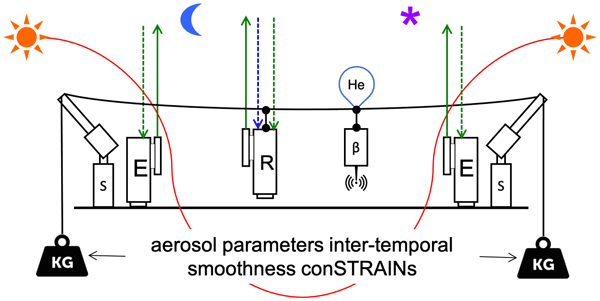
The new technique for the clouds screening of aerosol optical depth is presented. It employs measurements of the sky radiances at smallest scattering angle to detect cirrus clouds which otherwise are difficult to detect by other methods. The method employs the smoothness of the time series of measurements throughout a day as a criterion for cloud-free conditions. Sharp spikes in the time series are detected and associated with clouds.
The new technique for the clouds screening of aerosol optical depth is presented. It employs...


