
Articles | Volume 19, issue 19
https://doi.org/10.5194/amt-19-6469-2026
© Author(s) 2026. This work is distributed under
the Creative Commons Attribution 4.0 License.
the Creative Commons Attribution 4.0 License.
https://doi.org/10.5194/amt-19-6469-2026
© Author(s) 2026. This work is distributed under
the Creative Commons Attribution 4.0 License.
the Creative Commons Attribution 4.0 License.
Research article
| 
14 Oct 2026
Research article |
| 14 Oct 2026
| 14 Oct 2026
Atmospheric CO2 and CH4 measurements at Schauinsland station, Germany: a comparative study of diurnal and seasonal variations at 12 and 35 m intake height
Julian Großmann
CORRESPONDING AUTHOR

Institute of Environmental Physics, Heidelberg University, Heidelberg, Germany
Frank Meinhardt
German Environment Agency, Schauinsland station, Kirchzarten, Germany
Antje Hoheisel
Institute of Environmental Physics, Heidelberg University, Heidelberg, Germany
Bryan Hellack
German Environment Agency, Langen, Germany
Martina Schmidt
Institute of Environmental Physics, Heidelberg University, Heidelberg, Germany
Related authors
No articles found.
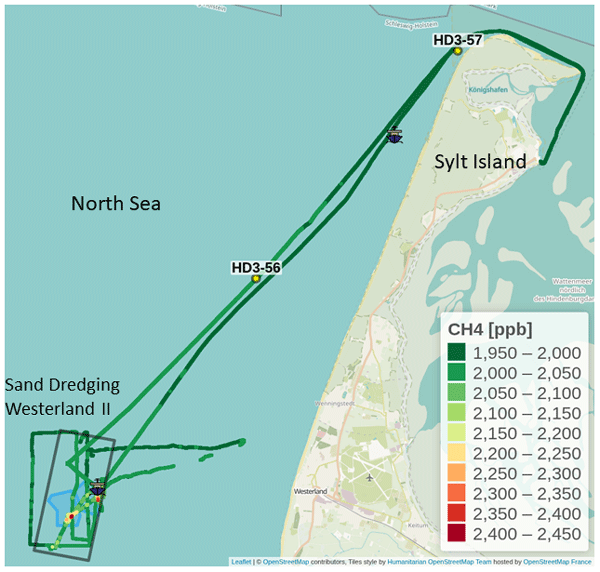
Martina Schmidt, Ingeborg Bussmann, Sarah J. E. Reith, Annika Palzer, Cedric Couret, Frank Keppler, Daniela Polag, Lasse Sander, Moritz Schroll, and Julia B. Wietzel
Biogeosciences, 23, 5095–5115, https://doi.org/10.5194/bg-23-5095-2026, https://doi.org/10.5194/bg-23-5095-2026, 2026
Short summary
Short summary
Methane (CH4) measurements near a sand dredging site off Sylt (North Sea) revealed elevated concentrations in both air and water, particularly during summer. CH4 fluxes were significantly higher at the dredging site compared to surrounding areas. Isotopic signatures suggest a microbial origin. These findings indicate that coastal sand extraction may represent a previously unaccounted source of atmospheric CH4.
Audrey McManemin, Catherine Juéry, Vincent Blandin, Matthew Baker, Stéphane Bauguitte, Dominik Brunner, Philippine Burdeau, James Lawrence France, Anders M. Fredenslund, Andreas Hueni, Gerrit Kuhlmann, Patryk Łakomiec, Sando Meier, Roberto Paglini, Roubina Papaconstantinou, Jean-Daniel Paris, Pierre-Yves Quehe, Thomas Röckmann, Charlotte Scheutz, Martina Schmidt, Marius Vögtli, Julia B. Wietzel, and Adam R. Brandt
EGUsphere, https://doi.org/10.5194/egusphere-2026-1744, https://doi.org/10.5194/egusphere-2026-1744, 2026
Short summary
Short summary
Researchers tested five university-led systems to measure methane leaks at a facility in France. By releasing known amounts of gas, researchers checked if mobile tools on vehicles and planes could accurately detect and quantify emissions. Most sensors were excellent at finding leaks, but their accuracy in measuring the exact emission rate varied. Weather, especially low wind, significantly impacted results. These findings help improve how we track greenhouse gases to meet climate goals.
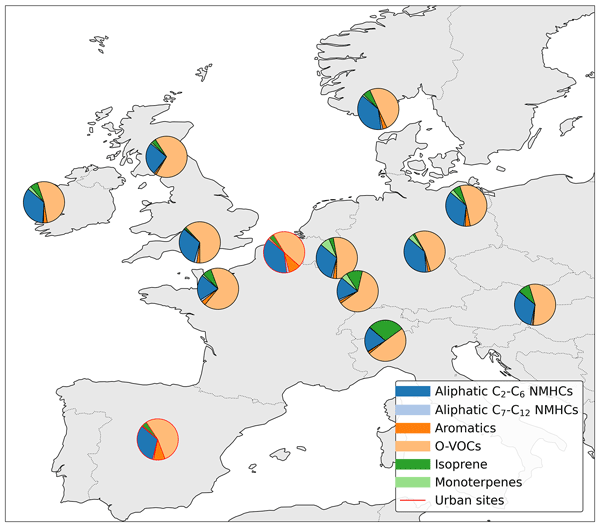
Wenche Aas, Thérèse Salameh, Robert Wegener, Heidi Hellén, Jean-Luc Jaffrezo, Pontus Roldin, Elisabeth Alonso-Blanco, Andres Alastuey, Crist Amelynck, Jgor Arduini, Benjamin Bergmans, Marie Bertrand, Agnes Borbon, Efstratios Bourtsoukidis, Laetitia Bouvier, David Butterfield, Iris Buxbaum, Darius Ceburnis, Anja Claude, Augustin Colette, Aurélie Colomb, Sophie Darfeuil, James Dernie, Maximilien Desservettaz, Elías Díaz-Ramiro, Marvin Dufresne, René Dubus, Mario Duval, Marie Dury, Anna Font, Kirsten N. Fossum, Evelyn Freney, Gotzon Gangoiti, Yao Ge, Maria Carmen Gomez, Francisco J. Gómez-Moreno, Marie Gohy, Valérie Gros, Paul Hamer, Bryan Hellack, Hartmut Herrmann, Robert Holla, Adéla Holubová, Niels R. Jensen, Tuija Jokinen, Matthew Jones, Uwe Käfer, Lukas Kesper, Dieter Klemp, Dagmar Kubistin, Angela Marinoni, Martina Mazzini, Vy Ngoc Thuy Dinh, Jurgita Ovadnevaite, Tuukka Petäjä, Miguel Portillo-Estrada, Jitka Přívozníková, Jean-Philippe Putaud, Stefan Reimann, Laura Renzi, Veronique Riffault, Stuart Ritchie, Chris Robins, Begoña Artíñano Rodríguez de Torres, Laurent Poulain, Julian Rüdiger, Agnieszka Sanocka, Estibaliz Saez de Camara Oleaga, Niels Schoon, Roger Seco, Ivan Simmons, Leïla Simon, David Simpson, Sverre Solberg, Emmanuel Tison, August Thomasson, Svetlana Tsyro, Marsailidh Twigg, Toni Tykkä, Bert Verreyken, Ågot Watne, Katie Williams, Ana Maria Yáñez-Serrano, Karen Yeung, Ilona Ylivinkka, and Karl Espen Yttri
Atmos. Chem. Phys., 26, 8717–8751, https://doi.org/10.5194/acp-26-8717-2026, https://doi.org/10.5194/acp-26-8717-2026, 2026
Short summary
Short summary
A one-week intensive measurement campaign during the 2022 European heatwave included monitoring of ozone, volatile organic compounds, aerosol chemical composition, and organic tracers to investigate air pollution sources. Results showed that emissions from vegetation and human activities contributed to peaks in ozone and secondary organic aerosol particles. Differences between measurements and model simulations underline the need for better characterization of sources and formation pathways.
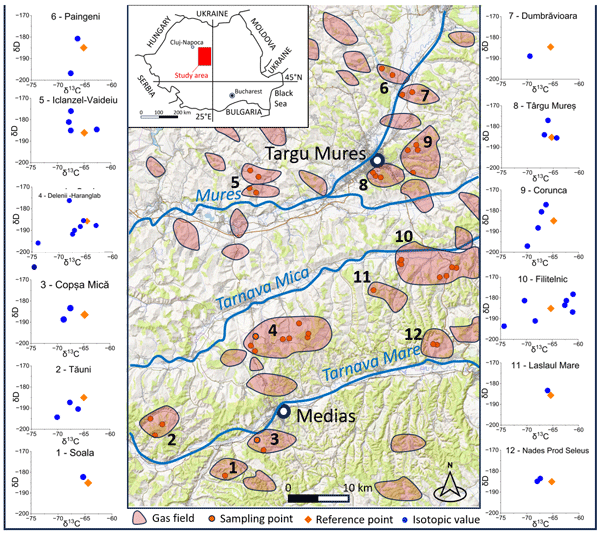
Thomas Röckmann, Malika Menoud, Jacoline van Es, Carina van der Veen, Hossein Maazallahi, Pawel Jagoda, Jaroslav M. Necki, Jakub Bartyzel, Piotr Korben, Sara Defratyka, Martina Schmidt, Marius Corbu, Sebastian Iancu, Andreea Calcan, Magdalena Ardelean, Sorin Ghemulet, Cristian Pop, Andrei Radovici, Alexandru Mereuta, Horatiu Stefanie, and Calin Baciu
Atmos. Chem. Phys., 26, 723–731, https://doi.org/10.5194/acp-26-723-2026, https://doi.org/10.5194/acp-26-723-2026, 2026
Short summary
Short summary
We report the isotopic composition of CH4 emitted from 48 installations in the gas production region of Transylvania, Romania which confirm the biogenic origin of the Transylvanian gas, produced by hydrogenotrophic CO2 reduction. This is similar to values reported previously from natural seeps and natural gas in a major city in the region. However, is more depleted in heavy isotopes than the oil-associated gas emitted in the Southern Romanian Plain, and gas leakages in the city of Bucharest.
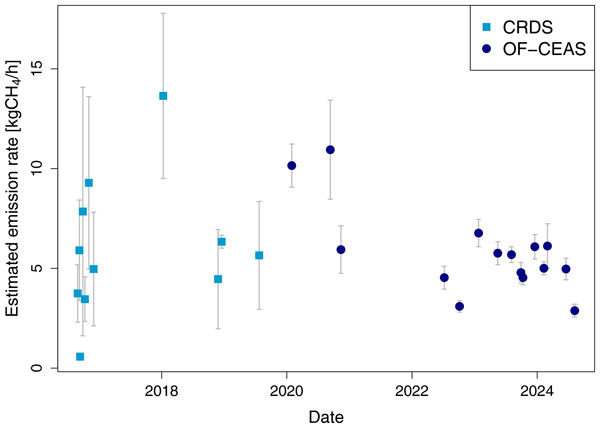
Julia Beate Wietzel, Piotr Korben, Antje Hoheisel, and Martina Schmidt
Atmos. Meas. Tech., 18, 4631–4645, https://doi.org/10.5194/amt-18-4631-2025, https://doi.org/10.5194/amt-18-4631-2025, 2025
Short summary
Short summary
Long-term measurements of CH4 emission rates at a biogas plant in Germany were performed for eight years using mobile measurements combined with a Gaussian plume model. The average CH4 emission rate of the biogas plant was 5.9 ± 0.5 kg CH4 h-1. To increase the accuracy of the emission rate calculations and harmonize the dataset, the methodology was evaluated through six controlled methane release experiments demonstrating an uncertainty lower than 30 %, following several recommendations.
Jia Sun, Markus Hermann, Kay Weinhold, Maik Merkel, Wolfram Birmili, Yifan Yang, Thomas Tuch, Harald Flentje, Björn Briel, Ludwig Ries, Cedric Couret, Michael Elsasser, Ralf Sohmer, Klaus Wirtz, Frank Meinhardt, Maik Schütze, Olaf Bath, Bryan Hellack, Veli-Matti Kerminen, Markku Kulmala, Nan Ma, and Alfred Wiedensohler
Atmos. Chem. Phys., 24, 10667–10687, https://doi.org/10.5194/acp-24-10667-2024, https://doi.org/10.5194/acp-24-10667-2024, 2024
Short summary
Short summary
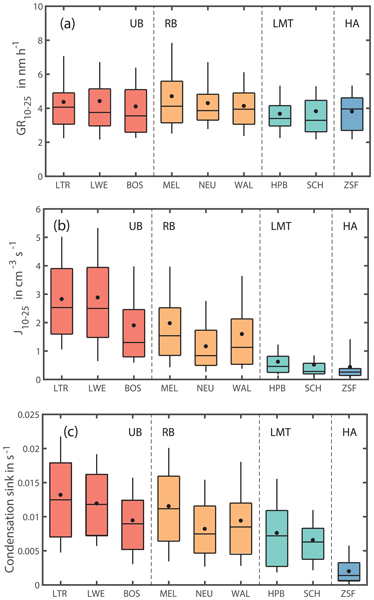
We investigated the characteristics of new particle formation (NPF) for various environments from urban background to high Alpine and the impacts of NPF on cloud condensation nuclei and aerosol radiative forcing. NPF features differ between site categories, implying the crucial role of local environmental factors such as the degree of emissions and meteorological conditions. The results also underscore the importance of local environments when assessing the impact of NPF on climate in models.
Yao Ge, Sverre Solberg, Mathew R. Heal, Stefan Reimann, Willem van Caspel, Bryan Hellack, Thérèse Salameh, and David Simpson
Atmos. Chem. Phys., 24, 7699–7729, https://doi.org/10.5194/acp-24-7699-2024, https://doi.org/10.5194/acp-24-7699-2024, 2024
Short summary
Short summary
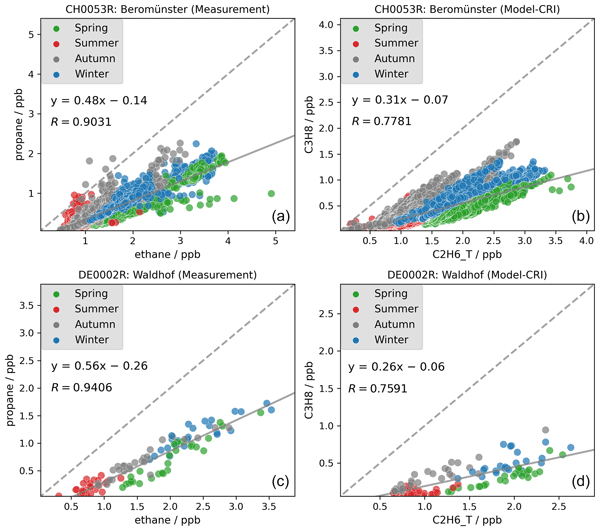
Atmospheric volatile organic compounds (VOCs) constitute many species, acting as precursors to ozone and aerosol. Given the uncertainties in VOC emissions, lack of evaluation studies, and recent changes in emissions, this work adapts the EMEP MSC-W to evaluate emission inventories in Europe. We focus on the varying agreement between modelled and measured VOCs across different species and underscore potential inaccuracies in total and sector-specific emission estimates.
Antje Hoheisel and Martina Schmidt
Atmos. Chem. Phys., 24, 2951–2969, https://doi.org/10.5194/acp-24-2951-2024, https://doi.org/10.5194/acp-24-2951-2024, 2024
Short summary
Short summary
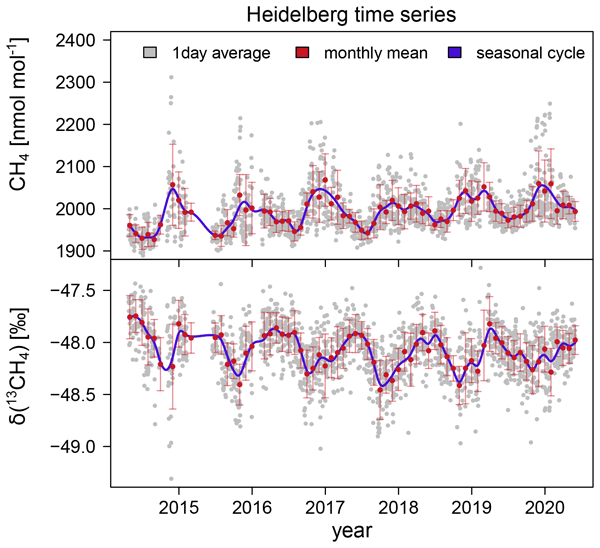
In Heidelberg, Germany, methane and its stable carbon isotope composition have been measured continuously with a cavity ring-down spectroscopy (CRDS) analyser since April 2014. These 6-year time series are analysed with the Keeling plot method for the isotopic composition of the sources, as well as seasonal variations and trends in methane emissions. The source contributions derived from atmospheric measurements were used to evaluate global and regional emission inventories of methane.
Alina Fiehn, Maximilian Eckl, Julian Kostinek, Michał Gałkowski, Christoph Gerbig, Michael Rothe, Thomas Röckmann, Malika Menoud, Hossein Maazallahi, Martina Schmidt, Piotr Korbeń, Jarosław Neçki, Mila Stanisavljević, Justyna Swolkień, Andreas Fix, and Anke Roiger
Atmos. Chem. Phys., 23, 15749–15765, https://doi.org/10.5194/acp-23-15749-2023, https://doi.org/10.5194/acp-23-15749-2023, 2023
Short summary
Short summary
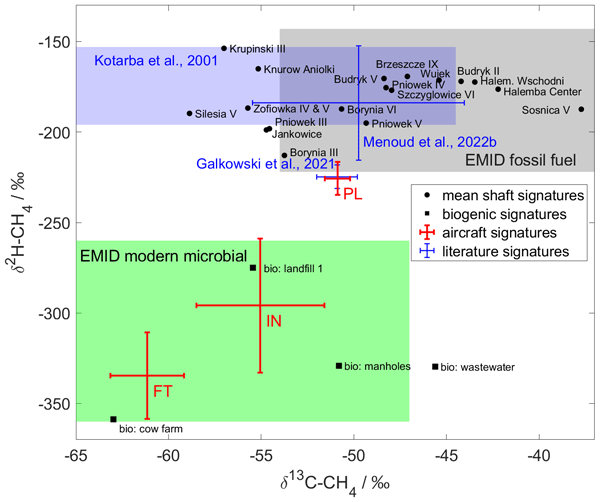
During the CoMet mission in the Upper Silesian Coal Basin (USCB) ground-based and airborne air samples were taken and analyzed for the isotopic composition of CH4 to derive the mean signature of the USCB and source signatures of individual coal mines. Using δ2H signatures, the biogenic emissions from the USCB account for 15 %–50 % of total emissions, which is underestimated in common emission inventories. This demonstrates the importance of δ2H-CH4 observations for methane source apportionment.
Tobias D. Schmitt, Jonas Kuhn, Ralph Kleinschek, Benedikt A. Löw, Stefan Schmitt, William Cranton, Martina Schmidt, Sanam N. Vardag, Frank Hase, David W. T. Griffith, and André Butz
Atmos. Meas. Tech., 16, 6097–6110, https://doi.org/10.5194/amt-16-6097-2023, https://doi.org/10.5194/amt-16-6097-2023, 2023
Short summary
Short summary
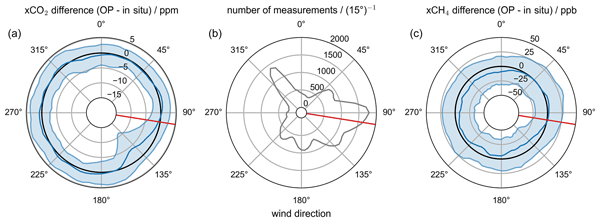
Our new observatory measures greenhouse gas concentrations of carbon dioxide (CO2) and methane (CH4) along a 1.55 km long light path over the city of Heidelberg, Germany. We compared our measurements with measurements that were taken at a single point at one end of our path. The two mostly agreed but show a significant difference for CO2 with certain wind directions. This is important when using greenhouse gas concentration measurements to observe greenhouse gas emissions of cities.
Douglas E. J. Worthy, Michele K. Rauh, Lin Huang, Felix R. Vogel, Alina Chivulescu, Kenneth A. Masarie, Ray L. Langenfelds, Paul B. Krummel, Colin E. Allison, Andrew M. Crotwell, Monica Madronich, Gabrielle Pétron, Ingeborg Levin, Samuel Hammer, Sylvia Michel, Michel Ramonet, Martina Schmidt, Armin Jordan, Heiko Moossen, Michael Rothe, Ralph Keeling, and Eric J. Morgan
Atmos. Meas. Tech., 16, 5909–5935, https://doi.org/10.5194/amt-16-5909-2023, https://doi.org/10.5194/amt-16-5909-2023, 2023
Short summary
Short summary
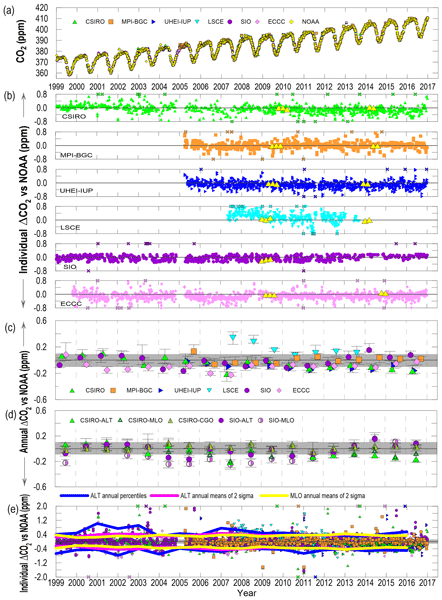
Network compatibility is important for inferring greenhouse gas fluxes at global or regional scales. This study is the first assessment of the measurement agreement among seven individual programs within the World Meteorological Organization community. It compares co-located flask air measurements at the Alert Observatory in Canada over a 17-year period. The results provide stronger confidence in the uncertainty estimation while using those datasets in various data interpretation applications.
Foteini Stavropoulou, Katarina Vinković, Bert Kers, Marcel de Vries, Steven van Heuven, Piotr Korbeń, Martina Schmidt, Julia Wietzel, Pawel Jagoda, Jaroslav M. Necki, Jakub Bartyzel, Hossein Maazallahi, Malika Menoud, Carina van der Veen, Sylvia Walter, Béla Tuzson, Jonas Ravelid, Randulph Paulo Morales, Lukas Emmenegger, Dominik Brunner, Michael Steiner, Arjan Hensen, Ilona Velzeboer, Pim van den Bulk, Hugo Denier van der Gon, Antonio Delre, Maklawe Essonanawe Edjabou, Charlotte Scheutz, Marius Corbu, Sebastian Iancu, Denisa Moaca, Alin Scarlat, Alexandru Tudor, Ioana Vizireanu, Andreea Calcan, Magdalena Ardelean, Sorin Ghemulet, Alexandru Pana, Aurel Constantinescu, Lucian Cusa, Alexandru Nica, Calin Baciu, Cristian Pop, Andrei Radovici, Alexandru Mereuta, Horatiu Stefanie, Alexandru Dandocsi, Bas Hermans, Stefan Schwietzke, Daniel Zavala-Araiza, Huilin Chen, and Thomas Röckmann
Atmos. Chem. Phys., 23, 10399–10412, https://doi.org/10.5194/acp-23-10399-2023, https://doi.org/10.5194/acp-23-10399-2023, 2023
Short summary
Short summary
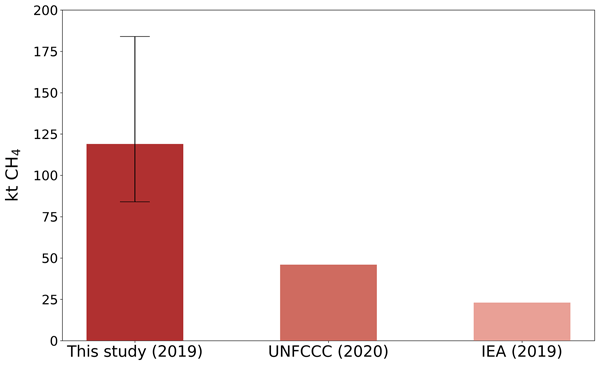
In this study, we quantify CH4 emissions from onshore oil production sites in Romania at source and facility level using a combination of ground- and drone-based measurement techniques. We show that the total CH4 emissions in our studied areas are much higher than the emissions reported to UNFCCC, and up to three-quarters of the detected emissions are related to operational venting. Our results suggest that oil and gas production infrastructure in Romania holds a massive mitigation potential.
Antje Hoheisel, Cedric Couret, Bryan Hellack, and Martina Schmidt
Atmos. Meas. Tech., 16, 2399–2413, https://doi.org/10.5194/amt-16-2399-2023, https://doi.org/10.5194/amt-16-2399-2023, 2023
Short summary
Short summary
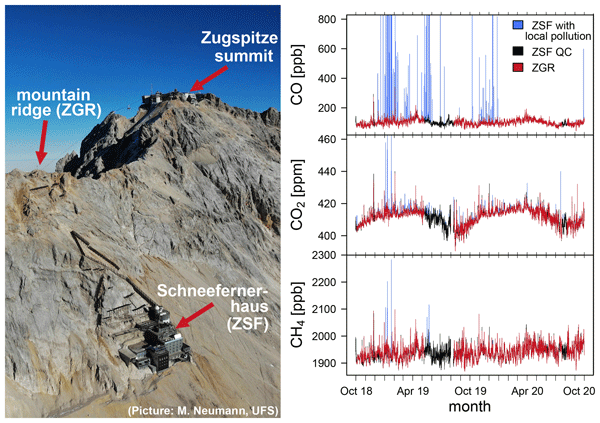
High-precision CO2, CH4 and CO measurements have been carried out at Zugspitze for decades. New technologies make it possible to analyse these gases with high temporal resolution. This allows the detection of local pollution. To this end, measurements have been performed on the mountain ridge (ZGR) and are compared to routine measurements at the Schneefernerhaus (ZSF). Careful manual flagging of pollution events in the ZSF data leads to consistency with the little influenced ZGR time series.
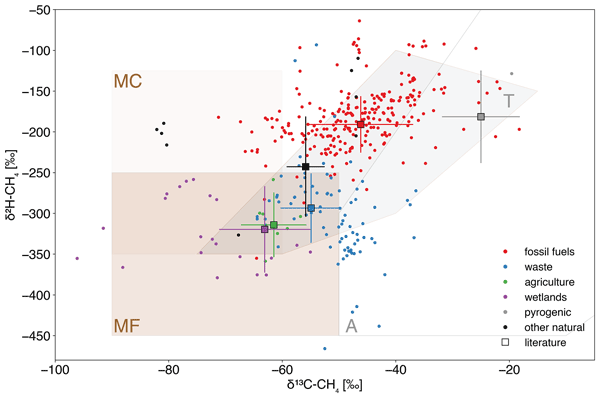
Malika Menoud, Carina van der Veen, Dave Lowry, Julianne M. Fernandez, Semra Bakkaloglu, James L. France, Rebecca E. Fisher, Hossein Maazallahi, Mila Stanisavljević, Jarosław Nęcki, Katarina Vinkovic, Patryk Łakomiec, Janne Rinne, Piotr Korbeń, Martina Schmidt, Sara Defratyka, Camille Yver-Kwok, Truls Andersen, Huilin Chen, and Thomas Röckmann
Earth Syst. Sci. Data, 14, 4365–4386, https://doi.org/10.5194/essd-14-4365-2022, https://doi.org/10.5194/essd-14-4365-2022, 2022
Short summary
Short summary
Emission sources of methane (CH4) can be distinguished with measurements of CH4 stable isotopes. We present new measurements of isotope signatures of various CH4 sources in Europe, mainly anthropogenic, sampled from 2017 to 2020. The present database also contains the most recent update of the global signature dataset from the literature. The dataset improves CH4 source attribution and the understanding of the global CH4 budget.
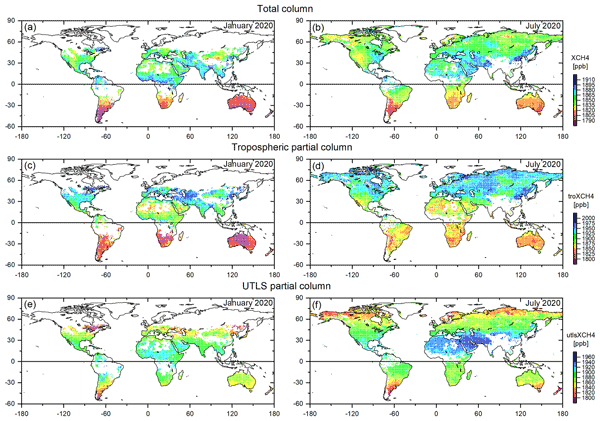
Matthias Schneider, Benjamin Ertl, Qiansi Tu, Christopher J. Diekmann, Farahnaz Khosrawi, Amelie N. Röhling, Frank Hase, Darko Dubravica, Omaira E. García, Eliezer Sepúlveda, Tobias Borsdorff, Jochen Landgraf, Alba Lorente, André Butz, Huilin Chen, Rigel Kivi, Thomas Laemmel, Michel Ramonet, Cyril Crevoisier, Jérome Pernin, Martin Steinbacher, Frank Meinhardt, Kimberly Strong, Debra Wunch, Thorsten Warneke, Coleen Roehl, Paul O. Wennberg, Isamu Morino, Laura T. Iraci, Kei Shiomi, Nicholas M. Deutscher, David W. T. Griffith, Voltaire A. Velazco, and David F. Pollard
Atmos. Meas. Tech., 15, 4339–4371, https://doi.org/10.5194/amt-15-4339-2022, https://doi.org/10.5194/amt-15-4339-2022, 2022
Short summary
Short summary
We present a computationally very efficient method for the synergetic use of level 2 remote-sensing data products. We apply the method to IASI vertical profile and TROPOMI total column space-borne methane observations and thus gain sensitivity for the tropospheric methane partial columns, which is not achievable by the individual use of TROPOMI and IASI. These synergetic effects are evaluated theoretically and empirically by inter-comparisons to independent references of TCCON, AirCore, and GAW.
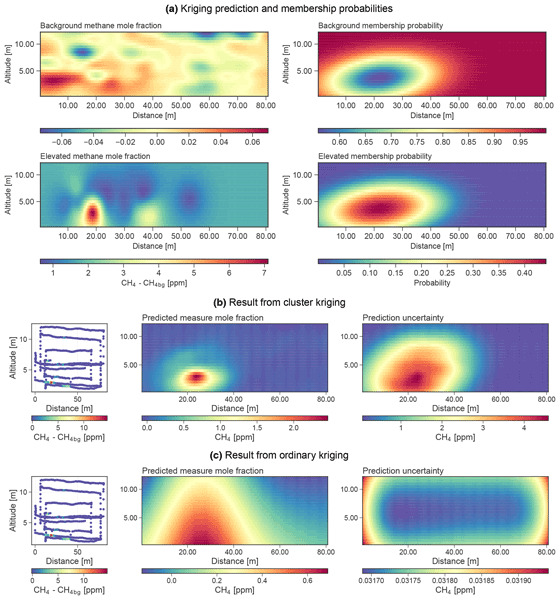
Randulph Morales, Jonas Ravelid, Katarina Vinkovic, Piotr Korbeń, Béla Tuzson, Lukas Emmenegger, Huilin Chen, Martina Schmidt, Sebastian Humbel, and Dominik Brunner
Atmos. Meas. Tech., 15, 2177–2198, https://doi.org/10.5194/amt-15-2177-2022, https://doi.org/10.5194/amt-15-2177-2022, 2022
Short summary
Short summary
Mapping trace gas emission plumes using in situ measurements from unmanned aerial vehicles (UAVs) is an emerging and attractive possibility to quantify emissions from localized sources. We performed an extensive controlled-release experiment to develop an optimal quantification method and to determine the related uncertainties under various environmental and sampling conditions. Our approach was successful in quantifying local methane sources from drone-based measurements.
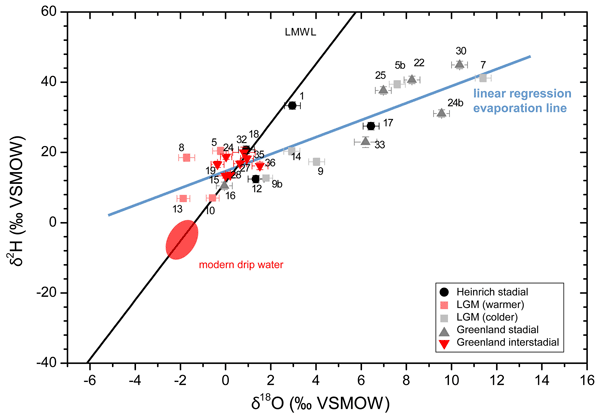
Sophie F. Warken, Therese Weißbach, Tobias Kluge, Hubert Vonhof, Denis Scholz, Rolf Vieten, Martina Schmidt, Amos Winter, and Norbert Frank
Clim. Past, 18, 167–181, https://doi.org/10.5194/cp-18-167-2022, https://doi.org/10.5194/cp-18-167-2022, 2022
Short summary
Short summary
The analysis of fluid inclusions from a Puerto Rican speleothem provides quantitative information about past rainfall conditions and temperatures during the Last Glacial Period, when the climate was extremely variable. Our data show that the region experienced a climate that was generally colder and drier. However, we also reconstruct intervals when temperatures reached nearly modern values, and convective activity was comparable to or only slightly weaker than the present day.
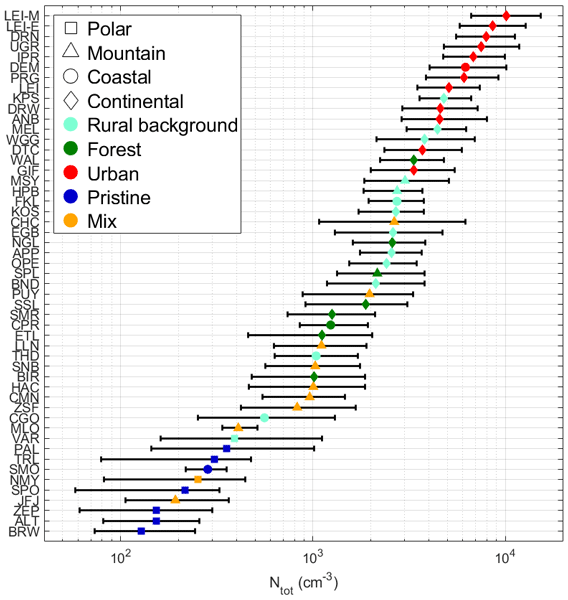
Clémence Rose, Martine Collaud Coen, Elisabeth Andrews, Yong Lin, Isaline Bossert, Cathrine Lund Myhre, Thomas Tuch, Alfred Wiedensohler, Markus Fiebig, Pasi Aalto, Andrés Alastuey, Elisabeth Alonso-Blanco, Marcos Andrade, Begoña Artíñano, Todor Arsov, Urs Baltensperger, Susanne Bastian, Olaf Bath, Johan Paul Beukes, Benjamin T. Brem, Nicolas Bukowiecki, Juan Andrés Casquero-Vera, Sébastien Conil, Konstantinos Eleftheriadis, Olivier Favez, Harald Flentje, Maria I. Gini, Francisco Javier Gómez-Moreno, Martin Gysel-Beer, Anna Gannet Hallar, Ivo Kalapov, Nikos Kalivitis, Anne Kasper-Giebl, Melita Keywood, Jeong Eun Kim, Sang-Woo Kim, Adam Kristensson, Markku Kulmala, Heikki Lihavainen, Neng-Huei Lin, Hassan Lyamani, Angela Marinoni, Sebastiao Martins Dos Santos, Olga L. Mayol-Bracero, Frank Meinhardt, Maik Merkel, Jean-Marc Metzger, Nikolaos Mihalopoulos, Jakub Ondracek, Marco Pandolfi, Noemi Pérez, Tuukka Petäjä, Jean-Eudes Petit, David Picard, Jean-Marc Pichon, Veronique Pont, Jean-Philippe Putaud, Fabienne Reisen, Karine Sellegri, Sangeeta Sharma, Gerhard Schauer, Patrick Sheridan, James Patrick Sherman, Andreas Schwerin, Ralf Sohmer, Mar Sorribas, Junying Sun, Pierre Tulet, Ville Vakkari, Pieter Gideon van Zyl, Fernando Velarde, Paolo Villani, Stergios Vratolis, Zdenek Wagner, Sheng-Hsiang Wang, Kay Weinhold, Rolf Weller, Margarita Yela, Vladimir Zdimal, and Paolo Laj
Atmos. Chem. Phys., 21, 17185–17223, https://doi.org/10.5194/acp-21-17185-2021, https://doi.org/10.5194/acp-21-17185-2021, 2021
Short summary
Short summary
Aerosol particles are a complex component of the atmospheric system the effects of which are among the most uncertain in climate change projections. Using data collected at 62 stations, this study provides the most up-to-date picture of the spatial distribution of particle number concentration and size distribution worldwide, with the aim of contributing to better representation of aerosols and their interactions with clouds in models and, therefore, better evaluation of their impact on climate.
Cited articles
Bergamaschi, P., Karstens, U., Manning, A. J., Saunois, M., Tsuruta, A., Berchet, A., Vermeulen, A. T., Arnold, T., Janssens-Maenhout, G., Hammer, S., Levin, I., Schmidt, M., Ramonet, M., Lopez, M., Lavric, J., Aalto, T., Chen, H., Feist, D. G., Gerbig, C., Haszpra, L., Hermansen, O., Manca, G., Moncrieff, J., Meinhardt, F., Necki, J., Galkowski, M., O'Doherty, S., Paramonova, N., Scheeren, H. A., Steinbacher, M., and Dlugokencky, E.: Inverse modelling of European CH4 emissions during 2006–2012 using different inverse models and reassessed atmospheric observations, Atmos. Chem. Phys., 18, 901–920, https://doi.org/10.5194/acp-18-901-2018, 2018.
Bergamaschi, P., Segers, A., Brunner, D., Haussaire, J.-M., Henne, S., Ramonet, M., Arnold, T., Biermann, T., Chen, H., Conil, S., Delmotte, M., Forster, G., Frumau, A., Kubistin, D., Lan, X., Leuenberger, M., Lindauer, M., Lopez, M., Manca, G., Müller-Williams, J., O'Doherty, S., Scheeren, B., Steinbacher, M., Trisolino, P., Vítková, G., and Yver Kwok, C.: High-resolution inverse modelling of European CH4 emissions using the novel FLEXPART-COSMO TM5 4DVAR inverse modelling system, Atmos. Chem. Phys., 22, 13243–13268, https://doi.org/10.5194/acp-22-13243-2022, 2022.
Cristofanelli, P., Fratticioli, C., Hazan, L., Chariot, M., Couret, C., Gazetas, O., Kubistin, D., Laitinen, A., Leskinen, A., Laurila, T., Lindauer, M., Manca, G., Ramonet, M., Trisolino, P., and Steinbacher, M.: Identification of spikes in continuous ground-based in situ time series of CO2, CH4 and CO: an extended experiment within the European ICOS Atmosphere network, Atmos. Meas. Tech., 16, 5977–5994, https://doi.org/10.5194/amt-16-5977-2023, 2023.
Drewnick, F., Böttger, T., von der Weiden-Reinmüller, S.-L., Zorn, S. R., Klimach, T., Schneider, J., and Borrmann, S.: Design of a mobile aerosol research laboratory and data processing tools for effective stationary and mobile field measurements, Atmos. Meas. Tech., 5, 1443–1457, https://doi.org/10.5194/amt-5-1443-2012, 2012.
El Yazidi, A., Ramonet, M., Ciais, P., Broquet, G., Pison, I., Abbaris, A., Brunner, D., Conil, S., Delmotte, M., Gheusi, F., Guerin, F., Hazan, L., Kachroudi, N., Kouvarakis, G., Mihalopoulos, N., Rivier, L., and Serça, D.: Identification of spikes associated with local sources in continuous time series of atmospheric CO, CO2 and CH4, Atmos. Meas. Tech., 11, 1599–1614, https://doi.org/10.5194/amt-11-1599-2018, 2018.
Hazan, L., Tarniewicz, J., Ramonet, M., Laurent, O., and Abbaris, A.: Automatic processing of atmospheric CO2 and CH4 mole fractions at the ICOS Atmosphere Thematic Centre, Atmos. Meas. Tech., 9, 4719–4736, https://doi.org/10.5194/amt-9-4719-2016, 2016.
Heiskanen, J., Brümmer, C., Buchmann, N., Calfapietra, C., Chen, H., Gielen, B., Gkritzalis, T., Hammer, S., Hartman, S., Herbst, M., Janssens, I. A., Jordan, A., Juurola, E., Karstens, U., Kasurinen, V., Kruijt, B., Lankreijer, H., Levin, I., Linderson, M., Loustau, D., Merbold, L., Lund Myhre, C., Papale, D., Pavelka, M., Pilegaard, K., Ramonet, M., Rebmann, C., Rinne, J., Rivier, L., Saltikoff, E., Sanders, R., Steinbacher, M., Steinhoff, T., Watson, A., Vermeulen, A. T., Vesala, T., Vítková, G., and Kutsch, W.: ICOS: Sources, Sinks, & Impacts: Europe Launches Its Integrated Carbon Observation System, B. Am. Meteor. Soc., 104, 22–24, https://doi.org/10.1175/BAMS-D-19-0364.A, 2023.
Herig Coimbra, P. H., Loubet, B., Laurent, O., Bignotti, L., Lozano, M., and Ramonet, M.: Eddy covariance with slow-response greenhouse gas analysers on tall towers: bridging atmospheric and ecosystem greenhouse gas networks, Atmos. Meas. Tech., 17, 6625–6645, https://doi.org/10.5194/amt-17-6625-2024, 2024.
Hofer, C., Locher, R., and Ruckstuhl, A.: Utilities of Institute of Data Analyses and Process Design, CRAN [code], https://doi.org/10.32614/CRAN.package.IDPmisc, 2024.
Hoheisel, A.: Evaluation of greenhouse gas time series to characterise local and regional emissions, Ph.D. thesis, Heidelberg University, Germany, 91 pp., https://doi.org/10.11588/heidok.00030321, 2021.
Hoheisel, A., Couret, C., Hellack, B., and Schmidt, M.: Comparison of atmospheric CO, CO2 and CH4 measurements at the Schneefernerhaus and the mountain ridge at Zugspitze, Atmos. Meas. Tech., 16, 2399–2413, https://doi.org/10.5194/amt-16-2399-2023, 2023.
ICOS RI: ICOS Atmosphere Station Specifications V2.0, edited by: Laurent, O., 2734778, https://doi.org/10.18160/GK28-2188, 2020.
Lan, X. and Dlugokencky, E. J.: Atmospheric constraints on changing Arctic CH4 emissions, Front. Environ. Sci., 12, 1382621, https://doi.org/10.3389/fenvs.2024.1382621, 2024.
Munassar, S., Rödenbeck, C., Gałkowski, M., Koch, F.-T., Totsche, K. U., Botía, S., and Gerbig, C.: To what extent does the CO2 diurnal cycle impact flux estimates derived from global and regional inversions?, Atmos. Chem. Phys., 25, 639–656, https://doi.org/10.5194/acp-25-639-2025, 2025.
Ramonet, M., Ciais, P., Aalto, T., Aulagnier, C., Chevallier, F., Cipriano, D., Conway, T. J., Haszpra, L., Kazan, V., Meinhardt, F., Paris, J.-D., Schmidt, M., Simmonds, P., Xueref-Rémy, I., and Necki, J. N.: A recent build-up of atmospheric CO2 over Europe. Part 1: observed signals and possible explanations, Tellus B, 62, https://doi.org/10.1111/j.1600-0889.2009.00442.x, 2010.
Ramonet, M., Ciais, P., Apadula, F., Bartyzel, J., Bastos, A., Bergamaschi, P., Blanc, P. E., Brunner, D., Caracciolo Di Torchiarolo, L., Calzolari, F., Chen, H., Chmura, L., Colomb, A., Conil, S., Cristofanelli, P., Cuevas, E., Curcoll, R., Delmotte, M., Di Sarra, A., Emmenegger, L., Forster, G., Frumau, A., Gerbig, C., Gheusi, F., Hammer, S., Haszpra, L., Hatakka, J., Hazan, L., Heliasz, M., Henne, S., Hensen, A., Hermansen, O., Keronen, P., Kivi, R., Komínková, K., Kubistin, D., Laurent, O., Laurila, T., Lavric, J. V., Lehner, I., Lehtinen, K. E. J., Leskinen, A., Leuenberger, M., Levin, I., Lindauer, M., Lopez, M., Myhre, C. L., Mammarella, I., Manca, G., Manning, A., Marek, M. V., Marklund, P., Martin, D., Meinhardt, F., Mihalopoulos, N., Mölder, M., Morgui, J. A., Necki, J., O'Doherty, S., O'Dowd, C., Ottosson, M., Philippon, C., Piacentino, S., Pichon, J. M., Plass-Duelmer, C., Resovsky, A., Rivier, L., Rodó, X., Sha, M. K., Scheeren, H. A., Sferlazzo, D., Spain, T. G., Stanley, K. M., Steinbacher, M., Trisolino, P., Vermeulen, A., Vítková, G., Weyrauch, D., Xueref-Remy, I., Yala, K., and Yver Kwok, C.: The fingerprint of the summer 2018 drought in Europe on ground-based atmospheric CO2 measurements, Philos. T. R. Soc. B, 375, 20190513, https://doi.org/10.1098/rstb.2019.0513, 2020.
Rödenbeck, C., Zaehle, S., Keeling, R., and Heimann, M.: The European carbon cycle response to heat and drought as seen from atmospheric CO2 data for 1999–2018, Philos. T. R. Soc. B, 375, 20190506, https://doi.org/10.1098/rstb.2019.0506, 2020.
Ruckstuhl, A. F., Jacobson, M. P., Field, R. W., and Dodd, J. A.: Baseline subtraction using robust local regression estimation, J. Quant. Spectrosc. Ra., 68, 179–193, https://doi.org/10.1016/S0022-4073(00)00021-2, 2001.
Ruckstuhl, A. F., Henne, S., Reimann, S., Steinbacher, M., Vollmer, M. K., O'Doherty, S., Buchmann, B., and Hueglin, C.: Robust extraction of baseline signal of atmospheric trace species using local regression, Atmos. Meas. Tech., 5, 2613–2624, https://doi.org/10.5194/amt-5-2613-2012, 2012.
Schmidt, M., Graul, R., Sartorius, H., and Levin, I.: Carbon dioxide and methane in continental Europe: a climatology, and 222Radon-based emission estimates, Tellus B, 48, 457–473, https://doi.org/10.1034/j.1600-0889.1994.t01-2-00002.x-i1, 1996.
Schmidt, M., Glatzel-Mattheier, H., Sartorius, H., Worthy, D. E., and Levin, I.: Western European N2O emissions: A top-down approach based on atmospheric observations, J. Geophys. Res., 106, 5507–5516, https://doi.org/10.1029/2000JD900701, 2001.
Schmidt, M., Graul, R., Sartorius, H., and Levin, I.: The Schauinsland CO2 record: 30 years of continental observations and their implications for the variability of the European CO2 budget, J. Geophys. Res.-Atmos., 108, 4619, https://doi.org/10.1029/2002JD003085, 2003.
Schmidt, M., Bussmann, I., Reith, S. J. E., Palzer, A., Couret, C., Keppler, F., Polag, D., Sander, L., Schroll, M., and Wietzel, J. B.: Assessing methane emissions from an offshore marine aggregate extraction site near Sylt, Eastern North Sea, Biogeosciences, 23, 5095–5115, https://doi.org/10.5194/bg-23-5095-2026, 2026a.
Schmidt, M., Blessing, C., Hoheisel, A., Meinhardt, F., Couret, C., and Grossmann, J.: Obspack CO2 time-series result from Schauinsland (12.0 m), 1972-01-01–2026-08-05, European ObsPack, https://hdl.handle.net/11676/2MEm5ayCKl0jHCeZ9sYpT-Ey, 2026b.
Schmidt, M., Blessing, C., Hoheisel, A., Meinhardt, F., Couret, C., and Grossmann, J.: Obspack CO2 time-series result from Schauinsland (35.0 m), 2021-09-15–2026-08-05, European ObsPack, https://hdl.handle.net/11676/CLEiCs2tDvY6cokSK_Sy2J6W, 2026c.
Schmidt, M., Blessing, C., Hoheisel, A., Meinhardt, F., Couret, C., and Grossmann, J.: Obspack CH4 time-series result from Schauinsland (12.0 m), 1991-07-02–2026-08-05, European ObsPack, https://hdl.handle.net/11676/RSd8DNSQ2v6Lvc9UAURK89Hp, 2026d.
Schmidt, M., Blessing, C., Hoheisel, A., Meinhardt, F., Couret, C., and Grossmann, J.: Obspack CH4 time-series result from Schauinsland (35.0 m), 2021-09-15–2026-08-05, European ObsPack, https://hdl.handle.net/11676/yJ4DO1mGPPPV-pGIvsSF1fZD, 2026e.
Tørseth, K., Aas, W., Breivik, K., Fjæraa, A. M., Fiebig, M., Hjellbrekke, A. G., Lund Myhre, C., Solberg, S., and Yttri, K. E.: Introduction to the European Monitoring and Evaluation Programme (EMEP) and observed atmospheric composition change during 1972–2009, Atmos. Chem. Phys., 12, 5447–5481, https://doi.org/10.5194/acp-12-5447-2012, 2012.
Van Der Woude, A. M., Peters, W., Joetzjer, E., Lafont, S., Koren, G., Ciais, P., Ramonet, M., Xu, Y., Bastos, A., Botía, S., Sitch, S., De Kok, R., Kneuer, T., Kubistin, D., Jacotot, A., Loubet, B., Herig-Coimbra, P.-H., Loustau, D., and Luijkx, I. T.: Temperature extremes of 2022 reduced carbon uptake by forests in Europe, Nat. Commun., 14, 6218, https://doi.org/10.1038/s41467-023-41851-0, 2023.
Welp, L. R., Keeling, R. F., Weiss, R. F., Paplawsky, W., and Heckman, S.: Design and performance of a Nafion dryer for continuous operation at CO2 and CH4 air monitoring sites, Atmos. Meas. Tech., 6, 1217–1226, https://doi.org/10.5194/amt-6-1217-2013, 2013.
World Meteorological Organization (WMO): WMO Greenhouse Gas Bulletin: The State of Greenhouse Gases in the Atmosphere Based on Global Observations through 2024, No. 21, edited by: Lan, X., Chen, H., Vermeulen, A., Tsuboi, K., and Tarasova, O., WMO, Geneva, Switzerland, ISSN 2078-0796, https://wmo.int/files/greenhouse-gas-bulletin-no-21 (last access: 9 March 2026), 2025a.
World Meteorological Organization (WMO): Twenty-second WMO/IAEA Meeting on Carbon Dioxide, Other Greenhouse Gases and Related Measurement Techniques (GGMT-2024), Sao José de Campos, Brazil, 5–8 August 2024, GAW Report No. 317, edited by: Zellweger, C., Brewer, P., Crotwell, A., Camin, F., Sperlich, P., Hammer, S., Morgan, E., Lan, X., Hall, B., Lee, S., Jordan, A., Vogel, F., Warneke, T., Wanninkhof, T., and Vermeulen, A., WMO, Geneva, Switzerland, https://library.wmo.int/idurl/4/69756 (last access: 9 March 2026), 2025b.
Yver-Kwok, C., Philippon, C., Bergamaschi, P., Biermann, T., Calzolari, F., Chen, H., Conil, S., Cristofanelli, P., Delmotte, M., Hatakka, J., Heliasz, M., Hermansen, O., Komínková, K., Kubistin, D., Kumps, N., Laurent, O., Laurila, T., Lehner, I., Levula, J., Lindauer, M., Lopez, M., Mammarella, I., Manca, G., Marklund, P., Metzger, J.-M., Mölder, M., Platt, S. M., Ramonet, M., Rivier, L., Scheeren, B., Sha, M. K., Smith, P., Steinbacher, M., Vítková, G., and Wyss, S.: Evaluation and optimization of ICOS atmosphere station data as part of the labeling process, Atmos. Meas. Tech., 14, 89–116, https://doi.org/10.5194/amt-14-89-2021, 2021.
Short summary
Long-term measurements of atmospheric CO2 have been conducted at Schauinsland station in southwest Germany since 1972. In order possibly to relocate the air intake line from 12 m to 35 m above ground, we compared three years of parallel CO2 and CH4 measurements. We find systematic differences in diurnal and seasonal variations for CO2, but not for CH4. The results of our study indicate that measurements should be taken at both heights to ensure consistency with historical records.
Long-term measurements of atmospheric CO2 have been conducted at Schauinsland station in...


