
Articles | Volume 19, issue 2
https://doi.org/10.5194/amt-19-679-2026
© Author(s) 2026. This work is distributed under
the Creative Commons Attribution 4.0 License.
the Creative Commons Attribution 4.0 License.
https://doi.org/10.5194/amt-19-679-2026
© Author(s) 2026. This work is distributed under
the Creative Commons Attribution 4.0 License.
the Creative Commons Attribution 4.0 License.
Research article
| 
28 Jan 2026
Research article |
| 28 Jan 2026
| 28 Jan 2026
Decomposition of three aerosol types using lidar-derived depolarization ratios at two wavelengths

Atmospheric Research Centre of Eastern Finland, Finnish Meteorological Institute, Kuopio, Finland
Maria Filioglou
Atmospheric Research Centre of Eastern Finland, Finnish Meteorological Institute, Kuopio, Finland
Julian Hofer
Leibniz Institute for Tropospheric Research, Leipzig, Germany
Moritz Haarig
Leibniz Institute for Tropospheric Research, Leipzig, Germany
Qiaoyun Hu
Univ. Lille, CNRS, UMR 8518 – LOA – Laboratoire d'Optique Atmosphérique, 59000 Lille, France
Philippe Goloub
Univ. Lille, CNRS, UMR 8518 – LOA – Laboratoire d'Optique Atmosphérique, 59000 Lille, France
Sami Romakkaniemi
Atmospheric Research Centre of Eastern Finland, Finnish Meteorological Institute, Kuopio, Finland
Mika Komppula
Atmospheric Research Centre of Eastern Finland, Finnish Meteorological Institute, Kuopio, Finland
Related authors
Maria Christina Gatou, Antti Lipponen, Ari Leskinen, Petri Tiitta, Maria Filioglou, Xiaoxia Shang, Sanna Pätsi, Annika Saarto, Marjut Roponen, Elina Giannakaki, and Mika Komppula
EGUsphere, https://doi.org/10.5194/egusphere-2026-1806, https://doi.org/10.5194/egusphere-2026-1806, 2026
Short summary
Short summary
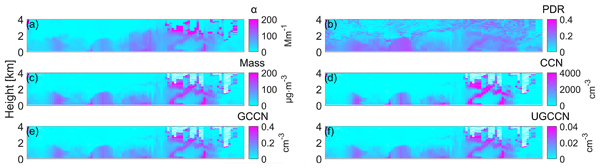
We investigate the pollen distribution at different heights using measurements from ground level up to 272 meters in eastern Finland. By combining optical pollen sensors with traditional monitoring methods and atmospheric model predictions, we examined how pollen concentrations vary with height. The results show that pollen concentrations decrease with altitude and that optical sensors combined with machine learning can identify dominant pollen types for continuous pollen monitoring.
Maria Filioglou, Petri Tiitta, Xiaoxia Shang, Ari Leskinen, Pasi Ahola, Sanna Pätsi, Annika Saarto, Ville Vakkari, Uula Isopahkala, and Mika Komppula
Atmos. Chem. Phys., 25, 1639–1657, https://doi.org/10.5194/acp-25-1639-2025, https://doi.org/10.5194/acp-25-1639-2025, 2025
Short summary
Short summary
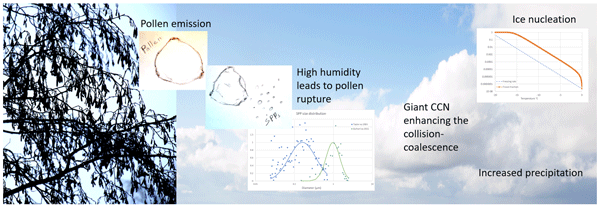
Every year a vast number of people experience allergic reactions due to exposure to airborne pollen. These symptoms are concentration dependent; thus accurate information about the pollen load in the atmosphere is essential. Moreover, pollen grains and fragments of it are likely to contribute to cloud processes and suppress precipitation. Here, we estimate the concentration and cloud-relevant parameters of birch pollen in the atmosphere using observations from a PollyXT and a CL61 ceilometer.
Marje Prank, Juha Tonttila, Xiaoxia Shang, Sami Romakkaniemi, and Tomi Raatikainen
Atmos. Chem. Phys., 25, 183–197, https://doi.org/10.5194/acp-25-183-2025, https://doi.org/10.5194/acp-25-183-2025, 2025
Short summary
Short summary
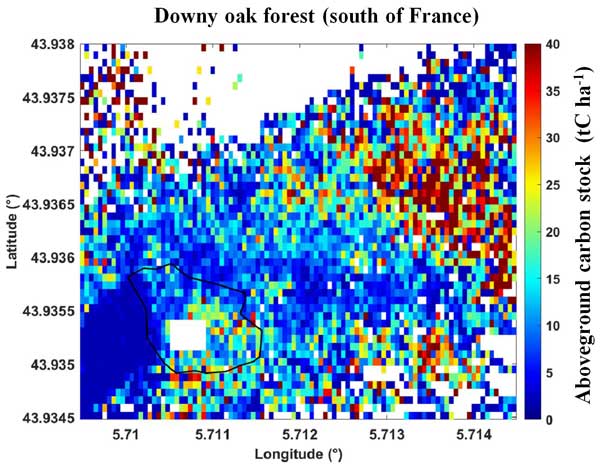
Large primary bioparticles such as pollen can be abundant in the atmosphere. In humid conditions pollen can rupture and release a large number of fine sub-pollen particles (SPPs). The paper investigates what kind of birch pollen concentrations are needed for the pollen and SPPs to start playing a noticeable role in cloud processes and alter precipitation formation. In the studied cases only the largest observed pollen concentrations were able to noticeably alter the precipitation formation.
Maëlie Chazette, Patrick Chazette, Ilja M. Reiter, Xiaoxia Shang, Julien Totems, Jean-Philippe Orts, Irène Xueref-Remy, and Nicolas Montes
Biogeosciences, 21, 3289–3303, https://doi.org/10.5194/bg-21-3289-2024, https://doi.org/10.5194/bg-21-3289-2024, 2024
Short summary
Short summary
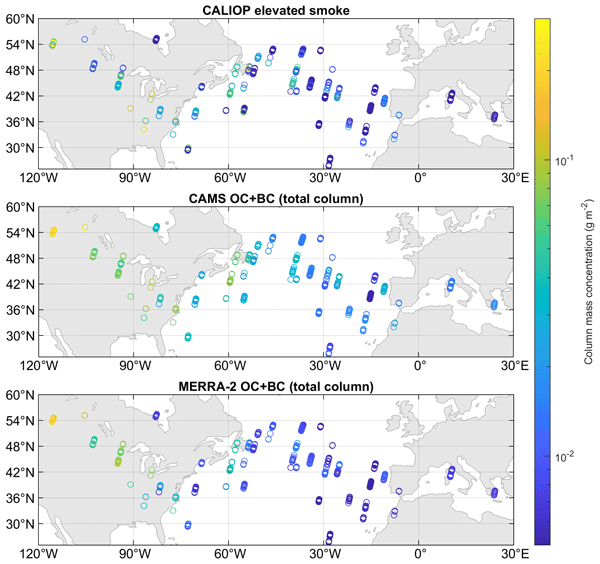
The approach presented is original in its coupling between field observations and airborne lidar observations. It has been applied to an instrumented reference forest site in the south of France, which is heavily impacted by climate change. It leads to the evaluation of tree heights and ends with assessments of aerial and root carbon stocks. A detailed assessment of uncertainties is presented to add a level of reliability to the scientific products delivered.
Xiaoxia Shang, Antti Lipponen, Maria Filioglou, Anu-Maija Sundström, Mark Parrington, Virginie Buchard, Anton S. Darmenov, Ellsworth J. Welton, Eleni Marinou, Vassilis Amiridis, Michael Sicard, Alejandro Rodríguez-Gómez, Mika Komppula, and Tero Mielonen
Atmos. Chem. Phys., 24, 1329–1344, https://doi.org/10.5194/acp-24-1329-2024, https://doi.org/10.5194/acp-24-1329-2024, 2024
Short summary
Short summary
In June 2019, smoke particles from a Canadian wildfire event were transported to Europe. The long-range-transported smoke plumes were monitored with a spaceborne lidar and reanalysis models. Based on the aerosol mass concentrations estimated from the observations, the reanalysis models had difficulties in reproducing the amount and location of the smoke aerosols during the transport event. Consequently, more spaceborne lidar missions are needed for reliable monitoring of aerosol plumes.
Alexandra Tsekeri, Anna Gialitaki, Marco Di Paolantonio, Davide Dionisi, Gian Luigi Liberti, Alnilam Fernandes, Artur Szkop, Aleksander Pietruczuk, Daniel Pérez-Ramírez, Maria J. Granados Muñoz, Juan Luis Guerrero-Rascado, Lucas Alados-Arboledas, Diego Bermejo Pantaleón, Juan Antonio Bravo-Aranda, Anna Kampouri, Eleni Marinou, Vassilis Amiridis, Michael Sicard, Adolfo Comerón, Constantino Muñoz-Porcar, Alejandro Rodríguez-Gómez, Salvatore Romano, Maria Rita Perrone, Xiaoxia Shang, Mika Komppula, Rodanthi-Elisavet Mamouri, Argyro Nisantzi, Diofantos Hadjimitsis, Francisco Navas-Guzmán, Alexander Haefele, Dominika Szczepanik, Artur Tomczak, Iwona S. Stachlewska, Livio Belegante, Doina Nicolae, Kalliopi Artemis Voudouri, Dimitris Balis, Athena A. Floutsi, Holger Baars, Linda Miladi, Nicolas Pascal, Oleg Dubovik, and Anton Lopatin
Atmos. Meas. Tech., 16, 6025–6050, https://doi.org/10.5194/amt-16-6025-2023, https://doi.org/10.5194/amt-16-6025-2023, 2023
Short summary
Short summary
EARLINET/ACTRIS organized an intensive observational campaign in May 2020, with the objective of monitoring the atmospheric state over Europe during the COVID-19 lockdown and relaxation period. The work presented herein focuses on deriving a common methodology for applying a synergistic retrieval that utilizes the network's ground-based passive and active remote sensing measurements and deriving the aerosols from anthropogenic activities over Europe.
Maria Filioglou, Ari Leskinen, Ville Vakkari, Ewan O'Connor, Minttu Tuononen, Pekko Tuominen, Samuli Laukkanen, Linnea Toiviainen, Annika Saarto, Xiaoxia Shang, Petri Tiitta, and Mika Komppula
Atmos. Chem. Phys., 23, 9009–9021, https://doi.org/10.5194/acp-23-9009-2023, https://doi.org/10.5194/acp-23-9009-2023, 2023
Short summary
Short summary
Pollen impacts climate and public health, and it can be detected in the atmosphere by lidars which measure the linear particle depolarization ratio (PDR), a shape-relevant optical parameter. As aerosols also cause depolarization, surface aerosol and pollen observations were combined with measurements from ground-based lidars operating at different wavelengths to determine the optical properties of birch and pine pollen and quantify their relative contribution to the PDR.
Xiaoxia Shang, Holger Baars, Iwona S. Stachlewska, Ina Mattis, and Mika Komppula
Atmos. Chem. Phys., 22, 3931–3944, https://doi.org/10.5194/acp-22-3931-2022, https://doi.org/10.5194/acp-22-3931-2022, 2022
Short summary
Short summary
This study reports pollen observations at four lidar stations (Hohenpeißenberg, Germany; Kuopio, Finland; Leipzig, Germany; and Warsaw, Poland) during the intensive observation campaign organized in May 2020. A novel simple method for the characterization of the pure pollen is proposed, based on lidar measurements. It was applied to evaluate the pollen depolarization ratio and for the aerosol classifications.
Cristofer Jimenez, Albert Ansmann, Friederike Lipken, Julian Hofer, Alexandra Chudnovsky, Holger Baars, Volker Freudenthaler, Ronny Engelmann, Dietrich Althausen, Sabur Abdullozoda, Shohina Kh. Khalifaeva, Patric Seifert, and Ulla Wandinger
EGUsphere, https://doi.org/10.5194/egusphere-2026-5108, https://doi.org/10.5194/egusphere-2026-5108, 2026
This preprint is open for discussion and under review for Atmospheric Chemistry and Physics (ACP).
Short summary
Short summary
For the first time, a multiyear observational data set on the impact of fresh and aged (contaminated, hygroscopic) dust particles on cloud droplet formation processes is presented. The observations were performed at Dushanbe, Tajikistan, in the heart of the well known dust belt. A clear impact of hygroscopic dust particles on droplet formation during the dust season (April to October) was found, in agreement with respective global modeling results.
Kanika Taneja, Silvia M. Calderón, Harri Kokkola, Juha Tonttila, Sami Romakkaniemi, Seethala Chellappan, Antti Arola, Antti Lipponen, Taina Yli-Juuti, Snehitha M. Kommula, Tuukka Petäjä, Markku Kulmala, and Tero Mielonen
EGUsphere, https://doi.org/10.5194/egusphere-2026-4750, https://doi.org/10.5194/egusphere-2026-4750, 2026
This preprint is open for discussion and under review for Atmospheric Chemistry and Physics (ACP).
Short summary
Short summary
Vegetation can cool the climate by releasing gases that form aerosols, which scatter sunlight and brighten clouds. To quantify this feedback in Finland and the United States, we combine field measurements of aerosols and satellite observations of clouds. It is essential to select near-ideal clouds; otherwise, cloud-related cooling is underestimated. Cloud cooling matched aerosol cooling at the clean site in Finland and was nearly three times stronger at the rural site in the United States.
Timothy W. Juliano, Florian Tornow, Ann M. Fridlind, Andrew S. Ackerman, Gregory S. Elsaesser, Bart Geerts, Christian P. Lackner, David Painemal, Israel Silber, Mikhail Ovchinnikov, Gunilla Svensson, Michael Tjernström, Peng Wu, Alejandro Baró Pérez, Peter Bogenschutz, Dmitry Chechin, Kamal Kant Chandrakar, Jan Chylik, Andrey Debolskiy, Rostislav Fadeev, Anu Gupta, Luisa Ickes, Michail Karalis, Martin Köhler, Branko Kosović, Peter Kuma, Weiwei Li, Evgeny Mortikov, Hugh Morrison, Roel A. J. Neggers, Anna Possner, Tomi Raatikainen, Lea Raillard, Sami Romakkaniemi, Niklas Schnierstein, Shin-ichiro Shima, Nikita Silin, Mikhail Tolstykh, Étienne Vignon, Lulin Xue, Meng Zhang, and Xue Zheng
Atmos. Chem. Phys., 26, 13267–13302, https://doi.org/10.5194/acp-26-13267-2026, https://doi.org/10.5194/acp-26-13267-2026, 2026
Short summary
Short summary
Models struggle to capture cloud and precipitation processes and their radiative effects in marine cold-air outbreaks. We use a quasi-Lagrangian framework to compare large-eddy simulation (LES) and single-column model (SCM) output with field and satellite observations. With fixed droplet and ice numbers, LES and SCM agree in liquid-only tests. In mixed-phase conditions, LES plausibly capture cloud thinning and breakup, while SCMs largely remain overcast and thereby miss cloud radiative effects.
Thomas F. Eck, Jeffrey S. Reid, Alexander Sinyuk, Pawan Gupta, Antti Arola, Ilya Slutsker, Brent N. Holben, Philippe Goloub, Oleg Dubovik, Joel S. Schafer, Mikhail G. Sorokin, Alexander Smirnov, Hongbin Yu, Dongchul Kim, Elena Lind, Jason Kraft, Elizabeth A. Reid, Aboubacry Diallo, Thierno Ndiaye, Africa Barreto, Sidi Baika, Lahouari Zeudmi-Sahraoui, Francisco Evora, Gael Dubois, Luc Blarel, Rachel T. Pinker, Isaac Abiodun Adimula, Jean Louis Rajot, Aliko Maman, Muguette Allegre, Cassandra Gaston, Peter Sealy, Edmund Blades, Rebecca Chewitt-Lucas, Ian Lau, David Barker, Adel Saad Alshihiween, Abdulrahman Alsaferan, Odbayar Mishigdorj, and Chogsom Jargalsaixan
EGUsphere, https://doi.org/10.5194/egusphere-2026-5531, https://doi.org/10.5194/egusphere-2026-5531, 2026
This preprint is open for discussion and under review for Atmospheric Chemistry and Physics (ACP).
Short summary
Short summary
The optical properties of airborne soil particles from major desert regions measured by ground based remote sensing retrievals are presented. The relative spectral absorption of these particles from the remote sensing data agree very well with absorption of soil dust samples measured in a laboratory. A large fraction of the optical effects were attributed to relatively small submicron sized dust particles which would also be more easily inhalable and therefore may impact human health.
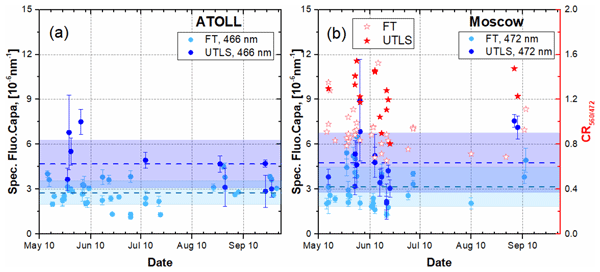
Qiaoyun Hu, Philippe Goloub, Igor Veselovskii, Thierry Podvin, Gaël Dubois, Sergey Khaykin, William Boissière, Fabrice Ducos, and Mikhail Korenskiy
Atmos. Chem. Phys., 26, 13027–13053, https://doi.org/10.5194/acp-26-13027-2026, https://doi.org/10.5194/acp-26-13027-2026, 2026
Short summary
Short summary
This study reports dual-site fluorescence lidar observations of long-range transported Canadian wildfire biomass burning aerosols (BBAs) from May to September 2023. Upper troposphere–lower stratosphere (UTLS) layers showed higher depolarization, lower Ångström exponents, and fluorescence redshift compared to tropospheric layers. Moderate correlations are found between layer altitude and BBA properties. Notably, limited hygroscopicity was found in more than 100 identified BBA layers. Cross-site comparison shows consistent fluorescence signatures.
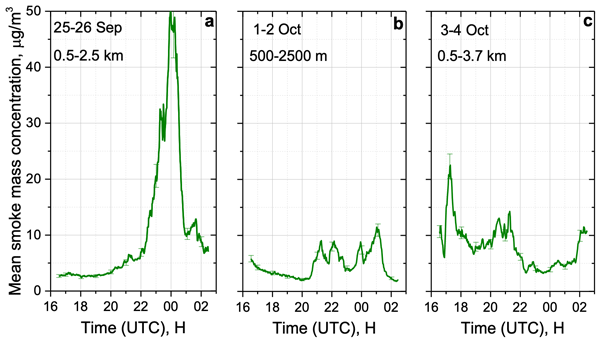
Igor Veselovskii, Mikhail Korenskiy, Boris Barchunov, Nikita Kasianik, Qiaoyun Hu, Philippe Goloub, and Thierry Podvin
Atmos. Meas. Tech., 19, 5587–5602, https://doi.org/10.5194/amt-19-5587-2026, https://doi.org/10.5194/amt-19-5587-2026, 2026
Short summary
Short summary
A multi-channel fluorescence lidar can effectively analyze smoke–urban aerosol mixtures and retrieve smoke mass concentration in the planetary boundary layer (PBL), with a detection threshold of order 0.1 µg · m⁻³. Measurements over Moscow (2023–2024) detected smoke in 59 of 67 sessions. Long-range transported smoke contributed ∼1 µg · m⁻³ to the PBL, while regional fires from southern Russia caused concentrations up to 50 µg · m⁻³.
Esha Semwal, Dietrich Althausen, Ronny Engelmann, Markus Hartmann, Heike Wex, Thomas Oppermann, and Moritz Haarig
EGUsphere, https://doi.org/10.5194/egusphere-2026-4446, https://doi.org/10.5194/egusphere-2026-4446, 2026
This preprint is open for discussion and under review for Atmospheric Measurement Techniques (AMT).
Short summary
Short summary
This study presents a new laboratory setup to measure the depolarization ratio of size-resolved aerosol particles in the exact backscattering direction. Measurements with different aerosol types showed that the system can distinguish spherical and non-spherical particles and captures the size dependence of the depolarization ratio. The developed setup is therefore well suited to provide reliable experimental data for improving light-scattering models and the interpretation of lidar observations.
Julian Hofer, Holger Baars, Zhenping Yin, Andi Klamt, Martin Radenz, Leonard König, Athena A. Floutsi, Cristofer Jimenez, Moritz Haarig, Dietrich Althausen, Benedikt Gast, Håvard S. Buholdt, Nathan Skupin, Jonas Neumann, Sabur F. Abdullozoda, Abduvosit N. Makhmudov, Johannes Bühl, Ronny Engelmann, Ulla Wandinger, and Albert Ansmann
EGUsphere, https://doi.org/10.5194/egusphere-2026-3928, https://doi.org/10.5194/egusphere-2026-3928, 2026
This preprint is open for discussion and under review for Atmospheric Measurement Techniques (AMT).
Short summary
Short summary
A comparison of manually and automatically analyzed lidar profiles of aerosol optical properties is presented. The manual analysis was performed using a custom software in multiple analyses steps based on visual inspection of the lidar signals. The automatic analysis was performed using an automatic processing chain. The comparison shows good agreement and demonstrates the suitability of the automatic retrievals for various applications of aerosol optical property profiles.
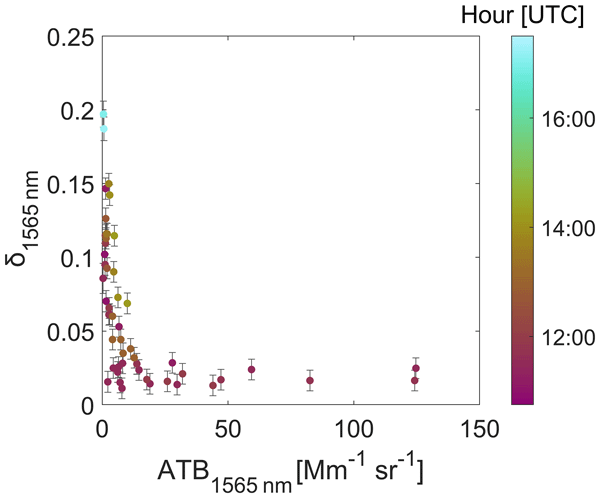
Maria Filioglou, Krista Luoma, Eija Asmi, Viet Le, Klaus Haikarainen, David Brus, Tero Mielonen, Mika Komppula, Annele Virtanen, Olli Sippula, Iida Pullinen, Angela Buchholz, Pasi Miettinen, Snehitha Kommula, Saara Peltokorpi, Liqing Hao, Kajar Köster, Annika Saarto, Sanna Pätsi, Pieter G. van Zyl, Liezl Bredenkamp, and Ville Vakkari
Atmos. Chem. Phys., 26, 11525–11542, https://doi.org/10.5194/acp-26-11525-2026, https://doi.org/10.5194/acp-26-11525-2026, 2026
Short summary
Short summary
This study explores how smoke and volcanic ash particles, alter the way light is scattered in the atmosphere. By using a ground‑based HALO Doppler lidar system, we observed clear differences in the depolarization ratio, a shape-relevant optical parameter, between fresh smoke, aged smoke, and volcanic ash. These findings show that HALO Doppler lidars can help identify particle types in the air and even provide estimates of smoke mass concentrations, improving assessments of air quality.
Anna Trosits, Andreas Foth, Allison A. Wing, Johanna Roschke, Moritz Haarig, Anton Kötsche, and Heike Kalesse-Los
EGUsphere, https://doi.org/10.5194/egusphere-2026-4385, https://doi.org/10.5194/egusphere-2026-4385, 2026
This preprint is open for discussion and under review for Atmospheric Chemistry and Physics (ACP).
Short summary
Short summary
This study shows the effect of air layers originating from the Saharan Desert on clouds over the tropical Atlantic observed during the ship-borne research campaign BOWTIE. These Saharan Air Layers (SAL) were analysed with data from several instruments providing atmospheric profiles and can be characterised by low moisture and dispersed mineral dust. The investigation suggests a suppression of vertical cloud development by the SAL, also affecting microphysical properties of the cloud.
Gladiola Malollari, Albert Ansmann, Julian Hofer, Kevin Ohneiser, Ronny Engelmann, Fatbardh Sallaku, and Seit Shallari
EGUsphere, https://doi.org/DOI:10.20944/preprints202507.1175.v2, https://doi.org/DOI:10.20944/preprints202507.1175.v2, 2026
Short summary
Short summary
For the first time, the seasonal aerosol vertical distribution of Albania is characterized using 15-year CALIPSO observations and one-year ground-based Raman lidar measurements. Seasonal air mass clusters are derived from a 10-year HYSPLIT backtrajectory analysis. Extinction coefficient, aerosol optical depth, and mass concentration profiles are shown for the total, dust, and nondust contributions. Both datasets reveal consistent vertical aerosol distributions.
Konstantinos Matthaios Doulgeris, David Brus, Christian Maier, Naděžda Zikova, Kajal Julaha, Cuiqi Zhang, Zamin A. Kanji, Ville Kaikkonen, Harri Juttula, Eero Molkoselkä, Anssi Makynen, Mika Komppula, Sergej Sel, and Elke Ludewig
EGUsphere, https://doi.org/10.5194/egusphere-2026-3898, https://doi.org/10.5194/egusphere-2026-3898, 2026
Short summary
Short summary
Clouds are important for weather and climate, but measuring their cloud water droplets accurately is difficult. We compared seven instruments during a field campaign at a high mountain observatory under natural cloud conditions. We found that the way instruments are installed can strongly influence the measurements. Our results provide practical guidance for improving cloud observations and support more consistent measurements across the European ACTRIS research infrastructure.
Georg Holger Müller, Athena Augusta Floutsi, Julian Hofer, Ronny Engelmann, Dietrich Althausen, Ulla Wandinger, Martin Radenz, Moritz Haarig, Sabur Fuzailovich Abdullaev, Shohina Kh. Khalifaeva, Albert Ansmann, and Holger Baars
EGUsphere, https://doi.org/10.5194/egusphere-2026-3390, https://doi.org/10.5194/egusphere-2026-3390, 2026
Short summary
Short summary
A five-year dataset of lidar measurements from Dushanbe, Tajikistan, was analyzed to investigate the annual dust cycle and intraanual variability in the region. The dataset consists of automatically processed data, including the separation of the dust and non-dust particle backscatter coefficient and enabling the calculation of monthly and seasonal dust mass concentration within the atmosphere. The study highlights the importance of continuous lidar measurements in the Central Asian region.
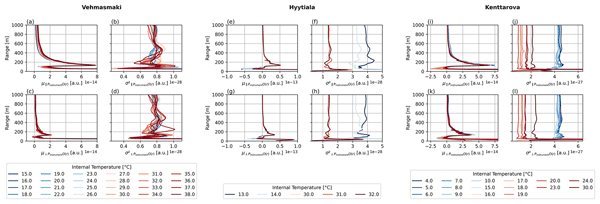
Viet Le, Ewan J. O'Connor, Maria Filioglou, and Ville Vakkari
Atmos. Meas. Tech., 19, 4923–4941, https://doi.org/10.5194/amt-19-4923-2026, https://doi.org/10.5194/amt-19-4923-2026, 2026
Short summary
Short summary
We evaluate the performance of the Vaisala CL61 ceilometer, with depolarization ratio capability at 910 nm, over a three-year period at four locations. This study examines instrument performance over time, describes methods for correcting instrument bias and presents corresponding uncertainty estimates. As these instruments are being deployed across large research networks, our findings support stable instrument performance and the generation of reliable measurements and derived products.
Sofía Gómez Maqueo Anaya, Sudharaj Aryasree, Konrad Kandler, Eduardo José dos Santos Souza, Khanneh Wadinga Fomba, Dietrich Althausen, Maria Kezoudi, Matthias Faust, Bernd Heinold, Ina Tegen, Moritz Haarig, Holger Baars, and Kerstin Schepanski
Atmos. Chem. Phys., 26, 9929–9966, https://doi.org/10.5194/acp-26-9929-2026, https://doi.org/10.5194/acp-26-9929-2026, 2026
Short summary
Short summary
During two 2022 measurement campaigns in Cape Verde, Saharan dust aerosols were collected and analyzed for mineral composition. Mineralogy is crucial for dust–radiation and dust–cloud interactions. We improve dust representation in an atmospheric model by refining the translation of soil into aerosol particle size distributions. Validation with mineral and elemental measurements shows improved representation of some minerals and reveals biases missed by mineral-only comparisons.
Maria Christina Gatou, Antti Lipponen, Ari Leskinen, Petri Tiitta, Maria Filioglou, Xiaoxia Shang, Sanna Pätsi, Annika Saarto, Marjut Roponen, Elina Giannakaki, and Mika Komppula
EGUsphere, https://doi.org/10.5194/egusphere-2026-1806, https://doi.org/10.5194/egusphere-2026-1806, 2026
Short summary
Short summary
We investigate the pollen distribution at different heights using measurements from ground level up to 272 meters in eastern Finland. By combining optical pollen sensors with traditional monitoring methods and atmospheric model predictions, we examined how pollen concentrations vary with height. The results show that pollen concentrations decrease with altitude and that optical sensors combined with machine learning can identify dominant pollen types for continuous pollen monitoring.
Ari Leskinen, Antonia Radlwimmer, Uula Isopahkala, Silvia Calderón, David Brus, Konstantinos Doulgeris, Ville Kaikkonen, Eero Molkoselkä, Dmitri Moiseev, Marie Lou Hirschy, Anssi Mäkynen, Sami Romakkaniemi, and Mika Komppula
EGUsphere, https://doi.org/10.5194/egusphere-2026-2088, https://doi.org/10.5194/egusphere-2026-2088, 2026
Short summary
Short summary
We present a lightweight holographic imaging instrument, designed for high-resolution in-cloud particle measurements at a rate of 10 holograms per second, which leads to sub-meter spatial resolution on-board UAV. The approach offers a cost-effective and versatile alternative, capable of accessing confined or remote areas, enabling improved validation of remote sensing products and numerical cloud models. We present the potential of such instrumentation for high-resolution cloud observations.
Albert Ansmann, Julian Hofer, Rodanthi-Elisavet Mamouri, Moritz Haarig, Holger Baars, and Ulla Wandinger
Atmos. Meas. Tech., 19, 3801–3830, https://doi.org/10.5194/amt-19-3801-2026, https://doi.org/10.5194/amt-19-3801-2026, 2026
Short summary
Short summary
Updated lidar and ceilometer conversion factors are presented. The conversion factors allow us to calculate microphyscial properties from measurned optical properties. One of the main goals is to support 355 nm space lidar observations.
Holger Baars, Moritz Haarig, Leonard König, Athena A. Floutsi, Elizaveta Basharova, Julian Hofer, Henriette Gebauer, Ronny Engelmann, Dietrich Althausen, Annett Skupin, Benedikt Gast, Felix Fritzsch, Kevin Ohneiser, Cristofer Jimenez, Tom Gaudek, Martin Radenz, Håvard Buholdt, Birgit Heese, Andi Klamt, Patric Seifert, David P. Donovan, Gerd-Jan van Zadelhoff, Sabur F. Abdullaev, Shohina K. Khalifaeva, Dilovar F. Nozirov, and Ulla Wandinger
Atmos. Meas. Tech., 19, 3831–3864, https://doi.org/10.5194/amt-19-3831-2026, https://doi.org/10.5194/amt-19-3831-2026, 2026
Short summary
Short summary
The satellite mission EarthCARE (Earth Cloud, Aerosol, and Radiation Explorer) was launched in May 2024 and has 4 unique instruments on board. We used ground-based PollyNET/ACTRIS (Aerosol, Clouds and Trace gases Research Infrastructure) profiling data to discuss the quality of EarthCARE’s lidar products based on case studies from different geographic locations. Our investigations revealed that the space-borne lidar instrument has remarkable profiling capabilities but currently also still some limitations, however, not preventing first scientific studies when quality checking the data intensively.
Hannes J. Griesche, Ronny Engelmann, Martin Radenz, Julian Hofer, Dietrich Althausen, Albert Ansmann, Kevin Barry, Jessie Creamean, Cristofer Jimenez, and Patric Seifert
Atmos. Chem. Phys., 26, 7141–7163, https://doi.org/10.5194/acp-26-7141-2026, https://doi.org/10.5194/acp-26-7141-2026, 2026
Short summary
Short summary
An annual cycle of mixed-phase ice-formation temperatures in the high Arctic is presented. Ship-based remote sensing with lidar and cloud radar from the MOSAiC (Multidisciplinary drifting Observatory for the Study of Arctic Climate) expedition was used to investigate the impact of surface processes on mixed-phase cloud properties. Surface mixed-layer cloud coupling was derived from radiosonde profiles. Combined with ice nucleating particle filter samples, sea ice concentration, and trajectory analysis an influence of surface processes on cloud properties was found.
Viet Le, Konstantinos Doulgeris, Mika Komppula, John Backman, Gholamhossein Bagheri, Eberhard Bodenschatz, and David Brus
Earth Syst. Sci. Data Discuss., https://doi.org/10.5194/essd-2026-135, https://doi.org/10.5194/essd-2026-135, 2026
Preprint under review for ESSD
Short summary
Short summary
Vertical profiles and time series of aerosol particles, cloud droplets, and weather conditions were measured by the Finnish Meteorological Institute airborne payload attached to tethered balloons during the Pallas Cloud Experiment 2022 in Finland. When combined with other datasets collected during the campaign, these measurements will enable integrated analyses and offer a comprehensive view of the atmospheric conditions during the experiment.
Tomi Raatikainen, Silvia Calderón, Emma Järvinen, Marje Prank, and Sami Romakkaniemi
Atmos. Chem. Phys., 26, 5019–5038, https://doi.org/10.5194/acp-26-5019-2026, https://doi.org/10.5194/acp-26-5019-2026, 2026
Short summary
Short summary
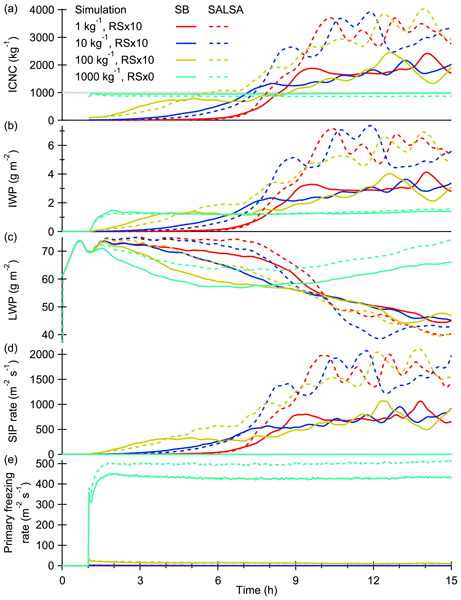
We used high-resolution simulations to examine if secondary ice production could explain the high ice particle concentrations observed during an airborne Arctic cloud study. For these clouds, the dominating secondary ice production process was rime splintering. It can produce high ice concentrations, but some model adjustments may be needed. Clouds in our simulations reached realistic steady states where rime splintering became a self-sustaining process.
Athena Augusta Floutsi, Konstantinos Rizos, Dimitri Trapon, Ronny Engelmann, Dietrich Althausen, Eleni Marinou, Peristera Paschou, Julian Hofer, Emmanouil Proestakis, Henriette Gebauer, Annett Skupin, Albert Ansmann, Thorsten Fehr, Timon Hummel, Rob Koopman, Vassilis Amiridis, Ulla Wandinger, and Holger Baars
Atmos. Meas. Tech., 19, 1901–1925, https://doi.org/10.5194/amt-19-1901-2026, https://doi.org/10.5194/amt-19-1901-2026, 2026
Short summary
Short summary
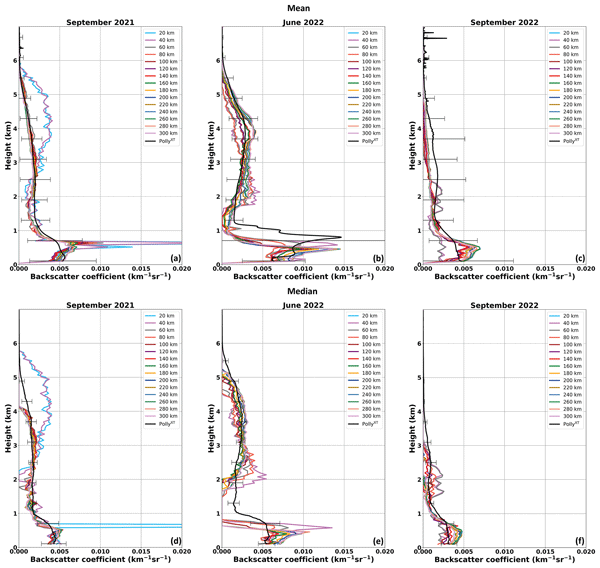
We assess the representativeness of a remote ground-based station in Mindelo, Cabo Verde by utilizing continuous observations of a ground-based multiwavelength polarization Raman lidar and the LIdar climatology of Vertical Aerosol Structure (LIVAS) products. Based on a statistical analysis of the optical properties at different radii around Mindelo and case studies, we conclude that overall, the ground-based station in Mindelo can be considered conditionally representative.
Henriette Gebauer, Athena Augusta Floutsi, Julian Hofer, Moritz Haarig, Annett Skupin, Ronny Engelmann, Cristofer Jimenez, Robert Wagner, and Holger Baars
Atmos. Chem. Phys., 26, 3439–3465, https://doi.org/10.5194/acp-26-3439-2026, https://doi.org/10.5194/acp-26-3439-2026, 2026
Short summary
Short summary
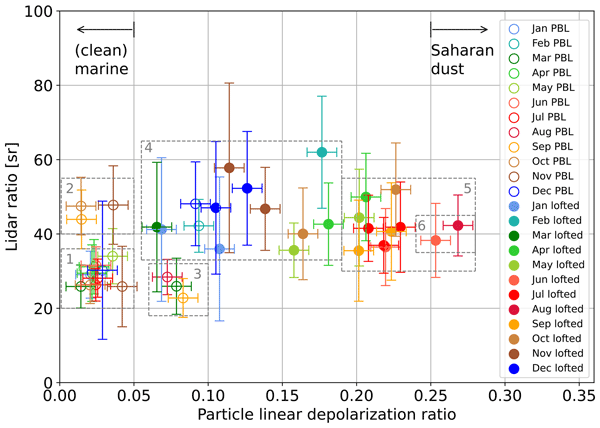
The annual aerosol cycle over Mindelo, Cabo Verde, was characterized using lidar and sun photometer measurements between July 2021 and August 2023. The observations were used to define and characterize the aerosol-related seasons at this location. These are the dust season (June–September), when thick layers of Saharan dust are transported over Mindelo, and the mixing season (November–March), when this dust is mixed with smoke from the African continent. April, May, and October were defined as transition months.
Simone Pulimeno, Angelo Lupi, Vito Vitale, Claudia Frangipani, Carlos Toledano, Stelios Kazadzis, Natalia Kouremeti, Christoph Ritter, Sandra Graßl, Kerstin Stebel, Vitali Fioletov, Ihab Abboud, Sandra Blindheim, Lynn Ma, Norm O'Neill, Piotr Sobolewski, Pawan Gupta, Elena Lind, Thomas F. Eck, Antti Hyvärinen, Veijo Aaltonen, Rigel Kivi, Janae Csavina, Dmitry Kabanov, Sergey M. Sakerin, Olga R. Sidorova, Robert S. Stone, Hagen Telg, Laura Riihimaki, Raul R. Cordero, Martin Radenz, Ronny Engelmann, Michel Van Roozendal, Anatoli Chaikovsky, Philippe Goloub, Junji Hisamitsu, and Mauro Mazzola
Atmos. Chem. Phys., 26, 1809–1846, https://doi.org/10.5194/acp-26-1809-2026, https://doi.org/10.5194/acp-26-1809-2026, 2026
Short summary
Short summary
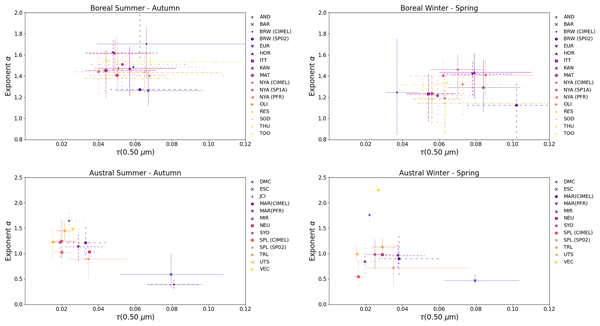
This study analyzed aerosols optical properties over the Arctic and Antarctic to measure them even during long periods of darkness. It found that pollution in the Arctic is decreasing, likely due to European emission regulations, while wildfires are becoming a more important source of particles. In Antarctica, particle levels are higher near the coast than inland, and vary by season. These results help us better understand how air pollution and climate are changing at the Earth’s poles.

Maria Fernanda Sanchez-Barrero, Philippe Goloub, Luc Blarel, Ioana Elisabeta Popovici, Benjamin Torres, Gaël Dubois, Thierry Podvin, Fabrice Ducos, Romain de Filippi, Michaël Sicard, Viviane Bout Roumazeilles, and Charlotte Skonieczny
Atmos. Meas. Tech., 19, 507–528, https://doi.org/10.5194/amt-19-507-2026, https://doi.org/10.5194/amt-19-507-2026, 2026
Short summary
Short summary
The TRANSAMA ship-based campaign (April–May 2023) aboard Marion Dufresne investigated aerosols from La Réunion to Barbados using photometer and lidar. Observations revealed clean conditions over the South Atlantic, with thin transported aerosol plumes from Southern Africa. Clouds were detected in 53 % of lidar profiles with higher occurrence in the first 2 km. The results show how combined lidar and photometer measurements can improve our understanding of aerosols in marine environment.
Timothy W. Juliano, Florian Tornow, Ann M. Fridlind, Andrew S. Ackerman, Gregory S. Elsaesser, Bart Geerts, Christian P. Lackner, David Painemal, Israel Silber, Mikhail Ovchinnikov, Gunilla Svensson, Michael Tjernström, Peng Wu, Alejandro Baró Pérez, Peter Bogenschutz, Dmitry Chechin, Kamal Kant Chandrakar, Jan Chylik, Andrey Debolskiy, Rostislav Fadeev, Anu Gupta, Luisa Ickes, Michail Karalis, Martin Köhler, Branko Kosović, Peter Kuma, Weiwei Li, Evgeny Mortikov, Hugh Morrison, Roel A. J. Neggers, Anna Possner, Tomi Raatikainen, Sami Romakkaniemi, Niklas Schnierstein, Shin-ichiro Shima, Nikita Silin, Mikhail Tolstykh, Lulin Xue, Meng Zhang, and Xue Zheng
EGUsphere, https://doi.org/10.5194/egusphere-2025-6217, https://doi.org/10.5194/egusphere-2025-6217, 2026
Preprint archived
Short summary
Short summary
Models struggle to capture cloud and precipitation processes and their radiative effects in marine cold-air outbreaks. We use a quasi-Lagrangian framework to compare large-eddy simulation (LES) and single-column model (SCM) output with field and satellite observations. With fixed droplet and ice numbers, LES and SCM agree in liquid-only tests. In mixed-phase conditions, LES plausibly capture cloud thinning and breakup, while SCMs largely remain overcast and thereby miss cloud radiative effects.
Kevin Ohneiser, Patric Seifert, Willi Schimmel, Fabian Senf, Tom Gaudek, Martin Radenz, Audrey Teisseire, Veronika Ettrichrätz, Teresa Vogl, Nina Maherndl, Nils Pfeifer, Jan Henneberger, Anna J. Miller, Nadja Omanovic, Christopher Fuchs, Huiying Zhang, Fabiola Ramelli, Robert Spirig, Anton Kötsche, Heike Kalesse-Los, Maximilian Maahn, Heather Corden, Alexis Berne, Majid Hajipour, Hannes Griesche, Julian Hofer, Ronny Engelmann, Annett Skupin, Albert Ansmann, and Holger Baars
Atmos. Chem. Phys., 25, 17363–17386, https://doi.org/10.5194/acp-25-17363-2025, https://doi.org/10.5194/acp-25-17363-2025, 2025
Short summary
Short summary
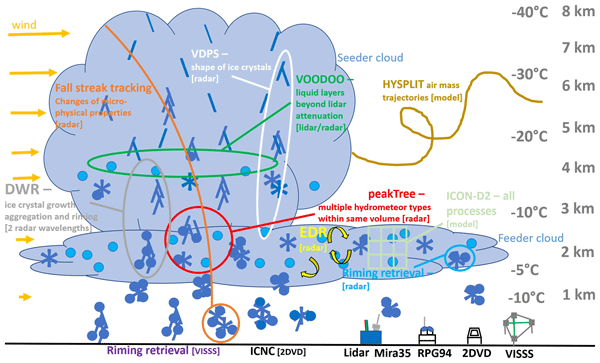
This study focuses on a seeder-feeder cloud system on 8 Jan 2024 in Eriswil, Switzerland. It is shown how the interaction of these cloud systems changes the cloud microphysical properties and the precipitation patterns. A big set of advanced remote-sensing techniques and retrieval algorithms are applied, so that a detailed view on the seeder-feeder cloud system is available. The gained knowledge can be used to improve weather models and weather forecasts.
Yan Wang, Yujia Cao, Haixiao Yu, Shuo Wang, Qiaoyun Hu, Yuyang Chang, Chun Zhao, Zhengqiang Li, and Cheng Chen
EGUsphere, https://doi.org/10.5194/egusphere-2025-5076, https://doi.org/10.5194/egusphere-2025-5076, 2025
Preprint archived
Short summary
Short summary
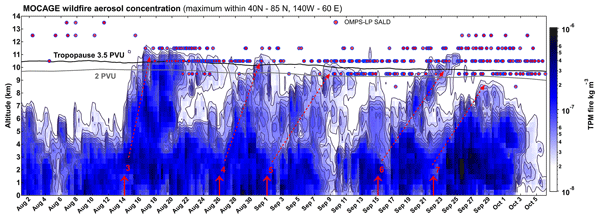
Pyrocumulonimbus (PyroCb) convection during the August 2024 North American wildfires injected smoke aerosols into the upper troposphere and lower stratosphere, altering cloud microphysics. These aerosols induced warming near fire sources and downwind over Western Europe, while producing contrasting effects over fire-source regions, cooling along the US West Coast and warming across North America, demonstrating strong wildfire-aerosol-cloud-radiation feedbacks with transcontinental impacts.
Sergey Khaykin, Slimane Bekki, Sophie Godin-Beekmann, Michael D. Fromm, Philippe Goloub, Qiaoyun Hu, Béatrice Josse, Alexandra Laeng, Mehdi Meziane, David A. Peterson, Sophie Pelletier, and Valérie Thouret
Atmos. Chem. Phys., 25, 14551–14571, https://doi.org/10.5194/acp-25-14551-2025, https://doi.org/10.5194/acp-25-14551-2025, 2025
Short summary
Short summary
In 2023, massive wildfires in Canada injected huge amounts of smoke into the atmosphere. Surprisingly, despite their intensity, the smoke did not rise very high but lingered at flight cruising altitudes, causing widespread pollution. This study shows how two different pathways lifted smoke into the lower stratosphere and reveals new insights into how wildfires affect air quality and climate, challenging what we thought we knew about fire and atmospheric impacts.
Silvia M. Calderón, Noora Hyttinen, Harri Kokkola, Tomi Raatikainen, R. Paul Lawson, and Sami Romakkaniemi
Atmos. Chem. Phys., 25, 14479–14500, https://doi.org/10.5194/acp-25-14479-2025, https://doi.org/10.5194/acp-25-14479-2025, 2025
Short summary
Short summary
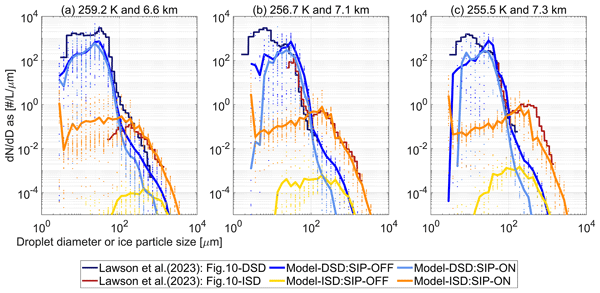
Field campaigns suggest secondary ice production (SIP) from mm-sized supercooled droplets drives rapid glaciation and precipitation development in summer cumulus congestus clouds lacking ice-nucleating particles. Our large-eddy simulations with sectional aerosol–hydrometeor microphysics support this, reproducing observed size distributions and showing how SIP accelerates aggregation, enhancing surface precipitation.
Igor Veselovskii, Qiaoyun Hu, Philippe Goloub, Thierry Podvin, Gaël Dubois, Alexey Kolgotin, and Mikhail Korenskii
Atmos. Meas. Tech., 18, 6039–6051, https://doi.org/10.5194/amt-18-6039-2025, https://doi.org/10.5194/amt-18-6039-2025, 2025
Short summary
Short summary
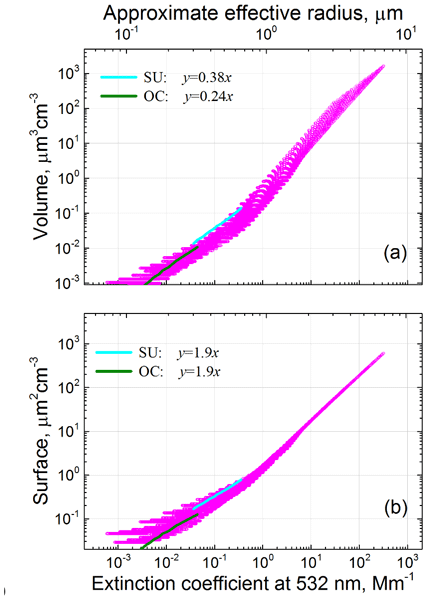
A Mie–Raman–fluorescence lidar is used to analyze possible quenching of aerosol fluorescence during hygroscopic growth. The well-mixed planetary boundary layer serves as a convenient environment for such studies, since the fluorescence backscattering coefficient should remain constant in the absence of water uptake effects. However, during some episodes, we observed a systematic decrease in fluorescence backscattering, which likely indicates fluorescence quenching.
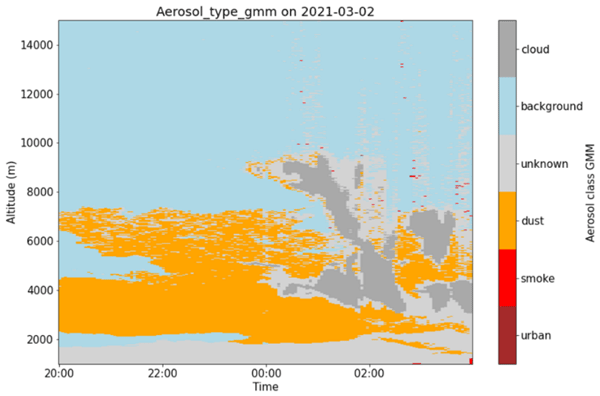
Robin Miri, Olivier Pujol, Qiaoyun Hu, Philippe Goloub, Igor Veselovskii, Thierry Podvin, and Fabrice Ducos
Atmos. Meas. Tech., 18, 5729–5747, https://doi.org/10.5194/amt-18-5729-2025, https://doi.org/10.5194/amt-18-5729-2025, 2025
Short summary
Short summary
We developed a new method to automatically identify types of particles in the air, such as smoke, dust, or pollution, using a specialized laser system. This helps monitor air quality more efficiently and in greater detail. Our method uses real data collected over 3 years in northern France and can detect changes caused by weather conditions. It offers a faster and more accurate way to understand what is in the air we breathe.
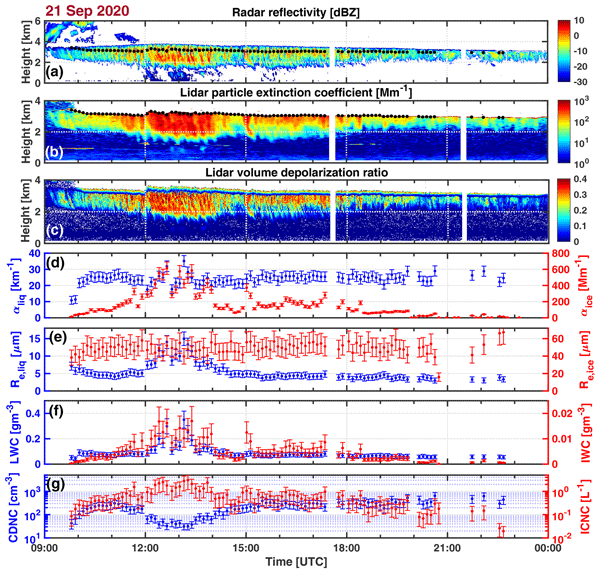
Cristofer Jimenez, Albert Ansmann, Kevin Ohneiser, Hannes Griesche, Ronny Engelmann, Martin Radenz, Julian Hofer, Dietrich Althausen, Daniel A. Knopf, Sandro Dahlke, Johannes Bühl, Holger Baars, Patric Seifert, and Ulla Wandinger
Atmos. Chem. Phys., 25, 12955–12981, https://doi.org/10.5194/acp-25-12955-2025, https://doi.org/10.5194/acp-25-12955-2025, 2025
Short summary
Short summary
We studied the water and ice phases of Arctic mixed-phase clouds (MPCs) using dual FOV polarization lidar and Doppler radar on board Polarstern during the MOSAiC expedition. Two long-lasting Arctic MPCs and year-round statistics show persistent droplet activation and dominant immersion freezing, indicating well-filled cloud condensation nuclei and ice-nucleating particle reservoirs. These findings help explain MPC longevity and may improve cloud life cycle representation in weather and climate models.
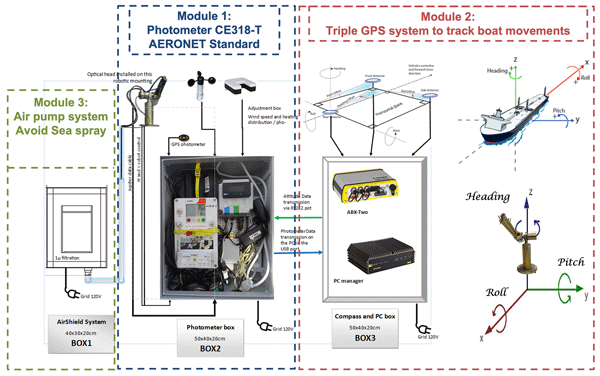
Benjamin Torres, Luc Blarel, Philippe Goloub, Gaël Dubois, Maria Fernanda Sanchez-Barrero, Ioana Elisabeta Popovici, Fabrice Maupin, Elena Lind, Alexander Smirnov, Ilya Slutsker, Julien Chimot, Ramiro González, Michaël Sicard, Jean Marc Metzger, and Pierre Tulet
Atmos. Meas. Tech., 18, 4809–4838, https://doi.org/10.5194/amt-18-4809-2025, https://doi.org/10.5194/amt-18-4809-2025, 2025
Short summary
Short summary
This study shows that it is possible to automatically monitor atmospheric aerosols from research vessels using automated instruments, following the same standards as AERONET (AErosol RObotic NETwork) land-based stations. By collecting 3 years of data in the Indian Ocean, we demonstrate that high-quality measurements can be made, even on a moving platform. These results open new possibilities for observing aerosols over the ocean and improving satellite data and climate studies.
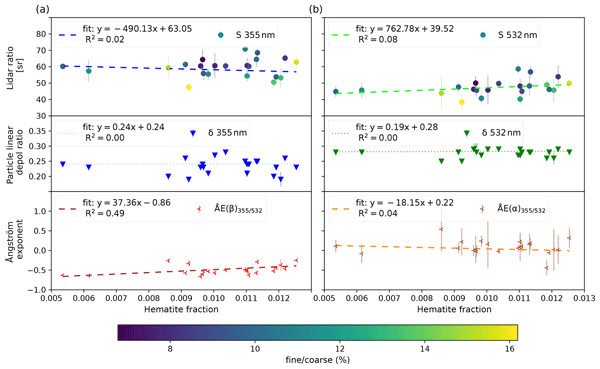
Sofía Gómez Maqueo Anaya, Dietrich Althausen, Julian Hofer, Moritz Haarig, Ulla Wandinger, Bernd Heinold, Ina Tegen, Matthias Faust, Holger Baars, Albert Ansmann, Ronny Engelmann, Annett Skupin, Birgit Heese, and Kerstin Schepanski
Atmos. Chem. Phys., 25, 9737–9764, https://doi.org/10.5194/acp-25-9737-2025, https://doi.org/10.5194/acp-25-9737-2025, 2025
Short summary
Short summary
This study investigates how hematite in Sahara dust affects how dust particles interact with radiation. Using lidar data from Cabo Verde (2021–2022) and hematite content from atmospheric model simulations, the results show that a higher hematite fraction leads to a decrease in the particle backscattering coefficients in a spectrally different way. These findings can improve the representation of mineral dust in climate models, particularly regarding their radiative effect.
Gladiola Malollari, Albert Ansmann, Holger Baars, Cristofer Jimenez, Julian Hofer, Ronny Engelmann, Nathan Skupin, and Seit Shallari
Atmos. Meas. Tech., 18, 3937–3944, https://doi.org/10.5194/amt-18-3937-2025, https://doi.org/10.5194/amt-18-3937-2025, 2025
Short summary
Short summary
This study presents, for the first time, the uncertainty analysis of the Ångström exponent assumption on the full set of retrievable optical properties obtained with Raman lidar. A quantitative comparison between the pure rotational and vibrational–rotational Raman lidar approaches is presented. A minor impact of a wrong Ångström exponent on the determined aerosol optical properties is found.
Dimitri Trapon, Holger Baars, Athena Augusta Floutsi, Sebastian Bley, Moritz Haarig, Adrien Lacour, Thomas Flament, Alain Dabas, Amin R. Nehrir, Frithjof Ehlers, and Dorit Huber
Atmos. Meas. Tech., 18, 3873–3896, https://doi.org/10.5194/amt-18-3873-2025, https://doi.org/10.5194/amt-18-3873-2025, 2025
Short summary
Short summary
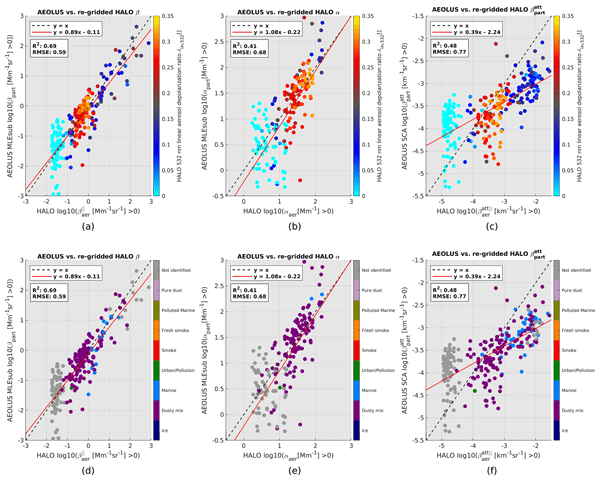
The study highlights how aerosol measurements from aircraft can be used in synergy with ground-based observations to validate the European Space Agency's Aeolus satellite aerosol product above the tropical Atlantic. For the first time, collocated sections of the troposphere up to 626 km long are crossed. Combining measurements from satellite, aircraft, and ground-based instruments allows characterization of the optical properties of the observed dust particles emitted from the Sahara.
Moritz Haarig, Ronny Engelmann, Holger Baars, Benedikt Gast, Dietrich Althausen, and Albert Ansmann
Atmos. Chem. Phys., 25, 7741–7763, https://doi.org/10.5194/acp-25-7741-2025, https://doi.org/10.5194/acp-25-7741-2025, 2025
Short summary
Short summary
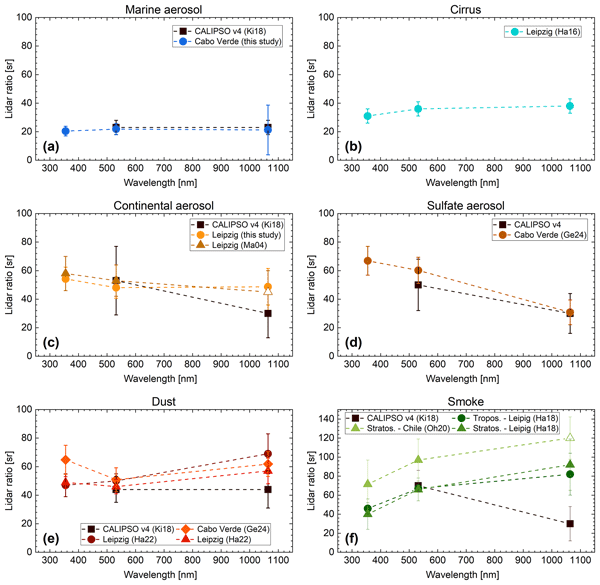
The lidar ratio is an important quantity in aerosol typing. Its spectral slope contains information about the source region or transport paths of the observed aerosol. The extension to 1064 nm is a recent development led by our institute. We gathered previous observations and added new ones to provide the spectral slope for the most important aerosol types such as marine and continental aerosol, dust, smoke, and sulfate. We compared it to assumptions used for spaceborne backscatter lidars.
Yuyang Chang, Qiaoyun Hu, Philippe Goloub, Thierry Podvin, Igor Veselovskii, Fabrice Ducos, Gaël Dubois, Masanori Saito, Anton Lopatin, Oleg Dubovik, and Cheng Chen
Atmos. Chem. Phys., 25, 6787–6821, https://doi.org/10.5194/acp-25-6787-2025, https://doi.org/10.5194/acp-25-6787-2025, 2025
Short summary
Short summary
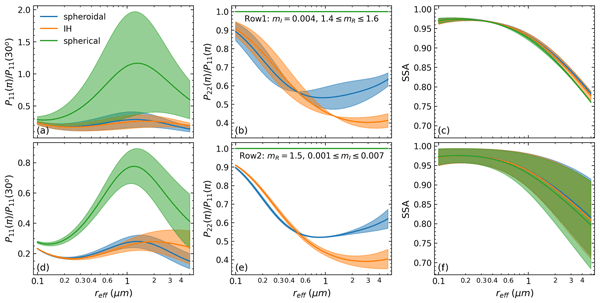
Our study retrieved dust aerosol microphysical properties from lidar measurements using different scattering models. Numeric simulations and real data applications revealed the importance of considering depolarization measurements and the superiority of the irregular–hexahedral model in the retrieval of dust aerosols from lidar measurements.
Albert Ansmann, Cristofer Jimenez, Johanna Roschke, Johannes Bühl, Kevin Ohneiser, Ronny Engelmann, Martin Radenz, Hannes Griesche, Julian Hofer, Dietrich Althausen, Daniel A. Knopf, Sandro Dahlke, Tom Gaudek, Patric Seifert, and Ulla Wandinger
Atmos. Chem. Phys., 25, 4847–4866, https://doi.org/10.5194/acp-25-4847-2025, https://doi.org/10.5194/acp-25-4847-2025, 2025
Short summary
Short summary
In this study, we focus on the potential impact of wildfire smoke on cirrus formation. For the first time, state-of-the-art aerosol and cirrus observations with lidar and radar, presented in this paper (Part 1 of a series of two articles), are closely linked to the comprehensive modeling of gravity-wave-induced ice nucleation in cirrus evolution processes, presented in a companion paper (Part 2). We found a clear impact of wildfire smoke on cirrus evolution.
Yenny González, María F. Sánchez-Barrero, Ioana Popovici, África Barreto, Stephane Victori, Ellsworth J. Welton, Rosa D. García, Pablo G. Sicilia, Fernando A. Almansa, Carlos Torres, and Philippe Goloub
Atmos. Meas. Tech., 18, 1885–1908, https://doi.org/10.5194/amt-18-1885-2025, https://doi.org/10.5194/amt-18-1885-2025, 2025
Short summary
Short summary
We characterize the optical properties of various aerosols using a compact dual-wavelength depolarization lidar (CIMEL CE376) at 532 and 808 nm. Through a modified two-wavelength Klett inversion method, we assess the vertical distribution and temporal evolution of Saharan dust, volcanic aerosols and wildfire smoke in the subtropical North Atlantic from August 2021 to August 2023. The study confirms the CE376 lidar's effectiveness in monitoring and characterizing atmospheric aerosols over time.
Benedikt Gast, Cristofer Jimenez, Albert Ansmann, Moritz Haarig, Ronny Engelmann, Felix Fritzsch, Athena A. Floutsi, Hannes Griesche, Kevin Ohneiser, Julian Hofer, Martin Radenz, Holger Baars, Patric Seifert, and Ulla Wandinger
Atmos. Chem. Phys., 25, 3995–4011, https://doi.org/10.5194/acp-25-3995-2025, https://doi.org/10.5194/acp-25-3995-2025, 2025
Short summary
Short summary
In this study, we discuss the enhanced detection capabilities of a fluorescence lidar in the case of optically thin aerosol layers in the upper troposphere and lower stratosphere (UTLS) region. Our results suggest that such thin aerosol layers are not so rare in the UTLS and can potentially trigger and impact cirrus cloud formation through heterogeneous ice nucleation. By altering the microphysical cloud properties, this could affect clouds' evolution and lifetime and thus their climate effect.
Viet Le, Konstantinos Matthaios Doulgeris, Mika Komppula, John Backman, Gholamhossein Bagheri, Eberhard Bodenschatz, and David Brus
Earth Syst. Sci. Data Discuss., https://doi.org/10.5194/essd-2025-148, https://doi.org/10.5194/essd-2025-148, 2025
Preprint withdrawn
Short summary
Short summary
This manuscript presents datasets collected during the Pallas Cloud Experiment in northern Finland during the autumn of 2022. We provide an overview of the payload that measured meteorological, cloud, and aerosol properties, and was deployed on tethered balloon systems across 21 flights. Additionally, we describe the datasets obtained, including details of the instruments on the payload.
Silke Groß, Volker Freudenthaler, Moritz Haarig, Albert Ansmann, Carlos Toledano, David Mateos, Petra Seibert, Rodanthi-Elisavet Mamouri, Argyro Nisantzi, Josef Gasteiger, Maximilian Dollner, Anne Tipka, Manuel Schöberl, Marilena Teri, and Bernadett Weinzierl
Atmos. Chem. Phys., 25, 3191–3211, https://doi.org/10.5194/acp-25-3191-2025, https://doi.org/10.5194/acp-25-3191-2025, 2025
Short summary
Short summary
Aerosols contribute to the largest uncertainties in climate change predictions. The eastern Mediterranean is a hotspot for aerosols with natural and anthropogenic contributions. We present lidar measurements performed during A-LIFE (Absorbing aerosol layers in a changing climate: aging, lifetime and dynamics) to characterize aerosols and aerosol mixtures. We extend current lidar classification and separation schemes and compare them to classification schemes using different methods.
Maria Filioglou, Petri Tiitta, Xiaoxia Shang, Ari Leskinen, Pasi Ahola, Sanna Pätsi, Annika Saarto, Ville Vakkari, Uula Isopahkala, and Mika Komppula
Atmos. Chem. Phys., 25, 1639–1657, https://doi.org/10.5194/acp-25-1639-2025, https://doi.org/10.5194/acp-25-1639-2025, 2025
Short summary
Short summary
Every year a vast number of people experience allergic reactions due to exposure to airborne pollen. These symptoms are concentration dependent; thus accurate information about the pollen load in the atmosphere is essential. Moreover, pollen grains and fragments of it are likely to contribute to cloud processes and suppress precipitation. Here, we estimate the concentration and cloud-relevant parameters of birch pollen in the atmosphere using observations from a PollyXT and a CL61 ceilometer.
Igor Veselovskii, Mikhail Korenskiy, Nikita Kasianik, Boris Barchunov, Qiaoyun Hu, Philippe Goloub, and Thierry Podvin
Atmos. Chem. Phys., 25, 1603–1615, https://doi.org/10.5194/acp-25-1603-2025, https://doi.org/10.5194/acp-25-1603-2025, 2025
Short summary
Short summary
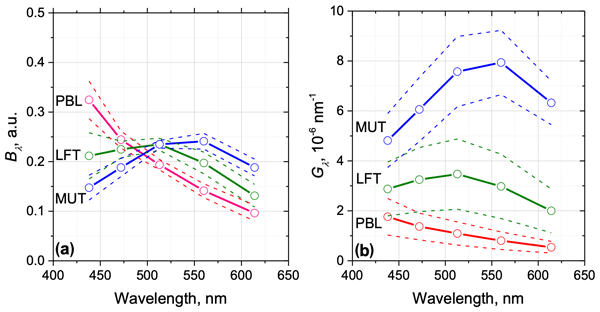
A fluorescence lidar was used to study transported Canadian smoke in May–September 2023. The fluorescence measurements were taken at five wavelengths. The results revealed that fluorescence capacity increases with altitude, suggesting a higher concentration of organic compounds in the upper troposphere and lower stratosphere than in the lower troposphere. The fluorescence spectra peaked in the 513 and 560 nm channels in smoke layers but decreased with wavelength in urban aerosols.
Harri Kokkola, Juha Tonttila, Silvia M. Calderón, Sami Romakkaniemi, Antti Lipponen, Aapo Peräkorpi, Tero Mielonen, Edward Gryspeerdt, Timo Henrik Virtanen, Pekka Kolmonen, and Antti Arola
Atmos. Chem. Phys., 25, 1533–1543, https://doi.org/10.5194/acp-25-1533-2025, https://doi.org/10.5194/acp-25-1533-2025, 2025
Short summary
Short summary
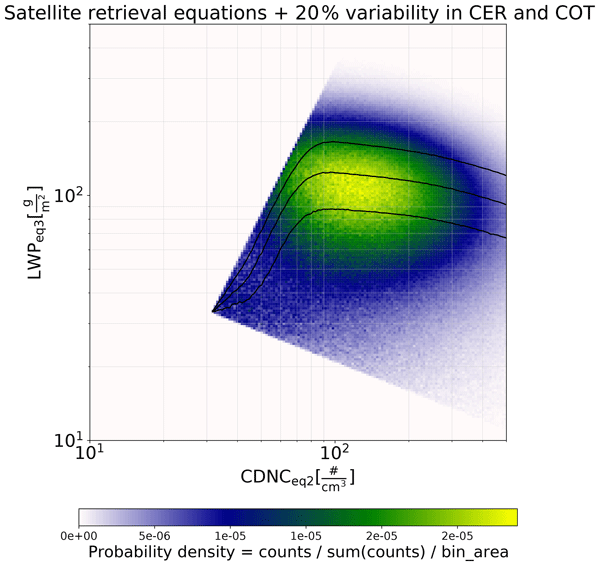
Understanding how atmospheric aerosols affect clouds is a scientific challenge. One question is how aerosols affects the amount of cloud water. We used a cloud-scale model to study these effects on marine clouds. The study showed that variations in cloud properties and instrument noise can cause bias in satellite-derived cloud water content. However, our results suggest that for similar weather conditions with well-defined aerosol concentrations, satellite data can reliably track these effects.

Johanna Roschke, Jonas Witthuhn, Marcus Klingebiel, Moritz Haarig, Andreas Foth, Anton Kötsche, and Heike Kalesse-Los
Atmos. Meas. Tech., 18, 487–508, https://doi.org/10.5194/amt-18-487-2025, https://doi.org/10.5194/amt-18-487-2025, 2025
Short summary
Short summary
We present a technique to discriminate between the Cloudnet target classification of "drizzle or rain" and sea salt aerosols that is applicable to marine Cloudnet sites. The method is crucial for investigating the occurrence of precipitation and significantly improves the Cloudnet target classification scheme for measurements over the Barbados Cloud Observatory (BCO). A first-ever analysis of the Cloudnet product including the new "haze echo" target over 2 years at the BCO is presented.
Marje Prank, Juha Tonttila, Xiaoxia Shang, Sami Romakkaniemi, and Tomi Raatikainen
Atmos. Chem. Phys., 25, 183–197, https://doi.org/10.5194/acp-25-183-2025, https://doi.org/10.5194/acp-25-183-2025, 2025
Short summary
Short summary
Large primary bioparticles such as pollen can be abundant in the atmosphere. In humid conditions pollen can rupture and release a large number of fine sub-pollen particles (SPPs). The paper investigates what kind of birch pollen concentrations are needed for the pollen and SPPs to start playing a noticeable role in cloud processes and alter precipitation formation. In the studied cases only the largest observed pollen concentrations were able to noticeably alter the precipitation formation.
Romanos Foskinis, Ghislain Motos, Maria I. Gini, Olga Zografou, Kunfeng Gao, Stergios Vratolis, Konstantinos Granakis, Ville Vakkari, Kalliopi Violaki, Andreas Aktypis, Christos Kaltsonoudis, Zongbo Shi, Mika Komppula, Spyros N. Pandis, Konstantinos Eleftheriadis, Alexandros Papayannis, and Athanasios Nenes
Atmos. Chem. Phys., 24, 9827–9842, https://doi.org/10.5194/acp-24-9827-2024, https://doi.org/10.5194/acp-24-9827-2024, 2024
Short summary
Short summary
Analysis of modeling, in situ, and remote sensing measurements reveals the microphysical state of orographic clouds and their response to aerosol from the boundary layer and free troposphere. We show that cloud response to aerosol is robust, as predicted supersaturation and cloud droplet number levels agree with those determined from in-cloud measurements. The ability to determine if clouds are velocity- or aerosol-limited allows for novel model constraints and remote sensing products.
Jutta Kesti, Ewan J. O'Connor, Anne Hirsikko, John Backman, Maria Filioglou, Anu-Maija Sundström, Juha Tonttila, Heikki Lihavainen, Hannele Korhonen, and Eija Asmi
Atmos. Chem. Phys., 24, 9369–9386, https://doi.org/10.5194/acp-24-9369-2024, https://doi.org/10.5194/acp-24-9369-2024, 2024
Short summary
Short summary
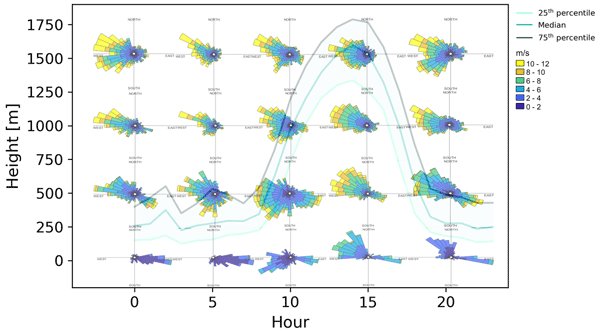
The study combines aerosol particle measurements at the surface and vertical profiling of the atmosphere with a scanning Doppler lidar to investigate how particle transportation together with boundary layer evolution can affect particle and SO2 concentrations at the surface in the Arabian Peninsula region. The instrumentation enabled us to see elevated nucleation mode particle and SO2 concentrations at the surface when air masses transported from polluted areas are mixed in the boundary layer.
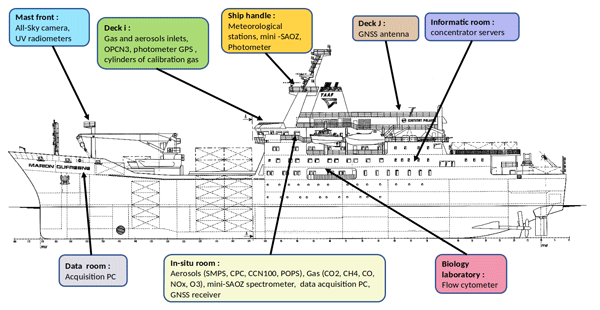
Pierre Tulet, Joel Van Baelen, Pierre Bosser, Jérome Brioude, Aurélie Colomb, Philippe Goloub, Andrea Pazmino, Thierry Portafaix, Michel Ramonet, Karine Sellegri, Melilotus Thyssen, Léa Gest, Nicolas Marquestaut, Dominique Mékiès, Jean-Marc Metzger, Gilles Athier, Luc Blarel, Marc Delmotte, Guillaume Desprairies, Mérédith Dournaux, Gaël Dubois, Valentin Duflot, Kevin Lamy, Lionel Gardes, Jean-François Guillemot, Valérie Gros, Joanna Kolasinski, Morgan Lopez, Olivier Magand, Erwan Noury, Manuel Nunes-Pinharanda, Guillaume Payen, Joris Pianezze, David Picard, Olivier Picard, Sandrine Prunier, François Rigaud-Louise, Michael Sicard, and Benjamin Torres
Earth Syst. Sci. Data, 16, 3821–3849, https://doi.org/10.5194/essd-16-3821-2024, https://doi.org/10.5194/essd-16-3821-2024, 2024
Short summary
Short summary
The MAP-IO program aims to compensate for the lack of atmospheric and oceanographic observations in the Southern Ocean by equipping the ship Marion Dufresne with a set of 17 scientific instruments. This program collected 700 d of measurements under different latitudes, seasons, sea states, and weather conditions. These new data will support the calibration and validation of numerical models and the understanding of the atmospheric composition of this region of Earth.
Maëlie Chazette, Patrick Chazette, Ilja M. Reiter, Xiaoxia Shang, Julien Totems, Jean-Philippe Orts, Irène Xueref-Remy, and Nicolas Montes
Biogeosciences, 21, 3289–3303, https://doi.org/10.5194/bg-21-3289-2024, https://doi.org/10.5194/bg-21-3289-2024, 2024
Short summary
Short summary
The approach presented is original in its coupling between field observations and airborne lidar observations. It has been applied to an instrumented reference forest site in the south of France, which is heavily impacted by climate change. It leads to the evaluation of tree heights and ends with assessments of aerial and root carbon stocks. A detailed assessment of uncertainties is presented to add a level of reliability to the scientific products delivered.
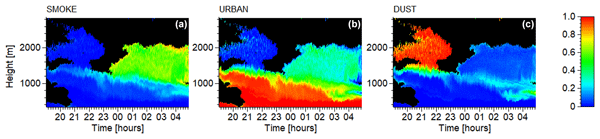
Igor Veselovskii, Boris Barchunov, Qiaoyun Hu, Philippe Goloub, Thierry Podvin, Mikhail Korenskii, Gaël Dubois, William Boissiere, and Nikita Kasianik
Atmos. Meas. Tech., 17, 4137–4152, https://doi.org/10.5194/amt-17-4137-2024, https://doi.org/10.5194/amt-17-4137-2024, 2024
Short summary
Short summary
The paper presents a new method that categorizes atmospheric aerosols by analyzing their optical properties with a Mie–Raman–fluorescence lidar. The research specifically looks into understanding the presence of smoke, urban, and dust aerosols in the mixtures identified by this lidar. The reliability of the results is evaluated using the Monte Carlo technique. The effectiveness of this approach is successfully demonstrated through testing in ATOLL, an observatory influenced by diverse aerosols.
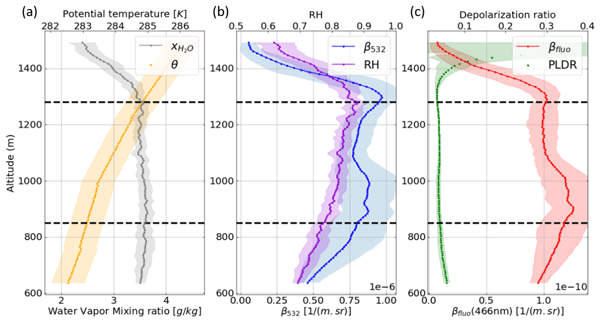
Robin Miri, Olivier Pujol, Qiaoyun Hu, Philippe Goloub, Igor Veselovskii, Thierry Podvin, and Fabrice Ducos
Atmos. Meas. Tech., 17, 3367–3375, https://doi.org/10.5194/amt-17-3367-2024, https://doi.org/10.5194/amt-17-3367-2024, 2024
Short summary
Short summary
This paper focuses on the use of fluorescence to study aerosols with lidar. An innovative method for aerosol hygroscopic growth study using fluorescence is presented. The paper presents case studies to showcase the effectiveness and potential of the proposed approach. These advancements will contribute to better understanding the interactions between aerosols and water vapor, with future work expected to be dedicated to aerosol–cloud interaction.
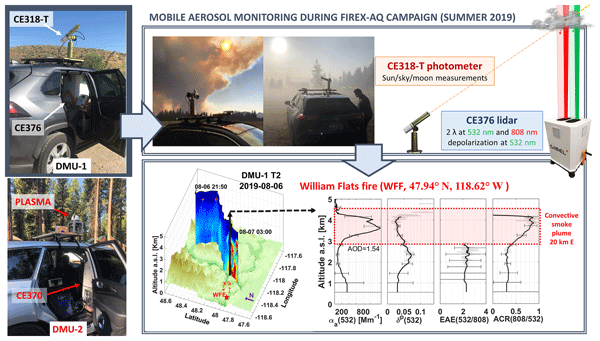
Maria Fernanda Sanchez Barrero, Ioana Elisabeta Popovici, Philippe Goloub, Stephane Victori, Qiaoyun Hu, Benjamin Torres, Thierry Podvin, Luc Blarel, Gaël Dubois, Fabrice Ducos, Eric Bourrianne, Aliaksandr Lapionak, Lelia Proniewski, Brent Holben, David Matthew Giles, and Anthony LaRosa
Atmos. Meas. Tech., 17, 3121–3146, https://doi.org/10.5194/amt-17-3121-2024, https://doi.org/10.5194/amt-17-3121-2024, 2024
Short summary
Short summary
This study showcases the use of a compact elastic lidar to monitor aerosols aboard moving platforms. By coupling dual-wavelength and depolarization measurements with photometer data, we studied aerosols during events of Saharan dust and smoke transport. Our research, conducted in various scenarios, not only validated our methods but also offered insights into the atmospheric dynamics near active fires. This study aids future research to fill observational gaps in aerosol monitoring.
Henriette Gebauer, Athena Augusta Floutsi, Moritz Haarig, Martin Radenz, Ronny Engelmann, Dietrich Althausen, Annett Skupin, Albert Ansmann, Cordula Zenk, and Holger Baars
Atmos. Chem. Phys., 24, 5047–5067, https://doi.org/10.5194/acp-24-5047-2024, https://doi.org/10.5194/acp-24-5047-2024, 2024
Short summary
Short summary
Sulfate aerosol from the volcanic eruption at La Palma in 2021 was observed over Cabo Verde. We characterized the aerosol burden based on a case study of lidar and sun photometer observations. We compared the volcanic case to the typical background conditions (reference case) to quantify the volcanic pollution. We show the first ever measurements of the extinction coefficient, lidar ratio and depolarization ratio at 1064 nm for volcanic sulfate.
Alkistis Papetta, Franco Marenco, Maria Kezoudi, Rodanthi-Elisavet Mamouri, Argyro Nisantzi, Holger Baars, Ioana Elisabeta Popovici, Philippe Goloub, Stéphane Victori, and Jean Sciare
Atmos. Meas. Tech., 17, 1721–1738, https://doi.org/10.5194/amt-17-1721-2024, https://doi.org/10.5194/amt-17-1721-2024, 2024
Short summary
Short summary
We propose a method to determine depolarization parameters using observations from a reference instrument at a nearby location, needed for systems where a priori knowledge of cross-talk parameters is not available. It uses three-parameter equations to compare VDR between two co-located lidars at dust and molecular layers. It can be applied retrospectively to existing data acquired during campaigns. Its application to Cimel CE376 corrected VDR bias at high- and low-depolarizing layers.
Sofía Gómez Maqueo Anaya, Dietrich Althausen, Matthias Faust, Holger Baars, Bernd Heinold, Julian Hofer, Ina Tegen, Albert Ansmann, Ronny Engelmann, Annett Skupin, Birgit Heese, and Kerstin Schepanski
Geosci. Model Dev., 17, 1271–1295, https://doi.org/10.5194/gmd-17-1271-2024, https://doi.org/10.5194/gmd-17-1271-2024, 2024
Short summary
Short summary
Mineral dust aerosol particles vary greatly in their composition depending on source region, which leads to different physicochemical properties. Most atmosphere–aerosol models consider mineral dust aerosols to be compositionally homogeneous, which ultimately increases model uncertainty. Here, we present an approach to explicitly consider the heterogeneity of the mineralogical composition for simulations of the Saharan atmospheric dust cycle with regard to dust transport towards the Atlantic.
Igor Veselovskii, Qiaoyun Hu, Philippe Goloub, Thierry Podvin, William Boissiere, Mikhail Korenskiy, Nikita Kasianik, Sergey Khaykyn, and Robin Miri
Atmos. Meas. Tech., 17, 1023–1036, https://doi.org/10.5194/amt-17-1023-2024, https://doi.org/10.5194/amt-17-1023-2024, 2024
Short summary
Short summary
Measurements of transported smoke layers were performed with a lidar in Lille and a five-channel fluorescence lidar in Moscow. Results show the peak of fluorescence in the boundary layer is at 438 nm, while in the smoke layer it shifts to longer wavelengths. The fluorescence depolarization is 45 % to 55 %. The depolarization ratio of the water vapor channel is low (2 ± 0.5 %) in the absence of fluorescence and can be used to evaluate the contribution of fluorescence to water vapor signal.
Xiaoxia Shang, Antti Lipponen, Maria Filioglou, Anu-Maija Sundström, Mark Parrington, Virginie Buchard, Anton S. Darmenov, Ellsworth J. Welton, Eleni Marinou, Vassilis Amiridis, Michael Sicard, Alejandro Rodríguez-Gómez, Mika Komppula, and Tero Mielonen
Atmos. Chem. Phys., 24, 1329–1344, https://doi.org/10.5194/acp-24-1329-2024, https://doi.org/10.5194/acp-24-1329-2024, 2024
Short summary
Short summary
In June 2019, smoke particles from a Canadian wildfire event were transported to Europe. The long-range-transported smoke plumes were monitored with a spaceborne lidar and reanalysis models. Based on the aerosol mass concentrations estimated from the observations, the reanalysis models had difficulties in reproducing the amount and location of the smoke aerosols during the transport event. Consequently, more spaceborne lidar missions are needed for reliable monitoring of aerosol plumes.
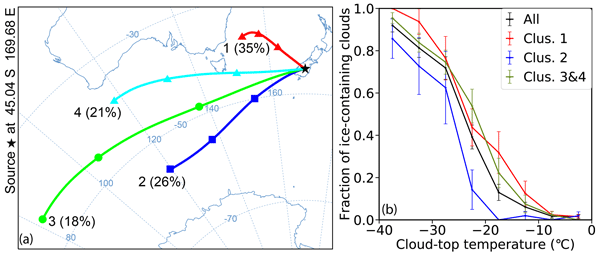
Julian Hofer, Patric Seifert, J. Ben Liley, Martin Radenz, Osamu Uchino, Isamu Morino, Tetsu Sakai, Tomohiro Nagai, and Albert Ansmann
Atmos. Chem. Phys., 24, 1265–1280, https://doi.org/10.5194/acp-24-1265-2024, https://doi.org/10.5194/acp-24-1265-2024, 2024
Short summary
Short summary
An 11-year dataset of polarization lidar observations from Lauder, New Zealand / Aotearoa, was used to distinguish the thermodynamic phase of natural clouds. The cloud dataset was separated to assess the impact of air mass origin on the frequency of heterogeneous ice formation. Ice formation efficiency in clouds above Lauder was found to be lower than in the polluted Northern Hemisphere midlatitudes but higher than in very clean and pristine environments, such as Punta Arenas in southern Chile.
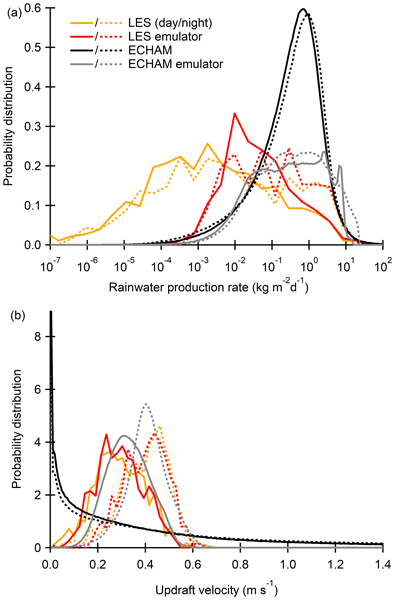
Kalle Nordling, Jukka-Pekka Keskinen, Sami Romakkaniemi, Harri Kokkola, Petri Räisänen, Antti Lipponen, Antti-Ilari Partanen, Jaakko Ahola, Juha Tonttila, Muzaffer Ege Alper, Hannele Korhonen, and Tomi Raatikainen
Atmos. Chem. Phys., 24, 869–890, https://doi.org/10.5194/acp-24-869-2024, https://doi.org/10.5194/acp-24-869-2024, 2024
Short summary
Short summary
Our results show that the global model is stable and it provides meaningful results. This way we can include a physics-based presentation of sub-grid physics (physics which happens on a 100 m scale) in the global model, whose resolution is on a 100 km scale.
Alexandra Tsekeri, Anna Gialitaki, Marco Di Paolantonio, Davide Dionisi, Gian Luigi Liberti, Alnilam Fernandes, Artur Szkop, Aleksander Pietruczuk, Daniel Pérez-Ramírez, Maria J. Granados Muñoz, Juan Luis Guerrero-Rascado, Lucas Alados-Arboledas, Diego Bermejo Pantaleón, Juan Antonio Bravo-Aranda, Anna Kampouri, Eleni Marinou, Vassilis Amiridis, Michael Sicard, Adolfo Comerón, Constantino Muñoz-Porcar, Alejandro Rodríguez-Gómez, Salvatore Romano, Maria Rita Perrone, Xiaoxia Shang, Mika Komppula, Rodanthi-Elisavet Mamouri, Argyro Nisantzi, Diofantos Hadjimitsis, Francisco Navas-Guzmán, Alexander Haefele, Dominika Szczepanik, Artur Tomczak, Iwona S. Stachlewska, Livio Belegante, Doina Nicolae, Kalliopi Artemis Voudouri, Dimitris Balis, Athena A. Floutsi, Holger Baars, Linda Miladi, Nicolas Pascal, Oleg Dubovik, and Anton Lopatin
Atmos. Meas. Tech., 16, 6025–6050, https://doi.org/10.5194/amt-16-6025-2023, https://doi.org/10.5194/amt-16-6025-2023, 2023
Short summary
Short summary
EARLINET/ACTRIS organized an intensive observational campaign in May 2020, with the objective of monitoring the atmospheric state over Europe during the COVID-19 lockdown and relaxation period. The work presented herein focuses on deriving a common methodology for applying a synergistic retrieval that utilizes the network's ground-based passive and active remote sensing measurements and deriving the aerosols from anthropogenic activities over Europe.
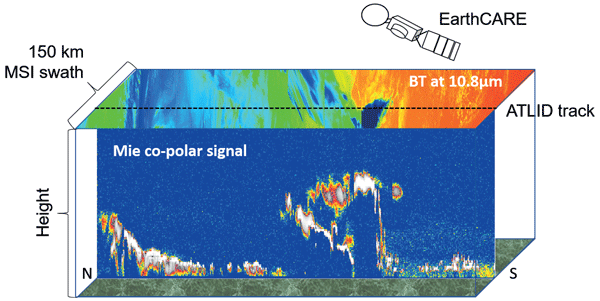
Moritz Haarig, Anja Hünerbein, Ulla Wandinger, Nicole Docter, Sebastian Bley, David Donovan, and Gerd-Jan van Zadelhoff
Atmos. Meas. Tech., 16, 5953–5975, https://doi.org/10.5194/amt-16-5953-2023, https://doi.org/10.5194/amt-16-5953-2023, 2023
Short summary
Short summary
The atmospheric lidar (ATLID) and Multi-Spectral Imager (MSI) will be carried by the EarthCARE satellite. The synergistic ATLID–MSI Column Products (AM-COL) algorithm described in the paper combines the strengths of ATLID in vertically resolved profiles of aerosol and clouds (e.g., cloud top height) with the strengths of MSI in observing the complete scene beside the satellite track and in extending the lidar information to the swath. The algorithm is validated against simulated test scenes.
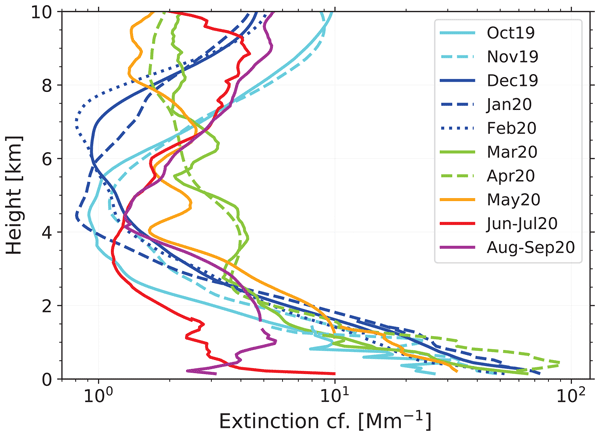
Albert Ansmann, Kevin Ohneiser, Ronny Engelmann, Martin Radenz, Hannes Griesche, Julian Hofer, Dietrich Althausen, Jessie M. Creamean, Matthew C. Boyer, Daniel A. Knopf, Sandro Dahlke, Marion Maturilli, Henriette Gebauer, Johannes Bühl, Cristofer Jimenez, Patric Seifert, and Ulla Wandinger
Atmos. Chem. Phys., 23, 12821–12849, https://doi.org/10.5194/acp-23-12821-2023, https://doi.org/10.5194/acp-23-12821-2023, 2023
Short summary
Short summary
The 1-year MOSAiC (2019–2020) expedition with the German ice breaker Polarstern was the largest polar field campaign ever conducted. The Polarstern, with our lidar aboard, drifted with the pack ice north of 85° N for more than 7 months (October 2019 to mid-May 2020). We measured the full annual cycle of aerosol conditions in terms of aerosol optical and cloud-process-relevant properties. We observed a strong contrast between polluted winter and clean summer aerosol conditions.
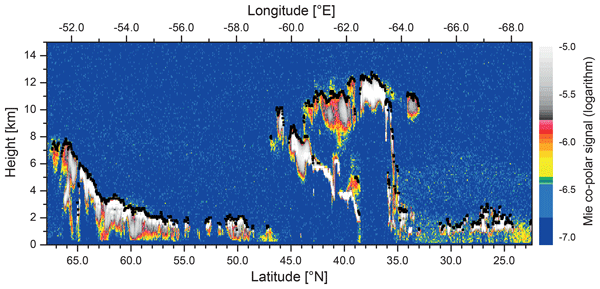
Ulla Wandinger, Moritz Haarig, Holger Baars, David Donovan, and Gerd-Jan van Zadelhoff
Atmos. Meas. Tech., 16, 4031–4052, https://doi.org/10.5194/amt-16-4031-2023, https://doi.org/10.5194/amt-16-4031-2023, 2023
Short summary
Short summary
We introduce the algorithms that have been developed to derive cloud top height and aerosol layer products from observations with the Atmospheric Lidar (ATLID) onboard the Earth Cloud, Aerosol and Radiation Explorer (EarthCARE). The products provide information on the uppermost cloud and geometrical and optical properties of aerosol layers in an atmospheric column. They can be used individually but also serve as input for algorithms that combine observations with EarthCARE’s lidar and imager.
Maria Filioglou, Ari Leskinen, Ville Vakkari, Ewan O'Connor, Minttu Tuononen, Pekko Tuominen, Samuli Laukkanen, Linnea Toiviainen, Annika Saarto, Xiaoxia Shang, Petri Tiitta, and Mika Komppula
Atmos. Chem. Phys., 23, 9009–9021, https://doi.org/10.5194/acp-23-9009-2023, https://doi.org/10.5194/acp-23-9009-2023, 2023
Short summary
Short summary
Pollen impacts climate and public health, and it can be detected in the atmosphere by lidars which measure the linear particle depolarization ratio (PDR), a shape-relevant optical parameter. As aerosols also cause depolarization, surface aerosol and pollen observations were combined with measurements from ground-based lidars operating at different wavelengths to determine the optical properties of birch and pine pollen and quantify their relative contribution to the PDR.
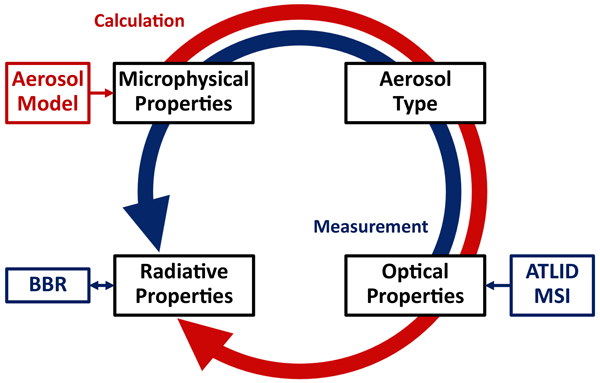
Ulla Wandinger, Athena Augusta Floutsi, Holger Baars, Moritz Haarig, Albert Ansmann, Anja Hünerbein, Nicole Docter, David Donovan, Gerd-Jan van Zadelhoff, Shannon Mason, and Jason Cole
Atmos. Meas. Tech., 16, 2485–2510, https://doi.org/10.5194/amt-16-2485-2023, https://doi.org/10.5194/amt-16-2485-2023, 2023
Short summary
Short summary
We introduce an aerosol classification model that has been developed for the Earth Clouds, Aerosols and Radiation Explorer (EarthCARE). The model provides a consistent description of microphysical, optical, and radiative properties of common aerosol types such as dust, sea salt, pollution, and smoke. It is used for aerosol classification and assessment of radiation effects based on the synergy of active and passive observations with lidar, imager, and radiometer of the multi-instrument platform.
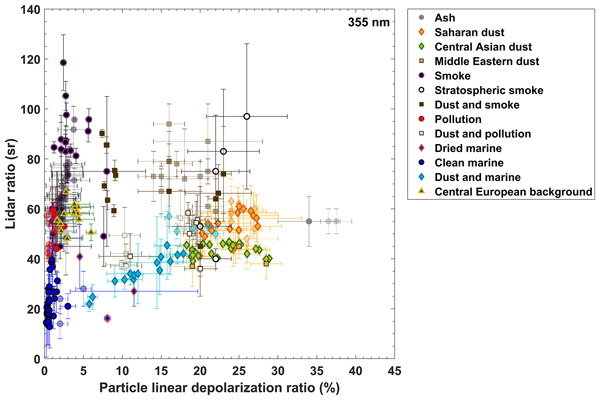
Athena Augusta Floutsi, Holger Baars, Ronny Engelmann, Dietrich Althausen, Albert Ansmann, Stephanie Bohlmann, Birgit Heese, Julian Hofer, Thomas Kanitz, Moritz Haarig, Kevin Ohneiser, Martin Radenz, Patric Seifert, Annett Skupin, Zhenping Yin, Sabur F. Abdullaev, Mika Komppula, Maria Filioglou, Elina Giannakaki, Iwona S. Stachlewska, Lucja Janicka, Daniele Bortoli, Eleni Marinou, Vassilis Amiridis, Anna Gialitaki, Rodanthi-Elisavet Mamouri, Boris Barja, and Ulla Wandinger
Atmos. Meas. Tech., 16, 2353–2379, https://doi.org/10.5194/amt-16-2353-2023, https://doi.org/10.5194/amt-16-2353-2023, 2023
Short summary
Short summary
DeLiAn is a collection of lidar-derived aerosol intensive optical properties for several aerosol types, namely the particle linear depolarization ratio, the extinction-to-backscatter ratio (lidar ratio) and the Ångström exponent. The data collection is based on globally distributed, long-term, ground-based, multiwavelength, Raman and polarization lidar measurements and currently covers two wavelengths, 355 and 532 nm, for 13 aerosol categories ranging from basic aerosol types to mixtures.

Igor Veselovskii, Nikita Kasianik, Mikhail Korenskii, Qiaoyun Hu, Philippe Goloub, Thierry Podvin, and Dong Liu
Atmos. Meas. Tech., 16, 2055–2065, https://doi.org/10.5194/amt-16-2055-2023, https://doi.org/10.5194/amt-16-2055-2023, 2023
Short summary
Short summary
A five-channel fluorescence lidar was developed for the study of atmospheric aerosol. The fluorescence spectrum induced by 355 nm laser emission is analyzed in five spectral intervals, namely 438 and 29, 472 and 32, 513 and 29, 560 and 40, and 614 and 54 nm. This lidar system was operated during strong forest fires. Our results demonstrate that, for urban aerosol, the maximal fluorescence backscattering is observed at 472 nm, while for smoke, the spectrum is shifted toward longer wavelengths.
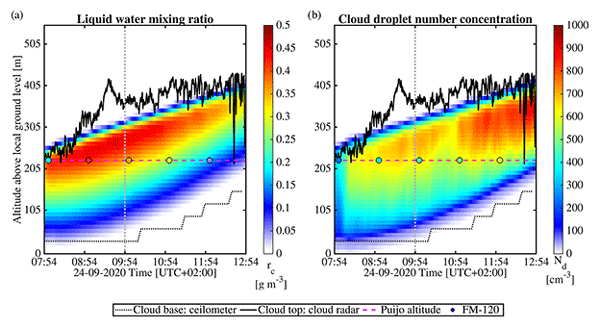
Silvia M. Calderón, Juha Tonttila, Angela Buchholz, Jorma Joutsensaari, Mika Komppula, Ari Leskinen, Liqing Hao, Dmitri Moisseev, Iida Pullinen, Petri Tiitta, Jian Xu, Annele Virtanen, Harri Kokkola, and Sami Romakkaniemi
Atmos. Chem. Phys., 22, 12417–12441, https://doi.org/10.5194/acp-22-12417-2022, https://doi.org/10.5194/acp-22-12417-2022, 2022
Short summary
Short summary
The spatial and temporal restrictions of observations and oversimplified aerosol representation in large eddy simulations (LES) limit our understanding of aerosol–stratocumulus interactions. In this closure study of in situ and remote sensing observations and outputs from UCLALES–SALSA, we have assessed the role of convective overturning and aerosol effects in two cloud events observed at the Puijo SMEAR IV station, Finland, a diurnal-high aerosol case and a nocturnal-low aerosol case.

Albert Ansmann, Kevin Ohneiser, Alexandra Chudnovsky, Daniel A. Knopf, Edwin W. Eloranta, Diego Villanueva, Patric Seifert, Martin Radenz, Boris Barja, Félix Zamorano, Cristofer Jimenez, Ronny Engelmann, Holger Baars, Hannes Griesche, Julian Hofer, Dietrich Althausen, and Ulla Wandinger
Atmos. Chem. Phys., 22, 11701–11726, https://doi.org/10.5194/acp-22-11701-2022, https://doi.org/10.5194/acp-22-11701-2022, 2022
Short summary
Short summary
For the first time we present a systematic study on the impact of wildfire smoke on ozone depletion in the Arctic (2020) and Antarctic stratosphere (2020, 2021). Two major fire events in Siberia and Australia were responsible for the observed record-breaking stratospheric smoke pollution. Our analyses were based on lidar observations of smoke parameters (Polarstern, Punta Arenas) and NDACC Arctic and Antarctic ozone profiles as well as on Antarctic OMI satellite observations of column ozone.
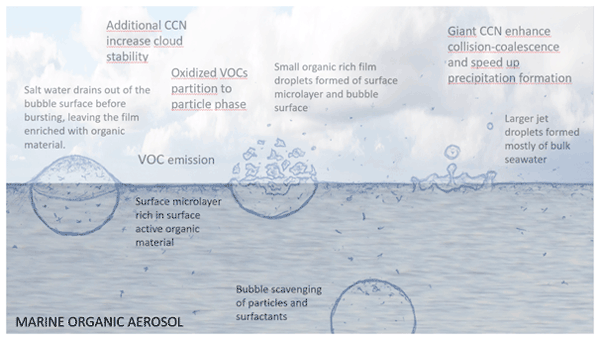
Marje Prank, Juha Tonttila, Jaakko Ahola, Harri Kokkola, Thomas Kühn, Sami Romakkaniemi, and Tomi Raatikainen
Atmos. Chem. Phys., 22, 10971–10992, https://doi.org/10.5194/acp-22-10971-2022, https://doi.org/10.5194/acp-22-10971-2022, 2022
Short summary
Short summary
Aerosols and clouds persist as the dominant sources of uncertainty in climate projections. In this modelling study, we investigate the role of marine aerosols in influencing the lifetime of low-level clouds. Our high resolution simulations show that sea spray can both extend and shorten the lifetime of the cloud layer depending on the model setup. The impact of the primary marine organics is relatively limited while secondary aerosol from monoterpenes can have larger impact.

Igor Veselovskii, Qiaoyun Hu, Philippe Goloub, Thierry Podvin, Boris Barchunov, and Mikhail Korenskii
Atmos. Meas. Tech., 15, 4881–4900, https://doi.org/10.5194/amt-15-4881-2022, https://doi.org/10.5194/amt-15-4881-2022, 2022
Short summary
Short summary
An approach to reveal variability in aerosol type at a high spatiotemporal resolution, by combining fluorescence and Mie–Raman lidar data, is presented. We applied this new classification scheme to lidar data obtained by LOA, University of Lille, in 2020–2021. It is demonstrated that the separation of the main particle types, such as smoke, dust, pollen, and urban, can be performed with a height resolution of 60 m and temporal resolution better than 10 min for the current lidar configuration.

Jörg Wieder, Nikola Ihn, Claudia Mignani, Moritz Haarig, Johannes Bühl, Patric Seifert, Ronny Engelmann, Fabiola Ramelli, Zamin A. Kanji, Ulrike Lohmann, and Jan Henneberger
Atmos. Chem. Phys., 22, 9767–9797, https://doi.org/10.5194/acp-22-9767-2022, https://doi.org/10.5194/acp-22-9767-2022, 2022
Short summary
Short summary
Ice formation and its evolution in mixed-phase clouds are still uncertain. We evaluate the lidar retrieval of ice-nucleating particle concentration in dust-dominated and continental air masses over the Swiss Alps with in situ observations. A calibration factor to improve the retrieval from continental air masses is proposed. Ice multiplication factors are obtained with a new method utilizing remote sensing. Our results indicate that secondary ice production occurs at temperatures down to −30 °C.
Ajit Ahlawat, Kay Weinhold, Jesus Marval, Paolo Tronville, Ari Leskinen, Mika Komppula, Holger Gerwig, Lars Gerling, Stephan Weber, Rikke Bramming Jørgensen, Thomas Nørregaard Jensen, Marouane Merizak, Ulrich Vogt, Carla Ribalta, Mar Viana, Andre Schmitz, Maria Chiesa, Giacomo Gerosa, Lothar Keck, Markus Pesch, Gerhard Steiner, Thomas Krinke, Torsten Tritscher, Wolfram Birmili, and Alfred Wiedensohler
Atmos. Meas. Tech. Discuss., https://doi.org/10.5194/amt-2022-155, https://doi.org/10.5194/amt-2022-155, 2022
Revised manuscript not accepted
Short summary
Short summary
Measurements of ultrafine particles must be done with quality-assured instruments. The performance of portable instruments such as NanoScan SMPS, and GRIMM Mini WRAS spectrometer measuring the particle number size distribution in the range from 10 to 200 nm were investigated. The influence of different aerosol types and maintenance activities on these instruments were explored. The results show that these portable instruments are suitable for mobile UFP measurements for source identification.
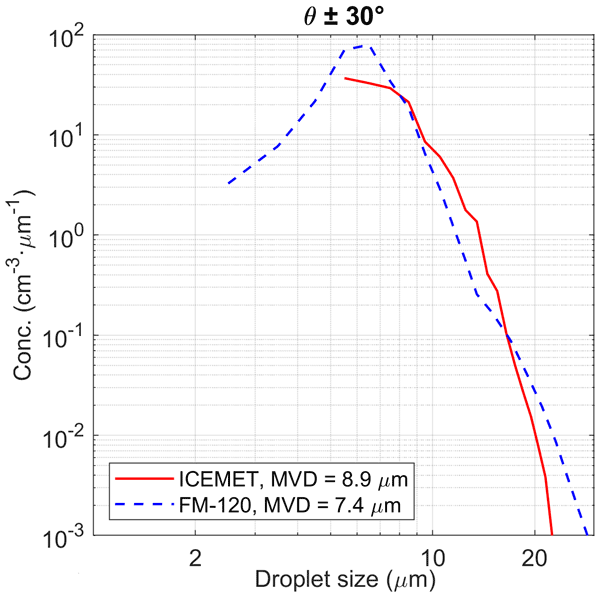
Petri Tiitta, Ari Leskinen, Ville A. Kaikkonen, Eero O. Molkoselkä, Anssi J. Mäkynen, Jorma Joutsensaari, Silvia Calderon, Sami Romakkaniemi, and Mika Komppula
Atmos. Meas. Tech., 15, 2993–3009, https://doi.org/10.5194/amt-15-2993-2022, https://doi.org/10.5194/amt-15-2993-2022, 2022
Short summary
Short summary
The novel holographic imaging instrument (ICEMET) was adapted to measure the microphysical properties of liquid clouds, and these values were compared with parallel measurements of a cloud droplet spectrometer (FM-120) and particle measurements using a twin-inlet system. When the intercomparison was carried out during isoaxial sampling, our results showed good agreement in terms of variability between the instruments. This agreement was confirmed using Mutual and Pearson correlation analyses.
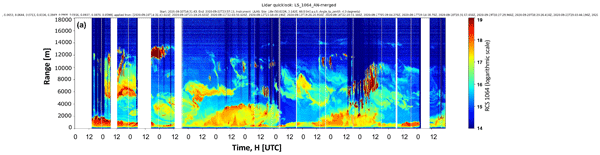
Qiaoyun Hu, Philippe Goloub, Igor Veselovskii, and Thierry Podvin
Atmos. Chem. Phys., 22, 5399–5414, https://doi.org/10.5194/acp-22-5399-2022, https://doi.org/10.5194/acp-22-5399-2022, 2022
Short summary
Short summary
Our lidar observations show that the optical properties of wildfire smoke particles are highly varied after long-range transport. The variabilities are probably relevant to vegetation type, combustion condition and the aging process, which alter the smoke particle properties, as well as their impact on cloud processes and properties. The lidar fluorescence channel provides a good opportunity for smoke characterization and heterogenous ice crystal formation.
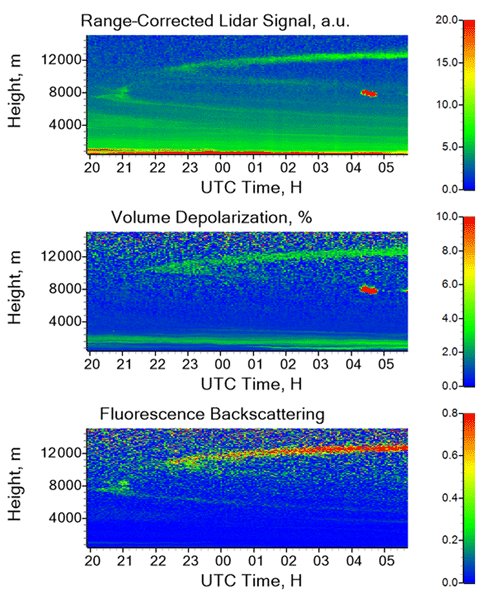
Igor Veselovskii, Qiaoyun Hu, Albert Ansmann, Philippe Goloub, Thierry Podvin, and Mikhail Korenskiy
Atmos. Chem. Phys., 22, 5209–5221, https://doi.org/10.5194/acp-22-5209-2022, https://doi.org/10.5194/acp-22-5209-2022, 2022
Short summary
Short summary
A remote sensing method based on fluorescence lidar measurements can detect and quantify the smoke content in the upper troposphere and inside cirrus clouds. Based on two case studies, we demonstrate that the fluorescence lidar technique provides the possibility to estimate the smoke surface area concentration within freshly formed cirrus layers. This value was used in a smoke ice nucleating particle parameterization scheme to predict ice crystal number concentrations in cirrus generation cells.
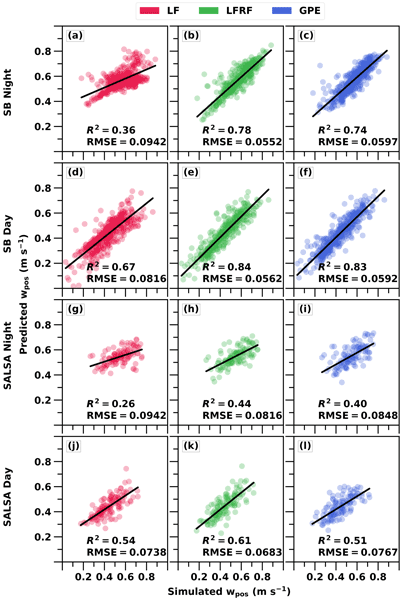
Jaakko Ahola, Tomi Raatikainen, Muzaffer Ege Alper, Jukka-Pekka Keskinen, Harri Kokkola, Antti Kukkurainen, Antti Lipponen, Jia Liu, Kalle Nordling, Antti-Ilari Partanen, Sami Romakkaniemi, Petri Räisänen, Juha Tonttila, and Hannele Korhonen
Atmos. Chem. Phys., 22, 4523–4537, https://doi.org/10.5194/acp-22-4523-2022, https://doi.org/10.5194/acp-22-4523-2022, 2022
Short summary
Short summary
Clouds are important for the climate, and cloud droplets have a significant role in cloud properties. Cloud droplets form when air rises and cools and water vapour condenses on small particles that can be natural or of anthropogenic origin. Currently, the updraft velocity, meaning how fast the air rises, is poorly represented in global climate models. In our study, we show three methods that will improve the depiction of updraft velocity and which properties are vital to updrafts.
Xiaoxia Shang, Holger Baars, Iwona S. Stachlewska, Ina Mattis, and Mika Komppula
Atmos. Chem. Phys., 22, 3931–3944, https://doi.org/10.5194/acp-22-3931-2022, https://doi.org/10.5194/acp-22-3931-2022, 2022
Short summary
Short summary
This study reports pollen observations at four lidar stations (Hohenpeißenberg, Germany; Kuopio, Finland; Leipzig, Germany; and Warsaw, Poland) during the intensive observation campaign organized in May 2020. A novel simple method for the characterization of the pure pollen is proposed, based on lidar measurements. It was applied to evaluate the pollen depolarization ratio and for the aerosol classifications.
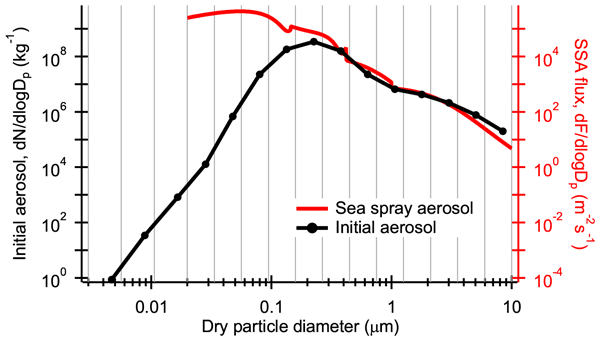
Tomi Raatikainen, Marje Prank, Jaakko Ahola, Harri Kokkola, Juha Tonttila, and Sami Romakkaniemi
Atmos. Chem. Phys., 22, 3763–3778, https://doi.org/10.5194/acp-22-3763-2022, https://doi.org/10.5194/acp-22-3763-2022, 2022
Short summary
Short summary
Mineral dust or similar ice-nucleating particles (INPs) are needed to initiate cloud droplet freezing at temperatures common in shallow clouds. In this work we examine how INPs that are released from the sea surface impact marine clouds. Our high-resolution simulations show that turbulent updraughts carry these particles effectively up to the clouds, where they initiate cloud droplet freezing. Sea surface INP emissions become more important with decreasing background dust INP concentrations.
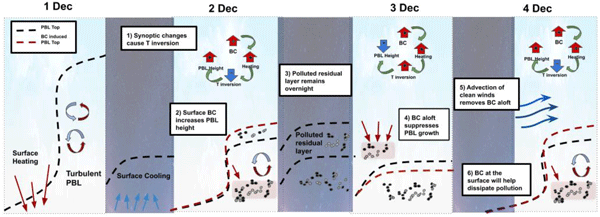
Jessica Slater, Hugh Coe, Gordon McFiggans, Juha Tonttila, and Sami Romakkaniemi
Atmos. Chem. Phys., 22, 2937–2953, https://doi.org/10.5194/acp-22-2937-2022, https://doi.org/10.5194/acp-22-2937-2022, 2022
Short summary
Short summary
This paper shows the specific impact of black carbon (BC) on the aerosol–planetary boundary layer (PBL) feedback and its influence on a Beijing haze episode. Overall, this paper shows that strong temperature inversions prevent BC heating within the PBL from significantly increasing PBL height, while BC above the PBL suppresses PBL development significantly through the day. From this we suggest a method by which both locally and regionally emitted BC may impact urban pollution episodes.
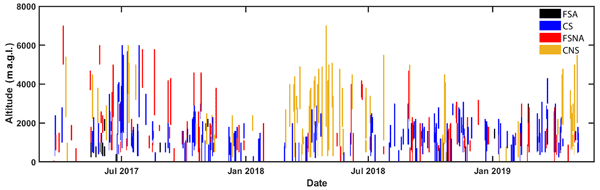
Birgit Heese, Athena Augusta Floutsi, Holger Baars, Dietrich Althausen, Julian Hofer, Alina Herzog, Silke Mewes, Martin Radenz, and Yoav Y. Schechner
Atmos. Chem. Phys., 22, 1633–1648, https://doi.org/10.5194/acp-22-1633-2022, https://doi.org/10.5194/acp-22-1633-2022, 2022
Short summary
Short summary
The aerosol distribution over Haifa, Israel, was measured for 2 years by a laser-based vertically resolved measurement technique called lidar. From these data, the aerosol types and their percentages of the observed aerosol mixtures were identified in terms of their size and shape. We found mostly desert dust from the surrounding deserts and sea salt from the close-by Mediterranean Sea. But aerosols from anthropogenic and industrial pollution from local and far away sources were also detected.
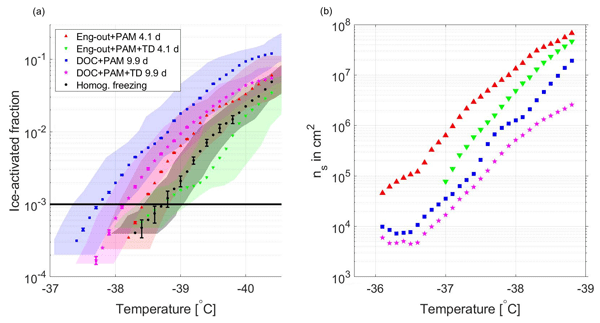
Kimmo Korhonen, Thomas Bjerring Kristensen, John Falk, Vilhelm B. Malmborg, Axel Eriksson, Louise Gren, Maja Novakovic, Sam Shamun, Panu Karjalainen, Lassi Markkula, Joakim Pagels, Birgitta Svenningsson, Martin Tunér, Mika Komppula, Ari Laaksonen, and Annele Virtanen
Atmos. Chem. Phys., 22, 1615–1631, https://doi.org/10.5194/acp-22-1615-2022, https://doi.org/10.5194/acp-22-1615-2022, 2022
Short summary
Short summary
We investigated the ice-nucleating abilities of particulate emissions from a modern diesel engine using the portable ice-nuclei counter SPIN, a continuous-flow diffusion chamber instrument. Three different fuels were studied without blending, including fossil diesel and two renewable fuels, testing different emission aftertreatment systems and photochemical aging. We found that the diesel emissions were inefficient ice nuclei, and aging had no or little effect on their ice-nucleating abilities.
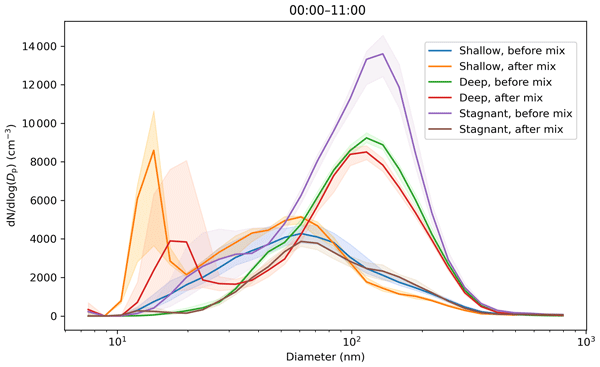
Jutta Kesti, John Backman, Ewan J. O'Connor, Anne Hirsikko, Eija Asmi, Minna Aurela, Ulla Makkonen, Maria Filioglou, Mika Komppula, Hannele Korhonen, and Heikki Lihavainen
Atmos. Chem. Phys., 22, 481–503, https://doi.org/10.5194/acp-22-481-2022, https://doi.org/10.5194/acp-22-481-2022, 2022
Short summary
Short summary
In this study we combined aerosol particle measurements at the surface with a scanning Doppler lidar providing vertical profiles of the atmosphere to study the effect of different boundary layer conditions on aerosol particle properties in the understudied Arabian Peninsula region. The instrumentation used in this study enabled us to identify periods when pollution from remote sources was mixed down to the surface and initiated new particle formation in the growing boundary layer.
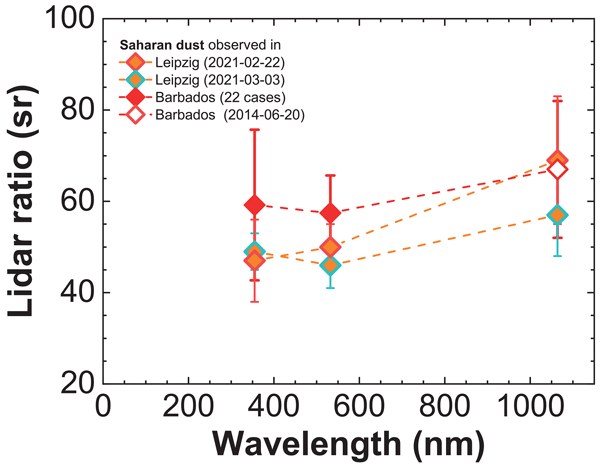
Moritz Haarig, Albert Ansmann, Ronny Engelmann, Holger Baars, Carlos Toledano, Benjamin Torres, Dietrich Althausen, Martin Radenz, and Ulla Wandinger
Atmos. Chem. Phys., 22, 355–369, https://doi.org/10.5194/acp-22-355-2022, https://doi.org/10.5194/acp-22-355-2022, 2022
Short summary
Short summary
The irregular shape of dust particles makes it difficult to treat them correctly in optical models. Atmospheric measurements of dust optical properties are therefore of great importance. The present study increases the space of observed parameters from 355 and 532 nm towards 1064 nm, which is of special importance for large dust particles. The lidar ratio influenced by mineralogy and the depolarization ratio influenced by shape are measured for the first time at all three wavelengths.
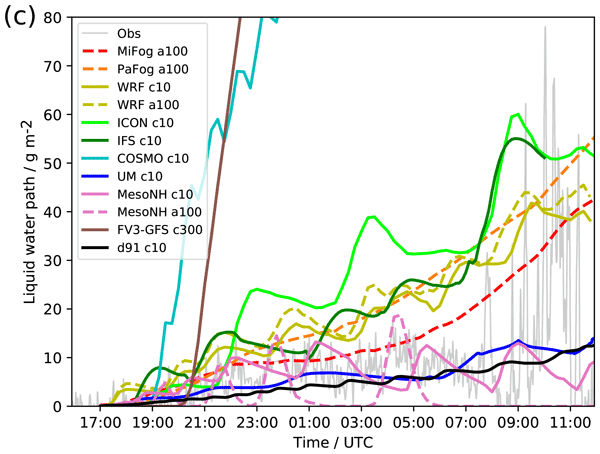
Ian Boutle, Wayne Angevine, Jian-Wen Bao, Thierry Bergot, Ritthik Bhattacharya, Andreas Bott, Leo Ducongé, Richard Forbes, Tobias Goecke, Evelyn Grell, Adrian Hill, Adele L. Igel, Innocent Kudzotsa, Christine Lac, Bjorn Maronga, Sami Romakkaniemi, Juerg Schmidli, Johannes Schwenkel, Gert-Jan Steeneveld, and Benoît Vié
Atmos. Chem. Phys., 22, 319–333, https://doi.org/10.5194/acp-22-319-2022, https://doi.org/10.5194/acp-22-319-2022, 2022
Short summary
Short summary
Fog forecasting is one of the biggest problems for numerical weather prediction. By comparing many models used for fog forecasting with others used for fog research, we hoped to help guide forecast improvements. We show some key processes that, if improved, will help improve fog forecasting, such as how water is deposited on the ground. We also showed that research models were not themselves a suitable baseline for comparison, and we discuss what future observations are required to improve them.
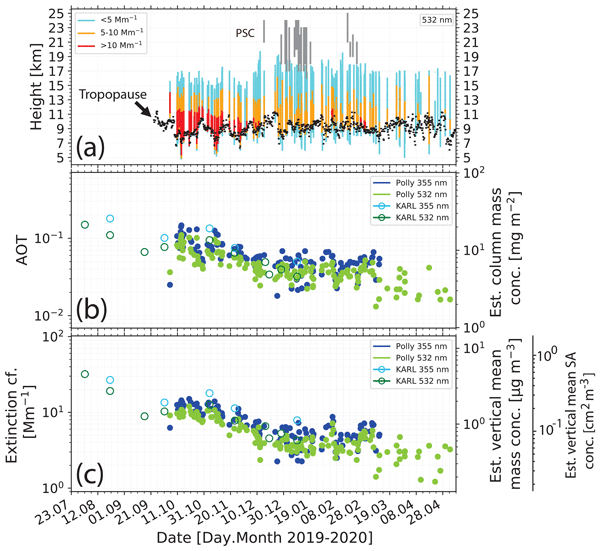
Kevin Ohneiser, Albert Ansmann, Alexandra Chudnovsky, Ronny Engelmann, Christoph Ritter, Igor Veselovskii, Holger Baars, Henriette Gebauer, Hannes Griesche, Martin Radenz, Julian Hofer, Dietrich Althausen, Sandro Dahlke, and Marion Maturilli
Atmos. Chem. Phys., 21, 15783–15808, https://doi.org/10.5194/acp-21-15783-2021, https://doi.org/10.5194/acp-21-15783-2021, 2021
Short summary
Short summary
The highlight of the lidar measurements during the 1-year MOSAiC (Multidisciplinary drifting Observatory for the Study of Arctic Climate) expedition of the German icebreaker Polarstern (October 2019–October 2020) was the detection of a persistent, 10 km deep Siberian wildfire smoke layer in the upper troposphere and lower stratosphere (UTLS) from about 7–8 km to 17–18 km height that could potentially have impacted the record-breaking ozone depletion over the Arctic in the spring of 2020.
Cited articles
Adebiyi, A., Kok, J. F., Murray, B. J., Ryder, C. L., Stuut, J.-B. W., Kahn, R. A., Knippertz, P., Formenti, P., Mahowald, N. M., Pérez García-Pando, C., Klose, M., Ansmann, A., Samset, B. H., Ito, A., Balkanski, Y., Di Biagio, C., Romanias, M. N., Huang, Y., and Meng, J.: A review of coarse mineral dust in the Earth system, Aeolian Res., 60, 100849, https://doi.org/10.1016/j.aeolia.2022.100849, 2023. a
Ångström, A.: The parameters of atmospheric turbidity, Tellus, 16, 64–75, https://doi.org/10.3402/tellusa.v16i1.8885, 1964. a
Ansmann, A., Bösenberg, J., Chaikovsky, A., Comerón, A., Eckhardt, S., Eixmann, R., Freudenthaler, V., Ginoux, P., Komguem, L., Linné, H., Mçrquez, M. Á. L., Matthias, V., Mattis, I., Mitev, V., Müller, D., Music, S., Nickovic, S., Pelon, J., Sauvage, L., Sobolewsky, P., Srivastava, M. K., Stohl, A., Torres, O., Vaughan, G., Wandinger, U., and Wiegner, M.: Long-range transport of Saharan dust to northern Europe: The 11–16 October 2001 outbreak observed with EARLINET, J. Geophys. Res.-Atmos., 108, https://doi.org/10.1029/2003JD003757, 2003. a
Ansmann, A., Tesche, M., Seifert, P., Groß, S., Freudenthaler, V., Apituley, A., Wilson, K. M., Serikov, I., Linné, H., Heinold, B., Hiebsch, A., Schnell, F., Schmidt, J., Mattis, I., Wandinger, U., and Wiegner, M.: Ash and fine-mode particle mass profiles from EARLINET-AERONET observations over central Europe after the eruptions of the Eyjafjallajökull volcano in 2010, J. Geophys. Res.-Atmos., 116, https://doi.org/10.1029/2010JD015567, 2011. a, b
Ansmann, A., Seifert, P., Tesche, M., and Wandinger, U.: Profiling of fine and coarse particle mass: case studies of Saharan dust and Eyjafjallajökull/Grimsvötn volcanic plumes, Atmos. Chem. Phys., 12, 9399–9415, https://doi.org/10.5194/acp-12-9399-2012, 2012. a, b
Ansmann, A., Mamouri, R.-E., Hofer, J., Baars, H., Althausen, D., and Abdullaev, S. F.: Dust mass, cloud condensation nuclei, and ice-nucleating particle profiling with polarization lidar: updated POLIPHON conversion factors from global AERONET analysis, Atmos. Meas. Tech., 12, 4849–4865, https://doi.org/10.5194/amt-12-4849-2019, 2019. a
Baars, H., Ansmann, A., Althausen, D., Engelmann, R., Heese, B., Müller, D., Artaxo, P., Paixao, M., Pauliquevis, T., and Souza, R.: Aerosol profiling with lidar in the Amazon Basin during the wet and dry season, J. Geophys. Res.-Atmos., 117, https://doi.org/10.1029/2012JD018338, 2012. a
Baars, H., Kanitz, T., Engelmann, R., Althausen, D., Heese, B., Komppula, M., Preißler, J., Tesche, M., Ansmann, A., Wandinger, U., Lim, J.-H., Ahn, J. Y., Stachlewska, I. S., Amiridis, V., Marinou, E., Seifert, P., Hofer, J., Skupin, A., Schneider, F., Bohlmann, S., Foth, A., Bley, S., Pfüller, A., Giannakaki, E., Lihavainen, H., Viisanen, Y., Hooda, R. K., Pereira, S. N., Bortoli, D., Wagner, F., Mattis, I., Janicka, L., Markowicz, K. M., Achtert, P., Artaxo, P., Pauliquevis, T., Souza, R. A. F., Sharma, V. P., van Zyl, P. G., Beukes, J. P., Sun, J., Rohwer, E. G., Deng, R., Mamouri, R.-E., and Zamorano, F.: An overview of the first decade of PollyNET: an emerging network of automated Raman-polarization lidars for continuous aerosol profiling, Atmos. Chem. Phys., 16, 5111–5137, https://doi.org/10.5194/acp-16-5111-2016, 2016. a
Bohlmann, S., Shang, X., Vakkari, V., Giannakaki, E., Leskinen, A., Lehtinen, K. E. J., Pätsi, S., and Komppula, M.: Lidar depolarization ratio of atmospheric pollen at multiple wavelengths, Atmos. Chem. Phys., 21, 7083–7097, https://doi.org/10.5194/acp-21-7083-2021, 2021. a
Burton, S. P., Vaughan, M. A., Ferrare, R. A., and Hostetler, C. A.: Separating mixtures of aerosol types in airborne High Spectral Resolution Lidar data, Atmos. Meas. Tech., 7, 419–436, https://doi.org/10.5194/amt-7-419-2014, 2014. a
Burton, S. P., Hair, J. W., Kahnert, M., Ferrare, R. A., Hostetler, C. A., Cook, A. L., Harper, D. B., Berkoff, T. A., Seaman, S. T., Collins, J. E., Fenn, M. A., and Rogers, R. R.: Observations of the spectral dependence of linear particle depolarization ratio of aerosols using NASA Langley airborne High Spectral Resolution Lidar, Atmos. Chem. Phys., 15, 13453–13473, https://doi.org/10.5194/acp-15-13453-2015, 2015. a, b, c
Córdoba-Jabonero, C., Sicard, M., Ansmann, A., del Águila, A., and Baars, H.: Separation of the optical and mass features of particle components in different aerosol mixtures by using POLIPHON retrievals in synergy with continuous polarized Micro-Pulse Lidar (P-MPL) measurements, Atmos. Meas. Tech., 11, 4775–4795, https://doi.org/10.5194/amt-11-4775-2018, 2018. a
David, G., Thomas, B., Nousiainen, T., Miffre, A., and Rairoux, P.: Retrieving simulated volcanic, desert dust and sea-salt particle properties from two/three-component particle mixtures using UV-VIS polarization lidar and T matrix, Atmos. Chem. Phys., 13, 6757–6776, https://doi.org/10.5194/acp-13-6757-2013, 2013. a
Denjean, C., Cassola, F., Mazzino, A., Triquet, S., Chevaillier, S., Grand, N., Bourrianne, T., Momboisse, G., Sellegri, K., Schwarzenbock, A., Freney, E., Mallet, M., and Formenti, P.: Size distribution and optical properties of mineral dust aerosols transported in the western Mediterranean, Atmos. Chem. Phys., 16, 1081–1104, https://doi.org/10.5194/acp-16-1081-2016, 2016. a
Dieudonné, E., Chazette, P., Marnas, F., Totems, J., and Shang, X.: Lidar profiling of aerosol optical properties from Paris to Lake Baikal (Siberia), Atmos. Chem. Phys., 15, 5007–5026, https://doi.org/10.5194/acp-15-5007-2015, 2015. a
Donovan, D. P., van Zadelhoff, G.-J., and Wang, P.: The EarthCARE lidar cloud and aerosol profile processor (A-PRO): the A-AER, A-EBD, A-TC, and A-ICE products, Atmos. Meas. Tech., 17, 5301–5340, https://doi.org/10.5194/amt-17-5301-2024, 2024. a
Ferrare, R., Hair, J., Hostetler, C., Shingler, T., Burton, S. P., Fenn, M., Clayton, M., Scarino, A. J., Harper, D., Seaman, S., Cook, A., Crosbie, E., Winstead, E., Ziemba, L., Thornhill, L., Robinson, C., Moore, R., Vaughan, M., Sorooshian, A., Schlosser, J. S., Liu, H., Zhang, B., Diskin, G., DiGangi, J., Nowak, J., Choi, Y., Zuidema, P., and Chellappan, S.: Airborne HSRL-2 measurements of elevated aerosol depolarization associated with non-spherical sea salt, Frontiers in Remote Sensing, 4, https://doi.org/10.3389/frsen.2023.1143944, 2023. a
Filioglou, M., Giannakaki, E., Backman, J., Kesti, J., Hirsikko, A., Engelmann, R., O'Connor, E., Leskinen, J. T. T., Shang, X., Korhonen, H., Lihavainen, H., Romakkaniemi, S., and Komppula, M.: Optical and geometrical aerosol particle properties over the United Arab Emirates, Atmos. Chem. Phys., 20, 8909–8922, https://doi.org/10.5194/acp-20-8909-2020, 2020. a, b, c, d
Filioglou, M., Leskinen, A., Vakkari, V., O'Connor, E., Tuononen, M., Tuominen, P., Laukkanen, S., Toiviainen, L., Saarto, A., Shang, X., Tiitta, P., and Komppula, M.: Spectral dependence of birch and pine pollen optical properties using a synergy of lidar instruments, Atmos. Chem. Phys., 23, 9009–9021, https://doi.org/10.5194/acp-23-9009-2023, 2023. a, b
Floutsi, A. A., Baars, H., Engelmann, R., Althausen, D., Ansmann, A., Bohlmann, S., Heese, B., Hofer, J., Kanitz, T., Haarig, M., Ohneiser, K., Radenz, M., Seifert, P., Skupin, A., Yin, Z., Abdullaev, S. F., Komppula, M., Filioglou, M., Giannakaki, E., Stachlewska, I. S., Janicka, L., Bortoli, D., Marinou, E., Amiridis, V., Gialitaki, A., Mamouri, R.-E., Barja, B., and Wandinger, U.: DeLiAn – a growing collection of depolarization ratio, lidar ratio and Ångström exponent for different aerosol types and mixtures from ground-based lidar observations, Atmos. Meas. Tech., 16, 2353–2379, https://doi.org/10.5194/amt-16-2353-2023, 2023. a
Freudenthaler, V., Esselborn, M., Wiegner, M., Heese, B., Tesche, M., Ansmann, A., Müller, D., Althausen, D., Wirth, M., Fix, A., Ehret, G., Knippertz, P., Toledano, C., Gasteiger, J., Garhammer, M., and Seefeldner, M.: Depolarization ratio profiling at several wavelengths in pure Saharan dust during SAMUM 2006, Tellus B, 61, https://doi.org/10.1111/j.1600-0889.2008.00396.x, 2009. a, b, c, d, e
Gebauer, H., Floutsi, A. A., Haarig, M., Radenz, M., Engelmann, R., Althausen, D., Skupin, A., Ansmann, A., Zenk, C., and Baars, H.: Tropospheric sulfate from Cumbre Vieja (La Palma) observed over Cabo Verde contrasted with background conditions: a lidar case study of aerosol extinction, backscatter, depolarization and lidar ratio profiles at 355, 532 and 1064 nm, Atmos. Chem. Phys., 24, 5047–5067, https://doi.org/10.5194/acp-24-5047-2024, 2024. a
Groß, S., Tesche, M., Freudenthaler, V., Toledano, C., Wiegner, M., Ansmann, A., Althausen, D., and Seefeldner, M.: Characterization of Saharan dust, marine aerosols and mixtures of biomass-burning aerosols and dust by means of multi-wavelength depolarization and Raman lidar measurements during SAMUM 2, Tellus B, 63, https://doi.org/10.1111/j.1600-0889.2011.00556.x, 2011. a, b
Groß, S., Freudenthaler, V., Wiegner, M., Gasteiger, J., Geiß, A., and Schnell, F.: Dual-wavelength linear depolarization ratio of volcanic aerosols: Lidar measurements of the Eyjafjallajökull plume over Maisach, Germany, Atmos. Environ., 48, 85–96, https://doi.org/10.1016/j.atmosenv.2011.06.017, 2012. a
Groß, S., Freudenthaler, V., Schepanski, K., Toledano, C., Schäfler, A., Ansmann, A., and Weinzierl, B.: Optical properties of long-range transported Saharan dust over Barbados as measured by dual-wavelength depolarization Raman lidar measurements, Atmos. Chem. Phys., 15, 11067–11080, https://doi.org/10.5194/acp-15-11067-2015, 2015. a
Haarig, M., Ansmann, A., Althausen, D., Klepel, A., Groß, S., Freudenthaler, V., Toledano, C., Mamouri, R.-E., Farrell, D. A., Prescod, D. A., Marinou, E., Burton, S. P., Gasteiger, J., Engelmann, R., and Baars, H.: Triple-wavelength depolarization-ratio profiling of Saharan dust over Barbados during SALTRACE in 2013 and 2014, Atmos. Chem. Phys., 17, 10767–10794, https://doi.org/10.5194/acp-17-10767-2017, 2017a. a, b, c, d, e, f
Haarig, M., Ansmann, A., Gasteiger, J., Kandler, K., Althausen, D., Baars, H., Radenz, M., and Farrell, D. A.: Dry versus wet marine particle optical properties: RH dependence of depolarization ratio, backscatter, and extinction from multiwavelength lidar measurements during SALTRACE, Atmos. Chem. Phys., 17, 14199–14217, https://doi.org/10.5194/acp-17-14199-2017, 2017b. a
Haarig, M., Ansmann, A., Baars, H., Jimenez, C., Veselovskii, I., Engelmann, R., and Althausen, D.: Depolarization and lidar ratios at 355, 532, and 1064 nm and microphysical properties of aged tropospheric and stratospheric Canadian wildfire smoke, Atmos. Chem. Phys., 18, 11847–11861, https://doi.org/10.5194/acp-18-11847-2018, 2018. a
Haarig, M., Walser, A., Ansmann, A., Dollner, M., Althausen, D., Sauer, D., Farrell, D., and Weinzierl, B.: Profiles of cloud condensation nuclei, dust mass concentration, and ice-nucleating-particle-relevant aerosol properties in the Saharan Air Layer over Barbados from polarization lidar and airborne in situ measurements, Atmos. Chem. Phys., 19, 13773–13788, https://doi.org/10.5194/acp-19-13773-2019, 2019. a
Haarig, M., Ansmann, A., Engelmann, R., Baars, H., Toledano, C., Torres, B., Althausen, D., Radenz, M., and Wandinger, U.: First triple-wavelength lidar observations of depolarization and extinction-to-backscatter ratios of Saharan dust, Atmos. Chem. Phys., 22, 355–369, https://doi.org/10.5194/acp-22-355-2022, 2022. a, b, c, d, e
Haarig, M., Engelmann, R., Baars, H., Gast, B., Althausen, D., and Ansmann, A.: Discussion of the spectral slope of the lidar ratio between 355 and 1064 nm from multiwavelength Raman lidar observations, Atmos. Chem. Phys., 25, 7741–7763, https://doi.org/10.5194/acp-25-7741-2025, 2025. a
Hofer, J., Althausen, D., Abdullaev, S. F., Makhmudov, A. N., Nazarov, B. I., Schettler, G., Engelmann, R., Baars, H., Fomba, K. W., Müller, K., Heinold, B., Kandler, K., and Ansmann, A.: Long-term profiling of mineral dust and pollution aerosol with multiwavelength polarization Raman lidar at the Central Asian site of Dushanbe, Tajikistan: case studies, Atmos. Chem. Phys., 17, 14559–14577, https://doi.org/10.5194/acp-17-14559-2017, 2017. a, b, c
Hofer, J., Ansmann, A., Althausen, D., Engelmann, R., Baars, H., Fomba, K. W., Wandinger, U., Abdullaev, S. F., and Makhmudov, A. N.: Optical properties of Central Asian aerosol relevant for spaceborne lidar applications and aerosol typing at 355 and 532 nm, Atmos. Chem. Phys., 20, 9265–9280, https://doi.org/10.5194/acp-20-9265-2020, 2020. a, b, c, d
Hu, Q., Goloub, P., Veselovskii, I., Bravo-Aranda, J.-A., Popovici, I. E., Podvin, T., Haeffelin, M., Lopatin, A., Dubovik, O., Pietras, C., Huang, X., Torres, B., and Chen, C.: Long-range-transported Canadian smoke plumes in the lower stratosphere over northern France, Atmos. Chem. Phys., 19, 1173–1193, https://doi.org/10.5194/acp-19-1173-2019, 2019. a
Hu, Q., Wang, H., Goloub, P., Li, Z., Veselovskii, I., Podvin, T., Li, K., and Korenskiy, M.: The characterization of Taklamakan dust properties using a multiwavelength Raman polarization lidar in Kashi, China, Atmos. Chem. Phys., 20, 13817–13834, https://doi.org/10.5194/acp-20-13817-2020, 2020. a, b, c
Järvinen, E., Kemppinen, O., Nousiainen, T., Kociok, T., Möhler, O., Leisner, T., and Schnaiter, M.: Laboratory investigations of mineral dust near-backscattering depolarization ratios, J. Quant. Spectrosc. Ra., 178, 192–208, https://doi.org/10.1016/j.jqsrt.2016.02.003, 2016. a, b, c
Mahowald, N., Albani, S., Kok, J. F., Engelstaeder, S., Scanza, R., Ward, D. S., and Flanner, M. G.: The size distribution of desert dust aerosols and its impact on the Earth system, Aeolian Res., 15, 53–71, https://doi.org/10.1016/j.aeolia.2013.09.002, 2014. a
Mallios, S. A., Daskalopoulou, V., and Amiridis, V.: Orientation of non spherical prolate dust particles moving vertically in the Earth's atmosphere, J. Aerosol Sci., 151, 105657, https://doi.org/10.1016/j.jaerosci.2020.105657, 2021. a
Mamali, D., Marinou, E., Sciare, J., Pikridas, M., Kokkalis, P., Kottas, M., Binietoglou, I., Tsekeri, A., Keleshis, C., Engelmann, R., Baars, H., Ansmann, A., Amiridis, V., Russchenberg, H., and Biskos, G.: Vertical profiles of aerosol mass concentration derived by unmanned airborne in situ and remote sensing instruments during dust events, Atmos. Meas. Tech., 11, 2897–2910, https://doi.org/10.5194/amt-11-2897-2018, 2018. a
Mamouri, R. E. and Ansmann, A.: Fine and coarse dust separation with polarization lidar, Atmos. Meas. Tech., 7, 3717–3735, https://doi.org/10.5194/amt-7-3717-2014, 2014. a, b, c, d
Mamouri, R.-E. and Ansmann, A.: Potential of polarization lidar to provide profiles of CCN- and INP-relevant aerosol parameters, Atmos. Chem. Phys., 16, 5905–5931, https://doi.org/10.5194/acp-16-5905-2016, 2016. a, b
Mamouri, R.-E. and Ansmann, A.: Potential of polarization/Raman lidar to separate fine dust, coarse dust, maritime, and anthropogenic aerosol profiles, Atmos. Meas. Tech., 10, 3403–3427, https://doi.org/10.5194/amt-10-3403-2017, 2017. a, b, c, d
Marenco, F. and Hogan, R. J.: Determining the contribution of volcanic ash and boundary layer aerosol in backscatter lidar returns: A three-component atmosphere approach, J. Geophys. Res.-Atmos., 116, https://doi.org/10.1029/2010JD015415, 2011. a
Marinou, E., Amiridis, V., Binietoglou, I., Tsikerdekis, A., Solomos, S., Proestakis, E., Konsta, D., Papagiannopoulos, N., Tsekeri, A., Vlastou, G., Zanis, P., Balis, D., Wandinger, U., and Ansmann, A.: Three-dimensional evolution of Saharan dust transport towards Europe based on a 9-year EARLINET-optimized CALIPSO dataset, Atmos. Chem. Phys., 17, 5893–5919, https://doi.org/10.5194/acp-17-5893-2017, 2017. a
Miffre, A., David, G., Thomas, B., Rairoux, P., Fjaeraa, A., Kristiansen, N., and Stohl, A.: Volcanic aerosol optical properties and phase partitioning behavior after long-range advection characterized by UV-Lidar measurements, Atmos. Environ., 48, 76–84, https://doi.org/10.1016/j.atmosenv.2011.03.057, 2012. a
Miffre, A., Mehri, T., Francis, M., and Rairoux, P.: UV–VIS depolarization from Arizona Test Dust particles at exact backscattering angle, J. Quant. Spectrosc. Ra., 169, 79–90, https://doi.org/10.1016/j.jqsrt.2015.09.016, 2016. a
Miffre, A., Cholleton, D., Noël, C., and Rairoux, P.: Investigating the dependence of mineral dust depolarization on complex refractive index and size with a laboratory polarimeter at 180.0° lidar backscattering angle, Atmos. Meas. Tech., 16, 403–417, https://doi.org/10.5194/amt-16-403-2023, 2023. a, b
Murayama, T., Müller, D., Wada, K., Shimizu, A., Sekiguchi, M., and Tsukamoto, T.: Characterization of Asian dust and Siberian smoke with multi-wavelength Raman lidar over Tokyo, Japan in spring 2003, Geophys. Res. Lett., 31, https://doi.org/10.1029/2004GL021105, 2004. a
Nisantzi, A., Mamouri, R. E., Ansmann, A., and Hadjimitsis, D.: Injection of mineral dust into the free troposphere during fire events observed with polarization lidar at Limassol, Cyprus, Atmos. Chem. Phys., 14, 12155–12165, https://doi.org/10.5194/acp-14-12155-2014, 2014. a
Nishizawa, T., Okamoto, H., Sugimoto, N., Matsui, I., Shimizu, A., and Aoki, K.: An algorithm that retrieves aerosol properties from dual-wavelength polarized lidar measurements, J. Geophys. Res.-Atmos., 112, https://doi.org/10.1029/2006JD007435, 2007. a
O'Sullivan, D., Marenco, F., Ryder, C. L., Pradhan, Y., Kipling, Z., Johnson, B., Benedetti, A., Brooks, M., McGill, M., Yorks, J., and Selmer, P.: Models transport Saharan dust too low in the atmosphere: a comparison of the MetUM and CAMS forecasts with observations, Atmos. Chem. Phys., 20, 12955–12982, https://doi.org/10.5194/acp-20-12955-2020, 2020. a
Pappalardo, G., Amodeo, A., Apituley, A., Comeron, A., Freudenthaler, V., Linné, H., Ansmann, A., Bösenberg, J., D'Amico, G., Mattis, I., Mona, L., Wandinger, U., Amiridis, V., Alados-Arboledas, L., Nicolae, D., and Wiegner, M.: EARLINET: towards an advanced sustainable European aerosol lidar network, Atmos. Meas. Tech., 7, 2389–2409, https://doi.org/10.5194/amt-7-2389-2014, 2014. a
Pearson, G., Davies, F., and Collier, C.: An Analysis of the Performance of the UFAM Pulsed Doppler Lidar for Observing the Boundary Layer, J. Atmos. Ocean. Tech., 26, 240–250, https://doi.org/10.1175/2008JTECHA1128.1, 2009. a
Proestakis, E., Amiridis, V., Marinou, E., Georgoulias, A. K., Solomos, S., Kazadzis, S., Chimot, J., Che, H., Alexandri, G., Binietoglou, I., Daskalopoulou, V., Kourtidis, K. A., de Leeuw, G., and van der A, R. J.: Nine-year spatial and temporal evolution of desert dust aerosols over South and East Asia as revealed by CALIOP, Atmos. Chem. Phys., 18, 1337–1362, https://doi.org/10.5194/acp-18-1337-2018, 2018. a
Proestakis, E., Gkikas, A., Georgiou, T., Kampouri, A., Drakaki, E., Ryder, C. L., Marenco, F., Marinou, E., and Amiridis, V.: A near-global multiyear climate data record of the fine-mode and coarse-mode components of atmospheric pure dust, Atmos. Meas. Tech., 17, 3625–3667, https://doi.org/10.5194/amt-17-3625-2024, 2024. a, b
Ryder, C. L., Marenco, F., Brooke, J. K., Estelles, V., Cotton, R., Formenti, P., McQuaid, J. B., Price, H. C., Liu, D., Ausset, P., Rosenberg, P. D., Taylor, J. W., Choularton, T., Bower, K., Coe, H., Gallagher, M., Crosier, J., Lloyd, G., Highwood, E. J., and Murray, B. J.: Coarse-mode mineral dust size distributions, composition and optical properties from AER-D aircraft measurements over the tropical eastern Atlantic, Atmos. Chem. Phys., 18, 17225–17257, https://doi.org/10.5194/acp-18-17225-2018, 2018. a
Ryder, C. L., Highwood, E. J., Walser, A., Seibert, P., Philipp, A., and Weinzierl, B.: Coarse and giant particles are ubiquitous in Saharan dust export regions and are radiatively significant over the Sahara, Atmos. Chem. Phys., 19, 15353–15376, https://doi.org/10.5194/acp-19-15353-2019, 2019. a, b
Sakai, T., Nagai, T., Zaizen, Y., and Mano, Y.: Backscattering linear depolarization ratio measurements of mineral, sea-salt, and ammonium sulfate particles simulated in a laboratory chamber, Appl. Optics, 49, 4441–4449, https://doi.org/10.1364/AO.49.004441, 2010. a, b, c
Shang, X.: Decomposition of three aerosol types, Version v2.0, Zenodo [code], https://doi.org/10.5281/zenodo.18232325, 2026. a
Shang, X., Giannakaki, E., Bohlmann, S., Filioglou, M., Saarto, A., Ruuskanen, A., Leskinen, A., Romakkaniemi, S., and Komppula, M.: Optical characterization of pure pollen types using a multi-wavelength Raman polarization lidar, Atmos. Chem. Phys., 20, 15323–15339, https://doi.org/10.5194/acp-20-15323-2020, 2020. a, b
Shang, X., Baars, H., Stachlewska, I. S., Mattis, I., and Komppula, M.: Pollen observations at four EARLINET stations during the ACTRIS-COVID-19 campaign, Atmos. Chem. Phys., 22, 3931–3944, https://doi.org/10.5194/acp-22-3931-2022, 2022. a
Shimizu, A., Sugimoto, N., Matsui, I., Arao, K., Uno, I., Murayama, T., Kagawa, N., Aoki, K., Uchiyama, A., and Yamazaki, A.: Continuous observations of Asian dust and other aerosols by polarization lidars in China and Japan during ACE-Asia, J. Geophys. Res.-Atmos., 109, https://doi.org/10.1029/2002JD003253, d19S17, 2004. a, b, c
Sugimoto, N. and Lee, C. H.: Characteristics of dust aerosols inferred from lidar depolarization measurements at two wavelengths, Appl. Optics, 45, 7468–7474, https://doi.org/10.1364/AO.45.007468, 2006. a
Szczepanik, D. M., Stachlewska, I. S., Tetoni, E., and Althausen, D.: Properties of Saharan Dust Versus Local Urban Dust – A Case Study, Earth Space Sci., 8, e2021EA001816, https://doi.org/10.1029/2021EA001816, 2021. a
Tesche, M., Ansmann, A., Müller, D., Althausen, D., Engelmann, R., Freudenthaler, V., and Groß, S.: Vertically resolved separation of dust and smoke over Cape Verde using multiwavelength Raman and polarization lidars during Saharan Mineral Dust Experiment 2008, J. Geophys. Res.-Atmos., 114, https://doi.org/10.1029/2009JD011862, 2009. a, b, c, d, e, f, g, h
Tesche, M., Müller, D., Gross, S., Ansmann, A., Althausen, D., Freudenthaler, V., Weinzierl, B., Veira, A., and Petzold, A.: Optical and microphysical properties of smoke over Cape Verde inferred from multiwavelength lidar measurements, Tellus B, 63, https://doi.org/10.1111/j.1600-0889.2011.00549.x, 2011. a
van der Does, M., Knippertz, P., Zschenderlein, P., Harrison, R. G., and Stuut, J.-B. W.: The mysterious long-range transport of giant mineral dust particles, Science Advances, 4, eaau2768, https://doi.org/10.1126/sciadv.aau2768, 2018. a, b
Veselovskii, I., Goloub, P., Podvin, T., Bovchaliuk, V., Derimian, Y., Augustin, P., Fourmentin, M., Tanre, D., Korenskiy, M., Whiteman, D. N., Diallo, A., Ndiaye, T., Kolgotin, A., and Dubovik, O.: Retrieval of optical and physical properties of African dust from multiwavelength Raman lidar measurements during the SHADOW campaign in Senegal, Atmos. Chem. Phys., 16, 7013–7028, https://doi.org/10.5194/acp-16-7013-2016, 2016. a, b
Veselovskii, I., Hu, Q., Goloub, P., Podvin, T., Barchunov, B., and Korenskii, M.: Combining Mie–Raman and fluorescence observations: a step forward in aerosol classification with lidar technology, Atmos. Meas. Tech., 15, 4881–4900, https://doi.org/10.5194/amt-15-4881-2022, 2022. a
Welton, E. J., Campbell, J. R., Spinhirne, J. D., and Scott III, V. S.: Global monitoring of clouds and aerosols using a network of micropulse lidar systems, in: Lidar Remote Sensing for Industry and Environment Monitoring, edited by: Singh, U. N., Asai, K., Ogawa, T., Singh, U. N., Itabe, T., and Sugimoto, N., International Society for Optics and Photonics, SPIE, 4153, 151–158, https://doi.org/10.1117/12.417040, 2001. a
Winker, D. M., Vaughan, M. A., Omar, A., Hu, Y., Powell, K. A., Liu, Z., Hunt, W. H., and Young, S. A.: Overview of the CALIPSO Mission and CALIOP Data Processing Algorithms, J. Atmos. Ocean. Tech., 26, 2310–2323, https://doi.org/10.1175/2009JTECHA1281.1, 2009. a
Short summary
We developed a simple method to identify different types of airborne particles using laser-based measurements. It can distinguish coarse dust, fine dust, and non-dust aerosols. Tests with real data from regions affected by desert dust show the method works well. This helps improve understanding of how particles are distributed in the atmosphere, which is important for air quality and climate studies.
We developed a simple method to identify different types of airborne particles using laser-based...


