
Articles | Volume 19, issue 2
https://doi.org/10.5194/amt-19-729-2026
© Author(s) 2026. This work is distributed under
the Creative Commons Attribution 4.0 License.
the Creative Commons Attribution 4.0 License.
Special issue:
https://doi.org/10.5194/amt-19-729-2026
© Author(s) 2026. This work is distributed under
the Creative Commons Attribution 4.0 License.
the Creative Commons Attribution 4.0 License.
Research article
| 
29 Jan 2026
Research article |
| 29 Jan 2026
| 29 Jan 2026
Algorithms to retrieve aerosol optical properties using lidar measurements on board the EarthCARE satellite
Tomoaki Nishizawa
CORRESPONDING AUTHOR

National Institute for Environmental Studies, Tsukuba, Japan
Rei Kudo
Meteorological Research Institute, Japan Meteorological Agency, Tsukuba, Japan
Eiji Oikawa
Meteorological Research Institute, Japan Meteorological Agency, Tsukuba, Japan
Akiko Higurashi
National Institute for Environmental Studies, Tsukuba, Japan
Yoshitaka Jin
National Institute for Environmental Studies, Tsukuba, Japan
Nobuo Sugimoto
National Institute for Environmental Studies, Tsukuba, Japan
Kaori Sato
Research institute for applied mechanics, Kyushu university, Kasuga, Japan
Hajime Okamoto
Research institute for applied mechanics, Kyushu university, Kasuga, Japan
Related authors
Yueming Cheng, Tie Dai, Daisuke Goto, Keiya Yumimoto, Tomoaki Nishizawa, Rei Kudo, Min Zhao, Akiko Higurashi, Yoshitaka Jin, Atsushi Shimizu, Haoran Peng, Guangyu Shi, and Teruyuki Nakajima
Atmos. Chem. Phys., 26, 14671–14698, https://doi.org/10.5194/acp-26-14671-2026, https://doi.org/10.5194/acp-26-14671-2026, 2026
Short summary
Short summary
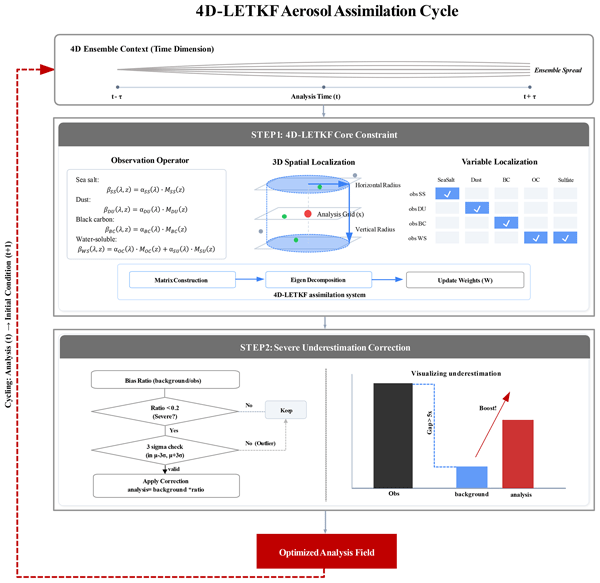
To understand how air pollution affects climate, we must know where different particles reside in the sky. We combined satellite lidar measurements of specific particle types with a numerical model to build a three-dimensional map of pollution over East Asia. Our method successfully located hidden layers of heat-absorbing soot high in the atmosphere that previous models missed. This greatly improves our ability to calculate how these particles trap sunlight and alter regional temperatures.
Takuma Miyakawa, Chunmao Zhu, Morihisa Yokokawa, Mitsunobu Mukawa, Akinori Ito, Atsushi Shimizu, Tomoaki Nishizawa, and Yugo Kanaya
EGUsphere, https://doi.org/10.5194/egusphere-2026-3778, https://doi.org/10.5194/egusphere-2026-3778, 2026
Short summary
Short summary
Soluble iron (Fesol) in aerosol particles was investigated in the East Asian outflow in winter–spring 2023–2024. Source attribution was essential to account for the variations in Fesol fraction for fine aerosols, whereas those for coarse aerosols were largely affected by aging processes. Fesol-to-black carbon enhancement ratios can be useful constraints for evaluating numerical models to simulate anthropogenic and natural impacts on Fesol concentrations in the East Asian outflow regions.
Mizuo Kajino, Narihiro Orikasa, Rei Kudo, Atsushi Shimizu, Tomoaki Nishizawa, Yoshitaka Jin, Kazuo Osada, Satoko Kayaba, Tomoki Kajikawa, Rio Ishikawa, and Keiya Yumimoto
EGUsphere, https://doi.org/10.5194/egusphere-2026-1666, https://doi.org/10.5194/egusphere-2026-1666, 2026
Short summary
Short summary
Aerosol size distribution is important for understanding the climate impacts of aerosols; however, it is difficult to validate modeled size distributions. This study introduces a new method that compares physical variables, such as cloud condensation nuclei and light extinction coefficients, derived from size distribution measurements. Using data from Tsukuba, Japan, the method shows that the new model (v2.0) improves predictions of aerosol size distribution by about 17% compared to v1.0.
Kaori Sato, Hajime Okamoto, Tomoaki Nishizawa, Yoshitaka Jin, Takashi Y. Nakajima, Minrui Wang, Masaki Satoh, Woosub Roh, Hiroshi Ishimoto, and Rei Kudo
Atmos. Meas. Tech., 18, 1325–1338, https://doi.org/10.5194/amt-18-1325-2025, https://doi.org/10.5194/amt-18-1325-2025, 2025
Short summary
Short summary
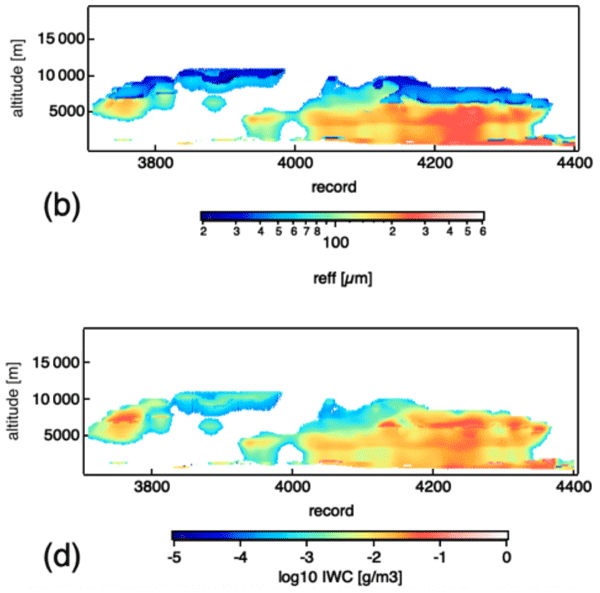
This study introduces the JAXA EarthCARE Level 2 (L2) cloud product using satellite observations and simulated EarthCARE data. The outputs from the product feature a 3D global view of the dominant ice habit categories and corresponding microphysics. Habit and size distribution transitions from cloud to precipitation are quantified by the L2 cloud algorithms. With Doppler data, the products can be beneficial for further understanding of the coupling of cloud microphysics, radiation, and dynamics.
Hajime Okamoto, Kaori Sato, Tomoaki Nishizawa, Yoshitaka Jin, Shota Ogawa, Hiroshi Ishimoto, Yuichiro Hagihara, EIji Oikawa, Maki Kikuchi, Masaki Satoh, and Wooosub Roh
Atmos. Meas. Tech. Discuss., https://doi.org/10.5194/amt-2024-103, https://doi.org/10.5194/amt-2024-103, 2024
Publication in AMT not foreseen
Short summary
Short summary
The article gives the descriptions of the Japan Aerospace Exploration Agency (JAXA) level 2 (L2) cloud mask and cloud particle type algorithms for CPR and ATLID onboard Earth Clouds, Aerosols and Radiation Explorer (EarthCARE) satellite. The 355nm-multiple scattering polarization lidar was used to develop ATLID algorithm. Evaluations show the agreements for CPR-only, ATLID-only and CPR-ATLID synergy algorithms to be about 80%, 85% and 80%, respectively on average for about two EarthCARE orbits.
Hajime Okamoto, Kaori Sato, Tomoaki Nishizawa, Yoshitaka Jin, Takashi Nakajima, Minrui Wang, Masaki Satoh, Kentaroh Suzuki, Woosub Roh, Akira Yamauchi, Hiroaki Horie, Yuichi Ohno, Yuichiro Hagihara, Hiroshi Ishimoto, Rei Kudo, Takuji Kubota, and Toshiyuki Tanaka
Atmos. Meas. Tech. Discuss., https://doi.org/10.5194/amt-2024-101, https://doi.org/10.5194/amt-2024-101, 2024
Publication in AMT not foreseen
Short summary
Short summary
This article gives overviews of the JAXA L2 algorithms and products by Japanese science teams for EarthCARE. The algorithms provide corrected Doppler velocity, cloud particle shape and orientations, microphysics of clouds and aerosols, and radiative fluxes and heating rate. The retrievals by the algorithms are demonstrated and evaluated using NICAM/J-simulator outputs. The JAXA EarthCARE L2 products will bring new scientific knowledge about the clouds, aerosols, radiation and convections.
Rei Kudo, Akiko Higurashi, Eiji Oikawa, Masahiro Fujikawa, Hiroshi Ishimoto, and Tomoaki Nishizawa
Atmos. Meas. Tech., 16, 3835–3863, https://doi.org/10.5194/amt-16-3835-2023, https://doi.org/10.5194/amt-16-3835-2023, 2023
Short summary
Short summary
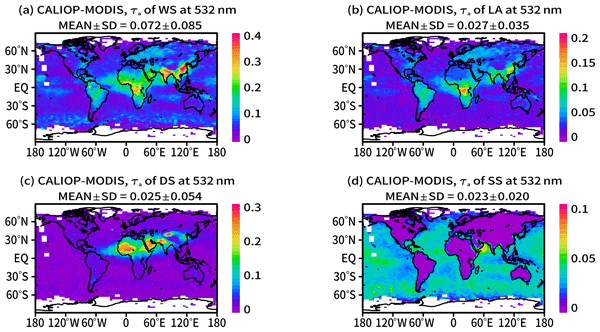
A synergistic retrieval method of aerosol components (water-soluble, light-absorbing, dust, and sea salt particles) from CALIOP and MODIS observations was developed. The total global 3-D distributions and those for each component showed good consistency with the CALIOP and MODIS official products and previous studies. The shortwave direct radiative effects of each component at the top and bottom of the atmosphere and for the heating rate were also consistent with previous studies.
Yueming Cheng, Tie Dai, Daisuke Goto, Keiya Yumimoto, Tomoaki Nishizawa, Rei Kudo, Min Zhao, Akiko Higurashi, Yoshitaka Jin, Atsushi Shimizu, Haoran Peng, Guangyu Shi, and Teruyuki Nakajima
Atmos. Chem. Phys., 26, 14671–14698, https://doi.org/10.5194/acp-26-14671-2026, https://doi.org/10.5194/acp-26-14671-2026, 2026
Short summary
Short summary
To understand how air pollution affects climate, we must know where different particles reside in the sky. We combined satellite lidar measurements of specific particle types with a numerical model to build a three-dimensional map of pollution over East Asia. Our method successfully located hidden layers of heat-absorbing soot high in the atmosphere that previous models missed. This greatly improves our ability to calculate how these particles trap sunlight and alter regional temperatures.
Océane Soares, Sergey Khaykin, Sophie Godin-Beekmann, Artem Feofilov, Tetsu Sakai, Yoshita Jin, Isamu Morino, Ben Liley, and Richard Querel
EGUsphere, https://doi.org/10.5194/egusphere-2026-5639, https://doi.org/10.5194/egusphere-2026-5639, 2026
This preprint is open for discussion and under review for Atmospheric Chemistry and Physics (ACP).
Short summary
Short summary
Volcanic eruptions and extreme wildfires can send particles high into the atmosphere, where they can remain for months or even years. Using nearly two decades of satellite observations together with measurements from the ground, we compare major events and show that their impacts can last for very different lengths of time. Our results help explain what controls how long these particles remain in the atmosphere.
Pradeep Khatri, Hitoshi Irie, Hiroshi Kobayashi, Isamu Morino, Yoshitaka Jin, Tadahiro Hayasaka, Hironobu Iwabuchi, Tamio Takamura, and Yoshiki Takayama
Atmos. Meas. Tech., 19, 6447–6467, https://doi.org/10.5194/amt-19-6447-2026, https://doi.org/10.5194/amt-19-6447-2026, 2026
Short summary
Short summary
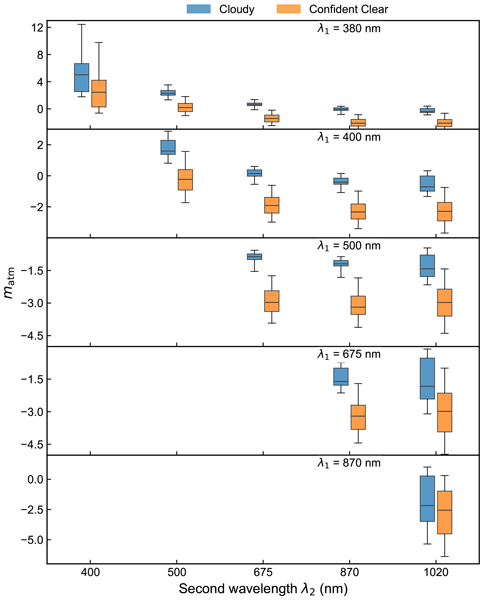
This study investigates the spectral characteristics of zenith sky radiances under clear- and cloudy-sky conditions using SKYNET sky radiometer observations. It proposes a simple, physically interpretable method for distinguishing sky states and demonstrates that wavelength-dependent radiance information can support reliable sky-state detection across diverse atmospheric environments.
Woosub Roh, Masaki Satoh, Romain Fiévet, Mark D. Fielding, Robin J. Hogan, Bjorn Stevens, Takuji Kubota, and Hajime Okamoto
EGUsphere, https://doi.org/10.5194/egusphere-2026-3606, https://doi.org/10.5194/egusphere-2026-3606, 2026
This preprint is open for discussion and under review for Geoscientific Model Development (GMD).
Short summary
Short summary
Clouds and rainfall are still difficult to represent accurately in weather and climate models. We introduce a new project called the EarthCARE–ORCESTRA Model Intercomparison Project (ECOMIP), which uses observations from the new Earth Cloud, Aerosol and Radiation Explorer (EarthCARE) satellite and a tropical field campaign to compare and improve atmospheric models. Initial results show that different models can reproduce the same storm system but differ in its size and structure.
Yuki Imura, Shunsuke Aoki, Takuji Kubota, Hirotaka Nakatsuka, Yuichi Ohno, and Hajime Okamoto
Atmos. Meas. Tech., 19, 5617–5631, https://doi.org/10.5194/amt-19-5617-2026, https://doi.org/10.5194/amt-19-5617-2026, 2026
Short summary
Short summary
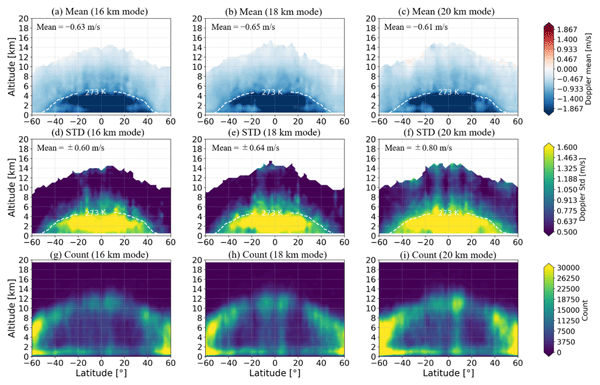
Understanding air motion within clouds is essential for weather and climate research. A new satellite launched in 2024 can observe how clouds move around the world for the first time. In this study, we compare three observation modes using real satellite data. We find that some modes provide more accurate measurements but reduce the ability to observe very high clouds and increase the risk of false signals. Our results show which observation modes work best in different regions of the world.
Takashi M. Nagao, Kentaroh Suzuki, Akira Yamauchi, Eiji Oikawa, Miho Sekiguchi, Haruma Ishida, and Masataka Muto
EGUsphere, https://doi.org/10.5194/egusphere-2026-4324, https://doi.org/10.5194/egusphere-2026-4324, 2026
This preprint is open for discussion and under review for Atmospheric Measurement Techniques (AMT).
Short summary
Short summary
This study presents the initial validation of the JAXA four-sensor synergy radiation budget product (ALL_RAD) for the EarthCARE mission. ALL_RAD provides broadband radiative fluxes, heating rates, and cloud/aerosol radiative effects by combining EarthCARE cloud and aerosol retrievals with 1D radiative transfer calculations. Comparisons with BMA-FLX and ground-based observations demonstrate good consistency, supporting future EarthCARE radiative closure studies.
William Wandji Nyamsi, Ville Leinonen, Antti Lipponen, Else van den Besselaar, Santtu Mikkonen, Arturo Sanchez-Lorenzo, Martin Wild, Doris Folini, Tero Mielonen, Harri Kokkola, Antti Kukkurainen, Neus Sabater, Rei Kudo, Ben Liley, Raghav Srinivasan, Bruce W. Forgan, Alexandru Dumitrescu, Grzegorz Urban, Michał K. Kowalewski, Márcia Akemi Yamasoe, Nilton Évora do Rosário, Dimitra Founda, Stelios Kazadzis, Veronica Manara, Derbetini A. Vondou, Christian Gueymard, Anders V. Lindfors, Atsumu Ohmura, and Antti Arola
Atmos. Chem. Phys., 26, 10767–10788, https://doi.org/10.5194/acp-26-10767-2026, https://doi.org/10.5194/acp-26-10767-2026, 2026
Short summary
Short summary
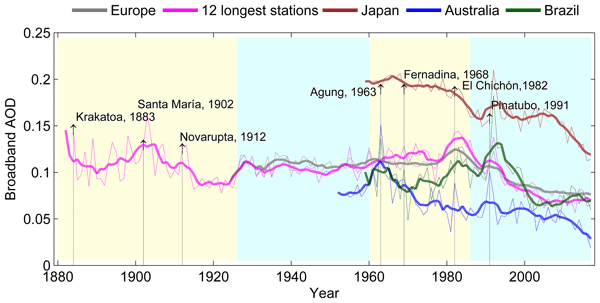
Worldwide reconstructed historical aerosol load reveals that during the period of:
- 1900–1959: the atmosphere became cleaner in most European cities;
- 1960–1985: anthropogenic aerosols were responsible for the dimming phenomenon in Europe. AOD increased over Southeast Brazil and decreased noticeably over Japan while a small negative trend was found over Oceania;
- 1986–2015: generally, the atmosphere has become much cleaner everywhere after the reversal trend around 1980s mainly observed in Europe.
Gaurav Kumar, Masahiro Momoi, Monica Campanelli, Meritxell Garcia-Suñer, Natalia Kouremeti, Rei Kudo, Roberto Pedrós, and Víctor Estellés
EGUsphere, https://doi.org/10.5194/egusphere-2026-4267, https://doi.org/10.5194/egusphere-2026-4267, 2026
Short summary
Short summary
Aerosols are tiny particles suspended in the atmosphere, affecting the air quality and climate. Accurate aerosol measurements are thus important for understanding their effects. Sky radiometers are widely used instruments for the aerosol measurements. We developed a method to improve the calibration coefficients of sky radiometers, using the latest data-processing algorithm and an iterative procedure. The proposed method produced more accurate results, improving long-term aerosol monitoring.
Takuma Miyakawa, Chunmao Zhu, Morihisa Yokokawa, Mitsunobu Mukawa, Akinori Ito, Atsushi Shimizu, Tomoaki Nishizawa, and Yugo Kanaya
EGUsphere, https://doi.org/10.5194/egusphere-2026-3778, https://doi.org/10.5194/egusphere-2026-3778, 2026
Short summary
Short summary
Soluble iron (Fesol) in aerosol particles was investigated in the East Asian outflow in winter–spring 2023–2024. Source attribution was essential to account for the variations in Fesol fraction for fine aerosols, whereas those for coarse aerosols were largely affected by aging processes. Fesol-to-black carbon enhancement ratios can be useful constraints for evaluating numerical models to simulate anthropogenic and natural impacts on Fesol concentrations in the East Asian outflow regions.
Mizuo Kajino, Narihiro Orikasa, Rei Kudo, Atsushi Shimizu, Tomoaki Nishizawa, Yoshitaka Jin, Kazuo Osada, Satoko Kayaba, Tomoki Kajikawa, Rio Ishikawa, and Keiya Yumimoto
EGUsphere, https://doi.org/10.5194/egusphere-2026-1666, https://doi.org/10.5194/egusphere-2026-1666, 2026
Short summary
Short summary
Aerosol size distribution is important for understanding the climate impacts of aerosols; however, it is difficult to validate modeled size distributions. This study introduces a new method that compares physical variables, such as cloud condensation nuclei and light extinction coefficients, derived from size distribution measurements. Using data from Tsukuba, Japan, the method shows that the new model (v2.0) improves predictions of aerosol size distribution by about 17% compared to v1.0.
Sergey Khaykin, Michaël Sicard, Thierry Leblanc, Tetsu Sakai, Nickolay Balugin, Gwenaël Berthet, Stëphane Chevrier, Fernando Chouza, Artem Feofilov, Dominique Gantois, Sophie Godin-Beekmann, Arezki Haddouche, Yoshitaka Jin, Isamu Morino, Nicolas Kadygrov, Thomas Lecas, Ben Liley, Richard Querel, Ghasssan Taha, and Vladimir Yushkov
Atmos. Chem. Phys., 26, 607–622, https://doi.org/10.5194/acp-26-607-2026, https://doi.org/10.5194/acp-26-607-2026, 2026
Short summary
Short summary
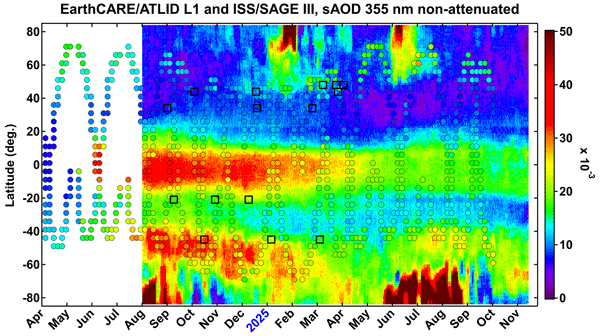
In April 2024, the Ruang volcano in Indonesia sent large amounts of gas and particles high into the atmosphere, which then spread worldwide. Using the new European EarthCARE satellite and its advanced laser instrument ATLID (Atmospheric LIDar), together with ground and balloon observations, we tracked how these particles doubled levels in the tropics and spread into both hemispheres. The study shows ATLID’s power to reveal how eruptions can affect climate, clouds, and ozone for more than a year.
Kaori Sato, Hajime Okamoto, Tomoaki Nishizawa, Yoshitaka Jin, Takashi Y. Nakajima, Minrui Wang, Masaki Satoh, Woosub Roh, Hiroshi Ishimoto, and Rei Kudo
Atmos. Meas. Tech., 18, 1325–1338, https://doi.org/10.5194/amt-18-1325-2025, https://doi.org/10.5194/amt-18-1325-2025, 2025
Short summary
Short summary
This study introduces the JAXA EarthCARE Level 2 (L2) cloud product using satellite observations and simulated EarthCARE data. The outputs from the product feature a 3D global view of the dominant ice habit categories and corresponding microphysics. Habit and size distribution transitions from cloud to precipitation are quantified by the L2 cloud algorithms. With Doppler data, the products can be beneficial for further understanding of the coupling of cloud microphysics, radiation, and dynamics.

Akira Yamauchi, Kentaroh Suzuki, Eiji Oikawa, Miho Sekiguchi, Takashi M. Nagao, and Haruma Ishida
Atmos. Meas. Tech., 17, 6751–6767, https://doi.org/10.5194/amt-17-6751-2024, https://doi.org/10.5194/amt-17-6751-2024, 2024
Short summary
Short summary
A Japanese team developed the Level 2 atmospheric radiation flux and heating rate product for EarthCARE, which offers vertical profiles of longwave and shortwave radiative fluxes and heating rates. This study outlines the algorithm for the radiative product and its comparative validation against satellite and ground-based observations. It also analyzes errors in radiative fluxes at various scales and their dependence on cloud type, with ice-containing clouds identified as a primary error source.
Monica Campanelli, Victor Estellés, Gaurav Kumar, Teruyuki Nakajima, Masahiro Momoi, Julian Gröbner, Stelios Kazadzis, Natalia Kouremeti, Angelos Karanikolas, Africa Barreto, Saulius Nevas, Kerstin Schwind, Philipp Schneider, Iiro Harju, Petri Kärhä, Henri Diémoz, Rei Kudo, Akihiro Uchiyama, Akihiro Yamazaki, Anna Maria Iannarelli, Gabriele Mevi, Annalisa Di Bernardino, and Stefano Casadio
Atmos. Meas. Tech., 17, 5029–5050, https://doi.org/10.5194/amt-17-5029-2024, https://doi.org/10.5194/amt-17-5029-2024, 2024
Short summary
Short summary
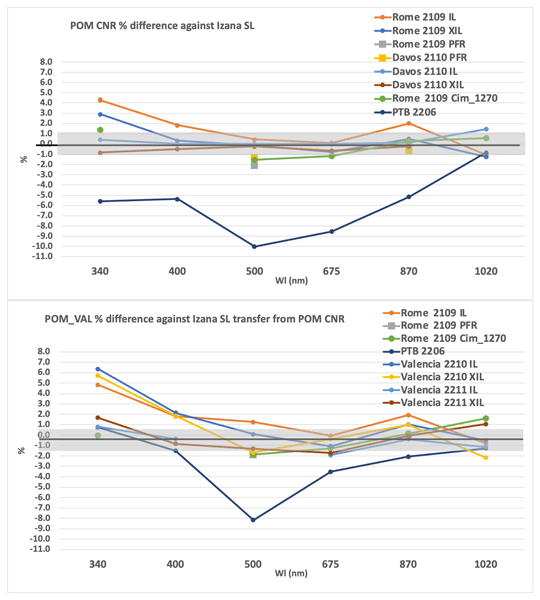
To retrieve columnar aerosol properties from sun photometers, some calibration factors are needed. The on-site calibrations, performed as frequently as possible to monitor changes in the machine conditions, allow operators to track and evaluate the calibration status on a continuous basis, reducing the data gaps incurred by the periodic shipments for performing centralized calibrations. The performance of the on-site calibration procedures was evaluated, providing very good results.
Hajime Okamoto, Kaori Sato, Tomoaki Nishizawa, Yoshitaka Jin, Shota Ogawa, Hiroshi Ishimoto, Yuichiro Hagihara, EIji Oikawa, Maki Kikuchi, Masaki Satoh, and Wooosub Roh
Atmos. Meas. Tech. Discuss., https://doi.org/10.5194/amt-2024-103, https://doi.org/10.5194/amt-2024-103, 2024
Publication in AMT not foreseen
Short summary
Short summary
The article gives the descriptions of the Japan Aerospace Exploration Agency (JAXA) level 2 (L2) cloud mask and cloud particle type algorithms for CPR and ATLID onboard Earth Clouds, Aerosols and Radiation Explorer (EarthCARE) satellite. The 355nm-multiple scattering polarization lidar was used to develop ATLID algorithm. Evaluations show the agreements for CPR-only, ATLID-only and CPR-ATLID synergy algorithms to be about 80%, 85% and 80%, respectively on average for about two EarthCARE orbits.
Hajime Okamoto, Kaori Sato, Tomoaki Nishizawa, Yoshitaka Jin, Takashi Nakajima, Minrui Wang, Masaki Satoh, Kentaroh Suzuki, Woosub Roh, Akira Yamauchi, Hiroaki Horie, Yuichi Ohno, Yuichiro Hagihara, Hiroshi Ishimoto, Rei Kudo, Takuji Kubota, and Toshiyuki Tanaka
Atmos. Meas. Tech. Discuss., https://doi.org/10.5194/amt-2024-101, https://doi.org/10.5194/amt-2024-101, 2024
Publication in AMT not foreseen
Short summary
Short summary
This article gives overviews of the JAXA L2 algorithms and products by Japanese science teams for EarthCARE. The algorithms provide corrected Doppler velocity, cloud particle shape and orientations, microphysics of clouds and aerosols, and radiative fluxes and heating rate. The retrievals by the algorithms are demonstrated and evaluated using NICAM/J-simulator outputs. The JAXA EarthCARE L2 products will bring new scientific knowledge about the clouds, aerosols, radiation and convections.

Robin J. Hogan, Anthony J. Illingworth, Pavlos Kollias, Hajime Okamoto, and Ulla Wandinger
Atmos. Meas. Tech., 17, 3081–3083, https://doi.org/10.5194/amt-17-3081-2024, https://doi.org/10.5194/amt-17-3081-2024, 2024
Rei Kudo, Akiko Higurashi, Eiji Oikawa, Masahiro Fujikawa, Hiroshi Ishimoto, and Tomoaki Nishizawa
Atmos. Meas. Tech., 16, 3835–3863, https://doi.org/10.5194/amt-16-3835-2023, https://doi.org/10.5194/amt-16-3835-2023, 2023
Short summary
Short summary
A synergistic retrieval method of aerosol components (water-soluble, light-absorbing, dust, and sea salt particles) from CALIOP and MODIS observations was developed. The total global 3-D distributions and those for each component showed good consistency with the CALIOP and MODIS official products and previous studies. The shortwave direct radiative effects of each component at the top and bottom of the atmosphere and for the heating rate were also consistent with previous studies.

Monica Campanelli, Henri Diémoz, Anna Maria Siani, Alcide di Sarra, Anna Maria Iannarelli, Rei Kudo, Gabriele Fasano, Giampietro Casasanta, Luca Tofful, Marco Cacciani, Paolo Sanò, and Stefano Dietrich
Atmos. Meas. Tech., 15, 1171–1183, https://doi.org/10.5194/amt-15-1171-2022, https://doi.org/10.5194/amt-15-1171-2022, 2022
Short summary
Short summary
The aerosol optical depth (AOD) characteristics in an urban area of Rome were retrieved over a period of 11 years (2010–2020) to determine, for the first time, their effect on the incoming ultraviolet (UV) solar radiation. The surface forcing efficiency shows that the AOD is the primary parameter affecting the surface irradiance in Rome, and it is found to be greater for smaller zenith angles and for larger and more absorbing particles in the UV range (such as, e.g., mineral dust).
Cited articles
Bezdek, J. C.: Pattern recognition with fuzzy objective function algorithms, Plenum Press, New York, https://doi.org/10.1007/978-1-4757-0450-1, 1981.
Brooks, I. M.: Finding Boundary Layer Top: Application of a wavelet covariance transform to lidar backscatter profiles, J. Atmos. Ocean. Tech., 20, 1092–1105, 2003.
Cairo, F., De Muro, M., Snels, M., Di Liberto, L., Bucci, S., Legras, B., Kottayil, A., Scoccione, A., and Ghisu, S.: Lidar observations of cirrus clouds in Palau (7°33′ N, 134°48′ E), Atmos. Chem. Phys., 21, 7947–7961, https://doi.org/10.5194/acp-21-7947-2021, 2021.
do Carmo, J. P., de Villele, G., Wallace, K., Lefebvre, A., Chose, K., Kanitz, T., Chassat, F., Corselle, B., Belhadj, T., Bravetti, P.: ATmospheric LIDar (ATLID): Pre-launch testing and calibration of the European Space Agency instrument that will measure aerosols and thin clouds in the atmosphere, Atmosphere, 12, 76, https://doi.org/10.3390/atmos12010076, 2021.
Chen, W.-N., Chiang, C.-W., Nee, J.-B.: Lidar ratio and depolarization ratio for cirrus clouds, Appl. Optics, 41, 6470–6476, 2002.
Donovan, D. P., Kollias, P., Velázquez Blázquez, A., and van Zadelhoff, G.-J.: The generation of EarthCARE L1 test data sets using atmospheric model data sets, Atmos. Meas. Tech., 16, 5327–5356, https://doi.org/10.5194/amt-16-5327-2023, 2023.
Donovan, D. P., van Zadelhoff, G.-J., and Wang, P.: The EarthCARE lidar cloud and aerosol profile processor (A-PRO): the A-AER, A-EBD, A-TC, and A-ICE products, Atmos. Meas. Tech., 17, 5301–5340, https://doi.org/10.5194/amt-17-5301-2024, 2024.
Dubovik, O., Sinyuk, A., Lapyonok, T., Holben, B. N., Mishchenko, M., Yang, P., Eck, T. F., Volten, H., Muñoz, O., and Veihelmann, B.: Application of spheroid models to account for aerosol particle nonsphericity in remote sensing of desert dust, J. Geophys. Res. Atmos., 111, D11208, https://doi.org/10.1029/2005JD006619, 2006.
Dunn, J. C.: A fuzzy relative of the ISODATA process and its use in detecting compact well-separated clusters, J. Cybernetics, 3, 32–57, 1973.
Eisinger, M., Marnas, F., Wallace, K., Kubota, T., Tomiyama, N., Ohno, Y., Tanaka, T., Tomita, E., Wehr, T., and Bernaerts, D.: The EarthCARE mission: science data processing chain overview, Atmos. Meas. Tech., 17, 839–862, https://doi.org/10.5194/amt-17-839-2024, 2024.
Fang, H. T. and Huang D, S.: Noise reduction in lidar signal based on discrete wavelet transform, Opt. Commun., 233, 67–76, 2004.
Freudenthaler, V., Esselborn, M., Wiegner, M., Heese, B., Tesche, M., Ansmann, A., Müller, D., Althausen, D., Wirth, M., and Fix, A.: Depolarization ratio profiling at several wavelengths in pure Saharan dust during SAMUM 2006, Tellus B, 61, 165–179, https://doi.org/10.1111/j.1600-0889.2008.00396.x, 2009.
Giles, D. M., Sinyuk, A., Sorokin, M. G., Schafer, J. S., Smirnov, A., Slutsker, I., Eck, T. F., Holben, B. N., Lewis, J. R., Campbell, J. R., Welton, E. J., Korkin, S. V., and Lyapustin, A. I.: Advancements in the Aerosol Robotic Network (AERONET) Version 3 database – automated near-real-time quality control algorithm with improved cloud screening for Sun photometer aerosol optical depth (AOD) measurements, Atmos. Meas. Tech., 12, 169–209, https://doi.org/10.5194/amt-12-169-2019, 2019.
Haarig, M., Ansmann, A., Engelmann, R., Baars, H., Toledano, C., Torres, B., Althausen, D., Radenz, M., and Wandinger, U.: First triple-wavelength lidar observations of depolarization and extinction-to-backscatter ratios of Saharan dust, Atmos. Chem. Phys., 22, 355–369, https://doi.org/10.5194/acp-22-355-2022, 2022.
Hagihara, Y., Okamoto, H., and Yoshida, R.: Development of a combined CloudSat-CALIPSO cloud mask to show global cloud distribution, J. Geophys. Res., 115, D00H33, https://doi.org/10.1029/2009JD012344, 2010.
Hashino, T., Satoh, M., Hagihara, Y., Kubota, T., Matsui, T., Nasuno, T., and Okamoto, H.: Evaluating cloud microphysics from NICAM against CloudSat and CALIPSO, J. Geophys. Res. Atmos., 118, 7273–7292, https://doi.org/10.1002/jgrd.50564, 2013.
Heìliere, A., Gelsthorpe, R., Le Hors, L., and Toulemont, Y.: ATLID, the Atmospheric Lidar on board the EarthCARE Satellite, Proc. SPIE 10564, International Conference on Space Optics – ICSO 2012, 105642D, https://doi.org/10.1117/12.2309095, 2017.
Hofer, J., Althausen, D., Abdullaev, S. F., Makhmudov, A. N., Nazarov, B. I., Schettler, G., Engelmann, R., Baars, H., Fomba, K. W., Müller, K., Heinold, B., Kandler, K., and Ansmann, A.: Long-term profiling of mineral dust and pollution aerosol with multiwavelength polarization Raman lidar at the Central Asian site of Dushanbe, Tajikistan: case studies, Atmos. Chem. Phys., 17, 14559–14577, https://doi.org/10.5194/acp-17-14559-2017, 2017.
Holben, B. N., Eck, T. F., Slutsker, I., Tanre, D., Buis, J. P., Setzer, A., Vermote, E., Reagan, J. A., Kaufman, Y., Nakajima, T., Lavenue, F., Jankowiak, I., and Smirnov, A.: AERONET – A federated instrument network and data archive for aerosol characterization, Remote Sens. Environ., 66, 1–16, https://doi.org/10.1016/S0034-4257(98)00031-5, 1998.
Illingworth, A. J., Barker, H. W., Beljaars, A., Ceccaldi, M., Chepfer, H., Clerbaux, N., Cole, J., Delanoë, J., Domenech, C., Donovan, D. P., Fukuda, S., Hirakata, M., Hogan, R. J., Huenerbein, A., Kollias, P., Kubota, T., Nakajima, T., Nakajima, T. Y., Nishizawa, T., Ohno, Y., Okamoto, H., Oki, R., Sato, K., Satoh, M., Shephard, M. W., Velázquez-Blázquez, A., Wandinger, U., Wehr, T., and van Zadelhoff, G.-J.: The EarthCARE Satellite: The next step forward in global measurements of clouds, aerosols, precipitation, and radiation, B. Am. Meteorol. Soc., 96, 1311–1332, https://doi.org/10.1175/BAMS-D-12-00227.1, 2015.
Irbah, A., Delanoë, J., van Zadelhoff, G.-J., Donovan, D. P., Kollias, P., Puigdomènech Treserras, B., Mason, S., Hogan, R. J., and Tatarevic, A.: The classification of atmospheric hydrometeors and aerosols from the EarthCARE radar and lidar: the A-TC, C-TC and AC-TC products, Atmos. Meas. Tech., 16, 2795–2820, https://doi.org/10.5194/amt-16-2795-2023, 2023.
Jin, Y., Nishizawa, T., Sugimoto, N., Ishii, S., Aoki, M., Sato, K., and Okamoto, H.: Development of a 355 nm high-spectral-resolution lidar using a scanning Michelson interferometer for aerosol profile measurement, Opt. Express, 28, 23209–23222, 2020.
Kim, M.-H., Yeo, H., Park, S., Park, D.-H., Omar, A., Nishizawa, T., Shimizu, A., and Kim, S.-W.: Assessing CALIOP-derived planetary boundary layer height using ground-based lidar, Remote Sens., 13, 1496, https://doi.org/10.3390/rs13081496, 2021.
Koren, I., Kaufman, Y. J., Remer, L. A., and Martins, J. V.: Measurement of the effect of Amazon smoke on inhibition of cloud formation, Science, 303, 1342–1344, 2004.
Kudo, R., Nishizawa, T., and Aoyagi, T.: Vertical profiles of aerosol optical properties and the solar heating rate estimated by combining sky radiometer and lidar measurements, Atmos. Meas. Tech., 9, 3223–3243, https://doi.org/10.5194/amt-9-3223-2016, 2016.
Kudo, R., Higurashi, A., Oikawa, E., Fujikawa, M., Ishimoto, H., and Nishizawa, T.: Global 3-D distribution of aerosol composition by synergistic use of CALIOP and MODIS observations, Atmos. Meas. Tech., 16, 3835–3863, https://doi.org/10.5194/amt-16-3835-2023, 2023.
Lammert, A. and Bösenberg, J.: Determination of the convective boundary-layer height with laser remote sensing, Boundary-Layer Meteorol., 119, 159–170, 2006.
Liu, Z., Matsui, I., Sugimoto, N.: High-Spectral-Resolution Lidar using an iodine absorption filter for atmospheric measurements, Opt. Eng., 38, 1661–1670, 1999.
Liu, Z., Vaughan, M. A., Winker, D. M., Kittaka, C., Getzewich, B. J., Kuehn, R. E., Hostetler, C. A.: The CALIPSO lidar cloud and aerosol discrimination: Version 2 algorithm and initial assessment of performance. J. Atmos. Oceanic Tchn., 26, 1198–1213, https://doi.org/10.1175/2009JTECHA1229.1, 2009.
Menut, L., Flamant, C., Pelon, J., and Flamant, P. H.: Urban boundary-layer height determination from lidar measurements over the Paris area, Appl. Optics, 38, 945–954, 1999.
Müller, D., Hostetler, C. A., Ferrare, R. A., Burton, S. P., Chemyakin, E., Kolgotin, A., Hair, J. W., Cook, A. L., Harper, D. B., Rogers, R. R., Hare, R. W., Cleckner, C. S., Obland, M. D., Tomlinson, J., Berg, L. K., and Schmid, B.: Airborne Multiwavelength High Spectral Resolution Lidar (HSRL-2) observations during TCAP 2012: vertical profiles of optical and microphysical properties of a smoke/urban haze plume over the northeastern coast of the US, Atmos. Meas. Tech., 7, 3487–3496, https://doi.org/10.5194/amt-7-3487-2014, 2014.
Nishizawa, T., Okamoto, H., Sugimoto, N., Matsui, I., Shimizu, A, Aoki, K.: An algorithm that retrieves aerosol properties from dual-wavelength polarized lidar measurements, J. Geophys. Res., 112, D06212, https://doi.org/10.1029/2006JD007435, 2007.
Nishizawa, T., Sugimoto, N., Matsui, I., Shimizu, A., Tatarov, B., and Okamoto, H.: Algorithm to retrieve aerosol optical properties from high-spectral-resolution lidar and polarization Mie-scattering lidar measurements, IEEE T. Geosci. Remote, 46, 4094–4103, 2008.
Nishizawa, T., Sugimoto, N., Matsui, I., Shimizu, A., and Okamoto, H.: Algorithms to retrieve optical properties of three component aerosols from two-wavelength backscatter and one-wavelength polarization lidar measurements considering nonsphericity of dust, J. Quant. Spectrosc. Radiat. Transfer, 112, 254–267, 2011.
Nishizawa, T., Sugimoto, N., Matsui, I., Shimizu, A., Hara, Y., Itsushi, U., Yasunaga, K., Kudo, R., Kim, S.-W.: Ground-based network observation using Mie–Raman lidars and multi-wavelength Raman lidars and algorithm to retrieve distributions of aerosol components, J. Quant. Spectrosc. Radiat. Transfer, 188, 79–93, https://doi.org/10.1016/j.jqsrt.2016.06.031, 2017.
Nocedal, J. and Wright, S. J.: Numerical optimization, 2nd edition, Springer Series in Operations Research and Financial Engineering, Springer Science + Busiginess Media, LCC, New York, 664 pp., ISBN 978-0387303031, 2006.
Oikawa, E., Nakajima, T., Inoue, T., Winker, D.: A study of the shortwave direct aerosol forcing using ESSP/CALIPSO observation and GCM simulation, J. Geophys. Res. Atmos., 118, https://doi.org/10.1002/jgrd.50227, 2013.
Oikawa, E., Nakajima, T., and Winker, D.: An evaluation of the shortwave direct aerosol radiatve forcing using CALIOP and MODIS observations, J. Geophys. Res., 123, 1211–1233, https://doi.org/10.1002/2017JD027247, 2018.
Okamoto, H., Nishizawa, T., Takemura, T., Kumagai, H., Kuroiwa, H., Sugimoto, N., Matsui, I., Shimizu, A., Emori, S., Kamei, A., and Nakajima, T.: Vertical cloud structure observed from shipborne radar and lidar: Midlatitude case study during the MR01/K02 cruise of the research vessel Mirai, J. Geophys. Res., 112, D08216, https://doi.org/10.1029/2006JD007628, 2007.
Okamoto, H., Nishizawa, T., Takemura, T., Sato, K., Kumagai, H., Ohno, Y., Sugimoto, N., Shimizu, A., Matsui, I., and Nakajima, T.: Vertical cloud properties in the tropical western Pacific Ocean: Validation of the CCSR/NIES/FRCGC GCM by shipborne radar and lidar, J. Geophys. Res.-Atmos., 113, D24213, https://doi.org/10.1029/2008JD009812, 2008.
Okamoto, H., Sato, K., Borovoi, A., Ishimoto, H., Masuda, K., Konoshonkin, A., Kustova, N.:Interpretation of lidar ratio and depolarization ratio of ice clouds using spaceborne high-spectral-resolution polarization lidar, Optics Express, 27, 36587–36600, 2019.
Okamoto, H., Sato, K., Nishizawa, T., Jin, Y., Nakajima, T., Wang, M., Satoh, M., Suzuki, K., Roh, W., Yamauchi, A., Horie, H., Ohno, Y., Hagihara, Y., Ishimoto, H., Kudo, R., Kubota, T., and Tanaka, T.: JAXA Level2 algorithms for EarthCARE mission from single to four sensors: new perspective of cloud, aerosol, radiation and dynamics, Atmos. Meas. Tech. Discuss. [preprint], https://doi.org/10.5194/amt-2024-101, 2024a.
Okamoto, H., Sato, K., Nishizawa, T., Jin, Y., Ogawa, S., Ishimoto, H., Hagihara, Y., Oikawa, E., Kikuchi, M., Satoh, M., and Roh, W.: Cloud masks and cloud type classification using EarthCARE CPR and ATLID, Atmos. Meas. Tech. Discuss. [preprint], https://doi.org/10.5194/amt-2024-103, 2024b.
Omar, A. H., J.-G. Won, D. M. Winker, S.-C. Yoon, O. Dubovik, and M. P. McCormick: Development of global aerosol models using cluster analysis of Aerosol Robotic Network (AERONET) measurements. J. Geophys. Res., 110, D10S14, https://doi.org/10.1029/2004JD004874, 2005.
Omar, A. H., Winker, D. M., Kittaka, C., Vaughan, M. A., Liu, Z., Hu, Y., Trepte, C. R., Rogers, R. R., Ferrare, R. A., Lee, K.-P., Kuehn, R. E., and Hostetler, C. A.: The CALIPSO automated aerosol classification and lidar ratio selection algorithm, J. Atmos. Ocean. Tech., 26, 1994–2014, https://doi.org/10.1175/2009JTECHA1231.1, 2009.
Qu, Y., Han, Y., Wu, Y., Gao, P., and Wang, T.: Study of PBLH and its correlation with particulate matter from one-year observation over Nanjing, Southeast China, Remote Sens., 9, 668, 2017.
Roh, W., Satoh, M., Hashino, T., Matsugishi, S., Nasuno, T., and Kubota, T.: Introduction to EarthCARE synthetic data using a global storm-resolving simulation, Atmos. Meas. Tech., 16, 3331–3344, https://doi.org/10.5194/amt-16-3331-2023, 2023a.
Roh, W., Satoh, M., Hashino, T., Matsugishi, S., Nasuno, T., and Kubota, T.: The JAXA EarthCARE synthetic data using a global storm resolving simulation, Zenodo [data set], https://doi.org/10.5281/zenodo.7835229, 2023b.
Satoh, M., Tomita, H., Yashiro, H., Miura, H., Kodama, C., Seiki, T., Noda, A. T., Yamada, Y., Goto, D., Sawada, M., Miyoshi, T., Niwa, Y., Hara, M., Ohno, T., Iga, S., Arakawa, T., Inoue, T., and Kubokawa, H.: The non-hydrostatic icosahedral atmospheric model: description and development, Prog. Earth Planet. Sci., 1, 18, https://doi.org/10.1186/s40645-014-0018-1, 2014.
Satoh, M., Roh, W., and Hashino, T.: Evaluations of clouds and precipitations in NICAM using the Joint Simulator for Satellite Sensors, CGER Supercomput. Monogr. Rep., 22, 110, https://doi.org/CGER-I127-2016, 2016.
Shimizu, A., Sugimoto, N,, Matsui, I,, Arao, K,, Uno, I,, Murayama T,, Kagawa, N., Aoki, K., Uchiyama, A., and Yamazaki, A.: Continuous observations of Asian dust and other aerosols by polarization lidars in China and Japan during ACE-Asia, J. Geophys. Res., 109 , D19S17, https://doi.org/10.1029/2002JD003253, 2004.
Takemura, T., Okamoto, H., Maruyama, Y., Numaguti, A., Higurashi, A., and Nakajima, T.: Global three-dimensional simulation of aerosol optical thickness distribution of various origins, J. Geophys. Res. Atmos., 10, 17853–17873, 2000.
Tesche, M., Ansmann, A., Müller, D., Althausen, D., Mattis, I., Heese, B., Freudenthaler, V.,Wiegner, M., Esselborn, M., Pisani, G., and Knippertz, P.: Vertical profiling of Saharan dust with Raman lidars and airborne HSRL in southern Morocco during SAMUM, Tellus B, 61, 144–164, https://doi.org/10.1111/j.1600-0889.2008.00390.x, 2009.
Tesche, M., Kolgotin, A., Haarig, M., Burton, S. P., Ferrare, R. A., Hostetler, C. A., and Müller, D.:
Vaughan, M. A., Powell, K. A., Winker, D. M., Hostetler, C. A., Kuehn, R. E., Hunt, W. H., Getzewich, B. J., Young, S. A., Liu, Z., and McGill, M. J.: Fully automated detection of cloud and aerosol layers in the CALIPSO lidar measurements, J. Atmos. Ocean. Tech., 26, 2034–2050, https://doi.org/10.1175/2009JTECHA1228.1, 2009.
Wallace, K., Hélière, A., Lefebvre, A., Eisinger, M., and Wehr, T.: Status of ESA's EarthCARE mission, passive instruments payload, in: Earth Observing Systems XXI, edited by: Butler, J. J., Xiong, X. J., and Gu, X., vol. 9972, 997214, International Society for Optics and Photonics, SPIE, https://doi.org/10.1117/12.2236498, 2016.
Wandinger, U., Haarig, M., Baars, H., Donovan, D., and van Zadelhoff, G.-J.: Cloud top heights and aerosol layer properties from EarthCARE lidar observations: the A-CTH and A-ALD products, Atmos. Meas. Tech., 16, 4031–4052, https://doi.org/10.5194/amt-16-4031-2023, 2023.
Wehr, T., Kubota, T., Tzeremes, G., Wallace, K., Nakatsuka, H., Ohno, Y., Koopman, R., Rusli, S., Kikuchi, M., Eisinger, M., Tanaka, T., Taga, M., Deghaye, P., Tomita, E., and Bernaerts, D.: The EarthCARE mission – science and system overview, Atmos. Meas. Tech., 16, 3581–3608, https://doi.org/10.5194/amt-16-3581-2023, 2023.
Wiegner, M., Groß, S., Freudenthaler, V., Schnell, F., and Gasteiger, J.: The May/June 2008 Saharan dust event over Munich: Intensive aerosol parameters from lidar measurements, J. Geophys. Res.-Atmos., 116, D23213, https://doi.org/10.1029/2011JD016619, 2011.
Winker, D. M., Pelon, J., Coakley Jr., J. A., Ackerman, S. A., Charlson, R. J., Colarco, P. R., Wielicki, B. A.: The CALIPSO mission: A global 3D view of aerosols and clouds, B. Am. Meteorol. Soc., 91, 1211–1230, https://doi.org/10.1175/2010BAMS3009.1, 2010.
Yamauchi, A., Suzuki, K., Oikawa, E., Sekiguchi, M., Nagao, T. M., and Ishida, H.: Description and validation of the Japanese algorithm for radiative flux and heating rate products with all four EarthCARE instruments: pre-launch test with A-Train, Atmos. Meas. Tech., 17, 6751–6767, https://doi.org/10.5194/amt-17-6751-2024, 2024.
Yoshida, R., Okamoto, H., Hagihara, Y., Ishimoto, H.: Global analysis of cloud phase and ice crystal orientation from CALIPSO data using attenuated backscattering and depolarization ratio, J. Geophys. Res., 115, D00H32, https://doi.org/10.1029/2010JD014032, 2010.
Young, S. A., Vaughan, M. A., Kuehn, R. E., Winker, D. M.: The retrieval of profiles of particulate extinction from Cloud–Aerosol Lidar and Infrared Pathfinder Satellite Observations (CALIPSO) Data: Uncertainty and Error Sensitivity Analyses, J. Atmos. Ocean. Tech., 30, 395–428, https://doi.org/10.1175/JTECH-D-12-00046.1, 2013.
van Zadelhoff, G.-J., Donovan, D. P., and Wang, P.: Detection of aerosol and cloud features for the EarthCARE atmospheric lidar (ATLID): the ATLID FeatureMask (A-FM) product, Atmos. Meas. Tech., 16, 3631–3651, https://doi.org/10.5194/amt-16-3631-2023, 2023.
Zhang, L., Li, J., Jiang, Z., Dong, Y., Ying, T., and Zhang, Z.: Clear-sky direct aerosol radiative forcing uncertainty associated with aerosol vertical distribution based on CMIP6 models, J. Climate, 35, 3021–3035, https://doi.org/10.1175/JCLI-D-21-0480.1, 2022.
Short summary
We developed algorithms to produce JAXA ATLID L2 aerosol products using ATLID L1 data. The algorithms estimate layer identifiers such as (1) aerosol or cloud layers, (2) particle optical properties at 355 nm, (3) particle type identifiers, and (4) planetary boundary layer height. We demonstrated the algorithm performance using the simulated ATLID L1 data and found the algorithm’s capability to provide valuable insights into the global distribution of aerosols and clouds.
We developed algorithms to produce JAXA ATLID L2 aerosol products using ATLID L1 data. The...


Special issue