
Articles | Volume 18, issue 24
https://doi.org/10.5194/amt-18-7853-2025
© Author(s) 2025. This work is distributed under
the Creative Commons Attribution 4.0 License.
the Creative Commons Attribution 4.0 License.
https://doi.org/10.5194/amt-18-7853-2025
© Author(s) 2025. This work is distributed under
the Creative Commons Attribution 4.0 License.
the Creative Commons Attribution 4.0 License.
Research article
| 
22 Dec 2025
Research article |
| 22 Dec 2025
| 22 Dec 2025
CrystalTrace: a Monte Carlo raytracing algorithm for radiative transfer in cirrus clouds with oriented ice crystals
Linda Forster
CORRESPONDING AUTHOR

Meteorologisches Institut, Ludwig-Maximilians-Universität, München, Germany
now at: Jet Propulsion Laboratory, California Institue of Technology, Pasadena, United States
Anna Weber
Meteorologisches Institut, Ludwig-Maximilians-Universität, München, Germany
Bernhard Mayer
Meteorologisches Institut, Ludwig-Maximilians-Universität, München, Germany
Institut für Physik der Atmosphäre, Deutsches Zentrum für Luft- und Raumfahrt, Oberpfaffenhofen, Germany
Related authors
Jesse Loveridge, Aviad Levis, Larry Di Girolamo, Vadim Holodovsky, Linda Forster, Anthony B. Davis, and Yoav Y. Schechner
Atmos. Meas. Tech., 16, 3931–3957, https://doi.org/10.5194/amt-16-3931-2023, https://doi.org/10.5194/amt-16-3931-2023, 2023
Short summary
Short summary
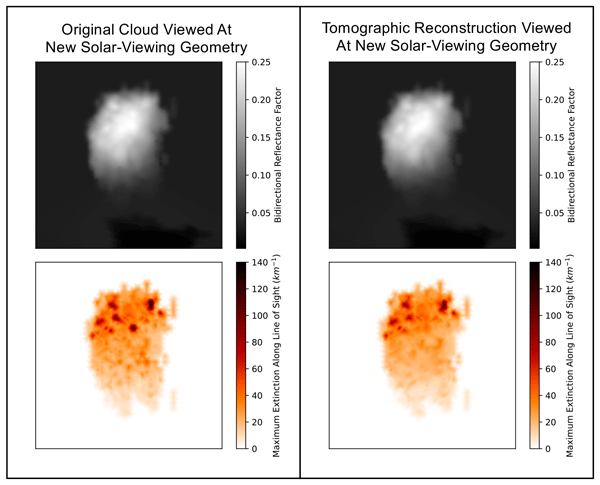
We test a new method for measuring the 3D spatial variations of water within clouds, using measurements of reflections of the Sun's light observed at multiple angles by satellites. This is a great improvement on older methods, which typically assume that clouds occur in a slab shape. Our study used computer modeling to show that our 3D method will work well in cumulus clouds, where older slab methods do not. Our method will inform us about these clouds and their role in our climate.
Jesse Loveridge, Aviad Levis, Larry Di Girolamo, Vadim Holodovsky, Linda Forster, Anthony B. Davis, and Yoav Y. Schechner
Atmos. Meas. Tech., 16, 1803–1847, https://doi.org/10.5194/amt-16-1803-2023, https://doi.org/10.5194/amt-16-1803-2023, 2023
Short summary
Short summary
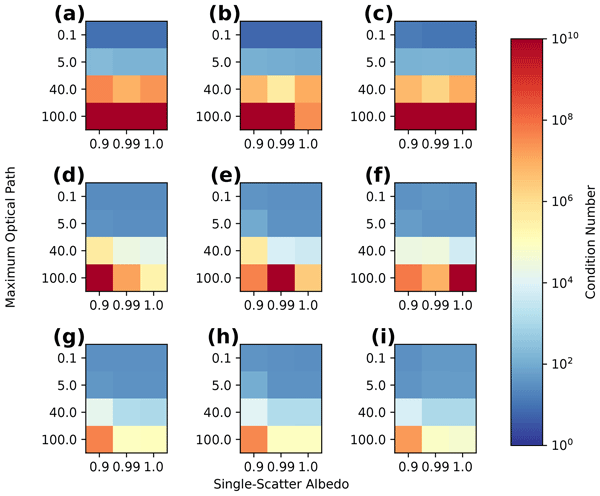
We describe a new method for measuring the 3D spatial variations in water within clouds using the reflected light of the Sun viewed at multiple different angles by satellites. This is a great improvement over older methods, which typically assume that clouds occur in a slab shape. Our study used computer modeling to show that our 3D method will work well in cumulus clouds, where older slab methods do not. Our method will inform us about these clouds and their role in our climate.
Veronika Pörtge, Tobias Kölling, Anna Weber, Lea Volkmer, Claudia Emde, Tobias Zinner, Linda Forster, and Bernhard Mayer
Atmos. Meas. Tech., 16, 645–667, https://doi.org/10.5194/amt-16-645-2023, https://doi.org/10.5194/amt-16-645-2023, 2023
Short summary
Short summary
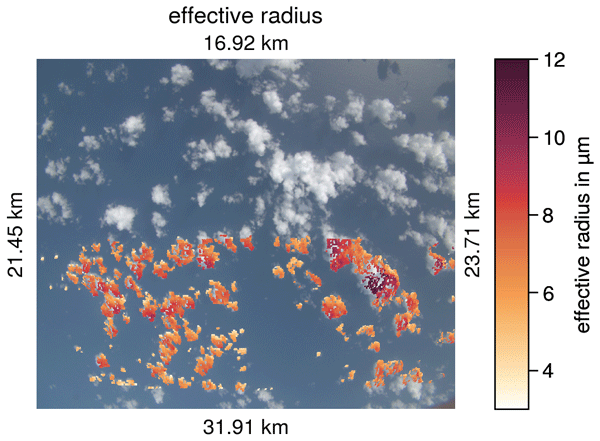
In this work, we analyze polarized cloudbow observations by the airborne camera system specMACS to retrieve the cloud droplet size distribution defined by the effective radius (reff) and the effective variance (veff). Two case studies of trade-wind cumulus clouds observed during the EUREC4A field campaign are presented. The results are combined into maps of reff and veff with a very high spatial resolution (100 m × 100 m) that allow new insights into cloud microphysics.
Anna Weber and Bernhard Mayer
EGUsphere, https://doi.org/10.5194/egusphere-2026-4833, https://doi.org/10.5194/egusphere-2026-4833, 2026
This preprint is open for discussion and under review for Geoscientific Model Development (GMD).
Short summary
Short summary
A new parameterization of horizontally oriented ice crystals for polarized Monte Carlo radiative transfer simulations of the cloudglint is introduced, which is based on the treatment of reflection by a statistically rough ocean surface. The parameterization accounts for multiple scattering and allows for fast simulations of the cloudglint without having to store large, multi-dimensional tables of scattering phase functions. It was validated against the raytracing algorithm CrystalTrace.

Richard Maier, Fabian Jakub, Fabian Hoffmann, and Bernhard Mayer
Atmos. Chem. Phys., 26, 12771–12791, https://doi.org/10.5194/acp-26-12771-2026, https://doi.org/10.5194/acp-26-12771-2026, 2026
Short summary
Short summary
Most atmospheric models only use 1D radiation, neglecting any 3D radiative effects. Here, we show that the dynamic TenStream solver provides a computationally efficient way to represent these effects. Like full 3D radiation, it causes daytime clouds to organize into streets, grow larger, and contain more liquid water. We show that this occurs because 3D radiation does not shade cloud updrafts and modifies the surface energy balance, resulting in an increased latent heat flux into the atmosphere.
Lea Volkmer, Leandro Dörfer, and Bernhard Mayer
EGUsphere, https://doi.org/10.5194/egusphere-2026-4795, https://doi.org/10.5194/egusphere-2026-4795, 2026
Short summary
Short summary
While cloud droplet size distributions (CDSDs) of shallow cumulus or stratiform clouds are often well described under the assumption of single mode (gamma) distributions, CDSDs exhibit a multimodal structure in the presence of drizzle or rain leading to biases in passive remote sensing retrievals. Here, we present a new approach to derive multimodal droplet size distributions from aircraft-based polarized measurements of the cloud-/rainbow using a superposition of multiple gamma distributions.
Arunima Das, Christoph Kiemle, Anna Weber, Sabrina Zechlau, Mathieu Quatrevalet, and Andreas Fix
EGUsphere, https://doi.org/10.5194/egusphere-2026-4050, https://doi.org/10.5194/egusphere-2026-4050, 2026
This preprint is open for discussion and under review for Atmospheric Measurement Techniques (AMT).
Short summary
Short summary
Quantifying atmospheric methane (CH4) columns over water bodies remains a challenge for current remote sensing techniques, contributing to uncertainties in the global CH4 budget. This study evaluates an airborne lidar’s performance using European and Canadian campaign data. Results demonstrate that reliable CH4 retrievals over water are achievable through appropriate data averaging. These findings support the future satellite mission MERLIN, aimed at improving global CH4 emission estimates.
Silke Groß, Florian Ewald, Bjorn Stevens, Martin Wirth, Georgios Dekoutsidis, André Ehrlich, Dimitra Kouklaki, Konstantin Krüger, Sophie Rosenburg, Lea Volkmer, Jonas von Bismark, Lutz Hirsch, Anna E. Luebke, Eleni Marinou, Bernhard Mayer, Montserrat Pinol Sole, Manfred Wendisch, Julia Windmiller, Vassilis Amiridis, Rob Koopman, Takuji Kubota, and Markus Rapp
Atmos. Meas. Tech., 19, 3933–3959, https://doi.org/10.5194/amt-19-3933-2026, https://doi.org/10.5194/amt-19-3933-2026, 2026
Short summary
Short summary
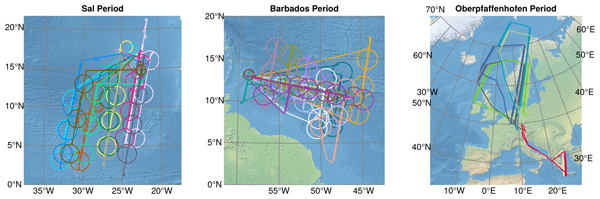
In May 2024 the joint European Space Agency (ESA) and the Japan Aerospace Exploration Agency (JAXA) mission EarthCARE was launched. A similar payload as on the satellite was set up on the German research aircraft HALO, and deployed during an extensive measurement campaign to validated the satellite. We present our instrumentation, the measurements, and its potential for the validation of EarthCARE. We show first validation results and assessments of the EarthCARE data quality.
Anna Weber, Fabian Hoffmann, and Bernhard Mayer
Atmos. Chem. Phys., 26, 8001–8020, https://doi.org/10.5194/acp-26-8001-2026, https://doi.org/10.5194/acp-26-8001-2026, 2026
Short summary
Short summary
The vertical evolution of microphysical cloud properties in low-level mixed-phase clouds during a marine cold air outbreak in the Arctic is analyzed based on measurements collected during the HALO–(𝒜𝒞)3 campaign. In particular, pseudo-vertical profiles of cloud thermodynamic phase and the cloud droplet size are constructed. The measured vertical profiles are compared to predictions from an entraining parcel model to investigate the influence of ice processes on supercooled liquid water droplets.

Anna Weber, Benjamin Kirbus, Manfred Wendisch, and Bernhard Mayer
Atmos. Chem. Phys., 26, 3521–3540, https://doi.org/10.5194/acp-26-3521-2026, https://doi.org/10.5194/acp-26-3521-2026, 2026
Short summary
Short summary
Macrophysical and microphysical properties of clouds and their evolution during the initial phase of marine cold air outbreaks in the Arctic are studied with a focus on cloud thermodynamic phase partitioning and phase transitions. To this end, high-resolution quasi-Lagrangian observations of the hyperspectral and polarized imaging system specMACS during the HALO-(AC)3 campaign are combined with backward trajectories. Six cold air outbreaks with varying strengths are analyzed and compared.
Anna Weber, Veronika Pörtge, Claudia Emde, and Bernhard Mayer
Atmos. Meas. Tech., 18, 7581–7601, https://doi.org/10.5194/amt-18-7581-2025, https://doi.org/10.5194/amt-18-7581-2025, 2025
Short summary
Short summary
In this work, a new quantitative retrieval of cloud thermodynamic phase partitioning based on multi-angle polarimetric imaging is presented. The retrieval is validated using synthetic data for idealized and realistic cloud cases and applied to measurements of the airborne specMACS instrument during the HALO-(AC)3 campaign. It provides high spatial resolution information about phase partitioning at cloud top and allows for example to study phase transitions in Arctic mixed-phase clouds.
Anna Weber, Gregor Köcher, and Bernhard Mayer
Atmos. Meas. Tech., 18, 5805–5821, https://doi.org/10.5194/amt-18-5805-2025, https://doi.org/10.5194/amt-18-5805-2025, 2025
Short summary
Short summary
A neural-network-based fast forward operator for polarized 3D radiative transfer is presented. The forward operator uses the new InDEpendent column local halF-sphere ApproXimation (IDEFAX). Polarized radiances simulated with IDEFAX and the forward operator were validated against full 3D radiative transfer simulations with MYSTIC and show a significantly improved representation of 3D radiative effects compared to the plane-parallel independent column approximation at comparable computation times.

André Ehrlich, Susanne Crewell, Andreas Herber, Marcus Klingebiel, Christof Lüpkes, Mario Mech, Sebastian Becker, Stephan Borrmann, Heiko Bozem, Matthias Buschmann, Hans-Christian Clemen, Elena De La Torre Castro, Henning Dorff, Regis Dupuy, Oliver Eppers, Florian Ewald, Geet George, Andreas Giez, Sarah Grawe, Christophe Gourbeyre, Jörg Hartmann, Evelyn Jäkel, Philipp Joppe, Olivier Jourdan, Zsófia Jurányi, Benjamin Kirbus, Johannes Lucke, Anna E. Luebke, Maximilian Maahn, Nina Maherndl, Christian Mallaun, Johanna Mayer, Stephan Mertes, Guillaume Mioche, Manuel Moser, Hanno Müller, Veronika Pörtge, Nils Risse, Greg Roberts, Sophie Rosenburg, Johannes Röttenbacher, Michael Schäfer, Jonas Schaefer, Andreas Schäfler, Imke Schirmacher, Johannes Schneider, Sabrina Schnitt, Frank Stratmann, Christian Tatzelt, Christiane Voigt, Andreas Walbröl, Anna Weber, Bruno Wetzel, Martin Wirth, and Manfred Wendisch
Earth Syst. Sci. Data, 17, 1295–1328, https://doi.org/10.5194/essd-17-1295-2025, https://doi.org/10.5194/essd-17-1295-2025, 2025
Short summary
Short summary
This paper provides an overview of the HALO–(AC)3 aircraft campaign data sets, the campaign-specific instrument operation, data processing, and data quality. The data set comprises in situ and remote sensing observations from three research aircraft: HALO, Polar 5, and Polar 6. All data are published in the PANGAEA database by instrument-separated data subsets. It is highlighted how the scientific analysis of the HALO–(AC)3 data benefits from the coordinated operation of three aircraft.
Lea Volkmer, Tobias Kölling, Tobias Zinner, and Bernhard Mayer
Atmos. Meas. Tech., 17, 6807–6817, https://doi.org/10.5194/amt-17-6807-2024, https://doi.org/10.5194/amt-17-6807-2024, 2024
Short summary
Short summary
The importance of the consideration of cloud motion for the stereographic determination of cloud top height from aircraft observations is demonstrated using measurements of the airborne spectrometer of the Munich Aerosol Cloud Scanner (specMACS). A method for cloud motion correction using model winds from the European Centre for Medium-Range Weather Forecasts is presented and validated using both real measurements and realistic radiative transfer simulations.

Claudia Emde, Veronika Pörtge, Mihail Manev, and Bernhard Mayer
Atmos. Meas. Tech., 17, 6769–6789, https://doi.org/10.5194/amt-17-6769-2024, https://doi.org/10.5194/amt-17-6769-2024, 2024
Short summary
Short summary
We introduce an innovative method to retrieve the cloud fraction and optical thickness of liquid water clouds over the ocean based on polarimetry. This is well suited for satellite observations providing multi-angle polarization measurements. Cloud fraction and cloud optical thickness can be derived from measurements at two viewing angles: one within the cloudbow and one in the sun glint region.
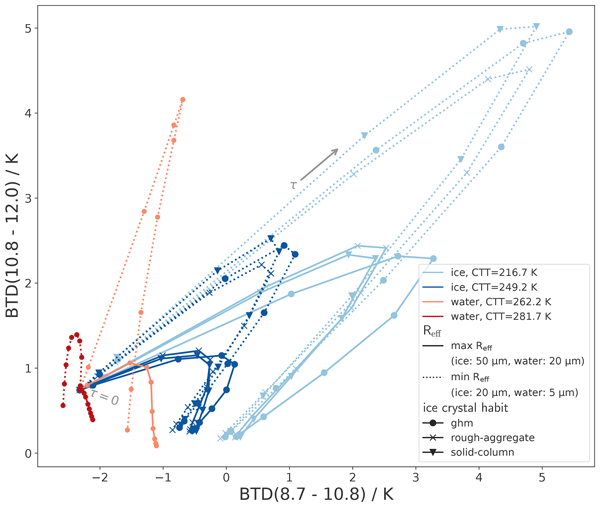
Johanna Mayer, Bernhard Mayer, Luca Bugliaro, Ralf Meerkötter, and Christiane Voigt
Atmos. Meas. Tech., 17, 5161–5185, https://doi.org/10.5194/amt-17-5161-2024, https://doi.org/10.5194/amt-17-5161-2024, 2024
Short summary
Short summary
This study uses radiative transfer calculations to characterize the relation of two satellite channel combinations (namely infrared window brightness temperature differences – BTDs – of SEVIRI) to the thermodynamic cloud phase. A sensitivity analysis reveals the complex interplay of cloud parameters and their contribution to the observed phase dependence of BTDs. This knowledge helps to design optimal cloud-phase retrievals and to understand their potential and limitations.
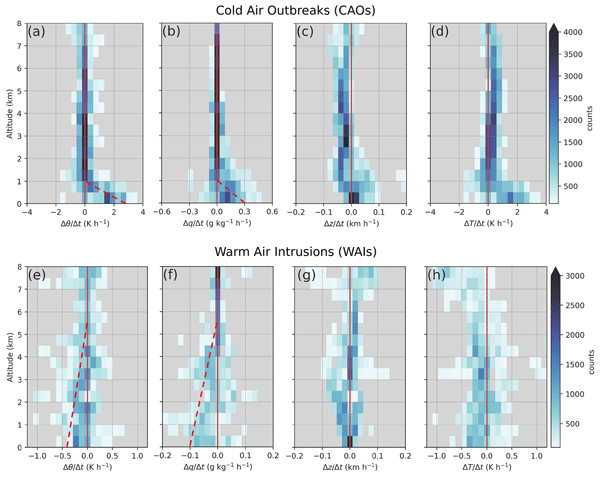
Manfred Wendisch, Susanne Crewell, André Ehrlich, Andreas Herber, Benjamin Kirbus, Christof Lüpkes, Mario Mech, Steven J. Abel, Elisa F. Akansu, Felix Ament, Clémantyne Aubry, Sebastian Becker, Stephan Borrmann, Heiko Bozem, Marlen Brückner, Hans-Christian Clemen, Sandro Dahlke, Georgios Dekoutsidis, Julien Delanoë, Elena De La Torre Castro, Henning Dorff, Regis Dupuy, Oliver Eppers, Florian Ewald, Geet George, Irina V. Gorodetskaya, Sarah Grawe, Silke Groß, Jörg Hartmann, Silvia Henning, Lutz Hirsch, Evelyn Jäkel, Philipp Joppe, Olivier Jourdan, Zsofia Jurányi, Michail Karalis, Mona Kellermann, Marcus Klingebiel, Michael Lonardi, Johannes Lucke, Anna E. Luebke, Maximilian Maahn, Nina Maherndl, Marion Maturilli, Bernhard Mayer, Johanna Mayer, Stephan Mertes, Janosch Michaelis, Michel Michalkov, Guillaume Mioche, Manuel Moser, Hanno Müller, Roel Neggers, Davide Ori, Daria Paul, Fiona M. Paulus, Christian Pilz, Felix Pithan, Mira Pöhlker, Veronika Pörtge, Maximilian Ringel, Nils Risse, Gregory C. Roberts, Sophie Rosenburg, Johannes Röttenbacher, Janna Rückert, Michael Schäfer, Jonas Schaefer, Vera Schemann, Imke Schirmacher, Jörg Schmidt, Sebastian Schmidt, Johannes Schneider, Sabrina Schnitt, Anja Schwarz, Holger Siebert, Harald Sodemann, Tim Sperzel, Gunnar Spreen, Bjorn Stevens, Frank Stratmann, Gunilla Svensson, Christian Tatzelt, Thomas Tuch, Timo Vihma, Christiane Voigt, Lea Volkmer, Andreas Walbröl, Anna Weber, Birgit Wehner, Bruno Wetzel, Martin Wirth, and Tobias Zinner
Atmos. Chem. Phys., 24, 8865–8892, https://doi.org/10.5194/acp-24-8865-2024, https://doi.org/10.5194/acp-24-8865-2024, 2024
Short summary
Short summary
The Arctic is warming faster than the rest of the globe. Warm-air intrusions (WAIs) into the Arctic may play an important role in explaining this phenomenon. Cold-air outbreaks (CAOs) out of the Arctic may link the Arctic climate changes to mid-latitude weather. In our article, we describe how to observe air mass transformations during CAOs and WAIs using three research aircraft instrumented with state-of-the-art remote-sensing and in situ measurement devices.
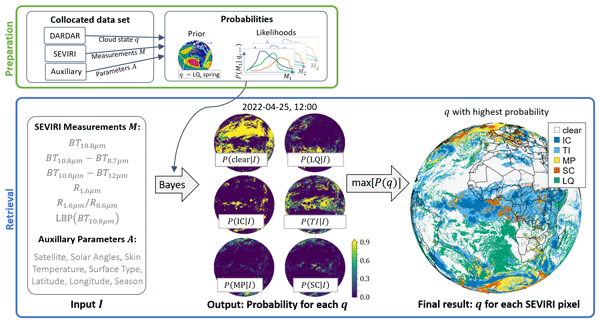
Johanna Mayer, Luca Bugliaro, Bernhard Mayer, Dennis Piontek, and Christiane Voigt
Atmos. Meas. Tech., 17, 4015–4039, https://doi.org/10.5194/amt-17-4015-2024, https://doi.org/10.5194/amt-17-4015-2024, 2024
Short summary
Short summary
ProPS (PRObabilistic cloud top Phase retrieval for SEVIRI) is a method to detect clouds and their thermodynamic phase with a geostationary satellite, distinguishing between clear sky and ice, mixed-phase, supercooled and warm liquid clouds. It uses a Bayesian approach based on the lidar–radar product DARDAR. The method allows studying cloud phases, especially mixed-phase and supercooled clouds, rarely observed from geostationary satellites. This can be used for comparison with climate models.
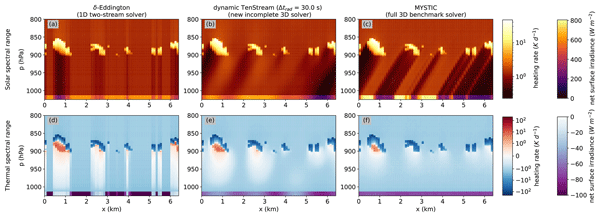
Richard Maier, Fabian Jakub, Claudia Emde, Mihail Manev, Aiko Voigt, and Bernhard Mayer
Geosci. Model Dev., 17, 3357–3383, https://doi.org/10.5194/gmd-17-3357-2024, https://doi.org/10.5194/gmd-17-3357-2024, 2024
Short summary
Short summary
Based on the TenStream solver, we present a new method to accelerate 3D radiative transfer towards the speed of currently used 1D solvers. Using a shallow-cumulus-cloud time series, we evaluate the performance of this new solver in terms of both speed and accuracy. Compared to a 3D benchmark simulation, we show that our new solver is able to determine much more accurate irradiances and heating rates than a 1D δ-Eddington solver, even when operated with a similar computational demand.
Ilias Fountoulakis, Alexandra Tsekeri, Stelios Kazadzis, Vassilis Amiridis, Angelos Nersesian, Maria Tsichla, Emmanouil Proestakis, Antonis Gkikas, Kyriakoula Papachristopoulou, Vasileios Barlakas, Claudia Emde, and Bernhard Mayer
Atmos. Chem. Phys., 24, 4915–4948, https://doi.org/10.5194/acp-24-4915-2024, https://doi.org/10.5194/acp-24-4915-2024, 2024
Short summary
Short summary
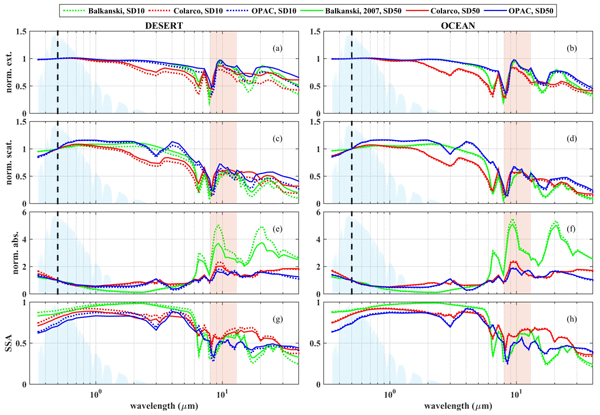
In our study we provide an assessment, through a sensitivity study, of the limitations of models to calculate the dust direct radiative effect (DRE) due to the underrepresentation of its size, refractive index (RI), and shape. Our results indicate the necessity of including more realistic sizes and RIs for dust particles in dust models, in order to derive better estimations of the dust direct radiative effects.
Behrooz Keshtgar, Aiko Voigt, Bernhard Mayer, and Corinna Hoose
Atmos. Chem. Phys., 24, 4751–4769, https://doi.org/10.5194/acp-24-4751-2024, https://doi.org/10.5194/acp-24-4751-2024, 2024
Short summary
Short summary
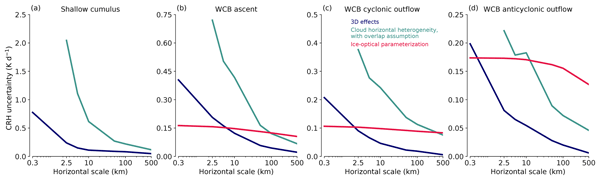
Cloud-radiative heating (CRH) affects extratropical cyclones but is uncertain in weather and climate models. We provide a framework to quantify uncertainties in CRH within an extratropical cyclone due to four factors and show that the parameterization of ice optical properties contributes significantly to uncertainty in CRH. We also argue that ice optical properties, by affecting CRH on spatial scales of 100 km, are relevant for the large-scale dynamics of extratropical cyclones.
Lea Volkmer, Veronika Pörtge, Fabian Jakub, and Bernhard Mayer
Atmos. Meas. Tech., 17, 1703–1719, https://doi.org/10.5194/amt-17-1703-2024, https://doi.org/10.5194/amt-17-1703-2024, 2024
Short summary
Short summary
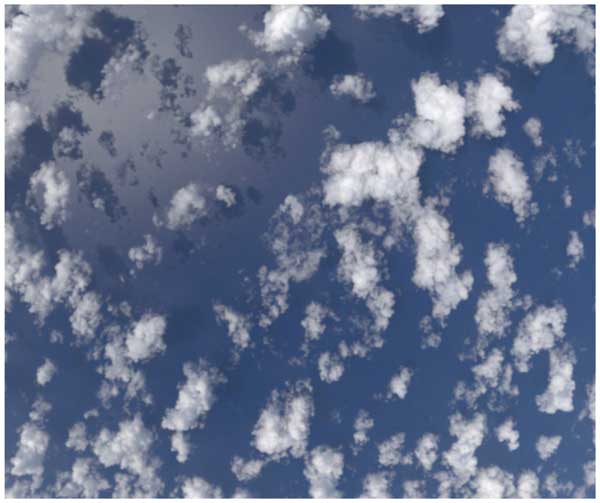
Three-dimensional radiative transfer simulations are used to evaluate the performance of retrieval algorithms in the derivation of cloud geometry (cloud top heights) and cloud droplet size distributions from two-dimensional polarized radiance measurements of the airborne spectrometer of the Munich Aerosol Cloud Scanner. The cloud droplet size distributions are derived for the effective radius and variance. The simulations are based on cloud data from highly resolved large-eddy simulations.
Anna Weber, Tobias Kölling, Veronika Pörtge, Andreas Baumgartner, Clemens Rammeloo, Tobias Zinner, and Bernhard Mayer
Atmos. Meas. Tech., 17, 1419–1439, https://doi.org/10.5194/amt-17-1419-2024, https://doi.org/10.5194/amt-17-1419-2024, 2024
Short summary
Short summary
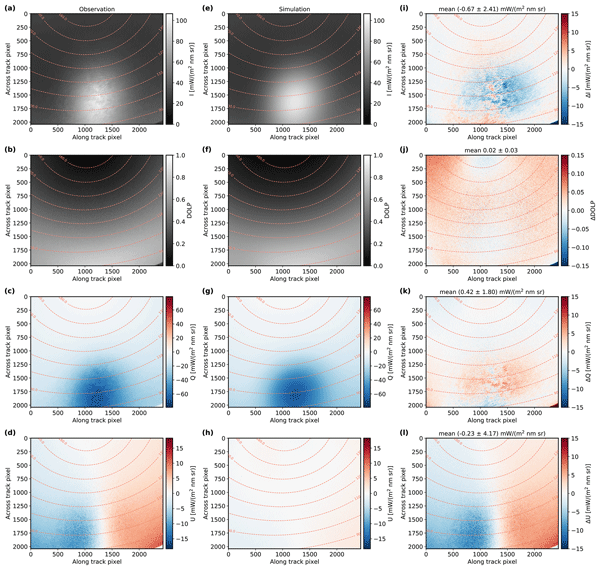
In this work, we introduce the 2D RGB polarization-resolving cameras of the airborne hyperspectral and polarized imaging system specMACS. A full characterization and calibration of the cameras including a geometric calibration as well as a radiometric characterization is provided, allowing for the computation of absolute calibrated, georeferenced Stokes vectors rotated into the scattering plane. We validate the calibration by comparing sunglint measurements to radiative transfer simulations.
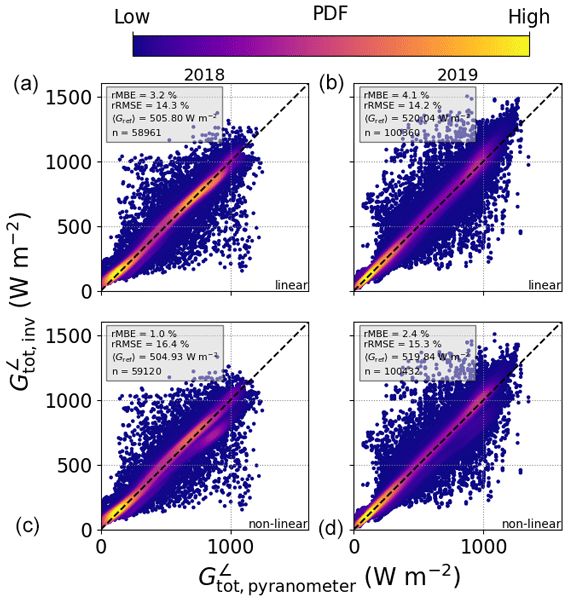
James Barry, Stefanie Meilinger, Klaus Pfeilsticker, Anna Herman-Czezuch, Nicola Kimiaie, Christopher Schirrmeister, Rone Yousif, Tina Buchmann, Johannes Grabenstein, Hartwig Deneke, Jonas Witthuhn, Claudia Emde, Felix Gödde, Bernhard Mayer, Leonhard Scheck, Marion Schroedter-Homscheidt, Philipp Hofbauer, and Matthias Struck
Atmos. Meas. Tech., 16, 4975–5007, https://doi.org/10.5194/amt-16-4975-2023, https://doi.org/10.5194/amt-16-4975-2023, 2023
Short summary
Short summary
Measured power data from solar photovoltaic (PV) systems contain information about the state of the atmosphere. In this work, power data from PV systems in the Allgäu region in Germany were used to determine the solar irradiance at each location, using state-of-the-art simulation and modelling. The results were validated using concurrent measurements of the incoming solar radiation in each case. If applied on a wider scale, this algorithm could help improve weather and climate models.
Jesse Loveridge, Aviad Levis, Larry Di Girolamo, Vadim Holodovsky, Linda Forster, Anthony B. Davis, and Yoav Y. Schechner
Atmos. Meas. Tech., 16, 3931–3957, https://doi.org/10.5194/amt-16-3931-2023, https://doi.org/10.5194/amt-16-3931-2023, 2023
Short summary
Short summary
We test a new method for measuring the 3D spatial variations of water within clouds, using measurements of reflections of the Sun's light observed at multiple angles by satellites. This is a great improvement on older methods, which typically assume that clouds occur in a slab shape. Our study used computer modeling to show that our 3D method will work well in cumulus clouds, where older slab methods do not. Our method will inform us about these clouds and their role in our climate.
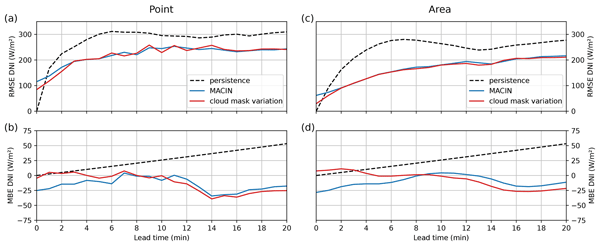
Philipp Gregor, Tobias Zinner, Fabian Jakub, and Bernhard Mayer
Atmos. Meas. Tech., 16, 3257–3271, https://doi.org/10.5194/amt-16-3257-2023, https://doi.org/10.5194/amt-16-3257-2023, 2023
Short summary
Short summary
This work introduces MACIN, a model for short-term forecasting of direct irradiance for solar energy applications. MACIN exploits cloud images of multiple cameras to predict irradiance. The model is applied to artificial images of clouds from a weather model. The artificial cloud data allow for a more in-depth evaluation and attribution of errors compared with real data. Good performance of derived cloud information and significant forecast improvements over a baseline forecast were found.
Jesse Loveridge, Aviad Levis, Larry Di Girolamo, Vadim Holodovsky, Linda Forster, Anthony B. Davis, and Yoav Y. Schechner
Atmos. Meas. Tech., 16, 1803–1847, https://doi.org/10.5194/amt-16-1803-2023, https://doi.org/10.5194/amt-16-1803-2023, 2023
Short summary
Short summary
We describe a new method for measuring the 3D spatial variations in water within clouds using the reflected light of the Sun viewed at multiple different angles by satellites. This is a great improvement over older methods, which typically assume that clouds occur in a slab shape. Our study used computer modeling to show that our 3D method will work well in cumulus clouds, where older slab methods do not. Our method will inform us about these clouds and their role in our climate.
Veronika Pörtge, Tobias Kölling, Anna Weber, Lea Volkmer, Claudia Emde, Tobias Zinner, Linda Forster, and Bernhard Mayer
Atmos. Meas. Tech., 16, 645–667, https://doi.org/10.5194/amt-16-645-2023, https://doi.org/10.5194/amt-16-645-2023, 2023
Short summary
Short summary
In this work, we analyze polarized cloudbow observations by the airborne camera system specMACS to retrieve the cloud droplet size distribution defined by the effective radius (reff) and the effective variance (veff). Two case studies of trade-wind cumulus clouds observed during the EUREC4A field campaign are presented. The results are combined into maps of reff and veff with a very high spatial resolution (100 m × 100 m) that allow new insights into cloud microphysics.
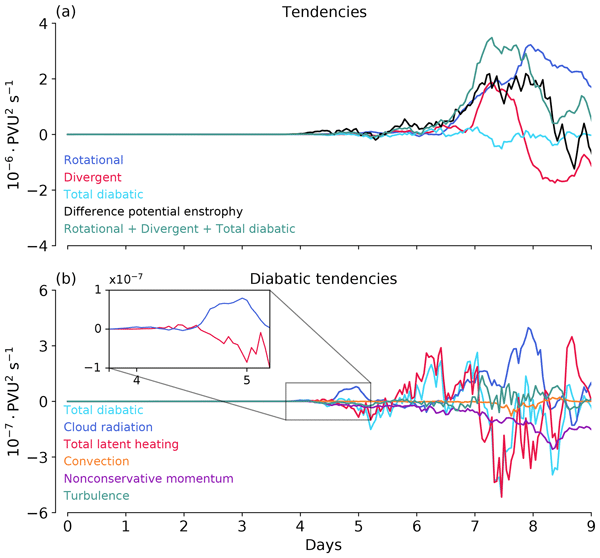
Behrooz Keshtgar, Aiko Voigt, Corinna Hoose, Michael Riemer, and Bernhard Mayer
Weather Clim. Dynam., 4, 115–132, https://doi.org/10.5194/wcd-4-115-2023, https://doi.org/10.5194/wcd-4-115-2023, 2023
Short summary
Short summary
Forecasting extratropical cyclones is challenging due to many physical factors influencing their behavior. One such factor is the impact of heating and cooling of the atmosphere by the interaction between clouds and radiation. In this study, we show that cloud-radiative heating (CRH) increases the intensity of an idealized cyclone and affects its predictability. We find that CRH affects the cyclone mostly via increasing latent heat release and subsequent changes in the synoptic circulation.
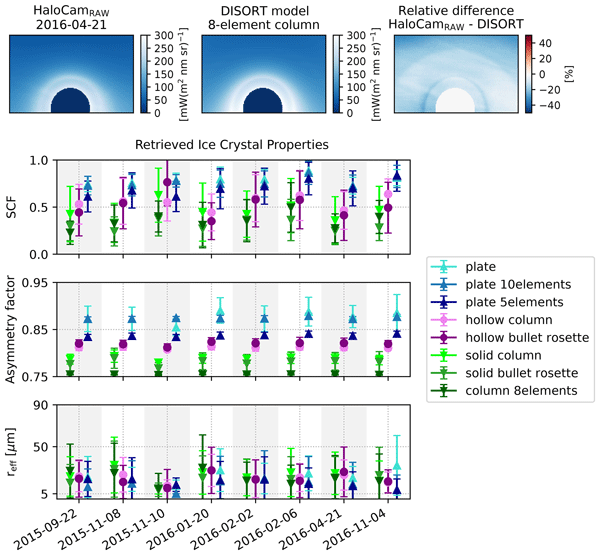
Linda Forster and Bernhard Mayer
Atmos. Chem. Phys., 22, 15179–15205, https://doi.org/10.5194/acp-22-15179-2022, https://doi.org/10.5194/acp-22-15179-2022, 2022
Short summary
Short summary
We present a novel retrieval using ground-based imaging observations of halo displays together with radiative transfer simulations to help improve our understanding of ice crystal properties representative of cirrus clouds. Analysis of 4400 calibrated HaloCam images featuring a 22° halo revealed aggregates of hexagonal columns of 20 µm effective radius with a mixture of about 37 % smooth and 63% severely roughened surfaces as the best match in general.
Huan Yu, Claudia Emde, Arve Kylling, Ben Veihelmann, Bernhard Mayer, Kerstin Stebel, and Michel Van Roozendael
Atmos. Meas. Tech., 15, 5743–5768, https://doi.org/10.5194/amt-15-5743-2022, https://doi.org/10.5194/amt-15-5743-2022, 2022
Short summary
Short summary
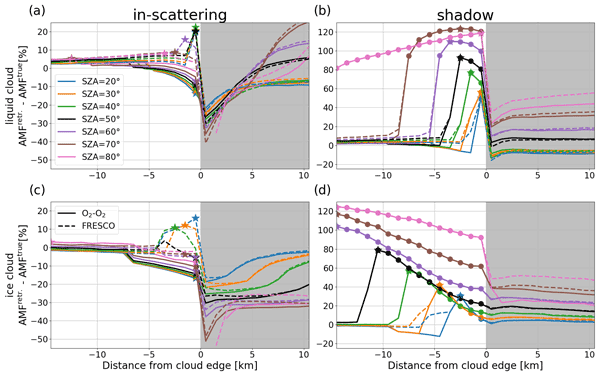
In this study, we have investigated the impact of 3D clouds on the tropospheric NO2 retrieval from UV–visible sensors. We applied standard NO2 retrieval methods including cloud corrections to synthetic data generated by the 3D radiative transfer model. A sensitivity study was done for synthetic data, and dependencies on various parameters were investigated. Possible mitigation strategies were investigated and compared based on 3D simulations and observed data.

Arve Kylling, Claudia Emde, Huan Yu, Michel van Roozendael, Kerstin Stebel, Ben Veihelmann, and Bernhard Mayer
Atmos. Meas. Tech., 15, 3481–3495, https://doi.org/10.5194/amt-15-3481-2022, https://doi.org/10.5194/amt-15-3481-2022, 2022
Short summary
Short summary
Atmospheric trace gases such as nitrogen dioxide (NO2) may be measured by satellite instruments sensitive to solar ultraviolet–visible radiation reflected from Earth and its atmosphere. For a single pixel, clouds in neighbouring pixels may affect the radiation and hence the retrieved trace gas amount. We found that for a solar zenith angle less than about 40° this cloud-related NO2 bias is typically below 10 %, while for larger solar zenith angles the NO2 bias is on the order of tens of percent.
Luca Bugliaro, Dennis Piontek, Stephan Kox, Marius Schmidl, Bernhard Mayer, Richard Müller, Margarita Vázquez-Navarro, Daniel M. Peters, Roy G. Grainger, Josef Gasteiger, and Jayanta Kar
Nat. Hazards Earth Syst. Sci., 22, 1029–1054, https://doi.org/10.5194/nhess-22-1029-2022, https://doi.org/10.5194/nhess-22-1029-2022, 2022
Short summary
Short summary
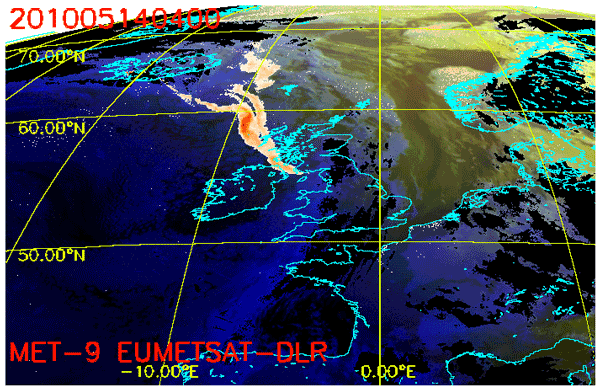
The monitoring of ash dispersion in the atmosphere is an important task for satellite remote sensing since ash represents a threat to air traffic. We present an AI-based method that retrieves the spatial extension and properties of volcanic ash clouds with high temporal resolution during day and night by means of geostationary satellite measurements. This algorithm, trained on realistic observations simulated with a radiative transfer model, runs operationally at the German Weather Service.
Claudia Emde, Huan Yu, Arve Kylling, Michel van Roozendael, Kerstin Stebel, Ben Veihelmann, and Bernhard Mayer
Atmos. Meas. Tech., 15, 1587–1608, https://doi.org/10.5194/amt-15-1587-2022, https://doi.org/10.5194/amt-15-1587-2022, 2022
Short summary
Short summary
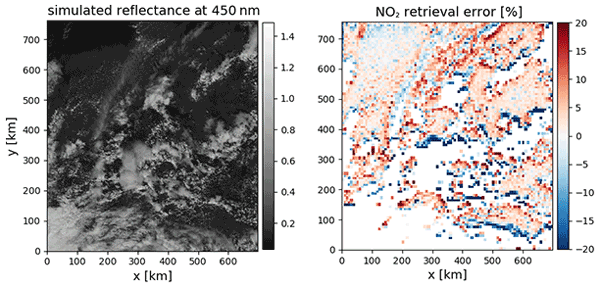
Retrievals of trace gas concentrations from satellite observations can be affected by clouds in the vicinity, either by shadowing or by scattering of radiation from clouds in the clear region. We used a Monte Carlo radiative transfer model to generate synthetic satellite observations, which we used to test retrieval algorithms and to quantify the error of retrieved NO2 vertical column density due to cloud scattering.
Heike Konow, Florian Ewald, Geet George, Marek Jacob, Marcus Klingebiel, Tobias Kölling, Anna E. Luebke, Theresa Mieslinger, Veronika Pörtge, Jule Radtke, Michael Schäfer, Hauke Schulz, Raphaela Vogel, Martin Wirth, Sandrine Bony, Susanne Crewell, André Ehrlich, Linda Forster, Andreas Giez, Felix Gödde, Silke Groß, Manuel Gutleben, Martin Hagen, Lutz Hirsch, Friedhelm Jansen, Theresa Lang, Bernhard Mayer, Mario Mech, Marc Prange, Sabrina Schnitt, Jessica Vial, Andreas Walbröl, Manfred Wendisch, Kevin Wolf, Tobias Zinner, Martin Zöger, Felix Ament, and Bjorn Stevens
Earth Syst. Sci. Data, 13, 5545–5563, https://doi.org/10.5194/essd-13-5545-2021, https://doi.org/10.5194/essd-13-5545-2021, 2021
Short summary
Short summary
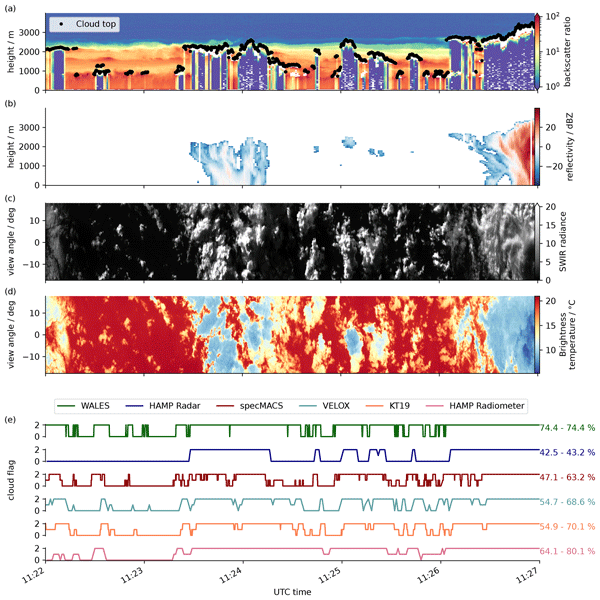
The German research aircraft HALO took part in the research campaign EUREC4A in January and February 2020. The focus area was the tropical Atlantic east of the island of Barbados. We describe the characteristics of the 15 research flights, provide auxiliary information, derive combined cloud mask products from all instruments that observe clouds on board the aircraft, and provide code examples that help new users of the data to get started.
Cited articles
Chepfer, H., Brogniez, G., Goloub, P., Bréon, F. M., and Flamant, P. H.: Observations of horizontally oriented ice crystals in cirrus clouds with POLDER-1/ADEOS-1, J. Quant. Spectrosc. Radiat. Transfer, 63, 521–543, https://doi.org/10.1016/S0022-4073(99)00036-9, 1999. a
Draine, B. T. and Flatau, P. J.: Discrete-Dipole Approximation For Scattering Calculations, J. Opt. Soc. Am. A, 11, 1491–1499, https://doi.org/10.1364/JOSAA.11.001491, 1994. a
Flatau, P. J. and Draine, B. T.: Light scattering by hexagonal columns in the discrete dipole approximation, Opt. Express, 22, 21834–21846, https://doi.org/10.1364/OE.22.021834, 2014. a
Forster, L.: Information Content of Halo Displays for Remote Sensing of Ice Crystal Properties, Ludwig-Maximilians-Universität München, http://nbn-resolving.de/urn:nbn:de:bvb:19-218119 (last access: 12 December 2025), 2017. a
Forster, L.: lforster/CrystalTrace: Initial release (v1.0.0), Zenodo [code], https://doi.org/10.5281/zenodo.17679332, 2025. a
Forster, L., Seefeldner, M., Wiegner, M., and Mayer, B.: Ice crystal characterization in cirrus clouds: a sun-tracking camera system and automated detection algorithm for halo displays, Atmos. Meas. Tech., 10, 2499–2516, https://doi.org/10.5194/amt-10-2499-2017, 2017. a, b, c
Greenler, R.: Rainbows, Halos and Glories, Cambridge University Press, Cambridge, ISBN 9781510638389, 1980. a
Hess, M.: Modellierung und Messung optischer Eigenschaften von Cirren, PhD thesis, Ludwig-Maximilians-Universität München, https://www.osti.gov/etdeweb/biblio/507242 (last access: 18 December 2025), 1996. a
Hess, M., Koepke, P., and Schult, I.: Optical properties of aerosols and clouds: the software package OPAC, Bull. Amer. Meteor. Soc., 79, 831–844, 1998. a
Konoshonkin, A., Borovoi, A., Kustova, N., Okamoto, H., Ishimoto, H., Grynko, Y., and Förstner, J.: Light scattering by ice crystals of cirrus clouds: From exact numerical methods to physical-optics approximation, J. Quant. Spectrosc. Radiat. Transfer, 195, 132–140, https://doi.org/10.1016/j.jqsrt.2016.12.024, 2017. a
Liou, K.-N. and Yang, P.: Light Scattering by Ice Crystals: Fundamentals and Applications, Cambridge University Press, Cambridge, https://doi.org/10.1017/CBO9781139030052, 2016. a, b, c
Macke, A., Mueller, J., and Raschke, E.: Single scattering properties of atmospheric ice crystals, J. Atmos. Sci., 53, 2813–2825, https://doi.org/10.1175/1520-0469(1996)053<2813:SSPOAI>2.0.CO;2, 1996. a
Magono, C. and Lee, C. W.: Meteorological classification of natural snow crystals, J. Fac. Sci., 2, 321–335, 1966. a
Minnaert, M.: Rainbows, Halos, and Coronas, Springer New York, New York, NY, 185–258, https://doi.org/10.1007/978-1-4612-2722-9_10, 1993. a
Mitchell, D. L., Rasch, P., Ivanova, D., McFarquhar, G., and Nousiainen, T.: Impact of small ice crystal assumptions on ice sedimentation rates in cirrus clouds and GCM simulations, Geophysical Research Letters, 35, https://doi.org/10.1029/2008GL033552, l09806, 2008. a
Muinonen, K., Lumme, K., Peltoniemi, J., and Irvine, W. M.: Light scattering by randomly oriented crystals, Applied Optics, 28, 3051–3060, https://doi.org/10.1364/AO.28.003051, 1989. a
Noel, V. and Chepfer, H.: Study of Ice Crystal Orientation in Cirrus Clouds Based on Satellite Polarized Radiance Measurements, J. Atmos. Sci., 61, 2073–2081, https://doi.org/10.1175/1520-0469(2004)061<2073:SOICOI>2.0.CO;2, 2004. a
Noel, V. and Chepfer, H.: A global view of horizontally oriented crystals in ice clouds from Cloud-Aerosol Lidar and Infrared Pathfinder Satellite Observation (CALIPSO), Journal of Geophysical Research: Atmospheres, 115, D00H23, https://doi.org/10.1029/2009JD012365, 2010. a
Noel, V. and Sassen, K.: Study of Planar Ice Crystal Orientations in Ice Clouds from Scanning Polarization Lidar Observations, Journal of Applied Meteorology, 44, 653–664, https://doi.org/10.1175/JAM2223.1, 2005. a
Pattloch, F. and Tränkle, E.: Monte Carlo simulation and analysis of halo phenomena, J. Opt. Soc. Am. A, 1, 520–526, https://doi.org/10.1364/JOSAA.1.000520, 1984. a
Pernter, J. M. and Exner, F.: Meteorologische Optik, W. Braumüller, Wien, https://resolver.obvsg.at/urn:nbn:at:at-ubi:2-37195 (last access: 18 December 2025), 1910. a
Prigarin, S. M.: Numerical simulation of halos in crystal clouds by Monte Carlo method, Russ. J. Numer. Anal. Math. Modelling, 24, 481–493, https://doi.org/10.1515/RJNAMM.2009.031, 2009. a
Saito, M., Iwabuchi, H., Yang, P., Tang, G., King, M. D., and Sekiguchi, M.: Ice particle morphology and microphysical properties of cirrus clouds inferred from combined CALIOP-IIR measurements, Journal of Geophysical Research: Atmospheres, 122, 4440–4462, https://doi.org/10.1002/2016JD026080, 2017. a
Sanderson, B. M., Piani, C., Ingram, W. J., Stone, D. A., and Allen, M. R.: Towards constraining climate sensitivity by linear analysis of feedback patterns in thousands of perturbed-physics GCM simulations, Climate Dynamics, 30, 175–190, https://doi.org/10.1007/s00382-007-0280-7, 2008. a
Takano, Y. and Liou, K.-N.: Halo phenomena modified by multiple scattering, Journal of the Optical Society of America A, 7, 885–889, https://doi.org/10.1364/JOSAA.7.000885, 1990. a
Takano, Y. and Liou, K.-N.: Solar radiative transfer in cirrus clouds. Part III: Light scattering by irregular ice crystals, J. Atmos. Sci., 52, 818–837, https://doi.org/10.1175/1520-0469(1995)052<0818:RTICCP>2.0.CO;2, 1995. a
Tape, W.: Atmospheric halos, Antarctic Research Series, American Geophysical Union, Washington, DC, ISBN 0875908349, 1994. a
Tape, W. and Moilanen, J.: Atmospheric Halos and the Search for Angle X, American Geophysical Union, Washington, DC, ISBN 087590727X, 2006. a
Voigt, C., Schumann, U., Minikin, A., Abdelmonem, A., Afchine, A., Borrmann, S., Boettcher, M., Buchholz, B., Bugliaro, L., Costa, A., Curtius, J., Dollner, M., Dörnbrack, A., Dreiling, V., Ebert, V., Ehrlich, A., Fix, A., Forster, L., Frank, F., Fütterer, D., Giez, A., Graf, K., Grooß, J.-U., Groß, S., Heimerl, K., Heinold, B., Hüneke, T., Järvinen, E., Jurkat, T., Kaufmann, S., Kenntner, M., Klingebiel, M., Klimach, T., Kohl, R., Krämer, M., Krisna, T. C., Luebke, A., Mayer, B., Mertes, S., Molleker, S., Petzold, A., Pfeilsticker, K., Port, M., Rapp, M., Reutter, P., Rolf, C., Rose, D., Sauer, D., Schäfler, A., Schlage, R., Schnaiter, M., Schneider, J., Spelten, N., Spichtinger, P., Stock, P., Walser, A., Weigel, R., Weinzierl, B., Wendisch, M., Werner, F., Wernli, H., Wirth, M., Zahn, A., Ziereis, H., and Zöger, M.: ML-CIRRUS - The airborne experiment on natural cirrus and contrail cirrus with the high-altitude long-range research aircraft HALO, Bull. Amer. Meteor. Soc., 98, 271–288, https://doi.org/10.1175/BAMS-D-15-00213.1, 2017. a, b
Warren, G.: Optical constants of ice from the ultraviolet to the microwave, Applied Optics, 23, 1206–1225, 1984. a
Wegener, A.: Theorie der Haupthalos, vol. 43, Aus dem Archiv der Deutschen Seewarte und des Marineobservatoriums, Hamburg, https://digitale-bibliothek.bsh.bund.de/viewer/!metadata/141334/63/-/ (last access: 18 December 2025), 1925. a
Wendling, P., Wendling, R., and Weickmann, H. K.: Scattering of solar radiation by hexagonal ice crystals, Appl. Opt., 18, 2663–2671, https://doi.org/10.1364/AO.18.002663, 1979. a
Yang, P. and Liou, K.-N.: Single-scattering properties of complex ice crystals in terrestrial atmosphere, Contributions to Atmospheric Physics, 71, 223–248, 1998. a
Yang, P., Bi, L., Baum, B. A., Liou, K.-N., Kattawar, G. W., Mishchenko, M. I., and Cole, B.: Spectrally Consistent Scattering, Absorption, and Polarization Properties of Atmospheric Ice Crystals at Wavelengths from 0.2 to 100 µm, J. Atmos. Sci., 70, 330–347, https://doi.org/10.1175/JAS-D-12-039.1, 2013. a, b
Yang, P., Liou, K.-N., Bi, L., Liu, C., Yi, B., and Baum, B. A.: On the radiative properties of ice clouds: Light scattering, remote sensing, and radiation parameterization, Advances in Atmospheric Sciences, 32, 32–63, https://doi.org/10.1007/s00376-014-0011-z, 2015. a
Zhou, C., Yang, P., Dessler, A. E., Hu, Y., and Baum, B. A.: Study of Horizontally Oriented Ice Crystals with CALIPSO Observations and Comparison with Monte Carlo Radiative Transfer Simulations, Journal of Applied Meteorology and Climatology, 51, 1426–1439, https://doi.org/10.1175/JAMC-D-11-0265.1, 2012. a
Short summary
CrystalTrace is a Monte Carlo raytracing algorithm for simulating radiative transfer in ice clouds with different crystal shapes and orientations. Integrated into libradtran's MYSTIC solver, it enables efficient, realistic simulations of ice alongside water clouds. By computing single-scattering properties online at the crystal scale, it eliminates the need for precomputed lookup tables, improving efficiency and angular resolution for satellite, airborne, and ground-based observation retrievals.
CrystalTrace is a Monte Carlo raytracing algorithm for simulating radiative transfer in ice...


