
Articles | Volume 19, issue 1
https://doi.org/10.5194/amt-19-167-2026
© Author(s) 2026. This work is distributed under
the Creative Commons Attribution 4.0 License.
the Creative Commons Attribution 4.0 License.
https://doi.org/10.5194/amt-19-167-2026
© Author(s) 2026. This work is distributed under
the Creative Commons Attribution 4.0 License.
the Creative Commons Attribution 4.0 License.
Research article
| 
09 Jan 2026
Research article |
| 09 Jan 2026
| 09 Jan 2026
Development and validation of a new ozone dataset using Complete Data Fusion of MIPAS and IASI observations: a step towards understanding stratospheric ozone intrusions
Liliana Guidetti
CORRESPONDING AUTHOR

Dipartimento di Fisica e Astronomia (DIFA) “Augusto Righi”, Università di Bologna, via Irnerio 46, 40126 Bologna, Italy
Istituto di Fisica Applicata “Nello Carrara” del Consiglio Nazionale delle Ricerche, Via Madonna del Piano 10, 50019 Sesto Fiorentino, Italy
Erika Brattich
Dipartimento di Fisica e Astronomia (DIFA) “Augusto Righi”, Università di Bologna, via Irnerio 46, 40126 Bologna, Italy
Simone Ceccherini
Istituto di Fisica Applicata “Nello Carrara” del Consiglio Nazionale delle Ricerche, Via Madonna del Piano 10, 50019 Sesto Fiorentino, Italy
Michaela I. Hegglin
Institute of Climate and Energy Systems – Stratosphere (ICE-4), Forschungszentrum Jülich GmbH, Wilhelm-Johnen-Straße, 52428 Jülich, Germany
Piera Raspollini
Istituto di Fisica Applicata “Nello Carrara” del Consiglio Nazionale delle Ricerche, Via Madonna del Piano 10, 50019 Sesto Fiorentino, Italy
Cecilia Tirelli
Istituto di Fisica Applicata “Nello Carrara” del Consiglio Nazionale delle Ricerche, Via Madonna del Piano 10, 50019 Sesto Fiorentino, Italy
Istituto di Fisica Applicata “Nello Carrara” del Consiglio Nazionale delle Ricerche, Via Madonna del Piano 10, 50019 Sesto Fiorentino, Italy
Ugo Cortesi
Istituto di Fisica Applicata “Nello Carrara” del Consiglio Nazionale delle Ricerche, Via Madonna del Piano 10, 50019 Sesto Fiorentino, Italy
Related authors
No articles found.
Sean M. Davis, William T. Ball, Yue Jia, Gabriel Chiodo, Justin A. Alsing, James Keeble, Hideharu Akiyoshi, Carlo Arosio, Ewa M. Bednarz, Andreas Chrysanthou, Melanie Coldewey-Egbers, Robert Damadeo, Sandip Dhomse, Mohamadou A. Diallo, Simone Dietmuller, Roland Eichinger, Stacey Frith, Birgit Hassler, Michaela I. Hegglin, Daan Hubert, Patrick Jöckel, Béatrice Josse, Natalya Kramarova, Diego Loyola, Eliane Maillard Barras, Marion Marchand, Olaf Morgenstern, David Plummer, Robert W. Portmann, Karen H. Rosenlof, Alexei Rozanov, Viktoria F. Sofieva, Johannes Staehelin, Timofei Sukhodolov, Kleareti Tourpali, Ronald J. Van der A, H. J. Ray Wang, Krzysztof Wargan, Shingo Watanabe, Mark Weber, Jeannette D. Wild, Yousuke Yamashita, and Jerry Ziemke
Atmos. Chem. Phys., 26, 13817–13843, https://doi.org/10.5194/acp-26-13817-2026, https://doi.org/10.5194/acp-26-13817-2026, 2026
Short summary
Short summary
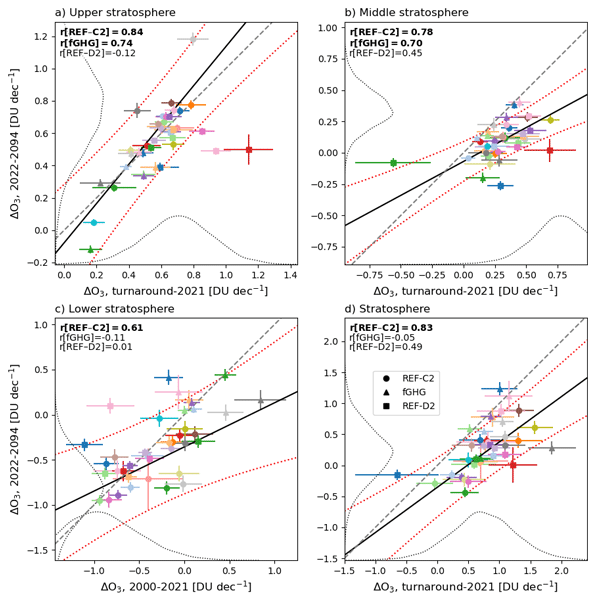
This study investigates tropical ozone changes in models and satellite observations to determine how well they agree and whether observations can constrain model projections. At some levels, satellite records disagree significantly on the magnitude of ozone changes. While early and late 21st century trends are correlated across models, suggesting a potential emergent constraint, the spread in observations means they are unable to provide guidance on the credibility of model projections.
Bernd Funke, Michael Höpfner, Stefan Bender, Quentin Errera, Udo Grabowski, Alex Hoffmann, Han-Li Liu, Nick M. Pedatella, Piera Raspollini, Jörn Ungermann, and Björn-Martin Sinnhuber
EGUsphere, https://doi.org/10.5194/egusphere-2026-3881, https://doi.org/10.5194/egusphere-2026-3881, 2026
This preprint is open for discussion and under review for Atmospheric Measurement Techniques (AMT).
Short summary
Short summary
We introduce two performance modeling tools, the Linear Performance Estimator (LPE) and the Fast L2 Simulator (FL2S), developed for CAIRT, a proposed ESA Earth Explorer mission. CAIRT aims to observe the middle atmosphere using an Imaging Fourier Transform Spectrometer. LPE quantifies spatial resolution and tomographic retrieval uncertainties, while FL2S generates synthetic data products that mimic the retrieval chain. Together, they demonstrate CAIRT's ability to meet scientific requirements.
Florian Voet, Felix Ploeger, Johannes C. Laube, Laura N. Saunders, Patrick E. Sheese, Attahir Mainika, Peter Preusse, Jens-Uwe Grooß, Kaley A. Walker, Susann Tegtmeier, and Michaela Imelda Hegglin
EGUsphere, https://doi.org/10.5194/egusphere-2026-4647, https://doi.org/10.5194/egusphere-2026-4647, 2026
This preprint is open for discussion and under review for Atmospheric Chemistry and Physics (ACP).
Short summary
Short summary
We developed a better way to estimate how long air remains in the upper atmosphere, because satellite estimates can be too noisy to show long-term changes. Using measurements of several gases from a satellite, we found that combining them cuts uncertainty by about half and gives estimates with about 0.3 years of average uncertainty. Results for 2004–2021 show older air in the Northern Hemisphere and younger air in the tropics and Southern Hemisphere, suggesting slower circulation in the north.
Laura N. Saunders, Kaley A. Walker, Gabriele P. Stiller, Piera Raspollini, Luis F. Millán, Marco Gai, Chris D. Boone, John Gille, Norbert Glatthor, Armin Kleinboehl, Anne Kleinert, Alyn Lambert, Donal Murtaugh, Patrick E. Sheese, Geoffrey C. Toon, and Gerald Wetzel
EGUsphere, https://doi.org/10.5194/egusphere-2026-4651, https://doi.org/10.5194/egusphere-2026-4651, 2026
Short summary
Short summary
We present a comprehensive evaluation of nitrous oxide (N2O) measurements taken during the 2002–2024 period from five limb-viewing satellite instruments: ACE-FTS, HIRDLS, MIPAS, Aura-MLS, and SMR. Coincident measurements are compared between satellite instruments and with independent reference data from balloon-borne instruments. We show that ACE-FTS, MIPAS, and SMR constitute an excellent 23-year record of N2O measurements that could be used to create an ESA-funded merged dataset in future.
Jan Kaumanns, Florian Voet, Felix Ploeger, Peter Preuße, Jörn Ungermann, and Michaela Imelda Hegglin
EGUsphere, https://doi.org/10.5194/egusphere-2026-4183, https://doi.org/10.5194/egusphere-2026-4183, 2026
Short summary
Short summary
Age-of-Air (AoA) denotes the time an air parcel has spent inside the stratosphere and is an important diagnostic quantity for the Brewer Dobson Circulation (BDC). We present a novel approach using neural networks to accurately and robustly derive AoA from inert chemical species with considerable measurement noise even far beyond the training domain. We also present an alternative view of AoA by using autoencoders to derive a model-independent proxy quantity for it and validate its robustness.
Corinna Kloss, Gwenaël Berthet, Pasquale Sellitto, Irene Bartolome Garcia, Emmanuel Briaud, Rubel Chandra Das, Stéphane Chevrier, Nicolas Dumelié, Lilian Joly, Thomas Lecas, Pauline Marbach, Felix Ploeger, Jean-Baptiste Renard, Jean-Paul Vernier, Frank G. Wienhold, and Michaela I. Hegglin
Atmos. Chem. Phys., 26, 8981–8997, https://doi.org/10.5194/acp-26-8981-2026, https://doi.org/10.5194/acp-26-8981-2026, 2026
Short summary
Short summary
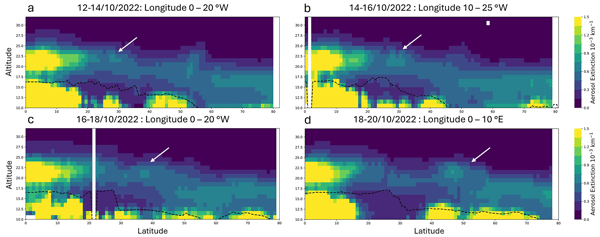
In October 2022, we detected volcanic particles in the stratosphere over France, linked to the January 2022 Hunga eruption in the South Pacific. Found between 17 and 23 km altitude, they were traced back to the tropics using trajectory simulations and satellite data. Their optical properties matched those in the Southern Hemisphere. The particles spread across the Northern Hemisphere, reflecting sunlight and slightly cooling the surface – a small but non-negligible effect.
Shubhajyoti Roy, Satheesh P. R. Chandran, Suvarna Fadnavis, Vijay Sagar, Michaela I. Hegglin, Rolf Müller, and Prashant Chavan
Atmos. Chem. Phys., 26, 7047–7059, https://doi.org/10.5194/acp-26-7047-2026, https://doi.org/10.5194/acp-26-7047-2026, 2026
Short summary
Short summary
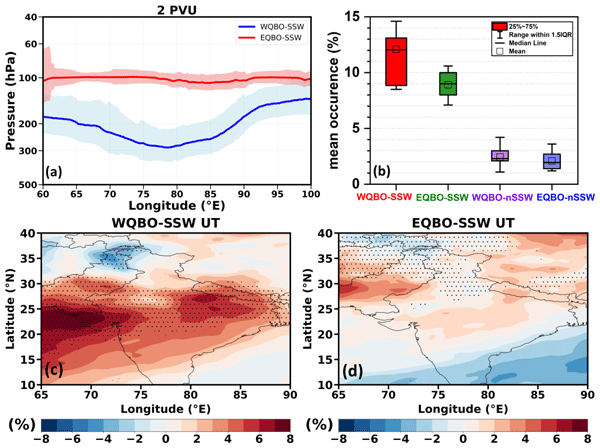
We show that stratospheric ozone intrusions associated with sudden stratospheric warming events occurring concurrent with the westerly phase of the Quasi-biennial oscillation enhance ozone in the upper troposphere and lower stratosphere over South Asia. The ozone enhancement increases ozone radiative forcing by 0.09±0.05 W m-2 over South Asia. This increase in ozone radiative forcing potentially exacerbates regional climate warming.
Marta Abalos, Thomas Birner, Andreas Chrysanthou, Sean Davis, Alvaro de la Cámara, Sandip Dhomse, Hella Garny, Michaela I. Hegglin, Daan Hubert, Oksana Ivaniha, James Keeble, Marianna Linz, Daniele Minganti, Jessica Neu, David Plummer, Laura Saunders, Kasturi Shah, Gabriele Stiller, Kleareti Tourpali, Darryn Waugh, Nathan Luke Abraham, Hideharu Akiyoshi, Martyn P. Chipperfield, Patrick Jöckel, Béatrice Josse, Marion Marchand, Patrick Martineau, Olaf Morgenstern, Timofei Sukhodolov, Shingo Watanabe, and Yousuke Yamashita
Atmos. Chem. Phys., 26, 5249–5291, https://doi.org/10.5194/acp-26-5249-2026, https://doi.org/10.5194/acp-26-5249-2026, 2026
Short summary
Short summary
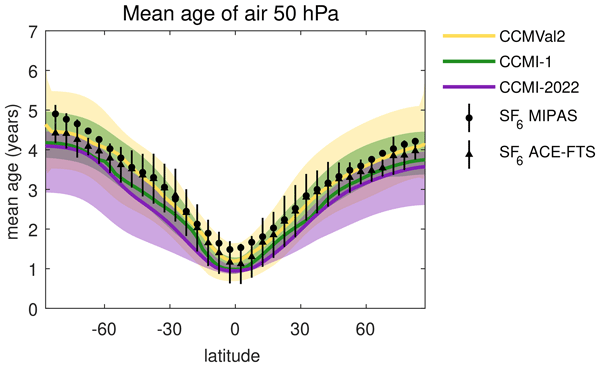
Accurate representation of stratospheric transport in Chemistry-Climate Models is essential for reliable climate projections. This study evaluates three generations of models using observational data and reanalyses, identifying persistent biases and their potential causes. Some biases persist or even worsen in newer models. These findings highlight key limitations and inform efforts to improve models and advance understanding through process-based studies and enhanced observations.
Quentin Errera, Marc Op de beeck, Stefan Bender, Johannes Flemming, Bernd Funke, Alex Hoffmann, Michael Höpfner, Nathaniel Livesey, Gabriele Poli, Didier Pieroux, Piera Raspollini, and Björn-Martin Sinnhuber
Atmos. Meas. Tech., 19, 2601–2620, https://doi.org/10.5194/amt-19-2601-2026, https://doi.org/10.5194/amt-19-2601-2026, 2026
Short summary
Short summary
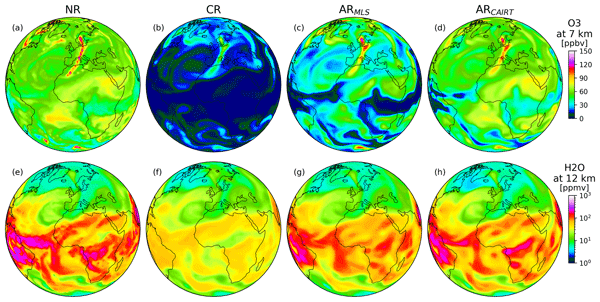
The Changing Atmosphere Infra-Red Tomography Explorer (CAIRT) is a satellite mission concept developed to observe, among other, the gradient of ozone and water vapour in the upper troposphere and lower stratosphere where these species have their largest radiative impact. By simulating CAIRT observations and measuring their constrain on an atmospheric model using data assimilation, this study shows that CAIRT specifications are adequate to fulfil this objective.
Zhen Yang, Bärbel Vogel, Felix Plöger, Zhixuan Bai, Dan Li, Sabine Griessbach, Lars Hoffmann, Frank G. Wienhold, Elizabeth Asher, Alexandre A. Baron, Katie R. Smith, Troy Thornberry, Jianchun Bian, and Michaela I. Hegglin
Atmos. Chem. Phys., 26, 4749–4769, https://doi.org/10.5194/acp-26-4749-2026, https://doi.org/10.5194/acp-26-4749-2026, 2026
Short summary
Short summary
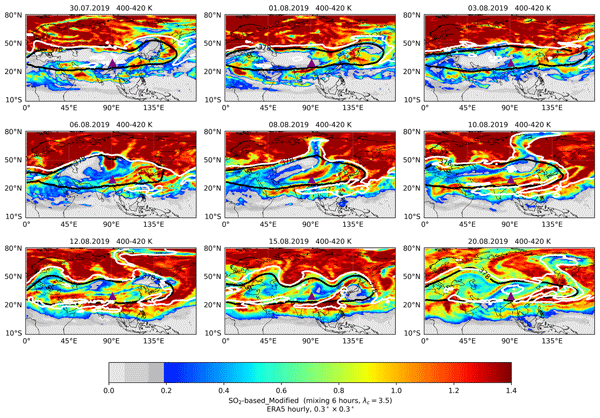
Balloon measurements over Lhasa, China, combined with satellite guided modelling, tracked aerosol from the 2019 Raikoke eruption through the Asian summer monsoon anticyclone. We find two altitude dependent routes into the anticyclone. It partly blocks transport but also allows entry and mixing, explaining the gradual weakening of the layers. Balloon measurements over Boulder, United States, outside the anticyclone, provide an independent check outside the region.

Paul Konopka, Felix Ploeger, Francesco D'Amato, Teresa Campos, Marc von Hobe, Shawn B. Honomichl, Peter Hoor, Laura L. Pan, Michelle L. Santee, Silvia Viciani, Kaley A. Walker, and Michaela I. Hegglin
Atmos. Chem. Phys., 25, 17973–17996, https://doi.org/10.5194/acp-25-17973-2025, https://doi.org/10.5194/acp-25-17973-2025, 2025
Short summary
Short summary
We present an improved version of the Chemical Lagrangian Model of the Stratosphere (CLaMS-3.0), which better represents transport from the lower atmosphere to the upper troposphere and lower stratosphere. By refining grid resolution and improving convection representation, the model more accurately simulates carbon monoxide transport. Comparisons with satellite and in situ observations highlight its ability to capture seasonal variations and improve our understanding of atmospheric transport.
Cecilia Tirelli, Simone Ceccherini, Samuele Del Bianco, Bernd Funke, Michael Höpfner, Ugo Cortesi, and Piera Raspollini
Atmos. Meas. Tech., 18, 5619–5636, https://doi.org/10.5194/amt-18-5619-2025, https://doi.org/10.5194/amt-18-5619-2025, 2025
Short summary
Short summary
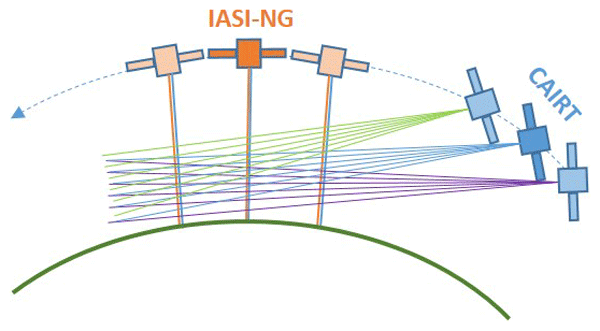
The Complete Data Fusion is an a posteriori method used to combine remote sensing products from independent observations of the same or proximate air masses. In this study, we extend the algorithm’s applicability to two-dimensional products, testing it with simulated ozone datasets from nadir and limb measurements. Our results show that the exploitation of the tomographic capabilities of future atmospheric sensors maximizes the information extracted from complementary datasets.
Patrick Konjari, Christian Rolf, Michaela I. Hegglin, Susanne Rohs, Yun Li, Andreas Zahn, Harald Bönisch, Philippe Nedelec, Martina Krämer, and Andreas Petzold
Atmos. Chem. Phys., 25, 4269–4289, https://doi.org/10.5194/acp-25-4269-2025, https://doi.org/10.5194/acp-25-4269-2025, 2025
Short summary
Short summary
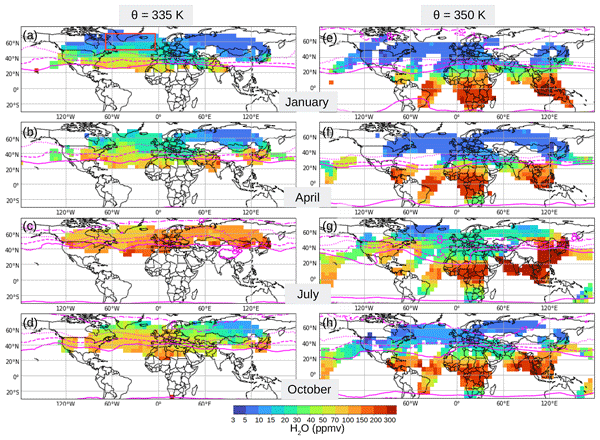
This study introduces a new method to derive adjusted water vapor (H2O) climatologies for the upper tropopshere and lower statosphere (UT/LS) using data from 60 000 flights under the IAGOS program. Biases in the IAGOS water vapour dataset are adjusted, based on the more accurate IAGOS-CARIBIC data. The resulting highly resolved H2O climatologies will contribute to a better understanding of the H2O variability in the UT/LS and its connection to various transport and mixing processes.
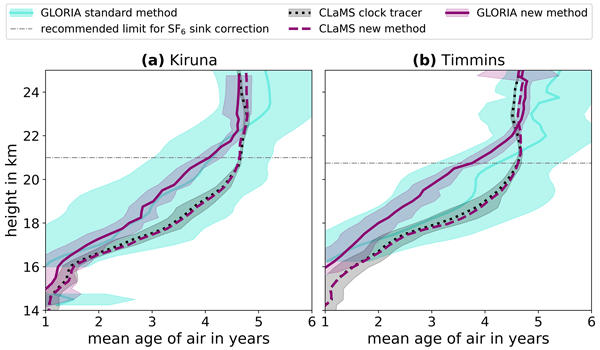
Florian Voet, Felix Ploeger, Johannes Laube, Peter Preusse, Paul Konopka, Jens-Uwe Grooß, Jörn Ungermann, Björn-Martin Sinnhuber, Michael Höpfner, Bernd Funke, Gerald Wetzel, Sören Johansson, Gabriele Stiller, Eric Ray, and Michaela I. Hegglin
Atmos. Chem. Phys., 25, 3541–3565, https://doi.org/10.5194/acp-25-3541-2025, https://doi.org/10.5194/acp-25-3541-2025, 2025
Short summary
Short summary
This study refines estimates of the stratospheric “age of air”, a measure of how long air circulates in the stratosphere. By analyzing correlations between trace gases measurable by satellites, the research introduces a method that reduces uncertainties and detects small-scale atmospheric features. This improved understanding of stratospheric circulation is crucial for better climate models and predictions, enhancing our ability to assess the impacts of climate change on the atmosphere.
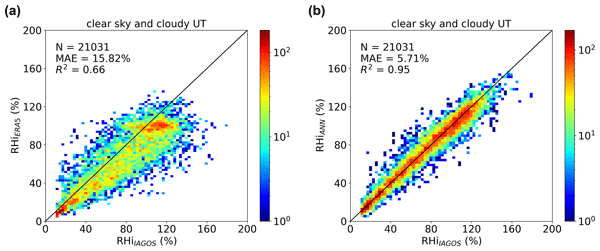
Ziming Wang, Luca Bugliaro, Klaus Gierens, Michaela I. Hegglin, Susanne Rohs, Andreas Petzold, Stefan Kaufmann, and Christiane Voigt
Atmos. Chem. Phys., 25, 2845–2861, https://doi.org/10.5194/acp-25-2845-2025, https://doi.org/10.5194/acp-25-2845-2025, 2025
Short summary
Short summary
Upper-tropospheric relative humidity bias in the ERA5 weather model is corrected by 10 % by an artificial neural network using aircraft in-service humidity data and thermodynamic and dynamical variables. The improved skills of the weather model will advance cirrus research, weather forecasts, and measures for contrail reduction.
Dioumacor Faye, Felipe M. de Andrade, Roberto Suárez-Moreno, Dahirou Wane, Michaela I. Hegglin, Abdou L. Dieng, François Kaly, Redouane Lguensat, and Amadou T. Gaye
EGUsphere, https://doi.org/10.5194/egusphere-2024-4040, https://doi.org/10.5194/egusphere-2024-4040, 2025
Preprint archived
Short summary
Short summary
This study evaluates machine learning (ML) methods to improve subseasonal-to-seasonal (S2S) rainfall forecasts in Senegal during the West African monsoon. Using high-resolution precipitation data and atmospheric-oceanic reanalysis, we show that ML models like ridge regression outperform traditional climate models. These methods enhance prediction accuracy and efficiency, offering valuable tools for climate risk management and water resource planning.
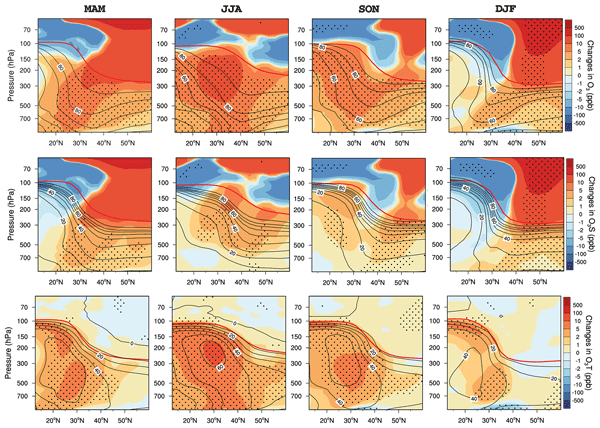
Xiaodan Ma, Jianping Huang, Michaela I. Hegglin, Patrick Jöckel, and Tianliang Zhao
Atmos. Chem. Phys., 25, 943–958, https://doi.org/10.5194/acp-25-943-2025, https://doi.org/10.5194/acp-25-943-2025, 2025
Short summary
Short summary
Our research explored changes in ozone levels in the northwest Pacific region over 30 years, revealing a significant increase in the middle-to-upper troposphere, especially during spring and summer. This rise is influenced by both stratospheric and tropospheric sources, which affect climate and air quality in East Asia. This work underscores the need for continued study to understand underlying mechanisms.
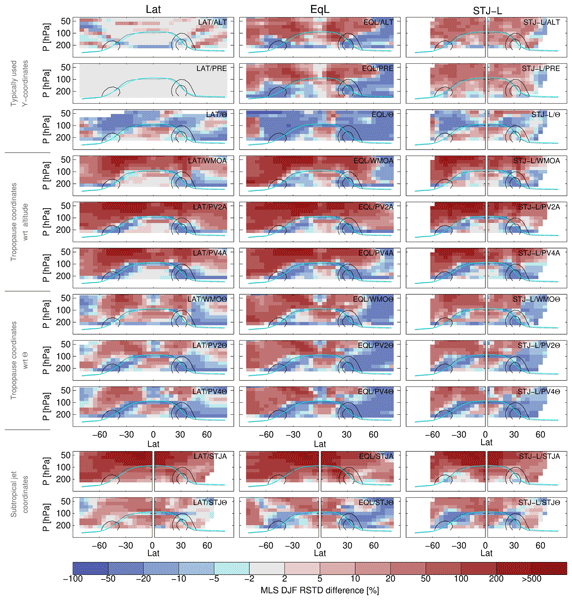
Luis F. Millán, Peter Hoor, Michaela I. Hegglin, Gloria L. Manney, Harald Boenisch, Paul Jeffery, Daniel Kunkel, Irina Petropavlovskikh, Hao Ye, Thierry Leblanc, and Kaley Walker
Atmos. Chem. Phys., 24, 7927–7959, https://doi.org/10.5194/acp-24-7927-2024, https://doi.org/10.5194/acp-24-7927-2024, 2024
Short summary
Short summary
In the Observed Composition Trends And Variability in the UTLS (OCTAV-UTLS) Stratosphere-troposphere Processes And their Role in Climate (SPARC) activity, we have mapped multiplatform ozone datasets into coordinate systems to systematically evaluate the influence of these coordinates on binned climatological variability. This effort unifies the work of studies that focused on individual coordinate system variability. Our goal was to create the most comprehensive assessment of this topic.
Fuzhen Shen, Michaela I. Hegglin, and Yue Yuan
Atmos. Chem. Phys., 24, 6539–6553, https://doi.org/10.5194/acp-24-6539-2024, https://doi.org/10.5194/acp-24-6539-2024, 2024
Short summary
Short summary
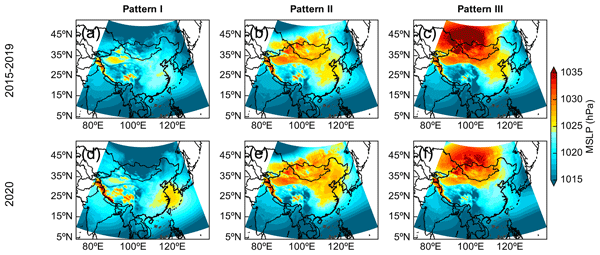
We attempt to use a novel structural self-organising map and machine learning models to identify a weather system and quantify the importance of each meteorological factor in driving the unexpected PM2.5 and O3 changes under the specific weather system during the COVID-19 lockdown in China. The result highlights that temperature under the double-centre high-pressure system plays the most crucial role in abnormal events.
Karen De Los Ríos, Paulina Ordoñez, Gabriele P. Stiller, Piera Raspollini, Marco Gai, Kaley A. Walker, Cristina Peña-Ortiz, and Luis Acosta
Atmos. Meas. Tech., 17, 3401–3418, https://doi.org/10.5194/amt-17-3401-2024, https://doi.org/10.5194/amt-17-3401-2024, 2024
Short summary
Short summary
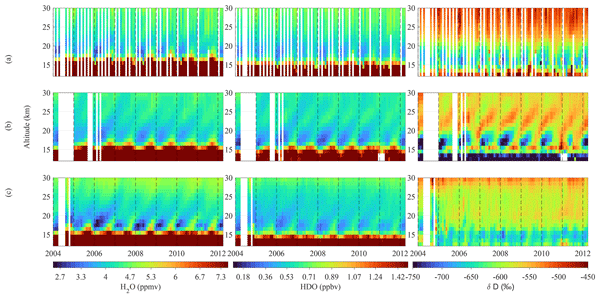
This study examines newer versions of H2O and HDO retrievals from Envisat/MIPAS and SCISAT/ACE-FTS. Results reveal a better agreement in stratospheric H2O profiles than in HDO profiles. The H2O tape recorder signal is consistent across databases, but δD tape recorder composites show differences that impact the interpretation of water vapour transport. These findings enhance the need for intercomparisons to refine our insights.
Francesco Barbano, Erika Brattich, Carlo Cintolesi, Abdul Ghafoor Nizamani, Silvana Di Sabatino, Massimo Milelli, Esther E. M. Peerlings, Sjoerd Polder, Gert-Jan Steeneveld, and Antonio Parodi
Atmos. Meas. Tech., 17, 3255–3278, https://doi.org/10.5194/amt-17-3255-2024, https://doi.org/10.5194/amt-17-3255-2024, 2024
Short summary
Short summary
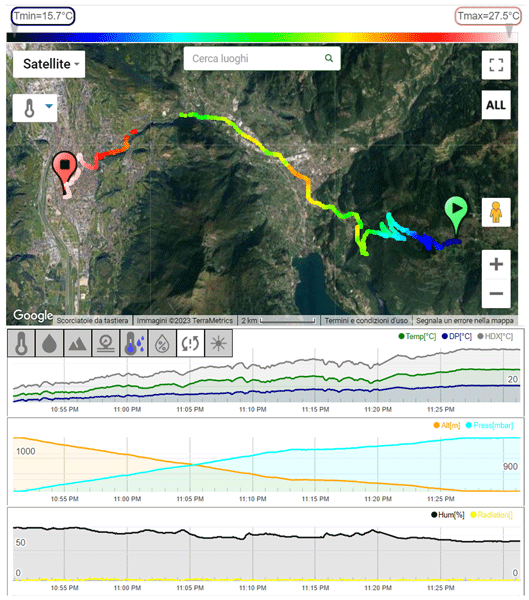
The characterization of the urban microclimate starts with atmospheric monitoring using a dense array of sensors to capture the spatial variations induced by the different morphology, land cover, and presence of vegetation. To provide a new sensor for this scope, this paper evaluates the outdoor performance of a commercial mobile sensor. The results mark the sensor's ability to capture the same atmospheric variability as the reference, making it a valid solution for atmospheric monitoring.
Michael Kiefer, Dale F. Hurst, Gabriele P. Stiller, Stefan Lossow, Holger Vömel, John Anderson, Faiza Azam, Jean-Loup Bertaux, Laurent Blanot, Klaus Bramstedt, John P. Burrows, Robert Damadeo, Bianca Maria Dinelli, Patrick Eriksson, Maya García-Comas, John C. Gille, Mark Hervig, Yasuko Kasai, Farahnaz Khosrawi, Donal Murtagh, Gerald E. Nedoluha, Stefan Noël, Piera Raspollini, William G. Read, Karen H. Rosenlof, Alexei Rozanov, Christopher E. Sioris, Takafumi Sugita, Thomas von Clarmann, Kaley A. Walker, and Katja Weigel
Atmos. Meas. Tech., 16, 4589–4642, https://doi.org/10.5194/amt-16-4589-2023, https://doi.org/10.5194/amt-16-4589-2023, 2023
Short summary
Short summary
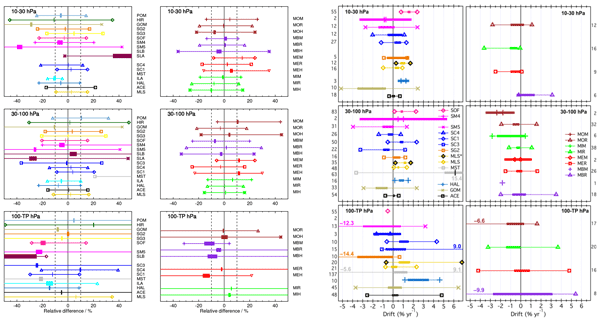
We quantify biases and drifts (and their uncertainties) between the stratospheric water vapor measurement records of 15 satellite-based instruments (SATs, with 31 different retrievals) and balloon-borne frost point hygrometers (FPs) launched at 27 globally distributed stations. These comparisons of measurements during the period 2000–2016 are made using robust, consistent statistical methods. With some exceptions, the biases and drifts determined for most SAT–FP pairs are < 10 % and < 1 % yr−1.
Simone Ceccherini
Atmos. Meas. Tech. Discuss., https://doi.org/10.5194/amt-2023-42, https://doi.org/10.5194/amt-2023-42, 2023
Revised manuscript not accepted
Short summary
Short summary
New variables are proposed for the retrieval products that are used in subsequent data fusion activities. These variables, in the linear approximation of the forward model, are independent of the a priori information used in the retrieval. Furthermore, they reduce to about one third the stored data volume with respect to the use of the standard products and provide an optimal compromise between completeness and efficiency of the stored information.
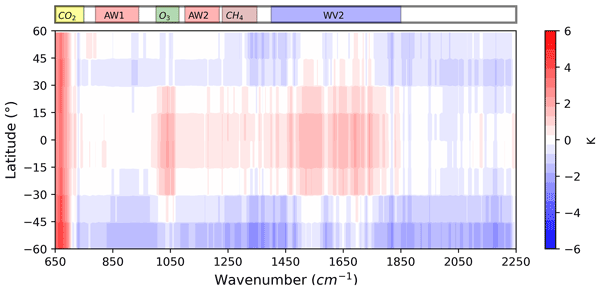
Stefano Della Fera, Federico Fabiano, Piera Raspollini, Marco Ridolfi, Ugo Cortesi, Flavio Barbara, and Jost von Hardenberg
Geosci. Model Dev., 16, 1379–1394, https://doi.org/10.5194/gmd-16-1379-2023, https://doi.org/10.5194/gmd-16-1379-2023, 2023
Short summary
Short summary
The long-term comparison between observed and simulated outgoing longwave radiances represents a strict test to evaluate climate model performance. In this work, 9 years of synthetic spectrally resolved radiances, simulated online on the basis of the atmospheric fields predicted by the EC-Earth global climate model (v3.3.3) in clear-sky conditions, are compared to IASI spectral radiance climatology in order to detect model biases in temperature and humidity at different atmospheric levels.
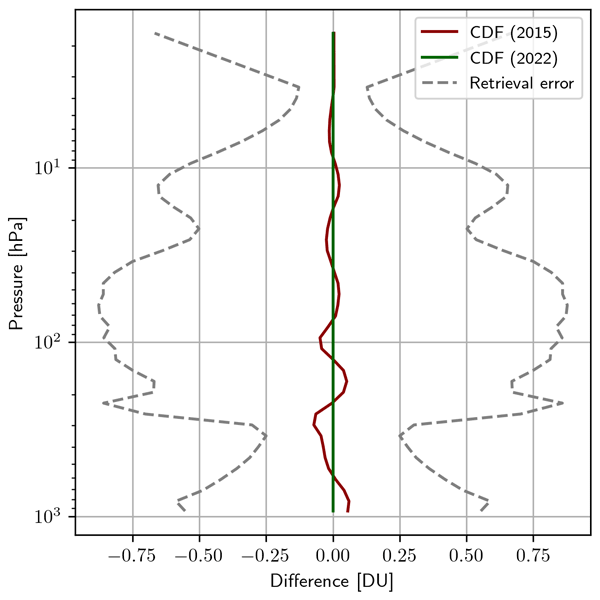
Simone Ceccherini, Nicola Zoppetti, and Bruno Carli
Atmos. Meas. Tech., 15, 7039–7048, https://doi.org/10.5194/amt-15-7039-2022, https://doi.org/10.5194/amt-15-7039-2022, 2022
Short summary
Short summary
A new formula of the complete data fusion that, differently from the original one, does not contain matrices that can be singular is discussed. We show that the new formula is a generalization of the original one and analytically and numerically, using a real IASI ozone measurement, derive the errors made with the old formula when the generalized inverse of singular matrices is used. An operational version of the new formula that includes interpolation and coincidence errors is also provided.
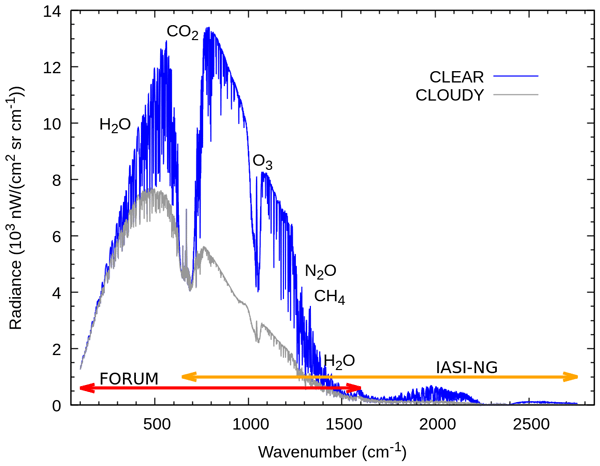
Marco Ridolfi, Cecilia Tirelli, Simone Ceccherini, Claudio Belotti, Ugo Cortesi, and Luca Palchetti
Atmos. Meas. Tech., 15, 6723–6737, https://doi.org/10.5194/amt-15-6723-2022, https://doi.org/10.5194/amt-15-6723-2022, 2022
Short summary
Short summary
Synergistic retrieval (SR) and complete data fusion (CDF) methods exploit the complementarity of coinciding remote-sensing measurements. We assess the performance of the SR and CDF methods on the basis of synthetic measurements of the FORUM and IASI-NG missions. In the case of perfectly matching measurements, SR and CDF results differ by less than 1 / 10 of the error due to measurement noise. In the case of a realistic mismatch, the two methods show differences in the order of their error bars.
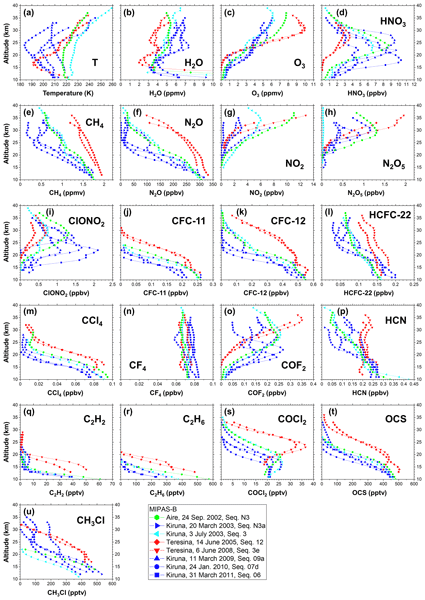
Gerald Wetzel, Michael Höpfner, Hermann Oelhaf, Felix Friedl-Vallon, Anne Kleinert, Guido Maucher, Miriam Sinnhuber, Janna Abalichin, Angelika Dehn, and Piera Raspollini
Atmos. Meas. Tech., 15, 6669–6704, https://doi.org/10.5194/amt-15-6669-2022, https://doi.org/10.5194/amt-15-6669-2022, 2022
Short summary
Short summary
Satellite measurements of stratospheric trace gases are essential for monitoring distributions and trends of these species on a global scale. Here, we compare the final MIPAS ESA Level 2 version 8 data (temperature and trace gases) with measurements obtained with the balloon version of MIPAS in terms of data agreement of both sensors, including combined errors. For most gases, we find a 5 % to 20 % agreement of the retrieved vertical profiles of both MIPAS instruments in the lower stratosphere.
Mohamadou A. Diallo, Felix Ploeger, Michaela I. Hegglin, Manfred Ern, Jens-Uwe Grooß, Sergey Khaykin, and Martin Riese
Atmos. Chem. Phys., 22, 14303–14321, https://doi.org/10.5194/acp-22-14303-2022, https://doi.org/10.5194/acp-22-14303-2022, 2022
Short summary
Short summary
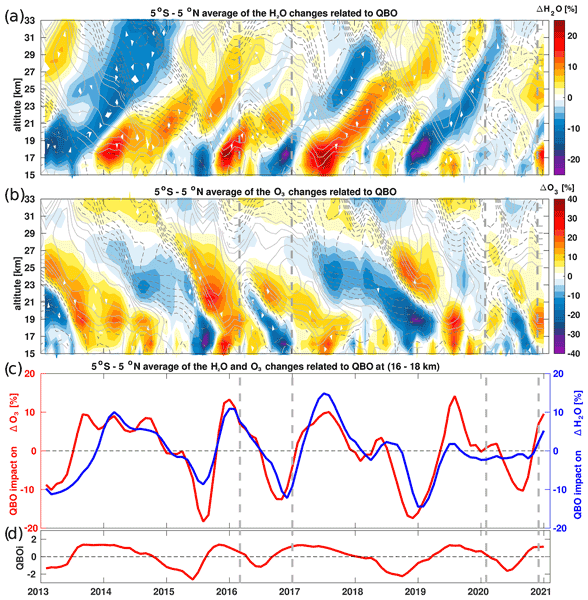
The quasi-biennial oacillation disruption events in both 2016 and 2020 decreased lower-stratospheric water vapour and ozone. Differences in the strength and depth of the anomalous lower-stratospheric circulation and ozone are due to differences in tropical upwelling and cold-point temperature induced by lower-stratospheric planetary and gravity wave breaking. The differences in water vapour are due to higher cold-point temperature in 2020 induced by Australian wildfire.
Simone Ceccherini
Atmos. Meas. Tech., 15, 4407–4410, https://doi.org/10.5194/amt-15-4407-2022, https://doi.org/10.5194/amt-15-4407-2022, 2022
Short summary
Short summary
The equivalence between the data fusion performed using the Kalman filter and the Complete Data Fusion has been proved, and a generalization of the Complete Data Fusion formula, that is valid also in the case that the noise error covariance matrices of the fused products are singular, is derived. The two methods are also equivalent to the measurement–space–solution data fusion method, and for moderately nonlinear problems, the three methods are all equivalent to the simultaneous retrieval.
William G. Read, Gabriele Stiller, Stefan Lossow, Michael Kiefer, Farahnaz Khosrawi, Dale Hurst, Holger Vömel, Karen Rosenlof, Bianca M. Dinelli, Piera Raspollini, Gerald E. Nedoluha, John C. Gille, Yasuko Kasai, Patrick Eriksson, Christopher E. Sioris, Kaley A. Walker, Katja Weigel, John P. Burrows, and Alexei Rozanov
Atmos. Meas. Tech., 15, 3377–3400, https://doi.org/10.5194/amt-15-3377-2022, https://doi.org/10.5194/amt-15-3377-2022, 2022
Short summary
Short summary
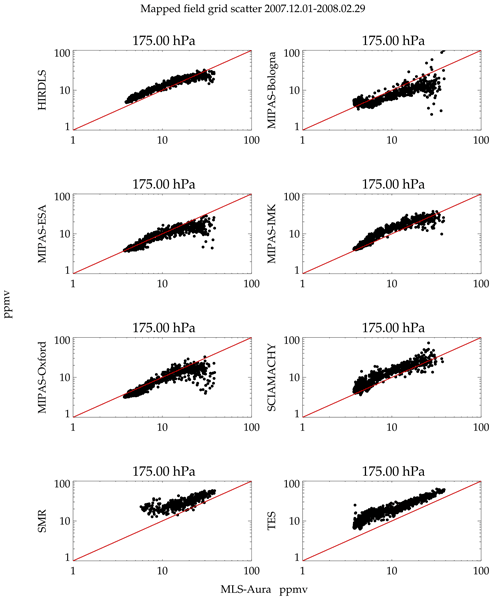
This paper attempts to provide an assessment of the accuracy of 21 satellite-based instruments that remotely measure atmospheric humidity in the upper troposphere of the Earth's atmosphere. The instruments made their measurements from 1984 to the present time; however, most of these instruments began operations after 2000, and only a few are still operational. The objective of this study is to quantify the accuracy of each satellite humidity data set.
Piera Raspollini, Enrico Arnone, Flavio Barbara, Massimo Bianchini, Bruno Carli, Simone Ceccherini, Martyn P. Chipperfield, Angelika Dehn, Stefano Della Fera, Bianca Maria Dinelli, Anu Dudhia, Jean-Marie Flaud, Marco Gai, Michael Kiefer, Manuel López-Puertas, David P. Moore, Alessandro Piro, John J. Remedios, Marco Ridolfi, Harjinder Sembhi, Luca Sgheri, and Nicola Zoppetti
Atmos. Meas. Tech., 15, 1871–1901, https://doi.org/10.5194/amt-15-1871-2022, https://doi.org/10.5194/amt-15-1871-2022, 2022
Short summary
Short summary
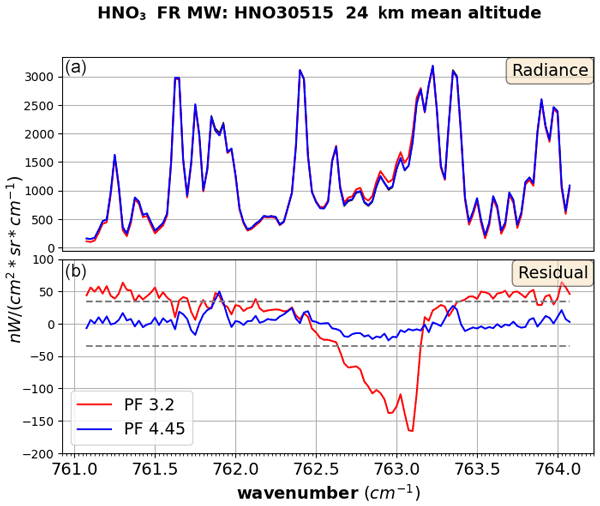
The MIPAS instrument onboard the ENVISAT satellite provided 10 years of measurements of the atmospheric emission al limb that allow for the retrieval of latitude- and altitude-resolved atmospheric composition. We describe the improvements implemented in the retrieval algorithm used for the full mission reanalysis, which allows for the generation of the global distributions of 21 atmospheric constituents plus temperature with increased accuracy with respect to previously generated data.
Laura Tositti, Erika Brattich, Claudio Cassardo, Pietro Morozzi, Alessandro Bracci, Angela Marinoni, Silvana Di Sabatino, Federico Porcù, and Alessandro Zappi
Atmos. Chem. Phys., 22, 4047–4073, https://doi.org/10.5194/acp-22-4047-2022, https://doi.org/10.5194/acp-22-4047-2022, 2022
Short summary
Short summary
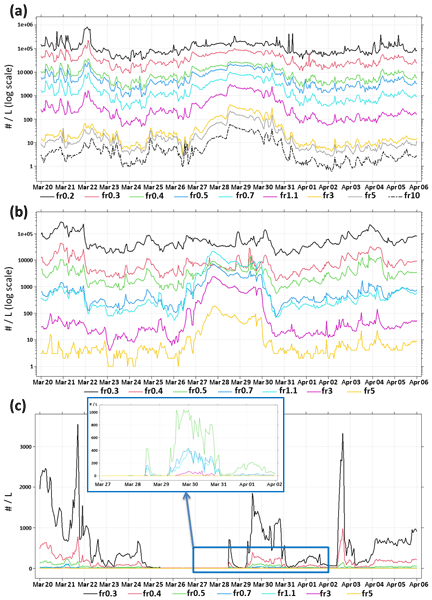
We present a thorough investigation of an anomalous transport of mineral dust over a region renowned for excess airborne particulate matter, the Italian Po Valley, which occurred in late March 2021. Both the origin of this dust outbreak, which was localized in central Asia (i.e., the so-called Aralkum Desert), and the upstream synoptic conditions, investigated here in extreme detail using multiple integrated observations including in situ measurements and remote sensing, were atypical.
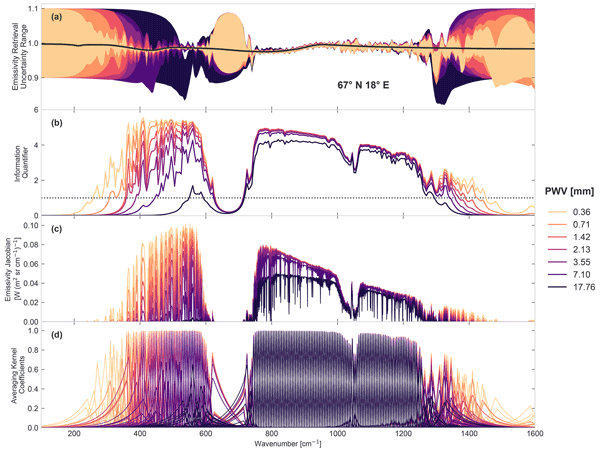
Maya Ben-Yami, Hilke Oetjen, Helen Brindley, William Cossich, Dulce Lajas, Tiziano Maestri, Davide Magurno, Piera Raspollini, Luca Sgheri, and Laura Warwick
Atmos. Meas. Tech., 15, 1755–1777, https://doi.org/10.5194/amt-15-1755-2022, https://doi.org/10.5194/amt-15-1755-2022, 2022
Short summary
Short summary
Spectral emissivity is a key property of the Earth's surface. Few measurements exist in the far-infrared, despite recent work showing that its contribution is important for accurate modelling of global climate. In preparation for ESA’s EE9 FORUM mission (launch in 2026), this study takes the first steps towards the development of an operational emissivity retrieval for FORUM by investigating the sensitivity of the emissivity product to different physical and operational parameters.
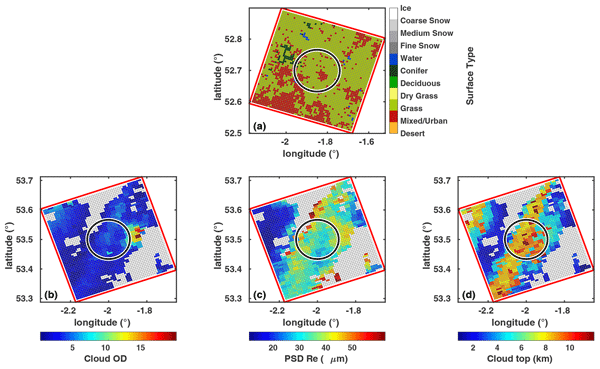
Luca Sgheri, Claudio Belotti, Maya Ben-Yami, Giovanni Bianchini, Bernardo Carnicero Dominguez, Ugo Cortesi, William Cossich, Samuele Del Bianco, Gianluca Di Natale, Tomás Guardabrazo, Dulce Lajas, Tiziano Maestri, Davide Magurno, Hilke Oetjen, Piera Raspollini, and Cristina Sgattoni
Atmos. Meas. Tech., 15, 573–604, https://doi.org/10.5194/amt-15-573-2022, https://doi.org/10.5194/amt-15-573-2022, 2022
Short summary
Short summary
The FORUM instrument will look at the Earth's atmosphere from a satellite, covering a spectral range responsible for about 95 % of the radiation lost by our planet. FORUM helps to measure the imbalance between incoming and outgoing radiation that is responsible for the increasing average temperatures on Earth. The end-to-end simulator is a chain of codes that simulates the FORUM measurement process. The goal of the project is to study how the instrument reacts to different retrieval conditions.
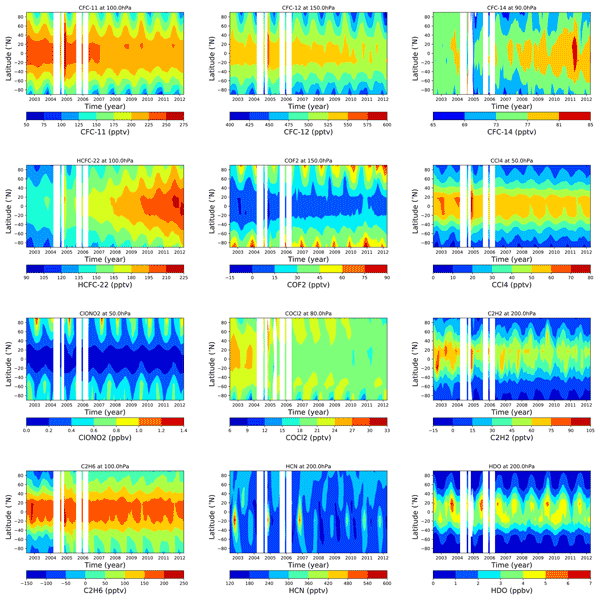
Bianca Maria Dinelli, Piera Raspollini, Marco Gai, Luca Sgheri, Marco Ridolfi, Simone Ceccherini, Flavio Barbara, Nicola Zoppetti, Elisa Castelli, Enzo Papandrea, Paolo Pettinari, Angelika Dehn, Anu Dudhia, Michael Kiefer, Alessandro Piro, Jean-Marie Flaud, Manuel López-Puertas, David Moore, John Remedios, and Massimo Bianchini
Atmos. Meas. Tech., 14, 7975–7998, https://doi.org/10.5194/amt-14-7975-2021, https://doi.org/10.5194/amt-14-7975-2021, 2021
Short summary
Short summary
The level-2 v8 database from the measurements of the Michelson Interferometer for Passive Atmospheric Sounding (MIPAS), aboard the European Space Agency Envisat satellite, containing atmospheric fields of pressure, temperature, and volume mixing ratio of 21 trace gases, is described in this paper. The database covers all the measurements acquired by MIPAS (from July 2002 to April 2012). The number of species included makes it of particular importance for the studies of stratospheric chemistry.
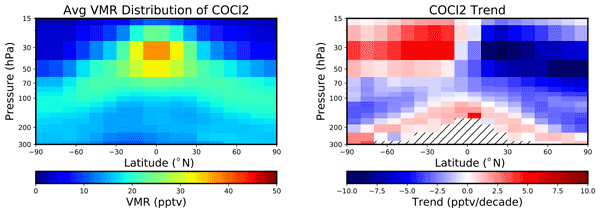
Paolo Pettinari, Flavio Barbara, Simone Ceccherini, Bianca Maria Dinelli, Marco Gai, Piera Raspollini, Luca Sgheri, Massimo Valeri, Gerald Wetzel, Nicola Zoppetti, and Marco Ridolfi
Atmos. Meas. Tech., 14, 7959–7974, https://doi.org/10.5194/amt-14-7959-2021, https://doi.org/10.5194/amt-14-7959-2021, 2021
Short summary
Short summary
Phosgene (COCl2) is a toxic gas whose presence is a consequence of human activity. Besides its direct injection in the troposphere, stratospheric COCl2 is produced from the decomposition of CCl4, an anthropogenic gas regulated by the Montreal Protocol. As a consequence, COCl2 negative trends characterize the lower and part of the middle stratosphere. However, we find positive trends in the upper troposphere, demonstrating the non-negligible role of other Cl-containing species not yet regulated.
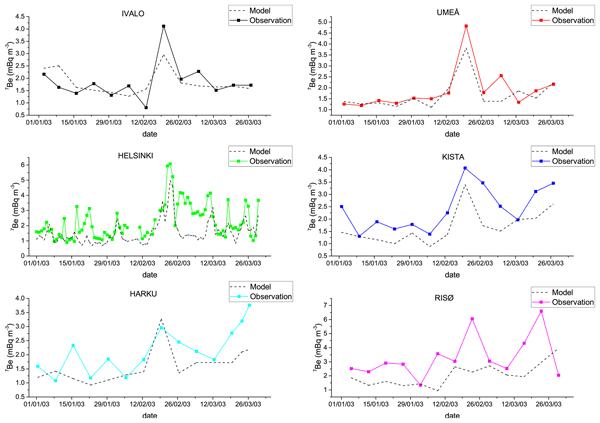
Erika Brattich, Hongyu Liu, Bo Zhang, Miguel Ángel Hernández-Ceballos, Jussi Paatero, Darko Sarvan, Vladimir Djurdjevic, Laura Tositti, and Jelena Ajtić
Atmos. Chem. Phys., 21, 17927–17951, https://doi.org/10.5194/acp-21-17927-2021, https://doi.org/10.5194/acp-21-17927-2021, 2021
Short summary
Short summary
In this study we analyse the output of a chemistry and transport model together with observations of different meteorological and compositional variables to demonstrate the link between sudden stratospheric warming and transport of stratospheric air to the surface in the subpolar regions of Europe during the cold season. Our findings have particular implications for atmospheric composition since climate projections indicate more frequent sudden stratospheric warming under a warmer climate.
Cited articles
Banerjee, A., Maycock, A. C., Archibald, A. T., Abraham, N. L., Telford, P., Braesicke, P., and Pyle, J. A.: Drivers of changes in stratospheric and tropospheric ozone between year 2000 and 2100, Atmos. Chem. Phys., 16, 2727–2746, https://doi.org/10.5194/acp-16-2727-2016, 2016. a
Blumstein, D., Chalon, G., Carlier, T., Buil, C., Hebert, P., Maciaszek, T., Ponce, G., Phulpin, T., Tournier, B., Simeoni, D., Astruc, P., Clauss, A., Kayal, G., and Jegou, R.: IASI instrument: Technical overview and measured performances, Infrared Spaceborne Remote Sensing XII, 5543, 196–207, 2004. a
Boynard, A., Hurtmans, D., Koukouli, M. E., Goutail, F., Bureau, J., Safieddine, S., Lerot, C., Hadji-Lazaro, J., Wespes, C., Pommereau, J.-P., Pazmino, A., Zyrichidou, I., Balis, D., Barbe, A., Mikhailenko, S. N., Loyola, D., Valks, P., Van Roozendael, M., Coheur, P.-F., and Clerbaux, C.: Seven years of IASI ozone retrievals from FORLI: validation with independent total column and vertical profile measurements, Atmos. Meas. Tech., 9, 4327–4353, https://doi.org/10.5194/amt-9-4327-2016, 2016. a, b, c, d
Brattich, E., Orza, J. A. G., Cristofanelli, P., Bonasoni, P., and Tositti, L.: Influence of stratospheric air masses on radiotracers and ozone over the central Mediterranean, Journal of Geophysical Research: Atmospheres, 122, 7164–7182, 2017. a
Brattich, E., Liu, H., Zhang, B., Hernández-Ceballos, M. Á., Paatero, J., Sarvan, D., Djurdjevic, V., Tositti, L., and Ajtić, J.: Observation and modeling of high-7Be concentration events at the surface in northern Europe associated with the instability of the Arctic polar vortex in early 2003, Atmos. Chem. Phys., 21, 17927–17951, https://doi.org/10.5194/acp-21-17927-2021, 2021. a
Butchart, N.: The Brewer-Dobson circulation, Rev. Geophys., 52, 157–184, 2014. a
Ceccherini, S.: Equivalence of measurement space solution data fusion and complete fusion, Journal of Quantitative Spectroscopy and Radiative Transfer, 182, 71–74, 2016. a
Ceccherini, S., Raspollini, P., and Carli, B.: Optimal use of the information provided by indirect measurements of atmospheric vertical profiles, Opt. Express, 17, 4944–4958, 2009. a
Ceccherini, S., Cortesi, U., Del Bianco, S., Raspollini, P., and Carli, B.: IASI-METOP and MIPAS-ENVISAT data fusion, Atmos. Chem. Phys., 10, 4689–4698, https://doi.org/10.5194/acp-10-4689-2010, 2010. a
Ceccherini, S., Carli, B., Tirelli, C., Zoppetti, N., Del Bianco, S., Cortesi, U., Kujanpää, J., and Dragani, R.: Importance of interpolation and coincidence errors in data fusion, Atmos. Meas. Tech., 11, 1009–1017, https://doi.org/10.5194/amt-11-1009-2018, 2018. a
Ceccherini, S., Zoppetti, N., and Carli, B.: An improved formula for the complete data fusion, Atmos. Meas. Tech., 15, 7039–7048, https://doi.org/10.5194/amt-15-7039-2022, 2022. a, b, c
Chauhan, S., Höpfner, M., Stiller, G. P., von Clarmann, T., Funke, B., Glatthor, N., Grabowski, U., Linden, A., Kellmann, S., Milz, M., Steck, T., Fischer, H., Froidevaux, L., Lambert, A., Santee, M. L., Schwartz, M., Read, W. G., and Livesey, N. J.: MIPAS reduced spectral resolution UTLS-1 mode measurements of temperature, O3, HNO3, N2O, H2O and relative humidity over ice: retrievals and comparison to MLS, Atmos. Meas. Tech., 2, 337–353, https://doi.org/10.5194/amt-2-337-2009, 2009. a
Clerbaux, C., Boynard, A., Clarisse, L., George, M., Hadji-Lazaro, J., Herbin, H., Hurtmans, D., Pommier, M., Razavi, A., Turquety, S., Wespes, C., and Coheur, P.-F.: Monitoring of atmospheric composition using the thermal infrared IASI/MetOp sounder, Atmos. Chem. Phys., 9, 6041–6054, https://doi.org/10.5194/acp-9-6041-2009, 2009. a, b
Coheur, P.-F., Clarisse, L., Turquety, S., Hurtmans, D., and Clerbaux, C.: IASI measurements of reactive trace species in biomass burning plumes, Atmos. Chem. Phys., 9, 5655–5667, https://doi.org/10.5194/acp-9-5655-2009, 2009. a, b
Cortesi, U., Ceccherini, S., Del Bianco, S., Gai, M., Tirelli, C., Zoppetti, N., Barbara, F., Bonazountas, M., Argyridis, A., and Bós, A.: Advanced ultraviolet radiation and ozone retrieval for applications (AURORA): A project overview, Atmosphere, 9, 454, https://doi.org/10.3390/atmos11040324, 2018. a
Cristofanelli, P., Bracci, A., Sprenger, M., Marinoni, A., Bonafè, U., Calzolari, F., Duchi, R., Laj, P., Pichon, J. M., Roccato, F., Venzac, H., Vuillermoz, E., and Bonasoni, P.: Tropospheric ozone variations at the Nepal Climate Observatory-Pyramid (Himalayas, 5079 m a.s.l.) and influence of deep stratospheric intrusion events, Atmos. Chem. Phys., 10, 6537–6549, https://doi.org/10.5194/acp-10-6537-2010, 2010. a
Cristofanelli, P., Scheel, H.-E., Steinbacher, M., Saliba, M., Azzopardi, F., Ellul, R., Fröhlich, M., Tositti, L., Brattich, E., Maione, M., Calzolari, F., Duchi, R., Landi, T. C., Marinoni, A., and Bonasoni, P.: Long-term surface ozone variability at Mt. Cimone WMO/GAW global station (2165 m asl, Italy), Atmospheric Environment, 101, 23–33, 2015. a
Crutzen, P. J. and Lelieveld, J.: Human impacts on atmospheric chemistry, Annual Review of Earth and Planetary Sciences, 29, 17–45, 2001. a
Dinelli, B. M., Raspollini, P., Gai, M., Sgheri, L., Ridolfi, M., Ceccherini, S., Barbara, F., Zoppetti, N., Castelli, E., Papandrea, E., Pettinari, P., Dehn, A., Dudhia, A., Kiefer, M., Piro, A., Flaud, J.-M., López-Puertas, M., Moore, D., Remedios, J., and Bianchini, M.: The ESA MIPAS/Envisat level2-v8 dataset: 10 years of measurements retrieved with ORM v8.22, Atmos. Meas. Tech., 14, 7975–7998, https://doi.org/10.5194/amt-14-7975-2021, 2021. a, b
Donzelli, G. and Suarez-Varela, M. M.: Tropospheric Ozone: A Critical Review of the Literature on Emissions, Exposure, and Health Effects, Atmosphere, 15, 779, https://doi.org/10.3390/atmos15070779, 2024. a
ESA: Ozone CCI+ Product Validation and Intercomparison Report (PVIR), Tech. rep., https://climate.esa.int/media/documents/Ozone_cci_D4.1_PVIR_v5.2.pdf, last access: 30 December 2025. a
Fischer, H., Birk, M., Blom, C., Carli, B., Carlotti, M., von Clarmann, T., Delbouille, L., Dudhia, A., Ehhalt, D., Endemann, M., Flaud, J. M., Gessner, R., Kleinert, A., Koopman, R., Langen, J., López-Puertas, M., Mosner, P., Nett, H., Oelhaf, H., Perron, G., Remedios, J., Ridolfi, M., Stiller, G., and Zander, R.: MIPAS: an instrument for atmospheric and climate research, Atmos. Chem. Phys., 8, 2151–2188, https://doi.org/10.5194/acp-8-2151-2008, 2008. a, b
Fleming, Z. L., Doherty, R. M., von Schneidemesser, E., Malley, C. S., Cooper, O. R., Pinto, J. P., Colette, A., Xu, X., Simpson, D., Schultz, M. G., Lefohn, A. S., Hamad, S., Moolla, R., Solberg, S., and Feng, Z.: Tropospheric Ozone Assessment Report: Present-day ozone distribution and trends relevant to human health, Elem. Sci. Anth., 6, 12, https://doi.org/10.1525/elementa.273, 2018. a
Fueglistaler, S., Dessler, A. E., Dunkerton, T. J., Folkins, I., Fu, Q., and Mote, P. W.: Tropical tropopause layer, Rev. Geophys., 47, https://doi.org/10.1029/2008RG000267, 2009. a
Fuhrer, J., Skärby, L., and Ashmore, M. R.: Critical levels for ozone effects on vegetation in Europe, Environmental Pollution, 97, 91–106, 1997. a
Gettelman, A., Hoor, P., Pan, L. L., Randel, W. J., Hegglin, M. I., and Birner, T.: The extratropical upper troposphere and lower stratosphere, Rev. Geophys., 49, https://doi.org/10.1029/2011RG000355, 2011. a
Hegglin, M. I. and Shepherd, T. G.: Large climate-induced changes in ultraviolet index and stratosphere-to-troposphere ozone flux, Nature Geoscience, 2, 687–691, 2009. a
Hegglin, M. I., Gettelman, A., Hoor, P., Krichevsky, R., Manney, G. L., Pan, L. L., Son, S.-W., Stiller, G., Tilmes, S., Walker, K. A., Eyring, V., Shepherd, T. G., Waugh, D., Akiyoshi, H., Añel, J. A., Austin, J., Baumgaertner, A., Bekki, S., Braesicke, P., Brühl, C., Butchart, N., Chipperfield, M., Dameris, M., Dhomse, S., Frith, S., Garny, H., Hardiman, S. C., Jöckel, P., Kinnison, D. E., Lamarque, J. F., Mancini, E., Michou, M., Morgenstern, O., Nakamura, T., Olivié, D., Pawson, S., Pitari, G., Plummer, D. A., Pyle, J. A., Rozanov, E., Scinocca, J. F., Shibata, K., Smale, D., Teyssèdre, H., Tian, W., and Yamashita, Y.: Multimodel assessment of the upper troposphere and lower stratosphere: Extratropics, Journal of Geophysical Research: Atmospheres, 115, https://doi.org/10.1029/2010JD013884, 2010. a
Hess, P. G. and Zbinden, R.: Stratospheric impact on tropospheric ozone variability and trends: 1990–2009, Atmos. Chem. Phys., 13, 649–674, https://doi.org/10.5194/acp-13-649-2013, 2013. a
Holton, J. R., Haynes, P. H., McIntyre, M. E., Douglass, A. R., Rood, R. B., and Pfister, L.: Stratosphere-troposphere exchange, Rev. Geophys., 33, 403–439, 1995. a
Höpfner, M., Boone, C. D., Funke, B., Glatthor, N., Grabowski, U., Günther, A., Kellmann, S., Kiefer, M., Linden, A., Lossow, S., Pumphrey, H. C., Read, W. G., Roiger, A., Stiller, G., Schlager, H., von Clarmann, T., and Wissmüller, K.: Sulfur dioxide (SO2) from MIPAS in the upper troposphere and lower stratosphere 2002–2012, Atmos. Chem. Phys., 15, 7017–7037, https://doi.org/10.5194/acp-15-7017-2015, 2015. a
Hurtmans, D., Coheur, P.-F., Wespes, C., Clarisse, L., Scharf, O., Clerbaux, C., Hadji-Lazaro, J., George, M., and Turquety, S.: FORLI radiative transfer and retrieval code for IASI, Journal of Quantitative Spectroscopy and Radiative Transfer, 113, 1391–1408, 2012. a
Inness, A., Ades, M., Agustí-Panareda, A., Barré, J., Benedictow, A., Blechschmidt, A.-M., Dominguez, J. J., Engelen, R., Eskes, H., Flemming, J., Huijnen, V., Jones, L., Kipling, Z., Massart, S., Parrington, M., Peuch, V.-H., Razinger, M., Remy, S., Schulz, M., and Suttie, M.: The CAMS reanalysis of atmospheric composition, Atmos. Chem. Phys., 19, 3515–3556, https://doi.org/10.5194/acp-19-3515-2019, 2019. a
Joiner, J., Schoeberl, M. R., Vasilkov, A. P., Oreopoulos, L., Platnick, S., Livesey, N. J., and Levelt, P. F.: Accurate satellite-derived estimates of the tropospheric ozone impact on the global radiation budget, Atmos. Chem. Phys., 9, 4447–4465, https://doi.org/10.5194/acp-9-4447-2009, 2009. a
Li, Y., Dhomse, S. S., Chipperfield, M. P., Feng, W., Chrysanthou, A., Xia, Y., and Guo, D.: Effects of reanalysis forcing fields on ozone trends and age of air from a chemical transport model, Atmos. Chem. Phys., 22, 10635–10656, https://doi.org/10.5194/acp-22-10635-2022, 2022. a
McPeters, R. D., Labow, G. J., and Logan, J. A.: Ozone climatological profiles for satellite retrieval algorithms, Journal of Geophysical Research: Atmospheres, 112, https://doi.org/10.1029/2005JD006823, 2007. a
Mohanakumar, K.: Stratosphere–Troposphere Exchange, Stratosphere Troposphere Interactions: An Introduction, 331–355, https://doi.org/10.1007/978-1-4020-8217-7, 2008. a
Nassar, R., Logan, J. A., Worden, H. M., Megretskaia, I. A., Bowman, K. W., Osterman, G. B., Thompson, A. M., Tarasick, D. W., Austin, S., Claude, H., Dubey, M. K., Hocking, W. K., Johnson, B. J., Joseph, E., Merrill, J., Morris, G. A., Newchurch, M., Oltmans, S. J., Posny, F., Schmidlin, F. J., Vömel, H., Whiteman, D. N., and Witte, J. C.: Validation of Tropospheric Emission Spectrometer (TES) nadir ozone profiles using ozonesonde measurements, Journal of Geophysical Research: Atmospheres, 113, https://doi.org/10.1029/2007JD008819, 2008. a
Prather, M. J. and Zhu, X.: Lifetimes and timescales of tropospheric ozone: Global metrics for climate change, human health, and crop/ecosystem research, Elem. Sci. Anth., 12, https://doi.org/10.1525/elementa.2023.00112, 2024. a
Randall, C. E., Rusch, D. W., Bevilacqua, R. M., Hoppel, K. W., Lumpe, J. D., Shettle, E., Thompson, E., Deaver, L., Zawodny, J., Kyrö, E., Johnson, B., Kelder, H., Dorokhov, V. M., König-Langlo, G., and Gil, M.: Validation of POAM III ozone: Comparisons with ozonesonde and satellite data, Journal of Geophysical Research: Atmospheres, 108, https://doi.org/10.1029/2002JD002944, 2003. a
Randel, W. J. and Park, M.: Deep convective influence on the Asian summer monsoon anticyclone and associated tracer variability observed with Atmospheric Infrared Sounder (AIRS), Journal of Geophysical Research: Atmospheres, 111, https://doi.org/10.1029/2005JD006490, 2006. a
Raspollini, P., Arnone, E., Barbara, F., Bianchini, M., Carli, B., Ceccherini, S., Chipperfield, M. P., Dehn, A., Della Fera, S., Dinelli, B. M., Dudhia, A., Flaud, J.-M., Gai, M., Kiefer, M., López-Puertas, M., Moore, D. P., Piro, A., Remedios, J. J., Ridolfi, M., Sembhi, H., Sgheri, L., and Zoppetti, N.: Level 2 processor and auxiliary data for ESA Version 8 final full mission analysis of MIPAS measurements on ENVISAT, Atmos. Meas. Tech., 15, 1871–1901, https://doi.org/10.5194/amt-15-1871-2022, 2022. a, b
Razavi, A., Clerbaux, C., Wespes, C., Clarisse, L., Hurtmans, D., Payan, S., Camy-Peyret, C., and Coheur, P. F.: Characterization of methane retrievals from the IASI space-borne sounder, Atmos. Chem. Phys., 9, 7889–7899, https://doi.org/10.5194/acp-9-7889-2009, 2009. a, b
Remedios, J. J., Leigh, R. J., Waterfall, A. M., Moore, D. P., Sembhi, H., Parkes, I., Greenhough, J., Chipperfield, M. P., and Hauglustaine, D.: MIPAS reference atmospheres and comparisons to V4.61/V4.62 MIPAS level 2 geophysical data sets, Atmos. Chem. Phys. Discuss., 7, 9973–10017, https://doi.org/10.5194/acpd-7-9973-2007, 2007. a
Ridolfi, M., Tirelli, C., Ceccherini, S., Belotti, C., Cortesi, U., and Palchetti, L.: Synergistic retrieval and complete data fusion methods applied to simulated FORUM and IASI-NG measurements, Atmos. Meas. Tech., 15, 6723–6737, https://doi.org/10.5194/amt-15-6723-2022, 2022. a
Sembhi, H., Remedios, J., Trent, T., Moore, D. P., Spang, R., Massie, S., and Vernier, J.-P.: MIPAS detection of cloud and aerosol particle occurrence in the UTLS with comparison to HIRDLS and CALIOP, Atmos. Meas. Tech., 5, 2537–2553, https://doi.org/10.5194/amt-5-2537-2012, 2012. a
Stauffer, R. M., Morris, G. A., Thompson, A. M., Joseph, E., Coetzee, G. J. R., and Nalli, N. R.: Propagation of radiosonde pressure sensor errors to ozonesonde measurements, Atmos. Meas. Tech., 7, 65–79, https://doi.org/10.5194/amt-7-65-2014, 2014. a
Stohl, A., Bonasoni, P., Cristofanelli, P., Collins, W., Feichter, J., Frank, A., Forster, C., Gerasopoulos, E., Gäggeler, H., James, P., Kentarchos, T., Kromp-Kolb, H., Krüger, B., Land, C., Meloen, J., Papayannis, A., Priller, A., Seibert, P., Sprenger, M., Roelofs, G. J., Scheel, H. E., Schnabel, C., Siegmund, P., Tobler, L., Trickl, T., Wernli, H., Wirth, V., Zanis, P., and Zerefos, C.: Stratosphere-troposphere exchange: A review, and what we have learned from STACCATO, Journal of Geophysical Research: Atmospheres, 108, https://doi.org/10.1029/2002JD002490, 2003. a, b
Tarasick, D. W., Jin, J. J., Fioletov, V. E., Liu, G., Thompson, A. M., Oltmans, S. J., Liu, J., Sioris, C. E., Liu, X., Cooper, O. R., Dann, T., and Thouret, V.: High-resolution tropospheric ozone fields for INTEX and ARCTAS from IONS ozonesondes, Journal of Geophysical Research: Atmospheres, 115, https://doi.org/10.1029/2009JD012918, 2010. a
Tirelli, C., Ceccherini, S., Zoppetti, N., Del Bianco, S., and Cortesi, U.: Generalization of the complete data fusion to multi-target retrieval of atmospheric parameters and application to FORUM and IASI-NG simulated measurements, Journal of Quantitative Spectroscopy and Radiative Transfer, 276, 107925, https://doi.org/10.1016/j.jqsrt.2021.107925, 2021. a, b
Tirelli, C., Ceccherini, S., Del Bianco, S., Funke, B., Höpfner, M., Cortesi, U., and Raspollini, P.: Extension of the Complete Data Fusion algorithm to tomographic retrieval products, Atmos. Meas. Tech., 18, 5619–5636, https://doi.org/10.5194/amt-18-5619-2025, 2025. a
Verstraeten, W. W., Boersma, K. F., Zörner, J., Allaart, M. A. F., Bowman, K. W., and Worden, J. R.: Validation of six years of TES tropospheric ozone retrievals with ozonesonde measurements: implications for spatial patterns and temporal stability in the bias, Atmos. Meas. Tech., 6, 1413–1423, https://doi.org/10.5194/amt-6-1413-2013, 2013. a
Williams, R. S., Hegglin, M. I., Kerridge, B. J., Jöckel, P., Latter, B. G., and Plummer, D. A.: Characterising the seasonal and geographical variability in tropospheric ozone, stratospheric influence and recent changes, Atmos. Chem. Phys., 19, 3589–3620, https://doi.org/10.5194/acp-19-3589-2019, 2019. a, b, c
WMO (World Meteorological Organization): Scientific Assessment of Ozone Depletion: 2018, Global Ozone Research and Monitoring Project – Report No. 58, Geneva, Switzerland, https://ozone.unep.org/sites/default/files/2019-05/SAP-2018-Assessment-report.pdf (last access: 7 January 2026), 2018. a
Zhang, J., Wei, Y., and Fang, Z.: Ozone pollution: a major health hazard worldwide, Frontiers in Immunology, 10, 2518, https://doi.org/10.3389/fimmu.2019.02518, 2019. a
Zoppetti, N. and Guidetti, L.: O3_MIPAS+IASI-CDF_validationWOUDC_from2008_to2011, Zenodo [data set], https://doi.org/10.5281/zenodo.17596981, 2025a. a
Zoppetti, N. and Guidetti, L.: O3_MIPAS_interpolated_ CDF_ValidationWOUDC_from2008_to2011, Zenodo [data set], https://doi.org/10.5281/zenodo.17637275, 2025b. a
Zoppetti, N. and Guidetti, L.: O3_MIPAS+IASI-CDF_validationWOUDC_from2008_to2011_supplementary, Zenodo [data set], https://doi.org/10.5281/zenodo.17641663, 2025c. a
Zoppetti, N., Ceccherini, S., Carli, B., Del Bianco, S., Gai, M., Tirelli, C., Barbara, F., Dragani, R., Arola, A., Kujanpää, J., van Peet, J. C. A., van der A, R., and Cortesi, U.: Application of the Complete Data Fusion algorithm to the ozone profiles measured by geostationary and low-Earth-orbit satellites: a feasibility study, Atmos. Meas. Tech., 14, 2041–2053, https://doi.org/10.5194/amt-14-2041-2021, 2021. a
Zou, J., Walker, K. A., Sheese, P. E., Boone, C. D., Stauffer, R. M., Thompson, A. M., and Tarasick, D. W.: Validation of ACE-FTS version 5.2 ozone data with ozonesonde measurements, Atmos. Meas. Tech., 17, 6983–7005, https://doi.org/10.5194/amt-17-6983-2024, 2024. a
Short summary
The Complete Data Fusion algorithm is applied to observations from the Michelson Interferometer for Passive Atmospheric Sounding and the Infrared Atmospheric Sounding Interferometer to generate and validate a new ozone dataset against ozone soundings across multiple latitudes. The fusion propagates stratospheric limb information into the troposphere. The dataset shows increased information content and lower uncertainty, improving the study of stratosphere–troposphere ozone intrusions.
The Complete Data Fusion algorithm is applied to observations from the Michelson Interferometer...


