
Articles | Volume 19, issue 13
https://doi.org/10.5194/amt-19-4459-2026
© Author(s) 2026. This work is distributed under
the Creative Commons Attribution 4.0 License.
the Creative Commons Attribution 4.0 License.
https://doi.org/10.5194/amt-19-4459-2026
© Author(s) 2026. This work is distributed under
the Creative Commons Attribution 4.0 License.
the Creative Commons Attribution 4.0 License.
Research article
| 
06 Jul 2026
Research article |
| 06 Jul 2026
| 06 Jul 2026
Fugitive natural gas emissions in York, United Kingdom: updating the parameters of existing algorithms to be based on instrumental limitations
Thomas C. Moore
Wolfson Atmospheric Chemistry Laboratories, University of York, York YO10 5DD, United Kingdom
James R. Hopkins
Wolfson Atmospheric Chemistry Laboratories, University of York, York YO10 5DD, United Kingdom
National Centre for Atmospheric Science, University of York, York YO10 5DD, United Kingdom
Will S. Drysdale
Wolfson Atmospheric Chemistry Laboratories, University of York, York YO10 5DD, United Kingdom
National Centre for Atmospheric Science, University of York, York YO10 5DD, United Kingdom
Stuart Young
Wolfson Atmospheric Chemistry Laboratories, University of York, York YO10 5DD, United Kingdom
Sri Hapsari Budisulistiorini
Wolfson Atmospheric Chemistry Laboratories, University of York, York YO10 5DD, United Kingdom
Marvin D. Shaw
Wolfson Atmospheric Chemistry Laboratories, University of York, York YO10 5DD, United Kingdom
National Centre for Atmospheric Science, University of York, York YO10 5DD, United Kingdom
Mackenzie LeVernois
Royal Holloway, University of London, Earth Sciences, Egham, United Kingdom
James L. France
Royal Holloway, University of London, Earth Sciences, Egham, United Kingdom
Environmental Defence Fund Europe, Avenue des Arts 47–49, Brussels, Belgium
David Lowry
Royal Holloway, University of London, Earth Sciences, Egham, United Kingdom

Wolfson Atmospheric Chemistry Laboratories, University of York, York YO10 5DD, United Kingdom
National Centre for Atmospheric Science, University of York, York YO10 5DD, United Kingdom
Related authors
No articles found.
Xuewei Hou, Ryan Hossaini, Oliver Wild, James Lee, and Ye Wang
EGUsphere, https://doi.org/10.5194/egusphere-2026-5718, https://doi.org/10.5194/egusphere-2026-5718, 2026
This preprint is open for discussion and under review for Geoscientific Model Development (GMD).
Short summary
Short summary
Methane affects both climate and atmospheric chemistry. We compared different ways of representing methane in a global model and found that simulating methane from its emissions better reproduces observed patterns and regional trends. More importantly, it captures the long-term response of methane and atmospheric oxidants to emission changes, which cannot be fully represented when methane concentrations are prescribed.
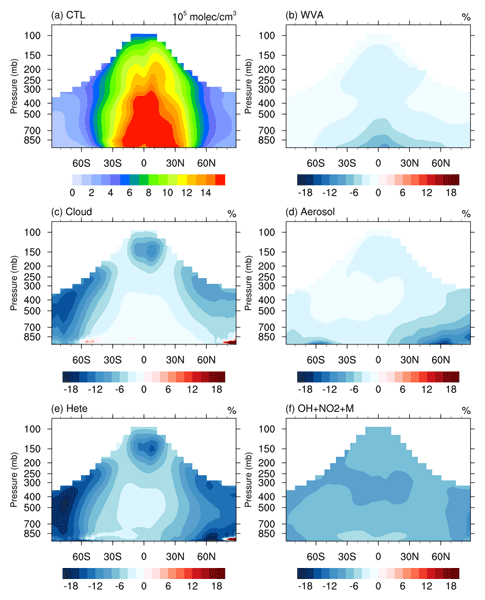
Xuewei Hou, Ryan Hossaini, Oliver Wild, Andrea Mazzeo, Richard J. Pope, Ye Wang, Siyuan Wang, Yuanhong Zhao, James Lee, Bin Zhu, Tianliang Zhao, and Alok K. Pandey
Atmos. Chem. Phys., 26, 13767–13793, https://doi.org/10.5194/acp-26-13767-2026, https://doi.org/10.5194/acp-26-13767-2026, 2026
Short summary
Short summary
The atmosphere’s ability to remove pollutants and greenhouse gases is largely controlled by the hydroxyl radical, but the causes of its long-term changes remain uncertain. Using a global atmospheric model, we quantified the effects of emissions, weather, and key chemical processes on hydroxyl radical levels between 2000 and 2017. Our findings improve understanding of atmospheric self-cleansing and help reduce uncertainties in future climate assessments.
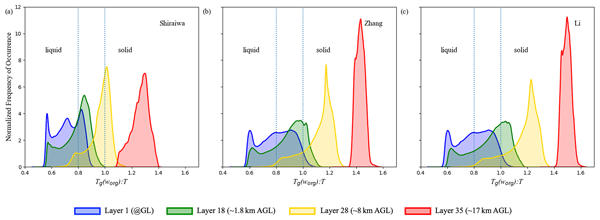
Sara L. Farrell, Quazi Z. Rasool, Havala O. T. Pye, Yue Zhang, Ying Li, Yuzhi Chen, Chi-Tsan Wang, Haofei Zhang, Ryan Schmedding, Manabu Shiraiwa, Jaime Green, Sri H. Budisulistiorini, Jose L. Jimenez, Weiwei Hu, Jason D. Surratt, and William Vizuete
Atmos. Chem. Phys., 26, 13557–13579, https://doi.org/10.5194/acp-26-13557-2026, https://doi.org/10.5194/acp-26-13557-2026, 2026
Short summary
Short summary
Fine particulate matter (PM2.5) has become increasingly important to regulate and model. In this study, we parameterize non-ideal aerosol mixing and phase state into the Community Multiscale Air Quality (CMAQ) model and analyze its impact on the formation of a globally important source of PM2.5, isoprene epoxydiol (IEPOX)-derived PM2.5. Incorporating these features furthers model bias in IEPOX-derived PM2.5, however, this work provides potential phase state bounds for future PM2.5 modeling work.
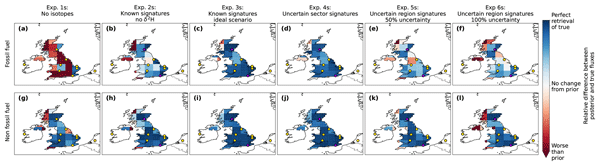
Alice E. Ramsden, Anita L. Ganesan, Matthew Rigby, Chris Rennick, Tim Arnold, Emmal Safi, Edward Chung, Dafina Kikaj, Cameron Yeo, Dave Lowry, Pete Levy, Simon O'Doherty, Kieran M. Stanley, Dickon Young, Joe Pitt, Damien Martin, Morgan Lopez, Michel Ramonet, Grant L. Forster, Arnoud Frumau, and Alistair J. Manning
Atmos. Chem. Phys., 26, 11421–11448, https://doi.org/10.5194/acp-26-11421-2026, https://doi.org/10.5194/acp-26-11421-2026, 2026
Short summary
Short summary
Methane is emitted from a range of anthropogenic and natural sources, each with a characteristic isotope ratio signature. We present a method for estimating emissions from multiple sources using isotopic signatures and observations of atmospheric methane isotope ratios. We show the importance of considering isotopic signature uncertainty and demonstrate how our current understanding of these signatures may be limiting this method’s ability to reduce uncertainties in emissions estimates.
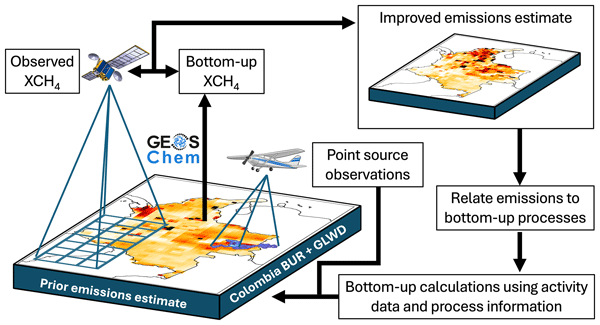
Sarah E. Hancock, Daniel J. Jacob, Rodrigo Jimenez, Andrés Ardila, Luis Morales-Rincon, Néstor Rojas, Lucas A. Estrada, Nicholas Balasus, James D. East, Melissa P. Sulprizio, Xiaolin Wang, James L. France, Lauren Potyk, Elise Penn, Zichong Chen, Daniel J. Varon, Christian Frankenberg, Marci Baranski, Andreea Calcan, and Robert J. Parker
Atmos. Chem. Phys., 26, 10455–10476, https://doi.org/10.5194/acp-26-10455-2026, https://doi.org/10.5194/acp-26-10455-2026, 2026
Short summary
Short summary
We combined satellite observations with detailed national data to improve estimates of Colombia’s methane emissions. Our results show that total methane emissions are higher than reported, with the biggest differences from fossil fuels. This approach demonstrates how satellite data can make national greenhouse gas reporting more accurate and transparent under the Paris Agreement.
Stephen J. Harris, Sven Krautwurst, Jorg Hacker, Mark Lunt, Jakob Borchardt, Mei Bai, Hartmut Boesch, Tarra Brain, John Philip Burrows, Shakti Chakravarty, Robert A. Field, Rebecca E. Fisher, James L. France, Konstantin Gerilowski, Oke Huhs, Wolfgang Junkermann, Bryce F. J. Kelly, Martin Kumm, Mathias Lanoisellé, Wolfgang Lieff, Andrew McGrath, Adrian Murphy, Thomas Röckmann, Zoe Salmon, Josua Schindewolf, Jakob Thoböll, Carina van der Veen, and Heinrich Bovensmann
Atmos. Chem. Phys., 26, 10043–10069, https://doi.org/10.5194/acp-26-10043-2026, https://doi.org/10.5194/acp-26-10043-2026, 2026
Short summary
Short summary
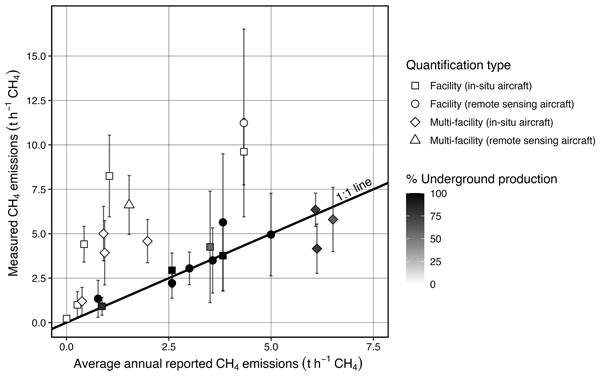
The accuracy of methods used to estimate and report fugitive methane emissions from Australian coal mines remains unclear. This study compares airborne emission rate estimates with reported estimates from 17 coal mines in the Bowen Basin, a region accounting for 45 % of national coal production. Results show good agreement for underground coal mines, but poor agreement for surface coal mines, suggesting improvements to surface coal mine reporting methods is needed to improve inventory reporting.
Audrey McManemin, Catherine Juéry, Vincent Blandin, Matthew Baker, Stéphane Bauguitte, Dominik Brunner, Philippine Burdeau, James Lawrence France, Anders M. Fredenslund, Andreas Hueni, Gerrit Kuhlmann, Patryk Łakomiec, Sando Meier, Roberto Paglini, Roubina Papaconstantinou, Jean-Daniel Paris, Pierre-Yves Quehe, Thomas Röckmann, Charlotte Scheutz, Martina Schmidt, Marius Vögtli, Julia B. Wietzel, and Adam R. Brandt
EGUsphere, https://doi.org/10.5194/egusphere-2026-1744, https://doi.org/10.5194/egusphere-2026-1744, 2026
Short summary
Short summary
Researchers tested five university-led systems to measure methane leaks at a facility in France. By releasing known amounts of gas, researchers checked if mobile tools on vehicles and planes could accurately detect and quantify emissions. Most sensors were excellent at finding leaks, but their accuracy in measuring the exact emission rate varied. Weather, especially low wind, significantly impacted results. These findings help improve how we track greenhouse gases to meet climate goals.
Sara Aisyah Syafira, Dawei Hu, Aristeidis Voliotis, Huihui Wu, Osayomwanbor Ebenezer Oghama, Yunqi Shao, Sri Hapsari Budisulistiorini, Yu Wang, Michael Flynn, Peter James Gallimore, Hugh Coe, James Allan, and Gordon McFiggans
EGUsphere, https://doi.org/10.5194/egusphere-2026-2723, https://doi.org/10.5194/egusphere-2026-2723, 2026
Short summary
Short summary
The variability in hygroscopicity of biomass-burning aerosol particles, both fresh and aged, was measured using three methods across different fuel types and burn phases. Several inter-method discrepancy factors were tested. Substantial discrepancies remained after applying improvements that mitigated the tested factors: size-related factors and organic hygroscopicity assumption factor, highlighting the need for regime-aware κ parameterizations in atmospheric and climate models.
Zixuan Cheng, Doğuşhan Kılıç, Daniel Wilson, Amanda Lea-Langton, Michael Flynn, Leonard Kirago, Marvin Shaw, Andrew Rickard, Jim R. Hopkins, Daniel Bryant, Gordon McFiggans, Jacqueline F. Hamilton, Hugh Coe, and James Allan
Aerosol Research Discuss., https://doi.org/10.5194/ar-2026-24, https://doi.org/10.5194/ar-2026-24, 2026
Preprint under review for AR
Short summary
Short summary
Wood burning is seen as cleaner in modern stoves, but user behaviour can change this when burning dry wood. We burned dry ash wood in a UK modern stove with six common operations and measured the wood smoke. Reloading while hot, using too much or too little wood, or opening the stove door increased small particels and harmful smoke emissions. We found a burning stage that helps explain these emissions. Using big pieces of wood and following guidance can reduce pollution and health risks.
Bibhasvata Dasgupta, Sudhanshu Pandey, Sander Houweling, Malika Menoud, Carina van der Veen, John Miller, Ben Riddell-Young, Sylvia Englund Michel, Peter Sperlich, Shinji Morimoto, Ryo Fujita, Stephen Platt, Christine Groot Zwaaftink, Ingeborg Levin, Cordelia Veidt, Cathrine Lund Myhre, Ceres Woolley Maisch, Rebecca Fisher, Euan G. Nisbet, James France, Rowena Moss, Nicola Warwick, and Thomas Röckmann
Atmos. Chem. Phys., 26, 8601–8616, https://doi.org/10.5194/acp-26-8601-2026, https://doi.org/10.5194/acp-26-8601-2026, 2026
Short summary
Short summary
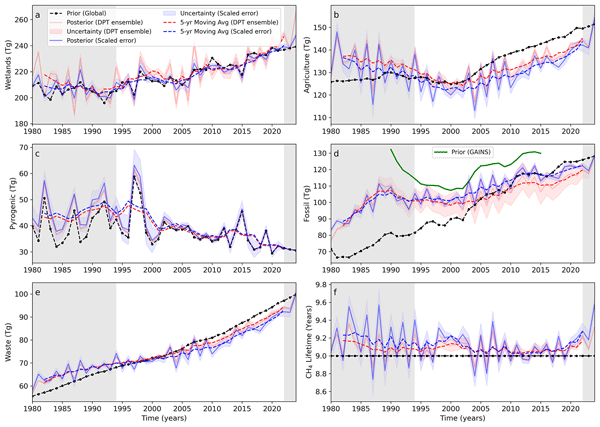
Methane is a strong greenhouse gas, and its rise since the mid-2000s is debated in terms of sources and sinks. Using top-down and bottom-up data, along with inversion models and methane isotopes (δ13C-CH4 and δD-CH4), we find that wetlands are the primary driver of post-2006 increases, followed by agriculture and fossil fuels. Methane's lifetime has decreased by about 0.1 years. We also assess how isotope signatures and sink processes influence uncertainties.
Lewis Marden, Marvin D. Shaw, Stephen J. Andrews, Maya Zmajkovic, Phil Rund, Becky Alexander, Joel Thornton, Andrew Peters, Peter Karadakov, and Lucy J. Carpenter
Atmos. Meas. Tech., 19, 2715–2735, https://doi.org/10.5194/amt-19-2715-2026, https://doi.org/10.5194/amt-19-2715-2026, 2026
Short summary
Short summary
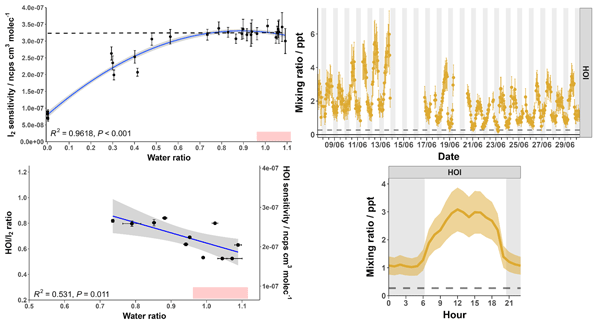
Hypoiodous acid (HOI) and molecular iodine (I2) are the dominant precursors of reactive gaseous iodine, which plays an important role in the atmospheric oxidative capacity and in aerosol formation. However, difficulties in the quantification of HOI and I2 mean that very few measurements are available. This work describes a novel calibration method for HOI and reports the detection of HOI and I2 in the marine boundary layer using Br- chemical ionisation mass spectrometry.
Maria Tsivlidou, Jamie McQuilkin, Hugo Ricketts, Kieran Wood, Jonathan Helmore, David Lowry, and Grant Allen
EGUsphere, https://doi.org/10.5194/egusphere-2026-1665, https://doi.org/10.5194/egusphere-2026-1665, 2026
Short summary
Short summary
We assess a drone-based method to measure methane emissions using controlled release experiments at two sites. Estimated emission rates showed very good agreement with known release rates, demonstrating good accuracy. This work supports the development of direct emission measurement methods, which are essential for tracking emissions, informing reduction strategies, and improving greenhouse gas reporting, for local sources such as waste management.

Loren G. Temple, Stuart Young, Thomas Bannan, Stephanie E. Batten, Stéphane Bauguitte, Hugh Coe, Eve Grant, Stuart E. Lacy, James D. Lee, Emily Matthews, Dominika Pasternak, Samuel D. A. Rogers, Andrew W. Rollins, Jake Vallow, Mingxi Yang, and Pete M. Edwards
Atmos. Meas. Tech., 19, 1165–1178, https://doi.org/10.5194/amt-19-1165-2026, https://doi.org/10.5194/amt-19-1165-2026, 2026
Short summary
Short summary
Sulfur dioxide (SO2) is a key precursor to aerosol formation, particularly in remote marine environments, ultimately affecting cloud properties and climate. Accurate quantification of atmospheric SO2 is therefore crucial. This work compares a custom-built laser-based instrument to two commercial SO2 analysers during measurements from a large research aircraft. Our results show that this custom-built system offers greater sensitivity at time resolutions required for aircraft measurements.
Audrey McManemin, Catherine Juéry, Vincent Blandin, James L. France, Philippine Burdeau, and Adam R. Brandt
Atmos. Meas. Tech., 19, 923–934, https://doi.org/10.5194/amt-19-923-2026, https://doi.org/10.5194/amt-19-923-2026, 2026
Short summary
Short summary
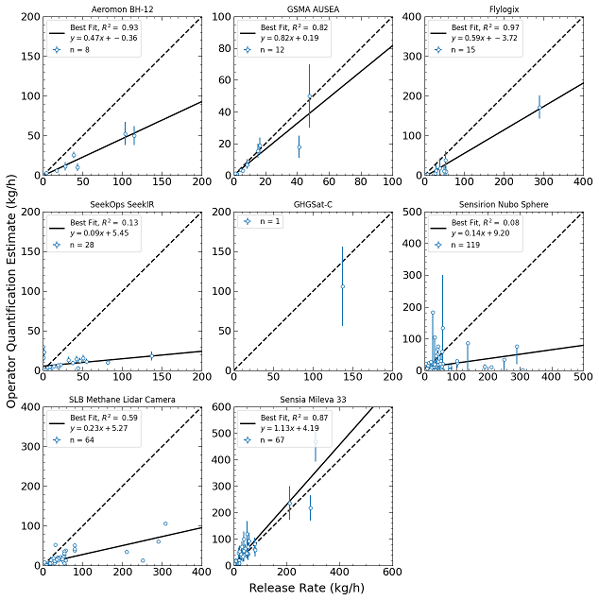
This experiment tested the ability of different technologies to detect and measure methane emissions. Participating teams used satellites, drones, and other systems to estimate methane leak rates without knowing the true rate. Some systems were more accurate than others, and wind and other environmental conditions made measurements harder. Our findings help improve these tools and support efforts to track and reduce methane emissions as new environmental rules take shape in Europe and beyond.
Taku Umezawa, Yukio Terao, Masahito Ueyama, Satoshi Kameyama, Mark Lunt, and James Lawrence France
Atmos. Chem. Phys., 25, 18015–18029, https://doi.org/10.5194/acp-25-18015-2025, https://doi.org/10.5194/acp-25-18015-2025, 2025
Short summary
Short summary
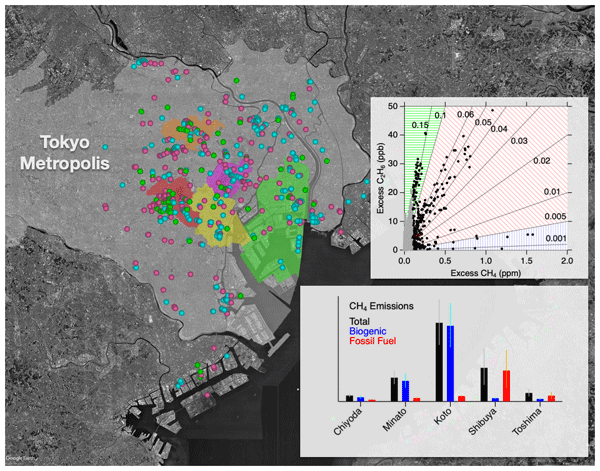
Effective mitigation actions require accurate understanding of methane emission characteristics in cities. We conducted atmospheric methane and ethane measurements using a vehicle in the world’s largest megacity, Tokyo, to identify locations and types of emissions and to examine preliminary estimates of their magnitudes. Waste sectors and fugitive natural gas emissions were found to be the major urban sources, and our data suggested need of improved accounting of natural gas related emissions.
Matthew J. Rowlinson, Lucy J. Carpenter, Mat J. Evans, James D. Lee, Simone T. Andersen, Tomas Sherwen, Anna B. Callaghan, Roberto Sommariva, William Bloss, Siqi Hou, Leigh R. Crilley, Klaus Pfeilsticker, Benjamin Weyland, Thomas B. Ryerson, Patrick R. Veres, Pedro Campuzano-Jost, Hongyu Guo, Benjamin A. Nault, Jose L. Jimenez, and Khanneh Wadinga Fomba
Atmos. Chem. Phys., 25, 16945–16968, https://doi.org/10.5194/acp-25-16945-2025, https://doi.org/10.5194/acp-25-16945-2025, 2025
Short summary
Short summary
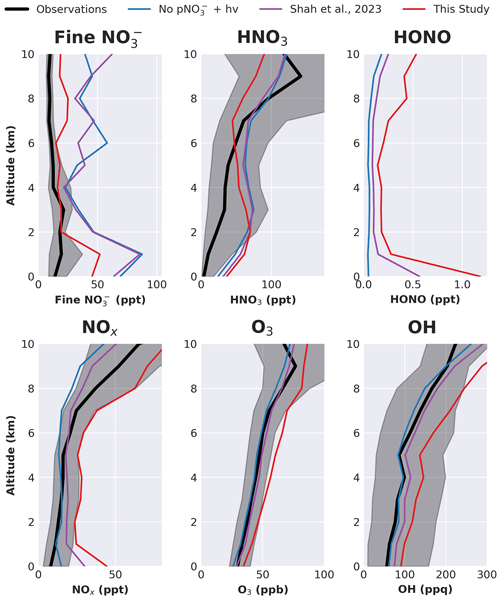
HONO is key to tropospheric chemistry. Observations show high HONO concentrations in remote air, possibly explained by nitrate aerosol photolysis. We use observations to parameterize nitrate photolysis, evaluating simulated HONO against observations from multiple sources. We show improved agreement with observed HONO, but overestimates in NOx and O3, beyond observational constraints. This implies uncertainties in the NOx budget and our understanding of atmospheric chemistry.
Beth S. Nelson and Will S. Drysdale
Atmos. Chem. Phys., 25, 16009–16026, https://doi.org/10.5194/acp-25-16009-2025, https://doi.org/10.5194/acp-25-16009-2025, 2025
Short summary
Short summary
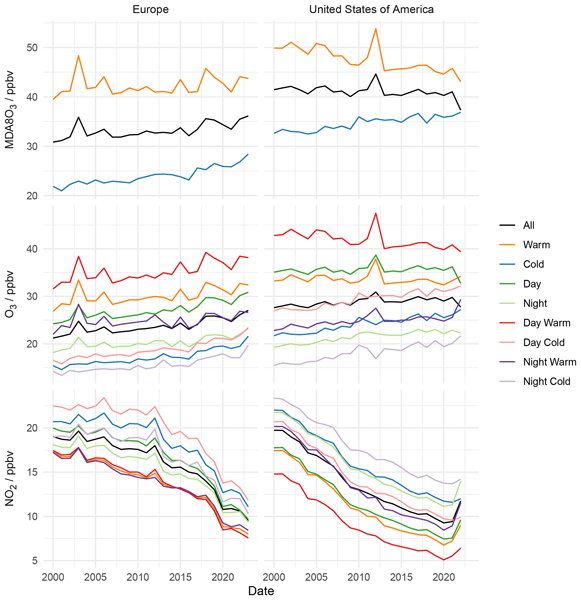
Urban O3 trends across Europe and the USA were explored between 2000–2021. Most warm season trends in high O3 in Europe were shown to be decreasing, though low values in both warm and cold seasons were increasing. Trends in the USA were similar, but showed less increasing trends low O3 in the warm season. Sites with similar trends were grouped, more different were seen in the USA, and identified ones where trends in high O3 values had started to increase later in the period.
Bibhasvata Dasgupta, Malika Menoud, Carina van der Veen, Ingeborg Levin, Cordelia Veidt, Heiko Moossen, Sylvia Englund Michel, Peter Sperlich, Shinji Morimoto, Ryo Fujita, Taku Umezawa, Stephen Platt, Christine Groot Zwaaftink, Cathrine Lund Myhre, Rebecca Fisher, David Lowry, Euan G. Nisbet, James France, Ceres Woolley Maisch, Gordon Brailsford, Rowena Moss, Daisuke Goto, Sudhanshu Pandey, Sander Houweling, Nicola Warwick, and Thomas Röckmann
Atmos. Meas. Tech., 18, 6591–6607, https://doi.org/10.5194/amt-18-6591-2025, https://doi.org/10.5194/amt-18-6591-2025, 2025
Short summary
Short summary
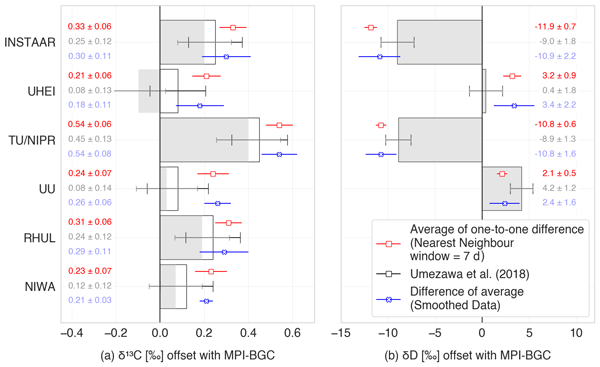
We combined long-term methane mole fraction and isotope measurements from eight laboratories that sample high-latitude stations to compare, offset correct and harmonise the datasets into a hemisphere merged timeseries. Because each laboratory uses slightly different methods, we adjusted the data to make it directly comparable. This allowed us to create a consistent record of atmospheric methane concentration and its isotopes from 1988 to 2023.
Masahito Ueyama, Taku Umezawa, Yukio Terao, Mark Lunt, and James Lawrence France
Atmos. Chem. Phys., 25, 12513–12534, https://doi.org/10.5194/acp-25-12513-2025, https://doi.org/10.5194/acp-25-12513-2025, 2025
Short summary
Short summary
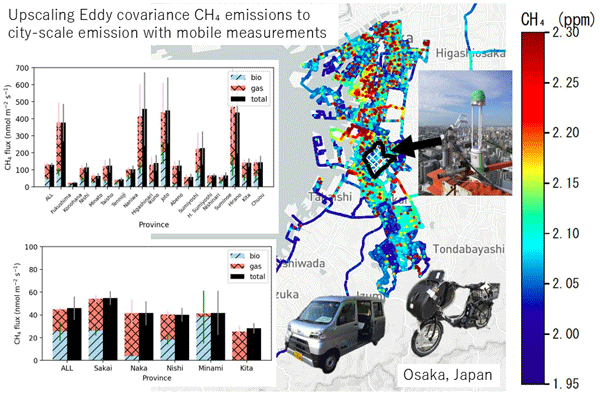
Methane (CH4) emissions were measured in the megacity of Osaka, Japan, using mobile and eddy covariance methods. The CH4 emissions were much higher than those reported in local inventories, with natural gas contributing up to 74 % of the emissions. Several CH4 sources not accounted for in current inventories were identified. These results emphasize the need for more comprehensive emissions tracking in urban areas to enhance climate change mitigation efforts.
Yugo Kanaya, Roberto Sommariva, Alfonso Saiz-Lopez, Andrea Mazzeo, Theodore K. Koenig, Kaori Kawana, James E. Johnson, Aurélie Colomb, Pierre Tulet, Suzie Molloy, Ian E. Galbally, Rainer Volkamer, Anoop Mahajan, John W. Halfacre, Paul B. Shepson, Julia Schmale, Hélène Angot, Byron Blomquist, Matthew D. Shupe, Detlev Helmig, Junsu Gil, Meehye Lee, Sean C. Coburn, Ivan Ortega, Gao Chen, James Lee, Kenneth C. Aikin, David D. Parrish, John S. Holloway, Thomas B. Ryerson, Ilana B. Pollack, Eric J. Williams, Brian M. Lerner, Andrew J. Weinheimer, Teresa Campos, Frank M. Flocke, J. Ryan Spackman, Ilann Bourgeois, Jeff Peischl, Chelsea R. Thompson, Ralf M. Staebler, Amir A. Aliabadi, Wanmin Gong, Roeland Van Malderen, Anne M. Thompson, Ryan M. Stauffer, Debra E. Kollonige, Juan Carlos Gómez Martin, Masatomo Fujiwara, Katie Read, Matthew Rowlinson, Keiichi Sato, Junichi Kurokawa, Yoko Iwamoto, Fumikazu Taketani, Hisahiro Takashima, Mónica Navarro-Comas, Marios Panagi, and Martin G. Schultz
Earth Syst. Sci. Data, 17, 4901–4932, https://doi.org/10.5194/essd-17-4901-2025, https://doi.org/10.5194/essd-17-4901-2025, 2025
Short summary
Short summary
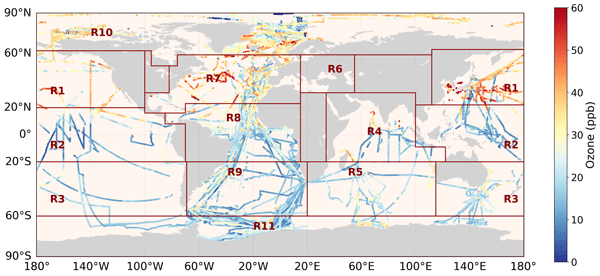
The first comprehensive dataset of tropospheric ozone over oceans/polar regions is presented, including 77 ship/buoy and 48 aircraft campaign observations (1977–2022, 0–5000 m altitude), supplemented by ozonesonde and surface data. Air masses isolated from land for 72+ hours are systematically selected as essentially oceanic. Among the 11 global regions, they show daytime decreases of 11–16 % in the tropics, while near-zero depletions are rare, unlike in the Arctic, implying different mechanisms.
Mark F. Lunt, Stephen J. Harris, Jorg Hacker, Ian Joynes, Tim Robertson, Simon Thompson, and James L. France
Atmos. Meas. Tech., 18, 4413–4431, https://doi.org/10.5194/amt-18-4413-2025, https://doi.org/10.5194/amt-18-4413-2025, 2025
Short summary
Short summary
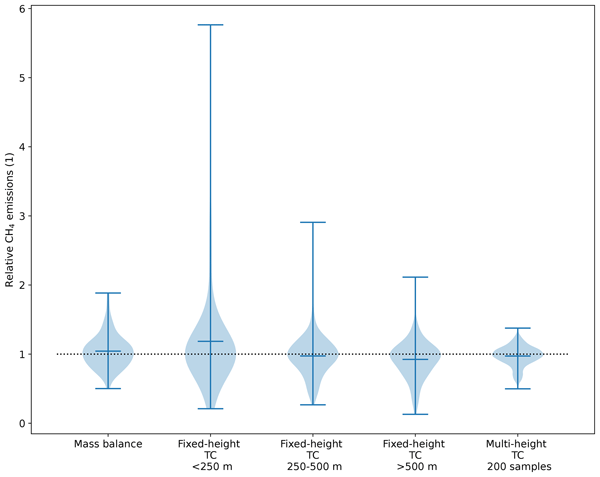
To ensure robust use of measurement-based approaches to estimate methane emissions from individual sites, it is important to validate the accuracy of the methods used in the field. By using co-emitted carbon dioxide, we evaluate the performance of one such quantification method at liquefied natural gas terminals. We further demonstrate the potential for a more efficient quantification approach via tracer correlation by considering the ratio of methane to carbon dioxide concentrations.
John W. Halfacre, Lewis Marden, Marvin D. Shaw, Lucy J. Carpenter, Emily Matthews, Thomas J. Bannan, Hugh Coe, Scott C. Herndon, Joseph R. Roscioli, Christoph Dyroff, Tara I. Yacovitch, Patrick R. Veres, Michael A. Robinson, Steven S. Brown, and Pete M. Edwards
Atmos. Meas. Tech., 18, 3799–3818, https://doi.org/10.5194/amt-18-3799-2025, https://doi.org/10.5194/amt-18-3799-2025, 2025
Short summary
Short summary
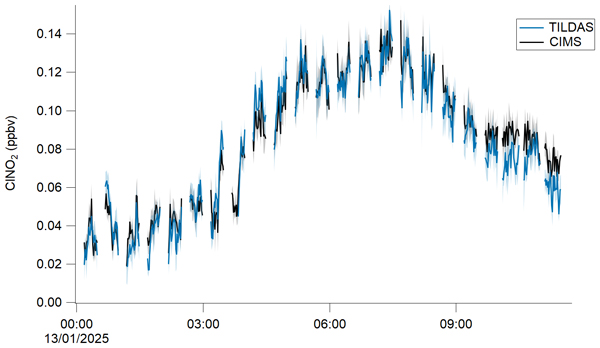
Nitryl chloride (ClNO2) is a reservoir of chlorine atoms and nitrogen oxides, both of which play important roles in atmospheric chemistry. However, all ambient ClNO2 observations so far have been made by a single technique, mass spectrometry, which needs complex calibrations. Here, we present a laser-based method that detects ClNO2 (TD-TILDAS – thermal dissociation–tunable infrared laser direct absorption spectrometry) without the need for complicated calibrations. The results show excellent agreement between these two methods from both laboratory and ambient samples.
Judith Tettenborn, Daniel Zavala-Araiza, Daan Stroeken, Hossein Maazallahi, Carina van der Veen, Arjan Hensen, Ilona Velzeboer, Pim van den Bulk, Felix Vogel, Lawson Gillespie, Sebastien Ars, James France, David Lowry, Rebecca Fisher, and Thomas Röckmann
Atmos. Meas. Tech., 18, 3569–3584, https://doi.org/10.5194/amt-18-3569-2025, https://doi.org/10.5194/amt-18-3569-2025, 2025
Short summary
Short summary
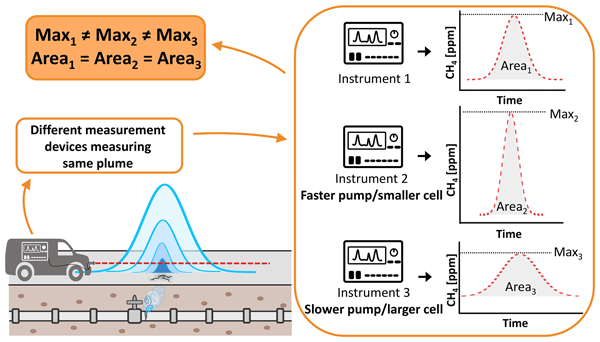
Measurements of methane with vehicle-based sensors are an effective method to identify and quantify leaks from urban gas distribution systems. We deliberately released methane in different environments and calibrated the response of different methane analysers when they transected the plumes in a vehicle. We derived an improved statistical function for consistent emission estimations using different instruments. Repeated transects reduce the uncertainty in emission rate estimates.
Xiansheng Liu, Xun Zhang, Marvin Dufresne, Tao Wang, Lijie Wu, Rosa Lara, Roger Seco, Marta Monge, Ana Maria Yáñez-Serrano, Marie Gohy, Paul Petit, Audrey Chevalier, Marie-Pierre Vagnot, Yann Fortier, Alexia Baudic, Véronique Ghersi, Grégory Gille, Ludovic Lanzi, Valérie Gros, Leïla Simon, Heidi Héllen, Stefan Reimann, Zoé Le Bras, Michelle Jessy Müller, David Beddows, Siqi Hou, Zongbo Shi, Roy M. Harrison, William Bloss, James Dernie, Stéphane Sauvage, Philip K. Hopke, Xiaoli Duan, Taicheng An, Alastair C. Lewis, James R. Hopkins, Eleni Liakakou, Nikolaos Mihalopoulos, Xiaohu Zhang, Andrés Alastuey, Xavier Querol, and Thérèse Salameh
Atmos. Chem. Phys., 25, 625–638, https://doi.org/10.5194/acp-25-625-2025, https://doi.org/10.5194/acp-25-625-2025, 2025
Short summary
Short summary
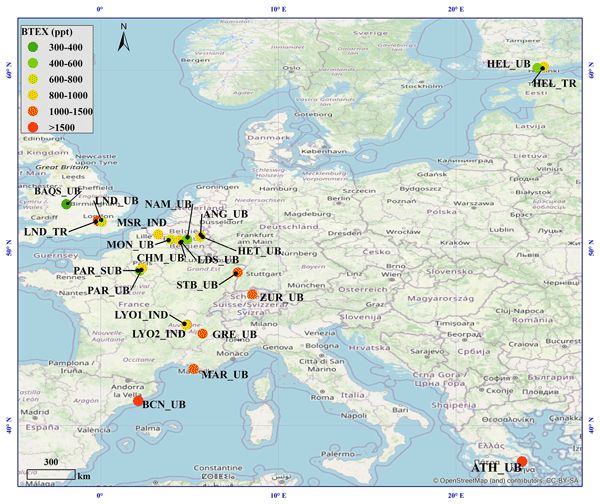
This study examines BTEX (benzene, toluene, ethylbenzene, xylenes) pollution in urban areas across seven European countries. Analyzing data from 22 monitoring sites, we found traffic and industrial activities significantly impact BTEX levels, with peaks during rush hours. The risk from BTEX exposure remains moderate, especially in high-traffic and industrial zones, highlighting the need for targeted air quality management to protect public health and improve urban air quality.
Alex T. Archibald, Bablu Sinha, Maria R. Russo, Emily Matthews, Freya A. Squires, N. Luke Abraham, Stephane J.-B. Bauguitte, Thomas J. Bannan, Thomas G. Bell, David Berry, Lucy J. Carpenter, Hugh Coe, Andrew Coward, Peter Edwards, Daniel Feltham, Dwayne Heard, Jim Hopkins, James Keeble, Elizabeth C. Kent, Brian A. King, Isobel R. Lawrence, James Lee, Claire R. Macintosh, Alex Megann, Bengamin I. Moat, Katie Read, Chris Reed, Malcolm J. Roberts, Reinhard Schiemann, David Schroeder, Timothy J. Smyth, Loren Temple, Navaneeth Thamban, Lisa Whalley, Simon Williams, Huihui Wu, and Mingxi Yang
Earth Syst. Sci. Data, 17, 135–164, https://doi.org/10.5194/essd-17-135-2025, https://doi.org/10.5194/essd-17-135-2025, 2025
Short summary
Short summary
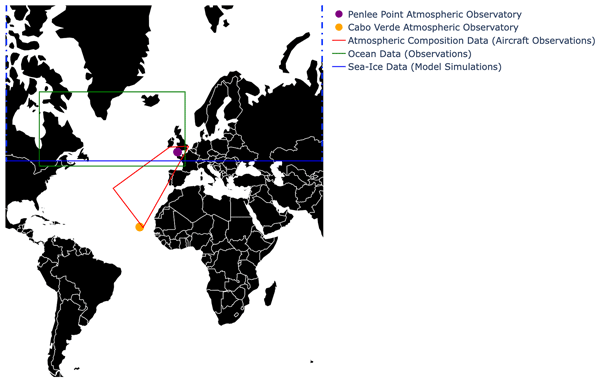
Here, we present an overview of the data generated as part of the North Atlantic Climate System Integrated Study (ACSIS) programme that are available through dedicated repositories at the Centre for Environmental Data Analysis (CEDA; www.ceda.ac.uk) and the British Oceanographic Data Centre (BODC; bodc.ac.uk). The datasets described here cover the North Atlantic Ocean, the atmosphere above (it including its composition), and Arctic sea ice.
Beth S. Nelson, Zhenze Liu, Freya A. Squires, Marvin Shaw, James R. Hopkins, Jacqueline F. Hamilton, Andrew R. Rickard, Alastair C. Lewis, Zongbo Shi, and James D. Lee
Atmos. Chem. Phys., 24, 9031–9044, https://doi.org/10.5194/acp-24-9031-2024, https://doi.org/10.5194/acp-24-9031-2024, 2024
Short summary
Short summary
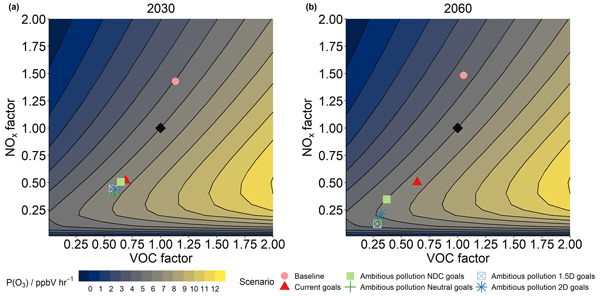
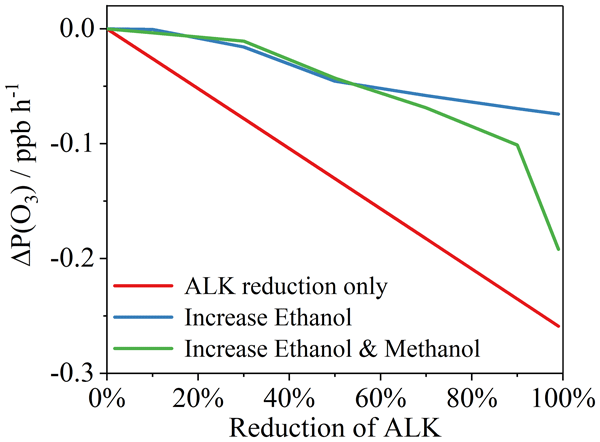
The impact of combined air quality and carbon neutrality policies on O3 formation in Beijing was investigated. Emissions inventory data were used to estimate future pollutant mixing ratios relative to ground-level observations. O3 production was found to be most sensitive to changes in alkenes, but large reductions in less reactive compounds led to larger reductions in future O3 production. This study highlights the importance of understanding the emissions of organic pollutants.
Jianghao Li, Alastair C. Lewis, Jim R. Hopkins, Stephen J. Andrews, Tim Murrells, Neil Passant, Ben Richmond, Siqi Hou, William J. Bloss, Roy M. Harrison, and Zongbo Shi
Atmos. Chem. Phys., 24, 6219–6231, https://doi.org/10.5194/acp-24-6219-2024, https://doi.org/10.5194/acp-24-6219-2024, 2024
Short summary
Short summary
A summertime ozone event at an urban site in Birmingham is sensitive to volatile organic compounds (VOCs) – particularly those of oxygenated VOCs. The roles of anthropogenic VOC sources in urban ozone chemistry are examined by integrating the 1990–2019 national atmospheric emission inventory into model scenarios. Road transport remains the most powerful means of further reducing ozone in this case study, but the benefits may be offset if solvent emissions of VOCs continue to increase.
Emily Dowd, Alistair J. Manning, Bryn Orth-Lashley, Marianne Girard, James France, Rebecca E. Fisher, Dave Lowry, Mathias Lanoisellé, Joseph R. Pitt, Kieran M. Stanley, Simon O'Doherty, Dickon Young, Glen Thistlethwaite, Martyn P. Chipperfield, Emanuel Gloor, and Chris Wilson
Atmos. Meas. Tech., 17, 1599–1615, https://doi.org/10.5194/amt-17-1599-2024, https://doi.org/10.5194/amt-17-1599-2024, 2024
Short summary
Short summary
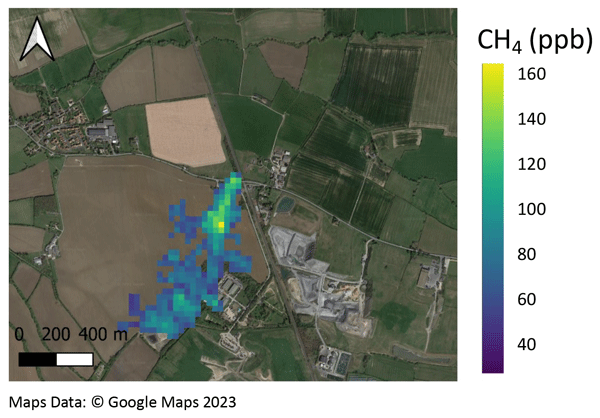
We provide the first validation of the satellite-derived emission estimates using surface-based mobile greenhouse gas surveys of an active gas leak detected near Cheltenham, UK. GHGSat’s emission estimates broadly agree with the surface-based mobile survey and steps were taken to fix the leak, highlighting the importance of satellite data in identifying emissions and helping to reduce our human impact on climate change.
Magdalena Pühl, Anke Roiger, Alina Fiehn, Alan M. Gorchov Negron, Eric A. Kort, Stefan Schwietzke, Ignacio Pisso, Amy Foulds, James Lee, James L. France, Anna E. Jones, Dave Lowry, Rebecca E. Fisher, Langwen Huang, Jacob Shaw, Prudence Bateson, Stephen Andrews, Stuart Young, Pamela Dominutti, Tom Lachlan-Cope, Alexandra Weiss, and Grant Allen
Atmos. Chem. Phys., 24, 1005–1024, https://doi.org/10.5194/acp-24-1005-2024, https://doi.org/10.5194/acp-24-1005-2024, 2024
Short summary
Short summary
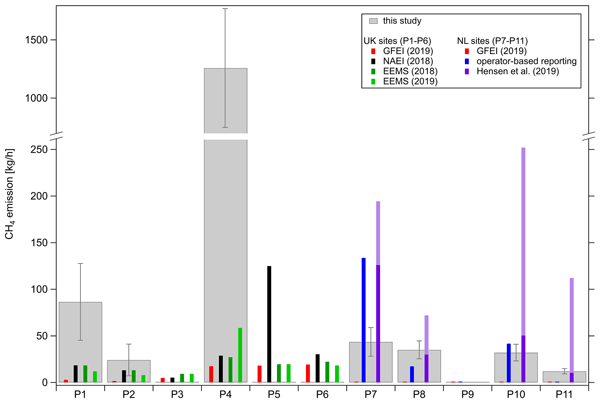
In April–May 2019 we carried out an airborne field campaign in the southern North Sea with the aim of studying methane emissions of offshore gas installations. We determined methane emissions from elevated methane measured downstream of the sampled installations. We compare our measured methane emissions with estimated methane emissions from national and global annual inventories. As a result, we find inconsistencies of inventories and large discrepancies between measurements and inventories.
Xuewei Hou, Oliver Wild, Bin Zhu, and James Lee
Atmos. Chem. Phys., 23, 15395–15411, https://doi.org/10.5194/acp-23-15395-2023, https://doi.org/10.5194/acp-23-15395-2023, 2023
Short summary
Short summary
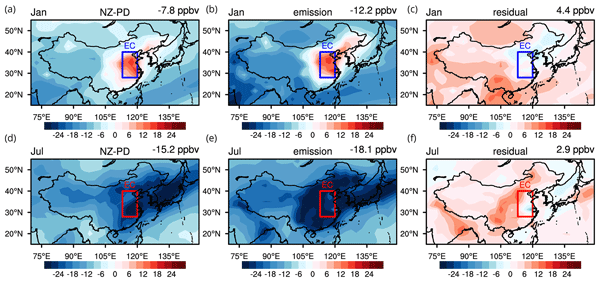
In response to the climate crisis, many countries have committed to net zero in a certain future year. The impacts of net-zero scenarios on tropospheric O3 are less well studied and remain unclear. In this study, we quantified the changes of tropospheric O3 budgets, spatiotemporal distributions of future surface O3 in east Asia and regional O3 source contributions for 2060 under a net-zero scenario using the NCAR Community Earth System Model (CESM) and online O3-tagging methods.
Robert Woodward-Massey, Roberto Sommariva, Lisa K. Whalley, Danny R. Cryer, Trevor Ingham, William J. Bloss, Stephen M. Ball, Sam Cox, James D. Lee, Chris P. Reed, Leigh R. Crilley, Louisa J. Kramer, Brian J. Bandy, Grant L. Forster, Claire E. Reeves, Paul S. Monks, and Dwayne E. Heard
Atmos. Chem. Phys., 23, 14393–14424, https://doi.org/10.5194/acp-23-14393-2023, https://doi.org/10.5194/acp-23-14393-2023, 2023
Short summary
Short summary
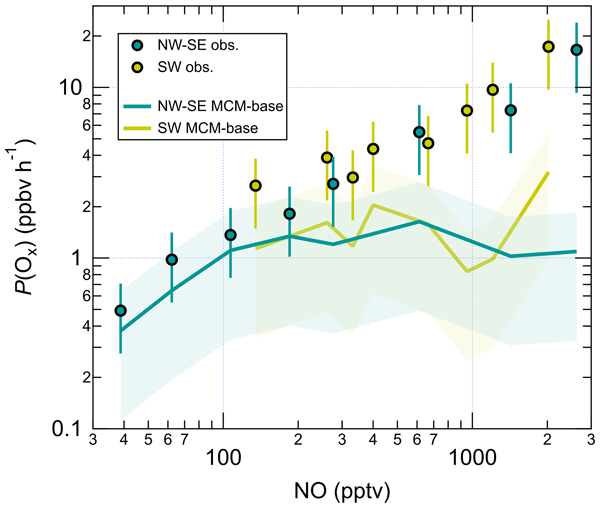
Measurements of OH, HO2 and RO2 radicals and also OH reactivity were made at a UK coastal site and compared to calculations from a constrained box model utilising the Master Chemical Mechanism. The model agreement displayed a strong dependence on the NO concentration. An experimental budget analysis for OH, HO2, RO2 and total ROx demonstrated significant imbalances between HO2 and RO2 production rates. Ozone production rates were calculated from measured radicals and compared to modelled values.
Sara M. Defratyka, James L. France, Rebecca E. Fisher, Dave Lowry, Julianne M. Fernandez, Semra Bakkaloglu, Camille Yver-Kwok, Jean-Daniel Paris, Philippe Bousquet, Tim Arnold, Chris Rennick, Jon Helmore, Nigel Yarrow, and Euan G. Nisbet
EGUsphere, https://doi.org/10.5194/egusphere-2023-1490, https://doi.org/10.5194/egusphere-2023-1490, 2023
Preprint archived
Short summary
Short summary
We are focused on verification of δ13CH4 measurements in near-source conditions and we have provided an insight into the impact of chosen calculation methods for determined isotopic signatures. Our study offers a step forward for establishing an unified, robust, and reliable analytical technique to determine δ13CH4 of methane sources. Our recommended analytical approach reduces biases and uncertainties coming from measurement conditions, data clustering and various available fitting methods.
Joanna E. Dyson, Lisa K. Whalley, Eloise J. Slater, Robert Woodward-Massey, Chunxiang Ye, James D. Lee, Freya Squires, James R. Hopkins, Rachel E. Dunmore, Marvin Shaw, Jacqueline F. Hamilton, Alastair C. Lewis, Stephen D. Worrall, Asan Bacak, Archit Mehra, Thomas J. Bannan, Hugh Coe, Carl J. Percival, Bin Ouyang, C. Nicholas Hewitt, Roderic L. Jones, Leigh R. Crilley, Louisa J. Kramer, W. Joe F. Acton, William J. Bloss, Supattarachai Saksakulkrai, Jingsha Xu, Zongbo Shi, Roy M. Harrison, Simone Kotthaus, Sue Grimmond, Yele Sun, Weiqi Xu, Siyao Yue, Lianfang Wei, Pingqing Fu, Xinming Wang, Stephen R. Arnold, and Dwayne E. Heard
Atmos. Chem. Phys., 23, 5679–5697, https://doi.org/10.5194/acp-23-5679-2023, https://doi.org/10.5194/acp-23-5679-2023, 2023
Short summary
Short summary
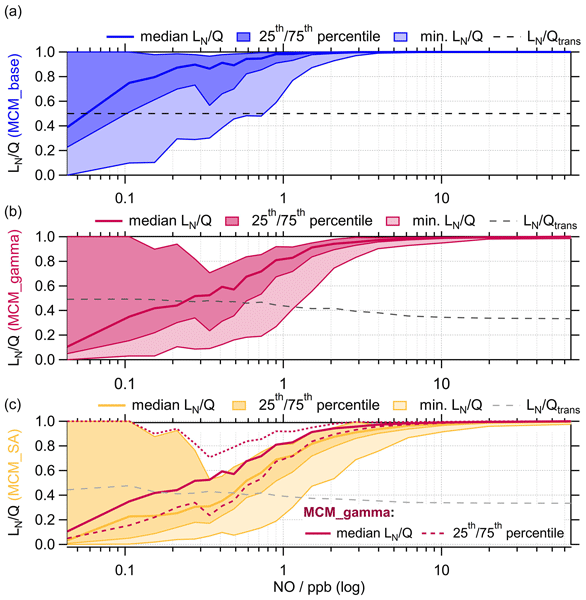
The hydroxyl (OH) and closely coupled hydroperoxyl (HO2) radicals are vital for their role in the removal of atmospheric pollutants. In less polluted regions, atmospheric models over-predict HO2 concentrations. In this modelling study, the impact of heterogeneous uptake of HO2 onto aerosol surfaces on radical concentrations and the ozone production regime in Beijing in the summertime is investigated, and the implications for emissions policies across China are considered.
Samuel J. Cliff, Will Drysdale, James D. Lee, Carole Helfter, Eiko Nemitz, Stefan Metzger, and Janet F. Barlow
Atmos. Chem. Phys., 23, 2315–2330, https://doi.org/10.5194/acp-23-2315-2023, https://doi.org/10.5194/acp-23-2315-2023, 2023
Short summary
Short summary
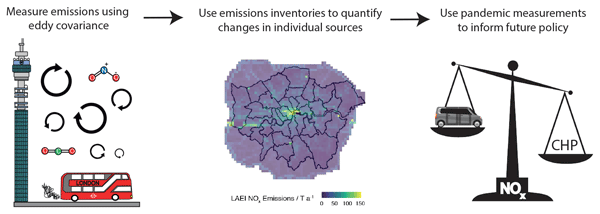
Emissions of nitrogen oxides (NOx) to the atmosphere are an ongoing air quality issue. This study directly measures emissions of NOx and carbon dioxide from a tall tower in central London during the coronavirus pandemic. It was found that transport NOx emissions had reduced by >73 % since 2017 as a result of air quality policy and reduced congestion during coronavirus restrictions. During this period, central London was thought to be dominated by point-source heat and power generation emissions.

Jacob T. Shaw, Amy Foulds, Shona Wilde, Patrick Barker, Freya A. Squires, James Lee, Ruth Purvis, Ralph Burton, Ioana Colfescu, Stephen Mobbs, Samuel Cliff, Stéphane J.-B. Bauguitte, Stuart Young, Stefan Schwietzke, and Grant Allen
Atmos. Chem. Phys., 23, 1491–1509, https://doi.org/10.5194/acp-23-1491-2023, https://doi.org/10.5194/acp-23-1491-2023, 2023
Short summary
Short summary
Flaring is used by the oil and gas sector to dispose of unwanted natural gas or for safety. However, few studies have assessed the efficiency with which the gas is combusted. We sampled flaring emissions from offshore facilities in the North Sea. Average measured flaring efficiencies were ~ 98 % but with a skewed distribution, including many flares of lower efficiency. NOx and ethane emissions were also measured. Inefficient flaring practices could be a target for mitigating carbon emissions.
Daniel J. Bryant, Beth S. Nelson, Stefan J. Swift, Sri Hapsari Budisulistiorini, Will S. Drysdale, Adam R. Vaughan, Mike J. Newland, James R. Hopkins, James M. Cash, Ben Langford, Eiko Nemitz, W. Joe F. Acton, C. Nicholas Hewitt, Tuhin Mandal, Bhola R. Gurjar, Shivani, Ranu Gadi, James D. Lee, Andrew R. Rickard, and Jacqueline F. Hamilton
Atmos. Chem. Phys., 23, 61–83, https://doi.org/10.5194/acp-23-61-2023, https://doi.org/10.5194/acp-23-61-2023, 2023
Short summary
Short summary
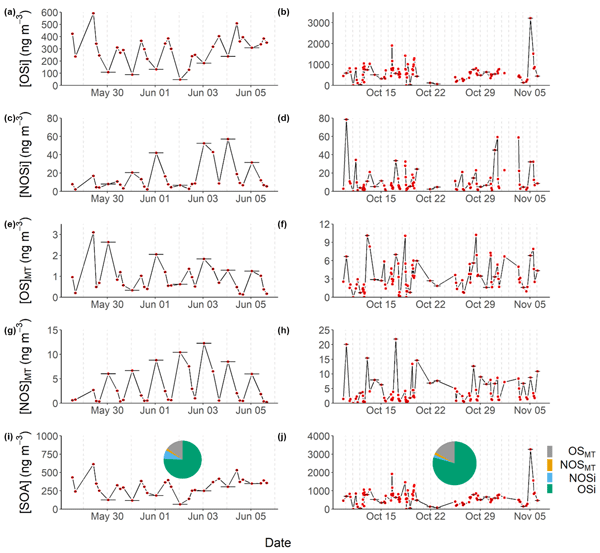
This paper investigates the sources of isoprene and monoterpene compounds and their particulate-phase oxidation products in Delhi, India. This was done to improve our understanding of the sources, concentrations, and fate of volatile emissions in megacities. By studying the chemical composition of offline filter samples, we report that a significant share of the oxidised organic aerosol in Delhi is from isoprene and monoterpenes. This has implications for human health and policy development.
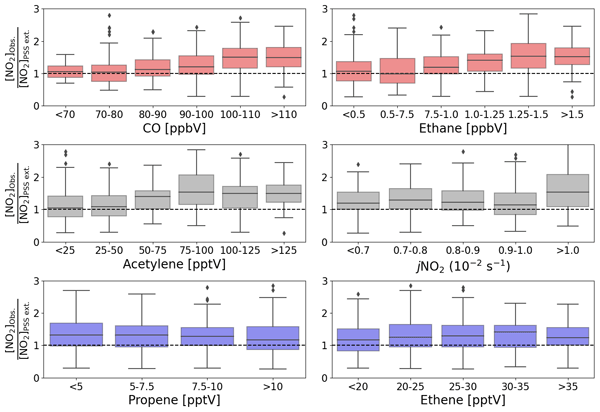
Simone T. Andersen, Beth S. Nelson, Katie A. Read, Shalini Punjabi, Luis Neves, Matthew J. Rowlinson, James Hopkins, Tomás Sherwen, Lisa K. Whalley, James D. Lee, and Lucy J. Carpenter
Atmos. Chem. Phys., 22, 15747–15765, https://doi.org/10.5194/acp-22-15747-2022, https://doi.org/10.5194/acp-22-15747-2022, 2022
Short summary
Short summary
The cycling of NO and NO2 is important to understand to be able to predict O3 concentrations in the atmosphere. We have used long-term measurements from the Cape Verde Atmospheric Observatory together with model outputs to investigate the cycling of nitrogen oxide (NO) and nitrogen dioxide (NO2) in very clean marine air. This study shows that we understand the processes occurring in very clean air, but with small amounts of pollution in the air, known chemistry cannot explain what is observed.
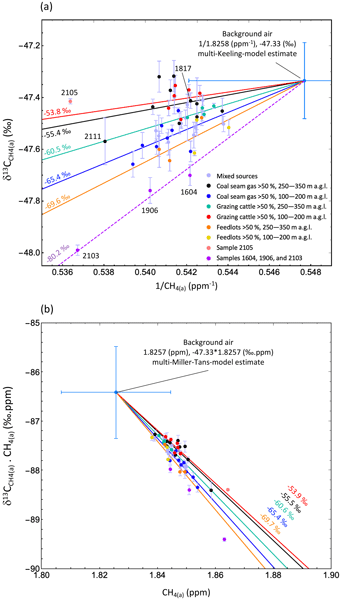
Bryce F. J. Kelly, Xinyi Lu, Stephen J. Harris, Bruno G. Neininger, Jorg M. Hacker, Stefan Schwietzke, Rebecca E. Fisher, James L. France, Euan G. Nisbet, David Lowry, Carina van der Veen, Malika Menoud, and Thomas Röckmann
Atmos. Chem. Phys., 22, 15527–15558, https://doi.org/10.5194/acp-22-15527-2022, https://doi.org/10.5194/acp-22-15527-2022, 2022
Short summary
Short summary
This study explores using the composition of methane of in-flight atmospheric air samples for greenhouse gas inventory verification. The air samples were collected above one of the largest coal seam gas production regions in the world. Adjacent to these gas fields are coal mines, Australia's largest cattle feedlot, and over 1 million grazing cattle. The results are also used to identify methane mitigation opportunities.
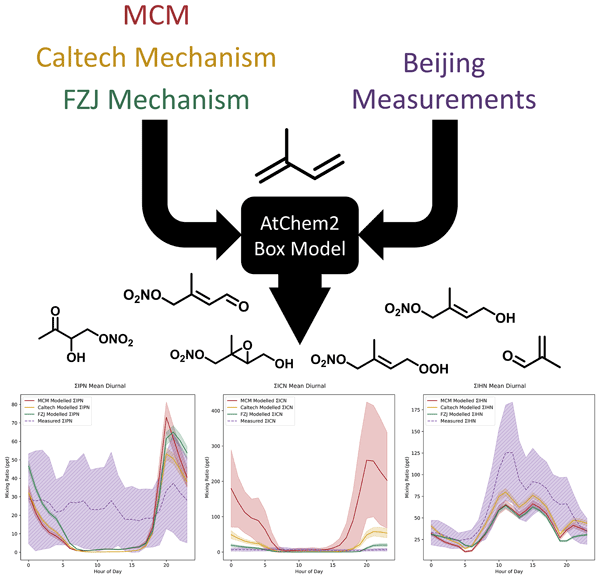
Alfred W. Mayhew, Ben H. Lee, Joel A. Thornton, Thomas J. Bannan, James Brean, James R. Hopkins, James D. Lee, Beth S. Nelson, Carl Percival, Andrew R. Rickard, Marvin D. Shaw, Peter M. Edwards, and Jaqueline F. Hamilton
Atmos. Chem. Phys., 22, 14783–14798, https://doi.org/10.5194/acp-22-14783-2022, https://doi.org/10.5194/acp-22-14783-2022, 2022
Short summary
Short summary
Isoprene nitrates are chemical species commonly found in the atmosphere that are important for their impacts on air quality and climate. This paper compares 3 different representations of the chemistry of isoprene nitrates in computational models highlighting cases where the choice of chemistry included has significant impacts on the concentration and composition of the modelled nitrates. Calibration of mass spectrometers is also shown to be an important factor when analysing isoprene nitrates.
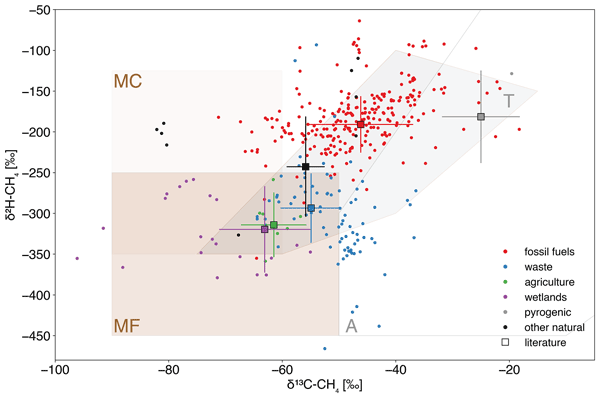
Malika Menoud, Carina van der Veen, Dave Lowry, Julianne M. Fernandez, Semra Bakkaloglu, James L. France, Rebecca E. Fisher, Hossein Maazallahi, Mila Stanisavljević, Jarosław Nęcki, Katarina Vinkovic, Patryk Łakomiec, Janne Rinne, Piotr Korbeń, Martina Schmidt, Sara Defratyka, Camille Yver-Kwok, Truls Andersen, Huilin Chen, and Thomas Röckmann
Earth Syst. Sci. Data, 14, 4365–4386, https://doi.org/10.5194/essd-14-4365-2022, https://doi.org/10.5194/essd-14-4365-2022, 2022
Short summary
Short summary
Emission sources of methane (CH4) can be distinguished with measurements of CH4 stable isotopes. We present new measurements of isotope signatures of various CH4 sources in Europe, mainly anthropogenic, sampled from 2017 to 2020. The present database also contains the most recent update of the global signature dataset from the literature. The dataset improves CH4 source attribution and the understanding of the global CH4 budget.

Will S. Drysdale, Adam R. Vaughan, Freya A. Squires, Sam J. Cliff, Stefan Metzger, David Durden, Natchaya Pingintha-Durden, Carole Helfter, Eiko Nemitz, C. Sue B. Grimmond, Janet Barlow, Sean Beevers, Gregor Stewart, David Dajnak, Ruth M. Purvis, and James D. Lee
Atmos. Chem. Phys., 22, 9413–9433, https://doi.org/10.5194/acp-22-9413-2022, https://doi.org/10.5194/acp-22-9413-2022, 2022
Short summary
Short summary
Measurements of NOx emissions are important for a good understanding of air quality. While there are many direct measurements of NOx concentration, there are very few measurements of its emission. Measurements of emissions provide constraints on emissions inventories and air quality models. This article presents measurements of NOx emission from the BT Tower in central London in 2017 and compares them with inventories, finding that they underestimate by a factor of ∼1.48.
Marios Panagi, Roberto Sommariva, Zoë L. Fleming, Paul S. Monks, Gongda Lu, Eloise A. Marais, James R. Hopkins, Alastair C. Lewis, Qiang Zhang, James D. Lee, Freya A. Squires, Lisa K. Whalley, Eloise J. Slater, Dwayne E. Heard, Robert Woodward-Massey, Chunxiang Ye, and Joshua D. Vande Hey
Atmos. Chem. Phys. Discuss., https://doi.org/10.5194/acp-2022-379, https://doi.org/10.5194/acp-2022-379, 2022
Revised manuscript not accepted
Short summary
Short summary
A dispersion model and a box model were combined to investigate the evolution of VOCs in Beijing once they are emitted from anthropogenic sources. It was determined that during the winter time the VOC concentrations in Beijing are driven predominantly by sources within Beijing and by a combination of transport and chemistry during the summer. Furthermore, the results in the paper highlight the need for a season specific policy.
Hannah Walker, Daniel Stone, Trevor Ingham, Sina Hackenberg, Danny Cryer, Shalini Punjabi, Katie Read, James Lee, Lisa Whalley, Dominick V. Spracklen, Lucy J. Carpenter, Steve R. Arnold, and Dwayne E. Heard
Atmos. Chem. Phys., 22, 5535–5557, https://doi.org/10.5194/acp-22-5535-2022, https://doi.org/10.5194/acp-22-5535-2022, 2022
Short summary
Short summary
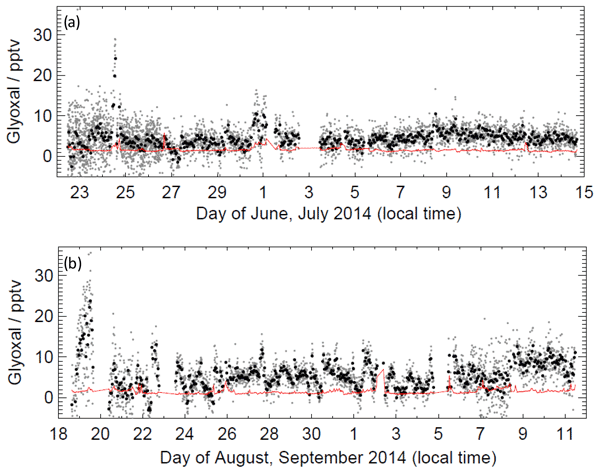
Glyoxal is a ubiquitous reactive organic compound in the atmosphere, which may form organic aerosol and impact the atmosphere's oxidising capacity. There are limited measurements of glyoxal's abundance in the remote marine atmosphere. We made new measurements of glyoxal using a highly sensitive technique over two 4-week periods in the tropical Atlantic atmosphere. We show that daytime measurements are mostly consistent with our chemical understanding but a potential missing source at night.
Robert Woodward-Massey, Roberto Sommariva, Lisa K. Whalley, Danny R. Cryer, Trevor Ingham, William J1 Bloss, Sam Cox, James D. Lee, Chris P. Reed, Leigh R. Crilley, Louisa J. Kramer, Brian J. Bandy, Grant L. Forster, Claire E. Reeves, Paul S. Monks, and Dwayne E. Heard
Atmos. Chem. Phys. Discuss., https://doi.org/10.5194/acp-2022-207, https://doi.org/10.5194/acp-2022-207, 2022
Preprint withdrawn
Short summary
Short summary
We measured radicals (OH, HO2, RO2) and OH reactivity at a UK coastal site and compared our observations to the predictions of an MCMv3.3.1 box model. We find variable agreement between measured and modelled radical concentrations and OH reactivity, where the levels of agreement for individual species display strong dependences on NO concentrations. The most substantial disagreement is found for RO2 at high NO (> 1 ppbv), when RO2 levels are underpredicted by a factor of ~10–30.
Amy Foulds, Grant Allen, Jacob T. Shaw, Prudence Bateson, Patrick A. Barker, Langwen Huang, Joseph R. Pitt, James D. Lee, Shona E. Wilde, Pamela Dominutti, Ruth M. Purvis, David Lowry, James L. France, Rebecca E. Fisher, Alina Fiehn, Magdalena Pühl, Stéphane J. B. Bauguitte, Stephen A. Conley, Mackenzie L. Smith, Tom Lachlan-Cope, Ignacio Pisso, and Stefan Schwietzke
Atmos. Chem. Phys., 22, 4303–4322, https://doi.org/10.5194/acp-22-4303-2022, https://doi.org/10.5194/acp-22-4303-2022, 2022
Short summary
Short summary
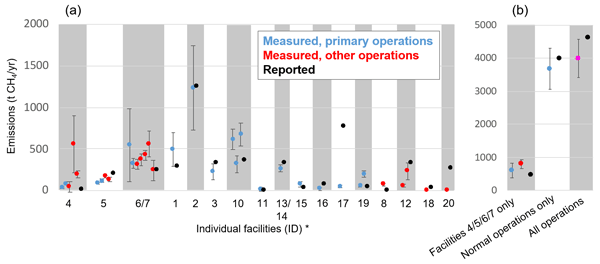
We measured CH4 emissions from 21 offshore oil and gas facilities in the Norwegian Sea in 2019. Measurements compared well with operator-reported emissions but were greatly underestimated when compared with a 2016 global fossil fuel inventory. This study demonstrates the need for up-to-date and accurate inventories for use in research and policy and the important benefits of best-practice reporting methods by operators. Airborne measurements are an effective tool to validate such inventories.
Alice E. Ramsden, Anita L. Ganesan, Luke M. Western, Matthew Rigby, Alistair J. Manning, Amy Foulds, James L. France, Patrick Barker, Peter Levy, Daniel Say, Adam Wisher, Tim Arnold, Chris Rennick, Kieran M. Stanley, Dickon Young, and Simon O'Doherty
Atmos. Chem. Phys., 22, 3911–3929, https://doi.org/10.5194/acp-22-3911-2022, https://doi.org/10.5194/acp-22-3911-2022, 2022
Short summary
Short summary
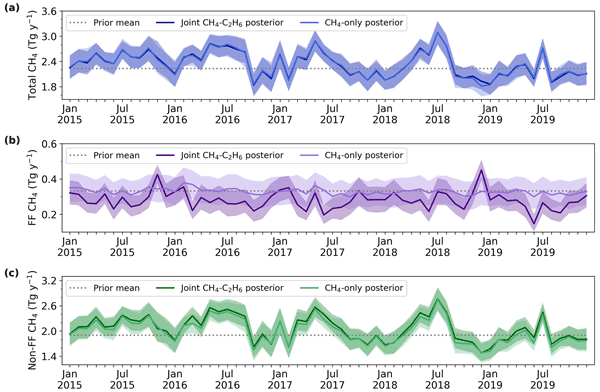
Quantifying methane emissions from different sources is a key focus of current research. We present a method for estimating sectoral methane emissions that uses ethane as a tracer for fossil fuel methane. By incorporating variable ethane : methane emission ratios into this model, we produce emissions estimates with improved uncertainty characterisation. This method will be particularly useful for studying methane emissions in areas with complex distributions of sources.
Stephen M. Platt, Øystein Hov, Torunn Berg, Knut Breivik, Sabine Eckhardt, Konstantinos Eleftheriadis, Nikolaos Evangeliou, Markus Fiebig, Rebecca Fisher, Georg Hansen, Hans-Christen Hansson, Jost Heintzenberg, Ove Hermansen, Dominic Heslin-Rees, Kim Holmén, Stephen Hudson, Roland Kallenborn, Radovan Krejci, Terje Krognes, Steinar Larssen, David Lowry, Cathrine Lund Myhre, Chris Lunder, Euan Nisbet, Pernilla B. Nizzetto, Ki-Tae Park, Christina A. Pedersen, Katrine Aspmo Pfaffhuber, Thomas Röckmann, Norbert Schmidbauer, Sverre Solberg, Andreas Stohl, Johan Ström, Tove Svendby, Peter Tunved, Kjersti Tørnkvist, Carina van der Veen, Stergios Vratolis, Young Jun Yoon, Karl Espen Yttri, Paul Zieger, Wenche Aas, and Kjetil Tørseth
Atmos. Chem. Phys., 22, 3321–3369, https://doi.org/10.5194/acp-22-3321-2022, https://doi.org/10.5194/acp-22-3321-2022, 2022
Short summary
Short summary
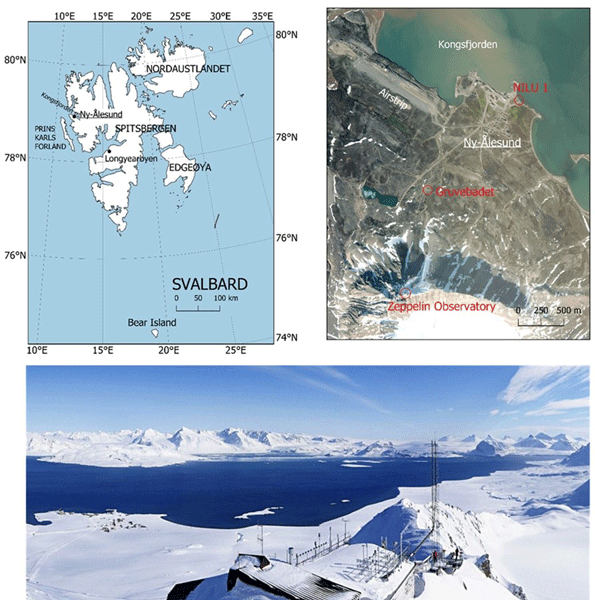
Here we detail the history of the Zeppelin Observatory, a unique global background site and one of only a few in the high Arctic. We present long-term time series of up to 30 years of atmospheric components and atmospheric transport phenomena. Many of these time series are important to our understanding of Arctic and global atmospheric composition change. Finally, we discuss the future of the Zeppelin Observatory and emerging areas of future research on the Arctic atmosphere.

Leigh R. Crilley, Louisa J. Kramer, Francis D. Pope, Chris Reed, James D. Lee, Lucy J. Carpenter, Lloyd D. J. Hollis, Stephen M. Ball, and William J. Bloss
Atmos. Chem. Phys., 21, 18213–18225, https://doi.org/10.5194/acp-21-18213-2021, https://doi.org/10.5194/acp-21-18213-2021, 2021
Short summary
Short summary
Nitrous acid (HONO) is a key source of atmospheric oxidants. We evaluate if the ocean surface is a source of HONO for the marine boundary layer, using measurements from two contrasting coastal locations. We observed no evidence for a night-time ocean surface source, in contrast to previous work. This points to significant geographical variation in the predominant HONO formation mechanisms in marine environments, reflecting possible variability in the sea-surface microlayer composition.
Cited articles
Ars, S., Vogel, F., Arrowsmith, C., Heerah, S., Knuckey, E., Lavoie, J., Lee, C., Pak, N. M., Phillips, J. L., and Wunch, D.: Investigation of the spatial distribution of methane sources in the greater Toronto area using mobile gas monitoring systems, Environ. Sci. Technol., 54, 15671–15679, https://doi.org/10.1021/acs.est.0c05386, 2020.
Bačėninaitė, D., Džermeikaitė, K., and Antanaitis, R.: Global warming and dairy cattle: How to control and reduce methane emission, Animals, 12, 2687, https://doi.org/10.3390/ani12192687, 2022.
Chamberlain, S. D., Ingraffea, A. R., and Sparks, J. P.: Sourcing methane and carbon dioxide emissions from a small city: Influence of natural gas leakage and combustion, Environ. Pollut., 218, 102–110, https://doi.org/10.1016/j.envpol.2016.08.036, 2016.
Cheng, J., Schloerke, B., Karambelkar, B., Xie, Y., and Aden-Buie, G.: leaflet: Create Interactive Web Maps with the JavaScript “Leaflet” Library, R package version 2.2.3.9000, https://rstudio.github.io/leaflet/ (last access: June 2026), 2025.
Cliff, S. J., Drysdale, W., Lewis, A. C., Møller, S. J., Helfter, C., Metzger, S., Liddard, R., Nemitz, E., Barlow, J. F., and Lee, J. D.: Evidence of Heating-Dominated Urban NOx Emissions, Environ. Sci. Technol., 59, 4399–4408, https://doi.org/10.1021/acs.est.4c13276, 2025.
Defratyka, S. M., Paris, J. D., Yver-Kwok, C., Fernandez, J. M., Korben, P., and Bousquet, P.: Mapping urban methane sources in Paris, France, Environ. Sci. Technol., 55, 8583–8591, https://doi.org/10.1021/acs.est.1c00859, 2021.
Department for Energy Security and Net Zero (DESNZ): Energy Trends: Natural Gas, Energy Trends September 2024, https://assets.publishing.service.gov.uk/media/66f423473b919067bb48270e/Energy_Trends_September_2024.pdf, last access: December 2024.
Department for Transport: Road Length Statistics, RDL0102: Road length (miles) by road type and local authority in Great Britain, https://www.gov.uk/government/statistical-data-sets/road-length-statistics-rdl, last access: April 2025.
Dowd, E., Manning, A. J., Orth-Lashley, B., Girard, M., France, J., Fisher, R. E., Lowry, D., Lanoisellé, M., Pitt, J. R., Stanley, K. M., O'Doherty, S., Young, D., Thistlethwaite, G., Chipperfield, M. P., Gloor, E., and Wilson, C.: First validation of high-resolution satellite-derived methane emissions from an active gas leak in the UK, Atmos. Meas. Tech., 17, 1599–1615, https://doi.org/10.5194/amt-17-1599-2024, 2024.
Energy Institute: Statistical Review of World Energy, Natural gas consumption in the United Kingdom (UK) from 2003 to 2024 (in billion cubic meters), https://www.energyinst.org/__data/assets/pdf_file/0006/1542714/684_EI_Stat_Review_V16_DIGITAL.pdf (last access: June 2026), 2024.
Essex Planning Officers Association: The Essex Design Guide, Design Details, 2018 Edition, V3, https://www.essexdesignguide.co.uk/media/2402/design-details-v3.pdf (last access: December 2024), 2018.
European Commission and United States of America: Global methane pledge, https://https://www.ccacoalition.org/sites/default/files/resources/Global Methane Pledge.pdf (last access: July 2025), 2021.
Fernandez, J. M., Maazallahi, H., France, J. L., Menoud, M., Corbu, M., Ardelean, M., Calcan, A., Townsend-Small, A., van der Veen, C., Fisher, R. E., Lowry, D., Nisbet, E. G., and Röckmann, T.: Street-level methane emissions of Bucharest, Romania and the dominance of urban wastewater, Atmos. Environ. X, 13, 100153, https://doi.org/10.1016/j.aeaoa.2022.100153, 2022.
Hopkins, F. M., Kort, E. A., Bush, S. E., Ehleringer, J. R., Lai, C. T., Blake, D. R., and Randerson, J. T.: Spatial patterns and source attribution of urban methane in the Los Angeles Basin, J. Geophys. Res.-Atmos., 121, 2490–2507, https://doi.org/10.1002/2015JD024429, 2016.
IPCC: Climate Change 2021: The Physical Science Basis. Contribution of Working Group I to the Sixth Assessment Report of the Intergovernmental Panel on Climate Change, edited by: Masson-Delmotte, V., Zhai, P., Pirani, A., Connors, S. L., Péan, C., Berger, S., Caud, N., Chen, Y., Goldfarb, L., Gomis, M. I., Huang, M., Leitzell, K., Lonnoy, E., Matthews, J. B. R., Maycock, T. K., Waterfield, T., Yelekçi, O., Yu, R., and Zhou, B., Cambridge University Press, Cambridge, United Kingdom and New York, NY, USA, https://doi.org/10.1017/9781009157896, 2021.
Joo, J., Jeong, S., Shin, J., and Chang, D. Y.: Missing methane emissions from urban sewer networks, Environ. Pollut., 342, 123101, https://doi.org/10.1016/j.envpol.2023.123101, 2024.
Keyes, T., Ridge, G., Klein, M., Phillips, N., Ackley, R., and Yang, Y.: An enhanced procedure for urban mobile methane leak detection, Heliyon, 6, https://doi.org/10.1016/j.heliyon.2020.e04876, 2020.
Lowry, D., Fisher, R. E., France, J. L., Coleman, M., Lanoisellé, M., Zazzeri, G., Nisbet, E. G., Shaw, J. T., Allen, G., Pitt, J., and Ward, R. S.: Environmental baseline monitoring for shale gas development in the UK: Identification and geochemical characterisation of local source emissions of methane to atmosphere, Sci. Total Environ., 708, 134600, https://doi.org/10.1016/j.scitotenv.2019.134600, 2020.
Luetschwager, E., von Fischer, J. C., and Weller, Z. D.: Characterizing detection probabilities of advanced mobile leak surveys: Implications for sampling effort and leak size estimation in natural gas distribution systems, Elem. Sci. Anth., 9, 00143, https://doi.org/10.1525/elementa.2020.00143, 2021.
Maazallahi, H., Fernandez, J. M., Menoud, M., Zavala-Araiza, D., Weller, Z. D., Schwietzke, S., von Fischer, J. C., Denier van der Gon, H., and Röckmann, T.: Methane mapping, emission quantification, and attribution in two European cities: Utrecht (NL) and Hamburg (DE), Atmos. Chem. Phys., 20, 14717–14740, https://doi.org/10.5194/acp-20-14717-2020, 2020.
Moore, T.: tcm515/Fugitive-natural-gas-emissions-York-code: WACL fugitive emission detection (v1.0.0), Zenodo [code], https://doi.org/10.5281/zenodo.20411639, 2026.
National Atmospheric Emissions Inventory (NAEI): UK Emissions Data Selector Selected emissions data for the year 2022, methane emissions related to gas leakage from gas distribution 1B2b5, https://naei.energysecurity.gov.uk/data/data-selector, last access: June 2025.
Nisbet, E. G., Manning, M. R., Lowry, D., Fisher, R. E., Lan, X., Michel, S. E., France, J. L., Nisbet, R. E. R., Bakkaloglu, S., Leitner, S. M., Brooke, C., Röckmann, T., Allen, G., Denier van der Gon, H. A.C, Merbold, L., Scheutz, C., Woolley Maisch, C., Nisbet-Jones, P. B. R., Alshalan, A., Fernandez, J. M., and Dlugokencky, E. J.: Practical paths towards quantifying and mitigating agricultural methane emissions, P. R. Soc. A, 481, 20240390, https://doi.org/10.1098/rspa.2024.0390, 2025.
Phillips, N. G., Ackley, R., Crosson, E. R., Down, A., Hutyra, L. R., Brondfield, M., Karr, J. D., Zhao, K., and Jackson, R. B.: Mapping urban pipeline leaks: Methane leaks across Boston, Environ. Pollut., 173, 1–4, https://doi.org/10.1016/j.envpol.2012.11.003, 2013.
Saunois, M., Martinez, A., Poulter, B., Zhang, Z., Raymond, P. A., Regnier, P., Canadell, J. G., Jackson, R. B., Patra, P. K., Bousquet, P., Ciais, P., Dlugokencky, E. J., Lan, X., Allen, G. H., Bastviken, D., Beerling, D. J., Belikov, D. A., Blake, D. R., Castaldi, S., Crippa, M., Deemer, B. R., Dennison, F., Etiope, G., Gedney, N., Höglund-Isaksson, L., Holgerson, M. A., Hopcroft, P. O., Hugelius, G., Ito, A., Jain, A. K., Janardanan, R., Johnson, M. S., Kleinen, T., Krummel, P. B., Lauerwald, R., Li, T., Liu, X., McDonald, K. C., Melton, J. R., Mühle, J., Müller, J., Murguia-Flores, F., Niwa, Y., Noce, S., Pan, S., Parker, R. J., Peng, C., Ramonet, M., Riley, W. J., Rocher-Ros, G., Rosentreter, J. A., Sasakawa, M., Segers, A., Smith, S. J., Stanley, E. H., Thanwerdas, J., Tian, H., Tsuruta, A., Tubiello, F. N., Weber, T. S., van der Werf, G. R., Worthy, D. E. J., Xi, Y., Yoshida, Y., Zhang, W., Zheng, B., Zhu, Q., Zhu, Q., and Zhuang, Q.: Global Methane Budget 2000–2020, Earth Syst. Sci. Data, 17, 1873–1958, https://doi.org/10.5194/essd-17-1873-2025, 2025.
Scarpelli, T. R., Jacob, D. J., Grossman, S., Lu, X., Qu, Z., Sulprizio, M. P., Zhang, Y., Reuland, F., Gordon, D., and Worden, J. R.: Updated Global Fuel Exploitation Inventory (GFEI) for methane emissions from the oil, gas, and coal sectors: evaluation with inversions of atmospheric methane observations, Atmos. Chem. Phys., 22, 3235–3249, https://doi.org/10.5194/acp-22-3235-2022, 2022.
Sotoodeh, K.: Why packing adjustment cannot stop leakage: Case study of a ball valve failing to seal after packing adjustment during fugitive emission as per ISO 15848-1, Eng. Fail. Anal., 30, 105751, https://doi.org/10.1016/j.engfailanal.2021.105751, 2021.
Stewart, I. and Bolton, P.; Households off the gas-grid and prices for alternative fuels; House of Commons Library, https://researchbriefings.files.parliament.uk/documents/CBP-9838/CBP-9838.pdf, last access: December 2024.
Symonds, J.: On Instrument Time Response: What it means, what it isn't, and why it matters, https://www.linkedin.com/pulse/instrument-time-response-what-means-why-matters-jonathan-symonds/ (last access: November 2024), 2017.
Tettenborn, J., Zavala-Araiza, D., Stroeken, D., Maazallahi, H., van der Veen, C., Hensen, A., Velzeboer, I., van den Bulk, P., Vogel, F., Gillespie, L., Ars, S., France, J., Lowry, D., Fisher, R., and Röckmann, T.: Improving consistency in methane emission quantification from the natural gas distribution systems across measurement devices, Atmos. Meas. Tech., 18, 3569–3584, https://doi.org/10.5194/amt-18-3569-2025, 2025.
Ueyama, M., Umezawa, T., Terao, Y., Lunt, M., and France, J. L.: Evaluating urban methane emissions and their attributes in a megacity, Osaka, Japan, via mobile and eddy covariance measurements, Atmos. Chem. Phys., 25, 12513–12534, https://doi.org/10.5194/acp-25-12513-2025, 2025.
Umezawa, T., Terao, Y., Ueyama, M., Kameyama, S., Lunt, M., and France, J. L.: Measurement report: Mobile measurements to estimate urban methane emissions in Tokyo, Atmos. Chem. Phys., 25, 18015–18029, https://doi.org/10.5194/acp-25-18015-2025, 2025.
Vogel, F., Ars, S., Wunch, D., Lavoie, J., Gillespie, L., Maazallahi, H., Röckmann, T., Nęcki, J., Bartyzel, J., Jagoda, P., Lowry, D., France, J., Fernandez, J., Bakkaloglu, S., Fisher, R., Lanoiselle, M., Chen, H., Oudshoorn, M., Yver-Kwok, C., Defratyka, S., Morgui, J. A., Estruch, C., Curcoll, R., Grossi, C., Chen, J., Dietrich, F., Forstmaier, A., Denier van der Gon, H. A. C., Dellaert, S. N. C., Salo, J., Corbu, M., Iancu, S. S., Tudor, A. S., Scarlat, A. I., and Calcan, A.: Ground-based mobile measurements to track urban methane emissions from natural gas in 12 cities across eight countries, Environ. Sci. Technol., 58, 2271–2281, https://doi.org/10.1021/acs.est.3c03160, 2024.
Wagner, R. L., Farren, N. J., Davison, J., Young, S., Hopkins, J. R., Lewis, A. C., Carslaw, D. C., and Shaw, M. D.: Application of a mobile laboratory using a selected-ion flow-tube mass spectrometer (SIFT-MS) for characterisation of volatile organic compounds and atmospheric trace gases, Atmos. Meas. Tech., 14, 6083–6100, , https://doi.org/10.5194/amt-14-6083-2021, 2021.
Weller, Z. D., Yang, D. K., and von Fischer, J. C.: An open source algorithm to detect natural gas leaks from mobile methane survey data, PLoS One, 14, e0212287, https://doi.org/10.1371/journal.pone.0212287, 2019.
Weller, Z. D., Im, S., Palacios, V., Stuchiner, E., and von Fischer, J. C.: Environmental injustices of leaks from urban natural gas distribution systems: patterns among and within 13 US metro areas, Environ. Sci. Technol., 56, 8599–8609, https://doi.org/10.1021/acs.est.2c00097, 2022.
Wietzel, J. B. and Schmidt, M.: Methane emission mapping and quantification in two medium-sized cities in Germany: Heidelberg and Schwetzingen, Atmos. Environ. X, 20, 100228, https://doi.org/10.1016/j.aeaoa.2023.100228, 2023.
Yacovitch, T. I., Herndon, S. C., Roscioli, J. R., Floerchinger, C., McGovern, R. M., Agnese, M., Pétron, G., Kofler, J., Sweeney, C., Karion, A., and Conley, S. A.: Demonstration of an ethane spectrometer for methane source identification, Environ. Sci. Technol., 48, 8028–8034, https://doi.org/10.1021/es501475q, 2014.
Short summary
The Global Methane Pledge has led to increased effort to reduce methane emissions globally. One sector under increased scrutiny is the oil and gas industry, a major source of methane in this industry is from fugitive emissions (gas leaks). Locating these from pipework in cities requires mobile measurements. This work adapts previous methodologies to detect smaller leaks and suggests previous methods may detect 53.5 % less gas leaks.
The Global Methane Pledge has led to increased effort to reduce methane emissions globally. One...


