
Articles | Volume 19, issue 13
https://doi.org/10.5194/amt-19-4553-2026
© Author(s) 2026. This work is distributed under
the Creative Commons Attribution 4.0 License.
the Creative Commons Attribution 4.0 License.
https://doi.org/10.5194/amt-19-4553-2026
© Author(s) 2026. This work is distributed under
the Creative Commons Attribution 4.0 License.
the Creative Commons Attribution 4.0 License.
Research article
| 
10 Jul 2026
Research article |
| 10 Jul 2026
| 10 Jul 2026
Remote sensing of local-dust across the Canadian Arctic
Seyed Ali Sayedain
CORRESPONDING AUTHOR

Centre d'Applications et de Recherches en Télédétection, Université de Sherbrooke, Sherbrooke, QC, Canada
Norman T. O'Neill
Centre d'Applications et de Recherches en Télédétection, Université de Sherbrooke, Sherbrooke, QC, Canada
Keyvan Ranjbar
Flight Research Laboratory, National Research Council Canada, Ottawa, ON, Canada
Phillipe Gauvin-Bourdon
Department of Physics and Atmospheric Science, Dalhousie University, Halifax, NS, Canada
Rachel Chang
Department of Physics and Atmospheric Science, Dalhousie University, Halifax, NS, Canada
Patrick L. Hayes
Département de chimie, Université de Montréal, Montréal, QC, Canada
James King
Département de géographie, Université de Montréal, Montréal, QC, Canada
Related authors
Norman T. O'Neill, Keyvan Ranjbar, Liviu Ivănescu, Yann Blanchard, Seyed Ali Sayedain, and Yasmin AboEl-Fetouh
Atmos. Chem. Phys., 25, 27–44, https://doi.org/10.5194/acp-25-27-2025, https://doi.org/10.5194/acp-25-27-2025, 2025
Short summary
Short summary
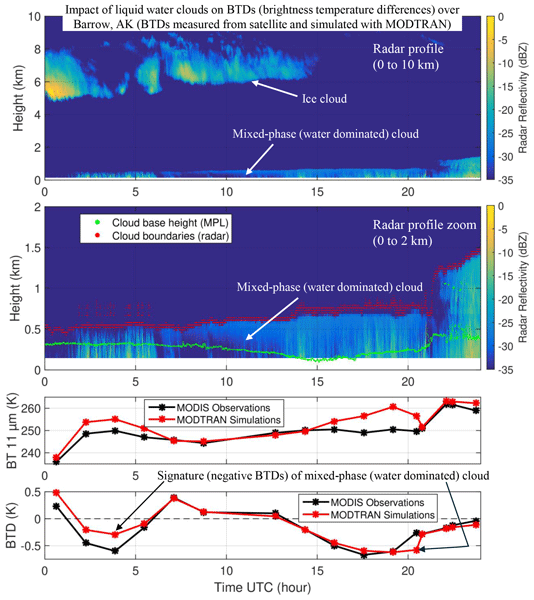
Dust from mid-latitude deserts or from local drainage basins is a weak component of atmospheric aerosols in the Arctic. Satellite-based dust estimates are often overestimated because dust and cloud measurements can be confused. Illustrations are given with an emphasis on the flawed claim that a classic indicator of dust (negative brightness temperature differences) is proof of the presence of airborne Arctic dust. Low-altitude warm-water plumes are the likely source of such negative values.
Seyed Ali Sayedain, Norman T. O'Neill, James King, Patrick L. Hayes, Daniel Bellamy, Richard Washington, Sebastian Engelstaedter, Andy Vicente-Luis, Jill Bachelder, and Malo Bernhard
Atmos. Meas. Tech., 16, 4115–4135, https://doi.org/10.5194/amt-16-4115-2023, https://doi.org/10.5194/amt-16-4115-2023, 2023
Short summary
Short summary
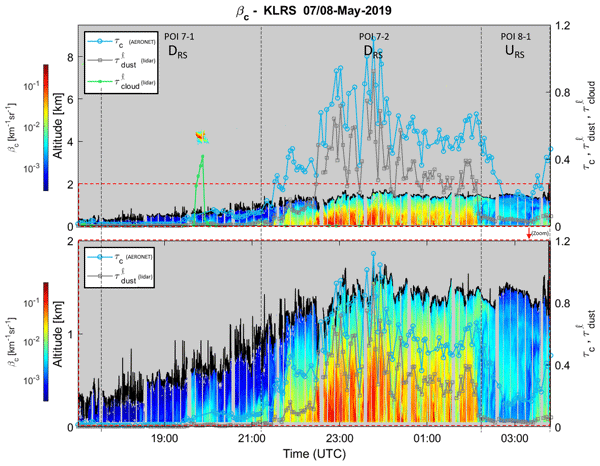
We used (columnar) ground-based remote sensing (RS) tools and surface measurements to characterize local (drainage-basin) dust plumes at a site in the Yukon. Plume height, particle size, and column-to-surface ratios enabled insights into how satellite RS could be used to analyze Arctic-wide dust transport. This helps modelers refine dust impacts in their climate change simulations. It is an important step since local dust is a key source of dust deposition on snow in the sensitive Arctic region.
Lei Liu, Natalia Bliankinshtein, Yi Huang, John R. Gyakum, Philip M. Gabriel, Cuong Nguyen, Keyvan Ranjbar, Kenny Bala, Zhipeng Qu, Paloma Borque, Leonid Nichman, Mengistu Wolde, and Dirk Schuettemeyer
EGUsphere, https://doi.org/10.5194/egusphere-2026-5129, https://doi.org/10.5194/egusphere-2026-5129, 2026
This preprint is open for discussion and under review for Atmospheric Measurement Techniques (AMT).
Short summary
Short summary
An all-sky radiative closure analysis of a hyperspectral microwave radiometer in oxygen and water vapour bands and a single channel microwave radiometer in W-band was conducted using multiple airborne sensors collected during a research flight. Both instruments demonstrated robust all-sky radiative closure performance. The synergy of multiple cloud sensors enabled this analysis, paving the way for future all-sky radiative closure and retrieval studies.
Zhipeng Qu, Cuong Nguyen, Howard W. Barker, Paloma Borque, Alexei Korolev, Meriem Kacimi, Jason N. S. Cole, Keyvan Ranjbar, Ivan Heckman, Kenny Bala, Natalia Bliankinshtein, Leonid Nichman, and Mengistu Wolde
EGUsphere, https://doi.org/10.5194/egusphere-2026-6216, https://doi.org/10.5194/egusphere-2026-6216, 2026
This preprint is open for discussion and under review for Atmospheric Measurement Techniques (AMT).
Short summary
Short summary
EarthCARE constructs three-dimensional atmospheric scenes around the satellite track to assess how well observed clouds and aerosols explain measured radiation. In this study, aircraft measurements collected during the ECALOT campaign are used to evaluate the quality of the scene construction. Comparisons using direct (in situ) cloud measurements and airborne radar show good overall performance, supporting its use in EarthCARE’s radiative closure assessment.
Zhipeng Qu, Cuong Nguyen, Paloma Borque, Alexei Korolev, Howard W. Barker, Keyvan Ranjbar, Lei Liu, Zen Mariani, Meriem Kacimi, Melissa Cholette, Ivan Heckman, Kenny Bala, Natalia Bliankinshtein, Leonid Nichman, Benjamin Riot-Bretêcher, Yi Huang, Jason N. S. Cole, Raphaël Peroni, Stephen Holden, Robert Reed, Robert Crawford, Daniel Michelson, Eve Bigras, Michael Wheeler, John Gyakum, Jason A. Milbrandt, Julie M. Thériault, Kaley A. Walker, Mengistu Wolde, Jean-Pierre Blanchet, Yann Blanchard, Jonas von Bismark, Rob Koopman, Montserrat Piñol Solé, Bernat Puigdomènech Treserras, Robin J. Hogan, and Shannon L. Mason
EGUsphere, https://doi.org/10.5194/egusphere-2026-5347, https://doi.org/10.5194/egusphere-2026-5347, 2026
This preprint is open for discussion and under review for Atmospheric Measurement Techniques (AMT).
Short summary
Short summary
The ECALOT campaign brought together aircraft and ground-based observations in the Ottawa–Montreal region to help evaluate the European Space Agency’s EarthCARE satellite, which studies clouds, aerosols, radiation, and their interactions. By comparing satellite measurements with multi-platform remote-sensing and in situ observations collected during the campaign, ECALOT provides an integrated approach to evaluating EarthCARE products at different stages of the data processing chain.
Daniel Bellamy, Martina Klose, Daniel F. Nadeau, Sebastian Engelstaedter, Richard Washington, and James King
Atmos. Chem. Phys., 26, 12613–12639, https://doi.org/10.5194/acp-26-12613-2026, https://doi.org/10.5194/acp-26-12613-2026, 2026
Short summary
Short summary
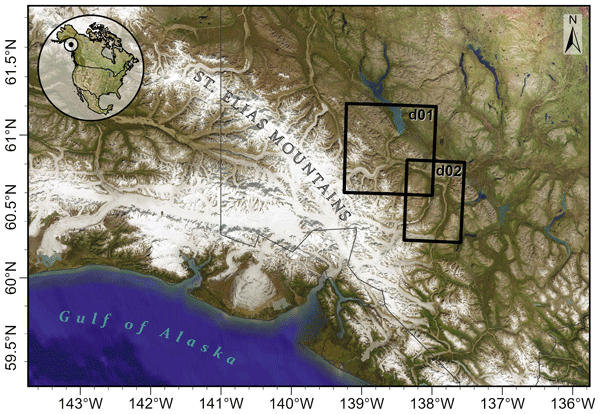
Mineral dust emissions are simulated for the first time from proglacial valleys of the St. Elias Mountains (western Canada/Alaska) to elucidate their contributions to regional climate forcing and global mineral dust loading. We implement a regional-scale dust emission model and evaluate simulated meteorology, dust emissions, and boundary layer processes for a holistic evaluation of how well aerosol dispersion can be simulated within this remote, mountainous landscape.
Alejandro Agesta, Erna Frins, Norman T. O'Neill, and Brent Holben
EGUsphere, https://doi.org/10.5194/egusphere-2026-4619, https://doi.org/10.5194/egusphere-2026-4619, 2026
This preprint is open for discussion and under review for Atmospheric Measurement Techniques (AMT).
Short summary
Short summary
We analyzed four years (2020–2023) of AERONET observations from Montevideo_FING to characterize the optical properties of aerosols and propose a new version of a multimodal model to characterize particle volume size distributions (PVSDs). The method captures the complexity of aerosols in Montevideo, where we found overlapping marine and urban influences.
Clarissa Baldo, Servanne Chevaillier, Sophie Nowak, Gael Noyalet, Sandra Lafon, Claudia Di Biagio, Amelie Chaput, James King, Mathieu Cazaunau, Edouard Pangui, Jean-Francois Doussin, Remi Stanus, Nadine Mattielli, Heleen C. Vos, Gregory S. Okin, Brigitte Language, Tjaart Van Der Walt, Stuart Piketh, Karine Desboeufs, Akinori Ito, Silvia Becagli, Eugene Marais, Laurie Barrier, Stéphane Jacquemoud, and Paola Formenti
Atmos. Chem. Phys., 26, 10727–10749, https://doi.org/10.5194/acp-26-10727-2026, https://doi.org/10.5194/acp-26-10727-2026, 2026
Short summary
Short summary
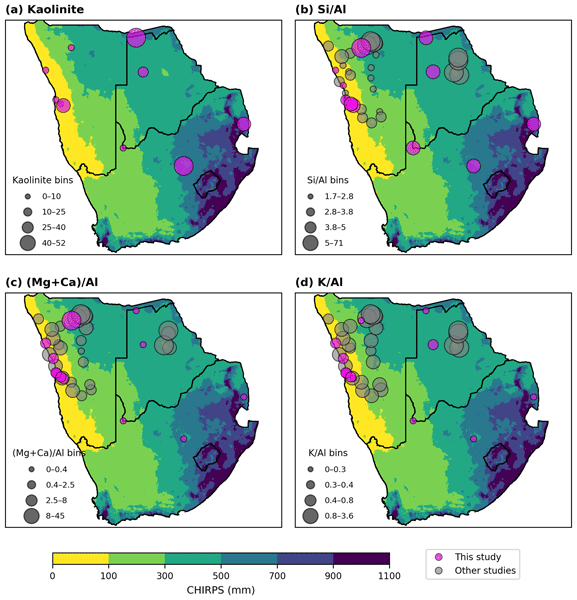
Our results show that crustal element ratios and clay contents distinguish dust aerosols from arid western coastal areas and humid eastern inland regions in Southern Africa. This dust contains key micronutrients that can become bioaccessible during atmospheric transport to nearby and remote marine ecosystems. It is also enriched in carbonates and K-feldspar, serving as a source of cloud condensation and ice nuclei, with potential implications ranging from regional to sub-hemispheric scales.
Christopher R. Oxford, Haihui Zhu, Maya Mehrotra, Xuan Liu, Yuxuan Ren, Maya Arnott, Isaac Abionum Adimula, Taiye Benjamin Ajibolataiye, Clement Akoshile, Omar Amador-Munoz, Araya Asfaw, Rachel Ying-Wen Chang, Sagnik Dey, Ann M. Dillner, David J. Diner, Connor J. Flynn, Diana Francis, Paterne Gahungu, Rebecca M. Garland, Michel Grutter, Sina Hasheminassab, Fahad Imam, Jhoon Kim, Kristy Langerman, Pei-Chen Lee, Puji Lestari, Po-Hsiung Lin, S. Marcela Loria-Salazar, Tesfaye Mamo, Olga L. Mayol-Bracero, Mogesh Naidoo, Narendra Nelli, Sang Seo Park, Abdus Salam, Bighnaraj Sarangi, Trailokya Saud, Robyn Schofield, Yoav Schechner, Sachchida N. Tripathi, Emily K. West, Eli Windwer, Ming-Tsang Wu, Qiang Zhang, Michael Brauer, Yinon Rudich, Jay R. Turner, and Randall V. Martin
EGUsphere, https://doi.org/10.5194/egusphere-2026-3224, https://doi.org/10.5194/egusphere-2026-3224, 2026
Short summary
Short summary
A high-sensitivity balance, controlled temperature and relative humidity chamber, and filter samples collected around the world were used to develop a mass as a function of relative humidity relationship. We subsequently measured the chemical composition of these same samples. A relationship between the chemical composition and water mass was created and used to calculate aerosol water content showing how composition and water content varies worldwide.
Simone Pulimeno, Angelo Lupi, Vito Vitale, Claudia Frangipani, Carlos Toledano, Stelios Kazadzis, Natalia Kouremeti, Christoph Ritter, Sandra Graßl, Kerstin Stebel, Vitali Fioletov, Ihab Abboud, Sandra Blindheim, Lynn Ma, Norm O'Neill, Piotr Sobolewski, Pawan Gupta, Elena Lind, Thomas F. Eck, Antti Hyvärinen, Veijo Aaltonen, Rigel Kivi, Janae Csavina, Dmitry Kabanov, Sergey M. Sakerin, Olga R. Sidorova, Robert S. Stone, Hagen Telg, Laura Riihimaki, Raul R. Cordero, Martin Radenz, Ronny Engelmann, Michel Van Roozendal, Anatoli Chaikovsky, Philippe Goloub, Junji Hisamitsu, and Mauro Mazzola
Atmos. Chem. Phys., 26, 1809–1846, https://doi.org/10.5194/acp-26-1809-2026, https://doi.org/10.5194/acp-26-1809-2026, 2026
Short summary
Short summary
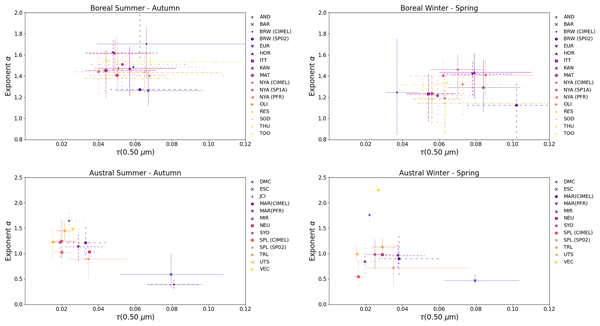
This study analyzed aerosols optical properties over the Arctic and Antarctic to measure them even during long periods of darkness. It found that pollution in the Arctic is decreasing, likely due to European emission regulations, while wildfires are becoming a more important source of particles. In Antarctica, particle levels are higher near the coast than inland, and vary by season. These results help us better understand how air pollution and climate are changing at the Earth’s poles.
Arnold R. Downey, Alisée Dourlent, Daniel Bellamy, James King, and Patrick L. Hayes
Atmos. Chem. Phys., 26, 1321–1337, https://doi.org/10.5194/acp-26-1321-2026, https://doi.org/10.5194/acp-26-1321-2026, 2026
Short summary
Short summary
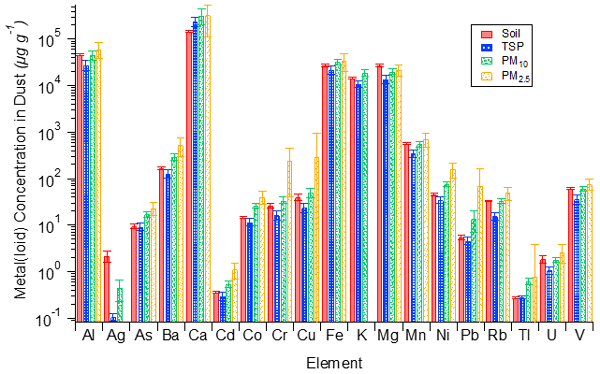
Glacial sediment of the ’A’ą̈y Chù’ Valley in Yukon, Canada is exposed to strong winds, and consequently, has become a significant mineral dust source. Mineral dust is known to have an impact on human health, partly due to various metals it contains, with the size of the particles also being an important factor. The goal of this study was to determine the concentration of various metals in the dust, how this relates to dust size, and whether air quality standards were surpassed.
Claudia Di Biagio, Elisa Bru, Avila Orta, Servanne Chevaillier, Clarissa Baldo, Antonin Bergé, Mathieu Cazaunau, Sandra Lafon, Sophie Nowak, Edouard Pangui, Meinrat O. Andreae, Pavla Dagsson-Waldhauserova, Kebonyethata Dintwe, Konrad Kandler, James S. King, Amelie Chaput, Gregory S. Okin, Stuart Piketh, Thuraya Saeed, David Seibert, Zongbo Shi, Earle Williams, Pasquale Sellitto, and Paola Formenti
Atmos. Chem. Phys., 26, 1079–1091, https://doi.org/10.5194/acp-26-1079-2026, https://doi.org/10.5194/acp-26-1079-2026, 2026
Short summary
Short summary
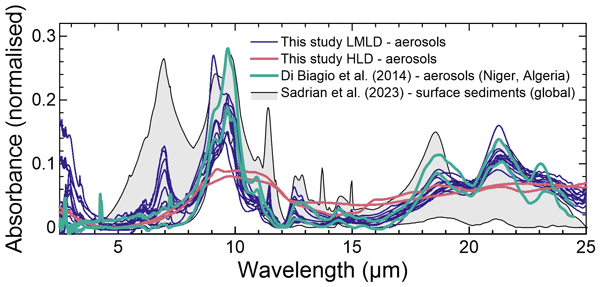
Spectroscopy measurements show that the absorbance of dust in the far-infrared up to 25 µm is comparable in intensity to that in the mid-infrared (3–15 µm) suggesting possible relevance for its direct radiative effect. Absorption signatures differ between Icelandic and low/mid-latitude dust due to differences in mineralogical composition. Spectral differences could be used to characterise the mineralogy and trace the origin of airborne dust based on infrared remote sensing observations.
M. Fernanda Córdoba, Rachel Chang, Harry Alvarez-Ospina, Aramis Olivos-Ortiz, Graciela B. Raga, Daniel Rosas-Ramírez, Guadalupe Campos, Isabel Márquez, Telma Castro, and Luis A. Ladino
Atmos. Meas. Tech., 18, 2463–2479, https://doi.org/10.5194/amt-18-2463-2025, https://doi.org/10.5194/amt-18-2463-2025, 2025
Short summary
Short summary
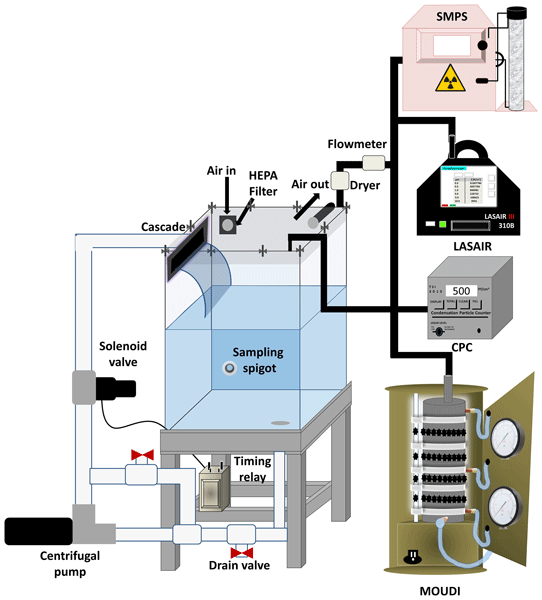
The present study shows the development of the UNAM-MARine Aerosol Tank (UNAM-MARAT), a device that simulates wave breaking to generate marine aerosol particles. The portable and automatic tank is able to generate particle concentrations as high as 2000 cm-3, covering a wide range of sizes, similar to those found in the ambient marine boundary layer. The sea spray aerosol generated from three natural seawater samples was found to act as ice-nucleating particles (INPs) via immersion freezing.
Norman T. O'Neill, Keyvan Ranjbar, Liviu Ivănescu, Yann Blanchard, Seyed Ali Sayedain, and Yasmin AboEl-Fetouh
Atmos. Chem. Phys., 25, 27–44, https://doi.org/10.5194/acp-25-27-2025, https://doi.org/10.5194/acp-25-27-2025, 2025
Short summary
Short summary
Dust from mid-latitude deserts or from local drainage basins is a weak component of atmospheric aerosols in the Arctic. Satellite-based dust estimates are often overestimated because dust and cloud measurements can be confused. Illustrations are given with an emphasis on the flawed claim that a classic indicator of dust (negative brightness temperature differences) is proof of the presence of airborne Arctic dust. Low-altitude warm-water plumes are the likely source of such negative values.
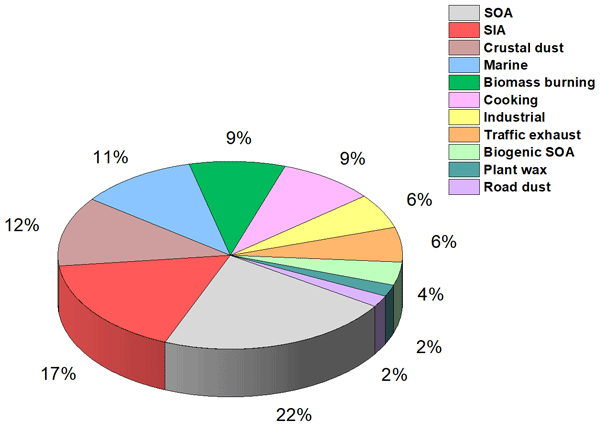
Nansi Fakhri, Robin Stevens, Arnold Downey, Konstantina Oikonomou, Jean Sciare, Charbel Afif, and Patrick L. Hayes
Atmos. Chem. Phys., 24, 1193–1212, https://doi.org/10.5194/acp-24-1193-2024, https://doi.org/10.5194/acp-24-1193-2024, 2024
Short summary
Short summary
We investigated the chemical composition of atmospheric fine particles, their emission sources, and the potential human health risk associated with trace elements in particles for an urban site in Montréal over a 3-month period (August–November). This study represents the first time that such extensive composition measurements were included in an urban source apportionment study in Canada, and it provides greater resolution of fine-particle sources than has been previously achieved in Canada.
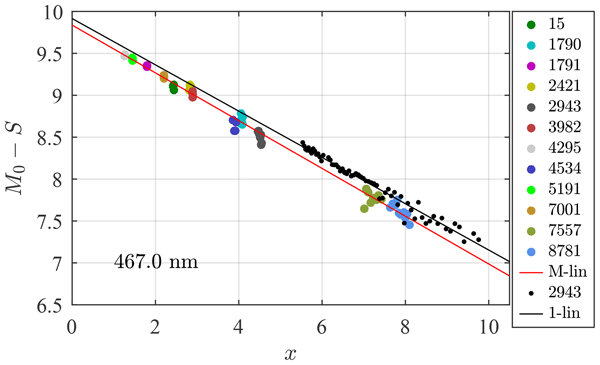
Liviu Ivănescu and Norman T. O'Neill
Atmos. Meas. Tech., 16, 6111–6121, https://doi.org/10.5194/amt-16-6111-2023, https://doi.org/10.5194/amt-16-6111-2023, 2023
Short summary
Short summary
The starphotometers' complex infrastructure prohibits calibration campaigns. On-site calibration procedures appear as the only practical solution. A multi-star approach overcomes site-specific sky transparency stability problems. Star selection strategies were proposed for mitigating some sources of errors. Data processing strategies and instrument design improvements appear necessary.
Seyed Ali Sayedain, Norman T. O'Neill, James King, Patrick L. Hayes, Daniel Bellamy, Richard Washington, Sebastian Engelstaedter, Andy Vicente-Luis, Jill Bachelder, and Malo Bernhard
Atmos. Meas. Tech., 16, 4115–4135, https://doi.org/10.5194/amt-16-4115-2023, https://doi.org/10.5194/amt-16-4115-2023, 2023
Short summary
Short summary
We used (columnar) ground-based remote sensing (RS) tools and surface measurements to characterize local (drainage-basin) dust plumes at a site in the Yukon. Plume height, particle size, and column-to-surface ratios enabled insights into how satellite RS could be used to analyze Arctic-wide dust transport. This helps modelers refine dust impacts in their climate change simulations. It is an important step since local dust is a key source of dust deposition on snow in the sensitive Arctic region.
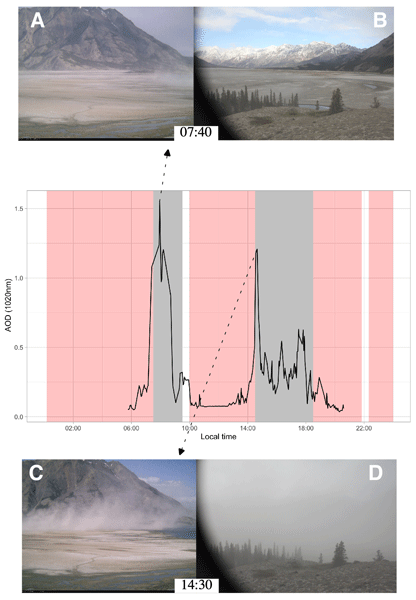
Rosemary Huck, Robert G. Bryant, and James King
Atmos. Chem. Phys., 23, 6299–6318, https://doi.org/10.5194/acp-23-6299-2023, https://doi.org/10.5194/acp-23-6299-2023, 2023
Short summary
Short summary
This study shows that mineral aerosol (dust) emission events in high-latitude areas are under-represented in both ground- and space-based detecting methods. This is done through a suite of ground-based data to prove that dust emissions from the proglacial area, Lhù’ààn Mân, occur almost daily but are not always recorded at different timescales. Dust has multiple effects on atmospheric processes; therefore, accurate quantification is important in the calibration and validation of climate models.
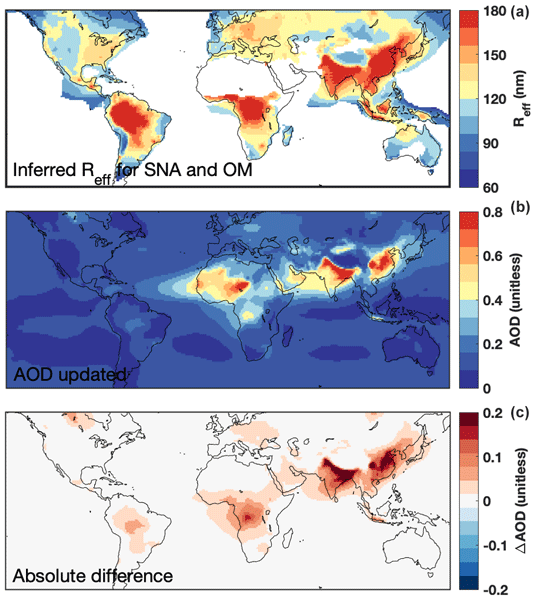
Haihui Zhu, Randall V. Martin, Betty Croft, Shixian Zhai, Chi Li, Liam Bindle, Jeffrey R. Pierce, Rachel Y.-W. Chang, Bruce E. Anderson, Luke D. Ziemba, Johnathan W. Hair, Richard A. Ferrare, Chris A. Hostetler, Inderjeet Singh, Deepangsu Chatterjee, Jose L. Jimenez, Pedro Campuzano-Jost, Benjamin A. Nault, Jack E. Dibb, Joshua S. Schwarz, and Andrew Weinheimer
Atmos. Chem. Phys., 23, 5023–5042, https://doi.org/10.5194/acp-23-5023-2023, https://doi.org/10.5194/acp-23-5023-2023, 2023
Short summary
Short summary
Particle size of atmospheric aerosol is important for estimating its climate and health effects, but simulating atmospheric aerosol size is computationally demanding. This study derives a simple parameterization of the size of organic and secondary inorganic ambient aerosol that can be applied to atmospheric models. Applying this parameterization allows a better representation of the global spatial pattern of aerosol size, as verified by ground and airborne measurements.
Norman T. O'Neill, Keyvan Ranjbar, Liviu Ivănescu, Thomas F. Eck, Jeffrey S. Reid, David M. Giles, Daniel Pérez-Ramírez, and Jai Prakash Chaubey
Atmos. Meas. Tech., 16, 1103–1120, https://doi.org/10.5194/amt-16-1103-2023, https://doi.org/10.5194/amt-16-1103-2023, 2023
Short summary
Short summary
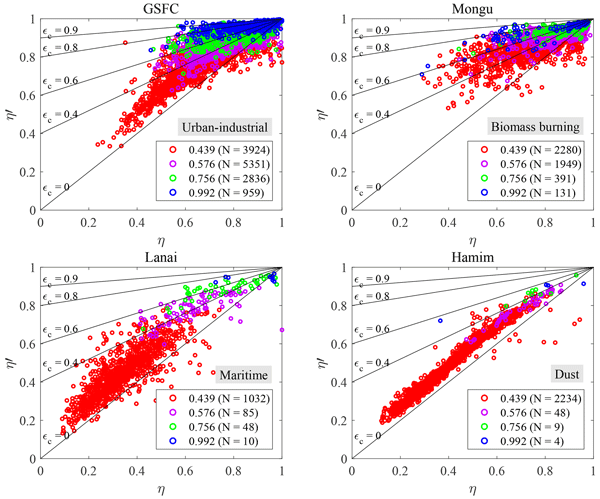
Aerosols are atmospheric particles that vary in size (radius) from a fraction of a micrometer (µm) to around 20 µm. They tend to be either smaller than 1 µm (like smoke or pollution) or larger than 1 µm (like dust or sea salt). Their optical effect (scattering and absorbing sunlight) can be divided into FM (fine-mode) and CM (coarse-mode) parts using a cutoff radius around 1 µm or a spectral (color) technique. We present and validate a theoretical link between the types of FM and CM divisions.
Outi Meinander, Pavla Dagsson-Waldhauserova, Pavel Amosov, Elena Aseyeva, Cliff Atkins, Alexander Baklanov, Clarissa Baldo, Sarah L. Barr, Barbara Barzycka, Liane G. Benning, Bojan Cvetkovic, Polina Enchilik, Denis Frolov, Santiago Gassó, Konrad Kandler, Nikolay Kasimov, Jan Kavan, James King, Tatyana Koroleva, Viktoria Krupskaya, Markku Kulmala, Monika Kusiak, Hanna K. Lappalainen, Michał Laska, Jerome Lasne, Marek Lewandowski, Bartłomiej Luks, James B. McQuaid, Beatrice Moroni, Benjamin Murray, Ottmar Möhler, Adam Nawrot, Slobodan Nickovic, Norman T. O’Neill, Goran Pejanovic, Olga Popovicheva, Keyvan Ranjbar, Manolis Romanias, Olga Samonova, Alberto Sanchez-Marroquin, Kerstin Schepanski, Ivan Semenkov, Anna Sharapova, Elena Shevnina, Zongbo Shi, Mikhail Sofiev, Frédéric Thevenet, Throstur Thorsteinsson, Mikhail Timofeev, Nsikanabasi Silas Umo, Andreas Uppstu, Darya Urupina, György Varga, Tomasz Werner, Olafur Arnalds, and Ana Vukovic Vimic
Atmos. Chem. Phys., 22, 11889–11930, https://doi.org/10.5194/acp-22-11889-2022, https://doi.org/10.5194/acp-22-11889-2022, 2022
Short summary
Short summary
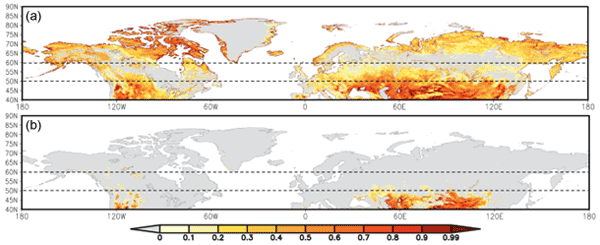
High-latitude dust (HLD) is a short-lived climate forcer, air pollutant, and nutrient source. Our results suggest a northern HLD belt at 50–58° N in Eurasia and 50–55° N in Canada and at >60° N in Eurasia and >58° N in Canada. Our addition to the previously identified global dust belt (GDB) provides crucially needed information on the extent of active HLD sources with both direct and indirect impacts on climate and environment in remote regions, which are often poorly understood and predicted.

Peng Xian, Jianglong Zhang, Norm T. O'Neill, Jeffrey S. Reid, Travis D. Toth, Blake Sorenson, Edward J. Hyer, James R. Campbell, and Keyvan Ranjbar
Atmos. Chem. Phys., 22, 9949–9967, https://doi.org/10.5194/acp-22-9949-2022, https://doi.org/10.5194/acp-22-9949-2022, 2022
Short summary
Short summary
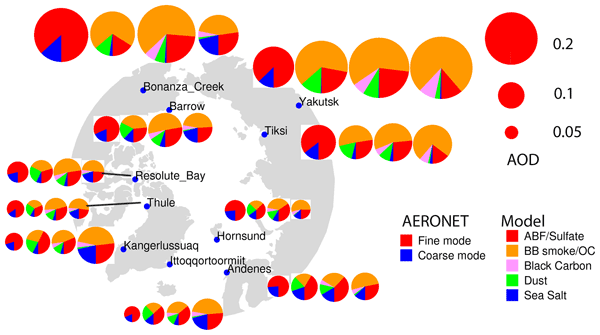
The study provides a baseline Arctic spring and summertime aerosol optical depth climatology, trend, and extreme event statistics from 2003 to 2019 using a combination of aerosol reanalyses, remote sensing, and ground observations. Biomass burning smoke has an overwhelming contribution to black carbon (an efficient climate forcer) compared to anthropogenic sources. Burning's large interannual variability and increasing summer trend have important implications for the Arctic climate.
Peng Xian, Jianglong Zhang, Norm T. O'Neill, Travis D. Toth, Blake Sorenson, Peter R. Colarco, Zak Kipling, Edward J. Hyer, James R. Campbell, Jeffrey S. Reid, and Keyvan Ranjbar
Atmos. Chem. Phys., 22, 9915–9947, https://doi.org/10.5194/acp-22-9915-2022, https://doi.org/10.5194/acp-22-9915-2022, 2022
Short summary
Short summary
The study provides baseline Arctic spring and summertime aerosol optical depth climatology, trend, and extreme event statistics from 2003 to 2019 using a combination of aerosol reanalyses, remote sensing, and ground observations. Biomass burning smoke has an overwhelming contribution to black carbon (an efficient climate forcer) compared to anthropogenic sources. Burning's large interannual variability and increasing summer trend have important implications for the Arctic climate.
Rachel Y.-W. Chang, Jonathan P. D. Abbatt, Matthew C. Boyer, Jai Prakash Chaubey, and Douglas B. Collins
Atmos. Chem. Phys., 22, 8059–8071, https://doi.org/10.5194/acp-22-8059-2022, https://doi.org/10.5194/acp-22-8059-2022, 2022
Short summary
Short summary
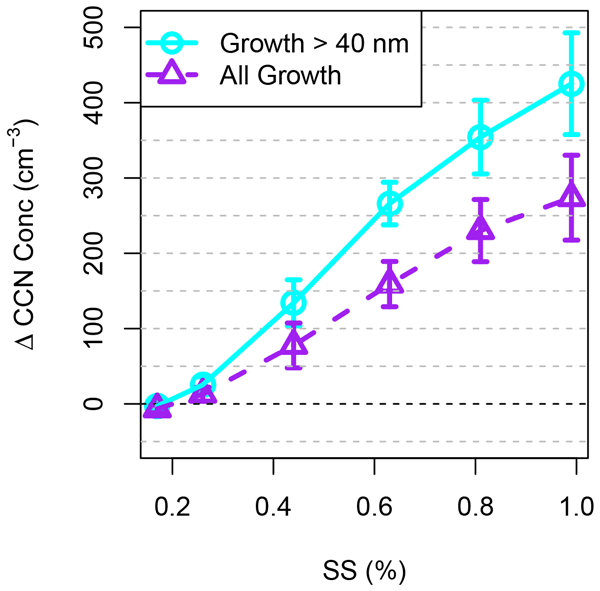
During summer 2016, the ability of newly formed particles to turn into droplets was measured in the Canadian Arctic. Our observations suggest that these small particles were growing by the condensation of organic vapours likely coming from the surrounding open waters. These particles grew large enough that they could form cloud droplets and therefore affect the earth’s radiation budget. These results are relevant as the Arctic summer rapidly warms with climate change.

Keyvan Ranjbar, Norm T. O'Neill, and Yasmin Aboel-Fetouh
Atmos. Chem. Phys., 22, 1757–1760, https://doi.org/10.5194/acp-22-1757-2022, https://doi.org/10.5194/acp-22-1757-2022, 2022
Short summary
Short summary
We argue that the illustration employed by Huang et al. (2015) to demonstrate the transport of Asian dust to the high Arctic was, in fact, largely a cloud event and that the actual impact of Asian dust was measurable but much weaker than what they proposed and had occurred a day earlier (in agreement with the transport model they had employed to predict the transport path to the high Arctic).
Cited articles
AboEl-Fetouh, Y., O'Neill, N. T., Ranjbar, K., Hesaraki, S., Abboud, I., and Sobolewski, P. S.: Climatological-Scale Analysis of Intensive and Semi-intensive Aerosol Parameters Derived From AERONET Retrievals Over the Arctic, J. Geophys. Res.-Atmos., 125, https://doi.org/10.1029/2019jd031569, 2020.
Arnalds, O.: Dust sources and deposition of aeolian materials in Iceland, Iceland. Agr. Sci., 23, 3–21, https://www.moldin.net/uploads/3/9/3/3/39332633/olafur_arnalds_2010_ias.pdf (last access: 22 November 2025), 2010.
Adams, P. and Dunbar, M.: Arctic Archipelago, in: The Canadian Encyclopedia, https://www.thecanadianencyclopedia.ca/en/article/arctic-archipelago (last access: 22 November 2025), 2015.
Bachelder, J., Cadieux, M., Liu-Kang, C., Lambert, P., Filoche, A., Galhardi, J. A., Hadioui, M., Chaput, A., Bastien-Thibault, M. P., Wilkinson, K. J., King, J., and Hayes, P. L.: Chemical and microphysical properties of wind-blown dust near an actively retreating glacier in Yukon, Canada, Aerosol Sci. Tech., 54, 2–20. https://doi.org/10.1080/02786826.2019.1676394, 2020.
Baddock, M., Hall, A., Rideout, J., Bryant, R., Bullard, J., and Gassó, S.: Satellite observations of Arctic blowing dust events > 82° N, Weather, 80, 61–66, https://doi.org/10.1002/wea.7617, 2024.
Barford, N. C., Experimental measurements: precision, error and truth, Addison-Wesley Publishing Company, Inc., Don Mills, Ontario, ISBN 10: 0201003953, ISBN 13: 9780201003956, 1967.
Barr, S. L., Wyld, B., McQuaid, J. B., Neely III, R. R., and Murray, B. J.: Southern Alaska as a source of atmospheric mineral dust and ice-nucleating particles, Sci. Adv., 9, eadg3708, https://doi.org/10.1126/sciadv.adg3708, 2023.
Bullard, J. E., Matthew, B., Tom, B., John, C., Eleanor, D., Diego, G., Santiago, G., Gudrun, G., Richard, H., Robert, M., Cheryl, M.-N., Tom, M., Helena, S., and Thorsteinsson, T.: High latitude dust in the Earth system, Rev. Geophys., 54, 447–485, https://doi.org/10.1002/2016RG000518, 2016.
Dörnbrack, A., Stachlewska, I. S., Ritter, C., and Neuber, R.: Aerosol distribution around Svalbard during intense easterly winds, Atmos. Chem. Phys., 10, 1473–1490, https://doi.org/10.5194/acp-10-1473-2010, 2010.
Dubovik, O., Holben, B., Eck, T. F., Smirnov, A., Kaufman, Y. J., King, M. D., Tanré, D., and Slutsker I.: Variability of absorption and optical properties of key aerosol types observed in worldwide locations, J. Atmos. Sci., 59, 590–608, https://doi.org/10.1175/1520-0469(2002)059<0590:VOAAOP>2.0.CO;2, 2002.
Eloranta, E. W., Razenkov, I. A., Garcia, J. P., and Hedrick, J.: Observations with the University of Wisconsin Arctic High Spectral Resolution Lidar, 22nd International Laser Radar Conference, 12–16 July, Matera, Italy, https://lidar.ssec.wisc.edu/papers/conferences/ilrc22/hsrl_v1_color.pdf (last accessed: 2 December 2025), 2004.
Esselborn, M., Wirth, M., Fix, A., Weinzierl, B., Rasp, K., Tesche, M., and Petzold, A.: Spatial distribution and optical properties of Saharan dust observed by airborne high spectral resolution lidar during SAMUM 2006, Tellus B, 61, 131–143, https://doi.org/10.1111/j.1600-0889.2008.00394.x, 2009.
Freudenthaler, V., Esselborn, M., Wiegner, M., Heese, B., Tesche, M., Ansmann, A., Müller, D., Althausen, D., Wirth, M., Fix, A., Ehret, G., Knippertz, P., Toledano, C., Gasteiger, J., Garhammer, M., and Seefeldner, M.: Depolarization ratio profiling at several wavelengths in pure Saharan dust during SAMUM 2006, Tellus B, 61, 165–179,https://doi.org/10.1111/j.1600-0889.2008.00396.x, 2009.
Garay, M. J., Witek, M. L., Kahn, R. A., Seidel, F. C., Limbacher, J. A., Bull, M. A., Diner, D. J., Hansen, E. G., Kalashnikova, O. V., Lee, H., Nastan, A. M., and Yu, Y.: Introducing the 4.4 km spatial resolution Multi-Angle Imaging SpectroRadiometer (MISR) aerosol product, Atmos. Meas. Tech., 13, 593–628, https://doi.org/10.5194/amt-13-593-2020, 2020.
Giles, D. M., Sinyuk, A., Sorokin, M. G., Schafer, J. S., Smirnov, A., Slutsker, I., Eck, T. F., Holben, B. N., Lewis, J. R., Campbell, J. R., Welton, E. J., Korkin, S. V., and Lyapustin, A. I.: Advancements in the Aerosol Robotic Network (AERONET) Version 3 database – automated near-real-time quality control algorithm with improved cloud screening for Sun photometer aerosol optical depth (AOD) measurements, Atmos. Meas. Tech., 12, 169–209, https://doi.org/10.5194/amt-12-169-2019, 2019.
Groot Zwaaftink, C. D., Grythe, H., Skov, H., and Stohl, A.: Substantial contribution of northern high-latitude sources to mineral dust in the Arctic, J. Geophys. Res., 121, 13678–13697, https://doi.org/10.1002/2016JD025482, 2016.
Groß, S., Tesche, M., Freudenthaler, V., Toledano, C., Wiegner, M., Ansmann, A., Althausen, D., and Seefeldner, M.: Characterization of Saharan dust, marine aerosols and mixtures of biomassburning aerosols and dust by means of multi-wavelength depolarization and Raman lidar measurements during SAMUM 2, Tellus B, 63, 706–724, https://doi.org/10.1111/j.1600-0889.2011.00556.x, 2011.
Hansen, J. E. and Travis, L. D.: Light scattering in planetary atmospheres, Space Sci. Rev., 16, 527–610, https://doi.org/10.1007/BF00168069, 1974.
Huang, Y., Adebiyi, A. A., Formenti, P., and Kok, J. F.: Linking the different diameter types of aspherical desert dust indicates that models underestimate coarse dust emission, Geophys. Res. Lett., 48, e2020GL092054, https://doi.org/10.1029/2020GL092054, 2021.
Justice, C. O., Townshend, J. R. G., Vermote, E. F., Masuoka, E., Wolfe, R. E., Saleous, N., Roy, D. P., and Morisette, J. T.: An overview of MODIS Land data processing and product status, Remote Sens. Environ., 83, 3–15, https://doi.org/10.1016/S0034-4257(02)00084-6, 2002.
Kahn, R. A., Li, W.-H., Moroney, C., Diner, D. J., Martonchik, J. V., and Fishbein, E.: Aerosol source plume physical characteristics from space-based multiangle imaging, J. Geophys. Res.-Atmos., 112, D11205, https://doi.org/10.1029/2006JD007647, 2007.
Kaltschmitt, M., Streicher, W., and Wiese, A.: Renewable Energy – Technology, Economics and Environment (XXXII), Springer, Berlin, Heidelberg, New York, ISBN 3-540-70947-9, ISBN 978-3-540-70947-3, p. 55, http://www.springer.com/us/book/9783540709473 (last access: 22 November 2025), 2007.
Kawai, K., Matsui, H., and Tobo, Y.: Dominant Role of Arctic Dust With High Ice Nucleating Ability in the Arctic Lower Troposphere, Geophys. Res. Lett., 50, 1–10, https://doi.org/10.1029/2022GL102470, 2023.
Lesins, G., Duck, T. J., and Drummond, J. R.: Climate trends at Eureka in the Canadian high arctic, Atmos. Ocean, 48, 59–80, https://doi.org/10.3137/AO1103.2010, 2010.
Levy, R., Hsu, C., et al.: MODIS Atmosphere L2 Aerosol Product, NASA MODIS Adaptive Processing System [data set], Goddard Space Flight Center, USA, https://doi.org/10.5067/MODIS/MOD04_3K.061, 2015a.
Levy, R., Hsu, C., et al.: MODIS Atmosphere L2 Aerosol Product, NASA MODIS Adaptive Processing System [data set], Goddard Space Flight Center, USA, https://doi.org/10.5067/MODIS/MYD04_3K.061, 2015b.
Levy, R., Hsu, C., et al.: MODIS Atmosphere L2 Aerosol Product, NASA MODIS Adaptive Processing System [data set], Goddard Space Flight Center, USA, https://doi.org/10.5067/MODIS/MOD04_L2.061, 2015c.
Levy, R., Hsu, C., et al.: MODIS Atmosphere L2 Aerosol Product, NASA MODIS Adaptive Processing System [data set], Goddard Space Flight Center, USA, https://doi.org/10.5067/MODIS/MYD04_L2.061, 2015d.
Lind, E. and Gupta, P.: Registry of Research Data Repositories, AERONET [data set], https://doi.org/10.17616/R3VK9T, 2023.
Liu, Z., Fairlie, T. D., Uno, I., Huang, J., Wu, D., Omar, A., Kar, J., Vaughan, M., Rogers, R., Winker, D., Trepte, C., Hu, Y., Sun, W., Lin, B., and Cheng, A.: Transpacific transport and evolution of the optical properties of Asian dust, J. Quant. Spectrosc. Ra., 116, 24–33, https://doi.org/10.1016/j.jqsrt.2012.11.011, 2013.
Mamouri, R. E. and Ansmann, A.: Fine and coarse dust separation with polarization lidar, Atmos. Meas. Tech., 7, 3717–3735, https://doi.org/10.5194/amt-7-3717-2014, 2014.
Mamouri, R.-E. and Ansmann, A.: Potential of polarization/Raman lidar to separate fine dust, coarse dust, maritime, and anthropogenic aerosol profiles, Atmos. Meas. Tech., 10, 3403–3427, https://doi.org/10.5194/amt-10-3403-2017, 2017.
Martonchik, J. V., Diner, D. J., Kahn, R. A., Ackerman, T. P., Verstraete, M. M., Pinty, B., and Gordon, H. R.: Techniques for the retrieval of aerosol properties over land and ocean using multiangle imaging, IEEE T. Geosci. Remote, 36, 1212–1227, https://doi.org/10.1109/36.701027, 1998.
Meinander, O., Dagsson-Waldhauserova, P., Amosov, P., Aseyeva, E., Atkins, C., Baklanov, A., Baldo, C., Barr, S. L., Barzycka, B., Benning, L. G., Cvetkovic, B., Enchilik, P., Frolov, D., Gassó, S., Kandler, K., Kasimov, N., Kavan, J., King, J., Koroleva, T., Krupskaya, V., Kulmala, M., Kusiak, M., Lappalainen, H. K., Laska, M., Lasne, J., Lewandowski, M., Luks, B., McQuaid, J. B., Moroni, B., Murray, B., Möhler, O., Nawrot, A., Nickovic, S., O’Neill, N. T., Pejanovic, G., Popovicheva, O., Ranjbar, K., Romanias, M., Samonova, O., Sanchez-Marroquin, A., Schepanski, K., Semenkov, I., Sharapova, A., Shevnina, E., Shi, Z., Sofiev, M., Thevenet, F., Thorsteinsson, T., Timofeev, M., Umo, N. S., Uppstu, A., Urupina, D., Varga, G., Werner, T., Arnalds, O., and Vukovic Vimic, A.: Newly identified climatically and environmentally significant high-latitude dust sources, Atmos. Chem. Phys., 22, 11889–11930, https://doi.org/10.5194/acp-22-11889-2022, 2022.
Mishchenko, M. I. and Sassen, K.: Depolarization of lidar returns by small ice crystals: An application to contrails, Geophys. Res. Lett., 25, 309–312, https://doi.org/10.1029/97GL03764, 1998.
MISR Handbook: Multi-angle Imaging SpectroRadiometer Project Handbook, Atmospheric Science Data Center, NASA Langley Research Center, https://asdc.larc.nasa.gov/documents/misr/guide/misr_ov2.pdf (last access: 21 December 2024), 2000.
Nelson, D. L., Garay, M. J., Kahn, R. A., and Dunst, B. A.: Stereoscopic height and wind retrievals for aerosol plumes with the MISR INteractive eXplorer (MINX), Remote Sens., 5, 4593–4628, https://doi.org/10.3390/rs5094593, 2013.
O'Neill, N. T., Ranjbar, K., Ivănescu, L., Blanchard, Y., Sayedain, S. A., and AboEl-Fetouh, Y.: Remote-sensing detectability of airborne Arctic dust, Atmos. Chem. Phys., 25, 27–44, https://doi.org/10.5194/acp-25-27-2025, 2025.
Ranjbar, K., O'Neill, N. T., Ivanescu, L., King, J., and Hayes, P. L.: Remote sensing of a high-Arctic, local dust event over Lake Hazen (Ellesmere Island, Nunavut, Canada), Atmos. Environ., 246, 118102, https://doi.org/10.1016/j.atmosenv.2020.118102, 2021.
Remer, L. A., Mattoo, S., Levy, R. C., and Munchak, L. A.: MODIS 3 km aerosol product: algorithm and global perspective, Atmos. Meas. Tech., 6, 1829–1844, https://doi.org/10.5194/amt-6-1829-2013, 2013.
Sayedain, S. A., O'Neill, N. T., King, J., Hayes, P. L., Bellamy, D., Washington, R., Engelstaedter, S., Vicente-Luis, A., Bachelder, J., and Bernhard, M.: Detection and analysis of Lhù'ààn Maân’ (Kluane Lake) dust plumes using passive and active ground-based remote sensing supported by physical surface measurements, Atmos. Meas. Tech., 16, 4115–4135, https://doi.org/10.5194/amt-16-4115-2023, 2023.
Sayedain, S. A. and O'Neill, N. T.: Remote sensing of local-dust across the Canadian Arctic - Supplementary Material, Zenodo, https://doi.org/10.5281/zenodo.20561203, 2026.
Sayer, A. M., Munchak, L. A., Hsu, N. C., Levy, R. C., Bettenhausen, C., and Jeong, M.-J.: MODIS Collection 6 aerosol products: Comparison between Aqua's e-Deep Blue, Dark Target, and “merged” data sets, and usage recommendations, J. Geophys. Res.-Atmos.., 119, 13,965–13,989. https://doi.org/10.1002/2014JD022453, 2014.
Sinyuk, A., Holben, B. N., Eck, T. F., Giles, D. M., Slutsker, I., Korkin, S., Schafer, J. S., Smirnov, A., Sorokin, M., and Lyapustin, A.: The AERONET Version 3 aerosol retrieval algorithm, associated uncertainties and comparisons to Version 2, Atmos. Meas. Tech., 13, 3375–3411, https://doi.org/10.5194/amt-13-3375-2020, 2020.
Song, Q., Zhang, Z., Yu, H., Ginoux, P., and Shen, J.: Global dust optical depth climatology derived from CALIOP and MODIS aerosol retrievals on decadal timescales: regional and interannual variability, Atmos. Chem. Phys., 21, 13369–13395, https://doi.org/10.5194/acp-21-13369-2021, 2021.
Tian, Y., Pan, X., Wang, Z., Wang, D., Ge, B., Liu, X., Zhang, Y., Liu, H., Lei, S., Yang, T., Fu, P., Sun, Y., and Wang, Z.: Transport patterns, size distributions, and depolarization characteristics of dust particles in East Asia in spring 2018, J. Geophys. Res.-Atmos., 125, e2019JD031752, https://doi.org/10.1029/2019JD031752, 2020.
Tobo, Y., Adachi, K., DeMott, P. J., Hill, T. C. J., Hamilton, D. S., Mahowald, N. M., Nagatsuka, N., Ohata, S., Uetake, J., Kondo, Y., and Koike, M.: Glacially sourced dust as a potentially significant source of ice nucleating particles, Nat. Geosci., 12, 253–258. https://doi.org/10.1038/s41561-019-0314-x, 2019.
TSI Incorporated: Aerodynamic Particle Sizer® (APS™) Model 3321 [Specification sheet], https://www.tsi.com/getmedia/7fd20aa0-8540-4b8d-8572-d164366dd08c/3321-Spec-Sheet-US?ext=.pdf (last access: 11 November 2025), 2022.
Uno, I., Eguchi, K., Yumimoto, K., Takemura, T., Shimizu, A., Uematsu, M., Liu, Z., Wang, Z., Hara, Y., and Sugimoto, N.: Asian dust transported one full circuit around theglobe, Nat. Geosci., 2, 557–560, https://doi.org/10.1038/ngeo583, 2009.
Weitkamp, C.: Lidar: range-resolved optical remote sensing of the atmosphere, HSRL chapter 5 by E. Eloranta, Springer Science and Business Media, New York, https://doi.org/10.1007/b106786, 2005.
Williamson, M.-C. and MacRae, R. A.: Mineralization potential in volcanic rocks of the Strand Fiord Formation and associated intrusions, Axel Heiberg Island, Nunavut, Canada, Geological Survey of Canada, Open File, 7981, 34 pp., Natural Resources Canada, https://doi.org/10.4095/297365, 2015.
Witek, M. L., Garay, M. J., Diner, D. J., Bull, M. A., Seidel, F. C., Nastan, A. M., and Hansen, E. G.: Introducing the MISR level 2 near real-time aerosol product, Atmos. Meas. Tech., 14, 5577–5591, https://doi.org/10.5194/amt-14-5577-2021, 2021.
Woo, M. K., Edlund, S. A., and Young, K. L.: Occurrence of early snow-free zones on Fosheim Peninsula, Ellesmere Island, Northwest Territories, Current Research, Part B, Geological Survey of Canada Paper, 91, 9–14, ISBN: 0-660-56282-0, https://publications.gc.ca/collections/collection_2017/rncan-nrcan/M44-91-1B.pdf (last access: 22 November 2025), 1991.
Xi, Y., Xu, C., Downey, A., Stevens, R., Bachelder, J. O., King, J., Hayes, P. L., and Bertram, A. K.: Ice nucleating properties of airborne dust from an actively retreating glacier in Yukon, Canada, Environmental Science: Atmospheres, 2, 714–726. https://doi.org/10.1039/d1ea00101a, 2022.
Yang, S., Preißler, J., Wiegner, M., von Löwis, S., Petersen, G. N., Parks, M. M., and Finger, D. C.: Monitoring dust events using doppler lidar and ceilometer in Iceland, Atmosphere, 11, 1–23, https://doi.org/10.3390/atmos11121294, 2020.
Zhao, X., Huang, K., Fu, J. S., and Abdullaev, S. F.: Long-range transport of Asian dust to the Arctic: identification of transport pathways, evolution of aerosol optical properties, and impact assessment on surface albedo changes, Atmos. Chem. Phys., 22, 10389–10407, https://doi.org/10.5194/acp-22-10389-2022, 2022.
Short summary
Dust plumes in the Canadian Arctic have important climatic change (CC) impacts on (i) snow and ice (darkening and thus premature melting) and (ii) as nuclei for cloud formation (cloud reflectivity is a poorly characterized but key CC parameter). Ground measurements of dust in that region are rare. We characterized plumes close to their drainage basin sources using ground- and satellite-based remote sensing (RS) estimates of such key parameters as plume height, speed, and opacity (concentration).
Dust plumes in the Canadian Arctic have important climatic change (CC) impacts on (i) snow and...


