
Articles | Volume 19, issue 14
https://doi.org/10.5194/amt-19-4759-2026
© Author(s) 2026. This work is distributed under
the Creative Commons Attribution 4.0 License.
the Creative Commons Attribution 4.0 License.
https://doi.org/10.5194/amt-19-4759-2026
© Author(s) 2026. This work is distributed under
the Creative Commons Attribution 4.0 License.
the Creative Commons Attribution 4.0 License.
Research article
| Highlight paper
| 
24 Jul 2026
Research article | Highlight paper |
| 24 Jul 2026
| 24 Jul 2026
The added value of new ground-based observations in improving China's methane emission quantification
Huiru Zhong
Department of Atmospheric and Oceanic Sciences, School of Physics, Peking University, Beijing 100871, China
Lu Shen
CORRESPONDING AUTHOR

Department of Atmospheric and Oceanic Sciences, School of Physics, Peking University, Beijing 100871, China
Fengwei Wan
Department of Atmospheric and Oceanic Sciences, School of Physics, Peking University, Beijing 100871, China
Department of Atmospheric and Oceanic Sciences, School of Physics, Peking University, Beijing 100871, China
Jiangsu Key Laboratory of Coal-Based Greenhouse Gas Control and Utilization, School of Environment and Spatial Informatics, China University of Mining and Technology, Xuzhou, China
Related authors
No articles found.
Wei Hu, Jason Blake Cohen, Lingxiao Lu, Bo Zheng, Pravash Tiwari, Simone Lolli, Andrea Garzelli, Jun Li, and Kai Qin
EGUsphere, https://doi.org/10.5194/egusphere-2026-4468, https://doi.org/10.5194/egusphere-2026-4468, 2026
This preprint is open for discussion and under review for Atmospheric Chemistry and Physics (ACP).
Short summary
Short summary
This study presents a perturbation experiment to investigate the impact of satellite data uncertainty which are not fully removed using a fast and physically-based divergence operator. The shape of the uncertainty distribution governs error propagation and thus effects the stability of derived fluxes. Coal-based emissions sources are reliably captured. These results provide a practical, uncertainty‑aware filter for satellite‑derived methane emissions.
Xinqi Wei, Qin He, and Kai Qin
Int. Arch. Photogramm. Remote Sens. Spatial Inf. Sci., XLIX-B3-2026, 1477–1485, https://doi.org/10.5194/isprs-archives-XLIX-B3-2026-1477-2026, https://doi.org/10.5194/isprs-archives-XLIX-B3-2026-1477-2026, 2026
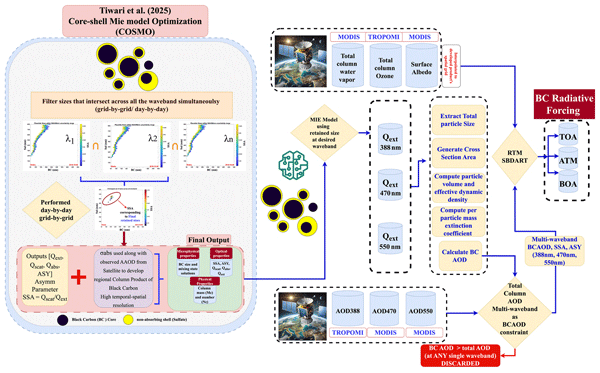
Pravash Tiwari, Jason Blake Cohen, Hongrui Gao, Lingxiao Lu, Jun Wang, Oleg Dubovik, and Kai Qin
Atmos. Chem. Phys., 26, 9149–9180, https://doi.org/10.5194/acp-26-9149-2026, https://doi.org/10.5194/acp-26-9149-2026, 2026
Short summary
Short summary
Black carbon's climate impact is highly uncertain because its radiative effect depends on particle size, mixing state, and column loading. This study combines satellite data, physics-based simulations, and machine learning to estimate black carbon forcing across contrasting regions. The same black carbon amount can warm or cool the atmosphere depending on local aerosol properties. The machine learning framework provides a fast, transferable tool for regional climate assessment.
Hongrui Gao, Qin He, Kai Qin, Jhoon Kim, Diego Loyola, Pravash Tiwari, Lingxiao Lu, and Jason Blake Cohen
Earth Syst. Sci. Data Discuss., https://doi.org/10.5194/essd-2026-443, https://doi.org/10.5194/essd-2026-443, 2026
Revised manuscript accepted for ESSD
Short summary
Short summary
There are always gaps in satellite records of air pollution because of factors such as clouds and operating conditions. We used a physics-aware deep learning method, producing a gapless 0.05° hourly dataset of tropospheric nitrogen dioxide over Asian pollution hotspots from 2019 to 2024. The dataset can capture sub-daily changes, revealing how traffic, industry, and clean-air policies shaped pollution, supporting health and environment studies.
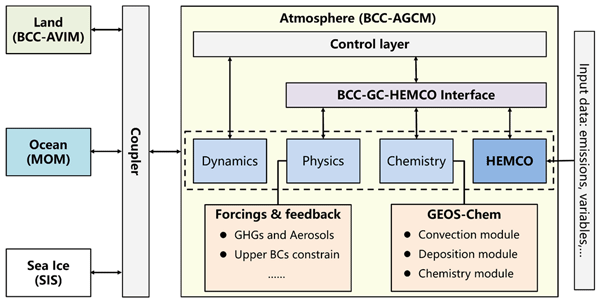
Ruize Sun, Xiao Lu, Haipeng Lin, Tongwen Wu, Xingpei Ye, Lu Shen, Xuan Wang, Haolin Wang, Jingyu Li, Ni Lu, Jiayin Su, Jie Zhang, Fang Zhang, Xiaoge Xin, Xiong Liu, Xiao Yang, and Lin Zhang
Geosci. Model Dev., 19, 2111–2136, https://doi.org/10.5194/gmd-19-2111-2026, https://doi.org/10.5194/gmd-19-2111-2026, 2026
Short summary
Short summary
We present the development of a global chemistry-climate coupled model BCC-GEOS-Chem v2.0, with improved representation of comprehensive troposphere-stratosphere chemistry and new capability to account for radiative-cloud feedbacks from short-lived climate forcers. The development of the BCC-GEOS-Chem v2.0 provides a useful framework for investigating climate–chemistry interactions and for future projections of global atmospheric chemistry
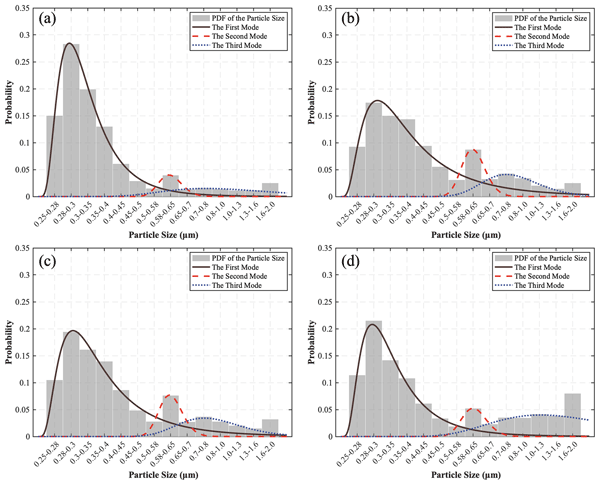
Luoyao Guan, Jason Blake Cohen, Shuo Wang, Pravash Tiwari, Zhewen Liu, Zhengqiang Li, and Kai Qin
Atmos. Chem. Phys., 26, 3107–3123, https://doi.org/10.5194/acp-26-3107-2026, https://doi.org/10.5194/acp-26-3107-2026, 2026
Short summary
Short summary
This study examines how black carbon particles from the coal industry influence regional climate by absorbing sunlight. Based on ground measurements and modeling, we find that conventional approaches, which oversimplify particle size and structure, which could leading a bias in terms of their warming effect. Our results highlight that more realistic particle characterizations are crucial for improving climate predictions in industrial regions.
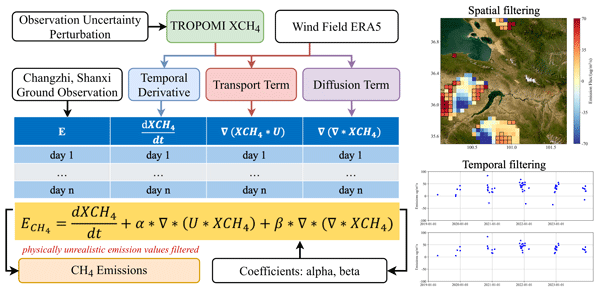
Bo Zheng, Jason Blake Cohen, Lingxiao Lu, Wei Hu, Pravash Tiwari, Simone Lolli, Andrea Garzelli, Hui Su, and Kai Qin
Atmos. Chem. Phys., 26, 1931–1946, https://doi.org/10.5194/acp-26-1931-2026, https://doi.org/10.5194/acp-26-1931-2026, 2026
Short summary
Short summary
This study provides TROPOMI (TROPOspheric Monitoring Instrument) with a new methane emission estimation method that can accurately identify emission sources. Our results generate non-negative emission datasets using objective selection and filtering methods. The results include lower minimum emission thresholds for all power grids and fewer false positives. The new method provides more robust emission quantification in the face of data uncertainty, going beyond traditional plume identification and background subtraction.
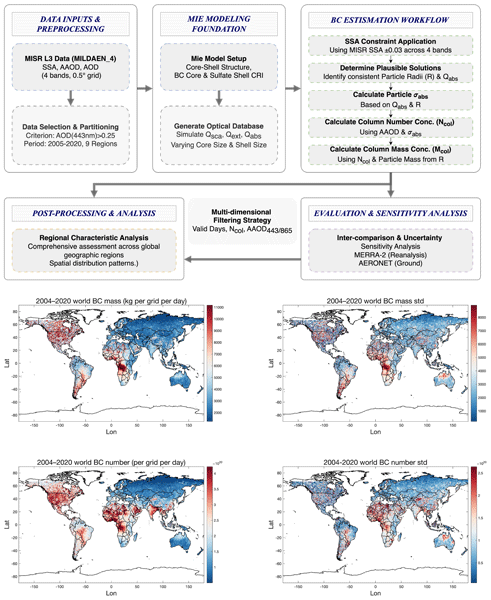
Zhewen Liu, Jason B. Cohen, Pravash Tiwari, Luoyao Guan, Shuo Wang, Zhengqiang Li, and Kai Qin
Earth Syst. Sci. Data, 18, 507–533, https://doi.org/10.5194/essd-18-507-2026, https://doi.org/10.5194/essd-18-507-2026, 2026
Short summary
Short summary
Black carbon (BC), emitted from fires, industry, and fossil fuels, warms the climate and worsens air quality. Due to complex physical and optical properties, BC remains poorly constrained. We combined satellite observations with physical models to build a daily, high-resolution, decadal global dataset of BC mass, number, size, and mixing details. The data contains both known sources and new hotspots. These results can support climate models, satellite products, and pollution mitigation.
Ye Feng, Jason Blake Cohen, Xiaolu Li, Lingxiao Lu, Zhewen Liu, Lei Wang, Jian Liu, and Kai Qin
EGUsphere, https://doi.org/10.5194/egusphere-2025-5890, https://doi.org/10.5194/egusphere-2025-5890, 2026
Short summary
Short summary
Carbon monoxide emissions in Central Asia's coal-heavy regions, like Xinjiang Province and Kazakhstan, are poorly tracked. Using satellite data and a new approach, this study maps daily emissions (2019–2024) while addressing measurement errors. About 69 % of estimates were unreliable. Underground coal fires, often ignored, emit as much CO as power plants. Emissions peaked in 2019, dropped until 2022, then rose again, linking to policy changes and economic shifts.
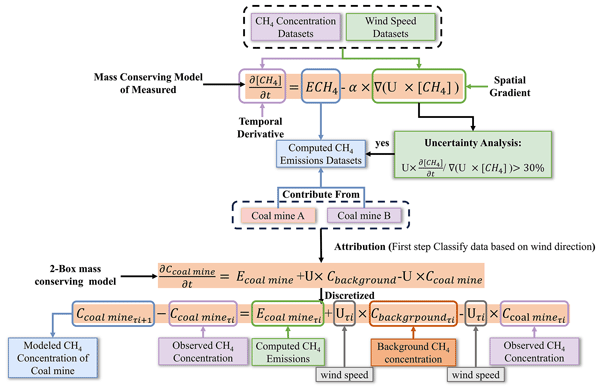
Fan Lu, Kai Qin, Jason Blake Cohen, Qin He, Pravash Tiwari, Wei Hu, Chang Ye, Yanan Shan, Qing Xu, Shuo Wang, and Qiansi Tu
Atmos. Chem. Phys., 25, 5837–5856, https://doi.org/10.5194/acp-25-5837-2025, https://doi.org/10.5194/acp-25-5837-2025, 2025
Short summary
Short summary
This work describes a field campaign and new fast emissions estimation approach to attribute methane from a large known and previously unknown coal mine in Shanxi, China. The emissions computed are shown to be larger than known oil and gas sources, indicating that methane from coal mines may play a larger role in the global methane budget. The results are found to be slightly larger than or similar to satellite observational campaigns over the same region.
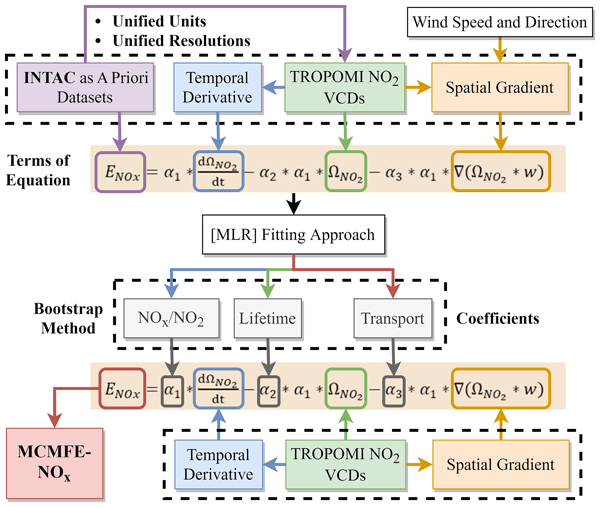
Lingxiao Lu, Jason Blake Cohen, Kai Qin, Xiaolu Li, and Qin He
Atmos. Chem. Phys., 25, 2291–2309, https://doi.org/10.5194/acp-25-2291-2025, https://doi.org/10.5194/acp-25-2291-2025, 2025
Short summary
Short summary
This study applies an approach that assimilates NO2 vertical column densities from TROPOMI in a mass-conserving manner and inverts daily NOx emissions, presented over rapidly changing regions in China. Source attribution is quantified by the local thermodynamics of the combustion temperature (NOx/NO2). Emission results identify sources which do not exist in the a priori datasets, especially medium industrial sources located next to the Yangtze River.
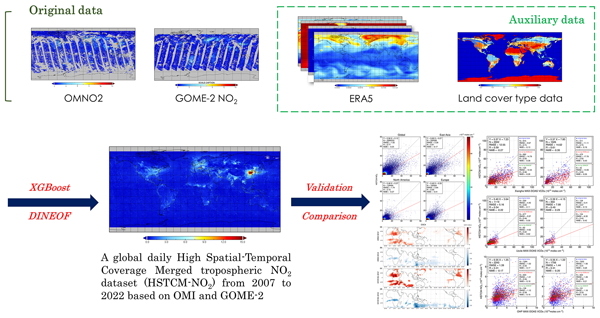
Kai Qin, Hongrui Gao, Xuancen Liu, Qin He, Pravash Tiwari, and Jason Blake Cohen
Earth Syst. Sci. Data, 16, 5287–5310, https://doi.org/10.5194/essd-16-5287-2024, https://doi.org/10.5194/essd-16-5287-2024, 2024
Short summary
Short summary
Satellites have brought new opportunities for monitoring atmospheric NO2, although the results are limited by clouds and other factors, resulting in missing data. This work proposes a new process to obtain reliable data products with high coverage by reconstructing the raw data from multiple satellites. The results are validated in terms of traditional methods as well as variance maximization and demonstrate a good ability to reproduce known polluted and clean areas around the world.
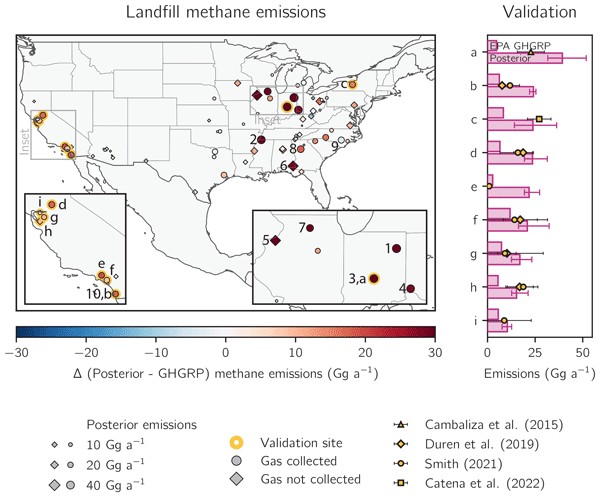
Hannah Nesser, Daniel J. Jacob, Joannes D. Maasakkers, Alba Lorente, Zichong Chen, Xiao Lu, Lu Shen, Zhen Qu, Melissa P. Sulprizio, Margaux Winter, Shuang Ma, A. Anthony Bloom, John R. Worden, Robert N. Stavins, and Cynthia A. Randles
Atmos. Chem. Phys., 24, 5069–5091, https://doi.org/10.5194/acp-24-5069-2024, https://doi.org/10.5194/acp-24-5069-2024, 2024
Short summary
Short summary
We quantify 2019 methane emissions in the contiguous US (CONUS) at a ≈ 25 km × 25 km resolution using satellite methane observations. We find a 13 % upward correction to the 2023 US Environmental Protection Agency (EPA) Greenhouse Gas Emissions Inventory (GHGI) for 2019, with large corrections to individual states, urban areas, and landfills. This may present a challenge for US climate policies and goals, many of which target significant reductions in methane emissions.
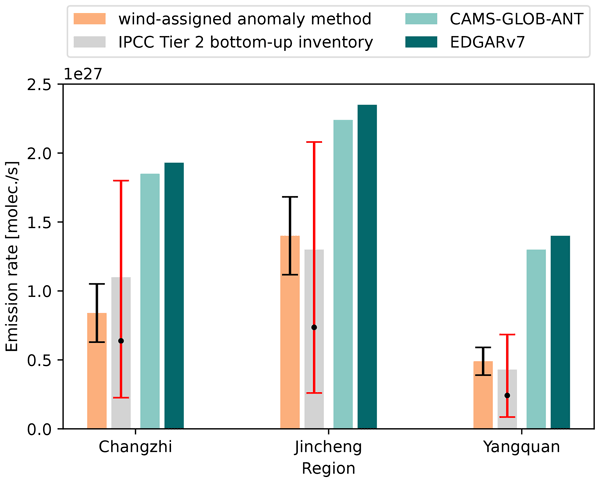
Qiansi Tu, Frank Hase, Kai Qin, Jason Blake Cohen, Farahnaz Khosrawi, Xinrui Zou, Matthias Schneider, and Fan Lu
Atmos. Chem. Phys., 24, 4875–4894, https://doi.org/10.5194/acp-24-4875-2024, https://doi.org/10.5194/acp-24-4875-2024, 2024
Short summary
Short summary
Four-year satellite observations of XCH4 are used to derive CH4 emissions in three regions of China’s coal-rich Shanxi province. The wind-assigned anomalies for two opposite wind directions are calculated, and the estimated emission rates are comparable to the current bottom-up inventory but lower than the CAMS and EDGAR inventories. This research enhances the understanding of emissions in Shanxi and supports climate mitigation strategies by validating emission inventories.
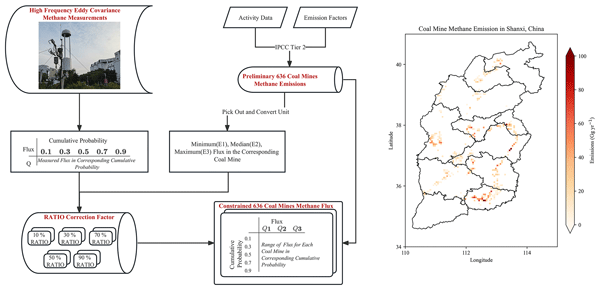
Kai Qin, Wei Hu, Qin He, Fan Lu, and Jason Blake Cohen
Atmos. Chem. Phys., 24, 3009–3028, https://doi.org/10.5194/acp-24-3009-2024, https://doi.org/10.5194/acp-24-3009-2024, 2024
Short summary
Short summary
We compute CH4 emissions and uncertainty on a mine-by-mine basis, including underground, overground, and abandoned mines. Mine-by-mine gas and flux data and 30 min observations from a flux tower located next to a mine shaft are integrated. The observed variability and bias correction are propagated over the emissions dataset, demonstrating that daily observations may not cover the range of variability. Comparisons show both an emissions magnitude and spatial mismatch with current inventories.
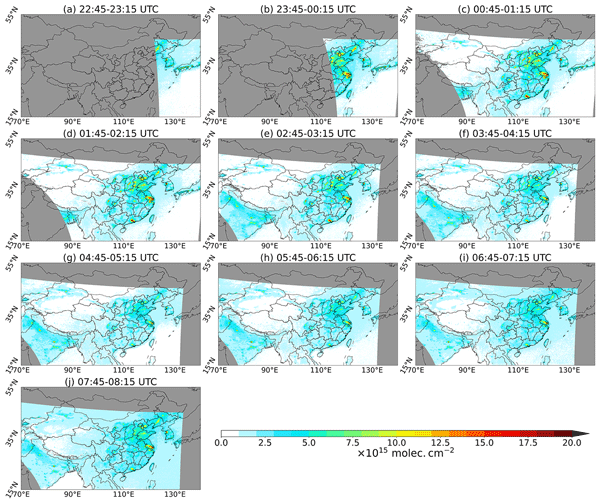
Yuhang Zhang, Jintai Lin, Jhoon Kim, Hanlim Lee, Junsung Park, Hyunkee Hong, Michel Van Roozendael, Francois Hendrick, Ting Wang, Pucai Wang, Qin He, Kai Qin, Yongjoo Choi, Yugo Kanaya, Jin Xu, Pinhua Xie, Xin Tian, Sanbao Zhang, Shanshan Wang, Siyang Cheng, Xinghong Cheng, Jianzhong Ma, Thomas Wagner, Robert Spurr, Lulu Chen, Hao Kong, and Mengyao Liu
Atmos. Meas. Tech., 16, 4643–4665, https://doi.org/10.5194/amt-16-4643-2023, https://doi.org/10.5194/amt-16-4643-2023, 2023
Short summary
Short summary
Our tropospheric NO2 vertical column density product with high spatiotemporal resolution is based on the Geostationary Environment Monitoring Spectrometer (GEMS) and named POMINO–GEMS. Strong hotspot signals and NO2 diurnal variations are clearly seen. Validations with multiple satellite products and ground-based, mobile car and surface measurements exhibit the overall great performance of the POMINO–GEMS product, indicating its capability for application in environmental studies.
Xiaolu Li, Jason Blake Cohen, Kai Qin, Hong Geng, Xiaohui Wu, Liling Wu, Chengli Yang, Rui Zhang, and Liqin Zhang
Atmos. Chem. Phys., 23, 8001–8019, https://doi.org/10.5194/acp-23-8001-2023, https://doi.org/10.5194/acp-23-8001-2023, 2023
Short summary
Short summary
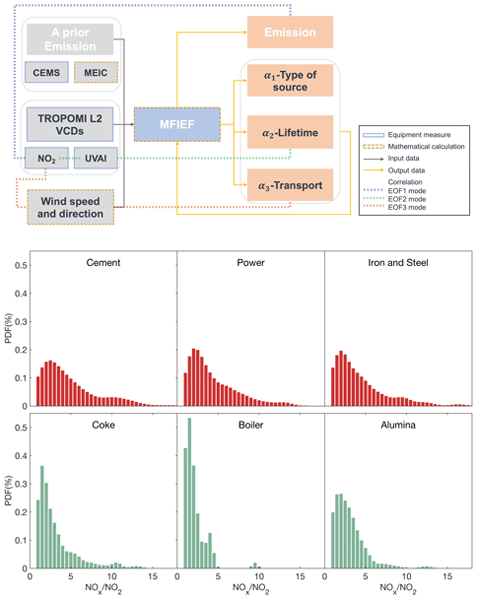
Remotely sensed NO2 and surface NOx are combined with a mathematical method to estimate daily NOx emissions. The results identify new sources and improve existing estimates. The estimation is driven by three flexible factors: thermodynamics of combustion, chemical loss, and atmospheric transport. The thermodynamic term separates power, iron, and cement from coking, boilers, and aluminum. This work finds three causes for the extremes: emissions, UV radiation, and transport.
Daniel J. Varon, Daniel J. Jacob, Benjamin Hmiel, Ritesh Gautam, David R. Lyon, Mark Omara, Melissa Sulprizio, Lu Shen, Drew Pendergrass, Hannah Nesser, Zhen Qu, Zachary R. Barkley, Natasha L. Miles, Scott J. Richardson, Kenneth J. Davis, Sudhanshu Pandey, Xiao Lu, Alba Lorente, Tobias Borsdorff, Joannes D. Maasakkers, and Ilse Aben
Atmos. Chem. Phys., 23, 7503–7520, https://doi.org/10.5194/acp-23-7503-2023, https://doi.org/10.5194/acp-23-7503-2023, 2023
Short summary
Short summary
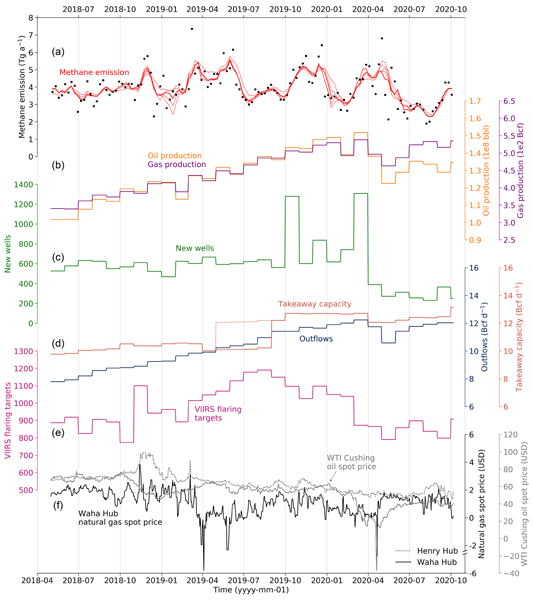
We use TROPOMI satellite observations to quantify weekly methane emissions from the US Permian oil and gas basin from May 2018 to October 2020. We find that Permian emissions are highly variable, with diverse economic and activity drivers. The most important drivers during our study period were new well development and natural gas price. Permian methane intensity averaged 4.6 % and decreased by 1 % per year.
Zichong Chen, Daniel J. Jacob, Ritesh Gautam, Mark Omara, Robert N. Stavins, Robert C. Stowe, Hannah Nesser, Melissa P. Sulprizio, Alba Lorente, Daniel J. Varon, Xiao Lu, Lu Shen, Zhen Qu, Drew C. Pendergrass, and Sarah Hancock
Atmos. Chem. Phys., 23, 5945–5967, https://doi.org/10.5194/acp-23-5945-2023, https://doi.org/10.5194/acp-23-5945-2023, 2023
Short summary
Short summary
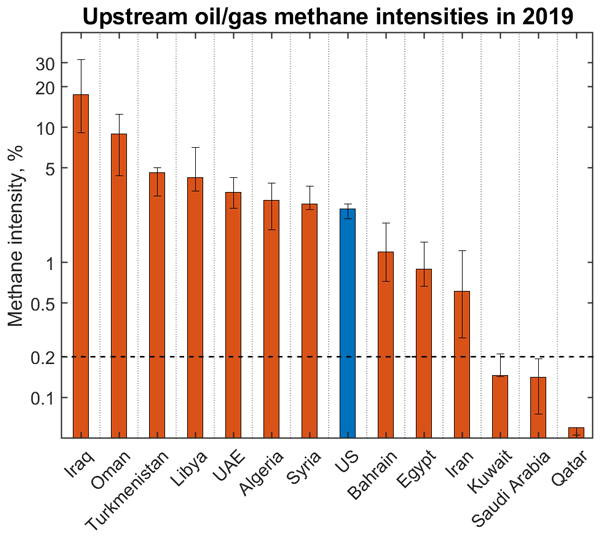
We quantify methane emissions from individual countries in the Middle East and North Africa by inverse analysis of 2019 TROPOMI satellite observations of atmospheric methane. We show that the ability to simply relate oil/gas emissions to activity metrics is compromised by stochastic nature of local infrastructure and management practices. We find that the industry target for oil/gas methane intensity is achievable through associated gas capture, modern infrastructure, and centralized operations.
Qiansi Tu, Frank Hase, Zihan Chen, Matthias Schneider, Omaira García, Farahnaz Khosrawi, Shuo Chen, Thomas Blumenstock, Fang Liu, Kai Qin, Jason Cohen, Qin He, Song Lin, Hongyan Jiang, and Dianjun Fang
Atmos. Meas. Tech., 16, 2237–2262, https://doi.org/10.5194/amt-16-2237-2023, https://doi.org/10.5194/amt-16-2237-2023, 2023
Short summary
Short summary
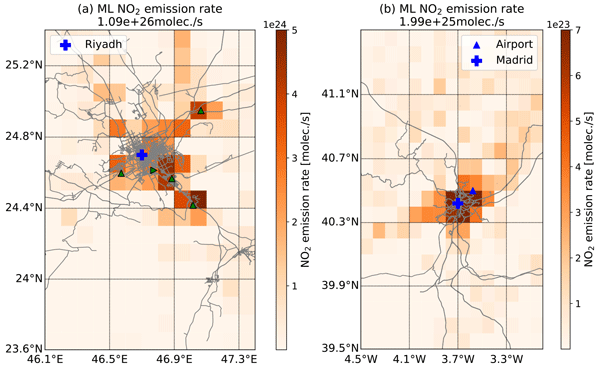
Four-year TROPOMI observations are used to derive tropospheric NO2 emissions in two mega(cities) with high anthropogenic activity. Wind-assigned anomalies are calculated, and the emission rates and spatial patterns are estimated based on a machine learning algorithm. The results are in reasonable agreement with previous studies and the inventory. Our method is quite robust and can be used as a simple method to estimate the emissions of NO2 as well as other gases in other regions.
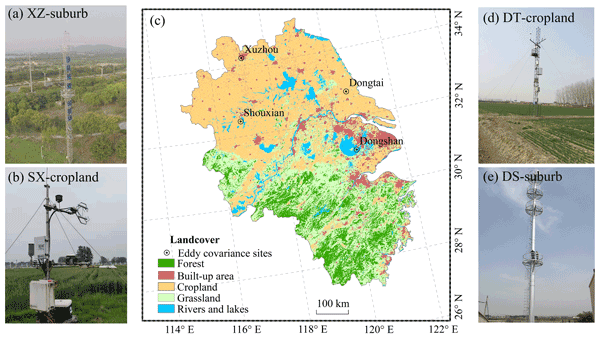
Zexia Duan, Zhiqiu Gao, Qing Xu, Shaohui Zhou, Kai Qin, and Yuanjian Yang
Earth Syst. Sci. Data, 14, 4153–4169, https://doi.org/10.5194/essd-14-4153-2022, https://doi.org/10.5194/essd-14-4153-2022, 2022
Short summary
Short summary
Land–atmosphere interactions over the Yangtze River Delta (YRD) in China are becoming more varied and complex, as the area is experiencing rapid land use changes. In this paper, we describe a dataset of microclimate and eddy covariance variables at four sites in the YRD. This dataset has potential use cases in multiple research fields, such as boundary layer parametrization schemes, evaluation of remote sensing algorithms, and development of climate models in typical East Asian monsoon regions.
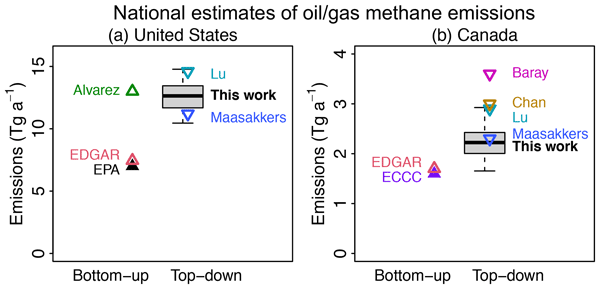
Lu Shen, Ritesh Gautam, Mark Omara, Daniel Zavala-Araiza, Joannes D. Maasakkers, Tia R. Scarpelli, Alba Lorente, David Lyon, Jianxiong Sheng, Daniel J. Varon, Hannah Nesser, Zhen Qu, Xiao Lu, Melissa P. Sulprizio, Steven P. Hamburg, and Daniel J. Jacob
Atmos. Chem. Phys., 22, 11203–11215, https://doi.org/10.5194/acp-22-11203-2022, https://doi.org/10.5194/acp-22-11203-2022, 2022
Short summary
Short summary
We use 22 months of TROPOMI satellite observations to quantity methane emissions from the oil (O) and natural gas (G) sector in the US and Canada at the scale of both individual basins as well as country-wide aggregates. We find that O/G-related methane emissions are underestimated in these inventories by 80 % for the US and 40 % for Canada, and 70 % of the underestimate in the US is from five O/G basins, including Permian, Haynesville, Anadarko, Eagle Ford, and Barnett.

Zichong Chen, Daniel J. Jacob, Hannah Nesser, Melissa P. Sulprizio, Alba Lorente, Daniel J. Varon, Xiao Lu, Lu Shen, Zhen Qu, Elise Penn, and Xueying Yu
Atmos. Chem. Phys., 22, 10809–10826, https://doi.org/10.5194/acp-22-10809-2022, https://doi.org/10.5194/acp-22-10809-2022, 2022
Short summary
Short summary
We quantify methane emissions in China and contributions from different sectors by inverse analysis of 2019 TROPOMI satellite observations of atmospheric methane. We find that anthropogenic methane emissions for China are underestimated in the national inventory. Our estimate of emissions indicates a small life-cycle loss rate, implying net climate benefits from the current
coal-to-gasenergy transition in China. However, this small loss rate can be misleading given China's high gas imports.
Daniel J. Varon, Daniel J. Jacob, Melissa Sulprizio, Lucas A. Estrada, William B. Downs, Lu Shen, Sarah E. Hancock, Hannah Nesser, Zhen Qu, Elise Penn, Zichong Chen, Xiao Lu, Alba Lorente, Ashutosh Tewari, and Cynthia A. Randles
Geosci. Model Dev., 15, 5787–5805, https://doi.org/10.5194/gmd-15-5787-2022, https://doi.org/10.5194/gmd-15-5787-2022, 2022
Short summary
Short summary
Reducing atmospheric methane emissions is critical to slow near-term climate change. Globally surveying satellite instruments like the TROPOspheric Monitoring Instrument (TROPOMI) have unique capabilities for monitoring atmospheric methane around the world. Here we present a user-friendly cloud-computing tool that enables researchers and stakeholders to quantify methane emissions across user-selected regions of interest using TROPOMI satellite observations.
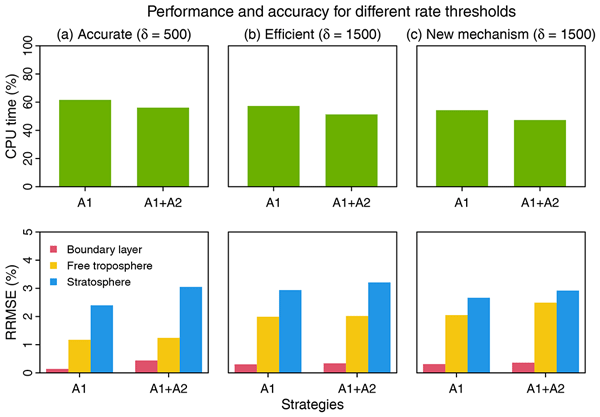
Lu Shen, Daniel J. Jacob, Mauricio Santillana, Kelvin Bates, Jiawei Zhuang, and Wei Chen
Geosci. Model Dev., 15, 1677–1687, https://doi.org/10.5194/gmd-15-1677-2022, https://doi.org/10.5194/gmd-15-1677-2022, 2022
Short summary
Short summary
The high computational cost of chemical integration is a long-standing limitation in global atmospheric chemistry models. Here we present an adaptive and efficient algorithm that can reduce the computational time of atmospheric chemistry by 50 % and maintain the error below 2 % for important species, inspired by machine learning clustering techniques and traditional asymptotic analysis ideas.

Xiao Lu, Daniel J. Jacob, Haolin Wang, Joannes D. Maasakkers, Yuzhong Zhang, Tia R. Scarpelli, Lu Shen, Zhen Qu, Melissa P. Sulprizio, Hannah Nesser, A. Anthony Bloom, Shuang Ma, John R. Worden, Shaojia Fan, Robert J. Parker, Hartmut Boesch, Ritesh Gautam, Deborah Gordon, Michael D. Moran, Frances Reuland, Claudia A. Octaviano Villasana, and Arlyn Andrews
Atmos. Chem. Phys., 22, 395–418, https://doi.org/10.5194/acp-22-395-2022, https://doi.org/10.5194/acp-22-395-2022, 2022
Short summary
Short summary
We evaluate methane emissions and trends for 2010–2017 in the gridded national emission inventories for the United States, Canada, and Mexico by inversion of in situ and satellite methane observations. We find that anthropogenic methane emissions for all three countries are underestimated in the national inventories, largely driven by oil emissions. Anthropogenic methane emissions in the US peak in 2014, in contrast to the report of a steadily decreasing trend over 2010–2017 from the US EPA.
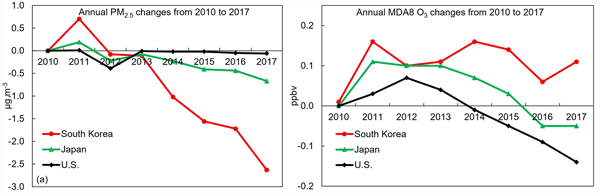
Yuqiang Zhang, Drew Shindell, Karl Seltzer, Lu Shen, Jean-Francois Lamarque, Qiang Zhang, Bo Zheng, Jia Xing, Zhe Jiang, and Lei Zhang
Atmos. Chem. Phys., 21, 16051–16065, https://doi.org/10.5194/acp-21-16051-2021, https://doi.org/10.5194/acp-21-16051-2021, 2021
Short summary
Short summary
In this study, we use a global chemical transport model to simulate the effects on global air quality and human health due to emission changes in China from 2010 to 2017. By performing sensitivity analysis, we found that the air pollution control policies not only decrease the air pollutant concentration but also bring significant co-benefits in air quality to downwind regions. The benefits for the improved air pollution are dominated by PM2.5.
Cited articles
Balasus, N., Jacob, D. J., Lorente, A., Maasakkers, J. D., Parker, R. J., Boesch, H., Chen, Z., Kelp, M. M., Nesser, H., and Varon, D. J.: A blended TROPOMI+GOSAT satellite data product for atmospheric methane using machine learning to correct retrieval biases, Atmos. Meas. Tech., 16, 3787–3807, https://doi.org/10.5194/amt-16-3787-2023, 2023.
Brasseur, G. P. and Jacob, D. J.: Modeling of Atmospheric Chemistry, 1st edn., Cambridge University Press, https://doi.org/10.1017/9781316544754, 2017.
Calisesi, Y., Soebijanta, V. T., and Van Oss, R.: Regridding of remote soundings: Formulation and application to ozone profile comparison, J. Geophys. Res., 110, 2005JD006122, https://doi.org/10.1029/2005JD006122, 2005.
CIESIN (Center for International Earth Science Information Network): Documentation for the Gridded Population of the World, Version 4 (GPWv4), Revision 10 Data Sets, Palisades, NY: NASA Socioeconomic Data and Applications Center (SEDAC), Columbia University, https://doi.org/10.7927/H4B56GPT, 2017.
Chen, Z., Jacob, D. J., Nesser, H., Sulprizio, M. P., Lorente, A., Varon, D. J., Lu, X., Shen, L., Qu, Z., Penn, E., and Yu, X.: Methane emissions from China: a high-resolution inversion of TROPOMI satellite observations, Atmos. Chem. Phys., 22, 10809–10826, https://doi.org/10.5194/acp-22-10809-2022, 2022.
Chen, Z., Jacob, D. J., Gautam, R., Omara, M., Stavins, R. N., Stowe, R. C., Nesser, H., Sulprizio, M. P., Lorente, A., Varon, D. J., Lu, X., Shen, L., Qu, Z., Pendergrass, D. C., and Hancock, S.: Satellite quantification of methane emissions and oil–gas methane intensities from individual countries in the Middle East and North Africa: implications for climate action, Atmos. Chem. Phys., 23, 5945–5967, https://doi.org/10.5194/acp-23-5945-2023, 2023.
Crippa, M., Guizzardi, D., Muntean, M., Schaaf, E., Lo Vullo, E., Solazzo, E., Monforti-Ferrario, F., Olivier, J., and Vignati, E.: EDGAR v6.0 Greenhouse Gas Emissions, European Commission, Joint Research Centre [data set], https://doi.org/10.2905/JRC.787T5VR, 2026.
Cusworth, D. H., Bloom, A. A., Ma, S., Miller, C. E., Bowman, K., Yin, Y., Maasakkers, J. D., Zhang, Y., Scarpelli, T. R., Qu, Z., Jacob, D. J., and Worden, J. R.: A Bayesian framework for deriving sector-based methane emissions from top-down fluxes, Commun. Earth Environ., 2, 242, https://doi.org/10.1038/s43247-021-00312-6, 2021.
East, J. D., Jacob, D. J., Jervis, D., Balasus, N., Estrada, L. A., Hancock, S. E., Sulprizio, M. P., Thomas, J., Wang, X., Chen, Z., Varon, D. J., and Worden, J. R.: Worldwide inference of national methane emissions by inversion of satellite observations with UNFCCC prior estimates, Nat. Commun., 16, 11004, https://doi.org/10.1038/s41467-025-67122-8, 2025.
Elvidge, C. D., Baugh, K. E., Zhizhin, M., and Hsu, F.-C.: Why VIIRS data are superior to DMSP for mapping nighttime lights, APAN Proceedings, 35, 62, https://doi.org/10.7125/APAN.35.7, 2013.
Fang, S., Zhou, L., Masarie, K. A., Xu, L., and Rella, C. W.: Study of atmospheric CH4 mole fractions at three WMO/GAW stations in China, J. Geophys. Res.-Atmos., 118, 4874–4886, https://doi.org/10.1002/jgrd.50284, 2013.
Feng, L., Palmer, P. I., Parker, R. J., Lunt, M. F., and Bösch, H.: Methane emissions are predominantly responsible for record-breaking atmospheric methane growth rates in 2020 and 2021, Atmos. Chem. Phys., 23, 4863–4880, https://doi.org/10.5194/acp-23-4863-2023, 2023.
Fung, I., John, J., Lerner, J., Matthews, E., Prather, M., Steele, L. P., and Fraser, P. J.: Three‐dimensional model synthesis of the global methane cycle, J. Geophys. Res.-Atmos., 96, 13033–13065, https://doi.org/10.1029/91JD01247, 1991.
Gelaro, R., McCarty, W., Suárez, M. J., Todling, R., Molod, A., Takacs, L., Randles, C. A., Darmenov, A., Bosilovich, M. G., Reichle, R., Wargan, K., Coy, L., Cullather, R., Draper, C., Akella, S., Buchard, V., Conaty, A., Da Silva, A. M., Gu, W., Kim, G.-K., Koster, R., Lucchesi, R., Merkova, D., Nielsen, J. E., Partyka, G., Pawson, S., Putman, W., Rienecker, M., Schubert, S. D., Sienkiewicz, M., and Zhao, B.: The Modern-Era Retrospective Analysis for Research and Applications, Version 2 (MERRA-2), J. Climate, 30, 5419–5454, https://doi.org/10.1175/JCLI-D-16-0758.1, 2017.
Geospatial Information Authority of Japan: Global Map – Global version, Version 2.0, Geospatial Information Authority of Japan [data set], https://www.gsi.go.jp/kankyochiri/gm_global_e.html (last access: 2 July 2026), 2025.
Guilmeau, T., Chouzenoux, E., and Elvira, V.: Simulated Annealing: a Review and a New Scheme, in: 2021 IEEE Statistical Signal Processing Workshop (SSP), 101–105, https://doi.org/10.1109/ssp49050.2021.9513782, 2021.
Hancock, S. E., Jacob, D. J., Chen, Z., Nesser, H., Davitt, A., Varon, D. J., Sulprizio, M. P., Balasus, N., Estrada, L. A., Cazorla, M., Dawidowski, L., Diez, S., East, J. D., Penn, E., Randles, C. A., Worden, J., Aben, I., Parker, R. J., and Maasakkers, J. D.: Satellite quantification of methane emissions from South American countries: a high-resolution inversion of TROPOMI and GOSAT observations, Atmos. Chem. Phys., 25, 797–817, https://doi.org/10.5194/acp-25-797-2025, 2025.
Hansen, P. C.: The L-curve and its use in the numerical treatment of inverse problems, in: Computational Inverse Problems in Electrocardiology, edited by: Johnston, P., Advances in Computational Bioengineering, pp. 119–142, WIT Press, 2000.
He, Z., Gao, L., Liang, M., and Zeng, Z.-C.: A survey of methane point source emissions from coal mines in Shanxi province of China using AHSI on board Gaofen-5B, Atmos. Meas. Tech., 17, 2937–2956, https://doi.org/10.5194/amt-17-2937-2024, 2024.
Heald, C. L., Jacob, D. J., Jones, D. B. A., Palmer, P. I., Logan, J. A., Streets, D. G., Sachse, G. W., Gille, J. C., Hoffman, R. N., and Nehrkorn, T.: Comparative inverse analysis of satellite (MOPITT) and aircraft (TRACE-P) observations to estimate Asian sources of carbon monoxide, J. Geophys. Res., 109, 2004JD005185, https://doi.org/10.1029/2004JD005185, 2004.
Intergovernmental Panel On Climate Change (IPCC): Climate Change 2021 – The Physical Science Basis: Working Group I Contribution to the Sixth Assessment Report of the Intergovernmental Panel on Climate Change, 1st edn., Cambridge University Press, https://doi.org/10.1017/9781009157896, 2023.
Johnson, M. S., Matthews, E., Du, J., Genovese, V., and Bastviken, D.: Methane Emission From Global Lakes: New Spatiotemporal Data and Observation-Driven Modeling of Methane Dynamics Indicates Lower Emissions, J. Geophys. Res.-Biogeo., 127, e2022JG006793, https://doi.org/10.1029/2022JG006793, 2022.
Kaminski, T. and Rayner, P. J.: Reviews and syntheses: guiding the evolution of the observing system for the carbon cycle through quantitative network design, Biogeosciences, 14, 4755–4766, https://doi.org/10.5194/bg-14-4755-2017, 2017.
Kirkpatrick, S., Gelatt, C. D., and Vecchi, M. P.: Optimization by Simulated Annealing, Science, 220, 671–680, https://doi.org/10.1126/science.220.4598.671, 1983.
Lan, X., Nisbet, E. G., Dlugokencky, E. J., and Michel, S. E.: What do we know about the global methane budget? Results from four decades of atmospheric CH4 observations and the way forward, Philos. T. R. Soc. A., 379, 20200440, https://doi.org/10.1098/rsta.2020.0440, 2021.
Laughner, J. L., Toon, G. C., Mendonca, J., Petri, C., Roche, S., Wunch, D., Blavier, J.-F., Griffith, D. W. T., Heikkinen, P., Keeling, R. F., Kiel, M., Kivi, R., Roehl, C. M., Stephens, B. B., Baier, B. C., Chen, H., Choi, Y., Deutscher, N. M., DiGangi, J. P., Gross, J., Herkommer, B., Jeseck, P., Laemmel, T., Lan, X., McGee, E., McKain, K., Miller, J., Morino, I., Notholt, J., Ohyama, H., Pollard, D. F., Rettinger, M., Riris, H., Rousogenous, C., Sha, M. K., Shiomi, K., Strong, K., Sussmann, R., Té, Y., Velazco, V. A., Wofsy, S. C., Zhou, M., and Wennberg, P. O.: The Total Carbon Column Observing Network's GGG2020 data version, Earth Syst. Sci. Data, 16, 2197–2260, https://doi.org/10.5194/essd-16-2197-2024, 2024.
Liang, R., Zhang, Y., Chen, W., Zhang, P., Liu, J., Chen, C., Mao, H., Shen, G., Qu, Z., Chen, Z., Zhou, M., Wang, P., Parker, R. J., Boesch, H., Lorente, A., Maasakkers, J. D., and Aben, I.: East Asian methane emissions inferred from high-resolution inversions of GOSAT and TROPOMI observations: a comparative and evaluative analysis, Atmos. Chem. Phys., 23, 8039–8057, https://doi.org/10.5194/acp-23-8039-2023, 2023.
Liu, C., Wang, W., Sun, Y., and Shan, C.: TCCON data from Hefei (PRC), Release GGG2020.R1 (R1), CaltechDATA [data set], https://doi.org/10.14291/TCCON.GGG2020.HEFEI01.R1, 2026.
Liu, G., Peng, S., Lin, X., Ciais, P., Li, X., Xi, Y., Lu, Z., Chang, J., Saunois, M., Wu, Y., Patra, P., Chandra, N., Zeng, H., and Piao, S.: Recent slowdown of anthropogenic methane emissions in China driven by stabilized coal production, Environ. Sci. Tech. Let., 8, 739–746, https://doi.org/10.1021/acs.estlett.1c00463, 2021.
Lu, X., Jacob, D. J., Zhang, Y., Maasakkers, J. D., Sulprizio, M. P., Shen, L., Qu, Z., Scarpelli, T. R., Nesser, H., Yantosca, R. M., Sheng, J., Andrews, A., Parker, R. J., Boesch, H., Bloom, A. A., and Ma, S.: Global methane budget and trend, 2010–2017: complementarity of inverse analyses using in situ (GLOBALVIEWplus CH4 ObsPack) and satellite (GOSAT) observations, Atmos. Chem. Phys., 21, 4637–4657, https://doi.org/10.5194/acp-21-4637-2021, 2021.
Ma, S., Worden, J. R., Bloom, A. A., Zhang, Y., Poulter, B., Cusworth, D. H., Yin, Y., Pandey, S., Maasakkers, J. D., Lu, X., Shen, L., Sheng, J., Frankenberg, C., Miller, C. E., and Jacob, D. J.: Satellite constraints on the latitudinal distribution and temperature sensitivity of wetland methane emissions, AGU Adv., 2, e2021AV000408, https://doi.org/10.1029/2021AV000408, 2021.
Methane Emission Control Action Plan: Action plan for methane emission control, Ministry of Ecology and Environment of the People's Republic of China, https://www.mee.gov.cn/ (last access: 3 April 2024).
Morino, I., Velazco, V. A., Hori, A., Uchino, O., and Griffith, D. W. T.: TCCON data from Burgos, Ilocos Norte (PH), Release GGG2020.R0 (R0), CaltechDATA [data set], https://doi.org/10.14291/TCCON.GGG2020.BURGOS01.R0, 2026.
Murphy, A. H.: The Finley Affair: A Signal Event in the History of Forecast Verification, Weather Forecast., 11, 3–20, https://doi.org/ 10.1175/1520-0434(1996)011<0003:TFAASE>2.0.CO;2, 1996.
Naik, V., Szopa, S., Adhikary, B., Artaxo, P., Berntsen, T., Collins, W. D., Fuzzi, S., Gallardo, L., Kiendler Scharr, A., Klimont, Z., Liao, H., Unger, N., and Zanis, P.: Short-Lived Climate Forcers, in: Climate Change 2021: The Physical Science Basis. Contribution of Working Group I to the Sixth Assessment Report of the Intergovernmental Panel on Climate Change, edited by: Masson-Delmotte, V., Zhai, P., Pirani, A., Connors, S. L., Péan, C., Berger, S., Caud, N., Chen, Y., Goldfarb, L., Gomis, M. I., Huang, M., Leitzell, K., Lonnoy, E., Matthews, J. B. R., Maycock, T. K., Waterfield, T., Yelekçi, O., Yu , R., and Zhou, B., Cambridge University Press, 2021.
Nesser, H., Jacob, D. J., Maasakkers, J. D., Lorente, A., Chen, Z., Lu, X., Shen, L., Qu, Z., Sulprizio, M. P., Winter, M., Ma, S., Bloom, A. A., Worden, J. R., Stavins, R. N., and Randles, C. A.: High-resolution US methane emissions inferred from an inversion of 2019 TROPOMI satellite data: contributions from individual states, urban areas, and landfills, Atmos. Chem. Phys., 24, 5069–5091, https://doi.org/10.5194/acp-24-5069-2024, 2024.
Nickless, A., Rayner, P. J., Erni, B., and Scholes, R. J.: Comparison of the genetic algorithm and incremental optimisation routines for a Bayesian inverse modelling based network design, Inverse Probl., 34, 055006, https://doi.org/10.1088/1361-6420/aab46c, 2018.
Nickless, A., Scholes, R. J., Vermeulen, A., Beck, J., López-Ballesteros, A., Ardö, J., Karstens, U., Rigby, M., Kasurinen, V., Pantazatou, K., Jorch, V., and Kutsch, W.: Greenhouse gas observation network design for Africa, Tellus By, 72, 1824486, https://doi.org/10.1080/16000889.2020.1824486, 2020.
Park, J. and Kim, H. M.: Design and evaluation of CO2 observation network to optimize surface CO2 fluxes in Asia using observation system simulation experiments, Atmos. Chem. Phys., 20, 5175–5195, https://doi.org/10.5194/acp-20-5175-2020, 2020.
Patra, P. K. and Maksyutov, S.: Incremental approach to the optimal network design for CO2 surface source inversion, Geophys. Res. Lett., 29, https://doi.org/10.1029/2001GL013943, 2002.
Pendergrass, D. C., Jacob, D. J., Balasus, N., Estrada, L., Varon, D. J., East, J. D., He, M., Mooring, T. A., Penn, E., Nesser, H., and Worden, J. R.: Trends and seasonality of 2019–2023 global methane emissions inferred from a localized ensemble transform Kalman filter (CHEEREIO v1.3.1) applied to TROPOMI satellite observations, Atmos. Chem. Phys., 25, 14353–14369, https://doi.org/10.5194/acp-25-14353-2025, 2025.
Prather, M. J., Holmes, C. D., and Hsu, J.: Reactive greenhouse gas scenarios: Systematic exploration of uncertainties and the role of atmospheric chemistry, Geophys. Res. Lett., 39, L09803, https://doi.org/10.1029/2012GL051440, 2012.
Rayner, P. J., Enting, I. G., and Trudinger, C. M.: Optimizing the CO2 observing network for constraining sources and sinks, Tellus B, 48, 433–444, https://doi.org/10.1034/j.1600-0889.1996.t01-3-00003.x, 1996.
Rodgers, C. D.: Inverse methods for atmospheric sounding: the ory and practice, World Scientific, Singapore, ISBN 978-981-02 2740-1, 2000.
Saunois, M., Martinez, A., Poulter, B., Zhang, Z., Raymond, P. A., Regnier, P., Canadell, J. G., Jackson, R. B., Patra, P. K., Bousquet, P., Ciais, P., Dlugokencky, E. J., Lan, X., Allen, G. H., Bastviken, D., Beerling, D. J., Belikov, D. A., Blake, D. R., Castaldi, S., Crippa, M., Deemer, B. R., Dennison, F., Etiope, G., Gedney, N., Höglund-Isaksson, L., Holgerson, M. A., Hopcroft, P. O., Hugelius, G., Ito, A., Jain, A. K., Janardanan, R., Johnson, M. S., Kleinen, T., Krummel, P. B., Lauerwald, R., Li, T., Liu, X., McDonald, K. C., Melton, J. R., Mühle, J., Müller, J., Murguia-Flores, F., Niwa, Y., Noce, S., Pan, S., Parker, R. J., Peng, C., Ramonet, M., Riley, W. J., Rocher-Ros, G., Rosentreter, J. A., Sasakawa, M., Segers, A., Smith, S. J., Stanley, E. H., Thanwerdas, J., Tian, H., Tsuruta, A., Tubiello, F. N., Weber, T. S., van der Werf, G. R., Worthy, D. E. J., Xi, Y., Yoshida, Y., Zhang, W., Zheng, B., Zhu, Q., Zhu, Q., and Zhuang, Q.: Global Methane Budget 2000–2020, Earth Syst. Sci. Data, 17, 1873–1958, https://doi.org/10.5194/essd-17-1873-2025, 2025.
Scarpelli, T. R., Jacob, D. J., Grossman, S., Lu, X., Qu, Z., Sulprizio, M. P., Zhang, Y., Reuland, F., Gordon, D., and Worden, J. R.: Updated Global Fuel Exploitation Inventory (GFEI) for methane emissions from the oil, gas, and coal sectors: evaluation with inversions of atmospheric methane observations, Atmos. Chem. Phys., 22, 3235–3249, https://doi.org/10.5194/acp-22-3235-2022, 2022.
Schuldt, K. N., Aalto, T., Andrade, M., et al.: Multi-laboratory compilation of atmospheric carbon dioxide data for the period 1983-2023; obspack_ch4_1_GLOBALVIEWplus_v7.0_2024-10-29, NOAA Earth System Research Laboratory, Global Monitoring Laboratory [data set], https://doi.org/10.25925/20241001, 2024.
Shen, L., Gautam, R., Omara, M., Zavala-Araiza, D., Maasakkers, J. D., Scarpelli, T. R., Lorente, A., Lyon, D., Sheng, J., Varon, D. J., Nesser, H., Qu, Z., Lu, X., Sulprizio, M. P., Hamburg, S. P., and Jacob, D. J.: Satellite quantification of oil and natural gas methane emissions in the US and Canada including contributions from individual basins, Atmos. Chem. Phys., 22, 11203–11215, https://doi.org/10.5194/acp-22-11203-2022, 2022.
Shiomi, K., Kawakami, S., Ohyama, H., Arai, K., Okumura, H., Ikegami, H., and Usami, M.: TCCON data from Saga (JP), Release GGG2020.R0 (R0), CaltechDATA [data set], https://doi.org/10.14291/TCCON.GGG2020.SAGA01.R0, 2026.
Siddans, R., Knappett, D., Kerridge, B., Waterfall, A., Hurley, J., Latter, B., Boesch, H., and Parker, R.: Global height-resolved methane retrievals from the Infrared Atmospheric Sounding Interferometer (IASI) on MetOp, Atmos. Meas. Tech., 10, 4135–4164, https://doi.org/10.5194/amt-10-4135-2017, 2017.
Souilah, A.: Simulated annealing for manufacturing systems layout design, Eur. J. Oper. Res., 82, 592–614, https://doi.org/10.1016/0377-2217(93)E0336-V, 1995.
Tang, X. and Chen, B.: Cloud types associated with the Asian summer monsoons as determined from MODIS/TERRA measurements and a comparison with surface observations, Geophys. Res. Lett., 33, 2006GL026004, https://doi.org/10.1029/2006GL026004, 2006.
Total Carbon Column Observing Network (TCCON) Team: 2020 TCCON Data Release (GGG2020), CaltechDATA [data set], https://doi.org/10.14291/TCCON.GGG2020, 2022.
Villalobos, Y., Gómez-Ortiz, C., Scholze, M., Monteil, G., Karstens, U., Fiore, A., Brunner, D., Thanwerdas, J., and Cristofanelli, P.: Towards improving top–down national CO2 estimation in Europe: potential from expanding the ICOS atmospheric network in Italy, Environ. Res. Lett., 20, 054002, https://doi.org/10.1088/1748-9326/adc41e, 2025.
Wang, J., Feng, L., Palmer, P. I., Liu, Y., Fang, S., Bösch, H., O'Dell, C. W., Tang, X., Yang, D., Liu, L., and Xia, C.: Large Chinese land carbon sink estimated from atmospheric carbon dioxide data, Nature, 586, 720–723, https://doi.org/10.1038/s41586-020-2849-9, 2020.
Wang, Y., Tian, X., Duan, M., Zhu, D., Liu, D., Zhang, H., Zhou, M., Zhao, M., Jin, Z., Ding, J., Wang, T., and Piao, S.: Optimal design of surface CO2 observation network to constrain China's land carbon sink, Sci. Bull., 68, 1678–1686, https://doi.org/10.1016/j.scib.2023.07.010, 2023.
Wang, Y., Zhang, Y., Tian, X., Wang, X., Yuan, W., Ding, J., Jiang, F., Jin, Z., Ju, W., Liang, R., Lu, X., Shen, L., Sun, S., Wang, T., Zhang, H., Zhao, M., and Piao, S.: Towards verifying and improving estimations of China's CO2 and CH4 budgets using atmospheric inversions, Natl. Sci. Rev., 12, https://doi.org/10.1093/nsr/nwaf090, 2025.
Wunch, D., Toon, G. C., Blavier, J.-F. L., Washenfelder, R. A., Notholt, J., Connor, B. J., Griffith, D. W. T., Sherlock, V., and Wennberg, P. O.: The Total Carbon Column Observing Network, Philos. T. R. Soc. A., 369, 2087–2112, https://doi.org/10.1098/rsta.2010.0240, 2011.
Yantosca, B., Sulprizio, M., Lundgren, L., Keller, C., kelvinhb, Fritz, T., Lin, H., 22degrees, Ridley, D., Bindle, L., michael-s-long, David, S., Eastham, tsherwen, Downs, W., Fisher, J., Thackray, C., Holmes, C., GanLuo, Zhuang, J., Murray, L., SpaceMouse, Estrada, L. A., Shutter, J., noelleselin, Long, M., nicholasbalasus, xin-chen-github, emily-ramnarine, gianga, and Haskins, J.: geoschem/geos-chem: GEOS-Chem 14.1.0, Version 14.1.0, Zenodo [code], https://doi.org/10.5281/zenodo.7600404, 2023.
Zhang, X., Zhou, C., Zhang, Y., Lu, X., Xiao, X., Wang, F., Song, J., Guo, Y., Leung, K. K. M., Cao, J., and Gao, M.: Where to place methane monitoring sites in China to better assist carbon management, npj Clim. Atmos. Sci., 6, 32, https://doi.org/10.1038/s41612-023-00359-6, 2023.
Zhang, Y., Fang, S., Chen, J., Lin, Y., Chen, Y., Liang, R., Jiang, K., Parker, R. J., Boesch, H., Steinbacher, M., Sheng, J.-X., Lu, X., Song, S., and Peng, S.: Observed changes in China's methane emissions linked to policy drivers, P. Natl. Acad. Sci. USA., 119, e2202742119, https://doi.org/10.1073/pnas.2202742119, 2022.
Zhao, M., Tian, X., Wang, Y., Wang, X., Ciais, P., Jin, Z., Zhang, H., Wang, T., Ding, J., and Piao, S.: Slowdown in China's methane emission growth, Natl. Sci. Rev., 11, https://doi.org/10.1093/nsr/nwae223, 2024.
Zhong, H.: Replication Data for: Designing an optimal surface methane monitoring network in China for improved emission quantification, Peking University Open Research Data Platform, V3, Peking University Open Research Data Platform [data set], https://doi.org/10.18170/DVN/ONXDSR, 2025.
Zhong, H., Shen, L., Qu, M., Ou, Y., Zhang, Y., and Mao, H.: Quantifying methane emission baselines with high-resolution satellite data to support China's emission control, Sci. Bull., 70, 2255–2259, https://doi.org/10.1016/j.scib.2025.04.047, 2025.
Zhou, M., Wang, P., Kumps, N., Hermans, C., and Nan, W.: TCCON data from Xianghe, China, Release GGG2020.R0 (R0), CaltechDATA [data set], https://doi.org/10.14291/TCCON.GGG2020.XIANGHE01.R0, 2026.
Editorial statement
Methane is the second most important anthropogenic greenhouse gas, responsible for approximately 0.6°C of global warming since pre-industrial times. As one of the world’s largest methane emitters, China requires an expanded observation network to support accurate emission quantification and effective mitigation. However, determining the optimal placement of new monitoring stations remains a major challenge. This study has successfully addressed this challenge by developing an integrated optimization framework, which combines Bayesian inverse modeling with a simulated annealing algorithm, to identify the most effective locations for future methane observations. The results show that prioritizing stations in eastern and southwestern China maximizes information gain, and that adding 50 strategically located sites could nearly double the current capability to constrain national methane emissions. By providing a quantitative roadmap for the design of future methane monitoring networks, this approach is broadly transferable to other rapidly developing regions, offering valuable guidance for global climate mitigation efforts.
Methane is the second most important anthropogenic greenhouse gas, responsible for approximately...
Short summary
Methane is a potent greenhouse gas, yet existing satellite and ground observations in China are too sparse to accurately quantify emissions, highlighting the need for an expanded ground network. Using Bayesian inversion and simulated annealing, we identify optimal locations for new sites. Results show that prioritizing stations in eastern and southwestern China would be most effective. Expanding the network with 50 stations could nearly double the current emission constraint capability.
Methane is a potent greenhouse gas, yet existing satellite and ground observations in China are...


