
Articles | Volume 19, issue 14
https://doi.org/10.5194/amt-19-4923-2026
© Author(s) 2026. This work is distributed under
the Creative Commons Attribution 4.0 License.
the Creative Commons Attribution 4.0 License.
https://doi.org/10.5194/amt-19-4923-2026
© Author(s) 2026. This work is distributed under
the Creative Commons Attribution 4.0 License.
the Creative Commons Attribution 4.0 License.
Research article
| 
30 Jul 2026
Research article |
| 30 Jul 2026
| 30 Jul 2026
Operational performance of the Vaisala CL61 ceilometer for atmospheric profiling

Finnish Meteorological Institute, Helsinki, 00101, Finland
Ewan J. O'Connor
Finnish Meteorological Institute, Helsinki, 00101, Finland
Maria Filioglou
Finnish Meteorological Institute, Atmospheric Research Centre of Eastern Finland, Kuopio, 70211, Finland
Ville Vakkari
Finnish Meteorological Institute, Helsinki, 00101, Finland
Atmospheric Chemistry Research Group, Chemical Resource Beneficiation, North-West University, Potchefstroom, 2520, South Africa
Related authors
Deeksha Shukla, Lejish Vettikkat, Mika Ihalainen, Markus Somero, Hendryk Czech, Siegfried Schobesberger, Angela Buchholz, Iida Pullinen, Kerneels Jaars, Kajar Köster, Viet Le, Pasi Yli-Pirilä, Stefan J. Siebert, Pieter G. van Zyl, Annele Virtanen, Ville Vakkari, Olli Sippula, and Ralf Zimmermann
Atmos. Chem. Phys., 26, 12977–13000, https://doi.org/10.5194/acp-26-12977-2026, https://doi.org/10.5194/acp-26-12977-2026, 2026
Short summary
Short summary
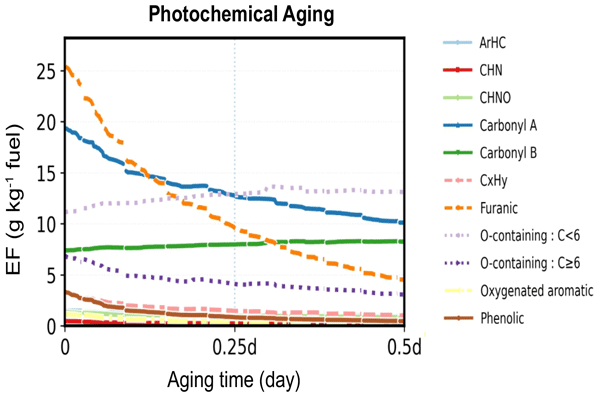
Biomass burning emits large amounts of pollutants that undergo atmospheric transformation. This study examined organic vapor emissions from three biomass fuels and their transformation under different oxidation regimes in a smog chamber by real-time mass spectrometry. OH-driven oxidation rapidly altered organic vapor composition than dark oxidation, eliminating differences in chemical vapor composition arising from fuel types or combustion conditions.
Maria Filioglou, Krista Luoma, Eija Asmi, Viet Le, Klaus Haikarainen, David Brus, Tero Mielonen, Mika Komppula, Annele Virtanen, Olli Sippula, Iida Pullinen, Angela Buchholz, Pasi Miettinen, Snehitha Kommula, Saara Peltokorpi, Liqing Hao, Kajar Köster, Annika Saarto, Sanna Pätsi, Pieter G. van Zyl, Liezl Bredenkamp, and Ville Vakkari
Atmos. Chem. Phys., 26, 11525–11542, https://doi.org/10.5194/acp-26-11525-2026, https://doi.org/10.5194/acp-26-11525-2026, 2026
Short summary
Short summary
This study explores how smoke and volcanic ash particles, alter the way light is scattered in the atmosphere. By using a ground‑based HALO Doppler lidar system, we observed clear differences in the depolarization ratio, a shape-relevant optical parameter, between fresh smoke, aged smoke, and volcanic ash. These findings show that HALO Doppler lidars can help identify particle types in the air and even provide estimates of smoke mass concentrations, improving assessments of air quality.
Jonas Svensson, Ramazon Rakhmonov, Kamoliddin Nazirzoda, Abdusamad Hojiev, Tamlikho Jurabekov, Amirsho Hiyoev, Davlatjon Rahimzoda, Hizbullo Kholzoda, Muzaffar Shodmonov, David Brus, Viet Le, Krista Luoma, Adriano Lemos, Germán Perez Fogwill, Meri M. Ruppel, Outi Meinander, Johan Ström, Eija Asmi, and Antti Hyvärinen
Earth Syst. Sci. Data, 18, 5697–5712, https://doi.org/10.5194/essd-18-5697-2026, https://doi.org/10.5194/essd-18-5697-2026, 2026
Short summary
Short summary
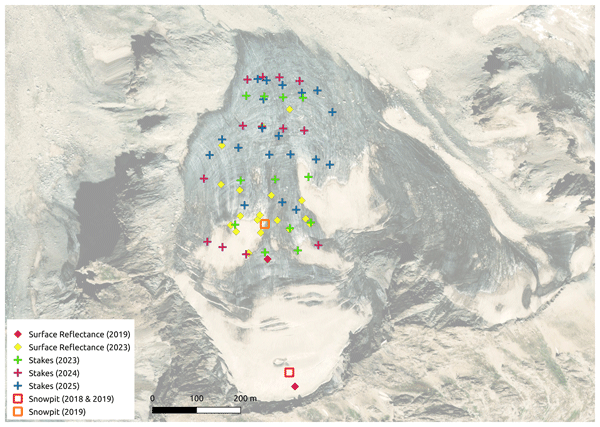
This paper presents data collected at the Zarafshon River Basin and the Hydrographic Party Glacier (GGP), Tajikistan. In annual field expeditions from 2018–2025, data has been collected on the glacier, as well as including meteorological measurements and aerosols. Presented results highlight the environmental conditions that are driving environmental change in Central Asia.
Viet Le, Konstantinos Doulgeris, Mika Komppula, John Backman, Gholamhossein Bagheri, Eberhard Bodenschatz, and David Brus
Earth Syst. Sci. Data Discuss., https://doi.org/10.5194/essd-2026-135, https://doi.org/10.5194/essd-2026-135, 2026
Preprint under review for ESSD
Short summary
Short summary
Vertical profiles and time series of aerosol particles, cloud droplets, and weather conditions were measured by the Finnish Meteorological Institute airborne payload attached to tethered balloons during the Pallas Cloud Experiment 2022 in Finland. When combined with other datasets collected during the campaign, these measurements will enable integrated analyses and offer a comprehensive view of the atmospheric conditions during the experiment.
Sami D. Harni, Lasse Johansson, Jarkko V. Niemi, Ville Silvonen, Juan Andrés Casquero-Vera, Anu Kousa, Krista Luoma, Viet Le, David Brus, Konstantinos Doulgeris, Topi Rönkkö, Hanna E. Manninen, Tuukka Petäjä, and Hilkka Timonen
Atmos. Chem. Phys., 25, 18719–18738, https://doi.org/10.5194/acp-25-18719-2025, https://doi.org/10.5194/acp-25-18719-2025, 2025
Short summary
Short summary
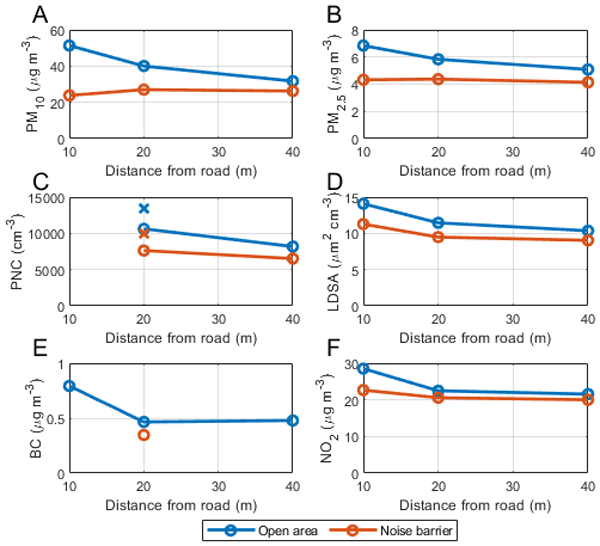
A three-month-long measurement campaign was conducted at Espoo, Finland, in spring 2023. The measurement campaign studied the effect of the noise barrier on pollutant concentration gradients on the side of a major highway. The studied pollutants included PM10, PM2.5, lung deposited surface area (LDSA), particle number concentration (PNC), NO2, and black carbon (BC). The noise barrier was found to be effective in reducing, especially the concentration of particulate pollutants.
David Brus, Viet Le, Joel Kuula, and Konstantinos Doulgeris
Earth Syst. Sci. Data, 17, 5209–5219, https://doi.org/10.5194/essd-17-5209-2025, https://doi.org/10.5194/essd-17-5209-2025, 2025
Short summary
Short summary
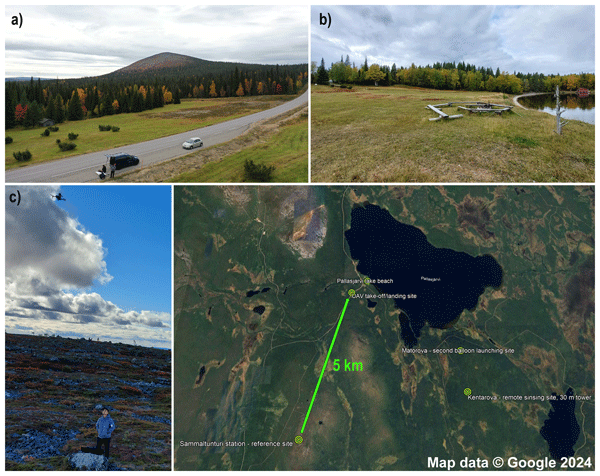
This paper provides datasets collected as part of the Pallas Cloud Experiment campaign in northern Finland during autumn of 2022. We provide an overview of a custom-built drone backpack for air quality and atmospheric state variable measurements carried on top of a consumer-grade drone (DJI Mavic 2 Pro). Moreover, we describe the flight strategies and provide an overview of the datasets obtained, including a description of the measurements against a reference for data validation.
Viet Le, Konstantinos Matthaios Doulgeris, Mika Komppula, John Backman, Gholamhossein Bagheri, Eberhard Bodenschatz, and David Brus
Earth Syst. Sci. Data Discuss., https://doi.org/10.5194/essd-2025-148, https://doi.org/10.5194/essd-2025-148, 2025
Preprint withdrawn
Short summary
Short summary
This manuscript presents datasets collected during the Pallas Cloud Experiment in northern Finland during the autumn of 2022. We provide an overview of the payload that measured meteorological, cloud, and aerosol properties, and was deployed on tethered balloon systems across 21 flights. Additionally, we describe the datasets obtained, including details of the instruments on the payload.
Viet Le, Hannah Lobo, Ewan J. O'Connor, and Ville Vakkari
Atmos. Meas. Tech., 17, 921–941, https://doi.org/10.5194/amt-17-921-2024, https://doi.org/10.5194/amt-17-921-2024, 2024
Short summary
Short summary
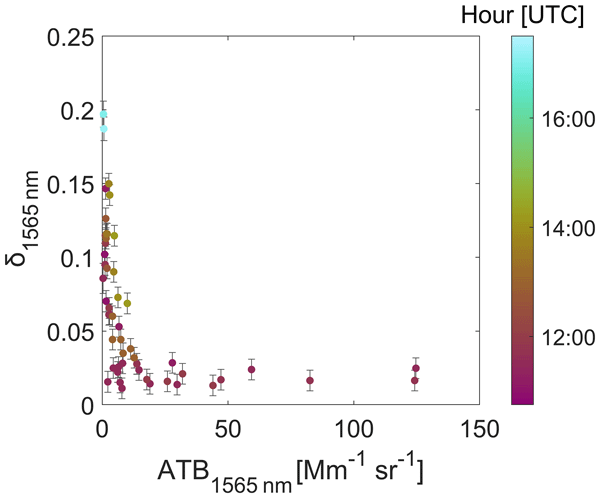
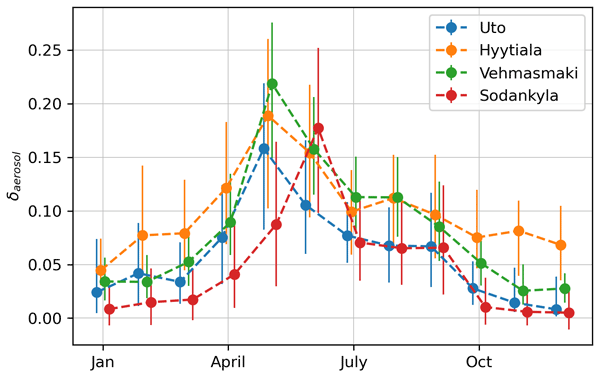
This study offers a long-term overview of aerosol particle depolarization ratio at the wavelength of 1565 nm obtained from vertical profiling measurements by Halo Doppler lidars during 4 years at four different locations across Finland. Our observations support the long-term usage of Halo Doppler lidar depolarization ratio such as the detection of aerosols that may pose a safety risk for aviation. Long-range Saharan dust transport and pollen transport are also showcased here.
Deeksha Shukla, Lejish Vettikkat, Mika Ihalainen, Markus Somero, Hendryk Czech, Siegfried Schobesberger, Angela Buchholz, Iida Pullinen, Kerneels Jaars, Kajar Köster, Viet Le, Pasi Yli-Pirilä, Stefan J. Siebert, Pieter G. van Zyl, Annele Virtanen, Ville Vakkari, Olli Sippula, and Ralf Zimmermann
Atmos. Chem. Phys., 26, 12977–13000, https://doi.org/10.5194/acp-26-12977-2026, https://doi.org/10.5194/acp-26-12977-2026, 2026
Short summary
Short summary
Biomass burning emits large amounts of pollutants that undergo atmospheric transformation. This study examined organic vapor emissions from three biomass fuels and their transformation under different oxidation regimes in a smog chamber by real-time mass spectrometry. OH-driven oxidation rapidly altered organic vapor composition than dark oxidation, eliminating differences in chemical vapor composition arising from fuel types or combustion conditions.
Matheus Tolentino, Lukas Pfitzenmaier, Tuomas Siipola, Ewan O’Connor, Simo Tukiainen, Juan Antonio Bravo-Aranda, Lucas Alados-Arboledas, and Maria José Granados-Muñoz
EGUsphere, https://doi.org/10.5194/egusphere-2026-5139, https://doi.org/10.5194/egusphere-2026-5139, 2026
This preprint is open for discussion and under review for Atmospheric Measurement Techniques (AMT).
Short summary
Short summary
Cloud radars are key for studies on cloud properties and development. However, their measurements can be biased when particles move too fast for the instrument to measure accurately due to technical limitations. We developed a new open-source tool that automatically identifies and corrects these biases. Tests under different weather conditions showed reliable performance, improving the quality of cloud observations and supporting more accurate weather, climate, and satellite validation studies.
Maria Filioglou, Krista Luoma, Eija Asmi, Viet Le, Klaus Haikarainen, David Brus, Tero Mielonen, Mika Komppula, Annele Virtanen, Olli Sippula, Iida Pullinen, Angela Buchholz, Pasi Miettinen, Snehitha Kommula, Saara Peltokorpi, Liqing Hao, Kajar Köster, Annika Saarto, Sanna Pätsi, Pieter G. van Zyl, Liezl Bredenkamp, and Ville Vakkari
Atmos. Chem. Phys., 26, 11525–11542, https://doi.org/10.5194/acp-26-11525-2026, https://doi.org/10.5194/acp-26-11525-2026, 2026
Short summary
Short summary
This study explores how smoke and volcanic ash particles, alter the way light is scattered in the atmosphere. By using a ground‑based HALO Doppler lidar system, we observed clear differences in the depolarization ratio, a shape-relevant optical parameter, between fresh smoke, aged smoke, and volcanic ash. These findings show that HALO Doppler lidars can help identify particle types in the air and even provide estimates of smoke mass concentrations, improving assessments of air quality.
Lukas Pfitzenmaier, Nathan Feuillard, Felipe Toledo Bittner, Ewan O'Connor, Simo Tukianien, and Bernhard Pospichal
EGUsphere, https://doi.org/10.5194/egusphere-2026-4025, https://doi.org/10.5194/egusphere-2026-4025, 2026
This preprint is open for discussion and under review for Atmospheric Measurement Techniques (AMT).
Short summary
Short summary
This work evaluates the EarthCARE satellite's Doppler velocity observations. EarthCARE provides the first global dataset of vertical motions within clouds. We compared these data with ground-based radar observations at several sites within Europe and the polar regions. The evaluation shows an excellent performance, after assessing all potential error sources and correcting for known biases. This new dataset can be thus used for a variety of new studys to get more insight into cloud processes.
Jonas Svensson, Ramazon Rakhmonov, Kamoliddin Nazirzoda, Abdusamad Hojiev, Tamlikho Jurabekov, Amirsho Hiyoev, Davlatjon Rahimzoda, Hizbullo Kholzoda, Muzaffar Shodmonov, David Brus, Viet Le, Krista Luoma, Adriano Lemos, Germán Perez Fogwill, Meri M. Ruppel, Outi Meinander, Johan Ström, Eija Asmi, and Antti Hyvärinen
Earth Syst. Sci. Data, 18, 5697–5712, https://doi.org/10.5194/essd-18-5697-2026, https://doi.org/10.5194/essd-18-5697-2026, 2026
Short summary
Short summary
This paper presents data collected at the Zarafshon River Basin and the Hydrographic Party Glacier (GGP), Tajikistan. In annual field expeditions from 2018–2025, data has been collected on the glacier, as well as including meteorological measurements and aerosols. Presented results highlight the environmental conditions that are driving environmental change in Central Asia.
Aino Ovaska, Daniel Holmberg, Elio Rauth, Mansour Alghamdi, Paulo Artaxo, Eija Asmi, John Backman, Benjamin Bergmans, Matthew Boyer, Liezl Bredenkamp, Maurizio Busetto, Delano Campos De Oliveira, Juan Andrés Casquero-Vera, Darius Ceburnis, Tak Chan, Tommy Chan, Sebastien Conil, Daniele Contini, Suzanne Crumeyrolle, Valentin Duflot, Kostas Eleftheriadis, Johan Esveld, Ekaterina Ezhova, Markus Fiebig, Shahzad Gani, Olga Garmash, Francisco Gómez-Moreno, Roy M. Harrison, Andras Hoffer, Rakesh Hooda, Antti Hyvärinen, Tareq Hussein, Jorma Joutsensaari, Nikos Kalivitis, Heinz Kaminski, Jutta Kesti, Radovan Krejci, Adam Kristensson, Chongai Kuang, Markku Kulmala, Lauri Laakso, Ari Leskinen, Heikki Lihavainen, Andreas Massling, Maik Merkel, Steffen Noe, Jakub Ondracek, Noemí Perez, Jean-Eudes Petit, Tuukka Petäjä, Michael Pikridas, Christopher Pöhlker, Mira Pöhlker, Jean-Philippe Putaud, Ximeng Qi, Cristina Reche, Sergio Rodríguez, Petr Roztocil, Jean Sciare, Karine Sellegri, Dongjie Shang, Ashish Singh, Mikko Sipilä, Henrik Skov, Mar Sorribas, Tamanna Subba, Junying Sun, Peter Tunved, Ville Vakkari, Pieter G. Van Zyl, Aki Virkkula, Jens Voigtländer, Kay Weinhold, Alfred Wiedensohler, Hee-Jung Yoo, Putian Zhou, Kai Puolamäki, Tuomo Nieminen, Veli-Matti Kerminen, Victoria A. Sinclair, and Pauli Paasonen
Earth Syst. Sci. Data Discuss., https://doi.org/10.5194/essd-2026-415, https://doi.org/10.5194/essd-2026-415, 2026
Preprint under review for ESSD
Short summary
Short summary
All clouds form around aerosol particles, and their abundance influences cloud properties. In turn, clouds affect climate by changing how energy moves through the atmosphere, making them important for climate change. To better understand these interactions, we need accurate information on how many aerosol particles are in the atmosphere. Therefore, we have developed a new 21-year global dataset of particle concentrations relevant for cloud formation.
Maria Christina Gatou, Antti Lipponen, Ari Leskinen, Petri Tiitta, Maria Filioglou, Xiaoxia Shang, Sanna Pätsi, Annika Saarto, Marjut Roponen, Elina Giannakaki, and Mika Komppula
EGUsphere, https://doi.org/10.5194/egusphere-2026-1806, https://doi.org/10.5194/egusphere-2026-1806, 2026
Short summary
Short summary
We investigate the pollen distribution at different heights using measurements from ground level up to 272 meters in eastern Finland. By combining optical pollen sensors with traditional monitoring methods and atmospheric model predictions, we examined how pollen concentrations vary with height. The results show that pollen concentrations decrease with altitude and that optical sensors combined with machine learning can identify dominant pollen types for continuous pollen monitoring.
Tamryn Hamilton, Kerneels Jaars, Pieter G. van Zyl, Mika Aurela, Marcellin Adon, Johan P. Beukes, Miroslav Josipovic, Gregor T. Feig, Markku Kulmala, Lauri Laakso, and Ville Vakkari
EGUsphere, https://doi.org/10.5194/egusphere-2026-3066, https://doi.org/10.5194/egusphere-2026-3066, 2026
Short summary
Short summary
South Africa is a global hotspot for nitrogen dioxide, yet direct surface exchange measurements are absent from Africa. Using a high-precision laser at a savanna grassland site from 2015 to 2020, we made the first landscape-scale nitrogen dioxide flux measurements on the continent. The site mainly released nitrogen dioxide, driven by summer rainfall and soil microbes. We estimated the ecosystem-scale balance point between uptake and release. Widely used models overestimate daytime deposition.
Pyry Samuel Sebastian Pentikäinen, Ewan James O'Connor, and Ronny Leinweber
EGUsphere, https://doi.org/10.5194/egusphere-2026-1140, https://doi.org/10.5194/egusphere-2026-1140, 2026
Short summary
Short summary
We present a new method for obtaining the function which describes how the Doppler lidar telescope configuration impacts the measurements. The advantage of the new method is that it can be used without an external reference. We then evaluate the new method with the existing method which does use an external reference and show that the results for the new method are in good agreement.
Viet Le, Konstantinos Doulgeris, Mika Komppula, John Backman, Gholamhossein Bagheri, Eberhard Bodenschatz, and David Brus
Earth Syst. Sci. Data Discuss., https://doi.org/10.5194/essd-2026-135, https://doi.org/10.5194/essd-2026-135, 2026
Preprint under review for ESSD
Short summary
Short summary
Vertical profiles and time series of aerosol particles, cloud droplets, and weather conditions were measured by the Finnish Meteorological Institute airborne payload attached to tethered balloons during the Pallas Cloud Experiment 2022 in Finland. When combined with other datasets collected during the campaign, these measurements will enable integrated analyses and offer a comprehensive view of the atmospheric conditions during the experiment.
Hugo Rubio, Ville Vakkari, Martin Kühn, and Julia Gottschall
Wind Energ. Sci. Discuss., https://doi.org/10.5194/wes-2026-50, https://doi.org/10.5194/wes-2026-50, 2026
Preprint withdrawn
Short summary
Short summary
Offshore wind farms need accurate wind data, but collecting measurements at sea is often difficult and expensive. In this study, we investigate how wind measurements from a lidar mounted on a moving ship can improve the accuracy of commonly used reanalysis datasets. Using a statistical correction method, we are able to reduce errors in wind speed estimates. This efficient approach can make offshore wind planning and resource assessment more reliable in areas where measurements are limited.
Xiaoxia Shang, Maria Filioglou, Julian Hofer, Moritz Haarig, Qiaoyun Hu, Philippe Goloub, Sami Romakkaniemi, and Mika Komppula
Atmos. Meas. Tech., 19, 679–697, https://doi.org/10.5194/amt-19-679-2026, https://doi.org/10.5194/amt-19-679-2026, 2026
Short summary
Short summary
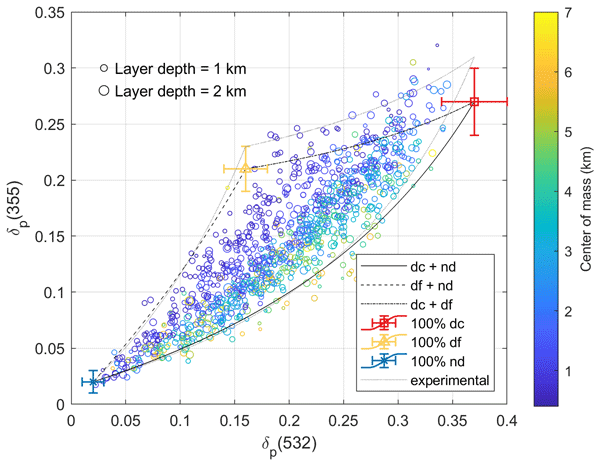
We developed a simple method to identify different types of airborne particles using laser-based measurements. It can distinguish coarse dust, fine dust, and non-dust aerosols. Tests with real data from regions affected by desert dust show the method works well. This helps improve understanding of how particles are distributed in the atmosphere, which is important for air quality and climate studies.
Sami D. Harni, Lasse Johansson, Jarkko V. Niemi, Ville Silvonen, Juan Andrés Casquero-Vera, Anu Kousa, Krista Luoma, Viet Le, David Brus, Konstantinos Doulgeris, Topi Rönkkö, Hanna E. Manninen, Tuukka Petäjä, and Hilkka Timonen
Atmos. Chem. Phys., 25, 18719–18738, https://doi.org/10.5194/acp-25-18719-2025, https://doi.org/10.5194/acp-25-18719-2025, 2025
Short summary
Short summary
A three-month-long measurement campaign was conducted at Espoo, Finland, in spring 2023. The measurement campaign studied the effect of the noise barrier on pollutant concentration gradients on the side of a major highway. The studied pollutants included PM10, PM2.5, lung deposited surface area (LDSA), particle number concentration (PNC), NO2, and black carbon (BC). The noise barrier was found to be effective in reducing, especially the concentration of particulate pollutants.
Aino Ovaska, Elio Rauth, Daniel Holmberg, Paulo Artaxo, John Backman, Benjamin Bergmans, Don Collins, Marco Aurélio Franco, Shahzad Gani, Roy M. Harrison, Rakesh K. Hooda, Tareq Hussein, Antti-Pekka Hyvärinen, Kerneels Jaars, Adam Kristensson, Markku Kulmala, Lauri Laakso, Ari Laaksonen, Nikolaos Mihalopoulos, Colin O'Dowd, Jakub Ondracek, Tuukka Petäjä, Kristina Plauškaitė, Mira Pöhlker, Ximeng Qi, Peter Tunved, Ville Vakkari, Alfred Wiedensohler, Kai Puolamäki, Tuomo Nieminen, Veli-Matti Kerminen, Victoria A. Sinclair, and Pauli Paasonen
Aerosol Research, 3, 589–618, https://doi.org/10.5194/ar-3-589-2025, https://doi.org/10.5194/ar-3-589-2025, 2025
Short summary
Short summary
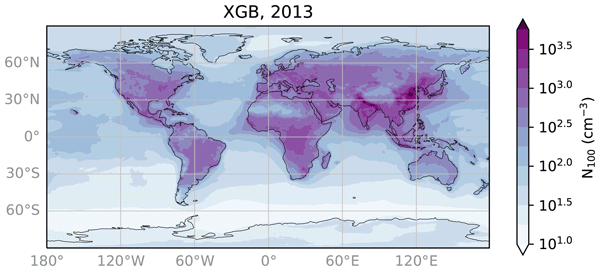
We trained machine learning models to estimate the number of aerosol particles large enough to form clouds and generated daily estimates for the entire globe. The models performed well in many continental regions but struggled in remote and marine areas. Still, this approach offers a way to quantify these particles in areas that lack direct measurements, helping us understand their influence on clouds and climate on a global scale.
Arya Mukherjee, Anni Hartikainen, Markus Somero, Viljami Luostari, Mika Ihalainen, Christopher P. Rüger, Timo Kekäläinen, Ville H. Nissinen, Luis M. F. Barreira, Hanna Koponen, Tuukka Kokkola, Delun Li, Lejish Vettikkat, Pasi Yli-Pirilä, Muhammad Shahzaib, Meri M. Ruppel, Ville Vakkari, Kerneels Jaars, Stefan J. Siebert, Angela Buchholz, Kajar Köster, Pieter G. van Zyl, Hilkka Timonen, Niko Kinnunen, Janne Jänis, Annele Virtanen, Aki Virkkula, and Olli Sippula
Atmos. Chem. Phys., 25, 16747–16774, https://doi.org/10.5194/acp-25-16747-2025, https://doi.org/10.5194/acp-25-16747-2025, 2025
Short summary
Short summary
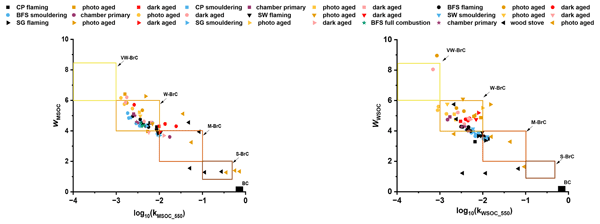
Warming climate is predicted to increase boreal and peatland fires in Northern Eurasia. Limited studies have characterized light absorbing aerosol emissions from these biomasses, thus necessitating this work. Brown carbon (BrC) emitted from laboratory-scale biomass burning had weak light absorptivities based on their complex refractive index values. A combustion temperature dependent light absorptivity continuum existed for emitted BrC. Photochemical aging decreased BrC light absorptivity.
Ioanna Tsikoudi, Eleni Marinou, Maria Tombrou, Eleni Giannakaki, Emmanouil Proestakis, Konstantinos Rizos, Ville Vakkari, Holger Baars, Annett Skupin, Ronny Engelmann, Zhenping Yin, and Vassilis Amiridis
Atmos. Chem. Phys., 25, 16491–16510, https://doi.org/10.5194/acp-25-16491-2025, https://doi.org/10.5194/acp-25-16491-2025, 2025
Short summary
Short summary
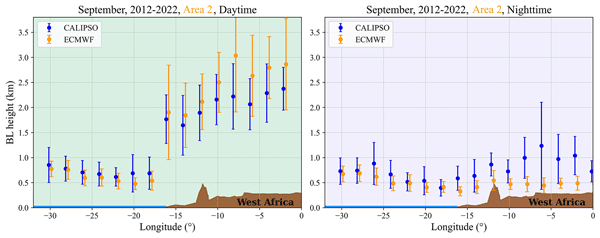
We study the characteristics of the boundary layer over three areas: the tropical Atlantic, the tropical West African continent, and near Cabo Verde using PollyXT and CALIPSO (Cloud-Aerosol Lidar and Infrared Pathfinder Satellite Observations) lidar measurements, as well as ECMWF (European Centre for Medium-Range Weather Forecasts) data. The findings underline the strengths and limitations of different observational and modeling approaches, and emphasizes on the importance of considering aerosol conditions and local meteorology when interpreting boundary layer dynamics.
David Brus, Viet Le, Joel Kuula, and Konstantinos Doulgeris
Earth Syst. Sci. Data, 17, 5209–5219, https://doi.org/10.5194/essd-17-5209-2025, https://doi.org/10.5194/essd-17-5209-2025, 2025
Short summary
Short summary
This paper provides datasets collected as part of the Pallas Cloud Experiment campaign in northern Finland during autumn of 2022. We provide an overview of a custom-built drone backpack for air quality and atmospheric state variable measurements carried on top of a consumer-grade drone (DJI Mavic 2 Pro). Moreover, we describe the flight strategies and provide an overview of the datasets obtained, including a description of the measurements against a reference for data validation.
Sasu Karttunen, Matthias Sühring, Ewan O'Connor, and Leena Järvi
Geosci. Model Dev., 18, 5725–5757, https://doi.org/10.5194/gmd-18-5725-2025, https://doi.org/10.5194/gmd-18-5725-2025, 2025
Short summary
Short summary
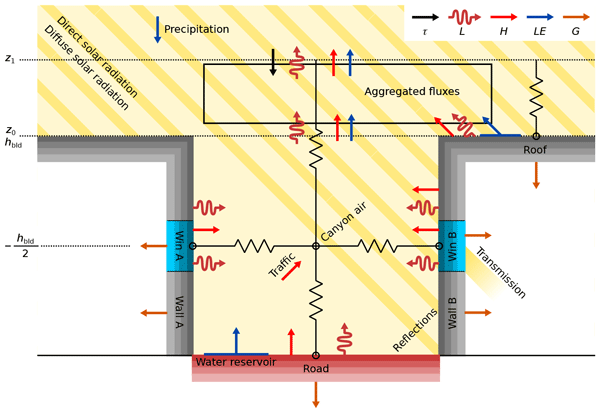
This paper presents PALM-SLUrb, a single-layer urban canopy model for the PALM model system, designed to simulate urban–atmosphere interactions without resolving flow around individual buildings. The model is described in detail and evaluated against grid-resolved urban canopy simulations, demonstrating its ability to model urban surfaces accurately. By bridging the gap between computational efficiency and physical detail, PALM-SLUrb broadens PALM's potential for urban climate research.
Simo Tukiainen, Tuomas Siipola, Niko Leskinen, and Ewan O'Connor
Earth Syst. Sci. Data, 17, 3797–3806, https://doi.org/10.5194/essd-17-3797-2025, https://doi.org/10.5194/essd-17-3797-2025, 2025
Short summary
Short summary
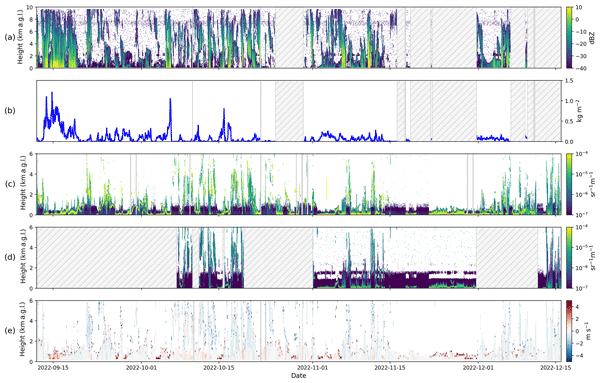
Measurement campaigns are crucial for advancing the understanding of complex cloud–aerosol interactions in the atmosphere. Ground-based remote sensing measurements were conducted in Kenttärova, Finland, during the Pallas Cloud Experiment 2022 campaign. These measurements were processed using the Cloudnet methodology, and the data are available through the ACTRIS Cloudnet data portal.
John Backman, Krista Luoma, Henri Servomaa, Ville Vakkari, and David Brus
Earth Syst. Sci. Data Discuss., https://doi.org/10.5194/essd-2025-284, https://doi.org/10.5194/essd-2025-284, 2025
Revised manuscript under review for ESSD
Short summary
Short summary
This work describes the in-situ aerosol measurements at the Arctic Sammaltunturi measurement station in Pallas in northern Finland. This data paper describes the instruments and the data post processing of key aerosol particle measurements that are relevant for cloud properties. Data reported here are part of the Pallas Cloud Experiment in 2022 (PaCE2022).
Viet Le, Konstantinos Matthaios Doulgeris, Mika Komppula, John Backman, Gholamhossein Bagheri, Eberhard Bodenschatz, and David Brus
Earth Syst. Sci. Data Discuss., https://doi.org/10.5194/essd-2025-148, https://doi.org/10.5194/essd-2025-148, 2025
Preprint withdrawn
Short summary
Short summary
This manuscript presents datasets collected during the Pallas Cloud Experiment in northern Finland during the autumn of 2022. We provide an overview of the payload that measured meteorological, cloud, and aerosol properties, and was deployed on tethered balloon systems across 21 flights. Additionally, we describe the datasets obtained, including details of the instruments on the payload.
Natalie E. Theeuwes, Janet F. Barlow, Antti Mannisenaho, Denise Hertwig, Ewan O'Connor, and Alan Robins
Atmos. Meas. Tech., 18, 1355–1371, https://doi.org/10.5194/amt-18-1355-2025, https://doi.org/10.5194/amt-18-1355-2025, 2025
Short summary
Short summary
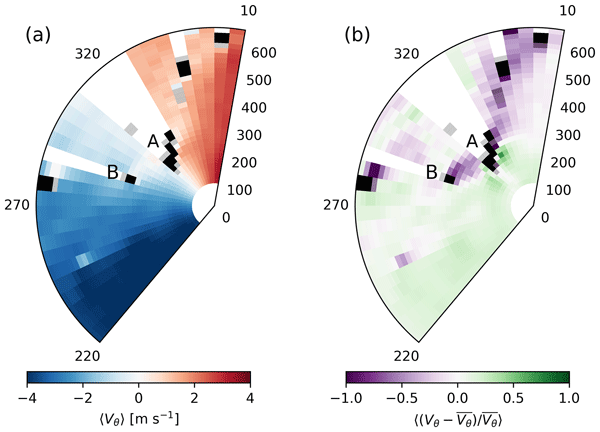
A Doppler lidar was placed in a highly built-up area in London to measure wakes from tall buildings during a period of 1 year. We were able to detect wakes and assess their dependence on wind speed, wind direction, and atmospheric stability.
Maria Filioglou, Petri Tiitta, Xiaoxia Shang, Ari Leskinen, Pasi Ahola, Sanna Pätsi, Annika Saarto, Ville Vakkari, Uula Isopahkala, and Mika Komppula
Atmos. Chem. Phys., 25, 1639–1657, https://doi.org/10.5194/acp-25-1639-2025, https://doi.org/10.5194/acp-25-1639-2025, 2025
Short summary
Short summary
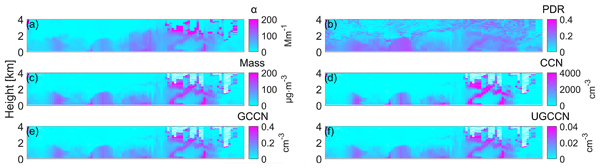
Every year a vast number of people experience allergic reactions due to exposure to airborne pollen. These symptoms are concentration dependent; thus accurate information about the pollen load in the atmosphere is essential. Moreover, pollen grains and fragments of it are likely to contribute to cloud processes and suppress precipitation. Here, we estimate the concentration and cloud-relevant parameters of birch pollen in the atmosphere using observations from a PollyXT and a CL61 ceilometer.
Johanna Tjernström, Michael Gallagher, Jareth Holt, Gunilla Svensson, Matthew D. Shupe, Jonathan J. Day, Lara Ferrighi, Siri Jodha Khalsa, Leslie M. Hartten, Ewan O'Connor, Zen Mariani, and Øystein Godøy
EGUsphere, https://doi.org/10.5194/egusphere-2024-2088, https://doi.org/10.5194/egusphere-2024-2088, 2024
Preprint archived
Short summary
Short summary
The value of numerical weather predictions can be enhanced in several ways, one is to improve the representations of small-scale processes in models. To understand what needs to be improved, the model results need to be evaluated. Following standardized principles, a file format has been defined to be as similar as possible for both observational and model data. Python packages and toolkits are presented as a community resource in the production of the files and evaluation analysis.
Zoé Brasseur, Julia Schneider, Janne Lampilahti, Ville Vakkari, Victoria A. Sinclair, Christina J. Williamson, Carlton Xavier, Dmitri Moisseev, Markus Hartmann, Pyry Poutanen, Markus Lampimäki, Markku Kulmala, Tuukka Petäjä, Katrianne Lehtipalo, Erik S. Thomson, Kristina Höhler, Ottmar Möhler, and Jonathan Duplissy
Atmos. Chem. Phys., 24, 11305–11332, https://doi.org/10.5194/acp-24-11305-2024, https://doi.org/10.5194/acp-24-11305-2024, 2024
Short summary
Short summary
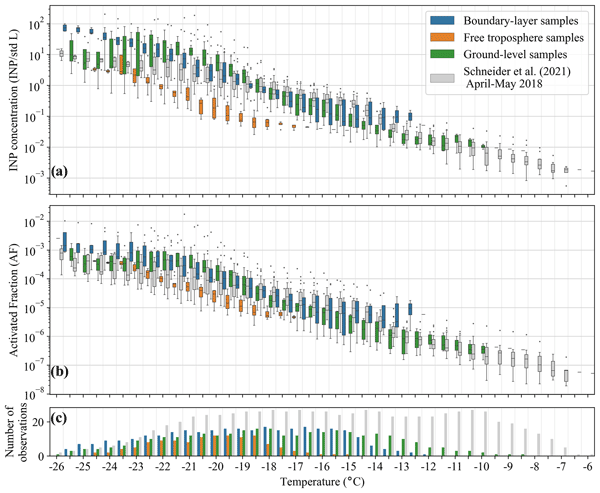
Ice-nucleating particles (INPs) strongly influence the formation of clouds by initiating the formation of ice crystals. However, very little is known about the vertical distribution of INPs in the atmosphere. Here, we present aircraft measurements of INP concentrations above the Finnish boreal forest. Results show that near-surface INPs are efficiently transported and mixed within the boundary layer and occasionally reach the free troposphere.
Romanos Foskinis, Ghislain Motos, Maria I. Gini, Olga Zografou, Kunfeng Gao, Stergios Vratolis, Konstantinos Granakis, Ville Vakkari, Kalliopi Violaki, Andreas Aktypis, Christos Kaltsonoudis, Zongbo Shi, Mika Komppula, Spyros N. Pandis, Konstantinos Eleftheriadis, Alexandros Papayannis, and Athanasios Nenes
Atmos. Chem. Phys., 24, 9827–9842, https://doi.org/10.5194/acp-24-9827-2024, https://doi.org/10.5194/acp-24-9827-2024, 2024
Short summary
Short summary
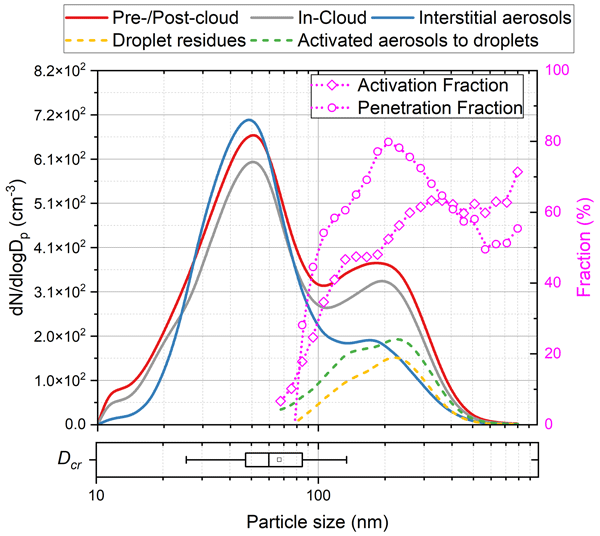
Analysis of modeling, in situ, and remote sensing measurements reveals the microphysical state of orographic clouds and their response to aerosol from the boundary layer and free troposphere. We show that cloud response to aerosol is robust, as predicted supersaturation and cloud droplet number levels agree with those determined from in-cloud measurements. The ability to determine if clouds are velocity- or aerosol-limited allows for novel model constraints and remote sensing products.
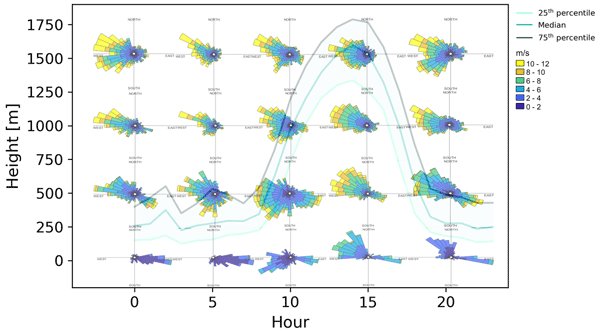
Jutta Kesti, Ewan J. O'Connor, Anne Hirsikko, John Backman, Maria Filioglou, Anu-Maija Sundström, Juha Tonttila, Heikki Lihavainen, Hannele Korhonen, and Eija Asmi
Atmos. Chem. Phys., 24, 9369–9386, https://doi.org/10.5194/acp-24-9369-2024, https://doi.org/10.5194/acp-24-9369-2024, 2024
Short summary
Short summary
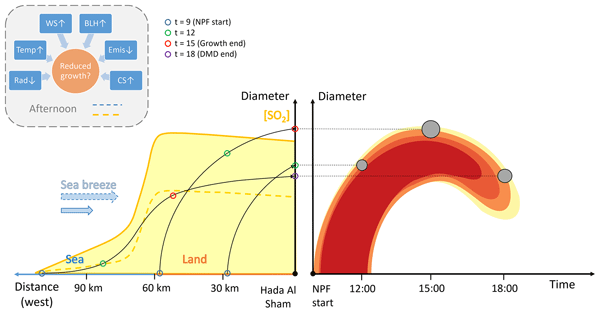
The study combines aerosol particle measurements at the surface and vertical profiling of the atmosphere with a scanning Doppler lidar to investigate how particle transportation together with boundary layer evolution can affect particle and SO2 concentrations at the surface in the Arabian Peninsula region. The instrumentation enabled us to see elevated nucleation mode particle and SO2 concentrations at the surface when air masses transported from polluted areas are mixed in the boundary layer.
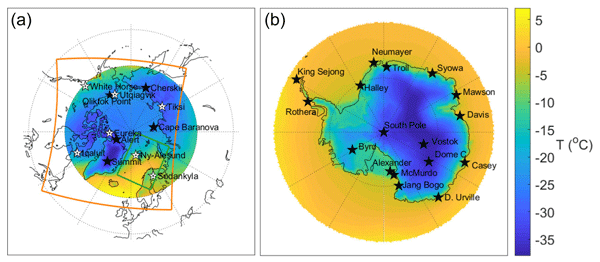
Jonathan J. Day, Gunilla Svensson, Barbara Casati, Taneil Uttal, Siri-Jodha Khalsa, Eric Bazile, Elena Akish, Niramson Azouz, Lara Ferrighi, Helmut Frank, Michael Gallagher, Øystein Godøy, Leslie M. Hartten, Laura X. Huang, Jareth Holt, Massimo Di Stefano, Irene Suomi, Zen Mariani, Sara Morris, Ewan O'Connor, Roberta Pirazzini, Teresa Remes, Rostislav Fadeev, Amy Solomon, Johanna Tjernström, and Mikhail Tolstykh
Geosci. Model Dev., 17, 5511–5543, https://doi.org/10.5194/gmd-17-5511-2024, https://doi.org/10.5194/gmd-17-5511-2024, 2024
Short summary
Short summary
The YOPP site Model Intercomparison Project (YOPPsiteMIP), which was designed to facilitate enhanced weather forecast evaluation in polar regions, is discussed here, focussing on describing the archive of forecast data and presenting a multi-model evaluation at Arctic supersites during February and March 2018. The study highlights an underestimation in boundary layer temperature variance that is common across models and a related inability to forecast cold extremes at several of the sites.
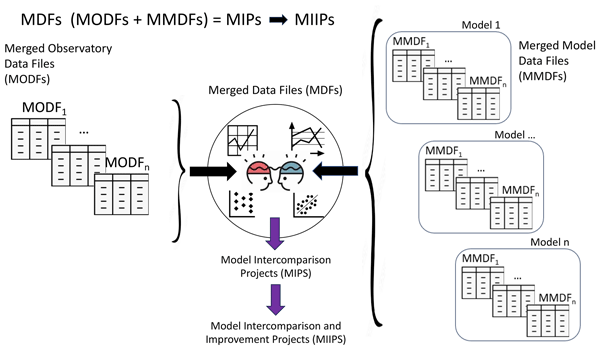
Taneil Uttal, Leslie M. Hartten, Siri Jodha Khalsa, Barbara Casati, Gunilla Svensson, Jonathan Day, Jareth Holt, Elena Akish, Sara Morris, Ewan O'Connor, Roberta Pirazzini, Laura X. Huang, Robert Crawford, Zen Mariani, Øystein Godøy, Johanna A. K. Tjernström, Giri Prakash, Nicki Hickmon, Marion Maturilli, and Christopher J. Cox
Geosci. Model Dev., 17, 5225–5247, https://doi.org/10.5194/gmd-17-5225-2024, https://doi.org/10.5194/gmd-17-5225-2024, 2024
Short summary
Short summary
A Merged Observatory Data File (MODF) format to systematically collate complex atmosphere, ocean, and terrestrial data sets collected by multiple instruments during field campaigns is presented. The MODF format is also designed to be applied to model output data, yielding format-matching Merged Model Data Files (MMDFs). MODFs plus MMDFs will augment and accelerate the synergistic use of model results with observational data to increase understanding and predictive skill.
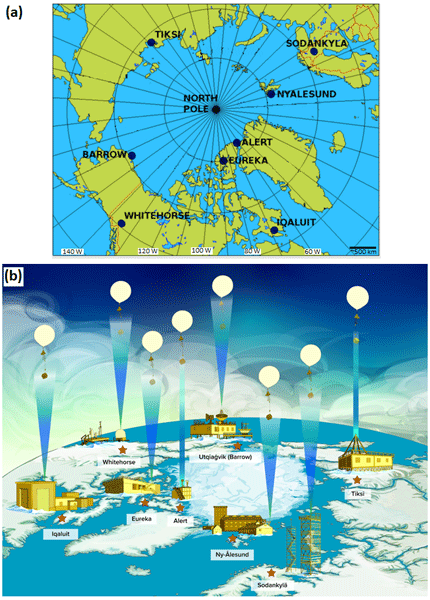
Zen Mariani, Sara M. Morris, Taneil Uttal, Elena Akish, Robert Crawford, Laura Huang, Jonathan Day, Johanna Tjernström, Øystein Godøy, Lara Ferrighi, Leslie M. Hartten, Jareth Holt, Christopher J. Cox, Ewan O'Connor, Roberta Pirazzini, Marion Maturilli, Giri Prakash, James Mather, Kimberly Strong, Pierre Fogal, Vasily Kustov, Gunilla Svensson, Michael Gallagher, and Brian Vasel
Earth Syst. Sci. Data, 16, 3083–3124, https://doi.org/10.5194/essd-16-3083-2024, https://doi.org/10.5194/essd-16-3083-2024, 2024
Short summary
Short summary
During the Year of Polar Prediction (YOPP), we increased measurements in the polar regions and have made dedicated efforts to centralize and standardize all of the different types of datasets that have been collected to facilitate user uptake and model–observation comparisons. This paper is an overview of those efforts and a description of the novel standardized Merged Observation Data Files (MODFs), including a description of the sites, data format, and instruments.
Christoffer Hallgren, Jeanie A. Aird, Stefan Ivanell, Heiner Körnich, Ville Vakkari, Rebecca J. Barthelmie, Sara C. Pryor, and Erik Sahlée
Wind Energ. Sci., 9, 821–840, https://doi.org/10.5194/wes-9-821-2024, https://doi.org/10.5194/wes-9-821-2024, 2024
Short summary
Short summary
Knowing the wind speed across the rotor of a wind turbine is key in making good predictions of the power production. However, models struggle to capture both the speed and the shape of the wind profile. Using machine learning methods based on the model data, we show that the predictions can be improved drastically. The work focuses on three coastal sites, spread over the Northern Hemisphere (the Baltic Sea, the North Sea, and the US Atlantic coast) with similar results for all sites.
Viet Le, Hannah Lobo, Ewan J. O'Connor, and Ville Vakkari
Atmos. Meas. Tech., 17, 921–941, https://doi.org/10.5194/amt-17-921-2024, https://doi.org/10.5194/amt-17-921-2024, 2024
Short summary
Short summary
This study offers a long-term overview of aerosol particle depolarization ratio at the wavelength of 1565 nm obtained from vertical profiling measurements by Halo Doppler lidars during 4 years at four different locations across Finland. Our observations support the long-term usage of Halo Doppler lidar depolarization ratio such as the detection of aerosols that may pose a safety risk for aviation. Long-range Saharan dust transport and pollen transport are also showcased here.
Xiaoxia Shang, Antti Lipponen, Maria Filioglou, Anu-Maija Sundström, Mark Parrington, Virginie Buchard, Anton S. Darmenov, Ellsworth J. Welton, Eleni Marinou, Vassilis Amiridis, Michael Sicard, Alejandro Rodríguez-Gómez, Mika Komppula, and Tero Mielonen
Atmos. Chem. Phys., 24, 1329–1344, https://doi.org/10.5194/acp-24-1329-2024, https://doi.org/10.5194/acp-24-1329-2024, 2024
Short summary
Short summary
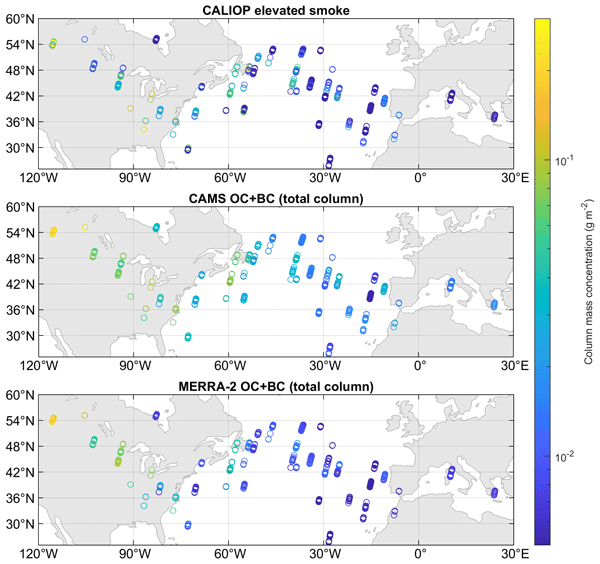
In June 2019, smoke particles from a Canadian wildfire event were transported to Europe. The long-range-transported smoke plumes were monitored with a spaceborne lidar and reanalysis models. Based on the aerosol mass concentrations estimated from the observations, the reanalysis models had difficulties in reproducing the amount and location of the smoke aerosols during the transport event. Consequently, more spaceborne lidar missions are needed for reliable monitoring of aerosol plumes.
Christoffer Hallgren, Heiner Körnich, Stefan Ivanell, Ville Vakkari, and Erik Sahlée
Wind Energ. Sci. Discuss., https://doi.org/10.5194/wes-2023-129, https://doi.org/10.5194/wes-2023-129, 2023
Preprint withdrawn
Short summary
Short summary
Sometimes, the wind changes direction between the bottom and top part of a wind turbine. This affects both the power production and the loads on the turbine. In this study, a climatology of pronounced changes in wind direction across the rotor is created, focusing on Scandinavia. The weather conditions responsible for these changes in wind direction are investigated and the climatology is compared to measurements from two coastal sites, indicating an underestimation by the climatology.
Simo Hakala, Ville Vakkari, Heikki Lihavainen, Antti-Pekka Hyvärinen, Kimmo Neitola, Jenni Kontkanen, Veli-Matti Kerminen, Markku Kulmala, Tuukka Petäjä, Tareq Hussein, Mamdouh I. Khoder, Mansour A. Alghamdi, and Pauli Paasonen
Atmos. Chem. Phys., 23, 9287–9321, https://doi.org/10.5194/acp-23-9287-2023, https://doi.org/10.5194/acp-23-9287-2023, 2023
Short summary
Short summary
Things are not always as they first seem in ambient aerosol measurements. Observations of decreasing particle sizes are often interpreted as resulting from particle evaporation. We show that such observations can counterintuitively be explained by particles that are constantly growing in size. This requires one to account for the previous movements of the observed air. Our explanation implies a larger number of larger particles, meaning more significant effects of aerosols on climate and health.
Maria Filioglou, Ari Leskinen, Ville Vakkari, Ewan O'Connor, Minttu Tuononen, Pekko Tuominen, Samuli Laukkanen, Linnea Toiviainen, Annika Saarto, Xiaoxia Shang, Petri Tiitta, and Mika Komppula
Atmos. Chem. Phys., 23, 9009–9021, https://doi.org/10.5194/acp-23-9009-2023, https://doi.org/10.5194/acp-23-9009-2023, 2023
Short summary
Short summary
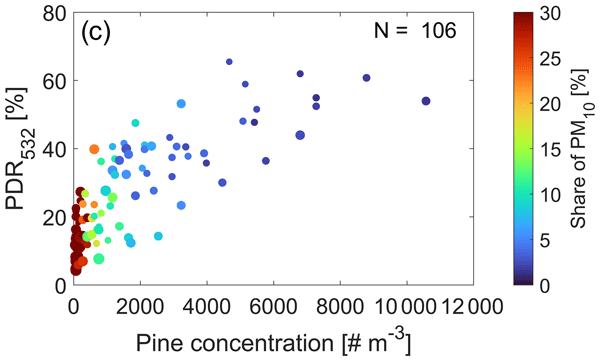
Pollen impacts climate and public health, and it can be detected in the atmosphere by lidars which measure the linear particle depolarization ratio (PDR), a shape-relevant optical parameter. As aerosols also cause depolarization, surface aerosol and pollen observations were combined with measurements from ground-based lidars operating at different wavelengths to determine the optical properties of birch and pine pollen and quantify their relative contribution to the PDR.
Athena Augusta Floutsi, Holger Baars, Ronny Engelmann, Dietrich Althausen, Albert Ansmann, Stephanie Bohlmann, Birgit Heese, Julian Hofer, Thomas Kanitz, Moritz Haarig, Kevin Ohneiser, Martin Radenz, Patric Seifert, Annett Skupin, Zhenping Yin, Sabur F. Abdullaev, Mika Komppula, Maria Filioglou, Elina Giannakaki, Iwona S. Stachlewska, Lucja Janicka, Daniele Bortoli, Eleni Marinou, Vassilis Amiridis, Anna Gialitaki, Rodanthi-Elisavet Mamouri, Boris Barja, and Ulla Wandinger
Atmos. Meas. Tech., 16, 2353–2379, https://doi.org/10.5194/amt-16-2353-2023, https://doi.org/10.5194/amt-16-2353-2023, 2023
Short summary
Short summary
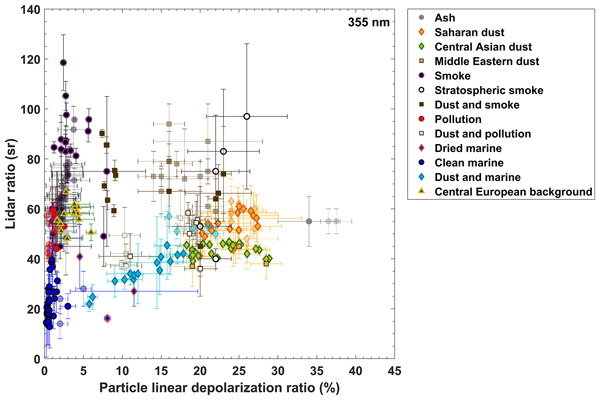
DeLiAn is a collection of lidar-derived aerosol intensive optical properties for several aerosol types, namely the particle linear depolarization ratio, the extinction-to-backscatter ratio (lidar ratio) and the Ångström exponent. The data collection is based on globally distributed, long-term, ground-based, multiwavelength, Raman and polarization lidar measurements and currently covers two wavelengths, 355 and 532 nm, for 13 aerosol categories ranging from basic aerosol types to mixtures.
Gillian Young McCusker, Jutta Vüllers, Peggy Achtert, Paul Field, Jonathan J. Day, Richard Forbes, Ruth Price, Ewan O'Connor, Michael Tjernström, John Prytherch, Ryan Neely III, and Ian M. Brooks
Atmos. Chem. Phys., 23, 4819–4847, https://doi.org/10.5194/acp-23-4819-2023, https://doi.org/10.5194/acp-23-4819-2023, 2023
Short summary
Short summary
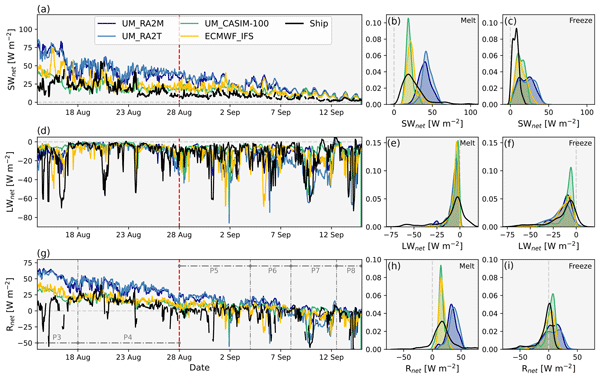
In this study, we show that recent versions of two atmospheric models – the Unified Model and Integrated Forecasting System – overestimate Arctic cloud fraction within the lower troposphere by comparison with recent remote-sensing measurements made during the Arctic Ocean 2018 expedition. The overabundance of cloud is interlinked with the modelled thermodynamic structure, with strong negative temperature biases coincident with these overestimated cloud layers.
Pyry Pentikäinen, Ewan J. O'Connor, and Pablo Ortiz-Amezcua
Geosci. Model Dev., 16, 2077–2094, https://doi.org/10.5194/gmd-16-2077-2023, https://doi.org/10.5194/gmd-16-2077-2023, 2023
Short summary
Short summary
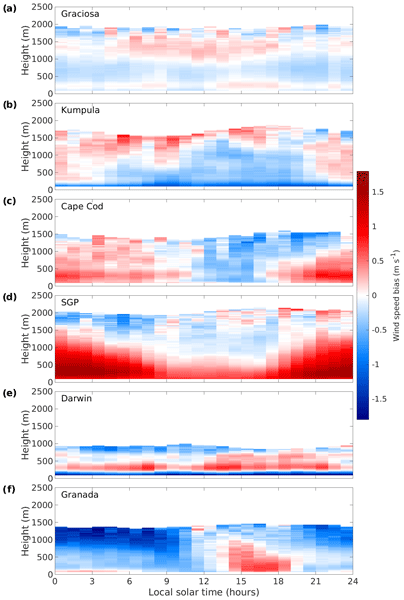
We used Doppler lidar to evaluate the wind profiles generated by a weather forecast model. We first compared the Doppler lidar observations with co-located radiosonde profiles, and they agree well. The model performs best over marine and coastal locations. Larger errors were seen in locations where the surface was more complex, especially in the wind direction. Our results show that Doppler lidar is a suitable instrument for evaluating the boundary layer wind profiles in atmospheric models.
Konstantinos Matthaios Doulgeris, Ville Vakkari, Ewan J. O'Connor, Veli-Matti Kerminen, Heikki Lihavainen, and David Brus
Atmos. Chem. Phys., 23, 2483–2498, https://doi.org/10.5194/acp-23-2483-2023, https://doi.org/10.5194/acp-23-2483-2023, 2023
Short summary
Short summary
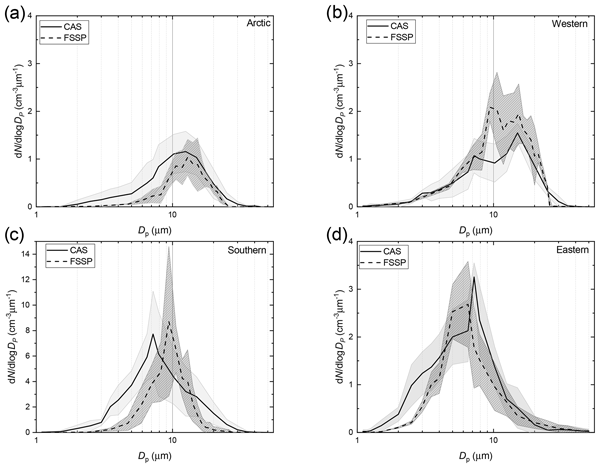
We investigated how different long-range-transported air masses can affect the microphysical properties of low-level clouds in a clean subarctic environment. A connection was revealed. Higher values of cloud droplet number concentrations were related to continental air masses, whereas the lowest values of number concentrations were related to marine air masses. These were characterized by larger cloud droplets. Clouds in all regions were sensitive to increases in cloud number concentration.
Simone Kotthaus, Juan Antonio Bravo-Aranda, Martine Collaud Coen, Juan Luis Guerrero-Rascado, Maria João Costa, Domenico Cimini, Ewan J. O'Connor, Maxime Hervo, Lucas Alados-Arboledas, María Jiménez-Portaz, Lucia Mona, Dominique Ruffieux, Anthony Illingworth, and Martial Haeffelin
Atmos. Meas. Tech., 16, 433–479, https://doi.org/10.5194/amt-16-433-2023, https://doi.org/10.5194/amt-16-433-2023, 2023
Short summary
Short summary
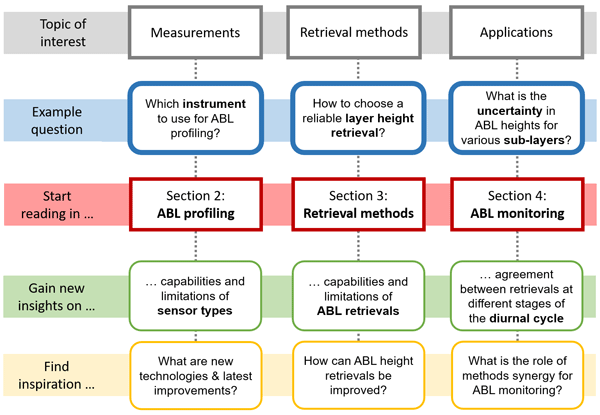
Profile observations of the atmospheric boundary layer now allow for layer heights and characteristics to be derived at high temporal and vertical resolution. With novel high-density ground-based remote-sensing measurement networks emerging, horizontal information content is also increasing. This review summarises the capabilities and limitations of various sensors and retrieval algorithms which need to be considered during the harmonisation of data products for high-impact applications.
Matti Räsänen, Mika Aurela, Ville Vakkari, Johan P. Beukes, Juha-Pekka Tuovinen, Pieter G. Van Zyl, Miroslav Josipovic, Stefan J. Siebert, Tuomas Laurila, Markku Kulmala, Lauri Laakso, Janne Rinne, Ram Oren, and Gabriel Katul
Hydrol. Earth Syst. Sci., 26, 5773–5791, https://doi.org/10.5194/hess-26-5773-2022, https://doi.org/10.5194/hess-26-5773-2022, 2022
Short summary
Short summary
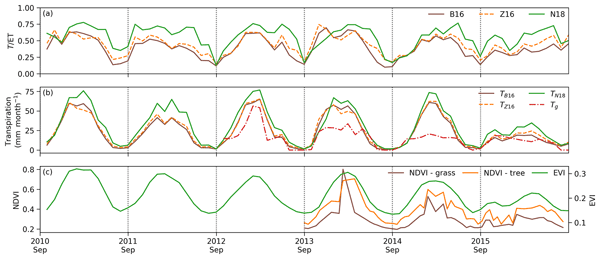
The productivity of semiarid grazed grasslands is linked to the variation in rainfall and transpiration. By combining carbon dioxide and water flux measurements, we show that the annual transpiration is nearly constant during wet years while grasses react quickly to dry spells and drought, which reduce transpiration. The planning of annual grazing strategies could consider the early-season rainfall frequency that was linked to the portion of annual transpiration.
Jenna Ritvanen, Ewan O'Connor, Dmitri Moisseev, Raisa Lehtinen, Jani Tyynelä, and Ludovic Thobois
Atmos. Meas. Tech., 15, 6507–6519, https://doi.org/10.5194/amt-15-6507-2022, https://doi.org/10.5194/amt-15-6507-2022, 2022
Short summary
Short summary
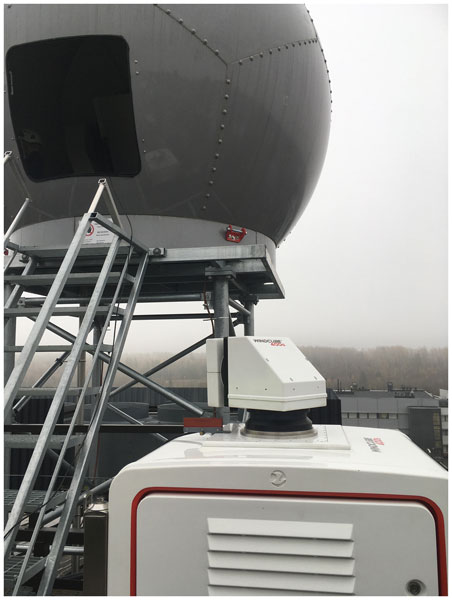
Doppler lidars and weather radars provide accurate wind measurements, with Doppler lidar usually performing better in dry weather conditions and weather radar performing better when there is precipitation. Operating both instruments together should therefore improve the overall performance. We investigate how well a co-located Doppler lidar and X-band radar perform with respect to various weather conditions, including changes in horizontal visibility, cloud altitude, and precipitation.
Carlton Xavier, Metin Baykara, Robin Wollesen de Jonge, Barbara Altstädter, Petri Clusius, Ville Vakkari, Roseline Thakur, Lisa Beck, Silvia Becagli, Mirko Severi, Rita Traversi, Radovan Krejci, Peter Tunved, Mauro Mazzola, Birgit Wehner, Mikko Sipilä, Markku Kulmala, Michael Boy, and Pontus Roldin
Atmos. Chem. Phys., 22, 10023–10043, https://doi.org/10.5194/acp-22-10023-2022, https://doi.org/10.5194/acp-22-10023-2022, 2022
Short summary
Short summary
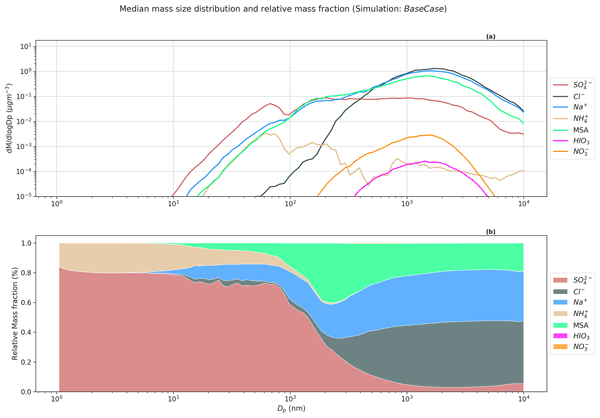
The focus of this work is to study and improve our understanding of processes involved in the formation and growth of new particles in a remote Arctic marine environment. We run the 1D model ADCHEM along air mass trajectories arriving at Ny-Ålesund in May 2018. The model finds that ion-mediated H2SO4–NH3 nucleation can explain the observed new particle formation at Ny-Ålesund. The growth of particles is driven via H2SO4 condensation and formation of methane sulfonic acid in the aqueous phase.
Sasu Karttunen, Ewan O'Connor, Olli Peltola, and Leena Järvi
Atmos. Meas. Tech., 15, 2417–2432, https://doi.org/10.5194/amt-15-2417-2022, https://doi.org/10.5194/amt-15-2417-2022, 2022
Short summary
Short summary
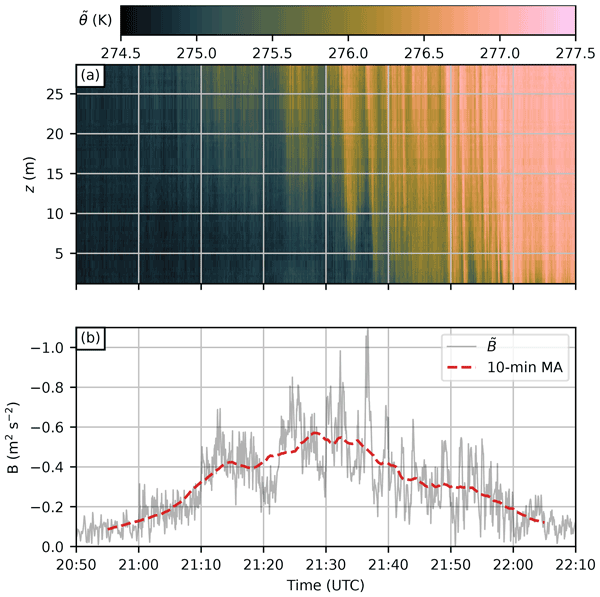
To study the complex structure of the lowest tens of metres of atmosphere in urban areas, measurement methods with great spatial and temporal coverage are needed. In our study, we analyse measurements with a promising and relatively new method, distributed temperature sensing, capable of providing detailed information on the near-surface atmosphere. We present multiple ways to utilise these kinds of measurements, as well as important considerations for planning new studies using the method.

Mathew Sebastian, Sobhan Kumar Kompalli, Vasudevan Anil Kumar, Sandhya Jose, S. Suresh Babu, Govindan Pandithurai, Sachchidanand Singh, Rakesh K. Hooda, Vijay K. Soni, Jeffrey R. Pierce, Ville Vakkari, Eija Asmi, Daniel M. Westervelt, Antti-Pekka Hyvärinen, and Vijay P. Kanawade
Atmos. Chem. Phys., 22, 4491–4508, https://doi.org/10.5194/acp-22-4491-2022, https://doi.org/10.5194/acp-22-4491-2022, 2022
Short summary
Short summary
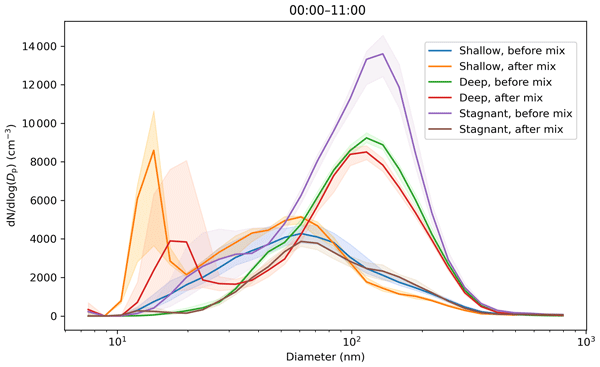
Characteristics of particle number size distributions and new particle formation in six locations in India were analyzed. New particle formation occurred frequently during the pre-monsoon (spring) season and it significantly modulates the shape of the particle number size distributions. The contribution of newly formed particles to cloud condensation nuclei concentrations was ~3 times higher in urban locations than in mountain background locations.
Jutta Kesti, John Backman, Ewan J. O'Connor, Anne Hirsikko, Eija Asmi, Minna Aurela, Ulla Makkonen, Maria Filioglou, Mika Komppula, Hannele Korhonen, and Heikki Lihavainen
Atmos. Chem. Phys., 22, 481–503, https://doi.org/10.5194/acp-22-481-2022, https://doi.org/10.5194/acp-22-481-2022, 2022
Short summary
Short summary
In this study we combined aerosol particle measurements at the surface with a scanning Doppler lidar providing vertical profiles of the atmosphere to study the effect of different boundary layer conditions on aerosol particle properties in the understudied Arabian Peninsula region. The instrumentation used in this study enabled us to identify periods when pollution from remote sources was mixed down to the surface and initiated new particle formation in the growing boundary layer.
Clémence Rose, Martine Collaud Coen, Elisabeth Andrews, Yong Lin, Isaline Bossert, Cathrine Lund Myhre, Thomas Tuch, Alfred Wiedensohler, Markus Fiebig, Pasi Aalto, Andrés Alastuey, Elisabeth Alonso-Blanco, Marcos Andrade, Begoña Artíñano, Todor Arsov, Urs Baltensperger, Susanne Bastian, Olaf Bath, Johan Paul Beukes, Benjamin T. Brem, Nicolas Bukowiecki, Juan Andrés Casquero-Vera, Sébastien Conil, Konstantinos Eleftheriadis, Olivier Favez, Harald Flentje, Maria I. Gini, Francisco Javier Gómez-Moreno, Martin Gysel-Beer, Anna Gannet Hallar, Ivo Kalapov, Nikos Kalivitis, Anne Kasper-Giebl, Melita Keywood, Jeong Eun Kim, Sang-Woo Kim, Adam Kristensson, Markku Kulmala, Heikki Lihavainen, Neng-Huei Lin, Hassan Lyamani, Angela Marinoni, Sebastiao Martins Dos Santos, Olga L. Mayol-Bracero, Frank Meinhardt, Maik Merkel, Jean-Marc Metzger, Nikolaos Mihalopoulos, Jakub Ondracek, Marco Pandolfi, Noemi Pérez, Tuukka Petäjä, Jean-Eudes Petit, David Picard, Jean-Marc Pichon, Veronique Pont, Jean-Philippe Putaud, Fabienne Reisen, Karine Sellegri, Sangeeta Sharma, Gerhard Schauer, Patrick Sheridan, James Patrick Sherman, Andreas Schwerin, Ralf Sohmer, Mar Sorribas, Junying Sun, Pierre Tulet, Ville Vakkari, Pieter Gideon van Zyl, Fernando Velarde, Paolo Villani, Stergios Vratolis, Zdenek Wagner, Sheng-Hsiang Wang, Kay Weinhold, Rolf Weller, Margarita Yela, Vladimir Zdimal, and Paolo Laj
Atmos. Chem. Phys., 21, 17185–17223, https://doi.org/10.5194/acp-21-17185-2021, https://doi.org/10.5194/acp-21-17185-2021, 2021
Short summary
Short summary
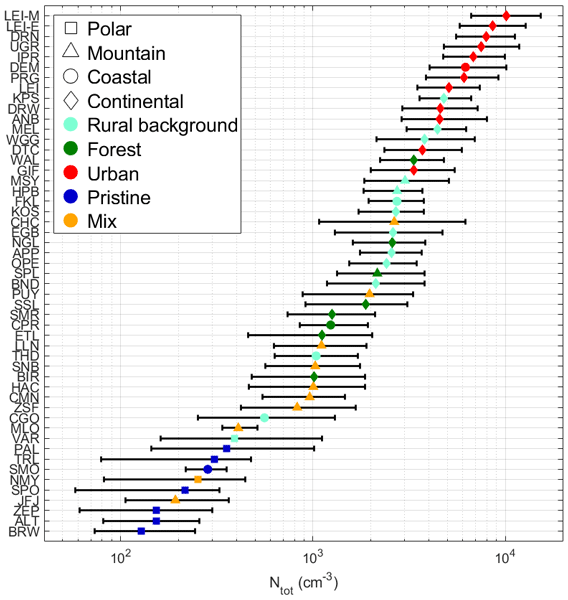
Aerosol particles are a complex component of the atmospheric system the effects of which are among the most uncertain in climate change projections. Using data collected at 62 stations, this study provides the most up-to-date picture of the spatial distribution of particle number concentration and size distribution worldwide, with the aim of contributing to better representation of aerosols and their interactions with clouds in models and, therefore, better evaluation of their impact on climate.
Anna Franck, Dmitri Moisseev, Ville Vakkari, Matti Leskinen, Janne Lampilahti, Veli-Matti Kerminen, and Ewan O'Connor
Atmos. Meas. Tech., 14, 7341–7353, https://doi.org/10.5194/amt-14-7341-2021, https://doi.org/10.5194/amt-14-7341-2021, 2021
Short summary
Short summary
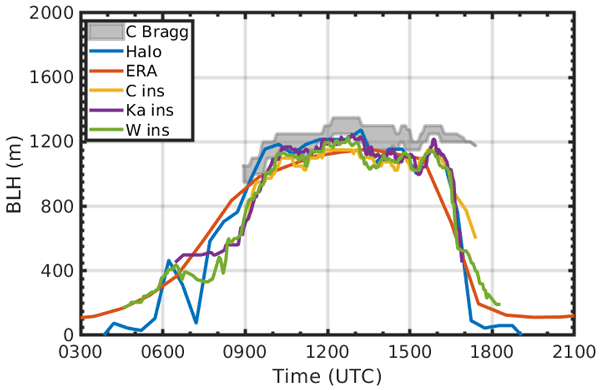
We proposed a method to derive a convective boundary layer height, using insects in radar observations, and we investigated the consistency of these retrievals among different radar frequencies (5, 35 and 94 GHz). This method can be applied to radars at other measurement stations and serve as additional way to estimate the boundary layer height during summer. The entrainment zone was also observed by the 5 GHz radar above the boundary layer in the form of a Bragg scatter layer.
Cited articles
Baars, H., Kanitz, T., Engelmann, R., Althausen, D., Heese, B., Komppula, M., Preißler, J., Tesche, M., Ansmann, A., Wandinger, U., Lim, J.-H., Ahn, J. Y., Stachlewska, I. S., Amiridis, V., Marinou, E., Seifert, P., Hofer, J., Skupin, A., Schneider, F., Bohlmann, S., Foth, A., Bley, S., Pfüller, A., Giannakaki, E., Lihavainen, H., Viisanen, Y., Hooda, R. K., Pereira, S. N., Bortoli, D., Wagner, F., Mattis, I., Janicka, L., Markowicz, K. M., Achtert, P., Artaxo, P., Pauliquevis, T., Souza, R. A. F., Sharma, V. P., van Zyl, P. G., Beukes, J. P., Sun, J., Rohwer, E. G., Deng, R., Mamouri, R.-E., and Zamorano, F.: An overview of the first decade of PollyNET: an emerging network of automated Raman-polarization lidars for continuous aerosol profiling, Atmos. Chem. Phys., 16, 5111–5137, https://doi.org/10.5194/acp-16-5111-2016, 2016. a
Baars, H., Seifert, P., Engelmann, R., and Wandinger, U.: Target categorization of aerosol and clouds by continuous multiwavelength-polarization lidar measurements, Atmos. Meas. Tech., 10, 3175–3201, https://doi.org/10.5194/amt-10-3175-2017, 2017. a
Barragán, R., Molero, F., Salvador, P., Theobald, M. R., Vivanco, M. G., Rodríguez-Sánchez, A., Gil, V., Garrido, J. L., Pujadas, M., and Artíñano, B.: Study of the Effect of Different Atmospheric Conditions on the Temporal Evolution of the Mixing Layer over Madrid during the Year 2020 by Means of Two Different Methods: Ceilometer Signals and the ECMWF-IFS Meteorological Model, Remote Sensing, 15, 5583, https://doi.org/10.3390/rs15235583, 2023. a
Biele, J., Beyerle, G., and Baumgarten, G.: Polarization lidar: Corrections of instrumental effects, Opt. Express, 7, 427–435, https://doi.org/10.1364/OE.7.000427, 2000. a
Binietoglou, I., Amodeo, A., D'Amico, G., Giunta, A., Madonna, F., Mona, L., and Pappalardo, G.: Examination of possible synergy between lidar and ceilometer for the monitoring of atmospheric aerosols, in: Lidar Technologies, Techniques, and Measurements for Atmospheric Remote Sensing VII, SPIE, 8182, 48–60, https://doi.org/10.1117/12.897530, 2011. a
Bucholtz, A.: Rayleigh-scattering calculations for the terrestrial atmosphere, Appl. Optics, 34, 2765–2773, https://doi.org/10.1364/AO.34.002765, 1995. a
Burton, S. P., Ferrare, R. A., Hostetler, C. A., Hair, J. W., Rogers, R. R., Obland, M. D., Butler, C. F., Cook, A. L., Harper, D. B., and Froyd, K. D.: Aerosol classification using airborne High Spectral Resolution Lidar measurements – methodology and examples, Atmos. Meas. Tech., 5, 73–98, https://doi.org/10.5194/amt-5-73-2012, 2012. a
Full-Time, Eye-Safe Cloud and Aerosol Lidar Observation at Atmospheric Radiation Measurement Program Sites: Instruments and Data Processing, J. Atmos. Ocean. Tech., 19, 431–442, https://doi.org/10.1175/1520-0426(2002)019<0431:FTESCA>2.0.CO;2, 2002. a, b
Cao, N., Zhu, C., Kai, Y., and Yan, P.: A method of background noise reduction in lidar data, Appl. Phys. B-Lasers O., 113, 115–123, https://doi.org/10.1007/s00340-013-5447-9, 2013. a
Cimini, D., Haeffelin, M., Kotthaus, S., Löhnert, U., Martinet, P., O'Connor, E., Walden, C., Coen, M. C., and Preissler, J.: Towards the profiling of the atmospheric boundary layer at European scale – introducing the COST Action PROBE, Bulletin of Atmospheric Science and Technology, 1, 23–42, https://doi.org/10.1007/s42865-020-00003-8, 2020. a
Donovan, D. P., Klein Baltink, H., Henzing, J. S., de Roode, S. R., and Siebesma, A. P.: A depolarisation lidar-based method for the determination of liquid-cloud microphysical properties, Atmos. Meas. Tech., 8, 237–266, https://doi.org/10.5194/amt-8-237-2015, 2015. a
Fernald, F. G., Herman, B. M., and Reagan, J. A.: Determination of Aerosol Height Distributions by Lidar, J. Appl. Meteorol. Clim., 11, 482–489, https://doi.org/10.1175/1520-0450(1972)011<0482:DOAHDB>2.0.CO;2, 1972. a
Filioglou, M., Leskinen, A., Vakkari, V., O'Connor, E., Tuononen, M., Tuominen, P., Laukkanen, S., Toiviainen, L., Saarto, A., Shang, X., Tiitta, P., and Komppula, M.: Spectral dependence of birch and pine pollen optical properties using a synergy of lidar instruments, Atmos. Chem. Phys., 23, 9009–9021, https://doi.org/10.5194/acp-23-9009-2023, 2023. a, b
Filioglou, M., Tiitta, P., Shang, X., Leskinen, A., Ahola, P., Pätsi, S., Saarto, A., Vakkari, V., Isopahkala, U., and Komppula, M.: Lidar estimates of birch pollen number, mass, and CCN-related concentrations, Atmos. Chem. Phys., 25, 1639–1657, https://doi.org/10.5194/acp-25-1639-2025, 2025. a
Floutsi, A. A., Baars, H., Engelmann, R., Althausen, D., Ansmann, A., Bohlmann, S., Heese, B., Hofer, J., Kanitz, T., Haarig, M., Ohneiser, K., Radenz, M., Seifert, P., Skupin, A., Yin, Z., Abdullaev, S. F., Komppula, M., Filioglou, M., Giannakaki, E., Stachlewska, I. S., Janicka, L., Bortoli, D., Marinou, E., Amiridis, V., Gialitaki, A., Mamouri, R.-E., Barja, B., and Wandinger, U.: DeLiAn – a growing collection of depolarization ratio, lidar ratio and Ångström exponent for different aerosol types and mixtures from ground-based lidar observations, Atmos. Meas. Tech., 16, 2353–2379, https://doi.org/10.5194/amt-16-2353-2023, 2023. a
Freudenthaler, V., Esselborn, M., Wiegner, M., Heese, B., Tesche, M., Ansmann, A., Müller, D., Althausen, D., Wirth, M., Fix, A., Ehret, G., Knippertz, P., Toledano, C., Gasteiger, J., Garhammer, M., and Seefeldner, M.: Depolarization ratio profiling at several wavelengths in pure Saharan dust during SAMUM 2006, Tellus B, 61, 165–179, https://doi.org/10.1111/j.1600-0889.2008.00396.x, 2009. a
Görsdorf, U., Komppula, M., Moisseev, D., and O'Connor, E.: Custom collection of lidar data from Hyytiälä, Kenttärova, Lindenberg, and Vehmasmäki between 1 Oct 2021 and 31 Dec 2024, ACTRIS Cloud remote sensing data centre unit (CLU) [data set], https://doi.org/10.60656/d2626d9dd3454006, 2025. a, b
Haeffelin, M., Laffineur, Q., Bravo-Aranda, J.-A., Drouin, M.-A., Casquero-Vera, J.-A., Dupont, J.-C., and De Backer, H.: Radiation fog formation alerts using attenuated backscatter power from automatic lidars and ceilometers, Atmos. Meas. Tech., 9, 5347–5365, https://doi.org/10.5194/amt-9-5347-2016, 2016. a
Hervo, M., Poltera, Y., and Haefele, A.: An empirical method to correct for temperature-dependent variations in the overlap function of CHM15k ceilometers, Atmos. Meas. Tech., 9, 2947–2959, https://doi.org/10.5194/amt-9-2947-2016, 2016. a, b, c
Hirsikko, A., O'Connor, E. J., Komppula, M., Korhonen, K., Pfüller, A., Giannakaki, E., Wood, C. R., Bauer-Pfundstein, M., Poikonen, A., Karppinen, T., Lonka, H., Kurri, M., Heinonen, J., Moisseev, D., Asmi, E., Aaltonen, V., Nordbo, A., Rodriguez, E., Lihavainen, H., Laaksonen, A., Lehtinen, K. E. J., Laurila, T., Petäjä, T., Kulmala, M., and Viisanen, Y.: Observing wind, aerosol particles, cloud and precipitation: Finland's new ground-based remote-sensing network, Atmos. Meas. Tech., 7, 1351–1375, https://doi.org/10.5194/amt-7-1351-2014, 2014. a
Hopkin, E., Illingworth, A. J., Charlton-Perez, C., Westbrook, C. D., and Ballard, S.: A robust automated technique for operational calibration of ceilometers using the integrated backscatter from totally attenuating liquid clouds, Atmos. Meas. Tech., 12, 4131–4147, https://doi.org/10.5194/amt-12-4131-2019, 2019. a, b, c, d
Hämäläinen, K., Hirsikko, A., Leskinen, A., Komppula, M., O'Connor, E. J., and Niemelä, S.: Evaluating atmospheric icing forecasts with ground-based ceilometer profiles, Meteorol. Appl., 27, e1964, https://doi.org/10.1002/met.1964, 2020. a
Illingworth, A. J., Barker, H. W., Beljaars, A., Ceccaldi, M., Chepfer, H., Clerbaux, N., Cole, J., Delanoë, J., Domenech, C., Donovan, D. P., Fukuda, S., Hirakata, M., Hogan, R. J., Huenerbein, A., Kollias, P., Kubota, T., Nakajima, T., Nakajima, T. Y., Nishizawa, T., Ohno, Y., Okamoto, H., Oki, R., Sato, K., Satoh, M., Shephard, M. W., Velázquez-Blázquez, A., Wandinger, U., Wehr, T., and Van Zadelhoff, G. J.: The earthcare satellite: The next step forward in global measurements of clouds, aerosols, precipitation, and radiation, B. Am. Meteorol. Soc., 96, 1311–1332, https://doi.org/10.1175/BAMS-D-12-00227.1, 2015. a
Illingworth, A. J., Cimini, D., Haefele, A., Haeffelin, M., Hervo, M., Kotthaus, S., Löhnert, U., Martinet, P., Mattis, I., O’Connor, E. J., and Potthast, R.: How Can Existing Ground-Based Profiling Instruments Improve European Weather Forecasts?, B. Am. Meteorol. Soc., 100, 605–619, https://doi.org/10.1175/BAMS-D-17-0231.1, 2019. a
Klett, J. D.: Lidar inversion with variable backscatter/extinction ratios, Appl. Optics, 24, 1638–1643, https://doi.org/10.1364/AO.24.001638, 1985. a, b
Kotthaus, S., O'Connor, E., Münkel, C., Charlton-Perez, C., Haeffelin, M., Gabey, A. M., and Grimmond, C. S. B.: Recommendations for processing atmospheric attenuated backscatter profiles from Vaisala CL31 ceilometers, Atmos. Meas. Tech., 9, 3769–3791, https://doi.org/10.5194/amt-9-3769-2016, 2016. a
Kotthaus, S., Bravo-Aranda, J. A., Collaud Coen, M., Guerrero-Rascado, J. L., Costa, M. J., Cimini, D., O'Connor, E. J., Hervo, M., Alados-Arboledas, L., Jiménez-Portaz, M., Mona, L., Ruffieux, D., Illingworth, A., and Haeffelin, M.: Atmospheric boundary layer height from ground-based remote sensing: a review of capabilities and limitations, Atmos. Meas. Tech., 16, 433–479, https://doi.org/10.5194/amt-16-433-2023, 2023. a
Le, V., Lobo, H., O'Connor, E. J., and Vakkari, V.: Long-term aerosol particle depolarization ratio measurements with HALO Photonics Doppler lidar, Atmos. Meas. Tech., 17, 921–941, https://doi.org/10.5194/amt-17-921-2024, 2024. a
Lee, G., Gommers, R., Waselewski, F., Wohlfahrt, K., and O'Leary, A.: PyWavelets: A Python package for wavelet analysis, Journal of Open Source Software, 4, 1237, https://doi.org/10.21105/joss.01237, 2019. a
Mamouri, R.-E. and Ansmann, A.: Potential of polarization lidar to provide profiles of CCN- and INP-relevant aerosol parameters, Atmos. Chem. Phys., 16, 5905–5931, https://doi.org/10.5194/acp-16-5905-2016, 2016. a
Martucci, G., Milroy, C., and O’Dowd, C. D.: Detection of Cloud-Base Height Using Jenoptik CHM15K and Vaisala CL31 Ceilometers, J. Atmos. Ocean. Tech., 27, 305–318, https://doi.org/10.1175/2009JTECHA1326.1, 2010. a
Nason, G. P. and Silverman, B. W.: The Stationary Wavelet Transform and some Statistical Applications, Springer New York, New York, NY, 281–299, https://doi.org/10.1007/978-1-4612-2544-7_17, ISBN 978-1-4612-2544-7, 1995. a, b
Nicolae, D., Vasilescu, J., Talianu, C., Binietoglou, I., Nicolae, V., Andrei, S., and Antonescu, B.: A neural network aerosol-typing algorithm based on lidar data, Atmos. Chem. Phys., 18, 14511–14537, https://doi.org/10.5194/acp-18-14511-2018, 2018. a
O'Connor, E.: Custom collection of model data from Hyytiälä, Kenttärova, Lindenberg, and Vehmasmäki between 1 Oct 2021 and 31 Dec 2024, ACTRIS Cloud remote sensing data centre unit (CLU) [data set], https://doi.org/10.60656/57adeb3f598243f2, 2025. a, b, c
O'Connor, E. J., Illingworth, A. J., and Hogan, R. J.: A technique for autocalibration of cloud lidar, J. Atmos. Ocean. Tech., 21, 777–786, https://doi.org/10.1175/1520-0426(2004)021<0777:ATFAOC>2.0.CO;2, 2004. a, b
Ribaud, J.-F., Haeffelin, M., Dupont, J.-C., Drouin, M.-A., Toledo, F., and Kotthaus, S.: PARAFOG v2.0: a near-real-time decision tool to support nowcasting fog formation events at local scales, Atmos. Meas. Tech., 14, 7893–7907, https://doi.org/10.5194/amt-14-7893-2021, 2021. a
Rocadenbosch, F., Barragán, R., Frasier, S. J., Waldinger, J., Turner, D. D., Tanamachi, R. L., and Dawson, D. T.: Ceilometer-Based Rain-Rate Estimation: A Case-Study Comparison With S-Band Radar and Disdrometer Retrievals in the Context of VORTEX-SE, IEEE T. Geosci. Remote, 58, 8268–8284, https://doi.org/10.1109/TGRS.2020.2984458, 2020. a
Roschke, J., Witthuhn, J., Klingebiel, M., Haarig, M., Foth, A., Kötsche, A., and Kalesse-Los, H.: Discriminating between “drizzle or rain” and sea salt aerosols in Cloudnet for measurements over the Barbados Cloud Observatory, Atmos. Meas. Tech., 18, 487–508, https://doi.org/10.5194/amt-18-487-2025, 2025. a
Sassen, K.: The Polarization Lidar Technique for Cloud Research: A Review and Current Assessment, B. Am. Meteorol. Soc., 72, 1848–1866, https://doi.org/10.1175/1520-0477(1991)072<1848:TPLTFC>2.0.CO;2, 1991. a
Shang, X., Mielonen, T., Lipponen, A., Giannakaki, E., Leskinen, A., Buchard, V., Darmenov, A. S., Kukkurainen, A., Arola, A., O'Connor, E., Hirsikko, A., and Komppula, M.: Mass concentration estimates of long-range-transported Canadian biomass burning aerosols from a multi-wavelength Raman polarization lidar and a ceilometer in Finland, Atmos. Meas. Tech., 14, 6159–6179, https://doi.org/10.5194/amt-14-6159-2021, 2021. a
Tomasi, C., Vitale, V., Petkov, B., Lupi, A., and Cacciari, A.: Improved algorithm for calculations of Rayleigh-scattering optical depth in standard atmospheres, Appl. Optics, 44, 3320–3341, https://doi.org/10.1364/AO.44.003320, 2005. a
Tsaknakis, G., Papayannis, A., Kokkalis, P., Amiridis, V., Kambezidis, H. D., Mamouri, R. E., Georgoussis, G., and Avdikos, G.: Inter-comparison of lidar and ceilometer retrievals for aerosol and Planetary Boundary Layer profiling over Athens, Greece, Atmos. Meas. Tech., 4, 1261–1273, https://doi.org/10.5194/amt-4-1261-2011, 2011. a
Uzan, L., Egert, S., Khain, P., Levi, Y., Vadislavsky, E., and Alpert, P.: Ceilometers as planetary boundary layer height detectors and a corrective tool for COSMO and IFS models, Atmos. Chem. Phys., 20, 12177–12192, https://doi.org/10.5194/acp-20-12177-2020, 2020. a
Van der Kamp, D.: Ceilometer observations of Vancouver's urban boundary layer: validation and mixed-layer height estimation, PhD thesis, University of British Columbia, https://doi.org/10.14288/1.0066572, 2008. a
Wandinger, U.: Introduction to Lidar, in: Lidar: Range-Resolved Optical Remote Sensing of the Atmosphere, edited by: Weitkamp, C., Springer New York, New York, NY, 1–18, https://doi.org/10.1007/0-387-25101-4_1, ISBN 978-0-387-25101-1, 2005. a
Warren, E., Charlton-Perez, C., Kotthaus, S., Lean, H., Ballard, S., Hopkin, E., and Grimmond, S.: Evaluation of forward-modelled attenuated backscatter using an urban ceilometer network in London under clear-sky conditions, Atmos. Environ., 191, 532–547, https://doi.org/10.1016/j.atmosenv.2018.04.045, 2018. a
Welton, E. J. and Campbell, J. R.: Micropulse Lidar Signals: Uncertainty Analysis, J. Atmos. Ocean. Tech., 19, 2089–2094, https://doi.org/10.1175/1520-0426(2002)019<2089:MLSUA>2.0.CO;2, 2002. a
Wiegner, M. and Geiß, A.: Aerosol profiling with the Jenoptik ceilometer CHM15kx, Atmos. Meas. Tech., 5, 1953–1964, https://doi.org/10.5194/amt-5-1953-2012, 2012. a, b, c, d
Wiegner, M., Madonna, F., Binietoglou, I., Forkel, R., Gasteiger, J., Geiß, A., Pappalardo, G., Schäfer, K., and Thomas, W.: What is the benefit of ceilometers for aerosol remote sensing? An answer from EARLINET, Atmos. Meas. Tech., 7, 1979–1997, https://doi.org/10.5194/amt-7-1979-2014, 2014. a
Short summary
We evaluate the performance of the Vaisala CL61 ceilometer, with depolarization ratio capability at 910 nm, over a three-year period at four locations. This study examines instrument performance over time, describes methods for correcting instrument bias and presents corresponding uncertainty estimates. As these instruments are being deployed across large research networks, our findings support stable instrument performance and the generation of reliable measurements and derived products.
We evaluate the performance of the Vaisala CL61 ceilometer, with depolarization ratio capability...


