
Articles | Volume 19, issue 18
https://doi.org/10.5194/amt-19-6075-2026
© Author(s) 2026. This work is distributed under
the Creative Commons Attribution 4.0 License.
the Creative Commons Attribution 4.0 License.
https://doi.org/10.5194/amt-19-6075-2026
© Author(s) 2026. This work is distributed under
the Creative Commons Attribution 4.0 License.
the Creative Commons Attribution 4.0 License.
Research article
| 
24 Sep 2026
Research article |
| 24 Sep 2026
| 24 Sep 2026
Validation of EarthCARE CPR reflectivity using the ACTRIS cloud radar network
Nathan Feuillard
CORRESPONDING AUTHOR

LATMOS, Observatoire de Versailles Saint-Quentin-en-Yvelines (OVSQ), Université Paris-Saclay, UVSQ, CNRS, Guyancourt, France
Felipe Toledo Bittner
CORRESPONDING AUTHOR
LATMOS, Observatoire de Versailles Saint-Quentin-en-Yvelines (OVSQ), Université Paris-Saclay, UVSQ, CNRS, Guyancourt, France
Lukas Pfitzenmaier
Institute for Geophysics and Meteorology, University of Cologne, Cologne, Germany
Jean-François Ribaud
Institut Pierre Simon Laplace (IPSL), CNRS, École polytechnique, Institut Polytechnique de Paris, 91128 Palaiseau CEDEX, France
Julien Delanoë
LATMOS, Observatoire de Versailles Saint-Quentin-en-Yvelines (OVSQ), Université Paris-Saclay, UVSQ, CNRS, Guyancourt, France
Martial Haeffelin
Institut Pierre Simon Laplace (IPSL), CNRS, École polytechnique, Institut Polytechnique de Paris, 91128 Palaiseau CEDEX, France
Jean-Charles Dupont
Institut Pierre Simon Laplace (IPSL), Université Versailles Saint-Quentin-en-Yvelines, 78240 Guyancourt, France
Related authors
Lukas Pfitzenmaier, Nathan Feuillard, Felipe Toledo Bittner, Ewan O'Connor, Simo Tukianien, and Bernhard Pospichal
EGUsphere, https://doi.org/10.5194/egusphere-2026-4025, https://doi.org/10.5194/egusphere-2026-4025, 2026
This preprint is open for discussion and under review for Atmospheric Measurement Techniques (AMT).
Short summary
Short summary
This work evaluates the EarthCARE satellite's Doppler velocity observations. EarthCARE provides the first global dataset of vertical motions within clouds. We compared these data with ground-based radar observations at several sites within Europe and the polar regions. The evaluation shows an excellent performance, after assessing all potential error sources and correcting for known biases. This new dataset can be thus used for a variety of new studys to get more insight into cloud processes.
Lukas Pfitzenmaier, Nathan Feuillard, Felipe Toledo Bittner, Ewan O'Connor, Simo Tukianien, and Bernhard Pospichal
EGUsphere, https://doi.org/10.5194/egusphere-2026-4025, https://doi.org/10.5194/egusphere-2026-4025, 2026
This preprint is open for discussion and under review for Atmospheric Measurement Techniques (AMT).
Short summary
Short summary
This work evaluates the EarthCARE satellite's Doppler velocity observations. EarthCARE provides the first global dataset of vertical motions within clouds. We compared these data with ground-based radar observations at several sites within Europe and the polar regions. The evaluation shows an excellent performance, after assessing all potential error sources and correcting for known biases. This new dataset can be thus used for a variety of new studys to get more insight into cloud processes.
Nicolas Chiabrando, Gwendal Rivière, Étienne Vignon, and Julien Delanoë
EGUsphere, https://doi.org/10.5194/egusphere-2026-3987, https://doi.org/10.5194/egusphere-2026-3987, 2026
Short summary
Short summary
Arctic cyclones are large-scale depressions evolving within the Arctic circle. We study a summertime Arctic cyclone that moved near Svalbard in 2022 and was well observed during the THINICE field campaign to understand what controls the intensity of a near-surface wind jet associated with the cyclone. We find that clouds and near-surface frictional effects globally strengthened the wind while the cyclone was growing, but became much less important after it evolved toward a cold-core structure.
Heather Corden, Julien Delanoë, Massimo Del Guasta, and Alexis Berne
EGUsphere, https://doi.org/10.5194/egusphere-2026-3964, https://doi.org/10.5194/egusphere-2026-3964, 2026
Short summary
Short summary
In Antarctica, intrusions of warm, moist air from the coast to the high plateau are responsible for a significant proportion of the snow accumulating on the ice sheet each year. We present a case study of an intrusion in East Antarctica in February 2025. Meteorological radars along a 1100-km transect were used to investigate the processes leading to precipitation in the intrusion. The processes vary according to the changing temperature, humidity and wind dynamics between the coast and plateau.
Anthony J. Baran, Stuart Fox, Richard Cotton, Julien Delanoë, Christopher J. Walden, Karina McCusker, Christopher D. Westbrook, and Peter G. Huggard
Atmos. Meas. Tech., 19, 4367–4392, https://doi.org/10.5194/amt-19-4367-2026, https://doi.org/10.5194/amt-19-4367-2026, 2026
Short summary
Short summary
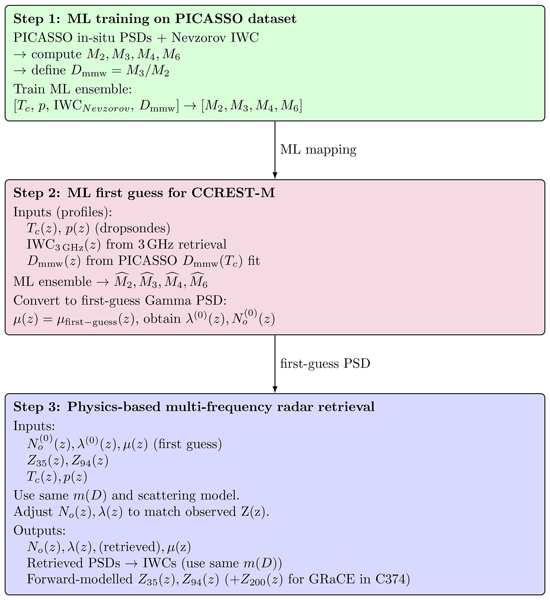
We demonstrate how multi-frequency ground-based radars at 3, 35 and 94 GHz can be used to determine vertical profiles of ice-particle size spectra by combining reflectivity with machine-learning prior information on UK wintertime ice clouds. The method is validated using independent profiles from a 200 GHz radar and aircraft-based in-situ observations. It gives a consistent representation to compare with aircraft-based radiometric measurements in future radiative-transfer closure studies.
Aymeric Dziduch, Antoine Baudoux, Guillaume Mioche, Antoine Canzi, Benjamin Doiteau, Manuel Moser, Emma Järvinen, Étienne Vignon, Jean-Christophe Raut, Régis Dupuy, Christophe Gourbeyre, Jean-Luc Baray, Marie Monier, Frédéric Szczap, Guillaume Penide, Julien Delanoë, Odran Sourdeval, Alfons Schwarzenboeck, Stephan Mertes, Franz Martin Schnaiter, Christiane Voigt, Mario Mech, Susanne Crewell, Andreas Herber, Christof Lüpkes, André Ehrlich, Manfred Wendisch, and Olivier Jourdan
EGUsphere, https://doi.org/10.5194/egusphere-2026-3265, https://doi.org/10.5194/egusphere-2026-3265, 2026
This preprint is open for discussion and under review for Atmospheric Chemistry and Physics (ACP).
Short summary
Short summary
This study examines the microphysical properties and ice crystal habits of low-level Arctic mixed-phase clouds around Svalbard. Using airborne in situ observations from four campaigns, we show that cloud microphysical structure and ice crystal habits are influenced by weather conditions and surface type. These results provide quantitative observations to better understand low-level Arctic clouds, their ice formation processes, and their influence on the Arctic atmosphere and climate system.
Aymeric Dziduch, Guillaume Mioche, Quentin Coopman, Clément Bazantay, Julien Delanoë, and Olivier Jourdan
Atmos. Chem. Phys., 26, 4019–4047, https://doi.org/10.5194/acp-26-4019-2026, https://doi.org/10.5194/acp-26-4019-2026, 2026
Short summary
Short summary
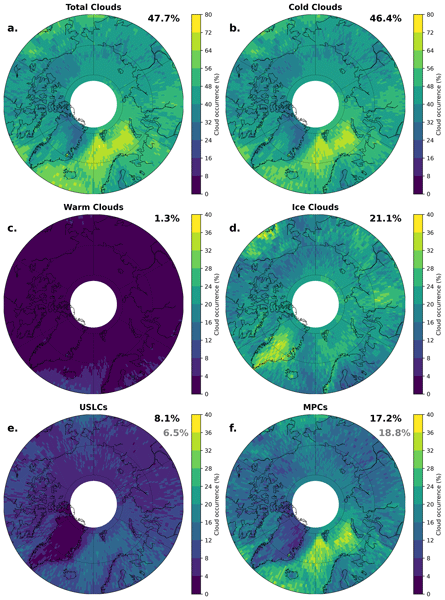
Low-level clouds play a central role in the Arctic climate by regulating energy exchanges between the surface and the atmosphere. Using eight years of CALIPSO–CloudSat observations, this study investigates the regional and seasonal variability of Arctic low-level cloud types. Mixed-phase and supercooled liquid clouds are frequent over oceanic regions, especially during transition seasons. Their occurrence is strongly influenced by surface coupling, temperature, stability, and cold-air outbreaks.
Sidy Diarra, Nadège Montoux, Jean-Luc Baray, Philippe Keckhut, Jean-Charles Dupont, Antoine Farah, and Dunya Alraddawi
EGUsphere, https://doi.org/10.5194/egusphere-2026-482, https://doi.org/10.5194/egusphere-2026-482, 2026
Short summary
Short summary
This study examined the quality of water vapor observations in the troposphere. We compared five years of balloon measurements over France with weather model reanalysis. The observations showed moister air and more frequent supersaturation than the model in the upper troposphere, where natural cirrus clouds and aircraft induced clouds formed. These results suggest that current models underestimate upper air humidity and need improvement to assess climate impacts of clouds.
Romain Joseph, Jérôme Vidot, Julien Delanoë, and Emmanuel Fontaine
EGUsphere, https://doi.org/10.5194/egusphere-2026-48, https://doi.org/10.5194/egusphere-2026-48, 2026
Preprint archived
Short summary
Short summary
We used aircraft radar measurements inside tropical storm clouds to estimate their ice content, then simulated satellite observations using a radiative transfer model. By testing different assumptions about the shape and number of ice crystals, we examined how these choices influence the simulated radiances. We found that satellite information for these clouds is mainly controlled by conditions near the cloud top, while deeper layers remain largely hidden.
Sandrine Bony, Basile Poujol, Brett McKim, Nicolas Rochetin, Marie Lothon, Julia Windmiller, Nicolas Maury, Clarisse Dufaux, Louis Jaffeux, Patrick Chazette, and Julien Delanoë
Atmos. Chem. Phys., 25, 17331–17362, https://doi.org/10.5194/acp-25-17331-2025, https://doi.org/10.5194/acp-25-17331-2025, 2025
Short summary
Short summary
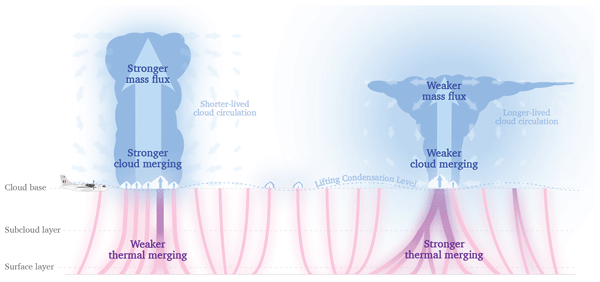
Space photographs of the Earth show that clouds form diverse, common but poorly understood cloud patterns. The analysis of observations gathered from research aircraft over the tropical ocean shows that the merging of thermals and clouds in the first kilometer of the atmosphere plays a key role in controlling the size, depth and spacing of clouds. This reveals a fundamental process through which clouds interact with each other and with their environment.
Valentin Wiener, Étienne Vignon, Thomas Caton Harrison, Christophe Genthon, Felipe Toledo, Guylaine Canut-Rocafort, Yann Meurdesoif, and Alexis Berne
Weather Clim. Dynam., 6, 1605–1627, https://doi.org/10.5194/wcd-6-1605-2025, https://doi.org/10.5194/wcd-6-1605-2025, 2025
Short summary
Short summary
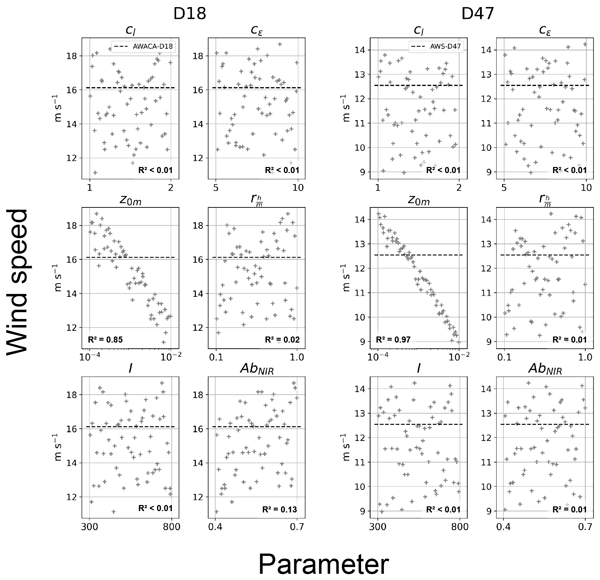
Katabatic winds are a key feature of the climate of Antarctica, but substantial biases remain in their representation in atmospheric models. This study investigates a katabatic wind event in an atmospheric circulation model using in-situ observations. The framework allows to disentangle which part of the bias is due to horizontal resolution, to parameter calibration and to structural deficiencies in the model. We underline in particular the need to refine the physics of the model snow cover.
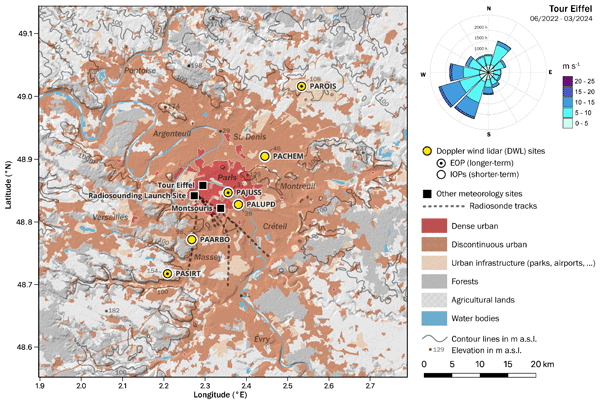
William Morrison, Dana Looschelders, Jonnathan Céspedes, Bernie Claxton, Marc-Antoine Drouin, Jean-Charles Dupont, Aurélien Faucheux, Martial Haeffelin, Christopher C. Holst, Simone Kotthaus, Valéry Masson, James McGregor, Jeremy Price, Matthias Zeeman, Sue Grimmond, and Andreas Christen
Earth Syst. Sci. Data, 17, 6507–6529, https://doi.org/10.5194/essd-17-6507-2025, https://doi.org/10.5194/essd-17-6507-2025, 2025
Short summary
Short summary
We conducted research using sophisticated wind sensors to better understand wind patterns in Paris. By installing these sensors across the city, we gathered detailed data on wind speeds and directions from 2022 to 2024. This information helps improve weather and climate models, making them more accurate for city environments. Our findings offer valuable insights for scientists studying urban air and weather, improving predictions and understanding of city-scale atmospheric processes.
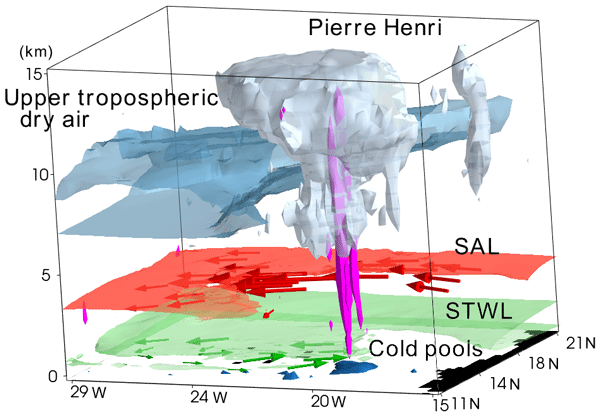
Guillaume Feger, Jean-Pierre Chaboureau, Thibaut Dauhut, Julien Delanoë, and Pierre Coutris
Atmos. Chem. Phys., 25, 7447–7465, https://doi.org/10.5194/acp-25-7447-2025, https://doi.org/10.5194/acp-25-7447-2025, 2025
Short summary
Short summary
Saharan air at the trade wind layer, cold pools, and dry upper troposphere has these three main factors inhibiting the cyclogenesis of the Pierre Henri mesoscale convective system. The findings were obtained through observations made during two flights of the Clouds-Atmospheric Dynamics-Dust Interactions in West Africa (CADDIWA) campaign and a convection-permitting simulation run with the Meso-NH model. They provide new insights into the complex dynamics of cyclogenesis in the Cabo Verde region and challenge the existing model of the Saharan Air Layer (SAL).
Aymeric Dziduch, Guillaume Mioche, Quentin Coopman, Clément Bazantay, Julien Delanoë, and Olivier Jourdan
EGUsphere, https://doi.org/10.5194/egusphere-2025-2698, https://doi.org/10.5194/egusphere-2025-2698, 2025
Preprint archived
Short summary
Short summary
Low-level clouds play a central role in the Arctic climate, modulating the surface energy budget with competing warming and cooling effects. In this study, radar-lidar satellite products are used to investigate the geographical and seasonal variations of different cloud types observed over eight years. Oceanic regions are characterized by high occurrences of low-level mixed-phase clouds, which are influenced by atmospheric stability conditions, surface temperatures and cold air outbreaks.
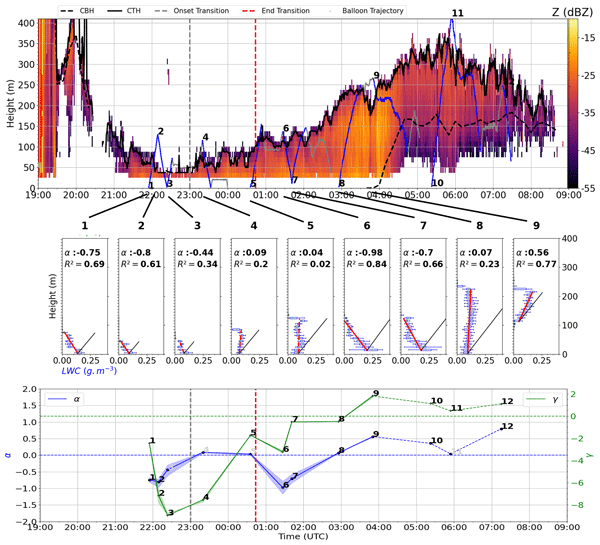
Théophane Costabloz, Frédéric Burnet, Christine Lac, Pauline Martinet, Julien Delanoë, Susana Jorquera, and Maroua Fathalli
Atmos. Chem. Phys., 25, 6539–6573, https://doi.org/10.5194/acp-25-6539-2025, https://doi.org/10.5194/acp-25-6539-2025, 2025
Short summary
Short summary
This study documents vertical profiles of liquid water content (LWC) in fogs from in situ measurements collected during the SOFOG3D field campaign in 2019–2020. The analysis of 140 vertical profiles reveals a reverse trend in LWC, maximum values at ground decreasing with height, during stable conditions in optically thin fogs, evolving towards quasi-adiabatic characteristics when fogs become thick. These results offer new perspectives for better constraining fog numerical simulations.
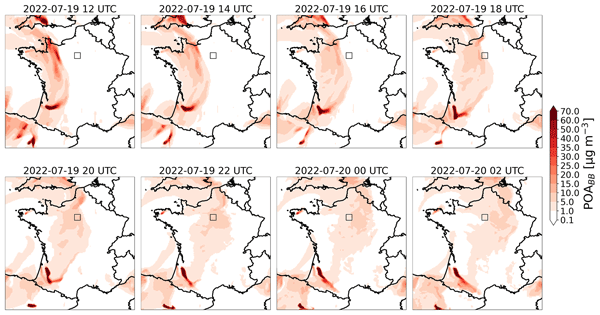
Ludovico Di Antonio, Matthias Beekmann, Guillaume Siour, Vincent Michoud, Christopher Cantrell, Astrid Bauville, Antonin Bergé, Mathieu Cazaunau, Servanne Chevaillier, Manuela Cirtog, Joel F. de Brito, Paola Formenti, Cecile Gaimoz, Olivier Garret, Aline Gratien, Valérie Gros, Martial Haeffelin, Lelia N. Hawkins, Simone Kotthaus, Gael Noyalet, Diana L. Pereira, Jean-Eudes Petit, Eva Drew Pronovost, Véronique Riffault, Chenjie Yu, Gilles Foret, Jean-François Doussin, and Claudia Di Biagio
Atmos. Chem. Phys., 25, 4803–4831, https://doi.org/10.5194/acp-25-4803-2025, https://doi.org/10.5194/acp-25-4803-2025, 2025
Short summary
Short summary
The summer of 2022 has been considered a proxy for future climate scenarios due to its hot and dry conditions. In this paper, we use the measurements from the Atmospheric Chemistry of the Suburban Forest (ACROSS) campaign, conducted in the Paris area in June–July 2022, along with observations from existing networks, to evaluate a 3D chemistry transport model (WRF–CHIMERE) simulation. Results are shown to be satisfactory, allowing us to explain the gas and aerosol variability at the campaign sites.
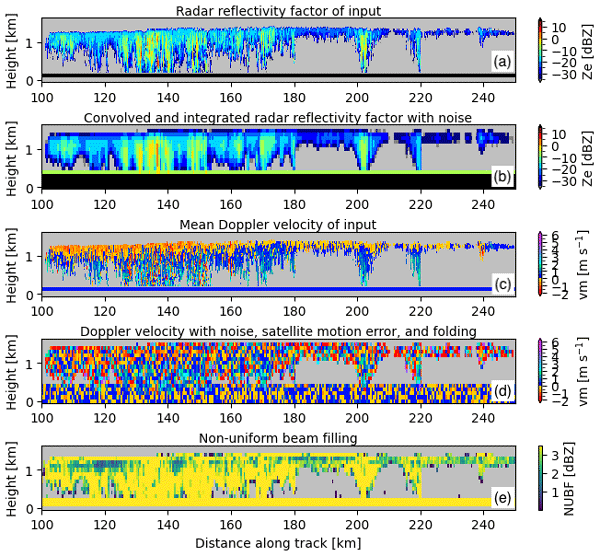
Lukas Pfitzenmaier, Pavlos Kollias, Nils Risse, Imke Schirmacher, Bernat Puigdomenech Treserras, and Katia Lamer
Geosci. Model Dev., 18, 101–115, https://doi.org/10.5194/gmd-18-101-2025, https://doi.org/10.5194/gmd-18-101-2025, 2025
Short summary
Short summary
The Python tool Orbital-Radar transfers suborbital radar data (ground-based, airborne, and forward-simulated numerical weather prediction model) into synthetic spaceborne cloud profiling radar data, mimicking platform-specific instrument characteristics, e.g. EarthCARE or CloudSat. The tool's novelty lies in simulating characteristic errors and instrument noise. Thus, existing data sets are transferred into synthetic observations and can be used for satellite calibration–validation studies.
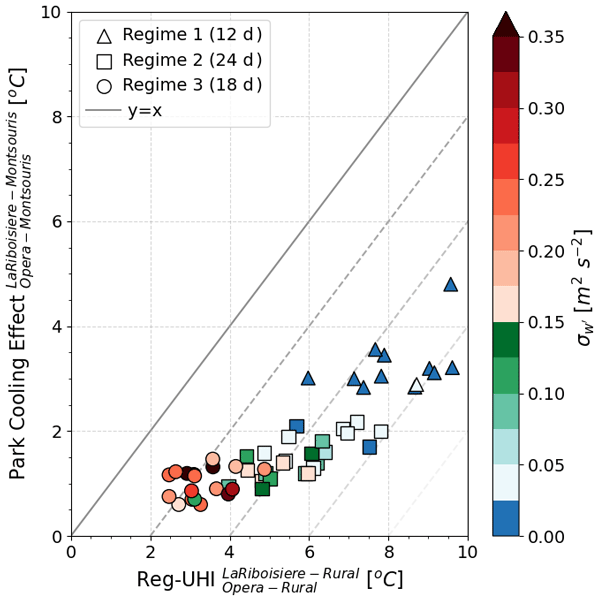
Martial Haeffelin, Jean-François Ribaud, Jonnathan Céspedes, Jean-Charles Dupont, Aude Lemonsu, Valéry Masson, Tim Nagel, and Simone Kotthaus
Atmos. Chem. Phys., 24, 14101–14122, https://doi.org/10.5194/acp-24-14101-2024, https://doi.org/10.5194/acp-24-14101-2024, 2024
Short summary
Short summary
This study highlights how the state of the urban atmospheric boundary layer impacts urban park cooling effect intensity at night. Under summertime heat wave conditions, the urban atmosphere becomes stable at night, which inhibits turbulent motions. Under those specific conditions, urban parks and woods cool much more efficiently than the surrounding built-up neighbourhoods in the evening and through the night, providing cooler air temperatures by 4 to 6° C depending on park size.
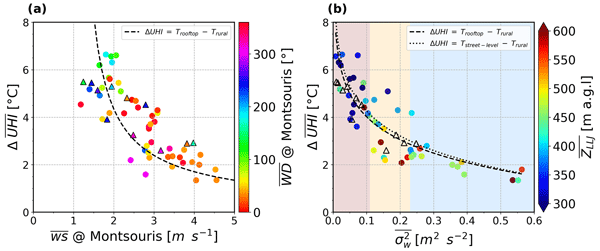
Jonnathan Céspedes, Simone Kotthaus, Jana Preissler, Clément Toupoint, Ludovic Thobois, Marc-Antoine Drouin, Jean-Charles Dupont, Aurélien Faucheux, and Martial Haeffelin
Atmos. Chem. Phys., 24, 11477–11496, https://doi.org/10.5194/acp-24-11477-2024, https://doi.org/10.5194/acp-24-11477-2024, 2024
Short summary
Short summary
The low-level jet (LLJ) is common in Paris during summer. The LLJ core height and speed significantly influence vertical mixing in the urban boundary layer, which affects air temperature variations between the urban canopy layer and surrounding rural areas, determining the urban heat island (UHI) intensity. This study highlights the importance of wind profile observations for understanding urban boundary layer dynamics and near-surface atmospheric conditions relevant to health.
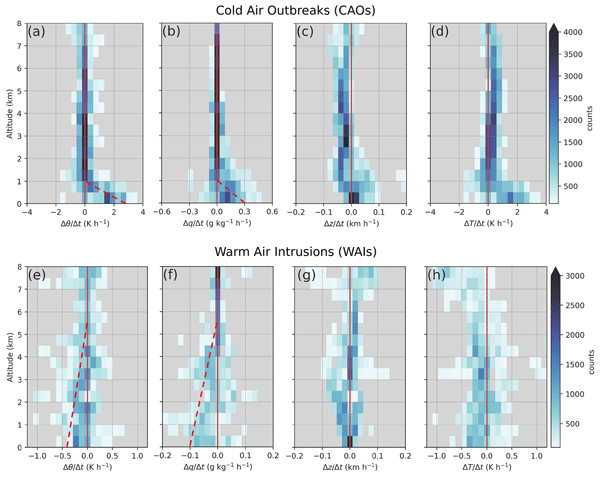
Manfred Wendisch, Susanne Crewell, André Ehrlich, Andreas Herber, Benjamin Kirbus, Christof Lüpkes, Mario Mech, Steven J. Abel, Elisa F. Akansu, Felix Ament, Clémantyne Aubry, Sebastian Becker, Stephan Borrmann, Heiko Bozem, Marlen Brückner, Hans-Christian Clemen, Sandro Dahlke, Georgios Dekoutsidis, Julien Delanoë, Elena De La Torre Castro, Henning Dorff, Regis Dupuy, Oliver Eppers, Florian Ewald, Geet George, Irina V. Gorodetskaya, Sarah Grawe, Silke Groß, Jörg Hartmann, Silvia Henning, Lutz Hirsch, Evelyn Jäkel, Philipp Joppe, Olivier Jourdan, Zsofia Jurányi, Michail Karalis, Mona Kellermann, Marcus Klingebiel, Michael Lonardi, Johannes Lucke, Anna E. Luebke, Maximilian Maahn, Nina Maherndl, Marion Maturilli, Bernhard Mayer, Johanna Mayer, Stephan Mertes, Janosch Michaelis, Michel Michalkov, Guillaume Mioche, Manuel Moser, Hanno Müller, Roel Neggers, Davide Ori, Daria Paul, Fiona M. Paulus, Christian Pilz, Felix Pithan, Mira Pöhlker, Veronika Pörtge, Maximilian Ringel, Nils Risse, Gregory C. Roberts, Sophie Rosenburg, Johannes Röttenbacher, Janna Rückert, Michael Schäfer, Jonas Schaefer, Vera Schemann, Imke Schirmacher, Jörg Schmidt, Sebastian Schmidt, Johannes Schneider, Sabrina Schnitt, Anja Schwarz, Holger Siebert, Harald Sodemann, Tim Sperzel, Gunnar Spreen, Bjorn Stevens, Frank Stratmann, Gunilla Svensson, Christian Tatzelt, Thomas Tuch, Timo Vihma, Christiane Voigt, Lea Volkmer, Andreas Walbröl, Anna Weber, Birgit Wehner, Bruno Wetzel, Martin Wirth, and Tobias Zinner
Atmos. Chem. Phys., 24, 8865–8892, https://doi.org/10.5194/acp-24-8865-2024, https://doi.org/10.5194/acp-24-8865-2024, 2024
Short summary
Short summary
The Arctic is warming faster than the rest of the globe. Warm-air intrusions (WAIs) into the Arctic may play an important role in explaining this phenomenon. Cold-air outbreaks (CAOs) out of the Arctic may link the Arctic climate changes to mid-latitude weather. In our article, we describe how to observe air mass transformations during CAOs and WAIs using three research aircraft instrumented with state-of-the-art remote-sensing and in situ measurement devices.
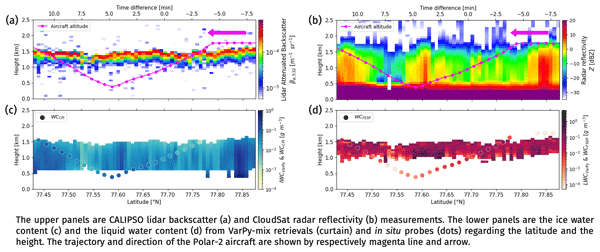
Clémantyne Aubry, Julien Delanoë, Silke Groß, Florian Ewald, Frédéric Tridon, Olivier Jourdan, and Guillaume Mioche
Atmos. Meas. Tech., 17, 3863–3881, https://doi.org/10.5194/amt-17-3863-2024, https://doi.org/10.5194/amt-17-3863-2024, 2024
Short summary
Short summary
Radar–lidar synergy is used to retrieve ice, supercooled water and mixed-phase cloud properties, making the most of the radar sensitivity to ice crystals and the lidar sensitivity to supercooled droplets. A first analysis of the output of the algorithm run on the satellite data is compared with in situ data during an airborne Arctic field campaign, giving a mean percent error of 49 % for liquid water content and 75 % for ice water content.
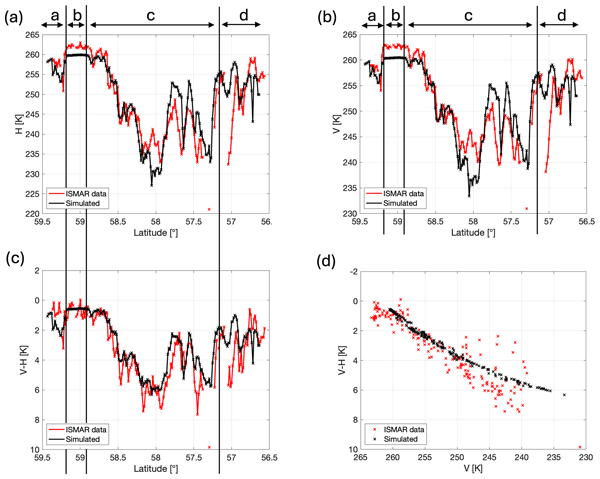
Karina McCusker, Anthony J. Baran, Chris Westbrook, Stuart Fox, Patrick Eriksson, Richard Cotton, Julien Delanoë, and Florian Ewald
Atmos. Meas. Tech., 17, 3533–3552, https://doi.org/10.5194/amt-17-3533-2024, https://doi.org/10.5194/amt-17-3533-2024, 2024
Short summary
Short summary
Polarised radiative transfer simulations are performed using an atmospheric model based on in situ measurements. These are compared to large polarisation measurements to explore whether such measurements can provide information on cloud ice, e.g. particle shape and orientation. We find that using oriented particle models with shapes based on imagery generally allows for accurate simulations. However, results are sensitive to shape assumptions such as the choice of single crystals or aggregates.
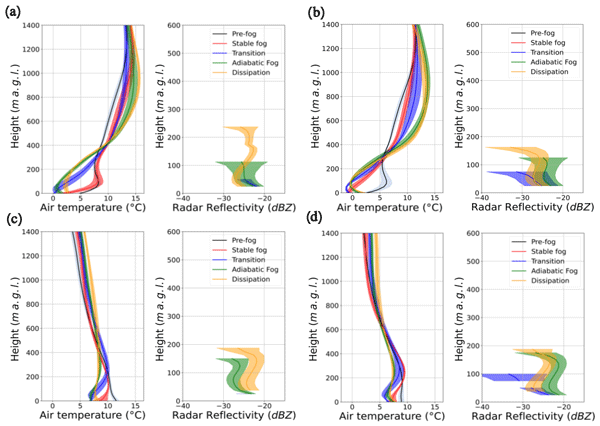
Cheikh Dione, Martial Haeffelin, Frédéric Burnet, Christine Lac, Guylaine Canut, Julien Delanoë, Jean-Charles Dupont, Susana Jorquera, Pauline Martinet, Jean-François Ribaud, and Felipe Toledo
Atmos. Chem. Phys., 23, 15711–15731, https://doi.org/10.5194/acp-23-15711-2023, https://doi.org/10.5194/acp-23-15711-2023, 2023
Short summary
Short summary
This paper documents the role of thermodynamics and turbulence in the fog life cycle over southwestern France. It is based on a unique dataset collected during the SOFOG3D field campaign in autumn and winter 2019–2020. The paper gives a threshold for turbulence driving the different phases of the fog life cycle and the role of advection in the night-time dissipation of fog. The results can be operationalised to nowcast fog and improve short-range forecasts in numerical weather prediction models.
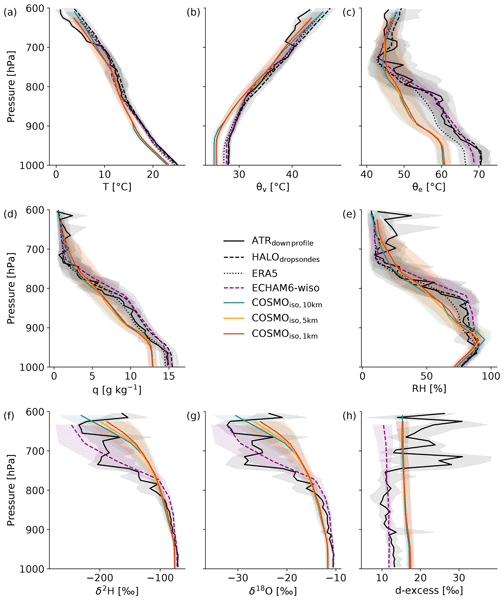
Leonie Villiger, Marina Dütsch, Sandrine Bony, Marie Lothon, Stephan Pfahl, Heini Wernli, Pierre-Etienne Brilouet, Patrick Chazette, Pierre Coutris, Julien Delanoë, Cyrille Flamant, Alfons Schwarzenboeck, Martin Werner, and Franziska Aemisegger
Atmos. Chem. Phys., 23, 14643–14672, https://doi.org/10.5194/acp-23-14643-2023, https://doi.org/10.5194/acp-23-14643-2023, 2023
Short summary
Short summary
This study evaluates three numerical simulations performed with an isotope-enabled weather forecast model and investigates the coupling between shallow trade-wind cumulus clouds and atmospheric circulations on different scales. We show that the simulations reproduce key characteristics of shallow trade-wind clouds as observed during the field experiment EUREC4A and that the spatial distribution of stable-water-vapour isotopes is shaped by the overturning circulation associated with these clouds.
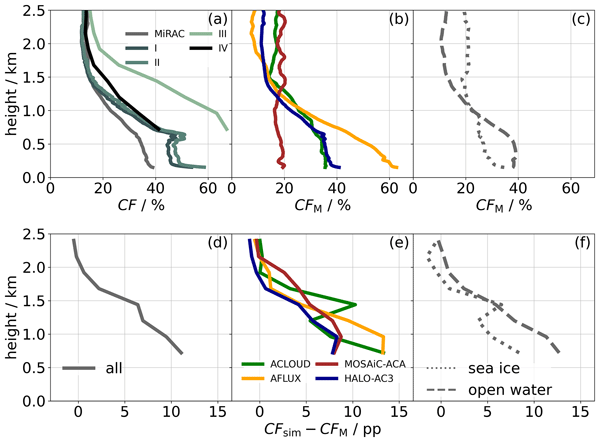
Imke Schirmacher, Pavlos Kollias, Katia Lamer, Mario Mech, Lukas Pfitzenmaier, Manfred Wendisch, and Susanne Crewell
Atmos. Meas. Tech., 16, 4081–4100, https://doi.org/10.5194/amt-16-4081-2023, https://doi.org/10.5194/amt-16-4081-2023, 2023
Short summary
Short summary
CloudSat’s relatively coarse spatial resolution, low sensitivity, and blind zone limit its assessment of Arctic low-level clouds, which affect the surface energy balance. We compare cloud fractions from CloudSat and finely resolved airborne radar observations to determine CloudSat’s limitations. Cloudsat overestimates cloud fractions above its blind zone, especially during cold-air outbreaks over open water, and misses a cloud fraction of 32 % and half of the precipitation inside its blind zone.
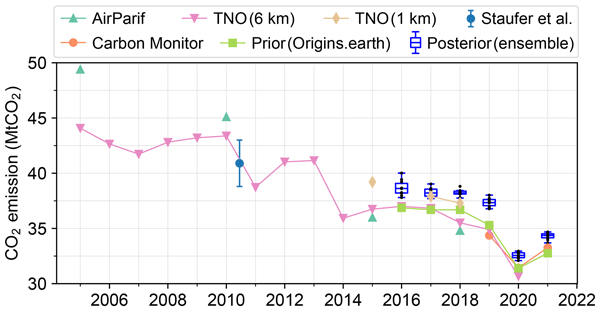
Jinghui Lian, Thomas Lauvaux, Hervé Utard, François-Marie Bréon, Grégoire Broquet, Michel Ramonet, Olivier Laurent, Ivonne Albarus, Mali Chariot, Simone Kotthaus, Martial Haeffelin, Olivier Sanchez, Olivier Perrussel, Hugo Anne Denier van der Gon, Stijn Nicolaas Camiel Dellaert, and Philippe Ciais
Atmos. Chem. Phys., 23, 8823–8835, https://doi.org/10.5194/acp-23-8823-2023, https://doi.org/10.5194/acp-23-8823-2023, 2023
Short summary
Short summary
This study quantifies urban CO2 emissions via an atmospheric inversion for the Paris metropolitan area over a 6-year period from 2016 to 2021. Results show a long-term decreasing trend of about 2 % ± 0.6 % per year in the annual CO2 emissions over Paris. We conclude that our current capacity can deliver near-real-time CO2 emission estimates at the city scale in under a month, and the results agree within 10 % with independent estimates from multiple city-scale inventories.
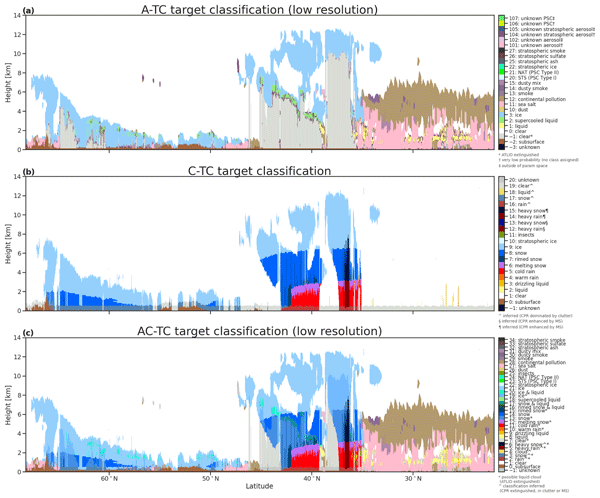
Abdanour Irbah, Julien Delanoë, Gerd-Jan van Zadelhoff, David P. Donovan, Pavlos Kollias, Bernat Puigdomènech Treserras, Shannon Mason, Robin J. Hogan, and Aleksandra Tatarevic
Atmos. Meas. Tech., 16, 2795–2820, https://doi.org/10.5194/amt-16-2795-2023, https://doi.org/10.5194/amt-16-2795-2023, 2023
Short summary
Short summary
The Cloud Profiling Radar (CPR) and ATmospheric LIDar (ATLID) aboard the EarthCARE satellite are used to probe the Earth's atmosphere by measuring cloud and aerosol profiles. ATLID is sensitive to aerosols and small cloud particles and CPR to large ice particles, snowflakes and raindrops. It is the synergy of the measurements of these two instruments that allows a better classification of the atmospheric targets and the description of the associated products, which are the subject of this paper.
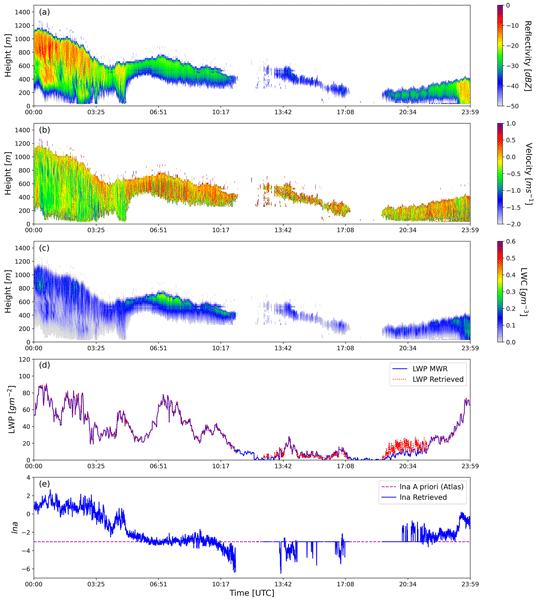
Pragya Vishwakarma, Julien Delanoë, Susana Jorquera, Pauline Martinet, Frederic Burnet, Alistair Bell, and Jean-Charles Dupont
Atmos. Meas. Tech., 16, 1211–1237, https://doi.org/10.5194/amt-16-1211-2023, https://doi.org/10.5194/amt-16-1211-2023, 2023
Short summary
Short summary
Cloud observations are necessary to characterize the cloud properties at local and global scales. The observations must be translated to cloud geophysical parameters. This paper presents the estimation of liquid water content (LWC) using radar and microwave radiometer (MWR) measurements. Liquid water path from MWR scales LWC and retrieves the scaling factor (ln a). The retrievals are compared with in situ observations. A climatology of ln a is built to estimate LWC using only radar information.
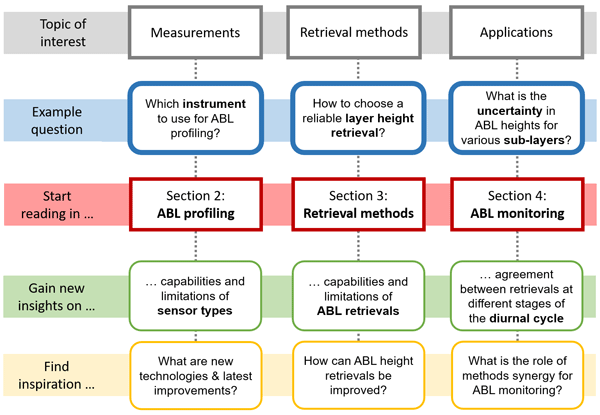
Simone Kotthaus, Juan Antonio Bravo-Aranda, Martine Collaud Coen, Juan Luis Guerrero-Rascado, Maria João Costa, Domenico Cimini, Ewan J. O'Connor, Maxime Hervo, Lucas Alados-Arboledas, María Jiménez-Portaz, Lucia Mona, Dominique Ruffieux, Anthony Illingworth, and Martial Haeffelin
Atmos. Meas. Tech., 16, 433–479, https://doi.org/10.5194/amt-16-433-2023, https://doi.org/10.5194/amt-16-433-2023, 2023
Short summary
Short summary
Profile observations of the atmospheric boundary layer now allow for layer heights and characteristics to be derived at high temporal and vertical resolution. With novel high-density ground-based remote-sensing measurement networks emerging, horizontal information content is also increasing. This review summarises the capabilities and limitations of various sensors and retrieval algorithms which need to be considered during the harmonisation of data products for high-impact applications.
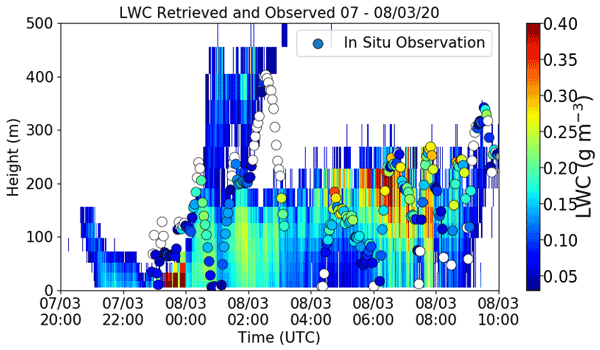
Alistair Bell, Pauline Martinet, Olivier Caumont, Frédéric Burnet, Julien Delanoë, Susana Jorquera, Yann Seity, and Vinciane Unger
Atmos. Meas. Tech., 15, 5415–5438, https://doi.org/10.5194/amt-15-5415-2022, https://doi.org/10.5194/amt-15-5415-2022, 2022
Short summary
Short summary
Cloud radars and microwave radiometers offer the potential to improve fog forecasts when assimilated into a high-resolution model. As this process can be complex, a retrieval of model variables is sometimes made as a first step. In this work, results from a 1D-Var algorithm for the retrieval of temperature, humidity and cloud liquid water content are presented. The algorithm is applied first to a synthetic dataset and then to a dataset of real measurements from a recent field campaign.
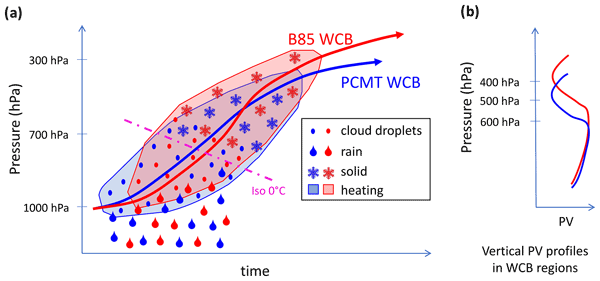
Meryl Wimmer, Gwendal Rivière, Philippe Arbogast, Jean-Marcel Piriou, Julien Delanoë, Carole Labadie, Quitterie Cazenave, and Jacques Pelon
Weather Clim. Dynam., 3, 863–882, https://doi.org/10.5194/wcd-3-863-2022, https://doi.org/10.5194/wcd-3-863-2022, 2022
Short summary
Short summary
The effect of deep convection representation on the jet stream above the cold front of an extratropical cyclone is investigated in the global numerical weather prediction model ARPEGE. Two simulations using different deep convection schemes are compared with (re)analysis datasets and NAWDEX airborne observations. A deeper jet stream is observed with the less active scheme. The diabatic origin of this difference is interpreted by backward Lagrangian trajectories and potential vorticity budgets.
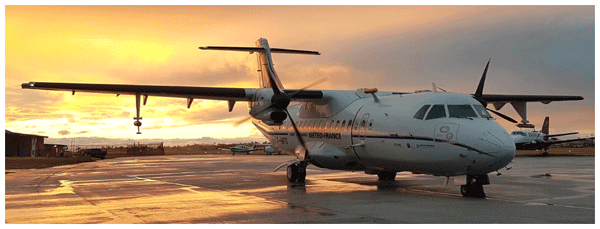
Sandrine Bony, Marie Lothon, Julien Delanoë, Pierre Coutris, Jean-Claude Etienne, Franziska Aemisegger, Anna Lea Albright, Thierry André, Hubert Bellec, Alexandre Baron, Jean-François Bourdinot, Pierre-Etienne Brilouet, Aurélien Bourdon, Jean-Christophe Canonici, Christophe Caudoux, Patrick Chazette, Michel Cluzeau, Céline Cornet, Jean-Philippe Desbios, Dominique Duchanoy, Cyrille Flamant, Benjamin Fildier, Christophe Gourbeyre, Laurent Guiraud, Tetyana Jiang, Claude Lainard, Christophe Le Gac, Christian Lendroit, Julien Lernould, Thierry Perrin, Frédéric Pouvesle, Pascal Richard, Nicolas Rochetin, Kevin Salaün, Alfons Schwarzenboeck, Guillaume Seurat, Bjorn Stevens, Julien Totems, Ludovic Touzé-Peiffer, Gilles Vergez, Jessica Vial, Leonie Villiger, and Raphaela Vogel
Earth Syst. Sci. Data, 14, 2021–2064, https://doi.org/10.5194/essd-14-2021-2022, https://doi.org/10.5194/essd-14-2021-2022, 2022
Short summary
Short summary
The French ATR42 research aircraft participated in the EUREC4A international field campaign that took place in 2020 over the tropical Atlantic, east of Barbados. We present the extensive instrumentation of the aircraft, the research flights and the different measurements. We show that the ATR measurements of humidity, wind, aerosols and cloudiness in the lower atmosphere are robust and consistent with each other. They will make it possible to advance understanding of cloud–climate interactions.
Jean-François Ribaud, Martial Haeffelin, Jean-Charles Dupont, Marc-Antoine Drouin, Felipe Toledo, and Simone Kotthaus
Atmos. Meas. Tech., 14, 7893–7907, https://doi.org/10.5194/amt-14-7893-2021, https://doi.org/10.5194/amt-14-7893-2021, 2021
Short summary
Short summary
PARAFOG is a near-real-time decision tool that aims to retrieve pre-fog alert levels minutes to hours prior to fog onset. The second version of PARAFOG allows us to discriminate between radiation and stratus lowering fog situations. It is based upon the combination of visibility observations and automatic lidar and ceilometer measurements. The overall performance of the second version of PARAFOG over more than 300 fog cases at five different locations presents a good perfomance.
Jean-Eudes Petit, Jean-Charles Dupont, Olivier Favez, Valérie Gros, Yunjiang Zhang, Jean Sciare, Leila Simon, François Truong, Nicolas Bonnaire, Tanguy Amodeo, Robert Vautard, and Martial Haeffelin
Atmos. Chem. Phys., 21, 17167–17183, https://doi.org/10.5194/acp-21-17167-2021, https://doi.org/10.5194/acp-21-17167-2021, 2021
Short summary
Short summary
The COVID-19 outbreak led to lockdowns at national scales in spring 2020. Large cuts in emissions occurred, but the quantitative assessment of their role from observations is hindered by weather and interannual variability. That is why we developed an innovative methodology in order to best characterize the impact of lockdown on atmospheric chemistry. We find that a local decrease in traffic-related pollutants triggered a decrease of secondary aerosols and an increase in ozone.
Gwendal Rivière, Meryl Wimmer, Philippe Arbogast, Jean-Marcel Piriou, Julien Delanoë, Carole Labadie, Quitterie Cazenave, and Jacques Pelon
Weather Clim. Dynam., 2, 1011–1031, https://doi.org/10.5194/wcd-2-1011-2021, https://doi.org/10.5194/wcd-2-1011-2021, 2021
Short summary
Short summary
Inacurracies in representing processes occurring at spatial scales smaller than the grid scales of the weather forecast models are important sources of forecast errors. This is the case of deep convection representation in models with 10 km grid spacing. We performed simulations of a real extratropical cyclone using a model with different representations of deep convection. These forecasts lead to different behaviors in the ascending air masses of the cyclone and the jet stream aloft.
Cited articles
ACTRIS: ACTRIS Centre for Cloud Remote Sensing (CCRES), https://www.actris.eu/topical-centre/ccres (last access: 5 February 2026), 2025. a
AWACA Project: AWACA – Atmospheric Water Cycle over Antarctica: Past, Present & Future, https://awaca.ipsl.fr/ (last access: 4 February 2026), 2026. a
CloudSat Project, CIRA, Colorado State University: CloudSat Project Level 2 GEOPROF Product Process Description and Interface Control Document, Algorithm Version 5.3, Technical Report 2B-GEOPROF_PDICD.P_R04.20070628, CloudSat Data Processing Center, Fort Collins, CO, USA, https://www.cloudsat.cira.colostate.edu/cloudsat-static/info/dl/2b-geoprof/2B-GEOPROF_PDICD.P_R04.20070628.pdf (last access: 12 January 2025), 2007. a
Delanoë, J. and Hogan, R. J.: Combined CloudSat-CALIPSO-MODIS retrievals of the properties of ice clouds, J. Geophys. Res.-Atmos., 115, https://doi.org/10.1029/2009JD012346, 2010. a
Delanoë, J., Protat, A., Vinson, J.-P., Brett, W., Caudoux, C., Bertrand, F., du Chatelet, J. P., Hallali, R., Barthes, L., Haeffelin, M., and Dupont, J.-C.: BASTA: A 95-GHz FMCW Doppler Radar for Cloud and Fog Studies, J. Atmos. Ocean. Tech., 33, 1023–1038, https://doi.org/10.1175/JTECH-D-15-0104.1, 2016. a
Delanoë, J., Dupont, J.-C., Engelmann, R., Görsdorf, U., Knist, C., Kotthaus, S., Marke, T., Pfitzenmaier, L., Schween, J. H., Seifert, P., and O'Connor, E. J.: Custom collection of categorize, and classification data from Jülich, Leipzig, Lindenberg, and Palaiseau between 20 Jul 2024 and 18 Nov 2025, ACTRIS Cloud remote sensing data centre unit (CLU) [data set], https://doi.org/10.60656/63e9a2abc6b54725, 2026. a
EarthCARE-DISC: EarthCARE Product Disclaimer – AC-TC, Technical Report EarthCARE Disclaimer AC-TC 11.60 baselineBC, ESA – JAXA – ECMWF, Technical Report, https://earthcarehandbook.earth.esa.int/documents/d/earthcare-data-handbook/earthcare-ac-tc-level-2b-processor-disclaimer (last access: 22 July 2026), 2025. a
Donovan, D. P., Kollias, P., Velázquez Blázquez, A., and van Zadelhoff, G.-J.: The generation of EarthCARE L1 test data sets using atmospheric model data sets, Atmos. Meas. Tech., 16, 5327–5356, https://doi.org/10.5194/amt-16-5327-2023, 2023. a
Feuillard, N.: Data used for validation of EarthCARE CPR reflectivity using the ACTRIS cloud radar network, IPSL Data Catalog [data set], https://doi.org/10.14768/c46ac360-c520-4ae4-9536-9bbb7439cb67, 2026. a
Görsdorf, U.: Egusphere community comment on the pre-print: Validation of EarthCARE CPR reflectivity using ACTRIS cloud radar network, https://doi.org/10.5194/egusphere-2026-925-CC1, 2026. a
Hogan, R. J. and O'Connor, E. J.: Facilitating cloud radar and lidar algorithms: the Cloudnet Instrument Synergy/Target Categorization product, Technical Report, Reading University, dpt of meteorology, https://www.met.reading.ac.uk/~swrhgnrj/publications/categorization.pdf (last access: 21 September 2026), 2004. a
Hogan, R. J., Bouniol, D., Ladd, D. N., O'Connor, E. J., and Illingworth, A. J.: Absolute Calibration of 94/95-GHz Radars Using Rain, J. Atmos. Ocean. Tech., 20, 572–580, https://doi.org/10.1175/1520-0426(2003)20<572:ACOGRU>2.0.CO;2, 2003. a
Horie, H., Ohno, Y., and Takahashi, N.: The external calibration study for EarthCARE/CPR, in: 2010 IEEE International Geoscience and Remote Sensing Symposium, 1895–1898, https://doi.org/10.1109/IGARSS.2010.5650733, 2010. a, b
Horie, H., Hagihara, Y., Kanemaru, K., and Hanado, H.: CPR External Calibration and Level 1/Level 2 Echo Product Validation, Presentation at the EarthCARE Science and Validation Workshop 2025, jAXA EarthCARE Workshop, 1–5 December 2025, University of Tokyo, Tokyo, Japan, https://www.eorc.jaxa.jp/EARTHCARE/event/ws2025/program-data/H212_HORIE_CPR_External_Calibration_and_Level1_Level2_Echo_Product_Validation%202025-12-02%2003.26.38.pdf (last access: 12 January 2025), 2025. a, b, c
Illingworth, A. J., Hogan, R. J., O'Connor, E. J., Bouniol, D., Delanoë, J., Pelon, J., Protat, A., Brooks, M. E., Gaussiat, N., Wilson, D. R., Donovan, D. P., Baltink, H. K., van Zadelhoff, G.-J., Eastment, J. D., Goddard, J. W. F., Wrench, C. L., Haeffelin, M., Krasnov, O. A., Russchenberg, H. W. J., Piriou, J.-M., Vinit, F., Seifert, A., Tompkins, A. M., and Willén, U.: Cloudnet, B. Am. Meteor. Soc., 88, 883–898, https://doi.org/10.1175/BAMS-88-6-883, 2007. a, b
Irbah, A., Delanoë, J., van Zadelhoff, G.-J., Donovan, D. P., Kollias, P., Puigdomènech Treserras, B., Mason, S., Hogan, R. J., and Tatarevic, A.: The classification of atmospheric hydrometeors and aerosols from the EarthCARE radar and lidar: the A-TC, C-TC and AC-TC products, Atmos. Meas. Tech., 16, 2795–2820, https://doi.org/10.5194/amt-16-2795-2023, 2023. a
Jorquera, S., Bittner, F. T., Delanoë, J., Berne, A., Billault-Roux, A.-C., Schwarzenboeck, A., Dezitter, F., Viltard, N., and Martini, A.: Calibration Transfer Methodology for Cloud Radars Based on Ice Cloud Observations, J. Atmos. Ocean. Tech., 40, 773–788, https://doi.org/10.1175/JTECH-D-22-0087.1, 2023. a, b
Kollias, P., Puidgomènech Treserras, B., Battaglia, A., Borque, P. C., and Tatarevic, A.: Processing reflectivity and Doppler velocity from EarthCARE's cloud-profiling radar: the C-FMR, C-CD and C-APC products, Atmos. Meas. Tech., 16, 1901–1914, https://doi.org/10.5194/amt-16-1901-2023, 2023. a
Laj, P., Myhre, C. L., Riffault, V., Amiridis, V., Fuchs, H., Eleftheriadis, K., Petäjä, T., Salameh, T., Kivekäs, N., Juurola, E., Saponaro, G., Philippin, S., Cornacchia, C., Arboledas, L. A., Baars, H., Claude, A., Mazière, M. D., Dils, B., Dufresne, M., Evangeliou, N., Favez, O., Fiebig, M., Haeffelin, M., Herrmann, H., Höhler, K., Illmann, N., Kreuter, A., Ludewig, E., Marinou, E., Möhler, O., Mona, L., Murberg, L. E., Nicolae, D., Novelli, A., O’Connor, E., Ohneiser, K., Altieri, R. M. P., Picquet-Varrault, B., van Pinxteren, D., Pospichal, B., Putaud, J.-P., Reimann, S., Siomos, N., Stachlewska, I., Tillmann, R., Voudouri, K. A., Wandinger, U., Wiedensohler, A., Apituley, A., Comerón, A., Gysel-Beer, M., Mihalopoulos, N., Nikolova, N., Pietruczuk, A., Sauvage, S., Sciare, J., Skov, H., Svendby, T., Swietlicki, E., Tonev, D., Vaughan, G., Zdimal, V., Baltensperger, U., Doussin, J.-F., Kulmala, M., Pappalardo, G., Sundet, S. S., and Vana, M.: Aerosol, Clouds and Trace Gases Research Infrastructure (ACTRIS): The European Research Infrastructure Supporting Atmospheric Science, B. Am. Meteor. Soc., 105, E1098–E1136, https://doi.org/10.1175/BAMS-D-23-0064.1, 2024. a, b
Masuko, H., Okamoto, K., Shimada, M., and Niwa, S.: Measurement of microwave backscattering signatures of the ocean surface using X band and Ka band airborne scatterometers, J. Geophys. Res.-Oceans, 91, 13065–13083, https://doi.org/10.1029/JC091iC11p13065, 1986. a
Matrosov, S. Y.: A Method to Estimate Vertically Integrated Amounts of Cloud Ice and Liquid and Mean Rain Rate in Stratiform Precipitation from Radar and Auxiliary Data, J. Appl. Meteorol. Clim., 48, 1398–1410, https://doi.org/10.1175/2009JAMC2106.1, 2009. a
Pfitzenmaier, L., Kollias, P., Risse, N., Schirmacher, I., Puigdomenech Treserras, B., and Lamer, K.: Orbital-Radar v1.0.0: a tool to transform suborbital radar observations to synthetic EarthCARE cloud radar data, Geosci. Model Dev., 18, 101–115, https://doi.org/10.5194/gmd-18-101-2025, 2025. a
Protat, A., Bouniol, D., Delanoë, J., O'Connor, E., May, P. T., Plana-Fattori, A., Hasson, A., Görsdorf, U., and Heymsfield, A. J.: Assessment of Cloudsat Reflectivity Measurements and Ice Cloud Properties Using Ground-Based and Airborne Cloud Radar Observations, J. Atmos. Ocean. Tech., 26, 1717–1741, https://doi.org/10.1175/2009JTECHA1246.1, 2009. a, b, c, d, e, f
Protat, A., Bouniol, D., O'Connor, E. J., Baltink, H. K., Verlinde, J., and Widener, K.: CloudSat as a Global Radar Calibrator, J. Atmos. Ocean. Tech., 28, 445–452, https://doi.org/10.1175/2010JTECHA1443.1, 2011. a, b
Tanelli, S., Durden, S. L., Im, E., Pak, K. S., Reinke, D. G., Partain, P., Haynes, J. M., and Marchand, R. T.: CloudSat's Cloud Profiling Radar After Two Years in Orbit: Performance, Calibration, and Processing, IEEE T. Geosci. Remote, 46, 3560–3573, https://doi.org/10.1109/TGRS.2008.2002030, 2008. a
Toledo, F., Delanoë, J., Haeffelin, M., Dupont, J.-C., Jorquera, S., and Le Gac, C.: Absolute calibration method for frequency-modulated continuous wave (FMCW) cloud radars based on corner reflectors, Atmos. Meas. Tech., 13, 6853–6875, https://doi.org/10.5194/amt-13-6853-2020, 2020. a
Tukiainen, S., O'Connor, E., and Korpinen, A.: CloudnetPy: A Python package for processing cloud remote sensing data, Journal of Open Source Software, 5, 2123, https://doi.org/10.21105/joss.02123, 2020. a, b
Wehr, T., Kubota, T., Tzeremes, G., Wallace, K., Nakatsuka, H., Ohno, Y., Koopman, R., Rusli, S., Kikuchi, M., Eisinger, M., Tanaka, T., Taga, M., Deghaye, P., Tomita, E., and Bernaerts, D.: The EarthCARE mission – science and system overview, Atmos. Meas. Tech., 16, 3581–3608, https://doi.org/10.5194/amt-16-3581-2023, 2023. a, b, c
Short summary
The Earth Cloud, Aerosol, and Radiation Explorer (EarthCARE) satellite was recently launched and its data needs to be validated. This work focus on the comparison of the data observed from the radar of EarthCARE and from the ground radars of the European Aerosol, Clouds and Trace Gases Research Infrastructure network. We find a very small difference between the data observed by the satellite and the data from the ground, confirming the high quality of the satellite’s radar calibration.
The Earth Cloud, Aerosol, and Radiation Explorer (EarthCARE) satellite was recently launched and...


