
Articles | Volume 19, issue 19
https://doi.org/10.5194/amt-19-6267-2026
© Author(s) 2026. This work is distributed under
the Creative Commons Attribution 4.0 License.
the Creative Commons Attribution 4.0 License.
https://doi.org/10.5194/amt-19-6267-2026
© Author(s) 2026. This work is distributed under
the Creative Commons Attribution 4.0 License.
the Creative Commons Attribution 4.0 License.
Research article
| 
02 Oct 2026
Research article |
| 02 Oct 2026
| 02 Oct 2026
The LOLland offshore Lidar EXperiment (LOLLEX): a novel observational approach for the study of wind farm flow and entrainment
Shokoufeh Malekmohammadi
CORRESPONDING AUTHOR

Geophysical Institute, University of Bergen, Allegaten 70, 5007 Bergen, Norway
Bergen Offshore Wind Centre, University of Bergen, Allegaten 55, 5007 Bergen, Norway
Etienne Cheynet
Geophysical Institute, University of Bergen, Allegaten 70, 5007 Bergen, Norway
Bergen Offshore Wind Centre, University of Bergen, Allegaten 55, 5007 Bergen, Norway
Joachim Reuder
Geophysical Institute, University of Bergen, Allegaten 70, 5007 Bergen, Norway
Bergen Offshore Wind Centre, University of Bergen, Allegaten 55, 5007 Bergen, Norway
Bjerknes Centre for Climate Research, Jahnebakken 5, 5007 Bergen, Norway
Claus Linnemann
RWE Offshore Wind GmbH, Essen, Germany
Mikael Sjöholm
Department of Wind and Energy Systems, Technical University of Denmark, Frederiksborgvej 399, 4000 Roskilde, Denmark
Jakob Mann
Department of Wind and Energy Systems, Technical University of Denmark, Frederiksborgvej 399, 4000 Roskilde, Denmark
Gregor Giebel
Department of Wind and Energy Systems, Technical University of Denmark, Frederiksborgvej 399, 4000 Roskilde, Denmark
Related authors
No articles found.
Ansh Patel, Jakob Mann, Kasper Zinck, Mikael Sjöholm, Ásta Hannesdóttir, and Karunya Raj
Wind Energ. Sci. Discuss., https://doi.org/10.5194/wes-2026-175, https://doi.org/10.5194/wes-2026-175, 2026
Preprint under review for WES
Short summary
Short summary
Turbines are designed for extreme conditions, such as a "50-year" storm expected once in 50 years. One such standard event, the extreme coherent gust with direction change (ECD), drives the design of turbine towers. Using data from over 300 turbines and a statistical model, we show that the ECD is very unlikely to occur even once in 50 years. It is therefore too conservative, and the standards should be refined to avoid designing for conditions turbines may never face.
Abdul Haseeb Syed, Jakob Mann, and Mohammadreza Manami
Atmos. Meas. Tech., 19, 5889–5903, https://doi.org/10.5194/amt-19-5889-2026, https://doi.org/10.5194/amt-19-5889-2026, 2026
Short summary
Short summary
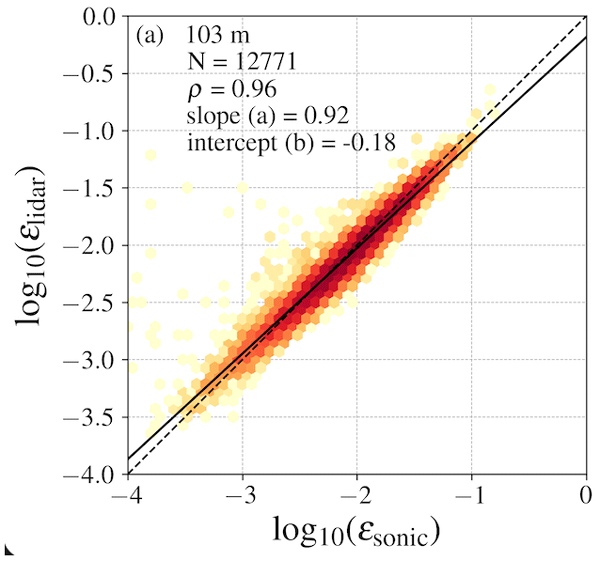
We present a new structure function model to estimate the turbulence energy dissipation rate using lidar velocities. The model corrects for turbulence filtering due to the lidar probe volume by applying a Gaussian weighting function. By utilizing the high 3 m range-gate resolution of the BEAM 6x pulsed lidar, we achieve excellent agreement between turbulence energy dissipation rate values derived from lidar and sonic anemometer at three heights, with correlation coefficients exceeding 0.9.
Abdul Haseeb Syed, Ásta Hannesdóttir, and Jakob Mann
Wind Energ. Sci., 11, 3321–3336, https://doi.org/10.5194/wes-11-3321-2026, https://doi.org/10.5194/wes-11-3321-2026, 2026
Short summary
Short summary
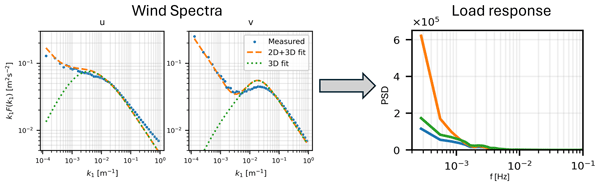
Large offshore wind turbines are exposed to slow changes in wind speed, which are often overlooked in design studies. We investigate how these slow wind variations impact the forces and motions of both fixed and floating wind turbines through computer simulations. Slow wind changes can lead to increased long-term structural wear and significantly impact platform motion in floating turbines. Accounting for these variations is crucial for the design and lifetime assessment of future turbines.
Jakob Mann, Ansh Patel, Mikael Sjöholm, Gunhild Rolighed Thorsen, Elliot Irving Simon, Lin-Ya Hung, and Julia Gottschall
Wind Energ. Sci., 11, 3153–3170, https://doi.org/10.5194/wes-11-3153-2026, https://doi.org/10.5194/wes-11-3153-2026, 2026
Short summary
Short summary
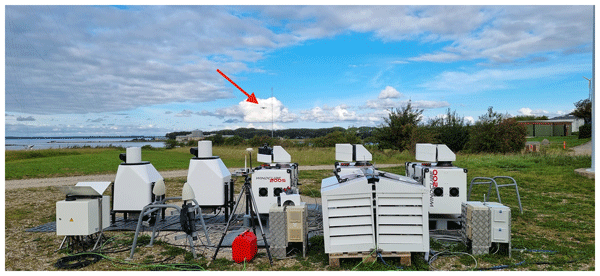
Turbulence over the ocean at heights relevant to modern offshore wind turbines, i.e., up to 300 m or more, is not well studied. It is important to know the properties of this turbulence because it is responsible for most of the dynamic loads on these structures, and consequently it is relevant to how the latter should be designed. This data description paper explains the efforts made to provide measurements of this offshore turbulence using five Doppler lidars.
Rebeca Marini, Konstantinos Vratsinis, Pieter-Jan Daems, Timothy Verstraeten, Etienne Cheynet, and Jan Helsen
Wind Energ. Sci. Discuss., https://doi.org/10.5194/wes-2026-117, https://doi.org/10.5194/wes-2026-117, 2026
Preprint under review for WES
Short summary
Short summary
We studied which environmental conditions affect the power produced by a single wind turbine without interference from nearby turbines. Using measured turbine and weather data together with machine learning, we found that the difference between air and sea temperature has a meaningful influence but is not included in commonly used power corrections. This could improve power predictions and wind resource assessments, and the method can be extended to larger groups of turbines.
Liqin Jin and Jakob Mann
Wind Energ. Sci. Discuss., https://doi.org/10.5194/wes-2026-104, https://doi.org/10.5194/wes-2026-104, 2026
Revised manuscript under review for WES
Short summary
Short summary
Wind turbine blades bend and twist during operation, making reliable monitoring important for performance and safety. This study presents a novel non-contact measurement system using three low-cost automotive lidar sensors to track blade motion on a full-scale wind turbine. The results agree well with existing monitoring systems and reveal how blade movement changes with operating conditions. The findings demonstrate a practical and affordable method for monitoring large wind turbines.
Hai Bui, Mostafa Bakhoday-Paskyabi, and Joachim Reuder
Wind Energ. Sci., 11, 2307–2321, https://doi.org/10.5194/wes-11-2307-2026, https://doi.org/10.5194/wes-11-2307-2026, 2026
Short summary
Short summary
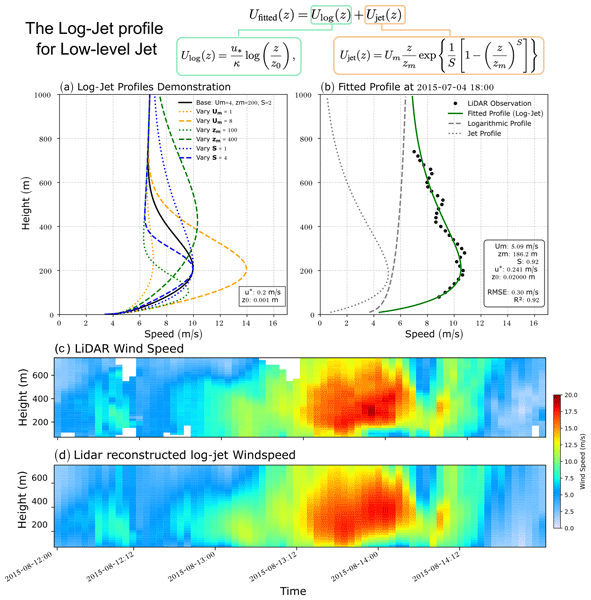
Strong low-altitude winds, known as low-level jets (LLJs), significantly impact offshore wind turbines. We analyzed LLJs at the FINO1 site using lidar observations and reanalysis data. Our results show that models tend to underestimate LLJ intensity. To address this, we introduced a new method to characterize wind profiles and applied a correction to 50 years of reanalysis data, yielding a more accurate long-term representation of these wind features.
Hai Bui, Mostafa Bakhoday-Paskyabi, and Joachim Reuder
Wind Energ. Sci. Discuss., https://doi.org/10.5194/wes-2026-66, https://doi.org/10.5194/wes-2026-66, 2026
Revised manuscript under review for WES
Short summary
Short summary
Computer simulations for wind energy are often slow because they take a long time to reach a stable state, wasting time and resources. We developed a "smart control" technique to speed this up. By dynamically adjusting the forces driving the model, we reduced the setup time from twenty-four hours to just two hours. This method allows researchers to reach desired wind conditions quickly and accurately, making wind energy research and weather modeling much more efficient and cost-effective.
Ansh Patel, Jakob Mann, Mikael Sjöholm, Kasper Zinck, and Karunya Raj
Wind Energ. Sci., 11, 1147–1162, https://doi.org/10.5194/wes-11-1147-2026, https://doi.org/10.5194/wes-11-1147-2026, 2026
Short summary
Short summary
This study shows that
buoyancyof the atmosphere has a large impact on the lifetime of a wind turbine. We use measurements from one of the largest wind turbines in the world to show that this feature of the atmosphere must be considered while in the design process. Our work is also motivated by the need to update the current models of the atmosphere. Indeed, as turbines increase in size, there is a concern that the deficiencies of our models might become exposed.

Mohammadreza Manami, Guillaume Léa, Jakob Mann, Mikael Sjöholm, and Guillaume Gorju
Wind Energ. Sci., 11, 585–596, https://doi.org/10.5194/wes-11-585-2026, https://doi.org/10.5194/wes-11-585-2026, 2026
Short summary
Short summary
A simple adaptive variant of the Doppler Beam Swinging (DBS) method is presented to improve the availability of wind velocity measurements in profiling lidars, particularly at higher altitudes. Following validation at the Østerild test site in Denmark, using three profiling lidars compared with cup anemometers and wind vanes, excellent agreement was observed. Availability assessments indicated a maximum increase of 16.9 percentage points over the standard approach.
Carlo L. Bottasso, Sandrine Aubrun, Nicolaos A. Cutululis, Julia Gottschall, Athanasios Kolios, Jakob Mann, and Paul Veers
Wind Energ. Sci., 11, 347–348, https://doi.org/10.5194/wes-11-347-2026, https://doi.org/10.5194/wes-11-347-2026, 2026
Short summary
Short summary
This editorial celebrates the 10th anniversary of Wind Energy Science, reflecting on a decade of rapid scientific progress and the journal’s role in advancing fundamental, interdisciplinary research. It highlights key developments in wind energy, the importance of open science and academia–industry collaboration, and emerging challenges such as data sharing and artificial intelligence. Above all, it honors the research community that has shaped the journal and looks ahead to the next decade.
Stefan Ivanell, Bjarke T. Olsen, Antoine Mathieu, Cristina Mulet-Benzo, Abdul Haseeb Syed, Warit Chanprasert, Mikael Sjöholm, Jakob Mann, and Julia Gottschall
Wind Energ. Sci. Discuss., https://doi.org/10.5194/wes-2025-286, https://doi.org/10.5194/wes-2025-286, 2026
Preprint under review for WES
Short summary
Short summary
Modern GW-scale offshore wind farms face challenges from atmospheric dynamics. This study examines how boundary layer height (BLH) and large-scale turbulence affect efficiency and loads. Using WRF simulations, lidar data, and CFD modeling for a 100-turbine, 15 MW wind farm at three representative sites, we show that low BLH reduces performance. Turbulence-induced low-frequency fluctuations increase fatigue loads, underscoring the need to include BLH and turbulence in design models.
Ida Haven, Hans Christian Steen-Larsen, Laura J. Dietrich, Sonja Wahl, Jason E. Box, Michiel R. van den Broeke, Alun Hubbard, Stephan T. Kral, Joachim Reuder, and Maurice van Tiggelen
The Cryosphere, 20, 573–593, https://doi.org/10.5194/tc-20-573-2026, https://doi.org/10.5194/tc-20-573-2026, 2026
Short summary
Short summary
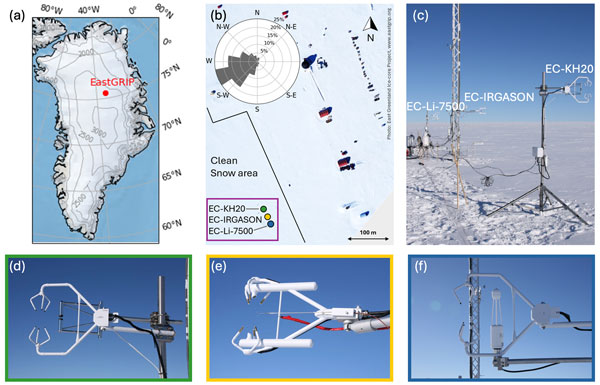
Three independent Eddy-Covariance measurement systems deployed on top of the Greenland Ice Sheet are compared. Using this dataset, we evaluate the reproducibility and quantify the differences between the systems. The fidelity of two regional climate models in capturing the seasonal variability in the latent and sensible heat flux between the snow surface and the atmosphere is assessed. We identify differences between observations and model simulations, especially during the winter period.
Mohammadreza Manami, Jakob Mann, Mikael Sjöholm, Guillaume Léa, and Guillaume Gorju
Atmos. Meas. Tech., 18, 7513–7523, https://doi.org/10.5194/amt-18-7513-2025, https://doi.org/10.5194/amt-18-7513-2025, 2025
Short summary
Short summary
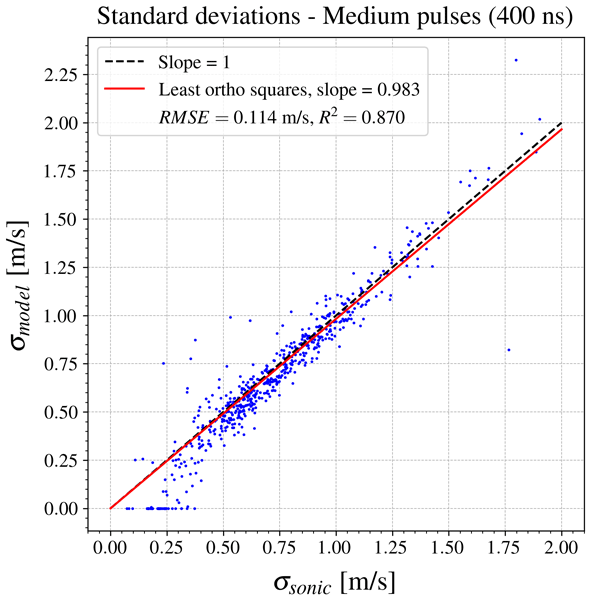
This research investigates a novel method for directly estimating wind velocity variances from averaged Doppler spectra in the frequency domain. Compared to the conventional time-domain approach, the proposed method offers a substantial improvement. Despite some limitations, this study marks a significant advancement in turbulence estimation using pulsed Doppler lidars, which presents promising potential for wind turbine load assessments.
Mauro Ghirardelli, Stephan T. Kral, Etienne Cheynet, and Joachim Reuder
Atmos. Meas. Tech., 18, 2103–2124, https://doi.org/10.5194/amt-18-2103-2025, https://doi.org/10.5194/amt-18-2103-2025, 2025
Short summary
Short summary
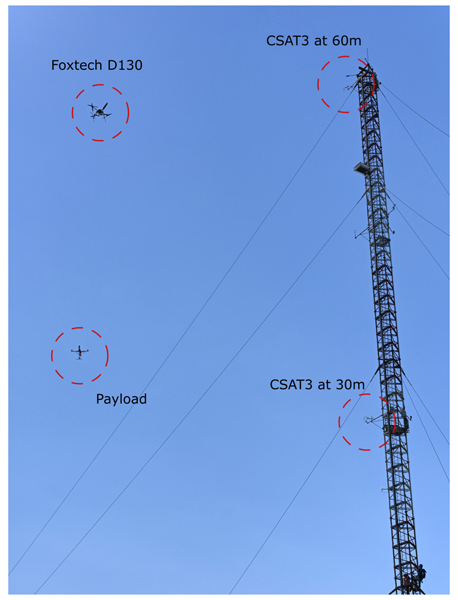
The SAMURAI-S system is an innovative measurement tool combining a high accuracy wind sensor with a multi-rotor drone to improve atmospheric turbulence observations. While traditional methods lack flexibility and accuracy in dynamic environments, SAMURAI-S provides high maneuverability and precise 3D wind measurements. The research demonstrated the system's ability to match the data quality of conventional methods, with a slight overestimation in vertical turbulence under higher wind conditions.
Etienne Cheynet, Jan Markus Diezel, Hilde Haakenstad, Øyvind Breivik, Alfredo Peña, and Joachim Reuder
Wind Energ. Sci., 10, 733–754, https://doi.org/10.5194/wes-10-733-2025, https://doi.org/10.5194/wes-10-733-2025, 2025
Short summary
Short summary
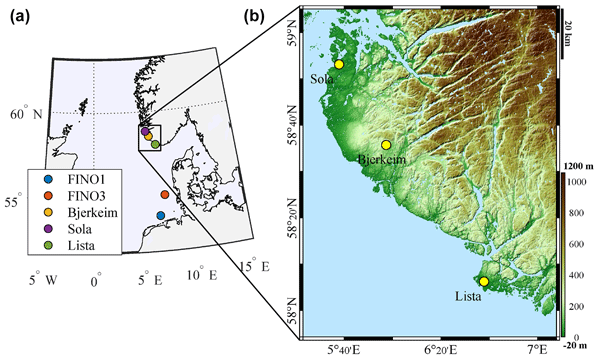
This study analyses wind speed data at heights up to 500 m to support the design of future large offshore wind turbines and airborne wind energy systems. We compared three wind models (ERA5, NORA3, and NEWA) with lidar measurements at five sites using four performance metrics. ERA5 and NORA3 performed equally well offshore, with NORA3 typically outperforming the other two models onshore. More generally, the optimal choice of model depends on site, altitude, and evaluation criteria.
Isadora L. Coimbra, Jakob Mann, José M. L. M. Palma, and Vasco T. P. Batista
Atmos. Meas. Tech., 18, 287–303, https://doi.org/10.5194/amt-18-287-2025, https://doi.org/10.5194/amt-18-287-2025, 2025
Short summary
Short summary
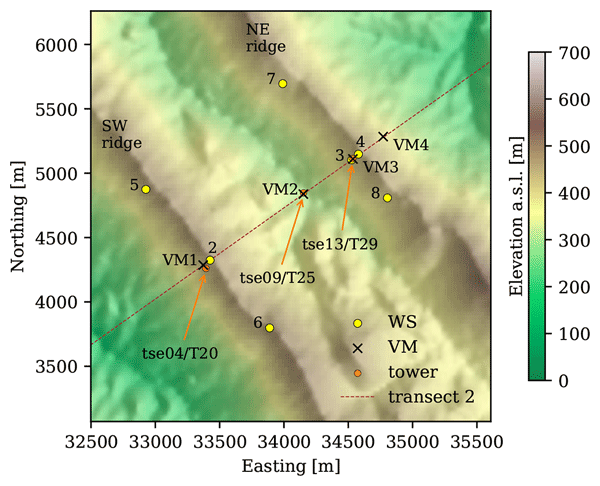
Dual-lidar measurements are explored here as a cost-effective alternative for measuring the wind at great heights. From measurements at a mountainous site, we showed that this methodology can accurately capture mean wind speeds and turbulence under different flow conditions, and we recommended optimal lidar placement and sampling rates. This methodology allows the construction of vertical wind profiles up to 430 m, surpassing traditional meteorological mast heights and single-lidar capabilities.
Abdul Haseeb Syed and Jakob Mann
Wind Energ. Sci., 9, 1381–1391, https://doi.org/10.5194/wes-9-1381-2024, https://doi.org/10.5194/wes-9-1381-2024, 2024
Short summary
Short summary
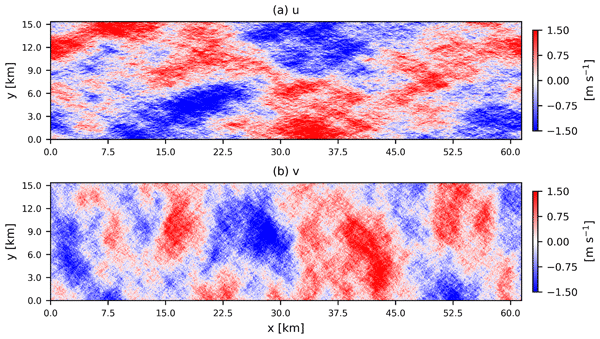
Wind flow consists of swirling patterns of air called eddies, some as big as many kilometers across, while others are as small as just a few meters. This paper introduces a method to simulate these large swirling patterns on a flat grid. Using these simulations we can better figure out how these large eddies affect big wind turbines in terms of loads and forces.
Liqin Jin, Mauro Ghirardelli, Jakob Mann, Mikael Sjöholm, Stephan Thomas Kral, and Joachim Reuder
Atmos. Meas. Tech., 17, 2721–2737, https://doi.org/10.5194/amt-17-2721-2024, https://doi.org/10.5194/amt-17-2721-2024, 2024
Short summary
Short summary
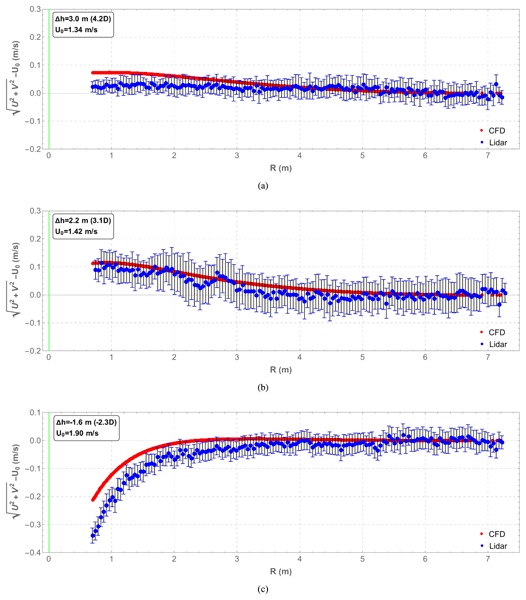
Three-dimensional wind fields can be accurately measured by sonic anemometers. However, the traditional mast-mounted sonic anemometers are not flexible in various applications, which can be potentially overcome by drones. Therefore, we conducted a proof-of-concept study by applying three continuous-wave Doppler lidars to characterize the complex flow around a drone to validate the results obtained by CFD simulations. Both methods show good agreement, with a velocity difference of 0.1 m s-1.
Jana Fischereit, Henrik Vedel, Xiaoli Guo Larsén, Natalie E. Theeuwes, Gregor Giebel, and Eigil Kaas
Geosci. Model Dev., 17, 2855–2875, https://doi.org/10.5194/gmd-17-2855-2024, https://doi.org/10.5194/gmd-17-2855-2024, 2024
Short summary
Short summary
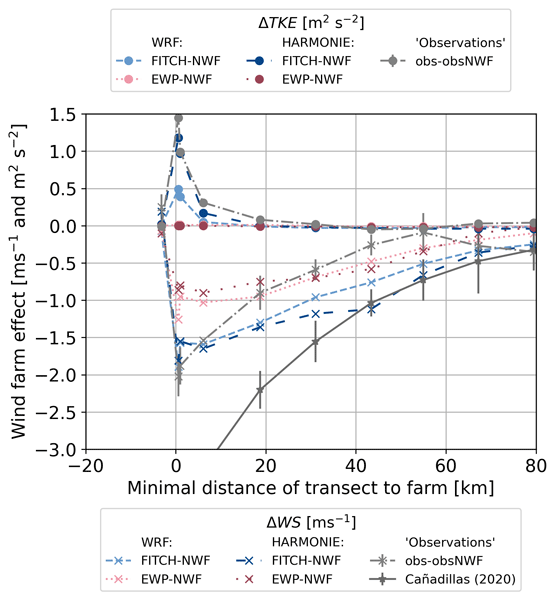
Wind farms impact local wind and turbulence. To incorporate these effects in weather forecasting, the explicit wake parameterization (EWP) is added to the forecasting model HARMONIE–AROME. We evaluate EWP using flight data above and downstream of wind farms, comparing it with an alternative wind farm parameterization and another weather model. Results affirm the correct implementation of EWP, emphasizing the necessity of accounting for wind farm effects in accurate weather forecasting.
Alban Philibert, Marie Lothon, Julien Amestoy, Pierre-Yves Meslin, Solène Derrien, Yannick Bezombes, Bernard Campistron, Fabienne Lohou, Antoine Vial, Guylaine Canut-Rocafort, Joachim Reuder, and Jennifer K. Brooke
Atmos. Meas. Tech., 17, 1679–1701, https://doi.org/10.5194/amt-17-1679-2024, https://doi.org/10.5194/amt-17-1679-2024, 2024
Short summary
Short summary
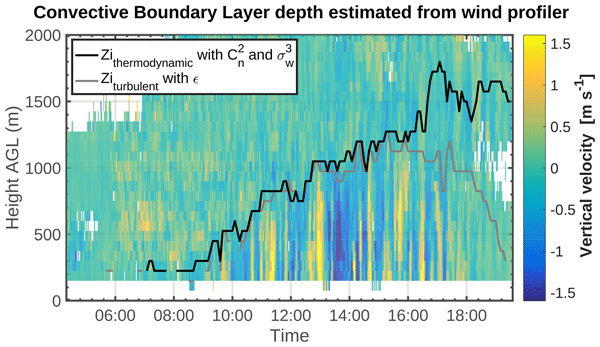
We present a new algorithm, CALOTRITON, for the retrieval of the convective boundary layer depth with ultra-high-frequency radar measurements. CALOTRITON is partly based on the principle that the top of the convective boundary layer is associated with an inversion and a decrease in turbulence. It is evaluated using ceilometer and radiosonde data. It is able to qualify the complexity of the vertical structure of the low troposphere and detect internal or residual layers.
Liqin Jin, Jakob Mann, Nikolas Angelou, and Mikael Sjöholm
Atmos. Meas. Tech., 16, 6007–6023, https://doi.org/10.5194/amt-16-6007-2023, https://doi.org/10.5194/amt-16-6007-2023, 2023
Short summary
Short summary
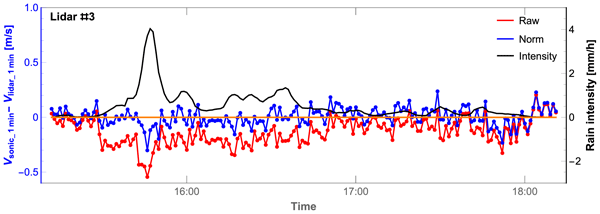
By sampling the spectra from continuous-wave Doppler lidars very fast, the rain-induced Doppler signal can be suppressed and the bias in the wind velocity estimation can be reduced. The method normalizes 3 kHz spectra by their peak values before averaging them down to 50 Hz. Over 3 h, we observe a significant reduction in the bias of the lidar data relative to the reference sonic data when the largest lidar focus distance is used. The more it rains, the more the bias is reduced.
Christiane Duscha, Juraj Pálenik, Thomas Spengler, and Joachim Reuder
Atmos. Meas. Tech., 16, 5103–5123, https://doi.org/10.5194/amt-16-5103-2023, https://doi.org/10.5194/amt-16-5103-2023, 2023
Short summary
Short summary
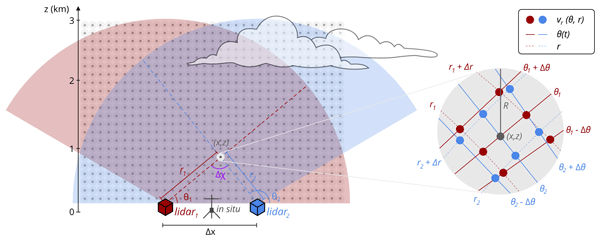
We combine observations from two scanning Doppler lidars to obtain new and unique insights into the dynamic processes inherent to atmospheric convection. The approach complements and enhances conventional methods to probe convection and has the potential to substantially deepen our understanding of this complex process, which is crucial to improving our weather and climate models.
Nikolas Angelou, Jakob Mann, and Camille Dubreuil-Boisclair
Wind Energ. Sci., 8, 1511–1531, https://doi.org/10.5194/wes-8-1511-2023, https://doi.org/10.5194/wes-8-1511-2023, 2023
Short summary
Short summary
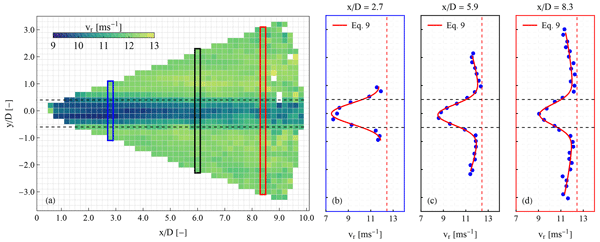
This study presents the first experimental investigation using two nacelle-mounted wind lidars that reveal the upwind and downwind conditions relative to a full-scale floating wind turbine. We find that in the case of floating wind turbines with small pitch and roll oscillating motions (< 1°), the ambient turbulence is the main driving factor that determines the propagation of the wake characteristics.
Maria Krutova, Mostafa Bakhoday-Paskyabi, Joachim Reuder, and Finn Gunnar Nielsen
Geosci. Model Dev., 16, 3553–3564, https://doi.org/10.5194/gmd-16-3553-2023, https://doi.org/10.5194/gmd-16-3553-2023, 2023
Short summary
Short summary
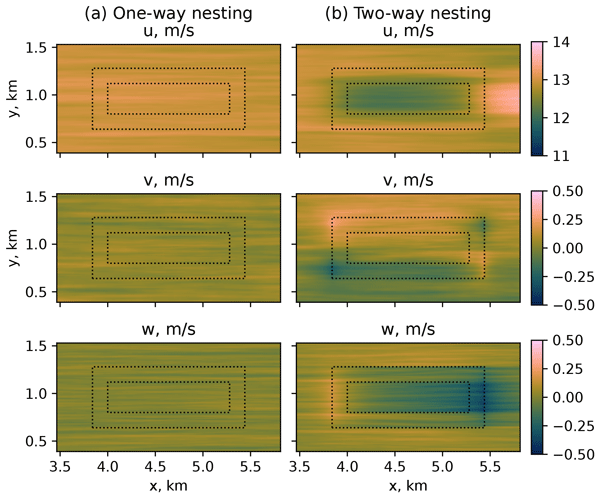
Local refinement of the grid is a powerful method allowing us to reduce the computational time while preserving the accuracy in the area of interest. Depending on the implementation, the local refinement may introduce unwanted numerical effects into the results. We study the wind speed common to the wind turbine operational speeds and confirm strong alteration of the result when the heat fluxes are present, except for the specific refinement scheme used.
Wei Fu, Alessandro Sebastiani, Alfredo Peña, and Jakob Mann
Wind Energ. Sci., 8, 677–690, https://doi.org/10.5194/wes-8-677-2023, https://doi.org/10.5194/wes-8-677-2023, 2023
Short summary
Short summary
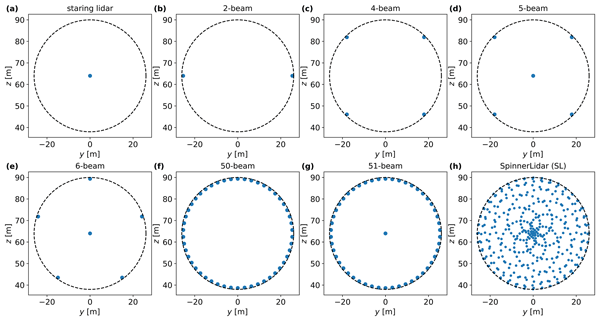
Nacelle lidars with different beam scanning locations and two types of systems are considered for inflow turbulence estimations using both numerical simulations and field measurements. The turbulence estimates from a sonic anemometer at the hub height of a Vestas V52 turbine are used as references. The turbulence parameters are retrieved using the radial variances and a least-squares procedure. The findings from numerical simulations have been verified by the analysis of the field measurements.
Abdul Haseeb Syed, Jakob Mann, Andreas Platis, and Jens Bange
Wind Energ. Sci., 8, 125–139, https://doi.org/10.5194/wes-8-125-2023, https://doi.org/10.5194/wes-8-125-2023, 2023
Short summary
Short summary
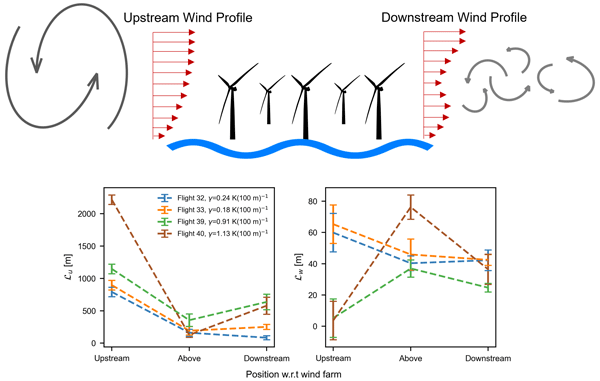
Wind turbines extract energy from the incoming wind flow, which needs to be recovered. In very large offshore wind farms, the energy is recovered mostly from above the wind farm in a process called entrainment. In this study, we analyzed the effect of atmospheric stability on the entrainment process in large offshore wind farms using measurements recorded by a research aircraft. This is the first time that in situ measurements are used to study the energy recovery process above wind farms.
Viktor J. Bruckman, Gregor Giebel, Christopher Juhlin, Sonja Martens, and Michael Kühn
Adv. Geosci., 58, 87–91, https://doi.org/10.5194/adgeo-58-87-2022, https://doi.org/10.5194/adgeo-58-87-2022, 2022

Turið Poulsen, Bárður A. Niclasen, Gregor Giebel, and Hans Georg Beyer
Wind Energ. Sci., 7, 2335–2350, https://doi.org/10.5194/wes-7-2335-2022, https://doi.org/10.5194/wes-7-2335-2022, 2022
Short summary
Short summary
Wind power is cheap and environmentally friendly, but it has a disadvantage: it is a variable power source. Because wind is not blowing everywhere simultaneously, optimal placement of wind farms can reduce the fluctuations.
This is explored for a small isolated area. Combining wind farms reduces wind power fluctuations for timescales up to 1–2 d. By optimally placing four wind farms, the hourly fluctuations are reduced by 15 %. These wind farms are located distant from each other.
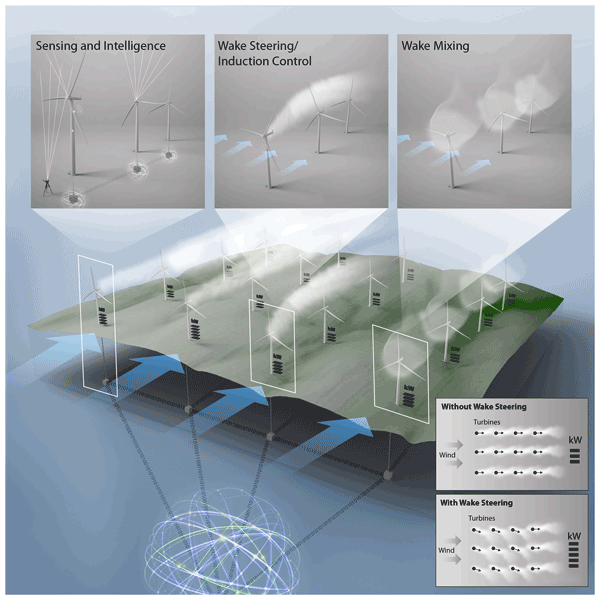
Johan Meyers, Carlo Bottasso, Katherine Dykes, Paul Fleming, Pieter Gebraad, Gregor Giebel, Tuhfe Göçmen, and Jan-Willem van Wingerden
Wind Energ. Sci., 7, 2271–2306, https://doi.org/10.5194/wes-7-2271-2022, https://doi.org/10.5194/wes-7-2271-2022, 2022
Short summary
Short summary
We provide a comprehensive overview of the state of the art and the outstanding challenges in wind farm flow control, thus identifying the key research areas that could further enable commercial uptake and success. To this end, we have structured the discussion on challenges and opportunities into four main areas: (1) insight into control flow physics, (2) algorithms and AI, (3) validation and industry implementation, and (4) integrating control with system design
(co-design).
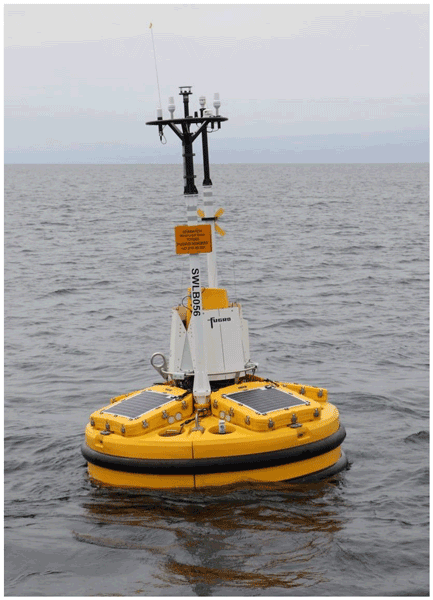
Felix Kelberlau and Jakob Mann
Atmos. Meas. Tech., 15, 5323–5341, https://doi.org/10.5194/amt-15-5323-2022, https://doi.org/10.5194/amt-15-5323-2022, 2022
Short summary
Short summary
Floating lidar systems are used for measuring wind speeds offshore, and their motion influences the measurements. This study describes the motion-induced bias on mean wind speed estimates by simulating the lidar sampling pattern of a moving lidar. An analytic model is used to validate the simulations. The bias is low and depends on amplitude and frequency of motion as well as on wind shear. It has been estimated for the example of the Fugro SEAWATCH wind lidar buoy carrying a ZX 300M lidar.
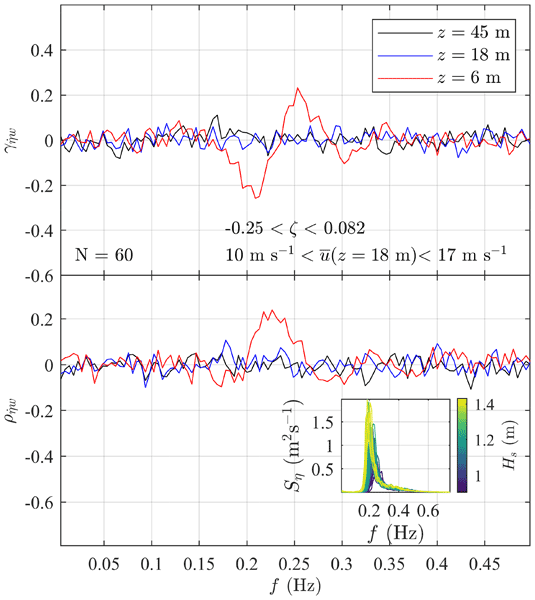
Rieska Mawarni Putri, Etienne Cheynet, Charlotte Obhrai, and Jasna Bogunovic Jakobsen
Wind Energ. Sci., 7, 1693–1710, https://doi.org/10.5194/wes-7-1693-2022, https://doi.org/10.5194/wes-7-1693-2022, 2022
Short summary
Short summary
As offshore wind turbines' sizes are increasing, thorough knowledge of wind characteristics in the marine atmospheric boundary layer (MABL) is becoming crucial to help improve offshore wind turbine design and reliability. The present study discusses the wind characteristics at the first offshore wind farm, Vindeby, and compares them with the wind measurements at the FINO1 platform. Consistent wind characteristics are found between Vindeby measurements and the FINO1 measurements.
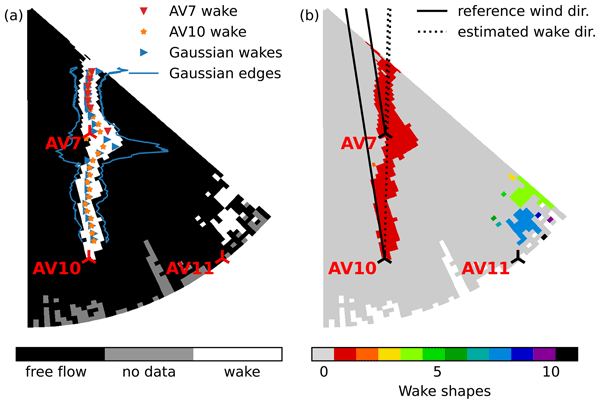
Maria Krutova, Mostafa Bakhoday-Paskyabi, Joachim Reuder, and Finn Gunnar Nielsen
Wind Energ. Sci., 7, 849–873, https://doi.org/10.5194/wes-7-849-2022, https://doi.org/10.5194/wes-7-849-2022, 2022
Short summary
Short summary
We described a new automated method to separate the wind turbine wake from the undisturbed flow. The method relies on the wind speed distribution in the measured wind field to select one specific threshold value and split the measurements into wake and background points. The purpose of the method is to reduce the amount of data required – the proposed algorithm does not need precise information on the wind speed or direction and can run on the image instead of the measured data.
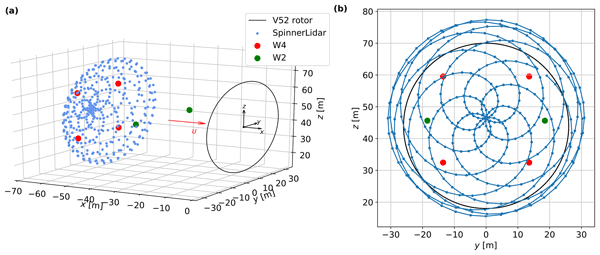
Wei Fu, Alfredo Peña, and Jakob Mann
Wind Energ. Sci., 7, 831–848, https://doi.org/10.5194/wes-7-831-2022, https://doi.org/10.5194/wes-7-831-2022, 2022
Short summary
Short summary
Measuring the variability of the wind is essential to operate the wind turbines safely. Lidars of different configurations have been placed on the turbines’ nacelle to measure the inflow remotely. This work found that the multiple-beam lidar is the only one out of the three employed nacelle lidars that can give detailed information about the inflow variability. The other two commercial lidars, which have two and four beams, respectively, measure only the fluctuation in the along-wind direction.

Nikolas Angelou, Jakob Mann, and Ebba Dellwik
Atmos. Chem. Phys., 22, 2255–2268, https://doi.org/10.5194/acp-22-2255-2022, https://doi.org/10.5194/acp-22-2255-2022, 2022
Short summary
Short summary
In this study we use state-of-the-art scanning wind lidars to investigate the wind field in the near-wake region of a mature, open-grown tree. Our measurements provide for the first time a picture of the mean and the turbulent spatial fluctuations in the flow in the wake of a tree in its natural environment. Our observations support the hypothesis that even simple models can realistically simulate the turbulent fluctuations in the wake and thus predict the effect of trees in flow models.
Cited articles
Abkar, M. and Porté-Agel, F.: The effect of free-atmosphere stratification on boundary-layer flow and power output from very large wind farms, Energies, 6, 2338–2361, https://doi.org/10.3390/en6052338, 2013. a
Achtert, P., Brooks, I. M., Brooks, B. J., Moat, B. I., Prytherch, J., Persson, P. O. G., and Tjernström, M.: Measurement of wind profiles by motion-stabilised ship-borne Doppler lidar, Atmos. Meas. Tech., 8, 4993–5007, https://doi.org/10.5194/amt-8-4993-2015, 2015. a
Aitken, M. L., Rhodes, M. E., and Lundquist, J. K.: Performance of a wind-profiling lidar in the region of wind turbine rotor disks, J. Atmos. Ocean. Tech., 29, 347–355, https://doi.org/10.1175/JTECH-D-11-00033.1, 2012. a
Akhtar, N., Geyer, B., Rockel, B., Sommer, P. S., and Schrum, C.: Accelerating deployment of offshore wind energy alter wind climate and reduce future power generation potentials, Sci. Rep., 11, 11826, https://doi.org/10.1038/s41598-021-91283-3, 2021. a
Allaerts, D. and Meyers, J.: Gravity waves and wind-farm efficiency in neutral and stable conditions, Bound.-Lay. Meteorol., 166, 269–299, https://doi.org/10.1007/s10546-017-0307-5, 2018. a
Banakh, V. A. and Smalikho, I. N.: Lidar observations of atmospheric internal waves in the boundary layer of the atmosphere on the coast of Lake Baikal, Atmos. Meas. Tech., 9, 5239–5248, https://doi.org/10.5194/amt-9-5239-2016, 2016. a
Bastankhah, M. and Porté-Agel, F.: A new analytical model for wind-turbine wakes, Renew. Energ., 70, 116–123, https://doi.org/10.1016/j.renene.2014.01.002, 2014. a
Bempedelis, N., Laizet, S., and Deskos, G.: Turbulent entrainment in finite-length wind farms, J. Fluid Mech., 955, A12, https://doi.org/10.1017/jfm.2022.1064, 2023. a
Blumen, W., Banta, R., Burns, S. P., Fritts, D. C., Newsom, R., Poulos, G. S., and Sun, J.: Turbulence statistics of a Kelvin–Helmholtz billow event observed in the night-time boundary layer during the Cooperative Atmosphere–Surface Exchange Study field program, Dynam. Atmos. Oceans, 34, 189–204, https://doi.org/10.1016/S0377-0265(01)00067-7, 2001. a
Borbón, F.: Assessment of Mean Flow Across a Wind Farm Edge The Wind Vane, Medium, https://medium.com/the-wind-vane/assessment-of-mean-flow-across-a-wind-farm-edge-83690c58667d (last access: 22 September 2026), 2019. a
Bodini, N., Zardi, D., and Lundquist, J. K.: Three-dimensional structure of wind turbine wakes as measured by scanning lidar, Atmos. Meas. Tech., 10, 2881–2896, https://doi.org/10.5194/amt-10-2881-2017, 2017. a
Borgers, R., Meyers, J., and van Lipzig, N.: Energy production and inter-farm wake losses in future North Sea wind farms, Environ. Res. Lett., 20, 074036, https://doi.org/10.1088/1748-9326/add8a2, 2025. a
Caicedo, V., Rappenglück, B., Lefer, B., Morris, G., Toledo, D., and Delgado, R.: Comparison of aerosol lidar retrieval methods for boundary layer height detection using ceilometer aerosol backscatter data, Atmos. Meas. Tech., 10, 1609–1622, https://doi.org/10.5194/amt-10-1609-2017, 2017. a
Calaf, M., Meneveau, C., and Meyers, J.: Large eddy simulation study of fully developed wind-turbine array boundary layers, Phys. Fluids, 22, https://doi.org/10.1063/1.3291077, 2010. a
Cheynet, E., Jakobsen, J. B., and Obhrai, C.: Spectral characteristics of surface-layer turbulence in the North Sea, Energy Proced., 137, 414–427, https://doi.org/10.1016/j.egypro.2017.10.366, 2017a. a
Cheynet, E., Jakobsen, J. B., Snæbjörnsson, J., Reuder, J., Kumer, V., and Svardal, B.: Assessing the potential of a commercial pulsed lidar for wind characterisation at a bridge site, J. Wind Eng. Ind. Aerod., 161, 17–26, https://doi.org/10.1016/j.jweia.2016.12.002, 2017b. a, b
Cleve, J., Greiner, M., Enevoldsen, P., Birkemose, B., and Jensen, L.: Model-based analysis of wake-flow data in the Nysted offshore wind farm, Wind Energy, 12, 125–135, https://doi.org/10.1002/we.348, 2009. a
Crespo, A. and Hernandez, J.: Turbulence characteristics in wind-turbine wakes, J. Wind Eng. Ind. Aerod., 61, 71–85, https://doi.org/10.1016/0167-6105(95)00033-X, 1996. a
Dasari, T., Wu, Y., Liu, Y., and Hong, J.: Near-wake behaviour of a utility-scale wind turbine, J. Fluid Mech., 859, 204–246, https://doi.org/10.1017/jfm.2018.779, 2019. a
Davis, N. N., Badger, J., Hahmann, A. N., Hansen, B. O., Mortensen, N. G., Kelly, M., Larsén, X. G., Olsen, B. T., Floors, R., Lizcano, G., Casso, P., Lacave, O., Bosch, A., Bauwens, I., Knight, O. J., Potter van Loon, A., Fox, R., Parvanyan, T., Krohn Hansen, S. B., Heathfield, D., Onninen, M., and Drummond, R.: The Global Wind Atlas: A high-resolution dataset of climatologies and associated web-based application, B. Am. Meteor. Soc., 104, E1507–E1525, https://doi.org/10.1175/BAMS-D-21-0075.1, 2023. a
Deardorff, J. W.: Stratocumulus-capped mixed layers derived from a three-dimensional model, Bound.-Lay. Meteorol., 18, 495–527, https://doi.org/10.1007/BF00119502, 1980. a
Duscha, C.: Characterizing the convective boundary layer with wind-profiling and scanning Doppler lidar, Ph.D. thesis, University of Bergen, Norway, https://doi.org/10.13140/RG.2.2.12953.22886, 2024. a
Duscha, C., Barrell, C., Renfrew, I. A., Brooks, I. M., Sodemann, H., and Reuder, J.: A ship-based characterization of coherent boundary-layer structures over the lifecycle of a marine cold-air outbreak, Bound.-Lay. Meteorol., 183, 355–380, https://doi.org/10.1007/s10546-022-00692-y, 2022. a
European Commission: Delivering on the EU offshore renewable energy ambitions, Communication COM(2023) 668 final, European Commission, https://eur-lex.europa.eu/legal-content/EN/TXT/PDF/?uri=CELEX:52023DC0668 (last access: 18 September 2026), 2023. a
Feng, D., Dangi, N., and Watson, S.: Wind turbine wake dynamics subjected to atmospheric gravity waves: a measurement-driven large-eddy simulation study, Wind Energ. Sci., 11, 395–404, https://doi.org/10.5194/wes-11-395-2026, 2026. a
Finserås, E., Herrera Anchustegui, I., Cheynet, E., Gebhardt, C. G., and Reuder, J.: Gone with the wind? Wind farm-induced wakes and regulatory gaps, Mar. Policy, 159, https://doi.org/10.1016/j.marpol.2023.105897, 2024. a
Fischereit, J., Schaldemose Hansen, K., Larsén, X. G., van der Laan, M. P., Réthoré, P.-E., and Murcia Leon, J. P.: Comparing and validating intra-farm and farm-to-farm wakes across different mesoscale and high-resolution wake models, Wind Energ. Sci., 7, 1069–1091, https://doi.org/10.5194/wes-7-1069-2022, 2022. a, b
Foken, T. and Mauder, M.: Micrometeorology, vol. 2, Springer, https://doi.org/10.1007/978-3-031-47526-9, 2008. a
Frandsen, S.: On the wind speed reduction in the center of large clusters of wind turbines, J. Wind Eng. Ind. Aerod., 39, 251–265, https://doi.org/10.1016/0167-6105(92)90551-K, 1992. a
Giebel, G., Göçmen, T., Mann, J., Sempreviva, A. M., Lund, H., Reuder, J., Bange, J., and Porte-Agel, F.: Train2Wind, or how large is an infinite wind farm?, EGU General Assembly 2021, online, 19–30 Apr 2021, EGU21-15816, https://doi.org/10.5194/egusphere-egu21-15816, 2021. a
Gottschall, J., Gribben, B., Stein, D., and Würth, I.: Floating lidar as an advanced offshore wind speed measurement technique: current technology status and gap analysis in regard to full maturity, Wiley Interdisciplinary Reviews: Energy and Environment, 6, e250, https://doi.org/10.1002/wene.250, 2017. a, b
Gottschall, J., Catalano, E., Dörenkämper, M., and Witha, B.: The NEWA ferry lidar experiment: measuring mesoscale winds in the Southern Baltic Sea, Remote Sens., 10, 1620, https://doi.org/10.3390/rs10101620, 2018. a
Haakenstad, H., Breivik, Ø., Furevik, B. R., Reistad, M., Bohlinger, P., and Aarnes, O. J.: NORA3: A Nonhydrostatic High-Resolution Hindcast of the North Sea, the Norwegian Sea, and the Barents Sea, J. Appl. Meteorol. Clim., 60, 1443–1464, https://doi.org/10.1175/JAMC-D-21-0029.1, 2021. a, b
Hansen, K. S., Réthoré, P.-E., Palma, J., Hevia, B. G., Prospathopoulos, J., Peña, A., Ott, S., Schepers, G., Palomares, A., van der Laan, M. P., and Volker, P.: Simulation of wake effects between two wind farms, J. Phys. Conf. Ser., 625, 012008, https://doi.org/10.1088/1742-6596/625/1/012008, 2015. a, b, c
Hasager, C. B., Peña, A., Christiansen, M. B., Astrup, P., Nielsen, M., Monaldo, F., Thompson, D., and Nielsen, P.: Remote sensing observation used in offshore wind energy, IEEE J. Sel. Top. Appl., 1, 67–79, https://doi.org/10.1109/JSTARS.2008.2002218, 2008. a
Haupt, S. E., Kosović, B., Berg, L. K., Kaul, C. M., Churchfield, M., Mirocha, J., Allaerts, D., Brummet, T., Davis, S., DeCastro, A., Dettling, S., Draxl, C., Gagne, D. J., Hawbecker, P., Jha, P., Juliano, T., Lassman, W., Quon, E., Rai, R. K., Robinson, M., Shaw, W., and Thedin, R.: Lessons learned in coupling atmospheric models across scales for onshore and offshore wind energy, Wind Energ. Sci., 8, 1251–1275, https://doi.org/10.5194/wes-8-1251-2023, 2023. a
Hersbach, H., Bell, B., Berrisford, P., Hirahara, S., Horányi, A., Muñoz-Sabater, J., Nicolas, J., Peubey, C., Radu, R., Schepers, D., Simmons, A., Soci, C., Abdalla, S., Abellan, X., Balsamo, G., Bechtold, P., Biavati, G., Bidlot, J., Bonavita, M., De Chiara, G., Dahlgren, P., Dee, D., Diamantakis, M., Dragani, R., Flemming, J., Forbes, R., Fuentes, M., Geer, A., Haimberger, L., Healy, S., Hogan, R. J., Hólm, E., Janisková, M., Keeley, S., Laloyaux, P., Lopez, P., Lupu, C., Radnoti, G., de Rosnay, P., Rozum, I., Vamborg, F., Villaume, S., and Thépaut, J.-N.: The ERA5 global reanalysis, Q. J. Roy. Meteor. Soc., 146, 1999–2049, https://doi.org/10.1002/qj.3803, 2020. a
Hogan, R. J., Grant, A. L., Illingworth, A. J., Pearson, G. N., and O'Connor, E. J.: Vertical velocity variance and skewness in clear and cloud-topped boundary layers as revealed by Doppler lidar, Q. J. Roy. Meteor. Soc., 135, 635–643, https://doi.org/10.1002/qj.413, 2009. a
Hong, J., Toloui, M., Chamorro, L. P., Guala, M., Howard, K., Riley, S., Tucker, J., and Sotiropoulos, F.: Natural snowfall reveals large-scale flow structures in the wake of a 2.5-MW wind turbine, Nat. Commun., 5, 4216, https://doi.org/10.1038/ncomms5216, 2014. a
Jarvis, A., Reuter, H. I., Nelson, A., and Guevara, E.: Hole-filled seamless SRTM data V4, International Centre for Tropical Agriculture (CIAT), https://srtm.csi.cgiar.org/ (last access: 24 September 2026), 2008. a
Jensen, N.: A note on wind generator interaction, no. 2411 in Risø-M, Risø National Laboratory, ISBN 87-550-0971-9, 1983. a
Jia, M., Yuan, J., Wang, C., Xia, H., Wu, Y., Zhao, L., Wei, T., Wu, J., Wang, L., Gu, S.-Y., Liu, L., Lu, D., Chen, R., Xue, X., and Dou, X.: Long-lived high-frequency gravity waves in the atmospheric boundary layer: observations and simulations, Atmos. Chem. Phys., 19, 15431–15446, https://doi.org/10.5194/acp-19-15431-2019, 2019. a, b
Kaimal, J. C. and Finnigan, J. J.: Atmospheric boundary layer flows: their structure and measurement, Oxford university press, https://doi.org/10.1093/oso/9780195062397.001.0001, 1994. a
Kalverla, P. C., Holtslag, A. A., Ronda, R. J., and Steeneveld, G.-J.: Quality of wind characteristics in recent wind atlases over the North Sea, Q. J. Roy. Meteor. Soc., 146, 1498–1515, https://doi.org/10.1002/qj.3748, 2020. a
Kelberlau, F. and Mann, J.: Quantification of motion-induced measurement error on floating lidar systems, Atmos. Meas. Tech., 15, 5323–5341, https://doi.org/10.5194/amt-15-5323-2022, 2022. a
Kelberlau, F., Neshaug, V., Lønseth, L., Bracchi, T., and Mann, J.: Taking the motion out of floating lidar: Turbulence intensity estimates with a continuous-wave wind lidar, Remote Sens., 12, 898, https://doi.org/10.3390/rs12050898, 2020. a, b
Kenis, M., Lanzilao, L., Bruninx, K., Meyers, J., and Delarue, E.: Trading rights to consume wind in presence of farm-farm interactions, Joule, 7, 1394–1398, https://doi.org/10.1016/j.joule.2023.05.015, 2023. a
Knuteson, R. O., Revercomb, H. E., Best, F. A., Ciganovich, N. C., Dedecker, R. G., Dirkx, T. P., Ellington, S. C., Feltz, W. F., Garcia, R. K., Howell, H. B., Smith, W. L., Short, J. F., and Tobin, D. C.: Atmospheric Emitted Radiance Interferometer. Part I: Instrument Design, J. Atmos. Ocean. Tech., 21, 1763–1776, https://doi.org/10.1175/JTECH-1662.1, 2004. a
Krishnamurthy, R., Reuder, J., Svardal, B., Fernando, H. J. S., and Jakobsen, J. B.: Offshore wind turbine wake characteristics using scanning Doppler lidar, Energy Proced., 137, 428–442, https://doi.org/10.1016/j.egypro.2017.10.367, 2017. a
Krishnamurthy, R., Newsom, R. K., Kaul, C. M., Letizia, S., Pekour, M., Hamilton, N., Chand, D., Flynn, D., Bodini, N., and Moriarty, P.: Observations of wind farm wake recovery at an operating wind farm, Wind Energ. Sci., 10, 361–380, https://doi.org/10.5194/wes-10-361-2025, 2025. a, b, c
Kumer, V.-M., Reuder, J., and Furevik, B. R.: A comparison of LiDAR and radiosonde wind measurements, Energy Proced., 53, 214–220, https://doi.org/10.1016/j.egypro.2014.07.230, 2014. a
Lange, D., Behrendt, A., and Wulfmeyer, V.: Compact Operational Tropospheric Water Vapor and Temperature Raman Lidar with Turbulence Resolution, Geophys. Res. Lett., 46, 14844–14853, https://doi.org/10.1029/2019GL085774, 2019. a
Lanzilao, L. and Meyers, J.: A parametric large-eddy simulation study of wind-farm blockage and gravity waves in conventionally neutral boundary layers, J. Fluid Mech., 979, A54, https://doi.org/10.1017/jfm.2023.1088, 2024. a
Larsen, G.: A simple stationary semi-analytical wake model, no. 1713(EN) in Denmark. Forskningscenter Risoe. Risoe-R, Risø National Laboratory for Sustainable Energy, Technical University of Denmark, ISBN 987-87-550-3784-7, 2009. a
Letizia, S., Robey, R., Bodini, N., Sanchez Gomez, M., Lundquist, J. K., Krishnamurthy, R., and Moriarty, P. J.: Tilted lidar profiling: Development and testing of a novel scanning strategy for inhomogeneous flows, J. Renew. Sustain. Ener., 16, https://doi.org/10.1063/5.0209729, 2024. a
Leys, C., Ley, C., Klein, O., Bernard, P., and Licata, L.: Detecting outliers: Do not use standard deviation around the mean, use absolute deviation around the median, J. Exp. Soc. Psychol., 49, 764–766, https://doi.org/10.1016/j.jesp.2013.03.013, 2013. a
Lothon, M., Lenschow, D. H., and Mayor, S. D.: Coherence and scale of vertical velocity in the convective boundary layer from a Doppler lidar, Bound.-Lay. Meteorol., 121, 521–536, https://doi.org/10.1007/s10546-006-9077-1, 2006. a
Luzzatto-Fegiz, P. and Caulfield, C.-c. P.: Entrainment model for fully-developed wind farms: effects of atmospheric stability and an ideal limit for wind farm performance, Physical Review Fluids, 3, 093802, https://doi.org/10.1103/PhysRevFluids.3.093802, 2018. a
Malekmohammadi, S.: Ship-based vertical profiling wind lidar data in Lollex campaign 2022–2023, Technical University of Denmark [data set], https://doi.org/10.11583/DTU.22739729.v1, 2023. a
Malekmohammadi, S., Duscha, C., Jenkins, A. D., Kelberlau, F., Gottschall, J., and Reuder, J.: Evaluating the Performance of Pulsed and Continuous-Wave Lidar Wind Profilers with a Controlled Motion Experiment, Remote Sens., 16, 3191, https://doi.org/10.3390/rs16173191, 2024. a, b
Malekmohammadi, S., Cheynet, E., and Reuder, J.: Vertical line-of-sight Doppler lidar dataset associated wit the LOLland offshore Lidar EXperiment (LOLLEX), Zenodo [data set], https://doi.org/10.5281/zenodo.20929085, 2026a. a
Malekmohammadi, S., Cheynet, E., and Reuder, J.: Wind speed profile dataset associated wit the LOLland offshore Lidar EXperiment (LOLLEX), Zenodo [data set], https://doi.org/10.5281/zenodo.20811676, 2026b. a
Mann, J., Peña, A., Bingöl, F., Wagner, R., and Courtney, M.: Lidar scanning of momentum flux in and above the atmospheric surface layer, J. Atmos. Ocean. Tech., 27, 959–976, https://doi.org/10.1175/2010JTECHA1389.1, 2010. a
Meneveau, C.: Big wind power: seven questions for turbulence research, J. Turbul., 20, 2–20, https://doi.org/10.1080/14685248.2019.1584664, 2019. a, b
Michaud-Belleau, V., Gaudreau, M., Lacoursière, J., Boisvert, É., Ravelomanantsoa, L., Turner, D. D., and Rochette, L.: The Atmospheric Sounder Spectrometer by Infrared Spectral Technology (ASSIST): instrument design and signal processing, Atmos. Meas. Tech., 18, 3585–3609, https://doi.org/10.5194/amt-18-3585-2025, 2025. a
Minz, J., Kleidon, A., Imberger, M., and Badger, J.: Evaluating the impact of kinetic energy removal by wind turbines on the technical wind energy potential of the German Bight, Meteorol. Z., https://doi.org/10.1127/metz/2025/1215, 2025. a
Newman, J. F., Klein, P. M., Wharton, S., Sathe, A., Bonin, T. A., Chilson, P. B., and Muschinski, A.: Evaluation of three lidar scanning strategies for turbulence measurements, Atmos. Meas. Tech., 9, 1993–2013, https://doi.org/10.5194/amt-9-1993-2016, 2016. a
Niayifar, A. and Porté-Agel, F.: Analytical modeling of wind farms: A new approach for power prediction, Energies, 9, 741, https://doi.org/10.3390/en9090741, 2016. a
Nygaard, N. G. and Hansen, S. D.: Wake effects between two neighbouring wind farms, in: Journal of Physics: Conference Series, IOP Publishing, 753, 032020, https://doi.org/10.1088/1742-6596/753/3/032020, 2016. a
Nygaard, N. G., Steen, S. T., Poulsen, L., and Pedersen, J. G.: Modelling cluster wakes and wind farm blockage, in: Journal of Physics: Conference Series, IOP Publishing, 1618, 062072, https://doi.org/10.1088/1742-6596/1618/6/062072, 2020. a
Ørsted: TurbOPark: A Turbulence Optimized Park Model, GitHub, https://github.com/OrstedRD/TurbOPark/ (last access: 18 September 2026), 2020. a
Päschke, E., Leinweber, R., and Lehmann, V.: An assessment of the performance of a 1.5 μm Doppler lidar for operational vertical wind profiling based on a 1-year trial, Atmos. Meas. Tech., 8, 2251–2266, https://doi.org/10.5194/amt-8-2251-2015, 2015. a
Pedersen, M. M., Forsting, A. M., van der Laan, P., Riva, R., Romàn, L. A. A., Risco, J. C., Friis-Møller, M., Quick, J., Christiansen, J. P. S., Rodrigues, R. V., Olsen, B. T., and Réthoré, P.-E.: PyWake 2.5.0: An open-source wind farm simulation tool, https://gitlab.windenergy.dtu.dk/TOPFARM/PyWake (last access: 30 June 2025), 2023. a
Peña, A., Hasager, C., Lange, J., Anger, J., Badger, M., Bingöl, F., Bischoff, O., Cariou, J.-P., Dunne, F., Emeis, S., Harris, M., Hofsäss, M., Karagali, I., Laks, J., Larsen, S., Mann, J., Mikkelsen, T., Pao, L., Pitter, M., Rettenmeier, A., Sathe, A., Scanzani, F., Schlipf, D., Simley, E., Slinger, C., Wagner, R., and Würth, I.: Remote Sensing for Wind Energy, no. 0029(EN) in DTU Wind Energy E, DTU Wind Energy, Denmark, ISBN 978-87-93278-34-9, 2013. a, b, c
Pichugina, Y., Brewer, A. W., Baidar, S., Banta, R., Strobach, E., McCarty, B., Carroll, B., Bodini, N., Letizia, S., Marchbanks, R., Zucker, M., Holloway, M., and Moriarty, P.: Emerging mobile lidar technology to study boundary layer winds influenced by operating turbines, Wind Energ. Sci., 11, 417–442, https://doi.org/10.5194/wes-11-417-2026, 2026. a
Podein, P., Tinz, B., Blender, R., and Detels, T.: Reconstruction of annual mean wind speed statistics at 100 m height of FINO1 and FINO2 masts with reanalyses and the geostrophic wind, Meteorol. Z., 31, 89–100, https://doi.org/10.1127/metz/2021/1090, 2022. a
Porté-Agel, F., Bastankhah, M., and Shamsoddin, S.: Wind-turbine and wind-farm flows: A review, Bound.-Lay. Meteorol., 174, 1–59, https://doi.org/10.1007/s10546-019-00473-0, 2020. a
Pryor, S. C., Barthelmie, R. J., and Shepherd, T. J.: Wind power production from very large offshore wind farms, Joule, 5, 2663–2686, https://doi.org/10.1016/j.joule.2021.09.002, 2021. a, b
Puccioni, M., Moss, C., Solari, M., Roy, S., Iungo, G., Wharton, S., and Moriarty, P.: Quantification and assessment of the atmospheric boundary layer height measured during the AWAKEN experiment by a scanning LiDAR, J. Renew. Sustain. Ener., 16, https://doi.org/10.1063/5.0211259, 2024. a, b
Radünz, W. C., Carmo, B., Lundquist, J. K., Letizia, S., Abraham, A., Wise, A. S., Sanchez Gomez, M., Hamilton, N., Rai, R. K., and Peixoto, P. S.: Influence of simple terrain on the spatial variability of a low-level jet and wind farm performance in the AWAKEN field campaign, Wind Energ. Sci., 10, 2365–2393, https://doi.org/10.5194/wes-10-2365-2025, 2025. a
Rose, T., Crewell, S., Löhnert, U., and Simmer, C.: A network suitable microwave radiometer for operational monitoring of the cloudy atmosphere, Atmos. Res., 75, 183–200, https://doi.org/10.1016/j.atmosres.2004.12.005, 2005. a
Rubio, H., Kühn, M., and Gottschall, J.: Evaluation of low-level jets in the southern Baltic Sea: a comparison between ship-based lidar observational data and numerical models, Wind Energ. Sci., 7, 2433–2455, https://doi.org/10.5194/wes-7-2433-2022, 2022. a, b
Sanz Rodrigo, J., Chávez Arroyo, R. A., Moriarty, P., Churchfield, M., Kosović, B., Réthoré, P.-E., Hansen, K. S., Hahmann, A., Mirocha, J. D., and Rife, D.: Mesoscale to microscale wind farm flow modeling and evaluation, Wiley Interdisciplinary Reviews: Energy and Environment, 6, e214, https://doi.org/10.1002/wene.214, 2017. a
Sathe, A., Mann, J., Vasiljevic, N., and Lea, G.: A six-beam method to measure turbulence statistics using ground-based wind lidars, Atmos. Meas. Tech., 8, 729–740, https://doi.org/10.5194/amt-8-729-2015, 2015. a
Slinger, C. and Harris, M.: Introduction to continuous-wave Doppler lidar, https://breeze.colorado.edu/ftp/RSWE/Chris_Slinger.pdf (last access: 2 May 2025), 2013. a
Solbrekke, I. M., Sorteberg, A., and Haakenstad, H.: The 3 km Norwegian reanalysis (NORA3) – a validation of offshore wind resources in the North Sea and the Norwegian Sea, Wind Energ. Sci., 6, 1501–1519, https://doi.org/10.5194/wes-6-1501-2021, 2021. a
Souaiby, M. and Porté-Agel, F.: An improved analytical framework for flow prediction inside and downstream of wind farms, Renew. Energ., 225, 120251, https://doi.org/10.1016/j.renene.2024.120251, 2024. a
Starkenburg, D., Metzger, S., Fochesatto, G. J., Alfieri, J. G., Gens, R., Prakash, A., and Cristóbal, J.: Assessment of despiking methods for turbulence data in micrometeorology, J. Atmos. Ocean. Tech., 33, 2001–2013, https://doi.org/10.1175/JTECH-D-15-0154.1, 2016. a
Stull, R. B.: An Introduction to Boundary Layer Meteorology, vol. 13, Springer Science & Business Media, https://doi.org/10.1007/978-94-009-3027-8, 1988. a
Sun, J., Nappo, C. J., Mahrt, L., Belušić, D., Grisogono, B., Stauffer, D. R., Pulido, M., Staquet, C., Jiang, Q., Pouquet, A., Yagüe, C., Galperin, B., Smith, R. B., Finnigan, J. J., Mayor, S. D., Svensson, G., Grachev, A. A., and Neff, W. D.: Review of wave-turbulence interactions in the stable atmospheric boundary layer, Rev. Geophys., 53, 956–993, https://doi.org/10.1002/2015RG000487, 2015. a
Suomi, I., Gryning, S.-E., O'Connor, E. J., and Vihma, T.: Methodology for obtaining wind gusts using Doppler lidar, Q. J. Roy. Meteor. Soc., 143, 2061–2072, https://doi.org/10.1002/qj.3059, 2017. a
Syed, A. H., Mann, J., Platis, A., and Bange, J.: Turbulence structures and entrainment length scales in large offshore wind farms, Wind Energ. Sci., 8, 125–139, https://doi.org/10.5194/wes-8-125-2023, 2023. a
Tucker, S. C., Senff, C. J., Weickmann, A. M., Brewer, W. A., Banta, R. M., Sandberg, S. P., Law, D. C., and Hardesty, R. M.: Doppler lidar estimation of mixing height using turbulence, shear, and aerosol profiles, J. Atmos. Ocean. Tech., 26, 673–688, https://doi.org/10.1175/2008JTECHA1157.1, 2009. a
van der Laan, M., Hansen, K. S., Sørensen, N. N., and Réthoré, P.-E.: Predicting wind farm wake interaction with RANS: an investigation of the Coriolis force, in: Journal of Physics: Conference Series, IOP Publishing, 625, 012026, https://doi.org/10.1088/1742-6596/625/1/012026, 2015. a, b
van der Laan, M. P., Baungaard, M., and Kelly, M.: Brief communication: A clarification of wake recovery mechanisms, Wind Energ. Sci., 8, 247–254, https://doi.org/10.5194/wes-8-247-2023, 2023. a, b
Vivone, G., D'Amico, G., Summa, D., Lolli, S., Amodeo, A., Bortoli, D., and Pappalardo, G.: Atmospheric boundary layer height estimation from aerosol lidar: a new approach based on morphological image processing techniques, Atmos. Chem. Phys., 21, 4249–4265, https://doi.org/10.5194/acp-21-4249-2021, 2021. a
von Helmholtz, H.: Über discontinuierliche Flüssigkeits-Bewegungen, Monatsberichte der Königlichen Preussischen Akademie der Wissenschaften zu Berlin, 215–228, 1868. a
Wang, L., Dong, M., Yang, J., Wang, L., Chen, S., Duić, N., Joo, Y. H., and Song, D.: Wind turbine wakes modeling and applications: Past, present, and future, Ocean Eng., 309, 118508, https://doi.org/10.1016/j.oceaneng.2024.118508, 2024. a
Watson, W. and Gottschall, J.: Full Reynolds Stress Tensor Recovery from a Floating Five-Beam Pulsed Lidar, in: Journal of Physics: Conference Series, IOP Publishing, 3224, 022002, https://doi.org/10.1088/1742-6596/3224/2/022002, 2026. a
Westwater, E., Crewell, S., and Mätzler, C.: A review of surface-based microwave and millimeter-wave radiometric remote sensing of the troposphere, URSI Radio Science Bulletin, 2004, 59–80, https://doi.org/10.23919/URSIRSB.2004.7909438, 2004. a
Whale, J., Anderson, C., Bareiss, R., and Wagner, S.: An experimental and numerical study of the vortex structure in the wake of a wind turbine, J. Wind Eng. Ind. Aerod., 84, 1–21, https://doi.org/10.1016/S0167-6105(98)00201-3, 2000. a
Wilczak, J. M., Oncley, S. P., and Stage, S. A.: Sonic anemometer tilt correction algorithms, Bound.-Lay. Meteorol., 99, 127–150, https://doi.org/10.1023/A:1018966204465, 2001. a
Wolken-Möhlmann, G., Gottschall, J., and Lange, B.: First verification test and wake measurement results using a Ship-LIDAR System, Energy Proced., 53, 146–155, https://doi.org/10.1016/j.egypro.2014.07.223, 2014. a
Wood, R.: Stratocumulus clouds, Mon. Weather Rev., 140, 2373–2423, https://doi.org/10.1175/MWR-D-11-00121.1, 2012. a
Wulfmeyer, V. and Behrendt, A.: Raman Lidar for Water Vapor and Temperature Profiling, pp. 719–739, Springer International Publishing, Cham, ISBN 978-3-030-52171-4, https://doi.org/10.1007/978-3-030-52171-4_25, 2021. a
Zhang, M., Tian, P., Zhao, Y., Song, X., Liang, J., Li, J., Zhang, Z., Guan, X., Cao, X., Ren, Y., Shia, J., and Zhang, L.: Impact of aerosol-boundary layer interactions on PM2.5 pollution during cold air pool events in a semi-arid urban basin, Sci. Total Environ., 922, 171225, https://doi.org/10.1016/j.scitotenv.2024.171225, 2024. a
Zong, H. and Porté-Agel, F.: A momentum-conserving wake superposition method for wind farm power prediction, J. Fluid Mech., 889, A8, https://doi.org/10.1017/jfm.2020.77, 2020. a
Short summary
This study presents a lidar measurement strategy developed during a one-year offshore campaign. A ship-based scanning lidar provided high-resolution vertical wind measurements used to study turbulent mixing and atmospheric waves, complemented by wind speed profiles from a co-located wind profiler. A scanning lidar on a fixed platform observed turbine wakes, supported by the ship-based profiler. The results demonstrate the value of the strategy and dataset for wind energy and atmospheric science.
This study presents a lidar measurement strategy developed during a one-year offshore campaign....


