
Articles | Volume 19, issue 1
https://doi.org/10.5194/amt-19-359-2026
© Author(s) 2026. This work is distributed under
the Creative Commons Attribution 4.0 License.
the Creative Commons Attribution 4.0 License.
https://doi.org/10.5194/amt-19-359-2026
© Author(s) 2026. This work is distributed under
the Creative Commons Attribution 4.0 License.
the Creative Commons Attribution 4.0 License.
Research article
| 
16 Jan 2026
Research article |
| 16 Jan 2026
| 16 Jan 2026
Improved method for temporally interpolating radiosonde profiles in the convective boundary layer
Linus von Klitzing
CORRESPONDING AUTHOR

Institute of Physics and Meteorology, University of Hohenheim, Stuttgart, Germany
David D. Turner
NOAA Global Systems Laboratory, Boulder, CO, USA
Diego Lange
Institute of Physics and Meteorology, University of Hohenheim, Stuttgart, Germany
Volker Wulfmeyer
Institute of Physics and Meteorology, University of Hohenheim, Stuttgart, Germany
Related authors
No articles found.
Bianca Adler, Laura Bianco, David D. Turner, Joseph Olson, Xia Sun, Joshua Gebauer, Nicola Bodini, Stefano Letizia, and James M. Wilczak
Geosci. Model Dev., 19, 8627–8649, https://doi.org/10.5194/gmd-19-8627-2026, https://doi.org/10.5194/gmd-19-8627-2026, 2026
Short summary
Short summary
Accurate operational forecasts of temperature and wind in the coastal marine boundary layer are important for a wide range of applications. Leveraging data that were collected along the United States northeast coast during a multi-year period for the Third Wind Forecast Improvement project, we investigated the performance of the operational forecast model and identified systematic errors in wind and temperature forecasts that are now being addressed by the model developers.
Nicola Bodini, Grant Buster, and David D. Turner
Earth Syst. Sci. Data Discuss., https://doi.org/10.5194/essd-2026-680, https://doi.org/10.5194/essd-2026-680, 2026
Preprint under review for ESSD
Short summary
Short summary
Alaska's power systems depend on weather, yet weather stations there are few and far between. We turned seven years of hourly output from a national weather forecast model into an easy-to-use record of wind and temperature across Alaska, and checked it against measurements from more than 150 sites. The data generally match observations well, and are freely available to support energy planning, resilient power grids, and artificial intelligence research in this remote region.
Anders A. Jensen, David D. Turner, Jorge Guerra, Stanley G. Benjamin, Clark Evans, David J. Gagne, Justin R. Minder, and Joseph B. Olson
EGUsphere, https://doi.org/10.5194/egusphere-2026-4026, https://doi.org/10.5194/egusphere-2026-4026, 2026
This preprint is open for discussion and under review for Geoscientific Model Development (GMD).
Short summary
Short summary
Clouds and precipitation are predicted by complex algorithms in weather models. In this study, parts of these algorithms were replaced by machine learning. This approach successfully added cloud details vital for cloud-radiation interactions and temperature forecasts, and replicated a model component while maintaining accurate total precipitation forecasts. Ultimately, weather models benefit from faster algorithms and the addition of physical details from machine learning.
Patrick Chazette, Andreas Behrendt, Adolfo Comerón, Paolo Di Girolamo, Marco Di Paolantonio, Davide Dionisi, Cyrille Flamant, José Luis Gómez-Amo, Jérémy Lagarrigue, Frédéric Laly, Diego Lange, Constantino Muñoz-Porcar, Alejandro Rodríguez-Gómez, Michaël Sicard, Donato Summa, Julien Totems, María Pilar Utrillas, Pedro C. Valdelomar, and Volker Wulfmeyer
Atmos. Meas. Tech., 19, 5223–5242, https://doi.org/10.5194/amt-19-5223-2026, https://doi.org/10.5194/amt-19-5223-2026, 2026
Short summary
Short summary
Between October 2022 and January 2023, the Water Vapour Lidar Network Assimilation (WaLiNeAs) campaign was conducted on the western Mediterranean by four European countries. To improve the forecasting of heavy precipitation events, eight ground-based stations equipped with water vapour Raman lidars were strategically deployed. They offered a valuable chance to verify the consistency of the water vapour products of both the Infrared Atmospheric Sounding Interferometer (IASI) and ERA5 reanalysis.
Nicola Bodini, Joseph Olson, Brian Gaudet, Giacomo Valerio Iungo, Mojtaba Shams Solari, Sayahnya Roy, Julie K. Lundquist, Nathan Agarwal, Timothy A. Myers, Bianca Adler, Jeffrey D. Mirocha, Eric James, Laura Bianco, James M. Wilczak, and David D. Turner
Wind Energ. Sci., 11, 1949–1961, https://doi.org/10.5194/wes-11-1949-2026, https://doi.org/10.5194/wes-11-1949-2026, 2026
Short summary
Short summary
To improve offshore wind forecasts, the Third Wind Forecast Improvement Project monitored the United States east coast for 18 months. We compiled a daily log of weather events using advanced scanners and expert notes. This public dataset identifies important wind patterns, helping scientists test computer models and choose specific cases to study.
Stefano Letizia, David D. Turner, Aliza Abraham, Luc Rochette, and Patrick J. Moriarty
Wind Energ. Sci., 11, 1653–1677, https://doi.org/10.5194/wes-11-1653-2026, https://doi.org/10.5194/wes-11-1653-2026, 2026
Short summary
Short summary
Characterizing the wind resource is much more than just measuring wind speeds. In fact, the physics of the atmosphere is governed by a complex interplay of different quantities, temperature being one of the most important. We used a new technology to remotely sense temperature profiles around wind farms at AWAKEN (American WAKE ExperimeNt). Here, we discuss the methodology and guide readers through a comprehensive, step-by-step validation effort to quantify the accuracy of temperature profiling for wind energy.
Nicola Bodini, Emina Maric, Ulrike Egerer, Grant Buster, Luke Lavin, Pavlo Pinchuk, Brandon Benton, and David D. Turner
Wind Energ. Sci. Discuss., https://doi.org/10.5194/wes-2026-67, https://doi.org/10.5194/wes-2026-67, 2026
Revised manuscript under review for WES
Short summary
Short summary
To plan a reliable United States power grid, engineers need continuous weather data. Because the previous standard record ended in 2013, we created a new, easy-to-use weather database by repackaging complex weather forecasting models onto the same historical grid. We compared our data against real-world observations nationwide, finding it is highly accurate. This provides a seamless, reliable new standard to help plan the future of our national energy system.

David D. Turner, Bianca Adler, Laura Bianco, James M. Wilczak, Vincent Michaud-Belleau, and Luc Rochette
Atmos. Meas. Tech., 19, 1573–1586, https://doi.org/10.5194/amt-19-1573-2026, https://doi.org/10.5194/amt-19-1573-2026, 2026
Short summary
Short summary
It is critical that a network of ground-based instruments that measure temperature and humidity profiles be well calibrated, so that differences between any two profiles can be attributed to atmospheric differences and not instrument calibration issues. This study evaluated the relative accuracy of 7 ground-based infrared spectrometers and their ability to measure these profiles, and found that the profile bias was much smaller than the uncertainty in the retrieved profiles themselves.
Calvin Coulbury, Ivy Tan, David Turner, and Chen Zhou
EGUsphere, https://doi.org/10.5194/egusphere-2025-6553, https://doi.org/10.5194/egusphere-2025-6553, 2026
Short summary
Short summary
Observations of low-level, single-layer clouds above the North Slope of Alaska, within the Arctic circle, are used to assess how cloud properties have changed from 2004 to 2023. Evidence is provided for a cooling influence of cloud property changes on Arctic amplified warming. Local temperature changes result in clouds becoming more opaque, driven by changes in cloud liquid water content. This work represents an avenue for the evaluation and improvement of model representations of Arctic clouds.
Tessa E. Rosenberger, Thijs Heus, Girish N. Raghunathan, David D. Turner, Timothy J. Wagner, and Julia M. Simonson
Atmos. Meas. Tech., 18, 5129–5140, https://doi.org/10.5194/amt-18-5129-2025, https://doi.org/10.5194/amt-18-5129-2025, 2025
Short summary
Short summary
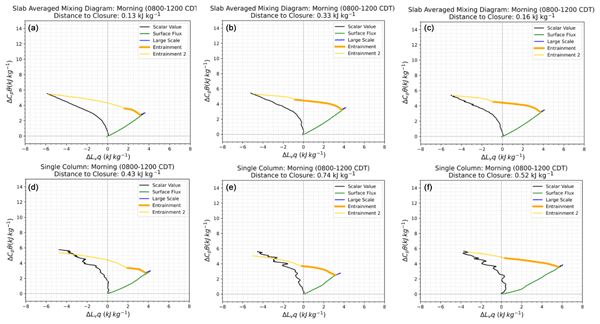
Entrainment is key in understanding temperature and moisture changes within the boundary layer, but it is difficult to observe using ground-based observations. This work used simulations to verify an assumption that simplifies entrainment estimations from ground-based observational data, recognizing that entrainment is the combination of the transfer of heat and moisture from above the boundary layer into it and the change in concentration of heat and moisture as boundary layer depth changes.
Laura Bianco, Reagan Mendeke, Jakob Lindblom, Irina V. Djalalova, David D. Turner, and James M. Wilczak
Wind Energ. Sci., 10, 2117–2136, https://doi.org/10.5194/wes-10-2117-2025, https://doi.org/10.5194/wes-10-2117-2025, 2025
Short summary
Short summary
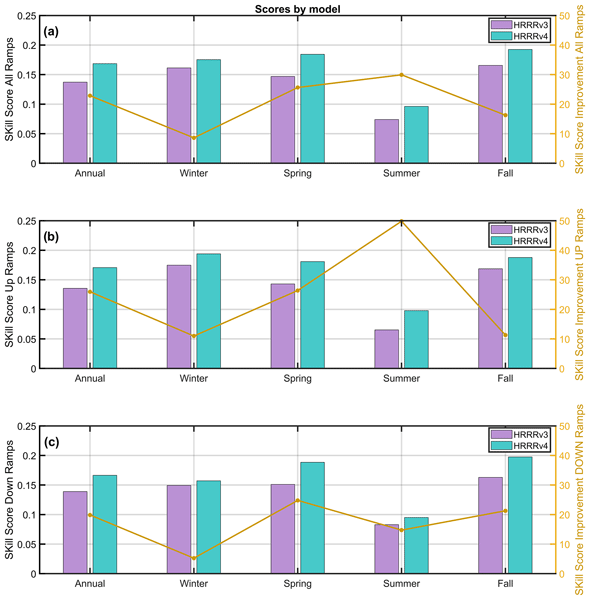
Adding more renewable energy into the electric grid is a critical part of the strategy to increase energy availability. Reliable numerical weather prediction (NWP) models need to be able to predict the intrinsic nature of weather-dependent resources such as wind ramp events, as wind energy could quickly be available in abundance or temporarily cease to exist. We assess the ability of the operational High Resolution Rapid Refresh NWP model to forecast wind ramp events in the two most recent versions.
Johannes Speidel, Hannes Vogelmann, Andreas Behrendt, Diego Lange, Matthias Mauder, Jens Reichardt, and Kevin Wolz
Atmos. Meas. Tech., 18, 4923–4948, https://doi.org/10.5194/amt-18-4923-2025, https://doi.org/10.5194/amt-18-4923-2025, 2025
Short summary
Short summary
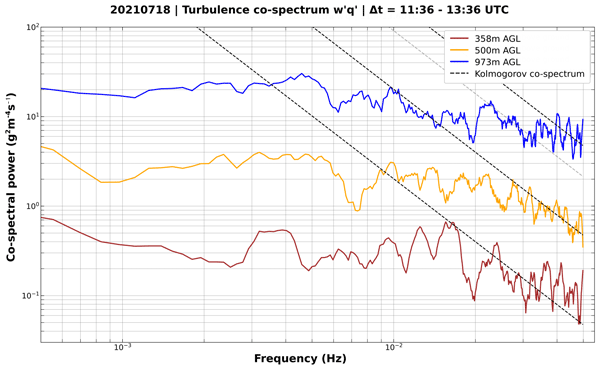
Humidity transport from the Earth's surface into the atmosphere is relevant for many processes. However, knowledge of the actual distribution of humidity concentrations is sparse – mainly due to technological limitations. With the lidar presented herein, it is possible to measure humidity concentrations and their vertical fluxes up to altitudes of > 3 km with high spatiotemporal resolution, opening new possibilities for detailed process understanding and, ultimately, better model representation.
Jonah K. Shaw, Dustin J. Swales, Sergio DeSouza-Machado, David D. Turner, Jennifer E. Kay, and David P. Schneider
Geosci. Model Dev., 18, 4935–4950, https://doi.org/10.5194/gmd-18-4935-2025, https://doi.org/10.5194/gmd-18-4935-2025, 2025
Short summary
Short summary
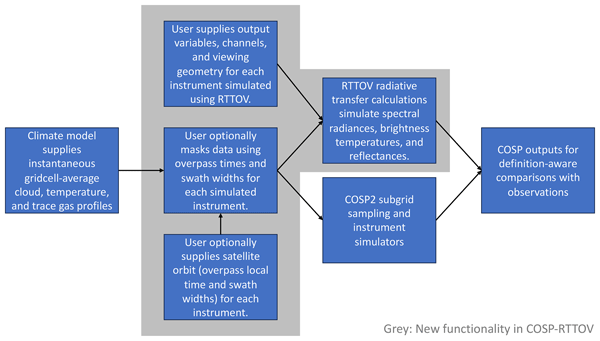
Satellites have observed Earth's emissions of infrared radiation since the 1970s. Because infrared wavelengths interact with the atmosphere in distinct ways, these observations contain information about Earth and the atmosphere. We present a tool that runs within Earth system models and produces output that can be directly compared with satellite measurements of infrared radiation. We then use this tool for climate model evaluation, climate change detection, and satellite mission design.
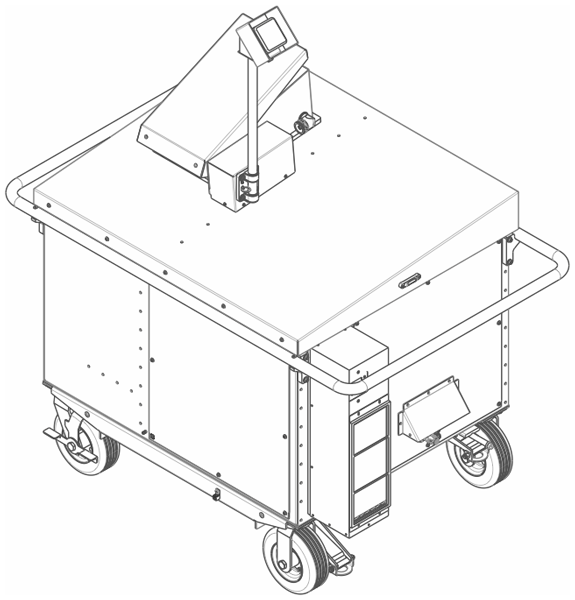
Vincent Michaud-Belleau, Michel Gaudreau, Jean Lacoursière, Éric Boisvert, Lalaina Ravelomanantsoa, David D. Turner, and Luc Rochette
Atmos. Meas. Tech., 18, 3585–3609, https://doi.org/10.5194/amt-18-3585-2025, https://doi.org/10.5194/amt-18-3585-2025, 2025
Short summary
Short summary
The Atmospheric Sounder Spectrometer by Infrared Spectral Technology (ASSIST) is a commercially available ground-based infrared spectroradiometer. It is designed for automated and passive measurement of the thermal radiation emitted by the atmosphere, providing information about the vertical distribution of temperature and humidity, trace gases, clouds, and aerosols in the boundary layer. In this paper, we outline the key characteristics of the ASSIST hardware and signal processing algorithm that yields downwelling radiance spectra in near real-time.

David D. Turner, Maria P. Cadeddu, Julia M. Simonson, and Timothy J. Wagner
Atmos. Meas. Tech., 18, 3533–3546, https://doi.org/10.5194/amt-18-3533-2025, https://doi.org/10.5194/amt-18-3533-2025, 2025
Short summary
Short summary
When deriving a geophysical variable from remote sensors, the uncertainty and information content are critical. The latter quantify specifies what fraction of a real perturbation would be observed in the derived variable. This paper outlines, for the first time, a methodology for propagating the information content from multiple remote sensors into a derived product using horizontal advection as an example.
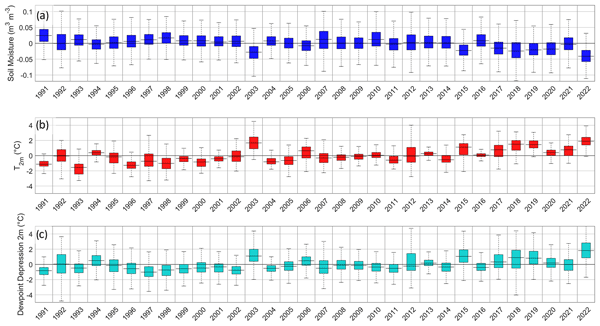
Thomas Schwitalla, Lisa Jach, Volker Wulfmeyer, and Kirsten Warrach-Sagi
Nat. Hazards Earth Syst. Sci., 25, 1405–1424, https://doi.org/10.5194/nhess-25-1405-2025, https://doi.org/10.5194/nhess-25-1405-2025, 2025
Short summary
Short summary
During recent decades, Europe has experienced increasing periods of severe drought and heatwave. To provide an overview of how land-surface conditions shape land–atmosphere (LA) coupling, the interannual LA coupling strength variability for the summer seasons of 1991–2022 is investigated by means of ERA5 data. The results clearly reflect ongoing climate change by a shift in the coupling relationships towards reinforced heating and drying by the land surface.
Syed Saqlain Abbas, Andreas Behrendt, Oliver Branch, and Volker Wulfmeyer
EGUsphere, https://doi.org/10.5194/egusphere-2024-3878, https://doi.org/10.5194/egusphere-2024-3878, 2024
Preprint archived
Short summary
Short summary
This study investigates turbulence statistics convective boundary layer. For this, we used data of two Doppler lidars, and an eddy covariance station between May to July 2021. We believe that these statistics are important to improve the land-atmosphere characterization in numerical weather prediction models.
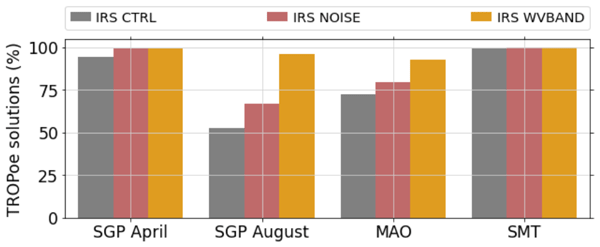
Bianca Adler, David D. Turner, Laura Bianco, Irina V. Djalalova, Timothy Myers, and James M. Wilczak
Atmos. Meas. Tech., 17, 6603–6624, https://doi.org/10.5194/amt-17-6603-2024, https://doi.org/10.5194/amt-17-6603-2024, 2024
Short summary
Short summary
Continuous profile observations of temperature and humidity in the lowest part of the atmosphere are essential for the evaluation of numerical weather prediction models and data assimilation for better weather forecasts. Such profiles can be retrieved from passive ground-based remote sensing instruments like infrared spectrometers and microwave radiometers. In this study, we describe three recent modifications to the retrieval framework TROPoe for improved temperature and humidity profiles.
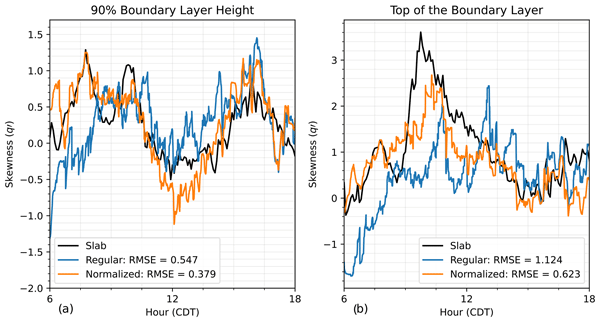
Tessa E. Rosenberger, David D. Turner, Thijs Heus, Girish N. Raghunathan, Timothy J. Wagner, and Julia Simonson
Atmos. Meas. Tech., 17, 6595–6602, https://doi.org/10.5194/amt-17-6595-2024, https://doi.org/10.5194/amt-17-6595-2024, 2024
Short summary
Short summary
This work used model output to show that considering the changes in boundary layer depth over time in the calculations of variables such as fluxes and variance yields more accurate results than cases where calculations were done at a constant height. This work was done to improve future observations of these variables at the top of the boundary layer.
Laura Bianco, Bianca Adler, Ludovic Bariteau, Irina V. Djalalova, Timothy Myers, Sergio Pezoa, David D. Turner, and James M. Wilczak
Atmos. Meas. Tech., 17, 3933–3948, https://doi.org/10.5194/amt-17-3933-2024, https://doi.org/10.5194/amt-17-3933-2024, 2024
Short summary
Short summary
The Tropospheric Remotely Observed Profiling via Optimal Estimation physical retrieval is used to retrieve temperature and humidity profiles from various combinations of passive and active remote sensing instruments, surface platforms, and numerical weather prediction models. The retrieved profiles are assessed against collocated radiosonde in non-cloudy conditions to assess the sensitivity of the retrievals to different input combinations. Case studies with cloudy conditions are also inspected.
Volker Wulfmeyer, Christoph Senff, Florian Späth, Andreas Behrendt, Diego Lange, Robert M. Banta, W. Alan Brewer, Andreas Wieser, and David D. Turner
Atmos. Meas. Tech., 17, 1175–1196, https://doi.org/10.5194/amt-17-1175-2024, https://doi.org/10.5194/amt-17-1175-2024, 2024
Short summary
Short summary
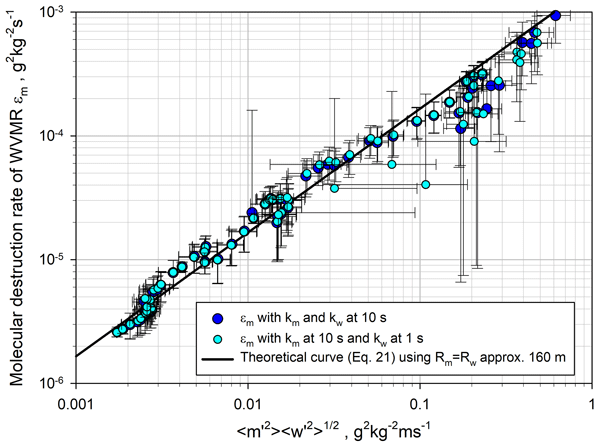
A simultaneous deployment of Doppler, temperature, and water-vapor lidar systems is used to provide profiles of molecular destruction rates and turbulent kinetic energy (TKE) dissipation in the convective boundary layer (CBL). The results can be used for the parameterization of turbulent variables, TKE budget analyses, and the verification of weather forecast and climate models.

Oliver Branch, Lisa Jach, Thomas Schwitalla, Kirsten Warrach-Sagi, and Volker Wulfmeyer
Earth Syst. Dynam., 15, 109–129, https://doi.org/10.5194/esd-15-109-2024, https://doi.org/10.5194/esd-15-109-2024, 2024
Short summary
Short summary
In the United Arab Emirates, water scarcity is reaching a crisis point, and new methods for obtaining freshwater are urgently needed. Regional climate engineering with large artificial heat islands can enhance desert precipitation by increasing cloud development. Through model simulation, we show that heat islands of 20 × 20 km or larger can potentially produce enough annual rainfall to supply thousands of people. Thus, artificial heat islands should be made a high priority for further research.
Sunil Baidar, Timothy J. Wagner, David D. Turner, and W. Alan Brewer
Atmos. Meas. Tech., 16, 3715–3726, https://doi.org/10.5194/amt-16-3715-2023, https://doi.org/10.5194/amt-16-3715-2023, 2023
Short summary
Short summary
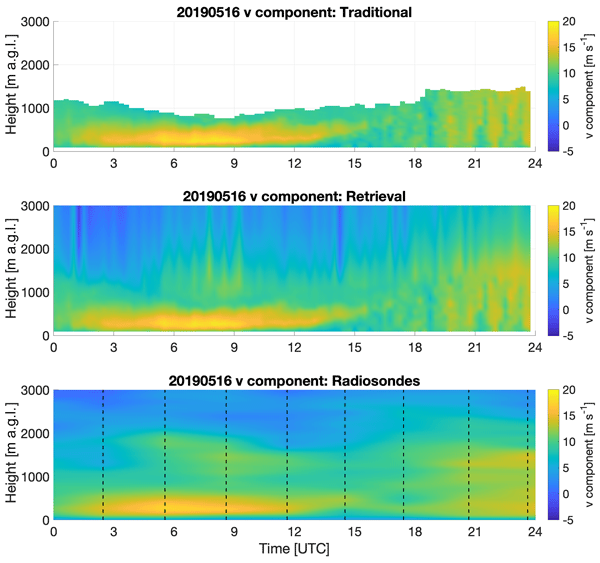
This paper provides a new method to retrieve wind profiles from coherent Doppler lidar (CDL) measurements. It takes advantage of layer-to-layer correlation in wind profiles to provide continuous profiles of up to 3 km by filling in the gaps where the CDL signal is too small to retrieve reliable results by itself. Comparison with the current method and collocated radiosonde wind measurements showed excellent agreement with no degradation in results where the current method gives valid results.
Maria P. Cadeddu, Virendra P. Ghate, David D. Turner, and Thomas E. Surleta
Atmos. Chem. Phys., 23, 3453–3470, https://doi.org/10.5194/acp-23-3453-2023, https://doi.org/10.5194/acp-23-3453-2023, 2023
Short summary
Short summary
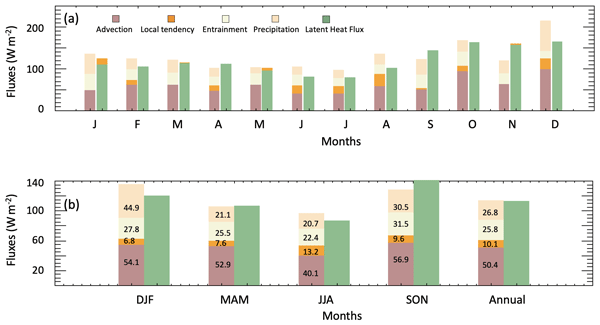
We analyze the variability in marine boundary layer moisture at the Eastern North Atlantic site on a monthly and daily temporal scale and examine its fundamental role in the control of boundary layer cloudiness and precipitation. The study also highlights the complex interaction between large-scale and local processes controlling the boundary layer moisture and the importance of the mesoscale spatial distribution of vapor to support convection and precipitation.

Bianca Adler, James M. Wilczak, Jaymes Kenyon, Laura Bianco, Irina V. Djalalova, Joseph B. Olson, and David D. Turner
Geosci. Model Dev., 16, 597–619, https://doi.org/10.5194/gmd-16-597-2023, https://doi.org/10.5194/gmd-16-597-2023, 2023
Short summary
Short summary
Rapid changes in wind speed make the integration of wind energy produced during persistent orographic cold-air pools difficult to integrate into the electrical grid. By evaluating three versions of NOAA’s High-Resolution Rapid Refresh model, we demonstrate how model developments targeted during the second Wind Forecast Improvement Project improve the forecast of a persistent cold-air pool event.
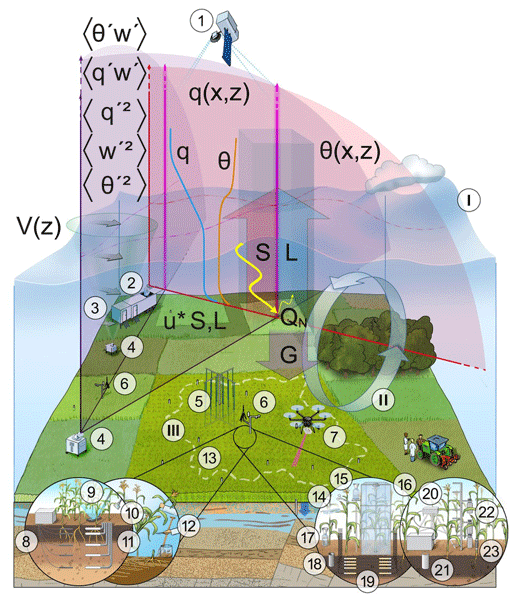
Florian Späth, Verena Rajtschan, Tobias K. D. Weber, Shehan Morandage, Diego Lange, Syed Saqlain Abbas, Andreas Behrendt, Joachim Ingwersen, Thilo Streck, and Volker Wulfmeyer
Geosci. Instrum. Method. Data Syst., 12, 25–44, https://doi.org/10.5194/gi-12-25-2023, https://doi.org/10.5194/gi-12-25-2023, 2023
Short summary
Short summary
Important topics in land–atmosphere feedback research are water and energy balances and heterogeneities of fluxes at the land surface and in the atmosphere. To target these questions, the Land–Atmosphere Feedback Observatory (LAFO) has been installed in Germany. The instrumentation allows for comprehensive measurements from the bedrock to the troposphere. The LAFO observation strategy aims for simultaneous measurements in all three compartments: atmosphere, soil and land surface, and vegetation.
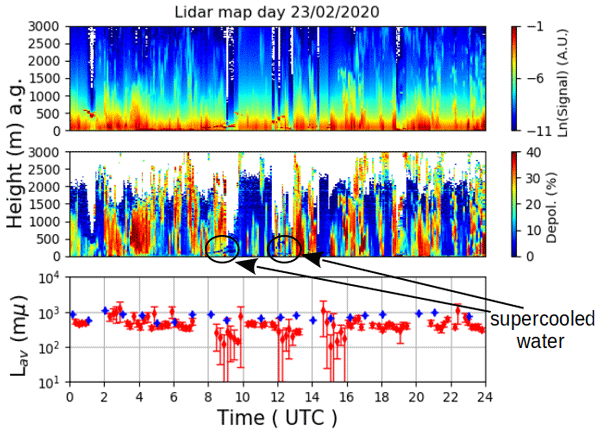
Gianluca Di Natale, David D. Turner, Giovanni Bianchini, Massimo Del Guasta, Luca Palchetti, Alessandro Bracci, Luca Baldini, Tiziano Maestri, William Cossich, Michele Martinazzo, and Luca Facheris
Atmos. Meas. Tech., 15, 7235–7258, https://doi.org/10.5194/amt-15-7235-2022, https://doi.org/10.5194/amt-15-7235-2022, 2022
Short summary
Short summary
In this paper, we describe a new approach to test the consistency of the precipitating ice cloud optical and microphysical properties in Antarctica, Dome C, retrieved from hyperspectral measurements in the far-infrared, with the reflectivity detected by a co-located micro rain radar operating at 24 GHz. The retrieved ice crystal sizes were found in accordance with the direct measurements of an optical imager, also installed at Dome C, which can collect the falling ice particles.
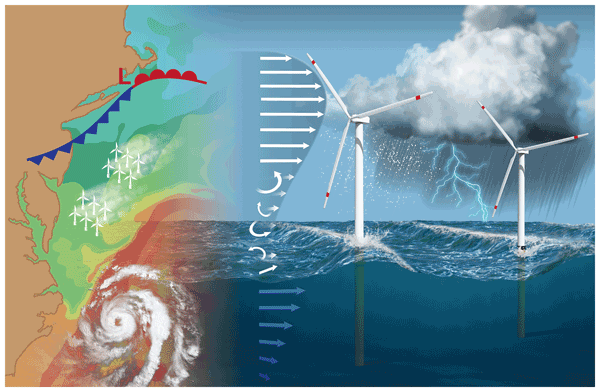
William J. Shaw, Larry K. Berg, Mithu Debnath, Georgios Deskos, Caroline Draxl, Virendra P. Ghate, Charlotte B. Hasager, Rao Kotamarthi, Jeffrey D. Mirocha, Paytsar Muradyan, William J. Pringle, David D. Turner, and James M. Wilczak
Wind Energ. Sci., 7, 2307–2334, https://doi.org/10.5194/wes-7-2307-2022, https://doi.org/10.5194/wes-7-2307-2022, 2022
Short summary
Short summary
This paper provides a review of prominent scientific challenges to characterizing the offshore wind resource using as examples phenomena that occur in the rapidly developing wind energy areas off the United States. The paper also describes the current state of modeling and observations in the marine atmospheric boundary layer and provides specific recommendations for filling key current knowledge gaps.
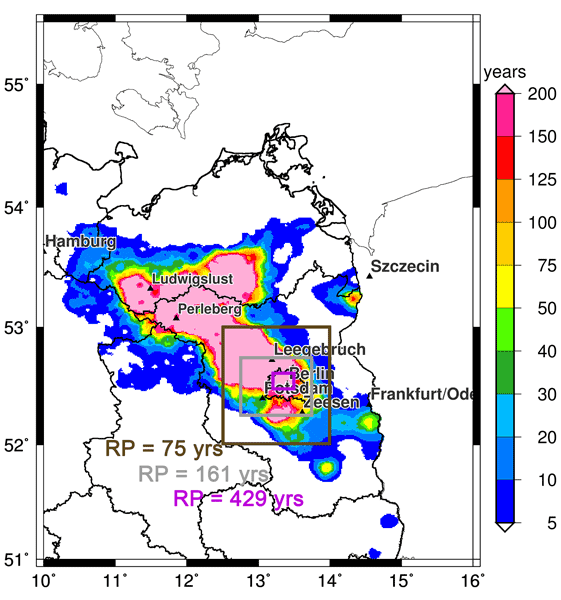
Alberto Caldas-Alvarez, Markus Augenstein, Georgy Ayzel, Klemens Barfus, Ribu Cherian, Lisa Dillenardt, Felix Fauer, Hendrik Feldmann, Maik Heistermann, Alexia Karwat, Frank Kaspar, Heidi Kreibich, Etor Emanuel Lucio-Eceiza, Edmund P. Meredith, Susanna Mohr, Deborah Niermann, Stephan Pfahl, Florian Ruff, Henning W. Rust, Lukas Schoppa, Thomas Schwitalla, Stella Steidl, Annegret H. Thieken, Jordis S. Tradowsky, Volker Wulfmeyer, and Johannes Quaas
Nat. Hazards Earth Syst. Sci., 22, 3701–3724, https://doi.org/10.5194/nhess-22-3701-2022, https://doi.org/10.5194/nhess-22-3701-2022, 2022
Short summary
Short summary
In a warming climate, extreme precipitation events are becoming more frequent. To advance our knowledge on such phenomena, we present a multidisciplinary analysis of a selected case study that took place on 29 June 2017 in the Berlin metropolitan area. Our analysis provides evidence of the extremeness of the case from the atmospheric and the impacts perspectives as well as new insights on the physical mechanisms of the event at the meteorological and climate scales.
Heather Guy, David D. Turner, Von P. Walden, Ian M. Brooks, and Ryan R. Neely
Atmos. Meas. Tech., 15, 5095–5115, https://doi.org/10.5194/amt-15-5095-2022, https://doi.org/10.5194/amt-15-5095-2022, 2022
Short summary
Short summary
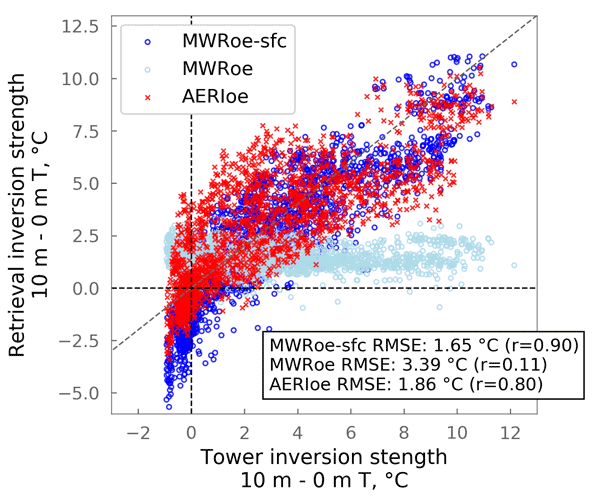
Fog formation is highly sensitive to near-surface temperatures and humidity profiles. Passive remote sensing instruments can provide continuous measurements of the vertical temperature and humidity profiles and liquid water content, which can improve fog forecasts. Here we compare the performance of collocated infrared and microwave remote sensing instruments and demonstrate that the infrared instrument is especially sensitive to the onset of thin radiation fog.
James B. Duncan Jr., Laura Bianco, Bianca Adler, Tyler Bell, Irina V. Djalalova, Laura Riihimaki, Joseph Sedlar, Elizabeth N. Smith, David D. Turner, Timothy J. Wagner, and James M. Wilczak
Atmos. Meas. Tech., 15, 2479–2502, https://doi.org/10.5194/amt-15-2479-2022, https://doi.org/10.5194/amt-15-2479-2022, 2022
Short summary
Short summary
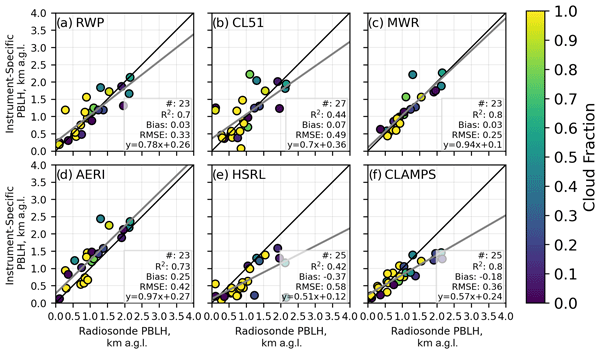
In this study, several ground-based remote sensing instruments are used to estimate the height of the convective planetary boundary layer, and their performance is compared against independent boundary layer depth estimates obtained from radiosondes launched as part of the CHEESEHEAD19 field campaign. The impact of clouds (particularly boundary layer clouds) on the estimation of the boundary layer depth is also investigated.
Tobias K. D. Weber, Joachim Ingwersen, Petra Högy, Arne Poyda, Hans-Dieter Wizemann, Michael Scott Demyan, Kristina Bohm, Ravshan Eshonkulov, Sebastian Gayler, Pascal Kremer, Moritz Laub, Yvonne Funkiun Nkwain, Christian Troost, Irene Witte, Tim Reichenau, Thomas Berger, Georg Cadisch, Torsten Müller, Andreas Fangmeier, Volker Wulfmeyer, and Thilo Streck
Earth Syst. Sci. Data, 14, 1153–1181, https://doi.org/10.5194/essd-14-1153-2022, https://doi.org/10.5194/essd-14-1153-2022, 2022
Short summary
Short summary
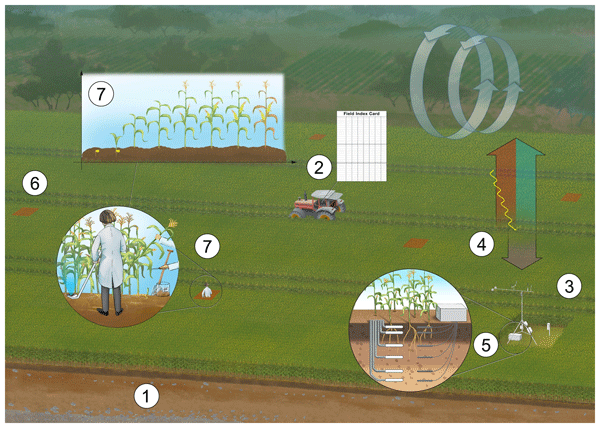
Presented are measurement results from six agricultural fields operated by local farmers in southwestern Germany over 9 years. Six eddy-covariance stations measuring water, energy, and carbon fluxes between the vegetated soil surface and the atmosphere provided the backbone of the measurement sites and were supplemented by extensive soil and vegetation state monitoring. The dataset is ideal for testing process models characterizing fluxes at the vegetated soil surface and in the atmosphere.
Irina V. Djalalova, David D. Turner, Laura Bianco, James M. Wilczak, James Duncan, Bianca Adler, and Daniel Gottas
Atmos. Meas. Tech., 15, 521–537, https://doi.org/10.5194/amt-15-521-2022, https://doi.org/10.5194/amt-15-521-2022, 2022
Short summary
Short summary
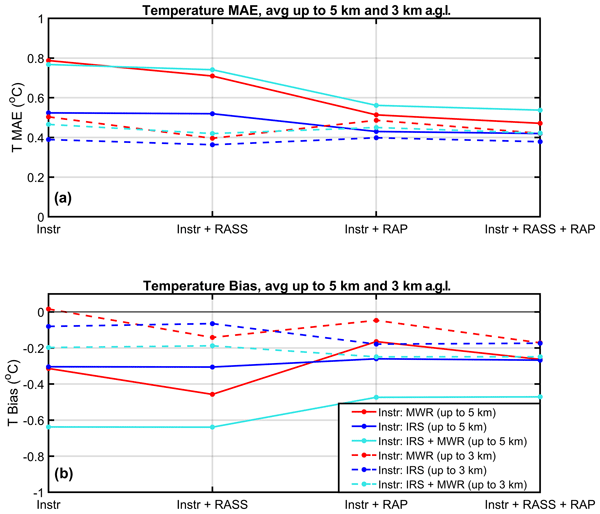
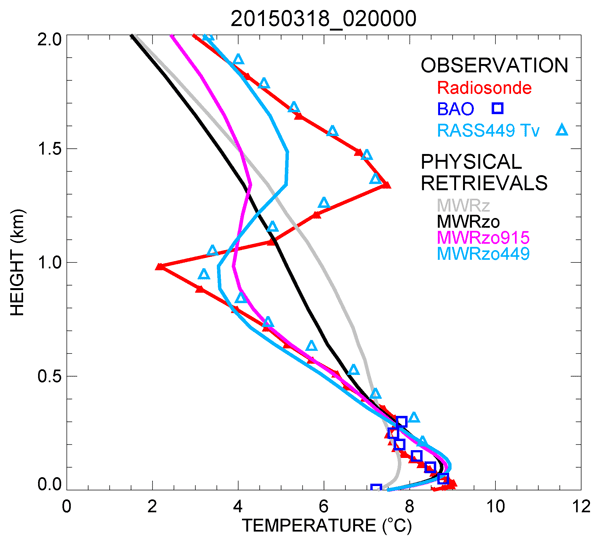
In this paper we investigate the synergy obtained by combining active (radio acoustic sounding system – RASS) and passive (microwave radiometer) remote sensing observations to obtain temperature vertical profiles through a radiative transfer model. Inclusion of the RASS observations leads to more accurate temperature profiles from the surface to 5 km above ground, well above the maximum height of the RASS observations themselves (2000 m), when compared to the microwave radiometer used alone.
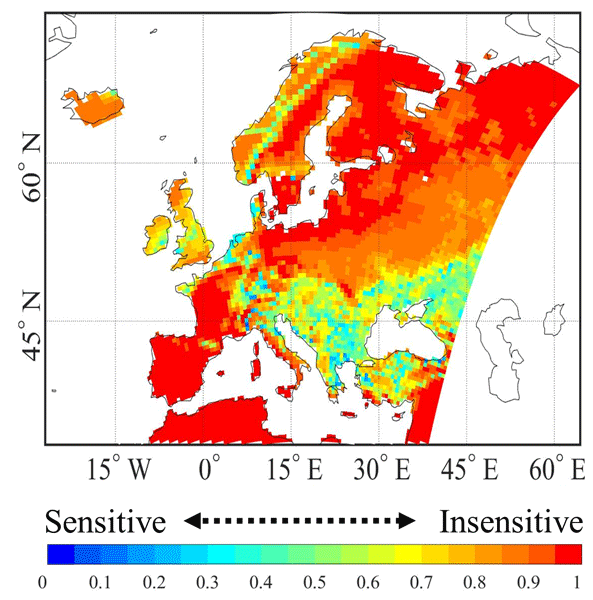
Lisa Jach, Thomas Schwitalla, Oliver Branch, Kirsten Warrach-Sagi, and Volker Wulfmeyer
Earth Syst. Dynam., 13, 109–132, https://doi.org/10.5194/esd-13-109-2022, https://doi.org/10.5194/esd-13-109-2022, 2022
Short summary
Short summary
The land surface can influence the occurrence of local rainfall through different feedback mechanisms. In Europe, this happens most frequently in summer. Here, we examine how differences in atmospheric temperature and moisture change where and how often the land surface can influence rainfall. The results show that the differences barely move the region of strong surface influence over Scandinavia and eastern Europe, but they can change the frequency of coupling events.
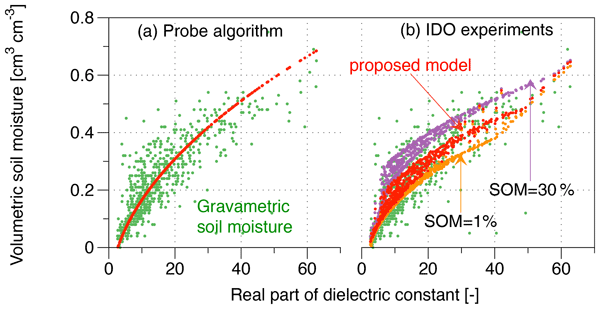
Chang-Hwan Park, Aaron Berg, Michael H. Cosh, Andreas Colliander, Andreas Behrendt, Hida Manns, Jinkyu Hong, Johan Lee, Runze Zhang, and Volker Wulfmeyer
Hydrol. Earth Syst. Sci., 25, 6407–6420, https://doi.org/10.5194/hess-25-6407-2021, https://doi.org/10.5194/hess-25-6407-2021, 2021
Short summary
Short summary
In this study, we proposed an inversion of the dielectric mixing model for a 50 Hz soil sensor for agricultural organic soil. This model can reflect the variability of soil organic matter (SOM) in wilting point and porosity, which play a critical role in improving the accuracy of SM estimation, using a dielectric-based soil sensor. The results of statistical analyses demonstrated a higher performance of the new model than the factory setting probe algorithm.
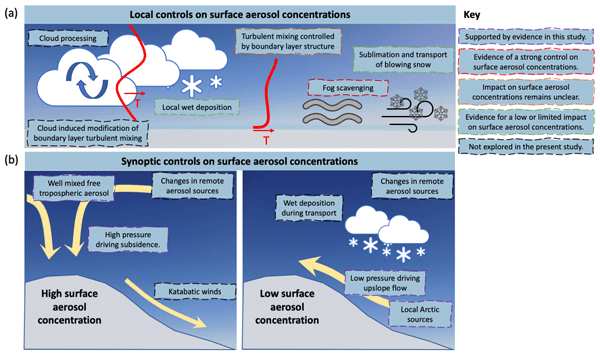
Heather Guy, Ian M. Brooks, Ken S. Carslaw, Benjamin J. Murray, Von P. Walden, Matthew D. Shupe, Claire Pettersen, David D. Turner, Christopher J. Cox, William D. Neff, Ralf Bennartz, and Ryan R. Neely III
Atmos. Chem. Phys., 21, 15351–15374, https://doi.org/10.5194/acp-21-15351-2021, https://doi.org/10.5194/acp-21-15351-2021, 2021
Short summary
Short summary
We present the first full year of surface aerosol number concentration measurements from the central Greenland Ice Sheet. Aerosol concentrations here have a distinct seasonal cycle from those at lower-altitude Arctic sites, which is driven by large-scale atmospheric circulation. Our results can be used to help understand the role aerosols might play in Greenland surface melt through the modification of cloud properties. This is crucial in a rapidly changing region where observations are sparse.
Cited articles
Augstein, E., Schmidt, H., and Ostapoff, F.: The vertical structure of the atmospheric planetary boundary layer in undisturbed trade winds over the Atlantic Ocean, Bound.-Lay. Meteorol., 6, 129–150, https://doi.org/10.1007/BF00232480, 1974. a
Behrendt, A., Wulfmeyer, V., Senff, C., Muppa, S. K., Späth, F., Lange, D., Kalthoff, N., and Wieser, A.: Observation of sensible and latent heat flux profiles with lidar, Atmos. Meas. Tech., 13, 3221–3233, https://doi.org/10.5194/amt-13-3221-2020, 2020. a
Crameri, F., Shephard, G. E., and Heron, P. J.: The misuse of colour in science communication, Nat. Commun., 11, 5444, https://doi.org/10.1038/s41467-020-19160-7, 2020. a
Duncan Jr., J. B., Bianco, L., Adler, B., Bell, T., Djalalova, I. V., Riihimaki, L., Sedlar, J., Smith, E. N., Turner, D. D., Wagner, T. J., and Wilczak, J. M.: Evaluating convective planetary boundary layer height estimations resolved by both active and passive remote sensing instruments during the CHEESEHEAD19 field campaign, Atmos. Meas. Tech., 15, 2479–2502, https://doi.org/10.5194/amt-15-2479-2022, 2022. a
Fairless, T., Jensen, M., Zhou, A., and Giangrande, S.: Interpolated Sounding and Gridded Sounding Value-Added Products, US Department of Energy, Atmospheric Radiation Measurement (ARM) user facility, Richland, WA, DOE/SC-ARM-TR 183, https://doi.org/10.2172/1248938, 2021. a, b, c
Gibert, F., Edouart, D., Monnier, P., Collignan, J., Lopez, J., and Cénac, C.: Scalar turbulent fluxes and variances in the interfacial layer from lidar observations and assessment of Lagrangian Stochastic Models, Q. J. Roy. Meteor. Soc., e70016, https://doi.org/10.1002/qj.70016, 2025. a
Haberland, M.: Fast Resampling and Monte Carlo Methods in Python, Journal of Open Source Software, 8, 5092, https://doi.org/10.21105/joss.05092, 2023. a
Holdridge, D.: Balloon-Borne Sounding System (SONDE) Instrument Handbook, US Department of Energy, Office of Science, Office of Biological and Environmental Research, DOE/SC-ARM-TR-029, https://doi.org/10.2172/1020712, 2020. a, b
Jensen, M. P., Holdridge, D. J., Survo, P., Lehtinen, R., Baxter, S., Toto, T., and Johnson, K. L.: Comparison of Vaisala radiosondes RS41 and RS92 at the ARM Southern Great Plains site, Atmos. Meas. Tech., 9, 3115–3129, https://doi.org/10.5194/amt-9-3115-2016, 2016. a, b, c
Keeler, E., Burk, K., and Kyrouac, J.: Balloon-borne sounding system (BBSS), WNPN output data, Atmospheric Radiation Measurement (ARM) user facility [data set], https://doi.org/10.5439/1595321, 2001. a, b
Knuteson, R. O., Revercomb, H. E., Best, F. A., Ciganovich, N. C., Dedecker, R. G., Dirkx, T. P., Ellington, S. C., Feltz, W. F., Garcia, R. K., Howell, H. B., Smith, W. L., Short, J. F., and Tobin, D. C.: Atmospheric Emitted Radiance Interferometer. Part II: Instrument Performance, J. Atmos. Ocean. Tech., 21, 1777–1789, https://doi.org/10.1175/JTECH-1663.1, 2004. a
Kotthaus, S., Bravo-Aranda, J. A., Collaud Coen, M., Guerrero-Rascado, J. L., Costa, M. J., Cimini, D., O'Connor, E. J., Hervo, M., Alados-Arboledas, L., Jiménez-Portaz, M., Mona, L., Ruffieux, D., Illingworth, A., and Haeffelin, M.: Atmospheric boundary layer height from ground-based remote sensing: a review of capabilities and limitations, Atmos. Meas. Tech., 16, 433–479, https://doi.org/10.5194/amt-16-433-2023, 2023. a, b
Krishnamurthy, R., Newsom, R., Chand, D., and Shaw, W.: Boundary Layer Climatology at ARM Southern Great Plains, Pacific Northwest National Lab. (PNNL), Richland, WA, United States, PNNL-30832, https://doi.org/10.2172/1778833, 2021a. a
Krishnamurthy, R., Newsom, R. K., Berg, L. K., Xiao, H., Ma, P.-L., and Turner, D. D.: On the estimation of boundary layer heights: a machine learning approach, Atmos. Meas. Tech., 14, 4403–4424, https://doi.org/10.5194/amt-14-4403-2021, 2021b. a
LaFleur, B. J. and Greevy, R. A.: Introduction to permutation and resampling-based hypothesis tests, J. Clin. Child. Adolesc., 38, 286–294, https://doi.org/10.1080/15374410902740411, 2009. a
Newsom, R. and Sivaraman, C.: Raman Lidar Water Vapor Mixing Ratio and Temperature Value-Added Products, U. S. Department of Energy, Atmospheric Radiation Measurement (ARM) user facility, DOE/SC-ARM-TR-218, https://doi.org/10.2172/1489497, 2018. a, b
Newsom, R. K. and Krishnamurthy, R.: Doppler Lidar (DL) Instrument Handbook, U. S. Department of Energy, Atmospheric Radiation Measurement (ARM) user facility facility, DOE/SC-ARM-TR-101, https://doi.org/10.2172/1034640, 2022. a
Newsom, R., Sivaraman, C., and Zhang, D.: Water vapor mixing ratio from Raman Lidar, Atmospheric Radiation Measurement (ARM) user facility [data set], https://doi.org/10.5439/1415137, 2016. a
Newsom, R. K., Bambha, R., and Chand, D.: Raman Lidar (RL) Instrument Handbook, U. S. Department of Energy, Atmospheric Radiation Measurement (ARM) user facility, Richland, WA, DOE/SC-ARM-TR-038, https://doi.org/10.2172/1020561, 2022. a
Nielsen-Gammon, J. W., Powell, C. L., Mahoney, M. J., Angevine, W. M., Senff, C., White, A., Berkowitz, C., Doran, C., and Knupp, K.: Multisensor Estimation of Mixing Heights over a Coastal City, J. Appl. Meteorol. Clim., 47, 27–43, https://doi.org/10.1175/2007JAMC1503.1, 2008. a
Osman, M. K., Turner, D. D., Heus, T., and Wulfmeyer, V.: Validating the Water Vapor Variance Similarity Relationship in the Interfacial Layer Using Observations and Large–Eddy Simulations, J. Geophys. Res.-Atmos., 124, 10662–10675, https://doi.org/10.1029/2019JD030653, 2019. a
Python: Open Source Programming Language: Version 3.12.4, Python Software Foundation [software], https://www.python.org/ (last access: 9 January 2026), 2024. a
Rosenberger, T. E., Turner, D. D., Heus, T., Raghunathan, G. N., Wagner, T. J., and Simonson, J.: Improving the estimate of higher-order moments from lidar observations near the top of the convective boundary layer, Atmos. Meas. Tech., 17, 6595–6602, https://doi.org/10.5194/amt-17-6595-2024, 2024. a, b
Santanello, J. A., Dirmeyer, P. A., Ferguson, C. R., Findell, K. L., Tawfik, A. B., Berg, A., Ek, M., Gentine, P., Guillod, B. P., van Heerwaarden, C., Roundy, J., and Wulfmeyer, V.: Land–Atmosphere Interactions: The LoCo Perspective, B. Am. Meteorol. Soc., 99, 1253–1272, https://doi.org/10.1175/BAMS-D-17-0001.1, 2018. a
Seidel, D. J., Ao, C. O., and Li, K.: Estimating climatological planetary boundary layer heights from radiosonde observations: Comparison of methods and uncertainty analysis, J. Geophys. Res.-Atmos., 115, https://doi.org/10.1029/2009JD013680, 2010. a
Sivaraman, C. and Zhang, D.: Planetary Boundary Layer Height derived from Doppler Lidar (DL) data, Atmospheric Radiation Measurement (ARM) user facility [data set], https://doi.org/10.5439/1726254, 2010. a
Stull, R. B.: Practical Meteorology: An Algebra-Based Survey of Atmospheric Science; 1.02 b, The University of British Columbia, Vancouver, Canada, https://www.eoas.ubc.ca/books/Practical_Meteorology/ (last access: 21 November 2024), 2017. a
Taylor, K. E.: Summarizing multiple aspects of model performance in a single diagram, J. Geophys. Res.-Atmos., 106, 7183–7192, https://doi.org/10.1029/2000JD900719, 2001. a
Turner, D.: Tropospheric Optimal Estimation Retrieval (TROPOE), Atmospheric Radiation Measurement (ARM) user facility [data set], https://doi.org/10.5439/1996977, 2010. a, b
Turner, D. D. and Goldsmith, J. E. M.: Twenty-Four-Hour Raman Lidar Water Vapor Measurements during the Atmospheric Radiation Measurement Program's 1996 and 1997 Water Vapor Intensive Observation Periods, J. Atmos. Ocean. Tech., 16, 1062–1076, https://doi.org/10.1175/1520-0426(1999)016<1062:TFHRLW>2.0.CO;2, 1999. a
Turner, D. D. and Löhnert, U.: Information Content and Uncertainties in Thermodynamic Profiles and Liquid Cloud Properties Retrieved from the Ground-Based Atmospheric Emitted Radiance Interferometer (AERI), J. Appl. Meteorol. Clim., 53, 752–771, https://doi.org/10.1175/JAMC-D-13-0126.1, 2014. a
Turner, D. D., Goldsmith, J. E. M., and Ferrare, R. A.: Development and Applications of the ARM Raman Lidar, Meteor. Mon., 57, 18.1–18.15, https://doi.org/10.1175/AMSMONOGRAPHS-D-15-0026.1, 2016a. a
Turner, D. D., Mlawer, E. J., and Revercomb, H. E.: Water Vapor Observations in the ARM Program, Meteor. Mon., 57, 13.1–13.18, https://doi.org/10.1175/AMSMONOGRAPHS-D-15-0025.1, 2016b. a
Virtanen, P., Gommers, R., Oliphant, T. E., Haberland, M., Reddy, T., Cournapeau, D., Burovski, E., Peterson, P., Weckesser, W., Bright, J., van der Walt, S. J., Brett, M., Wilson, J., Millman, K. J., Mayorov, N., Nelson, A. R. J., Jones, E., Kern, R., Larson, E., Carey, C. J., Polat, İ., Feng, Y., Moore, E. W., VanderPlas, J., Laxalde, D., Perktold, J., Cimrman, R., Henriksen, I., Quintero, E. A., Harris, C. R., Archibald, A. M., Ribeiro, A. H., Pedregosa, F., and van Mulbregt, P.: SciPy 1.0: fundamental algorithms for scientific computing in Python, Nat. Methods, 17, 261–272, https://doi.org/10.1038/s41592-019-0686-2, 2020. a
von Klitzing, L.: Statistical data for the AMT manuscript “Improved method for temporally interpolating radiosonde profiles in the convective boundary layer”, Zenodo [data set], https://doi.org/10.5281/zenodo.15235761, 2026. a
Weckwerth, T., Spuler, S., and Turner, D.: Micropulse Differential Absorption Lidar (MPD) Network Demonstration Field Campaign Report, US Department of Energy, Office of Science, Office of Biological and Environmental Research, DOE/SC-ARM-20-002, https://doi.org/10.2172/1595264, 2020. a, b
Wulfmeyer, V., Hardesty, R. M., Turner, D. D., Behrendt, A., Cadeddu, M. P., Di Girolamo, P., Schlüssel, P., van Baelen, J., and Zus, F.: A review of the remote sensing of lower tropospheric thermodynamic profiles and its indispensable role for the understanding and the simulation of water and energy cycles, Rev. Geophys., 53, 819–895, https://doi.org/10.1002/2014RG000476, 2015. a, b
Wulfmeyer, V., Muppa, S. K., Behrendt, A., Hammann, E., Späth, F., Sorbjan, Z., Turner, D. D., and Hardesty, R. M.: Determination of Convective Boundary Layer Entrainment Fluxes, Dissipation Rates, and the Molecular Destruction of Variances: Theoretical Description and a Strategy for Its Confirmation with a Novel Lidar System Synergy, J. Atmos. Sci., 73, 667–692, https://doi.org/10.1175/JAS-D-14-0392.1, 2016. a, b, c
Wulfmeyer, V., Späth, F., Behrendt, A., Jach, L., Warrach-Sagi, K., Ek, M., Turner, D. D., Senff, C., Ferguson, C. R., Santanello, J., Lee, T. R., Buban, M., and Verhoef, A.: The GEWEX Land-Atmosphere Feedback Observatory (GLAFO), Gewex Quarterly Newsletter, 30, 6–11, https://www.gewex.org/gewex-content/uploads/2024/02/1583952472Feb2020.pdf (last access: 12 November 2025), 2020. a
Zhang, D., Comstock, J., and Morris, V.: Comparison of planetary boundary layer height from ceilometer with ARM radiosonde data, Atmos. Meas. Tech., 15, 4735–4749, https://doi.org/10.5194/amt-15-4735-2022, 2022. a
Short summary
Many atmospheric science endeavors require temporally resolved profiles of temperature, humidity, and winds. Radiosondes are considered the gold standard for measuring these profiles, but the temporal resolution is frequently too coarse for many applications within the atmospheric boundary layer. This study proposes a new method using a normalized height grid in the temporal interpolation process that yields more accurate profiles in the convective boundary layer.
Many atmospheric science endeavors require temporally resolved profiles of temperature,...


