
Articles | Volume 19, issue 2
https://doi.org/10.5194/amt-19-389-2026
© Author(s) 2026. This work is distributed under
the Creative Commons Attribution 4.0 License.
the Creative Commons Attribution 4.0 License.
https://doi.org/10.5194/amt-19-389-2026
© Author(s) 2026. This work is distributed under
the Creative Commons Attribution 4.0 License.
the Creative Commons Attribution 4.0 License.
Research article
| 
19 Jan 2026
Research article |
| 19 Jan 2026
| 19 Jan 2026
Hygroscopic growth characteristics of anthropogenic aerosols over central China revealed by lidar observations
Dongzhe Jing
School of Earth and Space Science and Technology, Wuhan University, Wuhan 430072, China
Key Laboratory of Geospace Environment and Geodesy, Ministry of Education, Wuhan 430072, China
State Observatory for Atmospheric Remote Sensing, Wuhan 430072, China

School of Earth and Space Science and Technology, Wuhan University, Wuhan 430072, China
Key Laboratory of Geospace Environment and Geodesy, Ministry of Education, Wuhan 430072, China
State Observatory for Atmospheric Remote Sensing, Wuhan 430072, China
Zhenping Yin
School of Remote Sensing and Information Engineering, Wuhan University, Wuhan 430072, China
Detlef Müller
School of Remote Sensing and Information Engineering, Wuhan University, Wuhan 430072, China
Kaiming Huang
School of Earth and Space Science and Technology, Wuhan University, Wuhan 430072, China
Key Laboratory of Geospace Environment and Geodesy, Ministry of Education, Wuhan 430072, China
State Observatory for Atmospheric Remote Sensing, Wuhan 430072, China
School of Earth and Space Science and Technology, Wuhan University, Wuhan 430072, China
Key Laboratory of Geospace Environment and Geodesy, Ministry of Education, Wuhan 430072, China
State Observatory for Atmospheric Remote Sensing, Wuhan 430072, China
Related authors
Dongzhe Jing, Kaiming Huang, Yun He, Fan Yi, Rang Cao, Fangzheng Cheng, and He He
EGUsphere, https://doi.org/10.5194/egusphere-2026-4709, https://doi.org/10.5194/egusphere-2026-4709, 2026
This preprint is open for discussion and under review for Atmospheric Chemistry and Physics (ACP).
Short summary
Short summary
We analyzed the ice multiplication factor from 11 stratiform MPC cases based on lidar-radar synergistic observations from 2021 to 2025. The IMF exhibits a distinct temperature dependence, which was close to 1 when the temperatures in supercooled liquid layer lower than -8 ℃, and increased to 351.8 as such temperature approach -5 ℃. Moreover, the IMF and particle maximum diameter show a negative correlation, indicating that stronger SIP was associated with smaller ice particles.
Yun He, Dongzhe Jing, Zhenping Yin, Detlef Müller, Fuchao Liu, Yunpeng Zhang, Yang Yi, Kaiming Huang, and Fan Yi
Atmos. Chem. Phys., 26, 4937–4951, https://doi.org/10.5194/acp-26-4937-2026, https://doi.org/10.5194/acp-26-4937-2026, 2026
Short summary
Short summary
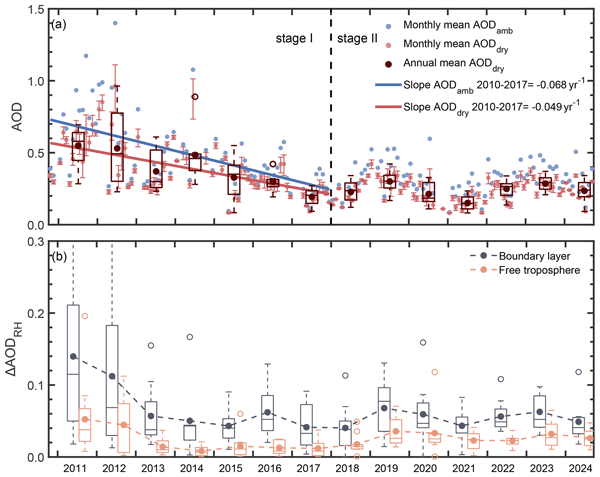
Using polarization lidar observations during 2010–2024, we retrieve the vertical profiles of aerosol backscatter and extinction coefficients of anthropogenic pollution under dry and ambient atmospheric conditions over central China. The year-to-year and seasonal variations in anthropogenic AOD are largely changed after removing hygroscopic growth effect.
Dongzhe Jing, Yun He, Zhenping Yin, Kaiming Huang, Fuchao Liu, and Fan Yi
Atmos. Chem. Phys., 25, 17047–17067, https://doi.org/10.5194/acp-25-17047-2025, https://doi.org/10.5194/acp-25-17047-2025, 2025
Short summary
Short summary
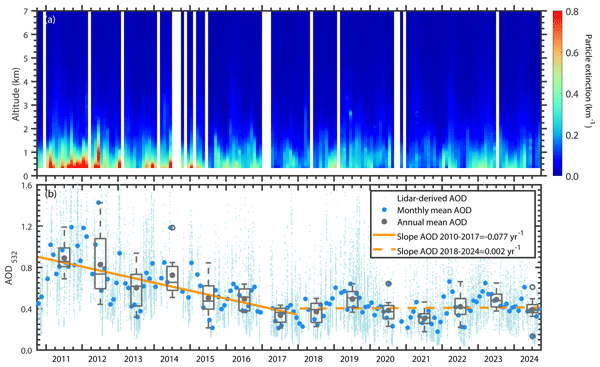
We present the evolution of tropospheric aerosols over Wuhan, central China, from 2010 to 2024. The analysis highlights the long-term aerosol characteristics and separates natural (dust) and anthropogenic (non-dust) contributions. Emission control policies were highly effective during 2010–2017. However, since 2018, lidar-derived aerosol optical depth (AOD) ceased decreasing and fluctuated, and the decline in PM2.5 concentration also became slower, possibly due to atmospheric chemistry factors.
Yun He, Dongzhe Jing, Zhenping Yin, Kevin Ohneiser, and Fan Yi
Atmos. Chem. Phys., 24, 11431–11450, https://doi.org/10.5194/acp-24-11431-2024, https://doi.org/10.5194/acp-24-11431-2024, 2024
Short summary
Short summary
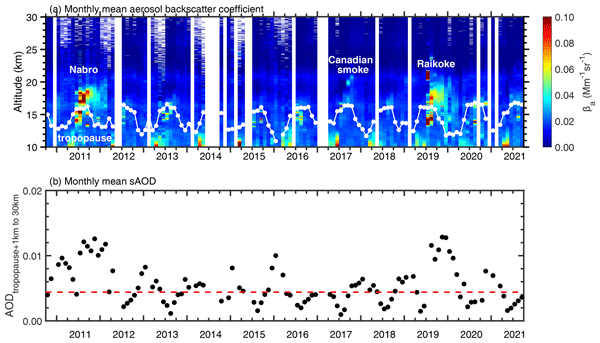
We present a long-term ground-based lidar observation of stratospheric aerosols at a mid-latitude site, Wuhan, in central China, from 2010 to 2021. We observed a stratospheric background period from 2013 to mid-2017, along with several perturbations from volcanic aerosols and wildfire-induced smoke. In summer, injected stratospheric aerosols are found to be captured by the Asian monsoon anticyclone, resulting in prolonged residence and regional transport in the mid-latitudes of East Asia.
Huijia Shen, Zhenping Yin, Yun He, Longlong Wang, Yifan Zhan, and Dongzhe Jing
EGUsphere, https://doi.org/10.5194/egusphere-2023-1844, https://doi.org/10.5194/egusphere-2023-1844, 2023
Preprint archived
Short summary
Short summary
With space-borne lidar and radar observations, we study two dust-cirrus interaction cases near Midway Island in the central Pacific. Partial cloud parcels show evident feature of the dominance of heterogeneous nucleation. At the upper troposphere, natural INPs such as dust and smoke may result in cooling effect by increasing the cloud cover to reflect more solar radiation and modulate the cirrus microphysical properties via different ice-nucleating regimes.
Yun He, Zhenping Yin, Albert Ansmann, Fuchao Liu, Longlong Wang, Dongzhe Jing, and Huijia Shen
Atmos. Meas. Tech., 16, 1951–1970, https://doi.org/10.5194/amt-16-1951-2023, https://doi.org/10.5194/amt-16-1951-2023, 2023
Short summary
Short summary
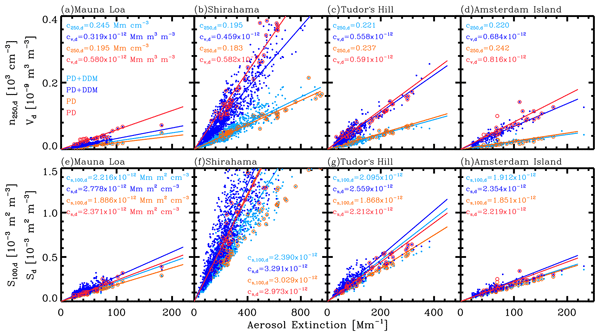
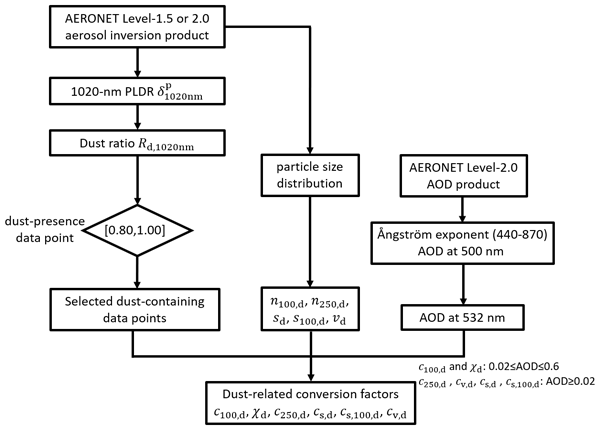
With the AERONET database, this study derives dust-related conversion factors at oceanic sites used in the POLIPHON method, which can convert lidar-retrieved dust extinction to ice-nucleating particle (INP)- and cloud condensation nuclei (CCN)-relevant parameters. The particle linear depolarization ratio in the AERONET aerosol inversion product is used to identify dust data points. The derived conversion factors can be applied to inverse 3-D global distributions of dust-related INPCs and CCNCs.
Dongzhe Jing, Kaiming Huang, Yun He, Fan Yi, Rang Cao, Fangzheng Cheng, and He He
EGUsphere, https://doi.org/10.5194/egusphere-2026-4709, https://doi.org/10.5194/egusphere-2026-4709, 2026
This preprint is open for discussion and under review for Atmospheric Chemistry and Physics (ACP).
Short summary
Short summary
We analyzed the ice multiplication factor from 11 stratiform MPC cases based on lidar-radar synergistic observations from 2021 to 2025. The IMF exhibits a distinct temperature dependence, which was close to 1 when the temperatures in supercooled liquid layer lower than -8 ℃, and increased to 351.8 as such temperature approach -5 ℃. Moreover, the IMF and particle maximum diameter show a negative correlation, indicating that stronger SIP was associated with smaller ice particles.
Julian Hofer, Holger Baars, Zhenping Yin, Andi Klamt, Martin Radenz, Leonard König, Athena A. Floutsi, Cristofer Jimenez, Moritz Haarig, Dietrich Althausen, Benedikt Gast, Håvard S. Buholdt, Nathan Skupin, Jonas Neumann, Sabur F. Abdullozoda, Abduvosit N. Makhmudov, Johannes Bühl, Ronny Engelmann, Ulla Wandinger, and Albert Ansmann
EGUsphere, https://doi.org/10.5194/egusphere-2026-3928, https://doi.org/10.5194/egusphere-2026-3928, 2026
This preprint is open for discussion and under review for Atmospheric Measurement Techniques (AMT).
Short summary
Short summary
A comparison of manually and automatically analyzed lidar profiles of aerosol optical properties is presented. The manual analysis was performed using a custom software in multiple analyses steps based on visual inspection of the lidar signals. The automatic analysis was performed using an automatic processing chain. The comparison shows good agreement and demonstrates the suitability of the automatic retrievals for various applications of aerosol optical property profiles.
Zhaolong Wu, Patric Seifert, Yun He, Holger Baars, Cristofer Jimenez, Chengcai Li, Jing Li, Albert Ansmann, and Chuanfeng Zhao
Atmos. Chem. Phys., 26, 11491–11523, https://doi.org/10.5194/acp-26-11491-2026, https://doi.org/10.5194/acp-26-11491-2026, 2026
Short summary
Short summary
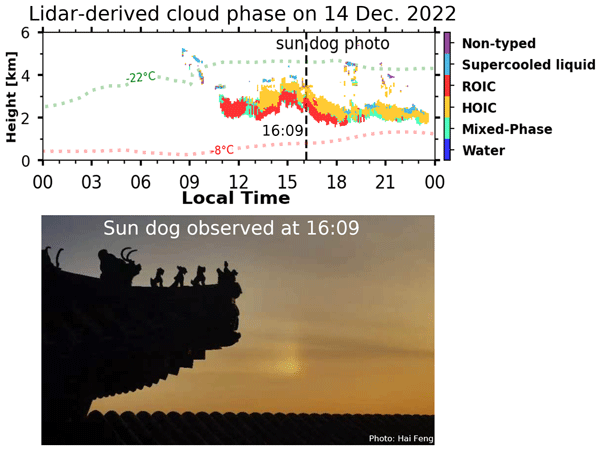
Using a full year of laser and radar observations in Beijing, this study shows when and where flat ice crystals tend to align horizontally instead of randomly, which suggests that flat ice crystals are most common in moderately cold, weakly turbulent clouds and often form below supercooled liquid water. This new finding can help weather and climate models better represent ice clouds.
Weijie Zou, Zhenping Yin, Tingxin Sun, Zhichao Bu, Yaru Dai, Haofei Wang, Longlong Wang, Yun He, Shuangliang Li, Jiarui Cheng, Xuan Wang, Siwei Li, and Detlef Müller
EGUsphere, https://doi.org/10.5194/egusphere-2026-3036, https://doi.org/10.5194/egusphere-2026-3036, 2026
Short summary
Short summary
Cloud layers can be identified from ground-based laser observations, but stable and consistent results across different instruments and sites remain challenging. This study develops a transferable artificial intelligence method using multi-wavelength lidar signals. It improves cloud boundary detection, works with limited expert labels, and is tested at independent sites with weather balloon checks. It supports reliable automated cloud and aerosol processing.
Gang Chen, Yimeng Xu, Guotao Yang, Wuhu Feng, Jiyao Xu, Shaodong Zhang, Guozhu Li, Hanxian Fang, Lifang Du, Haoran Zheng, Xuewu Cheng, Faquan Li, Yuchang Xun, Kaiming Huang, and Chunxiao Yan
EGUsphere, https://doi.org/10.5194/egusphere-2026-2356, https://doi.org/10.5194/egusphere-2026-2356, 2026
Short summary
Short summary
A new lidar for calcium ion (Ca+) observations has been operated in Yanqing, Beijing, China. Cloud-like Ca+ are observed to occur at altitudes of 120–300 km, and these clouds are composed of striped structures. These Ca+ are found to descend into Es layer and the main metal layer, and increase their ion density. According to the stripe-like structures and their influence on the metal ion layers, we believe that these metal ions observed by the lidar in Beijing come from meteoroids trails
Yun He, Dongzhe Jing, Zhenping Yin, Detlef Müller, Fuchao Liu, Yunpeng Zhang, Yang Yi, Kaiming Huang, and Fan Yi
Atmos. Chem. Phys., 26, 4937–4951, https://doi.org/10.5194/acp-26-4937-2026, https://doi.org/10.5194/acp-26-4937-2026, 2026
Short summary
Short summary
Using polarization lidar observations during 2010–2024, we retrieve the vertical profiles of aerosol backscatter and extinction coefficients of anthropogenic pollution under dry and ambient atmospheric conditions over central China. The year-to-year and seasonal variations in anthropogenic AOD are largely changed after removing hygroscopic growth effect.
Zhengguo Tian, Longlong Wang, Si Liu, Cheng Yao, Tong Lu, Weijie Zou, Zhenping Yin, Yun He, Lei Li, Bin Zhang, Daru Chen, Zhichao Bu, Yubao Chen, and Xuan Wang
Atmos. Chem. Phys., 26, 4231–4249, https://doi.org/10.5194/acp-26-4231-2026, https://doi.org/10.5194/acp-26-4231-2026, 2026
Short summary
Short summary
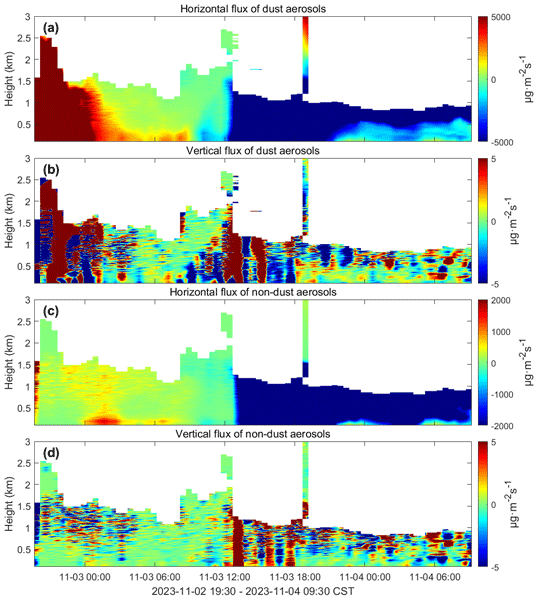
This study investigates aerosol transport flux structure over Beijing and dust transport's impact on air quality using polarization lidar and Doppler wind profiling lidar, focusing on a 2–4 November 2023, winter haze event. It classifies dust and non-dust aerosols via particle depolarization ratio, calculates their vertical/horizontal mass flux profiles with the covariance method, and analyzes meteorological influences.

Yu Gou, Jian Zhang, Wuke Wang, Kaiming Huang, and Shaodong Zhang
Atmos. Chem. Phys., 25, 17319–17330, https://doi.org/10.5194/acp-25-17319-2025, https://doi.org/10.5194/acp-25-17319-2025, 2025
Short summary
Short summary
Tropopause height is a key climate change indicator, with accurate long-term trends vital for climate research. Radiosonde data, while reliable, has limited coverage. ERA5 (European Centre for Medium–Range Weather Forecasts Reanalysis v5) is a reanalysis dataset that provides global data, enabling comparisons of tropopause height estimates and then analyzed for long-term trends. Results show a 32 m mean difference (radiosonde – ERA5) with trends of +9 m/year (radiosonde) and +7 m/year (ERA5), crucial for characterizing tropopause changes under climate change.
Dongzhe Jing, Yun He, Zhenping Yin, Kaiming Huang, Fuchao Liu, and Fan Yi
Atmos. Chem. Phys., 25, 17047–17067, https://doi.org/10.5194/acp-25-17047-2025, https://doi.org/10.5194/acp-25-17047-2025, 2025
Short summary
Short summary
We present the evolution of tropospheric aerosols over Wuhan, central China, from 2010 to 2024. The analysis highlights the long-term aerosol characteristics and separates natural (dust) and anthropogenic (non-dust) contributions. Emission control policies were highly effective during 2010–2017. However, since 2018, lidar-derived aerosol optical depth (AOD) ceased decreasing and fluctuated, and the decline in PM2.5 concentration also became slower, possibly due to atmospheric chemistry factors.
Ioanna Tsikoudi, Eleni Marinou, Maria Tombrou, Eleni Giannakaki, Emmanouil Proestakis, Konstantinos Rizos, Ville Vakkari, Holger Baars, Annett Skupin, Ronny Engelmann, Zhenping Yin, and Vassilis Amiridis
Atmos. Chem. Phys., 25, 16491–16510, https://doi.org/10.5194/acp-25-16491-2025, https://doi.org/10.5194/acp-25-16491-2025, 2025
Short summary
Short summary
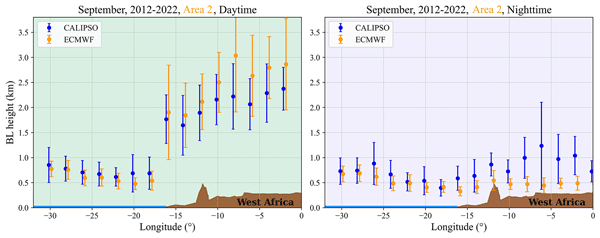
We study the characteristics of the boundary layer over three areas: the tropical Atlantic, the tropical West African continent, and near Cabo Verde using PollyXT and CALIPSO (Cloud-Aerosol Lidar and Infrared Pathfinder Satellite Observations) lidar measurements, as well as ECMWF (European Centre for Medium-Range Weather Forecasts) data. The findings underline the strengths and limitations of different observational and modeling approaches, and emphasizes on the importance of considering aerosol conditions and local meteorology when interpreting boundary layer dynamics.
Yun He, Goutam Choudhury, Matthias Tesche, Albert Ansmann, Fan Yi, Detlef Müller, and Zhenping Yin
Atmos. Meas. Tech., 18, 5669–5685, https://doi.org/10.5194/amt-18-5669-2025, https://doi.org/10.5194/amt-18-5669-2025, 2025
Short summary
Short summary
We present a global dataset of POlarization LIdar PHOtometer Networking (POLIPHON) dust conversion factors at 532 nm obtained using Aerosol RObotic NETwork (AERONET) observations at 137 sites for ice-nucleating particle (INP) and 123 sites for cloud condensation nucleation (CCN) calculations. We also conduct a comparison of dust CCN concentration profiles derived using both POLIPHON and the independent Optical Modelling of the CALIPSO Aerosol Microphysics (OMCAM) retrieval.
Zhaolong Wu, Patric Seifert, Yun He, Holger Baars, Haoran Li, Cristofer Jimenez, Chengcai Li, and Albert Ansmann
Atmos. Meas. Tech., 18, 3611–3634, https://doi.org/10.5194/amt-18-3611-2025, https://doi.org/10.5194/amt-18-3611-2025, 2025
Short summary
Short summary
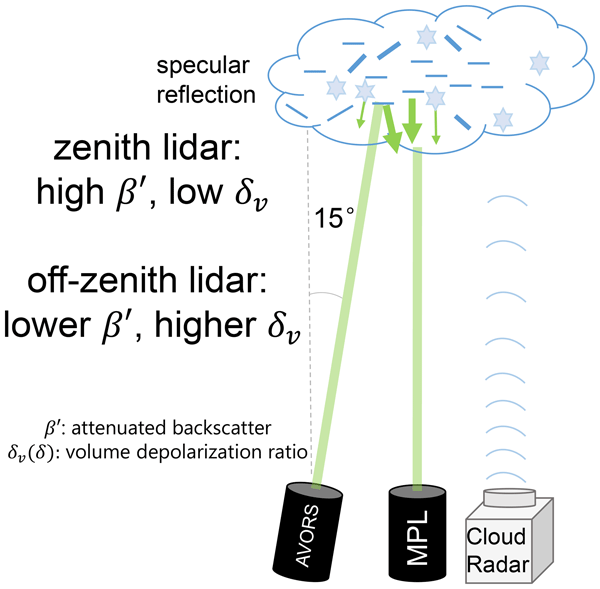
This study introduces a novel method to detect horizontally oriented ice crystals (HOICs) using two ground-based polarization lidars at different zenith angles, based on a yearlong dataset collected in Beijing. Combined with cloud radar and reanalysis data, the fine categorization results reveal HOICs occur in calm winds and moderately cold temperatures and are influenced by turbulence near cloud bases. The results enhance our understanding of cloud processes and improve atmospheric models.
Zirui Zhang, Kaiming Huang, Fan Yi, Wei Cheng, Fuchao Liu, Jian Zhang, and Yue Jia
Atmos. Chem. Phys., 25, 3347–3361, https://doi.org/10.5194/acp-25-3347-2025, https://doi.org/10.5194/acp-25-3347-2025, 2025
Short summary
Short summary
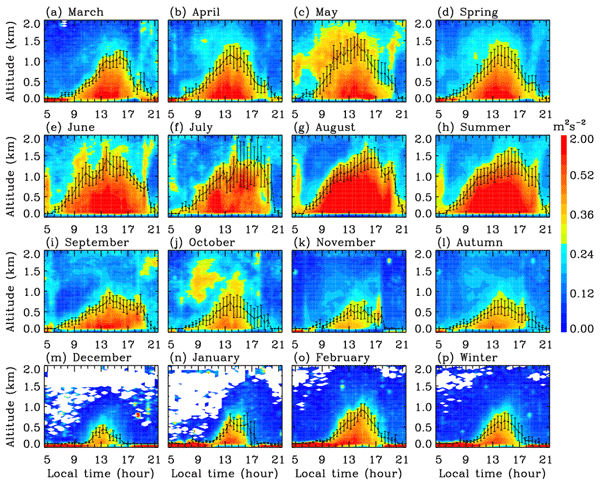
The height of the convective boundary layer (CBLH) is related to our health due to its crucial role in pollutant dispersion. The variance of vertical velocity from millimeter wave cloud radar (MMCR) can accurately capture the diurnal evolution of the CBLH, due to a small blind range and less impact by the residual layer. The CBLH is affected by radiation, humidity, cloud, and precipitation; thus, the MMCR is suitable for monitoring the CBLH, owing to its observation capability in various weather conditions.
Yu Gou, Jian Zhang, Wuke Wang, Kaiming Huang, and Shaodong Zhang
EGUsphere, https://doi.org/10.5194/egusphere-2024-4198, https://doi.org/10.5194/egusphere-2024-4198, 2025
Preprint withdrawn
Short summary
Short summary
The most commonly used tropopause height detection algorithm is based on the World Meteorological Organization (WMO) definition from 1957. However, with the increasing vertical resolution of atmospheric data, this definition has been found to fail in high-resolution radiosonde data. Thus, we propose an improved method to address this issue. This method can effectively bypassing thin inversions while preserving the fine–scale structure of the tropopause.
Yun He, Dongzhe Jing, Zhenping Yin, Kevin Ohneiser, and Fan Yi
Atmos. Chem. Phys., 24, 11431–11450, https://doi.org/10.5194/acp-24-11431-2024, https://doi.org/10.5194/acp-24-11431-2024, 2024
Short summary
Short summary
We present a long-term ground-based lidar observation of stratospheric aerosols at a mid-latitude site, Wuhan, in central China, from 2010 to 2021. We observed a stratospheric background period from 2013 to mid-2017, along with several perturbations from volcanic aerosols and wildfire-induced smoke. In summer, injected stratospheric aerosols are found to be captured by the Asian monsoon anticyclone, resulting in prolonged residence and regional transport in the mid-latitudes of East Asia.
Longlong Wang, Zhenping Yin, Zhichao Bu, Anzhou Wang, Song Mao, Yang Yi, Detlef Müller, Yubao Chen, and Xuan Wang
Atmos. Meas. Tech., 16, 4307–4318, https://doi.org/10.5194/amt-16-4307-2023, https://doi.org/10.5194/amt-16-4307-2023, 2023
Short summary
Short summary
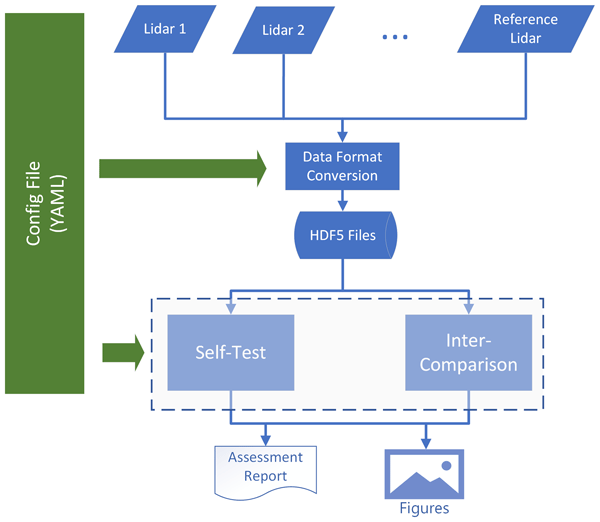
We report the lidar inter-comparison results with a reference lidar at 1064 nm, in order to homogenize the signals provided by different lidar systems for establishing a lidar network in China. The profiles of relative deviation of lidar signals are less than 5 % within 500–2000 m and 10 % within 2000–5000 m, increasing confidence in the reliability of the signals provided by each lidar system in the channels at 1064 nm for a future lidar network in China.
Huijia Shen, Zhenping Yin, Yun He, Longlong Wang, Yifan Zhan, and Dongzhe Jing
EGUsphere, https://doi.org/10.5194/egusphere-2023-1844, https://doi.org/10.5194/egusphere-2023-1844, 2023
Preprint archived
Short summary
Short summary
With space-borne lidar and radar observations, we study two dust-cirrus interaction cases near Midway Island in the central Pacific. Partial cloud parcels show evident feature of the dominance of heterogeneous nucleation. At the upper troposphere, natural INPs such as dust and smoke may result in cooling effect by increasing the cloud cover to reflect more solar radiation and modulate the cirrus microphysical properties via different ice-nucleating regimes.
Athena Augusta Floutsi, Holger Baars, Ronny Engelmann, Dietrich Althausen, Albert Ansmann, Stephanie Bohlmann, Birgit Heese, Julian Hofer, Thomas Kanitz, Moritz Haarig, Kevin Ohneiser, Martin Radenz, Patric Seifert, Annett Skupin, Zhenping Yin, Sabur F. Abdullaev, Mika Komppula, Maria Filioglou, Elina Giannakaki, Iwona S. Stachlewska, Lucja Janicka, Daniele Bortoli, Eleni Marinou, Vassilis Amiridis, Anna Gialitaki, Rodanthi-Elisavet Mamouri, Boris Barja, and Ulla Wandinger
Atmos. Meas. Tech., 16, 2353–2379, https://doi.org/10.5194/amt-16-2353-2023, https://doi.org/10.5194/amt-16-2353-2023, 2023
Short summary
Short summary
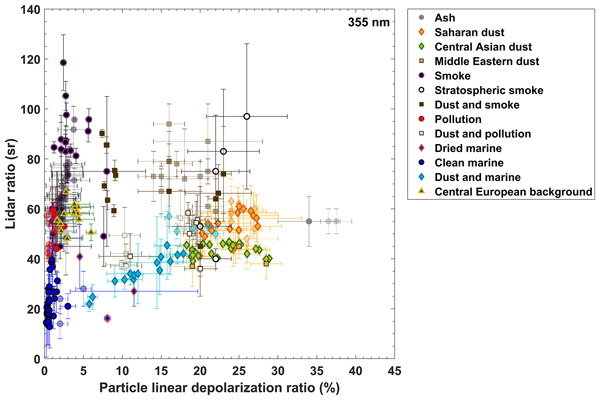
DeLiAn is a collection of lidar-derived aerosol intensive optical properties for several aerosol types, namely the particle linear depolarization ratio, the extinction-to-backscatter ratio (lidar ratio) and the Ångström exponent. The data collection is based on globally distributed, long-term, ground-based, multiwavelength, Raman and polarization lidar measurements and currently covers two wavelengths, 355 and 532 nm, for 13 aerosol categories ranging from basic aerosol types to mixtures.
Yun He, Zhenping Yin, Albert Ansmann, Fuchao Liu, Longlong Wang, Dongzhe Jing, and Huijia Shen
Atmos. Meas. Tech., 16, 1951–1970, https://doi.org/10.5194/amt-16-1951-2023, https://doi.org/10.5194/amt-16-1951-2023, 2023
Short summary
Short summary
With the AERONET database, this study derives dust-related conversion factors at oceanic sites used in the POLIPHON method, which can convert lidar-retrieved dust extinction to ice-nucleating particle (INP)- and cloud condensation nuclei (CCN)-relevant parameters. The particle linear depolarization ratio in the AERONET aerosol inversion product is used to identify dust data points. The derived conversion factors can be applied to inverse 3-D global distributions of dust-related INPCs and CCNCs.
Zheng Ma, Yun Gong, Shaodong Zhang, Qiao Xiao, Chunming Huang, and Kaiming Huang
Atmos. Chem. Phys., 22, 13725–13737, https://doi.org/10.5194/acp-22-13725-2022, https://doi.org/10.5194/acp-22-13725-2022, 2022
Short summary
Short summary
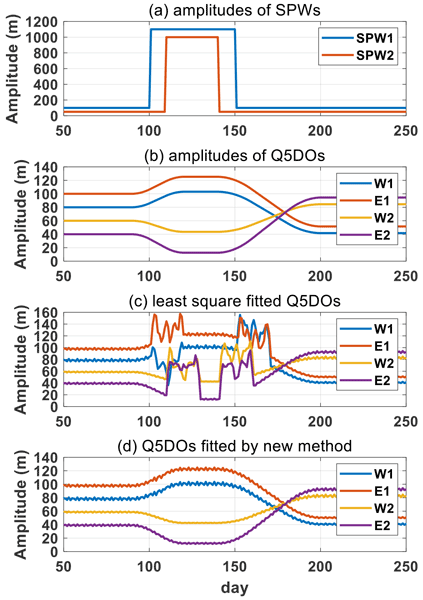
We present a novel method to measure the amplitudes of traveling quasi-5-day oscillations (Q5DOs) in the middle atmosphere during sudden stratospheric warming events based on satellite observations. Simulations and observations demonstrate that the previously reported traveling Q5DOs might be contaminated by stationary planetary waves (SPWs). The new fitting method is developed by inhibiting the effect of a rapid and large change in SPWs.
Yun He, Zhenping Yin, Fuchao Liu, and Fan Yi
Atmos. Chem. Phys., 22, 13067–13085, https://doi.org/10.5194/acp-22-13067-2022, https://doi.org/10.5194/acp-22-13067-2022, 2022
Short summary
Short summary
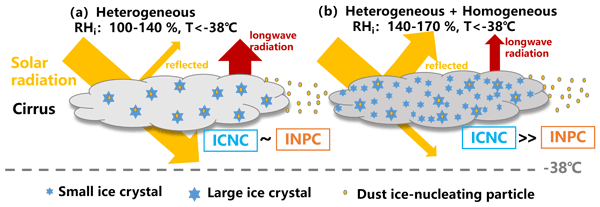
A method is proposed to identify the sole presence of heterogeneous nucleation and competition between heterogeneous and homogeneous nucleation for dust-related cirrus clouds by characterizing the relationship between dust ice-nucleating particle concentration calculated from CALIOP using the POLIPHON method and in-cloud ice crystal number concentration from the DARDAR-Nice dataset. Two typical cirrus cases are shown as a demonstration, and the proposed method can be extended to a global scale.
Xiansi Huang, Kaiming Huang, Hao Cheng, Shaodong Zhang, Wei Cheng, Chunming Huang, and Yun Gong
Atmos. Chem. Phys. Discuss., https://doi.org/10.5194/acp-2022-407, https://doi.org/10.5194/acp-2022-407, 2022
Revised manuscript not accepted
Short summary
Short summary
Using radar observations and reanalysis data for 9 years, we demonstrate clearly for the first time that resonant interactions between tides and annual and semiannual oscillations do occur in the mesosphere and lower thermosphere. The resonant matching conditions of frequency and wavenumber are exactly satisfied for the interacting triad. At some altitudes, the secondary waves are stronger than the tides, thus in tidal studies, the secondary waves may be mistaken for the tides if no carefully.

Yang Yi, Fan Yi, Fuchao Liu, Yunpeng Zhang, Changming Yu, and Yun He
Atmos. Chem. Phys., 21, 17649–17664, https://doi.org/10.5194/acp-21-17649-2021, https://doi.org/10.5194/acp-21-17649-2021, 2021
Short summary
Short summary
Our lidar observations reveal the complete microphysical process of hydrometeors falling from mid-level stratiform clouds. We find that the surface rainfall begins as supercooled mixed-phase hydrometeors fall out of a liquid parent cloud base. We find also that the collision–coalescence growth of precipitating raindrops and subsequent spontaneous breakup always occur around 0.6 km altitude during surface rainfalls. Our findings provide new insights into stratiform precipitation formation.

Jianping Guo, Jian Zhang, Kun Yang, Hong Liao, Shaodong Zhang, Kaiming Huang, Yanmin Lv, Jia Shao, Tao Yu, Bing Tong, Jian Li, Tianning Su, Steve H. L. Yim, Ad Stoffelen, Panmao Zhai, and Xiaofeng Xu
Atmos. Chem. Phys., 21, 17079–17097, https://doi.org/10.5194/acp-21-17079-2021, https://doi.org/10.5194/acp-21-17079-2021, 2021
Short summary
Short summary
The planetary boundary layer (PBL) is the lowest part of the troposphere, and boundary layer height (BLH) is the depth of the PBL and is of critical importance to the dispersion of air pollution. The study presents the first near-global BLH climatology by using high-resolution (5-10 m) radiosonde measurements. The variations in BLH exhibit large spatial and temporal dependence, with a peak at 17:00 local solar time. The most promising reanalysis product is ERA-5 in terms of modeling BLH.
Cited articles
Adam, M., Putaud, J. P., Martins dos Santos, S., Dell'Acqua, A., and Gruening, C.: Aerosol hygroscopicity at a regional background site (Ispra) in Northern Italy, Atmos. Chem. Phys., 12, 5703–5717, https://doi.org/10.5194/acp-12-5703-2012, 2012.
Bedoya-Velásquez, A. E., Navas-Guzmán, F., Granados-Muñoz, M. J., Titos, G., Román, R., Casquero-Vera, J. A., Ortiz-Amezcua, P., Benavent-Oltra, J. A., de Arruda Moreira, G., Montilla-Rosero, E., Hoyos, C. D., Artiñano, B., Coz, E., Olmo-Reyes, F. J., Alados-Arboledas, L., and Guerrero-Rascado, J. L.: Hygroscopic growth study in the framework of EARLINET during the SLOPE I campaign: synergy of remote sensing and in situ instrumentation, Atmos. Chem. Phys., 18, 7001–7017, https://doi.org/10.5194/acp-18-7001-2018, 2018.
Bolton, D.: The computation of equivalent potential temperature, Mon. Weather. Rev., 108, 1046–1053, https://doi.org/10.1175/1520-0493(1980)108<1046:TCOEPT>2.0.CO;2, 1980.
Bourgeois, Q., Ekman, A. M. L., Renard, J.-B., Krejci, R., Devasthale, A., Bender, F. A.-M., Riipinen, I., Berthet, G., and Tackett, J. L.: How much of the global aerosol optical depth is found in the boundary layer and free troposphere?, Atmos. Chem. Phys., 18, 7709–7720, https://doi.org/10.5194/acp-18-7709-2018, 2018.
Chen, J., Li, Z., Lv, M., Wang, Y., Wang, W., Zhang, Y., Wang, H., Yan, X., Sun, Y., and Cribb, M.: Aerosol hygroscopic growth, contributing factors, and impact on haze events in a severely polluted region in northern China, Atmos. Chem. Phys., 19, 1327–1342, https://doi.org/10.5194/acp-19-1327-2019, 2019.
Copernicus Climate Change Service, Climate Data Store: ERA5 hourly data on single levels from 1940 to present, Copernicus Climate Change Service (C3S) Climate Data Store (CDS), [data set], https://doi.org/10.24381/cds.adbb2d47, 2025.
Dawson, K. W., Ferrare, R. A., Moore, R. H., Clayton, M. B., Thorsen, T. J., and Eloranta, E. W.: Ambient aerosol hygroscopic growth from combined Raman lidar and HSRL, J. Geophys. Res.-Atmos., 125, e2019JD031708, https://doi.org/10.1029/2019JD031708, 2020.
Deshmukh, S., Poulain, L., Wehner, B., Henning, S., Petit, J.-E., Fombelle, P., Favez, O., Herrmann, H., and Pöhlker, M.: External particle mixing influences hygroscopicity in a sub-urban area, Atmos. Chem. Phys., 25, 741–758, https://doi.org/10.5194/acp-25-741-2025, 2025.
Ding, L., Zhao, W., Huang, Y., Cheng, S., and Liu, C.: Research on the coupling coordination relationship between urbanization and the air environment: A case study of the area of Wuhan, Atmosphere, 6, 1539–1558, https://doi.org/10.3390/atmos6101539, 2015.
Draxler, R. and Rolph, G.: HYSPLIT (Hybrid Single-Particle Lagrangian Integrated Trajectory) Model, Air Resources Laboratory, NOAA, Silver Spring, Md, USA, https://www.ready.noaa.gov/HYSPLIT.php (last access: 12 April 2025), 2003.
Elsey, J., Bellouin, N., and Ryder, C.: Sensitivity of global direct aerosol shortwave radiative forcing to uncertainties in aerosol optical properties, Atmos. Chem. Phys., 24, 4065–4081, https://doi.org/10.5194/acp-24-4065-2024, 2024.
Fernald, F. G.: Analysis of atmospheric lidar observations: some comments, Appl. Opt., 23, 652–653, https://doi.org/10.1364/AO.23.000652, 1984.
Fernández, A. J., Apituley, A., Veselovskii, I., Suvorina, A., Henzing, J., Pujadas, M., and Artíñano, B.: Study of aerosol hygroscopic events over the Cabauw experimental site for atmospheric research (CESAR) using the multi-wavelength Raman lidar Caeli, Atmos. Environ., 120, 484–498, https://doi.org/10.1016/j.atmosenv.2015.08.079, 2015.
Ferrare, R. A., Melfi, S. H., Whiteman, D. N., Evans, K. D., Poellot, M., and Kaufman, Y. J.: Raman lidar measurements of aerosol extinction and backscattering: 2. Derivation of aerosol real refractive index, single-scattering albedo, and humidification factor using Raman lidar and aircraft size distribution measurements, J. Geophys. Res. Atmos., 10, 19673–19689, https://doi.org/10.1029/98JD01647, 1998.
Freudenthaler, V., Esselborn, M., Wiegner, M., Heese, B., Tesche, M., Ansmann, A., Müller, D., Althausen, D., Wirth, M., Fix, A., Ehret, G., Knippertz, P., Toledano, C., Gasteiger, J., Garhammer, M., and Seefeldner, M.: Depolarization ratio profiling at several wavelengths in pure Saharan dust during SAMUM2006, Tellus B, 61, 165–179, https://doi.org/10.1111/j.1600-0889.2008.00396.x, 2009.
Granados-Muñoz, M. J., Navas-Guzmán, F., Bravo-Aranda, J. A., Guerrero-Rascado, J. L., Lyamani, H., Valenzuela, A., Titos, G., Fernández-Gálvez, J., and Alados-Arboledas, L.: Hygroscopic growth of atmospheric aerosol particles based on active remote sensing and radiosounding measurements: selected cases in southeastern Spain, Atmos. Meas. Tech., 8, 705–718, https://doi.org/10.5194/amt-8-705-2015, 2015.
Guo, X., Huang, K., Fang, J., Zhang, Z., Cao, R., and Yi, F.: Seasonal and Diurnal Changes of Air Temperature and Water Vapor Observed with a Microwave Radiometer in Wuhan, China, Remote Sens., 15, 5422, https://doi.org/10.3390/rs15225422, 2023.
Haarig, M., Ansmann, A., Gasteiger, J., Kandler, K., Althausen, D., Baars, H., Radenz, M., and Farrell, D. A.: Dry versus wet marine particle optical properties: RH dependence of depolarization ratio, backscatter, and extinction from multiwavelength lidar measurements during SALTRACE, Atmos. Chem. Phys., 17, 14199–14217, https://doi.org/10.5194/acp-17-14199-2017, 2017.
Haarig, M., Engelmann, R., Baars, H., Gast, B., Althausen, D., and Ansmann, A.: Discussion of the spectral slope of the lidar ratio between 355 and 1064 nm from multiwavelength Raman lidar observations, Atmos. Chem. Phys., 25, 7741–7763, https://doi.org/10.5194/acp-25-7741-2025, 2025.
Hänel, G.: The properties of atmospheric aerosol particles as functions of the relative humidity at thermodynamic equilibrium with the surrounding moist air, in: Advances in Geophysics, edited by: Landsberg, H. E. and Mieghem, J. V., Elsevier, 73–188, 1976.
He, Q., Zhou, G., Geng, F., Gao, W., and Yu, W.: Spatial distribution of aerosol hygroscopicity and its effect on PM2.5 retrieval in East China, Atmos. Res., 170, 161–167, https://doi.org/10.1016/j.atmosres.2015.11.011, 2016.
He, Y. and Yi, F.: Dust aerosols detected using a ground-based polarization lidar and CALIPSO over Wuhan (30.5 ° N, 114.4 ° E), China. Adv. Meteorol., 2015, 536762, https://doi.org/10.1155/2015/536762, 2015.
He, Y., Yi, F., Yi, Y., Liu, F., and Zhang, Y.: Heterogeneous nucleation of midlevel cloud layer influenced by transported Asian dust over Wuhan (30.5°N, 114.4°E), China, J. Geophys. Res.-Atmos., 126, e2020JD033394, https://doi.org/10.1029/2020JD033394, 2021.
He, Y., Yi, F., Liu, F., Yin, Z., and Zhou, J.: Ice nucleation of cirrus clouds related to the transported dust layer observed by ground-based lidars over Wuhan, China. Adv. Atmos. Sci. 39, 2071–2086, https://doi.org/10.1007/s00376-021-1192-x, 2022.
He, Y., Jing, D., Liu, Q., Liu, F., and Yi, F.: Atmospheric refraction delay toward millimeter-level lunar laser ranging: Correcting the temperature-induced error with real-time and Co-located lidar measurements, J. Geophys. Res. Atmos, 128, e2023JD039579, https://doi.org/10.1029/2023JD039579, 2023.
He, Y., Jing, D., Yin, Z., Ohneiser, K., and Yi, F.: Long-term (2010–2021) lidar observations of stratospheric aerosols in Wuhan, China, Atmos. Chem. Phys., 24, 11431–11450, https://doi.org/10.5194/acp-24-11431-2024, 2024.
Hersbach, H., Bell, B., Berrisford, P., Hirahara, S., Horányi, A., Muñoz-Sabater, J., Nicolas, J., Peubey, C., Radu, R., Schepers, D., Simmons, A., Soci, C., Abdalla, S., Abellan, X., Balsamo, G., Bechtold, P., Biavati, G., Bidlot, J., Bonavita, M., De Chiara, G., Dahlgren, P., Dee, D., Diamantakis, M., Dragani, R., Flemming, J., Forbes, R., Fuentes, M., Geer, A., Haimberger, L., Healy, S., Hogan, R.J., Hólm, E., Janisková, M., Keeley, S., Laloyaux, P., Lopez, P., Lupu, C., Radnoti, G., de Rosnay, P., Rozum, I., Vamborg, F., Villaume, S., and Thépaut, J.-N.: The ERA5 global reanalysis, Q. J. Roy. Meteor. Soc., 146, 1999–2049, https://doi.org/10.1002/qj.3803, 2020.
Hersbach, H., Bell, B., Berrisford, P., Biavati, G., Horányi, A., Muñoz Sabater, J., Nicolas, J., Peubey, C., Radu, R., Rozum, I., Schepers, D., Simmons, A., Soci, C., Dee, D., and Thépaut, J.-N.: ERA5 hourly data on single levels from 1940 to present, Copernicus Climate Change Service (C3S) Climate Data Store (CDS) [data set], https://doi.org/10.24381/cds.adbb2d47, 2023.
HYSPLIT: Hybrid Single Particle Lagrangian Integrated Trajectory, NOAA, https://www.arl.noaa.gov/ (last access: 2 May 2025), 2025.
Ji, D., Palm, M., Buschmann, M., Ebell, K., Maturilli, M., Sun, X., and Notholt, J.: Hygroscopic aerosols amplify longwave downward radiation in the Arctic, Atmos. Chem. Phys., 25, 3889–3904, https://doi.org/10.5194/acp-25-3889-2025, 2025.
Jing, D., He, Y., Yin, Z., Liu, F., and Yi, F.: Long-term characteristics of dust aerosols over central China from 2010 to 2020 observed with polarization lidar, Atmos. Res., 297, 107129, https://doi.org/10.1016/j.atmosres.2023.107129, 2024.
Jing, D., He, Y., Yin, Z., Huang, K., Liu, F., and Yi, F.: Evolution of tropospheric aerosols over central China during 2010–2024 as observed by lidar, Atmos. Chem. Phys., 25, 17047–17067, https://doi.org/10.5194/acp-25-17047-2025, 2025.
Kanamitsu, M.: Description of the NMC global data assimilation and forecast system, Weather Forecast., 4, 335–342, https://doi.org/10.1175/1520-0434(1989)004<0335:DOTNGD>2.0.CO;2, 1989.
Kong, W. and Yi, F.: Convective boundary layer evolution from lidar backscatter and its relationship with surface aerosol concentration at a location of a central China megacity, J. Geophys. Res.-Atmos., 120, 7928–7940, https://doi.org/10.1002/2015JD023248, 2015.
Laly, F., Chazette, P., Totems, J., Crenn, V., Ledur, D., and Marpillat, A.: How does humidity affect lidar-derived aerosol optical properties, and how do they compare with CAMS?, Atmos. Meas. Tech., 18, 7629–7649, https://doi.org/10.5194/amt-18-7629-2025, 2025.
Liu, X., Gu, J., Li, Y., Cheng, Y., Qu, Y., Han, T., Wang, J., Tian, H., Chen, J., and Zhang, Y.: Increase of aerosol scattering by hygroscopic growth: Observation, modeling, and implications on visibility, Atmos. Res., 132, 91–101, https://doi.org/10.1016/j.atmosres.2013.04.007, 2013.
Liu, H. J., Zhao, C. S., Nekat, B., Ma, N., Wiedensohler, A., van Pinxteren, D., Spindler, G., Müller, K., and Herrmann, H.: Aerosol hygroscopicity derived from size-segregated chemical composition and its parameterization in the North China Plain, Atmos. Chem. Phys., 14, 2525–2539, https://doi.org/10.5194/acp-14-2525-2014, 2014.
Liu, M. and Matsui, H.: Aerosol radiative forcings induced by substantial changes in anthropogenic emissions in China from 2008 to 2016, Atmos. Chem. Phys., 21, 5965–5982, https://doi.org/10.5194/acp-21-5965-2021, 2021.
Liu, M., Huang, X., Song, Y., Xu, T., Wang, S., Wu, Z., Hu, M., Zhang, L., Zhang, Q., Pan, Y., Liu, X., and Zhu, T.: Rapid SO2 emission reductions significantly increase tropospheric ammonia concentrations over the North China Plain, Atmos. Chem. Phys., 18, 17933–17943, https://doi.org/10.5194/acp-18-17933-2018, 2018.
Liu, F., Yi, F., Zhang, Y., and Yi, Y.: Double-receiver-based pure rotational Raman LiDAR for measuring atmospheric temperature at altitudes between near ground and up to 35 km, IEEE Trans. Geosci. Remote Sens., 57, 10301–10309, https://doi.org/10.1109/TGRS.2019.2933461, 2019.
Lv, M., Liu, D., Li, Z. Q., Mao, J. T., Sun, Y. L., Wang, Z. Z., Wang, Y. J., and Xie, C. B.: Hygroscopic growth of atmospheric aerosol particles based on lidar, radiosonde, and in situ measurements: Case studies from the Xinzhou field campaign, J. Quant. Spectrosc. Ra., 188, 60–70, https://doi.org/10.1016/j.jqsrt.2015.12.029, 2017.
Mamouri, R. E. and Ansmann, A.: Fine and coarse dust separation with polarization lidar, Atmos. Meas. Tech., 7, 3717–3735, https://doi.org/10.5194/amt-7-3717-2014, 2014.
Miri, R., Pujol, O., Hu, Q., Goloub, P., Veselovskii, I., Podvin, T., and Ducos, F.: Innovative aerosol hygroscopic growth study from Mie–Raman–fluorescence lidar and microwave radiometer synergy, Atmos. Meas. Tech., 17, 3367–3375, https://doi.org/10.5194/amt-17-3367-2024, 2024.
Nash, J., Oakley, T., Vömel, H., and Li, W.: WMO Intercomparison of High Quality Radiosonde Systems, Yangjiang, China, 107, Geneva, Switzerland: World Meteorological Organization, Instruments and Observing Methods, https://library.wmo.int/idurl/4/50499 (last access: 19 January 2026), 2011.
Navas-Guzmán, F., Martucci, G., Collaud Coen, M., Granados-Muñoz, M. J., Hervo, M., Sicard, M., and Haefele, A.: Characterization of aerosol hygroscopicity using Raman lidar measurements at the EARLINET station of Payerne, Atmos. Chem. Phys., 19, 11651–11668, https://doi.org/10.5194/acp-19-11651-2019, 2019.
Pan, X., Yi, F., Liu, F., Zhang, Y., and Yan, Y.: Diurnal temperature variations in the lower troposphere as measured by an all-day-operational pure rotational Raman lidar, Appl. Opt., 59, 8688–8696, https://doi.org/10.1364/AO.394484, 2020.
Peng, S., Yang, Q., Shupe, M. D., Xi, X., Han, B., Chen, D., Dahlke, S., and Liu, C.: The characteristics of atmospheric boundary layer height over the Arctic Ocean during MOSAiC, Atmos. Chem. Phys., 23, 8683–8703, https://doi.org/10.5194/acp-23-8683-2023, 2023.
Pérez, C., Sicard, M., Jorba, O., Comerón, A., and Baldasano, J. M.: Summertime re-circulations of air pollutants over the northeastern Iberian coast observed from systematic EARLINET lidar measurements in Barcelona, Atmos. Environ., 38, 3983–4000, https://doi.org/10.1016/j.atmosenv.2004.04.010, 2004.
Pérez-Ramírez, D., Whiteman, D. N., Veselovskii, I., Ferrare, R., Titos, G., Granados-Muñoz, M. J., Sánchez-Hernández, G., and Navas-Guzmán, F.: Spatiotemporal changes in aerosol properties by hygroscopic growth and impacts on radiative forcing and heating rates during DISCOVER-AQ 2011, Atmos. Chem. Phys., 21, 12021–12048, https://doi.org/10.5194/acp-21-12021-2021, 2021.
Rosenfeld, D., Andreae, M.O., Asmi, A., Chin, M., de Leeuw, G., Donovan, D.P., Kahn, R., Kinne, S., Kivekäs, N., Kulmala, M., Lau, W., Schmidt, K. S., Suni, T., Wagner, T., Wild, M., and Quaas, J.: Global observations of aerosol-cloud- precipitation-climate interactions, Rev. Geophys., 52, 750–808, https://doi.org/10.1002/2013RG000441, 2014.
Sicard, M., Fortunato dos Santos Oliveira, D. C., Muñoz-Porcar, C., Gil-Díaz, C., Comerón, A., Rodríguez-Gómez, A., and Dios Otín, F.: Measurement report: Spectral and statistical analysis of aerosol hygroscopic growth from multi-wavelength lidar measurements in Barcelona, Spain, Atmos. Chem. Phys., 22, 7681–7697, https://doi.org/10.5194/acp-22-7681-2022, 2022.
Sorooshian, A., Csavina, J., Shingler, T., Dey, S., Brechtel, F. J., Sáez, A. E., and Betterton, E. A.: Hygroscopic and chemical properties of aerosols collected near a copper smelter: implications for public and environmental health, Environ. Sci. Tech., 46, 9473–9480, https://doi.org/10.1021/es302275k, 2012.
Stein, A. F., Draxler, R. R., Rolph, G. D., Stunder, B. J., Cohen, M. D., and Ngan, F.: NOAA's HYSPLIT atmospheric transport and dispersion modeling system, B. Am. Meteorol. Soc., 96, 2059–2077, https://doi.org/10.1175/BAMS-D-14-00110.1, 2015.
Takamura, T., Sasano, Y., and Hayasaka, T.: Tropospheric aerosol optical properties derived from lidar, sun photometer, and optical particle counter measurements, Appl. Opt., 33, 7132–7140, https://doi.org/10.1364/AO.33.007132, 1994.
Tesche, M., Ansmann, A., Müller, D., Althausen, D., Engelmann, R., Freudenthaler, V., and Groß, S.: Vertically resolved separation of dust and smoke over Cape Verde using multiwavelength Raman and polarization lidars during Saharan mineral dust experiment 2008, J. Geophys. Res., 114, D13202, https://doi.org/10.1029/2009JD011862, 2009.
Titos, G., Cazorla, A., Zieger, P., Andrews, E., Lyamani, H., Granados-Muñoz, M. J., Olmo, F. J., and Alados-Arboledas, L.: Effect of hygroscopic growth on the aerosol light-scattering coef?cient: A review of measurements, techniques and error sources, Atmos. Environ., 141, 494–507, https://doi.org/10.1016/j.atmosenv.2016.07.021, 2016.
University of Wyoming Atmospheric Science Radiosonde Archive: Radiosonde data, https://weather.uwyo.edu/upperair/sounding.shtml (last access: 25 December 2025), 2025.
Väisänen, O., Ruuskanen, A., Ylisirniö, A., Miettinen, P., Portin, H., Hao, L., Leskinen, A., Komppula, M., Romakkaniemi, S., Lehtinen, K. E. J., and Virtanen, A.: In-cloud measurements highlight the role of aerosol hygroscopicity in cloud droplet formation, Atmos. Chem. Phys., 16, 10385–10398, https://doi.org/10.5194/acp-16-10385-2016, 2016.
Veselovskii, I., Whiteman, D. N., Kolgotin, A., Andrews, E., and Korenskii, M.: Demonstration of aerosol property profiling by multiwavelength lidar under varying relative humidity conditions, J. Atmos. Ocean. Tech., 26, 1543–1557, https://doi.org/10.1175/2009JTECHA1254.1, 2009.
Veselovskii, I., Hu, Q., Goloub, P., Podvin, T., Dubois, G., Kolgotin, A., and Korenskii, M.: Impact of water uptake on fluorescence of atmospheric aerosols: insights from Mie–Raman–fluorescence lidar measurements, Atmos. Meas. Tech., 18, 6039–6051, https://doi.org/10.5194/amt-18-6039-2025, 2025.
Wang, W., Gong, W., Mao, F., Pan, Z., and Liu, B.: Measurement and study of lidar ratio by using a Raman lidar in central China, Int. J. Environ. Res. Pub. Health., 13, 508, https://doi.org/10.3390/ijerph13050508, 2016.
Wu, B. and Wang, J.: Winter Arctic oscillation, Siberian High and East Asian winter monsoon, Geophys. Res. Lett., 29, 3–1, https://doi.org/10.1029/2002GL015373, 2002.
Wu, T., Li, Z., Chen, J., Wang, Y., Wu, H., Jin, X., Liang, C., Li, S., Wang, W., and Cribb, M.: Hygroscopicity of different types of aerosol particles: Case studies using multi-instrument data in megacity Beijing, China, Remote Sens., 12, 785, https://doi.org/10.3390/rs12050785, 2020.
Xie, R., Sabel, C.E., Lu, X., Zhu, W., Kan, H., Nielsen, C. P., and Wang, H.: Long-term trend and spatial pattern of PM2.5 induced premature mortality in China, Environ. Int., 97, 180–186, https://doi.org/10.1016/j.envint.2016.09.003, 2016.
Xu, L., Fukushima, S., Sobanska, S., Murata, K., Naganuma, A., Liu, L., Wang, Y., Niu, H., Shi, Z., Kojima, T., Zhang, D., and Li, W.: Tracing the evolution of morphology and mixing state of soot particles along with the movement of an Asian dust storm, Atmos. Chem. Phys., 20, 14321–14332, https://doi.org/10.5194/acp-20-14321-2020, 2020.
Yi, Y., Yi, F., Liu, F., Zhang, Y., Yu, C., and He, Y.: Microphysical process of precipitating hydrometeors from warm-front mid-level stratiform clouds revealed by ground-based lidar observations, Atmos. Chem. Phys., 21, 17649–17664, https://doi.org/10.5194/acp-21-17649-2021, 2021.
Yin, Z., Yi, F., Liu, F., He, Y., Zhang, Y., Yu, C., and Zhang, Y.: Long-term variations of aerosol optical properties over Wuhan with polarization lidar, Atmos. Environ., 259, 118508, https://doi.org/10.1016/j.atmosenv.2021.118508, 2021.
Yu, A., Shen, X., Ma, Q., Lu, J., Hu, X., Zhang, Y., Liu, Q., Liang, L., Liu, L., Liu, S., Tong, H., Che, H., Zhang, X., and Sun, J.: Size-resolved hygroscopicity and volatility properties of ambient urban aerosol particles measured by a volatility hygroscopicity tandem differential mobility analyzer system in Beijing, Atmos. Chem. Phys., 25, 3389–3412, https://doi.org/10.5194/acp-25-3389-2025, 2025.
Zhang, M., Ma, Y., Gong, W., and Zhu, Z: Aerosol optical properties of a haze episode in Wuhan based on ground-based and satellite observations, Atmosphere, 5, 699–719, https://doi.org/10.3390/atmos5040699, 2014.
Zhang, F., Wang, Z., Cheng, H., Lv, X., Gong, W., Wang, X., and Zhang, G.: Seasonal variations and chemical characteristics of PM2.5 in Wuhan, central China, Sci. Total Environ., 518–519, 97–105, https://doi.org/10.1016/j.scitotenv.2015.02.054, 2015a.
Zhang, Y. L. and Cao, F.: Fine particulate matter (PM2.5) in China at a city level, Sci. Rep., 5, 14884, https://doi.org/10.1038/srep14884, 2015b.
Zhang, Y., Zhang, Y., Yu, C., and Yi, F.: Evolution of aerosols in the atmospheric boundary layer and elevated layers during a severe, persistent haze episode in a central China megacity, Atmosphere, 12, 152, https://doi.org/10.3390/atmos12020152, 2021.
Zhang, L., Segal-Rozenhaimer, M., Che, H., Dang, C., Sun, J., Kuang, Y., Formenti, P., and Howell, S. G.: Aerosol hygroscopicity over the southeast Atlantic Ocean during the biomass burning season – Part 1: From the perspective of scattering enhancement, Atmos. Chem. Phys., 24, 13849–13864, https://doi.org/10.5194/acp-24-13849-2024, 2024.
Zhang, B., Fan G., Zhang, T., and Xiang, Y.: Detection of aerosol hygroscopic growth in Tibetan Plateau by LiDAR, Laser Infrared, 55, 215–225, https://doi.org/10.3969/j.issn.1001-5078.2025.009, 2025.
Zhao, G., Zhao, C., Kuang, Y., Tao, J., Tan, W., Bian, Y., Li, J., and Li, C.: Impact of aerosol hygroscopic growth on retrieving aerosol extinction coefficient profiles from elastic-backscatter lidar signals, Atmos. Chem. Phys., 17, 12133–12143, https://doi.org/10.5194/acp-17-12133-2017, 2017.
Zieger, P., Fierz-Schmidhauser, R., Gysel, M., Ström, J., Henne, S., Yttri, K. E., Baltensperger, U., and Weingartner, E.: Effects of relative humidity on aerosol light scattering in the Arctic, Atmos. Chem. Phys., 10, 3875–3890, https://doi.org/10.5194/acp-10-3875-2010, 2010.
Zieger, P., Fierz-Schmidhauser, R., Weingartner, E., and Baltensperger, U.: Effects of relative humidity on aerosol light scattering: results from different European sites, Atmos. Chem. Phys., 13, 10609–10631, https://doi.org/10.5194/acp-13-10609-2013, 2013.
Zieger, P., Väisänen, O., Corbin, J. C., Partridge, D. G., Bastelberger, S., Mousavi-Fard, M., Rosati, B., Gysel, M., Krieger, U. K., Leck, C., Nenes, A., Piipinen, I., Virtanen, A., and Salter, M. E.: Revising the hygroscopicity of inorganic sea salt particles, Nat. Commun., 8, 15883, https://doi.org/10.1038/ncomms15883, 2016.
Short summary
We statistically analyze the hygroscopic growth characteristics of urban anthropogenic aerosols over Wuhan, a megacity over central China, using lidar observations and Hänel parameterization from 2010 to 2024. Aerosol hygroscopic parameter γ increases from 2014 to 2017 and stabilizes at high levels afterwards, aligning with the changes in NO2-to-SO2 concentration ratio. Moreover, no evident differences are found across seasons, as well as between the free troposphere and boundary layer.
We statistically analyze the hygroscopic growth characteristics of urban anthropogenic aerosols...


