
Articles | Volume 19, issue 14
https://doi.org/10.5194/amt-19-4669-2026
© Author(s) 2026. This work is distributed under
the Creative Commons Attribution 4.0 License.
the Creative Commons Attribution 4.0 License.
https://doi.org/10.5194/amt-19-4669-2026
© Author(s) 2026. This work is distributed under
the Creative Commons Attribution 4.0 License.
the Creative Commons Attribution 4.0 License.
Research article
| 
21 Jul 2026
Research article |
| 21 Jul 2026
| 21 Jul 2026
Vertical profiles of aerosol chemical species concentration retrieved through synergy of spaceborne lidar and polarimeter observations
Abou Bakr Merdji
CORRESPONDING AUTHOR

Univ Paris Est Creteil and Université Paris Cité, CNRS, LISA, 94010 Créteil, France
Juan Cuesta
Univ Paris Est Creteil and Université Paris Cité, CNRS, LISA, 94010 Créteil, France
Fazzal Qayyum
Univ Paris Est Creteil and Université Paris Cité, CNRS, LISA, 94010 Créteil, France
Centre national d'études spatiales (CNES), Paris, France
Anton Lopatin
GRASP SAS, Lille, 59800, France
Oleg Dubovik
Laboratoire d'Optique Atmosphérique, UMR 8518, Villeneuve d'Ascq, 59650, France
Durgesh Nandan Piyush
National Center for Medium Range Weather Forecasting, Ministry of Earth Sciences, 201309 NOIDA, India
Laaziz El Amraoui
Météo-France, CNRS, Univ. Toulouse, CNRM, Toulouse, France
Paolo Di Girolamo
Department of Health Sciences, University of Basilicata, 85100 Potenza, Italy
Charles R. Trepte
NASA Langley Research Center, MS 475, Hampton, VA, USA
Related authors
No articles found.
Konstantin Kuznetsov, Oleg Dubovik, Anton Lopatin, Elena Lind, and David Fuertes
EGUsphere, https://doi.org/10.5194/egusphere-2026-5392, https://doi.org/10.5194/egusphere-2026-5392, 2026
This preprint is open for discussion and under review for Geoscientific Model Development (GMD).
Short summary
Short summary
We developed a new computer model to track gases and airborne particles using weather records, with future pollution monitoring in mind. Tests using controlled releases in Europe and North America showed agreement with observed pollution movement and amounts. A Saharan dust study showed moderate agreement with satellite estimates. The model provides a reproducible basis for combining satellite measurements and simulations.
Thomas F. Eck, Jeffrey S. Reid, Alexander Sinyuk, Pawan Gupta, Antti Arola, Ilya Slutsker, Brent N. Holben, Philippe Goloub, Oleg Dubovik, Joel S. Schafer, Mikhail G. Sorokin, Alexander Smirnov, Hongbin Yu, Dongchul Kim, Elena Lind, Jason Kraft, Elizabeth A. Reid, Aboubacry Diallo, Thierno Ndiaye, Africa Barreto, Sidi Baika, Lahouari Zeudmi-Sahraoui, Francisco Evora, Gael Dubois, Luc Blarel, Rachel T. Pinker, Isaac Abiodun Adimula, Jean Louis Rajot, Aliko Maman, Muguette Allegre, Cassandra Gaston, Peter Sealy, Edmund Blades, Rebecca Chewitt-Lucas, Ian Lau, David Barker, Adel Saad Alshihiween, Abdulrahman Alsaferan, Odbayar Mishigdorj, and Chogsom Jargalsaixan
EGUsphere, https://doi.org/10.5194/egusphere-2026-5531, https://doi.org/10.5194/egusphere-2026-5531, 2026
This preprint is open for discussion and under review for Atmospheric Chemistry and Physics (ACP).
Short summary
Short summary
The optical properties of airborne soil particles from major desert regions measured by ground based remote sensing retrievals are presented. The relative spectral absorption of these particles from the remote sensing data agree very well with absorption of soil dust samples measured in a laboratory. A large fraction of the optical effects were attributed to relatively small submicron sized dust particles which would also be more easily inhalable and therefore may impact human health.
Jianyu Zheng, Hongbin Yu, Chamara Rajapakse, Mian Chin, Michael Schulz, Yves Balkanski, Susanne E. Bauer, Huisheng Bian, Peter Colarco, Dongchul Kim, Ramiro Checa-Garcia, Yevgeny Derimian, Oleg Dubovik, Paul Ginoux, Zak Kipling, Jasper F. Kok, Harri Kokkola, Philippe Le Sager, Lei Li, Marianne Tronstad Lund, Gunnar Myhre, Hitoshi Matsui, Dirk J. L. Olivie, Samuel Remy, Oyvind Seland, Qianqian Song, Toshihiko Takemura, Qian Tan, Kostas Tsigaridis, Twan van Noije, David Winker, Bin Xie, Hua Zhang, Xindan Zhang, and Zhibo Zhang
EGUsphere, https://doi.org/10.5194/egusphere-2026-4322, https://doi.org/10.5194/egusphere-2026-4322, 2026
This preprint is open for discussion and under review for Atmospheric Chemistry and Physics (ACP).
Short summary
Short summary
Winds carry vast amounts of Saharan dust across the Atlantic Ocean, influencing climate, air quality, and ocean ecosystems. Within the Aerosol Comparisons between Observations and Models (AeroCom) project, we evaluated 17 numerical models against observations. Models deposit dust too quickly, so too little reaches the Caribbean. Better simulations require emitting larger particles, treating their non-spherical shapes, and capturing processes that keep dust aloft during transport.
Zhaoyan Liu, Mark A. Vaughan, Pengwang Zhai, Anne Emilie Garnier, Shan Zeng, Sharon D. Rodier, Yongxiang Hu, Ali H. Omar, and Charles R. Trepte
Atmos. Meas. Tech., 19, 5325–5335, https://doi.org/10.5194/amt-19-5325-2026, https://doi.org/10.5194/amt-19-5325-2026, 2026
Short summary
Short summary
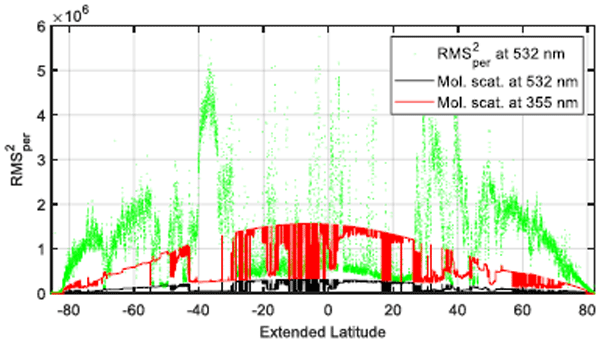
Accurate polarization calibration is vital for spaceborne lidars. Optically Thick Ice Cloud (OTIC)-based calibration enables semi-continuous daytime calibration, but molecular scattering at shorter wavelengths biases the signal. We introduce a vector radiative transfer-based Molecular Scattering Correction (MSC) and validate it using the Cloud-Aerosol Lidar with Orthogonal Polarization (CALIOP), eliminating ~ 1% daytime bias at 532 nm. MSC is essential for the Atmospheric Lidar (ATLID) at 355 nm.
Fiona Lippert, Andrew Gerald Barr, Marcos Herreras-Giralda, Masahiro Momoi, Fernando Rejano, Sha Lu, Otto Hasekamp, Oleg Dubovik, Edward Malina, and Jochen Landgraf
EGUsphere, https://doi.org/10.5194/egusphere-2026-4724, https://doi.org/10.5194/egusphere-2026-4724, 2026
Short summary
Short summary
Retrieving greenhouse gas concentrations from satellite measurements is computationally demanding. We show that machine learning can greatly accelerate this process while maintaining high accuracy and interpretability. Combining simplified atmospheric simulations with neural networks proved substantially more reliable than using machine learning alone. This hybrid approach could facilitate near-real time processing of rapidly increasing data volumes.
Patrick Chazette, Andreas Behrendt, Adolfo Comerón, Paolo Di Girolamo, Marco Di Paolantonio, Davide Dionisi, Cyrille Flamant, José Luis Gómez-Amo, Jérémy Lagarrigue, Frédéric Laly, Diego Lange, Constantino Muñoz-Porcar, Alejandro Rodríguez-Gómez, Michaël Sicard, Donato Summa, Julien Totems, María Pilar Utrillas, Pedro C. Valdelomar, and Volker Wulfmeyer
Atmos. Meas. Tech., 19, 5223–5242, https://doi.org/10.5194/amt-19-5223-2026, https://doi.org/10.5194/amt-19-5223-2026, 2026
Short summary
Short summary
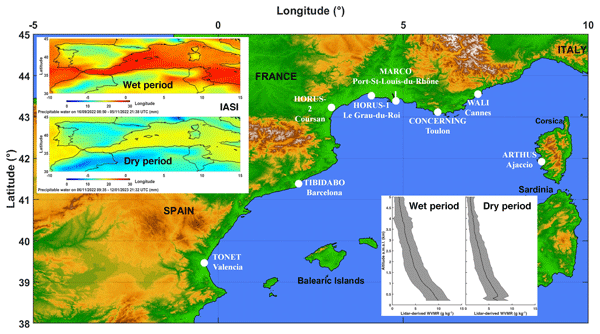
Between October 2022 and January 2023, the Water Vapour Lidar Network Assimilation (WaLiNeAs) campaign was conducted on the western Mediterranean by four European countries. To improve the forecasting of heavy precipitation events, eight ground-based stations equipped with water vapour Raman lidars were strategically deployed. They offered a valuable chance to verify the consistency of the water vapour products of both the Infrared Atmospheric Sounding Interferometer (IASI) and ERA5 reanalysis.
Pravash Tiwari, Jason Blake Cohen, Hongrui Gao, Lingxiao Lu, Jun Wang, Oleg Dubovik, and Kai Qin
Atmos. Chem. Phys., 26, 9149–9180, https://doi.org/10.5194/acp-26-9149-2026, https://doi.org/10.5194/acp-26-9149-2026, 2026
Short summary
Short summary
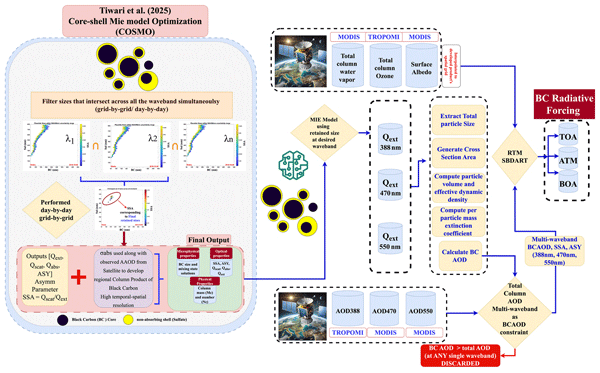
Black carbon's climate impact is highly uncertain because its radiative effect depends on particle size, mixing state, and column loading. This study combines satellite data, physics-based simulations, and machine learning to estimate black carbon forcing across contrasting regions. The same black carbon amount can warm or cool the atmosphere depending on local aerosol properties. The machine learning framework provides a fast, transferable tool for regional climate assessment.
Hantao Wang, Marc L. Serre, Kazuyuki Miyazaki, Juan Cuesta, Jerry R. Ziemke, and J. Jason West
EGUsphere, https://doi.org/10.5194/egusphere-2026-2812, https://doi.org/10.5194/egusphere-2026-2812, 2026
This preprint is open for discussion and under review for Atmospheric Chemistry and Physics (ACP).
Short summary
Short summary
Ground-level ozone poses a significant health risk, yet ground monitors are sparse and satellites lack surface sensitivity. Here we develop a framework to infer surface ozone directly from satellite observations. By leveraging vertical profiles from balloons and aircraft and using chemical reanalysis vertical ratios, we significantly improved the accuracy of ozone estimates. Our 2005–2022 global dataset provides a valuable ground-level ozone background field for regions lacking ground networks.
Sachiko Okamoto, Juan Cuesta, Gaëlle Dufour, Maxim Eremenko, Kazuyuki Miyazaki, Cathy Boonne, Hiroshi Tanimoto, Jeff Peischl, and Chelsea Thompson
Atmos. Chem. Phys., 26, 4685–4709, https://doi.org/10.5194/acp-26-4685-2026, https://doi.org/10.5194/acp-26-4685-2026, 2026
Short summary
Short summary
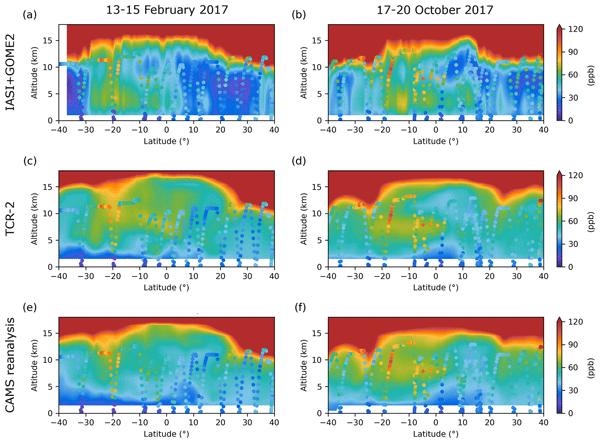
We analyse the distribution of tropospheric ozone over the Atlantic during February and October 2017 using a multispectral satellite synergism called IASI+GOME2, two chemistry reanalysis products and in situ airborne measurements. It reveals that a significant overestimation of two chemistry reanalysis products of lowermost troposphere ozone over the Atlantic in the Northern Hemisphere due to the overestimations of ozone precursors from anthropogenic sources from North America.
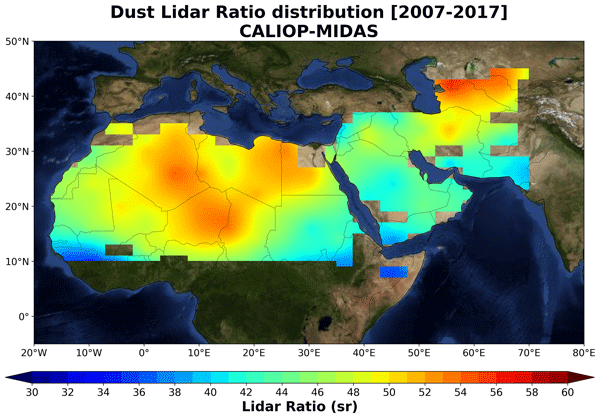
Anna Moustaka, Nikolaos Siomos, Stelios Kazadzis, Emmanouil Proestakis, Kalliopi Artemis Voudouri, Anton Lopatin, Oleg Dubovik, Kleareti Tourpali, Christos Zerefos, Vassilis Amiridis, and Antonis Gkikas
Atmos. Meas. Tech., 19, 1201–1225, https://doi.org/10.5194/amt-19-1201-2026, https://doi.org/10.5194/amt-19-1201-2026, 2026
Short summary
Short summary
North Africa and the Middle East are home to the world’s most active dust sources, but accurately monitoring airborne dust remains challenging. We combine active and passive satellite aerosol products to dynamically estimate dust lidar ratios over a 12-year period. The results reveal pronounced and physically meaningful regional variability, improving aerosol characterization and supporting climate and air-quality applications.
Greema Regmi, William Reed Espinosa, Jose Vanderlei Martins, Anin Puthukkudy, Masanori Saito, Oleg Dubovik, Masahiro Momoi, and Anton Lopatin
EGUsphere, https://doi.org/10.5194/egusphere-2025-5865, https://doi.org/10.5194/egusphere-2025-5865, 2026
Short summary
Short summary
We retrieved dust size and absorption properties by combining information from lidar and Multi Angle Polarimeter (MAP) and compared them with results from each instrument alone. We tested two particle shapes, spheroid and hexahedral. The spheroid model could not match the Lidar+MAP observations without producing unrealistic dust behavior, while the hexahedral model gave consistent and physically reasonable retrievals across all setups.
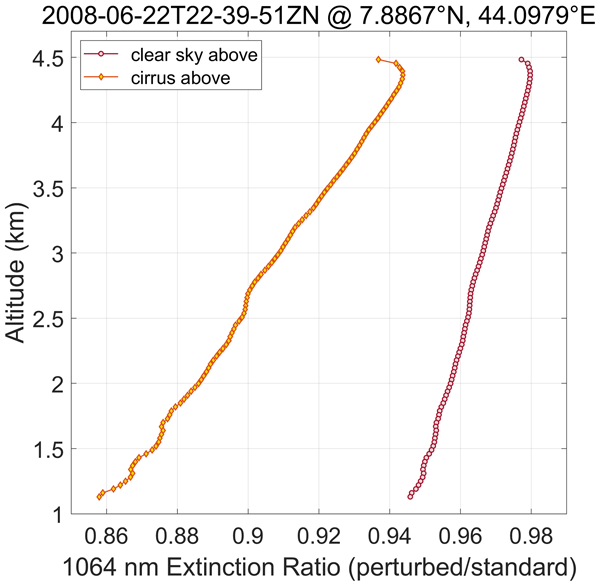
Jayanta Kar, Mark A. Vaughan, Robert P. Damadeo, Mahesh Kovilakam, Jason L. Tackett, and Charles R. Trepte
Atmos. Meas. Tech., 19, 277–292, https://doi.org/10.5194/amt-19-277-2026, https://doi.org/10.5194/amt-19-277-2026, 2026
Short summary
Short summary
This paper assesses biases in the 1064 nm calibration of the Cloud Aerosol Lidar with Orthogonal Polarization (CALIOP) due to signal attenuation differences at 1064 and 532 nm caused by stratospheric aerosols. Multi-channel measurements from the Stratospheric Aerosol and Gas Experiment suggest the bias ranges from 1 %–2 % for background conditions to over 5 % for high aerosol loads. Implications for CALIOP 1064 nm extinction retrievals and cascading errors in multi-layer scenes are discussed.
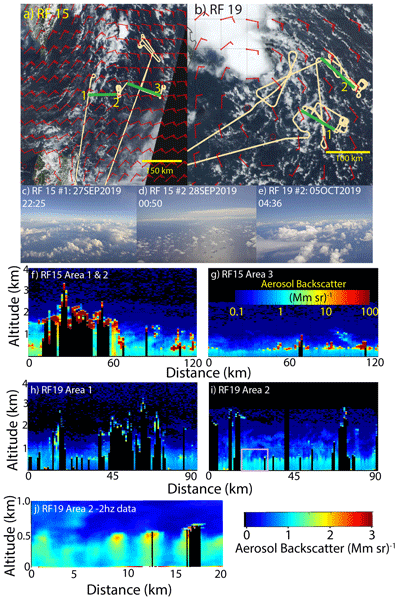
Jeffrey S. Reid, Robert E. Holz, Chris A. Hostetler, Richard A. Ferrare, Juli I. Rubin, Elizabeth J. Thompson, Susan C. van den Heever, Corey G. Amiot, Sharon P. Burton, Joshua P. DiGangi, Glenn S. Diskin, Joshua H. Cossuth, Daniel P. Eleuterio, Edwin W. Eloranta, Ralph Kuehn, Willem J. Marais, Hal B. Maring, Armin Sorooshian, Kenneth L. Thornhill, Charles R. Trepte, Jian Wang, Peng Xian, and Luke D. Ziemba
Atmos. Chem. Phys., 25, 18639–18673, https://doi.org/10.5194/acp-25-18639-2025, https://doi.org/10.5194/acp-25-18639-2025, 2025
Short summary
Short summary
We document air and ship born measurements of the vertical distribution of pollution and biomass burning aerosol particles transported within the Maritime Continent's monsoonal flows for 1000s of kilometers, and yet still exhibit intricate patterns around clouds near the ocean's surface. Findings demonstrate that, while aerosol transport occurs near the surface, there is heterogeneity in particle extinction that must be considered for both in situ observations and satellite retrievals.
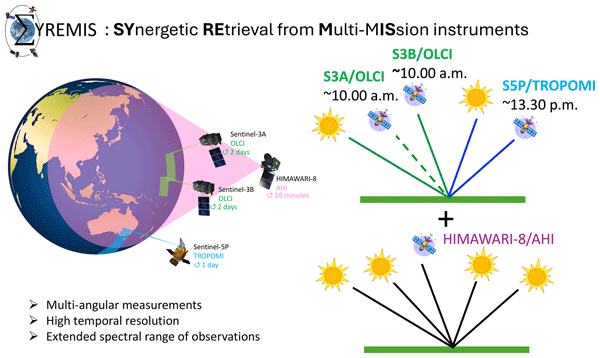
Pavel Litvinov, Cheng Chen, Oleg Dubovik, Siyao Zhai, Christian Matar, Chong Li, Anton Lopatin, David Fuertes, Tatyana Lapyonok, Lukas Bindreiter, Manuel Dornacher, Arthur Lehner, Alexandru Dandocsi, Daniele Gasbarra, and Christian Retscher
Atmos. Meas. Tech., 18, 7679–7716, https://doi.org/10.5194/amt-18-7679-2025, https://doi.org/10.5194/amt-18-7679-2025, 2025
Short summary
Short summary
Developed SYREMIS (SYnergetic REtrieval from Multi-MISsion instruments) approach is based on three main principles: (i) harmonization of the multi-instruments L1 measurements, (ii) their “weighting”, and (iii) optimization of the forward models and the retrieval setups. It substantially enhances aerosol and surface characterization from spaceborne measurements. The approach can be extended to future missions, including synergy with multi-angular, multi-spectral, and polarimetric measurements.
Travis D. Toth, Marian B. Clayton, Zhujun Li, David Painemal, Sharon D. Rodier, Jayanta Kar, Tyler J. Thorsen, Richard A. Ferrare, Mark A. Vaughan, Jason L. Tackett, Huisheng Bian, Mian Chin, Anne E. Garnier, Ellsworth J. Welton, Robert A. Ryan, Charles R. Trepte, and David M. Winker
Atmos. Meas. Tech., 18, 6765–6793, https://doi.org/10.5194/amt-18-6765-2025, https://doi.org/10.5194/amt-18-6765-2025, 2025
Short summary
Short summary
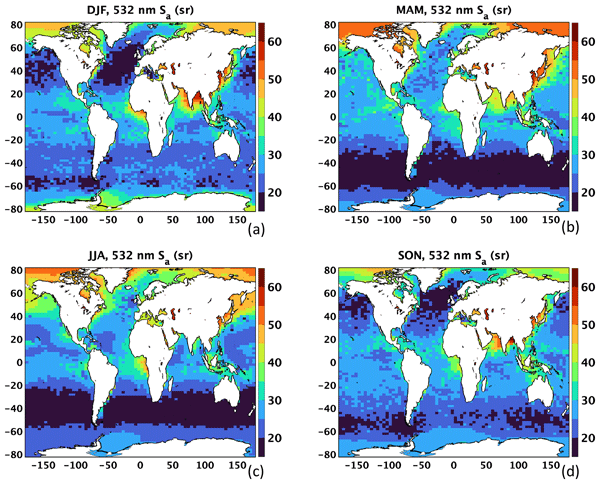
NASA's CALIPSO satellite mission observed aerosols (airborne particles) globally from 2006 to 2023. Its final data products update improves its aerosol optical parameters over oceans by adjusting for regional and seasonal differences in a new measurement-model synergistic approach. This results in a more realistic aerosol characterization, specifically near coastlines (where sea salt mixes with pollution), with potential impacts to future studies of science applications (e.g., climate effects).
Chong Li, Oleg Dubovik, Jing Li, David Fuertes, Anton Lopatin, Pavel Litvinov, Tatsiana Lapyonok, Lukas Bindreiter, Christian Matar, Yiqi Chu, and Wangshu Tan
Atmos. Meas. Tech., 18, 6609–6643, https://doi.org/10.5194/amt-18-6609-2025, https://doi.org/10.5194/amt-18-6609-2025, 2025
Short summary
Short summary
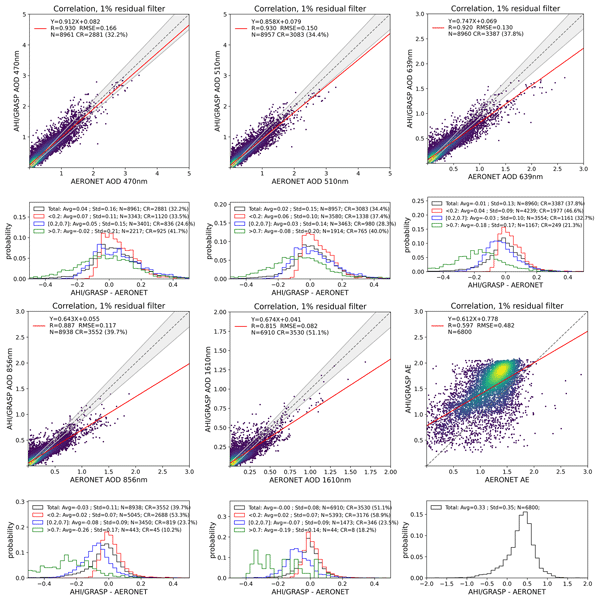
Using observational data from Japan's geostationary satellite – Himawari-8 , this study improved how we track air pollution (aerosols) across East Asia and the Western Pacific. By applying an advanced aerosol retrieval algorithm called GRASP, we were able to more accurately observe both atmospheric and ground conditions and their dynamics over time. The results closely matched ground-based measurements and showed potential for even better monitoring when combined with ground-based lidar data.
Jason L. Tackett, Robert A. Ryan, Anne E. Garnier, Jayanta Kar, Brian J. Getzewich, Xia Cai, Mark A. Vaughan, Charles R. Trepte, Ron Verhappen, David M. Winker, and Kam-Pui A. Lee
Atmos. Meas. Tech., 18, 6211–6231, https://doi.org/10.5194/amt-18-6211-2025, https://doi.org/10.5194/amt-18-6211-2025, 2025
Short summary
Short summary
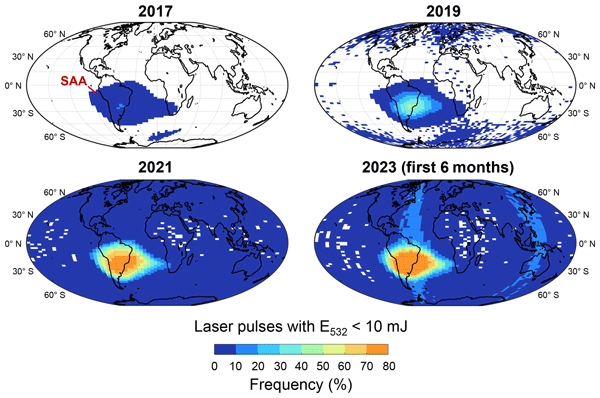
The spaceborne atmospheric lidar CALIOP experienced an increasing number of intermittent low energy laser pulses in the final seven years of the 17-year long CALIPSO mission. Low energy pulses degraded the quality of retrievals in affected profiles. This paper describes low energy mitigation (LEM) algorithms that remove affected data and minimize data loss. LEM is demonstrated to correct calibration biases, reduce false feature detections, and restore the integrity of the CALIOP data record.
Gaëlle Dufour, Maxim Eremenko, Juan Cuesta, Gérard Ancellet, Michael Gill, Eliane Maillard Barras, and Roeland Van Malderen
Atmos. Meas. Tech., 18, 5049–5070, https://doi.org/10.5194/amt-18-5049-2025, https://doi.org/10.5194/amt-18-5049-2025, 2025
Short summary
Short summary
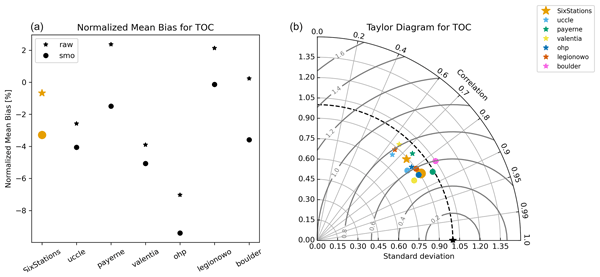
Tropospheric ozone from the three Infrared Atmospheric Sounding Interferometer (IASI) instruments is very consistent (<1 %). The validation against homogenized ozone sondes reveals an overall good agreement with slight biases (3 %–6 %) in tropospheric ozone and a possible temporal drift, but this is difficult to assess due to the limited number of sites. No specific trends are estimated for the tropospheric ozone column for the period 2008–2022, but persistent negative trends are observed in the lower troposphere.
Tanguy Jonville, Maurus Borne, Cyrille Flamant, Juan Cuesta, Olivier Bock, Pierre Bosser, Christophe Lavaysse, Andreas Fink, and Peter Knippertz
Atmos. Chem. Phys., 25, 9765–9786, https://doi.org/10.5194/acp-25-9765-2025, https://doi.org/10.5194/acp-25-9765-2025, 2025
Short summary
Short summary
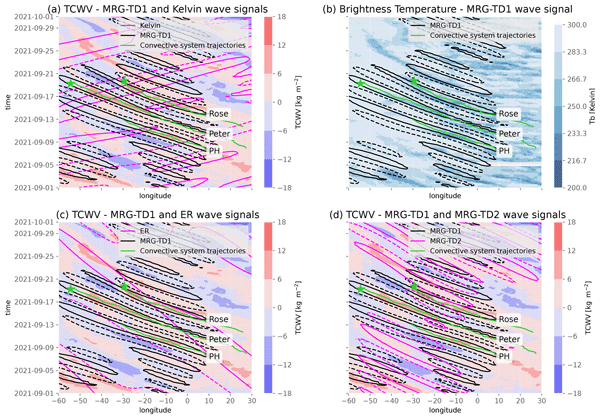
Tropical waves structure the atmosphere. Four types of tropical waves (equatorial Rossby – ER, Kelvin, MRG-TD1, and MRG-TD2 – mixed Rossby gravity–tropical depressions) are studied using filters, satellite measurements, and in situ data from the Clouds–Atmosphere Dynamics–Dust Interaction in West Africa (CADDIWA) campaign held in September 2021 in Cabo Verde. ER waves impact temperature and humidity above 2500 m, MRG-TD1 around 3500 m, and MRG-TD2 around 2000 m. Interactions between these waves favor tropical cyclone formation.
Mégane Ventura, Fabien Waquet, Isabelle Chiapello, Gérard Brogniez, Frédéric Parol, Frédérique Auriol, Rodrigue Loisil, Cyril Delegove, Luc Blarel, Oleg Dubovik, Marc Mallet, Cyrille Flamant, and Paola Formenti
Atmos. Meas. Tech., 18, 4005–4024, https://doi.org/10.5194/amt-18-4005-2025, https://doi.org/10.5194/amt-18-4005-2025, 2025
Short summary
Short summary
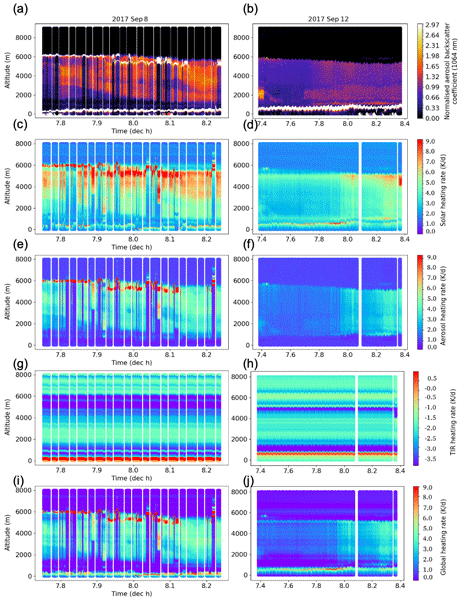
Biomass-burning aerosols (BBAs) from Central Africa are transported above stratocumulus clouds. The absorption of solar energy by aerosols induces warming, altering the cloud dynamics. We developed an approach that combines polarimeter and lidar to quantify this. This methodology is assessed during the AEROCLO-sA (AErosol RadiatiOn and CLOud in Southern Africa) campaign. To validate it, we used irradiance measurements acquired during aircraft spiral descents. A major perspective is the generalization of this method to the global level.
Suvarna Fadnavis, Yasin Elshorbany, Jerald Ziemke, Brice Barret, Alexandru Rap, P. R. Satheesh Chandran, Richard J. Pope, Vijay Sagar, Domenico Taraborrelli, Eric Le Flochmoen, Juan Cuesta, Catherine Wespes, Folkert Boersma, Isolde Glissenaar, Isabelle De Smedt, Michel Van Roozendael, Hervé Petetin, and Isidora Anglou
Atmos. Chem. Phys., 25, 8229–8254, https://doi.org/10.5194/acp-25-8229-2025, https://doi.org/10.5194/acp-25-8229-2025, 2025
Short summary
Short summary
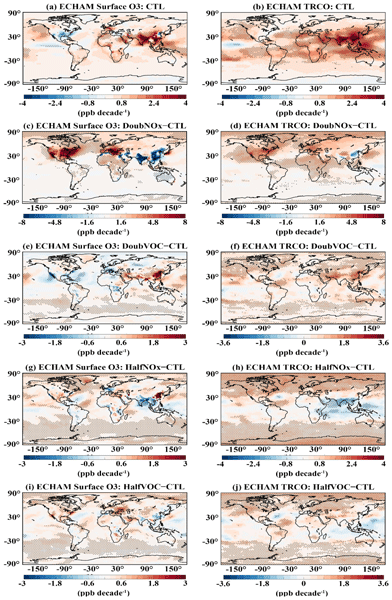
Satellites and model simulations show enhancement in tropospheric ozone, which is highly impacted by human-produced nitrous oxides compared to volatile organic compounds. The increased amount of ozone enhances ozone radiative forcing. The ozone enhancement and associated radiative forcing are the highest over South and East Asia. The emissions of nitrous oxides show a higher influence on shifting ozone photochemical regimes than volatile organic compounds.
Cheng Chen, Xuefeng Lei, Zhenhai Liu, Haorang Gu, Oleg Dubovik, Pavel Litvinov, David Fuertes, Yujia Cao, Haixiao Yu, Guangfeng Xiang, Binghuan Meng, Zhenwei Qiu, Xiaobing Sun, Jin Hong, and Zhengqiang Li
Earth Syst. Sci. Data, 17, 3497–3519, https://doi.org/10.5194/essd-17-3497-2025, https://doi.org/10.5194/essd-17-3497-2025, 2025
Short summary
Short summary
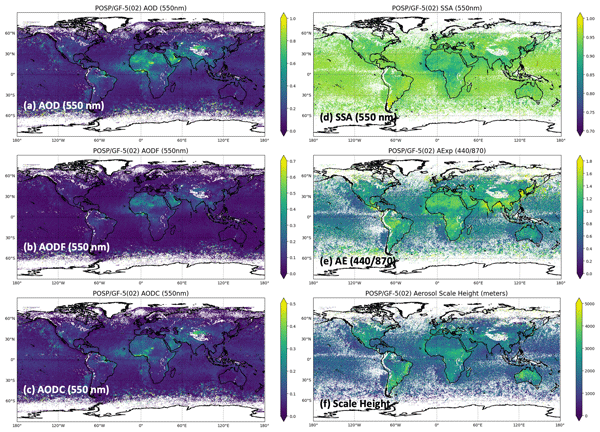
Particulate Observing Scanning Polarization (POSP) on board the second GaoFen-5 (GF-5(02)) satellite is the first space-borne ultraviolet–visible–near-infrared–shortwave-infrared (UV–VIS–NIR–SWIR) multi-spectral cross-track scanning polarimeter. Due to its wide spectral range and polarimetric capabilities, POSP measurements provide rich information for aerosol and surface characterization. We present the detailed aerosol/surface products generated from POSP's first 18 months of operation, including spectral aerosol optical depth, aerosol-size-/absorption-related properties, surface black-sky and white-sky albedos, etc.
Yuyang Chang, Qiaoyun Hu, Philippe Goloub, Thierry Podvin, Igor Veselovskii, Fabrice Ducos, Gaël Dubois, Masanori Saito, Anton Lopatin, Oleg Dubovik, and Cheng Chen
Atmos. Chem. Phys., 25, 6787–6821, https://doi.org/10.5194/acp-25-6787-2025, https://doi.org/10.5194/acp-25-6787-2025, 2025
Short summary
Short summary
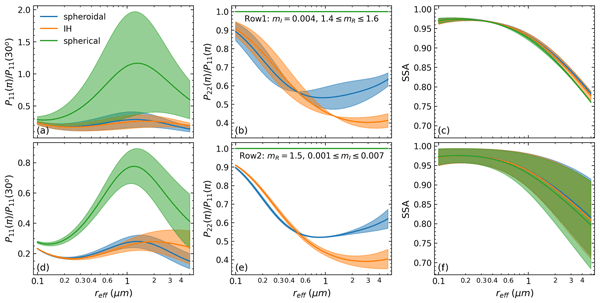
Our study retrieved dust aerosol microphysical properties from lidar measurements using different scattering models. Numeric simulations and real data applications revealed the importance of considering depolarization measurements and the superiority of the irregular–hexahedral model in the retrieval of dust aerosols from lidar measurements.
Zhenyu Zhang, Jing Li, Huizheng Che, Yueming Dong, Oleg Dubovik, Thomas Eck, Pawan Gupta, Brent Holben, Jhoon Kim, Elena Lind, Trailokya Saud, Sachchida Nand Tripathi, and Tong Ying
Atmos. Chem. Phys., 25, 4617–4637, https://doi.org/10.5194/acp-25-4617-2025, https://doi.org/10.5194/acp-25-4617-2025, 2025
Short summary
Short summary
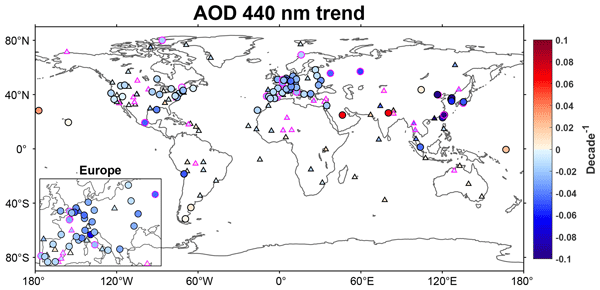
We used ground-based remote sensing data from the Aerosol Robotic Network to examine long-term trends in aerosol characteristics. We found aerosol loadings generally decreased globally, and aerosols became more scattering. These changes are closely related to variations in aerosol compositions, such as decreased anthropogenic emissions over East Asia, Europe, and North America; increased anthropogenic sources over northern India; and increased dust activity over the Arabian Peninsula.
Audrey Gaudel, Ilann Bourgeois, Meng Li, Kai-Lan Chang, Jerald Ziemke, Bastien Sauvage, Ryan M. Stauffer, Anne M. Thompson, Debra E. Kollonige, Nadia Smith, Daan Hubert, Arno Keppens, Juan Cuesta, Klaus-Peter Heue, Pepijn Veefkind, Kenneth Aikin, Jeff Peischl, Chelsea R. Thompson, Thomas B. Ryerson, Gregory J. Frost, Brian C. McDonald, and Owen R. Cooper
Atmos. Chem. Phys., 24, 9975–10000, https://doi.org/10.5194/acp-24-9975-2024, https://doi.org/10.5194/acp-24-9975-2024, 2024
Short summary
Short summary
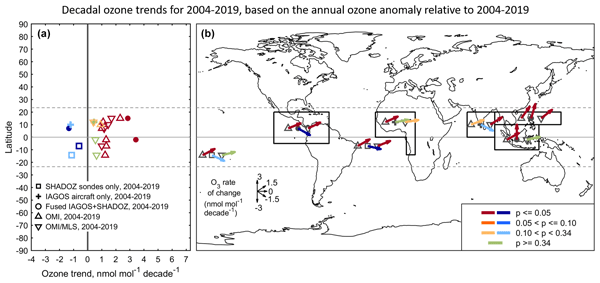
The study examines tropical tropospheric ozone changes. In situ data from 1994–2019 display increased ozone, notably over India, Southeast Asia, and Malaysia and Indonesia. Sparse in situ data limit trend detection for the 15-year period. In situ and satellite data, with limited sampling, struggle to consistently detect trends. Continuous observations are vital over the tropical Pacific Ocean, Indian Ocean, western Africa, and South Asia for accurate ozone trend estimation in these regions.
José Alex Zenteno-Hernández, Adolfo Comerón, Federico Dios, Alejandro Rodríguez-Gómez, Constantino Muñoz-Porcar, Michaël Sicard, Noemi Franco, Andreas Behrendt, and Paolo Di Girolamo
Atmos. Meas. Tech., 17, 4687–4694, https://doi.org/10.5194/amt-17-4687-2024, https://doi.org/10.5194/amt-17-4687-2024, 2024
Short summary
Short summary
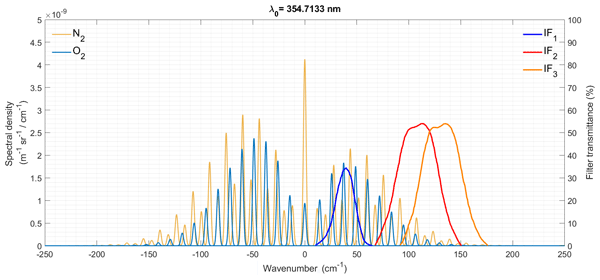
We study how the spectral characteristics of a solid-state laser in an atmospheric temperature profiling lidar using the Raman technique impact the temperature retrieval accuracy. We find that the spectral widening, with respect to a seeded laser, has virtually no impact, while crystal-rod temperature variations in the laser must be kept within a range of 1 K for the uncertainty in the atmospheric temperature below 1 K. The study is carried out through spectroscopy simulations.
Anton Lopatin, Oleg Dubovik, Georgiy Stenchikov, Ellsworth J. Welton, Illia Shevchenko, David Fuertes, Marcos Herreras-Giralda, Tatsiana Lapyonok, and Alexander Smirnov
Atmos. Meas. Tech., 17, 4445–4470, https://doi.org/10.5194/amt-17-4445-2024, https://doi.org/10.5194/amt-17-4445-2024, 2024
Short summary
Short summary
We compare aerosol properties over the King Abdullah University of Science and Technology campus using Generalized Retrieval of Aerosol and Surface Properties (GRASP) and the Micro-Pulse Lidar Network (MPLNET). We focus on the impact of different aerosol retrieval assumptions on daytime and nighttime retrievals and analyze seasonal variability in aerosol properties, aiding in understanding aerosol behavior and improving retrieval. Our work has implications for climate and public health.
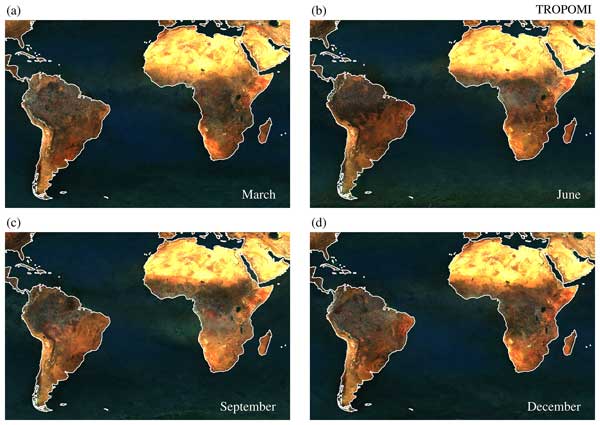
Lieuwe G. Tilstra, Martin de Graaf, Victor J. H. Trees, Pavel Litvinov, Oleg Dubovik, and Piet Stammes
Atmos. Meas. Tech., 17, 2235–2256, https://doi.org/10.5194/amt-17-2235-2024, https://doi.org/10.5194/amt-17-2235-2024, 2024
Short summary
Short summary
This paper introduces a new surface albedo climatology of directionally dependent Lambertian-equivalent reflectivity (DLER) observed by TROPOMI on the Sentinel-5 Precursor satellite. The database contains monthly fields of DLER for 21 wavelength bands at a relatively high spatial resolution of 0.125 by 0.125 degrees. The anisotropy of the surface reflection is handled by parameterisation of the viewing angle dependence.
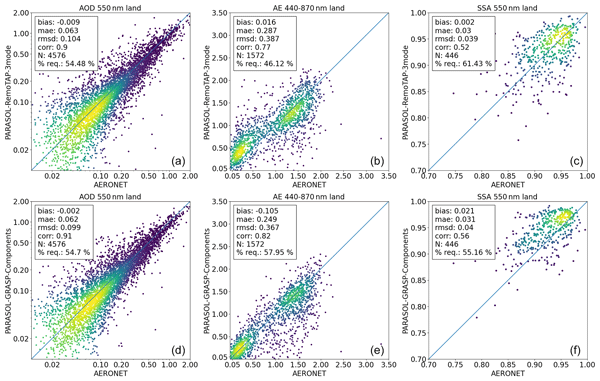
Otto Hasekamp, Pavel Litvinov, Guangliang Fu, Cheng Chen, and Oleg Dubovik
Atmos. Meas. Tech., 17, 1497–1525, https://doi.org/10.5194/amt-17-1497-2024, https://doi.org/10.5194/amt-17-1497-2024, 2024
Short summary
Short summary
Aerosols are particles in the atmosphere that cool the climate by reflecting and absorbing sunlight (direct effect) and changing cloud properties (indirect effect). The scale of aerosol cooling is uncertain, hampering accurate climate predictions. We compare two algorithms for the retrieval of aerosol properties from multi-angle polarimetric measurements: Generalized Retrieval of Atmosphere and Surface Properties (GRASP) and Remote sensing of Trace gas and Aerosol Products (RemoTAP).
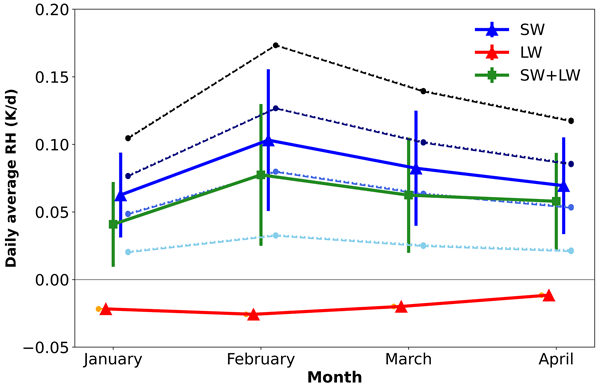
Pasquale Sellitto, Redha Belhadji, Juan Cuesta, Aurélien Podglajen, and Bernard Legras
Atmos. Chem. Phys., 23, 15523–15535, https://doi.org/10.5194/acp-23-15523-2023, https://doi.org/10.5194/acp-23-15523-2023, 2023
Short summary
Short summary
Record-breaking wildfires ravaged south-eastern Australia during the fire season 2019–2020. These fires injected a smoke plume in the stratosphere, which dispersed over the whole Southern Hemisphere and interacted with solar and terrestrial radiation. A number of detached smoke bubbles were also observed emanating from this plume and ascending quickly to over 35 km altitude. Here we study how absorption of radiation generated ascending motion of both the the hemispheric plume and the vortices.
Alexandra Tsekeri, Anna Gialitaki, Marco Di Paolantonio, Davide Dionisi, Gian Luigi Liberti, Alnilam Fernandes, Artur Szkop, Aleksander Pietruczuk, Daniel Pérez-Ramírez, Maria J. Granados Muñoz, Juan Luis Guerrero-Rascado, Lucas Alados-Arboledas, Diego Bermejo Pantaleón, Juan Antonio Bravo-Aranda, Anna Kampouri, Eleni Marinou, Vassilis Amiridis, Michael Sicard, Adolfo Comerón, Constantino Muñoz-Porcar, Alejandro Rodríguez-Gómez, Salvatore Romano, Maria Rita Perrone, Xiaoxia Shang, Mika Komppula, Rodanthi-Elisavet Mamouri, Argyro Nisantzi, Diofantos Hadjimitsis, Francisco Navas-Guzmán, Alexander Haefele, Dominika Szczepanik, Artur Tomczak, Iwona S. Stachlewska, Livio Belegante, Doina Nicolae, Kalliopi Artemis Voudouri, Dimitris Balis, Athena A. Floutsi, Holger Baars, Linda Miladi, Nicolas Pascal, Oleg Dubovik, and Anton Lopatin
Atmos. Meas. Tech., 16, 6025–6050, https://doi.org/10.5194/amt-16-6025-2023, https://doi.org/10.5194/amt-16-6025-2023, 2023
Short summary
Short summary
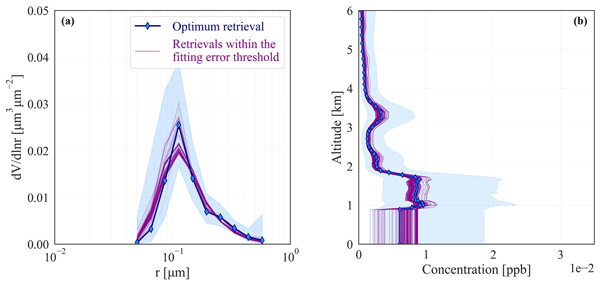
EARLINET/ACTRIS organized an intensive observational campaign in May 2020, with the objective of monitoring the atmospheric state over Europe during the COVID-19 lockdown and relaxation period. The work presented herein focuses on deriving a common methodology for applying a synergistic retrieval that utilizes the network's ground-based passive and active remote sensing measurements and deriving the aerosols from anthropogenic activities over Europe.
Sachiko Okamoto, Juan Cuesta, Matthias Beekmann, Gaëlle Dufour, Maxim Eremenko, Kazuyuki Miyazaki, Cathy Boonne, Hiroshi Tanimoto, and Hajime Akimoto
Atmos. Chem. Phys., 23, 7399–7423, https://doi.org/10.5194/acp-23-7399-2023, https://doi.org/10.5194/acp-23-7399-2023, 2023
Short summary
Short summary
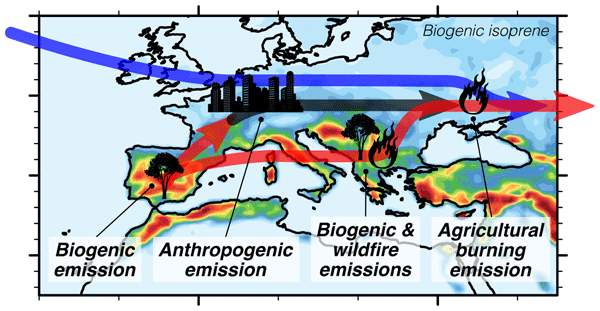
We present a detailed analysis of the daily evolution of the lowermost tropospheric ozone documented by IASI+GOME2 multispectral satellite observations and that of its precursors from TCR-2 tropospheric chemistry reanalysis. It reveals that the ozone outbreak across Europe in July 2017 was produced during favorable condition for photochemical production of ozone and was associated with multiple sources of ozone precursors: biogenic, anthropogenic, and biomass burning emissions.
Theano Drosoglou, Ioannis-Panagiotis Raptis, Massimo Valeri, Stefano Casadio, Francesca Barnaba, Marcos Herreras-Giralda, Anton Lopatin, Oleg Dubovik, Gabriele Brizzi, Fabrizio Niro, Monica Campanelli, and Stelios Kazadzis
Atmos. Meas. Tech., 16, 2989–3014, https://doi.org/10.5194/amt-16-2989-2023, https://doi.org/10.5194/amt-16-2989-2023, 2023
Short summary
Short summary
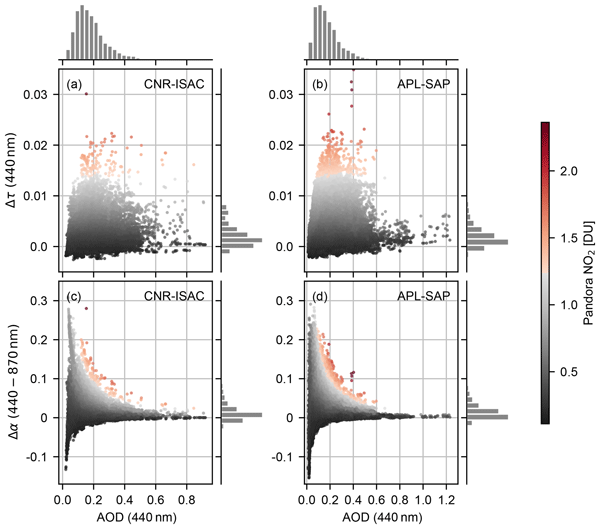
Aerosol optical properties derived from sun photometers depend on the optical depth of trace gases absorbing solar radiation at specific spectral ranges. Various networks use satellite-based climatologies to account for this or neglect their effect. In this work, we evaluate the effect of NO2 absorption in aerosol retrievals from AERONET and SKYNET over two stations in Rome, Italy, with relatively high NO2 spatiotemporal variations, using NO2 data from the Pandora network and the TROPOMI sensor.
Michail Mytilinaios, Sara Basart, Sergio Ciamprone, Juan Cuesta, Claudio Dema, Enza Di Tomaso, Paola Formenti, Antonis Gkikas, Oriol Jorba, Ralph Kahn, Carlos Pérez García-Pando, Serena Trippetta, and Lucia Mona
Atmos. Chem. Phys., 23, 5487–5516, https://doi.org/10.5194/acp-23-5487-2023, https://doi.org/10.5194/acp-23-5487-2023, 2023
Short summary
Short summary
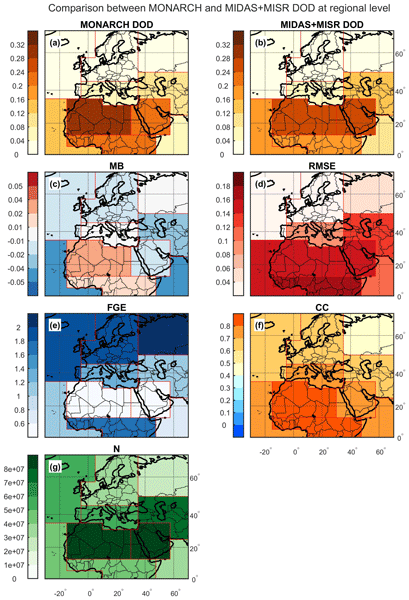
Multiscale Online Non-hydrostatic AtmospheRe CHemistry model (MONARCH) dust reanalysis provides a high-resolution 3D reconstruction of past dust conditions, allowing better quantification of climate and socioeconomic dust impacts. We assess the performance of the reanalysis needed to reproduce dust optical depth using dust-related products retrieved from satellite and ground-based observations and show that it reproduces the spatial distribution and seasonal variability of atmospheric dust well.
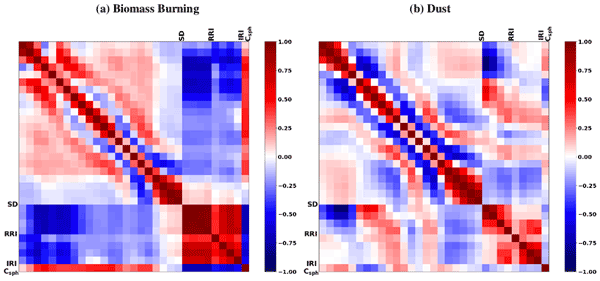
Milagros E. Herrera, Oleg Dubovik, Benjamin Torres, Tatyana Lapyonok, David Fuertes, Anton Lopatin, Pavel Litvinov, Cheng Chen, Jose Antonio Benavent-Oltra, Juan L. Bali, and Pablo R. Ristori
Atmos. Meas. Tech., 15, 6075–6126, https://doi.org/10.5194/amt-15-6075-2022, https://doi.org/10.5194/amt-15-6075-2022, 2022
Short summary
Short summary
This study deals with the dynamic error estimates of the aerosol-retrieved properties by the GRASP algorithm, which are provided for directly retrieved and derived parameters. Moreover, GRASP provides full covariance matrices that appear to be a useful approach for optimizing observation schemes and retrieval set-ups. The validation of the retrieved dynamic error estimates is done through real and synthetic measurements using sun photometer and lidar observations.
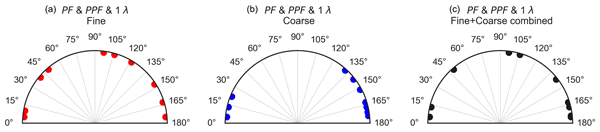
Alireza Moallemi, Rob L. Modini, Tatyana Lapyonok, Anton Lopatin, David Fuertes, Oleg Dubovik, Philippe Giaccari, and Martin Gysel-Beer
Atmos. Meas. Tech., 15, 5619–5642, https://doi.org/10.5194/amt-15-5619-2022, https://doi.org/10.5194/amt-15-5619-2022, 2022
Short summary
Short summary
Aerosol properties (size distributions, refractive indices) can be retrieved from in situ, angularly resolved light scattering measurements performed with polar nephelometers. We apply an established framework to assess the aerosol property retrieval potential for different instrument configurations, target applications, and assumed prior knowledge. We also demonstrate how a reductive greedy algorithm can be used to determine the optimal placements of the angular sensors in a polar nephelometer.

Thomas Drugé, Pierre Nabat, Marc Mallet, Martine Michou, Samuel Rémy, and Oleg Dubovik
Atmos. Chem. Phys., 22, 12167–12205, https://doi.org/10.5194/acp-22-12167-2022, https://doi.org/10.5194/acp-22-12167-2022, 2022
Short summary
Short summary
This study presents the implementation of brown carbon in the atmospheric component of the CNRM global climate model and particularly in its aerosol scheme TACTIC. Several simulations were carried out with this climate model, over the period 2000–2014, to evaluate the model by comparison with different reference datasets (PARASOL-GRASP, OMI-OMAERUVd, MACv2, FMI_SAT, AERONET) and to analyze the brown carbon radiative and climatic effects.
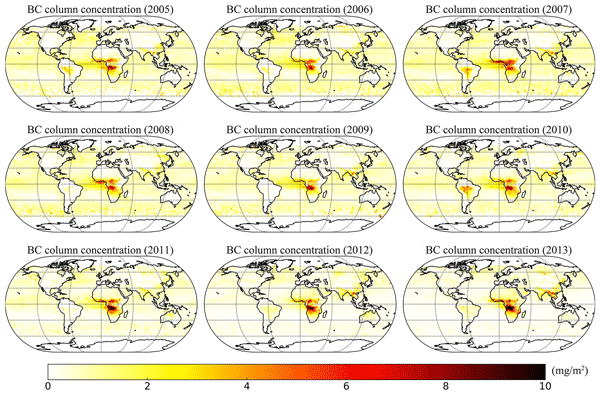
Lei Li, Yevgeny Derimian, Cheng Chen, Xindan Zhang, Huizheng Che, Gregory L. Schuster, David Fuertes, Pavel Litvinov, Tatyana Lapyonok, Anton Lopatin, Christian Matar, Fabrice Ducos, Yana Karol, Benjamin Torres, Ke Gui, Yu Zheng, Yuanxin Liang, Yadong Lei, Jibiao Zhu, Lei Zhang, Junting Zhong, Xiaoye Zhang, and Oleg Dubovik
Earth Syst. Sci. Data, 14, 3439–3469, https://doi.org/10.5194/essd-14-3439-2022, https://doi.org/10.5194/essd-14-3439-2022, 2022
Short summary
Short summary
A climatology of aerosol composition concentration derived from POLDER-3 observations using GRASP/Component is presented. The conceptual specifics of the GRASP/Component approach are in the direct retrieval of aerosol speciation without intermediate retrievals of aerosol optical characteristics. The dataset of satellite-derived components represents scarce but imperative information for validation and potential adjustment of chemical transport models.
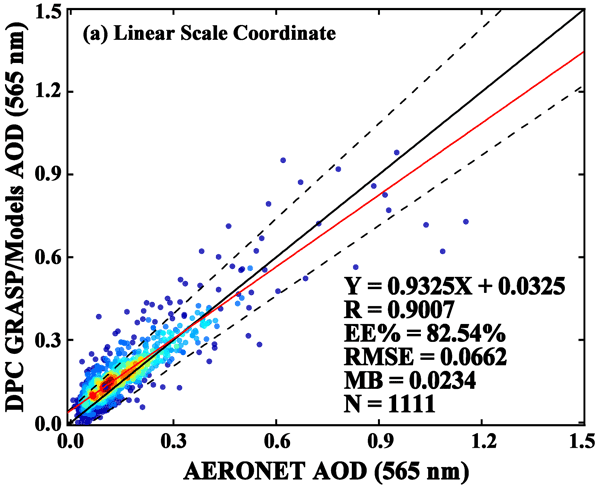
Shikuan Jin, Yingying Ma, Cheng Chen, Oleg Dubovik, Jin Hong, Boming Liu, and Wei Gong
Atmos. Meas. Tech., 15, 4323–4337, https://doi.org/10.5194/amt-15-4323-2022, https://doi.org/10.5194/amt-15-4323-2022, 2022
Short summary
Short summary
Aerosol parameter retrievals have always been a research focus. In this study, we used an advanced aerosol algorithms (GRASP, developed by Oleg Dubovik) to test the ability of DPC/Gaofen-5 (the first polarized multi-angle payload developed in China) images to obtain aerosol parameters. The results show that DPC/GRASP achieves good results (R > 0.9). This research will contribute to the development of hardware and algorithms for aerosols

Alexander Sinyuk, Brent N. Holben, Thomas F. Eck, David M. Giles, Ilya Slutsker, Oleg Dubovik, Joel S. Schafer, Alexander Smirnov, and Mikhail Sorokin
Atmos. Meas. Tech., 15, 4135–4151, https://doi.org/10.5194/amt-15-4135-2022, https://doi.org/10.5194/amt-15-4135-2022, 2022
Short summary
Short summary
This paper describes modification of smoothness constraints on the imaginary part of the refractive index employed in the AERONET aerosol retrieval algorithm. This modification is termed relaxed due to the weaker strength of this new smoothness constraint. Applying the modified version of the smoothness constraint results in a significant reduction of retrieved light absorption by brown-carbon-containing aerosols.
Donato Summa, Fabio Madonna, Noemi Franco, Benedetto De Rosa, and Paolo Di Girolamo
Atmos. Meas. Tech., 15, 4153–4170, https://doi.org/10.5194/amt-15-4153-2022, https://doi.org/10.5194/amt-15-4153-2022, 2022
Short summary
Short summary
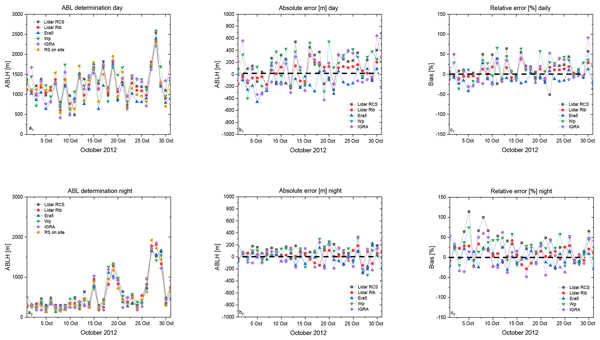
The evolution of the atmospheric boundary layer height (ABLH) has an important impact on meteorology. However, the complexity of the phenomena occurring within the ABL and the influence of advection and local accumulation processes often prevent an unambiguous determination of the ABLH. The paper reports results from an inter-comparison effort involving different sensors and techniques to measure the ABLH. Correlations between the ABLH and other atmospheric variables are also assessed.
Zhujun Li, David Painemal, Gregory Schuster, Marian Clayton, Richard Ferrare, Mark Vaughan, Damien Josset, Jayanta Kar, and Charles Trepte
Atmos. Meas. Tech., 15, 2745–2766, https://doi.org/10.5194/amt-15-2745-2022, https://doi.org/10.5194/amt-15-2745-2022, 2022
Short summary
Short summary
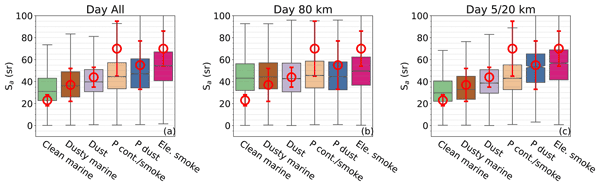
For more than 15 years, CALIPSO has revolutionized our understanding of the role of aerosols in climate. Here we evaluate CALIPSO aerosol typing over the ocean using an independent CALIPSO–CloudSat product. The analysis suggests that CALIPSO correctly categorizes clean marine aerosol over the open ocean, elevated smoke over the SE Atlantic, and dust over the tropical Atlantic. Similarities between clean and dusty marine over the open ocean implies that algorithm modifications are warranted.
Juan Cuesta, Lorenzo Costantino, Matthias Beekmann, Guillaume Siour, Laurent Menut, Bertrand Bessagnet, Tony C. Landi, Gaëlle Dufour, and Maxim Eremenko
Atmos. Chem. Phys., 22, 4471–4489, https://doi.org/10.5194/acp-22-4471-2022, https://doi.org/10.5194/acp-22-4471-2022, 2022
Short summary
Short summary
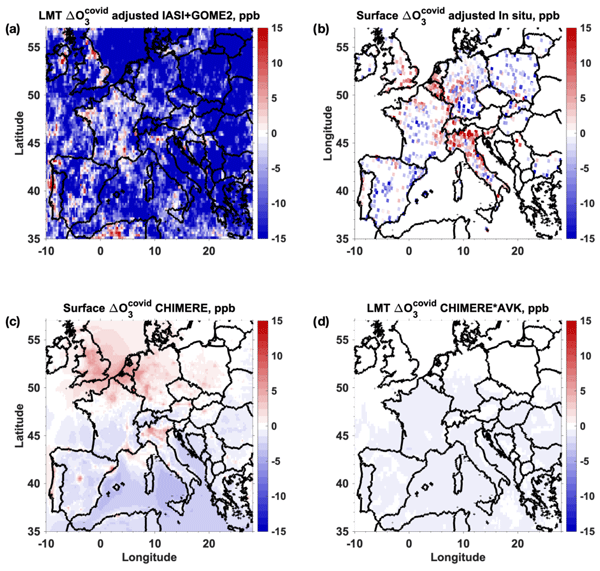
We present the first comprehensive study integrating satellite observations of near-surface ozone pollution, surface in situ measurements, and a chemistry-transport model for quantifying the role of anthropogenic emission reductions during the COVID-19 lockdown in spring 2020. It confirms the occurrence of a net enhancement of ozone in central Europe and a reduction elsewhere, except for some hotspots, linked with the reduction of precursor emissions from Europe and the Northern Hemisphere.
Jean-Claude Roger, Eric Vermote, Sergii Skakun, Emilie Murphy, Oleg Dubovik, Natacha Kalecinski, Bruno Korgo, and Brent Holben
Atmos. Meas. Tech., 15, 1123–1144, https://doi.org/10.5194/amt-15-1123-2022, https://doi.org/10.5194/amt-15-1123-2022, 2022
Short summary
Short summary
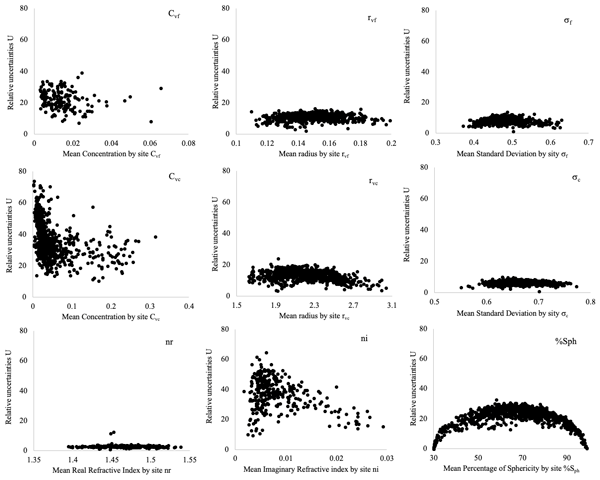
From measurements of the sky performed by AERONET, we determined the microphysical properties of the atmospheric particles (aerosols) for each AERONET site. We used the aerosol optical thickness and its variation over the visible spectrum. This allows us to determine an aerosol model useful for (but not only) the validation of the surface reflectance satellite-derived product. The impact of the aerosol model uncertainties on the surface reflectance validation has been found to be 1 % to 3 %.
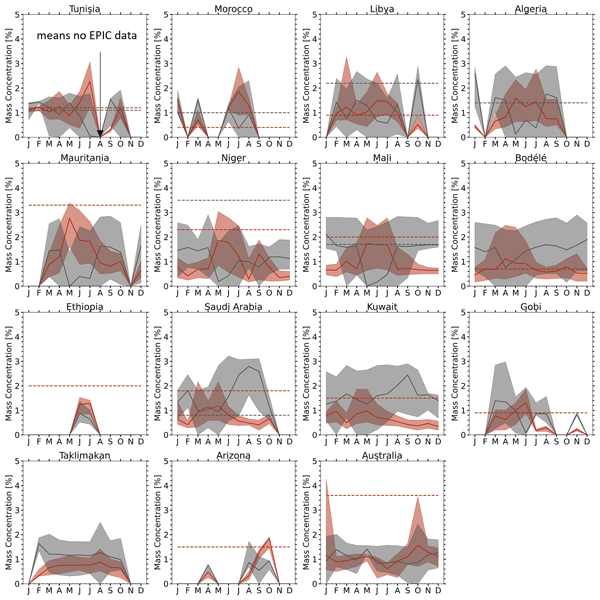
Sujung Go, Alexei Lyapustin, Gregory L. Schuster, Myungje Choi, Paul Ginoux, Mian Chin, Olga Kalashnikova, Oleg Dubovik, Jhoon Kim, Arlindo da Silva, Brent Holben, and Jeffrey S. Reid
Atmos. Chem. Phys., 22, 1395–1423, https://doi.org/10.5194/acp-22-1395-2022, https://doi.org/10.5194/acp-22-1395-2022, 2022
Short summary
Short summary
This paper presents a retrieval algorithm of iron-oxide species (hematite, goethite) content in the atmosphere from DSCOVR EPIC observations. Our results display variations within the published range of hematite and goethite over the main dust-source regions but show significant seasonal and spatial variability. This implies a single-viewing satellite instrument with UV–visible channels may provide essential information on shortwave dust direct radiative effects for climate modeling.
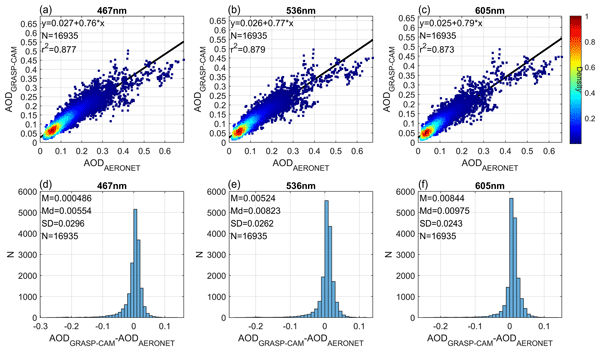
Roberto Román, Juan C. Antuña-Sánchez, Victoria E. Cachorro, Carlos Toledano, Benjamín Torres, David Mateos, David Fuertes, César López, Ramiro González, Tatyana Lapionok, Marcos Herreras-Giralda, Oleg Dubovik, and Ángel M. de Frutos
Atmos. Meas. Tech., 15, 407–433, https://doi.org/10.5194/amt-15-407-2022, https://doi.org/10.5194/amt-15-407-2022, 2022
Short summary
Short summary
An all-sky camera is used to obtain the relative sky radiance, and this radiance is used as input in an inversion code to obtain aerosol properties. This paper is really interesting because it pushes forward the use and capability of sky cameras for more advanced science purposes. Enhanced aerosol properties can be retrieved with accuracy using only an all-sky camera, but synergy with other instruments providing aerosol optical depth could even increase the power of these low-cost instruments.
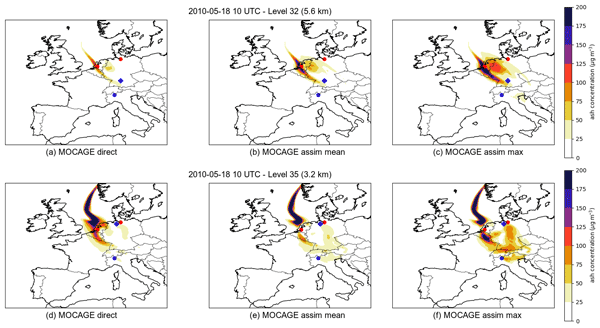
Matthieu Plu, Guillaume Bigeard, Bojan Sič, Emanuele Emili, Luca Bugliaro, Laaziz El Amraoui, Jonathan Guth, Beatrice Josse, Lucia Mona, and Dennis Piontek
Nat. Hazards Earth Syst. Sci., 21, 3731–3747, https://doi.org/10.5194/nhess-21-3731-2021, https://doi.org/10.5194/nhess-21-3731-2021, 2021
Short summary
Short summary
Volcanic eruptions that spread out ash over large areas, like Eyjafjallajökull in 2010, may have huge economic consequences due to flight cancellations. In this article, we demonstrate the benefits of source term improvement and of data assimilation for quantifying volcanic ash concentrations. The work, which was supported by the EUNADICS-AV project, is the first one, to our knowledge, that demonstrates the benefit of the assimilation of ground-based lidar data over Europe during an eruption.
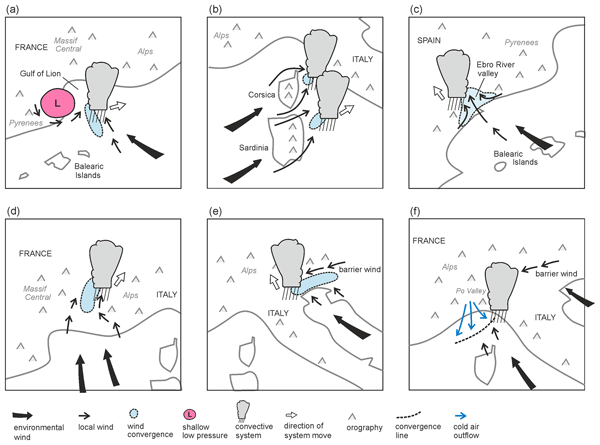
Samira Khodayar, Silvio Davolio, Paolo Di Girolamo, Cindy Lebeaupin Brossier, Emmanouil Flaounas, Nadia Fourrie, Keun-Ok Lee, Didier Ricard, Benoit Vie, Francois Bouttier, Alberto Caldas-Alvarez, and Veronique Ducrocq
Atmos. Chem. Phys., 21, 17051–17078, https://doi.org/10.5194/acp-21-17051-2021, https://doi.org/10.5194/acp-21-17051-2021, 2021
Short summary
Short summary
Heavy precipitation (HP) constitutes a major meteorological threat in the western Mediterranean. Every year, recurrent events affect the area with fatal consequences. Despite this being a well-known issue, open questions still remain. The understanding of the underlying mechanisms and the modeling representation of the events must be improved. In this article we present the most recent lessons learned from the Hydrological Cycle in the Mediterranean Experiment (HyMeX).

Gaëlle Dufour, Didier Hauglustaine, Yunjiang Zhang, Maxim Eremenko, Yann Cohen, Audrey Gaudel, Guillaume Siour, Mathieu Lachatre, Axel Bense, Bertrand Bessagnet, Juan Cuesta, Jerry Ziemke, Valérie Thouret, and Bo Zheng
Atmos. Chem. Phys., 21, 16001–16025, https://doi.org/10.5194/acp-21-16001-2021, https://doi.org/10.5194/acp-21-16001-2021, 2021
Short summary
Short summary
The IASI observations and the LMDZ-OR-INCA model simulations show negative ozone trends in the Central East China region in the lower free (3–6 km column) and the upper free (6–9 km column) troposphere. Sensitivity studies from the model show that the Chinese anthropogenic emissions contribute to more than 50 % in the trend. The reduction in NOx emissions that has occurred since 2013 in China seems to lead to a decrease in ozone in the free troposphere, contrary to the increase at the surface.
Cited articles
AOS Study Team: Science and Applications Traceability Matrix, Public Release Candidate G, NASA Atmosphere Observing System (AOS) mission, https://science.nasa.gov/mission/aos/aos-document-library/ (last access: 16 July 2026), 2021
Behrenfeld, M. J., Lorenzoni, L., Hu, Y., Bisson, K. M., Hostetler, C. A., Di Girolamo, P., Dionisi, D., Longo, F., and Zoffoli, S.: Satellite lidar measurements as a critical new global ocean climate record, 15, 5567, https://doi.org/10.3390/rs15235567, 2023.
Bond, T. C. and Bergstrom, R. W.: Light absorption by carbonaceous particles: An investigative review, Aerosol Sci. Tech., 40, 27–67, https://doi.org/10.1080/02786820500421521, 2006.
Boucher, O., Randall, D., Artaxo, P., Bretherton, C., Feingold, G., Forster, P., Kerminen, V.-M., Kondo, Y., Liao, H., Lohmann, U., Rasch, P., Satheesh, S. K., Sherwood, S., Stevens, B., and Zhang, X.-Y.: Clouds and aerosols, in: Climate Change 2013: The Physical Science Basis. Contribution of Working Group I to the Fifth Assessment Report of the Intergovernmental Panel on Climate Change, edited by: Stocker, T. F., Qin, D., Plattner, G.-K., Tignor, M., Allen, S. K., Boschung, J., Nauels, A., Xia, Y., Bex, V., and Midgley, P. M., Cambridge University Press, Cambridge, UK, 571–657, https://doi.org/10.1017/CBO9781107415324, 2013.
Brogniez, H., Cuesta, J., Noël, V., and Deschamps, A.: La mission spatiale Atmosphere Observing System (AOS), La Météorologie, 002, https://doi.org/10.37053/lameteorologie-2023-0084, 2023.
Burrows, S. M., McCluskey, C. S., Cornwell, G., Steinke, I., Zhang, K., Zhao, B., Zawadowicz, M., Raman, A., Kulkarni, G., China, S., Zelenyuk, A., and DeMott, P. J.: Ice-nucleating particles that impact clouds and climate: observational and modeling research needs, Rev. Geophys., 60, e2021RG000745, https://doi.org/10.1029/2021RG000745, 2022.
Chen, C., Dubovik, O., Fuertes, D., Litvinov, P., Lapyonok, T., Lopatin, A., Ducos, F., Derimian, Y., Herman, M., Tanré, D., Remer, L. A., Lyapustin, A., Sayer, A. M., Levy, R. C., Hsu, N. C., Descloitres, J., Li, L., Torres, B., Karol, Y., Herrera, M., Herreras, M., Aspetsberger, M., Wanzenboeck, M., Bindreiter, L., Marth, D., Hangler, A., and Federspiel, C.: Validation of GRASP algorithm product from POLDER/PARASOL data and assessment of multi-angular polarimetry potential for aerosol monitoring, Earth Syst. Sci. Data, 12, 3573–3620, https://doi.org/10.5194/essd-12-3573-2020, 2020.
Chen, C., Dubovik, O., Litvinov, P., Fuertes, D., Lopatin, A., Lapyonok, T., Matar, C., Karol, Y., Fischer, J., Preusker, R., Hangler, A., Aspetsberger, M., Bindreiter, L., Marth, D., Chimot, J., Fougnie, B., Marbach, T., and Bojkov, B.: Properties of aerosol and surface derived from OLCI/Sentinel-3A using GRASP approach: Retrieval development and preliminary validation, Remote Sens. Environ., 280, 113142, https://doi.org/10.1016/j.rse.2022.113142, 2022.
Chen, C., Litvinov, P., Dubovik, O., Bindreiter, L., Matar, C., Fuertes, D., Lopatin, A., Lapyonok, T., Lanzinger, V., Hangler, A., Aspetsberger, M., de Graaf, M., Tilstra, L. G., Stammes, P., Dandocsi, A., Gasbarra, D., Fluck, E., Zehner, C., and Retscher, C.: Extended aerosol and surface characterization from S5P/TROPOMI with GRASP algorithm. Part II: Global validation and Intercomparison, Remote Sens. Environ., 313, 114374, https://doi.org/10.1016/j.rse.2024.114374, 2024.
Chin, M., Savoie, D. L., Huebert, B. J., Bandy, A. R., Thornton, D. C., Bates, T. S., Quinn, P. K., Saltzman, E. S., and De Bruyn, W. J.: Atmospheric sulfur cycle simulated in the global model GOCART: Comparison with field observations and regional budgets, J. Geophys. Res.-Atmos., 105, 24689–24712, https://doi.org/10.1029/2000JD900385, 2000.
Cox, C. and Munk, W.: Measurement of the Roughness of the Sea Surface from Photographs of the Sun's Glitter, J. Opt. Soc. Am., 44, 838, https://doi.org/10.1364/josa.44.000838, 1954.
Cuesta, J., Kanaya, Y., Takigawa, M., Dufour, G., Eremenko, M., Foret, G., Miyazaki, K., and Beekmann, M.: Transboundary ozone pollution across East Asia: daily evolution and photochemical production analysed by IASI + GOME2 multispectral satellite observations and models, Atmos. Chem. Phys., 18, 9499–9525, https://doi.org/10.5194/acp-18-9499-2018, 2018.
Cuesta, J., Costantino, L., Beekmann, M., Siour, G., Menut, L., Bessagnet, B., Landi, T. C., Dufour, G., and Eremenko, M.: Ozone pollution during the COVID-19 lockdown in the spring of 2020 over Europe, analysed from satellite observations, in situ measurements, and models, Atmos. Chem. Phys., 22, 4471–4489, https://doi.org/10.5194/acp-22-4471-2022, 2022.
Deuzé, J. L., Bréon, F. M., Devaux, C., Goloub, P., Herman, M., Lafrance, B., Maignan, F., Marchand, A., Nadal, F., Perry, G., and Tanré, D.: Remote sensing of aerosols over land surfaces from POLDER-ADEOS-1 polarized measurements, J. Geophys. Res.-Atmos., 106, 4913–4926, https://doi.org/10.1029/2000JD900364, 2001.
Di Girolamo, P., Cosentino, A., Longo, F., Franco, N., Dionisi, D., Summa, D., Lolli, S., Suetta, E., Perna, A., and Zoffoli, S.: Introducing the Cloud Aerosol Lidar for Global Scale Observations of the Ocean-Land-Atmosphere System: CALIGOLA, in: Proceedings of the 30th International Laser Radar Conference, edited by: Sullivan, J. T., Leblanc, T., Tucker, S., Demoz, B., Eloranta, E., Hostetler, C., Ishii, S., Mona, L., Moshary, F., Papayannis, A., and Rupavatharam, K., Springer International Publishing, Cham, Switzerland, 625–630, https://doi.org/10.1007/978-3-031-37818-8_80, 2023.
Di Girolamo, P., Dionisi, D., Franco, N., Di Paolantonio, M., Summa, D., Lolli, S., Mona, L., Santoleri, R., Zoffoli, S., Tataranni, F., Venafra, S., Scopa, T., Longo, F., Votta, R., Sacchieri, V., Coppola, F., Perna, A., Cosentino, A., Hu, Y., Hostetler, C. A., Thorsen, T., Smith, J., Behrenfeld, M. J., Braun, S., Holz, B., Mace, G. J., Maring, H., Lorenzoni, L., Hall, S. R., and Trepte, C. R.: The CALIGOLA mission: An overview of the present status and the forthcoming steps, EPJ Web Conf., 362, 08003, https://doi.org/10.1051/epjconf/202636208003, 2026.
Dubovik, O., Holben, B., Eck, T. F., Smirnov, A., Kaufman, Y. J., King, M. D., Tanré, D., and Slutsker, I.: Variability of absorption and optical properties of key aerosol types observed in worldwide locations, J. Atmos. Sci., 59, 590–608, https://doi.org/10.1175/1520-0469(2002)059<0590:VOAAOP>2.0.CO;2, 2002.
Dubovik, O., Sinyuk, A., Lapyonok, T., Holben, B. N., Mishchenko, M., Yang, P., Eck, T. F., Volten, H., Muñoz, O., Veihelmann, B., van der Zande, W. J., Leon, J. F., Sorokin, M., and Slutsker, I.: Application of spheroid models to account for aerosol particle nonsphericity in remote sensing of desert dust, J. Geophys. Res.-Atmos., 111, 1–34, https://doi.org/10.1029/2005JD006619, 2006.
Dubovik, O., Herman, M., Holdak, A., Lapyonok, T., Tanré, D., Deuzé, J. L., Ducos, F., Sinyuk, A., and Lopatin, A.: Statistically optimized inversion algorithm for enhanced retrieval of aerosol properties from spectral multi-angle polarimetric satellite observations, Atmos. Meas. Tech., 4, 975–1018, https://doi.org/10.5194/amt-4-975-2011, 2011.
Dubovik, O., Li, Z., Mishchenko, M. I., Tanré, D., Karol, Y., Bojkov, B., Cairns, B., Diner, D. J., Espinosa, W. R., Goloub, P., Gu, X., Hasekamp, O., Hong, J., Hou, W., Knobelspiesse, K. D., Landgraf, J., Li, L., Litvinov, P., Liu, Y., Lopatin, A., Marbach, T., Maring, H., Martins, V., Meijer, Y., Milinevsky, G., Mukai, S., Parol, F., Qiao, Y., Remer, L., Rietjens, J., Sano, I., Stammes, P., Stamnes, S., Sun, X., Tabary, P., Travis, L. D., Waquet, F., Xu, F., Yan, C., and Yin, D.: Polarimetric remote sensing of atmospheric aerosols: Instruments, methodologies, results, and perspectives, J. Quant. Spectrosc. Ra., 224, 474–511, https://doi.org/10.1016/j.jqsrt.2018.11.024, 2019.
Dubovik, O., Fuertes, D., Litvinov, P., Lopatin, A., Lapyonok, T., Doubovik, I., Xu, F., Ducos, F., Chen, C., Torres, B., Derimian, Y., Li, L., Herreras-Giralda, M., Herrera, M., Karol, Y., Matar, C., Schuster, G. L., Espinosa, R., Puthukkudy, A., Li, Z., Fischer, J., Preusker, R., Cuesta, J., Kreuter, A., Cede, A., Aspetsberger, M., Marth, D., Bindreiter, L., Hangler, A., Lanzinger, V., Holter, C., and Federspiel, C.: A Comprehensive Description of Multi-Term LSM for Applying Multiple a Priori Constraints in Problems of Atmospheric Remote Sensing: GRASP Algorithm, Concept, and Applications, Frontiers in Remote Sensing, 2, 1–52, https://doi.org/10.3389/frsen.2021.706851, 2021.
Dusek, U., Frank, G. P., Hildebrandt, L., Curtius, J., Schneider, J., Walter, S., Chand, D., Drewnick, F., Hings, S., Jung, D., Borrmann, S., and Andreae, M. O.: Size matters more than chemistry for cloud-nucleating ability of aerosol particles, Science, 312, 1375–1378, https://doi.org/10.1126/science.1125261, 2006.
El Amraoui, L., Attié, J.-L., Semane, N., Claeyman, M., Peuch, V.-H., Warner, J., Ricaud, P., Cammas, J.-P., Piacentini, A., Josse, B., Cariolle, D., Massart, S., and Bencherif, H.: Midlatitude stratosphere – troposphere exchange as diagnosed by MLS O3 and MOPITT CO assimilated fields, Atmos. Chem. Phys., 10, 2175–2194, https://doi.org/10.5194/acp-10-2175-2010, 2010.
El Amraoui, L., Sič, B., Piacentini, A., Marécal, V., Frebourg, N., and Attié, J.-L.: Aerosol data assimilation in the MOCAGE chemical transport model during the TRAQA/ChArMEx campaign: lidar observations, Atmos. Meas. Tech., 13, 4645–4667, https://doi.org/10.5194/amt-13-4645-2020, 2020.
El Amraoui, L., Plu, M., Guidard, V., Cornut, F., and Bacles, M.: A Pre-Operational System Based on the Assimilation of MODIS Aerosol Optical Depth in the MOCAGE Chemical Transport Model, Remote Sens.-Basel, 14, 1949, https://doi.org/10.3390/rs14081949, 2022.
Feofilov, A. G., Chepfer, H., Noël, V., and Szczap, F.: Incorporating EarthCARE observations into a multi-lidar cloud climate record: the ATLID (Atmospheric Lidar) cloud climate product, Atmos. Meas. Tech., 16, 3363–3390, https://doi.org/10.5194/amt-16-3363-2023, 2023.
Franco, N., Di Girolamo, P., Summa, D., Di Paolantonio, M., and Dionisi, D.: Preliminary Studies and Performance Simulations in support of the mission “CALIGOLA”, EGU General Assembly 2023, Vienna, Austria, 24–28 Apr 2023, EGU23-16695, https://doi.org/10.5194/egusphere-egu23-16695, 2023.
Gandham, H., Dasari, H. P., Karumuri, A., Ravuri, P. M. K., and Hoteit, I.: Three-dimensional structure and transport pathways of dust aerosols over West Asia, npj Clim. Atmos. Sci., 5, 1–15, https://doi.org/10.1038/s41612-022-00266-2, 2022.
Guth, J., Josse, B., Marécal, V., Joly, M., and Hamer, P.: First implementation of secondary inorganic aerosols in the MOCAGE version R2.15.0 chemistry transport model, Geosci. Model Dev., 9, 137–160, https://doi.org/10.5194/gmd-9-137-2016, 2016.
Hänel, G.: The properties of atmospheric aerosol particles as functions of the relative humidity at thermodynamic equilibrium with the surrounding moist air, in: Advances in Geophysics, Vol. 19, Academic Press, New York, NY, USA, 73–188, https://doi.org/10.1016/S0065-2687(08)60142-9, 1976.
Herman, M., Deuzé, J. L., Marchand, A., Roger, B., and Lallart, P.: Aerosol remote sensing from POLDER/ADEOS over the ocean: Improved retrieval using a nonspherical particle model, J. Geophys. Res.-Atmos., 110, 1–11, https://doi.org/10.1029/2004JD004798, 2005.
Illingworth, A. J., Clerbaux, N., Cole, J. N. S., and Canada, E.: The EarthCARE Satellite: The next step forward in global measurements of clouds, aerosols, precipitation and radiation, Bull. Am. Meteorol. Soc., 96, 1311–1332, https://doi.org/10.1175/BAMS-D-12-00227.1, 2015.
International Agency for Research on Cancer (IARC): IARC Monographs on the Evaluation of the Carcinogenic Risk of Chemicals to Humans, Volume 35: Polynuclear Aromatic Compounds, Part 4: Bitumens, Coal-Tars and Derived Products, Shale-Oils and Soots, World Health Organization, Lyon, France, ISBN 92-832-1535-4, 1985.
IPCC: Climate Change 2021: The Physical Science Basis. Contribution of Working Group I to the Sixth Assessment Report of the Intergovernmental Panel on Climate Change, edited by: Masson-Delmotte, V., Zhai, P., Pirani, A., Connors, S. L., Péan, C., Berger, S., Caud, N., Chen, Y., Goldfarb, L., Gomis, M. I., Huang, M., Leitzell, K., Lonnoy, E., Matthews, J. B. R., Maycock, T. K., Waterfield, T., Yelekçi, O., Yu, R., and Zhou, B., Cambridge University Press, Cambridge, United Kingdom and New York, NY, USA, 2391 pp., https://doi.org/10.1017/9781009157896, 2021.
Jacobson, M. Z.: Global direct radiative forcing due to multicomponent anthropogenic and natural aerosols, J. Geophys. Res.-Atmos., 106, 1551–1568, https://doi.org/10.1029/2000jd900514, 2001.
Jayne, J. T., Leard, D. C., Zhang, X., Davidovits, P., Smith, K. A., Kolb, C. E., and Worsnop, D. R.: Development of an aerosol mass spectrometer for size and composition analysis of submicron particles, Aerosol Sci. Tech., 33, 49–70, https://doi.org/10.1080/027868200410840, 2000.
Kandler, K., Schütz, L., Deutscher, C., Ebert, M., Hofmann, H., Jäckel, S., Jaenicke, R., Knippertz, P., Lieke, K., Massling, A., Petzold, A., Schladitz, A., Weinzierl, B., Wiedensohler, A., Zorn, S., and Weinbruch, S.: Size distribution, mass concentration, chemical and mineralogical composition and derived optical parameters of the boundary layer aerosol at Tinfou, Morocco, during SAMUM 2006, Tellus B, 61, 32–50, https://doi.org/10.1111/j.1600-0889.2008.00385.x, 2009.
Kaiser, J. W., Heil, A., Andreae, M. O., Benedetti, A., Chubarova, N., Jones, L., Morcrette, J.-J., Razinger, M., Schultz, M. G., Suttie, M., and van der Werf, G. R.: Biomass burning emissions estimated with a global fire assimilation system based on observed fire radiative power, Biogeosciences, 9, 527–554, https://doi.org/10.5194/bg-9-527-2012, 2012.
Kukkonen, J., Olsson, T., Schultz, D. M., Baklanov, A., Klein, T., Miranda, A. I., Monteiro, A., Hirtl, M., Tarvainen, V., Boy, M., Peuch, V.-H., Poupkou, A., Kioutsioukis, I., Finardi, S., Sofiev, M., Sokhi, R., Lehtinen, K. E. J., Karatzas, K., San José, R., Astitha, M., Kallos, G., Schaap, M., Reimer, E., Jakobs, H., and Eben, K.: A review of operational, regional-scale, chemical weather forecasting models in Europe, Atmos. Chem. Phys., 12, 1–87, https://doi.org/10.5194/acp-12-1-2012, 2012.
Lelieveld, J., Evans, J. S., Fnais, M., Giannadaki, D., and Pozzer, A.: The contribution of outdoor air pollution sources to premature mortality on a global scale, Nature, 525, 367–371, https://doi.org/10.1038/nature15371, 2015.
Lemmouchi, F., Cuesta, J., Eremenko, M., Derognat, C., Siour, G., and Dufour, G.: Three-Dimensional Distribution of Biomass Burning Aerosols from Australian Wildfires Observed by TROPOMI Satellite Observations, Remote Sens., 14, 2582, https://doi.org/10.3390/rs14112582, 2022.
Lemmouchi, F., Cuesta, J., Lachatre, M., Brajard, J., Coman, A., Beekmann, M., and Derognat, C.: Machine Learning-Based Improvement of Aerosol Optical Depth from CHIMERE Simulations Using MODIS Satellite Observations, Remote Sens.-Basel, 15, https://doi.org/10.3390/rs15061510, 2023.
Li, C., Dubovik, O., Li, J., Fuertes, D., Lopatin, A., Litvinov, P., Lapyonok, T., Bindreiter, L., Matar, C., Chu, Y., and Tan, W.: Retrieval and validation of diurnal properties of aerosol and surface from geostationary satellite Himawari-8 using multi-pixel approach, Atmos. Meas. Tech., 18, 6609–6643, https://doi.org/10.5194/amt-18-6609-2025, 2025.
Li, L., Dubovik, O., Derimian, Y., Schuster, G. L., Lapyonok, T., Litvinov, P., Ducos, F., Fuertes, D., Chen, C., Li, Z., Lopatin, A., Torres, B., and Che, H.: Retrieval of aerosol components directly from satellite and ground-based measurements, Atmos. Chem. Phys., 19, 13409–13443, https://doi.org/10.5194/acp-19-13409-2019, 2019.
Li, L., Che, H., Derimian, Y., Dubovik, O., Luan, Q., Li, Q., Huang, X., Zhao, H., Gui, K., Zheng, Y., An, L., Sun, T., and Liang, Y.: Climatology of Fine and Coarse Mode Aerosol Optical Thickness Over East and South Asia Derived From POLDER/PARASOL Satellite, J. Geophys. Res.-Atmos., 125, https://doi.org/10.1029/2020JD032665, 2020a.
Li, L., Che, H., Derimian, Y., Dubovik, O., Schuster, G. L., Chen, C., Li, Q., Wang, Y., Guo, B., and Zhang, X.: Retrievals of fine mode light-absorbing carbonaceous aerosols from POLDER/PARASOL observations over East and South Asia, Remote Sens. Environ., 247, 111913, https://doi.org/10.1016/j.rse.2020.111913, 2020b.
Li, X. and Strahler, A. H.: Geometric-optical bidirectional reflectance modeling of the discrete crown vegetation canopy: Effect of crown shape and mutual shadowing, IEEE T. Geosci. Remote, 30, 276–292, https://doi.org/10.1109/36.134078, 1992.
Litvinov, P., Chen, C., Dubovik, O., Bindreiter, L., Matar, C., Fuertes, D., Lopatin, A., Lapyonok, T., Lanzinger, V., Hangler, A., Aspetsberger, M., de Graaf, M., Tilstra, L. G., Stammes, P., Dandocsi, A., Gasbarra, D., Fluck, E., Zehner, C., and Retscher, C.: Extended aerosol and surface characterization from S5P/TROPOMI with GRASP algorithm. Part I: Conditions, approaches, performance and new possibilities, Remote Sens. Environ., 313, 114355, https://doi.org/10.1016/j.rse.2024.114355, 2024.
Litvinov, P., Chen, C., Dubovik, O., Zhai, S., Matar, C., Li, C., Lopatin, A., Fuertes, D., Lapyonok, T., Bindreiter, L., Dornacher, M., Lehner, A., Dandocsi, A., Gasbarra, D., and Retscher, C.: Synergetic retrieval from multi-mission spaceborne measurements for enhanced aerosol and surface characterization, Atmos. Meas. Tech., 18, 7679–7716, https://doi.org/10.5194/amt-18-7679-2025, 2025.
Liu, D., Chen, S., Cheng, C., Barker, H. W., Dong, C., Ke, J., Wang, S., and Zheng, Z.: Analysis of global three-dimensional aerosol structure with spectral radiance matching, Atmos. Meas. Tech., 12, 6541–6556, https://doi.org/10.5194/amt-12-6541-2019, 2019.
Longtin, D. R., Shettle, E. P., Hummel, J. R., and Pryce, J. D.: A Wind Dependent Desert Aerosol Dust Model: Radiative Properties, Scientific Report No. 6, Air Force Geophysics Laboratory, Hanscom AFB, MA, USA, AFGL-TR-88-0112, 1988.
Lopatin, A., Dubovik, O., Chaikovsky, A., Goloub, P., Lapyonok, T., Tanré, D., and Litvinov, P.: Enhancement of aerosol characterization using synergy of lidar and sun-photometer coincident observations: the GARRLiC algorithm, Atmos. Meas. Tech., 6, 2065–2088, https://doi.org/10.5194/amt-6-2065-2013, 2013.
Lopatin, A., Dubovik, O., Fuertes, D., Stenchikov, G., Lapyonok, T., Veselovskii, I., Wienhold, F. G., Shevchenko, I., Hu, Q., and Parajuli, S.: Synergy processing of diverse ground-based remote sensing and in situ data using the GRASP algorithm: applications to radiometer, lidar and radiosonde observations, Atmos. Meas. Tech., 14, 2575–2614, https://doi.org/10.5194/amt-14-2575-2021, 2021.
Maheshwarkar, P., Cuesta, J., Formenti, P., and Lemmouchi, F.: Three-dimensional distribution of aerosols of multiple types at daily scale using TROPOMI spaceborne observations, Sci. Total Environ., 955, 177037, https://doi.org/10.1016/j.scitotenv.2024.177037, 2024.
Maignan, F., Bréon, F. M., Fédèle, E., and Bouvier, M.: Polarized reflectances of natural surfaces: Spaceborne measurements and analytical modeling, Remote Sens. Environ., 113, 2642–2650, https://doi.org/10.1016/j.rse.2009.07.022, 2009.
Mao, F., Shi, R., Rosenfeld, D., Pan, Z., Zang, L., Zhu, Y., and Lu, X.: Retrieving instantaneous extinction of aerosol undetected by the CALIPSO layer detection algorithm, Atmos. Chem. Phys., 22, 10589–10602, https://doi.org/10.5194/acp-22-10589-2022, 2022.
Martet, M., Peuch, V. H., Laurent, B., Marticorena, B., and Bergametti, G.: Evaluation of long-range transport and deposition of desert dust with the CTM MOCAGE, Tellus B, 61, 449–463, 2009.
Merdji, A. B., Xu, X., Lu, C., Habtemicheal, B. A., and Li, J.: Accuracy assessment and climatology of MODIS aerosol optical properties over North Africa, Environ. Sci. Pollut. R., 30, 13449–13468, https://doi.org/10.1007/s11356-022-22997-8, 2023a.
Merdji, A. B., Lu, C., Xu, X., and Mhawish, A.: Long-term three-dimensional distribution and transport of Saharan dust: Observation from CALIPSO, MODIS, and reanalysis data, Atmos. Res., 286, 106658, https://doi.org/10.1016/j.atmosres.2023.106658, 2023b.
Merdji, A. B., Xu, X., Mhawish, A., Cuesta, J., and Lu, C.: Comparison of Aerosol Properties over Six Major Deserts from Africa to Asia Using AERONET and CALIPSO Observations, J. Climate, 1–25, https://doi.org/10.1175/JCLI-D-25-0008.1, 2025.
Mhawish, A., Sarangi, C., Babu, P., Kumar, M., Bilal, M., and Qiu, Z.: Observational evidence of elevated smoke layers during crop residue burning season over Delhi: Potential implications on associated heterogeneous PM2.5 enhancements, Remote Sens. Environ., 280, 113167, https://doi.org/10.1016/j.rse.2022.113167, 2022.
Mukhopadhyay, S., Ningombam, S. S., Amoghavarsha, A. V., Madhavan, B. L., Eck, T. F., Dumka, U. C., Khatri, P., and Gupta, P.: Classification of global aerosol types and its radiative effects using Aerosol Robotic Network (AERONET) data, Atmos. Environ., 362, 121530, https://doi.org/10.1016/j.atmosenv.2025.121530, 2025.
Murray, B. J., Carslaw, K. S., and Field, P. R.: Opinion: Cloud-phase climate feedback and the importance of ice-nucleating particles, Atmos. Chem. Phys., 21, 665–679, https://doi.org/10.5194/acp-21-665-2021, 2021.
Myhre, G., Samset, B. H., Schulz, M., Balkanski, Y., Bauer, S., Berntsen, T. K., Bian, H., Bellouin, N., Chin, M., Diehl, T., Easter, R. C., Feichter, J., Ghan, S. J., Hauglustaine, D., Iversen, T., Kinne, S., Kirkevåg, A., Lamarque, J.-F., Lin, G., Liu, X., Lund, M. T., Luo, G., Ma, X., van Noije, T., Penner, J. E., Rasch, P. J., Ruiz, A., Seland, Ø., Skeie, R. B., Stier, P., Takemura, T., Tsigaridis, K., Wang, P., Wang, Z., Xu, L., Yu, H., Yu, F., Yoon, J.-H., Zhang, K., Zhang, H., and Zhou, C.: Radiative forcing of the direct aerosol effect from AeroCom Phase II simulations, Atmos. Chem. Phys., 13, 1853–1877, https://doi.org/10.5194/acp-13-1853-2013, 2013.
Okamoto, S., Cuesta, J., Beekmann, M., Dufour, G., Eremenko, M., Miyazaki, K., Boonne, C., Tanimoto, H., and Akimoto, H.: Impact of different sources of precursors on an ozone pollution outbreak over Europe analysed with IASI+GOME2 multispectral satellite observations and model simulations, Atmos. Chem. Phys., 23, 7399–7423, https://doi.org/10.5194/acp-23-7399-2023, 2023.
Park, M., Joo, H. S., Lee, K., Jang, M., Kim, S. D., Kim, I., Borlaza, L. J. S., Lim, H., Shin, H., Chung, K. H., Choi, Y., Park, S. G., Bae, M., Lee, J., Song, H., and Park, K.: Differential toxicities of fine particulate matters from various sources, Sci. Rep., 8, 1700, https://doi.org/10.1038/s41598-018-35398-0, 2018.
Qayyum, F., Cuesta, J., Merdji, A. B., Lopatin, A., Dubovik, O., Nandan, D., and El Amraoui, L.: Vertical distribution of type-discriminated aerosol concentration from a three-wavelength backscatter spaceborne lidar, Remote Sens. Environ., 339, 115399, https://doi.org/10.1016/j.rse.2026.115399, 2026.
Querry, M. R.: Optical Constants of Minerals and Other Materials from the Millimeter to the Ultraviolet, CRDEC-CR-88009, U.S. Army Chemical Research, Development and Engineering Center, Aberdeen Proving Ground, MD, USA, 1987.
Ramanathan, V., Crutzen, P. J., Kiehl, J. T., and Rosenfeld, D.: Atmosphere: Aerosols, climate, and the hydrological cycle, Science, 294, 2119–2124, https://doi.org/10.1126/science.1064034, 2001.
Roujean, J.-L., Leroy, M., and Deschamps, P.-Y.: A bidirectional reflectance model of the Earth's surface for the correction of remote sensing data, J. Geophys. Res., 97, 20455–20468, https://doi.org/10.1029/92JD01411, 1992.
Seinfeld, J. H. and Pandis, S. N.: Atmospheric Chemistry and Physics: From Air Pollution to Climate Change, John Wiley & Sons, Hoboken, NJ, USA, ISBN 978-1-118-94740-1, 2016.
Shettle, E. P. and Fenn, R. W.: Models for the Aerosols of the Lower Atmosphere and the Effects of Humidity Variations on Their Optical Properties, Environmental Research Papers No. 676, AFGL-TR-79-0214, Air Force Geophysics Laboratory, Hanscom Air Force Base, MA, USA, 1979.
Sič, B., El Amraoui, L., Marécal, V., Josse, B., Arteta, J., Guth, J., Joly, M., and Hamer, P. D.: Modelling of primary aerosols in the chemical transport model MOCAGE: development and evaluation of aerosol physical parameterizations, Geosci. Model Dev., 8, 381–408, https://doi.org/10.5194/gmd-8-381-2015, 2015.
Sič, B., El Amraoui, L., Piacentini, A., Marécal, V., Emili, E., Cariolle, D., Prather, M., and Attié, J.-L.: Aerosol data assimilation in the chemical transport model MOCAGE during the TRAQA/ChArMEx campaign: aerosol optical depth, Atmos. Meas. Tech., 9, 5535–5554, https://doi.org/10.5194/amt-9-5535-2016, 2016.
Sicard, M., Fortunato dos Santos Oliveira, D. C., Muñoz-Porcar, C., Gil-Díaz, C., Comerón, A., Rodríguez-Gómez, A., and Dios Otín, F.: Measurement report: Spectral and statistical analysis of aerosol hygroscopic growth from multi-wavelength lidar measurements in Barcelona, Spain, Atmos. Chem. Phys., 22, 7681–7697, https://doi.org/10.5194/acp-22-7681-2022, 2022.
Singh, A., Anchule, A., Banerjee, T., Aditi, K., and Mhawish, A.: Three-dimensional nature of summertime aerosols over South Asia, Sci. Total Environ., 842, 156834, https://doi.org/10.1016/j.scitotenv.2022.156834, 2022.
Sun, H., Biedermann, L., and Bond, T. C.: Color of brown carbon: A model for ultraviolet and visible light absorption by organic carbon aerosol, Geophys. Res. Lett., 34, 1–5, https://doi.org/10.1029/2007GL029797, 2007.
Tanré, D., Bréon, F. M., Deuzé, J. L., Dubovik, O., Ducos, F., François, P., Goloub, P., Herman, M., Lifermann, A., and Waquet, F.: Remote sensing of aerosols by using polarized, directional and spectral measurements within the A-Train: the PARASOL mission, Atmos. Meas. Tech., 4, 1383–1395, https://doi.org/10.5194/amt-4-1383-2011, 2011.
Trepte, C., Di Girolamo, P., Franco, N., Dionisi, D., Lolli, S., Santoleri, R., Valentina, S., Coppola, F., Zoffoli, S., Luciani, R., Hu, Y., Thorsen, T., Hostetler, C., Smith, J., Behrenfeld, M., Holz, B., and Mace, G. J.: CALIGOLA: A new spaceborne lidar mission, CALIPSO International Symposium on Spaceborne Lidar, Saint-Malo, France, 4–6 June 2024, https://ntrs.nasa.gov/citations/20240006526 (last access: 16 July 2026), 2024.
Wanner, W., Li, X., and Strahler, A. H.: On the derivation of kernels for kernel-driven models of bidirectional reflectance, J. Geophys. Res., 100, 21077–21089, https://doi.org/10.1029/95JD02371, 1995.
WHO: Health effects of particulate matter: policy implications for countries in eastern Europe, Caucasus and central Asia, WHO Regional Office for Europe, Copenhagen, Denmark, 15 pp., https://iris.who.int/handle/10665/344854 (last access: 16 July 2026), 2013.
Winker, D. M. and Pelon, J.: The CALIPSO MISSIOn A Global 3D View of Aerosols and Clouds, Int. Geosci. Remote Se., 2, 1329–1331, https://doi.org/10.1175/2010bams3009.1, 2010.
Winker, D. M., Hunt, W. H., and McGill, M. J.: Initial performance assessment of CALIOP, Geophys. Res. Lett., 34, 1–5, https://doi.org/10.1029/2007GL030135, 2007.
Winker, D. M., Vaughan, M. A., Omar, A., Hu, Y., Powell, K. A., Liu, Z., Hunt, W. H., and Young, S. A.: Overview of the CALIPSO mission and CALIOP data processing algorithms, J. Atmos. Ocean. Tech., 26, 2310–2323, https://doi.org/10.1175/2009JTECHA1281.1, 2009.
Xu, X., Yang, Y., Xiong, Z., Gong, J., and Luo, T.: Three-Dimensional Distribution and Transport Features of Dust and Polluted Dust over China and Surrounding Areas from CALIPSO, Remote Sens.-Basel, 15, https://doi.org/10.3390/rs15245734, 2023.
Zhang, Q., Jimenez, J. L., Canagaratna, M. R., Allan, J. D., Coe, H., Ulbrich, I., Alfarra, M. R., Takami, A., Middlebrook, A. M., Sun, Y. L., Dzepina, K., Dunlea, E., Docherty, K., DeCarlo, P. F., Salcedo, D., Onasch, T., Jayne, J. T., Miyoshi, T., Shimono, A., Hatakeyama, S., Takegawa, N., Kondo, Y., Schneider, J., Drewnick, F., Borrmann, S., Weimer, S., Demerjian, K., Williams, P., Bower, K., Bahreini, R., Cottrell, L., Griffin, R. J., Rautiainen, J., Sun, J. Y., Zhang, Y. M., and Worsnop, D. R.: Ubiquity and dominance of oxygenated species in organic aerosols in anthropogenically-influenced Northern Hemisphere midlatitudes, Geophys. Res. Lett., 34, 1–6, https://doi.org/10.1029/2007GL029979, 2007.
Short summary
This study presents a novel satellite approach to retrieve the vertical distribution of aerosol chemical species in the atmosphere. By combining spaceborne LIDAR and polarimetric observations, it distinguishes major natural and anthropogenic chemical particle species and their optical properties. Tests with realistic simulations show accurate retrieval of dust, pollution, and sea salt layers, enhancing global monitoring of aerosols relevant to air quality and climate.
This study presents a novel satellite approach to retrieve the vertical distribution of aerosol...


