
Articles | Volume 19, issue 15
https://doi.org/10.5194/amt-19-5223-2026
© Author(s) 2026. This work is distributed under
the Creative Commons Attribution 4.0 License.
the Creative Commons Attribution 4.0 License.
https://doi.org/10.5194/amt-19-5223-2026
© Author(s) 2026. This work is distributed under
the Creative Commons Attribution 4.0 License.
the Creative Commons Attribution 4.0 License.
Research article
| 
12 Aug 2026
Research article |
| 12 Aug 2026
| 12 Aug 2026
To what extent are the IASI and ERA5 water vapour profiles representative of the conditions in the autumn 2022 during the WaLiNeAs field campaign
Patrick Chazette
CORRESPONDING AUTHOR

Laboratoire des Sciences du Climat et de l'Environnement (LSCE), UMR8212, Laboratoire mixte CEA-CNRS-UVSQ, CEA Saclay, 91191 Gif-sur-Yvette, France
Andreas Behrendt
Institut Fur Physik Und Meteorologie, Universitat Hohenheim, Stuttgart, Germany
Adolfo Comerón
CommSensLab, Department of Signal Theory and Communications, Universitat Politecnica de Catalunya (UPC), Barcelona, Spain
Paolo Di Girolamo
Dipartimento di Scienze della Salute, Universita degli Studi della Basilicata, Potenza, Italy
Marco Di Paolantonio
Dipartimento di Scienze della Salute, Universita degli Studi della Basilicata, Potenza, Italy
Institute of Marine Sciences, National Research Council, Rome, Italy
Davide Dionisi
Institute of Marine Sciences, National Research Council, Rome, Italy
Cyrille Flamant
LATMOS/IPSL, CNRS-SU-UVSQ, Sorbonne Université, Paris, France
José Luis Gómez-Amo
Solar Radiation Group, Department de Física de la Terra i Termodinàmica, Universitat de València, València, Spain
Jérémy Lagarrigue
Laboratoire des Sciences du Climat et de l'Environnement (LSCE), UMR8212, Laboratoire mixte CEA-CNRS-UVSQ, CEA Saclay, 91191 Gif-sur-Yvette, France
Frédéric Laly
Laboratoire des Sciences du Climat et de l'Environnement (LSCE), UMR8212, Laboratoire mixte CEA-CNRS-UVSQ, CEA Saclay, 91191 Gif-sur-Yvette, France
ADDAIR Company, 78530, Buc, France
Diego Lange
Institut Fur Physik Und Meteorologie, Universitat Hohenheim, Stuttgart, Germany
Constantino Muñoz-Porcar
CommSensLab, Department of Signal Theory and Communications, Universitat Politecnica de Catalunya (UPC), Barcelona, Spain
Alejandro Rodríguez-Gómez
CommSensLab, Department of Signal Theory and Communications, Universitat Politecnica de Catalunya (UPC), Barcelona, Spain
Michaël Sicard
CommSensLab, Department of Signal Theory and Communications, Universitat Politecnica de Catalunya (UPC), Barcelona, Spain
LACy, Laboratoire de l'Atmosphère et des Cyclones UMR 8105 CNRS, Université de La Réunion, Météo-France, Saint-Denis, Réunion, France
Donato Summa
Institute of Methodologies for Environmental Analysis, National Research Council, Tito Scalo, Italy
Julien Totems
Laboratoire des Sciences du Climat et de l'Environnement (LSCE), UMR8212, Laboratoire mixte CEA-CNRS-UVSQ, CEA Saclay, 91191 Gif-sur-Yvette, France
María Pilar Utrillas
Solar Radiation Group, Department de Física de la Terra i Termodinàmica, Universitat de València, València, Spain
Pedro C. Valdelomar
Solar Radiation Group, Department de Física de la Terra i Termodinàmica, Universitat de València, València, Spain
Volker Wulfmeyer
Institut Fur Physik Und Meteorologie, Universitat Hohenheim, Stuttgart, Germany
Related authors
Dominique Gantois, Alexandre Baron, Michaël Sicard, Valentin Duflot, Niels Groenen, Nelson Bègue, Sabine Eckhardt, Nikolaos Evangeliou, Martine De Mazière, Corinne Vigouroux, Guillaume Payen, Nicolas Marquestaut, Jean-Marc Metzger, Patrick Chazette, and Cyrille Flamant
EGUsphere, https://doi.org/10.5194/egusphere-2026-3070, https://doi.org/10.5194/egusphere-2026-3070, 2026
Short summary
Short summary
Smoke from Southern African and South American wildfires can travel for thousands of kilometers before reaching the Indian Ocean and Reunion Island. In this study, we use instruments measuring from the ground, from satellites, as well as atmospheric models, to track these smoke plumes and identify their origins and properties. Our findings should help future research focusing on the impact of these plumes on the atmospheric temperature.
Patrick Chazette
Atmos. Meas. Tech., 19, 4293–4311, https://doi.org/10.5194/amt-19-4293-2026, https://doi.org/10.5194/amt-19-4293-2026, 2026
Short summary
Short summary
A novel aerosol classification methodology based on Raman lidar observations is presented and applied to measurements acquired during the FENNEC field campaign. The temporal evolution of aerosol classes and optical properties is then used to perform a quantitative evaluation of numerical simulations from the Copernicus Atmosphere Monitoring Service (CAMS) global reanalysis (EAC4).
Frédéric Laly, Patrick Chazette, Julien Totems, Vincent Crenn, David Ledur, and Alexandre Marpillat
Atmos. Meas. Tech., 18, 7629–7649, https://doi.org/10.5194/amt-18-7629-2025, https://doi.org/10.5194/amt-18-7629-2025, 2025
Short summary
Short summary
This article presents the evolution of aerosol optical properties as derived from a Raman lidar in relation to relative humidity over the Paris area. It examines the influence of aerosol chemical compounds linked to air mass origins, as well as their relationship with the efficiency of aerosol growth. Such a study provides a better understanding of the interactions between aerosols and water vapour, which is important for reducing the uncertainties surrounding the Earth's radiative balance.
Sandrine Bony, Basile Poujol, Brett McKim, Nicolas Rochetin, Marie Lothon, Julia Windmiller, Nicolas Maury, Clarisse Dufaux, Louis Jaffeux, Patrick Chazette, and Julien Delanoë
Atmos. Chem. Phys., 25, 17331–17362, https://doi.org/10.5194/acp-25-17331-2025, https://doi.org/10.5194/acp-25-17331-2025, 2025
Short summary
Short summary
Space photographs of the Earth show that clouds form diverse, common but poorly understood cloud patterns. The analysis of observations gathered from research aircraft over the tropical ocean shows that the merging of thermals and clouds in the first kilometer of the atmosphere plays a key role in controlling the size, depth and spacing of clouds. This reveals a fundamental process through which clouds interact with each other and with their environment.
Daniele Zannoni, Hans Christian Steen-Larsen, Harald Sodemann, Iris Thurnherr, Cyrille Flamant, Patrick Chazette, Julien Totems, Martin Werner, and Myriam Raybaut
Atmos. Chem. Phys., 25, 9471–9495, https://doi.org/10.5194/acp-25-9471-2025, https://doi.org/10.5194/acp-25-9471-2025, 2025
Short summary
Short summary
High-resolution airborne observations reveal that mixing between the free troposphere and surface evapotranspiration flux primarily modulates the water vapor isotopic composition in the lower troposphere. Water vapor isotope structure variations occur on the scale of hundreds of meters, underlining the utility of stable isotopes for studying microscale atmospheric dynamics. This study also provides the basis for better validation of water vapor isotope remote sensing retrievals with surface observations.
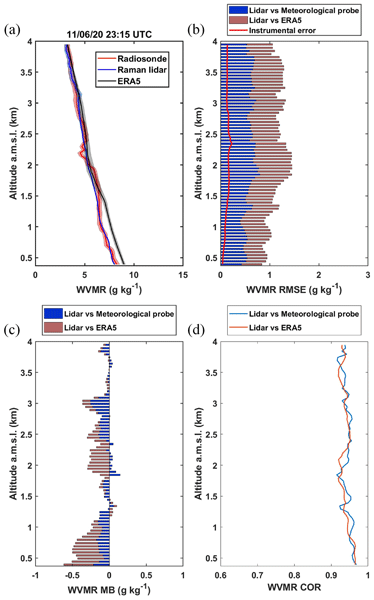
Patrick Chazette, Julien Totems, and Frédéric Laly
Atmos. Meas. Tech., 18, 2681–2699, https://doi.org/10.5194/amt-18-2681-2025, https://doi.org/10.5194/amt-18-2681-2025, 2025
Short summary
Short summary
The use of active remote sensing instruments to sample the atmospheric environment requires accurate calibration that is stable over time so that measurements are reproducible. This is the case for measurements of atmospheric water vapour using Raman lidar, which are of growing interest in the context of climate risks such as extreme precipitation. This study addresses this issue. It is based on six campaigns spread over a period of 7 years between 2016 and 2022.
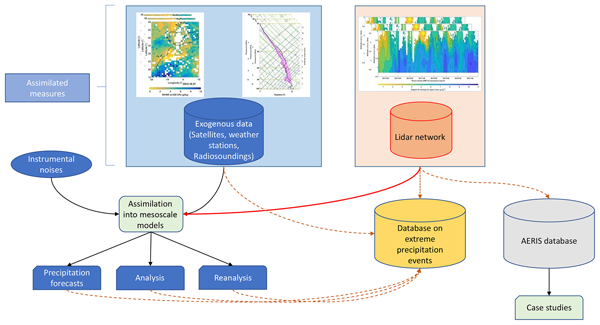
Frédéric Laly, Patrick Chazette, Julien Totems, Jérémy Lagarrigue, Laurent Forges, and Cyrille Flamant
Earth Syst. Sci. Data, 16, 5579–5602, https://doi.org/10.5194/essd-16-5579-2024, https://doi.org/10.5194/essd-16-5579-2024, 2024
Short summary
Short summary
We present a dataset of water vapor mixing ratio profiles acquired during the Water Vapor Lidar Network Assimilation campaign in fall and winter 2022 and summer 2023, using three lidar systems deployed on the western Mediterranean coastline. This innovative campaign provides access to lower-tropospheric water vapor variability to constrain meteorological forecasting models. The scientific objective is to improve forecasting of heavy-precipation events that lead to flash floods and landslides.
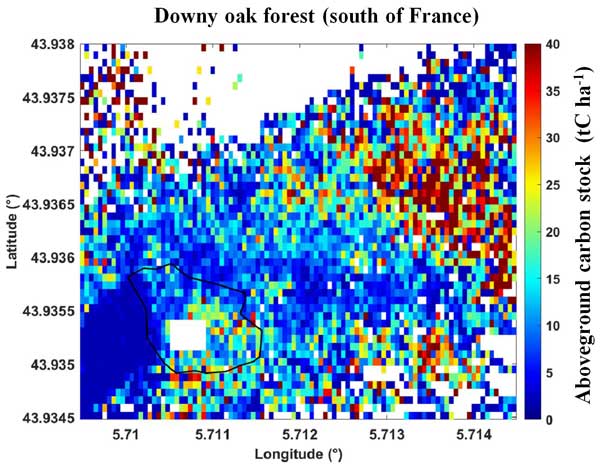
Maëlie Chazette, Patrick Chazette, Ilja M. Reiter, Xiaoxia Shang, Julien Totems, Jean-Philippe Orts, Irène Xueref-Remy, and Nicolas Montes
Biogeosciences, 21, 3289–3303, https://doi.org/10.5194/bg-21-3289-2024, https://doi.org/10.5194/bg-21-3289-2024, 2024
Short summary
Short summary
The approach presented is original in its coupling between field observations and airborne lidar observations. It has been applied to an instrumented reference forest site in the south of France, which is heavily impacted by climate change. It leads to the evaluation of tree heights and ends with assessments of aerial and root carbon stocks. A detailed assessment of uncertainties is presented to add a level of reliability to the scientific products delivered.
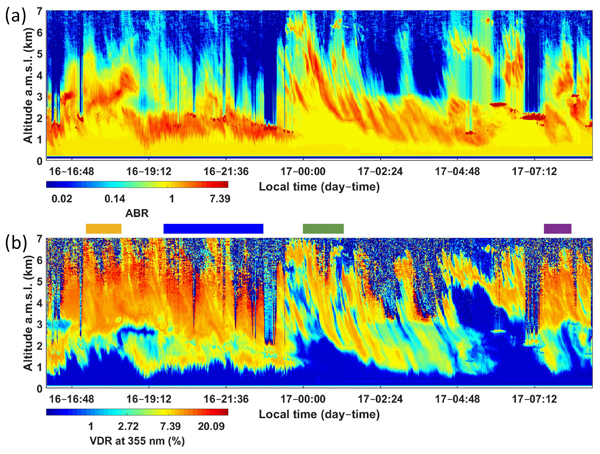
Patrick Chazette and Jean-Christophe Raut
Atmos. Meas. Tech., 16, 5847–5861, https://doi.org/10.5194/amt-16-5847-2023, https://doi.org/10.5194/amt-16-5847-2023, 2023
Short summary
Short summary
The vertical profiles of the effective radii of ice crystals and ice water content in Arctic semi-transparent stratiform clouds were assessed using quantitative ground-based lidar measurements. The field campaign was part of the Pollution in the ARCtic System (PARCS) project which took place from 13 to 26 May 2016 in Hammerfest (70° 39′ 48″ N, 23° 41′ 00″ E). We show that under certain cloud conditions, lidar measurement combined with a dedicated algorithmic approach is an efficient tool.
Leonie Villiger, Marina Dütsch, Sandrine Bony, Marie Lothon, Stephan Pfahl, Heini Wernli, Pierre-Etienne Brilouet, Patrick Chazette, Pierre Coutris, Julien Delanoë, Cyrille Flamant, Alfons Schwarzenboeck, Martin Werner, and Franziska Aemisegger
Atmos. Chem. Phys., 23, 14643–14672, https://doi.org/10.5194/acp-23-14643-2023, https://doi.org/10.5194/acp-23-14643-2023, 2023
Short summary
Short summary
This study evaluates three numerical simulations performed with an isotope-enabled weather forecast model and investigates the coupling between shallow trade-wind cumulus clouds and atmospheric circulations on different scales. We show that the simulations reproduce key characteristics of shallow trade-wind clouds as observed during the field experiment EUREC4A and that the spatial distribution of stable-water-vapour isotopes is shaped by the overturning circulation associated with these clouds.
Cyrille Flamant, Marco Gaetani, Jean-Pierre Chaboureau, Patrick Chazette, Juan Cuesta, Stuart John Piketh, and Paola Formenti
Atmos. Chem. Phys., 22, 5701–5724, https://doi.org/10.5194/acp-22-5701-2022, https://doi.org/10.5194/acp-22-5701-2022, 2022
Short summary
Short summary
Rivers of smoke extend from tropical southern Africa towards the Indian Ocean during the winter fire season, controlled by the interaction of tropical easterly waves, and westerly waves at mid latitudes. During the AEROCLO-sA field campaign in 2017, a river of smoke was directly observed over Namibia. In this paper, the evolution and atmospheric drivers of the river of smoke are described, and the role of a mid-latitude cut-off low in lifting the smoke to the upper troposphere is highlighted.
Sandrine Bony, Marie Lothon, Julien Delanoë, Pierre Coutris, Jean-Claude Etienne, Franziska Aemisegger, Anna Lea Albright, Thierry André, Hubert Bellec, Alexandre Baron, Jean-François Bourdinot, Pierre-Etienne Brilouet, Aurélien Bourdon, Jean-Christophe Canonici, Christophe Caudoux, Patrick Chazette, Michel Cluzeau, Céline Cornet, Jean-Philippe Desbios, Dominique Duchanoy, Cyrille Flamant, Benjamin Fildier, Christophe Gourbeyre, Laurent Guiraud, Tetyana Jiang, Claude Lainard, Christophe Le Gac, Christian Lendroit, Julien Lernould, Thierry Perrin, Frédéric Pouvesle, Pascal Richard, Nicolas Rochetin, Kevin Salaün, Alfons Schwarzenboeck, Guillaume Seurat, Bjorn Stevens, Julien Totems, Ludovic Touzé-Peiffer, Gilles Vergez, Jessica Vial, Leonie Villiger, and Raphaela Vogel
Earth Syst. Sci. Data, 14, 2021–2064, https://doi.org/10.5194/essd-14-2021-2022, https://doi.org/10.5194/essd-14-2021-2022, 2022
Short summary
Short summary
The French ATR42 research aircraft participated in the EUREC4A international field campaign that took place in 2020 over the tropical Atlantic, east of Barbados. We present the extensive instrumentation of the aircraft, the research flights and the different measurements. We show that the ATR measurements of humidity, wind, aerosols and cloudiness in the lower atmosphere are robust and consistent with each other. They will make it possible to advance understanding of cloud–climate interactions.
Karine Desboeufs, Franck Fu, Matthieu Bressac, Antonio Tovar-Sánchez, Sylvain Triquet, Jean-François Doussin, Chiara Giorio, Patrick Chazette, Julie Disnaquet, Anaïs Feron, Paola Formenti, Franck Maisonneuve, Araceli Rodríguez-Romero, Pascal Zapf, François Dulac, and Cécile Guieu
Atmos. Chem. Phys., 22, 2309–2332, https://doi.org/10.5194/acp-22-2309-2022, https://doi.org/10.5194/acp-22-2309-2022, 2022
Short summary
Short summary
This article reports the first concurrent sampling of wet deposition samples and surface seawater and was performed during the PEACETIME cruise in the remote Mediterranean (May–June 2017). Through the chemical composition of trace metals (TMs) in these samples, it emphasizes the decrease of atmospheric metal pollution in this area during the last few decades and the critical role of wet deposition as source of TMs for Mediterranean surface seawater, especially for intense dust deposition events.
Patrick Chazette, Alexandre Baron, and Cyrille Flamant
Atmos. Chem. Phys., 22, 1271–1292, https://doi.org/10.5194/acp-22-1271-2022, https://doi.org/10.5194/acp-22-1271-2022, 2022
Short summary
Short summary
Within the framework of the international EUREC4A project, horizontal lidar measurements were carried out over Barbados from the French research aircraft ATR-42. These measurements highlighted the strong heterogeneity of the aerosol field (mainly dust and biomass burning aerosols) and therefore of the associated optical properties. This heterogeneity varies according to meteorological conditions and could significantly modulate the climatic impact of aerosols trapped over the tropical Atlantic.
Julien Totems, Patrick Chazette, and Alexandre Baron
Atmos. Meas. Tech., 14, 7525–7544, https://doi.org/10.5194/amt-14-7525-2021, https://doi.org/10.5194/amt-14-7525-2021, 2021
Short summary
Short summary
We describe in detail the design and calibration of the new Raman channels for the WALI system, going over the important sources of bias and uncertainty on retrieved temperature profiles. For the first time, their impact is investigated using horizontal shots in a homogenous atmosphere: the magnitude of the highlighted biases can be much larger than the targeted absolute accuracy of 1° C. Actual measurement errors are quantified using radiosoundings launched close to the lidar site.
Jonas Hamperl, Clément Capitaine, Jean-Baptiste Dherbecourt, Myriam Raybaut, Patrick Chazette, Julien Totems, Bruno Grouiez, Laurence Régalia, Rosa Santagata, Corinne Evesque, Jean-Michel Melkonian, Antoine Godard, Andrew Seidl, Harald Sodemann, and Cyrille Flamant
Atmos. Meas. Tech., 14, 6675–6693, https://doi.org/10.5194/amt-14-6675-2021, https://doi.org/10.5194/amt-14-6675-2021, 2021
Short summary
Short summary
Laser active remote sensing of tropospheric water vapor is a promising technology for enhancing our understanding of processes governing the global hydrological cycle. We investigate the potential of a ground-based lidar to monitor the main water vapor isotopes at high spatio-temporal resolutions in the lower troposphere. Using a realistic end-to-end simulator, we show that high-precision measurements can be achieved within a range of 1.5 km, in mid-latitude or tropical environments.
Pei Li, Yong Xue, Davide Dionisi, Huihui Li, Shuhui Wu, Xingxing Jiang, Botao He, Peng Wang, and Liying Han
Atmos. Meas. Tech., 19, 5843–5870, https://doi.org/10.5194/amt-19-5843-2026, https://doi.org/10.5194/amt-19-5843-2026, 2026
Short summary
Short summary
The vertical distribution of aerosols governs their interactions with solar radiation and clouds, making it a key factor in their climatic and environmental effects. Polarization provides independent constraints that reduce ALH (aerosol layer height)–AOD (aerosol optical depth) coupling. A joint optimal estimation method is developed using HARP2 (Hyper-Angular Rainbow Polarimeter-2) observations.
Jaume Ruiz de Morales, Josep Calbó, Josep-Abel González, Hendrik Andersen, Jan Cermak, Julia Fuchs, Yolanda Sola, and José Luis Gómez-Amo
EGUsphere, https://doi.org/10.5194/egusphere-2026-3737, https://doi.org/10.5194/egusphere-2026-3737, 2026
Short summary
Short summary
This study presents cloud–aerosol transition zone distributions from coincidental ground-based and satellite lidar observations. The aim is to evaluate the capabilities of both observing systems and improve knowledge of transition zones, including their occurrence, horizontal extent, and vertical distribution. The results show how integrating both methods can compensate for their individual limitations and provide a more comprehensive characterization of cloud-TZ-aerosol distribution.
Patrick C. Taylor, Armin Sorooshian, Rei Ueyama, Sebastian Schmidt, Ihab Abboud, Quincy Allison, Kevin Barry, Sebastian Becker, Holly A. Bender, Joseph R. Bennett, James B. Blair, Niklas Bohn, Linette Boisvert, Matthew D. Brown, Roelof Bruintjes, Anthony Bucholtz, Megan Buzanowicz, Brian Cairns, Filippo Calì Quaglia, Eduard Chemyakin, Bo Chen, Gao Chen, Hong Chen, Yu-Wen Chen, Zezhen Cheng, Swarup China, Dan Chirica, Yonghoon Choi, Peter Colarco, Brian Collister, Ewan Crosbie, Maurice J. Cross, Janet Daniels, Paul DeMott, Joshua P. DiGangi, Alcide Giorgio di Sarra, Glenn S. Diskin, Erica K. Dolinar, Eva-Lou Edwards, Samuel Ephraim, Nikolaos Evangeliou, Romanos Foskinis, Francesca Gallo, Lan Gao, José Luis Gómez-Amo, Daisy Gonzalez, Christine Groot Zwaaftink, Pawan Gupta, Ivan Heckman, Michael Hendrickson, Miguel Ricardo A. Hilario, Ken Hirata, Michelle Hofton, Andrew L. Holen, Ulas Im, Alia L. Khan, Ralph Kahn, Alexei V. Korolev, Sonia Kreidenweis, Thomas Krumpen, Nathan Kurtz, Leslie Lait, Bradley Lamkin, Jack Landy, Nurun Nahar Lata, Paul Lawson, Samuel LeBlanc, Sean Leavor, Jing Li, Thorsten Markus, Hal Maring, Andreas H. Massling, Camille Mavis, Flynn McGinnity, Kerry Meyer, Gabriel Mojica, Richard H. Moore, Parker Morris, Giovanni Muscari, Vikas Nataraja, Amin R. Nehrir, Athanasios Nenes, Edward P. Nowottnick, Matteo Ottaviani, Chelsea Parker, Ryan Patnaude, Michael Perez, Russell J. Perkins, Colten Peterson, Alek Petty, Stevie Phothisane, Chris Polashenski, Kerri A. Pratt, Kayla M. Preisler, John Prytherch, David Rabine, Jens Redemann, Ju-Mee Ryoo, Joseph S. Schlosser, Vanessa Selimovic, Michael A. Shook, Morgan Silverman, Henrik Skov, Alexander Smirnov, Cassidy Soloff, Amy Solomon, Snorre Stamnes, Azusa Takeishi, David R. Thompson, K. Lee Thornhill, Rachel Tilling, Michael Tjernström, Monica Tosco, Pedro C. Valdelomar, David Van Gilst, Jian Wang, Zhien Wang, Andrzej Wasilewski, Manfred Wendisch, Brent Wilder, Edward L. Winstead, Albert Wu, Peng Xian, Lauren M. Zamora, Jiaoshi Zhang, Lei Zhang, Lu Zhang, Luke Ziemba, and Paquita Zuidema
Earth Syst. Sci. Data Discuss., https://doi.org/10.5194/essd-2026-241, https://doi.org/10.5194/essd-2026-241, 2026
Preprint under review for ESSD
Short summary
Short summary
This article summarizes the data sets collected during the Arctic Radiation Cloud aerosol Sea ice Interaction eXperiment (ARCSIX), NASA's most comprehensive Arctic field campaign to date. The overarching goal was to quantify the contributions of surface, clouds, aerosol particles, and precipitation to summer sea ice melt. This paper describes the ARCSIX implementation including the flight strategy, instruments, complementary data sets, access, and usage details.
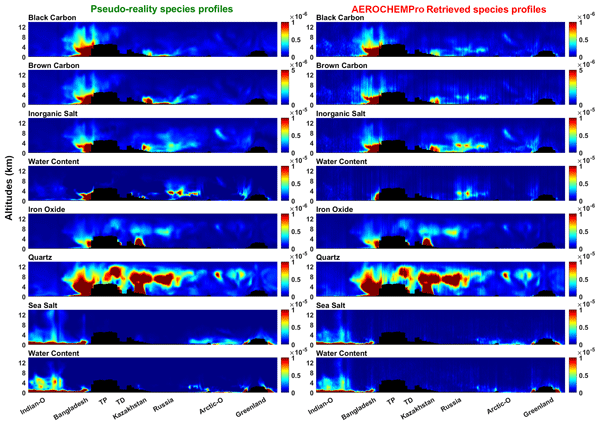
Abou Bakr Merdji, Juan Cuesta, Fazzal Qayyum, Anton Lopatin, Oleg Dubovik, Durgesh Nandan Piyush, Laaziz El Amraoui, Paolo Di Girolamo, and Charles R. Trepte
Atmos. Meas. Tech., 19, 4669–4701, https://doi.org/10.5194/amt-19-4669-2026, https://doi.org/10.5194/amt-19-4669-2026, 2026
Short summary
Short summary
This study presents a novel satellite approach to retrieve the vertical distribution of aerosol chemical species in the atmosphere. By combining spaceborne LIDAR and polarimetric observations, it distinguishes major natural and anthropogenic chemical particle species and their optical properties. Tests with realistic simulations show accurate retrieval of dust, pollution, and sea salt layers, enhancing global monitoring of aerosols relevant to air quality and climate.
Adolfo Comerón, Constantino Muñoz-Porcar, Alejandro Rodríguez-Gómez, Michaël Sicard, Federico Dios, Cristina Gil-Díaz, Daniel Camilo Fortunato dos Santos Oliveira, and Francesc Rocadenbosch
EGUsphere, https://doi.org/10.5194/egusphere-2026-2703, https://doi.org/10.5194/egusphere-2026-2703, 2026
Short summary
Short summary
The overlap function of an aerosol lidar is a key feature determining the minimum range from which the lidar can perform reliable measurements. This article develops the relationship between the retrieved overlap function, which requires an assumption on the relationship between the extinction and backscatter coefficients of the aerosols present, and the “true” overlap function, and proposes a simple, two-step, non-iterative formulation for the retrieval of the lidar overlap function.
Dominique Gantois, Alexandre Baron, Michaël Sicard, Valentin Duflot, Niels Groenen, Nelson Bègue, Sabine Eckhardt, Nikolaos Evangeliou, Martine De Mazière, Corinne Vigouroux, Guillaume Payen, Nicolas Marquestaut, Jean-Marc Metzger, Patrick Chazette, and Cyrille Flamant
EGUsphere, https://doi.org/10.5194/egusphere-2026-3070, https://doi.org/10.5194/egusphere-2026-3070, 2026
Short summary
Short summary
Smoke from Southern African and South American wildfires can travel for thousands of kilometers before reaching the Indian Ocean and Reunion Island. In this study, we use instruments measuring from the ground, from satellites, as well as atmospheric models, to track these smoke plumes and identify their origins and properties. Our findings should help future research focusing on the impact of these plumes on the atmospheric temperature.
Patrick Chazette
Atmos. Meas. Tech., 19, 4293–4311, https://doi.org/10.5194/amt-19-4293-2026, https://doi.org/10.5194/amt-19-4293-2026, 2026
Short summary
Short summary
A novel aerosol classification methodology based on Raman lidar observations is presented and applied to measurements acquired during the FENNEC field campaign. The temporal evolution of aerosol classes and optical properties is then used to perform a quantitative evaluation of numerical simulations from the Copernicus Atmosphere Monitoring Service (CAMS) global reanalysis (EAC4).
Dimitri Trapon, Holger Baars, Sebastian Bley, Albert Ansmann, Michael Rennie, Sergey Khaykin, and Michael Sicard
EGUsphere, https://doi.org/10.5194/egusphere-2026-2575, https://doi.org/10.5194/egusphere-2026-2575, 2026
Short summary
Short summary
The study presents observations of the 2022 Hunga volcanic aerosol in the stratosphere made by the European Space Agency’s Aeolus satellite. Aeolus tracks the long-range transported plumes that circumnavigate the Earth at distinct latitudes and altitudes up to 30 km. Vertical gradient of optical properties measured with the ultraviolet lidar signal are shown, such as decreasing trends over time. This helps to understand the stratospheric residence time of aerosols in the Southern Hemisphere.
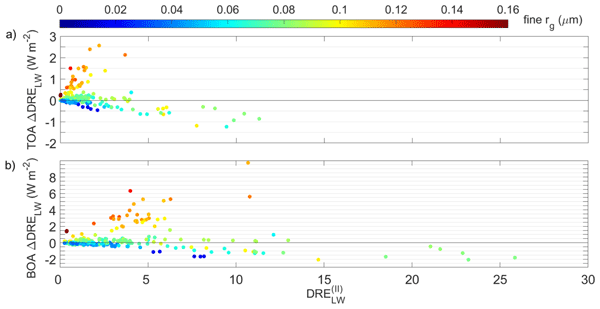
María Ángeles López-Cayuela, Carmen Córdoba-Jabonero, Michaël Sicard, Jesús Abril-Gago, Vanda Salgueiro, Adolfo Comerón, María José Granados-Muñoz, Maria João Costa, Constantino Muñoz-Porcar, Juan Antonio Bravo-Aranda, Daniele Bortoli, Alejandro Rodríguez-Gómez, Lucas Alados-Arboledas, and Juan Luis Guerrero-Rascado
Atmos. Chem. Phys., 26, 6257–6281, https://doi.org/10.5194/acp-26-6257-2026, https://doi.org/10.5194/acp-26-6257-2026, 2026
Short summary
Short summary
Due to the major radiative role of dust in Climate Change, a vertical assessment of the long-wave (and net) dust direct radiative effect of both fine and coarse dust, separately, is introduced. The study relies on an intense Saharan dust outbreak across the Iberian Peninsula, as observed by five lidar stations with coverage from south-west to north-east. A comparative evaluation with respect to total dust (no separation) is also performed. It complements a similar study in the short-wave range.
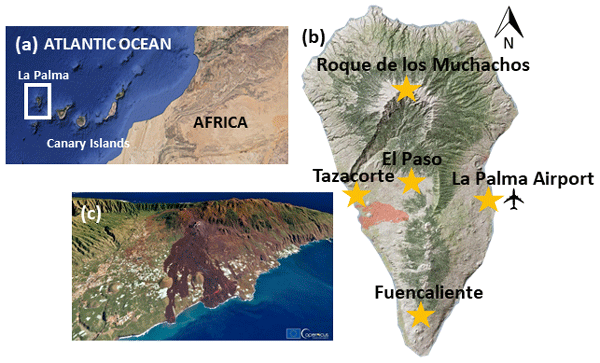
África Barreto, Francisco Quirós, Omaira E. García, Jorge Pereda-de-Pablo, Daniel González-Fernández, Andrés Bedoya-Velásquez, Michael Sicard, Carmen Córdoba-Jabonero, Marco Iarlori, Vincenzo Rizi, Nickolay Krotkov, Simon Carn, Reijo Roininen, Antonio J. Molina-Arias, A. Fernando Almansa, Óscar Álvarez-Losada, Carla Aramo, Juan José Bustos, Romain Ceolato, Adolfo Comerón, Alicia Felpeto, Rosa D. García, Pablo González-Sicilia, Yenny González, Pascal Hedelt, Miguel Hernández, María-Ángeles López-Cayuela, Diego Loyola, Stavros Meletlidis, Constantino Muñoz-Porcar, Ermanno Pietropaolo, Ramón Ramos, Alejandro Rodríguez-Gómez, Roberto Román, Pedro M. Romero-Campos, Martin Stuefer, Carlos Toledano, and Ellsworth J. Welton
Atmos. Meas. Tech., 19, 1385–1406, https://doi.org/10.5194/amt-19-1385-2026, https://doi.org/10.5194/amt-19-1385-2026, 2026
Short summary
Short summary
This manuscript describes the instrumental coverage deployed during the Tajogaite eruption (19 September–25 December 2021) by the Instituto Geográfico Nacional (IGN), the Spanish State Meteorological Agency (AEMET), and other Spanish members of ACTRIS (Aerosol, Clouds and Trace Gases Research Infrastructure) to monitor its atmospheric impact. Two complementary methods provide consistent plume height data for future operational surveillance.

Maria Fernanda Sanchez-Barrero, Philippe Goloub, Luc Blarel, Ioana Elisabeta Popovici, Benjamin Torres, Gaël Dubois, Thierry Podvin, Fabrice Ducos, Romain de Filippi, Michaël Sicard, Viviane Bout Roumazeilles, and Charlotte Skonieczny
Atmos. Meas. Tech., 19, 507–528, https://doi.org/10.5194/amt-19-507-2026, https://doi.org/10.5194/amt-19-507-2026, 2026
Short summary
Short summary
The TRANSAMA ship-based campaign (April–May 2023) aboard Marion Dufresne investigated aerosols from La Réunion to Barbados using photometer and lidar. Observations revealed clean conditions over the South Atlantic, with thin transported aerosol plumes from Southern Africa. Clouds were detected in 53 % of lidar profiles with higher occurrence in the first 2 km. The results show how combined lidar and photometer measurements can improve our understanding of aerosols in marine environment.
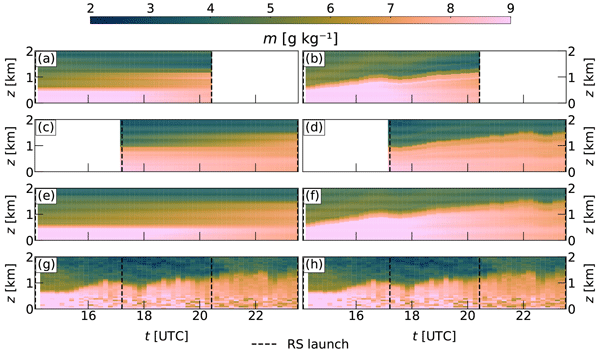
Linus von Klitzing, David D. Turner, Diego Lange, and Volker Wulfmeyer
Atmos. Meas. Tech., 19, 359–370, https://doi.org/10.5194/amt-19-359-2026, https://doi.org/10.5194/amt-19-359-2026, 2026
Short summary
Short summary
Many atmospheric science endeavors require temporally resolved profiles of temperature, humidity, and winds. Radiosondes are considered the gold standard for measuring these profiles, but the temporal resolution is frequently too coarse for many applications within the atmospheric boundary layer. This study proposes a new method using a normalized height grid in the temporal interpolation process that yields more accurate profiles in the convective boundary layer.
Sergey Khaykin, Michaël Sicard, Thierry Leblanc, Tetsu Sakai, Nickolay Balugin, Gwenaël Berthet, Stëphane Chevrier, Fernando Chouza, Artem Feofilov, Dominique Gantois, Sophie Godin-Beekmann, Arezki Haddouche, Yoshitaka Jin, Isamu Morino, Nicolas Kadygrov, Thomas Lecas, Ben Liley, Richard Querel, Ghasssan Taha, and Vladimir Yushkov
Atmos. Chem. Phys., 26, 607–622, https://doi.org/10.5194/acp-26-607-2026, https://doi.org/10.5194/acp-26-607-2026, 2026
Short summary
Short summary
In April 2024, the Ruang volcano in Indonesia sent large amounts of gas and particles high into the atmosphere, which then spread worldwide. Using the new European EarthCARE satellite and its advanced laser instrument ATLID (Atmospheric LIDar), together with ground and balloon observations, we tracked how these particles doubled levels in the tropics and spread into both hemispheres. The study shows ATLID’s power to reveal how eruptions can affect climate, clouds, and ozone for more than a year.
Frédéric Laly, Patrick Chazette, Julien Totems, Vincent Crenn, David Ledur, and Alexandre Marpillat
Atmos. Meas. Tech., 18, 7629–7649, https://doi.org/10.5194/amt-18-7629-2025, https://doi.org/10.5194/amt-18-7629-2025, 2025
Short summary
Short summary
This article presents the evolution of aerosol optical properties as derived from a Raman lidar in relation to relative humidity over the Paris area. It examines the influence of aerosol chemical compounds linked to air mass origins, as well as their relationship with the efficiency of aerosol growth. Such a study provides a better understanding of the interactions between aerosols and water vapour, which is important for reducing the uncertainties surrounding the Earth's radiative balance.
Sandrine Bony, Basile Poujol, Brett McKim, Nicolas Rochetin, Marie Lothon, Julia Windmiller, Nicolas Maury, Clarisse Dufaux, Louis Jaffeux, Patrick Chazette, and Julien Delanoë
Atmos. Chem. Phys., 25, 17331–17362, https://doi.org/10.5194/acp-25-17331-2025, https://doi.org/10.5194/acp-25-17331-2025, 2025
Short summary
Short summary
Space photographs of the Earth show that clouds form diverse, common but poorly understood cloud patterns. The analysis of observations gathered from research aircraft over the tropical ocean shows that the merging of thermals and clouds in the first kilometer of the atmosphere plays a key role in controlling the size, depth and spacing of clouds. This reveals a fundamental process through which clouds interact with each other and with their environment.
Johannes Speidel, Hannes Vogelmann, Andreas Behrendt, Diego Lange, Matthias Mauder, Jens Reichardt, and Kevin Wolz
Atmos. Meas. Tech., 18, 4923–4948, https://doi.org/10.5194/amt-18-4923-2025, https://doi.org/10.5194/amt-18-4923-2025, 2025
Short summary
Short summary
Humidity transport from the Earth's surface into the atmosphere is relevant for many processes. However, knowledge of the actual distribution of humidity concentrations is sparse – mainly due to technological limitations. With the lidar presented herein, it is possible to measure humidity concentrations and their vertical fluxes up to altitudes of > 3 km with high spatiotemporal resolution, opening new possibilities for detailed process understanding and, ultimately, better model representation.
Benjamin Torres, Luc Blarel, Philippe Goloub, Gaël Dubois, Maria Fernanda Sanchez-Barrero, Ioana Elisabeta Popovici, Fabrice Maupin, Elena Lind, Alexander Smirnov, Ilya Slutsker, Julien Chimot, Ramiro González, Michaël Sicard, Jean Marc Metzger, and Pierre Tulet
Atmos. Meas. Tech., 18, 4809–4838, https://doi.org/10.5194/amt-18-4809-2025, https://doi.org/10.5194/amt-18-4809-2025, 2025
Short summary
Short summary
This study shows that it is possible to automatically monitor atmospheric aerosols from research vessels using automated instruments, following the same standards as AERONET (AErosol RObotic NETwork) land-based stations. By collecting 3 years of data in the Indian Ocean, we demonstrate that high-quality measurements can be made, even on a moving platform. These results open new possibilities for observing aerosols over the ocean and improving satellite data and climate studies.
Tristan Millet, Hassan Bencherif, Thierry Portafaix, Nelson Bègue, Alexandre Baron, Valentin Duflot, Cathy Clerbaux, Pierre-François Coheur, Andrea Pazmiño, Michaël Sicard, Anne Boynard, Jean-Marc Metzger, Guillaume Payen, Nicolas Marquestaut, and Sophie Godin-Beekmann
Atmos. Chem. Phys., 25, 10887–10905, https://doi.org/10.5194/acp-25-10887-2025, https://doi.org/10.5194/acp-25-10887-2025, 2025
Short summary
Short summary
On 15 January 2022, the Hunga volcano erupted, releasing sulfur dioxide and water vapor into the stratosphere, impacting ozone levels over the Indian Ocean. Satellite data show the presence of a transient ozone depletion event related to the water vapor anomalies and sulfate aerosol clouds. Ozone reduction was confined to two distinct layers. On 21 January, the fifth percentile of total and stratospheric column ozone anomalies reached −18.6 and −14.5 DU, respectively.
Daniele Zannoni, Hans Christian Steen-Larsen, Harald Sodemann, Iris Thurnherr, Cyrille Flamant, Patrick Chazette, Julien Totems, Martin Werner, and Myriam Raybaut
Atmos. Chem. Phys., 25, 9471–9495, https://doi.org/10.5194/acp-25-9471-2025, https://doi.org/10.5194/acp-25-9471-2025, 2025
Short summary
Short summary
High-resolution airborne observations reveal that mixing between the free troposphere and surface evapotranspiration flux primarily modulates the water vapor isotopic composition in the lower troposphere. Water vapor isotope structure variations occur on the scale of hundreds of meters, underlining the utility of stable isotopes for studying microscale atmospheric dynamics. This study also provides the basis for better validation of water vapor isotope remote sensing retrievals with surface observations.
Patrick Chazette, Julien Totems, and Frédéric Laly
Atmos. Meas. Tech., 18, 2681–2699, https://doi.org/10.5194/amt-18-2681-2025, https://doi.org/10.5194/amt-18-2681-2025, 2025
Short summary
Short summary
The use of active remote sensing instruments to sample the atmospheric environment requires accurate calibration that is stable over time so that measurements are reproducible. This is the case for measurements of atmospheric water vapour using Raman lidar, which are of growing interest in the context of climate risks such as extreme precipitation. This study addresses this issue. It is based on six campaigns spread over a period of 7 years between 2016 and 2022.
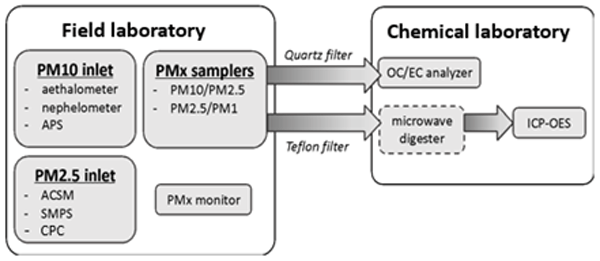
Teresa Laurita, Alessandro Mauceri, Francesco Cardellicchio, Emilio Lapenna, Benedetto De Rosa, Serena Trippetta, Michail Mytilinaios, Davide Amodio, Aldo Giunta, Ermann Ripepi, Canio Colangelo, Nikolaos Papagiannopoulos, Francesca Morrongiello, Claudio Dema, Simone Gagliardi, Carmela Cornacchia, Rosa Maria Petracca Altieri, Aldo Amodeo, Marco Rosoldi, Donato Summa, Gelsomina Pappalardo, and Lucia Mona
Atmos. Meas. Tech., 18, 2373–2396, https://doi.org/10.5194/amt-18-2373-2025, https://doi.org/10.5194/amt-18-2373-2025, 2025
Short summary
Short summary
This paper provides an overview of the CIAO Observatory in southern Italy, focusing on the upgrade of its aerosol in situ laboratory in compliance with ACTRIS standard operating procedures. The aim is to provide the aerosol research community with technical details and practical guidance for establishing an in situ aerosol observational site. The paper also discusses the importance of combining in situ and remote sensing measurements for a comprehensive understanding of atmospheric processes.
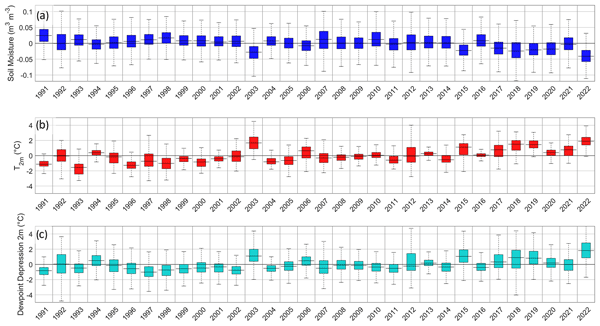
Thomas Schwitalla, Lisa Jach, Volker Wulfmeyer, and Kirsten Warrach-Sagi
Nat. Hazards Earth Syst. Sci., 25, 1405–1424, https://doi.org/10.5194/nhess-25-1405-2025, https://doi.org/10.5194/nhess-25-1405-2025, 2025
Short summary
Short summary
During recent decades, Europe has experienced increasing periods of severe drought and heatwave. To provide an overview of how land-surface conditions shape land–atmosphere (LA) coupling, the interannual LA coupling strength variability for the summer seasons of 1991–2022 is investigated by means of ERA5 data. The results clearly reflect ongoing climate change by a shift in the coupling relationships towards reinforced heating and drying by the land surface.
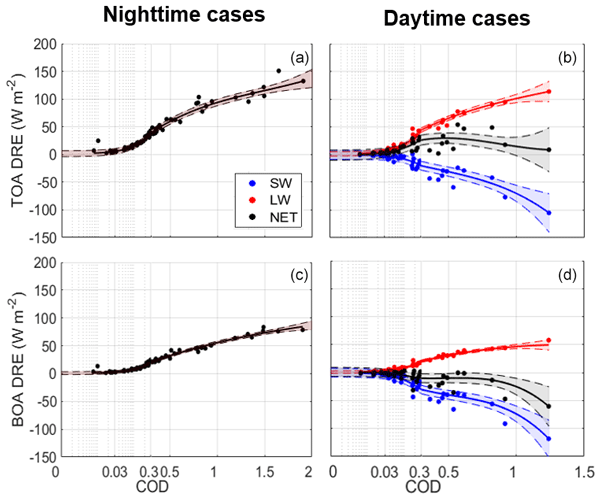
Cristina Gil-Díaz, Michäel Sicard, Odran Sourdeval, Athulya Saiprakash, Constantino Muñoz-Porcar, Adolfo Comerón, Alejandro Rodríguez-Gómez, and Daniel Camilo Fortunato dos Santos Oliveira
Atmos. Chem. Phys., 25, 3445–3464, https://doi.org/10.5194/acp-25-3445-2025, https://doi.org/10.5194/acp-25-3445-2025, 2025
Short summary
Short summary
This study presents a comprehensive analysis of optical scattering properties and direct radiative effects of cirrus clouds based on 4 years of continuous ground-based lidar measurements with the Barcelona MPLNET lidar. A novel approach of the self-consistent scattering model for cirrus clouds is presented to determine their optical scattering properties at different wavelengths, and their direct radiative effects are calculated with the discrete ordinates method embedded in the ARTDECO package.
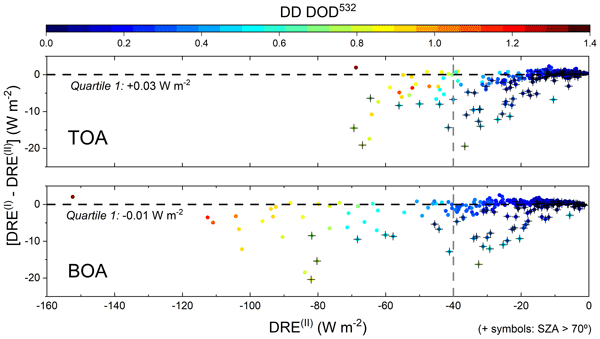
María-Ángeles López-Cayuela, Carmen Córdoba-Jabonero, Michaël Sicard, Jesús Abril-Gago, Vanda Salgueiro, Adolfo Comerón, María José Granados-Muñoz, Maria João Costa, Constantino Muñoz-Porcar, Juan Antonio Bravo-Aranda, Daniele Bortoli, Alejandro Rodríguez-Gómez, Lucas Alados-Arboledas, and Juan Luis Guerrero-Rascado
Atmos. Chem. Phys., 25, 3213–3231, https://doi.org/10.5194/acp-25-3213-2025, https://doi.org/10.5194/acp-25-3213-2025, 2025
Short summary
Short summary
Due to the significant radiative role of dust in climate change, vertical assessments of the short-wave dust direct radiative effect of both fine and coarse dust particles are performed separately. The study is focused on an intense Saharan dust outbreak crossing the Iberian Peninsula in springtime monitored by five Iberian lidar stations with southwest–northeast coverage. A comparative study to evaluate the differences found by considering the total dust (no separation) is also examined.
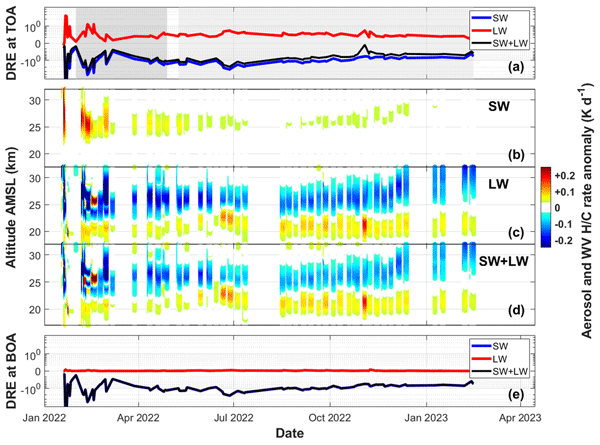
Michaël Sicard, Alexandre Baron, Marion Ranaivombola, Dominique Gantois, Tristan Millet, Pasquale Sellitto, Nelson Bègue, Hassan Bencherif, Guillaume Payen, Nicolas Marquestaut, and Valentin Duflot
Atmos. Chem. Phys., 25, 367–381, https://doi.org/10.5194/acp-25-367-2025, https://doi.org/10.5194/acp-25-367-2025, 2025
Short summary
Short summary
This study quantifies the radiative impact over Réunion Island (21° S, 55° E) of the aerosols and water vapor injected into the stratosphere by the Hunga volcano in the South Pacific. The overall aerosol and water vapor impact on the Earth’s radiation budget for the whole period is negative (cooling, -0.82 ± 0.35 W m-2) and dominated by the aerosols. At the Earth’s surface, aerosols are the main drivers and produce a negative (cooling, -1.04 ± 0.36 W m-2) radiative impact.
Syed Saqlain Abbas, Andreas Behrendt, Oliver Branch, and Volker Wulfmeyer
EGUsphere, https://doi.org/10.5194/egusphere-2024-3878, https://doi.org/10.5194/egusphere-2024-3878, 2024
Preprint archived
Short summary
Short summary
This study investigates turbulence statistics convective boundary layer. For this, we used data of two Doppler lidars, and an eddy covariance station between May to July 2021. We believe that these statistics are important to improve the land-atmosphere characterization in numerical weather prediction models.
Frédéric Laly, Patrick Chazette, Julien Totems, Jérémy Lagarrigue, Laurent Forges, and Cyrille Flamant
Earth Syst. Sci. Data, 16, 5579–5602, https://doi.org/10.5194/essd-16-5579-2024, https://doi.org/10.5194/essd-16-5579-2024, 2024
Short summary
Short summary
We present a dataset of water vapor mixing ratio profiles acquired during the Water Vapor Lidar Network Assimilation campaign in fall and winter 2022 and summer 2023, using three lidar systems deployed on the western Mediterranean coastline. This innovative campaign provides access to lower-tropospheric water vapor variability to constrain meteorological forecasting models. The scientific objective is to improve forecasting of heavy-precipation events that lead to flash floods and landslides.
Fabio Madonna, Benedetto De Rosa, Simone Gagliardi, Ilaria Gandolfi, Yassmina Hesham Essa, Domenico Madonna, Fabrizio Marra, Maria Assunta Menniti, Donato Summa, Emanuele Tramutola, Faezeh Karimian Saracks, Filomena Romano, and Marco Rosoldi
Earth Syst. Dynam. Discuss., https://doi.org/10.5194/esd-2024-32, https://doi.org/10.5194/esd-2024-32, 2024
Revised manuscript not accepted
Short summary
Short summary
Extreme weather events in the Mediterranean have intensified, and understanding their causes is key to improving forecasts. This study used data from the MESSA-DIN measurement campaign in Soverato, Italy (July–September 2021) to analyze the water vapor fluxes effect in extreme weather events as well as the related ERA5 performances. This study highlights a bias in ERA5 reanalysis humidity and the importance of high-resolution data for improving weather predictions.
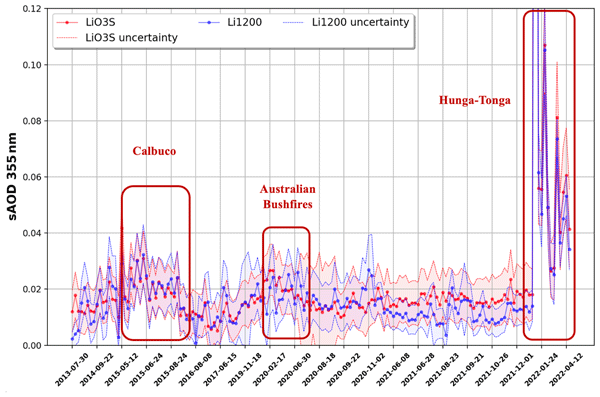
Dominique Gantois, Guillaume Payen, Michaël Sicard, Valentin Duflot, Nelson Bègue, Nicolas Marquestaut, Thierry Portafaix, Sophie Godin-Beekmann, Patrick Hernandez, and Eric Golubic
Earth Syst. Sci. Data, 16, 4137–4159, https://doi.org/10.5194/essd-16-4137-2024, https://doi.org/10.5194/essd-16-4137-2024, 2024
Short summary
Short summary
We describe three instruments that have been measuring interactions between aerosols (particles of various origin) and light over Réunion Island since 2012. Aerosols directly or indirectly influence the temperature in the atmosphere and can interact with clouds. Details are given on how we derived aerosol properties from our measurements and how we assessed the quality of our data before sharing them with the scientific community. A good correlation was found between the three instruments.
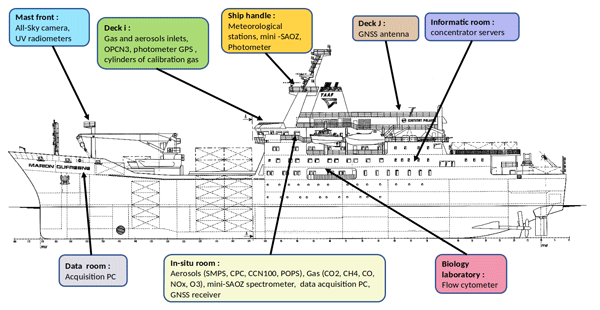
Pierre Tulet, Joel Van Baelen, Pierre Bosser, Jérome Brioude, Aurélie Colomb, Philippe Goloub, Andrea Pazmino, Thierry Portafaix, Michel Ramonet, Karine Sellegri, Melilotus Thyssen, Léa Gest, Nicolas Marquestaut, Dominique Mékiès, Jean-Marc Metzger, Gilles Athier, Luc Blarel, Marc Delmotte, Guillaume Desprairies, Mérédith Dournaux, Gaël Dubois, Valentin Duflot, Kevin Lamy, Lionel Gardes, Jean-François Guillemot, Valérie Gros, Joanna Kolasinski, Morgan Lopez, Olivier Magand, Erwan Noury, Manuel Nunes-Pinharanda, Guillaume Payen, Joris Pianezze, David Picard, Olivier Picard, Sandrine Prunier, François Rigaud-Louise, Michael Sicard, and Benjamin Torres
Earth Syst. Sci. Data, 16, 3821–3849, https://doi.org/10.5194/essd-16-3821-2024, https://doi.org/10.5194/essd-16-3821-2024, 2024
Short summary
Short summary
The MAP-IO program aims to compensate for the lack of atmospheric and oceanographic observations in the Southern Ocean by equipping the ship Marion Dufresne with a set of 17 scientific instruments. This program collected 700 d of measurements under different latitudes, seasons, sea states, and weather conditions. These new data will support the calibration and validation of numerical models and the understanding of the atmospheric composition of this region of Earth.
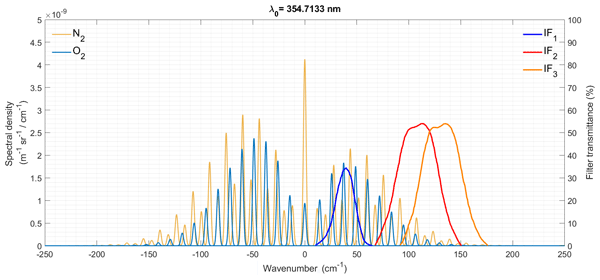
José Alex Zenteno-Hernández, Adolfo Comerón, Federico Dios, Alejandro Rodríguez-Gómez, Constantino Muñoz-Porcar, Michaël Sicard, Noemi Franco, Andreas Behrendt, and Paolo Di Girolamo
Atmos. Meas. Tech., 17, 4687–4694, https://doi.org/10.5194/amt-17-4687-2024, https://doi.org/10.5194/amt-17-4687-2024, 2024
Short summary
Short summary
We study how the spectral characteristics of a solid-state laser in an atmospheric temperature profiling lidar using the Raman technique impact the temperature retrieval accuracy. We find that the spectral widening, with respect to a seeded laser, has virtually no impact, while crystal-rod temperature variations in the laser must be kept within a range of 1 K for the uncertainty in the atmospheric temperature below 1 K. The study is carried out through spectroscopy simulations.
Maëlie Chazette, Patrick Chazette, Ilja M. Reiter, Xiaoxia Shang, Julien Totems, Jean-Philippe Orts, Irène Xueref-Remy, and Nicolas Montes
Biogeosciences, 21, 3289–3303, https://doi.org/10.5194/bg-21-3289-2024, https://doi.org/10.5194/bg-21-3289-2024, 2024
Short summary
Short summary
The approach presented is original in its coupling between field observations and airborne lidar observations. It has been applied to an instrumented reference forest site in the south of France, which is heavily impacted by climate change. It leads to the evaluation of tree heights and ends with assessments of aerial and root carbon stocks. A detailed assessment of uncertainties is presented to add a level of reliability to the scientific products delivered.
Nelson Bègue, Alexandre Baron, Gisèle Krysztofiak, Gwenaël Berthet, Corinna Kloss, Fabrice Jégou, Sergey Khaykin, Marion Ranaivombola, Tristan Millet, Thierry Portafaix, Valentin Duflot, Philippe Keckhut, Hélène Vérèmes, Guillaume Payen, Mahesh Kumar Sha, Pierre-François Coheur, Cathy Clerbaux, Michaël Sicard, Tetsu Sakai, Richard Querel, Ben Liley, Dan Smale, Isamu Morino, Osamu Uchino, Tomohiro Nagai, Penny Smale, John Robinson, and Hassan Bencherif
Atmos. Chem. Phys., 24, 8031–8048, https://doi.org/10.5194/acp-24-8031-2024, https://doi.org/10.5194/acp-24-8031-2024, 2024
Short summary
Short summary
During the 2020 austral summer, the pristine atmosphere of the southwest Indian Ocean basin experienced significant perturbations. Numerical models indicated that the lower-stratospheric aerosol content was influenced by the intense and persistent stratospheric aerosol layer generated during the 2019–2020 extreme Australian bushfire events. Ground-based observations at Réunion confirmed the simultaneous presence of African and Australian aerosol layers.
Cristina Gil-Díaz, Michäel Sicard, Adolfo Comerón, Daniel Camilo Fortunato dos Santos Oliveira, Constantino Muñoz-Porcar, Alejandro Rodríguez-Gómez, Jasper R. Lewis, Ellsworth J. Welton, and Simone Lolli
Atmos. Meas. Tech., 17, 1197–1216, https://doi.org/10.5194/amt-17-1197-2024, https://doi.org/10.5194/amt-17-1197-2024, 2024
Short summary
Short summary
In this paper, a statistical study of cirrus geometrical and optical properties based on 4 years of continuous ground-based lidar measurements with the Barcelona (Spain) Micro Pulse Lidar (MPL) is analysed. The cloud optical depth, effective column lidar ratio and linear cloud depolarisation ratio have been calculated by a new approach to the two-way transmittance method, which is valid for both ground-based and spaceborne lidar systems. Their associated errors are also provided.
Volker Wulfmeyer, Christoph Senff, Florian Späth, Andreas Behrendt, Diego Lange, Robert M. Banta, W. Alan Brewer, Andreas Wieser, and David D. Turner
Atmos. Meas. Tech., 17, 1175–1196, https://doi.org/10.5194/amt-17-1175-2024, https://doi.org/10.5194/amt-17-1175-2024, 2024
Short summary
Short summary
A simultaneous deployment of Doppler, temperature, and water-vapor lidar systems is used to provide profiles of molecular destruction rates and turbulent kinetic energy (TKE) dissipation in the convective boundary layer (CBL). The results can be used for the parameterization of turbulent variables, TKE budget analyses, and the verification of weather forecast and climate models.

Oliver Branch, Lisa Jach, Thomas Schwitalla, Kirsten Warrach-Sagi, and Volker Wulfmeyer
Earth Syst. Dynam., 15, 109–129, https://doi.org/10.5194/esd-15-109-2024, https://doi.org/10.5194/esd-15-109-2024, 2024
Short summary
Short summary
In the United Arab Emirates, water scarcity is reaching a crisis point, and new methods for obtaining freshwater are urgently needed. Regional climate engineering with large artificial heat islands can enhance desert precipitation by increasing cloud development. Through model simulation, we show that heat islands of 20 × 20 km or larger can potentially produce enough annual rainfall to supply thousands of people. Thus, artificial heat islands should be made a high priority for further research.
Xiaoxia Shang, Antti Lipponen, Maria Filioglou, Anu-Maija Sundström, Mark Parrington, Virginie Buchard, Anton S. Darmenov, Ellsworth J. Welton, Eleni Marinou, Vassilis Amiridis, Michael Sicard, Alejandro Rodríguez-Gómez, Mika Komppula, and Tero Mielonen
Atmos. Chem. Phys., 24, 1329–1344, https://doi.org/10.5194/acp-24-1329-2024, https://doi.org/10.5194/acp-24-1329-2024, 2024
Short summary
Short summary
In June 2019, smoke particles from a Canadian wildfire event were transported to Europe. The long-range-transported smoke plumes were monitored with a spaceborne lidar and reanalysis models. Based on the aerosol mass concentrations estimated from the observations, the reanalysis models had difficulties in reproducing the amount and location of the smoke aerosols during the transport event. Consequently, more spaceborne lidar missions are needed for reliable monitoring of aerosol plumes.
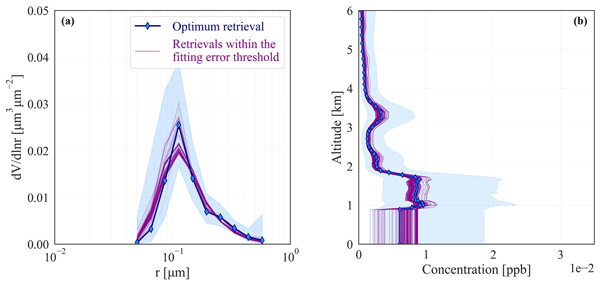
Alexandra Tsekeri, Anna Gialitaki, Marco Di Paolantonio, Davide Dionisi, Gian Luigi Liberti, Alnilam Fernandes, Artur Szkop, Aleksander Pietruczuk, Daniel Pérez-Ramírez, Maria J. Granados Muñoz, Juan Luis Guerrero-Rascado, Lucas Alados-Arboledas, Diego Bermejo Pantaleón, Juan Antonio Bravo-Aranda, Anna Kampouri, Eleni Marinou, Vassilis Amiridis, Michael Sicard, Adolfo Comerón, Constantino Muñoz-Porcar, Alejandro Rodríguez-Gómez, Salvatore Romano, Maria Rita Perrone, Xiaoxia Shang, Mika Komppula, Rodanthi-Elisavet Mamouri, Argyro Nisantzi, Diofantos Hadjimitsis, Francisco Navas-Guzmán, Alexander Haefele, Dominika Szczepanik, Artur Tomczak, Iwona S. Stachlewska, Livio Belegante, Doina Nicolae, Kalliopi Artemis Voudouri, Dimitris Balis, Athena A. Floutsi, Holger Baars, Linda Miladi, Nicolas Pascal, Oleg Dubovik, and Anton Lopatin
Atmos. Meas. Tech., 16, 6025–6050, https://doi.org/10.5194/amt-16-6025-2023, https://doi.org/10.5194/amt-16-6025-2023, 2023
Short summary
Short summary
EARLINET/ACTRIS organized an intensive observational campaign in May 2020, with the objective of monitoring the atmospheric state over Europe during the COVID-19 lockdown and relaxation period. The work presented herein focuses on deriving a common methodology for applying a synergistic retrieval that utilizes the network's ground-based passive and active remote sensing measurements and deriving the aerosols from anthropogenic activities over Europe.
Patrick Chazette and Jean-Christophe Raut
Atmos. Meas. Tech., 16, 5847–5861, https://doi.org/10.5194/amt-16-5847-2023, https://doi.org/10.5194/amt-16-5847-2023, 2023
Short summary
Short summary
The vertical profiles of the effective radii of ice crystals and ice water content in Arctic semi-transparent stratiform clouds were assessed using quantitative ground-based lidar measurements. The field campaign was part of the Pollution in the ARCtic System (PARCS) project which took place from 13 to 26 May 2016 in Hammerfest (70° 39′ 48″ N, 23° 41′ 00″ E). We show that under certain cloud conditions, lidar measurement combined with a dedicated algorithmic approach is an efficient tool.
Leonie Villiger, Marina Dütsch, Sandrine Bony, Marie Lothon, Stephan Pfahl, Heini Wernli, Pierre-Etienne Brilouet, Patrick Chazette, Pierre Coutris, Julien Delanoë, Cyrille Flamant, Alfons Schwarzenboeck, Martin Werner, and Franziska Aemisegger
Atmos. Chem. Phys., 23, 14643–14672, https://doi.org/10.5194/acp-23-14643-2023, https://doi.org/10.5194/acp-23-14643-2023, 2023
Short summary
Short summary
This study evaluates three numerical simulations performed with an isotope-enabled weather forecast model and investigates the coupling between shallow trade-wind cumulus clouds and atmospheric circulations on different scales. We show that the simulations reproduce key characteristics of shallow trade-wind clouds as observed during the field experiment EUREC4A and that the spatial distribution of stable-water-vapour isotopes is shaped by the overturning circulation associated with these clouds.
Tristan Millet, Hassan Bencherif, Thierry Portafaix, Nelson Bègue, Alexandre Baron, Valentin Duflot, Michaël Sicard, Jean-Marc Metzger, Guillaume Payen, Nicolas Marquestaut, and Sophie Godin-Beekmann
EGUsphere, https://doi.org/10.5194/egusphere-2023-2645, https://doi.org/10.5194/egusphere-2023-2645, 2023
Preprint withdrawn
Short summary
Short summary
The eruption of the Hunga Tonga volcano in January 2022 released substantial amounts of aerosols, sulfur dioxide, and water vapor into the stratosphere. Satellite and ground instruments followed the displacement of the volcanic aerosol plume and its impact on ozone levels over the Indian Ocean. Ozone data reveal the presence of a persistent ozone mini-hole structure from 17 January to 22 January, with most ozone depletion occurring within the ozone layer at the location of the aerosol plume.
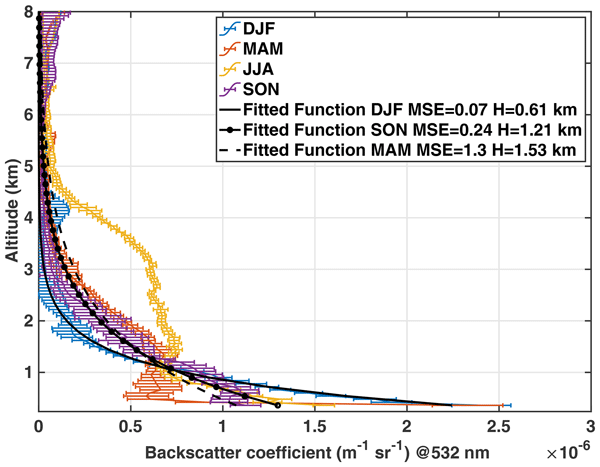
Simone Lolli, Michaël Sicard, Francesco Amato, Adolfo Comeron, Cristina Gíl-Diaz, Tony C. Landi, Constantino Munoz-Porcar, Daniel Oliveira, Federico Dios Otin, Francesc Rocadenbosch, Alejandro Rodriguez-Gomez, Andrés Alastuey, Xavier Querol, and Cristina Reche
Atmos. Chem. Phys., 23, 12887–12906, https://doi.org/10.5194/acp-23-12887-2023, https://doi.org/10.5194/acp-23-12887-2023, 2023
Short summary
Short summary
We evaluated the long-term trends and seasonal variability of the vertically resolved aerosol properties over the past 17 years in Barcelona. Results shows that air quality is improved, with a consistent drop in PM concentrations at the surface, as well as the column aerosol optical depth. The results also show that natural dust outbreaks are more likely in summer, with aerosols reaching an altitude of 5 km, while in winter, aerosols decay as an exponential with a scale height of 600 m.
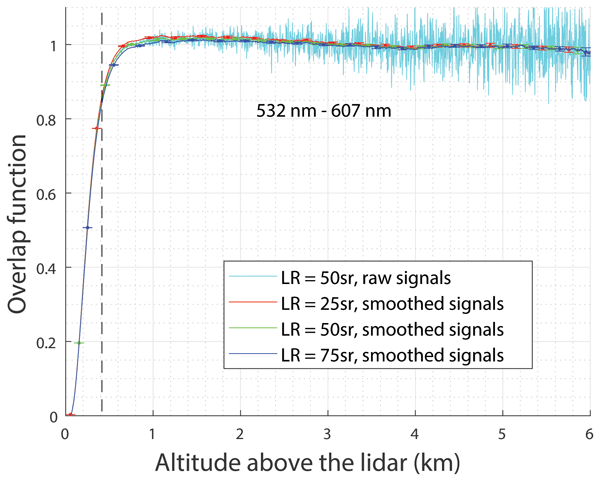
Adolfo Comerón, Constantino Muñoz-Porcar, Alejandro Rodríguez-Gómez, Michaël Sicard, Federico Dios, Cristina Gil-Díaz, Daniel Camilo Fortunato dos Santos Oliveira, and Francesc Rocadenbosch
Atmos. Meas. Tech., 16, 3015–3025, https://doi.org/10.5194/amt-16-3015-2023, https://doi.org/10.5194/amt-16-3015-2023, 2023
Short summary
Short summary
We derive an explicit (i.e., non-iterative) formula for the retrieval of the overlap function in an aerosol lidar with both elastic and Raman N2 and/or O2 channels used for independent measurements of aerosol backscatter and extinction coefficients. The formula requires only the measured, range-corrected elastic and the corresponding Raman signals, plus an assumed lidar ratio. We assess the influence of the lidar ratio error in the overlap function retrieval and present retrieval examples.
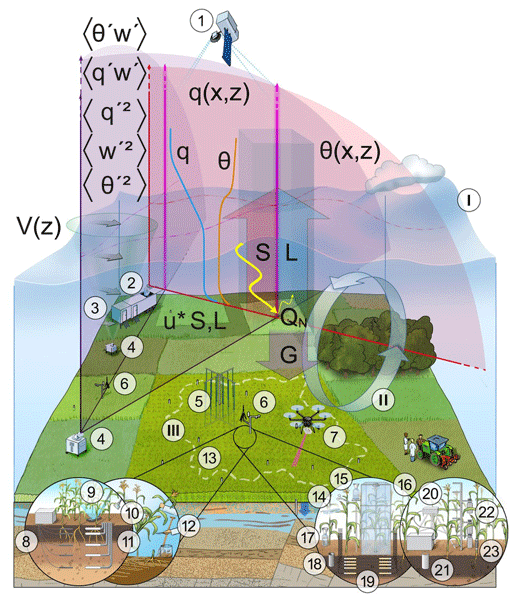
Florian Späth, Verena Rajtschan, Tobias K. D. Weber, Shehan Morandage, Diego Lange, Syed Saqlain Abbas, Andreas Behrendt, Joachim Ingwersen, Thilo Streck, and Volker Wulfmeyer
Geosci. Instrum. Method. Data Syst., 12, 25–44, https://doi.org/10.5194/gi-12-25-2023, https://doi.org/10.5194/gi-12-25-2023, 2023
Short summary
Short summary
Important topics in land–atmosphere feedback research are water and energy balances and heterogeneities of fluxes at the land surface and in the atmosphere. To target these questions, the Land–Atmosphere Feedback Observatory (LAFO) has been installed in Germany. The instrumentation allows for comprehensive measurements from the bedrock to the troposphere. The LAFO observation strategy aims for simultaneous measurements in all three compartments: atmosphere, soil and land surface, and vegetation.

María Ángeles López-Cayuela, Carmen Córdoba-Jabonero, Diego Bermejo-Pantaleón, Michaël Sicard, Vanda Salgueiro, Francisco Molero, Clara Violeta Carvajal-Pérez, María José Granados-Muñoz, Adolfo Comerón, Flavio T. Couto, Rubén Barragán, María-Paz Zorzano, Juan Antonio Bravo-Aranda, Constantino Muñoz-Porcar, María João Costa, Begoña Artíñano, Alejandro Rodríguez-Gómez, Daniele Bortoli, Manuel Pujadas, Jesús Abril-Gago, Lucas Alados-Arboledas, and Juan Luis Guerrero-Rascado
Atmos. Chem. Phys., 23, 143–161, https://doi.org/10.5194/acp-23-143-2023, https://doi.org/10.5194/acp-23-143-2023, 2023
Short summary
Short summary
An intense Saharan dust outbreak crossing the Iberian Peninsula in springtime was monitored to determinine the specific contribution of fine and coarse dust particles at five lidar stations, strategically covering its SW–central–NE pathway. Expected dust ageing along the transport started unappreciated. A different fine-dust impact on optical (~30 %) and mass (~10 %) properties was found. Use of polarized lidar measurements (mainly in elastic systems) for fine/coarse dust separation is crucial.
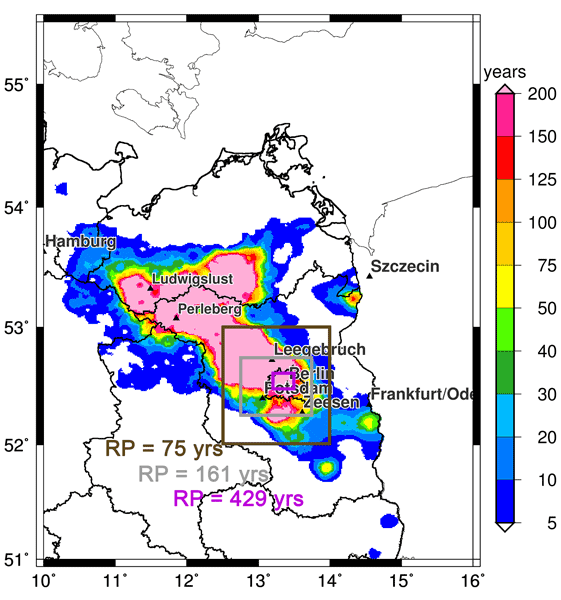
Alberto Caldas-Alvarez, Markus Augenstein, Georgy Ayzel, Klemens Barfus, Ribu Cherian, Lisa Dillenardt, Felix Fauer, Hendrik Feldmann, Maik Heistermann, Alexia Karwat, Frank Kaspar, Heidi Kreibich, Etor Emanuel Lucio-Eceiza, Edmund P. Meredith, Susanna Mohr, Deborah Niermann, Stephan Pfahl, Florian Ruff, Henning W. Rust, Lukas Schoppa, Thomas Schwitalla, Stella Steidl, Annegret H. Thieken, Jordis S. Tradowsky, Volker Wulfmeyer, and Johannes Quaas
Nat. Hazards Earth Syst. Sci., 22, 3701–3724, https://doi.org/10.5194/nhess-22-3701-2022, https://doi.org/10.5194/nhess-22-3701-2022, 2022
Short summary
Short summary
In a warming climate, extreme precipitation events are becoming more frequent. To advance our knowledge on such phenomena, we present a multidisciplinary analysis of a selected case study that took place on 29 June 2017 in the Berlin metropolitan area. Our analysis provides evidence of the extremeness of the case from the atmospheric and the impacts perspectives as well as new insights on the physical mechanisms of the event at the meteorological and climate scales.
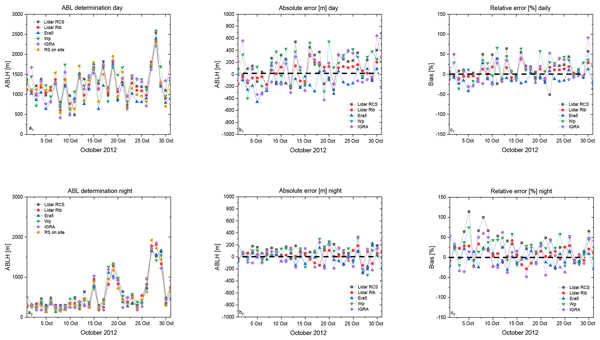
Donato Summa, Fabio Madonna, Noemi Franco, Benedetto De Rosa, and Paolo Di Girolamo
Atmos. Meas. Tech., 15, 4153–4170, https://doi.org/10.5194/amt-15-4153-2022, https://doi.org/10.5194/amt-15-4153-2022, 2022
Short summary
Short summary
The evolution of the atmospheric boundary layer height (ABLH) has an important impact on meteorology. However, the complexity of the phenomena occurring within the ABL and the influence of advection and local accumulation processes often prevent an unambiguous determination of the ABLH. The paper reports results from an inter-comparison effort involving different sensors and techniques to measure the ABLH. Correlations between the ABLH and other atmospheric variables are also assessed.
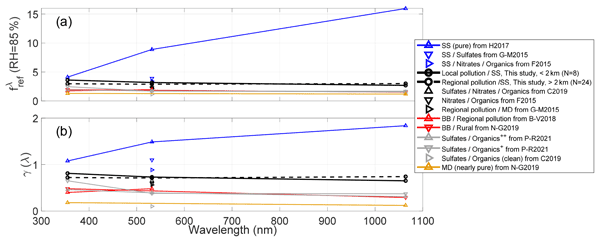
Michaël Sicard, Daniel Camilo Fortunato dos Santos Oliveira, Constantino Muñoz-Porcar, Cristina Gil-Díaz, Adolfo Comerón, Alejandro Rodríguez-Gómez, and Federico Dios Otín
Atmos. Chem. Phys., 22, 7681–7697, https://doi.org/10.5194/acp-22-7681-2022, https://doi.org/10.5194/acp-22-7681-2022, 2022
Short summary
Short summary
Atmospheric particles can absorb water vapor, and this water uptake may change their properties, e.g., their size. In the coastal region of Barcelona, Spain, we observe that (1) smaller particles absorb more water vapor, in relative terms, than larger particles and (2) the particle capacity to absorb water vapor has no annual tendency, probably because the site background is quite constant (urban + marine aerosol regime).
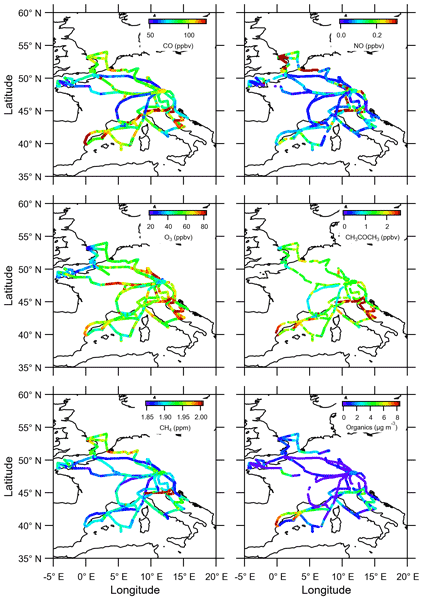
M. Dolores Andrés Hernández, Andreas Hilboll, Helmut Ziereis, Eric Förster, Ovid O. Krüger, Katharina Kaiser, Johannes Schneider, Francesca Barnaba, Mihalis Vrekoussis, Jörg Schmidt, Heidi Huntrieser, Anne-Marlene Blechschmidt, Midhun George, Vladyslav Nenakhov, Theresa Harlass, Bruna A. Holanda, Jennifer Wolf, Lisa Eirenschmalz, Marc Krebsbach, Mira L. Pöhlker, Anna B. Kalisz Hedegaard, Linlu Mei, Klaus Pfeilsticker, Yangzhuoran Liu, Ralf Koppmann, Hans Schlager, Birger Bohn, Ulrich Schumann, Andreas Richter, Benjamin Schreiner, Daniel Sauer, Robert Baumann, Mariano Mertens, Patrick Jöckel, Markus Kilian, Greta Stratmann, Christopher Pöhlker, Monica Campanelli, Marco Pandolfi, Michael Sicard, José L. Gómez-Amo, Manuel Pujadas, Katja Bigge, Flora Kluge, Anja Schwarz, Nikos Daskalakis, David Walter, Andreas Zahn, Ulrich Pöschl, Harald Bönisch, Stephan Borrmann, Ulrich Platt, and John P. Burrows
Atmos. Chem. Phys., 22, 5877–5924, https://doi.org/10.5194/acp-22-5877-2022, https://doi.org/10.5194/acp-22-5877-2022, 2022
Short summary
Short summary
EMeRGe provides a unique set of in situ and remote sensing airborne measurements of trace gases and aerosol particles along selected flight routes in the lower troposphere over Europe. The interpretation uses also complementary collocated ground-based and satellite measurements. The collected data help to improve the current understanding of the complex spatial distribution of trace gases and aerosol particles resulting from mixing, transport, and transformation of pollution plumes over Europe.
Cyrille Flamant, Marco Gaetani, Jean-Pierre Chaboureau, Patrick Chazette, Juan Cuesta, Stuart John Piketh, and Paola Formenti
Atmos. Chem. Phys., 22, 5701–5724, https://doi.org/10.5194/acp-22-5701-2022, https://doi.org/10.5194/acp-22-5701-2022, 2022
Short summary
Short summary
Rivers of smoke extend from tropical southern Africa towards the Indian Ocean during the winter fire season, controlled by the interaction of tropical easterly waves, and westerly waves at mid latitudes. During the AEROCLO-sA field campaign in 2017, a river of smoke was directly observed over Namibia. In this paper, the evolution and atmospheric drivers of the river of smoke are described, and the role of a mid-latitude cut-off low in lifting the smoke to the upper troposphere is highlighted.
Sandrine Bony, Marie Lothon, Julien Delanoë, Pierre Coutris, Jean-Claude Etienne, Franziska Aemisegger, Anna Lea Albright, Thierry André, Hubert Bellec, Alexandre Baron, Jean-François Bourdinot, Pierre-Etienne Brilouet, Aurélien Bourdon, Jean-Christophe Canonici, Christophe Caudoux, Patrick Chazette, Michel Cluzeau, Céline Cornet, Jean-Philippe Desbios, Dominique Duchanoy, Cyrille Flamant, Benjamin Fildier, Christophe Gourbeyre, Laurent Guiraud, Tetyana Jiang, Claude Lainard, Christophe Le Gac, Christian Lendroit, Julien Lernould, Thierry Perrin, Frédéric Pouvesle, Pascal Richard, Nicolas Rochetin, Kevin Salaün, Alfons Schwarzenboeck, Guillaume Seurat, Bjorn Stevens, Julien Totems, Ludovic Touzé-Peiffer, Gilles Vergez, Jessica Vial, Leonie Villiger, and Raphaela Vogel
Earth Syst. Sci. Data, 14, 2021–2064, https://doi.org/10.5194/essd-14-2021-2022, https://doi.org/10.5194/essd-14-2021-2022, 2022
Short summary
Short summary
The French ATR42 research aircraft participated in the EUREC4A international field campaign that took place in 2020 over the tropical Atlantic, east of Barbados. We present the extensive instrumentation of the aircraft, the research flights and the different measurements. We show that the ATR measurements of humidity, wind, aerosols and cloudiness in the lower atmosphere are robust and consistent with each other. They will make it possible to advance understanding of cloud–climate interactions.
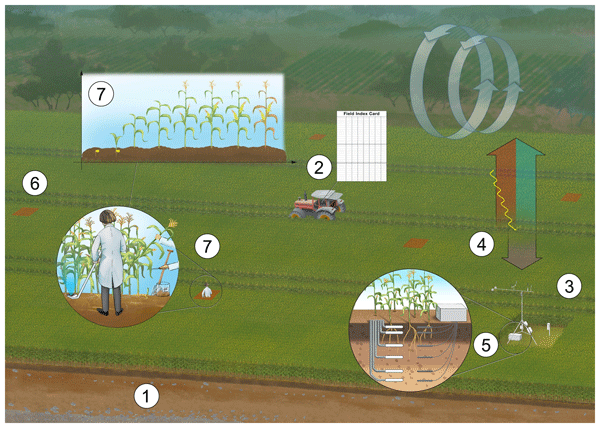
Tobias K. D. Weber, Joachim Ingwersen, Petra Högy, Arne Poyda, Hans-Dieter Wizemann, Michael Scott Demyan, Kristina Bohm, Ravshan Eshonkulov, Sebastian Gayler, Pascal Kremer, Moritz Laub, Yvonne Funkiun Nkwain, Christian Troost, Irene Witte, Tim Reichenau, Thomas Berger, Georg Cadisch, Torsten Müller, Andreas Fangmeier, Volker Wulfmeyer, and Thilo Streck
Earth Syst. Sci. Data, 14, 1153–1181, https://doi.org/10.5194/essd-14-1153-2022, https://doi.org/10.5194/essd-14-1153-2022, 2022
Short summary
Short summary
Presented are measurement results from six agricultural fields operated by local farmers in southwestern Germany over 9 years. Six eddy-covariance stations measuring water, energy, and carbon fluxes between the vegetated soil surface and the atmosphere provided the backbone of the measurement sites and were supplemented by extensive soil and vegetation state monitoring. The dataset is ideal for testing process models characterizing fluxes at the vegetated soil surface and in the atmosphere.
Marco Di Paolantonio, Davide Dionisi, and Gian Luigi Liberti
Atmos. Meas. Tech., 15, 1217–1231, https://doi.org/10.5194/amt-15-1217-2022, https://doi.org/10.5194/amt-15-1217-2022, 2022
Short summary
Short summary
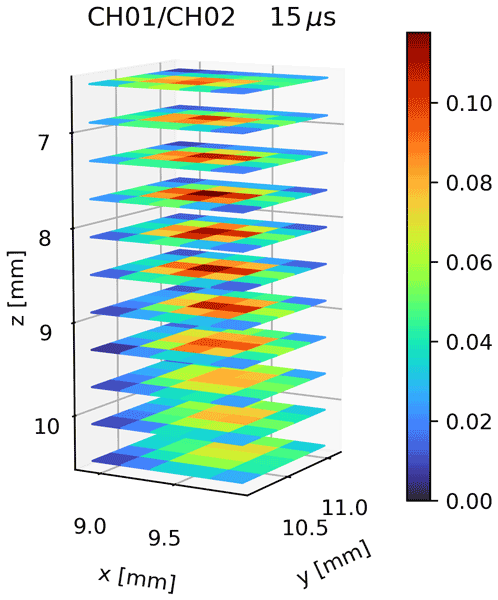
A procedure for the characterization of the lidar transmitter–receiver geometry was developed. This characterization is currently implemented in the Rome RMR lidar to optimize the telescope/beam alignment, retrieve the overlap function, and estimate the absolute and relative tilt of the laser beam. This procedure can be potentially used to complement the standard EARLINET quality assurance tests.
Karine Desboeufs, Franck Fu, Matthieu Bressac, Antonio Tovar-Sánchez, Sylvain Triquet, Jean-François Doussin, Chiara Giorio, Patrick Chazette, Julie Disnaquet, Anaïs Feron, Paola Formenti, Franck Maisonneuve, Araceli Rodríguez-Romero, Pascal Zapf, François Dulac, and Cécile Guieu
Atmos. Chem. Phys., 22, 2309–2332, https://doi.org/10.5194/acp-22-2309-2022, https://doi.org/10.5194/acp-22-2309-2022, 2022
Short summary
Short summary
This article reports the first concurrent sampling of wet deposition samples and surface seawater and was performed during the PEACETIME cruise in the remote Mediterranean (May–June 2017). Through the chemical composition of trace metals (TMs) in these samples, it emphasizes the decrease of atmospheric metal pollution in this area during the last few decades and the critical role of wet deposition as source of TMs for Mediterranean surface seawater, especially for intense dust deposition events.
Michaël Sicard, Carmen Córdoba-Jabonero, María-Ángeles López-Cayuela, Albert Ansmann, Adolfo Comerón, María-Paz Zorzano, Alejandro Rodríguez-Gómez, and Constantino Muñoz-Porcar
Atmos. Chem. Phys., 22, 1921–1937, https://doi.org/10.5194/acp-22-1921-2022, https://doi.org/10.5194/acp-22-1921-2022, 2022
Short summary
Short summary
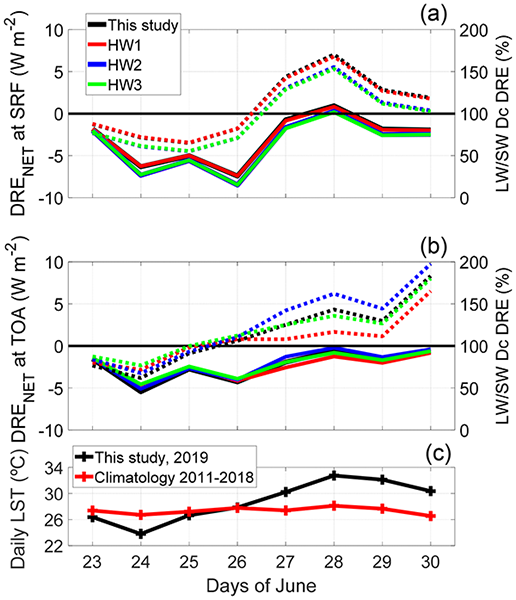
This paper completes the companion paper of Córdoba-Jabonero et al. (2021). We estimate the total direct radiative effect produced by mineral dust particles during the June 2019 mega-heatwave at two sites in Spain and Germany. The results show that the dust particles in the atmosphere contribute to cooling the surface (less radiation reaches the surface) and that the heatwave (parametrized by high surface and air temperatures) contributes to reducing this cooling.
Jesús Abril-Gago, Juan Luis Guerrero-Rascado, Maria João Costa, Juan Antonio Bravo-Aranda, Michaël Sicard, Diego Bermejo-Pantaleón, Daniele Bortoli, María José Granados-Muñoz, Alejandro Rodríguez-Gómez, Constantino Muñoz-Porcar, Adolfo Comerón, Pablo Ortiz-Amezcua, Vanda Salgueiro, Marta María Jiménez-Martín, and Lucas Alados-Arboledas
Atmos. Chem. Phys., 22, 1425–1451, https://doi.org/10.5194/acp-22-1425-2022, https://doi.org/10.5194/acp-22-1425-2022, 2022
Short summary
Short summary
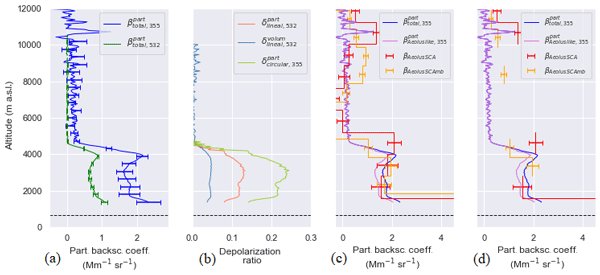
A validation of Aeolus reprocessed optical products is carried out via an intercomparison with ground-based measurements taken at several ACTRIS/EARLINET stations in western Europe. Case studies and a statistical analysis are presented. The stations are located in a hot spot between Africa and the rest of Europe, which guarantees a variety of aerosol types, from mineral dust layers to continental/anthropogenic aerosol, and allows us to test Aeolus performance under different scenarios.
Patrick Chazette, Alexandre Baron, and Cyrille Flamant
Atmos. Chem. Phys., 22, 1271–1292, https://doi.org/10.5194/acp-22-1271-2022, https://doi.org/10.5194/acp-22-1271-2022, 2022
Short summary
Short summary
Within the framework of the international EUREC4A project, horizontal lidar measurements were carried out over Barbados from the French research aircraft ATR-42. These measurements highlighted the strong heterogeneity of the aerosol field (mainly dust and biomass burning aerosols) and therefore of the associated optical properties. This heterogeneity varies according to meteorological conditions and could significantly modulate the climatic impact of aerosols trapped over the tropical Atlantic.
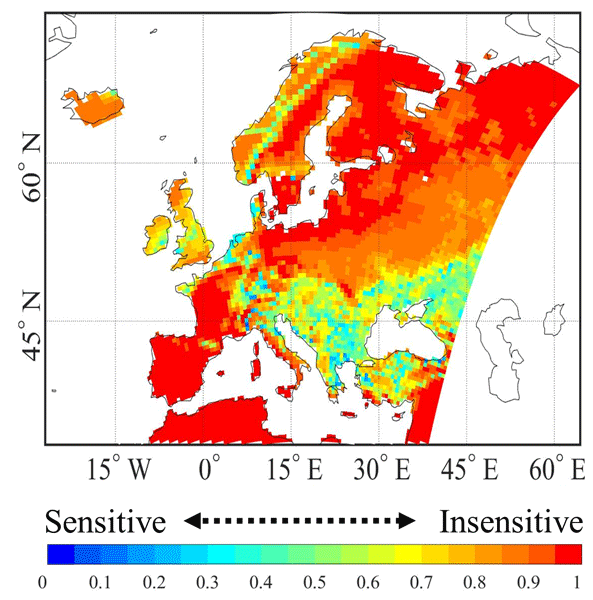
Lisa Jach, Thomas Schwitalla, Oliver Branch, Kirsten Warrach-Sagi, and Volker Wulfmeyer
Earth Syst. Dynam., 13, 109–132, https://doi.org/10.5194/esd-13-109-2022, https://doi.org/10.5194/esd-13-109-2022, 2022
Short summary
Short summary
The land surface can influence the occurrence of local rainfall through different feedback mechanisms. In Europe, this happens most frequently in summer. Here, we examine how differences in atmospheric temperature and moisture change where and how often the land surface can influence rainfall. The results show that the differences barely move the region of strong surface influence over Scandinavia and eastern Europe, but they can change the frequency of coupling events.
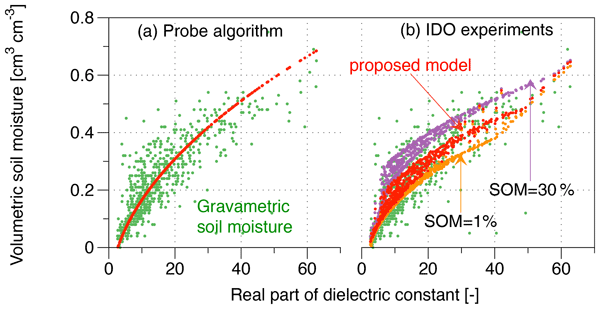
Chang-Hwan Park, Aaron Berg, Michael H. Cosh, Andreas Colliander, Andreas Behrendt, Hida Manns, Jinkyu Hong, Johan Lee, Runze Zhang, and Volker Wulfmeyer
Hydrol. Earth Syst. Sci., 25, 6407–6420, https://doi.org/10.5194/hess-25-6407-2021, https://doi.org/10.5194/hess-25-6407-2021, 2021
Short summary
Short summary
In this study, we proposed an inversion of the dielectric mixing model for a 50 Hz soil sensor for agricultural organic soil. This model can reflect the variability of soil organic matter (SOM) in wilting point and porosity, which play a critical role in improving the accuracy of SM estimation, using a dielectric-based soil sensor. The results of statistical analyses demonstrated a higher performance of the new model than the factory setting probe algorithm.
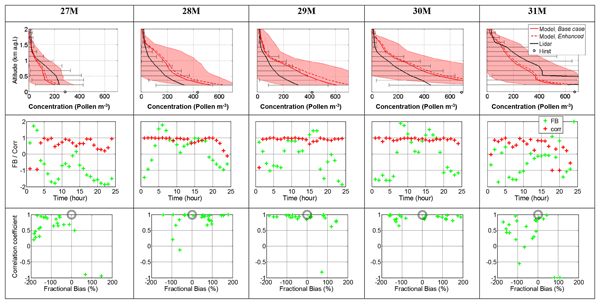
Michaël Sicard, Oriol Jorba, Jiang Ji Ho, Rebeca Izquierdo, Concepción De Linares, Marta Alarcón, Adolfo Comerón, and Jordina Belmonte
Atmos. Chem. Phys., 21, 17807–17832, https://doi.org/10.5194/acp-21-17807-2021, https://doi.org/10.5194/acp-21-17807-2021, 2021
Short summary
Short summary
This paper investigates the mechanisms involved in the dispersion, structure, and mixing in the vertical column of atmospheric pollen, using observations of pollen concentration obtained at the ground and its stratification in the atmosphere measured by a lidar (laser radar), as well as an atmospheric transport model and a simplified pollen module developed especially for this study. The largest pollen concentration difference between the ground and the layers above is observed during nighttime.
Julien Totems, Patrick Chazette, and Alexandre Baron
Atmos. Meas. Tech., 14, 7525–7544, https://doi.org/10.5194/amt-14-7525-2021, https://doi.org/10.5194/amt-14-7525-2021, 2021
Short summary
Short summary
We describe in detail the design and calibration of the new Raman channels for the WALI system, going over the important sources of bias and uncertainty on retrieved temperature profiles. For the first time, their impact is investigated using horizontal shots in a homogenous atmosphere: the magnitude of the highlighted biases can be much larger than the targeted absolute accuracy of 1° C. Actual measurement errors are quantified using radiosoundings launched close to the lidar site.
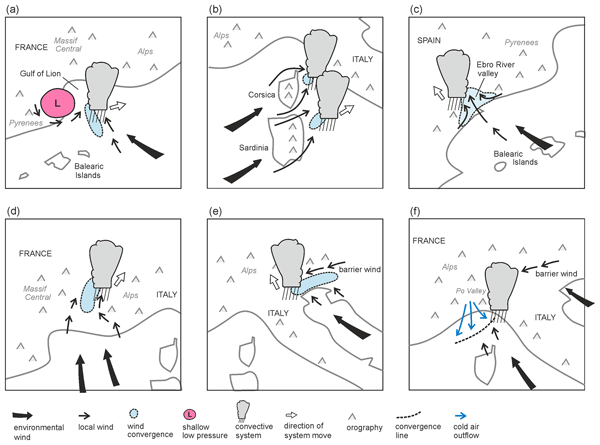
Samira Khodayar, Silvio Davolio, Paolo Di Girolamo, Cindy Lebeaupin Brossier, Emmanouil Flaounas, Nadia Fourrie, Keun-Ok Lee, Didier Ricard, Benoit Vie, Francois Bouttier, Alberto Caldas-Alvarez, and Veronique Ducrocq
Atmos. Chem. Phys., 21, 17051–17078, https://doi.org/10.5194/acp-21-17051-2021, https://doi.org/10.5194/acp-21-17051-2021, 2021
Short summary
Short summary
Heavy precipitation (HP) constitutes a major meteorological threat in the western Mediterranean. Every year, recurrent events affect the area with fatal consequences. Despite this being a well-known issue, open questions still remain. The understanding of the underlying mechanisms and the modeling representation of the events must be improved. In this article we present the most recent lessons learned from the Hydrological Cycle in the Mediterranean Experiment (HyMeX).
Mariana Adam, Iwona S. Stachlewska, Lucia Mona, Nikolaos Papagiannopoulos, Juan Antonio Bravo-Aranda, Michaël Sicard, Doina N. Nicolae, Livio Belegante, Lucja Janicka, Dominika Szczepanik, Maria Mylonaki, Christina-Anna Papanikolaou, Nikolaos Siomos, Kalliopi Artemis Voudouri, Luca Alados-Arboledas, Arnoud Apituley, Ina Mattis, Anatoli Chaikovsky, Constantino Muñoz-Porcar, Aleksander Pietruczuk, Daniele Bortoli, Holger Baars, Ivan Grigorov, and Zahary Peshev
Atmos. Chem. Phys. Discuss., https://doi.org/10.5194/acp-2021-759, https://doi.org/10.5194/acp-2021-759, 2021
Revised manuscript not accepted
Short summary
Short summary
Results over 10 years of biomass burning events measured by EARLINET are analysed by means of the intensive parameters, based on the methodology described in Part I. Smoke type is characterized for each of the four geographical regions based on continental smoke origin. Relationships between intensive parameters or colour ratios are shown. The smoke is labelled in average as aged smoke.
Jonas Hamperl, Clément Capitaine, Jean-Baptiste Dherbecourt, Myriam Raybaut, Patrick Chazette, Julien Totems, Bruno Grouiez, Laurence Régalia, Rosa Santagata, Corinne Evesque, Jean-Michel Melkonian, Antoine Godard, Andrew Seidl, Harald Sodemann, and Cyrille Flamant
Atmos. Meas. Tech., 14, 6675–6693, https://doi.org/10.5194/amt-14-6675-2021, https://doi.org/10.5194/amt-14-6675-2021, 2021
Short summary
Short summary
Laser active remote sensing of tropospheric water vapor is a promising technology for enhancing our understanding of processes governing the global hydrological cycle. We investigate the potential of a ground-based lidar to monitor the main water vapor isotopes at high spatio-temporal resolutions in the lower troposphere. Using a realistic end-to-end simulator, we show that high-precision measurements can be achieved within a range of 1.5 km, in mid-latitude or tropical environments.
Cited articles
Adam, M.: Notes on temperature-dependent lidar equations, J. Atmos. Ocean. Tech., 26, 1021–1039, https://doi.org/10.1175/2008JTECHA1206.1, 2009.
Amato, U., Antoniadis, A., De Feis, I., Masiello, G., Matricardi, M., and Serio, C.: Technical Note: Functional sliced inverse regression to infer temperature, water vapour and ozone from IASI data, Atmos. Chem. Phys., 9, 5321–5330, https://doi.org/10.5194/acp-9-5321-2009, 2009.
August, T., Klaes, D., Schlüssel, P., Hultberg, T., Crapeau, M., Arriaga, A., O'Carroll, A., Coppens, D., Munro, R., and Calbet, X.: IASI on Metop-A: Operational Level 2 retrievals after five years in orbit, J. Quant. Spectrosc. Ra., 113, 1340–1371, https://doi.org/10.1016/j.jqsrt.2012.02.028, 2012.
Avila, G., Fernández, J. M., Tejeda, G., and Montero, S.: The Raman spectra and cross-sections of H2O, D2O, and HDO in the OH
Behrendt, A., Nakamura, T., Onishi, M., Baumgart, R., and Tsuda, T.: Combined Raman lidar for the measurement of atmospheric temperature, water vapor, particle extinction coefficient, and particle backscatter coefficient, Appl. Optics., 41, 7657, https://doi.org/10.1364/ao.41.007657, 2002.
Behrendt, A., Nakamura, T., and Tsuda, T.: Combined temperature lidar for measurements in the troposphere, stratosphere, and mesosphere, Appl. Optics, 43, 2930–2939, https://doi.org/10.1364/AO.43.002930, 2004.
Behrendt, A., Wulfmeyer, V., Hammann, E., Muppa, S. K., and Pal, S.: Profiles of second- to fourth-order moments of turbulent temperature fluctuations in the convective boundary layer: first measurements with rotational Raman lidar, Atmos. Chem. Phys., 15, 5485–5500, https://doi.org/10.5194/acp-15-5485-2015, 2015.
Behrendt, A., Wulfmeyer, V., Senff, C., Muppa, S. K., Späth, F., Lange, D., Kalthoff, N., and Wieser, A.: Observation of sensible and latent heat flux profiles with lidar, Atmos. Meas. Tech., 13, 3221–3233, https://doi.org/10.5194/amt-13-3221-2020, 2020.
Blanchet, J., Creutin, J. D., and Blanc, A.: Retreating winter and strengthening autumn Mediterranean influence on extreme precipitation in the Southwestern Alps over the last 60 years, Environ. Res. Lett., 16, 034056, https://doi.org/10.1088/1748-9326/abb5cd, 2021.
Boylan, J. W. and Russell, A. G.: PM and light extinction model performance metrics, goals, and criteria for three-dimensional air quality models, Atmos. Environ., 40, 4946–4959, 2006.
Carissimo, A., De Feis, I., and Serio, C.: The physical retrieval methodology for IASI: The δ-IASI code, Environ. Modell. Softw., 20, 1111–1126, https://doi.org/10.1016/j.envsoft.2004.07.003, 2005.
Chazette, P., Marnas, F., Totems, J., and Shang, X.: Comparison of IASI water vapor retrieval with H2O-Raman lidar in the framework of the Mediterranean HyMeX and ChArMEx programs, Atmos. Chem. Phys., 14, 9583–9596, https://doi.org/10.5194/acp-14-9583-2014, 2014a.
Chazette, P., Marnas, F., and Totems, J.: The mobile Water vapor Aerosol Raman LIdar and its implication in the framework of the HyMeX and ChArMEx programs: application to a dust transport process, Atmos. Meas. Tech., 7, 1629–1647, https://doi.org/10.5194/amt-7-1629-2014, 2014b.
Chazette, P., Flamant, C., Raut, J.-C., Totems, J., and Shang, X.: Tropical moisture enriched storm tracks over the Mediterranean and their link with intense rainfall in the Cevennes-Vivarais area during HyMeX, Q. J. Roy. Meteor. Soc., 142, https://doi.org/10.1002/qj.2674, 2016.
Chazette, P., Laly, F., Totems, J., and Lagarrigue, J.: WaLiNeAs France, Aeris [data set], https://doi.org/10.25326/537, 2023.
Chazette, P., Totems, J., and Laly, F.: Long-term evolution of the calibration constant on a mobile water vapour Raman lidar, Atmos. Meas. Tech., 18, 2681–2699, https://doi.org/10.5194/amt-18-2681-2025, 2025.
Clerbaux, C., Chazette, P., Hadji-Lazaro, J., Mégie, G., Müller, J. F., and Clough, S. A.: Remote sensing of CO, CH4, and O3 using a spaceborne nadir-viewing interferometer, J. Geophys. Res.-Atmos., 103, 18999–19013, https://doi.org/10.1029/98JD01422, 1998.
Coopmann, O., Guidard, V., Fourrié, N., Josse, B., and Marécal, V.: Update of Infrared Atmospheric Sounding Interferometer (IASI) channel selection with correlated observation errors for numerical weather prediction (NWP), Atmos. Meas. Tech., 13, 2659–2680, https://doi.org/10.5194/amt-13-2659-2020, 2020.
Cuesta, J., Flamant, C., Gaetani, M., Knippertz, P., Fink, A. H., Chazette, P., Eremenko, M., Dufour, G., Di Biagio, C., and Formenti, P.: Three-dimensional pathways of dust over the Sahara during summer 2011 as revealed by new Infrared Atmospheric Sounding Interferometer observations, Q. J. Roy. Meteor. Soc., 146, 2731–2755, https://doi.org/10.1002/qj.3814, 2020.
De Rosa, B., Di Girolamo, P., and Summa, D.: Temperature and water vapour measurements in the framework of the Network for the Detection of Atmospheric Composition Change (NDACC), Atmos. Meas. Tech., 13, 405–427, https://doi.org/10.5194/amt-13-405-2020, 2020.
Di Girolamo, P., Summa, D., and Ferretti, R.: Multiparameter Raman lidar measurements for the characterization of a dry stratospheric intrusion event, J. Atmos. Ocean. Tech., 26, 1742–1762, https://doi.org/10.1175/2009JTECHA1253.1, 2009.
Di Girolamo, P., Dionisi, D., Cacciani, M., Di Bernardino, A., Franco, N., Summa, D., Di Paolantonio, M., Iannarelli, A. M., and Di Iorio, T.: A Compact Raman Lidar for Atmospheric CO2 and Thermodynamic Profiling: The System CONCERNING, in: Proceedings of the 30th International Laser Radar Conference, 531–537, https://doi.org/10.1007/978-3-031-37818-8_69, 2023a.
Di Girolamo, P., Franco, N., Di Paolantonio, M., Summa, D., and Dionisi, D.: Atmospheric Thermodynamic Profiling through the Use of a Micro-Pulse Raman Lidar System: Introducing the Compact Raman Lidar MARCO, Sensors, 23, 8262, https://doi.org/10.3390/s23198262, 2023b.
Di Girolamo, P., Summa, D., Gandolfi, I., Di Paolantonio, M., Rosoldi, M., De Rosa, B., Dionisi, D., Flamant, C., D'Amico, G., Girolamo, P. Di, Summa, D., Gandolfi, I., Paolantonio, M. Di, Rosoldi, M., Rosa, B. De, Dionisi, D., Flamant, C., and Amico, G. D.: Latent Heat Flux and Turbulent Kinetic Energy Measurements by Lidar in the Frame of the WaLiNeAs Campaign, Remote Sens., 17, 1–19, https://doi.org/10.3390/rs17203473, 2025.
Divakarla, M., Barnet, C., Goldberg, M., King, T., Maddy, E., Liu, X., Sun, F., Cheng, Z., Gambacorta, A., and Zhou, L.: Validation of AIRS and IASI temperature and water vapor retrievals with global radiosonde measurements and model forecasts, in: Optics InfoBase Conference Papers, HWC5, https://doi.org/10.1364/hisense.2009.hwc5, 2009.
EUMETSAT: IASI All Sky Temperature and Humidity Profiles - Climate Data Record Release 1.1 - Metop-A and -B, EUMETSAT [data set], https://doi.org/10.15770/EUM_SEC_CLM_0063, 2022.
Flamant, C., Chazette, P., Caumont, O., Di Girolamo, P., Behrendt, A., Sicard, M., Totems, J., Lange, D., Fourrié, N., Brousseau, P., Augros, C., Baron, A., Cacciani, M., Comerón, A., De Rosa, B., Ducrocq, V., Genau, P., Labatut, L., Muñoz-Porcar, C., Rodríguez-Gómez, A., Summa, D., Thundathil, R., and Wulfmeyer, V.: A network of water vapor Raman lidars for improving heavy precipitation forecasting in southern France: introducing the WaLiNeAs initiative, Bull. Atmos. Sci. Technol., 2, https://doi.org/10.1007/s42865-021-00037-6, 2021.
Fouladi, R. T. and Steiger, J. H.: The fisher transform of the pearson product moment correlation coefficient and its square: Cumulants, moments, and applications, Commun. Stat. Simulat., 37, 928–944, https://doi.org/10.1080/03610910801943735, 2008.
Fourrié, N., Nuret, M., Brousseau, P., Caumont, O., Doerenbecher, A., Wattrelot, E., Moll, P., Bénichou, H., Puech, D., Bock, O., Bosser, P., Chazette, P., Flamant, C., Di Girolamo, P., Richard, E., and Saïd, F.: The AROME-WMED reanalyses of the first special observation period of the Hydrological cycle in the Mediterranean experiment (HyMeX), Geosci. Model Dev., 12, 2657–2678, https://doi.org/10.5194/gmd-12-2657-2019, 2019.
Guidard, V., Fourrié, N., Brousseau, P., and Rabier, F.: Impact of IASI assimilation at global and convective scales and challenges for the assimilation of cloudy scenes, Q. J. Roy. Meteor. Soc., 137, 1975–1987, https://doi.org/10.1002/qj.928, 2011.
Guinaldo, T., Voldoire, A., Waldman, R., Saux Picart, S., and Roquet, H.: Response of the sea surface temperature to heatwaves during the France 2022 meteorological summer, Ocean Sci., 19, 629–647, https://doi.org/10.5194/os-19-629-2023, 2023.
Heilliette, S., Rochon, Y. J., Garand, L., and Kaminski, J. W.: Assimilation of infrared radiances in the context of observing system simulation experiments, J. Appl. Meteorol. Clim., 52, 1031–1045, https://doi.org/10.1175/JAMC-D-12-0124.1, 2013.
Held, I. M. and Soden, B. J.: Water Vapor Feedback and Global Warming, Annu. Rev. Env. Resour., 25, 441–475, https://doi.org/10.1146/annurev.energy.25.1.441, 2000.
Hersbach, H., Bell, B., Berrisford, P., Hirahara, S., Horányi, A., Muñoz-Sabater, J., Nicolas, J., Peubey, C., Radu, R., Schepers, D., Simmons, A., Soci, C., Abdalla, S., Abellan, X., Balsamo, G., Bechtold, P., Biavati, G., Bidlot, J., Bonavita, M., De Chiara, G., Dahlgren, P., Dee, D., Diamantakis, M., Dragani, R., Flemming, J., Forbes, R., Fuentes, M., Geer, A., Haimberger, L., Healy, S., Hogan, R. J., Hólm, E., Janisková, M., Keeley, S., Laloyaux, P., Lopez, P., Lupu, C., Radnoti, G., de Rosnay, P., Rozum, I., Vamborg, F., Villaume, S., and Thépaut, J. N.: The ERA5 global reanalysis, Q. J. Roy. Meteor. Soc., 146, 1999–2049, https://doi.org/10.1002/qj.3803, 2020.
Hilton, F., Atkinson, N. C., English, S. J., and Eyre, J. R.: Assimilation of IASI at the Met Office and assessment of its. Impact through observing system experiments, Q. J. Roy. Meteor. Soc., 135, 495–505, https://doi.org/10.1002/qj.379, 2009.
Hilton, F., Armante, R., August, T., Barnet, C., Bouchard, A., Camy-Peyret, C., Capelle, V., Clarisse, L., Clerbaux, C., Coheur, P.-F., Collard, A., Crevoisier, C., Dufour, G., Edwards, D., Faijan, F., Fourrié, N., Gambacorta, A., Goldberg, M., Guidard, V., Hurtmans, D., Illingworth, S., Jacquinet-Husson, N., Kerzenmacher, T., Klaes, D., Lavanant, L., Masiello, G., Matricardi, M., McNally, A., Newman, S., Pavelin, E., Payan, S., Péquignot, E., Peyridieu, S., Phulpin, T., Remedios, J., Schlüssel, P., Serio, C., Strow, L., Stubenrauch, C., Taylor, J., Tobin, D., Wolf, W., and Zhou, D.: Hyperspectral Earth Observation from IASI: Five Years of Accomplishments, B. Am. Meteorol. Soc., 93, 347–370, https://doi.org/10.1175/BAMS-D-11-00027.1, 2012a.
Hilton, F. I., Newman, S. M., and Collard, A. D.: Identification of NWP humidity biases using high-peaking water vapour channels from IASI, Atmos. Sci. Lett., 13, 73–78, https://doi.org/10.1002/asl.366, 2012b.
Intergovernmental Panel on Climate Change (IPCC): Climate Change 2022 – Impacts, Adaptation and Vulnerability, in: Climate Change 2022 – Impacts, Adaptation and Vulnerability, vol. AR6, edited by: Pörtner, H.-O., Roberts, D. C., Tignor, M., Poloczanska, E. S., Mintenbeck, K., Alegría, A., Craig, M., Langsdorf, S., Löschke, S., Möller, V., Okem, A., and Rama, B., Cambridge University Press, Cambridge, UK and New York, NY, USA, 551–712, https://doi.org/10.1017/9781009325844, 2023.
Klaes, K. D., Cohen, M., Buhler, Y., Schlüssel, P., Munro, R., Luntama, J.-P., von Engeln, A., Clérigh, E. Ó., Bonekamp, H., Ackermann, J., and Schmetz, J.: An Introduction to the EUMETSAT Polar system, B. Am. Meteorol. Soc., 88, 1085–1096, https://doi.org/10.1175/BAMS-88-7-1085, 2007.
Kumar, D., Rocadenbosch, F., Sicard, M., Comeron, A., Muñoz, C., Lange, D., Tomás, S., and Gregorio, E.: Six-channel polychromator design and implementation for the UPC elastic/Raman lidar, in: Lidar Technologies, Techniques, and Measurements for Atmospheric Remote Sensing VII, SPIE, 81820W, https://doi.org/10.1117/12.896305, 2011.
Lacour, J. L., Risi, C., Worden, J., Clerbaux, C., and Coheur, P. F.: Importance of depth and intensity of convection on the isotopic composition of water vapor as seen from IASI and TES δD observations, Earth Planet. Sc. Lett., 481, 387–394, https://doi.org/10.1016/j.epsl.2017.10.048, 2018.
Laj, P., Myhre, C. L., Riffault, V., Amiridis, V., Fuchs, H., Eleftheriadis, K., Petäjä, T., Salameh, T., Kivekäs, N., Juurola, E., Saponaro, G., Philippin, S., Cornacchia, C., Arboledas, L. A., Baars, H., Claude, A., De Mazière, M., Dils, B., Dufresne, M., Evangeliou, N., Favez, O., Fiebig, M., Haeffelin, M., Herrmann, H., Höhler, K., Illmann, N., Kreuter, A., Ludewig, E., Marinou, E., Möhler, O., Mona, L., Murberg, L. E., Nicolae, D., Novelli, A., O'Connor, E., Ohneiser, K., Altieri, R. M. P., Picquet-Varrault, B., van Pinxteren, D., Pospichal, B., Putaud, J. P., Reimann, S., Siomos, N., Stachlewska, I., Tillmann, R., Voudouri, K. A., Wandinger, U., Wiedensohler, A., Apituley, A., Comerón, A., Gysel-Beer, M., Mihalopoulos, N., Nikolova, N., Pietruczuk, A., Sauvage, S., Sciare, J., Skov, H., Svendby, T., Swietlicki, E., Tonev, D., Vaughan, G., Zdimal, V., Baltensperger, U., Doussin, J. F., Kulmala, M., Pappalardo, G., Sundet, S. S., and Vana, M.: Aerosol, Clouds and Trace Gases Research Infrastructure (ACTRIS): The European Research Infrastructure Supporting Atmospheric Science, B. Am. Meteorol. Soc., 105, E1098–E1136, https://doi.org/10.1175/BAMS-D-23-0064.1, 2024.
Laly, F. and Chazette, P.: Comparative analysis of ERA5 and Raman lidar-derived moisture profiles in the framework of the WaLiNeAs field campaigns, Q. J. Roy. Meteor. Soc., 151, e5044, https://doi.org/10.1002/qj.5044, 2025.
Laly, F., Chazette, P., Totems, J., Lagarrigue, J., Forges, L., and Flamant, C.: Water vapor Raman lidar observations from multiple sites in the framework of WaLiNeAs, Earth Syst. Sci. Data, 16, 5579–5602, https://doi.org/10.5194/essd-16-5579-2024, 2024.
Lange, D., Behrendt, A., and Wulfmeyer, V.: Compact Operational Tropospheric Water Vapor and Temperature Raman Lidar with Turbulence Resolution, Geophys. Res. Lett., 46, 14844–14853, https://doi.org/10.1029/2019GL085774, 2019.
Lenschow, D. H. H., Wulfmeyer, V., and Senff, C.: Measuring second through fourth-order moments in noisy data, J. Atmos. Ocean. Tech., 17, 1330–1347, https://doi.org/10.1175/1520-0426(2000)017<1330:MSTFOM>2.0.CO;2, 2000.
Masiello, G., Serio, C., Deleporte, T., Herbin, H., Di Girolamo, P., Champollion, C., Behrendt, A., Bosser, P., Bock, O., Wulfmeyer, V., Pommier, M., and Flamant, C.: Comparison of IASI water vapour products over complex terrain with COPS campaign data, Meteorol. Z., 22, 471–487, https://doi.org/10.1127/0941-2948/2013/0430, 2013.
Matricardi, M. and Mcnally, A. P.: The direct assimilation of principal components of IASI spectra in the ECMWF 4D-Var, Q. J. Roy. Meteor. Soc., 140, 573–582, https://doi.org/10.1002/qj.2156, 2014.
Pérez, C., Sicard, M., Jorba, O., Comerón, A., and Baldasano, J. M.: Summertime re-circulations of air pollutants over the north-eastern Iberian coast observed from systematic EARLINET lidar measurements in Barcelona, Atmos. Environ., 38, 3983–4000, https://doi.org/10.1016/j.atmosenv.2004.04.010, 2004.
Pougatchev, N., August, T., Calbet, X., Hultberg, T., Oduleye, O., Schlüssel, P., Stiller, B., Germain, K. St., and Bingham, G.: IASI temperature and water vapor retrievals – error assessment and validation, Atmos. Chem. Phys., 9, 6453–6458, https://doi.org/10.5194/acp-9-6453-2009, 2009.
Randriamiarisoa, H., Chazette, P., Couvert, P., Sanak, J., and Mégie, G.: Relative humidity impact on aerosol parameters in a Paris suburban area, Atmos. Chem. Phys., 6, 1389–1407, https://doi.org/10.5194/acp-6-1389-2006, 2006.
Ricard, D., Ducrocq, V., and Auger, L.: A climatology of the mesoscale environment associated with heavily precipitating events over a northwestern Mediterranean area, J. Appl. Meteorol. Clim., 51, 468–488, https://doi.org/10.1175/JAMC-D-11-017.1, 2012.
Rood, M. J., Covert, D. S., and Larson, T. V: Hygroscopic properties of atmospheric aerosol in Riverside, California, Tellus B, 39, https://doi.org/10.3402/tellusb.v39i4.15357, 1987.
Schlüssel, P., Hultberg, T. H., Phillips, P. L., August, T., and Calbet, X.: The operational IASI Level 2 processor, Adv. Space Res., 36, 982–988, https://doi.org/10.1016/j.asr.2005.03.008, 2005.
Schneider, M., Romero, P. M., Hase, F., Blumenstock, T., Cuevas, E., and Ramos, R.: Continuous quality assessment of atmospheric water vapour measurement techniques: FTIR, Cimel, MFRSR, GPS, and Vaisala RS92, Atmos. Meas. Tech., 3, 323–338, https://doi.org/10.5194/amt-3-323-2010, 2010.
Stuart, A. and Ord, J. K.: Kendall's Advanced Theory of Statistics, Edward Arn., London-Melbourne-Auckland, ISBN 0-340-52923-7, 1991.
Tombette, M., Chazette, P., Sportisse, B., and Roustan, Y.: Simulation of aerosol optical properties over Europe with a 3-D size-resolved aerosol model: comparisons with AERONET data, Atmos. Chem. Phys., 8, 7115–7132, https://doi.org/10.5194/acp-8-7115-2008, 2008.
Totems, J., Chazette, P., and Baron, A.: Mitigation of bias sources for atmospheric temperature and humidity in the mobile Raman Weather and Aerosol Lidar (WALI), Atmos. Meas. Tech., 14, 7525–7544, https://doi.org/10.5194/amt-14-7525-2021, 2021.
Whiteman, D. N.: Examination of the traditional Raman lidar technique. I. Evaluating the temperature-dependent lidar equations, Appl. Optics, 42, 2571, https://doi.org/10.1364/AO.42.002571, 2003.
Wulfmeyer, V., Muppa, S. K., Behrendt, A., Hammann, E., Späth, F., Sorbjan, Z., Turner, D. D., and Hardesty, R. M.: Determination of convective boundary layer entrainment fluxes, dissipation rates, and the molecular destruction of variances: Theoretical description and a strategy for its confirmation with a novel lidar system synergy, J. Atmos. Sci., 73, 667–692, https://doi.org/10.1175/JAS-D-14-0392.1, 2016.
Xu, D., Liu, Z., Huang, X. Y., Min, J., and Wang, H.: Impact of assimilating IASI radiance observations on forecasts of two tropical cyclones, Meteorol. Atmos. Phys., 122, 1–18, https://doi.org/10.1007/s00703-013-0276-2, 2013.
Zhou, D. K., Smith, W. L., Larar, A. M., Liu, X., Taylor, J. P., Schlüssel, P., Strow, L. L., and Mango, S. A.: All weather IASI single field-of-view retrievals: case study – validation with JAIVEx data, Atmos. Chem. Phys., 9, 2241–2255, https://doi.org/10.5194/acp-9-2241-2009, 2009.
Short summary
Between October 2022 and January 2023, the Water Vapour Lidar Network Assimilation (WaLiNeAs) campaign was conducted on the western Mediterranean by four European countries. To improve the forecasting of heavy precipitation events, eight ground-based stations equipped with water vapour Raman lidars were strategically deployed. They offered a valuable chance to verify the consistency of the water vapour products of both the Infrared Atmospheric Sounding Interferometer (IASI) and ERA5 reanalysis.
Between October 2022 and January 2023, the Water Vapour Lidar Network Assimilation (WaLiNeAs)...


