
Articles | Volume 19, issue 19
https://doi.org/10.5194/amt-19-6251-2026
© Author(s) 2026. This work is distributed under
the Creative Commons Attribution 4.0 License.
the Creative Commons Attribution 4.0 License.
https://doi.org/10.5194/amt-19-6251-2026
© Author(s) 2026. This work is distributed under
the Creative Commons Attribution 4.0 License.
the Creative Commons Attribution 4.0 License.
Research article
| 
02 Oct 2026
Research article |
| 02 Oct 2026
| 02 Oct 2026
Dual-frequency profiler study of hydrometeor fall speeds in tropical deep convection

Environmental Science and Technologies Department, Brookhaven National Laboratory, Upton, NY, USA
Christopher R. Williams
University of Colorado, Boulder, CO, 80309, USA
Alain Protat
Bureau of Meteorology, Melbourne, Victoria, Australia
Related authors
Min Deng, Scott E. Giangrande, Adam K. Theisen, Karen L. Johnson, Iosif A. Lindenmaier, Timothy G. Wendler, Jennifer Comstock, Marquette Rocque, Zeen Zhu, and Alyssa Matthews
Atmos. Meas. Tech., 19, 6327–6339, https://doi.org/10.5194/amt-19-6327-2026, https://doi.org/10.5194/amt-19-6327-2026, 2026
Short summary
Short summary
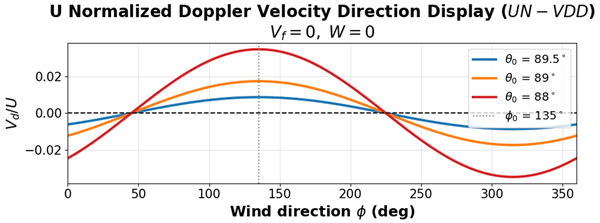
Cloud radars are used to measure air motion, clouds, and precipitation, but small pointing errors can reduce their accuracy. We developed a method to detect these errors using routine weather balloon observations. Tests with several radar systems in different environments showed that the method can identify small but important pointing biases, helping improve the accuracy and long-term consistency of weather and climate observations.
Tamanna Subba, Michael P. Jensen, Min Deng, Scott E. Giangrande, Mark C. Harvey, Ashish Singh, Die Wang, Maria Zawadowicz, and Chongai Kuang
Atmos. Chem. Phys., 26, 2853–2879, https://doi.org/10.5194/acp-26-2853-2026, https://doi.org/10.5194/acp-26-2853-2026, 2026
Short summary
Short summary
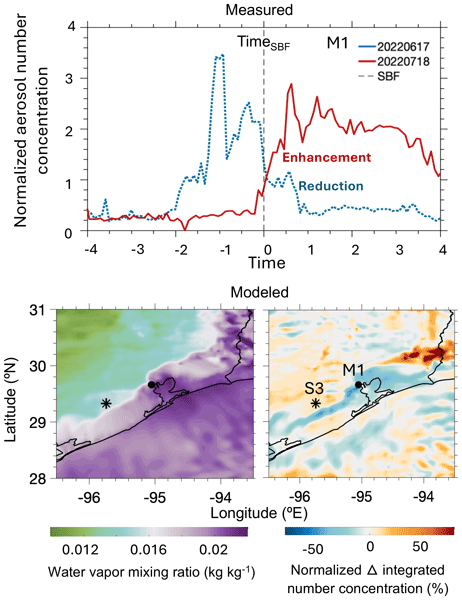
Using TRacking Aerosol Convection Interactions Experiment field campaign observations and model simulations, we studied summertime sea-breeze events in southern Texas. When sea-breeze fronts moved inland, they mixed marine and continental air, changing aerosol concentrations by up to a factor of two as far as 50 km inland. The sea breeze also reduced the number of particles that can form cloud droplets, highlighting the connection between coastal meteorology and aerosol-cloud interactions.
Andrew M. Sayer, Brian Cairns, Kirk D. Knobelspiesse, Luca Lelli, Chamara Rajapakshe, Scott E. Giangrande, Gareth E. Thomas, and Damao Zhang
Atmos. Meas. Tech., 18, 6681–6703, https://doi.org/10.5194/amt-18-6681-2025, https://doi.org/10.5194/amt-18-6681-2025, 2025
Short summary
Short summary
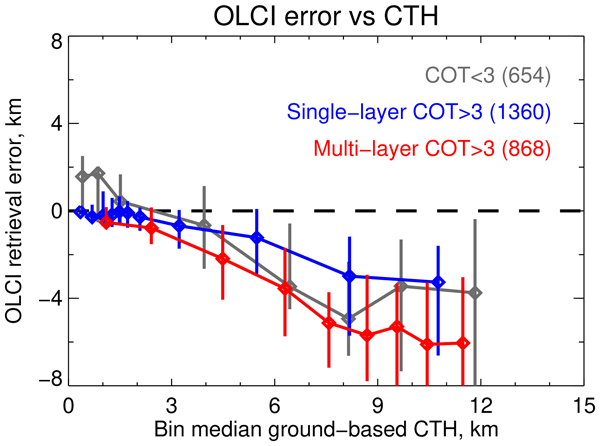
Satellites can estimate cloud height in several ways: two include a thermal technique (colder clouds being higher up), and another looking at colours of light that oxygen in the atmosphere absorbs (darker clouds being lower down). It can also be measured (from ground or space) by radar and lidar. We compare satellite data we developed using the oxygen method with other estimates to help us refine our technique.
Kaiden Sookdar, Scott E. Giangrande, John Rausch, Lihong Ma, Meng Wang, Dié Wang, Michael P. Jensen, Ching-Shu Hung, and J. Christine Chiu
Atmos. Meas. Tech., 18, 6271–6289, https://doi.org/10.5194/amt-18-6271-2025, https://doi.org/10.5194/amt-18-6271-2025, 2025
Short summary
Short summary
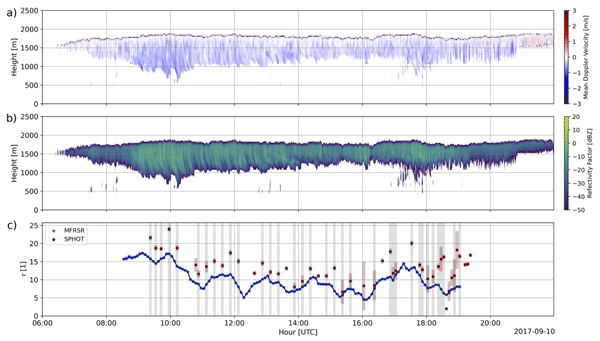
Photometer observations of stratocumulus cloud properties are evaluated for a multiyear archive. Retrievals for cloud optical depth, cloud droplet effective radius, and liquid water path show solid agreement with collocated references. Continental stratocumulus clouds sorted by cloud thickness indicate double the cloud optical depth and liquid water path of their marine counterparts, while exhibiting similar bulk cloud droplet effective radius.
Min Deng, Scott E. Giangrande, Michael P. Jensen, Karen Johnson, Christopher R. Williams, Jennifer M. Comstock, Ya-Chien Feng, Alyssa Matthews, Iosif A. Lindenmaier, Timothy G. Wendler, Marquette Rocque, Aifang Zhou, Zeen Zhu, Edward Luke, and Die Wang
Atmos. Meas. Tech., 18, 1641–1657, https://doi.org/10.5194/amt-18-1641-2025, https://doi.org/10.5194/amt-18-1641-2025, 2025
Short summary
Short summary
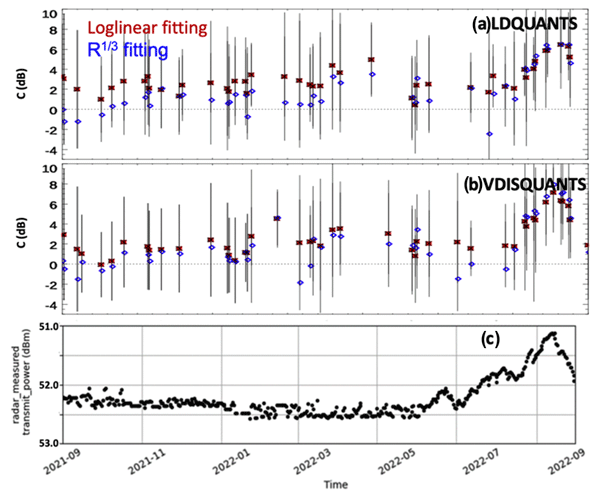
A relative calibration technique is developed for the cloud radar by monitoring the intercept of the wet-radome attenuation log-linear behavior as a function of rainfall rates in light and moderate rain conditions. This resulting reflectivity offset during the recent field campaign is compared favorably with the traditional disdrometer comparison near the rain onset, while it also demonstrates similar trends with respect to collocated and independently calibrated reference radars.
Toshi Matsui, Daniel Hernandez-Deckers, Scott E. Giangrande, Thiago S. Biscaro, Ann Fridlind, and Scott Braun
Atmos. Chem. Phys., 24, 10793–10814, https://doi.org/10.5194/acp-24-10793-2024, https://doi.org/10.5194/acp-24-10793-2024, 2024
Short summary
Short summary
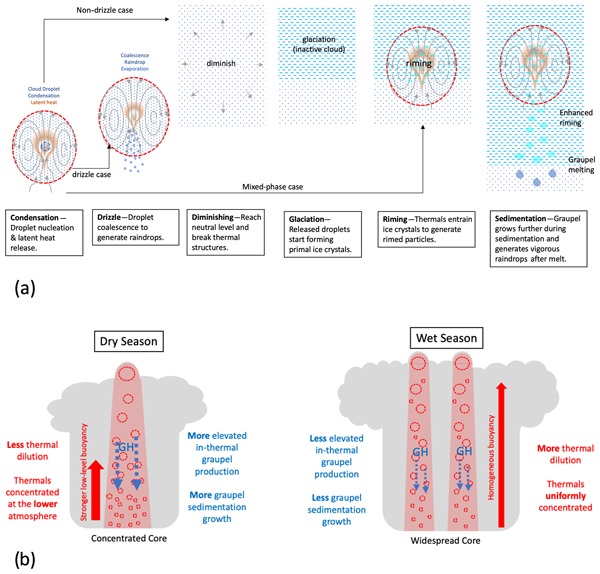
Using computer simulations and real measurements, we discovered that storms over the Amazon were narrower but more intense during the dry periods, producing heavier rain and more ice particles in the clouds. Our research showed that cumulus bubbles played a key role in creating these intense storms. This study can improve the representation of the effect of continental and ocean environments on tropical regions' rainfall patterns in simulations.
Siddhant Gupta, Dié Wang, Scott E. Giangrande, Thiago S. Biscaro, and Michael P. Jensen
Atmos. Chem. Phys., 24, 4487–4510, https://doi.org/10.5194/acp-24-4487-2024, https://doi.org/10.5194/acp-24-4487-2024, 2024
Short summary
Short summary
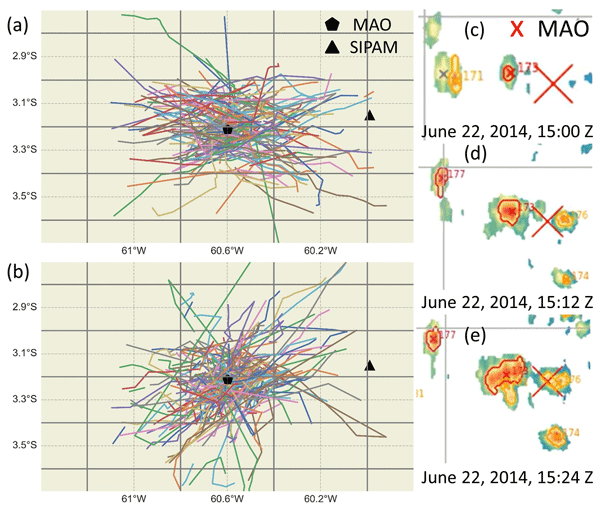
We examine the lifecycle of isolated deep convective clouds (DCCs) in the Amazon rainforest. Weather radar echoes from the DCCs are tracked to evaluate their lifecycle. The DCC size and intensity increase, reach a peak, and then decrease over the DCC lifetime. Vertical profiles of air motion and mass transport from different seasons are examined to understand the transport of energy and momentum within DCC cores and to address the deficiencies in simulating DCCs using weather and climate models.
Yang Wang, Chanakya Bagya Ramesh, Scott E. Giangrande, Jerome Fast, Xianda Gong, Jiaoshi Zhang, Ahmet Tolga Odabasi, Marcus Vinicius Batista Oliveira, Alyssa Matthews, Fan Mei, John E. Shilling, Jason Tomlinson, Die Wang, and Jian Wang
Atmos. Chem. Phys., 23, 15671–15691, https://doi.org/10.5194/acp-23-15671-2023, https://doi.org/10.5194/acp-23-15671-2023, 2023
Short summary
Short summary
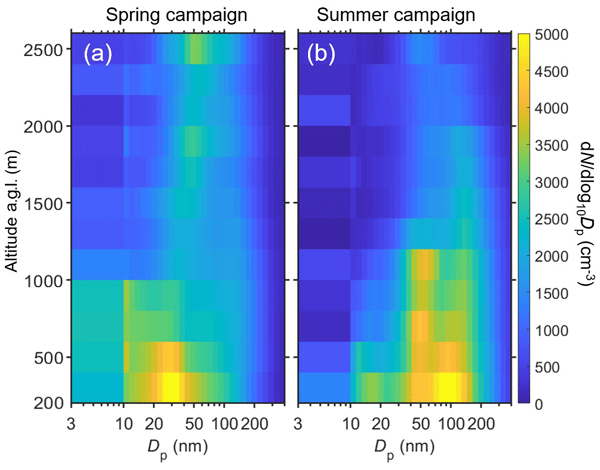
We report the vertical profiles of aerosol properties over the Southern Great Plains (SGP), a region influenced by shallow convective clouds, land–atmosphere interactions, boundary layer turbulence, and the aerosol life cycle. We examined the processes that drive the aerosol population and distribution in the lower troposphere over the SGP. This study helps improve our understanding of aerosol–cloud interactions and the model representation of aerosol processes.
Scott E. Giangrande, Thiago S. Biscaro, and John M. Peters
Atmos. Chem. Phys., 23, 5297–5316, https://doi.org/10.5194/acp-23-5297-2023, https://doi.org/10.5194/acp-23-5297-2023, 2023
Short summary
Short summary
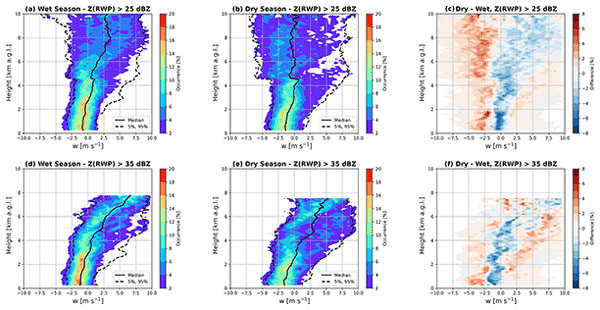
Our study tracks thunderstorms observed during the wet and dry seasons of the Amazon Basin using weather radar. We couple this precipitation tracking with opportunistic overpasses of a wind profiler and other ground observations to add unique insights into the upwards and downwards air motions within these clouds at various stages in the storm life cycle. The results of a simple updraft model are provided to give physical explanations for observed seasonal differences.
Christopher R. Williams, Joshua Barrio, Paul E. Johnston, Paytsar Muradyan, and Scott E. Giangrande
Atmos. Meas. Tech., 16, 2381–2398, https://doi.org/10.5194/amt-16-2381-2023, https://doi.org/10.5194/amt-16-2381-2023, 2023
Short summary
Short summary
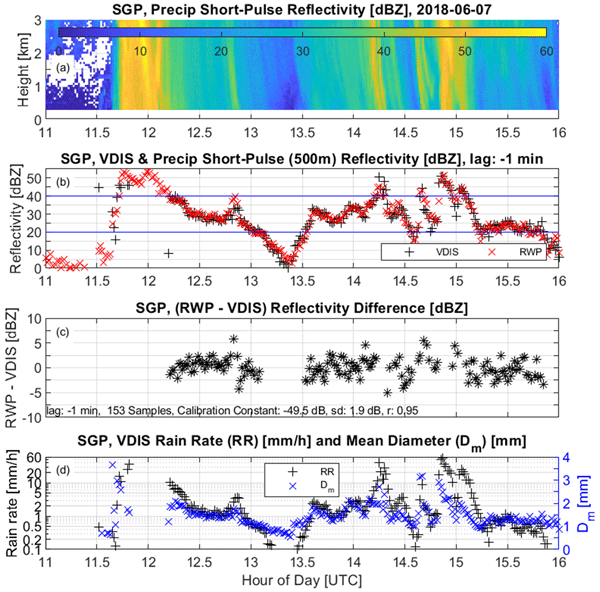
This study uses surface disdrometer observations to calibrate 8 years of 915 MHz radar wind profiler deployed in the central United States in northern Oklahoma. This study had two key findings. First, the radar wind profiler sensitivity decreased approximately 3 to 4 dB/year as the hardware aged. Second, this drift was slow enough that calibration can be performed using 3-month intervals. Calibrated radar wind profiler observations and Python processing code are available on public repositories.
Min Deng, Scott E. Giangrande, Adam K. Theisen, Karen L. Johnson, Iosif A. Lindenmaier, Timothy G. Wendler, Jennifer Comstock, Marquette Rocque, Zeen Zhu, and Alyssa Matthews
Atmos. Meas. Tech., 19, 6327–6339, https://doi.org/10.5194/amt-19-6327-2026, https://doi.org/10.5194/amt-19-6327-2026, 2026
Short summary
Short summary
Cloud radars are used to measure air motion, clouds, and precipitation, but small pointing errors can reduce their accuracy. We developed a method to detect these errors using routine weather balloon observations. Tests with several radar systems in different environments showed that the method can identify small but important pointing biases, helping improve the accuracy and long-term consistency of weather and climate observations.
Zhangcheng Pei, Sonya L. Fiddes, Marc D. Mallet, Matthew T. Woodhouse, Simon P. Alexander, Alain Protat, Kalli Furtado, and Paul R. Field
EGUsphere, https://doi.org/10.5194/egusphere-2026-3541, https://doi.org/10.5194/egusphere-2026-3541, 2026
This preprint is open for discussion and under review for Atmospheric Chemistry and Physics (ACP).
Short summary
Short summary
Climate models misrepresent Southern Ocean clouds, causing warming biases. Using ship data, we updated a weather model to test how sea spray affects cloud ice. Adding realistic ocean particles prevents deep clouds from freezing too fast, correcting sunlight trasmissions. Yet, shallow clouds remain flawed due to missing moisture. Thus, accurate climate predictions require improving both aerosol-cloud interactions and large-scale weather dynamics.
Adrien Guyot, Jacob Vile, Louis Soulard-Fischer, Hamish McGowan, Alain Protat, and Caroline Poulsen
EGUsphere, https://doi.org/10.5194/egusphere-2026-1907, https://doi.org/10.5194/egusphere-2026-1907, 2026
Short summary
Short summary
We studied how extreme wildfire clouds are detected from space and compared this with weather radar and lightning observations. We found that satellites can reliably detect when these clouds begin, but later tend to track spreading cloud tops rather than the active storm itself. This can make events appear larger and longer-lasting than they are. Combining different types of observations is therefore essential to better understand and monitor these dangerous fire-driven storms.
Tamanna Subba, Michael P. Jensen, Min Deng, Scott E. Giangrande, Mark C. Harvey, Ashish Singh, Die Wang, Maria Zawadowicz, and Chongai Kuang
Atmos. Chem. Phys., 26, 2853–2879, https://doi.org/10.5194/acp-26-2853-2026, https://doi.org/10.5194/acp-26-2853-2026, 2026
Short summary
Short summary
Using TRacking Aerosol Convection Interactions Experiment field campaign observations and model simulations, we studied summertime sea-breeze events in southern Texas. When sea-breeze fronts moved inland, they mixed marine and continental air, changing aerosol concentrations by up to a factor of two as far as 50 km inland. The sea breeze also reduced the number of particles that can form cloud droplets, highlighting the connection between coastal meteorology and aerosol-cloud interactions.
Sonya L. Fiddes, Matthew T. Woodhouse, Marc D. Mallet, Liam J. Lamprey, Ruhi S. Humphries, Alain Protat, Simon P. Alexander, Hakase Hayashida, Samuel Putland, Branka Miljevic, and Robyn Schofield
Atmos. Chem. Phys., 25, 16451–16477, https://doi.org/10.5194/acp-25-16451-2025, https://doi.org/10.5194/acp-25-16451-2025, 2025
Short summary
Short summary
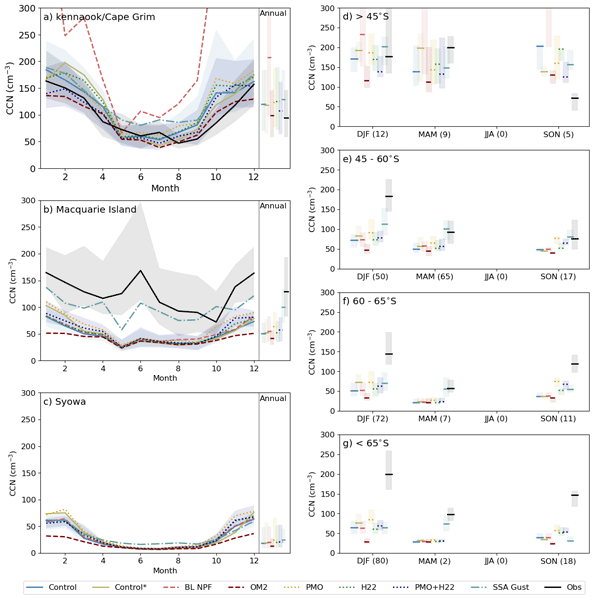
The interaction between natural marine aerosols, clouds and radiation in the Southern Ocean is a major source of uncertainty in climate models. We evaluate the Australian climate model using aerosol observations and find it underestimates aerosol number often by over 50%. Model changes were tested to improve aerosol concentrations, but some of our changes had severe negative effects on the larger climate system, highlighting issues in aerosol-cloud interaction modelling.
Andrew M. Sayer, Brian Cairns, Kirk D. Knobelspiesse, Luca Lelli, Chamara Rajapakshe, Scott E. Giangrande, Gareth E. Thomas, and Damao Zhang
Atmos. Meas. Tech., 18, 6681–6703, https://doi.org/10.5194/amt-18-6681-2025, https://doi.org/10.5194/amt-18-6681-2025, 2025
Short summary
Short summary
Satellites can estimate cloud height in several ways: two include a thermal technique (colder clouds being higher up), and another looking at colours of light that oxygen in the atmosphere absorbs (darker clouds being lower down). It can also be measured (from ground or space) by radar and lidar. We compare satellite data we developed using the oxygen method with other estimates to help us refine our technique.
Kaiden Sookdar, Scott E. Giangrande, John Rausch, Lihong Ma, Meng Wang, Dié Wang, Michael P. Jensen, Ching-Shu Hung, and J. Christine Chiu
Atmos. Meas. Tech., 18, 6271–6289, https://doi.org/10.5194/amt-18-6271-2025, https://doi.org/10.5194/amt-18-6271-2025, 2025
Short summary
Short summary
Photometer observations of stratocumulus cloud properties are evaluated for a multiyear archive. Retrievals for cloud optical depth, cloud droplet effective radius, and liquid water path show solid agreement with collocated references. Continental stratocumulus clouds sorted by cloud thickness indicate double the cloud optical depth and liquid water path of their marine counterparts, while exhibiting similar bulk cloud droplet effective radius.
Min Deng, Scott E. Giangrande, Michael P. Jensen, Karen Johnson, Christopher R. Williams, Jennifer M. Comstock, Ya-Chien Feng, Alyssa Matthews, Iosif A. Lindenmaier, Timothy G. Wendler, Marquette Rocque, Aifang Zhou, Zeen Zhu, Edward Luke, and Die Wang
Atmos. Meas. Tech., 18, 1641–1657, https://doi.org/10.5194/amt-18-1641-2025, https://doi.org/10.5194/amt-18-1641-2025, 2025
Short summary
Short summary
A relative calibration technique is developed for the cloud radar by monitoring the intercept of the wet-radome attenuation log-linear behavior as a function of rainfall rates in light and moderate rain conditions. This resulting reflectivity offset during the recent field campaign is compared favorably with the traditional disdrometer comparison near the rain onset, while it also demonstrates similar trends with respect to collocated and independently calibrated reference radars.
Toshi Matsui, Daniel Hernandez-Deckers, Scott E. Giangrande, Thiago S. Biscaro, Ann Fridlind, and Scott Braun
Atmos. Chem. Phys., 24, 10793–10814, https://doi.org/10.5194/acp-24-10793-2024, https://doi.org/10.5194/acp-24-10793-2024, 2024
Short summary
Short summary
Using computer simulations and real measurements, we discovered that storms over the Amazon were narrower but more intense during the dry periods, producing heavier rain and more ice particles in the clouds. Our research showed that cumulus bubbles played a key role in creating these intense storms. This study can improve the representation of the effect of continental and ocean environments on tropical regions' rainfall patterns in simulations.
Siddhant Gupta, Dié Wang, Scott E. Giangrande, Thiago S. Biscaro, and Michael P. Jensen
Atmos. Chem. Phys., 24, 4487–4510, https://doi.org/10.5194/acp-24-4487-2024, https://doi.org/10.5194/acp-24-4487-2024, 2024
Short summary
Short summary
We examine the lifecycle of isolated deep convective clouds (DCCs) in the Amazon rainforest. Weather radar echoes from the DCCs are tracked to evaluate their lifecycle. The DCC size and intensity increase, reach a peak, and then decrease over the DCC lifetime. Vertical profiles of air motion and mass transport from different seasons are examined to understand the transport of energy and momentum within DCC cores and to address the deficiencies in simulating DCCs using weather and climate models.
Sonya L. Fiddes, Marc D. Mallet, Alain Protat, Matthew T. Woodhouse, Simon P. Alexander, and Kalli Furtado
Geosci. Model Dev., 17, 2641–2662, https://doi.org/10.5194/gmd-17-2641-2024, https://doi.org/10.5194/gmd-17-2641-2024, 2024
Short summary
Short summary
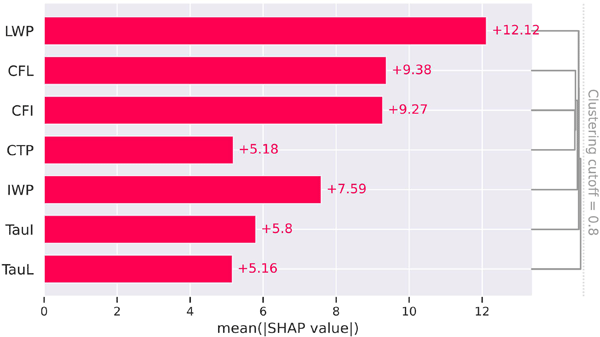
In this study we present an evaluation that considers complex, non-linear systems in a holistic manner. This study uses XGBoost, a machine learning algorithm, to predict the simulated Southern Ocean shortwave radiation bias in the ACCESS model using cloud property biases as predictors. We then used a novel feature importance analysis to quantify the role that each cloud bias plays in predicting the radiative bias, laying the foundation for advanced Earth system model evaluation and development.
Luis Ackermann, Joshua Soderholm, Alain Protat, Rhys Whitley, Lisa Ye, and Nina Ridder
Atmos. Meas. Tech., 17, 407–422, https://doi.org/10.5194/amt-17-407-2024, https://doi.org/10.5194/amt-17-407-2024, 2024
Short summary
Short summary
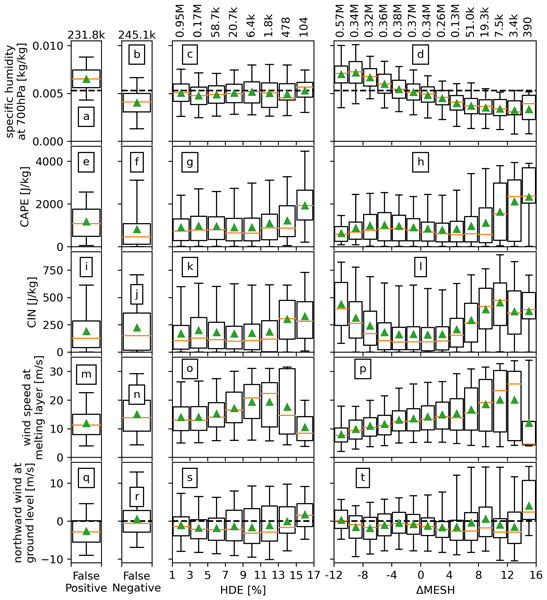
The paper addresses the crucial topic of hail damage quantification using radar observations. We propose a new radar-derived hail product that utilizes a large dataset of insurance hail damage claims and radar observations. A deep neural network was employed, trained with local meteorological variables and the radar observations, to better quantify hail damage. Key meteorological variables were identified to have the most predictive capability in this regard.
Yang Wang, Chanakya Bagya Ramesh, Scott E. Giangrande, Jerome Fast, Xianda Gong, Jiaoshi Zhang, Ahmet Tolga Odabasi, Marcus Vinicius Batista Oliveira, Alyssa Matthews, Fan Mei, John E. Shilling, Jason Tomlinson, Die Wang, and Jian Wang
Atmos. Chem. Phys., 23, 15671–15691, https://doi.org/10.5194/acp-23-15671-2023, https://doi.org/10.5194/acp-23-15671-2023, 2023
Short summary
Short summary
We report the vertical profiles of aerosol properties over the Southern Great Plains (SGP), a region influenced by shallow convective clouds, land–atmosphere interactions, boundary layer turbulence, and the aerosol life cycle. We examined the processes that drive the aerosol population and distribution in the lower troposphere over the SGP. This study helps improve our understanding of aerosol–cloud interactions and the model representation of aerosol processes.
Adrien Guyot, Jordan P. Brook, Alain Protat, Kathryn Turner, Joshua Soderholm, Nicholas F. McCarthy, and Hamish McGowan
Atmos. Meas. Tech., 16, 4571–4588, https://doi.org/10.5194/amt-16-4571-2023, https://doi.org/10.5194/amt-16-4571-2023, 2023
Short summary
Short summary
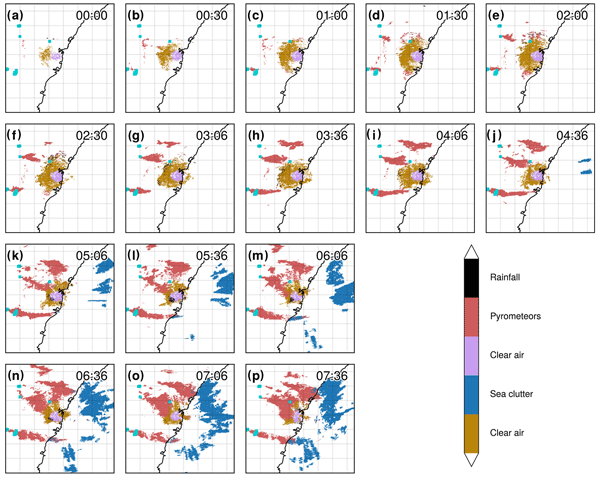
We propose a new method that should facilitate the use of weather radars to study wildfires. It is important to be able to identify the particles emitted by wildfires on radar, but it is difficult because there are many other echoes on radar like clear air, the ground, sea clutter, and precipitation. We came up with a two-step process to classify these echoes. Our method is accurate and can be used by fire departments in emergencies or by scientists for research.
McKenna W. Stanford, Ann M. Fridlind, Israel Silber, Andrew S. Ackerman, Greg Cesana, Johannes Mülmenstädt, Alain Protat, Simon Alexander, and Adrian McDonald
Atmos. Chem. Phys., 23, 9037–9069, https://doi.org/10.5194/acp-23-9037-2023, https://doi.org/10.5194/acp-23-9037-2023, 2023
Short summary
Short summary
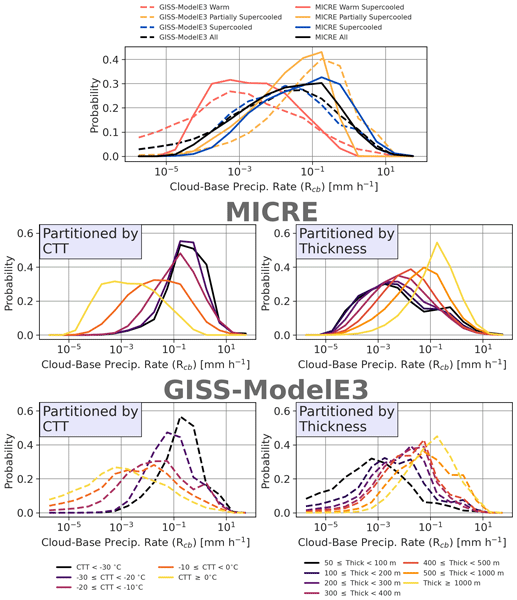
Clouds play an important role in the Earth’s climate system as they modulate the amount of radiation that either reaches the surface or is reflected back to space. This study demonstrates an approach to robustly evaluate surface-based observations against a large-scale model. We find that the large-scale model precipitates too infrequently relative to observations, contrary to literature documentation suggesting otherwise based on satellite measurements.
Scott E. Giangrande, Thiago S. Biscaro, and John M. Peters
Atmos. Chem. Phys., 23, 5297–5316, https://doi.org/10.5194/acp-23-5297-2023, https://doi.org/10.5194/acp-23-5297-2023, 2023
Short summary
Short summary
Our study tracks thunderstorms observed during the wet and dry seasons of the Amazon Basin using weather radar. We couple this precipitation tracking with opportunistic overpasses of a wind profiler and other ground observations to add unique insights into the upwards and downwards air motions within these clouds at various stages in the storm life cycle. The results of a simple updraft model are provided to give physical explanations for observed seasonal differences.
Christopher R. Williams, Joshua Barrio, Paul E. Johnston, Paytsar Muradyan, and Scott E. Giangrande
Atmos. Meas. Tech., 16, 2381–2398, https://doi.org/10.5194/amt-16-2381-2023, https://doi.org/10.5194/amt-16-2381-2023, 2023
Short summary
Short summary
This study uses surface disdrometer observations to calibrate 8 years of 915 MHz radar wind profiler deployed in the central United States in northern Oklahoma. This study had two key findings. First, the radar wind profiler sensitivity decreased approximately 3 to 4 dB/year as the hardware aged. Second, this drift was slow enough that calibration can be performed using 3-month intervals. Calibrated radar wind profiler observations and Python processing code are available on public repositories.
Ruhi S. Humphries, Melita D. Keywood, Jason P. Ward, James Harnwell, Simon P. Alexander, Andrew R. Klekociuk, Keiichiro Hara, Ian M. McRobert, Alain Protat, Joel Alroe, Luke T. Cravigan, Branka Miljevic, Zoran D. Ristovski, Robyn Schofield, Stephen R. Wilson, Connor J. Flynn, Gourihar R. Kulkarni, Gerald G. Mace, Greg M. McFarquhar, Scott D. Chambers, Alastair G. Williams, and Alan D. Griffiths
Atmos. Chem. Phys., 23, 3749–3777, https://doi.org/10.5194/acp-23-3749-2023, https://doi.org/10.5194/acp-23-3749-2023, 2023
Short summary
Short summary
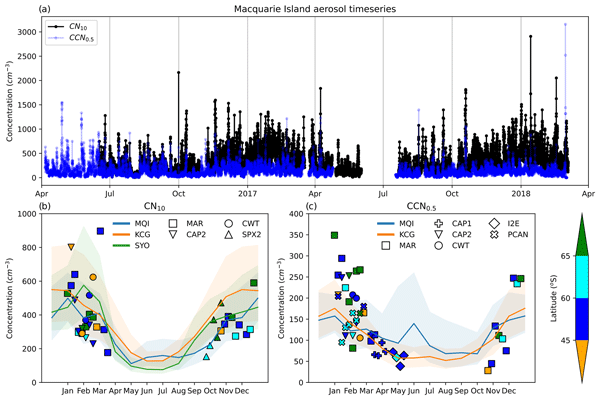
Observations of aerosols in pristine regions are rare but are vital to constraining the natural baseline from which climate simulations are calculated. Here we present recent seasonal observations of aerosols from the Southern Ocean and contrast them with measurements from Antarctica, Australia and regionally relevant voyages. Strong seasonal cycles persist, but striking differences occur at different latitudes. This study highlights the need for more long-term observations in remote regions.
Sonya L. Fiddes, Alain Protat, Marc D. Mallet, Simon P. Alexander, and Matthew T. Woodhouse
Atmos. Chem. Phys., 22, 14603–14630, https://doi.org/10.5194/acp-22-14603-2022, https://doi.org/10.5194/acp-22-14603-2022, 2022
Short summary
Short summary
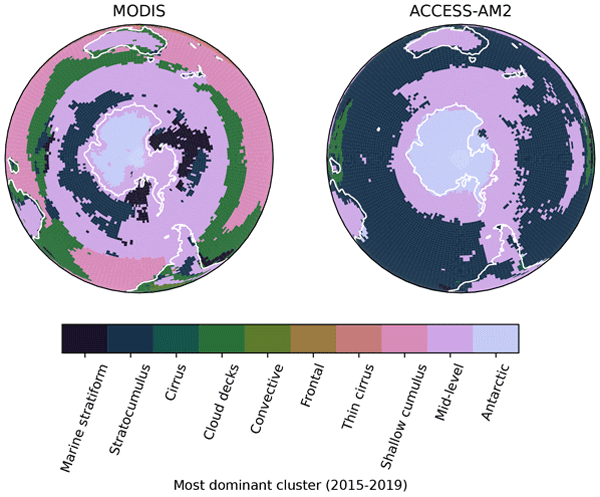
Climate models have difficulty simulating Southern Ocean clouds, impacting how much sunlight reaches the surface. We use machine learning to group different cloud types observed from satellites and simulated in a climate model. We find the model does a poor job of simulating the same cloud type as what the satellite shows and, even when it does, the cloud properties and amount of reflected sunlight are incorrect. We have a lot of work to do to model clouds correctly over the Southern Ocean.

Adrien Guyot, Alain Protat, Simon P. Alexander, Andrew R. Klekociuk, Peter Kuma, and Adrian McDonald
Atmos. Meas. Tech., 15, 3663–3681, https://doi.org/10.5194/amt-15-3663-2022, https://doi.org/10.5194/amt-15-3663-2022, 2022
Short summary
Short summary
Ceilometers are instruments that are widely deployed as part of operational networks. They are usually not able to detect cloud phase. Here, we propose an evaluation of various methods to detect supercooled liquid water with ceilometer observations, using an extensive dataset from Davis, Antarctica. Our results highlight the possibility for ceilometers to detect supercooled liquid water in clouds.
Sonya L. Fiddes, Matthew T. Woodhouse, Steve Utembe, Robyn Schofield, Simon P. Alexander, Joel Alroe, Scott D. Chambers, Zhenyi Chen, Luke Cravigan, Erin Dunne, Ruhi S. Humphries, Graham Johnson, Melita D. Keywood, Todd P. Lane, Branka Miljevic, Yuko Omori, Alain Protat, Zoran Ristovski, Paul Selleck, Hilton B. Swan, Hiroshi Tanimoto, Jason P. Ward, and Alastair G. Williams
Atmos. Chem. Phys., 22, 2419–2445, https://doi.org/10.5194/acp-22-2419-2022, https://doi.org/10.5194/acp-22-2419-2022, 2022
Short summary
Short summary
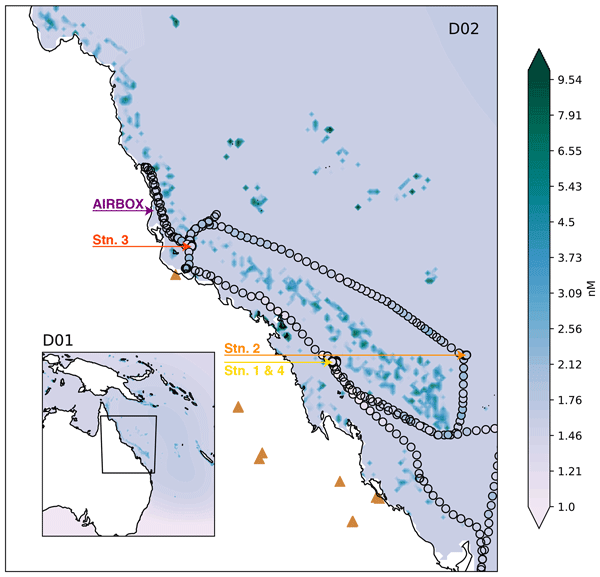
Coral reefs have been found to produce the climatically relevant chemical compound dimethyl sulfide (DMS). It has been suggested that corals can modify their environment via the production of DMS. We use an atmospheric chemistry model to test this theory at a regional scale for the first time. We find that it is unlikely that coral-reef-derived DMS has an influence over local climate, in part due to the proximity to terrestrial and anthropogenic aerosol sources.

Alain Protat, Valentin Louf, Joshua Soderholm, Jordan Brook, and William Ponsonby
Atmos. Meas. Tech., 15, 915–926, https://doi.org/10.5194/amt-15-915-2022, https://doi.org/10.5194/amt-15-915-2022, 2022
Short summary
Short summary
This study uses collocated ship-based, ground-based, and spaceborne radar observations to validate the concept of using the GPM spaceborne radar observations to calibrate national weather radar networks to the accuracy required for operational severe weather applications such as rainfall and hail nowcasting.
Kamil Mroz, Alessandro Battaglia, Cuong Nguyen, Andrew Heymsfield, Alain Protat, and Mengistu Wolde
Atmos. Meas. Tech., 14, 7243–7254, https://doi.org/10.5194/amt-14-7243-2021, https://doi.org/10.5194/amt-14-7243-2021, 2021
Short summary
Short summary
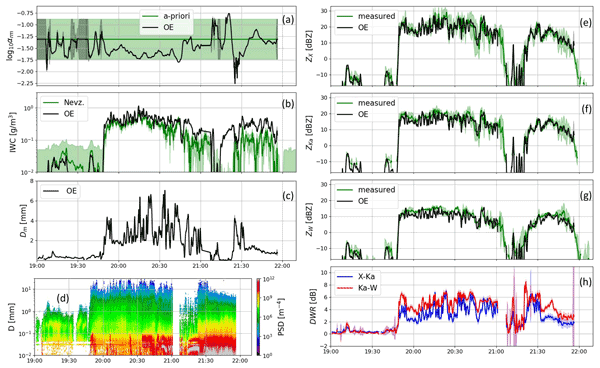
A method for estimating microphysical properties of ice clouds based on radar measurements is presented. The algorithm exploits the information provided by differences in the radar response at different frequency bands in relation to changes in the snow morphology. The inversion scheme is based on a statistical relation between the radar simulations and the properties of snow calculated from in-cloud sampling.
Cited articles
Anber, U. M., Giangrande, S. E., Donner, L. J., and Jensen, M. P.: Updraft Constraints on Entrainment: Insights from Amazonian Deep Convection, J. Atmos. Sci., 76, 2429–2442, https://doi.org/10.1175/JAS-D-18-0234.1, 2019.
Atlas, D., Srivastava, R. C., and Sekhon, R. S.: Doppler radar characteristics of precipitation at vertical incidence, Rev. Geophys., 11, 1–35, https://doi.org/10.1029/RG011i001p00001, 1973.
Balsley, B. B. and Gage, K. S.: On the use of radars for operational wind profiling, Bull. Am. Meteorol. Soc., 63, 1009–1018, 1982.
Bringi, V. N., Williams, C. R., Thurai, M., and May, P. T.: Using dual-polarized radar and dual-frequency profiler for DSD characterization: A case study from Darwin, Australia, J. Atmos. Ocean. Tech., 26, 2107–2122, https://doi.org/10.1175/2009JTECHA1258.1, 2009.
Byers, H. R. and Braham, R. R.: The Thunderstorm – Report of the Thunderstorm Project, U.S. Weather Bureau, Washington, D.C., 287 pp., 1949.
Caya, A.: Assimilation of radar observations into a cloud-resolving model, Ph.D. thesis, McGill University, Montreal, Quebec, Canada, 2001.
Chase, R. J., McGovern, A., Homeyer, C. R., Marinescu, P. J., and Potvin, C. K.: Machine Learning Estimation of Maximum Vertical Velocity from Radar, Artif. Intell. Earth Syst., 3, 230095, https://doi.org/10.1175/AIES-D-23-0095.1, 2024.
Del Genio, A. D.: Representing the sensitivity of convective cloud systems to tropospheric humidity in general circulation models, Surv. Geophys., 33, 637–656, https://doi.org/10.1007/s10712-011-9148-9, 2012.
Del Genio, A. D., Wu, J., and Chen, Y.: Characteristics of mesoscale organization in WRF simulations of convection during TWP-ICE, J. Climate, 25, 5666–5688, https://doi.org/10.1175/JCLI-D-11-00422.1, 2012.
Detwiler, A., Scannell, J., Kliche, D., and Williams, S.: Creating the Long-Term T-28 Instrumented Research Aircraft Data Archive, Bull. Am. Meteorol. Soc., 93, 1817–1820, https://doi.org/10.1175/BAMS-D-11-00066.1, 2012.
Donner, L. J.: A cumulus parameterization including mass fluxes, vertical momentum dynamics, and mesoscale effects, J. Atmos. Sci., 50, 889–906, https://doi.org/10.1175/1520-0469(1993)050<0889:ACPIMF>2.0.CO;2, 1993.
Donner, L. J., Seman, C. J., Hemler, R. S., and Fan, S.: A cumulus parameterization including mass fluxes, convective vertical velocities, and mesoscale effects: Thermodynamic and hydrological aspects in a general circulation model, J. Climate, 14, 3444–3463, https://doi.org/10.1175/1520-0442(2001)014<3444:ACPIMF>2.0.CO;2, 2001.
Donner, L. J., O'Brien, T. A., Rieger, D., Vogel, B., and Cooke, W. F.: Are atmospheric updrafts a key to unlocking climate forcing and sensitivity?, Atmos. Chem. Phys., 16, 12983–12992, https://doi.org/10.5194/acp-16-12983-2016, 2016.
Elsaesser, G. S., Del Genio, A. D., Jiang, J. H., and van Lier-Walqui, M.: An Improved Convective Ice Parameterization for the NASA GISS Global Climate Model and Impacts on Cloud Ice Simulation, J. Climate, 30, 317–336, https://doi.org/10.1175/JCLI-D-16-0346.1, 2017.
Elsaesser, G. S., van Lier-Walqui, M., Yang, Q., Kelley, M., Ackerman, A. S., Fridlind, A. M., Cesana, G. V., Schmidt, G. A., Wu, J., Behrangi, A., Camargo, S. J., De, B., Inoue, K., Leitmann-Niimi, N. M., and Strong, J. D. O.: Using machine learning to generate a GISS ModelE calibrated physics ensemble (CPE), J. Adv. Model. Earth Syst., 17, e2024MS004713, https://doi.org/10.1029/2024MS004713, 2025.
Fabry, F. and Zawadzki, I.: Long-Term Radar Observations of the Melting Layer of Precipitation and Their Interpretation, J. Atmos. Sci., 52, 838–851, https://doi.org/10.1175/1520-0469(1995)052<0838:LTROOT>2.0.CO;2, 1995.
Fan, J., Han, B., Varble, A., Morrison, H., North, K., Kollias, P., Chen, B., Dong, X., Giangrande, S. E., Khain, A., Lin, Y., Mansell, E., Milbrandt, J. A., Stenz, R., Thompson, G., and Wang, Y.: Cloud-resolving model intercomparison of an MC3E squall line case: Part I – Convective updrafts, J. Geophys. Res.-Atmos., 122, 9351–9378, https://doi.org/10.1002/2017JD026622, 2017.
Fan, J., Rosenfeld, D., Zhang, Y., Giangrande, S. E., Li, Z., Machado, L. A. T., Martin, S. T., Yang, Y., Wang, J., Artaxo, P., Barbosa, H. M. J., Braga, R. C., Comstock, J. M., Feng, Z., Gao, W., Gomes, H. B., Mei, F., Pöhlker, C., Pöhlker, M. L., Pöschl, U., and de Souza, R. A. F.: Substantial convection and precipitation enhancements by ultrafine aerosol particles, Science, 359, 411–418, https://doi.org/10.1126/science.aan8461, 2018.
Feng, Z., Leung, L. R., Liu, N., Wang, J., Houze, R. A., Li, J., Hardin, J. C., Chen, D., and Guo, J.: A global high-resolution mesoscale convective system database using satellite-derived cloud tops, surface precipitation, and tracking, J. Geophys. Res. Atmos., 126, e2020JD034202, https://doi.org/10.1029/2020JD034202, 2021.
Field, P. R., Heymsfield, A. J., Detwiler, A. G., and Wilkinson, J. M.: Normalized Hail Particle Size Distributions from the T-28 Storm-Penetrating Aircraft, J. Appl. Meteorol. Climatol., 58, 231–245, https://doi.org/10.1175/JAMC-D-18-0118.1, 2019.
Fiolleau, T. and Roca, R.: A database of deep convective systems derived from the intercalibrated meteorological geostationary satellite fleet and the TOOCAN algorithm (2012–2020), Earth Syst. Sci. Data, 16, 4021–4050, https://doi.org/10.5194/essd-16-4021-2024, 2024.
Foote, G. B. and du Toit, P. S.: Terminal velocity of raindrops aloft, J. Appl. Meteorol., 8, 249–253, 1969.
Galfione, A., Battaglia, A., Puigdomènech Treserras, B., and Kollias, P.: First insights into deep convection by the Doppler velocity measurements of the EarthCARE's Cloud Profiling Radar, EGUsphere [preprint], https://doi.org/10.5194/egusphere-2025-1914, 2025.
Gatlin, P. N., Petersen, W. A., Knupp, K. R., and Carey, L. D.: Observed Response of the Raindrop Size Distribution to Changes in the Melting Layer, Atmosphere, 9, 319, https://doi.org/10.3390/atmos9080319, 2018.
Giangrande, S. E., Krause, J. M., and Ryzhkov, A. V.: Automatic designation of the melting layer with a polarimetric prototype of the WSR-88D radar, J. Appl. Meteor. Climatol., 47, 1354–1364, https://doi.org/10.1175/2007jamc1634.1, 2008.
Giangrande, S. E., Luke, E. P., and Kollias, P.: Automated Retrievals of Precipitation Parameters Using Non-Rayleigh Scattering at 95 GHz, J. Atmos. Ocean. Tech., 27, 1490–1503, https://doi.org/10.1175/2010JTECHA1343.1, 2010.
Giangrande, S. E., Luke, E. P., and Kollias, P.: Characterization of Vertical Velocity and Drop Size Distribution Parameters in Widespread Precipitation at ARM Facilities, J. Appl. Meteorol. Climatol., 51, 380–391, https://doi.org/10.1175/JAMC-D-10-05000.1, 2012.
Giangrande, S. E., Collis, S., Straka, J., Protat, A., Williams, C., and Krueger, S.: A summary of convective-core vertical velocity properties using ARM UHF wind profilers in Oklahoma, J. Appl. Meteor. Climatol., 52, 2278–2295, https://doi.org/10.1175/JAMC-D-12-0185.1?utm_source=chatgpt.com, 2013.
Giangrande, S. E., Bartholomew, M. J., Pope, M., Collis, S., and Jensen, M. P.: A Summary of Precipitation Characteristics from the 2006–11 Northern Australian Wet Seasons as Revealed by ARM Disdrometer Research Facilities (Darwin, Australia), J. Appl. Meteorol. Climatol., 53, 1213–1231, https://doi.org/10.1175/JAMC-D-13-0222.1, 2014.
Giangrande, S. E., Toto, T., Jensen, M. P., Bartholomew, M. J., Feng, Z., Protat, A., Williams, C. R., Schumacher, C., and Machado, L.: Convective cloud vertical velocity and mass-flux characteristics from radar wind profiler observations during GoAmazon2014/5, J. Geophys. Res.-Atmos., 121, 12891–12913, https://doi.org/10.1002/2016JD025303, 2016a.
Giangrande, S. E., Toto, T., Bansemer, A., Kumjian, M. R., Mishra, S., and Ryzhkov, A. V.: Insights into riming and aggregation processes as revealed by aircraft, radar, and disdrometer observations for a 27 April 2011 widespread precipitation event, J. Geophys. Res.-Atmos., 121, 5846–5863, https://doi.org/10.1002/2015JD024537, 2016b.
Giangrande, S. E., Biscaro, T. S., and Peters, J. M.: Seasonal controls on isolated convective storm drafts, precipitation intensity, and life cycle as observed during GoAmazon2014/5, Atmos. Chem. Phys., 23, 5297–5316, https://doi.org/10.5194/acp-23-5297-2023, 2023.
Gunn, R. and Kinzer, G. D.: The terminal velocity of fall for water droplets in stagnant air, J. Atmos. Sci., 6, 243–248, 1949.
Hernandez-Deckers, D., Matsui, T., and Fridlind, A. M.: Updraft dynamics and microphysics: on the added value of the cumulus thermal reference frame in simulations of aerosol–deep convection interactions, Atmos. Chem. Phys., 22, 711–724, https://doi.org/10.5194/acp-22-711-2022, 2022.
Heymsfield, G. M., Tian, L., Heymsfield, A. J., Li, L., and Guimond, S.: Characteristics of deep tropical and subtropical convection from nadir-viewing high-altitude airborne Doppler radar, J. Atmos. Sci., 67, 285–308, https://doi.org/10.1175/2009JAS3132.1, 2010.
Heymsfield, A. J., Cecchini, M. A., Detwiler, A., Honeyager, R., and Field, P.: Exploring the Composited T-28 Hailstorm Penetration Dataset to Characterize Hail Properties within the Updraft and Downdraft Regions, J. Appl. Meteorol. Climatol., 62, 1803–1826, https://doi.org/10.1175/JAMC-D-23-0030.1, 2023.
Hong, G.: Radar backscattering properties of nonspherical ice crystals at 94 GHz, J. Geophys. Res., 112, D22203, https://doi.org/10.1029/2007JD008839, 2007.
Houze Jr., R. A.: Mesoscale Convective Systems, Rev. Geophys., 42, 1–43, https://doi.org/10.1029/2004RG000150, 2004.
Jackson, R., Collis, S., Louf, V., Protat, A., Wang, D., Giangrande, S., Thompson, E. J., Dolan, B., and Powell, S. W.: The development of rainfall retrievals from radar at Darwin, Atmos. Meas. Tech., 14, 53–69, https://doi.org/10.5194/amt-14-53-2021, 2021.
Jeyaratnam, J., Luo, Z. J., Giangrande, S. E., Wang, D., and Masunaga, H.: A satellite-based estimate of convective vertical velocity and convective mass flux: Global survey and comparison with radar wind profiler observations, Geophys. Res. Lett., 48, e2020GL090675, https://doi.org/10.1029/2020GL090675, 2021.
Kollias, P., Albrecht, B. A., and Marks, F.: Why Mie?, Bull. Am. Meteorol. Soc., 83, 1471–1484, https://doi.org/10.1175/BAMS-83-10-1471, 2002.
Kumar, V., Protat, A., May, P. T., Jakob, C., Penide, G., Kumar, S., and Davis, L.: On the effects of large-scale environment and surface types on convective cloud characteristics over Darwin, Australia, Mon. Weather Rev., 141, 1358–1374, https://doi.org/10.1175/MWR-D-12-00160.1, 2013.
Kumar, V. V., Jakob, C., Protat, A., Williams, C. R., and May, P. T.: Mass-flux characteristics of tropical cumulus clouds from wind profiler observations at Darwin, Australia, J. Atmos. Sci., 72, 1837–1855, https://doi.org/10.1175/JAS-D-14-0259.1, 2015.
Kumar, V. V., Protat, A., Jakob, C., Williams, C. R., Stephens, G. L., and May, P. T.: The estimation of convective mass flux from radar reflectivities, J. Appl. Meteorol. Climatol., 55, 1239–1257, https://doi.org/10.1175/JAMC-D-15-0193.1, 2016.
Kumjian, M. R. and Ryzhkov, A. V.: Polarimetric signatures in supercell thunderstorms, J. Appl. Meteorol. Climatol., 47, 1940–1961, 2008.
Laroche, S. and Zawadzki, I.: Retrievals of horizontal winds from single-Doppler clear-air data by methods of cross-correlation and variational analysis, J. Atmos. Ocean. Tech., 12, 721–738, 1995.
LeMone, M. A. and Zipser, E. J.: Cumulonimbus vertical velocity events in GATE. Part I: Diameter, intensity and mass flux, J. Atmos. Sci., 37, 2444–2457, https://doi.org/10.1175/1520-0469(1980)037<2444:CVVEIG>2.0.CO;2, 1980.
Lhermitte, R.: Observations of rain at vertical incidence with a 94 GHz Doppler radar: An insight of Mie scattering, Geophys. Res. Lett., 15, 1125–1128, 1988.
Lin, L., Fu, Q., Liu, X., Shan, Y., Giangrande, S. E., Elsaesser, G. S., Yang, K., and Wang, D.: Improved convective ice microphysics parameterization in the NCAR CAM model, J. Geophys. Res.-Atmos., 126, e2020JD034157, https://doi.org/10.1029/2020JD034157, 2021.
Lin, Y., Kumjian, M. R., Soderholm, J., and Giammanco, I.: Modeling Nonspherical Hailstones, J. Atmos. Sci., 81, 1849–1881, https://doi.org/10.1175/JAS-D-23-0231.1, 2024.
Matrosov, S. Y.: Frozen Hydrometeor Terminal Fall Velocity Dependence on Particle Habit and Riming as Observed by Vertically Pointing Radars, J. Appl. Meteor. Climatol., 62, 1023–1038, https://doi.org/10.1175/JAMC-D-23-0002.1, 2023.
May, P. T., Mather, J. H., Vaughan, G., Jakob, C., McFarquhar, G. M., Bower, K. N., and Mace, G. G.: The tropical warm pool international cloud experiment, Bull. Am. Meteorol. Soc., 89, 629–645, https://doi.org/10.1175/bams-89-5-629, 2008.
May, P. T., Long, C., and Protat, A.: The diurnal cycle of the boundary layer, convection, clouds, and surface radiation in a coastal monsoon environment (Darwin, Australia), J. Climate, 25, 5309–5326, 2012.
Mather, J. H. and Voyles, J. W.: The ARM Climate Research Facility: A Review of Structure and Capabilities, Bull. Am. Meteorol. Soc., 94, 377–392, https://doi.org/10.1175/BAMS-D-11-00218.1, 2013.
Matsui, T., Hernandez-Deckers, D., Giangrande, S. E., Biscaro, T. S., Fridlind, A., and Braun, S.: A thermal-driven graupel generation process to explain dry-season convective vigor over the Amazon, Atmos. Chem. Phys., 24, 10793–10814, https://doi.org/10.5194/acp-24-10793-2024, 2024.
Milbrandt, J. A. and Yau, M. K.: A multimoment bulk microphysics parameterization. Part I: Analysis of the role of the spectral shape parameter, J. Atmos. Sci., 62, 3051–3064, 2005.
Milbrandt, J. A., Morrison, H., Dawson II, D. T., and Paukert, M.: A Triple-Moment Representation of Ice in the Predicted Particle Properties (P3) Microphysics Scheme, J. Atmos. Sci., 78, 439–458, https://doi.org/10.1175/JAS-D-20-0084.1, 2021.
Morrison, H., Peters, J. M., Varble, A. C., Hannah, W. M., and Giangrande, S. E.: Thermal Chains and Entrainment in Cumulus Updrafts. Part I: Theoretical Description, J. Atmos. Sci., 77, 3637–3660, https://doi.org/10.1175/JAS-D-19-0243.1, 2020.
Mulhern, Q. R., Peters, J. M., and Mulholland, J. P.: Driving Mechanisms for Subsiding Shells in Simulations of Deep Moist Convection, EGUsphere [preprint], https://doi.org/10.5194/egusphere-2025-4495, 2025.
North, K. W., Oue, M., Kollias, P., Giangrande, S. E., Collis, S. M., and Potvin, C. K.: Vertical air motion retrievals in deep convective clouds using the ARM scanning radar network in Oklahoma during MC3E, Atmos. Meas. Tech., 10, 2785–2806, https://doi.org/10.5194/amt-10-2785-2017, 2017.
Öktem, R., Romps, D. M., and Varble, A. C.: No warm-phase invigoration of convection detected during GoAmazon, J. Atmos. Sci., 80, 2345–2364, https://doi.org/10.1175/JAS-D-22-0241.1, 2023.
Oue, M., Kollias, P., Shapiro, A., Tatarevic, A., and Matsui, T.: Investigation of observational error sources in multi-Doppler-radar three-dimensional variational vertical air motion retrievals, Atmos. Meas. Tech., 12, 1999–2018, https://doi.org/10.5194/amt-12-1999-2019, 2019.
Ovchinnikov, M., Giangrande, S., Larson, V. E., Protat, A., and Williams, C. R.: Dependence of vertical alignment of cloud and precipitation properties on their effective fall speeds, J. Geophys. Res.-Atmos., 124, 2079–2093, https://doi.org/10.1029/2018JD029346, 2019.
Peters, J. M., Morrison, H., Varble, A. C., Hannah, W. M., and Giangrande, S. E.: Thermal Chains and Entrainment in Cumulus Updrafts. Part II: Analysis of Idealized Simulations, J. Atmos. Sci., 77, 3661–3681, https://doi.org/10.1175/JAS-D-19-0244.1, 2020.
Peters, J. M., Morrison, H., Zhang, G. J., and Powell, S. W.: Improving the physical basis for updraft dynamics in deep convection parameterizations, J. Adv. Model. Earth Syst., 13, e2020MS002282, https://doi.org/10.1029/2020MS002282, 2021.
Pope, M., Jakob, C., and Reeder, M. J.: Regimes of the north Australian wet season, J. Climate, 22, 6699–6715, https://doi.org/10.1175/2009JCLI3057.1, 2009.
Prein, A. F., Ge, M., Valle, A. R., Wang, D., and Giangrande, S. E.: Towards a unified setup to simulate mid-latitude and tropical mesoscale convective systems at kilometer-scales, Earth Space Sci., 9, e2022EA002295, https://doi.org/10.1029/2022EA002295, 2022.
Protat, A. and Williams, C. R.: The accuracy of radar estimates of ice terminal fall speed from vertically pointing Doppler radar measurements, J. Appl. Meteorol. Climatol., 50, 2120–2138, https://doi.org/10.1175/jamc-d-10-05031.1, 2011.
Protat, A., Louf, V., and Brook, J.: SWIRL: The first Australian operational radar-based 3D wind analysis system, J. Atmos. Ocean. Tech., 41, 725–746, 2024.
Ramos-Valle, A. N., Prein, A. F., Ge, M., Wang, D., and Giangrande, S. E.: Grid spacing sensitivities of simulated mid-latitude and tropical mesoscale convective systems in the convective gray zone, J. Geophys. Res.-Atmos., 128, e2022JD037043, https://doi.org/10.1029/2022JD037043, 2023.
Ryzhkov, A. V., Giangrande, S. E., and Schuur, T. J.: Rainfall Estimation with a Polarimetric Prototype of WSR-88D, J. Appl. Meteorol. Climatol., 44, 502–515, https://doi.org/10.1175/JAM2213.1, 2005.
Sanderson, B. M., Piani, C., Ingram, W. J., Stone, D. A., and Allen, M. R.: Towards constraining climate sensitivity by linear analysis of feedback patterns in thousands of perturbed-physics GCM simulations, Climate Dyn., 30, 175–190, 2008.
Schumacher, C., Stevenson, S. N., and Williams, C. R.: Vertical motions of the tropical convective cloud spectrum over Darwin, Australia, Q. J. Roy. Meteor. Soc., 141, 2277–2288, https://doi.org/10.1002/qj.2520, 2015.
Sherwood, S. C., Webb, M. J., Annan, J. D., Armour, K. C., Forster, P. M., Hargreaves, J. C., Hegerl, G., Klein, S. A., Marvel, K. D., Rohling, E. J., Watanabe, M., Andrews, T., Braconnot, P., Bretherton, C. S., Foster, G. L., Hausfather, Z., von der Heydt, A. S., Knutti, R., Mauritsen, T., Norris, J. R., Proistosescu, C., Rugenstein, M., Schmidt, G. A., Tokarska, K. B., and Zelinka, M. D.: An assessment of Earth's climate sensitivity using multiple lines of evidence, Rev. Geophys., 58, e2019RG000678, https://doi.org/10.1029/2019RG000678, 2020.
Steiner, M.: A new relationship between mean Doppler velocity and differential reflectivity, J. Atmos. Ocean. Tech., 8, 430–443, 1991.
Steiner, M., Houze, R. A., and Yuter, S. E.: Climatological Characterization of Three-Dimensional Storm Structure from Operational Radar and Rain Gauge Data, J. Appl. Meteorol. Climatol., 34, 1978–2007, https://doi.org/10.1175/1520-0450(1995)034<1978:CCOTDS>2.0.CO;2, 1995.
Straka, J. M. and Mansell, E. R.: A bulk microphysics parameterization with multiple ice precipitation categories, J. Appl. Meteorol., 44, 445–466, 2005.
Tao, W., Takayabu, Y. N., Lang, S., Shige, S., Olson, W., Hou, A., Skofronick-Jackson, G., Jiang, X., Zhang, C., Lau, W., Krishnamurti, T., Waliser, D., Grecu, M., Ciesielski, P. E., Johnson, R. H., Houze, R., Kakar, R., Nakamura, K., Braun, S., Hagos, S., Oki, R., and Bhardwaj, A.: TRMM Latent Heating Retrieval: Applications and Comparisons with Field Campaigns and Large-Scale Analyses, Meteorol. Monogr., 56, 2.1–2.34, https://doi.org/10.1175/AMSMONOGRAPHS-D-15-0013.1, 2016.
Tokay, A. and Short, D. A.: Evidence from tropical raindrop spectra of the origin of rain from stratiform versus convective clouds, J. Appl. Meteorol., 35, 355–371, https://doi.org/10.1175/1520-0450(1996)035<0355:EFTRSO>2.0.CO;2, 1996.
Vagasky, H. C., Adams-Selin, R. D., Bang, S. D., Heymsfield, A. J., and Bansemer, A.: The Sensitivity of Falling Hail to Different Melting and Terminal Velocity Parameterizations and Environmental Conditions, Mon. Weather Rev., 153, 2535–2554, https://doi.org/10.1175/MWR-D-24-0180.1, 2025.
Varble, A., Zipser, E. J., Fridlind, A. M., Zhu, P., Ackerman, A. S., Chaboureau, J.-P., Collis, S., Fan, J., Hill, A., and Shipway, B.: Evaluation of cloud-resolving and limited area model intercomparison simulations using TWP-ICE observations: 1. Deep convective updraft properties, J. Geophys. Res.-Atmos., 119, 13891–13918, https://doi.org/10.1002/2013JD021371, 2014.
Wang, D., Giangrande, S. E., Schiro, K., Jensen, M. P., and Houze, R. A.: The characteristics of tropical and midlatitude mesoscale convective systems as revealed by radar wind profilers, J. Geophys. Res.-Atmos., 124, 4601–4619, https://doi.org/10.1029/2018JD030087, 2019.
Wang, D., Giangrande, S. E., Feng, Z., Hardin, J. C., and Prein, A. F.: Updraft and Downdraft Core Size and Intensity as Revealed by Radar Wind Profilers: MCS Observations and Idealized Model Comparisons, J. Geophys. Res.-Atmos., 125, e2019JD031774, https://doi.org/10.1029/2019JD031774, 2020.
Wakasugi, K., Mizutani, A., Matsuo, M., Fukao, S., and Kato, S.: A Direct Method for Deriving Drop-Size Distribution and Vertical Air Velocities from VHF Doppler Radar Spectra, J. Atmos. Ocean. Tech., 3, 623–629, https://doi.org/10.1175/1520-0426(1986)003<0623:ADMFDD>2.0.CO;2, 1986.
Williams, C. R.: Vertical air motion retrieved from dual-frequency profiler observations, J. Atmos. Ocean. Tech., 29, 1471–1480, https://doi.org/10.1175/JTECH-D-11-00176.1, 2012.
Williams, C. R., Barrio, J., Johnston, P. E., Muradyan, P., and Giangrande, S. E.: Calibrating radar wind profiler reflectivity factor using surface disdrometer observations, Atmos. Meas. Tech., 16, 2381–2398, https://doi.org/10.5194/amt-16-2381-2023, 2023.
Zawadzki, I., Szyrmer, W., Bell, C., and Fabry, F.: Modeling of the Melting Layer. Part III: The Density Effect, J. Atmos. Sci., 62, 3705–3723, https://doi.org/10.1175/JAS3563.1, 2005.
Zipser, E. J. and LeMone, M. A.: Cumulonimbus vertical velocity events in GATE. Part II: Synthesis and model core structure, J. Atmos. Sci., 37, 2458–2469, 1980.
Short summary
Better characterization of precipitation characteristics has important implications for simulated storm behaviors and remotely-sensed retrievals of cloud intensity. We use a unique radar technique to estimate the fall speeds of media found within deep tropical clouds. These retrievals can be performed within intense storm conditions that are otherwise impractical to sample. Our observations suggest mixed media or graupel fall speeds are contextually faster than prior references.
Better characterization of precipitation characteristics has important implications for...


