
Articles | Volume 19, issue 1
https://doi.org/10.5194/amt-19-63-2026
© Author(s) 2026. This work is distributed under
the Creative Commons Attribution 4.0 License.
the Creative Commons Attribution 4.0 License.
https://doi.org/10.5194/amt-19-63-2026
© Author(s) 2026. This work is distributed under
the Creative Commons Attribution 4.0 License.
the Creative Commons Attribution 4.0 License.
Research article
| 
05 Jan 2026
Research article |
| 05 Jan 2026
| 05 Jan 2026
Comparing spatial and temporal variabilities between the Vaisala AQT530 monitor and reference measurements
Roubina Papaconstantinou
Climate and Atmosphere Research Centre, The Cyprus Institute, Nicosia 2121, Cyprus
Spyros Bezantakos
Climate and Atmosphere Research Centre, The Cyprus Institute, Nicosia 2121, Cyprus
Michael Pikridas
Climate and Atmosphere Research Centre, The Cyprus Institute, Nicosia 2121, Cyprus
Moreno Parolin
Climate and Atmosphere Research Centre, The Cyprus Institute, Nicosia 2121, Cyprus
Melina Stylianou
Medisell Co Ltd, Nicosia 2033, Cyprus
Chrysanthos Savvides
Ministry of Labour and Social Insurance, Department of Labour Inspection, Nicosia 1463, Cyprus
Jean Sciare
Climate and Atmosphere Research Centre, The Cyprus Institute, Nicosia 2121, Cyprus
George Biskos
CORRESPONDING AUTHOR

Climate and Atmosphere Research Centre, The Cyprus Institute, Nicosia 2121, Cyprus
Faculty of Civil Engineering and Geosciences, Delft University of Technology, Delft, 2628, the Netherlands
Related authors
Audrey McManemin, Catherine Juéry, Vincent Blandin, Matthew Baker, Stéphane Bauguitte, Dominik Brunner, Philippine Burdeau, James Lawrence France, Anders M. Fredenslund, Andreas Hueni, Gerrit Kuhlmann, Patryk Łakomiec, Sando Meier, Roberto Paglini, Roubina Papaconstantinou, Jean-Daniel Paris, Pierre-Yves Quehe, Thomas Röckmann, Charlotte Scheutz, Martina Schmidt, Marius Vögtli, Julia B. Wietzel, and Adam R. Brandt
EGUsphere, https://doi.org/10.5194/egusphere-2026-1744, https://doi.org/10.5194/egusphere-2026-1744, 2026
Short summary
Short summary
Researchers tested five university-led systems to measure methane leaks at a facility in France. By releasing known amounts of gas, researchers checked if mobile tools on vehicles and planes could accurately detect and quantify emissions. Most sensors were excellent at finding leaks, but their accuracy in measuring the exact emission rate varied. Weather, especially low wind, significantly impacted results. These findings help improve how we track greenhouse gases to meet climate goals.
Giannis Ioannidis, Vincent Langat, Roubina Papaconstantinou, Spyros Bezantakos, Prashant Kumar, and George Biskos
EGUsphere, https://doi.org/10.5194/egusphere-2026-897, https://doi.org/10.5194/egusphere-2026-897, 2026
Short summary
Short summary
Low-cost air pollution sensors could greatly expand monitoring, but their readings are often affected by environmental conditions. We studied how to improve their accuracy by comparing them with high-quality instruments and using machine learning methods to correct the data. We found that reliable results can be achieved while reducing the time needed for calibration from about 70 % to 80 % of measurements to about 22 % percent, lowering costs while maintaining data quality.
Roubina Papaconstantinou, Marios Demosthenous, Spyros Bezantakos, Neoclis Hadjigeorgiou, Marinos Costi, Melina Stylianou, Elli Symeou, Chrysanthos Savvides, and George Biskos
Atmos. Meas. Tech., 16, 3313–3329, https://doi.org/10.5194/amt-16-3313-2023, https://doi.org/10.5194/amt-16-3313-2023, 2023
Short summary
Short summary
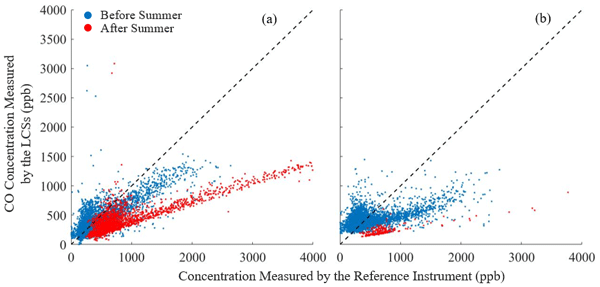
In this paper, we investigate the performance of low-cost electrochemical gas sensors. We carried out yearlong measurements at a traffic air quality monitoring station, where the low-cost sensors were collocated with reference instruments and exposed to highly variable environmental conditions with extremely high temperatures and low relative humidity (RH). Sensors provide measurements that exhibit increasing errors and decreasing correlations as temperature increases and RH decreases.
Alkistis Papetta, Celia Herrero del Barrio, S. Yeşer Aslanoğlu, Rizos-Theodoros Chadoulis, Georgia Charalampous, Sara Herrero-Anta, Dimitra Kouklaki, Michail Mytilinaios, Anna Moustaka, Emmanouil Proestakis, Vassilis Amiridis, Christos Spyrou, Antonis Gkikas, Michael Pikridas, Maria Kezoudi, Franco Marenco, Jean Sciare, Sophie Vandenbussche, Stavros Solomos, Stelios Kazadzis, and Ilias Fountoulakis
Atmos. Chem. Phys., 26, 12395–12434, https://doi.org/10.5194/acp-26-12395-2026, https://doi.org/10.5194/acp-26-12395-2026, 2026
Short summary
Short summary
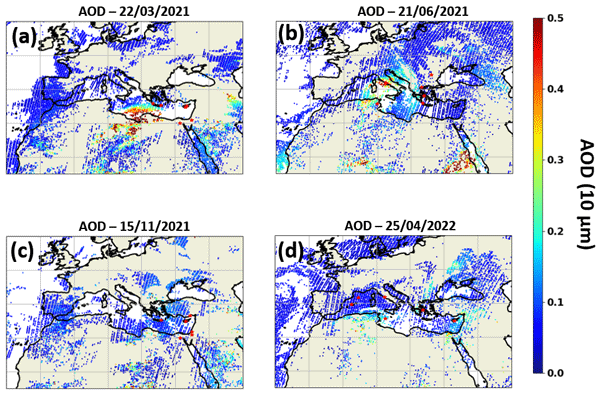
We studied four major dust events from the Sahara and the Middle East over the Mediterranean. Saharan dust events exhibited coarser and more scattering particles, while Middle Eastern dust was finer and mixed with pollution. Differences in absorption could not be explained by mineralogy and are attributed to mixing.
Fabian Schmidt-Ott, Robert Nishida, Sebastian Schmitt, Jason Olfert, George Biskos, and Juha Kangasluoma
Aerosol Research Discuss., https://doi.org/10.5194/ar-2026-29, https://doi.org/10.5194/ar-2026-29, 2026
Preprint under review for AR
Short summary
Short summary
Typical MPSS measurements rely on bipolar diffusion charging, where the steady-state particle charge distribution depends on charger ion properties. By simultaneously measuring ion properties and particle charge fractions, we show that Hoppel&Frick theory accurately describes charging of sub-20 nm particles. By introducing siloxanes via outgassing from conductive silicone tubing, we further show that ion properties, and thus particle charge distributions, are sensitive to trace-gas composition.
Aino Ovaska, Daniel Holmberg, Elio Rauth, Mansour Alghamdi, Paulo Artaxo, Eija Asmi, John Backman, Benjamin Bergmans, Matthew Boyer, Liezl Bredenkamp, Maurizio Busetto, Delano Campos De Oliveira, Juan Andrés Casquero-Vera, Darius Ceburnis, Tak Chan, Tommy Chan, Sebastien Conil, Daniele Contini, Suzanne Crumeyrolle, Valentin Duflot, Kostas Eleftheriadis, Johan Esveld, Ekaterina Ezhova, Markus Fiebig, Shahzad Gani, Olga Garmash, Francisco Gómez-Moreno, Roy M. Harrison, Andras Hoffer, Rakesh Hooda, Antti Hyvärinen, Tareq Hussein, Jorma Joutsensaari, Nikos Kalivitis, Heinz Kaminski, Jutta Kesti, Radovan Krejci, Adam Kristensson, Chongai Kuang, Markku Kulmala, Lauri Laakso, Ari Leskinen, Heikki Lihavainen, Andreas Massling, Maik Merkel, Steffen Noe, Jakub Ondracek, Noemí Perez, Jean-Eudes Petit, Tuukka Petäjä, Michael Pikridas, Christopher Pöhlker, Mira Pöhlker, Jean-Philippe Putaud, Ximeng Qi, Cristina Reche, Sergio Rodríguez, Petr Roztocil, Jean Sciare, Karine Sellegri, Dongjie Shang, Ashish Singh, Mikko Sipilä, Henrik Skov, Mar Sorribas, Tamanna Subba, Junying Sun, Peter Tunved, Ville Vakkari, Pieter G. Van Zyl, Aki Virkkula, Jens Voigtländer, Kay Weinhold, Alfred Wiedensohler, Hee-Jung Yoo, Putian Zhou, Kai Puolamäki, Tuomo Nieminen, Veli-Matti Kerminen, Victoria A. Sinclair, and Pauli Paasonen
Earth Syst. Sci. Data Discuss., https://doi.org/10.5194/essd-2026-415, https://doi.org/10.5194/essd-2026-415, 2026
Preprint under review for ESSD
Short summary
Short summary
All clouds form around aerosol particles, and their abundance influences cloud properties. In turn, clouds affect climate by changing how energy moves through the atmosphere, making them important for climate change. To better understand these interactions, we need accurate information on how many aerosol particles are in the atmosphere. Therefore, we have developed a new 21-year global dataset of particle concentrations relevant for cloud formation.
Audrey McManemin, Catherine Juéry, Vincent Blandin, Matthew Baker, Stéphane Bauguitte, Dominik Brunner, Philippine Burdeau, James Lawrence France, Anders M. Fredenslund, Andreas Hueni, Gerrit Kuhlmann, Patryk Łakomiec, Sando Meier, Roberto Paglini, Roubina Papaconstantinou, Jean-Daniel Paris, Pierre-Yves Quehe, Thomas Röckmann, Charlotte Scheutz, Martina Schmidt, Marius Vögtli, Julia B. Wietzel, and Adam R. Brandt
EGUsphere, https://doi.org/10.5194/egusphere-2026-1744, https://doi.org/10.5194/egusphere-2026-1744, 2026
Short summary
Short summary
Researchers tested five university-led systems to measure methane leaks at a facility in France. By releasing known amounts of gas, researchers checked if mobile tools on vehicles and planes could accurately detect and quantify emissions. Most sensors were excellent at finding leaks, but their accuracy in measuring the exact emission rate varied. Weather, especially low wind, significantly impacted results. These findings help improve how we track greenhouse gases to meet climate goals.
Julian Weng, Yufang Hao, Benjamin T. Brem, Tianqu Cui, Peeyush Khare, Lubna Dada, Kaspar R. Daellenbach, Sophie Darfeuil, Gaëlle Uzu, Jean-Luc Jaffrezo, Martin Steinbacher, Stefan Reimann, Thaleia Gkraikou, Konstantina Oikonomou, Jean Sciare, Martine Collaud Coen, Claudia Mohr, Andre S. H. Prévôt, Martin Gysel-Beer, Imad El Haddad, and Patrik Winiger
EGUsphere, https://doi.org/10.5194/egusphere-2026-3660, https://doi.org/10.5194/egusphere-2026-3660, 2026
Short summary
Short summary
Long-term observations at the Jungfraujoch High Altitude Research Station show that, alongside air mass transport, sustained oxidative processing shaped by atmospheric water vapor plays a central role in driving aerosol loading and composition. Combining detailed aerosol chemical characterization with process-level insights, we provide important observational benchmarks for improving atmospheric model performance in the remote free troposphere, where uncertainties remain particularly high.
Vijay P. Kanawade, Neha Deot, Mihai Ciobanu, Aliki Christodoulou, Marije van den Born, Chengfeng Liu, Alkistis Papetta, Rima Baalbaki, Michael Pikridas, Spyros Bezantakos, Anchal Garg, Chrysanthos Savvides, Efstratios Bourtsoukidis, George Biskos, Franco Marenco, Jean Sciare, and Tuija Jokinen
Atmos. Chem. Phys., 26, 8839–8854, https://doi.org/10.5194/acp-26-8839-2026, https://doi.org/10.5194/acp-26-8839-2026, 2026
Short summary
Short summary
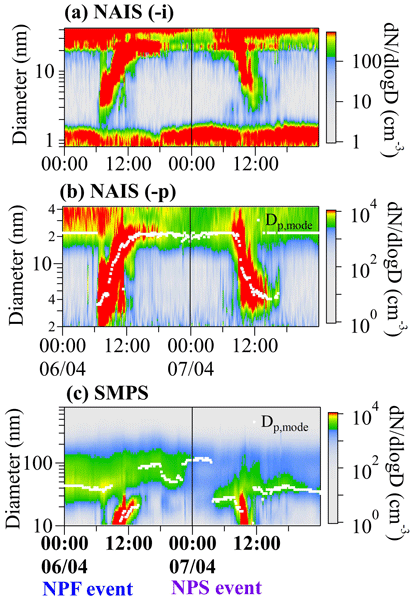
Only a small fraction of airborne particles acts as seeds for cloud droplets and influence climate, yet the processes controlling their abundance remain unclear. Field measurements in Cyprus reveal that particles smaller than 20 nanometers can rapidly shrink. This shrinkage was linked to dilution and possible evaporation of organic compounds, identifying a previously overlooked nanoparticle sink that may reduce cloud-forming particles and weaken aerosol-driven cooling.
Maria Kezoudi, Alkistis Papetta, Konrad Kandler, Claire L. Ryder, Andreas Leonidou, Christos Keleshis, Chris Stopford, Troy Thornberry, Rodanthi-Elisavet Mamouri, Jean Sciare, and Franco Marenco
Atmos. Chem. Phys., 26, 7361–7385, https://doi.org/10.5194/acp-26-7361-2026, https://doi.org/10.5194/acp-26-7361-2026, 2026
Short summary
Short summary
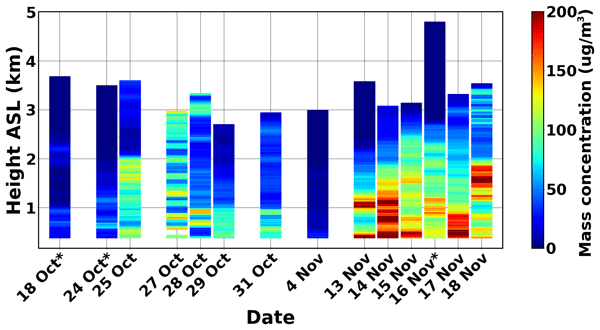
This study demonstrates a cost-efficient methodology using Uncrewed Aerial Systems for quantitative characterization of airborne dust. It enables high-resolution vertical profiling of microphysical properties of dust layers from the Middle East and North Africa over Cyprus, improving understanding of regional dust transport, source-dependent variability, and impacts on air quality, radiation, and climate.
Stefanos Papagiannis, Manousos I. Manousakas, Dimitrios F. Anagnostopoulos, Michael Pikridas, Rima Baalbaki, Jean Sciare, Niall O'Sullivan, Stig Hellebust, John Wenger, Kirsten N. Fossum, Jurgita Ovadnevaite, Anja Tremper, David Green, Konstantinos Eleftheriadis, and Evangelia Diapouli
Atmos. Meas. Tech., 19, 3491–3509, https://doi.org/10.5194/amt-19-3491-2026, https://doi.org/10.5194/amt-19-3491-2026, 2026
Short summary
Short summary
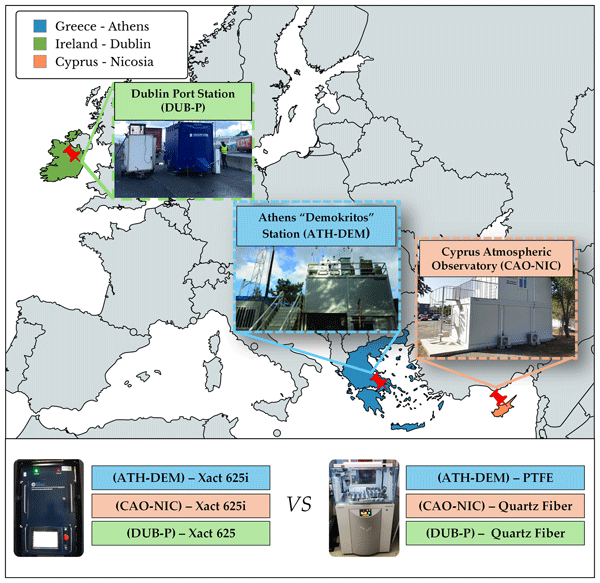
We compared near real-time and benchtop XRF spectrometers measuring trace elements in airborne particles across three European cities. Results show filter material dictates accuracy: Teflon yielded strong inter-instrument agreement, while quartz caused systematic attenuation errors for light elements. Because empirical corrections left residual biases, using optimal substrates—preferably Teflon—is essential for accurately tracking pollution sources.
Maria Tsichla, Konrad Kandler, Sudharaj Aryasree, Stavros Solomos, Christos Spyrou, Alexandra Tsekeri, Anna Kampouri, Anna Gialitaki, Eleni Drakaki, Thanasis Natsis, Maria Kezoudi, Alkistis Papetta, Franco Marenco, Jean Sciare, Eleni Marinou, Kalliopi Artemis Voudouri, Nikos Mihalopoulos, and Vassilis Amiridis
EGUsphere, https://doi.org/10.5194/egusphere-2026-921, https://doi.org/10.5194/egusphere-2026-921, 2026
Short summary
Short summary
Desert dust plays an important role in the Earth–atmosphere system by affecting clouds, radiation, and ocean processes. Here, we determine the composition of desert dust over Cabo Verde using drones and microscopy analysis, and compare the measurements with model simulations. We find that the main dust mineral is illite, while the dominant element is silicon. Our results highlight the value of airborne in-situ observations for improving dust models and understanding dust–climate interactions.
Siqing Xu, Yves Balkanski, Philippe Ciais, and Jean Sciare
Atmos. Chem. Phys., 26, 6321–6350, https://doi.org/10.5194/acp-26-6321-2026, https://doi.org/10.5194/acp-26-6321-2026, 2026
Short summary
Short summary
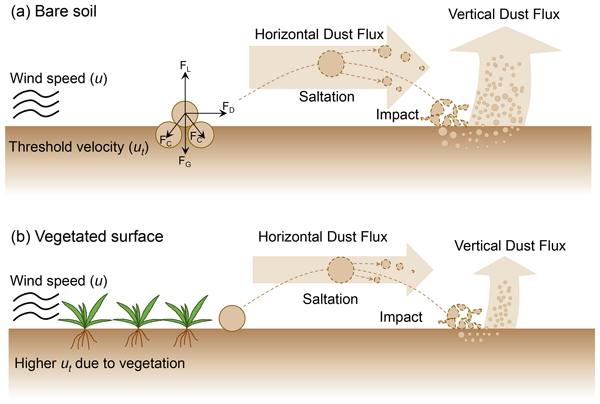
Uncertainty in dust emission estimates stems from simplified surface parameterizations. We incorporate dynamic vegetation cover into the dust emission scheme of an Earth System Model. Including vegetation reduces global dust emissions by 23 % and redistributes regional contributions by suppressing emissions in grass-covered dryland, improving agreement with observations of the global dust cycle. This work establishes a framework for advancing the representation of land–atmosphere feedbacks.
Giannis Ioannidis, Vincent Langat, Roubina Papaconstantinou, Spyros Bezantakos, Prashant Kumar, and George Biskos
EGUsphere, https://doi.org/10.5194/egusphere-2026-897, https://doi.org/10.5194/egusphere-2026-897, 2026
Short summary
Short summary
Low-cost air pollution sensors could greatly expand monitoring, but their readings are often affected by environmental conditions. We studied how to improve their accuracy by comparing them with high-quality instruments and using machine learning methods to correct the data. We found that reliable results can be achieved while reducing the time needed for calibration from about 70 % to 80 % of measurements to about 22 % percent, lowering costs while maintaining data quality.
Anchal Garg, Maximilien Desservettaz, Aliki Christodoulou, Theodoros Christoudias, Vijay Punjaji Kanawade, Chrysanthos Savvides, Mihalis Vrekoussis, Shahid Naqui, Tuija Jokinen, Joseph Byron, Jonathan Williams, Nikos Mihalopoulos, Eleni Liakakou, Jean Sciare, and Efstratios Bourtsoukidis
Atmos. Chem. Phys., 26, 2597–2622, https://doi.org/10.5194/acp-26-2597-2026, https://doi.org/10.5194/acp-26-2597-2026, 2026
Short summary
Short summary
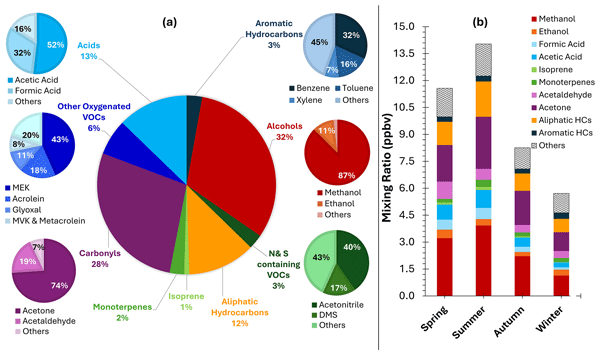
This study reports multi-year (2022–2024) measurements of 76 volatile organic compounds (VOCs) at a rural site in Cyprus. Oxygenated VOCs were the most abundant and showed strong daytime increases due to sunlight-driven chemistry. Air-mass analysis showed that transport from Middle East strongly influenced aromatic VOC levels. Climate–chemistry modeling underestimated most VOCs, highlighting gaps in current emission and chemical processes.
Alkistis Papetta, Maria Kezoudi, Holger Baars, Athina Floutsi, Eleni Drakaki, Konrad Kandler, Sudharaj Aryasree, Elena Louca, Theodoros Christoudias, Eleni Marinou, Chris Stopford, Troy Thornberry, Vassilis Amiridis, Jean Sciare, and Franco Marenco
Atmos. Chem. Phys., 26, 2055–2082, https://doi.org/10.5194/acp-26-2055-2026, https://doi.org/10.5194/acp-26-2055-2026, 2026
Short summary
Short summary
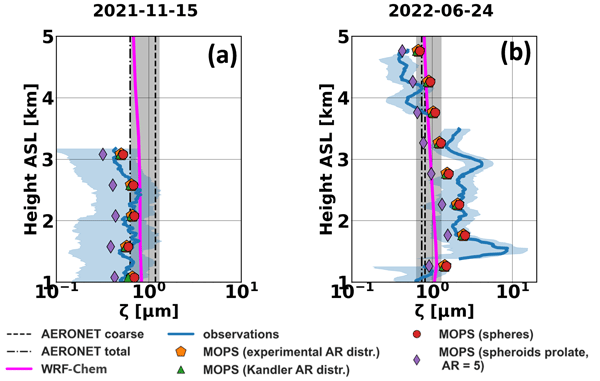
Dust in the atmosphere affects air quality, weather, and climate, but measuring it is challenging. We used drones and ground-based instruments to study how dust particles interact with light and relate this to their mass. Current methods often underestimate large dust particles, leading to errors in dust quantity. Our results show that regional differences in dust must be considered to improve climate models and satellite observations.
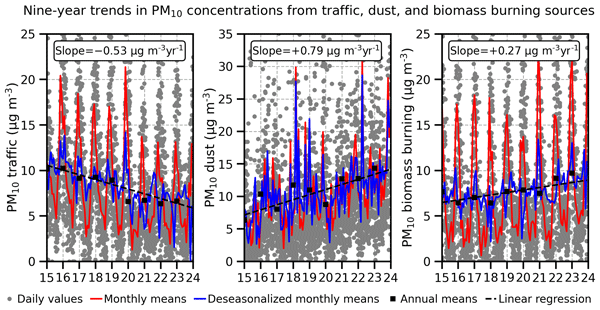
Elie Bimenyimana, Jean Sciare, Michael Pikridas, Konstantina Oikonomou, Minas Iakovides, Emily Vasiliadou, Chrysanthos Savvides, and Nikos Mihalopoulos
Atmos. Chem. Phys., 26, 1605–1622, https://doi.org/10.5194/acp-26-1605-2026, https://doi.org/10.5194/acp-26-1605-2026, 2026
Short summary
Short summary
Long-term (2015–2023) source apportionment analysis reveals that reduction in PM10 concentration levels from traffic in Cypriot cities is completely offset by the concomitant increase of uncontrolled PM from local sources (road dust resuspension, and domestic wood burning), along with rising Middle East PM from fossil fuel emissions. This poses a major challenge for Cyprus to comply with the stricter PM10 limits set by the new EU air quality directive.
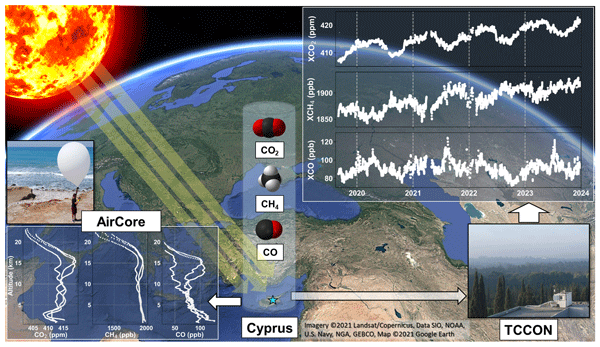
Constantina Rousogenous, Christof Petri, Pierre-Yves Quéhé, Thomas Laemmel, Joshua L. Laughner, Maximilien Desservettaz, Michael Pikridas, Michel Ramonet, Efstratios Bourtsoukidis, Matthias Buschmann, Justus Notholt, Thorsten Warneke, Jean-Daniel Paris, Jean Sciare, and Mihalis Vrekoussis
Atmos. Meas. Tech., 19, 565–581, https://doi.org/10.5194/amt-19-565-2026, https://doi.org/10.5194/amt-19-565-2026, 2026
Short summary
Short summary
The Eastern Mediterranean and Middle East is a greenhouse gas emission hotspot but lacks atmospheric monitoring. Our study introduces the first Total Carbon Column Observing Network site in this region, in Cyprus, providing high-precision columnar measurement of key greenhouse gases. This new dataset enhances global climate monitoring efforts, supports the validation of satellites, will help assess regional emission trends, filling a critical observational gap in this climate-sensitive region.
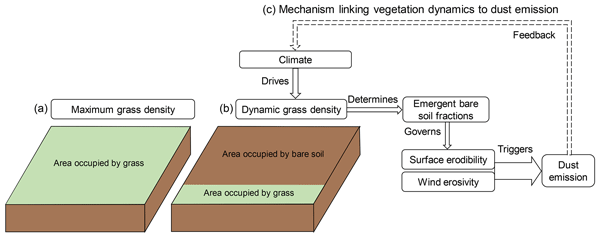
Siqing Xu, Sebastiaan Luyssaert, Yves Balkanski, Philippe Ciais, Nicolas Viovy, Liang Wan, and Jean Sciare
Geosci. Model Dev., 19, 1–25, https://doi.org/10.5194/gmd-19-1-2026, https://doi.org/10.5194/gmd-19-1-2026, 2026
Short summary
Short summary
Prescribing a fixed grassland density in the ORCHIDEE model limits its ability to capture grassland dynamics, leading to unrealistic mortality, especially in semi-arid grasslands. We proposed a dynamic density approach where a positive density-precipitation relationship emerges. This method improves spatial pattern, significantly reduces mortality, sustains productivity, and raises the aridity threshold above which frequent mortality events occur in grasslands.
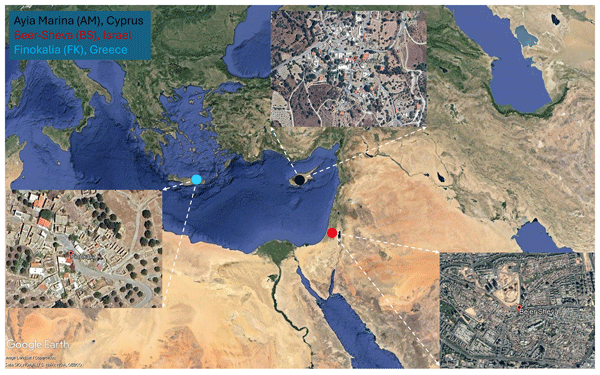
Andreas Eleftheriou, Petros Mouzourides, Panayiotis Kouis, Nikos Kalivitis, Itzhak Katra, Emily Vasiliadou, Chrysanthos Savvides, Panayiotis Yiallouros, and Marina K.-A. Neophytou
Nat. Hazards Earth Syst. Sci., 25, 4961–4982, https://doi.org/10.5194/nhess-25-4961-2025, https://doi.org/10.5194/nhess-25-4961-2025, 2025
Short summary
Short summary
Desert dust storms are a significant environmental concern in the Eastern Mediterranean. This study compared eleven forecasting models to see how well they predict dust levels in the atmosphere. By checking their results against in-situ and satellite measurements, we found that some models work better than others, but none are perfect. These findings can help improve forecasting systems, making them more reliable and useful for protecting public health and preparing for extreme dust events.
Fabian Schmidt-Ott, Somnath Bhowmick, Alexandros Lekkas, Dimitris Papanastasiou, Anne Maisser, and George Biskos
Atmos. Meas. Tech., 18, 7075–7083, https://doi.org/10.5194/amt-18-7075-2025, https://doi.org/10.5194/amt-18-7075-2025, 2025
Short summary
Short summary
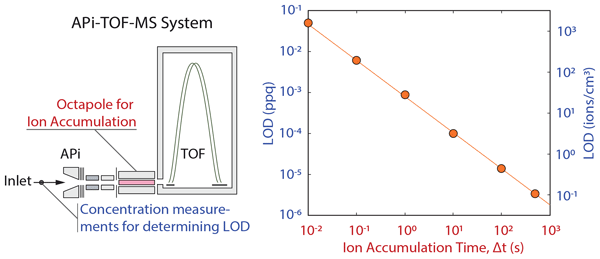
We characterized a novel Atmospheric-Pressure-Interface Time-of-Flight (TOF) Mass Spectrometer. By accumulating ions in a trap prior the TOF mass analyzer, we achieve a limit of detection in the 10-3 to 10-6 ppq range with temporal resolutions in the order of 1 s to 10 min, respectively. This makes it highly relevant for atmospheric measurements, as it enables probing short-lived, low-concentration species of high importance in atmospheric chemistry and new particle formation.
Anthony Rey-Pommier, Alexandre Héraud, Frédéric Chevallier, Philippe Ciais, Theodoros Christoudias, Jonilda Kushta, and Jean Sciare
Earth Syst. Sci. Data, 17, 3329–3351, https://doi.org/10.5194/essd-17-3329-2025, https://doi.org/10.5194/essd-17-3329-2025, 2025
Short summary
Short summary
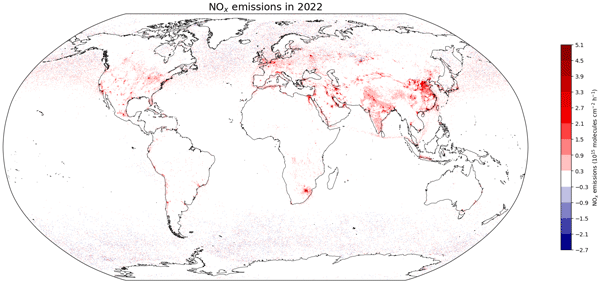
In this study, we estimate emissions of nitrogen oxides (NOx) in 2022 at high resolution at the global scale, using satellite observations. We provide maps of the emissions and identify several types of sources. Our results are similar to the EDGAR emission inventory. However, differences are found in countries with lower observation densities and lower emissions.
Neha Deot, Vijay P. Kanawade, Alkistis Papetta, Rima Baalbaki, Michael Pikridas, Franco Marenco, Markku Kulmala, Jean Sciare, Katrianne Lehtipalo, and Tuija Jokinen
Aerosol Research, 3, 139–154, https://doi.org/10.5194/ar-3-139-2025, https://doi.org/10.5194/ar-3-139-2025, 2025
Short summary
Short summary
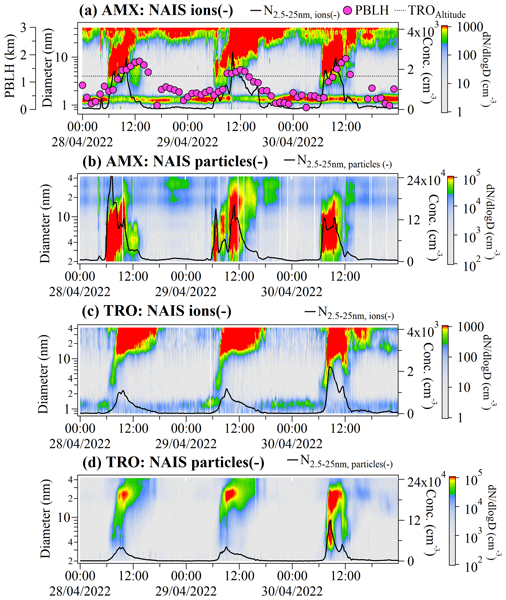
We studied how nanoparticles form in the atmosphere at two different altitudes in Cyprus, focusing on how meteorology impacts this process. Using data from two sites, we found that air from lower regions carries particles up to higher areas, affecting air quality and potentially climate. Our findings help improve understanding of how particles form and grow in the air, which is important for predicting changes in climate and air pollution in the future.
Alkistis Papetta, Franco Marenco, Maria Kezoudi, Rodanthi-Elisavet Mamouri, Argyro Nisantzi, Holger Baars, Ioana Elisabeta Popovici, Philippe Goloub, Stéphane Victori, and Jean Sciare
Atmos. Meas. Tech., 17, 1721–1738, https://doi.org/10.5194/amt-17-1721-2024, https://doi.org/10.5194/amt-17-1721-2024, 2024
Short summary
Short summary
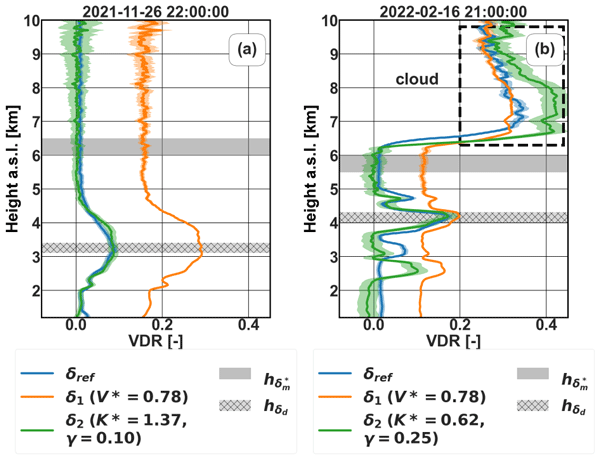
We propose a method to determine depolarization parameters using observations from a reference instrument at a nearby location, needed for systems where a priori knowledge of cross-talk parameters is not available. It uses three-parameter equations to compare VDR between two co-located lidars at dust and molecular layers. It can be applied retrospectively to existing data acquired during campaigns. Its application to Cimel CE376 corrected VDR bias at high- and low-depolarizing layers.
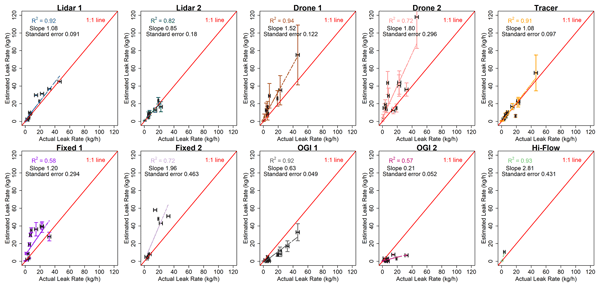
Yunsong Liu, Jean-Daniel Paris, Gregoire Broquet, Violeta Bescós Roy, Tania Meixus Fernandez, Rasmus Andersen, Andrés Russu Berlanga, Emil Christensen, Yann Courtois, Sebastian Dominok, Corentin Dussenne, Travis Eckert, Andrew Finlayson, Aurora Fernández de la Fuente, Catlin Gunn, Ram Hashmonay, Juliano Grigoleto Hayashi, Jonathan Helmore, Soeren Honsel, Fabrizio Innocenti, Matti Irjala, Torgrim Log, Cristina Lopez, Francisco Cortés Martínez, Jonathan Martinez, Adrien Massardier, Helle Gottschalk Nygaard, Paula Agregan Reboredo, Elodie Rousset, Axel Scherello, Matthias Ulbricht, Damien Weidmann, Oliver Williams, Nigel Yarrow, Murès Zarea, Robert Ziegler, Jean Sciare, Mihalis Vrekoussis, and Philippe Bousquet
Atmos. Meas. Tech., 17, 1633–1649, https://doi.org/10.5194/amt-17-1633-2024, https://doi.org/10.5194/amt-17-1633-2024, 2024
Short summary
Short summary
We investigated the performance of 10 methane emission quantification techniques in a blind controlled-release experiment at an inerted natural gas compressor station. We reported their respective strengths, weaknesses, and potential complementarity depending on the emission rates and atmospheric conditions. Additionally, we assess the dependence of emission quantification performance on key parameters such as wind speed, deployment constraints, and measurement duration.
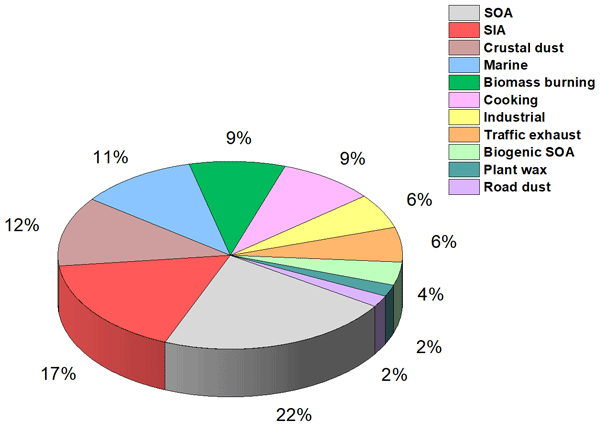
Nansi Fakhri, Robin Stevens, Arnold Downey, Konstantina Oikonomou, Jean Sciare, Charbel Afif, and Patrick L. Hayes
Atmos. Chem. Phys., 24, 1193–1212, https://doi.org/10.5194/acp-24-1193-2024, https://doi.org/10.5194/acp-24-1193-2024, 2024
Short summary
Short summary
We investigated the chemical composition of atmospheric fine particles, their emission sources, and the potential human health risk associated with trace elements in particles for an urban site in Montréal over a 3-month period (August–November). This study represents the first time that such extensive composition measurements were included in an urban source apportionment study in Canada, and it provides greater resolution of fine-particle sources than has been previously achieved in Canada.
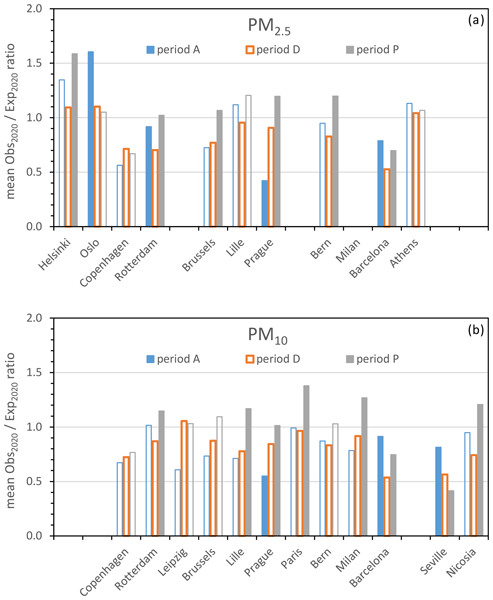
Jean-Philippe Putaud, Enrico Pisoni, Alexander Mangold, Christoph Hueglin, Jean Sciare, Michael Pikridas, Chrysanthos Savvides, Jakub Ondracek, Saliou Mbengue, Alfred Wiedensohler, Kay Weinhold, Maik Merkel, Laurent Poulain, Dominik van Pinxteren, Hartmut Herrmann, Andreas Massling, Claus Nordstroem, Andrés Alastuey, Cristina Reche, Noemí Pérez, Sonia Castillo, Mar Sorribas, Jose Antonio Adame, Tuukka Petaja, Katrianne Lehtipalo, Jarkko Niemi, Véronique Riffault, Joel F. de Brito, Augustin Colette, Olivier Favez, Jean-Eudes Petit, Valérie Gros, Maria I. Gini, Stergios Vratolis, Konstantinos Eleftheriadis, Evangelia Diapouli, Hugo Denier van der Gon, Karl Espen Yttri, and Wenche Aas
Atmos. Chem. Phys., 23, 10145–10161, https://doi.org/10.5194/acp-23-10145-2023, https://doi.org/10.5194/acp-23-10145-2023, 2023
Short summary
Short summary
Many European people are still exposed to levels of air pollution that can affect their health. COVID-19 lockdowns in 2020 were used to assess the impact of the reduction in human mobility on air pollution across Europe by comparing measurement data with values that would be expected if no lockdown had occurred. We show that lockdown measures did not lead to consistent decreases in the concentrations of fine particulate matter suspended in the air, and we investigate why.
Roubina Papaconstantinou, Marios Demosthenous, Spyros Bezantakos, Neoclis Hadjigeorgiou, Marinos Costi, Melina Stylianou, Elli Symeou, Chrysanthos Savvides, and George Biskos
Atmos. Meas. Tech., 16, 3313–3329, https://doi.org/10.5194/amt-16-3313-2023, https://doi.org/10.5194/amt-16-3313-2023, 2023
Short summary
Short summary
In this paper, we investigate the performance of low-cost electrochemical gas sensors. We carried out yearlong measurements at a traffic air quality monitoring station, where the low-cost sensors were collocated with reference instruments and exposed to highly variable environmental conditions with extremely high temperatures and low relative humidity (RH). Sensors provide measurements that exhibit increasing errors and decreasing correlations as temperature increases and RH decreases.
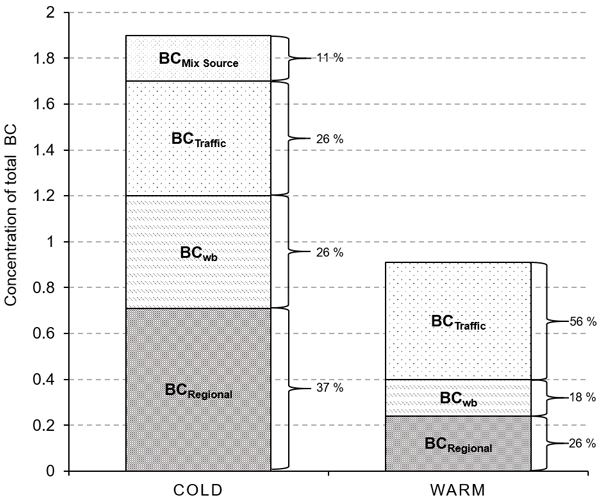
Aliki Christodoulou, Iasonas Stavroulas, Mihalis Vrekoussis, Maximillien Desservettaz, Michael Pikridas, Elie Bimenyimana, Jonilda Kushta, Matic Ivančič, Martin Rigler, Philippe Goloub, Konstantina Oikonomou, Roland Sarda-Estève, Chrysanthos Savvides, Charbel Afif, Nikos Mihalopoulos, Stéphane Sauvage, and Jean Sciare
Atmos. Chem. Phys., 23, 6431–6456, https://doi.org/10.5194/acp-23-6431-2023, https://doi.org/10.5194/acp-23-6431-2023, 2023
Short summary
Short summary
Our study presents, for the first time, a detailed source identification of aerosols at an urban background site in Cyprus (eastern Mediterranean), a region strongly impacted by climate change and air pollution. Here, we identify an unexpected high contribution of long-range transported pollution from fossil fuel sources in the Middle East, highlighting an urgent need to further characterize these fast-growing emissions and their impacts on regional atmospheric composition, climate, and health.
Pantelis Kiriakidis, Antonis Gkikas, Georgios Papangelis, Theodoros Christoudias, Jonilda Kushta, Emmanouil Proestakis, Anna Kampouri, Eleni Marinou, Eleni Drakaki, Angela Benedetti, Michael Rennie, Christian Retscher, Anne Grete Straume, Alexandru Dandocsi, Jean Sciare, and Vasilis Amiridis
Atmos. Chem. Phys., 23, 4391–4417, https://doi.org/10.5194/acp-23-4391-2023, https://doi.org/10.5194/acp-23-4391-2023, 2023
Short summary
Short summary
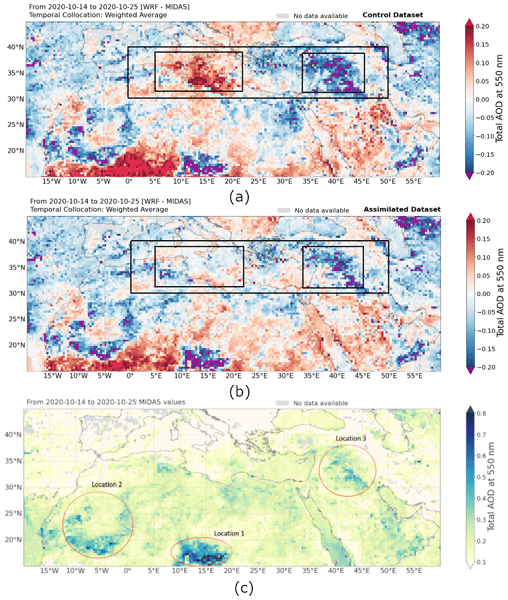
With the launch of the Aeolus satellite, higher-accuracy wind products became available. This research was carried out to validate the assimilated wind products by testing their effect on the WRF-Chem model predictive ability of dust processes. This was carried out for the eastern Mediterranean and Middle East region for two 2-month periods in autumn and spring 2020. The use of the assimilated products improved the dust forecasts of the autumn season (both quantitatively and qualitatively).
Charlotte M. Beall, Thomas C. J. Hill, Paul J. DeMott, Tobias Köneman, Michael Pikridas, Frank Drewnick, Hartwig Harder, Christopher Pöhlker, Jos Lelieveld, Bettina Weber, Minas Iakovides, Roman Prokeš, Jean Sciare, Meinrat O. Andreae, M. Dale Stokes, and Kimberly A. Prather
Atmos. Chem. Phys., 22, 12607–12627, https://doi.org/10.5194/acp-22-12607-2022, https://doi.org/10.5194/acp-22-12607-2022, 2022
Short summary
Short summary
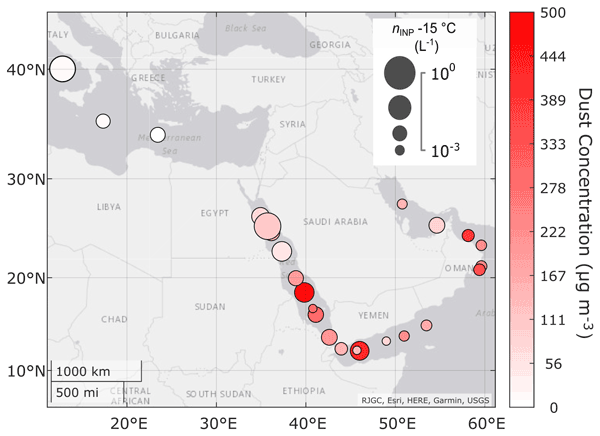
Ice-nucleating particles (INPs) are rare aerosols that can trigger ice formation in clouds and affect climate-relevant cloud properties such as phase, reflectivity and lifetime. Dust is the dominant INP source, yet few measurements have been reported near major dust sources. We report INP observations within hundreds of kilometers of the biggest dust source regions globally: the Sahara and the Arabian Peninsula. Results show that at temperatures > −15 °C, INPs are dominated by organics.
Marta Via, Gang Chen, Francesco Canonaco, Kaspar R. Daellenbach, Benjamin Chazeau, Hasna Chebaicheb, Jianhui Jiang, Hannes Keernik, Chunshui Lin, Nicolas Marchand, Cristina Marin, Colin O'Dowd, Jurgita Ovadnevaite, Jean-Eudes Petit, Michael Pikridas, Véronique Riffault, Jean Sciare, Jay G. Slowik, Leïla Simon, Jeni Vasilescu, Yunjiang Zhang, Olivier Favez, André S. H. Prévôt, Andrés Alastuey, and María Cruz Minguillón
Atmos. Meas. Tech., 15, 5479–5495, https://doi.org/10.5194/amt-15-5479-2022, https://doi.org/10.5194/amt-15-5479-2022, 2022
Short summary
Short summary
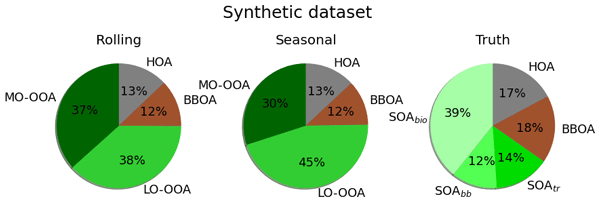
This work presents the differences resulting from two techniques (rolling and seasonal) of the positive matrix factorisation model that can be run for organic aerosol source apportionment. The current state of the art suggests that the rolling technique is more accurate, but no proof of its effectiveness has been provided yet. This paper tackles this issue in the context of a synthetic dataset and a multi-site real-world comparison.
Anthony Rey-Pommier, Frédéric Chevallier, Philippe Ciais, Grégoire Broquet, Theodoros Christoudias, Jonilda Kushta, Didier Hauglustaine, and Jean Sciare
Atmos. Chem. Phys., 22, 11505–11527, https://doi.org/10.5194/acp-22-11505-2022, https://doi.org/10.5194/acp-22-11505-2022, 2022
Short summary
Short summary
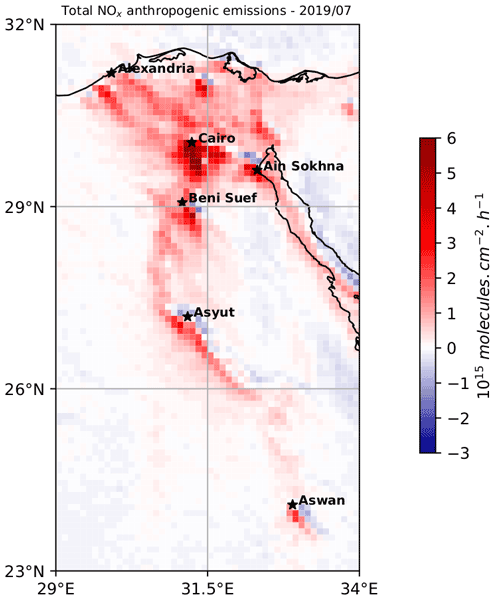
Emission inventories for air pollutants can be uncertain in developing countries. In order to overcome these uncertainties, we model nitrogen oxide emissions in Egypt using satellite retrievals. We detect a weekly cycle reflecting Egyptian social norms, an annual cycle consistent with electricity consumption and an activity drop due to the COVID-19 pandemic. However, discrepancies with inventories remain high, illustrating the needs for additional data to improve the potential of our method.
Yunsong Liu, Jean-Daniel Paris, Mihalis Vrekoussis, Panayiota Antoniou, Christos Constantinides, Maximilien Desservettaz, Christos Keleshis, Olivier Laurent, Andreas Leonidou, Carole Philippon, Panagiotis Vouterakos, Pierre-Yves Quéhé, Philippe Bousquet, and Jean Sciare
Atmos. Meas. Tech., 15, 4431–4442, https://doi.org/10.5194/amt-15-4431-2022, https://doi.org/10.5194/amt-15-4431-2022, 2022
Short summary
Short summary
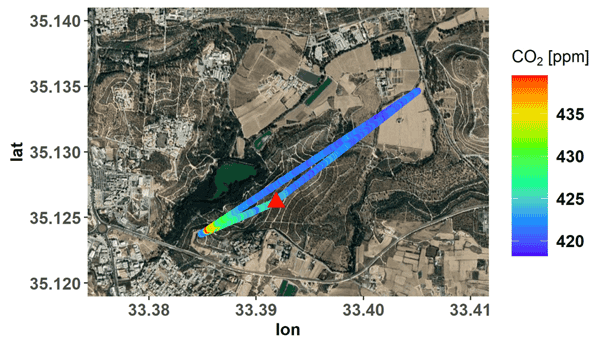
This paper details laboratory-based and field developments of a cost-effective and compacted UAV CO2 sensor system to address the challenge of measuring CO2 with sufficient precision and acquisition frequency. We assess its performance extensively through laboratory and field tests and provide a case study in an urban area (Nicosia, Cyprus). We therefore expect that this portable system will be widely used for measuring CO2 emission and distribution in natural or urban environments.
Karine Sartelet, Youngseob Kim, Florian Couvidat, Maik Merkel, Tuukka Petäjä, Jean Sciare, and Alfred Wiedensohler
Atmos. Chem. Phys., 22, 8579–8596, https://doi.org/10.5194/acp-22-8579-2022, https://doi.org/10.5194/acp-22-8579-2022, 2022
Short summary
Short summary
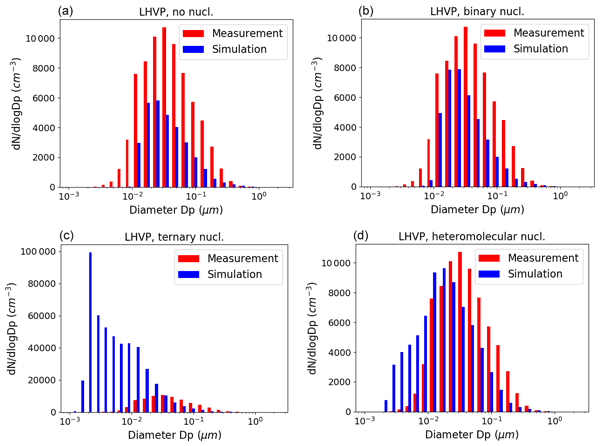
A methodology is defined to estimate number emissions from an inventory providing mass emissions. Number concentrations are simulated over Greater Paris using different nucleation parameterisations (binary, ternary involving sulfuric acid and ammonia, and heteromolecular involving sulfuric acid and extremely low-volatility organics, ELVOCs). The comparisons show that ternary nucleation may not be a dominant process for new particle formation in cities, but they stress the role of ELVOCs.
George K. Georgiou, Theodoros Christoudias, Yiannis Proestos, Jonilda Kushta, Michael Pikridas, Jean Sciare, Chrysanthos Savvides, and Jos Lelieveld
Geosci. Model Dev., 15, 4129–4146, https://doi.org/10.5194/gmd-15-4129-2022, https://doi.org/10.5194/gmd-15-4129-2022, 2022
Short summary
Short summary
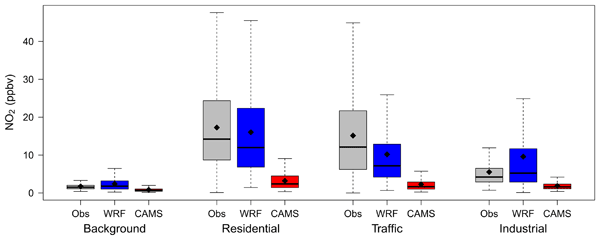
We evaluate the skill of the WRF-Chem model to perform high-resolution air quality forecasts (including ozone, nitrogen dioxide, and fine particulate matter) over the Eastern Mediterranean, during winter and summer. We compare the forecast output to observational data from background and urban locations and the forecast output from CAMS. WRF-Chem was found to forecast the concentrations and diurnal profiles of gas-phase pollutants in urban areas with higher accuracy.
Kai Tang, Beatriz Sánchez-Parra, Petya Yordanova, Jörn Wehking, Anna T. Backes, Daniel A. Pickersgill, Stefanie Maier, Jean Sciare, Ulrich Pöschl, Bettina Weber, and Janine Fröhlich-Nowoisky
Biogeosciences, 19, 71–91, https://doi.org/10.5194/bg-19-71-2022, https://doi.org/10.5194/bg-19-71-2022, 2022
Short summary
Short summary
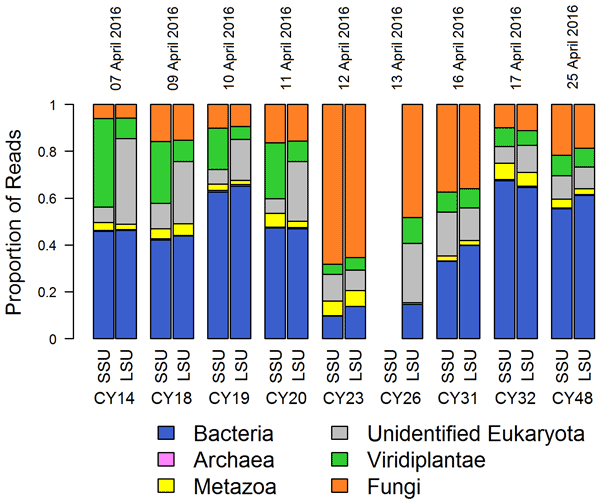
Metagenomic sequencing and freezing experiments of aerosol samples collected on Cyprus revealed rain-related short-term changes of bioaerosol and ice nuclei composition. Filtration experiments showed a rain-related enhancement of biological ice nuclei > 5 µm and < 0.1 µm. The observed effects of rainfall on the composition of atmospheric bioaerosols and ice nuclei may influence the hydrological cycle as well as the health effects of air particulate matter (pathogens, allergens).
Jean-Eudes Petit, Jean-Charles Dupont, Olivier Favez, Valérie Gros, Yunjiang Zhang, Jean Sciare, Leila Simon, François Truong, Nicolas Bonnaire, Tanguy Amodeo, Robert Vautard, and Martial Haeffelin
Atmos. Chem. Phys., 21, 17167–17183, https://doi.org/10.5194/acp-21-17167-2021, https://doi.org/10.5194/acp-21-17167-2021, 2021
Short summary
Short summary
The COVID-19 outbreak led to lockdowns at national scales in spring 2020. Large cuts in emissions occurred, but the quantitative assessment of their role from observations is hindered by weather and interannual variability. That is why we developed an innovative methodology in order to best characterize the impact of lockdown on atmospheric chemistry. We find that a local decrease in traffic-related pollutants triggered a decrease of secondary aerosols and an increase in ozone.
Cited articles
Alphasense Ltd.: AAN 106: Application note, available at: https://ametekcdn.azureedge.net/mediafiles/project/oneweb/oneweb/alphasense/products/application notes/aan_106_app-note_v0_en_1.pdf (last access: 16 June 2023), n.d.
AQ-SPEC: Laboratory Evaluation Vaisala Air Quality Transmitter AQT530, https://www.aqmd.gov/docs/default-source/aq-spec/laboratory-evaluations/vaisala-aqt530---laboratory-evaluation.pdf?sfvrsn=1153b261_8 (last access: 14 July 2025), 2022a.
AQ-SPEC: Field Evaluation Vaisala Air Quality Transmitter AQT530, https://www.aqmd.gov/docs/default-source/aq-spec/field-evaluations/vaisala-aqt530---field-evaluation.pdf?sfvrsn=c776a361_8 (last access: 14 July 2025), 2022b.
AQT530: Air Quality Transmitter AQT530 Datasheet, https://docs.vaisala.com/v/u/B211817EN-F/en-US, last access: 10 August 2023.
Regional Agency for the Protection of the Environment of Lazio (ARPA Lazio), Regional Emission Inventory – 2015 Emissions in the Lazio Region, http://www.arpalazio.gov.it/ambiente/aria/inventario.htm, last access: 31 August 2020 (in Italian).
Baruah, A., Zivan, O., Bigi, A., and Ghermandi, G.: Evaluation of low- cost gas sensors to quantify intra-urban variability of atmospheric pollutants, Environ. Sci.: Atmos, 3, 830, https://doi.org/10.1039/d2ea00165a, 2023.
Berlin Air Quality Monitoring Network (Berliner Luftgütemessnetz – BLUME), AIR QUALITY PLAN FOR BERLIN – 2ND UPDATE, https://www.berlin.de/sen/uvk/_assets/umwelt/luft/luftreinhaltung/luftreinhalteplan-2-fortschreibung/luftreinhalteplan_2019_en.pdf?ts=1666617271 (last access: 14 December 2025), 2019.
Bezantakos, S., Costi, M., Barmpounis , K., Antoniou, P., Vouterakos, P., Keleshis, C., Sciare, J., and Biskos, G.: Qualification of the Alphasense optical particle counter for inline air quality monitoring, Aerosol Sci. Technol., 55, 361–370, https://doi.org/10.1080/02786826.2020.1864276, 2021.
Bílek, J., Bílek, O., Maršolek, P., and Bucek, P.: Ambient Air Quality Measurement with Low-Cost Optical and EC Sensors: An Evaluation of Continuous Year-Long Operation, J. Environ., 8, 114, https://doi.org/10.3390/environments8110114, 2021.
Bisignano, A., Carotenuto, F., Zaldei, A., and Giovannini, L.: Field calibration of a low-cost sensors network to assess traffic-related air pollution along the Brenner highway, Atm. Env., 275, 119008, https://doi.org/10.1016/j.atmosenv.2022.119008, 2022.
Borrego, C., Costa, A. M., Ginja, J., Amorim, M., Coutinho, M., Karatzas, K., Sioumis, Th., Katsifarakis, N., Konstantinidis, K., De Vito, S., Esposito, E., Smith, P., André, N., Gérard, P., Francis, L.A., Castell, N., Schneider, P., Viana, M., Minguillón, M.C., Reimringer, W., Otjes, R. P., von Sicard, O., Pohle, R., Elen, B., Suriano, D., Pfister, V., Prato, M., Dipinto, S., and Penza, M.: Assessment of air quality microsensors versus reference methods: the EuNetAir joint exercise, J. Atmos. Environ., 147, 246–263, https://doi.org/10.1016/j.atmosenv.2016.09.050, 2016.
Bulot, F. M. J., Johnston, S. J., Basford, P. J., Easton, N. H. C., Apetroaie-Cristea, M., Foster, G. L., Morris, A. K. R., Cox, S. J., and Loxham, M.: Long-term feld comparison of multiple low-cost particulate matter sensors in an outdoor urban environment, Sci. Rep., 9, 7497, https://doi.org/10.1038/s41598-019-43716-3, 2019.
Cabaneros, S. M., Calautit, J. K., and Hughes, B. R.: A review of artificial neural network models for ambient air pollution prediction, Environ. Model. Softw., 119, 285–304, https://doi.org/10.1016/j.envsoft.2019.06.014, 2019.
Carslaw, K. S.: Aerosols and Climate, 1st Ed., Elsevier, https://doi.org/10.1016/C2019-0-00121-5, 2022.
Castell, N., Dauge, F. R., Schneider, P., Vogt, M., Lerner, U., Fishbain, B., Broday, D., and Bartonova, A.: Can commercial low-cost sensor platforms contribute to air quality monitoring and exposure estimates?, Environ. Int., 99, 293–302, https://doi.org/10.1016/j.envint.2016.12.007, 2017.
Collier-Oxandale, A., Feenstra, B., Papapostolou, V., Zhang, H., Kuang, M., Der Boghossian, B., and Polidori, A.: Field and laboratory performance evaluations of 28 gas-phase air quality sensors by the AQ-SPEC program, J. Atmos. Env., 220, https://doi.org/10.1016/j.atmosenv.2019.117092, 2020.
Crawford, B., Hagan, D. H., Grossman, I., Cole, E., Holland, L., Heald, C. L., and Kroll, J. H.: Mapping pollution exposure and chemistry during an extreme air quality event (the 2018 Kılauea eruption) using a low-cost sensor network, Proceedings of the National Academy of Sciences of the United States of America, 118, https://doi.org/10.1073/pnas.2025540118, 2021.
Cui, H., Zhang, L., Li, W., Yuan, Z., Wu, M., Wang, C., Ma, J., and Li, Y.: A new calibration system for low-cost Sensor Network in air pollution monitoring, Atmos. Pollut. Res., 12, 101049, https://doi.org/10.1016/j.apr.2021.03.012, 2021.
Department of Labour Inspection (DLI): Annual Air Quality Technical Report: https://www.airquality.dli.mlsi.gov.cy//sites/default/files/2022-11/Etisia Techniki Ekthesi 2021.pdf (last access: 23 August 2023), 2021.
deSouza, P., Kahn, R., Stockman, T., Obermann, W., Crawford, B., Wang, A., Crooks, J., Li, J., and Kinney, P.: Calibrating networks of low-cost air quality sensors, Atmos. Meas. Tech., 15, 6309–6328, https://doi.org/10.5194/amt-15-6309-2022, 2022.
Directive (EU) 2024/2881: European Parliament and of the Council of 23 October 2024 on ambient air quality and cleaner air for Europe (recast), Official Journal of the European Union (OJ L 2024/2881, 20.11.2024), https://eur-lex.europa.eu/eli/dir/2024/2881/oj/eng (last access: 26 January 2025), 2024.
Feinberg, S.N., Williams, R., Hagler, G., Low, J., Smith, L., Brown, R., Garver, D., Davis, M., Morton, M., Schaefer, J., and Campbell, J.: Examining spatiotemporal variability of urban particulate matter and application of high-time resolution data from a network of low-cost air pollution sensors, Atm. Env., 213, 579–584, https://doi.org/10.1016/j.atmosenv.2019.06.026, 2019.
Frederickson, L. B., Sidaraviciute, R., Schmidt, J. A., Hertel, O., and Johnson, M. S.: Are dense networks of low-cost nodes really useful for monitoring air pollution? A case study in Staffordshire, Atmos. Chem. Phys., 22, 13949–13965, https://doi.org/10.5194/acp-22-13949-2022, 2022.
Gao, M., Cao, J., and Seto, E.: A distributed network of low-cost continuous reading sensors to measure spatiotemporal variations of PM2.5 in Xi'an, China, Environ. Pollut., 199, 56–65, https://doi.org/10.1016/j.envpol.2015.01.013, 2015.
He, Q., Wang, B., Liang, J., Liu, J., Liang, B., Li, G., Long, Y., Zhang, G., and Liu, H.: Research on the construction of portable electrochemical sensors for environmental compounds quality monitoring, Mater. Today Adv., 17, 100340, https://doi.org/10.1016/j.mtadv.2022.100340, 2023.
Heimann, I., Bright, V. B., McLeod, M. W., Mead, M. I., Popoola, O. A. M., Stewart, G. B., and Jones, R. L.: Source attribution of air pollution by spatial scale separation using high spatial density networks of low cost air quality sensors, Atmos. Environ., 113, 10–19, https://doi.org/10.1016/j.atmosenv.2015.04.057, 2015.
Isaac, N. A., Pikaar, I., and Biskos, G.: Metal oxide semiconducting nanomaterials for air quality gas sensors: operating principles, performance, and synthesis techniques, Microchim Acta, 189, 196, https://doi.org/10.1007/s00604-022-05254-0, 2022.
Juginovic, A., Vukovic, M., Aranza, I., and Bilos, V.: Health impacts of air pollution exposure from 1990 to 2019 in 43 European countries, J. Sci. Rep., 11, https://doi.org/10.1038/s41598-021-01802-5, 2021.
Karagulian, F., Barbiere, M., Kotsev, A., Spinelle, L., Gerboles, M., Lagler, F., Redon, N., Crunaire, S., and Borowiak, A.: Review of the Performance of Low-Cost Sensors for Air Quality Monitoring, Atmosphere, 10, 506, https://doi.org/10.3390/atmos10090506, 2019.
Kezoudi, M., Tesche, M., Smith, H., Tsekeri, A., Baars, H., Dollner, M., Estellés, V., Bühl, J., Weinzierl, B., Ulanowski, Z., Müller, D., and Amiridis, V.: Measurement report: Balloon-borne in situ profiling of Saharan dust over Cyprus with the UCASS optical particle counter, Atmos. Chem. Phys., 21, 6781–6797, https://doi.org/10.5194/acp-21-6781-2021, 2021.
Kim, J., Shusterman, A. A., Lieschke, K. J., Newman, C., and Cohen, R. C.: The BErkeley Atmospheric CO2 Observation Network: field calibration and evaluation of low-cost air quality sensors, Atmos. Meas. Tech., 11, 1937–1946, https://doi.org/10.5194/amt-11-1937-2018, 2018.
Kumar, P., Morawska, L., Martani, C., Biskos, G., Neophytou, M., Di Sabatino, S., Bell, M., Norford, L., and Britter, R.: The rise of low-cost sensing for managing air pollution in cities. Environ Int., 75, 199–205, https://doi.org/10.1016/j.envint.2014.11.019, 2015.
Kuntic, M., Kuntic, I., Hadad, O., Lelieveld, J., Münzel, T., and Daiber, A.: Impact of air pollution on cardiovascular aging, Mech. Ageing Dev., 111857, https://doi.org/10.1016/j.mad.2023.111857, 2023.
Lewis, A. C., Lee, J. D., Edwards, P. M., Shaw, M. D., Evans, M. J., Moller, S. J., Smith, K. R., Buckley, J. W., Ellis, M., Gillot, S. R., and White, A.: Evaluating the performance of low cost chemical sensors for air pollution research, J. Faraday Discuss., 189, 85–103, https://doi.org/10.1039/c5fd00201j, 2016.
Loizidis, C., Skourides, C., Bezantakos, S., Hadjigeorgiou, N., and Biskos, G.: On the Importance of the Flow Field in Inexpensive Optical Aerosol Particle Counting and Sizing, Sci. Reprt, 15, 35259, https://doi.org/10.1038/s41598-025-11785-2, 2025.
London Air: 2018, Environmental Research Group (ERG), Imperial College London, https://www.londonair.org.uk/london/asp/publicbulletin.asp?la_id=7&MapType=Google (last access: 5 October 2023), 2018.
Madrid Air Quality portal: Annual air quality report 2022, https://airedemadrid.madrid.es/UnidadesDescentralizadas/Sostenibilidad/CalidadAire/Publicaciones/Memorias_anuales/Ficheros/MEMORIA_2022_02.pdf (last access: 5 October 2023), 2022.
Marx, E. and Mulholland, G.: Size and Refractive Index Determination of Single Polystyrene Spheres., J. Res. Nat. Bur. Stand., 88, 321–338, https://doi.org/10.6028/jres.088.016, 1983.
McMurry, P. H.: A review of atmospheric aerosol measurements, Atmos. Environ., 34, 1959–1999, https://doi.org/10.1016/S1352-2310(99)00455-0, 2000.
Greek Ministry of Environment and Energy (YPEN): Annual Report 2022, https://ypen.gov.gr/perivallon/poiotita-tis-atmosfairas/ektheseis/# (last accesses: 23 August 2023), 2022.
Nagendra, S. S. M., Yasa, P. R., Narayana, M. V., Khadirnaikar, S., and Rani, P.: Mobile monitoring of air pollution using low cost sensors to visualize spatiotemporal variation of pollutants at urban hotspots, Sustain. Cities Soc., 44, 520–535, https://doi.org/10.1016/j.scs.2018.10.006, 2019.
Pang, X., Shaw, M. D., Lewis, A. C., Carpenter, L. J., and Batchellier, T.: Electrochemical ozone sensors: A miniaturised alternative for ozone measurements in laboratory experiments and air-quality monitoring, Sens. Actuators B Chem., 240, 829–837, https://doi.org/10.1016/j.snb.2016.09.020, 2017.
Papaconstantinou, R.: Assessing Spatial and Temporal Urban Air Quality Variabilities with the Vaisala AQT530 Monitor, Zenodo [data set], https://doi.org/10.5281/zenodo.13985490, 2024.
Papaconstantinou, R., Demosthenous, M., Bezantakos, S., Hadjigeorgiou, N., Costi, M., Stylianou, M., Symeou, E., Savvides, C., and Biskos, G.: Field evaluation of low-cost electrochemical air quality gas sensors under extreme temperature and relative humidity conditions, Atmos. Meas. Tech., 16, 3313–3329, https://doi.org/10.5194/amt-16-3313-2023, 2023.
Petäjä, T., Ovaska, A., Fung, P.L., Poutanen, P., Yli-Ojanperä, J., Suikkola, J., Laakso, M., Mäkelä, T., Niemi, J. V., Keskinen, J., Järvinen, A., Kuula, J., Kurppa, M., Hussein, T., Tarkoma, S., Kulmala, M., Karppinen, A., Manninen, H. E., and Timonen, H.: Added Value of Vaisala AQT530 Sensors as a Part of a Sensor Network for Comprehensive Air Quality Monitoring, Front. Environ. Sci., 9, 719567, https://doi.org/10.3389/fenvs.2021.719567, 2021.
Popoola, O. A. M., Carruthers, D., Lad, C., Bright, V. B., Mead, M. I., Stettler, M. E. J., Saffell, J. R., and Jones, R. L.: Use of networks of low cost air quality sensors to quantify air quality in urban settings, Atmos. Environ., 194, 58–70, https://doi.org/10.1016/j.atmosenv.2018.09.030, 2018.
Raheja, G., Nimo, J., Appoh, E. K.-E., Essien, B., Sunu, M., Nyante, J., Amegah, M., Quansah, R., Arku, R. E., Penn, S. L., Giordano, M. R., Zheng, Z., Jack, D., Chillrud, S., Amegah, K., Subramanian, R., Pinder, R., Appah-Sampong, E., Tetteh, E. N., Borketey, M. A., Hughes, A. F., and Westervelt, D. M.: Low-Cost Sensor Performance Intercomparison, Correction Factor Development, and 2+ Years of Ambient PM2.5 Monitoring in Accra, Ghana, Environ. Sci. Technol., 57, 10708–10720, https://doi.org/10.1021/acs.est.2c09264, 2023.
Schneider, P., Castell, N., Vogt, M., Dauge, F. R., Lahoz, W. A., and Bartonova, A.: Mapping urban air quality in near real-time using observations from low cost sensors and model information, Environ. Int., 106, 234–247, https://doi.org/10.1016/j.envint.2017.05.005, 2017.
Shahid, S., Brown, D. J., Wright, P., Khasawneh, A. M., Taylor, B., and Kaiwartya, O.: Innovations in Air Quality Monitoring: Sensors, IoT and Future Research, Sensors, 25, 2070, https://doi.org/10.3390/s25072070, 2025.
Spinelle, L., Gerboles, M., and Aleixandre, M.: Performance Evaluation of Amperometric Sensors for the Monitoring of O3 and NO2 in Ambient Air at ppb Level, Procedia Engineering, 120, 480–483, https://doi.org/10.1016/j.proeng.2015.08.676, 2015a.
Spinelle, L., Gerboles, M., Villani, M. G., Aleixandre, M., and Bonavitacola, F.: Field calibration of a cluster of low-cost available sensors for air quality monitoring. Part A: Ozone and nitrogen dioxide, Sens. Actuat. B, 215, 249–257, https://doi.org/10.1016/j.snb.2015.03.031, 2015b.
Stetter, J. and Li, J.: Amperometric gas sensors e a review, Chem. Rev., 108, 352–366, https://doi.org/10.1021/cr0681039, 2008.
TEOM 1405-DF: Thermo Fisher Scientific Inc., https://assets.thermofisher.com/TFS-Assets/CAD/Datasheets/1405-df-teom-ambient-particulate-monitor-datasheet.pdf (last access: 8 December 2023), 2020.
Titos, G., Cazorla, A., Zieger, P., Andrews, E., Lyamani, H., Granados-Muñoz, M. J., Olmo, F. J., and Alados-Arboledas, L.: Effect of hygroscopic growth on the aerosol light-scattering coefficient: A review of measurements, techniques and error sources, Atmos. Environ., 141, 494–507, https://doi.org/10.1016/j.atmosenv.2016.07.021, 2016.
Wei, P. Ning, Z., Sun, L., Yang, F., Wong, K. C., Westerdahl, D., and Louie, P. K. K.: Impact Analysis of Temperature and Humidity Conditions on Electrochemical Sensor Response in Ambient Air Quality Monitoring, Sensors, 18, 59, https://doi.org/10.3390/s18020059, 2018.
Yukhymchuk, Y., Milinevsky, G., Syniavskyi, I., Popovici, I., Unga, F., Sciare, J., Marenco, F., Pikridas, M., and Goloub, P.: Atmospheric Aerosol Outbreak over Nicosia, Cyprus, in April 2019: Case Study, 13, 1997, https://doi.org/10.3390/atmos13121997, 2022.
Zhu, Y., Hinds, W. C., Kim, S., Shen, S., and Sioutas, C.: Study of ultrafine particles near a major highway with heavy-duty diesel traffic, Atmos. Environ., 36, 27, 4323–4335, https://doi.org/10.1016/S1352-2310(02)00354-0, 2002.
Short summary
We evaluate the ability of the Vaisala AQT530 (Air Quality Transmitter) monitors, comprising of low-cost sensors, to detect spatial and temporal differences. Collocated with reference instruments over 19 months in Nicosia, results showed that CO and PM (particulate matter) sensors captured daily, hourly, and monthly spatial trends. NO2, NO, and O3 sensors were less reliable due to environmental effects. Still, all sensors tracked monthly temporal variations at the same location, with PM2.5 showing the strongest agreement with reference data.
We evaluate the ability of the Vaisala AQT530 (Air Quality Transmitter) monitors, comprising of...


