Articles | Volume 19, issue 3
https://doi.org/10.5194/amt-19-935-2026
© Author(s) 2026. This work is distributed under
the Creative Commons Attribution 4.0 License.
https://doi.org/10.5194/amt-19-935-2026
© Author(s) 2026. This work is distributed under
the Creative Commons Attribution 4.0 License.
Seeking TOA SW flux closure over semi-synthetic 3D cloud fields: exploring the accuracy of two angular distribution models

Nils Madenach
CORRESPONDING AUTHOR
Leibniz Institute for Tropospheric Research, Leipzig, Germany
Freie Universität Berlin, Berlin, Germany
Florian Tornow
Columbia University, New York, NY, USA
NASA Goddard Institute for Space Studies, New York, NY, USA
Howard Barker
Environment and Climate Change Canada, Toronto, Ontario, Canada
Rene Preusker
Freie Universität Berlin, Berlin, Germany
Jürgen Fischer
Freie Universität Berlin, Berlin, Germany
retired
Related authors
No articles found.
Jan El Kassar, Cintia Carbajal Henken, Xavier Calbet, Pilar Rípodas, Rene Preusker, and Jürgen Fischer
Atmos. Meas. Tech., 19, 135–155, https://doi.org/10.5194/amt-19-135-2026, https://doi.org/10.5194/amt-19-135-2026, 2026
Short summary
Short summary
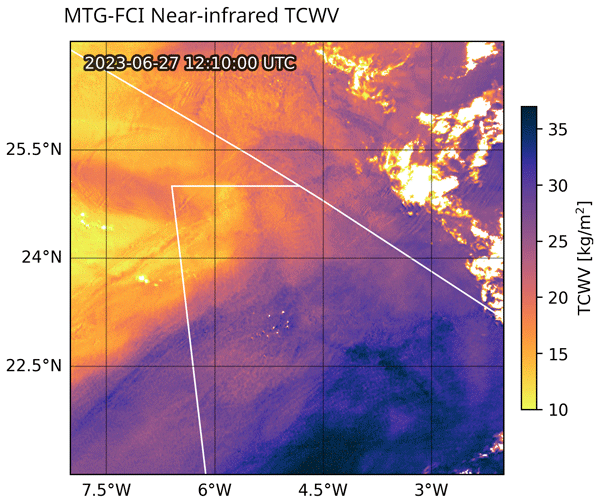
Water vapour (WV) is a key ingredient in virtually all meteorological processes. We present an algorithm which uses observations of the Flexible Combined Imager (FCI) to estimate the total column of WV (TCWV) over sun-lit, clear-sky pixels. FCI is a satellite instrument, and every 10 min it takes an image which covers Europe, Africa, and the Atlantic with a resolution of 1 km. Such high-resolution WV fields will provide valuable information for weather forecasters and researchers.
Howard W. Barker, Jason N. S. Cole, Najda Villefranque, Zhipeng Qu, Almudena Velázquez Blázquez, Carlos Domenech, Shannon L. Mason, and Robin J. Hogan
Atmos. Meas. Tech., 18, 3095–3107, https://doi.org/10.5194/amt-18-3095-2025, https://doi.org/10.5194/amt-18-3095-2025, 2025
Short summary
Short summary
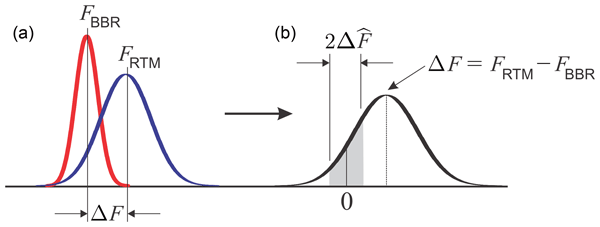
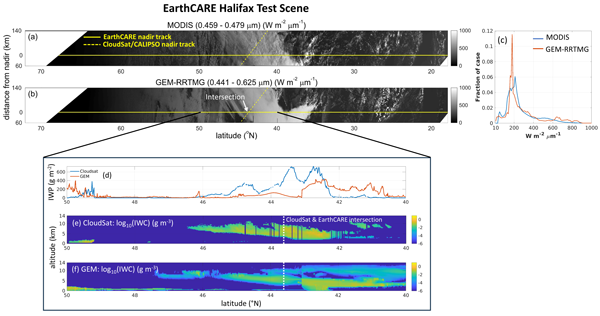
Measurements made by three instruments aboard EarthCARE are used to retrieve estimates of cloud and aerosol properties. A radiative closure assessment of these retrievals is performed by the ACMB-DF processor. Radiative transfer models acting on retrieved information produce broadband radiances commensurate with measurements made by EarthCARE’s broadband radiometer. Measured and modelled radiances for small domains are compared, and the likelihood of them differing by 10 W m2 defines the closure.
Johannes Mülmenstädt, Andrew S. Ackerman, Ann M. Fridlind, Meng Huang, Po-Lun Ma, Naser Mahfouz, Susanne E. Bauer, Susannah M. Burrows, Matthew W. Christensen, Sudhakar Dipu, Andrew Gettelman, L. Ruby Leung, Florian Tornow, Johannes Quaas, Adam C. Varble, Hailong Wang, Kai Zhang, and Youtong Zheng
Atmos. Chem. Phys., 24, 13633–13652, https://doi.org/10.5194/acp-24-13633-2024, https://doi.org/10.5194/acp-24-13633-2024, 2024
Short summary
Short summary
Stratocumulus clouds play a large role in Earth's climate by reflecting incoming solar energy back to space. Turbulence at stratocumulus cloud top mixes in dry, warm air, which can lead to cloud dissipation. This process is challenging for coarse-resolution global models to represent. We show that global models nevertheless agree well with our process understanding. Global models also think the process is less important for the climate than other lines of evidence have led us to conclude.
Abigail S. Williams, Jeramy L. Dedrick, Lynn M. Russell, Florian Tornow, Israel Silber, Ann M. Fridlind, Benjamin Swanson, Paul J. DeMott, Paul Zieger, and Radovan Krejci
Atmos. Chem. Phys., 24, 11791–11805, https://doi.org/10.5194/acp-24-11791-2024, https://doi.org/10.5194/acp-24-11791-2024, 2024
Short summary
Short summary
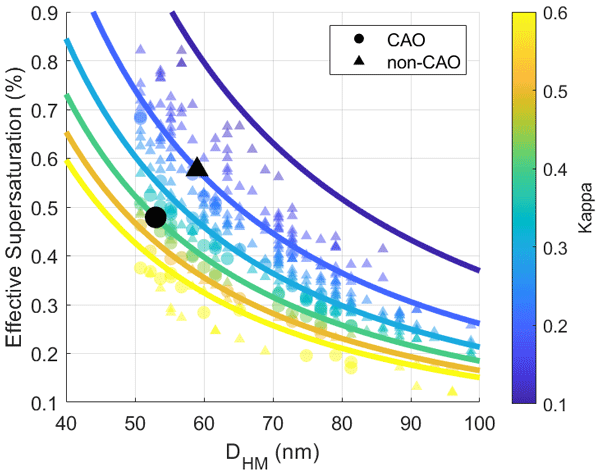
The measured aerosol size distribution modes reveal distinct properties characteristic of cold-air outbreaks in the Norwegian Arctic. We find higher sea spray number concentrations, smaller Hoppel minima, lower effective supersaturations, and accumulation-mode particle scavenging during cold-air outbreaks. These results advance our understanding of cold-air outbreak aerosol–cloud interactions in order to improve their accurate representation in models.
Tim Trent, Marc Schröder, Shu-Peng Ho, Steffen Beirle, Ralf Bennartz, Eva Borbas, Christian Borger, Helene Brogniez, Xavier Calbet, Elisa Castelli, Gilbert P. Compo, Wesley Ebisuzaki, Ulrike Falk, Frank Fell, John Forsythe, Hans Hersbach, Misako Kachi, Shinya Kobayashi, Robert E. Kursinski, Diego Loyola, Zhengzao Luo, Johannes K. Nielsen, Enzo Papandrea, Laurence Picon, Rene Preusker, Anthony Reale, Lei Shi, Laura Slivinski, Joao Teixeira, Tom Vonder Haar, and Thomas Wagner
Atmos. Chem. Phys., 24, 9667–9695, https://doi.org/10.5194/acp-24-9667-2024, https://doi.org/10.5194/acp-24-9667-2024, 2024
Short summary
Short summary
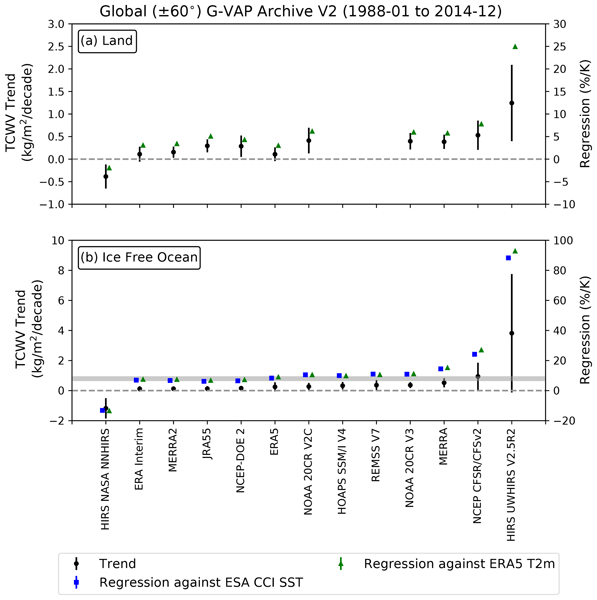
In a warmer future, water vapour will spend more time in the atmosphere, changing global rainfall patterns. In this study, we analysed the performance of 28 water vapour records between 1988 and 2014. We find sensitivity to surface warming generally outside expected ranges, attributed to breakpoints in individual record trends and differing representations of climate variability. The implication is that longer records are required for high confidence in assessing climate trends.
Johannes Mülmenstädt, Edward Gryspeerdt, Sudhakar Dipu, Johannes Quaas, Andrew S. Ackerman, Ann M. Fridlind, Florian Tornow, Susanne E. Bauer, Andrew Gettelman, Yi Ming, Youtong Zheng, Po-Lun Ma, Hailong Wang, Kai Zhang, Matthew W. Christensen, Adam C. Varble, L. Ruby Leung, Xiaohong Liu, David Neubauer, Daniel G. Partridge, Philip Stier, and Toshihiko Takemura
Atmos. Chem. Phys., 24, 7331–7345, https://doi.org/10.5194/acp-24-7331-2024, https://doi.org/10.5194/acp-24-7331-2024, 2024
Short summary
Short summary
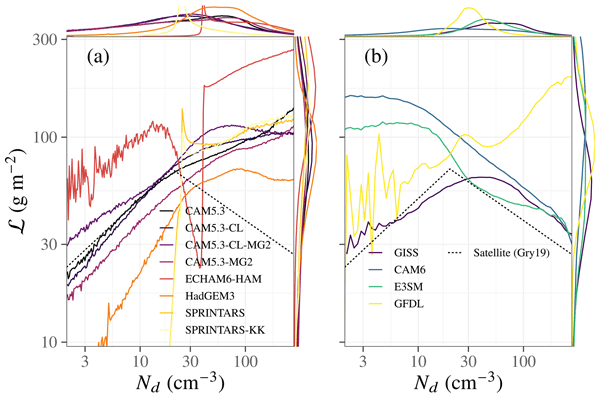
Human activities release copious amounts of small particles called aerosols into the atmosphere. These particles change how much sunlight clouds reflect to space, an important human perturbation of the climate, whose magnitude is highly uncertain. We found that the latest climate models show a negative correlation but a positive causal relationship between aerosols and cloud water. This means we need to be very careful when we interpret observational studies that can only see correlation.
Nicole Docter, Anja Hünerbein, David P. Donovan, Rene Preusker, Jürgen Fischer, Jan Fokke Meirink, Piet Stammes, and Michael Eisinger
Atmos. Meas. Tech., 17, 2507–2519, https://doi.org/10.5194/amt-17-2507-2024, https://doi.org/10.5194/amt-17-2507-2024, 2024
Short summary
Short summary
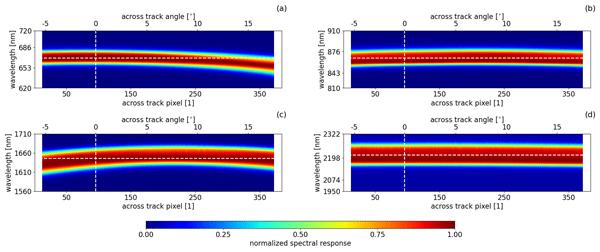
MSI is the imaging spectrometer on board EarthCARE and will provide across-track information on clouds and aerosol properties. The MSI solar channels exhibit a spectral misalignment effect (SMILE) in the measurements. This paper describes and evaluates how the SMILE will affect the cloud and aerosol retrievals that do not account for it.
Shannon L. Mason, Howard W. Barker, Jason N. S. Cole, Nicole Docter, David P. Donovan, Robin J. Hogan, Anja Hünerbein, Pavlos Kollias, Bernat Puigdomènech Treserras, Zhipeng Qu, Ulla Wandinger, and Gerd-Jan van Zadelhoff
Atmos. Meas. Tech., 17, 875–898, https://doi.org/10.5194/amt-17-875-2024, https://doi.org/10.5194/amt-17-875-2024, 2024
Short summary
Short summary
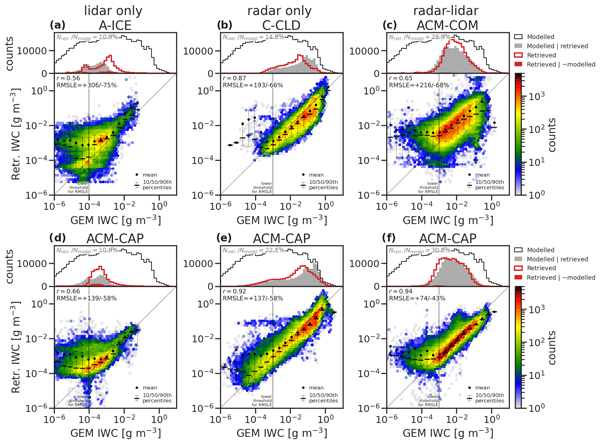
When the EarthCARE mission enters its operational phase, many retrieval data products will be available, which will overlap both in terms of the measurements they use and the geophysical quantities they report. In this pre-launch study, we use simulated EarthCARE scenes to compare the coverage and performance of many data products from the European Space Agency production model, with the intention of better understanding the relation between products and providing a compact guide to users.
Zhipeng Qu, David P. Donovan, Howard W. Barker, Jason N. S. Cole, Mark W. Shephard, and Vincent Huijnen
Atmos. Meas. Tech., 16, 4927–4946, https://doi.org/10.5194/amt-16-4927-2023, https://doi.org/10.5194/amt-16-4927-2023, 2023
Short summary
Short summary
The EarthCARE satellite mission Level 2 algorithm development requires realistic 3D cloud and aerosol scenes along the satellite orbits. One of the best ways to produce these scenes is to use a high-resolution numerical weather prediction model to simulate atmospheric conditions at 250 m horizontal resolution. This paper describes the production and validation of three EarthCARE test scenes.
Jason N. S. Cole, Howard W. Barker, Zhipeng Qu, Najda Villefranque, and Mark W. Shephard
Atmos. Meas. Tech., 16, 4271–4288, https://doi.org/10.5194/amt-16-4271-2023, https://doi.org/10.5194/amt-16-4271-2023, 2023
Short summary
Short summary
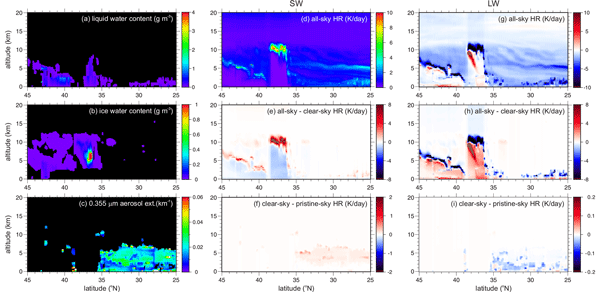
Measurements from the EarthCARE satellite mission will be used to retrieve profiles of cloud and aerosol properties. These retrievals are combined with auxiliary information about surface properties and atmospheric state, e.g., temperature and water vapor. This information allows computation of 1D and 3D solar and thermal radiative transfer for small domains, which are compared with coincident radiometer observations to continually assess EarthCARE retrievals.
Bronwyn E. Cahill, Piotr Kowalczuk, Lena Kritten, Ulf Gräwe, John Wilkin, and Jürgen Fischer
Biogeosciences, 20, 2743–2768, https://doi.org/10.5194/bg-20-2743-2023, https://doi.org/10.5194/bg-20-2743-2023, 2023
Short summary
Short summary
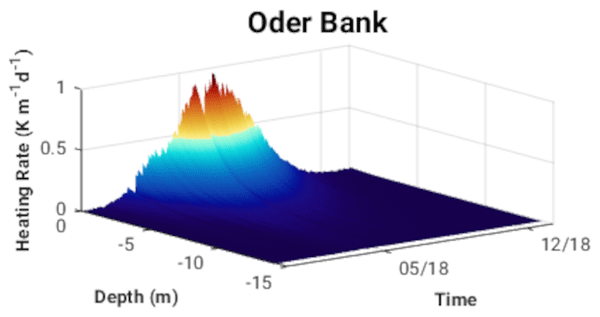
We quantify the impact of optically significant water constituents on surface heating rates and thermal energy fluxes in the western Baltic Sea. During productive months in 2018 (April to September) we found that the combined effect of coloured
dissolved organic matter and particulate absorption contributes to sea surface heating of between 0.4 and 0.9 K m−1 d−1 and a mean loss of heat (ca. 5 W m−2) from the sea to the atmosphere. This may be important for regional heat balance budgets.
Nicole Docter, Rene Preusker, Florian Filipitsch, Lena Kritten, Franziska Schmidt, and Jürgen Fischer
Atmos. Meas. Tech., 16, 3437–3457, https://doi.org/10.5194/amt-16-3437-2023, https://doi.org/10.5194/amt-16-3437-2023, 2023
Short summary
Short summary
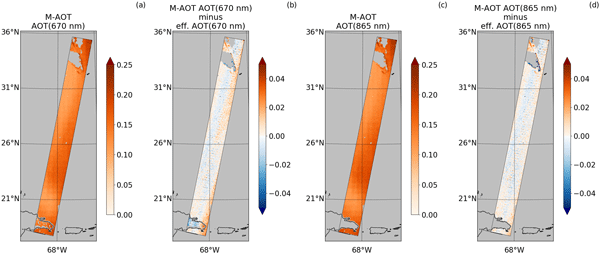
We describe the stand-alone retrieval algorithm used to derive aerosol properties relying on measurements of the Multi-Spectral Imager (MSI) aboard the upcoming Earth Clouds, Aerosols and Radiation Explorer (EarthCARE) satellite. This aerosol data product will be available as M-AOT after the launch of EarthCARE. Additionally, we applied the algorithm to simulated EarthCARE MSI and Moderate Resolution Imaging Spectroradiometer (MODIS) data for prelaunch algorithm verification.
Lena Katharina Jänicke, Rene Preusker, Marco Celesti, Marin Tudoroiu, Jürgen Fischer, Dirk Schüttemeyer, and Matthias Drusch
Atmos. Meas. Tech., 16, 3101–3121, https://doi.org/10.5194/amt-16-3101-2023, https://doi.org/10.5194/amt-16-3101-2023, 2023
Short summary
Short summary
To compare two top-of-atmosphere radiances measured by instruments with different spectral characteristics, a transfer function has been developed. It is applied to a tandem data set of Sentinel-3A and B, for which OLCI-B mimicked the ESA’s eighth Earth Explorer FLEX. We found that OLCI-A measured radiances about 2 % brighter than OLCI-FLEX. Only at larger wavelengths were OLCI-A measurements about 5 % darker. The method is thus successful, being sensitive to calibration and processing issues.
Zhipeng Qu, Howard W. Barker, Jason N. S. Cole, and Mark W. Shephard
Atmos. Meas. Tech., 16, 2319–2331, https://doi.org/10.5194/amt-16-2319-2023, https://doi.org/10.5194/amt-16-2319-2023, 2023
Short summary
Short summary
This paper describes EarthCARE’s L2 product ACM-3D. It includes the scene construction algorithm (SCA) used to produce the indexes for reconstructing 3D atmospheric scene based on satellite nadir retrievals. It also provides the information about the buffer zone sizes of 3D assessment domains and the ranking scores for selecting the best 3D assessment domains. These output variables are needed to run 3D radiative transfer models for the radiative closure assessment of EarthCARE’s L2 retrievals.
Florian Tornow, Andrew S. Ackerman, and Ann M. Fridlind
Atmos. Chem. Phys., 21, 12049–12067, https://doi.org/10.5194/acp-21-12049-2021, https://doi.org/10.5194/acp-21-12049-2021, 2021
Short summary
Short summary
Cold air outbreaks affect the local energy budget by forming bright boundary layer clouds that, once it rains, evolve into dimmer, broken cloud fields that are depleted of condensation nuclei – an evolution consistent with closed-to-open cell transitions. We find that cloud ice accelerates this evolution, primarily via riming prior to rain onset, which (1) reduces liquid water, (2) reduces condensation nuclei, and (3) leads to early precipitation cooling and moistening below cloud.
Cited articles
Barker, H. W., Wiellicki, B. A., and Parker, L.: A Parameterization for Computing Grid-Averaged Solar Fluxes for Inhomogeneous Marine Boundary Layer Clouds. Part II: Validation Using Satellite Data, J. Atmos. Sci., 53, 2304–2316, https://doi.org/10.1175/1520-0469(1996)053<2304:APFCGA>2.0.CO;2, 1996. a, b
Barker, H. W., Goldstein, R. K., and Stevens, D. E.: Monte Carlo Simulation of Solar Reflectances for Cloudy Atmospheres, J. Atmos. Sci., 60, 1881–1894, https://doi.org/10.1175/1520-0469(2003)060<1881:MCSOSR>2.0.CO;2, 2003. a, b
Brenguier, J.-L., Pawlowska, H., Schüller, L., Preusker, R., Fischer, J., and Fouquart, Y.: Radiative Properties of Boundary Layer Clouds: Droplet Effective Radius versus Number Concentration, J. Atmos. Sci., 57, 803–821, https://doi.org/10.1175/1520-0469(2000)057<0803:RPOBLC>2.0.CO;2, 2000. a
Coakley, J. A. and Chylek, P.: The Two-Stream Approximation in Radiative Transfer: Including the Angle of the Incident Radiation, J. Atmos. Sci., 32, 409–418, https://doi.org/10.1175/1520-0469(1975)032<0409:ttsair>2.0.co;2, 1975. a
Cole, J. N. S., Barker, H. W., Qu, Z., Villefranque, N., and Shephard, M. W.: Broadband radiative quantities for the EarthCARE mission: the ACM-COM and ACM-RT products, Atmos. Meas. Tech., 16, 4271–4288, https://doi.org/10.5194/amt-16-4271-2023, 2023. a
Dewitte, S., Gonzalez, L., Clerbaux, N., Ipe, A., Bertrand, C., and De Paepe, B.: The Geostationary Earth Radiation Budget Edition 1 data processing algorithms, Adv. Space Res., 41, 1906–1913, https://doi.org/10.1016/j.asr.2007.07.042, 2008. a
Domenech, C. and Wehr, T.: Use of Artificial Neural Networks to Retrieve TOA SW Radiative Fluxes for the EarthCARE Mission, IEEE T. Geosci. Remote, 49, 1839–1849, https://doi.org/10.1109/tgrs.2010.2102768, 2011. a
Forster, P., Storelvmo, T., Armour, K., Collins, W., Dufresne, J.-L., Frame, D., Lunt, D. J., Mauritsen, T., Palmer, M. D., Watanabe, M., Wild, M., and Zhang, H.: The Earth’s Energy Budget, Climate Feedbacks, and Climate Sensitivity, in: Climate Change 2021: The Physical Science Basis. Contribution of Working Group I to the Sixth Assessment Report of the Intergovernmental Panel on Climate Change, edited by: Masson-Delmotte, V., Zhai, P., Pirani, A., Connors, S. L., Péan, C., Berger, S., Caud, N., Chen, Y., Goldfarb, L., Gomis, M. I., Huang, M., Leitzell, K., Lonnoy, E., Matthews, J. B. R., Maycock, T. K., Waterfield, T., Yelekçi, O., Yu, R., and Zhou, B., Cambridge University Press, Cambridge, United Kingdom and New York, NY, USA, 923–1054, https://doi.org/10.1017/9781009157896.009, 2021. a
Gristey, J. J., Su, W., Loeb, N. G., Vonder Haar, T. H., Tornow, F., Schmidt, S. K., Hakuba, M. Z., Pilewskie, P., and Russell, J. E.: Shortwave radiance to irradiance conversion for Earth radiation budget satellite observations: A review, Remote Sensing, 13, 2640, https://doi.org/10.3390/rs13132640, 2021. a
Loeb, N. G. and Manalo-Smith, N.: Top-of-Atmosphere Direct Radiative Effect of Aerosols over Global Oceans from Merged CERES and MODIS Observations, J. Climate, 18, 3506–3526, https://doi.org/10.1175/jcli3504.1, 2005. a
Loeb, N. G., Manalo-Smith, N., Kato, S., Miller, W. F., Gupta, S. K., Minnis, P., and Wielicki, B. A.: Angular Distribution Models for Top-of-Atmosphere Radiative Flux Estimation from the Clouds and the Earth’s Radiant Energy System Instrument on the Tropical Rainfall Measuring Mission Satellite. Part I: Methodology, J. Appl. Meteorol., 42, 240–265, https://doi.org/10.1175/1520-0450(2003)042<0240:ADMFTO>2.0.CO;2, 2003. a
Loeb, N. G., Kato, S., Loukachine, K., and Manalo-Smith, N.: Angular Distribution Models for Top-of-Atmosphere Radiative Flux Estimation from the Clouds and the Earth's Radiant Energy System Instrument on the Terra Satellite. Part I: Methodology, J. Atmos. Ocean. Tech., 22, 338–351, https://doi.org/10.1175/jtech1712.1, 2005. a, b
Madenach, N.: Seeking TOA SW flux closure over semi-synthetic 3D cloud fields Notebook, Version v1, Zenodo [data set/code], https://doi.org/10.5281/zenodo.18460315, 2026. a
Marchuk, G. I., Mikhailov, G. A., Nazaraliev, M. A., Darbinjan, R. A., Kargin, B. A., and Elepov, B. S.: Monte Carlo Methods in Atmospheric Optics, in: Optical Science Series, Springer Verlag, 12, 208 pp., https://doi.org/10.1007/978-3-540-35237-2, 1980. a, b
Mayer, B., Schröder, M., Preusker, R., and Schüller, L.: Remote sensing of water cloud droplet size distributions using the backscatter glory: a case study, Atmos. Chem. Phys., 4, 1255–1263, https://doi.org/10.5194/acp-4-1255-2004, 2004. a
Smith, G. L., Green, R. N., Raschke, E., Avis, L. M., Suttles, J. T., Wielicki, B. A., and Davies, R.: Inversion methods for satellite studies of the Earth's Radiation Budget: Development of algorithms for the ERBE Mission, Rev. Geophys., 24, 407–421, https://doi.org/10.1029/rg024i002p00407, 1986. a
Tornow, F., Preusker, R., Domenech, C., Henken, C., and Testorp, S.: Top-of-Atmosphere Shortwave Anisotropy over Liquid Clouds: Sensitivity to Clouds' Microphysical Structure and Cloud-Topped Moisture, Atmosphere, 9, https://doi.org/10.3390/atmos9070256, 2018. a, b
Tornow, F., Domenech, C., and Fischer, J.: On the Use of Geophysical Parameters for the Top-of-Atmosphere Shortwave Clear-Sky Radiance-to-Flux Conversion in EarthCARE, J. Atmos. Ocean. Tech., 36, 717–732, https://doi.org/10.1175/jtech-d-18-0087.1, 2019. a
Velázquez Blázquez, A., Baudrez, E., Clerbaux, N., and Domenech, C.: Unfiltering of the EarthCARE Broadband Radiometer (BBR) observations: the BM-RAD product, Atmos. Meas. Tech., 17, 4245–4256, https://doi.org/10.5194/amt-17-4245-2024, 2024a. a
Velázquez Blázquez, A., Domenech, C., Baudrez, E., Clerbaux, N., Salas Molar, C., and Madenach, N.: Retrieval of top-of-atmosphere fluxes from combined EarthCARE lidar, imager, and broadband radiometer observations: the BMA-FLX product, Atmos. Meas. Tech., 17, 7007–7026, https://doi.org/10.5194/amt-17-7007-2024, 2024b. a, b, c
Viollier, M., Standfuss, C., Chomette, O., and Quesney, A.: Top-of-Atmosphere Radiance-to-Flux Conversion in the SW Domain for the ScaRaB-3 Instrument on Megha-Tropiques, J. Atmos. Ocean. Tech., 26, 2161–2171, https://doi.org/10.1175/2009jtecha1264.1, 2009. a
Wehr, T., Kubota, T., Tzeremes, G., Wallace, K., Nakatsuka, H., Ohno, Y., Koopman, R., Rusli, S., Kikuchi, M., Eisinger, M., Tanaka, T., Taga, M., Deghaye, P., Tomita, E., and Bernaerts, D.: The EarthCARE mission – science and system overview, Atmos. Meas. Tech., 16, 3581–3608, https://doi.org/10.5194/amt-16-3581-2023, 2023. a
Wild, M., Folini, D., Hakuba, M. Z., Schär, C., Seneviratne, S. I., Kato, S., Rutan, D., Ammann, C., Wood, E. F., and König-Langlo, G.: The energy balance over land and oceans: an assessment based on direct observations and CMIP5 climate models, Clim. Dynam., 44, 3393–3429, https://doi.org/10.1007/s00382-014-2430-z, 2014. a
Wild, M., Hakuba, M. Z., Folini, D., Dörig-Ott, P., Schär, C., Kato, S., and Long, C. N.: The cloud-free global energy balance and inferred cloud radiative effects: an assessment based on direct observations and climate models, Clim. Dynam., 52, 4787–4812, https://doi.org/10.1007/s00382-018-4413-y, 2018. a
Short summary
In this study three-dimensional cloud fields with different macro- and microphysical properties are generated and used to simulate the top of atmosphere short wave radiances and fluxes. The simulations are compared to two radiance-to-irradiance conversion approaches. Especially for viewing angles in the backscattering direction the approach that is aware of the cloud microphysics results in better flux estimates.
In this study three-dimensional cloud fields with different macro- and microphysical properties...