
Articles | Volume 19, issue 4
https://doi.org/10.5194/amt-19-1165-2026
© Author(s) 2026. This work is distributed under
the Creative Commons Attribution 4.0 License.
the Creative Commons Attribution 4.0 License.
https://doi.org/10.5194/amt-19-1165-2026
© Author(s) 2026. This work is distributed under
the Creative Commons Attribution 4.0 License.
the Creative Commons Attribution 4.0 License.
Research article
| 
17 Feb 2026
Research article |
| 17 Feb 2026
| 17 Feb 2026
An intercomparison of aircraft sulfur dioxide measurements in clean and polluted marine environments
Loren G. Temple
Wolfson Atmospheric Chemistry Laboratories, Department of Chemistry, University of York, York, UK
now at: Plymouth Marine Laboratory, Prospect Place, Plymouth, UK
Stuart Young
Wolfson Atmospheric Chemistry Laboratories, Department of Chemistry, University of York, York, UK
Thomas Bannan
Department of Earth and Environmental Sciences, University of Manchester, Manchester, UK
Stephanie E. Batten
Facility for Airborne Atmospheric Measurements, National Centre for Atmospheric Science, Cranfield University, Cranfield, UK
now at: Department of Earth Sciences, Royal Holloway, University of London, UK
Stéphane Bauguitte
Facility for Airborne Atmospheric Measurements, National Centre for Atmospheric Science, Cranfield University, Cranfield, UK
Department of Earth and Environmental Sciences, University of Manchester, Manchester, UK
National Centre for Atmospheric Science, University of Manchester, Manchester, UK
Eve Grant
Wolfson Atmospheric Chemistry Laboratories, Department of Chemistry, University of York, York, UK
Stuart E. Lacy
Wolfson Atmospheric Chemistry Laboratories, Department of Chemistry, University of York, York, UK
James D. Lee
Wolfson Atmospheric Chemistry Laboratories, Department of Chemistry, University of York, York, UK
National Centre for Atmospheric Science, University of York, York, UK
Emily Matthews
Department of Earth and Environmental Sciences, University of Manchester, Manchester, UK
Dominika Pasternak
Wolfson Atmospheric Chemistry Laboratories, Department of Chemistry, University of York, York, UK
now at: Deutsches Zentrum für Luft- und Raumfahrt (DLR) Oberpfaffenhofen, Germany
Samuel D. A. Rogers
Wolfson Atmospheric Chemistry Laboratories, Department of Chemistry, University of York, York, UK
Andrew W. Rollins
Chemical Sciences Laboratory, National Oceanic and Atmospheric Administration, Boulder, CO, USA
Jake Vallow
Wolfson Atmospheric Chemistry Laboratories, Department of Chemistry, University of York, York, UK
Mingxi Yang
Plymouth Marine Laboratory, Prospect Place, Plymouth, UK

Wolfson Atmospheric Chemistry Laboratories, Department of Chemistry, University of York, York, UK
National Centre for Atmospheric Science, University of York, York, UK
Related authors
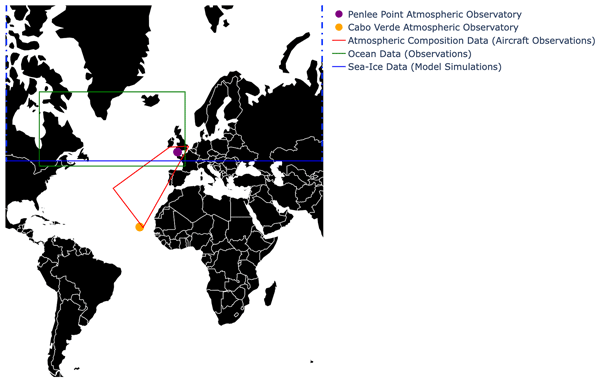
Alex T. Archibald, Bablu Sinha, Maria R. Russo, Emily Matthews, Freya A. Squires, N. Luke Abraham, Stephane J.-B. Bauguitte, Thomas J. Bannan, Thomas G. Bell, David Berry, Lucy J. Carpenter, Hugh Coe, Andrew Coward, Peter Edwards, Daniel Feltham, Dwayne Heard, Jim Hopkins, James Keeble, Elizabeth C. Kent, Brian A. King, Isobel R. Lawrence, James Lee, Claire R. Macintosh, Alex Megann, Bengamin I. Moat, Katie Read, Chris Reed, Malcolm J. Roberts, Reinhard Schiemann, David Schroeder, Timothy J. Smyth, Loren Temple, Navaneeth Thamban, Lisa Whalley, Simon Williams, Huihui Wu, and Mingxi Yang
Earth Syst. Sci. Data, 17, 135–164, https://doi.org/10.5194/essd-17-135-2025, https://doi.org/10.5194/essd-17-135-2025, 2025
Short summary
Short summary
Here, we present an overview of the data generated as part of the North Atlantic Climate System Integrated Study (ACSIS) programme that are available through dedicated repositories at the Centre for Environmental Data Analysis (CEDA; www.ceda.ac.uk) and the British Oceanographic Data Centre (BODC; bodc.ac.uk). The datasets described here cover the North Atlantic Ocean, the atmosphere above (it including its composition), and Arctic sea ice.
Xuewei Hou, Ryan Hossaini, Oliver Wild, James Lee, and Ye Wang
EGUsphere, https://doi.org/10.5194/egusphere-2026-5718, https://doi.org/10.5194/egusphere-2026-5718, 2026
This preprint is open for discussion and under review for Geoscientific Model Development (GMD).
Short summary
Short summary
Methane affects both climate and atmospheric chemistry. We compared different ways of representing methane in a global model and found that simulating methane from its emissions better reproduces observed patterns and regional trends. More importantly, it captures the long-term response of methane and atmospheric oxidants to emission changes, which cannot be fully represented when methane concentrations are prescribed.
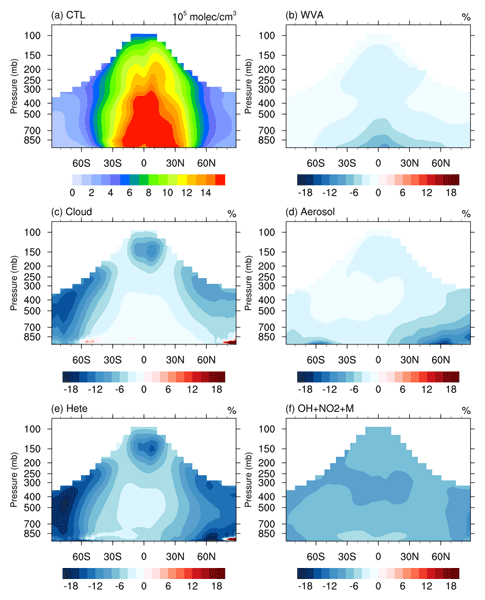
Xuewei Hou, Ryan Hossaini, Oliver Wild, Andrea Mazzeo, Richard J. Pope, Ye Wang, Siyuan Wang, Yuanhong Zhao, James Lee, Bin Zhu, Tianliang Zhao, and Alok K. Pandey
Atmos. Chem. Phys., 26, 13767–13793, https://doi.org/10.5194/acp-26-13767-2026, https://doi.org/10.5194/acp-26-13767-2026, 2026
Short summary
Short summary
The atmosphere’s ability to remove pollutants and greenhouse gases is largely controlled by the hydroxyl radical, but the causes of its long-term changes remain uncertain. Using a global atmospheric model, we quantified the effects of emissions, weather, and key chemical processes on hydroxyl radical levels between 2000 and 2017. Our findings improve understanding of atmospheric self-cleansing and help reduce uncertainties in future climate assessments.
Sara Aisyah Syafira, Aristeidis Voliotis, Dawei Hu, Osayomwanbor Oghama, Huihui Wu, Yunqi Shao, Rhianna Evans, Jie Chen, Yu Wang, Peter Gallimore, James Allan, Hugh Coe, and Gordon McFiggans
EGUsphere, https://doi.org/10.5194/egusphere-2026-4932, https://doi.org/10.5194/egusphere-2026-4932, 2026
This preprint is open for discussion and under review for Atmospheric Measurement Techniques (AMT).
Short summary
Short summary
This current work describes a biomass burning (BB) aerosol facility at the University of Manchester that provides a repeatable, flexible system and platform for mechanistic and multiparameter investigation of fresh and aged BB aerosol. The characteristics, as well as those capabilities of the facility across fuel types and combustions were demonstrated here.
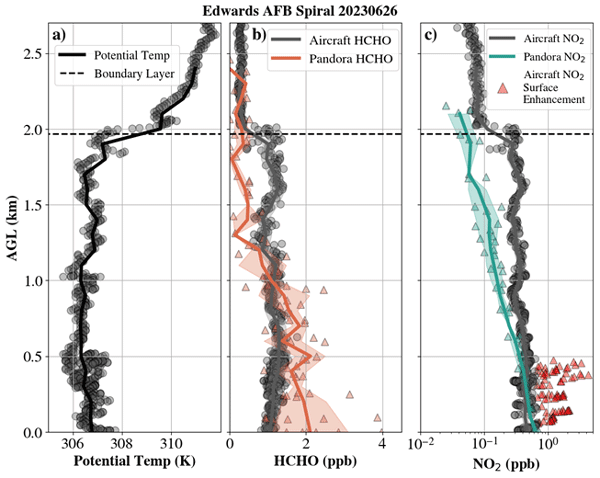
Abby Sebol, Glenn M. Wolfe, Timothy Canty, Jason St. Clair, Erin Delaria, Jennifer Kaiser, Nidhi Desai, Andrew Rollins, Eleanor Waxman, Kristen Zuraski, Bryan Place, Apoorva Pandey, Akanksha Singh, Allison Ring, Charles Gatebe, and Jonathan Dean-Day
Atmos. Meas. Tech., 19, 5539–5552, https://doi.org/10.5194/amt-19-5539-2026, https://doi.org/10.5194/amt-19-5539-2026, 2026
Short summary
Short summary
Ground-based spectrometers measuring HCHO and NO2 were compared to airborne in situ observations in the Summer 2023. Total column HCHO is within uncertainty, but with high biases near the surface. NO2 results are highly sensitive to the viewing angle of the ground monitor which must be considered during validation studies. Spectrometers in NYC show good agreement with a geostationary satellite on clear-sky days. Further quantified uncertainty for the monitors is necessary.
Magesh Mohan, Amy Sullivan, Emily Lill, Ilana Pollack, Alison Piasecki, Sarah Albertin, Ann Middlebrook, Wyndom Chace, Andrew Rollins, Carsten Warneke, Steven Brown, Lu Xu, Katherine Ball, John Crounse, Paul Wennberg, Stelios Kakavas, Spyros Pandis, Athanasios Nenes, and Rodney Weber
EGUsphere, https://doi.org/10.5194/egusphere-2026-4960, https://doi.org/10.5194/egusphere-2026-4960, 2026
This preprint is open for discussion and under review for Atmospheric Chemistry and Physics (ACP).
Short summary
Short summary
Atmospheric fine particles contain liquid water and can be highly acidic. The amount of water and the acidity affect how these particles impact human health, ecosystems, and climate. Flying an aircraft across the continental United States in summer 2023, with a focus on four North American cities, we measured the properties needed to model particle water and acidity. We found the particles were consistently strongly acidic, even within wildfire smoke, and verified the model against observations.
Yarê Baker, Veronica Geretti, Sungah Kang, Rongrong Wu, Hui Wang, Quanfu He, Thorsten Hohaus, Annika Zanders, Mathias Bachner, Cheng Wu, Thomas J. Bannan, Simon P. O'Meara, Aristeides Voliotis, Mattias Hallquist, Gordon McFiggans, Sören R. Zorn, and Thomas F. Mentel
EGUsphere, https://doi.org/10.5194/egusphere-2026-4788, https://doi.org/10.5194/egusphere-2026-4788, 2026
Short summary
Short summary
Highly oxygenated molecules (HOMs) are important contributors to global organic aerosol production. The production of HOMs is based on the reaction pathways of peroxy radicals (RO2). In this work we systematically varied available RO2 reaction partners in a-pinene photooxidation experiments in an atmospheric simulation chamber. The results show which factors impact HOM formation and volatility and offer a mechanistic framework for interpreting laboratory and atmospheric observations.
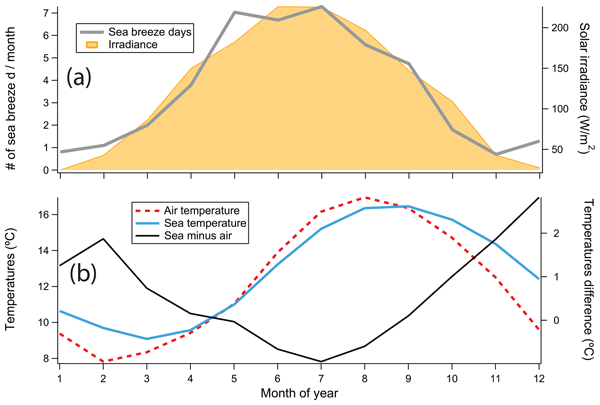
Mingxi Yang, Thomas G. Bell, Ian Brooks, Frances Hopkins, Jani Pewter, Katie Read, and Timothy J. Smyth
Atmos. Chem. Phys., 26, 10909–10926, https://doi.org/10.5194/acp-26-10909-2026, https://doi.org/10.5194/acp-26-10909-2026, 2026
Short summary
Short summary
Diurnal sea breeze events can have a strong but uncertain impact on coastal air quality. In this study, using 10 years of observations we show that sea breeze occurs mostly when the sea is cool, wind speeds low, and solar irradiance strong. Surface of gas and particulate pollutants are all higher during sea breeze events than on other days, increasing the rate of air quality regulation exceedance. This may be of concern for beach goers and for people who spend more time outdoors.
Audrey McManemin, Catherine Juéry, Vincent Blandin, Matthew Baker, Stéphane Bauguitte, Dominik Brunner, Philippine Burdeau, James Lawrence France, Anders M. Fredenslund, Andreas Hueni, Gerrit Kuhlmann, Patryk Łakomiec, Sando Meier, Roberto Paglini, Roubina Papaconstantinou, Jean-Daniel Paris, Pierre-Yves Quehe, Thomas Röckmann, Charlotte Scheutz, Martina Schmidt, Marius Vögtli, Julia B. Wietzel, and Adam R. Brandt
EGUsphere, https://doi.org/10.5194/egusphere-2026-1744, https://doi.org/10.5194/egusphere-2026-1744, 2026
Short summary
Short summary
Researchers tested five university-led systems to measure methane leaks at a facility in France. By releasing known amounts of gas, researchers checked if mobile tools on vehicles and planes could accurately detect and quantify emissions. Most sensors were excellent at finding leaks, but their accuracy in measuring the exact emission rate varied. Weather, especially low wind, significantly impacted results. These findings help improve how we track greenhouse gases to meet climate goals.
Yuwei Wang, Aristeidis Voliotis, Emily Matthews, Rongrong Wu, Milan Roska, Max Gerrit Adam, René Dubus, Lukas Kesper, Franz Rohrer, Robert Wegener, Benjamin Winter, Kelvin H. Bates, Quanfu He, Thorsten Hohaus, Achim Grasse, Ralf Tillmann, Andreas Wahner, Hui Wang, Christian Wesolek, Sergej Wedel, Yizhen Wu, Sören R. Zorn, Manjula Canagaratna, Douglas Worsnop, Felipe Lopez-Hilfiker, Georgios I. Gkatzelis, Hugh Coe, and Thomas J. Bannan
Atmos. Meas. Tech., 19, 4583–4599, https://doi.org/10.5194/amt-19-4583-2026, https://doi.org/10.5194/amt-19-4583-2026, 2026
Short summary
Short summary
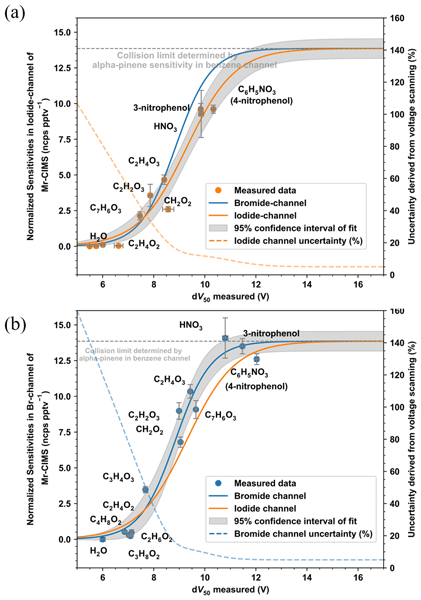
This work developed voltage scanning based calibration approach for a multi-reagent chemical ionization mass spectrometry. This approach improves sensitivity determination for gas-phase compounds. It does not require a calibrant for the target analyte and can estimate sensitivity with acceptable uncertainty based on the experimentally established relationship between binding energies and measured sensitivities. This work is broadly relevant to mass-spectrometric calibration strategies.
Sara Aisyah Syafira, Dawei Hu, Aristeidis Voliotis, Huihui Wu, Osayomwanbor Ebenezer Oghama, Yunqi Shao, Sri Hapsari Budisulistiorini, Yu Wang, Michael Flynn, Peter James Gallimore, Hugh Coe, James Allan, and Gordon McFiggans
EGUsphere, https://doi.org/10.5194/egusphere-2026-2723, https://doi.org/10.5194/egusphere-2026-2723, 2026
Short summary
Short summary
The variability in hygroscopicity of biomass-burning aerosol particles, both fresh and aged, was measured using three methods across different fuel types and burn phases. Several inter-method discrepancy factors were tested. Substantial discrepancies remained after applying improvements that mitigated the tested factors: size-related factors and organic hygroscopicity assumption factor, highlighting the need for regime-aware κ parameterizations in atmospheric and climate models.
Guangzhao Xie, Aristeidis Voliotis, Thomas J. Bannan, Yunqi Shao, Huihui Wu, Dawei Hu, and Gordon McFiggans
Atmos. Chem. Phys., 26, 9679–9696, https://doi.org/10.5194/acp-26-9679-2026, https://doi.org/10.5194/acp-26-9679-2026, 2026
Short summary
Short summary
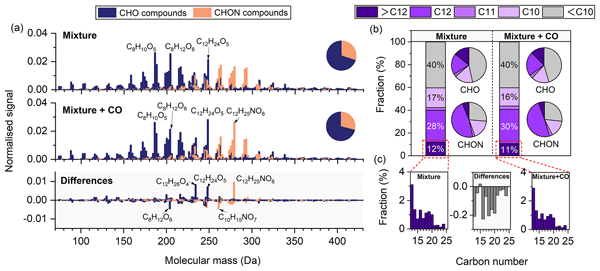
Achieving atmospheric relevance in chamber experiments is essential for improving our understanding of secondary organic aerosol (SOA) formation. We employed a photochemical system including mixtures of biogenic and anthropogenic precursors with inorganic trace gases. The results show that CO affected SOA particle mass yields and chemical composition differently in single- and mixed-precursor systems, highlighting the importance of accounting for atmospheric complexity in laboratory studies.
Thomas C. Moore, James R. Hopkins, Will S. Drysdale, Stuart Young, Sri Hapsari Budisulistiorini, Marvin D. Shaw, Mackenzie LeVernois, James L. France, David Lowry, and James D. Lee
Atmos. Meas. Tech., 19, 4459–4475, https://doi.org/10.5194/amt-19-4459-2026, https://doi.org/10.5194/amt-19-4459-2026, 2026
Short summary
Short summary
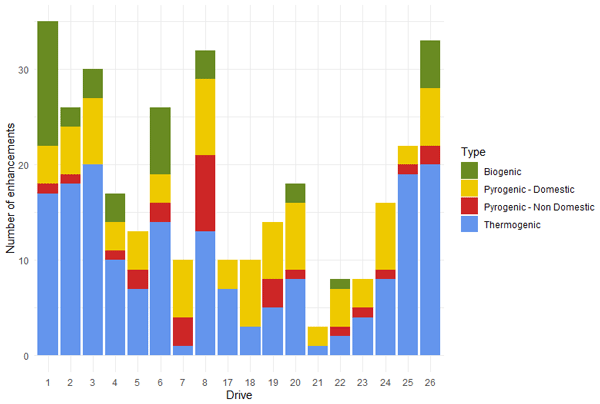
The Global Methane Pledge has led to increased effort to reduce methane emissions globally. One sector under increased scrutiny is the oil and gas industry, a major source of methane in this industry is from fugitive emissions (gas leaks). Locating these from pipework in cities requires mobile measurements. This work adapts previous methodologies to detect smaller leaks and suggests previous methods may detect 53.5 % less gas leaks.
Zixuan Cheng, Doğuşhan Kılıç, Daniel Wilson, Amanda Lea-Langton, Michael Flynn, Leonard Kirago, Marvin Shaw, Andrew Rickard, Jim R. Hopkins, Daniel Bryant, Gordon McFiggans, Jacqueline F. Hamilton, Hugh Coe, and James Allan
Aerosol Research Discuss., https://doi.org/10.5194/ar-2026-24, https://doi.org/10.5194/ar-2026-24, 2026
Revised manuscript under review for AR
Short summary
Short summary
Wood burning is seen as cleaner in modern stoves, but user behaviour can change this when burning dry wood. We burned dry ash wood in a UK modern stove with six common operations and measured the wood smoke. Reloading while hot, using too much or too little wood, or opening the stove door increased small particels and harmful smoke emissions. We found a burning stage that helps explain these emissions. Using big pieces of wood and following guidance can reduce pollution and health risks.
Farhan R. Nursanto, Quanfu He, Sophia van de Wouw, Annika Zanders, Thorsten Hohaus, Willem S. J. Kroese, Robert Wegener, Max Gerrit Adam, Benjamin Winter, René Dubus, Lukas Kesper, Franz Rohrer, Yuwei Wang, Emily Matthews, Aristeidis Voliotis, Thomas J. Bannan, Gordon McFiggans, Hugh Coe, Yizhen Wu, Milan Roska, Manjula Canagaratna, Mitch Alton, Matthew M. Coggon, Chelsea E. Stockwell, Kelvin H. Bates, Eva Y. Pfannerstill, Sören R. Zorn, Hui Wang, Matthieu Riva, Sebastien Perrier, Boxing Yang, Lu Liu, Anna Novelli, Michelle Färber, Hendrik Fuchs, Andrea Carolina Marcillo Lara, Achim Grasse, Christian Wesolek, Ralf Tillmann, Rupert Holzinger, Maarten C. Krol, Georgios I. Gkatzelis, and Juliane L. Fry
Atmos. Chem. Phys., 26, 8425–8453, https://doi.org/10.5194/acp-26-8425-2026, https://doi.org/10.5194/acp-26-8425-2026, 2026
Short summary
Short summary
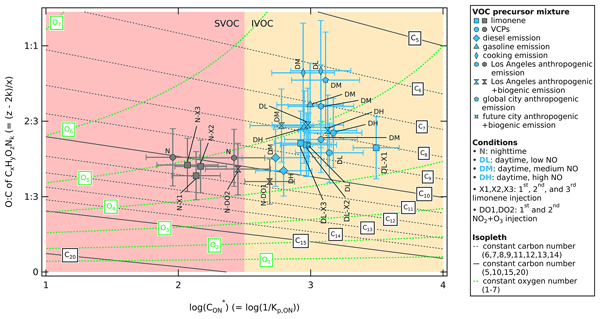
Urban air contains reactive gases that can form organic nitrate particles and carry nitrogen oxides pollution far from cities. We recreated urban emissions in a large atmospheric chamber and observed their reactions under day and night conditions. We found that these emissions form organic nitrate particles similar to those from natural sources, with higher amounts and heavier particles at night, making nitrogen pollution longer lived and likely to travel further before depositing on ecosystems.
Guangzhao Xie, Aristeidis Voliotis, Thomas J. Bannan, Yunqi Shao, Huihui Wu, Dawei Hu, and Gordon McFiggans
EGUsphere, https://doi.org/10.5194/egusphere-2026-2826, https://doi.org/10.5194/egusphere-2026-2826, 2026
Short summary
Short summary
NOx plays a crucial role in secondary organic aerosol (SOA) formation. However, most studies have focused on its effects on individual SOA precursors. This study investigated the effects of NOx on SOA particle mass yields and chemical composition from a biogenic-anthropogenic mixture. The results reveal that the effects of NOx in the mixed-precursor systems cannot be interpreted as a simple combination of behaviours observed in individual precursor systems.
Frances E. Hopkins, Daniel P. Phillips, Yinghao Chen, Peter S. Liss, and Mingxi Yang
EGUsphere, https://doi.org/10.5194/egusphere-2026-610, https://doi.org/10.5194/egusphere-2026-610, 2026
Short summary
Short summary
Our study reveals how the surface ocean produces gases when it reacts with ozone. We found that this process changes in response to seasonal changes in ocean biology. By testing fresh seawater and natural organic material, we showed that shifts in plankton and related chemistry strongly affect which gases form. These results help improve predictions of air quality and climate by revealing a natural source of important atmospheric gases.
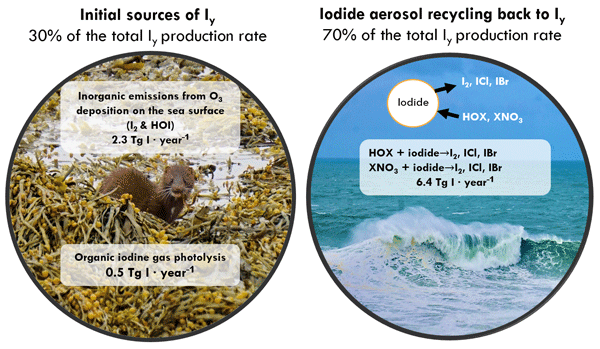
Allison R. Moon, Leyang Liu, Xuan Wang, Yuk-Chun Chan, Alyson Fritzmann, Ryan Pound, Amy Lees, Lewis Marden, Mat Evans, Lucy J. Carpenter, Jochen Stutz, Joel A. Thornton, Gordon Novak, Andrew Rollins, Gregory P. Schill, Xu-Cheng He, Henning Finkenzeller, Mago Reza, Rainer Volkamer, Kelvin H. Bates, Alfonso Saiz-Lopez, Anoop S. Mahajan, and Becky Alexander
Atmos. Chem. Phys., 26, 2353–2389, https://doi.org/10.5194/acp-26-2353-2026, https://doi.org/10.5194/acp-26-2353-2026, 2026
Short summary
Short summary
Global chemical transport models previously treated aerosols as a sink for reactive iodine (Iy); however, aerosol iodide is also a source of Iy via heterogeneous reactions involving hypohalous acids and halogen nitrates. We implemented this chemistry into GEOS-Chem, in addition to explicitly representing three aerosol iodine types: soluble organic iodine (SOI), iodide, and iodate. We found that aerosol recycling of iodide to form Iy is more than twice as fast as the other Iy sources combined.
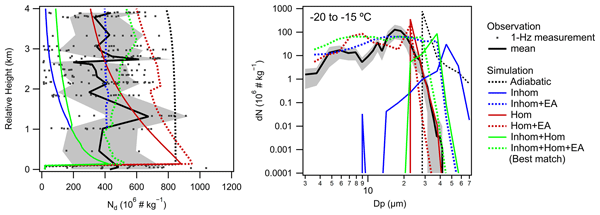
Huihui Wu, Nicholas Marsden, Paul Connolly, Michael Flynn, Paul I. Williams, Declan Finney, Kezhen Hu, Graeme J. Nott, Navaneeth M. Thamban, Keith Bower, Alan Blyth, Martin Gallagher, and Hugh Coe
Atmos. Chem. Phys., 25, 18409–18429, https://doi.org/10.5194/acp-25-18409-2025, https://doi.org/10.5194/acp-25-18409-2025, 2025
Short summary
Short summary
Airborne observations over the Magdalena Mountains in New Mexico underscore the combined influence of meteorological conditions and aerosol characteristics on the development of deep-convective clouds under different flow regimes. Model-observation comparisons emphasize the critical role of aerosol entrainment in reproducing the observed broad cloud droplet spectra. This study provides valuable constraints for improving parameterizations of aerosol-cloud interactions in deep convective systems.
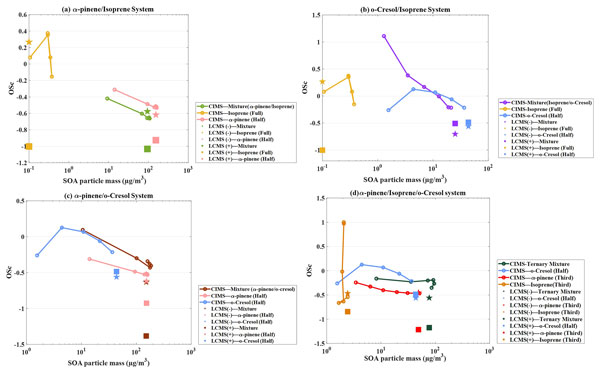
Yunqi Shao, Aristeidis Voliotis, Mao Du, Yu Wang, Thomas J. Bannan, Jacqueline F. Hamilton, M. Rami Alfarra, and Gordon McFiggans
Aerosol Research, 3, 619–636, https://doi.org/10.5194/ar-3-619-2025, https://doi.org/10.5194/ar-3-619-2025, 2025
Short summary
Short summary
This study analysed the average carbon oxidation state (OSc) during secondary organic aerosol formation from mixed volatile organic compounds (VOCs) using three mass spectrometry techniques. Notable discrepancies in OSc were observed across the techniques, with FIGAERO-CIMS reporting higher values. The results also show that OSc in mixed-VOC systems is influenced not only by products from individual precursors but also by accretion products formed through interactions between VOC products.
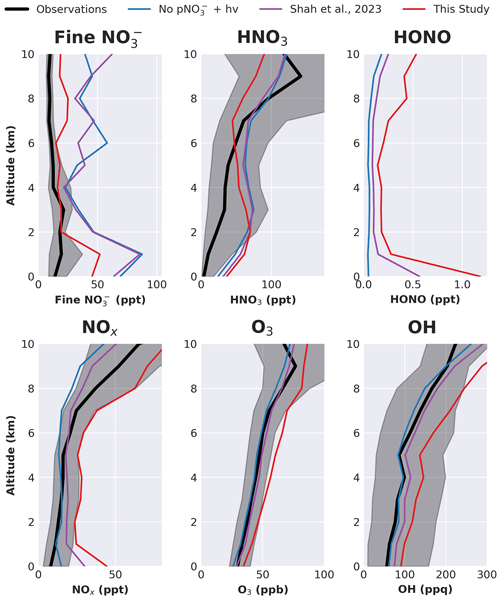
Matthew J. Rowlinson, Lucy J. Carpenter, Mat J. Evans, James D. Lee, Simone T. Andersen, Tomas Sherwen, Anna B. Callaghan, Roberto Sommariva, William Bloss, Siqi Hou, Leigh R. Crilley, Klaus Pfeilsticker, Benjamin Weyland, Thomas B. Ryerson, Patrick R. Veres, Pedro Campuzano-Jost, Hongyu Guo, Benjamin A. Nault, Jose L. Jimenez, and Khanneh Wadinga Fomba
Atmos. Chem. Phys., 25, 16945–16968, https://doi.org/10.5194/acp-25-16945-2025, https://doi.org/10.5194/acp-25-16945-2025, 2025
Short summary
Short summary
HONO is key to tropospheric chemistry. Observations show high HONO concentrations in remote air, possibly explained by nitrate aerosol photolysis. We use observations to parameterize nitrate photolysis, evaluating simulated HONO against observations from multiple sources. We show improved agreement with observed HONO, but overestimates in NOx and O3, beyond observational constraints. This implies uncertainties in the NOx budget and our understanding of atmospheric chemistry.
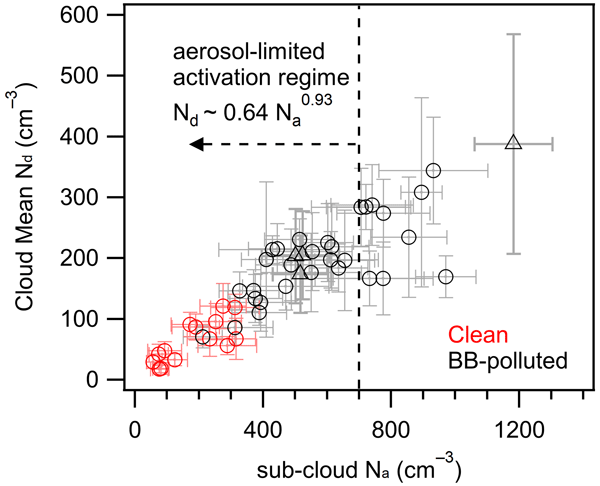
Huihui Wu, Fanny Peers, Jonathan W. Taylor, Chenjie Yu, Steven J. Abel, Paul A. Barrett, Jamie Trembath, Keith Bower, Jim M. Haywood, and Hugh Coe
Atmos. Chem. Phys., 25, 16589–16609, https://doi.org/10.5194/acp-25-16589-2025, https://doi.org/10.5194/acp-25-16589-2025, 2025
Short summary
Short summary
This study investigates the transport history of African Biomass-Burning aerosols (BBAs) over the Southeast Atlantic (SEA) and their impacts on cloud properties. Using in situ airborne measurements around Ascension Island, this work provides critical parameterizations of aerosol–cloud interactions to improve the assessment of radiative forcing in the SEA region. It also identifies key entrainment regions for understanding the vertical transport process of African BBAs.
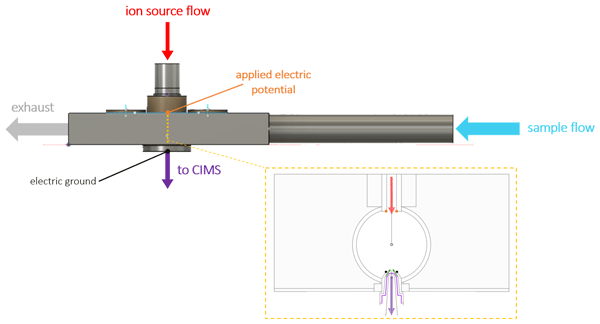
Phil Rund, Ben H. Lee, Siddharth Iyer, Gordon A. Novak, Jake T. Vallow, and Joel A. Thornton
Atmos. Meas. Tech., 18, 6979–6995, https://doi.org/10.5194/amt-18-6979-2025, https://doi.org/10.5194/amt-18-6979-2025, 2025
Short summary
Short summary
We introduce a custom-built chamber (known as an IMR) for use with a Chemical Ionization Mass Spectrometry (CIMS) gas measurement instrument. The IMR shows large improvements compared to previous designs in reducing non-real signal in the instrument, reducing uncertainties for trace gas studies in the laboratory and the field. We characterize this new IMR and demonstrate its use in analyzing air masses of unknown composition during a field campaign, reporting concentrations of important gases.
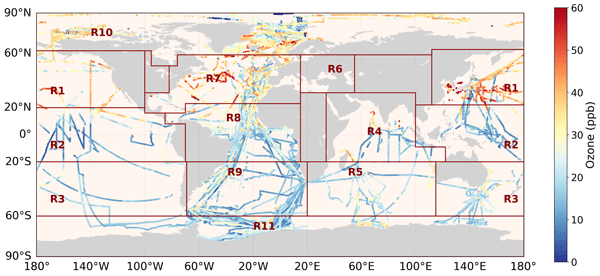
Yugo Kanaya, Roberto Sommariva, Alfonso Saiz-Lopez, Andrea Mazzeo, Theodore K. Koenig, Kaori Kawana, James E. Johnson, Aurélie Colomb, Pierre Tulet, Suzie Molloy, Ian E. Galbally, Rainer Volkamer, Anoop Mahajan, John W. Halfacre, Paul B. Shepson, Julia Schmale, Hélène Angot, Byron Blomquist, Matthew D. Shupe, Detlev Helmig, Junsu Gil, Meehye Lee, Sean C. Coburn, Ivan Ortega, Gao Chen, James Lee, Kenneth C. Aikin, David D. Parrish, John S. Holloway, Thomas B. Ryerson, Ilana B. Pollack, Eric J. Williams, Brian M. Lerner, Andrew J. Weinheimer, Teresa Campos, Frank M. Flocke, J. Ryan Spackman, Ilann Bourgeois, Jeff Peischl, Chelsea R. Thompson, Ralf M. Staebler, Amir A. Aliabadi, Wanmin Gong, Roeland Van Malderen, Anne M. Thompson, Ryan M. Stauffer, Debra E. Kollonige, Juan Carlos Gómez Martin, Masatomo Fujiwara, Katie Read, Matthew Rowlinson, Keiichi Sato, Junichi Kurokawa, Yoko Iwamoto, Fumikazu Taketani, Hisahiro Takashima, Mónica Navarro-Comas, Marios Panagi, and Martin G. Schultz
Earth Syst. Sci. Data, 17, 4901–4932, https://doi.org/10.5194/essd-17-4901-2025, https://doi.org/10.5194/essd-17-4901-2025, 2025
Short summary
Short summary
The first comprehensive dataset of tropospheric ozone over oceans/polar regions is presented, including 77 ship/buoy and 48 aircraft campaign observations (1977–2022, 0–5000 m altitude), supplemented by ozonesonde and surface data. Air masses isolated from land for 72+ hours are systematically selected as essentially oceanic. Among the 11 global regions, they show daytime decreases of 11–16 % in the tropics, while near-zero depletions are rare, unlike in the Arctic, implying different mechanisms.
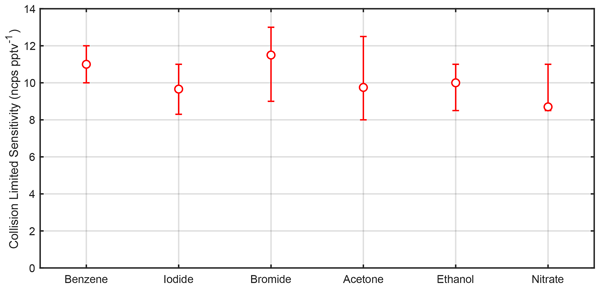
Sneha Aggarwal, Priyanka Bansal, Yuwei Wang, Spiro Jorga, Gabrielle Macgregor, Urs Rohner, Thomas Bannan, Matthew Salter, Paul Zieger, Claudia Mohr, and Felipe Lopez-Hilfiker
Atmos. Meas. Tech., 18, 4227–4247, https://doi.org/10.5194/amt-18-4227-2025, https://doi.org/10.5194/amt-18-4227-2025, 2025
Short summary
Short summary
Chemical ionization mass spectrometers used for trace gas analysis can be operated under various conditions, complicating quantitative comparisons. We evaluate sensitivity dependence on a relatively few key instrument parameters and show that when these are held constant, consistent performance is achieved. We show that the maximum sensitivity of a given flow tube reactor across various reagent ion chemistries is a constant, which aids in the quantification of compounds lacking analytical standards.
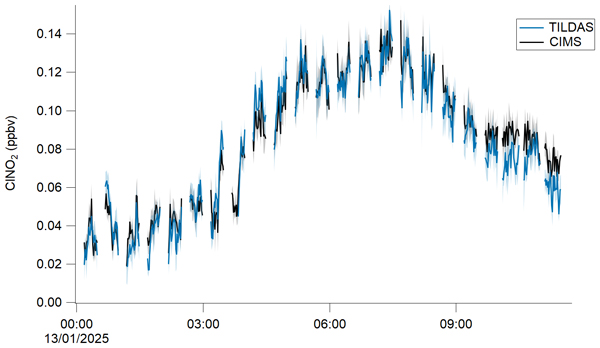
John W. Halfacre, Lewis Marden, Marvin D. Shaw, Lucy J. Carpenter, Emily Matthews, Thomas J. Bannan, Hugh Coe, Scott C. Herndon, Joseph R. Roscioli, Christoph Dyroff, Tara I. Yacovitch, Patrick R. Veres, Michael A. Robinson, Steven S. Brown, and Pete M. Edwards
Atmos. Meas. Tech., 18, 3799–3818, https://doi.org/10.5194/amt-18-3799-2025, https://doi.org/10.5194/amt-18-3799-2025, 2025
Short summary
Short summary
Nitryl chloride (ClNO2) is a reservoir of chlorine atoms and nitrogen oxides, both of which play important roles in atmospheric chemistry. However, all ambient ClNO2 observations so far have been made by a single technique, mass spectrometry, which needs complex calibrations. Here, we present a laser-based method that detects ClNO2 (TD-TILDAS – thermal dissociation–tunable infrared laser direct absorption spectrometry) without the need for complicated calibrations. The results show excellent agreement between these two methods from both laboratory and ambient samples.
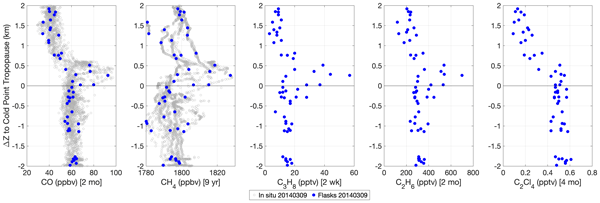
Jasna V. Pittman, Bruce C. Daube, Steven C. Wofsy, Elliot L. Atlas, Maria A. Navarro, Eric J. Hintsa, Fred L. Moore, Geoff S. Dutton, James W. Elkins, Troy D. Thornberry, Andrew W. Rollins, Eric J. Jensen, Thaopaul Bui, Jonathan Dean-Day, and Leonhard Pfister
Atmos. Chem. Phys., 25, 7543–7562, https://doi.org/10.5194/acp-25-7543-2025, https://doi.org/10.5194/acp-25-7543-2025, 2025
Short summary
Short summary
Biomass fires emit aerosols and precursors that can provide a novel environment for initiating stratospheric ozone loss. The Airborne Tropical TRopopause EXperiment campaign sampled the western Pacific, the dominant longitudes for surface air lofted by convection to enter the global stratosphere. Aircraft measurements over multiple flights revealed persistent layers of biomass burning pollutants entering the lower stratosphere and originating from fires as far away as Africa and Indonesia.
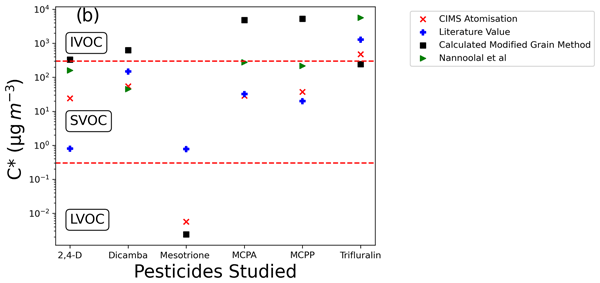
Olivia M. Jackson, Aristeidis Voliotis, Thomas J. Bannan, Simon P. O'Meara, Gordon McFiggans, Dave Johnson, and Hugh Coe
Atmos. Chem. Phys., 25, 6257–6272, https://doi.org/10.5194/acp-25-6257-2025, https://doi.org/10.5194/acp-25-6257-2025, 2025
Short summary
Short summary
This paper details a novel method of measuring the volatility of pesticides using the Filter Inlet for Gases and AEROsols coupled with a chemical ionisation mass spectrometer (FIGAERO-CIMS) calibrated using a set of poly(ethylene) glycols. This is compared to literature values and common models. The results show that the method used primarily matches current literature values. Additionally, a pesticide’s volatility as an indicator of the likelihood of atmospheric transport occurring is explored.
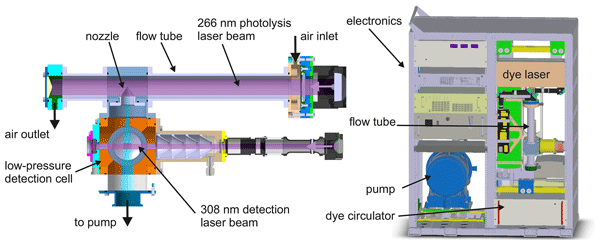
Hendrik Fuchs, Aaron Stainsby, Florian Berg, René Dubus, Michelle Färber, Andreas Hofzumahaus, Frank Holland, Kelvin H. Bates, Steven S. Brown, Matthew M. Coggon, Glenn S. Diskin, Georgios I. Gkatzelis, Christopher M. Jernigan, Jeff Peischl, Michael A. Robinson, Andrew W. Rollins, Nell B. Schafer, Rebecca H. Schwantes, Chelsea E. Stockwell, Patrick R. Veres, Carsten Warneke, Eleanor M. Waxman, Lu Xu, Kristen Zuraski, Andreas Wahner, and Anna Novelli
Atmos. Meas. Tech., 18, 881–895, https://doi.org/10.5194/amt-18-881-2025, https://doi.org/10.5194/amt-18-881-2025, 2025
Short summary
Short summary
Significant improvements have been made to the instruments used to measure OH reactivity, which is equivalent to the sum of air pollutant concentrations. Accurate and precise measurements with a high time resolution have been achieved, allowing use on aircraft, as demonstrated during flights in the USA.
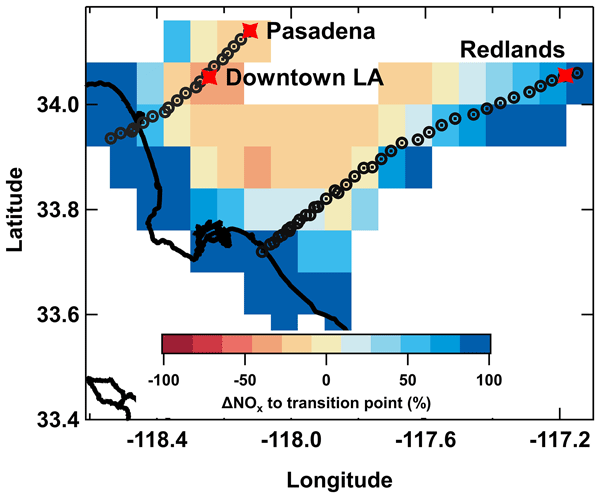
Chelsea E. Stockwell, Matthew M. Coggon, Rebecca H. Schwantes, Colin Harkins, Bert Verreyken, Congmeng Lyu, Qindan Zhu, Lu Xu, Jessica B. Gilman, Aaron Lamplugh, Jeff Peischl, Michael A. Robinson, Patrick R. Veres, Meng Li, Andrew W. Rollins, Kristen Zuraski, Sunil Baidar, Shang Liu, Toshihiro Kuwayama, Steven S. Brown, Brian C. McDonald, and Carsten Warneke
Atmos. Chem. Phys., 25, 1121–1143, https://doi.org/10.5194/acp-25-1121-2025, https://doi.org/10.5194/acp-25-1121-2025, 2025
Short summary
Short summary
In urban areas, emissions from everyday products like paints, cleaners, and personal care products, along with non-traditional sources such as cooking, are increasingly important and impact air quality. This study uses a box model to evaluate how these emissions impact ozone in the Los Angeles Basin and quantifies the impact of gaseous cooking emissions. Accurate representation of these and other anthropogenic sources in inventories is crucial for informing effective air quality policies.
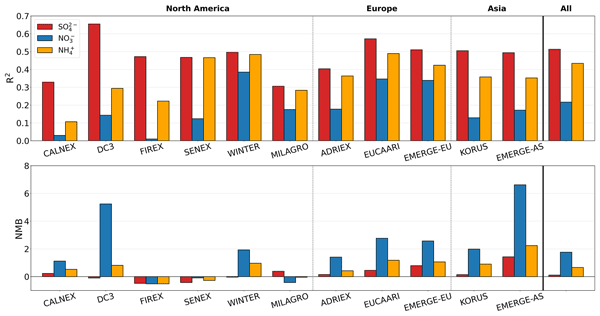
Olivia G. Norman, Colette L. Heald, Solomon Bililign, Pedro Campuzano-Jost, Hugh Coe, Marc N. Fiddler, Jaime R. Green, Jose L. Jimenez, Katharina Kaiser, Jin Liao, Ann M. Middlebrook, Benjamin A. Nault, John B. Nowak, Johannes Schneider, and André Welti
Atmos. Chem. Phys., 25, 771–795, https://doi.org/10.5194/acp-25-771-2025, https://doi.org/10.5194/acp-25-771-2025, 2025
Short summary
Short summary
This study finds that one component of secondary inorganic aerosols, nitrate, is greatly overestimated by a global atmospheric chemistry model compared to observations from 11 flight campaigns. None of the loss and production pathways explored can explain the nitrate bias alone. The model’s inability to capture the variability in the observations remains and requires future investigation to avoid biases in policy-related studies (i.e., air quality, health, climate impacts of these aerosols).
Alex T. Archibald, Bablu Sinha, Maria R. Russo, Emily Matthews, Freya A. Squires, N. Luke Abraham, Stephane J.-B. Bauguitte, Thomas J. Bannan, Thomas G. Bell, David Berry, Lucy J. Carpenter, Hugh Coe, Andrew Coward, Peter Edwards, Daniel Feltham, Dwayne Heard, Jim Hopkins, James Keeble, Elizabeth C. Kent, Brian A. King, Isobel R. Lawrence, James Lee, Claire R. Macintosh, Alex Megann, Bengamin I. Moat, Katie Read, Chris Reed, Malcolm J. Roberts, Reinhard Schiemann, David Schroeder, Timothy J. Smyth, Loren Temple, Navaneeth Thamban, Lisa Whalley, Simon Williams, Huihui Wu, and Mingxi Yang
Earth Syst. Sci. Data, 17, 135–164, https://doi.org/10.5194/essd-17-135-2025, https://doi.org/10.5194/essd-17-135-2025, 2025
Short summary
Short summary
Here, we present an overview of the data generated as part of the North Atlantic Climate System Integrated Study (ACSIS) programme that are available through dedicated repositories at the Centre for Environmental Data Analysis (CEDA; www.ceda.ac.uk) and the British Oceanographic Data Centre (BODC; bodc.ac.uk). The datasets described here cover the North Atlantic Ocean, the atmosphere above (it including its composition), and Arctic sea ice.
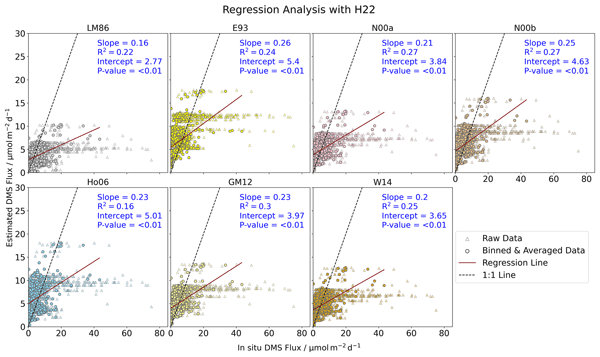
Sankirna D. Joge, Anoop S. Mahajan, Shrivardhan Hulswar, Christa A. Marandino, Martí Galí, Thomas G. Bell, Mingxi Yang, and Rafel Simó
Biogeosciences, 21, 4453–4467, https://doi.org/10.5194/bg-21-4453-2024, https://doi.org/10.5194/bg-21-4453-2024, 2024
Short summary
Short summary
Dimethyl sulfide (DMS) is the largest natural source of sulfur in the atmosphere and leads to the formation of cloud condensation nuclei. DMS emissions and quantification of their impacts have large uncertainties, but a detailed study on the range of emissions and drivers of their uncertainty is missing to date. The emissions are calculated from the seawater DMS concentrations and a flux parameterization. Here we quantify the differences in the effect of flux parameterizations used in models.
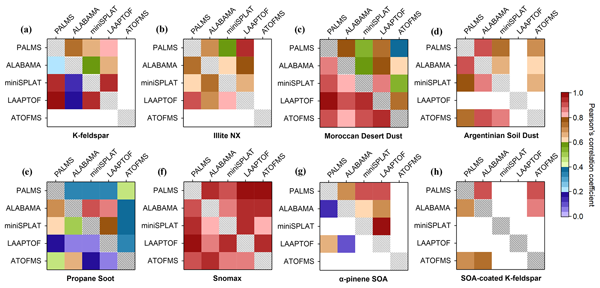
Xiaoli Shen, David M. Bell, Hugh Coe, Naruki Hiranuma, Fabian Mahrt, Nicholas A. Marsden, Claudia Mohr, Daniel M. Murphy, Harald Saathoff, Johannes Schneider, Jacqueline Wilson, Maria A. Zawadowicz, Alla Zelenyuk, Paul J. DeMott, Ottmar Möhler, and Daniel J. Cziczo
Atmos. Chem. Phys., 24, 10869–10891, https://doi.org/10.5194/acp-24-10869-2024, https://doi.org/10.5194/acp-24-10869-2024, 2024
Short summary
Short summary
Single-particle mass spectrometry (SPMS) is commonly used to measure the chemical composition and mixing state of aerosol particles. Intercomparison of SPMS instruments was conducted. All instruments reported similar size ranges and common spectral features. The instrument-specific detection efficiency was found to be more dependent on particle size than type. All differentiated secondary organic aerosol, soot, and soil dust but had difficulties differentiating among minerals and dusts.
Andrew O. Langford, Raul J. Alvarez II, Kenneth C. Aikin, Sunil Baidar, W. Alan Brewer, Steven S. Brown, Matthew M. Coggan, Patrick D. Cullis, Jessica Gilman, Georgios I. Gkatzelis, Detlev Helmig, Bryan J. Johnson, K. Emma Knowland, Rajesh Kumar, Aaron D. Lamplugh, Audra McClure-Begley, Brandi J. McCarty, Ann M. Middlebrook, Gabriele Pfister, Jeff Peischl, Irina Petropavlovskikh, Pamela S. Rickley, Andrew W. Rollins, Scott P. Sandberg, Christoph J. Senff, and Carsten Warneke
EGUsphere, https://doi.org/10.5194/egusphere-2024-1938, https://doi.org/10.5194/egusphere-2024-1938, 2024
Preprint withdrawn
Short summary
Short summary
High ozone (O3) formed by reactions of nitrogen oxides (NOx) and volatile organic compounds (VOCs) can harm human health and welfare. High O3 is usually associated with hot summer days, but under certain conditions, high O3 can also form under winter conditions. In this study, we describe a high O3 event that occurred in Colorado during the COVID-19 quarantine that was caused in part by the decrease in traffic, and in part by a shallow inversion created by descent of stratospheric air.
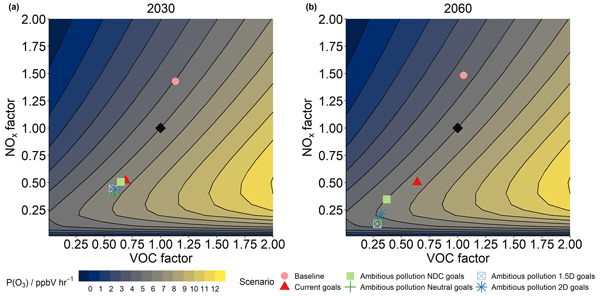
Beth S. Nelson, Zhenze Liu, Freya A. Squires, Marvin Shaw, James R. Hopkins, Jacqueline F. Hamilton, Andrew R. Rickard, Alastair C. Lewis, Zongbo Shi, and James D. Lee
Atmos. Chem. Phys., 24, 9031–9044, https://doi.org/10.5194/acp-24-9031-2024, https://doi.org/10.5194/acp-24-9031-2024, 2024
Short summary
Short summary
The impact of combined air quality and carbon neutrality policies on O3 formation in Beijing was investigated. Emissions inventory data were used to estimate future pollutant mixing ratios relative to ground-level observations. O3 production was found to be most sensitive to changes in alkenes, but large reductions in less reactive compounds led to larger reductions in future O3 production. This study highlights the importance of understanding the emissions of organic pollutants.
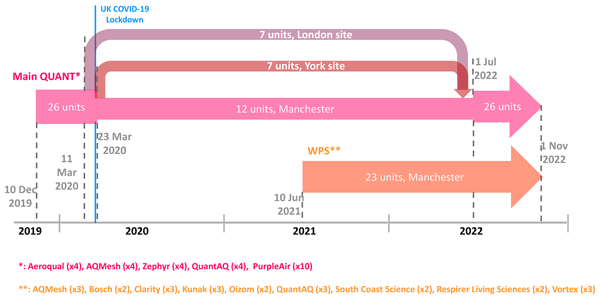
Sebastian Diez, Stuart Lacy, Hugh Coe, Josefina Urquiza, Max Priestman, Michael Flynn, Nicholas Marsden, Nicholas A. Martin, Stefan Gillott, Thomas Bannan, and Pete M. Edwards
Atmos. Meas. Tech., 17, 3809–3827, https://doi.org/10.5194/amt-17-3809-2024, https://doi.org/10.5194/amt-17-3809-2024, 2024
Short summary
Short summary
In this paper we present an overview of the QUANT project, which to our knowledge is one of the largest evaluations of commercial sensors to date. The objective was to evaluate the performance of a range of commercial products and also to nourish the different applications in which these technologies can offer relevant information.
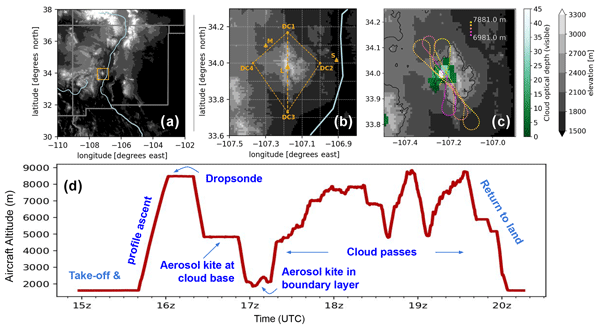
Declan L. Finney, Alan M. Blyth, Martin Gallagher, Huihui Wu, Graeme J. Nott, Michael I. Biggerstaff, Richard G. Sonnenfeld, Martin Daily, Dan Walker, David Dufton, Keith Bower, Steven Böing, Thomas Choularton, Jonathan Crosier, James Groves, Paul R. Field, Hugh Coe, Benjamin J. Murray, Gary Lloyd, Nicholas A. Marsden, Michael Flynn, Kezhen Hu, Navaneeth M. Thamban, Paul I. Williams, Paul J. Connolly, James B. McQuaid, Joseph Robinson, Zhiqiang Cui, Ralph R. Burton, Gordon Carrie, Robert Moore, Steven J. Abel, Dave Tiddeman, and Graydon Aulich
Earth Syst. Sci. Data, 16, 2141–2163, https://doi.org/10.5194/essd-16-2141-2024, https://doi.org/10.5194/essd-16-2141-2024, 2024
Short summary
Short summary
The DCMEX (Deep Convective Microphysics Experiment) project undertook an aircraft- and ground-based measurement campaign of New Mexico deep convective clouds during July–August 2022. The campaign coordinated a broad range of instrumentation measuring aerosol, cloud physics, radar signals, thermodynamics, dynamics, electric fields, and weather. The project's objectives included the utilisation of these data with satellite observations to study the anvil cloud radiative effect.
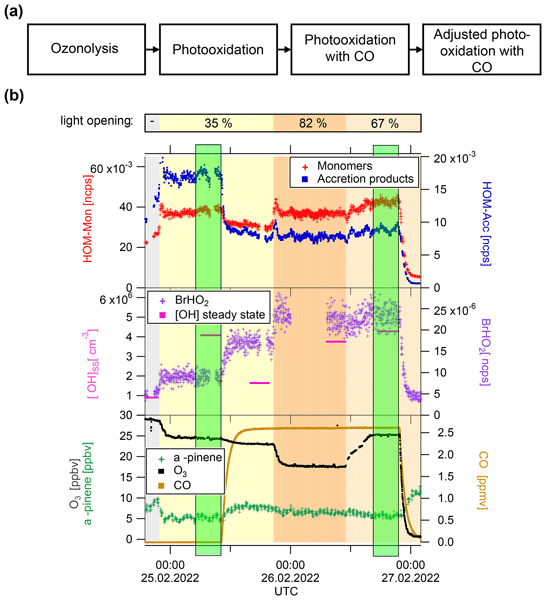
Yarê Baker, Sungah Kang, Hui Wang, Rongrong Wu, Jian Xu, Annika Zanders, Quanfu He, Thorsten Hohaus, Till Ziehm, Veronica Geretti, Thomas J. Bannan, Simon P. O'Meara, Aristeidis Voliotis, Mattias Hallquist, Gordon McFiggans, Sören R. Zorn, Andreas Wahner, and Thomas F. Mentel
Atmos. Chem. Phys., 24, 4789–4807, https://doi.org/10.5194/acp-24-4789-2024, https://doi.org/10.5194/acp-24-4789-2024, 2024
Short summary
Short summary
Highly oxygenated organic molecules are important contributors to secondary organic aerosol. Their yield depends on detailed atmospheric chemical composition. One important parameter is the ratio of hydroperoxy radicals to organic peroxy radicals (HO2/RO2), and we show that higher HO2/RO2 ratios lower the secondary organic aerosol yield. This is of importance as laboratory studies are often biased towards organic peroxy radicals.
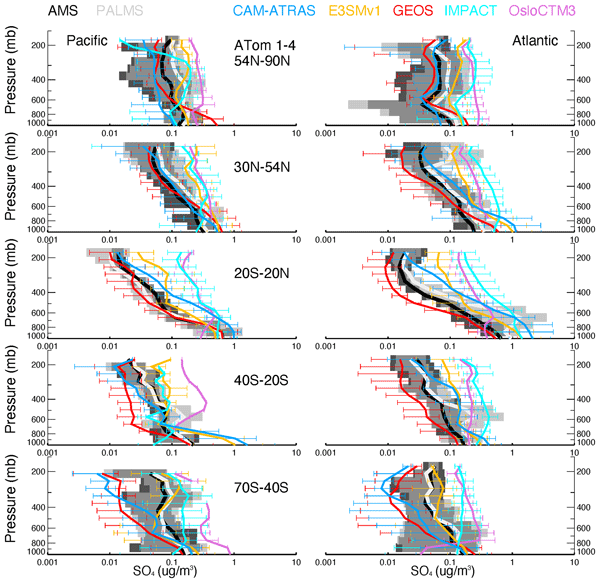
Huisheng Bian, Mian Chin, Peter R. Colarco, Eric C. Apel, Donald R. Blake, Karl Froyd, Rebecca S. Hornbrook, Jose Jimenez, Pedro Campuzano Jost, Michael Lawler, Mingxu Liu, Marianne Tronstad Lund, Hitoshi Matsui, Benjamin A. Nault, Joyce E. Penner, Andrew W. Rollins, Gregory Schill, Ragnhild B. Skeie, Hailong Wang, Lu Xu, Kai Zhang, and Jialei Zhu
Atmos. Chem. Phys., 24, 1717–1741, https://doi.org/10.5194/acp-24-1717-2024, https://doi.org/10.5194/acp-24-1717-2024, 2024
Short summary
Short summary
This work studies sulfur in the remote troposphere at global and seasonal scales using aircraft measurements and multi-model simulations. The goal is to understand the sulfur cycle over remote oceans, spread of model simulations, and observation–model discrepancies. Such an understanding and comparison with real observations are crucial to narrow down the uncertainties in model sulfur simulations and improve understanding of the sulfur cycle in atmospheric air quality, climate, and ecosystems.
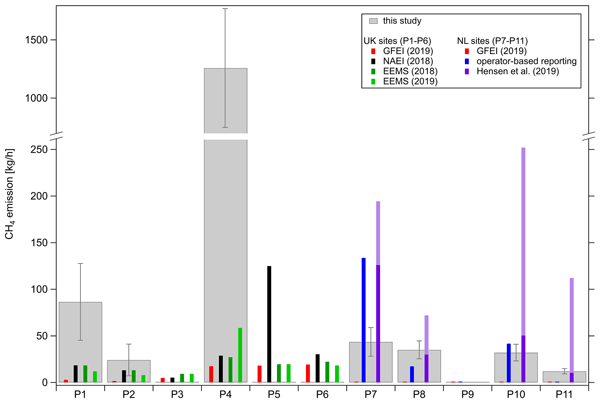
Magdalena Pühl, Anke Roiger, Alina Fiehn, Alan M. Gorchov Negron, Eric A. Kort, Stefan Schwietzke, Ignacio Pisso, Amy Foulds, James Lee, James L. France, Anna E. Jones, Dave Lowry, Rebecca E. Fisher, Langwen Huang, Jacob Shaw, Prudence Bateson, Stephen Andrews, Stuart Young, Pamela Dominutti, Tom Lachlan-Cope, Alexandra Weiss, and Grant Allen
Atmos. Chem. Phys., 24, 1005–1024, https://doi.org/10.5194/acp-24-1005-2024, https://doi.org/10.5194/acp-24-1005-2024, 2024
Short summary
Short summary
In April–May 2019 we carried out an airborne field campaign in the southern North Sea with the aim of studying methane emissions of offshore gas installations. We determined methane emissions from elevated methane measured downstream of the sampled installations. We compare our measured methane emissions with estimated methane emissions from national and global annual inventories. As a result, we find inconsistencies of inventories and large discrepancies between measurements and inventories.
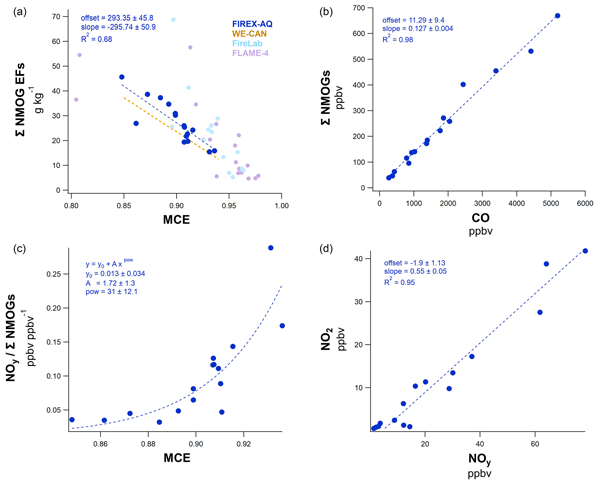
Georgios I. Gkatzelis, Matthew M. Coggon, Chelsea E. Stockwell, Rebecca S. Hornbrook, Hannah Allen, Eric C. Apel, Megan M. Bela, Donald R. Blake, Ilann Bourgeois, Steven S. Brown, Pedro Campuzano-Jost, Jason M. St. Clair, James H. Crawford, John D. Crounse, Douglas A. Day, Joshua P. DiGangi, Glenn S. Diskin, Alan Fried, Jessica B. Gilman, Hongyu Guo, Johnathan W. Hair, Hannah S. Halliday, Thomas F. Hanisco, Reem Hannun, Alan Hills, L. Gregory Huey, Jose L. Jimenez, Joseph M. Katich, Aaron Lamplugh, Young Ro Lee, Jin Liao, Jakob Lindaas, Stuart A. McKeen, Tomas Mikoviny, Benjamin A. Nault, J. Andrew Neuman, John B. Nowak, Demetrios Pagonis, Jeff Peischl, Anne E. Perring, Felix Piel, Pamela S. Rickly, Michael A. Robinson, Andrew W. Rollins, Thomas B. Ryerson, Melinda K. Schueneman, Rebecca H. Schwantes, Joshua P. Schwarz, Kanako Sekimoto, Vanessa Selimovic, Taylor Shingler, David J. Tanner, Laura Tomsche, Krystal T. Vasquez, Patrick R. Veres, Rebecca Washenfelder, Petter Weibring, Paul O. Wennberg, Armin Wisthaler, Glenn M. Wolfe, Caroline C. Womack, Lu Xu, Katherine Ball, Robert J. Yokelson, and Carsten Warneke
Atmos. Chem. Phys., 24, 929–956, https://doi.org/10.5194/acp-24-929-2024, https://doi.org/10.5194/acp-24-929-2024, 2024
Short summary
Short summary
This study reports emissions of gases and particles from wildfires. These emissions are related to chemical proxies that can be measured by satellite and incorporated into models to improve predictions of wildfire impacts on air quality and climate.
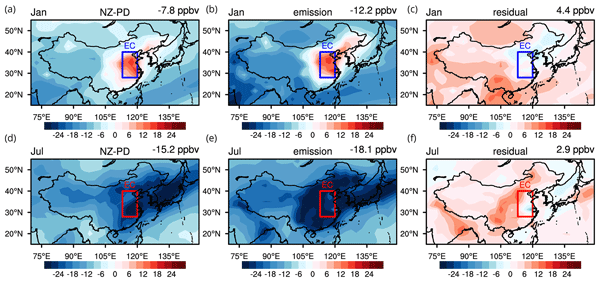
Xuewei Hou, Oliver Wild, Bin Zhu, and James Lee
Atmos. Chem. Phys., 23, 15395–15411, https://doi.org/10.5194/acp-23-15395-2023, https://doi.org/10.5194/acp-23-15395-2023, 2023
Short summary
Short summary
In response to the climate crisis, many countries have committed to net zero in a certain future year. The impacts of net-zero scenarios on tropospheric O3 are less well studied and remain unclear. In this study, we quantified the changes of tropospheric O3 budgets, spatiotemporal distributions of future surface O3 in east Asia and regional O3 source contributions for 2060 under a net-zero scenario using the NCAR Community Earth System Model (CESM) and online O3-tagging methods.
Robert Woodward-Massey, Roberto Sommariva, Lisa K. Whalley, Danny R. Cryer, Trevor Ingham, William J. Bloss, Stephen M. Ball, Sam Cox, James D. Lee, Chris P. Reed, Leigh R. Crilley, Louisa J. Kramer, Brian J. Bandy, Grant L. Forster, Claire E. Reeves, Paul S. Monks, and Dwayne E. Heard
Atmos. Chem. Phys., 23, 14393–14424, https://doi.org/10.5194/acp-23-14393-2023, https://doi.org/10.5194/acp-23-14393-2023, 2023
Short summary
Short summary
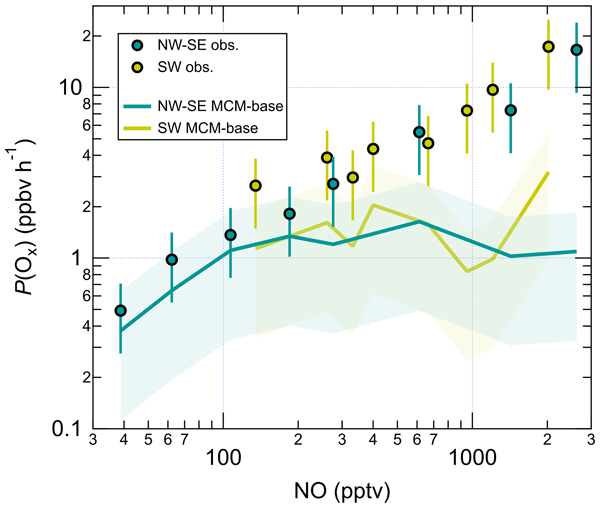
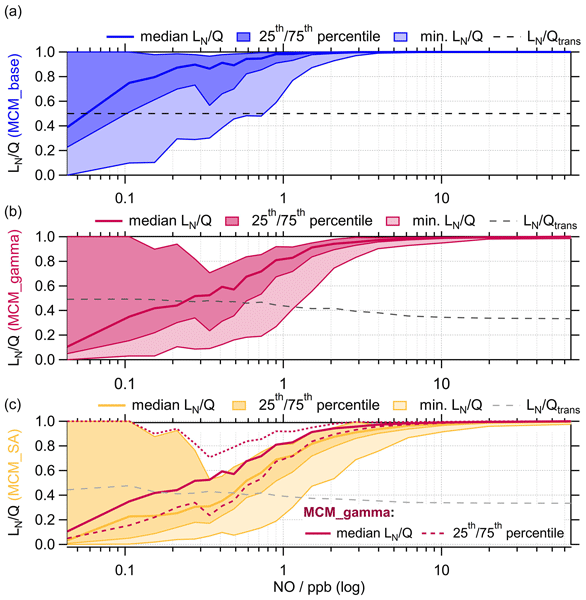
Measurements of OH, HO2 and RO2 radicals and also OH reactivity were made at a UK coastal site and compared to calculations from a constrained box model utilising the Master Chemical Mechanism. The model agreement displayed a strong dependence on the NO concentration. An experimental budget analysis for OH, HO2, RO2 and total ROx demonstrated significant imbalances between HO2 and RO2 production rates. Ozone production rates were calculated from measured radicals and compared to modelled values.
Calvin Howes, Pablo E. Saide, Hugh Coe, Amie Dobracki, Steffen Freitag, Jim M. Haywood, Steven G. Howell, Siddhant Gupta, Janek Uin, Mary Kacarab, Chongai Kuang, L. Ruby Leung, Athanasios Nenes, Greg M. McFarquhar, James Podolske, Jens Redemann, Arthur J. Sedlacek, Kenneth L. Thornhill, Jenny P. S. Wong, Robert Wood, Huihui Wu, Yang Zhang, Jianhao Zhang, and Paquita Zuidema
Atmos. Chem. Phys., 23, 13911–13940, https://doi.org/10.5194/acp-23-13911-2023, https://doi.org/10.5194/acp-23-13911-2023, 2023
Short summary
Short summary
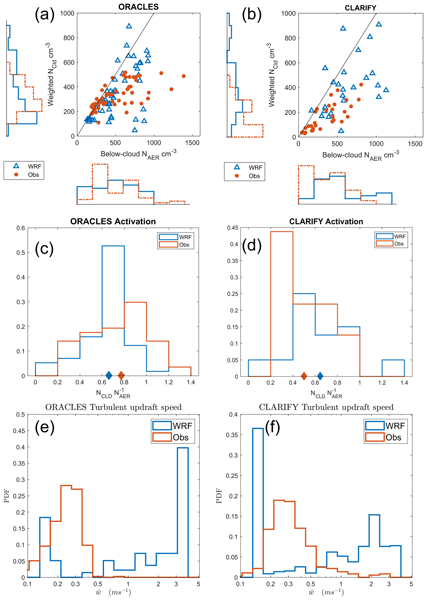
To better understand smoke properties and its interactions with clouds, we compare the WRF-CAM5 model with observations from ORACLES, CLARIFY, and LASIC field campaigns in the southeastern Atlantic in August 2017. The model transports and mixes smoke well but does not fully capture some important processes. These include smoke chemical and physical aging over 4–12 days, smoke removal by rain, sulfate particle formation, aerosol activation into cloud droplets, and boundary layer turbulence.
Valerian Hahn, Ralf Meerkötter, Christiane Voigt, Sonja Gisinger, Daniel Sauer, Valéry Catoire, Volker Dreiling, Hugh Coe, Cyrille Flamant, Stefan Kaufmann, Jonas Kleine, Peter Knippertz, Manuel Moser, Philip Rosenberg, Hans Schlager, Alfons Schwarzenboeck, and Jonathan Taylor
Atmos. Chem. Phys., 23, 8515–8530, https://doi.org/10.5194/acp-23-8515-2023, https://doi.org/10.5194/acp-23-8515-2023, 2023
Short summary
Short summary
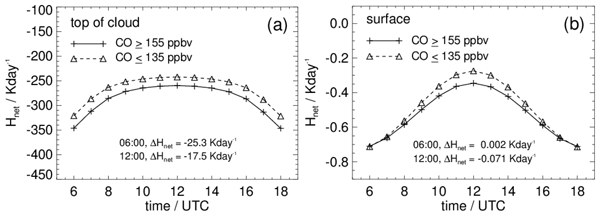
During the DACCIWA campaign in West Africa, we found a 35 % increase in the cloud droplet concentration that formed in a polluted compared with a less polluted environment and a decrease of 17 % in effective droplet diameter. Radiative transfer simulations, based on the measured cloud properties, reveal that these low-level polluted clouds radiate only 2.6 % more energy back to space, compared with a less polluted cloud. The corresponding additional decrease in temperature is rather small.
Alfred W. Mayhew, Peter M. Edwards, and Jaqueline F. Hamilton
Atmos. Chem. Phys., 23, 8473–8485, https://doi.org/10.5194/acp-23-8473-2023, https://doi.org/10.5194/acp-23-8473-2023, 2023
Short summary
Short summary
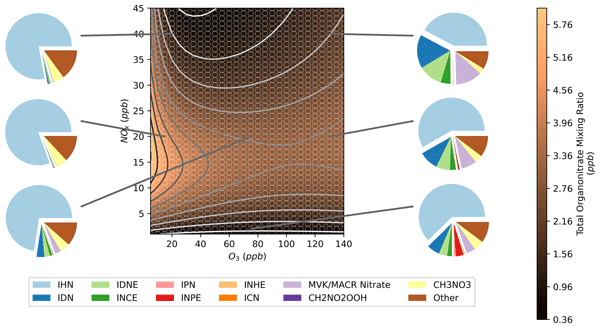
Isoprene nitrates are chemical species commonly found in the atmosphere that are important for their impacts on air quality and climate. This paper investigates modelled changes to daytime isoprene nitrate concentrations resulting from changes in NOx and O3. The results highlight the complex, nonlinear chemistry of this group of species under typical conditions for megacities such as Beijing, with many species showing increased concentrations when NOx is decreased and/or ozone is increased.
Ernesto Reyes-Villegas, Douglas Lowe, Jill S. Johnson, Kenneth S. Carslaw, Eoghan Darbyshire, Michael Flynn, James D. Allan, Hugh Coe, Ying Chen, Oliver Wild, Scott Archer-Nicholls, Alex Archibald, Siddhartha Singh, Manish Shrivastava, Rahul A. Zaveri, Vikas Singh, Gufran Beig, Ranjeet Sokhi, and Gordon McFiggans
Atmos. Chem. Phys., 23, 5763–5782, https://doi.org/10.5194/acp-23-5763-2023, https://doi.org/10.5194/acp-23-5763-2023, 2023
Short summary
Short summary
Organic aerosols (OAs), their sources and their processes remain poorly understood. The volatility basis set (VBS) approach, implemented in air quality models such as WRF-Chem, can be a useful tool to describe primary OA (POA) production and aging. However, the main disadvantage is its complexity. We used a Gaussian process simulator to reproduce model results and to estimate the sources of model uncertainty. We do this by comparing the outputs with OA observations made at Delhi, India, in 2018.
Joanna E. Dyson, Lisa K. Whalley, Eloise J. Slater, Robert Woodward-Massey, Chunxiang Ye, James D. Lee, Freya Squires, James R. Hopkins, Rachel E. Dunmore, Marvin Shaw, Jacqueline F. Hamilton, Alastair C. Lewis, Stephen D. Worrall, Asan Bacak, Archit Mehra, Thomas J. Bannan, Hugh Coe, Carl J. Percival, Bin Ouyang, C. Nicholas Hewitt, Roderic L. Jones, Leigh R. Crilley, Louisa J. Kramer, W. Joe F. Acton, William J. Bloss, Supattarachai Saksakulkrai, Jingsha Xu, Zongbo Shi, Roy M. Harrison, Simone Kotthaus, Sue Grimmond, Yele Sun, Weiqi Xu, Siyao Yue, Lianfang Wei, Pingqing Fu, Xinming Wang, Stephen R. Arnold, and Dwayne E. Heard
Atmos. Chem. Phys., 23, 5679–5697, https://doi.org/10.5194/acp-23-5679-2023, https://doi.org/10.5194/acp-23-5679-2023, 2023
Short summary
Short summary
The hydroxyl (OH) and closely coupled hydroperoxyl (HO2) radicals are vital for their role in the removal of atmospheric pollutants. In less polluted regions, atmospheric models over-predict HO2 concentrations. In this modelling study, the impact of heterogeneous uptake of HO2 onto aerosol surfaces on radical concentrations and the ozone production regime in Beijing in the summertime is investigated, and the implications for emissions policies across China are considered.
John W. Halfacre, Jordan Stewart, Scott C. Herndon, Joseph R. Roscioli, Christoph Dyroff, Tara I. Yacovitch, Michael Flynn, Stephen J. Andrews, Steven S. Brown, Patrick R. Veres, and Pete M. Edwards
Atmos. Meas. Tech., 16, 1407–1429, https://doi.org/10.5194/amt-16-1407-2023, https://doi.org/10.5194/amt-16-1407-2023, 2023
Short summary
Short summary
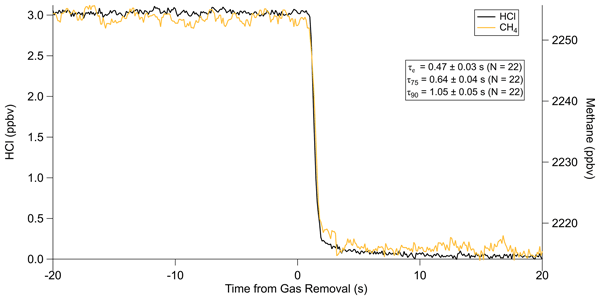
This study details a new sampling method for the optical detection of hydrogen chloride (HCl). HCl is an important atmospheric reservoir for chlorine atoms, which can affect nitrogen oxide cycling and the lifetimes of volatile organic compounds and ozone. However, HCl has a high affinity for interacting with surfaces, thereby preventing fast, quantitative measurements. The sampling technique in this study minimizes these surface interactions and provides a high-quality measurement of HCl.
Philip T. M. Carlsson, Luc Vereecken, Anna Novelli, François Bernard, Steven S. Brown, Bellamy Brownwood, Changmin Cho, John N. Crowley, Patrick Dewald, Peter M. Edwards, Nils Friedrich, Juliane L. Fry, Mattias Hallquist, Luisa Hantschke, Thorsten Hohaus, Sungah Kang, Jonathan Liebmann, Alfred W. Mayhew, Thomas Mentel, David Reimer, Franz Rohrer, Justin Shenolikar, Ralf Tillmann, Epameinondas Tsiligiannis, Rongrong Wu, Andreas Wahner, Astrid Kiendler-Scharr, and Hendrik Fuchs
Atmos. Chem. Phys., 23, 3147–3180, https://doi.org/10.5194/acp-23-3147-2023, https://doi.org/10.5194/acp-23-3147-2023, 2023
Short summary
Short summary
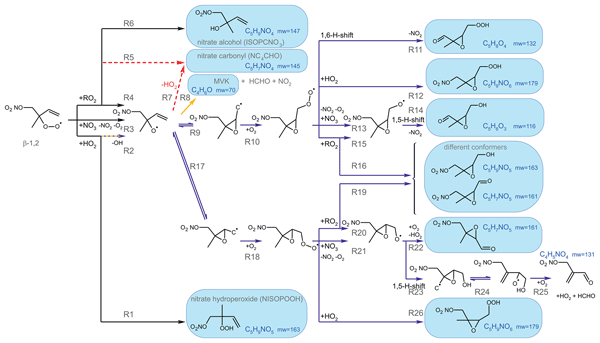
The investigation of the night-time oxidation of the most abundant hydrocarbon, isoprene, in chamber experiments shows the importance of reaction pathways leading to epoxy products, which could enhance particle formation, that have so far not been accounted for. The chemical lifetime of organic nitrates from isoprene is long enough for the majority to be further oxidized the next day by daytime oxidants.
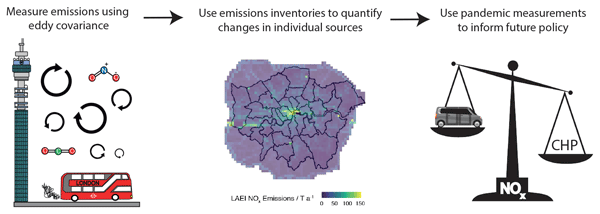
Samuel J. Cliff, Will Drysdale, James D. Lee, Carole Helfter, Eiko Nemitz, Stefan Metzger, and Janet F. Barlow
Atmos. Chem. Phys., 23, 2315–2330, https://doi.org/10.5194/acp-23-2315-2023, https://doi.org/10.5194/acp-23-2315-2023, 2023
Short summary
Short summary
Emissions of nitrogen oxides (NOx) to the atmosphere are an ongoing air quality issue. This study directly measures emissions of NOx and carbon dioxide from a tall tower in central London during the coronavirus pandemic. It was found that transport NOx emissions had reduced by >73 % since 2017 as a result of air quality policy and reduced congestion during coronavirus restrictions. During this period, central London was thought to be dominated by point-source heat and power generation emissions.

Jacob T. Shaw, Amy Foulds, Shona Wilde, Patrick Barker, Freya A. Squires, James Lee, Ruth Purvis, Ralph Burton, Ioana Colfescu, Stephen Mobbs, Samuel Cliff, Stéphane J.-B. Bauguitte, Stuart Young, Stefan Schwietzke, and Grant Allen
Atmos. Chem. Phys., 23, 1491–1509, https://doi.org/10.5194/acp-23-1491-2023, https://doi.org/10.5194/acp-23-1491-2023, 2023
Short summary
Short summary
Flaring is used by the oil and gas sector to dispose of unwanted natural gas or for safety. However, few studies have assessed the efficiency with which the gas is combusted. We sampled flaring emissions from offshore facilities in the North Sea. Average measured flaring efficiencies were ~ 98 % but with a skewed distribution, including many flares of lower efficiency. NOx and ethane emissions were also measured. Inefficient flaring practices could be a target for mitigating carbon emissions.
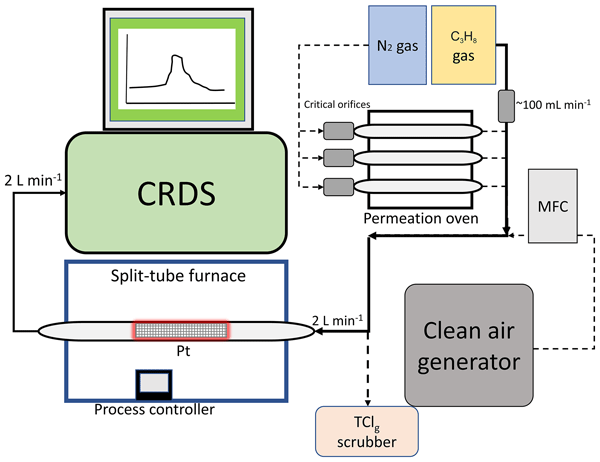
Teles C. Furlani, RenXi Ye, Jordan Stewart, Leigh R. Crilley, Peter M. Edwards, Tara F. Kahan, and Cora J. Young
Atmos. Meas. Tech., 16, 181–193, https://doi.org/10.5194/amt-16-181-2023, https://doi.org/10.5194/amt-16-181-2023, 2023
Short summary
Short summary
This study describes a new technique to measure total gaseous chlorine, which is the sum of gas-phase chlorine-containing chemicals. The method converts any chlorine-containing molecule to hydrogen chloride that can be detected in real time using a cavity ring-down spectrometer. The new method was validated through laboratory experiments, as well as by making measurements of ambient outdoor air and indoor air during cleaning with a chlorine-based cleaner.
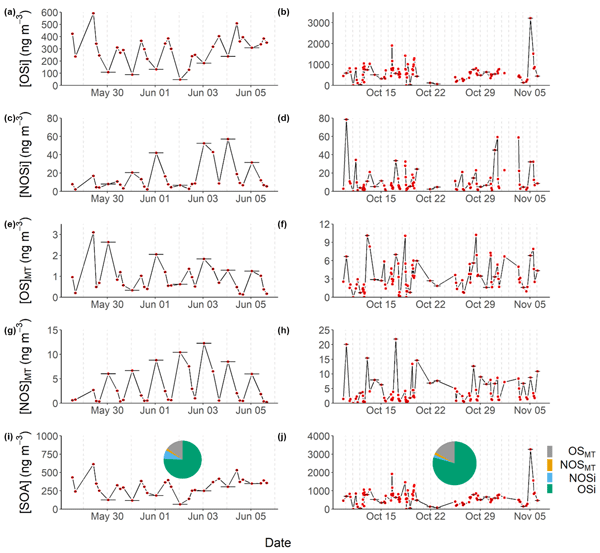
Daniel J. Bryant, Beth S. Nelson, Stefan J. Swift, Sri Hapsari Budisulistiorini, Will S. Drysdale, Adam R. Vaughan, Mike J. Newland, James R. Hopkins, James M. Cash, Ben Langford, Eiko Nemitz, W. Joe F. Acton, C. Nicholas Hewitt, Tuhin Mandal, Bhola R. Gurjar, Shivani, Ranu Gadi, James D. Lee, Andrew R. Rickard, and Jacqueline F. Hamilton
Atmos. Chem. Phys., 23, 61–83, https://doi.org/10.5194/acp-23-61-2023, https://doi.org/10.5194/acp-23-61-2023, 2023
Short summary
Short summary
This paper investigates the sources of isoprene and monoterpene compounds and their particulate-phase oxidation products in Delhi, India. This was done to improve our understanding of the sources, concentrations, and fate of volatile emissions in megacities. By studying the chemical composition of offline filter samples, we report that a significant share of the oxidised organic aerosol in Delhi is from isoprene and monoterpenes. This has implications for human health and policy development.
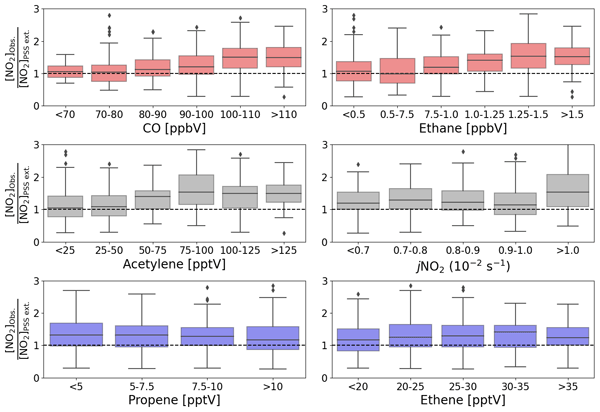
Simone T. Andersen, Beth S. Nelson, Katie A. Read, Shalini Punjabi, Luis Neves, Matthew J. Rowlinson, James Hopkins, Tomás Sherwen, Lisa K. Whalley, James D. Lee, and Lucy J. Carpenter
Atmos. Chem. Phys., 22, 15747–15765, https://doi.org/10.5194/acp-22-15747-2022, https://doi.org/10.5194/acp-22-15747-2022, 2022
Short summary
Short summary
The cycling of NO and NO2 is important to understand to be able to predict O3 concentrations in the atmosphere. We have used long-term measurements from the Cape Verde Atmospheric Observatory together with model outputs to investigate the cycling of nitrogen oxide (NO) and nitrogen dioxide (NO2) in very clean marine air. This study shows that we understand the processes occurring in very clean air, but with small amounts of pollution in the air, known chemistry cannot explain what is observed.
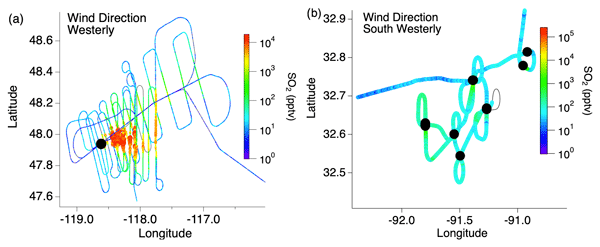
Pamela S. Rickly, Hongyu Guo, Pedro Campuzano-Jost, Jose L. Jimenez, Glenn M. Wolfe, Ryan Bennett, Ilann Bourgeois, John D. Crounse, Jack E. Dibb, Joshua P. DiGangi, Glenn S. Diskin, Maximilian Dollner, Emily M. Gargulinski, Samuel R. Hall, Hannah S. Halliday, Thomas F. Hanisco, Reem A. Hannun, Jin Liao, Richard Moore, Benjamin A. Nault, John B. Nowak, Jeff Peischl, Claire E. Robinson, Thomas Ryerson, Kevin J. Sanchez, Manuel Schöberl, Amber J. Soja, Jason M. St. Clair, Kenneth L. Thornhill, Kirk Ullmann, Paul O. Wennberg, Bernadett Weinzierl, Elizabeth B. Wiggins, Edward L. Winstead, and Andrew W. Rollins
Atmos. Chem. Phys., 22, 15603–15620, https://doi.org/10.5194/acp-22-15603-2022, https://doi.org/10.5194/acp-22-15603-2022, 2022
Short summary
Short summary
Biomass burning sulfur dioxide (SO2) emission factors range from 0.27–1.1 g kg-1 C. Biomass burning SO2 can quickly form sulfate and organosulfur, but these pathways are dependent on liquid water content and pH. Hydroxymethanesulfonate (HMS) appears to be directly emitted from some fire sources but is not the sole contributor to the organosulfur signal. It is shown that HMS and organosulfur chemistry may be an important S(IV) reservoir with the fate dependent on the surrounding conditions.
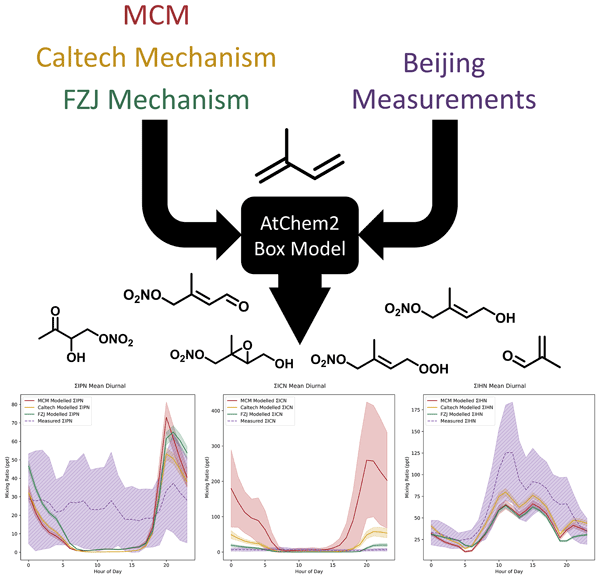
Alfred W. Mayhew, Ben H. Lee, Joel A. Thornton, Thomas J. Bannan, James Brean, James R. Hopkins, James D. Lee, Beth S. Nelson, Carl Percival, Andrew R. Rickard, Marvin D. Shaw, Peter M. Edwards, and Jaqueline F. Hamilton
Atmos. Chem. Phys., 22, 14783–14798, https://doi.org/10.5194/acp-22-14783-2022, https://doi.org/10.5194/acp-22-14783-2022, 2022
Short summary
Short summary
Isoprene nitrates are chemical species commonly found in the atmosphere that are important for their impacts on air quality and climate. This paper compares 3 different representations of the chemistry of isoprene nitrates in computational models highlighting cases where the choice of chemistry included has significant impacts on the concentration and composition of the modelled nitrates. Calibration of mass spectrometers is also shown to be an important factor when analysing isoprene nitrates.
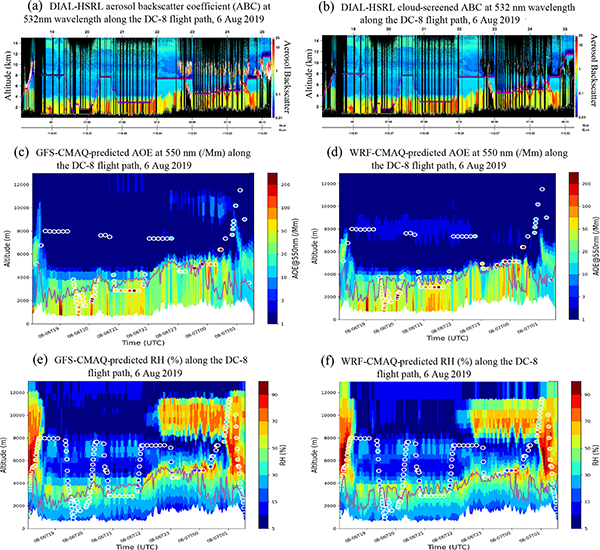
Youhua Tang, Patrick C. Campbell, Pius Lee, Rick Saylor, Fanglin Yang, Barry Baker, Daniel Tong, Ariel Stein, Jianping Huang, Ho-Chun Huang, Li Pan, Jeff McQueen, Ivanka Stajner, Jose Tirado-Delgado, Youngsun Jung, Melissa Yang, Ilann Bourgeois, Jeff Peischl, Tom Ryerson, Donald Blake, Joshua Schwarz, Jose-Luis Jimenez, James Crawford, Glenn Diskin, Richard Moore, Johnathan Hair, Greg Huey, Andrew Rollins, Jack Dibb, and Xiaoyang Zhang
Geosci. Model Dev., 15, 7977–7999, https://doi.org/10.5194/gmd-15-7977-2022, https://doi.org/10.5194/gmd-15-7977-2022, 2022
Short summary
Short summary
This paper compares two meteorological datasets for driving a regional air quality model: a regional meteorological model using WRF (WRF-CMAQ) and direct interpolation from an operational global model (GFS-CMAQ). In the comparison with surface measurements and aircraft data in summer 2019, these two methods show mixed performance depending on the corresponding meteorological settings. Direct interpolation is found to be a viable method to drive air quality models.
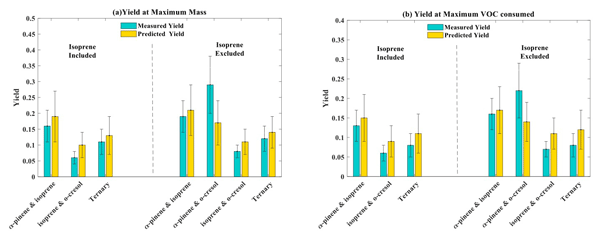
Aristeidis Voliotis, Mao Du, Yu Wang, Yunqi Shao, M. Rami Alfarra, Thomas J. Bannan, Dawei Hu, Kelly L. Pereira, Jaqueline F. Hamilton, Mattias Hallquist, Thomas F. Mentel, and Gordon McFiggans
Atmos. Chem. Phys., 22, 14147–14175, https://doi.org/10.5194/acp-22-14147-2022, https://doi.org/10.5194/acp-22-14147-2022, 2022
Short summary
Short summary
Mixing experiments are crucial and highly beneficial for our understanding of atmospheric chemical interactions. However, interpretation quickly becomes complex, and both the experimental design and evaluation need to be scrutinised carefully. Advanced online and offline compositional measurements can reveal substantial additional information to aid in the interpretation of yield data, including components uniquely found in mixtures and property changes in SOA formed from mixtures of VOCs.
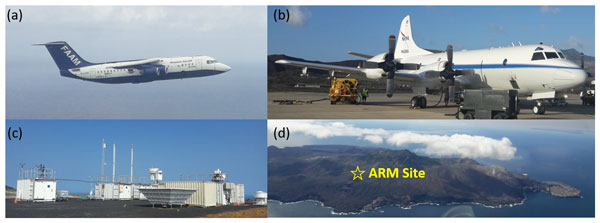
Paul A. Barrett, Steven J. Abel, Hugh Coe, Ian Crawford, Amie Dobracki, James Haywood, Steve Howell, Anthony Jones, Justin Langridge, Greg M. McFarquhar, Graeme J. Nott, Hannah Price, Jens Redemann, Yohei Shinozuka, Kate Szpek, Jonathan W. Taylor, Robert Wood, Huihui Wu, Paquita Zuidema, Stéphane Bauguitte, Ryan Bennett, Keith Bower, Hong Chen, Sabrina Cochrane, Michael Cotterell, Nicholas Davies, David Delene, Connor Flynn, Andrew Freedman, Steffen Freitag, Siddhant Gupta, David Noone, Timothy B. Onasch, James Podolske, Michael R. Poellot, Sebastian Schmidt, Stephen Springston, Arthur J. Sedlacek III, Jamie Trembath, Alan Vance, Maria A. Zawadowicz, and Jianhao Zhang
Atmos. Meas. Tech., 15, 6329–6371, https://doi.org/10.5194/amt-15-6329-2022, https://doi.org/10.5194/amt-15-6329-2022, 2022
Short summary
Short summary
To better understand weather and climate, it is vital to go into the field and collect observations. Often measurements take place in isolation, but here we compared data from two aircraft and one ground-based site. This was done in order to understand how well measurements made on one platform compared to those made on another. Whilst this is easy to do in a controlled laboratory setting, it is more challenging in the real world, and so these comparisons are as valuable as they are rare.
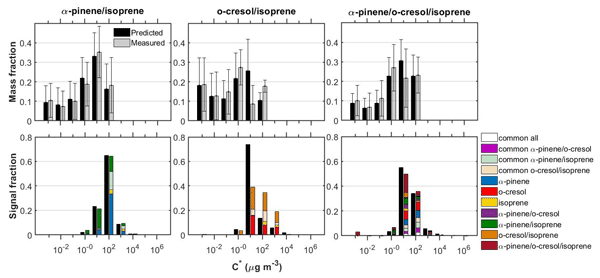
Aristeidis Voliotis, Mao Du, Yu Wang, Yunqi Shao, Thomas J. Bannan, Michael Flynn, Spyros N. Pandis, Carl J. Percival, M. Rami Alfarra, and Gordon McFiggans
Atmos. Chem. Phys., 22, 13677–13693, https://doi.org/10.5194/acp-22-13677-2022, https://doi.org/10.5194/acp-22-13677-2022, 2022
Short summary
Short summary
The addition of a low-yield precursor to the reactive mixture of aVOC and bVOC can increase or decrease the SOA volatility that is system-dependent. Therefore, the SOA volatility of the mixtures cannot always be predicted based on the additivity. In complex mixtures the formation of lower-volatility products likely outweighs the formation of products with higher volatility. The unique products of each mixture contribute significantly to the signal, suggesting interactions can be important.
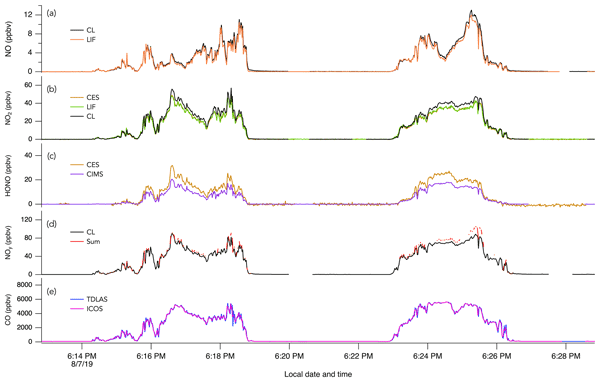
Ilann Bourgeois, Jeff Peischl, J. Andrew Neuman, Steven S. Brown, Hannah M. Allen, Pedro Campuzano-Jost, Matthew M. Coggon, Joshua P. DiGangi, Glenn S. Diskin, Jessica B. Gilman, Georgios I. Gkatzelis, Hongyu Guo, Hannah A. Halliday, Thomas F. Hanisco, Christopher D. Holmes, L. Gregory Huey, Jose L. Jimenez, Aaron D. Lamplugh, Young Ro Lee, Jakob Lindaas, Richard H. Moore, Benjamin A. Nault, John B. Nowak, Demetrios Pagonis, Pamela S. Rickly, Michael A. Robinson, Andrew W. Rollins, Vanessa Selimovic, Jason M. St. Clair, David Tanner, Krystal T. Vasquez, Patrick R. Veres, Carsten Warneke, Paul O. Wennberg, Rebecca A. Washenfelder, Elizabeth B. Wiggins, Caroline C. Womack, Lu Xu, Kyle J. Zarzana, and Thomas B. Ryerson
Atmos. Meas. Tech., 15, 4901–4930, https://doi.org/10.5194/amt-15-4901-2022, https://doi.org/10.5194/amt-15-4901-2022, 2022
Short summary
Short summary
Understanding fire emission impacts on the atmosphere is key to effective air quality management and requires accurate measurements. We present a comparison of airborne measurements of key atmospheric species in ambient air and in fire smoke. We show that most instruments performed within instrument uncertainties. In some cases, further work is needed to fully characterize instrument performance. Comparing independent measurements using different techniques is important to assess their accuracy.
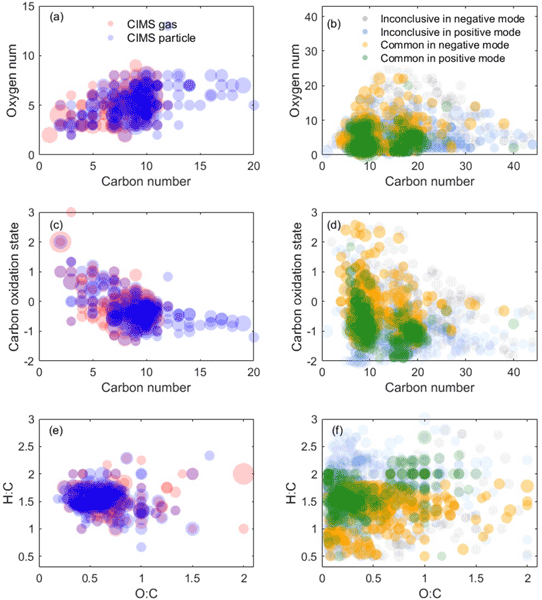
Mao Du, Aristeidis Voliotis, Yunqi Shao, Yu Wang, Thomas J. Bannan, Kelly L. Pereira, Jacqueline F. Hamilton, Carl J. Percival, M. Rami Alfarra, and Gordon McFiggans
Atmos. Meas. Tech., 15, 4385–4406, https://doi.org/10.5194/amt-15-4385-2022, https://doi.org/10.5194/amt-15-4385-2022, 2022
Short summary
Short summary
Atmospheric chemistry plays a key role in the understanding of aerosol formation and air pollution. We designed chamber experiments for the characterization of secondary organic aerosol (SOA) from a biogenic precursor with inorganic seed. Our results highlight the advantages of a combination of online FIGAERO-CIMS and offline LC-Orbitrap MS analytical techniques to characterize the chemical composition of SOA in chamber studies.

Will S. Drysdale, Adam R. Vaughan, Freya A. Squires, Sam J. Cliff, Stefan Metzger, David Durden, Natchaya Pingintha-Durden, Carole Helfter, Eiko Nemitz, C. Sue B. Grimmond, Janet Barlow, Sean Beevers, Gregor Stewart, David Dajnak, Ruth M. Purvis, and James D. Lee
Atmos. Chem. Phys., 22, 9413–9433, https://doi.org/10.5194/acp-22-9413-2022, https://doi.org/10.5194/acp-22-9413-2022, 2022
Short summary
Short summary
Measurements of NOx emissions are important for a good understanding of air quality. While there are many direct measurements of NOx concentration, there are very few measurements of its emission. Measurements of emissions provide constraints on emissions inventories and air quality models. This article presents measurements of NOx emission from the BT Tower in central London in 2017 and compares them with inventories, finding that they underestimate by a factor of ∼1.48.
Caroline Dang, Michal Segal-Rozenhaimer, Haochi Che, Lu Zhang, Paola Formenti, Jonathan Taylor, Amie Dobracki, Sara Purdue, Pui-Shan Wong, Athanasios Nenes, Arthur Sedlacek III, Hugh Coe, Jens Redemann, Paquita Zuidema, Steven Howell, and James Haywood
Atmos. Chem. Phys., 22, 9389–9412, https://doi.org/10.5194/acp-22-9389-2022, https://doi.org/10.5194/acp-22-9389-2022, 2022
Short summary
Short summary
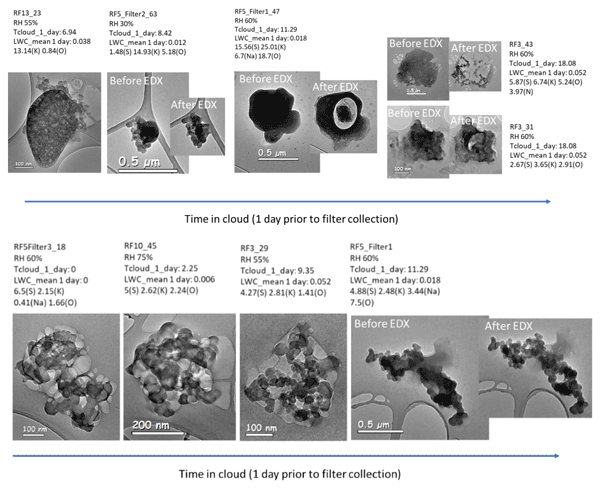
Transmission electron microscopy was used to analyze aged African smoke particles and how the smoke interacts with the marine atmosphere. We found that the volatility of organic aerosol increases with biomass burning plume age, that black carbon is often mixed with potassium salts and that the marine atmosphere can incorporate Na and Cl into smoke particles. Marine salts are more processed when mixed with smoke plumes, and there are interesting Cl-rich yet Na-absent marine particles.
Sebastian Diez, Stuart E. Lacy, Thomas J. Bannan, Michael Flynn, Tom Gardiner, David Harrison, Nicholas Marsden, Nicholas A. Martin, Katie Read, and Pete M. Edwards
Atmos. Meas. Tech., 15, 4091–4105, https://doi.org/10.5194/amt-15-4091-2022, https://doi.org/10.5194/amt-15-4091-2022, 2022
Short summary
Short summary
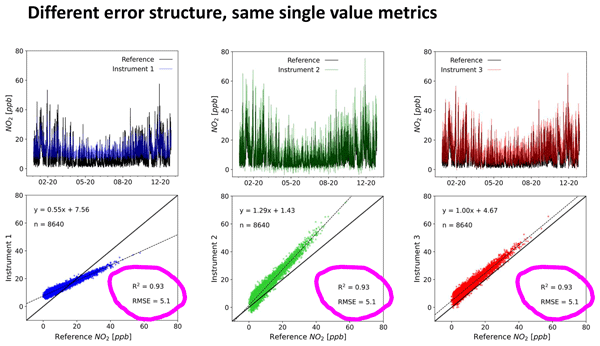
Regardless of the cost of the measuring instrument, there are no perfect measurements. For this reason, we compare the quality of the information provided by cheap devices when they are used to measure air pollutants and we try to emphasise that before judging the potential usefulness of the devices, the user must specify his own needs. Since commonly used performance indices/metrics can be misleading in qualifying this, we propose complementary visual analysis to the more commonly used metrics.
Dimitrios Bousiotis, David C. S. Beddows, Ajit Singh, Molly Haugen, Sebastián Diez, Pete M. Edwards, Adam Boies, Roy M. Harrison, and Francis D. Pope
Atmos. Meas. Tech., 15, 4047–4061, https://doi.org/10.5194/amt-15-4047-2022, https://doi.org/10.5194/amt-15-4047-2022, 2022
Short summary
Short summary
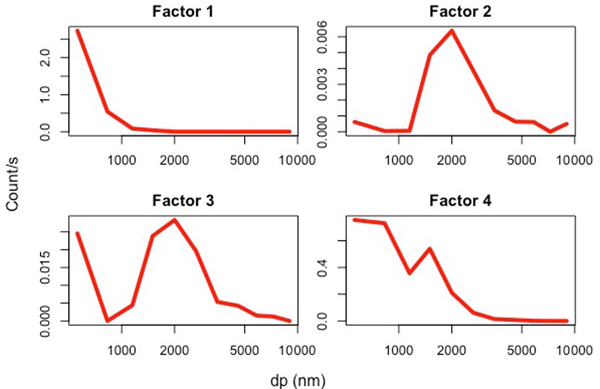
In the last decade, low-cost sensors have revolutionised the field of air quality monitoring. This paper extends the ability of low-cost sensors to not only measure air pollution, but also to understand where the pollution comes from. This "source apportionment" is a critical step in air quality management to allow for the mitigation of air pollution. The techniques developed in this paper have the potential for great impact in both research and industrial applications.
Marios Panagi, Roberto Sommariva, Zoë L. Fleming, Paul S. Monks, Gongda Lu, Eloise A. Marais, James R. Hopkins, Alastair C. Lewis, Qiang Zhang, James D. Lee, Freya A. Squires, Lisa K. Whalley, Eloise J. Slater, Dwayne E. Heard, Robert Woodward-Massey, Chunxiang Ye, and Joshua D. Vande Hey
Atmos. Chem. Phys. Discuss., https://doi.org/10.5194/acp-2022-379, https://doi.org/10.5194/acp-2022-379, 2022
Revised manuscript not accepted
Short summary
Short summary
A dispersion model and a box model were combined to investigate the evolution of VOCs in Beijing once they are emitted from anthropogenic sources. It was determined that during the winter time the VOC concentrations in Beijing are driven predominantly by sources within Beijing and by a combination of transport and chemistry during the summer. Furthermore, the results in the paper highlight the need for a season specific policy.
Hannah Walker, Daniel Stone, Trevor Ingham, Sina Hackenberg, Danny Cryer, Shalini Punjabi, Katie Read, James Lee, Lisa Whalley, Dominick V. Spracklen, Lucy J. Carpenter, Steve R. Arnold, and Dwayne E. Heard
Atmos. Chem. Phys., 22, 5535–5557, https://doi.org/10.5194/acp-22-5535-2022, https://doi.org/10.5194/acp-22-5535-2022, 2022
Short summary
Short summary
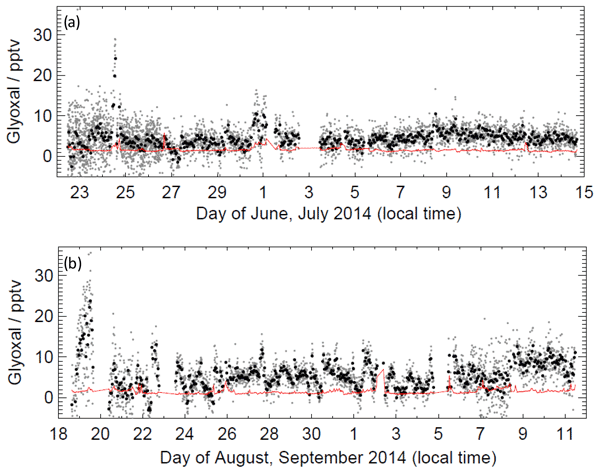
Glyoxal is a ubiquitous reactive organic compound in the atmosphere, which may form organic aerosol and impact the atmosphere's oxidising capacity. There are limited measurements of glyoxal's abundance in the remote marine atmosphere. We made new measurements of glyoxal using a highly sensitive technique over two 4-week periods in the tropical Atlantic atmosphere. We show that daytime measurements are mostly consistent with our chemical understanding but a potential missing source at night.
Robert Woodward-Massey, Roberto Sommariva, Lisa K. Whalley, Danny R. Cryer, Trevor Ingham, William J1 Bloss, Sam Cox, James D. Lee, Chris P. Reed, Leigh R. Crilley, Louisa J. Kramer, Brian J. Bandy, Grant L. Forster, Claire E. Reeves, Paul S. Monks, and Dwayne E. Heard
Atmos. Chem. Phys. Discuss., https://doi.org/10.5194/acp-2022-207, https://doi.org/10.5194/acp-2022-207, 2022
Preprint withdrawn
Short summary
Short summary
We measured radicals (OH, HO2, RO2) and OH reactivity at a UK coastal site and compared our observations to the predictions of an MCMv3.3.1 box model. We find variable agreement between measured and modelled radical concentrations and OH reactivity, where the levels of agreement for individual species display strong dependences on NO concentrations. The most substantial disagreement is found for RO2 at high NO (> 1 ppbv), when RO2 levels are underpredicted by a factor of ~10–30.
Amy Foulds, Grant Allen, Jacob T. Shaw, Prudence Bateson, Patrick A. Barker, Langwen Huang, Joseph R. Pitt, James D. Lee, Shona E. Wilde, Pamela Dominutti, Ruth M. Purvis, David Lowry, James L. France, Rebecca E. Fisher, Alina Fiehn, Magdalena Pühl, Stéphane J. B. Bauguitte, Stephen A. Conley, Mackenzie L. Smith, Tom Lachlan-Cope, Ignacio Pisso, and Stefan Schwietzke
Atmos. Chem. Phys., 22, 4303–4322, https://doi.org/10.5194/acp-22-4303-2022, https://doi.org/10.5194/acp-22-4303-2022, 2022
Short summary
Short summary
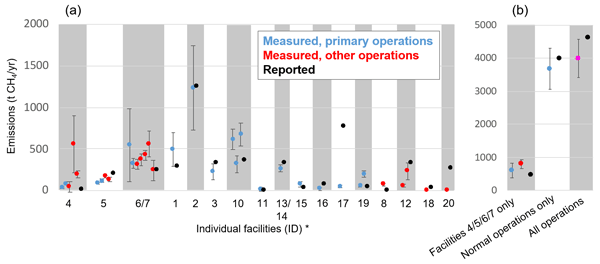
We measured CH4 emissions from 21 offshore oil and gas facilities in the Norwegian Sea in 2019. Measurements compared well with operator-reported emissions but were greatly underestimated when compared with a 2016 global fossil fuel inventory. This study demonstrates the need for up-to-date and accurate inventories for use in research and policy and the important benefits of best-practice reporting methods by operators. Airborne measurements are an effective tool to validate such inventories.
Martin Breitenlechner, Gordon A. Novak, J. Andrew Neuman, Andrew W. Rollins, and Patrick R. Veres
Atmos. Meas. Tech., 15, 1159–1169, https://doi.org/10.5194/amt-15-1159-2022, https://doi.org/10.5194/amt-15-1159-2022, 2022
Short summary
Short summary
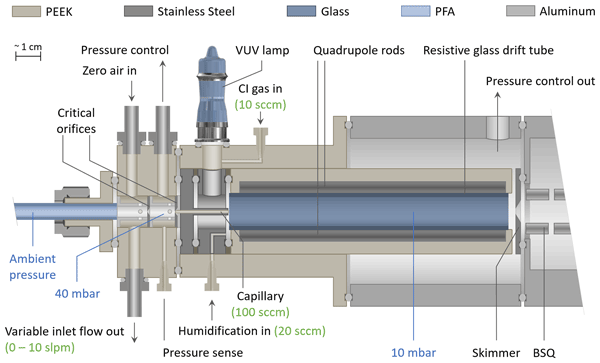
We coupled a new ion source to a commercially available state-of-the-art trace gas analyzer. The instrument is particularly well suited for conducting high-altitude observations, addressing the challenges of low ambient pressures and a complex sample matrix. The new instrument and ion source provides significant advantages to more traditional modes of operation, without sacrificing the sensitivity and flexibility of this technique.
Jessica Slater, Hugh Coe, Gordon McFiggans, Juha Tonttila, and Sami Romakkaniemi
Atmos. Chem. Phys., 22, 2937–2953, https://doi.org/10.5194/acp-22-2937-2022, https://doi.org/10.5194/acp-22-2937-2022, 2022
Short summary
Short summary
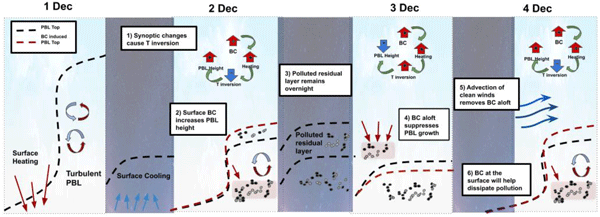
This paper shows the specific impact of black carbon (BC) on the aerosol–planetary boundary layer (PBL) feedback and its influence on a Beijing haze episode. Overall, this paper shows that strong temperature inversions prevent BC heating within the PBL from significantly increasing PBL height, while BC above the PBL suppresses PBL development significantly through the day. From this we suggest a method by which both locally and regionally emitted BC may impact urban pollution episodes.
Charel Wohl, Anna E. Jones, William T. Sturges, Philip D. Nightingale, Brent Else, Brian J. Butterworth, and Mingxi Yang
Biogeosciences, 19, 1021–1045, https://doi.org/10.5194/bg-19-1021-2022, https://doi.org/10.5194/bg-19-1021-2022, 2022
Short summary
Short summary
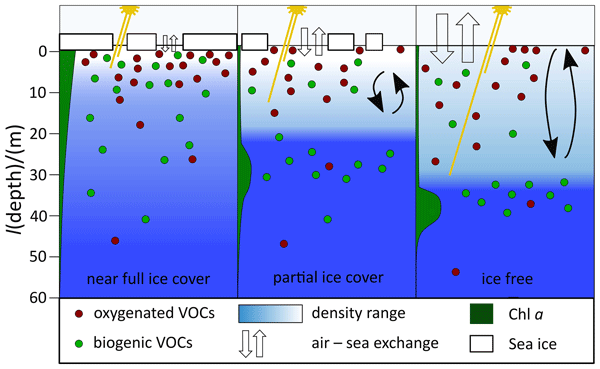
We measured concentrations of five different organic gases in seawater in the high Arctic during summer. We found higher concentrations near the surface of the water column (top 5–10 m) and in areas of partial ice cover. This suggests that sea ice influences the concentrations of these gases. These gases indirectly exert a slight cooling effect on the climate, and it is therefore important to measure the levels accurately for future climate predictions.

Matthew W. Christensen, Andrew Gettelman, Jan Cermak, Guy Dagan, Michael Diamond, Alyson Douglas, Graham Feingold, Franziska Glassmeier, Tom Goren, Daniel P. Grosvenor, Edward Gryspeerdt, Ralph Kahn, Zhanqing Li, Po-Lun Ma, Florent Malavelle, Isabel L. McCoy, Daniel T. McCoy, Greg McFarquhar, Johannes Mülmenstädt, Sandip Pal, Anna Possner, Adam Povey, Johannes Quaas, Daniel Rosenfeld, Anja Schmidt, Roland Schrödner, Armin Sorooshian, Philip Stier, Velle Toll, Duncan Watson-Parris, Robert Wood, Mingxi Yang, and Tianle Yuan
Atmos. Chem. Phys., 22, 641–674, https://doi.org/10.5194/acp-22-641-2022, https://doi.org/10.5194/acp-22-641-2022, 2022
Short summary
Short summary
Trace gases and aerosols (tiny airborne particles) are released from a variety of point sources around the globe. Examples include volcanoes, industrial chimneys, forest fires, and ship stacks. These sources provide opportunistic experiments with which to quantify the role of aerosols in modifying cloud properties. We review the current state of understanding on the influence of aerosol on climate built from the wide range of natural and anthropogenic laboratories investigated in recent decades.
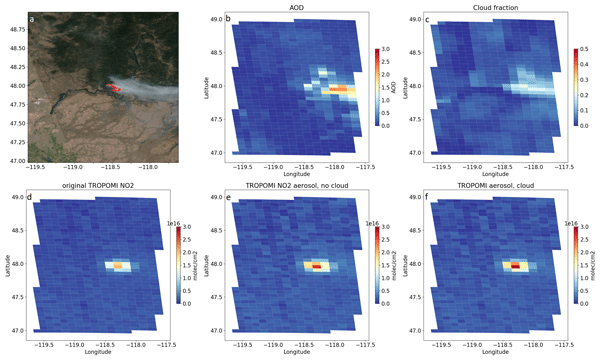
Debora Griffin, Chris A. McLinden, Enrico Dammers, Cristen Adams, Chelsea E. Stockwell, Carsten Warneke, Ilann Bourgeois, Jeff Peischl, Thomas B. Ryerson, Kyle J. Zarzana, Jake P. Rowe, Rainer Volkamer, Christoph Knote, Natalie Kille, Theodore K. Koenig, Christopher F. Lee, Drew Rollins, Pamela S. Rickly, Jack Chen, Lukas Fehr, Adam Bourassa, Doug Degenstein, Katherine Hayden, Cristian Mihele, Sumi N. Wren, John Liggio, Ayodeji Akingunola, and Paul Makar
Atmos. Meas. Tech., 14, 7929–7957, https://doi.org/10.5194/amt-14-7929-2021, https://doi.org/10.5194/amt-14-7929-2021, 2021
Short summary
Short summary
Satellite-derived NOx emissions from biomass burning are estimated with TROPOMI observations. Two common emission estimation methods are applied, and sensitivity tests with model output were performed to determine the accuracy of these methods. The effect of smoke aerosols on TROPOMI NO2 columns is estimated and compared to aircraft observations from four different aircraft campaigns measuring biomass burning plumes in 2018 and 2019 in North America.

Leigh R. Crilley, Louisa J. Kramer, Francis D. Pope, Chris Reed, James D. Lee, Lucy J. Carpenter, Lloyd D. J. Hollis, Stephen M. Ball, and William J. Bloss
Atmos. Chem. Phys., 21, 18213–18225, https://doi.org/10.5194/acp-21-18213-2021, https://doi.org/10.5194/acp-21-18213-2021, 2021
Short summary
Short summary
Nitrous acid (HONO) is a key source of atmospheric oxidants. We evaluate if the ocean surface is a source of HONO for the marine boundary layer, using measurements from two contrasting coastal locations. We observed no evidence for a night-time ocean surface source, in contrast to previous work. This points to significant geographical variation in the predominant HONO formation mechanisms in marine environments, reflecting possible variability in the sea-surface microlayer composition.
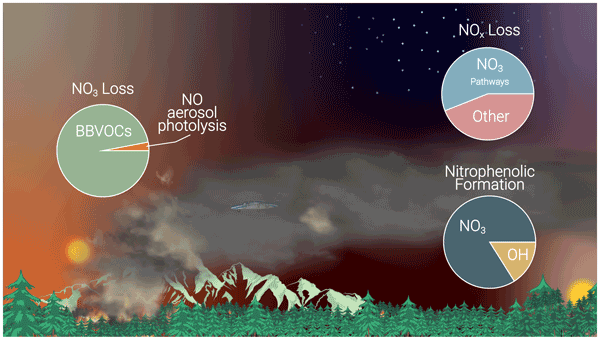
Zachary C. J. Decker, Michael A. Robinson, Kelley C. Barsanti, Ilann Bourgeois, Matthew M. Coggon, Joshua P. DiGangi, Glenn S. Diskin, Frank M. Flocke, Alessandro Franchin, Carley D. Fredrickson, Georgios I. Gkatzelis, Samuel R. Hall, Hannah Halliday, Christopher D. Holmes, L. Gregory Huey, Young Ro Lee, Jakob Lindaas, Ann M. Middlebrook, Denise D. Montzka, Richard Moore, J. Andrew Neuman, John B. Nowak, Brett B. Palm, Jeff Peischl, Felix Piel, Pamela S. Rickly, Andrew W. Rollins, Thomas B. Ryerson, Rebecca H. Schwantes, Kanako Sekimoto, Lee Thornhill, Joel A. Thornton, Geoffrey S. Tyndall, Kirk Ullmann, Paul Van Rooy, Patrick R. Veres, Carsten Warneke, Rebecca A. Washenfelder, Andrew J. Weinheimer, Elizabeth Wiggins, Edward Winstead, Armin Wisthaler, Caroline Womack, and Steven S. Brown
Atmos. Chem. Phys., 21, 16293–16317, https://doi.org/10.5194/acp-21-16293-2021, https://doi.org/10.5194/acp-21-16293-2021, 2021
Short summary
Short summary
To understand air quality impacts from wildfires, we need an accurate picture of how wildfire smoke changes chemically both day and night as sunlight changes the chemistry of smoke. We present a chemical analysis of wildfire smoke as it changes from midday through the night. We use aircraft observations from the FIREX-AQ field campaign with a chemical box model. We find that even under sunlight typical
nighttimechemistry thrives and controls the fate of key smoke plume chemical processes.

Mark F. Lunt, Alistair J. Manning, Grant Allen, Tim Arnold, Stéphane J.-B. Bauguitte, Hartmut Boesch, Anita L. Ganesan, Aoife Grant, Carole Helfter, Eiko Nemitz, Simon J. O'Doherty, Paul I. Palmer, Joseph R. Pitt, Chris Rennick, Daniel Say, Kieran M. Stanley, Ann R. Stavert, Dickon Young, and Matt Rigby
Atmos. Chem. Phys., 21, 16257–16276, https://doi.org/10.5194/acp-21-16257-2021, https://doi.org/10.5194/acp-21-16257-2021, 2021
Short summary
Short summary
We present an evaluation of the UK's methane emissions between 2013 and 2020 using a network of tall tower measurement sites. We find emissions that are consistent in both magnitude and trend with the UK's reported emissions, with a declining trend driven by a decrease in emissions from England. The impact of various components of the modelling set-up on these findings are explored through a number of sensitivity studies.
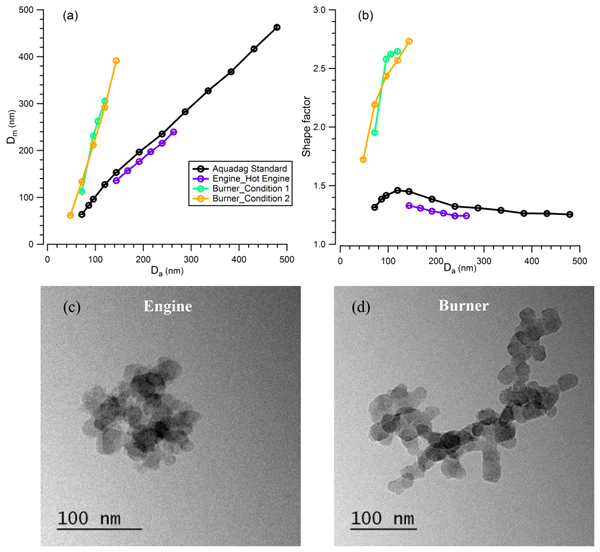
Dawei Hu, M. Rami Alfarra, Kate Szpek, Justin M. Langridge, Michael I. Cotterell, Claire Belcher, Ian Rule, Zixia Liu, Chenjie Yu, Yunqi Shao, Aristeidis Voliotis, Mao Du, Brett Smith, Greg Smallwood, Prem Lobo, Dantong Liu, Jim M. Haywood, Hugh Coe, and James D. Allan
Atmos. Chem. Phys., 21, 16161–16182, https://doi.org/10.5194/acp-21-16161-2021, https://doi.org/10.5194/acp-21-16161-2021, 2021
Short summary
Short summary
Here, we developed new techniques for investigating these properties in the laboratory and applied these to BC and BrC from different sources, including diesel exhaust, inverted propane flame and wood combustion. These have allowed us to quantify the changes in shape and chemical composition of different soots according to source and variables such as the moisture content of wood.
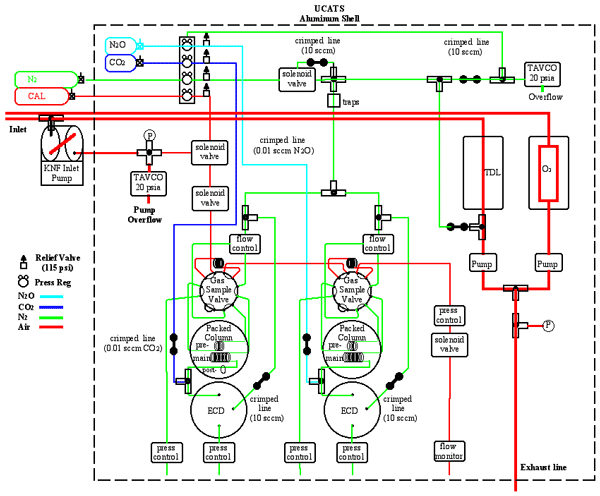
Eric J. Hintsa, Fred L. Moore, Dale F. Hurst, Geoff S. Dutton, Bradley D. Hall, J. David Nance, Ben R. Miller, Stephen A. Montzka, Laura P. Wolton, Audra McClure-Begley, James W. Elkins, Emrys G. Hall, Allen F. Jordan, Andrew W. Rollins, Troy D. Thornberry, Laurel A. Watts, Chelsea R. Thompson, Jeff Peischl, Ilann Bourgeois, Thomas B. Ryerson, Bruce C. Daube, Yenny Gonzalez Ramos, Roisin Commane, Gregory W. Santoni, Jasna V. Pittman, Steven C. Wofsy, Eric Kort, Glenn S. Diskin, and T. Paul Bui
Atmos. Meas. Tech., 14, 6795–6819, https://doi.org/10.5194/amt-14-6795-2021, https://doi.org/10.5194/amt-14-6795-2021, 2021
Short summary
Short summary
We built UCATS to study atmospheric chemistry and transport. It has measured trace gases including CFCs, N2O, SF6, CH4, CO, and H2 with gas chromatography, as well as ozone and water vapor. UCATS has been part of missions to study the tropical tropopause; transport of air into the stratosphere; greenhouse gases, transport, and chemistry in the troposphere; and ozone chemistry, on both piloted and unmanned aircraft. Its design, capabilities, and some results are shown and described here.
Cited articles
Aliabadi, A. A., Thomas, J. L., Herber, A. B., Staebler, R. M., Leaitch, W. R., Schulz, H., Law, K. S., Marelle, L., Burkart, J., Willis, M. D., Bozem, H., Hoor, P. M., Köllner, F., Schneider, J., Levasseur, M., and Abbatt, J. P. D.: Ship emissions measurement in the Arctic by plume intercepts of the Canadian Coast Guard icebreaker Amundsen from the Polar 6 aircraft platform, Atmos. Chem. Phys., 16, 7899–7916, https://doi.org/10.5194/acp-16-7899-2016, 2016.
Archibald, A. T., Sinha, B., Russo, M. R., Matthews, E., Squires, F. A., Abraham, N. L., Bauguitte, S. J.-B., Bannan, T. J., Bell, T. G., Berry, D., Carpenter, L. J., Coe, H., Coward, A., Edwards, P., Feltham, D., Heard, D., Hopkins, J., Keeble, J., Kent, E. C., King, B. A., Lawrence, I. R., Lee, J., Macintosh, C. R., Megann, A., Moat, B. I., Read, K., Reed, C., Roberts, M. J., Schiemann, R., Schroeder, D., Smyth, T. J., Temple, L., Thamban, N., Whalley, L., Williams, S., Wu, H., and Yang, M.: Data supporting the North Atlantic Climate System Integrated Study (ACSIS) programme, including atmospheric composition; oceanographic and sea-ice observations (2016–2022); and output from ocean, atmosphere, land, and sea-ice models (1950–2050), Earth Syst. Sci. Data, 17, 135–164, https://doi.org/10.5194/essd-17-135-2025, 2025.
Beecken, J., Mellqvist, J., Salo, K., Ekholm, J., and Jalkanen, J.-P.: Airborne emission measurements of SO2, NOx and particles from individual ships using a sniffer technique, Atmos. Meas. Tech., 7, 1957–1968, https://doi.org/10.5194/amt-7-1957-2014, 2014.
Berg, N., Mellqvist, J., Jalkanen, J.-P., and Balzani, J.: Ship emissions of SO2 and NO2: DOAS measurements from airborne platforms, Atmos. Meas. Tech., 5, 1085–1098, https://doi.org/10.5194/amt-5-1085-2012, 2012.
Bian, H., Chin, M., Colarco, P. R., Apel, E. C., Blake, D. R., Froyd, K., Hornbrook, R. S., Jimenez, J., Jost, P. C., Lawler, M., Liu, M., Lund, M. T., Matsui, H., Nault, B. A., Penner, J. E., Rollins, A. W., Schill, G., Skeie, R. B., Wang, H., Xu, L., Zhang, K., and Zhu, J.: Observationally constrained analysis of sulfur cycle in the marine atmosphere with NASA ATom measurements and AeroCom model simulations, Atmos. Chem. Phys., 24, 1717–1741, https://doi.org/10.5194/acp-24-1717-2024, 2024.
Bilsback, K. R., Kerry, D., Croft, B., Ford, B., Jathar, S. H., Carter, E., Martin, R. V., and Pierce, J. R.: Beyond SOx reductions from shipping: assessing the impact of NOx and carbonaceous-particle controls on human health and climate, Environ. Res. Lett., 15, 124046, https://doi.org/10.1088/1748-9326/abc718, 2020.
Capaldo, K., Corbett, J. J., Kasibhatla, P., Fischbeck, P., and Pandis, S. N.: Effects of ship emissions on sulphur cycling and radiative climate forcing over the ocean, Nature, 400, 743–746, https://doi.org/10.1038/23438, 1999.
Cheng, Y., Wang, S., Zhu, J., Guo, Y., Zhang, R., Liu, Y., Zhang, Y., Yu, Q., Ma, W., and Zhou, B.: Surveillance of SO2 and NO2 from ship emissions by MAX-DOAS measurements and the implications regarding fuel sulfur content compliance, Atmos. Chem. Phys., 19, 13611–13626, https://doi.org/10.5194/acp-19-13611-2019, 2019.
Department for Environment, Food and Rural Affairs: Emissions of air pollutants in the UK – Sulphur dioxide (SO2), https://www.gov.uk/government/statistics/emissions-of-air-pollutants/emissions-of-air-pollutants-in-the-uk-sulphur-dioxide-so2, last access: 19 February 2024.
Diamond, M. S.: Detection of large-scale cloud microphysical changes within a major shipping corridor after implementation of the International Maritime Organization 2020 fuel sulfur regulations, Atmos. Chem. Phys., 23, 8259–8269, https://doi.org/10.5194/acp-23-8259-2023, 2023.
Facility for Airborne Atmospheric Measurements, Natural Environment Research Council, and Met Office: FAAM C285, C286, C287 ACRUISE flights: Airborne atmospheric measurements from core instrument suite on board the BAE-146 aircraft, NERC EDS Centre for Environmental Data Analysis [data set], https://catalogue.ceda.ac.uk/uuid/d6eb4e907c124482881d7d03c06903e4 (last access: 28 January 2026), 2022a.
Facility for Airborne Atmospheric Measurements, Natural Environment Research Council, and Met Office: FAAM C289, C290, C292, C293 ACSIS flights: Airborne atmospheric measurements from core instrument suite on board the BAE-146 aircraft, NERC EDS Centre for Environmental Data Analysis [data set], https://catalogue.ceda.ac.uk/uuid/7e92f3a40afc494f9aaf92525ebb4779 (last access: 28 January 2026), 2022b.
Faloona, I.: Sulfur processing in the marine atmospheric boundary layer: A review and critical assessment of modeling uncertainties, Atmos. Environ., 43, 2841–2854, https://doi.org/10.1016/j.atmosenv.2009.02.043, 2009.
Fiedler, V., Nau, R., Ludmann, S., Arnold, F., Schlager, H., and Stohl, A.: East Asian SO2 pollution plume over Europe – Part 1: Airborne trace gas measurements and source identification by particle dispersion model simulations, Atmos. Chem. Phys., 9, 4717–4728, https://doi.org/10.5194/acp-9-4717-2009, 2009.
Firket, J.: Fog along the Meuse valley, Trans. Faraday Soc., 32, 1192–1196, https://doi.org/10.1039/TF9363201192, 1936.
Forster, P., Alterskjaer, K., Smith, C., Colman, R., Damon Matthews, H., Ramaswamy, V., Storelvmo, T., Armour, K., Collins, W., Dufresne, J., Frame, D., Lunt, D., Mauritsen, T., Watanabe, M., Wild, M., Zhang, H., Pirani, A., Connors, S., Péan, C., Berger, S., Caud, N., Chen, Y., Goldfarb, L., Gomis, M., Huang, M., Leitzell, K., Lonnoy, E., Matthews, J., Maycock, T., Waterfield, T., Yelekçi, O., Yu, R., and Zhou, B.: Climate Feedbacks, and ClimateSensitivity. In Climate Change 2021: The Physical Science Basis. Contribution of Working Group I to the SixthAssessment Report of the Intergovernmental Panel on Climate Change, 923–1054, https://doi.org/10.1017/9781009157896.009, 2021.
Gettelman, A., Christensen, M. W., Diamond, M. S., Gryspeerdt, E., Manshausen, P., Stier, P., Watson-Parris, D., Yang, M., Yoshioka, M., and Yuan, T.: Has Reducing Ship Emissions Brought Forward Global Warming?, Geophys. Res. Lett., 51, e2024GL109077, https://doi.org/10.1029/2024GL109077, 2024.
Gorham, E.: The influence and importance of daily weather conditions in the supply of chloride, sulphate and other ions to fresh waters from atmospheric precipitation, Philos. Trans. R. Soc. Lond. B. Biol. Sci., 241, 147–178, https://doi.org/10.1098/RSTB.1958.0001, 1958.
Jin, Q., Grandey, B. S., Rothenberg, D., Avramov, A., and Wang, C.: Impacts on cloud radiative effects induced by coexisting aerosols converted from international shipping and maritime DMS emissions, Atmos. Chem. Phys., 18, 16793–16808, https://doi.org/10.5194/acp-18-16793-2018, 2018.
Jordan, G. and Henry, M.: IMO2020 Regulations Accelerate Global Warming by up to 3 Years in UKESM1, Earth's Futur., 12, e2024EF005011, https://doi.org/10.1029/2024EF005011, 2024.
Kattner, L., Mathieu-Üffing, B., Burrows, J. P., Richter, A., Schmolke, S., Seyler, A., and Wittrock, F.: Monitoring compliance with sulfur content regulations of shipping fuel by in situ measurements of ship emissions, Atmos. Chem. Phys., 15, 10087–10092, https://doi.org/10.5194/acp-15-10087-2015, 2015.
Lack, D. A., Cappa, C. D., Langridge, J., Bahreini, R., Buffaloe, G., Brock, C., Cerully, K., Coffman, D., Hayden, K., Holloway, J., Lerner, B., Massoli, P., Li, S. M., McLaren, R., Middlebrook, A. M., Moore, R., Nenes, A., Nuaaman, I., Onasch, T. B., Peischl, J., Perring, A., Quinn, P. K., Ryerson, T., Schwartz, J. P., Spackman, R., Wofsy, S. C., Worsnop, D., Xiang, B., and Williams, E.: Impact of fuel quality regulation and speed reductions on shipping emissions: Implications for climate and air quality, Environ. Sci. Technol., 45, 9052–9060, https://doi.org/10.1021/es2013424, 2011.
Lee, B. H., Lopez-Hilfiker, F. D., Schroder, J. C., Campuzano-Jost, P., Jimenez, J. L., McDuffie, E. E., Fibiger, D. L., Veres, P. R., Brown, S. S., Campos, T. L., Weinheimer, A. J., Flocke, F. F., Norris, G., O'Mara, K., Green, J. R., Fiddler, M. N., Bililign, S., Shah, V., Jaeglé, L., and Thornton, J. A.: Airborne Observations of Reactive Inorganic Chlorine and Bromine Species in the Exhaust of Coal-Fired Power Plants, J. Geophys. Res. Atmos., 123, 11225–11237, https://doi.org/10.1029/2018JD029284, 2018.
Lee, J. D., Pasternak, D., Wilde, S. E., Drysdale, W. S., Lacy, S. E., Moller, S. J., Shaw, M., Squires, F. A., Edwards, P., Temple, L. G., Coe, H., Wu, H., Batten, S. E., Bauguitte, S., Reed, C., Bell, T. G., Yang, M., Jalkanen, J.-P., and Buhigas, J.: SO2 and NOx emissions from ships in North-East Atlantic waters: in situ measurements and comparison with an emission model, Environ. Sci. Atmos., 5, 1282–1296, https://doi.org/10.1039/D5EA00089K, 2025.
Mahajan, A. S., Tinel, L., Riffault, V., Guilbaud, S., D'Anna, B., Cuevas, C., and Saiz-Lopez, A.: MAX-DOAS observations of ship emissions in the North Sea, Mar. Pollut. Bull., 206, 116761, https://doi.org/10.1016/j.marpolbul.2024.116761, 2024.
Manatt, S. L. and Lane, A. L.: A compilation of the absorption cross-sections of SO2 from 106 to 403 nm, J. Quant. Spectrosc. Radiat. Transf., 50, 267–276, https://doi.org/10.1016/0022-4073(93)90077-U, 1993.
Matthews, E., Bannan, T. J., Khan, M. A. H., Shallcross, D. E., Stark, H., Browne, E. C., Archibald, A. T., Mehra, A., Bauguitte, S. J. B., Reed, C., Thamban, N. M., Wu, H., Barker, P., Lee, J., Carpenter, L. J., Yang, M., Bell, T. G., Allen, G., Jayne, J. T., Percival, C. J., McFiggans, G., Gallagher, M., and Coe, H.: Airborne observations over the North Atlantic Ocean reveal the importance of gas-phase urea in the atmosphere, Proc. Natl. Acad. Sci. USA, 120, e2218127120, https://doi.org/10.1073/pnas.2218127120, 2023.
Merikanto, J., Spracklen, D. V., Mann, G. W., Pickering, S. J., and Carslaw, K. S.: Impact of nucleation on global CCN, Atmos. Chem. Phys., 9, 8601–8616, https://doi.org/10.5194/acp-9-8601-2009, 2009.
Myhre, G., Shindell, D., Bréon, F.-M., Collins, W., Fuglestvedt, J., Huang, J., Koch, D., Lamarque, J.-F., Lee, D., Mendoza, B., Nakajima, T., Robock, A., Stephens, G., Takemura, T., and Zhang, H.: Anthropogenic and Natural Radiative Forcing. In: Climate Change 2013: The Physical Science Basis. Contribution of Working Group I to the Fifth Assessment Report of the Intergovernmental Panel on Climate Change, edited by: Stocker, T. F., Qin, D., Plattner, G.-K., Tignor, M., Allen, S. K., Boschung, J., Nauels, A., Xia, Y., Bex, V., and Midgley, P. M., Cambridge University Press, Cambridge, United Kingdom and New York, NY, USA, https://www.ipcc.ch/site/assets/uploads/2018/02/WG1AR5_Chapter08_FINAL.pdf (last access: 18 September 2024), 2013.
Penner, J. E., Andreae, M., Annegarn, H., Barrie, L., Feichter, J., Hegg, D., Jayaraman, A., Leaitch, R., Murphy, D., Nganga, J., and Pitari, G.: Aerosols, their direct and indirect effects, in Climate Change 2001: The Scientific Basis. Contribution of Working Group I to the Third Assessment Report of the Intergovernmental Panel on Climate Change, edited by: Nyenzi, B. and Prospero, J., Cambridge University Press, Cambridge, United Kingdom and New York, NY, USA, https://www.ipcc.ch/site/assets/uploads/2018/03/TAR-05.pdf (last access: 18 September 2024), 2001.
Quaglia, I. and Visioni, D.: Modeling 2020 regulatory changes in international shipping emissions helps explain anomalous 2023 warming, Earth Syst. Dynam., 15, 1527–1541, https://doi.org/10.5194/esd-15-1527-2024, 2024.
Rickly, P. S., Xu, L., Crounse, J. D., Wennberg, P. O., and Rollins, A. W.: Improvements to a laser-induced fluorescence instrument for measuring SO2 – impact on accuracy and precision, Atmos. Meas. Tech., 14, 2429–2439, https://doi.org/10.5194/amt-14-2429-2021, 2021.
Rickly, P. S., Guo, H., Campuzano-Jost, P., Jimenez, J. L., Wolfe, G. M., Bennett, R., Bourgeois, I., Crounse, J. D., Dibb, J. E., DiGangi, J. P., Diskin, G. S., Dollner, M., Gargulinski, E. M., Hall, S. R., Halliday, H. S., Hanisco, T. F., Hannun, R. A., Liao, J., Moore, R., Nault, B. A., Nowak, J. B., Peischl, J., Robinson, C. E., Ryerson, T., Sanchez, K. J., Schöberl, M., Soja, A. J., St. Clair, J. M., Thornhill, K. L., Ullmann, K., Wennberg, P. O., Weinzierl, B., Wiggins, E. B., Winstead, E. L., and Rollins, A. W.: Emission factors and evolution of SO2 measured from biomass burning in wildfires and agricultural fires, Atmos. Chem. Phys., 22, 15603–15620, https://doi.org/10.5194/acp-22-15603-2022, 2022.
Rollins, A. W., Thornberry, T. D., Ciciora, S. J., McLaughlin, R. J., Watts, L. A., Hanisco, T. F., Baumann, E., Giorgetta, F. R., Bui, T. V., Fahey, D. W., and Gao, R.-S.: A laser-induced fluorescence instrument for aircraft measurements of sulfur dioxide in the upper troposphere and lower stratosphere, Atmos. Meas. Tech., 9, 4601–4613, https://doi.org/10.5194/amt-9-4601-2016, 2016.
Rollins, A. W., Thornberry, T. D., Watts, L. A., Yu, P., Rosenlof, K. H., Mills, M., Baumann, E., Giorgetta, F. R., Bui, T. V., Höpfner, M., Walker, K. A., Boone, C., Bernath, P. F., Colarco, P. R., Newman, P. A., Fahey, D. W., and Gao, R. S.: The role of sulfur dioxide in stratospheric aerosol formation evaluated by using in situ measurements in the tropical lower stratosphere, Geophys. Res. Lett., 44, 4280–4286, https://doi.org/10.1002/2017GL072754, 2017.
Rufus, J., Stark, G., Smith, P. L., Pickering, J. C., and Thorne, A. P.: High-resolution photoabsorption cross section measurements of SO2, 2: 220 to 325 nm at 295 K, J. Geophys. Res. Planets, 108, 5011, https://doi.org/10.1029/2002JE001931, 2003.
Seyler, A., Wittrock, F., Kattner, L., Mathieu-Üffing, B., Peters, E., Richter, A., Schmolke, S., and Burrows, J. P.: Monitoring shipping emissions in the German Bight using MAX-DOAS measurements, Atmos. Chem. Phys., 17, 10997–11023, https://doi.org/10.5194/acp-17-10997-2017, 2017.
Skeie, R. B., Byrom, R., Hodnebrog, Ø., Jouan, C., and Myhre, G.: Multi-model effective radiative forcing of the 2020 sulfur cap for shipping, Atmos. Chem. Phys., 24, 13361–13370, https://doi.org/10.5194/acp-24-13361-2024, 2024.
Smith, S. J., van Aardenne, J., Klimont, Z., Andres, R. J., Volke, A., and Delgado Arias, S.: Anthropogenic sulfur dioxide emissions: 1850–2005, Atmos. Chem. Phys., 11, 1101–1116, https://doi.org/10.5194/acp-11-1101-2011, 2011.
Sofiev, M., Winebrake, J. J., Johansson, L., Carr, E. W., Prank, M., Soares, J., Vira, J., Kouznetsov, R., Jalkanen, J. P., and Corbett, J. J.: Cleaner fuels for ships provide public health benefits with climate tradeoffs, Nat. Commun., 91, 1–12, https://doi.org/10.1038/s41467-017-02774-9, 2018.
Speidel, M., Nau, R., Arnold, F., Schlager, H., and Stohl, A.: Sulfur dioxide measurements in the lower, middle and upper troposphere: Deployment of an aircraft-based chemical ionization mass spectrometer with permanent in-flight calibration, Atmos. Environ., 41, 2427–2437, https://doi.org/10.1016/j.atmosenv.2006.07.047, 2007.
Stark, G., Smith, P. L., Rufus, J., Thorne, A. P., Pickering, J. C., and Cox, G.: High-resolution photoabsorption cross-section measurements of SO2 at 295 K between 198 and 220 nm, J. Geophys. Res. Planets, 104, 16585–16590, https://doi.org/10.1029/1999JE001022, 1999.
Stark, H., Yatavelli, R. L. N., Thompson, S. L., Kimmel, J. R., Cubison, M. J., Chhabra, P. S., Canagaratna, M. R., Jayne, J. T., Worsnop, D. R., and Jimenez, J. L.: Methods to extract molecular and bulk chemical information from series of complex mass spectra with limited mass resolution, Int. J. Mass Spectrom., 389, 26–38, https://doi.org/10.1016/j.ijms.2015.08.011, 2015.
Temple, L., Young, S., Vallow, J., and Edwards, P. M.: Aircraft Data from the University of York's LIF-SO2 Instrument, Zenodo [data set], https://doi.org/10.5281/zenodo.18417210, 2026a.
Temple, L., Young, S., Vallow, J., Edwards, P. M., Matthews, E., Bannan, T., Bauguitte, S., and Batten, S.: wacl-york/York_LIF_Instrument_Paper2026: Data and code for `An intercomparison of aircraft sulfur dioxide measurements in clean and polluted marine environments' publication (Version 1), Zenodo [data set], https://doi.org/10.5281/zenodo.18420994, 2026b.
Thornton, D. C., Bandy, A. R., Tu, F. H., Blomquist, B. W., Mitchell, G. M., Nadler, W., Lenschow, D. H., Thornton, D. C., Bandy, A. R., Tu, F. H., Blomquist, B. W., Mitchell, G. M., Nadler, W., and Lenschow, D. H.: Fast airborne sulfur dioxide measurements by Atmospheric Pressure Ionization Mass Spectrometry (APIMS), J. Geophys. Res. Atmos., 107, 4632, https://doi.org/10.1029/2002JD002289, 2002.
Wilde, S. E., Padilla, L. E., Farren, N. J., Alvarez, R. A., Wilson, S., Lee, J. D., Wagner, R. L., Slater, G., Peters, D., and Carslaw, D. C.: Mobile monitoring reveals congestion penalty for vehicle emissions in London, Atmos. Environ. X, 21, 100241, https://doi.org/10.1016/J.AEAOA.2024.100241, 2024.
Wu, C. and Yu, J. Z.: Evaluation of linear regression techniques for atmospheric applications: the importance of appropriate weighting, Atmos. Meas. Tech., 11, 1233–1250, https://doi.org/10.5194/amt-11-1233-2018, 2018.
Yang, M., Bell, T. G., Hopkins, F. E., and Smyth, T. J.: Attribution of atmospheric sulfur dioxide over the English Channel to dimethyl sulfide and changing ship emissions, Atmos. Chem. Phys., 16, 4771–4783, https://doi.org/10.5194/acp-16-4771-2016, 2016.
Yoshioka, M., Grosvenor, D. P., Booth, B. B. B., Morice, C. P., and Carslaw, K. S.: Warming effects of reduced sulfur emissions from shipping, Atmos. Chem. Phys., 24, 13681–13692, https://doi.org/10.5194/acp-24-13681-2024, 2024.
Yu, C., Pasternak, D., Lee, J., Yang, M., Bell, T., Bower, K., Wu, H., Liu, D., Reed, C., Bauguitte, S., Cliff, S., Trembath, J., Coe, H., and Allan, J. D.: Characterizing the Particle Composition and Cloud Condensation Nuclei from Shipping Emission in Western Europe, Environ. Sci. Technol., 54, 15604–15612, https://doi.org/10.1021/acs.est.0c04039, 2020.
Yuan, T., Song, H., Wood, R., Wang, C., Oreopoulos, L., Platnick, S. E., Von Hippel, S., Meyer, K., Light, S., and Wilcox, E.: Global reduction in ship-tracks from sulfur regulations for shipping fuel, Sci. Adv., 8, 7988, https://doi.org/10.1126/sciadv.abn7988, 2022.
Yuan, T., Song, H., Oreopoulos, L., Wood, R., Bian, H., Breen, K., Chin, M., Yu, H., Barahona, D., Meyer, K., and Platnick, S.: Abrupt reduction in shipping emission as an inadvertent geoengineering termination shock produces substantial radiative warming, Commun. Earth Environ., 5, 281, https://doi.org/10.1038/s43247-024-01442-3, 2024.
Zanatta, M., Bozem, H., Köllner, F., Schneider, J., Kunkel, D., Hoor, P., de Faria, J., Petzold, A., Bundke, U., Hayden, K., Staebler, R. M., Schulz, H., and Herber, A. B.: Airborne survey of trace gases and aerosols over the Southern Baltic Sea: from clean marine boundary layer to shipping corridor effect, Tellus B Chem. Phys. Meteorol., 72, 1–24, https://doi.org/10.1080/16000889.2019.1695349, 2020.
Short summary
Sulfur dioxide (SO2) is a key precursor to aerosol formation, particularly in remote marine environments, ultimately affecting cloud properties and climate. Accurate quantification of atmospheric SO2 is therefore crucial. This work compares a custom-built laser-based instrument to two commercial SO2 analysers during measurements from a large research aircraft. Our results show that this custom-built system offers greater sensitivity at time resolutions required for aircraft measurements.
Sulfur dioxide (SO2) is a key precursor to aerosol formation, particularly in remote marine...


