
Articles | Volume 19, issue 1
https://doi.org/10.5194/amt-19-211-2026
© Author(s) 2026. This work is distributed under
the Creative Commons Attribution 4.0 License.
the Creative Commons Attribution 4.0 License.
https://doi.org/10.5194/amt-19-211-2026
© Author(s) 2026. This work is distributed under
the Creative Commons Attribution 4.0 License.
the Creative Commons Attribution 4.0 License.
Research article
| 
13 Jan 2026
Research article |
| 13 Jan 2026
| 13 Jan 2026
Hydrometeor partitioning ratios for dual-frequency space-borne and polarimetric ground-based radar observations

Institute of Geosciences, Department of Meteorology, University of Bonn, Bonn, Germany
Kamil Mroz
National Center for Earth Observation, University of Leicester, Leicester, UK
Kai Mühlbauer
Institute of Geosciences, Department of Meteorology, University of Bonn, Bonn, Germany
Silke Trömel
Institute of Geosciences, Department of Meteorology, University of Bonn, Bonn, Germany
Laboratory for Clouds and Precipitation Exploration, Geoverbund ABC/J, Bonn, Germany
Related authors
Tobias Scharbach, Velibor Pejcic, and Silke Trömel
Atmos. Meas. Tech., 19, 6209–6228, https://doi.org/10.5194/amt-19-6209-2026, https://doi.org/10.5194/amt-19-6209-2026, 2026
Short summary
Short summary
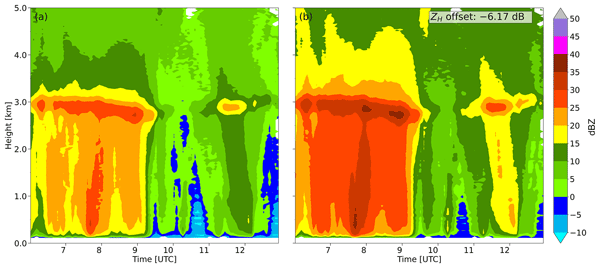
For the X-band radar in Bonn, the birdbath method has proven to be insufficient for calibrating differential reflectivity. This study raises awareness of the need for critically applying the birdbath method. A novel technique for calibrating the reflectivity factor is presented and compared with satellite measurements, serving as ground truth, and a known standard calibration method. The offset values agree well with the satellite and even exceed the accuracy of the standard calibration method.
Prabhakar Shrestha, Jana Mendrok, Velibor Pejcic, Silke Trömel, Ulrich Blahak, and Jacob T. Carlin
Geosci. Model Dev., 15, 291–313, https://doi.org/10.5194/gmd-15-291-2022, https://doi.org/10.5194/gmd-15-291-2022, 2022
Short summary
Short summary
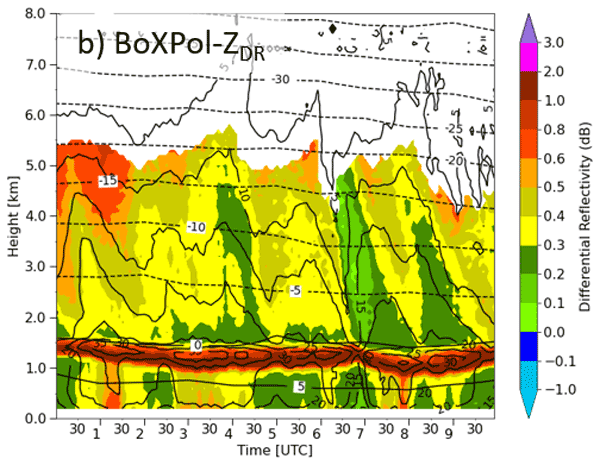
The article focuses on the exploitation of radar polarimetry for model evaluation of stratiform precipitation. The model exhibited a low bias in simulated polarimetric moments at lower levels above the melting layer where snow was found to dominate. This necessitates further research into the missing microphysical processes in these lower levels (e.g. fragmentation due to ice–ice collisions) and use of more reliable snow-scattering models in the forward operator to draw valid conclusions.
Silke Trömel, Clemens Simmer, Ulrich Blahak, Armin Blanke, Sabine Doktorowski, Florian Ewald, Michael Frech, Mathias Gergely, Martin Hagen, Tijana Janjic, Heike Kalesse-Los, Stefan Kneifel, Christoph Knote, Jana Mendrok, Manuel Moser, Gregor Köcher, Kai Mühlbauer, Alexander Myagkov, Velibor Pejcic, Patric Seifert, Prabhakar Shrestha, Audrey Teisseire, Leonie von Terzi, Eleni Tetoni, Teresa Vogl, Christiane Voigt, Yuefei Zeng, Tobias Zinner, and Johannes Quaas
Atmos. Chem. Phys., 21, 17291–17314, https://doi.org/10.5194/acp-21-17291-2021, https://doi.org/10.5194/acp-21-17291-2021, 2021
Short summary
Short summary
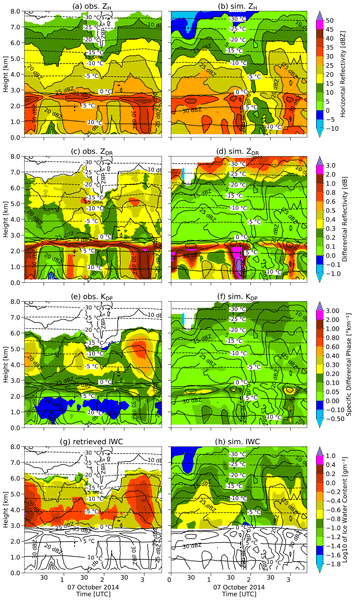
The article introduces the ACP readership to ongoing research in Germany on cloud- and precipitation-related process information inherent in polarimetric radar measurements, outlines pathways to inform atmospheric models with radar-based information, and points to remaining challenges towards an improved fusion of radar polarimetry and atmospheric modelling.
Tobias Scharbach, Velibor Pejcic, and Silke Trömel
Atmos. Meas. Tech., 19, 6209–6228, https://doi.org/10.5194/amt-19-6209-2026, https://doi.org/10.5194/amt-19-6209-2026, 2026
Short summary
Short summary
For the X-band radar in Bonn, the birdbath method has proven to be insufficient for calibrating differential reflectivity. This study raises awareness of the need for critically applying the birdbath method. A novel technique for calibrating the reflectivity factor is presented and compared with satellite measurements, serving as ground truth, and a known standard calibration method. The offset values agree well with the satellite and even exceed the accuracy of the standard calibration method.
Tobias Scharbach and Silke Trömel
EGUsphere, https://doi.org/10.5194/egusphere-2026-2523, https://doi.org/10.5194/egusphere-2026-2523, 2026
This preprint is open for discussion and under review for Atmospheric Measurement Techniques (AMT).
Short summary
Short summary
With more than 1000 hours of weather radar observations from the X-band radar in Bonn, Germany, collected over ten years, we examined how stratiform clouds change through the seasons and how particle properties change from ice to the liquid phase. We found that summer conditions favor larger particle concentrations, stronger snow aggregation accompanied by riming, and thicker melting layers. These results provide an important reference for e.g. improving weather prediction models.
Robin J. Hogan, Bernat Puigdomenech Treserras, Shannon L. Mason, Alexei Korolev, Zhipeng Qu, Kamil Mroz, David P. Donovan, Pavlos Kollias, and Mark D. Fielding
EGUsphere, https://doi.org/10.5194/egusphere-2026-5054, https://doi.org/10.5194/egusphere-2026-5054, 2026
Short summary
Short summary
The EarthCARE satellite carries advanced instruments that allow it to accurately infer vertical profiles of the properties of ice clouds, important for understanding their role in the climate system. Here we use detailed observations from meteorological research aircraft flying underneath the satellite to evaluate EarthCARE’s estimates of the mass of ice in the clouds, the average particle size, and even how fast the air is rising and falling within the cloud due to atmospheric gravity waves.
Karina McCusker, Chris Westbrook, Alessandro Battaglia, Kamil Mroz, Benjamin M. Courtier, Peter G. Huggard, Hui Wang, Richard Reeves, Christopher J. Walden, Richard Cotton, Stuart Fox, and Anthony J. Baran
Atmos. Meas. Tech., 18, 7833–7852, https://doi.org/10.5194/amt-18-7833-2025, https://doi.org/10.5194/amt-18-7833-2025, 2025
Short summary
Short summary
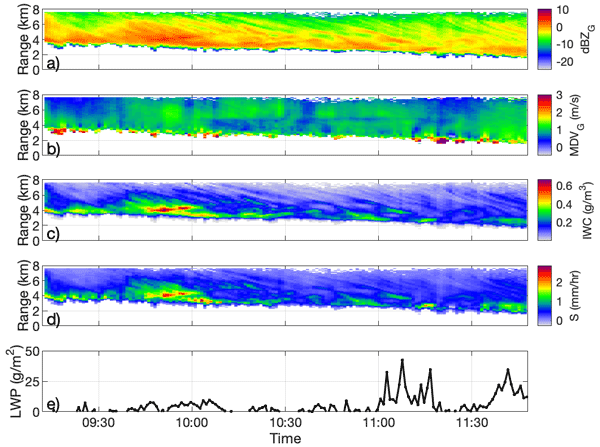
This work presents the first known retrievals of ice cloud and snowfall properties using G-band radar, representing a major step forward in the use of high-frequency radar for atmospheric remote sensing. We present theory and simulations to show that ice water content (IWC) and snowfall rate (S) can be retrieved efficiently with a single frequency G-band radar if the mass of a wavelength-sized particle is known or can be assumed, while details of the particle size distribution are not required.
Armin Blanke, Mathias Gergely, and Silke Trömel
Atmos. Chem. Phys., 25, 4167–4184, https://doi.org/10.5194/acp-25-4167-2025, https://doi.org/10.5194/acp-25-4167-2025, 2025
Short summary
Short summary
The area-wide radar-based distinction between riming and aggregation is crucial for model microphysics and data assimilation. This study introduces a discrimination algorithm based on polarimetric radar networks only. Exploiting the unique opportunity to link fall velocities from Doppler spectra to polarimetric variables in an operational setting enables us to set up and evaluate a well-performing machine learning algorithm.
Benjamin M. Courtier, Alessandro Battaglia, and Kamil Mroz
Atmos. Meas. Tech., 17, 6875–6888, https://doi.org/10.5194/amt-17-6875-2024, https://doi.org/10.5194/amt-17-6875-2024, 2024
Short summary
Short summary
A new millimetre-wavelength radar is used to improve methods of retrieving information about the smallest droplets that exist within clouds. The radar is shown to be able to retrieve the vertical wind speed more accurately and more frequently and to retrieve the cloud properties for clouds with lower rainfall rates and smaller droplets than would be possible using longer-wavelength radars.
Kamil Mroz, Alessandro Battaglia, and Ann M. Fridlind
Atmos. Meas. Tech., 17, 1577–1597, https://doi.org/10.5194/amt-17-1577-2024, https://doi.org/10.5194/amt-17-1577-2024, 2024
Short summary
Short summary
In this study, we examine the extent to which radar measurements from space can inform us about the properties of clouds and precipitation. Surprisingly, our analysis showed that the amount of ice turning into rain was lower than expected in the current product. To improve on this, we came up with a new way to extract information about the size and concentration of particles from radar data. As long as we use this method in the right conditions, we can even estimate how dense the ice is.
Lucas Reimann, Clemens Simmer, and Silke Trömel
Atmos. Chem. Phys., 23, 14219–14237, https://doi.org/10.5194/acp-23-14219-2023, https://doi.org/10.5194/acp-23-14219-2023, 2023
Short summary
Short summary
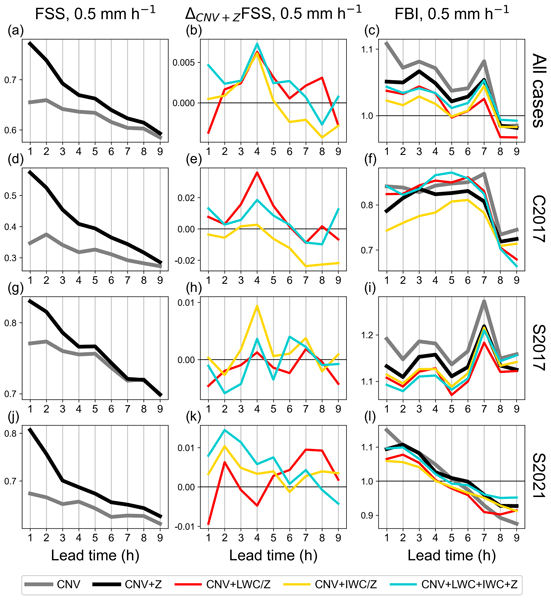
Polarimetric radar observations were assimilated for the first time in a convective-scale numerical weather prediction system in Germany and their impact on short-term precipitation forecasts was evaluated. The assimilation was performed using microphysical retrievals of liquid and ice water content and yielded slightly improved deterministic 9 h precipitation forecasts for three intense summer precipitation cases with respect to the assimilation of radar reflectivity alone.
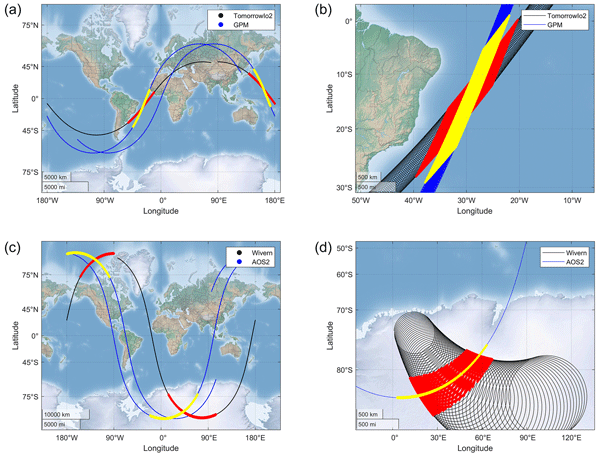
Alessandro Battaglia, Filippo Emilio Scarsi, Kamil Mroz, and Anthony Illingworth
Atmos. Meas. Tech., 16, 3283–3297, https://doi.org/10.5194/amt-16-3283-2023, https://doi.org/10.5194/amt-16-3283-2023, 2023
Short summary
Short summary
Some of the new generation of cloud and precipitation spaceborne radars will adopt conical scanning. This will make some of the standard calibration techniques impractical. This work presents a methodology to cross-calibrate radars in orbits by matching the reflectivity probability density function of ice clouds observed by the to-be-calibrated and by the reference radar in quasi-coincident locations. Results show that cross-calibration within 1 dB (26 %) is feasible.

Kamil Mroz, Bernat Puidgomènech Treserras, Alessandro Battaglia, Pavlos Kollias, Aleksandra Tatarevic, and Frederic Tridon
Atmos. Meas. Tech., 16, 2865–2888, https://doi.org/10.5194/amt-16-2865-2023, https://doi.org/10.5194/amt-16-2865-2023, 2023
Short summary
Short summary
We present the theoretical basis of the algorithm that estimates the amount of water and size of particles in clouds and precipitation. The algorithm uses data collected by the Cloud Profiling Radar that was developed for the upcoming Earth Clouds, Aerosols and Radiation Explorer (EarthCARE) satellite mission. After the satellite launch, the vertical distribution of cloud and precipitation properties will be delivered as the C-CLD product.
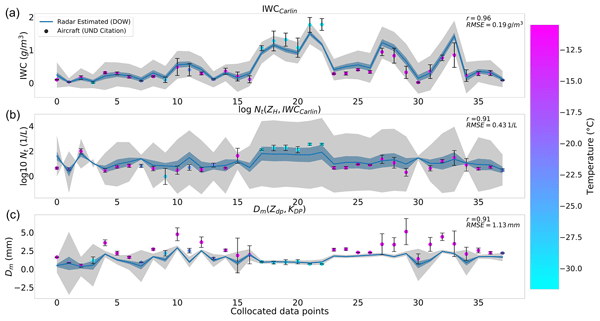
Armin Blanke, Andrew J. Heymsfield, Manuel Moser, and Silke Trömel
Atmos. Meas. Tech., 16, 2089–2106, https://doi.org/10.5194/amt-16-2089-2023, https://doi.org/10.5194/amt-16-2089-2023, 2023
Short summary
Short summary
We present an evaluation of current retrieval techniques in the ice phase applied to polarimetric radar measurements with collocated in situ observations of aircraft conducted over the Olympic Mountains, Washington State, during winter 2015. Radar estimates of ice properties agreed most with aircraft observations in regions with pronounced radar signatures, but uncertainties were identified that indicate issues of some retrievals, particularly in warmer temperature regimes.
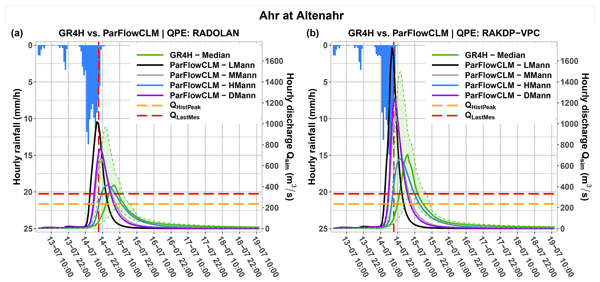
Mohamed Saadi, Carina Furusho-Percot, Alexandre Belleflamme, Ju-Yu Chen, Silke Trömel, and Stefan Kollet
Nat. Hazards Earth Syst. Sci., 23, 159–177, https://doi.org/10.5194/nhess-23-159-2023, https://doi.org/10.5194/nhess-23-159-2023, 2023
Short summary
Short summary
On 14 July 2021, heavy rainfall fell over central Europe, causing considerable damage and human fatalities. We analyzed how accurate our estimates of rainfall and peak flow were for these flooding events in western Germany. We found that the rainfall estimates from radar measurements were improved by including polarimetric variables and their vertical gradients. Peak flow estimates were highly uncertain due to uncertainties in hydrological model parameters and rainfall measurements.
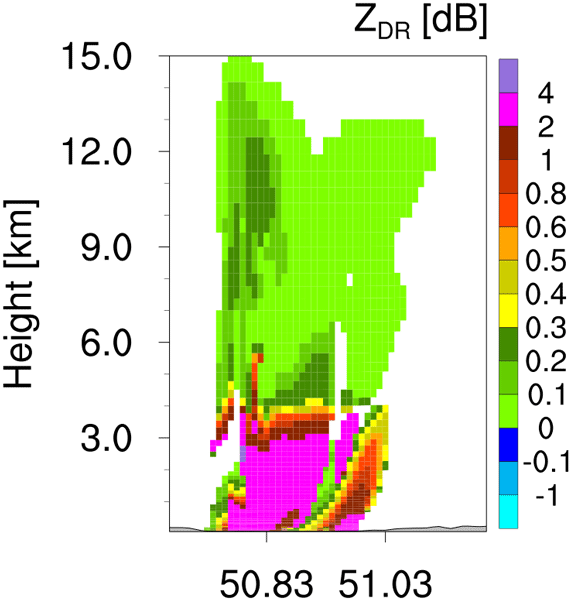
Prabhakar Shrestha, Silke Trömel, Raquel Evaristo, and Clemens Simmer
Atmos. Chem. Phys., 22, 7593–7618, https://doi.org/10.5194/acp-22-7593-2022, https://doi.org/10.5194/acp-22-7593-2022, 2022
Short summary
Short summary
The study makes use of ensemble numerical simulations with forward operator to evaluate the simulated cloud and precipitation processes with radar observations. While comparing model data with radar has its own challenges due to errors in the forward operator and processed radar measurements, the model was generally found to underestimate the high reflectivity, width/magnitude (value) of ZDR columns and high precipitation.
Prabhakar Shrestha, Jana Mendrok, Velibor Pejcic, Silke Trömel, Ulrich Blahak, and Jacob T. Carlin
Geosci. Model Dev., 15, 291–313, https://doi.org/10.5194/gmd-15-291-2022, https://doi.org/10.5194/gmd-15-291-2022, 2022
Short summary
Short summary
The article focuses on the exploitation of radar polarimetry for model evaluation of stratiform precipitation. The model exhibited a low bias in simulated polarimetric moments at lower levels above the melting layer where snow was found to dominate. This necessitates further research into the missing microphysical processes in these lower levels (e.g. fragmentation due to ice–ice collisions) and use of more reliable snow-scattering models in the forward operator to draw valid conclusions.
Silke Trömel, Clemens Simmer, Ulrich Blahak, Armin Blanke, Sabine Doktorowski, Florian Ewald, Michael Frech, Mathias Gergely, Martin Hagen, Tijana Janjic, Heike Kalesse-Los, Stefan Kneifel, Christoph Knote, Jana Mendrok, Manuel Moser, Gregor Köcher, Kai Mühlbauer, Alexander Myagkov, Velibor Pejcic, Patric Seifert, Prabhakar Shrestha, Audrey Teisseire, Leonie von Terzi, Eleni Tetoni, Teresa Vogl, Christiane Voigt, Yuefei Zeng, Tobias Zinner, and Johannes Quaas
Atmos. Chem. Phys., 21, 17291–17314, https://doi.org/10.5194/acp-21-17291-2021, https://doi.org/10.5194/acp-21-17291-2021, 2021
Short summary
Short summary
The article introduces the ACP readership to ongoing research in Germany on cloud- and precipitation-related process information inherent in polarimetric radar measurements, outlines pathways to inform atmospheric models with radar-based information, and points to remaining challenges towards an improved fusion of radar polarimetry and atmospheric modelling.
Kamil Mroz, Alessandro Battaglia, Cuong Nguyen, Andrew Heymsfield, Alain Protat, and Mengistu Wolde
Atmos. Meas. Tech., 14, 7243–7254, https://doi.org/10.5194/amt-14-7243-2021, https://doi.org/10.5194/amt-14-7243-2021, 2021
Short summary
Short summary
A method for estimating microphysical properties of ice clouds based on radar measurements is presented. The algorithm exploits the information provided by differences in the radar response at different frequency bands in relation to changes in the snow morphology. The inversion scheme is based on a statistical relation between the radar simulations and the properties of snow calculated from in-cloud sampling.
Cited articles
Ackermann, L., Soderholm, J., Protat, A., Whitley, R., Ye, L., and Ridder, N.: Radar and environment-based hail damage estimates using machine learning, Atmos. Meas. Tech., 17, 407–422, https://doi.org/10.5194/amt-17-407-2024, 2024. a
Battaglia, A., Tanelli, S., Heymsfield, G. M., and Tian, L.: The dual wavelength ratio knee: A signature of multiple scattering in airborne Ku–Ka observations, Journal of Applied Meteorology and Climatology, 53, 1790–1808, https://doi.org/10.1175/JAMC-D-13-0341.1, 2014. a, b
Bech, J., Codina, B., Lorente, J., and Bebbington, D.: The sensitivity of single polarization weather radar beam blockage correction to variability in the vertical refractivity gradient, Journal of Atmospheric and Oceanic Technology, 20, 845–855, https://doi.org/10.1175/1520-0426(2003)020<0845:TSOSPW>2.0.CO;2, 2003. a
Bechini, R. and Chandrasekar, V.: A Semisupervised Robust Hydrometeor Classification Method for Dual-Polarization Radar Applications, Journal of Atmospheric and Oceanic Technology, 32, 22–47, https://doi.org/10.1175/JTECH-D-14-00097.1, 2015. a, b
Besic, N., Figueras i Ventura, J., Grazioli, J., Gabella, M., Germann, U., and Berne, A.: Hydrometeor classification through statistical clustering of polarimetric radar measurements: a semi-supervised approach, Atmos. Meas. Tech., 9, 4425–4445, https://doi.org/10.5194/amt-9-4425-2016, 2016. a, b
Billault-Roux, A.-C., Ghiggi, G., Jaffeux, L., Martini, A., Viltard, N., and Berne, A.: Dual-frequency spectral radar retrieval of snowfall microphysics: a physics-driven deep-learning approach, Atmos. Meas. Tech., 16, 911–940, https://doi.org/10.5194/amt-16-911-2023, 2023. a
Blanke, A., Gergely, M., and Trömel, S.: A new aggregation and riming discrimination algorithm based on polarimetric weather radars, Atmos. Chem. Phys., 25, 4167–4184, https://doi.org/10.5194/acp-25-4167-2025, 2025. a
Cao, Q., Hong, Y., Qi, Y., Wen, Y., Zhang, J., Gourley, J. J., and Liao, L.: Empirical conversion of the vertical profile of reflectivity from Ku-band to S-band frequency, Journal of Geophysical Research: Atmospheres, 118, 1814–1825, https://doi.org/10.1002/jgrd.50138, 2013. a, b
Chen, H., Chandrasekar, V., and Bechini, R.: An Improved Dual-Polarization Radar Rainfall Algorithm (DROPS2.0): Application in NASA IFloodS Field Campaign, Journal of Hydrometeorology, 18, 917–937, https://doi.org/10.1175/JHM-D-16-0124.1, 2017. a
Cifelli, R., Chandrasekar, V., Lim, S., Kennedy, P. C., Wang, Y., and Rutledge, S. A.: A New Dual-Polarization Radar Rainfall Algorithm: Application in Colorado Precipitation Events, Journal of Atmospheric and Oceanic Technology, 28, 352–364, https://doi.org/10.1175/2010JTECHA1488.1, 2011. a
Crisologo, I. and Heistermann, M.: Using ground radar overlaps to verify the retrieval of calibration bias estimates from spaceborne platforms, Atmos. Meas. Tech., 13, 645–659, https://doi.org/10.5194/amt-13-645-2020, 2020. a, b
Diekema, E. and Koornwinder, T. H.: Differentiation by integration using orthogonal polynomials, a survey, Journal of Approximation Theory, 164, 637–667, https://doi.org/10.1016/j.jat.2012.01.003, 2012. a
Dolan, B. and Rutledge, S. A.: A theory-based hydrometeor identification algorithm for X-band polarimetric radars, Journal of Atmospheric and Oceanic Technology, 26, 2071–2088, https://doi.org/10.1175/2009JTECHA1208.1, 2009. a
Dolan, B., Rutledge, S. A., Lim, S., Chandrasekar, V., and Thurai, M.: A robust C-band hydrometeor identification algorithm and application to a long-term polarimetric radar dataset, Journal of Applied Meteorology and Climatology, 52, 2162–2186, https://doi.org/10.1175/JAMC-D-12-0275.1, 2013. a, b, c, d
Gehring, J., Oertel, A., Vignon, É., Jullien, N., Besic, N., and Berne, A.: Microphysics and dynamics of snowfall associated with a warm conveyor belt over Korea, Atmos. Chem. Phys., 20, 7373–7392, https://doi.org/10.5194/acp-20-7373-2020, 2020. a
Gehring, J., Vignon, É., Billault-Roux, A.-C., Ferrone, A., Protat, A., Alexander, S. P., and Berne, A.: Orographic flow influence on precipitation during an atmospheric river event at Davis, Antarctica, Journal of Geophysical Research: Atmospheres, 127, e2021JD035210, https://doi.org/10.1029/2021JD035210, 2022. a
Giangrande, S. E. and Ryzhkov, A. V.: Estimation of rainfall based on the results of polarimetric echo classification, Journal of applied meteorology and climatology, 47, 2445–2462, https://doi.org/10.1175/2008JAMC1753.1, 2008. a
Grazioli, J., Tuia, D., and Berne, A.: Hydrometeor classification from polarimetric radar measurements: a clustering approach, Atmos. Meas. Tech., 8, 149–170, https://doi.org/10.5194/amt-8-149-2015, 2015. a
Heistermann, M., Jacobi, S., and Pfaff, T.: Technical Note: An open source library for processing weather radar data (wradlib), Hydrol. Earth Syst. Sci., 17, 863–871, https://doi.org/10.5194/hess-17-863-2013, 2013. a, b
Heymsfield, A. J., Bansemer, A., Theis, A., and Schmitt, C.: Survival of snow in the melting layer: Relative humidity influence, Journal of the Atmospheric Sciences, 78, 1823–1845, https://doi.org/10.1175/JAS-D-20-0353.1, 2021. a
Hou, A. Y., Kakar, R. K., Neeck, S., Azarbarzin, A. A., Kummerow, C. D., Kojima, M., Oki, R., Nakamura, K., and Iguchi, T.: The global precipitation measurement mission, Bulletin of the American meteorological Society, 95, 701–722, https://doi.org/10.1175/BAMS-D-13-00164.1, 2014. a, b
Iguchi, T. and Meneghini, R.: GPM DPR Precipitation Profile L2A 1.5 hours 5 km V07, Greenbelt, MD, Goddard Earth Sciences Data and Information Services Center (GES DISC), Accessed: 2024, Goddard Earth Sciences Data and Information Services Center (GES DISC) [data set], https://doi.org/10.5067/GPM/DPR/GPM/2A/07, 2021. a, b
Iguchi, T., Seto, S., Meneghini, R., Yoshida, N., Awaka, J., Le, M., Chandrasekar, V., and Kubota, T.: GPM/DPR level-2 algorithm theoretical basis document, NASA Goddard Space Flight Center, https://gpm.nasa.gov/resources/documents/gpmdpr-level-2-algorithm-theoretical-basis-document-atbd (last access: 1 September 2024), 2010. a, b, c, d, e
Iguchi, T., Kawamoto, N., and Oki, R.: Detection of intense ice precipitation with GPM/DPR, Journal of Atmospheric and Oceanic Technology, 35, 491–502, https://doi.org/10.1175/JTECH-D-17-0120.1, 2018. a
Ikuta, Y., Okamoto, K., and Kubota, T.: One-dimensional maximum-likelihood estimation for spaceborne precipitation radar data assimilation, Quarterly Journal of the Royal Meteorological Society, 147, 858–875, https://doi.org/10.1002/qj.3950, 2021. a
Jang, S., Lim, K.-S. S., Ko, J., Kim, K., Lee, G., Cho, S.-J., Ahn, K.-D., and Lee, Y.-H.: Revision of WDM7 microphysics scheme and evaluation for precipitating convection over the Korean peninsula, Remote Sensing, 13, 3860, https://doi.org/10.3390/rs13193860, 2021. a
Kotsuki, S., Terasaki, K., Satoh, M., and Miyoshi, T.: Ensemble-Based Data Assimilation of GPM DPR Reflectivity: Cloud Microphysics Parameter Estimation With the Nonhydrostatic Icosahedral Atmospheric Model (NICAM), Journal of Geophysical Research: Atmospheres, 128, e2022JD037447, https://doi.org/10.1029/2022JD037447, 2023. a
Kubota, T., Masaki, T., Kikuchi, G., Ito, M., Higashiuwatoko, T., Kanemaru, K., Takahashi, N., Yamamoto, K., Furukawa, K., and Nio, T.: Evaluation of Effects on Dual-Frequency Precipitation Radar Observations Due to the Orbit Boost of the GPM Core Observatory, in: IGARSS 2024–2024 IEEE International Geoscience and Remote Sensing Symposium, IEEE, 709–712, https://doi.org/10.1109/IGARSS53475.2024.10641066, 2024. a
Le, M. and Chandrasekar, V.: Hydrometeor profile characterization method for dual-frequency precipitation radar onboard the GPM, IEEE Transactions on Geoscience and Remote Sensing, 51, 3648–3658, https://doi.org/10.1109/TGRS.2012.2224352, 2012. a, b
Le, M. and Chandrasekar, V.: Graupel and hail identification algorithm for the dual-frequency precipitation radar (DPR) on the GPM core satellite, Journal of the Meteorological Society of Japan. Ser. II, 99, 49–65, https://doi.org/10.2151/jmsj.2021-003, 2021a. a, b
Le, M. and Chandrasekar, V.: A new hail product for GPM DPR, in: 2021 IEEE International Geoscience and Remote Sensing Symposium IGARSS, IEEE, 828–831, https://doi.org/10.1109/IGARSS47720.2021.9553825, 2021b. a
Le, M., Chandrasekar, V., and Biswas, S.: An algorithm to identify surface snowfall from GPM DPR observations, IEEE Transactions on Geoscience and Remote Sensing, 55, 4059–4071, https://doi.org/10.1109/TGRS.2017.2687420, 2017. a
Li, X., Mecikalski, J. R., Srikishen, J., Zavodsky, B., and Petersen, W. A.: Assimilation of GPM rain rate products with GSI data assimilation system for heavy and light precipitation events, Journal of Advances in Modeling Earth Systems, 12, e2019MS001618, https://doi.org/10.1029/2019MS001618, 2020. a
Liao, L. and Meneghini, R.: GPM DPR retrievals: Algorithm, evaluation, and validation, Remote Sensing, 14, 843, https://doi.org/10.3390/rs14040843, 2022. a, b
Liu, Z., Ostrenga, D., Teng, W., and Kempler, S.: Tropical Rainfall Measuring Mission (TRMM) precipitation data and services for research and applications, Bulletin of the American Meteorological Society, 93, 1317–1325, https://doi.org/10.1175/BAMS-D-11-00152.1, 2012. a
Louf, V. and Protat, A.: Real-time monitoring of weather radar network calibration and antenna pointing, Journal of Atmospheric and Oceanic Technology, 40, 823–844, https://doi.org/10.1175/JTECH-D-22-0118.1, 2023. a
Lukach, M., Dufton, D., Crosier, J., Hampton, J. M., Bennett, L., and Neely III, R. R.: Hydrometeor classification of quasi-vertical profiles of polarimetric radar measurements using a top-down iterative hierarchical clustering method, Atmos. Meas. Tech., 14, 1075–1098, https://doi.org/10.5194/amt-14-1075-2021, 2021. a
Lundquist, J. D., Neiman, P. J., Martner, B., White, A. B., Gottas, D. J., and Ralph, F. M.: Rain versus snow in the Sierra Nevada, California: Comparing Doppler profiling radar and surface observations of melting level, Journal of Hydrometeorology, 9, 194–211, https://doi.org/10.1175/2007JHM853.1, 2008. a
Marzano, F. S., Scaranari, D., Montopoli, M., and Vulpiani, G.: Supervised classification and estimation of hydrometeors from C-band dual-polarized radars: A Bayesian approach, IEEE transactions on Geoscience and Remote Sensing, 46, 85–98, https://doi.org/10.1109/TGRS.2007.906476, 2007. a
Mroz, K., Battaglia, A., Lang, T. J., Cecil, D. J., Tanelli, S., and Tridon, F.: Hail-detection algorithm for the GPM Core Observatory satellite sensors, Journal of Applied Meteorology and Climatology, 56, 1939–1957, https://doi.org/10.1175/JAMC-D-16-0368.1, 2017. a, b
Mroz, K., Battaglia, A., Lang, T. J., Tanelli, S., and Sacco, G. F.: Global precipitation measuring dual-frequency precipitation radar observations of hailstorm vertical structure: Current capabilities and drawbacks, Journal of Applied Meteorology and Climatology, 57, 2161–2178, https://doi.org/10.1175/JAMC-D-18-0020.1, 2018. a
Mroz, K., Battaglia, A., and Fridlind, A. M.: Enhancing consistency of microphysical properties of precipitation across the melting layer in dual-frequency precipitation radar data, Atmos. Meas. Tech., 17, 1577–1597, https://doi.org/10.5194/amt-17-1577-2024, 2024. a, b, c
Ortega, K. L., Krause, J. M., and Ryzhkov, A. V.: Polarimetric radar characteristics of melting hail. Part III: Validation of the algorithm for hail size discrimination, Journal of Applied Meteorology and Climatology, 55, 829–848, https://doi.org/10.1175/JAMC-D-15-0203.1, 2016. a
Pejcic, V., Simmer, C., and Trömel, S.: Polarimetric radar-based methods for evaluation of hydrometeor mixtures in numerical weather prediction models, in: 2021 21st International Radar Symposium (IRS), IEEE, 1–10, https://doi.org/10.23919/IRS51887.2021.9466201, 2021. a
Pejcic, V., Soderholm, J., Mühlbauer, K., Louf, V., and Trömel, S.: Five years calibrated observations from the University of Bonn X-band weather radar (BoXPol), Scientific Data, 9, 1–9, https://doi.org/10.1038/s41597-022-01656-0, 2022. a, b, c, d
Pippitt, J. L., Marks, D. A., and Wolff, D. B.: Dual polarimetric quality control for NASA’s Global Precipitation Measurement (GPM) Mission Ground Validation program. 36th Conf. on Radar Meteorology, Breckenridge, CO, Amer. Meteor. Soc., in: 36th AMS Conference on Radar Meteorology, Breckenridge, CO, September, vol. 16, p. 2013, https://ams.confex.com/ams/36Radar/webprogram/Handout/Paper228522/36radarposter.pdf (last access: 1 March 2024), 2013. a
Planat, N., Gehring, J., Vignon, É., and Berne, A.: Identification of snowfall microphysical processes from Eulerian vertical gradients of polarimetric radar variables, Atmos. Meas. Tech., 14, 4543–4564, https://doi.org/10.5194/amt-14-4543-2021, 2021. a
Protat, A., Louf, V., Soderholm, J., Brook, J., and Ponsonby, W.: Three-way calibration checks using ground-based, ship-based, and spaceborne radars, Atmos. Meas. Tech., 15, 915–926, https://doi.org/10.5194/amt-15-915-2022, 2022. a
Reimann, L., Simmer, C., and Trömel, S.: Assimilation of 3D polarimetric microphysical retrievals in a convective-scale NWP system, Atmos. Chem. Phys., 23, 14219–14237, https://doi.org/10.5194/acp-23-14219-2023, 2023. a
Reuter, H. I., Nelson, A., and Jarvis, A.: An evaluation of void-filling interpolation methods for SRTM data, International Journal of Geographical Information Science, 21, 983–1008, https://doi.org/10.1080/13658810601169899, 2007. a
Ribaud, J.-F., Bousquet, O., Coquillat, S., Al-Sakka, H., Lambert, D., Ducrocq, V., and Fontaine, E.: Evaluation and application of hydrometeor classification algorithm outputs inferred from multi-frequency dual-polarimetric radar observations collected during HyMeX, Quarterly Journal of the Royal Meteorological Society, 142, 95–107, https://doi.org/10.1002/qj.2589, 2016. a
Ribaud, J.-F., Machado, L. A. T., and Biscaro, T.: X-band dual-polarization radar-based hydrometeor classification for Brazilian tropical precipitation systems, Atmos. Meas. Tech., 12, 811–837, https://doi.org/10.5194/amt-12-811-2019, 2019. a
Rysman, J.-F., Panegrossi, G., Sanò, P., Marra, A. C., Dietrich, S., Milani, L., and Kulie, M. S.: SLALOM: An all-surface snow water path retrieval algorithm for the GPM Microwave Imager, Remote Sensing, 10, 1278, https://doi.org/10.3390/rs10081278, 2018. a
Rysman, J.-F., Panegrossi, G., Sanò, P., Marra, A. C., Dietrich, S., Milani, L., Kulie, M. S., Casella, D., Camplani, A., Claud, C., and Edel, L.: Retrieving surface snowfall with the GPM microwave imager: A new module for the SLALOM algorithm, Geophysical Research Letters, 46, 13593–13601, https://doi.org/10.1029/2019GL084576, 2019. a
Ryzhkov, A. and Zrnic, D.: Precipitation and attenuation measurements at a 10-cm wavelength, Journal of Applied Meteorology and Climatology, 34, 2121–2134, https://doi.org/10.1175/1520-0450(1995)034<2120:PAAMAA>2.0.CO;2, 1995. a
Ryzhkov, A. V., Kumjian, M. R., Ganson, S. M., and Zhang, P.: Polarimetric radar characteristics of melting hail. Part II: Practical implications, Journal of Applied Meteorology and Climatology, 52, 2871–2886, https://doi.org/10.1175/JAMC-D-13-074.1, 2013. a
Sanchez-Rivas, D. and Rico-Ramirez, M. A.: Calibration of radar differential reflectivity using quasi-vertical profiles, Atmos. Meas. Tech., 15, 503–520, https://doi.org/10.5194/amt-15-503-2022, 2022. a, b, c
Seiki, T.: Near-global three-dimensional hail signals detected by using GPM-DPR observations, Journal of the Meteorological Society of Japan. Ser. II, https://doi.org/10.2151/jmsj.2021-018, 2021. a, b
Shrestha, P., Mendrok, J., Pejcic, V., Trömel, S., Blahak, U., and Carlin, J. T.: Evaluation of the COSMO model (v5.1) in polarimetric radar space – impact of uncertainties in model microphysics, retrievals and forward operators, Geosci. Model Dev., 15, 291–313, https://doi.org/10.5194/gmd-15-291-2022, 2022. a
Stephens, G. L., Vane, D. G., Boain, R. J., Mace, G. G., Sassen, K., Wang, Z., Illingworth, A. J., O'connor, E. J., Rossow, W. B., Durden, S. L., Miller, S. D., Austin, R. T., Benedetti, A., Mitrescu, C., and CloudSat Science Team: The CloudSat mission and the A-Train: A new dimension of space-based observations of clouds and precipitation, Bulletin of the American Meteorological Society, 83, 1771–1790, https://doi.org/10.1175/BAMS-83-12-1771, 2002. a
Thompson, E. J., Rutledge, S. A., Dolan, B., Chandrasekar, V., and Cheong, B. L.: A dual-polarization radar hydrometeor classification algorithm for winter precipitation, Journal of Atmospheric and Oceanic Technology, 31, 1457–1481, https://doi.org/10.1175/JTECH-D-13-00119.1, 2014. a, b, c, d, e, f, g
Tridon, F., Battaglia, A., Chase, R. J., Turk, F. J., Leinonen, J., Kneifel, S., Mroz, K., Finlon, J., Bansemer, A., Tanelli, S., Heymsield, A. J., and Nesbitt, S. W.: The microphysics of stratiform precipitation during OLYMPEX: Compatibility between triple-frequency radar and airborne in situ observations, Journal of Geophysical Research: Atmospheres, 124, 8764–8792, https://doi.org/10.1029/2018JD029858, 2019. a, b
Trömel, S., Ryzhkov, A. V., Bick, T., Mühlbauer, K., and Simmer, C.: Towards nowcasting of winter precipitation: The Black Ice Event in Berlin 2014, Meteorologische Zeitschrift, 26, 147–160, https://doi.org/10.1127/metz/2016/0778, 2017. a
Trömel, S., Ryzhkov, A. V., Hickman, B., Mühlbauer, K., and Simmer, C.: Polarimetric Radar Variables in the Layers of Melting and Dendritic Growth at X Band—Implications for a Nowcasting Strategy in Stratiform Rain, Journal of Applied Meteorology and Climatology, 58, 2497–2522, https://doi.org/10.1175/JAMC-D-19-0056.1, 2019. a, b, c
Trömel, S., Simmer, C., Blahak, U., Blanke, A., Doktorowski, S., Ewald, F., Frech, M., Gergely, M., Hagen, M., Janjic, T., Kalesse-Los, H., Kneifel, S., Knote, C., Mendrok, J., Moser, M., Köcher, G., Mühlbauer, K., Myagkov, A., Pejcic, V., Seifert, P., Shrestha, P., Teisseire, A., von Terzi, L., Tetoni, E., Vogl, T., Voigt, C., Zeng, Y., Zinner, T., and Quaas, J.: Overview: Fusion of radar polarimetry and numerical atmospheric modelling towards an improved understanding of cloud and precipitation processes, Atmos. Chem. Phys., 21, 17291–17314, https://doi.org/10.5194/acp-21-17291-2021, 2021. a
van Lier-Walqui, M., Fridlind, A. M., Ackerman, A. S., Collis, S., Helmus, J., MacGorman, D. R., North, K., Kollias, P., and Posselt, D. J.: On polarimetric radar signatures of deep convection for model evaluation: Columns of specific differential phase observed during MC3E, Monthly weather review, 144, 737–758, https://doi.org/10.1175/MWR-D-15-0100.1, 2016. a
Vignon, E., Besic, N., Jullien, N., Gehring, J., and Berne, A.: Microphysics of snowfall over coastal East Antarctica simulated by Polar WRF and observed by radar, Journal of Geophysical Research: Atmospheres, 124, 11452–11476, https://doi.org/10.1029/2019JD031028, 2019. a
von Terzi, L., Dias Neto, J., Ori, D., Myagkov, A., and Kneifel, S.: Ice microphysical processes in the dendritic growth layer: a statistical analysis combining multi-frequency and polarimetric Doppler cloud radar observations, Atmos. Chem. Phys., 22, 11795–11821, https://doi.org/10.5194/acp-22-11795-2022, 2022. a
Yang, J., Zhao, K., Zhang, G., Chen, G., Huang, H., and Chen, H.: A Bayesian hydrometeor classification algorithm for C-band polarimetric radar, Remote Sensing, 11, 1884, https://doi.org/10.3390/rs11161884, 2019. a
Zrnić, D. S., Ryzhkov, A., Straka, J., Liu, Y., and Vivekanandan, J.: Testing a procedure for automatic classification of hydrometeor types, Journal of Atmospheric and Oceanic Technology, 18, 892–913, https://doi.org/10.1175/1520-0426(2001)018<0892:TAPFAC>2.0.CO;2, 2001a. a
Zrnić, D. S., Ryzhkov, A., Straka, J., Liu, Y., and Vivekanandan, J.: Testing a procedure for automatic classification of hydrometeor types, Journal of Atmospheric and Oceanic Technology, 18, 892–913, https://doi.org/10.1175/1520-0426(2001)018<0892:TAPFAC>2.0.CO;2, 2001b. a, b
Short summary
Estimating the proportions of individual hydrometeor types (hydrometeor partitioning ratios, HPRs) in a mixture of a resolved radar volume and their evaluation is challenging. This study has three objectives, (1) to evaluate HPR retrievals, (2) to exploit the combination of dual-frequency (DF) space-borne radar (SR) and dual-polarisation (DP) ground-based radar (GR) observations for estimating HPRs based on SR DF observations and (3) to further improve HPR estimates based on DP GR observations.
Estimating the proportions of individual hydrometeor types (hydrometeor partitioning ratios,...


