
Articles | Volume 19, issue 18
https://doi.org/10.5194/amt-19-6145-2026
© Author(s) 2026. This work is distributed under
the Creative Commons Attribution 4.0 License.
the Creative Commons Attribution 4.0 License.
https://doi.org/10.5194/amt-19-6145-2026
© Author(s) 2026. This work is distributed under
the Creative Commons Attribution 4.0 License.
the Creative Commons Attribution 4.0 License.
Research article
| 
25 Sep 2026
Research article |
| 25 Sep 2026
| 25 Sep 2026
Feasibility of measuring volcanic gas composition using sky-scattered sunlight and FTIR spectroscopy
Tobias D. Schmitt
CORRESPONDING AUTHOR

Kirchhoff Institute for Physics (KIP), Heidelberg University, Heidelberg, Germany
Moritz Sindram
CORRESPONDING AUTHOR
Institute of Environmental Physics (IUP), Heidelberg University, Heidelberg, Germany
Benedikt A. Löw
Institute of Environmental Physics (IUP), Heidelberg University, Heidelberg, Germany
Lukas Weis
Institute of Environmental Physics (IUP), Heidelberg University, Heidelberg, Germany
Ralph Kleinschek
Institute of Environmental Physics (IUP), Heidelberg University, Heidelberg, Germany
Nicole Bobrowski
Institute of Environmental Physics (IUP), Heidelberg University, Heidelberg, Germany
Istituto Nazionale di Geofisica e Vulcanologia, Osservatorio Etneo, Catania, Italy
André Butz
Institute of Environmental Physics (IUP), Heidelberg University, Heidelberg, Germany
Heidelberg Center for the Environment (HCE), Heidelberg University, Heidelberg, Germany
Interdisciplinary Center for Scientific Computing (IWR), Heidelberg University, Heidelberg, Germany
Related authors
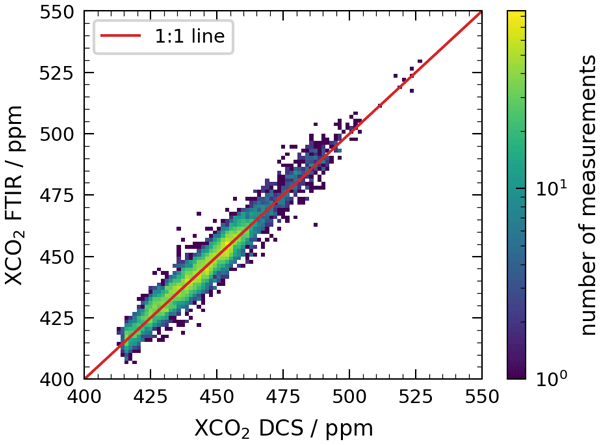
Tobias D. Schmitt, Romain Dubroeucq, Moritz Sindram, André Butz, Thomas Pfeifer, and Markus K. Oberthaler
Atmos. Meas. Tech., 19, 5717–5728, https://doi.org/10.5194/amt-19-5717-2026, https://doi.org/10.5194/amt-19-5717-2026, 2026
Short summary
Short summary
Urban areas account for a substantial share of global greenhouse gas emissions, yet measuring these emissions precisely is challenging due to spatial variability. This study implemented an advanced laser measurement technique, to directly average this spatial variability by measuring over a 3.1 km path, using only commercial parts. The high measurement precision and reliable operation, demonstrates that this technique is now accessible to the broader atmospheric measurement community.
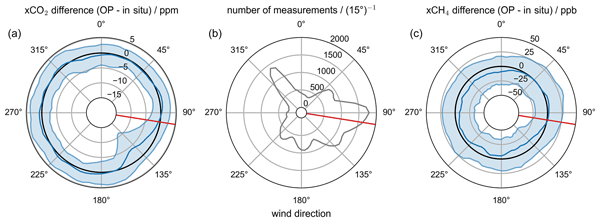
Tobias D. Schmitt, Jonas Kuhn, Ralph Kleinschek, Benedikt A. Löw, Stefan Schmitt, William Cranton, Martina Schmidt, Sanam N. Vardag, Frank Hase, David W. T. Griffith, and André Butz
Atmos. Meas. Tech., 16, 6097–6110, https://doi.org/10.5194/amt-16-6097-2023, https://doi.org/10.5194/amt-16-6097-2023, 2023
Short summary
Short summary
Our new observatory measures greenhouse gas concentrations of carbon dioxide (CO2) and methane (CH4) along a 1.55 km long light path over the city of Heidelberg, Germany. We compared our measurements with measurements that were taken at a single point at one end of our path. The two mostly agreed but show a significant difference for CO2 with certain wind directions. This is important when using greenhouse gas concentration measurements to observe greenhouse gas emissions of cities.
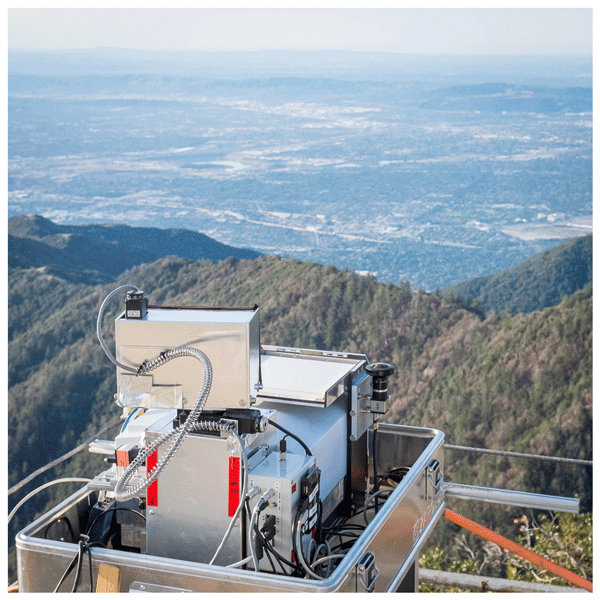
Benedikt A. Löw, Ralph Kleinschek, Vincent Enders, Stanley P. Sander, Thomas J. Pongetti, Tobias D. Schmitt, Frank Hase, Julian Kostinek, and André Butz
Atmos. Meas. Tech., 16, 5125–5144, https://doi.org/10.5194/amt-16-5125-2023, https://doi.org/10.5194/amt-16-5125-2023, 2023
Short summary
Short summary
We developed a portable spectrometer (EM27/SCA) that remotely measures greenhouse gases in the lower atmosphere above a target region. The measurements can deliver insights into local emission patterns. To evaluate its performance, we set up the EM27/SCA above the Los Angeles Basin side by side with a similar non-portable instrument (CLARS-FTS). The precision is promising and the measurements are consistent with CLARS-FTS. In the future, we need to account for light scattering.
Tobias D. Schmitt, Romain Dubroeucq, Moritz Sindram, André Butz, Thomas Pfeifer, and Markus K. Oberthaler
Atmos. Meas. Tech., 19, 5717–5728, https://doi.org/10.5194/amt-19-5717-2026, https://doi.org/10.5194/amt-19-5717-2026, 2026
Short summary
Short summary
Urban areas account for a substantial share of global greenhouse gas emissions, yet measuring these emissions precisely is challenging due to spatial variability. This study implemented an advanced laser measurement technique, to directly average this spatial variability by measuring over a 3.1 km path, using only commercial parts. The high measurement precision and reliable operation, demonstrates that this technique is now accessible to the broader atmospheric measurement community.
Theo Glauch, Marcia J. Kroker, Sanam N. Vardag, Santiago Botía, André Butz, and Julia Marshall
EGUsphere, https://doi.org/10.5194/egusphere-2026-4847, https://doi.org/10.5194/egusphere-2026-4847, 2026
This preprint is open for discussion and under review for Biogeosciences (BG).
Short summary
Short summary
Ecosystems absorb CO2 through photosynthesis and release it via respiration, but sensors only measure the combined, net effect. This paper introduces pyVPRNN, an AI model to separate these two processes using satellite imagery, land-cover, and weather data. Tested at 32 European sites, it outperforms current methods, especially in forests and grasslands, and can even estimate carbon exchange in places without physical sensors – helping track how ecosystems absorb carbon as the climate changes.
Alberto Álvaro-Díaz, Sanam N. Vardag, André Butz, Olga Puentedura, and Cristina Prados-Roman
EGUsphere, https://doi.org/10.5194/egusphere-2026-4045, https://doi.org/10.5194/egusphere-2026-4045, 2026
Short summary
Short summary
In August 2025, over 200 fires burned the northwest of the Iberian Peninsula and released over one million tonnes of carbon monoxide. We used satellite measurements over 15 of those wildfires, covering 70 % of the area burned, to estimate emissions of carbon monoxide and smoke composition. Satellite-based estimates were about three times higher than common fire-emission datasets, highlighting the value and complexity of tracking major wildfires from space and the limits of current inventories.
Leonie Olivia Scheidweiler, Ida Jandl, Lukas Häffner, Marvin Knapp, Lennart Resch, Benedikt Löw, Christian Mielke, Sanam N. Vardag, and André Butz
EGUsphere, https://doi.org/10.5194/egusphere-2026-3730, https://doi.org/10.5194/egusphere-2026-3730, 2026
This preprint is open for discussion and under review for Atmospheric Measurement Techniques (AMT).
Short summary
Short summary
Methane is the second-most important greenhouse gas produced by humans. Satellites are able to measure methane emissions for individual facilities. We compare three approaches for converting satellite measurements into methane concentrations, which is one step needed for estimating emission rates. The three approaches have similar results for sufficiently large sources, but diverge for smaller sources. We showcase a hybrid method that combines the advantages of two popular approaches.
Sanam N. Vardag, Sourish Basu, André Butz, and Eva-Marie Metz
EGUsphere, https://doi.org/10.5194/egusphere-2026-4054, https://doi.org/10.5194/egusphere-2026-4054, 2026
This preprint is open for discussion and under review for Biogeosciences (BG).
Short summary
Short summary
Using fourteen years of satellite observations, we study how much the net carbon dioxide exchange between land and atmosphere changes from year to year. We do this to test whether current vegetation models correctly capture responses to climate. We find that many models underestimate this sensitivity, especially in Australia, boreal and temperate North America, and temperate Eurasia. This study can help improve future predictions of how land will respond to climate change.
Thomas Plewa, André Butz, Christian Frankenberg, Andrew K. Thorpe, and Julia Marshall
EGUsphere, https://doi.org/10.5194/egusphere-2026-2572, https://doi.org/10.5194/egusphere-2026-2572, 2026
Short summary
Short summary
In this paper, we present an improved deep learning method to estimate emissions of methane plumes from 2-D imagery. We present a new neural network architecture that provides insight into the wind speed used for the emission estimation and apply it to synthetic data that were used in previous studies. Our analysis illustrates that the performance increases by around 40% compared to the previous version, and that external wind speed data can be used to verify and improve the model's predictions.
Johannes Degen, Nicole Bobrowski, Mélisende M. Bossard, Lucie Boucher, Huilin Chen, Andreas Engel, Bastien H. Geil, Giovanni B. Giuffrida, Steven van Heuven, Thorsten Hoffmann, Niklas Karbach, Gianluigi Ortenzi, and Tanja J. Schuck
EGUsphere, https://doi.org/10.5194/egusphere-2026-1865, https://doi.org/10.5194/egusphere-2026-1865, 2026
This preprint is open for discussion and under review for Atmospheric Measurement Techniques (AMT).
Short summary
Short summary
Observations in volcanic plumes often rely on Uncrewed Aerial Systems (UAS). In July 2024, we used the active AirCore technique with UAS to probe the plumes of Mount Etna (Italy). This was the first time to use this technique inside volcanic plumes. AirCore samples are stored in long coils for laboratory analyses delivering high-quality trace gas measurements. We observed enhanced mole fractions of CO2 and often also of CO. allowing conclusions on oxidation processes inside the crater.
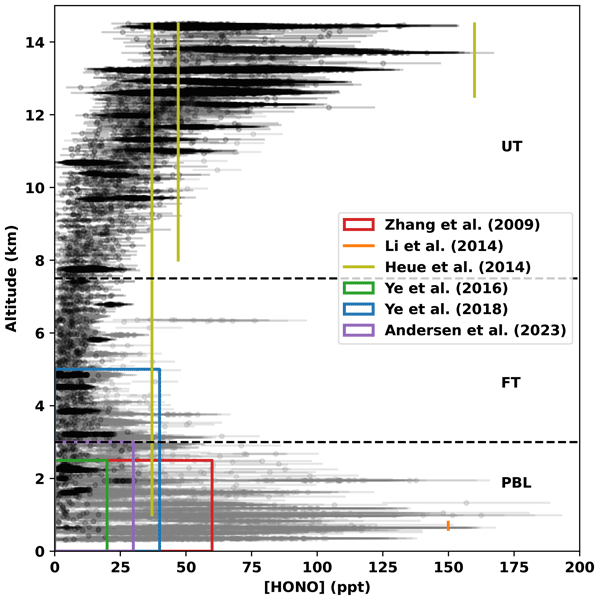
Benjamin Weyland, Simon Rosanka, Domenico Taraborrelli, Birger Bohn, Andreas Zahn, Florian Obersteiner, Eric Förster, Mariano Mertens, Patrick Jöckel, Helmut Ziereis, Katharina Kaiser, Horst Fischer, John N. Crowley, Nijing Wang, Achim Edtbauer, Jonathan Williams, Maria Dolores Andrés Hernández, John P. Burrows, Flora Kluge, Meike K. Rotermund, Andre Butz, and Klaus Pfeilsticker
Atmos. Chem. Phys., 26, 6825–6856, https://doi.org/10.5194/acp-26-6825-2026, https://doi.org/10.5194/acp-26-6825-2026, 2026
Short summary
Short summary
The destruction by sunlight of nitrous acid (HONO) produces the so-called detergent of the atmosphere. HONO has been measured in concentrations which exceed predictions based on known chemistry for decades. Several reactions have been proposed which may explain this excess HONO. This study reports on airborne measurements of HONO; the observations exceed predictions and form a C-shaped profile in the troposphere. Together with a host of other measurements, various reactions are investigated.
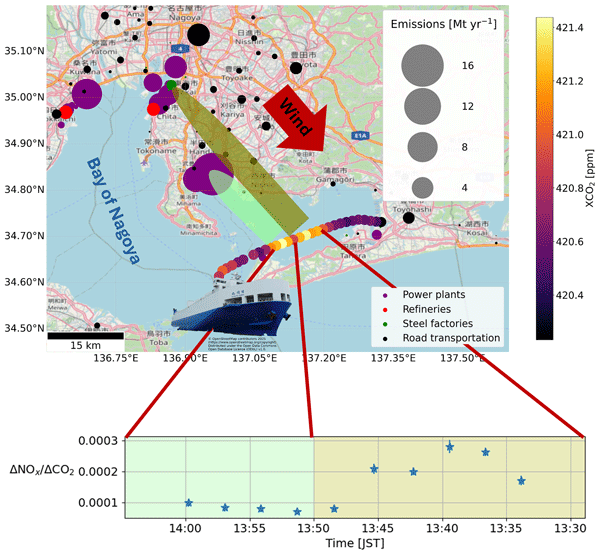
Vincent Enders, Astrid Müller, Matthias Max Frey, Frank Hase, Ralph Kleinschek, Marvin Knapp, Benedikt Löw, Isamu Morino, Shin-Ichiro Nakaoka, Hideki Nara, Hiroshi Tanimoto, Sanam N. Vardag, Karolin Voss, and André Butz
Atmos. Meas. Tech., 19, 2633–2655, https://doi.org/10.5194/amt-19-2633-2026, https://doi.org/10.5194/amt-19-2633-2026, 2026
Short summary
Short summary
We have deployed two spectrometers on a ship traveling along the coast of Japan. By that, we were able to repeatedly measure the greenhouse gas and air pollutant emissions of power plants, large industrial facilities, and cities. Using the ratios between the different gases, we are able to identify sources based on their unique signature. In addition, we are able to show that spectrometers can be operated on a ship, while still fulfilling the high standards of land-based observation networks.
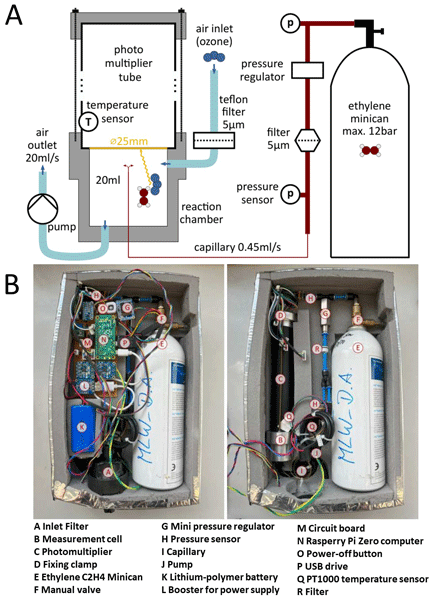
Maja Rüth, Nicole Bobrowski, Ellen Bräutigam, Alexander Nies, Jonas Kuhn, Thorsten Hoffmann, Niklas Karbach, Bastien Geil, Ralph Kleinschek, Stefan Schmitt, and Ulrich Platt
Atmos. Meas. Tech., 19, 2047–2059, https://doi.org/10.5194/amt-19-2047-2026, https://doi.org/10.5194/amt-19-2047-2026, 2026
Short summary
Short summary
UV absorption and electrochemical O3 sensor measurement techniques suffer from interferences, especially from SO2, which is a main constituent of volcanic plumes. Only chemiluminescence (CL) O3 monitors have no known interference with SO2. However, modern CL O3 monitors are impractical because they are heavy and bulky. We developed and applied a lightweight version of a CL O3 instrument (l.5 kg, shoebox size) and present the result of those drone based CL O3 measurements.

Harikrishnan Charuvil Asokan, Jochen Landgraf, Pepijn Veefkind, Stijn Dellaert, and André Butz
Atmos. Meas. Tech., 18, 5247–5264, https://doi.org/10.5194/amt-18-5247-2025, https://doi.org/10.5194/amt-18-5247-2025, 2025
Short summary
Short summary
Greenhouse gases like CO2 and CH4 drive climate change. Satellites enable monitoring of these emissions from space. Our simulations show that the upcoming Twin ANthropogenic Greenhouse gas Observers (TANGO) mission can detect about 500 targets per 4 d cycle under clear skies, but cloud cover reduces detection. Integrating cloud forecasts into TANGO’s manoeuvering boosts detection, highlighting its potential for improving global emission monitoring.
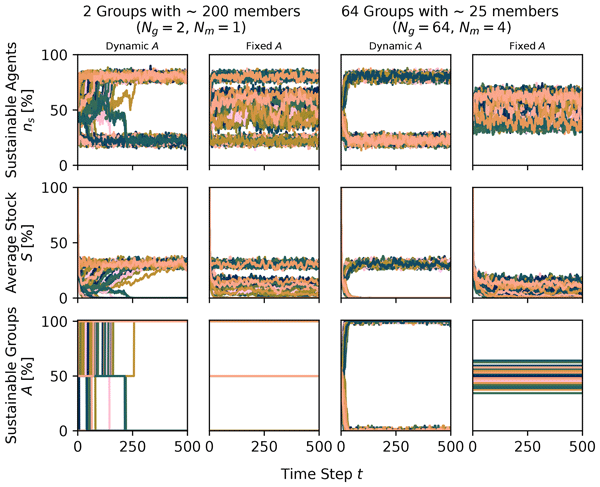
Max Bechthold, Wolfram Barfuss, André Butz, Jannes Breier, Sara M. Constantino, Jobst Heitzig, Luana Schwarz, Sanam N. Vardag, and Jonathan F. Donges
Earth Syst. Dynam., 16, 1365–1390, https://doi.org/10.5194/esd-16-1365-2025, https://doi.org/10.5194/esd-16-1365-2025, 2025
Short summary
Short summary
Social norms are a major influence on human behaviour. In natural resource use models, norms are often included in a simplistic way leading to “black or white” sustainability outcomes. We find that a dynamic representation of norms, including social groups, determines more nuanced states of the environment in a stylised model of resource use while also defining the success of attempts to manage the system, suggesting the importance of representing both aspects well in coupled models.
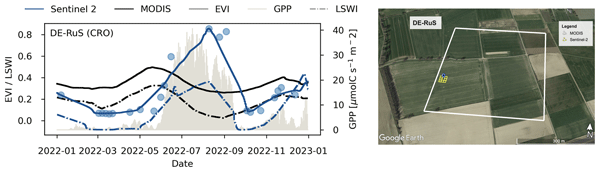
Theo Glauch, Julia Marshall, Christoph Gerbig, Santiago Botía, Michał Gałkowski, Sanam N. Vardag, and André Butz
Geosci. Model Dev., 18, 4713–4742, https://doi.org/10.5194/gmd-18-4713-2025, https://doi.org/10.5194/gmd-18-4713-2025, 2025
Short summary
Short summary
The Vegetation Photosynthesis and Respiration Model (VPRM) estimates carbon exchange between the atmosphere and biosphere by modeling gross primary production and respiration using satellite data and weather variables. Our new version, pyVPRM, supports diverse satellite products like Sentinel-2, MODIS, VIIRS, and new land cover maps, enabling high spatial and temporal resolution. This improves flux estimates, especially in complex landscapes, and ensures continuity as MODIS nears decommissioning.
Eva-Marie Metz, Sanam Noreen Vardag, Sourish Basu, Martin Jung, and André Butz
Biogeosciences, 22, 555–584, https://doi.org/10.5194/bg-22-555-2025, https://doi.org/10.5194/bg-22-555-2025, 2025
Short summary
Short summary
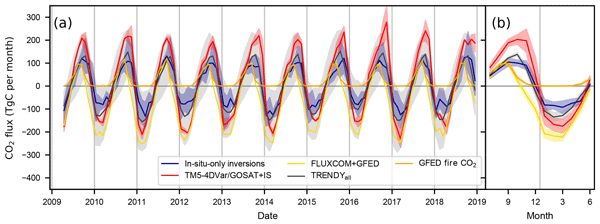
We estimate CO2 fluxes in semiarid southern Africa from 2009 to 2018 based on satellite CO2 measurements and atmospheric inverse modeling. By selecting process-based vegetation models, which agree with the satellite CO2 fluxes, we find that soil respiration mainly drives the seasonality, whereas photosynthesis substantially influences the interannual variability. Our study emphasizes the need for better representation of the response of semiarid ecosystems to soil rewetting in vegetation models.
Karolin Voss, Philip Holzbeck, Klaus Pfeilsticker, Ralph Kleinschek, Gerald Wetzel, Blanca Fuentes Andrade, Michael Höpfner, Jörn Ungermann, Björn-Martin Sinnhuber, and André Butz
Atmos. Meas. Tech., 17, 4507–4528, https://doi.org/10.5194/amt-17-4507-2024, https://doi.org/10.5194/amt-17-4507-2024, 2024
Short summary
Short summary
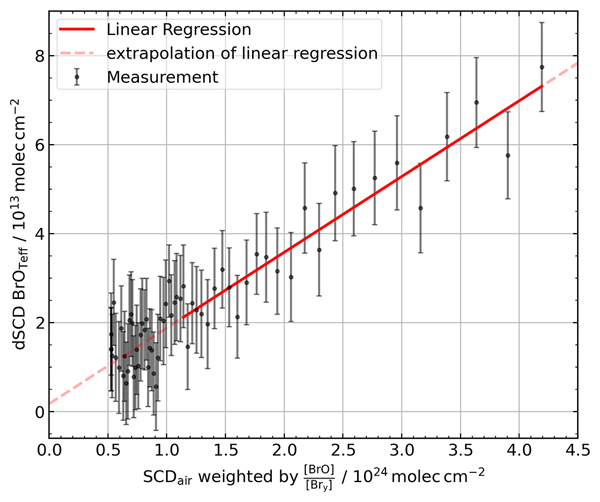
A novel balloon-borne instrument for direct sun and solar occultation measurements of several UV–Vis absorbing gases (e.g. O3, NO2, BrO, IO, and HONO) is described. Its major design features and performance during two stratospheric deployments are discussed. From the measured overhead BrO concentration and a suitable photochemical correction, total stratospheric bromine is inferred to (17.5 ± 2.2) ppt in air masses which entered the stratosphere around early 2017 ± 1 year.
Niklas Karbach, Lisa Höhler, Peter Hoor, Heiko Bozem, Nicole Bobrowski, and Thorsten Hoffmann
Atmos. Meas. Tech., 17, 4081–4086, https://doi.org/10.5194/amt-17-4081-2024, https://doi.org/10.5194/amt-17-4081-2024, 2024
Short summary
Short summary
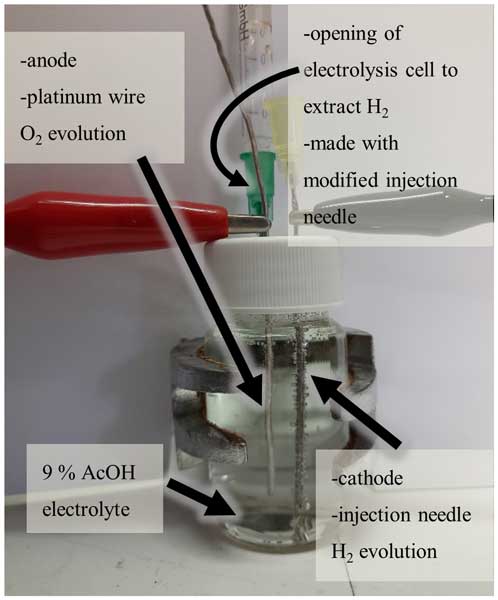
The system presented here can accurately generate and reproduce a stable flow of gas mixtures of known concentrations over several days using ambient air as a dilution medium. In combination with the small size and low weight of the system, this enables the calibration of hydrogen sensors in the field, reducing the influence of matrix effects on the accuracy of the sensor. The system is inexpensive to assemble and easy to maintain, which is the key to reliable measurement results.
Marvin Knapp, Ralph Kleinschek, Sanam N. Vardag, Felix Külheim, Helge Haveresch, Moritz Sindram, Tim Siegel, Bruno Burger, and André Butz
Atmos. Meas. Tech., 17, 2257–2275, https://doi.org/10.5194/amt-17-2257-2024, https://doi.org/10.5194/amt-17-2257-2024, 2024
Short summary
Short summary
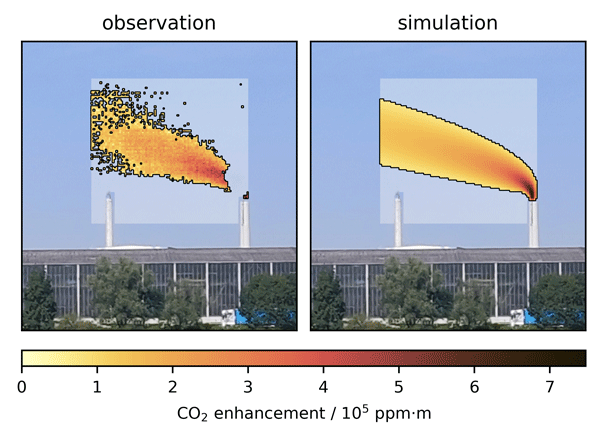
Imaging carbon dioxide (CO2) plumes of anthropogenic sources from planes and satellites has proven valuable for detecting emitters and monitoring climate mitigation efforts. We present the first images of CO2 plumes taken with a ground-based spectral camera, observing a coal-fired power plant as a validation target. We develop a technique to find the source emission strength with an hourly resolution, which reasonably agrees with the expected emissions under favorable conditions.
Astrid Müller, Hiroshi Tanimoto, Takafumi Sugita, Prabir K. Patra, Shin-ichiro Nakaoka, Toshinobu Machida, Isamu Morino, André Butz, and Kei Shiomi
Atmos. Meas. Tech., 17, 1297–1316, https://doi.org/10.5194/amt-17-1297-2024, https://doi.org/10.5194/amt-17-1297-2024, 2024
Short summary
Short summary
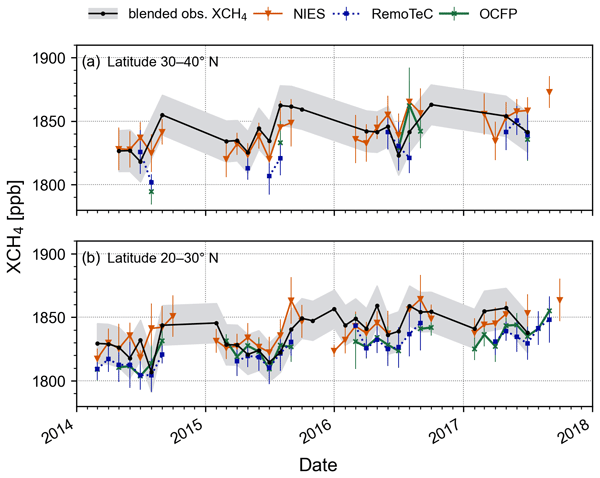
Satellite CH4 observations with high accuracy are needed to understand changes in atmospheric CH4 concentrations. But over oceans, reference data are limited. We combine various ship and aircraft observations with the help of atmospheric chemistry models to derive observation-based column-averaged mixing ratios of CH4 (obs. XCH4). We discuss three different approaches and demonstrate the applicability of the new reference dataset for carbon cycle studies and satellite evaluation.
Tobias D. Schmitt, Jonas Kuhn, Ralph Kleinschek, Benedikt A. Löw, Stefan Schmitt, William Cranton, Martina Schmidt, Sanam N. Vardag, Frank Hase, David W. T. Griffith, and André Butz
Atmos. Meas. Tech., 16, 6097–6110, https://doi.org/10.5194/amt-16-6097-2023, https://doi.org/10.5194/amt-16-6097-2023, 2023
Short summary
Short summary
Our new observatory measures greenhouse gas concentrations of carbon dioxide (CO2) and methane (CH4) along a 1.55 km long light path over the city of Heidelberg, Germany. We compared our measurements with measurements that were taken at a single point at one end of our path. The two mostly agreed but show a significant difference for CO2 with certain wind directions. This is important when using greenhouse gas concentration measurements to observe greenhouse gas emissions of cities.
Simon Warnach, Holger Sihler, Christian Borger, Nicole Bobrowski, Steffen Beirle, Ulrich Platt, and Thomas Wagner
Atmos. Meas. Tech., 16, 5537–5573, https://doi.org/10.5194/amt-16-5537-2023, https://doi.org/10.5194/amt-16-5537-2023, 2023
Short summary
Short summary
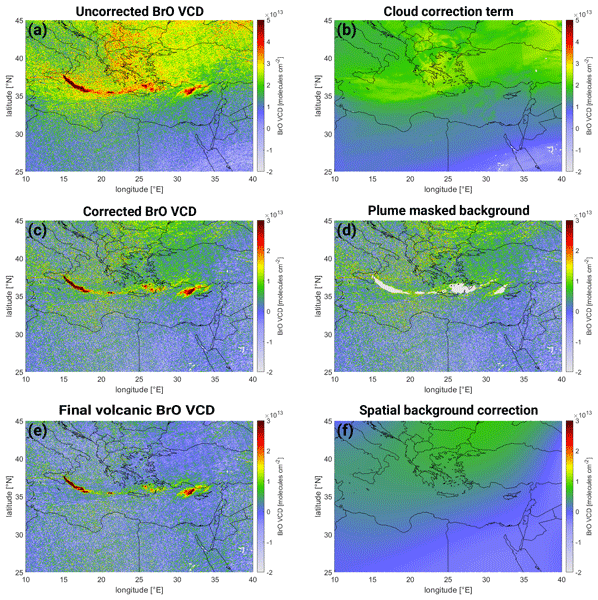
BrO inside volcanic gas plumes but can be used in combination with SO2 to characterize the volcanic property and its activity state. High-quality satellite observations can provide a global inventory of this important quantity. This paper investigates how to accurately detect BrO inside volcanic plumes from the satellite UV spectrum. A sophisticated novel non-volcanic background correction scheme is presented, and systematic errors including cross-interference with formaldehyde are minimized.
Benedikt A. Löw, Ralph Kleinschek, Vincent Enders, Stanley P. Sander, Thomas J. Pongetti, Tobias D. Schmitt, Frank Hase, Julian Kostinek, and André Butz
Atmos. Meas. Tech., 16, 5125–5144, https://doi.org/10.5194/amt-16-5125-2023, https://doi.org/10.5194/amt-16-5125-2023, 2023
Short summary
Short summary
We developed a portable spectrometer (EM27/SCA) that remotely measures greenhouse gases in the lower atmosphere above a target region. The measurements can deliver insights into local emission patterns. To evaluate its performance, we set up the EM27/SCA above the Los Angeles Basin side by side with a similar non-portable instrument (CLARS-FTS). The precision is promising and the measurements are consistent with CLARS-FTS. In the future, we need to account for light scattering.
Thomas Wagner, Simon Warnach, Steffen Beirle, Nicole Bobrowski, Adrian Jost, Janis Puķīte, and Nicolas Theys
Atmos. Meas. Tech., 16, 1609–1662, https://doi.org/10.5194/amt-16-1609-2023, https://doi.org/10.5194/amt-16-1609-2023, 2023
Short summary
Short summary
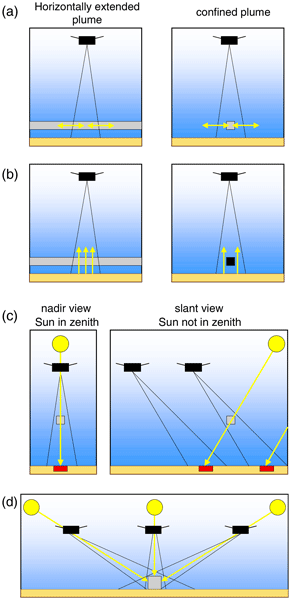
We investigate 3D effects of volcanic plumes on the retrieval results of satellite and ground-based UV–Vis observations. With its small ground pixels of 3.5 x 5.5 km², the TROPOMI instrument can detect much smaller volcanic plumes than previous instruments. At the same time, 3D effects become important. The effect of horizontal photon paths especially can lead to a strong underestimation of the derived plume contents of up to > 50 %, which can be further increased for strong absorbers like SO2.
Alba Lorente, Tobias Borsdorff, Mari C. Martinez-Velarte, Andre Butz, Otto P. Hasekamp, Lianghai Wu, and Jochen Landgraf
Atmos. Meas. Tech., 15, 6585–6603, https://doi.org/10.5194/amt-15-6585-2022, https://doi.org/10.5194/amt-15-6585-2022, 2022
Short summary
Short summary
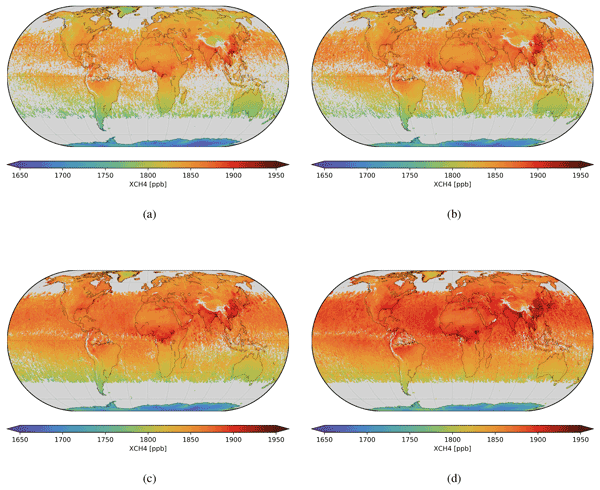
The TROPOspheric Monitoring Instrument (TROPOMI) performs observations over ocean in every orbit, enhancing the monitoring capabilities of methane from space. In the sun glint geometry the mirror-like reflection at the water surface provides a signal that is high enough to retrieve methane with high accuracy and precision. We present 4 years of methane concentrations over the ocean, and we assess its quality. We also show the importance of ocean observations to quantify total CH4 emissions.
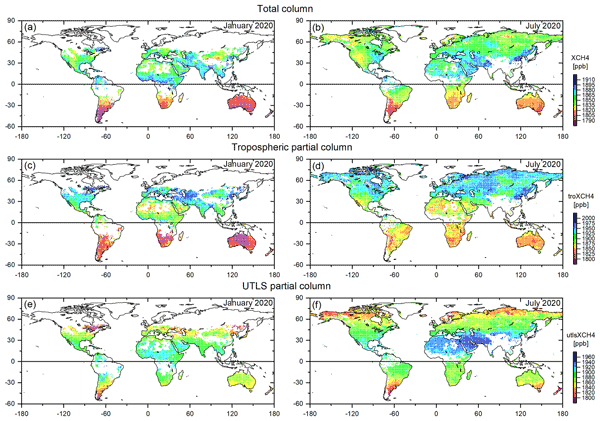
Matthias Schneider, Benjamin Ertl, Qiansi Tu, Christopher J. Diekmann, Farahnaz Khosrawi, Amelie N. Röhling, Frank Hase, Darko Dubravica, Omaira E. García, Eliezer Sepúlveda, Tobias Borsdorff, Jochen Landgraf, Alba Lorente, André Butz, Huilin Chen, Rigel Kivi, Thomas Laemmel, Michel Ramonet, Cyril Crevoisier, Jérome Pernin, Martin Steinbacher, Frank Meinhardt, Kimberly Strong, Debra Wunch, Thorsten Warneke, Coleen Roehl, Paul O. Wennberg, Isamu Morino, Laura T. Iraci, Kei Shiomi, Nicholas M. Deutscher, David W. T. Griffith, Voltaire A. Velazco, and David F. Pollard
Atmos. Meas. Tech., 15, 4339–4371, https://doi.org/10.5194/amt-15-4339-2022, https://doi.org/10.5194/amt-15-4339-2022, 2022
Short summary
Short summary
We present a computationally very efficient method for the synergetic use of level 2 remote-sensing data products. We apply the method to IASI vertical profile and TROPOMI total column space-borne methane observations and thus gain sensitivity for the tropospheric methane partial columns, which is not achievable by the individual use of TROPOMI and IASI. These synergetic effects are evaluated theoretically and empirically by inter-comparisons to independent references of TCCON, AirCore, and GAW.
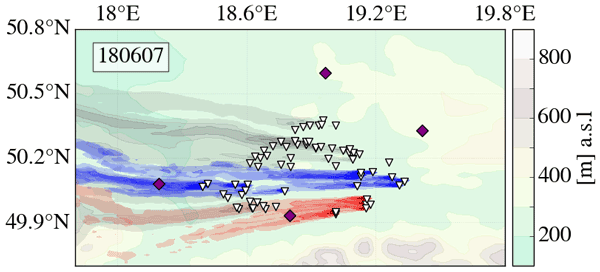
Andreas Luther, Julian Kostinek, Ralph Kleinschek, Sara Defratyka, Mila Stanisavljević, Andreas Forstmaier, Alexandru Dandocsi, Leon Scheidweiler, Darko Dubravica, Norman Wildmann, Frank Hase, Matthias M. Frey, Jia Chen, Florian Dietrich, Jarosław Nȩcki, Justyna Swolkień, Christoph Knote, Sanam N. Vardag, Anke Roiger, and André Butz
Atmos. Chem. Phys., 22, 5859–5876, https://doi.org/10.5194/acp-22-5859-2022, https://doi.org/10.5194/acp-22-5859-2022, 2022
Short summary
Short summary
Coal mining is an extensive source of anthropogenic methane emissions. In order to reduce and mitigate methane emissions, it is important to know how much and where the methane is emitted. We estimated coal mining methane emissions in Poland based on atmospheric methane measurements and particle dispersion modeling. In general, our emission estimates suggest higher emissions than expected by previous annual emission reports.
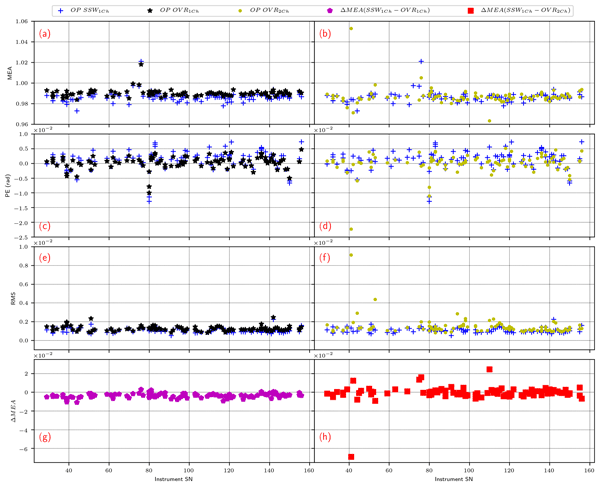
Carlos Alberti, Frank Hase, Matthias Frey, Darko Dubravica, Thomas Blumenstock, Angelika Dehn, Paolo Castracane, Gregor Surawicz, Roland Harig, Bianca C. Baier, Caroline Bès, Jianrong Bi, Hartmut Boesch, André Butz, Zhaonan Cai, Jia Chen, Sean M. Crowell, Nicholas M. Deutscher, Dragos Ene, Jonathan E. Franklin, Omaira García, David Griffith, Bruno Grouiez, Michel Grutter, Abdelhamid Hamdouni, Sander Houweling, Neil Humpage, Nicole Jacobs, Sujong Jeong, Lilian Joly, Nicholas B. Jones, Denis Jouglet, Rigel Kivi, Ralph Kleinschek, Morgan Lopez, Diogo J. Medeiros, Isamu Morino, Nasrin Mostafavipak, Astrid Müller, Hirofumi Ohyama, Paul I. Palmer, Mahesh Pathakoti, David F. Pollard, Uwe Raffalski, Michel Ramonet, Robbie Ramsay, Mahesh Kumar Sha, Kei Shiomi, William Simpson, Wolfgang Stremme, Youwen Sun, Hiroshi Tanimoto, Yao Té, Gizaw Mengistu Tsidu, Voltaire A. Velazco, Felix Vogel, Masataka Watanabe, Chong Wei, Debra Wunch, Marcia Yamasoe, Lu Zhang, and Johannes Orphal
Atmos. Meas. Tech., 15, 2433–2463, https://doi.org/10.5194/amt-15-2433-2022, https://doi.org/10.5194/amt-15-2433-2022, 2022
Short summary
Short summary
Space-borne greenhouse gas missions require ground-based validation networks capable of providing fiducial reference measurements. Here, considerable refinements of the calibration procedures for the COllaborative Carbon Column Observing Network (COCCON) are presented. Laboratory and solar side-by-side procedures for the characterization of the spectrometers have been refined and extended. Revised calibration factors for XCO2, XCO and XCH4 are provided, incorporating 47 new spectrometers.
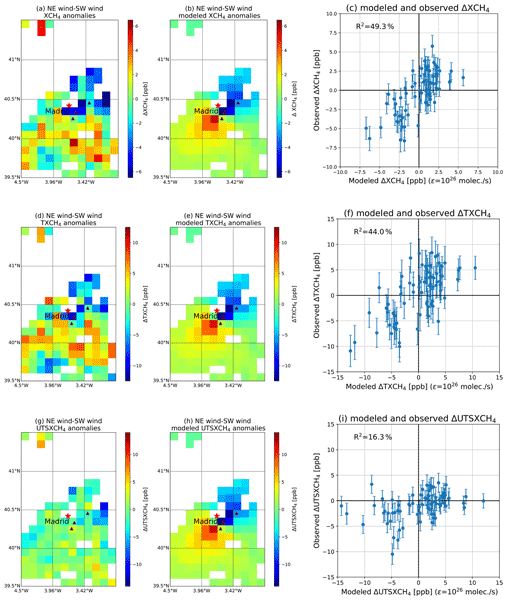
Qiansi Tu, Frank Hase, Matthias Schneider, Omaira García, Thomas Blumenstock, Tobias Borsdorff, Matthias Frey, Farahnaz Khosrawi, Alba Lorente, Carlos Alberti, Juan J. Bustos, André Butz, Virgilio Carreño, Emilio Cuevas, Roger Curcoll, Christopher J. Diekmann, Darko Dubravica, Benjamin Ertl, Carme Estruch, Sergio Fabián León-Luis, Carlos Marrero, Josep-Anton Morgui, Ramón Ramos, Christian Scharun, Carsten Schneider, Eliezer Sepúlveda, Carlos Toledano, and Carlos Torres
Atmos. Chem. Phys., 22, 295–317, https://doi.org/10.5194/acp-22-295-2022, https://doi.org/10.5194/acp-22-295-2022, 2022
Short summary
Short summary
We use different methane ground- and space-based remote sensing data sets for investigating the emission strength of three waste disposal sites close to Madrid. We present a method that uses wind-assigned anomalies for deriving emission strengths from satellite data and estimate their uncertainty to 9–14 %. The emission strengths estimated from the remote sensing data sets are significantly larger than the values published in the official register.
Jonas Kuhn, Nicole Bobrowski, Thomas Wagner, and Ulrich Platt
Atmos. Meas. Tech., 14, 7873–7892, https://doi.org/10.5194/amt-14-7873-2021, https://doi.org/10.5194/amt-14-7873-2021, 2021
Short summary
Short summary
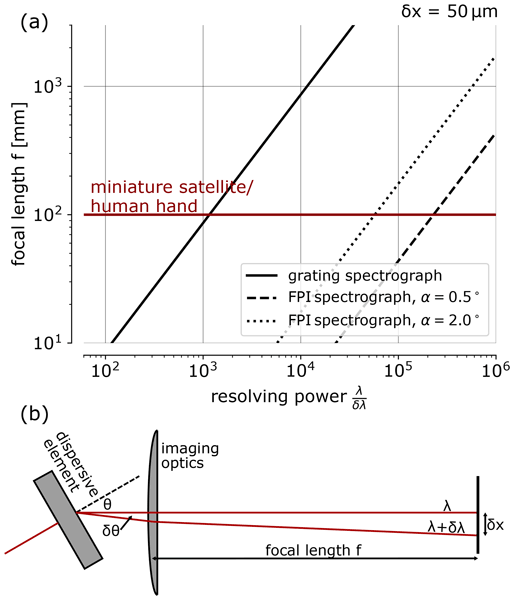
We propose spectrograph implementations using Fabry–Pérot interferometers for atmospheric trace gas remote sensing. Compared with widely used grating spectrographs, we find substantial light throughput and mobility advantages for high resolving powers. Besides lowering detection limits and increasing the spatial and temporal resolution of many atmospheric trace gas measurements, this approach might enable remote sensing of further important gases such as tropospheric OH radicals.
Cited articles
Aiuppa, A., Federico, C., Franco, A., Giudice, G., Gurrieri, S., Inguaggiato, S., Liuzzo, M., McGonigle, A. J. S., and Valenza, M.: Emission of Bromine and Iodine from Mount Etna Volcano, Geochem. Geophy. Geosy., 6, 2005GC000965, https://doi.org/10.1029/2005GC000965, 2005. a
Aiuppa, A., Fischer, T. P., Plank, T., and Bani, P.: CO2 Flux Emissions from the Earth's Most Actively Degassing Volcanoes, 2005–2015, Sci. Rep., 9, 5442, https://doi.org/10.1038/s41598-019-41901-y, 2019. a
Allard, P., Burton, M., and Muré, F.: Spectroscopic Evidence for a Lava Fountain Driven by Previously Accumulated Magmatic Gas, Nature, 433, 407–410, https://doi.org/10.1038/nature03246, 2005. a
Arellano, S., Galle, B., Apaza, F., Avard, G., Barrington, C., Bobrowski, N., Bucarey, C., Burbano, V., Burton, M., Chacón, Z., Chigna, G., Clarito, C. J., Conde, V., Costa, F., De Moor, M., Delgado-Granados, H., Di Muro, A., Fernandez, D., Garzón, G., Gunawan, H., Haerani, N., Hansteen, T. H., Hidalgo, S., Inguaggiato, S., Johansson, M., Kern, C., Kihlman, M., Kowalski, P., Masias, P., Montalvo, F., Möller, J., Platt, U., Rivera, C., Saballos, A., Salerno, G., Taisne, B., Vásconez, F., Velásquez, G., Vita, F., and Yalire, M.: Synoptic analysis of a decade of daily measurements of SO2 emission in the troposphere from volcanoes of the global ground-based Network for Observation of Volcanic and Atmospheric Change, Earth Syst. Sci. Data, 13, 1167–1188, https://doi.org/10.5194/essd-13-1167-2021, 2021. a, b
Burton, M., Allard, P., Muré, F., and La Spina, A.: Magmatic Gas Composition Reveals the Source Depth of Slug-Driven Strombolian Explosive Activity, Science, 317, 227–230, https://doi.org/10.1126/science.1141900, 2007. a
Burton, M., Caltabiano, T., Murè, F., Salerno, G., and Randazzo, D.: SO2 Flux from Stromboli during the 2007 Eruption: Results from the FLAME Network and Traverse Measurements, J. Volcanol. Geoth. Res., 182, 214–220, https://doi.org/10.1016/j.jvolgeores.2008.11.025, 2009. a
Burton, M., Salerno, G., D'Auria, L., Caltabiano, T., Murè, F., and Maugeri, R.: SO2 Flux Monitoring at Stromboli with the New Permanent INGV SO2 Camera System: A Comparison with the FLAME Network and Seismological Data, J. Volcanol. Geoth. Res., 300, 95–102, https://doi.org/10.1016/j.jvolgeores.2015.02.006, 2015. a, b
Butz, A., Guerlet, S., Hasekamp, O., Schepers, D., Galli, A., Aben, I., Frankenberg, C., Hartmann, J.-M., Tran, H., Kuze, A., Keppel-Aleks, G., Toon, G., Wunch, D., Wennberg, P., Deutscher, N., Griffith, D., Macatangay, R., Messerschmidt, J., Notholt, J., and Warneke, T.: Toward Accurate CO2 and CH4 Observations from GOSAT: GOSAT CO2 and CH4 Validation, Geophys. Res. Lett., 38, L14812, https://doi.org/10.1029/2011GL047888, 2011. a
Butz, A., Dinger, A. S., Bobrowski, N., Kostinek, J., Fieber, L., Fischerkeller, C., Giuffrida, G. B., Hase, F., Klappenbach, F., Kuhn, J., Lübcke, P., Tirpitz, L., and Tu, Q.: Remote sensing of volcanic CO2, HF, HCl, SO2, and BrO in the downwind plume of Mt. Etna, Atmos. Meas. Tech., 10, 1–14, https://doi.org/10.5194/amt-10-1-2017, 2017. a, b, c, d, e, f, g, h, i
Delsemme, A. H.: Spectroscopie de flammes volcaniques. Bulletin des Séances de l'Académie Royale des Sciences d'Outre-Mer, Nouvelle Série, 6, 507–519, 1960. a
Enders, V., Müller, A., Frey, M. M., Hase, F., Kleinschek, R., Knapp, M., Löw, B., Morino, I., Nakaoka, S.-I., Nara, H., Tanimoto, H., Vardag, S. N., Voss, K., and Butz, A.: Towards routine shipborne measurements of columnar CO2, CH4, CO, and NO2: a case study for tracking regional-scale emission patterns, Atmos. Meas. Tech., 19, 2633–2655, https://doi.org/10.5194/amt-19-2633-2026, 2026. a
Francis, P., Burton, M. R., and Oppenheimer, C.: Remote Measurements of Volcanic Gas Compositions by Solar Occultation Spectroscopy, Nature, 396, 567–570, https://doi.org/10.1038/25115, 1998. a
Galle, B., Oppenheimer, C., Geyer, A., McGonigle, A. J., Edmonds, M., and Horrocks, L.: A Miniaturised Ultraviolet Spectrometer for Remote Sensing of SO2 Fluxes: A New Tool for Volcano Surveillance, J. Volcanol. Geoth. Res., 119, 241–254, https://doi.org/10.1016/S0377-0273(02)00356-6, 2003. a
Galle, B., Johansson, M., Rivera, C., Zhang, Y., Kihlman, M., Kern, C., Lehmann, T., Platt, U., Arellano, S., and Hidalgo, S.: Network for Observation of Volcanic and Atmospheric Change (NOVAC) – A Global Network for Volcanic Gas Monitoring: Network Layout and Instrument Description, J. Geophys. Res.-Atmos., 115, 2009JD011823, https://doi.org/10.1029/2009JD011823, 2010. a, b, c
Goff, F., Love, S. P., Warren, R., Counce, D., Obenholzner, J., Siebe, C., and Schmidt, S. C.: Passive Infrared Remote Sensing Evidence for Large, Intermittent CO2 Emissions at Popocatépetl Volcano, Mexico, Chem. Geol., 177, 133–156, https://doi.org/10.1016/S0009-2541(00)00387-9, 2001. a
Griffiths, P. R. and De Haseth, J. A.: Fourier Transform Infrared Spectrometry, no. 171 in Chemical Analysis, Wiley-Interscience, Hoboken, 2nd edn., ISBN 978-0-471-19404-0, https://doi.org/10.1002/047010631x, 2007. a
Hobbs, P. C.: Building Electro-Optical Systems: Making It All Work., John Wiley & Sons, 2nd edn., https://doi.org/10.1002/9780470466339, 2009. a
Judd, J. W.: Volcanoes: What They Are and What They Teach, vol. 35, The International Scientific Series, D. Appleton and Company, New York, https://www.gutenberg.org/ebooks/67873 (last access: 23 September 2026), 1881. a
Kern, C., Werner, C., Elias, T., Sutton, A. J., and Lübcke, P.: Applying UV Cameras for SO2 Detection to Distant or Optically Thick Volcanic Plumes, J. Volcanol. Geoth. Res., 262, 80–89, https://doi.org/10.1016/j.jvolgeores.2013.06.009, 2013. a
Kern, C., Lübcke, P., Bobrowski, N., Campion, R., Mori, T., Smekens, J.-F., Stebel, K., Tamburello, G., Burton, M., Platt, U., and Prata, F.: Intercomparison of SO2 Camera Systems for Imaging Volcanic Gas Plumes, J. Volcanol. Geoth. Res., 300, 22–36, https://doi.org/10.1016/j.jvolgeores.2014.08.026, 2015. a
Knapp, M., Kleinschek, R., Vardag, S. N., Külheim, F., Haveresch, H., Sindram, M., Siegel, T., Burger, B., and Butz, A.: Quantitative imaging of carbon dioxide plumes using a ground-based shortwave infrared spectral camera, Atmos. Meas. Tech., 17, 2257–2275, https://doi.org/10.5194/amt-17-2257-2024, 2024. a
Love, S. P., Goff, F., Counce, D., Siebe, C., and Delgado, H.: Passive Infrared Spectroscopy of the Eruption Plume at Popocatépetl Volcano, Mexico, Nature, 396, 563–567, https://doi.org/10.1038/25109, 1998. a, b, c
Love, S. P., Goff, F., Schmidt, S. C., Counce, D., Pettit, D., Christenson, B. W., and Siebe, C.: Passive Infrared Spectroscopic Remote Sensing of Volcanic Gases: Ground-based Studies at White Island and Ruapehu, New Zealand, and Popocatépetl, Mexico, in: Geophysical Monograph Series, American Geophysical Union, 116, 117–138, https://doi.org/10.1029/GM116p0117, 2000. a
Löw, B. A., Kleinschek, R., Enders, V., Sander, S. P., Pongetti, T. J., Schmitt, T. D., Hase, F., Kostinek, J., and Butz, A.: A portable reflected-sunlight spectrometer for CO2 and CH4, Atmos. Meas. Tech., 16, 5125–5144, https://doi.org/10.5194/amt-16-5125-2023, 2023. a, b
Mori, T., Notsu, K., Tohjima, Y., and Wakita, H.: Remote Detection of HCl and SO2 in Volcanic Gas from Unzen Volcano, Japan, Geophys. Res. Lett., 20, 1355–1358, https://doi.org/10.1029/93GL01065, 1993. a
Murata, K. J.: Occurrence of CuCl Emission in Volcanic Flames, Am. J. Sci., 258, 769–772, https://doi.org/10.2475/ajs.258.10.769, 1960. a
Naughton, J. J., Derby, J. V., and Glover, R. B.: Infrared Measurements on Volcanic Gas and Fume: Kilauea Eruption, 1968, J. Geophys. Res., 74, 3273–3277, https://doi.org/10.1029/JB074i012p03273, 1969. a
Notsu, K., Mori, T., Igarashi, G., Tohjima, Y., and Wakita, H.: Infrared Spectral Radiometer: A New Tool for Remote Measurement of SO2 of Volcanic Gas, Geochem. J., 27, 361–366, https://doi.org/10.2343/geochemj.27.361, 1993. a
Oppenheimer, C., Francis, P., Burton, M., Maciejewski, A., and Boardman, L.: Remote Measurement of Volcanic Gases by Fourier Transform Infrared Spectroscopy, Appl. Phys. B, 67, 505–515, https://doi.org/10.1007/s003400050536, 1998. a
Platt, U., Bobrowski, N., and Butz, A.: Ground-Based Remote Sensing and Imaging of Volcanic Gases and Quantitative Determination of Multi-Species Emission Fluxes, Geosciences, 8, 44, https://doi.org/10.3390/geosciences8020044, 2018. a
Pyle, D. and Mather, T.: Halogens in Igneous Processes and Their Fluxes to the Atmosphere and Oceans from Volcanic Activity: A Review, Chem. Geol., 263, 110–121, https://doi.org/10.1016/j.chemgeo.2008.11.013, 2009. a
Scott, S., Pfeffer, M., Oppenheimer, C., Bali, E., Lamb, O. D., Barnie, T., Woods, A. W., Kjartansdóttir, R., and Stefánsson, A.: Near-Surface Magma Flow Instability Drives Cyclic Lava Fountaining at Fagradalsfjall, Iceland, Nat. Commun., 14, 6810, https://doi.org/10.1038/s41467-023-42569-9, 2023. a
Smekens, J.-F., Mather, T. A., Burton, M. R., Varnam, M., and Pfeffer, M. A.: Rapid Primary Sulfate Aerosol Generation Observed With OP-FTIR in the Eruptive Plume of the Fagradalsfjall Basaltic Eruption, Iceland, 2021, J. Geophys. Res.-Atmos., 129, e2023JD040574, https://doi.org/10.1029/2023JD040574, 2024. a
Verhoogen, J.: New Data on Volcanic Gases; the 1938 Eruption of Nyamlagira, Am. J. Sci., 237, 656–672, https://doi.org/10.2475/ajs.237.9.656, 1939. a
Werle, P., Mücke, R., and Slemr, F.: The Limits of Signal Averaging in Atmospheric Trace-Gas Monitoring by Tunable Diode-Laser Absorption Spectroscopy (TDLAS), Appl. Phys. B, 57, 131–139, https://doi.org/10.1007/BF00425997, 1993. a
Wilzewski, J. S., Roiger, A., Strandgren, J., Landgraf, J., Feist, D. G., Velazco, V. A., Deutscher, N. M., Morino, I., Ohyama, H., Té, Y., Kivi, R., Warneke, T., Notholt, J., Dubey, M., Sussmann, R., Rettinger, M., Hase, F., Shiomi, K., and Butz, A.: Spectral sizing of a coarse-spectral-resolution satellite sensor for XCO2, Atmos. Meas. Tech., 13, 731–745, https://doi.org/10.5194/amt-13-731-2020, 2020. a
Short summary
Monitoring systems for volcanic gases use ultraviolet and visible light, since the sky is brightest there.
We analyzed whether the concept extends to the near-infrared, where CO2 and halogen gases such as hydrogen chloride also absorb.
We find this realistic for the halogen gases at strongly emitting volcanoes, but very difficult for CO2.
We propose pairing it with the ultraviolet instruments already in use.
This could improve our understanding of volcanic processes and eruption risks.
Monitoring systems for volcanic gases use ultraviolet and visible light, since the sky is...


