
Articles | Volume 19, issue 1
https://doi.org/10.5194/amt-19-185-2026
© Author(s) 2026. This work is distributed under
the Creative Commons Attribution 4.0 License.
the Creative Commons Attribution 4.0 License.
https://doi.org/10.5194/amt-19-185-2026
© Author(s) 2026. This work is distributed under
the Creative Commons Attribution 4.0 License.
the Creative Commons Attribution 4.0 License.
Research article
| Highlight paper
| 
12 Jan 2026
Research article | Highlight paper |
| 12 Jan 2026
| 12 Jan 2026
Quantifying agricultural N2O and CH4 emissions in the Netherlands using an airborne eddy covariance system

Deutsches Zentrum für Luft- und Raumfahrt (DLR), Institut für Physik der Atmosphäre, Oberpfaffenhofen, Germany
Max Eckl
formerly at: Deutsches Zentrum für Luft- und Raumfahrt (DLR), Institut für Physik der Atmosphäre, Oberpfaffenhofen, Germany
now at: E.ON Energy Markets GmbH, Essen, Germany
Leon Knez
Deutsches Zentrum für Luft- und Raumfahrt (DLR), Institut für Physik der Atmosphäre, Oberpfaffenhofen, Germany
Klaus-Dirk Gottschaldt
Deutsches Zentrum für Luft- und Raumfahrt (DLR), Institut für Physik der Atmosphäre, Oberpfaffenhofen, Germany
Alina Fiehn
Deutsches Zentrum für Luft- und Raumfahrt (DLR), Institut für Physik der Atmosphäre, Oberpfaffenhofen, Germany
Christian Mallaun
Deutsches Zentrum für Luft- und Raumfahrt (DLR), Flugexperimente, Oberpfaffenhofen, Germany
Michał Gałkowski
Department of Biogeochemical Signals, Max Planck Institute for Biogechemistry, Jena, Germay
Faculty of Physics and Applied Computer Science, AGH University of Kraków, Kraków, Poland
Christoph Kiemle
Deutsches Zentrum für Luft- und Raumfahrt (DLR), Institut für Physik der Atmosphäre, Oberpfaffenhofen, Germany
Ronald Hutjes
Earth Systems and Global Change Group, Wageningen University and Research, Wageningen, the Netherlands
Thomas Röckmann
Institute for Marine and Atmospheric Research Utrecht, Utrecht University, Utrecht, the Netherlands
Huilin Chen
Centre for Isotope Research (CIO), University of Groningen, Groningen, the Netherlands
School of Atmospheric Sciences, Nanjing University, Nanjing, China
Anke Roiger
Deutsches Zentrum für Luft- und Raumfahrt (DLR), Institut für Physik der Atmosphäre, Oberpfaffenhofen, Germany
Related authors
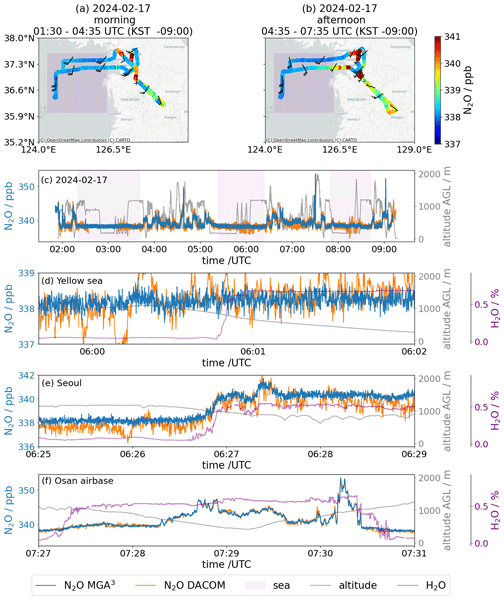
Leon Knez, Maximilian Eckl, Paul Waldmann, Alina Fiehn, Magdalena Pühl, Oleg Aseev, Glenn S. Diskin, Joshua P. DiGangi, Yonghoon Choi, Jason A. Miech, Ryan Bennett, Charles K. Gatebe, Jonathan M. Dean-Day, Rajesh Poudyal, Gangwoong Lee, Jeonghwan Kim, and Anke Roiger
Atmos. Meas. Tech., 19, 6583–6605, https://doi.org/10.5194/amt-19-6583-2026, https://doi.org/10.5194/amt-19-6583-2026, 2026
Short summary
Short summary
To mitigate N2O emissions, the processes behind the emissions need to be well understood. Because of this, we developed a new measurement setup for precise and simultaneously fast airborne in-situ N2O measurements. We developed an empirical water vapor correction enabling measurements in regions with high humidity and found no significant influence of different flight parameters on the measurements during two campaigns. This setup can help to measure N2O in humid and undersampled regions.
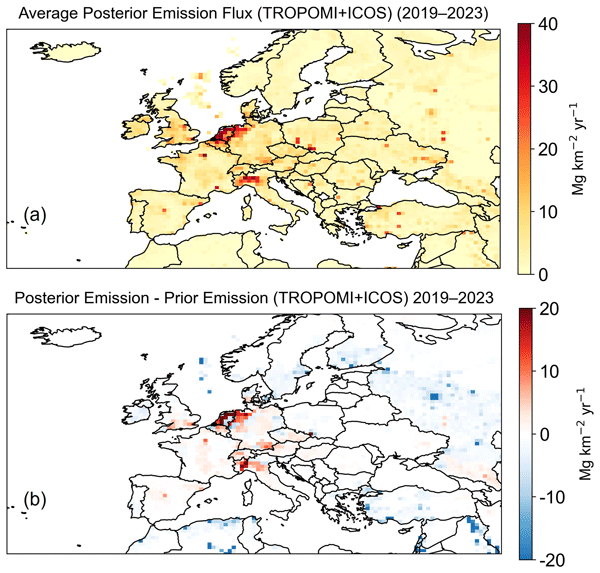
Shuai Sun, Yuzhong Zhang, Wei Chen, Shaomin Pan, Dongchuan Pu, Xin Tong, Huilin Chen, and Sander Houweling
Atmos. Chem. Phys., 26, 14981–15001, https://doi.org/10.5194/acp-26-14981-2026, https://doi.org/10.5194/acp-26-14981-2026, 2026
Short summary
Short summary
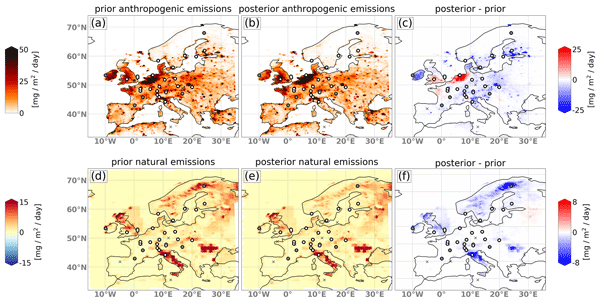
This study estimates methane emissions across Europe from 2019 to 2023 using atmospheric methane measurements from satellites and ground stations to improve understanding of emission sources. We find that total emissions are slightly higher than official reports, mainly due to livestock and waste, while emissions from fossil fuel production are lower in some regions. These results show that atmospheric measurements can improve independent verification of emissions and support climate policy.
Margaux Vals, Nicolas Bonne, Katharina Seeliger, Charles Renard, Raphael Märkl, Rebecca Dischl, Christiane Voigt, Ismael Ortega, Etienne Terrenoire, Daniel Sauer, Stefan Kaufmann, Andreas Marsing, Anke Roiger, and Amandine Roche
EGUsphere, https://doi.org/10.5194/egusphere-2026-4583, https://doi.org/10.5194/egusphere-2026-4583, 2026
This preprint is open for discussion and under review for Atmospheric Chemistry and Physics (ACP).
Short summary
Short summary
Contrails contribute significantly to the climate impact of aviation. Their formation depends on fuel composition, engine type and combustion regime, as well as on meteorological conditions. A microphysics code is used and confronted to recent aerosols and contrails measurements. In particular, the first comparison of data of total number of particles measured in the near-field are compared to model simulations. The model results are also compared to far-field measurement data of ice crystals.
Leon Knez, Maximilian Eckl, Paul Waldmann, Alina Fiehn, Magdalena Pühl, Oleg Aseev, Glenn S. Diskin, Joshua P. DiGangi, Yonghoon Choi, Jason A. Miech, Ryan Bennett, Charles K. Gatebe, Jonathan M. Dean-Day, Rajesh Poudyal, Gangwoong Lee, Jeonghwan Kim, and Anke Roiger
Atmos. Meas. Tech., 19, 6583–6605, https://doi.org/10.5194/amt-19-6583-2026, https://doi.org/10.5194/amt-19-6583-2026, 2026
Short summary
Short summary
To mitigate N2O emissions, the processes behind the emissions need to be well understood. Because of this, we developed a new measurement setup for precise and simultaneously fast airborne in-situ N2O measurements. We developed an empirical water vapor correction enabling measurements in regions with high humidity and found no significant influence of different flight parameters on the measurements during two campaigns. This setup can help to measure N2O in humid and undersampled regions.
Chloe A. Brashear, Maarten M. J. W. van Herpen, Sergey Gromov, Berend van de Kraats, Carina van der Veen, Xietiancheng Yu, Matthew S. Johnson, Helder Timas, Sönke Zaehle, Armin Jordan, Heiko Moossen, Africa Barreto, Natalia Pratts, Isabel Baños, Jesús Arrieta, Dickon Young, Peter Sealy, Hella van Asperen, Simonetta Montaguti, Peter Sperlich, Rowena Moss, Sylvia Nichol, Stephen Matthew Platt, Ove Hermansen, Cathrine Lund Myhre, Gabrielle Petron, Andy Crotwell, Isaac Vimont, and Thomas Röckmann
EGUsphere, https://doi.org/10.5194/egusphere-2026-5618, https://doi.org/10.5194/egusphere-2026-5618, 2026
This preprint is open for discussion and under review for Atmospheric Chemistry and Physics (ACP).
Short summary
Short summary
This study evaluates trends in atmospheric CO between 1995–2025 and uses the isotopic composition of CO to constrain emission shifts during this time. We find that CO from fossil fuel combustion has reduced dramatically in the Northern Hemisphere during winter, linked to global air quality regulations. Conversely, a small background rise in CO is driven by increasing atmospheric CH4 and recent extreme wildfire seasons have caused large peaks in CO, counteracting reductions from fossil emissions.
Félix Langot, Cyril Crevoisier, Thomas Lauvaux, Antoine Berchet, Sophie Luise Wittig, Charbel Abdallah, Anke Roiger, Klaus-Dirk Gottschaldt, and Alina Fiehn
EGUsphere, https://doi.org/10.5194/egusphere-2026-5620, https://doi.org/10.5194/egusphere-2026-5620, 2026
This preprint is open for discussion and under review for Atmospheric Chemistry and Physics (ACP).
Short summary
Short summary
Wetlands in the far north are a major source of methane, a powerful greenhouse gas, but how much they release is poorly known. We flew an aircraft over northern Sweden, targeting known emission hotspots, and worked backwards from the methane measured in the air to estimate emissions on the ground. Models get the average right over these hotspots, but release methane steadily where real wetlands emit in bursts. Capturing that rhythm is what will let us track this source as the climate warms.
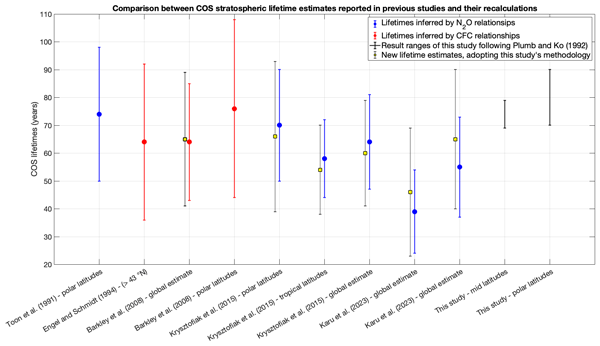
Alessandro Zanchetta, Steven van Heuven, Rigel Kivi, Michel Ramonet, Andreas Engel, Maarten Krol, and Huilin Chen
Atmos. Chem. Phys., 26, 13909–13927, https://doi.org/10.5194/acp-26-13909-2026, https://doi.org/10.5194/acp-26-13909-2026, 2026
Short summary
Short summary
In this study, we calculate the mean lifetime of carbonyl sulfide (COS) and methane (CH4) in the stratosphere from continuous vertical profiles sampled with balloon-borne instruments. We used two methods based on the stratospheric relationship of these gas species with N2O. The estimated stratospheric lifetime range is 69–90 years for COS and 146–172 years for CH4. These results are consistent with other studies and suggest no long-term trends in the stratospheric lifetime of these gas species.
Christian Fruck, Sebastian Wolff, Sven Krautwurst, Christoph Kiemle, Mathieu Quatrevalet, Martin Wirth, Jakob Borchardt, Oke Huhs, Konstantin Gerilowski, Michał Gałkowski, Christoph Gerbig, John P. Burrows, Heinrich Bovensmann, and Andreas Fix
EGUsphere, https://doi.org/10.5194/egusphere-2026-4578, https://doi.org/10.5194/egusphere-2026-4578, 2026
Short summary
Short summary
Waste sites near Madrid, Spain, release large amounts of methane, a powerful greenhouse gas. Using passive, active, and in situ instruments aboard the HALO aircraft, we measured methane concentrations near these sites. By combining these complementary measurements with an atmospheric transport simulation, we account for shifting winds that complicated earlier emission estimates, yielding a more accurate and robust method. We find a combined emission rate of 8.7 ± 1.5 t h-1.
Lukas Pilz, Christopher Lüken-Winkels, Alina Fiehn, Anke Roiger, and Sanam N. Vardag
EGUsphere, https://doi.org/10.5194/egusphere-2026-3665, https://doi.org/10.5194/egusphere-2026-3665, 2026
Short summary
Short summary
Cities need reliable estimates of their carbon dioxide emissions to track climate progress. We combined aircraft measurements with meteorological computer simulations, improving the accuracy of the results. For Berlin, we found emissions were higher than a widely used inventory but much lower, and far more precise, than a traditional calculation. This approach can provide more trustworthy estimates to support climate action and policy.
Arunima Das, Christoph Kiemle, Anna Weber, Sabrina Zechlau, Mathieu Quatrevalet, and Andreas Fix
EGUsphere, https://doi.org/10.5194/egusphere-2026-4050, https://doi.org/10.5194/egusphere-2026-4050, 2026
This preprint is open for discussion and under review for Atmospheric Measurement Techniques (AMT).
Short summary
Short summary
Quantifying atmospheric methane (CH4) columns over water bodies remains a challenge for current remote sensing techniques, contributing to uncertainties in the global CH4 budget. This study evaluates an airborne lidar’s performance using European and Canadian campaign data. Results demonstrate that reliable CH4 retrievals over water are achievable through appropriate data averaging. These findings support the future satellite mission MERLIN, aimed at improving global CH4 emission estimates.
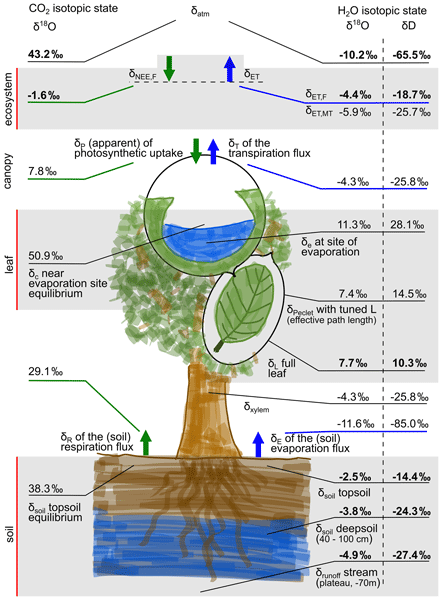
Robbert P. J. Moonen, Getachew A. Adnew, Jordi Vilà-Guerau de Arellano, David J. Bonell Fontas, and Thomas Röckmann
Biogeosciences, 23, 5163–5184, https://doi.org/10.5194/bg-23-5163-2026, https://doi.org/10.5194/bg-23-5163-2026, 2026
Short summary
Short summary
We used high-frequency H₂O and CO₂ isotope measurements taken in the Amazon Tall Tower Observatory (ATTO) to separate water vapour and carbon dioxide fluxes into their component processes. During midday, ~95 % of evapotranspiration came from plant transpiration. Isotopes also revealed the balance between photosynthesis and respiration, showing strong sensitivity to leaf CO₂ ratios. These results improve understanding of Amazon ecosystem function.
Mengrong Lu, Huilin Chen, Xun Zhang, Xuguang Chi, Chong Wei, Shuangxi Fang, Fenjuan Wang, Eleftherios Ioannidis, Friedemann Reum, Xinlu Wang, Prajal Pradhan, Wouter Peters, Klaus Hubacek, and Sander Houweling
EGUsphere, https://doi.org/10.5194/egusphere-2026-3879, https://doi.org/10.5194/egusphere-2026-3879, 2026
Short summary
Short summary
Effective methane mitigation requires accurate knowledge of the spatial and temporal distribution of sources and sinks. Using high-resolution atmospheric modeling and ground-based observations, we estimated methane emissions in East Asia, focusing on the Yangtze River Delta. Emissions are lower than most inventories suggest, but show a clear seasonal cycle, with summer peaks driven by rice cultivation and natural sources. This seasonality is critical for emission tracking and mitigation design.
Simon Braun, Magdalena Pühl, Andreas Marsing, Daniel Sauer, Gregor Neumann, Elena de la Torre Castro, Valerian Hahn, Michael Lichtenstern, Paul Stock, Christopher Heckl, Dennis Hillenbrand, Anke Roiger, Christiane Voigt, Simon Unterstraßer, Arne Vasenden, Roberta Vasenden, Jean Cammas, Florian Thorey, Catherine Mackay, Charles Renard, and Tina Jurkat-Witschas
EGUsphere, https://doi.org/10.5194/egusphere-2026-2887, https://doi.org/10.5194/egusphere-2026-2887, 2026
Short summary
Short summary
In this work, we share the results of first in-flight emission and contrail measurements behind a fuel cell exhaust emulator, with the goal of quantifying the contrail properties for this new aviation propulsion concept. An artificial dilution tracer system was used to assess plume dilution and derive emission indices. At ambient temperatures close to the homogeneous freezing threshold, a strong temperature-dependence of the number of contrail ice crystals, due to droplet freezing, was observed.
Stephen J. Harris, Sven Krautwurst, Jorg Hacker, Mark Lunt, Jakob Borchardt, Mei Bai, Hartmut Boesch, Tarra Brain, John Philip Burrows, Shakti Chakravarty, Robert A. Field, Rebecca E. Fisher, James L. France, Konstantin Gerilowski, Oke Huhs, Wolfgang Junkermann, Bryce F. J. Kelly, Martin Kumm, Mathias Lanoisellé, Wolfgang Lieff, Andrew McGrath, Adrian Murphy, Thomas Röckmann, Zoe Salmon, Josua Schindewolf, Jakob Thoböll, Carina van der Veen, and Heinrich Bovensmann
Atmos. Chem. Phys., 26, 10043–10069, https://doi.org/10.5194/acp-26-10043-2026, https://doi.org/10.5194/acp-26-10043-2026, 2026
Short summary
Short summary
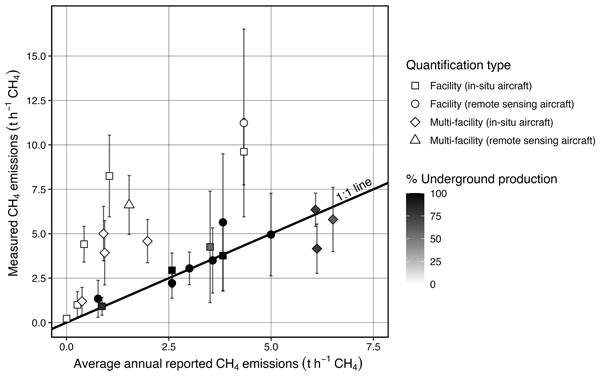
The accuracy of methods used to estimate and report fugitive methane emissions from Australian coal mines remains unclear. This study compares airborne emission rate estimates with reported estimates from 17 coal mines in the Bowen Basin, a region accounting for 45 % of national coal production. Results show good agreement for underground coal mines, but poor agreement for surface coal mines, suggesting improvements to surface coal mine reporting methods is needed to improve inventory reporting.
Laurent Bataille, Bart Kruijt, Alexander Buzacott, Wilma Jans, Wietse Franssen, Jan Biermann, Hanne Berghuis, Quint van Giersbergen, Tom Heuts, Reinder Nouta, Niek Bosma, Ron Lootens, Hong Zhao, Merit van den Berg, Ype van de Velde, Christian Fritz, Gilles Erkens, and Ronald Hutjes
EGUsphere, https://doi.org/10.5194/egusphere-2026-3151, https://doi.org/10.5194/egusphere-2026-3151, 2026
Short summary
Short summary
Drained peatlands release large amounts of carbon dioxide, and raising water levels is widely proposed to reduce these emissions. We measured the yearly carbon balance at twenty sites across Dutch peatlands. Higher water tables were linked to lower emissions, a weak but fairly consistent effect. Site-to-site differences outweighed water level: land use and a clay layer over the peat strongly shaped emissions, so raising water levels works only if each site's intrinsic features are considered.
Bibhasvata Dasgupta, Sudhanshu Pandey, Sander Houweling, Malika Menoud, Carina van der Veen, John Miller, Ben Riddell-Young, Sylvia Englund Michel, Peter Sperlich, Shinji Morimoto, Ryo Fujita, Stephen Platt, Christine Groot Zwaaftink, Ingeborg Levin, Cordelia Veidt, Cathrine Lund Myhre, Ceres Woolley Maisch, Rebecca Fisher, Euan G. Nisbet, James France, Rowena Moss, Nicola Warwick, and Thomas Röckmann
Atmos. Chem. Phys., 26, 8601–8616, https://doi.org/10.5194/acp-26-8601-2026, https://doi.org/10.5194/acp-26-8601-2026, 2026
Short summary
Short summary
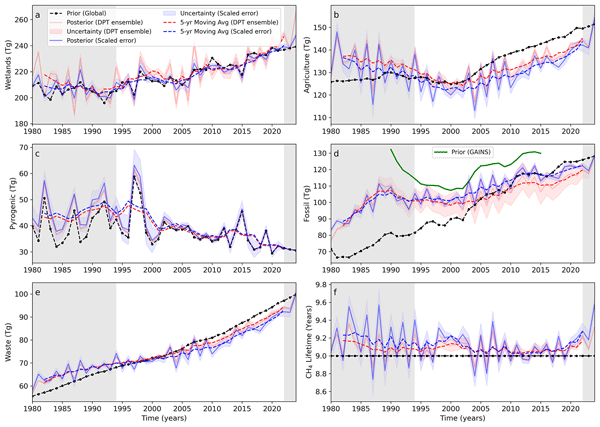
Methane is a strong greenhouse gas, and its rise since the mid-2000s is debated in terms of sources and sinks. Using top-down and bottom-up data, along with inversion models and methane isotopes (δ13C-CH4 and δD-CH4), we find that wetlands are the primary driver of post-2006 increases, followed by agriculture and fossil fuels. Methane's lifetime has decreased by about 0.1 years. We also assess how isotope signatures and sink processes influence uncertainties.
Lison Soussaintjean, Jochen Schmitt, Joël Savarino, J. Andy Menking, Edward J. Brook, Barbara Seth, Vladimir Lipenkov, Thomas Röckmann, and Hubertus Fischer
Biogeosciences, 23, 3939–3963, https://doi.org/10.5194/bg-23-3939-2026, https://doi.org/10.5194/bg-23-3939-2026, 2026
Short summary
Short summary
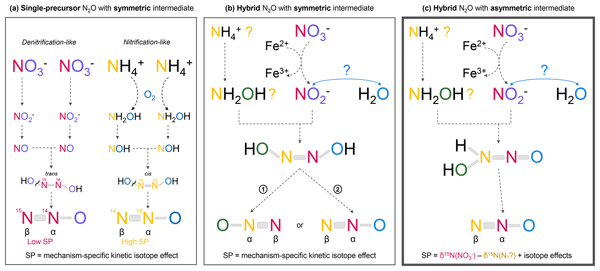
Nitrous oxide (N2O) produced in dust-rich Antarctic ice complicates the reconstruction of past atmospheric levels from ice core records. Using isotope analysis, we show that N2O forms from two nitrogen precursors, one being nitrate. For the first time, we demonstrate that the site preference (SP) of N2O reflects the isotopic difference between these precursors, not the production pathway, which challenges the common interpretation of SP.
Liang Feng, Paul I. Palmer, Haolin Wang, Robert Parker, Hartmut Boesch, Sébastien C. Biraud, Łukasz Chmura, Emanuel Gloor, László Haszpra, Elena Kozlova, Euan G. Nisbet, Steffen M. Noe, Thomas Röckmann, Rodrigo Augusto Ferreira de Souza, and Martin Steinbacher
EGUsphere, https://doi.org/10.5194/egusphere-2026-2662, https://doi.org/10.5194/egusphere-2026-2662, 2026
Short summary
Short summary
This study examines the relative roles of emissions and oxidation in recent rapid methane growth. Using an ensemble Kalman filter, we quantify global methane sources and sinks for 2018–2024. Emission changes dominate the increase, except in 2020 when a COVID‑19‑related OH decline strongly affected sinks. Atmospheric photochemistry—including OH and CH₄ variability and temperature‑dependent oxidation—also significantly shapes the methane budget.
Andreas Dörnbrack, Andreas Giez, Christian Mallaun, and Claudia Christine Stephan
EGUsphere, https://doi.org/10.5194/egusphere-2026-2628, https://doi.org/10.5194/egusphere-2026-2628, 2026
Short summary
Short summary
Upper-tropospheric turbulence over the Atlantic intertropical convergence zone is quantified from in situ measurements onboard the German research aircraft HALO, with a focus on whether the anticipated subsidence in the doldrums leads to reduced turbulence.
Mirosław Zimnoch, Michał Gałkowski, Piotr Sekula, Łukasz Chmura, Jakub Bartyzel, Alina Jasek-Kamińska, Alicja Skiba, Jarosław Nęcki, Paweł Jagoda, Michał Kud, and Przemysław Wachniew
Atmos. Chem. Phys., 26, 7061–7080, https://doi.org/10.5194/acp-26-7061-2026, https://doi.org/10.5194/acp-26-7061-2026, 2026
Short summary
Short summary
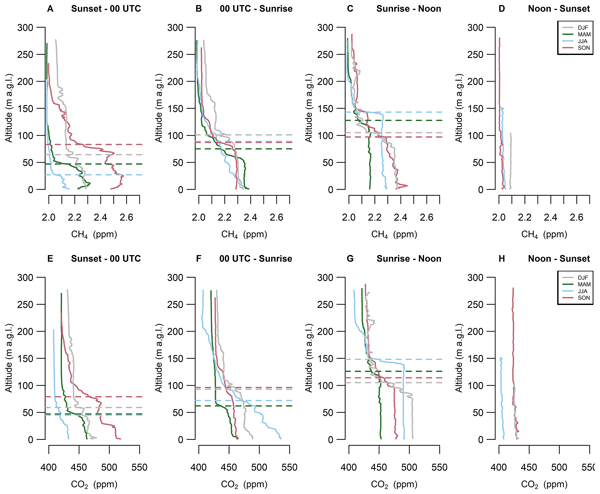
The manuscript presents the dataset collected in the urban area of Krakow city containing several measurement campaigns focused on the investigation of vertical CO2 and CH4 profiles supplemented by set of meteorological parameters (e.g. temperature, pressure) measured along the profiles up to ca. 280 m a.g.l. The presented data collection explains the dynamics of the lower atmosphere on a daily and seasonal scale providing the three dimensional dataset that can be used for model validation.
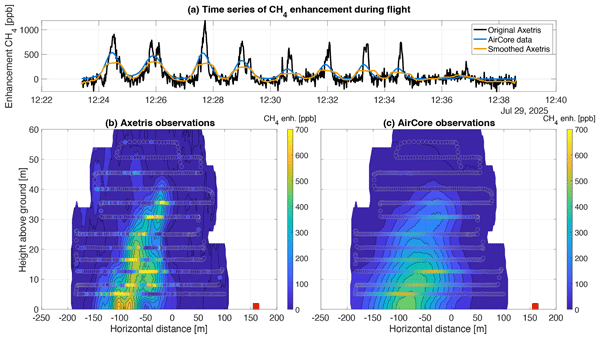
Noni van Ettinger, Steven M. A. C. van Heuven, and Huilin Chen
Atmos. Meas. Tech., 19, 3333–3362, https://doi.org/10.5194/amt-19-3333-2026, https://doi.org/10.5194/amt-19-3333-2026, 2026
Short summary
Short summary
This research evaluates the potential of a cost-effective methane sensor for quantifying anthropogenic emissions. With active temperature control, the sensor performs comparably to the high-precision Active AirCore in estimating dairy-farm mass emissions, achieving results within 10% uncertainty. The uncertainty is mainly driven by wind and background variability, rather than by sensor precision. The results show that cost-effective sensors can improve monitoring networks.
Johannes Degen, Nicole Bobrowski, Mélisende M. Bossard, Lucie Boucher, Huilin Chen, Andreas Engel, Bastien H. Geil, Giovanni B. Giuffrida, Steven van Heuven, Thorsten Hoffmann, Niklas Karbach, Gianluigi Ortenzi, and Tanja J. Schuck
EGUsphere, https://doi.org/10.5194/egusphere-2026-1865, https://doi.org/10.5194/egusphere-2026-1865, 2026
This preprint is open for discussion and under review for Atmospheric Measurement Techniques (AMT).
Short summary
Short summary
Observations in volcanic plumes often rely on Uncrewed Aerial Systems (UAS). In July 2024, we used the active AirCore technique with UAS to probe the plumes of Mount Etna (Italy). This was the first time to use this technique inside volcanic plumes. AirCore samples are stored in long coils for laboratory analyses delivering high-quality trace gas measurements. We observed enhanced mole fractions of CO2 and often also of CO. allowing conclusions on oxidation processes inside the crater.
Jacoline van Es, Juan Bettinelli, Jia Chen, Carina van der Veen, Stephan Henne, and Thomas Röckmann
EGUsphere, https://doi.org/10.5194/egusphere-2026-1813, https://doi.org/10.5194/egusphere-2026-1813, 2026
Short summary
Short summary
The increase in atmospheric methane needs to be reversed to mitigate ongoing global warming. To design effective mitigation strategies at the local/regional level, we need to know what the main sources in different regions. We show that in Hamburg, Germany, biogenic sources are the main contributor to local emissions, with additional contributions from waste and fossil CH4 sources. An unexpected source is the Elbe River, with spiking emissions at low tide when the river banks are exposed.
Jinkyul Choi, Kazuyuki Miyazaki, Takashi Sekiya, Jinhyeok Yu, Shin-Ya Ogino, Henk Eskes, Pieter Rijdijk, Ryan Bennett, Anke Roiger, Leon Knez, Glenn S. Diskin, Jason A. Miech, Joshua P. DiGangi, Yonghoon Choi, Alessandro Franchin, Changmin Cho, Eric C. Apel, Louisa K. Emmons, Nattamon Maneenoi, Jason M. St. Clair, Reem A. Hannun, Glenn M. Wolfe, Erin Delaria, Abby Sebol, Donald R. Blake, Monica Crippa, Rachel M. Hoesly, Steven J. Smith, Jung-Hun Woo, Le Kuai, and Ronald Macatangay
EGUsphere, https://doi.org/10.5194/egusphere-2026-2380, https://doi.org/10.5194/egusphere-2026-2380, 2026
Short summary
Short summary
Asia produces half of the world's air pollution, yet emission estimates from different sources disagree widely. We assimilated satellite observations of six pollutant species to correct both concentrations and emissions. Aircraft measurements from a 2024 NASA campaign across four Asian countries confirmed the improvements. Our results reveal underreported emissions in some countries, overestimated vegetation emissions, unresolved fire estimates, and weather control on cross-border pollution.
Noelia R. Benavente, Santiago Botía, Luciana V. Rizzo, Angel Vara-Vela, Paulo Artaxo, Hella van Asperen, Felipe Santos da Silva, Flavio A. F. D'Oliveira, Horst Fischer, Michał Gałkowski, Theo Glauch, Alice Henkes, David Ho, Cléo Q. Dias-Júnior, Amauri C. P. Junior, Julia Marshall, Linda Ort, Ben-Hur M. Portella, and Luiz A. T. Machado
EGUsphere, https://doi.org/10.5194/egusphere-2026-979, https://doi.org/10.5194/egusphere-2026-979, 2026
Short summary
Short summary
The Amazon Basin plays a vital role in regulating Earth's climate by absorbing and releasing carbon dioxide and methane. We studied how a high-resolution atmospheric transport model captures these gases, comparing it with measurements from towers and aircraft over the forest. Adjusting for forest carbon exchange improved carbon dioxide results, while methane levels were heavily dependent on emission estimates. Remaining errors were linked to winds and atmospheric mixing.
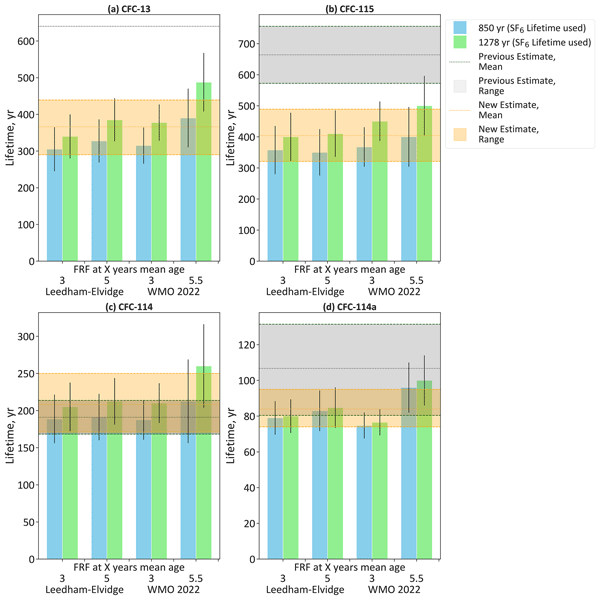
Elinor C. Tuffnell, Emma Leedham-Elvidge, William T. Sturges, Harald Bönisch, Karina E. Adcock, Paul J. Fraser, Paul B. Krummel, David E. Oram, Ray L. Langenfelds, Thomas Röckmann, Luke M. Western, Jens Mühle, and Johannes C. Laube
Atmos. Chem. Phys., 26, 4583–4599, https://doi.org/10.5194/acp-26-4583-2026, https://doi.org/10.5194/acp-26-4583-2026, 2026
Short summary
Short summary
The greater the stratospheric lifetime of chlorofluorocarbons (CFCs), the longer they will deplete ozone. This paper investigates four longer-lived CFCs, and discovers two of them have much shorter lifetimes than previously believed. Demonstrating emissions of these compounds are higher than assumed, to account for their abundance. Unusually this paper uses stratospheric whole-air samples, rather than models or lab-based experiments, to derive policy-relevant metrics for these compounds.
Annalisa Delre, Thomas Röckmann, David J. Bonell Fontas, Julia C. Engelmann, and Helge Niemann
EGUsphere, https://doi.org/10.5194/egusphere-2026-1582, https://doi.org/10.5194/egusphere-2026-1582, 2026
Preprint archived
Short summary
Short summary
Estuaries are important natural sources of methane, a greenhouse gas that affects climate. We studied how methane changes along the Scheldt estuary by measuring gas concentrations, carbon isotopes and identification and quantification of methane oxidizing bacteria. We found that methane levels varied strongly and were not mainly controlled by salinity. Most methane escaped to the atmosphere, showing that estuaries may contribute more to climate change than previously thought.
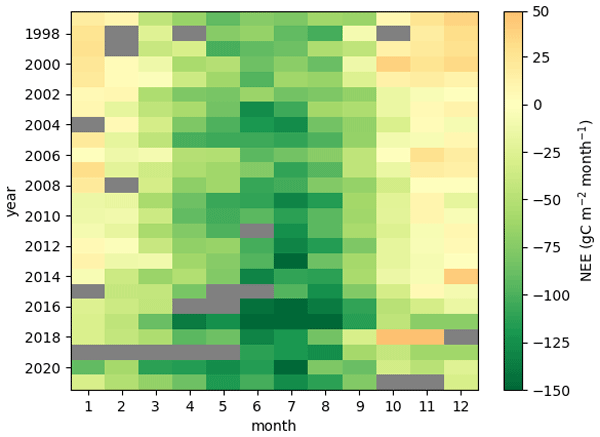
Hong Zhao, Han Dolman, Jan Elbers, Wilma Jans, Bart Kruijt, Eddy Moors, Henk Snellen, Jordi Vila-Guerau de Arellano, Wouter Peters, Maarten C. Krol, Ronald Hutjes, and Michiel van der Molen
Earth Syst. Sci. Data, 18, 2023–2045, https://doi.org/10.5194/essd-18-2023-2026, https://doi.org/10.5194/essd-18-2023-2026, 2026
Short summary
Short summary
Under the Kyoto Protocol the carbon dioxide (CO2) balance for forest ecosystems was required to be measured. Consequently, CO2 flux measurements have been conducted in Loobos site in the Netherlands since 1996, becoming one of the 17 first FLUXNET sites globally. This paper provides a comprehensive overview of the instrumentation, data processing and the resulting data archive, enabling its further use in data analysis, model development and validation of satellite data retrievals.
Shengxi Bai, Huilin Chen, Zhen Zhang, Shushi Peng, Fei Jiang, Fei Li, Shuzhuang Feng, Yingqi Yan, Qidan Huang, and Yongguang Zhang
EGUsphere, https://doi.org/10.5194/egusphere-2025-4610, https://doi.org/10.5194/egusphere-2025-4610, 2026
Short summary
Short summary
We examined methane emissions from coal mines in Shanxi Province, China’s major coal production region. Using satellite observations and advanced analysis, we found that rare but very large methane releases play a major role in total emissions. Policies to cut coal capacity initially reduced methane, but emissions rose again with production recovery. Our findings improve understanding of how energy policies affect climate pollution and offer a framework for better methane monitoring worldwide.

Ji Li, Xuguang Chi, Aijun Ding, Weimin Ju, Yongguang Zhang, Jing M. Chen, and Huilin Chen
Atmos. Meas. Tech., 19, 1763–1781, https://doi.org/10.5194/amt-19-1763-2026, https://doi.org/10.5194/amt-19-1763-2026, 2026
Short summary
Short summary
Accurate measurement of methane's isotopic fingerprint is crucial for identifying its sources. However, water vapor interference and instrument drift can cause significant errors, especially in humid air. This study evaluated two calibration methods and found that calibrating for individual methane isotopes with a water vapor correction provided accurate and stable results for both dry and humid air. This highlights the need for robust calibration to ensure reliable methane source attribution.
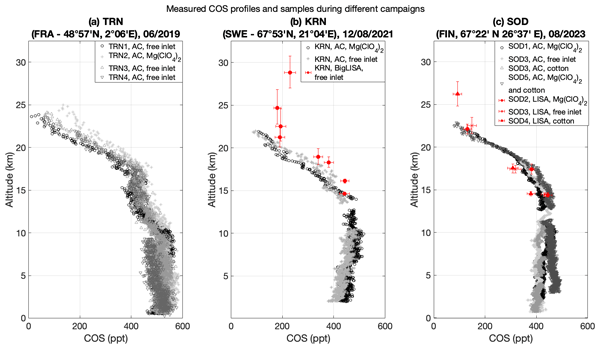
Alessandro Zanchetta, Steven van Heuven, Joram Hooghiem, Rigel Kivi, Thomas Laemmel, Michel Ramonet, Markus Leuenberger, Peter Nyfeler, Sophie L. Baartman, Maarten Krol, and Huilin Chen
Atmos. Meas. Tech., 19, 1465–1486, https://doi.org/10.5194/amt-19-1465-2026, https://doi.org/10.5194/amt-19-1465-2026, 2026
Short summary
Short summary
Continuous vertical profiles and discrete stratospheric samples of carbonyl sulfide (COS) were collected deploying the balloon-borne AirCore, LIghtweight Stratospheric Air (LISA) and BigLISA samplers and measured on a Quantum Cascade Laser Spectrometer (QCLS). Our measurements show good accordance with previous COS observations. Moreover, laboratory tests of ozone (O3) scrubbers proved squalene to remove O3 very efficiently without biasing the measurements of other trace gases.
Thomas Röckmann, Malika Menoud, Jacoline van Es, Carina van der Veen, Hossein Maazallahi, Pawel Jagoda, Jaroslav M. Necki, Jakub Bartyzel, Piotr Korben, Sara Defratyka, Martina Schmidt, Marius Corbu, Sebastian Iancu, Andreea Calcan, Magdalena Ardelean, Sorin Ghemulet, Cristian Pop, Andrei Radovici, Alexandru Mereuta, Horatiu Stefanie, and Calin Baciu
Atmos. Chem. Phys., 26, 723–731, https://doi.org/10.5194/acp-26-723-2026, https://doi.org/10.5194/acp-26-723-2026, 2026
Short summary
Short summary
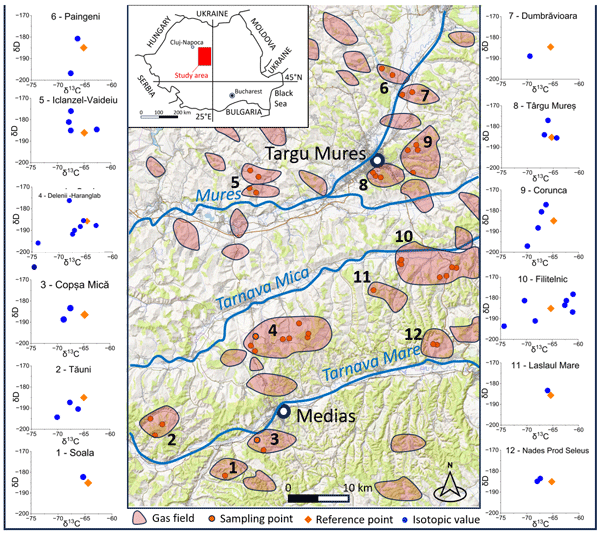
We report the isotopic composition of CH4 emitted from 48 installations in the gas production region of Transylvania, Romania which confirm the biogenic origin of the Transylvanian gas, produced by hydrogenotrophic CO2 reduction. This is similar to values reported previously from natural seeps and natural gas in a major city in the region. However, is more depleted in heavy isotopes than the oil-associated gas emitted in the Southern Romanian Plain, and gas leakages in the city of Bucharest.
Lisa Ardoin, Catherine Larose, Jean-Louis Tison, Christoph Keuschnig, Vasileios Gkinis, Saïda El Amri, Pierre-Henry Blard, Paul Bierman, Thomas Blunier, Dorthe Dahl-Jensen, Charlotte Maistriau, Jørgen-Peder Steffensen, Thomas Röckmann, and François Fripiat
EGUsphere, https://doi.org/10.5194/egusphere-2025-6204, https://doi.org/10.5194/egusphere-2025-6204, 2026
Short summary
Short summary
We investigated gas dynamics at the ice–bed interface of two Greenland ice cores to assess methane and carbon dioxide behaviour beneath ice sheets. At Camp Century, methane diffuses into the ice and is partly oxidized. At GRIP, methane remains preserved despite oxygen. These contrasts suggest that methane oxidation is controlled by local basal conditions, including ice thickness and substrate availability.
Sara M. Defratyka, Julianne M. Fernandez, Getachew A. Adnew, Guannan Dong, Peter M. J. Douglas, Daniel L. Eldridge, Giuseppe Etiope, Thomas Giunta, Mojhgan A. Haghnegahdar, Alexander N. Hristov, Nicole Hultquist, Iñaki Vadillo, Josue Jautzy, Ji-Hyun Kim, Jabrane Labidi, Ellen Lalk, Wil Leavitt, Jiawen Li, Li-Hung Lin, Jiarui Liu, Lucía Ojeda, Shuhei Ono, Jeemin H. Rhim, Thomas Röckmann, Barbara Sherwood Lollar, Malavika Sivan, Jiayang Sun, Gregory T. Ventura, David T. Wang, Edward D. Young, Naizhong Zhang, and Tim Arnold
Earth Syst. Sci. Data, 17, 6889–6910, https://doi.org/10.5194/essd-17-6889-2025, https://doi.org/10.5194/essd-17-6889-2025, 2025
Short summary
Short summary
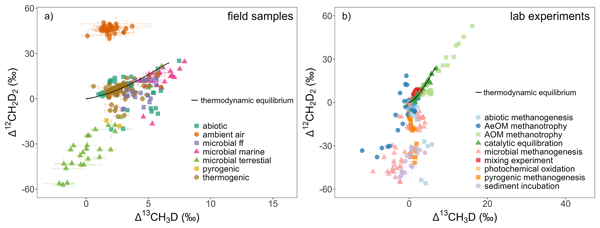
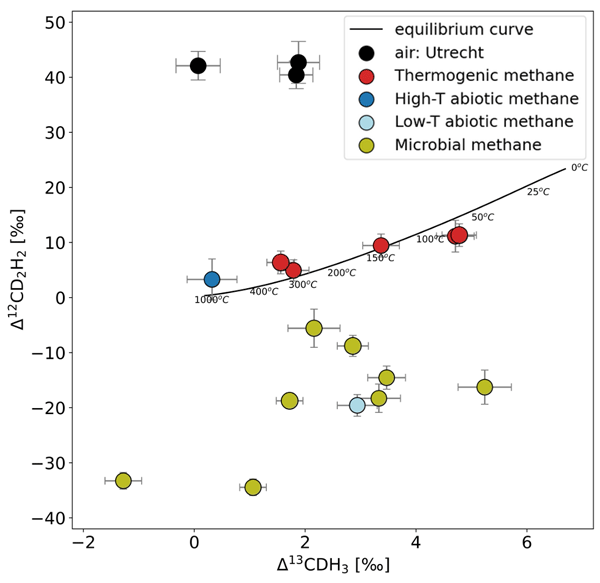
Measurement of methane’s doubly substituted isotopologues at natural abundances holds promise for better constraining the Earth’s atmospheric CH4 budget. We compiled 1475 measurements from field samples and laboratory experiments, conducted since 2014, to facilitate the differentiation of CH4 formation pathways and processes, to identify existing gaps limiting application of Δ13CH3D and Δ12CH2D2, and to develop isotope ratio source signature inputs for global CH4 flux modelling.
Eric Förster, Heidi Huntrieser, Michael Lichtenstern, Falk Pätzold, Lutz Bretschneider, Andreas Schlerf, Sven Bollmann, Astrid Lampert, Jarosław Nęcki, Paweł Jagoda, Justyna Swolkień, Dominika Pasternak, Robert A. Field, and Anke Roiger
Atmos. Meas. Tech., 18, 7153–7176, https://doi.org/10.5194/amt-18-7153-2025, https://doi.org/10.5194/amt-18-7153-2025, 2025
Short summary
Short summary
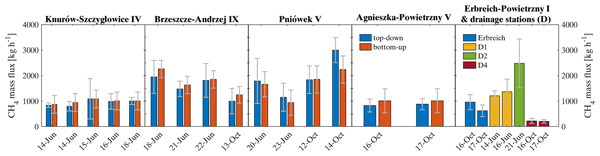
We introduce a helicopter-borne mass balance approach, utilizing the HELiPOD platform, to accurately quantify methane (CH4) emissions from coal mining activities. The comparison of our top-down mass flux estimates (up to 3000 kg h−1) against those from bottom-up in-mine CH4 safety sensors revealed very good agreement. This approach also has a great potential in quantifying emission source strengths (down to 20 kg h−1) from a wide range of other CH4 emitters (e.g. landfills, oil & gas industry).
Dieu Anh Tran, Jordi Vilà-Guerau de Arellano, Ingrid T. Luijkx, Christoph Gerbig, Michał Gałkowski, Santiago Botía, Kim Faassen, and Sönke Zaehle
Atmos. Chem. Phys., 25, 16553–16588, https://doi.org/10.5194/acp-25-16553-2025, https://doi.org/10.5194/acp-25-16553-2025, 2025
Short summary
Short summary
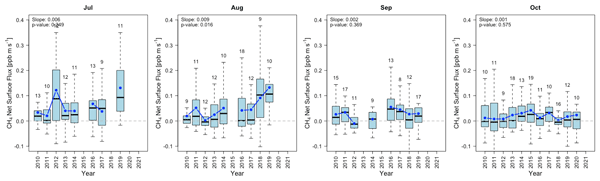
Analysis of CH4 data (2010–2021) from ZOtino Tall Tower Observatory in Central Siberia shows an increase in the late summer diurnal amplitude, driven by nighttime emissions. These trends correlate with rising soil temperature and moisture during the late summer and snow depth of the preceding spring. Peaks in 2012 and 2019 emission link to wildfires activity. Findings suggest wetlands as key CH4 sources and underscore the need for ongoing high-resolution monitoring in this region.
Gregor Neumann, Andreas Marsing, Theresa Harlass, Daniel Sauer, Simon Braun, Magdalena Pühl, Christopher Heckl, Paul Stock, Elena De La Torre Castro, Valerian Hahn, Anke Roiger, Christiane Voigt, Simon Unterstraßer, Jean Cammas, Charles Renard, Roberta Vasenden, Arnold Vasenden, and Tina Jurkat-Witschas
Atmos. Meas. Tech., 18, 6795–6816, https://doi.org/10.5194/amt-18-6795-2025, https://doi.org/10.5194/amt-18-6795-2025, 2025
Short summary
Short summary
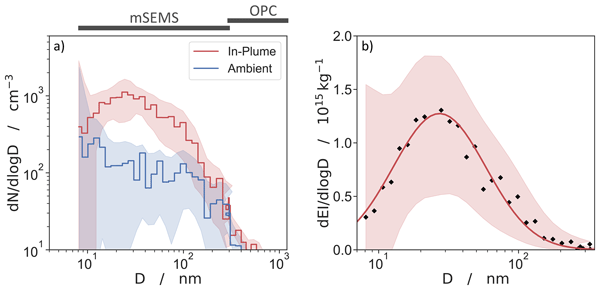
This study presents the first successful in-flight emission characterization of a turboprop engine using a fully autonomous airborne measurement platform, offering new insights into the atmospheric impacts of regional aviation. By equipping the high-altitude Grob G 520 Egrett with a suite of custom and modified commercial instruments, we demonstrate precise, high-resolution measurements of aerosol particles, trace gases, and contrail ice in the engine exhaust plume at cruise altitudes.
Bibhasvata Dasgupta, Malika Menoud, Carina van der Veen, Ingeborg Levin, Cordelia Veidt, Heiko Moossen, Sylvia Englund Michel, Peter Sperlich, Shinji Morimoto, Ryo Fujita, Taku Umezawa, Stephen Platt, Christine Groot Zwaaftink, Cathrine Lund Myhre, Rebecca Fisher, David Lowry, Euan G. Nisbet, James France, Ceres Woolley Maisch, Gordon Brailsford, Rowena Moss, Daisuke Goto, Sudhanshu Pandey, Sander Houweling, Nicola Warwick, and Thomas Röckmann
Atmos. Meas. Tech., 18, 6591–6607, https://doi.org/10.5194/amt-18-6591-2025, https://doi.org/10.5194/amt-18-6591-2025, 2025
Short summary
Short summary
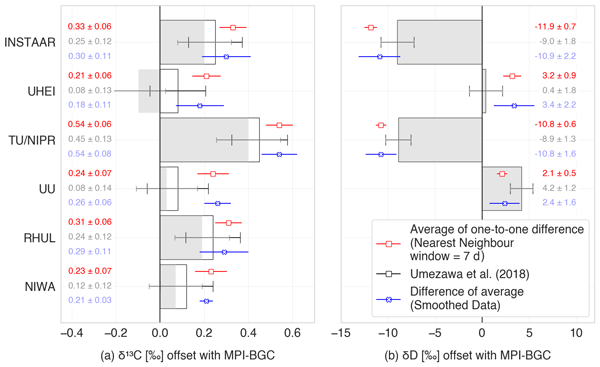
We combined long-term methane mole fraction and isotope measurements from eight laboratories that sample high-latitude stations to compare, offset correct and harmonise the datasets into a hemisphere merged timeseries. Because each laboratory uses slightly different methods, we adjusted the data to make it directly comparable. This allowed us to create a consistent record of atmospheric methane concentration and its isotopes from 1988 to 2023.
Alina Fiehn, Maximilian Eckl, Magdalena Pühl, Tiziana Bräuer, Klaus-Dirk Gottschaldt, Heinfried Aufmhoff, Lisa Eirenschmalz, Gregor Neumann, Felicitas Sakellariou, Daniel Sauer, Robert Baumann, Guilherme De Aguiar Ventura, Winne Nayole Cadete, Dário Luciano Zua, Manuel Xavier, Paulo Correia, and Anke Roiger
Atmos. Chem. Phys., 25, 15009–15031, https://doi.org/10.5194/acp-25-15009-2025, https://doi.org/10.5194/acp-25-15009-2025, 2025
Short summary
Short summary
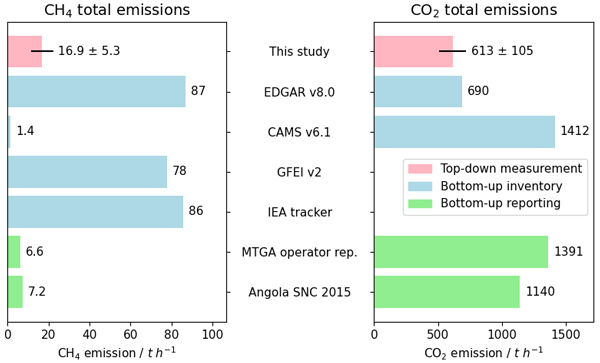
In September 2022, an aircraft campaign measured methane emissions from all 57 Angolan offshore oil and gas facilities. Total CH₄ emissions were 16.9 ± 5.3 t h−1, dominated by older, shallow-water platforms. Emissions were lower than inventories but 2 times larger than operator reports. Trace gas data suggest venting and fugitives as main CH₄ sources. The carbon intensity was 3.4 ± 0.8 g CO₂ eq MJ−1, with older platforms CH₄-dominated and newer deep-water sites CO₂-dominated.
Shuzhuang Feng, Fei Jiang, Yongguang Zhang, Huilin Chen, Honglin Zhuang, Shumin Wang, Shengxi Bai, Hengmao Wang, and Weimin Ju
Atmos. Chem. Phys., 25, 15121–15143, https://doi.org/10.5194/acp-25-15121-2025, https://doi.org/10.5194/acp-25-15121-2025, 2025
Short summary
Short summary
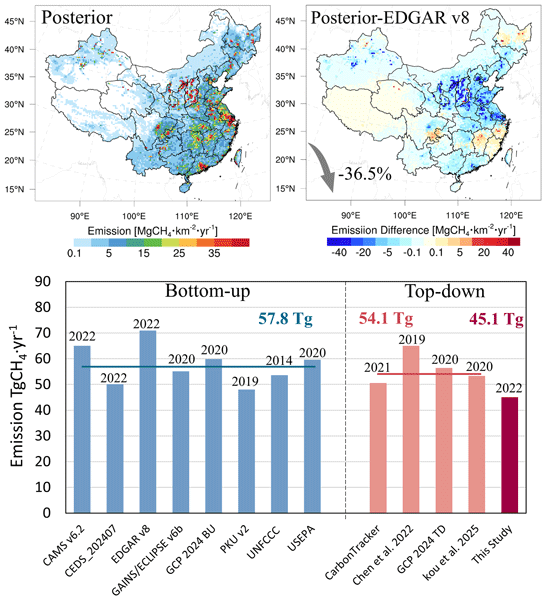
Using satellite data and advanced modeling, this study inverted daily high-resolution anthropogenic CH4 emissions across China and Shanxi Province. We found that China's 2022 CH4 emissions were 45.1 TgCH4·yr⁻¹, significantly lower than previous estimates, especially in coal mining and waste sectors. The inversion substantially reduced emission uncertainties and improved CH4 concentration simulations. These results suggest China’s climate mitigation burden may have been overestimated.
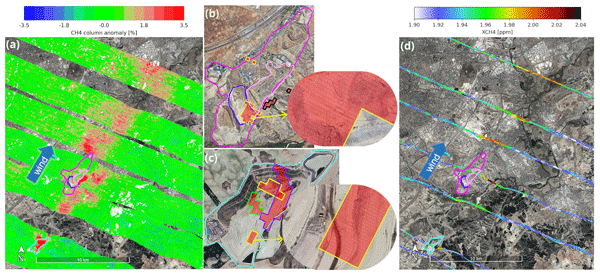
Sven Krautwurst, Christian Fruck, Sebastian Wolff, Jakob Borchardt, Oke Huhs, Konstantin Gerilowski, Michał Gałkowski, Christoph Kiemle, Mathieu Quatrevalet, Martin Wirth, Christian Mallaun, John P. Burrows, Christoph Gerbig, Andreas Fix, Hartmut Bösch, and Heinrich Bovensmann
Atmos. Chem. Phys., 25, 14669–14702, https://doi.org/10.5194/acp-25-14669-2025, https://doi.org/10.5194/acp-25-14669-2025, 2025
Short summary
Short summary
Anomalously high CH4 emissions from landfills in Madrid, Spain, have been observed by satellite measurements in recent years. Our investigations of these waste facilities, using passive and active airborne remote sensing measurements, confirm these high emission rates with values of up to 13 th−1 during the overflight and show excellent agreement between the two techniques. A large fraction of the emissions is attributed to active landfill sites.

Félix Langot, Cyril Crevoisier, Thomas Lauvaux, Charbel Abdallah, Jérôme Pernin, Xin Lin, Marielle Saunois, Axel Guedj, Thomas Ponthieu, Julien Moyé, Michel Ramonet, Anke Roiger, Klaus-Dirk Gottschaldt, and Alina Fiehn
Atmos. Meas. Tech., 18, 5955–5983, https://doi.org/10.5194/amt-18-5955-2025, https://doi.org/10.5194/amt-18-5955-2025, 2025
Short summary
Short summary
Our study compares outputs from meteorological and atmospheric composition models to data from the MAGIC2021 campaign that took place in Sweden. Our results highlight performance differences among models, revealing strengths and weaknesses of different modelling techniques. We also found that wetland emission inventories overestimated emissions in regional simulations. This work helps to refine methane emission predictions, essential for understanding climate change.
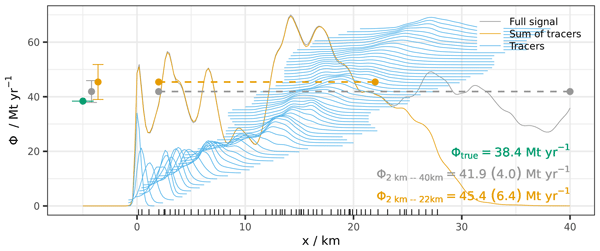
Michał Gałkowski, Julia Marshall, Blanca Fuentes Andrade, and Christoph Gerbig
Atmos. Chem. Phys., 25, 13831–13848, https://doi.org/10.5194/acp-25-13831-2025, https://doi.org/10.5194/acp-25-13831-2025, 2025
Short summary
Short summary
Observations of greenhouse gas emissions are needed to monitor the progress towards Paris Agreement goals. Remote sensing instruments have been used to estimate emissions from the strongest anthropogenic sources. Here, we study the impact of atmospheric turbulence on the estimation of CO₂ with a realistic atmospheric model, and we show that the formation of persistent plume structures causes uncertainty on the order of 10 % of total emission that cannot be avoided.
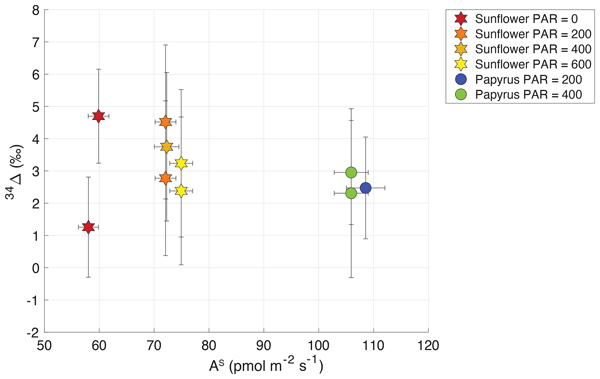
Sophie L. Baartman, Steven M. Driever, Maarten L. J. Wassenaar, Linda M. J. Kooijmans, Nerea Ubierna, Leon Mossink, Maria E. Popa, Ara Cho, Lisa Wingate, Thomas Röckmann, Steven M. A. C. van Heuven, and Maarten C. Krol
Biogeosciences, 22, 5683–5703, https://doi.org/10.5194/bg-22-5683-2025, https://doi.org/10.5194/bg-22-5683-2025, 2025
Short summary
Short summary
Carbonyl sulfide (COS) is a proposed tracer for gross primary production. For the first time, COS and carbon dioxide (CO2) uptake fluxes and isotope discrimination were jointly measured in sunflower and papyrus plants, using a flow-through plant chamber approach and varying light availability. COS isotope discrimination did not differ significantly between the species, nor with changes in light. CO2 fluxes and isotope values provided additional valuable information for data interpretation.
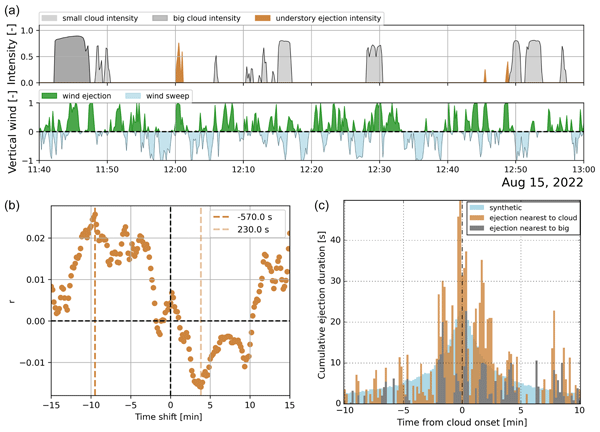
Robbert P. J. Moonen, Getachew A. Adnew, Jordi Vilà-Guerau de Arellano, Oscar K. Hartogensis, David J. Bonell Fontas, Shujiro Komiya, Sam P. Jones, and Thomas Röckmann
Atmos. Chem. Phys., 25, 12197–12212, https://doi.org/10.5194/acp-25-12197-2025, https://doi.org/10.5194/acp-25-12197-2025, 2025
Short summary
Short summary
Understory ejections are distinct turbulent features emerging in prime tall-forest ecosystems. We share a method to isolate understory ejections based on H2O–CO2 anomaly quadrants. From these, we calculate the flux contributions of understory ejections and all flux quadrants. In addition, we show that a distinctly depleted isotopic composition can be found in the ejected water vapour. Finally, we explored the role of clouds as a potential trigger for understory ejections.
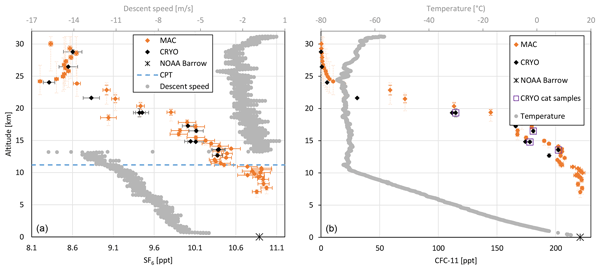
Johannes C. Laube, Tanja J. Schuck, Sophie Baartman, Huilin Chen, Markus Geldenhuys, Steven van Heuven, Timo Keber, Maria Elena Popa, Elinor Tuffnell, Florian Voet, Bärbel Vogel, Thomas Wagenhäuser, Alessandro Zanchetta, and Andreas Engel
Atmos. Meas. Tech., 18, 4087–4102, https://doi.org/10.5194/amt-18-4087-2025, https://doi.org/10.5194/amt-18-4087-2025, 2025
Short summary
Short summary
A large balloon was launched in summer 2021 in the Arctic to carry instruments for trace gas measurements up to 32 km, above the reach of aircraft. The main aims were to evaluate different techniques and atmospheric processes. We focus on halogenated greenhouse gases and ozone-depleting substances. For this, air was collected with the AirCore technique and a cryogenic air sampler and measured after the flight. A companion paper reports observations of major greenhouse gases.
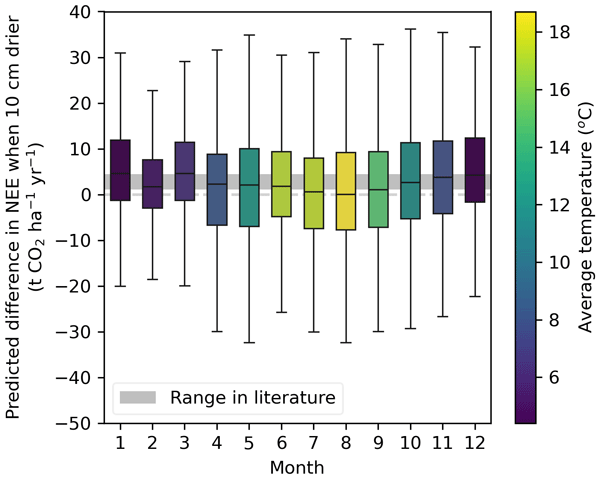
Laura M. van der Poel, Laurent V. Bataille, Bart Kruijt, Wietse Franssen, Wilma Jans, Jan Biermann, Anne Rietman, Alex J. V. Buzacott, Ype van der Velde, Ruben Boelens, and Ronald W. A. Hutjes
Biogeosciences, 22, 3867–3898, https://doi.org/10.5194/bg-22-3867-2025, https://doi.org/10.5194/bg-22-3867-2025, 2025
Short summary
Short summary
We combine two types of carbon dioxide (CO2) data from Dutch peatlands in a machine learning model: from fixed measurement towers and from a light research aircraft. We find that emissions increase with deeper water table depths (WTDs) by 4.6 tons of CO2 per hectare per year for each 10 cm deeper WTD on average. The effect is stronger in winter than in summer and varies between locations. This variability should be taken into account when developing mitigation measures.
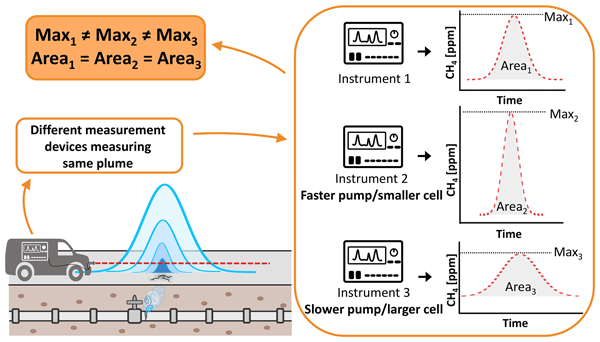
Judith Tettenborn, Daniel Zavala-Araiza, Daan Stroeken, Hossein Maazallahi, Carina van der Veen, Arjan Hensen, Ilona Velzeboer, Pim van den Bulk, Felix Vogel, Lawson Gillespie, Sebastien Ars, James France, David Lowry, Rebecca Fisher, and Thomas Röckmann
Atmos. Meas. Tech., 18, 3569–3584, https://doi.org/10.5194/amt-18-3569-2025, https://doi.org/10.5194/amt-18-3569-2025, 2025
Short summary
Short summary
Measurements of methane with vehicle-based sensors are an effective method to identify and quantify leaks from urban gas distribution systems. We deliberately released methane in different environments and calibrated the response of different methane analysers when they transected the plumes in a vehicle. We derived an improved statistical function for consistent emission estimations using different instruments. Repeated transects reduce the uncertainty in emission rate estimates.
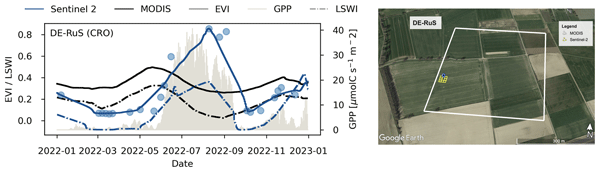
Theo Glauch, Julia Marshall, Christoph Gerbig, Santiago Botía, Michał Gałkowski, Sanam N. Vardag, and André Butz
Geosci. Model Dev., 18, 4713–4742, https://doi.org/10.5194/gmd-18-4713-2025, https://doi.org/10.5194/gmd-18-4713-2025, 2025
Short summary
Short summary
The Vegetation Photosynthesis and Respiration Model (VPRM) estimates carbon exchange between the atmosphere and biosphere by modeling gross primary production and respiration using satellite data and weather variables. Our new version, pyVPRM, supports diverse satellite products like Sentinel-2, MODIS, VIIRS, and new land cover maps, enabling high spatial and temporal resolution. This improves flux estimates, especially in complex landscapes, and ensures continuity as MODIS nears decommissioning.
Getachew Agmuas Adnew, Gerbrand Koren, Neha Mehendale, Sergey Gromov, Maarten Krol, and Thomas Röckmann
Atmos. Meas. Tech., 18, 2701–2719, https://doi.org/10.5194/amt-18-2701-2025, https://doi.org/10.5194/amt-18-2701-2025, 2025
Short summary
Short summary
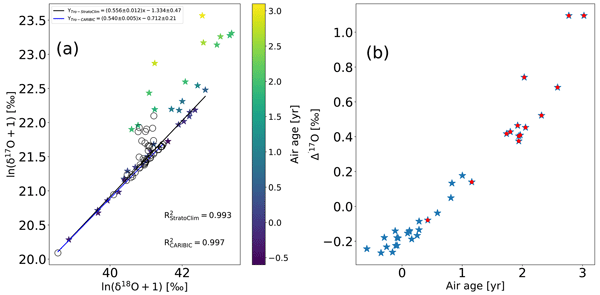
This study presents high-precision measurements of ∆′17O(CO2). Key findings include the extension of the N2O–∆′17O correlation to the upper troposphere and the identification of significant differences in the N2O–∆′17O slope in StratoClim samples. Additionally, the ∆′17O measurements are used to estimate global stratospheric production and surface removal of ∆′17O, providing an independent estimate of global vegetation CO2 exchange.
Gerrit Kuhlmann, Foteini Stavropoulou, Stefan Schwietzke, Daniel Zavala-Araiza, Andrew Thorpe, Andreas Hueni, Lukas Emmenegger, Andreea Calcan, Thomas Röckmann, and Dominik Brunner
Atmos. Chem. Phys., 25, 5371–5385, https://doi.org/10.5194/acp-25-5371-2025, https://doi.org/10.5194/acp-25-5371-2025, 2025
Short summary
Short summary
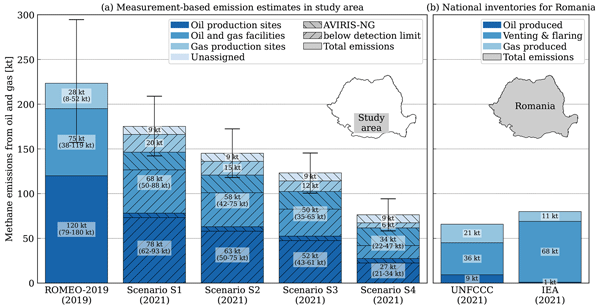
A measurement campaign in 2019 found that methane emissions from oil and gas in Romania were significantly higher than reported. In 2021, our follow-up campaign using airborne remote sensing showed a marked decreases in emissions by 20 %–60 % due to improved infrastructure. The study highlights the importance of measurement-based emission monitoring and illustrates the value of a multi-scale assessment integrating ground-based observations with large-scale airborne remote sensing campaigns.
Tanja J. Schuck, Johannes Degen, Timo Keber, Katharina Meixner, Thomas Wagenhäuser, Mélanie Ghysels, Georges Durry, Nadir Amarouche, Alessandro Zanchetta, Steven van Heuven, Huilin Chen, Johannes C. Laube, Sophie L. Baartman, Carina van der Veen, Maria Elena Popa, and Andreas Engel
Atmos. Chem. Phys., 25, 4333–4348, https://doi.org/10.5194/acp-25-4333-2025, https://doi.org/10.5194/acp-25-4333-2025, 2025
Short summary
Short summary
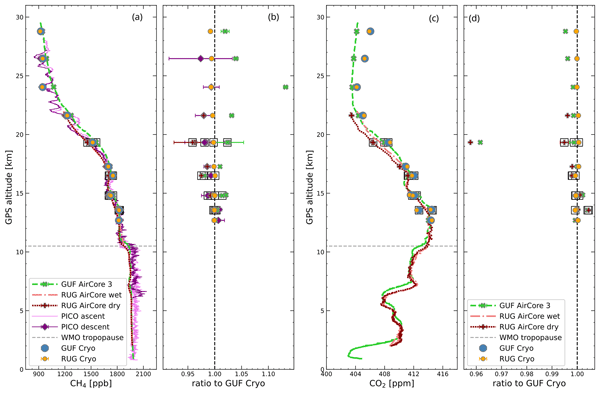
A balloon was launched in 2021 in the Arctic to carry instruments for trace gas measurements up to 32 km. One purpose was to compare measurement techniques. We focus on the major greenhouse gases. To measure these, air was sampled with the AirCore technique and with flask sampling, and samples were analysed after the flight. In flight, observations were done with an optical method. In a companion paper, we report on observations of chlorine and bromine containing trace gases.

André Ehrlich, Susanne Crewell, Andreas Herber, Marcus Klingebiel, Christof Lüpkes, Mario Mech, Sebastian Becker, Stephan Borrmann, Heiko Bozem, Matthias Buschmann, Hans-Christian Clemen, Elena De La Torre Castro, Henning Dorff, Regis Dupuy, Oliver Eppers, Florian Ewald, Geet George, Andreas Giez, Sarah Grawe, Christophe Gourbeyre, Jörg Hartmann, Evelyn Jäkel, Philipp Joppe, Olivier Jourdan, Zsófia Jurányi, Benjamin Kirbus, Johannes Lucke, Anna E. Luebke, Maximilian Maahn, Nina Maherndl, Christian Mallaun, Johanna Mayer, Stephan Mertes, Guillaume Mioche, Manuel Moser, Hanno Müller, Veronika Pörtge, Nils Risse, Greg Roberts, Sophie Rosenburg, Johannes Röttenbacher, Michael Schäfer, Jonas Schaefer, Andreas Schäfler, Imke Schirmacher, Johannes Schneider, Sabrina Schnitt, Frank Stratmann, Christian Tatzelt, Christiane Voigt, Andreas Walbröl, Anna Weber, Bruno Wetzel, Martin Wirth, and Manfred Wendisch
Earth Syst. Sci. Data, 17, 1295–1328, https://doi.org/10.5194/essd-17-1295-2025, https://doi.org/10.5194/essd-17-1295-2025, 2025
Short summary
Short summary
This paper provides an overview of the HALO–(AC)3 aircraft campaign data sets, the campaign-specific instrument operation, data processing, and data quality. The data set comprises in situ and remote sensing observations from three research aircraft: HALO, Polar 5, and Polar 6. All data are published in the PANGAEA database by instrument-separated data subsets. It is highlighted how the scientific analysis of the HALO–(AC)3 data benefits from the coordinated operation of three aircraft.
Hossein Maazallahi, Foteini Stavropoulou, Samuel Jonson Sutanto, Michael Steiner, Dominik Brunner, Mariano Mertens, Patrick Jöckel, Antoon Visschedijk, Hugo Denier van der Gon, Stijn Dellaert, Nataly Velandia Salinas, Stefan Schwietzke, Daniel Zavala-Araiza, Sorin Ghemulet, Alexandru Pana, Magdalena Ardelean, Marius Corbu, Andreea Calcan, Stephen A. Conley, Mackenzie L. Smith, and Thomas Röckmann
Atmos. Chem. Phys., 25, 1497–1511, https://doi.org/10.5194/acp-25-1497-2025, https://doi.org/10.5194/acp-25-1497-2025, 2025
Short summary
Short summary
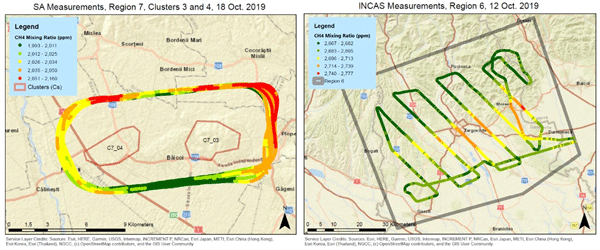
This article presents insights from airborne in situ measurements collected during the ROmanian Methane Emissions from Oil and gas (ROMEO) campaign supported by two models. Results reveal Romania's oil and gas methane emissions were significantly under-reported to the United Nations Framework Convention on Climate Change (UNFCCC) in 2019. A large underestimation was also found in the Emissions Database for Global Atmospheric Research (EDGAR) v7.0 for the study domain in the same year.
Saqr Munassar, Christian Rödenbeck, Michał Gałkowski, Frank-Thomas Koch, Kai U. Totsche, Santiago Botía, and Christoph Gerbig
Atmos. Chem. Phys., 25, 639–656, https://doi.org/10.5194/acp-25-639-2025, https://doi.org/10.5194/acp-25-639-2025, 2025
Short summary
Short summary
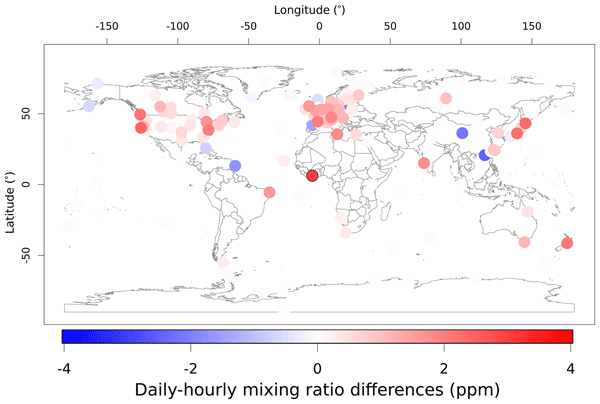
CO2 mole fractions simulated over a global set of stations showed an overestimation of CO2 if the diurnal cycle is missing in biogenic fluxes. This leads to biases in the estimated fluxes derived from the regional-scale inversions. Interannual variability of estimated biogenic fluxes is also affected by the exclusion of the CO2 diurnal cycle. The findings point to the importance of including the diurnal variations of CO2 in the biogenic fluxes used as priors in global and regional inversions.
Christoph Kiemle, Andreas Fix, Christian Fruck, Gerhard Ehret, and Martin Wirth
Atmos. Meas. Tech., 17, 6569–6578, https://doi.org/10.5194/amt-17-6569-2024, https://doi.org/10.5194/amt-17-6569-2024, 2024
Short summary
Short summary
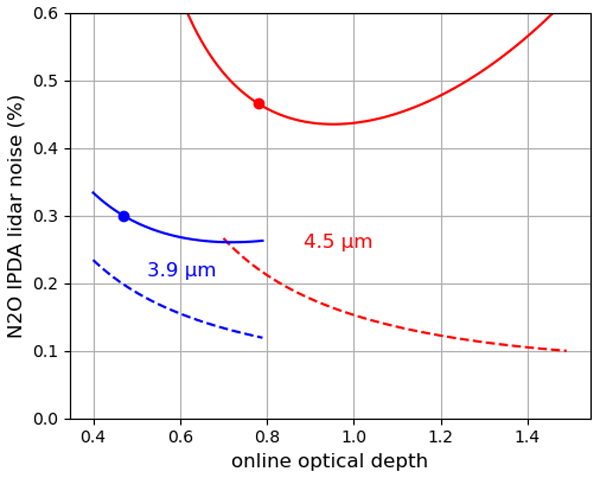
Nitrous oxide is the third most important greenhouse gas modified by human activities after carbon dioxide and methane. This study examines the feasibility of airborne differential absorption lidar to quantify emissions from agriculture, fossil fuel combustion, industry, and biomass burning. Simulations show that a technically realizable and affordable mid-infrared lidar system will be able to measure the nitrous oxide column concentration enhancements with sufficient precision.
David Ho, Michał Gałkowski, Friedemann Reum, Santiago Botía, Julia Marshall, Kai Uwe Totsche, and Christoph Gerbig
Geosci. Model Dev., 17, 7401–7422, https://doi.org/10.5194/gmd-17-7401-2024, https://doi.org/10.5194/gmd-17-7401-2024, 2024
Short summary
Short summary
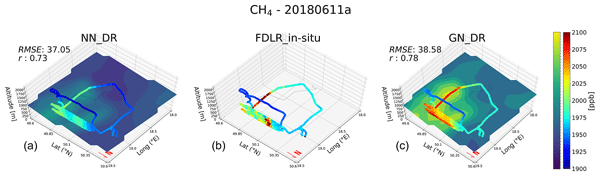
Atmospheric model users often overlook the impact of the land–atmosphere interaction. This study accessed various setups of WRF-GHG simulations that ensure consistency between the model and driving reanalysis fields. We found that a combination of nudging and frequent re-initialization allows certain improvement by constraining the soil moisture fields and, through its impact on atmospheric mixing, improves atmospheric transport.
Theresa Harlass, Rebecca Dischl, Stefan Kaufmann, Raphael Märkl, Daniel Sauer, Monika Scheibe, Paul Stock, Tiziana Bräuer, Andreas Dörnbrack, Anke Roiger, Hans Schlager, Ulrich Schumann, Magdalena Pühl, Tobias Schripp, Tobias Grein, Linda Bondorf, Charles Renard, Maxime Gauthier, Mark Johnson, Darren Luff, Paul Madden, Peter Swann, Denise Ahrens, Reetu Sallinen, and Christiane Voigt
Atmos. Chem. Phys., 24, 11807–11822, https://doi.org/10.5194/acp-24-11807-2024, https://doi.org/10.5194/acp-24-11807-2024, 2024
Short summary
Short summary
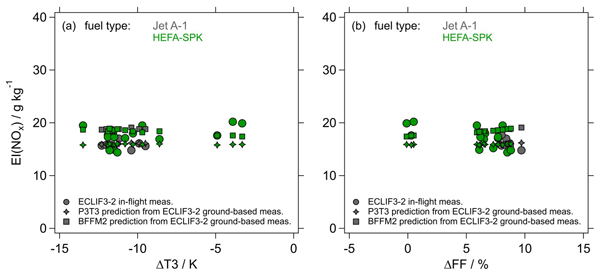
Emissions from aircraft have a direct impact on our climate. Here, we present airborne and ground-based measurement data of nitrogen oxides that were collected in the exhaust of an Airbus aircraft. We study the impact of burning fossil and sustainable aviation fuel on nitrogen oxide emissions at different engine settings related to combustor temperature, pressure and fuel flow. Further, we compare observations with engine emission models.
Rebecca Dischl, Daniel Sauer, Christiane Voigt, Theresa Harlaß, Felicitas Sakellariou, Raphael Märkl, Ulrich Schumann, Monika Scheibe, Stefan Kaufmann, Anke Roiger, Andreas Dörnbrack, Charles Renard, Maxime Gauthier, Peter Swann, Paul Madden, Darren Luff, Mark Johnson, Denise Ahrens, Reetu Sallinen, Tobias Schripp, Georg Eckel, Uwe Bauder, and Patrick Le Clercq
Atmos. Chem. Phys., 24, 11255–11273, https://doi.org/10.5194/acp-24-11255-2024, https://doi.org/10.5194/acp-24-11255-2024, 2024
Short summary
Short summary
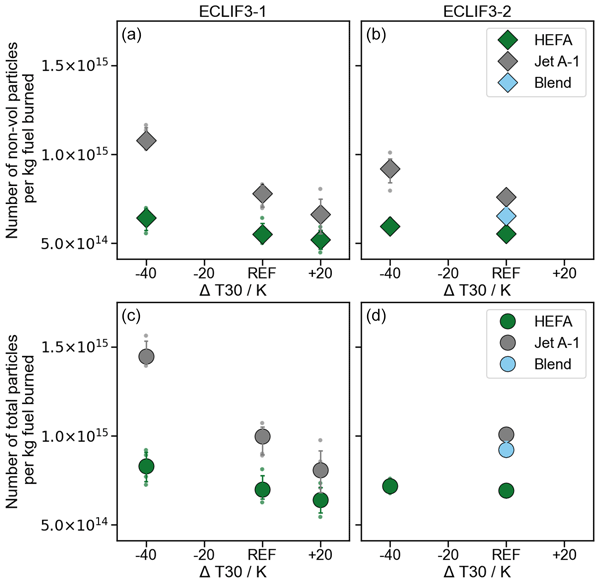
In-flight measurements of aircraft emissions burning 100 % sustainable aviation fuel (SAF) show reduced particle number concentrations up to 41 % compared to conventional jet fuel. Particle emissions are dependent on engine power setting, flight altitude, and fuel composition. Engine models show a good correlation with measurement results. Future increased prevalence of SAF can positively influence the climate impact of aviation.
Hella van Asperen, Thorsten Warneke, Alessandro Carioca de Araújo, Bruce Forsberg, Sávio José Filgueiras Ferreira, Thomas Röckmann, Carina van der Veen, Sipko Bulthuis, Leonardo Ramos de Oliveira, Thiago de Lima Xavier, Jailson da Mata, Marta de Oliveira Sá, Paulo Ricardo Teixeira, Julie Andrews de França e Silva, Susan Trumbore, and Justus Notholt
Biogeosciences, 21, 3183–3199, https://doi.org/10.5194/bg-21-3183-2024, https://doi.org/10.5194/bg-21-3183-2024, 2024
Short summary
Short summary
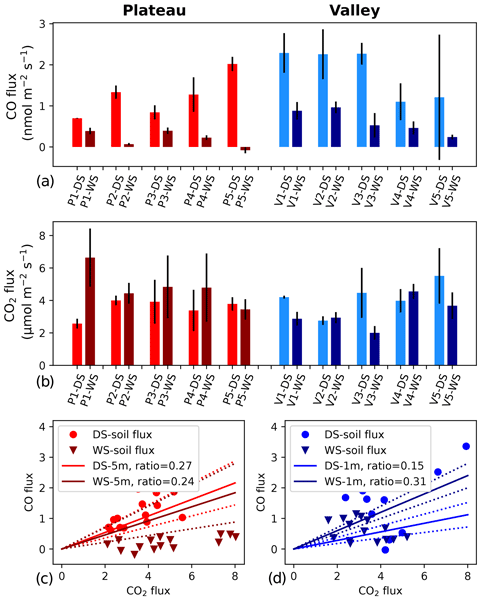
Carbon monoxide (CO) is regarded as an important indirect greenhouse gas. Soils can emit and take up CO, but, until now, uncertainty remains as to which process dominates in tropical rainforests. We present the first soil CO flux measurements from a tropical rainforest. Based on our observations, we report that tropical rainforest soils are a net source of CO. In addition, we show that valley streams and inundated areas are likely additional hot spots of CO in the ecosystem.
Jin Ma, Linda M. J. Kooijmans, Norbert Glatthor, Stephen A. Montzka, Marc von Hobe, Thomas Röckmann, and Maarten C. Krol
Atmos. Chem. Phys., 24, 6047–6070, https://doi.org/10.5194/acp-24-6047-2024, https://doi.org/10.5194/acp-24-6047-2024, 2024
Short summary
Short summary
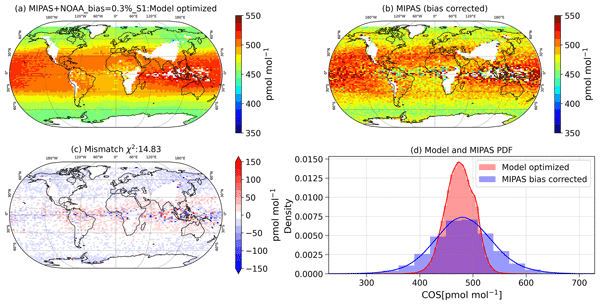
The global budget of atmospheric COS can be optimised by inverse modelling using TM5-4DVAR, with the co-constraints of NOAA surface observations and MIPAS satellite data. We found reduced COS biosphere uptake from inversions and improved land and ocean separation using MIPAS satellite data assimilation. Further improvements are expected from better quantification of COS ocean and biosphere fluxes.
Katrine A. Gorham, Sam Abernethy, Tyler R. Jones, Peter Hess, Natalie M. Mahowald, Daphne Meidan, Matthew S. Johnson, Maarten M. J. W. van Herpen, Yangyang Xu, Alfonso Saiz-Lopez, Thomas Röckmann, Chloe A. Brashear, Erika Reinhardt, and David Mann
Atmos. Chem. Phys., 24, 5659–5670, https://doi.org/10.5194/acp-24-5659-2024, https://doi.org/10.5194/acp-24-5659-2024, 2024
Short summary
Short summary
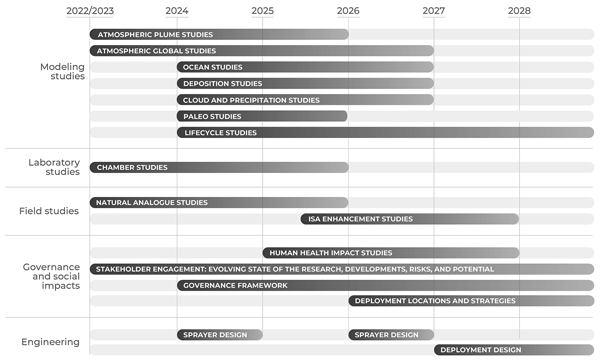
Rapid reduction in atmospheric methane is needed to slow the rate of global warming. Reducing anthropogenic methane emissions is a top priority. However, atmospheric methane is also impacted by rising natural emissions and changing sinks. Studies of possible atmospheric methane removal approaches, such as iron salt aerosols to increase the chlorine radical sink, benefit from a roadmapped approach to understand if there may be viable and socially acceptable ways to decrease future risk.
Malavika Sivan, Thomas Röckmann, Carina van der Veen, and Maria Elena Popa
Atmos. Meas. Tech., 17, 2687–2705, https://doi.org/10.5194/amt-17-2687-2024, https://doi.org/10.5194/amt-17-2687-2024, 2024
Short summary
Short summary
We have set up a measurement system for methane-clumped isotopologues. We have built an extraction and purification system to extract pure methane for these measurements, for samples of various origins, including atmospheric air, for which we need to process about 1000 L of air for one measurement. We report here the technical setup for extraction and measurements, as well as the calibration, and we give an overview of the samples measured so far.
Joshua L. Laughner, Geoffrey C. Toon, Joseph Mendonca, Christof Petri, Sébastien Roche, Debra Wunch, Jean-Francois Blavier, David W. T. Griffith, Pauli Heikkinen, Ralph F. Keeling, Matthäus Kiel, Rigel Kivi, Coleen M. Roehl, Britton B. Stephens, Bianca C. Baier, Huilin Chen, Yonghoon Choi, Nicholas M. Deutscher, Joshua P. DiGangi, Jochen Gross, Benedikt Herkommer, Pascal Jeseck, Thomas Laemmel, Xin Lan, Erin McGee, Kathryn McKain, John Miller, Isamu Morino, Justus Notholt, Hirofumi Ohyama, David F. Pollard, Markus Rettinger, Haris Riris, Constantina Rousogenous, Mahesh Kumar Sha, Kei Shiomi, Kimberly Strong, Ralf Sussmann, Yao Té, Voltaire A. Velazco, Steven C. Wofsy, Minqiang Zhou, and Paul O. Wennberg
Earth Syst. Sci. Data, 16, 2197–2260, https://doi.org/10.5194/essd-16-2197-2024, https://doi.org/10.5194/essd-16-2197-2024, 2024
Short summary
Short summary
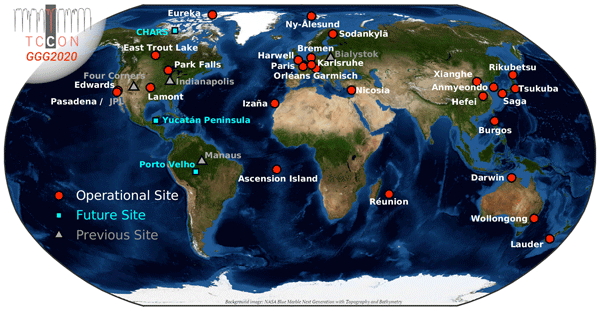
This paper describes a new version, called GGG2020, of a data set containing column-integrated observations of greenhouse and related gases (including CO2, CH4, CO, and N2O) made by ground stations located around the world. Compared to the previous version (GGG2014), improvements have been made toward site-to-site consistency. This data set plays a key role in validating space-based greenhouse gas observations and in understanding the carbon cycle.
Raphael Satoru Märkl, Christiane Voigt, Daniel Sauer, Rebecca Katharina Dischl, Stefan Kaufmann, Theresa Harlaß, Valerian Hahn, Anke Roiger, Cornelius Weiß-Rehm, Ulrike Burkhardt, Ulrich Schumann, Andreas Marsing, Monika Scheibe, Andreas Dörnbrack, Charles Renard, Maxime Gauthier, Peter Swann, Paul Madden, Darren Luff, Reetu Sallinen, Tobias Schripp, and Patrick Le Clercq
Atmos. Chem. Phys., 24, 3813–3837, https://doi.org/10.5194/acp-24-3813-2024, https://doi.org/10.5194/acp-24-3813-2024, 2024
Short summary
Short summary
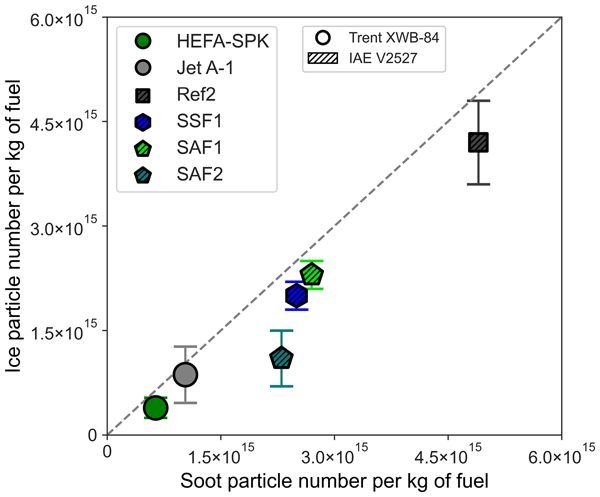
In situ measurements of contrails from a large passenger aircraft burning 100 % sustainable aviation fuel (SAF) show a 56 % reduction in contrail ice crystal numbers compared to conventional Jet A-1. Results from a climate model initialized with the observations suggest a significant decrease in radiative forcing from contrails. Our study confirms that future increased use of low aromatic SAF can reduce the climate impact from aviation.
Michael Steiner, Wouter Peters, Ingrid Luijkx, Stephan Henne, Huilin Chen, Samuel Hammer, and Dominik Brunner
Atmos. Chem. Phys., 24, 2759–2782, https://doi.org/10.5194/acp-24-2759-2024, https://doi.org/10.5194/acp-24-2759-2024, 2024
Short summary
Short summary
The Paris Agreement increased interest in estimating greenhouse gas (GHG) emissions of individual countries, but top-down emission estimation is not yet considered policy-relevant. It is therefore paramount to reduce large errors and to build systems that are based on the newest atmospheric transport models. In this study, we present the first application of ICON-ART in the inverse modeling of GHG fluxes with an ensemble Kalman filter and present our results for European CH4 emissions.
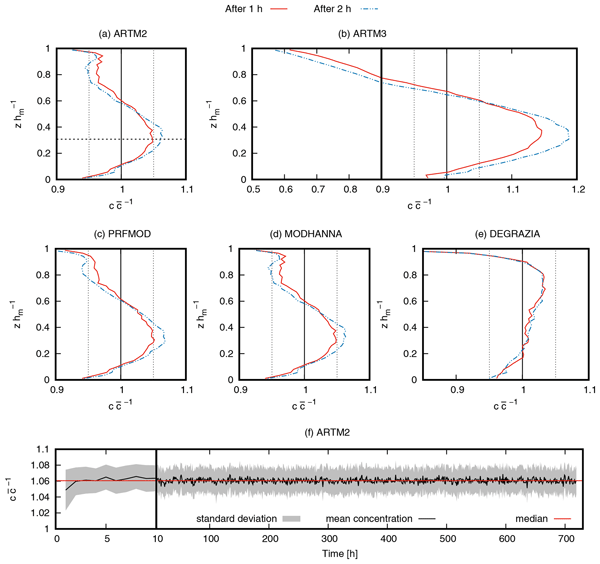
Robert Hanfland, Dominik Brunner, Christiane Voigt, Alina Fiehn, Anke Roiger, and Margit Pattantyús-Ábrahám
Atmos. Chem. Phys., 24, 2511–2534, https://doi.org/10.5194/acp-24-2511-2024, https://doi.org/10.5194/acp-24-2511-2024, 2024
Short summary
Short summary
To show that the three-dimensional dispersion of plumes simulated by the Atmospheric Radionuclide Transport Model within the planetary boundary layer agrees with real plumes, we identify the most important input parameters and analyse the turbulence properties of five different turbulence models in very unstable stratification conditions using their deviation from the well-mixed state. Simulations show that one model agrees slightly better in unstable stratification conditions.
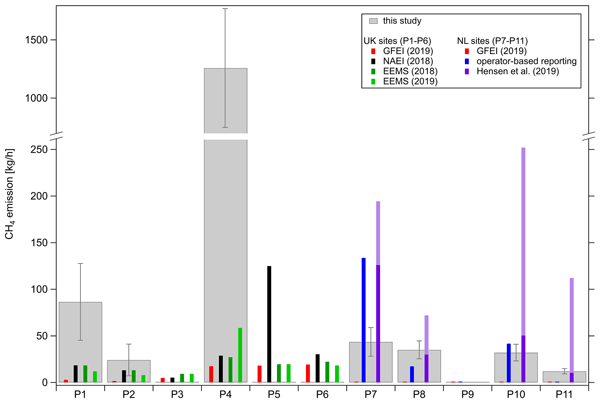
Magdalena Pühl, Anke Roiger, Alina Fiehn, Alan M. Gorchov Negron, Eric A. Kort, Stefan Schwietzke, Ignacio Pisso, Amy Foulds, James Lee, James L. France, Anna E. Jones, Dave Lowry, Rebecca E. Fisher, Langwen Huang, Jacob Shaw, Prudence Bateson, Stephen Andrews, Stuart Young, Pamela Dominutti, Tom Lachlan-Cope, Alexandra Weiss, and Grant Allen
Atmos. Chem. Phys., 24, 1005–1024, https://doi.org/10.5194/acp-24-1005-2024, https://doi.org/10.5194/acp-24-1005-2024, 2024
Short summary
Short summary
In April–May 2019 we carried out an airborne field campaign in the southern North Sea with the aim of studying methane emissions of offshore gas installations. We determined methane emissions from elevated methane measured downstream of the sampled installations. We compare our measured methane emissions with estimated methane emissions from national and global annual inventories. As a result, we find inconsistencies of inventories and large discrepancies between measurements and inventories.
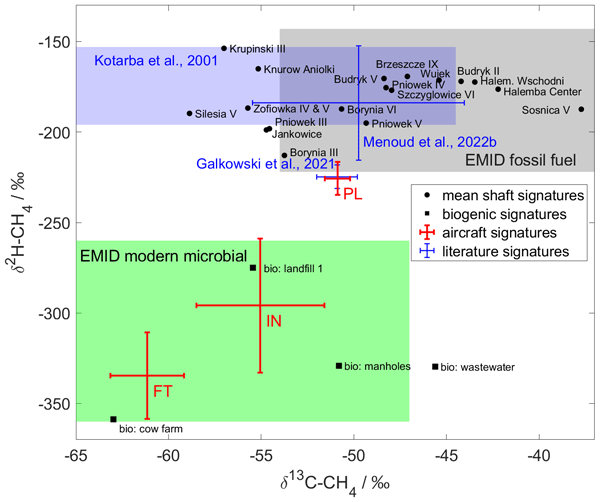
Alina Fiehn, Maximilian Eckl, Julian Kostinek, Michał Gałkowski, Christoph Gerbig, Michael Rothe, Thomas Röckmann, Malika Menoud, Hossein Maazallahi, Martina Schmidt, Piotr Korbeń, Jarosław Neçki, Mila Stanisavljević, Justyna Swolkień, Andreas Fix, and Anke Roiger
Atmos. Chem. Phys., 23, 15749–15765, https://doi.org/10.5194/acp-23-15749-2023, https://doi.org/10.5194/acp-23-15749-2023, 2023
Short summary
Short summary
During the CoMet mission in the Upper Silesian Coal Basin (USCB) ground-based and airborne air samples were taken and analyzed for the isotopic composition of CH4 to derive the mean signature of the USCB and source signatures of individual coal mines. Using δ2H signatures, the biogenic emissions from the USCB account for 15 %–50 % of total emissions, which is underestimated in common emission inventories. This demonstrates the importance of δ2H-CH4 observations for methane source apportionment.
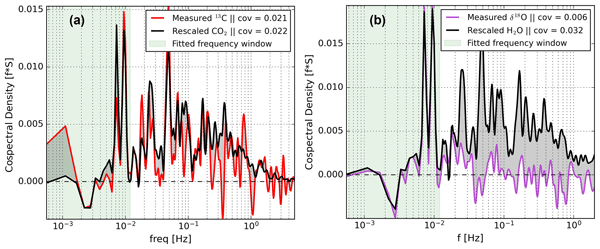
Robbert P. J. Moonen, Getachew A. Adnew, Oscar K. Hartogensis, Jordi Vilà-Guerau de Arellano, David J. Bonell Fontas, and Thomas Röckmann
Atmos. Meas. Tech., 16, 5787–5810, https://doi.org/10.5194/amt-16-5787-2023, https://doi.org/10.5194/amt-16-5787-2023, 2023
Short summary
Short summary
Isotope fluxes allow for net ecosystem gas exchange fluxes to be partitioned into sub-components like plant assimilation, respiration and transpiration, which can help us better understand the environmental drivers of each partial flux. We share the results of a field campaign isotope fluxes were derived using a combination of laser spectroscopy and eddy covariance. We found lag times and high frequency signal loss in the isotope fluxes we derived and present methods to correct for both.
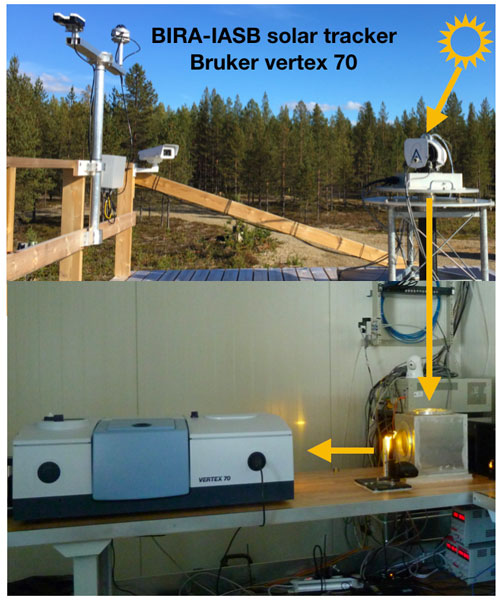
Minqiang Zhou, Bavo Langerock, Mahesh Kumar Sha, Christian Hermans, Nicolas Kumps, Rigel Kivi, Pauli Heikkinen, Christof Petri, Justus Notholt, Huilin Chen, and Martine De Mazière
Atmos. Meas. Tech., 16, 5593–5608, https://doi.org/10.5194/amt-16-5593-2023, https://doi.org/10.5194/amt-16-5593-2023, 2023
Short summary
Short summary
Atmospheric N2O and CH4 columns are successfully retrieved from low-resolution FTIR spectra recorded by a Bruker VERTEX 70. The 1-year measurements at Sodankylä show that the N2O total columns retrieved from 125HR and VERTEX 70 spectra are −0.3 ± 0.7 % with an R value of 0.93. The relative differences between the CH4 total columns retrieved from the 125HR and VERTEX spectra are 0.0 ± 0.8 % with an R value of 0.87. Such a technique can help to fill the gap in NDACC N2O and CH4 measurements.
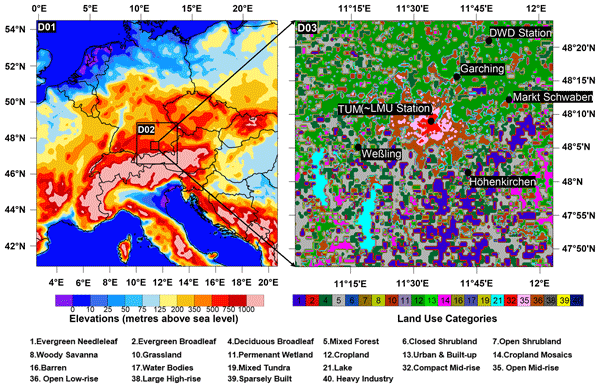
Xinxu Zhao, Jia Chen, Julia Marshall, Michal Gałkowski, Stephan Hachinger, Florian Dietrich, Ankit Shekhar, Johannes Gensheimer, Adrian Wenzel, and Christoph Gerbig
Atmos. Chem. Phys., 23, 14325–14347, https://doi.org/10.5194/acp-23-14325-2023, https://doi.org/10.5194/acp-23-14325-2023, 2023
Short summary
Short summary
We develop a modeling framework using the Weather Research and Forecasting model at a high spatial resolution (up to 400 m) to simulate atmospheric transport of greenhouse gases and interpret column observations. Output is validated against weather stations and column measurements in August 2018. The differential column method is applied, aided by air-mass transport tracing with the Stochastic Time-Inverted Lagrangian Transport (STILT) model, also for an exploratory measurement interpretation.
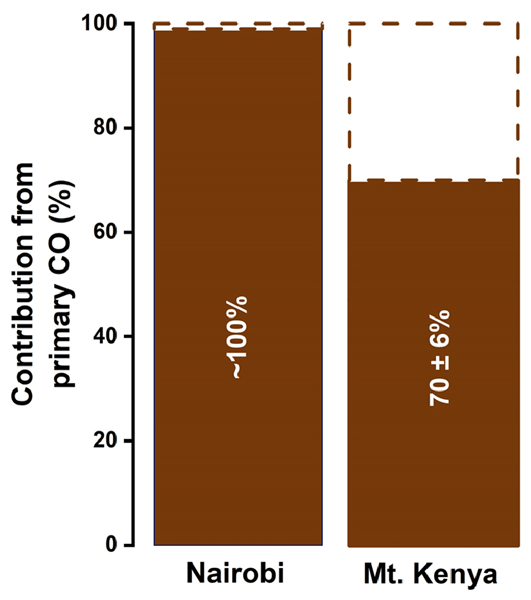
Leonard Kirago, Örjan Gustafsson, Samuel Mwaniki Gaita, Sophie L. Haslett, Michael J. Gatari, Maria Elena Popa, Thomas Röckmann, Christoph Zellweger, Martin Steinbacher, Jörg Klausen, Christian Félix, David Njiru, and August Andersson
Atmos. Chem. Phys., 23, 14349–14357, https://doi.org/10.5194/acp-23-14349-2023, https://doi.org/10.5194/acp-23-14349-2023, 2023
Short summary
Short summary
This study provides ground-observational evidence that supports earlier suggestions that savanna fires are the main emitters and modulators of carbon monoxide gas in Africa. Using isotope-based techniques, the study has shown that about two-thirds of this gas is emitted from savanna fires, while for urban areas, in this case Nairobi, primary sources approach 100 %. The latter has implications for air quality policy, suggesting primary emissions such as traffic should be targeted.
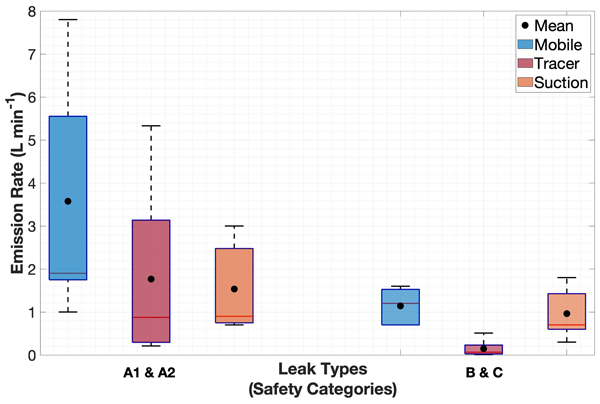
Hossein Maazallahi, Antonio Delre, Charlotte Scheutz, Anders M. Fredenslund, Stefan Schwietzke, Hugo Denier van der Gon, and Thomas Röckmann
Atmos. Meas. Tech., 16, 5051–5073, https://doi.org/10.5194/amt-16-5051-2023, https://doi.org/10.5194/amt-16-5051-2023, 2023
Short summary
Short summary
Measurement methods are increasingly deployed to verify reported methane emissions of gas leaks. This study describes unique advantages and limitations of three methods. Two methods are rapidly deployed, but uncertainties and biases exist for some leak locations. In contrast, the suction method could accurately determine leak rates in principle. However, this method, which provides data for the German emission inventory, creates an overall low bias in our study due to non-random site selection.
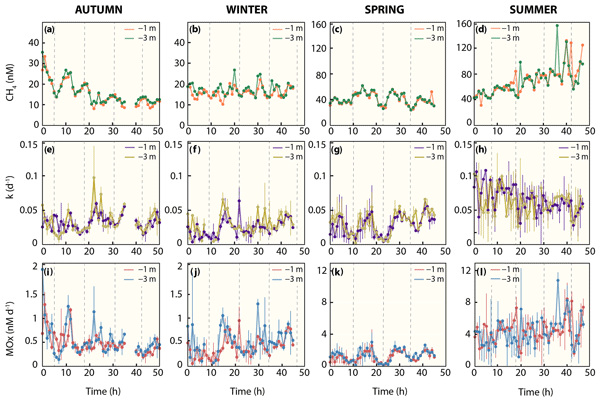
Tim René de Groot, Anne Margriet Mol, Katherine Mesdag, Pierre Ramond, Rachel Ndhlovu, Julia Catherine Engelmann, Thomas Röckmann, and Helge Niemann
Biogeosciences, 20, 3857–3872, https://doi.org/10.5194/bg-20-3857-2023, https://doi.org/10.5194/bg-20-3857-2023, 2023
Short summary
Short summary
This study investigates methane dynamics in the Wadden Sea. Our measurements revealed distinct variations triggered by seasonality and tidal forcing. The methane budget was higher in warmer seasons but surprisingly high in colder seasons. Methane dynamics were amplified during low tides, flushing the majority of methane into the North Sea or releasing it to the atmosphere. Methanotrophic activity was also elevated during low tide but mitigated only a small fraction of the methane efflux.
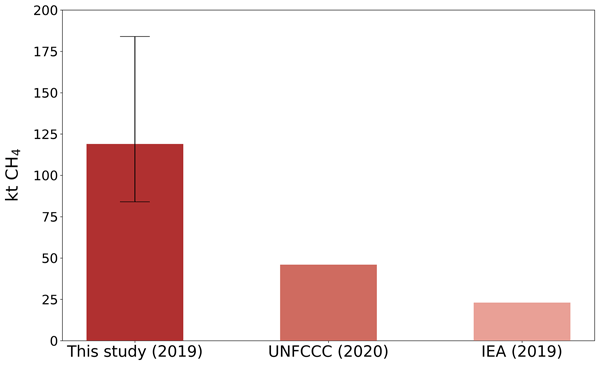
Foteini Stavropoulou, Katarina Vinković, Bert Kers, Marcel de Vries, Steven van Heuven, Piotr Korbeń, Martina Schmidt, Julia Wietzel, Pawel Jagoda, Jaroslav M. Necki, Jakub Bartyzel, Hossein Maazallahi, Malika Menoud, Carina van der Veen, Sylvia Walter, Béla Tuzson, Jonas Ravelid, Randulph Paulo Morales, Lukas Emmenegger, Dominik Brunner, Michael Steiner, Arjan Hensen, Ilona Velzeboer, Pim van den Bulk, Hugo Denier van der Gon, Antonio Delre, Maklawe Essonanawe Edjabou, Charlotte Scheutz, Marius Corbu, Sebastian Iancu, Denisa Moaca, Alin Scarlat, Alexandru Tudor, Ioana Vizireanu, Andreea Calcan, Magdalena Ardelean, Sorin Ghemulet, Alexandru Pana, Aurel Constantinescu, Lucian Cusa, Alexandru Nica, Calin Baciu, Cristian Pop, Andrei Radovici, Alexandru Mereuta, Horatiu Stefanie, Alexandru Dandocsi, Bas Hermans, Stefan Schwietzke, Daniel Zavala-Araiza, Huilin Chen, and Thomas Röckmann
Atmos. Chem. Phys., 23, 10399–10412, https://doi.org/10.5194/acp-23-10399-2023, https://doi.org/10.5194/acp-23-10399-2023, 2023
Short summary
Short summary
In this study, we quantify CH4 emissions from onshore oil production sites in Romania at source and facility level using a combination of ground- and drone-based measurement techniques. We show that the total CH4 emissions in our studied areas are much higher than the emissions reported to UNFCCC, and up to three-quarters of the detected emissions are related to operational venting. Our results suggest that oil and gas production infrastructure in Romania holds a massive mitigation potential.
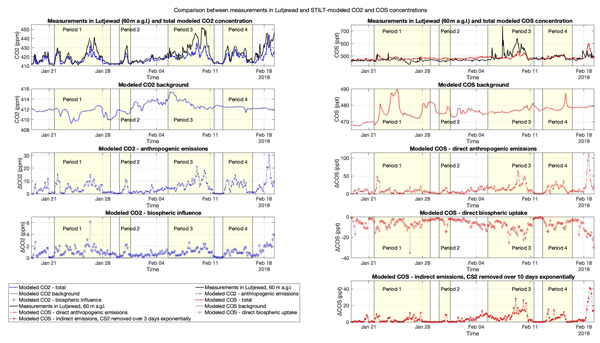
Alessandro Zanchetta, Linda M. J. Kooijmans, Steven van Heuven, Andrea Scifo, Hubertus A. Scheeren, Ivan Mammarella, Ute Karstens, Jin Ma, Maarten Krol, and Huilin Chen
Biogeosciences, 20, 3539–3553, https://doi.org/10.5194/bg-20-3539-2023, https://doi.org/10.5194/bg-20-3539-2023, 2023
Short summary
Short summary
Carbonyl sulfide (COS) has been suggested as a tool to estimate carbon dioxide (CO2) uptake by plants during photosynthesis. However, understanding its sources and sinks is critical to preventing biases in this estimate. Combining observations and models, this study proves that regional sources occasionally influence the measurements at the 60 m tall Lutjewad tower (1 m a.s.l.; 53°24′ N, 6°21′ E) in the Netherlands. Moreover, it estimates nighttime COS fluxes to be −3.0 ± 2.6 pmol m−2 s−1.
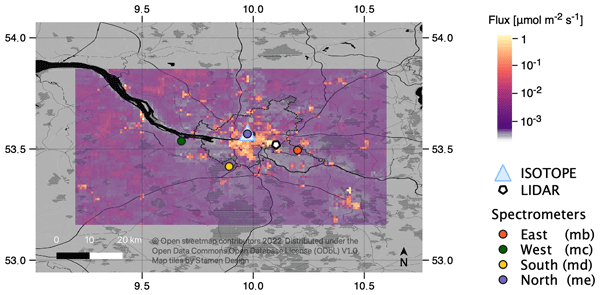
Andreas Forstmaier, Jia Chen, Florian Dietrich, Juan Bettinelli, Hossein Maazallahi, Carsten Schneider, Dominik Winkler, Xinxu Zhao, Taylor Jones, Carina van der Veen, Norman Wildmann, Moritz Makowski, Aydin Uzun, Friedrich Klappenbach, Hugo Denier van der Gon, Stefan Schwietzke, and Thomas Röckmann
Atmos. Chem. Phys., 23, 6897–6922, https://doi.org/10.5194/acp-23-6897-2023, https://doi.org/10.5194/acp-23-6897-2023, 2023
Short summary
Short summary
Large cities emit greenhouse gases which contribute to global warming. In this study, we measured the release of one important green house gas, methane, in Hamburg. Multiple sources that contribute to methane emissions were located and quantified. Methane sources were found to be mainly caused by human activity (e.g., by release from oil and gas refineries). Moreover, potential natural sources have been located, such as the Elbe River and lakes.
Truls Andersen, Zhao Zhao, Marcel de Vries, Jaroslaw Necki, Justyna Swolkien, Malika Menoud, Thomas Röckmann, Anke Roiger, Andreas Fix, Wouter Peters, and Huilin Chen
Atmos. Chem. Phys., 23, 5191–5216, https://doi.org/10.5194/acp-23-5191-2023, https://doi.org/10.5194/acp-23-5191-2023, 2023
Short summary
Short summary
The Upper Silesian Coal Basin, Poland, is one of the hot spots of methane emissions in Europe. Using an uncrewed aerial vehicle (UAV), we performed atmospheric measurements of methane concentrations downwind of five ventilation shafts in this region and determined the emission rates from the individual shafts. We found a strong correlation between quantified shaft-averaged emission rates and hourly inventory data, which also allows us to estimate the methane emissions from the entire region.
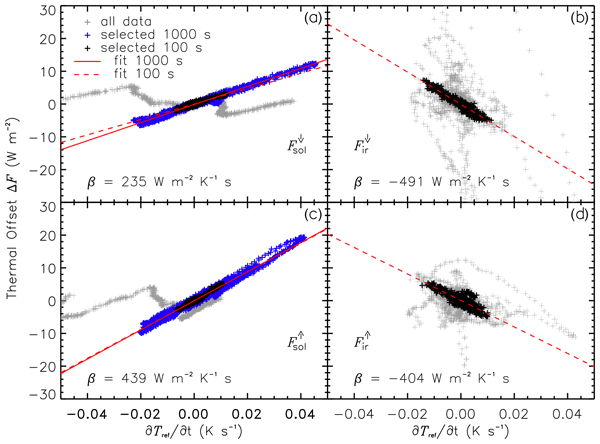
André Ehrlich, Martin Zöger, Andreas Giez, Vladyslav Nenakhov, Christian Mallaun, Rolf Maser, Timo Röschenthaler, Anna E. Luebke, Kevin Wolf, Bjorn Stevens, and Manfred Wendisch
Atmos. Meas. Tech., 16, 1563–1581, https://doi.org/10.5194/amt-16-1563-2023, https://doi.org/10.5194/amt-16-1563-2023, 2023
Short summary
Short summary
Measurements of the broadband radiative energy budget from aircraft are needed to study the effect of clouds, aerosol particles, and surface conditions on the Earth's energy budget. However, the moving aircraft introduces challenges to the instrument performance and post-processing of the data. This study introduces a new radiometer package, outlines a greatly simplifying method to correct thermal offsets, and provides exemplary measurements of solar and thermal–infrared irradiance.
Ubolya Wanthanaporn, Iwan Supit, Bert van Hove, and Ronald W. A. Hutjes
Hydrol. Earth Syst. Sci. Discuss., https://doi.org/10.5194/hess-2023-56, https://doi.org/10.5194/hess-2023-56, 2023
Revised manuscript not accepted
Short summary
Short summary
We evaluated the potential use of SEAS5 seasonal forecasting for Mainland Southeast Asia. The temperature and precipitation skills are tested. We subsequently implemented a hydrological model VIC to produce seasonal streamflow forecasts. SEAS5 is skilful to forecast temperature and rainfall as well as streamflow, but with strong seasonal and regional dependence. Overall, SEAS5 and hydrological forecasts show skill that can potentially be used for hydrological/agricultural management.
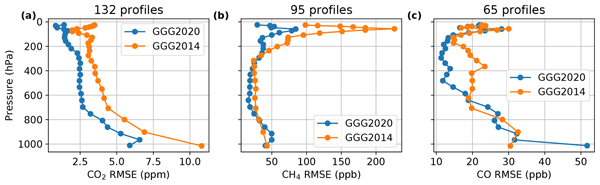
Joshua L. Laughner, Sébastien Roche, Matthäus Kiel, Geoffrey C. Toon, Debra Wunch, Bianca C. Baier, Sébastien Biraud, Huilin Chen, Rigel Kivi, Thomas Laemmel, Kathryn McKain, Pierre-Yves Quéhé, Constantina Rousogenous, Britton B. Stephens, Kaley Walker, and Paul O. Wennberg
Atmos. Meas. Tech., 16, 1121–1146, https://doi.org/10.5194/amt-16-1121-2023, https://doi.org/10.5194/amt-16-1121-2023, 2023
Short summary
Short summary
Observations using sunlight to measure surface-to-space total column of greenhouse gases in the atmosphere need an initial guess of the vertical distribution of those gases to start from. We have developed an approach to provide those initial guess profiles that uses readily available meteorological data as input. This lets us make these guesses without simulating them with a global model. The profiles generated this way match independent observations well.
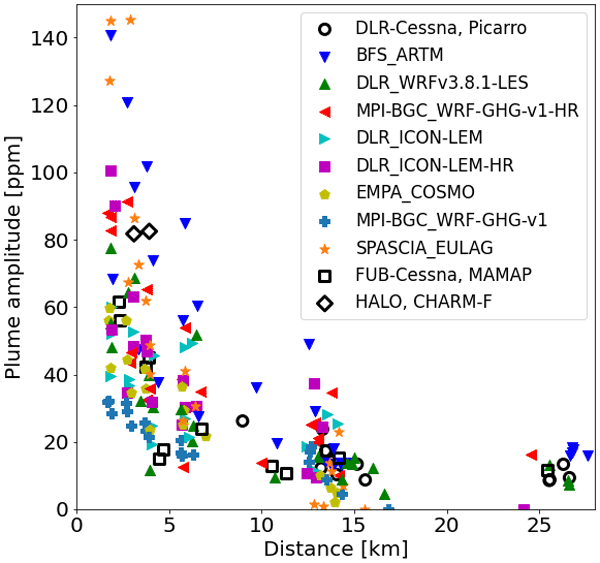
Dominik Brunner, Gerrit Kuhlmann, Stephan Henne, Erik Koene, Bastian Kern, Sebastian Wolff, Christiane Voigt, Patrick Jöckel, Christoph Kiemle, Anke Roiger, Alina Fiehn, Sven Krautwurst, Konstantin Gerilowski, Heinrich Bovensmann, Jakob Borchardt, Michal Galkowski, Christoph Gerbig, Julia Marshall, Andrzej Klonecki, Pascal Prunet, Robert Hanfland, Margit Pattantyús-Ábrahám, Andrzej Wyszogrodzki, and Andreas Fix
Atmos. Chem. Phys., 23, 2699–2728, https://doi.org/10.5194/acp-23-2699-2023, https://doi.org/10.5194/acp-23-2699-2023, 2023
Short summary
Short summary
We evaluated six atmospheric transport models for their capability to simulate the CO2 plumes from two of the largest power plants in Europe by comparing the models against aircraft observations collected during the CoMet (Carbon Dioxide and Methane Mission) campaign in 2018. The study analyzed how realistically such plumes can be simulated at different model resolutions and how well the planned European satellite mission CO2M will be able to quantify emissions from power plants.
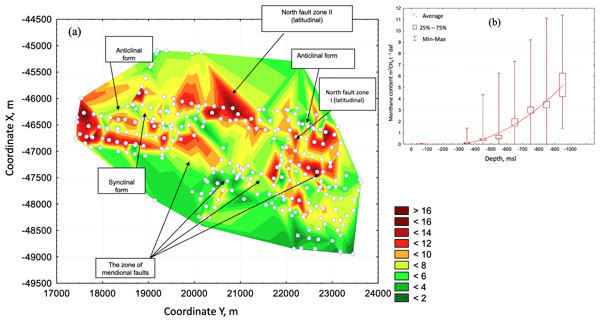
Justyna Swolkień, Andreas Fix, and Michał Gałkowski
Atmos. Chem. Phys., 22, 16031–16052, https://doi.org/10.5194/acp-22-16031-2022, https://doi.org/10.5194/acp-22-16031-2022, 2022
Short summary
Short summary
Determination of emissions from coal mines on a local scale requires instantaneous data. We analysed temporal emission data for ventilation shafts and factors influencing their variability. They were saturation of the seams with methane, the permeability of the rock mass, and coal output. The data for the verification should reflect the actual values of emissions from point sources. It is recommended to achieve this by using a standardised emission measurement system for all coal mines.
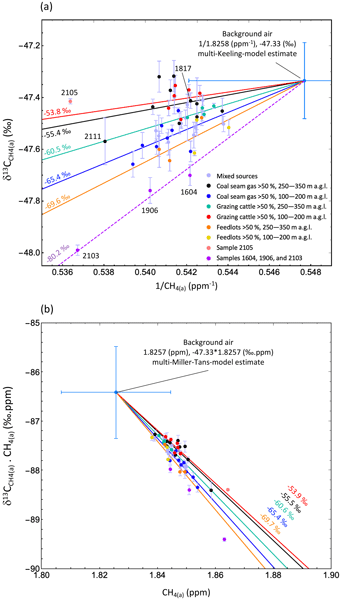
Bryce F. J. Kelly, Xinyi Lu, Stephen J. Harris, Bruno G. Neininger, Jorg M. Hacker, Stefan Schwietzke, Rebecca E. Fisher, James L. France, Euan G. Nisbet, David Lowry, Carina van der Veen, Malika Menoud, and Thomas Röckmann
Atmos. Chem. Phys., 22, 15527–15558, https://doi.org/10.5194/acp-22-15527-2022, https://doi.org/10.5194/acp-22-15527-2022, 2022
Short summary
Short summary
This study explores using the composition of methane of in-flight atmospheric air samples for greenhouse gas inventory verification. The air samples were collected above one of the largest coal seam gas production regions in the world. Adjacent to these gas fields are coal mines, Australia's largest cattle feedlot, and over 1 million grazing cattle. The results are also used to identify methane mitigation opportunities.
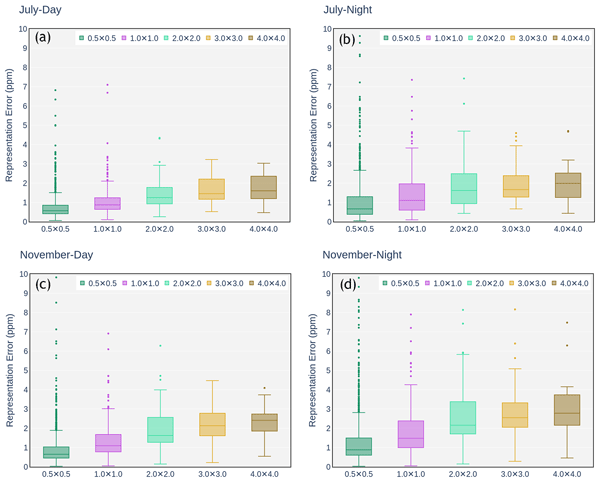
Vishnu Thilakan, Dhanyalekshmi Pillai, Christoph Gerbig, Michal Galkowski, Aparnna Ravi, and Thara Anna Mathew
Atmos. Chem. Phys., 22, 15287–15312, https://doi.org/10.5194/acp-22-15287-2022, https://doi.org/10.5194/acp-22-15287-2022, 2022
Short summary
Short summary
This paper demonstrates how we can use atmospheric observations to improve the CO2 flux estimates in India. This is achieved by improving the representation of terrain, mesoscale transport, and flux variations. We quantify the impact of the unresolved variations in the current models on optimally estimated fluxes via inverse modelling and quantify the associated flux uncertainty. We illustrate how a parameterization scheme captures this variability in the coarse models.

Tianqi Shi, Zeyu Han, Ge Han, Xin Ma, Huilin Chen, Truls Andersen, Huiqin Mao, Cuihong Chen, Haowei Zhang, and Wei Gong
Atmos. Chem. Phys., 22, 13881–13896, https://doi.org/10.5194/acp-22-13881-2022, https://doi.org/10.5194/acp-22-13881-2022, 2022
Short summary
Short summary
CH4 works as the second-most important greenhouse gas, its reported emission inventories being far less than CO2. In this study, we developed a self-adjusted model to estimate the CH4 emission rate from strong point sources by the UAV-based AirCore system. This model would reduce the uncertainty in CH4 emission rate quantification accrued by errors in measurements of wind and concentration. Actual measurements on Pniówek coal demonstrate the high accuracy and stability of our developed model.
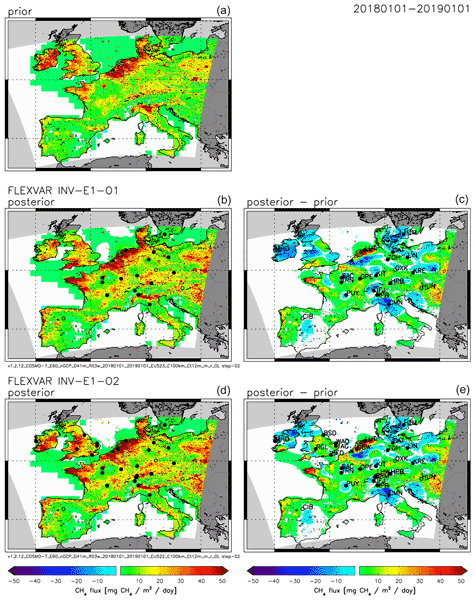
Peter Bergamaschi, Arjo Segers, Dominik Brunner, Jean-Matthieu Haussaire, Stephan Henne, Michel Ramonet, Tim Arnold, Tobias Biermann, Huilin Chen, Sebastien Conil, Marc Delmotte, Grant Forster, Arnoud Frumau, Dagmar Kubistin, Xin Lan, Markus Leuenberger, Matthias Lindauer, Morgan Lopez, Giovanni Manca, Jennifer Müller-Williams, Simon O'Doherty, Bert Scheeren, Martin Steinbacher, Pamela Trisolino, Gabriela Vítková, and Camille Yver Kwok
Atmos. Chem. Phys., 22, 13243–13268, https://doi.org/10.5194/acp-22-13243-2022, https://doi.org/10.5194/acp-22-13243-2022, 2022
Short summary
Short summary
We present a novel high-resolution inverse modelling system, "FLEXVAR", and its application for the inverse modelling of European CH4 emissions in 2018. The new system combines a high spatial resolution of 7 km x 7 km with a variational data assimilation technique, which allows CH4 emissions to be optimized from individual model grid cells. The high resolution allows the observations to be better reproduced, while the derived emissions show overall good consistency with two existing models.
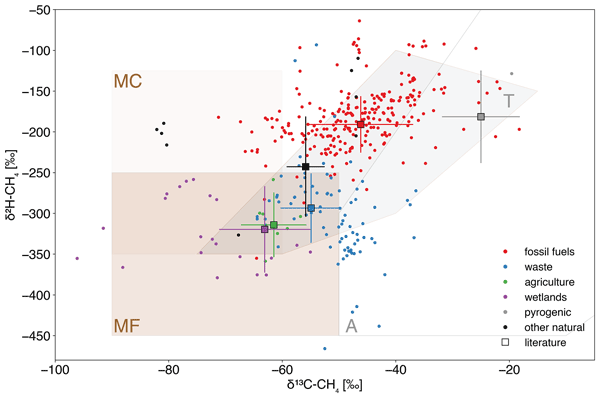
Malika Menoud, Carina van der Veen, Dave Lowry, Julianne M. Fernandez, Semra Bakkaloglu, James L. France, Rebecca E. Fisher, Hossein Maazallahi, Mila Stanisavljević, Jarosław Nęcki, Katarina Vinkovic, Patryk Łakomiec, Janne Rinne, Piotr Korbeń, Martina Schmidt, Sara Defratyka, Camille Yver-Kwok, Truls Andersen, Huilin Chen, and Thomas Röckmann
Earth Syst. Sci. Data, 14, 4365–4386, https://doi.org/10.5194/essd-14-4365-2022, https://doi.org/10.5194/essd-14-4365-2022, 2022
Short summary
Short summary
Emission sources of methane (CH4) can be distinguished with measurements of CH4 stable isotopes. We present new measurements of isotope signatures of various CH4 sources in Europe, mainly anthropogenic, sampled from 2017 to 2020. The present database also contains the most recent update of the global signature dataset from the literature. The dataset improves CH4 source attribution and the understanding of the global CH4 budget.
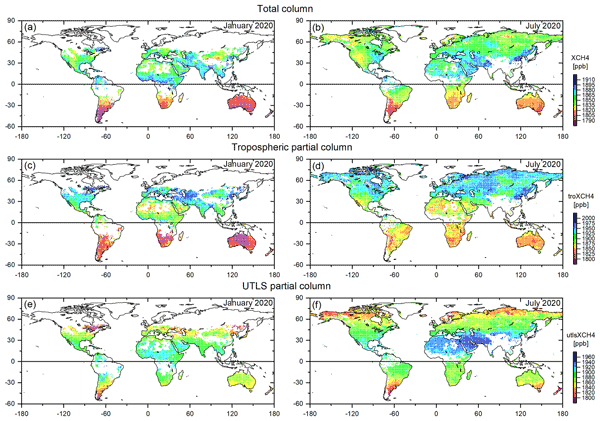
Matthias Schneider, Benjamin Ertl, Qiansi Tu, Christopher J. Diekmann, Farahnaz Khosrawi, Amelie N. Röhling, Frank Hase, Darko Dubravica, Omaira E. García, Eliezer Sepúlveda, Tobias Borsdorff, Jochen Landgraf, Alba Lorente, André Butz, Huilin Chen, Rigel Kivi, Thomas Laemmel, Michel Ramonet, Cyril Crevoisier, Jérome Pernin, Martin Steinbacher, Frank Meinhardt, Kimberly Strong, Debra Wunch, Thorsten Warneke, Coleen Roehl, Paul O. Wennberg, Isamu Morino, Laura T. Iraci, Kei Shiomi, Nicholas M. Deutscher, David W. T. Griffith, Voltaire A. Velazco, and David F. Pollard
Atmos. Meas. Tech., 15, 4339–4371, https://doi.org/10.5194/amt-15-4339-2022, https://doi.org/10.5194/amt-15-4339-2022, 2022
Short summary
Short summary
We present a computationally very efficient method for the synergetic use of level 2 remote-sensing data products. We apply the method to IASI vertical profile and TROPOMI total column space-borne methane observations and thus gain sensitivity for the tropospheric methane partial columns, which is not achievable by the individual use of TROPOMI and IASI. These synergetic effects are evaluated theoretically and empirically by inter-comparisons to independent references of TCCON, AirCore, and GAW.
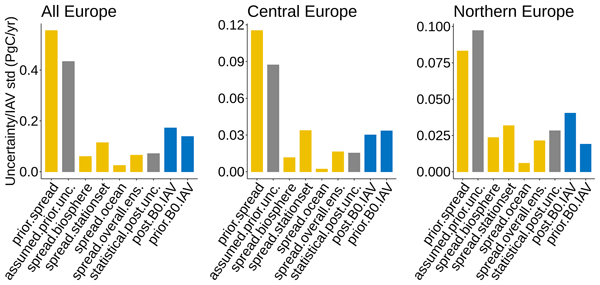
Saqr Munassar, Christian Rödenbeck, Frank-Thomas Koch, Kai U. Totsche, Michał Gałkowski, Sophia Walther, and Christoph Gerbig
Atmos. Chem. Phys., 22, 7875–7892, https://doi.org/10.5194/acp-22-7875-2022, https://doi.org/10.5194/acp-22-7875-2022, 2022
Short summary
Short summary
The results obtained from ensembles of inversions over 13 years show the largest spread in the a posteriori fluxes over the station set ensemble. Using different prior fluxes in the inversions led to a smaller impact. Drought occurrences in 2018 and 2019 affected CO2 fluxes as seen in net ecosystem exchange estimates. Our study highlights the importance of expanding the atmospheric site network across Europe to better constrain CO2 fluxes in inverse modelling.
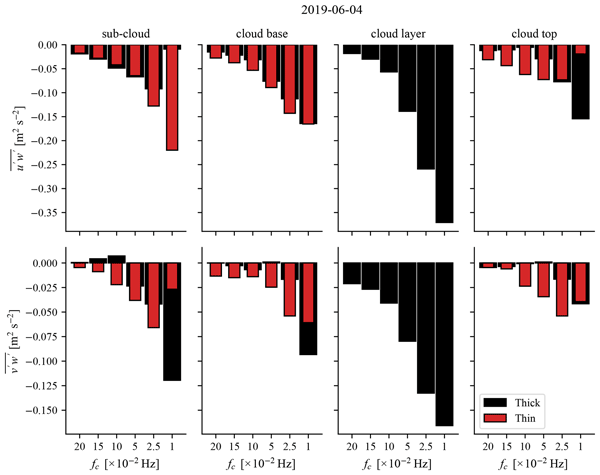
Ada Mariska Koning, Louise Nuijens, Christian Mallaun, Benjamin Witschas, and Christian Lemmerz
Atmos. Chem. Phys., 22, 7373–7388, https://doi.org/10.5194/acp-22-7373-2022, https://doi.org/10.5194/acp-22-7373-2022, 2022
Short summary
Short summary
Wind measurements from the mixed layer to cloud tops are scarce, causing a lack of knowledge on wind mixing between and within these layers. We use airborne observations of wind profiles and local wind at high frequency to study wind transport in cloud fields. A case with thick clouds had its maximum transport in the cloud layer, caused by eddies > 700 m, which was not expected from turbulence theory. In other cases large eddies undid transport of smaller eddies resulting in no net transport.
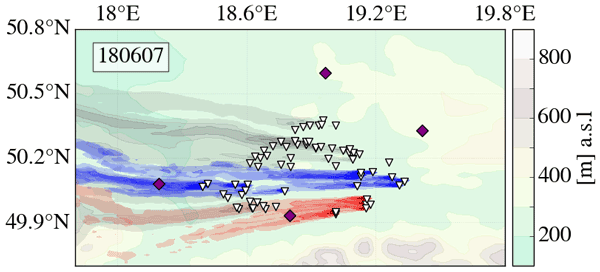
Andreas Luther, Julian Kostinek, Ralph Kleinschek, Sara Defratyka, Mila Stanisavljević, Andreas Forstmaier, Alexandru Dandocsi, Leon Scheidweiler, Darko Dubravica, Norman Wildmann, Frank Hase, Matthias M. Frey, Jia Chen, Florian Dietrich, Jarosław Nȩcki, Justyna Swolkień, Christoph Knote, Sanam N. Vardag, Anke Roiger, and André Butz
Atmos. Chem. Phys., 22, 5859–5876, https://doi.org/10.5194/acp-22-5859-2022, https://doi.org/10.5194/acp-22-5859-2022, 2022
Short summary
Short summary
Coal mining is an extensive source of anthropogenic methane emissions. In order to reduce and mitigate methane emissions, it is important to know how much and where the methane is emitted. We estimated coal mining methane emissions in Poland based on atmospheric methane measurements and particle dispersion modeling. In general, our emission estimates suggest higher emissions than expected by previous annual emission reports.
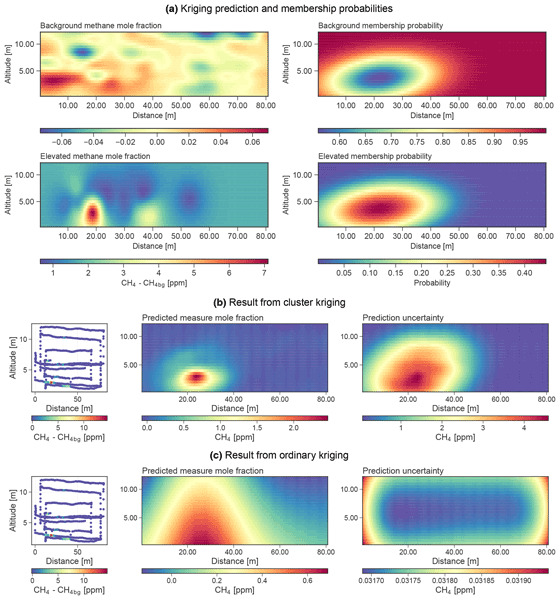
Randulph Morales, Jonas Ravelid, Katarina Vinkovic, Piotr Korbeń, Béla Tuzson, Lukas Emmenegger, Huilin Chen, Martina Schmidt, Sebastian Humbel, and Dominik Brunner
Atmos. Meas. Tech., 15, 2177–2198, https://doi.org/10.5194/amt-15-2177-2022, https://doi.org/10.5194/amt-15-2177-2022, 2022
Short summary
Short summary
Mapping trace gas emission plumes using in situ measurements from unmanned aerial vehicles (UAVs) is an emerging and attractive possibility to quantify emissions from localized sources. We performed an extensive controlled-release experiment to develop an optimal quantification method and to determine the related uncertainties under various environmental and sampling conditions. Our approach was successful in quantifying local methane sources from drone-based measurements.
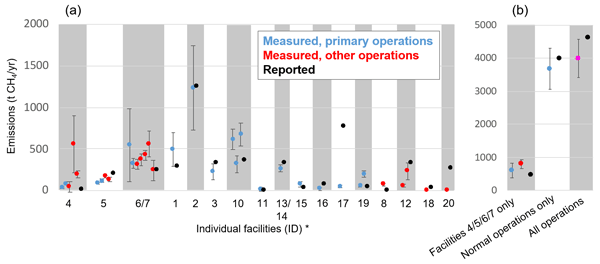
Amy Foulds, Grant Allen, Jacob T. Shaw, Prudence Bateson, Patrick A. Barker, Langwen Huang, Joseph R. Pitt, James D. Lee, Shona E. Wilde, Pamela Dominutti, Ruth M. Purvis, David Lowry, James L. France, Rebecca E. Fisher, Alina Fiehn, Magdalena Pühl, Stéphane J. B. Bauguitte, Stephen A. Conley, Mackenzie L. Smith, Tom Lachlan-Cope, Ignacio Pisso, and Stefan Schwietzke
Atmos. Chem. Phys., 22, 4303–4322, https://doi.org/10.5194/acp-22-4303-2022, https://doi.org/10.5194/acp-22-4303-2022, 2022
Short summary
Short summary
We measured CH4 emissions from 21 offshore oil and gas facilities in the Norwegian Sea in 2019. Measurements compared well with operator-reported emissions but were greatly underestimated when compared with a 2016 global fossil fuel inventory. This study demonstrates the need for up-to-date and accurate inventories for use in research and policy and the important benefits of best-practice reporting methods by operators. Airborne measurements are an effective tool to validate such inventories.
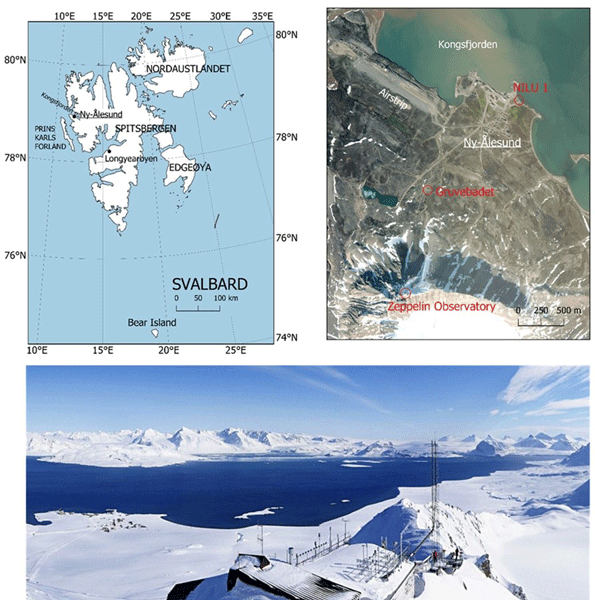
Stephen M. Platt, Øystein Hov, Torunn Berg, Knut Breivik, Sabine Eckhardt, Konstantinos Eleftheriadis, Nikolaos Evangeliou, Markus Fiebig, Rebecca Fisher, Georg Hansen, Hans-Christen Hansson, Jost Heintzenberg, Ove Hermansen, Dominic Heslin-Rees, Kim Holmén, Stephen Hudson, Roland Kallenborn, Radovan Krejci, Terje Krognes, Steinar Larssen, David Lowry, Cathrine Lund Myhre, Chris Lunder, Euan Nisbet, Pernilla B. Nizzetto, Ki-Tae Park, Christina A. Pedersen, Katrine Aspmo Pfaffhuber, Thomas Röckmann, Norbert Schmidbauer, Sverre Solberg, Andreas Stohl, Johan Ström, Tove Svendby, Peter Tunved, Kjersti Tørnkvist, Carina van der Veen, Stergios Vratolis, Young Jun Yoon, Karl Espen Yttri, Paul Zieger, Wenche Aas, and Kjetil Tørseth
Atmos. Chem. Phys., 22, 3321–3369, https://doi.org/10.5194/acp-22-3321-2022, https://doi.org/10.5194/acp-22-3321-2022, 2022
Short summary
Short summary
Here we detail the history of the Zeppelin Observatory, a unique global background site and one of only a few in the high Arctic. We present long-term time series of up to 30 years of atmospheric components and atmospheric transport phenomena. Many of these time series are important to our understanding of Arctic and global atmospheric composition change. Finally, we discuss the future of the Zeppelin Observatory and emerging areas of future research on the Arctic atmosphere.
Juhi Nagori, Narcisa Nechita-Bândă, Sebastian Oscar Danielache, Masumi Shinkai, Thomas Röckmann, and Maarten Krol
Atmos. Chem. Phys. Discuss., https://doi.org/10.5194/acp-2022-68, https://doi.org/10.5194/acp-2022-68, 2022
Publication in ACP not foreseen
Short summary
Short summary
The sulfur isotopes (32S and 34S) were studied to understand the sources, sinks and processes of carbonyl sulphide (COS) in the atmosphere. COS is an important source of sulfur aerosol in the stratosphere (SSA). Few measurements of COS and SSA exist, but with our 1D model, we were able to match them and show the importance of COS to sulfate formation. Moreover, we are able to highlight some important processes for the COS budget and where measurements may fill a gap in current knowledge.
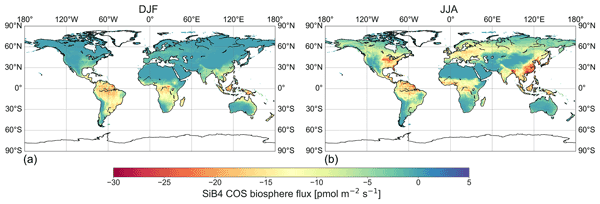
Linda M. J. Kooijmans, Ara Cho, Jin Ma, Aleya Kaushik, Katherine D. Haynes, Ian Baker, Ingrid T. Luijkx, Mathijs Groenink, Wouter Peters, John B. Miller, Joseph A. Berry, Jerome Ogée, Laura K. Meredith, Wu Sun, Kukka-Maaria Kohonen, Timo Vesala, Ivan Mammarella, Huilin Chen, Felix M. Spielmann, Georg Wohlfahrt, Max Berkelhammer, Mary E. Whelan, Kadmiel Maseyk, Ulli Seibt, Roisin Commane, Richard Wehr, and Maarten Krol
Biogeosciences, 18, 6547–6565, https://doi.org/10.5194/bg-18-6547-2021, https://doi.org/10.5194/bg-18-6547-2021, 2021
Short summary
Short summary
The gas carbonyl sulfide (COS) can be used to estimate photosynthesis. To adopt this approach on regional and global scales, we need biosphere models that can simulate COS exchange. So far, such models have not been evaluated against observations. We evaluate the COS biosphere exchange of the SiB4 model against COS flux observations. We find that the model is capable of simulating key processes in COS biosphere exchange. Still, we give recommendations for further improvement of the model.
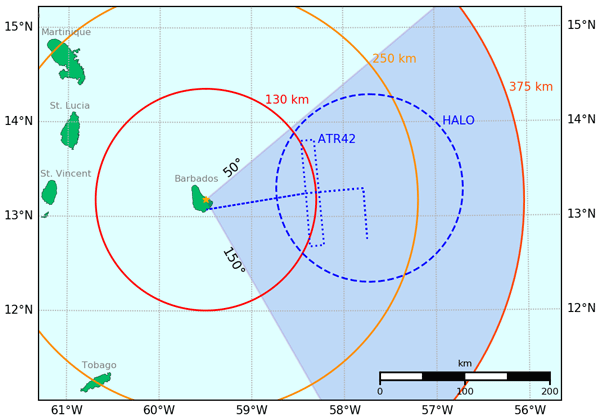
Martin Hagen, Florian Ewald, Silke Groß, Lothar Oswald, David A. Farrell, Marvin Forde, Manuel Gutleben, Johann Heumos, Jens Reimann, Eleni Tetoni, Gregor Köcher, Eleni Marinou, Christoph Kiemle, Qiang Li, Rebecca Chewitt-Lucas, Alton Daley, Delando Grant, and Kashawn Hall
Earth Syst. Sci. Data, 13, 5899–5914, https://doi.org/10.5194/essd-13-5899-2021, https://doi.org/10.5194/essd-13-5899-2021, 2021
Short summary
Short summary
The German polarimetric weather radar Poldirad was deployed for the international campaign EUREC4A on Barbados. The focus was monitoring clouds and precipitation in the trade wind region east of Barbados. Observations were with a temporal sequence of 5 min and a maximum range of 375 km. Examples of mesoscale precipitation patterns, rain rate accumulation, diurnal cycle, and vertical distribution show the potential for further studies on the life cycle of precipitating shallow cumulus clouds.
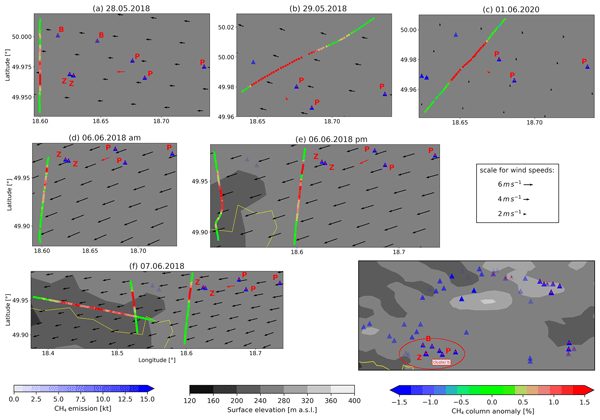
Sven Krautwurst, Konstantin Gerilowski, Jakob Borchardt, Norman Wildmann, Michał Gałkowski, Justyna Swolkień, Julia Marshall, Alina Fiehn, Anke Roiger, Thomas Ruhtz, Christoph Gerbig, Jaroslaw Necki, John P. Burrows, Andreas Fix, and Heinrich Bovensmann
Atmos. Chem. Phys., 21, 17345–17371, https://doi.org/10.5194/acp-21-17345-2021, https://doi.org/10.5194/acp-21-17345-2021, 2021
Short summary
Short summary
Quantification of anthropogenic CH4 emissions remains challenging, but it is essential for near-term climate mitigation strategies. We use airborne remote sensing observations to assess bottom-up estimates of coal mining emissions from one of Europe's largest CH4 emission hot spots located in Poland. The analysis reveals that emissions from small groups of shafts can be disentangled, but caution is advised when comparing observations to commonly reported annual emissions.
Cited articles
Anthony, T. L. and Silver, W. L.: Hot moments drive extreme nitrous oxide and methane emissions from agricultural peatlands, Global Change Biol., 27, 5141–5153, https://doi.org/10.1111/gcb.15802, 2021. a
Barrat, H. A., Evans, J., Chadwick, D. R., Clark, I. M., Le Cocq, K., and M. Cardenas, L.: The impact of drought and rewetting on N2O emissions from soil in temperate and Mediterranean climates, Eur. J. Soil Sci., 72, 2504–2516, https://doi.org/10.1111/ejss.13015, 2021. a
Biltoft, C. A.: Some Thoughts On Local Isotropy And The 4/3 Lateral To Longitudinal Velocity Spectrum Ratio, Bound.-Lay. Meteorol., 100, 393–404, https://doi.org/10.1023/A:1019289915930, 2001. a, b, c
Bremner, J. M. and Blackmer, A. M.: Nitrous Oxide: Emission from Soils During Nitrification of Fertilizer Nitrogen, Science, 199, 295–296, https://doi.org/10.1126/science.199.4326.295, 1978. a
Bukosa, B., Mikaloff-Fletcher, S., Geddes, A., Pollard, D., Moore, S., Law, R., Noone, D., Sargent, M., Benmergui, J., and Wofsy, S.: How well can MethaneSAT detect and quantify pastoral agricultural emissions?, EGU General Assembly 2024, Vienna, Austria, 14–19 April 2024, EGU24-4484, https://doi.org/10.5194/egusphere-egu24-4484, 2024. a
Butterbach-Bahl, K., Baggs, E. M., Dannenmann, M., Kiese, R., and Zechmeister-Boltenstern, S.: Nitrous oxide emissions from soils: how well do we understand the processes and their controls?, Philos. T. Roy. Soc. B, 368, 20130122, https://doi.org/10.1098/rstb.2013.0122, 2013. a, b, c, d
Butterworth, B. J. and Else, B. G. T.: Dried, closed-path eddy covariance method for measuring carbon dioxide flux over sea ice, Atmos. Meas. Tech., 11, 6075–6090, https://doi.org/10.5194/amt-11-6075-2018, 2018. a
Carranza, V., Biggs, B., Meyer, D., Townsend‐Small, A., Thiruvenkatachari, R. R., Venkatram, A., Fischer, M. L., and Hopkins, F. M.: Isotopic Signatures of Methane Emissions From Dairy Farms in California's San Joaquin Valley, J. Geophys. Res.-Biogeo., 127, e2021JG006675, https://doi.org/10.1029/2021JG006675, 2022. a
Chadwick, D.: Emissions of ammonia, nitrous oxide and methane from cattle manure heaps: effect of compaction and covering, Atmos. Environ., 39, 787–799, https://doi.org/10.1016/j.atmosenv.2004.10.012, 2005. a
Copernicus Climate Change Service: ERA5 hourly data on single levels from 1940 to present, Copernicus Climate Change Service [data set], https://doi.org/10.24381/CDS.ADBB2D47, 2023. a
Craig, H., Chou, C. C., Welhan, J. A., Stevens, C. M., and Engelkemeir, A.: The Isotopic Composition of Methane in Polar Ice Cores, Science, 242, 1535–1539, https://doi.org/10.1126/science.242.4885.1535, 1988. a
Crotwell, A. and Steinbacher, M.: 19th WMO/IAEA Meeting on Carbon Dioxide, Other Greenhouse Gases and Related Measurement Techniques (GGMT-2017), GAW Report No. 242, WMO, Geneva, https://library.wmo.int/records/item/37000-19th-wmo-iaea-meeting-on-carbon-dioxide-other (last access: 10 October 2025), 2018. a
Cusworth, D. H., Duren, R. M., Thorpe, A. K., Pandey, S., Maasakkers, J. D., Aben, I., Jervis, D., Varon, D. J., Jacob, D. J., Randles, C. A., Gautam, R., Omara, M., Schade, G. W., Dennison, P. E., Frankenberg, C., Gordon, D., Lopinto, E., and Miller, C. E.: Multisatellite Imaging of a Gas Well Blowout Enables Quantification of Total Methane Emissions, Geophys. Res. Lett., 48, e2020GL090864, https://doi.org/10.1029/2020GL090864, 2021. a
Dacic, N., Plant, G., and Kort, E. A.: Airborne Measurements Reveal High Spatiotemporal Variation and the Heavy‐Tail Characteristic of Nitrous Oxide Emissions in Iowa, J. Geophys. Res.-Atmos., 129, e2024JD041403, https://doi.org/10.1029/2024JD041403, 2024. a, b, c, d
Desjardins, R. L., Macpherson, J. I., Schuepp, P. H., and Karanja, F.: An evaluation of aircraft flux measurements of CO2, water vapor and sensible heat, Springer, Dordrecht, https://doi.org/10.1007/978-94-009-0975-5_5, 1988. a
Eckl, M., Roiger, A., Kostinek, J., Fiehn, A., Huntrieser, H., Knote, C., Barkley, Z. R., Ogle, S. M., Baier, B. C., Sweeney, C., and Davis, K. J.: Quantifying Nitrous Oxide Emissions in the U.S. Midwest: A Top‐Down Study Using High Resolution Airborne In‐Situ Observations, Geophys. Res. Lett., 48, e2020GL091266, https://doi.org/10.1029/2020GL091266, 2021. a, b, c, d, e, f, g, h
Emissieregistratie: Alle emissiegegevens op één plek|Emissieregistratie, https://www.emissieregistratie.nl/ (last access: 1 June 2025), 2025. a
Etheridge, D. M., Steele, L. P., Francey, R. J., and Langenfelds, R. L.: Atmospheric methane between 1000 A.D. and present: Evidence of anthropogenic emissions and climatic variability, J. Geophys. Res.-Atmos., 103, 15979–15993, https://doi.org/10.1029/98JD00923, 1998. a
Etminan, M., Myhre, G., Highwood, E. J., and Shine, K. P.: Radiative forcing of carbon dioxide, methane, and nitrous oxide: A significant revision of the methane radiative forcing, Geophys. Res. Lett., 43, https://doi.org/10.1002/2016GL071930, 2016. a
European Commission Joint Research Centre, and IEA: GHG emissions of all world countries, Publications Office, LU, https://doi.org/10.2760/4002897, 2024. a
Fiehn, A., Eckl, M., Kostinek, J., Gałkowski, M., Gerbig, C., Rothe, M., Röckmann, T., Menoud, M., Maazallahi, H., Schmidt, M., Korbeń, P., Neçki, J., Stanisavljević, M., Swolkień, J., Fix, A., and Roiger, A.: Source apportionment of methane emissions from the Upper Silesian Coal Basin using isotopic signatures, Atmos. Chem. Phys., 23, 15749–15765, https://doi.org/10.5194/acp-23-15749-2023, 2023. a
Finkelstein, P. L. and Sims, P. F.: Sampling error in eddy correlation flux measurements, J. Geophys. Res.-Atmos., 106, 3503–3509, https://doi.org/10.1029/2000JD900731, 2001. a
Firestone, M. K. and Davidson, E. A.: Microbiological basis of NO and N2O production and consumption in soil, in: Exchange of Trace Gases between Terrestrial Ecosystems and the Atmosphere, edited by: Andreae, M. O. and Schimel, D. S., John Wiley & Sons Ltd., 7–21, 1989. a
Förster, E., Huntrieser, H., Lichtenstern, M., Pätzold, F., Bretschneider, L., Schlerf, A., Bollmann, S., Lampert, A., Nȩcki, J., Jagoda, P., Swolkień, J., Pasternak, D., Field, R. A., and Roiger, A.: A helicopter-based mass balance approach for quantifying methane emissions from industrial activities, applied for coal mine ventilation shafts in Poland, Atmos. Meas. Tech., 18, 7153–7176, https://doi.org/10.5194/amt-18-7153-2025, 2025. a
Fu, C., Lee, X., Griffis, T. J., Dlugokencky, E. J., and Andrews, A. E.: Investigation of the N2O emission strength in the U. S. Corn Belt, Atmos. Res., 194, 66–77, https://doi.org/10.1016/j.atmosres.2017.04.027, 2017. a, b, c
Gałkowski, M., Jordan, A., Rothe, M., Marshall, J., Koch, F.-T., Chen, J., Agusti-Panareda, A., Fix, A., and Gerbig, C.: In situ observations of greenhouse gases over Europe during the CoMet 1.0 campaign aboard the HALO aircraft, Atmos. Meas. Tech., 14, 1525–1544, https://doi.org/10.5194/amt-14-1525-2021, 2021. a, b
Gioli, B., Miglietta, F., De Martino, B., Hutjes, R. W., Dolman, H. A., Lindroth, A., Schumacher, M., Sanz, M. J., Manca, G., Peressotti, A., and Dumas, E. J.: Comparison between tower and aircraft-based eddy covariance fluxes in five European regions, Agr. Forest Meteorol., 127, 1–16, https://doi.org/10.1016/j.agrformet.2004.08.004, 2004. a, b
Gordon, I., Rothman, L., Hargreaves, R., Hashemi, R., Karlovets, E., Skinner, F., Conway, E., Hill, C., Kochanov, R., Tan, Y., Wcisło, P., Finenko, A., Nelson, K., Bernath, P., Birk, M., Boudon, V., Campargue, A., Chance, K., Coustenis, A., Drouin, B., Flaud, J., Gamache, R., Hodges, J., Jacquemart, D., Mlawer, E., Nikitin, A., Perevalov, V., Rotger, M., Tennyson, J., Toon, G., Tran, H., Tyuterev, V., Adkins, E., Baker, A., Barbe, A., Canè, E., Császár, A., Dudaryonok, A., Egorov, O., Fleisher, A., Fleurbaey, H., Foltynowicz, A., Furtenbacher, T., Harrison, J., Hartmann, J., Horneman, V., Huang, X., Karman, T., Karns, J., Kassi, S., Kleiner, I., Kofman, V., Kwabia-Tchana, F., Lavrentieva, N., Lee, T., Long, D., Lukashevskaya, A., Lyulin, O., Makhnev, V., Matt, W., Massie, S., Melosso, M., Mikhailenko, S., Mondelain, D., Müller, H., Naumenko, O., Perrin, A., Polyansky, O., Raddaoui, E., Raston, P., Reed, Z., Rey, M., Richard, C., Tóbiás, R., Sadiek, I., Schwenke, D., Starikova, E., Sung, K., Tamassia, F., Tashkun, S., Vander Auwera, J., Vasilenko, I., Vigasin, A., Villanueva, G., Vispoel, B., Wagner, G., Yachmenev, A., and Yurchenko, S.: The HITRAN2020 molecular spectroscopic database, J. Quant. Spectrosc. Ra., 277, 107949, https://doi.org/10.1016/j.jqsrt.2021.107949, 2022. a
Harris, E., Diaz-Pines, E., Stoll, E., Schloter, M., Schulz, S., Duffner, C., Li, K., Moore, K. L., Ingrisch, J., Reinthaler, D., Zechmeister-Boltenstern, S., Glatzel, S., Brüggemann, N., and Bahn, M.: Denitrifying pathways dominate nitrous oxide emissions from managed grassland during drought and rewetting, Sci. Adv., 7, eabb7118, https://doi.org/10.1126/sciadv.abb7118, 2021. a
Haszpra, L., Hidy, D., Taligás, T., and Barcza, Z.: First results of tall tower based nitrous oxide flux monitoring over an agricultural region in Central Europe, Atmos. Environ., 176, 240–251, https://doi.org/10.1016/j.atmosenv.2017.12.035, 2018. a, b, c
Herig Coimbra, P. H., Loubet, B., Laurent, O., Bignotti, L., Lozano, M., and Ramonet, M.: Eddy covariance with slow-response greenhouse gas analysers on tall towers: bridging atmospheric and ecosystem greenhouse gas networks, Atmos. Meas. Tech., 17, 6625–6645, https://doi.org/10.5194/amt-17-6625-2024, 2024. a
Hersbach, H., Bell, B., Berrisford, P., Hirahara, S., Horányi, A., Muñoz‐Sabater, J., Nicolas, J., Peubey, C., Radu, R., Schepers, D., Simmons, A., Soci, C., Abdalla, S., Abellan, X., Balsamo, G., Bechtold, P., Biavati, G., Bidlot, J., Bonavita, M., De Chiara, G., Dahlgren, P., Dee, D., Diamantakis, M., Dragani, R., Flemming, J., Forbes, R., Fuentes, M., Geer, A., Haimberger, L., Healy, S., Hogan, R. J., Hólm, E., Janisková, M., Keeley, S., Laloyaux, P., Lopez, P., Lupu, C., Radnoti, G., De Rosnay, P., Rozum, I., Vamborg, F., Villaume, S., and Thépaut, J.: The ERA5 global reanalysis, Q. J. Roy. Meteorol. Soc., 146, 1999–2049, https://doi.org/10.1002/qj.3803, 2020. a
Hiller, R. V., Neininger, B., Brunner, D., Gerbig, C., Bretscher, D., Künzle, T., Buchmann, N., and Eugster, W.: Aircraft‐based CH4 flux estimates for validation of emissions from an agriculturally dominated area in Switzerland, J. Geophys. Res.-Atmos., 119, 4874–4887, https://doi.org/10.1002/2013JD020918, 2014. a
Horst, T. W.: A simple formula for attenuation of eddy fluxes measured with first-order-response scalar sensors, Bound.-Lay. Meteorol., 82, 219–233, https://doi.org/10.1023/A:1000229130034, 1997. a
Ibrom, A., Dellwik, E., Flyvbjerg, H., Jensen, N. O., and Pilegaard, K.: Strong low-pass filtering effects on water vapour flux measurements with closed-path eddy correlation systems, Agr. Forest Meteorol., 147, 140–156, https://doi.org/10.1016/j.agrformet.2007.07.007, 2007. a
IPCC: Climate Change 2021 – The Physical Science Basis: Working Group I Contribution to the Sixth Assessment Report of the Intergovernmental Panel on Climate Change, in: 1st Edn., Cambridge University Press, ISBN 978-1-00-915789-6, https://doi.org/10.1017/9781009157896, 2023. a, b, c
Irakulis-Loitxate, I., Guanter, L., Maasakkers, J. D., Zavala-Araiza, D., and Aben, I.: Satellites Detect Abatable Super-Emissions in One of the World's Largest Methane Hotspot Regions, Environ. Sci. Technol., 56, 2143–2152, https://doi.org/10.1021/acs.est.1c04873, 2022. a
Kaimal, J. C. and Finnigan, J. J.: Atmospheric boundary layer flows: their structure and measurement, Oxford scholarship online, Oxford University Press, New York, New York, ISBN 978-0-19-506239-7, https://doi.org/10.1093/oso/9780195062397.001.0001, 2020. a, b, c
Kaimal, J. C., Wyngaard, J. C., Izumi, Y., and Coté, O. R.: Spectral characteristics of surface‐layer turbulence, Q. J. Roy. Meteorol. Soc., 98, 563–589, https://doi.org/10.1002/qj.49709841707, 1972. a, b
Kang, J., Machado, P. V. F., Hooker, D., Grant, B., Smith, W., Wagner-Riddle, C., and Nasielski, J.: Combining measurements and modelling to reveal long-term effects of nitrogen fertilizer application timing on N2O emissions in corn, Field Crops Res., 322, 109708, https://doi.org/10.1016/j.fcr.2024.109708, 2025. a
Kanter, D. R., Ogle, S. M., and Winiwarter, W.: Building on Paris: integrating nitrous oxide mitigation into future climate policy, Current Opinion in Environmental Sustainability, 47, 7–12, https://doi.org/10.1016/j.cosust.2020.04.005, 2020. a
Karimindla, A. R., Kumari, S., S R, S., Chintala, S., and P. Kambhammettu, B.: The role of time averaging of eddy covariance fluxes on water use efficiency dynamics of maize, Atmos. Meas. Tech., 17, 5477–5490, https://doi.org/10.5194/amt-17-5477-2024, 2024. a
Karl, T., Misztal, P. K., Jonsson, H. H., Shertz, S., Goldstein, A. H., and Guenther, A. B.: Airborne Flux Measurements of BVOCs above Californian Oak Forests: Experimental Investigation of Surface and Entrainment Fluxes, OH Densities, and Damköhler Numbers, J. Atmos. Sci., 70, 3277–3287, https://doi.org/10.1175/JAS-D-13-054.1, 2013. a
Kelly, B. F. J., Lu, X., Harris, S. J., Neininger, B. G., Hacker, J. M., Schwietzke, S., Fisher, R. E., France, J. L., Nisbet, E. G., Lowry, D., Van Der Veen, C., Menoud, M., and Röckmann, T.: Atmospheric methane isotopes identify inventory knowledge gaps in the Surat Basin, Australia, coal seam gas and agricultural regions, Atmos. Chem. Phys., 22, 15527–15558, https://doi.org/10.5194/acp-22-15527-2022, 2022. a
Kiemle, C., Ehret, G., Fix, A., Wirth, M., Poberaj, G., Brewer, W. A., Hardesty, R. M., Senff, C., and LeMone, M. A.: Latent Heat Flux Profiles from Collocated Airborne Water Vapor and Wind Lidars during IHOP_2002, J. Atmos. Ocean. Tech., 24, 627–639, https://doi.org/10.1175/JTECH1997.1, 2007. a
Kiemle, C., Wirth, M., Fix, A., Rahm, S., Corsmeier, U., and Di Girolamo, P.: Latent heat flux measurements over complex terrain by airborne water vapour and wind lidars, Q. J. Roy. Meteorol. Soc., 137, 190–203, https://doi.org/10.1002/qj.757, 2011. a
Kiemle, C., Fix, A., Fruck, C., Ehret, G., and Wirth, M.: Design study for an airborne N2O lidar, Atmos. Meas. Tech., 17, 6569–6578, https://doi.org/10.5194/amt-17-6569-2024, 2024. a
Kljun, N., Calanca, P., Rotach, M. W., and Schmid, H. P.: A Simple Parameterisation for Flux Footprint Predictions, Bound.-Lay. Meteorol., 112, 503–523, https://doi.org/10.1023/B:BOUN.0000030653.71031.96, 2004. a
Knez, E. M., Waldmann, P., Roiger, A., DiGangi, J. P., Choi, Y., Diskin, G. S., Poudyal, R., Dean-Day, J. M., Gatebe, C. K., Bennett, J. R., and Crawford, J. H.: Characterizing N2O Emissions and Distributions in East and Southeast Asia Using Airborne In Situ Measurements form the ASIA-AQ Campaign, https://ui.adsabs.harvard.edu/abs/2024AGUFMB33C.1558K/abstract (last access: 5 October 2025), 2024. a
Kohnert, K., Serafimovich, A., Metzger, S., Hartmann, J., and Sachs, T.: Strong geologic methane emissions from discontinuous terrestrial permafrost in the Mackenzie Delta, Canada, Sci. Rep., 7, 5828, https://doi.org/10.1038/s41598-017-05783-2, 2017. a
Kolmogorov, A. N.: The local structure of turbulence in incompressible viscous fluid for very large Reynolds numbers, P. Roy. Soc L. A, 434, 9–13, https://doi.org/10.1098/rspa.1991.0075, 1991. a
Kostinek, J., Roiger, A., Davis, K. J., Sweeney, C., DiGangi, J. P., Choi, Y., Baier, B., Hase, F., Groß, J., Eckl, M., Klausner, T., and Butz, A.: Adaptation and performance assessment of a quantum and interband cascade laser spectrometer for simultaneous airborne in situ observation of CH4, C2, H6, CO2, CO and N2O, Atmos. Meas. Tech., 12, 1767–1783, https://doi.org/10.5194/amt-12-1767-2019, 2019. a, b
Krautwurst, S., Fruck, C., Wolff, S., Borchardt, J., Huhs, O., Gerilowski, K., Gałkowski, M., Kiemle, C., Quatrevalet, M., Wirth, M., Mallaun, C., Burrows, J. P., Gerbig, C., Fix, A., Bösch, H., and Bovensmann, H.: Identification and quantification of CH4 emissions from Madrid landfills using airborne imaging spectrometry and greenhouse gas lidar, Atmos. Chem. Phys., 25, 14669–14702, https://doi.org/10.5194/acp-25-14669-2025, 2025. a
Kroon, P. S., Schrier‐Uijl, A. P., Hensen, A., Veenendaal, E. M., and Jonker, H. J. J.: Annual balances of CH4 and N2O from a managed fen meadow using eddy covariance flux measurements, Eur. J. Soil Sci., 61, 773–784, https://doi.org/10.1111/j.1365-2389.2010.01273.x, 2010. a, b
Langford, B., Acton, W., Ammann, C., Valach, A., and Nemitz, E.: Eddy-covariance data with low signal-to-noise ratio: time-lag determination, uncertainties and limit of detection, Atmos. Meas. Tech., 8, 4197–4213, https://doi.org/10.5194/amt-8-4197-2015, 2015. a, b
Laubach, J., Flesch, T. K., Ammann, C., Bai, M., Gao, Z., Merbold, L., Campbell, D. I., Goodrich, J. P., Graham, S. L., Hunt, J. E., Wall, A. M., and Schipper, L. A.: Methane emissions from animal agriculture: Micrometeorological solutions for challenging measurement situations, Agr. Forest Meteorol., 350, 109971, https://doi.org/10.1016/j.agrformet.2024.109971, 2024. a, b, c
Lauvaux, T., Giron, C., Mazzolini, M., d'Aspremont, A., Duren, R., Cusworth, D., Shindell, D., and Ciais, P.: Global assessment of oil and gas methane ultra-emitters, Science, 375, 557–561, https://doi.org/10.1126/science.abj4351, 2022. a
Lenschow, D. H., Mann, J., and Kristensen, L.: How Long Is Long Enough When Measuring Fluxes and Other Turbulence Statistics?, J. Atmos. Ocean. Tech., 11, 661–673, https://doi.org/10.1175/1520-0426(1994)011<0661:HLILEW>2.0.CO;2, 1994. a, b
Ma, J., Arneth, A., Smith, B., Anthoni, P., Xu-Ri, Eliasson, P., Wårlind, D., Wittenbrink, M., and Olin, S.: Soil nitrous oxide emissions from global land ecosystems and their drivers within the LPJ-GUESS model (v4.1), Geosci. Model Dev., 18, 3131–3155, https://doi.org/10.5194/gmd-18-3131-2025, 2025. a
Maasakkers, J. D., Varon, D. J., Elfarsdóttir, A., McKeever, J., Jervis, D., Mahapatra, G., Pandey, S., Lorente, A., Borsdorff, T., Foorthuis, L. R., Schuit, B. J., Tol, P., van Kempen, T. A., van Hees, R., and Aben, I.: Using satellites to uncover large methane emissions from landfills, Sci. Adv., 8, eabn9683, https://doi.org/10.1126/sciadv.abn9683, 2022. a
Mann, J. and Lenschow, D. H.: Errors in airborne flux measurements, J. Geophys. Res.-Atmos., 99, 14519–14526, https://doi.org/10.1029/94JD00737, 1994. a
Meinshausen, M., Nicholls, Z. R. J., Lewis, J., Gidden, M. J., Vogel, E., Freund, M., Beyerle, U., Gessner, C., Nauels, A., Bauer, N., Canadell, J. G., Daniel, J. S., John, A., Krummel, P. B., Luderer, G., Meinshausen, N., Montzka, S. A., Rayner, P. J., Reimann, S., Smith, S. J., Van Den Berg, M., Velders, G. J. M., Vollmer, M. K., and Wang, R. H. J.: The shared socio-economic pathway (SSP) greenhouse gas concentrations and their extensions to 2500, Geosci. Model Dev., 13, 3571–3605, https://doi.org/10.5194/gmd-13-3571-2020, 2020. a, b
Metzger, S., Junkermann, W., Mauder, M., Beyrich, F., Butterbach-Bahl, K., Schmid, H. P., and Foken, T.: Eddy-covariance flux measurements with a weight-shift microlight aircraft, Atmos. Meas. Tech., 5, 1699–1717, https://doi.org/10.5194/amt-5-1699-2012, 2012. a, b
Metzger, S., Junkermann, W., Mauder, M., Butterbach-Bahl, K., Trancón Y Widemann, B., Neidl, F., Schäfer, K., Wieneke, S., Zheng, X. H., Schmid, H. P., and Foken, T.: Spatially explicit regionalization of airborne flux measurements using environmental response functions, Biogeosciences, 10, 2193–2217, https://doi.org/10.5194/bg-10-2193-2013, 2013. a, b, c, d
Metzger, S., Burba, G., Burns, S. P., Blanken, P. D., Li, J., Luo, H., and Zulueta, R. C.: Optimization of an enclosed gas analyzer sampling system for measuring eddy covariance fluxes of H2O and CO2, Atmos. Meas. Tech., 9, 1341–1359, https://doi.org/10.5194/amt-9-1341-2016, 2016. a
Michel, S. E., Lan, X., Miller, J., Tans, P., Clark, J. R., Schaefer, H., Sperlich, P., Brailsford, G., Morimoto, S., Moossen, H., and Li, J.: Rapid shift in methane carbon isotopes suggests microbial emissions drove record high atmospheric methane growth in 2020–2022, P. Natl. Acad. Sci. USA, 121, e2411212121, https://doi.org/10.1073/pnas.2411212121, 2024. a
Miller, S. M., Kort, E. A., Hirsch, A. I., Dlugokencky, E. J., Andrews, A. E., Xu, X., Tian, H., Nehrkorn, T., Eluszkiewicz, J., Michalak, A. M., and Wofsy, S. C.: Regional sources of nitrous oxide over the United States: Seasonal variation and spatial distribution, J. Geophys. Res.-Atmos., 117, 2011JD016951, https://doi.org/10.1029/2011JD016951, 2012. a
Morgavi, D., Forano, E., Martin, C., and Newbold, C.: Microbial ecosystem and methanogenesis in ruminants, Animal, 4, 1024–1036, https://doi.org/10.1017/S1751731110000546, 2010. a
Morin, T. H.: Advances in the Eddy Covariance Approach to CH4 Monitoring Over Two and a Half Decades, J. Geophys. Res.-Biogeo., 124, 453–460, https://doi.org/10.1029/2018JG004796, 2019. a
Murphy, R. M., Saunders, M., Richards, K. G., Krol, D. J., Gebremichael, A. W., Rambaud, J., Cowan, N., and Lanigan, G. J.: Nitrous oxide emission factors from an intensively grazed temperate grassland: A comparison of cumulative emissions determined by eddy covariance and static chamber methods, Agr. Ecosyst. Environ., 324, 107725, https://doi.org/10.1016/j.agee.2021.107725, 2022. a, b, c
Nisbet, E. and Weiss, R.: Top-Down Versus Bottom-Up, Science, 328, 1241–1243, https://doi.org/10.1126/science.1189936, 2010. a
Nisbet, E. G., Dlugokencky, E. J., Manning, M. R., Lowry, D., Fisher, R. E., France, J. L., Michel, S. E., Miller, J. B., White, J. W. C., Vaughn, B., Bousquet, P., Pyle, J. A., Warwick, N. J., Cain, M., Brownlow, R., Zazzeri, G., Lanoisellé, M., Manning, A. C., Gloor, E., Worthy, D. E. J., Brunke, E., Labuschagne, C., Wolff, E. W., and Ganesan, A. L.: Rising atmospheric methane: 2007–2014 growth and isotopic shift, Global Biogeochem. Cy., 30, 1356–1370, https://doi.org/10.1002/2016GB005406, 2016. a
Nisbet, E. G., Manning, M. R., Dlugokencky, E. J., Fisher, R. E., Lowry, D., Michel, S. E., Myhre, C. L., Platt, S. M., Allen, G., Bousquet, P., Brownlow, R., Cain, M., France, J. L., Hermansen, O., Hossaini, R., Jones, A. E., Levin, I., Manning, A. C., Myhre, G., Pyle, J. A., Vaughn, B. H., Warwick, N. J., and White, J. W. C.: Very Strong Atmospheric Methane Growth in the 4 Years 2014–2017: Implications for the Paris Agreement, Global Biogeochem. Cy., 33, 318–342, https://doi.org/10.1029/2018GB006009, 2019. a, b
Nisbet, E. G., Manning, M. R., Lowry, D., Fisher, R. E., Lan, X. L., Michel, S. E., France, J. L., Nisbet, R. E. R., Bakkaloglu, S., Leitner, S. M., Brooke, C., Röckmann, T., Allen, G., Denier Van Der Gon, H. A. C., Merbold, L., Scheutz, C., Woolley Maisch, C., Nisbet-Jones, P. B. R., Alshalan, A., Fernandez, J. M., and Dlugokencky, E. J.: Practical paths towards quantifying and mitigating agricultural methane emissions, P. Roy. Soc. A, 481, 20240390, https://doi.org/10.1098/rspa.2024.0390, 2025. a, b, c, d
Pasternak, D. Z.: Measuring gaseous species emissions from ships and wetlands using FAAM BAe-146 research aircraft, PhD thesis, University of York, https://etheses.whiterose.ac.uk/id/eprint/34499/ (last access: 25 May 2025), 2023. a
Prather, M. J., Holmes, C. D., and Hsu, J.: Reactive greenhouse gas scenarios: Systematic exploration of uncertainties and the role of atmospheric chemistry, Geophys. Res. Lett., 39, 2012GL051440, https://doi.org/10.1029/2012GL051440, 2012. a
Prather, M. J., Hsu, J., DeLuca, N. M., Jackman, C. H., Oman, L. D., Douglass, A. R., Fleming, E. L., Strahan, S. E., Steenrod, S. D., Søvde, O. A., Isaksen, I. S. A., Froidevaux, L., and Funke, B.: Measuring and modeling the lifetime of nitrous oxide including its variability, J. Geophys. Res.-Atmos., 120, 5693–5705, https://doi.org/10.1002/2015JD023267, 2015. a
Pühl, M., Roiger, A., Fiehn, A., Gorchov Negron, A. M., Kort, E. A., Schwietzke, S., Pisso, I., Foulds, A., Lee, J., France, J. L., Jones, A. E., Lowry, D., Fisher, R. E., Huang, L., Shaw, J., Bateson, P., Andrews, S., Young, S., Dominutti, P., Lachlan-Cope, T., Weiss, A., and Allen, G.: Aircraft-based mass balance estimate of methane emissions from offshore gas facilities in the southern North Sea, Atmos. Chem. Phys. 24, 1005–1024, https://doi.org/10.5194/acp-24-1005-2024, 2024. a
Rannik, Ü., Peltola, O., and Mammarella, I.: Random uncertainties of flux measurements by the eddy covariance technique, Atmos. Meas. Tech., 9, 5163–5181, https://doi.org/10.5194/amt-9-5163-2016, 2016. a, b
Ricaud, P., Attié, J.-L., Chalinel, R., Pasternak, F., Léonard, J., Pison, I., Pattey, E., Thompson, R. L., Zelinger, Z., Lelieveld, J., Sciare, J., Saitoh, N., Warner, J., Fortems-Cheiney, A., Reynal, H., Vidot, J., Brooker, L., Berdeu, L., Saint-Pé, O., Patra, P. K., Dostál, M., Suchánek, J., Nevr'y, V., and Zwaaftink, C. G.: The Monitoring Nitrous Oxide Sources (MIN2OS) satellite project, Remote Sens. Environ., 266, 112688, https://doi.org/10.1016/j.rse.2021.112688, 2021. a
Röckmann, T., Eyer, S., Van Der Veen, C., Popa, M. E., Tuzson, B., Monteil, G., Houweling, S., Harris, E., Brunner, D., Fischer, H., Zazzeri, G., Lowry, D., Nisbet, E. G., Brand, W. A., Necki, J. M., Emmenegger, L., and Mohn, J.: In situ observations of the isotopic composition of methane at the Cabauwtall tower site, Atmos. Chem. Phys., 16, 10469–10487, https://doi.org/10.5194/acp-16-10469-2016, 2016. a
Rogelj, J. and Lamboll, R. D.: Substantial reductions in non-CO2 greenhouse gas emissions reductions implied by IPCC estimates of the remaining carbon budget, Commun. Earth Environ., 5, 35, https://doi.org/10.1038/s43247-023-01168-8, 2024. a, b, c
Santoni, G. W., Daube, B. C., Kort, E. A., Jiménez, R., Park, S., Pittman, J. V., Gottlieb, E., Xiang, B., Zahniser, M. S., Nelson, D. D., McManus, J. B., Peischl, J., Ryerson, T. B., Holloway, J. S., Andrews, A. E., Sweeney, C., Hall, B., Hintsa, E. J., Moore, F. L., Elkins, J. W., Hurst, D. F., Stephens, B. B., Bent, J., and Wofsy, S. C.: Evaluation of the airborne quantum cascade laser spectrometer (QCLS) measurements of the carbon and greenhouse gas suite – CO2, CH4, N2O, and CO – during the CalNex and HIPPO campaigns, Atmos. Meas. Tech., 7, 1509–1526, https://doi.org/10.5194/amt-7-1509-2014, 2014. a, b
Saunois, M., Martinez, A., Poulter, B., Zhang, Z., Raymond, P. A., Regnier, P., Canadell, J. G., Jackson, R. B., Patra, P. K., Bousquet, P., Ciais, P., Dlugokencky, E. J., Lan, X., Allen, G. H., Bastviken, D., Beerling, D. J., Belikov, D. A., Blake, D. R., Castaldi, S., Crippa, M., Deemer, B. R., Dennison, F., Etiope, G., Gedney, N., Höglund-Isaksson, L., Holgerson, M. A., Hopcroft, P. O., Hugelius, G., Ito, A., Jain, A. K., Janardanan, R., Johnson, M. S., Kleinen, T., Krummel, P. B., Lauerwald, R., Li, T., Liu, X., McDonald, K. C., Melton, J. R., Mühle, J., Müller, J., Murguia-Flores, F., Niwa, Y., Noce, S., Pan, S., Parker, R. J., Peng, C., Ramonet, M., Riley, W. J., Rocher-Ros, G., Rosentreter, J. A., Sasakawa, M., Segers, A., Smith, S. J., Stanley, E. H., Thanwerdas, J., Tian, H., Tsuruta, A., Tubiello, F. N., Weber, T. S., van der Werf, G. R., Worthy, D. E. J., Xi, Y., Yoshida, Y., Zhang, W., Zheng, B., Zhu, Q., Zhu, Q., and Zhuang, Q.: Global Methane Budget 2000–2020, Earth Syst. Sci. Data, 17, 1873–1958, https://doi.org/10.5194/essd-17-1873-2025, 2025. a, b, c
Schaefer, H., Fletcher, S. E. M., Veidt, C., Lassey, K. R., Brailsford, G. W., Bromley, T. M., Dlugokencky, E. J., Michel, S. E., Miller, J. B., Levin, I., Lowe, D. C., Martin, R. J., Vaughn, B. H., and White, J. W. C.: A 21st-century shift from fossil-fuel to biogenic methane emissions indicated by 13CH4, Science, 352, 80–84, https://doi.org/10.1126/science.aad2705, 2016. a
Shaw, J. T., Allen, G., Barker, P., Pitt, J. R., Pasternak, D., Bauguitte, S. J., Lee, J., Bower, K. N., Daly, M. C., Lunt, M. F., Ganesan, A. L., Vaughan, A. R., Chibesakunda, F., Lambakasa, M., Fisher, R. E., France, J. L., Lowry, D., Palmer, P. I., Metzger, S., Parker, R. J., Gedney, N., Bateson, P., Cain, M., Lorente, A., Borsdorff, T., and Nisbet, E. G.: Large Methane Emission Fluxes Observed From Tropical Wetlands in Zambia, Global Biogeochem. Cyc., 36, e2021GB007261, https://doi.org/10.1029/2021GB007261, 2022. a
Simpson, I. J., Thurtell, G. W., Kidd, G. E., Lin, M., Demetriades‐Shah, T. H., Flitcroft, I. D., Kanemasu, E. T., Nie, D., Bronson, K. F., and Neue, H. U.: Tunable diode laser measurements of methane fluxes from an irrigated rice paddy field in the Philippines, J. Geophys. Res.-Atmos., 100, 7283–7290, https://doi.org/10.1029/94JD03326, 1995. a
Sommer, S. G., Petersen, S. O., and Søgaard, H. T.: Greenhouse Gas Emission from Stored Livestock Slurry, J. Environ. Qual., 29, 744–751, https://doi.org/10.2134/jeq2000.00472425002900030009x, 2000. a
Stefanello, M., Cava, D., Giostra, U., Acevedo, O., Degrazia, G., Anfossi, D., and Mortarini, L.: Influence of submeso motions on scalar oscillations and surface energy balance, Q. J. Roy. Meteorol. Soc., 146, 889–903, https://doi.org/10.1002/qj.3714, 2020. a, b
Stehfest, E. and Bouwman, L.: N2O and NO emission from agricultural fields and soils under natural vegetation: summarizing available measurement data and modeling of global annual emissions, Nutr. Cycl. Agroecosyst., 74, 207–228, https://doi.org/10.1007/s10705-006-9000-7, 2006. a
Stull, R. B. (Ed.): An Introduction to Boundary Layer Meteorology, in: An Introduction to Boundary Layer Meteorology, Springer Netherlands, Dordrecht, p. 670, ISBN 978-90-277-2769-5, https://doi.org/10.1007/978-94-009-3027-8_1, 1988. a, b, c
Sun, Y., Jia, L., Chen, Q., and Zheng, C.: Optimizing Window Length for Turbulent Heat Flux Calculations from Airborne Eddy Covariance Measurements under Near Neutral to Unstable Atmospheric Stability Conditions, Remote Sens., 10, 670, https://doi.org/10.3390/rs10050670, 2018. a, b
Thoning, K., Dlugokencky, E., Lan, X., and NOAA Global Monitoring Laboratory: Trends in globally-averaged CH4, N2O, and SF6, NOAA, https://doi.org/10.15138/P8XG-AA10, 2022. a
Tian, H., Pan, N., Thompson, R. L., Canadell, J. G., Suntharalingam, P., Regnier, P., Davidson, E. A., Prather, M., Ciais, P., Muntean, M., Pan, S., Winiwarter, W., Zaehle, S., Zhou, F., Jackson, R. B., Bange, H. W., Berthet, S., Bian, Z., Bianchi, D., Bouwman, A. F., Buitenhuis, E. T., Dutton, G., Hu, M., Ito, A., Jain, A. K., Jeltsch-Thömmes, A., Joos, F., Kou-Giesbrecht, S., Krummel, P. B., Lan, X., Landolfi, A., Lauerwald, R., Li, Y., Lu, C., Maavara, T., Manizza, M., Millet, D. B., Mühle, J., Patra, P. K., Peters, G. P., Qin, X., Raymond, P., Resplandy, L., Rosentreter, J. A., Shi, H., Sun, Q., Tonina, D., Tubiello, F. N., Van Der Werf, G. R., Vuichard, N., Wang, J., Wells, K. C., Western, L. M., Wilson, C., Yang, J., Yao, Y., You, Y., and Zhu, Q.: Global nitrous oxide budget (1980–2020), Earth Syst. Sci. Data, 16, 2543–2604, https://doi.org/10.5194/essd-16-2543-2024, 2024. a, b, c
Tong, X., Van Heuven, S., Scheeren, B., Kers, B., Hutjes, R., and Chen, H.: Aircraft-Based AirCore Sampling for Estimates of N2O and CH4 Emissions, Environ. Sci. Technol., 57, 15571–15579, https://doi.org/10.1021/acs.est.3c04932, 2023. a
Turner, A. J., Frankenberg, C., and Kort, E. A.: Interpreting contemporary trends in atmospheric methane, P. Natl. Acad. Sci. USA, 116, 2805–2813, https://doi.org/10.1073/pnas.1814297116, 2019. a
UNFCCC: The Paris Agreement, https://unfccc.int/sites/default/files/resource/parisagreement_publication.pdf (last access: 20 June 2025), 2016. a
Van Der Heide, C. M., Silvis, H. J., and Heijman, W. J.: Agriculture in the Netherlands: Its recent past, current state and perspectives, Appl. Stud. Agribus. Comm., 5, 23–28, https://doi.org/10.19041/APSTRACT/2011/1-2/3, 2011. a, b
van der Laan, S., Neubert, R. E. M., and Meijer, H. A. J.: Methane and nitrous oxide emissions in The Netherlands: ambient measurements support the national inventories, Atmos. Chem. Phys., 9, 9369–9379, https://doi.org/10.5194/acp-9-9369-2009, 2009. a, b, c
van der Poel, L. M., Bataille, L. V., Kruijt, B., Franssen, W., Jans, W., Biermann, J., Rietman, A., Buzacott, A. J. V., van der Velde, Y., Boelens, R., and Hutjes, R. W. A.: Groundwater–CO2 emissions relationship in Dutch peatlands derived by machine learning using airborne and ground-based eddy covariance data, Biogeosciences, 22, 3867–3898, https://doi.org/10.5194/bg-22-3867-2025, 2025. a
Vaughan, A. R., Lee, J. D., Shaw, M. D., Misztal, P. K., Metzger, S., Vieno, M., Davison, B., Karl, T. G., Carpenter, L. J., Lewis, A. C., Purvis, R. M., Goldstein, A. H., and Hewitt, C. N.: VOC emission rates over London and South East England obtained by airborne eddy covariance, Faraday Discuss., 200, 599–620, https://doi.org/10.1039/C7FD00002B, 2017. a
Vaughan, A. R., Lee, J. D., Metzger, S., Durden, D., Lewis, A. C., Shaw, M. D., Drysdale, W. S., Purvis, R. M., Davison, B., and Hewitt, C. N.: Spatially and temporally resolved measurements of NOx fluxes by airborne eddy covariance over Greater London, Atmos. Chem. Phys., 21, 15283–15298, https://doi.org/10.5194/acp-21-15283-2021, 2021. a, b, c
Velasco, E., Pressley, S., Allwine, E., Westberg, H., and Lamb, B.: Measurements of CO fluxes from the Mexico City urban landscape, Atmos. Environ., 39, 7433–7446, https://doi.org/10.1016/j.atmosenv.2005.08.038, 2005. a
Vickers, D. and Mahrt, L.: Quality Control and Flux Sampling Problems for Tower and Aircraft Data, J. Atmos. Ocean. Tech., 14, 512–526, https://doi.org/10.1175/1520-0426(1997)014<0512:QCAFSP>2.0.CO;2, 1997. a
Wiekenkamp, I., Lehmann, A. K., Bütow, A., Hartmann, J., Metzger, S., Ruhtz, T., Wille, C., Zöllner, M., and Sachs, T.: The ASK-16 motorized glider: an airborne eddy covariance platform to measure turbulence, energy, and matter fluxes, Atmos. Meas. Tech., 18, 749–772, https://doi.org/10.5194/amt-18-749-2025, 2025. a
Wilkerson, J., Dobosy, R., Sayres, D. S., Healy, C., Dumas, E., Baker, B., and Anderson, J. G.: Permafrost nitrous oxide emissions observed on a landscape scale using the airborne eddy-covariance method, Atmos. Chem. Phys., 19, 4257–4268, https://doi.org/10.5194/acp-19-4257-2019, 2019. a, b, c
WMO: Scientific Assessment of Ozone Depletion: 2022, Tech. Rep. GAW Report No. 278, WMO – World Meteorological Organization, Geneva, Switzerland, https://csl.noaa.gov/assessments/ozone/2022/ (last access: 4 July 2025), 2022. a
Wolfe, G. M., Kawa, S. R., Hanisco, T. F., Hannun, R. A., Newman, P. A., Swanson, A., Bailey, S., Barrick, J., Thornhill, K. L., Diskin, G., DiGangi, J., Nowak, J. B., Sorenson, C., Bland, G., Yungel, J. K., and Swenson, C. A.: The NASA Carbon Airborne Flux Experiment (CARAFE): instrumentation and methodology, Atmos. Meas. Tech., 11, 1757–1776, https://doi.org/10.5194/amt-11-1757-2018, 2018. a, b, c, d
Wratt, D. S., Gimson, N. R., Brailsford, G. W., Lassey, K. R., Bromley, A. M., and Bell, M. J.: Estimating regional methane emissions from agriculture using aircraft measurements of concentration profiles, Atmos. Environ., 35, 497–508, https://doi.org/10.1016/S1352-2310(00)00336-8, 2001. a
Yu, X., Millet, D. B., Wells, K. C., Henze, D. K., Cao, H., Griffis, T. J., Kort, E. A., Plant, G., Deventer, M. J., Kolka, R. K., Roman, D. T., Davis, K. J., Desai, A. R., Baier, B. C., McKain, K., Czarnetzki, A. C., and Bloom, A. A.: Aircraft-based inversions quantify the importance of wetlands and livestock for Upper Midwest methane emissions, Atmos. Chem. Phys., 21, 951–971, https://doi.org/10.5194/acp-21-951-2021, 2021. a
Yuan, B., Kaser, L., Karl, T., Graus, M., Peischl, J., Campos, T. L., Shertz, S., Apel, E. C., Hornbrook, R. S., Hills, A., Gilman, J. B., Lerner, B. M., Warneke, C., Flocke, F. M., Ryerson, T. B., Guenther, A. B., and De Gouw, J. A.: Airborne flux measurements of methane and volatile organic compounds over the Haynesville and Marcellus shale gas production regions, J. Geophys. Res.-Atmos., 120, 6271–6289, https://doi.org/10.1002/2015JD023242, 2015. a
Zhang, K., Peng, C., Wang, M., Zhou, X., Li, M., Wang, K., Ding, J., and Zhu, Q.: Process-based TRIPLEX-GHG model for simulating N2O emissions from global forests and grasslands: Model development and evaluation, J. Adv. Model. Earth Syst., 9, 2079–2102, https://doi.org/10.1002/2017MS000934, 2017. a
Zhang, Z., Poulter, B., Knox, S., Stavert, A., McNicol, G., Fluet-Chouinard, E., Feinberg, A., Zhao, Y., Bousquet, P., Canadell, J. G., Ganesan, A., Hugelius, G., Hurtt, G., Jackson, R. B., Patra, P. K., Saunois, M., Höglund-Isaksson, L., Huang, C., Chatterjee, A., and Li, X.: Anthropogenic emission is the main contributor to the rise of atmospheric methane during 1993–2017, Natl. Sci. Rev., 9, nwab200, https://doi.org/10.1093/nsr/nwab200, 2022. a
Editorial statement
A large part of non-CO2 greenhouse gas emissions originates from area-distribute sources, such as from agriculture and wetlands; however, methods to quantify such emissions are much less mature than for well-studied point sources. This study addresses the above challenges by using an airborne eddy-covariance approach, which is cutting-edge science requiring high-fidelity instrumentation and advanced statistical techniques. Waldmann et al. demonstrate that aerial emissions can be quantified with similar uncertainty as point source emissions. Detailed methodology satisfies the need for transparency in data acquisition and analysis to quantify emissions. Observations like those described in this paper will help us reduce uncertainties in the impacts of agriculture on the atmosphere, allowing governments to develop smart policy that simultaneously protects food security and environmental health.
A large part of non-CO2 greenhouse gas emissions originates from area-distribute sources, such...
Short summary
Nitrous oxide and methane emissions from agriculture need to be reduced, therefore emissions must be understood to effectively mitigate them. This is the first approach to measure those emissions aircraft-based, to assess their magnitude and drivers. We identified emission hotspots and temporal changes in agricultural emissions in the Netherlands. Our approach is applicable to further greenhouse gas emitters, therefore it builds a step towards more comprehensive emission quantification.
Nitrous oxide and methane emissions from agriculture need to be reduced, therefore emissions...


