
Articles | Volume 19, issue 1
https://doi.org/10.5194/amt-19-293-2026
© Author(s) 2026. This work is distributed under
the Creative Commons Attribution 4.0 License.
the Creative Commons Attribution 4.0 License.
https://doi.org/10.5194/amt-19-293-2026
© Author(s) 2026. This work is distributed under
the Creative Commons Attribution 4.0 License.
the Creative Commons Attribution 4.0 License.
Research article
| 
15 Jan 2026
Research article |
| 15 Jan 2026
| 15 Jan 2026
Application of XBAER aerosol optical depth retrieval algorithm to hyperspectral EnMAP satellite data
Simon Laffoy
CORRESPONDING AUTHOR

Institute of Environmental Physics, University of Bremen, Bremen, Germany
Marco Vountas
Institute of Environmental Physics, University of Bremen, Bremen, Germany
Linlu Mei
International Research Center of Big Data for Sustainable Development Goals, Beijing, China
Key Laboratory of Digital Earth Science, Aerospace Information Research Institute, Chinese Academy of Sciences, Beijing, China
Hartmut Bösch
Institute of Environmental Physics, University of Bremen, Bremen, Germany
Related authors
No articles found.
Amanita Mikkonen, Hartmut Bösch, Jouni Peltoniemi, Leif Vogel, Antonio Di Noia, Ella Kivimäki, Miia Salminen, Maria Gritsevich, Yasjka Meijer, and Hannakaisa Lindqvist
EGUsphere, https://doi.org/10.5194/egusphere-2026-2722, https://doi.org/10.5194/egusphere-2026-2722, 2026
This preprint is open for discussion and under review for Atmospheric Measurement Techniques (AMT).
Short summary
Short summary
Satellite observations of atmospheric carbon dioxide over snow are tricky due to snow absorbing the solar radiation necessary for the observation. This causes an observation gap in the Arctic during spring. By viewing the snow surface at a pitched angle instead of directly downwards, as satellites now do, the amount of measured radiation can be increased and observations could be made. This would support new satellite missions as well as enable the re-examination of existing measurements.
Linlu Mei, Vladimir Rozanov, Alexei Rozanov, and John P. Burrows
Geosci. Model Dev., 19, 8779–8800, https://doi.org/10.5194/gmd-19-8779-2026, https://doi.org/10.5194/gmd-19-8779-2026, 2026
Short summary
Short summary
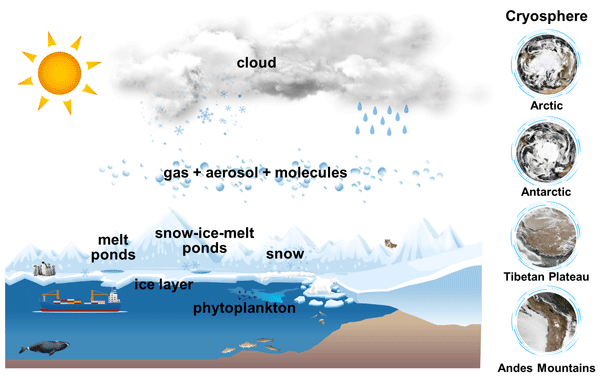
The cryosphere, including snow, ice, and melt ponds, strongly influences how sunlight is reflected and absorbed, affecting climate change. We developed a new version of radiative transfer model SCIATRAN, to better represent these complex surfaces and their interaction with the atmosphere. The model was validated using real measurements and showed good accuracy. These advances help scientists better understand climate processes in polar regions and improve satellite observations.
Robert J. Parker, Michael P. Cartwright, Dan Orr, Lakshmi N. Bharathan, Neil Humpage, Alex J. Webb, Peter Somkuti, Hartmut Boesch, Antonio Di Noia, Hiroshi Suto, Matthias Buschmann, Nicholas M. Deutscher, David W. T. Griffith, Frank Hase, Rigel Kivi, Erin McGee, Isamu Morino, Hirofumi Ohyama, Christof Petri, John Robinson, Coleen M. Roehl, Mahesh Kumar Sha, Kei Shiomi, Kimberly Strong, Ralf Sussmann, Yao Té, Voltaire A. Velazco, Mihalis Vrekoussis, Wei Wang, Thorsten Warneke, Damien Weidmann, Debra Wunch, and Minqiang Zhou
Earth Syst. Sci. Data Discuss., https://doi.org/10.5194/essd-2026-625, https://doi.org/10.5194/essd-2026-625, 2026
Preprint under review for ESSD
Short summary
Short summary
Methane is a powerful greenhouse gas and its concentration in the atmosphere is rising rapidly. We present a new record of atmospheric methane measured from space by the Japanese GOSAT-2 satellite, covering 2019 to 2025. The measurements are processed identically to those from its predecessor GOSAT and checked against ground-based instruments around the world. Together the two satellites provide a continuous 17-year record that helps track where methane comes from and how quickly it is changing.
Michael Weimer, Maximilian Reuter, Michael Hilker, Stefan Noël, Michael Buchwitz, Yasjka Meijer, Rüdiger Lang, Julia Marshall, Heinrich Bovensmann, John P. Burrows, and Hartmut Bösch
Atmos. Meas. Tech., 19, 5425–5455, https://doi.org/10.5194/amt-19-5425-2026, https://doi.org/10.5194/amt-19-5425-2026, 2026
Short summary
Short summary
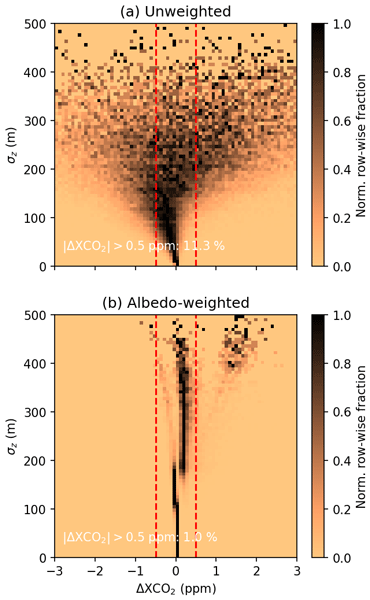
Greenhouse gas column measurements from space using reflected sunlight have to make assumptions about the Earth's surface elevation. Usually, it assumed that the elevation representing the satellite's spatial sample is the unweighted average of high-resolution surface elevation data. We find and show with many examples that the surface elevation should be weighted by the surface reflectance in the respective wavelength bands. This improves errors in the retrieval of trace gases.
Stephen J. Harris, Sven Krautwurst, Jorg Hacker, Mark Lunt, Jakob Borchardt, Mei Bai, Hartmut Boesch, Tarra Brain, John Philip Burrows, Shakti Chakravarty, Robert A. Field, Rebecca E. Fisher, James L. France, Konstantin Gerilowski, Oke Huhs, Wolfgang Junkermann, Bryce F. J. Kelly, Martin Kumm, Mathias Lanoisellé, Wolfgang Lieff, Andrew McGrath, Adrian Murphy, Thomas Röckmann, Zoe Salmon, Josua Schindewolf, Jakob Thoböll, Carina van der Veen, and Heinrich Bovensmann
Atmos. Chem. Phys., 26, 10043–10069, https://doi.org/10.5194/acp-26-10043-2026, https://doi.org/10.5194/acp-26-10043-2026, 2026
Short summary
Short summary
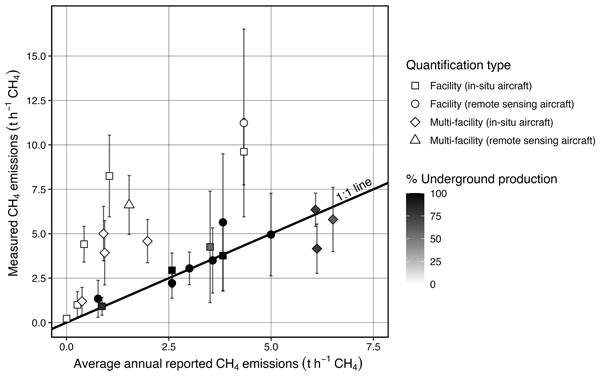
The accuracy of methods used to estimate and report fugitive methane emissions from Australian coal mines remains unclear. This study compares airborne emission rate estimates with reported estimates from 17 coal mines in the Bowen Basin, a region accounting for 45 % of national coal production. Results show good agreement for underground coal mines, but poor agreement for surface coal mines, suggesting improvements to surface coal mine reporting methods is needed to improve inventory reporting.
Liang Feng, Paul I. Palmer, Haolin Wang, Robert Parker, Hartmut Boesch, Sébastien C. Biraud, Łukasz Chmura, Emanuel Gloor, László Haszpra, Elena Kozlova, Euan G. Nisbet, Steffen M. Noe, Thomas Röckmann, Rodrigo Augusto Ferreira de Souza, and Martin Steinbacher
EGUsphere, https://doi.org/10.5194/egusphere-2026-2662, https://doi.org/10.5194/egusphere-2026-2662, 2026
Short summary
Short summary
This study examines the relative roles of emissions and oxidation in recent rapid methane growth. Using an ensemble Kalman filter, we quantify global methane sources and sinks for 2018–2024. Emission changes dominate the increase, except in 2020 when a COVID‑19‑related OH decline strongly affected sinks. Atmospheric photochemistry—including OH and CH₄ variability and temperature‑dependent oxidation—also significantly shapes the methane budget.
Alexander Mchedlishvili, Marco Vountas, and Hartmut Bösch
The Cryosphere, 20, 2895–2922, https://doi.org/10.5194/tc-20-2895-2026, https://doi.org/10.5194/tc-20-2895-2026, 2026
Short summary
Short summary
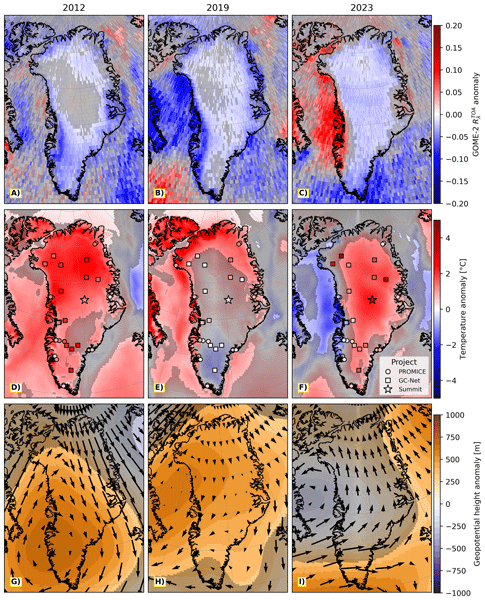
Air circulation over Greenland affects ice melt by changing temperature, moisture, and wind. We study how much sunlight the ice reflects and how this relates to extreme melting. Focusing on the summers of 2012, 2019, and 2023, we explore the weather patterns that caused unusually warm conditions and how the Greenland ice sheet responded.
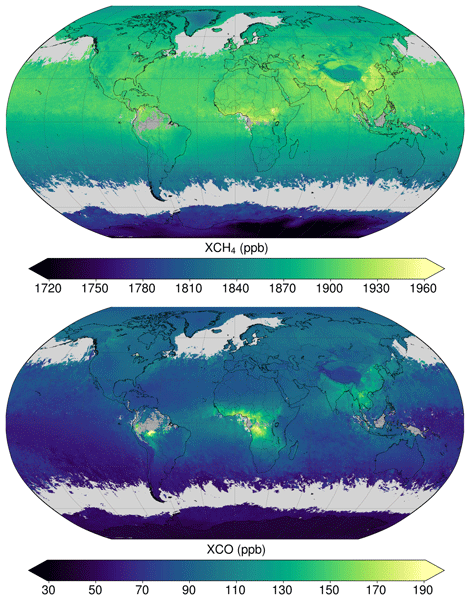
Oliver Schneising, Heinrich Bovensmann, Michael Buchwitz, Matthias Buschmann, Nicholas M. Deutscher, David W. T. Griffith, Jonas Hachmeister, Frank Hase, Laura T. Iraci, Rigel Kivi, Isamu Morino, Hirofumi Ohyama, Christof Petri, Maximilian Reuter, John Robinson, Coleen Roehl, Mahesh Kumar Sha, Kei Shiomi, Kimberly Strong, Ralf Sussmann, Yao Té, Voltaire A. Velazco, Mihalis Vrekoussis, Wei Wang, Thorsten Warneke, Damien Weidmann, Debra Wunch, Minqiang Zhou, and Hartmut Bösch
Atmos. Meas. Tech., 19, 2407–2435, https://doi.org/10.5194/amt-19-2407-2026, https://doi.org/10.5194/amt-19-2407-2026, 2026
Short summary
Short summary
We present an improved version of the TROPOMI/WFMD (TROPOspheric Monitoring Instrument/Weighting Function Modified Differential) algorithm for the simultaneous retrieval of atmospheric methane and carbon monoxide from satellite observations. The updated data product combines higher data yield with better precision and accuracy, expanding its suitability for a wider range of scientific applications. These substantial advances are mainly due to refined quality filtering, enabling more reliable identification of cloudy scenes and mitigating specific aerosol-related issues.
Lakshmi N. Bharathan, Robert J. Parker, Michael Cartwright, Dan Orr, Antonio Di Noia, Peter Somkuti, Alex Webb, and Hartmut Bösch
EGUsphere, https://doi.org/10.5194/egusphere-2026-1029, https://doi.org/10.5194/egusphere-2026-1029, 2026
Short summary
Short summary
The study aims to enhance satellite- based methane measurements over the Arctic high-latitudes, a critical region where rapid warming feeds the permafrost thawing-methane cycle and poise high concern for global climate stability. A 20 % gain in GOSAT satellite methane data throughput has been achieved using a Genetic algorithm optimisation approach, enhancing our capacity to track methane emissions over most rapidly warming, climatically sensitive regions on the Earth.
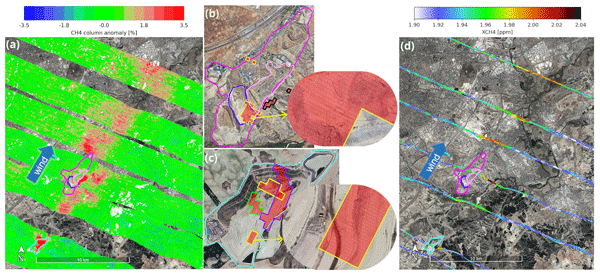
Sven Krautwurst, Christian Fruck, Sebastian Wolff, Jakob Borchardt, Oke Huhs, Konstantin Gerilowski, Michał Gałkowski, Christoph Kiemle, Mathieu Quatrevalet, Martin Wirth, Christian Mallaun, John P. Burrows, Christoph Gerbig, Andreas Fix, Hartmut Bösch, and Heinrich Bovensmann
Atmos. Chem. Phys., 25, 14669–14702, https://doi.org/10.5194/acp-25-14669-2025, https://doi.org/10.5194/acp-25-14669-2025, 2025
Short summary
Short summary
Anomalously high CH4 emissions from landfills in Madrid, Spain, have been observed by satellite measurements in recent years. Our investigations of these waste facilities, using passive and active airborne remote sensing measurements, confirm these high emission rates with values of up to 13 th−1 during the overflight and show excellent agreement between the two techniques. A large fraction of the emissions is attributed to active landfill sites.
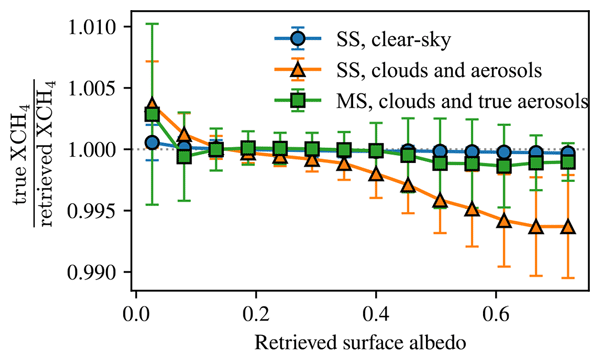
Peter Somkuti, Gregory McGarragh, Christopher O'Dell, Antonio Di Noia, Leif Vogel, Sean Crowell, Lesley E. Ott, and Hartmut Bösch
Atmos. Meas. Tech., 18, 4647–4663, https://doi.org/10.5194/amt-18-4647-2025, https://doi.org/10.5194/amt-18-4647-2025, 2025
Short summary
Short summary
In space-based estimates of atmospheric methane concentrations, one can often observe biases that look like imprints of surface features. We performed realistic simulation experiments and find the root cause to be unaccounted aerosols. Since good knowledge of aerosols is difficult to achieve for operational science data processing, we conclude that a comprehensive surface bias correction scheme is highly important for missions utilizing the 2.3 µm spectral band for methane retrievals.
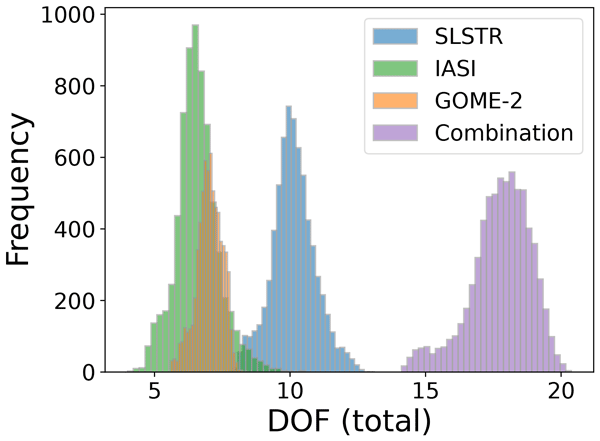
Ulrike Stöffelmair, Thomas Popp, Marco Vountas, and Hartmut Bösch
Atmos. Meas. Tech., 18, 2005–2020, https://doi.org/10.5194/amt-18-2005-2025, https://doi.org/10.5194/amt-18-2005-2025, 2025
Short summary
Short summary
Aerosol composition has a large influence on the climate system. This study uses realistic simulated scenarios to look at the information content of a combination of three satellite-based instruments (SLSTR, IASI and GOME-2). It shows that it is possible to retrieve 6 to 15 different aerosol components in addition to the aerosol optical depth (AOD) and different surface parameters. The results are used for the development of a synergistic multi-sensor retrieval algorithm.
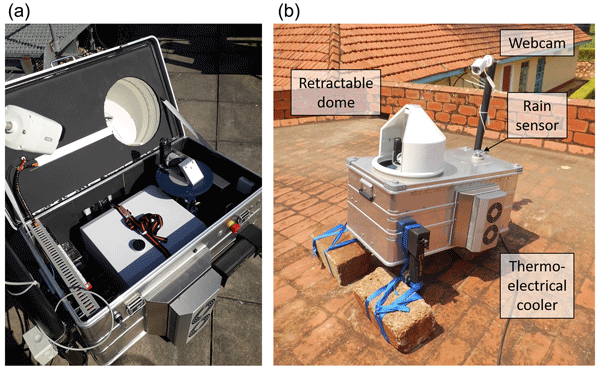
Neil Humpage, Hartmut Boesch, William Okello, Jia Chen, Florian Dietrich, Mark F. Lunt, Liang Feng, Paul I. Palmer, and Frank Hase
Atmos. Meas. Tech., 17, 5679–5707, https://doi.org/10.5194/amt-17-5679-2024, https://doi.org/10.5194/amt-17-5679-2024, 2024
Short summary
Short summary
We used a Bruker EM27/SUN spectrometer within an automated weatherproof enclosure to measure greenhouse gas column concentrations over a 3-month period in Jinja, Uganda. The portability of the EM27/SUN allows us to evaluate satellite and model data in locations not covered by traditional validation networks. This is of particular value in tropical Africa, where extensive terrestrial ecosystems are a significant store of carbon and play a key role in the atmospheric budgets of CO2 and CH4.
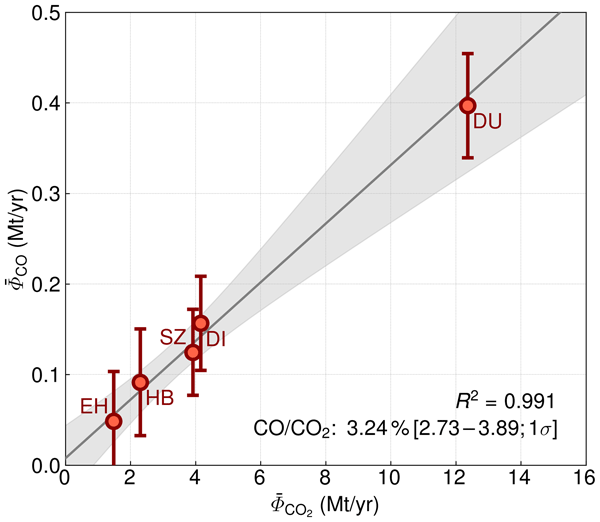
Oliver Schneising, Michael Buchwitz, Maximilian Reuter, Michael Weimer, Heinrich Bovensmann, John P. Burrows, and Hartmut Bösch
Atmos. Chem. Phys., 24, 7609–7621, https://doi.org/10.5194/acp-24-7609-2024, https://doi.org/10.5194/acp-24-7609-2024, 2024
Short summary
Short summary
Large quantities of CO and CO2 are emitted during conventional steel production. As satellite-based estimates of CO2 emissions at the facility level are challenging, co-emitted CO can indicate the carbon footprint of steel plants. We estimate CO emissions for German steelworks and use CO2 emissions from emissions trading data to derive a sector-specific CO/CO2 emission ratio for the steel industry; it is a prerequisite to use CO as a proxy for CO2 emissions from similar steel production sites.
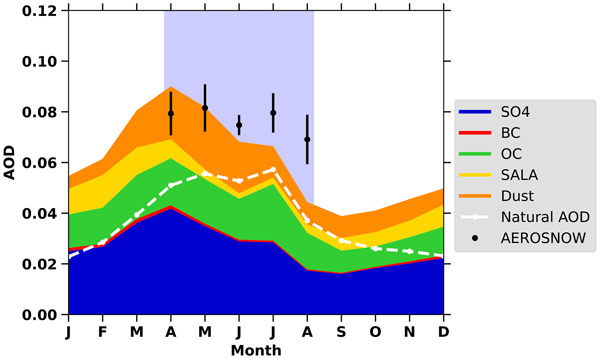
Basudev Swain, Marco Vountas, Aishwarya Singh, Nidhi L. Anchan, Adrien Deroubaix, Luca Lelli, Yanick Ziegler, Sachin S. Gunthe, Hartmut Bösch, and John P. Burrows
Atmos. Chem. Phys., 24, 5671–5693, https://doi.org/10.5194/acp-24-5671-2024, https://doi.org/10.5194/acp-24-5671-2024, 2024
Short summary
Short summary
Arctic amplification (AA) accelerates the warming of the central Arctic cryosphere and affects aerosol dynamics. Limited observations hinder a comprehensive analysis. This study uses AEROSNOW aerosol optical density (AOD) data and GEOS-Chem simulations to assess AOD variability. Discrepancies highlight the need for improved observational integration into models to refine our understanding of aerosol effects on cloud microphysics, ice nucleation, and radiative forcing under evolving AA.
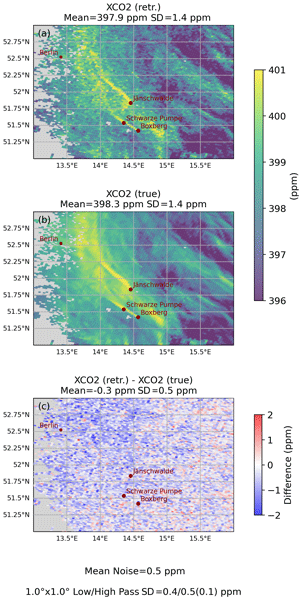
Stefan Noël, Michael Buchwitz, Michael Hilker, Maximilian Reuter, Michael Weimer, Heinrich Bovensmann, John P. Burrows, Hartmut Bösch, and Ruediger Lang
Atmos. Meas. Tech., 17, 2317–2334, https://doi.org/10.5194/amt-17-2317-2024, https://doi.org/10.5194/amt-17-2317-2024, 2024
Short summary
Short summary
FOCAL-CO2M is one of the three operational retrieval algorithms which will be used to derive XCO2 and XCH4 from measurements of the forthcoming European CO2M mission. We present results of applications of FOCAL-CO2M to simulated spectra, from which confidence is gained that the algorithm is able to fulfil the challenging requirements on systematic errors for the CO2M mission (spatio-temporal bias ≤ 0.5 ppm for XCO2 and ≤ 5 ppb for XCH4).
Blanca Fuentes Andrade, Michael Buchwitz, Maximilian Reuter, Heinrich Bovensmann, Andreas Richter, Hartmut Boesch, and John P. Burrows
Atmos. Meas. Tech., 17, 1145–1173, https://doi.org/10.5194/amt-17-1145-2024, https://doi.org/10.5194/amt-17-1145-2024, 2024
Short summary
Short summary
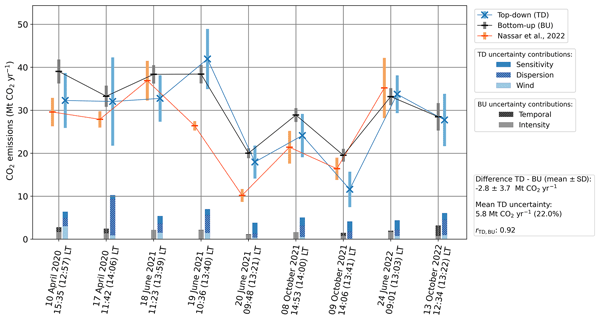
We developed a method to estimate CO2 emissions from localized sources, such as power plants, using satellite data and applied it to estimate CO2 emissions from the Bełchatów Power Station (Poland). As the detection of CO2 emission plumes from satellite data is difficult, we used observations of co-emitted NO2 to constrain the emission plume region. Our results agree with CO2 emission estimations based on the power-plant-generated power and emission factors.
Basudev Swain, Marco Vountas, Adrien Deroubaix, Luca Lelli, Yanick Ziegler, Soheila Jafariserajehlou, Sachin S. Gunthe, Andreas Herber, Christoph Ritter, Hartmut Bösch, and John P. Burrows
Atmos. Meas. Tech., 17, 359–375, https://doi.org/10.5194/amt-17-359-2024, https://doi.org/10.5194/amt-17-359-2024, 2024
Short summary
Short summary
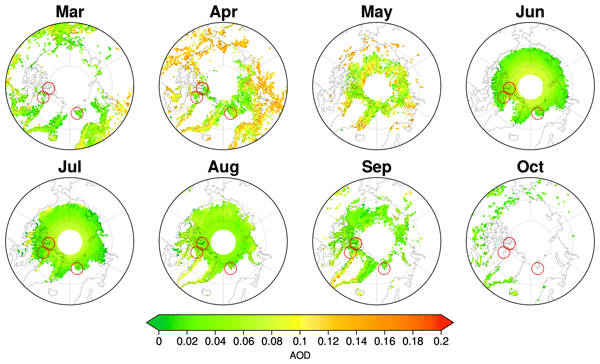
Aerosols are suspensions of particles dispersed in the air. In this study, we use a novel retrieval of satellite data to investigate an optical property of aerosols, the aerosol optical depth, in the high Arctic to assess their direct and indirect roles in climate change. This study demonstrates that the presented approach shows good quality and very promising potential.
Olivia Linke, Johannes Quaas, Finja Baumer, Sebastian Becker, Jan Chylik, Sandro Dahlke, André Ehrlich, Dörthe Handorf, Christoph Jacobi, Heike Kalesse-Los, Luca Lelli, Sina Mehrdad, Roel A. J. Neggers, Johannes Riebold, Pablo Saavedra Garfias, Niklas Schnierstein, Matthew D. Shupe, Chris Smith, Gunnar Spreen, Baptiste Verneuil, Kameswara S. Vinjamuri, Marco Vountas, and Manfred Wendisch
Atmos. Chem. Phys., 23, 9963–9992, https://doi.org/10.5194/acp-23-9963-2023, https://doi.org/10.5194/acp-23-9963-2023, 2023
Short summary
Short summary
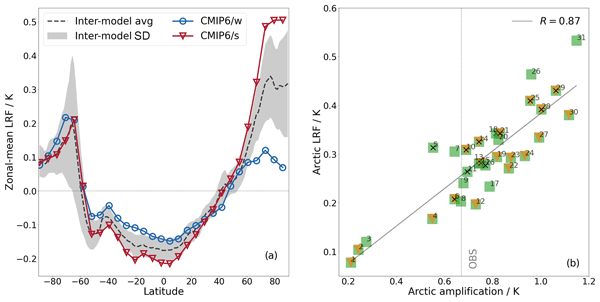
Lapse rate feedback (LRF) is a major driver of the Arctic amplification (AA) of climate change. It arises because the warming is stronger at the surface than aloft. Several processes can affect the LRF in the Arctic, such as the omnipresent temperature inversion. Here, we compare multimodel climate simulations to Arctic-based observations from a large research consortium to broaden our understanding of these processes, find synergy among them, and constrain the Arctic LRF and AA.
Nicholas Balasus, Daniel J. Jacob, Alba Lorente, Joannes D. Maasakkers, Robert J. Parker, Hartmut Boesch, Zichong Chen, Makoto M. Kelp, Hannah Nesser, and Daniel J. Varon
Atmos. Meas. Tech., 16, 3787–3807, https://doi.org/10.5194/amt-16-3787-2023, https://doi.org/10.5194/amt-16-3787-2023, 2023
Short summary
Short summary
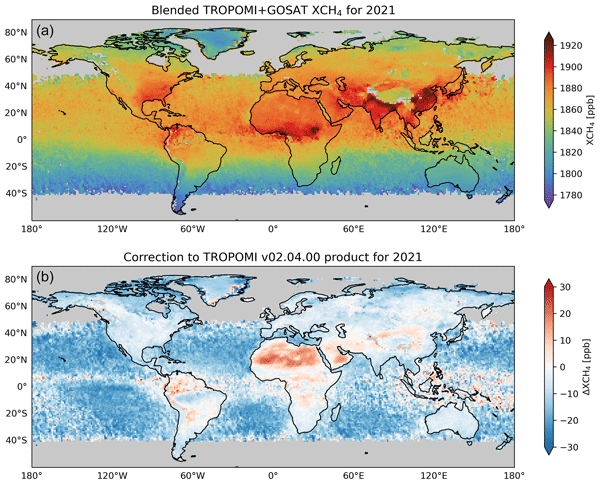
We use machine learning to remove biases in TROPOMI satellite observations of atmospheric methane, with GOSAT observations serving as a reference. We find that the TROPOMI biases relative to GOSAT are related to the presence of aerosols and clouds, the surface brightness, and the specific detector that makes the observation aboard TROPOMI. The resulting blended TROPOMI+GOSAT product is more reliable for quantifying methane emissions.
Ruosi Liang, Yuzhong Zhang, Wei Chen, Peixuan Zhang, Jingran Liu, Cuihong Chen, Huiqin Mao, Guofeng Shen, Zhen Qu, Zichong Chen, Minqiang Zhou, Pucai Wang, Robert J. Parker, Hartmut Boesch, Alba Lorente, Joannes D. Maasakkers, and Ilse Aben
Atmos. Chem. Phys., 23, 8039–8057, https://doi.org/10.5194/acp-23-8039-2023, https://doi.org/10.5194/acp-23-8039-2023, 2023
Short summary
Short summary
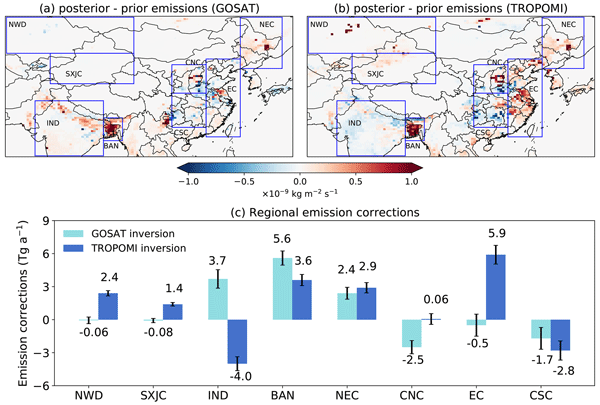
We compare and evaluate East Asian methane emissions inferred from different satellite observations (GOSAT and TROPOMI). The results show discrepancies over northern India and eastern China. Independent ground-based observations are more consistent with TROPOMI-derived emissions in northern India and GOSAT-derived emissions in eastern China.
Kameswara S. Vinjamuri, Marco Vountas, Luca Lelli, Martin Stengel, Matthew D. Shupe, Kerstin Ebell, and John P. Burrows
Atmos. Meas. Tech., 16, 2903–2918, https://doi.org/10.5194/amt-16-2903-2023, https://doi.org/10.5194/amt-16-2903-2023, 2023
Short summary
Short summary
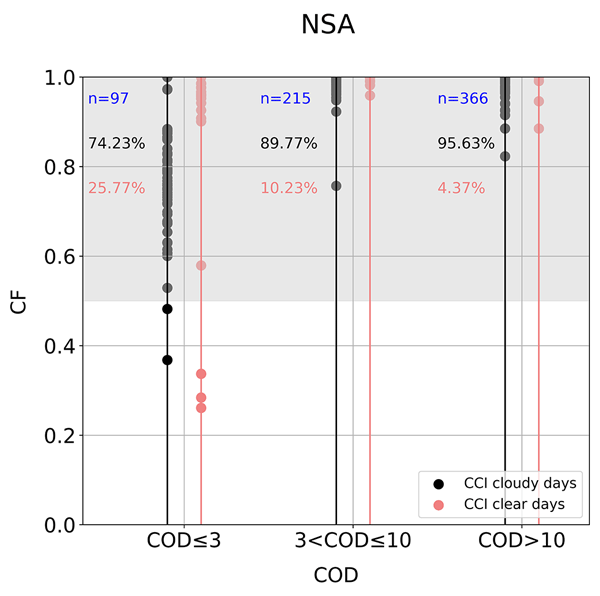
Clouds play an important role in Arctic amplification. Cloud data from ground-based sites are valuable but cannot represent the whole Arctic. Therefore the use of satellite products is a measure to cover the entire Arctic. However, the quality of such cloud measurements from space is not well known. The paper discusses the differences and commonalities between satellite and ground-based measurements. We conclude that the satellite dataset, with a few exceptions, can be used in the Arctic.
Basudev Swain, Marco Vountas, Adrien Deroubaix, Luca Lelli, Aishwarya Singh, Yanick Ziegler, Sachin S. Gunthe, and John P. Burrows
EGUsphere, https://doi.org/10.5194/egusphere-2023-730, https://doi.org/10.5194/egusphere-2023-730, 2023
Preprint archived
Short summary
Short summary
Aerosols are suspensions of particles distributed in the air. Depending on their chemical composition, they scatter and/or absorb sunlight and thus cool or warm the earth's atmosphere and its surface. They also provide as a surface in the atmosphere upon which ice or liquid clouds droplets nucleate and grow. In this study, we use satellite observations and model simulations to investigate the properties of aerosols with the goal of assessing their direct and indirect role in climate change.
Peter Joyce, Cristina Ruiz Villena, Yahui Huang, Alex Webb, Manuel Gloor, Fabien H. Wagner, Martyn P. Chipperfield, Rocío Barrio Guilló, Chris Wilson, and Hartmut Boesch
Atmos. Meas. Tech., 16, 2627–2640, https://doi.org/10.5194/amt-16-2627-2023, https://doi.org/10.5194/amt-16-2627-2023, 2023
Short summary
Short summary
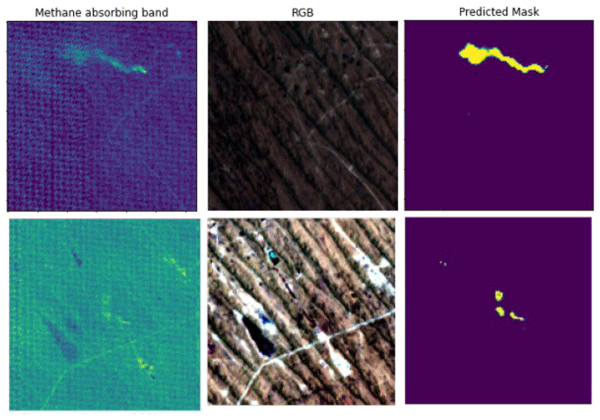
Methane emissions are responsible for a lot of the warming caused by the greenhouse effect, much of which comes from a small number of point sources. We can identify methane point sources by analysing satellite data, but it requires a lot of time invested by experts and is prone to very high errors. Here, we produce a neural network that can automatically identify methane point sources and estimate the mass of methane that is being released per hour and are able to do so with far smaller errors.
Liang Feng, Paul I. Palmer, Robert J. Parker, Mark F. Lunt, and Hartmut Bösch
Atmos. Chem. Phys., 23, 4863–4880, https://doi.org/10.5194/acp-23-4863-2023, https://doi.org/10.5194/acp-23-4863-2023, 2023
Short summary
Short summary
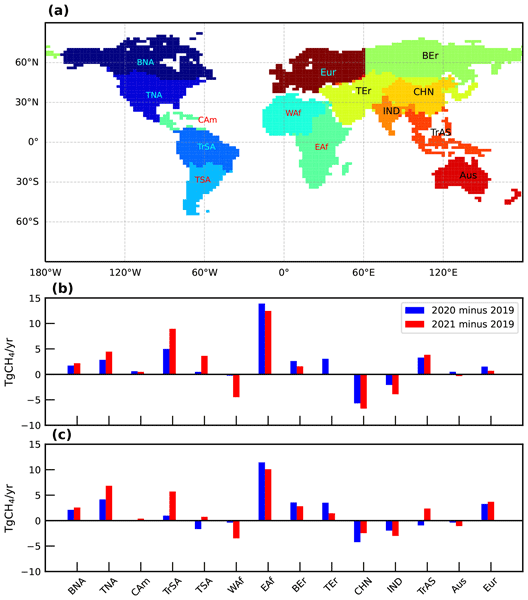
Our understanding of recent changes in atmospheric methane has defied explanation. Since 2007, the atmospheric growth of methane has accelerated to record-breaking values in 2020 and 2021. We use satellite observations of methane to show that (1) increasing emissions over the tropics are mostly responsible for these recent atmospheric changes, and (2) changes in the OH sink during the 2020 Covid-19 lockdown can explain up to 34% of changes in atmospheric methane for that year.
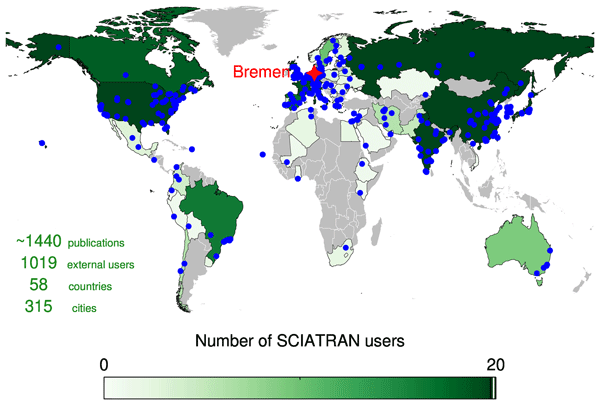
Linlu Mei, Vladimir Rozanov, Alexei Rozanov, and John P. Burrows
Geosci. Model Dev., 16, 1511–1536, https://doi.org/10.5194/gmd-16-1511-2023, https://doi.org/10.5194/gmd-16-1511-2023, 2023
Short summary
Short summary
This paper summarizes recent developments of aerosol, cloud and surface reflectance databases and models in the framework of the software package SCIATRAN. These updates and developments extend the capabilities of the radiative transfer modeling, especially by accounting for different kinds of vertical inhomogeneties. Vertically inhomogeneous clouds and different aerosol types can be easily accounted for within SCIATRAN (V4.6). The widely used surface models and databases are now available.

Luca Lelli, Marco Vountas, Narges Khosravi, and John Philipp Burrows
Atmos. Chem. Phys., 23, 2579–2611, https://doi.org/10.5194/acp-23-2579-2023, https://doi.org/10.5194/acp-23-2579-2023, 2023
Short summary
Short summary
Arctic amplification describes the recent period in which temperatures have been rising twice as fast as or more than the global average and sea ice and the Greenland ice shelf are approaching a tipping point. Hence, the Arctic ability to reflect solar energy decreases and absorption by the surface increases. Using 2 decades of complementary satellite data, we discover that clouds unexpectedly increase the pan-Arctic reflectance by increasing their liquid water content, thus cooling the Arctic.
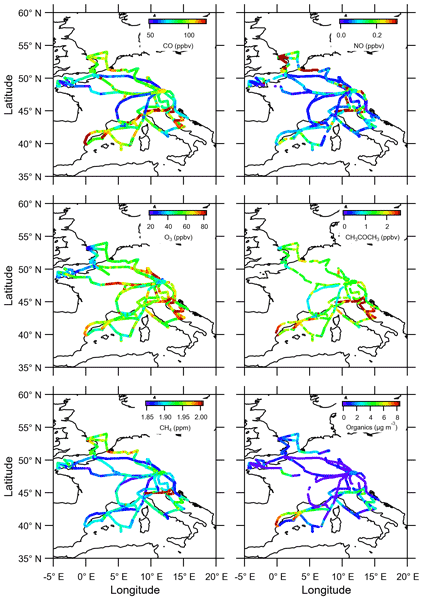
M. Dolores Andrés Hernández, Andreas Hilboll, Helmut Ziereis, Eric Förster, Ovid O. Krüger, Katharina Kaiser, Johannes Schneider, Francesca Barnaba, Mihalis Vrekoussis, Jörg Schmidt, Heidi Huntrieser, Anne-Marlene Blechschmidt, Midhun George, Vladyslav Nenakhov, Theresa Harlass, Bruna A. Holanda, Jennifer Wolf, Lisa Eirenschmalz, Marc Krebsbach, Mira L. Pöhlker, Anna B. Kalisz Hedegaard, Linlu Mei, Klaus Pfeilsticker, Yangzhuoran Liu, Ralf Koppmann, Hans Schlager, Birger Bohn, Ulrich Schumann, Andreas Richter, Benjamin Schreiner, Daniel Sauer, Robert Baumann, Mariano Mertens, Patrick Jöckel, Markus Kilian, Greta Stratmann, Christopher Pöhlker, Monica Campanelli, Marco Pandolfi, Michael Sicard, José L. Gómez-Amo, Manuel Pujadas, Katja Bigge, Flora Kluge, Anja Schwarz, Nikos Daskalakis, David Walter, Andreas Zahn, Ulrich Pöschl, Harald Bönisch, Stephan Borrmann, Ulrich Platt, and John P. Burrows
Atmos. Chem. Phys., 22, 5877–5924, https://doi.org/10.5194/acp-22-5877-2022, https://doi.org/10.5194/acp-22-5877-2022, 2022
Short summary
Short summary
EMeRGe provides a unique set of in situ and remote sensing airborne measurements of trace gases and aerosol particles along selected flight routes in the lower troposphere over Europe. The interpretation uses also complementary collocated ground-based and satellite measurements. The collected data help to improve the current understanding of the complex spatial distribution of trace gases and aerosol particles resulting from mixing, transport, and transformation of pollution plumes over Europe.
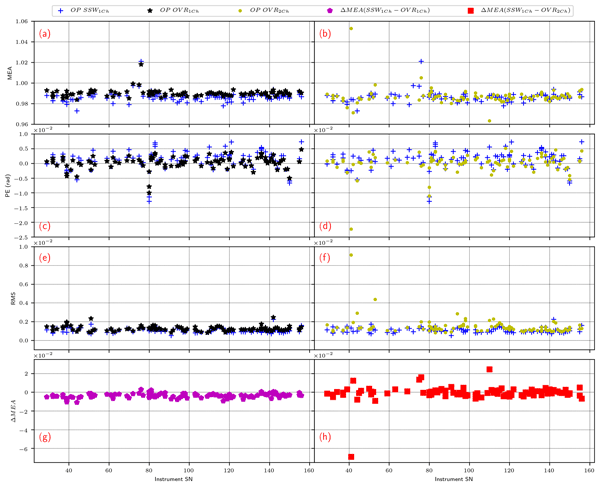
Carlos Alberti, Frank Hase, Matthias Frey, Darko Dubravica, Thomas Blumenstock, Angelika Dehn, Paolo Castracane, Gregor Surawicz, Roland Harig, Bianca C. Baier, Caroline Bès, Jianrong Bi, Hartmut Boesch, André Butz, Zhaonan Cai, Jia Chen, Sean M. Crowell, Nicholas M. Deutscher, Dragos Ene, Jonathan E. Franklin, Omaira García, David Griffith, Bruno Grouiez, Michel Grutter, Abdelhamid Hamdouni, Sander Houweling, Neil Humpage, Nicole Jacobs, Sujong Jeong, Lilian Joly, Nicholas B. Jones, Denis Jouglet, Rigel Kivi, Ralph Kleinschek, Morgan Lopez, Diogo J. Medeiros, Isamu Morino, Nasrin Mostafavipak, Astrid Müller, Hirofumi Ohyama, Paul I. Palmer, Mahesh Pathakoti, David F. Pollard, Uwe Raffalski, Michel Ramonet, Robbie Ramsay, Mahesh Kumar Sha, Kei Shiomi, William Simpson, Wolfgang Stremme, Youwen Sun, Hiroshi Tanimoto, Yao Té, Gizaw Mengistu Tsidu, Voltaire A. Velazco, Felix Vogel, Masataka Watanabe, Chong Wei, Debra Wunch, Marcia Yamasoe, Lu Zhang, and Johannes Orphal
Atmos. Meas. Tech., 15, 2433–2463, https://doi.org/10.5194/amt-15-2433-2022, https://doi.org/10.5194/amt-15-2433-2022, 2022
Short summary
Short summary
Space-borne greenhouse gas missions require ground-based validation networks capable of providing fiducial reference measurements. Here, considerable refinements of the calibration procedures for the COllaborative Carbon Column Observing Network (COCCON) are presented. Laboratory and solar side-by-side procedures for the characterization of the spectrometers have been refined and extended. Revised calibration factors for XCO2, XCO and XCH4 are provided, incorporating 47 new spectrometers.
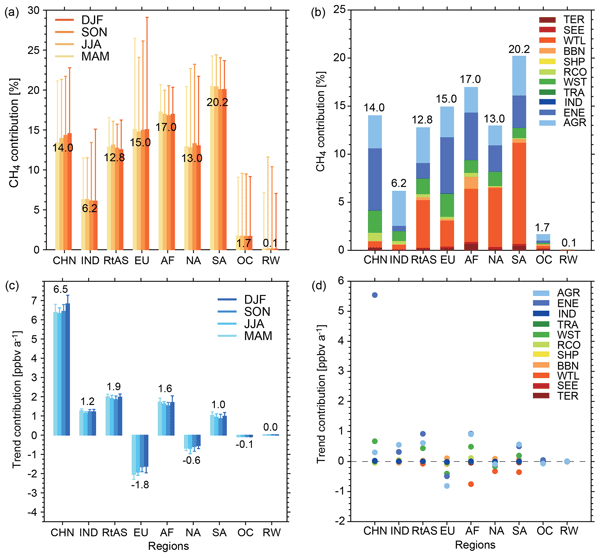
Haiyue Tan, Lin Zhang, Xiao Lu, Yuanhong Zhao, Bo Yao, Robert J. Parker, and Hartmut Boesch
Atmos. Chem. Phys., 22, 1229–1249, https://doi.org/10.5194/acp-22-1229-2022, https://doi.org/10.5194/acp-22-1229-2022, 2022
Short summary
Short summary
Methane is the second most important anthropogenic greenhouse gas. Understanding methane emissions and concentration growth over China in the past decade is important to support its mitigation. This study analyzes the contributions of methane emissions from different regions and sources over the globe to methane changes over China in 2007–2018. Our results show strong international transport influences and emphasize the need of intensive methane measurements covering eastern China.

Xiao Lu, Daniel J. Jacob, Haolin Wang, Joannes D. Maasakkers, Yuzhong Zhang, Tia R. Scarpelli, Lu Shen, Zhen Qu, Melissa P. Sulprizio, Hannah Nesser, A. Anthony Bloom, Shuang Ma, John R. Worden, Shaojia Fan, Robert J. Parker, Hartmut Boesch, Ritesh Gautam, Deborah Gordon, Michael D. Moran, Frances Reuland, Claudia A. Octaviano Villasana, and Arlyn Andrews
Atmos. Chem. Phys., 22, 395–418, https://doi.org/10.5194/acp-22-395-2022, https://doi.org/10.5194/acp-22-395-2022, 2022
Short summary
Short summary
We evaluate methane emissions and trends for 2010–2017 in the gridded national emission inventories for the United States, Canada, and Mexico by inversion of in situ and satellite methane observations. We find that anthropogenic methane emissions for all three countries are underestimated in the national inventories, largely driven by oil emissions. Anthropogenic methane emissions in the US peak in 2014, in contrast to the report of a steadily decreasing trend over 2010–2017 from the US EPA.

Mark F. Lunt, Alistair J. Manning, Grant Allen, Tim Arnold, Stéphane J.-B. Bauguitte, Hartmut Boesch, Anita L. Ganesan, Aoife Grant, Carole Helfter, Eiko Nemitz, Simon J. O'Doherty, Paul I. Palmer, Joseph R. Pitt, Chris Rennick, Daniel Say, Kieran M. Stanley, Ann R. Stavert, Dickon Young, and Matt Rigby
Atmos. Chem. Phys., 21, 16257–16276, https://doi.org/10.5194/acp-21-16257-2021, https://doi.org/10.5194/acp-21-16257-2021, 2021
Short summary
Short summary
We present an evaluation of the UK's methane emissions between 2013 and 2020 using a network of tall tower measurement sites. We find emissions that are consistent in both magnitude and trend with the UK's reported emissions, with a declining trend driven by a decrease in emissions from England. The impact of various components of the modelling set-up on these findings are explored through a number of sensitivity studies.
Cited articles
Calassou, G., Foucher, P.-Y., and Léon, J.-F.: Quantifying particulate matter optical properties and flow rate in industrial stack plumes from the PRISMA hyperspectral imager, Atmos. Meas. Tech., 17, 57–71, https://doi.org/10.5194/amt-17-57-2024, 2024. a
Chabrillat, S., Foerster, S., Segl, K., Beamish, A., Brell, M., Asadzadeh, S., Milewski, R., Ward, K. J., Brosinsky, A., Koch, K., Scheffler, D., Guillaso, S., Kokhanovsky, A., Roessner, S., Guanter, L., Kaufmann, H., Pinnel, N., Carmona, E., Storch, T., Hank, T., Berger, K., Wocher, M., Hostert, P., van der Linden, S., Okujeni, A., Janz, A., Jakimow, B., Bracher, A., Soppa, M. A., Alvarado, L. M. A., Buddenbaum, H., Heim, B., Heiden, U., Moreno, J., Ong, C., Bohn, N., Green, R. O., Bachmann, M., Kokaly, R., Schodlok, M., Painter, T. H., Gascon, F., Buongiorno, F., Mottus, M., Brando, V. E., Feilhauer, H., Betz, M., Baur, S., Feckl, R., Schickling, A., Krieger, V., Bock, M., La Porta, L., and Fischer, S.: The EnMAP spaceborne imaging spectroscopy mission: initial scientific results two years after launch, Remote Sens. Environ., 315, https://doi.org/10.1016/j.rse.2024.114379, 2024. a
Di Antonio, L., Di Biagio, C., Foret, G., Formenti, P., Siour, G., Doussin, J.-F., and Beekmann, M.: Aerosol optical depth climatology from the high-resolution MAIAC product over Europe: differences between major European cities and their surrounding environments, Atmos. Chem. Phys., 23, 12455–12475, https://doi.org/10.5194/acp-23-12455-2023, 2023. a
Fröhlich, C. and Shaw, G. E.: New determination of Rayleigh scattering in the terrestrial atmosphere, Appl. Optics, 19, 1773, https://doi.org/10.1364/AO.19.001773, 1980. a
Gatebe, C. K. and King, M. D.: Airborne spectral BRDF of various surface types (ocean, vegetation, snow, desert, wetlands, cloud decks, smoke layers) for remote sensing applications, Remote Sens. Environ., 179, https://doi.org/10.1016/j.rse.2016.03.029, 2016. a
Gupta, P., Remer, L. A., Levy, R. C., and Mattoo, S.: Validation of MODIS 3 km land aerosol optical depth from NASA's EOS Terra and Aqua missions, Atmos. Meas. Tech., 11, 3145–3159, https://doi.org/10.5194/amt-11-3145-2018, 2018. a
Holben, B. N., Eck, T. F., Slutsker, I., Tanre, D., Buis, J. P., Setzer, A., Vermote, E., Reagan, J. A., Kaufman, Y. J., Nakajima, T., Lavenu, F., Jankowiak, I., and Smirnov, A.: AERONET – a federated instrument network and data archive for aerosol characterization, Remote Sens. Environ., 66, https://doi.org/10.1016/S0034-4257(98)00031-5, 1998. a
Hsu, N. C., Jeong, M.-J., Bettenhausen, C., Sayer, A. M., Hansell, R., Seftor, C. S., Huang, J., and Tsay, S.-C.: Enhanced Deep Blue aerosol retrieval algorithm: the second generation, J. Geophys. Res.-Atmos., 118, https://doi.org/10.1002/jgrd.50712, 2013. a
Hsu, N. C., Lee, J., Sayer, A. M., Carletta, N., Chen, S.-H., Tucker, C. J., Holben, B. N., and Tsay, S.-C.: Retrieving near-global aerosol loading over land and ocean from AVHRR, J. Geophys. Res.-Atmos., 122, https://doi.org/10.1002/2017JD026932, 2017. a
Ichoku, C., Chu, D. A., Mattoo, S., Kaufman, Y. J., Remer, L. A., Tanré, D., Slutsker, I., and Holben, B. N.: A spatio-temporal approach for global validation and analysis of MODIS aerosol products, Geophys. Res. Lett., 29, https://doi.org/10.1029/2001GL013206, 2002. a, b, c
Isakov, V. Y., Feind, R. E., Vasilyev, O. B., and Welch, R. M.: Retrieval of aerosol spectral optical thickness from AVIRIS data, Int. J. Remote Sens., 17, https://doi.org/10.1080/01431169608948764, 1996. a
Kaufman, Y. J., Tanré, D., Remer, L. A., Vermote, E. F., Chu, A., and Holben, B. N.: Operational remote sensing of tropospheric aerosol over land from EOS moderate resolution imaging spectroradiometer, J. Geophys. Res.-Atmos., 102, 17051–17067, https://doi.org/10.1029/96JD03988, 1997. a, b
Kolmonen, P., Sogacheva, L., Virtanen, T. H., de Leeuw, G., and Kulmala, M.: The ADV/ASV AATSR aerosol retrieval algorithm: current status and presentation of a full-mission AOD dataset, Int. J. Digit. Earth, 9, https://doi.org/10.1080/17538947.2015.1111450, 2016. a
Ku, H. H.: Notes on the use of propagation of error formulas, J. Res. Natl. Bur. Stand., Sect. C, 70C, 263–273, 1966. a
LeBlanc, S. E., Segal-Rozenhaimer, M., Redemann, J., Flynn, C., Johnson, R. R., Dunagan, S. E., Dahlgren, R., Kim, J., Choi, M., da Silva, A., Castellanos, P., Tan, Q., Ziemba, L., Lee Thornhill, K., and Kacenelenbogen, M.: Airborne observations during KORUS-AQ show that aerosol optical depths are more spatially self-consistent than aerosol intensive properties, Atmos. Chem. Phys., 22, 11275–11304, https://doi.org/10.5194/acp-22-11275-2022, 2022. a
Levy, R. C., Mattoo, S., Munchak, L. A., Remer, L. A., Sayer, A. M., Patadia, F., and Hsu, N. C.: The Collection 6 MODIS aerosol products over land and ocean, Atmos. Meas. Tech., 6, 2989–3034, https://doi.org/10.5194/amt-6-2989-2013, 2013. a
Lyapustin, A., Wang, Y., Korkin, S., and Huang, D.: MODIS Collection 6 MAIAC algorithm, Atmos. Meas. Tech., 11, 5741–5765, https://doi.org/10.5194/amt-11-5741-2018, 2018. a
Mei, L., Vountas, M., Gómez-Chova, L., Rozanov, V., Jäger, M., Lotz, W., Burrows, J. P., and Hollmann, R.: A cloud masking algorithm for the XBAER aerosol retrieval using MERIS data, Remote Sens. Environ., 197, 141–160, https://doi.org/10.1016/j.rse.2016.11.016, 2017b. a, b, c, d
Mei, L., Rozanov, V., Vountas, M., Burrows, J. P., and Richter, A.: XBAER-derived aerosol optical thickness from OLCI/Sentinel-3 observation, Atmos. Chem. Phys., 18, 2511–2523, https://doi.org/10.5194/acp-18-2511-2018, 2018. a, b, c, d
Mei, L., Rozanov, V., Jethva, H., Meyer, K. G., Lelli, L., Vountas, M., and Burrows, J. P.: Extending XBAER algorithm to aerosol and cloud condition, IEEE T. Geosci. Remote, 57, 8262–8275, https://doi.org/10.1109/TGRS.2019.2919910, 2019. a
Ou, Y., Chen, F., Zhao, W., Yan, X., and Zhang, Q.: Landsat 8-based inversion methods for aerosol optical depths in the Beijing area, Atmos. Pollut. Res., 8, https://doi.org/10.1016/j.apr.2016.09.004, 2017. a
Mei, L., Rozanov, V., Rozanov, A., and Burrows, J. P.: SCIATRAN software package (V4.6): update and further development of aerosol, clouds, surface reflectance databases and models, Geosci. Model Dev., 16, 1511–1536, https://doi.org/10.5194/gmd-16-1511-2023, 2023. a
Sorooshian, A., Siu, L. W., Butler, K., Brunke, M. A., Cairns, B., Chellappan, S., Chen, J., Choi, Y., Crosbie, E. C., Cutler, L., DiGangi, J. P., Diskin, G. S., Ferrare, R. A., Hair, J. W., Hostetler, C. A., Kirschler, S., Kleb, M. M., Li, X.-Y., Liu, H., McComiskey, A., Namdari, S., Painemal, D., Schlosser, J. S., Shingler, T., Shook, M. A., Silva, S., Sinclair, K., Smith, W. L. J., Soloff, C., Stamnes, S., Tang, S., Thornhill, K. L., Tornow, F., Tselioudis, G., Van Diedenhoven, B., Voigt, C., Vömel, H., Wang, H., Winstead, E. L., Xu, Y., Zeng, X., Zhang, B., Ziemba, L. D., and Zuidema, P.: The NASA ACTIVATE Mission, B. Am. Meteorol. Soc., 106, https://doi.org/10.1175/BAMS-D-24-0136.1, 2025. a
Storch, T., Honold, H.-P., Chabrillat, S., Habermeyer, M., Tucker, P., Brell, M., Ohndorf, A., Wirth, K., Betz, M., Kuchler, M., Mühle, H., Carmona, E., Baur, S., Mücke, M., Löw, S., Schulze, D., Zimmermann, S., Lenzen, C., Wiesner, S., Aida, S., Kahle, R., Willburger, P., Hartung, S., Dietrich, D., Plesia, N., Tegler, M., Schork, K., Alonso, K., Marshall, D., Gerasch, B., Schwind, P., Pato, M., Schneider, M., de los Reyes, R., Langheinrich, M., Wenzel, J., Bachmann, M., Holzwarth, S., Pinnel, N., Guanter, L., Segl, K., Scheffler, D., Foerster, S., Bohn, N., Bracher, A., Soppa, M. A., Gascon, F., Green, R., Kokaly, R., Moreno, J., Ong, C., Sornig, M., Wernitz, R., Bagschik, K., Reintsema, D., La Porta, L., Schickling, A., and Fischer, S.: The EnMAP imaging spectroscopy mission towards operations, Remote Sens. Environ., 294, https://doi.org/10.1016/j.rse.2023.113632, 2023. a
Wei, X., Chang, N.-B., Bai, K., and Gao, W.: Satellite remote sensing of aerosol optical depth: advances, challenges, and perspectives, Crit. Rev. Env. Sci. Technol., 50, 1640–1725, https://doi.org/10.1080/10643389.2019.1665944, 2020. a
Yang, Y., Chen, Y., Yang, K., Cermak, J., and Chen, Y.: High-resolution aerosol retrieval over urban areas using Sentinel-2 data, Atmos. Res., 264, https://doi.org/10.1016/j.atmosres.2021.105829, 2021. a
Short summary
Aerosol are particles in the atmosphere such as dust, salt, soot and sulfates. They may be measured by applying algorithms to satellite images of the Earth. We attempt to apply data from the new Environmental Mapping and Analysis Program (EnMAP) satellite to the existing XBAER algorithm, which was previously applied to data from the Ocean Land and Colour Instrument (OLCI) satellite. This paper compares the satellite inputs and aerosol outputs of the XBAER algorithm and finds good results.
Aerosol are particles in the atmosphere such as dust, salt, soot and sulfates. They may be...


