
Articles | Volume 19, issue 9
https://doi.org/10.5194/amt-19-3095-2026
© Author(s) 2026. This work is distributed under
the Creative Commons Attribution 4.0 License.
the Creative Commons Attribution 4.0 License.
https://doi.org/10.5194/amt-19-3095-2026
© Author(s) 2026. This work is distributed under
the Creative Commons Attribution 4.0 License.
the Creative Commons Attribution 4.0 License.
Research article
| 
11 May 2026
Research article |
| 11 May 2026
| 11 May 2026
A hybrid optimal estimation and machine learning approach to predict atmospheric composition

Jet Propulsion Laboratory, California Institute of Technology, 4800 Oak Grove Drive, Pasadena, CA 91109, USA
Kevin W. Bowman
Jet Propulsion Laboratory, California Institute of Technology, 4800 Oak Grove Drive, Pasadena, CA 91109, USA
Seungwon Lee
Jet Propulsion Laboratory, California Institute of Technology, 4800 Oak Grove Drive, Pasadena, CA 91109, USA
Joshua L. Laughner
Jet Propulsion Laboratory, California Institute of Technology, 4800 Oak Grove Drive, Pasadena, CA 91109, USA
Vivienne H. Payne
Jet Propulsion Laboratory, California Institute of Technology, 4800 Oak Grove Drive, Pasadena, CA 91109, USA
James L. McDuffie
Jet Propulsion Laboratory, California Institute of Technology, 4800 Oak Grove Drive, Pasadena, CA 91109, USA
Related authors
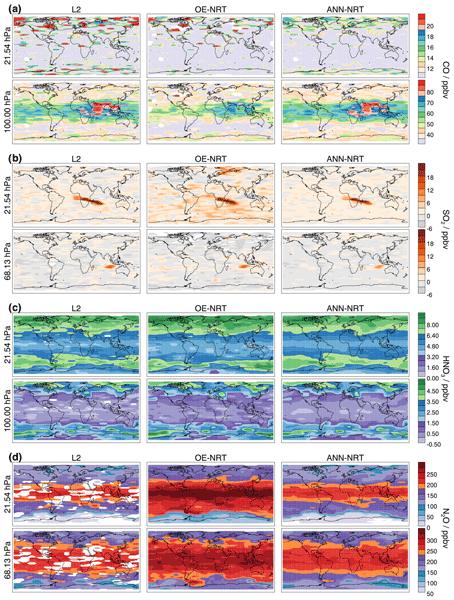
Frank Werner, Nathaniel J. Livesey, Luis F. Millán, William G. Read, Michael J. Schwartz, Paul A. Wagner, William H. Daffer, Alyn Lambert, Sasha N. Tolstoff, and Michelle L. Santee
Atmos. Meas. Tech., 16, 2733–2751, https://doi.org/10.5194/amt-16-2733-2023, https://doi.org/10.5194/amt-16-2733-2023, 2023
Short summary
Short summary
The algorithm that produces the near-real-time data products of the Aura Microwave Limb Sounder has been updated. The new algorithm is based on machine learning techniques and yields data products with much improved accuracy. It is shown that the new algorithm outperforms the previous versions, even when it is trained on only a few years of satellite observations. This confirms the potential of applying machine learning to the near-real-time efforts of other current and future mission concepts.
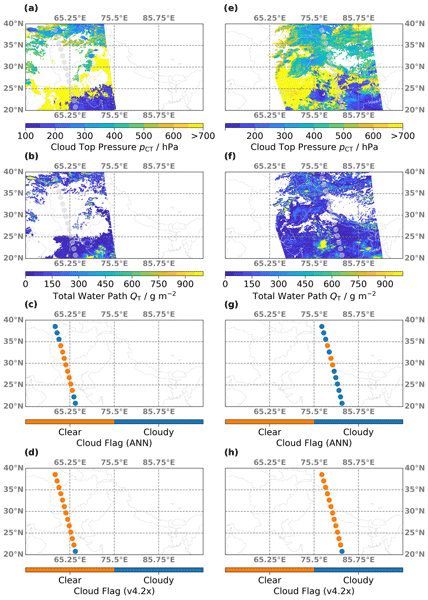
Frank Werner, Nathaniel J. Livesey, Michael J. Schwartz, William G. Read, Michelle L. Santee, and Galina Wind
Atmos. Meas. Tech., 14, 7749–7773, https://doi.org/10.5194/amt-14-7749-2021, https://doi.org/10.5194/amt-14-7749-2021, 2021
Short summary
Short summary
In this study we present an improved cloud detection scheme for the Microwave Limb Sounder, which is based on a feedforward artificial neural network. This new algorithm is shown not only to reliably detect high and mid-level convection containing even small amounts of cloud water but also to distinguish between high-reaching and mid-level to low convection.
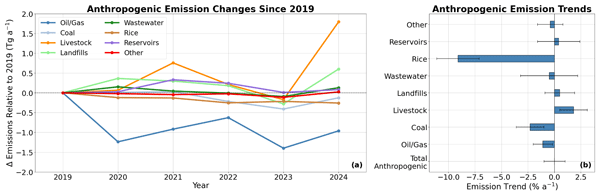
Lucas A. Estrada, Daniel J. Jacob, Megan He, James D. East, Daniel J. Varon, Nicholas Balasus, Sarah E. Hancock, Melissa Sulprizio, Kevin W. Bowman, John R. Worden, Emily Reidy, and Benjamin R. K. Runkle
Atmos. Chem. Phys., 26, 10629–10646, https://doi.org/10.5194/acp-26-10629-2026, https://doi.org/10.5194/acp-26-10629-2026, 2026
Short summary
Short summary
We use satellite observations to track US methane emissions from 2019–2024 at national, state, and oil and gas field scales. While total emissions remain stable, oil and gas emissions decline even as production rises, indicating progress in emissions management for the oil and gas sector.
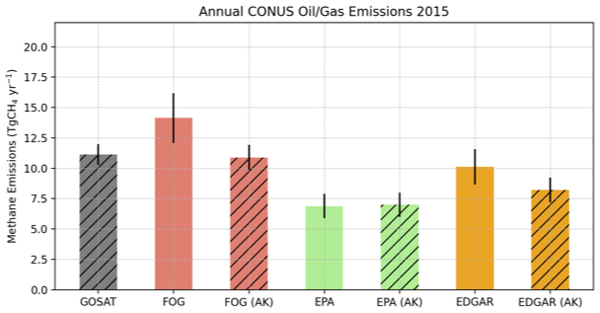
John Worden, Sudhanshu Pandey, Hannah Nesser, Kevin Bowman, Colin Harkins, Congmeng Lyu, Joannes D. Maasakkers, Deborah Gordon, Daniel Jacob, Lucas Estrada, Daniel J. Varon, James D. East, Lauren Schmeisser, and Zhen Qu
Atmos. Chem. Phys., 26, 8855–8873, https://doi.org/10.5194/acp-26-8855-2026, https://doi.org/10.5194/acp-26-8855-2026, 2026
Short summary
Short summary
To support methane reduction, we compared three widely used maps of methane emissions in the United States with estimates derived from a methane-measuring satellite from 2012 to 2020. The satellite indicates higher emissions from oil and gas production and from livestock in several regions, while other sources were harder to pin down. Neither approach shows a clear change over time. The results point to where better measurements can most improve emissions reporting and guide mitigation.
Julieta F. Juncosa Calahorrano, Dylan B. Millet, Kelley C. Wells, Chengyuan Hu, Jared F. Brewer, Vivienne H. Payne, Wade Permar, Lu Hu, Amy P. Sullivan, I.-Ting Ku, Emily V. Fischer, Vanessa Selimovic, Kanako Sekimoto, Aaron Lamplugh, Georgios Gkatzelis, Jessica B. Gilman, Matthew Coggon, and Carsten Warneke
EGUsphere, https://doi.org/10.5194/egusphere-2026-1669, https://doi.org/10.5194/egusphere-2026-1669, 2026
Short summary
Short summary
We use thermal infrared satellite observations to study trace gases emitted by fires. We observe large enhancements in smoke and strong relationships among key species. These relationships are consistent with aircraft observations but show greater variability than models predict. This variability is linked to pyrolysis temperatures within fires. Our results show satellite data can improve understanding of fire processes and help refine emission parameterizations in models.

Raphaël Savelli, Dustin Carroll, Dimitris Menemenlis, Jonathan M. Lauderdale, Clément Bertin, Stephanie Dutkiewicz, Manfredi Manizza, A. Anthony Bloom, Karel Castro-Morales, Charles E. Miller, Marc Simard, Kevin W. Bowman, and Hong Zhang
Geosci. Model Dev., 19, 867–885, https://doi.org/10.5194/gmd-19-867-2026, https://doi.org/10.5194/gmd-19-867-2026, 2026
Short summary
Short summary
Accounting for carbon and nutrients in rivers is essential for resolving carbon dioxide (CO2) exchanges between the ocean and the atmosphere. In this study, we add the effect of present-day rivers to a pioneering global-ocean biogeochemistry model. This study highlights the challenge for global ocean numerical models to cover the complexity of the flow of water and carbon across the Land-to-Ocean Aquatic Continuum.
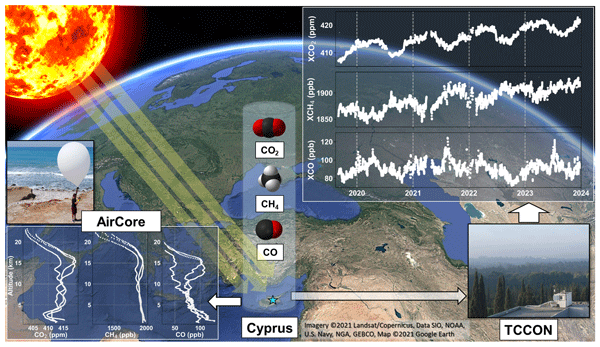
Constantina Rousogenous, Christof Petri, Pierre-Yves Quéhé, Thomas Laemmel, Joshua L. Laughner, Maximilien Desservettaz, Michael Pikridas, Michel Ramonet, Efstratios Bourtsoukidis, Matthias Buschmann, Justus Notholt, Thorsten Warneke, Jean-Daniel Paris, Jean Sciare, and Mihalis Vrekoussis
Atmos. Meas. Tech., 19, 565–581, https://doi.org/10.5194/amt-19-565-2026, https://doi.org/10.5194/amt-19-565-2026, 2026
Short summary
Short summary
The Eastern Mediterranean and Middle East is a greenhouse gas emission hotspot but lacks atmospheric monitoring. Our study introduces the first Total Carbon Column Observing Network site in this region, in Cyprus, providing high-precision columnar measurement of key greenhouse gases. This new dataset enhances global climate monitoring efforts, supports the validation of satellites, will help assess regional emission trends, filling a critical observational gap in this climate-sensitive region.
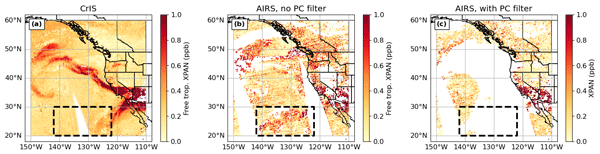
Joshua L. Laughner, Susan S. Kulawik, and Vivienne H. Payne
Atmos. Meas. Tech., 19, 249–276, https://doi.org/10.5194/amt-19-249-2026, https://doi.org/10.5194/amt-19-249-2026, 2026
Short summary
Short summary
We developed an algorithm to infer peroxyacyl nitrates from an instrument that has been in space for over 20 years. These nitrates can transport pollution significant distances downwind, thus having a long term record of their concentrations can help understand how transport of pollution changed over time. We were able to develop a product for this instrument that produces results compatible with a more recent instrument, allowing them to work together in future analyses.
Jean-Francois Lamarque, Pierre Friedlingstein, Brian Osias, Steve Strongin, Venkatramani Balaji, Kevin W. Bowman, Josep G. Canadell, Philippe Ciais, Heidi Cullen, Kenneth J. Davis, Scott C. Doney, Kevin R. Gurney, Alicia R. Karspeck, Charles D. Koven, Galen McKinley, Glen P. Peters, Julia Pongratz, Britt Stephens, and Colm Sweeney
EGUsphere, https://doi.org/10.5194/egusphere-2025-6457, https://doi.org/10.5194/egusphere-2025-6457, 2026
Short summary
Short summary
This Perspective highlights requirements to scale the carbon credit market and enable the growth in climate solutions funded through such market. The requirements are on the understanding of the value of the proposed carbon credit projects, and on the availability of a verification system. This verification becomes particularly relevant as the carbon credit market scales to significant impacts on CO2 (or other greenhouse gases), such that attribution to collective actions can be identified.
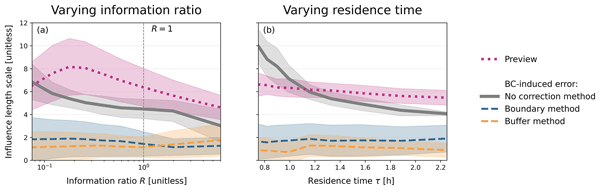
Hannah Nesser, Kevin W. Bowman, Matthew D. Thill, Daniel J. Varon, Cynthia A. Randles, Ashutosh Tewari, Felipe J. Cardoso-Saldaña, Emily Reidy, Joannes D. Maasakkers, and Daniel J. Jacob
Geosci. Model Dev., 18, 9279–9291, https://doi.org/10.5194/gmd-18-9279-2025, https://doi.org/10.5194/gmd-18-9279-2025, 2025
Short summary
Short summary
Regional analyses of atmospheric trace gases can improve knowledge of fluxes at high resolution but rely on specified boundary conditions (BCs) at the domain edges. Biases in the often-uncertain BCs propagate to the inferred fluxes. We develop a framework to explain how errors in the BCs influence the optimized fluxes, derive two metrics to estimate this influence, and compare two methods to correct for the biases. We demonstrate correcting BCs directly is more effective at reducing bias.
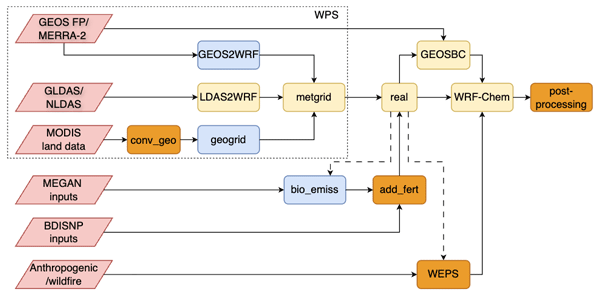
Huanxin Zhang, Jun Wang, Nathan Janechek, Cui Ge, Meng Zhou, Lorena Castro García, Tong Sha, Yanyu Wang, Weizhi Deng, Zhixin Xue, Chengzhe Li, Lakhima Chutia, Yi Wang, Sebastian Val, James L. McDuffie, Sina Hasheminassab, Scott E. Gluck, David J. Diner, Peter R. Colarco, Arlindo M. da Silva, and Jhoon Kim
Geosci. Model Dev., 18, 9061–9099, https://doi.org/10.5194/gmd-18-9061-2025, https://doi.org/10.5194/gmd-18-9061-2025, 2025
Short summary
Short summary
We present the development of the Unified Inputs (of initial and boundary conditions) for WRF (Weather Research and Forecasting)-Chem (UI-WRF-Chem) framework to support the Multi-Angle Imager for Aerosols (MAIA) satellite mission. Major updates include improving dust size distribution in the chemical boundary conditions, updating land surface properties using recent available satellite data and enhancing the representation of soil NOx emissions. We demonstrate subsequent model improvements over several of the MAIA target areas.
Anne Boynard, Catherine Wespes, Juliette Hadji-Lazaro, Selviga Sinnathamby, Daniel Hurtmans, Pierre-François Coheur, Marie Doutriaux-Boucher, Jacobus Onderwaater, Wolfgang Steinbrecht, Elyse A. Pennington, Kevin Bowman, and Cathy Clerbaux
Atmos. Chem. Phys., 25, 11719–11755, https://doi.org/10.5194/acp-25-11719-2025, https://doi.org/10.5194/acp-25-11719-2025, 2025
Short summary
Short summary
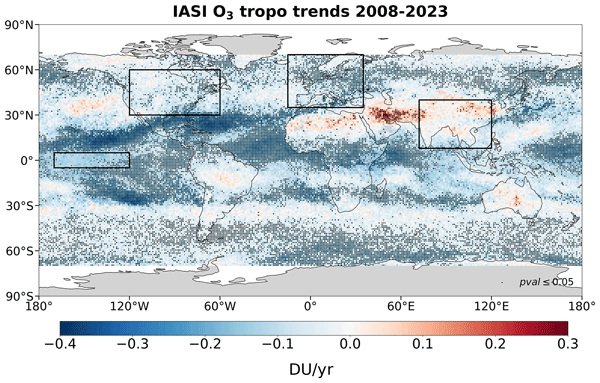
This study analyzes 16 years of global ozone data to assess its impact on air quality and climate. Using satellite measurements, we observed a global decrease in tropospheric ozone, particularly in tropical and European regions. The drop became more noticeable around 2020, partly due to reduced emissions during the pandemic. The study highlights the need for better data processing and integration to more accurately monitor ozone changes over time.
Elyse A. Pennington, Gregory B. Osterman, Vivienne H. Payne, Kazuyuki Miyazaki, Kevin W. Bowman, and Jessica L. Neu
Atmos. Chem. Phys., 25, 8533–8552, https://doi.org/10.5194/acp-25-8533-2025, https://doi.org/10.5194/acp-25-8533-2025, 2025
Short summary
Short summary
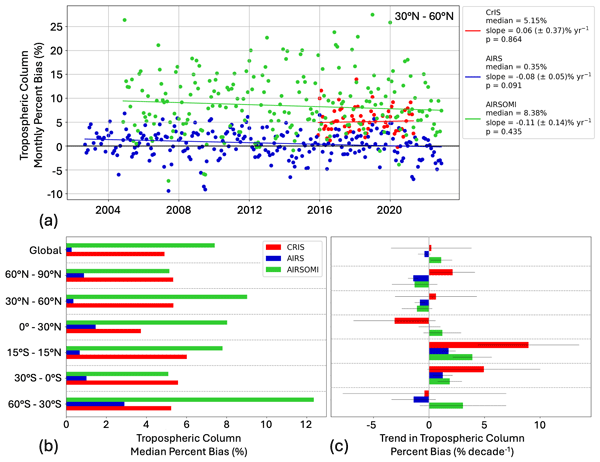
Tropospheric ozone is a harmful pollutant and powerful greenhouse gas. For satellite products to accurately quantify trends in tropospheric ozone, they must have a low bias compared to a reliable source of data. This study compares three NASA satellite products to ozonesonde data. They have low global measurement bias and thus can be used to detect global tropospheric ozone trends, but the measurement bias should be considered in certain regions and time periods.
Carley D. Fredrickson, Scott J. Janz, Lok N. Lamsal, Ursula A. Jongebloed, Joshua L. Laughner, and Joel A. Thornton
Atmos. Meas. Tech., 18, 3669–3689, https://doi.org/10.5194/amt-18-3669-2025, https://doi.org/10.5194/amt-18-3669-2025, 2025
Short summary
Short summary
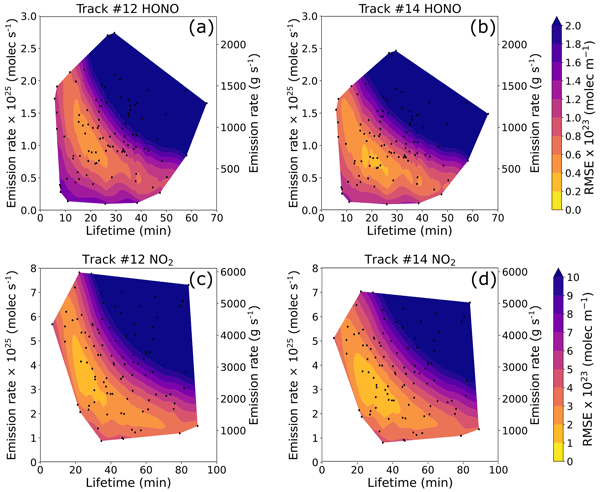
We present an analysis of high-resolution remote sensing measurements of nitrogen-containing trace gases emitted by wildfires. The measurements were made using an instrument on the NASA ER-2 aircraft in the summer of 2019. We find that time-resolved fire intensity is critical to quantify trace gas emissions over a fire's entire lifespan. These findings have implications for improving air pollution forecasts downwind of wildfires using computer models of atmospheric chemistry and meteorology.
Kazuyuki Miyazaki, Yuliya Marchetti, James Montgomery, Steven Lu, and Kevin Bowman
Atmos. Chem. Phys., 25, 8507–8532, https://doi.org/10.5194/acp-25-8507-2025, https://doi.org/10.5194/acp-25-8507-2025, 2025
Short summary
Short summary
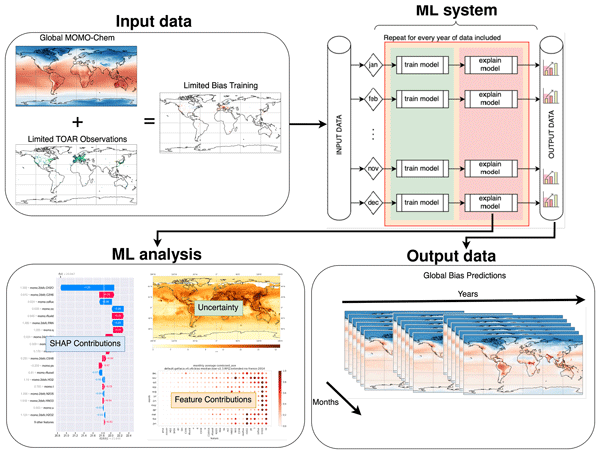
This study employs explainable machine learning to analyze the causes of significant biases in surface ozone estimates from chemical reanalysis. By analyzing global observations and chemical reanalysis outputs, key bias drivers, such as meteorological conditions and precursor emissions, were identified. This provides actionable insights to improve chemical transport models, observation systems, and emissions inventories, ultimately enhancing ozone reanalysis for better air pollution management.
Lucas A. Estrada, Daniel J. Varon, Melissa Sulprizio, Hannah Nesser, Zichong Chen, Nicholas Balasus, Sarah E. Hancock, Megan He, James D. East, Todd A. Mooring, Alexander Oort Alonso, Joannes D. Maasakkers, Ilse Aben, Sabour Baray, Kevin W. Bowman, John R. Worden, Felipe J. Cardoso-Saldaña, Emily Reidy, and Daniel J. Jacob
Geosci. Model Dev., 18, 3311–3330, https://doi.org/10.5194/gmd-18-3311-2025, https://doi.org/10.5194/gmd-18-3311-2025, 2025
Short summary
Short summary
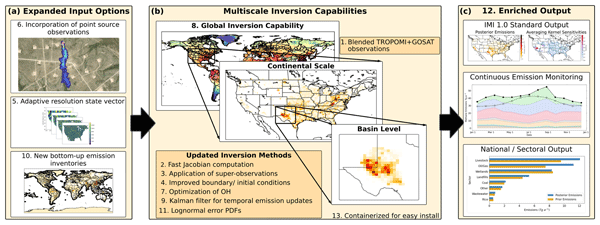
Reducing emissions of methane, a powerful greenhouse gas, is a top policy concern for mitigating anthropogenic climate change. The Integrated Methane Inversion (IMI) is an advanced, cloud-based software that translates satellite observations into actionable emissions data. Here we present IMI version 2.0 with vastly expanded capabilities. These updates enable a wider range of scientific and stakeholder applications from individual basin to global scales with continuous emissions monitoring.
Edward Malina, Jure Brence, Jennifer Adams, Jovan Tanevski, Sašo Džeroski, Valentin Kantchev, and Kevin W. Bowman
Atmos. Meas. Tech., 18, 1689–1715, https://doi.org/10.5194/amt-18-1689-2025, https://doi.org/10.5194/amt-18-1689-2025, 2025
Short summary
Short summary
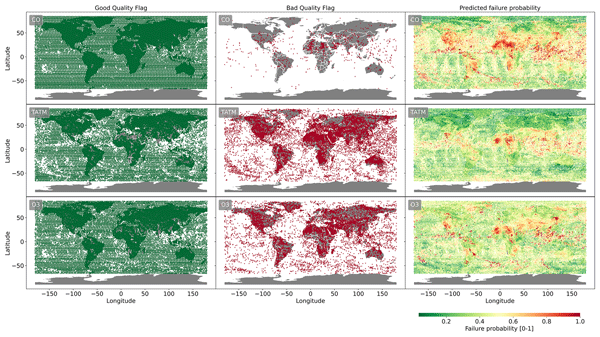
The large fleet of Earth observation satellites in orbit currently generate huge volumes of data, requiring significant computational resources to process these data in a timely manner. We present a method for predicting poor-quality measurements using machine learning. We find that machine learning methods can accurately predict poor-quality measurements and remove them from the processing chain, saving time and computational resources.
Mukesh Rai, Kazuyuki Miyazaki, Vivienne Payne, Bin Guan, and Duane Waliser
EGUsphere, https://doi.org/10.5194/egusphere-2025-399, https://doi.org/10.5194/egusphere-2025-399, 2025
Preprint archived
Short summary
Short summary
This study introduces a novel method for quantifying extreme events of trace gas air pollutants by leveraging a tropospheric chemical reanalysis data set. The analysis revealed that while extreme events are infrequent, they contribute substantially (60 %) to the total transport of pollutants. This finding underscores the critical role of long-range transport events in determining global and regional air quality.
Kelley C. Wells, Dylan B. Millet, Jared F. Brewer, Vivienne H. Payne, Karen E. Cady-Pereira, Rick Pernak, Susan Kulawik, Corinne Vigouroux, Nicholas Jones, Emmanuel Mahieu, Maria Makarova, Tomoo Nagahama, Ivan Ortega, Mathias Palm, Kimberly Strong, Matthias Schneider, Dan Smale, Ralf Sussmann, and Minqiang Zhou
Atmos. Meas. Tech., 18, 695–716, https://doi.org/10.5194/amt-18-695-2025, https://doi.org/10.5194/amt-18-695-2025, 2025
Short summary
Short summary
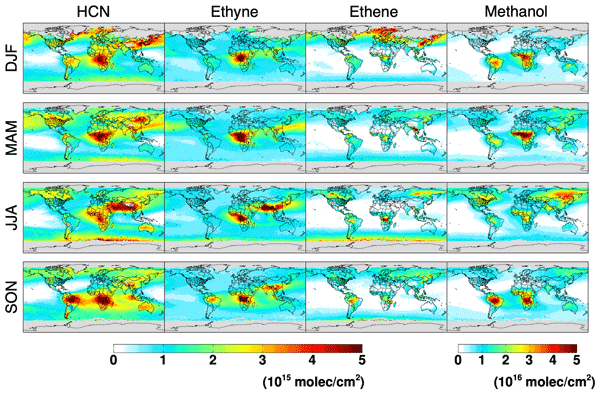
Atmospheric volatile organic compounds (VOCs) affect both air quality and climate. Satellite measurements can help us to assess and predict their global impacts. We present new decadal (2012–2023) measurements of four key VOCs – methanol, ethene, ethyne, and hydrogen cyanide (HCN) – from the Cross-track Infrared Sounder. The measurements reflect emissions from major forests, wildfires, and industry and provide new information to advance understanding of these sources and their changes over time.
Otto Lamminpää, Jouni Susiluoto, Jonathan Hobbs, James McDuffie, Amy Braverman, and Houman Owhadi
Atmos. Meas. Tech., 18, 673–694, https://doi.org/10.5194/amt-18-673-2025, https://doi.org/10.5194/amt-18-673-2025, 2025
Short summary
Short summary
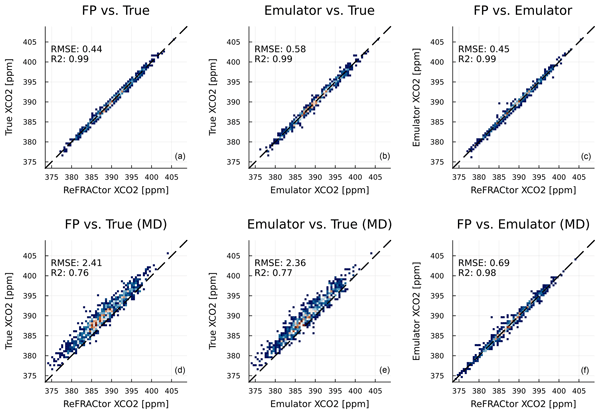
We develop and demonstrate a fast forward function emulator for remote sensing of greenhouse gases. These forward functions are computationally expensive to evaluate, and as such the key challenge for many satellite missions in their data processing is the time used in these evaluations. Our method is fast and accurate enough, less than 1 % relative error, so that it could be safely used in operational processing.
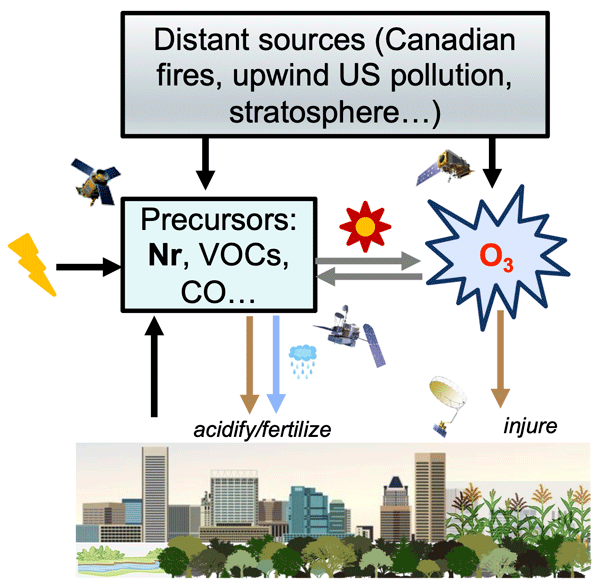
Min Huang, Gregory R. Carmichael, Kevin W. Bowman, Isabelle De Smedt, Andreas Colliander, Michael H. Cosh, Sujay V. Kumar, Alex B. Guenther, Scott J. Janz, Ryan M. Stauffer, Anne M. Thompson, Niko M. Fedkin, Robert J. Swap, John D. Bolten, and Alicia T. Joseph
Atmos. Chem. Phys., 25, 1449–1476, https://doi.org/10.5194/acp-25-1449-2025, https://doi.org/10.5194/acp-25-1449-2025, 2025
Short summary
Short summary
We use model simulations along with multiplatform, multidisciplinary observations and a range of analysis methods to estimate and understand the distributions, temporal changes, and impacts of reactive nitrogen and ozone over the most populous US region that has undergone significant environmental changes. Deposition, biogenic emissions, and extra-regional sources have been playing increasingly important roles in controlling pollutant budgets in this area as local anthropogenic emissions drop.
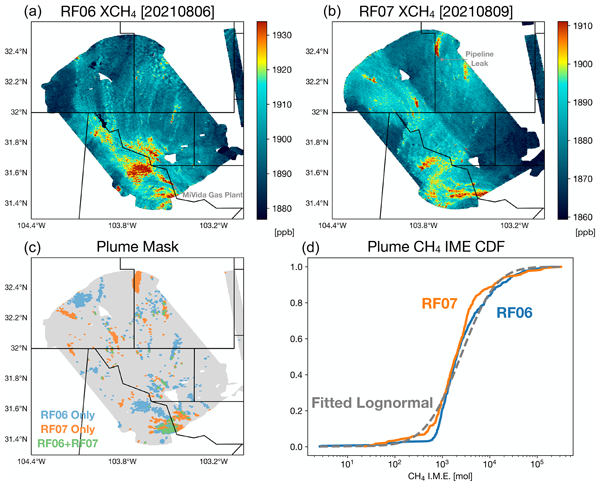
Christopher Chan Miller, Sébastien Roche, Jonas S. Wilzewski, Xiong Liu, Kelly Chance, Amir H. Souri, Eamon Conway, Bingkun Luo, Jenna Samra, Jacob Hawthorne, Kang Sun, Carly Staebell, Apisada Chulakadabba, Maryann Sargent, Joshua S. Benmergui, Jonathan E. Franklin, Bruce C. Daube, Yang Li, Joshua L. Laughner, Bianca C. Baier, Ritesh Gautam, Mark Omara, and Steven C. Wofsy
Atmos. Meas. Tech., 17, 5429–5454, https://doi.org/10.5194/amt-17-5429-2024, https://doi.org/10.5194/amt-17-5429-2024, 2024
Short summary
Short summary
MethaneSAT is an upcoming satellite mission designed to monitor methane emissions from the oil and gas (O&G) industry globally. Here, we present observations from the first flight campaign of MethaneAIR, a MethaneSAT-like instrument mounted on an aircraft. MethaneAIR can map methane with high precision and accuracy over a typically sized oil and gas basin (~200 km2) in a single flight. This paper demonstrates the capability of the upcoming satellite to routinely track global O&G emissions.
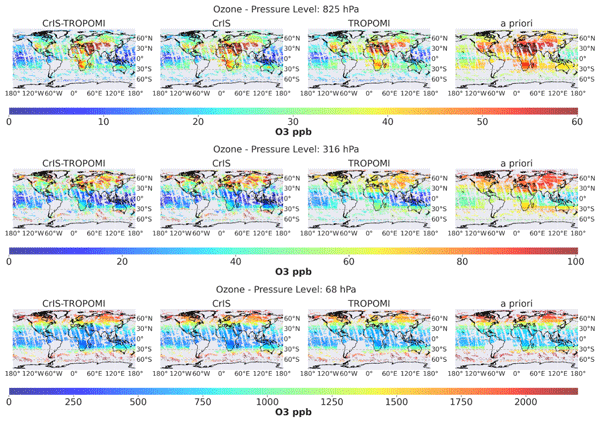
Edward Malina, Kevin W. Bowman, Valentin Kantchev, Le Kuai, Thomas P. Kurosu, Kazuyuki Miyazaki, Vijay Natraj, Gregory B. Osterman, Fabiano Oyafuso, and Matthew D. Thill
Atmos. Meas. Tech., 17, 5341–5371, https://doi.org/10.5194/amt-17-5341-2024, https://doi.org/10.5194/amt-17-5341-2024, 2024
Short summary
Short summary
Characterizing the distribution of ozone in the atmosphere is a challenging problem, with current Earth observation satellites using either thermal infrared (TIR) or ultraviolet (UV) instruments, sensitive to different portions of the atmosphere, making it difficult to gain a full picture. In this work, we combine measurements from the TIR and UV instruments Suomi NPP CrIS and Sentinel-5P/TROPOMI to improve sensitivity through the whole atmosphere and improve knowledge of ozone distribution.
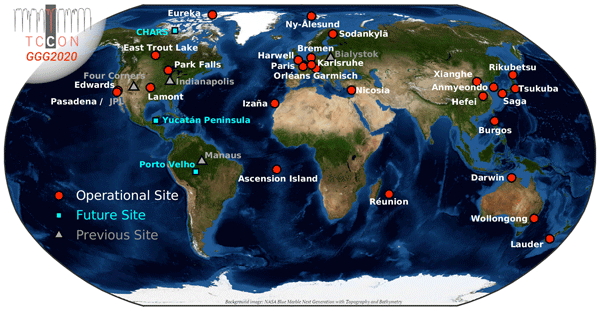
Joshua L. Laughner, Geoffrey C. Toon, Joseph Mendonca, Christof Petri, Sébastien Roche, Debra Wunch, Jean-Francois Blavier, David W. T. Griffith, Pauli Heikkinen, Ralph F. Keeling, Matthäus Kiel, Rigel Kivi, Coleen M. Roehl, Britton B. Stephens, Bianca C. Baier, Huilin Chen, Yonghoon Choi, Nicholas M. Deutscher, Joshua P. DiGangi, Jochen Gross, Benedikt Herkommer, Pascal Jeseck, Thomas Laemmel, Xin Lan, Erin McGee, Kathryn McKain, John Miller, Isamu Morino, Justus Notholt, Hirofumi Ohyama, David F. Pollard, Markus Rettinger, Haris Riris, Constantina Rousogenous, Mahesh Kumar Sha, Kei Shiomi, Kimberly Strong, Ralf Sussmann, Yao Té, Voltaire A. Velazco, Steven C. Wofsy, Minqiang Zhou, and Paul O. Wennberg
Earth Syst. Sci. Data, 16, 2197–2260, https://doi.org/10.5194/essd-16-2197-2024, https://doi.org/10.5194/essd-16-2197-2024, 2024
Short summary
Short summary
This paper describes a new version, called GGG2020, of a data set containing column-integrated observations of greenhouse and related gases (including CO2, CH4, CO, and N2O) made by ground stations located around the world. Compared to the previous version (GGG2014), improvements have been made toward site-to-site consistency. This data set plays a key role in validating space-based greenhouse gas observations and in understanding the carbon cycle.
Nicole Jacobs, Christopher W. O'Dell, Thomas E. Taylor, Thomas L. Logan, Brendan Byrne, Matthäus Kiel, Rigel Kivi, Pauli Heikkinen, Aronne Merrelli, Vivienne H. Payne, and Abhishek Chatterjee
Atmos. Meas. Tech., 17, 1375–1401, https://doi.org/10.5194/amt-17-1375-2024, https://doi.org/10.5194/amt-17-1375-2024, 2024
Short summary
Short summary
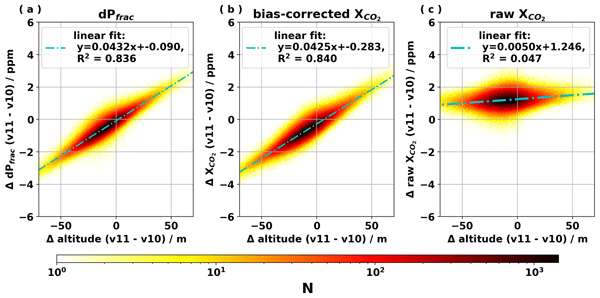
The accuracy of trace gas retrievals from spaceborne observations, like those from the Orbiting Carbon Observatory 2 (OCO-2), are sensitive to the referenced digital elevation model (DEM). Therefore, we evaluate several global DEMs, used in versions 10 and 11 of the OCO-2 retrieval along with the Copernicus DEM. We explore the impacts of changing the DEM on biases in OCO-2-retrieved XCO2 and inferred CO2 fluxes. Our findings led to an update to OCO-2 v11.1 using the Copernicus DEM globally.
Karen E. Cady-Pereira, Xuehui Guo, Rui Wang, April B. Leytem, Chase Calkins, Elizabeth Berry, Kang Sun, Markus Müller, Armin Wisthaler, Vivienne H. Payne, Mark W. Shephard, Mark A. Zondlo, and Valentin Kantchev
Atmos. Meas. Tech., 17, 15–36, https://doi.org/10.5194/amt-17-15-2024, https://doi.org/10.5194/amt-17-15-2024, 2024
Short summary
Short summary
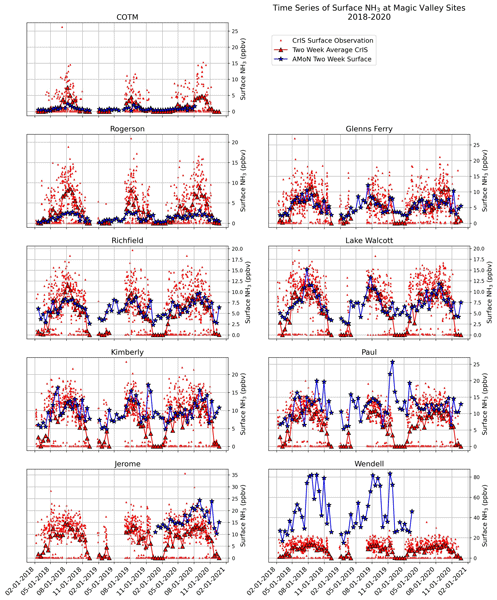
Ammonia is a significant precursor of PM2.5 particles and thus contributes to poor air quality in many regions. Furthermore, ammonia concentrations are rising due to the increase of large-scale, intensive agricultural activities. Here we evaluate satellite measurements of ammonia against aircraft and surface network data, and show that there are differences in magnitude, but the satellite data are spatially and temporally well correlated with the in situ data.
Dien Wu, Joshua L. Laughner, Junjie Liu, Paul I. Palmer, John C. Lin, and Paul O. Wennberg
Geosci. Model Dev., 16, 6161–6185, https://doi.org/10.5194/gmd-16-6161-2023, https://doi.org/10.5194/gmd-16-6161-2023, 2023
Short summary
Short summary
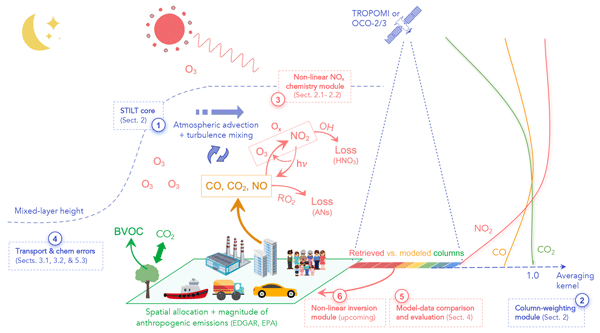
To balance computational expenses and chemical complexity in extracting emission signals from tropospheric NO2 columns, we propose a simplified non-linear Lagrangian chemistry transport model and assess its performance against TROPOMI v2 over power plants and cities. Using this model, we then discuss how NOx chemistry affects the relationship between NOx and CO2 emissions and how studying NO2 columns helps quantify modeled biases in wind directions and prior emissions.
Rafaella Chiarella, Matthias Buschmann, Joshua Laughner, Isamu Morino, Justus Notholt, Christof Petri, Geoffrey Toon, Voltaire A. Velazco, and Thorsten Warneke
Atmos. Meas. Tech., 16, 3987–4007, https://doi.org/10.5194/amt-16-3987-2023, https://doi.org/10.5194/amt-16-3987-2023, 2023
Short summary
Short summary
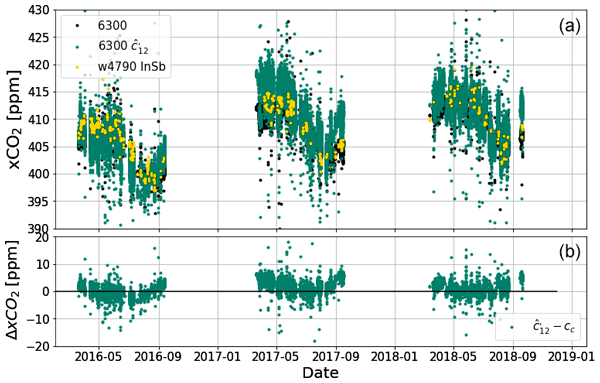
The goal is to establish a window and strategy for xCO2 retrieval from ground-based Fourier transform spectrometers for NDACC. In the study we describe the spectroscopy of the region, the locations and instruments used, and the methods of calculating the retrieved xCO2. We performed tests to assess the sensitivity to diverse factors and sources of errors while comparing the retrieval to a well-established xCO2 retrieval from TCCON.
Drew C. Pendergrass, Daniel J. Jacob, Hannah Nesser, Daniel J. Varon, Melissa Sulprizio, Kazuyuki Miyazaki, and Kevin W. Bowman
Geosci. Model Dev., 16, 4793–4810, https://doi.org/10.5194/gmd-16-4793-2023, https://doi.org/10.5194/gmd-16-4793-2023, 2023
Short summary
Short summary
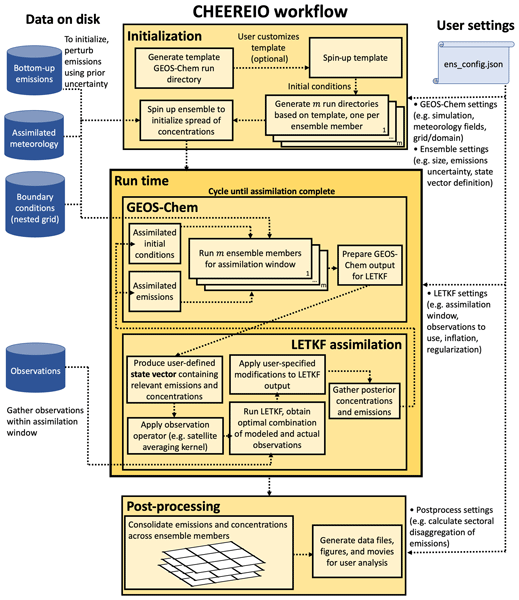
We have built a tool called CHEEREIO that allows scientists to use observations of pollutants or gases in the atmosphere, such as from satellites or surface stations, to update supercomputer models that simulate the Earth. CHEEREIO uses the difference between the model simulations of the atmosphere and real-world observations to come up with a good guess for the actual composition of our atmosphere, the true emissions of various pollutants, and whatever else they may want to study.
Thomas E. Taylor, Christopher W. O'Dell, David Baker, Carol Bruegge, Albert Chang, Lars Chapsky, Abhishek Chatterjee, Cecilia Cheng, Frédéric Chevallier, David Crisp, Lan Dang, Brian Drouin, Annmarie Eldering, Liang Feng, Brendan Fisher, Dejian Fu, Michael Gunson, Vance Haemmerle, Graziela R. Keller, Matthäus Kiel, Le Kuai, Thomas Kurosu, Alyn Lambert, Joshua Laughner, Richard Lee, Junjie Liu, Lucas Mandrake, Yuliya Marchetti, Gregory McGarragh, Aronne Merrelli, Robert R. Nelson, Greg Osterman, Fabiano Oyafuso, Paul I. Palmer, Vivienne H. Payne, Robert Rosenberg, Peter Somkuti, Gary Spiers, Cathy To, Brad Weir, Paul O. Wennberg, Shanshan Yu, and Jia Zong
Atmos. Meas. Tech., 16, 3173–3209, https://doi.org/10.5194/amt-16-3173-2023, https://doi.org/10.5194/amt-16-3173-2023, 2023
Short summary
Short summary
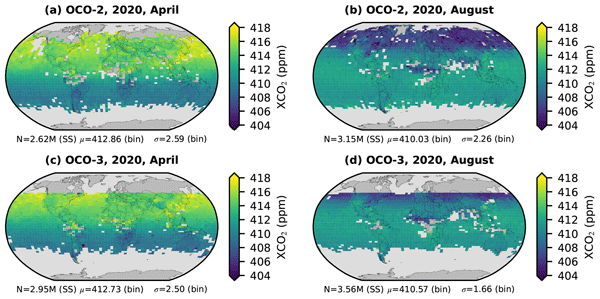
NASA's Orbiting Carbon Observatory 2 and 3 (OCO-2 and OCO-3, respectively) provide complementary spatiotemporal coverage from a sun-synchronous and precession orbit, respectively. Estimates of total column carbon dioxide (XCO2) derived from the two sensors using the same retrieval algorithm show broad consistency over a 2.5-year overlapping time record. This suggests that data from the two satellites may be used together for scientific analysis.
Frank Werner, Nathaniel J. Livesey, Luis F. Millán, William G. Read, Michael J. Schwartz, Paul A. Wagner, William H. Daffer, Alyn Lambert, Sasha N. Tolstoff, and Michelle L. Santee
Atmos. Meas. Tech., 16, 2733–2751, https://doi.org/10.5194/amt-16-2733-2023, https://doi.org/10.5194/amt-16-2733-2023, 2023
Short summary
Short summary
The algorithm that produces the near-real-time data products of the Aura Microwave Limb Sounder has been updated. The new algorithm is based on machine learning techniques and yields data products with much improved accuracy. It is shown that the new algorithm outperforms the previous versions, even when it is trained on only a few years of satellite observations. This confirms the potential of applying machine learning to the near-real-time efforts of other current and future mission concepts.
Harrison A. Parker, Joshua L. Laughner, Geoffrey C. Toon, Debra Wunch, Coleen M. Roehl, Laura T. Iraci, James R. Podolske, Kathryn McKain, Bianca C. Baier, and Paul O. Wennberg
Atmos. Meas. Tech., 16, 2601–2625, https://doi.org/10.5194/amt-16-2601-2023, https://doi.org/10.5194/amt-16-2601-2023, 2023
Short summary
Short summary
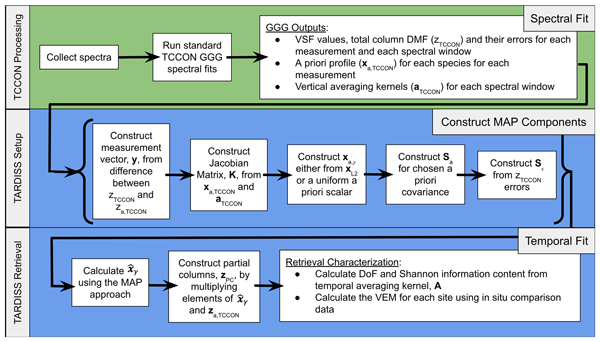
We describe a retrieval algorithm for determining limited information about the vertical distribution of carbon monoxide (CO) and carbon dioxide (CO2) from total column observations from ground-based observations. Our retrieved partial column values compare well with integrated in situ data. The average error for our retrieval is 1.51 ppb (~ 2 %) for CO and 5.09 ppm (~ 1.25 %) for CO2. We anticipate that this approach will find broad application for use in carbon cycle science.
Yu Someya, Yukio Yoshida, Hirofumi Ohyama, Shohei Nomura, Akihide Kamei, Isamu Morino, Hitoshi Mukai, Tsuneo Matsunaga, Joshua L. Laughner, Voltaire A. Velazco, Benedikt Herkommer, Yao Té, Mahesh Kumar Sha, Rigel Kivi, Minqiang Zhou, Young Suk Oh, Nicholas M. Deutscher, and David W. T. Griffith
Atmos. Meas. Tech., 16, 1477–1501, https://doi.org/10.5194/amt-16-1477-2023, https://doi.org/10.5194/amt-16-1477-2023, 2023
Short summary
Short summary
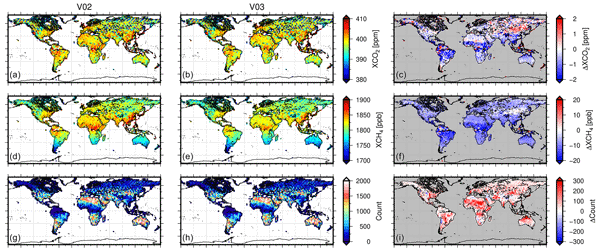
The updated retrieval algorithm for the Greenhouse gases Observing SATellite level 2 product is presented. The main changes in the algorithm from the previous one are the treatment of cirrus clouds, the degradation model of the sensor, solar irradiance, and gas absorption coefficient tables. The retrieval results showed improvements in fitting accuracy and an increase in the data amount over land. On the other hand, there are still large biases of XCO2 which should be corrected over the ocean.
Cameron G. MacDonald, Jon-Paul Mastrogiacomo, Joshua L. Laughner, Jacob K. Hedelius, Ray Nassar, and Debra Wunch
Atmos. Chem. Phys., 23, 3493–3516, https://doi.org/10.5194/acp-23-3493-2023, https://doi.org/10.5194/acp-23-3493-2023, 2023
Short summary
Short summary
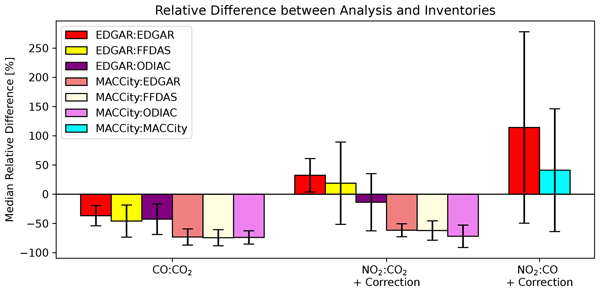
We use three satellites measuring carbon dioxide (CO2), carbon monoxide (CO) and nitrogen dioxide (NO2) to calculate atmospheric enhancements of these gases from 27 urban areas. We calculate enhancement ratios between the species and compare those to ratios derived from four globally gridded anthropogenic emission inventories. We find that the global inventories generally underestimate CO emissions in many North American and European cities relative to our observed enhancement ratios.
Nasrin Mostafavi Pak, Jacob K. Hedelius, Sébastien Roche, Liz Cunningham, Bianca Baier, Colm Sweeney, Coleen Roehl, Joshua Laughner, Geoffrey Toon, Paul Wennberg, Harrison Parker, Colin Arrowsmith, Joseph Mendonca, Pierre Fogal, Tyler Wizenberg, Beatriz Herrera, Kimberly Strong, Kaley A. Walker, Felix Vogel, and Debra Wunch
Atmos. Meas. Tech., 16, 1239–1261, https://doi.org/10.5194/amt-16-1239-2023, https://doi.org/10.5194/amt-16-1239-2023, 2023
Short summary
Short summary
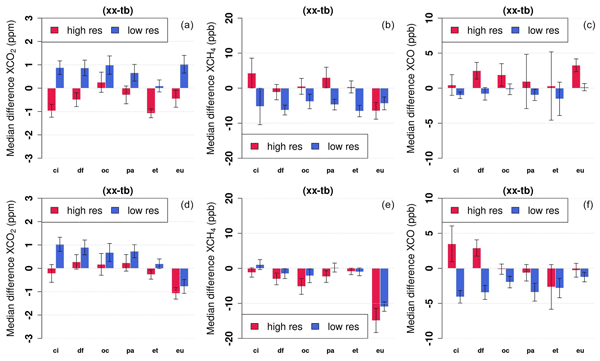
Ground-based remote sensing instruments in the Total Carbon Column Observing Network (TCCON) measure greenhouse gases in the atmosphere. Consistency between TCCON measurements is crucial to accurately infer changes in atmospheric composition. We use portable remote sensing instruments (EM27/SUN) to evaluate biases between TCCON stations in North America. We also improve the retrievals of EM27/SUN instruments and evaluate the previous (GGG2014) and newest (GGG2020) retrieval algorithms.
Joshua L. Laughner, Sébastien Roche, Matthäus Kiel, Geoffrey C. Toon, Debra Wunch, Bianca C. Baier, Sébastien Biraud, Huilin Chen, Rigel Kivi, Thomas Laemmel, Kathryn McKain, Pierre-Yves Quéhé, Constantina Rousogenous, Britton B. Stephens, Kaley Walker, and Paul O. Wennberg
Atmos. Meas. Tech., 16, 1121–1146, https://doi.org/10.5194/amt-16-1121-2023, https://doi.org/10.5194/amt-16-1121-2023, 2023
Short summary
Short summary
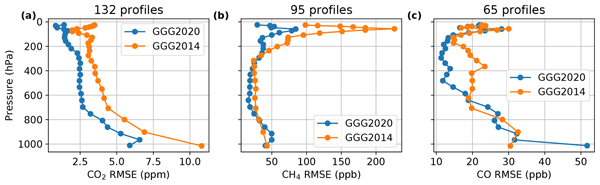
Observations using sunlight to measure surface-to-space total column of greenhouse gases in the atmosphere need an initial guess of the vertical distribution of those gases to start from. We have developed an approach to provide those initial guess profiles that uses readily available meteorological data as input. This lets us make these guesses without simulating them with a global model. The profiles generated this way match independent observations well.
Brendan Byrne, David F. Baker, Sourish Basu, Michael Bertolacci, Kevin W. Bowman, Dustin Carroll, Abhishek Chatterjee, Frédéric Chevallier, Philippe Ciais, Noel Cressie, David Crisp, Sean Crowell, Feng Deng, Zhu Deng, Nicholas M. Deutscher, Manvendra K. Dubey, Sha Feng, Omaira E. García, David W. T. Griffith, Benedikt Herkommer, Lei Hu, Andrew R. Jacobson, Rajesh Janardanan, Sujong Jeong, Matthew S. Johnson, Dylan B. A. Jones, Rigel Kivi, Junjie Liu, Zhiqiang Liu, Shamil Maksyutov, John B. Miller, Scot M. Miller, Isamu Morino, Justus Notholt, Tomohiro Oda, Christopher W. O'Dell, Young-Suk Oh, Hirofumi Ohyama, Prabir K. Patra, Hélène Peiro, Christof Petri, Sajeev Philip, David F. Pollard, Benjamin Poulter, Marine Remaud, Andrew Schuh, Mahesh K. Sha, Kei Shiomi, Kimberly Strong, Colm Sweeney, Yao Té, Hanqin Tian, Voltaire A. Velazco, Mihalis Vrekoussis, Thorsten Warneke, John R. Worden, Debra Wunch, Yuanzhi Yao, Jeongmin Yun, Andrew Zammit-Mangion, and Ning Zeng
Earth Syst. Sci. Data, 15, 963–1004, https://doi.org/10.5194/essd-15-963-2023, https://doi.org/10.5194/essd-15-963-2023, 2023
Short summary
Short summary
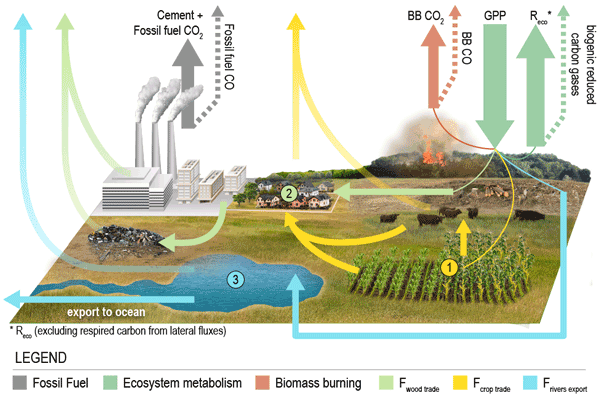
Changes in the carbon stocks of terrestrial ecosystems result in emissions and removals of CO2. These can be driven by anthropogenic activities (e.g., deforestation), natural processes (e.g., fires) or in response to rising CO2 (e.g., CO2 fertilization). This paper describes a dataset of CO2 emissions and removals derived from atmospheric CO2 observations. This pilot dataset informs current capabilities and future developments towards top-down monitoring and verification systems.
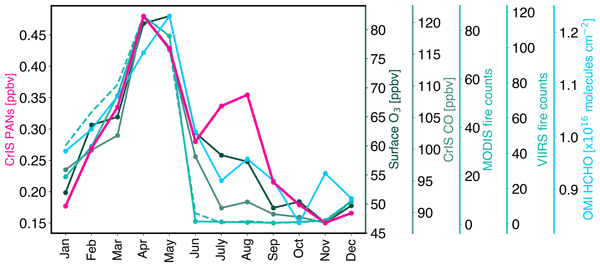
Madison J. Shogrin, Vivienne H. Payne, Susan S. Kulawik, Kazuyuki Miyazaki, and Emily V. Fischer
Atmos. Chem. Phys., 23, 2667–2682, https://doi.org/10.5194/acp-23-2667-2023, https://doi.org/10.5194/acp-23-2667-2023, 2023
Short summary
Short summary
We evaluate the spatiotemporal variability of peroxy acyl nitrates (PANs), important photochemical pollutants, over Mexico City using satellite observations. PANs exhibit a seasonal cycle that maximizes in spring. Wildfires contribute to observed interannual variability, and the satellite indicates several areas of frequent outflow. Recent changes in NOx emissions are not accompanied by changes in PANs. This work demonstrates analysis approaches that can be applied to other megacities.
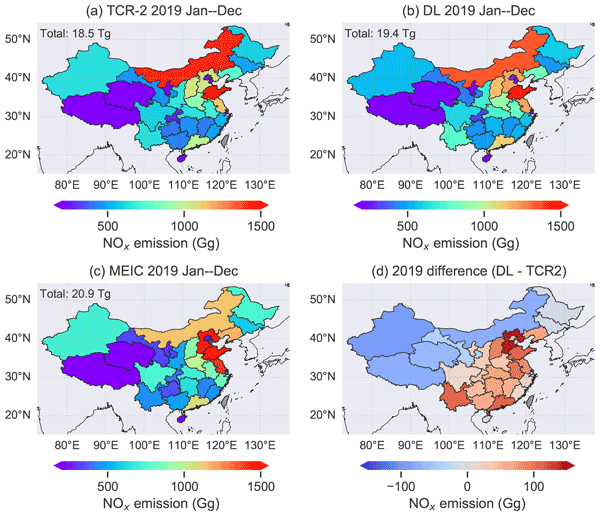
Tai-Long He, Dylan B. A. Jones, Kazuyuki Miyazaki, Kevin W. Bowman, Zhe Jiang, Xiaokang Chen, Rui Li, Yuxiang Zhang, and Kunna Li
Atmos. Chem. Phys., 22, 14059–14074, https://doi.org/10.5194/acp-22-14059-2022, https://doi.org/10.5194/acp-22-14059-2022, 2022
Short summary
Short summary
We use a deep-learning (DL) model to estimate Chinese NOx emissions by combining satellite analysis and in situ measurements. Our results are consistent with conventional analyses of Chinese NOx emissions. Comparison with mobility data shows that the DL model has a better capability to capture changes in NOx. We analyse Chinese NOx emissions during the COVID-19 pandemic lockdown period. Our results illustrate the potential use of DL as a complementary tool for conventional air quality studies.
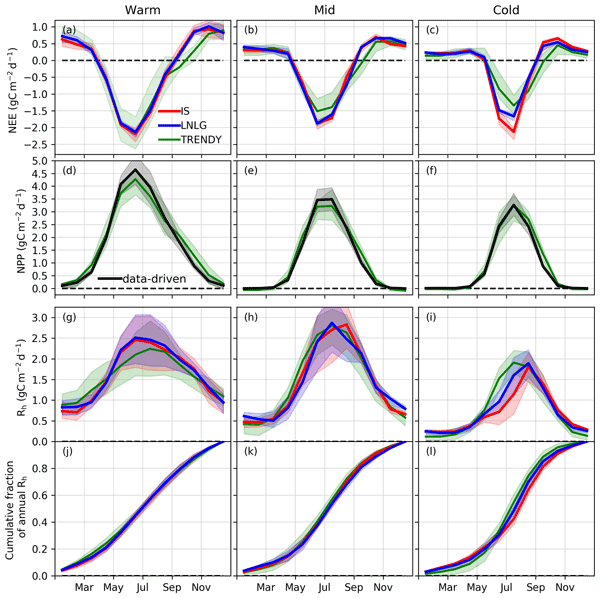
Brendan Byrne, Junjie Liu, Yonghong Yi, Abhishek Chatterjee, Sourish Basu, Rui Cheng, Russell Doughty, Frédéric Chevallier, Kevin W. Bowman, Nicholas C. Parazoo, David Crisp, Xing Li, Jingfeng Xiao, Stephen Sitch, Bertrand Guenet, Feng Deng, Matthew S. Johnson, Sajeev Philip, Patrick C. McGuire, and Charles E. Miller
Biogeosciences, 19, 4779–4799, https://doi.org/10.5194/bg-19-4779-2022, https://doi.org/10.5194/bg-19-4779-2022, 2022
Short summary
Short summary
Plants draw CO2 from the atmosphere during the growing season, while respiration releases CO2 to the atmosphere throughout the year, driving seasonal variations in atmospheric CO2 that can be observed by satellites, such as the Orbiting Carbon Observatory 2 (OCO-2). Using OCO-2 XCO2 data and space-based constraints on plant growth, we show that permafrost-rich northeast Eurasia has a strong seasonal release of CO2 during the autumn, hinting at an unexpectedly large respiration signal from soils.
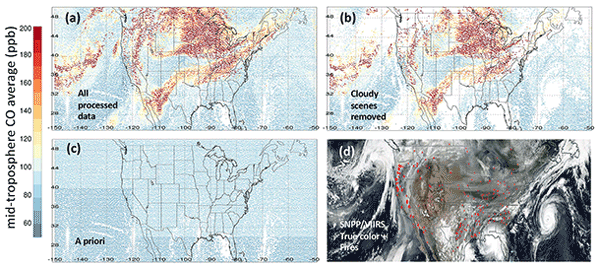
Helen M. Worden, Gene L. Francis, Susan S. Kulawik, Kevin W. Bowman, Karen Cady-Pereira, Dejian Fu, Jennifer D. Hegarty, Valentin Kantchev, Ming Luo, Vivienne H. Payne, John R. Worden, Róisín Commane, and Kathryn McKain
Atmos. Meas. Tech., 15, 5383–5398, https://doi.org/10.5194/amt-15-5383-2022, https://doi.org/10.5194/amt-15-5383-2022, 2022
Short summary
Short summary
Satellite observations of global carbon monoxide (CO) are essential for understanding atmospheric chemistry and pollution sources. This paper describes a new data product using radiance measurements from the Cross-track Infrared Sounder (CrIS) instrument on the Suomi National Polar-orbiting Partnership (SNPP) satellite that provides vertical profiles of CO from single-field-of-view observations. We show how these satellite CO profiles compare to aircraft observations and evaluate their biases.
Min Huang, James H. Crawford, Gregory R. Carmichael, Kevin W. Bowman, Sujay V. Kumar, and Colm Sweeney
Atmos. Chem. Phys., 22, 7461–7487, https://doi.org/10.5194/acp-22-7461-2022, https://doi.org/10.5194/acp-22-7461-2022, 2022
Short summary
Short summary
This study demonstrates that ozone dry-deposition modeling can be improved by revising the model's dry-deposition parameterizations to better represent the effects of environmental conditions including the soil moisture fields. Applying satellite soil moisture data assimilation is shown to also have added value. Such advancements in coupled modeling and data assimilation can benefit the assessments of ozone impacts on human and vegetation health.
Vivienne H. Payne, Susan S. Kulawik, Emily V. Fischer, Jared F. Brewer, L. Gregory Huey, Kazuyuki Miyazaki, John R. Worden, Kevin W. Bowman, Eric J. Hintsa, Fred Moore, James W. Elkins, and Julieta Juncosa Calahorrano
Atmos. Meas. Tech., 15, 3497–3511, https://doi.org/10.5194/amt-15-3497-2022, https://doi.org/10.5194/amt-15-3497-2022, 2022
Short summary
Short summary
We compare new satellite measurements of peroxyacetyl nitrate (PAN) with reference aircraft measurements from two different instruments flown on the same platform. While there is a systematic difference between the two aircraft datasets, both show the same large-scale distribution of PAN and the discrepancy between aircraft datasets is small compared to the satellite uncertainties. The satellite measurements show skill in capturing large-scale variations in PAN.
Vijay Natraj, Ming Luo, Jean-Francois Blavier, Vivienne H. Payne, Derek J. Posselt, Stanley P. Sander, Zhao-Cheng Zeng, Jessica L. Neu, Denis Tremblay, Longtao Wu, Jacola A. Roman, Yen-Hung Wu, and Leonard I. Dorsky
Atmos. Meas. Tech., 15, 1251–1267, https://doi.org/10.5194/amt-15-1251-2022, https://doi.org/10.5194/amt-15-1251-2022, 2022
Short summary
Short summary
High-fidelity monitoring and forecast of air quality and the hydrological cycle require understanding the vertical distribution of temperature, humidity, and trace gases at high spatiotemporal resolution. We describe a new instrument concept, called the JPL GEO-IR Sounder, that would provide this information for the first time from a single instrument platform. Simulations demonstrate the benefits of combining measurements from multiple wavelengths for this purpose from geostationary orbit.
Jennifer D. Hegarty, Karen E. Cady-Pereira, Vivienne H. Payne, Susan S. Kulawik, John R. Worden, Valentin Kantchev, Helen M. Worden, Kathryn McKain, Jasna V. Pittman, Róisín Commane, Bruce C. Daube Jr., and Eric A. Kort
Atmos. Meas. Tech., 15, 205–223, https://doi.org/10.5194/amt-15-205-2022, https://doi.org/10.5194/amt-15-205-2022, 2022
Short summary
Short summary
Carbon monoxide (CO) is produced by combustion of substances such as fossil fuels and plays an important role in atmospheric pollution and climate. We evaluated estimates of atmospheric CO derived from outgoing radiation measurements of the Atmospheric Infrared Sounder (AIRS) on a satellite orbiting the Earth against CO measurements from aircraft to show that these satellite measurements are reliable for continuous global monitoring of atmospheric CO concentrations.
Frank Werner, Nathaniel J. Livesey, Michael J. Schwartz, William G. Read, Michelle L. Santee, and Galina Wind
Atmos. Meas. Tech., 14, 7749–7773, https://doi.org/10.5194/amt-14-7749-2021, https://doi.org/10.5194/amt-14-7749-2021, 2021
Short summary
Short summary
In this study we present an improved cloud detection scheme for the Microwave Limb Sounder, which is based on a feedforward artificial neural network. This new algorithm is shown not only to reliably detect high and mid-level convection containing even small amounts of cloud water but also to distinguish between high-reaching and mid-level to low convection.
Cited articles
Abadi, M., Agarwal, A., Barham, P., Brevdo, E., Chen, Z., Citro, C., Corrado, G. S., Davis, A., Dean, J., Devin, M., Ghemawat, S., Goodfellow, I., Harp, A., Irving, G., Isard, M., Jia, Y., Jozefowicz, R., Kaiser, L., Kudlur, M., Levenberg, J., Mane, D., Monga, R., Moore, S., Murray, D., Olah, C., Schuster, M., Shlens, J., Steiner, B., Sutskever, I., Talwar, K., Tucker, P., Vanhoucke, V., Vasudevan, V., Viegas, F., Vinyals, O., Warden, P., Wattenberg, M., Wicke, M., Yu, Y., and Zheng, X.: TensorFlow: Large-Scale Machine Learning on Heterogeneous Distributed Systems, arXiv [preprint], arXiv1603.04467v2, Tue, 31 May 2016, 2016. a
Aumann, H., Chahine, M., Gautier, C., Goldberg, M., Kalnay, E., McMillin, L., Revercomb, H., Rosenkranz, P., Smith, W., Staelin, D., Strow, L., and Susskind, J.: AIRS/AMSU/HSB on the Aqua mission: design, science objectives, data products, and processing systems, IEEE T. Geosci. Remote, 41, 253–264, https://doi.org/10.1109/TGRS.2002.808356, 2003. a
Beer, R., Glavich, T. A., and Rider, D. M.: Tropospheric emission spectrometer for the Earth Observing System's Aura satellite, Appl. Optics, 40, 2356–2367, https://doi.org/10.1364/AO.40.002356, 2001. a
Bowman, K. and Henze, D. K.: Attribution of direct ozone radiative forcing to spatially resolved emissions, Geophys. Res. Lett., 39, https://doi.org/10.1029/2012GL053274, 2012. a
Bowman, K., Rodgers, C., Kulawik, S., Worden, J., Sarkissian, E., Osterman, G., Steck, T., Lou, M., Eldering, A., Shephard, M., Worden, H., Lampel, M., Clough, S., Brown, P., Rinsland, C., Gunson, M., and Beer, R.: Tropospheric emission spectrometer: retrieval method and error analysis, IEEE T. Geosci. Remote, 44, 1297–1307, https://doi.org/10.1109/TGRS.2006.871234, 2006. a, b
Bowman, K. W.: TROPESS CrIS-JPSS1 L2 Carbon Monoxide for Forward Processing, Summary Product V1, NASA Goddard Earth Sciences Data and Information Services Center, 2022 [data set], https://doi.org/10.5067/JL1HT3NGEAW3, 2021. a, b
Buchholz, R. R., Hammerling, D., Worden, H. M., Deeter, M. N., Emmons, L. K., Edwards, D. P., and Monks, S. A.: Links between carbon monoxide and climate indices for the Southern Hemisphere and tropical fire regions, J. Geophys. Res.-Atmos., 123, 9786–9800, https://doi.org/10.1029/2018JD028438, 2018. a
Buchholz, R. R., Worden, H. M., Park, M., Francis, G., Deeter, M. N., Edwards, D. P., Emmons, L. K., Gaubert, B., Gille, J., Martínez-Alonso, S., Tang, W., Kumar, R., Drummond, J. R., Clerbaux, C., George, M., Coheur, P.-F., Hurtmans, D., Bowman, K. W., Luo, M., Payne, V. H., Worden, J. R., Chin, M., Levy, R. C., Warner, J., Wei, Z., and Kulawik, S. S.: Air pollution trends measured from Terra: CO and AOD over industrial, fire-prone, and background regions, Remote Sens. Environ., 256, 112275, https://doi.org/10.1016/j.rse.2020.112275, 2021. a
Byrne, B., Liu, J., Lee, M., Yin, Y., Bowman, K. W., Miyazaki, K., Norton, A. J., Joiner, J., Pollard, D. F., Griffith, D. W. T., Velazco, V. A., Deutscher, N. M., Jones, N. B., and Paton-Walsh, C.: The carbon cycle of southeast Australia during 2019–2020: drought, fires, and subsequent recovery, AGU Advances, 2, e2021AV000469, https://doi.org/10.1029/2021AV000469, 2021. a
Byrne, B., Liu, J., Bowman, K. W., Pascolini-Campbell, M., Chatterjee, A., Pandey, S., Miyazaki, K., van der Werf, G. R., Wunch, D., Wennberg, P. O., Roehl, C. M., and Sinha, S.: Carbon emissions from the 2023 Canadian wildfires, Nature, 633, 835–839, https://doi.org/10.1038/s41586-024-07878-z, 2024. a
Chollet, F. et al.: Keras, https://keras.io (last access: 29 April 2026), 2015. a
Clerbaux, C., Hadji-Lazaro, J., Payan, S., Camy-Peyret, C., Wang, J., Edwards, D. P., and Luo, M.: Retrieval of CO from nadir remote-sensing measurements in the infrared by use of four different inversion algorithms, Appl. Optics, 41, 7068–7078, https://doi.org/10.1364/AO.41.007068, 2002. a
Clerbaux, C., Boynard, A., Clarisse, L., George, M., Hadji-Lazaro, J., Herbin, H., Hurtmans, D., Pommier, M., Razavi, A., Turquety, S., Wespes, C., and Coheur, P.-F.: Monitoring of atmospheric composition using the thermal infrared IASI/MetOp sounder, Atmos. Chem. Phys., 9, 6041–6054, https://doi.org/10.5194/acp-9-6041-2009, 2009. a
Davis, A., Marshak, A., Wiscombe, W., and Cahalan, R.: Scale invariance of liquid water distributions in marine stratocumulus. Part I: Spectral properties and stationarity issues, J. Atmos. Sci., 53, 1538–1558, https://doi.org/10.1175/1520-0469(1996)053<1538:SIOLWD>2.0.CO;2, 1996. a
Davis, A., Marshak, A., Cahalan, R., and Wiscombe, W.: The Landsat scale break in stratocumulus as a three-dimensional radiative transfer effect: implications for cloud remote sensing, J. Atmos. Sci., 54, 241–260, 1997. a
Drummond, J. R., Zou, J., Nichitiu, F., Kar, J., Deschambaut, R., and Hackett, J.: A review of 9-year performance and operation of the MOPITT instrument, Adv. Space Res., 45, 760–774, https://doi.org/10.1016/j.asr.2009.11.019, 2010. a
Edwards, D. P., Emmons, L. K., Hauglustaine, D. A., Chu, D. A., Gille, J. C., Kaufman, Y. J., Pétron, G., Yurganov, L. N., Giglio, L., Deeter, M. N., Yudin, V., Ziskin, D. C., Warner, J., Lamarque, J.-F., Francis, G. L., Ho, S. P., Mao, D., Chen, J., Grechko, E. I., and Drummond, J. R.: Observations of carbon monoxide and aerosols from the Terra satellite: Northern Hemisphere variability, J. Geophys. Res.-Atmos., 109, https://doi.org/10.1029/2004JD004727, 2004. a
Field, R. D., Luo, M., Kim, D., Del Genio, A. D., Voulgarakis, A., and Worden, J.: Sensitivity of simulated tropospheric CO to subgrid physics parameterization: a case study of Indonesian biomass burning emissions in 2006, J. Geophys. Res.-Atmos., 120, 11743–11759, https://doi.org/10.1002/2015JD023402, 2015. a
Field, R. D., Luo, M., Fromm, M., Voulgarakis, A., Mangeon, S., and Worden, J.: Simulating the Black Saturday 2009 smoke plume with an interactive composition-climate model: Sensitivity to emissions amount, timing, and injection height, J. Geophys. Res.-Atmos., 121, 4296–4316, https://doi.org/10.1002/2015JD024343, 2016. a
Franzke, C. L. E., Barbosa, S., Blender, R., Fredriksen, H.-B., Laepple, T., Lambert, F., Nilsen, T., Rypdal, K., Rypdal, M., Scotto, M. G., Vannitsem, S., Watkins, N. W., Yang, L., and Yuan, N.: The structure of climate variability across scales, Rev. Geophys., 58, e2019RG000657, https://doi.org/10.1029/2019RG000657, 2020. a
Fu, D., Bowman, K. W., Worden, H. M., Natraj, V., Worden, J. R., Yu, S., Veefkind, P., Aben, I., Landgraf, J., Strow, L., and Han, Y.: High-resolution tropospheric carbon monoxide profiles retrieved from CrIS and TROPOMI, Atmos. Meas. Tech., 9, 2567–2579, https://doi.org/10.5194/amt-9-2567-2016, 2016. a, b
Fu, D., Kulawik, S. S., Miyazaki, K., Bowman, K. W., Worden, J. R., Eldering, A., Livesey, N. J., Teixeira, J., Irion, F. W., Herman, R. L., Osterman, G. B., Liu, X., Levelt, P. F., Thompson, A. M., and Luo, M.: Retrievals of tropospheric ozone profiles from the synergism of AIRS and OMI: methodology and validation, Atmos. Meas. Tech., 11, 5587–5605, https://doi.org/10.5194/amt-11-5587-2018, 2018. a, b
Fu, D., Millet, D. B., Wells, K. C., Payne, V. H., Yu, S., Guenther, A., and Eldering, A.: Direct retrieval of isoprene from satellite-based infrared measurements, Nat. Commun., 10, 3811, https://doi.org/10.1038/s41467-019-11835-0, 2019. a
Gaubert, B., Worden, H. M., Arellano, A. F. J., Emmons, L. K., Tilmes, S., Barré, J., Martinez Alonso, S., Vitt, F., Anderson, J. L., Alkemade, F., Houweling, S., and Edwards, D. P.: Chemical feedback from decreasing carbon monoxide emissions, Geophys. Res. Lett., 44, 9985–9995, https://doi.org/10.1002/2017GL074987, 2017. a
Goodfellow, I., Bengio, Y., and Courville, A.: Deep Learning (Adaptive Computation and Machine Learning Series), The MIT Press, Cambridge, MA, ISBN-10 0262035618, 2016. a
Grivas, G. and Chaloulakou, A.: Artificial neural network models for prediction of PM10 hourly concentrations, in the Greater Area of Athens, Greece, Atmos. Environ., 40, 1216–1229, https://doi.org/10.1016/j.atmosenv.2005.10.036, 2006. a
Han, Y., Revercomb, H., Cromp, M., Gu, D., Johnson, D., Mooney, D., Scott, D., Strow, L., Bingham, G., Borg, L., Chen, Y., DeSlover, D., Esplin, M., Hagan, D., Jin, X., Knuteson, R., Motteler, H., Predina, J., Suwinski, L., Taylor, J., Tobin, D., Tremblay, D., Wang, C., Wang, L., Wang, L., and Zavyalov, V.: Suomi NPP CrIS measurements, sensor data record algorithm, calibration and validation activities, and record data quality, J. Geophys. Res.-Atmos., 118, 12734–12748, https://doi.org/10.1002/2013JD020344, 2013. a
Holloway, T., Levy II, H., and Kasibhatla, P.: Global distribution of carbon monoxide, J. Geophys. Res.-Atmos., 105, 12123–12147, https://doi.org/10.1029/1999JD901173, 2000. a
IPCC: Climate Change 2023: Synthesis Report. A Report of the Intergovernmental Panel on Climate Change, IPCC, https://doi.org/10.59327/IPCC/AR6-9789291691647, 2023. a
Jacob, D.: Instroduction to Atmospheric Chemistry, Princeton University Press, ISBN 9780691001852, 1999. a
Jain, P., Barber, Q. E., Taylor, S. W., Whitman, E., Castellanos Acuna, D., Boulanger, Y., Chavardès, R. D., Chen, J., Englefield, P., Flannigan, M., Girardin, M. P., Hanes, C. C., Little, J., Morrison, K., Skakun, R. S., Thompson, D. K., Wang, X., and Parisien, M.-A.: Drivers and impacts of the record-breaking 2023 wildfire season in Canada, Nat. Commun., 15, 6764, https://doi.org/10.1038/s41467-024-51154-7, 2024. a
Jones, D. B. A., Bowman, K. W., Palmer, P. I., Worden, J. R., Jacob, D. J., Hoffman, R. N., Bey, I., and Yantosca, R. M.: Potential of observations from the Tropospheric Emission Spectrometer to constrain continental sources of carbon monoxide, J. Geophys. Res.-Atmos., 108, https://doi.org/10.1029/2003JD003702, 2003. a
Knobelspiesse, K., Tan, Q., Bruegge, C., Cairns, B., Chowdhary, J., van Diedenhoven, B., Diner, D., Ferrare, R., van Harten, G., Jovanovic, V., Ottaviani, M., Redemann, J., Seidel, F., and Sinclair, K.: Intercomparison of airborne multi-angle polarimeter observations from the Polarimeter Definition Experiment, Appl. Optics, 58, 650–669, https://doi.org/10.1364/AO.58.000650, 2019. a
Lelieveld, J., Gromov, S., Pozzer, A., and Taraborrelli, D.: Global tropospheric hydroxyl distribution, budget and reactivity, Atmos. Chem. Phys., 16, 12477–12493, https://doi.org/10.5194/acp-16-12477-2016, 2016. a
Luo, M., Worden, H. M., Field, R. D., Tsigaridis, K., and Elsaesser, G. S.: TROPESS-CrIS CO single-pixel vertical profiles: intercomparisons with MOPITT and model simulations for 2020 western US wildfires, Atmos. Meas. Tech., 17, 2611–2624, https://doi.org/10.5194/amt-17-2611-2024, 2024. a, b
Malina, E., Bowman, K. W., Kantchev, V., Kuai, L., Kurosu, T. P., Miyazaki, K., Natraj, V., Osterman, G. B., Oyafuso, F., and Thill, M. D.: Joint spectral retrievals of ozone with Suomi NPP CrIS augmented by S5P/TROPOMI, Atmos. Meas. Tech., 17, 5341–5371, https://doi.org/10.5194/amt-17-5341-2024, 2024. a
Miller, D. J., Segal-Rozenhaimer, M., Knobelspiesse, K., Redemann, J., Cairns, B., Alexandrov, M., van Diedenhoven, B., and Wasilewski, A.: Low-level liquid cloud properties during ORACLES retrieved using airborne polarimetric measurements and a neural network algorithm, Atmos. Meas. Tech., 13, 3447–3470, https://doi.org/10.5194/amt-13-3447-2020, 2020. a
Miyazaki, K., Eskes, H. J., and Sudo, K.: A tropospheric chemistry reanalysis for the years 2005–2012 based on an assimilation of OMI, MLS, TES, and MOPITT satellite data, Atmos. Chem. Phys., 15, 8315–8348, https://doi.org/10.5194/acp-15-8315-2015, 2015. a
Neyra-Nazarrett, O. A., Miyazaki, K., Bowman, K. W., and Saide, P. E.: An assessment of TROPESS CrIS and TROPOMI CO retrievals and their synergies for the 2020 Western U.S. wildfires, Remote Sens.-Basel, 17, https://doi.org/10.3390/rs17111854, 2025. a
Nilsen, T., Rypdal, K., and Fredriksen, H.-B.: Are there multiple scaling regimes in Holocene temperature records?, Earth Syst. Dynam., 7, 419–439, https://doi.org/10.5194/esd-7-419-2016, 2016. a
Noël, S., Reuter, M., Buchwitz, M., Borchardt, J., Hilker, M., Schneising, O., Bovensmann, H., Burrows, J. P., Di Noia, A., Parker, R. J., Suto, H., Yoshida, Y., Buschmann, M., Deutscher, N. M., Feist, D. G., Griffith, D. W. T., Hase, F., Kivi, R., Liu, C., Morino, I., Notholt, J., Oh, Y.-S., Ohyama, H., Petri, C., Pollard, D. F., Rettinger, M., Roehl, C., Rousogenous, C., Sha, M. K., Shiomi, K., Strong, K., Sussmann, R., Té, Y., Velazco, V. A., Vrekoussis, M., and Warneke, T.: Retrieval of greenhouse gases from GOSAT and GOSAT-2 using the FOCAL algorithm, Atmos. Meas. Tech., 15, 3401–3437, https://doi.org/10.5194/amt-15-3401-2022, 2022. a
Reed, R. and Marks, ll, R. J.: Neural Smithing: Supervised Learning in Feedforward Artificial Neural Networks, A Bradford Book, ISBN-10 0262181908, 1999. a
Reichle Jr., H. G., Connors, V. S., Holland, J. A., Sherrill, R. T., Wallio, H. A., Casas, J. C., Condon, E. P., Gormsen, B. B., and Seiler, W.: The distribution of middle tropospheric carbon monoxide during early October 1984, J. Geophys. Res.-Atmos., 95, 9845–9856, https://doi.org/10.1029/JD095iD07p09845, 1990. a
Saponaro, G., Kolmonen, P., Karhunen, J., Tamminen, J., and de Leeuw, G.: A neural network algorithm for cloud fraction estimation using NASA-Aura OMI VIS radiance measurements, Atmos. Meas. Tech., 6, 2301–2309, https://doi.org/10.5194/amt-6-2301-2013, 2013. a
Schultz, M. G., Akimoto, H., Bottenheim, J., Buchmann, B., Galbally, I. E., Gilge, S., Helmig, D., Koide, H., Lewis, A. C., Novelli, P. C., Plass-Dülmer, C., Ryerson, T. B., Steinbacher, M., Steinbrecher, R., Tarasova, O., Tørseth, K., Thouret, V., and Zellweger, C.: The Global Atmosphere Watch reactive gases measurement network, Elementa: Science of the Anthropocene, 3, 000067, https://doi.org/10.12952/journal.elementa.000067, 2015. a
Schultz, M. G., Betancourt, C., Gong, B., Kleinert, F., Langguth, M., Leufen, L. H., Mozaffari, A., and Stadtler, S.: Can deep learning beat numerical weather prediction?, Philos. T. Roy. Soc. A, 379, https://doi.org/10.1098/rsta.2020.0097, 2021. a
Strode, S. A., Worden, H. M., Damon, M., Douglass, A. R., Duncan, B. N., Emmons, L. K., Lamarque, J.-F., Manyin, M., Oman, L. D., Rodriguez, J. M., Strahan, S. E., and Tilmes, S.: Interpreting space-based trends in carbon monoxide with multiple models, Atmos. Chem. Phys., 16, 7285–7294, https://doi.org/10.5194/acp-16-7285-2016, 2016. a
Tyralis, H. and Papacharalampous, G.: A review of predictive uncertainty estimation with machine learning, Artif. Intell. Rev., 57, 94, https://doi.org/10.1007/s10462-023-10698-8, 2024. a
UW-Madison Space Science and Engineering Center: Hank Revercomb; UMBC Atmospheric Spectroscopy Laboratory: Larrabee Strow: JPSS-1 CrIS Level 1B Full Spectral Resolution V2, Goddard Earth Sciences Data and Information Services Center (GES DISC) [data set], https://doi.org/10.5067/EETSCFBDBLX6, 2018. a
Veefkind, J., Aben, I., McMullan, K., Förster, H., de Vries, J., Otter, G., Claas, J., Eskes, H., de Haan, J., Kleipool, Q., van Weele, M., Hasekamp, O., Hoogeveen, R., Landgraf, J., Snel, R., Tol, P., Ingmann, P., Voors, R., Kruizinga, B., Vink, R., Visser, H., and Levelt, P.: TROPOMI on the ESA Sentinel-5 Precursor: a GMES mission for global observations of the atmospheric composition for climate, air quality and ozone layer applications, Remote Sens. Environ., 120, 70–83, https://doi.org/10.1016/j.rse.2011.09.027, 2012. a
von Clarmann, T. and Glatthor, N.: The application of mean averaging kernels to mean trace gas distributions, Atmos. Meas. Tech., 12, 5155–5160, https://doi.org/10.5194/amt-12-5155-2019, 2019. a
Werner, F., Schwartz, M. J., Livesey, N. J., Read, W. G., and Santee, M. L.: Extreme outliers in lower stratospheric water vapor over North America observed by MLS: relation to overshooting convection diagnosed from colocated Aqua-MODIS data, Geophys. Res. Lett., 47, e2020GL090131, https://doi.org/10.1029/2020GL090131, 2020. a
Werner, F., Livesey, N. J., Schwartz, M. J., Read, W. G., Santee, M. L., and Wind, G.: Improved cloud detection for the Aura Microwave Limb Sounder (MLS): training an artificial neural network on colocated MLS and Aqua MODIS data, Atmos. Meas. Tech., 14, 7749–7773, https://doi.org/10.5194/amt-14-7749-2021, 2021. a, b
Werner, F., Livesey, N. J., Millán, L. F., Read, W. G., Schwartz, M. J., Wagner, P. A., Daffer, W. H., Lambert, A., Tolstoff, S. N., and Santee, M. L.: Applying machine learning to improve the near-real-time products of the Aura Microwave Limb Sounder, Atmos. Meas. Tech., 16, 2733–2751, https://doi.org/10.5194/amt-16-2733-2023, 2023. a, b, c
Werner, F., Bowman, K. W., Lee, S., Laughner, J. L., Payne, V. H., and McDuffie, J. L.: Zenodo repository for A hybrid optimal estimation and machine learning approach to predict atmospheric composition, Zenodo [code], https://doi.org/10.5281/zenodo.16968703, 2025. a
Worden, H. M., Deeter, M. N., Frankenberg, C., George, M., Nichitiu, F., Worden, J., Aben, I., Bowman, K. W., Clerbaux, C., Coheur, P. F., de Laat, A. T. J., Detweiler, R., Drummond, J. R., Edwards, D. P., Gille, J. C., Hurtmans, D., Luo, M., Martínez-Alonso, S., Massie, S., Pfister, G., and Warner, J. X.: Decadal record of satellite carbon monoxide observations, Atmos. Chem. Phys., 13, 837–850, https://doi.org/10.5194/acp-13-837-2013, 2013. a
Worden, H. M., Francis, G. L., Kulawik, S. S., Bowman, K. W., Cady-Pereira, K., Fu, D., Hegarty, J. D., Kantchev, V., Luo, M., Payne, V. H., Worden, J. R., Commane, R., and McKain, K.: TROPESS/CrIS carbon monoxide profile validation with NOAA GML and ATom in situ aircraft observations, Atmos. Meas. Tech., 15, 5383–5398, https://doi.org/10.5194/amt-15-5383-2022, 2022. a, b
Zeng, Z.-C., Lee, L., Qi, C., Clarisse, L., and Van Damme, M.: Optimal estimation retrieval of tropospheric ammonia from the Geostationary Interferometric Infrared Sounder on board FengYun-4B, Atmos. Meas. Tech., 16, 3693–3713, https://doi.org/10.5194/amt-16-3693-2023, 2023. a
Zheng, B., Chevallier, F., Yin, Y., Ciais, P., Fortems-Cheiney, A., Deeter, M. N., Parker, R. J., Wang, Y., Worden, H. M., and Zhao, Y.: Global atmospheric carbon monoxide budget 2000–2017 inferred from multi-species atmospheric inversions, Earth Syst. Sci. Data, 11, 1411–1436, https://doi.org/10.5194/essd-11-1411-2019, 2019. a
Short summary
We developed a hybrid machine learning-optimal estimation retrieval system that efficiently and accurately mimics operational retrieval results. Crucially, this algorithm also predicts critical diagnostic variables including observation operators needed for comparison with independent data and ingestion into downstream chemical data assimilation models.
We developed a hybrid machine learning-optimal estimation retrieval system that efficiently and...


