
Articles | Volume 19, issue 15
https://doi.org/10.5194/amt-19-5169-2026
© Author(s) 2026. This work is distributed under
the Creative Commons Attribution 4.0 License.
the Creative Commons Attribution 4.0 License.
https://doi.org/10.5194/amt-19-5169-2026
© Author(s) 2026. This work is distributed under
the Creative Commons Attribution 4.0 License.
the Creative Commons Attribution 4.0 License.
Research article
| 
10 Aug 2026
Research article |
| 10 Aug 2026
| 10 Aug 2026
Towards a remote sensing solution to quantify nitrous oxide emissions by integrating shortwave and thermal infrared bands
Ayesha Riaz
Department of Civil, Structural and Environmental Engineering, University at Buffalo, Buffalo, NY, USA

Department of Civil, Structural and Environmental Engineering, University at Buffalo, Buffalo, NY, USA
Research and Education in Energy, Environment and Water Institute, University at Buffalo, Buffalo, NY, USA
Brian D. Baker
BAE Systems, Boulder, CO, USA
Brian Buma
Environmental Defense Fund, New York, NY, USA
Karen E. Cady-Pereira
Atmospheric and Environmental Research, Lexington, MA, USA
Christopher Chan Miller
Environmental Defense Fund, New York, NY, USA
Harvard John A. Paulson School of Engineering and Applied Sciences, Harvard University, Cambridge, MA, USA
Center for Astrophysics, Harvard & Smithsonian, Cambridge, MA
Climate Change Research Centre, University of New South Wales, Kensington, NSW, Australia
William C. Eddy III
Department of Plant Biology, University of Illinois Urbana-Champaign, Urbana, IL, USA
Betsy M. Farris
BAE Systems, Boulder, CO, USA
Thomas U. Kampe
BAE Systems, Boulder, CO, USA
Eric A. Kort
Department of Climate and Space Sciences and Engineering, University of Michigan, Ann Arbor, MI, USA
Atmospheric Chemistry Department, Max Planck Institute for Chemistry, 55128 Mainz, Germany
Nathan P. Leisso
BAE Systems, Boulder, CO, USA
Robert Spurr
RT Solutions, Cambridge, MA, USA
Emily R. Stuchiner
Renewable and Sustainable Energy Institute, University of Colorado, Boulder, CO, USA
Wendy H. Yang
Department of Plant Biology, University of Illinois Urbana-Champaign, Urbana, IL, USA
Related authors
No articles found.
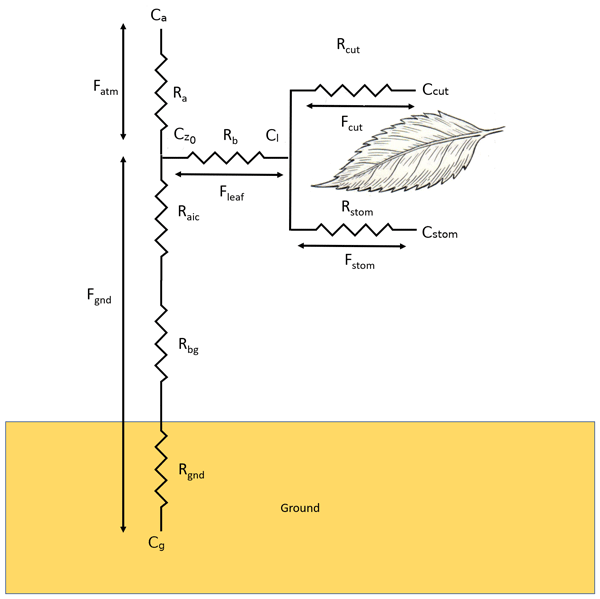
Jesse O. Bash, John T. Walker, Zhiyong Wu, Ian C. Rumsey, Ben Murphy, Christian Hogrefe, Kathleen M. Fahey, Havala O. T. Pye, Matthew R. Jones, K. Wyat Appel, Mark W. Shephard, Najwa I. Alnsour, and Karen E. Cady-Periera
Geosci. Model Dev., 19, 9377–9393, https://doi.org/10.5194/gmd-19-9377-2026, https://doi.org/10.5194/gmd-19-9377-2026, 2026
Short summary
Short summary
We applied a consistent modeling approach for both field and regional scales of multi-pollutants to evaluate the air-surface exchange processes contributing to regional air quality modeling biases when evaluated against observed network and satellite ammonia concentrations. This multi-resolution approach will serve the modeling and measurement community in their future development and generalization of air-surface exchange models utilizing flux, routine network and satellite observations.
Clara M. Nussbaumer, Colette L. Heald, Teresa Campos, Eric A. Kort, Paul B. Krummel, Ray L. Langenfelds, Monica Madronich, Kathryn McKain, Gabrielle Pétron, Ann Stavert, and Steven C. Wofsy
EGUsphere, https://doi.org/10.5194/egusphere-2026-5476, https://doi.org/10.5194/egusphere-2026-5476, 2026
This preprint is open for discussion and under review for Atmospheric Chemistry and Physics (ACP).
Short summary
Short summary
Changes in emissions and climate increasingly impact the remote Southern Hemisphere and we know little about the consequences for the atmospheric composition. We investigate if rapid increases in the greenhouse gas methane since 2008 have led to increases in carbon monoxide. A global model confirms this hypothesis and shows that enhanced emissions from plants and rising temperatures also contribute to the trend. Observations are inconsistent and highlight the need for more accurate measurements.
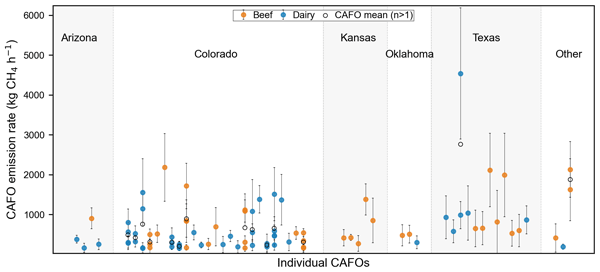
Penelope Smale, Alexander Geddes, Sara Mikaloff-Fletcher, Zhan Zhang, Apisada Chulakadabba, MaryAnn Sargent, Christopher C. Miller, Sébastien Roche, Joseph Rudek, Jonathan Franklin, Jack Warren, and Steven Wofsy
Atmos. Chem. Phys., 26, 10661–10677, https://doi.org/10.5194/acp-26-10661-2026, https://doi.org/10.5194/acp-26-10661-2026, 2026
Short summary
Short summary
MethaneAIR was used to quantify methane emissions from concentrated animal feeding operations (CAFOs) using a targeted scene‑based approach with wavelet denoising. Emissions show substantial variability and are often elevated relative to inventory estimates under detectable conditions, reflecting variability, detection bias, and activity data uncertainty. Results highlight MethaneAIR capability and the potential of future satellite platforms.
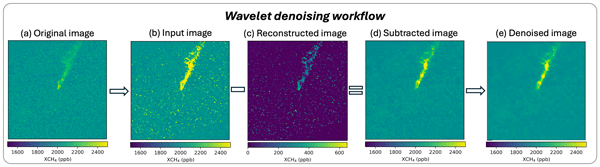
Zhan Zhang, Maryann Sargent, Ethan Manninen, Jack D. Warren, Apisada Chulakadabba, Marcus Russi, Sasha Ayvazov, Joshua Benmergui, Marvin Knapp, Ethan Kyzivat, Christopher C. Miller, Sébastien Roche, Bingkun Luo, David J. Miller, Maya Nasr, Manuel Perez-Carrasco, Kang Sun, James P. Williams, Katlyn MacKay, Mark Omara, Jia Chen, Luis Guanter, Ritesh Gautam, Jonathan Franklin, Xiong Liu, and Steven C. Wofsy
Atmos. Meas. Tech., 19, 4637–4651, https://doi.org/10.5194/amt-19-4637-2026, https://doi.org/10.5194/amt-19-4637-2026, 2026
Short summary
Short summary
Methane released into the atmosphere is often difficult to detect in satellite imagery because the signals can be weak and hidden by background noise. We developed an automated method that improves the visibility of methane plumes while reducing false detections, decreasing the need for time-consuming manual inspection. The method identifies more small emission sources across different instruments, helping build a more complete understanding of methane emissions and their impacts.

Xin Zhang, Joannes D. Maasakkers, Tobias A. de Jong, Paul Tol, Frances Reuland, Adam R. Brandt, Eric A. Kort, Taylor J. Adams, and Ilse Aben
Geosci. Model Dev., 19, 5979–6000, https://doi.org/10.5194/gmd-19-5979-2026, https://doi.org/10.5194/gmd-19-5979-2026, 2026
Short summary
Short summary
Reducing emissions of greenhouse gases such as methane and carbon dioxide is essential for addressing climate change. We developed HyperGas, an open tool that uses hyperspectral satellite images to retrieve and detect greenhouse gas plumes. It helps scientists locate emission sources, estimate their strength, and examine uncertainties through an easy workflow and visual app. Our goal is to make tracking human-made emissions more accurate and accessible, supporting better climate monitoring.
Christopher Chan Miller, Sébastien Roche, Jonas Wilzweski, Xiong Liu, Kelly V. Chance, Bingkun Luo, Kang Sun, Jonathan E. Franklin, Joshua S. Benmergui, Maya Nasr, David J. Miller, Sean Crowell, Nathan Leisso, Eleanor Walker, Ritesh Gautam, Nicholas LoFaso, Sasha Ayvazov, David Wells, Carlos Cervantes, Christopher Hairfield, and Steven Wofsy
EGUsphere, https://doi.org/10.5194/egusphere-2026-3365, https://doi.org/10.5194/egusphere-2026-3365, 2026
Short summary
Short summary
Reducing oil and gas methane emissions is among the fastest ways to slow near-term climate change, and satellites offer a transparent means of verifying progress. MethaneSAT fills a gap between existing instruments, which either measure methane accurately but at coarse scales, or detect large leaks at fine resolution without the accuracy to account for all sources. We present the first measurements and show they meet the accuracy requirements for regional emissions mapping at the 2–4 km2 scale.
David J. Miller, Kang Sun, Jonathan E. Franklin, Nathan Leisso, Sébastien Roche, Bingkun Luo, Christopher Chan Miller, Sasha Ayvazov, Sean Crowell, Nick LoFaso, Tom Kampe, Peter Spuhler, Betsy Farris, Eleanor Walker, Tom Melendez, Ritesh Gautam, Xiong Liu, and Steven C. Wofsy
EGUsphere, https://doi.org/10.5194/egusphere-2026-2675, https://doi.org/10.5194/egusphere-2026-2675, 2026
This preprint is open for discussion and under review for Atmospheric Measurement Techniques (AMT).
Short summary
Short summary
With a focus on mitigating climate change, the MethaneSAT satellite mission aims to catalyze methane emission reductions. MethaneSAT has provided high-resolution emissions products across global oil and gas basins. We present novel calibration methods of MethaneSAT's instrumentation that demonstrate stable on-orbit performance compared with ground-based calibration. Our results are important for similar satellite missions focused on monitoring climate-relevant emissions.
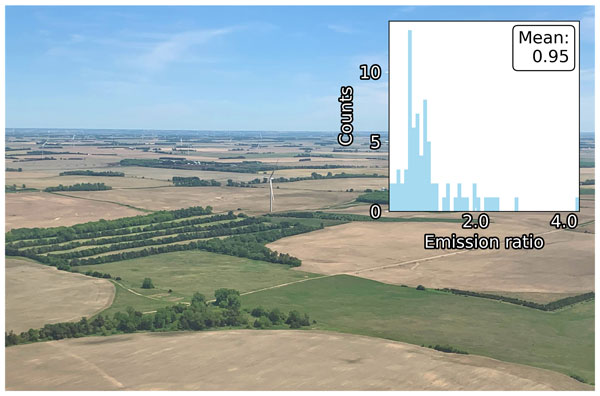
Taylor J. Adams, Genevieve Plant, and Eric A. Kort
Atmos. Chem. Phys., 26, 5517–5529, https://doi.org/10.5194/acp-26-5517-2026, https://doi.org/10.5194/acp-26-5517-2026, 2026
Short summary
Short summary
Nitrous oxide (N2O) is a potent greenhouse gas and ozone-depleting substance emitted from agriculture. Emissions cannot presently be observed from space. We leverage the co-emission of reactive nitrogen oxides (NO + NO2 = NOx) from croplands by determining N2O : NOx emissions ratios with aircraft. We apply these ratios to daily estimates of NOx emissions derived from space-based observations, thus generating a space-based proxy for N2O emissions, with close agreement against independent observations.
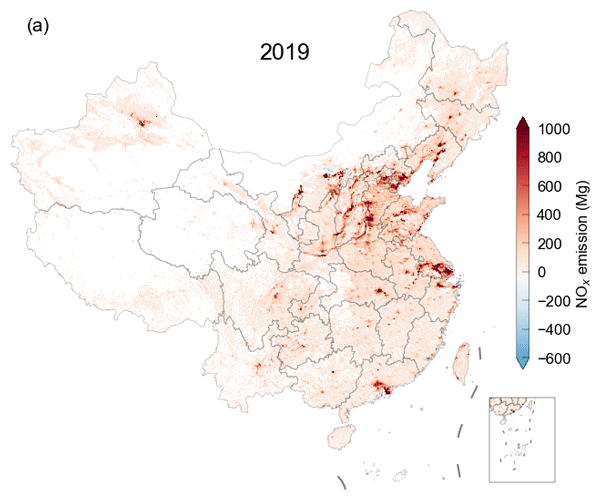
Ling Chen, Zhaonan Cai, Kang Sun, Yi Liu, Dongxu Yang, Mingming Li, and Lingyun Zhu
Earth Syst. Sci. Data, 18, 2749–2767, https://doi.org/10.5194/essd-18-2749-2026, https://doi.org/10.5194/essd-18-2749-2026, 2026
Short summary
Short summary
An appropriate representation of the NOx/NO2 ratio and NOx lifetime is essential for satellite-based NOx emissions estimation. We introduce a lightweight approach that applies variable NOx/NO2 ratios and piecewise fitting based on the directional derivative approach (DDA) to estimate regional and point-source NOx emissions. Our method directly captures nonlinear NOx chemistry and serves as an efficient alternative to both bottom-up inventories and computationally demanding top-down models.

Robert J. D. Spurr, Matt Christi, Nickolay A. Krotkov, Won-Ei Choi, Simon Carn, Can Li, Natalya Kramarova, David Haffner, Eun-Su Yang, Nick Gorkavyi, Alexander Vasilkov, Krzysztof Wargan, Omar Torres, Diego Loyola, Serena Di Pede, J. Pepijn Veefkind, Parker Case, Thomas Schroeder, and Pawan K. Bhartia
Atmos. Meas. Tech., 19, 993–1021, https://doi.org/10.5194/amt-19-993-2026, https://doi.org/10.5194/amt-19-993-2026, 2026
Short summary
Short summary
The submarine eruption of the Hunga volcano released water vapor and sulfur dioxide directly into the stratosphere. The sulfur dioxide formed sulfuric acid aerosols leading to increased scattering of solar ultraviolet radiation (UV), interfering with satellite ozone retrievals. We present a new satellite technique for deriving the amount and height of Hunga aerosols from UV measurements, revealing an unusually low sulfuric acid concentration due to the water-rich conditions in the fresh plume.
Jan-Lukas Tirpitz, Nathaniel Brockway, Santo Fedele Colosimo, Robert Spurr, Matt Christi, Samuel Hall, Kirk Ullmann, Vijay Natraj, Nicolas Theys, Johnathan Hair, Taylor Shingler, Rodney Weber, Ruchen Zhu, Jack Dibb, Richard Moore, Elizabeth Wiggins, and Jochen Stutz
EGUsphere, https://doi.org/10.5194/egusphere-2025-5541, https://doi.org/10.5194/egusphere-2025-5541, 2026
Short summary
Short summary
This study applies a novel remote sensing algorithm to airborne radiation measurements performed in wildfire plumes, to retrieve the absorptive properties of biomass burning aerosols. The results provide new insights on the magnitude, wavelength dependence, and atmospheric aging of the imaginary refractive index, volume absorption cross-section, and single scattering albedo of the smoke particles. Furthermore, potential and limitations of the applied method are discussed.
Ethan Manninen, Apisada Chulakadabba, Maryann Sargent, Zhan Zhang, Harshil Kamdar, Jack Warren, Sébastien Roche, Christopher Chan Miller, Ethan Kyzivat, Joshua Benmergui, Jasna Pittman, Eleanor Walker, Jacob Bushey, Jenna Samra, Jacob Hawthorne, Bingkun Luo, Maya Nasr, Kang Sun, Jonathan Franklin, Xiong Liu, Jia Chen, and Steven Wofsy
EGUsphere, https://doi.org/10.5194/egusphere-2026-115, https://doi.org/10.5194/egusphere-2026-115, 2026
Short summary
Short summary
In this work, my coauthors and I interpret methane emissions observed by remote sensing systems as plumes, or point sources. We model the probability that a general imaging spectrometer will detect a plume, and apply this framework to multiple remote sensing systems. We show how two recent systems- MethanAIR and MethaneSAT- provide enough sensitivity to facility scale point sources to effectively characterize most plume emissions in the Permian Basin.
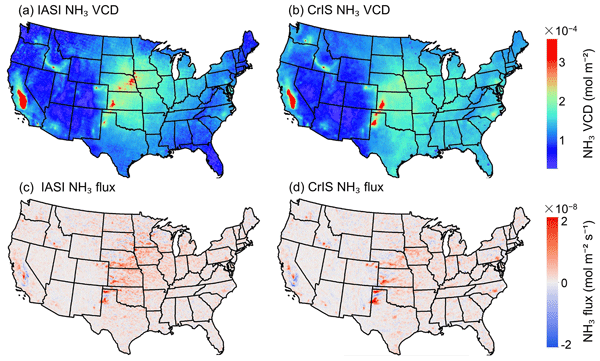
Zitong Li, Kang Sun, Kaiyu Guan, Sheng Wang, Bin Peng, Lieven Clarisse, Martin Van Damme, Pierre-François Coheur, Karen Cady-Pereira, Mark W. Shephard, Mark Zondlo, and Daniel Moore
Atmos. Chem. Phys., 26, 703–721, https://doi.org/10.5194/acp-26-703-2026, https://doi.org/10.5194/acp-26-703-2026, 2026
Short summary
Short summary
We estimate ammonia fluxes over the contiguous U.S. from 2008 to 2022 using a directional derivative approach applied to satellite observations from the Infrared Atmospheric Sounding Interferometer (IASI) and Cross-track Infrared Sounder (CrIS). The resulting flux estimates reveal pronounced seasonal and spatial patterns driven by agricultural activities and indicate substantial local deposition to surrounding vegetation, underscoring the need for improved monitoring and management strategies.
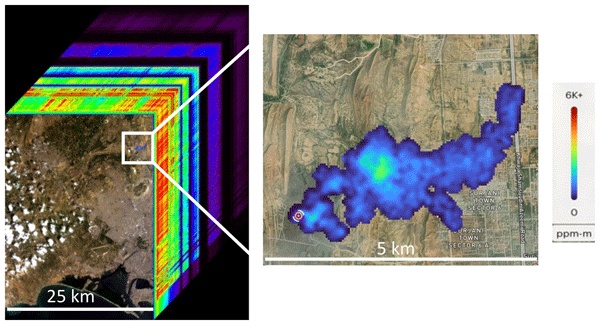
Riley Duren, Daniel Cusworth, Alana Ayasse, Katherine Howell, Alex Diamond, Tia Scarpelli, Jinsol Kim, Kelly O'neill, Judy Lai-Norling, Andrew Thorpe, Sander R. Zandbergen, Lucas Shaw, Mark Keremedjiev, Jeff Guido, Paul Giuliano, Malkam Goldstein, Ravi Nallapu, Geert Barentsen, David R. Thompson, Keely Roth, Daniel Jensen, Michael Eastwood, Frances Reuland, Taylor Adams, Adam Brandt, Eric A. Kort, James Mason, and Robert O. Green
Atmos. Meas. Tech., 18, 6933–6958, https://doi.org/10.5194/amt-18-6933-2025, https://doi.org/10.5194/amt-18-6933-2025, 2025
Short summary
Short summary
We describe the Carbon Mapper emissions monitoring system including methane and carbon dioxide observations from the constellation of Tanager hyperspectral satellites, a global monitoring strategy optimized for enabling mitigation impact at the scale of individual facilities, and a data platform that delivers timely and transparent information for diverse stakeholders. We present early findings from Tanager-1 including the use of our data to locate and repair a leaking oil and gas pipeline.
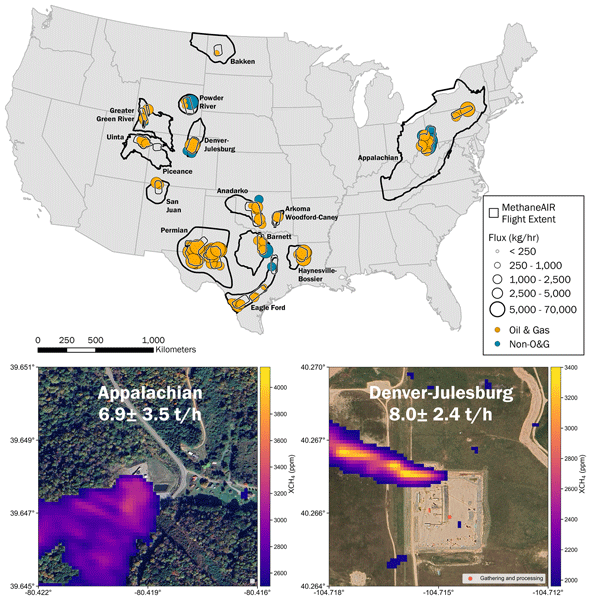
Jack D. Warren, Maryann Sargent, James P. Williams, Mark Omara, Christopher C. Miller, Sebastien Roche, Katlyn MacKay, Ethan Manninen, Apisada Chulakadabba, Anthony Himmelberger, Joshua Benmergui, Zhan Zhang, Luis Guanter, Steve Wofsy, and Ritesh Gautam
Atmos. Chem. Phys., 25, 10661–10675, https://doi.org/10.5194/acp-25-10661-2025, https://doi.org/10.5194/acp-25-10661-2025, 2025
Short summary
Short summary
Mitigating anthropogenic methane emissions requires a detailed understanding of emitting facilities. We use observations of methane point sources from the MethaneAIR instrument from 2021–2023 that covered ~80 % of US onshore oil and gas production regions. We attribute these observations to facility types to explore how emissions vary by industrial sectors. Oil and gas facilities make up most point source emissions nationally, but in certain basins other sectors can make up the majority.
Jianglong Zhang, Jeffrey S. Reid, Blake T. Sorenson, Steven D. Miller, Miguel O. Román, Zhuosen Wang, Robert J. D. Spurr, Shawn Jaker, Thomas F. Eck, and Juli I. Rubin
Atmos. Meas. Tech., 18, 1787–1810, https://doi.org/10.5194/amt-18-1787-2025, https://doi.org/10.5194/amt-18-1787-2025, 2025
Short summary
Short summary
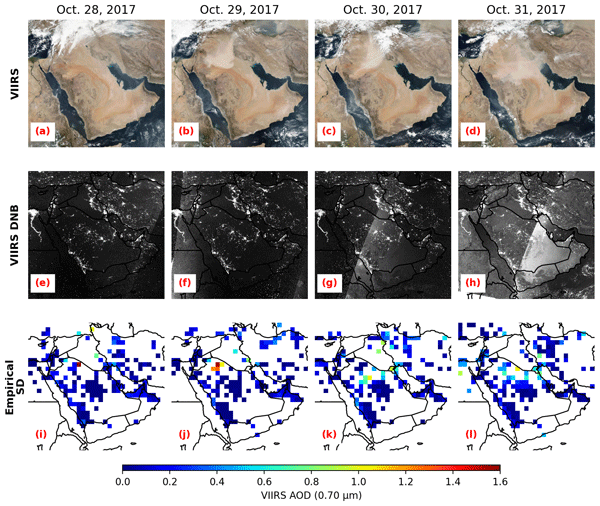
Using observations from the Visible Infrared Imaging Radiometer Suite day–night band, we developed a method for constructing gridded nighttime aerosol optical thickness (AOT) data based on the spatial derivative of measured top-of-atmosphere attenuated upwelling artificial lights at night. The gridded nighttime AOT retrievals, compared against Aerosol Robotic Network data, show reasonable skill levels for potential data assimilation, air quality, and climate studies of significant events.
Yuhang Zhang, Huan Yu, Isabelle De Smedt, Jintai Lin, Nicolas Theys, Michel Van Roozendael, Gaia Pinardi, Steven Compernolle, Ruijing Ni, Fangxuan Ren, Sijie Wang, Lulu Chen, Jos Van Geffen, Mengyao Liu, Alexander M. Cede, Martin Tiefengraber, Alexis Merlaud, Martina M. Friedrich, Andreas Richter, Ankie Piters, Vinod Kumar, Vinayak Sinha, Thomas Wagner, Yongjoo Choi, Hisahiro Takashima, Yugo Kanaya, Hitoshi Irie, Robert Spurr, Wenfu Sun, and Lorenzo Fabris
Atmos. Meas. Tech., 18, 1561–1589, https://doi.org/10.5194/amt-18-1561-2025, https://doi.org/10.5194/amt-18-1561-2025, 2025
Short summary
Short summary
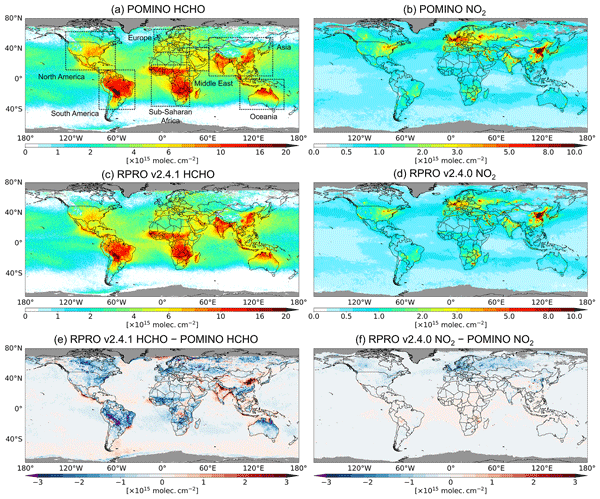
We developed an advanced algorithm for global retrieval of TROPOspheric Monitoring Instrument (TROPOMI) HCHO and NO2 vertical column densities with much improved consistency. Sensitivity tests demonstrate the complexity and nonlinear interactions of auxiliary parameters in the air mass factor calculation. An improved agreement is found with measurements from a global ground-based instrument network. The scientific retrieval provides a useful source of information for studies combining HCHO and NO2.
Jan-Lukas Tirpitz, Santo Fedele Colosimo, Nathaniel Brockway, Robert Spurr, Matt Christi, Samuel Hall, Kirk Ullmann, Johnathan Hair, Taylor Shingler, Rodney Weber, Jack Dibb, Richard Moore, Elizabeth Wiggins, Vijay Natraj, Nicolas Theys, and Jochen Stutz
Atmos. Chem. Phys., 25, 1989–2015, https://doi.org/10.5194/acp-25-1989-2025, https://doi.org/10.5194/acp-25-1989-2025, 2025
Short summary
Short summary
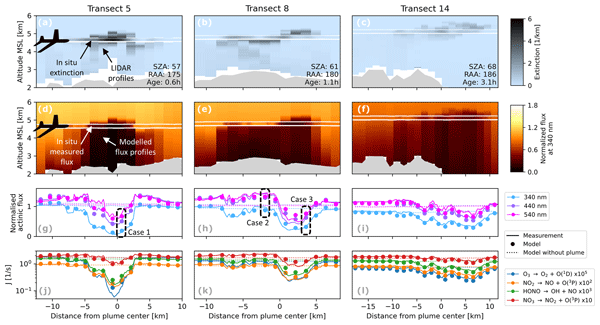
We combine plume composition data from the 2019 NASA FIREX-AQ campaign with state-of-the-art radiative transfer modeling techniques to calculate distributions of actinic flux and photolysis frequencies in a wildfire plume. Excellent agreement of the model and observations demonstrates the applicability of this approach to constrain photochemistry in such plumes. We identify limiting factors for the modeling accuracy and discuss spatial and spectral features of the distributions.
Kelley C. Wells, Dylan B. Millet, Jared F. Brewer, Vivienne H. Payne, Karen E. Cady-Pereira, Rick Pernak, Susan Kulawik, Corinne Vigouroux, Nicholas Jones, Emmanuel Mahieu, Maria Makarova, Tomoo Nagahama, Ivan Ortega, Mathias Palm, Kimberly Strong, Matthias Schneider, Dan Smale, Ralf Sussmann, and Minqiang Zhou
Atmos. Meas. Tech., 18, 695–716, https://doi.org/10.5194/amt-18-695-2025, https://doi.org/10.5194/amt-18-695-2025, 2025
Short summary
Short summary
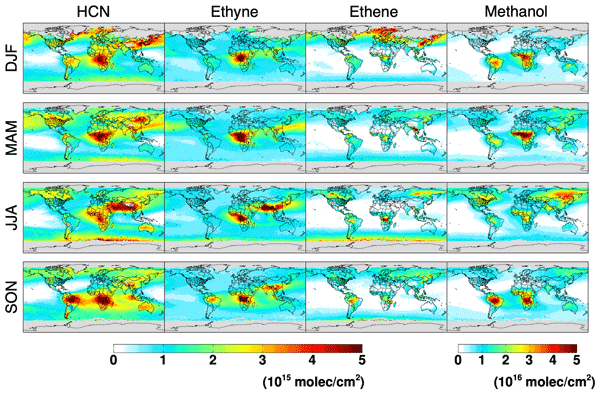
Atmospheric volatile organic compounds (VOCs) affect both air quality and climate. Satellite measurements can help us to assess and predict their global impacts. We present new decadal (2012–2023) measurements of four key VOCs – methanol, ethene, ethyne, and hydrogen cyanide (HCN) – from the Cross-track Infrared Sounder. The measurements reflect emissions from major forests, wildfires, and industry and provide new information to advance understanding of these sources and their changes over time.
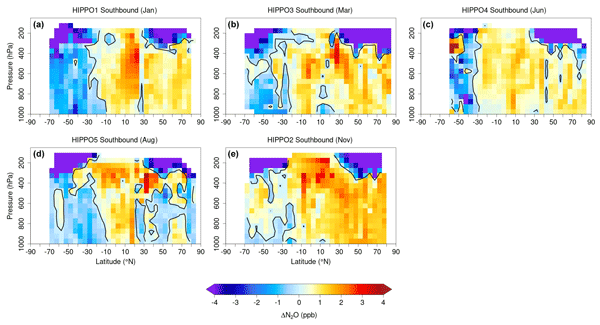
Cynthia D. Nevison, Qing Liang, Paul A. Newman, Britton B. Stephens, Geoff Dutton, Xin Lan, Roisin Commane, Yenny Gonzalez, and Eric Kort
Atmos. Chem. Phys., 24, 10513–10529, https://doi.org/10.5194/acp-24-10513-2024, https://doi.org/10.5194/acp-24-10513-2024, 2024
Short summary
Short summary
This study examines the drivers of interannual variability in tropospheric N2O. New insights are obtained from aircraft data and a chemistry–climate model that explicitly simulates stratospheric N2O. The stratosphere is found to be the dominant driver of N2O variability in the Northern Hemisphere, while both the stratosphere and El Niño cycles are important in the Southern Hemisphere. These results are consistent with known atmospheric dynamics and differences between the hemispheres.
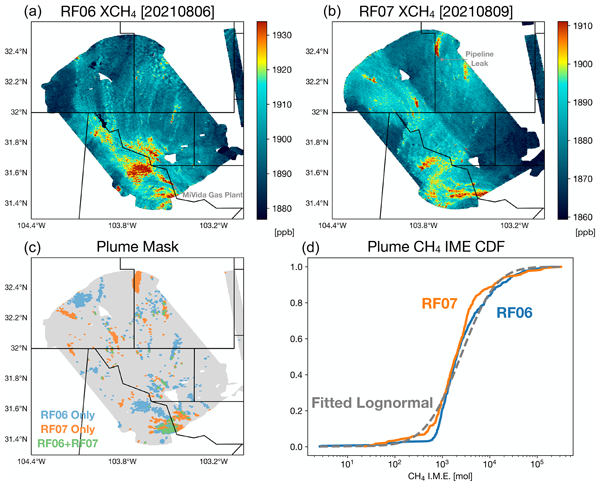
Christopher Chan Miller, Sébastien Roche, Jonas S. Wilzewski, Xiong Liu, Kelly Chance, Amir H. Souri, Eamon Conway, Bingkun Luo, Jenna Samra, Jacob Hawthorne, Kang Sun, Carly Staebell, Apisada Chulakadabba, Maryann Sargent, Joshua S. Benmergui, Jonathan E. Franklin, Bruce C. Daube, Yang Li, Joshua L. Laughner, Bianca C. Baier, Ritesh Gautam, Mark Omara, and Steven C. Wofsy
Atmos. Meas. Tech., 17, 5429–5454, https://doi.org/10.5194/amt-17-5429-2024, https://doi.org/10.5194/amt-17-5429-2024, 2024
Short summary
Short summary
MethaneSAT is an upcoming satellite mission designed to monitor methane emissions from the oil and gas (O&G) industry globally. Here, we present observations from the first flight campaign of MethaneAIR, a MethaneSAT-like instrument mounted on an aircraft. MethaneAIR can map methane with high precision and accuracy over a typically sized oil and gas basin (~200 km2) in a single flight. This paper demonstrates the capability of the upcoming satellite to routinely track global O&G emissions.
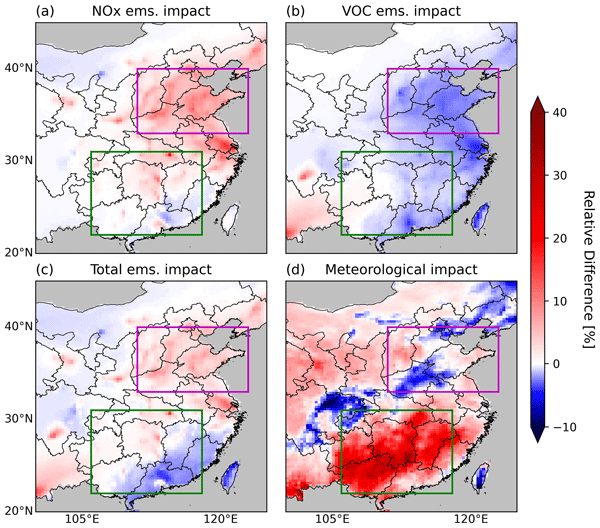
Zhendong Lu, Jun Wang, Yi Wang, Daven K. Henze, Xi Chen, Tong Sha, and Kang Sun
Atmos. Chem. Phys., 24, 7793–7813, https://doi.org/10.5194/acp-24-7793-2024, https://doi.org/10.5194/acp-24-7793-2024, 2024
Short summary
Short summary
In contrast with past work showing that the reduction of emissions was the dominant factor for the nationwide increase of surface O3 during the lockdown in China, this study finds that the variation in meteorology (temperature and other parameters) plays a more important role. This result is obtained through sensitivity simulations using a chemical transport model constrained by satellite (TROPOMI) data and calibrated with surface observations.

Heesung Chong, Gonzalo González Abad, Caroline R. Nowlan, Christopher Chan Miller, Alfonso Saiz-Lopez, Rafael P. Fernandez, Hyeong-Ahn Kwon, Zolal Ayazpour, Huiqun Wang, Amir H. Souri, Xiong Liu, Kelly Chance, Ewan O'Sullivan, Jhoon Kim, Ja-Ho Koo, William R. Simpson, François Hendrick, Richard Querel, Glen Jaross, Colin Seftor, and Raid M. Suleiman
Atmos. Meas. Tech., 17, 2873–2916, https://doi.org/10.5194/amt-17-2873-2024, https://doi.org/10.5194/amt-17-2873-2024, 2024
Short summary
Short summary
We present a new bromine monoxide (BrO) product derived using radiances measured from OMPS-NM on board the Suomi-NPP satellite. This product provides nearly a decade of global stratospheric and tropospheric column retrievals, a feature that is currently rare in publicly accessible datasets. Both stratospheric and tropospheric columns from OMPS-NM demonstrate robust performance, exhibiting good agreement with ground-based observations collected at three stations (Lauder, Utqiagvik, and Harestua).
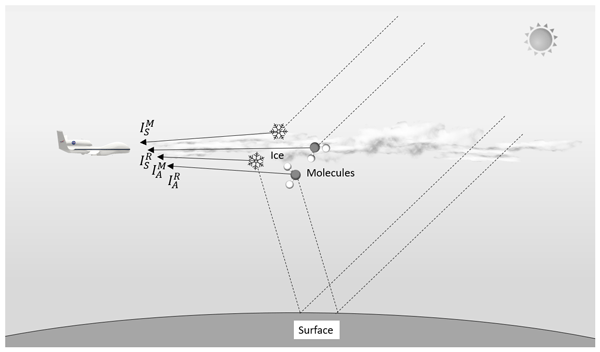
Santo Fedele Colosimo, Nathaniel Brockway, Vijay Natraj, Robert Spurr, Klaus Pfeilsticker, Lisa Scalone, Max Spolaor, Sarah Woods, and Jochen Stutz
Atmos. Meas. Tech., 17, 2367–2385, https://doi.org/10.5194/amt-17-2367-2024, https://doi.org/10.5194/amt-17-2367-2024, 2024
Short summary
Short summary
Cirrus clouds are poorly understood components of the climate system, in part due to the challenge of observing thin, sub-visible ice clouds. We address this issue with a new observational approach that uses the remote sensing of near-infrared ice water absorption features from a high-altitude aircraft. We describe the underlying principle of this approach and present a new procedure to retrieve ice concentration in cirrus clouds. Our retrievals compare well with in situ observations.
Xiaozhen Xiong, Xu Liu, Robert Spurr, Ming Zhao, Qiguang Yang, Wan Wu, and Liqiao Lei
Atmos. Meas. Tech., 17, 1965–1978, https://doi.org/10.5194/amt-17-1965-2024, https://doi.org/10.5194/amt-17-1965-2024, 2024
Short summary
Short summary
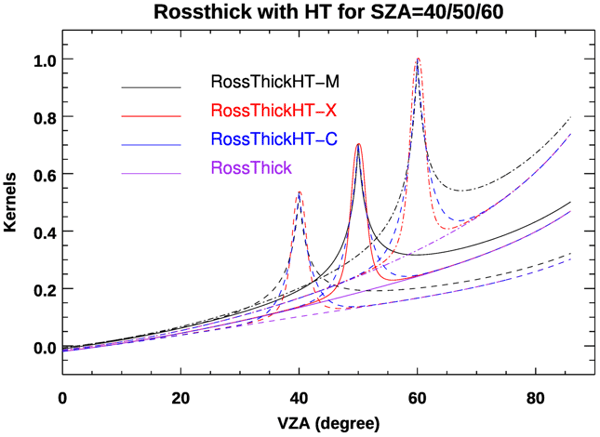
The term “hotspot” refers to the sharp increase in reflectance occurring when incident (solar) and reflected (viewing) directions coincide in the backscatter direction. The accurate simulation of hotspot directional signatures is important for many remote sensing applications, but current models typically require large values of computations to represent the hotspot accurately. This paper provides a numerically improved hotspot BRDF model that converges much faster and is used in VLIDORT.
Eamon K. Conway, Amir H. Souri, Joshua Benmergui, Kang Sun, Xiong Liu, Carly Staebell, Christopher Chan Miller, Jonathan Franklin, Jenna Samra, Jonas Wilzewski, Sebastien Roche, Bingkun Luo, Apisada Chulakadabba, Maryann Sargent, Jacob Hohl, Bruce Daube, Iouli Gordon, Kelly Chance, and Steven Wofsy
Atmos. Meas. Tech., 17, 1347–1362, https://doi.org/10.5194/amt-17-1347-2024, https://doi.org/10.5194/amt-17-1347-2024, 2024
Short summary
Short summary
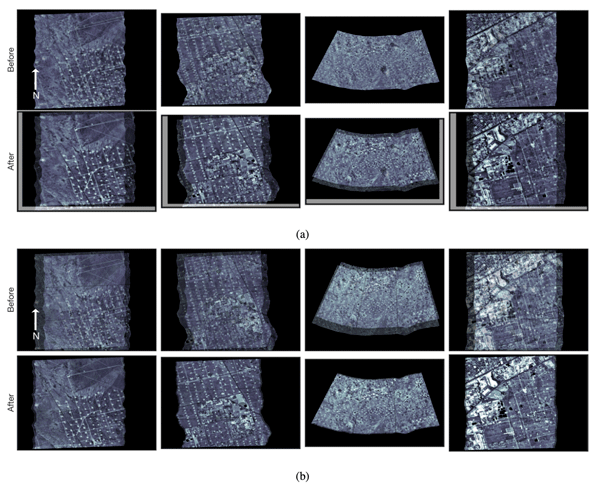
The work presented here describes the processes required to convert raw sensor data for the MethaneAIR instrument to geometrically calibrated data. Each algorithm is described in detail. MethaneAIR is the airborne simulator for MethaneSAT, a new satellite under development by MethaneSAT LLC, a subsidiary of the EDF. MethaneSAT's goals are to precisely map over 80 % of the production sources of methane emissions from oil and gas fields across the globe to a high degree of accuracy.
Magdalena Pühl, Anke Roiger, Alina Fiehn, Alan M. Gorchov Negron, Eric A. Kort, Stefan Schwietzke, Ignacio Pisso, Amy Foulds, James Lee, James L. France, Anna E. Jones, Dave Lowry, Rebecca E. Fisher, Langwen Huang, Jacob Shaw, Prudence Bateson, Stephen Andrews, Stuart Young, Pamela Dominutti, Tom Lachlan-Cope, Alexandra Weiss, and Grant Allen
Atmos. Chem. Phys., 24, 1005–1024, https://doi.org/10.5194/acp-24-1005-2024, https://doi.org/10.5194/acp-24-1005-2024, 2024
Short summary
Short summary
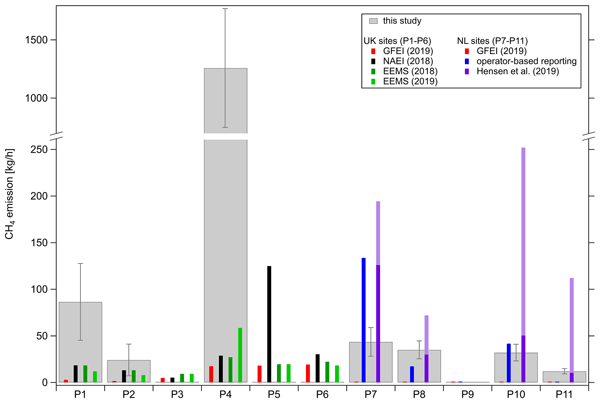
In April–May 2019 we carried out an airborne field campaign in the southern North Sea with the aim of studying methane emissions of offshore gas installations. We determined methane emissions from elevated methane measured downstream of the sampled installations. We compare our measured methane emissions with estimated methane emissions from national and global annual inventories. As a result, we find inconsistencies of inventories and large discrepancies between measurements and inventories.
Karen E. Cady-Pereira, Xuehui Guo, Rui Wang, April B. Leytem, Chase Calkins, Elizabeth Berry, Kang Sun, Markus Müller, Armin Wisthaler, Vivienne H. Payne, Mark W. Shephard, Mark A. Zondlo, and Valentin Kantchev
Atmos. Meas. Tech., 17, 15–36, https://doi.org/10.5194/amt-17-15-2024, https://doi.org/10.5194/amt-17-15-2024, 2024
Short summary
Short summary
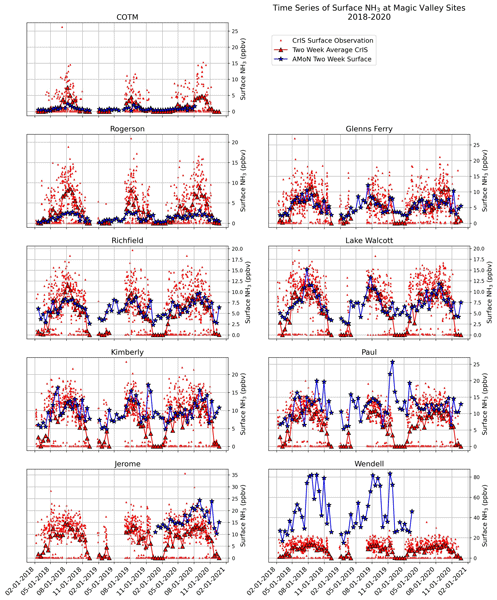
Ammonia is a significant precursor of PM2.5 particles and thus contributes to poor air quality in many regions. Furthermore, ammonia concentrations are rising due to the increase of large-scale, intensive agricultural activities. Here we evaluate satellite measurements of ammonia against aircraft and surface network data, and show that there are differences in magnitude, but the satellite data are spatially and temporally well correlated with the in situ data.
Apisada Chulakadabba, Maryann Sargent, Thomas Lauvaux, Joshua S. Benmergui, Jonathan E. Franklin, Christopher Chan Miller, Jonas S. Wilzewski, Sébastien Roche, Eamon Conway, Amir H. Souri, Kang Sun, Bingkun Luo, Jacob Hawthrone, Jenna Samra, Bruce C. Daube, Xiong Liu, Kelly Chance, Yang Li, Ritesh Gautam, Mark Omara, Jeff S. Rutherford, Evan D. Sherwin, Adam Brandt, and Steven C. Wofsy
Atmos. Meas. Tech., 16, 5771–5785, https://doi.org/10.5194/amt-16-5771-2023, https://doi.org/10.5194/amt-16-5771-2023, 2023
Short summary
Short summary
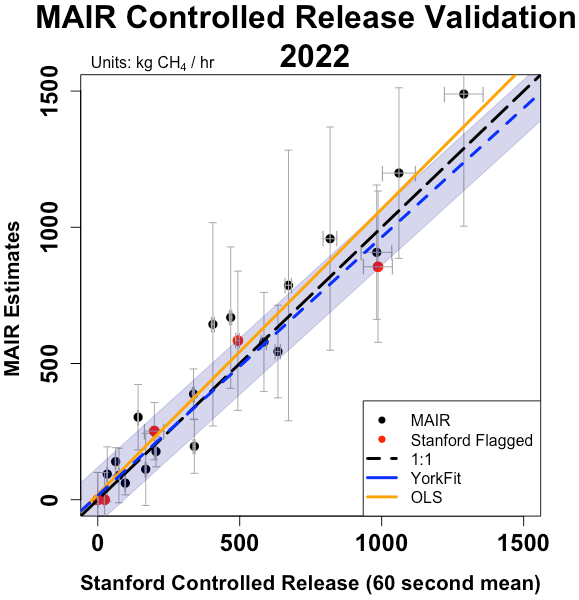
We show that MethaneAIR, a precursor to the MethaneSAT satellite, demonstrates accurate point source quantification during controlled release experiments and regional observations in 2021 and 2022. Results from our two independent quantification methods suggest the accuracy of our sensor and algorithms is better than 25 % for sources emitting 200 kg h−1 or more. Insights from these measurements help establish the capabilities of MethaneSAT and MethaneAIR.
Rui Wang, Da Pan, Xuehui Guo, Kang Sun, Lieven Clarisse, Martin Van Damme, Pierre-François Coheur, Cathy Clerbaux, Melissa Puchalski, and Mark A. Zondlo
Atmos. Chem. Phys., 23, 13217–13234, https://doi.org/10.5194/acp-23-13217-2023, https://doi.org/10.5194/acp-23-13217-2023, 2023
Short summary
Short summary
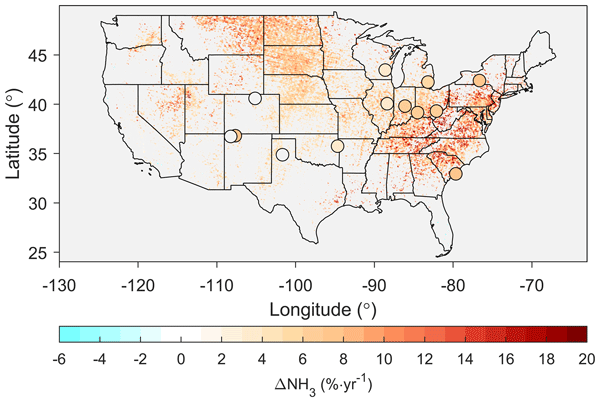
Ammonia (NH3) is a key precursor for fine particulate matter (PM2.5) and a primary form of reactive nitrogen, yet it has sparse ground measurements. We perform the first comprehensive comparison between ground observations and satellite retrievals in the US, demonstrating that satellite NH3 data can help fill spatial gaps in the current ground monitoring networks. Trend analyses using both datasets highlight increasing NH3 trends across the US, including the NH3 hotspots and urban areas.
Yuhang Zhang, Jintai Lin, Jhoon Kim, Hanlim Lee, Junsung Park, Hyunkee Hong, Michel Van Roozendael, Francois Hendrick, Ting Wang, Pucai Wang, Qin He, Kai Qin, Yongjoo Choi, Yugo Kanaya, Jin Xu, Pinhua Xie, Xin Tian, Sanbao Zhang, Shanshan Wang, Siyang Cheng, Xinghong Cheng, Jianzhong Ma, Thomas Wagner, Robert Spurr, Lulu Chen, Hao Kong, and Mengyao Liu
Atmos. Meas. Tech., 16, 4643–4665, https://doi.org/10.5194/amt-16-4643-2023, https://doi.org/10.5194/amt-16-4643-2023, 2023
Short summary
Short summary
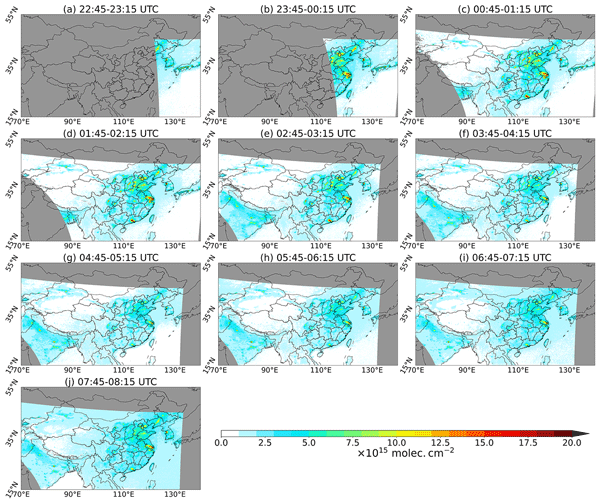
Our tropospheric NO2 vertical column density product with high spatiotemporal resolution is based on the Geostationary Environment Monitoring Spectrometer (GEMS) and named POMINO–GEMS. Strong hotspot signals and NO2 diurnal variations are clearly seen. Validations with multiple satellite products and ground-based, mobile car and surface measurements exhibit the overall great performance of the POMINO–GEMS product, indicating its capability for application in environmental studies.
Mark Omara, Ritesh Gautam, Madeleine A. O'Brien, Anthony Himmelberger, Alex Franco, Kelsey Meisenhelder, Grace Hauser, David R. Lyon, Apisada Chulakadabba, Christopher Chan Miller, Jonathan Franklin, Steven C. Wofsy, and Steven P. Hamburg
Earth Syst. Sci. Data, 15, 3761–3790, https://doi.org/10.5194/essd-15-3761-2023, https://doi.org/10.5194/essd-15-3761-2023, 2023
Short summary
Short summary
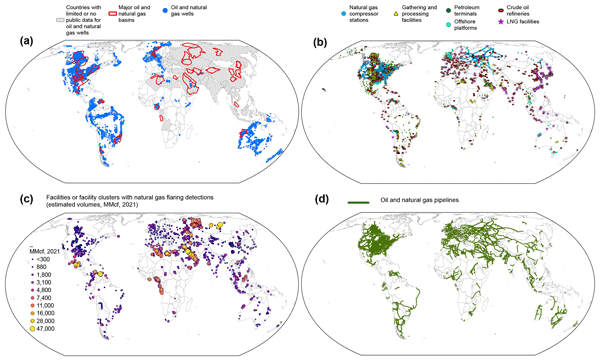
We acquire, integrate, and analyze ~ 6 million geospatial oil and gas infrastructure data records based on information available in the public domain and develop an open-access global database including all the major oil and gas facility types that are important sources of methane emissions. This work helps fulfill a crucial geospatial data need, in support of the assessment, attribution, and mitigation of global oil and gas methane emissions at high resolution.
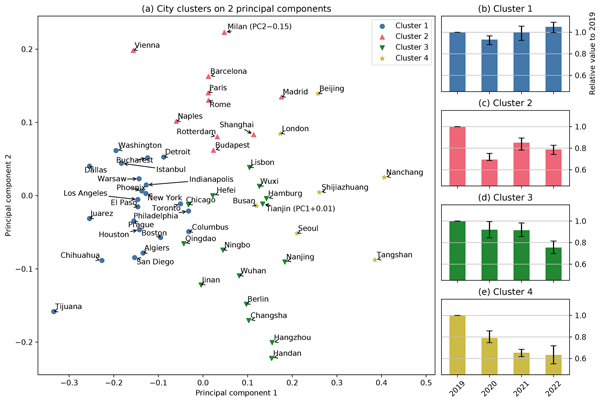
Chantelle R. Lonsdale and Kang Sun
Atmos. Chem. Phys., 23, 8727–8748, https://doi.org/10.5194/acp-23-8727-2023, https://doi.org/10.5194/acp-23-8727-2023, 2023
Short summary
Short summary
The COVID-19 pandemic, which was caused by the SARS-CoV-2 virus, emerged in 2019, and its still evolving variants have resulted in unprecedented shifts in human activities and anthropogenic emissions into the Earth's atmosphere. We present monthly nitrogen oxide emissions over three major continents from May 2018 to January 2023 to capture variations before and after the COVID-19 pandemic. We focus on a diverse collection of 54 cities to quantify the post-COVID-19 perturbations.
Huiqun Wang, Gonzalo González Abad, Chris Chan Miller, Hyeong-Ahn Kwon, Caroline R. Nowlan, Zolal Ayazpour, Heesung Chong, Xiong Liu, Kelly Chance, Ewan O'Sullivan, Kang Sun, Robert Spurr, and Robert J. Hargreaves
Atmos. Meas. Tech. Discuss., https://doi.org/10.5194/amt-2023-66, https://doi.org/10.5194/amt-2023-66, 2023
Preprint withdrawn
Short summary
Short summary
A pipeline for retrieving Total Column Water Vapor from satellite blue spectra is developed. New constraints are considered. Water-leaving radiance is important over the oceans. Results agree with reference datasets well under clear conditions. Due to high sensitivity to clouds, strict data filtering criteria are required. All-sky retrievals can be corrected using machine learning. GPS stations’ representation errors follow a power law relationship with grid resolutions.
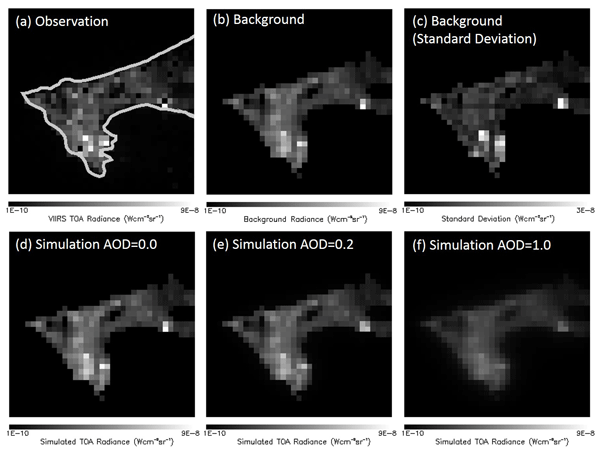
Jianglong Zhang, Jeffrey S. Reid, Steven D. Miller, Miguel Román, Zhuosen Wang, Robert J. D. Spurr, and Shawn Jaker
Atmos. Meas. Tech., 16, 2531–2546, https://doi.org/10.5194/amt-16-2531-2023, https://doi.org/10.5194/amt-16-2531-2023, 2023
Short summary
Short summary
We adapted the spherical harmonics discrete ordinate method 3-dimentional radiative transfer model (3-D RTM) and developed a nighttime 3-D RTM capability for simulating top-of-atmosphere radiances from artificial light sources for aerosol retrievals. Our study suggests that both aerosol optical depth and aerosol plume height can be effectively retrieved using nighttime observations over artificial light sources, through the newly developed radiative transfer modeling capability.
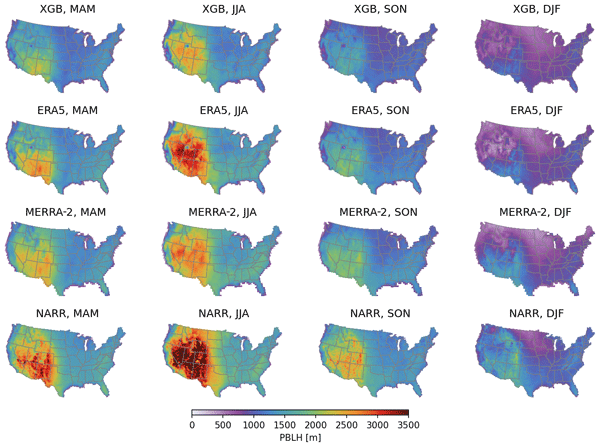
Zolal Ayazpour, Shiqi Tao, Dan Li, Amy Jo Scarino, Ralph E. Kuehn, and Kang Sun
Atmos. Meas. Tech., 16, 563–580, https://doi.org/10.5194/amt-16-563-2023, https://doi.org/10.5194/amt-16-563-2023, 2023
Short summary
Short summary
Accurate knowledge of the planetary boundary layer height (PBLH) is essential to study air pollution. However, PBLH observations are sparse in space and time, and PBLHs used in atmospheric models are often inaccurate. Using PBLH observations from the Aircraft Meteorological DAta Relay (AMDAR), we present a machine learning framework to produce a spatially complete PBLH product over the contiguous US that shows a better agreement with reference PBLH observations than commonly used PBLH products.
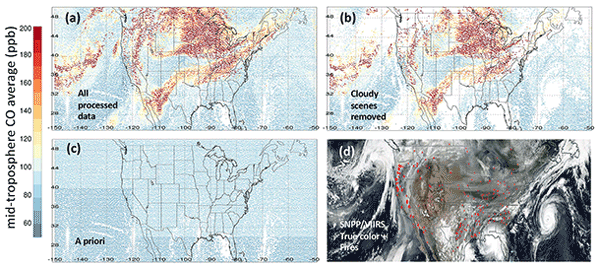
Helen M. Worden, Gene L. Francis, Susan S. Kulawik, Kevin W. Bowman, Karen Cady-Pereira, Dejian Fu, Jennifer D. Hegarty, Valentin Kantchev, Ming Luo, Vivienne H. Payne, John R. Worden, Róisín Commane, and Kathryn McKain
Atmos. Meas. Tech., 15, 5383–5398, https://doi.org/10.5194/amt-15-5383-2022, https://doi.org/10.5194/amt-15-5383-2022, 2022
Short summary
Short summary
Satellite observations of global carbon monoxide (CO) are essential for understanding atmospheric chemistry and pollution sources. This paper describes a new data product using radiance measurements from the Cross-track Infrared Sounder (CrIS) instrument on the Suomi National Polar-orbiting Partnership (SNPP) satellite that provides vertical profiles of CO from single-field-of-view observations. We show how these satellite CO profiles compare to aircraft observations and evaluate their biases.
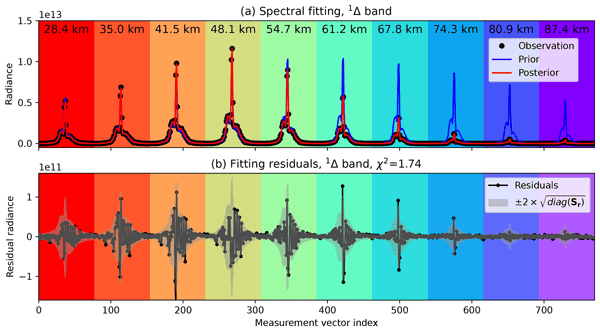
Kang Sun, Mahdi Yousefi, Christopher Chan Miller, Kelly Chance, Gonzalo González Abad, Iouli E. Gordon, Xiong Liu, Ewan O'Sullivan, Christopher E. Sioris, and Steven C. Wofsy
Atmos. Meas. Tech., 15, 3721–3745, https://doi.org/10.5194/amt-15-3721-2022, https://doi.org/10.5194/amt-15-3721-2022, 2022
Short summary
Short summary
This study of upper atmospheric airglow from oxygen is motivated by the need to measure oxygen simultaneously with methane and CO2 in satellite remote sensing. We provide an accurate understanding of the spatial, temporal, and spectral distribution of airglow emissions, which will help in the satellite remote sensing of greenhouse gases and constraining the chemical and physical processes in the upper atmosphere.
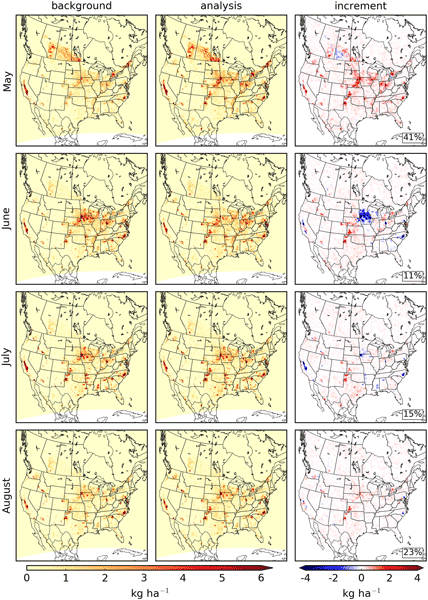
Michael Sitwell, Mark W. Shephard, Yves Rochon, Karen Cady-Pereira, and Enrico Dammers
Atmos. Chem. Phys., 22, 6595–6624, https://doi.org/10.5194/acp-22-6595-2022, https://doi.org/10.5194/acp-22-6595-2022, 2022
Short summary
Short summary
Observations of ammonia made using the satellite-borne CrIS instrument were used to improve the ammonia emissions used in the GEM-MACH model. These observations were used to refine estimates of the monthly mean ammonia emissions over North America for May to August 2016. The updated ammonia emissions reduced biases of GEM-MACH surface ammonia fields with surface observations and showed some improvements in the forecasting of species involved in inorganic particulate matter formation.
Dustin Roten, John C. Lin, Lewis Kunik, Derek Mallia, Dien Wu, Tomohiro Oda, and Eric A. Kort
Atmos. Chem. Phys. Discuss., https://doi.org/10.5194/acp-2022-315, https://doi.org/10.5194/acp-2022-315, 2022
Revised manuscript not accepted
Short summary
Short summary
The systems used to monitor carbon dioxide (CO2) emissions from urban areas provides a means to observe and quantify emissions reductions from policy-related reduction efforts. Space-based instruments, such as NASA's Orbiting Carbon Observatory-3 (OCO-3), provides detailed "snapshots" of CO2 emissions from many megacities around the world. This work quantifies the amount of emission "information" contained in these snapshots and uses this information to update previous estimates of urban CO2.
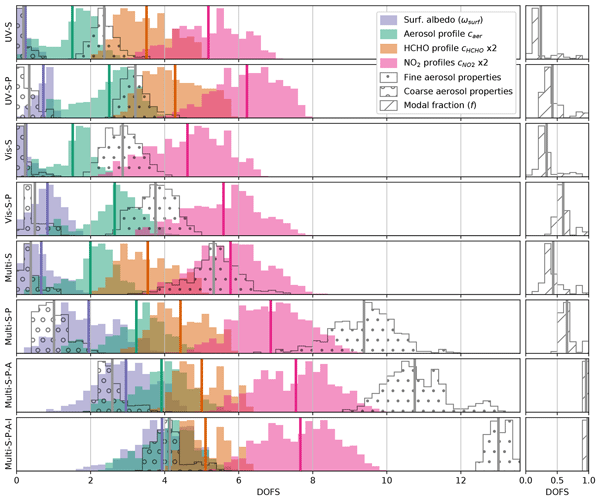
Jan-Lukas Tirpitz, Udo Frieß, Robert Spurr, and Ulrich Platt
Atmos. Meas. Tech., 15, 2077–2098, https://doi.org/10.5194/amt-15-2077-2022, https://doi.org/10.5194/amt-15-2077-2022, 2022
Short summary
Short summary
MAX-DOAS is a widely used measurement technique for the remote detection of atmospheric aerosol and trace gases. It relies on the analysis of ultra-violet and visible radiation spectra of skylight. To date, information contained in the skylight's polarisation state has not been utilised. On the basis of synthetic data, we carried out sensitivity analyses to assess the potential of polarimetry for MAX-DOAS applications.
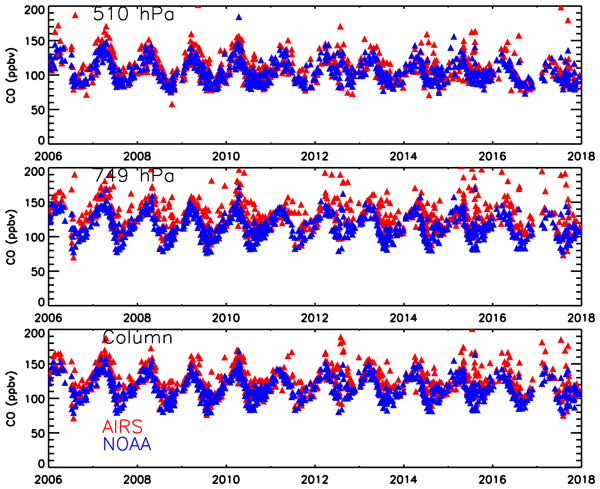
Jennifer D. Hegarty, Karen E. Cady-Pereira, Vivienne H. Payne, Susan S. Kulawik, John R. Worden, Valentin Kantchev, Helen M. Worden, Kathryn McKain, Jasna V. Pittman, Róisín Commane, Bruce C. Daube Jr., and Eric A. Kort
Atmos. Meas. Tech., 15, 205–223, https://doi.org/10.5194/amt-15-205-2022, https://doi.org/10.5194/amt-15-205-2022, 2022
Short summary
Short summary
Carbon monoxide (CO) is produced by combustion of substances such as fossil fuels and plays an important role in atmospheric pollution and climate. We evaluated estimates of atmospheric CO derived from outgoing radiation measurements of the Atmospheric Infrared Sounder (AIRS) on a satellite orbiting the Earth against CO measurements from aircraft to show that these satellite measurements are reliable for continuous global monitoring of atmospheric CO concentrations.
Amir H. Souri, Kelly Chance, Kang Sun, Xiong Liu, and Matthew S. Johnson
Atmos. Meas. Tech., 15, 41–59, https://doi.org/10.5194/amt-15-41-2022, https://doi.org/10.5194/amt-15-41-2022, 2022
Short summary
Short summary
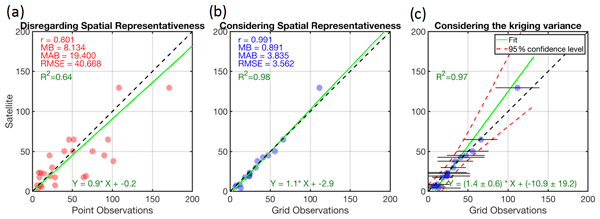
The central component of satellite and model validation is pointwise measurements. A point is an element of space, whereas satellite (model) pixels represent an averaged area. These two datasets are inherently different. We leveraged some geostatistical tools to transform discrete points to gridded data with quantified uncertainty, comparable to satellite footprint (and response functions). This in part alleviated some complications concerning point–pixel comparisons.
Eric J. Hintsa, Fred L. Moore, Dale F. Hurst, Geoff S. Dutton, Bradley D. Hall, J. David Nance, Ben R. Miller, Stephen A. Montzka, Laura P. Wolton, Audra McClure-Begley, James W. Elkins, Emrys G. Hall, Allen F. Jordan, Andrew W. Rollins, Troy D. Thornberry, Laurel A. Watts, Chelsea R. Thompson, Jeff Peischl, Ilann Bourgeois, Thomas B. Ryerson, Bruce C. Daube, Yenny Gonzalez Ramos, Roisin Commane, Gregory W. Santoni, Jasna V. Pittman, Steven C. Wofsy, Eric Kort, Glenn S. Diskin, and T. Paul Bui
Atmos. Meas. Tech., 14, 6795–6819, https://doi.org/10.5194/amt-14-6795-2021, https://doi.org/10.5194/amt-14-6795-2021, 2021
Short summary
Short summary
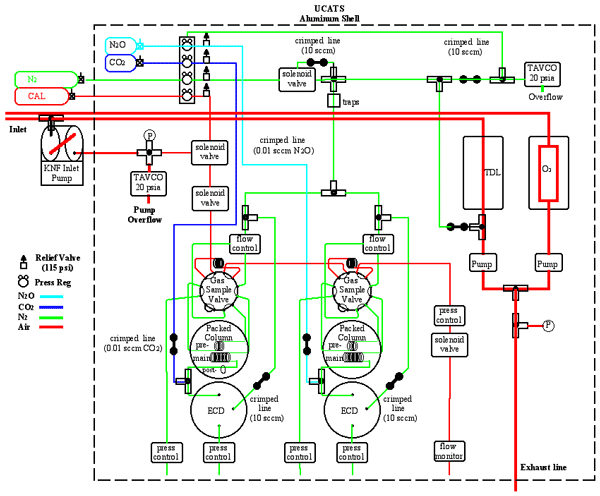
We built UCATS to study atmospheric chemistry and transport. It has measured trace gases including CFCs, N2O, SF6, CH4, CO, and H2 with gas chromatography, as well as ozone and water vapor. UCATS has been part of missions to study the tropical tropopause; transport of air into the stratosphere; greenhouse gases, transport, and chemistry in the troposphere; and ozone chemistry, on both piloted and unmanned aircraft. Its design, capabilities, and some results are shown and described here.
Cited articles
Ackett, R., Hilafu, H., Gelfand, I., and Saha, D.: Statistical Identification of Nitrous Oxide Hot Moments and Their Significance Across Global Agroecosystems, J. Geophys. Res.-Biogeo., 130, e2025JG008953, https://doi.org/10.1029/2025JG008953, 2025. a
Adams, T. J., Plant, G., and Kort, E. A.: Deriving cropland N2O emissions from space-based NO2 observations, Atmos. Chem. Phys., 26, 5517–5529, https://doi.org/10.5194/acp-26-5517-2026, 2026. a
Barnet, C. D., Smith, N., Ide, K., Garrett, K., and Jones, E.: Evaluating the Value of CrIS Shortwave-Infrared Channels in Atmospheric-Sounding Retrievals, Remote Sens., 15, https://doi.org/10.3390/rs15030547, 2023. a
Bowman, K., Rodgers, C., Kulawik, S., Worden, J., Sarkissian, E., Osterman, G., Steck, T., Lou, M., Eldering, A., Shephard, M., Worden, H., Lampel, M., Clough, S., Brown, P., Rinsland, C., Gunson, M., and Beer, R.: Tropospheric emission spectrometer: retrieval method and error analysis, IEEE T. Geosci. Remote, 44, 1297–1307, https://doi.org/10.1109/TGRS.2006.871234, 2006. a
Butz, A., Guerlet, S., Hasekamp, O., Schepers, D., Galli, A., Aben, I., Frankenberg, C., Hartmann, J.-M., Tran, H., Kuze, A., Keppel-Aleks, G., Toon, G., Wunch, D., Wennberg, P., Deutscher, N., Griffith, D., Macatangay, R., Messerschmidt, J., Notholt, J., and Warneke, T.: Toward accurate CO2 and CH4 observations from GOSAT, Geophys. Res. Lett., 38, https://doi.org/10.1029/2011GL047888, 2011. a
Chan Miller, C., Roche, S., Wilzewski, J. S., Liu, X., Chance, K., Souri, A. H., Conway, E., Luo, B., Samra, J., Hawthorne, J., Sun, K., Staebell, C., Chulakadabba, A., Sargent, M., Benmergui, J. S., Franklin, J. E., Daube, B. C., Li, Y., Laughner, J. L., Baier, B. C., Gautam, R., Omara, M., and Wofsy, S. C.: Methane retrieval from MethaneAIR using the CO2 proxy approach: a demonstration for the upcoming MethaneSAT mission, Atmos. Meas. Tech., 17, 5429–5454, https://doi.org/10.5194/amt-17-5429-2024, 2024. a, b, c, d, e, f, g
Chen, J., Viatte, C., Hedelius, J. K., Jones, T., Franklin, J. E., Parker, H., Gottlieb, E. W., Wennberg, P. O., Dubey, M. K., and Wofsy, S. C.: Differential column measurements using compact solar-tracking spectrometers, Atmos. Chem. Phys., 16, 8479–8498, https://doi.org/10.5194/acp-16-8479-2016, 2016a. a
Chen, Z., Griffis, T. J., Millet, D. B., Wood, J. D., Lee, X., Baker, J. M., Xiao, K., Turner, P. A., Chen, M., Zobitz, J., and Wells, K. C.: Partitioning N2O emissions within the U.S. Corn Belt using an inverse modeling approach, Global Biogeochem. Cy., 30, 1192–1205, https://doi.org/10.1002/2015GB005313, 2016b. a
Chulakadabba, A., Sargent, M., Lauvaux, T., Benmergui, J. S., Franklin, J. E., Chan Miller, C., Wilzewski, J. S., Roche, S., Conway, E., Souri, A. H., Sun, K., Luo, B., Hawthrone, J., Samra, J., Daube, B. C., Liu, X., Chance, K., Li, Y., Gautam, R., Omara, M., Rutherford, J. S., Sherwin, E. D., Brandt, A., and Wofsy, S. C.: Methane point source quantification using MethaneAIR: a new airborne imaging spectrometer, Atmos. Meas. Tech., 16, 5771–5785, https://doi.org/10.5194/amt-16-5771-2023, 2023. a
Connor, B., Bösch, H., McDuffie, J., Taylor, T., Fu, D., Frankenberg, C., O'Dell, C., Payne, V. H., Gunson, M., Pollock, R., Hobbs, J., Oyafuso, F., and Jiang, Y.: Quantification of uncertainties in OCO-2 measurements of XCO2: simulations and linear error analysis, Atmos. Meas. Tech., 9, 5227–5238, https://doi.org/10.5194/amt-9-5227-2016, 2016. a
Crisp, D.: Measuring atmospheric carbon dioxide from space with the Orbiting Carbon Observatory-2 (OCO-2), vol. 9607 of SPIE Optical Engineering + Applications, SPIE, https://doi.org/10.1117/12.2187291, 2015. a
Crisp, D., Pollock, H. R., Rosenberg, R., Chapsky, L., Lee, R. A. M., Oyafuso, F. A., Frankenberg, C., O'Dell, C. W., Bruegge, C. J., Doran, G. B., Eldering, A., Fisher, B. M., Fu, D., Gunson, M. R., Mandrake, L., Osterman, G. B., Schwandner, F. M., Sun, K., Taylor, T. E., Wennberg, P. O., and Wunch, D.: The on-orbit performance of the Orbiting Carbon Observatory-2 (OCO-2) instrument and its radiometrically calibrated products, Atmos. Meas. Tech., 10, 59–81, https://doi.org/10.5194/amt-10-59-2017, 2017. a
Cuesta, J., Eremenko, M., Liu, X., Dufour, G., Cai, Z., Höpfner, M., von Clarmann, T., Sellitto, P., Foret, G., Gaubert, B., Beekmann, M., Orphal, J., Chance, K., Spurr, R., and Flaud, J.-M.: Satellite observation of lowermost tropospheric ozone by multispectral synergism of IASI thermal infrared and GOME-2 ultraviolet measurements over Europe, Atmos. Chem. Phys., 13, 9675–9693, https://doi.org/10.5194/acp-13-9675-2013, 2013. a
Dacic, N., Plant, G., and Kort, E. A.: Airborne Measurements Reveal High Spatiotemporal Variation and the Heavy-Tail Characteristic of Nitrous Oxide Emissions in Iowa, J. Geophys. Res.-Atmos., 129, e2024JD041403, https://doi.org/10.1029/2024JD041403, 2024. a, b, c
Dils, B., De Mazière, M., Müller, J. F., Blumenstock, T., Buchwitz, M., de Beek, R., Demoulin, P., Duchatelet, P., Fast, H., Frankenberg, C., Gloudemans, A., Griffith, D., Jones, N., Kerzenmacher, T., Kramer, I., Mahieu, E., Mellqvist, J., Mittermeier, R. L., Notholt, J., Rinsland, C. P., Schrijver, H., Smale, D., Strandberg, A., Straume, A. G., Stremme, W., Strong, K., Sussmann, R., Taylor, J., van den Broek, M., Velazco, V., Wagner, T., Warneke, T., Wiacek, A., and Wood, S.: Comparisons between SCIAMACHY and ground-based FTIR data for total columns of CO, CH4, CO2 and N2O, Atmos. Chem. Phys., 6, 1953–1976, https://doi.org/10.5194/acp-6-1953-2006, 2006. a
Eldering, A., Taylor, T. E., O'Dell, C. W., and Pavlick, R.: The OCO-3 mission: measurement objectives and expected performance based on 1 year of simulated data, Atmos. Meas. Tech., 12, 2341–2370, https://doi.org/10.5194/amt-12-2341-2019, 2019. a
Feng, R. and Li, Z.: Current investigations on global N2O emissions and reductions: Prospect and outlook, Environ. Pollut., 338, 122664, https://doi.org/10.1016/j.envpol.2023.122664, 2023. a, b
Frankenberg, C., Sanghavi, S., Saha, A., Wennberg, P. O., Jacob, D. J., and Michalak, A. M.: On the Use of N2O as a Light-Path Proxy for Accurate Greenhouse Gas Measurements From Space, Geophys. Res. Lett., 52, e2024GL114131, https://doi.org/10.1029/2024GL114131, 2025. a
Gordon, I., Rothman, L., Hargreaves, R., Hashemi, R., Karlovets, E., Skinner, F., Conway, E., Hill, C., Kochanov, R., Tan, Y., Wcisło, P., Finenko, A., Nelson, K., Bernath, P., Birk, M., Boudon, V., Campargue, A., Chance, K., Coustenis, A., Drouin, B., Flaud, J., Gamache, R., Hodges, J., Jacquemart, D., Mlawer, E., Nikitin, A., Perevalov, V., Rotger, M., Tennyson, J., Toon, G., Tran, H., Tyuterev, V., Adkins, E., Baker, A., Barbe, A., Canè, E., Császár, A., Dudaryonok, A., Egorov, O., Fleisher, A., Fleurbaey, H., Foltynowicz, A., Furtenbacher, T., Harrison, J., Hartmann, J., Horneman, V., Huang, X., Karman, T., Karns, J., Kassi, S., Kleiner, I., Kofman, V., Kwabia–Tchana, F., Lavrentieva, N., Lee, T., Long, D., Lukashevskaya, A., Lyulin, O., Makhnev, V., Matt, W., Massie, S., Melosso, M., Mikhailenko, S., Mondelain, D., Müller, H., Naumenko, O., Perrin, A., Polyansky, O., Raddaoui, E., Raston, P., Reed, Z., Rey, M., Richard, C., Tóbiás, R., Sadiek, I., Schwenke, D., Starikova, E., Sung, K., Tamassia, F., Tashkun, S., Vander Auwera, J., Vasilenko, I., Vigasin, A., Villanueva, G., Vispoel, B., Wagner, G., Yachmenev, A., and Yurchenko, S.: The HITRAN2020 molecular spectroscopic database, J. Quant. Spectrosc. Ra., 277, 107949, https://doi.org/10.1016/j.jqsrt.2021.107949, 2022. a
Griffis, T. J., Hu, C., Baker, J. M., Wood, J. D., Millet, D. B., Erickson, M., Yu, Z., Deventer, M. J., Winker, C., and Chen, Z.: Tall Tower Ammonia Observations and Emission Estimates in the U.S. Midwest, J. Geophys. Res.-Biogeo., 124, 3432–3447, https://doi.org/10.1029/2019JG005172, 2019. a
Gvakharia, A., Kort, E. A., Smith, M. L., and Conley, S.: Evaluating Cropland N2O Emissions and Fertilizer Plant Greenhouse Gas Emissions With Airborne Observations, J. Geophys. Res.-Atmos., 125, e2020JD032815, https://doi.org/10.1029/2020JD032815, 2020. a
Haszpra, L., Hidy, D., Taligás, T., and Barcza, Z.: First results of tall tower based nitrous oxide flux monitoring over an agricultural region in Central Europe, Atmos. Environ., 176, 240–251, https://doi.org/10.1016/j.atmosenv.2017.12.035, 2018. a
IPCC: Climate Change 2021: The Physical Science Basis, Chap. 6, Cambridge University Press, https://www.ipcc.ch/report/ar6/wg1/ (last access: June 2025), 2021. a
Jacob, D. J., Turner, A. J., Maasakkers, J. D., Sheng, J., Sun, K., Liu, X., Chance, K., Aben, I., McKeever, J., and Frankenberg, C.: Satellite observations of atmospheric methane and their value for quantifying methane emissions, Atmos. Chem. Phys., 16, 14371–14396, https://doi.org/10.5194/acp-16-14371-2016, 2016. a, b, c, d
Jovani-Sancho, A. J., O'Reilly, P., Anshari, G., Chong, X. Y., Crout, N., Evans, C. D., Evers, S., Gan, J. Y., Gibbins, C. N., Gusmayanti, E., Jamaludin, J., Jaya, A., Page, S., Yosep, Y., Upton, C., Wilson, P., and Sjögersten, S.: CH4 and N2O emissions from smallholder agricultural systems on tropical peatlands in Southeast Asia, Glob. Change Biol., 29, 4279–4297, https://doi.org/10.1111/gcb.16747, 2023. a
Sun, K.: Kang-Sun-CfA/Methane: longwave.py for N2O remote sensing concept paper (Version 1.2), Zenodo [code], https://doi.org/10.5281/zenodo.21688202, 2026. a
Kong, M., Mitu, F. F., Petersen, S. O., Lærke, P. E., Abalos, D., Sørensen, P., Brændholt, A., Bruun, S., Eriksen, J., and Dold, C.: A comparison of chamber-based methods for measuring N2O emissions from arable soils, Agr. Forest Meteorol., 370, 110591, https://doi.org/10.1016/j.agrformet.2025.110591, 2025. a
Kort, E. A., Patra, P. K., Ishijima, K., Daube, B. C., Jiménez, R., Elkins, J., Hurst, D., Moore, F. L., Sweeney, C., and Wofsy, S. C.: Tropospheric distribution and variability of N2O: Evidence for strong tropical emissions, Geophys. Res. Lett., 38, https://doi.org/10.1029/2011GL047612, 2011. a
Kort, E. A., Plant, G., and Dacic, N.: Aircraft Data (2022) for Measurement of Agriculture Illuminating farm-Zone Emissions of N2O (MAIZE), University of Michigan – Deep Blue Data [data set], https://doi.org/10.7302/tmfd-nw87, 2024. a
Liu, X., Bhartia, P. K., Chance, K., Spurr, R. J. D., and Kurosu, T. P.: Ozone profile retrievals from the Ozone Monitoring Instrument, Atmos. Chem. Phys., 10, 2521–2537, https://doi.org/10.5194/acp-10-2521-2010, 2010. a
Lorente, A., Borsdorff, T., Butz, A., Hasekamp, O., aan de Brugh, J., Schneider, A., Wu, L., Hase, F., Kivi, R., Wunch, D., Pollard, D. F., Shiomi, K., Deutscher, N. M., Velazco, V. A., Roehl, C. M., Wennberg, P. O., Warneke, T., and Landgraf, J.: Methane retrieved from TROPOMI: improvement of the data product and validation of the first 2 years of measurements, Atmos. Meas. Tech., 14, 665–684, https://doi.org/10.5194/amt-14-665-2021, 2021. a
MacKay, K., Benmergui, J., Williams, J. P., Omara, M., Himmelberger, A., Sargent, M., Warren, J. D., Miller, C. C., Roche, S., Zhang, Z., Franklin, J., Guanter, L., Wofsy, S., and Gautam, R.: Assessment of methane emissions from US onshore oil and gas production using MethaneAIR measurements, Atmos. Chem. Phys., 26, 1179–1192, https://doi.org/10.5194/acp-26-1179-2026, 2026. a
Metheron, G.: Principles of geostatistics, economic geology, Econ. Geol., 58, 1246–1266, 1963. a
Molodovskaya, M., Singurindy, O., Richards, B. K., Warland, J., Johnson, M. S., and Steenhuis, T. S.: Temporal Variability of Nitrous Oxide from Fertilized Croplands: Hot Moment Analysis, Soil Sci. Soc. Am. J., 76, 1728–1740, https://doi.org/10.2136/sssaj2012.0039, 2012. a
Murphy, R. M., Richards, K. G., Krol, D. J., Gebremichael, A. W., Lopez-Sangil, L., Rambaud, J., Cowan, N., Lanigan, G. J., and Saunders, M.: Assessing nitrous oxide emissions in time and space with minimal uncertainty using static chambers and eddy covariance from a temperate grassland, Agr. Forest Meteorol., 313, 108743, https://doi.org/10.1016/j.agrformet.2021.108743, 2022. a
Nakajima, M., Kuze, A., and Suto, H.: The current status of GOSAT and the concept of GOSAT-2, in: Sensors, Systems, and Next-Generation Satellites XVI, edited by: Meynart, R., Neeck, S. P., and Shimoda, H., International Society for Optics and Photonics, SPIE, vol. 8533, 853306, https://doi.org/10.1117/12.974954, 2012. a
Noël, S., Reuter, M., Buchwitz, M., Borchardt, J., Hilker, M., Schneising, O., Bovensmann, H., Burrows, J. P., Di Noia, A., Parker, R. J., Suto, H., Yoshida, Y., Buschmann, M., Deutscher, N. M., Feist, D. G., Griffith, D. W. T., Hase, F., Kivi, R., Liu, C., Morino, I., Notholt, J., Oh, Y.-S., Ohyama, H., Petri, C., Pollard, D. F., Rettinger, M., Roehl, C., Rousogenous, C., Sha, M. K., Shiomi, K., Strong, K., Sussmann, R., Té, Y., Velazco, V. A., Vrekoussis, M., and Warneke, T.: Retrieval of greenhouse gases from GOSAT and GOSAT-2 using the FOCAL algorithm, Atmos. Meas. Tech., 15, 3401–3437, https://doi.org/10.5194/amt-15-3401-2022, 2022. a
O'Dell, C. W., Connor, B., Bösch, H., O'Brien, D., Frankenberg, C., Castano, R., Christi, M., Eldering, D., Fisher, B., Gunson, M., McDuffie, J., Miller, C. E., Natraj, V., Oyafuso, F., Polonsky, I., Smyth, M., Taylor, T., Toon, G. C., Wennberg, P. O., and Wunch, D.: The ACOS CO2 retrieval algorithm – Part 1: Description and validation against synthetic observations, Atmos. Meas. Tech., 5, 99–121, https://doi.org/10.5194/amt-5-99-2012, 2012. a
Pan, D., Gelfand, I., Tao, L., Abraha, M., Sun, K., Guo, X., Chen, J., Robertson, G. P., and Zondlo, M. A.: A new open-path eddy covariance method for nitrous oxide and other trace gases that minimizes temperature corrections, Glob. Change Biol., 28, 1446–1457, https://doi.org/10.1111/gcb.15986, 2022. a
Parker, R. J., Webb, A., Boesch, H., Somkuti, P., Barrio Guillo, R., Di Noia, A., Kalaitzi, N., Anand, J. S., Bergamaschi, P., Chevallier, F., Palmer, P. I., Feng, L., Deutscher, N. M., Feist, D. G., Griffith, D. W. T., Hase, F., Kivi, R., Morino, I., Notholt, J., Oh, Y.-S., Ohyama, H., Petri, C., Pollard, D. F., Roehl, C., Sha, M. K., Shiomi, K., Strong, K., Sussmann, R., Té, Y., Velazco, V. A., Warneke, T., Wennberg, P. O., and Wunch, D.: A decade of GOSAT Proxy satellite CH4 observations, Earth Syst. Sci. Data, 12, 3383–3412, https://doi.org/10.5194/essd-12-3383-2020, 2020. a
Prather, M. J., Hsu, J., DeLuca, N. M., Jackman, C. H., Oman, L. D., Douglass, A. R., Fleming, E. L., and Strahan, S. E.: Measuring and modeling the lifetime of nitrous oxide including its variability, J. Geophys. Res.-Atmos., 120, 5693–5705, https://doi.org/10.1002/2015JD023267, 2015. a
Prather, M. J., Froidevaux, L., and Livesey, N. J.: Observed changes in stratospheric circulation: decreasing lifetime of N2O, 2005–2021, Atmos. Chem. Phys., 23, 843–849, https://doi.org/10.5194/acp-23-843-2023, 2023. a
Rana, G., Vitale, D., Azzolini, A., Mastrangelo, M., Dyroff, C., Di Tommasi, P., Famulari, D., Alberici, A., and Ferrara, R. M.: Applicability of a closed-path analyser for simultaneous eddy covariance measurement of carbon dioxide, water vapor, nitrous oxide, methane, ozone and ammonia fluxes in a horticultural crop, Sci. Total Environ., 991, 179900, https://doi.org/10.1016/j.scitotenv.2025.179900, 2025. a
Riaz, A.: Towards a remote sensing solution to quantify nitrous oxide emissions by integrating shortwave and thermal infrared bands, V1, Harvard Dataverse [data set], https://doi.org/10.7910/DVN/F1PGPT, 2026. a
Ricaud, P., Attié, J.-L., Chalinel, R., Pasternak, F., Léonard, J., Pison, I., Pattey, E., Thompson, R. L., Zelinger, Z., Lelieveld, J., Sciare, J., Saitoh, N., Warner, J., Fortems-Cheiney, A., Reynal, H., Vidot, J., Brooker, L., Berdeu, L., Saint-Pé, O., Patra, P. K., Dostál, M., Suchánek, J., Nevrlý, V., and Zwaaftink, C. G.: The Monitoring Nitrous Oxide Sources (MIN2OS) satellite project, Remote Sens. Environ., 266, 112688, https://doi.org/10.1016/j.rse.2021.112688, 2021. a, b
Rodgers, C. D.: Inverse methods for atmospheric sounding: theory and practice, vol. 2, World scientific, ISBN 978-981-02-2740-1, https://doi.org/10.1142/3171, 2000. a
Shrestha, N. K. and Wang, J.: Current and future hot-spots and hot-moments of nitrous oxide emission in a cold climate river basin, Environ. Pollut., 239, 648–660, https://doi.org/10.1016/j.envpol.2018.04.068, 2018. a
Smith, K. A.: Changing views of nitrous oxide emissions from agricultural soil: key controlling processes and assessment at different spatial scales, Eur. J. Soil Sci., 68, 137–155, https://doi.org/10.1111/ejss.12409, 2017. a
Souri, A. H., Chance, K., Sun, K., Liu, X., and Johnson, M. S.: Dealing with spatial heterogeneity in pointwise-to-gridded- data comparisons, Atmos. Meas. Tech., 15, 41–59, https://doi.org/10.5194/amt-15-41-2022, 2022. a
South, D. W.: Methane Emissions, Nowhere to Hide from Detection and Compliance Monitoring with Newly Launched Satellite, Climate and Energy, 40, 28–32, https://doi.org/10.1002/gas.22407, 2024. a
Spurr, R.: VLIDORT: A linearized pseudo-spherical vector discrete ordinate radiative transfer code for forward model and retrieval studies in multilayer multiple scattering media, J. Quant. Spectrosc. Ra., 102, 316–342, https://doi.org/10.1016/j.jqsrt.2006.05.005, 2006. a
Spurr, R. and Christi, M.: On the generation of atmospheric property Jacobians from the (V)LIDORT linearized radiative transfer models, J. Quant. Spectrosc. Ra., 142, 109–115, https://doi.org/10.1016/j.jqsrt.2014.03.011, 2014. a
Spurr, R. and Christi, M.: The LIDORT and VLIDORT Linearized Scalar and Vector Discrete Ordinate Radiative Transfer Models: Updates in the Last 10 Years, Springer International Publishing, Cham, 1–62, ISBN 978-3-030-03445-0, https://doi.org/10.1007/978-3-030-03445-0_1, 2019. a
Staebell, C., Sun, K., Samra, J., Franklin, J., Chan Miller, C., Liu, X., Conway, E., Chance, K., Milligan, S., and Wofsy, S.: Spectral calibration of the MethaneAIR instrument, Atmos. Meas. Tech., 14, 3737–3753, https://doi.org/10.5194/amt-14-3737-2021, 2021. a
Stuchiner, E., Xu, J., Eddy, W. C., DeLucia, E. H., and Yang, W.: Data for Hot or not? An evaluation of methods for identifying hot moments of nitrous oxide emissions from soils, University of Illinois Urbana-Champaign [data set], https://doi.org/10.13012/B2IDB-8414089_V1, 2024. a
Stuchiner, E. R., Xu, J., Eddy, W. C., DeLucia, E. H., and Yang, W. H.: Hot or Not? An Evaluation of Methods for Identifying Hot Moments of Nitrous Oxide Emissions From Soils, J. Geophys. Res.-Biogeo., 130, e2024JG008138, https://doi.org/10.1029/2024JG008138, 2025. a
Suto, H., Kataoka, F., Kikuchi, N., Knuteson, R. O., Butz, A., Haun, M., Buijs, H., Shiomi, K., Imai, H., and Kuze, A.: Thermal and near-infrared sensor for carbon observation Fourier transform spectrometer-2 (TANSO-FTS-2) on the Greenhouse gases Observing SATellite-2 (GOSAT-2) during its first year in orbit, Atmos. Meas. Tech., 14, 2013–2039, https://doi.org/10.5194/amt-14-2013-2021, 2021. a, b
Syakila, A. and Kroeze, C.: The global nitrous oxide budget revisited, Greenhouse Gas Measurement and Management, 1, 17–26, https://doi.org/10.3763/ghgmm.2010.0007, 2011. a
Taylor, T. E., O'Dell, C. W., Baker, D., Bruegge, C., Chang, A., Chapsky, L., Chatterjee, A., Cheng, C., Chevallier, F., Crisp, D., Dang, L., Drouin, B., Eldering, A., Feng, L., Fisher, B., Fu, D., Gunson, M., Haemmerle, V., Keller, G. R., Kiel, M., Kuai, L., Kurosu, T., Lambert, A., Laughner, J., Lee, R., Liu, J., Mandrake, L., Marchetti, Y., McGarragh, G., Merrelli, A., Nelson, R. R., Osterman, G., Oyafuso, F., Palmer, P. I., Payne, V. H., Rosenberg, R., Somkuti, P., Spiers, G., To, C., Weir, B., Wennberg, P. O., Yu, S., and Zong, J.: Evaluating the consistency between OCO-2 and OCO-3 XCO2 estimates derived from the NASA ACOS version 10 retrieval algorithm, Atmos. Meas. Tech., 16, 3173–3209, https://doi.org/10.5194/amt-16-3173-2023, 2023. a
Thompson, R. L., Lassaletta, L., Patra, P. K., Wilson, C., Wells, K. C., Gressent, A., Koffi, E. N., Chipperfield, M. P., Winiwarter, W., Davidson, E. A., Tian, H., and Canadell, J. G.: Acceleration of global N2O emissions seen from two decades of atmospheric inversion, Nat. Clim. Change, 9, 993–998, https://doi.org/10.1038/s41558-019-0613-7, 2019. a
Tian, H., Xu, R., Canadell, J. G., Thompson, R. L., Winiwarter, W., Suntharalingam, P., Davidson, E. A., Ciais, P., Jackson, R. B., Janssens-Maenhout, G., Prather, M. J., Regnier, P., Pan, N., Pan, S., Peters, G. P., Shi, H., Tubiello, F. N., Zaehle, S., Zhou, F., Arneth, A., Battaglia, G., Berthet, S., Bopp, L., Bouwman, A. F., Buitenhuis, E. T., Chang, J., Chipperfield, M. P., Dangal, S. R. S., Dlugokencky, E., Elkins, J. W., Eyre, B. D., Fu, B., Hall, B., Ito, A., Joos, F., Krummel, P. B., Landolfi, A., Laruelle, G. G., Lauerwald, R., Li, W., Lienert, S., Maavara, T., MacLeod, M., Millet, D. B., Olin, S., Patra, P. K., Prinn, R. G., Raymond, P. A., Ruiz, D. J., van der Werf, G. R., Vuichard, N., Wang, J., Weiss, R. F., Wells, K. C., Wilson, C., Yang, J., and Yao, Y.: A comprehensive quantification of global nitrous oxide sources and sinks, Nature, 586, 248–256, https://doi.org/10.1038/s41586-020-2780-0, 2020. a, b
Tian, H., Pan, N., Thompson, R. L., Canadell, J. G., Suntharalingam, P., Regnier, P., Davidson, E. A., Prather, M., Ciais, P., Muntean, M., Pan, S., Winiwarter, W., Zaehle, S., Zhou, F., Jackson, R. B., Bange, H. W., Berthet, S., Bian, Z., Bianchi, D., Bouwman, A. F., Buitenhuis, E. T., Dutton, G., Hu, M., Ito, A., Jain, A. K., Jeltsch-Thömmes, A., Joos, F., Kou-Giesbrecht, S., Krummel, P. B., Lan, X., Landolfi, A., Lauerwald, R., Li, Y., Lu, C., Maavara, T., Manizza, M., Millet, D. B., Mühle, J., Patra, P. K., Peters, G. P., Qin, X., Raymond, P., Resplandy, L., Rosentreter, J. A., Shi, H., Sun, Q., Tonina, D., Tubiello, F. N., van der Werf, G. R., Vuichard, N., Wang, J., Wells, K. C., Western, L. M., Wilson, C., Yang, J., Yao, Y., You, Y., and Zhu, Q.: Global nitrous oxide budget (1980–2020), Earth Syst. Sci. Data, 16, 2543–2604, https://doi.org/10.5194/essd-16-2543-2024, 2024. a
Tikkasalo, O.-P., Peltola, O., Alekseychik, P., Heikkinen, J., Launiainen, S., Lehtonen, A., Li, Q., Martínez-García, E., Peltoniemi, M., Salovaara, P., Tuominen, V., and Mäkipää, R.: Eddy-covariance fluxes of CO2, CH4 and N2O in a drained peatland forest after clear-cutting, Biogeosciences, 22, 1277–1300, https://doi.org/10.5194/bg-22-1277-2025, 2025. a
Vandenbussche, S., Langerock, B., Vigouroux, C., Buschmann, M., Deutscher, N. M., Feist, D. G., García, O., Hannigan, J. W., Hase, F., Kivi, R., Kumps, N., Makarova, M., Millet, D. B., Morino, I., Nagahama, T., Notholt, J., Ohyama, H., Ortega, I., Petri, C., Rettinger, M., Schneider, M., Servais, C. P., Sha, M. K., Shiomi, K., Smale, D., Strong, K., Sussmann, R., Té, Y., Velazco, V. A., Vrekoussis, M., Warneke, T., Wells, K. C., Wunch, D., Zhou, M., and De Mazière, M.: Nitrous Oxide Profiling from Infrared Radiances (NOPIR): Algorithm Description, Application to 10 Years of IASI Observations and Quality Assessment, Remote Sens., 14, https://doi.org/10.3390/rs14081810, 2022. a
Waldmann, P., Eckl, M., Knez, L., Gottschaldt, K.-D., Fiehn, A., Mallaun, C., Gałkowski, M., Kiemle, C., Hutjes, R., Röckmann, T., Chen, H., and Roiger, A.: Quantifying agricultural N2O and CH4 emissions in the Netherlands using an airborne eddy covariance system, Atmos. Meas. Tech., 19, 185–210, https://doi.org/10.5194/amt-19-185-2026, 2026. a
Warren, J. D., Sargent, M., Williams, J. P., Omara, M., Miller, C. C., Roche, S., MacKay, K., Manninen, E., Chulakadabba, A., Himmelberger, A., Benmergui, J., Zhang, Z., Guanter, L., Wofsy, S., and Gautam, R.: Sectoral contributions of high-emitting methane point sources from major US onshore oil and gas producing basins using airborne measurements from MethaneAIR, Atmos. Chem. Phys., 25, 10661–10675, https://doi.org/10.5194/acp-25-10661-2025, 2025. a
Weber, J., Keeble, J., Abraham, N. L., Beerling, D. J., and Martin, M. V.: Global agricultural N2O emission reduction strategies deliver climate benefits with minimal impact on stratospheric O3 recovery, npj Clim. Atmos. Sci., 7, 121, https://doi.org/10.1038/s41612-024-00678-2, 2024. a, b
Wilkerson, J., Dobosy, R., Sayres, D. S., Healy, C., Dumas, E., Baker, B., and Anderson, J. G.: Permafrost nitrous oxide emissions observed on a landscape scale using the airborne eddy-covariance method, Atmos. Chem. Phys., 19, 4257–4268, https://doi.org/10.5194/acp-19-4257-2019, 2019. a
Worden, H. M., Deeter, M. N., Edwards, D. P., Gille, J. C., Drummond, J. R., and Nédélec, P.: Observations of near-surface carbon monoxide from space using MOPITT multispectral retrievals, J. Geophys. Res.-Atmos., 115, https://doi.org/10.1029/2010JD014242, 2010. a
Xiang, B., Miller, S. M., Kort, E. A., Santoni, G. W., Daube, B. C., Commane, R., Angevine, W. M., Ryerson, T. B., Trainer, M. K., Andrews, A. E., Nehrkorn, T., Tian, H., and Wofsy, S. C.: Nitrous oxide (N2O) emissions from California based on 2010 CalNex airborne measurements, J. Geophys. Res.-Atmos., 118, 2809–2820, https://doi.org/10.1002/jgrd.50189, 2013. a
Xiong, X., Maddy, E. S., Barnet, C., Gambacorta, A., Patra, P. K., Sun, F., and Goldberg, M.: Retrieval of nitrous oxide from Atmospheric Infrared Sounder: Characterization and validation, J. Geophys. Res.-Atmos., 119, 9107–9122, https://doi.org/10.1002/2013JD021406, 2014. a
Zhang, Y., Sun, K., Gao, Z., Pan, Z., Shook, M. A., and Li, D.: Diurnal Climatology of Planetary Boundary Layer Height Over the Contiguous United States Derived From AMDAR and Reanalysis Data, J. Geophys. Res.-Atmos., 125, e2020JD032803, https://doi.org/10.1029/2020JD032803, 2020. a
Zhang, Z., Eddy, W. C., Stuchiner, E. R., DeLucia, E. H., and Yang, W. H.: A conceptual model explaining spatial variation in soil nitrous oxide emissions in agricultural fields, Commun. Earth Environ., 5, 730, https://doi.org/10.1038/s43247-024-01875-w, 2024. a, b
Zhou, Z., Liao, K., Zhu, Q., Lai, X., Yang, J., and Huang, J.: Determining the hot spots and hot moments of soil N2O emissions and mineral N leaching in a mixed landscape under subtropical monsoon climatic conditions, Geoderma, 420, 115896, https://doi.org/10.1016/j.geoderma.2022.115896, 2022. a
Zimbron, J. A., Del Grosso, S. J., and Delgado, J. A.: Measurement of nitrous oxide soil fluxes using sorbent-stabilized sampling of flux chambers, J. Environ. Qual., https://doi.org/10.1002/jeq2.70036, 2025. a
Short summary
N2O is a powerful greenhouse gas mainly released from agricultural soils, but its emissions are difficult to track as they vary strongly in space and time. We tested whether combining two kind of infrared measurements in one instrument could improve ability of airborne and satellite instruments to observe these emissions. We found that this combined approach improves sensitivity to near-surface emissions with low measurement error and could guide the design of future N2O dedicated missions.
N2O is a powerful greenhouse gas mainly released from agricultural soils, but its emissions are...


